





































































New columns delve into raising labor rates and the difference between
Plus: New Ratchet+Wrench columnist Katie French discusses what shop owners can expect from her in a podcast episode.
BY CHRISTINE SCHAFFRAN
ALISON JOHNSON




















































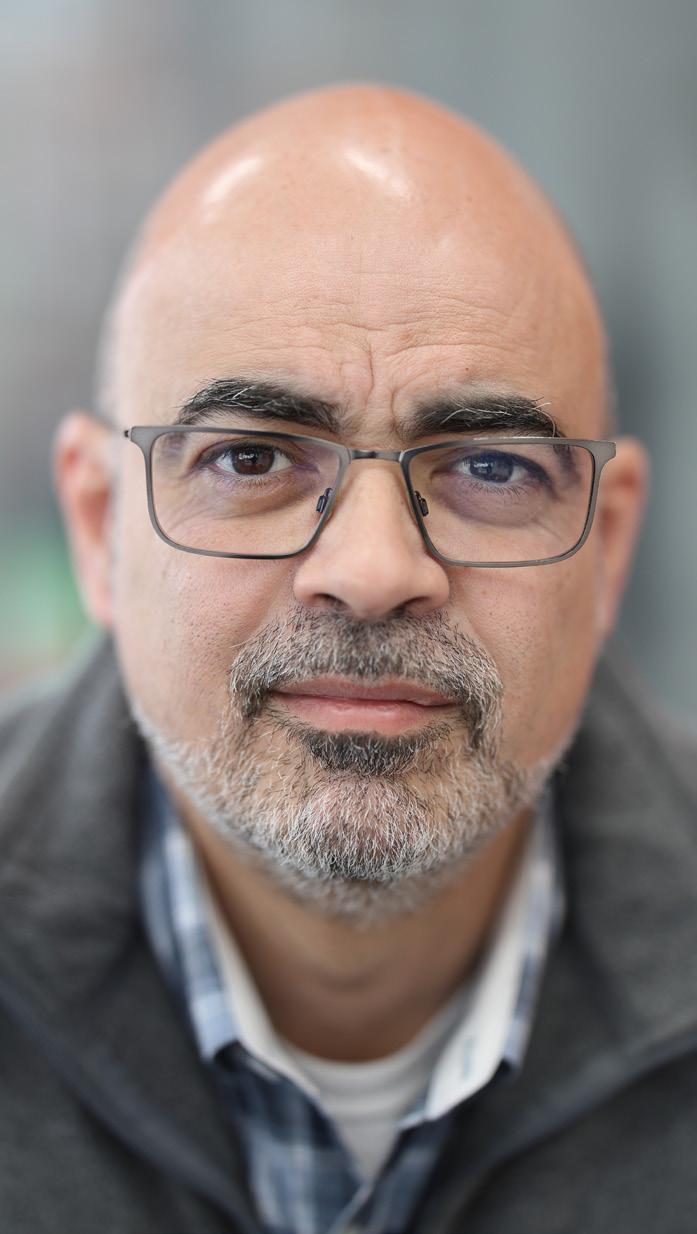
HAYES: Labor Rate
Reality Check
More often than not, shops get stuck arguing about what rates to post on the wall. The top performing shops focus on what customers are actually willing to pay for certainty, convenience, trust, and access. Todd Hayes, COO of Adams Automotive, explains why simply raising rates frequently fails and how to build a business that offers customers true value.

PODCAST: Meet
Ratchet+Wrench’s Newest
Columnist, Katie French
On this episode of Ratchet+Wrench Radio, editor Christine Schaffran sits down with French to talk about her early days in the industry, her mission to amplify overlooked voices, and what shop owners can expect from her upcoming columns.


DEMAREST: The Truth About Profit, Cash, and Why They Don’t Match
The core issue with people not understanding their financials is this: When perception doesn’t match reality, where do you go from there? There are a number of reasons you don’t have the cash you think you should at the end of the month or year. Hunt Demarest, CPA, breaks down some of the most common reasons he sees in shops.

EDITORIAL
EDITORIAL DIRECTOR
Chris Jones
EDITOR-IN-CHIEF
Christine Schaffran
ASSISTANT EDITOR
Griffin Matis
ASSISTANT EDITOR
Kacey Frederick
CONTRIBUTING WRITERS
Tess Owings, Alison Johnson, Noah Brown
EDITORIAL ADVISORY BOARD
Tara Topel, Topel’s Towing and Repair
Andrew Marcotte, American Pride Automotive
Rachel Spencer, Spencer’s Auto Repair
Tonnika Haynes, Brown’s Automotive
Ceasar Cordon, Fifth Gear Automotive
Bill Snow, Rad Air Complete Car Care
SALES
PUBLISHER
Andrew Johnson / ajohnson@endeavorb2b.com
ASSOCIATE SALES DIRECTOR
Mattie Gorman-Greuel / mgorman@endeavorb2b.com
DIRECTOR OF BUSINESS DEVELOPMENT
Cortni Jones / cjones@endeavorb2b.com
ACCOUNT EXECUTIVES (NATIONAL ACCOUNTS)
Diane Johnston / djohnston@endeavorb2b.com
Darrell Bruggink / dbruggink@endeavorb2b.com
Marianne Dyal / mdyal@endeavorb2b.com
Chad Hjellming / chjellming@endeavorb2b.com
Lisa Mend / lmend@endeavorb2b.com
Austin Miller / austinm@endeavorb2b.com
Kyle Shaw / kshaw@endeavorb2b.com
Sean Thornton / sthornton@endeavorb2b.com
ART AND PRODUCTION
ART DIRECTOR
Emme Osmonson
PRODUCTION MANAGER
Mariah Straub
AD SERVICES MANAGER
Jen George
ENDEAVOR BUSINESS MEDIA, LLC
CEO Chris Ferrell
COO
Patrick Rains
CDO
Jacquie Niemiec
CALO
Tracy Kane
CMO
Amanda Landsaw
EVP TRANSPORTATION GROUP
Chris Messer
EVP ENDEAVOR BUSINESS INTELLIGENCE
Paul Mattioli
VP OF CONTENT STRATEGY, TRANSPORTATION GROUP
Josh Fisher
SUBSCRIPTIONS
Send address changes and subscription inquiries to: Ratchet+Wrench PO Box 3257 Northbrook, IL 60065-3257
RATCHET+WRENCH RADIO
Strategies and inspiration for auto care success. Catch new episodes every Wednesday featuring thought leaders from across the automotive aftermarket. Scan to subscribe!


SUBSCRIPTION CUSTOMER SERVICE: 877-382-9187 ratchetwrench@omeda.com
LETTERS TO THE EDITOR
editor@ratchetandwrench.com
Opinions expressed in Ratchet+Wrench are not necessarily those of Endeavor Business Media, and Endeavor Business Media does not accept responsibility for advertising content.

























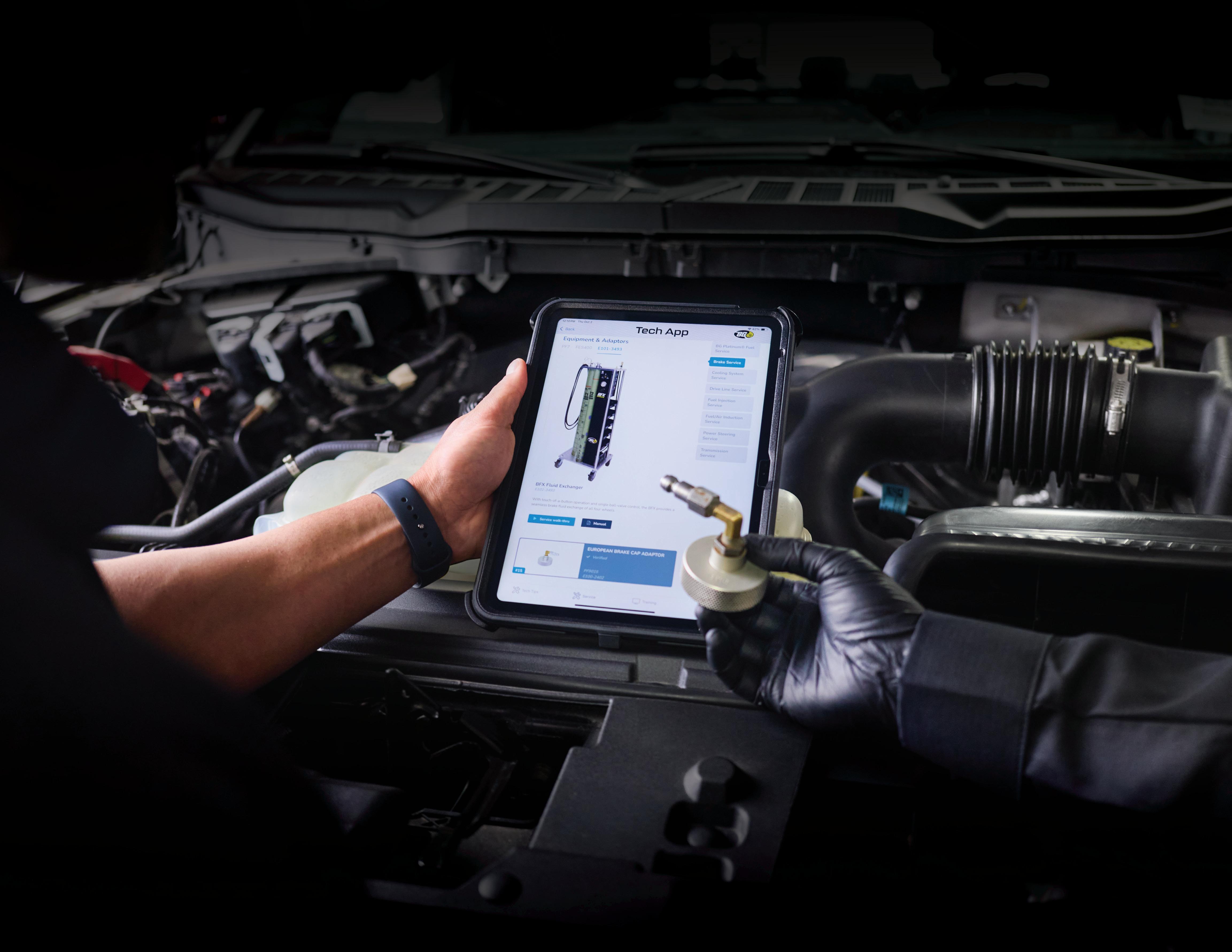
















































There’s been a lot of movement on Right to Repair, both federally and in states like Maine and Massachusetts—and, this year, the Auto Care Association needs your help more than ever
BY KACEY FREDERICK
Independent repair shops continue to face growing restrictions on what data they can access when working on vehicles. As more businesses feel the burden growing with increasingly digitized cars, groups like the Auto Care Association have been fighting to make automotive repair data accessible by law to independent repairers.
Lisa Foshee, senior vice president of government affairs and general counsel for the Auto Care Association, breaks down the progress being made for Right to Repair—both on a federal and state level.
The REPAIR Act—a federal bill that would enable independent repairers to have access
to the data they need—has continued to gain momentum, with 44 bipartisan sponsors in the House and eight sponsors in the Senate. Prior to 2025, the REPAIR Act was only in the House. With its introduction in the Senate last year, it’s brought even more opportunities for the legislation to advance.
“That was a huge landmark for the industry, to have it introduced in both chambers, and to continue to see the bipartisan support for it in both chambers,” Foshee says. “Those are the two things that we’re really proud of. Proud of the legislation that, as I said, just makes sense to both sides of the aisle.”
This year brings with it an opportunity for the REPAIR Act to move forward via the safety title of the Surface Transporta-
tion Reauthorization Act. Congress will need to pass this bill in order to continue authorizing funding for highways and infrastructure, and ACA sees the REPAIR Act as something that would fit well with what all the bill entails.
“We’re looking at all opportunities to proceed in that manner and are working closely with the Energy and Commerce Committee on the House side in particular to try to move the bill forward,” adds Foshee.
Most recently, this January, Auto Care Association President and CEO Bill Hanvey provided testimony to the United States House Committee on Energy and Commerce’s Subcommittee on Commerce, Manufacturing, and Trade that discussed legislation to support both small businesses and consumers in the auto repair sector.
As shared in a Jan. 14 press release, ACA recognized Chairman Bilirakis, R-Fla.-12, Ranking Member Schakowsky, D-Ill.-9, and members of the Subcommittee for considering bipartisan solutions to the increasing complexity of vehicles, and how it impacts consumer costs and safety.
“Today’s vehicles are computers on
wheels,” Hanvey said. “When vehicle owners and independent repairers are locked out of that data, repairs are delayed, costs increase, and safety can be compromised.”
Key points were hit in the testimony, such as how a growing number of independent shops are unable to perform basic repairs, like battery replacements or windshield wiper changes, are becoming locked behind dealer-only codes. This forces drivers back onto the road and into franchised dealerships, where repair costs are, on average, 36% higher, and wait times significantly longer.
Hanvey also highlighted how independent auto shops are critical for local communities. Independent shops perform more than 70% of out-of-warranty repairs nationwide, in addition to playing a huge role in local economies, workforce development, and vehicle uptime for working families and commercial fleets.
In his testimony, Hanvey pushed for the REPAIR Act to be included in the safety title of the upcoming Surface Transportation Reauthorization Act.
“The REPAIR Act is pro-consumer, pro-safety, and pro-competition,” Hanvey said. “It simply ensures that vehicle owners can access the repair and maintenance data necessary to keep their vehicles safe and on the road—just as they always have.”
The REPAIR Act has encountered opposition, though. In February 2025, the Automotive Service Association, the Society of Collision Repair Specialists, and the Alliance for Automotive Innovation proposed their own legislation surrounding vehicle data access: the Safety as First Emphasis, or SAFE, Repair Act.
In a letter to Congress, the groups outlined their proposal, which was meant to build upon a 2014 national agreement that independent repairers may have access to the same data made available to dealers.
Some features of the bill included an extension of the same recall and safety protections for OEM parts to customers using non-OEM parts; requiring disclosure of prior alterations or repairs on a used vehicle; and support for periodic safety inspection and post-collision inspection programs.
“While ... existing frameworks have created a thriving and competitive repair
marketplace, we understand the desire for a federal legislative solution that addresses evolving consumer expectations and technological advancements,” wrote the coalition in its letter. “That’s why our three organizations have come together to propose a new path forward—one that builds on existing protections while introducing additional measures to prioritize consumer safety and choice.”
While the concept has not become an actual bill, it’s been received as a challenge to the REPAIR Act by Right to Repair advocates.
“They have not had any member of Congress agree to introduce that concept as a piece of legislation,” Foshee says. “And I think that that is really telling, because— in my view—it shows the strength of the REPAIR Act. It shows the strength of the coalition of folks we have supporting the REPAIR Act, and it shows the commonsense approach that Dr. Dunn has taken in drafting the REPAIR Act, because the automakers can’t get anyone to introduce their SAFE REPAIR Act.”
As the fight wages on at a federal level for Right to Repair, states like Maine have been working hard to enact their own legislation, and facing their own set of obstacles. Just this past January, Maine Gov. Janet Mills vetoed a bill that would have limited Right to Repair legislation in the state.
Since Right to Repair was passed by 84% of Maine voters in 2023, it’s faced challenges—one of which being a bill that would have allowed automotive manufacturers to dictate how shops can access telemetric data. That was how Gov. Mills described the proposed bill, arguing that it would have been harmful for independent repair shops in the state, according to a report from CBS 13 News in Portland, Maine. It was the one bill she vetoed recently among the total 61 she addressed.
“The Auto Care Association applauds Governor Janet Mills for her thoughtful action today to uphold the will of Maine voters and protect the principles of automotive right to repair,” Foshee says. “Governor Mills’s action respects the expressed will of
Maine voters and the vital role of independent repairers in the state’s economy.”
Massachusetts was also challenged by automakers in court last year over its own Right to Repair legislation, but was met with a favorable court decision, upholding the law. This prompted the automakers to appeal the decision with the First Circuit Court of Appeals. Since that time, there have been briefings by both the alliance representing the automakers, the Attorney General’s Office of Massachusetts, and the Auto Care Association, which filed an amicus brief in support of Right to Repair. A final brief was also filed by the alliance representing automakers on Nov. 24.
Now, oral arguments are expected to be scheduled in the first to second quarter of 2026, with a decision to follow soon after on whether the law remains in place or not. ACA is confident the law will prevail, but it has made it more difficult to begin enforcing it, which Foshee hopes will start happening around summer of 2026.
“While the law is in effect, there has definitely been a chilling effect on enforcement because of these pending lawsuits,” Foshee explains.
There’s much in store for 2026 when it comes to advancing Right to Repair, both on a state and federal level. For those looking to support the independent auto repair industry on a legislative level, ACA is always looking for more people to get involved with advocacy efforts—especially with roughly six months left to get the bill through Congress. Starting this year, ACA will need all hands on deck to help write letters to their representatives, advocating for the REPAIR Act.
“The industry will start to see an urgent ask for letter generation. We have a QR code that folks fill out, and it sends letters to their congressional representatives, both on the House side and the Senate side. And those letters are powerful, and they matter,” Foshee says. “In terms of advocacy, that is where we need everybody … We need everybody to participate in that process of reaching out consistently to their elected officials and say, ‘We need you to get this done’.”


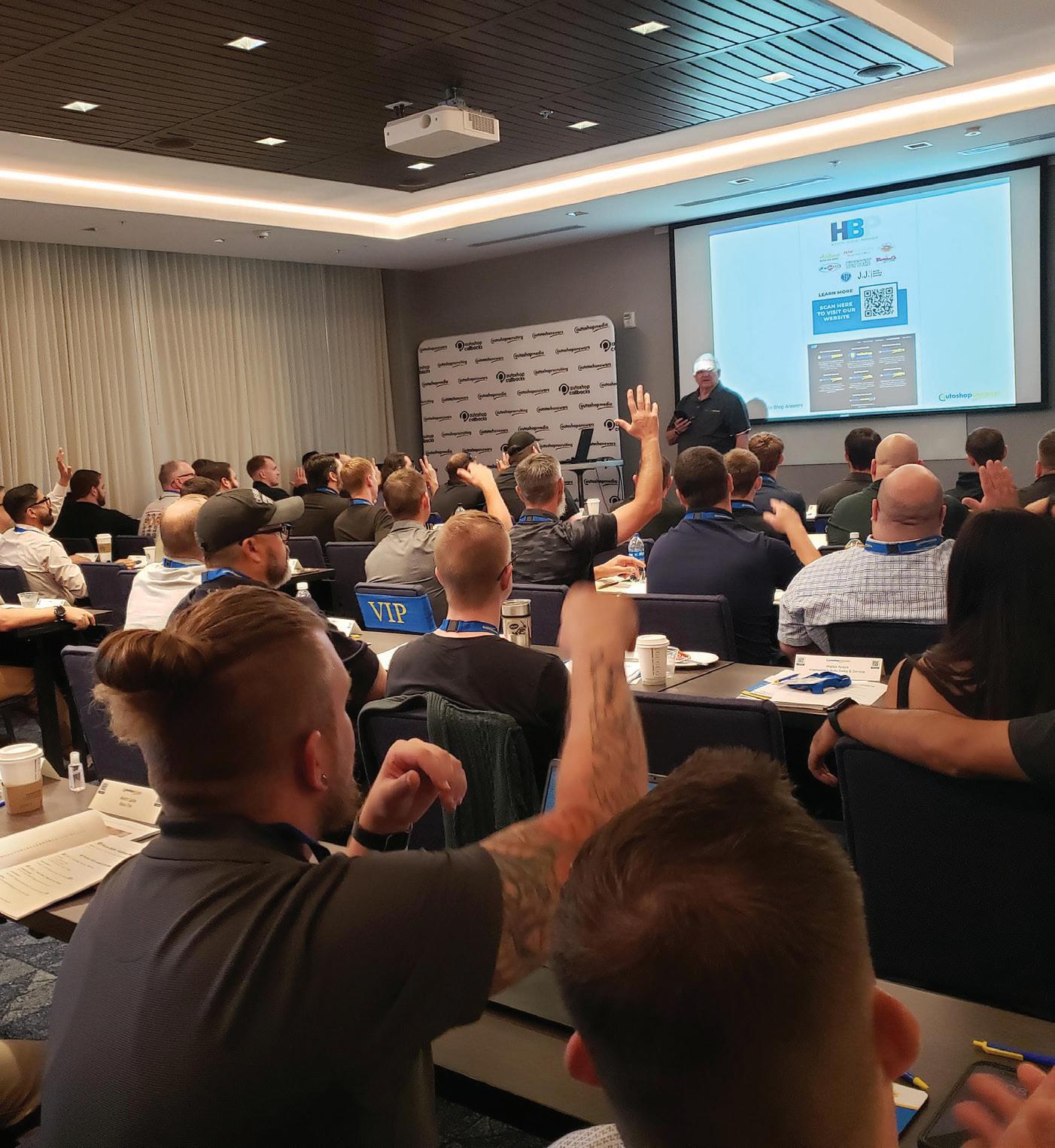



A full day of learning the new AI tools being used in our shops. Spend the day in a deep dive with the industry’s best teachers of AI. This class will elevate your shop to new heights!

Repairify’s diagnostics brands, asTech and BlueDriver, and Opus IVS announced in a Jan. 19 news release their intent to combine to “accelerate innovation across the automotive diagnostics industry” in what the companies promise to be “a combination (that) brings together highly complementary technologies, deep technical expertise, a best-in-class talent pool, and a shared commitment to helping repairers confidently and efficiently service today’s increasingly complex vehicles.
“As automotive technology evolves and demand for accurate diagnostics and ADAS calibrations grows, the combination of Repairify’s diagnostics brands and Opus IVS creates a more robust foundation for delivering innovative solutions with expanded coverage and capabilities.”
Announces Leadership Transition with Paul Donahue’s Retirement
Genuine Parts Company announced on Jan. 15, 2026, that Paul D. Donahue, Non-Executive Chairman of GPC, plans to retire from the Board of Directors. He plans to retire at the company’s 2026 annual meeting of shareholders.
Additionally, GPC has announced that its Board of Directors has appointed Will Stengel, currently the company’s President and Chief Executive Officer, to the additional role of Chairman of the Board of Directors. Upon Donahue’s retirement, Stengel will assume the combined position of Chairman and Chief Executive Officer.
“On behalf of the entire board, I want to express our profound gratitude to Paul for his extraordinary service to GPC,” said P. Russell Hardin, lead independent director of GPC. “Paul has served the company with distinction for more than two decades, successfully streamlining GPC’s portfolio and strengthening governance while upholding the values and principles that have made GPC successful for almost a century. He leaves us with a tremendous foundation, which positions us well to pursue opportunities
that enhance operational performance, improve profitability, and unlock shareholder value.”
“It has been a privilege to serve GPC, and I am incredibly proud of what our team has accomplished together,” said Donahue. “As I prepare to retire from the board, I am pleased with the board’s decision to appoint Will as the company’s next chairman. His strategic clarity and deep understanding of our businesses make him the ideal leader to guide GPC forward as we enter this next chapter.”
Advance Auto Parts announced the launch of ARGOS—its newly owned oil and fluids brand—in a press release. The brand has been designed to meet growing consumer demand for high-quality, affordable auto care products.
ARGOS was developed after Advance conducted extensive customer surveys, market analysis, and field-testing. After Advance’s research, it found that customers wanted a product that was affordable, reliable, and strong.
“Affordability, reliability, and strength are the three clear priorities we hear from our customers when it comes to quality automotive products,” Bruce Starnes, executive vice president, chief merchant at Advance Auto Parts, said in a news release. “ARGOS delivers on those qualities. It’s a product line built for today’s drivers, DIYers, and professional technicians. We’re excited to help our customers’ cars last longer, for an affordable price.”
ARGOS will be available exclusively in all Advance and Carquest locations in the U.S. and online, starting with synthetic blend and full synthetic heavyduty motor oil in mid-February. It was followed by passenger car motor oil in a variety of blends in early blends. A full portfolio will become available by May.

Automotive Lift Institute Releases 2026 Lifting Points Guide for Safe Vehicle Lifting
Automotive Lift Institute has released its 2026 Lifting Points Guide, Vehicle Lifting Points for Frame Engaging Lifts, according to a recent press release.
is a FREE, easy-to-use loyalty program for shop owners. Kind of like airline miles, but for the parts you’re already buying.




Produced annually by MOTOR Information Systems exclusively for ALI, the Lifting Points Guide includes OEMrecommended lifting points for most cars, SUVs, vans, and light trucks sold in the United States and Canada from 2000 through 2026.
The guide is updated annually to reflect the latest vehicle specs and brings together lifting points from across vehicle manufacturers. Lifting points are shown in more than 250 undercarriage images, with the guide offered in both digital and print editions.
Under the current edition of ANSI/ALI ALOIM, professional shops are required to make vehicle lifting points information available to technicians. ALI has aimed to meet this requirement with its Lifting Points Guide. The digital edition allows for online access on up to three devices with no third-party software required.
“When you’re using a two-post lift or another frame-engaging lift, your safety depends on properly picking up the vehicle,” said R.W. “Bob” O’Gorman,
ALI president. “That means using the right lift with the appropriate adapters positioned as directed by the vehicle manufacturer. Our Lifting Point Guide illustrates where to place the adapters and includes any additional guidance provided by the OEM for specific vehicles.”
Wiygul Automotive Clinic has officially opened its 10th location in Vienna, Virginia, according to a press release.
The new location is now open at 352 Maple Ave E, Vienna, VA 22180, taking over the former Just Tires facility and expanding Wiygul Automotive Clinic’s footprint in Northern Virginia.
The Vienna location offers a range of customer-focused conveniences designed to make auto service as easy and stressfree as possible, including free Uber rides to and from service appointments, and complimentary Concierge Service, where
Wiygul picks up the customer’s vehicle, services it, and returns it at no extra charge.
“We are incredibly proud to see the Wiygul Automotive Clinic brand continue to grow while staying rooted in the communities we serve,” said W.D. Wiygul, Owner of Wiygul Automotive Clinic. “Opening our beautiful 10th location in Vienna represents more than expansion—it reflects our commitment to investing locally, supporting our neighbors, and providing a place where customers can rely on trusted service, familiar faces, and long-term relationships.”
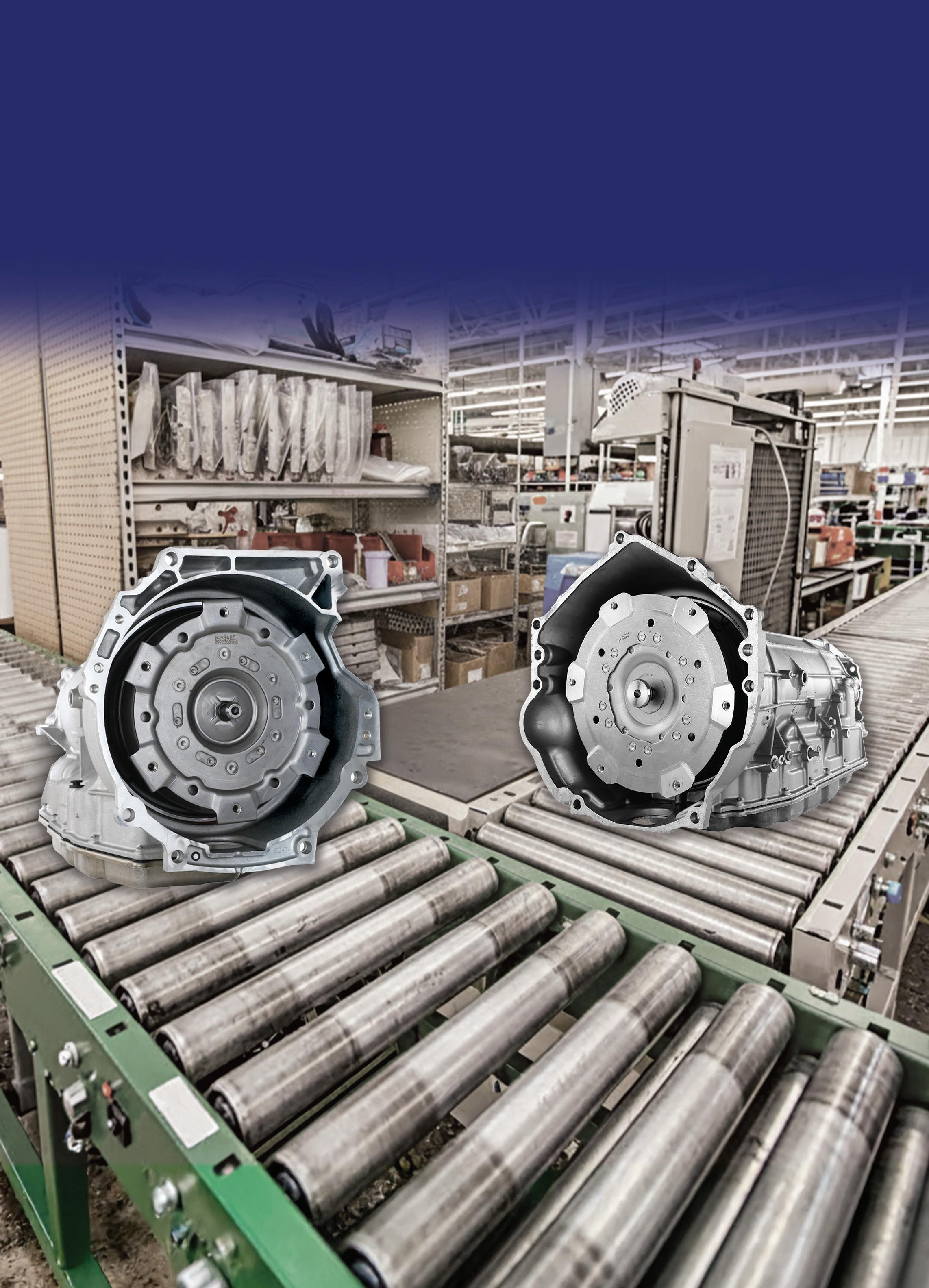
Toyota is now facing multiple class-action lawsuits over its eight-speed transmissions, according to Driving.com.




















The most recent one, filed in the Eastern District of Texas, alleges the UA80 gearboxes are prone to premature wear, stalling, poor shifting, and even failure. The lawsuit claims that the UA80’s control units force premature upshifts and torque converter clutch engagement, leading to damage.






















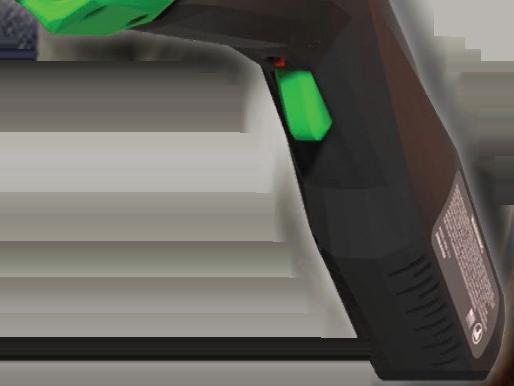








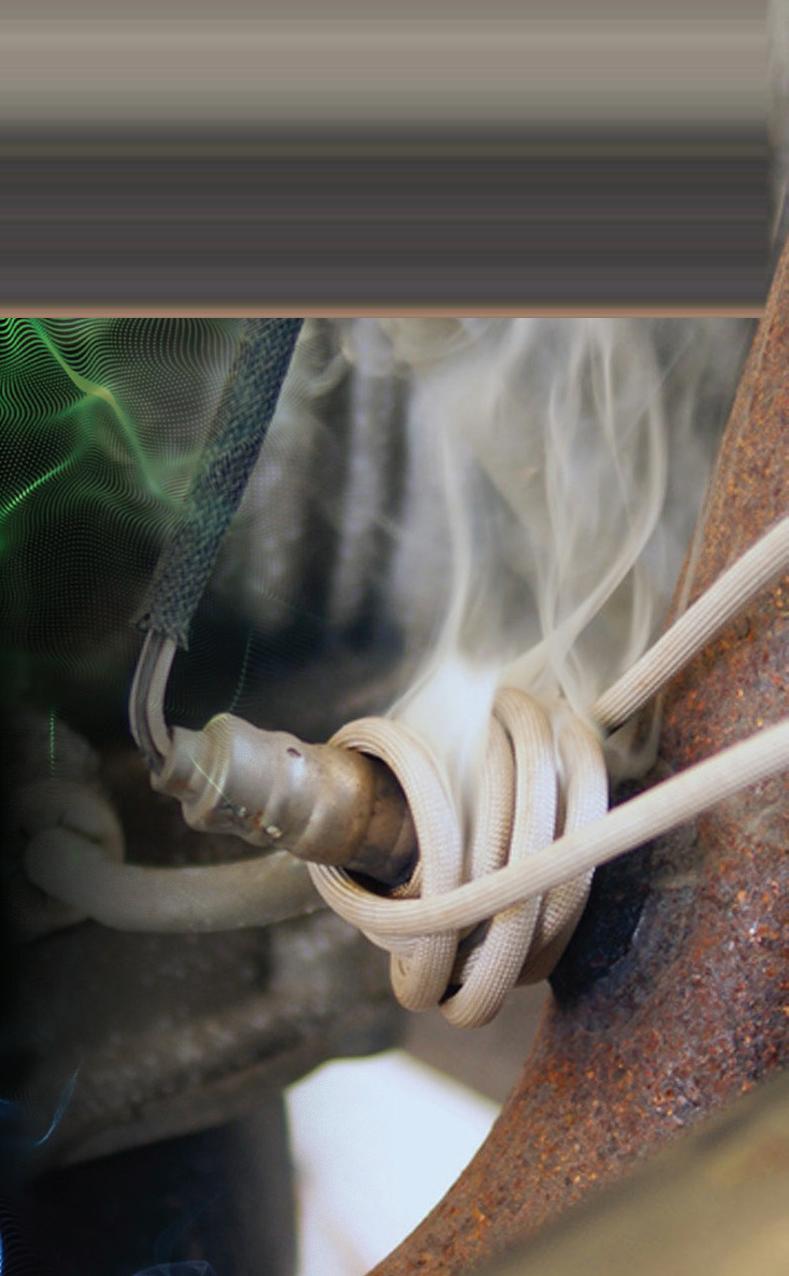
Vehicle owners have also claimed the vehicle’s counter drive gear sub-assembly, which allegedly contains a main retention nut prone to detaching as a result of a defective backing tab. The electronic control unit will also keep the torque converter locked, according to the lawsuit, even when coasting.
Furthermore, the suit claims that repair costs for these issues can reach thousands of dollars, with one of the impacted parts—a gear drum—costing just under $2,300.
The lawsuit seeks to cover any current or former owner or lessee of the following Toyota or Lexus models: the 2017 to 2020 Sienna; 2017 to 2024 Camry; 2017 to 2026 Highlander; 2019 to 2022 Avalon; 2019 to 2026 RAV4 SUV; 2023 to 2026 Grand Highlander; and newly built Lexus ES 250, ES 350, NX 250, NX 350, RX350, and TX 350 models.
This is the most recent in a growing list of lawsuits surrounding the UA80. Another suit has been filed in the U.S. District Court for the Eastern District of New York, which details virtually the same defects.
A look at how female owners lead, grow, and operate their shops
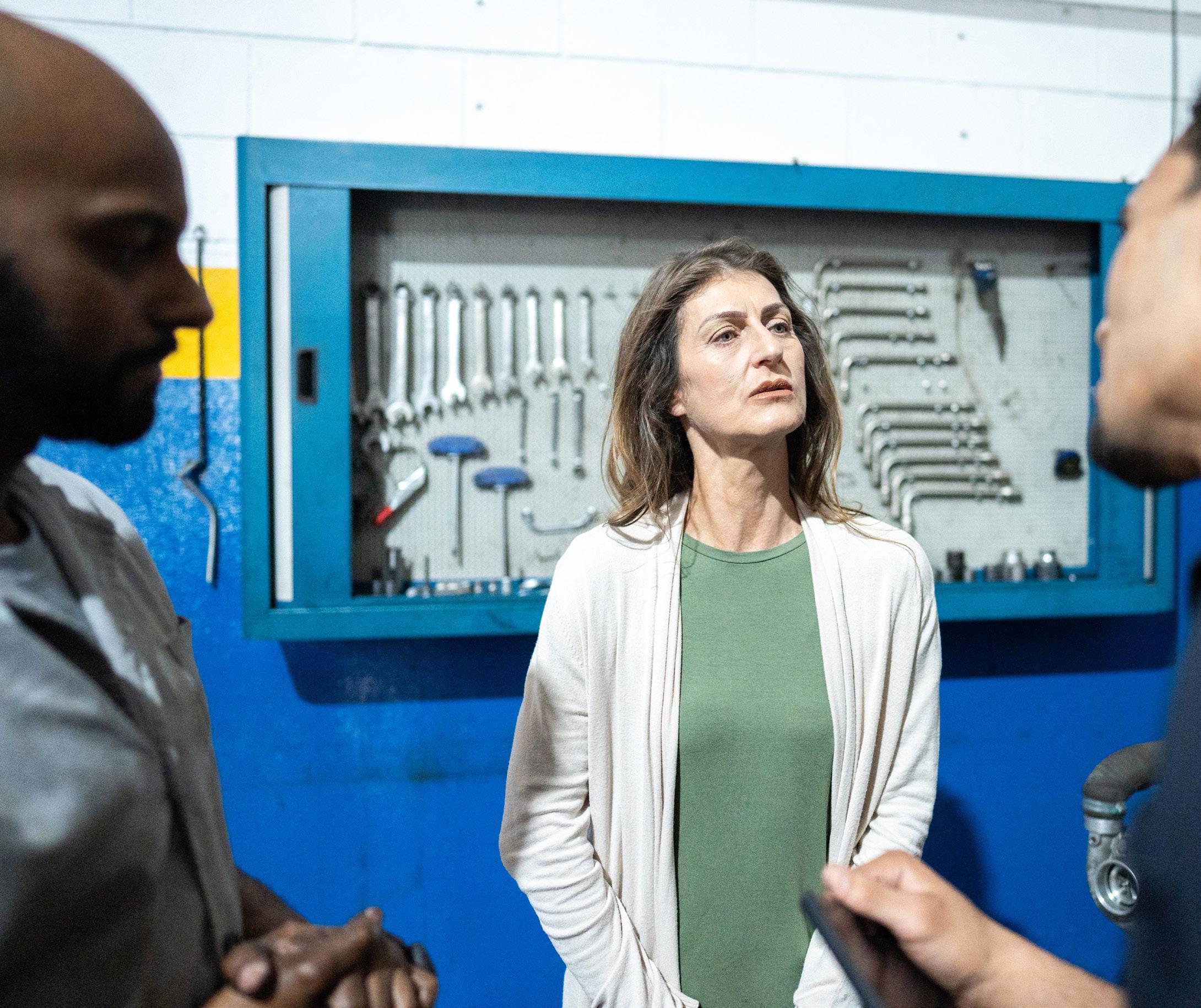
The automotive service industry is still made up of mostly men, but more and more women are joining the industry across every role. Here’s how the current generation of female shop owners are running their shops, according to the 2025 Ratchet+Wrench Industry Report.
The 2026 RW Readership Survey is now open. Share your insights today, and you could win a $100 gift card. Visit ratchetandwrench.com, and search “2026 Readership Survey” for details.
Revenue above $1 million
Average repair order above $400
Car count above 250
Opportunity above $800
Closing ratio of 70% or higher
CSI score of 90% or higher
Posted labor rate above $140
Raised labor rate in past 2 years
Works with a consultant or business coach
Attends industry-specific









Turning self-awareness into stronger teams, deeper connections, and lasting shop success
BY GRIFFIN MATIS AND DR. DANA ÑKAÑA
Working in a shop has never been a stress-free environment. Dealing with customers, employee issues, and time-sensitive work can be frustrating and exhausting. In today’s market, however, technical skills can only go so far. Emotional intelligence is no longer an optional skill if you want to be successful, and employees look to you as a leader for a model. Dr. Dana Ñkaña of Automotive Doctor Consulting and Coaching Services breaks down how emotionally aware leaders operate, why emotional intelligence is necessary for success, and how to develop your skills as a compassionate leader.
As told to Griffin Matis
An emotionally intelligent leader is somebody who is always ready to “read” people. First of all, they have to read themselves accurately, then they read the room, and finally, they respond with a purpose.
High-intelligence leaders tend to share a few common traits: They possess selfawareness, and they don’t take everything personally. When you deal with people who lack high emotional intelligence, everything that happens feels like a personal attack. Emotionally intelligent people stay steady. When things get stressful, they remain the same no matter what.
Sometimes people respond with impulse rather than purpose. An emotionally intelligent leader has the ability to manage emotions under pressure and understand

what is driving other people to behave the way they do. They lead in a way that keeps performance high and relationships intact because that is what keeps everything moving in the right direction.
In the past, shops hired based on technical skills first. Now, owners are hiring for emotional intelligence and then training the technical side later. Developing this side of employees requires dedication and self-examination. If you even have to question whether your behavior is acceptable among your employees, it means you’re not doing something right. Emotional intelligence is simply not a soft skill
anymore. Being emotionally in tune with customers, understanding how they feel, and treating them well makes those customers come back. They will speak very highly of the shop, which in turn drums up more clients and drives those hard numbers up.
Think about it this way: For many, a car is the second biggest thing they own after their house. I am trusting this major asset to you, and I want you to treat me well. I want to feel seen and heard. When that doesn’t happen, people just decide they aren’t coming back.
Developing that intelligence can happen in different ways. To start, you could simply stop and think. Talk to yourself: “Did I react in a bad way, or was that good?” You might even ask someone else, “How was my behavior?”
That is the process of trying to be in tune with yourself—understanding that something went wrong and realizing you shouldn’t have said it that way. That is how we learn and change.
The next step for improving your emotional intelligence is to learn more about it. Take a class, attend a seminar, or join a coaching program. You can even learn a lot online. But if you want to understand it quickly, go to someone who has been trained on it before.
I ask shop owners every day to hold what we call a “Take Five” meeting. Everyone comes in for a quick five-minute conversation. During that meeting, you are reading the room and the people to see what is going on. If you see someone who is quiet or not participating, that is your opportunity to reach out afterward and ask, “Hey, is everything going well?”
You also have to train your employees on being emotionally in tune with themselves so they can manage how they treat others. Social skills are a part of emotional intelligence; if they don’t have them, they cannot connect, and that’s when you start having employees butting heads or driving off customers. If it is disruptive to the business, it must be addressed.
When we are emotionally in tune with ourselves, we can actually connect with other people. Every day, when we work with or encounter people, we don’t know what is going on in their lives or what is
driving their behavior. That is why it’s vital to be emotionally in tune with others to understand what’s happening.
I usually tell people that when I ask, “How are you doing?” it’s not just a greeting. I really want to know. If you connect with your technicians and your service advisors, you know exactly what is going on. It’s just like how a service advisor connects with a customer; maybe they saw a bicycle on the car rack and asked where they were going. When that customer walks in next time, they ask, “How is John doing? How was the bike ride?” That makes the customer feel very connected.
A shop owner should do the same with their staff: “How is your boy doing? How did the soccer game go?” All of this makes people feel valid and ready to return the next day.

Owner, Automotive Doctor, LLC
Dr. Dana Ñkaña is a business strategist, trainer, and industry leader specializing in operational excellence and leadership development for aftermarket suppliers, manufacturers, and distributors. With decades of experience in technical and management roles, Dr. Ñkaña equips leaders to drive growth, profitability, and exceptional customer experiences across the supply chain.
drdanankana@gmail.com
Shed the misconception that profitability is selfish and focus on the importance of proper financial management instead
BY LOLA SCHMIDT
The P word.
You’re allowed to be profitable. Say that aloud. “I am allowed to be profitable!”
There seems to be a gross misconception that auto shop owners should be martyrs and give away service under the guise of “being a good neighbor.” I’m not sure where that ideology came from, but this false narrative needs to be swiftly re-written. While doing good for thy fellow neighbor certainly has its place, being a business owner—in any realm— should lead to profitability. Otherwise, what’s the point? Your blood, sweat, and tears go into building a brand and a team and being great at your craft. You should proudly reap the benefits from that. Think right now: Are you properly compensated as the person holding all the financial and public risk? If you are not, I hope this article sparks internal dialogue to push forward with a different mindset this year.
First and foremost, if you don’t have someone guiding you through the financial land of business, please prioritize this immediately. Having trusted advisors is one of the most important facets of your financial success. In my shop, that is our CFO and CPA. These individuals are instrumental in leading the way for our personal and business financial fitness. They make sure payroll, taxes, and liabilities are buttoned up, and carve a path that allows us to take home a fulfilling paycheck as owners. Creating an established financial flow inside for your household is just as important as making sure your team has a paycheck each week. Don’t forget about you. This isn’t selfish. It is necessary.
Once you have trusted financial advisors in place, make sure you are holding your business to standards that
are going to lead to profitability. Know your KPIs. Is everyone on your team hitting their goals? Do they know the goals they need to hit? Are your techs turning times they are expected to turn? Is service managing the workflow and sales to allow techs to turn sufficient hours? Are parts arriving in a timely manner and being distributed correctly? Is your marketing working, and are there enough cars coming through your bays? You need to know these baseline movements in your business and measure whether they are successful because all these items affect profitability in some manner. To be profitable, you must understand what leads you to profit. It is deeper than just bringing in a car, fixing it, and sending it back out. You need to uncover and understand the nuances of your business.
If you don’t know the answers to these questions, it’s time to reach for a coach. This individual will develop your business acumen and help uncover and hold accountable the inner workings of your shop. Needing a coach is not a sign of failure, but more of a promise of futuristic success. Through the years, our coaches have been instrumental in each new level of success within the brand, which has led to established profitability. If you don’t know the path to walk for profits, find someone who does and walk alongside them a while.
This is your life. This is your shop, your business, your brand, and your name. You had a dream to be the best auto shop owner you could be with the best shop around. You can’t do that without money, so you need to be profitable. Embrace the idea of creating profitability inside your business and make the changes needed to hit the ground running this year towards the P word: Profit.

Lola Schmidt is the vice president of operations and marketing for Schmidt Auto Care in Springboro, Ohio. She joined her husband, Erich, in helping to run his shop nearly 10 years ago with ambitions as high as her heels. Through the years, she has helped to develop an award-winning business that provides veterans with opportunities for employment as well as the community with a trusted resource for auto repair. Outside of the family business, she is a mom to one, a gardener, an artist, and a musician.
Lauralee@schmidtautocare.com
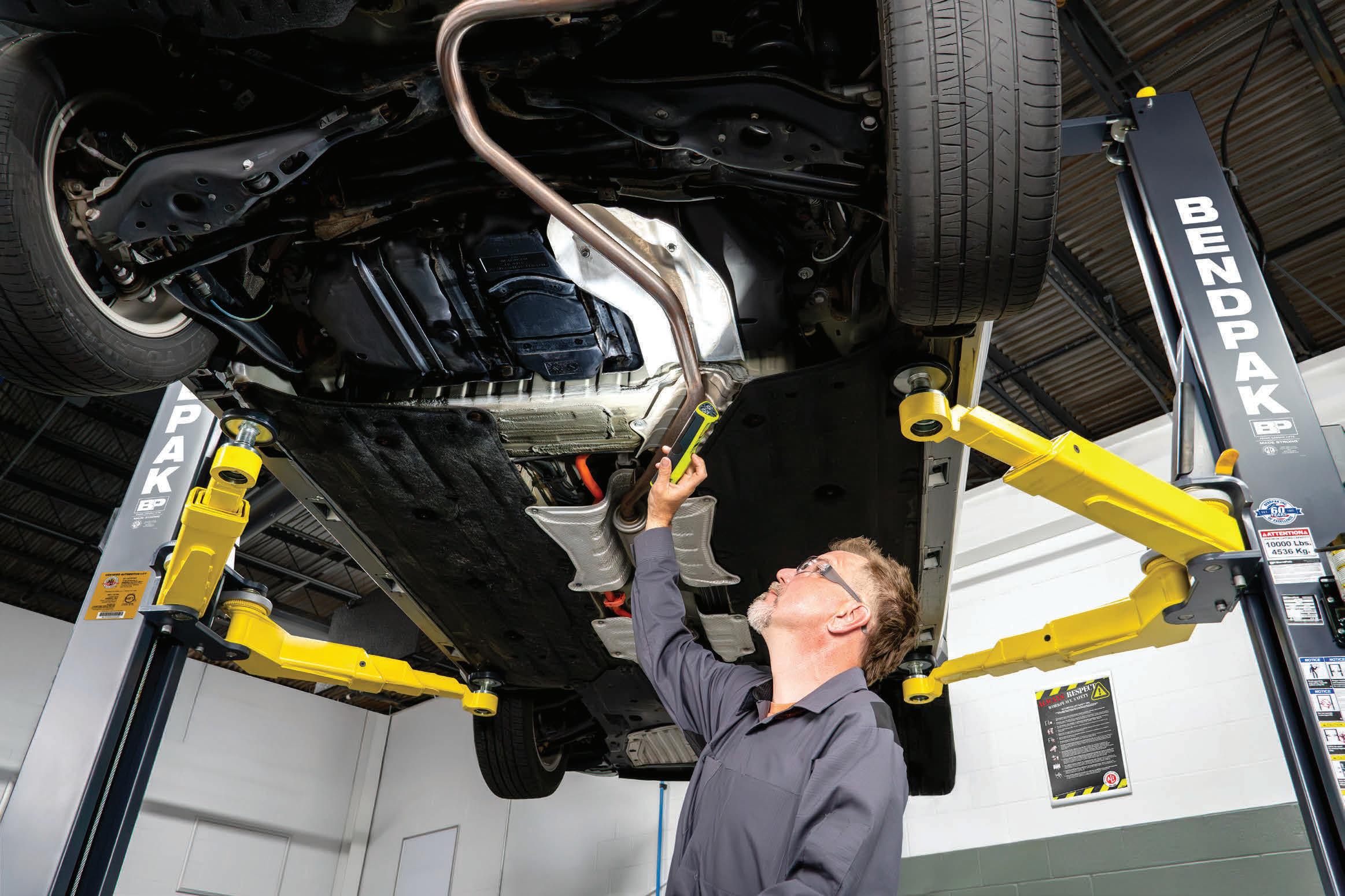
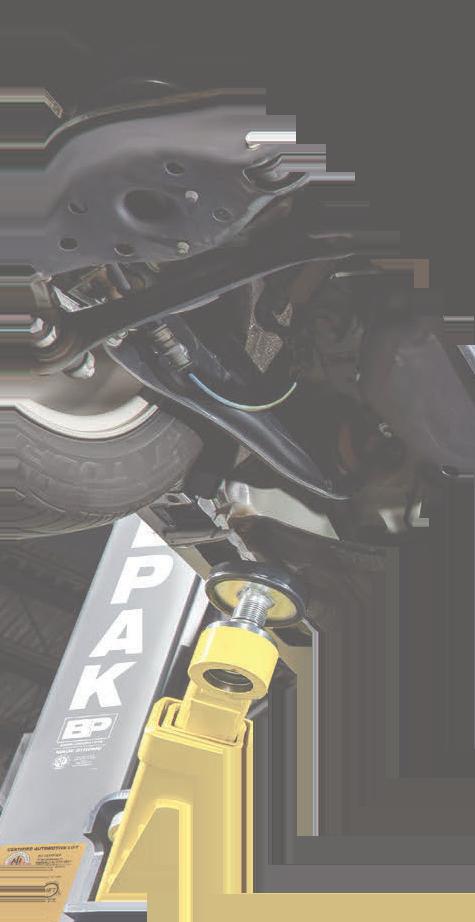
Every day, professionals and DIYers trust their lives to vehicle lifts. But the web is flooded with offshore resellers pushing uncertified, no-name lifts with bold claims — no proof, no oversight, no accountability.
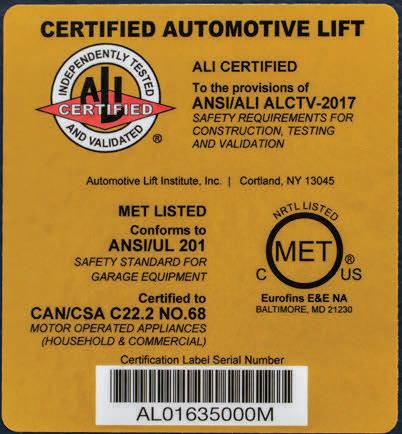
BendPak certified lifts meet ANSI/ALI ALCTV (current edition), the only nationally recognized lift safety and performance standard. Only certified lifts carry the ALI Gold Label and appear in the official ALI Directory, proof of third-party testing and validation.
At BendPak, safety is engineered into every lift. Built strong. Certified tough. And every Gold Label tells the story.
If you’re lifting cars and putting people under them, nothing matters more than safety. Don’t risk it on unverified imports. Get the lift that’s certified. Get BendPak. Demand
BY CHRISTINE SCHAFFRAN
Any industry can look back fondly on its history and recall certain periods with a googly-eyed “those-were-the-days” nostalgia. Although Americans have had a love affair with the automobile since its debut in the early 1900s, the same cannot be said for the aftermarket and those who toil endlessly to keep those vehicles rolling down the road. While the American Automobile Association reports two out of three U.S. drivers do not trust auto repair shops in general, Consumer Reports paints a happier picture, with members favoring independent repair shops for service over dealerships.
For those who remember what it’s like to raise the hood of a vehicle or roll a creeper underneath it to dig into a problem, let’s take a walk down memory lane. For those who purchased a shop in the early 2000s and can still recall the adrenaline rush of pinpointing those early technology problems in first-generation navigation systems and sensors, let’s have a laugh over those hair-pulling moments. For everyone else, let’s have a look at the industry prior to you joining it. And let’s hear from those who came before you about what it was like, where’s it’s headed, and what you can do to prepare for the future.
When Joe Marconi left college in 1974 to pursue a career in the automotive industry, his father, Nick, didn’t bat an eye. As the co-owner of a full-service gas station which also meant taking care of car problems decades ago, Nick had no doubt his son would flourish on his career path.
“Imagine your child telling you that they’re going to leave business school to work at McDonald’s for minimum wage. And that’s (basically) what I did,” says Marconi, who owned three automotive repair shops until he sold them in 2021. “My father said, ‘follow your dream, follow your passion.’ He didn’t say anything negative.
He just said whatever you want to do, just be the best at it. So, that’s what I did.”
Marconi began working as a mechanic— the term he used to describe himself before “technician” took over in the industry—for several shops until he opened Oceola Garage in New York in October 1980.
The mechanic-turned-owner admittedly had no idea what he was doing.
“I struggled for about 10 years because I was a technician turned shop owner and I had no business being in business, to be honest with you, because I was just a technician,” he recalls. “Being a qualified
technician has nothing to do with running a business.”
He credits an industry trifecta as his reason for staying in business in those early years.
“There were three things back then that kept us in business—General Motors, Ford, and Chrysler,” he quips. “Because those cars broke down like you wouldn’t believe.”
In Gaithersburg, Maryland, Karim Morsli took a different path to owning Winkler Automotive. The engineer combined his love of cars with his technology-
driven background to provide a “mixture of high tech with the human touch of delivering service” for 10 years as a shop owner before selling and turning his attention to mentoring others in the business.
“I learned a lot about the do’s and don’ts of running a shop and being a top shop, and I learned a lot from my peers in the industry because I knew very little,” Morsli explains. “Towards the end of my tenure, I decided to give back and help out some other up-and-coming shop owners because I was fortunate enough to have received so much from others.”
As technology flourished in the industry, Morsli says, the talent pool unfortunately did not. In fact, building a quality team became a tall order for him and many other small shop owners who were often required to wear many hats. Complicating matters, he says, are the types of training he felt he needed offer in an already strained labor pool and the whole process just became too much.
“Now it came down to having to teach them personal behavior or the right way to conduct yourself, things that are ba-
sic in society,” he explains. “And I found that in the end, after 10 years, I didn’t see that there was progress being made in the quality of some of the candidates that we were getting.”
For his part, Marconi describes a doit-my-way-or-get-out mentality that raised his generation that no longer exists.
“My boss said to me, ‘You come to me after 30 days, and we’ll sit down and talk if you’re still here’,” he explains. “And he says, ‘And by the way, there are three ways of doing things, the wrong way, the right way, and there’s my way. You do things my way,
and we’re going to get along just fine.’ That wouldn’t fly today.”
Both Morsli and Marconi agree that the culture of shops has changed, some for better and some for worse.
“I think the challenge for shops today is to find the right people to adopt the right philosophy in their shops,” Morsli notes. Marconi adds the only way to do that is by getting personal.
“Shop owners of today have to understand that they need to have empathy for their employees. They need to respect their employees. They need to sit down with them and build relationships with them,” he stresses. “You have to reach employees on an emotional level. If not, they’re going to shut down and they’re not going to perform the way they should.”
To bridge the workforce gap, Morsli looks to ideas such as opening the country’s borders to qualified individuals from overseas, embracing apprenticeship programs, and even accepting non-human help as the answers to assisting the industry through the labor crisis. “We need to be showing people it’s a great way of living,” he says. “It’s not going to get outsourced. You’re not going to lose it to some offshore destination because
In 1982, the average hourly earnings for a mechanic were between $6.80 and $10.82, depending on the region of the U.S. you lived, according to the U.S. Bureau of Labor Statistics. In 2016, the bureau reported hourly earnings of $20.33 in January 2016 to $20.55 in December 2016. Shop owners Joe Marconi and Karim Morsli experienced dramatically different economic climates when they entered the world of auto repair shop ownership (note Marconi first opened his shop in 1980, but exact statistics were unavailable). No matter the era, the numbers always govern auto shops. Here are some of the numbers many of you still focus on today through the lens of time:
Average Repair Order
1980: $75-$100
2016: $450-$700+
Source: CarMD Vehicle Health Index
Average Labor Rate
1980: $25-$40
2016: $100-$150
Source: American Automobile Association
we’re not going to be exporting your car to get it fixed in Mexico and bring it back to you.” Morsli also points to robotics and humanoids as potential problem-solvers— something Japan has already embraced in certain factory settings.
“I would be willing to buy a half-a-million-dollar robot if I was able finance it,” he asserts. “Because if I get a robot, I can get that robot to work seven days a week except being down for maintenance, right? And I don’t have anyone that’s going to refuse to do the work, not show up for work, or do bad quality work, etc.”
Where a single toolbox once outfitted a technician for success, Marconi says, workers now “need an entire warehouse” to get the job done right. Gone are the days when a creeper and some basic tools allowed employees to work on most makes and models and address basic issues.
“You can’t expect what we expected 35 years ago. I go back to my joke about General Motors, Ford, and Chrysler. That was predominantly what you found on the
streets, those three cars,” Marconi notes. “And if you were a good technician, you could become very proficient at those vehicles in a short amount of time and you could become a master technician of all systems on those three vehicles and become very successful and highly productive.”
He adds: “If you fast forward to today, the biggest challenge is can you really be all makes and all models? I think it’s too much to ask a young technician who’s 22, 23 years old by the time he’s 30 to be a master tech and be able to solve a check engine light on a Mercedes, then jump to an oil leak problem on a BMW, then a transmission problem on a Chrysler, then an engine problem on a Chevrolet. I don’t think it’s possible anymore. The training alone is just too comprehensive. The equipment and tools you’re going to need is just too much.”
Morsli agrees being an all-service repair shop for any make or model is no longer in the cards and cites an “erosion of margins” for those attempting to do so. Instead, he says, shops need to narrow their focus.
“I think the biggest challenge today is shops need to define their business model.
When it comes to keeping cars rolling down the road, repairs have transitioned from mechanical fixes and troubleshooting to technical software issues and diagnostics. Here’s a look at some of the most common issues in cars in 1980 and 2016 when Joe Marconi and Karim Morsli entered the market respectively.
Source: Consumer Affairs
They need to define exactly who their profile customer is,” he says. “They need to find what vehicles they want to work on and what services or repairs they want to provide to their clientele.”
Back when gas stations had an auto repair component in the 1950s and 1960s, the owner was likely the jack of all trades— mechanic, fuel filler, cashier, and customer service representative.
Even as automotive repair shops shifted into their own buildings with multiple bays, the owner still showed up at that location every day, determined to make a living for himself and his team.
These days, as owners age out of the industry and look at options to cash out, many are considering alternatives to selling to their competitor, such as private equity firms. Although the financial aspects are appealing, Marconi says he has concerns about how it will affect the industry.
I get the X’s and O’s and the numbers, but they’re not going to duplicate what that shop owner does in the community,” he points out. “They’re supporting the Little League, they’re supporting the cheerleaders, they’re supporting the dance club, they’re supporting everybody in the blood drives, all the heart walks. Those are the shop owners that are in the community. When a private-equity group buys that shop, are they really interested in maintaining it? No, they’re not. So private equity will be a major force in the next 10 years. I just don’t know if it’s a good thing.”
Whether they’re for the better or not, changes are inevitable. To survive the next revolution, Morsli and Marconi recommend keeping it simple.
“Know your numbers and what they should be,” Morsli advises. “Because without profits, you’re not going to be able to make it. You’re not going to be able to grow. You’re not going to be able to do the things that you need to do. So definitely take the time to look at your numbers, know your numbers, and plan accordingly.”
Marconi zooms out even further on his lens of simplicity: “Take care of your employees, take care of your customers,” he urges. “Because they are the lifeblood to your legacy.”





























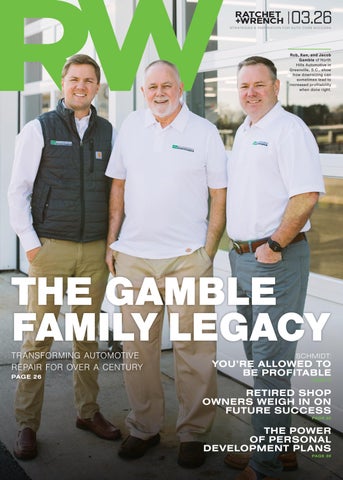
Transforming Automotive Repair for Over a Century
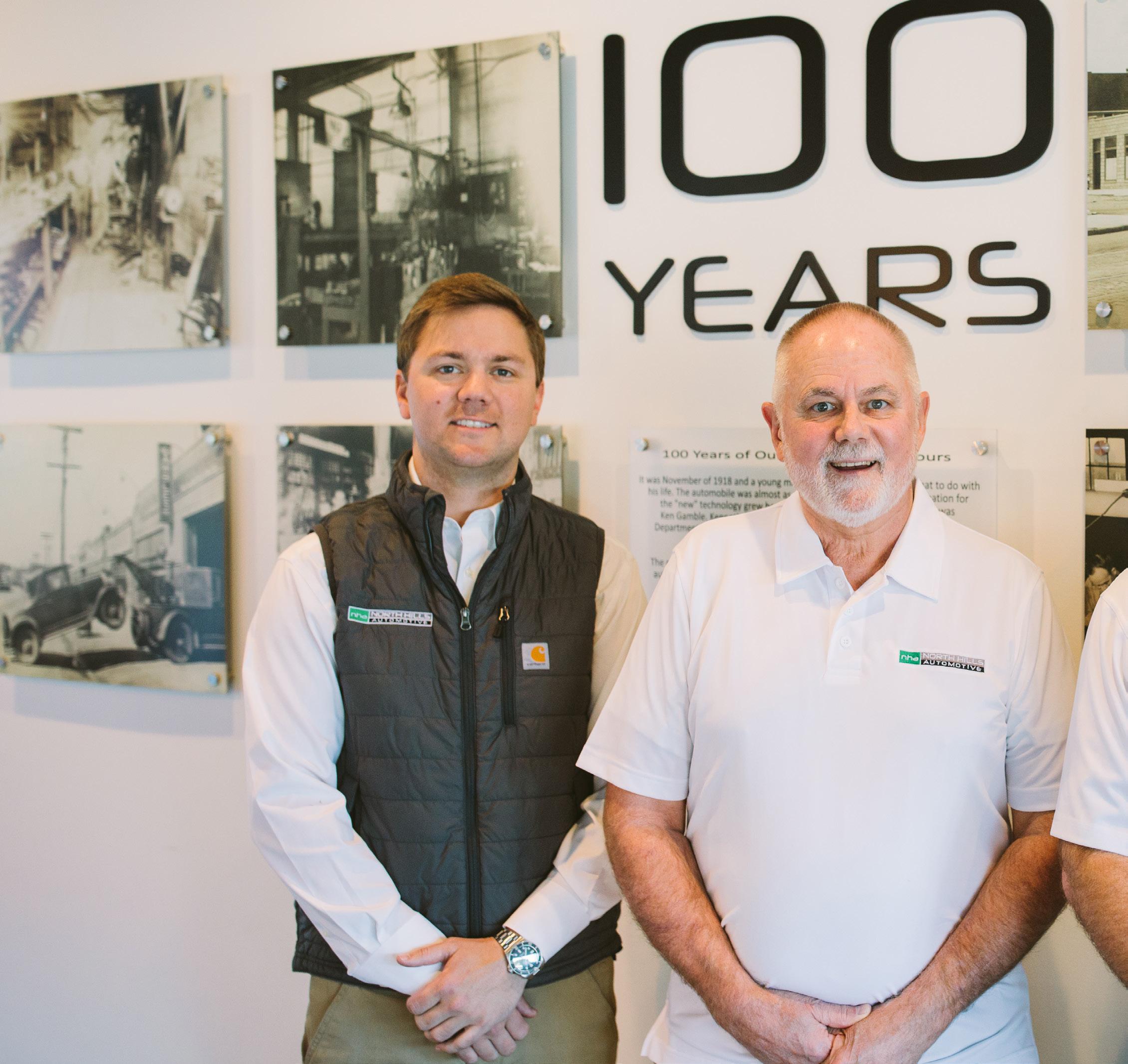
Through leadership changes, operational overhauls, and a focus on employee well-being, North Hills Automotive has transformed into a modern, efficient repair shop with a forward-looking approach
BY ALISON JOHNSON
BY ANGELA ZION PHOTOGRAPHY
When the Gamble family first got into the automotive repair business, the average price of a new car fell in the $300 to $600 range.
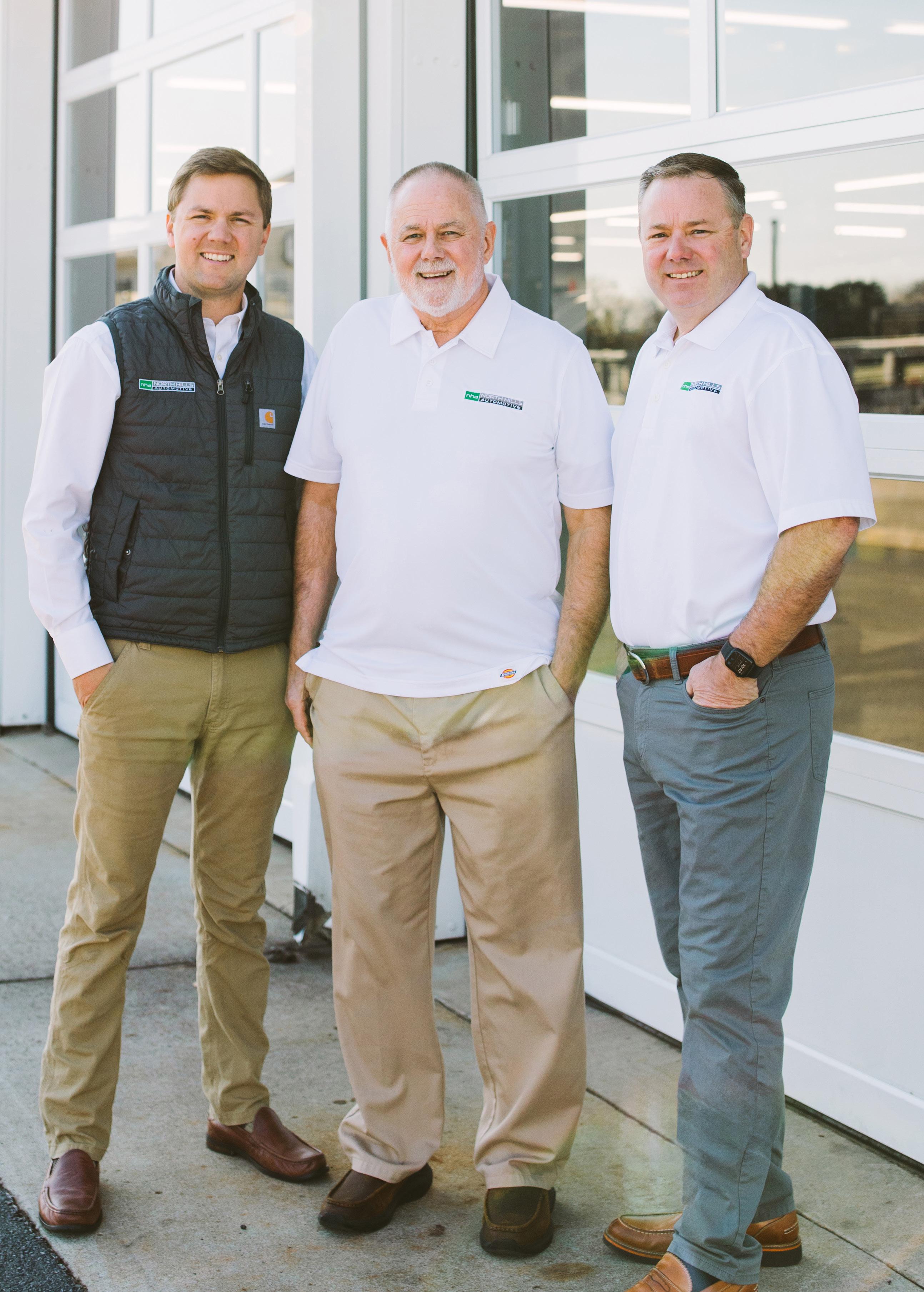
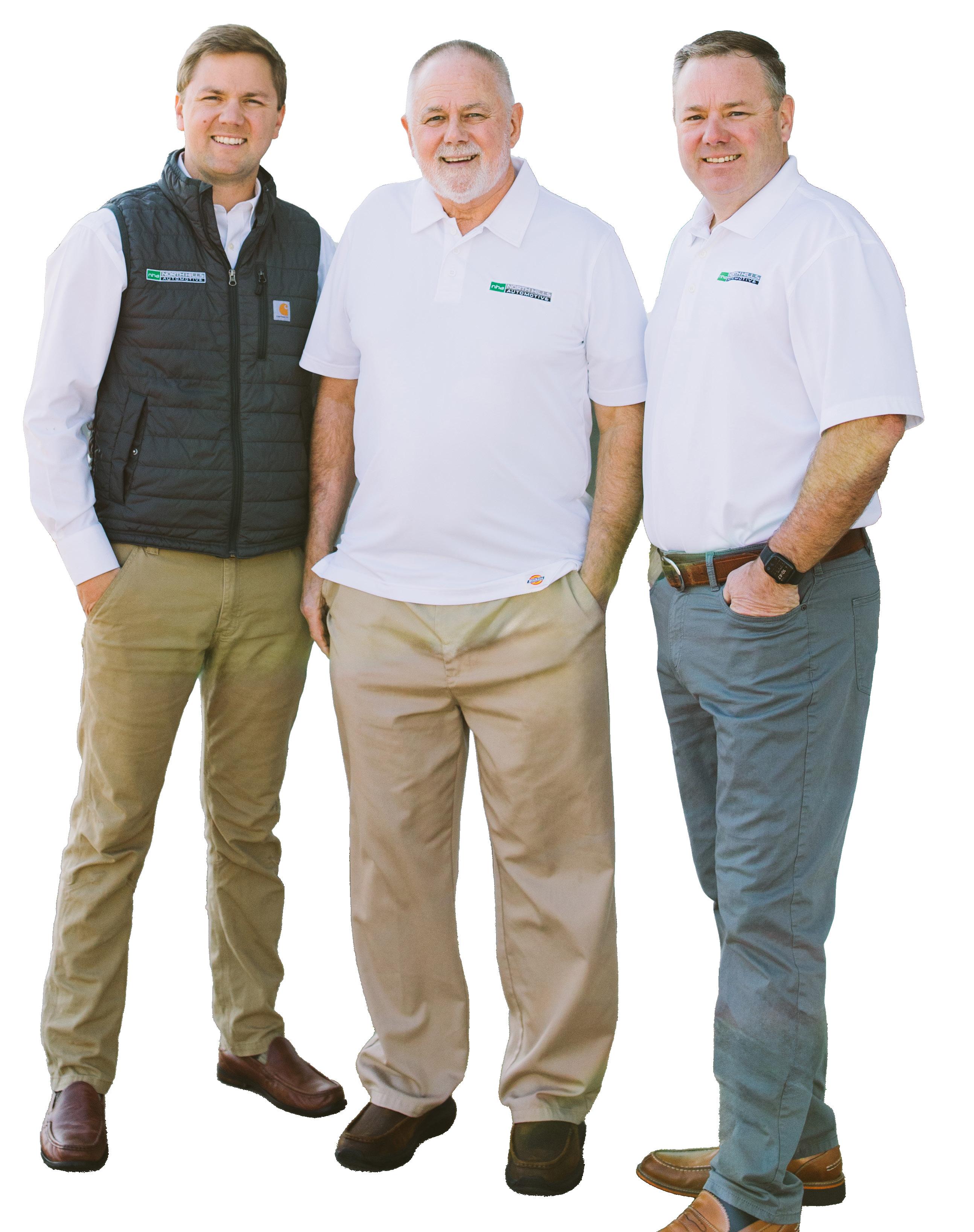
That was more than 100 years ago— at a one-man, one-bay shop in New Jersey run by Ken Gamble, Sr., the greatgrandfather of Jacob Gamble, CEO of North Hills Automotive, Inc., in Greenville, South Carolina.
The story skipped a generation to Jacob’s father, Ken Gamble, III, who founded North Hills in 1986. Ken, now 71, has largely retired from daily opera-
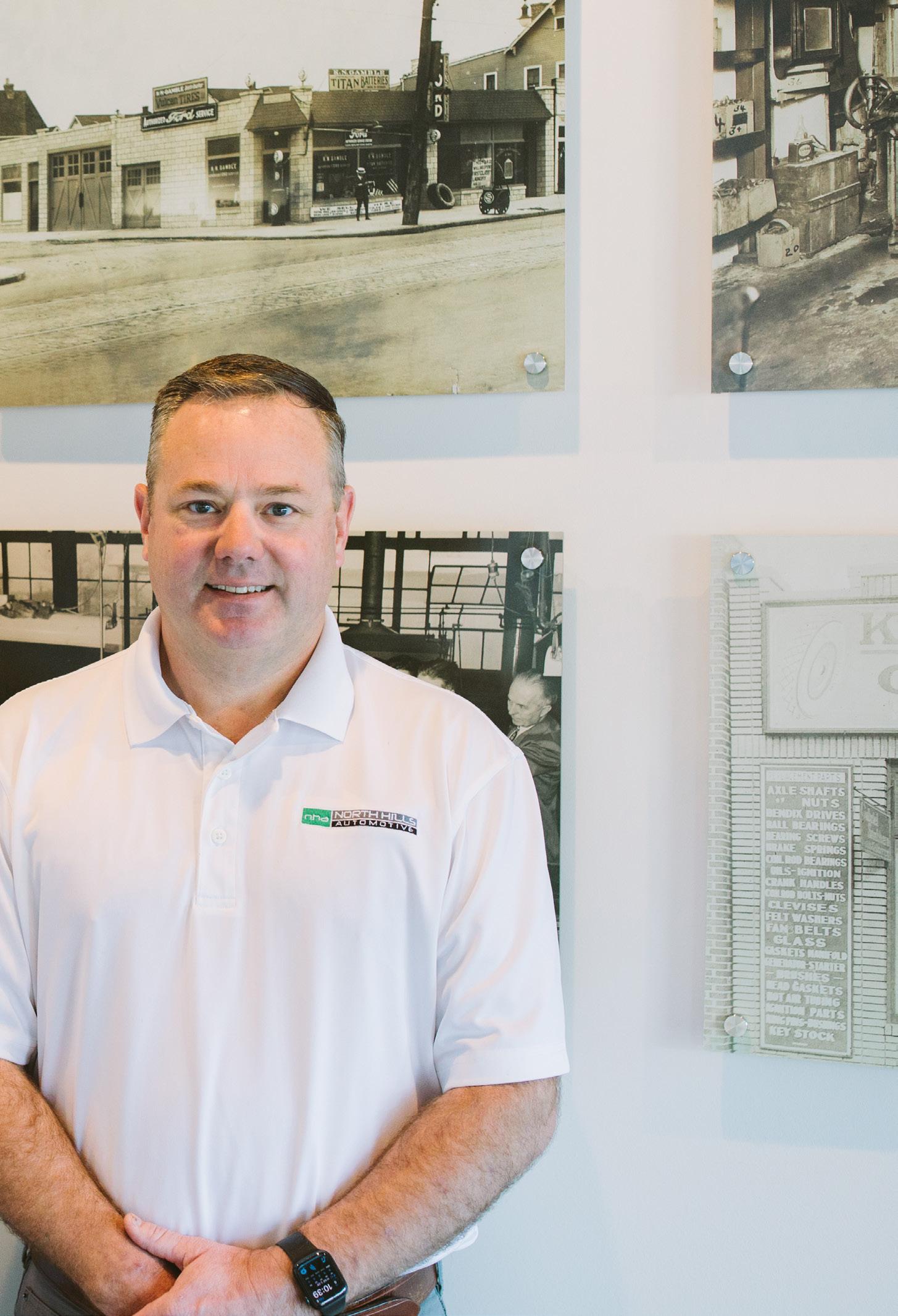
tions but remains a trusted advisor to Jacob, 46, and his brother Rob, 30, senior manager of one of the company’s two shops.
While Jacob Gamble has downsized the business from a high of seven locations, he also has led a dramatic overhaul of its operations that ultimately has increased its profitability and number of vehicles serviced.
“It’s been a wild ride,” he says. “I’ve seen us grow, shrink, and almost go bankrupt, and then I’ve seen a total transformation over the past 10 years. It’s a challenging industry that changes all the time, but I feel like we’re positioned well for the next decade and beyond.”
North Hills has a total of 35 employees at its two shops, one with 18 bays and the second with 10. The business had $7.7 million in revenue in 2025, servicing 11,300 cars with an average repair order of $680. Twenty to 35 cars might be in each shop on any given day.
The business’ 13 ASE-certified technicians are paid on a flat-rate structure, which Gamble feels is the best way to reward punctuality, productivity, and hard work. Shop efficiency rates range from 1.3% to 1.8%.
Since 2013, North Hills has offered its customers a lifetime parts and labor warranty on repairs, following a motto of “Done Right, On Time, First Time, Guaranteed.”
The business also sells a $130 annual inspection package, purchased by 18% to 20% of customers, which includes a 120-point inspection, credits toward four oil changes, and a list of recommended fixes and scheduled service over 12 consecutive months. The tech who writes up the report is paid for that time and also gets recorded jobs whenever they are booked.
“Customers can choose to address any issues found right away, or they can spread them out over their oil change appointments,” Gamble notes. “Either way, they know exactly where they stand and how to plan and budget.”
North Hills’ newest venture is ProFleet Solutions, a maintenance and repair division targeting companies with smaller fleets of two to 20 vehicles. The initiative is led by a dedicated manager
with more than 20 years of industry experience.
North Hill’s bread-and-butter market, however, remains passenger cars and light trucks, including domestic, European, and Asian models and hybrids and electric vehicles.
What has changed most over the past 15 years are the company’s hiring practices and management structure. When hiring, managers have stopped prioritizing techs with incredible resumes and credentials on paper. Instead, they look for those with “good hearts,” or high moral standards, a commitment to family and community, and long-term career and personal goals.
“We’ve realized that we can train the technical side of the business, but we can’t train character,” Gamble says. “What we need are team players with strong work ethics who don’t create drama. Our human resources headaches have dropped to almost zero.”
And sometimes skillsets combine to create the perfect employee—but not always. If necessary, veteran techs are compensated for mentoring new hires for 18 months or longer, providing both skills instruction and tips for succeeding on a flat-rate salary.
To help keep turnover low, North Hills leaders also closely monitor financial numbers and daily hours billed by each technician. “We want them to be happy with their paychecks, so we don’t want a slow day to turn into a slow week,” Gamble explains. “The sooner we can address the reasons for a less productive day, the better.”
On the leadership side, North Hills has doubled the number of managers at each location, from two to four, to reduce stress and fatigue and improve communication with technicians and customers alike.
The extra money allocated for those salaries has been offset by doubled sales and improved customer satisfaction scores, as managers have enough time to field all calls and questions, produce higher quality estimates, and take breaks to reset as needed.
The business also has hired the majority of its managers from outside the automotive industry, finding that
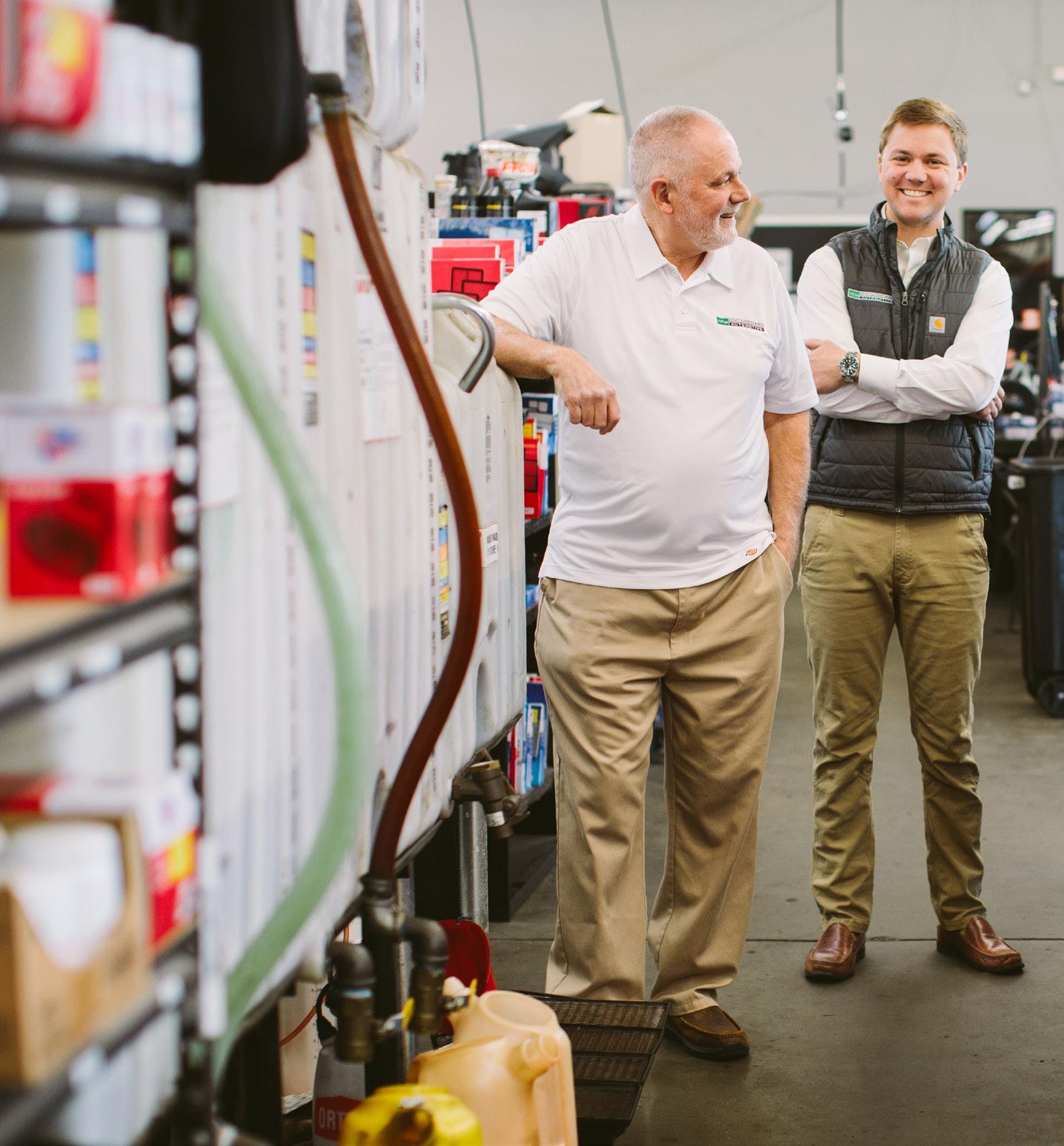
training them on its specific operating procedures is easier than retraining people who have followed a different shop model.
Finally, North Hills has spiffed up its shop spaces and waiting rooms, along with its logos and website, and embraced technology such as cloudbased systems.
Among the wall decorations are photos of the family’s original store in New Jersey from the early 20th century. Fascinated by the emerging technology of motor vehicles, Ken Gamble, Sr., first opened an “Automotive Department Store” at age 19.
Ken Gamble III, who relocated to South Carolina in 1978, also joined the industry as a young man, working as a mechanic by 18. He spent several years at a Ford dealership before founding his own one-man, one-bay shop in the North Hills section of Greenville.
Over the next 12 years, the company expanded to seven locations. By around 2011, however, that model was faltering
due to economic pressures and an overconcentration of stores in the greater Greenville market.
Jacob Gamble, Ken’s oldest son, opted to trim the company down to its two most successful, high-volume locations. Jacob, who had his first job at North Hills at age 15, has a degree in Business Marketing from Winthrop University.
“Today, we work on more cars with two stores than we did with seven, and we don’t have to go into debt to pay for what we need,” he said. “Our profitability is way up, and our culture is much better, too.”
Rob Gamble, Ken’s youngest son, joined the business on a full-time basis in 2018 after studying Advertising at the University of South Carolina. Like his older brother, he had started working summers there as a teenager, initially sweeping floors.
“When we were out in public, my dad always seemed to run into people who knew him because of our business,” Rob recalls. “It made me proud. I wanted to carry on the legacy my dad built. It is also very special to get to work with my brother.”
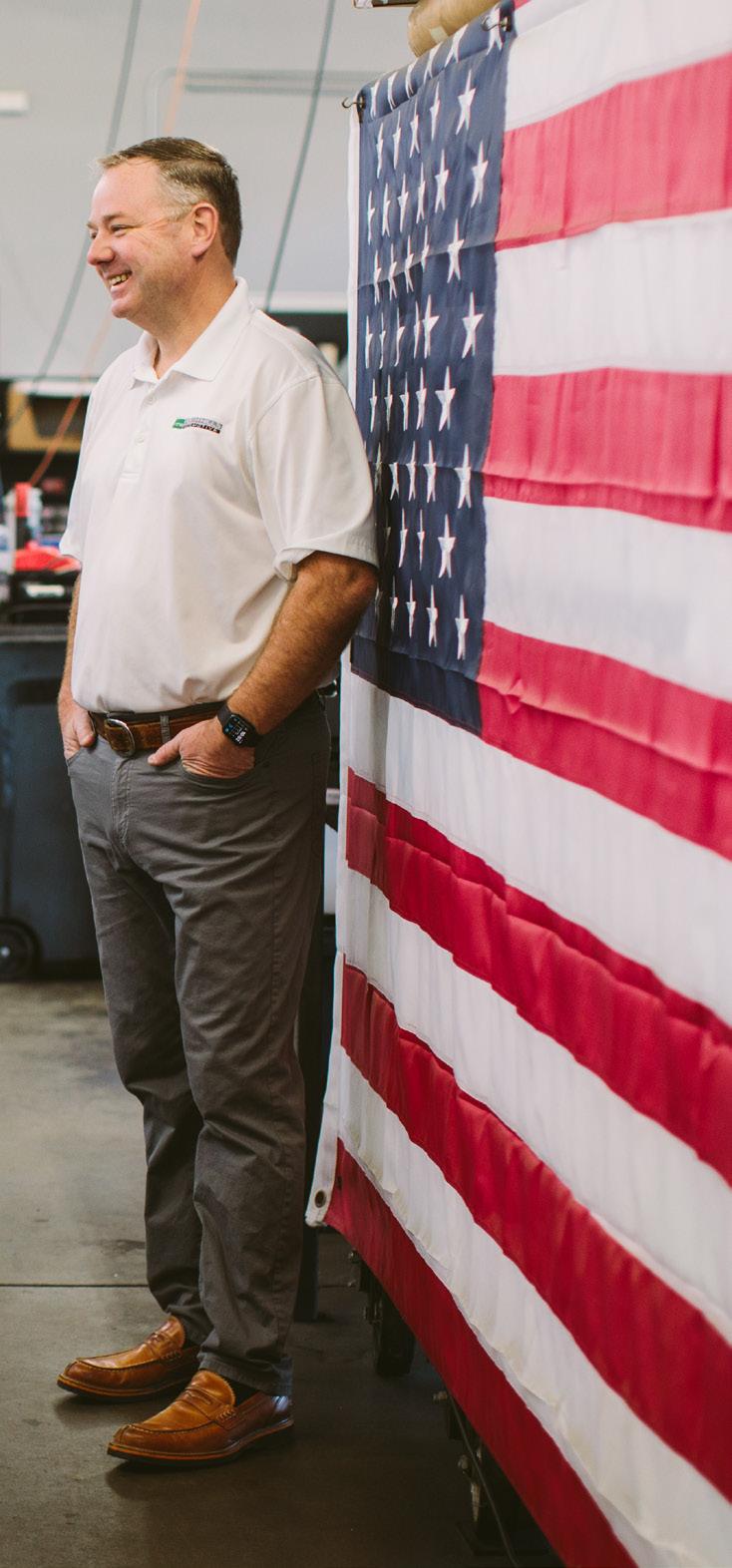
In addition, Rob has known many North Hills employees for much if not all of his life: “They are what make our business special; we would be nothing without them. They have become part of the family.”
The Gambles encourage team members to find a good work-life balance to prevent burnout, a philosophy they aim to model. Jacob, a married father of four, is an active church member and passionate offshore fisherman. Rob and his wife have three children; he also enjoys family fishing excursions and watching South Carolina football games.
As for a potential fourth generation of Gamble auto shop owners, the verdict is still out. The oldest of the group, Jacob’s 18-year-old son, has worked at North Hills during school vacations but soon will head to college with no pressure about his future path.
“My dad never tried to influence me,” Jacob Gamble says. “This was just what I knew, and it also turned out to be what I loved. I’m lucky, because I really do enjoy getting up and coming into work every day.”
Help your employees—and your shop—achieve their full potential with personal development plans
BY NOAH BROWN
In an industry plagued by a neverending cycle of turnover fueled by burnout and stagnation, automotive repair shops are under increasing pressure to retain the talent they have while developing the talent they need.
Despite this pressing need, many owners and managers still rely on an antiquated quarterly or annual performance review structures to give employee feedback and receive input on overall shop operations. These infrequent touchpoints with management are sometimes the only structured conversations employees ever get with their managers.
Rick White, president of 180BIZ and a former shop owner, says it’s time to
leave those reviews in the past.
“These types of reviews just don’t work. They create defensive responses,” White says. “They don’t drive real improvement. If I did something wrong, I need to hear about it now, not six months from now.”
Sara Fraser, vice president of auto business consultant Auto Ignite Management, agrees that development must be continual, not occasional. Additionally, however, she says growth and development are no longer added benefits of the job; the next generation of technicians expects it.
“It’s so important to have a plan of what this could look like or where I could
take this. That’s retention,” Fraser says. “Younger technicians, especially Gen Z, want growth, want education, and they expect a promotion within their first 18 months. We have to get ahead of that.”
Both White and Fraser say the clear solution is creating Personal Development Plans, or PDPs, that are structured, future-focused and are tailored to individual employees.
A Personal Development Plan isn’t another form, and it isn’t a checklist of past mistakes. It’s a living document and an ongoing conversation between employee and manager.
White describes PDPs as “a structured system that replaces traditional performance reviews and creates focused, ongoing daily growth, both professionally and personally.”
That “personal” part matters. In White’s system, employees set both professional goals, such as what an
employee wants to be doing at your shop in the next two years, and personal goals, such as what kind of lifestyle they want to achieve for their family. Fraser says development can’t be vague or imposed from above. PDPs need to have clear goals and be driven by the employee.
“If we give someone a plan and we don’t follow through, we’ve lost their trust,” she says. “And trust is retention.”
Shops must commit to consistency and transparency if they want PDPs to work.
If executed correctly, PDPs can drastically change the culture of a shop, Fraser says. As someone focused on hiring and recruiting, she says that makes PDPs a powerful tool.
“Retention starts in hiring,” she says. “If someone doesn’t want to grow or is just looking for a quick job, that’s not the person a training-focused shop should bring on.”
Fraser adds that throughout all of the interviews she and her team conduct with technicians across the country, two recurring themes keep popping up: growth opportunities and workplace culture.
“Money comes up, but it’s rarely first,” she says. “And when it does, it’s usually about consistency, not the dollar amount. The thing we hear most is, ‘Is there room to grow?’”
A PDP gives that answer upfront and shows employees that they’re valued beyond just their productivity.
Many shop owners hesitate to discuss “career paths” because their shops are small, which means there isn’t a multilayer hierarchy that provides a clear and easy progression path.
Fraser says that limitation is more imagined than real.
“I don’t think growth should be tied to a title,” she says. “It has to be tied to growing skill and capability.”
In smaller organizations with only a level or two between employees and the boss, a PDP instead might focus on developing specific skills. In the case of repair shops, that may look like prioritizing ADAS calibration certification, becoming the alignment expert, or learning how to diagnose EV systems.
Generally speaking, PDPs should
help employees move from needing assistance with something to working independently before eventually gaining the ability to mentor others as an expert.
And though Fraser said money isn’t necessarily the first thing that comes up in interviews, it is still a crucial part in upward growth. Successfully working through a PDP should come with compensation adjustments.
“Don’t tie growth to years of experience,” Fraser says. “Tie it to skill.”
White says PDPs should be aligned with both the shop’s goals and the technician’s personal drivers. He teaches shop owners to identify seven motivators:
1. Personal growth
2. Life experiences
3. Family
4. Physical dreams
5. Material dreams
6. Legacy
7. Career advancement.
“It’s time for you to be one of those people who sees more in your team than they see in themselves,” he says.
Both experts emphasize the importance of co-creating the plan, not dictating it.
Fraser says the most important questions are determining what success looks like for both the shop and for the tech.
“You need clarity on both sides,” she says. “Success needs to be measurable and mutually understood.”
White adds that motivation must be intrinsic, not forced. That means giving employees autonomy to choose what they want to learn and letting them have meaningful practice—which will inevitably come with mistakes.
“We make learning unsafe, then wonder why people stop trying,” White says. Giving employees the power to chart their own path gives their work a new sense of purpose, which White says is crucial.
“We have to remember what the first word is in PDP: personal,” he says. “Otherwise, it’s your goal, not theirs.”
Both Fraser and White outline clear frameworks for keeping PDPs alive throughout the year.
Fraser follows a 30/60/90-day check-in
process on an employee’s goal, as well as including a six-month and one-year review to assess progress, recap what’s working and what’s not, and to set a new goal if the previous one has been achieved.
“If we’re not measuring it, we’re not managing it,” Fraser says. “And we have to protect that time. Chaos can’t get in the way.”
Timelines must include flexibility, she adds. If a technician isn’t where the plan said they’d be at six months, the next questions are why and what needs adjusting.
White’s system embraces even more frequent communication. In addition to an annual game plan meeting and quarterly check-ins, he includes monthly five-minute “huddles” and daily “toolbox” talks, giving employees regular access to feedback.
“One of the biggest problems in shops today is under-communicating,” he says. “Feedback is never micromanagement. Micromanagement is telling you what to do.”
Fraser says the biggest pitfalls to avoid are vague goals, too few check-ins, tying growth to years instead of skills, and making promises without following through.
PDPs demand commitment. White says if you start, you have to stay on course.
“Don’t drop the ball,” he says.
When PDPs are done well, they don’t just develop technicians. They can transform your shop. White says when your technicians are happy, even customers feel the difference.
“When your team feels supported and fulfilled, they go the extra mile,” he says. “Business growth and innovation are by-products of that.”
Fraser says PDPs make the shop the kind of place technicians are searching for: stable, supportive, trustworthy, and invested in their future.
Perhaps most importantly, successfully implemented PDPs help establish a team-first culture in the shop, helping ensure that you won’t be facing problems by yourself.
“You’re not going to face your business problems alone,” White says. “You’ll solve them as a team.”
Are you prepared to leave your business when the time comes?
BY TESS OWINGS
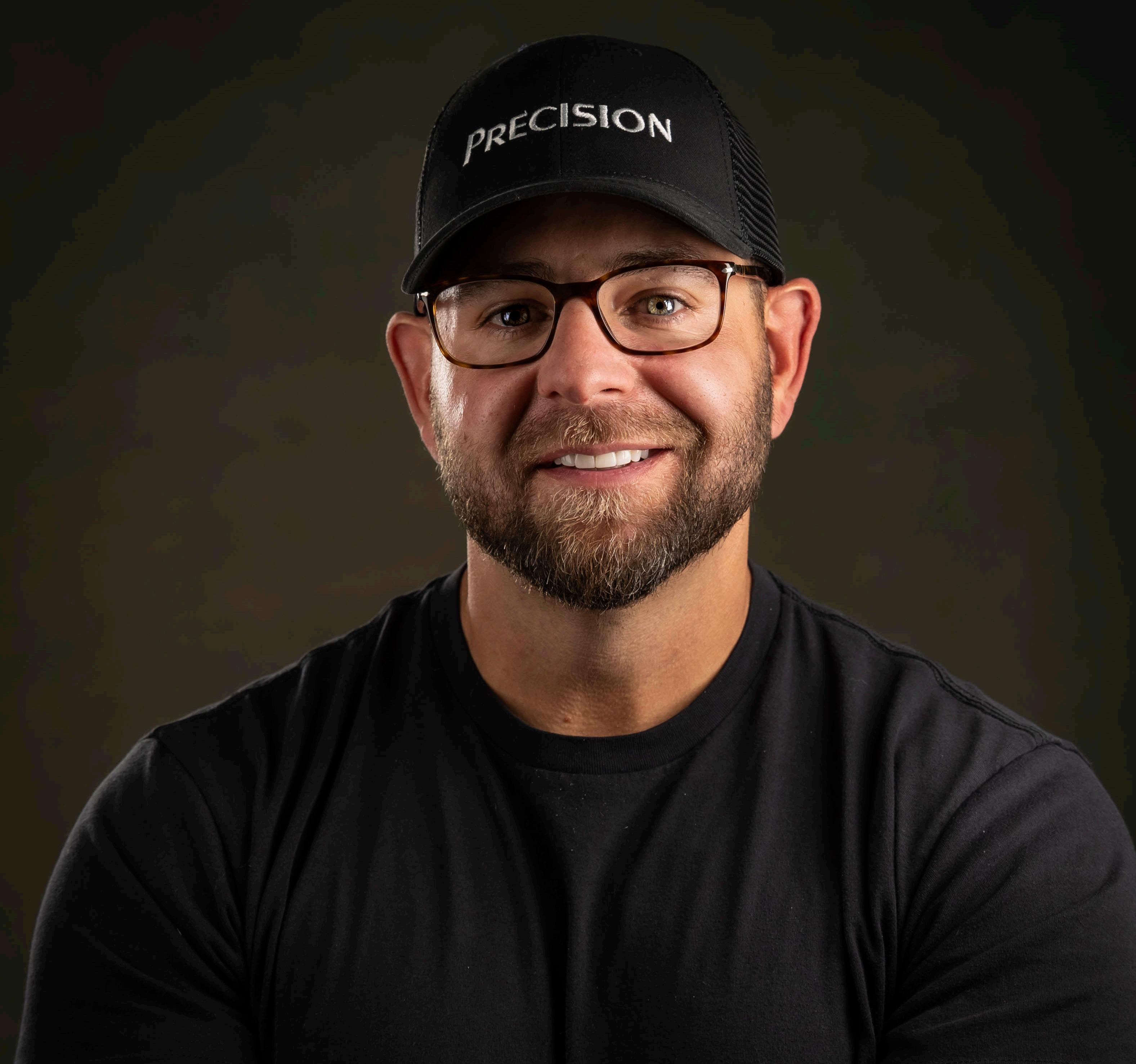
James Stephenson has worked with hundreds of businesses through his company, Lotus Private Equity Group. And he doesn’t hesitate while trying to recall how many had an exit strategy in place to leave the business when he began working with them.
“None,” he emphasizes.
Stephenson, who is a shop owner himself and a founding member of
REV Coaching Group, says that he was no different when he started out. He wasn’t thinking about the end of his career; he was just trying to make it to the end of the day. That quickly changed when he realized that he was struggling and he needed help. He reached out to shop owners that he admired and got coaches to help him, and now he’s paying it forward by sharing
what he’s learned along the way. One of his biggest pieces of advice: Start planning for the future—now. Many shop owners can’t even leave their shop for a long lunch without it falling apart, let alone think about a vacation or an eventual retirement. Stephenson’s group helps by providing aid for shop owners who are having difficulty seeing a light at the end of
the tunnel. His company will either buy the shop outright or work with the shop to build up its value.
“Our industry is facing one of its biggest challenges. Most shop owners don’t have a real exit plan, and as fewer people enter the trades, the pressure is getting worse. Many aging owners find themselves with businesses that depend completely on them, and they don’t know how to transition, transfer leadership, or prepare for the next stage,” Stephenson shared with Ratchet+Wrench.
The owner of Precision Auto Group offers his insight on how to begin thinking about a succession plan.
Stephenson began like many in the industry—with a passion for repairing vehicles but minimal business knowledge. He opened his shop 20 years ago with $600 to his name. After his first day on the job, he knew that he needed to figure out a better way. That first job, he spent all of his money on the parts for the repair and his customer ended up telling him that he was going to go elsewhere unless he agreed to do the job for less. The next day, however, gave him hope. He met a customer that still comes to him to this day, and he realized that there were good people and that he had an opportunity to reframe his mistakes as opportunities.
He began working with the likes of industry veterans like Bob Cooper and Joe Marconi and he was finally able to work on growing the business. He eventually began coaching himself and acquiring businesses and, down the line, he realized that there was a real opportunity to help owners by working with them through a standardized operation and a really great bullpen of people. Out of that vision, Lotus was born.
All of the owners that Stephenson has worked with have had this in common—they work all the time for
what feels like nothing in return, and they have no idea how they’re ever going to leave the company. Sound familiar?
The problem with succession planning is that many start thinking about it way too late and then they run into a multitude of issues. Whether it’s who to leave the shop to, what to value the business at, or how in the world to keep it all from falling apart the second they walk out the door, many owners are absolutely clueless about where to start and how to handle the inevitable time when they are ready to move on.
There are a number of different paths to take when it comes to exiting your business and Stephenson says that he has worked with shop owners in many different scenarios. For shop owners who are looking for a few pieces of advice, Stephenson shares some tips:
1. Decide whether to sell or maintain the legacy. The biggest decision, arguably, is deciding what you want the future of the business to be. Do you want to keep the name and legacy alive, or are you ready to be bought out? Either way, there are companies who can help handle the transition for a buyout or acquisition by lending their expertise in marketing, coaching, staffing, and accounting to help build value.
2. Name a successor. Whether it’s a family member or someone who has worked in the business for years, it’s important to know who you want to lead once you’re gone. Stephenson says he’s seen many situations where the person the shop owner selected is really not the best choice. Before you decide, make sure that individual doesn’t feel pressure; they need to really want it for themself. They also need to have the
right personality type, as not everyone is meant to lead. It takes someone with goals and structure.
3. Get your finances in order. This is a big one and one of the most common mistakes that Stephenson sees. Make sure that your financials are welldocumented and bankable, not stashed in a shoe box. He also advises that shop owners get realistic about what the shop is worth. Just because a shop does $1 million per year does not mean that it’s worth $1 million. This creates false hope as well as an attachment to an emotional price. Speak with someone who knows what they’re talking about and find out the real value of your business.
So, how do you know if you have a good succession plan in place? Take a vacation. Leave for 30 days and don’t come back until that time is up. Stephenson says taking a step like this will let you know if you have the right leadership in place and if there are solid operating procedures in place. If the shop produces the same amount, customers are happy, and no employees leave, you can rest assured that when the time comes, the shop will be ready. If, however, you notice that there are cracks, it’s better to know now while you have time to work on improving it.
The biggest piece of advice Stephenson offers to shop owners is to start thinking about an exit strategy on day one, which he doesn’t think the majority of people do. “Always start with the end in mind,” he notes. He adds that shop owners should get a coach and a good accountant immediately, too. He says that a good boss finds talented people that can help with issues and then gets out of their way. It pays off down the line.
How recognizing personal shortcomings and implementing honest evaluations can lead to better team dynamics and increased profitability.
BY R. “DUTCH” SILVERSTEIN
I’ve spent five decades under hoods, behind counters, and in most facets of this industry from a line tech at Sears to parts sales and owner/operator of my own shop. I’ve seen shops that look like hospital operating rooms and others that look like a tornado just blew through the doors. But regardless of the shop’s cleanliness or size and brand of the toolboxes in the bays, there is one universal constant I’ve observed: The biggest bottleneck in any automotive business isn’t a back-ordered part or a shortage of A-techs.
It’s you. It’s me. It’s mistakes made by the owner. That’s where managerial introspection comes in. It’s the process of turning the diagnostic process inward. And let me tell you, it’s a hell of a lot harder than finding a CAN bus fault.
Why is introspection so difficult? Because as shop owners, we are conditioned to be the fixers. We provide the answers; we don’t ask for them. To look in the mirror and admit, “I am the reason my staff is disengaged,” or “My inability to delegate is stifling our growth,” feels like a catastrophic failure.
It’s an ego hit. And in this business, ego is the grease that makes us slide right past our own flaws. We blame the economy, the “kids these days” who don’t want to work, or many other reasons. We look everywhere but the reflection in the mirror. But here’s the Dutch Truth: Our shops are a perfect reflection of our leadership—or lack of it.
Implementing a culture of introspection isn’t just about a “one and done” event. It’s a process that few are willing to undertake. Think about it. When a tech brings you a problem, your gut instinct
may be to solve it. But introspection requires you to pause and ask: “Am I willing to be wrong or admit that I don’t know and possibly look bad?” or “Have I provided the tech with all they need to solve this problem?”
That’s a tough question. It’s uncomfortable, but it is necessary if you want to scale. You cannot grow a $2 million a year business with a $500,000 a year mindset. To move the needle, you have to shed the skin of the “Lead Tech” and grow into the “CEO.” That transition is easier said than done.
So, how do you actually implement this without losing your mind? You start with data, because numbers don’t have feelings.
Check staff turnover rates. If those numbers are ugly, don’t look at the customers or the employees first. Look at the processes you’ve built—or failed to build. I’ve seen owners who scream about “accountability” but show up late every morning. I’ve seen owners who demand “transparency” but hide the shop’s financial health from the team. Honest introspection can help you to close the gap between what you say and what you do.
If you want to get serious about this, you need a different set of tools:
• Schedule weekly non-jeopardy meetings with your techs . Get their candid opinion of how things are going.
• Get out of your shop. Join a 20 Group. You need peers who will call you out on your nonsense.
Introspection is the most expensive tool you’ll ever buy because it costs you your pride. But the ROI is astronomical.
When you start being a “leader,” the shop can begin to breathe. Your techs feel more comfortable taking ownership. Your service advisors start making recommendations from a place of confidence rather than fear. In the movie, “Top Gun,” Pete “Maverick” Mitchell is told, “A good pilot is compelled to always evaluate what has happened so he can apply what he’s learned.” A good shop owner must do this as well or they, too, may crash and burn.

R. “Dutch” Silverstein, who earned his Accredited Automotive Manager Certificate from AMI, owns and operates A&M Auto Service, a seven bay, eight lift shop in Pineville, North Carolina. Dutch was a captain for a major airline earning type ratings in a variety of aircraft including the Boeing 767/757, 737, 200, 300 and 400 series, Airbus 319/320/321, McDonnell Douglas MD80/DC9 and Fokker FK-28 mk 4000 and 1000. After medically retiring, he transitioned his parttime auto repair business into a full-time occupation.
dutch@dutchsgarage.com