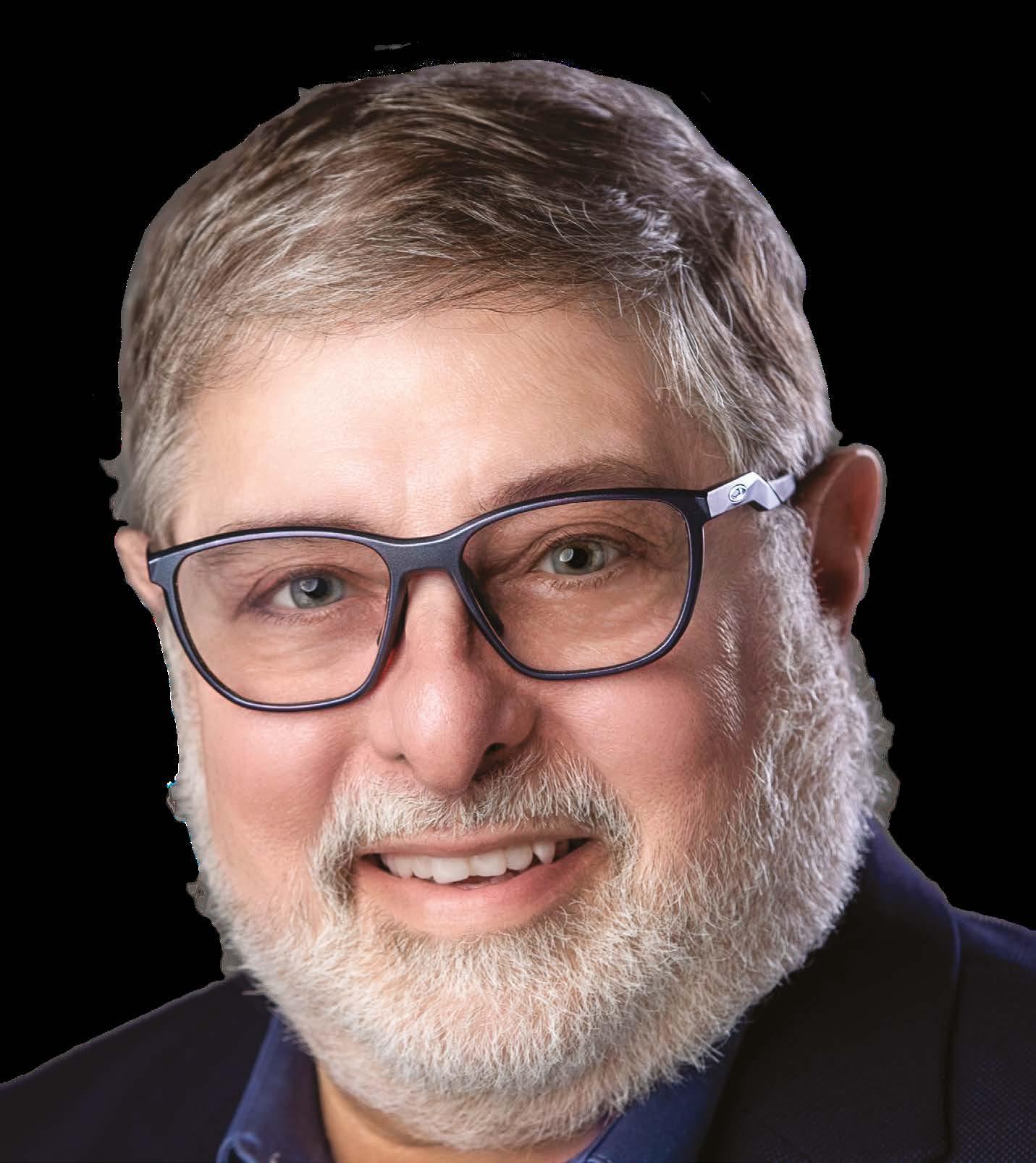
Managing Director, Content & Editor in Chief Paul J. McLane, paul.mclane@futurenet.com, 845-414-6105
Content Producer Nick Langan, nicholas.langan@futurenet.com
Technical Advisors W.C. “Cris” Alexander, Thomas R. McGinley, Doug Irwin
Contributors: Michael Baldauf, David Bialik, John Bisset, Edwin Bukont, James Careless, Ken Deutsch, Todd Dixon, Mark Durenberger, Charles Fitch, Donna Halper, William Harrison, Alan Jurison, Paul Kaminski, John Kean, Mark Lapidus, James O’Neal, Jim Peck, Mark Persons, Jeremy Preece, John Schneider, Gregg Skall, Dan Slentz, Randy Stine, Tom Vernon, Chris Wygal
Production Manager Nicole Schilling
Senior Design Director Lisa McIntosh
Senior Art Editor Will Shum
ADVERTISING SALES
Senior Business Director & Publisher, Radio World John Casey, john.casey@futurenet.com, 845-678-3839
To subscribe, change your address, or check on your current account status, go to www.radioworld.com and click on Subscribe, email futureplc@computerfulfillment.com, call 888-266-5828, or write P.O. Box 254, Lowell, MA 01853.
LICENSING/REPRINTS/PERMISSIONS
Radio World is available for licensing. Contact the Licensing team to discuss partnership opportunities. Head of Print Licensing Rachel Shaw licensing@futurenet.com
MANAGEMENT
SVP, MD, B2B Amanda Darman-Allen
VP, Market Lead Carmel King
MD, Content, Broadcast Tech Paul J. McLane
Global Head of Sales, Future B2B Tom Sikes
Managing VP of Sales, B2B Tech Adam Goldstein VP, Global Head of Strategy & Ops, B2B Allison Markert
VP, Product & Marketing, B2B Andrew Buchholz
Head of Production US & UK Mark Constance Head of Design, B2B Nicole Cobban
FUTURE US, INC.
Future US LLC, 130 West 42nd Street, 7th Floor, New York, NY 10036
If you submit material to us, you warrant that you own the material and/ or have the necessary rights/permissions to supply the material and you automatically grant Future and its licensees a licence to publish your submission in whole or in part in any/all issues and/or editions of publications, in any format published worldwide and on associated websites, social media channels and associated products. Any material you submit is sent at your own risk and, although every care is taken, neither Future n or its employees, agents, subcontractors or licensees shall be liable for loss or damage. We assume all unsolicited material is for publication unless otherwise stated, and reserve the right to edit, amend, adapt all submissions.
Radio World (ISSN 0274-8541) is published bi-weekly by Future B2B. 130 W. 42nd St, 7th Floor, NY NY 10036.
Periodicals postage paid at New York, NY and at additional mailing offices. POSTMASTER: Send address changes to PO Box 254 Lowell MA 01853.
Please recycle. We are committed to only using magazine paper which is derived from responsibly managed, certified forestry and chlorine-free manufacture. The paper in this magazine was sourced and produced from sustainable managed forests, conforming to strict environmental and socioeconomic standards. The manufacturing paper mill and printer hold full FSC and PEFC certification and accreditation.
Don’t eulogize radio
Howard and Ryan Roberson say the corpse is singing
Paul McLane Editor in Chief
One of the most popular recent commentaries on our website states:
“Those who have written radio’s obituary and left it for dead need to stop, collaborate and listen.”
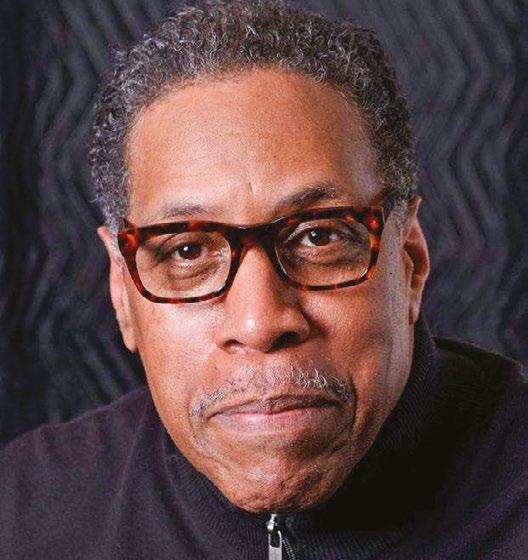
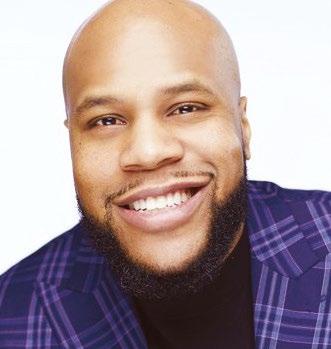
Howard Robertson is founder and CEO of Spotset Media Network, which describes itself as America’s largest network of Black and independently owned radio stations, with 115 affiliates in about 75 unique markets. His son Ryan Robertson is its president. U.S. radio, they argue, is very much alive as a vital advertising-based medium.
“Before anyone mistakes this for a nostalgia argument, let’s be clear: Radio is not just AM/FM towers and dashboard dials,” they wrote in their joint opinion piece.
“Radio is streaming. Radio is apps. Radio is the audio companion people carry in their pockets and play through their earbuds, their smart speakers and their connected cars. Radio is digital, and it has been for years.”
We hear so much gloom about the state of radio. Which is why I like to pause and share comments from those who ardently believe in it, as I did a couple of months ago when I told you about Dave Sturgeon (he who wrote that “radio is the only medium that still respectfully assumes you’re busy”).
The Robertsons point out that according to the latest data from Nielsen, U.S. radio reaches 93% of adults 18+ every single month, making it the top-reaching media platform in the United States.
“Not one of the top. The top,” they emphasized.
“If radio were a person, it would not be the one being eulogized. It would be the one running the room.”
So many marketers rank radio near the bottom when assessing media effectiveness. Yet radio’s ROI “outperforms video, display, podcasts, television, print, search and CTV.
The medium that media buyers and marketers are least confident in is outperforming everything they are most confident in.
“That is not a minor discrepancy … it’s a multi-billion-dollar blind spot sitting in plain sight.”
I love that.
The Robertsons are not apologists for big impersonal radio run from a distance. They know where radio’s
Howard Robertson
Ryan Robertson
power comes from.
“Broad awareness is easy to buy. What is genuinely difficult, and what actually moves people from exposure to action, is local relevance.
“Radio has always been built on exactly that. … Local radio advertising is the most direct, human and immediate call-to-action available to marketers who want to influence what people actually do in their own communities.”
Radio, when used correctly, builds trust.
“A listener who tunes in to the same station every morning on their commute has a relationship with
“Algorithms can’t create years of earned loyalty, built one market and one community at a time.
that station. They know the hosts. They trust their recommendations. Algorithms can’t create years of earned loyalty, built one market and one community at a time.”
The Robertsons say that for a media buyer, the question that matters is not just “How many people will this reach?” but “How many people will this move?”
No other medium, they said, provides live announcer reads with genuine personality, personal appearances, remotes, promotional tie-ins and customized audio creative built around a given market and community.
“Radio is not just holding on. It is not just surviving. It is reaching nearly every adult in this country every month, speaking their language, in their market, through longtrusted voices.”
To read their commentary, go to http://radioworld.com and put “Robertson” in the search field.
My own view about the state of radio today is more cautious, but I think the Robertsons are correct that “group think” is a malaise among national marketers and more than a few people within radio itself. It’s useful to be reminded of some basic facts staring back at us about the ongoing power of our medium.
As always, let me know what you think. Comment on this or any article. Write to radioworld@futurenet.com with “Letter to the Editor” in the subject field.
Writer Randy J. Stine
Bert Goldman: A booster for broadcast innovation
The recipient of the NAB Radio Engineering Achievement Award has
“never stopped learning”
Bert Goldman has had a decorated career, spanning more than 50 years.
For many, he’s best known for his work as senior technical advisor to GeoBroadcast Solutions. He helped refine its synchronized FM booster technologies, used in MaxxCasting systems that combine radio and cellular technology to enable stations to maximize signal penetration in a variety of ways.
And now that GBS has gained FCC approval for its ZoneCasting geotargeting technology, Goldman has been busy planning installations of program-originating boosters. He estimates he has filed more than 100 FM booster and translator applications and devoted many hours to system testing, design and FCC paperwork over the past 15 years. He has visited India three times for testing of GBS booster technology there.
But in the course of his career Goldman also has led engineering departments of iconic radio companies such as ABC/Disney Radio, Nationwide Communications, Patterson Broadcasting and Shamrock Broadcasting. Today he owns and runs Goldman Engineering Management.
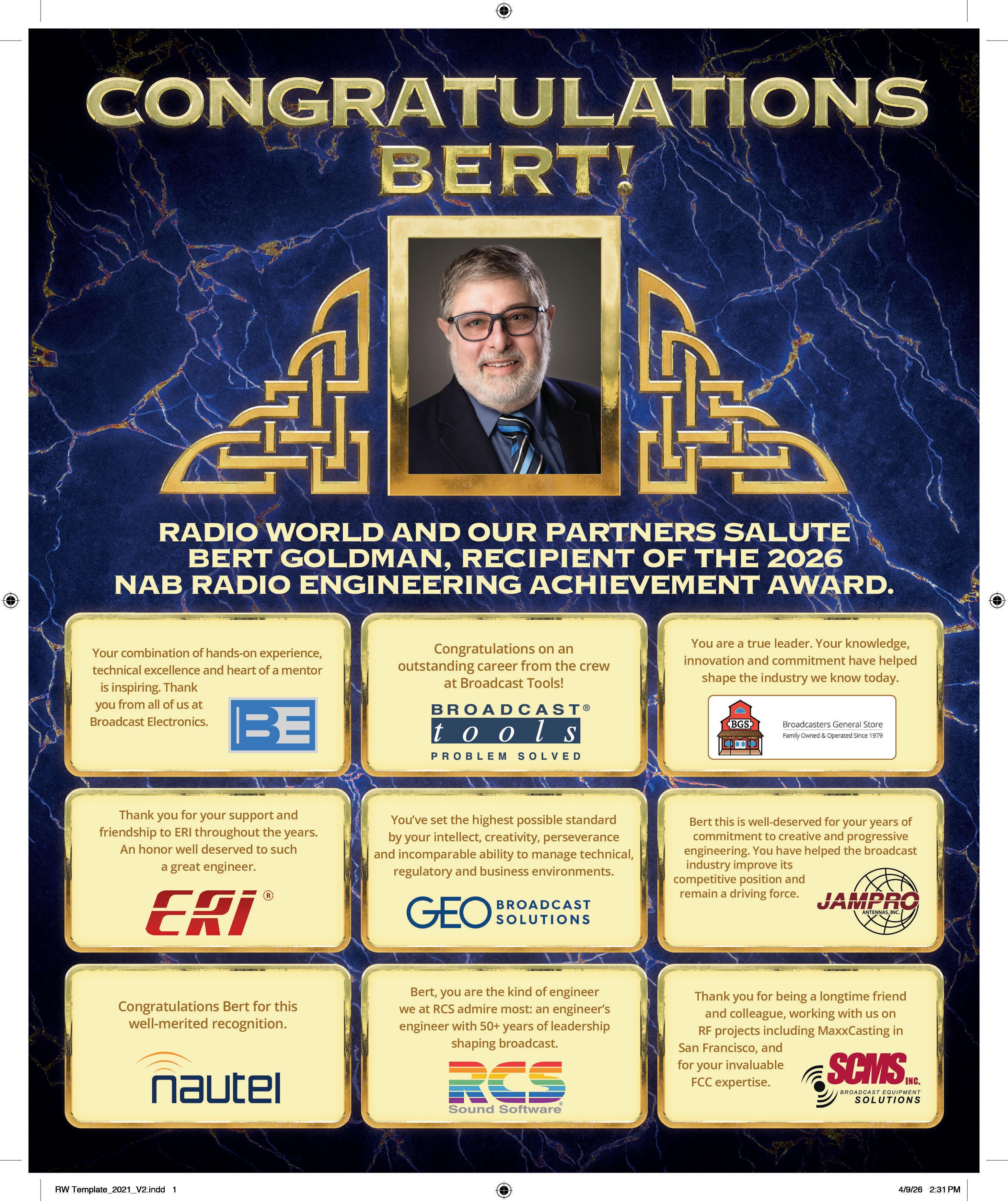
Now he has been recognized for his work by the National Association of Broadcasters, which named him recipient of its 2026 NAB Radio Engineering Achievement Award.
“A nationally respected expert in AM and FM spectrum analysis, Goldman has helped broadcasters improve performance, expand coverage and enhance asset value,” in the words of NAB.
“His work spans station construction, technical operations and regulatory compliance, and he is widely regarded for his deep expertise in FCC rules, FM booster and translator engineering and directional AM antenna system design.”
The author is Radio World’s lead news contributor.
Above
Bert Goldman adds KQED(FM) as the sixth station in the MaxxCasting node covering Pittsburg and Antioch, Calif.
Engineering Achievement
The development of MaxxCasting
While Goldman, 72, has managed capital budgets, built studios, directed regulatory compliance and developed technical strategies throughout his career, it’s his work with GBS that has grabbed headlines.
GBS founder and CEO Chris Devine came to Goldman around 2011 with what Goldman felt was a crazy idea.
“I’d known Chris for years and years, and he had this idea to build these FM boosters. He called me up and he asked me what I thought of it. Quite honestly, I was pretty negative. I didn’t think you could build these things without a significant amount of interference.”
Goldman had been experimenting with boosters since the early 1990s. While some that had good terrain blockage worked better than no booster, he said others “admittedly were spectacular failures.”
He suggested that Devine contact Bill Hieatt, whom Goldman had worked with at First Broadcasting. Hieatt had been an engineer at Motorola designing simulcast pager systems, which use many of the same concepts as synchronized boosters.
“Geo did some really significant development work, but they were having a little bit of trouble figuring out what was necessary, what some of the tolerances needed to be to get these things to synchronize,” Goldman recalled.
“At that point, I came in working with them on a part-time consulting basis.” (Hieatt would pass away in 2020.)
With the help of Cox Media Group radio stations in Florida, Goldman says, GBS conducted a significant amount of field testing of synchronized FM boosters. He said the experimental systems kept getting better and better.
“Using things like digital composite was an absolute game-changer. More reliable and less expensive IP circuits have helped. We’ve found that by using at least two internet services, reliability is greatly enhanced, especially for HD Radio,” he said.
“It solved so many problems, getting these things synchronized.”
MaxxCasting uses a single-frequency network of synched booster nodes to increase coverage. Its first deployment was in 2013, and the technology is now in major markets like San Francisco, Chicago and Los Angeles. Audacy has been an active user and recently announced that it will install synchronized boosters in New York City on WCBS(FM) and WXBK(FM).
An important goal for stations is to expand coverage to
help drive more revenue. “There is a cost of putting in the system, but I think that in virtually every case, their ratings and their revenue have increased, more than offsetting the costs,” he said.
While GBS has deployed MaxxCasting on a few Class A FM stations, most of the installations have been on Class Bs.
“Because of so many things like terrain obstruction and interference in some cases, it’s a simple fact that on a Class B FM, nobody gets a solid signal out to the edge of their 54 dBu [contour]. By definition, if you’re trying to get a good 60 dBu signal in your entire coverage area but your main coverage area extends to the 54 dBu, there are very few places at the edge of your 54 dBu contour where you’re going to actually get a good, listenable signal using only your main transmitter,” he said.
“So what we’ve done is put in these smaller transmitters, the boosters, and synchronize them. We’ve been able to extend the good signal to the edge of the protected contour — and sometimes a little beyond. The signal is significantly improved.”
“A nationally respected expert in AM and FM spectrum analysis, Goldman has helped broadcasters improve performance, expand coverage and enhance asset value. ”
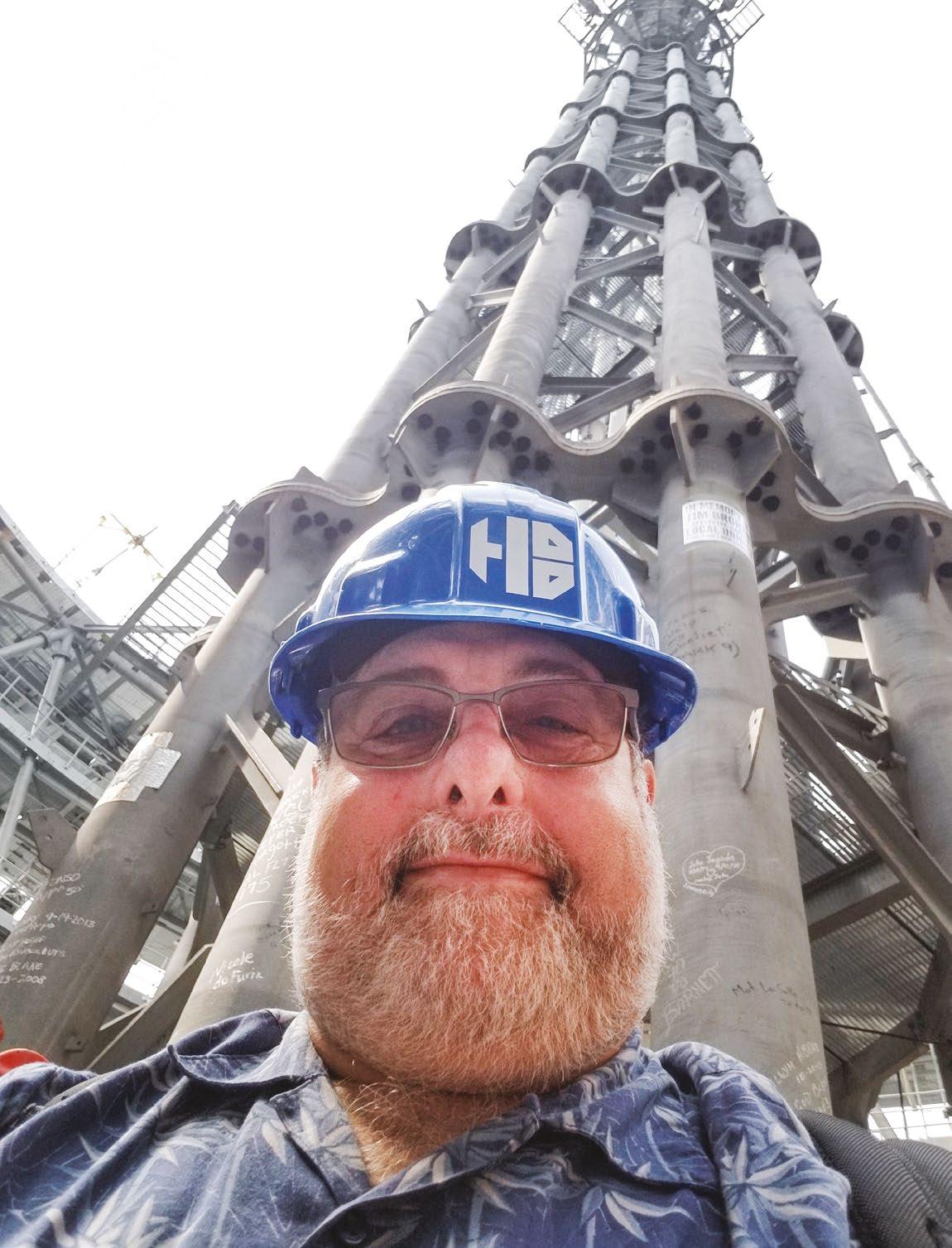
Right On the roof of One World Trade Center in New York.
Engineering Achievement
Goldman says it’s critical that the specialized equipment is installed correctly.
“The precision required to successfully deploy these systems is far greater than the precision that engineers are historically used to dealing with in broadcast transmission systems.”
Importantly, GBS has been able to get MaxxCasting to “play” with HD Radio.
“We’ve been able to work with Xperi and the codec and transmitter manufacturers so that it works well. The weakest link with HD implementation is the IP connection. You really need a rock-solid IP connection. So we’ve standardized: Any installation we do that includes HD requires redundant connectivity.”
Goldman believes educating engineers and managers about the benefits of MaxxCasting is important. He feels the technology is “tried and proven and has been extremely successful.”
He cites Bonneville’s MaxxCasting system in San Francisco, where broadcasters must deal with the East Bay Hills and their effect on coverage of communities like Concord, Walnut Creek, Pleasanton and many others, affecting hundreds of thousands of people.
Many stations in the San Francisco market have used a booster on Mt. Diablo. It fills in some East Bay communities, Goldman said, but because it overshoots the East Bay Hills, in some cases it causes interference to almost as many people as it benefits.
Goldman designed a five-site solution for GBS involving lower boosters that align with the propagation from the main transmitter.
“When our tuning experts Vern Egli and Paul Littleton finished aligning all six signals, the result was amazing. Even HD reception when driving between
booster nodes is rock solid,” he said.
“We had trouble getting clients initially, but Bonneville took the plunge a few years ago, and since then, we’ve added stations from Audacy, so that five of the six top-rated stations in San Francisco are now using the system. We’re now managing six stations, and doing the math, that’s 30 transmitters, all synchronized (with HD) and combined into five antennas.”
Noncommercial KQED(FM) was added recently, the sixth station in the MaxxCasting node covering Pittsburg and Antioch, Calif. He calls these “the fastest-growing communities in the Bay Area, with virtually no listenable FM stations without MaxxCasting.”
“The system has significantly benefited the stations using it, and it’s a great personal satisfaction, improving FM quality for about 1 million people in the San Francisco market.”
GBS has also added two nodes to the San Francisco system for two stations using MaxxCasting to improve coverage in San Jose.
Geotargeting
ZoneCasting is a related but separate technology focused on geotargeting, presenting additional design challenges in managing transition and interference areas. It has been controversial in some circles, and the NAB itself pushed back hard against it at the commission.
ZoneCasting uses a series of FM boosters to air unique programming in specific coverage areas. Such use of boosters was not allowed previously by the FCC, and the commission only allows it for three minutes per hour now. Two stations have deployed it, with 10 more planning to do so, he said.
“Engineers really aren’t interested in ZoneCasting right now. They’re not going to be the ones deciding to do it anyway. It’s more of a sales and management decision,” Goldman told Radio World.
The challenge in designing such systems, he says, is ensuring that transition areas don’t experience interference from multiple signals.
“Where we can’t build a transition site successfully — where one traveling through the transition does so within just a few seconds — any interference area is relegated to an unpopulated area. It doesn’t work out in every situation, and you can always keep throwing boosters at it until you get the interference areas down to pretty much zero. You don’t want to have a big mush zone for three minutes an hour, either.
“HD works out really well, especially if you’re listening to the HD-1, because you drive into the transition, and it drops to analog with the analog booster audio. Then after a few seconds, the HD pops back in.”
GBS continues to work with HD Radio’s developers to ensure seamless transitions between main HD channels and booster signals. “We are working with Xperi to be able to synchronize so there is no noticeable transition whatsoever.”
Above Bert Goldman at WTOP in Washington, D.C.
Engineering Achievement
Separately, GeoBroadcast Solutions has said the FCC should allow broadcasters to stop using main transmitters entirely or to substantially reduce their power.
In a 2025 filing that was prompted by Chairman Carr’s “Delete, Delete” initiative, GBS said stations should be allowed to employ “distributed transmission systems” to serve their communities, using the same coverage and non-interference requirements but with much less expense. It urged “the modernization of regulations that currently mandate the use of a main transmitter by radio broadcasters.”
Challenges and trends
Goldman is optimistic about opportunities for Maxxcasting and ZoneCasting, but AM radio is another matter. He still does the occasional AM antenna design, typically for broadcasters who are consolidating sites and selling off valuable property under their towers.
“There’s a significant amount of consolidation going on with AM facilities — diplexing, triplexing, quadplexing, you name it — to bring all these stations into one site. Now you’ve got four tenants paying to maintain the value of that property,” he said.
“Meanwhile, we’re losing transmitter sites, and people are having to get by with smaller and smaller AM facilities.”
This has been offset somewhat by the fact that many AMs now have FM translators.
“The activity I’ve seen in AM is mostly centered around trying to recover value from the property that they sit on and move them to another location without literally turning in the license. Which, unfortunately, is frequently happening.”
Goldman can see the business challenges facing operators.
“Stations aren’t making the money that they used to, and it’s creating a lot of pressure, both to minimize the technical costs and reduce personnel. A lot of good engineers are being essentially pushed into other careers, outside of broadcasting, and it’s becoming harder and harder to keep stations on the air with a continuous reduction in available funds to do so.”
He says there is already a shortage of competent engineers, particularly for the financially challenged AM band.
Early days
Goldman grew up in the Washington, D.C., area but attended a naval military high school in the late 1960s in Florida.
His father, who served in the U.S. Marines, passed away when Goldman was 8. About being sent
away to school, he said, “I think my mother wanted me to have more male influences in my life.”
In high school, Goldman became interested in radio. In fact, he created a sound-effect sweeper for WWBA(AM) in the St. Petersburg area. He put it on tape and sent it to the station. “They actually used it on the air. I couldn’t believe it.”
At the University of Maryland Goldman began studies in aviation engineering but eventually changed his major to broadcast engineering and management.
During school Goldman was introduced to broadcaster Everett Dillard, owner of WDON(AM) in Wheaton, Md. Goldman asked for a job and he was soon mowing the grass at the transmitter site, which featured a selfsupporting tower.
“Then one summer, he said that if I really wanted to be in radio, he would put me to work doing all the jobs at the radio station for a few weeks at a time to see what I thought. That included engineering, and I really loved it. And I knew I wasn’t a sales guy after that experience!”
His engineering career began as drivetime board operator and maintenance engineer at WTOP in Washington. He took his first chief’s job and moved to Napa, Calif., at KVON/KVYN, subsequently moving to Shamrock Broadcasting’s KABL in San Francisco as the assistant engineer. He was named DOE in Kansas City for KUDL and WHB, eventually ascending to corporate VP of engineering of Shamrock.
One of Golman’s most memorable projects was when the company purchased a floundering FM in Phoenix in the early 1990s.
“We moved the station from Shaw Butte, north of town, to the big common South Mountain location where it is today. I managed the project, which involved dealing with the city and the tower owners, helping locate and acquire new studio and office space, and designing and building the studios.”
It was a company-wide project, with fellow engineers from Shamrock flying in from stations across the
Typical MaxxCasting Deployment
Courtesy Bert Goldman
Engineering Achievement
country to help.
“We also built the new transmitter facility on South Mountain and got it on the air at the appointed time with five minutes to spare. KMLE was and still is a great station in Phoenix.”
He later held technical leadership positions at Patterson Broadcasting and Nationwide.
At ABC/Disney, Goldman oversaw engineering operations for its O&O radio stations, ESPN Radio, Radio Disney and the ABC Radio Network. He also developed the company’s technical acquisition strategy and managed all related capital budgets.
Consulting business
Goldman has fond memories of managing engineering and construction efforts. But after he began work for Ron Unkefer’s First Broadcasting, the national market for upgrades, move-ins and station projects changed dramatically in the early 2000s when the FCC made it harder to upgrade stations into larger markets.
“I decided that it would be a good idea for me to take the talents that I’ve developed and become a consultant, doing applications and upgrades and physical projects, and the things that I’ve done my whole life prior, including the new skills that I had learned.”
Goldman noted that broadcasters are adopting AoIP consoles and infrastructure quickly, with a big push on the studio side toward cloud and IP-based tech.
“My background has been pretty much analog and RF. I try to keep up with the trends and IP, but it’s become very specialized and advanced, quite honestly. I know engineers who are really good in that department, so I rely on their expertise.”
Goldman focuses now mostly on RF, the regulatory side of broadcast and designing synchronized FM boosters.
He estimates he has engineered upgrades to AM and FM stations in most of the top 25 U.S. markets and expressed pride in creating substantial value for their owners. In total, he has designed and managed the construction of more
What Others Say
“From an allegedly unsolvable triplex in San Jose or an impossible repeater, to a microwave issue in Dallas, Bert stepped in and got it done. He has added value to every company I’ve used him for.
”
— Bill Saurer, now with Buffalo Toronto Public Media
“I am in awe of Bert’s career accomplishments and cherish his ongoing mentorship.
”
— Brian Henry, Henry Communications
“Bert is kind, funny, humble, empathetic and eager to help clients in a jam. His wonderful qualities as a human being help make him an extraordinary choice to solve the toughest of engineering problems under near impossible deadlines.”
— Ernie Sanchez, founding general counsel of NPR
than 50 stations, including studios, transmitter facilities, tower sites and offices.
He is also a member of the Broadcast Technical Society at the IEEE, the Association of Federal Communications Consulting Engineers and the Society of Broadcast Engineers. He has also been active in the NAB National Radio Systems Committee and the NAB Radio Technical Committee.
There have been scary times running a business, yet: “This has been great for myself and the family,” said Goldman, who resides in Auburn, Calif., with his wife, Sharon. He has four children and four grandchildren.
“I’ve been able to continually expand my horizons and get better and better at what I do. I’ve never stopped learning, and that’s a good thing to do.”
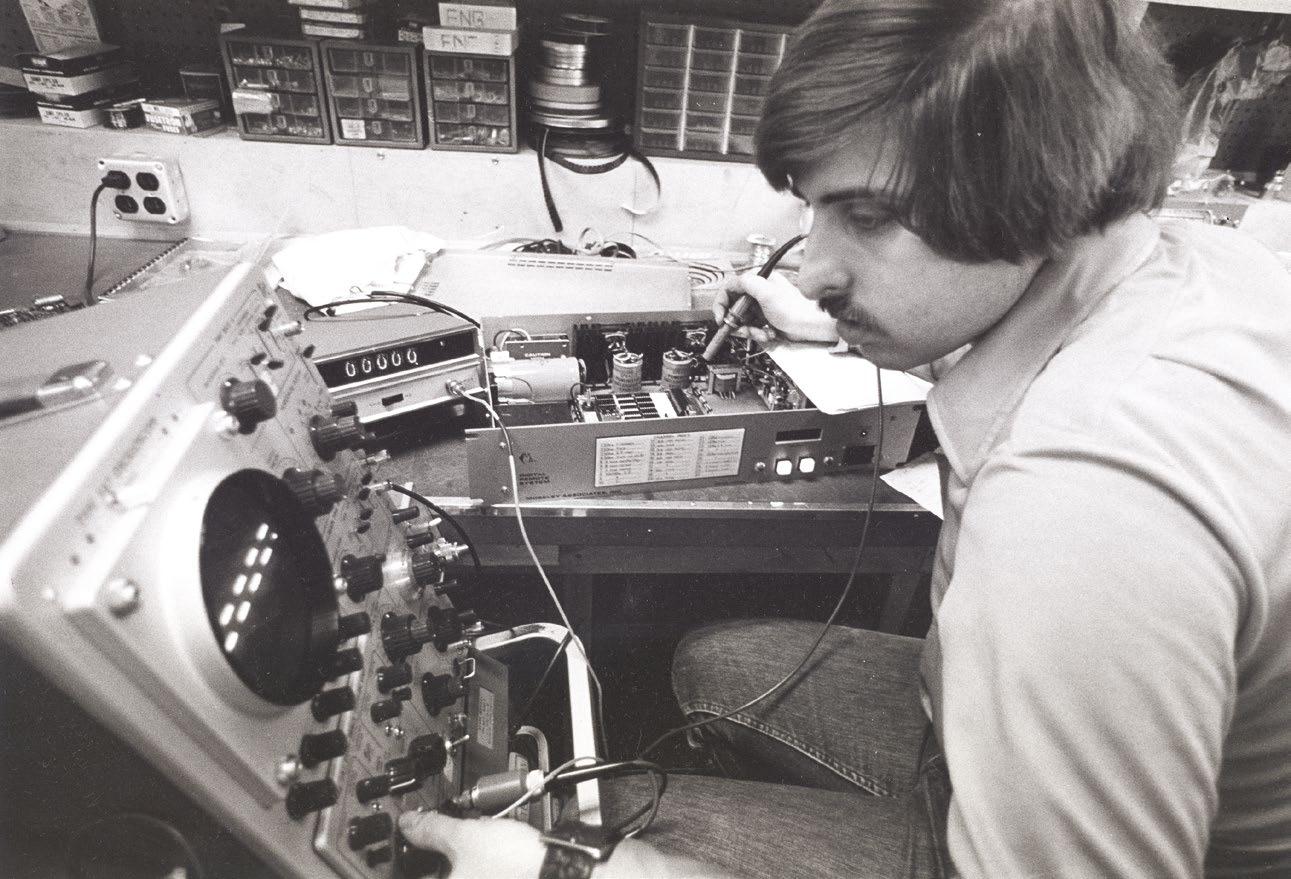
Above In his Nationwide Communications days.
The author is in his 35th year of writing Workbench. He handles western U.S. radio sales for the Telos Alliance and is a past recipient of the SBE’s Educator of the Year Award. Tips Please Workbench submissions qualify for SBE recertification credit. Email johnpbisset@ gmail.com
Friend Weller’s home-brew transfer controller
He used parts found around the workbench
Engineer Friend Weller has been busy in retirement with the LPFM he operates, KVWJ(LP), licensed to Alumni Records Inc.
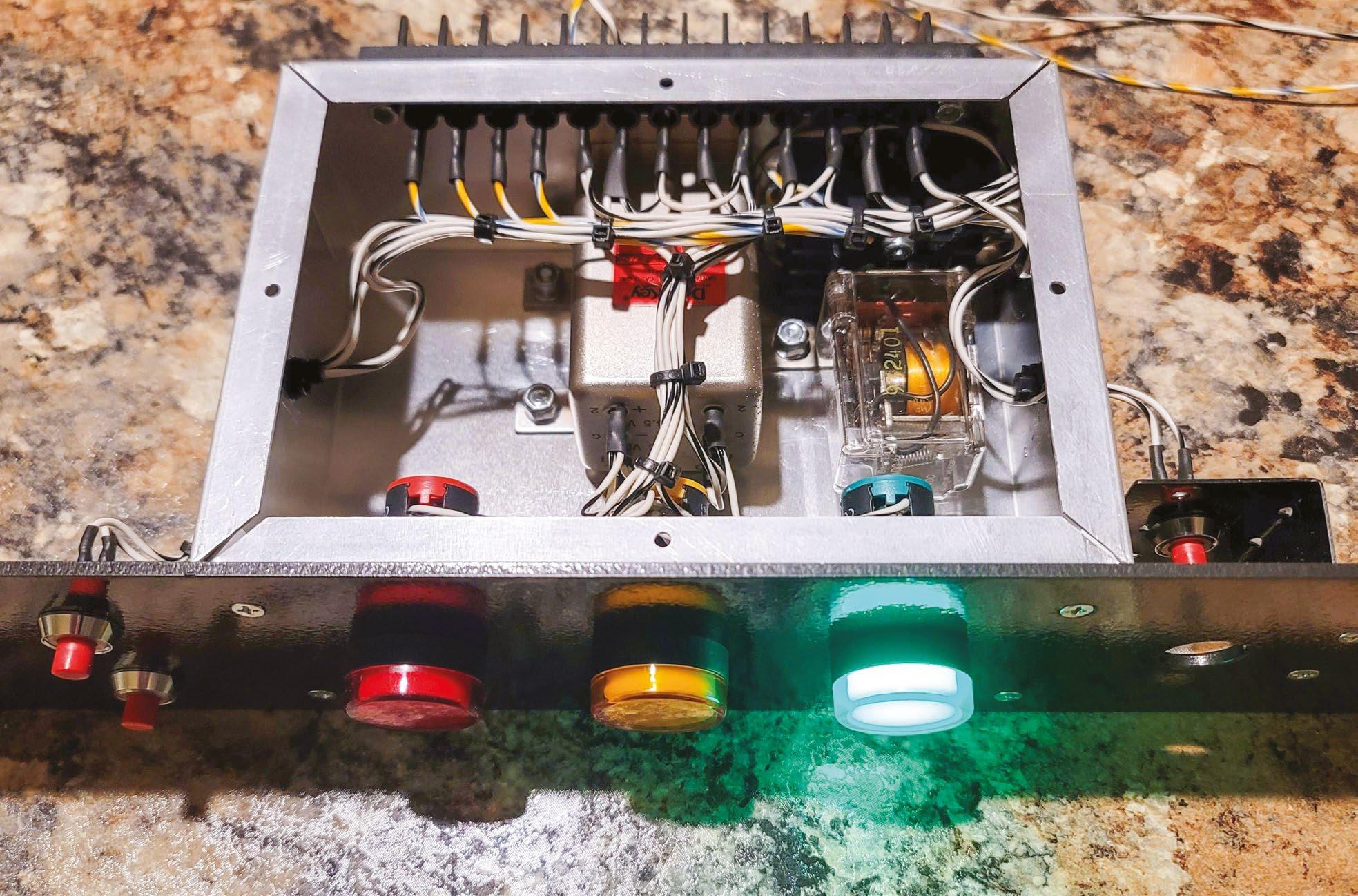
To help with maintenance at its transmission facility, Friend recently built a transmitter transfer switch controller for less than $25 using mostly spare and salvaged parts.
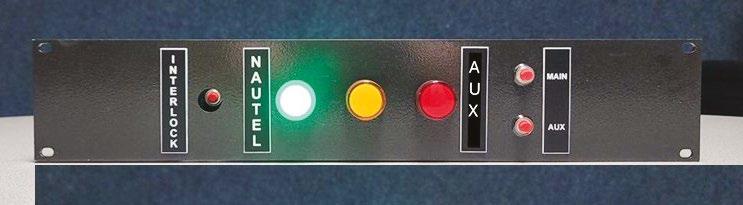
The front panel has three high-visibility LED indicators and pushbutton switches. The components inside include a four-port coax switch and a 3PDT relay.
The recessed front-panel interlock switch interrupts the fail-safes on the transmitters, prior to switching. It also activates the yellow LED to give a visual indication that the interlocks have been opened, preventing hot switching. Only at that point can the transmitters be switched between the antenna and the dummy load.
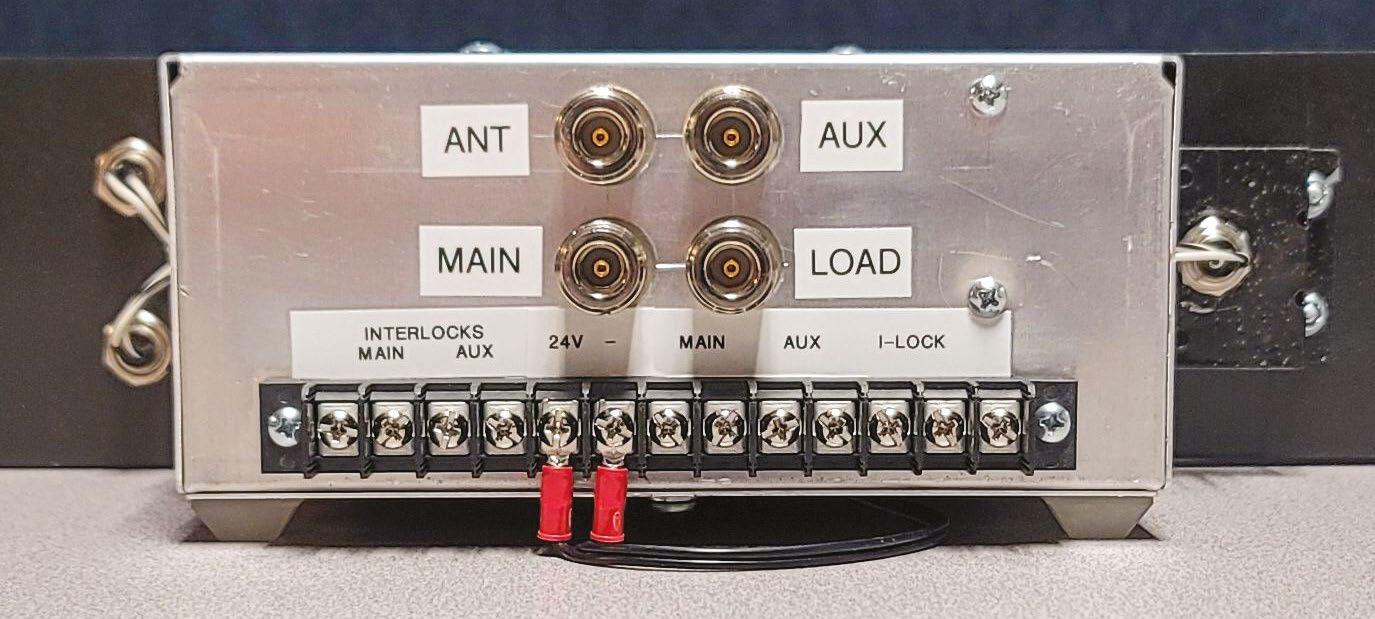
The rear terminals interconnect to the remote-control system as well to the fail-safe terminals on each of the transmitters.
See the schematic at the end of this article, which you can download at https://tinyurl.com/rw-weller
No rocket science here, Friend says — this is a project that demonstrates careful chassis planning and a lot of good, old-fashioned point-to-point wiring, all with an eye towards the credo of the radio broadcast engineer: If you can’t afford it, build it!
Perhaps this project will inspire other grassroots engineering efforts at stations with limited budgets. Share yours with us.
Gary’s streaming advice
When was the last time you consumed your station like a “regular person” would?
Broadcast radio consultant Gary Berkowitz asked that in his newsletter recently. Gary recommends that you pull your station up on your car dashboard and look at it. Forget the audio and the programming for a moment, just look at
Above Friend Weller’s RF transfer switch panel.
John Bisset
what your listeners are seeing.
Is it a blank album art square? Maybe a frozen “Now Playing” field? Worst of all, an internal placeholder from your traffic system that was never meant to be seen by listeners?
The visual presence of your station as viewed on dashboards, watches and smartphones will make an impression on listeners. Is it a good one?
Radio World readers have heard this gospel before in our coverage of reports from companies like Quu, Jacobs Media, Xperi and the NAB.
But Gary points out in radio it’s still common to obsess about the audio but not pay attention to the visual output of stations and their streams.
Gary offers three things you can do this week:
1. Kill the placeholders. Look at what your “Now Playing” field actually says during a stopset. Listeners should see a
Above
The front includes three high-visibility LED indicators and pushbutton switches.
Below Connections on the rear for the transmitter interlocks and remote control.
clean, formatted display.
2. Get the art right. Every song should trigger a clean, highresolution album art push. Blank squares or pixelated thumbnails tell listeners you don’t care.
3. Gary reemphasizes: Go look at your presence on a car dashboard. Pull up your station on Android Auto or Apple Car Play or today’s integrated infotainment systems to verify that the art is clean and the text readable.
Gary’s website is https://garyberk.com.
Also, by the time you read this, Quu will have released its third annual report showing how radio station metadata displays in the 100 top-selling vehicles in the United States. Its dashboard photos reinforce just how crucial your visual presence is in 2026.
I love YouTube
The next time you find yourself with a plastic part in which threads have been stripped, don’t throw it away.
Below Schematic for the transfer switch panel. Download at tinyurl.com/ rw-weller
Visit YouTube to watch a helpful hint posted by a user called SkRolla, who points out that you can replace the factory-threaded bushing with a few turns of wire wrapped around a screw. You then heat the wire and press the screw into the plastic until all the wire is inside. After it cools you remove the screw, and the threads have been restored.
Watch the clip online at tinyurl.com/rw-wire-hack or go to YouTube and search “LexwMRlZmXQ.”
Another resistor mnemonic
Jimmy Poole is a field engineer for K-Love, working in Arkansas, Oklahoma and Missouri. The first resistor color code mnemonic he learned was “Bad Beer Rots Our Young Guts But Vodka Goes Well.”
Our Paul McLane discovered a Wikipedia page that provides at least 60 more mnemonics, not to mention the outdated and inappropriate ones discussed earlier.
Just a few examples:
• Beach Bums Rarely Offer You Gatorade But Very Good Water
• Better Buy Resistors Or Your Grid Bias Voltages Go West
• Badly Burnt Resistors On Your Ground Bus Void General Warranty
(Does anyone remember “ELI the ICE Man”?).
Control and monitoring are no longer peripheral
They
are an operational backbone that connects engineering, IT and management
Julien Libeau is U.S. business development manager for WorldCast Systems. This is an excerpt from the ebook “Trends in Remote Control & Facility Management.”
Julien what’s the most important trend in control and monitoring?
Julien Libeau: The move toward centralized, softwaredriven supervision of highly distributed broadcast networks. Broadcasters are shifting away from isolated, site-by-site monitoring tools and toward unified platforms that provide network-wide visibility across RF performance, audio transport, IT infrastructure and environmental conditions.
This evolution is closely tied to hybrid architectures that combine on-premise systems at transmitter sites with centralized or cloud-hosted aggregation and analytics. Engineers increasingly expect to supervise dozens — sometimes hundreds — of facilities from a single interface while maintaining local resilience and regulatory compliance at each location.
Another major shift is the growing importance of alarm intelligence and operational workflows. Instead of reacting to floods of device-level alerts, broadcasters want correlated alarms, escalation paths and actionable guidance that allow small engineering teams to manage very large footprints efficiently.
These developments reflect a broader operational reality: Fewer people are responsible for more infrastructure than ever. Modern remote control and monitoring systems must therefore emphasize automation, clarity and proactive maintenance — helping teams detect problems early, prioritize responses and keep services on the air with minimal disruption.
What questions should an engineer ask when considering solutions for largescale control and management?
Libeau: They should first ask whether the solution can scale operationally as well as technically. Can it support hundreds of sites without overwhelming staff? Does it provide
More Info
Read more on trends in remote control and facility management at radioworld.com/ ebooks
meaningful aggregation, correlation and workflow tools rather than just raw data?
Interoperability is another key concern. Broadcasters should look for vendor-agnostic platforms that can integrate legacy equipment, modern IP devices and software-based systems within the same operational view.
Security, resilience and deployment are critical factors. How are remote connections protected? What happens if connectivity to a site is lost? Can the architecture support hybrid on-premises and centralized deployments?
Finally, engineers should consider long-term adaptability. Does the system accommodate virtualization, cloud integration and evolving protocols? Can it grow with the network rather than forcing costly redesigns?
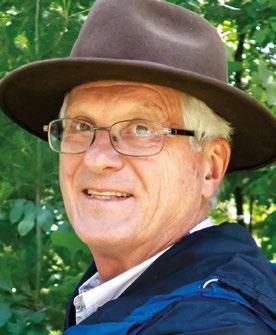
Below Julien Libeau
What else should we know?
Libeau: Remote control and monitoring systems are no longer peripheral tools — they have become mission-critical components of broadcast operations. As networks grow more distributed and workflows become increasingly software-driven, they effectively serve as the operational backbone that connects engineering, IT and
Broadcasters should also view monitoring strategies as long-term investments rather than tactical addons. Systems designed with open interfaces, scalable architectures and flexible deployment models are far better positioned to adapt to future changes, whether that involves new transmission standards, virtualization, cloud adoption or evolving regulatory requirements.
Finally, success depends as much on people and process as on technology. Clear operational procedures, training programs and collaboration between broadcast and IT teams are essential to realizing the full value of centralized monitoring. When thoughtfully deployed, modern remote control and facility management platforms not only reduce downtime — they improve planning, resilience and overall service quality across the entire broadcast organization.
Single-phase vs. three-phase power
Which one is best? It depends!
Writer
When you order a new broadcast transmitter, one of the first questions will be about power. Is it single-phase or three-phase alternating current? If single-phase, it is 208 or 240 volts? If it is three-phase, is it Delta or Wye connected?
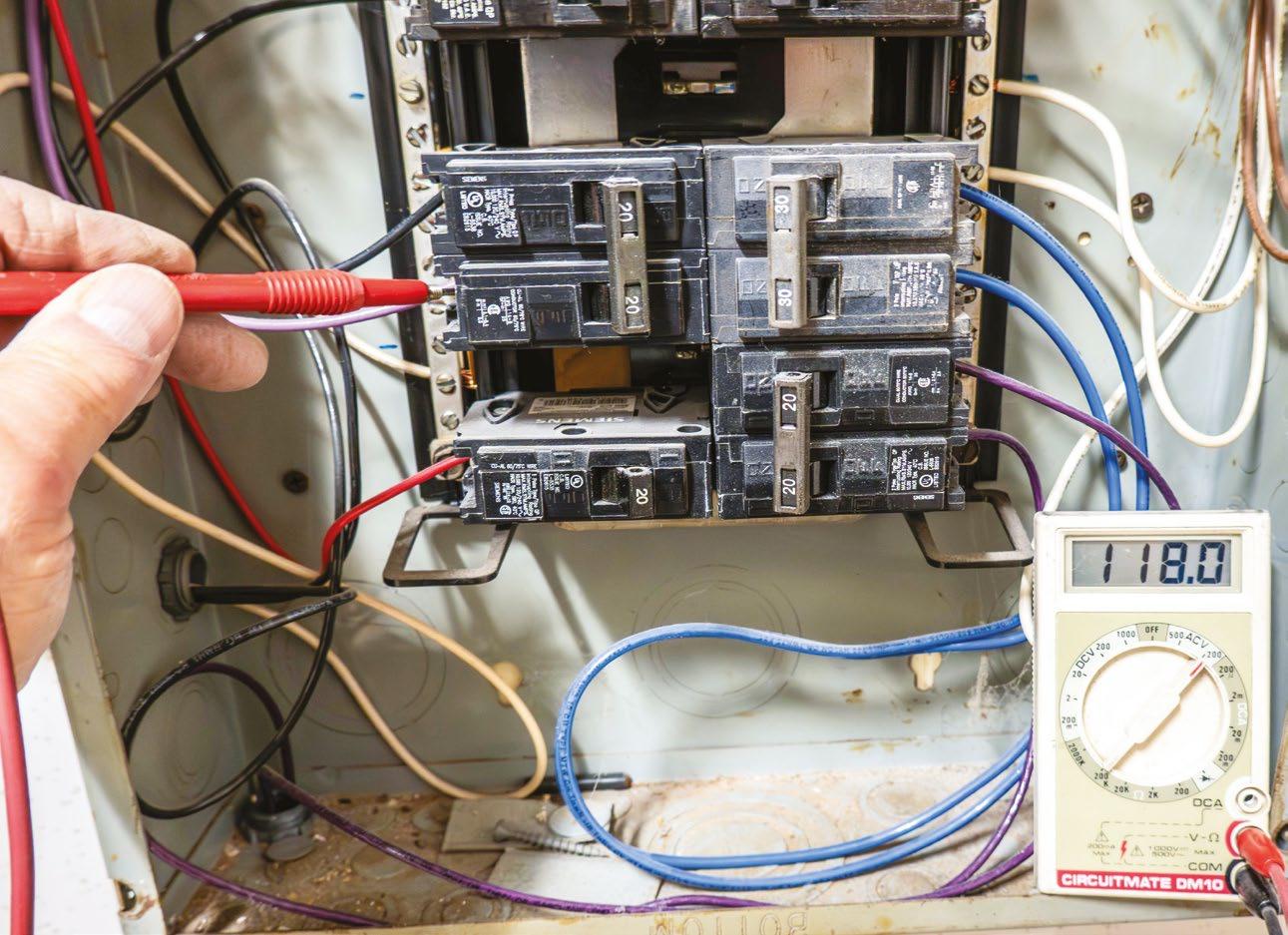
Don’t guess, measure it for yourself with a multimeter, as I described in a recent Radio World article. Use caution when measuring in an electrical service panel (Fig. 1).
You will find 240-volt single-phase service used for homes, most studios and many transmitter sites. Center-tapped, it has two 120-volt circuits for equipment racks and lights, along with plug-in devices and numerous wall-wart power supplies. Heaters and air conditioners often require 208–240 volts. That single-phase power is derived, by the power utility, from three-phase farther up the power line.
Phase
What is this thing about phase?
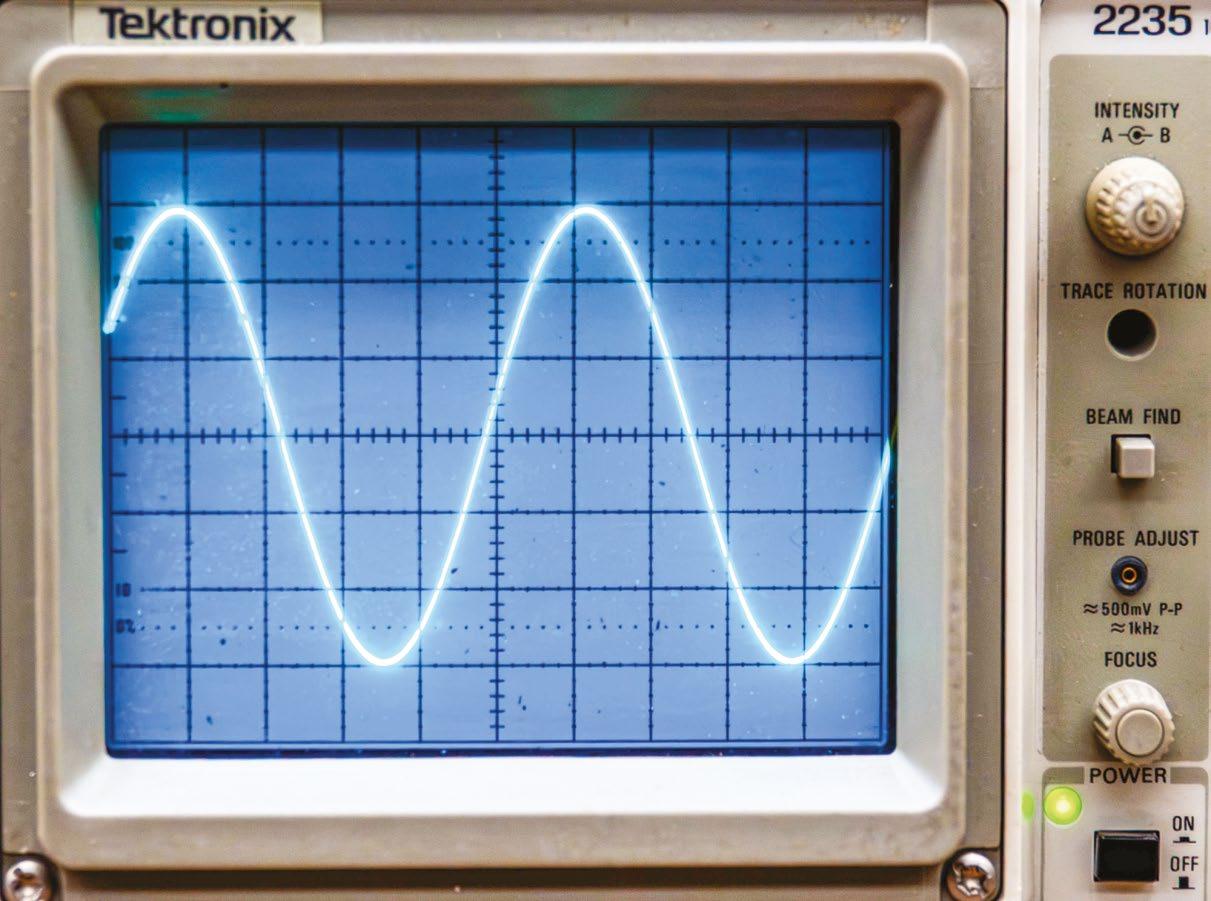
You might remember an article I wrote in 2013 about oscilloscopes (find it on the Radio World website by Googling “Your Scope Is a Tool for All Seasons”). That tool allows us to see voltage rising and falling at a periodic rate. Fig. 2 shows an oscilloscope displaying a 60 Hz sine wave, which is the power we all use. With 60 cycles per second, it has a wavelength of 3,100 miles at the speed of light. That is 16.7 milliseconds of time between voltage peaks.
Divided by three, it is 5.66 milliseconds between a voltage peak on one phase of three-phase power and the next. Said another way, there is a 120-degree phase difference from winding to winding, for a total of 360 degrees when the three-phase cycle is complete. Our nation’s electrical “grid” is three-phase because that is the most efficient way to send
power over long distances. Locally, they often start with 13.8 KV or 4.46 KV, then step it down in transformers for 120- and 240-volt consumer consumption. Single-phase power comes from two legs of a three-phase circuit. The power company uses transformers called tubs or pole pigs on utility poles. The latest innovations, as you probably know, are ground-mounted transformers used with underground cables.
As mentioned, three-phase power has a 120-degree phase difference between each of the three lines/legs. This kind of power is made in generators that are much
Mark Persons CPBE, CBNT, AMD
The author wrote in January about measuring station performance.
Top right
Fig. 1: Measuring voltages in an electrical panel.
Right
Fig. 2: A 60 Hz sine wave on an oscilloscope.
like giant electric motors, except the generator shaft is turned by a device like a water wheel or turbine in a hydro generating plant or even a nuclear facility. Motor-driven backup power generators work that way.
Three-phase power is used to feed large transmitters and other high-demand equipment like air conditioners efficiently. The wire size is much smaller, and electrical panels handle less current per conductor while delivering the same number of watts.
Delta vs. Wye
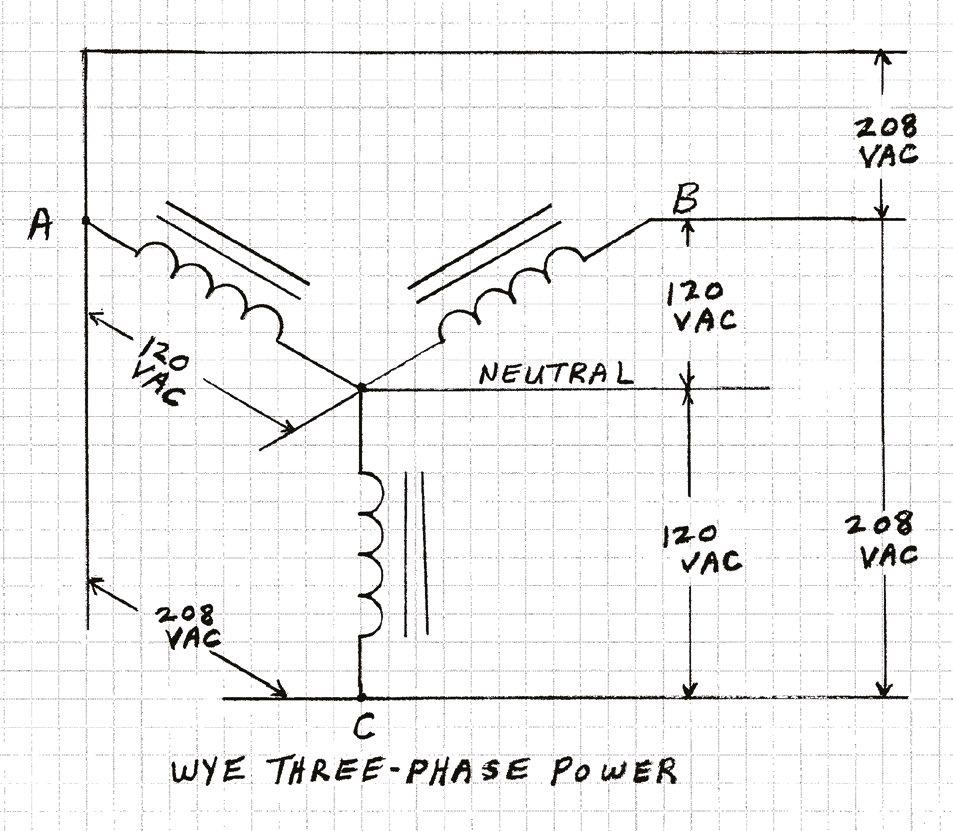
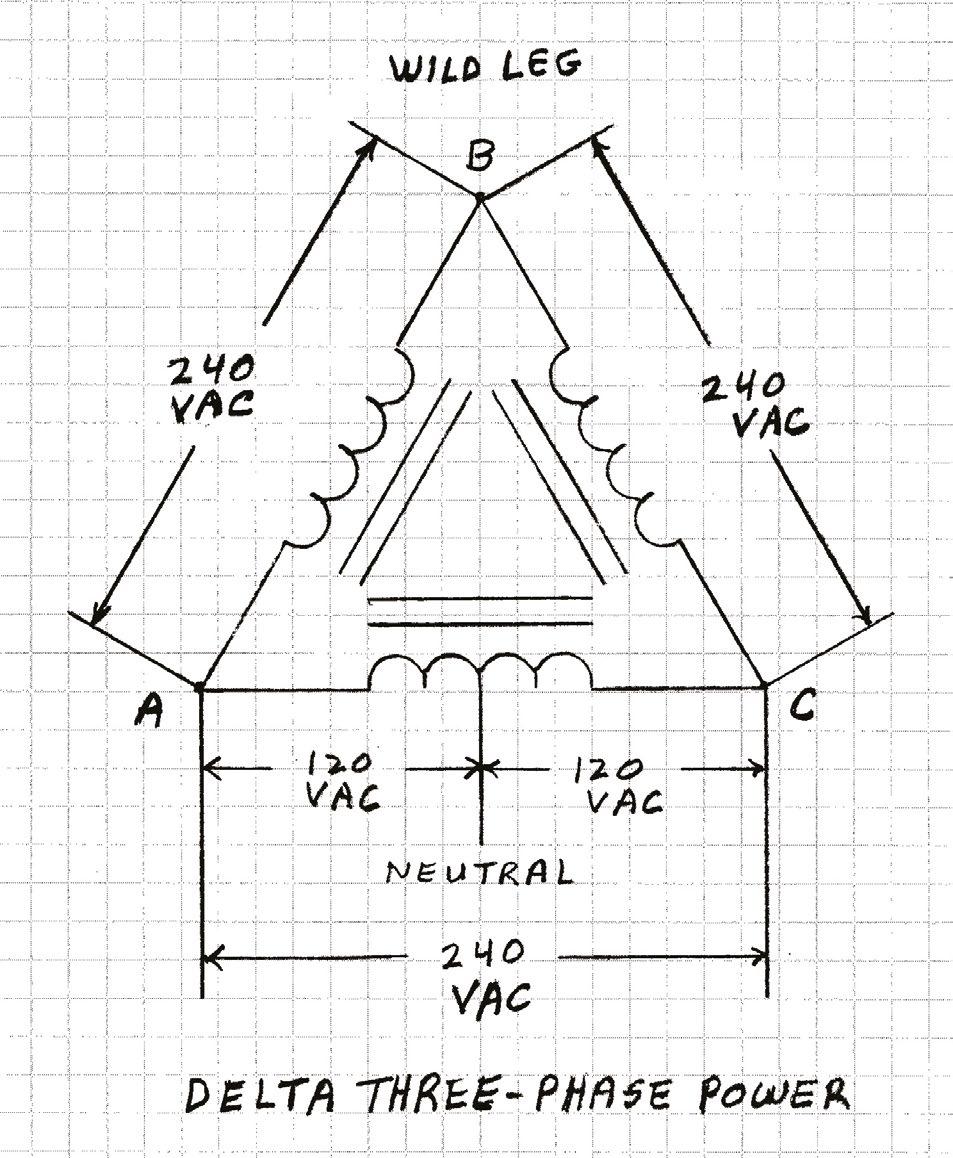
Fig. 3 shows Wye connected power. Fig. 4 shows Delta connected power. You can see why they are named that way.
A, B and C are the connection points to three-phase power. The only importance as to which wire goes to which terminal has to do with motors. Reversing two of the connections will make a three-phase motor turn in the opposite direction. Electric utilities are careful not to reverse phases accidentally as cities often use three-phase motors to pump water and sewage.
The lines next to each of the schematic symbols on power transformer windings indicate an iron core. As you may know, transformers temporarily store magnetic fields, created by passing AC through the windings. That field is then induced into other windings on that same transformer to output a higher or lower volage.
Transformers are heavy devices because they require a lot of iron to handle the magnetic fields. Copper wire windings add to the weight. Aluminum wire is used, in some instances, by power companies in their systems.
A power transformer capable of handling 1,000 watts weighed in at 42 pounds in my shop. It just goes up from there.
Wye
The simplest to work with is Wye.
The neutral in an electrical panel connects to the center of the Wye. You get 120 VAC single-phase power in all three directions. However, connecting this three-phase to a transmitter gives you 208 volts from A to B and to C.
Transmitters have taps to set incoming voltage on internal power transformers so the right high voltage can
Right Fig. 3: Three-phase Wye-connected power.
Fig. 4: Three-phase Delta-connected power.
be achieved. Not a problem, but it’s easier to tell your transmitter manufacturer what you have so they can set transformer taps and do testing before shipping. This applies to solid-sate transmitters too.
“You need to know what the incoming power is in order to configure equipment and surge protection properly. ”
You might be tasked with moving a transmitter to a new site. This is not just plug-and-play.
Check the manual and call the manufacturer for the best advice before turning the power on. There may be a gotcha awaiting your lack of diligence.
Some transmitters have three-phase blower motors. That means they turn according to the phase rotation. There’s a 50% chance a motor will turn in the wrong direction when the transmitter is turned on. As mentioned, reverse two of
the three motor wires and it will turn in the other direction. Just because the motor is turning, that doesn’t mean it is pushing air in the right direction. Best to check airflow before saying all is good.
I ran into this when a contractor replaced an air vent motor in a transmitter building. He walked away and the building overheated. There was no engineer supervision!
Delta
If your incoming power is Delta, it has what is called a wild leg or high leg.
Single-phase connection for 240 and 120 volts is between just two legs, A and C in this case. Neutral is a center tap on that feed. The third leg (B) is maybe 208 volts when measured to neutral. You won’t connect anything to that unless it is going to a transmitter or other threephase device.
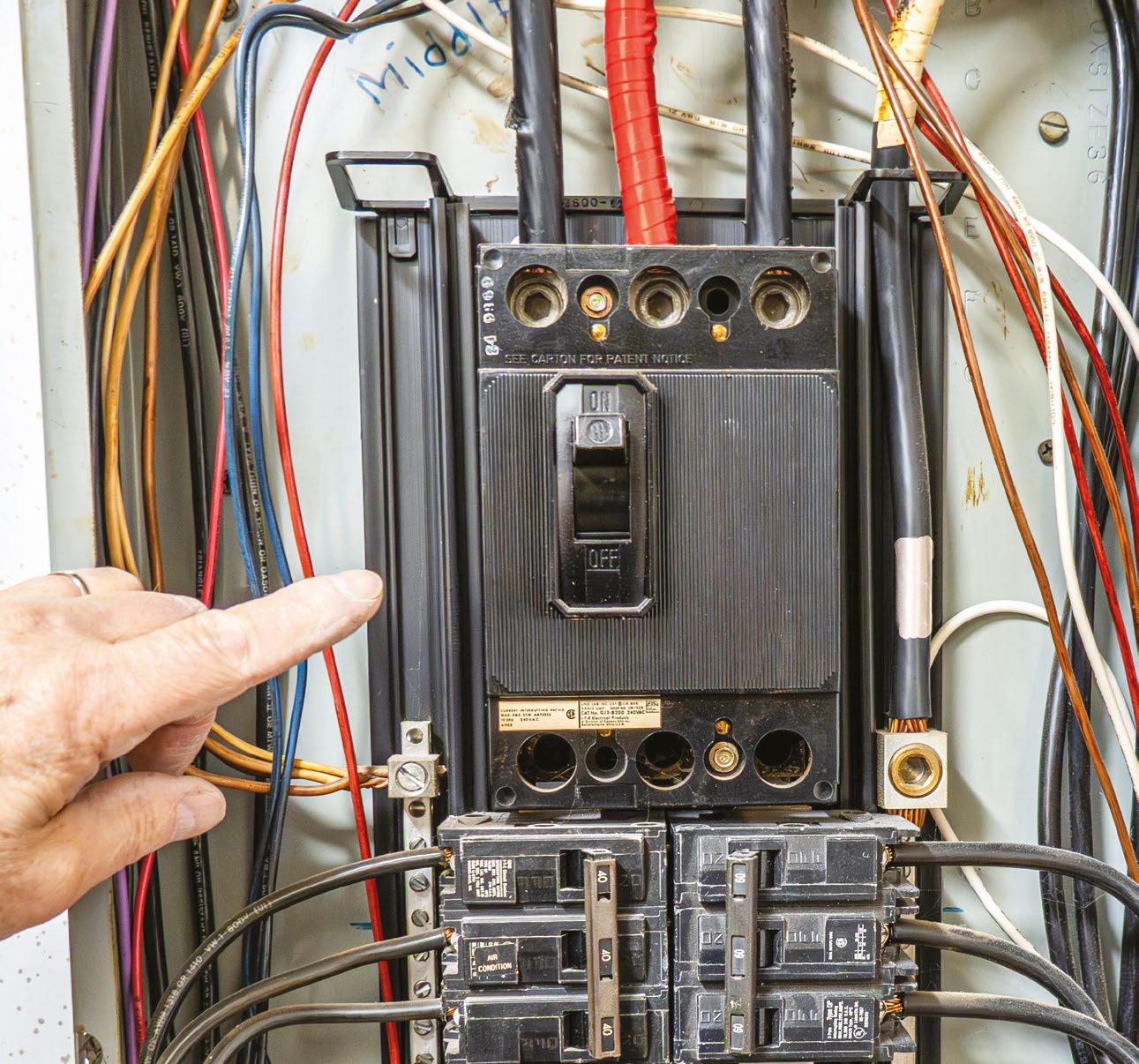
Fig. 5 shows a three-phase load center with a main circuit breaker at the top and two smaller three-phase breakers to feed equipment.
Note the three power lines entering from the top. One of those is marked red. It is the wild leg in this Delta configuration. Neutral is the conductor marked white to the right of the main breaker. It is connected to ground in the first electrical panel in a facility and remains separate from ground after that.
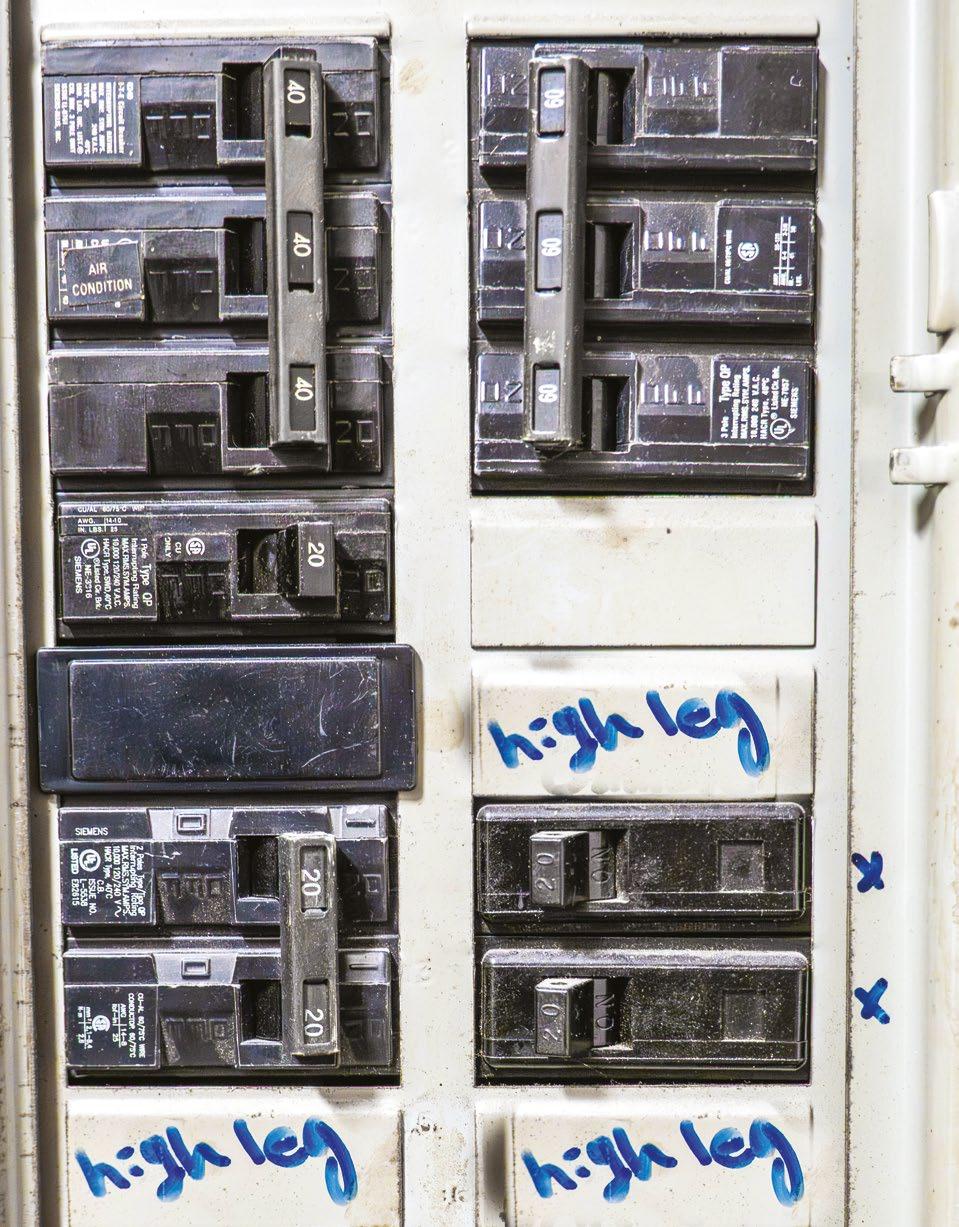
Fig. 6 is the same panel with the cover on. Wild leg circuit breaker locations are marked so they won’t accidentally be used for single-phase applications. There is a problem with that wild leg. Surge arrester protection to ground needs to be configured accordingly. Check the documentation carefully before connecting.
Open Delta
I consider open Delta to be a bad choice. It is used where there is only a single-phase power line to a site. The power company makes pseudo three-phase power using only two transformers instead of three. This is not very common. The configuration is notorious for causing damage to equipment when lightning hits. Ouch! It is best to avoid this by finding a single-phase transmitter.
If not, use a rotary phase converter from Kay Industries, Phoenix or a solid-state unit from Phase Technologies, just to name a few. They generate real Wye or closed Delta three-phase power from single phase power.
In conclusion, you need to know what the incoming power is in order to configure equipment and surge protection properly.
Mark Persons, WØMH, is an SBE Certified Professional Broadcast Engineer. Now
retired, he mentors five radio broadcast engineers. He and his wife Paula were inducted into the Minnesota Broadcaster Hall of Fame after 60 years of broadcast engineering and 44 years in business. Their website is www. mwpersons.com.
Above Fig. 5: Threephase main with two three-pole breakers.
Right Fig. 6: Electrical panel with wild leg Delta power.
Echo App Puts the Power of SDRs in Your Pocket
There’s never been a better time to engage in the hobby of radio, whether it’s longdistance (DX) signal hunting or scanning,” writes Radio World’s Nick Langan.
The free Echo app, he says, is a reminder of this.
If you’re new to the world of software-defined radio platforms, the pace of development can be dizzying. “We recently discovered a new mobile app that attempts to bridge this divide,” Nick wrote in a column on the Radio World website. “Developed by Mark Garrison Jr., the Echo app brings four popular SDR platforms to your Apple iPhone or iPad. His motivation for building the app is something I can appreciate and I’ve loved using it so far.”
Garrison, a 27-year-old pharmacy technician in Texas, who has been a radio hobbyist since childhood, wondered if he could harness the power of existing SDR networks and develop a mobile solution akin to scanner apps but truly designed for a smartphone.
A crowdfunding effort funded his Apple Developer license within 10 minutes. After a twomonth TestFlight beta with 200 users, Echo officially launched for iOS in March. An Android version is planned.
In his article Nick provides guidance on how to find and enjoy the app. At http://radioworld. com, type Echo App in the search field to find his piece. “I can’t wait to use Echo to aid my DX this upcoming E-Skip and tropospheric ducting listening this season,” he concludes.
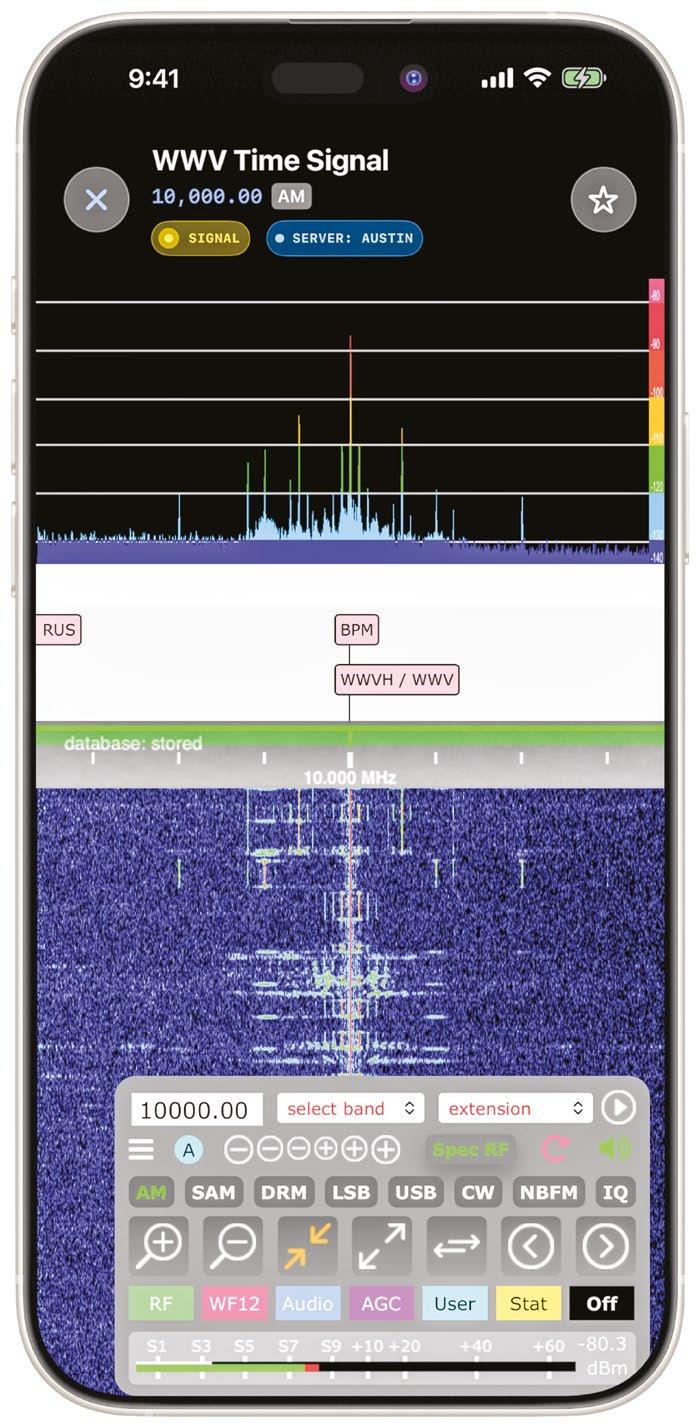
Here, the Echo app uses a server in Austin to hear WWV’s signal on 10000 kHz.
Right
Writer Michael Baldauf
The author wrote here recently about liquid cooling.
Technobabble doesn’t help your cause
You may understand subspace anomalies but that’s not useful to your boss and co-workers
When I was a newbie engineer, our station went off the air due to a problem in its McMartin transmitter. The engineer in charge spent about 15 minutes explaining the theory of this model until I interrupted and said, “How do we fix it?”
Ultimately I isolated the issue to an old tube exciter that was losing frequency lock. The station would wander up and down the FM band until something tripped.
But the memory reminds me that as engineers dealing with off-air situations, we tend to talk to one another in terms that other people at the station probably do not understand.
Let’s say a transmitter is failing intermittently due to a recurring reflected power issue. Perhaps it is caused by a shorting antenna bay, or a combiner failure, or fluid in the coax, or a bad connector. So, fellow engineers, how should we handle this?
Well of course we would test the transmitter into a dummy load, use a framus wigglenator to veebleize the combiner utilizer and exize the googleator.
Right?
To a non-broadcast engineer, our conversation might well sound like the above.
Of course, unlike the technobabble made famous by “Star Trek,” the impressive terminology we use isn’t essentially meaningless. But in many situations it’s useful, even important, to help non-technical colleagues feel that they have a basic understanding. This certainly applies to interactions with your boss.
For this problem, I might tell the station manager, “Ah. There may be some water that has built up over time in the coax cable that goes up the tower. We will take the connector off the bottom and see if any liquid comes out. Then if that’s not it, I will let you know what we will do next.”
This brief explanation — in plain English — gives the person a sense that their engineer is working on the issue in a sensible and timely manner, rather than leaving them to wonder what, if anything, is going on. Your explanation also shows them respect and helps develop a team mindset.
Later, once the station is back on the air, we should communicate in plain terms what the issue was, how we repaired it and what we did to try and keep it from happening again. This will help everyone to sleep better knowing that the issue was addressed fully.
And as Radio World’s John Bisset has written many times, it demonstrates the value of engineering to station management.
Let me know your own experiences in how to communicate effectively with non-engineers, especially in this new era of networking, virtualization, cloud and IP. Drop me a note via Radio World to radioworld@ futurenet.com
By the way I am often tempted to explain how I resolved an issue by saying “I used Magic Purple Dust.” But do as I say, not as I do!
Meanwhile if you are having a particularly hard day and just need a sentence like “I’m detecting a slight field variance in the isotopic electro-ceramic booster,” check out the Technobabble Generator at www.scifiideas.com/ technobabble-generator.
The author is a semi-retired independent engineer in Southern Colorado. He has worked in roles including chief engineer and project manager since the 1980s. He enjoys supporting small radio station operations.
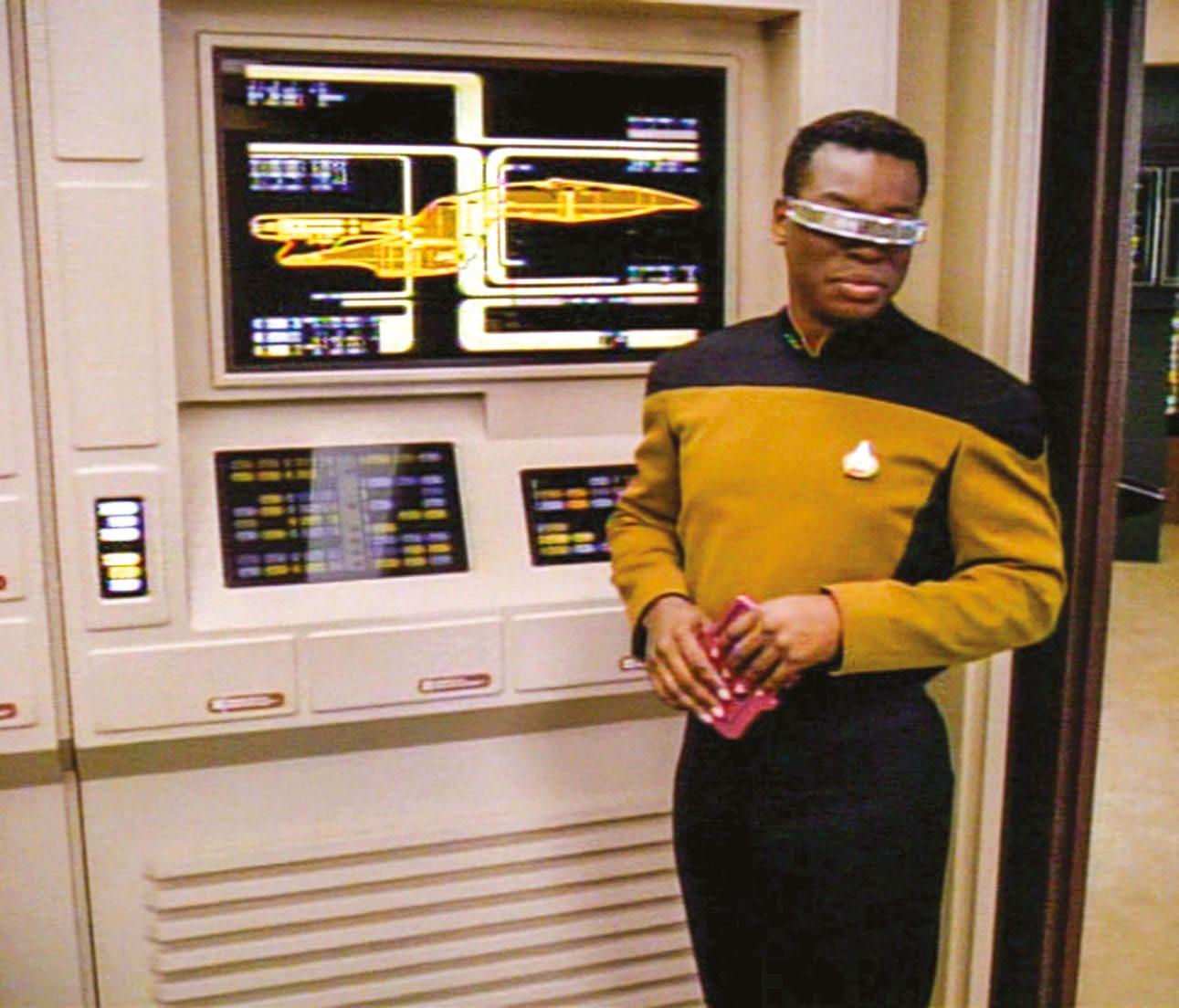
Below LeVar Burton as Geordi La Forge in a scene from “Star Trek: The Next Generation.”
Quu and Orban Partner Up
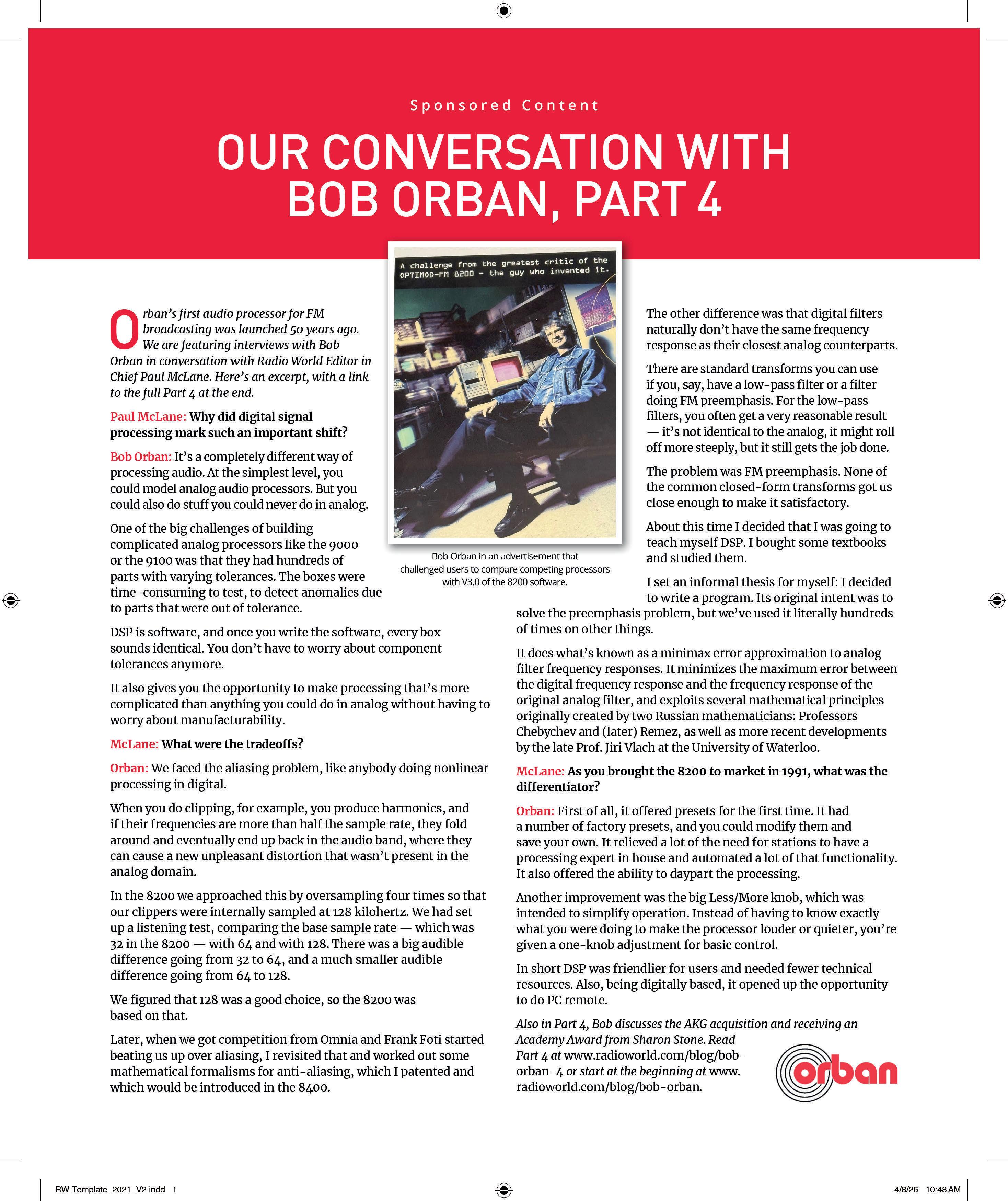
Orban Labs plans to offer the Quu360 Visual Radio platform as an integrated option for its Optimod 5950 HD processor.
“This option … eliminates the need for external PCs and simplifies the broadcast chain while improving a station’s presence on the dashboard,” they said in a release.
“Traditionally, radio stations have relied on separate systems for automation, metadata correction, visual messaging and RDS encoding, often requiring dedicated Windows-based PCs in the airchain.”
Quu360 PCs are not needed.
They said the embedded Quu360 allows broadcasters to ingest metadata from cloud automation systems via HLS streams; normalize and correct artist/title data in real time. They can insert synchronized visual messaging for advertising and promotions; and they can deliver formatted metadata to the built-in RDS encoder. External
“Broadcasters have the benefit of a consistent, highquality display on the dashboard, with standardized song titles/artist data and support for synchronized advertiser messages,” the companies said.
Info: www.orban.com/optimod-5950-hd-overview
EBOOKS: Tools for Strategic Technology Decision-Making
Radio World’s growing library of ebooks can assist you in maximizing your investment in an array of platforms and tools: licensed transmission, online streaming, mobile apps, multicasting, translators, podcasts, RDS, metadata and much more.
The ebooks are a huge hit with readers. They help engineers, GMs, operations managers and other top radio executives — radio’s new breed of digital, cross-platform decision-makers — understand this new world and thrive in it.
Writer
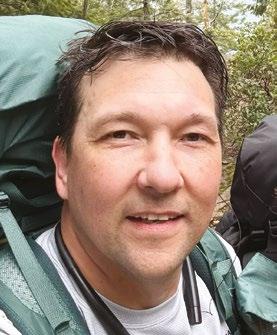
Jason Kardokus Co-Owner, P&R Tower Company
Weigh In Comment on this or any article. Email radioworld@ futurenet.com with “Letter to the Editor” in the subject field.
A salute to Jack Olson, blue-collar tower hero
Jack,
I know you don’t climb anymore, but the lessons you’ve taught me are invaluable
I’ve spent my career as a project manager, estimator and rigger for P&R Tower Company in Sacramento, Calif. We work primarily in the west but have traveled nationwide for tower projects.
Early in my career, I was fortunate to be mentored by one of the greats in our industry: Jack Olson. His influence has shaped not only my professional life but also the person I became.
I started in the tower business because my grandfather, Pete Smith, owned P&R. The grandkids worked summers through college, and I took to climbing and rigging naturally. I enjoyed the work, understood the mechanics and got along well with the crews.
Like many young workers, I was still learning what responsibility looked like in a demanding trade. Jack recognized potential in me and invested his time
and guidance. I’m grateful for that, and I know I grew because of it.
Jack and safety
When I started, there were two foremen and my grandfather. One of them was Jack. I never had a close call or near-miss on a job he ran. That’s the first thing to know about Jack: He is unwavering about safety.
Jack came up in the early 1980s, when tower work still had a “Wild West” mentality.
Many riggers he knew over the years died doing this work. Yet the only injury I ever saw on one of Jack’s jobs was a rare situation that OSHA agreed wasn’t his fault. He wasn’t perfect, but he was close — and I’m certain the habits he instilled in me have kept me safe throughout my career. He thought about everything: safety, customer service,
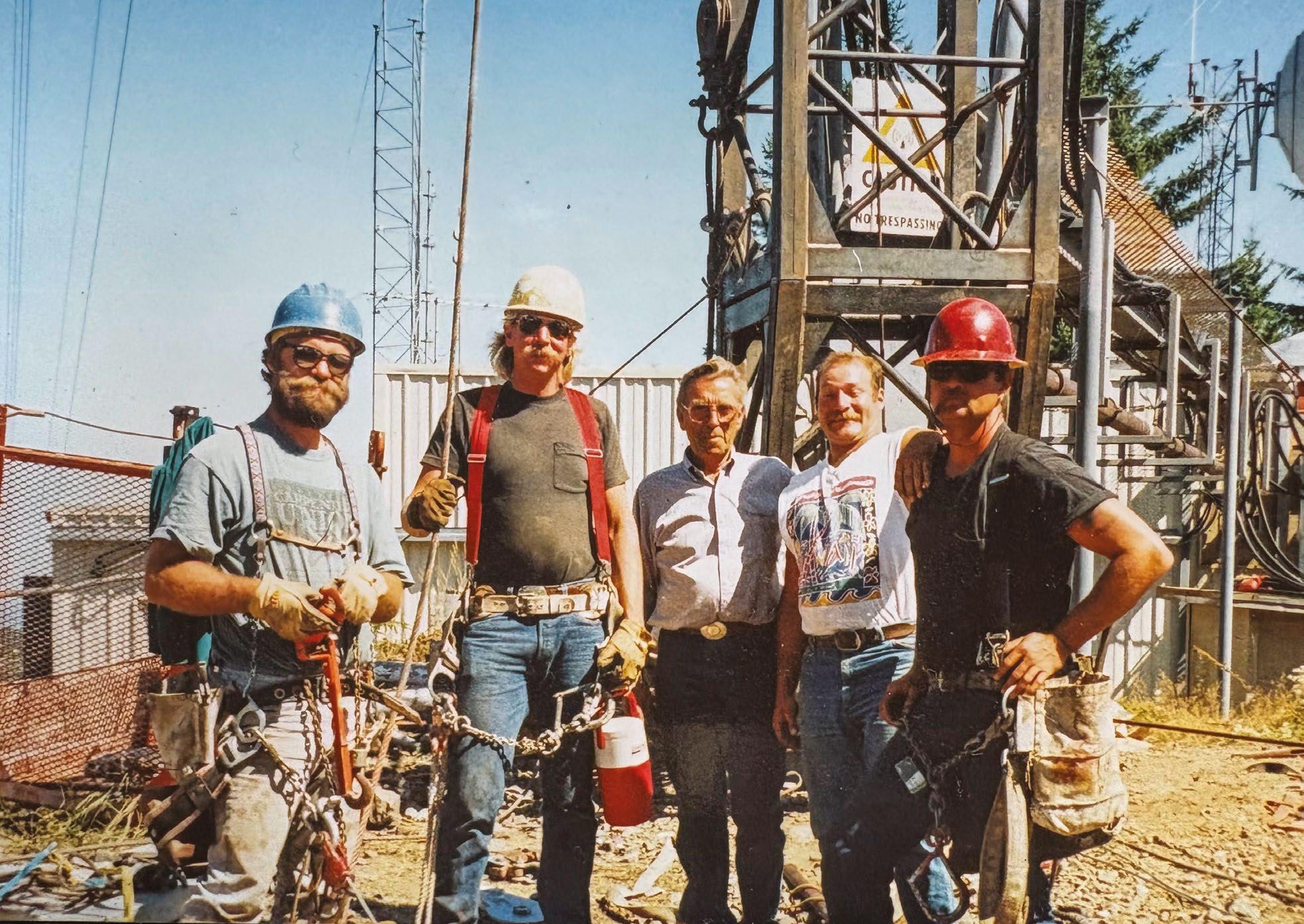
Above Jack Olson, second from left, on Gold Mountain in Bremerton, Wash., in the 1980s. With him are Ron Smith, Pete Smith, unidentified, and Jay Kleinberg.
backups, minimizing risk, showing up ready to work, leaving a site better than you found it, securing rigging and making things easier for the next crew. Jack raised the bar for what a tower hand should be.
He didn’t compare himself to others’ shortcuts. He judged his work by what was right. That didn’t always make the most money in the moment, but it paid off in the long run.
A steady example
Jack’s influence extended beyond the job site.
Tower hands aren’t always known for wise decisions after hours, especially when they’re young and on the road. Jack didn’t get caught up in that. He cared about his family, stayed true to his values and set an example of steadiness and integrity.
He isn’t preachy, but he llives by a quiet moral code. Even on job sites where language wasn’t always clean — including his — he avoided taking the Lord’s name in vain. It was a small thing, but it said a lot about his character.
His example has helped shape the way I approach my own life, marriage and family. He took a fatherly role with younger guys who needed it, and I’m grateful I was around him in those years.
One of Jack’s non-negotiables was securing rigging and “buttoning things up” at the end of the day. After 11 hours in the sun, it’s easy to say, “It’ll be fine until tomorrow.” But that mentality has caused damage, failures and deaths.
Jack has taught me that you take the extra time so you can sleep at night. Because of him, I’ve never had to lie awake during a storm wondering if something was going to fail. Instead, I’ve woken up, heard the wind and gone right back to sleep — thanking Jack for that lesson.
That same mindset applied to finishing a job: doing it right, stabilizing and protecting equipment for the long term, and leaving a clean site.
I’ll never forget stacking a four-tower AM system with a young crew. We did the technical work well but left trash
Role Models
Above Jack Olson
“Jack came up in the early 1980s, when tower work still had a ‘Wild West’ mentality. Many riggers he knew over the years died doing this work. ”
behind, not realizing the importance of cleanup. Later, I returned with Jack to fix a lighting issue — one that wasn’t our fault — and he saw the mess we’d left. He made sure I understood the importance of leaving a site better than we found it. That was nearly 30 years ago, and the lesson still resonates.
Consistency and character
When I met Jack, he and my grandfather didn’t always see eye to eye. Both had strong personalities.
But while some foremen acted one way around Pete and another when he wasn’t there, Jack is always Jack. Whether Pete was on site or not, whether a customer was watching or not, Jack prepared, thought ahead and did the job right. His projects ran smoothly and were done right the first time.
Jack was the quintessential tortoise — steady, methodical and reliable — while others were often the hares. And as the Special Forces say, “Slow is smooth, and smooth is fast.” That said, Jack wasn’t slow. You can measure the towers he’s stacked in miles, not feet. Few people can stack a small- to medium-face guyed tower faster with a gin pole. Customers were often amazed at how much tower he could put up in a day.
Lessons that last
I’ve been doing this work for 35 years and have been chosen for some technically difficult jobs. Even now, I like having Jack with me — or at least talking through the project with him. His experience and ability to line things up and make a job go smoothly are invaluable.
Jack doesn’t climb anymore, and some younger guys may not yet appreciate the importance of the stories he tells or the advice he gives.
But one day, they’ll have an epiphany and realize how much he gave them. Many of the most important lessons I’ve learned in this business came from Jack.
If you’re lucky enough to have a “Jack” on your crew or as a service provider, don’t take it for granted. Jacks are rare. I often think about how thankful I am — and how thankful our company is — to have had Jack Olson working with us.
Thank you, Jack.
And to all the “Jacks” out there. Your fellow workers, your companies, your customers and this industry owe you more than you know.