

For media production in the cloud, hybrid is the name of the game

July 2026
FOLLOW US www.tvtech.com twitter.com/tvtechnology
CONTENT
Content Director
Tom Butts, tom.butts@futurenet.com
Content Manager Michael Demenchuk, michael.demenchuk@futurenet.com
Senior Content Producer George Winslow, george.winslow@futurenet.com
Contributors: James Careless, Fred Dawson, Michael Heiss, Kevin Hilton Production Managers: Heather Tatrow, Nicole Schilling
Art Directors: Cliff Newman, Steven Mumby
ADVERTISING SALES
Managing Vice President of Sales, B2B Tech Adam Goldstein, adam.goldstein@futurenet.com
Publisher, TV Tech/TVBEurope Joe Palombo, joseph.palombo@futurenet.com
MANAGEMENT
SVP, MD, B2B Amanda Darman-Allen
VP, Market Lead Carmel King
MD, Content, Broadcast Tech Paul McLane
VP, Global Head of Sales, B2B Dena Malouf
VP, Global Head of Strategy & Ops, B2B Allison Markert
VP, Product & Marketing, B2B Andrew Buchholz
Head of Production US & UK Mark Constance
Head of Design, B2B Nicole Cobban
FUTURE US, INC.
130 West 42nd Street, 7th Floor, New York, NY 10036

All contents © 2026 Future US, Inc. or published under licence. All rights reserved. No part of this magazine may be used, stored, transmitted or reproduced in any way without the prior written permission of the publisher. Future Publishing Limited (company number 2008885) is registered in England and Wales. Registered office: Quay House, The Ambury, Bath BA1 1UA. All information contained in this publication is for information only and is, as far as we are aware, correct at the time of going to press. Future cannot accept any responsibility for errors or inaccuracies in such information. You are advised to contact manufacturers and retailers directly with regard to the price of products/services referred to in this publication. Apps and websites mentioned in this publication are not under our control. We are not responsible for their contents or any other changes or updates to them. This magazine is fully independent and not affiliated in any way with the companies mentioned herein.
If you submit material to us, you warrant that you own the material and/or have the necessary rights/permissions to supply the material and you automatically grant Future and its licensees a licence to publish your submission in whole or in part in any/all issues and/or editions of publications, in any format published worldwide and on associated websites, social media channels and associated products. Any material you submit is sent at your own risk and, although every care is taken, neither Future nor its employees, gents,subcontractors or licensees shall be liable for loss or damage. We assume all unsolicited material is for publication unless otherwise stated, and reserve the right to edit, amend, adapt all submissions.


Remember the old saying, “the cloud is someone else’s computer?” Well, that computer has become a lot more costly over the past 12 months. While public concern over the exponential growth of data centers has become more widespread in recent years, the backlash now is leading more states to consider moratoriums on new development.
Unfortunately, concerns about the increased computing power demand from AI are also impacting cloud-computing costs. A late 2025 report from Deloitte Insights underscored the immensity of the AI usage challenges faced by all industries, concluding that enterprises everywhere “are discovering their existing infrastructure strategies aren’t designed for AI’s demands.”
Increased regulation, property values, public resistance and especially the cost of computing chips for all that processing are helping to make cloud production more expensive. Gen AI can’t exist without the cloud and vice versa, raising the incentive to make that processing more efficient and less energy consuming.
Despite these costs, the cloud will continue to play an everincreasing role in media production, with broadcasters deploying hybrid platforms that combine the cloud with on-prem solutions that take advantage of advances in processing, connectivity and AI. In our latest Guide to Cloud Solutions, we examine the current landscape of cloud-based production and how media companies are adopting the best of both worlds to make workflows simpler and more efficient.
Tom Butts Content Director tom.butts@futurenet.com
Have a comment or suggestion about this ebook or other ebooks from TV Tech? Drop us a line at tvtechnology@futurenet.com. ON THE COVER: Photo credit: dem10/Getty Images COMMENTS?
4 Broadcasters Hit by Mounting AI Costs in Shift to Hybrid Cloud Production
10 How to Fortify Your Cloud Security Plan
14 Cloud MCRs: The Next Phase of Virtualization
20 Securing the Hybrid Cloud in the Age of AI
24 Cloud MCR is Only Half the Transition
25 Why Is ‘Cloud Native’ So Important in Playout Applications?
26 Beyond the ‘Lift and Shift’: Cloud Migration’s New Mandate

Enterprises
‘are discovering their existing infrastructure strategies aren’t designed for AI’s demands’
By Fred Dawson
As new advances in efficiency and vendor interoperability fuel momentum behind broadcasters’ reliance on production in the hybrid private/public cloud domain, cost challenges posed by AI resource scarcities are moving to the top of industry suppliers’ to-do lists.
The latest, frequently AI-enhanced solutions that came to light at April’s NAB Show have made the hybrid cloud model more attractive than ever amid waning enthusiasm for exclusive reliance on either public cloud or proprietary hardware resources.
In the case of Grass Valley’s customers, for example, “whether broadcasters choose to host aspects to their production workflows on premises or in the cloud can be decided on the basis of architectural complexity and what makes sense for the tasks at hand,” Chief Product Officer Adam Marshall said.
“That’s what they’re looking for.”
Like just about everywhere else, AI is playing an ever-greater role at Grass Valley. Marshall said the company uses AI “to accelerate our ability to deliver what our clients need” and to provide a “third-party front door” that allows customers to add their own AI application layers.
The need to secure cloud operations, including vulnerability analysis of the type delivered by Anthropic’s new Mythos AI model, has added to AI processing requirements. Grass Valley will make the technology available if and when Anthropic lifts current restrictions on its release, Marshall said.

A late 2025 report from Deloitte Insights underscored the immensity of the AI usage challenges facing all industries. That report found enterprises everywhere “are discovering their existing infrastructure strategies aren’t designed for AI’s demands,” Deloitte said.
The mismatch results from “inference,” or the incessant processing required as AI models generate new information based on changing conditions. “While inference costs have plummeted, dropping 280-fold over the last two years, explosive growth in overall AI spending…has dramatically outpaced cost reduction,” Deloitte said.
“Dependence on high-performance compute in the public cloud can get expensive,” Jonathan Gryckiewicz, business development
director for cloud solutions at Ross Video, said.
Businesses are adjusting to the new realities “incredibly fast,” he said, but for now, “it seems largely the case that to get benefits from AI, we need to connect the media environment to the [public] cloud” where processing is “gobbling up GPU capacity and prices are getting higher and higher.”
Ross Video’s latest cloudand AI-related contributions include support for its XPression real-time browser-based graphics creation and monitoring tools via a scalable on-demand service called XPression.cloud, which can be used instead of local XPression hardware. XPression. cloud uses AI to identify appropriate XPression templates and expedite graphics-related asset retrieval, creativity and generation.
XPression.cloud offers customers “a more sophisticated way to manage graphics on their own” without “shipping boxes around,” Gryckiewicz said.
Matrox Video is also riding the market surge toward hybrid cloud-optimized converged production solutions. For the past two years, Matrox has promoted its ORIGIN


media-aware content transfer fabric as a way to control high-performance multiprotocol transport and scalability without dedicated hardware. ORIGIN was again a big focus for Matrox at this year’s NAB Show, but with a different emphasis this time, Product Manager Daniel Robinson said.
“We hadn’t seen very many use cases emerging until now,” Robinson said, noting uptake this year involves the likes of industry suppliers Amagi, EVS and TSL, as well as the Canadian multiservice giant Rogers Communications. The difference lies with Matrox’s success in using AI to make it easier for customers to put ORIGIN to work in their products and services, Robinson said.
“We’re not running AI on the software but using AI tools to build things quickly,” he explained, which means executing on projects that might have taken days or longer in a matter of hours. “It’s about shortcutting discovery of information. If you didn’t do that, you’d have AI searching through thousands and thousands of lines of documentation with outcomes that may or may not be the right ones.”
Such uses of AI on the build side of supplier innovation are fueling acceleration in product development for cloud- and hardware-based solutions alike. While these applications don’t incur the ongoing inference processing costs associated with AI applications used in live production workflows, they are vulnerable to hardware capacity and cost trends, noted Stephan Stadler, chief product officer at Appear.
“Being a hardware manufacturer, the AI supply chain is top of mind,” Stadler said, citing Appear’s use of AI not only in “how we
plan and build things” but in discovering new opportunities and creating sales messaging. “The big challenge is memory chips for everyone who builds hardware products in this industry,” he added.
Appear has moved into the hybrid cloud production space with the recent introduction of the VX Media (VXM) Gateway, which uses open-source interfaces to enable interoperability with other vendor solutions in commodity cloud support for the dispersed REMI production versatility enabled by its hardwarebased X Production portfolio.
“VXM doesn’t replace XP,” Stadler noted. “It’s just an extension of that.”
The company’s release of VXM—even as
“Dependence on high-performance compute in the public cloud can get expensive.”
JONATHAN GRYCKIEWICZ, ROSS VIDEO
it registered another big hardware win, with Fox Sports using its X platform to deploy its REMI production workflow for the 2026 FIFA World Cup—reflects the growing pull of the virtualized hybrid cloud opportunity across the traditional broadcast-production hardware supply chain.
Another case in point is the expanded support for cloud production introduced by Sony Electronics’ Nevion unit. Nevion has integrated MOXELA, a new cloud-native software platform, with its cloud-based VideoIPath media orchestration layer to transport, process and
monitor production workflows encompassing output from cameras and other equipment supplied by Sony and by other vendors.
“The big problem we’re solving with MOXELA is producers’ need for flexibility to adapt to different workflows by running various processing functions for different streams in parallel across on-prem and public cloud clusters,” Nevion Head of Product and Solutions Jan Helgesen said.
MOXELA aligns with common frameworks like SMPTE ST 2110 and NDI, as well as the emerging industry guidelines shaped by the European Broadcast Union’s open-source Digital Media Facility (DMF) initiative, including the Media eXchange Layer (MXL) specifying containerized microservice support for real-time, in-memory exchanges of uncompressed audio, video and metadata across multiple vendor software applications. This is a big step toward enabling cloud-based live sports and other productions, but there’s much more to come, Helgesen said.
“We’re currently on a cloud production journey from Tiers 3 and 2 to Tier 1,” he explained, noting that getting to Tier 1 still “requires some technical development that’s not completely there yet.” It’s a staged road map that will also bring AI into play to automate the complex troubleshooting, planning and setups that big cloud productions will require, he added.
Implementations of MXL in vendor product lines—facilitated by the Linux Foundation’s release of the first MXL Software Development Kit (SDK)—are fast becoming the norm. This is because the shift toward hybrid cloud production has made just-in-time activations of COTS resources with cross-vendor interoperability essential to cost containment.
Sony, along with a new commitment to the protocol by Ross Video, adds to a list of MLX supporters that includes Appear, AWS, Grass Valley, Imagine Communications, Intel, Lawo, Matrox, Nvidia, Riedel Communications and Telos Alliance.
For Lawo, the growing consensus around the hybrid cloud approach to broadcast production is right in stride with its longstanding promotion of the Lawo HOME management and orchestration platform. HOME runs on commodity servers in private or public clouds to enable discovery, authentication, security management and monitoring of all production-connected devices from a single user interface.
To address cost uncertainties as the hybrid cloud production model takes hold, Lawo has introduced Flex, a payment system built on credits that makes it easier for customers to adjust to changing dynamics in private vs. public cloud resource usage.
“You can buy and use Flex credits like chips in a casino to spend on any HOME app,” Chris Scheck, head of marketing content for Lawo, said. The hybrid cloud model “is where we’re heading,” he added, but uncertainties mandate offering customers as much flexibility as possible in choosing how to spend on cloud resources.
For example, while customers would rather maximize use of private resources, “right now, servers have almost tripled in price because of chip shortages, and it can take six months to get them,” Scheck said. At the same time, as Grass Valley’s Marshall observed, in the public cloud space “we’ve seen processing costs rising at record rates, up 40% during the first part of the year and now up 80%.”
Factor in the complications added by the AI squeeze and it’s clear the hybrid cloud model might not be the cost-savings slam dunk it once appeared to be. But in a live-production environment that needs to accommodate fragmented workflows delivered through ST 2100, NDI, SDI and other pipelines while enabling browser support for executing editing tasks across dispersed locations, the advantages of cloud-based accessibility, agility and efficiency are too compelling to be ignored.
This puts a premium on cloud costcontainment know-how. As Marshall noted, at a moment of growing confusion among producers, figuring out what will work for each customer has much to do with knowing which questions to ask. ●

Mounting demand for a next-generation video streaming solution that surpasses the latency and unidirectional limitations of the currently dominant streaming architecture is generating strong support for a new standard known simply as “MOQ” (Media over QUIC).
By all accounts, it will take few more months for the Internet Engineering Task Force to finalize the MOQ specifications. But multiple projects testing this new multidirectional, multilatency approach to streaming are now underway. “There’s a buzz and excitement in the air about MOQ we’ve never seen before,” said Will Law, chief architect for the cloud technology group at Akamai and a leader in the IETF MOQ initiative.
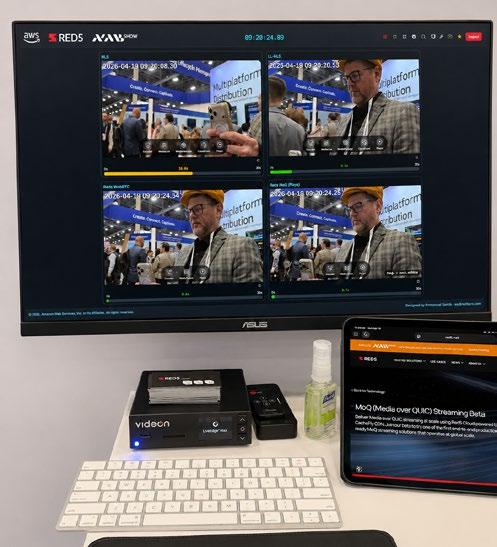
AWS and Red5 teamed up at NAB Show to run side-by-side comparisons of MOQ, WebRTC, HLS and Low-Latency HLS on live video captures delivered from the show floor via Red5’s streaming platform.
This was evident at April’s NAB Show, where MOQ demos abounded on the exhibit floor and an overflow crowd filled the large meeting room devoted to the show’s first-ever session on the standard.
Entities announcing infrastructure support for MOQ included public content-delivery network operators Broadpeak, CacheFly, Cloudflare, CDN77 and Vindral, as well as cloud-compute platform providers Akamai, Amazon Web Services (AWS) and Oracle Cloud Infrastructure (OCI). Streaming software system suppliers demonstrating delivery of payloads and advanced features over MOQ-enabled facilities included Ant Media, Ateme, Bitmovin, EZDRM, Nomad Media, Norsk Media, Oracle Media Services, Synamedia, Red5 and Wowza. While proprietary real-time streaming systems supporting video conferencing and a host of other applications have been around for several years, MOQ is meant to satisfy the need for a standardized, ubiquitously available two-way superhighway where video flows in any direction and at any scale, with latencies attuned to specific use-case requirements. That’s why Red5, a provider of a highly scalable
WebRTC-based streaming platform, is throwing its weight behind MOQ, according to CEO Chris Allen.
“WebRTC was designed as a peer-to-peer protocol, which means there’s no standard for scaling the way we do by building out clustered cloud resources,” Allen said. “MOQ was designed from the get-go as a scalable broadcast technology for the internet, which we believe will accelerate adoption of next-generation streaming.”
The foundational set of MOQ specifications, known as MOQ Transport (MOQT), marks an incompatible break with conventional streaming modes like HLS and MPEG-DASH, which are based on the Hypertext Transfer Protocol (HTTP). As a so-called connectionless platform, MOQT employs a simple publish/subscribe approach to streaming by signaling the start and end points of a session while avoiding the thousands of request/response exchanges that transpire between clients and servers in HTTP streaming.
The new standard also provides a way to automatically tune end-to-end latencies to whatever levels meet user requirements, including real-time latencies of 200 to 400 milliseconds that are imperceptible to humans; what Law calls “interactive live” at 2 seconds for use in sports betting, online casino gambling, banking and similar applications; and “conservative live,” supporting ironclad HD, 4K and eventually 8K quality persistency at 5 seconds.
Paralleling MOQT development, there are other initiatives within IETF and the OpenMOQ Software Consortium, a closely affiliated ad hoc organization aimed at creating a practical operating environment for the transport protocol. They include media-layer streaming formats emerging from IETF, a new client player template developed by Red5 and endorsed by the consortium, and several ready-to-deploy players.
Fred Dawson

Cloud is now part of live production, playout, and distribution, requiring flexible operation across cloud, on-prem, and IP networks as a single unified workflow, without piling on complexity.
By Phil Abbott, Principal Solutions Architect, Zixi
Few live workflows run in one place anymore. A contribution feed originates at an SDI or ST 2110 facility, feeds a virtualized playout operation in the cloud with multiple processing layers, and goes out to broadcasters, streamers, and affiliates that each require it delivered a different way. Add another distribution partner, or another event to an existing workflow on top of layered rights agreements, and the workflow–and the complexity–expand again. None of that is unusual anymore. It's just how a live operation looks now.
Every one of those connections is another workflow to facilitate and manage. Transport protocols have to interoperate. Timing and PID integrity must survive each handoff, and SCTE-35 must stay intact from source to destination and comply with platform requirements. Operations teams need one real view across
cloud, on-prem, and third-party networks instead of a separate monitoring tool for each. When that slips, the elasticity the cloud promised ends up manifesting as disparate systems to maintain, an egress bill nobody modeled, and a dependence on one provider that's hard to unwind.
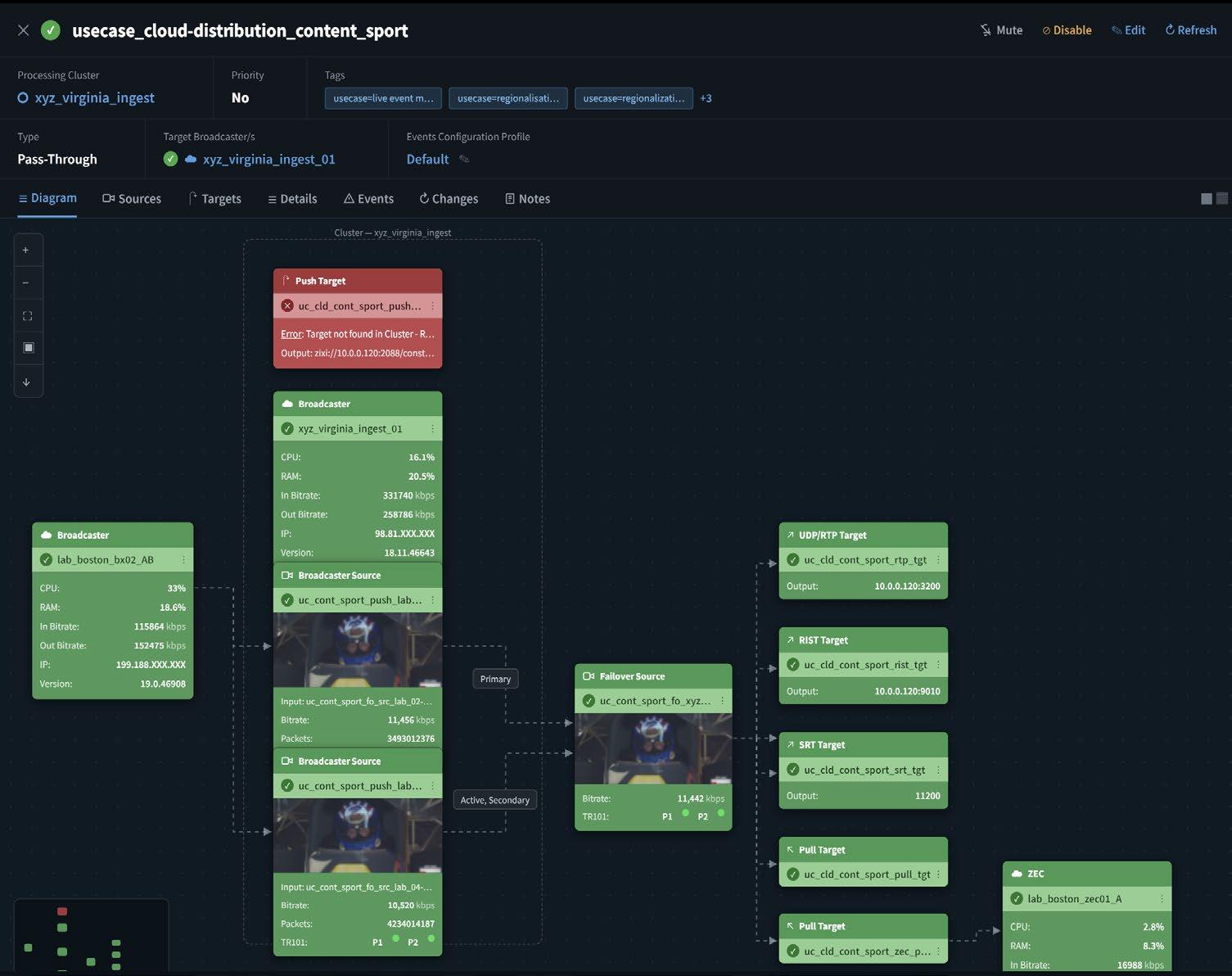
The Zixi Platform runs those hybrid workflows as one operational environment. It carries the Zixi protocol alongside SRT, RIST, RTMP, and HLS, so you connect the infrastructure you already have instead of replacing it, and it moves signals from SDI and 2110 facilities out to wherever they're going. Whether a workflow runs on-prem, in the cloud, at the edge, or all locations at once, ZEN Master handles orchestration, monitoring, and automation across contribution, processing, playout, and distribution from one pane of glass. Infrastructure decisions aren't permanent either. Workloads move, cloud economics change, new distribution deals bring new delivery requirements. New requirements should mean updating a workflow, not rebuilding it. With Zixi, reliability holds up wherever the workflow runs. Patented hitless failover and network bonding keep delivery uninterrupted across diverse IP networks, and congestionaware recovery on the Zixi protocol sustains performance through up to 40% packet loss. In production, the platform ensures all of the capabilities to run at 99.999% uptime. Frame thinning and null-packet suppression cut bandwidth, which keeps cloud egress in check. In 2025 alone, the Zixi Platform managed 1.7 exabytes of live video across 120-plus countries, much of it for major names in sports and media.
Cloud belongs in a standard broadcast infrastructure now. Whether a live operation runs smoothly comes down to how well the whole workflow works together, not where any one piece happens to sit. That's what Zixi is built for.
www.zixi.com
Stay protected with a unified approach to visibility, resilience and real-time response
Threat protection is a serious part of any organization’s network, storage or active workspace—especially if you’re invested in the cloud. While the basics are somewhat easy to follow or prescribe, the real-time monitoring and any aggressive corrective actions can be challenging for the individual(s) whose tasks in the organization include both IT administration and security, plus cloud-services management.

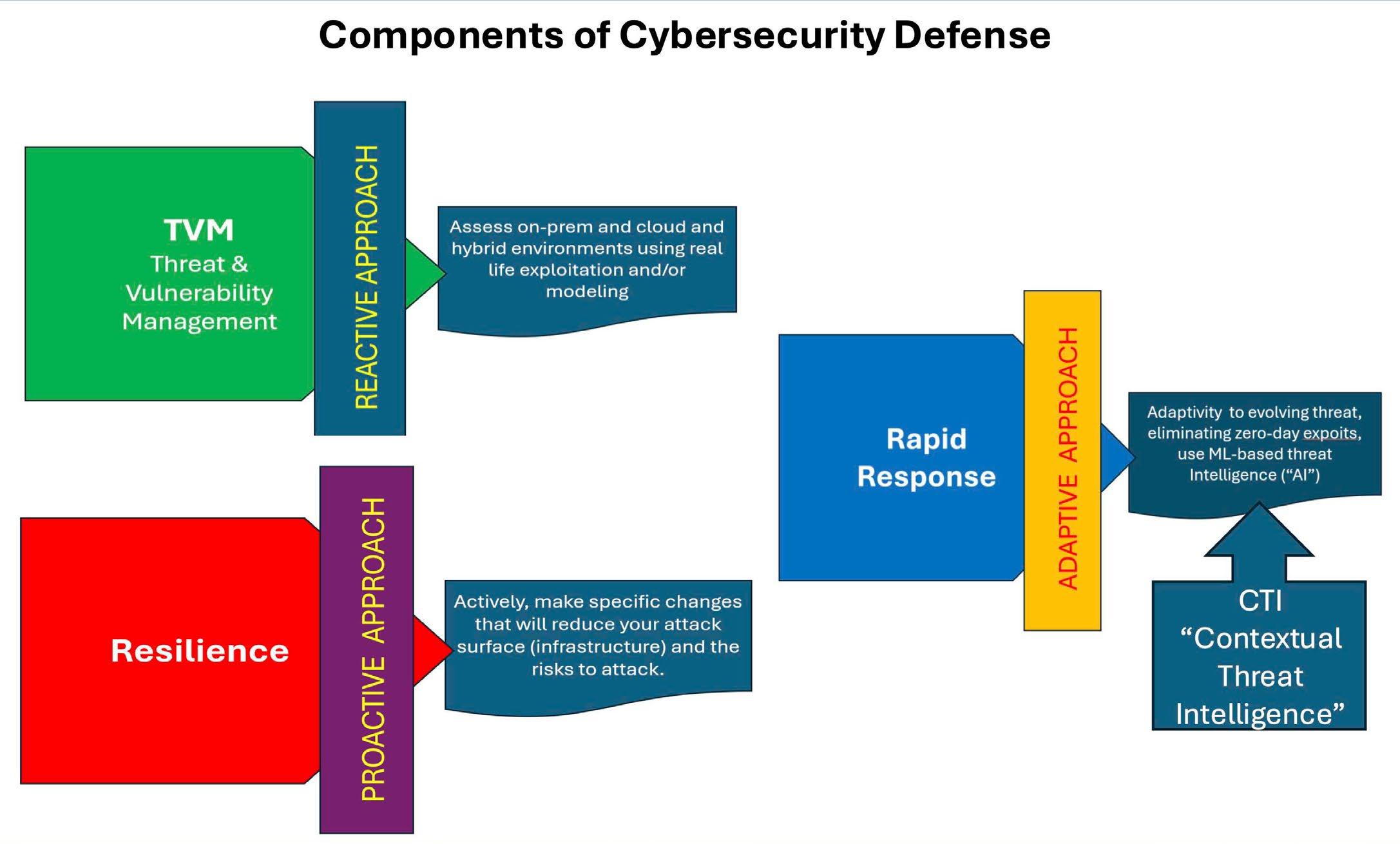
Being prepared is essential in the current cloud environment. Fig. 1 gives some of the suggestions for this preparedness from a Reactive, Proactive and Adaptive perspective.
Breaches in security can and likely will become unmanageable without appropriate planning and active, real-time monitoring alongside aggressive enforcement of IT policies and practices.
A cloud runtime is the environment where cloud applications and services execute—including the operating system—language support and other necessary software. Furthermore, it is a commercial term (such as Google’s Cloud Run) that ranges from a platform of managed services to the specific software stack required to run serverless functions.
Noting that, a serverless platform is a cloudbased service that automatically manages the underlying infrastructure, allowing developers to deploy and run code without provisioning, scaling or maintaining servers and otherwise is a cloud-computing execution model that allocates machine resources on an as-used basis.
Examples of serverless applications include chatbots, task schedulers and internet of things (IoT) applications.
Typically, in the serverless environment, any server management, configuration, scaling and billing activities are abstracted from the end user—i.e., the complex, underlying details are hidden and simplified, so the user need only interact with a higher-level, easierto-understand interface.
That is, it can or will become overwhelming to control without some secondary support or a built-in solution integrated by the cloud provider. Simply expecting an ISP to handle this is not a good answer.
In computer programming, a runtime system or runtime environment is a subsystem that exists in the computer where a program is created, as well as in the computers where the program is intended to be run.
One core solution to ensure adequate security precautions is to establish a unified platform that spans across development, op-
erations and (real-time) runtime to provide continuous visibility, protection, simple and continuous detection and proactive response.
Some of the groundwork for building a modern cloud-security program is provided in the following, as outlined by a familiar cloud-support trendsetter who specializes in providing cybersecurity in an era of change and movement toward the cloud, regardless of business model.
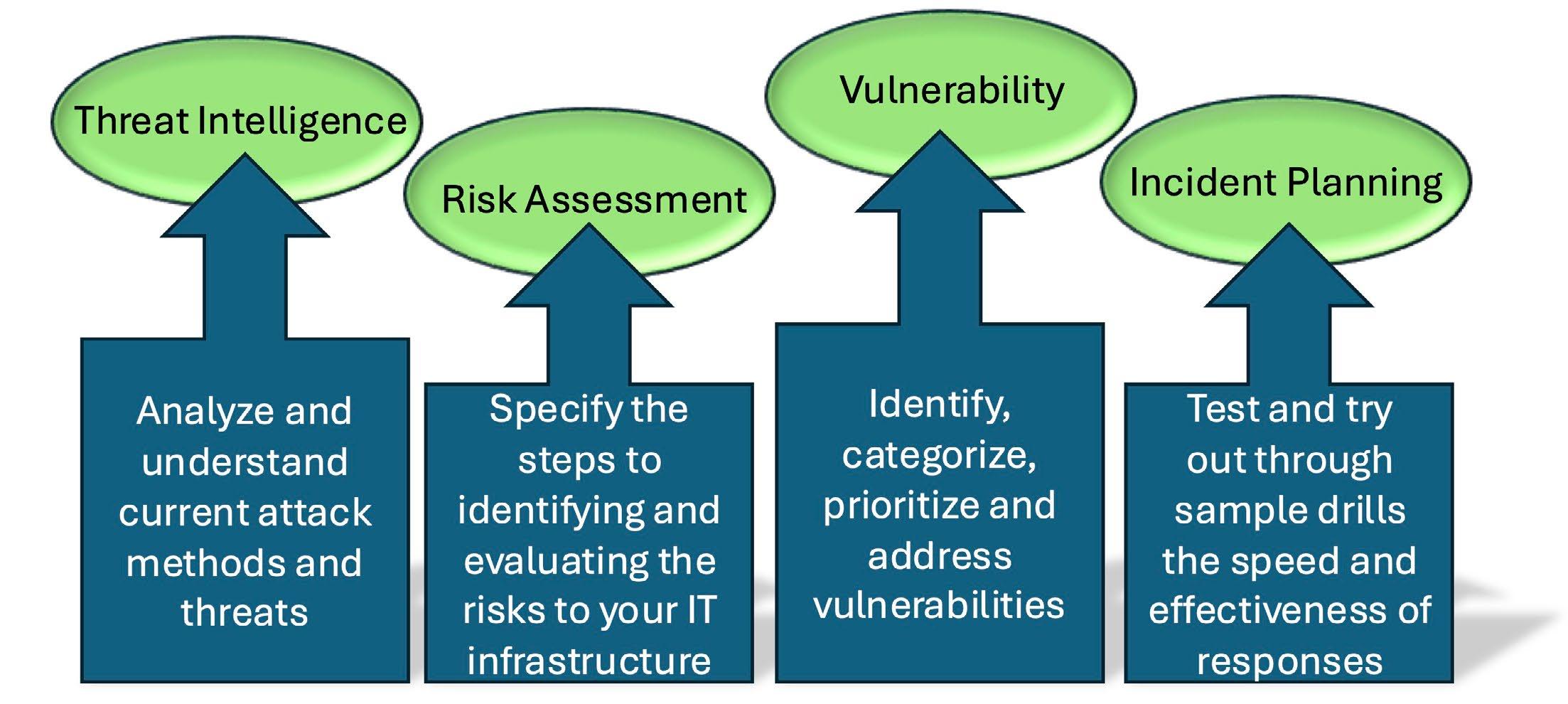
One option is to take a proactive approach to cybersecurity (Fig. 2), which is critical to reducing risks and being prepared to address or prevent breaches. Examples follow:
One part of understanding and preparing for cloud security involves some of the actual code-centric and application development, such as understanding Container Runtime Security, a key aspect of Kubernetes (as an opensource container orchestration platform, with cloud computing services) and security. This prospect focuses on safeguarding containers (e.g., Docker) during their execution.
When active, operational containers are most vulnerable to malicious activity since traditional security tools weren’t designed to monitor running containers. Runtime security is the only way to secure cloud-native applications at scale and in today’s environments, the use of AI and machine learning will necessitate runtime automating the processes for model-
ing of a healthy activity built against a model.
“Modeling” is the process of creating a representation of normal, safe behavior—for applications and services, especially when running in a cloud-native environment. Such a representation serves as a baseline to identify and detect deviations or anomalies that might indicate security threats.
When the system has an established model, and then uses continuous monitoring and lets software make comparisons of the runtime activities of applications and services against the established model, teams can then identify and respond to unauthorized actions, privilege escalations and other potential incidents. Major cloud-service providers offer managed Kubernetes services that simplify infrastructure management, allowing organizations to build and run modern applications on a hybrid or multicloud environment.
Most security teams lack the time, experience or context to effectively handle and react to a deluge of security alerts that could come from various security tools or practices. As DevOps and engineering teams rely more on cloud technologies to achieve faster development cycle times, they may often prioritize development deadlines over security issues.
While they fundamentally understand the needs and values of security, they often don’t deem it highly important or may end up wast-
ing their time and resources remediating vulnerabilities that seem impactful but don’t present an active risk in production. The organization’s administration should consider utilizing a tool set that correlates threat intelligence, business impact and data sensitivity to provide an accurate representation of active risk.This approach can then help in enabling alignment between DevOps and security teams as to which security issues to prioritize and when. Avoid centralizing into one workstream that is sandwiched between DevOps, engineering (implementation/operations) and security teams. Avoid manifesting risks and mitigate the risk of a breach, since the functions of each workgroup then isolate (silo) the interdependency of each job function or task.
In the current age of cloud, one where all of your teams’ efforts are likely focused on innovation, it is crucial to leverage a solution (team, outside party or vendor) that can manage every stage of cloud detection and response for you.
To maximize the investments in a security solution, those teams (internal or external) must have the expertise to leverage activities fully. If you don’t already have those teams in place (and properly structured), then look for a solution provider that can function as a partner and who you can rely on to guard your cloud assets 24 hours a day, 365 days a year. ●
Karl Paulsen, CPBE and SMPTE Fellow, is a retired CTO. He can be reached at karl@ivideoserver.tv or at TV Tech.

Fans First Entertainment and the Savannah Bananas, baseball’s breakout stars, use Ci Media Cloud, Sony’s cloud-based collaboration and media-management software platform, to help power the fast-moving content workflow behind Banana Ball. For a team that produces multiple shows each weekend across the country, speed, access and collaboration are essential. Ci Media Cloud gives the production, marketing and cast teams one shared place to find, review, clip and distribute footage quickly.
The reason they selected Ci Media Cloud is simple: their old workflow could not keep up with the pace of the show. Before Ci, the team relied on hard drives and laptops, which made sharing footage slow and cumbersome. With Ci Media Cloud, content is available in one
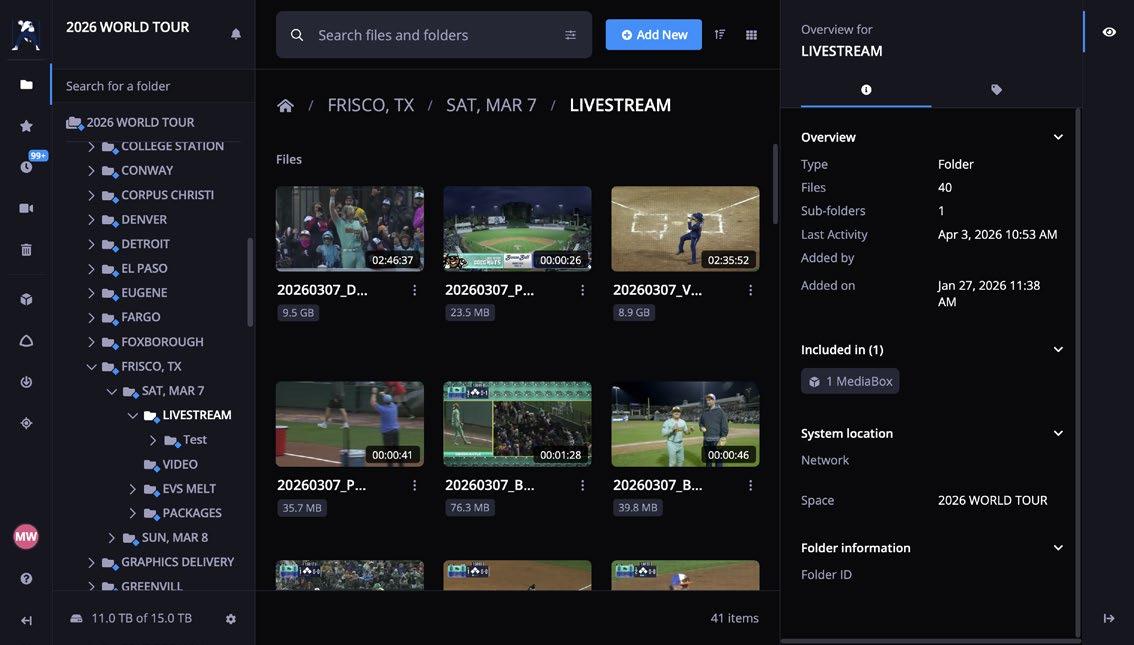
central system, allowing the team to work from the same material almost immediately after it is captured.
That matters because the Bananas are not just producing a broadcast. They are also creating video-board content, social clips, international feeds and viral moments that need to move quickly. Ci Media Cloud helps streamline all of that by letting different parts of the organization access footage without waiting for files to be physically transferred. Editors can cut highlights faster, marketing can post timely content and even cast members can log in and create their own clips for social media.
The platform also supports the Bananas’ fans-first approach. Since so much of their audience consumes content on Instagram, TikTok, YouTube Shorts and YouTube, Ci Media Cloud helps ensure the best moments are captured and shared in the right format, with the right quality, as quickly as possible.
For the Savannah Bananas, Ci Media Cloud is more than a storage solution. It is a key part of a modern production system that helps turn live-game energy into shareable content at scale.
Virtualized Master Control Rooms seem destined to add a new tier of opportunity to live production, but interoperability and latency issues mean mass adoption is unlikely to be just around the corner
By David Davies
As virtualization and content requirements have advanced and expanded, it was surely inevitable that the concept of a cloud-based Master Control Room (MCR) would begin to gain traction. In 2025, it was the subject of an IBC Accelerator project that yielded a series of important findings (of which more shortly) as well as some high-profile live deployments, including for several UEFA Europa League qualifier matches.
In terms of the potential benefits of virtualized MCRs, there is a general consensus neatly summarized by Michael Demb, vice president of product strategy at TAG Video Systems: “Cost efficiency and the ability to spin up capacity quickly are certainly major advantages of a cloud-based MCR approach, particularly for events or workflows that require short-term scale,” he said.
“However, other benefits are just as important, including geographic flexibility, easier collaboration across distributed teams, improved disaster recovery and the ability to dynamically allocate resources based on demand.”

Although there have already been some notable projects, significant challenges remain to be addressed if a virtualized MCR model is to be widely implemented—especially around the additional complexity introduced by shifting away from a more traditional, onprem approach.
The aforementioned IBC Accelerator, entitled “Master Control Cloud,” seems likely to inform the direction this model takes over the next few years. With champions including RTÉ, BBC and ITV, and participants such as Zixi and InSync, the project set itself the goal of “reimagining the master control room for the cloud era [exploring] how the essential functions of a broadcast master control room can be achieved natively in the cloud, with full interoperability between multiple vendors.”
Invited to consider why RTÉ wanted to
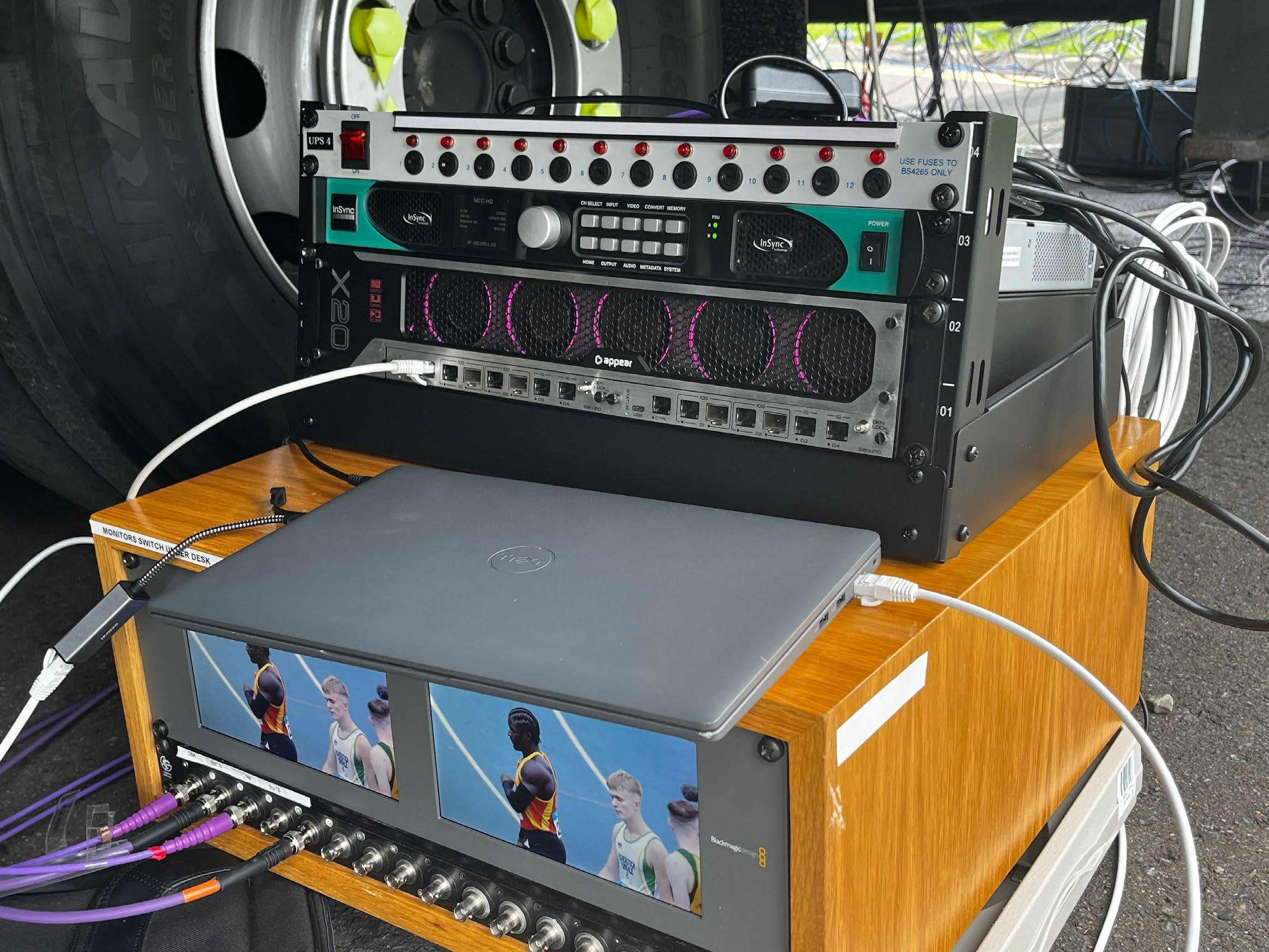
be part of the project, Rostam Kilgour, the broadcaster’s manager, first-line response, explained: “We’re a small organization and we don’t have our own sort of R&D department, but equally we’re keen to see how broadcast technology is developing and functionality is changing. We like to call ourselves ‘smart followers,’ and [one of the benefits of our size] is that we are perhaps a bit more nimble when it comes to testing and proof of concept.”
Hence RTÉ’s participation in the Accelerator’s PoC at the Irish National Senior Track and Field Championships in Dublin. SRT was used for program feeds over the public internet, with WebRTC employed to capture commentary; the output was ultimately provided both to RTÉ Player for public viewing and to ground-based MCRs in a number of formats.
In general, the Accelerator struck an upbeat tone about the potential of cloud MCRs, but it did highlight several key areas for attention.

In particular, the move to the cloud introduces new complexities, such as the orchestration of different vendor solutions. Without a unified orchestration layer and single operational interface, and the ability of production teams to retain switching control, there is a risk of creating latency and synchronization issues. Concluding that a single universal API for MCR functions is “not practical or desirable,” the Accelerator instead calls for a template-based API model that supports interoperability while still allowing vendors to innovate individually.
RTÉ has recently gone through its own significant infrastructural upgrade—to SMPTE ST 2110—meaning its MCR operations are now based around an IP router. That’s “probably not going to change anytime soon, but I think some of the learnings are very valuable for us to understand where the pain points

are and how we might develop things operationally in the future,” Kilgour said.
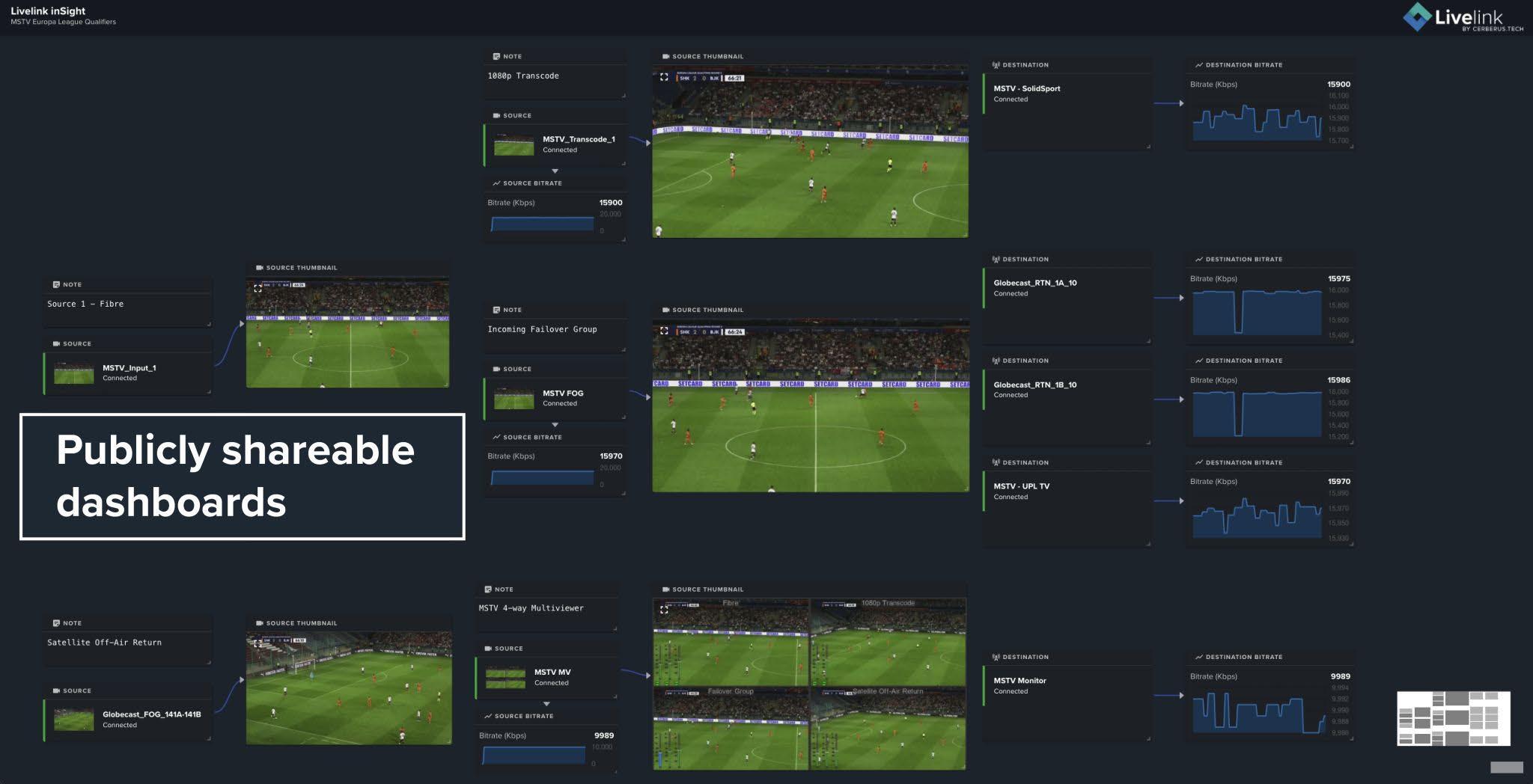
Meanwhile, a recent deployment of cloudbased MCR at a UEFA Europa League qualifier match makes a strong case that, at least initially, the greatest potential of this approach is for events where there are specific circumstantial pressures, cost pressures or both. Working in close cooperation with Cerberus Tech, Open Broadcast Systems played a critical role in delivering the transmission of a match between Ukraine’s Shakhtar Donetsk and Turkey’s Besiktas, which was held in Krakow, Poland. Rather than a more conventional blend of fiber and satellite delivery, the match was transmitted from site using public internet and 5G, and managed entirely within the cloud (visit Open Broadcast Systems’ website for a more detailed case study on the project).
“In this case, the host broadcaster was Shakhtar Donetsk and given the current situation [in Ukraine], the budget did not cover a traditional workflow by quite a long way,” said Kieran Kunhya, founder and CEO of Open Broadcast Systems, which supported first path venue international usage with its low-latency encoders, and also provided its 5G Flyaway product in case of any problems
with the primary route. Hosted in AWS, the Cerberus Tech Livelink platform managed the two flows and ensured automatic failover if the main internet-based path went down.
With 17 takers, there was no small amount of pressure, but the reception was very positive. Ultimately, Kunhya said, it was “a really

top-class feed considering the budgets that Ukrainian TV has, [and had the added benefit] of being able to show that you can deliver a great feed to millions of people using more interesting cloud MCR workflows.”
There is also general agreement that keeping workflows as clear and concise will be essential to further adoption of cloud MCR; it may also be that hybrid architectures offer another valid pathway.
As opposed to comprehensive cloudbased MCR deployment, Demb noted that “what we’re seeing instead is a steady rise in hybrid workflows where cloud resources are used selectively, only where they make technical and commercial sense, rather than a wholesale migration away from traditional infrastructure.
“[Therefore] in the coming years, I expect continued growth in hybrid architectures that combine on-premise infrastructure with cloud and virtualized environments. Emerging technologies such as MXL will play an important role by simplifying interoperability between vendors and systems in cloud and VM-based workflows, helping reduce integration complexity and accelerating adoption.” ●

By John Mailhot, senior vice president, product management, at Imagine Communications
For years, the industry framed broadcast infrastructure decisions as a binary: onprem or cloud. But in practice, that’s never really been the right question.
On-prem and cloud are not competing technologies. Both can be successful. From a purely economic perspective, it depends entirely on how you use them. And that’s where many infrastructure strategies fall short.
One of cloud’s biggest advantages is how it changes the cost model. Instead of large upfront CapEx investments, you pay for what you use — compute, storage, networking — on demand (See fig. 1).
That flexibility is powerful. It accelerates deployment, supports experimentation, and allows broadcasters to scale up (or down) instantly. But it also introduces a different kind of discipline.
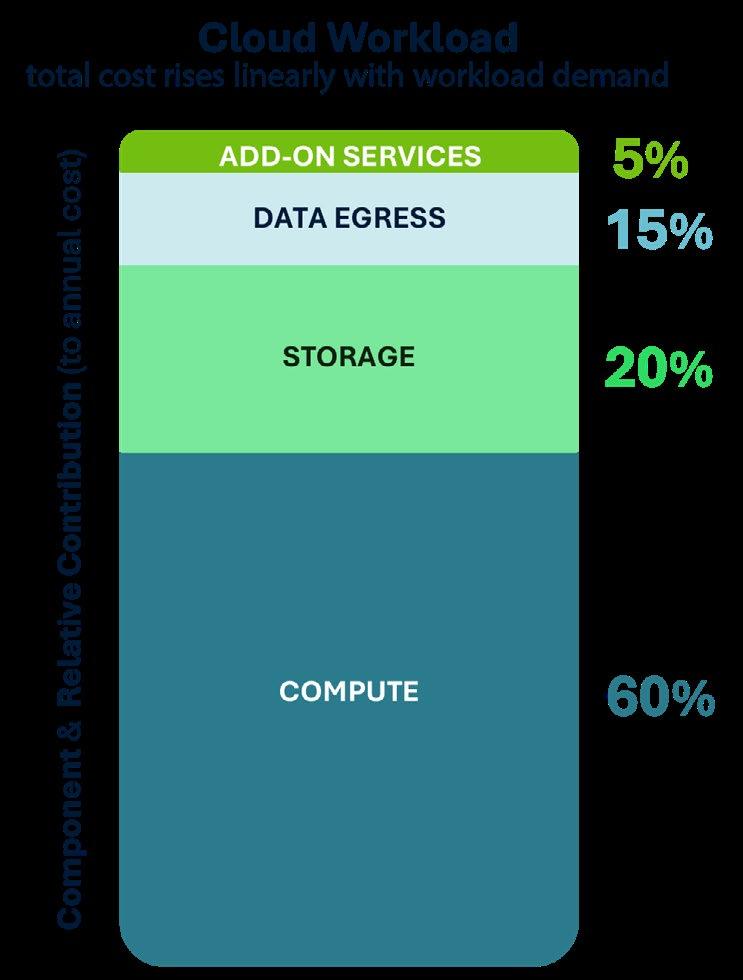
Cloud costs are layered and highly variable. And because these costs scale directly with usage, inefficiencies can creep in quickly if workloads aren’t well understood or controlled.
In other words, cloud doesn’t automatically lower costs. It gives you the ability to optimize them.
On the flip side, on-prem infrastructure continues to make a lot of sense, especially for stable, always-on services. When utilization is high and predictable, owning the infrastructure typically delivers the lowest long-term cost. And it comes with benefits that matter in broadcast: deterministic performance, tight control, and consistent latency.
Of course, the true cost of on-prem goes beyond the hardware itself. Power, cooling, real estate, maintenance, and staffing all add up. There’s also the risk of overbuilding capacity or investing in infrastructure that no longer aligns with business needs.
But for core playout and other 24/7 operations, the economics are still hard to beat.
So how do you actually decide what belongs where? It comes down to one metric: utilization. Put simply, how often are you actually using the infrastructure you’re paying for?
Our analysis of real-world deployments shows a clear inflection point: at roughly 30% utilization, cloud and on-prem reach cost parity. Below that, cloud is typically more cost-effective. Above
it, on-prem starts to win on total cost of ownership.
When you map that to real broadcast workflows, the picture sharpens quickly:
• Disaster recovery: ~1.5%–6% utilization cloud wins
• Regional playout: ~12% cloud-friendly
• Remote editing: ~20% still cloud
• 24/7 playout: 100% firmly on-prem
It’s a simple idea, but it changes the conversation. Cloud isn’t “expensive” or “cheap” in absolute terms. It’s efficient when the usage pattern fits the model.
The real gains don’t come from choosing one model over the other. They come from using both intentionally.
Hybrid architectures let you place each workload where it makes the most economic sense —cloud for variable demand, on-prem for always-on operations — and shift resources dynamically as conditions change.
At a high level, the shift to hybrid is really a shift in mindset. Infrastructure is no longer something you size once and live with for years. It’s something you continuously tune based on demand, cost, and business value.
When you get that balance right, the benefits go beyond cost savings. You gain the flexibility to launch faster, scale smarter, and adapt without disruption. And that’s ultimately the goal: not choosing cloud or on-prem, but using both to build a more efficient, resilient, and future-ready operation.
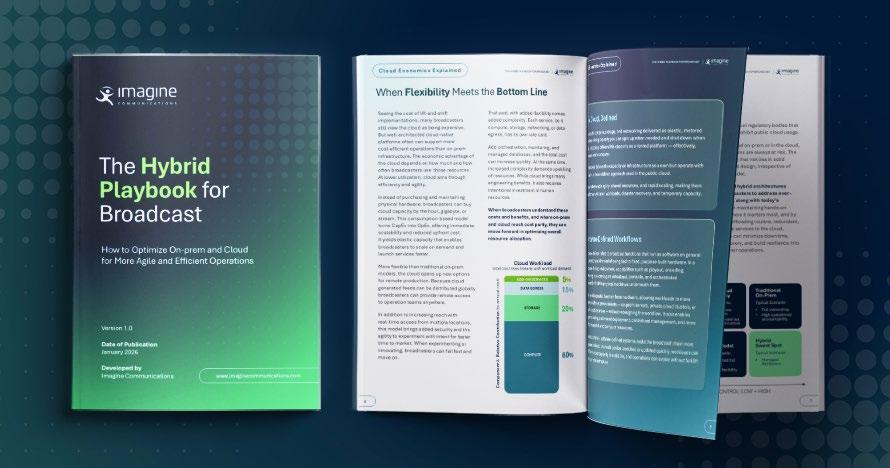
For a deeper look at how to design that balance, explore Imagine Communications’ “Hybrid Playbook for Broadcast.”


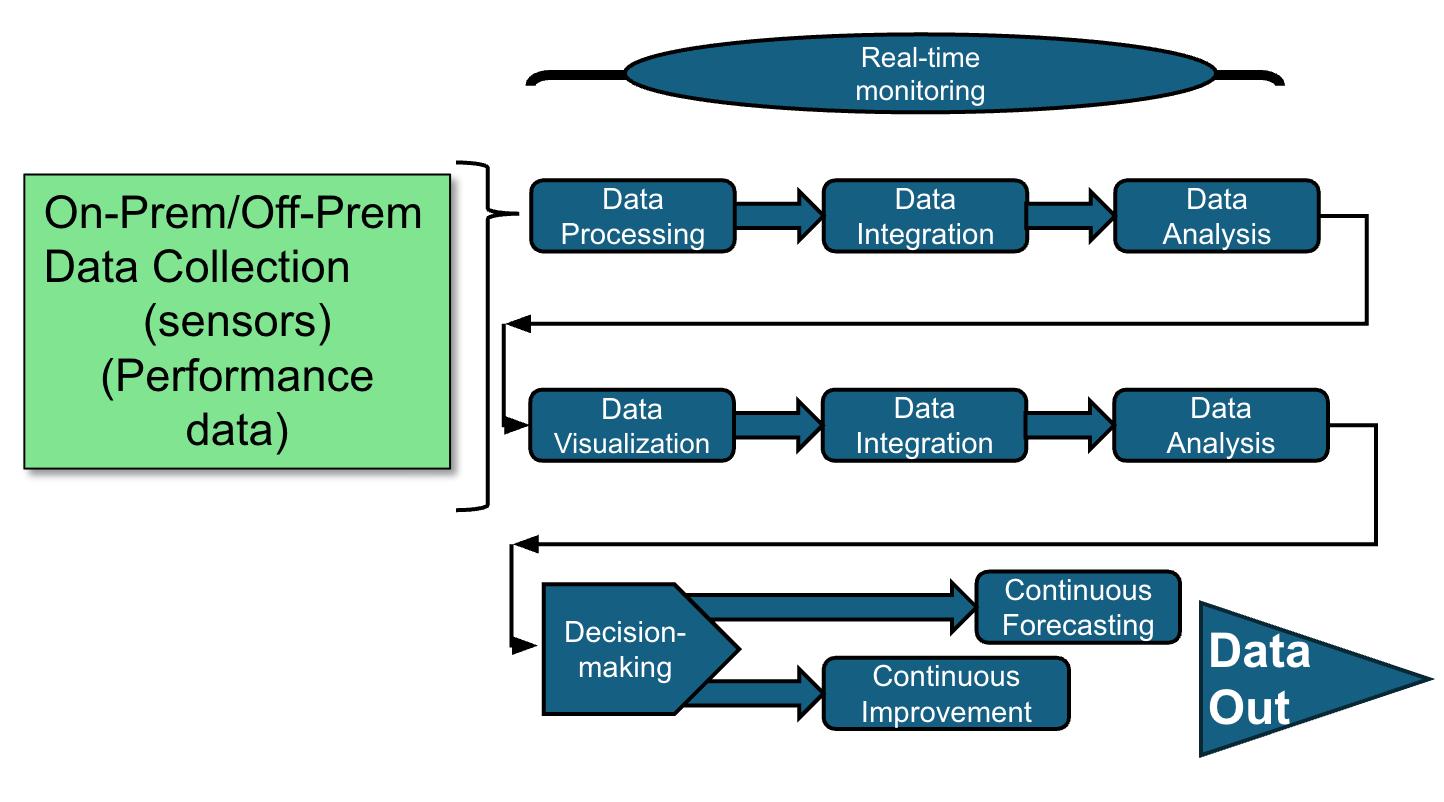
Challenges grow as cloud environments become more complex
Let’s review some of the important feature sets typically found in a cloud solutions provider.
First, the cloud provider should almost always store or process your data in multiple locations, aka data centers. These data centers provide the physical elements for connecting all of your data, anywhere. Data access will generally include cloud apps, databases and hundreds to thousands of both on-prem and off-prem systems, using “prebuilt” connectors that integrate the solutions handling your data and allow it to be processed through established services.
gence that the marketplace continually promotes, irrespective of the reference or workplace. Fig. 1 depicts a workflow inside a cloud that could aid in preparing data for AI-ready states or actions— ideas shown in Fig. 2 generally feed back into systems, as shown in Fig. 1.
AI-ready data means that your information has been systematically prepared, evaluated, managed and governed to meet the needs of AI projects. With financialrelated data, expectations are that transaction records are properly prepared before that data is fed into an AI model.
forecasting,” which uses historical data on sales volumes and costs, as well as comparative product details that can be shared across hybrid and multiple cloud providers located regionally, globally or both.
For organizations (like original equipment manufacturers) storing preventative or predictive maintenance for industrial purposes such as aircraft maintenance, the cloud services provider should be capable of tracking and cataloging short-term and long-term historical data, plus real-time data derived from sensors and performance variables. Applications for the cloud-storage systems would leverage and train AI models to accurately predict equipment repair times, schedules and relative downtime.
Sometimes referred to as a “digital vault,” immutable storage is a paradigm where information, once written, cannot be modified, overwritten or deleted for a specified retention period. It is also referred to as WORM (write-once, read-many) storage or object-locked storage. The opposite term is “mutable storage,” which can be edited, replaced, modified or destroyed at any time.
Unlike mutable values, an immutable value or content cannot be changed without creating an entirely new value. For example, in JavaScript, primitive values are immutable— once a primitive value is created, it cannot be changed, although the variable it holds may be reassigned to another value.
In an “open source” age, malicious activities are common and almost expected in nearly every software and data system—and especially in cloud services. In e-commerce services (such as eBay or Etsy), users place assurance expectations on their vendor’s services, who in turn rely on the respective e-commerce company to “pre-protect” the data and services of their customers and clients, using industry best practices and some of the services listed in the following:
A cloud provider should be able to effectively leverage your existing infrastructure with an ability to query or analyze your data with features including replication, movement/ migration and “rework.”
Given the global emphasis on artificial intelligence, one would almost expect this service-level statement—“all our data is AIready”—given the levels of artificial intelli-
Assume certain checks that your (cloud) services provider can include or package can identify patterns (or repetitive series of characters that could flag harmful routines that might represent fraudulent transactions, loops or means to generate a code sequence that would alter, falsify or get a back door to an unwanted action).
In retail applications, your cloud provider might offer “AI prep” capabilities and readiness for applications such as “demand
• For an in-depth understanding of how certain software is protected, Software Composition Analysis (SCA) emphasizes control over inventory, dependency mapping via Common Vulnerabilities and Exposure (CVE) and license tracking, as well as enforcement policies in pull requests (PR) and continuous integration (CI) before release.
Note that SCA also stands for Strong Customer Authentication, a regulatory requirement under the European Union’s Revised Payment Services Directive (PSD2), designed to reduce fraud in online payments. Strong Customer Authentication
requires at least two of three elements— knowledge (password), possession (phone) or inherence (fingerprint)—for payment validation.
• CVE is a standardized, international dictionary of publicly known cybersecurity vulnerabilities in software and hardware. Managed by the MITRE Corp. with U.S. government support, it provides a unique ID (e.g., CVE-2024-1234) for tracking flaws. It facilitates fast, secure communication about threats and feeds the National Vulnerability Database. There are currently over 330,000 CVE Records accessible via download or keyword search.
A “zero-trust” architecture does not implicitly mean “don’t trust anything,” but it does signify an architecture that is harder to breach and is an upgrade to your access control and much more. Zero-trust often demands multifactor authentication at all access points and insists that all connected devices are regularly updated and well-maintained.
In today’s hybrid cloud world, enterprises struggle to keep track of the slew of certificates managed by different siloed teams and
tools. The lack of a centralized view of health increases the risk of application disruptions due to expired certificates. In the AI and open-source era, vulnerabilities in opensource dependencies expose applications leading to unwanted attacks.
Ignoring production usage of open-source packages can lead to breaches and disruptions. Malicious bad guys often weaponize disclosed vulnerabilities quickly, shrinking your remediation window at each cloud source transition (e.g., in hybrid or multicloud). You’ll need regular, thorough monitoring to be sure your access control is tight. And you must improve management by limiting access to individual components in the network.
There’s segmentation, and then there’s ZTS (“Zero Trust Segmentation”). You can be certain of some things—the big ones include:
• Cyberattacks are unavoidable: Statistics show this to be true, yet for many organizations there’s a surprising lack of preparedness.
• Cybersecurity mindsets are often outdated: Even with continued investment in perimeter controls, organizations still get breached. When you recognize and accept that breaches are inevitable and start to assume breach, you can focus on isolating them and stopping their spread. ZTS is by far the fastest and easiest way to do that.
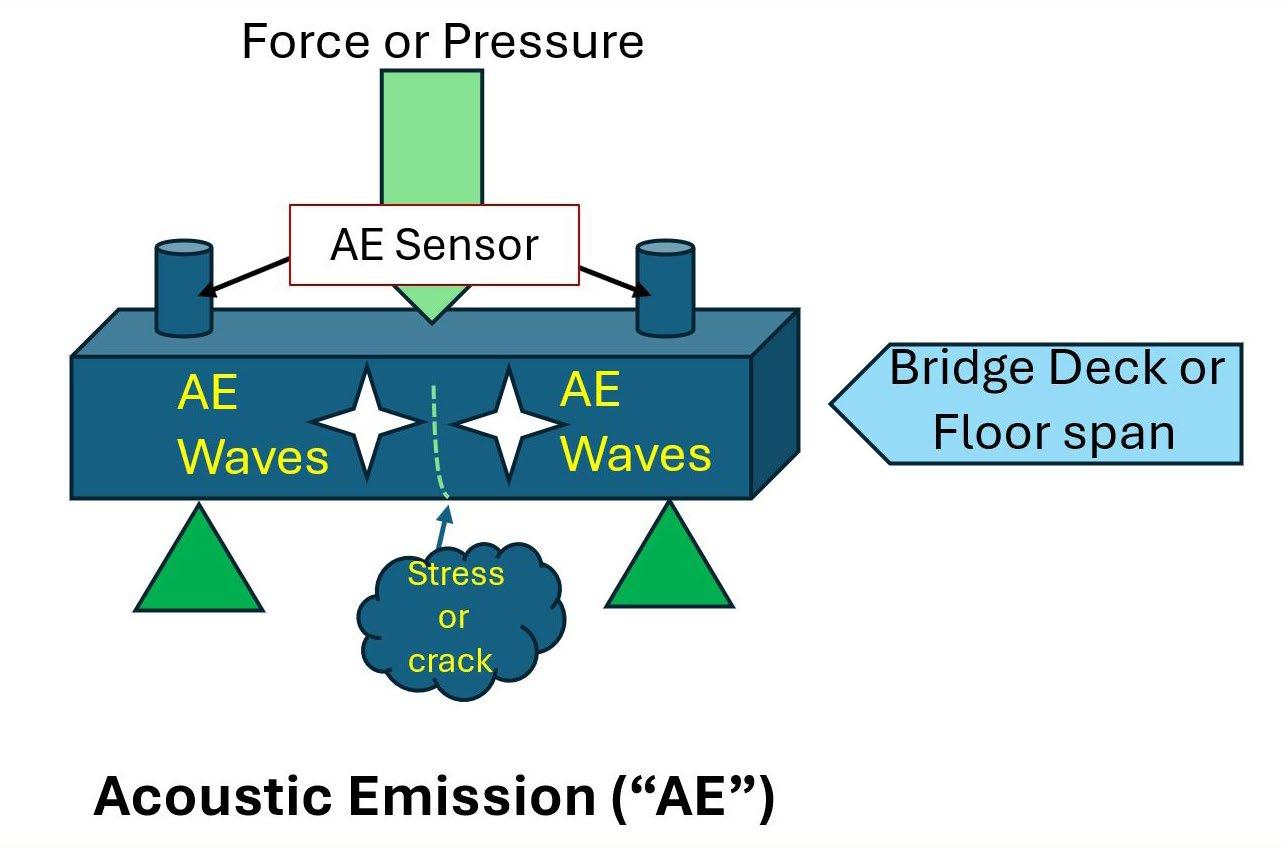
ZTS is a flexible and forward-thinking approach that is “AE strengthened” by default. “AE strengthened” refers to key applications, including structural health monitoring using Acoustic Emission (AE) monitoring or, contextually, the bolstering of organizational or technical capabilities (e.g., AE engineer, Advanced Energy—refer to Fig. 2 for example details).
Essentially, it is the duty of the cloud service provider and end user management to ensure appropriate safety factors are in place and routinely updated before opening the door to widespread public use of cloud-service capabilities. In a future discussion, we’ll look at cloud egress fees and egress payments, an area that’s becoming a bigger part of modern cloud operations. ●
Karl Paulsen, CPBE & SMPTE fellow, is a retired CTO and a longtime contributor to TV Tech on media technologies, workflows, IP networking and cloud. He can be reached at karl@ivideoserver.tv or at TV Tech.

For sports leagues worldwide, capturing the attention of Gen Z means meeting them where they live: on social media, in real-time, with highly authentic content. For the 2025-26 season, EuroLeague Basketball set out to do exactly that, targeting their premier Rivalry Series games like the iconic El Clásico between FC Barcelona and Real Madrid – with an ambitious digital initiative. Their goal? Deliver an interactive, mobile “all-access” pre- and post-match experience via TikTok LIVE. However, translating the raw energy of urban basketball culture into a seamless broadcast presented a major technical hurdle. To solve it, EuroLeague turned away from heavy production trucks and standard smartphone streams, finding their winning play in the cloud with LiveU Studio.
THE CHALLENGE: SEAMLESS STREAMING ON THE MOVE
EuroLeague envisioned a dynamic, fast-moving live show hosted by SBB-UK basketball experts. The broadcast was designed to start in the bustling city center of Barcelona, journey through the streets, and seamlessly transition inside the roaring arena.
In past seasons, relying purely on mobile phones for such nomadic broadcasts led to frequent connectivity dropouts and a lack of professional polish. EuroLeague needed a solution that offered rock-solid transmission without compromising the “street cred” and raw spontaneity that Gen Z fans crave.
“LiveU technology gives us the flexibility to go live from any EuroLeague city without having to travel with heavy equipment or set up a temporary production facility on-site,” explained Julien Segui, EuroLeague Basketball’s Head of Content.
THE SOLUTION: CLOUD PRODUCTION VIA LIVEU STUDIO
To bring this vision to life, EuroLeague paired on-the-ground hardware with powerful cloud-native software. On the streets, a camera operator tracked the hosts using a compact LiveU LU800 portable video encoder to reliably beam high-quality footage directly to the cloud.
Once in the cloud, LiveU Studio took center stage as the command center for the entire broadcast. Accessible from any standard web browser, LiveU Studio allowed a remote production

team to manage the live feed without needing to step foot in Spain. Through LiveU Studio's intuitive cloud interface, the digital team transformed a raw video stream into a premium, branded broadcast. They dynamically enriched the live feed with:
• Custom graphics and data overlays
• Branded team logos and sponsor placements
• Real-time structural transitions as the hosts moved from outdoor streets to indoor courtside positions
Furthermore, LiveU Studio solved the problem of multi-platform friction. While the primary, vertically-optimized feed streamed directly to TikTok LIVE, the production team utilized LiveU Studio’s built-in clipping tools. Remote editors instantly captured standout moments from the live broadcast and published them across other social media channels simultaneously, maximizing the league’s digital footprint in real-time.
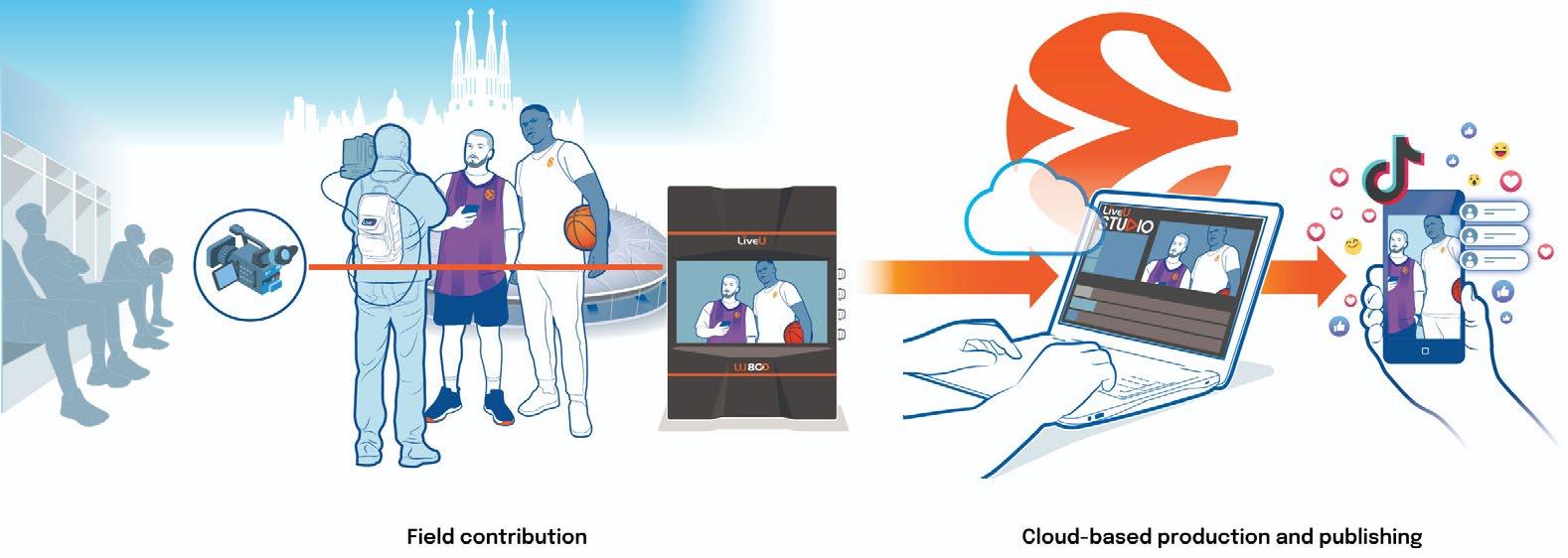
By pairing the mobile reliability of the LU800 with the creative flexibility of LiveU Studio, EuroLeague achieved remarkable fan engagement. The stream allowed hosts to read live TikTok chat comments and answer fan questions on air, establishing a genuine, two-way relationship with viewers. By eliminating heavy on-site hardware and localized production facilities, LiveU Studio gave EuroLeague a blueprint for scalable, cost-effective, and highly engaging fan activation. It proved that with the right cloud production tools, traditional sports broadcasting can successfully evolve into a scroll-stopping, interactive social experience.


Managing complexity becomes the next challenge for broadcasters
By Chris Fellows
The case for moving master control to the cloud is well-rehearsed. Broadcasters running event-driven sports and news operations cannot defend a hardware estate that is sized for the largest weekend of the year and idle the rest of the time. Elastic capacity, event-based economics, and the end of multiyear refresh cycles appear in RFIs from Tier-1 broadcasters across Europe.
What the architecture diagrams don’t show is the operational problem underneath. Once the MCR is distributed across on-premise sites, public cloud regions and edge zones, the operator’s job does not get easier. It gets harder. Signal flow now spans environments never designed to behave as one system, across a transport estate that keeps proliferating, from ST 2110 or MXL inside the facility to various ARQ protocols contending for streaming over unmanaged IP, plus NDI, WebRTC and HLS wherever partners or platforms bring them in. The operator is asked to reason about it in real time during a live match or news bulletin.
The cloud question is no longer which protocol wins. It is how to run, observe and account for live workflows that stretch across all of them. The next phase of cloud MCR demands a
software control plane above connectivity: One that ingests on any protocol, redistributes on any other, applies hitless failover across paths, enforces policy consistently and reports cost and reliability per channel and per event.
The architectural answer is to separate control from processing. The processing layer handles ST 2110 end points, NMOS-registered devices and the video and audio processing applications doing the heavy lifting. The control layer sits above it, handling contribution into MCR, distribution out and orchestration and monitoring across the signal chain.
This separation lets broadcasters choose the right tools for each layer independently, and enables the control layer to move freely across environments: bare metal, virtual machines, containers, on-premise or any major cloud. For workflows that do not need premium processing, such as Tier-2 and Tier3 sports, newsgathering and secondary feeds, the best control layers can absorb the video and audio processing themselves, so broadcasters stop paying for premium processing where it is not needed.
That separation also shapes the operator experience. When every node in the control layer doubles as a monitoring probe, the deeper the
layer sits in the chain, the more comprehensive the operational picture becomes. Network health, TR 101 290 transport-stream compliance, content quality on the picture and audio actually being delivered, and SCTE-marker integrity end-to-end can all surface in one place. Templated configuration means adding capacity for a peak event is a management operation, not a per-instance exercise.
There is a natural next step worth saying out loud rather than burying in a road map. As LLM-based agents mature, the operator’s surface will become more flexible than today’s dashboards. Custom views described in plain language rather than commissioned as bespoke UI. Plain-language explanations of likely root cause when an incident fires.
Autonomous monitoring against an operator-defined brief: “Alert me if any UHD output loses audio for more than two seconds” or “if an SCTE-35 marker arrives outside its scheduled window.” It widens what a team can watch without widening head count. None of this is in production at scale today, and broadcasters considering it will want deployment models that respect their data posture.
The 2025 IBC Accelerator Master Control Cloud project, with RTÉ, BBC and ITV as its champions, examined how broadcast master control could be delivered natively in the cloud with multivendor interoperability. Its conclusions read as a brief for that control layer, written by broadcasters rather than vendors: a unified orchestration layer and single operational interface are essential; a universal API across all MCR functions is neither practical nor desirable; the better path is a template-based model that supports interoperability while letting vendors innovate.
The same conclusions are now surfacing in production. Multistation cloud MCR refreshes are running today, and live productions have been delivered end-to-end from 5G edge environments using exactly this separation of orchestration and processing.
Cloud MCR is the architectural decision broadcasters are taking now. Operator experience is the operational decision they will live with for the next decade. Treating the second as an afterthought is how organizations end up absorbing the cost of cloud migration through incident response and head count, rather than capturing it as the gain it was meant to deliver. The control layer is where the gain compounds, or where it leaks. ●
Chris Fellows is director of global solutions engineering at Zixi.

By Graham Sharp
If you Google search for “cloud native,” the results explain four technologies and practices:
1. The use of microservices: Instead of a huge monolithic codebase, applications are built from small independent services which perform a specific function and communicate with each other using APIs.
2. Containers: These microservices are packaged into containers (Dockers, for example) that house everything required to run them, making them easily portable across hosting environments.
3. Orchestration: There are various tools (Kubernetes as an example) that manage the containers and do the scaling, load balancing, self-healing and other optimization tasks.
4. DevOps: Continuous integration and delivery enable engineering teams to provide frequent code updates to individual services without shutting the whole application down. This simplifies QC and hardening, negating the requirement to regression-test the whole application with each update. These are the four technology pillars that enable an application running in a cloudnative environment to provide speed, agility, efficiency, portability and adaptability. New features can be shipped faster, providing agil-
ity in changing markets and scalable products can be built that are both efficient and reliable.
By understanding the advantages, characteristics, deployment and delivery models of cloud computing, organizations can harness the power of the cloud to drive innovation, accelerate growth and stay competitive in today’s digital landscape.
The first use of the cloud in broadcast was about 10 years ago, when it started to be used to host virtual machines. Virtual machines are basically servers in the cloud that run an OS such as Windows, just like on-premises hardware. Typically, the application is “lifted and shifted” to this environment and therefore does not use all of the cloud’s native advantages.
The advantage of a lift-andshift strategy is speed—an existing application can be running in the cloud very quickly. The disadvantages, however, are many: It does not use any of the advantages, usually costs more to operate and the developer has to continue supporting old code in the old way.
This resulted in a pushback
against the cloud. In many cases, early adopters found their cloud-hosted applications proved less reliable and more expensive than what they had before.
Fundamentally, this has led to a lack of understanding of the way the cloud works natively, the financial benefits it brings and, importantly, the difference between software that has been lifted and shifted to the cloud and software that is written for the cloud.
The next step for those initial “lifters and shifters” was to utilize the tools and systems provided by some cloud vendors, particularly Amazon Web Services (AWS), in their eagerness to increase adoption. This created another, different problem. By using proprietary tools those vendors achieved some partial advantages of being cloud native, but in doing so, they locked themselves to a single cloud vendor and importantly their pricing. In addition, with many broadcasters concerned with sovereignty issues, being locked into a single vendor does not help.
This means the cloud adoption rate is much lower than we think, as everyone searches for a solution that brings the advantages of being truly cloud native, while not being locked into a single cloud vendor.
Without a doubt, cloud computing has transformed the way businesses operate, offering unparalleled scalability, flexibility and cost efficiency. The trick is to find the right application vendor. Here are a few questions you might want to ask:
1. Does the application use containerized microservices?
2. Can the application scale both itself and the cloud resources to the task at hand?
3. Is the application maintained and enhanced using continuous development and deployment?
4. Is the application portable between both public and private cloud vendors and on-premises hardware? Specifically, does it rely on any unique third-party services provided by a single cloud vendor, which may create a “lock-in?”

Graham Sharp
Assuming the answer to these questions is yes, then the application will enable you to pay only for what you play and help you meet your business goals in the new digital world we live in! ●
Graham Sharp is vice president of sales and marketing at BCNEXXT.

Broadcasters and streamers are treating migration as a creative and operational transformation, leveraging AI, hybrid workflows and human judgment

By Jenny Priestley
For broadcasters and streamers, a migration to the cloud is no longer a simple technical upgrade. The era of merely replicating on-premise infrastructure in a virtual environment — the so-called lift and shift — is over.
The most successful organizations are embracing the journey as a fundamental operational and creative transformation, requiring a phased approach that addresses architectural resilience, cultural change and the accelerated adoption of new technologies like AI.
The initial hurdle for many is realizing that the journey to the cloud is less about IT infrastructure and more about people.
“Cloud migration isn’t just a technical decision. It’s a creative and operational one,” Sami Aziz, executive producer and founder of Pale Blue Originals and former head of live broadcasts at NASA, said.
“The organizations that navigate the move to cloud best treat it like a production: a phased approach, very clear communication, investment in training and intentional standardization across tools.”
Any move to the cloud comes with challenges, including managing real-time media workflows that demand low latency and high reliability.
“To tackle this, it’s important to ensure workflows are consistent to reduce training time and use real-time monitoring tools to keep an eye on network and media per-

formance,” said Bryan Bedford, director of consumer industries and business solutions at Cisco Systems.
“Automation and orchestration can simplify operations and help scale efficiently. Plus, collaborating with vendors and adopting open standards ensures everything works well together.”
Reliability, especially for real-time media


workflows that demand low latency, remains a constant challenge. Organizations must design their systems to survive multiple problems, from public internet performance issues to data center and region outages.
Mike Pilone, enterprise architect at National Public Radio, suggested that any system deployed in the cloud has to “utilize multiple regions to ensure they can survive

an interruption. Using multiple cloud providers can give you an additional layer of availability as well as flexibility if a provider is no longer attractive due to service or pricing changes.”
Content protection and ownership in a cloud-first world are also new challenges facing content owners, especially with the need to protect their assets and set clear parameters in case a platform goes down.
“Most broadcasters don’t ask these questions until something goes wrong,” Aziz said. “Redundancy and contracts with clear data ownership language are two critical starting points. Security should also be treated as an ongoing operational priority, not just a one-time setup. The same care you would apply to protecting a finished master should apply to every stage of your cloud pipeline.”
The growth of AI is also linked to the move beyond a basic cloud deployment. Most AI tools, such as automated captioning, content tagging and quality control, are cloud-based. AI models are resource-intensive operations that may only be practical in a shared computing environment such as the cloud.
“As we see more AI adoption in various use cases, we can expect to see greater use of the cloud to provide the core models and compute,” said Jon Cyphers, senior manager of product and support, distribution at NPR.
AI is transforming how broadcasters operate in the cloud, Bedford agreed, helping to automate and optimize media production and delivery, making workflows more efficient and reducing manual errors.
“Combining AI with cloud and edge computing opens up exciting possibilities like

personalized content delivery and intelligent network orchestration,” he said.
“This integration helps broadcasters stay competitive by enhancing efficiency and creating new ways to engage audiences.”
According to Aziz, organizations that have already started migrating to the cloud will be able to adopt and adapt to AI incrementally, with human judgment still a large part of the workflow.
“Organizations still anchored to legacy systems will have a harder time making the leap all at once,” he said. “We’re all watching how quickly AI is evolving. The honest truth is, it’s moving faster than any of us can set editorial and ethical standards, and that’s a conversation our entire industry needs to be having.” ● © NAB
• Start by making sure your creative and technology teams are working together and not independently. The people making the content have the clearest view of what’s broken and needs work.
• Embrace flexibility and agility, don’t just “lift and shift.”
• Adopt software-centric workflows that let you scale and innovate quickly.
• Explore hybrid models or edge computing, which can help reduce latency and improve streaming quality.
• Understand the problem you’re trying to solve and the specific requirements of your solution.
• Map your production process and identify where physical infrastructure is slowing you down.
• Consider building your own solutions on top of core features to stop vendor lock-in.