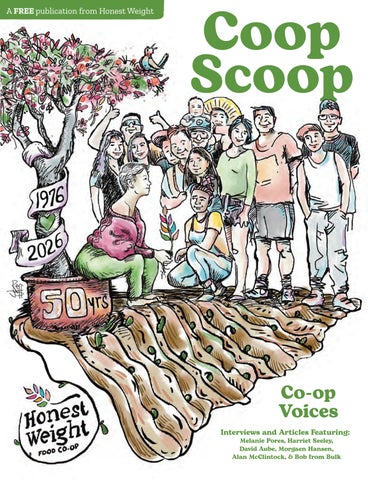
Coop Scoop

and Articles
Interviews
Featuring: Melanie Pores, Harriet Seeley, David Aube, Morgaen Hansen, Alan McClintock, & Bob from Bulk
committed
and Articles
committed
By Rebecca Angel
By Rebecca Angel
By Deanna Beyer
Deanna Beyer
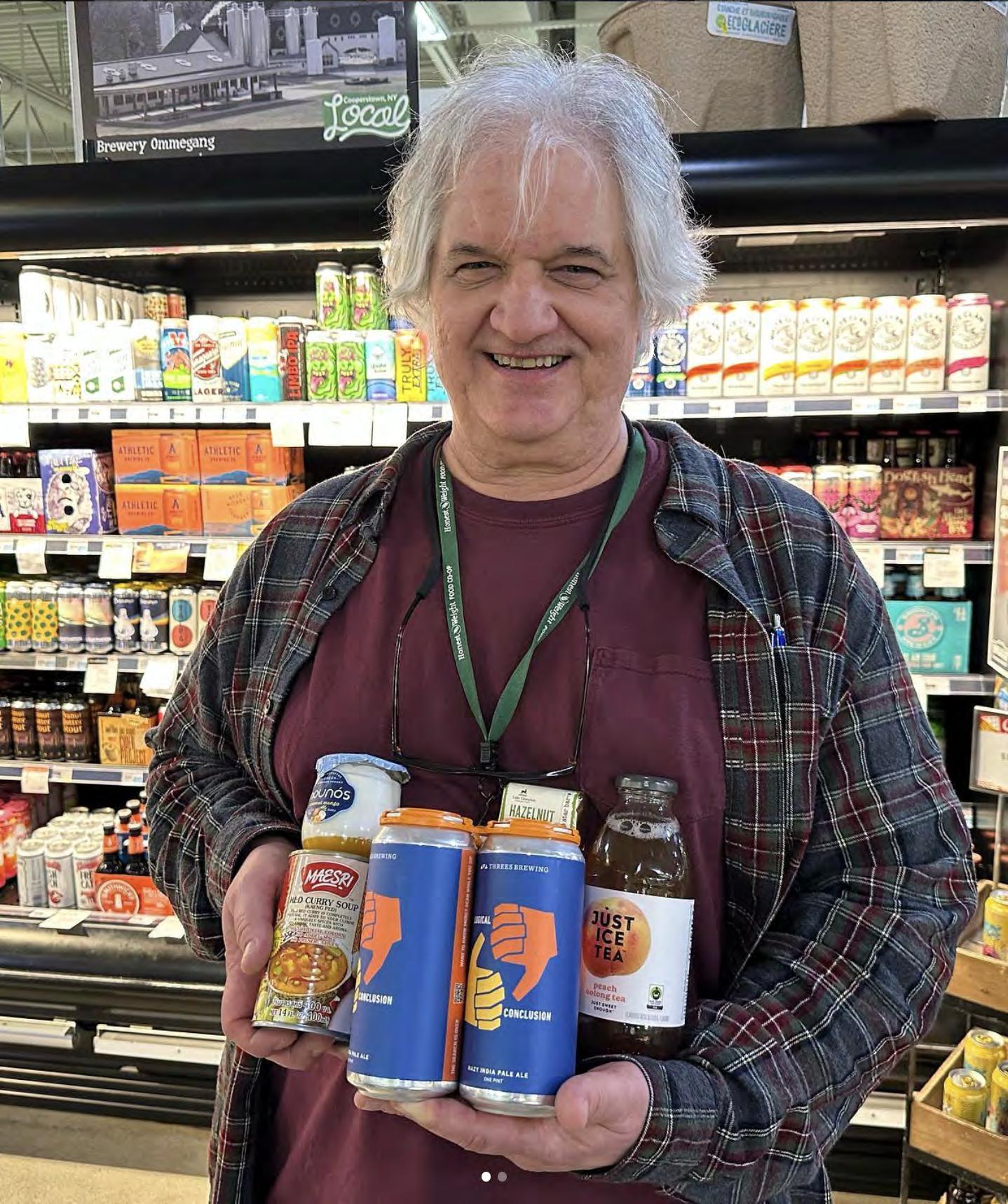
Ruth Ann Smalley

Natalie Criscione remembers shopping at the Quail St. Honest Weight location. She wears many hats: educator, writer, artist, musician, property manager, advocate, volunteer. She loves being part of the Coop Scoop team!

Pat Ellis has been a shopper at HWFC for years and became a member a year ago. She enjoys participating in the creative energy of the Scoop’s editorial team and is excited about contributing more in the future.

Lucia Hulsether is a teacher and writer currently based in Saratoga Springs, NY. Her first book, Capitalist Humanitarianism, is available from Duke University Press. www.dukeupress.edu/capitalist-humanitarianism

daughter, and beagle-mix pup She joined her first co-op at sixteen (The Outpost, Milwaukee). When not tending the HW Blog, she can be found weeding her garden.
Sarah Rosenthal is the new Education and Engagement Specialist at Honest Weight. When she isn’t planning new events at the Co-op, you can find her teaching group fitness classes, cooking a tasty vegan dish, or gardening!
By Ruth Ann Smalley
e can probably all think of a favorite restaurant or business that has shuttered, and many established organizations and institutions seem to be hanging on by a thread these days, if not closing down completely. Some large scale institutions, having drifted from their stated values, have lost public confidence in recent years. When you add in lifestyle changes, rapid technological shifts impacting the workplace, and disrupted and disrupting market forces, you have a recipe for instability and uncertainty. All this is why, here at the Coop Scoop, we’re not taking our co-operative for granted! We’re all-in for celebrating Honest Weight Food Co-op’s fiftieth birthday and everything that means for our past, present, and future community.
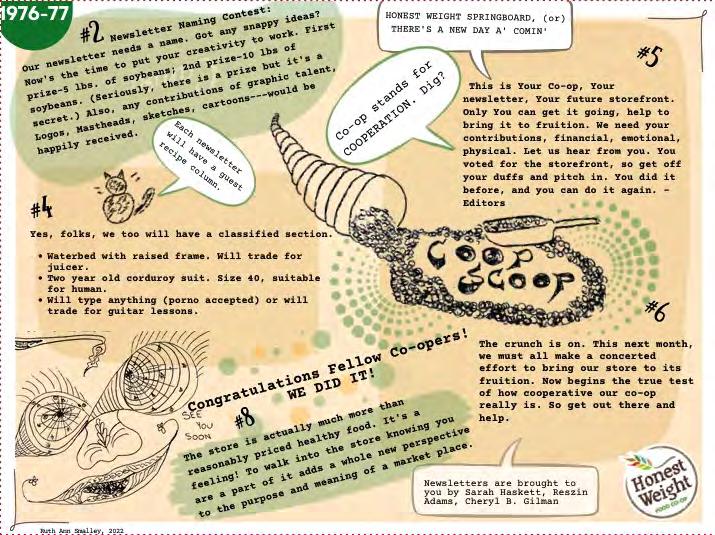
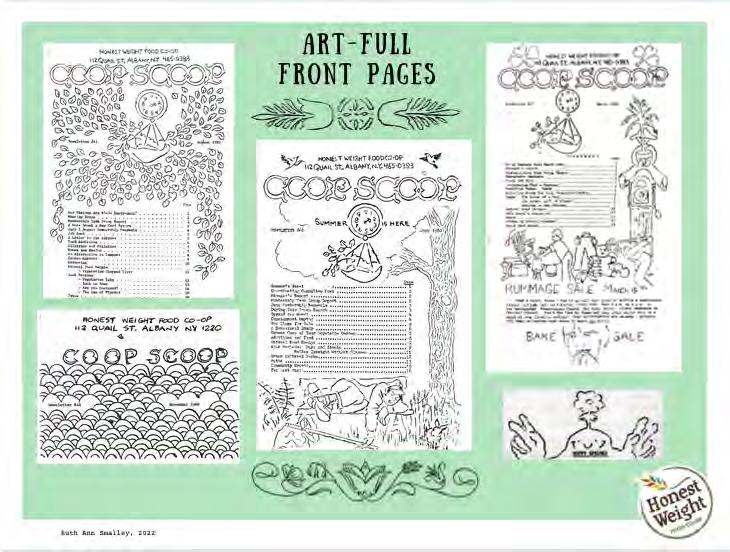
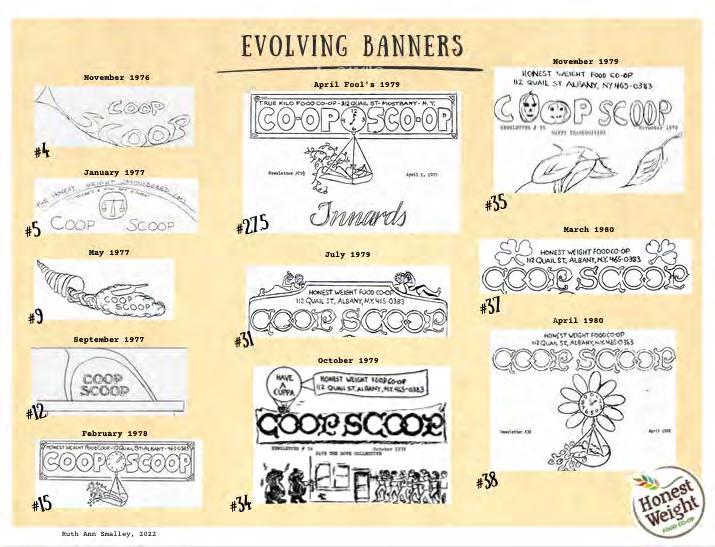
The Coop Scoop has a continuous publication history from the very first days of Honest Weight as a store. You can find the archive here: https://www.honestweight.coop/page/healthy-local-natural-organic-foods-94.html. Take a break from the strenuous news cycle and check them out! They are a fascinating, informative, and often entertaining window into the story of our store as it has grown and adapted since 1976.
In this edition, we’re tapping into this archival treasure trove, and gathering up the current perspectives of a number of members, staff, and Scoop contributors. Long-term records like the Coop Scoop, as well as the strong, guiding framework of the 7 Co-operative Principles (see page 18), are a big part of our ongoing creation of ourselves as a democratically-run business. But just as important are the contributions of commitment and creativity from our members.
The Honest Weight enterprise has been gifted with great folks, many of whom have been with us for the long haul. They help keep our institutional memory alive and the products on the shelves. And, when joined by the welcome stream of new members, we’ve all kept cultivating the flexibility to make changes with discernment. We’ve met with some novel challenges in just the past five years, and we’ve proven our resilience.

So, Happy Fiftieth Birthday to Us! Please read on to find our colorful origin stories and members’ visions of how we can keep co-evolving with our local community. You’ll also find tips for Earth Month that you can use all year round. As always, you can learn more about the inspiring work of our Be the Change fund recipients. Finally, we’re excited to announce the launch of two new columns; Elizabeth Meer’s Native Plant of the Month, and Leona Palmer’s The Psychology of Eating.
Cheers!

Ruth Ann Smalley PhD, is our Content Editor. An educator and writer, with a 4-digit Co-op member number from the early 90s, Ruth Ann offers wellness, writing, and creativity coaching through her practice at www.vibrant-energies.com or www.ruthannsmalley.com.
Mathew Bradley is an Art Director for a record label based out of Troy, NY. At HWFC, he serves as the Coop Scoop’s Layout Editor. When not at the computer, he sets aside time to make music with his two bands, lounges on his couch with his cat (Alene Lee), walks Peebles Island with his dog (Cricket), or tries out a recipe from one of his many cookbooks.


By Elizabeth Meer
teeped in the natural and cultural history of our area, this small, graceful, multi-stemmed tree provides interest and quiet beauty all year round. But it really calls attention to itself in April, when it covers itself in delicate, cream-colored, five-petaled flowers. Driving through the spring countryside around Albany, it is always amazing to realize again just how many of these wonderful plants grace our local landscape.
Known locally as “Shadbush” or “Shadblow,” its bloom coincides with the annual spawning run of the American Shad, an historically important sport and food fish, in the Hudson River. The subject of an entire book, The Serviceberry: Abundance and Reciprocity in the Natural World, by the renowned indigenous scientist and naturalist Robin Wall Kimmerer, the tree’s flowers are important for early-season pollinators, and its leaves host more than 100 moth and butterfly species.
In June the tree produces abundant edible reddish-purple berries that support more than two dozen native songbirds and other wildlife, and lend the plant yet another of its many well-known common names, “Juneberry.” They are irresistible to Cedar Waxwings.
Kimmerer holds up the Serviceberry as an alternative model for human economies, which she describes as “one based upon reciprocity, where wealth comes from the quality of your relationships, not from the illusion of self-sufficiency.”
The Co-op property boasts more than a half dozen of these native beauties — planted along Watervliet Ave. Extension as part of the tapestry of plants that screen the loading dock, and along the retaining wall above the west corner of the parking lot. Take a moment this April to treat yourself to their graceful beauty, and consider planting one at your home. Our local birds, pollinators and neighbors will thank you for it.
LIGHT: Sun/Pt. Shade
HEIGHT: 10-25’ according to species SPACING: 10-20’
SOIL MOISTURE: Average/Dry BLOOM TIME: April
COLOR: Creamy white flowers, April; reddish-purple berries, June; red-orange leaves, October; graceful gray multi-stemmed trunk, November-March
Elizabeth Meer is a gardener, artist and environmental policy expert who has designed and tended the Co-op’s gardens with other Member-Owner Garden Stewards for more than twelve years. Please consider joining our team!

By Pat Ellis
Join us as we take a look back at some of the Co-op’s early years as documented in the Coop Scoop’s archives.
1976
January: The Co-op is born as a pre-order buying club investing time out of Gary and Sharon Goldberg’s basement. There are approximately 20 members.
August: At a General Membership Meeting, by a vote of 21-14 the members agree to begin converting from a buying club to opening a store front.
September: The first issue of the Newsletter is published.
October: Newsletter Naming Contest is announced with First and Second prizes being 5 lbs and 10 lbs of soybeans (seriously there is a prize but it is a secret).
The Classified section of the Newsletter advertises a water bed with a raised frame that the owner is willing to trade for a juicer.
1977
March: The new store front opens on Quail Street. First week sales are $371. Current membership is 130.
The initially stocked items are most of the “basics for down to earth eatin’” and included a wide range of pure and unprocessed foods such as grains, flours & berries, beans for baking and sprouting, and selections of nuts and dried fruits.
“The store is actually much more than reasonably priced healthy food. It is a feeling! To walk into the store knowing you are a part of it adds a whole new perspective to the purpose and meaning of a market place. We can now buy our food in the same ordinal, peaceful atmosphere we enjoy cooking and eating in.”
May: Co-op adopts an official food policy which is dedicated to providing the highest quality food at the lowest possible prices—carrying natural, whole, and pure foods.
September: Membership tops 300.
October: Gary Goldberg accepts the new position of part-time manager responsible for training Supervisors and coordinating store activities.
December: Year ends with total sales of $36,698.28 and operating expenses of $35,504.55
February: The annual insurance cost for the store is $241.
June: Co-op is authorized to sell butter and Haagen-Dazs® ice cream.
August: General Membership votes to extend the Co-op into adjoining space. Much of the required work is done by Member-Owners.
September: The Nutritional Task Group from HWFC begins a series of public lectures. They are titled “Raise your Nutritional Awareness” and are intended to inform the public of the links between deterioration of health and increasing consumption of ultra-processed foods.
May: A customer licks a peanut butter spoon in front of the health inspector.
June: 70% of store profits come from non-member sales.
October: An entire issue of the Coop Scoop vanishes! It had been typed and was ready for art work. It disappeared and remains a mystery to this day.
December: Overhearing a conversation between some Co-op members regarding the cost of materials required to build an access ramp into the Quail Street building, a stranger, who remains anonymous, reaches into his pocket and donates the required money.
November: There are 250 Member-Owners at the store, an increase of 66 over previous year.
May: HWFC begins to carry whole milk in deposit/return glass bottles.
Olives are added to products that can be found at the store.
June: Co-op is looking for a Member-Owner to serve as Tenant Liaisons now that the purchase of the 112 Quail Street Building is completed.
January: First Co-op baking contest is held to create awareness of how delicious and nutritious natural food baking can be. First prizes are awarded to: Debbie Schramek (cake); Laura Hagen (cookies); Donna Shannon (pie); Louise Stoney (bread).
By Pat Ellis
WBy Pat Ellis
e are temporarily retitling this column in recognition of the 50th Anniversary of Honest Weight Food Co-op and the continued contributions of its active Member-Owners. Member ideas form the deep and solid roots of HWFC.
Traveling through the archives of the Coop Scoop, it is readily apparent that without the ideas, concepts, and suggestions of our members, we would not have grown from a buying club to the organization we enjoy today.
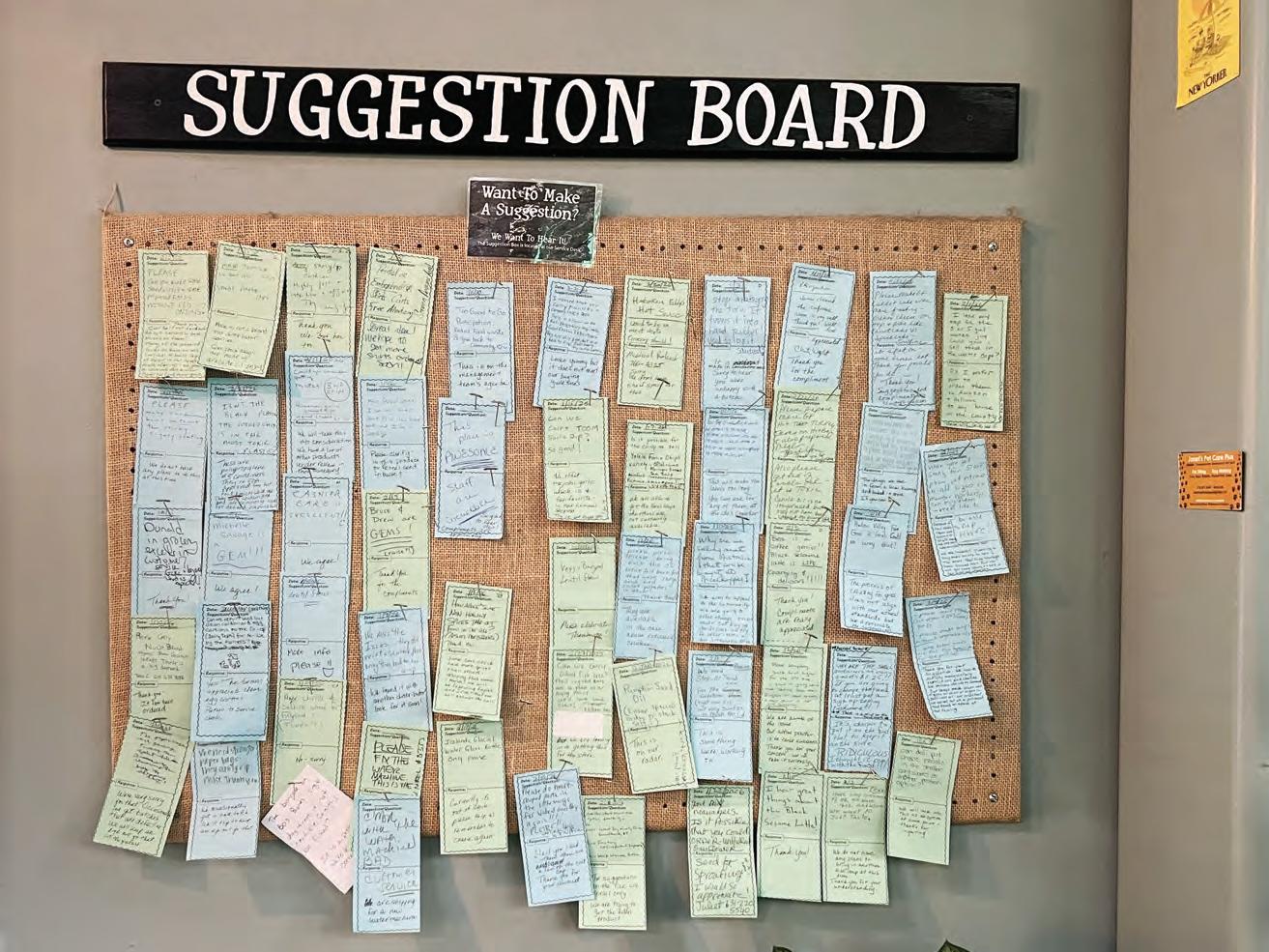
That contributory tradition remains alive and active, as represented by the very full Suggestion Board located by the
entrance to the cafe seating area. Our current board displays the store’s individual responses to a collection of your ideas, recommendations, and evaluations.
These suggestions encompass store products, procedures, and policies. Some submissions give kudos to specific employees, others make a request for a particular product or fresh food item. Still others may challenge us to review our current actions against our core values. All are welcome to share suggestions, and rest assured, someone will be reading them with care.
In all cases, the suggestions are reviewed by the appropriate personnel, and the results of that review are posted directly on the suggestion form and displayed on the Board. Not all of the ideas are viable, and when possible, a brief explanation of “why not” is provided. You can also read responses to a selection of suggestions, published in the Honest Slate newsletter.
So, let’s remember that we are a Member-Owner organization. We value everyone’s contributions as ways to strengthen our growth and presence in the community. The Suggestion Box and notes are located at the Service Desk. We eagerly anticipate hearing your ideas!
By Richard Daley
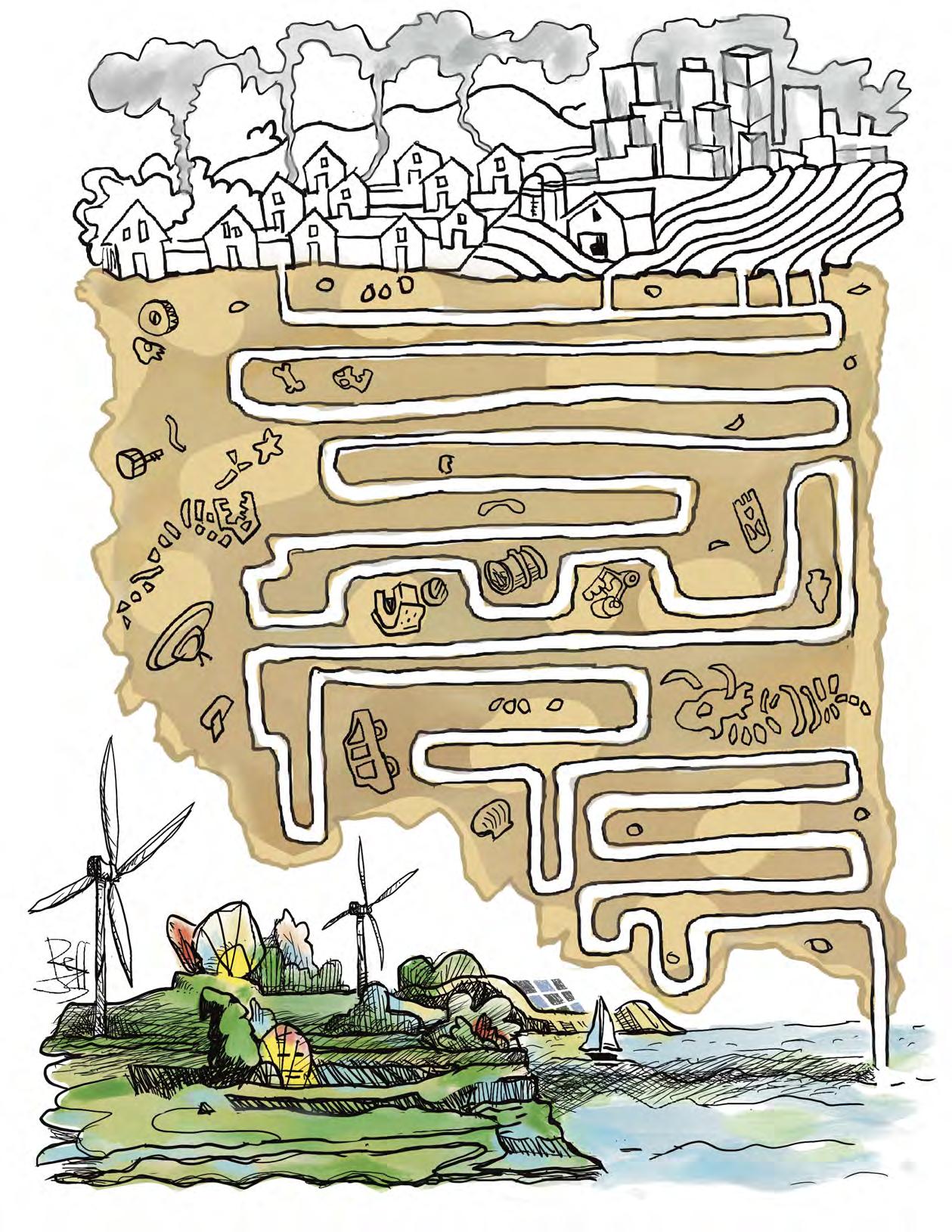
In an era seemingly defined by overproduction and disposability, the simple acts of reusing, recycling, and composting are often framed as individual lifestyle choices. While personal habits matter, the deeper truth is that waste is a systemic issue, and meaningful solutions emerge when communities share knowledge and infrastructure, and take on the responsibility of making a difference. In the Capital District, grassroots efforts are helping shift waste reduction from a private burden to a collective practice.
Reuse is one of the most powerful and often overlooked tools we have. Reuse keeps materials circulating in our local economy, extending their usefulness. Donating household goods, shopping secondhand, repairing items, and sharing tools are all practical and easy acts that lower waste while strengthening our community. Reuse also challenges the myth that convenience must come at the expense of the planet. Often, the most sustainable option is also the most economical and neighborly.
For example, the Historic Albany Foundation is demonstrating how a Tool Library can go a long way in helping neighbors share resources, reduce unnecessary purchases, and support everyday repair and stewardship.
Recycling, while widely discussed, is frequently misunderstood. Not all materials are recyclable everywhere, and contamination can make otherwise recyclable materials unusable. Without clear, locally relevant information, even well-intentioned people can feel overwhelmed or discouraged.
Composting presents a similar challenge. Food scraps and organic waste make up a significant portion of what ends up in landfills. Composting diverts this material back into living systems, enriching soil and supporting local food production—but only if people know where and how to do it.
This is where community-based organizations play a critical role. Rather than relying on top-down solutions or expensive technologies alone, grassroots efforts focus on education by sharing resources, and offering practical pathways for participation. In the Capital District, Zero Waste Capital District exemplifies this approach. As a volunteer-led, grassroots organization, Zero Waste Capital District works to make waste reduction knowledge, skills, and opportunities accessible to everyone.
One of the organization’s most impactful contributions is its emphasis on visibility and community. By helping residents identify local places to donate usable goods, purchase secondhand items, recycle responsibly, and compost organic waste, they remove a major barrier to action: not knowing where to start. Waste reduction becomes less abstract when people can see nearby options and understand how their daily choices fit into a larger, shared effort.
Waste reduction is often marketed as a personal virtue or a consumer identity, which can unintentionally exclude people who lack time, money, or access to the systems that make this reduction possible. Grassroots initiatives shift the focus from individual perfection to collective progress. They recognize that real change happens when systems are designed to support people as they are, not as idealized consumers.
Composting, for example, is not feasible for everyone at home—especially renters or those without outdoor space. Community compost drop-off sites and shared programs make it possible for more residents to participate, turning food waste into a shared resource rather than an isolated problem. In Albany, the Radix Center offers a Community Compost Initiative that provides neighborhood compost pickup using electric vehicles, along with free drop-off options which makes composting accessible even for those who cannot compost at home.
At its core, reuse, recycling, and composting are not just environmental strategies, they are cultural ones. These strategies reflect how we value materials and one another. When communities invest in shared infrastructure and volunteer-led education and action, they cultivate resilience and reduce dependence on extractive systems that externalize harm (such as manufacturers and corporations that profit from natural resources while passing along to the public the environmental costs—in the form of pollution and waste products).
The work happening in the Capital District shows that waste reduction does not have to be complicated or exclusive. With accessible tools and clear information, community participation becomes a natural extension of caring for the places we live. Grassroots organizations remind us that sustainability is not something we buy, it is something we practice, and work toward, together.
There is an enormous amount of institutional knowledge among those who have been dedicated to Honest Weight over the years. Although it is impossible to include everyone, our Coop Scoop feature this month is a montage of some of the voices, memories, and stories that are part of the co-op’s 50 year history.

As the Honest Weight Food Co-op celebrates its 50th anniversary, I feel a tremendous sense of gratitude. Our co-op has held a very special space in my heart for close to 5 decades. In the fall of 1978, during my sophomore year at UAlbany, I moved off campus over the summer and formally joined the HWFC at the co-op’s first store at 112 Quail Street, as a Member-Owner. Prior to that I had served a brief stint as a food co-op manager at the “SUNY Albany Barbershop Food Co-op.”
(early May) wn take on keeping an r, the banner met with a This pe r so n merican flag, eels very un sued about mean to differwith a volley commentator, berals,” “sensike you who ing,” and even the time-worn declaration, “if you don’t like this country, you can always get out.”
Doesn’t this leave us with a conundrum? How do we extend a welcome even to those who vilify or exclude others? Odds are that the pitch of our emotions will continue to rise as we approach the fall election. Understanding a couple of concepts about the nervous system may help us all, as we attempt to stay welcoming while upholding our other values
First, there’s that primal nervous system response to perceived stressors: fight, flight, or freeze. Many of us seem to be on the edge, ready to tip over into one of these modes. Social media scenarios lend themselves to flaring the fight response in particular. None of these three reactions really enables higher order reasoning, so discussion tends to go downhill from there, whether in person, or online.
By Melanie Pores
I also want to shout out in support of the co-op’s outreach and educational service programs. These help support our broader community; it truly brings a sense of warmth to my heart. In the past few years, I have witnessed how these efforts have positively helped diversify our co-op community.
Over the years, Honest Weight has enriched my life in many ways. In addition to serving as a wonderful source of healthy, wholesome food for me, my husband Fred Pfeiffer (who joined the coop sometime in 1978) and then my stepson and our twins, the co-op has provided a solid foundation of community. For example, in those early years, I remember making new friends and getting some healthy exercise when the co-op organized volleyball games.
The Coop Scoop has always been a supportive platform for me as well. For the past 10 years, I have enjoyed the opportunity to contribute recipes, book reviews, and articles centered around health, wellness, and culture. The Coop Scoop has served as an effective vehicle for promoting social justice, environmental activism, healthy lifestyle practices, and so much more.
For example, when my husband and I bought our first home in the West Hill neighborhood, a few blocks away from the co-op, I got involved in helping to clean up Tivoli Lakes Urban Wildlife Preserve around the corner. The Coop Scoop provided a great platform to “advocate, educate and organize” community members about the struggles around Tivoli.
The co-op’s evolving role in my own life has also centered around learning and teaching in the co-op’s Educational and Practitioners’ programming. I began attending workshops to learn how to create healthy recipes using essential oils and other products from the Wellness Department, and enriched and expanded upon my knowledge of Ayurvedic Medicine.
When I retired in 2015, after 3+ decades as a bilingual educator and resource specialist, I was blessed to be able to parlay my passion into earning my Member-Owner hours. I’ve been facilitating a weekly Spanish Conversation Group for the co-op for the past decade. I have also enjoyed opportunities to co-present a Spanish Immersion cooking class and facilitate a Spanish Sing Along Tertulia. At the beginning of the pandemic, I also enjoyed the opportunity to assist the co-op by serving as a Spanish/English interpreter at a community-based event.
The co-op has always been a special place for me. Every time I shop, I run into longtime friends, many of whom I have known for over four decades. I feel like I have grown with the co-op community and am always happy to run into former and current co-op managers in the store.
In so many ways, I have personally grown up and now entered my senior years with the Honest Weight Food Coop as an integral part of my life!
Melanie Pores is a retired bilingual educator, an HWFC member since 1978, and has facilitated HWFC’s Spanish Conversation Group since 2015-currently on Zoom, Fridays 10am to noon.
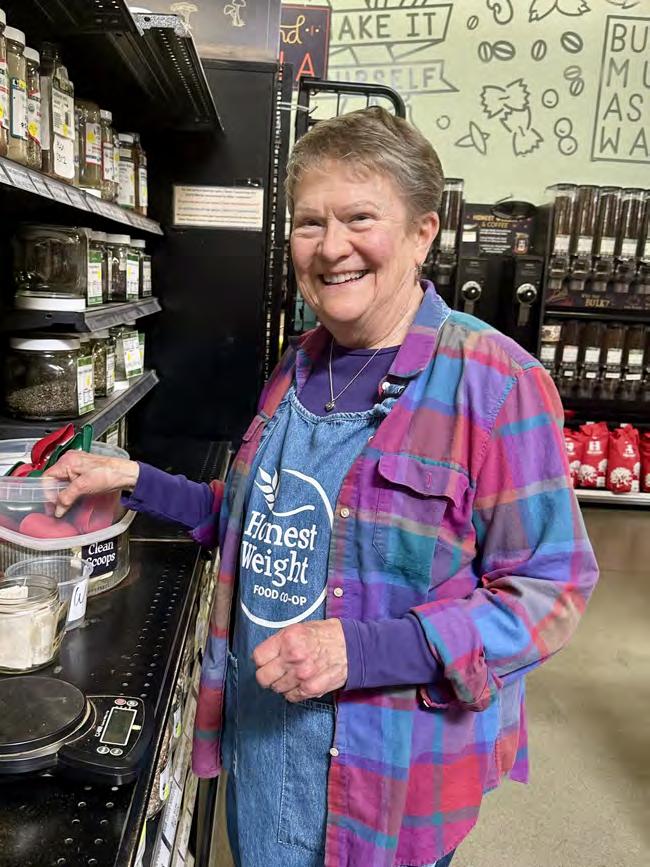
What was it like being a Member-Owner in those early years?
“It was loosey-goosey,” says Seeley, “You’d show up to work and were asked, ‘So, what do you want to do today?’” She remembers looking around and asking back, “Well, what is there to do?” One day she was placed on the cash register, an old “push button vintage one,” she recalls. Her cashier career was short-lived however as other, more desirable opportunities presented themselves to her.
When the co-op began ordering from Samascott Orchards in Kinderhook, they needed members to transport cider and apples twice a week as the store did not have enough storage space for more than a single car’s haul. The role was referred to as “cider hauler.” It was a perfect job for Seeley who was covering Columbia County at the time through her job with the Association of the Blind and could easily swing by the orchard. “Once a month, I would stop by after work,” she recalls, “and load up my car with 60 or more gallons of cider and crates of apples.” Over the years, Seeley got to know the multi-generational Samascott family and even helped them bottle the cider if they were running behind. In the summer months, they froze the cider before loading it, and, with no AC in her car, Seeley opened her windows and experienced a refreshingly cool drive back to Albany. Once back at the store, she unloaded her car, filled plastic milk crates with the gallon containers for easy stacking, priced each item, and got everything into the store. “It was my monthly commitment forever. In fact,” she recalls with a laugh, “I may hold the longest cider hauling record in the co-op’s history.” It wasn’t until the Central Ave store expanded and added additional refrigeration space that the orchard itself began delivering; Seeley’s job as a Member-Owner cider hauler became obsolete.

By Natalie Criscione
n the summer of 1978, Steve Phelps interviewed Harriet Seeley for the Coop Scoop’s August edition. Phelps was a regular contributor for many years with his Member-Owner interviews that he conducted in person, often over dinner at the interviewee’s home:
“A bit flustered and laughing nervously at the prospect of the Coop’s public, if narrow-beamed spotlight falling upon her,” writes Phelps, “Harriet Seeley compared the surprise request for an interview to another chancy occurrence: ‘I won a watch as a door prize once. This feels like the same kind of thing.’ With a little hesitation, she agreed to accept this prize, too……Emerging from the kitchen, Harriet found me making pad and pencil notes and she froze a little. I explained apologetically that without notes, the writing’s tough and to martial support for my argument, commenced inquiry into the details of her work…Somewhere in this, the quiche came out of the oven and was accompanied by a salad from an untried recipe…’It isn’t worth making a new dish just for myself,’” Harriet said.
Now, 48 years later, as I interview Harriet Seeley about her Honest Weight Food Co-op experiences, I feel as if I’m the winner of a special door prize. I’m grateful for Phelps’s words from long ago and for the opportunity to circle back and share Seeley’s reflections.
Seeley remembers the Quail Street store before it expanded from one, to two, then three rooms and Bob Linn when he was a new manager. Having moved from Boston in 1975, she was drawn to the new co-op for its community feel, fresh foods, and opportunities for involvement. As she moved through the decades, both she and the co-op grew and changed and searched for their niche. As Seeley reflects back, her story is one of discovery and purpose as she filled various roles within the co-op’s Member-Owner structure.
The Central Avenue store offered other opportunities for her. Another role she filled was that of “shelf-straightener” in which she kept products on the shelves tidy and organized. For a short time, she even recruited her late husband Dan, who loved the co-op and the fresh food offerings, but did not find his passion in shelf-straightening. Because of the store’s layout, and for whatever other reason, there arose a problem of people shoplifting high-end cuts of meat. So, Seeley could sometimes be found during her lunch hour sitting with her knitting in hand and “meat policing,” another now obsolete role. The location also afforded her a good view of the olive bar where she stopped several people from dipping their fingers into the olives for a free sample. Finally, she attended to the job of sorting, cleaning, and flattening reused plastic grocery bags—remember those?
With the opening of the new store, Seeley found herself first providing food demos for customers and then gravitating toward outreach programs. She worked closely with Amy Ellis providing a multitude of outreach education and cooking classes at schools, libraries, community centers, and businesses. More recently, she began involvement with the monthly Serve Albany program, a coalition of leaders from nonprofits throughout the Capital Region. The co-op provides brunch for the attendees, something with which Seeley assists. It is a way of making Honest Weight a presence within the community. “It’s a good gig for me at this point in my life,” she says.
She has also found her niche in the Bulk Department with Phil Enriquez and occasionally Bob Linn. Seeley invests her time mostly in the back packaging raisins, dates, flax seed, and other items or cleaning bottles that people donate. She loves the people with whom she invests time with, their histories with the co-op, the variety of products, and the diversity of people and cultures that pass through. There is a family-like camaraderie among them and a playful spirit. “Well, here we are with the lead of Our Town,” Linn sometimes exclaims in front of her, referencing a performance he once attended. That cracks her up
because in the play Seeley had played a dead body in the cemetery and the audience’s irate one-line woman. “The Bulk Department is good energy!” she laughs.
As our phone conversation comes to a close and I turn off “record” on my iPad, I think again about Steve Phelps and how he took notes during his interview with a pencil and notepad. I think about how some things change over the course of half a century and how some things
By Morgaen Hansen
Asingle jar of vegan mayonnaise. That’s what led me to Honest Weight Food Co-op for the first time, in the spring of 2012. I had adopted a plant-based lifestyle and needed some vegan mayo for a recipe I was trying. A friend suggested I try the food co-op. My reply: “There’s a food co-op in Albany?”
I’d lived in the Capital Region most of my life but had never heard of Honest Weight until that day. After a quick Google search, I ventured into the store at 484 Central Avenue and was immediately charmed by the welcoming, cozy atmosphere. Something felt so familiar to me, a brand-new place that somehow felt like home. I marveled at the blue sky with white puffy clouds painted on the ceiling, the folks in the aisle who all somehow seemed to know each other, and the hum of positive energy radiating a humble, unpretentious space. I knew immediately I had stumbled into someplace special, even magical.
I bought my mayo (Vegenaise® Classic, still a staple in my refrigerator) and headed home. Within two days, I found myself returning for a more detailed tour of the space. I explored the bulk bins and filled a few bags with tasty looking treats, sampled a delicious local cheddar offered to me by a mustachioed man with a booming voice (the famous Gustav), and selected some apples from an orchard not too far from where I grew up. At the checkout, the cashier was friendly and helpful, chatting with me as he rang out my items. I inquired about membership and returned a few days later to purchase my ownership interest.
A week later, I attended a new member orientation with Alan McClintock. Alan, I would later learn, is like the family doctor in a small town, who has delivered all the local babies born in the last 30 years. But in this setting, Alan has oriented hundreds, if not thousands, of Co-op owners. During the orientation, I learned that there was a pressing need for cashiers in the Front End. That was all I needed to hear; I trained as a member cashier, and within six months I had left my former career behind and joined the staff at the Service Desk.
don’t change at all. I recall the lyrics from Joni Mitchell’s song “The Circle Game,” an expression of time’s passage and reflections that come with it: “We can’t return, we can only look behind from where we came…” (You, reader, might already be humming the rest of the song).

coming, to see what I missed, visit with so many familiar faces, and re-center myself in my work and my community.
And community is most certainly what has led us to this historic milestone, 50 years of Honest Weight Food Co-op. 50 years of good times and great food. Do things look the same as they once did? Decidedly not. Even in the relatively short time I’ve spent at the Co-op, so much has shifted. In moving to this location, we lost the ‘small store vibe,’ which is missed by many. Staff and Member-Owners have moved away from the area or on to new careers; more than a few have died and left behind only memories of shared moments in the aisles. And the world has changed, forcing us to adapt and grow, to the point where it’s sometimes hard to find the time to slow down and just be together.
But for me, and I suspect for many others, much more remains the same. Incredibly generous people. Kind, honest people. Strangers who become friends, more easily than in any other place I’ve known. Delicious food, sourced locally and prepared thoughtfully. Engaged and conscientious consumers aiming for a better way to shop, eat, and live.
That was 14 years ago. So much has changed, yet so much remains exactly as it was. We’ve moved to a new location, more than twice the size. Our numbers have exploded. Yet, our member program remains a cornerstone of our structure, and the way we use our store and profits to support and uplift our community is unwavering.
Over these last dozen or so years, my gratitude for the Co-op hasn’t changed. When I go on vacation, and it’s time for my travels to come to an end, I don’t dread returning to work. I look forward to the home-
For 50 years, with a little bit of luck, hard work, and a whole lot of heart, we’ve been going strong. It’s an impressive feat, one that should be shouted from our spacious rooftop (a space I hope will one day be the home of a Co-op herb and veggie garden).
To this day, despite the long hours worked, the constant ebb and flow, and myriad challenges faced, I still feel that when I’m here I get much more than I give. And I return to the feeling of overwhelming gratitude. Gratitude for where we are. For where we’ve come from. And for whatever the future has in store.
Interview with David Aube
Edited
by Leona Palmer
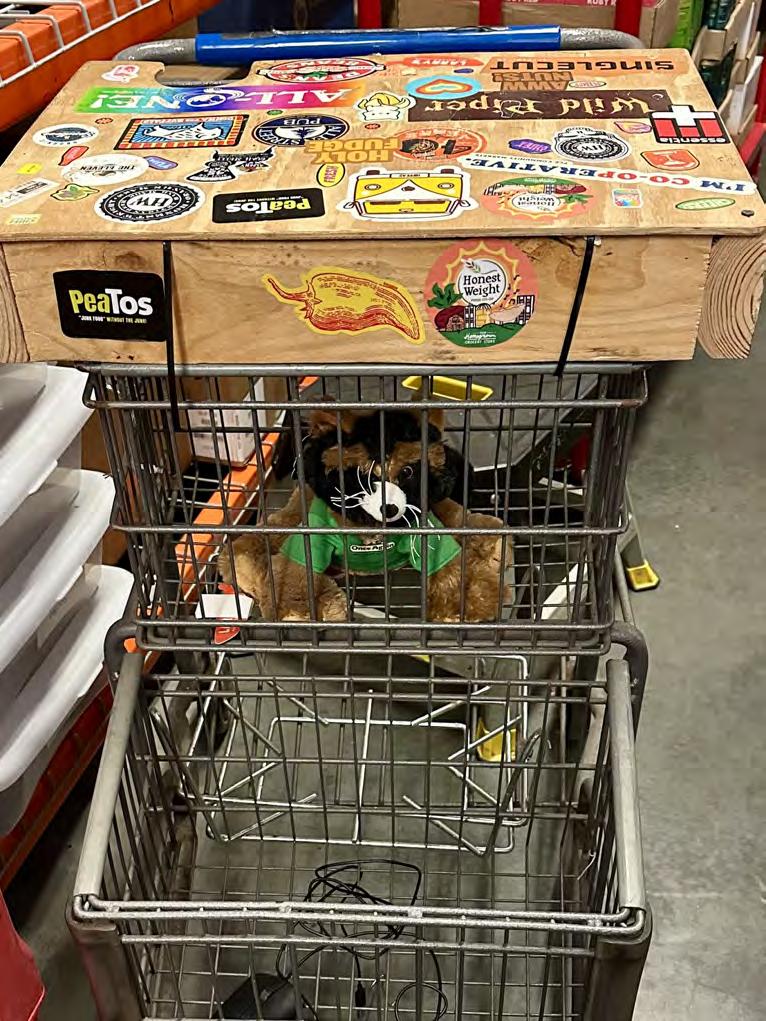
Over the years, in the aisles, you may have wondered at a little modified shopping cart-slash-desk with a cup holder housing a resident toy racoon (more on him later). Or maybe you noticed consistent pages for a manager at the request of a customer who would very much like an explanation as to why we do, or do not, carry a specific brand, product, or item of some kind. Or maybe you maneuvered around this in-depth conversation. David Aube is the friendly face behind all of this. I met David on my first shift as a Member-Owner in the Grocery department during the early days of Covid, and listened as he explained diligently to a frustrated customer why brands were shifting from glass to plastic packaging due to a glass shortage, as well as all the efforts he was making to avoid plastic packaging, during a food crisis, during a global pandemic. Now, after 30 years of consistent dedication and service to the co-op, David retires as Grocery Buyer (but will still investing time as a Member-Owner!). Here, in his own words, are the biggest changes and consistencies he’s witnessed shape the Co-op in that time.
I joined in 1987 as a member of the Quail Street store. I did some paid labor on clean ups and special projects, some buying—tasks you wouldn't have members do now. In ‘97 I became a full-time employee as an Associate (then called a Floor Manager) and then I became the Assistant Grocery Manager. I took off a little time for childcare and when I came back I was the Assistant Grocery Manager. A month before we moved to the new store, May of 2013, I became the Grocery Manager. After about 6 years, I proposed the job description of a Grocery Buyer: a position exclusively focused on buying, researching new products, meeting with vendors and sales reps to get better pricing, designing the promotional strategy—like end caps—and resetting the store as needed, and advising other buyers. Always as the ultimate backup when it comes to buying in case somebody was sick or a department had a vacancy.
The thing that I really liked doing the most was to work to reduce prices while maintaining our fiduciary responsibilities, which is more complicated than it sounds. I wanted to keep all the options on the shelf: always looking to balance the budget with people's demand for certain products. How much space do we have and how much space does it deserve based on the data? If I reset the store
today I would increase space for the beans and crackers—you could double the space allocated and it would still not be enough, there's so many more varieties and brands. It was always challenging to sit down and plan, so busy doing the day-to-day stuff you don't always have time to deal with the big picture stuff.
What has changed over my time here? I think you have two primary factors: increased accessibility of products and corresponding increase of demand. One is the retailer and the other is the consumer and they constantly complement each other in a circular way.
When we opened our doors, people who were into the concept understood us as a bulk buying co-op. But it was hard for a person off the street to walk in and buy stuff; either it was intimidating or it wasn’t obvious how to buy stuff. Now we are a store that tries to make life less complicated. How can we get the customer what they need? To get them from their home to the store and then back home with relative ease, to have the product on the shelf at a reasonable price, to design the way we feature, market, and promote items. The end caps are trying to make it easy: promote products, group them by theme, make sure they are blocked and fronted correctly. In other words, having good operations from end to end.
Moving from one store to another made us much more welcoming to a larger population. We went from a buying club to a storefront and then that storefront was expanded horizontally several times. Then we went to Central Ave, also expanded horizontally. Finally moving to our present address, which to me is like a store for the 21st century. Moving to 100 Watervliet Ave. allowed us to increase our varieties of what we already sold but also greatly expand our prepared culinary, deli meats and cheeses, live plants, beer and cider, and mercantile. We've almost maxed out this space already. My metaphor for the stores is like housing. Your first apartment after college, it’s fun and small and a little messy with a lot of roommates so you can afford it, but in a cool, hip neighborhood. Your second apartment, you’ve grown up a little, gotten a better job, maybe you live with a partner—it’s your first “nice” place. And then you buy your first house, you have an even better job, maybe you're married or have a family, and you’re still in the city but
now you have a mortgage and health insurance and adult things to consider. So, moving stores has been a big change in accessibility and demand in terms of space and customer-base.
Product-wise, there are several main touch points in the last 27 years which made things more accessible and increased demand. I’m not going to remember these in order. But a major one is when organic cane sugar became an acceptable ingredient. There was a point when we only sold things that were sweetened with non-sugar, like honey, molasses, rice syrup, and sorghum. Agave didn't even exist at the time. There was a lot of debate—should we get stuff with sugar in it? Then literally, almost overnight, the industry changed. If we didn't accept organic cane sugar as an ingredient, we would have almost nothing to sell, we’d just get left behind. You still have to make sure that there are options for people who don't want sugar. But all of a sudden you have a bunch of products that now taste similar to what people are used to in general groceries, like cookies, cereal, and more.
Similarly, when we decided to stock meat. We started as a vegetarian store. HWFC started selling local meat at the Central Ave. store, but it wasn’t until a year in the new store we could offer national meat products such as organic chicken broth. I remember the meeting where that happened and then going to the store and stocking broth on a Sunday night. Before that, I remember getting through Thanksgiving and not being allowed to sell chicken broth. Over the years we have revised our meat product guidelines, which are strict. More people are willing to walk through the front door now, especially knowing we are still unique in carrying high-quality products from local farms.
Another key factor for the Co-op and the Co-op movement overall, was the passing of the Organic Foods Production Act of 1990 (actually not implemented until 2002). That is what created official USDA organic labels. Before that there were a lot of different definitions of “organic” across a lot of different associations—some very good and some not so good. This gave a legal definition, and in 2002 they passed the regulations to enforce it. In 1997 they had proposed a bunch of regulations, but they were awful. They included GMO's and sewer
sludge residue, and there was significant pushback including co-operatives at large and HWFC in particular. We actually helped force them to come back with a whole new set of regulations. This label made the term organic less mystifying to the general public and allowed the organic industry to become mainstream at large.
The creation of the National Cooperative of Grocers (NCG) in 2001 is another turning point. Before that there were 11 regional cooperative associations. We were in the Northeast Cooperative Association. In 1996, Whole Foods went public and then created a house brand called “365” which increased their financial power and they started buying up other natural markets. This created a challenge to the Co-op movement nationwide. We had to develop a new organizing strategy to increase economic power. The members of NCG are the individual co-ops themselves, so it’s a co-op of co-ops, and we pay dues and vote. This increased our buying power from one co-op to more than 150 nationwide. The COOP Deals you see on the end caps are a national promotional strategy among all co-ops to offer deals 24 times a year across the departments. These sale prices are negotiated by the NCG on our behalf; if I had to do it on my own I would need 5 employees. (We still have deals on local products or produce on a one-to-one basis.) The NCG also provides operational and business expertise but never dictates how any co-op is run, our members determine that.
The maturation of the distribution channels is another key development. There was a time when there was a cooperative distribution channel for each of the 11 regional associations, but then United Natural Foods, Inc (UNFI) started to consolidate all these various distributors and became the largest national distributor of natural foods. NCG has a contract with them. UNFI is our primary distributor with the effect of enhanced accessibility (thus enhancing demand and thus enhancing accessibility). We get six trucks a week from UNFI, all of them large, and they include almost all the grocery, dairy, and freezer departments, and some of what the deli, meat and cheese, and produce departments buy.
Another significant change to the Co-op’s core business was the creation of “house brands”. There are
primarily two: “Woodstock” and “Field Day.” “Woodstock” is not technically ‘official’ but is intended to make products very accessible and recognizable to a larger consumer base by mimicking conventional brands, like mayonnaise or ketchup, but made with organic ingredients at a high-value low-price point. “Field Day” is a true house brand, owned by UNFI, designed to be low cost, minimally packaged, and includes high-value pantry staples such as beans, cereal, pasta and sauce, and peanut butter, which are only available in co-ops and independent stores.
It is a fact that corporate ownership has consolidated within the national food industry to such a degree that there are just a handful of companies like Kraft, Heins, Unilever, Nestlé, General Mills, PepsiCo that own a vast amount of natural food brands [By some estimates up to 80% https://www.cornucopia.org/research/who-owns-organic/]. Sometimes companies buy up other companies through hostile means in general stock takeovers. “Late July” was a very hostile takeover by “Campbells.” But the person who started “Late July” took that money and started “Nixie.” Sometimes a takeover increases the availability—like when “Honest Tea” was bought by “Coca-Cola,” and was a low-sugar brand available to the general public at corner gasstations.
(Though it’s no longer available now.) Sometimes the intent is to destroy a company to eliminate competition, or the brand is diluted or cheapened to a point where it is unrecognizable, or it’s restructured and resold for profit by a hedge company. You also have new companies and brands starting up every day—it is actually incredible the number of new products constantly entering the marketplace with all the hurdles: financing, production, distribution, marketing. Whoever heard of kombucha? Now it's slotted heavily in our store. We don't have enough room for mushroom coffee.
Covid also changed things. No one knew what ‘supply chain’ meant until 2020. In March 2020, decreased labor and purchasing caused major ripples throughout the food chains—from growing and harvesting, to extraction and production and transportation, to stocking and selling—the A-Z of it all. People realized how complicated and fragile it was, not just to pandemics, but also blizzards or earthquakes,
labor or management issues, political isvsues. Companies and organizations did create backup plans and one thing NCG did was sign on with a major secondary distributor, KEHE. I remember buying products for the store in 2020, it was not easy. I was calling lots of different places and we got lots of products from distributors and companies that we never had before. I remember a truckload of beans and paper brands from “Natural Value” in Texas. One thing I would also say about COVID, and I get choked up every time I think about it, it really highlighted how crucial the store staff is, putting themselves in harm's way so customers can get the food they need.
All these touch points, around consolidation of the definition of organic and federal regulation, national distribution, cooperative organization, brand ownership—when you put them all together have definitely increased accessibility of our products to the general public. But, as a buyer and as a Co-op, you have to maintain a balance between national and local. National products increase our returns and financial stability, but local products satisfy our mission, support the regional economy, and make the store interesting and unique. A certain amount of space has to be allocated towards local products that are unique, interesting, trendy, and from regional distribution channels or direct orders from the company. With any new or local item the questions we ask are: do we already have something local and similar, are customers asking for it, is it a local alternative to a national product, or do we need additional offerings due to high sales? A lot of our dairy is regional and direct, since the northeast has a heavy concentration of dairy producers. The co-op has always worked with small or new retailers that other stores might not—maybe they don’t have UPC codes on products or certain farmers paid in cash—we're willing to do that.
Finally, there have been changes on the consumer demand end, mainly a major shift in an awareness of health through food, exercise, and lifestyle. Diet trends come and go, based on increased dietary or medical knowledge, public opinion, and popular influence. Some are manipulated by market forces and some maintain some long-term traction, like gluten-free, paleo, keto, macrobiotic, and vegan. Overall, consumers now
” The Coop movement is at the vanguard of the natural foods industry; we pull the industry. The Co-op's in uence in the overall industry far exceeds our sales.
”
have an expanded taste palette, and people are much more willing to experiment with bolder flavors, cuisines, spices, and ingredients. Consumers have an increased desire to be better home cooks. A willingness to spend for gourmet products has also increased over years. We started carrying specialty products such as cheese, beer, coffee, tea, and prepared foods. There was a time when buying a block of really good cheese was not easy. My very first job in this town was at The Cheese Connection at Stuyvesant Plaza that sold good cheese and other gourmet products. Now we buy from local dairies that make endless varieties of good cheese.
Over the years, there’s been a mainstream increased willingness of consumers to buy in accordance with values. Every survey shows that people don't want their money to go towards exploiting labor, or toward unsustainable environmental practices, or practices that are taking from the community. People in our store want to decrease plastic packaging. There is also increased demand for products that are clean, without artificial ingredients, dyes, or preservatives, and non-GMO.
Something that makes retailers such as myself cringe is the rise of the influencer. It is very tricky for retailers to adapt. We’re way past the days of standard visual print advertising. TV shows and now social media promote products all day long and can make an item hot overnight. Black walnut oil became really hot. People came in looking for it and then we sold out. By the time you stock a product—and production ramps up—to meet demand, people have moved on and now you have surplus. Wellness sees this phenomenon frequently in supplements. Of all the things Dr. Oz has promoted,
agave syrup stood the test of time. I used to read the ads of different food publications just to see what was trending and try to get ahead of it.
What has stayed the same? Something that has never changed is the Co-op’s staff and membership commitment to maintain ethical buying policy and at the same time a willingness to adjust to consumer demands. This continuity is underneath some of our adaptations: sugar, meat, beer. Our commitment to local products has never changed. Our participatory democratic governance has been constant. Every big question, either local or national, gets analyzed, argued, decided, and then executed at the membership, committee, staff, and board levels. Our commitment has always been to do what we think is the right thing at the time, and most of the time it has been the right thing.
The future of the Co-op? It is very bright. Our biggest issue has always been our success. We’ve gone from a buying club focused on whole, unrefined bulk to a roughly $33.2 million dollar a year organization, serving thousands of customers a week, with a staff of around 180. We have an extraordinarily committed, talented, educated, passionate staff and membership. At some point we reached our maximum number of members and had to apply to the New York State Secretary of State to increase our number past 10,000. We’ve served the city of Albany and surrounding community quite well. We are celebrating our 50th anniversary this year. We have a great building and a great location. Demand for our product is very high. A lot of people have found their place in the world here, including myself, as a staff or member, dedicated to the mission and the governance.
The Coop movement is at the vanguard of the natural foods industry; we pull the industry. The Co-op’s influence in the overall industry far exceeds our sales. And our sales are really good! We have a lot of leverage. We are one of the largest co-ops, we work with a lot of brands and vendors, various salespeople, brokers, and organizations. There’s a saying, “If you can make it in the co-op, then you can make it anywhere.” I've attended a lot of national events, trade shows, expos, conferences, and we have an excellent reputation on the national level. I'd be walking down an aisle and people would point out, “Oh, you're from Honest Weight” and get into a conversation. A lot of what we are figuring out in the store is problems, our jobs are to figure out problems. Not a lot of people get to experience or realize our larger influence and positive reputation at the national level.
Some good questions for us? How do we reach certain segments of certain demographics and populations to gain new workers and Member-Owners that reflect the general
local population? How do we continue to improve operations and capacity? The parking lot is often at maximum capacity. The backroom could use serious reorganization and invest ment. However, it is hard to find the time to improve when you need to do the day-to-day tasks to satisfy the demand. And then of course you need to have a planning committee, budget, the willingness to have the operations of the store interrupted. To make any changes requires a lot of cooperation and consideration.
A little bit about the raccoon. In 1981, the brand “Once Again” purchased and renovated a turn-of-the-century silk production facility in Nunda, New York and converted it to nut butter production. They found four baby raccoons living in the property and named one “Rocky”. He became the company mascot and logo. I’ve received lots of them as promotional items and given plenty away, my daughter got one at one point. The maintenance guy Brian made the shopping cart desk and coffee holder for me and there was
By Ruth Ann Smalley
If you became a member of Honest Weight some time in the last 40 years, there’s a good chance you’ve met Alan McClintock. He’s ushered new members into the store through orientations since 1981. My family first met Alan when our kids were little, when they were held spellbound by his story-telling magic. I’ve appreciated his kind smile and twinkle-eyed greetings in the store aisles for a couple of decades now. I was eager to hear Alan’s thoughts as we celebrate the 50th anniversary of the Co-op.
Alan is so steeped in the community’s history, my first question was about what aspects of our cooperative’s beginnings he feels we should keep front and center now?
“It’s important to remember to educate and empower our membership to realize the value and importance of cooperative action,” he answered. He cited “our foundational roots, based on the Seven Co-operative Principles.” These are still much-needed values.
And there’s lots of room for leveraging and building on the principles. “There’s more that we could do to build stronger relationships,” he told me. Especially in terms of “supporting other cooperative undertakings in our area,” and “strengthening our relationships with our agricultural community.”
He feels there has been a tension “between the Small is Beautiful model and the need to shift certain practices when scaling up.” Compared with earlier periods, “we are somewhat removed from our farming community.” Examples of collaborative projects he would like to see include things like supporting the development of a local grain mill, and raising more animals locally. Alan sees producers coming to

us with their products because of our historic brand, but thinks we should ask, “what are we doing to broaden these relationships?”
I asked Alan to look back over his decades of running orientation sessions for new members. What were some insights he’d gained from those interactions? What observations could he share about people’s views of Honest Weight and their reasons for joining? He describes how common it is for people to remark on the warmth and friendliness of the store. “It’s rare that I’ve heard any negative comments about Honest Weight and our place in our growing community.” People especially remark on how they “love the produce, bulk, and specialty food areas, and store products that show how we have cultivated relationships with local and regional farms and producers.”
He occasionally hears from folks who are drawn to Honest Weight specifically because they’ve been part of a co-op that no longer enables as much member involvement. They describe a sense that their previous store feels as though it has become “a co-op in name only,” or more like what Alan calls “the REI model—more consumption-based.” These folks sometimes travel long distances to shop here. Others are joining a cooperative for the first time because they have recently become “disenchanted with the politics of their previous shopping experience” at massive corporate-owned stores.
“We exist in a very different league than we were in 1977,” Alan told me when I asked about some of the changes he has seen. “The product diversity that exists in the store is directly related to shifts in what to eat and how to eat.” While new members, and especially many younger people, are still interested in the store for its support for local agriculture, many are looking to meet particular food needs, and may also shop in a range of other markets. In his orientation sessions, Alan hears from scratch-cooks, vegans, and people looking for a variety of plant-based products and gluten-free baked goods. Some people are joining after retiring. They’ve shopped here for years, and now have time to get more involved, both for a larger discount and to build more community. “The social aspect appeals to them,” Alan notes. They find it “truly a different environment than other stores.”
Alan expanded on another aspect of demographics and dietary change which I found fascinating, and a bit surprising. “Specific dietary interests are dramatically greater than when we were all vegetarians,” he said. “When I ask people to raise their hands if they are omnivores, it’s the majority. Maybe one or two vegans.” When the co-op started, he said, “probably 100% of ownership were all vegetarians—people who had read Diet for a Small Planet, and were interested in political alternatives” to conventional eating patterns.
In closing, I asked Alan about his thoughts about and visions for the future of Honest Weight Co-op. His strong desire is that “we remain true to the principles that helped to shape us, and that we continue to embrace our mission.” It is important that “our owners remain engaged” as this not only nurtures our present success, but “we are dependent on their energy to support our future.”
The cooperative principles are guidelines by which cooperatives put their values into practice.
Cooperatives are voluntary organizations, open to all persons able to use their services and willing to accept the responsibilities of membership, without gender, social, racial, political or religious discrimination.
Cooperatives are democratic organizations controlled by their members, who actively participate in setting their policies and making decisions. Men and women serving as elected representatives are accountable to the membership. In primary cooperatives members have equal voting rights (one member, one vote) and cooperatives at other levels are also organized in a democratic manner.
Members contribute equitably to, and democratically control, the capital of their cooperative. At least part of that capital is usually the common property of the cooperative. Members usually receive limited compensation, if any, on capital subscribed as a condition of membership. Members allocate surpluses for any or all of the following purposes: developing their cooperative, possibly by setting up reserves, part of which at least would be indivisible; benefiting members in proportion to their transactions with the cooperative; and supporting other activities approved by the membership.
Cooperatives are autonomous, self-help organizations controlled by their members. If they enter into agreements with other organizations, including governments, or raise capital from external sources, they do so on terms that ensure democratic control by their members and maintain their cooperative autonomy.
Cooperatives provide education and training for their members, elected representatives, managers, and employees so they can contribute effectively to the development of their co-operatives. They inform the general public - particularly young people and opinion leaders - about the nature and benefits of co-operation.
Cooperatives serve their members most effectively and strengthen the cooperative movement by working together through local, national, regional and international structures.
Cooperatives work for the sustainable development of their communities through policies approved by their members.
Round up to the nearest dollar to support this quarter’s Be the Change Recipients.

United Tenants of Albany (utalbany.org)
Family Promise of the Capital Region (familypromisecr.org)
By Natalie Criscione
Bstore front on Quail Street had opened, Bob’s dreams of securing a management position at the new co-op were twice met with rejection. The first time he didn’t get the job because he was not well known; “I was an outsider,” he said. The second time, Bob recalls, “I didn’t get the job because by then they had gotten to know me.” His persistence paid off however, as he gained experience along the way in both the intricacies of buying and the Saturday supervisory role. Finally, on his third attempt in 1980, when he “was no longer an outsider,” he was hired as a manager. Business must have been good, as he was soon in search of an assistant manager who would be paid a starting salary of $4/hour. The job was described as “important and demanding” in the December 1980 issue of the Coop Scoop.
Like many fledgling operations, the Bulk Department grew through trial and error. Bob and his team found that some bulk items, like raisins and dates, were better bagged ahead of time and others, like salsa, yogurt, cottage cheese, and corn chips, were best left for other departments to handle. “The stale corn chips burned really well in my wood stove,” says Bob with a laugh, “they had a good smell.”
In addition to changes within the Bulk Department, Bob has witnessed various trends come and go within the co-op’s management structure. “When I was part of the collective structure, our meetings would last two hours or more as we all discussed important matters of the day.” Under the majority structure, there was one general manager whose meetings were only fifteen minutes long; “It was great,” says Bob, who enjoyed the shorter format— “He said what he had to say and the meeting was over.” Discussions and meetings, both long and short, were essential however as the co-op evolved. Bob was one of many who was dedicated to its success and was a consistent voice along the way. “I thought we were on this narrow balancing beam,” he recalls of the early years, “and I was afraid that if we just took one step in some weird direction, we would ruin ourselves; as time went on, though, I realized I had been overreacting.”
Although he is not as involved in the governing operations as he once was, Bob is content that the co-op has found its stride. What has remained constant, he says, is that “the very nature of a cooperative is not one dollar one vote, it’s one person one vote. And that still stands.”
ob from Bulk.” Or, just “Bob.” However you might know him, Bob Linn has been a positive, smiling, helpful, and energetic presence in the Bulk Department for decades. As an Honest Weight Floor Manager, or, as he says, “one step up from whatever is below that,” he’s present both behind the scenes and amidst the shoppers.
Legal Aid Society (lasnny.org)
Unity House (unityhouseny.org)
It is in the Bulk Department, where Bob has forged his career and where those who know him best experience his personality, a cross between something reminiscent of MAD Magazine’s column of “Snappy Answers to Stupid Questions” and the musings of Carlos Castaneda (both favorites of his).
February March
Throughout our interview, his self-deprecating humor revealed itself, beginning with details about his college experience at SUNY Albany where, during his senior year, he says he “did a very independent study on table tennis…I didn’t receive any credit for it, but I got really good at it.” This might be a metaphor for Bob’s time at Honest Weight—his expertise has been built on practice, persistence, learned lessons, and a deep commitment to Honest Weight’s mission. His constant, unassuming presence is a quiet reminder of the co-op’s beginnings. He does not seek recognition or credit.
Albany Social Justice Center (savethepinebush.org)
Capital Region
Sanctuary Coalition ( dec.ny.gov/places/five-rivers-center)
Bob’s Honest Weight Co-op memories go back to 1976 and Gary Goldberg’s basement, where he remembers “breaking down bags of dried goods for people to pick up.” In the early HW years, after the first
Bob values the Member-Owner time investment program, which he says many co-ops have abandoned. He appreciates the resulting community in all its varied forms. Each shift throughout a day or week brings together a unique mix of people, personalities, and strengths that create their own small, family-like communities within the department. “There is the Thursday afternoon crowd or the Wednesday morning crowd…,” says Bob, “and you really get a sense of each small group that gets along and works well together.”
For Bob, the community is vast and includes not only those with whom he works, but also shoppers, distributors, and all who cross his path. It makes for a richness of conversation, diversity, and joy. It makes for a good life.
After nearly 50 years and working so closely with others, it is not surprising that Bob has stories to tell, whether directly related to the Bulk Department or not. He has been called upon many times, for instance, to help customers get into their cars after they’ve locked themselves out. (I’m one of those customers who remains grateful to this day for Bob’s assistance in the Central Avenue parking lot.) “I’m kind of mechanically oriented,” says Bob, “and it’s nice helping people out.” In fact, he has gained a reputation for his expertise, which includes technical language like: “you bend the door significantly and scarily before pushing in a coat hanger or piece of steel.” (Yes, I remember!) His skills have evolved along with the cars, and Bob has picked up tips
” Bob values the Member-Owner time investment program, which he says many co-ops have abandoned. He appreciates the resulting community in all its varied forms.
”
along the way from watching AAA roadside assistance mechanics.
When there is not an expert outsider on hand to learn from, Bob’s trial and error ingenuity takes over. “Once on Quail street,” he recalls, “we had a big 30 gallon drum of maple syrup that we needed to [draw from to] get into a smaller 5 gallon dispenser. I came up with the siphon approach, got it started, and then started doing something else. Well, you can imagine what might go wrong. Sure enough, I couldn’t believe
I was such a space cadet and how long it took before I came back. There was maple syrup all over the floor. ALL OVER! What I learned is that sponges are useless at first. Mops too. At first, when you have a big spill of a thick liquid like syrup or oil, you have to scrape it up before you go to the next step. There it is. A good life lesson.”
Like his college table tennis days, Bob’s persistence, problem solving skills, and positivity have resulted in wisdom that can only be acquired with time and practice. Bob could surely write a book about such stories and life lessons.
Of the thousands of items offered in the Bulk Department, one might wonder if Bob has any personal favorites or highlights worthy of mention. Of course he does! His favorite item is cocoa dusted cashews that are “not too sweet but have a melt-in-your-mouth effect.” Bob’s staples, because he’s a self-described “grain person,” are oats, quinoa, and kasha. And, a new item that deserves mention are the dog treats, which can be found in a little wicker basket on one of the aisle end-caps. “They are just peanuts, oats, and pumpkin,” says Bob. “Really healthy…hey, with a little salt, people would probably eat them, too!”
If you’re interested in learning more about Bob or have questions for him, you can find him many days in the Bulk Department where he helps people out and shares his wisdom.
By Natalie Criscione
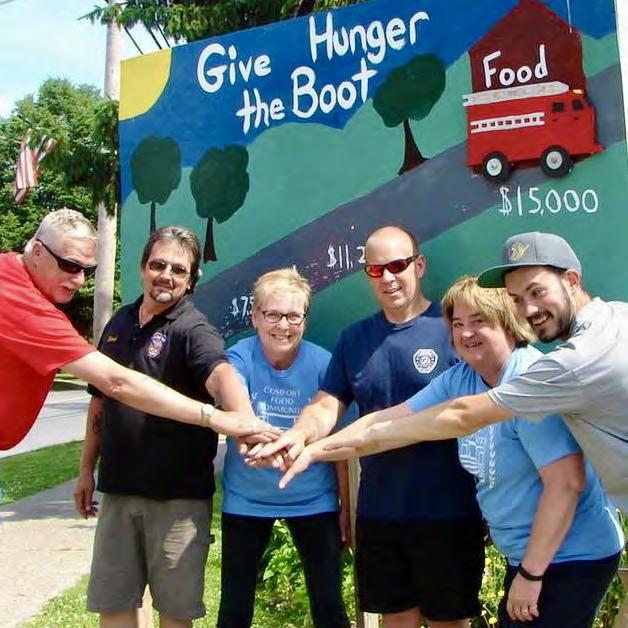
If you spend time north of Albany, perhaps you’ve heard of Comfort Food Community. Maybe you’ve run across one of their food pantries or seen one of their vans making deliveries; perhaps you’ve come across them at one of the many libraries or schools to which they provide healthy foods and access to resources and educational materials. Perhaps you’ve visited their website where you can find hundreds of simple, delicious, and healthy recipes provided by their Community Health Team. Perhaps you are already one of their nearly 100 dedicated volunteers who staff pantries, drive vans, harvest foods from regional farms, and package dinners.
Comfort Food Community is one of Honest Weight’s Be the Change recipients for the month of April. This non-profit organization focuses on fighting hunger in rural areas of Warren, Washington, Saratoga, and Rensselaer Counties. Through innovative approaches they not only seek to provide people with the food they need, but also address the many challenges that accompany such needs. “We really try to meet people where they’re at,” says Laura Marx, the Executive Director. In addition to meeting food insecurity needs of residents in rural counties, “we are also available as a resource to help people navigate challenges, so if there is
something else they need, like getting their heat turned on or transportation, we can help.”
Marx has been involved in non-profit leadership throughout her career and has been with Comfort Food Community for nearly 2 years. With programs that include providing access to food, recovering food, and promoting healthy-food educational programs, their reach is broad and, as Marx says, “..fresh and nutritious food is our priority area.” With cuts to federal food assistance programs and an ever increasing need, the challenges are great. “Pantry use has increased about 20% each year since Covid,” says Marx. In 2024 alone, Comfort Food Community distributed over 1 million pounds of food and served more than 70,000 individuals, and those numbers are growing.
Besides managing multiple food pantries, Comfort Food Community brings food to safe public spaces such as libraries and schools through their “Farm 2 Library” and “Farm 2 School” programs to meet growing needs.
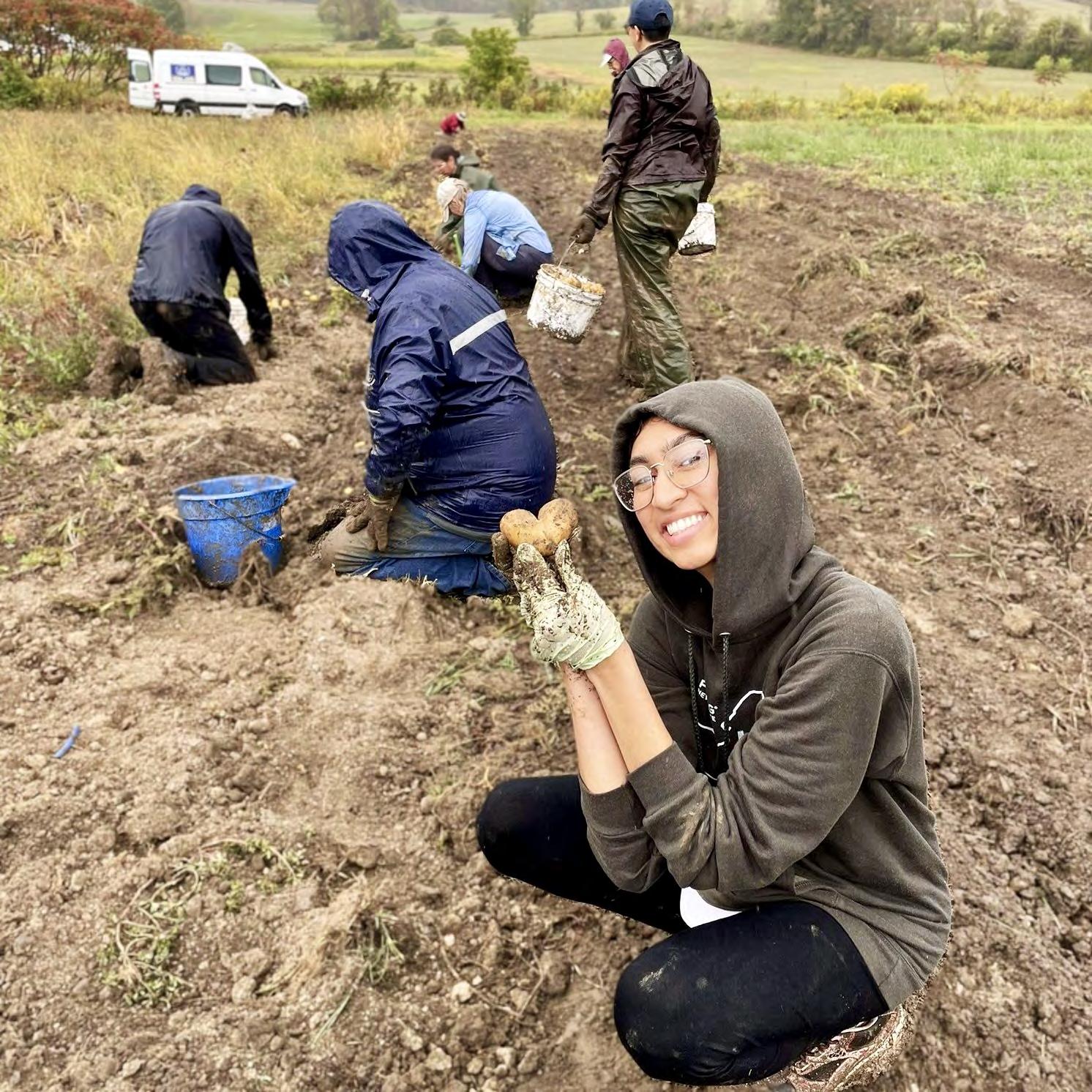
Additionally, says Marx, they assist in reducing food waste through their collaboration with local farms where they provide “on-farm gleaning,” which, in addition to food, provides hands-on educational experiences for all who participate. Through partnerships with
retail stores such as BJ’s, Walmart, Hannaford, and ALDI, Comfort Food Community is able to recover fresh produce and baked goods that, though no longer sellable in the retail environment, still have nutritional value. “While we see the need go up,” says Marx, “we try to meet the need in many ways…we know we can’t do it alone.”
If you’re interested in learning more about Comfort Food Community, their website, comfortfoodcommunity.org, provides information about how you might donate, participate in sponsorship, or volunteer. Upcoming fundraising events include the “Give Hunger the Boot” campaign which includes the ever popular “Cow Pie Bingo” game, and July’s Legacy of Impact event held annually at Saratoga National. Finally, says Marx, “We are always happy to collaborate…if anyone is interested in a ‘Farm 2 Library’ program or any of our other programs, we would be happy to share information.”
Remember, every time you make a purchase at Honest Weight, you have the opportunity to round up to the nearest dollar for the given month’s Be the Change recipients. Through your generous contributions, non-profit organizations like Comfort Food Community are provided with funds that not only help them with their mission but make our region stronger and healthier.
By Pat Ellis
In this issue of the Producer’s Profile, we turn a spotlight on Maggie’s Organics and their very soft, cushy, sustainable socks. Whether you are looking for dress or casual, wellness or athletic, baby or merino wool hiking, you’ll find it at Maggie’s—all made with organic cotton and wool.
The company’s roots go back to 1992 when it was established by Bena Burda near Ann Arbor, Michigan. Burda set high aspirations for her company. She worked to establish a successful, sustainable business while protecting the planet and using production methods that respect and dignify each worker in the process.
Their cotton is sourced from approximately 1,900 small-scale, family-owned farms located in Tanzania. The cotton is ginned in a facility that only processes organic cotton.
Maggie’s Merino Wool is sourced from sheep raised by one hundred family-owned ranches in Argentina. They use the same criteria applied to organic dairy and meat and are subject to standards set by the US Organic Rule. The raw materials are spun into yarn that is certified by Global Organic Textile Standards (GOTS).
Since 1992, every pair of Maggie’s socks has been knitted in the United States. The cotton and wool socks are knitted by three multi-generational, fami ly-owned knitters in North Carolina.
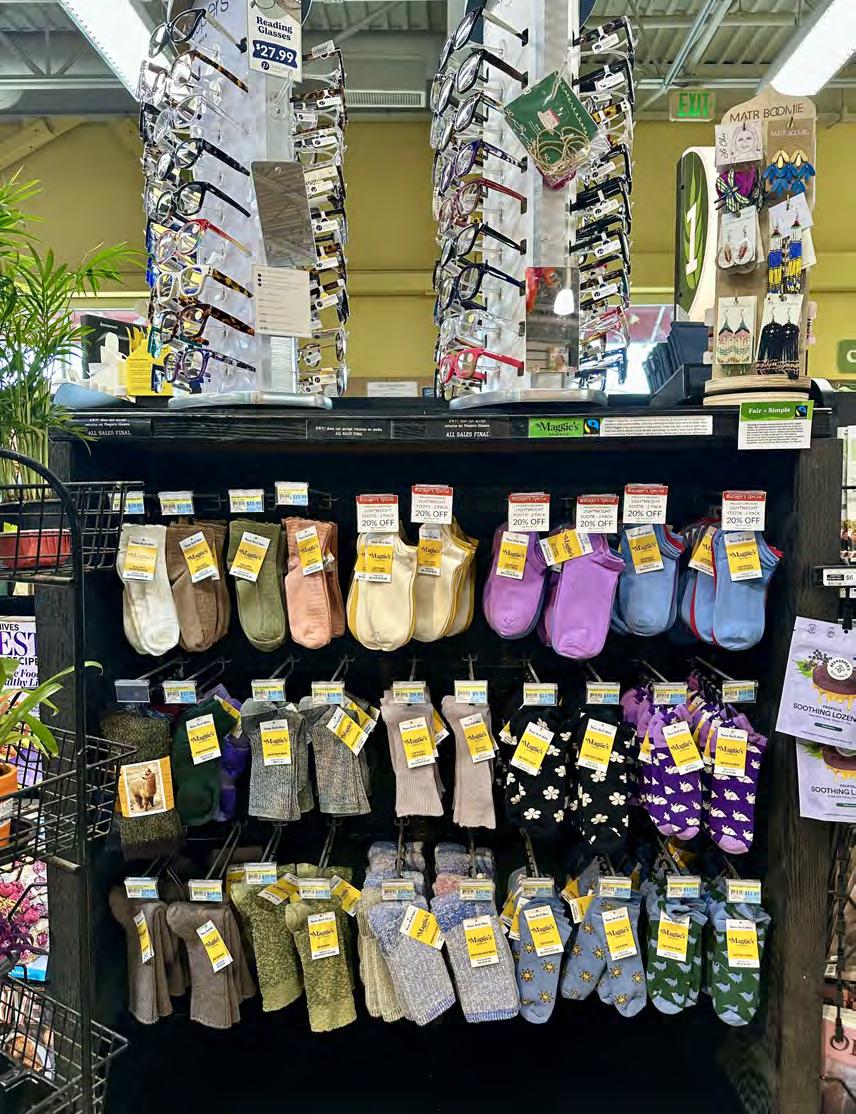
In 2023, after 30 years as head of the company, Burda had lived up to those aspirations and then went a step further. She transferred ownership of her successful organization to its employees. Her charge to the new owners was simple: stay true to the Maggie’s Organics spirit, and remain committed to always trying to do the right thing, no matter how hard. Continuous improvement remains a core value,
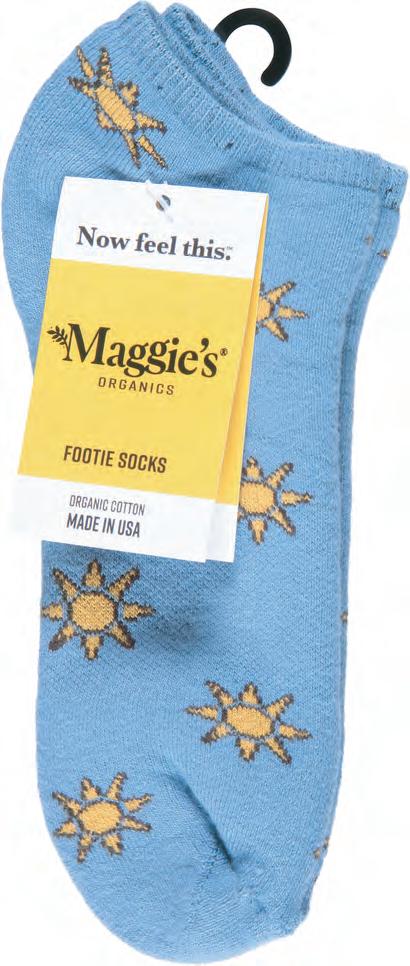
as they work with suppliers and producers to improve quality, the environment, and workers’ living conditions.
Next time you are at the store, take a look or, better yet, touch a pair. I did, and the combination of softness and comfort makes them winners in my closet!

hat is Honest Weight Food Co-op? Who is it for? What are its food policies and who decides them? How does one get members to become more involved? How does one manage financial decisions? And, “should it [the Co-op] go to college?”
Although these are not questions one usually ponders when they stop in for their daily cup of coffee, weekly groceries, or to satisfy an occasional kombucha craving, the early years of the Co-op buzzed with such discussion. Members continued to define what it meant to be a food co-op in Albany, NY.
In the #28, March 1979 edition of the Coop Scoop, Edith Higgins summarized points made at a meeting in which the “purpose and goals of the Co-op were examined.” Below are portions of that article:
By Leona Palmer, LMSW
we consider what we might be feeling, or witnessing, in the midst of charged conversations
In “Understanding Psychological Reactance,” it is described as “an unpleasant motivational arousal that emerges when people experience a threat to or loss of their free behaviors.”
I’d suggest that what we’ve gone through in the past several years the pandemic, the killing of George Floyd and ensuing demonstrations, the rise of conspiracy-related thinking, the events surrounding January 6, the overturning of Rowe v. Wade, and our country’s relationship to two ongoing wars—has primed many people to feel threatened, almost constantly. According to the article, it doesn’t have to be an existential
ly, even something like “being persuaded to buy a specific product in the grocery store” is listed among “examples of threats to the freedom to act as desired.” Hmm, like, maybe, pasta sauce?
In response, people may act in opposition to the persuasion/advice, or “they may aggressively force the threatening person to remove the threat or they may behave in a hostile and aggressive way just to let off steam (aggression).” The challenging responses to the “All are Welcome” post seem to fall into this category.
Again, stepping back and breathing may be necessary when reactance has been triggered. Journaling about your thoughts and feelings, or even just taking a walk outside can restore your
Emotion-releasing techniques such as EFT or “tapping,” and acupressure holding points are also easy to learn and apply quickly. For longer term issues with co-workers or family members, Marshall Rosenberg’s teachings on Nonviolent Communication can be transformative. See https://www.cnvc.org/ for more information, and also this decolonizing take on NVC: https: // ww w.s k epticspat h. org /po dcast /d ecolo ni zing- no nviolent-communication-with-meenadchi/
“Un de r standi ng Psy chological Reactance”, Christina Steindl, Eva Jonas, et al, (2015). Z Psychol. 2015; 223(4): 205–214.
https: // ww w.ncb i.n lm .nih.gov/p-
hat is “healthy” food? To whom and for what reason? It’s something that the editorial team takes very seriously. We are often featuring the health benefits of various produce and products, from the soil and farming practices to your plate. Healthy for the planet, healthy for the community, healthy for human (and other beloved mammal) bodies. HWFC is at heart a natural health food store with roots in the counter cultural activism of the seventies—as this issue celebrates. So, what does it mean to eat “natural” or “healthy”?
Well! Lots of different things to different folks. Vegetarian, vegan, paleo, keto, low sodium, low inflammation, low glycemic, gluten-free, dairy-free, grain-free, plant-based, and more. These are diets that people choose for themselves or adhere to out of medical necessity that are focused or “restricted” in some way—they leave specific stuff out.
Often in our editorial meetings we aim to balance the celebration of enjoying food and promoting health with caution about avoiding shaming, cultural biases, or otherwise causing harm for anybody. We take pains to deliberate over positive body image and fat-shaming—we wish to avoid conflating real wellbeing with toxic mainstream standards of what health should “look like”.
Food is emotional, not just because it goes to the heart of our relationships, cultural lineage, religious beliefs, memories, and comfort—but because it also directly impacts our mental health. Dopamine and serotonin, adrenaline and cortisol: our biochemistry both in happy or satisfied and in anxious or depressed ways has a complex relationship to what we eat. Sometimes food itself is the stressor.
We want to acknowledge in a dedicated way the complexity around disordered eating and offer resources to the community in support of anyone
Resources
who may be struggling themselves, or love someone who may be struggling, in their relationship with food and eating.
‘Eating Disorders’ (EDO’s) are clinical diagnoses while ‘Disordered Eating’ (DO) includes the whole range of maladaptive or harmful behaviors patterned around food and eating that do not reach the severity, duration, and frequency for diagnosis.
In the United States, EDO’s affect 30 million people at some point across their lifetime—people of every gender, age group, race, religion, ethnicity, sexuality, body shape, and weight. A fraction of these folks get the care and treatment they need. It is a common stereotype that women are most affected, and while they represent a slight majority in population, rates among men are growing quickly, and LGBTQ+ people and “overweight” people are disproportionately impacted. People with EDO’s in general are at a much higher risk for suicide.[1]
Prevention includes building up positive inherent self-esteem, positive body image, resilience, and an appreciation for a body’s strengths and abilities—especially in response—especially in response to any noticeable dissatisfaction, negative fixation, or risk factors.
Common clinical diagnoses include, but are not limited to: Anorexia Nervosa, the life-threatening fixation on weight and calories that results in self-starving; Bulimia Nervosa, recurrent cycles of over-eating followed by compensatory purging, restriction, and deprivation; Binging (BED), cycles of over-eating or rapid consumption followed feelings of guilt and shame; and Avoidant/Restrictive Food Intake Disorder (ARFID), the consistent restrictive or selective eating not related to body shape, size, or weight, more common in childhood.
Although not included in the Diagnostic and Statistical Manual of
National Association of Anorexia Nervosa and Associated Disorders (ANAD) https://anad.org/ ANAD helpline toll-free: 1-888-375-7767
National Eating Disorders Association (NEDA) https://www.nationaleatingdisorders.org/ NEDA’s Treatment Directory https://map.nationaleatingdisorders.org/ Other national organizations offering support: https://anad.org/about/community-partner/ The Renfrew Center https://renfrewcenter.com/library/
Mental Disorders (DSM-5), Orthorexia, coined in 1997, is an intense fixation or obsession with consuming only “clean” or “healthy” foods in the pursuit of idealized wellness, as opposed to an idealized body shape or size, with often co-occurring OCD.
EDO’s can be about different things for different people but ultimately are about much more than food, they are about emotional triggers, fears, desires, and experiences. Food is the symptom of the illness, not the cause. Rational argument does not address these root causes because EDO’s are not logical in nature, but instead complex psychological illnesses.
Whenever EDOs are treated, the goals include: medical evaluation and stabilization; restoration of nutritional eating patterns; the improvement of coping skills, positive body image, rational thinking, self-esteem, direct communication; boundaries in healthy interdependent relationships; and self-assessment and self-monitoring; the ability to identify and express feeling states, needs, and preferences; the ability to differentiate between emotional states and somatic sensations; and the ability to regulate both nervous system and emotional states.
If you know someone who may be in a difficult relationship with food, the Renfrew Center recommends that, in lieu of “rational arguments” empathy and validation work best. “Statements like, ‘I can see this feels terrifying for you,’ or ‘I notice you’re anxious right now’ open doors. They acknowledge the emotional reality beneath the behaviors. Once trust and validation are established, individuals are more likely to engage in therapy…[2] Instead of demanding a behavior stop, loved ones can focus on presence: sitting with someone during meals, offering calm companionship afterward, or simply naming observable feelings. These approaches reduce shame and remind their loved one that they’re not alone.” [3]
[1]https://anad.org/learning-library/eating-disorder-statistic/#general [2]https://renfrewcenter.com/beyond-food-understandingeating-disorders-as-emotional-coping-mechanisms/ [3 ] https://renfrewcenter.com/4-ways-to-sup port-a-loved-one-who-has-an-eating-disorder/; https://anad.org/wp-content/uploads/2023/07/ANAD-Support-at-Every-Stage-guide-v3.pdf
By Ruth Ann Smalley
At Home and Abroad: As early as Scoop issue #6, it was clear that HWFC members took a strong interest in current politics Listed under “Happenings” were events in the area, such as a meeting “to discuss a resolution in opposition to the B1 Bomber program,” and another “to discuss the fireman/policeman labor dispute with the city.” Issue #8 alerts members to a picket to “protest Chase Manhattan’s investments in South Africa;” a forum on “the Natural Gas Crisis;” and a project to “ban cars from the park on the weekends” by the Washington Park Coalition.
Who Are We?: Issue #7 featured a guest letter by Howie Sharfstein, laying out the concerns the store faced in presenting itself to the community. He raised key questions that remained constant in those early years: “How will we differentiate ourselves from the supermarkets we organized against, and at the same time ensure our survival in the face of stiff competition?” He acknowledged that “The values we project will attract or deter different sectors of the community.”
By issue #9, discussion of food policy put the Co-op’s politics and identity front and center. “Food Policy: Where to Draw the Line” leads the newsletter content, asserting, “When looking at an issue as controversial as determining food policy we are faced with the broader question of defining Honest Weight’s goals, objectives and operating policies.” This excerpt lays out questions that will continue to be discussed over the years:
As a food coop, food purity and packaging issues arise. This leads to broader discussions on our role in community education and in establishing a model for healthy living, and the extent to which we wish to be responsive to our existing food demand.
A further question raised is whether Honest Weight members want the Coop to be a political instrument for social change within the framework of alternative economics, or whether Honest weight is intended to be a good healthy foods store where a person can buy food with their friends. Obviously there are many shades of middle ground which must be articulated.
The choices we faced when adopting a food policy to govern the range of products we
offer is subje tions. Purity and or which risk b self-righteou hand, stocking system from and encourage among our mem
Gende r Equity: in-depth, n members, ar an affirmative of managers
Political Sta topic, with the monopoly, an “7 nuclear p Hudson Vall issues #18, #1 the Scoop to pieces, as w $25 in the C advertiseme Anti-Nuclea
Environmen energy sources concerns ab ants, as the of articles ab issue #27, the Pr tee was call exclusively. M mittee asser not be called control treatme property.
As you can Honest Wei internal and e you to dip archive, to witn other political co Welcomin view can be a but as an aspect could even s
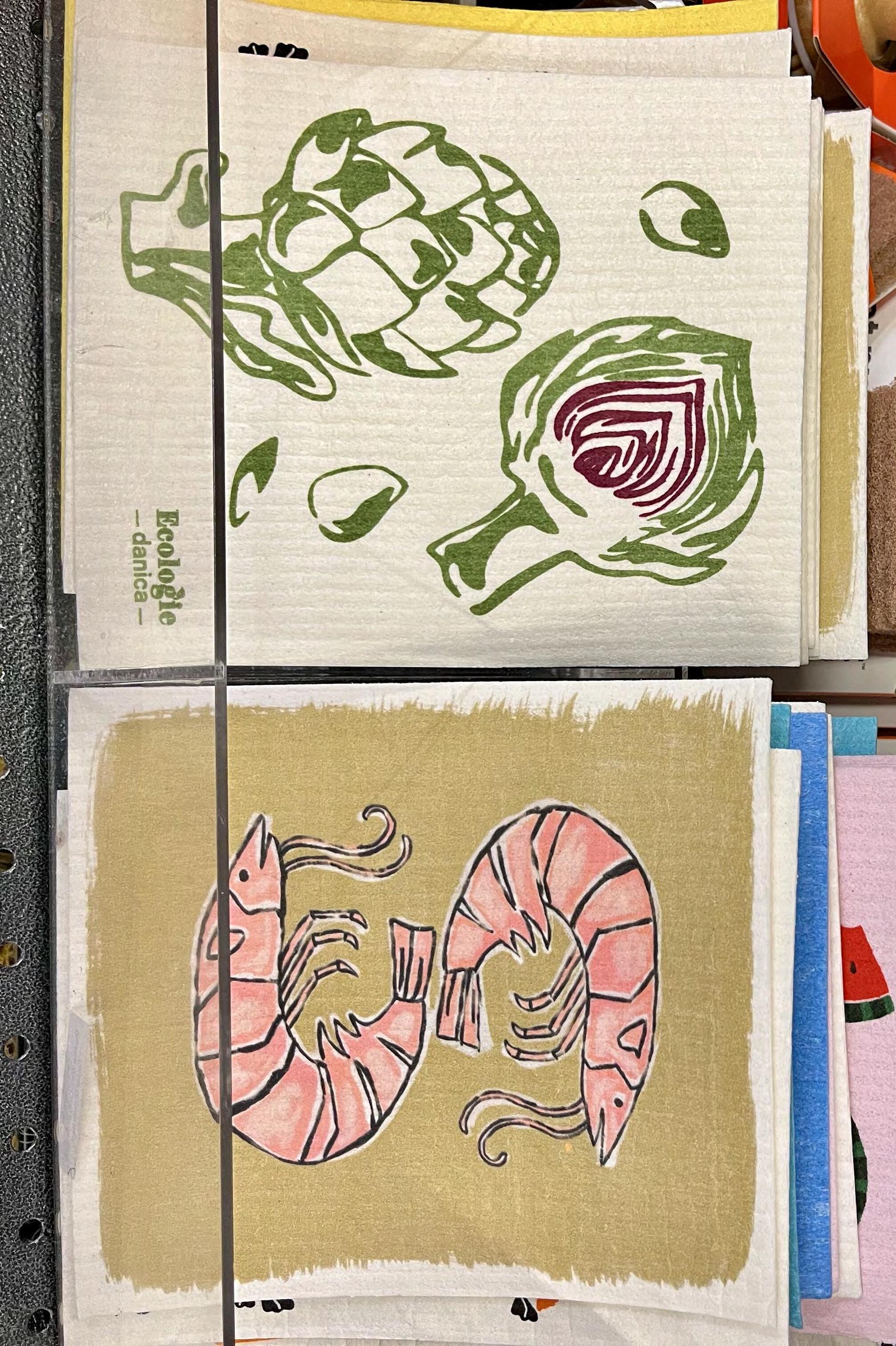
By Ruth Ann Smalley
Did you hear about the big nurdle spill in January? No, a nurdle is not a creature from a Dr. Seuss story. If you didn’t see the news, and don’t know what a nurdle is, let’s start there.
Nurdle is the name for the tiny—generally rice-sized—pellets that form the feedstock for many plastic products. In the January occurrence, thousands of pounds of these white polystyrene pellets spilled along the Kalamazoo River in Michigan when the truck carrying them crashed.
While most of us probably haven’t heard about it, such spills are considered “not uncommon.” In fact, while the truck accident was an acute case, the problem of nurdles being released into the environment classifies as chronic. Garrett Ellison reports that ”A 2025 study published in Environmental Monitoring and Assessment analyzed 1,089 coastal surveys from 39 countries and nearly 59,000 pieces of plastic collected by volunteers. Pre-production nurdle pellets were the most common type recorded. White pellets dominated the dataset.” (Michigan ‘nurdle’ spill underscores a chronic Great Lakes threat - mlive.com). Meanwhile, in Texas, the Dow petrochemical company is requesting permission to discharge even more plastic pellets and other plastic manufacturing byproducts into the water on purpose ( Dow Asks Texas to Legalize Plastic Pollution From Its Seadrift Complex - insideclimatenews.org).
“In the water,” Ellison notes, “nurdles can act like a sponge — absorbing contaminants in the water column and potentially serving as a vector for chemical exposure if eaten by game fish or birds.”
This means nurdles are yet another way that plastic is infiltrating the environment, requiring our attention on personal and policy levels. We’re just beginning to learn about both the amount of and the multiple pathways for the circulation of plastic debris (with its 16,000+ possible additive chemicals). It’s seriously bad, depressing news, but only by facing it do we have any chance of improving the situation. A convenient place to learn more is at Environmental Health News, which collects a broad range of current pollution coverage and publishes a weekly newsletter.
I’d suggest rationing yourself on this kind of news, though. Because the plastic problem impacts so many aspects of our lives, too much information at once is overwhelming. It's easy to feel like nothing we can do personally could compare to the scale of the problem. And this would be true. But it is also true that our efforts—in our own households and beyond—do matter. And when you take those smaller personal steps, it paves the way to bigger pushes for policy change.
On the individual level, action takes time, attention, and breaking things down into small steps. Focusing on a particular area of your life can help. For instance, over the years, my family has been working to eliminate plastic for kitchen use and storage. This is a two-pronged approach: 1) finding glass containers and other alternatives, and 2) trying to limit the amount of plastic packaging that comes into the house through grocery purchases. Yes, it's a slow process, but gradually replacing plastic cutting
boards, mixing bowls, and other utensils, and planning for more bulk purchases is definitely a form of progress.
If you are just starting out in furnishing your own kitchen, you can avoid a lot of plastic pitfalls simply by making very intentional purchases (and hitting yard sales and thrift stores, and joining a Buy Nothing group). But when it comes to replacing disposable items, quick, easy improvements are possible, even in your long-established kitchen. Which brings me back to the image of the nurdles entering the water and acting like sponges.
A lot of us don’t have the hydrological cycle in mind when we’re grabbing cleaning products at the store. But the tools we use around our sinks can make a difference in whether or not we add to the watershed’s plastic burden. Ironically, our cleaning tools can be pouring trash into the environment.
Plastic scrubbing brushes, sponges, and scouring pads—subjected to water and abrasive action—are going to shed yet more particles that go right down the drain. Seems small right? But think of all the hundreds of thousands of household drains, day in and day out. It's a lot.
Yes, it probably pales in comparison to the damage being done by the petrochemical industry. But here’s the rub: why should we let them off the hook in two ways? They’re offloading it into the environment AND then getting us to pay them for products that do it some more.
The authors of Beyond the food on your plate: Investigating sources of microplastic contamination in home kitchens - ScienceDirect describe how it happens:
“For example, dish sponges can be manufactured from nylon, polyester (PES), PE, and cellulose [65]. In a study Luo et al. [66], examined the shedding of microplastics from sponges by mimicking the cleaning process using a soft and hard layered sponge on a glass surface to simulate smooth surfaces and knives and forks to simulate sharpen edges. The study revealed that nylon PA-6 particles were shed from the soft layer of the sponge, while PET particles were released from the hard side.”
Other factors: harsh cleansers or detergents may exacerbate particle shedding, and the older the sponge, the greater the breakdown. And if we swap in a washcloth or dishcloth, we aren’t completely avoiding the problem: “though no studies have been performed on microfiber cloths and the potential release of microplastic fibers due to the friction when cleaning, most microfiber cloths are composed of synthetic materials such as PES or PA, potentially shedding tiny plastic fibers [64,67,68].
So, if you’ve found yourself exclaiming “make it stop!” when reading the news, well, the good news is that in this case, you can. Honest Weight’s housewares department offers you lots of choices for natural bristle cleaning brushes, and even plant-based sponges, boasting scouring power from walnuts to loofahs.
I’d also like to highlight a nice alternative to sponges, microfiber cloth, and paper towels: the Swedish dishcloth. Years ago, after learning how
sponges could serve as reservoirs for all kinds of icky stuff, I tried putting them into faster rotation through the dishwasher, as well as reducing the types of cleaning I used them for. But I had trouble giving them up. And I was skeptical of the adorably-designed but seemingly-pricey Ecologie Swedish dishcloths made by Danica.
I’ve been kitchen-testing them for a while now, however, and they seem like a good alternative. They are made from plant fibers and manufactured in Sweden. The cellulose used is largely made from waste cotton fibers, so hey: recycled!
They’re thin enough that they dry rapidly, discouraging the growth of unwanted icky stuff that can occur inside thick sponges. They survive the washing-machine and dishwasher very well. The website claims they will last at least nine months and two hundred wash cycles. That seems true from my experience.
And finally, when you’re done with them, you can home compost them.
So, what can you save with a sponge? Starting with this and other plant-based options, you can save trees by replacing single-use paper towels, and save watersheds from an additional stream of pollutants. This and many other small steps can help you avoid creating more micro- and nanoplastic pollution. For more information and tips about getting plastic out of your kitchen, specifically, see: Your kitchen is full of microplastics. Here's how to eat less of them.
Once you’ve experienced feeling empowered by these smaller household victories, you can scale up to working against nurdles and other villains! The Plastic Pollution Coalition offers ways to take policy-related actions, including this petition page: Petitions | Plastic Pollution Coalition. Beyond Plastics, our locally-founded, nationally-active organization, is also a great place to get involved. Check out the resources at https://www.beyondplastics.org/, as well as a new book, The Problem with Plastics, by our local expert, Judith Enck.
”On the individual level, action takes time, attention, and breaking things down into small steps.
”
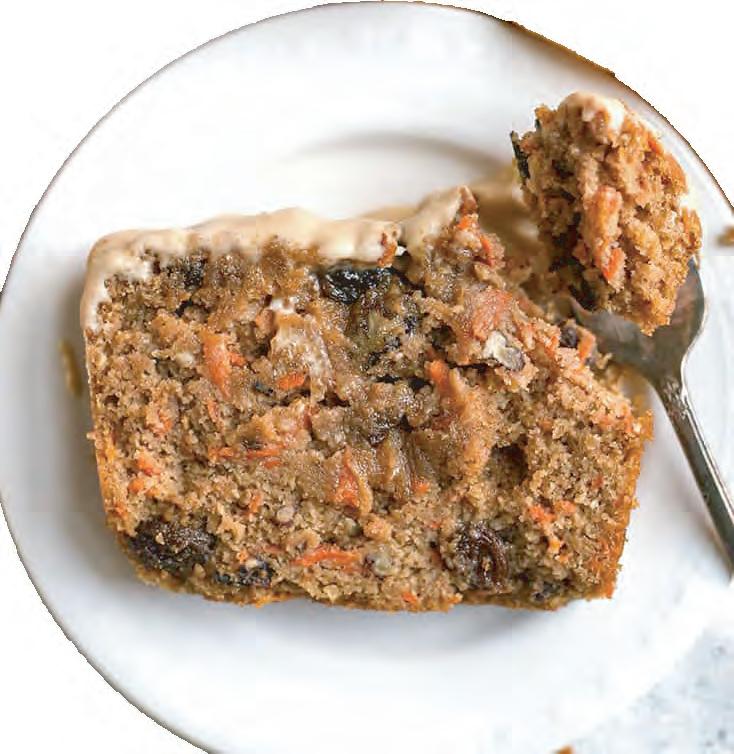
The following recipe won First Prize in the Cake Category at the Second Annual Co-op Baking Contest. It is reprinted from the April 1985 issue of the Coop Scoop.
A Spring Recipe from the Archives (April 1985)
By Carol Ann Modena
⅔ cup light honey
1⅓ cup water
2 Tbls oil
1 tsp. cinnamon
¼ tsp. cloves
¼ tsp. nutmeg
½ cup raisins
¼ cup currents
1 ⅓ cup raw unpeeled carrots, grated
1 egg, beaten
2 cups whole wheat pastry flour
1 tsp. baking powder
1 tsp. baking soda
1 cup walnuts, chopped
1. In a large saucepan, combine honey, water, oil, spices, raisins, currents, and carrots. Bring to a boil and simmer for 5 minutes. Let cool. Add egg.
2. Preheat oven to 350 degrees
3. Mix together flour, baking powder, baking soda and the nuts. Add wet mixture to dry mixture. Stir.
4. Coat the inside of a 9” x 5” pan then dust lightly but evenly with flour. Pour mixture into the pan.
5. Bake at 350 for about 45 minutes. Test for doneness by seeing if a sharp knife blade inserted into the center comes out pretty clean.
6. Cool loaf for 10 minutes. Carefully loosen sides with spatula. Remove from pan and cool further.
Makes 1 loaf.