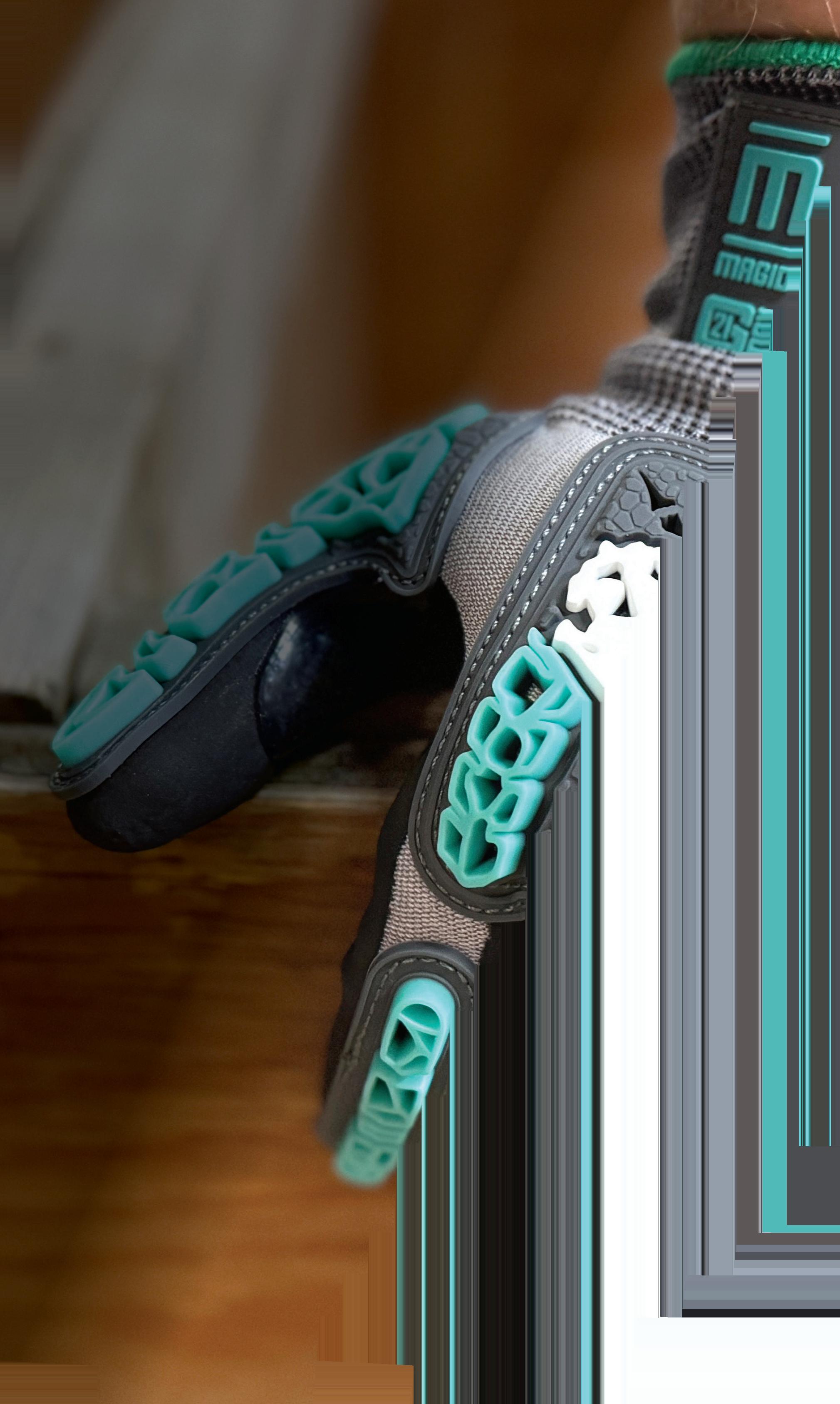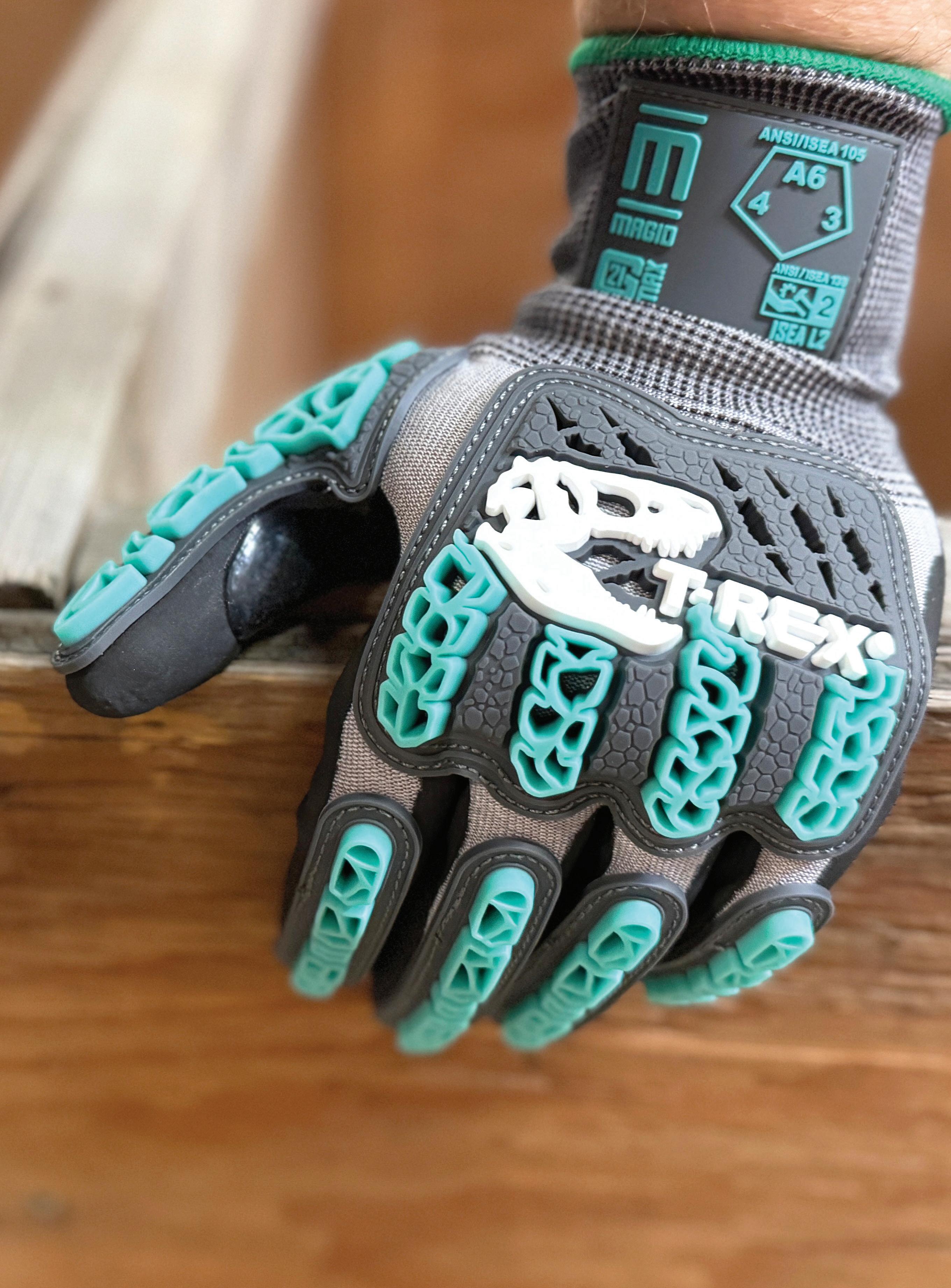



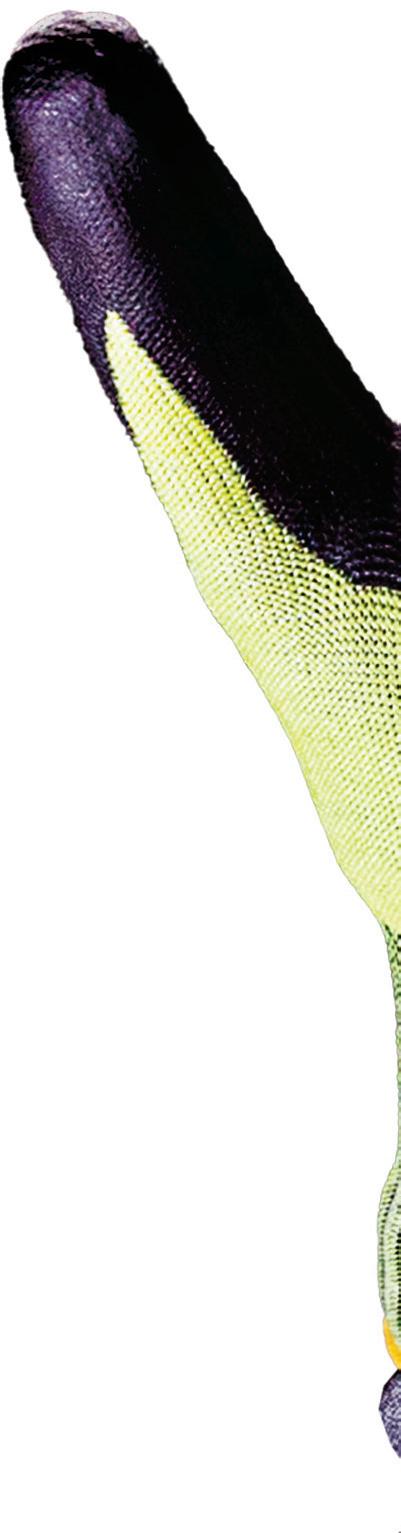
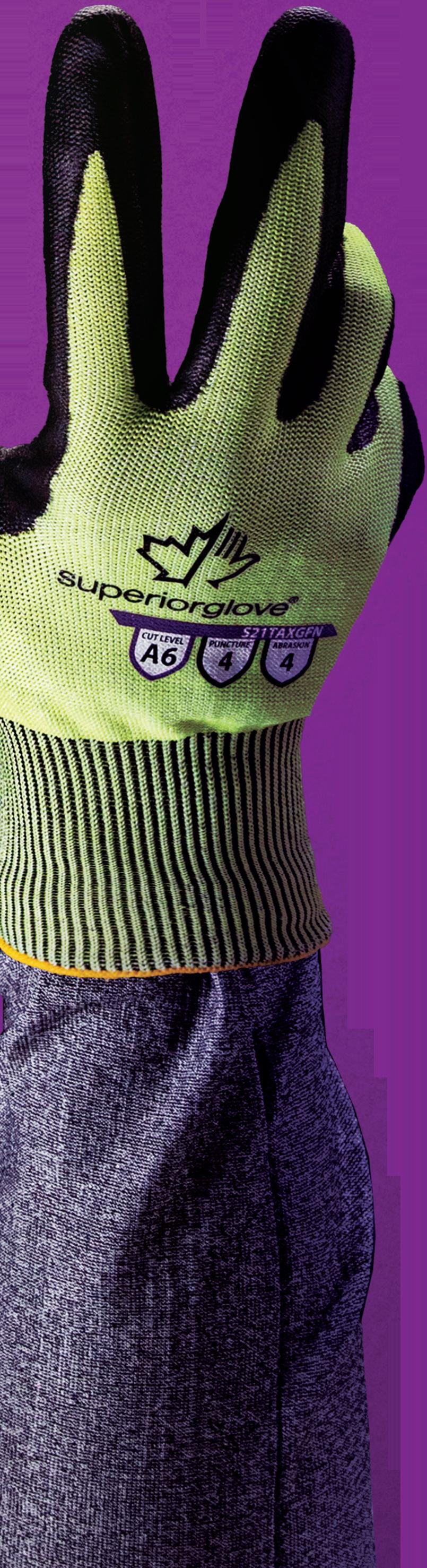
Unmatched mobility and tactility
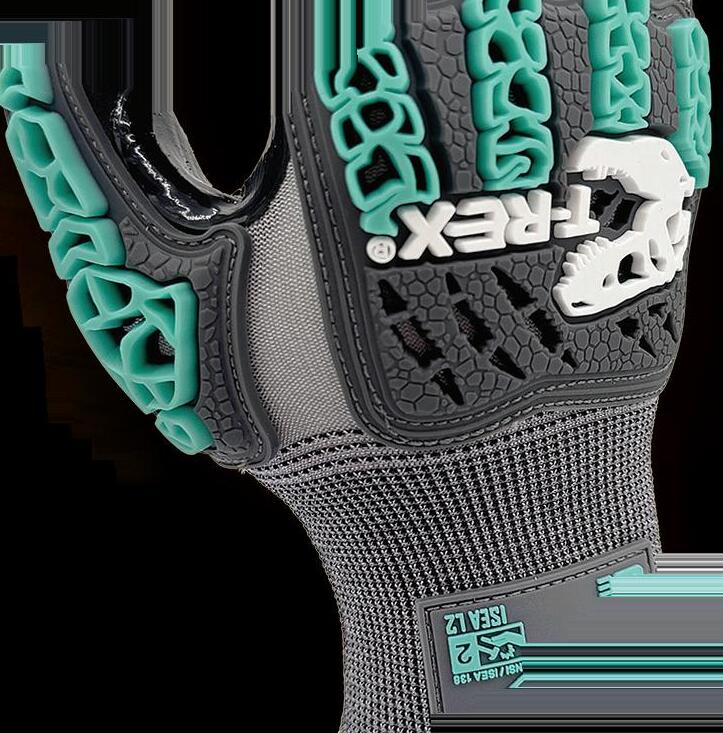
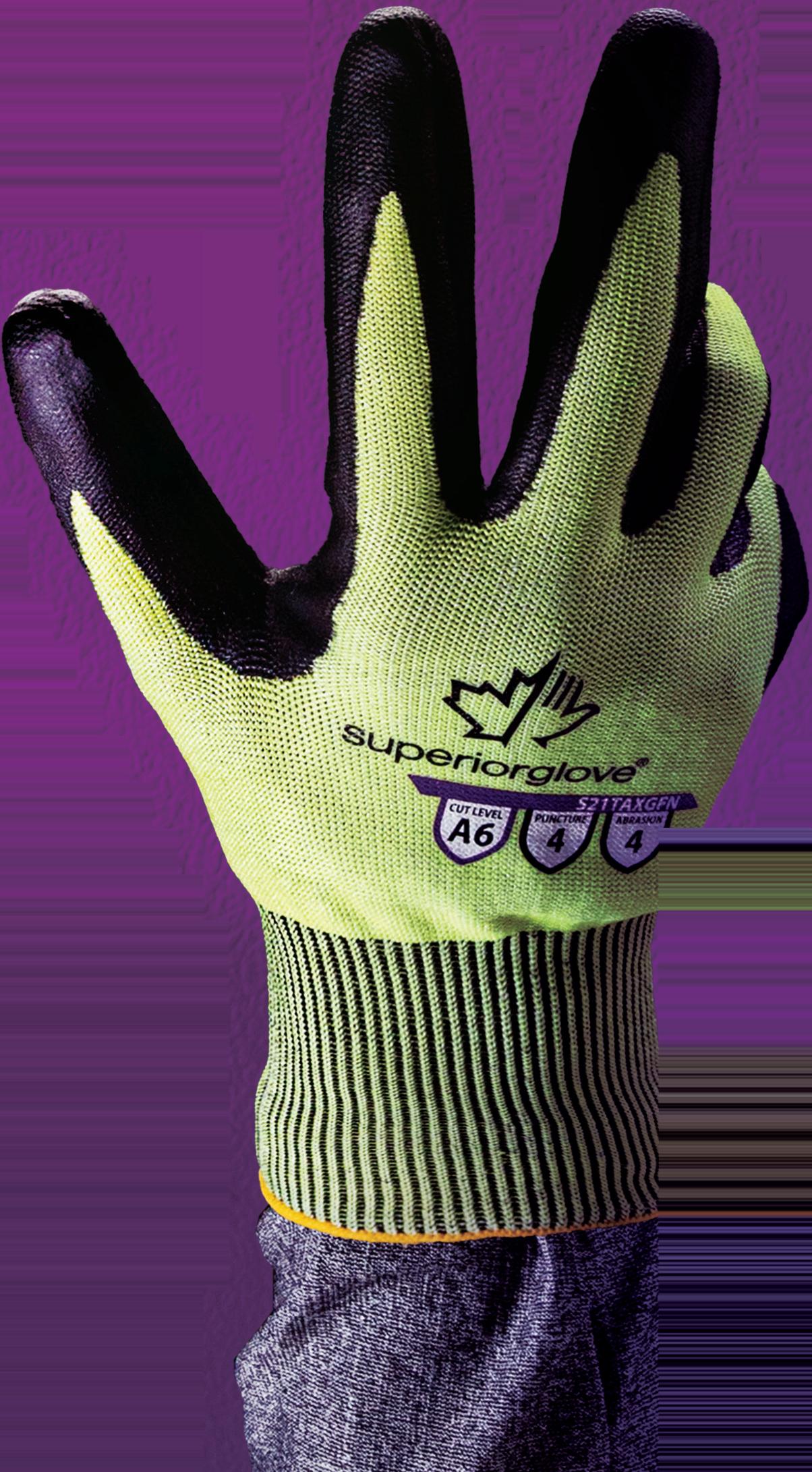
Dexterity Pro™ series offers outstanding mobility and comfort that doesn’t compromise on safety
Effortless freedom of movement
Designed for all-day comfort and exceptional hand mobility
Comprehensive protection options
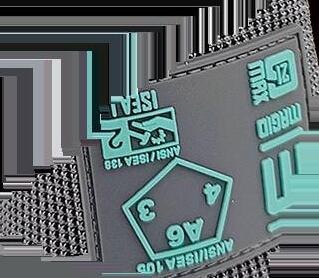
Cut, impact, water resistance, and more hazard protections
Sample the Dexterity Pro™ Series
For more details, visit superiorglove.com/dexterity-pro or scan the QR code






Reactive safety measures focus on treating injuries after they occur, but upstream strategies aim to eliminate hazards at their source. p. 12
p. 16 PFAS Regulations
p. 19 Mental Health Awareness
p. 22 Fall Protection
p. 25 Ergonomics
p. 28 Extreme Weather

Amplify












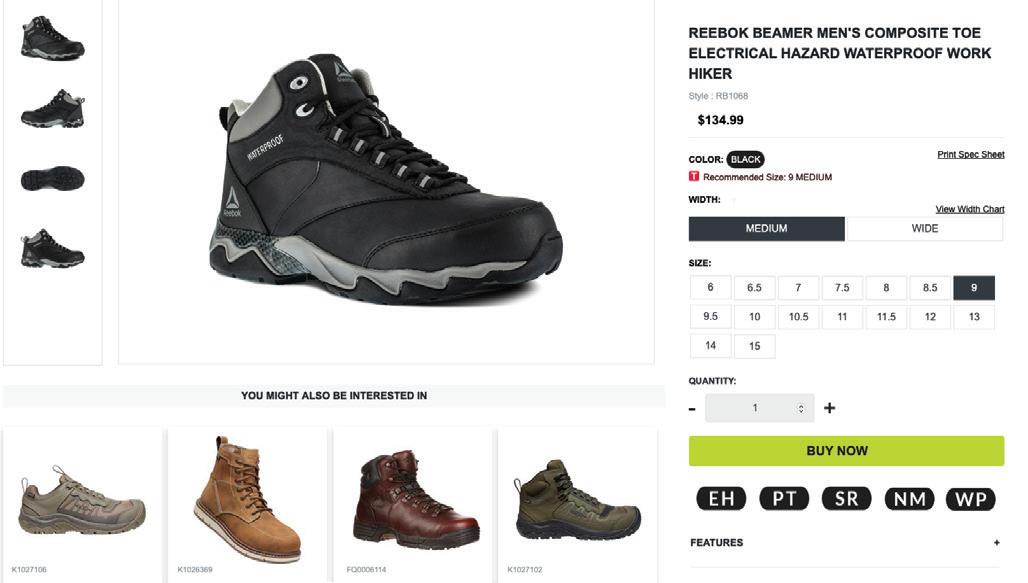
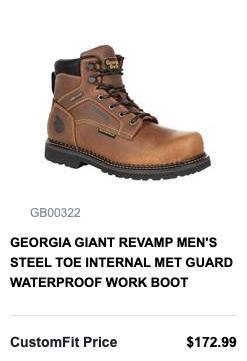
Personal employee 3D foot scan data recommends work shoe fit more accurate than in-store try-on
▪Injury & Fatigue Prevention
▪ Reduced MSD & RSI Claims
▪ Reduced Absenteeism









































▪Greater Protection, Performance & Productivity


▪No inventory or size restrictions



Huge Selection of Safety Footwear

▪75+ brands, 1000s of styles + women’s-built options


▪compliance and pain-free fit

Simplfy Compliance with




▪Greater options increase employee satisfaction,



▪ 24/7 availability from any device at employee convenience









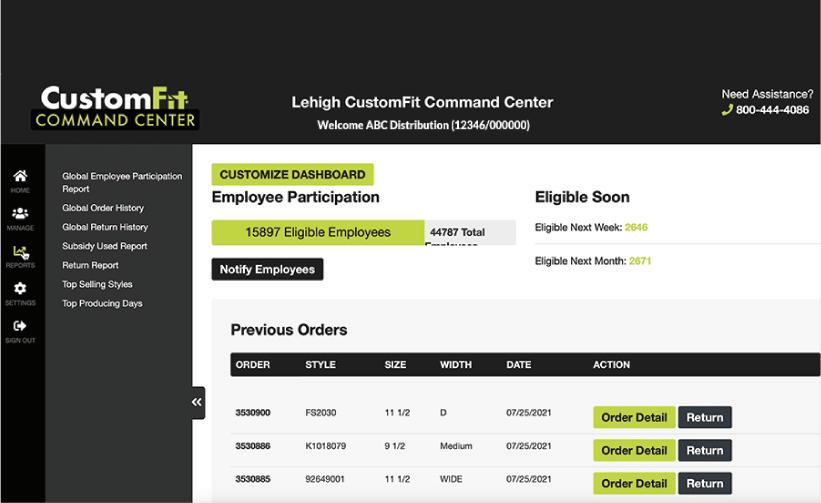
Online dashboard to see & control eligibility, prove compliance, track spend, budget & plan
































































































































EHS TODAY (USPS Permit 905-040), ISSN 1945-9599 print, ISSN 2771-7267 online is published 4 times per year (Spring, Summer, Fall, Winter) by Endeavor Business Media, LLC. 201 N. Main St. 5th Floor., Fort Atkinson, WI 53538. Periodicals postage paid at Fort Atkinson, WI, and additional mailing offices. POSTMASTER: Send address changes to EHS TODAY, PO Box 3257, Northbrook, IL 60065-3257. SUBSCRIPTIONS: Publisher reserves the right to reject non-qualified subscriptions. Subscription prices: U.S. $86.25 per year; Canada/Mexico $111.25 per year; All other countries $136.25 per year. All subscriptions are payable in U.S. funds. Send subscription inquiries to EHS Today, PO Box 3257, Northbrook, IL 60065-3257. Customer service can be reached toll-free at 877-382-9187 or at ehstoday@omeda.com for magazine subscription assistance or questions. Printed in the
Dave Blanchard Editor-in-Chief
Mental health, AI fatigue and environmental deregulation dominate the latest trends in workplace safety.
As legendary sports journalist Jimmy Cannon used to say when starting a column touching on a bunch of unrelated topics: “Nobody asked me, but…”
■ According to a recent Pie Insurance study of workplace employees at more than 1,000 small businesses (i.e., where most of the work in this country gets done), the top safety concern for workers today is mental health, not physical injuries or equipment safety. What’s more, employees say mental health is the greatest risk they face in the workplace as well as the most overlooked risk. And the gap between how well employers think they’re doing at addressing mental health issues, and what employees are actually experiencing, is wide and getting wider. Employees, you see, don’t always feel heard by their senior managers. According to the survey, the top request from employees to improve their mental health is flexible work hours and remote work options; employers, take note.
■ A survey of 1,250 corporate workers by human resources firm ResumeTemplates found that despite the promise of artificial intelligence lightening the load for workers, the opposite is often true. Nearly one-third (31%) of respondents said that their workload has actually increased since their company adopted AI, and that their bosses often expect employees to double or even quadruple their output now that they have AI at their disposal. It’s led to a condition known as AI fatigue, which is similar to burnout because it’s rooted in a feeling of being overwhelmed, explains Julia Toothacre, chief career specialist at ResumeTemplates. “Employees should watch for workload creep, when managers assume AI means you can take on more without providing the resources to support it.”
“Burnout rates are high and the threat of AI is triggering significant fear [among employees] about their relevance at work,” adds Scott Anderberg, CEO of Moodle, a provider of education technology. Many employees feel that they have more work to complete than time to do it, a situation which, as every safety professional knows, can often lead to unsafe behaviors by workers.

■ The U.S. Bureau of Labor Statistics has finally released the numbers from 2024 (which reflect workplace conditions under President Joe Biden’s watch), and the good news is that workplace injuries and illnesses declined by 3.1% in 2024 to 2.5 million, which is said to be the fewest number of employer-reported injuries and illnesses since 2003.
However, the main reason for the decline was a steep drop in respiratory illness cases (i.e., COVID). As far as fatalities, there’s more good news: the number of fatal occupational injuries in 2024 was down by 4% from 2023. Putting it another way, a worker died every 99 minutes in 2023, but in 2024 it was every 104 minutes.
■ Finally, the Environmental Protection Agency (EPA) has determined that climate change isn’t really a danger at all. In fact, in the words of President Trump, climate change is a “con job,” a conclusion that prompted the EPA to deregulate greenhouse gas emission (GHG) standards for highway vehicles. This deregulation will reportedly save Americans over $1.3 trillion (although it sounds like most of those savings will be to the benefit of vehicle manufacturers no longer having to adhere to the emissions standards). The move follows a previous EPA rollback of clean water and clean air standards that will make it easier for data centers to be built, the same data centers that will power the next generation of AI companies.
Somewhat ironically, the EPA actually repealed its own finding from 2009 that GHGs are harmful to humans, so the agency basically overruled itself, in the time-honored tradition of politics overruling science. And as you would expect, environmental and health groups immediately responded to the EPA’s deregulatory effort with legal challenges, pointing out that not only is the EPA’s move illegal, but that it will put lives in danger by harming public health. Legal experts predict the challenges will end up at the Supreme Court, so expect to hear a lot more about it in the days to come.
Send an e-mail with your thoughts to dblanchard@endeavorb2b.com.
With many employees holding onto their jobs, now could be the ideal time to adopt and measure new methods.
With rapid changes in all aspects of business, maybe safety organizations should take this opportunity to re-evaluate the effectiveness of their safety training.
One reason this might be an ideal time is that current economic conditions are causing employees to say they will remain in their current jobs for the next couple of years. This is an opportunity to improve programs and measure the results.
As is the case when moving to a future state, examining the current state is essential. To review excellence in standards, I turned to the Campbell Institute’s (part of NSC) white paper, “Foundation for Evaluating Safety Training Effectiveness.”
The paper, which interviewed members of the organization and created a Training Effectiveness Workgroup, came to the following conclusions.
» The measurement of training effectiveness is critical for the evaluation and continuous improvement of EHS training programs, regardless of the type of training modality (classroom-based, online or e-learning, virtual reality, mentorship programs, blended learning, etc.).
» The Kirkpatrick Training Effectiveness Model is amongst the most widely studied model of training effectiveness and remains popular due to its simplicity, relative ease and comprehensive evaluation criteria. Broken down into four levels (reaction, learning, behavior and results), the model served as the framework for the best practices shared by the Training Effectiveness Workgroup.
One of the challenges to effective training was that since a variety of stakeholders, such as employers and regulators, determine the training, employees may “experience a reduced sense of choice and self-determination when engaging in the training.”
This point was further emphasized in one of the paper’s concluding statements. “While organizations often employ various metrics to measure their training efforts, many lack a systematic approach to assess the impact on safety attitudes, behavioral changes and overall safety culture.”
Adrienne Selko Senior Editor

Those attitudes and behavioral changes have resulted in training that is very diverse in terms of delivery. A 2024 State of Safety Training Survey found that over 90% of professionals agree that blended learning—mixing live sessions, online courses, videos, and other tools—makes training more engaging and effective. E-learning, in particular, has grown by 350% since 2019.
One of the most talked about technologies, generative AI, is poised to become an increasing part of blended learning.
“Generative AI is transforming workplace safety training by making it smarter, more engaging and tailored to your team’s needs,” said Rick Tobin, CEO of Bongarde Media, author of the survey and this issue’s cover story (See page 12). “Imagine giving your employees access to realistic, AI-generated simulations where they can practice responding to hazards without any real-world risk. Or using AI to personalize training content for specific roles, job sites, or risks—so your forklift operator gets training relevant to their daily tasks, not generic safety lessons.
“AI can even analyze past incidents to predict risks and suggest proactive training modules to prevent accidents before they happen. Need quick answers to safety questions? AIpowered assistants can provide real-time guidance, reinforcing best practices on the spot. By integrating these tools, you’re not just training your team—you’re building a culture of safety that’s dynamic, effective and future-ready.”
With new technology and an understanding of the importance of a systemic approach to an overall safety culture, 2026 just might be the ideal time to push for increased safety effectiveness.
Send an e-mail with your thoughts to aselko@endeavorb2b.com.
Avoid the trap of quick-fix safety solutions by focusing on foundational practices like employee engagement and root cause analysis.
By Shawn M. Galloway

Ah, the fascinating world of occupational safety! Where each month introduces a new buzzword, and wellmeaning safety and business leaders become trend-hopping gurus trying to come up with the next miracle solution. Just like your buddy who swears he can lose 10 pounds by drinking only kale smoothies for a week, many leaders tend to chase the latest quick fix fad. It’s a diet for the safety soul, which is about as healthy as a three-day-old donut.
Picture this: Safety slogans and trendy concepts swirling around like confetti at a New Year’s Eve party. “Safety Culture Transformation,” “Behavior-Based Safety,” “Human and Organizational Performance,” and “Zero-Harm” and “Target Zero” initiatives sound like they should come with a side of fries. With often an expectation of immediate results, and who doesn’t want a quick win?
But much like that kale smoothie, these flashy fixes often lead to a stomachache in the long run. They can distract from the hard work of establishing genuine safety excellence when the expectations are not clear. All are potentially useful tools at different points in the safety excellence journey—something that requires much more than just a sprinkle of trendy jargon.
Don’t we all love the idea of a silver bullet? They’re that one magical solution that promises to solve all our safety woes.
Unfortunately, just like a friend’s claim that a single yoga session can cure her lifelong back pain, this mindset leads to a cycle of chasing one shiny trend after another. When the newest safety tool, program, process, or app fails to deliver, it’s time to jump onto the next techno gimmick. This leaves organizations in a perpetual state of confusion, like a kid in a candy store who can’t decide which sugary treat to buy.
Organizations often scramble for the latest tech toys— drones for inspections or augmented reality for training— without securing their foundational safety practices and making sure there is a plan to validate value and sustainability first. Sure, technology can be the cherry on top, but it should never replace the hard work of building a solid safety culture. It’s like trying to ice a cake that hasn’t been baked yet. Spoiler alert: It won’t hold together.
Establishing true safety excellence is more like a marathon than a sprint. It demands consistent effort, dedication, and a long-term commitment to improving and maturing safety thinking and practices. Just as a balanced diet and regular exercise promote lasting health, building a strong safety program involves continuous training, open communication, collaboration, evaluating the effectiveness of interventions, and active leadership involvement.
Here are some sustainable practices to help you resist the urge to indulge in those safety fad diets:

» Engagement Over Compliance: Don’t just check boxes to meet regulatory requirements. Involve your employees in meaningful safety conversations. Create platforms for open dialogue where they can share their experiences. Make safety a shared responsibility that leads to shared ownership. Remember, an engaged employee is like a well-nourished plant—much more likely to flourish!
» Root Cause and Causative Factor Analysis: Instead of jumping on the latest trend to address safety incidents, take a deep dive into the root causes and contributing factors. This not only reduces the likelihood of the same issue from popping up again like a bad sequel but also builds trust. Employees appreciate knowing that their organization is genuinely committed to improvement rather than just slapping on a bandage or putting more administrative controls (i.e., paperwork) and PPE on employees.
» Long-term Training Programs: One-off training sessions might seem like a quick fix, but they’re about as effective as a sugar rush—temporary and fleeting. Invest in ongoing training that evolves with your organization’s needs, ensuring that safety knowledge is refreshed and built upon, like layers of a beautifully crafted cake.
» Leadership Commitment: Safety excellence doesn’t just happen; it requires commitment from the top. Leaders must model safety behaviors, allocate resources for safety initiatives, and create an environment where safety is prioritized over productivity. It’s like a captain
steering a ship; if they’re not focused on the course, the whole crew is doomed to drift aimlessly.
Just as health enthusiasts must resist the temptation of fad diets in favor of sustainable lifestyle changes, safety professionals and business leaders need to shift their focus from quick fixes to long-term strategies for safety excellence. By resisting the appeal of flashy programs and focusing on core practices, organizations can build a safety culture that genuinely protects employees and improves overall well-being.
So, let’s roll up our sleeves, put on our safety gear and get to work. True safety excellence isn’t about chasing the latest trend; it’s about digging your hands into the soil and nurturing a culture that will flourish over time. It’s time to trade in those quick fix safety diets for a hearty, sustainable approach. Let’s make safety a mindset and a lifestyle, not just a passing fad. EHS
Shawn M. Galloway is CEO of ProAct Safety; host of the podcast, “Safety Culture Excellence”; and a past keynote speaker at EHS Today’s Safety Leadership Conference.




COMMENTARY AND ANALYSIS
The Occupational Safety and Health Administration (OSHA), an office within the Labor Department, was busy during the first year of the Trump 2.0 Administration undoing some of the actions that were taken during the Biden years. As we look at OSHA’s plans for 2026 and beyond, the agency is expected to take a closer look at the independence of state plan agencies, which are responsible for enforcement of federal OSHA regulations for roughly half the country—as long as the federal government approves.
One big change from the Biden years is that OSHA is now willing to supply guidance letters to employers who request advice on how to handle certain issues, a practice the previous administration ceased as soon as they took office. Employers could benefit from taking a glance at the agency’s recent report summarizing the advice it has been providing.
This also represents a change in philosophy. In general, OSHA under Republican administrations tends to regard one of its primary responsibilities as helping employers be safer, while Democrats seek to rely on punitive measures to get
employers in line, especially when it comes to those whom unions are trying to organize.
Another employment issue expected to continue this year is the Department of Transportation’s (DOT) high-profile campaign targeting the granting of interstate commercial driver’s licenses (CDLs) to operators of trucks and busses who are illegal immigrants and who cannot comprehend English. The campaign has been fueled by several high-profile truck and bus accidents involving barely trained immigrant drivers who were unable to speak and read English. The televised reports of this situation thrust the issue directly into center of the highly emotional public debate over illegal immigration.
Most of the controversy has arisen because the actual licensing of these drivers is handled directly by state governments operating under standards set by the federal government, which they have flouted or were incapable of adhering to. Trump officials have not been shy about provoking public conflicts with governors from states that have resisted the administration’s reform efforts, which include threatening



states with the loss of federal highway funds if these issues are not addressed to DOT’s liking.
The Trump administration also has extended the ongoing controversy to the hiring of foreign domiciled drivers, improper recordkeeping and fraudulent CDL activities at the state level. DOT will continue to examine state licensing programs and target what it believes are phony truck driver training schools.
The war of words with California Gov. Gavin Newsom, who apparently has eyes set on the Democratic nomination for president in 2028, heated up to the point that his state is refusing to cancel the licenses of more than 17,000 CDL holders licensed by the state that Trump’s DOT says are not qualified. As usual, the issue is not expected to be resolved until the courts have had their say.
Federal government reports show that nationwide about 9,000 drivers have been removed from service because of these kinds of license violations. Anecdotal reports say this has led to fleets paying higher wages, but some of the pressure the loss of those drivers may have caused was relieved because small— and some not so small—trucking companies have continued to go out of business.
What may add to transportation costs is the fact that fleet operators can anticipate new, stricter standards for driver training. The administration believes the current standards are much too weak, according to remarks made in midDecember by Derek Barrs, administrator of DOT’s Federal Motor Carrier Safety Administration (FMCSA). For example, at present the federal training standards do not include a minimum number of behind-the-wheel training hours, something that has been sharply criticized by the OwnerOperator Independent Drivers Association.
But employers need to keep an eye on developments closer to home, particularly when it comes to the burgeoning world of state laws. On the horizon are continued aggressive employment law agendas pursued by some states, especially those controlled by Democrats, like California and New York.
The heated rhetoric and dramatic political gestures engaged in by both sides of the ideological spectrum at every level can be expected only to heat up as Election Day 2026 draws nearer.
David Sparkman, contributing editor
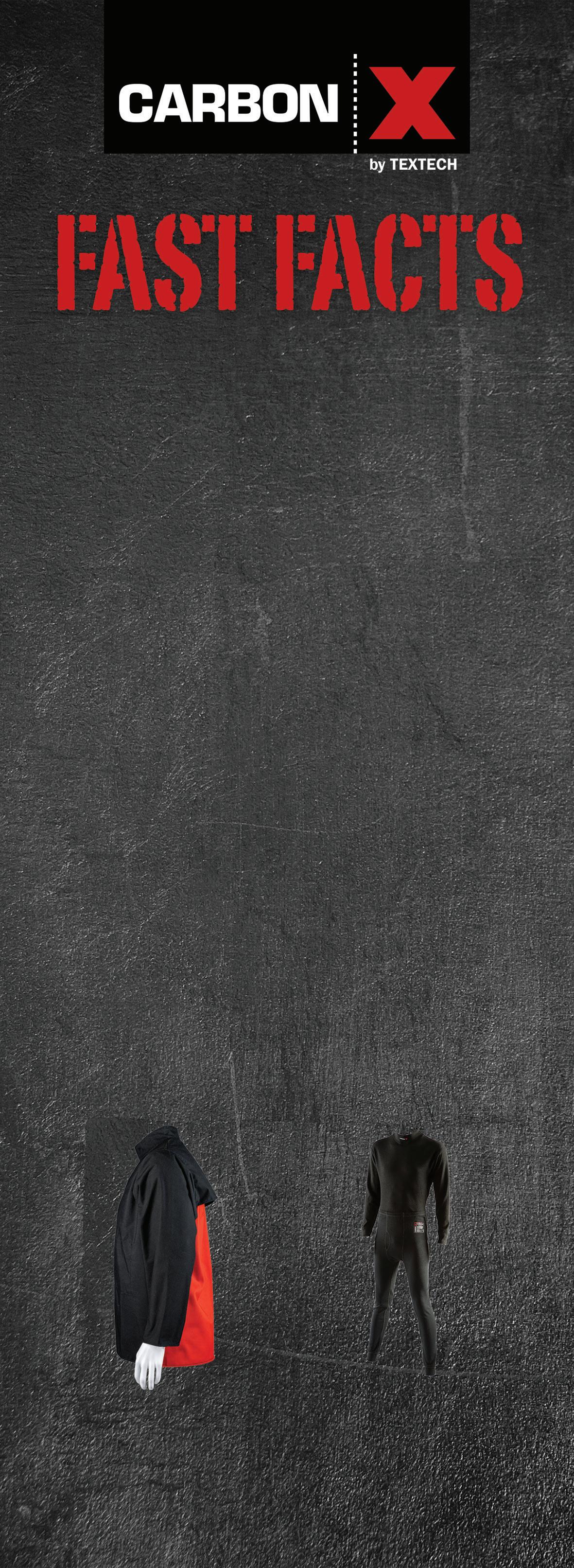

CarbonX® fabrics and apparel deliver the highest level of protection against thermal hazards such as direct flame, extreme heat, molten metal, flammable liquids, certain chemicals, and arc flash in lightweight, flexible, and breathable PPE.
CarbonX significantly outperforms similarly classified FR wear, far surpassing industry standards.
















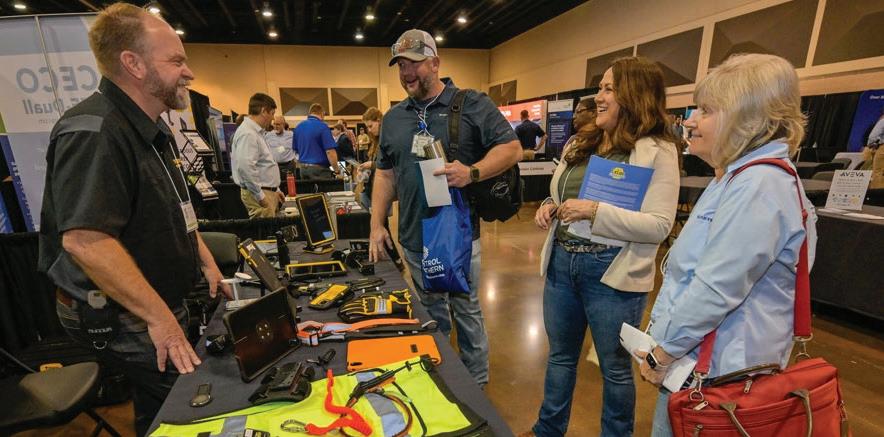





















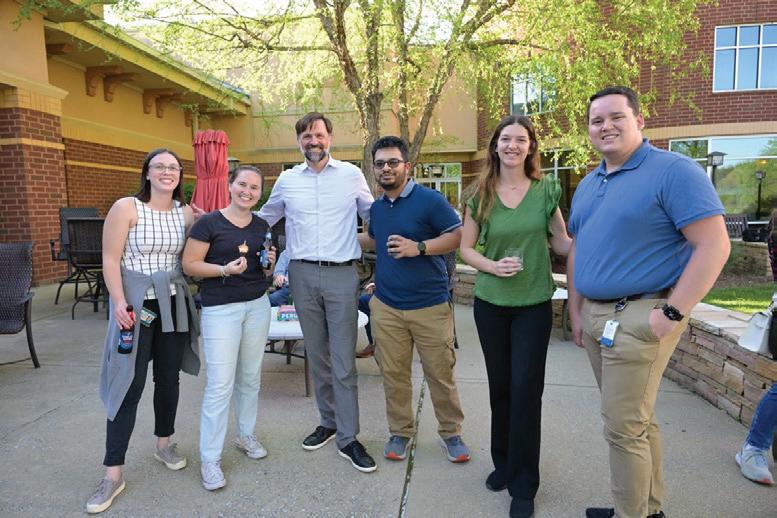








KPA has spun off its Flex and Risk Management Center (RMC) division into a separate new entity, Novara.
The official announcement on January 27 is the result of years of growth and investment following Providence Equity Partners L.L.C.’s purchase of a majority ownership of KPA in 2018.
a much better outcome for our customers at the end of the day by separating into two independent companies with their own executive team, their own board of directors, their own strategy, and their own opportunity to grow without competing with another business for investment resources.”
“When Providence bought the business, they had a vision of taking the environmental health and safety expertise and experience of [KPA] and extending it beyond auto into other high-risk industries like manufacturing and construction and energy,” says Michael Bruns, who has been named CEO of Novara. Bruns joined KPA back in 2019 and served as CFO before being tapped as CEO of KPA in September 2025. “For the last six years, we’ve executed on their vision.”
Bruns explained to EHS Today that during that time, they essentially operated as two companies under one roof.
“We had two completely separate software platforms, two completely separate sales and marketing teams,” he says.
“The business that is now Novara had grown to a size where they were effectively equal. We felt that—despite having a lot of success with both businesses under one roof—there was an opportunity to unlock value and, through focus, provide
KPA will continue to focus, as it has for the past 40 years, on providing EHS and compliance solutions for the automotive industry, including dealerships and collision centers. Wayne Curtis, who was vice president of field services at KPA, has been named CEO of the company.
The newly formed Novara will operate as a software company focused on safety management and operational risk management in high-risk industries, including manufacturing, construction, utilities, and oil and gas. Novara will continue to serve its Flex platform customers. Providence Equity Partners LLC retains majority ownership of KPA and Novara.
Bruns says there will be no impact in the near term for how customers interact with the Flex software or the team. However, he says the spin off will allow for future integration of AI functionality and the roll out of additional features in Flex.
—Nicole Stempak






Reactive safety measures focus on treating injuries after they occur, but upstream strategies aim to eliminate hazards at their source.
By Rick Tobin

Picture a river that winds through a crowded city. On a quiet morning, a passerby notices something strange—people are being pulled from the water. They’re coughing, shivering, barely conscious. Within hours, more are carried downstream. Doctors rush to the banks, building makeshift tents, distributing medicines, and doing everything possible to save lives. But as fast as they work, the current keeps bringing more victims.
This scene isn’t fiction. In the mid-1800s, cholera outbreaks ravaged cities around the world, from London to Shanghai to New York. Yet how two nations responded to the same threat offers one of the clearest illustrations of what upstream safety thinking really means.
When cholera reached the U.S., the reaction was frantic and downstream. Entire wards of hospitals were filled. Cities invested in new ambulances, more doctors and even specialized “cholera hospitals.” Newspaper headlines counted the dead; politicians promised more resources. The focus was noble but reactive—treating the sick after infection had already taken hold.
Across the Pacific, China faced the same enemy but chose a different path. Instead of racing to build hospitals, officials asked a harder question: Why are people getting sick in the first place?
Teams of local doctors, engineers and city planners began tracing the disease not to bad luck or divine punishment,

but to something disturbingly simple: contaminated water sources. Rivers and wells used for drinking were being polluted by human waste upstream. Instead of pouring more effort into medical treatment, they dug new wells, rerouted sewage, and created early versions of what we’d now call water sanitation systems. It wasn’t glamorous. It didn’t make for dramatic headlines. But it worked.
Over the next generation, the cities that invested in these preventive measures saw cholera virtually disappear, while others that stayed reactive endured recurring outbreaks for decades. The lesson was painfully clear: You can’t treat your way out of a systemic hazard. You have to go upstream.
Today, we face a similar dilemma in workplace safety. Every accident, every injury, every near-miss is a person pulled from the river. We treat them—with investigations, compensation and new policies—but too often, we leave the source of risk untouched.
The most effective safety programs borrow the same wisdom that saved those Chinese cities: Go upstream and eliminate the source. That requires more than reaction; it requires education that builds capability, awareness and creative problemsolving at every level of an organization. And that’s where the three layers of safety training come in.
The first layer of safety training is the foundation—teaching workers how to perform the job itself with skill and consistency.
Before we talk about hazards, personal protective equipment (PPE), or regulations, people must understand the craft of their work. When you train employees to perform a task correctly—whether it’s operating a forklift, wiring a panel or handling a chemical—you remove confusion, improvisation and guesswork. Improvisation is where injuries begin.
The U.S. Bureau of Labor Statistics reports that nearly 40% of all workplace injuries involve employees in their first year on the job. It’s not because they’re careless; it’s because they haven’t yet built the muscle memory and procedural confidence that only come through clear, practical instruction.
Consider a warehouse worker learning to drive a forklift. Without proper instruction,
they may oversteer on turns, misjudge load balance or skip daily inspections. OSHA estimates that 70% of forklift incidents could be prevented through effective operator training. That’s not technology; that’s education.
When workers are trained on the how, you stop many hazards before they even start. But task training alone is like digging a clean well without protecting it from future contamination. It must be followed by awareness.
Once workers know how to perform their jobs, the next step is to teach them why it must be done safely—what hazards exist and what standards govern their prevention.
This second layer is about awareness and compliance: understanding the invisible forces that turn ordinary work into extraordinary risk.
Hazard recognition training transforms workers from task performers into observers and thinkers. They learn to spot the frayed wire before it arcs, the unstable stack before it falls, and the fatigue in a coworker before it leads to a mistake.
According to the 2023 Liberty Mutual Workplace Safety Index, five injury causes—overexertion, falls, contact with objects, transportation incidents and repetitive motion—account for nearly 70% of all direct workers’ compensation costs. Every one of these can be reduced by teaching workers to recognize the signals of danger before they escalate.
When safety training includes this second layer, employees begin to internalize a new habit of thinking: What could go wrong here, and what’s my role in preventing it?
That mental shift is transformative. It turns safety from a set of rules into a shared mindset.
This is also where compliance lives. OSHA, PPE selection, lockout/tagout— these are some of the legal and procedural anchors of safe behavior. But compliance works best when people understand its logic. Instead of obeying out of fear of penalties, workers comply out of respect for the system that keeps them alive.
The best programs treat compliance not as the goal but as the minimum standard. True safety maturity happens in the third layer.
If the first layer is about doing, and the second is about seeing, the third layer is about solving.
This is where workers learn to think critically and design hazards out of existence—the same way those early Chinese engineers redesigned their water systems to stop cholera.
Teaching employees to develop or suggest engineering controls may sound advanced, but it’s the single most powerful form of prevention. It moves safety from reaction to innovation.
A mid-sized food processing plant offers a clear example. For years, employees were injured by repetitivemotion strains while packaging frozen goods. Management responded with ergonomic training (Layer 1) and PPE updates (Layer 2). The numbers improved but never plateaued. Then someone asked, “Why are we still lifting these at all?”
Working with engineers and floor staff, they redesigned the conveyor layout and installed mechanical lifts that kept packages at waist height. In the first year, lost-time injuries dropped by 82%, and production throughput increased by 15%.
That’s the third layer—engineering the hazard away instead of teaching people to dance around it.
The sequence matters as much as the content.
First, teach the task. You can’t be safe doing something you don’t yet know how to do.
Second, teach the hazards. Once the job is understood, risks become visible and relevant.
Third, teach the solutions. Once workers see risks, empower them to redesign the work.

Reverse the order, and you sow confusion. Skip a step, and you limit impact. But when all three layers align— knowledge, awareness and innovation— the payoff compounds.
Here are but four benefits for workplaces with mature safety training programs.
Reduced Injuries and Illness: The National Safety Council found that for every $1 invested in safety programs, companies save between $4 and $6 in injury-related costs. Firms that integrate engineering control training see even higher returns, because systemic fixes prevent not just one incident, but every future one.
Lower Workers’ Compensation Premiums: Insurance premiums track risk over time. Employers that reduce injury frequency and severity through comprehensive training see their Experience Modification Rates (EMRs) drop, often saving 20% to 30% in workers’ comp costs within two years. Some even qualify for safety rebates or preferred pricing through insurer partnerships.
Higher Productivity: A safe, confident workforce is an efficient one. Liberty
Mutual’s research shows that companies with mature safety systems report 15% to 25% higher productivity, mainly due to reduced downtime and improved morale.
Operational Efficiency: Engineering out hazards often improves process flow. For instance:
» Upgrading ventilation reduces both respiratory hazards and product contamination.
» Automating repetitive tasks eliminates exposure and reduces rework.
» Better lighting cuts eye strain and boosts accuracy.
Safety and productivity are not opposing forces; rather, they are two sides of the same design.
The cholera example teaches us something fundamental about the human tendency to act only when the danger is visible. In safety, we celebrate the heroic rescues—the worker who pulled a colleague out of a burning room, the team that responded flawlessly to a spill. But the truest hero is the one who reengineered the system so the fire never started or the chemical never spilled.
Going upstream requires patience and imagination. It asks leaders to measure success not by what went wrong, but by what didn’t. That’s difficult, because prevention has no headlines. Yet over time, it’s what separates thriving, low-cost, high-morale organizations from those trapped in a cycle of crisis and reaction.
During the cholera outbreaks, hospitals and the doctors and nurses working in them saved many, many lives. But the engineers who changed the water system changed history.
The same is true of safety. You need the first two layers, training and compliance, to survive the day. But it’s the third layer—creative problemsolving and control design—that ensures you won’t be fighting the same battle tomorrow.
A national logistics provider was struggling with rising injury rates, mostly back strains and slips on loading docks. Their response followed the predictable downstream pattern: retraining, posters and new PPE. The results were modest.
Then management reframed the problem using the three-layer model. They began with:
Layer 1: Certified online courses for safe lifting and equipment handling.
Layer 2: On-site workshops on hazard recognition and compliance with ergonomics regulations.
Layer 3: A cross-functional “Innovation Lab” where workers could propose design improvements.
Within 18 months:
» lost-time injuries dropped 58%,
» workers’ compensation premiums fell 25%,
» employee turnover decreased 18% and
» productivity per shift increased 12%.
Their safety team described it best: “We stopped fishing people out of the river and built a bridge instead.”
Modern technology now makes it possible to integrate all three layers seamlessly. Online and mobile safety training platforms turn what used to be fragmented, time-consuming initiatives into connected systems of learning and measurement.
Video-based modules, simulations and micro-lessons let workers learn exactly how to perform their tasks— from forklift operation to lockout/ tagout—at their own pace. Interactive quizzes reinforce knowledge, ensuring consistency across shifts, locations and languages.
2. Embedding Hazard Recognition and Compliance (Layer 2)
Learning management systems (LMS) can automatically assign courses tied to job roles or compliance deadlines, keeping teams aligned with OSHA and other regulatory requirements. Mobile notifications remind employees to complete refreshers, while digital certificates create an audit-ready paper trail.
3. Enabling Engineering Thinking and Continuous Improvement (Layer 3)
The real magic happens when online platforms evolve from teaching to capturing insight. Workers can log hazards, upload photos of unsafe conditions or propose design improvements directly through mobile apps. Data dashboards help managers identify patterns—the “upstream wells” where risk begins—and track the impact of preventive measures.
4. Measurable ROI
With all training documented and linked to incident data, organizations can finally quantify their return on investment. Insurers notice, underwriters notice and employees notice, because training stops
being a box to check and becomes a tool for empowerment.
Whether a worker is on a construction site, in a warehouse, or on the road, mobile training puts learning in their pocket. No more waiting for a classroom or chasing signatures on paper sheets. The right knowledge, delivered at the right time, upstreams the entire safety process.
If you stand on the riverbank of any industry long enough, you’ll see patterns. The same accidents repeat under different names. The same causes hide behind new excuses. And every time, the temptation is to build another hospital downstream—another policy, another meeting, another reaction and so forth.
But the real change happens when we walk upstream, look for the contaminated well—the design flaw, the missing skill or the blind spot in our training—and dig deeper.
Effective safety training follows that path. It teaches:
» the task so work is done right,
» the hazards so risks are understood, and
» the engineering mindset so hazards disappear altogether.
And now, with online and mobile tools, we can connect those layers like never before—building a living, learning safety culture that flows upstream every day.
Because, in the end, safety isn’t just about saving people who fall into the river. It’s about making sure they never have to. EHS
Rick Tobin is president and CEO of Bongarde Media, a webcentered information and training tools company focused on the compliance and education needs of safety, environmental and human resource professionals, including SafetyNow online safety training.
With new reporting requirements expected this fall, it’s time for companies to prepare, monitor and mitigate use of forever chemicals across their supply chains.
By Emma Holmberg
Regulation of per- and polyfluoroalkyl substances (PFAS) is moving fast. Businesses that delay taking steps to maintain compliance risk multimillion-dollar fines, costly product reformulations, and lost contracts as customers and regulators demand safer alternatives.
At the turn of the 21st century, regulators initially focused on a few well-known compounds because they were the most prevalent, well-studied, and clearly associated with environmental and health risks. Now, regulators are shifting toward rules that address PFAS as a whole class because many other PFAS share similar persistence, bioaccumulation and toxicity concerns. This creates broad compliance obligations for manufacturers, importers and downstream users.

Deadlines are approaching fast, too. The U.S. Environmental Protection Agency’s (EPA) current submission window runs April through October 2026 (with a later deadline for certain small article importers), and the EPA proposed changes in November 2025 that could revise scope/timing. Several states have already enacted bans or reporting mandates across consumer and industrial products. And high-profile settlements, including the $875 million settlement the New Jersey Department of Environmental Protection reached with Chemours, DuPont and Corveta in August 2025 illustrate how high the stakes are. The message is clear: Companies must act now to understand exposures, update reporting and risk management practices, and plan for reformulations where necessary— before the EPA starts enforcement. Failure to do so risks

litigation or customer pressure, escalating costs far beyond proactive measures.
PFAS are a large group of synthetic chemicals used in a wide range of consumer and industrial products because of their resistance to heat, water and grease. PFAS enter the environment and human body in multiple ways:
» leaching into drinking water from manufacturing or disposal sites,
» migrating from food packaging, or
» being released as household dust from treated fabrics and carpeting.
Because these chemicals contain extremely strong carbonfluorine bonds—the strongest in organic chemistry—they don’t break down easily. Over time, they accumulate in the environment, wildlife and human bodies, earning their nickname “forever chemicals.” Studies have associated PFAS with serious health risks, including liver damage, hormone disruption, immune system problems and even certain cancers.
For years, regulation focused mainly on PFOA (perfluorooctanoic acid) and PFOS (perfluorooctane sulfonic acid), which had the most evidence and public attention. Today, the scope is expanding rapidly as regulators begin to include lesser studied compounds and shorter-chain PFAS to better protect public health and the environment.
The EPA’s April 2024 National Primary Drinking Water Regulation sets enforceable limits for six PFAS and introduced a hazard index to capture the combined effects of multiple compounds. The rule gave public water systems until 2029 to comply with the maximum contaminant levels (MCLs) for PFOA and PFOS, though EPA has since said it plans to pursue a rulemaking that would extend the PFOA and PFOS compliance date to 2031.
As of May 14, 2025, the EPA has announced it will keep the current MCLs for PFOA and PFOS in place. The limit remains 4.0 parts per trillion for each chemical. However, the agency will rescind and reconsider the regulatory determinations for the other four PFAS covered by the April 2024 rule:
» perfluorohexanesulfonic acid (PFHxS);
» perfluorononanoic acid (PFNA);
» hexafluoropropylene oxide dimer acid (HFPO-DA), also known by its trademark name of GenX; and
» the hazard index mixture that includes perfluorobutanesulfonic acid (PFBS).
States including California, Maine, Michigan and Minnesota have gone further, enacting class-based bans on intentionally added PFAS in everyday products, such as cookware, cosmetics, textiles and food packaging. While these bans currently target PFAS that manufacturers deliberately add, regulators are already examining how to address trace or unintentional PFAS and may tighten exemptions over time. Minnesota’s “Amara’s Law,” for example, phases in prohibitions through 2032, and Maine has similar long-term deadlines tied to its “currently unavoidable use” reviews. These moves signal that companies must prepare for deeper supply chain transparency and stricter global requirements even as U.S. federal policy has shifted under the Trump administration.
Even though compliance deadlines for PFOA and PFOS have been extended and regulations for expanded compounds are being reconsidered, the overall trend is toward more comprehensive regulation.
In this environment, comprehensive chemical visibility and traceability will be essential for businesses. Many PFAS substances are used in manufacturing processes, either in trace amounts or as part of upstream components. This means PFAS can go undetected without robust chemical management systems in place. Future regulations are also expected to reach beyond finished goods to parts suppliers and other upstream vendors, making end-to-end supply chain transparency critical.
Businesses that invest early in chemical monitoring, data collection, and supplier oversight will be better positioned to meet current and future regulations; maintain customer trust; and gain a competitive advantage in a market increasingly focused on PFAS-free products.
The most common challenge companies face now is visibility. Many companies don’t know which PFAS chemicals they’re using—if any—or whether those substances are about to be regulated.
Therefore, acting early is essential. A proactive approach strengthens resilience and supports long-term sustainability goals. Conversely, delaying planning and preparation can result in operational disruptions, noncompliance, reputational damage and even legal exposure.
Here are four actions companies can take today:
» Build a comprehensive chemical inventory. Effective chemical management starts with data. Businesses must maintain a complete inventory of substances used, produced or stored across their operations. This includes Safety Data Sheets (SDS), hazard classifications, risk assessments and supplier disclosures. Today, digital chemical management solutions allow organizations to screen materials against global PFAS classifications and receive real-time updates on new regulatory developments. These systems help identify substances that may otherwise be missed due to varying naming conventions or incomplete documentation.
» Evaluate safer substitutes and plan for phase-out.
According to our recent study, almost 40% of North American workers today don’t believe their employer is actively phasing out hazardous chemicals in the workplace. Businesses that do embrace substitution will win not just in the regulatory race but also in engaging employees and making them feel safer. Companies should begin side-by-side comparisons of current substances used against available alternatives, making chemical substitution a proactive strategy rather than a last-minute response. Even if replacements aren’t perfect today, early evaluation helps avoid costly reformulations later and supports long-term sustainability goals. Leveraging
digital tools can help screen chemicals for hazards, assess alternatives and document chemical substitution decisions for regulators and customers alike.
» Monitor the global regulatory environment. PFAS regulation is evolving across multiple regions and sectors. A material that remains compliant in one market may soon face restrictions in another. Companies must stay informed through continuous horizon scanning, monitoring pending legislation, and engaging with guidance documents and public consultations.
» Enhance supply chain transparency. PFAS-related risks often originate deep in the supply chain. Companies should implement procurement policies that require disclosure beyond what is legally mandated. This includes supplier questionnaires, contract language updates and clear expectations around chemical transparency.
Due to the complexity of global supply chains, it is critical to move beyond surface-level data and establish long-term supplier collaboration. This supports both compliance and the shift toward safer alternatives.
So far, we have focused on the United States, but other countries are moving quickly, too.
In 2023, the European Union proposed the Registration, Evaluation, Authorization and Restriction of Chemicals (REACH) regulations that would ban over 10,000 PFAS, including their use in articles, mixtures and products. Restrictions on PFHxA already apply to textiles, food-contact materials and mixtures, though transitional periods are still in place for certain uses.
In Canada, mandatory reporting is in place for hundreds of PFAS, and the government is preparing to list PFAS (excluding fluoropolymers) as toxic under its Canadian Environmental Protection Act (CEPA) laws, which would trigger stricter regulation on use, import and labelling. These global developments mean U.S. exporters should expect to meet stricter international standards, often sooner than domestic requirements take effect.
Chemical risk management now requires cross-functional collaboration, data-driven decision-making and continuous improvement. Businesses that act early and invest in visibility substitution and transparency are more likely to retain trust and reduce exposure. This proactive approach also helps them maintain market access.
The next wave of PFAS regulation is not approaching; it’s already underway. Companies that lead today will avoid being forced to make reactive decisions tomorrow. EHS
Emma Holmberg is the technical quality and compliance manager of chemical management at EcoOnline Global, a provider of workplace health, safety and sustainability software.
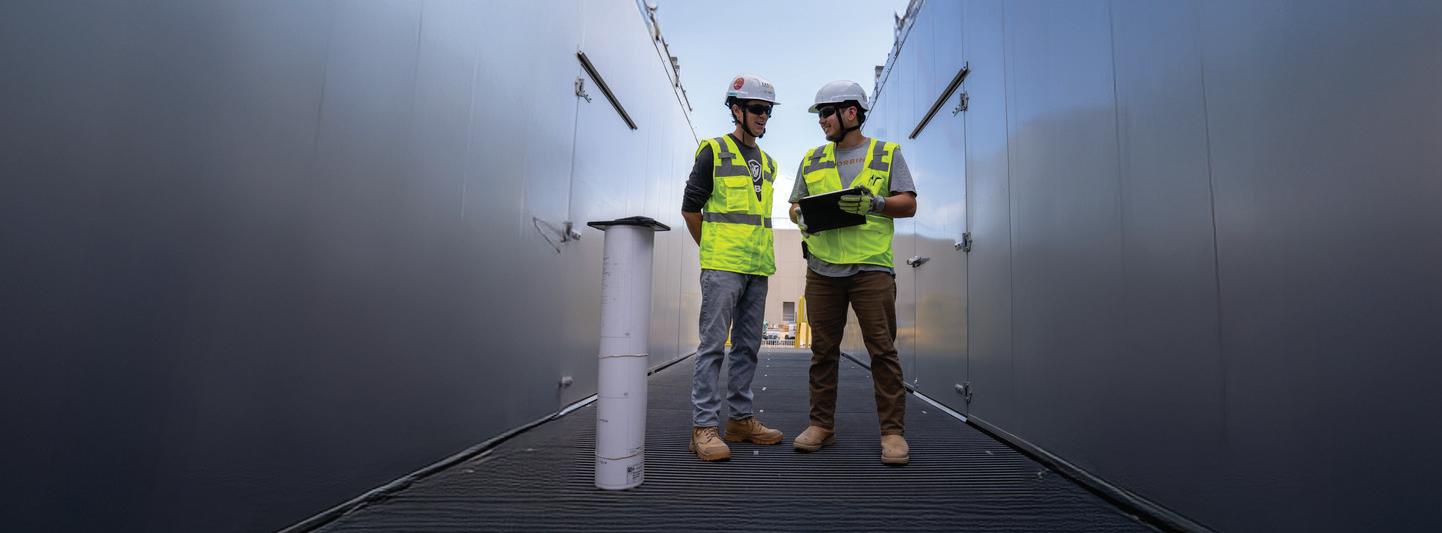
Mental health in construction requires a comprehensive approach that includes early detection, accessible support, and work planning that mitigates fatigue.
By Kim Brown
Physical risk is the adversary construction knows best. The industry has poured time, capital and discipline into safety programs designed to protect the body and keep projects moving.
That focus, however, has left another costly exposure largely unmanaged. Fatigue, stress and burnout build quietly under sustained pressure, with nearly one-third of construction workers reporting all three symptoms in 2025, according to a Travelers report.
That strain is becoming difficult to untangle from incident rates, retention challenges and project performance. With projects growing more complex, mental health and wellness needs to move from the margins of HR conversations into the center of operational risk management.
Here is why construction leaders focused on safety, retention and financial performance must begin treating mental health as a core operational strategy.
For decades, wellness in construction existed largely outside the work itself. Safety focused on compliance. Wellness lived in employee handbooks. The two rarely intersected.
Today, wellness functions as an operational input that shapes who stays, how crews perform and how consistently projects run. When integrated into daily operations, the impact shows up in areas leaders already measure:
Stronger Retention: Addressing burnout helps keep experienced workers on the job, preserving institutional knowledge and reducing costly turnover.
Higher Productivity: Crews with steadier focus and fewer disruptions generate less rework, protecting schedules and margins.
Lower Risk Exposure: Stronger communication and earlier intervention reduce incidents that introduce both direct and indirect costs, including medical claims and downtime. How can organizations practically integrate wellness into the core of their operations?
Organizations seeing real progress tend to start in familiar places. Rather than launching stand-alone programs, they bring mental health into the routines that crews already rely on to work safely.
Toolbox talks and pre-task planning are often the first touchpoints. Alongside conversations about lift plans or personal protective equipment (PPE), leaders can make space for brief check-ins around fatigue, workload or focus before high-risk tasks. These moments are short and practical, reinforcing the idea that mental readiness is part of working safely, not separate from it.
Supervisors also play a critical role when early warning signs appear. Instead of treating changes in behavior as discipline issues, leaders are encouraged to pause and adjust work when they notice:
» withdrawal from the crew,
» repeated tardiness or disengagement, and
» lapses in attention during routine tasks.
Responses vary depending on the situation. Sometimes it means rotating assignments, slowing the pace of a task, or checking in privately rather than pushing forward. Over time, these small adjustments add up.
Just as hard hats and lockout/tagout procedures became routine through everyday reinforcement, mental health becomes part of the safety conversation when it is integrated into daily practices.
Sustained change begins with leadership. When owners, executives and site leaders invest in mental health training, it sends a clear signal that well-being is not something to manage quietly off-the-clock, but a shared responsibility tied directly to workplace safety and job performance.
The most effective training focuses on early recognition and response rather than diagnosis. Leaders learn to recognize subtle shifts in behavior that often appear before larger safety, performance or retention challenges. Just as important, they are given clear, practical guidance on how to respond in the moment.
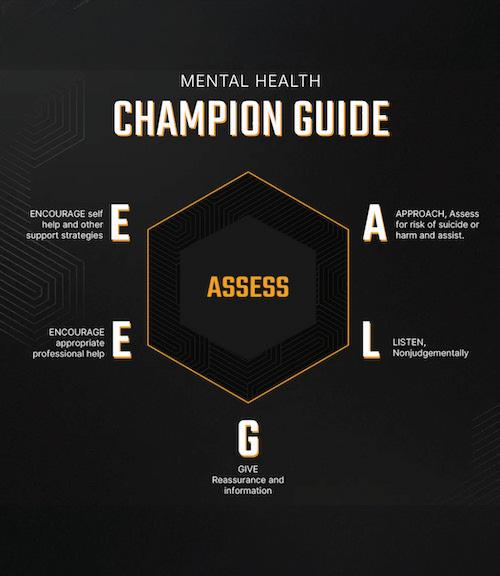
One widely used framework is ALGEE, which offers a simple structure leaders can rely on when conversations feel difficult or time is limited:
A – Approach and assess for risk of harm.
L – Listen nonjudgmentally.
G – Give reassurance and information.
E – Encourage appropriate professional help.
E – Encourage self-help and other support strategies.
Because these conversations rarely happen under ideal conditions, refresher training matters. Annual or quarterly reinforcement helps leaders stay confident and prepared. Much like CPR, mental health training is not about solving the problem on the spot. It is about acting early, reducing harm and opening the door to support before issues escalate.
When leaders respond consistently and constructively, wellness becomes part of the culture itself. Over time, it shapes how crews communicate, how concerns are raised and how pressure is managed on the jobsite.
In construction environments where toughness is closely tied to identity, even well-intentioned programs can fall flat if they feel performative. Workers may worry about being labeled unreliable; passed over for future work; or viewed differently by supervisors, especially on projects where crews rotate and reputations travel quickly.
Organizations seeing meaningful uptake focus on access that feels discreet, familiar and frictionless. Support is positioned in ways that fit naturally into the workday, including:
» digital telehealth tools that allow workers to seek support privately;
» QR codes that lead to resources and other simple reminders placed where crews already go, such as on jobsite boxes, trailers or break areas; and
» clear messaging that resources are confidential and available on a worker’s own terms.
When support feels routine and accessible, workers are more likely to remember it—and use it—when they actually need it.
Even in strong cultures, not every worker will approach management. Peer networks help bridge that gap.
Credibility on the jobsite, rather than seniority or title, is often the strongest indicator of an effective peer advocate. They tend to be people others already trust—the ones coworkers naturally turn to for advice, who know when to listen and how to keep conversations confidential. Keeping the role voluntary, rather than assigned, is essential to maintaining that trust.
In practice, these networks look more like informal safety roles than formal programs:
» Trusted crew members volunteer as peer advocates.
» Advocates receive basic training and remain visible on-site.
» Conversations stay grounded in shared experience rather than policy.
Peer advocates are not expected to solve problems. Their role is to listen, normalize the conversation and help coworkers navigate next steps. Strong peer pathways enable concerns to surface earlier, long before they escalate into safety incidents or disengagement.
Fatigue, stress and burnout rarely appear at random. They are often the predictable result of long hours, compressed schedules and sustained pressure over the life of a project.
Rather than waiting for strain to show up as a safety or performance issue, some construction leaders are rethinking how work is planned and paced. That can include:
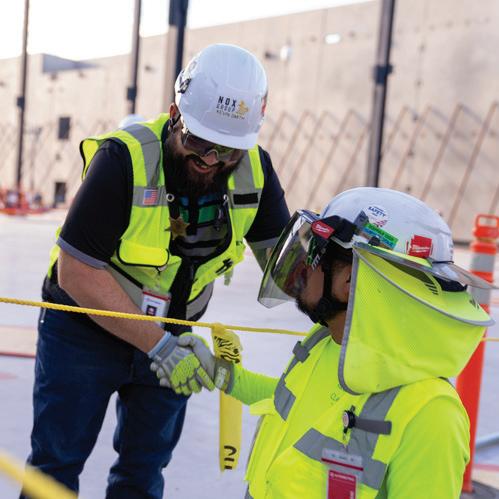
» rotating assignments during high-intensity phases,
» building recovery time into schedules after major milestones, and
» adjusting workloads when crews have been traveling or working extended hours.
However, this approach does not mean lowering expectations. Instead, it should reflect an understanding that exhausted crews are more prone to errors, disengagement and risk-taking. When leaders account for fatigue during planning, teams are better positioned to maintain focus, communicate clearly and perform safely over time.
Designing work with mental strain in mind also gives supervisors more options when pressure mounts. Instead
of framing fatigue as something to push through, leaders can adjust sequencing, staffing or timelines to protect both safety and performance.
The construction industry has proven its ability to evolve when safety is at stake. Hard hats, fall protection and lockout/tagout procedures were once debated, too.
Today’s challenge is recognizing that protecting the workforce means addressing the full spectrum of risk, including the mental and emotional factors that shape how work is done.
Industrial construction leaders who embed wellness into how work is planned, led and executed will be the ones protecting their crews, controlling risk and delivering stronger financial outcomes. EHS
Kim Brown, SHRM-CP, is the chief people officer at Nox Group, an industrial construction company that specializes in hyper-scale, mission-critical infrastructure projects, such as data centers and water and wastewater facilities.
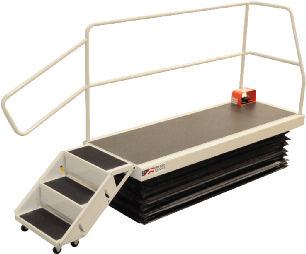
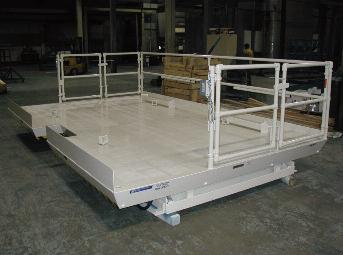
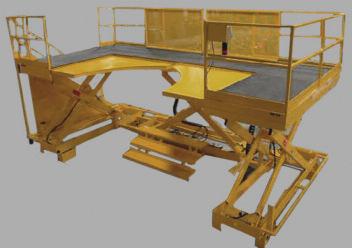
• Advance work access lifts elevate workers, materials & tools to convenient work heights at the push of a button.
• Applications include production, assembly, inspection, maintenance and order picking.
We h ve over 1500 st nd rd products s st rting point to meet your needs nd often end up with tot lly custom nd unique design. Options include h ndr ils of ll types including retr cting versions, vertic l rising g tes, swing g tes, pipe st nchions with ch ins, pl tform cut-outs, pl tform extensions including retr cting versions, work benches, tool boxes, ccur te positioning with + -1/8” repe t bility, power drives for horizont l movement, speci l finishes such s st inless steel or epoxy p int, speci l fluids such s bio-degr d ble or fire resist nt, explosion proof power units, single st ge lifts nd multi-st ge lifts.
A comprehensive overview of personal fall arrest systems and the life-threatening reality of suspension trauma. By
Rick Pedley
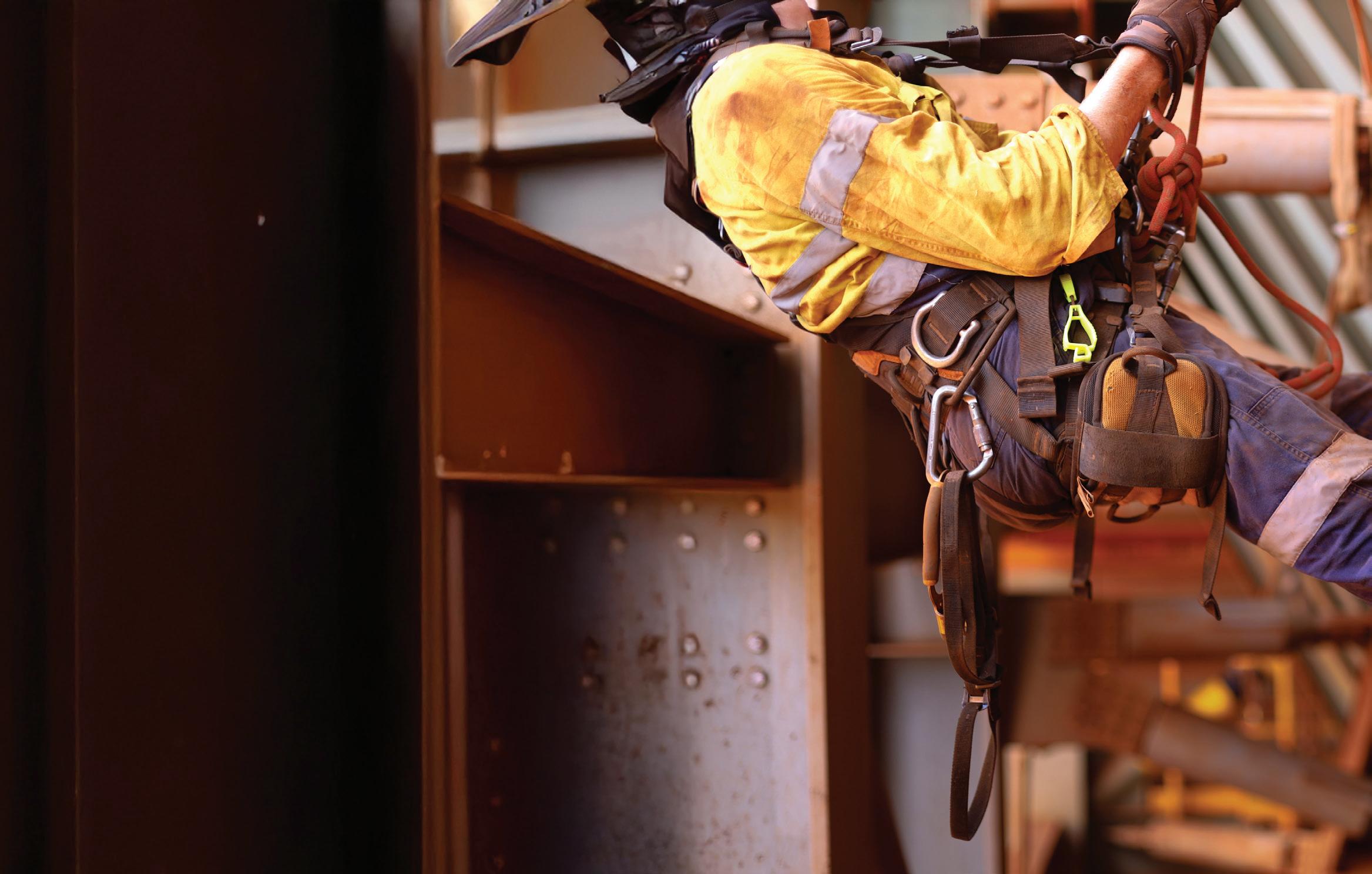
Falls remain one of the leading causes of workplace injuries and fatalities. According to the Bureau of Labor Statistics (BLS), in 2022, falls resulted in the tragic deaths of 865 workers, and in 2023, more than 8.8 million people were treated in emergency rooms for fall-related injuries. While most safety programs focus on preventing falls or stopping them midair, far fewer address what happens next—when a worker is left hanging (quite literally) in limbo.
When a worker is left suspended in a harness, time becomes the enemy. Without a practiced rescue plan, the outcome can quickly shift from a near-miss to a tragedy. That’s why understanding the ABCDs of fall protection is essential for every safety manager, supervisor and employer.
To help safety professionals build robust fall protection programs, experts rely on a four-part system known as the ABCDs of fall safety:
» A – Anchorage: This refers to the secure attachment points to which a worker’s fall protection gear (e.g., lifelines, lanyards or deceleration devices) is connected. The Occupational Safety and Health Administration (OSHA) requires that each anchorage point must support at least 5,000 pounds per worker attached.
» Examples: fixed beams, roof anchors or mobile tripods.
» Best practice: Position anchors above the worker’s head to reduce free-fall distance and minimize swing hazards.
» B – Body Support: The full-body harness is the only acceptable form of body support for fall arrest. Unlike body belts, which concentrate fall forces on the abdomen and can cause severe internal injuries, a full-body harness is designed to distribute those forces across the stronger parts of the body: the shoulders, upper thighs and pelvis.
» Key feature: the dorsal D-ring (center back) keeps workers upright and reduces spinal injury risk.
» Fit tip: Harnesses must be properly sized and adjusted to prevent slippage or circulation issues.
» C – Connectors: These refer to the devices that link the worker’s harness to the anchorage point, such as lanyards, self-retracting lifelines (SRLs), rope grabs and shock absorbers.
» OSHA requirements: Free-fall distance must not exceed 6 feet and arresting force must be limited to 1,800 pounds or less.
» Compatibility is critical: Mismatched connectors can lead to dangerous failures.
» D – Descent and Rescue: This is the post-fall plan: the equipment, training and protocols needed to safely retrieve a suspended worker. Despite its importance, descent and rescue is often the weakest link in fall protection programs. Investing in top-tier harnesses and anchors without a rescue plan leaves workers vulnerable to a deadly, overlooked threat: suspension trauma.
» Worker training: Regular hands-on training allows crews to practice activating rescue equipment and perform self-rescue if it’s ever needed.
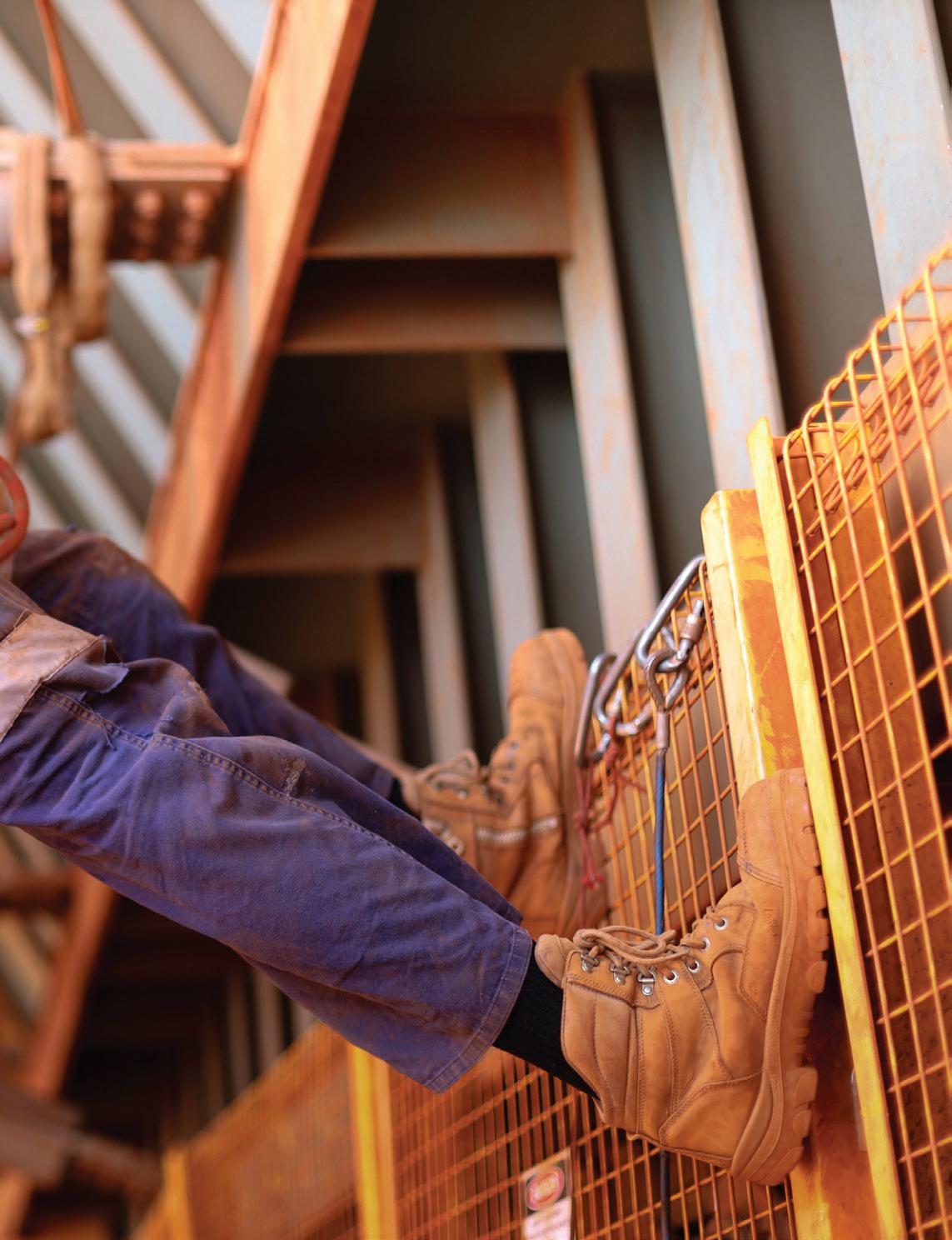
Fall arrest systems are designed to keep the body upright after a fall, which helps protect the spine from impactrelated injuries. However, the human body isn’t designed for prolonged vertical suspension without movement. When a worker is suspended in a harness:
» gravity pulls blood into the legs,
» harness straps compress the femoral arteries, and
» reduced blood flow deprives the brain and vital organs of oxygen.
Without timely rescue, this combination can trigger a potentially fatal condition known as suspension trauma.
The body’s initial response is to speed up the heart rate to compensate. However, this is a losing battle against the alarmingly rapid progression of symptoms:
» 0-5 minutes: dizziness, nausea, numbness in legs.
» 5-15 minutes: loss of consciousness, potential airway compromise.
» 15+ minutes: kidney, brain, and organ failure; possible death.
Suspension trauma is swift, silent and often underestimated. A rescue plan isn’t optional; it’s lifesaving.
After a fall arrest, crews must act quickly. Key steps include:
» Lower limb activation: Train workers to pump their legs while suspended to activate their muscles and promote blood circulation. An invaluable and inexpensive tool for this is a
pair of suspension trauma straps. These lightweight straps attach to the harness and can be deployed by the worker to create a loop to stand in, alleviating pressure and allowing them to use their leg muscles.
» Utilize on-site equipment for support: A rescue doesn’t have to be complex. In some cases, giving the suspended worker a portable ladder or anything they can stand on can prevent suspension trauma. If possible, the on-site team can also guide the worker to a nearby structure, such as a beam or platform.
» Continuous communication: Talk to the suspended worker to keep them conscious, calm and responsive while the rescue is in progress.
Training workers on these immediate actions buys precious minutes until full extraction.
A robust fall safety program accounts for every potential hazard, hindrance and rescue scenario. This enables you to craft a clear and comprehensive plan of action that not only reduces the likelihood of a fall and ensures an effective rescue but also reinforces daily awareness. This process should start before every job and every shift, especially for crews working in the field where conditions can change quickly. And it’s essential that everyone on the team—not just safety professionals—is trained to recognize hazards, use equipment correctly and follow established protocols.
Here are some key strategies to help guide your plan:
1. Conduct a thorough hazard assessment
» Walk the site to identify fall risks and rescue barriers.
» Evaluate elevated work areas, access points and obstructions.
» Ask: “How fast can we reach a suspended worker here?” This assessment shapes the rescue equipment and strategies your site requires.
2. Implement comprehensive fall prevention measures
» Install engineering controls, such as guardrails, warning lines, toe boards and controlled access zones.
» Ensure all fall protection PPE—harnesses, connectors, anchors—meet OSHA standards.
» Tailor solutions to each task and worksite, combining environmental controls with personal fall arrest systems.
3. Establish a clear rescue plan
» Document site-specific rescue procedures.
» Assign roles and responsibilities for rescue team members.
» Train crews on equipment, such as controlled descent devices, hoists or pulley systems.
» Practice drills regularly to build confidence and speed under pressure.
4. Promote a culture of awareness
» Conduct toolbox talks on suspension trauma and its dangers.
» Empower workers to report hazards and suggest solutions.
» Reinforce the “why” behind rescue training; when workers understand, they engage more fully in their own safety.
Rescue planning succeeds only if people are prepared. OSHA requires employers to provide training, but the best programs go further. They offer:
» hands-on drills to simulate real rescue scenarios;
» equipment familiarization so workers know how to deploy SRLs, trauma straps or controlled descent devices instinctively; and
» technology integration with wearable sensors and connected PPE that can detect a fall and alert supervisors instantly, speeding up response times. Together, these elements create a workforce that can act confidently and correctly in critical moments. They also help close the gap between “having a rescue plan” and having a rescue plan that works.
For safety leaders looking to deepen their programs, OSHA offers extensive guidance on fall protection systems, training requirements and rescue preparedness. Exploring OSHA’s






fall protection standards and training resources can help organizations strengthen their internal protocols and ensure their teams remain ready for any scenario.
Fall arrest systems are only part of reducing falls along with fall-related injuries and fatalities. Without a rescue plan, workers remain at risk even after surviving the initial fall, especially due to suspension trauma, which can become lifethreatening in as little as 15 minutes.
The concept of the safety circle emphasizes that fall protection must cover the entire life cycle of a fall event: before the fall (prevention), during the fall (arrest) and after the fall (rescue). If any part is missing, the circle is broken. As a result, workers are left vulnerable.
By committing to the full ABCDs of fall safety, employers complete the circle. The reward isn’t just regulatory compliance. It’s lives saved, injuries avoided, and workers who know their employers are committed to sending them home safely at the end of their shifts. EHS
Rick Pedley is president and CEO of PK Safety, a supplier of occupational safety and personal protective equipment since 1947.






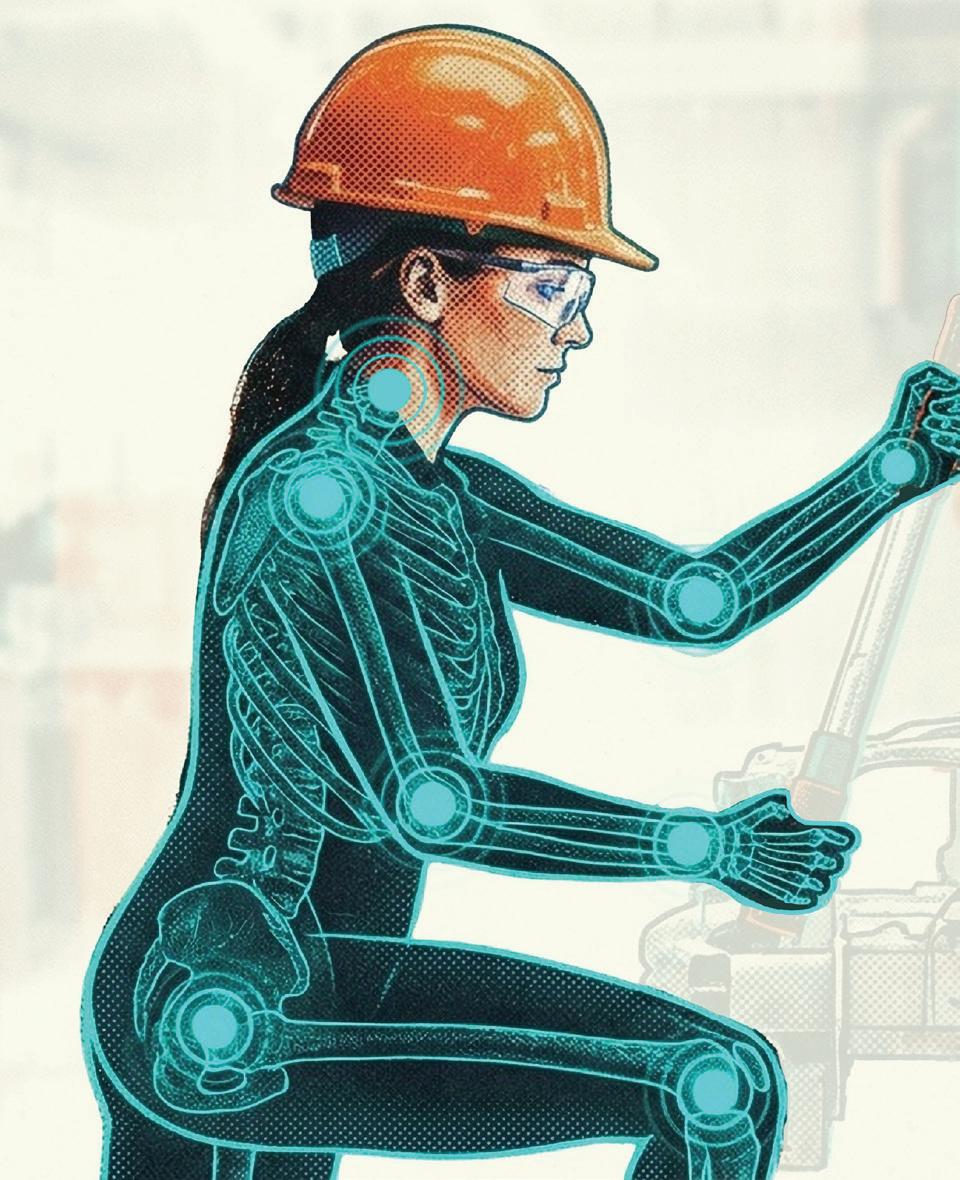
Whether it’s a pain in the neck, knees or elsewhere, workplace ergonomics programs must address risks and improper behavior at all parts of the body—and for all parts of the job.
By Heather Ritz
Back pain is more than a pain in the back; it’s a serious safety concern for employers. Unfortunately, there’s no shortage of concern.
Data from the U.S. Bureau of Labor Statistics (BLS) shows that back injuries resulted in 448,470 days, away restricted or transferred (DART) cases from 2021-2022, the most recent data available. Those injuries had a median requirement of 16 days to recover. Furthermore, there were 250,830 days away from work (DAFW) cases due to back injuries—twice as common as the next leading cause. Therefore, ensuring safety around the back is essential in any workplace.
In manufacturing environments, discussions of ergonomics are often exclusively directed at back injuries. However, this narrow focus can cause safety professionals, and even ergonomists, to miss a wide scope of issues. After all, people bring their whole selves—and all their muscles and soft tissues—to work, too.
These less prominent muscle groups and areas of the body are at just as much risk as the back when moving through the workplace. Without awareness, education and intervention, workers can easily develop musculoskeletal disorders (MSDs) that affect their long-term quality of life, such as being able to care for loved ones or pursue past times, hobbies and other meaningful activities. In the workplace, that can translate to lost productivity, lower morale, poorer retention, and increased costs, to name a few.
These underrepresented injuries that keep employees out of work cannot be ignored. Preventing these injuries can have a massive impact on employees’ safety and employers’ bottom lines. Every workplace, therefore, needs an ergonomics program that goes beyond the back.
Manufacturing tasks are physical, repetitive and performed in a wide range of environments. Effective safety programs require unique approaches for every workplace. These varied workplaces, with their shifting ergonomic demands, make it essential to understand every aspect of workers’ jobs.
To make matters more challenging, MSDs are a gradual strain. They develop over time as a result of awkward postures, repetitive strain and/or forceful exertions. Workers may experience shoulder, wrist, neck or knee discomfort that starts as mild strain but evolves into chronic pain or injury. These small issues compound over time.
A claim can be easily avoided with the right planning, awareness and involvement. Here are four areas of the body to pay close attention to.
After the back, shoulder injuries are one of the highest reported injuries found in the workplace that result in DAFW, according to the BLS.
The issue isn’t just how heavy an item a worker has lifted. The injuries occur as a combination of weight, repetition, and where and how that weight is lifted. Many ergonomics programs focus on how much a worker can safely lift, but they overlook the location of the lift. Lifting a 20-pound object from shoulder height or above places far more stress on the body than lifting the same object from waist height.
The recommendation to “keep it in your power zone” means designing tasks so materials and tools are positioned between midthigh and shoulder height, where the body is strongest and most
stable. Whenever possible, bring the work to the worker rather than forcing workers into unnatural positions to perform tasks. This can mean adjustments to the work tables or manufacturing line, or it could mean changing the standing surface of the workers.
One of the more surprising ergonomic concerns in manufacturing environments involves computer monitor placement. Many production floors use mounted screens for digital instructions, quality tracking or data entry. However, these screens are often placed too high and force workers to tilt their heads back repeatedly to view them.
For older workers who wear bifocals or progressive lenses, this problem is magnified. To see the screen clearly, they must tilt their heads even further back, creating chronic neck strain.
The same ergonomic principles that apply in an office setting also apply on the manufacturing floor. Mount monitors so that the top of the screen is at or slightly below eye level and make the monitors adjustable. This small, low-cost adjustment can dramatically reduce neck discomfort and improve visual clarity, particularly for an aging workforce.
We see a lot of wrist injuries in environments requiring fine, repetitive motions, such as electronics assembly or laboratory work. However, wrist injuries are still frequent in heavy manufacturing. That’s because manufacturing workers often grip tools, handles or parts for extended periods of time, thus resulting in increased risk of injury to wrists.
Handles that are too large, too small or lack proper grip surfaces can force workers into awkward positions that fatigue the smaller forearm and hand muscles. Over time, this can contribute to tendonitis, carpal tunnel syndrome, or other hand and wrist injuries.
Employers can encourage their employees to maintain neutral wrist positions by providing tools and handles that are designed for a power grip, where the whole hand wraps comfortably around the object and one is able to use the thumb in opposition to the fingers. This kind of grip requires less forceful exertions by the hand, wrist and forearm muscles. Adjusting the diameter of a handle is another simple fix that can improve workers’ comfort and reduce injuries.
While carpal tunnel syndrome is more often seen in fields that involve typing, the risk factors for this expensive MSD cannot be dismissed in manufacturing. From extreme pain to high costs, any effort you can make to move strain away from the wrist is a small step that can lead to a big improvement in building a culture of safety and care.
The “get it off the floor” rule really is as simple as it sounds. Plus, it’s incredibly important for workers in all manufacturing environments.
When employees are required to bend or kneel to pick up items, even light objects, they’re exposing their lower extremities and lower backs to repetitive strain. Over time, this can lead to joint pain, soft tissue injuries, or increased risk of slips and falls. Eliminate floor-level lifts whenever possible by using lift tables, adjustable carts or racks that keep materials at waist height. If occasional floor lifts are unavoidable, ergonomists can create best practice materials to demonstrate proper kneeling, squatting or lifting techniques that protect joints and maintain stability as much as possible.
The most serious ergonomic issues result from a combination of factors: awkward posture, high force and repetition. A worker lifting moderately heavy items repeatedly while twisting or reaching is far more likely to be injured than someone lifting heavier weights infrequently while in neutral postures.
Ergonomists analyze these combined risk factors and help organizations create layered solutions that consider task frequency, posture and physical demand. This holistic approach is what differentiates effective ergonomic designs and programs from basic safety compliance. Addressing ergonomics in the workplace is not a one-stop shop, where an off-the-shelf solution is readily available. From implementing workstation solutions as simple as increasing a handle diameter to creating an employee education program based around recognizing ergonomic hazards to brainstorming and

implementing solutions to behavior based training, properly addressing ergonomic hazards in the workplace requires much more than a basic compliance program.
For workers returning from injury, oversight of physical demands of the job becomes even more critical. Once the soft tissue is damaged, the likelihood of re-injury rises significantly if the root causes aren’t addressed. That’s why it’s important to have someone trained in ergonomics to evaluate specific tasks, identify risks and develop best practice materials or training that helps employees reenter work safely.
Implementing return-to-work strategies that emphasize proper body mechanics, modified duties, and task rotation helps prevent setbacks and reduces overall costs associated with injury recurrence.
While the physical benefits of ergonomic improvements are measurable, the psychological benefits are just as important. Workers feel valued when they see that their comfort and safety matters and when leadership listens, observes, and invests in small changes.
Focusing on employees’ well-being in their physical workspace doesn’t just affect them physically; it affects their emotional and mental well-being, too.
Ergonomics in manufacturing goes beyond avoiding back injuries. It’s about designing environments where every movement, tool and posture supports workers’ well-being. The best ergonomic programs aren’t necessarily expensive or complicated, but they are intentional and multifaceted.
By adjusting how and where work gets done to align with optimal body mechanics and kinesiology, manufacturing leaders can prevent injuries, increase productivity and strengthen a culture of safety that benefits everyone. EHS
Heather Ritz is a certified professional ergonomist (CPE) who helps employers across a wide range of industries implement customized ergonomic solutions that enhance employee productivity; support workforce retention; and promote overall health, safety, and wellness. For over 20 years, Heather has worked in manufacturing, pharmaceuticals, naval ship building, aerospace, distribution centers, food and beverage, steel foundries, and more.
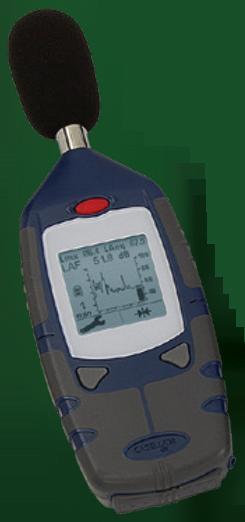
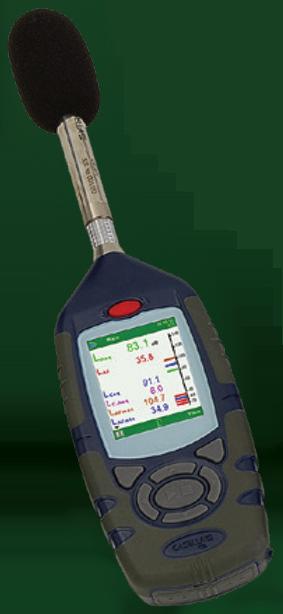
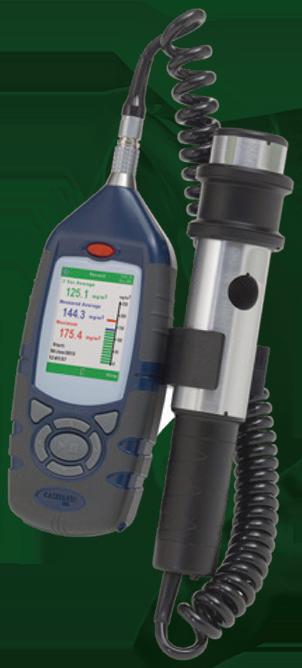
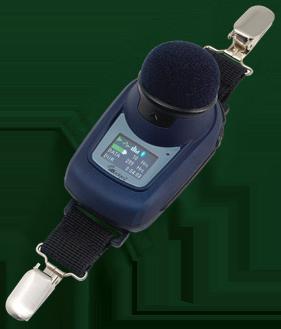
For more information, please visit or contact

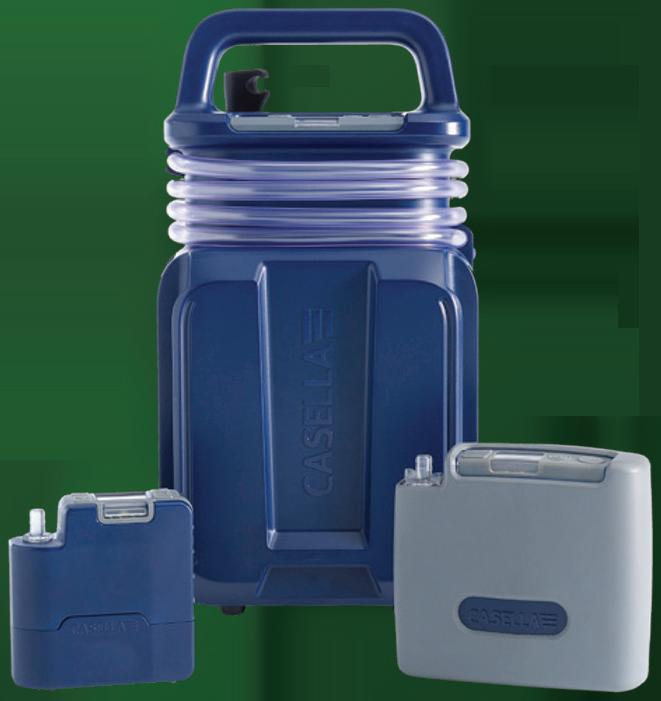
Simple Icon Driven Interface
High Measurement Range
Long Battery Life
Data Logging
Intrinsically Safe Models Available
Simple Operation
Remote Monitoring Through App
Multiple ‘Simulated’ Dosimeters

Climate patterns are changing, and more people are vulnerable to natural disasters. Here’s how to keep your workers safe.
By Nicole Stempak
Aprimary responsibility for meteorologists is to watch for what’s coming next. Typically, we think of this as pertaining to the next storm or heat wave, but this applies to broader changes in weather patterns, too.
EHS Today spoke with Jason Moreland, director of meteorology at AlertMedia, to learn more about the implications of climate change and what safety professionals need to remember with respect to Mother Nature’s potential to cause serious devastation, especially in parts of the world that have not historically experienced certain weather conditions or natural disasters.
These aren’t isolated cases. AlertMedia’s threat intelligence analysts cover localized flood events daily. The impacts are also long-lasting, and communities are dealing with disruptions for months or even years after the water recedes or the fires stop.

It’s worth noting at the outset that all weather can turn deadly, and sometimes weather-related fatalities are not the result of the atmospheric conditions themselves but aftereffects, such as the inability to access life-saving medicines or medical care.
EHS Today: It seems to me that discussions about the weather and natural disasters have changed over the past few years. What have you seen and heard?
Moreland: The general public feels malaise over the constant news of worsening storms and climate change. While there are certainly elements of a changing climate that are contributing, the conversation shouldn’t just be about stronger storms, wildfires and floods. It’s about the increasingly widespread hidden vulnerabilities that compound those events. We’re talking about strained and outdated infrastructure, fragmented warning systems and growing public distrust in government warning systems.
Flood disasters—from Central Texas to Valencia, Spain— show that even when forecasts indicate a potential threat, response gaps and communication failures can turn hazards into tragedies.
Are there any changes or emerging trends in weather patterns that you’ve observed in the past few years? Floods and wildfires are intensifying worldwide. In 2025, Canada had its second worst wildfire season on record. In Spain and Portugal, the burned area was five to six times the average. Flooding has killed approximately 1,000 people in Pakistan and hundreds in Nigeria.
What’s on your radar now?
Infrastructure strain. Energy grids, water supplies and emergency communication systems are pushed beyond their limits.
Add the rising energy demand from AI data centers, and you’ve got a collision of climate stress and technology growth. We’re already seeing power rationing in Virginia and Texas during heat waves. In Arizona, new data center projects are raising concerns about massive water use during summer droughts and heat waves, which have become increasingly longer in places like Phoenix.
What’s something you wish more people understood about the weather and/or natural disasters?
It’s not always the hazard itself that kills; it’s the gaps in how we prepare and respond. In Valencia, a 13-hour delay in local government mobile emergency alerts occurred during a flood that took 200 lives. Several residents didn’t receive the more urgent message until many locations were underwater. This was despite the national weather agency calling for severe rain amounts days in advance.
In [the 2023 wildfires in] Maui, Hawaii, outdoor sirens were never activated. By the time residents realized the fire was spreading, it was too late. Even in 2025, it still largely comes down to better preparedness and multiple means of receiving warning information.
We’re seeing extreme weather and natural disasters occur in parts of the country that haven’t historically experienced those conditions. It also seems like those risks are blurring and changing across the country. What do you think folks ought to know?
The threat landscape is certainly changing. Over the last few decades, over 1 million homes have been built in wildfirevulnerable parts of California. Nationally, over 14 million
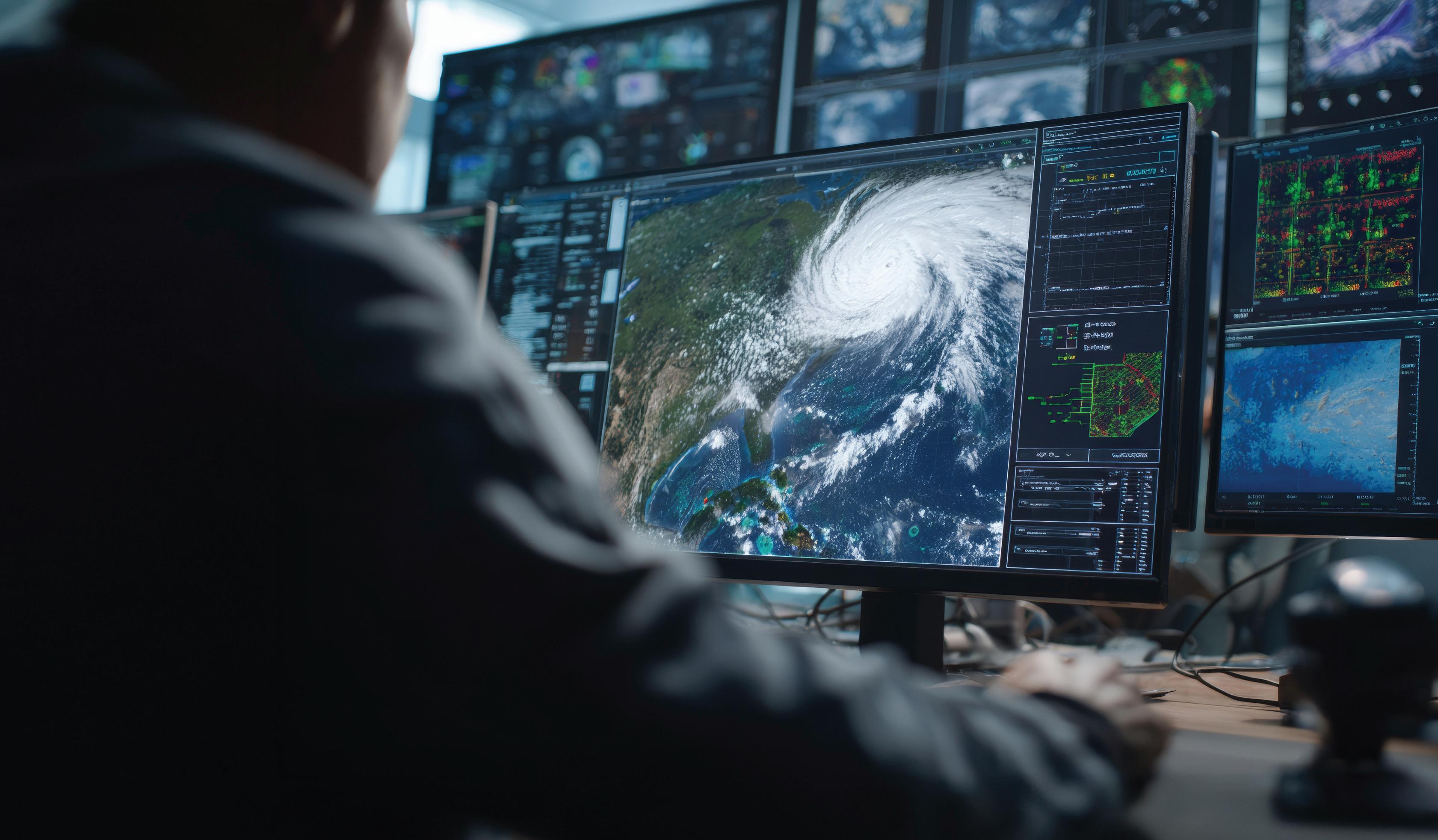
homes have been added in similar zones. Remote workers are reporting from locations that managers never monitored in the past. Houston, one of the most flood-prone major cities in the U.S., has added 65,000 more properties since the devastation left behind by Hurricane Harvey in 2017.
Do you have any advice for safety professionals who are seeing and experiencing weather conditions that they might never have before, such as heat waves in Portland, Oregon, and wildfires in Alaska?
Don’t assume your past is your future. Combined changes of population, infrastructure and climate make past events—and their impacts—outdated examples. If your region faces hazards you haven’t seen before, look to areas that have and adapt their playbooks now.
Communities in Greece and Turkey, for example, are wrestling with under-resourced firefighting. Rural northern regions of Canada are sometimes evacuated for weeks and months because they lack adequate firefighting resources to contain the blazes. Learning from those lessons early can prevent repeating the same mistakes.
Virtually every weather condition can cause fatalities. At what point does any condition turn deadly, and what do you want folks to remember?
Events turn deadly when systems fail around them. Heat becomes deadly when the power grid goes down, or employers don’t take heed of heat warnings for outdoor workers. Floods become deadly when preemptive evacuations don’t happen in time. Wildfires become deadly when evacuation warnings don’t reach people in time, or residents don’t instinctively react to immediate threats before receiving notifications from authorities.
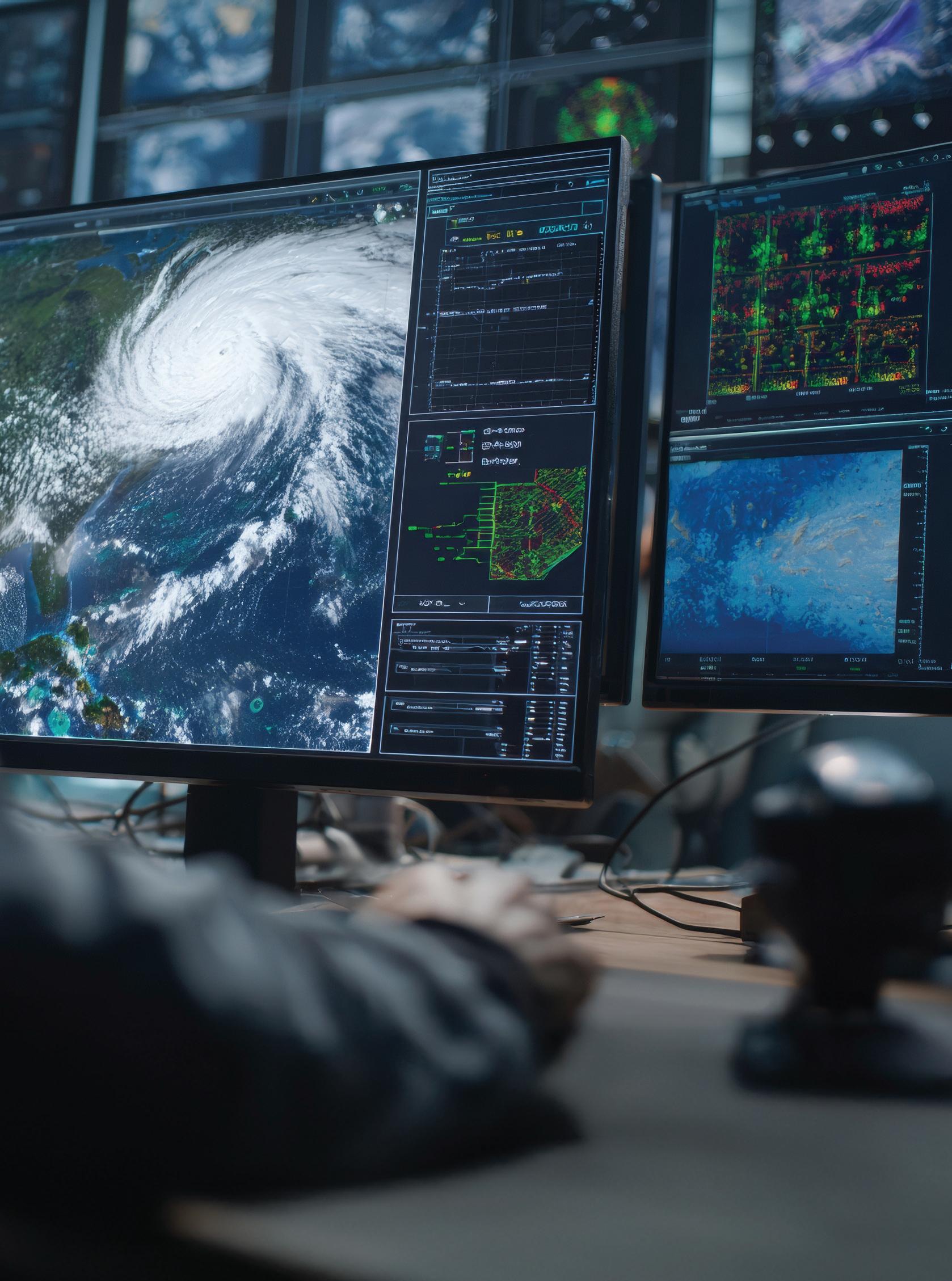

Sometimes a major event can overwhelm the system, and individuals should be empowered to take appropriate action if they feel like their loved ones are in danger. I want people to remember that weather alone doesn’t create a catastrophe; it’s weather combined with human vulnerabilities.
How can people who work outside stay safe? What else can employers do to protect those workers?
Basics like hydration, shade and shifting work hours matter, but safety professionals also need to prepare for extreme alerts. Employers should have clear protocols for when to stop work for all weather hazards, whether extreme temperatures, damaging winds, flooding or lightning. Protecting outdoor workers is about planning for the unexpected—not just reacting.
Is there anything else that you’d like to add about deadly weather conditions and climate change?
During the recent Central Texas floods, social media was flooded with videos and posts, but not all the information was accurate. TikTok clips, X posts and Facebook updates sometimes questioned the lack of official warnings, pushed conspiracy theories or gave conflicting advice. Similar posts were detected shortly after the January 2025 California wildfires. This kind of misinformation and disinformation can cause hesitation when quick decisions are needed most. To stay safe, it’s important that we trust reliable, official weather sources—not whatever happens to be going viral. EHS
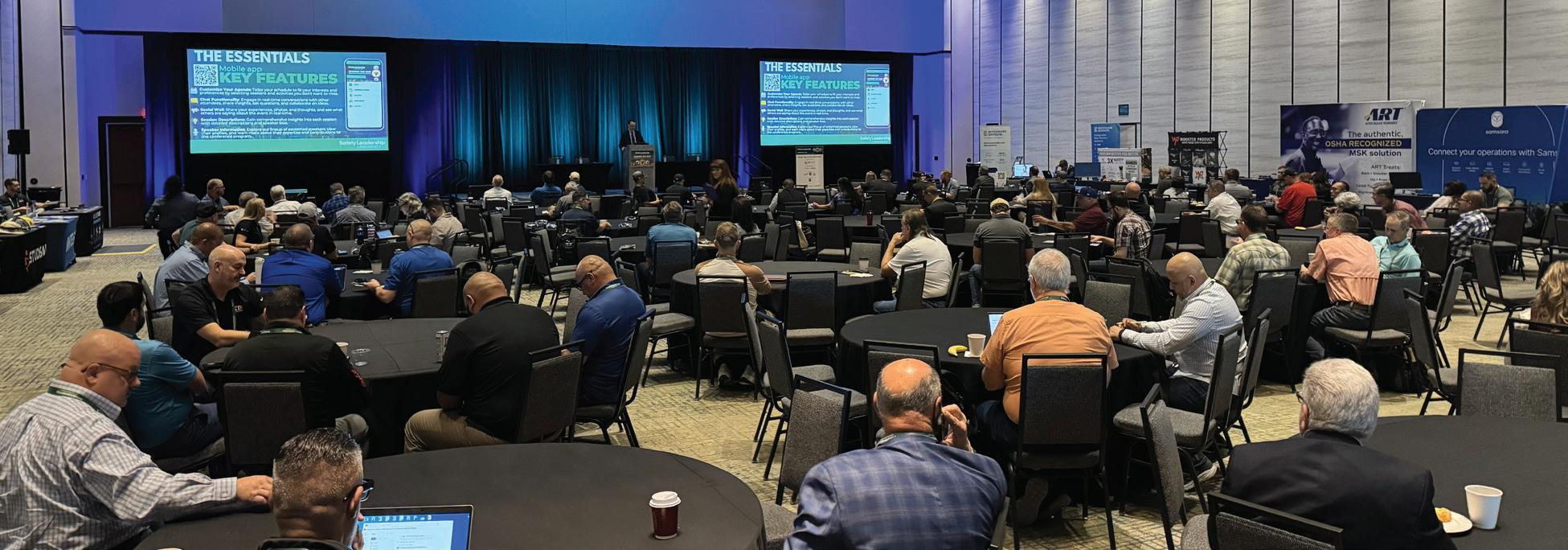
If world-class safety excellence is what you’re looking to achieve, then Safety Leadership Conference 2025 was the place to find it.
By Dave Blanchard
Glendale, Ariz., was the site of EHS Today’s 14th annual Safety Leadership Conference (SLC 2025). Taking as its theme “Leading the Way,” the conference hosted hundreds of EHS professionals, solution providers and thought leaders, as well as representatives from the winners of the 2025 America’s Safest Companies Award
SLC 2025 featured keynote presentations from Coca-Cola Consolidated’s Dennis Padgett, Discover Leadership Training’s Michael Jones, and a panel of America’s Safest Company winners: Mike Ellis (Apollo Mechanical), Mary Gurasich
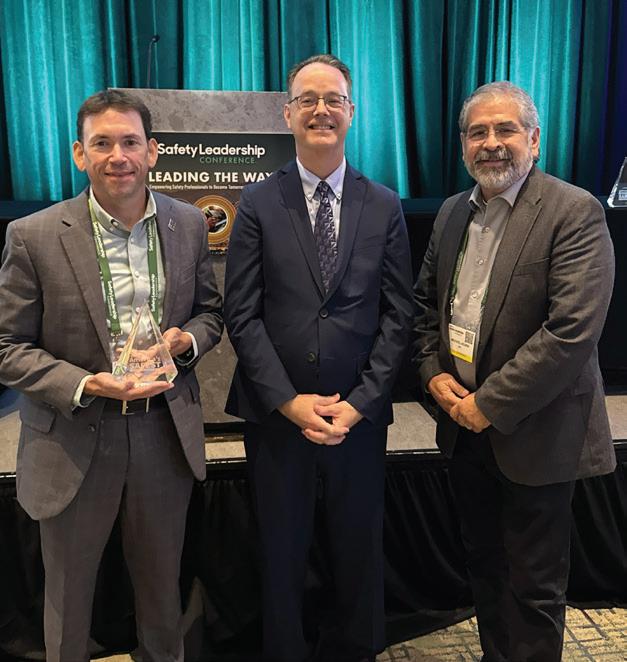
(Mangan), and Keith Kluger (KBR). There were also 12 sessions organized into four topic areas: Risk Management, Regulatory Compliance, The ROI of Safety, and Training & Engagement. Plus four workshops, a tabletop expo, and numerous networking events.
Another highlight of SLC 2025 was an award ceremony and reception honoring the six winners of the 2025 America’s Safest Companies awards.
The following pages offer visual highlights from SLC 2025.
Stay tuned for details on the next Safety Leadership Conference. EHS
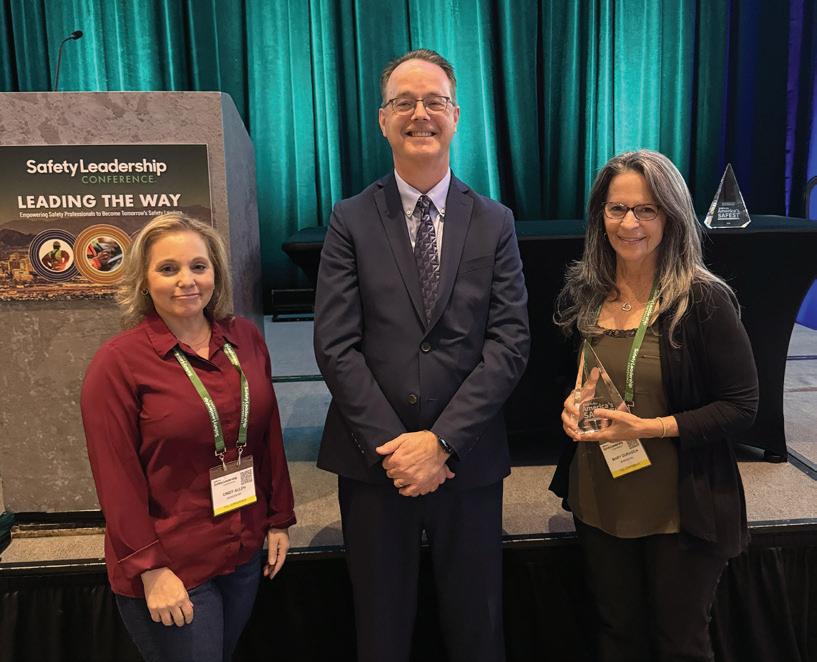
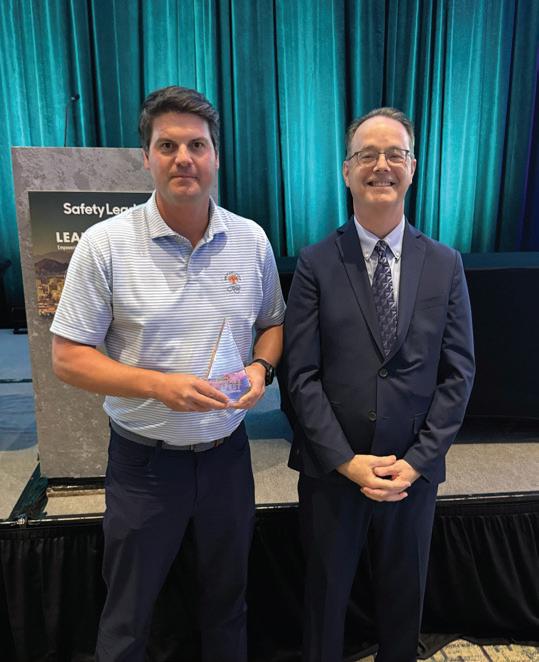
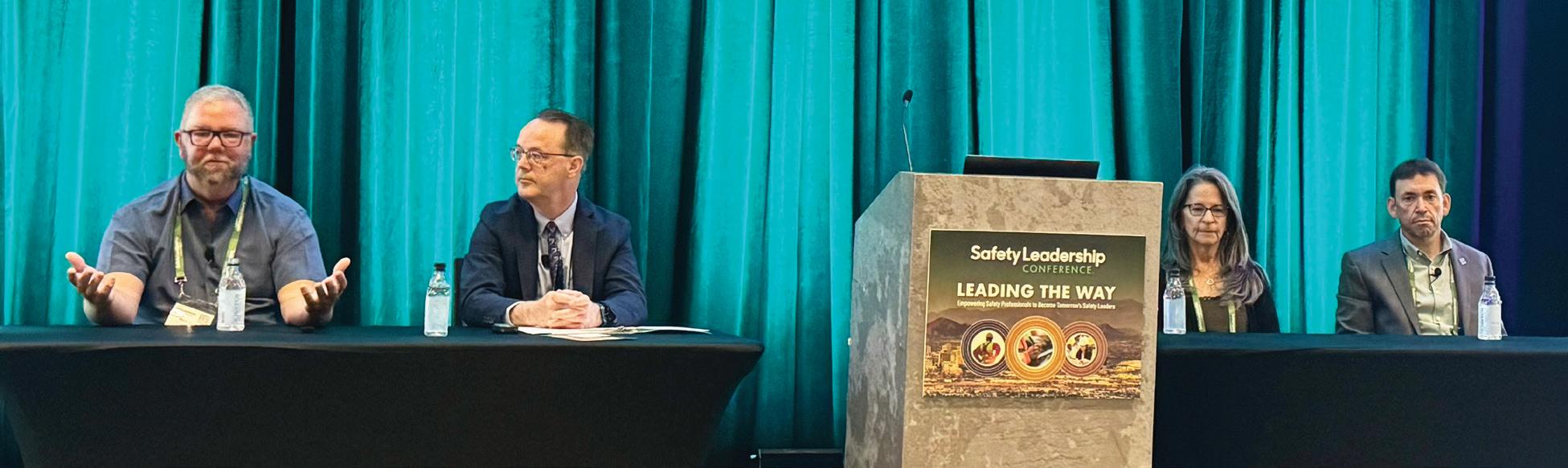
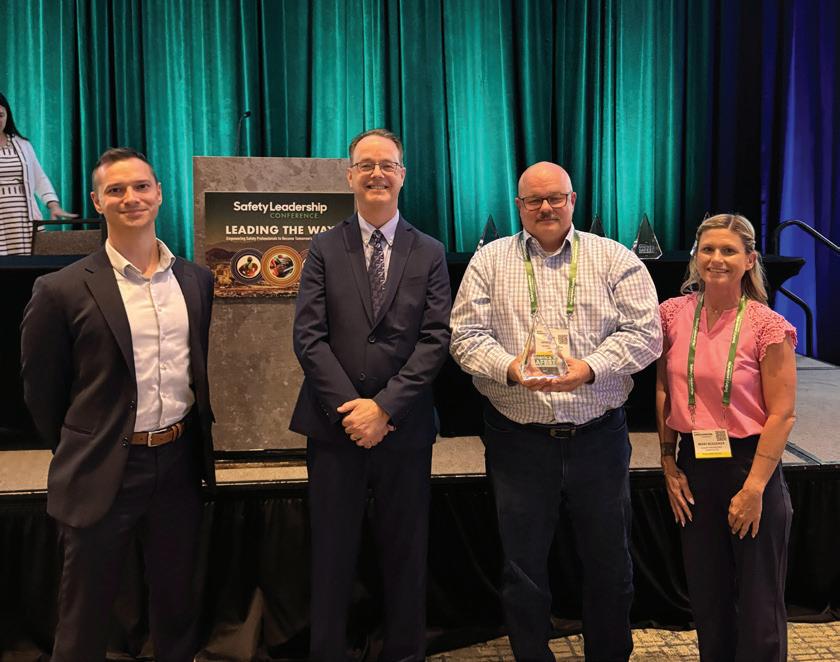
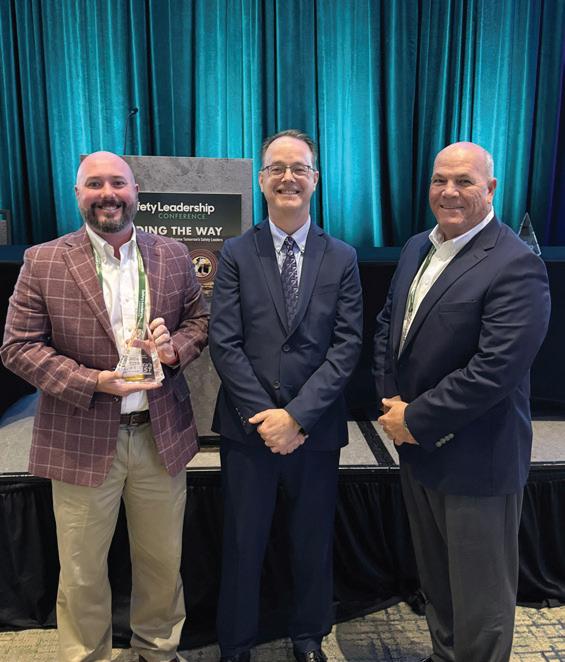
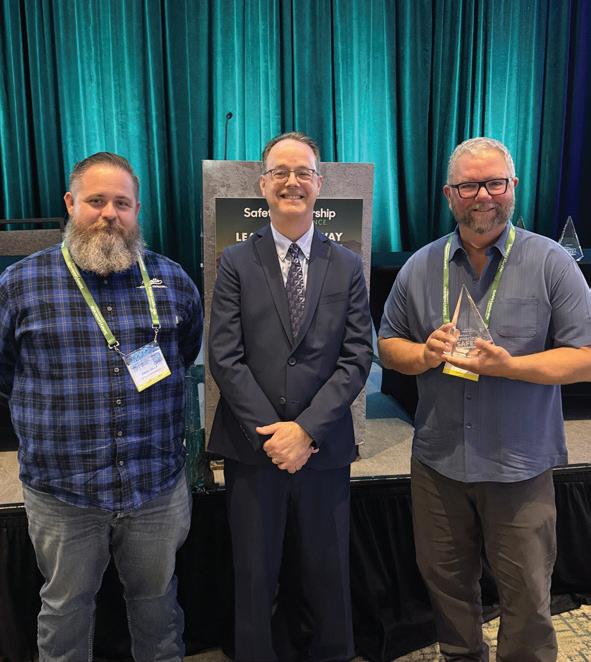
2 Summit Park Drive, Suite 300 | Independence, OH 44131
Telephone: (234) 466-0200 www.ehstoday.com
Jason DeSarle, VP of Sales jdesarle@endeavorb2b.com
Sam Schulenberg, Production Manager sschulenberg@endeavorb2b.com, (734) 887-6915
Terry Gann, Ad Services Manager tgann@endeavorb2b.com, (323) 763-7397
Frank Chloupek, Group Director, User Marketing and Product Analytics fchloupek@endeavorb2b.com
ADVERTISING SALES
Joe DiNardo, Account Executive jdinardo@endeavorb2b.com, (440) 487-8001
Dave Madonia, Account Executive dmadonia@endeavorb2b.com, (201) 452-6211
Ryan Sneltzer, Account Executive rsneltzer@endeavorb2b.com, (330) 904-6177
INTERNATIONAL SALES
Yoshinori Ikeda, Japan
81-3-3661-6138, Fax: 381-3-3661-6139
Diego Casiraghi, Italy diego@casiraghi-adv.com, 39-031-261407
Adonis Mak, China and Hong Kong adonism@actintl.com.hk
Charles Yang, Taiwan medianet@ms13.hinet.net, 886-4-23223633
ENDEAVOR BUSINESS MEDIA
CEO Chris Ferrell
COO Patrick Rains
CDO Jacquie Niemiec
CALO Tracy Kane
CMO Amanda Landsaw
EVP, Design & Engineering Group Lisa Paonessa
EVP, Endeavor Business Intelligence Paul Mattioli
VP of Content Strategy Robert Schoenberger
EDITORIAL STAFF
Dave Blanchard Editor-in-Chief (941) 208-4370 dblanchard@endeavorb2b.com
Adrienne Selko Senior Editor aselko@endeavorb2b.com
Nicole Stempak Managing Editor (682) 257-3371 nstempak@endeavorb2b.com
David Sparkman Contributing Editor dspark@comcast.net
Kermit Mulkins Art Director
Travis Hessman VP, Content
EDITORIAL ADVISORY BOARD
Mark S. Dreux, ArentFox Schiff LLP
Fay Feeney, CSP, ARM, Risk for Good Jeff Fernandez, Ph.D., PE, CPE, JFAssociates Inc.
Edwin Foulke, Fisher Phillips
Mark A. Friend, CSP, Embry-Riddle Aeronautical University
Richard D. Fulwiler, Sc.D., CIH, CSHM, Transformational Leadership Associates
Carl W. Heinlein, CSP, OHST, STS, American Contractors Insurance Group
James A. Lastowka, Ogletree Deakins
Zack Mansdorf, Ph.D., CIH, CSP, QEP
J.A. Rodriguez, CSP, Make My Day Strategies
Cynthia L. Roth, Ergonomic Technologies Corp.
Kathy A. Seabrook, CSP, Global Solutions
James Swartz, InterContinental Hotels Group
ARTICLE SUBMISSIONS: EHS professionals and managers are invited to submit articles for possible publication. Articles must be submitted on an exclusive basis and are subject to editing. Contact: dblanchard@endeavorb2b.com.
SUBSCRIPTION RATES 1 Year 2 Years Per Copy Group (5+ copies) U.S. & possessions $86.25 $123.75 $10 $35 Canada/Mexico $111.25 $161.25 15 40
CUSTOMER SERVICE: For all customer service inquiries, call (847) 559-7598 or (877) 382-9187. For paid subscriptions, send payment: PO Box 3257, Northbrook, IL 60065-3257. Customer Service Information: PO Box 3257, Northbrook, IL 60065-3257. E-mail: ehstoday@ omeda.com. Canada return address: The Mail Group, PO Box 25542, London, ON N6C 6B2 Canada.
REPRINTS/PERMISSIONS: Contact Endeavor Business Media to purchase quality custom reprints or e-prints of articles appearing in this publication at reprints@endeavorb2b.com.
PHOTOCOPIES: Authorization to photocopy articles for internal corporate, personal, or instructional use may be obtained from the Copyright Clearance Center (CCC) at (978) 750–8400. Obtain further information at copyright.com.
ARCHIVES: This publication is available for research and retrieval of selected archived articles from leading electronic databases and online search services, including Factiva, LexisNexis and ProQuest.
LIST RENTAL: Joe DiNardo, jdinardo@endeavorb2b.com, (440) 487-8001.
PRIVACY POLICY: Your privacy is a priority to us. For a policy statement about privacy and information dissemination practices related to Endeavor, contact our Corporate Office.
CORPORATE OFFICE: Endeavor Business Media, 30 Burton Hills Blvd., Suite 185, Nashville, TN 37215, U.S., www.endeavorbusinessmedia.com. Copyright © 2026 Endeavor Business Media. All rights reserved.
Cat Footwear new men’s Invader Max 8” will keep workers’ feet safe and warm, no matter the weather or terrain. This boot has Thinsulate insulation and waterproof protection with CLEANSPORT NXT lining to provide probiotic odor control. The Invader Max features a composite safety toe with electrical hazard protection (ASTM F2413-24). The boot’s slip resistant technology reduces risk of slips, and the tire tread inspired outsole offers sure footing.
Cat
www.catfootwear.com
J.J. Keller & Associates, Inc. has expanded—and simplified—fleet safety. The compact, plug-and-play VT100 Vehicle Telematics Device can serve as both an electronic logging device (ELD) and 24/7 GPS tracking solution (or it can serve as a standalone vehicle tracker). The VT100 connects via Bluetooth to the ELD mobile app and transmits engine and vehicle data to the cloud, even when a driver’s mobile device is offline. The telematics device is designed for Class 1-8 vehicles. The VT100 integrates with the company’s Encompass Fleet Safety & Compliance Platform, supports a range of driver scenarios and offers plenty of additional safety and convenience features.
J.J. Keller & Associates, Inc. www.KellerEncompass.com
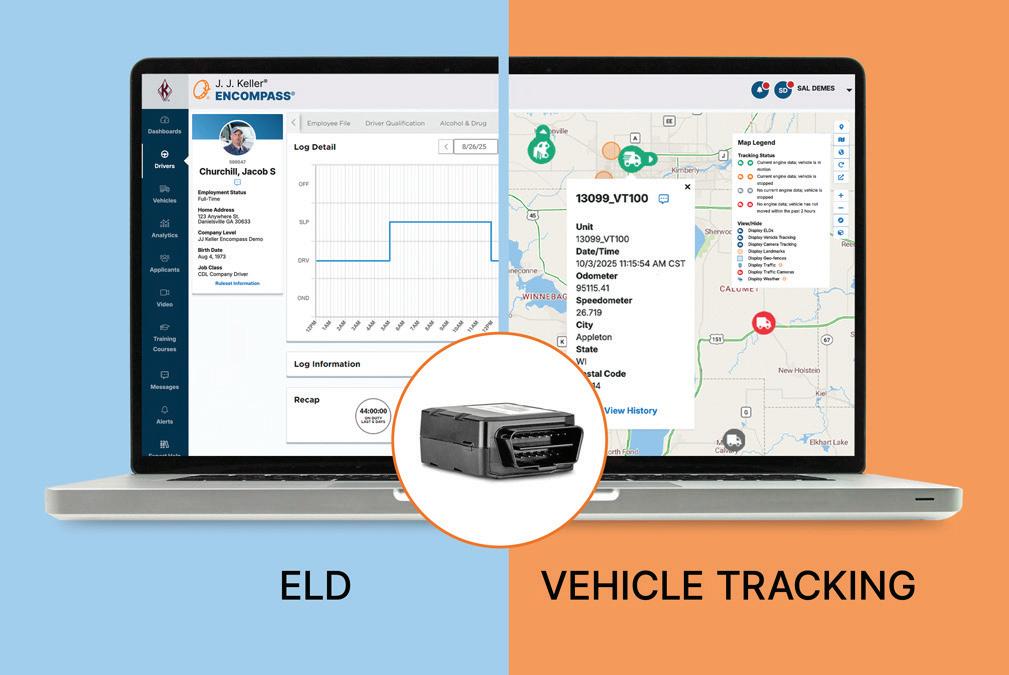
Brass Knuckle’s latest gloves are built for today’s hightech construction sites. The SmartCut BKCRT201 offers protection, dexterity, grip and—most importantly—touch screen capability, meaning workers can shift from tablets to tools without having to take gloves off (and remember to put them back on). In addition to their touch screen capability, these medium-duty gloves are made with ultra-high molecular-weight polyethylene fibers that provide ANSI cut resistance level A2 protection. These gloves also feature a 13-gauge material that facilitates dexterity and a non-sticky polyurethane (PU) coating on the palm and fingers for dry-grip functionality as well as puncture protection and abrasion resistance.
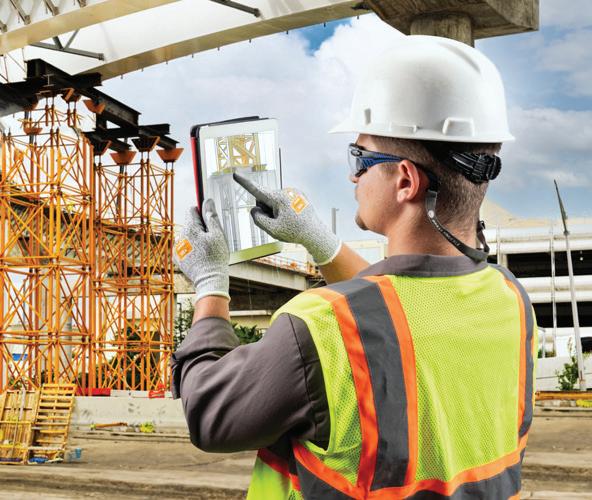
Brass Knuckle www.brassknuckleprotection.com
Beauty is all around us, but it’s up to us to recognize— and safeguard—it for generations to come.
I was so blessed to watch the sun rise and set over the South Rim of the Grand Canyon a few times last year.
It was wondrous, but the magic was dimmed by the amount of litter along the trails. The throngs of people snapping photos and wielding selfie sticks also detracted from the moment.
It’s all too easy to myopically focus on the physical and social structures that we have constructed as well as get carried away by their unique plights. I’m as guilty as anyone of getting absorbed by the grind of the day-to-day. But as I watched the blue sky turn into pastel shades of pink, purple and orange, I was reminded that these natural wonders are vulnerable.
Last year, I began a quest to expand my reading horizon. (I wrote about my first-ever read of Upton Sinclair’s The Jungle in my Winter 2025 column.) After returning from Arizona, I knew what I finally had to tackle next: Silent Spring
Marine biologist Rachel Carson’s most famous—and final— work details the rapid adoption of synthetic insecticides, from applications against malaria and typhus during World War II to the widespread destruction of our planet.
Her beautifully written tome synthesized scientific studies and reports for everyday readers. It was a revelatory text, but gosh was it depressing. At times, I had to physically put down the unflinching account; it was simply too difficult to stomach while planning for Thanksgiving and Christmas celebrations.
Carson makes her argument and plainly details the disastrous effects of DDT on peoples, lands, animals and entire ecosystems. In one instance, she describes an airplane application of DDT falling from the sky and landing on the grasses and tree branches like fresh snowflakes. She traces the history of how flimsy arguments became a tinderbox for indiscriminate use of synthetic insecticides in the 1940s and 1950s—and the irreparable damage already caused by the time of the book’s publication in 1962.
It is no wonder that Carson’s seminal work is credited with spurring outrage that led to the ban of DDT in the United States (and many other countries), the founding of the U.S. Environmental Protection Agency, and the start of the modern environmental movement.
Nicole Stempak Managing Editor

But as enraged and incensed Silent Spring made me, it was a line from the book I read after that gutted me. In One Garden Against the World: In Search of Hope in a Changing Climate, author Kate Bradbury reflects on what we have lost since Silent Spring’s publication:
“To think [Carson’s] silent spring would have been so noisy and raucous to my ears some 60 years later is the cruelest irony. How would she have coped with the silence there is today?
“I will never know the abundance of life my parents and grandparents knew, which they probably ignored and took for granted. I wish I could go back to see the abundance of species in childhood because, even though I saw very little, I know how much more there was 35 years ago.”
As more habitats are damaged or destroyed, populations of species dwindle or go extinct, and resources become scarce or disappear, it’s no longer possible for me to dismiss my individual impact on the planet.
My acknowledgement that I am but a mere inhabitant of the land has fundamentally shifted my relationship to the natural world. I see myself as the steward for future generations, and I take my newfound role seriously. I have changed my priorities, my habits, my behaviors. I have become motivated to add native plants to my garden and choose more sustainable options, even when it’s more expensive or less convenient.
I think the sooner we realize the scarcity and limits of our resources, we can unlock new possibilities. Necessity, they say, is the mother of invention. What can you do—as inhabitants, as consumers, as safety professionals—to better protect Mother Nature? What lasting impact or legacy do you wish to leave? Do you want your children, grandchildren and future generations to have a silent spring or a raucous spring? If the latter, what can you start doing today to create that tomorrow?
Send an e-mail with your thoughts to nstempak@endeavorb2b.com.
Every day, teams are exposed to solvents, sanding dust, and overspray - making reliable breathing protection essential for both short-term comfort and long-term health. As shops evaluate best practices on how to protect their teams, SATAs supplied-air respirator hood system, the air vision™ 5000, is leading the industry in respiratory protection and comfort through modern design and improved wearability.
The SATA air vision 5000 is designed to protect not only the respiratory tract, but also the eyes, skin, and hair. The lightweight hood offers a comfortable fit that can be easily adjusted for the user. Painters and team members alike are protected without feeling restricted during long workdays.
As a supplied-air respirator hood which utilizes the shops compressed air system, SATA offers 2 air filtration options: a wall mounted 3-stage filter, or the belt mounted activated carbon filter. SATA also offers optional comfort accessories, such as an air cooler or air warmer unit, giving painters the ability to increase the comfort of their working conditions. The wide face shield offers an expanded field of vision to help reduce user fatigue. Additionally, the lower sound levels inside the hood contribute to a more comfortable experience overall. Visor shields and headbands are easily maintained with low-cost replacement parts.
Designed with real-world shop environments in mind, the SATA air vision 5000 also features a rigid bump cap for added safety in tight spaces. Its loosefitting design allows for reasonable-length beards, eliminating the need for fit testing and making daily use and user adoption easier for many workers.
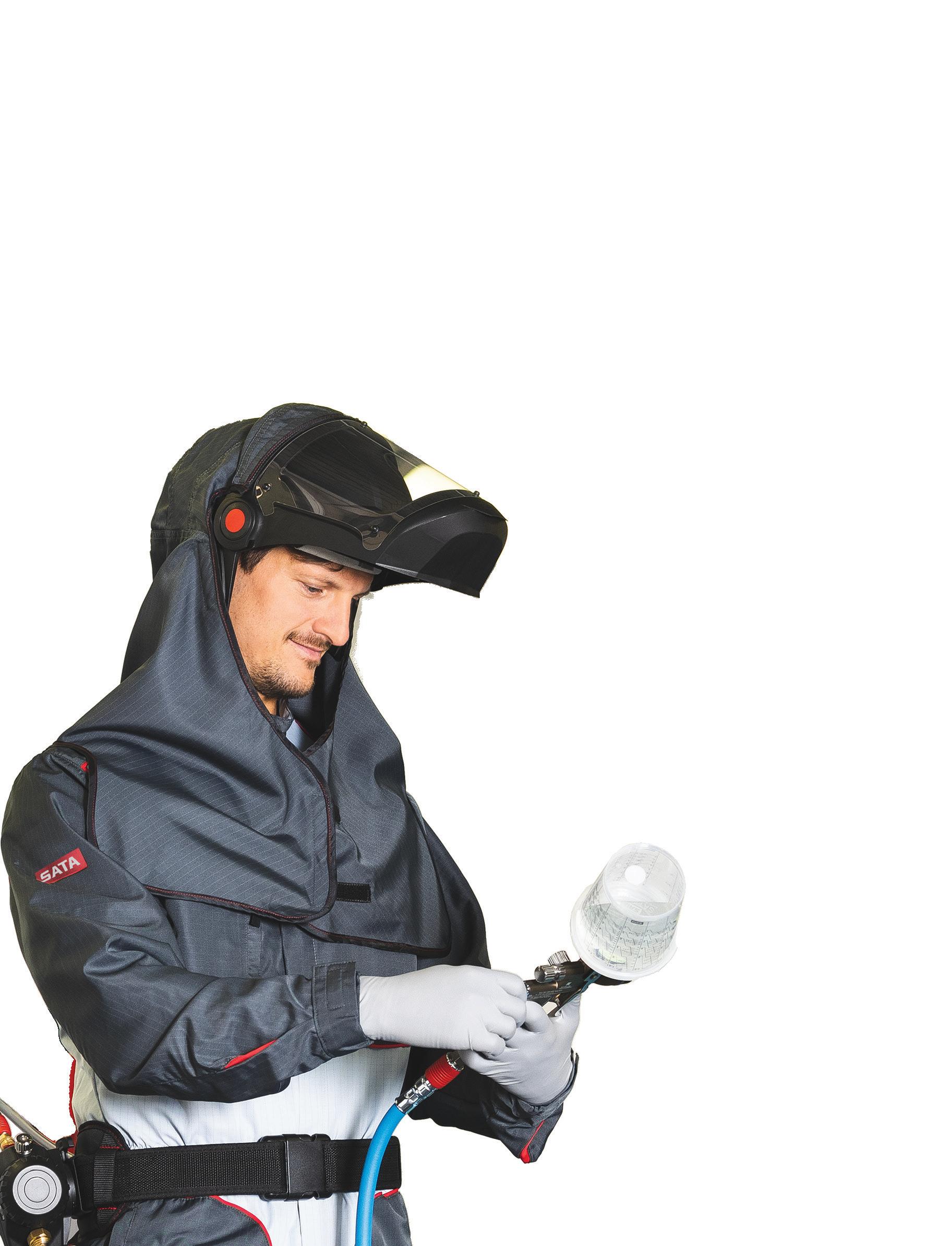

NIOSH approved in the U.S., the SATA air vision 5000 supports safer painting environments by combining protection, comfort, and usability - helping employers protect their workforce while encouraging consistent use of comfortable respiratory equipment.
Vented Level 2 Impact
ANSI A6 Cut Protection
Maximum Oil Grip
FOAM NITRILE PALM
ANSI LEVEL 2 IMPACT PROTECTION
ANSI A6 CUT PROTECTION
21-GAUGE KNIT SHELL