Compose, Decompose, and Represent Numbers to 1,000 |
Materials and Preparation
Teacher Materials
• Progress Check Teacher Guide
• Concept Mini Lessons Teacher Guide
• Personal whiteboard
• Practice Teacher Guide
• Application Teacher Guide
Student Materials
• Progress Check Tool
• Pause and Monitor Tool (found in the Implementation Guide)
• Objectives 1–4 Student Pages
• Chart template
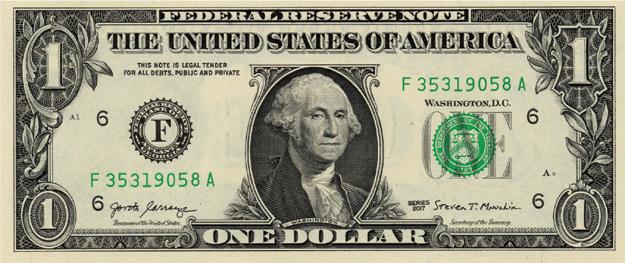
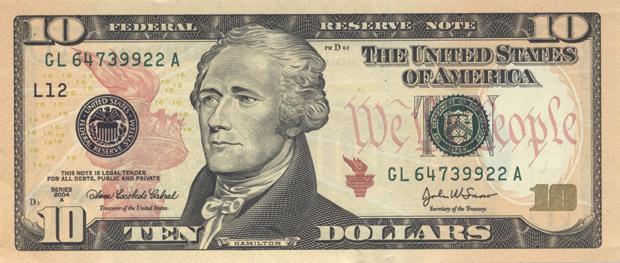
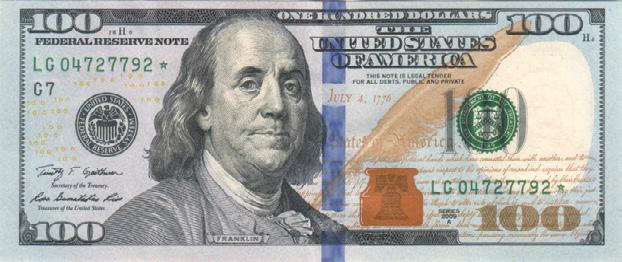
• Play money: 10 one-dollar, ten-dollar, and 100-dollar bills; one 1,000-dollar bill
• Place Value Cards template
• Number Bond and Place Value Chart template
• Numbers in Word Form template
• Practice Pages
• Practice Helpers
• Personal whiteboard
• Application Word Problem Cards
• Solve a Problem Recording Page (optional)
• Eureka Math2 cards or a standard deck of playing cards
• Game Instruction Card
• Solve a Task Student Page
Suggested Preparation
Print copies of the Progress Check Tool and the Pause and Monitor Tool.
Print copies of the following:
- Student Pages for Objectives 1–4
- Chart template
- Play money
- Place Value Cards template
- Number Bond and Place Value Chart template
- Numbers in Word Form template
Print copies of the Practice Pages and the corresponding Practice Helpers.
Ready the following materials:
- Application Word Problem Cards
- Game Instruction Card
- Eureka Math2 cards or a standard deck of playing cards
Print copies of the following:
- Solve a Problem Recording Page (optional)
- Solve a Task Student Page.
Addressing Student Misconceptions
Student Misconception
When representing numbers to 1,000, students might not understand how to use the digit 0 to represent 0 of a place value unit. Students might record 6 hundreds 0 tens 4 ones in standard form as 64.
How to Address Misconception
Support students’ understanding of place value by encouraging them to use charts when composing, decomposing, and representing numbers to 1,000.
For example, when finding the value of the digits in the number 604, have students represent the hundreds, tens, and ones on a chart to show how many of each are included.
There are 6 hundreds, 0 tens, and 4 ones.
Language Support
To support multilingual learners in making cross-linguistic connections through oral discourse, consider using strategic, flexible grouping.
• Pair students who have different levels of mathematical proficiency.
• Pair students who have different levels of English language proficiency.
• Join pairs to form small groups of four.
As applicable, complement any of these groupings by pairing students who speak the same home language. Encourage students to use their home language alongside English to make sense of the directions and the mathematics.
To support multilingual learners in making cross-linguistic connections through written discourse, consider creating cross-linguistic connections anchor charts. The chart should include
• key terminology in the student’s home language that is related to the current concept,
• the same key terminology in English, and
• images to support understanding.
Family Math
Compose, Decompose, and Represent Numbers to 1,000 |
Dear Family,
Your student is working on composing, decomposing, and representing numbers to 1,000. They use place value to identify the value of each digit in a number. They also represent numbers in standard form, word form, and expanded form. You can support your student’s progress by asking the questions in the table below as your student learns to represent whole numbers up to 1,000 in different ways.
How can you use a number bond to represent the number?
I can write the value of each digit in 746 in the parts of the number bond.
746 thousands
ones
How can you use the place value chart to represent the number?
746 thousands hundreds tens ones
I can write each digit in its correct place in the place value chart.
Matemáticas en familia
Componer, descomponer y representar números hasta 1,000
Estimada familia:
Su estudiante está trabajando en componer, descomponer y representar números hasta 1,000. Usa el valor posicional para identificar el valor de cada dígito en un número. También representa números en forma estándar, en forma escrita y en forma desarrollada. Usted puede apoyar el progreso de su estudiante haciéndole las preguntas de la table que sigue mientras su estudiante aprende a representar números enteros hasta 1,000 de diferentes maneras.
40 6
¿Cómo puedes usar un vínculo numérico para representar el número?
Millares Centenas Decenas Unidades
40 6
Puedo escribir el valor de cada dígito en 746 en las partes del vínculo numérico.
¿Cómo puedes usar la tabla de valor posicional para representar el número?
Millares Centenas Decenas Unidades
Puedo escribir cada dígito en su posición correcta en la tabla de valor posicional.
Concept Mini Lessons
Progression of Mini Lesson Objectives
1 Compose numbers to 1,000 and represent them by using objects and a chart.
2 0 4
Compose, Decompose, and Represent Numbers to 1,000
2 Represent numbers to 1,000 in unit form and show the value that each digit represents.
3 Represent numbers to 1,000 in standard and expanded forms.
4 Represent numbers to 1,000 in word and standard forms.
one hundred five
Start here if students
• can compose and represent numbers to 120 using objects and a place value chart, but
• need support composing and representing numbers to 1,000 by using objects and a place value chart.
Start here if students
• can compose and represent numbers to 1,000 using objects and a place value chart and
• can represent numbers to 120 in unit form, but
• need support in decomposing and representing numbers to 1,000 in unit form and showing the value each digit represents.
Start here if students
• can decompose and represent numbers to 1,000 in unit form and
• can represent numbers to 120 by using standard and expanded forms, but
• need support representing numbers to 1,000 in standard and expanded forms.
Start here if students
• can represent numbers to 120 in word and standard forms, but
• need support representing numbers to 1,000 in word and standard forms.
Objective 1
10 MINUTES
Summary
Compose numbers to 1,000 and represent them by using objects and a place value chart.
Students compose numbers to 1,000 by using place value cards and play money in a chart.
Pair students and distribute a chart and set of play money to each pair.
H Work together to put 4 one-dollar bills at the right side of your chart. It’s OK if the dollars hang off the edge of the chart.
H How many dollars are on the chart?
4 dollars
H Find your 4-card and place it at the bottom of the chart.
Give students time to work.
H Work together to put 2 ten-dollar bills into the column next to the one-dollar bills.
Give students time to work.
H What is the value of 2 ten-dollar bills?
20 dollars
H Find your 20-card and place it below the ten-dollar bills.
Materials
• Personal whiteboard
• Chart (template)
• Play money; 10 of each kind of bill: 1, 10, 100; one 1,000 bill (Use the template or play money from a board game.)
• Place Value Cards (template)
• Objective 1 Student Page
Give students time to work.
H Work together to put 2 hundred-dollar bills into the column next to the ten-dollar bills.
Give students time to work.
H What is the value of 2 hundred-dollar bills?
200 dollars
H Find your 200-card and place it under the hundred-dollar bills.
Give students time to work.
Language Support
Prompt students to use precise terminology as they compose numbers to 1,000 with play money. For example, rather than asking, “How many ten-dollar bills are there?”—which may illicit the response “2”—ask, “What is the value of the ten-dollar bills?” Precise language will support students with place value concepts.
Objective 1 | Compose numbers to 1,000 and represent them by using objects and a place value chart.
10 MINUTES
H Let’s put our place value cards together to find the total. (Pairs of students layer their place value cards.)
H How much money is in your chart? 224 dollars.
As time allows, repeat composing numbers to 1,000 with play money in the chart.
Direct students to the Objective 1 Student Page.
H Look at problem 1. What number do you see?
654
H Watch as I draw to compose and represent 654.
Represent 600 on the chart by drawing six 100s, five 10s, and four 1s on the Student Page.
H What is the value of the hundreds?
H What is the value of the tens?
H What is the value of the ones? 4
2 4
H What number is represented in the chart? 654
Cover or erase the five 10s. Then invite students to think–pair–share about what number is represented now.
H Is it 64?
There’s nothing in the tens place. I think we put a 0 there to show there are no tens represented in the tens place. Is it 604?
H To write this number we read the chart from left to right. On the left, there are 6 hundreds in the hundreds place. Moving to the right there are 0 tens in the tens place and then 4 ones in the ones place. Let me show you with our place value cards.
Use place value cards and write the number in standard form to explain 0 as a place holder.
H 6 hundreds, 4 ones. Six hundred four.
H We composed numbers and represented them using money, place value cards, and drawing in a chart.
Invite students to turn and talk with a neighbor about the similarities and differences between the representations.
Objective 1 |
MINUTES
Compose number s to 1,000 and represent them by using objects and a place value chart.
Repeat the process: Use the following problems during Concept Mini Lessons or at another time to provide additional practice as needed. Use place value cards with the remaining problems on Objective
1 Student Page if students need support understanding 0 within a number to 1,000. Consider providing the Objective 1 Practice Helper and supporting students in using the worked-out example to guide their own work.
• 408
• 1,000
• 530
Analyze Student Progress
Monitor:
• Can students represent numbers up to 1,000 by placing objects into a chart?
• Can students compose numbers up to 1,000 by using place value cards?
Questions to Advance Student Thinking:
• How many of each unit is shown in the chart?
• How do you represent a place value with nothing in it by using place value cards?
Plan Future Practice:
Use Practice Page 1 to support students who need additional practice. Structure the additional practice strategically to allow for teacher support or peer support.
Objective
2
Represent numbers to 1,000 in unit form and show the value that each digit represents. |
10 MINUTES
Summary
Students represents numbers to 1,000 in unit form using number bonds and a place value chart to show the value of each digit.
Display 769 composed with place value cards. 67 9
H Let’s say this number together.
769
Direct students to the Number Bond and Place Value Chart.
H Write 769 in the top of the number bond. Watch as I pull apart the place value cards that represent 769.
H Which place value card represents 7 hundreds, the value of the digit 7 in 769?
The 700-card
H Which place value card represents 6 tens, the value of the digit 6 in 769?
The 60-card
9
Materials
• Place Value Cards (Objective 1 template)
• Personal whiteboard
• Number Bond and Place Value Chart (template) in a personal whiteboard
• Objective 2 Student Page (optional)
H Which place value card represents 9 ones, the value of the digit 9 in 769?
The 9-card
H Say the number in unit form.
7 hundreds 6 tens 9 ones
Language Support
Use precise language to support students with place value understanding.
• Unit form: a number presented in terms of place value units
• Value: what something is worth or represents; for example, “The value of the digit 6 in 769 is 60.”
• Digit: any numeral 0–9 used to write numbers; for example, “A digit is one of the symbols 1, 2, 3, 4, 5, 6, 7, 8, 9, 0. The number 769 has 3 digits but is one number. We use the digits 7, 6, and 9 to write 769.”
H Write the value each digit represents in the parts of the number bond.
(Students work.)
H Write the digit that each value represents in the place value chart.
(Students work.)
Objective 2 | Represent
10 MINUTES
numbers to 1,000 in unit form and show the value that each digit represents.
Support students as they work by composing and decomposing place value cards as necessary to show the value that each digit represents. Then instruct students to erase their whiteboard to get ready to represent the next number.
As time allows, repeat representing numbers to 1,000 with place value cards, the number bond, and the place value chart. Consider focusing on numbers with zeros in varying place values within numbers up to 1,000 and practicing writing numbers to 1,000 in varied unit forms.
Teacher Tip
Acknowledge that a 0 digit in a number doesn’t mean it can’t be written in unit form using those units. It is important for students to understand that 110 in unit form can be
• 1 hundred, 1 ten, 0 ones,
• 11 tens, 0 ones, or
• 110 ones.
Invite students to turn and talk about how they know the value of each digit in numbers with three digits.
Repeat the process: Represent the following numbers during Concept Mini Lessons or at another time to provide additional practice as needed. Consider providing the Objective 2 Practice Helper and supporting students in using the worked-out example to guide their own work.
• 831
• 420
• 999
• 1,000
Analyze Student Progress
Monitor:
• Can students represent numbers to 1,000 in unit form with and without zeros in the number?
• Can students say the value of each digit in numbers to 1,000?
• Can students say the value in terms of other places when the digit 0 is in numbers to 1,000?
Questions to Advance Student Thinking:
• What do we use digits for?
• What do digits represent?
Plan Future Practice:
Use Practice Page 2 to support students who need additional practice. Structure the additional practice strategically to allow for teacher support or peer support.
Objective
3 Represent numbers to 1,000 in standard and expanded forms. |
10 MINUTES
Summary
Students represent numbers to 1,000 in standard and expanded forms using addition expressions.
Compose 333 with place value cards. Pull apart the place value cards as students say the number in unit form.
H Say the number in unit form.
3 hundreds 3 tens 3 ones
Record each place value unit numerically in a single horizontal line. Consider using different-color markers to emphasize the different units.
H Let’s count the units together (Point to each unit as students count chorally to 333. Pause briefly at the change in units.).
H Watch as I insert addition symbols to make an expression.
H What is the total value of the hundreds?
300
After each question, record the total of each unit below while forming an addition expression.
Materials
• Place Value Cards (Objective 1 template)
• Personal Whiteboard
• Objective 3 Student Page
What is the total value of the tens?
30
H What is the total value of the ones?
3
H When we write a number as an addition expression in which each addend represents the value of a digit, it is called expanded form. It helps us see the value of each place.
Write the total, 333.
H When we write a number the regular way, we call it standard form. When we write the answer to 300 + 30 + 3 as 333, we say 333 is written in standard form.
Language Support
To support the term expanded form and the difference between expanded form and standard form, consider emphasizing the meaning of expanded by stretching a rubber band. Make connections to writing a number sentence that stretches out a three-digit number by showing the total value of each unit. Emphasize that it is still the same rubber band, or number, just shown differently.
Objective 3 |
10 MINUTES
Represent numbers to 1,000 in standard and expanded forms.
Direct students to the Objective 3 Student Page.
Then direct students to problem 1 on the Student Page: 2 + 100.
H Look at problem 1. This is a number written in expanded form. Turn and tell your neighbor how you would write this number in standard form.
Anticipate that students may give incorrect answers such as 2100 and 120 as well as correctly compose the number as 102.
H When we are adding, does it matter what numbers we add first? No.
Show 102 with place value cards.
H When I separate the place value cards, I see two place values represented: 1 hundred and 2 ones.
H When I put the place value cards together, I see three digits represented in the number 102.
002
1 0 2
Repeat the process: Use the following problems during Concept Mini Lessons or at another time to provide additional practice as needed.
Consider providing the Objective 3 Practice Helper and supporting students in using the worked-out example to guide their own work.
• 200 + 2 + 10
• 857
• 800 + 50 + 7
• 711
• 40 + 100 + 9
• 373
• 10 + 900
Analyze Student Progress
Monitor:
• Can students represent numbers to 1,000 presented in standard form by writing them in expanded form with and without zeros in the number?
• Can students represent numbers to 1,000 presented in expanded form by writing them in standard form with and without zeros in the number?
Questions to Advance Student Thinking:
H Separated place value cards show us a number in expanded form and connected place value cards show us a number in standard form.
Direct students to write the number one hundred two in standard form.
Invite students to turn and talk about how to write numbers with three digits in expanded form and in standard form.
• What do separated place value cards tell you? How is expanded form like having separated place value cards?
• What do connected place value cards tell you? How is standard form like having connected place value cards?
Plan Future Practice:
Use Practice Page 3 to support students who need additional practice. Structure the additional practice strategically to allow for teacher support or peer support.
Objective
4 Represent numbers to 1,000 in word and standard form. |
10 MINUTES
Summary
Students represent, read, and write numbers to 1,000 in word and standard forms.
Direct student to Numbers in Word Form. Give them a moment to preview the chart.
H What do you notice about the numbers written in word form? What do you wonder?
I notice that four has a u in it, but forty doesn’t. I wonder why.
All the tens from twenty to ninety end with -ty.
Write 837 in standard form and direct students to read the number aloud. Ask them to write the number in word form. Refer students to the chart for spelling. Anticipate that students will not write the hyphen in thirty-seven. 837
H How did you know how to write eight hundred thirty-seven?
I wrote 837 the way we said it. I used the chart to help me spell eight hundred thirty and then I wrote seven.
H We write numbers in word form the same way we would read a number.
H When we write numbers with separate words for tens and ones, we need to add a little dash between the tens and ones. The little dash is called a hyphen.
Materials
• Numbers in Word Form (template)
• Personal Whiteboard
• Objective 4 Student Page
Write eight hundred thirty-seven in word form. Direct students to add the hyphen to the number they wrote in word form.
Language Support
Consider highlighting the following English language convention for representing numbers in word form: When a three-digit number is written or said, do not include the word and. For example, write or say one hundred sixteen, not one hundred and sixteen.
Direct students to erase their whiteboards.
Write one hundred five on a whiteboard and show it to students. Ask students to write the number in standard form.
one hundred five
Write the number in standard form on your whiteboard.
Point to the zero in the standard form of 105. Direct students to think–pair–share about what the 0 means.
There are no tens in the tens place.
We have to put a 0 there so the 5 ones go in the right place.
Objective 4 | Represent
10 MINUTES
numbers to 1,000 in word and standard form.
H When we write numbers in standard form, we need to remember the value of the digits so we can put the digits in the correct place. Say 105.
One hundred five
One unit at a time, ask students how many hundreds, tens, and ones are in 105.
Point to the standard form and word form of 105 as you say the following:
H When we write numbers in standard form, the order of the digits helps us think about the units and putting the digits in the correct place.
H When we write numbers in word form, we write the words for the numbers in the same way we say them. If the three-digit number has a 0 in the tens place, like one hundred five does, the word form will not end with a hyphen and ty.
Invite students to turn and talk about how word form and standard form can help them determine the value of a number.
Repeat the process: Use the following problems during Concept Mini Lessons or at another time to provide additional practice as needed. Consider providing the Objective 4 Practice Helper and supporting students in using the worked-out example to guide their own work.
• 12
• three hundred eighty-five
• 805
• six hundred five
• 440
• one thousand
• 888
• seven hundred seventy-seven
Analyze Student Progress
Monitor:
• Can students represent numbers to 1,000 presented in standard form by writing them in word form with and without zeros in the number?
• Can students represent numbers to 1,000 presented in word form by writing them in standard form with and without zeros in the number?
Questions to Advance Student Thinking:
• When would you use a hyphen when representing a number in word form?
• When you read a three-digit number in word form, how do you know when there will be a zero in one of the places?
Plan Future Practice:
Use Practice Page 4 to support students who need additional practice. Structure the additional practice strategically to allow for teacher support or peer support.
Objective 1
Compose numbers to 1,000 and represent them by using objects and a place value chart. |
Objective 1 | Compose number s to 1,000 and represent them by using objects and a place value chart.
Play Money
Objective 1 | Compose number s to 1,000 and represent them by using objects and a place value chart.
Place Value Cards
1
2345
6 1 7 0 8 2
9 0
0
Objective 1 | Compose number s to 1,000 and represent them by using objects and a place value chart.
Place Value Cards
3040
50
60
70
80
09
Objective 1 | Compose number s to 1,000 and represent them by using objects and a place value chart.
Place Value Cards
100
Objective 1 | Compose number s to 1,000 and represent them by using objects and a place value chart.
Place Value Cards
0
6 0
700 800 900
Objective 1 | Compose number s to 1,000 and represent them by using objects and a place value chart.
Place Value Cards
Objective 2
Represent numbers to 1,000 in unit form and show the value that each digit represents. |
Number Bond and Place Value Chart
thousandshundredstensones
Concept Mini Lessons
Answer Key
Objective 1
1. Correctly represents 654
Objective 2
Compose, Decompose, and Represent Numbers to 1,000
1. 800, 30, 1; 831 correct in place value chart
2. Correctly represents 408
2. 400, 20; 420 correct in place value chart
3. Correctly represents 1,000
3. 900, 90, 9; 999 correct in place value chart
4. Correctly represents 530
4. 1,000; 1,000 correct in place value chart
3
Observational Data Recording Sheet
Compose, Decompose, and Represent Numbers to 1,000
Observational Data Recording Sheet
Compose, Decompose, and Represent Numbers to 1,000
4 Represent numbers to 1,000 in word and standard forms.
Write the number in word form or in standard form.
Progress Check Tool
Compose, Decompose, and Represent Numbers to 1,000 |
About the Progress Check Tool
The Progress Check Tool is an assessment that can be used before, during, or after providing direct instruction. It is intended to collect data about students’ proficiency with composing, decomposing, and representing numbers to 1,000 and is not designed to be graded. The Progress Check Tool has problems that are sequenced from simple to complex. Problems 1 and 2 involve students representing numbers to 1,000 by using a chart. Problems 3 and 4 involve students writing the value of each digit in a number bond and writing the digits in the correct place in a place value chart. Problems 5–8 involve representing numbers to 1,000 in different forms.
Using the Progress Check Tool to Inform Instruction
When making instructional decisions based on the data collected with the Progress Check Tool, consider the following questions:
• Can the student compose and represent numbers to 1,000 by drawing on a chart?
| Objective 1
• Can the student represent numbers to 1,000 and show the value each digit represents?
| Objective 2
• Can the student represent numbers to 1,000 in standard and expanded forms?
| Objective 3
• Can the student represent numbers to 1,000 in word and standard forms?
| Objective 4
Teacher Tip
Consider acknowledging and praising students’ achievements. Share the results of the Progress Check Tool with students and celebrate their progress.
Progression Toward Proficiency Rubric
Progress Check Tool
Item(s)
Not Yet
Proficient
Items 1 and 2
Objective 1
The student may show evidence of beginning to understand how to compose and represent numbers to 1,000 by using a chart but makes more than one error that leads to an incorrect answer.
Partially Proficient
Proficient
The student correctly demonstrates solid reasoning but makes an error that leads to an incorrect answer, or the student demonstrates some reasoning and has the correct answer.
The student correctly draws to represent the number:
1. 5 hundreds, 7 tens, 3 ones
2. 9 hundreds, 2 ones
Items 3 and 4
Objective 2
The student may show evidence of beginning to understand how to represent numbers up to 1,000 by showing the value that each digit represents but makes more than one error that leads to an incorrect answer.
The student correctly demonstrates solid reasoning but makes an error that leads to an incorrect answer, or the student demonstrates some reasoning and has the correct answer.
The student correctly writes the value of each digit in the number bond and writes each digit in the correct place on the place value chart:
3. 400, 20, 6; 4 in the hundreds place, 2 in the tens place, 6 in the ones place
4. 1,000; 1 in the thousands place, 0 in the hundreds place, 0 in the tens place, 0 in the ones place
Items 5 and 6
Objective 3
The student may show evidence of beginning to understand how to represent numbers to 1,000 with and without zeros in the number but makes more than one error that leads to an incorrect answer.
The student correctly demonstrates solid reasoning but makes an error that leads to an incorrect answer, or the student demonstrates some reasoning and has the correct answer.
The student correctly writes the number in expanded form or standard form: 5. 600 + 10 + 8 6. 859
Items 7 and 8
Objective 4
The student may show evidence of beginning to understand how to represent numbers to 1,000 in word and standard forms but makes more than one error that leads to an incorrect answer.
The student correctly demonstrates solid reasoning but makes an error that leads to an incorrect answer, or the student demonstrates some reasoning and has the correct answer.
The student correctly writes the number in word form or standard form:
Compose, Decompose, and Represent Numbers to 1,000 |
Draw to represent the number.
1 573
2 902
Fill in the number bond and place value chart to represent the number.
Progress Check Tool
Compose, Decompose, and Represent Numbers to 1,000
Write the number in expanded form or standard form.
5 618 =
6 800 + 50 + 9 =
Write the number in word form or standard form.
7 1,000
8 seven hundred twenty
Practice
Compose, Decompose, and Represent Numbers to 1,000 |
Practice Pages
The Practice Pages are sequenced from simple to complex and align with Compose, Decompose, and Represent Numbers to 1,000 Concept Mini Lessons Objectives 1–4. Consider providing students with the answer key for the Practice Pages. Then students can check their work and make corrections if necessary.
Practice Helpers
Practice Helpers can be used to support students who are working independently or with a partner to complete the Practice Pages. Each Practice Page has a corresponding Practice Helper with one solved problem that is similar to a problem on the Practice Page. The solutions include sample work and guiding questions that represent the thinking required to approach the problem. Consider providing the Practice Helpers during Concept Mini Lessons and supporting students in using the worked-out examples to guide their own work.
Practice Page 1
Objective 1 Compose numbers to 1,000 and represent them by using objects and a chart.
Look for...
• Can the student represent numbers up to 1,000 by placing objects in a chart?
• Can the student compose numbers up to 1,000 by using place value cards?
Practice Page 2
Objective 2 Represent numbers to 1,000 in unit form and show the value that each digit represents.
Look for...
• Can the student represent numbers to 1,000 in unit form with and without zeros in the number?
• Can the student say the value of each digit in numbers to 1,000?
• Can the student say the value in terms of other places when the digit 0 is in numbers to 1,000?
Practice Page 3
Objective 3 Represent numbers to 1,000 in standard and expanded forms.
Look for...
• Can the student represent numbers to 1,000 presented in standard form by writing them in expanded form with and without zeros in the number?
• Can the student represent numbers to 1,000 presented in expanded form by writing them in standard form with and without zeros in the number?
Practice Page 4
Objective 4 Represent numbers to 1,000 in word and standard forms.
Look for...
• Can the student represent numbers to 1,000 presented in standard form by writing them in word form with and without zeros in the number?
• Can the student represent numbers to 1,000 presented in word form by writing them in standard form with and without zeros in the number?
Practice | Compose, Decompose, and Represent Numbers to 1,000
Answer Key
Practice Page 1
1. Correctly represented
2. Correctly represented
Practice Page 2
1. 300, 40, 2; 342 correct in place value chart
Practice Page 3
Practice Page 4
twenty-eight
3. Correctly represented
2. 200, 30; 230 correct in place value chart
4. Correctly represented
3. 800, 80, 8; 888 correct in place value chart
4. 1,000; 1,000 correct in place value chart
7. Beth wrote the value of the digit 8 as 8 and it should be 80 because 8 is in the tens place. Beth doesn’t need to include 0 for the ones.
three hundred seventy
1,000
5. Ling wrote ninety to show the value of the digit 9 but it should be nine because 9 is in the ones place.
Student
NAME DATE
Practice Page 1
Compose numbers to 1,000 and represent them by using objects and a chart. |
Draw to represent the number.
1 386 2 712
3 620 4 403
NAME DATE
Practice Page 2
Represent numbers to 1,000 in unit form and show the value each digit represents. |
Fill in the number bond and place value chart to represent the number.
thousands hundredstensones
2 230 thousands hundredstensones
Practice Page 2 | Represent numbers to 1,000 in unit form and show the value each digit represents.
3
888
thousands hundredstensones
4 thousands hundredstens
1,000 ones
Practice Page 3 Represent numbers to 1,000 in standard and expanded forms. | Write the number in expanded form or in standard form.
1 925 =
2 600 + 10 + 1 = 3 566 =
4 7 + 400 + 30 = 5 860 =
6 50 + 8 + 900 =
NAMEDATE
Practice Page 3 | Represent numbers to 1,000 in standard and expanded forms.
Beth tried to write 980 in expanded form. Look at Beth’s work.
Beth’s Work
980 = 900 + 8 + 0
What mistake did Beth make?
Practice Page 4 Represent numbers to 1,000 in word and standard forms.
Write the number in word form or in standard form.
1 28 =
2 five hundred sixty-three =
3 370 = 4 one thousand =
Practice Page 4 | Represent numbers to 1,000 in word and standard forms.
5 Ling wrote the number 709 in word form as “seven hundred ninety.” What mistake did Ling make?
NAME DATE
Practice Helper 1
Look at the problem. Then look at the work. It shows how to draw to represent a number in a chart.
Draw to represent the number 290.
How many of each unit is shown in the chart?
How do you represent a place value with nothing in it by using place value cards?
There are 2 hundreds, 9 tens, 0 ones.
There are 0 ones in 290. I can show that with place value cards by not using a ones card. The 0 in the ones place on the tens card shows 0 ones.
NAME DATE
Practice Helper 2
Look at the problem. Then look at the work. It shows the value each digit represents.
Fill in the number bond and place value chart to represent the number.
746
thousands hundreds tens ones
How can you use a number bond to represent the number? 746
How can you use the place value chart to represent the number? 746
thousands hundreds tens ones
I can write the value of each digit in 746 in the parts of the number bond.
I can write each digit in its correct place in the place value chart. 746
NAME DATE
Practice Helper 3
Look at the problem. Then look at the work. It shows how to represent numbers in standard and expanded forms. Write the number in expanded form or in standard form.
405 =
100 + 70 + 1 =
How can you use place value cards to write a number in expanded form?
4005
405 = 400 + 5
I can pull the place value cards apart to see the value of each digit. Then I can show the number as an addition number sentence.
405 = 400 + 5
100 + 70 + 1 = 171
How can you use place value cards to write a number in standard form?
001 70 1
I can put the place value cards together to see the number in standard form.
NAME DATE
Practice Helper 4
Look at the problem. Then look at the work. It shows how to represent numbers in word and standard forms.
Write the number in word form or in standard form.
672
four hundred eighty
When would you use a hyphen when representing a number in word form?
six hundred seventy-two
I use a hyphen to separate words for tens and ones.
When you read a three-digit number in word form, how do you know when there will be a zero in one of the places?
480
I know there is a 0 in the ones place because four hundred eighty is a number that ends in -ty. If the number was 408, I wouldn’t hear -ty when I say the number. So, I know there is a 0 in the tens place.
672 six hundred seventy-two
four hundred eighty 480
Application
Compose, Decompose, and Represent Numbers to 1,000 |
Activities, Structures,
and Considerations
Use the chart below to determine how to use the Application resources to best meet the needs of your students. The activities provide opportunities for partner or independent work. Use any combination of the activities and structures to engage students in applying their understanding of composing, decomposing, and representing numbers to 1,000.
Read–Draw–Write
Support students as they use this simple, repeatable process to solve problems. The more students participate in reasoning through problems with this systematic approach, the more they internalize these practices and thought processes. The Read–Draw–Write (RDW) process is a way students can make sense of problems, choose and apply mathematical strategies, and solve. Here are the steps students take when using the RDW process.
• Read the problem all the way through. Then reread a chunk at a time. As you reread, ask yourself, “Can I draw something?” Then ask, “What can I draw?”
• Draw to represent the problem as you reread. Add to or revise your drawing as you uncover new information or discover what is unknown. As you draw, label what is known and what is unknown. When you finish rereading and drawing, ask yourself, “What does my drawing show me?” Let your drawing help you find a way to solve.
• Write number sentences or equations to represent your thinking. Solve. Then use your solution to write a statement that answers the original question.
Activity Structure(s)
Solve a Problem Independent Work Partner Work
Considerations
• Consider providing the Read–Draw–Write Tool to support students as they solve problems. Two printable versions of the Read–Draw–Write Tool can be found in the Implementation Guide.
• Consider inviting students to share their work with a partner. Students can compare solution paths and make connections between different representations.
• Consider providing students with the Solve a Problem Recording Page as an alternative to working on a personal whiteboard.
Play a Game Partner Work
Solve a Task Partner Work
• Consider providing a place value chart to support students in composing numbers.
• Consider providing a place value chart and place value disks for students to use to build a model to support their understanding of the problem.
Application | Compose, Decompose, and Represent Numbers to 1,000
Solve a Problem
Materials
• Personal whiteboard
• Application Word Problem Cards
• Solve a Problem Recording Page (optional)
Students use the Read–Draw–
Write process to solve word problems involving representing numbers to 1,000. Students can record solutions on a personal whiteboard or on the Solve a Problem Recording Page.
Problem 1 involves naming a total for a given number of bundles of 100 in standard form. Problems
2 and 3 involve relating money to place value understanding.
Teacher Tip
Consider facilitating one of the Application activities with a small group of students. Facilitating an Application activity enables you to informally monitor progress and provide support as needed.
Play a Game: Place Value Top It
What You Need
• Eureka Math2 cards or a standard deck of playing cards
• Game Instruction Card
• Place Value Chart (optional)
Preparing to Play
• Remove the 10, J, Q, and K cards from the deck. Jokers represent 0. Aces represent 1.
• Shuffle the remaining cards. Deal out the whole deck, dividing cards equally among the players. Each player keeps their cards in a single facedown pile.
• Consider providing tools such as place value charts to support students.
Teacher Tip
Before starting the game, consider spending a few minutes discussing the visual example shown on the Game Instruction Card.
Playing the Game
• Each player takes three cards off the top of their pile and orders them on the table to create the number with the greatest value.
• The player who forms the number with the greatest value wins all the cards in play and places them at the bottom of their pile.
• If players create the same number, a Top It round ensues. The player who forms the number with the greatest value in the Top It round wins all the cards.
• The player with the most cards when time is up wins the game.
Solve a Task Materials
• Solve a Task Student Page
• Place Value Chart (optional)
Students work with a partner to solve a multi-part task involving representing numbers up to 1,000. They are given important information about a context and an image to support their understanding. Then students solve three problems related to the given context. The problems require students to think critically about how to use the given information to determine a solution.
Application | Compose, Decompose, and Represent Numbers to 1,000
Answer Key
Solve a Problem
1. Lee has 300 straws.
2. Each player starts with 425 dollars.
3. Miss Wells uses 1 hundred-dollar bill, 5 ten-dollar bills, and 9 one-dollar bills.
Solve a Task
1. The students in third grade collected 9 full bundles of 100 cans. They collected 960 cans, which has 9 hundreds.
2. No. The students in first grade collected nine hundred seventy-three cans.
3. The students in second grade collected more than 10 hundred cans. 10 hundred is the same as 1 thousand. The students in second grade collected 1,165 cans, which is more than 1 thousand.
Application solve a Problem |
Word Problem Cards
1 Lee bundles 100 straws together. He has 3 full bundles of 100 straws. How many straws does Lee have?
2 Each player of a board game starts with 4 hundred-dollar bills, 2 ten-dollar bills, and 5 one-dollar bills of play money. What is the total amount of play money each player starts with?
3 A bike costs $159. Miss Wells has hundred-dollar bills, ten-dollar bills, and one-dollar bills. She uses the fewest number of each type of bill to pay for the bike. How many of each type of bill does Miss Wells use?
Student
NAME DATE
Application
|
solve a Problem
Use the Read–Draw–Write process to solve the problem on the card. Record the problem number and show your work.
Problem Number
Application Play a Game |
Game Instruction Card
Place Value Top It
What You Need
• Eureka Math2 cards (or a standard deck of playing cards) with the 10, J, Q, and K cards removed. Jokers represent 0. Aces represent 1.
• Place Value Chart (optional)
How to Play
1. Mix up the cards and deal the whole deck. Give the same number of cards to each player. Put your cards into a facedown stack in front of you.
2. At the same time, all players turn over 3 cards and create a three-digit number.
3. Order your cards to create the greatest number possible. For example, if you turn over a 1, 5, and 6, there are six possible numbers you can create with those cards.
The greatest number you can create is 651.
4. The player who creates the greatest number wins all the cards played in the round.
5. If players create the same number, then play a Top It round with 3 new cards from each player’s stack. The player whose new number is the greatest wins all the cards.
How to Win
The player with the most cards when the time limit is up wins.
NAME DATE Application solve a Task | Recycling Cans
Students at a school collect cans to recycle. The table shows the numbers of cans collected by students in each grade level.
Grade Number of Cans Collected 1 973 2 1,165 3 960
1 The cans are bundled into groups of 100 cans. How many full bundles of 100 cans did the students in third grade collect? How do you know?
Application | solve a Task Recycling Cans
2 Mr. Green says, “The students in first grade collected nine hundred thirty-seven cans.” Do you agree with Mr. Green? Why?
3 Which grade level collected more than 10 hundred cans? How do you know?