American West 2 The LE A R N Module 2
2 | Module 2
The American West How has life in the American West changed over time?
Name
Great Minds® is the creator of Eureka Math®, Eureka Math2®, Wit & Wisdom®, Arts & Letters™, and PhD Science®. Published by Great Minds PBC greatminds.org © 2025 Great Minds PBC. All rights reserved. No part of this work may be reproduced or used in any form or by any means—graphic, electronic, or mechanical, including photocopying or information storage and retrieval systems—without written permission from the copyright holder. Printed in the USA B-Print 1 2 3 4 5 6 7 8 9 10 XXX 33 32 31 30 29 28 27 26 25 24 ISBN 979-8-88811-290-8
2 | Module 2
Contents The American West | How has life in the American West changed over time? Lesson 2 Notice and Wonder Chart | Buffalo Bird Girl . . . . . . . . . . . . . . . . . . . . . . . . . . . . . . . . . . . . . . . . . . . . . . . . 2 Fluency Practice | Buffalo Bird Girl . . . . . . . . . . . . . . . . . . . . . . . . . . . . . . . . . . . . . . . . . . . . . . . . . . . . . . . . . 5
Lesson 3 Seasons Organizer | Buffalo Bird Girl . . . . . . . . . . . . . . . . . . . . . . . . . . . . . . . . . . . . . . . . . . . . . . . . . . . . . . . 7 Gallery | “Native American Tribes” . . . . . . . . . . . . . . . . . . . . . . . . . . . . . . . . . . . . . . . . . . . . . . . . . . . . . . . . . . 8
Lesson 6 Venn Diagram | Buffalo Bull, Grazing on the Prairie and Buffalo Hunter . . . . . . . . . . . . . . . . . . . . . . . . . 9
Lesson 8 Notice and Wonder Chart | Where the Buffalo Roam . . . . . . . . . . . . . . . . . . . . . . . . . . . . . . . . . . . . . . . . 10 Fluency Practice | Where the Buffalo Roam . . . . . . . . . . . . . . . . . . . . . . . . . . . . . . . . . . . . . . . . . . . . . . . . . 13
Arts & Letters | © Great Minds PBC
2 | Module 2
Lesson 10 Vocabulary Chart | Where the Buffalo Roam . . . . . . . . . . . . . . . . . . . . . . . . . . . . . . . . . . . . . . . . . . . . . . . . 15 Writing Model | Module 2 . . . . . . . . . . . . . . . . . . . . . . . . . . . . . . . . . . . . . . . . . . . . . . . . . . . . . . . . . . . . . . . . . 17
Lesson 11 Informative Writing Planner | Module Task 1 . . . . . . . . . . . . . . . . . . . . . . . . . . . . . . . . . . . . . . . . . . . . . . . . 18
Module Task 1 . . . . . . . . . . . . . . . . . . . . . . . . . . . . . . . . . . . . . . . . . . . . . . . . . . . . . . . . . . . . . . . . . . . . . . . . . 20 Lesson 15 Read Aloud | “Life in a Soddy” . . . . . . . . . . . . . . . . . . . . . . . . . . . . . . . . . . . . . . . . . . . . . . . . . . . . . . . . . . . . . 22 Notice and Wonder Chart | “Life in a Soddy” . . . . . . . . . . . . . . . . . . . . . . . . . . . . . . . . . . . . . . . . . . . . . . . . 28 Fluency Practice | “Life in a Soddy” . . . . . . . . . . . . . . . . . . . . . . . . . . . . . . . . . . . . . . . . . . . . . . . . . . . . . . . . . 31
Arts & Letters | © Great Minds PBC
2 | Module 2
Lesson 16 Question Word Cards | “Life in a Soddy” . . . . . . . . . . . . . . . . . . . . . . . . . . . . . . . . . . . . . . . . . . . . . . . . . . . . 33 Noun Cards | Singular and Irregular Plural Nouns . . . . . . . . . . . . . . . . . . . . . . . . . . . . . . . . . . . . . . . . . . . . . 35 Language Practice | Irregular Plural Nouns . . . . . . . . . . . . . . . . . . . . . . . . . . . . . . . . . . . . . . . . . . . . . . . . . . . 39 Gallery | “Homesteaders” . . . . . . . . . . . . . . . . . . . . . . . . . . . . . . . . . . . . . . . . . . . . . . . . . . . . . . . . . . . . . . . . . 41
Lesson 17 Flowchart | “Life in a Soddy” . . . . . . . . . . . . . . . . . . . . . . . . . . . . . . . . . . . . . . . . . . . . . . . . . . . . . . . . . . . . . . . 42 Informative Writing Planner | Module Task 2 . . . . . . . . . . . . . . . . . . . . . . . . . . . . . . . . . . . . . . . . . . . . . . . . 44
Lesson 18 Author’s Purpose Organizer | “Life in a Soddy” . . . . . . . . . . . . . . . . . . . . . . . . . . . . . . . . . . . . . . . . . . . . . . . 46
Lesson 19 Read Aloud | “Little Dugout on the Prairie” . . . . . . . . . . . . . . . . . . . . . . . . . . . . . . . . . . . . . . . . . . . . . . . . . . 48
Arts & Letters | © Great Minds PBC
2 | Module 2
Module Task 2 . . . . . . . . . . . . . . . . . . . . . . . . . . . . . . . . . . . . . . . . . . . . . . . . . . . . . . . . . . . . . . . . . . . . . . . . . 50 Lesson 20 Read Aloud | Excerpt from “What About the Native Americans?” . . . . . . . . . . . . . . . . . . . . . . . . . . . . . . . 54 Topic and Details Map | Excerpt from “What About the Native Americans?” . . . . . . . . . . . . . . . . . . . . 57
Lesson 22 Notice and Wonder Chart | The Buffalo Are Back . . . . . . . . . . . . . . . . . . . . . . . . . . . . . . . . . . . . . . . . . . . 58 Fluency Practice | The Buffalo Are Back . . . . . . . . . . . . . . . . . . . . . . . . . . . . . . . . . . . . . . . . . . . . . . . . . . . . 61 Verb Cards | Present and Past Tense Verbs . . . . . . . . . . . . . . . . . . . . . . . . . . . . . . . . . . . . . . . . . . . . . . . . . . . 63 Language Practice | Irregular Past Tense Verbs . . . . . . . . . . . . . . . . . . . . . . . . . . . . . . . . . . . . . . . . . . . . . . . 71
Lesson 23 Story Map | The Buffalo Are Back . . . . . . . . . . . . . . . . . . . . . . . . . . . . . . . . . . . . . . . . . . . . . . . . . . . . . . . . . . 72 Informative Writing Planner | Module Task 3 . . . . . . . . . . . . . . . . . . . . . . . . . . . . . . . . . . . . . . . . . . . . . . . . 74
Arts & Letters | © Great Minds PBC
2 | Module 2
Lesson 24 Relationship Cards | The Buffalo Are Back . . . . . . . . . . . . . . . . . . . . . . . . . . . . . . . . . . . . . . . . . . . . . . . . . . 77
Module Task 3 . . . . . . . . . . . . . . . . . . . . . . . . . . . . . . . . . . . . . . . . . . . . . . . . . . . . . . . . . . . . . . . . . . . . . . . . . 80 Lesson 27 Notice and Wonder Chart | Powwow Day . . . . . . . . . . . . . . . . . . . . . . . . . . . . . . . . . . . . . . . . . . . . . . . . . . 84 Fluency Practice | “Celebrating Powwows” . . . . . . . . . . . . . . . . . . . . . . . . . . . . . . . . . . . . . . . . . . . . . . . . . . . 87 Informative Writing Planner | Module Task 4 . . . . . . . . . . . . . . . . . . . . . . . . . . . . . . . . . . . . . . . . . . . . . . . . 90
Lesson 28 Read Aloud | “Celebrating Powwows” . . . . . . . . . . . . . . . . . . . . . . . . . . . . . . . . . . . . . . . . . . . . . . . . . . . . . . 92 Story Map | Powwow Day . . . . . . . . . . . . . . . . . . . . . . . . . . . . . . . . . . . . . . . . . . . . . . . . . . . . . . . . . . . . . . . . 96
Lesson 29 Drum’s Heartbeat Chart | Powwow Day . . . . . . . . . . . . . . . . . . . . . . . . . . . . . . . . . . . . . . . . . . . . . . . . . . . . . 99
Arts & Letters | © Great Minds PBC
2 | Module 2
Module Task 4 . . . . . . . . . . . . . . . . . . . . . . . . . . . . . . . . . . . . . . . . . . . . . . . . . . . . . . . . . . . . . . . . . . . . . . . . 100 Lesson 35 Informative Writing Planner | End-of-Module Task . . . . . . . . . . . . . . . . . . . . . . . . . . . . . . . . . . . . . . . . . . 104
End-of-Module Task . . . . . . . . . . . . . . . . . . . . . . . . . . . . . . . . . . . . . . . . . . . . . . . . . . . . . . . . . . . . . . . . . . 106 Credits . . . . . . . . . . . . . . . . . . . . . . . . . . . . . . . . . . . . . . . . . . . . . . . . . . . . . . . . . . . . . . . . . . . . . . . . . . . . . . . . . 110 Works Cited . . . . . . . . . . . . . . . . . . . . . . . . . . . . . . . . . . . . . . . . . . . . . . . . . . . . . . . . . . . . . . . . . . . . . . . . . . . 112
Arts & Letters | © Great Minds PBC
L2 | Notice and Wonder Chart
2 | Module 2 | Lesson 2
Buffalo Bird Girl | Write one thing you notice and one thing you wonder. A two-column chart with headings labeled Notice and Wonder.
Notice
2
Arts & Letters | © Great Minds PBC
2 | Module 2 | Lesson 2
Wonder
Arts & Letters | © Great Minds PBC
3
L2 | Fluency Practice Buffalo Bird Girl
2 | Module 2 | Lesson 2
A two-column chart with headings labeled Initials and Comments.
1. Ask a friend or adult to listen to you read.
2. Read aloud the fluency passage three to five times. 3. Focus on the day’s fluency element as you read.
4. Ask the listener to initial and comment below. Initials Day 1 Accuracy Day 2 Phrasing Day 3 Expression Day 4 Rate Retelling Arts & Letters | © Great Minds PBC
Comments Fluency Elements Accuracy: Correctly decode the words. Phrasing: Group words into phrases, and pause for punctuation. Expression: Use voice to show feeling. Rate: Read at an appropriate speed.
5
2 | Module 2 | Lesson 2
Buffalo Bird Girl by S. D. Nelson
Work began early every day. I remember awaking to the comforting sound of a crackling morning fire. My grandmother and aunts would already be awake, preparing breakfast. I learned by watching and then by doing. A favorite breakfast for us children was hot corn porridge. To make it, Grandmother would pound hard kernels of corn into a fine meal in a wooden mortar. She boiled dried squash and beans in a clay pot filled with river water. Then she added the cornmeal mixed with roasted buffalo fat to the pot of vegetables. It tasted delicious!
6
Arts & Letters | © Great Minds PBC
L3 | Seasons Organizer
2 | Module 2 | Lesson 3
Buffalo Bird Girl | Draw and write what the Hidatsa did in each season. A chart with four boxes labeled Summer, Fall, Winter, and Spring.
Summer
Arts & Letters | © Great Minds PBC
Fall
Winter
Spring
7
L3 | Gallery
2 | Module 2 | Lesson 3
“Native American Tribes”
8
Arts & Letters | © Great Minds PBC
L6 | Venn Diagram
2 | Module 2 | Lesson 6
Buffalo Bull, Grazing on the Prairie and Buffalo Hunter | Complete the Venn diagram. A Venn diagram with two overlapping circles labeled Buffalo Bull Grazing on the Prairie and Buffalo Hunter. The area of overlap is labeled Both.
Buffalo Bull, Grazing on the Prairie
Arts & Letters | © Great Minds PBC
Buffalo Hunter Both
9
L8 | Notice and Wonder Chart
2 | Module 2 | Lesson 8
Where the Buffalo Roam | Write two things you notice and two things you wonder. A two-column chart with headings labeled Notice and Wonder.
Notice
10
Arts & Letters | © Great Minds PBC
2 | Module 2 | Lesson 8
Wonder
Arts & Letters | © Great Minds PBC
11
L8 | Fluency Practice A two-column chart with headings labeled Initials
2 | Module 2 | Lesson 8
Where the Buffalo Roam
and Comments.
1. Ask a friend or adult to listen to you read.
2. Read aloud the fluency passage three to five times. 3. Focus on the day’s fluency element as you read.
4. Ask the listener to initial and comment below. Initials Day 1 Accuracy Day 2 Phrasing Day 3 Expression Day 4 Rate Retelling Arts & Letters | © Great Minds PBC
Comments Fluency Elements Accuracy: Correctly decode the words. Phrasing: Group words into phrases, and pause for punctuation. Expression: Use voice to show feeling. Rate: Read at an appropriate speed.
13
2 | Module 2 | Lesson 8
Where the Buffalo Roam by Kate Waters
A bison has a hump on the back of its neck. Inside is solid muscle and bone. The hump helps the bison lift its huge head to sniff for danger. In winter, a bison uses its head as a snowplow to uncover food. Bison use their short tails as flyswatters when flies and ticks bite. Bison also signal for the herd with their tails.
14
Arts & Letters | © Great Minds PBC
L10 | Vocabulary Chart
2 | Module 2 | Lesson 10
Where the Buffalo Roam | Write the meaning of unknown words from the text. A three-column table with headings labeled Word, What I Think the Word Means, and Glossary Definition.
Word
Arts & Letters | © Great Minds PBC
What I Think the Word Means
Glossary Definition
15
L10 | Writing Model
2 | Module 2 | Lesson 10
Module 2 | Label the sentences of the paragraph.
In the past, Native American tribes in the Great Plains had many uses for buffalo. Buffalo were very important to the Hidatsa. They used buffalo bones to make tools. They used fat from the buffalo to cook. The buffalo were important to the Hidatsa in many ways.
Arts & Letters | © Great Minds PBC
17
L11 | Informative Writing Planner
2 | Module 2 | Lesson 11
Module Task 1 | Write evidence notes to tell where bison live.
A chart with four boxes labeled Introduction, Focus, Evidence, and Conclusion.
Introduction Focus Evidence Conclusion Introduction Bison live in North America.
Focus Bison are land animals.
18
Arts & Letters | © Great Minds PBC
2 | Module 2 | Lesson 11
Evidence
Conclusion Bison have lived on the land of North America for thousands of years.
Arts & Letters | © Great Minds PBC
19
Module Task 1
2 | Module 2 | Module Task 1
Prompt: Complete the paragraph about bison. Write two evidence sentences about where bison live.
Bison live in North
America. Bison are land animals.
20
Arts & Letters | © Great Minds PBC
2 | Module 2 | Module Task 1
Bison have lived on the
land of North America for thousands of years. Arts & Letters | © Great Minds PBC
21
Read Aloud
2 | Module 2 | Lesson 15
by Marcia Amidon Lusted
1
I
n the spring of 1879, Jerry Shores, a former enslaved person, moved his family westward. They joined one of
The Shores family near Westerville, Nebraska.
the first emigrant wagon trains to Nebraska. The Shores family traveled in three wagons.
2
The Shoreses settled on a homestead claim
Shores drove one wagon. His son drove
in Nebraska. Since Nebraska was mostly
another one. And his 16-year-old daughter
treeless prairie land, it was impossible to build
drove the third wagon.
any kind of wooden structure. But good,
22
Arts & Letters | © Great Minds PBC
2 | Module 2 | Lesson 15
cheap material was available. In fact, it was all around them. It was sod, the earth and grass beneath their feet. Some settlers referred to it as “prairie marble.” They used it to build a sod house, or soddy. For most families on the prairie, building a soddy was the first thing they
Sod is a section of grass-covered soil
did to keep the family safe and protected from
held together by matted roots.
the weather. 3
worked well. Builders cut the sod into strips
The first step was to find a flat section of
18 inches wide by 24 inches long and 4 to
land. A one-room sod house was usually 16 feet
6 inches deep. Each brick weighed about
by 20 feet. Space was cleared of grass, smoothed
50 pounds. The average sod house required
out with a spade, and packed down to make a
about 3,000 bricks and weighed almost 90 tons.
hard earth floor. 4
It was important to use the right kind of grass for a sod house. Grass with dense roots held the soil together. Buffalo grass, wheat grass, and Indian grass were varieties that Homesteaders break their first piece of sod. Arts & Letters | © Great Minds PBC
23
2 | Module 2 | Lesson 15
5
Once the site was prepped and ready, the
make the walls stronger. They used loose dirt
Shoreses established the perimeter of the house. They lay two side-by-side rows of
and mud to fill in cracks between the bricks. 6
As the walls grew higher, the builders
bricks grassside down. Exposing the roots to
positioned wooden frames where the windows
the top allowed them to grow into the layers
and door would go. They laid sod all around
of brick placed on top. After a few layers,
the frame, leaving a gap at the top (filled
the builders turned the next layers to lie
with rags or grass) to allow room for the sod
horizontally instead of vertically in order to
to settle without crushing the glass in the window. Wooden pegs held the frames in place in the sod walls. 7
Once the walls were the correct height, usually about 8 feet, the builders placed a wooden ridgepole across the length of the house, from one end of the sod house to the other, to support a roof. A sod house roof was sometimes made out of lumber covered with
A close-up of a sod house reveals the brickwork.
shingles or tarpaper, but more often it simply was covered with thinner sod bricks.
24
Arts & Letters | © Great Minds PBC
2 | Module 2 | Lesson 15
A ridgepole is the horizontal beam at the ridge of a roof to which the rafters are attached.
to filter through. Sod roofs also held on to water, so even after a rainstorm was over, the soggy material would drip for days. If the ridgepole decayed, the entire roof might collapse inward. 9 This Nebraska sod house shows the large tree trunk used as a ridgepole for the roof—the end is sticking out. 8
Sod houses were sturdy and fireproof.
Snow often made its way into the house through the smallest crack. Many
builders let the sod walls settle for as long as six weeks before smoothing them and coating
They were warm in the winter and cool in
the inside walls with plaster. Sometimes
the summer. Above all, they were cheap to
dwellers lined the walls with newspaper or
construct. But what was it like to live in
fabric. The floors in most sod houses were
one? The roof often leaked. Nebraska sod
simply packed dirt. Some families covered
contained sand, which made it easier for water
the ground with carpets. Families with more
Arts & Letters | © Great Minds PBC
25
2 | Module 2 | Lesson 15
means built a floor of split logs or acquired wide wood planks from a sawmill. Some women complained that
10
nothing was ever clean in a sod house. Fleas, rats, mice, and snakes were a constant problem. Those creatures liked to live in the cracks between the bricks. Women learned to cook with lids on their pots to keep mud—or worse—
Sod houses lasted only about six or seven years and required frequent maintenance.
from falling into the food. Beds had to go in the center of the room beneath the ridgepole,
11
For all its hardships, life in a soddy on the
where they were most likely to stay dry. After a
prairie became a symbol, too. It represented
long, soaking rain, almost everything in a sod
an opportunity for people to own their own
house had to be moved outside to dry in the
home and their own land as they built new
sunshine.
lives in the West.
26
Arts & Letters | © Great Minds PBC
L15 | Notice and Wonder Chart
2 | Module 2 | Lesson 15
“Life in a Soddy” | Write two things you notice and two things you wonder. A two-column chart with headings labeled Notice and Wonder.
Notice
28
Arts & Letters | © Great Minds PBC
2 | Module 2 | Lesson 15
Wonder
Arts & Letters | © Great Minds PBC
29
L15 | Fluency Practice “Life in a Soddy”
2 | Module 2 | Lesson 15
A two-column chart with headings labeled Initials and Comments.
1. Ask a friend or adult to listen to you read.
2. Read aloud the fluency passage three to five times. 3. Focus on the day’s fluency element as you read.
4. Ask the listener to initial and comment below. Initials Day 1 Accuracy Day 2 Phrasing Day 3 Expression Day 4 Rate Retelling Arts & Letters | © Great Minds PBC
Comments Fluency Elements Accuracy: Correctly decode the words. Phrasing: Group words into phrases, and pause for punctuation. Expression: Use voice to show feeling. Rate: Read at an appropriate speed.
31
2 | Module 2 | Lesson 15
“Life in a Soddy” by Marcia Amidon Lusted
Sod houses were sturdy and fireproof. They were warm in the winter and cool in the summer. Above all, they were cheap to construct. But what was it like to live in one? The roof often leaked. Nebraska sod contained sand, which made it easier for water to filter through. Sod roofs also held on to water, so even after a rainstorm was over, the soggy material would drip for days.
32
Arts & Letters | © Great Minds PBC
L16 | Question Word Cards
2 | Module 2 | Lesson 16
“Life in a Soddy” | Cut out the cards.
Arts & Letters | © Great Minds PBC
Who?
What?
When?
Where?
33
L16 | Noun Cards
2 | Module 2 | Lesson 16
Singular and Irregular Plural Nouns | Cut out the cards.
A two-column chart with headings labeled Singular and Irregular Plural.
Arts & Letters | © Great Minds PBC
Singular
Irregular Plural
bison
bison
child
children
life
lives
35
2 | Module 2 | Lesson 16
Arts & Letters | © Great Minds PBC
Singular
Irregular Plural
woman
women
mouse
mice
person
people
man
men
37
L16 | Language Practice
2 | Module 2 | Lesson 16
Irregular Plural Nouns | Complete each sentence with the correct irregular plural noun. Many
(person)
chose to move west to make a new life.
Settlers built sod houses to live in. They built houses 16 by 20
(foot)
sod houses. Sometimes, rats, the cracks of the walls. The
. Even the (mouse) (woman)
(foot)
(child)
helped build
, and snakes would live in had to clean the sod houses
often. Everyone in the family helped with the house.
Arts & Letters | © Great Minds PBC
39
L16 | Gallery
2 | Module 2 | Lesson 16
“Homesteaders”
Arts & Letters | © Great Minds PBC
41
L17 | Flowchart
2 | Module 2 | Lesson 17
“Life in a Soddy” | Draw and describe the last three steps in building a sod house.
A flowchart showing how one step leads to another. Arrows point from one box to another in the direction of the flow. In order, the headings are Step 1, Step 2, Step 3, Step 4, and Step 5.
Step 1
Find a flat piece of land.
42
Step 2
Find grass with strong roots. Cut sod into strips.
Arts & Letters | © Great Minds PBC
2 | Module 2 | Lesson 17
Step 3
Arts & Letters | © Great Minds PBC
Step 4
Step 5
43
L17 | Informative Writing Planner
2 | Module 2 | Lesson 17
Module Task 2 | Fill in the planner with details for your paragraph. A chart with four boxes labeled Introduction, Focus, Evidence, and Conclusion.
Introduction Focus Evidence Conclusion Introduction Some settlers in the West lived in sod houses. Focus
44
Arts & Letters | © Great Minds PBC
2 | Module 2 | Lesson 17
Evidence needed the right grass heavy sod bricks fire protection leaky roofs snow in cracks animals and insects in between bricks
Conclusion
Arts & Letters | © Great Minds PBC
45
L18 | Author’s Purpose Organizer
2 | Module 2 | Lesson 18
“Life in a Soddy” | Write notes about the author’s purpose in each section of text. A chart with four boxes labeled Paragraph 1, Paragraph 2, Paragraphs 3-7, and Paragraphs 8-11.
Paragraph 1
Paragraph 2
to describe how the Shoreses traveled west to Nebraska
46
Arts & Letters | © Great Minds PBC
2 | Module 2 | Lesson 18
Paragraphs 3–7
Arts & Letters | © Great Minds PBC
Paragraphs 8–11
47
Read Aloud
2 | Module 2 | Lesson 19
Little Dugout on the Prairie from “A Home in the Ground” by Ann Parr
T
rees were scarce on the prairie, so settlers had to make do using sod and dirt as building materials. Many
homes, churches, schools, post offices, stores, and spaces for protecting livestock began as dugouts. The dugouts were replaced with aboveground wooden structures as soon as lumber could be obtained. Dugouts often began as caves dug into the slope of a creek or riverbank. Water was nearby, and the thick layer of dirt overhead made a good roof, providing insulation and
48
Arts & Letters | © Great Minds PBC
2 | Module 2 | Lesson 19
protection, while concealing the home from
overhead. Snow blocked the doorway.
view. But floods from the rising river often
A riverbank dugout was cooler in the
destroyed both the insides and the outsides
summer and warmer in the winter,
of the dugouts. Collapsing roofs plagued
but overall, not safe.
the dwellers when animals fell through from
Arts & Letters | © Great Minds PBC
49
Module Task 2
2 | Module 2 | Module Task 2
Prompt: Complete the paragraph about life in a sod house.
Some settlers in the West
lived in sod houses.
50
Arts & Letters | © Great Minds PBC
2 | Module 2 | Module Task 2
Arts & Letters | © Great Minds PBC
51
2 | Module 2 | Module Task 2
52
Arts & Letters | © Great Minds PBC
Read Aloud
2 | Module 2 | Lesson 20
excerpt from
What About the Native Americans? by Mikal Eckstrom
T
he Homestead Act of 1862 offered a wide range of people the opportunity
to own land. But the land that settlers hoped to claim was not uninhabited. Native Americans had lived throughout North America for centuries.
54
Arts & Letters | © Great Minds PBC
2 | Module 2 | Lesson 20
First, early European settlers along the East Coast displaced them. Then, as the colonists increased in number and the individual colonies formed a nation, the US government grew more aggressive in its ways to make room for European settlers. The government used removal, treaties, and armed conflicts to push Native Americans off the land and restrict their movements.
Arts & Letters | © Great Minds PBC
55
L20 | Topic and Details Map
2 | Module 2 | Lesson 20
Excerpt from “What About the Native Americans?” | Write the key details and main topic of the text. A box for the Main Topic. Boxes for the Key Details are underneath.
Main Topic
Key Detail
Key Detail
Key Detail
Arts & Letters | © Great Minds PBC
57
L22 | Notice and Wonder Chart
2 | Module 2 | Lesson 22
The Buffalo Are Back | Write two things you notice and two things you wonder. A two-column chart with headings labeled Notice and Wonder.
Notice
58
Arts & Letters | © Great Minds PBC
2 | Module 2 | Lesson 22
Wonder
Arts & Letters | © Great Minds PBC
59
L22 | Fluency Practice The Buffalo Are Back
2 | Module 2 | Lesson 22
A two-column chart with headings labeled Initials and Comments.
1. Ask a friend or adult to listen to you read.
2. Read aloud the fluency passage three to five times. 3. Focus on the day’s fluency element as you read.
4. Ask the listener to initial and comment below. Initials Day 1 Accuracy Day 2 Phrasing Day 3 Expression Day 4 Rate Retelling Arts & Letters | © Great Minds PBC
Comments Fluency Elements Accuracy: Correctly decode the words. Phrasing: Group words into phrases, and pause for punctuation. Expression: Use voice to show feeling. Rate: Read at an appropriate speed.
61
2 | Module 2 | Lesson 22
The Buffalo Are Back by Jean Craighead George
One day a young girl walked into her house in Kansas waving a six-foot blade of grass. “Where did you find that?” her father asked. “That’s buffalo grass. It’s been extinct for years—or so we thought.” “In my schoolyard,” she said. “That is land that was never plowed,” her father told her. Like many other people living on the prairie, he longed to see the beautiful grasses again. “Let’s try to find more of these native grasses,” he said. Perhaps the tall grass could come back to the plains.
62
Arts & Letters | © Great Minds PBC
L22 | Verb Cards
2 | Module 2 | Lesson 22
Present and Past Tense Verbs | Cut out the cards. A two-column table with headings labeled Present Tense and Past Tense.
Present Tense
Past Tense
begin
began
take
took
dig
dug
Arts & Letters | © Great Minds PBC
63
2 | Module 2 | Lesson 22
Present Tense
Past Tense
draw
drew
drive
drove
eat
ate
Arts & Letters | © Great Minds PBC
65
2 | Module 2 | Lesson 22
Present Tense
Past Tense
get
got
grow
grew
make
made
Arts & Letters | © Great Minds PBC
67
2 | Module 2 | Lesson 22
Present Tense
Past Tense
see
saw
sell
sold
sit
sat
Arts & Letters | © Great Minds PBC
69
L22 | Language Practice
2 | Module 2 | Lesson 22
Irregular Past Tense Verbs | Complete each sentence with the correct irregular past tense verb. Then, in step 6, write one sentence with any irregular past tense verb.
1. Many settlers 2. The bison 3. Settlers 4. The Hidatsa 5. Women and girls 6.
Arts & Letters | © Great Minds PBC
(make)
their homes from sod. grass.
(eat)
their trip in the spring.
(begin)
corn.
(grow) (dig)
in the ground to plant corn. .
71
L23 | Story Map
2 | Module 2 | Lesson 23
The Buffalo Are Back | Write what happens in the middle and at the end of the story. Four boxes with headings labeled Characters, Setting, Problem, and Solution.
Beginning
Middle
The Native Americans and buffalo live together on the prairie. They take care of the grass and each other.
The government had soldiers and settlers kill buffalo. Native Americans could not survive on the plains without the buffalo.
72
Arts & Letters | © Great Minds PBC
2 | Module 2 | Lesson 23
Middle
Arts & Letters | © Great Minds PBC
End
73
L23 | Informative Writing Planner
2 | Module 2 | Lesson 23
Module Task 3 | Fill in the planner with details for your paragraph. A chart with four boxes labeled Introduction, Focus, Evidence, and Conclusion.
Introduction Focus Evidence Conclusion Introduction
Focus
74
Arts & Letters | © Great Minds PBC
2 | Module 2 | Lesson 23
Evidence
Conclusion
Arts & Letters | © Great Minds PBC
75
L24 | Relationship Cards
2 | Module 2 | Lesson 24
The Buffalo Are Back | Cut out the cards.
buffalo
Arts & Letters | © Great Minds PBC
Native Americans
prairie
77
Module Task 3
2 | Module 2 | Module Task 3
Prompt: Write a paragraph to tell how people helped save the buffalo in the West.
80
Arts & Letters | © Great Minds PBC
2 | Module 2 | Module Task 3
Arts & Letters | © Great Minds PBC
81
2 | Module 2 | Module Task 3
82
Arts & Letters | © Great Minds PBC
2 | Module 2 | Module Task 3
Arts & Letters | © Great Minds PBC
83
L27 | Notice and Wonder Chart
2 | Module 2 | Lesson 27
Powwow Day | Write two things you notice and two things you wonder. A two-column chart with headings labeled Notice and Wonder.
Notice
84
Arts & Letters | © Great Minds PBC
2 | Module 2 | Lesson 27
Wonder
Arts & Letters | © Great Minds PBC
85
L27 | Fluency Practice “Celebrating Powwows”
2 | Module 2 | Lesson 27
A two-column chart with headings labeled Initials and Comments.
1. Ask a friend or adult to listen to you read.
2. Read aloud the fluency passage three to five times. 3. Focus on the day’s fluency element as you read.
4. Ask the listener to initial and comment below. Initials Day 1 Accuracy Day 2 Phrasing Day 3 Expression Day 4 Rate Retelling Arts & Letters | © Great Minds PBC
Comments Fluency Elements Accuracy: Correctly decode the words. Phrasing: Group words into phrases, and pause for punctuation. Expression: Use voice to show feeling. Rate: Read at an appropriate speed.
87
2 | Module 2 | Lesson 27
“Celebrating Powwows” by Shawn Termin
Dancers swirl. Moccasins move up and down. Beads glitter. Feathers soar with the dancers. This is a special time. My family has traveled many miles to be together. We are at a powwow. Going to a powwow is fun. Dancing in a powwow is even more fun. Many American Indian families dance. It brings parents and children together. Parents help make their children’s dance outfits. Each feather and design is important. They have special meanings.
88
Arts & Letters | © Great Minds PBC
L27 | Informative Writing Planner
2 | Module 2 | Lesson 27
Module Task 4 | Fill in the planner with details for your paragraph. A chart with four boxes labeled Introduction, Focus, Evidence, and Conclusion.
Introduction Focus Evidence Conclusion Introduction
Focus
90
Arts & Letters | © Great Minds PBC
2 | Module 2 | Lesson 27
Evidence
Conclusion
Arts & Letters | © Great Minds PBC
91
Read Aloud
2 | Module 2 | Lesson 28
Celebrating Powwows by Shawn Termin
1
D
ancers swirl. Moccasins move up and down. Beads glitter. Feathers soar with
the dancers. This is a special time. My family has traveled many miles to be together. We are at a powwow. 2
Going to a powwow is fun. Dancing in a powwow is even more fun. Many American Indian families dance. It brings parents and children together. Parents help make their children’s dance outfits. Each feather and design is important. They have special meanings.
92
Arts & Letters | © Great Minds PBC
2 | Module 2 | Lesson 28
3
Most powwows are in the summer. It is good to be outdoors. Families camp out. Tents, campers, and tipis are everywhere. A small village comes alive.
4
“Dancers, line up! Grand Entry in five minutes!” A voice booms over the loudspeakers.
5
No one wants to miss the Grand Entry. The crowd hurries to find a seat. Dancers form a line at the dance circle entrance. It is a thrilling sight. Tradition is everywhere.
6
The powwow begins. The drums echo in the air. An honor guard carries flags into the circle. One is the United States flag. The other is Canada’s. Leading them is the Indian flag, the staff, a curved stick covered in fur and eagle feathers. One by one, the dancers enter.
Arts & Letters | © Great Minds PBC
93
2 | Module 2 | Lesson 28
Their outfits make a rainbow of color. The rainbow becomes a circle. After everyone enters the dance arena, the dancing stops. An elder blesses the gathering. The drum plays a veteran’s honor song. Veterans are people who served in the armed services. They are like warriors of the past. Then it is time to dance. The emcee calls for an Intertribal. This is a social dance. Everyone—adults and children—dance together. Another social dance is the Round Dance. Everyone is invited to join. You do not have to be a Native American. All dancers join hands. This is a friendship dance. 7
Some powwows are traditional. They are social gatherings. Other powwows have dance contests where cash prizes are
94
Arts & Letters | © Great Minds PBC
2 | Module 2 | Lesson 28
given out. The dance contest is divided into four main areas: Traditional, Fancy, Grass, and Jingle. Dancers are judged. Their steps are watched. Every movement counts. Are their outfits proper? There are many good dancers.The best will win prize money. 8
Cone-shaped tin jingles cover the dress of a woman Jingle Dress Dancer. These jingles create a soft melody of tinkling sounds. This is a musical dance. Every movement is heard. This is an Ojibwe dance of dignity.
9
All too soon the weekend comes to an end. Tents and tipis come down. Outfits are packed away. Families return home. They remember the songs, the gifts, new friends, and the dances. They have new memories— powwow memories!
Arts & Letters | © Great Minds PBC
95
L28 | Story Map
2 | Module 2 | Lesson 28
Powwow Day | Complete the story map. Five boxes with headings labeled Characters, Setting, Beginning, Middle, and End.
Characters
96
Setting
Arts & Letters | © Great Minds PBC
2 | Module 2 | Lesson 28
Arts & Letters | © Great Minds PBC
Beginning
(pages 3–7)
Middle
(pages 8–21)
End
(pages 22–29)
97
L29 | Drum’s Heartbeat Chart
2 | Module 2 | Lesson 29
Powwow Day | Complete the chart.
A two-column chart. The first column is labeled What River Says About the Drum. The second column is labeled How River Feels. Three rows are labeled page 12, page 21, and page 27.
What River Says About the Drum
page 12
page 21
page 27
How River Feels
Arts & Letters | © Great Minds PBC
99
Module Task 4
2 | Module 2 | Module Task 4
Prompt: Write a paragraph to tell why powwows are important to some Native nations in the United States and Canada.
100
Arts & Letters | © Great Minds PBC
2 | Module 2 | Module Task 4
Arts & Letters | © Great Minds PBC
101
2 | Module 2 | Module Task 4
102
Arts & Letters | © Great Minds PBC
2 | Module 2 | Module Task 4
Arts & Letters | © Great Minds PBC
103
L35 | Informative Writing Planner
2 | Module 2 | Lesson 35
End-of-Module Task | Fill in the planner with details for your paragraph. A chart with four boxes labeled Introduction, Focus, Evidence, and Conclusion.
Introduction Focus Evidence Conclusion Introduction
Focus
104
Arts & Letters | © Great Minds PBC
2 | Module 2 | Lesson 35
Evidence
Conclusion
Arts & Letters | © Great Minds PBC
105
End-of-Module Task
2 | Module 2 | End-of-Module Task
Prompt: Write a paragraph to tell why the buffalo were important to the Lakota.
106
Arts & Letters | © Great Minds PBC
2 | Module 2 | End-of-Module Task
Arts & Letters | © Great Minds PBC
107
2 | Module 2 | End-of-Module Task
108
Arts & Letters | © Great Minds PBC
2 | Module 2 | End-of-Module Task
Arts & Letters | © Great Minds PBC
109
2 | Module 2
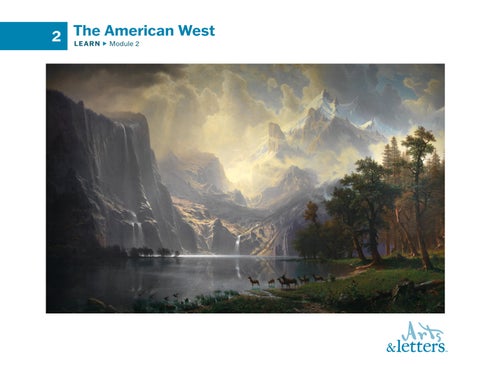
Credits Great Minds® has made every effort to obtain permission for the reprinting of all copyrighted material. If any owner of copyrighted material is not acknowledged herein, please contact Great Minds for proper acknowledgment in all future editions and reprints of this module. Cover: Among the Sierra Nevada, California, 1868, Albert Bierstadt (1830–1902), Oil on canvas, 183 × 305 cm, Bequest of Helen Huntington Hull, 1873 Courtesy of the Smithsonian American Art Museum; pages 2, 5 and 7–9, Courtesy of the Minnesota Historical Society; page 8, Everett Collection/Shutterstock.com, RichVintage/Getty Images, Abbie Warnock-Matthews/Shutterstock.com, Wikimedia Commons, Jim Parkin/Shutterstock.com; pages pages 10, 13 and 15, The Charles and Valerie Diker Collection of Native American Art, Gift of Valerie-Charles Diker Fund, 2017; page 22, Nebraska State Historical Society (https://creativecommons.org/licenses/by/4.0/); page 23, ER_09/Shutterstock. com, Library of Congress, Prints & Photographs Division; page 24, Lee Rentz/Alamy Stock Photo; page 25, Library of Congress, Prints & Photographs Division; page 26, Nebraska State Historical Society; page 32, Nebraska State Historical Society (https://creativecommons.org/ licenses/by/4.0/); pages 22–26, Life in a Soddy, by Marcia Amidon Lusted, from Cobblestone Magazine, vol. 40, no. 8, 2019. Copyright © by Carus Publishing Company. Adapted and reproduced with permission. All Cricket Media material is copyrighted by Carus Publishing Company, d/b/a Cricket Media, and/or various authors and illustrators. Any commercial use or distribution of material without permission is strictly prohibited; pages 28, 31, 33, 35, 39, 41, 42, 46 and 57, Courtesy of the Minnesota Historical Society; page 41, Everett Collection/ Shutterstock.com, Foxys Graphic/Shutterstock.com, Nebraska State Historical Society (https://creativecommons.org/licenses/by/4.0/); pages 48–49, A Home in the Ground, by Ann Parr, art by Lori McElrath-Eslick, from Cricket Magazine, vol. 44, no. 6, 2016. Copyright © by Carus Publishing Company. Adapted and reproduced with permission. All Cricket Media material is copyrighted by Carus Publishing Company, d/b/a Cricket Media, and/or various authors and illustrators. Any commercial use or distribution of material without permission is strictly prohibited; pages 54–55, What About the Native Americans?, by Mikal Eckstrom, from Cobblestone Magazine, vol. 40, no. 8, 2019. Copyright © by Carus Publishing Company. Adapted and reproduced with permission. All Cricket Media material is copyrighted by Carus Publishing Company, d/b/a Cricket Media, and/or various authors and illustrators. Any commercial use or distribution of material without permission is strictly prohibited; pages 58, 61, 63, 72 and 77, © Dirk Bakker / Bridgeman Images; pages 84, 87, 96 and 99, George Ostertag / Alamy Stock Photo; pages 92–95, Celebrating Powwows, by Shawn Termin, from AppleSeeds Magazine, vol. 1, no. 2, 1998. Copyright © by Carus Publishing Company. Adapted and reproduced with permission. All Cricket Media material is copyrighted by Carus Publishing
110
Arts & Letters | © Great Minds PBC
2 | Module 2 Company, d/b/a Cricket Media, and/or various authors and illustrators. Any commercial use or distribution of material without permission is strictly prohibited; page 92, Petr Podrouzek/Shutterstock.com; page 93, Stéphane Groleau /Alamy Stock Photo; page 94, Jim Parkin/Shutterstock.com; page 95, George Ostertag /Alamy Stock Photo; Border images: The Metropolitan Museum of Art; Courtesy of the Minnesota Historical Society; Dirk Bakker Bridgeman Images; George Ostertag/Alamy Stock Photo. All other images are the property of Great Minds. Selected dictionary content appearing in Arts & Letters curriculum materials is used with permission of Merriam-Webster © 2025.
Arts & Letters | © Great Minds PBC
111
2 | Module 2
Works Cited Craighead George, Jean. The Buffalo Are Back. Illustrated by Wendell Minor, Dutton Children’s Books, 2010. “Demystified: How Are Buffalo and Bison Different?” Encyclopaedia Britannica, 4 May 2020, app.boclips.com/ videos/61c1df584a0cb63c9f1e5d20. Eckstrom, Mikal. “What About the Native Americans?” Cobblestone, vol. 40, no. 8, 1 Oct. 2019, pp. 12–15, cricketmedia.widencollective. com/dam/assetdetails/asset:7bfa7517-4e89-48b9-b54c-25ec4ed2cd15. Lusted, Marcia Amidon. “Life in a Soddy.” Cobblestone, vol. 40, no. 8, 1 Oct. 2019, pp. 18–20, cricketmedia.widencollective.com/dam/ assetdetails/asset:25b581e1-a4ab-414c-8b6b-1d2f2561bcbe. Myers, Marya. The Lakota and the Buffalo. Illustrated by Madelyn Goodnight. Geodes, level 2, module 2, set 1, Great Minds PBC, 2018. Nelson, S. D. Buffalo Bird Girl: A Hidatsa Story. Abrams Books for Young Readers, 2012. Parr, Ann. “Little Dugout on the Prairie.” Information box. “A Home in the Ground.” Illustrated by Lori McElrath-Eslick. Cricket, vol. 44, no. 6, 1 July 2016, pp. 34–35, cricketmedia.widencollective.com/dam/assetdetails/asset:daf1c9a0-0def-42a8-8302-290eb83bc54c. Sorell, Traci. Powwow Day. Illustrated by Madelyn Goodnight, Charlesbridge, 2022. Termin, Shawn. “Celebrating Powwows.” AppleSeeds, vol. 1, no. 2, 1 Oct. 1998, pp. 4–9, cricketmedia.widencollective.com/dam/ assetdetails/asset:c7a6391d-3602-472f-8751-dfca80e8aa9e. Waters, Kate. Where the Buffalo Roam: Bison in America. Penguin Young Readers, 2017. WIDA. WIDA English Language Development Standards Framework 2020 Edition: Kindergarten–Grade 12. Board of Regents of the University of Wisconsin System, wida.wisc.edu/sites/default/files/resource/WIDA-ELD-Standards-Framework-2020.pdf.
112
Arts & Letters | © Great Minds PBC
Knowledge is your superpower. Read great books from around the world. Explore documents that take you back in time. Write like an author. Discuss and debate topics you care about. Study art to make paintings come to life. Ready to tap into knowledge?
O N TH E COVER
Among the Sierra Nevada, California, 1868 Albert Bierstadt (1830–1902) Oil on canvas, 183 × 305 cm Bequest of Helen Huntington Hull, 1873 Courtesy of the Smithsonian American Art Museum
GR A D E 2 M O DULES Module 1 | A Season of Change Module 2 | The American West Module 3 | Civil Rights Advocates Module 4 | Good Eating
ISBN 979-8-88811-290-8
9
798888 112908
B