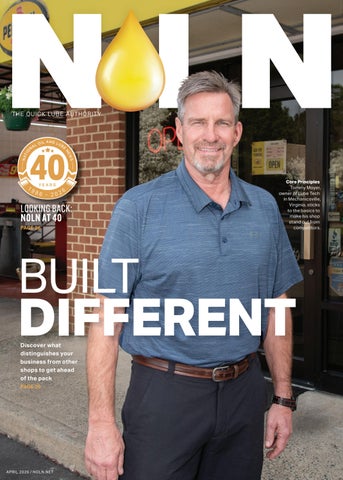
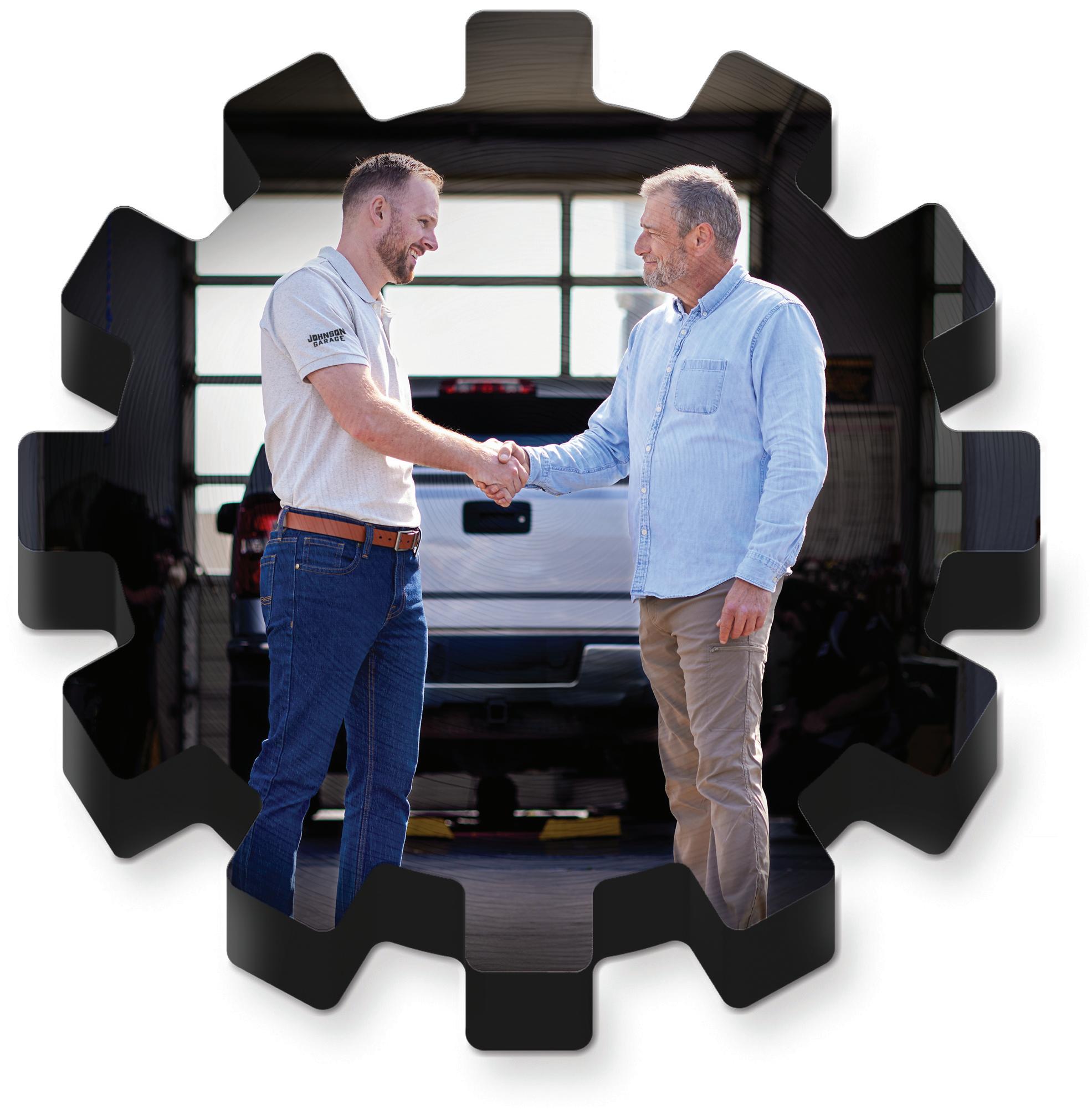
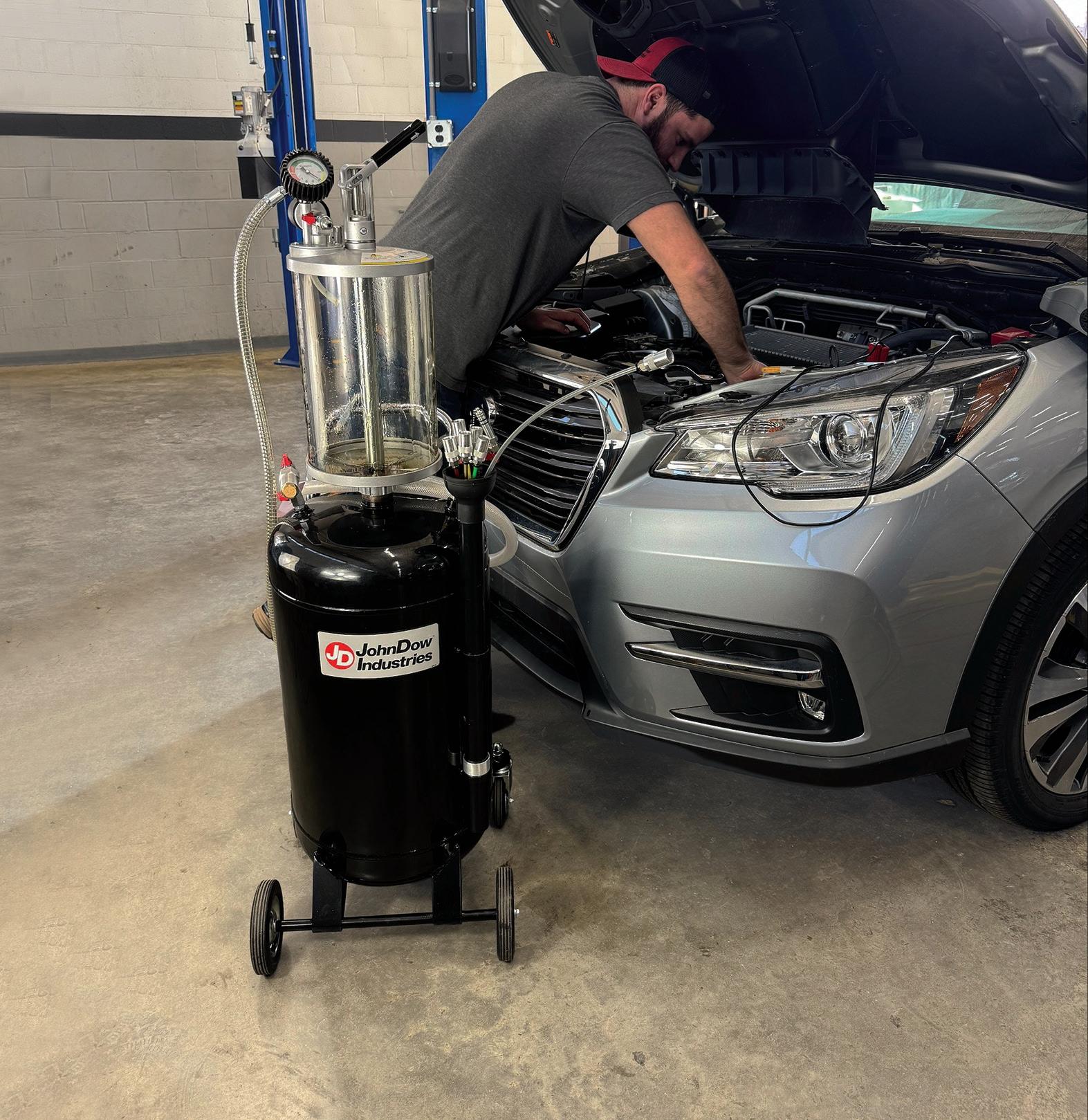
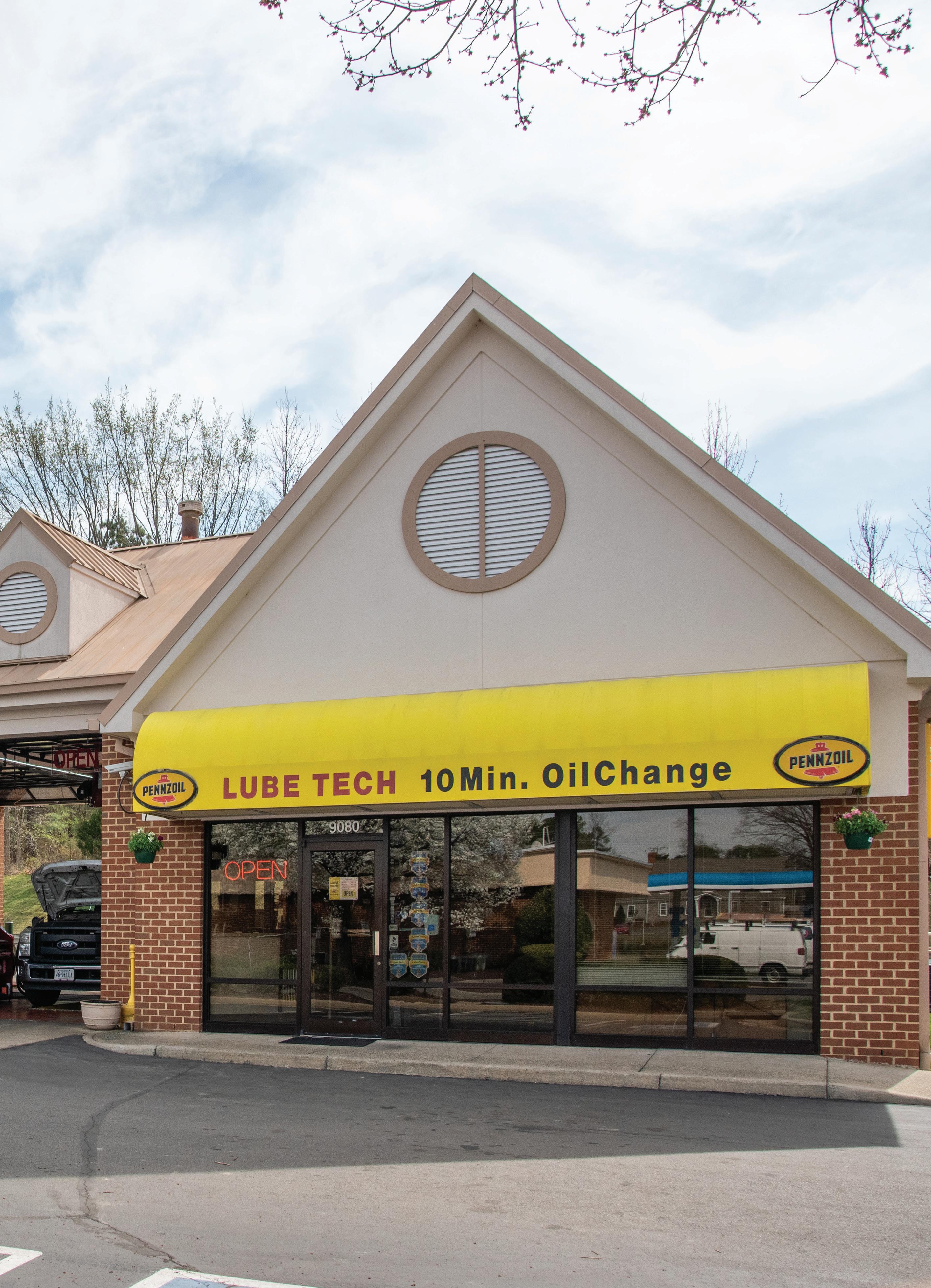
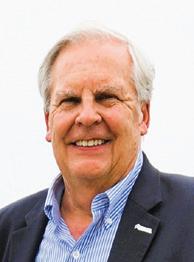
Tommy Moyer, owner of Lube Tech in Mechanicsville, Virginia, sticks to the basics to
his shop
NOLN (USPS PERMIT 23608), (ISSN 1071-1260 PRINT) IS PUBLISHED 10 TIMES YEARLY (JANUARY/FEBRUARY, MARCH, APRIL, MAY, JUNE, JULY, AUGUST, SEPTEMBER, OCTOBER, NOVEMBER/DECEMBER) BY ENDEAVOR BUSINESS MEDIA, LLC. 201 N MAIN ST 5TH FLOOR, FORT ATKINSON, WI 53538.
PERIODICALS POSTAGE PAID AT FORT ATKINSON, WI, AND ADDITIONAL MAILING OFFICES. POSTMASTER: SEND ADDRESS CHANGES TO NOLN, PO BOX 3257, NORTHBROOK, IL 60065-3257. SUBSCRIPTIONS: PUBLISHER RESERVES THE RIGHT TO REJECT NON-QUALIFIED SUBSCRIPTIONS. SUBSCRIPTION PRICES: U.S. ($93 PER YEAR). ALL SUBSCRIPTIONS ARE PAYABLE IN U.S. FUNDS. SEND SUBSCRIPTION INQUIRIES TO NOLN, PO BOX 3257, NORTHBROOK, IL 60065-3257. CUSTOMER SERVICE CAN BE REACHED TOLL-FREE AT 877-382-9187 OR AT NATIONALOILLUBENEWS@OMEDA.COM FOR MAGAZINE SUBSCRIPTION ASSISTANCE OR QUESTIONS.
PRINTED IN THE USA. COPYRIGHT 2026 ENDEAVOR BUSINESS MEDIA, LLC. ALL RIGHTS RESERVED. NO PART OF THIS PUBLICATION MAY BE REPRODUCED OR TRANSMITTED IN ANY FORM OR BY ANY MEANS, ELECTRONIC OR MECHANICAL, INCLUDING PHOTOCOPIES, RECORDINGS, OR ANY INFORMATION STORAGE OR RETRIEVAL SYSTEM WITHOUT PERMISSION FROM THE PUBLISHER. ENDEAVOR BUSINESS MEDIA, LLC DOES NOT ASSUME AND HEREBY DISCLAIMS ANY LIABILITY TO ANY PERSON OR COMPANY FOR ANY LOSS OR DAMAGE CAUSED BY ERRORS OR OMISSIONS IN THE MATERIAL HEREIN, REGARDLESS OF WHETHER SUCH ERRORS RESULT FROM NEGLIGENCE, ACCIDENT, OR ANY OTHER CAUSE WHATSOEVER. THE VIEWS AND OPINIONS IN THE ARTICLES HEREIN ARE NOT TO BE TAKEN AS OFFICIAL EXPRESSIONS OF THE PUBLISHERS, UNLESS SO STATED. THE PUBLISHERS DO NOT WARRANT EITHER EXPRESSLY OR BY IMPLICATION, THE FACTUAL ACCURACY OF THE ARTICLES HEREIN, NOR DO THEY SO WARRANT ANY VIEWS OR OPINIONS BY THE AUTHORS OF SAID ARTICLES.
EDITORIAL
EDITORIAL DIRECTOR Chris Jones
EDITOR Tom Valentino
ASSISTANT EDITOR Kacey Frederick
SPECIAL PROJECTS EDITOR Emily Kline
CONTRIBUTING WRITERS
Adam Tatum, Scott Hempy, Carol Badaracco Padgett, Peter Suciu, Enid Burns
EDITORIAL ADVISORY BOARD
Adam Tatum, DIRECTOR OF OPERATIONS, VIRGINIA GROUP
Scott Hempy, CEO, OILSTOP DRIVE�THRU OIL CHANGE AND HAPPY’S DRIVE�THRU CAR WASH
Aleisha Hendricks, OWNER�OPERATOR, GREASE MONKEY QUICK LUBE AND MONKEY SHINE CAR WASH
Shawn Gilfillan, OWNER, AUTOMOTIVE MAGIC AND MAGIC LUBE & RUBBER
SALES
PUBLISHER Greg Smith gsmith@endeavorb2b.com
ACCOUNT EXECUTIVES
Kyle Shaw kshaw@endeavorb2b.com
Diane Johnston
djohnston@endeavorb2b.com
Marianne Dyal mdyal@endeavorb2b.com
Chad Hjellming chjellming@endeavorb2b.com
Cortni Jones cjones@endeavorb2b.com
Lisa Mend lmend@endeavorb2b.com
Sean Thornton sthornton@endeavorb2b.com
ART AND PRODUCTION
ART DIRECTOR Erin Brown
PRODUCTION MANAGER Rita Fitzgerald
AD SERVICES MANAGER Jen George
ENDEAVOR BUSINESS MEDIA, LLC
CEO Chris Ferrell
COO Patrick Rains
CDO Jacquie Niemiec
CALO Tracy Kane
CMO Amanda Landsaw
EVP TRANSPORTATION GROUP Chris Messer
VP OF CONTENT STRATEGY, TRANSPORTATION GROUP Josh Fisher
LETTERS TO THE EDITOR
Send letters to news@noln.net
Endeavor Business Media does not accept responsibility for advertising content.
to the Beginning
26 NOLN
Power: How the Quick Lube Industry has Evolved and Endured for 40 Years
As NOLN celebrates four decades of covering the fast oil change business, leaders reflect on how an industry guided by core people-first principles has adapted to emerging trends and technologies BY TOM VALENTINO
20 FEATURE Built Different:
How Quick Lube Operators Stand Out from the Competition
In the competitive landscape of the quick lube industry, discovering what differentiates your business from other shops can be the key to getting ahead of the pack BY TOM VALENTINO
IN EVERY ISSUE
6 ONLINE
Strengthen your leadership skills with the NOLN Podcast
9 NUMBERS
Counting cars
QUICK HITS
10 AROUND THE INDUSTRY
Jiff y Lube sold to private equity firm in $1.3 billion deal
14 INDUSTRY INSIGHT
Digitally minded customers drive demand for quick lube discounts
16 SHOP LOOK
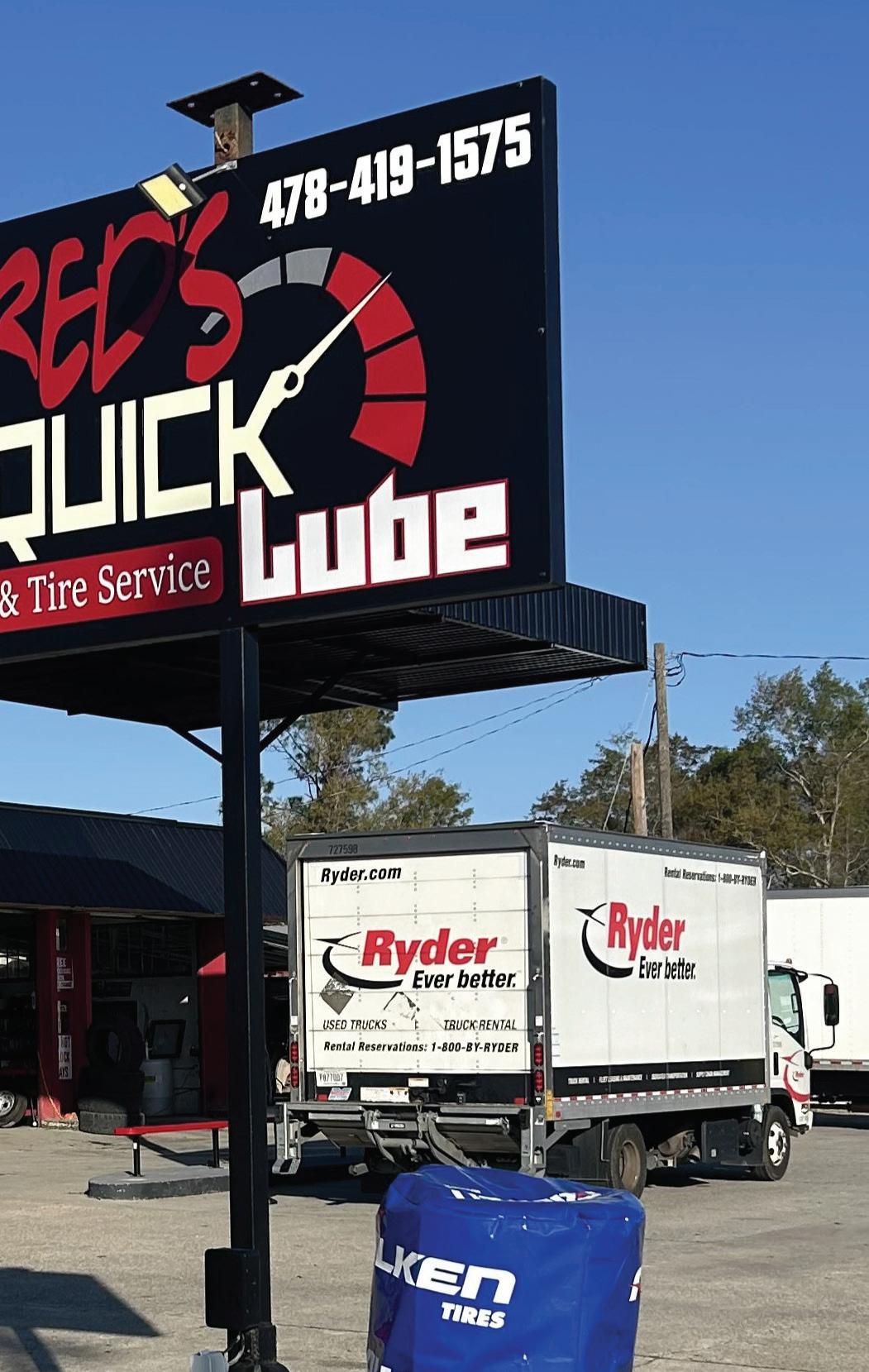
Red’s Quick Lube in Swainsboro, Georgia
SERVICE
33 PIT STOP
Secure the service bay
36 CASE STUDY
Sticking with six
39 CUSTOMER SERVICE
Spring cleaning means stronger business
COLUMNS
18 MAINTAINING THE MISSION
When we ask matters as much— if not more than—what we ask BY SCOTT HEMPY
42 FROM THE SHOP
Give your team a spark by shaking things up BY ADAM TATUM
Back
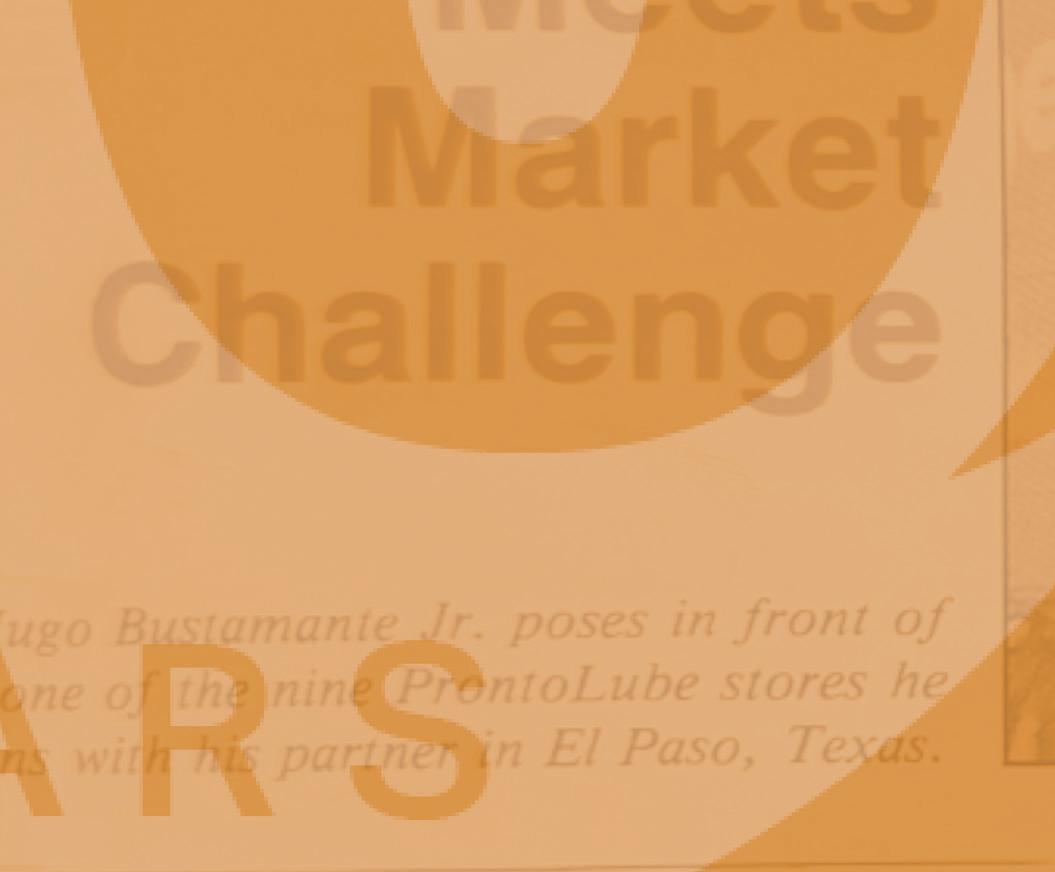
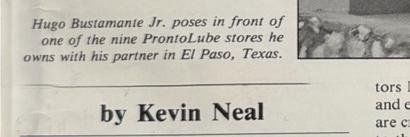
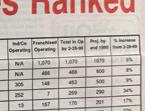
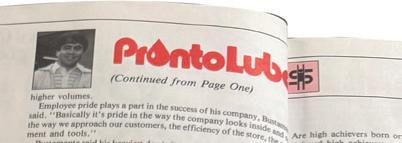
Hugo Bustamante Jr., owner of Pronto Lube in El Paso, Texas, was featured on the front page of NOLN’s first issue in 1986.
AT 40
NOLN AT 40
PRESENTED BY
STRENGTHEN YOUR LEADERSHIP SKILLS WITH THE NOLN PODCAST
Leadership strategies have been a hot topic recently on the NOLN Podcast. Boost your management capabilities with advice shared from the pros in these episodes:
FEARLESS TO COURAGEOUS (WITH CHRIS MESSER, MIKE JONES, JAMES BAXTER, AND HUNTER BARTON)
In this installment of the Endeavor to Discover series, Chris Messer and Mike Jones welcome president/founder James Baxter and store manager Hunter Barton of Neighborhood Tire Pros in Atlanta. By 2008, Neighborhood Tire Pros had grown to 14 locations before the nation’s economic downturn put a strain on the business that led to the sale of 10 stores.
Baxter and Barton discuss the climb back, putting a focus on the remaining four core stores with an emphasis on growth, people, financial transparency, and clear vision-setting to reach a level of profitability that is triple what Neighborhood Tire Pros achieved with 14 shops. The conversation underscores the difference between fearlessness and courage, as well as the power of intentional, peoplecentered leadership.
GETTING EVERYONE ON TRACK: KEYS FOR BUILDING STAFF ALIGNMENT WITHIN YOUR SHOP (WITH SARA WELCH AND MIKE MOONEY)
Modern Tire Dealer Managing Editor Sara Welch and Mike Mooney, a coach, author, and strategist, discuss strategies for motivating teams, aligning personal and company goals, and tips for building commitment from your employees.
Head online to check out NOLN’s library of podcast interviews. Hear from quick lube leaders about new strategies, service stories, and innovative operations that push the industry forward.
Listen and subscribe at: noln.net/podcasts or subscribe to the NOLN Podcast on your favorite listening app.
NEWS
Have you subscribed to the newsletter? NOLN will send the latest industry news, strategies, and profiles straight to your inbox. Sign up at: noln.net/subscribe
SALES SOLUTIONS
We’re more than the goods we deliver. With the Lifetime BG Protection Plan ® , customers simply bring their qualified vehicles back to your shop following service intervals for routine BG maintenance. This complimentary coverage protects seven major systems and lasts the life of the vehicle—and it’s transferable if they want to sell.
COUNTING CARS
What’s your car count?
One of the most commonly tracked KPIs in the quick lube industry is the number of vehicles a shop services per day. As part of the 2025 NOLN Operator Survey, we asked respondents how many vehicles are rolling into their bays each day on average.
LOOKING BACK
Did you know the NOLN Operator Survey dates back to 1988? While the questions we’ve asked our readers have evolved over the years, car count is a statistic we’ve tracked since the beginning. Here’s a snapshot of how the average number of vehicles serviced by quick lube facilities has trended over nearly four decades:
VEHICLES PER DAY
The number of vehicles a facility services, of course, can be reflective of its number of bays. Here’s a breakdown of how many quick lube lanes 2025 Operator Survey respondents have on average.
NUMBER OF QUICK MAINTENANCE BAYS
JIFFY LUBE SOLD TO PRIVATE EQUITY FIRM IN $1.3 BILLION DEAL
Monomoy Capital Partners, a New York-based private equity firm, has reached an agreement to acquire Jiffy Lube International from Shell in a deal valued at $1.3 billion.
The sale, which was announced by Monomoy and Shell on March 9, includes the Jiffy Lube brand and a network of franchised stores that are owned and operated by independent franchisees, as well as franchised stores that are owned and operated by Premium Velocity Auto, a Jiffy Lube subsidiary.
Shell is retaining its Pennzoil Quaker State, Rotella, and other Shell lubricants brands, along with marketing, manufacturing, and distribution of lubricants in the U.S. and Canada that serve consumer, commercial, and industrial sectors.
The transaction is expected to close in the second half of 2026.
“Few brands have the heritage and scale of Jiffy Lube,” Monomoy Managing Director Lee Mlotek said in a news release. “As the original pioneer of the fast oil change, Jiffy Lube reshaped the industry and remains the market leader today.
“We are incredibly excited to partner with our franchisees to enhance the customer experience and value proposition that has made Jiffy Lube a trusted name for generations.”
Jiffy Lube has been a part of Shell Lubricants in the U.S. for more than 20 years, accounting for about 6.5% volume of Shell’s U.S. and Canada total lubricants business.
Founded in 1979 and based in Houston, Jiffy Lube serves about 19 million customers annually through more than 2,000 service centers across North America. Beyond oil changes, Jiffy Lube shops provide other automotive services that include maintenance of brakes, batteries, and
tires through its multicare model.
“By capitalizing on a strong market opportunity, this divestment allows us to monetize an asset that is not central to Shell’s lubricant’s portfolio in the U.S. and reinvest in opportunities that generate higher returns,” Machteld de Haan, president, downstream, renewables and energy solutions for Shell, said in a statement.
Specializing in the middle market, Monomoy Capital Partners is a private investment firm with more than $5.3 billion in assets under management across a family of investment funds. Monomoy focuses on investing in manufacturing, distribution, and services companies across industrial and consumer product sectors in North America.
“We are thankful that the Shell team has entrusted Monomoy to provide the operational experience and strategic capital to position Jiffy Lube as a stand-alone entity,” Monomoy Founder and Co-CEO Dan Collin said in a statement. “Jiffy Lube enters this next chapter well capitalized and focused on future growth with its franchise partners.”
CLASS ACTION LAWSUIT ALLEGES
FRAUD BY DRIVEN BRANDS
Securities law firm Bleichmar Fonti & Auld LLP has filed a class action lawsuit against Driven Brands Holdings Inc. and certain senior executives for alleged securities fraud claims, according to the overview from BFA.
The company’s stock dropped 39.8% after it disclosed widespread accounting errors and internal control failures from fiscal years 2023 to 2025 in its Form 8-K filing to the Securities and Exchange Commision on Feb. 25. BFA says the errors included lease accounting issues, unreconciled cash balances,
improperly classified expenses, and improperly recognized revenue.
Driven Brands has initiated an ongoing review with its independent auditors, PricewaterhouseCoopers LLP, which it acknowledges may uncover further errors. The company emphasizes that the errors and weaknesses impact the accuracy of its financial disclosures and internal controls, and it is taking remedial actions.
Driven Brands filed an additional Form 8-K on March 11 amending its debt indenture, which extends deadlines for financial reporting following a restatement of its financial statements.
According to Yahoo Finance, stock dropped from a close of $16.61 on Feb. 24 to open $9.99 on Feb 25.
The company also delayed the filing of its 2025 Form 10-K, which in its March 11 filing it said it expects to fulfill by April 26. BFA Law says it’s investigating for possible violations of the federal securities laws following the stock drop and the damage it caused investors.
The case is pending in the U.S. District Court for the Southern District of New York. It is captioned Clark v. Driven Brands Holdings Inc., et al., 1:26-cv-01902. The Lead Plaintiff deadline is May 8.
Anyone who invested in Driven Brands can obtain additional information on the BFA Law website. Multiple law firms are investigating the allegations.
MOTOR AGE TRAINING BECOMES AN OFFICIAL ASE TEST PREP PARTNER
EndeavorB2B has announced that Motor Age Training has become an Officially Licensed ASE Test Prep Partner. This designation reinforces Motor Age Training’s leadership in technician education and its commitment to aligning with
the gold standard in automotive service certification.
“We couldn’t be happier to serve as the industry’s initial Officially Licensed Test Prep Partner,” said Michael Willins, director of business development for Motor Age Training. “This partnership gives us a direct connection to the ASE style guide review process, to help us even better align our library of study guides and practice tests with the content presented on the certification exams.”
ASE’s newly launched Test Prep Partner initiative helps automotive students and technicians identify high-quality test preparation materials that align with ASE certification exams. Approved partners are formally reviewed to ensure their content supports preparation for ASE exams.
ASE LAUNCHES ITS ASE TEST PREP PARTNER INITIATIVE
The National Institute for Automotive Service Excellence has announced the launch of its officially licensed ASE Test Prep Partner initiative. This initiative is designed to help identify high-quality test preparation materials that align with ASE certification exams.
To ensure test prep content meets ASE standards and task lists, the ASE Test Prep Partner initiative establishes a formal collaboration between ASE and participating partners.
Through a content and ASE style guide review process, ASE will work with approved partners to help verify their materials accurately support
candidates preparing for ASE certification tests.
To qualify as an officially licensed ASE Test Prep Partner, organizations must meet several criteria:
• Maintain a current test prep library covering at least one entire ASE Master test series. To be considered current, materials must focus on the ASE task lists utilized for active certification tests.
• Be current or in the process of becoming an ASE Accredited Training Provider through the ASE Training Managers Council (ATMC).
• Be a current, active member of the ATMC.
• Serve as an ASE Education Foundation Partner and/or sponsor of the ASE Instructor Training Conference.
• Recognize ASE Certified profes-
sionals through support of the annual ASE Service Professional Awards program.
Approved partners will be authorized to use the officially licensed ASE Test Prep Partner logo and will be listed on the ASE website.
Organizations that offer ASE test preparation materials and are interested in applying for the program can email marketing@ase.com for information on fees and additional details.
JIFFY LUBE WELCOMES EXPERIENCED QUICK LUBE OPERATOR IN ARKANSAS AS FRANCHISEE
Jiffy Lube has announced that a new franchisee with over 30 years of quick lube industry experience in Arkansas has joined the Jiffy
Lube network.
Rick Murphy, owner of Auto Center Enterprises, purchased seven Jiffy Lube locations in metro Little Rock, Arkansas. Auto Center Enterprises has been operating the service centers since late October 2025.
FULLSPEED AUTOMOTIVE LAUNCHING GUEST EXPERIENCE SPECIALIST COURSE FOR EMPLOYEES
FullSpeed Automotive is revamping its 2026 training program with the launch of the Guest Experience Specialist course, as announced in a recent press release.
The GES course features a curriculum designed to teach teams how to interact with customers effectively. Training covers every-
thing from presenting performance guarantees and bounceback offers to conducting one-minute exit interviews and reinforcing customer retention strategies.
The program is open to franchise owners, managers, and technicians, with courses designed to be accessible across multiple markets.
Following completion of the training, success will be measured through KPIs such as ticket averages, review scores, customer retention, and service times.
FullSpeed has reported measurable improvements in both customer satisfaction and employee retention from early indicators in its pilot programs.
NEW SURVEY SHOWS DISCREPANCY IN WHAT DRIVERS EXPECT TO PAY FOR VEHICLE MAINTENANCE
Synchrony released a new Cost of Car Ownership survey, showing a steep difference between what drivers think they’re paying and what they’re actually paying to maintain their vehicles.
The survey showed that drivers are paying nearly 167% more per year than expected to keep their current vehicles on the road, representing a $4,565 discrepancy.
Even vehicle owners who have held onto older models—which is a growing number—have faced rising costs.
Excluding loan and lease payments, car owners estimated spending $2,738 annually on their vehicle.
However, the survey showed the actual yearly total is $7,303. These figures are even higher for younger drivers, with millennials and Gen Z spending $10,101 and $9,984 per year, respectively.
Why Hands-On Training is the Ultimate Revenue Engine
BY AMBER KOSSAK, CEO OF SOLID START
In this industry, car count and ticket averages are the metrics that keep the lights on. You invest heavily in marketing, premium products, and top-tier equipment. But the most powerful profit engine in your shop isn’t your pit or your bays - it’s your team, but only if they are properly trained to leverage the tools and products at their disposal.
The Hidden Cost of Hesitation
Take a look at your service bays on a busy afternoon. Is your team confidently presenting preventative maintenance services, or are they sticking strictly to standard oil changes?
When a team member hesitates at the window, it usually boils down to a lack of comfort and knowledge. If they don’t feel entirely confident presenting a service, they simply won’t offer it. Often, they lack a deep understanding of the concrete value that service brings to the customer’s vehicle and, subsequently, to your shop’s bottom line. It’s a quiet leak in your profitability: every single missed service opportunity leaves money directly on the table. The customer drives away with an under-serviced vehicle, and your shop misses out on high-margin revenue.
Beyond the Bottle
To fix this, our approach to education needs to evolve. We know a thing or two about manufacturing high-quality automotive products, but we also know that memorizing the features on the back of a bottle isn’t enough. Comprehensive education requires stepping beyond the chemicals themselves.
Your team needs to be thoroughly trained on the services they provide. They need to understand the mechanical realities of the vehicles they are working on, how the service resolve issues, and – most importantly - how to communicate that information effectively.
Answering the “Why” Before the “How Much?”
Depth of knowledge is crucial because it allows your service associate to control the narrative at the service window. It is human nature for a customer to react to a price tag. If a service is presented and the customer’s immediate thought is “how much?”, your technician is already fighting an uphill battle.
The key to successful service presentations is answering the “why” before the customer even has to ask. When a technician proactively explains why a fuel system service is needed to clean and restore lost
power, performance, and fuel economy or why a coolant system flush is needed to protect their engine from overheating (and protects the customer from an expensive repair bill down the road), they shift the conversation from cost to value. Explaining the “why” upfront positions you as a trusted advisor, proving the service is an investment in their vehicle rather than just an expense.
The Science of Hands-On Learning
So, how do we build this level of confident, proactive communication? Handing a new hire a binder or having them stare at a computer module for an hour might not always work.
Research consistently demonstrates that experiential learning far outperforms passive reading. According to a 2015 study published in Psychological Science (Beilock & Goldin-Meadow), students who physically experience scientific and technical concepts learn them more deeply and score significantly better on practical assessments than those who only read or observe. Physical action creates sensorymotor experiences that dramatically enhance cognitive retention.
When a technician gets their hands dirty performing a service during a guided session, the muscle memory and practical understanding take root. Hands-on learning transforms theoretical knowledge into real-world confidence. It is the difference between knowing what a product is and knowing exactly how to use it in order to help your customers.
Exceeding Excellence in Your Bays
One of our core mottos at Solid Start/True Brand is, “If better is possible, good is not enough.” Every bottle we produce is the result of a team effort, but that product’s journey doesn’t end until it is successfully and correctly applied in your bay.
We don’t just supply products; we supply partnerships. That is why we work directly with our customers / partners to provide the industry’s most comprehensive training program. Our primary goal is to ensure your team receives multi-tiered education that includes handson, in-person training right in your shop, complemented by in-depth online training modules and structured classroom training. By giving your team, the knowledge to understand the “why” and the hands-on experience to execute the “how,” you will transform missed opportunities into increased revenue and loyal customers.
DIGITALLY MINDED CUSTOMERS DRIVE DEMAND FOR QUICK LUBE DISCOUNTS
Partnership with Groupon attracts new base of customers for Oilstop, demonstrating a model for quick lube providers to increase car counts
BY KACEY FREDERICK
TODAY’S CUSTOMER IS A digital one—and for those who don’t have a designated quick lube provider, it’s especially important to have an online presence that gets your foot in the door first. With the online landscape evolving and growing, shops are always experimenting with innovative ways to achieve just that.
Oilstop, which operates over 30 locations across the West Coast, has identified a major area where customers are beginning—and ending—their search for oil change providers: online coupon services like Groupon.
Jeff Lee, director of marketing at Oilstop, shared insight into why Groupon has been beneficial for the company, and why a presence in the
PHOTO:
online coupon landscape is a growing advantage for quick lubes.
Discounting With Intent
One of the biggest benefits of Groupon has been the fact it’s where many customers will begin their search for a new quick lube provider. The company has been seeing an increasing number of clients coming in who found the brand through Groupon deals.
“If you look at keyword usage, instead of typing in ‘oil change near me,’ we’re seeing more of ‘Groupon oil change,’ or ‘oil change coupon,’” explains Lee. “And it speaks to a shift in the marketplace—becoming more discount driven.”
With that said, Oilstop is careful in deciding where to activate discounts, identifying areas where they can still achieve an adequate return while also providing the customer premium service. Rather than simply trying to drive down prices, the company closely observes data— such as what kind of activations a coupon receives and how it affects the company’s net ticket overall— and reacts promptly.
This is something any shop dabbling in coupon offers should be careful of. With prices so visible, it can be easy to participate in a race to the lowest number. If left unchecked, it can quickly turn into unhealthy discounting and marketing tactics.
“We like to compete there when it’s the right move. But as soon as that discount becomes too steep, or outside where we like to operate, I think we have to be willing to say this isn’t the right opportunity this time,” says Lee.
A Group Effort
Collaboration is part of the relationship between businesses like Oilstop and Groupon. Representatives
with Groupon provide market and competitive insight, such as where certain offers might be more appealing, what a competitor might be running in a certain region, what oil changes are going for, and other customer demographic data. While Oilstop retains control over what coupons it puts out and how they’re marketed, Groupon is involved to help support businesses using its platform.
“We do like to work closely with Groupon. They’re there to help us, but we’re steering the ship in terms of the wording that goes with each offer, the percentage that we set. All that comes from our team,” says Lee. Groupon also enforces parameters for user redemption—that is, ensuring there are limits on how many times a coupon can be redeemed within a set timeframe. However, with Groupon taking a commission, and potentially including its own independent discounts, it is essential to lay out concrete plans for any potential discount with Groupon before moving forward.
Best Practices for Handling Discounts
As with any new feature being rolled out at a business, it’s been crucial to keep the staff at each of Oilstop’s stores in the loop on how coupons should be handled, especially as their involvement is a key part of ensuring the coupon service works as intended.
While managers can focus on the data side of things, having employees on the same page will help provide an on-the-ground customer experience view, as they’re able to observe real customer behavior around the discount program. If employees notice something going wrong, such as a customer trying to use an invalid coupon, they can share that info with their managers, and that helps
We like to compete there when it’s the right move. But as soon as that discount becomes too steep, or outside where we like to operate, I think we have to be willing to say this isn’t the right opportunity this time.”
–JEFF LEE, DIRECTOR OF MARKETING, OILSTOP
better inform the business’ coupon system.
It’s no coincidence that one action sticks out among every factor that goes into online coupons: planning. Customers gained from Groupon are more likely to be price-conscious. So, before a business takes on discounting strategies, there should be a plan for how to draw that customer in from being a one-time coupon user to becoming a loyal, returning client.
In addition to planning on how to convert customers, there should also be room within the business for potential associated ticket growth. Employees should be ready to handle these changes, and equipped with what they need to handle a whole new pool of customers.
“We have to be very specific with how we roll out the program to stores and how the team can support it, because there’s a lot of a lot of work that needs to be done on their side in order to make sure that transaction happens as expected,” adds Lee.
RED’S QUICK LUBE
SHOP NAME: RED’S QUICK LUBE
LOCATION: SWAINSBORO, GEORGIA
OWNERS: CARMON AND DUSTIN LEWIS
BAY COUNT: 3 (2 INDOOR BAYS, 1 OUTDOOR BAY)
AVERAGE DAILY CAR COUNT: 75
BY KACEY FREDERICK
PHOTOS BY CARMON AND DUSTIN LEWIS
AFTER NEARLY TWO DECADES OF being in the quick lube industry, Dustin Lewis had ideas for his own automotive shop that he brought to fruition in 2023 with the
opening of Red’s Quick Lube in Swainsboro, Georgia. Dustin’s partner, Carmon Lewis, operates the business alongside him, starting the business from scratch and bringing it to a shop averaging 4.8 stars on Google Reviews.
With its iconic name and striking red exterior, Red’s Quick Lube has also thrived in its community due to its warm, welcoming atmosphere. In this conversation with Carmon, NOLN is offered an inside look at the Lewises’ shop.
SCULPTING A VISION
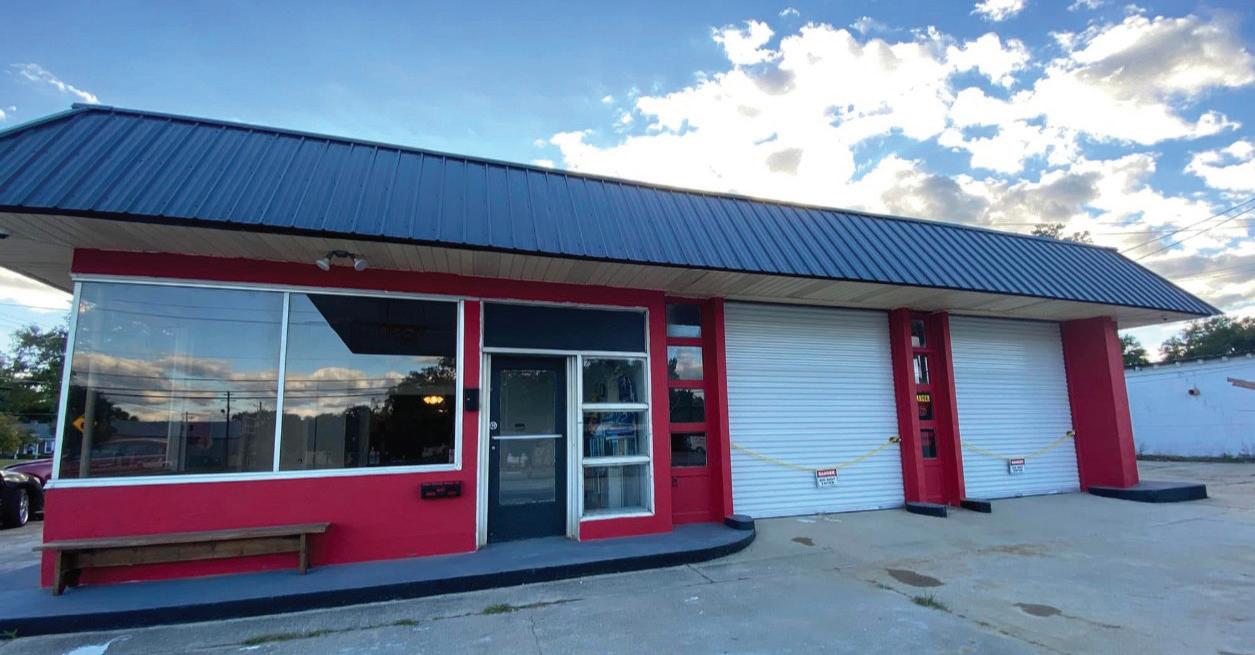
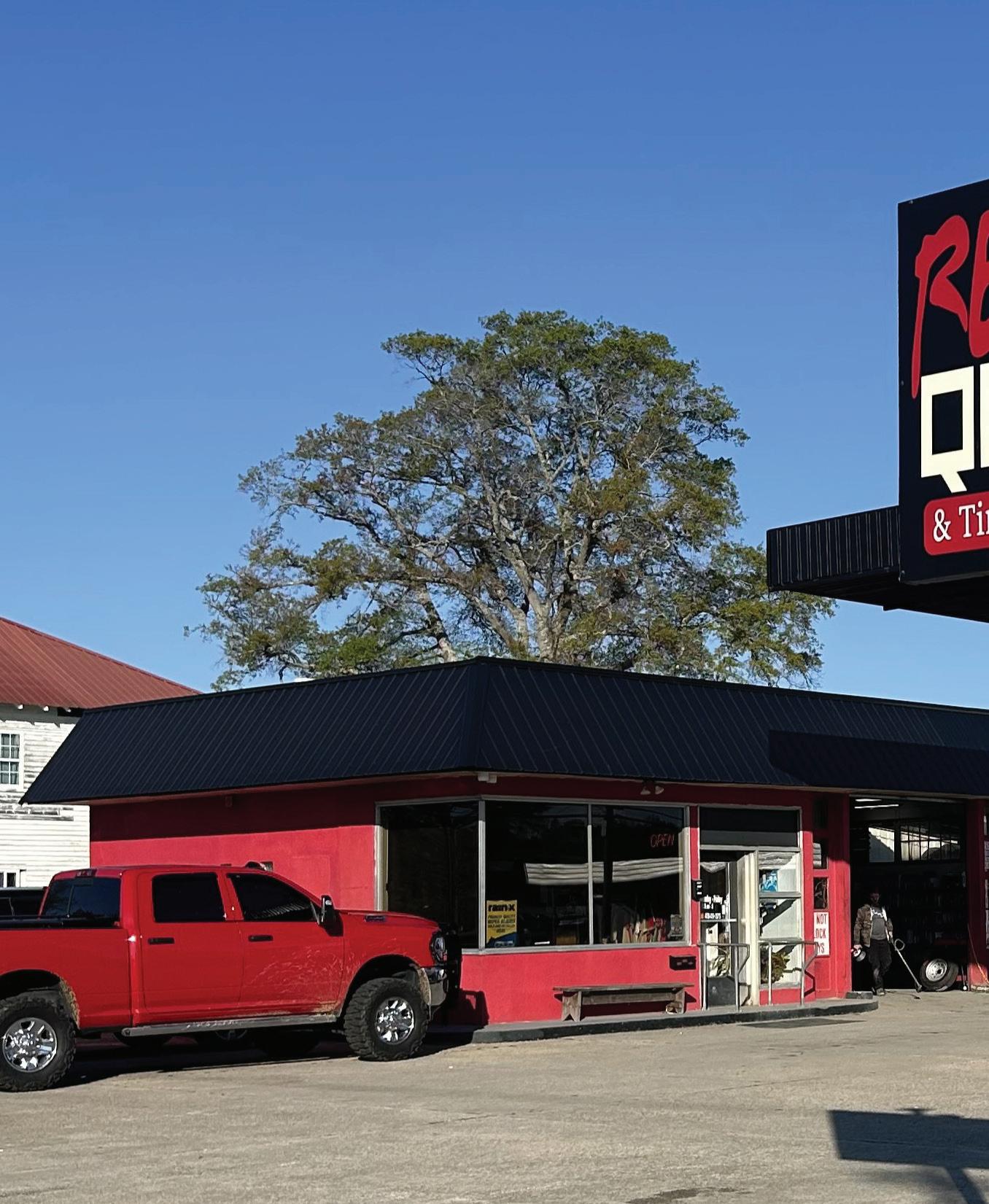
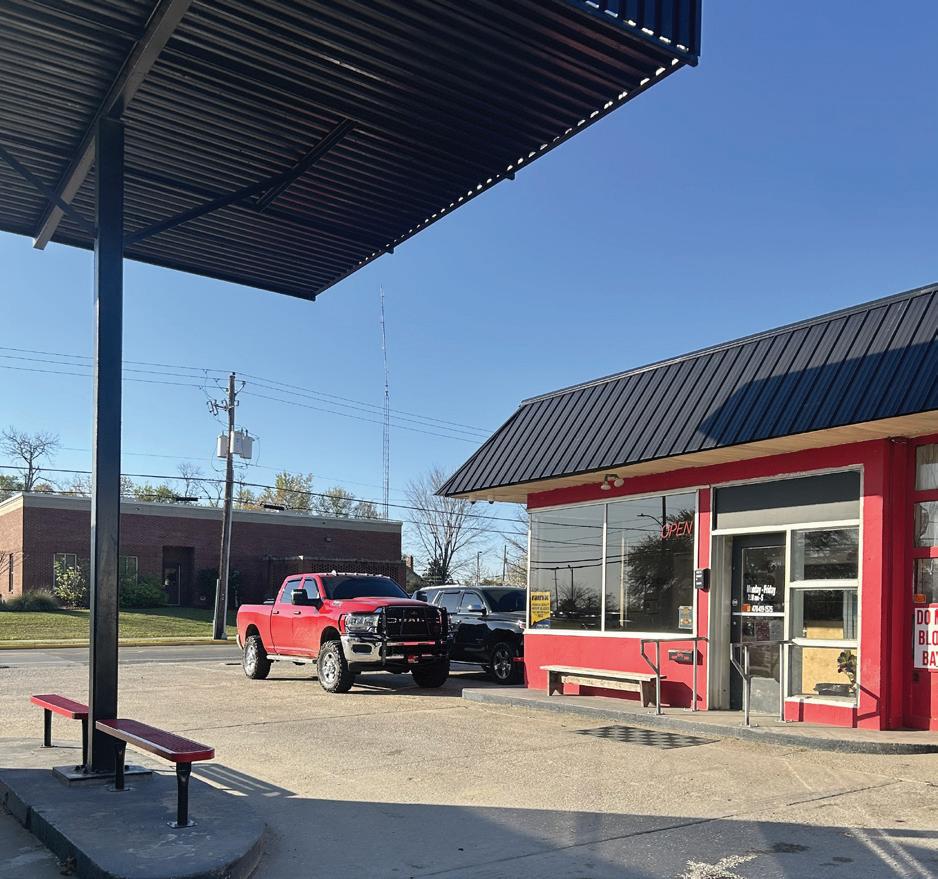
When Carmon and her partner Dustin took over the building, it needed some work done to accommodate their operations as a quick lube. Having been a former gas station, they removed the existing gas pumps outside, but retained the awning covering the pumps. The black roof now provides shelter for customers to wait outside with benches to sit on.
“Customers sit out there because
the weather’s pretty nice in Georgia most of the time,” says Carmon. Additionally, the bathrooms were originally outdoors, but were incorporated into the building, which was also entirely repainted. The building’s distinct red-and-black color scheme helps customers identify the shop, named after Dustin’s nickname, Red. The lobby was also added after they took over the building.
Once inside, customers are usually greeted by a staff member at the
desk. Windshield wipers, drinks, and even branded T-shirts can be found, along with a TV playing music in the background.
A SPACE FOR STELLAR SERVICE
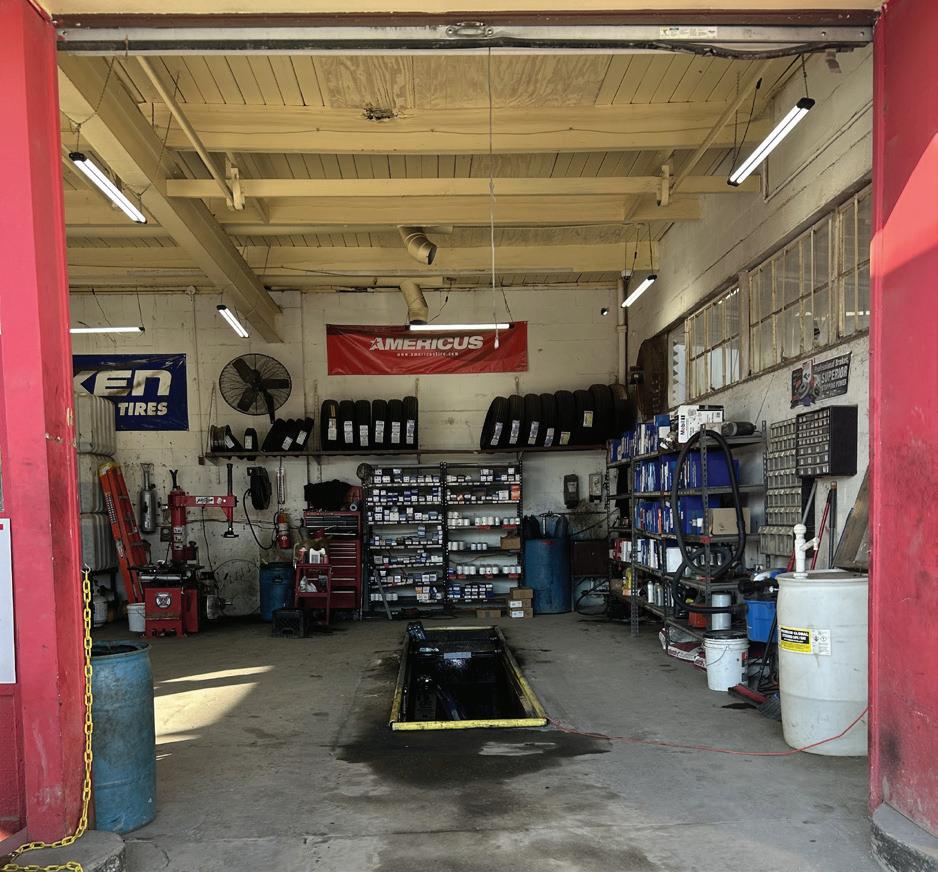
Changes made to the building after Carmon and Dustin took over also included the installation of a pit in the floor, which was the greatest challenge to overcome for the business before opening. The shop floor is spacious and wide, with
tire machines on one side and the pit for oil changes on the other.
Equipment used includes a specialized sticker machine, OBD2 scanners, and a computer for use out on the shop floor. In addition to the building’s two bays, there is an outside bay within the property’s expansive lot for performing tire work.
“We do all our tire work mainly on the lot,” describes Carmon. “It’s like a big open lot, but we do have two bays, and then an outside bay.”
When We Ask Ma ers as Much— If Not More Than—What We Ask
Instead of inundating guests with questions throughout the visit, there
may be a better way to think about the
service conversation
IN
THE
QUICK LUBE BUSINESS,
Scott Hempy leads the team at Oilstop Drive-Thru Oil Change and Happy’s Drive-Thru Car Wash. Oilstop and Happy’s are rapidly growing their footprint of oil change and express car wash locations across the West Coast, combining convenience with an outstanding emphasis on guest experience. Prior to Oilstop & Happy’s, Scott was the founder and CEO at Filld, a SaaS-based software solution for last-mile oil and gas delivery companies. He was recognized as a member of the Forbes 30 Under 30 class of 2016 for starting Filld.
.COM
WE SPEND a lot of time thinking about what we sell. Whether it be synthetic, blend, or conventional oil, which additives convert best, or what services carry the strongest margins. But there’s another factor that might ma er more: when and how we present those services to the guest.
Most quick lube processes evolved around a simple idea: The more times you ask, the more chances you have to hear “yes.” So, recommendations get spread all throughout the service. Oil options come first. Filters get presented during the inspection. Fluids come up while the oil is draining. Wipers might get mentioned near the end. By the time the visit is finished, a guest might have been asked about six different services.
On the surface, that seems logical. More opportunities should mean more sales. But there’s a catch. Every decision takes a little mental energy. When people are asked to make too many decisions in a short period of time, they often default to the easiest answer: no.
Think about the guest sitting in the driver’s seat. Within a few minutes they might hear:
“What oil would you like? Would you like the premium filter? How about an additive today? Do you need an engine air filter? Cabin filter? Transmission service? Coolant service?” At some point, the guest’s brain just shuts down. Instead of thoughtfully considering each option, the guest simply starts declining everything.
There may be a better way to think about the service conversation.
In many dealership service lanes, recommendations aren’t presented as a series of separate offers. They’re presented as the result of an inspection. Instead of pitching services one by one, the advisor explains what the team found while looking over the vehicle.
The conversation sounds more like this:
“While we were servicing your vehicle we checked a few maintenance items, and a couple things stood out.”
That small shift changes the entire tone of the interaction. Instead of feeling like a string of sales attempts, it feels like a professional recommendation based on what was actually observed on the vehicle. Guests tend to respond differently when services are framed as maintenance needs rather than products being sold.
Some quick lube operators are beginning to experiment with this idea by simplifying the number of service conversations. Instead of interrupting the guest throughout the visit, the service gets organized into clearer decision moments.
First, the guest chooses their oil service and filter. Then once inspections are complete, the team presents a short maintenance review—fluids, filters, and any items discovered during the check. Instead of half a dozen separate asks, the guest experiences two or three clear conversations.
This approach can help operations as well. Every time the workflow pauses for another presentation, the rhythm in the bay gets disrupted. Even small interruptions can add seconds to the service. Over hundreds of vehicles, those seconds add up.
What’s interesting is that our industry hasn’t really studied this question in depth. There’s plenty of research on consumer behavior in retail and online shopping, but very li le about how the timing of service recommendations affects maintenance decisions inside a quick lube.
Operators who are interested in redesigning or improving their service process can easily test different approaches. Try one with many individual presentations, and another with fewer, more structured maintenance conversations. By tracking a achment rates and ticket averages, you may find that the most important variable isn’t just what we recommend. It’s when we ask.
The next improvement in your business might not come from a new product. It might come from designing the service conversation as thoughtfully as we design the service itself.
PHOTO: SCOTT HEMPY
SCOTT @OILSTOPINC
SCOTT HEMPY
The 2026 NOLN Operator of the Year Award nominations are now open!
FOR DECADES, National Oil and Lube News has recognized elite quick lube shop owners with its annual Operator of the Year Award.
Since 1989, the NOLN Operator of the Year has been presented to operators who excel in all aspects of shop ownership—from business performance to staff leadership to community involvement.
NOLN Operator of the Year Award nominations are evaluated based on the following criteria:
• Demonstrate exceptional business performance
• Personal or professional achievements
• Examples of staff leadership/ mentorship/professional development
• Examples of community involvement
• What makes the shop owner stand out from his/her peers
To qualify for the NOLN Operator of the Year, nominees must own a quick lube facility, either an independent business or franchise location. Single- and multisite operators are eligible.
To submit a nomination or for more information, visit noln.net/awards
Built Different
Built Different
HOW QUICK LUBE OPERATORS STAND OUT FROM THE COMPETITION
Built Different
Different Different Different
In the competitive landscape of the quick lube industry, discovering what differentiates your business from other shops can be the key to getting ahead of the pack
By Tom Valentino
TT The quick lube industry is nothing if not competitive.
From pricing on oil changes to additional service offerings to hours of operation, shop owners will look for a competitive edge to keep their guests coming back (and draw in new customers as well).
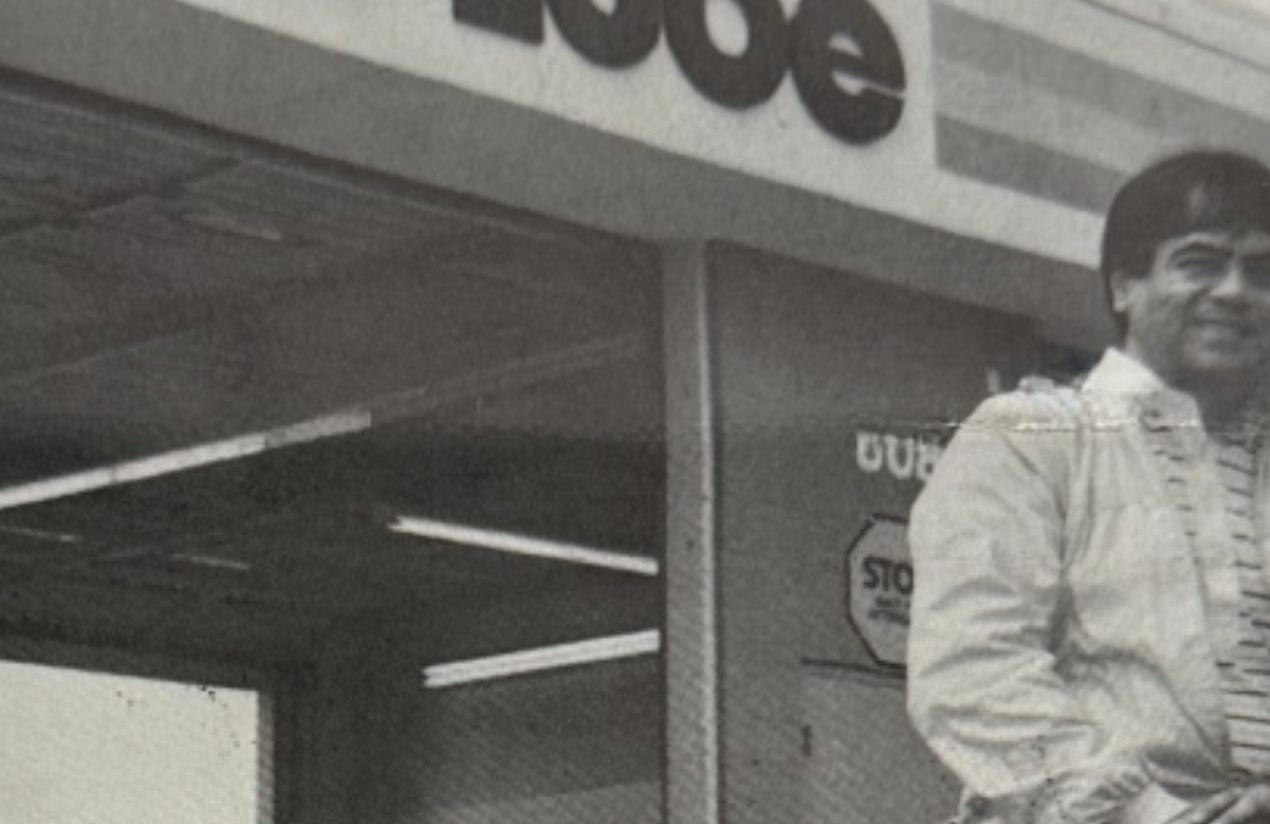
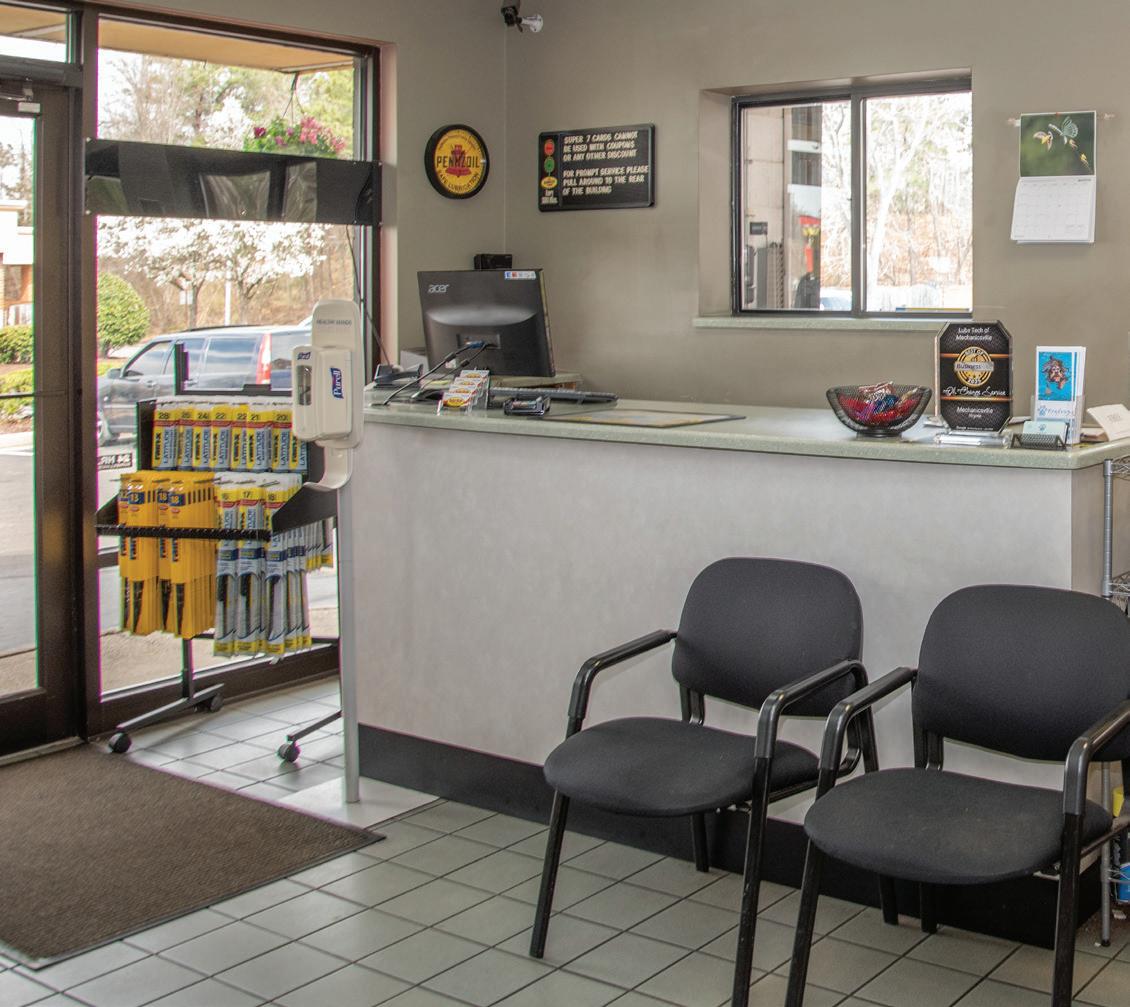
Tommy Moyer, owner of Lube Tech in Mechanicsville, Virginia, has seen plenty of competition—much of it from powerhouse national brands expanding into the area—during his 40-plus years in the business. Still, Moyer’s Lube Tech has managed to maintain a customer retention rate above 80%.
How? By following the lead of his predecessor and steadfastly sticking to his core business.
“I don’t do brakes. I don’t do tires. I don’t get into all the ancillary stuff,” Moyer says. “We do oil changes.”
Moyer continues: “I don’t know how that’s going for them,” he says of competitors offering tire and brake service, “but we have stuck to our base and keeping it simple.”
ESTABLISHING A GAME PLAN
As a student at Virginia Commonwealth University, Moyer pumped gas at John Molter’s full-service gas station during the evenings. Shortly after graduating from VCU in December 1986, Moyer was approached by Molter with a career opportunity. In addition to his gas station business, Molter had also opened a quick lube
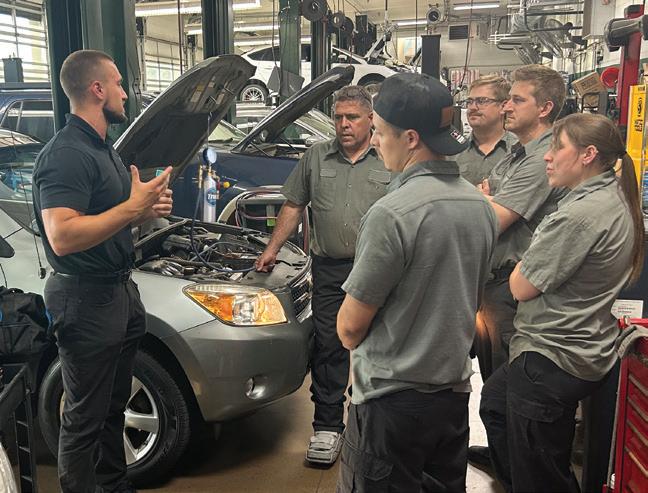
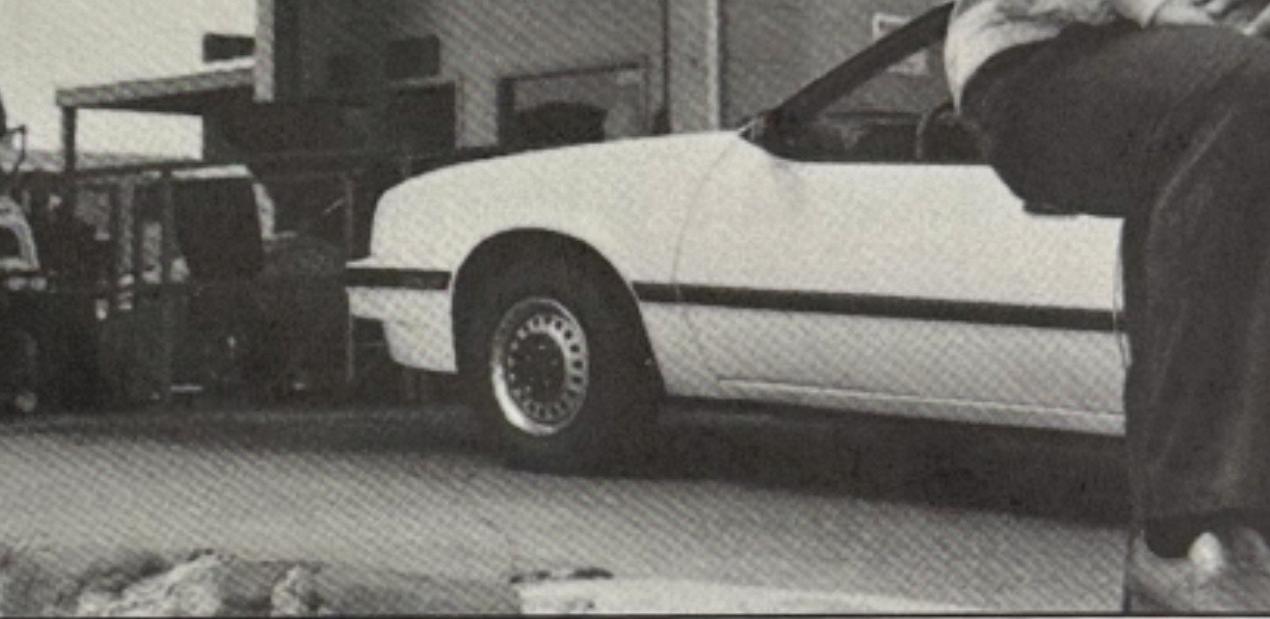
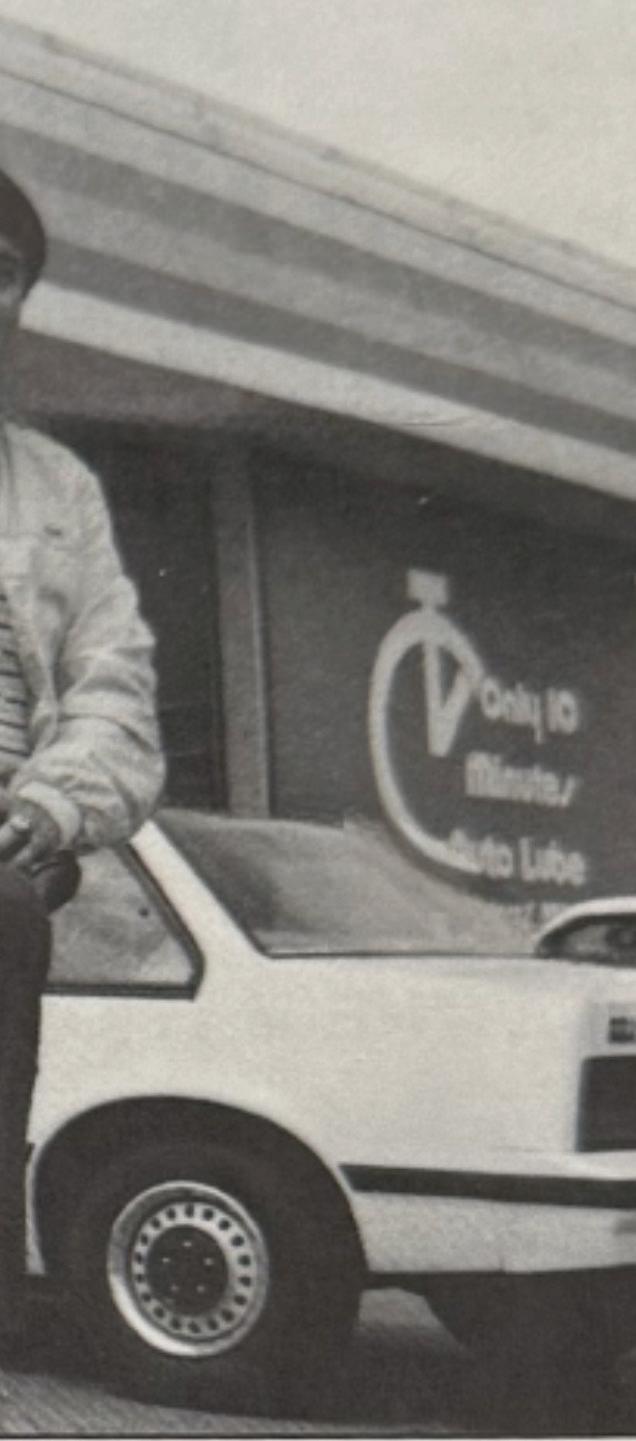
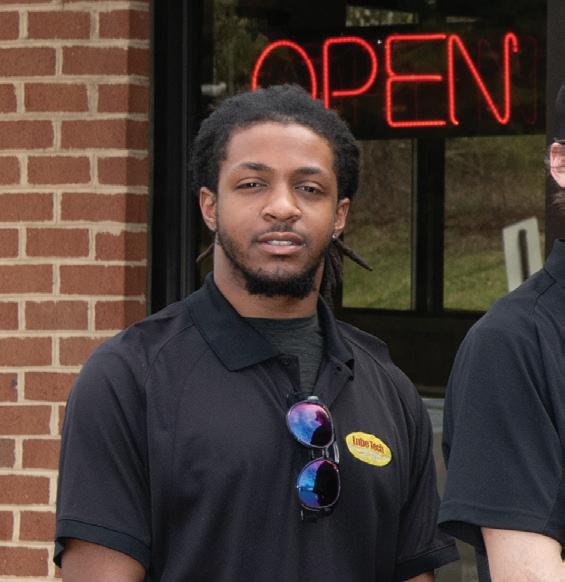
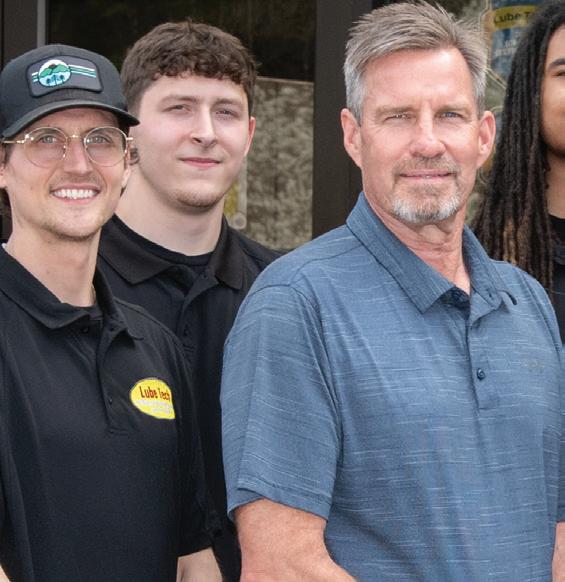
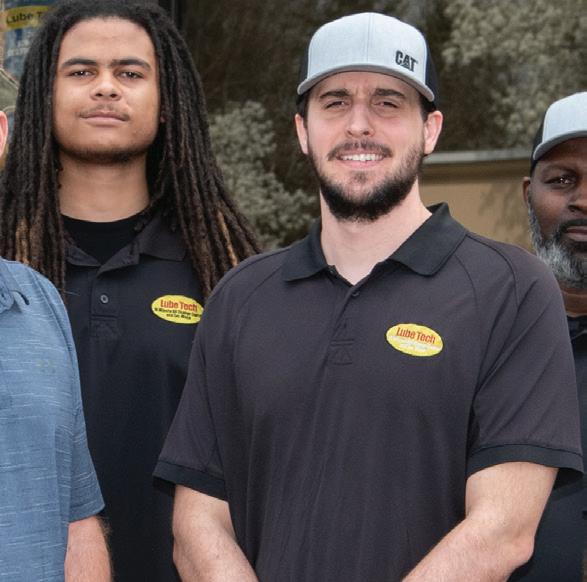
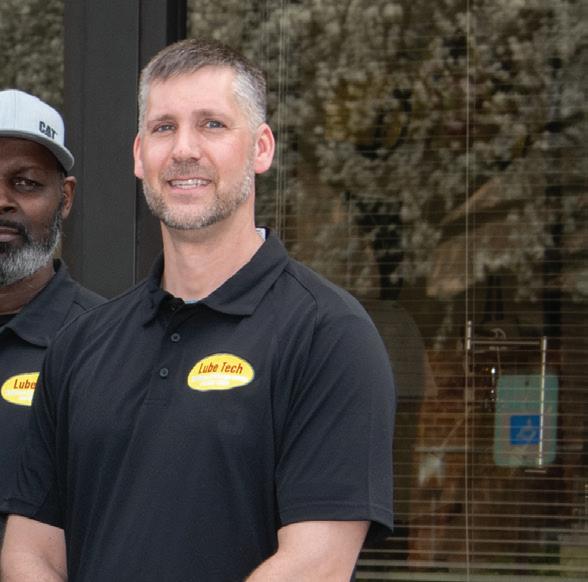
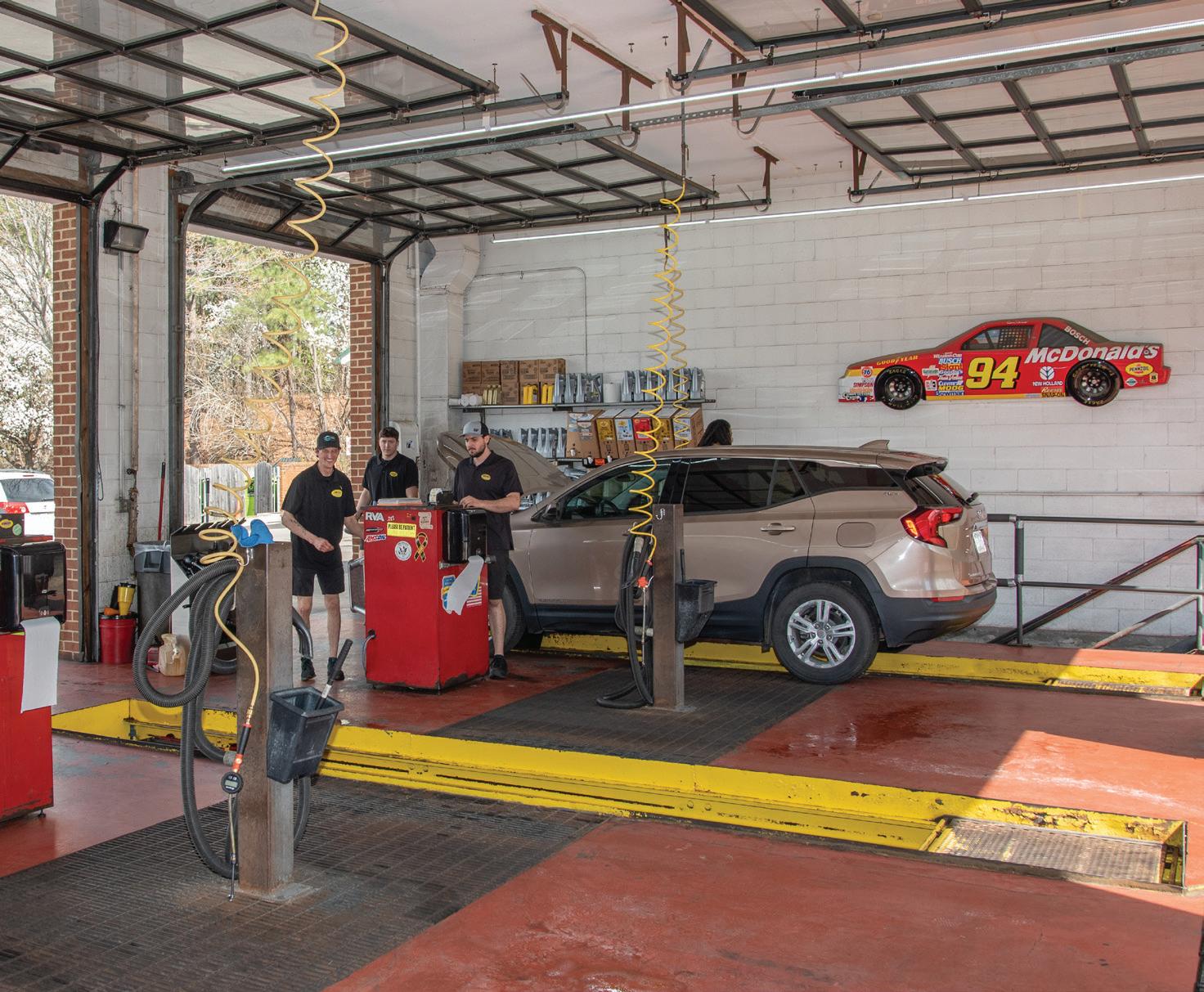
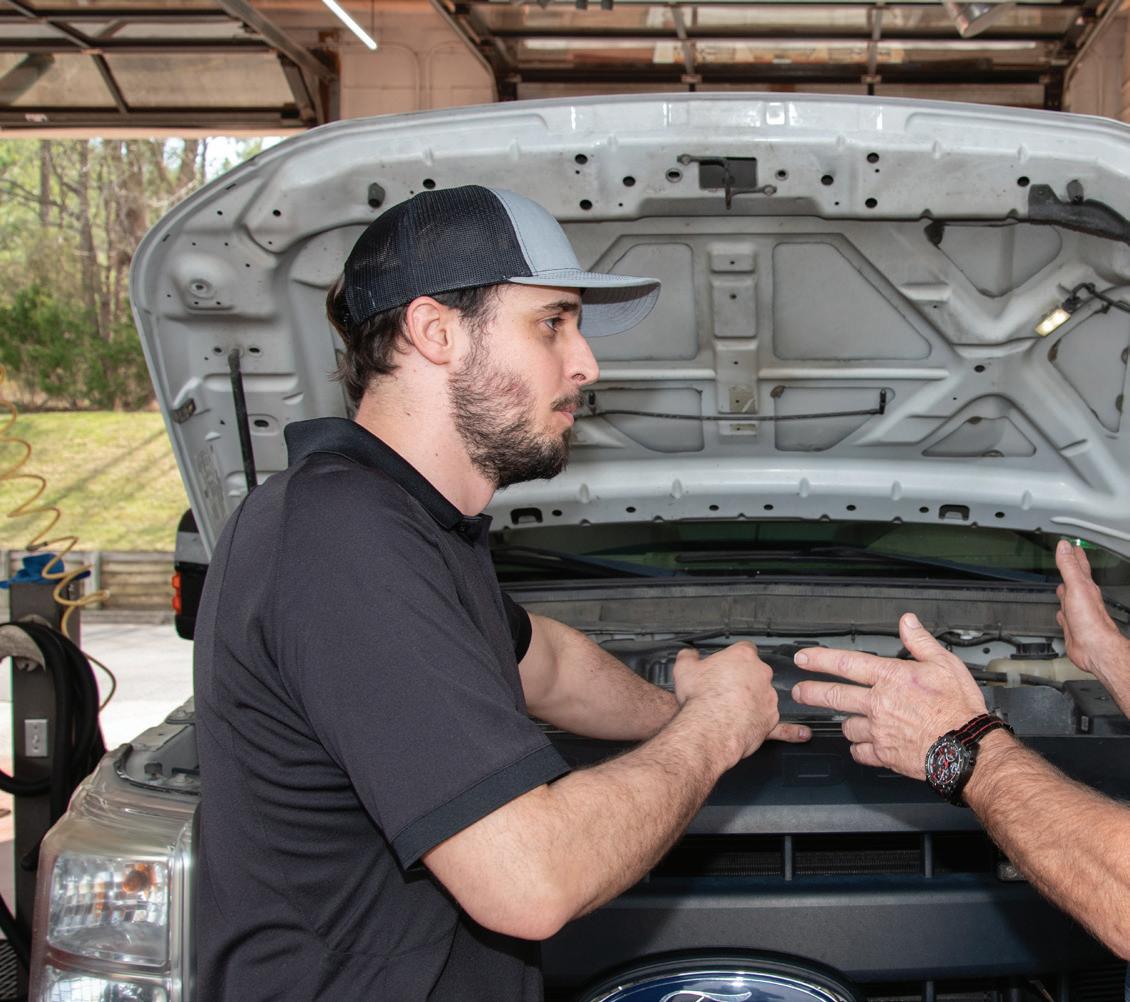
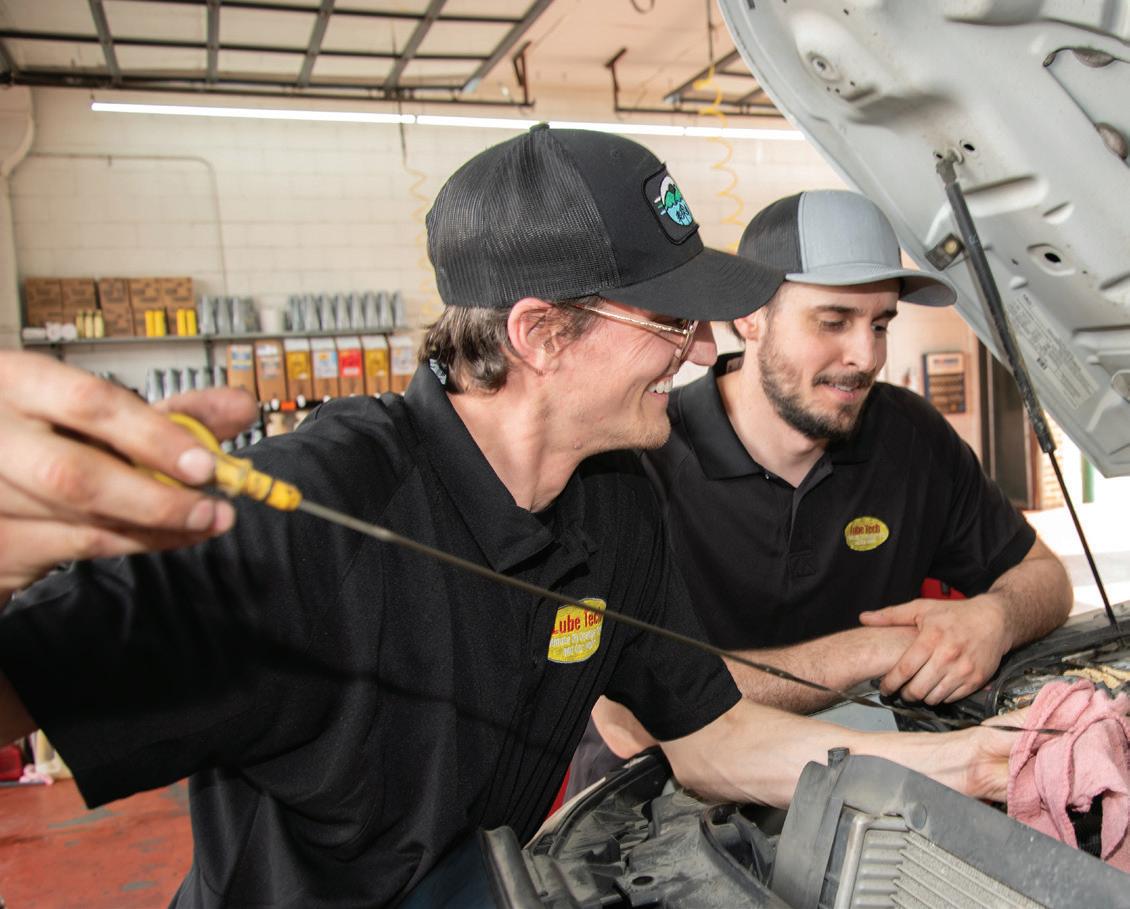
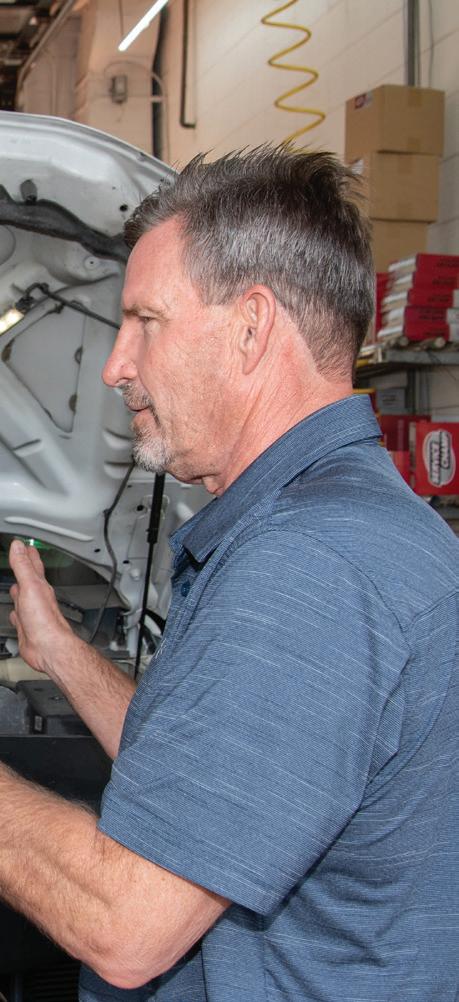
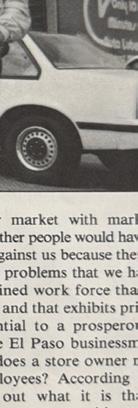
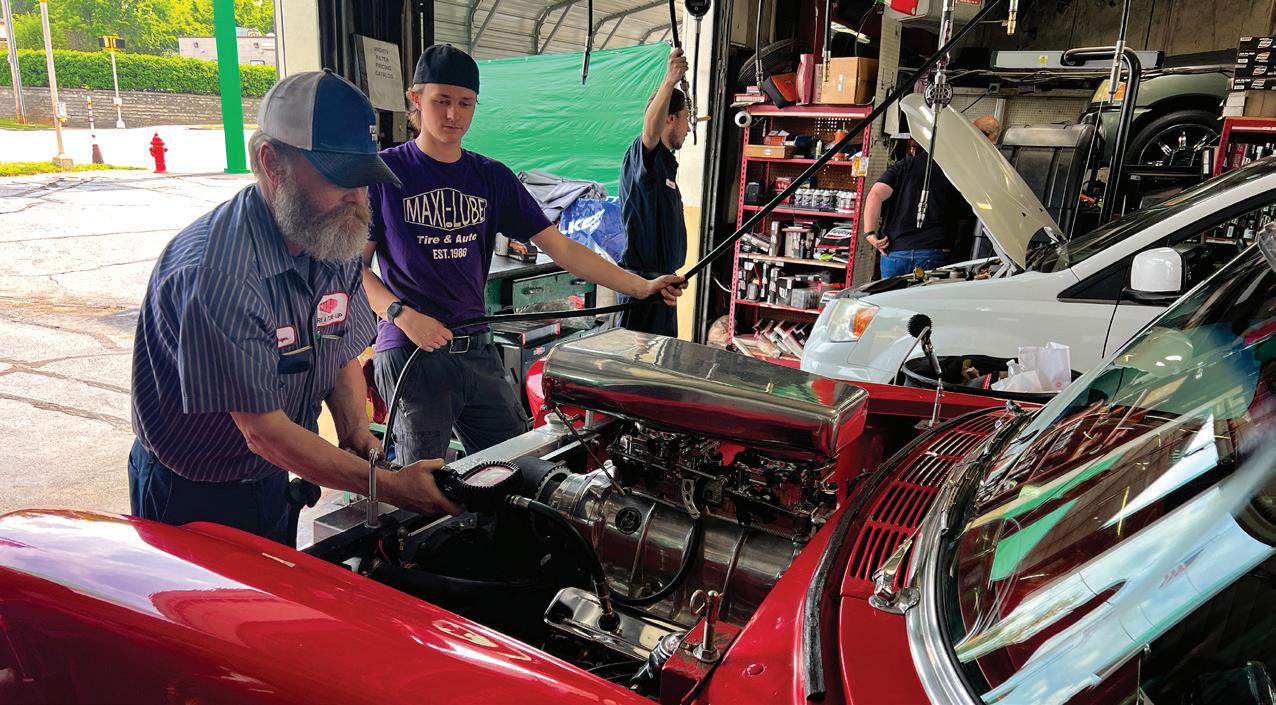
Tommy Moyer and his staff at Lube Tech in Mechanicsville, Virginia, retain more than 80% of their customers by sticking to what they do best.
Winning Team
shop in Richmond, Virginia, and he was in need of a new manager.
Moyer had planned to go work for one of the region’s Fortune 500 companies after graduation, but Molter convinced him to manage the quick lube for a year. One year, however, became 15, and along the way, Moyer went from a shop manager working for Molter to a partner who collaborated with him on opening a second fast oil change shop in 1996, then a third in 1999.
By 2000, Molter was ready to exit the industry. The first two shops were sold to Jiffy Lube, and Moyer bought out Molter’s share of the third facility, which is the Lube Tech he still owns today.
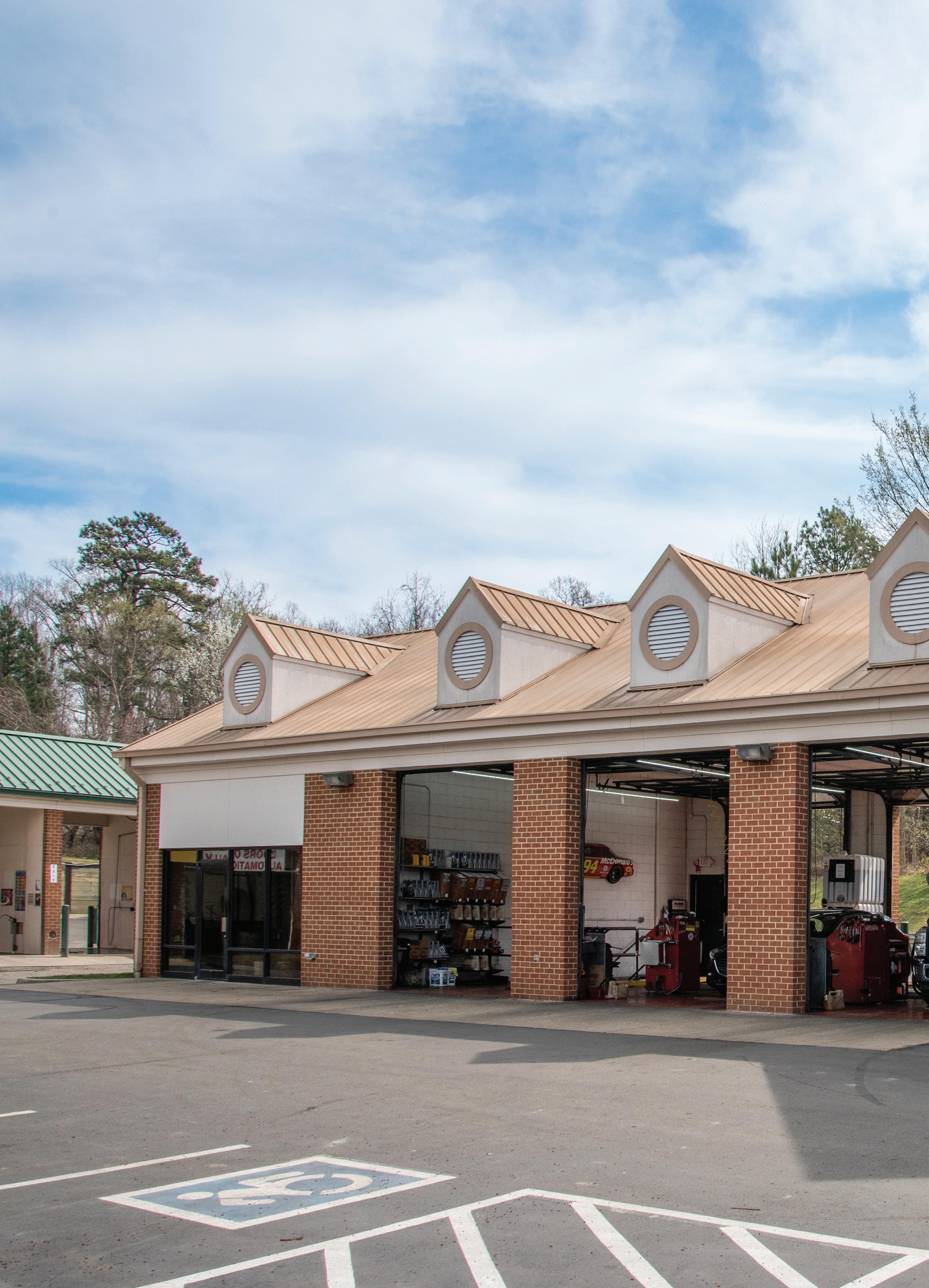
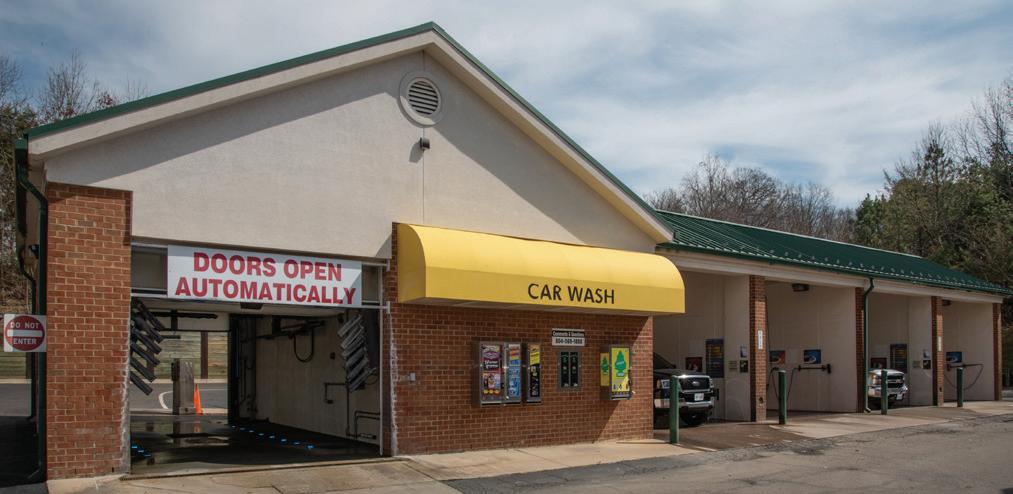
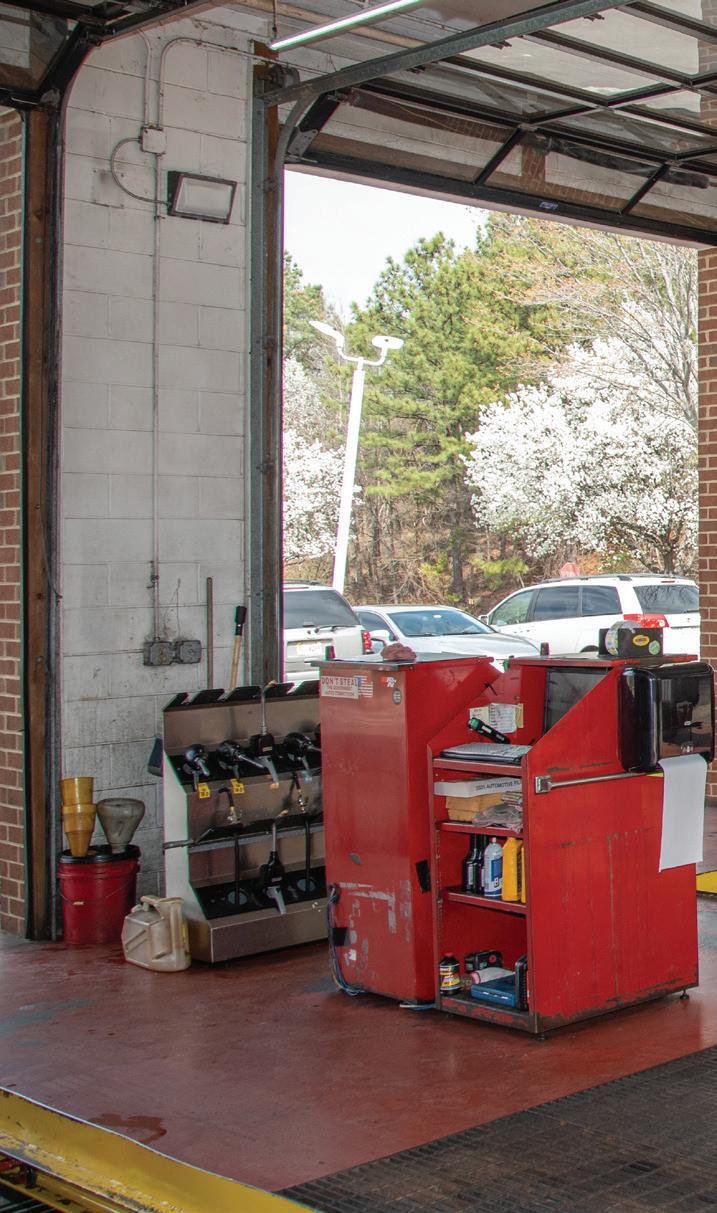
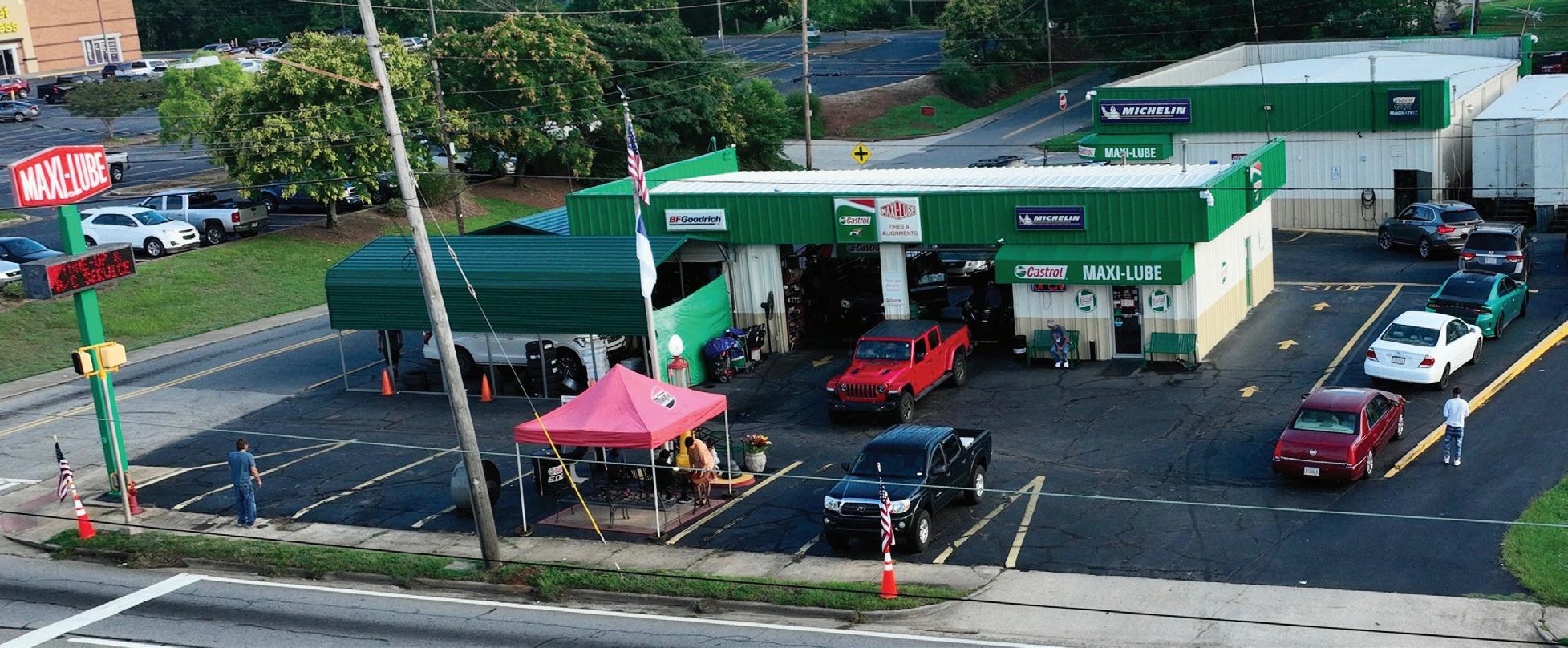
Lube Tech is located in Mechanicsville, Viriginia, a northeast suburb of Richmond with a population of about 38,600. With three bays over pits and an additional bay with a lift over a slab for tire rotations and other services that require vehicles to be elevated, the shop services about 51 vehicles per day, Moyer says.
In addition to oil changes, Lube Tech does offer a handful of quick add-ons, including differential service, fourwheel drive service, and transmission and coolant flushes. But as national chains with locations nearby have begun to offer brakes and tires, Moyer says Lube Tech is making its mark by sticking to what it does best, emphasizing the “fast” in “fast maintenance,” relying on those service offerings with quicker turnarounds.
“We don’t pay commissions. We don’t pay bumps, and we don’t put any quotas,” he says. “You service the customer’s car, and if they need something, you sell it. If they don’t, then you don’t.”
The formula has been successful for retaining customers, even as competition comes to town. Moyer says his shop has maintained an 83% customer return rate.
“And the only reason it’s not higher is if they bring a new vehicle in, that’s considered a new car,” Moyer notes.
Lube Tech is open 59 hours a week—8 a.m. to 6 p.m. Monday through Friday, and 8 a.m. to 5 p.m. on Saturdays. The shop stays closed on Sundays, although Moyer says he sometimes comes in on Sundays to take care of paperwork. Nearby Jiffy Lube and Valvoline locations stay open later and also take customers on Sundays, but Moyer stays the course.
“Yeah, I mean, you feel the urge (to go to seven days a week),” Moyer acknowledges, “but (we are going to) continue doing what we’re doing, and we do it right and have been successful.”
KEYS TO SUCCESS
Moyer tells NOLN he does not view other independent shops as competition in the same way he does franchise chains. Asked what advice he has for shop owners with similar profiles who are looking to make their businesses stand out from the competition, Moyer is modest.
“I’m not saying that what I’ve done you can print out on a sheet, and it’s a gold model,” he says.
That said, he does have a few tips:
Serve the needs of your market. Keeping it simple works for Lube Tech because the shop sits in a high-traffic location in a bustling region. The Richmond, Virginia, metro area has a population of about 1.4 million with a median household income of $83,460, per 2024 U.S. Census data.
“But in some of these small towns, you see a little two-bay shop, and I would think just doing oil changes, you can’t survive. You would have to do tires, brakes, tune-ups, you know, whatever, because you can’t really survive if you have a $100 ticket average, especially nowadays with most cars being synthetic.”
Moyer does some quick math to make his point: “With 50 cars a day times about a $110 ticket average, that’s $5,500 a day. With 308 working days a year, that’s $1.6 million, which is what we did last year.
“If you’re in a smaller market and you can’t grab $100 a ticket, and you’re only grabbing $70 per ticket, let’s say you’re doing 25 cars a day. Well, that’s about $1,750. That ain’t a lot of room for anything.”
Treat your employees right and pay them a fair wage. Customers like seeing familiar faces when they come into the shop, so to minimize staff turnover, Moyer says Lube Tech’s compensation structure has increased significantly from his first days in the business, when techs received the minimum wage of $4.75 an hour and managers were paid $7 an hour.
Among its full-time employees, Lube Tech has three staff members who have worked in the shop for more than 20 years. The “newcomer” of the team has been with Lube Tech for three years.
“My customers love seeing the same people here,” Moyer says.
Stay current on vehicle trends. Moyer says institutional knowledge can be a big differentiator for quick lubes. Having experienced, well-read technicians on staff has allowed Lube Tech to service vehicles that some other fast oil change shops will not.
“It’s crazy how this (business) has evolved,” Moyer says. “My guys are very knowledgeable. Of course, we have the ISI system, the electronic manual, and everything. But (while other shops) have stayed away from doing BMWs and Mercedes because you’ve got to put the right oil in and the filters are different, we don’t shy away from anything and we do everything.
“We read up on it, and we get it done.”
UNIQUE OFFERINGS
For some quick lube and fast maintenance shops, standing out from the competition comes down to offering services that no other shops in their area match. For the 2025 NOLN Operator Survey, we asked owners, operators, and shop managers about their additional profit centers and the services they deliver beyond basic oil changes.
ADDITIONAL PROFIT CENTERS
Full service auto repairs 50.5% Tire sales and service 28.4% Car wash 14.7% EV services
ADDITIONAL SERVICE OFFERINGS
MOST COMMON 94.2% Replace engine air filters 94.2% Replace cabin air filters
How the Quick Lube Industry has Endured and Evolved Over 40 Years
As NOLN celebrates four decades of covering the fast oil change business, leaders reflect on how an industry guided by core people-first principles has adapted to emerging trends and technologies
By Tom Valentino
What “makes” an oil business?
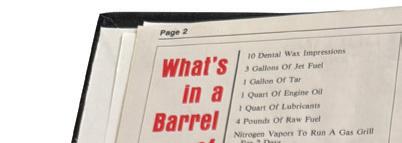
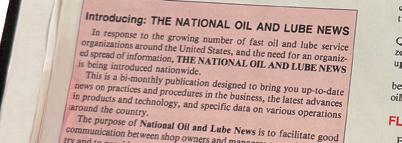
That question was splashed across the top of the front page of the September/October 1986 issue of National Oil and Lube News—just the second edition in the publication’s history— and it’s a query still relevant today.
This month, NOLN kicks off its celebration of covering the quick lube industry for 40 years. During those four decades, operators have come and gone, new technologies and trends have emerged, and brands have evolved with the times to continue serving customers and keep vehicles on the road.
There are innovations relied upon by shop owners today—sophisticated license plate reader systems that can be the basis for customer databases and personalized marketing
campaigns, for example—that were inconceivable in the mid-1980s. But some issues that operators 40 years ago were wrestling with ring true for their successors in 2026.
One of the most common sentiments shared with NOLN—from operators in 1986 to those contacted this year—was the importance of treating people well, both employees and customers.
“We need to get the input of the employees. We need to listen to our employees, and we need to see them as the resources that they are,” Tom Whennen of ASAP Oil Exchange in San Diego, California, told NOLN in 1986.
Whether it was training, equipment, or something on the shop floor, Whennen said, “it is our responsibility to respond to their needs and act on it accordingly. It’s basically treating a person as a human being.”
Kyle McMahon, vice president of operations for the West Region for Valvoline Instant Oil Change, echoed those sentiments when contacted by NOLN in March.
“The fundamentals haven’t changed. It still comes down to our core values: Be fast and be friendly,” says McMahon. “The experience a guest has in one store should feel the same as it does in another store across the country
“That starts with taking care of the people who work in our stores. When team members feel supported and valued, they take care of the guests. And when guests have a positive experience, they come back. That cycle of taking care of employees so they can take care of customers has always been at the center of our business.”
positive experience, cycle of taking care of employees so they can take care of customers
TO DIVERSIFY OR NOT DIVERSIFY: A TIMELESS TOPIC
The debate over whether to offer additional services has been waged within quick lube shops for decades. In 1986, Dave Cardwell of Lube-O-Matic in Stone Mountain, Georgia, explained to NOLN that he added a third bay to his shop a year after opening to accommodate more diverse services. Cardwell noted that tune-ups in particular were a profit center for his business because they had a higher markup than oil changes.
“I think the people who do strictly oil changes are going to have a tough time. The market is going to be spread really thin,” Cardwell told NOLN. “If you can offer tune-ups, oil changes, radiator flushes, and automatic transmission service, that’s where it’s going to be.
“You are going to get and keep those customers, and they will be there for the regular oil change just because it’s the place where they get their car taken care of. And that’s why the popularity has come around on your car service centers.”
However, McMahon, who has worked in the fast maintenance industry since the early 1990s, offers a differing viewpoint. In the early 2000s, he says, VIOC began to expand its service offerings based on the belief that it would create more value for guests. In practice, though, it created an experience that was more complicated for both customers and employees.
“Once we stripped away some of the complexity and returned to that mindset, we started seeing real momentum again,” he says. “That reset was a major turning point for how we operate today.”
McMahon recalls periods where the quick lube industry as a whole tinkered with adding services such as windshield repair, brake services, and fuel system cleaners, among others.
“While those services can add value, it gets to a point where if you stack too many recommendations together it becomes overwhelming for customers,” McMahon says. “If someone pulls their car in for an oil change and suddenly hears about 10 different services they could do, it becomes hard for them to know what actually matters for their vehicle.
“What we ultimately learned is that focusing on the most important maintenance items
creates a better experience. When customers trust that you’re recommending what truly matters, it simplifies the visit and builds long-term loyalty.”
INNOVATIONS ADVANCE THE INDUSTRY
One of the biggest developments in the industry over the past four decades has been the evolution of synthetic motor oil. As of 2025, 73% of quick lube operators say their main bulk oil is standard or premium full synthetic.
Synthetic motor oil predates the quick lube industry. Jiffy Lube opened the first quick lube in 1979, while the first API-certified synthetic oil was AMSOIL’s 10W-40, introduced by Al Amatuzio in 1972.
“There was a whole bunch of other companies that were also trying to figure out a way to get synthetic oil into cars because of the limitations of conventional oil,” says Ed Newman, former advertising manager for AMSOIL and a contributing columnist for NOLN until 2017.
“AMSOIL was successful to a cer-
“AMSOIL was successful to a certain extent, then Mobil came out with Mobil 1 a few years later. … The thing that we anticipated was that as cars became more sophisticated, there would be a greater need for high-tech oil. That did happen, but it didn’t happen as fast as everybody thought.”
happen as fast as everybody thought.”
Adoption of synthetic oil has accelerated over the past decade, though. As of 2015, conventional oil accounted for about 53% of motor oil sales, according to that year’s NOLN Operator Survey. As of 2025, conventional was the main bulk oil used by just 7% of survey respondents.
Emerging technologies, meanwhile, have driven seismic shifts from largely manual processes to a digital-first
The market was all about acquisition until a few years ago, and now it seems to have switched to be willing to build new locations.”
�SCOTT HEMPY, CEO OF OILSTOP
as being among the most noteworthy developments of the 2020s.
He also notes a broad shift in how operators are expanding.
“(Operators are) switching from buying (existing facilities) to building new oil change locations,” he says. “The market was all about acquisition until a few years ago, and now it seems to have switched to be willing to build new locations.”
KEEP ADAPTING
approach boosted by real-time data available at techs’ fingertips.
“When I started in the early ’90s, a store might have had one computer,” McMahon says.
“You’d manually type in a customer’s information, print out a work order, and share that information across the bays. It wasn’t very efficient.
“Today, our systems can scan a VIN and immediately pull up the vehicle’s service history, manufacturer recommendations, and other important information. If a guest visited a store in another state, we can see that history instantly. Technicians also have access to things like vehicle specs, part numbers, and training videos right at the bay.”
MODERN CHALLENGES
While some issues from the ’80s are still applicable today, other challenges have become prominent only in recent years. Extended drain intervals driving down the frequency of customer visits has been a challenge noted by several operators in recent years, for example.
Scott Hempy, CEO of Oilstop and a columnist and editorial board member for NOLN, points to supply chain challenges during the COVID19 pandemic, as well as consolidation and expansion of major national quick lube chains
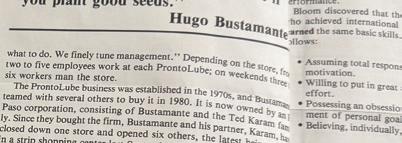
As the subject of NOLN’s first cover story in 1986, Hugo Bustamante Jr., the co-owner of nine ProntoLube stores in El Paso, Texas, offered a prescient outlook on the business. The oil and lube industry could enjoy a bright future, he told NOLN, but it should be willing to evolve as customer demands change.
“If the industry is flexible enough to adapt, it may evolve into something altogether different,” he told NOLN. “That flexibility has to be there, and secondly, you can’t take the longterm liability lightly. You have to be able to understand that things change and you have to be in a position to be flexible enough to change according to what the market is developing.
“Business may change into some other kind of preventive maintenance—what it is, I can’t tell you—so we just have to be flexible enough to design what we are doing to be able to accommodate the greatest number of possibilities.”
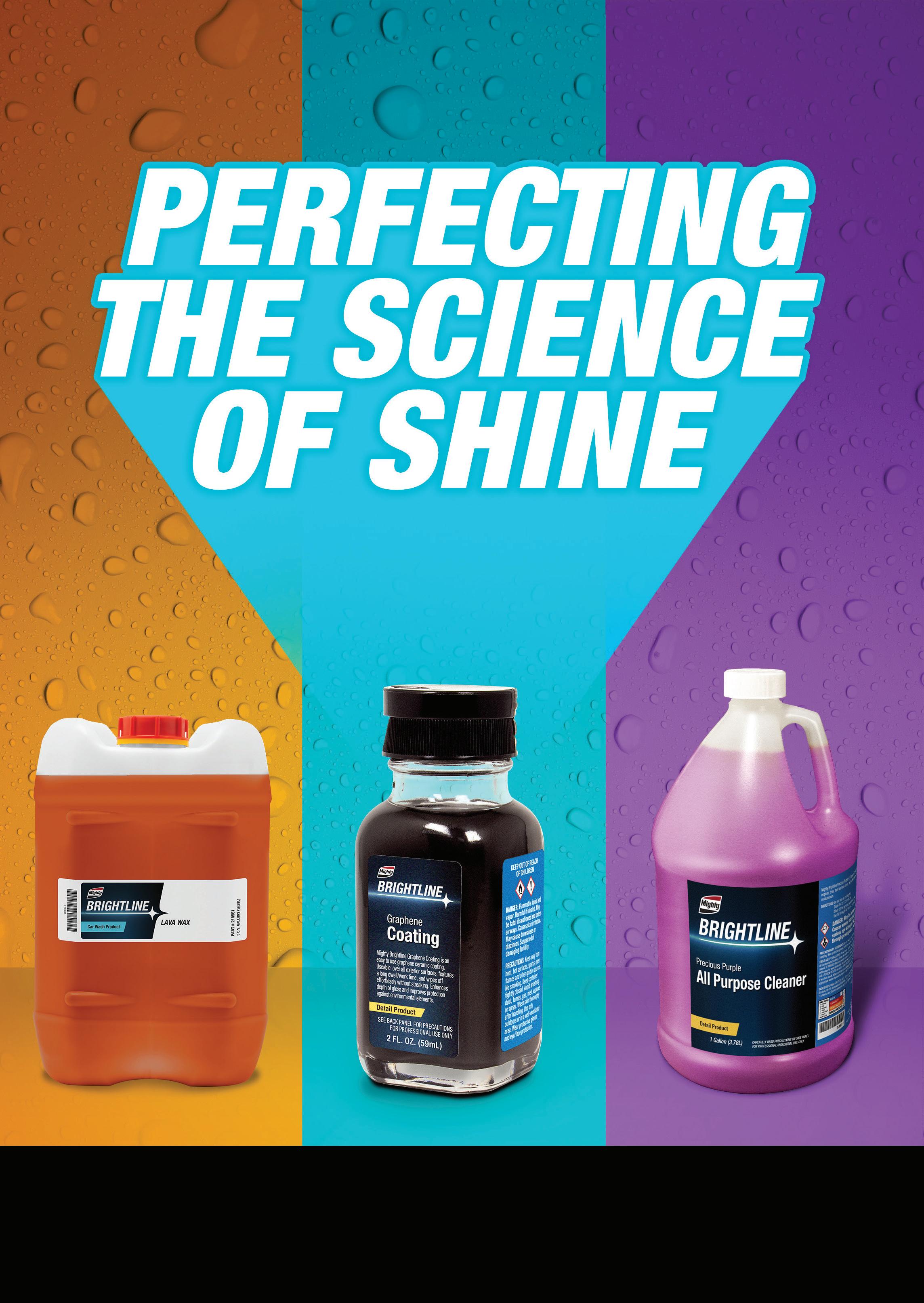
From micronized carnauba to the latest graphene and ceramic formulas, our full spectrum of BRIGHTLINE professional car appearance products has everything you need to make your customers’ cars – and your business – shine. So whether you run an automatic, self-serve or hand-wash and detail operation, make the smart choice with BRIGHTLINE.
Your Partner Beyond Products ™
Sales Tools: Making Customer Conversations Easier
BY NICK PEYTON, BG TRAINING PROGRAM MANAGER AND BGU INSTRUCTOR
In quick lube service, the hardest part of the job usually isn’t finding the problem; it’s helping a customer understand it. That’s where sales tools come in. A sales tool is anything that helps turn an inspection finding during an oil change service into a clear, simple conversation. This helps customers gain trust and make an informed decision about what their vehicle may need.
Sales tools don’t have to be complicated. Sometimes, they’re digital. An Excel sheet comparing the cost of maintenance now versus repair later can quickly put maintenance into perspective. When customers see the numbers for themselves, the conversation feels more logical and less emotional.
Other times, the best sales tools are physical. A severely clogged engine air filter tells a story without many words. When customers can see or touch a part that needs replacing, the recommendation becomes real. You’re no longer asking them to imagine an issue; you’re showing it to them. That kind of clarity builds trust quickly and creates opportunities through transparency in your quick lube business.
Every shop has faced this situation: You explain the finding, you recommend the solution, and the customer still says no—not because they don’t care, but because they don’t fully understand. When people are unsure, they hesitate. And when they hesitate, they default to saying no.
Think about a time when you couldn’t get a customer to say yes even though the recommendation or maintenance service was clearly needed. Maybe the customer didn’t understand how fluid breaks down over time. Perhaps they couldn’t see why a fluid service mattered. The price may have felt high because they couldn’t connect it to real value. These moments are common, and they usually come from the same root issue: a gap between what we know and what the customer understands.
This is exactly when sales tools make the difference.
When you notice the same confusion happening time and again, that’s a signal. It means you have an opportunity to use tools that make the message clearer. If customers struggle with cost, create a simple comparison chart. If they don’t understand wear and tear, keep sample parts on hand to show normal versus damaged conditions. If maintenance feels abstract, use a visual timeline that shows how neglect leads to bigger repairs (e.g., a dirty versus clean air filter or transmission fluid sample).
Effective visual tools share a few simple qualities.
First, they make things easy to understand. A good tool removes technical language and replaces it with something visual or practical. Customers should not need mechanical knowledge to understand what’s happening to their vehicle. Many times, you don’t have to create these tools from scratch. Check with your vendors and partners to see what they already use successfully in other shops. They often have charts, visuals, and demonstrations that have been tested in real conversations.
Second, sales tools shift the focus to the evidence. When you show information instead of just explaining it, the conversation changes. It becomes less about convincing and more about understanding. You’re not pushing a service—you’re presenting a situation or a potential solution to a future problem.
Third, they create consistency. You hear the same questions and objections every day. Sales tools give you a reliable way to respond. That consistency helps customers feel more confident, and it helps you communicate recommendations more effectively.
For employees, developing sales tools starts with paying attention. Notice when conversations stall, customers look confused, or the same objections come up repeatedly. Those moments of opportunity are not setbacks. Ask yourself what would make the situation easier to understand. The answer may be a picture, chart, sample part, or simple explanation that can be used consistently.
Customers don’t want pressure. They want clarity. They want to understand why the service matters and what their options are. Sales tools help provide that understanding. They bridge the gap between expert knowledge and everyday decision-making.
In the end, the goal is not to sell harder. The goal is to explain better. When customers clearly see the problem and the solution, saying yes becomes much easier. And that is the power of a good sales tool.
Nick Peyton—BG Training Program Manager and BGU Instructor
With more than two decades in the automotive industry, Nick is an integral part of the Training team at BG Products. A seasoned automotive professional with a track record of transforming shop performance, he leads large-group trainings and demos, teaches service advisor courses, and partners with community colleges. His passion for the auto service industry—and for helping people reach their highest potential—drives every class he teaches.
SECURE THE SERVICE BAY
Without taking the proper precautions, automotive shops big and small are susceptible to digital security breaches
BY PETER SUCIU
AUTOMOTIVE SERVICE SHOPS often must remind customers that being proactive about maintenance is the key to keeping a vehicle on the road. Unfortunately, many shop owners need to be reminded of the importance of taking preventative measures to protect their shop data. Beyond the fear of a system crash or a hacker attack, small businesses must also comply with ever-evolving data privacy laws, including new state regulations that went into effect last year. California led the way with its California Consumer Privacy Act (CCPA). Still, several other states,
including Delaware, Iowa, Nebraska, New Hampshire, New Jersey, Tennessee, and Minnesota, have also enacted similar laws. For businesses, it is increasingly important to know what data you collect from clients and employees, where it is stored, and with whom it is shared. Experts advise collecting only the necessary data and implementing strong, up-to-date security measures to prevent breaches.
You’re Never Too Small
Too often, shop owners—especially those with just a location or two— wrongly assume that they’re not affected by these laws. However, that’s not the case when it comes to cybersecurity and data protection concerns, explains Nick Mo, CEO and co-founder of Ridge Security Technology Inc.
“A lot of small automotive service shops figure they’re too small to show up on anyone’s radar,” says Mo.
He tells National Oil and Lube News that attackers aren’t just going after big brands.
“They’re looking for easy targets, and they absolutely think about their own return on investment,” Mo suggests. “Running regular, automated security checkups works a lot like routine vehicle maintenance: Catch the small stuff early before it turns into a catastrophic engine failure. Even a basic simulated attack can turn up weak passwords, exposed services, or gaps that could shut your operation down for days. So, either bring in a security service provider to handle it on a regular basis, think of it like scheduling oil changes, or put a security validation tool in place that someone with a general IT background can run and act on.”
Michael Bell, CEO of cybersecurity and data protection provider Suzu Labs, emphasizes that small businesses are the preferred targets
Running regular, automated security checkups works a lot like routine vehicle maintenance: Catch the small stuff early before it turns into a catastrophic engine failure.”
–NICK MO, CEO AND CO-FOUNDER, RIDGE SECURITY TECHNOLOGY INC.
because attackers know defenses aren’t in place.
“Automated attacks in use today will find you if you have two locations or 2,000. They scan the internet looking for exposed systems, weak passwords, and unpatched software,” warns Bell. “A lube shop with a point-of-sale system connected to the internet and no firewall rules looks the same as a bank with no vault door.”
The average cost of a cyberattack on a small business ranges from $120,000 to $200,000, including downtime, forensic investigation, customer notification, and lost revenue while your systems are offline.
“For a shop doing a million a year, that’s potentially a quarter of your annual revenue gone in a week,” says Bell. “Most cyber insurance policies for small businesses have deductibles and exclusions that can leave owners covering more of the bill than they expected, especially if there are gaps in minimum cyber protections. Some shops never reopen. The National Cyber Security Alliance found that 60% of small businesses that suffer a significant cyberattack close within six months.”
The Cybersecurity Basics Cybersecurity experts keep reminding consumers and business owners to back up their data and employ strong security measures. The reason these warnings keep being made is that the attacks keep coming.
As a reminder, data protection begins with limiting access. If it isn’t in someone’s job description to have access to customer or employee data, they shouldn’t have access under any circumstances.
For the owner, manager, accountants, and others, strong protection must be in place.
“Every account that touches money, customer data, or vendor systems needs a unique password and multi-factor authentication turned on,” says Bell. “When an employee leaves, their access to everything gets turned off that day. Not next week. That day. Former employees with active credentials are one of the most common entry points we see in incident response.” Employees at all levels can often be the weakest link. That means anyone who does have access to crucial
data needs to be reminded to always be vigilant. The cybercriminals have upped their game, and that means shops need to up theirs as well.
“Phishing attacks that hit shops don’t look like Nigerian prince emails anymore. They look like invoices from your parts distributor, with slightly different banking details. They look like an email from your POS vendor saying your account needs to be verified. They look like a text message from the ‘owner’ asking the office manager to buy gift cards for a customer appreciation event,” Bell warns. “Tell your staff: If any message asks you to send money, change payment details, or enter a password somewhere new, verify it by calling the person directly using a number you already have. Not the number in the email.”
It bears repeating that everything should be updated and patched. Managers and those with access to any computer or other device should regularly check for updates. That should include all vendor-connected devices.
Bell also suggests that all shops should utilize at least two separate wireless networks: one for business
operations and one for customer or guest use.
“The business network should not be visible to customers,” says Bell. “Change the default admin password on every router and access point. If the Wi-Fi password hasn’t changed since the router was installed, change it today. Use WPA3 encryption if your hardware supports it, WPA2 at minimum.”
Back up everything and do it often. Spending a few minutes on a Friday near closing time is better than spending days recovering from a system crash or a ransomware attack. And finally, have a plan in place in case of a cybersecurity incident.
“If you suspect a breach or ransomware infection, disconnect the affected computer from the network immediately. Do not turn it off. Call your IT security support (not your cousin who set up the wi-fi) and your bank to freeze transactions,” says Bell. “If customer payment data may be compromised, your credit card processor needs to know quickly. Document what happened and when. Keep the compromised equipment untouched for the investigation. Depending on the severity, you
Phishing attacks that hit shops don’t look like Nigerian prince emails anymore. They look like invoices from your parts distributor, with slightly different banking details.”
–MICHAEL BELL, CEO, SUZU LABS
may want to file a report with law enforcement or the FBI’s IC3, but your first calls should be to the people who can help you stop the bleeding, assess the damage, and provide legal support.”
Bell tells NOLN that having these steps written down and posted in the office before an incident happens is the difference between a controlled response and a panic.
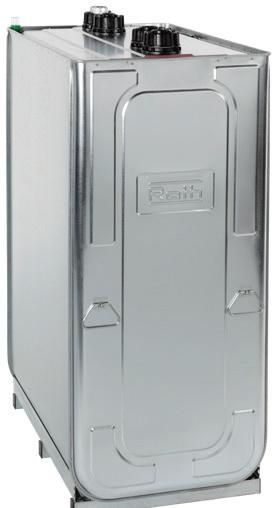
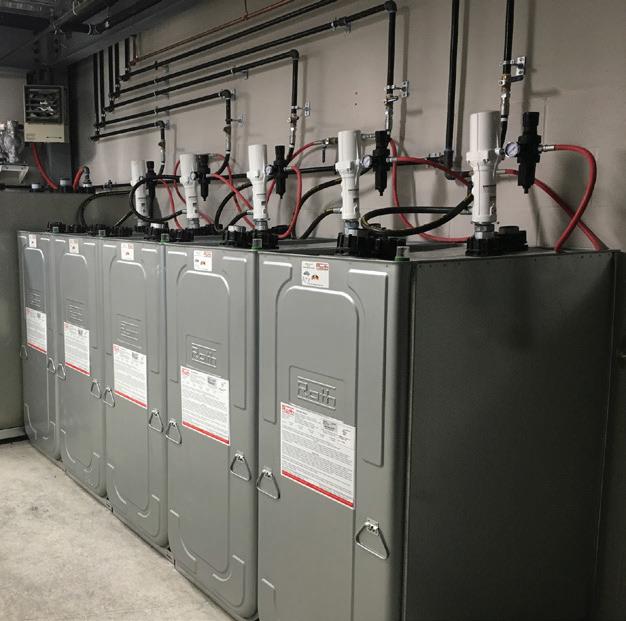
• Designed to store diesel and bio fuels, motor oil, used oil, ATF, DEF and heating oil, class II and class III combustible
• Outer tank holds 110 percent of inner tank
• Up to 50 percent lighter than conventional steel tanks
• Easy to install and compact design
• Exceeds industry standards/UL2258 Certified
• Compliant with NFPA 30/30A
• Low-cost
• 30-Year warranty
• Leak-proof and will not corrode
PHOTO:
STICKING WITH SIX
In an increasingly always-on world, Maxi-Lube in Griffin, Georgia, is sticking to its six-days-a-week schedule, and the decision is paying off
BY ENID BURNS
DETERMINING THE RIGHT
hours and days for business is a critical decision, especially for customer-facing operations like a quick lube shop. While many shops consider opening seven days a week to accommodate customer schedules, one Griffin, Georgia, facility demonstrates that remaining closed on Sundays can serve both business and staff effectively.
Located south of Atlanta, Maxi-Lube has six bays and a staff of 20 to 25 employees. The shop services about 75 cars per day, six days per week. Owners Mike and June Shell have no plans to add a seventh day to the weekly schedule any time soon.
The Challenge
It’s important to evaluate hours of business from time to time to be sure you are serving your customers. While Maxi-Lube has changed its hours over the years, it has always remained closed on Sundays since Mike and June Shell took over the operation in 1989. The idea of opening on Sundays is a nonstarter.
The Shells realized during the COVID-19 pandemic that they could cut hours down, including remaining closed on Sundays.
“During COVID, we never shut down,” says Mike Shell. “We just found out we were working
too much, we were working our employees too hard.”
The shop didn’t shut down— in fact, the Maxi-Lube increased business; however, the Shells took the opportunity to adjust the shop’s hours.
“I’m sure it slowed down for a while, but for the total year we weren’t off any,” says Shell. “The Lord just blessed us. We’ve always had good business. We used to say we’d send people home when we had slack, but we never did. Our employees work all the overtime they want.”
At times, maintaining the current course is more effective than pursuing change.
The Solutions
For Maxi-Lube, keeping Sundays off the table is a foundational business choice that underscores its priorities.
Having Sundays off helps morale. “(The employees) definitely need a day to be with their families and refresh,” June Shell tells NOLN. “By Monday, they’re ready to come back in and start again.”
The Shells attend church on Sundays. It is not enforced; it is encouraged that employees do the same. “Hopefully, people go to church,” she says. “Hopefully, people will make it a priority. They know it’s a priority for us, and we want to give them the opportunity.”
PHOTO COURTESY OF MIKE AND JUNE SHELL
“We’re Christians,” says Mike Shell. “On Sundays, we go to church, and whatever employees want to do. It just seemed like the right thing to do. Closing on Sunday is a Christian thing for us.”
In addition to Sundays off, most employees have another day off each week. The Shells are also open to requests for days off.
During COVID, Maxi-Lube changed its hours. The shop, with six bays in two buildings, went from 8 a.m. to 6 p.m. Monday through Friday and 8 a.m. to 4 p.m. Saturdays to 8 a.m. to 5 p.m. during the week, and 8 a.m. to 4 p.m. on Wednesdays and Saturdays.
“The town used to close at noon on Wednesdays,” explains Mike Shell.
The Aftermath
Even while cutting back hours, the shop continues to do well.
“We’ve never lost any business,” says Shell. “Even cutting back hours, we’ve grown.”
Other adjustments to hours of operation include closing early or even remaining closed on certain holidays. While the shop used to close early on Christmas Eve, it now closes for the entire day.
Shell attributes the more recent adjustment to the holiday schedule to the number of years the shop has been in business, as it is now in a position to give employees holidays and more time off.
“Sometimes you can’t do things
when you’re building a business,” Shell says.
The operator receives positive feedback for both the available hours and the days the business is closed.
“We haven’t had anything but good remarks out of customers for being closed on Sundays,” Shell says. “Griffin is a small town. It’s just far enough south of Atlanta. We’ve got some new tire stores in town. (One national tire chain) is open on Sundays.”
The Takeaway
Business is strong for the shop outside of Atlanta. Maxi-Lube went through 27,398 gallons of oil in oil changes. The shop’s distributor says most quick lubes go through 7,500 gallons and upward.
The Shells argue that businesses can thrive without being open on Sundays or offering longer hours. They point to Chick-fil-A, which is closed on Sundays yet generated about $9.4 million per location in 2023, compared to McDonald’s, which generated $4 million per location.
The distributor for the Maxi-Lube location stands behind Shell’s decision to remain closed on Sundays: “If people want your service, they adjust and come another day, versus Sunday.”
SPRING CLEANING MEANS STRONGER BUSINESS
Kennesaw Tire, a provider of tire, quick lube, and quick maintenance services, explains how maintaining a spotless shop builds customer trust
BY CAROL BADARACCO PADGETT
WHEN A CUSTOMER WALKS through your door, it’s “just an oil change,” right? Actually, it’s much more—it’s a first impression of everything your business stands for and every service you offer. Especially in springtime.
Drew Blackburn, service manager and son at family-owned Kennesaw Tire in the northern suburbs of
metro Atlanta, knows firsthand about the importance of customers’ immediate impressions when they walk through the door. The tire, quick lube, and quick maintenance shop sees a steady stream of traffic and has ever since it opened in 1977.
A clean space, Blackburn knows, speaks volumes even before he opens his mouth.
Sight and Smell Can Mean Staying or Leaving
To do a superb job at spring cleaning, quick maintenance shop owners and operators must stop and look around their shop’s front end with inquisitive eyes—just as customers do.
As Blackburn says, “First impressions are a big deal. We take pride in the way everything looks, especially when somebody walks through the door, because if you take pride in your waiting room, customers will notice it.”
At Kennesaw Tire, longtime customers and prospects consistently find a clean front counter straight ahead and a spacious, renovated, modern, and immaculate waiting area to their left.
Clean restrooms off the waiting area continue the good vibes.
“It’s so important to have a decent restroom,” Blackburn advises. “I’ve heard horror stories about some of the restrooms in shops.”
The Kennesaw Tire crew does its own in-house cleaning, and not just in springtime. The team keeps on top of the cleaning upkeep daily, according to Blackburn.
After closing time each day, Blackburn gives the shop’s front space a once-over.
“I go around with the sweeper, hit the rug with the vacuum, and wipe down all the seats and surfaces with a Clorox wipe,” he says. “And my dad will come in real early and mop the floors (when they need it).”
When the clean-up is consistent, Blackburn finds that the end-of-day cleaning is pretty straightforward. As he puts it, “When we do the basic maintenance (ongoing), it kind of takes care of itself.”
Renovation Lends a Clean, Uncluttered Feel
It’s easier to keep a shop’s customer-facing areas clean when they’re
freshly renovated, and it makes a springtime deep-cleaning go much faster.
At Kennesaw Tire, their current, fully renovated interior came somewhat by accident. When the family and crew decided to take out a wall between the service counter and the waiting room to make it open concept, a floor tile got ripped up in the process.
Blackburn says, “We found out that those tiles were discontinued, and it started a crazy snowball effect where once we finished the floors we couldn’t not repaint, and then we saw that we needed a new counter.”
Fortunately, Blackburn Sr. is an excellent carpenter, and his wife is skilled in interior design.
“So we team-worked it and we bartered with a customer to do the floors,” Blackburn adds.
Spring Cleaning on the Shop Floor
Cleaning the shop is a team effort at the family business, too. Kennesaw Tire tends to do it in April and stay on top of it all year long.
“(This spring) we threw away the old tires and old scrap metal that gets left around and forgotten about occasionally,” Blackburn describes. “We moved things out and cleaned up all the leaves that blow into the corners behind things.”
The routine, daily cleaning of the bays is the technicians’ responsibility at Kennesaw Tire.
“As far as the bays go and keeping the floors clean, it’s mostly individual responsibility for whichever bay you work out of. You clean up after yourself, and pretty much all the guys are good about it,” Blackburn says. “We
don’t have to hound anybody.”
The lack of a rigid set of cleaning rules works within the business’s laid-back, non-micromanaging culture, Blackburn finds.
“We don’t have a checklist for before you walk out the door at night,” he affirms. “We leave (our employees) to be free to clean up their own areas, typically. They like a clean work area, so it works out well.”
If somebody on the shop floor is forgetful, they’ll get reminders, but not usually ultimatums.
Kennesaw Tire’s employees tend to understand what’s expected of them from day one when it comes to keeping the shop clean.
“Because we’re a family place, we take a little bit of pride in the way everything looks,” Blackburn closes.
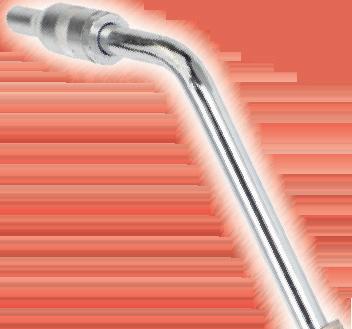
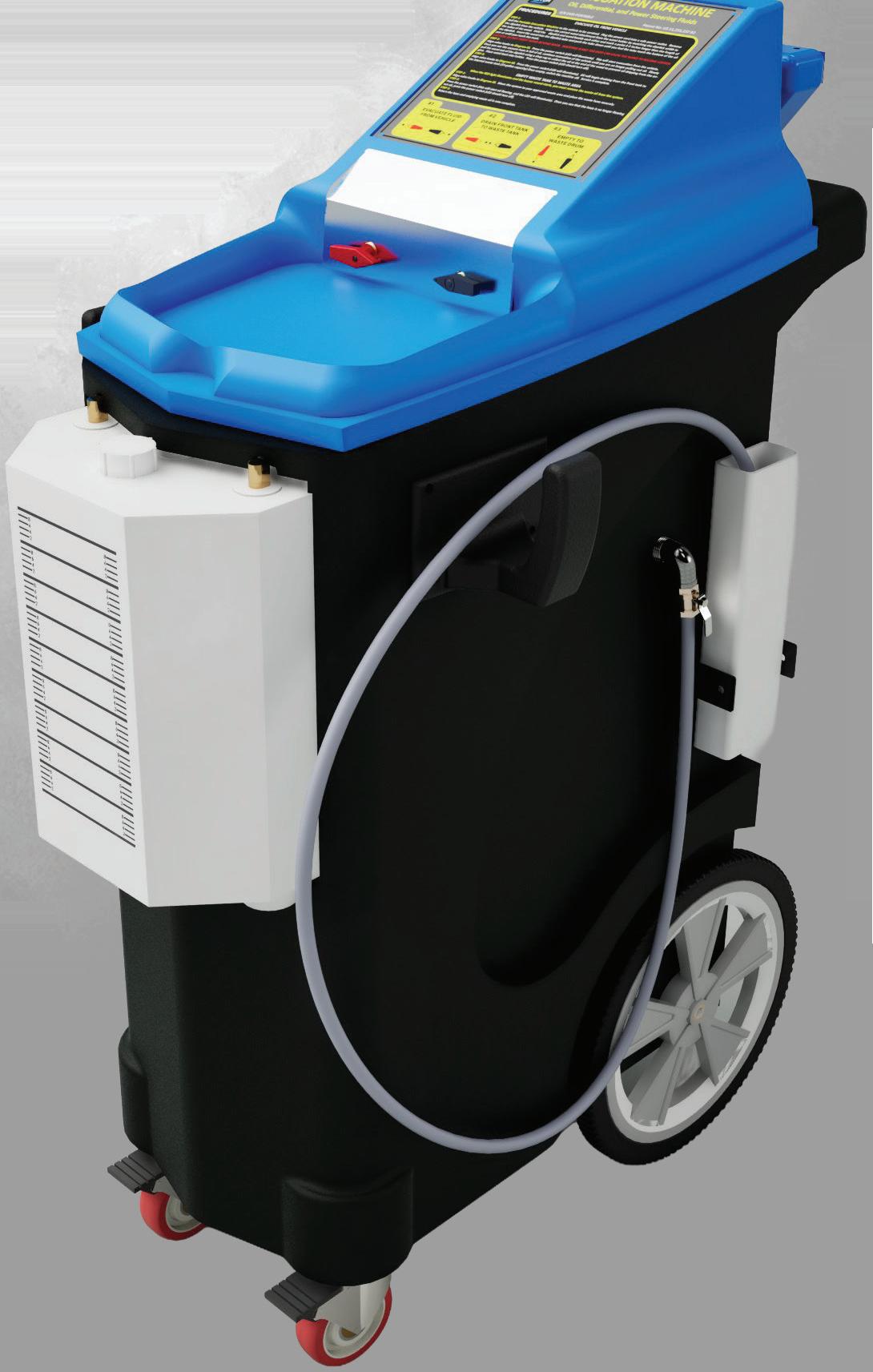
• Designed for rapid top p - side oil evacuation, compatible with most passenger vehicles
• Ships with multiple suction wands for extensive vehicle compatibility
• Internal 15 5 - gallon tank allows for multiple vehicle evacuations between pump off to oil tank
• Most vehicles have complete oil evacuation in under 4 minutes
• Also evacuates power steering and differential fluids
NOLN is delivered free to qualified quick lube and fast-service professionals—USPS periodicals rules require us to update subscriber records regularly. If you haven’t renewed recently, please take a moment to confirm your information. It keeps your issues coming without interruption.
Confirm your info and keep receiving
Give Your Team a Spark by Shaking Things Up
Adam Tatum is director of operations for the Virginia Group, a Jiffy Lube franchisee with 11 locations.
He has over a decade of experience in the industry with a proven track record of building customer counts and sales, as well as using innovative ways to bring a new look to the automotive field for both the customer and the employee. Performance comes from growing your business through people.
Although often reliable, an experienced team sometimes falls victim to monotony. Staff competitions and new services can keep techs engaged
WHEN YOU HAVE A VERY EXPERIENCED team, you are likely doing well in operations. These guys know what to do, when to do it, and the best way to do it. But there is a downside to a lot of experience. When you get to a certain level, you tend to see people rest on their laurels and become set in neutral. This is a habit that we can combat, but it takes work to get them back into that go-get-it attitude.
As a generality, the quick lube business is entry-level automotive. We hire many young technicians, train them up to a certain level, and a number will leave with that experience to head to a bigger shop or a dealership. Do a quick account of your turnover, and see how many rising techs left you for those opportunities. So, when you have a very experienced crew, they get comfortable. In our industry, we are looking for growth each year. Whether that is from higher sales, more cars, or an increasing KPI, we want growth. Below, we will discuss a few ways to fight stagnation.
Let us start with the easiest thing that you can do: Hold a contest. Simple enough, but when you have seasoned managers trying to duel their younger peers, this can reignite a fire in them and a crew. You can choose any metric that you want to focus on at the time. Maybe you are not growing car count as you were in the last few years. Set up a challenge where you are rewarding the location with the highest increase. Maybe you want to get your tire rotation and filter sales up. Run a contest that sets up points for each sale made. The prizes do not
have to be monetary, as you could do something like a store cookout for the winner. Things like that build teamwork.
Another method to bring motivation back into a shop is to introduce a new service. When people do the same things repeatedly, they need a challenge to get them going. Bring in a new machine, teach, and train, and set them loose on getting it going.
Maybe it’s not a machine that would require a return on investment time. Maybe it’s starting a program with brakes or tune-ups. These actions would bring more revenue into your business and get your guys excited about working on something new.
In building off that last suggestion, when you want to bring in a new service or program, you could get some training time in. One thing that teams want is to know that there is a path forward in their career advancement. Let’s say that you want to start doing brakes on a daily basis. Send your manager to train and get an ASE certification. They will feel that you are investing in them, and they will be motivated to show you that in return.
In the end, there are ways to get your teams reignited. Maybe you will try one of the ideas that I have discussed. Maybe you will try something that you have come up with. Just remember one saying: “Doing the same thing over and over again and expecting a different result is the definition of insanity.” If you want to move forward or get better results, you need to be willing to try something different.
PHOTO: LUCAS MOORE
API-LICENSED ENGINE OILS
DRIVE PERFORMANCE
Improve engine performance and fuel economy, fight everyday wear and tear and help reduce emissions.
API-licensed oils display an API certification mark to signify the highest performing oils.
To search the complete list of licensed companies and products, visit our licensee directory at: API.org/EOLCS
TO OUR READERS,
As National Oil and Lube News celebrates 40 years of covering the quick lube industry, we want to express our gratitude and appreciation for you—our loyal readers. We have taken great pride in serving you as the only media brand dedicated to quick lube and fast maintenance business owners, operators, and managers.
Over the past four decades, NOLN has evolved with the quick lube business, but our core mission has remained the same: Deliver valuable insights and data, business best practices, breaking news, and original profiles of the industry’s leaders.
Whether you’re a loyal reader of our magazine, a daily visitor to NOLN.net, or a subscriber to the NOLN Podcast or our newsletters, we appreciate you for entrusting National Oil and Lube News as the quick lube authority for 40 years, and we look