






HEMPY: START WITH THE LAST TWO MINUTES PAGE 42
























HEMPY: START WITH THE LAST TWO MINUTES PAGE 42








NOLN (USPS PERMIT 23608), (ISSN 1071-1260 PRINT) IS PUBLISHED 10 TIMES YEARLY (JANUARY/FEBRUARY, MARCH, APRIL, MAY, JUNE, JULY, AUGUST, SEPTEMBER, OCTOBER, NOVEMBER/DECEMBER) BY ENDEAVOR BUSINESS MEDIA, LLC. 201 N MAIN ST 5TH FLOOR, FORT ATKINSON, WI 53538. PERIODICALS POSTAGE PAID AT FORT ATKINSON, WI, AND ADDITIONAL MAILING OFFICES. POSTMASTER: SEND ADDRESS CHANGES TO NOLN, PO BOX 3257, NORTHBROOK, IL 60065-3257. SUBSCRIPTIONS: PUBLISHER RESERVES THE RIGHT TO REJECT NON-QUALIFIED SUBSCRIPTIONS. SUBSCRIPTION PRICES: U.S. ($93 PER YEAR). ALL SUBSCRIPTIONS ARE PAYABLE IN U.S. FUNDS. SEND SUBSCRIPTION INQUIRIES TO NOLN, PO BOX 3257, NORTHBROOK, IL 60065-3257. CUSTOMER SERVICE CAN BE REACHED TOLL-FREE AT 877-382-9187 OR AT NATIONALOILLUBENEWS@OMEDA.COM FOR MAGAZINE SUBSCRIPTION ASSISTANCE OR QUESTIONS.
PRINTED IN THE USA. COPYRIGHT 2026 ENDEAVOR BUSINESS MEDIA, LLC. ALL RIGHTS RESERVED. NO PART OF THIS PUBLICATION MAY BE REPRODUCED OR TRANSMITTED IN ANY FORM OR BY ANY MEANS, ELECTRONIC OR MECHANICAL, INCLUDING PHOTOCOPIES, RECORDINGS, OR ANY INFORMATION STORAGE OR RETRIEVAL SYSTEM WITHOUT PERMISSION FROM THE PUBLISHER. ENDEAVOR BUSINESS MEDIA, LLC DOES NOT ASSUME AND HEREBY DISCLAIMS ANY LIABILITY TO ANY PERSON OR COMPANY FOR ANY LOSS OR DAMAGE CAUSED BY ERRORS OR OMISSIONS IN THE MATERIAL HEREIN, REGARDLESS OF WHETHER SUCH ERRORS RESULT FROM NEGLIGENCE, ACCIDENT, OR ANY OTHER CAUSE WHATSOEVER. THE VIEWS AND OPINIONS IN THE ARTICLES HEREIN ARE NOT TO BE TAKEN AS OFFICIAL EXPRESSIONS OF THE PUBLISHERS, UNLESS SO STATED. THE PUBLISHERS DO NOT WARRANT EITHER EXPRESSLY OR BY IMPLICATION, THE FACTUAL ACCURACY OF THE ARTICLES HEREIN, NOR DO THEY SO WARRANT ANY VIEWS OR OPINIONS BY THE AUTHORS OF SAID ARTICLES.








EDITORIAL DIRECTOR Chris Jones
EDITOR Tom Valentino
ASSISTANT EDITOR Kacey Frederick
SPECIAL PROJECTS EDITOR Emily Kline
CONTRIBUTING WRITERS
Adam Tatum, Scott Hempy, Carol Badaracco Padgett, Peter Suciu, Enid Burns
Adam Tatum, DIRECTOR OF OPERATIONS, VIRGINIA GROUP
Scott Hempy, CEO, OILSTOP DRIVE-THRU OIL CHANGE AND HAPPY’S DRIVE-THRU CAR WASH
Aleisha Hendricks, OWNER/OPERATOR, GREASE MONKEY QUICK LUBE AND MONKEY SHINE CAR WASH
Shawn Gilfillan, OWNER, AUTOMOTIVE MAGIC AND MAGIC LUBE & RUBBER
PUBLISHER Greg Smith gsmith@endeavorb2b.com
ACCOUNT EXECUTIVES
Kyle Shaw kshaw@endeavorb2b.com
Diane Johnston
djohnston@endeavorb2b.com
Marianne Dyal mdyal@endeavorb2b.com
Chad Hjellming chjellming@endeavorb2b.com
Cortni Jones cjones@endeavorb2b.com
Lisa Mend lmend@endeavorb2b.com
Sean Thornton sthornton@endeavorb2b.com
ART DIRECTOR Erin Brown
PRODUCTION MANAGER Rita Fitzgerald
AD SERVICES MANAGER Jen George
CEO Chris Ferrell
COO Patrick Rains
CDO Jacquie Niemiec
CALO Tracy Kane
CMO Amanda Landsaw
EVP TRANSPORTATION GROUP Chris Messer
VP OF CONTENT STRATEGY, TRANSPORTATION GROUP Josh Fisher
LETTERS TO THE EDITOR
Send letters to news@noln.net
Endeavor Business Media does not accept responsibility for advertising content.
Driving Force
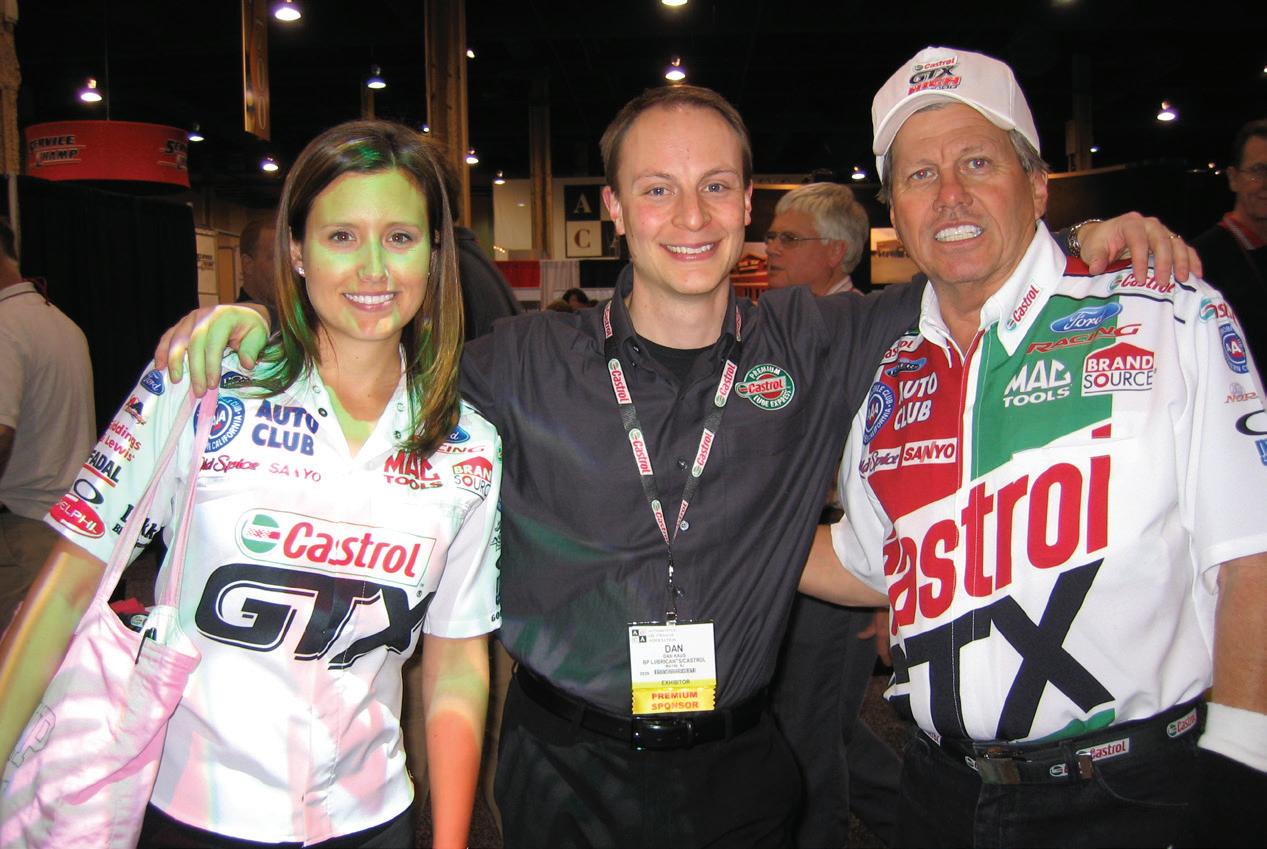
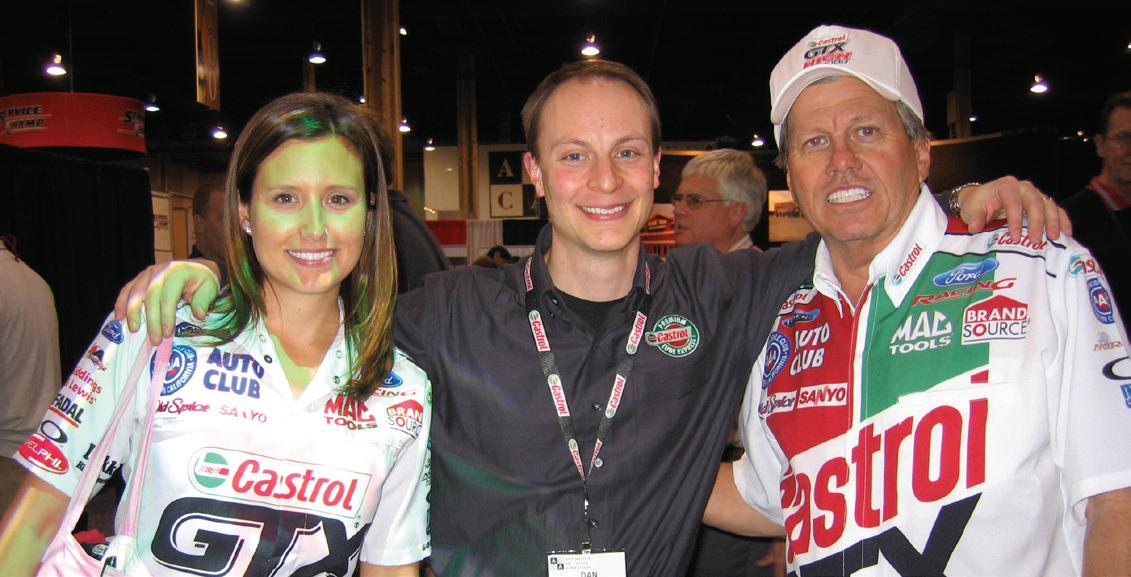
Dan Kaus, pictured with drag racers Ashley Force Hood and John Force, was integral in the launch of Castrol Premium Lube Express as BP Lubricants’ workshops brand manager.
28 NOLN AT 40
As quick lube marketing has become a sophisticated, technology-driven discipline, its core principles have endured BY TOM VALENTINO

As more auto service businesses are met with AI tools in the market, NOLN chats with the companies behind two leading platforms about what they seek to offer quick lube shops
BY KACEY FREDERICK
36 FOCUS
The quick lube industry’s biggest players continue to grow, evolve, and shape the future of automotive maintenance. Who is leading the way in 2026?
BY TOM VALENTINO
6 ONLINE
Analyst: Middle East conflict’s impact will reverberate on industry
8 NUMBERS
Family business
14 AROUND THE INDUSTRY SEMA opens nominations for 2026 Industry Awards
10 INDUSTRY INSIGHT
Why oil changes still matter in technician training
18 QUICK LUBE Q&A
Jason Hanthorn, Lubrizol Corp.
32 PIT STOP
Power of points: Reward programs drive customer retention and increase revenue
34 CUSTOMER SERVICE
Curb appeal with a hands-on approach
40 CASE STUDY
Strike up the rebrand
20 FROM THE SHOP
Successful leaders balance people, performance, and profit BY ADAM TATUM
42 MAINTAINING THE MISSION
Start with the last two minutes BY SCOTT HEMPY
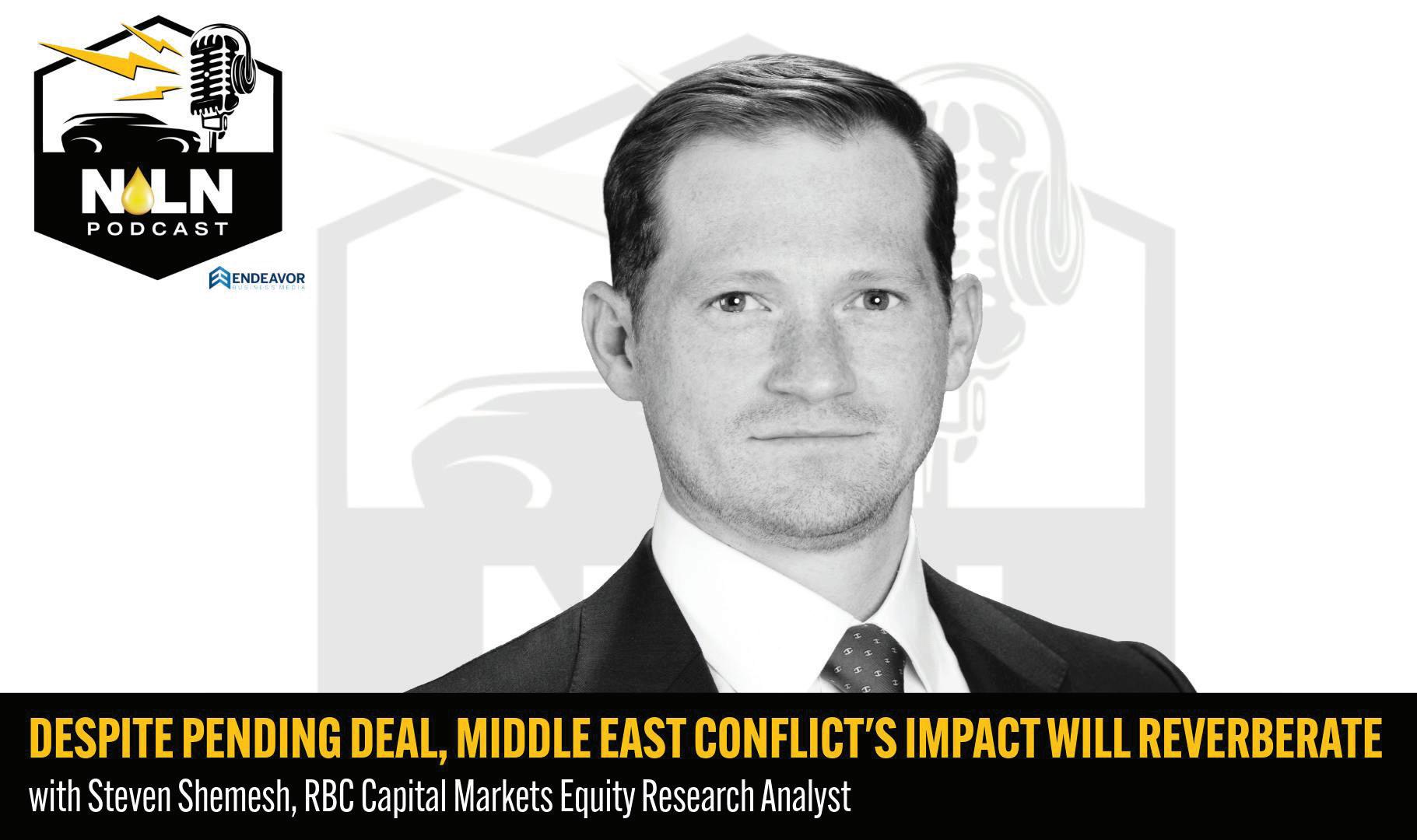
RBC Capital Markets analyst Steven Shemesh explains why operators should expect lingering effects from months of conflict that drove up crude oil prices and created supply chain disruptions. He also breaks down how operators of different sizes have been impacted by recent events, and what industry leaders from all corners can learn from this experience.
While some operators have proactively stockpiled inventory and adjusted their pricing strategies, others—particularly small independent shops—risk losing customers and profitability if they fail to prepare for tightening supplies.
Stay current on how the Middle East conflict is impacting quick lube operators at NOLN.net.

Head online to check out NOLN’s library of podcast interviews. Hear from quick lube leaders about new strategies, service stories, and innovative operations that push the industry forward.
Listen and subscribe at: noln.net/podcasts or subscribe to the NOLN Podcast on your favorite listening app.




Have you subscribed to the newsletter? NOLN will send the latest industry news, strategies, and profiles straight to your inbox. Sign up at: noln.net/subscribe.
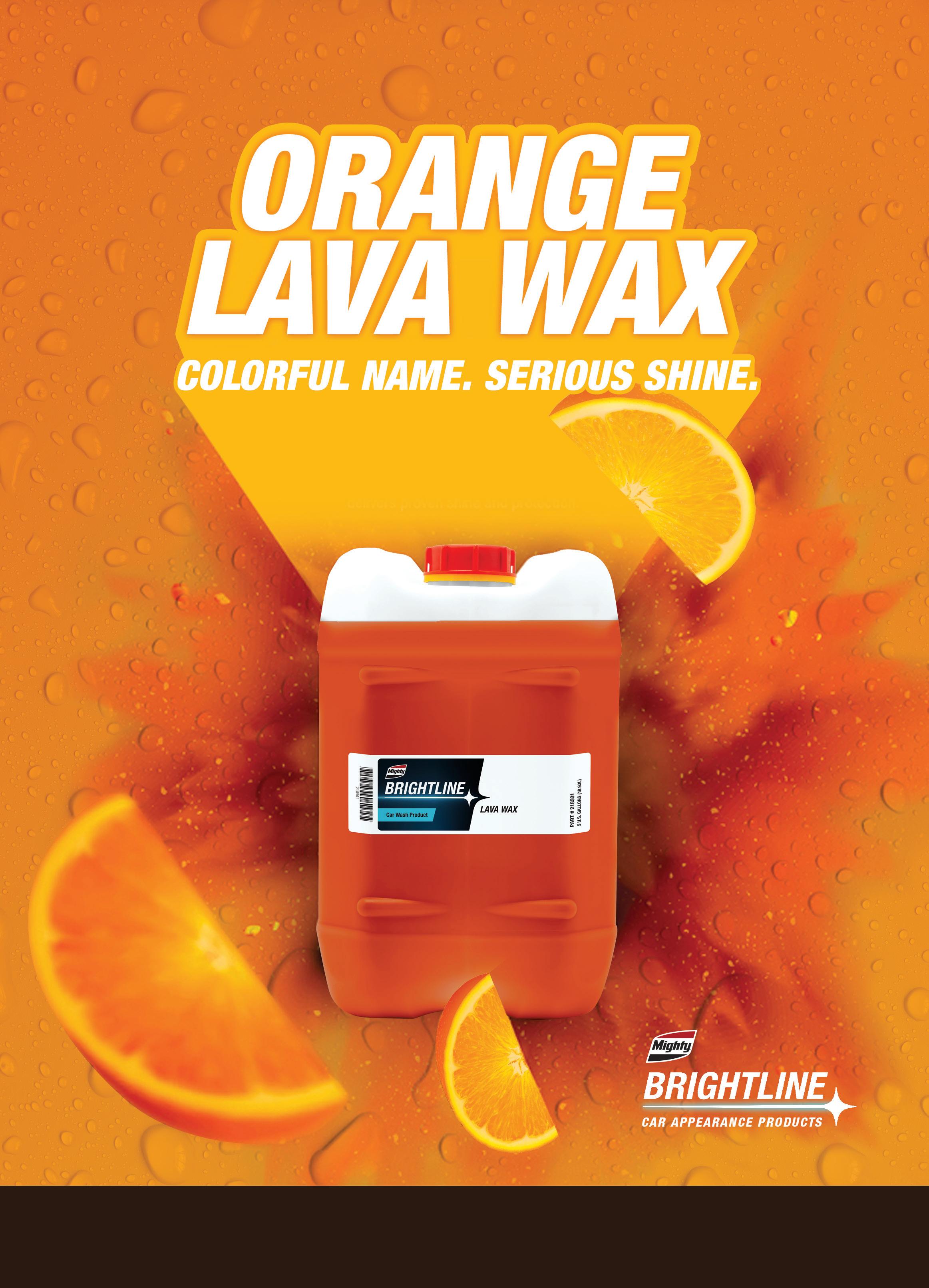

The bright orange foam and bubble gum fragrance make your car wash the freshest scene in town, while the micronized carnauba formula delivers proven shine and protection.
From parents to grandchildren, quick lube shops are oftentimes family businesses that span generations. For the 2026 NOLN Operator Survey, we asked shop owners if they have family members who work for their business, and two-thirds of owners told us they have relatives on the payroll.
Sibling(s)
Niece/nephew 0.6%


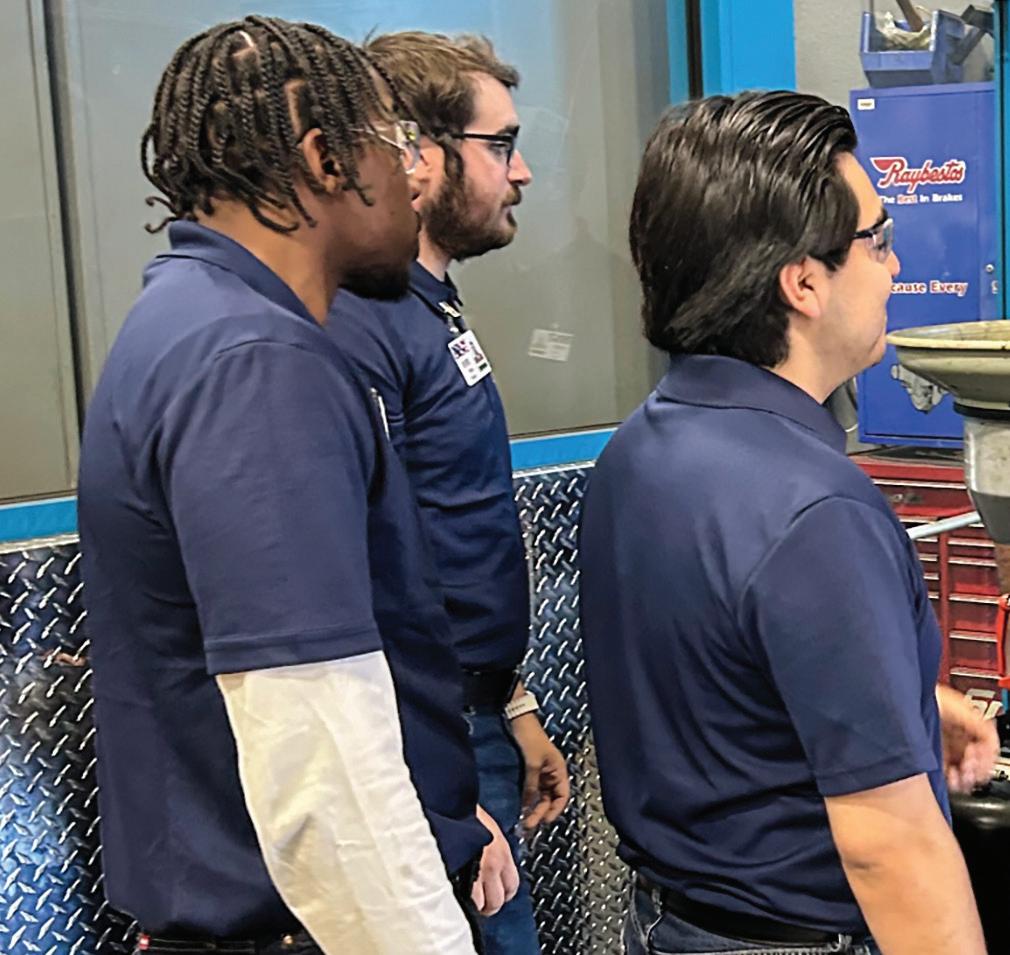
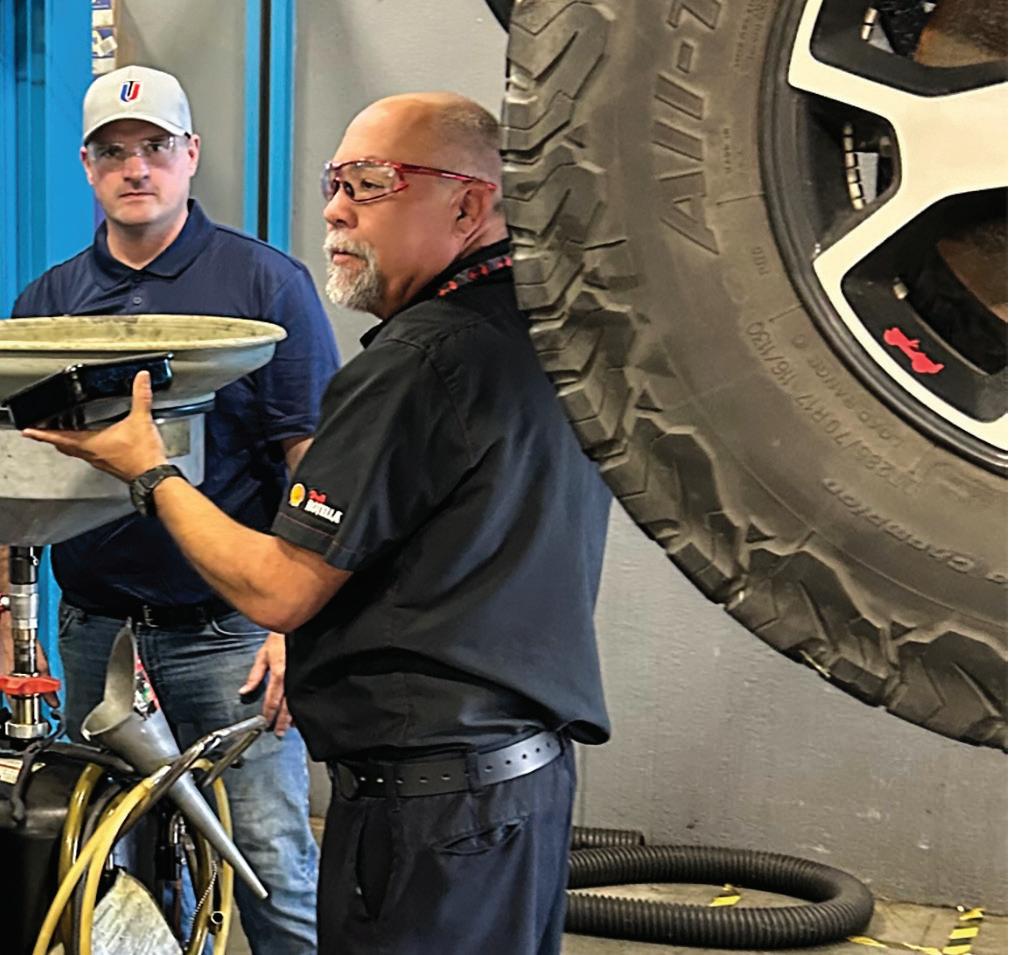
“They’ve asked for us to sort of go back to the basics, back to oil changes,” says Tony Frassetto, director of business alliances.
BY CHRISTINE SCHAFFRAN
AT THE UNIVERSAL TECHNICAL
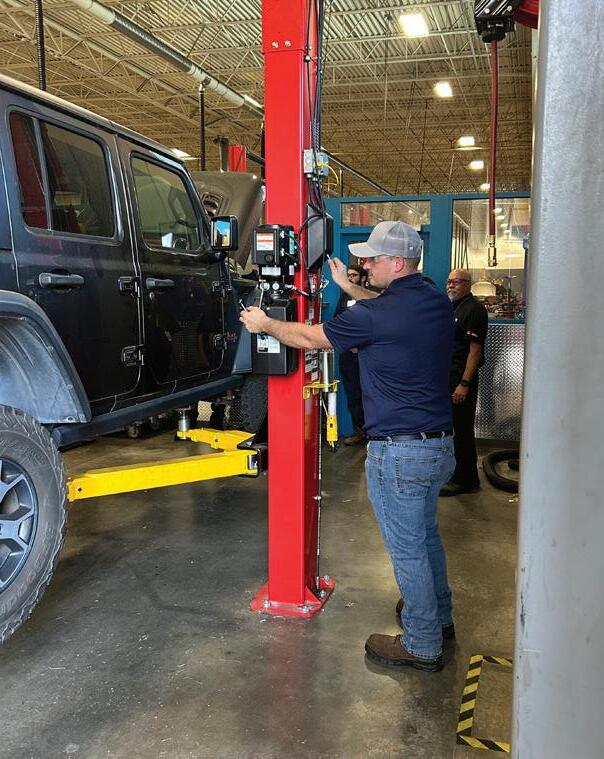
Institute campus in Mooresville, North Carolina, 35 dealerships, trucking companies, quick service operators, and recruiters recently lined the parking lot under blue skies for the school’s biannual career fair. In an unusual twist, the students had the upper hand.
Instead of trying to convince employers to hire them, many students were evaluating which employer offered the strongest longterm opportunity.
Across the country, dealerships, quick lube operators, and independent repair shops are all competing for the same thing—entry-level
technicians who can contribute quickly. For the oil and lube industry, that competition makes one question especially important: Are new technicians truly prepared for the realities of the service bay?
At UTI, the answer starts with a surprising focus—oil changes.
As vehicles become more advanced with ADAS systems, electrical diagnostics, and increasingly complex service requirements, employers might be expected to ask for more advanced technical training. Instead, many are asking schools to reinforce the fundamentals.
That feedback came directly from employers and advisory councils who know where most technician careers actually begin.
“The very least that they need to know is … to go out into the industry and do a perfect oil change,” Frassetto says.
For quick lube operators, that should sound familiar. Oil changes may be viewed as entry-level work, but they are also where technicians learn consistency, inspection habits, customer trust, and attention to detail.
Those fundamentals matter because a technician who cannot handle the basics will struggle with larger repairs later.
“If you skip the basics, you’ll mess





up your diagnosis,” says instructor Charles Buchanan.
That mindset is changing how UTI trains students. Oil changes are not treated as routine work—they are part of the foundation.
Many graduates do not walk directly into advanced diagnostics or A tech roles. They begin in the quick lane.
“They’re not going to leave here at 20 years old and be turned loose in a garage,” says John Dodson, vice president of business alliances. “They’ll either go on to BMW or Mercedes, or they’ll go to a garage, and they’ll start out in the quick lane, and they’ll move their way up.”
That progression is important for the quick lube industry, as these establishments are often the first taste technicians get in the “real world.” It’s where they hone their skills and prove that they can handle the job. For shop owners, that means hiring should be about identifying those who have what it takes to advance.
The demand for those entry-level technicians is intense—especially right now.
Campus director Robert Kessler puts it simply: “These employers, usually they come in and tell us, ‘I don’t need one. I need, like, three or four guys. Can you help us?’”
Dodson says the shortage continues to widen.
“There are three jobs available for every student,” he notes.
That realization has shifted the hiring dynamic. Shops are no longer simply choosing technicians—technicians are choosing shops instead.
Frassetto describes the mindset students bring into the biannual career fairs held at campuses like UTI-Mooresville.
“They can basically sit down with them and be like, ‘What are you gonna offer me?’” Frassetto says.
That offer often includes more than hourly pay. Tuition reimbursement, tool allowances, moving stipends, and flexible scheduling are increasingly expected by graduates evaluating their options.
For quick lube operators competing against dealerships and large franchise groups, attracting talent now requires more than posting an opening. One of the biggest challenges for quick lube operators is retention. Many students see those jobs as temporary, not as long-term careers.
Margie Decker, director of student and career services, says the best employers solve that by showing a clear future.
“I think showing a pathway so that they have a clear understanding (is important),” she says. “Most of our students are taking those jobs as part-time jobs right now, while they’re in school, they’re not thinking of them as long-term careers.”
But that pathway matters. Students want to see how they will transition into diagnostics, leadership, management, or even ownership.
“And when you have an organization that can build and incentivize those individuals to stay, whether they become an owner of a franchise or what they do with it, that’s the ticket,” Decker says.
Frassetto says mentorship is one of the most effective retention tools.
“Bring them in with a plan for growth, you know, put them under a master technician or someone who’s sort of like their mentor,” he says.
That support helps young technicians see the first job as the beginning of a career, not just a temporary stop.
The Universal Technical InstituteMooresville offers six core programs including: Automotive & EV Technology, Welding Technology, HVACR Technician, Electrical & Industrial Maintenance Technology, Electrical, Electronics, & Industrial Technology, Electrical, and Robotics & Automation Technology. Plus, Mooresville offers NASCAR-endorsed training and manufacturer-specific advanced training options for automotive graduates, including Ford FACT and Mopar TEC.
The team manages 90-plus brand relationships across UTI campuses nationwide including brands like Pennzoil, Harley-Davidson, Peterbilt, Kawasaki, Ford, Honda, Jeep, GMC, Mercedes, and Suzuki. The focus is on helping companies engage, recruit, and/or support the next generation of aspiring technicians through product/training-aid inclusion, digital promotion (UTI Go), campus presence/branding, and on-campus engagement.
UTI operates 16 campuses across 10 states with additional new campuses planned, such as UTI–Salt Lake City in West Jordan, Utah, which is slated for opening in 2027.
Source: John Dodson, vice president of business alliances, UTI-Mooresville
“Right now, the more electrical, the better,” says Bobby Leatherman, education manager at UTI-Mooresville.
Even though skills such as electrical diagnostics are viewed as more valuable, there is still something to be said for learning “the basics” and performing well under pressure. Oil changes remain the first test of professionalism, discipline, and trust.
They are also becoming more technical. Changing oil today means understanding specifications, viscosities, and evolving manufacturer requirements. For lubricant brands and suppliers, that creates an opportunity to play a bigger role.
“All of our partners should be educators, too,” Kessler notes.
Helping technicians understand why a product matters—not just
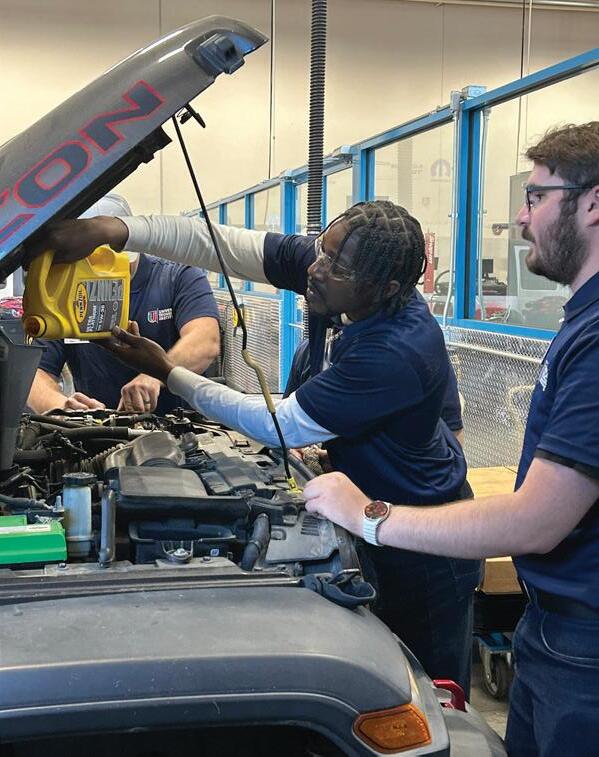
which one to use—builds stronger shops and ultimately better relationships with customers, who trust the information they are being given by confident, knowledgeable technicians.
best example of what employers are looking for. He drives two hours each way to campus every day, working toward a future in performance and motorsports.
When asked what he is taking with him after graduation, his answer is immediate.
“Precision under pressure is the biggest thing that I’m taking away,” he says.
That mindset matters because the first job is rarely the destination.
For the oil change industry, the message from UTI is clear: The technician shortage will not be solved by simply graduating more students. It will be solved by developing technicians who can walk into a shop, master the basics, and keep growing.
And that still starts with getting the oil change right.



Improve engine performance and fuel economy, fight everyday wear and tear and help reduce emissions. API-licensed oils display an API certification mark to signify the highest performing oils.

To search the complete list of licensed companies and products, visit our licensee directory at:
The Specialty Equipment Market Association has opened nominations for its SEMA Industry Awards, as shared in a recent press release.
The SEMA Industry Awards recognize individuals and companies that have demonstrated excellence, innovation, and leadership in the automotive aftermarket over a yearlong period. Nominations this year are due Aug. 17.
The program recognizes honorees in five different categories:
• Channel Partner of the Year: Honors a sales channel partner for outstanding service to the sales, distribution, retail, and/or e-commerce channel(s) of the industry.
• Content Creator of the Year: Honors a content creator for their outstanding contributions to the automotive culture and for creating a positive impact with automotive enthusiasts.
• Manufacturer of the Year: Honors a manufacturing company for its outstanding industry contributions and innovations.
• Person of the Year: Honors an individual for their outstanding contributions to SEMA and the broader automotive specialtyequipment market.
• Visionary 8: Honors eight emerging leaders aged 35 and under who are on track to drive innovation and positive change in the automotive aftermarket.
Winners will be recognized at the 2026 SEMA Show, held Nov. 3-6 in Las Vegas.
Stellantis has recalled over a million Jeep vehicles due to an issue that could cause overheating and potentially a fire, reports The Detroit News. Included in the recall are an estimated 1.1 million vehicles, consisting of model year 2021-25 Wranglers and Gladiators made in the United States.
As discovered by the automaker during an internal investigation, the electric hydraulic power steering pump wiring in the vehicles is prone to poor electrical connection. This can cause overheating, and in a rare event may lead to a fire, as shared by company spokesperson Frank Matyok.
A solution is expected to be put out in July. In the meantime, vehicle owners are urged to have the wiring harnesses and electric hydraulic power steering pumps of their vehicles inspected.
Meanwhile, over 400,000 Jeep vehicles are being recalled due to a defect with the airbag, according to a report from WKRC-TV. Included in the recall are 2022-26 Jeep Grand Cherokees and 2023-25 Jeep Grand Cherokee Ls.
As shared by the National Highway Traffic Safety Administration, the defect lies with the vehicles’ Occupant Restraint Controller, and can cause the airbag to deploy slower than normal.
Valvoline Inc. announced the winners of its 32nd annual Oilympics competition in a recent press release.
The Oilympics field is made up of 39 regional teams, rising
through local and market qualifiers to represent the top 1% of Valvoline’s technicians across the entire network in the U.S. and Canada.
The tradition dates to 1994 and has grown alongside Valvoline’s network of more than 2,400 company-owned and franchised locations in North America, operating under the Valvoline Instant Oil Change and Valvoline Great Canadian Oil Change brands.
This year, teams were welcomed to the company’s corporate headquarters in Lexington, Kentucky. The first-place gold medal winners for the U.S. team were the Valvoline Instant Oil Change franchise team representing Henley Enterprises from West Covina, California, consisting of Vanessa Little, Algenis Santos, and Lars Rodriguez.
For Canada, the Great Canadian Oil Change franchise team representing Regina Franchise Group from Regina, Saskatchewan, made up of Gage McKay, Josh Baber, and Aidan Holma, came in first.
Silver and bronze medalists, most valuable player, and best overall service experience were also recognized.
FullSpeed Automotive recently announced the appointment of three senior executives to its executive leadership team in a press release. • Todd Vogensen as Chief Financial Officer: Vogensen brings over 30 years of financial leadership experience, having served as CFO at Purple Innovation, Party City Holdco, and Chico’s FAS. He’s also held senior finance roles at






















Michaels Stores, Gap, Inc., and PricewaterhouseCoopers.
• Corina Ort as Chief People Officer: Ort is a human resources executive and SHRM Senior Certified Professional (SHRMSCP) with deep experience building strategic people functions in consumer-facing, multi-unit environments. Most recently, she served as the head of HR at Sky Zone, where she led HR strategy across a fast-growing franchise organization.
• Kyle Benko as Senior Vice President of Finance and Controller: Benko comes from TBC Corp., with a background in automotive services finance that brings immediate industry relevance to his role overseeing financial reporting, controls, and accounting operations.
Way, a digital platform helping drivers access automotive services, announced a new partnership with Take 5 Oil Change in a recent press release.
Through the partnership, drivers can claim their offers at participating Take 5 locations through Way.com and the Way app, and can receive services at fleet level discounts.
The announcement comes as more quick lube chains are deciding to co-opt coupon and discount services as a way to attract an entire new customer base.
Services available through the partnership include oil changes, air filter replacements, windshield wiper blade replacement, and coolant exchange, as well as complimentary fluid top-offs and tire pressure checks.
Drivers can search for a Take
5 location by visiting Way’s Auto Repair page. Shops interested in joining Way’s network can also sign up by completing an online form on Way’s website.
Ford has issued a recall for over 250,000 vehicles due to an issue that can cause the engine to stall, reports CBS News.
Included in the recall are 201218 model year Ford Focus vehicles. The issue lies with the canister purge valve, which is prone to getting stuck open. This can cause the engine to stall while driving.
Dealers will implement a powertrain software update to resolve the issue. Notices to vehicle owners were slated to be mailed between July 6 and July 10.
TOPS ENTREPRENEUR’S 2026
AUTOMOTIVE FRANCHISES LIST
Entrepreneur recently published its 2026 ranking of Top 10 Automotive Franchises, with Valvoline Instant Oil Change topping the list.
Based on data submitted for Entrepreneur’s 2026 Franchise 500 Ranking, Valvoline Instant Oil Change was ranked first place in this year’s Top 10 Automotive Franchises, which was released alongside rankings of franchises in several other industry sectors.
Following Valvoline in rank No. 2 was Tommy’s Express Car Wash. Midas ranked third, while Jiffy Lube came in fourth, and Take 5 Oil Change in fifth.
Express Oil Change & Tire Engineers has announced two new store openings in recent press releases, expanding its presence in both Alabama and Georgia.
The company has launched a new store in Fairhope, Alabama, the brand’s newest location in the Daphne-Fairhope-Foley metropolitan area. Additionally, a new store in Port Wentworth, Georgia, was also announced. These openings come after other recent store launches, including in South Carolina and Mississippi.
The ASE Training Managers Council has released the results of its 2026 Training Benchmarks survey.
Providing insights into technician training needs, industry trends, and workforce development priorities, this year’s survey generated a significant increase in participation, with responses up by approximately 65% compared to 2025.
Findings from the 2026 survey showed that technicians remain focused on practical, career-relevant education, with electrical/ electronic systems, hybrid/EV systems, ADAS, and advanced engine performance ranking among the most requested training topics.
The survey also highlights ongoing challenges in training accessibility, including unavailable course topics, quality concerns, scheduling conflicts, and training costs.


development for Lubrizol Corp. in Northeast Ohio. Hanthorn explains what factors go into the creation of a specification and who is involved in the development process, and he also notes some common misconceptions about oil requirements for modern engines.
Editor’s note: This interview has been edited for length and clarity.


Jason Hanthorn, Lubrizol senior manager of product development, explains how and why oil specifications for modern engines are evolving
BY TOM VALENTINO
AS ENGINES EVOLVE, so too do the specifications around motor oil. As such, it’s vital for quick lube operators and technicians to stay up to date on specs to ensure the vehicles that pull into their bays are being filled with the
proper oil to continue running smoothly and stay in warranty.
To get a better understanding of how and why oil specs are changing, NOLN recently caught up with Jason Hanthorn, senior manager of product
NOLN: Why are the recommendations for motor oil for modern engines changing?
Jason Hanthorn: Oil recommendations are constantly changing to keep up with what the automotive manufacturers do. Automakers are, of course, constantly looking to squeeze more efficiency out of engines. They’re looking to reduce emissions to meet ever-tightening government legislation around the globe. And they’re looking to maintain or improve performance at the same time. So, usually, what that means is downsizing to smaller engines, using things like turbochargers, direct injection, tighter tolerances in the engines essentially in order to squeeze out every bit of performance that they can. When they make these changes, it results in engines running hotter, higher pressures—a more severe operating environment for the oil. To keep pace and maintain thermal stability and protection against wear, protection against things like lowspeed pre-ignition, the oil formulations have to adapt to continue to provide that protection under these conditions.
NOLN: Tell us a little bit about what’s in a spec, who’s behind specs, and why they’re changing.
Jason Hanthorn: Specification upgrades come around not on a set schedule, but every period of some
years, right? And it usually is driven by OEMs. So, the spec process usually starts off—or should start off—with ILSAC, which is a collection of OEMs for the North American market, putting out a needs statement to the industry. And that needs statement usually reflects some performance deficit that needs to be addressed. A good example is the GF-7 specification to address low-speed pre-ignition warranty claims. There was the inclusion of a new test to measure ability to protect that LSPI over an entire drain interval, so an aged component to that test. Or it could be driven by legislation, so OEMs facing more strict emissions or fuel economy standards, and their response is to put that back out to the industry and say we need these lubricants to provide more fuel efficiency. It could be we need to restrict certain elements in order to protect catalysts— things like that. From there, it’s kind of a working collaboration between the ILSAC, so the OEMs, API, which represents the oil marketers, and then ACC, which represents the additive manufacturers. Everybody has a seat at the table to determine what these next specifications should be.
NOLN: What are the most important things quick lube operators and technicians need to know with regards to what’s happening with oil recommendations and specs?
Jason Hanthorn: I think it’s important that lube techs stay connected to the latest specifications and what is changing for the specifications and why. Not just understanding the name of the spec, you need to know more than it’s just GF7. Maybe know why there was a need for this improved. low-speed pre-ignition protection, improved timing chain protection, things like that, and that all kind of goes into making sure that the
fluid that’s recommended is meeting the warranty requirements for the vehicles. OEM specifications can be critical in order to maintain the warranty on your vehicle, so understanding what the new spec is and why it is, and whether or not it’s backwards compatible—not all specifications are backwards compatible. Many are, but some are not. The key is it’s not really safe to assume that one fluid fits all, right? There are different fluids recommended by OEMs for different applications. Staying up to date on that, staying up to date on viscosity recommendations is important for maintaining warranties.
It used to be you could get away with just recommending a heavier viscosity grade for everything. A lot of people have this old-school mentality that thicker is better and you get better protection with a thicker film. But because the OEMs are designing these vehicles’ engines with tighter tolerances, they’re actually being designed with these thinner fluids in mind. So, it’s important to know what viscosity has actually been recommended for every vehicle.
NOLN: Are there other things that quick lube operators should be doing as well, both from a perspective of keeping their employees informed and also helping to make sure the customers that are coming into their shops understand what’s going on?
Jason Hanthorn: For operators of lube shops, it’s important that they build relationships with their suppliers, distributors, or oil marketers directly, the manufacturers that can and will keep them informed of upcoming changes.
Part of a specification upgrade is training people on what is changing and why. Getting the right training up front, investing in that training up front is important. Investing in the
right marketing materials—make sure that you have all the necessary marketing materials in the shops to not only help the technicians that are there, but to help customers to understand why they’re being recommended a product that’s different from maybe what they’ve used in the past. Some people don’t maybe appreciate why the changes are happening, and especially if it comes with any sort of cost increase. Nobody wants to have to pay more for their oil change, but it’s important to help people understand the value proposition behind these new products.
NOLN: Are there any other recommendations that you have for tracking new products?
Jason Hanthorn: As far as tracking new products ... I’m quite a few steps removed in the chain from the shop operators and how they would manage their inventories and tracking. But I would imagine the most important thing is making sure that you’re anticipating when the change is going to happen, being aware of when exactly this is going to happen so that you can monitor your inventory accordingly in anticipation of the change and making sure that everything that comes in is coded and tracked correctly so that there’s no risk of cross-contamination when the change does happen. Some older legacy specs could have very different elemental requirements in terms of the chemistry in there than some of the newer ones.
Cross-contamination could lead to things like catalyst poisoning, etc. You have to be aware that this is coming, anticipate your inventory levels correctly, and make sure that everything is coded as it comes in, especially maybe at the point of sale when they’re scanning the barcode. It has to be tied to that new specification when that change comes in.

A leader’s ability to create trust, consistency, and teamwork is often what determines whether a shop barely breaks even or becomes a local success story


Adam Tatum is director of operations for the Virginia Group, a Jiffy Lube franchisee with 11 locations.
He has over a decade of experience in the industry with a proven track record of building customer counts and sales, as well as using innovative ways to bring a new look to the automotive field for both the customer and the employee. Performance comes from growing your business through people.
try is both challenging and uniquely rewarding. It requires far more than simply overseeing oil changes or ensuring that vehicles move through the service bay efficiently. In truth, it’s a dynamic blend of management, mentorship, and adaptability. Leaders in this field must unify people, processes, and customers into a functioning system that balances speed, safety, and service quality. Because the business thrives on repeat customers, a leader’s ability to create trust, consistency, and teamwork is often what determines whether a shop barely breaks even or becomes a local success story.
At the foundation of effective leadership in a quick lube business lies operational excellence Unlike other automotive services that can take hours or days, quick lube shops survive on speed. Customers expect to be in and out in under 30 minutes, while still receiving reliable service. That means leaders must build a culture of precision and efficiency. They standardize workflows, assign clear roles, and ensure that the equipment is always organized and functional. A strong leader also trains new employees to perform their roles consistently so that customers experience the same high quality regardless of who is working that day.
Operational efficiency, however, is not solely about mechanics or process charts. It also involves foresight and continual improvement. The best shop leaders observe bottlenecks— such as delays at the register or slow oil disposal—and address them quickly. They invite employee suggestions, experiment with new tools or layout changes, and study data such as average service time per car. Leadership, in this sense, becomes a hands-on craft:
Every small process improvement ripples through the entire shop, saving minutes per job and translating into stronger profits and higher customer satisfaction.
Another key aspect of leadership in the quick lube business is team development and motivation . Many employees in this industry are young or early in their automotive careers. Some are part-time workers balancing school or family obligations. Effective leaders recognize potential rather than experience alone. They invest in training, mentorship, and encouragement. When an employee learns not just how to perform a task but why it matters— how a clean oil filter can prevent engine failure or how proper torque saves a customer’s wheel from damage—they feel more valuable.
In high-turnover industries, retaining employees is a mark of strong leadership. Leaders who create a positive shop environment tend to keep their people longer, reducing costly training cycles. They celebrate small milestones, like a technician’s first certification or a month of zero customer complaints. They also find meaningful ways to recognize effort—through words of appreciation, public acknowledgment, or simple gestures like buying lunch for the crew after a busy weekend. In an environment that can be noisy, fast, and stressful, small acts of respect go a long way.
Open communication reinforces motivation. A quick lube shop functions best when everyone understands both goals and challenges. Skilled leaders hold regular brief meetings to review performance metrics—average ticket size, comeback rates, and customer feedback— so that every team member sees their impact on the business. Equally important is listening.
If a technician feels rushed or unsafe, or if a service writer notices recurring customer confusion, the leader should take these insights seriously and act on them. When employees see that their observations lead to improvements, they become invested partners rather than passive workers.
Strong leadership in the quick lube business also demands exceptional customer service skills . The customers who visit these shops aren’t always car enthusiasts. Many come because they need quick, affordable, and trustworthy service. A good leader teaches and models empathy, transparency, and professionalism. They ensure that every customer is greeted promptly and treated honestly. This might mean explaining why a certain oil is recommended, or advising against an unnecessary service even if it reduces immediate profit. That honesty builds long-term relationships and positive word-of-mouth—still the lifeblood of this industry.
Dealing with unhappy customers is another test of leadership. Mistakes happen—a stripped drain plug, a delayed part, a billing error—but how a manager responds defines the brand. Effective leaders take ownership immediately, address the issue respectfully, and provide solutions. More importantly, they use incidents as teaching moments, showing employees that accountability and calm professionalism matter more than blame.
In recent years, adaptability has become an essential leadership quality in the quick lube industry. Vehicle technology is rapidly changing: Electric and hybrid cars require different fluids, specialized filters, and sometimes no oil changes at all. Environmental regulations are tightening, affecting waste oil disposal and emission standards. Leaders must stay educated about these shifts through trade publications, manufacturer updates, and continuous training. Shops that fail to modernize risk obsolescence. Visionary leaders, by contrast, anticipate these trends, diversify services—such as battery checks, tire inspections, or vehicle diagnostics—and train their teams for the future.
Alongside adaptability comes financial leadership . Successful quick lube managers understand that margins can be razor
thin. They closely monitor inventory to avoid shortages or overstock. They track profitability of services, negotiate effectively with suppliers, and manage labor costs without cutting corners. Yet the best leaders never forget the human side of these numbers. They connect financial goals to the team’s daily work, showing how efficiency, accuracy, and good customer interactions drive growth and job security for everyone. That sense of shared purpose fosters commitment and discourages complacency.
Perhaps the most critical element of leadership in the quick lube business is integrity and safety . Technicians handle machinery, hot fluids, and valuable vehicles, often under time pressure. A careless mistake or risky shortcut can cause injury or major damage. Great leaders establish strict safety standards and follow them visibly. They enforce policies about proper lifts, tool maintenance, and protective gear. By modeling ethical behavior—refusing unnecessary upsells, disclosing errors honestly, and treating customers with respect—they set a tone of professionalism that becomes self-reinforcing within the team.
Leadership in the quick lube business is not defined by titles but by actions. It is the ability to balance speed with quality, authority with empathy, and profit with integrity.
Leadership in the quick lube business is not defined by titles but by actions. It is the ability to balance speed with quality, authority with empathy, and profit with integrity. The most successful leaders are those who can inspire inexperienced technicians to take pride in precision work, foster loyalty among employees who might otherwise drift elsewhere, and nurture lasting trust among customers who want dependable service. They operate with foresight, adaptability, and a deep sense of accountability.
In the fast-moving world of automotive maintenance, such leaders don’t just keep cars running smoothly—they keep entire communities moving forward.





The Digital Tools Entering Quick Lube





As more auto service businesses are met with AI tools in the market, NOLN chats with the companies behind two leading platforms about what they seek to offer quick lube shops by Kacey Frederick
At times today, it can seem that artificial intelligence is inescapable. If you’re in the quick lube industry, you’ve likely wondered what, if anything, this technology means for you. But in a field defined by speed and efficiency, companies behind AI tools have seen auto service as an opportunity to further streamline everyday tasks for shops.
That concept has laid ground for several new products cropping up in the quick lube space. Chains like Jiffy Lube and SpeeDee Oil Change have already seen entire franchisee networks implement AI tools in their own stores.
To get a better look at how shops are using these tools, NOLN spoke with the companies behind a couple of leading AI products marketed to quick lubes to understand what these tools do and what exactly is being offered to auto service businesses.
Leverege started in 2014 with two engineers as co-founders, plus a CEO who is a multi-time entrepreneur with over 30 years of experience. The business initially began in the IoT—Internet of Things—and B2B/ enterprise space, building asset tracking and other IoT-based solutions using devices and sensors.
Over time, the company realized that cameras are extremely versatile sensors, so about five or six years ago, they began focusing on computer vision and AI and machine learning. That shift led to the expansion into multiple industries, including automotive service, and the creation of PitCrew, an automotive service center product.
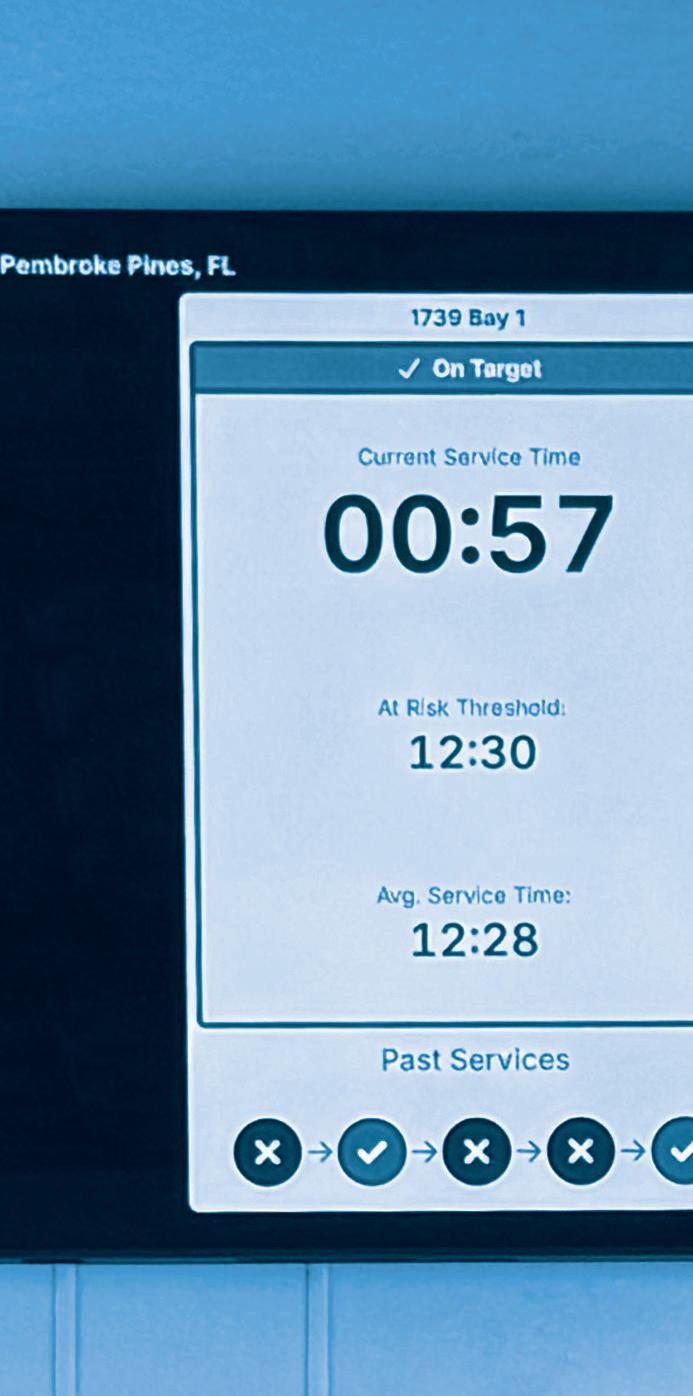
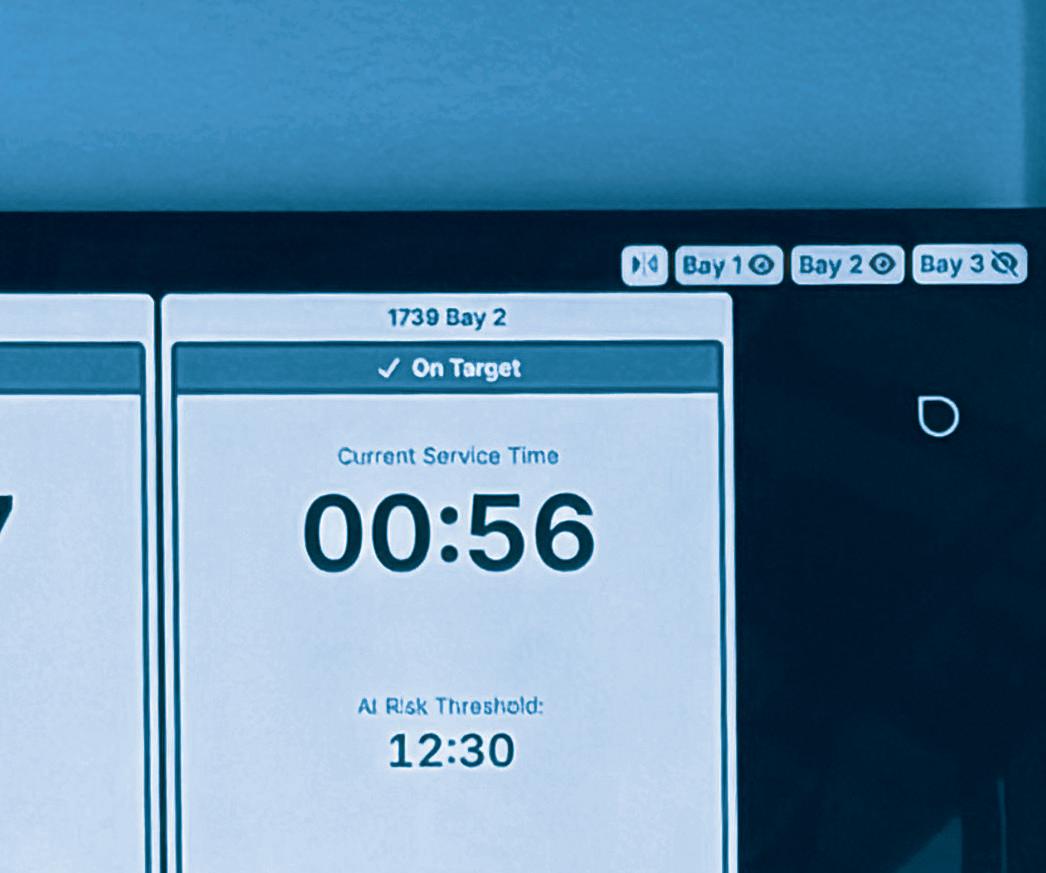
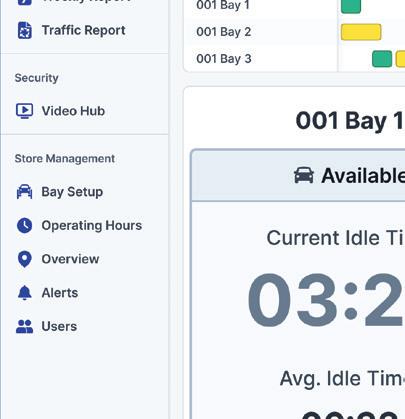
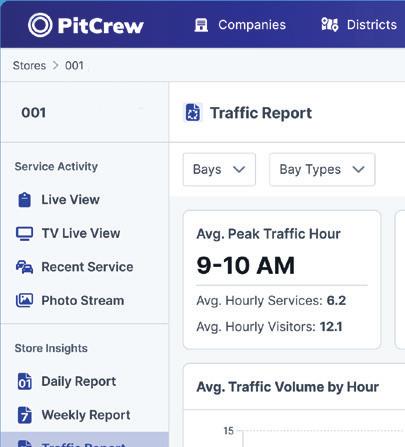
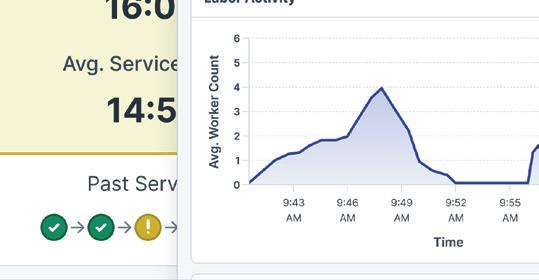
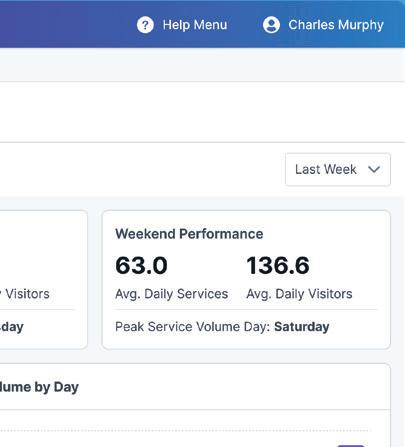
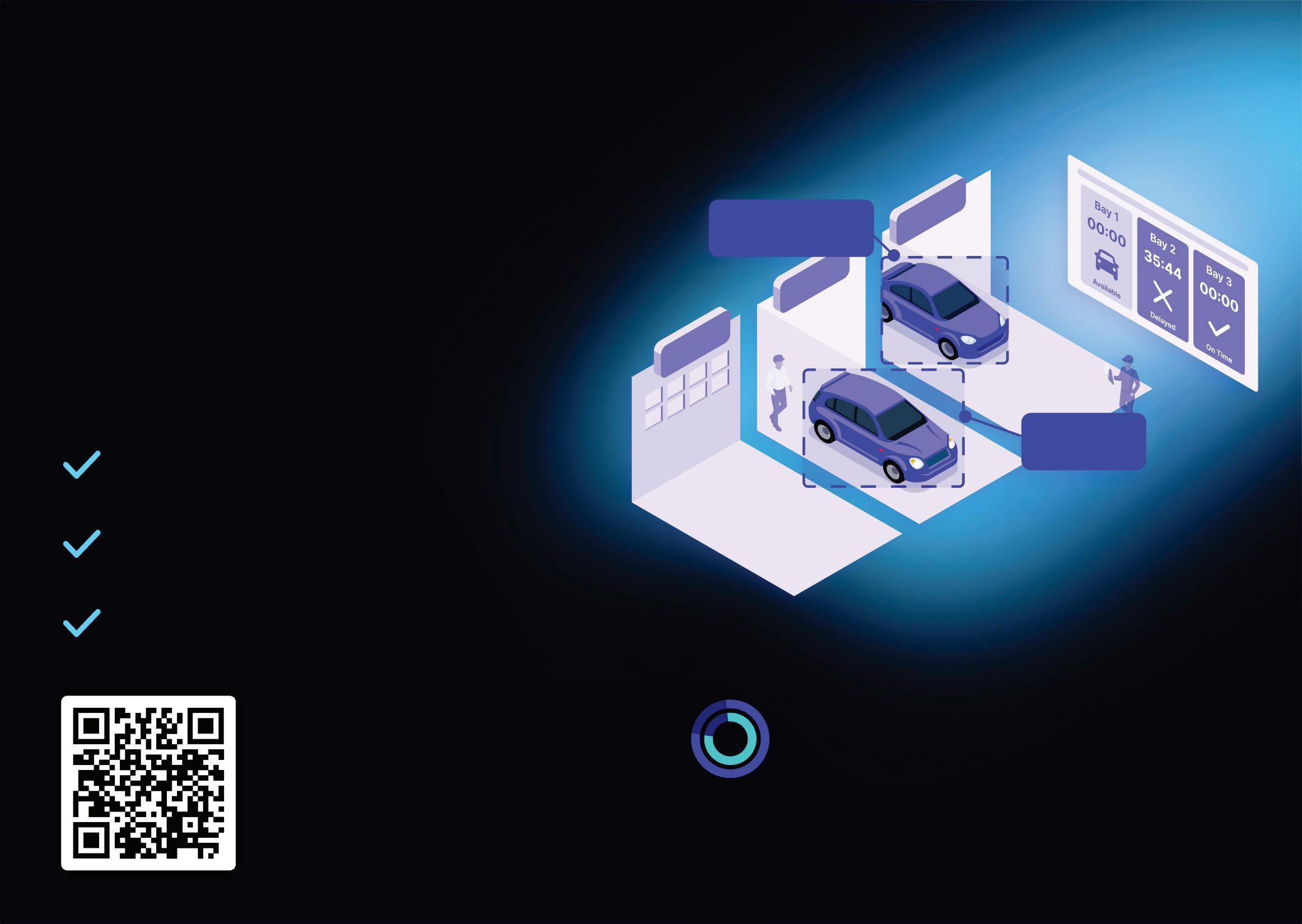
So, how exactly is a platform like PitCrew utilizing AI? For Leverege’s tool, AI models watch a shop’s bay cameras 24/7 to detect when a car enters and leaves a bay, as well as start and stop a service timer, without any staff input.
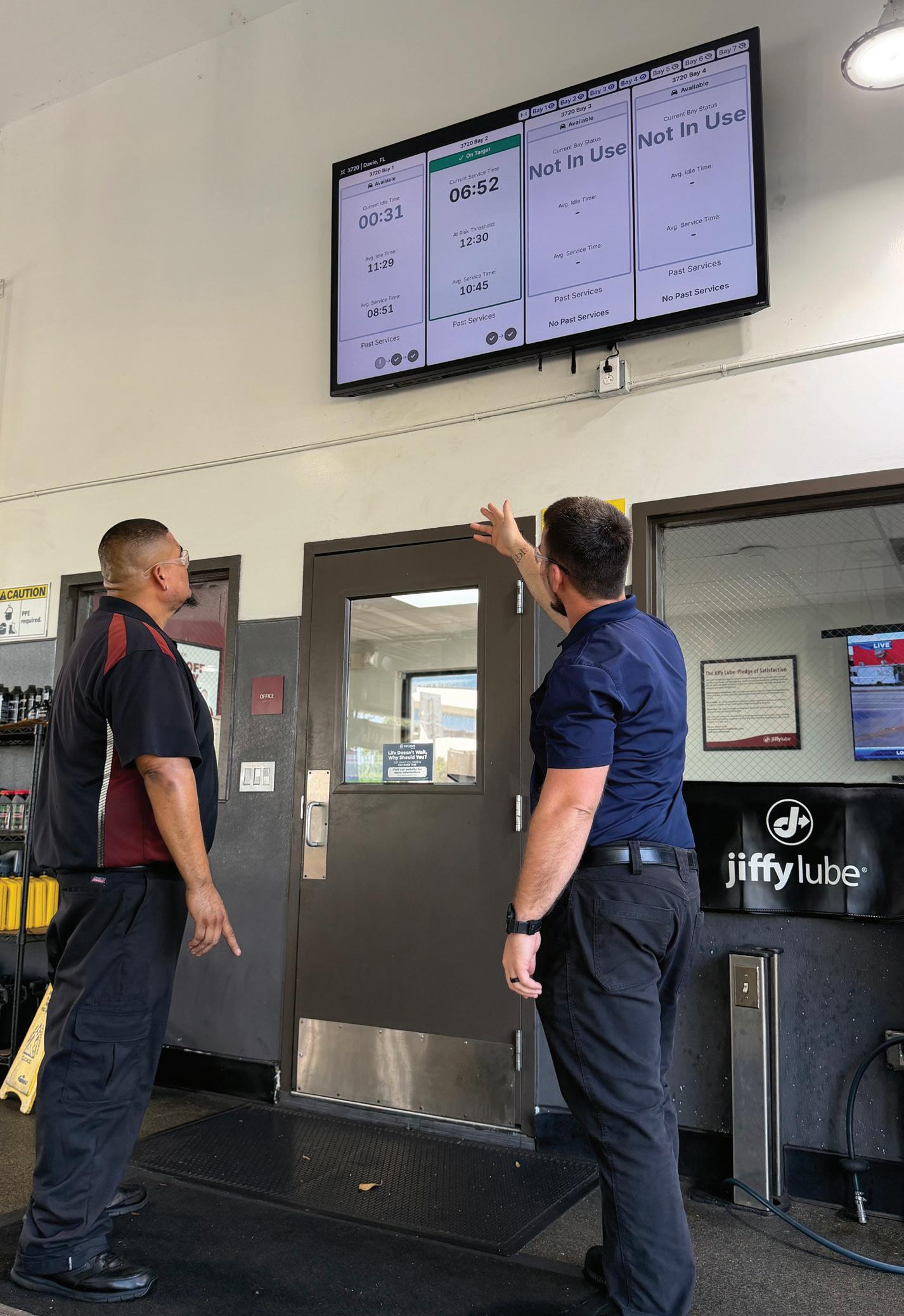
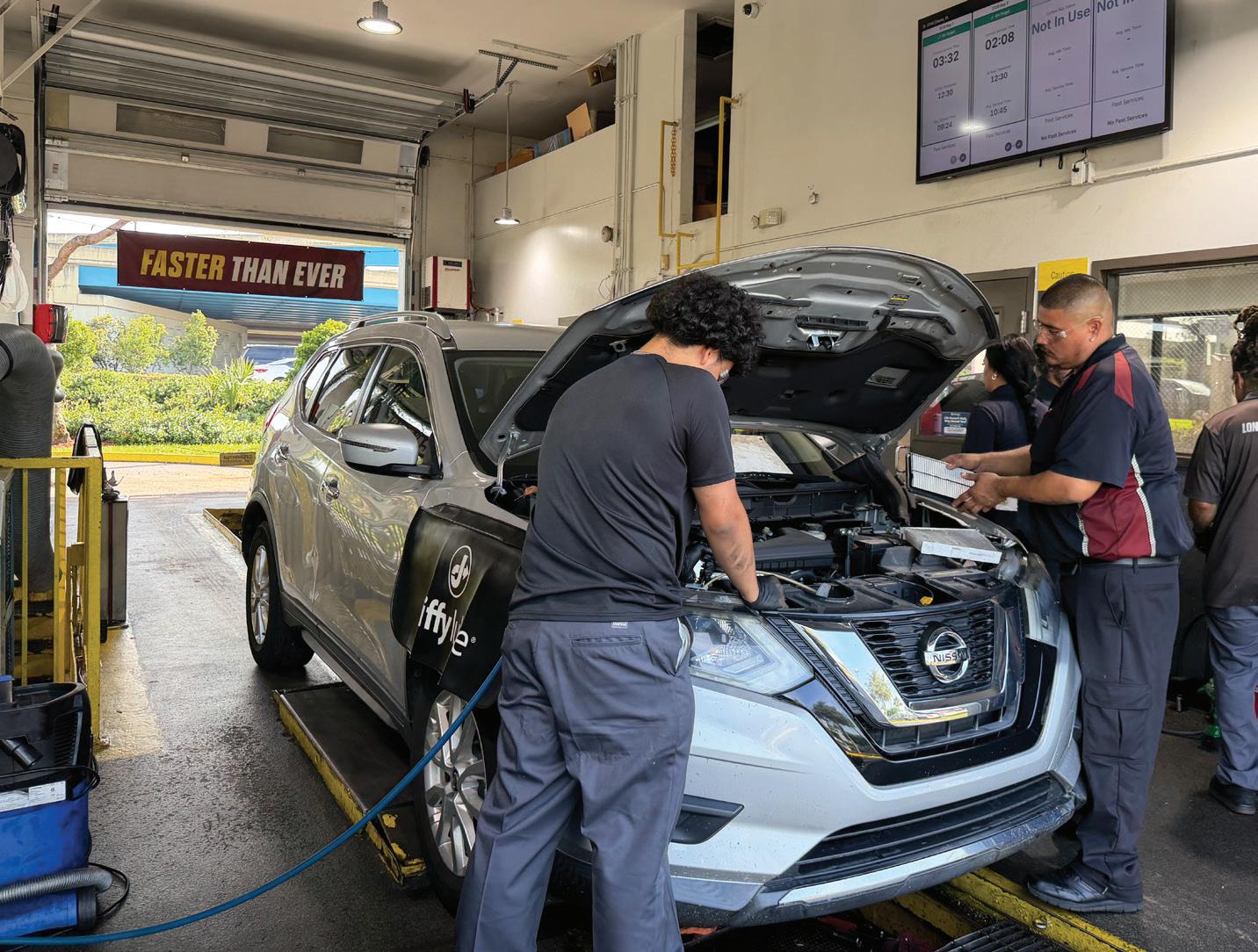
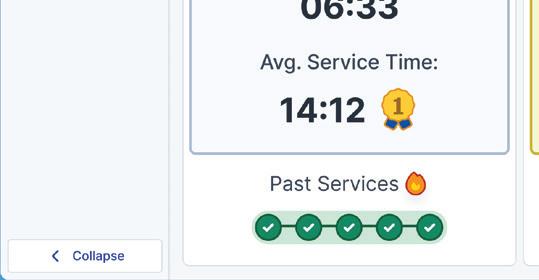
As part of PitCrew onboarding, shops typically install a large screen in view of the team. The service timer being started and stopped by AI will then feed TV dashboards in the bays, so techs and managers see how long each car has been in service and when they’re nearing or exceeding targets, such as a 15-minute oil change.
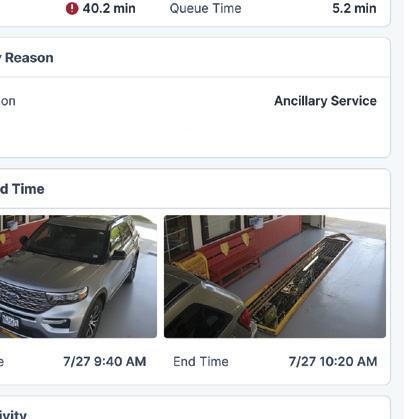
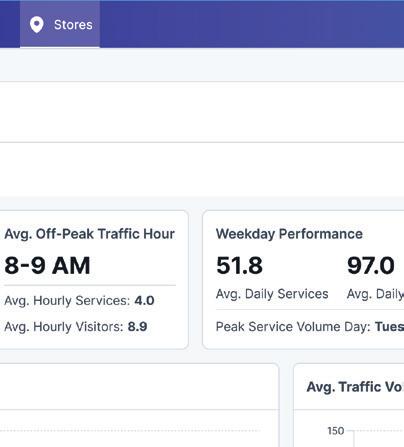
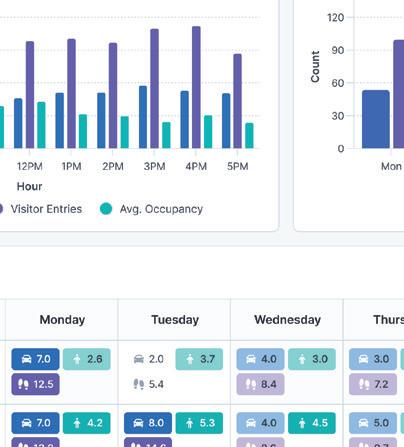
Using cameras installed in the shop, AI models can pick up a lot of other data as well. They can detect the make, model, and color of vehicles, and even track how many technicians are working on each car over time.
“That can help with identifying if the vehicle’s just been sitting there with nobody working on it,” says Calum McClelland, chief operating officer for Leverege.
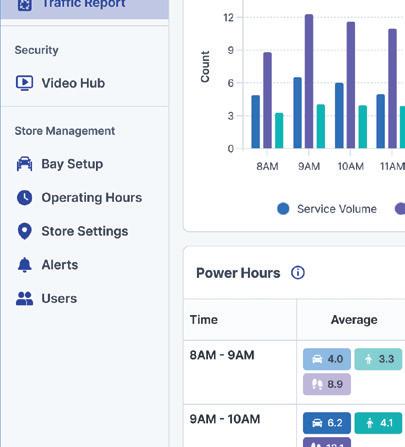
That same technology is used to measure customer foot traffic as well. The AI counts people entering


The PitCrew platform uses a large screen to display data about services being performed to help guide techs.

and leaving the store to give foot-traffic metrics. Additionally, outside, it monitors the queue of cars, how long they’re waiting, and when people drive off without service.
Security features are embedded in PitCrew as well, with the ability to detect people on the property after hours. McClelland also notes that AI-detected car counts can be compared with point-of-sale invoices to help detect discrepancies that may indicate theft.
“You can say, ‘Well, PitCrew saw 100 cars, but there’s only 80 invoices. What’s going on there?’ And sometimes it’s not nefarious and there’s a good explanation, but sometimes there’s not, unfortunately. And it can enable catching those things sooner,” says McClelland.
PitCrew doesn’t require any special custom cameras; its AI models can integrate fine with any functioning shop camera network.
“This all utilizes existing cameras and infrastructure inside of service centers. Most companies have security cameras that are brand new to many years old, and we basically layer on this capability with our software to turn those dumb cameras into smart cameras without having to buy any additional hardware,” adds Chief Revenue Officer Ryan Chacon.
It requires a lot of data to be collected, but each platform will have its own guidelines and standards for how that’s handled. With PitCrew, shops are the owner of all video data captured on-site. The AI runs locally on an edge appliance in the shop, with video stored locally, although some video can be stored in the cloud if a shop chooses.
Additionally, PitCrew has the ability to blur entire faces and bodies in footage. Blurred video is what goes to the cloud, and it cannot be unblurred. McClelland stresses that full raw video is not routinely sent
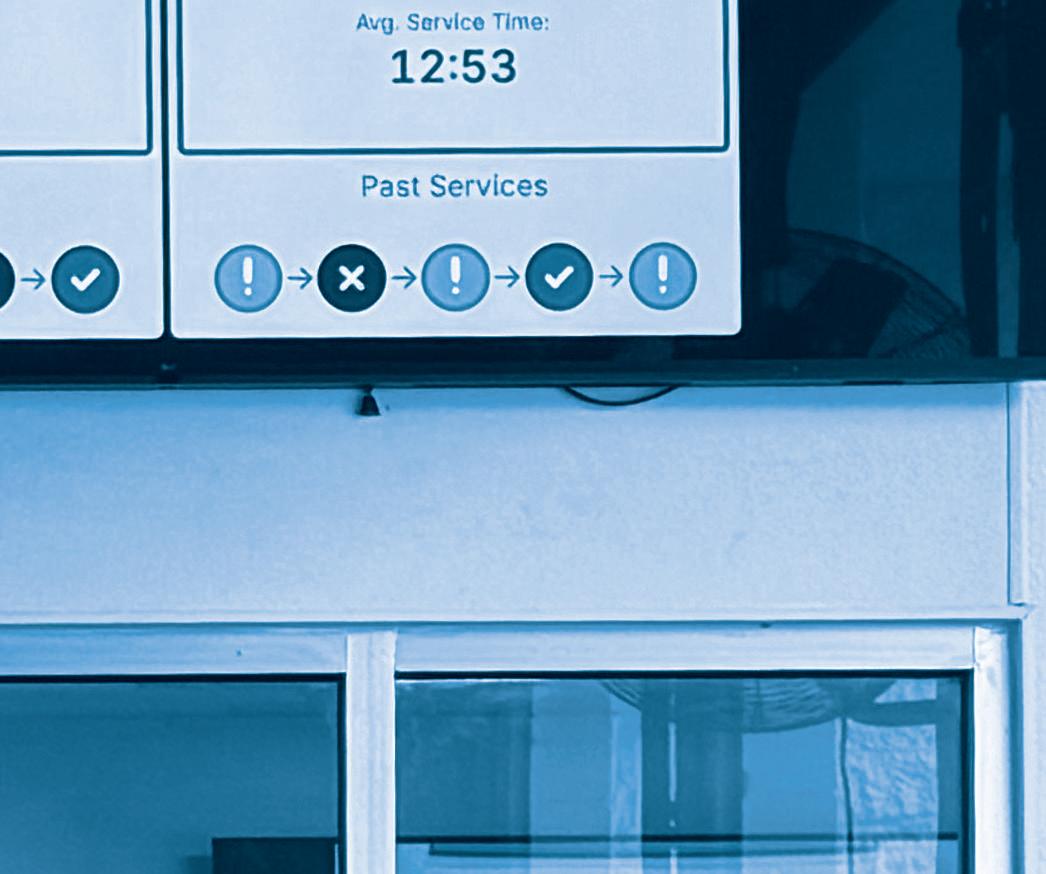
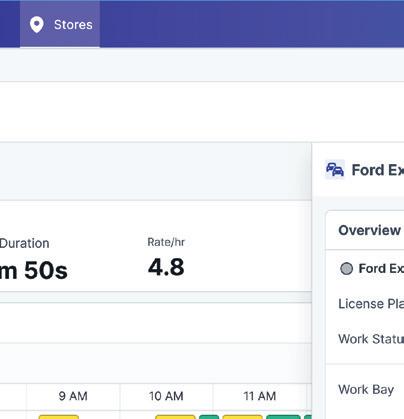
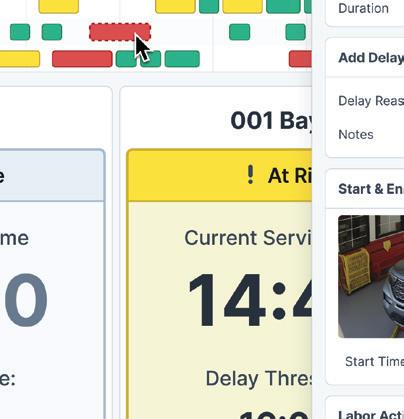
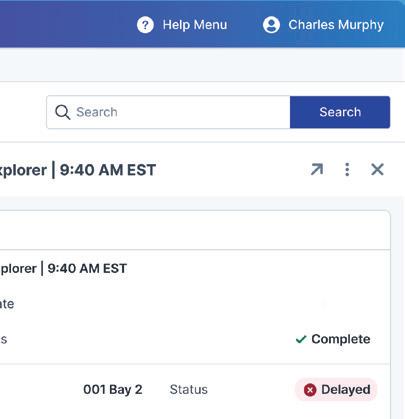
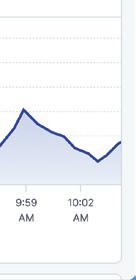
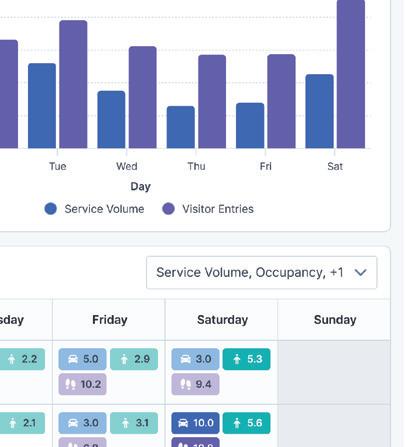
Using a shop's existing camera infrastructure, the PitCrew platform can analyze how long cars have been in bays and identify when visits are going longer than their projected times.
to the cloud, rather an edge box processes feeds and sends metrics and events, like service times, to their cloud platform.
“These AI models are running in the stores at the edge, so that way we
can do all this processing locally, and not be sending up full video of customers, employees, etc. to the cloud, so we can really preserve the privacy there, because that’s really important to us,” says McClelland.
Leverege says its clients have seen a demonstrable gain from using their product: McClelland cites a minimum of 10% improvement in overall efficiency and speed as being typical for most of their customers. And where one of the biggest benefits comes from is the automation of visible timers.
“The primary way that PitCrew helps do that (improve speed) is by having a real-time sense of how long this is taking,” McClelland explains.
That is what tools like PitCrew are best used for: not replacing tasks that would be done by a human, but rather helping automate repetitive functions in a shop that otherwise fall through the cracks.
It looks different in the front of the house, but the same concept
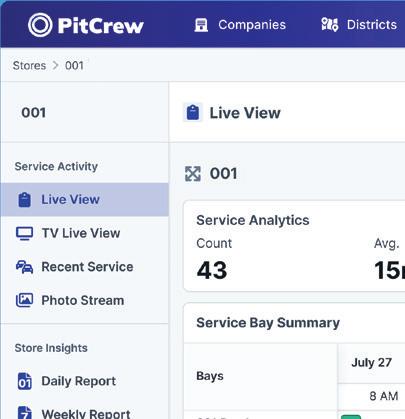
applies. The PitCrew dashboard has a function that automatically highlights services exceeding the shop’s target time, marking it as a priority for store managers to do what they do best: analyzing and resolving situations within the store’s day-to-day operations.
Richard Jennings, executive director for Jiffy Lube franchisee Atlantic Coast Enterprises, shared that ACE will be launching PitCrew across all 66 of its stores over the next few months, after a successful pilot phase. Jennings reported improved speed of service in their stores after implementing PitCrew.
Additionally, directors and executives at ACE have also found use for AI when it comes to analysis of areas like marketing.
“We are just scratching the surface when it comes to the use of AI within our particular business and our industry, but it has most definitely already had a positive effect in our company—improved time management and efficiency; KPI trend analysis; and improved upon our guest experience both on phone and in store,” Jennings shares with NOLN.
Some AI platforms are honing more of what they can offer in the realm of customer service. Revmo AI is a Phoenix-based company specializing in voice-enabled conversational AI technology to assist with phone calls for auto shops. The platform is notably being used by Stonebriar Auto Services, LLC: one of Jiffy Lube’s
largest franchisees, overseeing 128 locations across the U.S.
Revmo doesn’t just receive calls, but also answers inbound phone calls, emails, and texts for a shop. It’s designed to be used not just during afterhours, but during store hours, ideally to keep techs from being pulled off the shop floor, in the absence of a manager or service advisor to answer the phone.
“Revmo has had a direct impact on our operations. Our technicians can focus on service, while Revmo ensures no customer is left unattended,” is how Steve Isom, executive VP of Stonebriar Auto Services, described their use of the platform.
For Stonebriar, the company is increasingly relying on services like Revmo’s. As shared by Revmo with
NOLN, Stonebriar says it’s handled over 132,758 inbound calls with Revmo, with an attributed revenue per location of $6,000 per month.
As with all AI platforms, Revmo has its own data usage policy as well. The company says it collects basic user and usage data, including account info, device data, and interaction data, to operate and improve its AI communication platform, but does not train large language models (LLMs).
The data is used to power features like automated calls, texts, and analytics. Revmo notes it may share data with service providers but does not directly sell personal data. The platform uses standard security practices, and complies with regulations like CCPA and TCPA.
Each shop’s needs will look different—it will be crucial to examine what you’re seeking to get out of using an AI platform and what will maximize quality for your own staff and clients.
Auto service isn’t the only field seeing an influx of new technologies powered by AI, and like every other sector, business owners will have a plethora of options to research before making the best choice. From automating timers to handling the phones, there are myriad ways the technology can be deployed. The auto service industry will have much to learn about how to best harness those tools as they evolve.



•







As quick lube marketing has become a sophisticated, technology-driven discipline, its core principles have endured
by Tom Valentino
From 2008 to 2012, Dan Kaus held the title of workshops brand manager for BP Lubricants, a role in which he led marketing for the do-it-for-me side of BP’s business, including quick lubes. As part of his job, Kaus was heavily involved in the launch of Castrol Premium Lube Express, BP’s first fully branded foray into the quick lube space. His work included conducting intensive training sessions for new operators.
“One of the questions we asked operators when they came to that training was what business are you in?” says Kaus, who also wrote a marketing-focused column for NOLN from 2008 to 2012. “Nine times out of 10, it was answered with ‘the oil change industry, lube shops … like, what are you talking about?’ And then we hit them with, ‘No, you’re in the customer service industry.’”
In some ways, the quick lube industry has evolved significantly over the ensuing two decades. Marketing has become a highly integrated discipline focused on brand reputation, customer experience, and digital engagement.
In other aspects, however, things have remained very consistent. Many of the challenges Kaus and his colleagues faced in the late 2000s—a difficult economy, rising oil prices, synthetic oil extending drain intervals—still ring true for quick lube brands today. And no matter how the message of quick lube marketing is delivered, its intent is unchanged: Let the guest know we’re here to serve.

PRESENTED BY

Jenn Bochnowski spent 16 years in automotive aftermarket branding, marketing, and guest experience. She entered the industry with Lube and Go, an independent El Paso, Texas-based quick lube owned and operated by her husband, Mark, and his father, John. The business was sold to Oil Changers in 2021, at which time Bochnowski became the director of retail brand for Oil Changers Breeze Auto Care. In late 2025, Bochnowski stepped away and founded Deuce Identity, a boutique branding, marketing, and guest experience marketing firm.
Bochnowski also currently serves as vice president of the Preventative Automotive Maintenance Association and is PAMA’s marketing communications committee chair.
“I’ve been really fortunate to work through an interesting period of growth—everything from acquisitions and rebrands to new store development and launching entirely new concepts,” she says.
Along the way, Bochnowski says she has observed a notable shift in how quick lube brands have marketed themselves.
“When I started in the industry, marketing for quick lubes was more campaign-driven and maybe even a touch transactional,” Bochnowski says. “Like a lot of industries, let’s say two decades ago, most of their focus was on traditional media. The automotive aftermarket space was really couponing and driving immediate car count.”
Kaus, who now works in pharmaceutical marketing and strategy, recalls the work that went into the development of the Castrol-branded quick lube facilities and the marketing challenges that come with trying to carve out a place in a crowded industry. Kaus says what he and his colleagues discovered while conducting research
was that there were significant gaps between what customers wanted from a quick lube and the experience they were receiving.
“Back then, CPLE was a big, big thing,” Kaus says. “And it was about helping the operators elevate their game; it wasn’t just a signage program like some places. This was all around helping them to grow their car counts, grow their ticket average, and, at the end of the day, make sure customers were delighted.”
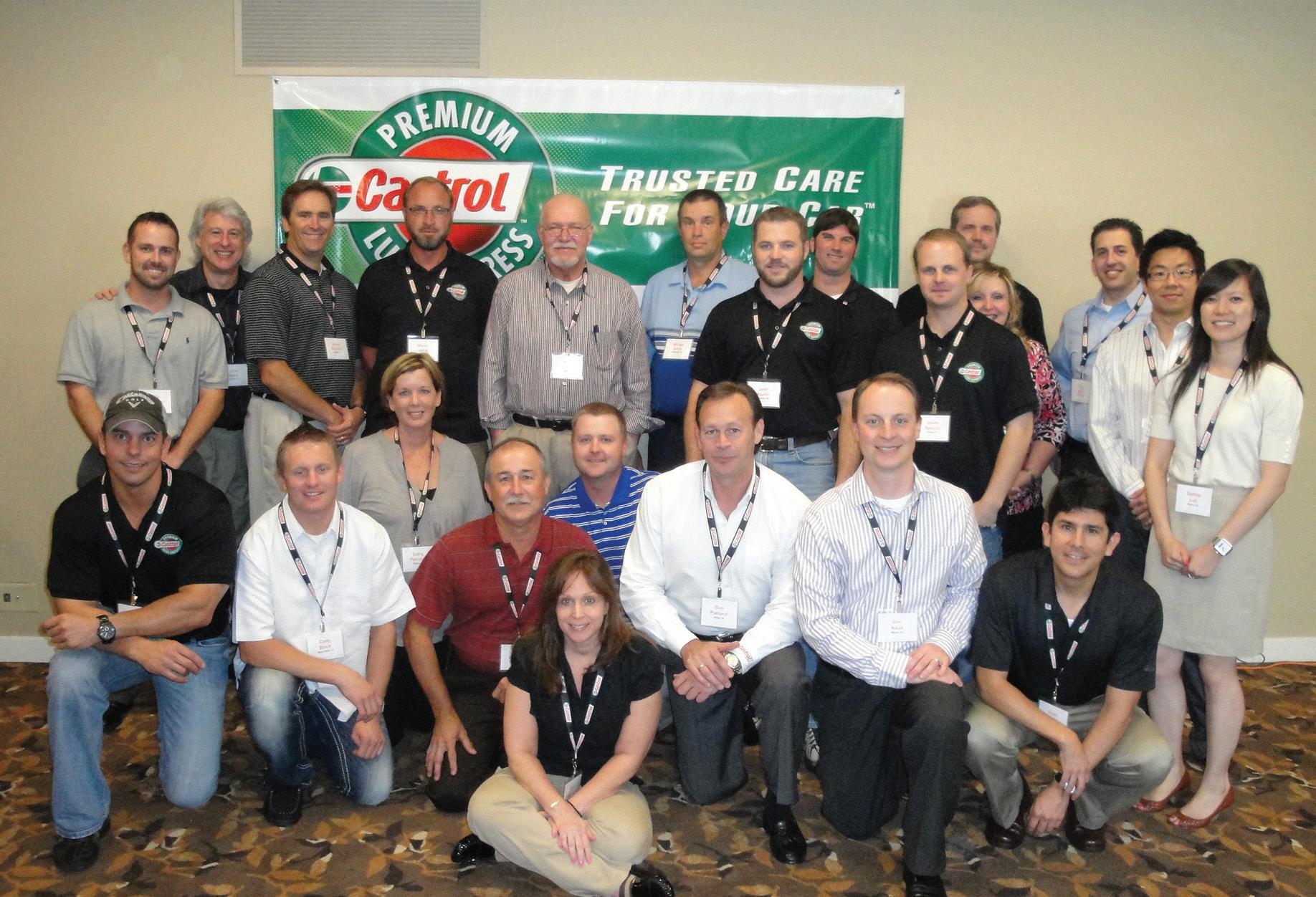
As part of their training sessions, Kaus and company helped Castrol operators create their own websites during training using the company’s builder tool.
“That was light years ahead of many places, right?” Kaus says. “Your most advanced (shops) probably had a Facebook page. Groupon was a novel concept at the time. Everybody was doing the money mailer coupons. I think some people were still in the phone book.
“Things have moved more in the (digital) direction. It doesn’t matter what industry you’re part of at this point in time. Your social and digital presence is that much more important as a way to build trust, which is a really important thing when it comes to people dealing with what is their second most valuable asset. … Building that trust, I think digital is a great way to do that, but back then you didn’t have as much savviness for many quick lube owners.”
In 2026, quick lube marketers have to take a more holistic approach to their work, Bochnowski says.
“You’re not just responsible for advertising,” she says. “You’re responsible for the brand’s reputation, the digital experience. What does the guest’s journey look like? How does a loyalty program work?”
Everything from online reviews
and local engagement to internal communications and franchise and store alignment across a brand, as well as the guest experience play a role in quick lube marketing, Bochnowski says.
“In many ways, marketing has become much more operational,” she says. “If a guest has a poor experience, or your Google reviews aren’t healthy, or your website is frustrating, or the marketing messaging is disconnected from what the guest feels in the service bays, all of that’s marketing. So, it’s very much more integrated and cross-functional than maybe it was two decades ago.”
Part and parcel with that evolution of quick lube marketing has been the number of job titles that have proliferated over the past 20 years. Whereas a brand may have had a marketing director, an agency partner, and maybe some traditional advertising support in the past, the industry’s big players now have marketing specialties on their organizational charts that didn’t previously exist.
These titles can include: loyalty marketing specialists, digital reputation managers, social media managers, customer journey strategists, SEO managers, paid search experts, marketing automation specialists, and content creators. Brands with large franchise networks also have franchise marketing support roles that are focused on helping operators market locally while protecting overall brand consistency.
“Even guest experience roles have become, I think, much more prominent because brands recognize that retention matters just as much, if not more than customer acquisition,” Bochnowski says.
Bochnowski adds that she has observed the skill sets of quick lube marketers broadening, especially with regards to brand and guest experience strategy.
“Early in my career, industry marketing was viewed more as promotions and advertising, and today that entire experience is the brand, which I think is so important,” she says.
Marketing platforms and job titles have evolved through the years, but today, both Kaus and Bochnowski agree that many of the fundamentals of good marketing for quick lube brands have remained consistent.
“The automotive aftermarket and quick lube space is still a people business,” Bochnowski says. “Guests want speed, they want to be able to trust you, and they want convenience and consistency.
“What I’ve always loved about the quick lube space is that it sits sort of at that intersection of convenience, trust, and hospitality. You’re asking people to trust you with something that’s really essential to their everyday life, and then to also trust you enough to keep coming back. As a marketer, you’re working to please the guest and to support—rather than get in the way of—the day-today operations team that works in the service space every day.”
To that end, Bochnowski says it has been critical for operations teams to work with integrity and sincerity to ensure that marketing messages align with those traits to reinforce company values and convey that the brand is looking out for its guests rather than simply trying to sell to them. In terms of how marketing tools
and technologies have evolved over the years, Bochnowski says she has seen several categories flourish:
• Customer data and CRM platforms now allow marketers to better understand guest behavior, retention, and service cadence.
• Digital advertising and targeting now allow marketers to be more precise with geography, behavior, and intent in messaging. This has been especially useful in saturated markets where competition is fierce.
• Review and reputation platforms such as Google, meanwhile, have “dramatically influenced the way guests make decisions,” she says.
• Marketing automation tools help with sending personalized
Jenn Bochnowski says quick lube marketing today is more integrated and cross-functional than two decades ago.
New operators of Castrol Premium Lube Express franchise locations were coached on various marketing-related aspects of the business.
reminders, maintenance messaging, and retention campaigns at scale.
Lastly, Bochnowski says AI and content tools are beginning to reshape speed and efficiency. But, she adds, the human side still matters.
“Technology can make marketing smarter,” Bochnowski says, “but the relationships are still what build that loyalty.”
Adds Kaus: “It’s not just about what you sell. It’s about who you serve and how many ways you can serve them. Those are the people that I think are winning across industries, quite frankly. Digital makes that easier to do, but that’s out-of-store (and a little bit of in-store). In the store, it’s all about nailing that experience, right? … Let’s treat people like people, and I think that will go a long way.”


Loyalty programs gain traction by turning transactions into long-term relationships
BY PETER SUCIU
ANYONE WHO REGULARLY picks up their lunch at certain restaurants, notably fast-food restaurants, is likely familiar with loyalty programs. After buying a number of burgers or spending a certain amount of money on a burrito with a side of chips and salsa, you’ll earn points and on your next visit will, in turn, receive a free item, possibly even an entrée.
Although we tend to think of loyalty programs as something from only the past few decades, they actually date back to the late 18th
century, when New Hampshire merchants rewarded repeat customers with copper tokens that could be redeemed for future purchases. By the early 20th century, these evolved into coupons and trading stamps. As time passed, more sectors began to reward loyal customers.
Among the most popular loyalty programs are those aimed at “frequent fliers,” which, in turn, have led travelers to become especially partial to one airline. The same opportunities are now present in the quick lube and automotive service sector.
Brandon Ventura, co-owner and operator of QuikTech in Hampstead, North Carolina, tells National Oil and Lube News that its loyalty program has driven repeat business and proven to be a low-cost way to generate word-of-mouth recommendations that have brought in more customers.
“We took the idea from the restaurant industry, notably fast food chains that offered a point-based system, so that people would come back in the future,” explains Ventura.
For QuikTech, the system is very straightforward: During every visit, the customer earns points. A conventional oil change will reward the customer with 45 points, high-mileage oil will earn 60 points, and customers who opt for synthetic oil can be rewarded with a “whopping 79 points.”
These points translate to dollars. Customers who reach 250 points can enjoy $25 off their next oil change. The points never expire and can just increase.
“A lot of times, the customer doesn’t even know how many points they accrued. We have to explain to them that they can receive a discount,” adds Ventura.
As the airline industry found, some consumers will spend a little more for future savings. In the fast food world, many individuals might even drive a little farther simply because each purchase earns that reward.
“One of the biggest misconceptions about loyalty programs is that they are simply discount tools. The strongest programs actually function as customer retention and relationship systems,” explains Angeli Gianchandani, global brand strategist and adjunct instructor of integrated marketing at New York University.
Gianchandani tells NOLN that for independent automotive service providers, loyalty programs help create continuity in a highly competitive market where customers have many choices and little friction to switch providers.
“A well-designed loyalty program also gives operators valuable insight into customer behavior, including service frequency, seasonal patterns, purchasing habits, and response to outreach,” adds Gianchandani. “That visibility helps businesses stay connected to customers between visits, reduce drop-off over time, and create more relevant engagement that increases repeat business.”
The economics are important as well, especially as consumers remain concerned about affordability and high prices. Loyalty programs are a value-add that the clients will see and appreciate. For the shops, it creates a loyal customer.
“Retaining an existing customer is typically far less expensive than acquiring a new one,” says Gianchandani. “Once trust and familiarity are established, customers are more likely to return, spend more over time, and recommend the business to others. The strongest loyalty
programs are not built around constant discounting. They are built around consistency, convenience, recognition, and trust.”
Although some old-timers may see the process as too complicated, it is far more than just a card or ticket punched with each visit. Today’s loyalty programs can be easily linked to a phone number and monitored by the client via a simple setup app.
“As artificial intelligence and automation continue reshaping customer engagement, businesses that understand their customers and maintain long-term relationships will have a meaningful competitive advantage,” Gianchandani continues.
At QuikTech in Hampstead, N.C., setting up the loyalty program was straightforward, and it has already paid off.
“It continues to bring in customers,” says Ventura. “We see many are now very aware of the loyalty program. Instead of a marketing gimmick that brings in one-time customers, I’m building repeat and loyal customers.”
The loyalty program has been especially welcomed by customers who face more than just an oil change. Today, even a small discount on a big-ticket item can be something that the client sees as real value, and expecting such services can result in them saving points.
“A lot of our customers appreciate the loyalty program most when it comes to higher ticket items, notably tires,” adds Ventura. “Once they are aware of when they will need tires in a year, they’ll be sure to be back for the oil change in the meantime to earn the points to go towards the tires.”
That is where the loyalty truly pays off.

A family-owned quick lube in Connecticut has accelerated repeat business by maintaining an appealing shop exterior
BY CAROL BADARACCO PADGETT
DOROTHY MAZUR BOUGHT A quick lube business with her husband, Carl, 33 years ago in Uncasville, Connecticut, naming it Uncasville Quick Lube and Touch Free Car Wash. Then she rolled up her sleeves in the pit to work on cars, perform administrative tasks, train employees, and serve in any other area the business required.
“I was here at 6 o’clock this morning, and I cleaned the car wash (which is open 24 hours). Whatever needs to be done,” as she puts it.
The same day, Mazur put her passion for landscaping to work to keep the business’s curb appeal on course. “My son and two employees are working on the wood chips out front right now,” she says. “When everything is neat, clean, and pristine on the outside, it shows the quality of work you’re going to do on the inside.”
Before the quick lube business, Mazur’s husband was a commercial
fisherman and she owned a pet store. Then he had a heart attack and she was diagnosed with MS, so they switched gears.
“We bought (the business) and decided to run it and do it all ourselves,” she describes.
The pair knew that hiring good people to work alongside the family would be critical to their success. But how do you hire people who will get on board with your personal vision for excellence inside and out?
“You don’t get lucky with employees,” Mazur states. “You have to talk every single day and train and correct, and train and correct some more. And that goes for everything, including the upkeep of the building’s exterior.”
This correction must also be handled fairly and swiftly, so that employees respect the effort and want to be a part of it. For Mazur, a straightforward approach is vital because her employees have many other work options in the area.
“We’re next to the Coast Guard, a sub base, and two casinos, so our area has way too many jobs for the amount of people here,” she notes. So, she tells them like it is.
For Mazur, the ideal DIY formula also involves deciding what’s most important and non-negotiable in keeping up the curb appeal—like the landscaping, flowers, and wood chips—and deciding what to let go.
“I used to decorate outside for Christmas and I used to plant annuals, but I don’t do that anymore. It’s just too much work,” she says.
For Mazur, well maintained signage outside is a must when it comes to curb appeal.
Uncasville Quick Lube and Touch Free Car Wash sits directly on the corner of two roads (Route 32 and
Fort Shantok Road), so everyone in Uncasville who passes by sees the business. And like its website touts, “no appointment necessary,” the family is hoping people who spot it will be compelled to drive right in.
“We’re up a little bit on a knoll, and that’s the way we designed it. We built the building ourselves,” Mazur says.
Naturally, she makes sure the exterior signage never shows wear and tear.
“We just redid all new signage, and this is something we’ve kept up on all throughout the years,” she says.
Signage can also be a business’s most visible marketing driver, it turns out—even today when many quick lube owners are laser-focused on online marketing above all else.
For Mazur, her best marketing is word-of-mouth about the service they offer. And a clean look from the curb helps set up the business for success all the way down the line, she finds.
What customers see on the outside influences how they’ll perceive the inside.

“You have to keep up the maintenance so that the business doesn’t look old and shabby,” Mazur says. “We just had all the exterior lights redone, too. And the guys are resealing the driveway next week.”
This is Mazur’s basic philosophy: “It depends on what you want your image to be. Some (owners) don’t care. They’re just a sloppy, dirty garage on the inside and the outside.”
That dirt, unfortunately, probably carries over to some businesses’ bathrooms, as well.
At Uncasville Quick Lube and Touch Free Car Wash, however, customers can expect to find the same thing inside that they do outside. “The guys and I check the bathrooms at least three times a day to make sure they’re clean,” as Mazur puts it. At the end of the day, she notes, “Customers can buy oil anywhere. But they can’t get good service just anywhere. You’ve got to do what you say you’re going to do. All the way around, we do whatever needs to be done.”
Excellent curb appeal helps set up the expectation that Mazur’s business is top of the line in everything it offers.
THE QUICK LUBE INDUSTRY’S BIGGEST PLAYERS continue to grow, evolve, and shape the future of automotive maintenance. Who is leading the way in 2026?
Once again, National Oil and Lube News is providing readers with the Tops in the Industry presented by Jiffy Lube—a snapshot of the fast oil change brands with the largest footprints in the industry today.
The number listed for each brand represents its store location total, according to correspondence with company representatives, information listed on brand websites, and other research by National Oil and Lube News staff. Some reported numbers are inclusive of U.S. stores only, while others may include international locations.
Please note that this data was compiled by NOLN in May and June 2026, meaning that some numbers may be subject to change.
1. Valvoline Instant Oil Change
LOCATIONS: 2,275
HQ: Lexington, Ky.
2. Jiffy Lube
LOCATIONS: 2,083
HQ: Houston, Texas
3. Take 5
LOCATIONS: 1,342
HQ: Charlotte, N.C.
4. Quick Lane Tire & Auto Center
LOCATIONS: 775+
HQ: Dearborn, Mich.
5. Express Oil Change & Tire Engineers
LOCATIONS: 426
HQ: Birmingham, Ala.
6. Grease Monkey
LOCATIONS: 413
HQ: Greenwood Village, Colo.
7. Strickland Brothers 10 Minute Oil Change
LOCATIONS: 280+
HQ: WinstonSalem, N.C.
8. Valvoline Express Care
LOCATIONS: 240
HQ: Lexington, Ky.
9. Kwik Kar
LOCATIONS: 230
HQ: Plano, Texas
10. Chevron xpress lube and Havoline xpress lube
LOCATIONS: 200+*
HQ: San Ramon, Calif.
11. Mobil 1 Lube Express
LOCATIONS: 191*
HQ: Boca Raton, Fla.
12. SpeeDee Oil Change & Auto Service
LOCATIONS: 176
HQ: Greenwood Village, Colo.
13. Oil Changers
LOCATIONS: 117
HQ: Pleasanton, Calif.
14. Piston Lube Centers
LOCATIONS: 96
HQ: San Antonio, Texas
15. Costa Oil 10 Minute Oil Change
LOCATIONS: 73
HQ: Hanover, Pa.
16. Castrol Premium Lube Express
LOCATIONS: 54
HQ: McDonough, Ga.
17. Performance Plus Quick Oil Change
LOCATIONS: 53
HQ: Wyoming, Mich.
18. Victory Lane Quick Oil Change
LOCATIONS: 48
HQ: Plymouth, Mich.
19. American Quick Lube
LOCATIONS: 45
* Total based on 2025 figures, the most recent data available.
20. Pioneer Quick Lube
LOCATIONS: 44
HQ: Sanford, Mich.
21. (tie) American LubeFast
LOCATIONS: 38
HQ: Greenwood Village, Colo.
Oilstop Drive-Thru Oil Change
LOCATIONS: 38
HQ: Petaluma, Calif.
23. Econo Lube ‘N Tune & Brakes
LOCATIONS: 31
HQ: Charlotte, N.C.
24. Uncle Ed’s Oil Shoppe
LOCATIONS: 29
HQ: Greenwood Village, Colo.
25. Prompto 10 Minute Oil Change
LOCATIONS: 26
HQ: Portland, Maine
26. (tie) Planet Oil Change Centers
LOCATIONS: 18
HQ: Columbus, Mich.
Dipstix (Sayle Oil Co.)
LOCATIONS: 18
HQ: Charleston, Miss.
28. Fast Eddie’s Car Wash and Oil Change
LOCATIONS: 17
HQ: Burton, Mich.
29. (tie) Clean and Lube
LOCATIONS: 16
Sparkling Image Oil Change
LOCATIONS: 16
HQ: Fort Lauderdale, Fla.
31. Speed Lube 10 Minute Oil Change
LOCATIONS: 15
HQ: Decatur, Ill.
32. (tie) Delta Sonic
LOCATIONS: 14 (31 total automotive services locations)
HQ: Buffalo, N.Y.
Lube X-Press
LOCATIONS: 14
HQ: El Paso, Texas
34. (tie) Duke of Oil
LOCATIONS: 13
HQ: Munster, Ind.
Continues >
Highlights of some of the quick lube industry’s biggest growth-related developments from the past year:
IN MARCH, Monomoy Capital Partners, a New York-based private equity firm, reached an agreement to acquire Jiffy Lube International from Shell in a deal valued at $1.3 billion. The sale included the Jiffy Lube brand and a network of franchised stores owned and operated by independent franchisees, as well as franchised stores that are owned and operated by Premium Velocity Auto, a Jiffy Lube subsidiary. Per terms of the deal, Shell retained Pennzoil Quaker State, Rotella, and other Shell lubricants brands, along with marketing, manufacturing, and distribution of lubricants in the U.S. and Canada that serve consumer, commercial, and industrial sectors.
TEAM CAR CARE, the largest operator and franchisee of the Jiffy Lube brand, was sold by Wynnchurch Capital to Triple JJJ Lube Corp. in a deal announced in February. Terms of the deal were not disclosed. Based in Irving, Texas, Team Car Care operates 458 Jiffy Lube shops across 23 states.
OILEX, Grease Monkey’s largest franchisee, announced in February that it has acquired MasterLube of Billings, Montana. The addition of the five MasterLube locations increased the total number of shops operated by Oilex to 35 nationwide.
JIFFY LUBE announced in February that a new franchisee with over 30 years of quick lube industry experience in Arkansas joined its network. According to a press release, Rick Murphy, owner of Auto Center Enterprises, purchased seven Jiffy Lube locations in metro Little Rock, Arkansas. Auto Center Enterprises has been operating the service centers since late October 2025.
IN JANUARY, Strickland Brothers received a structured equity investment from Audax Strategic Capital, a provider of mid-hold equity solutions, to support growth initiatives and market expansion.
SECURE PROPERTIES, a real estate investment firm, announced in January that it had acquired a 15-property Take 5 Oil Change portfolio from Driven Brands through a direct, long-term sale-leaseback agreement. The stores are located in the South and Midwest.
IN DECEMBER, Sayle Oil Company announced the purchase of several Car Care Clinic/Jet Lube stores in Central Mississippi. Along with the opening of two new Dipstix locations, the deal increased Sayle’s portfolio to 30 owned and operated locations across central and north Mississippi.
TAKE 5 celebrated the opening of its 500th franchise location in December, launching its first shop in Philadelphia with a grand opening event on Dec. 9, 2025. The brand has grown its total franchise footprint by 110% in three years.
... Continued
Lube Center (WLR Automotive Group)
LOCATIONS: 13
HQ: Frederick, Md.
36. LubeZone Truck Lube Center
LOCATIONS: 11
HQ: Nashville, Tenn.
37. (tie) Famous Quick Lube
LOCATIONS: 10
HQ: Jacksonville, Fla.
Splash Car Wash and Oil Change
LOCATIONS: 10 (27 total automotive services locations)
HQ: North Little Rock, Ark.
39. (tie) Big Ray’s Express Lube
LOCATIONS: 9
HQ: Canton, Ill.
The Oil Exchange
LOCATIONS: 9
HQ: San Antonio, Texas
Premier Oil Change
LOCATIONS: 9
HQ: Ovid, Mich.
Quick Change Premiere Lube & Maintenance
LOCATIONS: 9
43. (tie) Benny’s
LOCATIONS: 7 (9 total automotive service locations)
HQ: Baton Rouge, La.
Bradzoil 10 Minute Change
LOCATIONS: 7
HQ: Seguin, Texas
Charlie’s Fast Lube & Maintenance
LOCATIONS: 7
HQ: Jackson, Mo.
Grease Pro
LOCATIONS: 7 (12 total automotive services locations)
HQ: Panama City, Fla.
47. J Lube Services Oil Change
LOCATIONS: 6
HQ: Traverse City, Mich.
48. (tie) Exxpress Lube
LOCATIONS: 5
HQ: El Centro, Calif.
Flash Lube Oil
LOCATIONS: 5
HQ: Jersey City, N.J.
Scrub-A-Dub Car Wash & Oil Change
LOCATIONS: 5 (11 total automotive services locations)
HQ: Milwaukee, Wis.
|
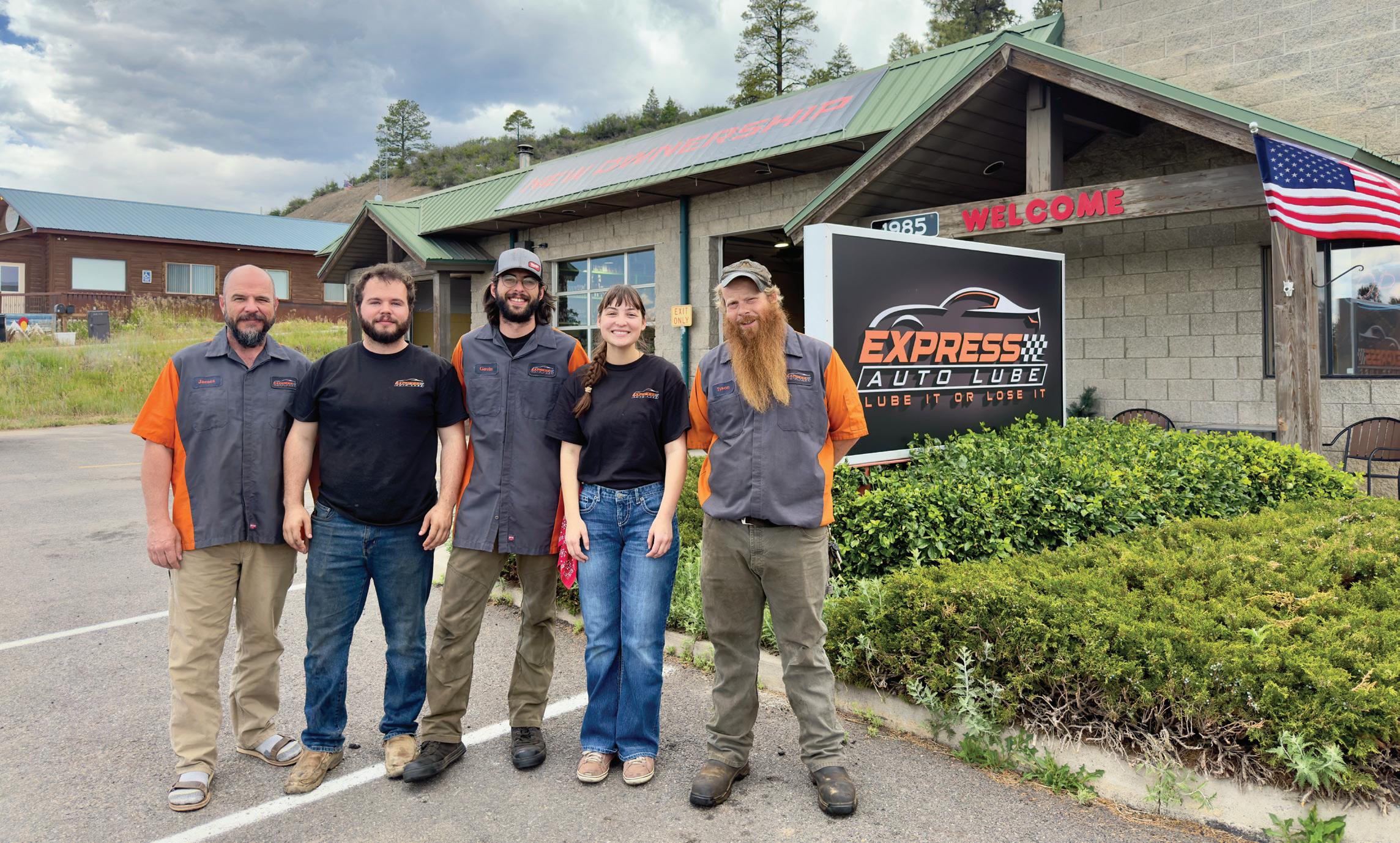
A quick lube shop in a Colorado tourist destination town has won over area residents with a fresh brand and a new approach to customer service
BY ENID BURNS
NEW OWNERS OFTEN CONsider a rebranding to refresh the shop, assure existing customers of solid—often improved—service, and attract new customers. In the case of a shop in Pagosa Springs, Colorado, a rebrand was necessary. The tourist-favorite Colorado town, known for its hot springs, serves both residents and tourists, nestled in the San Juan Mountains along the San Juan River.
The rebranding occurred just after the new owners bought the business. “The rebranding happened in 2025 when the business was purchased from the original owner,” explains Gavin Kiker, the youngest of the three generations of this family-owned Express Auto Lube. It was actually an interim owner, longtime friends of the Kikers, who acquired the quick lube and crafted
its rebranding.
“The business had a questionable reputation before, and no real processes or systems in place,” details Kiker.
The original owner operated at a level that supported the business, but did not promote satisfied customers.
“The shop was profitable, but relied on tourist traffic and new customers as opposed to returning customers,” Kiker tells NOLN. “The customer retention rate was lower than ideal, and based on recent customer feedback, the quality of work and customer service were inconsistent.”
Kiker reports that many dissatisfied customers started using a shop located 60 miles from town before the change of ownership and rebranding effort.
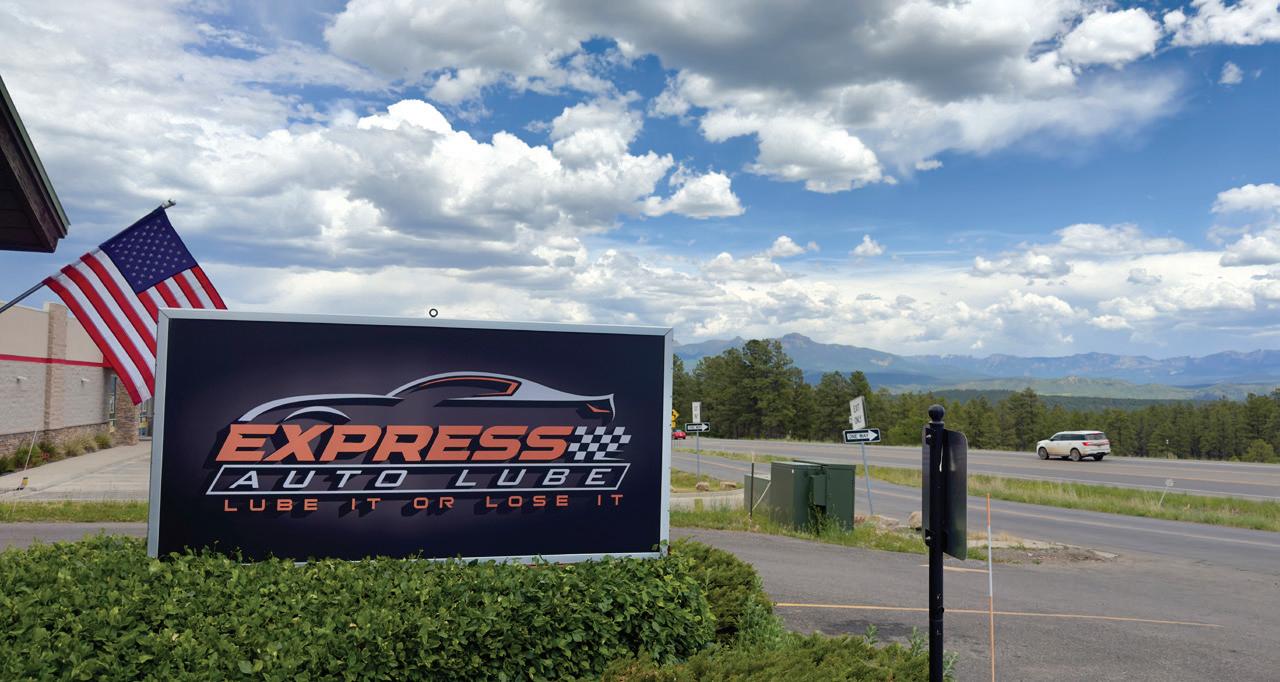
In addition to a new shop name and visual branding, the relaunch included implementing processes and systems to make the operation more efficient. “The previous owners, longtime friends of ours,


implemented several systems such as call-outs and checklists for every service, as well as streamlining the services offered,” Kiker says.
The Kiker family—a father, daughter, and grandson—bought Express Auto Lube from family friends about nine months after the rebranding. With new messaging still fresh and efficient processes in place, the new owners have a thriving quick lube to run.
“For the most part, we have kept things the same,” says Kiker. We have added diesel fuel filter replacement, worked on inventory optimization, and tweaked a couple of processes as needed to keep things running smoothly.”
Customers were quick to try out the new brand.
“The majority of existing customers have stayed in the shop since rebranding,” states Kiker. “We have had many former customers come back since the rebranding who had switched to a shop located 60 miles away during the original ownership.”
Customer reviews and word of mouth are bringing in new and returning customers.
“We have definitely seen an influx of new customers coming in based on our Google reviews and the process we use,” says Kiker. “This is a small town, so word of mouth has been a driving force in the number of new customers, and customers trying us again, after the rebrand.”
While Pagosa Springs is a small town, there is a flow of tourist traffic that often requires service.
“We are lucky that we live in a town where the majority of business is tourist-driven, so we have a constant stream of new customers visiting from out of town.”
Express Auto Lube runs seasonal radio ads and participates in call-in
giveaways on a local radio station.
The shop has a dog-friendly operation to encourage customers to bring in their canine companions. “We have a large dog run, free treats, and a ‘pupparazzi board’ with polaroids of the pups that come to the shop,” Kiker says.
The shop offers fun perks, but focuses on providing good service.
“The main feedback we get from our return customers, though, is simply providing friendly, convenient, and consistent services,” adds Kiker.
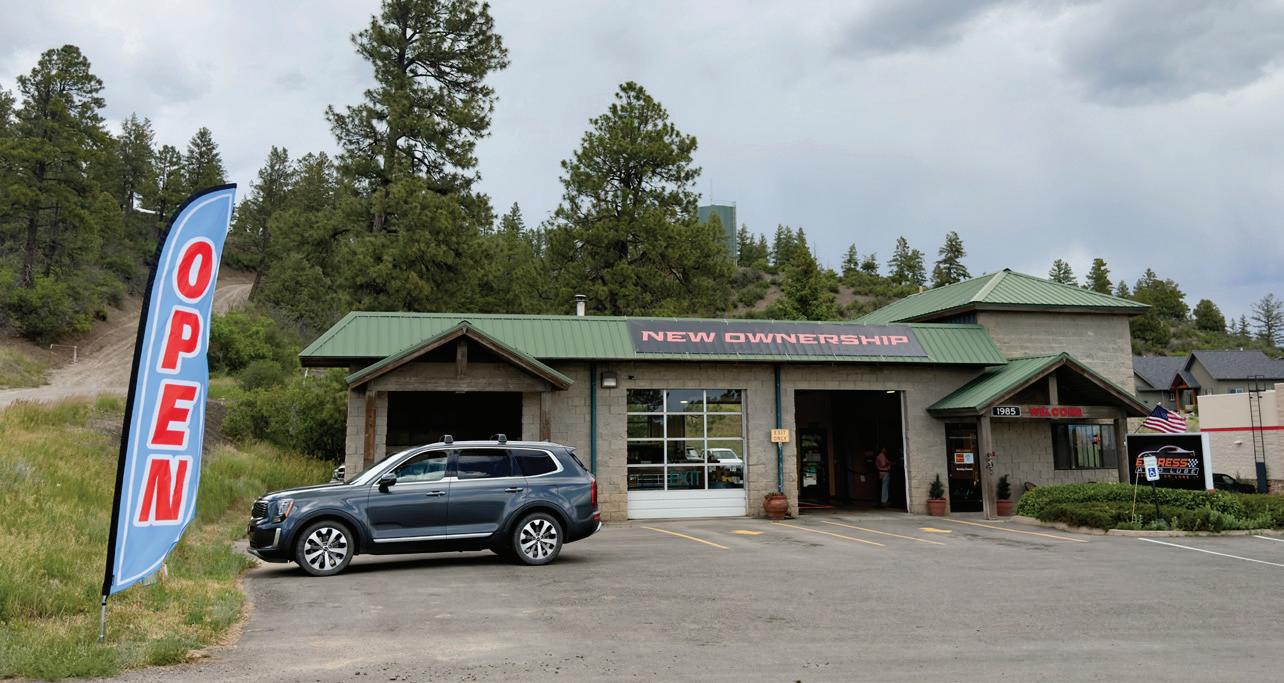
The Kikers transformed the tourist town shop from an existing structure into a community-serving business.
The four-person staff averages about 350 cars per month.
The rebranding doesn’t stop in the bays and daily operations of a traditional quick lube. The family plans to expand the brand into more storefronts and offer additional services beyond the typical quick lube operator.
“We would really like to expand to multiple and larger locations in the future using the same branding and processes,” details Kiker. “We are also working on a custom so ware system specifically for this business that will handle point of sale, vehicle data, inventory management, and customer relations all on the same platform.”
Future goals also include a mobile component. “We have also been considering starting a mobile detailing service under a sister brand, as that is somewhat of an untapped market in this area,” Kiker says.

To increase guest retention, work on refining the final minutes of the customer experience when they visit your service center


Scott Hempy leads the team at Oilstop Drive-Thru Oil Change and Happy’s Drive-Thru Car Wash. Oilstop and Happy’s are rapidly growing their footprint of oil change and express car wash locations across the West Coast, combining convenience with an outstanding emphasis on guest experience. Prior to Oilstop & Happy’s, Scott was the founder and CEO at Filld, a SaaS-based software solution for last-mile oil and gas delivery companies. He was recognized as a member of the Forbes 30 Under 30 class of 2016 for starting Filld.
.COM
increase guest retention, I would not start with a marketing promotion. I would not start with a discount offer. I would not start by spending money on advertising. I would start by running an experiment to change the last two minutes of my guest’s service experience.
Every operator understands the value of a returning customer. A guest who comes back every six months for the next five years is worth far more than the cost of acquiring them in the first place. Yet many of us spend more time thinking about how to get the next guest than how to ensure the current one returns. That is what makes the final moments of the visit so important.
The guest has already decided whether the service was fast enough. They have already formed an opinion about your service center and your team. The last two minutes are your opportunity to reinforce trust, create connection, and give them a reason to come back. You can make this change whether you are a service center owner, manager, or technician. Regardless of your position, you can choose to make a meaningful contribution.
Take action. For the next 30 days, pick one specific behavior and make it a non-negotiable part of every service close out. For example, every departing guest receives a genuine thank you by name. Not “have a nice day” or “you’re all set,” but something more personal.
“Mr. Smith, thank you for trusting us with your vehicle today. We appreciate your business.”
Another experiment might be implementing a consistent service recap before departure. In many service centers, guests leave without a clear understanding of what was completed. Imagine every advisor spending 20 seconds
reviewing the service.
“We changed your oil, replaced your cabin filter, topped off all fluids, and reset your maintenance reminder. You should be in great shape until your next visit.”
That simple recap will reinforce value and remind the guest what they received for their money.
A third experiment could focus on vehicle presentation. Assign one team member ownership of the final impression. Before every vehicle exits the bay, they check windows, wipe away fingerprints, remove any remaining service materials, and ensure the vehicle looks ready for delivery. It sounds simple because it is simple. But your guests notice the details.
The goal is consistency. What makes these experiments valuable is that they are measurable. You can monitor your Google reviews, listen for guest comments, watch your repeat visit trends, and pay attention to what guests mention when they compliment your team as a way to understand if this test is having a positive impact.
As an industry, we have become very good at improving the middle of the service experience. We focus on bay times, process adherence, technician training, and service quality. All of those things matter and should continue to matter.
What I am suggesting is that there may be untapped opportunity in the final two minutes of the visit. Pick one behavior to test for 30 days. Then measure it. You may find that one of the simplest ways to improve guest retention is not changing the service itself, but changing how the service ends. The oil change may be complete. But your guest’s decision about whether to come back often isn’t.


NOLN is delivered free to qualified quick lube and fast-service professionals—USPS periodicals rules require us to update subscriber records regularly. If you haven’t renewed recently, please take a moment to confirm your information. It keeps your issues coming without interruption.


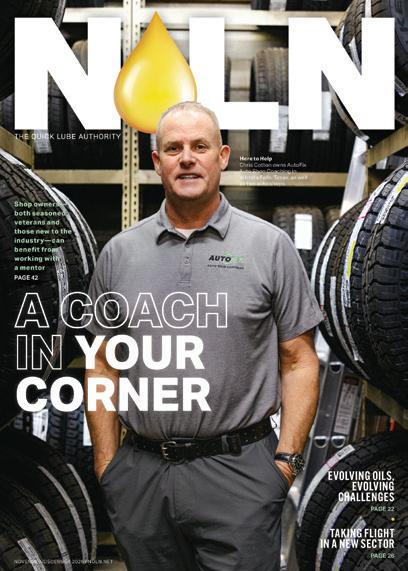
Confirm your info and keep receiving