Making AI Work for Everyone
TRAINING
How skilling initiatives across Europe help bridge the digital divide
How Europe can realise AI’s economic potential TRANSFORMATION
How AI is augmenting jobs and what this could mean for the future of work
TRAINING
How skilling initiatives across Europe help bridge the digital divide
How Europe can realise AI’s economic potential TRANSFORMATION
How AI is augmenting jobs and what this could mean for the future of work
Dear Reader,
There’s no doubt that work will look different in the years ahead. We’ve seen this before with every big technological shift, from electrification to the Internet. And while research points to more jobs being created than lost, we can’t ignore that there will be disruption — we must prepare for it. Europe’s businesses, government officials, educators, workers and students have to be ready.
At one end of the spectrum, new technologies have the potential to create hundreds of millions of new jobs (170 million globally, according to the WEF). On the other, 7% of jobs will make a long-term transition to automation in the AI era. Most jobs (61%) sit in the middle — they will be augmented, rather than replaced, by AI: helping workers boost productivity and ultimately focus on what matters most.
Helping those facing total transition, and the majority who will work alongside AI, must be our priority — including preparing people for the new jobs of the future that will be created. Broad AI adoption has the potential to boost the EU’s GDP by €1.2 trillion. That’s an 8% increase over the next decade. We’ve already seen promising AI stories emerging across the continent, whether it’s Spanish startup Idoven, who are using AI to detect heart disease earlier, or German bakery Fickenschers Backhaus, who use it to predict daily demand and reduce food waste.
Then there’s Maria Teresa Pellegrino, a 61-year-old olive producer in the town of Andria, Italy. She enrolled in an AI Essentials training course through non-profit Fondazione Mondo Digitale, and now uses
AI to organise her corporate events and craft marketing materials in minutes.
But gains like this won’t come automatically. Europe’s public sector, nonprofits, employers and universities must come together to provide people with the AI skills they need.
We know there is an intense and valid focus on how AI is impacting new graduates who are entering the workforce. That’s why Google’s philanthropic arm Google.org has been supporting Europe-based nonprofits INCO and Chance to look at how AI is shifting the entrylevel job market. They found that nearly 25% of entry-level roles now require AI skills, and that 74% of SME employers struggle to find qualified candidates.
In response to this research and with funding from Google.org, INCO and Chance have created NewFutures:AI, a set of AI curriculums to help final-year students build practical AI skills. The curriculum will be offered to students at no cost through partnerships with at least 50 further education institutions across Europe. But we must also upskill current workers. New research from Ipsos suggests that AI literacy — the ability to understand, evaluate and make decisions about AI — is vital to driving adoption. We need to move from a surface-level understanding of AI to a more substantive use of AI as a collaborator.
Since 2015, we’ve trained over 21 million Europeans in digital or AI skills — and worked with more than 500 startups to support their
Debbie Weinstein President, Google EMEA

growth. Earlier this year, we announced a $30 million Google.org commitment to help governments use AI to improve public services. And we’ve recently released a Google AI Professional Certificate focused on moving people and businesses from AI foundations to fluency. The certificate is available in English and ten other European languages.
In this edition of FORWARD, you’ll learn more about AI adoption in Europe. You’ll meet the pioneers who are unlocking AI’s potential with the same courage as Maria Teresa. Their stories prove that AI can be a multiplier of human ingenuity. And you’ll hear from experts and politicians across Europe sharing their perspectives on the future of work in the AI era.
Significant change is coming. But at Google, we approach this with the same long-term mindset that has guided us through every big shift in the past — focused on practical impact and a sustained investment in the people who use technology. Success will depend on ensuring people are not left behind. Together, across the public and private sector, we need to invest in people: ensuring they have the AI skills of tomorrow.
04 Making AI work
Facts and figures: The economic potential of generative AI for the EU is substantial, but it is not guaranteed.
07 Closing Europe’s AI adoption gap
Broad AI adoption has the potential to boost the EU’s GDP by €1.2 trillion over the next decade. But the majority of European businesses and workers have yet to fully embrace the technology. What is causing this adoption gap, and what will it take to catch up?
10 Perspectives on the future of work in the AI era
Politicians, entrepreneurs and thought leaders offer candid advice for those navigating the uncertain, but promising terrain of the AI era.
12 Skills for tomorrow
AI literacy is key for businesses and workers to stay competitive and unlock the potential offered by generative AI. All over Europe, companies, organisations and NGOs show how upskilling initiatives help bridge the digital divide.
16 »Rethink your processes«
James Manyika and Ben Armstrong discuss how AI is changing jobs and what that means for how society trains the next generation of workers.
18 Helping you grow
Google offers training programmes across Europe to help people gain the AI skills needed to succeed, from workers and small businesses getting started with the essentials, to developers gaining more advanced AI skills.
Yours,
Debbie Weinstein

The economic potential of generative AI for the European Union is substantial, but it’s not guaranteed. Current research shows that AI adoption across European countries, industries and companies is deeply uneven.
AI and hiring
A 2025 survey by the European Central Bank found that firms making significant use of AI are 4% more likely to take on additional staff in the near term.1
AI skills gap

74% of SME employers find it »difficult« or »very difficult« to recruit candidates with AI skills, according to a report by INCO.3
Economic potential
€1.2T
GDP boost in Europe — which equates to an 8% increase — is the potential impact of a timely, widespread adoption of generative AI over a period of ten years, according to a study by Implement Consulting.2
Pessimism gap
11%
of SME leaders believe that generative AI tools »will never create much value« for their organisations — compared to just 1% of leaders in large businesses.4
Uneven AI adoption of EU enterprises used AI technologies in 2025 — on average. A closer look at the individual countries shows that AI adoption across Europe is quite uneven.5
Job creation potential
new jobs can potentially be created by new technologies until 2030, according to a World Economic Forum whitepaper.6
Adoption barriers
In some economic activities AI is used a lot more than in others within the EU. In 2025, the information and communication sector stood out with the highest share of enterprises using AI.5

The difficulty of estimating the return on investment of AI is a significant obstacle to adoption, cited by 62% of manufacturers and 56% of ICT businesses.4
When analysing the human-centric barriers of AI adoption, Ipsos researchers identified six core questions that business leaders and workers must navigate before making the decision to use AI.4
01. Is AI relevant to me? Many businesses struggle to identify concrete, value-generating AI applications.
02. What’s the value of AI? Business leaders face challenges in estimating return on investment, while workers may not see a direct personal benefit.
03. What are the risks? Concerns about cybersecurity and data privacy.
04. What are the rules? Uncertainty can affect a business’s risk tolerance and set the framework for what types of AI adoption are considered feasible.
05. Can I trust AI? Workforce hesitancy driven by fears of job displacement or concerns about output quality.
06. Do I have the capability to use AI? Skills gaps can prevent effective implementation even where there is intent.
The power of artificial intelligence lies in helping us be more efficient, creative and productive — which is why the technology’s economic potential is immense. However, the majority of European businesses and workers have yet to embrace AI. What is causing this adoption gap, and what can be done to overcome it?
Artificial intelligence promises to be one of the most consequential technologies in history. Projections suggest it could add over a trillion euros to the European economy, revolutionise scientific discovery, and reshape the very nature of work. Yet for all this promise, a gap is growing between potential and reality. While a small number of large firms are racing ahead, the vast majority of businesses — and their workers — have yet to embrace the technology in a meaningful way. This creates an adoption gap, one that threatens to deepen economic divides and leave valuable productivity gains on the table.
An Ipsos report commissioned by Google recently concluded that AI’s near-term economic potential is »not guaranteed« revealing a fundamental unevenness. While nearly 20% of EU businesses with ten or more employees used AI technology in 2025, AI use is concentrated in highly digitalised sectors — 62% of information and communication businesses use AI tools, compared to just 17% of manufacturers. Large businesses are substantially more likely to adopt AI than SMEs, and the gap has been widening. Regional disparities are equally pronounced, with Nordic Member States reaching adoption rates of 35–42% while parts of Eastern and Southern Europe trail at 5–9%. The report concluded that unless a critical mass consistently use AI tools »Europe may fail to realise this technology’s full potential«.
»AI’s power lies in helping us work better, faster and more creatively by handling the predictive and drudgery-laden parts of our jobs, allowing humans to focus on the essential components of judgement, complex problem-solving and relationship-building.«
Scan the QR code and use NotebookLM to dive deeper into the Ipsos research report referenced in the article or listen to an audio overview of the report.
In 2025, large European enterprises used AI considerably more than others. This difference might be explained by the complexity of implementing AI technology, economies of scale or costs.5
Training gap
of adult workers in the EU received AI-related training in the previous year.7

The challenge, however, isn’t a lack of technology; it’s a lack of trust, capability and confidence. While the prospect of AI-driven change brings excitement for some, it brings profound anxiety for many. For business leaders, especially those in small and medium-sized enterprises (SMEs), it’s the uncertainty of where AI is relevant to their business, fear of making the wrong investment and concerns about potential risks that hold them back from adoption. Research has shown that 72% of SME leaders in France, for example, have not yet identified a practical application of AI for their business. For workers, it’s the perception that AI tools aren’t helpful to their work or the worry that their skills will become obsolete. To bridge these very human barriers, policymakers, business leaders and technology providers need to work together to build an environment that supports AI adoption for everyone, focused on three key principles.
A family-run bakery in Germany doesn’t need another report on the macroeconomic power of AI; it needs to know how a simple AI tool can help predict daily demand to reduce food waste and cut costs. A small Italian tourism business needs clear, concrete examples of how AI tools can help them optimise their advertising approach to attract more customers in the off-season. These realworld use cases demonstrate how AI can solve specific, everyday challenges in a way that provides a clear and immediate return on investment.
Most workers will use AI tools, not build them. Yet a survey of business leaders across Europe finds that 14% do not have the expertise to introduce AI and 12% do not have the skills to make use of it. An OECD survey finds that 50% of SMEs report that their employees lack the skills to use generative AI.
This calls for investment in training programmes that empower everyone, from the factory floor to the boardroom. This doesn’t mean turning every employee into a data scientist. It means building the crucial skills of the future:
how to ask the right questions of AI, how to critically evaluate its outputs and how to apply human judgement and ethical oversight. Fostering this widespread capability will build the confidence to know when to trust AI and when to trust our own expertise, making it a reliable partner rather than an intimidating black box.
Finally, the transition relies on a partnership approach. No single entity can solve this challenge alone.
This transition requires a concerted, collaborative effort. Governments have a critical role to play in establishing widespread AI literacy, equipping the workforce with critical AI skills to help ensure the transition is inclusive for all citizens. Industry bodies must help set standards and share best practices, ensuring that the benefits of AI are distributed broadly. And technology providers have a fundamental responsibility to build tools that are not only powerful, but also intuitive, safe and designed to augment human capability. By working together, we can ensure that the AI transition is managed in a way that creates opportunity for all, not just a select few.
The story of AI and work will not be one of replacement, but of augmentation. As Google’s Chief Economist, Fabien Curto Millet, puts it: »AI’s power lies in helping us work better, faster and more creatively by handling the predictive and drudgery-laden parts of our jobs, allowing humans to focus on the essential components of judgement, complex problem-solving and relationship-building.«
The opportunity is immense, but it is not guaranteed. The winners will be the organisations that prepare their people to thrive by investing in practical skills, fostering trust through transparency, and giving their teams the permission and psychological safety to experiment — ultimately turning potential to productivity.
Inclusive workplace
91%
Population gap
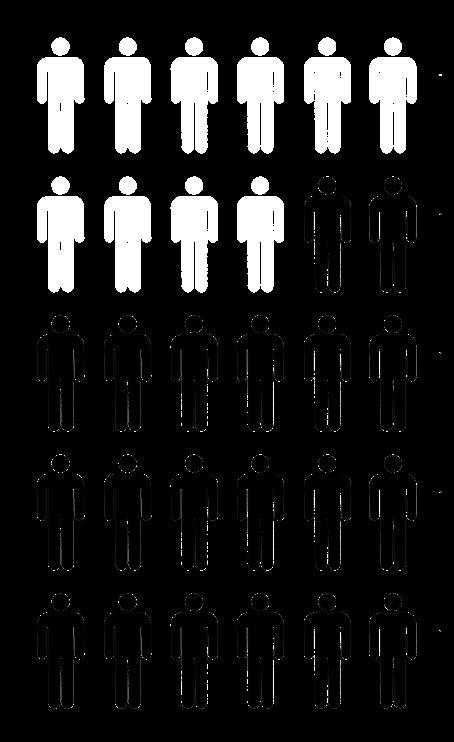
of employees with disabilities or neurodivergent traits who used AI-powered tools view it as a helpful assistive technology, and 85% believe it could create a more inclusive workplace, according to a survey by Ernst & Young.8 A study on AI adoption in the UK conducted by Public First found that two-thirds (66%) of workers have never used generative AI at work. And women over 55 are four times less likely to use AI than men under 35.9 Sources: 1 ECB: Artificial Intelligence: friend or foe for hiring in Europe today?, 2026; 2 Implement Consulting: The economic opportunity of AI in the EU, 2024; 3 INCO: Europe at work in the age of generative AI, 2026; 4 Ipsos: Making AI Work for Europe, 2026; 5 Eurostat: Enterprises using AI technologies, 2025; 6 WEF: Four Futures for Jobs in the New Economy: AI and Talent in 2030, 2026; 7 Cedefop: AI skills survey, 2025; 8 EY: GenAI for accessibility, 2025; 9 Public First: AI Works: 2025 Research Report, 2025

»Build the skilling systems that allow for people to learn very quickly, reskill, upskill, ensure that there is deep AI literacy for those that are in the early stage of their learning. But ensure that AI literacy goes all the way through to the very upper ends of the workforce. That’s something that every government, every business, every society should be focusing on.«
Saadia Zahidi Managing Director of the World Economic Forum

»We have the talent, we have the resources, we have the energy, we have the capacity, we have the ethics. And we need to think from a European perspective. We’ve been able to do the Euro, we’ve been able to do the Schengen Zone. We need a Schengen Zone for AI.«
Nicolas Hazard Founder of INCO

»The advantage will belong to people who can combine technology with curiosity, imagination and sound judgement. People who know how to ask better questions, not only how to search for answers.«
Edgars Rinkēvičs President of the Republic of Latvia
At »The Future of Work in the Age of AI«, a Google-sponsored pan-European forum in Riga, policymakers, entrepreneurs and thought leaders from across sectors discussed what it takes to build a workforce that is competitive, secure and ready for an AI-powered future. Their perspectives — captured here — offer candid advice for those navigating the uncertain, but promising terrain of the AI era.
»Today, our skills policy is not only social policy, it is also economic policy. It is an industrial policy. And I would argue it is even security policy. Europe needs a skilled workforce to remain competitive, to sustain its economic model and to protect its way of life. And this requires a joint effort. Governments, businesses, education and training providers, unions and civil society all have a role to play.«
Roxana Mînzatu
Executive Vice-President of the European Commission (2024–2029), Social Rights and Skills, Quality Jobs and Preparedness


»What I see in Europe is a little bit too much thinking about regulation and too little about the possibilities and opportunities. Most countries are working in a regulation framework — at least on a political level — and not on a policy framework. And that’s one of the problems with the European education policies: There is too much regulation in education systems, there is too little innovation.«
Dr. Kristina Kallas
Minister of Education and Research of the Republic of Estonia

»It requires a certain discipline to get those new AI skills. You cannot expect that employers will be the ones putting in all of the effort. It has to be a mutual responsibility between the employee and the employer.«
Pārsla Baško Chief People & Culture Officer for FYUL (Printful, Printify & Snow Commerce)
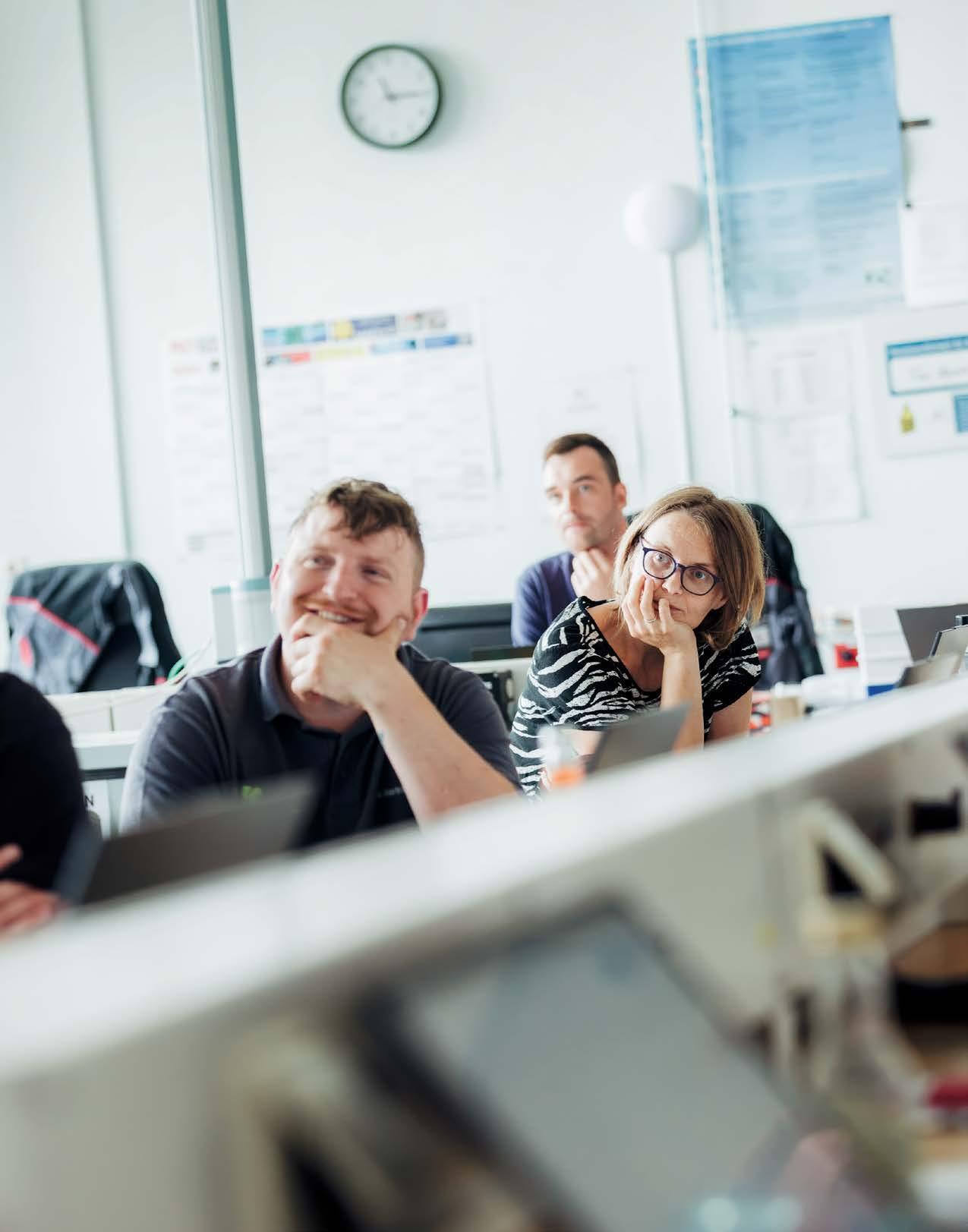
AI literacy is key for businesses and workers to stay competitive and unlock the potential offered by generative AI. All over Europe, different kinds of companies, organisations and NGOs show how upskilling initiatives help bridge the digital divide.
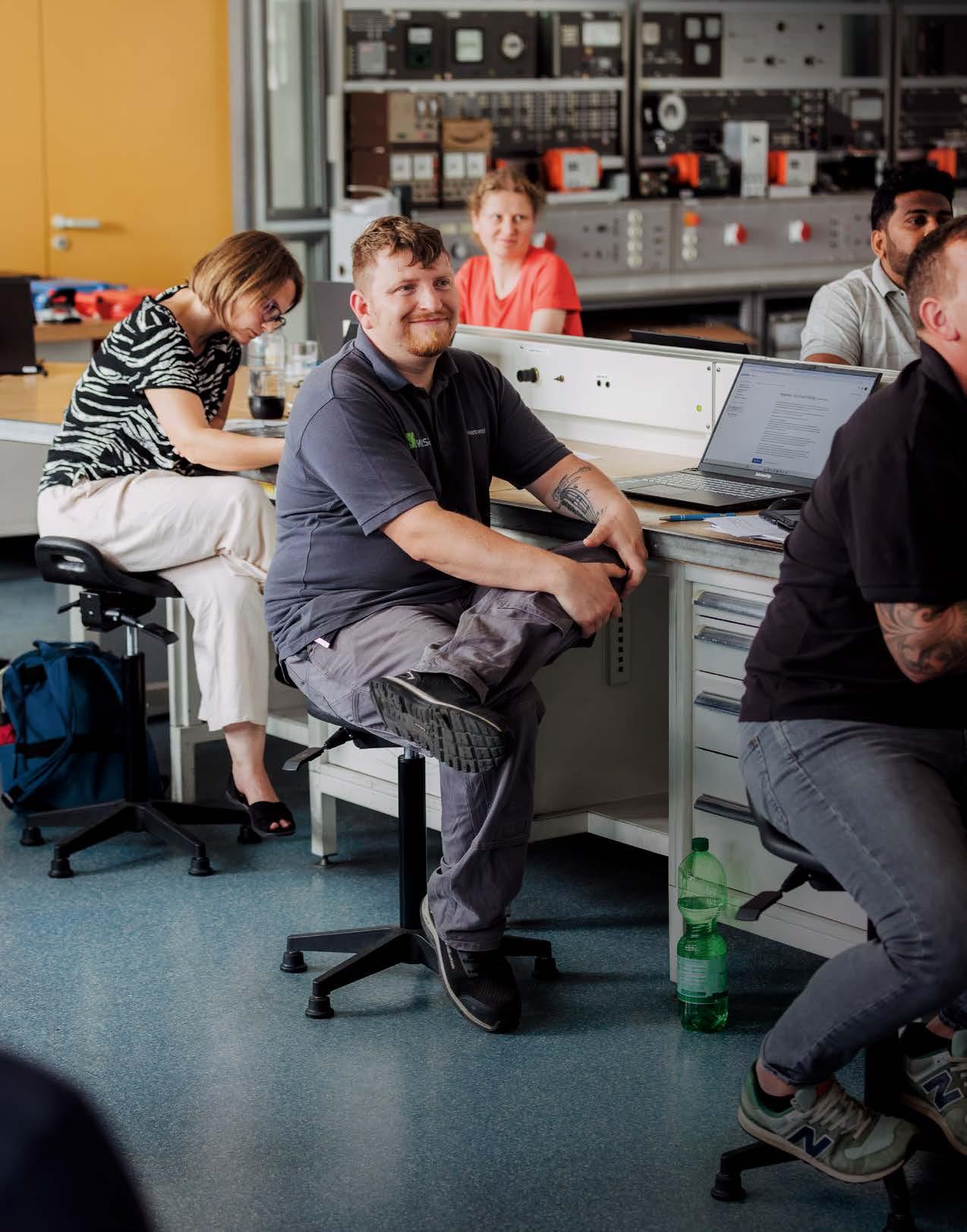
In the heart of Germany’s industrial corridor, the transition to an AI-driven economy is transforming roles from the factory floor to the HR office. At the AVO (Ausbildungsverbund Olefinpartner) training centre in Schkopau, workers like Jens Hertrampf, a foreman at the service company WISAG, and Barbara Schnerch, an HR professional at synthetic rubber manufacturer Synthos, are coming together to future-proof their careers. While their daily tasks differ — Hertrampf manages complex safety valves in chemical plants, Schnerch develops apprentice guidelines — both recognise that AI is no longer a »future« technology, but a workplace necessity.
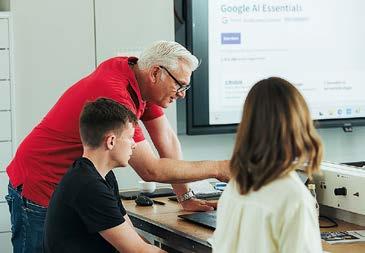
To ensure that the region’s workforce remains competitive, AVO launched a specialised training programme supported by funding from the Google.org AI Opportunity Fund. The initiative is designed to prevent a generational digital divide, offering intensive seminars to employees from local industrial enterprises. Participants engage in a three-week blended learning curriculum, combining in-person workshops with the »Google AI Essentials« online course. This programme provides foundational knowledge and practical experience with tools like Gemini, teaching workers how to use AI as a digital assistant for everything from summarising technical manuals to automating administrative »paperwork«.
The impact is already being felt across Germany’s Mittelstand (small and medium-sized enterprises). In partnership with the state of North Rhine-Westphalia, Google has also provided 5,000 licenses for AI professional certificates to help businesses master »prompting« and data analysis. For veterans like Hertrampf, the goal is efficiency: using AI to extract vital info from maintenance protocols. For Schnerch, it is about staying at the cutting edge of innovation. By democratising access to these high-level digital skills, the programme ensures that the backbone of German industry — its skilled workers — is ready to lead the next industrial revolution.

Discover your AI potential with Gemini: Start by asking how AI impacts your industry, then ask it to generate a customised upskilling plan in seconds.

In today’s rapidly evolving digital landscape, the gap between AI access and AI literacy remains a major barrier to economic mobility. To bridge this divide, Banco Santander and Google have partnered to launch »Master AI with Gemini«. Developed in Spain and available globally via the Santander Open Academy platform, this free course offers training in Spanish, English and Portuguese. Open to everyone — not just bank customers — the programme allows participants to master AI basics and explore practical applications of Google Gemini through intuitive, accessible modules.
According to Victoria Zuasti, Global Content and programmes director at Santander Universities, »AI is transforming the workplace at pace. Our aim is to provide accessible, high-quality training that enables people to strengthen their digital skills, improve their employability and adapt confidently to the evolving demands of the labour market.« In addition, Banco Santander and Google offer a more specialised no-cost AI course on the platform, »Practical AI for Marketing«.
While a financial institution offering AI training may seem uncommon, it is a perfect fit for Santander. The bank has been a pioneering stalwart of education, employability and entrepreneurship for 30 years, standing out among the world’s financial institutions. Santander (www.santander.com/universities) has deployed over €2.5 billion and supported more than 8.3 million people and businesses through agreements with over 1,000 universities from 13 countries. app.santanderopenacademy.com/en/course/master-ai-with-gemini
At 61, Maria Teresa Pellegrino, an oil producer and owner of Pellegrino 1890 srl in Andria, Italy, decided to invest in her professional growth through the »Google AI Essentials« training delivered through Italian nonprofit Fondazione Mondo Digitale with support from the Google.org AI Opportunity Fund. Working in what she calls »a predominantly male world«, Maria Teresa has always sought ways to assert her autonomy and strengthen her company’s identity through marketing and innovation. »I am always looking towards the future«, she said. »I don’t want to be left behind.« During the training, Maria Teresa discovered the creative potential of generative AI. While planning a corporate event, she used Gemini, the AI assistant, to organise every detail in just minutes, with impressive results. But the true breakthrough came when she applied AI to rewrite her brand’s promotional texts using neuromarketing archetypes, the Rebel and the Guardian Angel, aligning them with her company’s values. »The result was a beautiful text«, she shared. »I reused it almost entirely.« Through this process, she overcame her initial resistance to technology and began to see AI as a trusted ally. One that enhances creativity, saves time and amplifies her professional voice. »AI is only scary because it’s modern«, Maria Teresa reflected. »But modernity is always scary — it’s just about overcoming a human limitation.«
In France, the transition to AI represents a major opportunity for economic growth, provided the challenge of large-scale training is met. To address this, France Travail and Google’s local skilling programme »Ateliers Numériques« have strengthened a partnership that began in 2017 to democratise essential digital skills. The collaboration helps job seekers and business creators acquire the competencies they need to develop their activities with the help of AI. According to Thibaut Guilluy, Director General of France Travail, it’s vital to prevent a new digital divide when it comes to AI skilling. »Our goal is simple: to make AI a driver of inclusion, not exclusion, and to give everyone — staff, job seekers and employers alike — the keys to turning it into a tool for efficiency and empowerment.«
In 2025, the partnership reached an important milestone, having supported a total of 150,000 participants since its beginning. This success stems from a wide range of training formats, including live group sessions, professional certificates on Coursera and ondemand content on YouTube. The impact of this ongoing training effort is both tangible and measurable. Within six months of completing their certification, 80% of participants reported a positive effect on their career. Moreover, 85% said that their new AI skills had improved their productivity and efficiency at work. While a partnership between a public employment service and a major technology company may seem unusual, it is a natural fit for France Travail, which remains devoted to ensuring that digital progress benefits the greatest number of people across all French territories.

Find out more about organisations and projects supported by the Centre of Public Impact and the Google.org AI Opportunity Fund: Europe
BeCode provides AI skills to bridge the gap between unemployed individuals and tech vacancies. Their goal is a more diverse workforce.
02 CROATIA
The Croatian AI Association provides foundational AI knowledge to young rural job seekers and women re-entering the workforce.
03 CZECHIA
Czechitas empowers women to enter technical roles through hybrid AI training, while prg.ai trains public servants in government digital transformation.
04 DENMARK
The Danish Dyslexia Association equips workers with dyslexia with AI tools to enhance inclusive workplace communication. 05 FINLAND
TIEKE provides accounting and finance professionals in small businesses with foundational AI training to modernise their daily workflows and maintain a competitive edge. 06 FRANCE
Descodeuses provides AI and coding training for women from underserved neighbourhoods
to bridge the gender and social gap in the tech sector.
to prepare them for AI-driven business environments.
autistic adults for specialised data science roles.
Fundacja Studio M6 helps underprivileged groups access
and financial assistance through targeted digital literacy training.
jobs4refugees provides practical AI training and language support to help migrants and refugees integrate into the workforce.
Bizrupt provides AI training to underemployed women in rural Crete to help them strengthen local businesses.
BetterSocial soc. Coop. trains job seekers with cognitive and physical disabilities in AI skills.
ICLEI Europe trains city officials in Lisbon to use AI for datadriven urban planning and local climate action.
Ballymun Job Centre re-skills workers in low-paid or vulnerable roles like logistics and sales
Viešieji interneto prieigos
taškai trains public librarians aged 45 and older to ensure community digital literacy meets modern service needs.
Progress Foundation equips female librarians and cultural coordinators in rural Romania with essential AI skills, empowering them to modernise social services and serve as primary catalysts for innovation within their local communities.
Spectrum Intelligence creates vocational paths for neurodi-
Fundación Santa María la Real provides AI training to longterm unemployed women with caregiving responsibilities who face challenges re-entering the workforce.
Association of Mothers and Wives of Ukraine’s Defenders trains war veterans and their families in foundational AI skills for civilian employment use AI for data-driven urban planning and local
James Manyika and Ben Armstrong discuss how AI is changing jobs and what that means for how society trains the next generation of workers.
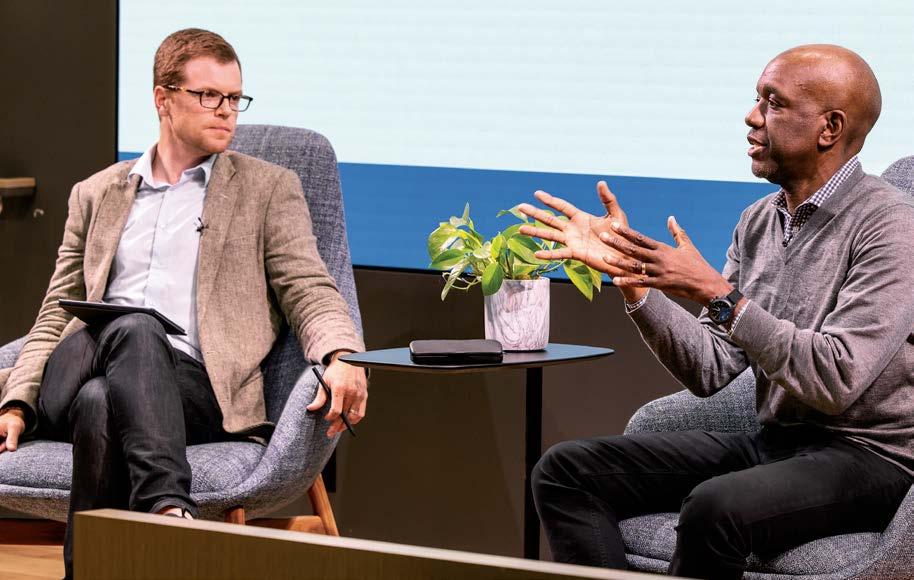
The conversation about AI and employment often fixates on a single question: which jobs will disappear? But according to James Manyika, Google’s Senior Vice President of Research, Labs, Technology & Society, that’s the wrong frame. In a conversation with Ben Armstrong, Executive Director of the Massachusetts Institute of Technology’s (MIT) Industrial Performance Center, Manyika laid out a more nuanced picture — one where job transformation vastly outweighs job loss, where productivity depends on innovation rather than cost-cutting, and where educational institutions need to fundamentally rethink what they’re preparing students for.
The following conversation, which took place at the Work of the Future Initiative Summit, a gathering of more than 70 executives and academics hosted by Google and MIT in Mountain View, California, has been edited for length and clarity.
Ben Armstrong: What’s your framework for thinking about the ways in which AI tools are going to affect the labour market?
James Manyika: I think most studies identify three things that will happen at the level of economies. First, there will be some job declines, but most studies underestimate a second important factor, which is jobs gained. The jobs gained are a combination of existing jobs whose demand will actually grow, as well as some new types of jobs created because of AI. This is worth remembering because 85% of the jobs we have today didn’t exist before 1945.
But the most important is the third factor, which is actually the biggest one: jobs will change. If you look at most studies, projections for jobs lost range in the single digits, whereas jobs changed account for more than two-thirds of all jobs. The International Labor Organization recently concluded that this augmentation effect would be six times the displacement effect.
Armstrong: I think where this is most visible right now is in software engineering. One of the dilemmas that my colleagues who
teach computer science are facing is: what are we training our graduates for as entry-level software engineers? We know that we’re training them to be senior software leaders in the long term, but in the short term, what’s the on-ramp to that? Yes, we are seeing augmentation of individual jobs, but what about the augmentation of career paths?
Manyika: I think one of the mistakes educational institutions have made in the last decade is equating the computer science curriculum with coding. I think we’ve made those two things synonymous, whereas if you look at anybody who studied computer science, say, 15 or 20 years ago, coding was just one piece of a much larger foundational curriculum that included a lot of different topics. You could argue that focusing on coding in colleges and universities might have been the right thing to do in the last decade because there were a lot of jobs that looked like that.
But as you look at what these AI technologies can now do, which often involves automating many of the more mundane parts of coding, the demand for that might slow down a little bit. That doesn’t mean the demand for computer science has gone away. In fact, even when we think about our hiring, it is often quite difficult to find computer scientists who have a strong foundational background encompassing the full range of skills. So, I think this raises a question about whether over-focusing on immediate hiring demands — filling positions for the next month or year — might run counter to setting people up for more resilient growth over time.

»AI is a general-purpose technology — you can imagine any sector using some aspect of AI to make things better.«
JAMES MANYIKA

»One of the dilemmas that my colleagues who teach computer science are facing is: what are we training our graduates for as entry-level software engineers?«
BEN ARMSTRONG
Armstrong: How are AI startups integrating these tools differently into their workflows compared to companies that are more mature?
Manyika: I think this is the challenge that all of us, Google included, are facing. Our teams are actually building these new tools, and we are simultaneously »re-tooling« ourselves as quickly as we can. Some products and environments can be designed entirely around the capabilities of the AI. They are greenfield — meaning the workflow can be built for the tool, rather than integrating the tool into the workflow. Especially for established and mature organisations, you are going to need to rethink your processes to fully take advantage of AI.
Armstrong: Looking ahead, what makes you optimistic about where AI intersects with other emerging technologies and disciplines?
Manyika: AI has two characteristics that make it somewhat unique. First, it’s a general-purpose technology — you can imagine any sector using some aspect of AI to make things better. But it also has this other characteristic: it’s an invention for inventing. Think about all the things we’re now starting to be able to discover, whether in biology or materials science. One of our models identified 2.2 million crystals that we didn’t know existed before, and startups are already working to synthesise hundreds of them into new materials.
The intersection of AI with other technologies and disciplines — whether quantum computing, life sciences or established industries — is where I think we’re going to see extraordinary progress. I’m excited to see what innovations emerge, from startups and established companies alike. I think we’re just getting started.
Google offers training programmes across Europe to help people gain the AI skills needed to succeed, from workers and small businesses getting started with the essentials, to developers gaining more advanced AI skills.

hours, the online training teaches the most in-demand skills where AI is transforming work, based on Google commissioned research. 80% of graduates in the EU say their new AI skills will improve productivity and/or efficiency at their job.*
*Google Career Essentials data 2025
Find out more about the Google AI Professional Certificate
AI Works for Europe
Through the AI Works for Europe initiative, Google partners with the public sector, nonprofits, employers and universities to help European workers and students gain essential AI skills to thrive in this new economy.
European AI Opportunity Fund
Empowering talent
21M
Since 2015, Google has worked alongside governments and local organisations to train over 21 million Europeans on digital or AI skills,

> $ 45,000,000
Since 2024, Google’s philanthropic arm Google.org has provided more than $45M in funding for non-profit organisations, trade unions, community organisations and higher education institutions across Europe to provide bespoke AI skilling.
Whether you’re just getting started or looking to develop more advanced skills, explore the range of AI training from Google.
Explore Google AI training here