September 2026 MLO-online.com
TM
The Peer-Authored Management Source for Lab Professionals since 1969
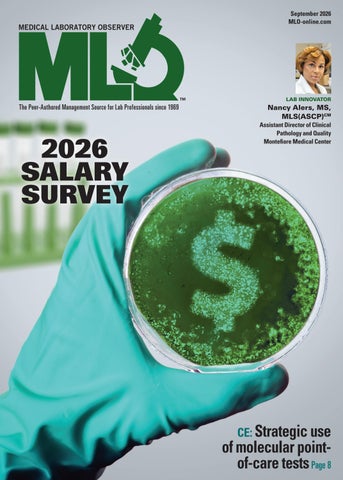
2026 SALARY SURVEY
LAB INNOVATOR
Nancy Alers, MS, MLS(ASCP)CM Assistant Director of Clinical Pathology and Quality Montefiore Medical Center
CE: Strategic use
of molecular pointof-care tests Page 8 2609MLO_C1-C4.indd 1
8/25/26 12:14 PM
2607MLO_Kronus_FP.indd 1 2609MLO_C1-C4.indd 2
6/1/26 10:53 8/25/26 12:14 AM PM
Hematology • Hemostasis • Urinalysis • Flow Cytometry • Informatics
Want less hassle with Hemostasis?
We Clot You. Hemostasis Solutions by Sysmex The right hemostasis solution for your lab is more than just an analyzer--it’s the winning combination of advanced technology and reagents, proven reliability and best-in-class service. Partnering with Sysmex gives you all of that and more, allowing you to clot smarter, not harder. www.sysmex.com/us For 26 consecutive years Sysmex has rated highest for System Reliability & Service.*
CS-Series™ CA-Series™ CN-6000™
©2026 Sysmex America Inc. *2025 IMV ServiceTrak™ Annual Survey for Hematology
2609MLO_SysmexAmerica_FP.indd 1 2609MLO_04_Edit.indd 3
8/7/26 12:15 8:27 AM 8/25/26 PM
F ROM T HE EDITOR
ADLM 2026
E
By Christina Wichmann Editor in Chief
ach July, MLO staff attend the Association for Diagnostics and Laboratory Medicine (ADLM) conference. This year it was in Anaheim, California. I only had the opportunity to attend one educational session this year, but I think it was a good one…From Bench to Boardroom: Crafting Business Plans that Drive Laboratory Strategy. Business plans matter for laboratory leaders because they translate laboratory priorities, build strategic partnerships, and elevate laboratory leadership and staff. The business plan needs to speak the language of the C-suite in order to bridge communication gaps; provide financial clarity and transparency; and deliver concise, outcome-focused messaging. The core components of an effective business plan
are the following: • Problem statement — define the need or opportunity. What is broken or missing? Why now? • Strategic alignment — link to organizational goals. How does this support institutional priorities? • Options analysis — evaluate alternatives. What are the viable options and tradeoffs? • Financial evaluation — quantify costs and benefits. What is the return on investment, cost avoidance, or value? • Implementation plan — demonstrate feasibility. How will this be executed and managed? • Success metrics — measure outcomes. How will success be defined and tracked? It is important to understand institutional priorities and connect the laboratory’s needs to these priorities, while also positioning the laboratory as a strategic partner. Financial analysis is also an important part of the business plan (e.g., return on investment, payback period, break-even analysis). If a laboratory initiative would create value that a traditional financial metric fails to capture effectively, align the initiative with long-term organizational strategies and quantify cost avoidance, risk reduction, and productivity gains. Additional guidance in the workshop was to balance strategic, operational, and financial considerations in the business plan as follows: • Strategic — growth, differentiation, reputation • Financial — efficiency, capacity, resilience • Operational — revenue and cost impact • Clinical/patient — quality and outcomes Tips on preventing failure of a laboratory business plan were also addressed: • Be cautious of too internal of a focus and take steps to link the plan to broader organizational goals. • Outline clear success metrics and financial impact. • Prepare thoroughly, engage stakeholders, anticipate and address questions/risks. Ultimately, a strong business plan can prevent a laboratory request being viewed as simply another expense. Laboratory leaders understand the technical and operational reasons an improvement is needed, but hospital leadership may need to see that need through a different lens. A well-developed business plan bridges that gap by connecting laboratory expertise to the organization’s financial, operational, and strategic priorities. When laboratory leaders can clearly articulate not only what they need, but why it matters to the broader organization and how the investment will deliver measurable value, they are better positioned to gain leadership support—and strengthen the laboratory’s role as an essential strategic partner. I welcome your comments and questions — please send them to me at cwichmann@mlo-online.com.
Vol. 58, No. 8
EDITOR IN CHIEF Christina Wichmann TM
cwichmann@mlo-online.com
MANAGING EDITOR Erin Brady
ebrady@endeavorb2b.com
PRODUCTION MANAGER Edward Bartlett ART DIRECTOR Kelli Mylchreest AUDIENCE DEVELOPMENT/LIST RENTALS
Laura Moulton | lmoulton@endeavorb2b.com ADVERTISING SERVICES MANAGER
Terry Gann | tgann@endeavorb2b.com ADVERTISING SALES DIRECTOR OF HEALTHCARE Jennifer Hazen DIRECTOR OF SALES EAST COAST/MIDWEST SALES, CLASSIFIEDS
Carol Vovcsko (941) 321-2873 | cvovcsko@mlo-online.com SOUTH/WEST COAST/ILLINOIS SALES
Lora Harrell (941) 328-3707 | lharrell@mlo-online.com MLO EDITORIAL ADVISORY BOARD John Brunstein, PhD, Biochemistry (Molecular Virology) President & CSO PathoID, Inc., British Columbia, Canada Lisa-Jean Clifford, COO & Chief Strategy Officer Gestalt, Spokane, WA Barbara Strain, MA, SM(ASCP), CVAHP Principal, Barbara Strain Consulting LLC, Formerly Director, Value Management, University of Virginia Health System, Charlottesville, VA Jeffrey D. Klausner, MD, MPH Professor of Preventive Medicine in the Division of Disease Prevention, Policy and Global Health, Department of Preventive Medicine at University of Southern California Keck School of Medicine. Donna Beasley, DLM(ASCP), Director, Huron Healthcare, Chicago, IL Anthony Kurec, MS, H(ASCP)DLM, Clinical Associate Professor, Emeritus, SUNY Upstate Medical University, Syracuse, NY Suzanne Butch, MLS(ASCP)CM, SBBCM, DLMCM Freelance Consultant, Avon, OH Paul R. Eden, Jr., MT(ASCP), PhD, Lt. Col., USAF (ret.), (formerly) Chief, Laboratory Services, 88th Diagnostics/Therapeutics Squadron, Wright-Patterson AFB, OH Daniel J. Scungio, MT (ASCP), SLS, CQA (ASQ), Consultant at Dan the Lab Safety Man and Safety Officer at Sentara Healthcare, Norfolk, VA CORPORATE TEAM
CEO Chris Ferrell COO Patrick Rains CDO Jacquie Niemiec CALO Tracy Kane CMO Amanda Landsaw EVP INFRASTRUCTURE & PUBLIC SECTOR GROUP Kylie Hirko VP OF CONTENT STRATEGY, INFRASTRUCTURE & PUBLIC SECTOR GROUP Michelle Kopier
30 Burton Hills Blvd., Suite 185 Nashville, TN 37215 800-547-7377 | www.mlo-online.com Medical Laboratory Observer USPS Permit 60930, ISSN 05807247 print, ISSN 2771-6759 online is published 9 times annually (January, March, April, May, July, August, September, October, November) by Endeavor Business Media, LLC. 201 N Main St 5th Floor, Fort Atkinson, WI 53538. Periodicals postage paid at Fort Atkinson, WI, and additional mailing offices. POSTMASTER: Send address changes to Medical Laboratory Observer, PO Box 3257, Northbrook, IL 60065-3257. SUBSCRIPTIONS: Publisher reserves the right to reject non-qualified subscriptions. Subscription prices: U.S. $164.80 per year; Canada/Mexico $199.56 per year; All other countries $284.54 per year. All subscriptions are payable in U.S. funds. Send subscription inquiries to Medical Laboratory Observer, PO Box 3257, Northbrook, IL 60065-3257. Magazine Subscription Customer Service U.S./Canada (toll-free): +1 877-498-4668 International: +1 920-249-4687 Email: customerservice@mlo-online.com Printed in the USA. Copyright 2026 Endeavor Business Media, LLC. All rights reserved. No part of this publication may be reproduced or transmitted in any form or by any means, electronic or mechanical, including photocopies, recordings, or any information storage or retrieval system without permission from the publisher. Endeavor Business Media, LLC does not assume and hereby disclaims any liability to any person or company for any loss or damage caused by errors or omissions in the material herein, regardless of whether such errors result from negligence, accident, or any other cause whatsoever. The views and opinions in the articles herein are not to be taken as official expressions of the publishers, unless so stated. The publishers do not warrant either expressly or by implication, the factual accuracy of the articles herein, nor do they so warrant any views or opinions by the authors of said articles.
4 | SEPTEMBER 2026 MLO-ONLINE.COM
2609MLO_04_Edit.indd 4
8/25/26 12:15 PM
IN THIS ISSUE...
X
YouTube
@MLOMedicalLaboratoryObserver
@MedicalLabMLO
@medical-laboratory-observer
@MLO-online
September 2026 | Vol. 58, No. 8
4 6
From the editor The observatory
CONTINUING EDUCATION
8
Strategic use of molecular point-of-care tests can improve respiratory testing outcomes By Annanya Shetty, PhD
LAB MANAGEMENT
14
Higher salaries, persistent pressures
24
Coaching Corner
By Kara Nadeau
By Patty J. Eschliman, MHA, MLS(ASCP)CM, DLMCM, CPC
PRODUCT FOCUS
23
8
Lab safety
INFECTION DIAGNOSTICS
26
The systems-level benefits of point-of-care testing By Jeanie Bach, MSN, RN, CCRN
CLINICAL ISSUES
29
Expanding the scope of autoimmune disease testing By James D. Faix, MD
29
EDUCATION
32
The throughput paradox: Why faster testing alone won’t solve the modern laboratory’s challenges
By Chelsea Creech
MOLECULAR DIAGNOSTICS
34
The value of molecular workflows in women’s health diagnostics By Kyle Bukowski, MD, FACOG
32
SPECIAL FEATURE
36
Rethinking sepsis protocols: When a new diagnostic test requires a new workflow By Alyssa Hutto, MHA, BSMT(ASCP)
BEST PRACTICES
38
Questions labs are asking before investing in hemostasis systems
By Krishna Ram and Christina Wichmann
36
LAB INNOVATOR
42
25 years in the laboratory: Lessons in leadership and lifelong learning By Christina Wichmann
DEPARTMENTS
41
Index of advertisers ON THE COVER: Per Bengtsson/Shutterstock.com
38 MLO-ONLINE.COM SEPTEMBER 2026 | 5
2609MLO_05_TOC.indd 5
8/25/26 12:15 PM
THE OBSERVATORY :: NEWS :: TRENDS :: ANALYSIS
THE OBSERVATORY :: NEWS :: TRENDS :: ANALYSIS
Fast Facts U.S. kindergarten vaccination trends The U.S. Centers for Disease Control and Prevention (CDC) has published new data regarding vaccination coverage among U.S. kindergarteners. Compared to the 2024-2025 school year, vaccination coverage for kindergarteners only declined by 0.1% for the 2025-2026 school year. Additional key findings for 2025-2026:
92.4%
of kindergarteners received the MMR and polio vaccines
92%
received DTP, DTaP, or DT
92.3%
were up to date with their varicella vaccines or had disease history
94%
were protected against hepatitis B
98.9%
of kindergarteners in West Virginia received the MMR vaccine, the highest percentage of all U.S. states
Olena Poliakevych/ iStock / Getty Images Plus/Getty Images
Source: https://www.cdc.gov/schoolvaxview/ data/index.html.
CMS seeks public input for updating CLIA regulations to reflect modern laboratory advances
The Centers for Medicare & Medicaid Services (CMS) is seeking feedback from the public to help with the upcoming update of the Clinical Laboratory Improvement Amendments of 1988 (CLIA) regulations. Their request for information (RFI) is published in the Federal Register. Specifically, CMS wants insights on: • Breath testing • Laboratory processes and procedures • Emergency preparedness • Biosafety and biosecurity • Cybersecurity • Specialty testing areas If CLIA regulations are updated, they will reflect the advancements that clinical laboratory testing technologies have undergone since the regulations were first introduced. Those who would like to submit comments to the CMS must do so electronically or by mail before September 14, 2026.
The pathologist shortage crisis has an AI solution
A recent Medical Laboratory Observer online exclusive article advocates for the integration of open, platformbased AI solutions, and discusses how digital tools can streamline pathology labs, enhance reproducibility, and support precision medicine without replacing human expertise. Read an excerpt from the article here: There’s a growing healthcare crisis increasingly making headlines. Cancer rates continue to rise, while aging populations are placing unprecedented pressure on healthcare systems worldwide, driving growing demand for diagnostic services.1 Pathologists—the physicians who diagnose disease through tissue analysis and help guide critical treatment decisions—are being asked to support a greater volume of increasingly complex cases, while workforce capacity remains constrained and has not grown at the same pace.2 This imbalance has significant real-world consequences. Delayed diagnoses can leave patients waiting longer for critical answers and treatment decisions.
At the same time, overburdened pathologists face increasing workloads that may impact both their wellbeing and diagnostic consistency, while laboratories struggle to meet turnaround expectations that continue to grow each year.3 Traditional solutions alone are unlikely to fully address the challenge. Training new pathologists requires many years of medical education and highly specialized residency training, while the profession itself faces demographic pressures similar to those affecting the broader healthcare workforce and patient population.4 Laboratory consolidation may improve efficiency in some settings, but only to a certain extent. The scale and urgency of the workforce pressures demand approaches that can deliver meaningful, scalable impact—and soon.
Addressing pathology workforce pressures through AI
Artificial intelligence (AI) has generated considerable discussion across healthcare, often accompanied by concerns that automation could replace clinical expertise.5 In pathology, however, the most impactful role of AI is not replacement, but augmentation. AI-enabled companion or complementary diagnostics have the potential to preserve diagnostic accuracy while meaningfully reducing pathologist workload, allowing these specialists to focus their expertise on the complex cases that most require human interpretation and judgement.5 In this model, AI supports tasks such as quantification, pattern recognition, and workflow optimization, while the pathologist remains central to interpretation, clinical context, and patient decision-making. The practical need for this support is becoming increasingly clear: as laboratories process growing volumes of slides, maintaining highly consistent interpretation across large caseloads becomes progressively more challenging. For example, scoring the same biomarker with identical precision on the hundredth slide of the day as on the first demands a level of sustained concentration that is difficult to maintain indefinitely in high-throughput clinical environments. For critical biomarkers, such
6 | SEPTEMBER 2026 MLO-ONLINE.COM
2609MLO_06-07_Observatory.indd 6
8/25/26 12:15 PM
THE OBSERVATORY :: NEWS :: TRENDS :: ANALYSIS as PD-L1 and HER2, which are among the most frequently used companion diagnostics in oncology, AI-enabled image analysis can improve reproducibility and reduce variability that may emerge under increasing workload pressures.6 This has direct implications for patient care. Modern oncology increasingly relies on pathology diagnostics to match patients with targeted therapies based on specific biomarker profiles. Variability in biomarker assessment can influence treatment selection and downstream clinical decisions. Standardized, reproducible analysis supports the precision medicine promise that cancer care depends upon. View the full article and references at https://mlo-online.com/55397879.
CAP launches 10 innovative PT and EQA programs for 2027 to enhance laboratory performance
The College of American Pathologists (CAP) has officially announced they are launching 10 new proficiency testing (PT) and external quality assessment (EQA) programs for 2027. The goal of this action is to aid laboratories with performance assessment, quality assurance, and patient care excellence. The 2027 programs cover topics such as current and emerging threats, diagnostic areas of concern, precision medicine, genomics, and patient safety. Some of the new programs include: • Candida auris Screen (CAUR) • Global PT/EQA for Tropical Fever Panel (TFP) • Methylation-based Tumor Classification (MTC) • RNA Fusions, Hematologic Malignancies (RNAH) • Anti-CD38 Interference Antibody Screen (DARA) for transfusion medicine • Measles, Mumps, Rubella and Varicella-Zoster Virus (MMRV) • Reticulocyte (RT5) • Serum Drug Testing (SDT) The new programs are designed to help laboratories keep up with the evolution of diagnostic testing. They also are regulatory compliant, according to CAP.
COVID-19 and viral reactivation: Insights from recent study
A study recently published in Nature examined COVID-19 and chronic virus reactivation. While the infection has been proven to reactivate Epstein–Barr
virus and cytomegalovirus, much remains unknown about viral reactivation in COVID-19. More than 1,150 hospitalized COVID-19 patients participated in the study. Key findings: • Many patients experienced reactivation of Herpesviridae and Anelloviridae during acute COVID-19. • Distinct temporal dynamics were observed for different viruses. • Virus reactivation impacts disease severity, host immune effects, and clinical outcomes. • No causation between virus reactivation and clinical outcomes was established by the researchers. • Immunocompetent individuals also experienced virus reactivation. • Anelloviridae and long COVID were found to be connected. The researchers hope their findings can be used for future prediction and treatment strategies.
Reducing cognitive decline risk: Lifestyle strategies from Mayo Clinic
Bryan Woodruff, M.D., an expert from Mayo Clinic, says that the same lifestyle-based prevention strategies for heart disease, diabetes, and cancer can apply to cognitive decline. He described changes people can make to reduce their risk in a news article by Sharon Theimer. Dr. Woodruff noted that in addition to the belief that the buildup of beta-amyloid plaques and twisted tau proteins in the brain play a part in Alzheimer’s, other brain changes likely contribute. He said that scientists have discovered evidence of microscopic strokes when examining the brains of Alzheimer’s patients after they’ve died. Multiple microscopic strokes can lead to cognitive symptoms. Dr. Woodruff emphasized that taking care of your cardiovascular system is essential for your brain health. He suggests: • Taking action to minimize heart disease risks • Implementing a heart-friendly diet, such as the Mediterranean or Mayo Clinic diets • Quality sleep • Preserving social networks • Managing hearing and vision loss • Not taking sedating medication regularly • Getting plenty of exercise • Participating in activities that you enjoy
Increasing pancreatic cancer survival
Daraxonrasib is changing the game for pancreatic cancer patients with metastatic pancreatic ductal adenocarcinoma (PDAC), according to a UT Southwestern article by Todd Aguilera, M.D., Ph.D. In recent trials, daraxonrasib proved to increase patient survival from 6.7 months-13.2 months. These results were produced in those with metastatic PDAC who “stopped responding to prior chemotherapy.” Daraxonrasib is a RAS(ON) inhibitor and taken once a day. According to Dr. Aguilera, it is gentler than chemo drugs like gemcitabine and nab-paclitaxelor FOLFIRINOX. Currently, daraxonrasib can be accessed through clinical trials or the manufacturer’s expanded access program (EAP) (awarded in May of this year). It is important to note that patients cannot take daraxonrasib if they are on any other metastatic PDAC medications. Dr. Aguilera said, “This drug is the start of more breakthroughs to come, which will give more patients with pancreatic cancer a longer, higher quality of life.”
FDA approves Moderna’s mFLUSIVA for adults 50+ ahead of 2026-2027 flu season
Moderna’s new seasonal influenza vaccine, mFLUSIVA, has received U.S. Food and Drug Administration (FDA) approval for adults aged 50 and older, according to an announcement from Moderna. The company anticipates having the vaccine ready for the upcoming 2026-2027 flu season. Results from two clinical trials led to the FDA’s decision. Between the two, more than 43,000 adults over the age of 50 participated. One of the trials, a Phase 3 clinical trial,“demonstrated an acceptable safety profile for mFLUSIVA, with no new safety concerns identified, consistent with previously reported studies of mFLUSIVA.” mFLUSIVA is the first approved flu vaccine made from mRNA. Known side effects include fatigue, headache, muscle and joint pain, chills, nausea, vomiting, and fever. Patients may also experience pain, tenderness, swelling, and redness around the injection site. However, the FDA’s Vaccines and Related Biological Products Advisory Committee (VRBPAC) voted unanimously (9-0) in favor of the vaccine, leading to the FDA’s approval. They agreed that the vaccine’s benefits outweigh its risk, Moderna said. MLO-ONLINE.COM SEPTEMBER 2026 | 7
2609MLO_06-07_Observatory.indd 7
8/25/26 12:15 PM
CONTINUING EDUCATION :: POINT-OF-CARE TESTING
marvlc / iStock / Getty Images Plus / Getty Images
Continuing Education :: Point-of-Care Testing
Strategic use of molecular point-of-care tests can improve respiratory testing outcomes By Annanya Shetty, PhD
P
Earning CEUs
See test online at https://ce.mlo-online.com/courses/strategic-useof-molecular-point-of-care-tests-can-improverespiratory-testing-outcomes. Passing scores of 70 percent or higher are eligible for 1 contact hour of P.A.C.E. credit.
LEARNING OBJECTIVES
Upon completion of this article, the reader will be able to:
Scan code to go directly to the CE test.
1. Identify the key differences between traditional rapid antigen tests and molecular point-of-care (POC) tests, including their relative sensitivity and specificity. 2. Describe the components and functions of the hub-and-spoke model for respiratory testing within a healthcare system. 3. Evaluate the factors that influence the selection and implementation of molecular POC testing platforms, including turnaround time, connectivity, and portability. 4. Analyze how molecular POC testing and laboratory-based testing support diagnostic stewardship by reducing unnecessary testing and improving clinical decision-making.
oint-of-care (POC) testing stands to be transformative for diagnosing respiratory infections, provided it passes certain clinical performance thresholds. The advent of highly reliable molecular POC platforms is now giving clinical laboratory teams greater flexibility in their respiratory testing strategies. The need for greater flexibility in respiratory testing is underscored by the substantial burden of respiratory diseases worldwide, which analyses indicate may reduce average life expectancy by more than one year.1 With POC platforms delivering fast and accurate results, clinical labs can consider a hub-and-spoke model in which POC platforms are strategically placed in outpatient and other key settings to detect the most common pathogens, while more complex and comprehensive testing is performed in
8 | SEPTEMBER 2026 MLO-ONLINE.COM
2609MLO_08-13_CE.indd 8
8/25/26 12:15 PM
2609MLO_08-13_CE.indd 9 1 2601MLO_Sebia_Measles.indd
8/25/26 12:15 11/26/25 10:21 PM AM
Continuing Education :: Point-of-Care Testing the central laboratory. While the central clinical lab is always the hub, spokes may include urgent care facilities, pharmacies, physician offices, emergency departments, and even nursing facilities, where studies have demonstrated benefit to patients from earlier recognition of emerging outbreaks.2 Respiratory testing becomes particularly challenging during peak season, when overlapping symptoms and rising demand can strain laboratory resources while increasing the need for rapid results.3,4 Strategically implemented molecular POC testing can help relieve clinical labs of some of this pressure, without sacrificing diagnostic quality. Establishing the appropriate combination of POC and lab-based testing must also be informed by diagnostic stewardship programs. The hub-andspoke model could contribute to ensuring that the right test is given to the right patient at the right time, and that all tests are offered with the expectation that their results will be actionable for each patient’s case.
Pitfalls of POC testing
In recent decades, some POC tests have proved challenging to implement among the clinical laboratory community due to analytical sensitivity and specificity issues.5 While the concept of POC testing has always been an appealing one, delivering results to physicians and patients more quickly while also enabling better and more timely clinical decision-making, the rapid antigen tests most often used at the point of care tend to have low sensitivity.6 The resulting high rates of false negative results mean that tests performed at an urgent care facility, primary care doctor’s office, or other outpatient setting often call for confirmatory testing, increasing demand on clinical labs for the patients who may be least likely to benefit. With many clinical guidelines recommending follow-up testing for negative POC results, these platforms broadly added to the clinical lab burden they were intended to ease.6 In addition, rapid antigen tests like the at-home flu or COVID-19 tests may be invisible to the clinical lab’s information system as well as to the patient’s electronic medical record (EMR). Results may not be trackable, making it more difficult for labs to evaluate epidemiological trends in their communities and hone their respiratory testing algorithms accordingly. Without a good mechanism for monitoring POC test results, these assays contribute less to the overall
understanding of a healthcare system’s patient population than lab-based testing would. Consequently, much of the responsibility for respiratory testing has remained within clinical laboratories. While the results these tests produce are highly accurate, even the fastest lab-based platforms cannot match POC testing for turnaround time of reported results.
continuity can simplify implementation decisions, support the development of testing algorithms that incorporate both POC and laboratory testing, and help ensure greater consistency in respiratory infection management across care settings. Evidence suggests that clinical laboratory teams are becoming more supportive of molecular POC tests, recognizing the value of rapid results so long as they are accurate.11
A new type of POC assay
Key factors to consider
Molecular tests are well-established for delivering excellent sensitivity and specificity; both the Infectious Diseases Society of America (IDSA) and the Association for Diagnostics and Laboratory Medicine (ADLM) recommend this method in a clinical lab.7,8 When molecular POC systems recently became available, they lived up to their reputation for accuracy, with sensitivity and specificity as high as 100%, while offering new advantages in turnaround time and location flexibility.9
With a growing number of molecular POC platforms to choose from, it’s important to understand how platforms differ in order to identify the ones bestsuited for the needs of a specific health system. This list is not exhaustive, but it covers the primary factors to consider when selecting POC devices. User-friendliness. Some POC instruments are designed for use by patients and others for use by hospital or office staff members; nevertheless, they must be easy to operate for people who are
Molecular tests are well-established for delivering excellent sensitivity and specificity; both the Infectious Diseases Society of America (IDSA) and the Association for Diagnostics and Laboratory Medicine (ADLM) recommend this method in a clinical lab. Molecular POC platforms are often CLIA-waived, enabling their use outside the clinical lab; some platforms may also be authorized for patient self-testing through separate FDA pathways. They generally produce lab-grade results in less than half an hour. With this kind of speed, results can be reported back to patients during their initial visit to a doctor or urgent care clinic, a key element in ensuring that patients receive appropriate clinical recommendations for treatment, isolation, or other interventions. Rapid POC results can also reduce the likelihood that a patient is prescribed inappropriate treatment, such as antibiotics for a viral infection. Studies have shown that incorporating rapid molecular results can improve clinical outcomes and reduce unnecessary use of antibiotic or antiviral therapies.10 Because these platforms are based on the same underlying molecular technologies that clinical laboratory teams are already familiar with, their results may be easier to interpret and compare with laboratory-based test results. This
not highly trained clinical lab personnel. Workflows that add simple operation with room temperature storage of reagents and clear prompts from the device or instruction sheet can reduce user error and support more reliable results. Sample type. Sample requirements influence where a platform can be deployed. Systems compatible with self-collected samples, such as nasal swabs, generally offer greater flexibility than staff-collected nasopharyngeal swabs. Connection options. POC platforms must be connected to the laboratory information system and to the EMR system. While wired connections (such as ethernet ports) are standard, having a WiFi option can provide greater latitude to place the instrument wherever it’s most needed. In addition, platforms that come with the drivers needed to connect to IT systems can reduce implementation barriers. Turnaround time. All POC platforms are billed as delivering “rapid” results,
10 | SEPTEMBER 2026 MLO-ONLINE.COM
2609MLO_08-13_CE.indd 10
8/25/26 12:15 PM
MADE IN NORTH AMERICA
Global partner. Local supplier. We understand 70% of today’s medical decisions depend on accurate laboratory results so we know you need fast and easy access to high quality Clinical Chemistry reagents. At SEKISUI Diagnostics, we manufacture our high quality SEKURE® Clinical Chemistry Reagents in North America because when every second counts, you need a dependable supplier.
To learn more about our clinical chemistry reagent products scan the QR code or go to sekisuidiagnostics.com/clinical-chemistry
© 2026 SEKISUI Diagnostics, LLC. All rights reserved. SEKURE® is a registered trademark of SEKISUI Diagnostics, LLC. Because every result matters™ is a trademark of SEKISUI Diagnostics, LLC.
2609MLO_SekisuiDiagnostics_FP.indd 1 2609MLO_08-13_CE.indd 11
8/19/26 12:15 1:28 PM 8/25/26 PM
but the actual time between submitting a sample and having results reported can vary. For optimal utility, the turnaround time should be 20 minutes or less. Result handling. Connectivity and result management should support both patient care and ease of access for labs. Ideally, results can flow automatically to the laboratory information system and EMRs while remaining accessible during unexpected connectivity disruptions. Portability. Since the goal of POC platforms is to enable testing where the patient is, the instrument’s footprint is an important consideration. Small, portable units that can be placed virtually anywhere provide flexibility. In peak respiratory season, these instruments may need to be moved frequently to meet testing demand. Platforms that require refrigerated reagent storage nearby are more challenging to move and less flexible to place than those that work with room-temperature reagents. Clinical evaluation. Like any laboratory testing platform, POC systems have to go through extensive performance studies before they can be sold. However, those studies can differ in their designs, including the tests manufacturers select for comparison. Evaluating performance against an FDA-cleared comparator rather than a non-molecular test offers the clearest assessment of reliability for clinical use. Knowing how results compare to a thoroughly vetted molecular test can also help labs minimize the need for re-testing the same targets with a lab-based system if the molecular POC test results come back negative.
The hub: Laboratory testing
In the hub-and-spoke model for respiratory infection management, POC testing is just one part of the equation. There will always be a need for high-quality, laboratory-based respiratory testing as well. These two testing modalities should be complementary: POC results must be reliable enough not to need routine confirmatory testing, and lab-based tests must be flexible enough to avoid target redundancy and the associated unnecessary costs. The ability to reflex to lab-based testing is critical for delivering comprehensive respiratory infection results. But reflexing to a standard large syndromic panel virtually guarantees that previously tested targets will be tested again. From both a diagnostic stewardship perspective and reimbursement perspective, this is a wasteful approach.
Prostock-Studio / Getty Images Plus / Getty Images
Continuing Education :: Point-of-Care Testing
Some laboratories have embraced provided to a patient serves to further a flexible testing approach that offers clinical care; the results of any test greater customization of molecular should be actionable, prompting clear tests to avoid this problem. With next steps in decision-making and treatflexible testing, clinical labs can use ment selection. digital sampling to customIncorporating molecuize respiratory panels from lar POC testing alongside a broad menu of available lab-based respiratory testing targets, selecting only the should align with a healthtargets they want to report. care system’s diagnostic This approach supports both stewardship objectives. Ofcomprehensive syndromic fering rapid, reliable results testing and smaller, targeted at the point of care for a panels, while allowing labs Scan code to go single common target or for a small number of the most to pay only for the targets directly to the CE test. they choose to report.12 widely circulating targets During peak respiratory season, for provides immediately useful informaexample, a standard POC panel might tion that can help physicians recommend cover flu A/B, respiratory syncytial appropriate treatment. Testing only the virus, and COVID-19. Patients with most common targets at this point avoids serious symptoms who test negative over-testing and ensures results that are could then be reflexed to the lab for most likely to be actionable. Pairing POC with lab-based testing additional customized testing that excludes targets already tested at the point also supports diagnostic stewardship of care. This approach avoids redundant efforts. Patients who are reflexed to lab testing and double-billing. tests are those who truly need more comprehensive testing, justifying the Diagnostic stewardship expense of additional targets or even large syndromic panels as appropriobjectives Amid surging demand for laboratory ate.14 With a flexible testing approach, tests to help guide clinical decision- the lab-based selection of targets can be making is the simultaneous push for informed by epidemiological patterns, diagnostic stewardship to avoid un- patient demographics and occupanecessary testing and reduce health- tion, seasonality, and other clinically care costs.13 Typically, these stewardship relevant factors. goals are described as getting the right A hub-and-spoke respiratory testing test to the right patient at the right strategy allows healthcare systems to time, but real diagnostic stewardship align testing resources with patient goes beyond this simple phrase. The needs. Molecular POC platforms can true goal is to ensure that all testing provide rapid answers for common
12 | SEPTEMBER 2026 MLO-ONLINE.COM
2609MLO_08-13_CE.indd 12
8/25/26 12:15 PM
Continuing Education :: Point-of-Care Testing respiratory pathogens at the point of care, while centralized laboratories remain responsible for more comprehensive testing and complex cases. Together, these approaches support diagnostic stewardship by limiting unnecessary testing, improving turnaround times, and ensuring that additional laboratory resources are directed where they provide the greatest clinical value. While respiratory testing is always unpredictable, the ability to offer POC tests can help healthcare systems navigate the chaos more smoothly. REFERENCES 1. Huang G, Guo F. Loss of life expectancy due to respiratory infectious diseases: findings from the global burden of disease study in 195 countries and territories 1990-2017. J Popul Res (Canberra). 2022;39(1):1-43. doi:10.1007/s12546-021-09271-3. 2. Tan C, Chan CK, Ofner M, et al. Implementation of point-of-care molecular testing for respiratory viruses in congregate living settings. Infect Control Hosp Epidemiol. 2024;45(9):1085-1089. doi:10.1017/ice.2024.72. 3. Clinical overview of respiratory illnesses. U.S. Centers for Disease Control and Prevention. August 18, 2025. Accessed August 11, 2026. https://www.cdc.gov/respiratory-viruses/hcp/ clinical-overview/index.html. 4. Respiratory virus activity levels. U.S. Centers for Disease Control and Prevention. August
7, 2026. Accessed August 11, 2026. https:// www.cdc.gov/respiratory-viruses/data/ activity-levels.html. 5. Garcia-Rodriguez J, Janvier F, Kill C. Key insights into respiratory virus testing: Sensitivity and clinical implications. Microorganisms. 2025;13(1):63. doi:10.3390/ microorganisms13010063. 6. Information for clinicians on rapid diagnostic testing for influenza. U.S. Centers for Disease Control and Prevention. January 5, 2026. Accessed August 11, 2026. https://www.cdc. gov/flu/hcp/testing-methods/rapidclin.html. 7.
Hanson KE, Azar MM, Banerjee R, et al. Molecular testing for acute respiratory tract infections: Clinical and diagnostic recommendations from the IDSA’s diagnostics committee. Clin Infect Dis. 2020;71(10):2744-2751. doi:10.1093/cid/ciaa508.
8. Berry GJ, Jhaveri TA, Larkin PMK, Mostafa H, Babady NE. ADLM guidance document on laboratory diagnosis of respiratory viruses. J Appl Lab Med. 2024;9(3):599-628. doi:10.1093/ jalm/jfae010. 9. Alzahrani AJ. Molecular point-of-care testing for respiratory infections: A comprehensive literature review (2006-2026). Diagnostics (Basel). 2026;16(6):930. doi:10.3390/ diagnostics16060930. 10. Mojebi A, Wu P, Keeping S, et al. Clinical impact of rapid molecular diagnostic tests in patients presenting with viral respiratory symptoms: A systematic literature review. PLoS One. 2024;19(6):e0303560. doi:10.1371/ journal.pone.0303560. 11. Tolle H, Wachinger J, Castro MDM, Morales I, Denkinger CM. Implementation of point-of-care PCR-testing for the
diagnosis of respiratory infections in vulnerable patient populations. PLoS One. 2025;20(7):e0307621. doi:10.1371/journal. pone.0307621. 12. Gonzalez K, Amicarelli G. Age-stratified epidemiology of respiratory pathogens and the value of customizable syndromic testing using the LIAISON PLEX respiratory flex assay. J Mol Diagn. 2025;27(9):809-818. doi:10.1016/j.jmoldx.2025.05.009. 13. Kressel A, Cheatham M, Chang A. Diagnostic stewardship of respiratory pathogen panel utilization. Antimicrob Steward Healthc Epidemiol. 2021;1(S1):s59-s59. doi:10.1017/ash.2021.114. 14. Baghdadi JD, O’Hara LM, Johnson JK, et al. Diagnostic stewardship to support optimal use of multiplex molecular respiratory panels: A survey from the Society for Healthcare Epidemiology of America Research Network. Infect Control Hosp Epidemiol. 2023;44(11):1823-1828. doi:10.1017/ice.2023.72.
Annanya Shetty, PhD is a translational medicine specialist with over a decade of experience in infectious diseases and diagnostics. She holds a PhD in Medicine from the National University of Singapore and has held global product leadership roles at Abbott and now Diasorin, where she integrates clinical research with the development of decentralized molecular diagnostics. A published scholar, Dr. Shetty is passionate about delivering impactful healthcare solutions and improving access to care.
Peer-authored insights for clinical laboratory professionals
Subscribe to MLO Stay current on laboratory diagnostics, management, regulations, and emerging trends
FREE Print + Digital Subscription Already a subscriber? Renew your free subscription to continue receiving MLO.
SCAN TO SUBSCRIBE OR RENEW
1.800.848.1633 • GoHCL.com
Visit MLO-online.com MLO-ONLINE.COM SEPTEMBER 2026 | 13 2609MLO_House_Subscribe_14v.indd 1 2609MLO_08-13_CE.indd 13
2609MLO_HealthCareLogistics_14sq.indd 1 8/4/26 4:39 PM
7/1/26 1:08 PM
8/25/26 12:15 PM
LAB MANAGEMENT :: SALARY SURVEY
Lab Management :: Salary Survey
Higher salaries, persistent pressures MLO’s 2026 survey finds an experienced laboratory workforce facing continued staffing challenges and limited career advancement
Per Bengtsson/Shutterstock.com
By Kara Nadeau
14 | SEPTEMBER 2026 MLO-ONLINE.COM
2609MLO_14-22_salary.indd 14
8/25/26 12:14 PM
Lab Management :: Salary Survey
M
LO’s 2026 Annual Salary Survey, completed by 406 laboratory professionals, reveals a highly experienced and educated workforce that remains essential to patient care but continues to face questions about staffing, compensation, career development, and longterm workforce sustainability. Three findings stand out: • Compared with last year’s survey, the respondent pool is increasingly experienced and leadership focused. More than half were age 56 or older, nearly half had worked in the laboratory industry for more than 30 years, and laboratory leaders represented a substantially larger share of respondents than in 2025. • Reported salaries rose, but confidence in career advancement weakened. Nearly three-quarters expected to earn at least $75,000, yet only 31% believed they had adequate advancement opportunities. • Workforce pressures persist. Nearly 8 in 10 respondents reported difficulty hiring qualified staff, 76% experienced moderate or high turnover, and 63% said personnel shortages had a moderate or large operational impact. Survey comments and interviews with laboratory professionals — Angela Tomei Robinson, MS, MLS(ASCP)cm, retired associate administrator of pathology and laboratory medicine and laboratory advocate and Jordyn Justice, MLS(ASCP), medical laboratory scientist at Levine Cancer Institute — add insight into what the numbers mean for compensation, retention, education, and the future of the profession.
A look at the respondents
As in previous years, most respondents were female (79%) and worked in hospital or health system laboratories (67%). However, the 2026 respondent pool was notably more senior than in 2025 in terms of position, age, and experience. Laboratory directors, managers, administrators, and supervisors represented 41% of respondents, up from 28%, while medical laboratory scientists (MLS/MS) increased from 12% to 19%. In contrast, medical laboratory
technician (MLT) representation fell sharply, from 33% to 6%. More than half of respondents (52%) were age 56 or older, compared with 33% in 2025. Nearly half (47%) had worked in the laboratory industry for more than 30 years, up from 30%, while the percentage with fewer than 10 years of experience declined from 32% to 10%.
Current workplace
Respondents represented laboratories of varying sizes and testing volumes. The highest percentage (41%) work in labs with 20 or fewer employees, while 22% work in labs employing more than 100 people. Annual testing volumes were similarly diverse: 37% worked in laboratories performing more than 1 million tests annually, while 20% reported volumes between 100,001 and 500,000 tests. Compared with 2025, respondents were more established with their current employers. The percentage with fewer than 10 years of service declined from 60% to 41%, while the share employed by the same organization for at least 20 years increased from 23% to 36%. Those with less than three years of tenure fell by nearly half, from 25% to 13%. Standard eight-hour shifts became more common, reported by 61% of re-
How many years have you been employed in the lab industry? <3
3%
3–5
4%
6–9
3%
10 – 14
8%
15 – 19
11%
20 – 24
9%
25 – 30
15%
> 30
47%
spondents compared with 52% in 2025. Meanwhile, 12-hour shifts declined from 11% to 4%, and 10-hour shifts fell from 20% to 15%. A new question examined the average number of hours worked per week, finding 80% of respondents working at least 40 hours, including 42% who exceeded 40 hours. More than one-third (36%) reported working 41–50 hours per week, and 6% worked more than 50 hours.
Education and certification
Education levels shifted upward from 2025 to 2026, with respondents holding bachelor’s degrees increasing from 46% in 2025 to 58% in 2026, and those with associate degrees falling from 33% to 12%. Those holding post-graduate degrees increased slightly, at 28%, up from 22%, while those saying high school was their highest level of education increased slightly from .03% in 2025 to 1.27% in 2026%. American Society for Clinical Pathology (ASCP) remained the most commonly reported professional certification, held by 68% of respondents (73% in 2025). The most notable year-over-year change was in Medical Laboratory Technician (MLT) certification, which fell from 35% to 15%. Conversely, the percentage reporting medical laboratory scientists (MLS/MS) certification increased from 17% to 27%, while medical technologist (MT) certification rose from 23% to 32% and clinical laboratory scientists (CLS) certification increased from 11% to 14%. The changes point to a respondent pool more heavily represented by medical laboratory scientists and technologists and less represented by medical laboratory technicians (MLT). This is consistent with fewer MLT respondents this year compared with last year. As for the organizations from which they received professional certifications, there was little change from 2025 to 2026, with the majority (72%) reporting the American Society for Clinical Pathology (ASCP), 10% American Medical Technologists (AMT), 10% the National Credentialing Agency for Laboratory Personnel (NCA) and 13% selecting “my state.”
Salaries, bonuses, and benefits
The salaried versus hourly percentage of respondents reversed year-over-year with salaried respondents increasing from 36% in 2025 to 49% in 2026, while hourly respondents fell from 64% to 51%. However, this may reflect the higher number of laboratory professionals in leadership positions taking part in the 2026 survey. Salary growth remained widespread, with 73% reporting an increase last year (up from 68%), 26% no change in salary (down from 29%), and only 1% reported a decrease (down from 3%). Nearly half of respondents (45%) expect to earn at least $100,000 in 2026, compared with 26% in 2025. MLO-ONLINE.COM SEPTEMBER 2026 | 15
2609MLO_14-22_salary.indd 15
8/25/26 12:15 PM
Lab Management :: Salary Survey Overall, 72% expect salaexperience,” said Robinson. ries of $75,000 or more, up “And salaries have improved from 52%. At the same time, where there are bidding wars the percentage in the $50,000with competition for supply $74,999 range fell from 32% and demand of qualified board-certified medical to 17%, while those earning laboratory professionals. between $20,000 and $49,999 But unfortunately, not evdeclined from 15% to 6%. Jordyn Justice, As with the salaried versus MLS(ASCP) erywhere and we need this hourly findings, the higher nationwide.” salaries may reflect the “I do not believe that the greater number of laboracurrent national average tory directors, managers, and salaries for medical laborasupervisors; and bachelor’story professionals accurately and postgraduate-degree reflect the educational backholders; and fewer MLTs ground we hold and responand associate-degree holders sibilities we take on each day,” taking part in the survey this said Justice.“We are required Angela Tomei year compared with last year. Robinson, MS, to have specific educational Robinson and Justice MLS(ASCP)cm backgrounds, certification/ stressed the importance of license, and specialized clinilooking beyond the numbers to whether cal skills. These all equate to a higher pay reflects professional qualifications. compensation that isn’t offered to us.” “Compensation should always be Most respondents anticipate a commensurate with education and modest salary increase in 2026, with 55%
What laboratory professionals have to say about lab education and training programs While overall satisfaction with laboratory education and training improved in 2026, the comments from dissatisfied respondents revealed significant gaps. Some reported that their employers provide no laboratory-specific education beyond initial on-the-job training, mandatory safety instruction, or competency activities required for regulatory compliance. Even when educational opportunities are available, laboratory professionals may not have the time or staffing coverage needed to participate. Respondents described attempting to complete webinars while managing heavy workloads, attending programs after their scheduled shifts, or pursuing education on their own time. Requests to attend off-site seminars and conferences were frequently denied because of staffing shortages or limited budgets. As one respondent explained, “The university offers staff training opportunities, but I cannot take time away from the lab to attend.” Several respondents also perceived an imbalance between the educational support available to laboratory professionals and nurses. They said nursing staff had greater access to tuition assistance, advanceddegree programs, research opportunities, and institutionally supported professional development. One respondent described the challenge in this way, “Most of the educational opportunities are given to nurses to obtain professional degrees such as masters and doctorate degrees.” The absence of dedicated laboratory educators was another recurring concern. Respondents said training is often assigned to managers, supervisors, or bench staff already responsible for daily operations. This can result in inconsistent orientation, unclear guidelines, and employees being trained by multiple people. “I believe this is something that should be a separate job from the day-to-day operations,” said one respondent. “I feel that if a company were to put in the extra work for just one or two individuals for such a program, that the turnover rate would decrease and morale would increase significantly.”
What is your 2026 annual base salary expected to be? < $20,000
3%
$20,000 – 24,999
2%
$25,000 – 29,999
1%
$30,000 – 34,999
<1%
$35,000 – 39,999
1%
$40,000 – 44,999
1%
$45,000 – 49,999
2%
$50,000 – 54,999
4%
$55,000 – 59,999
2%
$60,000 – 64,999
4%
$65,000 – 69,999
2%
$70,000 – 74,999
5%
$75,000 – 79,999
5%
$80,000 – 84,999
6%
$85,000 – 89,999
6%
$90,000 – 94,999
6%
$95,000 – 99,999
4%
$100,000 – 110,999
13%
$111,000 – 120,999
8%
$121,000 – 130,999
5%
$131,000 – 140,999
5%
$141,000 – 150,999
3%
>$151,000
11%
16 | SEPTEMBER 2026 MLO-ONLINE.COM
2609MLO_14-22_salary.indd 16
8/25/26 12:15 PM
2609ML
Overwhelmed?
Help is just a call, chat, or email away. API delivers the expertise, resources, and responsive support laboratories need to navigate proficiency testing with confidence. From program selection and streamlined ordering to educational materials and expert assistance, we make it easier to stay informed, compliant, and prepared. With API, you get trusted proficiency testing backed by exceptional service, because your success is our priority. More than proficiency testing. A partner you can rely on.
See How API Supports Your Laboratory api-pt.info/Support
2609MLO_API_FP.indd 1 2609MLO_14-22_salary.indd 17
7/29/26 12:15 9:07 AM 8/25/26 PM
Lab Management :: Salary Survey expecting a raise of 2%-4%, up from 44% in 2025, while the other raise categories changed relatively little. Bonuses became less common with only 26% of respondents reporting they received a bonus last year, down from 32%). Employer benefit offerings remained robust year-over-year, with most laboratory professionals surveyed receiving health insurance (96%), dental insurance (90%), a 401k or pension plan (90%), vision insurance (88%), PTO (84%) and life insurance (81%). Nearly three-quarters (74%) reported receiving disability insurance, 68% paid holidays, 59% employee assistance program and tuition reimbursement, and 51% overtime pay.
Do you feel you have adequate opportunities for career advancement at your current job?
Not sure
Yes 31%
31%
No
38%
The survey found that only 31% of respondents believe they have adequate opportunities for career advancement. What can laboratories do to create better career paths for laboratory professionals? Laboratories need to create visible and intentional career pathways that allow professionals to advance without feeling that their only options are to become a supervisor or leave the laboratory altogether. That could include structured career ladders such as MLS I, II, III, lead, specialist, technical supervisor, manager, and director, with clearly defined competencies and compensation at each level. We also need to recognize that advancement does not always mean management. Laboratories can develop technical, quality, education, informatics, compliance, and project-management tracks for individuals who want to grow while remaining closer to the technical side of the profession. Formal mentorship, leadership development, succession planning, and support for certifications and continuing education are also important. Most importantly, employees should be able to see what their next opportunity is and understand what they need to do to get there.
Salaries are rising, but confidence in career advancement is declining. Why might those trends be happening at the same time? I think these trends reflect two different workforce issues. Higher salaries do not necessarily translate into greater career mobility. Laboratories have had to increase compensation to recruit and retain staff in a competitive market, particularly in response to workforce shortages. An important consideration is when these increases are correcting compensation at the current level rather than creating additional levels of advancement. There is also a potential retention issue when external movement produces greater advancement than internal movement. If professionals perceive that
Job satisfaction, security, and advancement opportunities
Overall job satisfaction improved modestly, with those reporting to be “very satisfied” or “somewhat satisfied” increasing to 84% in 2026, from 79% in 2025. However, looking at the “very satisfied” responses in isolation, this fell to 31% from 38%, while the “somewhat satisfied” responses rose to 53% from 41%. When asked for the primary reason for staying in their current position, more than half (53%) chose location/ commute (52% in 2025), followed by salary (42%, up from 38%) and benefits (42% up from 39%), work/life balance (41% down from 47%), team/culture
they have to change laboratories or organizations to receive a meaningful promotion or salary increase, their confidence in having a long-term career path within their current organization will naturally decline.
What is most important for making a career in the clinical laboratory sustainable over the long term? For me, sustainability comes down to compensation, professional growth, recognition, and working conditions. Laboratory professionals need to be compensated appropriately for their education, certification, expertise, and responsibility, but compensation alone will not sustain the workforce. We also have to create environments where people can envision themselves staying in the profession for 10, 20, or 30 years. That means reasonable staffing and workloads, opportunities for advancement, strong leadership, mentorship, continuing education, and recognition of the laboratory’s contribution to patient care. I also think we need to invest more in the next generation of laboratory leaders. We often promote excellent technical professionals into leadership roles without providing formal preparation in areas such as finance, personnel management, quality, communication, and change management. Creating sustainable laboratory careers means developing people throughout their careers. All levels of development should be considered, from entry-level professionals through technical experts, supervisors, managers, and directors. We need to be proactive rather than waiting until a leadership position becomes vacant to think about development. Brittany Teeter, PhD, MS, CLS, MLS (ASCP)cm , Laboratory Director, Retama Community Hospital
18 | SEPTEMBER 2026 MLO-ONLINE.COM
2609MLO_14-22_salary.indd 18
8/25/26 12:15 PM
Complete Urinalysis, Connected.
AUTION Bridge Urinalysis System AI-4510 + AX-4060
Smart Transfer System Optimizes Urinalysis Workflow, Enhancing Performance: The AUTION EYE AI-4510 features three focal depths, delivering high-resolution particle images, and connects with the latest version of the AUTION MAX series, AX-4060.
AUTION EYE Smart Assist An add-on service that provides assisted classification of urinary sediment images to support technologist review. Transmit the urinary sediment images captured by AI-4510 to the cloud AUTION Bridge Urinalysis System
Real-time image review Quickly return the results
Laboratory
Validation of the tests should be performed by the laboratory.
877.538.8872 • corelab@arkrayusa.com • www.arkrayusa.com
2609MLO_Arkray_FP.indd 2609MLO_14-22_salary.indd1 19
ARKRAY Image Classification Center
AY-2842-v2 Rev. 08/26
8/12/26 12:15 1:52 PM 8/25/26 PM
Lab Management :: Salary Survey (38%, same as 2025), job security (32%, same as 2025), and lack of other opportunities (16%, same as 2025). Robinson commented on the importance of executive leadership support in recruitment and retainment strategies, stating, “While laboratory advocating has appropriately focused on attracting attention to medical laboratory science, recruiting and retaining are also critical. Laboratory leadership must have a seat at the C-suite table with a voice to ensure supportive leadership for resourceful environments and well compensated medical laboratory professionals.” Justice emphasized that retention also depends on whether laboratories make sustainable working conditions possible. “Aside from compensation, I think being able to have a good work/ life balance is essential. Having flexible
scheduling, adequate PTO, and enough staff to cover that PTO is vital.” “Burnout in healthcare workers across all fields can be primarily attributed to the fact that there is generally too great a workload spread across not enough staff,” Justice added. “The high-stakes pressure of timely and accurate testing is something laboratory personnel feel daily, and that mental load is exhausting. We need time away to rest so that we can give 100% to the patients that are counting on us.”
Job security
Respondents felt more secure overall, with those feeling “very secure” or “somewhat secure” increasing from 87% in 2025 to 90% in 2026. However, those selecting “very secure” dropped to 45% from 56% while “somewhat secure” increased to 45% from 31%.
Continuing education and the desire for constant improvement are going to be leading factors of relevance as this career field continues to evolve.
Additionally, 9% of respondents reported feeling somewhat insecure (7%) or very insecure (2%).
Career advancement and education and training programs
Laboratory professionals reported greater uncertainty around career advancement compared with last year. Only 31% of respondents believe they have adequate opportunities, down from 41%. The “not sure” response nearly doubled to 31% from 17%. Interestingly, those selecting “no” also declined, at 38 in 2026%, down from 43% in 2025. Perceptions of education and training improved considerably. The combined satisfied responses — those who reported feeling “very satisfied” or “somewhat satisfied” — increased from 71% to 81%, while combined dissatisfaction responses — “somewhat dissatisfied” or “very dissatisfied” — fell from 29% to 19%. Justice underscored why an investment in education and training must continue throughout a professional’s career: “While I am grateful for my educational background and continue
Stay Connected to the Clinical Laboratory Profession Get trusted coverage of the issues shaping today’s clinical laboratory: Diagnostics & Testing Lab Management Compliance & Regulatory Technology & Industry Trends
Subscribe or Renew Your FREE Subscription SCAN TO SUBSCRIBE OR RENEW Visit MLO-online.com
Already a subscriber? Renew your free subscription to keep every issue coming.
20 | SEPTEMBER 2026 MLO-ONLINE.COM
2609MLO_House_StayConnected_12h.indd 1 2609MLO_14-22_salary.indd 20
8/4/26 12:15 4:48 PM 8/25/26 PM
toward my master’s degree, I wish there had been more emphasis on the fact that laboratory science is evolving every day. Some of the knowledge we know now may change to the point of irrelevance as science continues to progress.“Continuing education and the desire for constant improvement are going to be leading factors of relevance as this career field continues to evolve.”
Workforce status, challenges, and opportunities
Workforce pressures remain persistent and may have intensified, with 79% of survey respondents reporting difficulty hiring qualified staff in the past 12 months as “very difficult” or “somewhat difficult” (up from 75% in 2025). Reported high or moderate staff turnover during the past 12 months also increased, from 73% to 76%. Robinson described retention as both a workforce and quality strategy: “It is far more cost-effective to prevent errors
What laboratory professionals have to say about career advancement MLO asked medical laboratory professionals who took part in the survey to elaborate on opportunities for career advancement at their current jobs. In reviewing the write-in responses, it appears that career advancement remains a complicated issue. Limited career ladders are a roadblock to advancement. Those in larger laboratories described a ladder consisting of lead, supervisor, manager, and director positions. In smaller laboratories, some reported that no additional level exists above their current role. Others said advancement depends on waiting for a manager to leave or retire, relocating, or pursuing a position outside the laboratory in areas such as administration, quality, information systems, sales, or corporate operations. Several respondents also questioned whether moving into management would provide sufficient compensation for the additional workload and stress. “There is opportunity to take on supervisory roles, but I don’t believe the salary is worth the amount of responsibilities,” wrote one lab professional. Another wrote that their job scope had “tripled with regional lab responsibilities” without a formal promotion. Among those who commented on a positive experience with their career advancement, some cited strong internal promotion practices, clinical career ladders, mentoring, leadership-development programs, tuition support, and opportunities to move across departments. Several had advanced from bench positions into supervisory, managerial, or director roles. At the same time, not every laboratory professional wants to enter management. Some respondents were satisfied in technical roles, had intentionally stepped away from leadership, were approaching retirement, or prioritized family and work-life balance. As one respondent wrote, “I work part time and my first focus is on my family, but if I chose to return to full time and pursue a leadership position, there are opportunities.”
4:48 PM
2609MLO_14-22_salary.indd 21
8/25/26 12:15 PM
Lab Management :: Salary Survey
What can laboratories do to create better career paths for laboratory professionals? Laboratories need to create career pathways that extend beyond the traditional progression from bench technologist to supervisor or manager. Career development should also include lateral movement into roles such as QAPI director, grants manager, informatics or quality leadership, and even chief scientific officer, recognizing that laboratory professionals bring analytical, regulatory, operational, and scientific expertise that can add value across the healthcare organization.
Why are salaries rising while confidence in career advancement is declining? Rising salaries may reflect workforce shortages and competition for qualified laboratory professionals, but the profession itself has progressed more slowly in developing clearly defined advanced career pathways. Compared with other healthcare professions that have long-established terminal practice degrees and strong professional structures, such as the PharmD, DNP, with quality staff and retain competent staff than chronic constant turnover with rehire retrain.” When asked about how the current shortage of medical personnel impacts their labs’ operational efficiency, those reporting a “large impact” jumped
How difficult has it been to hire qualified staff in the past 12 months?
Not
Somewhat
12%
43%
Very 36%
from 16% in 2025 to 20% in 2026, while “moderate impact” increased to 43% from 41%. Conversely, reported “low impact” dropped to 30% from 33% and “no impact” to 7% from 9%. Most laboratory professionals reported that the current shortage of medical personnel did not cause their labs to outsource more tests during last year (71% down from 77%). Additionally, 6% of respondents reported that they have
and DPT. The Doctor of Clinical Laboratory Science is still relatively new, and laboratory professionals continue to face fewer widely recognized pathways for advanced clinical and organizational leadership.
What is most important for making a clinical laboratory career sustainable over the long term? Long-term sustainability requires more than competitive compensation; laboratory professionals need meaningful career development, recognition, manageable workloads, and opportunities to expand their expertise. When laboratorians can see a clear path for professional growth and understand how their work directly contributes to patient care, quality, and clinical decision-making, they are more likely to remain engaged in the profession. Cecil James M. Buguis, DHSc, MSHS, MSPGx, MBA, MLS, DLM, Laboratory Director, Winkler County Hospital District; Interim Lab Manager, Iraan General Hospital; Technical Consultant, Ward Memorial Hospital; CEO/Owner, DxRx Expert Solutions LLC
reviewed test and utilization costs and reimbursement levels, 4% reorganized and evaluated supply usage and storage, and 1% increased testing. Automation activity declined despite ongoing workforce challenges. Only 30% reported their laboratories automating or further automating new procedures last year, down from 39%. Justice commented on the impacts of increased automation in the medical laboratory environment, stating: “With continuous advancements in automation in the laboratory, we can offer a greater test menu selection to our patients. For hospitals and clinics, this can help reduce send out testing to result in faster turnaround times. However, this evolution adds more tests, analyzers, and sample volume to current staff numbers, which adds the responsibility of more maintenance, monitoring, and troubleshooting to medical laboratory scientists.”
Looking ahead: Career advocacy and advancement
MLO asked Justice and Robinson whether healthcare leaders, other clinicians, and patients adequately understand the expertise medical laboratory professionals contribute to diagnosis and treatment — and what would help increase that recognition. “I think the best way to help others understand our contributions to the medical care process is to advocate for ourselves and
our profession,” said Justice. “I don’t think people understand the full scope of our knowledge and expertise, but they never will if we continue to allow ourselves to be underrepresented.” “Laboratory advocacy is each and every one of us individually and together,” said Robinson. “From heath career fairs showcasing elementary to college students along with summer immersion programs to professional societies to lobbying legislators and negotiating at workplace to social media platforms for media attention/ public awareness/industry respect/ legislative support.” “We need strong endorsement at the colleges and universities for NAACLS educational curriculum programs and at facilities for increased availability of clinical internships,” she continued. “We need the healthcare community to corroborate to attract, recruit and retain qualified board-certified medical laboratory professionals for quality standards of laboratory testing — patient care deserves no less.” Kara Nadeau has 20+ years of experience as a healthcare/ medical/technology writer, having served medical device and pharmaceutical manufacturers, healthcare facilities, software and service providers, non-profit organizations and industry associations.
22 | SEPTEMBER 2026 MLO-ONLINE.COM
2609MLO_14-22_salary.indd 22
8/25/26 12:15 PM
PRODUCT FOCUS :: LAB SAFETY
Product Focus :: Lab Safety
Safer urine collection & analysis
Rapid eye rinse access
Choyce Products’ new ICP-400 “Easy-Pour” urine collection and transport container offers patients and medical workers alike a secure, leak-proof container with infection-control lid that allows laboratory technicians to easily obtain a sample without removing the cap. Consequentially, there is less propensity for spilling urine, allowing for safer analysis and diagnosis. Choyce Products
The wall-mounted Emergency Eyewash Station (10076) provides immediate access to buffered saline solution for eye irrigation following workplace exposure. It includes a 16 oz. squeeze bottle, wall-mounted holder and pictogram-based instructions. Replacement filled bottles are sold separately. Health Care Logistics
A smarter path to compliance CLSI QMS01 provides guidance to help labs reduce and prevent nonconformances to ensure they stay in regulatory compliance while fitting their unique needs. Learn how to keep your lab safe and functional with the proper development and implementation of quality management systems that translate the top patient care and outcomes. CLSI
Contain and sterilize waste Autoclavable biohazard bags feature a 2 mil gauge and printed biohazard symbol for collecting, containing, and sterilizing contaminated laboratory waste. Clear polypropylene bags withstand temperatures up to 134°C (273.2°F), while red high-density polyethylene bags withstand temperatures up to 121°C (249.8°F). Globe Scientific
Protect splash zones Marketlab’s Antimicrobial Splash Guard with Cutaway offers excellent protection in splash zones while maintaining easy access to overhead storage. The AMGARD transparent acrylic inhibits microbe surface degradation and cutaway corner allows for easy access to overhead storage. Helps meet Joint Commission Regulation EC.02.05.01. Marketlab
Laboratory fume hoods UniFlow AireStream Laboratory Fume Hoods contain unitized superstructure, dual wall construction for total chemical resistance, a one-piece integral fume chamber, and all coved corners. The AireStream vector baffle system directs air through the fume chamber for low flow constant volume performance. UL 1805 classified for Laboratory Fume hoods and Cabinets. HEMCO
Bench-top automated recapper KapSafe Recapper model 3101-1102-LS is a bench top 24” x 24” footprint for the automatic recapping of sample tubes, of various heights/diameters, at a throughput of 700 Tubes/Hour. KapSafe serves to eliminate exposure to repetitive stress injury during manual recapping. Uses muti-tier caps to fit various tube diameters. Other models available. LGP Lab Automation
Built for safety. Designed for care. Greiner Bio-One’s VACUETTE EVOPROTECT SAFETY Blood Collection Set is a winged needle with semi-automatic safety mechanism designed for in-vein activation and enhanced protection against needlestick injuries. Dual side buttons minimize the risk of downward pressure on the venipuncture site during activation. Available in several configurations to suit routine phlebotomy workflows. Greiner Bio-One MLO-ONLINE.COM SEPTEMBER 2026 | 23
2609MLO_23_products.indd 23
8/25/26 12:14 PM
LAB MANAGEMENT :: COACHING CORNER
Lab Management :: Coaching Corner
Coaching Corner W I T H P AT T Y E S C H L I M A N
I really like my job in the laboratory and feel like I help patients, but I get so frustrated with the lab instruments! They just seem to be broken all the time, and there are times I have no idea what to do. Am I supposed to be an engineer or an MLS?
DEAR EMERGING ENGINEER, Sorry but the truth is, you are both an MLS and an engineer. That is the nature of the beast in laboratory medicine — we are driven by automation and sophisticated equipment. While challenging, there are so many great advantages to technology that help improve efficiency and accuracy in the lab. That is, if it is working properly. It is a debate between all labs: What is the best chemistry, blood bank, hematology (fill in the blank) analyzer? Some are certainly better than others and even two of the same pieces of equipment can work very differently. Your greatest asset becomes the manufacturer’s hotline. Sure, there might be someone on your team who you can ask what to do but there will always be a time when you need to learn for yourself. Calling the hotline is so helpful because many times, they can walk you through a simple repair and you are back up and running. Even if it doesn’t work and they need to dispatch service, you have learned something about the analyzer that is great knowledge moving forward. The hotline is also there
Enis Aksoy / DigitalVision Vectors / Getty Images
for any technical questions you might have and when it came to interpreting coagulation curves, I was very grateful for the expertise from the manufacturer that got me through a jam on night shift! The machines do seem scary at first but once you get trained in replacing some parts and troubleshooting errors, it will eventually become easier. Hang in there, you will become an expert engineer soon enough!
Why don’t we get paid the same as nurses? We work our butts off getting them the results they need as fast as possible. Yet when I call to give them a critical, they are either annoyed or act like it is not important. We have much more technical skills than a nurse and often hold higher degrees, therefore should be paid more, if not the same. What gives?
DEAR HARD-WORKING SCIENTIST, There is a lot of history around both the nursing and the lab profession that informs us why there are pay differences. First, nursing is so much more consolidated and understood than lab. If you are a nurse, while there are several educational degrees that make you so, you are a nurse. What are we? We are MTs, MLSs, CLSs, MLTs, CLTs, etc. ASCP is doing their best to consolidate all bachelor degreed lab scientists to MLS but there are still some training schools that graduate MTs or CLSs. There are even some lab scientists in the workforce that refuse to change to MLS. It is fragmented and confusing to those who hire us, which unfortunately can translate into a perceived lesser value. Nursing also has significant industry support by a well-known and respected industry giant Johnson & Johnson, particularly when they launched the “Campaign for Nursing’s Future” back in 2002. Lab does have industry support from many of our vendors but not to the public degree that nursing has. And speaking of the public, nursing is a public facing profession. With their direct patient care responsibilities, they are more seen and heard by patients who fill out satisfaction surveys. Nursing has also done a good job of creating career ladders up to administration. In several of my previous jobs, I reported to a nurse VP or a COO that was a nurse. Because nurses work directly with physicians, often these physicians advocate for their nurses, and many hospitals are physician driven. It also doesn’t help any that the U.S. Bureau of Labor Statistics still lists Clinical Laboratory Technologists and Technicians together with one salary. You are correct that laboratory scientists bring highly technical skills to patient care. It is also true that nurses bring a different set of skills that laboratory professionals don’t have. Our expertise is often behind the scenes— essential to patient care, but less visible. Many laboratory professionals are comfortable working behind the curtain, and that preference is perfectly valid. However, it can become a challenge when it keeps us from speaking up, participating in broader conversations, or helping others understand the value of our work. Historically, our profession has not always advocated for itself as strongly as it should. There are several things you can do to advocate for your profession: meet regularly with your leadership
24 | SEPTEMBER 2026 MLO-ONLINE.COM
2609MLO_24-25_LabManagment.indd 24
8/25/26 12:14 PM
Lab Management :: Coaching Corner so that you can create awareness for what you do; hold lab tours or lab fairs that involve other healthcare professionals; use any published data on wages, such as the ASCP Wage and Vacancy survey, MLO Salary Survey, or Lighthouse Lab Services Wage and Morale report to justify salary increases. You can even get involved in activities such as visiting Capitol Hill, which can educate our legislative leaders on the importance of laboratory medicine. I am sorry to hear that you don’t seem to be having a good relationship with your nursing team. This is also something that you can improve. Does your facility offer shadowing opportunities for nurses to spend some time in the lab? In my experience, once they realize the work and expertise that goes into a laboratory value, they understand the time it takes for accuracy. Is your supervisor willing to work directly with the nursing supervisor for process improvements? Finally, while everyone has a bad day now and then, if you are being treated unprofessionally by a nurse, or anyone on the healthcare team, see if your organization has a quality reporting tool to report unsafe conditions. Incivility in the workplace must not be tolerated and can lead to adverse events that should be reported.
I would recommend that you look at your facility’s policies regarding phone usage, attendance, and dress code (which usually includes personal hygiene) and find out what the expectations are of your organization. Then if they are not being followed, take that to your leadership, your leader’s leadership, and possibly HR. My guess is that your revolving door of staff is because there is a lack of accountability, which always drives away the best employees, because most of us want to follow the rules and get discouraged when others don’t. We get especially annoyed when leadership does not do their job and the problems never get better — that only exacerbates the burnout. Hang in there!
I have worked in several different laboratories: one was a physician office lab and two were in hospitals. I am now working for a large reference lab. I see many of my team members on their phones and not helping others. One coworker really smells bad, some people never seem to show up, and there seems to be a revolving door for staff. What has happened to the laboratory profession? It seems as if everything changed after COVID.
Leadership is absolutely worth it, but there are teams where you can make a difference and teams that will frustrate you. I will say the hardest part of my career was starting out as a peer and then advancing into a supervisory position within the same team. I did not fully understand how relationships with my peers would change. Mostly, you will begin to see the larger picture of why things are. This broader view will open your eyes to things that you will not always be able to share with your friends, and your friends will not always understand. Some of your peers will respect the boundaries and be happy for you. Others will think they have an “in” to getting everything fixed and might become resentful when change doesn’t happen or doesn’t happen fast enough. You will need to learn how to set boundaries while maintaining good relationships which, for some, can be a challenge. I am not trying to discourage you, just the opposite! I applaud you for wanting to make a difference, I believe that is the foundation of leadership! My greatest advice is to join an ASCP local chapter or get involved with ASCLS. Both have great mentorship opportunities, and you will learn from great leaders in a more relaxed environment. I recommend learning what you can about Servant Leadership as it will teach you how to lead, putting your team first. Learning leadership skills is a valuable asset that will not only increase your opportunities within the profession, but it will also provide you with significant growth towards meaningful connections in all your relationships. Also remember that any leadership skill you learn can be taken to the next job, if you feel you are not making the difference you so desire with your current team. Best of luck and reach out if I can help in any way!
DEAR COVID SURVIVOR, I would agree that COVID was a defining moment in the laboratory profession that changed a lot of professionals, many of whom left the laboratory profession. I also know that during the pandemic, many lab training programs (while doing the very best they could) were compromised so that some of their graduates did not get the same hands-on live lab experience as some of their colleagues. It was also a very challenging time for many institutions that had to look at their staffing in a different way as many stopped non-emergent services such as surgeries and repurposed those staff to meet the demands of the time. I was a lab manager during COVID and while many hospitals were laying off staff, my facility kept everyone working. Then, as the pandemic wore on, the additional stress of too many tests, not enough supplies, and not enough staff created a level of burnout that still triggers some to this day. Burnout is a real thing, but does that justify the behaviors you are experiencing? Certainly not, I don’t believe professional expectations for laboratory staff have changed. I do fear there is an accountability problem that has become pervasive in most institutions. It is hard to address inappropriate behavior and/or personal hygiene with another person. Unfortunately, it is far easier to avoid difficult conversations than to make yourself and others uncomfortable, but that is role of leadership. Whether a person has been promoted to coordinator, team lead, supervisor, manager, director or any other position that is responsible for another person or a team of people, the expectation of holding yourself and others accountable is part of the job description.
I have been on the bench for five years now and there is an opening for a supervisor in my lab. I am excited to learn something new but not sure if this is what I want to do. The other techs I work with love to complain about the supervisors. I wonder if I might make a difference or am I just setting myself up for failure? Is being in leadership worth it?
DEAR DIFFERENCE MAKER,
Patty J. Eschliman, MHA, MLS(ASCP), DLM, CPC is a Certified Professional Coach who specializes in laboratory leadership growth and professional support. As President and CEO of The Lab Leader Coach, Patty coaches many lab professionals in all roles in the areas of building leadership skills, preventing burnout, improving communication, building cohesive teams, and how to be a positive influencer. She has 39 years of experience as a Medical Laboratory Scientist, the last 29 spent in leadership. MLO-ONLINE.COM SEPTEMBER 2026 | 25
2609MLO_24-25_LabManagment.indd 25
8/25/26 12:14 PM
INFECTION DIAGNOSTICS :: POINT-OF-CARE TESTING
Infection Diagnostics :: Point-of-Care Testing
The systems-level benefits of point-of-care testing By Jeanie Bach, MSN, RN, CCRN
P
For respiratory infections such as RSV, molecular POC testing can deliver results in less than thirty minutes, reducing diagnostic uncertainty and accelerating clinical decision-making to expedite safe discharge or admission pathways, while informing critical choices around isolation and bed placement. In today’s era, when infectious pathogens such as influenza, COVID-19, and RSV frequently circulate simultaneously, rapid testing helps healthcare providers differentiate among overlapping clinical symptoms and complex patient presentations. This same diagnostic framework is increasingly valuable when addressing other compounding public health challenges in outpatient care. With more than 2 million STI 2 cases reported annually in the United States, expanding mPOC testing into sexual health can help clinicians deliver rapid, same-visit diagnoses. Providing clarity in these encounters not only supports the linkage to appropriate individual care but also supports crucial public health efforts to interrupt transmission chains across communities. This diagnostic certainty can have significant downstream benefits by reducing the need for reflex or duplicative testing while helping guide treatment decisions earlier in the patient encounter. In turn, faster and more targeted decision-making may contribute to total cost avoidance by helping to limit further unnecessary testing, reduce repeat visits, and optimize overall hospital resource utilization ID 196870506 © Ronstik | Dreamstime.com
oint-of-care (POC) testing is rapidly expanding in clinical settings, serving as a critical tool for a range of medical conditions, from respiratory tract infections to other infectious diseases. By shifting diagnostics closer to the patient, decentralized healthcare settings can now address a broader spectrum of acute and routine clinical needs concurrently. While managing respiratory pathogens such as respiratory syncytial virus (RSV) highlights the multi-faceted benefits of this immediacy, the true value of POC testing lies in how it redefines clinical workflows. Even when targeted pharmaceutical interventions are not indicated for a specific positive result, the information provided by rapid testing extends far beyond a prescribed treatment. In emergency departments, urgent care clinics, physician offices, and other community care settings, rapid diagnostics support real-time case management, inform bed placement
and isolation decisions, expedite triage and improve operational efficiency. As respiratory seasons have become increasingly complex, POC testing helps clinicians move beyond overlapping clinical presentations to make targeted patient management decisions. Across all care settings, timely and accurate diagnostic information ultimately improves both the patient experience and the efficiency of modern healthcare delivery systems.
Supporting busy emergency departments
Emergency department (ED) boarding and crowding are increasingly recognized as a public health emergency.1 While the causes are multifactorial and solutions remain complex, molecular point-of-care (mPOC) testing can play a meaningful role in helping ED staff triage and manage patients more efficiently.
Timely results in urgent care clinics
In urgent care environments, speed and simplicity are essential pillars for customer satisfaction. A recent study published in the Journal of Urgent Care Medicine found that visit duration was the greatest predictor of customer satisfaction.3 Achieving this efficiency helps support business success and a sustainable business model. Patients increasingly expect definitive answers during a single visit, particularly when the onset of respiratory symptoms disrupts work, school, or caregiving responsibilities. To help meet this need, point-of-care testing for pathogens like RSV can help clinicians quickly confirm a viral etiology or rule it out—without delay in care. Having timely, accurate results improves throughput during peak respiratory season while creating a smoother, more efficient care experience overall. At the population health level, rapid diagnostic clarity plays a vital role in antimicrobial stewardship, particularly because an estimated 85–95% of antibiotic prescriptions are written in outpatient settings, with approximately 30% of these prescriptions unnecessary. Because acute respiratory infections
26 | SEPTEMBER 2026 MLO-ONLINE.COM
2609MLO_26-28_Infection.indd 26
8/25/26 12:14 PM
MOLECULAR SOLUTIONS
Timely, Reliable Detection to Help Prevent Candida auris Outbreaks Only FDA authorized real time PCR test delivering results in under 2 hours to support fast identification of patients suspected of Candida auris colonization.
Key Advantages • Simple workflow on the LIAISON® MDX: no extraction, flexible run size (1-8 specimens) • Strong performance: PPA 94.8%, NPA 98.7% • Clinically proven, including a peer-reviewed study at University of California, San Diego showing 100% sensitivity and 90% specificity when compared to culture (gold standard) and strong agreement with PCR LDT methods. Together, these findings confirm the assay’s strong laboratory performance and its suitability for routine C. auris testing initiatives.
Simplexa® C. auris Direct Delivering confidence in infection prevention and control initiatives
Contact Diasorin for details: diasorin.com/cauris p: +1 (512) 336 3554 w: diasorin.com ©2026 DIASORIN MOLECULAR LLC. All rights reserved. LIAISON MDX is a trademark of DIASORIN S.p.A., registered in the US and other countries.
Scan the QR code to read the UCSD study diasorin.com/cauris
PRTA1138000.US.0626.3
2609MLO_LuminexCorporation_FP.indd 1 2609MLO_26-28_Infection.indd 27
8/7/26 12:14 8:41 AM 8/25/26 PM
Infection Diagnostics :: Point-of-Care Testing
Dr_Microbe / iStock / Getty Images Plus / Getty Images
(ARI’s) account for roughly 40% of all antibiotics prescribed to adults in these environments, identifying a viral illness should be a critical priority.1,3 High-quality mPOC testing acts as a clinical brake: it interrupts assumptions and habitual prescribing patterns with objective information, giving clinicians and patients greater confidence to wait and watch when appropriate. Because these systems are designed for ease of use and don’t require extensive laboratory infrastructure, urgent care and retail clinics can expand access to molecular diagnostics across many different disease areas, allowing clinics to deliver comprehensive same-visit care.
In-house testing at physicians’ offices
Physicians’ offices represent another rapidly expanding setting for molecular point-of-care testing. Performing testing on site rather than sending samples to an external laboratory can accelerate clinical conversations, improve continuity of care, and streamline patient workflows. For pediatric practices in particular, rapid RSV results are critical, as young patients can decompensate rapidly. Because RSV is the primary etiology in the vast majority of infant bronchiolitis presentations,4 accurate viral diagnosis helps clinicians assess risk early and confidently counsel caregivers about symptom monitoring, supportive measures, and when escalation of care may be necessary. As with other care settings, keeping diagnostics at the point of care drives operational efficiency by mitigating the need for retrospective treatment adjustments and unnecessary return visits. Ultimately, replacing clinical uncertainty with timely results provides patients with the confidence and clarity they seek during a visit.
The expanding role of multiplex testing
The clinical utility of point-of-care testing reaches its full potential through multiplex diagnostic strategies that reflect both the expanding care settings and broader spectrum of disease areas. Just as POC platforms have successfully migrated from traditional laboratories into diverse clinical environments, the technology itself is expanding beyond single-pathogen detection. Multiplex assays arm providers with more comprehensive results from a single patient sample––whether they’re navigating complex overlapping
respiratory symptoms like RSV, influenza and COVID-19 or time-sensitive infectious diseases, such as sexually transmitted infections. Rather than requiring clinicians to rely on empirical treatment, this multi-pathogen capability provides immediate clarity. Modern testing protocols and algorithms must adapt to developing viral epidemiology and shifting clinical needs. Recent trends have proven that respiratory infections are no longer strictly confined to traditional winter windows; unexpected off-season surges require vigilant, year-round diagnostic readiness. By adopting multi- pathogen and multi-disease POC testing as an objective, year-round standard, expanding healthcare networks can confidently manage unpredictable viral circulation, streamline pathways and ensure precise clinical decision-making exactly when and where the patient seeks care.
Point-of-care testing is about more than diagnosis
The true value of mPOC extends far beyond individual patient encounters. By integrating timely and accurate diagnostics directly into frontline clinical workflows, health systems have the opportunity to further achieve operational excellence, advance antibiotic stewardship and elevate the standard for patient and consumer satisfaction. It’s not a matter of just a nice-to-know result, it’s a need to know. The widespread adoption of these platforms is a foundational shift toward proactive public health management of infectious diseases. Whether managing unpredictable respiratory surges or
routing critical sexual health results, bringing diagnostics to the patient encounter fundamentally changes how care is delivered. Embracing this technology ensures that various healthcare settings remain resilient, resources are used efficiently and the families within our communities receive the timely and confident care they are seeking and healthcare professionals want to provide. REFERENCES 1. Emergency department boarding and crowding. American College of Emergency Physicians. Accessed August 6, 2026. https://www.acep.org/administration/ crowding--boarding. 2. Stoner, B. CDC releases 2024 national STI data. CDC. September 24, 2025. Accessed August 6, 2026. https://www.cdc.gov/nchhstp/director-letters/release-2024-sti-data. html. 3. Ayers, A. Shorter visits drive greater patient satisfaction in urgent care. The Journal of Urgent Care Medicine. February 27, 2025. Accessed August 6, 2026. https://www. jucm.com/shorter-visits-drive-greaterpatient-satisfaction-in-urgent-care/. 4. Piedimonte G, Perez MK. Respiratory syncytial virus infection and bronchiolitis. Pediatr Rev. 2014;35(12):519-30. doi:10.1542/ pir.35-12-519.
Jeanie Bach, MSN, RN, CCRN is a Sr. Medical Manager for infectious disease at Roche Diagnostics, based in Arizona. She holds a master’s degree in nursing with a focus on clinical leadership from the University of Arizona and certification in critical care. As a subject matter expert on clinical decision-making relevance and impact, she ensures diagnostic tools are both meaningful and actionable for healthcare providers and patients.
28 | SEPTEMBER 2026 MLO-ONLINE.COM
2609MLO_26-28_Infection.indd 28
8/25/26 12:14 PM
CLINICAL ISSUES :: AUTOIMMUNE DISEASE TESTING
peterschreiber.media / iStock / Getty Images Plus / Getty Images
Clinical Issues :: Autoimmune Disease Testing
Expanding the scope of autoimmune disease testing By James D. Faix, MD
A
utoimmune diseases are chronic inflammatory disorders that occur when a patient’s own cells and tissues are attacked by their immune system. There are over 100 known autoimmune diseases, with a variety of presenting signs and symptoms depending on whether the abnormal immune response is systemic or if the target is a particular organ. The overall prevalence of autoimmune disease in the United States was recently estimated at 4.6%, somewhat below previous estimates.1 In a study published last year, the authors explained the lower number offered may be due to a previous reliance on aggregates of disease-specific studies, which can overestimate prevalence because of the fact that a significant number of patients may have more than one autoimmune disorder. However, there is still a consensus that believes the incidence of autoimmune diseases are rising, especially for Graves Disease, celiac disease, and systemic rheumatic disorders.2 They represent an increasingly significant burden on healthcare delivery globally.
Beyond the ANA
Many autoimmune diseases, especially organ-specific ones, have specific autoantibody markers. But the most commonly employed laboratory marker of autoimmune disease is the anti-nuclear antibody (ANA) test. This is usually performed using indirect immunofluorescence of cultured HEp-2 cells, although another approach utilizing a panel of autoantigens to detect specific antibodies may also be used. The indirect immunofluorescence approach is not standardized, and thus, different screening titers and the subjective nature of fluorescence microscopy may produce different results.
Nevertheless, there is a consensus that the indirect immunofluorescent ANA remains the key tool in the initial evaluation of a patient presenting with signs and symptoms of a potential autoimmune disease. And, just as the prevalence of autoimmune disease has been increasing over the past few decades, so has the prevalence of positive ANA results.3 The ANA can detect a large number of autoantibodies, not just against nuclear antigens but also against antigens in the cell’s cytoplasm. Many of these have unknown clinical significance. So, although the ANA is very sensitive, it lacks specificity. A positive ANA, especially if low titer, may be seen in a variety of non-autoimmune disorders, and even in healthy individuals. One way to increase the specificity of the ANA is to increase the screening titer. In fact, although the majority of the laboratories in the United States use a 1:80 screening titer, higher titers such as 1:100 or even 1:160 are common in other parts of the world.4 But this compromises sensitivity. A better approach may be to assay many of the important specific anti-nuclear antibodies associated with autoimmune diseases in addition to the immunofluorescent ANA. These include anti-dsDNA and anti-Sm (both strongly associated with systemic lupus erythematosus), anti-Scl70 and anti-centromere (both associated with progressive systemic sclerosis) and anti-SSA and anti-SSB (both associated with Sjogren Disease). Several studies have shown that combining the ANA with immunoassays for specific anti-nuclear antibodies is effective and can increase accuracy significantly. This can be done as a reflex, when the ANA is positive, or even done if the ANA is negative, because some important anti-nuclear antibodies may not be detected by indirect immunofluorescence. As an example, one study found that combining both MLO-ONLINE.COM SEPTEMBER 2026 | 29
2609MLO_29-31_clinical.indd 29
8/25/26 12:14 PM
Clinical Issues :: Autoimmune Disease Testing approaches to screening increased the sensitivity of the 1:80 indirect immunofluorescence screen from 89% to 97%, while maintaining the 98% specificity of the immunoassay screen.5 If a physician is seeking enhanced accuracy when screening for autoimmune disease, it may also be important to include other autoantibodies not associated with ANA. For instance, the most prevalent autoimmune rheumatic disease is rheumatoid arthritis (RA). But the ANA is positive in only a minority of RA patients. Therefore, adding specific RA markers to a profile will help to identify this important disorder. New tools aimed at making testing simpler and smarter are available. For example, at Quest Diagnostics, the ANAlyzeR ANA IFA with Reflex Titer/Pattern panel includes specific anti-nuclear antibodies, several RA markers, as well as additional antibodies to identify other relatively common diseases seldom associated with ANA, like Graves Disease. This test screens for 25 autoantibodies in a single profile, allowing for a comprehensive view of the patient’s risk of autoimmune disease. Previous research found that 24.4% of patients with one autoimmune disease had another, 7.8% had 3, and 2.4% had 4 or more.1 Consequently, casting a wide autoantibody net may make sense, especially when the patient’s signs and symptoms are vague or overlapping. At the same time, if a physician is interested in a specific autoantibody, most are also individually orderable.
burden of identifying autoimmune diseases is falling onto primary care providers. There is a significant shortage of rheumatologists nationwide, and delay in referrals may exceed six months. Also, using ANA only to decide to refer to a rheumatologist may result in unnecessary referrals, increasing wait times, driving up costs, and leading to provider burnout.6 Autoimmune disease profiles can therefore help the primary care physician identify those patients who truly need referral so that they may get the early treatment they need sooner.
Conclusion
The surge in autoimmune disease prevalence demands a fundamental shift in how physicians approach initial screening. Relying on traditional testing such as ANA alone will prolong the patient’s journey and prevent early intervention. By assessing multiple disease-specific markers alongside ANA, primary care physicians can better evaluate patients, avoid unnecessary specialist referrals, and ensure timely interventions. James D. Faix, MD is a pathologist who trained in anatomic and clinical pathology at Massachusetts General Hospital in Boston, MA and completed a fellowship in Clinical Immunology there. Currently, he is the medical director of immunology at Quest Diagnostics, based in San Juan Capistrano, CA.
Focus on primary care
The need to identify autoimmune disease as soon as possible is important. Early intervention, especially in systemic rheumatic disorders such as rheumatoid arthritis, can have a significant impact on disease outcome. Increasingly, the
References are available online at mlo-online.com/55397228
Subscribe to MLO Peer-authored insights for clinical laboratory professionals Stay current on laboratory diagnostics, management, regulations, and emerging trends
FREE Print + Digital Subscription Already a subscriber? Renew your free subscription to continue receiving MLO.
SCAN TO SUBSCRIBE OR RENEW Visit MLO-online.com Diagnostics | Regulatory | Molecular | Continuing Education
2609MLO_29-31_clinical.indd 30 2609MLO_House_Subscribe_12h.indd 1
8/25/26 PM 8/4/26 12:14 4:44 PM
2601MLO_Sebia_MCV.indd 2609MLO_29-31_clinical.indd 1 31
11/26/25 10:15 PM AM 8/25/26 12:14
EDUCATION :: CHEMISTRY ANALYZERS
114357480 © Rosshelen | Dreamstime.com
Education :: Chemistry Analyzers with scalability in mind. Features such as parallel processing capabilities, high-capacity reagent storage, and intelligent workflow management allow laboratories to maintain steady throughput even under peak loads. High-volume platforms can also support incremental expansion through modular configurations, allowing laboratories to increase capacity without disrupting established workflows. Standardization across systems, including shared reagents and consumables, further helps maintain consistency as laboratories scale operations. Beyond throughput and scalability, analytical performance remains foundational. Systems designed with high assay reproducibility and strong quality performance can reduce troubleshooting, limit repeat testing, and help laboratories maintain consistent operations at scale.3
The throughput paradox Does peak throughput matter if you can’t sustain it? Why faster testing alone won’t solve the modern laboratory’s challenges By Chelsea Creech
C
linical laboratories are operating under increasing pressure. Testing volumes continue to rise, driven by aging populations, expanded test menus, and growing demands for rapid clinical decision-making. At the same time, laboratories are contending with persistent staffing shortages and financial constraints that limit their ability to simply “add more resources” to meet demand. This combination has created a new operational reality—one in which efficiency, uptime, and scalability are no longer differentiators but requirements. Nowhere is this more apparent than in the realm of clinical chemistry where chemistry systems are central to routine diagnostic operations and testing.1 In this environment, laboratories are increasingly prioritizing analyzers that minimize maintenance requirements, reduce workflow interruptions, and support reliable operations as testing demand grows.2 By helping staff spend less time on routine maintenance and more time on testing, these systems contribute to higher uptime and more efficient laboratory workflows. Modern chemistry analyzers must do more than process large numbers
of samples. They must scale seamlessly to meet growing demand, maintain consistent turnaround time under pressure, and minimize maintenance burden in laboratories where every minute of staff time is increasingly valuable.
Is your laboratory truly scalable—or just working harder?
Large hospital networks and reference laboratories routinely process thousands—sometimes tens of thousands— of tests per day. Under these conditions, analyzers must be capable of scaling to accommodate both predictable baseline demand and unpredictable spikes in workload. However, scalability is not simply a function of maximum throughput specifications. Laboratories require systems that can sustain high performance across extended operating periods without sacrificing quality. Bottlenecks at any point in the analytical process—sample handling, reagent management, or data processing—can have downstream effects that delay results and impact patient care. Modern high-volume chemistry analyzers are increasingly designed
While high throughput is a key requirement, the ability to sustain that throughput over time is equally critical. Continuous operation—often across multiple shifts or 24-hour cycles—places significant demands on both instruments and laboratory staff. In this context, downtime becomes a major operational risk. Even brief interruptions can create backlogs that cascade throughout the laboratory, delaying turnaround times and increasing pressure on already stretched personnel. To address this challenge, manufacturers are focusing on enhancing system robustness and uptime. This includes improving hardware reliability and the ability to load reagents without disrupting full operations. However, one of the most impactful areas of innovation lies in reducing the frequency and duration of required maintenance.
Is maintenance the hidden tax on laboratory productivity?
Routine maintenance has always been a necessary aspect of laboratory operations. Tasks such as cleaning probes, replacing consumables, calibrating systems, and performing quality checks are essential for ensuring accurate results. But in today’s environment, maintenance has taken on new significance. With fewer technologists available, every minute spent on maintenance is time taken away from critical analytical or supervisory tasks.
32 | SEPTEMBER 2026 MLO-ONLINE.COM
2609MLO_32-33_education .indd 32
8/25/26 12:14 PM
Education :: Chemistry Analyzers In high-volume laboratories, even small increases in maintenance time can have outsized effects—an analyzer that requires frequent intervention may force staff to interrupt workflows, delay testing, or reallocate resources from other areas. As a result, laboratories are placing increasing emphasis on analyzers that are designed to minimize maintenance burden. This includes the following: • Extending maintenance intervals to reduce how often tasks must be performed • Automating routine procedures to limit manual intervention • Simplifying maintenance workflows to reduce time and complexity • Designing systems with fewer components that require regular servicing By reducing maintenance demands, laboratories can improve overall productivity, reduce staff stress, and maintain more consistent operations.
• Minimize disruptions to testing workflows • Lower overall consumable costs • Decrease environmental impact through reduced waste Although consumables may represent a smaller portion of the overall system design, their impact on day-to-day operations should not be underestimated.
While maintenance and throughput often dominate discussions, consumables play an important supporting role in laboratory efficiency. Should analyzer performance be measured by tests per hour— or hours returned to staff?
A key driver of reduced maintenance is thoughtful instrument design. Advances in engineering and software have enabled analyzers to perform many traditionally manual tasks automatically. Self-cleaning mechanisms, automated reagent handling, and onboard diagnostics are just a few examples of how systems are becoming more autonomous. These features not only reduce the need for manual intervention but also help ensure that maintenance tasks are performed consistently and correctly. For laboratories operating with lean teams, these design improvements can have a meaningful impact on daily operations.
As laboratories evaluate new chemistry analyzers, the criteria for selection are evolving. Beyond traditional metrics such as throughput and menu breadth, decision-makers are increasingly focused on total operational efficiency. Key considerations include: • How effectively the system can scale to meet current and future demand • The extent to which maintenance requirements are minimized • The ability to sustain continuous operation with minimal downtime • The integration of features that enhance reliability and consistency • The overall impact on staff workload and workflow efficiency By prioritizing these factors, laboratories can select technologies that align with their operational realities and long-term goals.
How many workflow interruptions are laboratories simply accepting as normal?
What will separate tomorrow’s high-performing laboratories from the rest?
What if your analyzer could take care of itself?
While maintenance and throughput often dominate discussions, consumables play an important supporting role in laboratory efficiency. Frequent replacement of reagents, cuvettes, and other consumables can interrupt workflows, increase operational costs, and contribute to waste. In high-volume environments, these effects are magnified. Long-lasting consumables offer a practical solution. By extending the usable life of key components, laboratories can: • Reduce the frequency of interventions required by staff
The pressures facing clinical laboratories are unlikely to diminish in the near term. Testing volumes will continue to grow, and staffing challenges may persist. In this context, innovation in clinical chemistry automation will remain essential. Future developments are likely to focus on further reducing manual intervention, enhancing system intelligence, and improving integration across the laboratory ecosystem. Advances in data analytics and connectivity may enable even greater predictive maintenance capabilities and workflow optimization. Ultimately, the goal is to create laboratory systems that not only keep
pace with demand but actively alleviate operational burdens. High-volume chemistry analyzers will play a central role in this transformation, serving as both engines of productivity and enablers of efficiency.
Can laboratories scale growth without scaling complexity?
In today’s high-pressure laboratory environment, the expectations placed on clinical chemistry analyzers are higher than ever. Scaling to meet growing test volumes is essential—but it must be achieved without sacrificing throughput, reliability, or efficiency. Reducing maintenance burden has emerged as a critical priority, particularly in the face of ongoing staffing challenges. Innovations such as automated maintenance processes, photometric calibration, and long-lasting consumables are helping laboratories reclaim valuable time and maintain consistent operations. As laboratories navigate an increasingly complex landscape, the ability to combine scalability, operational simplicity, and consistent performance will define the next generation of clinical chemistry solutions. Those systems that can expand capacity without disrupting workflows while maintaining uptime and quality of results will be best positioned to support the evolving needs of modern healthcare. REFERENCES 1. Most common lab tests by procedure volume for different lab categories. Definitive Healthcare. August 5, 2025. Accessed August 14, 2026. https://www.definitivehc. com/resources/healthcare-insights/ common-lab-tests. 2. Kozak A. Building resilient clinical labs amidst workforce shortages. Lab Manager. June 19, 2026. Accessed August 14, 2026. https://www.labmanager. com/building-resilient-clinical-labsamidst-workforce-shortages-35578. 3. Lehman CM, Howanitz PJ, Souers R, Karcher DS. Utility of repeat testing of critical values: a Q-probes analysis of 86 clinical laboratories. Arch Pathol Lab Med. 2014;138(6):788-93. doi:10.5858/arpa.2013-0140-CP.
Chelsea Creech is a Senior Manager of Global Portfolio Marketing.with a decade of expertise in marketing and public relations, including five years at Danaher and Beckman Coulter Diagnostics. She is committed to delivering innovative marketing for clinical chemistry and immunoassay solutions. Chelsea focuses on ensuring successful product launches and crafting marketing strategies that prioritize the needs of customers and patients. MLO-ONLINE.COM SEPTEMBER 2026 | 33
2609MLO_32-33_education .indd 33
8/25/26 12:14 PM
MOLECULAR DIAGNOSTICS :: WOMEN’S HEALTH
Molecular Diagnostics :: Women’s Health
The value of molecular workflows in women’s health diagnostics By Kyle Bukowski, MD, FACOG
Testing strategies for overlapping symptoms
Conventional diagnostic methods like microscopy task providers with treatment decisions based on tests with low sensitivity and low specificity. This could result in incorrect treatment, persistent symptoms, diminished quality of life, and/or repeated visits and concerns. In women’s health, this is particularly important because symptoms do not always provide a reliable or complete clinical picture. For example, when a patient presents with symptoms that could reflect vaginitis or an STI, their provider needs answers that can support targeted management rather than prolonged uncertainty or empiric treatment. These tests enable accurate
ID 110542154 © Airborne77 | Dreamstime.com
D
iagnosing women’s health conditions can be challenging, especially when symptoms overlap. For patients presenting with vaginal symptoms, particularly concerns of a sexually transmitted infection (STI) or other infectious disease, clinical assessment alone may not provide enough clarity to distinguish among conditions, delaying diagnosis and appropriate care. As a medical director and OBGYN, I have seen this challenge firsthand, from patient visit and sample collection through processing, reporting, and follow-up. To better understand how these challenges can be overcome, I spoke with Barbara Eaton, Vice President, Assay Development at Hologic. She discussed molecular diagnostic solutions, designed not only for clinical performance, but for practical adoption. Molecular workflow design can also help laboratories support more actionable results in women’s health, particularly when patients present with overlapping symptoms. “The opportunity here is to give real clarity of result and interpretation to help guide the next step in care,” Eaton said. “This is especially timely and relevant in women’s health, an area in which we’ve built a strong foundation, and one that can be applied to other settings as testing menus expand.”
identification of pathogens and detection of multiple targets from a single sample, supporting more standardized testing approaches and reducing reliance on symptom-based assessment. That is where molecular diagnostics prove superior: helping ensure the patients get the right test and the right treatment at the right time. “With molecular diagnostics, you can get the most out of the single sample that is collected and provide broader information on a patient,” Eaton said. “That is where workflow efficiency and clinical value come together. The same principles extend beyond women’s health too. Take gastrointestinal panels, for example. Instead of a syndromic panel, we split them into primary bacteria, extended bacteria, viral targets, and parasitic targets,” shared Eaton. “The flexibility of this type of platform and the breadth of targets make the process ideal for so many care settings.” When multiple answers are clinically relevant, multiplex testing can help identify coexisting conditions from a single sample and support more informed treatment decisions. Targeted, sequential, or reflex approaches may still be appropriate depending on the clinical question and laboratory workflow.
Real-world operational considerations
Laboratories operate in high-volume environments, balancing routine testing, urgent samples, quality requirements and fluctuating demand across daily and multi-shift operations. Automation can help address these challenges by reducing manual steps and improving workflow predictability. “The goal is to remove hands-on steps that require a technician to spend more time than needed interacting with the system,” said Eaton. “Laboratories need tools that help them manage overall volume, scheduling, and workflow across their instruments, rather than having to do so for each system individually.” The practical question is not simply whether a platform can perform a test, but whether it can support the timing, staffing model, and sample flow of the laboratory — and flex when needed. Continuous loading, random access, automated processing, inventory visibility and fleet-level management can all influence how quickly laboratories move from specimen receipt to result reporting. These operational considerations are especially important in hospital-affiliated laboratories, regional networks, independent laboratories, and
34 | SEPTEMBER 2026 MLO-ONLINE.COM
2609MLO_34-35_Md.indd 34
8/25/26 12:14 PM
Molecular Diagnostics :: Women’s Health emergency care environments where demand can be difficult to predict. Testing solutions must function reliably during periods of sustained or unexpected demand, including routine screening, seasonal variation, and public health needs. Molecular platforms can help absorb those shifts while maintaining quality and consistency across routine, urgent, and specialized testing.
However, improving access requires more than test availability. It depends on coordinated systems for specimen collection, transport, laboratory capacity, result reporting, and clear follow-up. Laboratories play a central role in supporting this infrastructure by ensuring consistent, dependable testing capacity.
Connecting laboratory efficiency to patient care
As testing becomes more integrated and data-driven, laboratories are increasingly positioned to support broader health system goals, including population health initiatives, quality improvement, and standardized care pathways. Advances in multiplex testing, digital integration, and emerging care models are reshaping expectations for how diagnostic information is generated and used. Organizations that build flexible, scalable operations today will be better prepared for future changes in clinical demand and technology. “As laboratories expand molecular testing menus, flexibility becomes just as important as performance,” Eaton said. “With Hologic’s Panther System, for example, the ability to support random access and run LDT and IVD assays without changing the mode of the instrument gives laboratories more flexibility in how they manage diverse testing needs.” In my clinical experience, antimicrobial resistance has made diagnostic stewardship an essential part of infectious disease care. The question is no longer whether a patient has an infection: it is whether the right test is being used for the right patient, whether treatment is truly warranted, and whether the results can support the most appropriate management decision. For symptomatic patients, molecular diagnostics can help move care away from reflexive empiric management and toward more evidence-driven decisions, particularly as resistance-informed testing becomes a larger part of infectious disease management. Diagnostic innovation delivers the most value when it improves both test performance and the ability of laboratories to deliver results within real-world clinical workflows. Clinical specificity, workflow efficiency, scalable molecular testing and other capabilities that have supported progress in women’s health diagnostics are increasingly relevant across broader areas of infectious disease testing. For hospitals and regional laboratories, this evolution underscores the need for platforms and
From my experience, fragmented testing processes can create gaps where patients are lost to follow-up. Patients may perceive multiple visits, additional samples, or delayed reflex testing as barriers to care. More integrated testing approaches can reduce this friction by supporting earlier clinical decision-making, while standardized testing pathways help reduce variability across care settings. Identifying multiple conditions from a single swab can also minimize repeat visits and simplify the diagnostic experience for patients.
The goal is to remove hands-on steps that require a technician to spend more time than needed interacting with the system. A more efficient laboratory workflow can have direct, positive clinical impact. When results are available sooner and with greater clarity, providers are better positioned to initiate targeted treatment, avoid unnecessary empiric therapy and reduce the likelihood that patients will need additional visits to resolve the same concern. This is especially relevant for symptomatic women’s health conditions, where patients too often find themselves referred elsewhere or needing to return repeatedly for additional evaluation. Patient-collected specimens, when validated and used in appropriate clinical settings, may also help expand access beyond traditional women’s health environments. In urgent care, emergency care, and primary care settings, this flexibility can support testing when a pelvic exam is not feasible or necessary for the clinical scenario. By broadening where and how samples can be collected, laboratories and providers may be able to reduce delays while maintaining dependable testing pathways.
Broader strategic implications for laboratory leaders
testing strategies that can support both established women’s health needs and expanding acute care demands. This is where laboratory workflow and clinical stewardship intersect. If laboratories can support timely, reliable testing across broader menus and flexible sample collection pathways, clinicians are better positioned to act with confidence. “Antibiotic stewardship is an important part of where molecular diagnostics are headed,” Eaton said.“Solutions that support this space have great potential to give laboratories and clinicians more actionable information while also expanding menu flexibility, sample collection options and reach for patients.”
The future of testing
The future of testing depends on pairing advanced diagnostics with practical, scalable workflows. For laboratories, this means adopting testing strategies that support accuracy, efficiency, ease and reproducibility. For providers, it means access to clearer, more actionable information. For patients, it means fewer barriers between testing, diagnosis, and care. “The truest benefit of molecular workflows is that burden to all parties is minimized without compromising speed or accuracy,” shared Eaton.“When results are generated quickly and can be actioned flexibly, we’re able to reimagine the diagnostic process.” Looking ahead, the next phase of molecular diagnostics will likely be defined not only by broader menus, but by more thoughtful use of testing to support targeted therapy, antimicrobial resistance awareness, diagnostic stewardship, and access across a wider range of care settings. As molecular diagnostics continue to evolve, laboratories will be central to ensuring that the right test is used in the right context and that the right answer reaches providers in time to guide appropriate management. Kyle Bukowski, MD, FACOG is a practicing double board-certified Obstetrician/ Gynecologist who currently serves as the Medical Director of Diagnostic Solutions at Hologic, Inc. Dr. Bukowski received his medical degree and completed his residency in Obstetrics and Gynecology at UCLA and spent nearly a decade as a physician leader in the non-profit healthcare space before joining Hologic. Dr. Bukowski contributes his expertise to Hologic’s mission of improving women’s health and well-being through early detection and treatment. MLO-ONLINE.COM SEPTEMBER 2026 | 35
2609MLO_34-35_Md.indd 35
8/25/26 12:14 PM
SPECIAL FEATURE :: SEPSIS PROTOCOLS
Special Feature :: Sepsis Protocols
Rethinking sepsis protocols
When a new diagnostic test requires a new workflow By Alyssa Hutto, MHA, BSMT(ASCP)
C
biomarkers do not: early, actionable data on sepsis risk. It could help clinicians quickly determine whether to escalate or halt sepsis treatment. A test that can tell you whether to initiate the entire sepsis response should not be running in parallel with a protocol that has already initiated it. Its value depends on placing it upstream, before the cascade activates, so the result can shape what happens next. That premise became the foundation for a complete workflow redesign.
A different approach to identifying sepsis
The test stratified patients into three bands of sepsis likelihood. Band 1 indicated low probability and supported ruling sepsis out. Band 2 fell into a middle range that required clinical judgment. Band 3 signaled high likelihood and the need for immediate action. To make that stratification useful, the workflow had to give each band a clear downstream path. A Band 1 result indicates that the provider should consider an alternative etiology for the patient’s
symptoms and not start the sepsis protocol unless there is very high suspicion of sepsis. A Band 2 result indicates that the provider should use their discretion for sepsis treatment. And a Band 3 result triggers a Code Sepsis Alert without waiting on other biomarkers for confirmation. That meant rebuilding the ED protocol around the bands, not adding the bands to the existing protocol.
Rebuilding the ED workflow
In conjunction with ED leadership, lab proposed a new protocol built around the band result. For patients exhibiting signs of sepsis, the workflow began in triage with a focused panel: complete blood count (CBC), comprehensive metabolic panel (CMP), lactic acid, and the host-response test. Blood cultures, antibiotics, and fluid boluses, once automatic for any potentially septic patient, were withheld until the host response test result was returned. This structure replaced a broad SIRS‑driven approach with a more precise sequence that integrates a host-response sepsis test for any
336482928 © Irina Foto | Dreamstime.com
linical laboratories are accustomed to validating new tests and slotting them into existing protocols. It’s a familiar pattern that ordinarily just adds steps to existing processes. But not every diagnostic test belongs in that pattern, and those tests warrant a different conversation. Some tests provide fundamentally different information and do not fit into an existing protocol. Texas Health Presbyterian Hospital Denton (part of Texas Health Resources) faced this crossroads when its laboratory team began evaluating a rapid host-response diagnostic test for sepsis. Unlike traditional markers that detect pathogens or inflammatory byproducts, host-response tests measure signals from the patient’s own immune system, producing a probability of sepsis rather than a downstream indicator.1 The initial proposal was to add it to the laboratory team’s existing systemic inflammatory response syndrome (SIRS)–based protocol in the emergency department (ED). But this test offered something traditional
36 | SEPTEMBER 2026 MLO-ONLINE.COM
2609MLO_36-37_special.indd 36
8/25/26 12:14 PM
Special Feature :: Sepsis Protocols patient suspected of sepsis. It also changed how the lab contributed to the sepsis pathway. Instead of running the same downstream workup on every SIRS-positive patient, an early sepsis test result gave clinicians insights that helped determine whether that workup was needed at all.
Delivering results
In the first six months under the new protocol, the data told a clear story. • Sepsis activations were cut nearly in half. The daily alert activation rate dropped by 46% for patients not ultimately septic, reducing interruptions and improving efficiency for both ED clinicians and laboratory staff. • Blood cultures dropped, without compromising care. ED blood cultures decreased by 37%, while ordering among truly septic patients remained stable. Hospital-wide, cultures fell by roughly 30% as admitting teams aligned with the new workflow. For a hospital accustomed to high‑volume cultures driven by SIRS screening, this was a major shift. • Contamination rates fell sharply. With fewer cultures drawn, the hospital saw an estimated 43% relative reduction in the contamination rate for the ED. Each contaminant can add roughly $4,800 in unnecessary costs due to antibiotics, additional testing, extended observation and delayed discharge, so the financial implications were substantial. 3 • Phlebotomy workload stabilized and staffing improved. Previously, phlebotomists were pulled from rounds for every sepsis alert. With fewer alerts and fewer cultures, the lab reallocated staff responsibility improving coverage and job satisfaction. • Sepsis cases that SIRS would have missed. 43% of Band 3 septic patients did not meet SIRS criteria in the first hour and would not have triggered a sepsis alert under the previous protocol. The host‑response test revealed early sepsis risk that the old protocol would have missed. • Length of stay decreased. More targeted evaluation contributed to shorter ED and inpatient stays, reflecting a workflow that was both more efficient and more clinically specific.
Texas Health Presbyterian Hospital Denton
Texas Health Resources’ (THR’s) experience aligned with the published accuracy data for the host response test: 97% of Band 1 patients were not septic, and Band 3 results strongly correlated with true sepsis.2
Making the case internally: Cost benefits beyond the lab
A new diagnostic rarely produces lineitem savings inside the core lab budget. This one was no exception. The cost of the test itself is a lab expense, but most of the savings show up elsewhere: fewer blood cultures and contaminants in microbiology, fewer unnecessary admissions, shorter stays, and reduced staff time spent responding to sepsis alerts that were never sepsis. That mismatch is where many lab-led initiatives stall. If a director evaluates the test only against their own budget, the math does not work. If they evaluate it against total cost to the hospital, the math is straightforward. Lab leaders at THR Denton took the second view from the start. Many laboratory professionals are narrowly focused on their own department, and there are real reasons for that discipline. But when a test increases the lab budget and meaningfully lowers cost for the hospital as a whole, the right answer is to support it. The redesigned workflow at THR Denton produced exactly that result, and that framing is what made the case internally.
What this means for other labs
Not every new test calls for a new protocol. Most do not. But when a diagnostic delivers a fundamentally different kind of information, the question worth asking before validation begins is whether the existing workflow is built to use it.
That question is one that labs are well positioned to raise. Lab directors sit close enough to the data to see when a test is being underused by the protocol around it, and close enough to operations to know what a redesign would actually require. The host-response category is one example. There will be others. The THR Denton experience does not argue that every lab should redesign its sepsis pathway. It argues that the decision to redesign or absorb should be made deliberately, based on what the test can actually do, rather than by default. REFERENCES 1. Guillou L, Sheybani R, Jensen AE, et al. Development and validation of a cellular host response test as an early diagnostic for sepsis. PLoS One. 2021;16(4):e0246980. doi:10.1371/journal.pone.0246980. 2. O’Neal HR Jr, Sheybani R, Kraus CK, et al. Cellular host response sepsis test for risk stratification of patients in the emergency department: A pooled analysis. Acad Emerg Med. 2024;31(9):883-893. doi:10.1111/ acem.14923. 3. Geisler BP, Jilg N, Patton RG, Pietzsch JB. Model to evaluate the impact of hospital-based interventions targeting false-positive blood cultures on economic and clinical outcomes. J Hosp Infect. 2019;102(4):438-444. doi:10.1016/j. jhin.2019.03.012.
Alyssa Hutto, MHA, BSMT(ASCP) serves as Director of Laboratory Services at Texas Health Presbyterian Hospital Denton. With extensive experience in laboratory leadership, quality management, and clinical process improvement, she has led multidisciplinary initiatives that leverage innovative diagnostics to enhance sepsis detection, improve patient care, and reduce unnecessary healthcare utilization. MLO-ONLINE.COM SEPTEMBER 2026 | 37
2609MLO_36-37_special.indd 37
8/25/26 12:14 PM
BEST PRACTICES :: HEMOSTASIS
80935890© Kittipong Jirasukhanont | Dreamstime.com
Best Practices :: Hemostasis
Questions labs are asking before investing in hemostasis systems Q&A with Sysmex America’s Hemostasis Team By Krishna Ram, Christina Wichmann
What are the biggest misconceptions labs still have when evaluating hemostasis analyzers today?
The following misconceptions surface consistently when labs evaluate hemostasis analyzers and addressing them early can significantly improve the quality of the selection process. Cost versus value. The financial price of a system is one consideration—what that system delivers for the lab and the patients it serves is another. A lower acquisition cost that comes with limitations in throughput, reagent performance, or service support often proves more expensive over time. Throughput claims. The figures in a brochure or data sheet are not a substitute for real world throughput data. Labs should ask vendors to share performance data from comparable laboratory settings, alongside full transparency on day-to-day maintenance requirements. The value of automated preanalytical checks. Automated sample volume checks (for both underfilled and overfilled tubes) and hemolysis, icterus and lipemia (HIL) checks do more than flag problem samples—they standardize
result integrity and protect the accuracy of clinical decision making. Detection technology differences. Optical systems from different vendors are not always equivalent. Labs should ask vendors to explain exactly what detection technologies their analyzers use, since performance differences between systems are real and clinically meaningful. Reagent and test equivalence. Tests from different vendors are not interchangeable. Labs should seek thorough data on reagent performance, including sensitivities and limitations, for every test the vendor proposes. Total allowable error and measurement uncertainty. These parameters remain underweighted in many evaluations. Both analytical and reagent performance data should be part of any serious system assessment.
Are labs evaluating hemostasis systems differently now than they were five years ago? If so, what has changed most?
Absolutely. The past five years have brought a genuine shift in how labs approach hemostasis platform evaluations,
and COVID-19 was one of the most visible inflection points. The pandemic’s focus on airborne and bloodborne risks underscored the clinical and safety benefits of closed tube analysis; cap piercing became a priority for labs when selecting new instrumentation. Beyond infection control, the past two decades have seen substantial advances in standardization across coagulation and hemostasis testing. The past five years reflect a more sophisticated understanding of what standardization requires, not just at the analytical phase but across the preanalytical and postanalytical phases too. Sysmex’s CN-Series (the CN-3000, CN-6000 and CN-9000 configuration) was developed in direct response to these demands, based on feedback from those that use these solutions (e.g. med techs, and lab supervisors alike). The Sysmex CN-Series helps labs address: Preanalytical phase • Sample fill checks for both underfilled and overfilled capped and uncapped tubes across multiple tube types including BD and Sarstedt.
38 | SEPTEMBER 2026 MLO-ONLINE.COM
2609MLO_38-41_Best.indd 38
8/25/26 12:14 PM
DISCOVER THE COMPLETE SOLUTION AT WERFEN.COM
2609MLO_Werfen_Hemostasis_FP.indd 1 2609MLO_38-41_Best.indd 39
8/19/26 12:14 1:56 PM 8/25/26 PM
Best Practices :: Hemostasis • Test-specific HIL checks with sensitivity indices provided per reagent combination. • Double-clog detection to ensure accurate aspiration and dispensing from the primary tube to the reacAnalyzer/ Vendor Peer Cost Staff Value to your tion cuvette. Solution support reviewed (Operational satisfaction services reliability services evidence & Financial) • Optional automated tracked centrifugation for labs where that capability is a priority. Analytical phase Test-to-system application sheets for Figure 1. Important considerations that every lab should evaluate when considering a new every analyzer, covering analytical per- hemostasis vendor, system, or solution. formance, reagent and test performance, and, where applicable, clinical performance data. Indepen- • A dedicated project manager for implementation dently published, open access studies further evidence system • On-site and remote clinical application specialist support for installation, verification, and analyzer/test performance in real laboratory settings. solution setup Post-analytical phase • Reagent lot rollover (on-site and remote) support, and • Enhanced walkaway time, e.g., an optional extended supply chain commitments backed by an established sampler and ability to accommodate up to 250 samples logistics infrastructure simultaneously. • Automated sample archiving via a sample sorter/archive module, directing samples to designated areas based How are expectations around automation on review flags, error flags, or incomplete test status evolving in coagulation testing? (including factor assays, lupus anticoagulant testing Understanding where automation is headed benefits from and thrombophilia assays). This significantly simplifies a look at where it has been. The evolution of automation in downstream processing and batch testing workflows. coagulation testing has unfolded across three broad phases: • 1980s to 2000: The emergence of fully automated coagulation analyzers offering multi-test parameter What questions should laboratories be analysis and walkaway sample loading capability. asking vendors that they often overlook • Early 2000s to 2020: Growing connectivity between during the evaluation process? automated coagulation analyzers and total laboratory Laboratories rarely scrutinize FDA medical device recall automation (TLA) solutions. history as closely as they should. A recall involving an analyzer or reagent can compromise regulatory compliance, invalidate • 2020 to present: Rapid development and adoption of island of automation solutions purpose built for coaguclinical test results, and create genuine health hazards for lation testing. patients. The consequences extend further than the lab itself: Over the past decade, and with increasing momentum in a recall can erode patient trust in their physician, a physician’s confidence in their laboratory, and a laboratory’s confidence recent years, labs have been seeking automation that delivers in its vendor. These are not hypothetical risks, and they should specific operational and clinical benefits: Island of automation. By containing all aspects of testing be part of every evaluation conversation. Labs should ask the following questions with every within the hemostasis solution, labs eliminate the bottlenecks vendor assessment: that slow turnaround time. The island configuration also pro• Are there any current or historical FDA recalls associvides a more compact physical footprint, which matters for ated with the proposed analyzers or reagents? space-constrained facilities. • If so, what were the implications for result reporting Preanalytical checks without compromise. A capability and patient safety? frequently lost when vendors connect systems to TLA in• What processes does the vendor have in place to monitor frastructure is cap piercing. The Sysmex CN-Series delivers safety alerts and proactively notify labs of any recalls? cap piercing, sample fill checks (for both underfilled and Beyond regulatory history, labs often underestimate the overfilled tubes), and test-specific HIL checks consistently operational value of comprehensive support services. Given across every solution configuration. today’s staffing environment and regulatory landscape, a Minimal maintenance demands. Automation increasingly vendor relationship needs to deliver more than hardware—it requires low daily maintenance time so that skilled staff can focus on work that fully utilizes their expertise. needs to deliver a genuine partnership. That means asking: Automated centrifugation. On-site centrifugation is an • What does implementation support look like, including optional component. IT connectivity and go live planning? Postanalytical archiving. Automated archiving of sample • What service network coverage is available for this tubes based on incomplete test status with review or error facility (or across a hospital network)? flags makes sample retrieval for batch testing or specialist • What vendor guarantees exist around continuous dereferral significantly more efficient.1 livery of reagents, consumables, and parts? • What service continuity provisions apply if supply or What are laboratories increasingly looking for access is disrupted? beyond raw analyzer speed or throughput? Sysmex provides tailor-fitted solutions to each of Throughput figures in vendor brochures typically focus on PT testing. That is not a representative picture of what most the following:
40 | SEPTEMBER 2026 MLO-ONLINE.COM
2609MLO_38-41_Best.indd 40
8/25/26 12:14 PM
Best Practices :: Hemostasis labs fully perform as part of their coagulation testing service. Laboratories should request ‘real-world’ throughput data reflecting random access, multi-test parameter performance from comparable laboratory settings. Beyond speed, labs are increasingly looking for a trusted partner capable of delivering high quality results reliably over time. Specifically: • Intuitive software navigation and low daily maintenance requirements, particularly important given the staffing pressures most labs are navigating. • A dedicated project manager from the vendor for installation and go live, alongside a Clinical Application Specialist to support test setup, analyzer verification, and ongoing lot rollover support (onsite and remotely). • Tailored training options, whether delivered onsite for staff development, or through Virtual Instructor Led Training (VILT) for remote delivery, aligned to the skillset of the individuals being trained.
What role do connectivity, middleware, and data management now play in analyzer selection decisions?
Middleware and data management have become meaningful, standalone decision factors. Alongside traditional analyzer considerations, these elements contribute to optimized result workflow, data integrity, and regulatory compliance. Key questions for vendors in this area include: • What middleware solutions are available, and what specific benefits do they deliver to this lab (or across a hospital network)? • What peer review QC program does the vendor offer, and does it assess both accuracy and precision in real time? • Are there cross-discipline connectivity benefits (for example, connecting Hematology and Hemostasis data within a single middleware environment)?
Is there anything else you think laboratories should be considering today as they evaluate or upgrade hemostasis systems?
Every laboratory’s evaluation will be shaped by its own context, but several considerations apply universally: • Staff satisfaction: Is the system genuinely easy to use? What does the day-to-day experience look like for the people running it? • System reliability: What Mean Time Between Failure data can the vendor provide, and how does it compare across the alternatives? • Vendor support services: Does the vendor provide verification and validation support, lot rollover assistance, and troubleshooting? Is this evidenced, or simply promised? • Publications and regulatory study data: What independent clinical and regulatory evidence supports the performance claims being made? • Cost: Both operational and financial, assessed over the life of the system rather than at the point of acquisition. • Value: What does this system deliver for the lab’s hemostasis testing service, for the clinicians who rely on its results, and ultimately for the patients whose care depends on them? Cost and value should always be evaluated together. A reliable system that supports staff and adapts to the lab’s evolving needs will deliver stronger long-term value, especially when backed by a partner committed to supporting its technology every step of the way. Krishna Ram is the Hemostasis Senior Product Manager at Sysmex America. He studied Biochemistry at the University of Nottingham and worked in numerous National Health Service Laboratories across England as a medical technologist before joining Sysmex.
INDEX OF ADVERTISERS Advertiser............................................................................................... Web......................................................................... Page American Proficiency Institute (API).................................................... api-pt.info/support..................................................... 17 Arkray..................................................................................................... arkrayusa.com.............................................................19 Diasorin.................................................................................................. diasorin.com/cauris................................................... 27 Diazyme Laboratories............................................................................ diazyme.com/diabetic-markers................................. C4 Health Care Logistics............................................................................. GoHCL.com................................................................ 13 Kronus.................................................................................................... kronus.com................................................................. C2 Sebia....................................................................................................... sebia.com..................................................................... 9 Sebia....................................................................................................... lp.sebia.com/antimcv-ra............................................ 31 Sekisui Diagnostics................................................................................ sekisuidiagnostics.com/clinical-chemistry................ 11 Sysmex America.................................................................................... sysmex.com/us............................................................ 3 Werfen - Hemostasis............................................................................. werfen.com................................................................ 39 WSLH Proficiency Testing / University of Wisconsin-Madison........... wslhpt.org/mlo........................................................... 21 This index is provided as a service. The p ublisher does not assume liability for errors or omissions. MLO-ONLINE.COM SEPTEMBER 2026 | 41
2609MLO_38-41_Best.indd 41
8/25/26 12:14 PM
LAB INNOVATOR :: BENCH TO LEADER
LABORATORY
INNOVATOR
25 years in the laboratory: Lessons in leadership and lifelong learning By Christina Wichmann
Nancy Alers, MS, MLS(ASCP)CM, CQIA, CMQ/OE, CLC, is an accomplished laboratory professional with 25 years of experience in clinical laboratory operations, quality, regulatory compliance, and process improvement. She currently serves as an Assistant Director of Clinical Pathology and Quality at Montefiore Medical Center. Nancy is also a consultant, writer, mentor, and founder of the Bench to Leader coaching program, where she helps laboratory professionals prepare for and successfully transition into leadership. Her work focuses on strengthening laboratory quality, developing emerging leaders, and expanding the laboratory’s contribution to patient care.
You’re celebrating 25 years in the laboratory profession. Looking back, what experiences or career turning points had the greatest impact on the leader you are today?
Looking back, three experiences had the greatest impact on the leader I am today. The first was the evolution of my understanding of laboratory quality. Earlier in my career, quality was often viewed primarily through quality control, analytical performance, and regulatory compliance. Over time, my understanding expanded to include process improvement, and, most importantly, people. Sustainable quality depends on communication, accountability, engagement, and the culture created within the laboratory. The second turning point was moving from the bench into management. That transition expanded my view of the laboratory beyond testing to include
operations, staffing, technology, finance, compliance, and the many people who depend on diagnostic services. It also deepened my appreciation for the laboratory’s role in clinical decision-making, patient flow, and the overall quality of patient care. The third was leading major operational and process-improvement initiatives in my current role. Those experiences taught me that successful change depends on more than identifying the right technical solution. It requires a clear understanding of the problem, coordination among various teams, and consistent follow-through to ensure the improvement is implemented and sustained.
Laboratories are being asked to do more with limited resources while facing workforce shortages, increasing regulatory demands, and rapid technological change. From a leadership perspective, what do you think successful laboratory leaders will need to do differently to navigate that environment?
I think the definition of a successful laboratory leader is evolving. Historically, many of us moved into leadership because we were strong technically, and technical expertise remains important. But the challenges laboratories face today require leaders to think much more broadly. Laboratory leaders have to become developers of people, leaders of change, and strategic thinkers. We need to understand operations, quality, technology, workforce development, as well as the financial and organizational realities of healthcare. We also have to be able to collaborate beyond the laboratory and communicate the value of laboratory medicine to the broader organization. The future will require leaders who can build collective excellence while continuing to adapt to an environment that is changing very quickly.
As you look toward the next chapter of your career, what impact do you hope to have on the laboratory profession?
As I look toward the next chapter of my career, I want to make the transition from bench scientist to laboratory leader more visible and intentional. Many excellent laboratorians are interested in advancement but may not be aware of the preparation and training needed to step into leadership successfully. Understanding which skills are needed is only the beginning. It can take time for new leaders to trust their judgment, develop confidence, and fully see themselves as leaders. Those abilities develop through practice, feedback, reflection, and support. Through my Bench to Leader coaching program, mentoring, professional writing, LinkedIn content, and training, I share the lessons and tools I benefitted from throughout my own career. My goal is to help laboratorians assess their readiness, identify areas for development, understand what the role truly requires, and prepare intentionally for the transition. Ultimately, I hope to help excellent scientists become effective leaders who can develop people, improve laboratory operations, and help laboratories contribute even more to patient care.
You’ve written about the skills laboratorians need to develop beyond technical expertise. Why do you think communication, decision-making, emotional intelligence, and other nontechnical skills are so important for laboratory professionals who want to advance their careers?
Technical expertise establishes credibility in the laboratory, but advancing into leadership requires professionals to operate in situations where the answers are not always clear. Leaders must communicate effectively, make
42 | SEPTEMBER 2026 MLO-ONLINE.COM
2609MLO_42-45_LabInovator.indd 42
8/25/26 12:14 PM
LAB INNOVATOR :: BENCH TO LEADER decisions with incomplete information at times, work across different areas, and understand how their approach affects the people around them. A leader may clearly understand the technical solution to a problem but still be unable to implement it successfully without trust, clear communication, and an understanding of the people involved. Emotional intelligence is especially important because leaders must recognize how their own behavior and communication style affect the team and the working environment. I prefer to call these “non-technical skills” rather than “soft skills” because there is nothing soft about them. These are skills leaders use every day to strengthen their teams, improve laboratory operations, and lead effectively.
You work with laboratories on quality, compliance, and performance improvement. What is one thing you see laboratories spending too much time or energy on—and one thing you wish they would prioritize more?
I think laboratories can sometimes spend too much time demonstrating that quality work is being done and not enough time asking whether that work is actually improving quality. Compliance and documentation are absolutely necessary, but they can become very task-focused—completing forms, reviewing reports, responding to findings—without always stepping back to evaluate whether the underlying process is working as well as it should. I would like to see laboratories place even more emphasis on meaningful improvement: using data to identify the problems that matter most, understanding root causes, improving systems rather than repeatedly addressing individual events, and measuring whether our interventions actually made a difference. Ultimately, quality should not just be about meeting a requirement. It should translate into safer, more reliable laboratory operations and better service and outcomes for the patients and providers who depend on us.
What are some of the most common leadership challenges you see among laboratory professionals moving into management for the first time?
One of the most important adjustments for first-time laboratory leaders is moving from being responsible primarily for their own work to becoming
responsible for the performance and coordination of an entire area. New leaders must learn to delegate, establish priorities, communicate expectations, manage resources, coordinate workflows, and look beyond the technical tasks immediately in front of them. They must also begin to understand how decisions made in the laboratory affect other departments, the needs of the organization, and the patient-care process. Another important adjustment is learning to balance daily operational demands with responsibilities such as staff development, quality improvement, workforce planning, and initiatives. Because technical work is familiar, new leaders may naturally gravitate toward solving problems themselves. Leadership, however, requires them to begin looking beyond the immediate technical problem and create the structure and support that allow the entire team to perform successfully. Moving into management is not simply the next level of bench work. It is a different professional role that requires a deliberate shift in perspective and continued development.
Everyone knows laboratorians are some of the most interesting people around. Please tell us about the Latin dance school you had co-founded in 2012!
I have always found laboratorians to be incredibly multidimensional people. Over the years, I have worked with wonderful musicians, artists, woodworkers, dancers, and people with all kinds of creative interests. I sometimes think the discipline and focus we develop in the laboratory carries over into whatever else we become passionate about. There is also something interesting about how many people drawn to science seem to have a very creative side as well. For me, Latin dance is very connected to my culture. Co-founding a dance school gave me another way to stay connected to that part of myself while also building community outside of my professional world. The laboratory can be a very serious environment because the work we do directly affects patient care, so dance offers a completely different kind of space. It is social, artistic, joyful, and fun. I think having both worlds brings a sense of balance to my life. MLO-ONLINE.COM SEPTEMBER 2026 | 43
2609MLO_42-45_LabInovator.indd 43
8/25/26 12:14 PM
Discover Diazyme’s LIPOPROTEIN (a) MOLARITY ASSAY
Standardized Results
Rapid Turnaround
Easy Integration
Quantitatively measures lipoprotein(a) in human serum and plasma, reporting results in molar units (nmol/L) for cardiovascular risk assessment.
Ready-to-use liquid reagents deliver accurate Lp(a) molarity results in less than 10 minutes, helping streamline laboratory workflow.
Designed for use with most automated clinical chemistry analyzers— no complex workflows required.
Marked under IVDR
Health Canada Registered
FDA 510(k) Cleared
2797
Precision you can trust for proactive care Contact Diazyme today to request a quote or learn more. www.diazyme.com/diabetic-markers sales@diazyme.com | +1-858-455-4588
Scan to Learn More
2609MLO_DiazymeLaboratories_FP.indd 1 2609MLO_C1-C4.indd 4
8/11/26 12:33 9:53 AM 8/25/26 PM