n° 1 — 2025 The history and the future of (retirement) provision
“The time was ripe for our idea.”
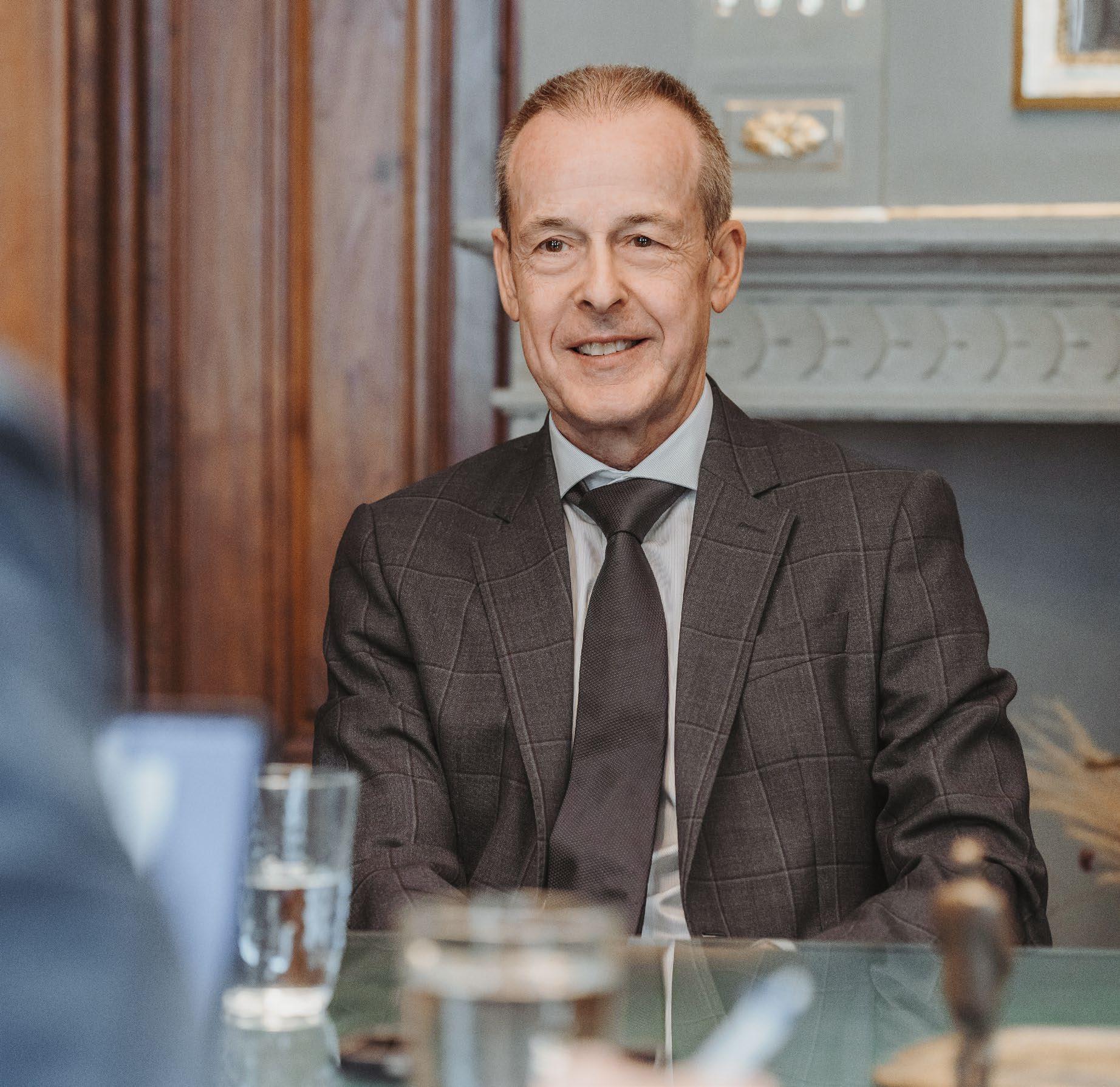
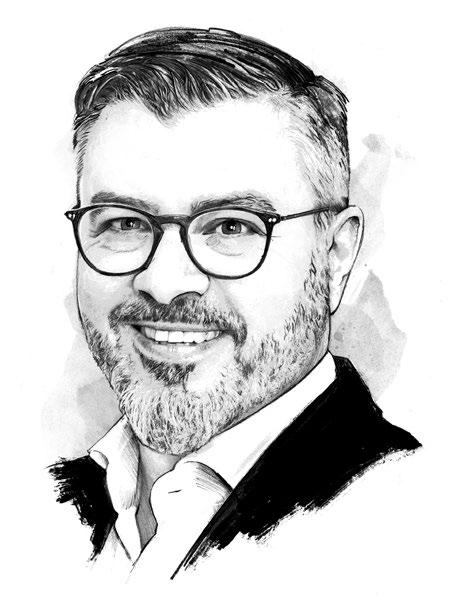
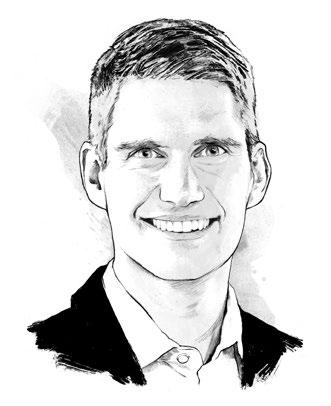
JÖRG ODERMATT
PAGE 04 PensExpert has been synonymous with innovative pension solutions that allow insured persons more freedom and self determination since 2000 – a success story that continues to this day.
PAGE 18 Michael Hermann: “The people want more flexibility in their financial provision – the time value account is an innovative solution that could open up new possibilities.”
PAGE 10 The second pillar is facing major challenges – targeted reforms and active company solutions are now vital to make the occupational benefits system fit for the future.
PAGE 22 Professor Dr. Yvonne Seiler Zimmermann: “People have gaps in their pension knowledge – this makes personal decisions difficult and must be remedied with more educational activities.”
HSLU STUDY
SHAPING
Pioneers and doers – since our foundation 25 years ago, we have been pursuing the goal of making the second pillar more flexible and transparent for our customers. What was a brave idea at the time has since become an established company with 93 employees, six sites in Switzerland and one in Germany, and assets under management of more than 10 billion francs. The pioneering spirit, the can-do attitude and the perseverance of old continue to characterise our team to this day.
Client needs are at the centre of everything we do. Jörg Odermatt, President of our Board of Directors and founding partner, always put his faith in personal responsibility. Under his leadership, PensExpert has developed into an innovator in the field of extramandatory provision.
At the same time, we campaign politically to reduce regulatory hurdles, promote reform and establish a pension model that is based on people’s actual lives. We will continue to do this for the next 25 years, too.
RAFAEL LÖTSCHER
25 years of forward-looking provision
What began as the brave vision of three entrepreneurs a quarter of a century ago has changed the Swiss pension system on a permanent basis. After starting out in Lucerne, PensExpert has expanded both throughout Switzerland and beyond its borders. Today, PensExpert is one of the leading providers in the field of self-directed retirement provision based on personal responsibility. Over 16,000 insured members in Switzerland rely on our tailored retirement solutions.
TEXT JÖRG ODERMATT
PHOTOS SARAH STADELMANN
After the introduction of the three pillar model, insured persons had no flexibility at all in their occupational pension benefits and the pension funds often did not pass the returns generated on to them. To change this, Leo Bolfing, Karl Reichmuth and Jörg Odermatt joined forces and founded PensExpert in May 2000. Their vision: the insured persons should finally be able to determine for themselves how their pension assets would be invested –a revolutionary idea at a time when non transparent pension funds were the rule.
PensExpert was the first company in Switzerland to offer a free choice of strategy for occupational pension assets. The PensFlex collective foundation became the flagship – with its focus on extra mandatory occupational benefits, where the legal hurdles were lower and free, self directed management of pension assets was possible. In 2006, the model was enshrined in law and has since been established across Switzerland.
STEP-BY-STEP EXPANSION
The PensFree Vested Benefits Foundation already followed in 2001. It enabled insured persons to maintain their investment strategy in a manner that was suited to their private financial situation, during periods when they were not working. The foundation was established in the canton of Schwyz, which offers the lowest withholding tax rates in Switzerland in the event of emigration abroad.
Following the successful launch of the pillar 3a solution Pens3a, the company expanded to Zurich in 2007 – a key step that strengthened its network and led to the conclusion of numerous new contracts. Over subsequent years, this was followed by new locations in Lausanne, Basel, St. Gallen and, most recently in 2024, in Bern.
To better meet the demand for vested benefits solutions, PensExpert founded independent – a vested benefits institution with insurance cover for disability and death – in 2010. As the only foundation with QROPS status, it can also accept UK pension assets taxfree. →
“The business idea provided for maximum individualisation in the pension assets of the individual insured persons.”
Leo Bolfing
Jörg Odermatt
Frankfurt/Bensheim
CONSTANT INNOVATION
Increasing regulation of 1e solutions meant that the company faced new challenges. In 2017, PensExpert successfully lobbied to prevent the Federal Social Insurance Office (BSV/OFAP) from reducing the number of investment strategies to three. The rules for voluntary purchases were nevertheless changed. With the foundation of the second management pension plan foundation, PensUnit, PensExpert was able to restore the previous tax advantage for insured persons.
After more than two decades at the top, Jörg Odermatt passed on the baton as CEO to Rafael Lötscher in 2021. Mark Huber and Fabio Preite make up the remainder of the Executive Board. There were also changes on the Board of Directors, with Jörg Odermatt taking over as President from Urs Düggelin. Christof Reichmuth, Markus Helbling and Dimitri Wittwer complete the Board.
The new CEO, Rafael Lötscher, is pushing ahead with process optimisation measures and the digitisation of the foundations. This led to the launch of relevate in 2023. The fully digitised solution for 3a and vested benefits assets meets the high demand for straightforward and user friendly pension platforms.
SUCCESSFUL TRACK RECORD AND VISION FOR THE FUTURE
Today, PensExpert has 93 employees in Switzerland and manages pension assets for over 16,000 insured members with a value of more than 10 billion Swiss francs. The mission remains unchanged: to promote financial planning based on personal responsibility –with solutions for a world of work that is changing, including across international borders. The PensGlobal trademark has already been registered. → Watch the founders’ video here
Lucerne
St. Gallen
Zurich
Basel
Bern
Lausanne
Karl Reichmuth
Time as a partner – new paths in life provision
“Time speaks for us” – this sentence by Jörg Odermatt has accompanied us since the early days of our collaboration. When we got to know each other more than ten years ago, our idea of “life phase planning” was still in its infancy.
TEXT MARC LUSTENBERGER
DR. IUR. THOMAS
HASSLÖCHER
CEO of PensExpert Group Germany, board member of the Verband Arbeitsgemeinschaft Zeitwertkonten (Project Group Association for Time Value Accounts), lecturer on the business administration (Betriebswirt bAV (FH)) degree programme at the Koblenz University of Applied Sciences
From the outset, we were confident that the partnership with PensExpert AG, the Swiss market leader in unrestricted retirement planning, would be successful. We recognised the potential of time value accounts and their ability to revolutionise financial provision in Germany. However, Germany proved to be a difficult environment for innovation. It is also a large country, PensExpert is unknown and time value accounts are a niche issue. Fund based pension models had a tough time competing against the insurance industry. Even Karl Reichmuth asked himself regularly how the country of Schiller and Goethe could be so “loyal to interest rates”.
Today, the retirement provision system in Germany is facing significant upheavals, and the private and occupational pension systems are outdated. Discussions around equity pensions and
nonguaranteed fund investments are injecting new energy into the pension market. We have an opportunity to play an important role in the future market with the combination of time value accounts and PensFlex retirement provision. With our one account principle, PensExpert GmbH could become a pioneer of modern life provision in Germany.
“Our vision of a lifetime account could soon become a reality.”
PensExpert GmbH was founded in 2014 to promote fundbased retirement planning in Germany. Following initial developments in demand, it focused on time value accounts and became part of the Swiss company PensExpert AG. Today, it is a strong provider of modern pension solutions for people on middle incomes.
Growing with our clients
25 years of PensExpert – a history of opportunities and the desire to shape the future
2023
LAUNCH OF THE DIGITAL PENSION SOLUTION “RELEVATE” CHF 90 million in pension assets generated by the end of 2024.
2024
BERN: NEW OFFICE – NEW SERVICES This is where PensExpert offers new financial and succession planning services.
2021 RAFAEL LÖTSCHER BECOMES CEO Jörg Odermatt takes over as President of the Board.
2018 FOUNDATION OF PENSUNIT and OPENING OF THE ST. GALLEN OFFICE
2014 EXPANSION INTO GERMANY Foundation of PensExpert GmbH in Frankfurt.
2013
OPENING OF THE BASEL OFFICE
2010
OPENING OF THE LAUSANNE OFFICE and FOUNDATION OF INDEPENDENT
2008
OPENING OF THE ZURICH OFFICE
2006 FOUNDATION OF PENS3A
2003
TAKEOVER OF PROVIDENTIA
PensExpert takes over Mobiliar’s Collective Foundation Plus for the symbolic price of one Swiss franc, securing future growth.
2001 LAUNCH OF PENSFREE
2000 FOUNDATION OF PENSEXPERT and PENSFLEX
For financial provision that fits with our lives
The Federal Law on Occupational Retirement, Survivors’ and Disability Pension Plans (BVG / LPP) was created 40 years ago for a world that no longer exists. Stable employment biographies and lifelong loyalty to an employer have been replaced with flexible working time models, sabbaticals and regular changes of job. To prepare the second pillar for the coming challenges, targeted reforms are required now. However, irrespective of political decisions, there are already various ways in which companies can improve the retirement provision for their employees.
TEXT RAFAEL LÖTSCHER PHOTOS CORINA DILLIER
“We need to adapt the BVG/LPP to the changes in our life situations, and we need to do so now. To do nothing would be a step backwards.”
The first cycle is complete: in 2025, the first insured persons who have been paying in during their entire working lives – since the BVG/LPP was introduced 40 years ago – will reach retirement age. This is a historic milestone for the Swiss pension system – and the perfect time to make the second pillar fit for future generations.
The occupational benefits system already cannot keep pace with all the new realities that exist. Targeted regulatory reforms are therefore needed. To do nothing now would be to take a step backwards, and that is something we cannot afford with such an important pillar of our social insurance system.
One potential reform approach is obvious: why should it only be possible for insured persons with an annual salary of more than CHF 136,080 to determine their investment strategy themselves? Expanding the free choice of strategy to extramandatory BVG/LPP coverage – i. e. salary components above CHF 90,720 – would →
be a boost for the insured persons and would give people on middle incomes access to higher returns. At the same time, the non systemic redistributions occurring in the second pillar would be reduced.
TAKE ADVANTAGE OF LEEWAY NOW
It would also make sense to introduce a life cycle model for extra mandatory BVG/LPP coverage. Younger employees with a long investment horizon could benefit from higher equity allocations. Under such a model, the equity allocation would automatically decrease with age in order to reduce the risk of the investment strategy as the insured person approaches retirement.
Companies do not have to wait for the legislator. They can already act now to improve the occupational benefits cover for their staff, for example by offering optional plans and actively involving their employees in the design of their occupational benefits schemes.
They could also lower the age for starting the saving process from 25 to 20 years by making a simple change to their pension fund regulations and the pension plan. Thanks to the compound interest effect, younger employees could thus accumulate several thousand francs in additional savings by retirement age. Given the fact that salaries are generally low at this age, the additional financial burden for the companies would be manageable. Many companies already use this voluntary option, and some even fund the entire savings contribution – i. e. including the half that is generally paid by the employees. Older employees who only began paying in BVG/LPP savings contributions at 25 would benefit from a higher purchasing potential due to the reduction in the entry age.
20
years
The saving process could begin from 20 instead of 25 years – this would enable younger employees to save more money by the time they retire.
STOP-AND-GO SITUATION WITH BVG/LPP PENSIONS
The demographic trend is one of the biggest challenges facing the Swiss economy. Most of the baby boomer generation will retire over the next five to ten years, and companies will lose valuable expertise as a result. It therefore makes sense to encourage pensioners to start working again. However, at present, anyone who returns to work after retirement is punished. On the one hand, it is not possible to rejoin a pension fund once you have reached the age of 65 and your BVG/LPP pension payments have begun. On the other, it suddenly becomes necessary to pay tax on three incomes – the AHV/AVS and BVG/LPP pensions and the employment income. If it were possible to pause the BVG/LPP pension for the period of resumed employment, the economy would be able to count on far more retirees returning to work.
To provide insured persons with optimal support over the next 40 years and beyond, PensExpert is constantly expanding its digital offering. At the same time, in person advice also remains indispensable – it is the only way to put together customised solutions that grow with the insured persons.
“For PensExpert, the people and their individual life situations always take centre stage.”
RAFAEL LÖTSCHER, CEO
Provision for life –eight ideas
The megatrend towards individualisation continues, and the world of work has changed considerably since mandatory occupational benefits schemes were introduced. It is therefore high time to modernise the pension system and take better account of the needs of both the younger and the older generations.
TEXT JÖRG ODERMATT
STOP REGULATION AND PROMOTE PERSONAL RESPONSIBILITY
The majority of employers insure more than the minimum benefits envisaged by law in their occupational pension schemes. Often, they take on more than half of the financing. Increasing regulation is making these important voluntary benefits payments more expensive. To ensure that employers continue to finance extra mandatory benefits, regulation needs to be reduced. More personal responsibility for the insured persons and more decision making authority for the pension board – these are the keys to ensuring a prospering second pillar.
ADAPT PENSION MODELS TO THE NEW WORLD OF WORK
Society and the ways in which we work are changing all the time, but the Federal Law on Occupational Retirement, Survivors’ and Disability Pension Plans (BVG/LPP), which entered into force in 1985, is not keeping pace. New pension models are needed – for employees with multiple jobs, people who are both selfemployed and employed, and the selfemployed themselves. The number of remote employees working abroad is also increasing. With the help of AI, language barriers are being eliminated and talented foreign employees can work for a company based in Switzerland from anywhere in the world.
REDUCE THE GENDER PENSION GAP
Women’s pensions remain considerably lower than those of men in Switzerland. With the regulation on pillar 3a purchases introduced in 2025, the legislator unfortunately missed an opportunity to enable voluntary 3a savings contributions and purchases for years of unpaid maternity leave. There would also be a pragmatic and costneutral solution for the second pillar: insured persons who are married or in a life partnership could split their retirement benefits and have them paid out to both partners on request. This splitting practice has existed in the AHV/AVS for some time.
In the BVG/LPP referendum of September 2024, a reform with a lower conversion rate was rejected by voters. The nonsystemic redistributions therefore remain – to the detriment of younger insured persons and those with higher incomes. There is consensus that something needs to be done with regard to low earners and parttime employees. The entry threshold must be eliminated for them and the coordination deduction should adapt in line with the degree of employment. Women in particular would benefit from such changes. A “mini reform” of the BVG/LPP is urgently needed. 5 6
IMPROVE THE SITUATION OF LOW EARNERS AND PART-TIME EMPLOYEES
3
SUPPORT WORKING PAST RETIREMENT AGE
As the baby boomers retire, the labour market is losing out on a great deal of expertise. This poses problems for the economy. For older specialists to remain in the labour market for as long as possible, tax incentives and changes to the occupational benefits system are required. It should be possible to join pension funds as a new member after reaching the AHV/AVS reference age. In addition, the tax burden on people working past retirement age should be reduced – for instance by introducing the option to suspend current pension fund annuities if they return to work.
ENABLE FREE CHOICE OF INVESTMENT STRATEGY EARLIER
At present, only high earners with salaries over CHF 136,080 have a free choice of investment strategy in the second pillar. People on middle incomes are not trusted to take personal responsibility in this way – except with vested benefits. However, the free choice of investment strategy should be made possible for the entire extra mandatory BVG/LPP coverage, i. e. already starting from salaries of CHF 90,720. The current wording of the law needs to be updated accordingly.
4
INCREASE PENSION KNOWLEDGE, BUILD TRUST
For many employees, the most important part of their wealth is in their occupational pension provision, yet knowledge of this field is surprisingly limited. Many insured people are not aware that they are the owners of their pension assets. Increased pension knowledge will generate more trust in the occupational benefits system and enable voters to make more mature decisions in referendums on the AHV/AVS and the BVG/LPP. Ultimately, this lack of knowledge – and in particular the incorrect beliefs that prevail – damage people’s personal retirement provision. Pension funds, employers and educational institutions are called on to act in this regard.
INTRODUCE LIFE PHASE PROVISION
In future, workers should be able to save not just for their retirement but also for life phases such as continuing education, parental leave and parental care or towards their own care capital. These phases of life will be financed under the employees’ personal responsibility with unpaid overtime and unused holiday. This “credit balance” will be transferred taxfree to a personal life phase account and will only be taxed when it is drawn. The concept of pure retirement provision is outdated. The future clearly belongs to life phase provision.
Individuality as a principle for success
From three to 75 employees: Finalix AG shows how a clear business idea and client focus can bring about success.
TEXT MARC LUSTENBERGER
The business idea was clear and simple: we wanted to support banks and insurance companies with business and IT projects. The two other founders and I had many years of experience in finance, IT and consulting. We knew what clients needed, “So let’s try it ourselves,” we said. In 2001, we put our plan into action and founded the company Finalix AG. In terms of pensions, we initially opted for the standard solution from a large insurance company. We did not devote much attention to this topic; the most important thing was to acquire our first clients. The launch was a success, and our team grew from three to ten employees within three years.
One business partner had contacts at the Reichmuth bank, which worked closely with PensExpert. This was how we first ended up sitting down for a meeting with Jörg Odermatt in Lucerne in 2002. He presented his pension
solutions to us, which were run in line with the principles of private banking. At the time this was new and innovative –and we were immediately convinced. Today, we have 75 employees in Switzerland and Singapore. Our entire senior management is insured by PensFlex for their extra mandatory coverage. What is special about this solution is that all employees can decide individually how to invest their pension assets. This is a highly convincing argument, not least during recruitment interviews.
“The individual choice of investment strategy is a highly convincing argument, not least during recruitment interviews.”
MARCO PEDROCCHI Finalix AG Founder and Senior Advisor and a PensExpert client since 2002
Providing for life, not just for retirement
Today, many careers are interrupted by sabbaticals and periods of continuing education and travel. The pension system is not designed to take these new life situations into account. One possible solution is the time value account from Germany, which can be used to finance periods of leave. There is a lot of interest in Switzerland, but the law does not yet permit such a solution to be introduced across the board.
Today, those wishing to take an extended period of leave or look after children or parents on a temporary basis generally save up for this in advance and attempt to earn additional income in order to finance the career break. The problem is that during the period of leave, they no longer earn an income and have to pay for their insurance cover themselves. Their retirement pension also suffers, as pension fund contributions cease.
A solution from Germany shows how the system could be made significantly more flexible. Time value accounts enable employees to pay overtime, holiday allowances and bonuses into a special account. At first, no taxes or social security contributions are charged on these deposits; instead, the company transfers them directly to the account. Taxes and other levies only become due when the balances are paid out. The money is protected against employer insolvency by being transferred to an occupational benefits institution. In the experience of PensExpert’s subsidiary in Germany, the time value account has proven its merits at both large corporations like L’Oréal and Deutsche Bank and SMEs from a wide range of sectors.
Similar models exist in Switzerland, for example at the Swiss Federal Railways (SBB/CFF/FFS). However, the current legal framework makes the universal intro duction of time value accounts difficult. The BVG/ LPP only permits withdrawals for home ownership and selfemployment or upon emigration from Switzerland. To use such funds to finance an extended period of
“People are in favour of having the option to finance periods of leave with a special, additional account.”
parental leave, for instance, the BVG/LPP would have to be amended. According to the VorsorgeDIALOG 2022 study by the Lucerne University of Applied Sciences and Arts, the population would be in favour of this.
An additional pension account of this kind would have advantages not just for employees but also for employers. Offering the option to save for future periods of leave would make companies more attractive and reduce fluctuation. Given the shortage of skilled workers, this could be a key advantage when it comes to recruiting employees and securing their loyalty. It would also take pressure off companies’ balance sheets as overtime would be removed from the balance sheet as soon as it is transferred to the occupational benefits institution.
→
We are having the time value account tested in Switzerland. Here’s how things currently stand:
Saving up time credits for the future
The population thinks further ahead than politicians. For them, providing for the future is about far more than just saving up for their retirement – it means financial security in all phases of life. A new study by the Sotomo research institute commissioned by PensExpert shows that the demand for more flexibility is high. A possible solution? The time value account, which is established in Germany, could breathe new life into the rigid Swiss pension system.
TEXT MICHAEL HERMANN
Michael Hermann is one of the leading pollsters and political analysts in Switzerland. With his research institute Sotomo, he analyses the Swiss political landscape and studies changes in the Swiss population’s attitudes.
For many people, providing for the future is already about far more than just saving for their pension. There is a great desire for self determination, flexibility and individual ways of living. However, the Swiss pension system continues to focus heavily on the traditional model of retirement provision. An exclusive study by the Sotomo research institute commissioned by PensExpert shows how strongly people’s realities already deviate from the logic of this system.
The representative survey reveals a varied picture when it comes to people’s understanding of providing for the future. In more than 70 per cent of respondents, associations with the concept encompassed not just financial security in retirement but also possibilities for ensuring
security in future phases of life. These include periods of continuing education, parental leave and parental care, early retirement and sabbaticals. This differentiated perspective was observed in all age groups, with young people in particular expressing a desire for flexible solutions.
The classic tripartite division of life into education, work and retirement is outdated. More and more people want to take breaks during their working lives, return to education or look after family members on a temporary basis. The current pension system offers hardly any opportunities for this. New solutions are required. →
MICHAEL HERMANN
THE TIME VALUE ACCOUNT: A SOLUTION FROM GERMANY
One concept enjoyed particularly broad support among survey participants: the time value account. The idea behind it is simple: employees can deposit portions of their salary, overtime or unused holiday allowances in a time value account. The balance accumulated in this way can then be used to finance a period of leave at a later date.
The model is already established in Germany. In Switzerland, by contrast, it is still virtually unknown. Only around a quarter of those surveyed had even heard of it before the study. After a brief explanation, however, some 76 per cent of respondents rated the concept as fairly or very positive. Support was particularly prevalent among 18 to 35yearolds.
VARIED ASPIRATIONS –FROM SABBATICALS TO PARENTAL LEAVE
The purposes for which respondents would prefer to use their balances are as varied as their life situations. More than 40 per cent of the young adults surveyed would use a time value account for a sabbatical; a similar percentage would “spend” the balance on parental leave or a period of continuing education. In the 50+ age group, many viewed time value accounts as an opportunity to bring their working lives to a close in a flexible way.
At the same time, realities in the world of work are changing – not least due to the growing importance of artificial intelligence and hybrid working. Half of gainfully employed respondents could already envisage working on a selfemployed basis alongside their permanent position. Among the under36yearolds, the figure was as high as two in three.
The time value account can be used to provide financial security during periods of experimenting with selfemployment. Many respondents also wished to see a change in the second pillar: 72 per cent felt that it should be possible to save income from selfemployment in the same pension fund as income from employment. At the moment, this is not possible.
“The findings are clear: a modern pension system must take increasing individualisation and people’s different realities into consideration. The time value account offers a pragmatic solution for this that is based on personal responsibility while simultaneously creating social security,” explains Michael Hermann, CEO of Sotomo.
At the same time, the study also shows that trust in the pension institutions –especially the second pillar – cannot be taken for granted. Many people view the system as opaque, rigid and inflexible. The desire for change is there, but to date politicians have reacted only hesitantly. It is therefore all the more important that innovative models like the time value account become better known and are incorporated into political discourse. → View the study now
“Today, financial provision needs to offer more than just security in old age – it has to accompany us in every phase of our lives.”
The key findings from the study
Reasons for using a time value account by age
Question: which of the following situations might be your main reason(s) for using a time value account? For pensioners: which of the following situations might have been your main reason(s) for using a time value account?
Early retirement
Sabbatical or personal career break (e.g. unpaid leave, travel/holidays)
Parental leave (after birth)
Continuing education/studies
Care work (e.g. looking after children/parents)
Illness-related leave
Job hunting
None
Survey respondents’ agreement with and rejection of various reform ideas
Enable non-working people to pay into pillar 3a
Introduce the time value account
Allow hybrid workers to insure their entire income in a Pension Fund
Allow all people in gainful employment to make Pension Fund contributions (including after AHV/AVS retirement age)*
Introduce graduated reference age*
Allow pillar 3a withdrawals during periods of care work
Increase Pension Fund savings contributions for low incomes
Distribute Pension Fund benefits equally to spouses/partners
“Don’t know /not specified” response options are not shown in the diagram. *Answered by half of the total of 2320 respondents.
Big gaps in people’s pension knowledge
Professor Yvonne Seiler Zimmermann from the Lucerne University of Applied Sciences and Arts has been conducting a study on the Swiss population’s knowledge of finance and retirement planning since 2021. Its aim is to raise awareness of this topic in society and highlight opportunities for improvement. PensExpert supports the annual study as a business partner.
INTERVIEW MARC LUSTENBERGER
PHOTOS CORINA DILLIER
Yvonne Seiler Zimmermann, for the last four years you have been conducting a study on the Swiss population’s knowledge on the subject of retirement provision. Which developments have you observed over this period?
Unfortunately, pension knowledge has not improved, despite all the information provided and discussions held in connection with various important votes in recent years. Knowledge of how Switzerland’s threepillar pension system specifically works is fairly limited in spite of these efforts. What strikes me are the gaps in people’s knowledge of personal retirement provision in particular – even though this topic affects each and every one of us.
“The young generations devote little attention to retirement planning, even though they have the most leverage.”
What are the reasons for this lack of knowledge?
The younger generations generally devote little attention to retirement planning, even though they have the most leverage due to their long investment horizons. When you finish your apprenticeship or graduate from university, retirement still seems a long way off. However, when it’s just around the corner, there is often little leeway to make up pension shortfalls. One of the goals of our study is to raise awareness of this issue.
For example, some 40 per cent of those surveyed had either no or very little understanding of their insurance certificate. However, a particularly worrying insight was that many of these people were not prepared to find things out for themselves or fill the gaps in their knowledge. Most of them regarded the issue as too complicated or were not willing to put in the required effort.
What effects do these knowledge gaps have for individuals?
The main problem is not the lack of knowledge, but people’s ignorance about the gaps in their knowledge, which is something we observe again and again in our studies. A person who incorrectly believes themselves to be well informed will seek less advice and →
Confidence in the pension system is low
Percentages by gender and age, 2024
Question: Do you think that you will have enough money from your retirement provision (AHV/AVS and the second pillar) to maintain your accustomed standard of living after you retire?
“The main problem is people’s ignorance about the gaps in their knowledge.”
will therefore inevitably end up making bad decisions with regard to their personal retirement provision.
What are the biggest concerns of the Swiss population when it comes to the issue of retirement provision?
Demographic change and the persistent lowinterestrate environment are endangering the sustainable financing of the second pillar. Most employees in Switzerland are aware of these challenges. Around three fifths of those surveyed did not believe that they would receive enough money from the AHV/AVS and the second pillar to maintain their accustomed standard of living after retirement. One particularly interesting finding is that women trust the pension system even less than men.
Our retirement provision concept is based not only on the AHV/AVS and the occupational benefits system but also on personal responsibility –especially in the third pillar.
The state must have an interest in ensuring good levels of pension knowledge among the population. This will boost personal responsibility and reduce social expenditure, for example on social assistance or supplementary benefits. Furthermore, people who are well informed will also support necessary structural changes to the pension system.
→ View the study now
Professor Dr. Yvonne Seiler Zimmermann
Heart, mind and commitment: the PensExpert team
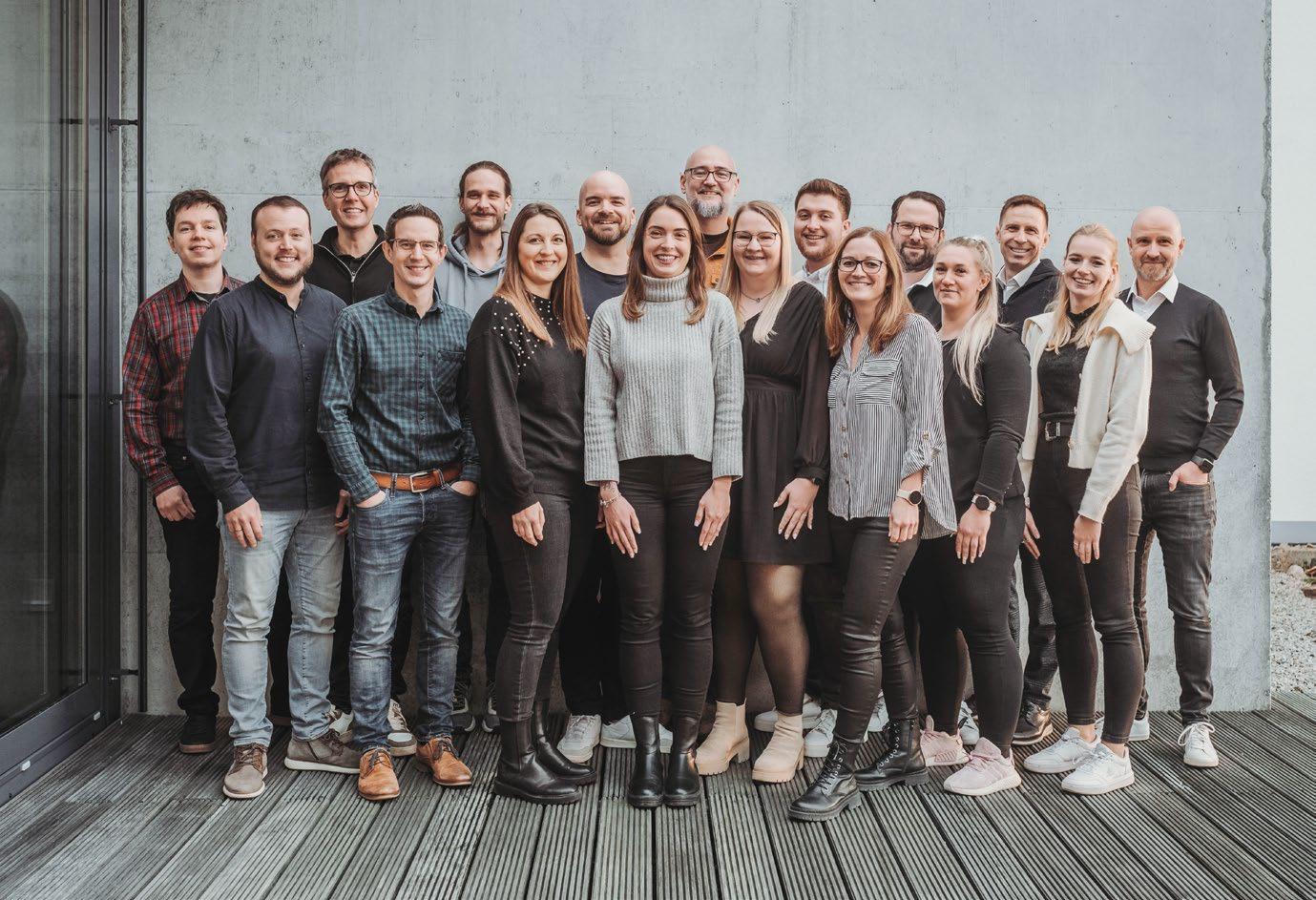
Initially PensExpert had one founder and two employees – a quarter of a century later that number has risen to 93. They all have different stories and backgrounds. Together, they are the heart and mind of the company and the driving force behind it. Some have been at PensExpert for over 20 years, while others have only joined recently after completing their education. What they all have in common is tenacity, a capacity for innovation and pioneering spirit. Together, they want to shape the future of financial provision. Four of them spoke about why they are at PensExpert and what inspires them.
TEXT MARC LUSTENBERGER
EDRIC SPECKERT
Partner, Head of the FrenchSpeaking Switzerland Region, since 2021
“Knowing about all three fields is a challenge.”
It is a wellknown fact that people usually meet more than once in life – I too got to know PensExpert earlier on, when I was still working for a bank. For four years now, I have been Head of the FrenchSpeaking Switzerland Region at the Lausanne office. We work in a beautiful 19thcentury building and our job is to look after the six cantons in FrenchSpeaking Switzerland. The focus is on Geneva and Vaud, where most of the big firms are based. Our team of six is responsible for retirement provision, investment advice in collaboration with our partner banks and tax issues. Knowing about all three fields is a challenge, but our success shows that we must be doing things right.
ARTA LULAJ
Partner, member of the extended Executive Board, Head of IT and Digitisation, since 2012
“We combine innovation with foresight and humanity.”
I was looking for a challenge – and I found one at PensExpert. To this day, many people are unaware that they can take control of their retirement provision themselves. I have been actively helping to shape developments for 13 years: first as a client advisor and then, after my maternity leave, in processes and IT projects. In my role as Head of IT and Digitisation, I am now part of a transformation process to enhance our digital skills. Our motto is to always stay one step ahead – and create genuine added value with innovation and foresight. There is a solution to every challenge.
SILVIA THALMANN Vested Pension Benefits and 3a Specialist, since 2001
“Not only have we expanded; we have also grown younger, faster and more digitised.”
I started working at PensExpert on 1 August 2001 as an administrative assistant with a degree of employment of 20 per cent. I had recently become a mother and was looking for a part time role. We were a team of four together with Jörg Odermatt and Urs Zuber. Our first office was in a converted 3.5room apartment. At the time, the company had almost no clients. My job was to write to companies in order to acquire new clients. We already worked with computers, but everything was still printed off and filed away.
I had done a commercial assistant apprenticeship at an insurance company. At first, it was a challenge for me to work in the field of pensions. The world of office work in general was going through a period of upheaval – the process of digitisation was gradually gathering pace. My two bosses sent me on an Excel course, and I also took a continuing education course on occupational benefits. I grew into my new tasks quickly.
Soon afterwards, the company also started to grow. PensExpert was constantly acquiring new clients, my degree of employment was increased and new colleagues joined. We have moved five times in the last 24 years – every time into a bigger office, but always in the Neustadt district of Lucerne. In the meantime we have grown into a company with 93 employees at various sites. Not only have we expanded; we have also grown younger, faster and more digitised. I am happy to be part of this success story.
MARIO BUCHER
Head of Product and Corporate Development, since 2015
“Take some time getting to know the company.”
“Take some time getting to know the company,” is what Jörg Odermatt told me during my job interview. This long term mindset appealed to me from the very beginning, as did the personal contact that we maintain with our clients and partners, despite digitisation. I have now been at PensExpert for ten years. After seven years working in client advisory, I have been contri buting my skills as a Product and Corporate Development manager since 2022. My professional life is varied, exciting and challenging.
Test your pension knowledge
For whom is occupational benefits insurance mandatory?
Which pension system is a funded system (individual savings)?
Who owns the accumulated pension assets from an economic perspective?
In the event of the insured person’s death, do pension fund assets form part of the deceased person’s estate?
Everyone who lives in Switzerland
All employed persons in Switzerland
AHV/AVS
AHV/AVS and BVG/LPP Don’t know
What is the conversion rate in the occupational benefits system? It is used to calculate the retirement pension It is used to calculate the lumpsum death benefit
Can pension fund assets be withdrawn for home ownership? Yes, but only for owner occupied residential property
Is it always possible to make voluntary payments into an occupational benefits scheme?
Can employees choose their investment strategy for their occupational benefits plan themselves?
in certain extra mandatory
All employed persons in Switzerland with a salary above a certain minimum threshold
Don’t know
The occupational benefits system (BVG/LPP)
Neither AHV/AVS nor BVG/LPP
know
It is the interest rate on the retirement savings capital Don’t know
for owner occupied residential property and holiday homes/second apartments
employees always have a right of co determination
know
who are not of working age cannot pay in
As many as they want, to better stagger the payouts