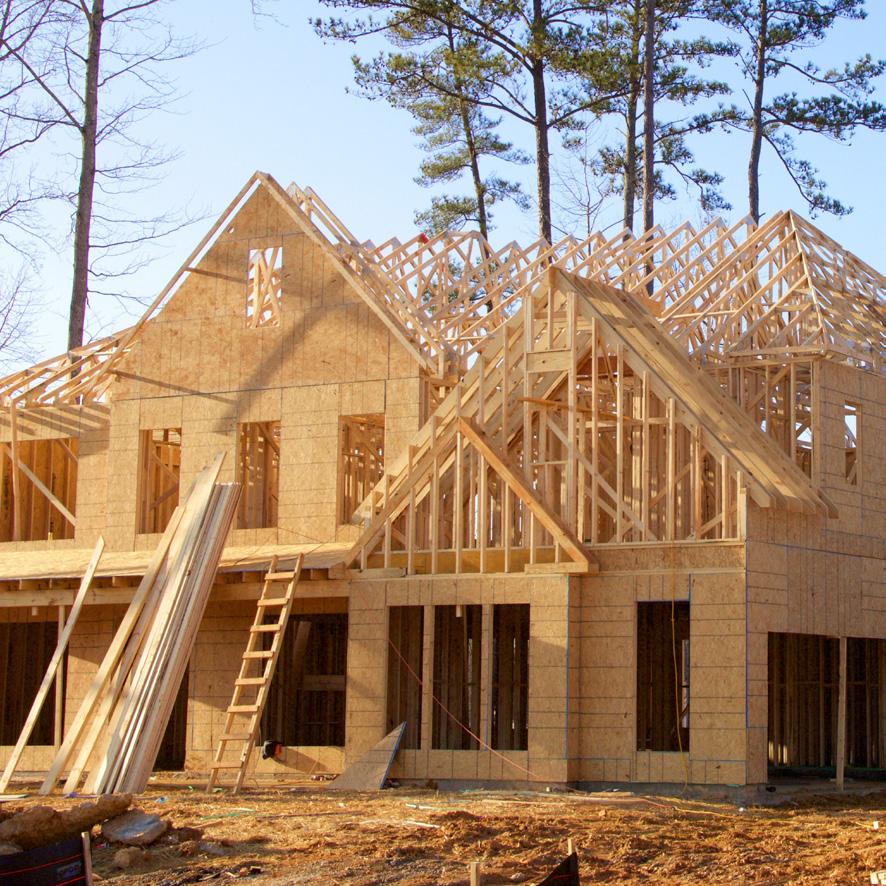
NEW CONSTRUCTION: A SMARTER CHOICE IN TODAY’S MARKET
For homebuyers, new construction options may have felt out of reach in recent years, as the price of new builds typically outpaced existing homes. But that trend is shifting. According to a recent study from realtor. com, the price gap between newly built and existing homes has fallen to a record low, opening the door for more buyers to consider new homes.
Reasons to Consider New Construction
New construction offers a range of unique benefits compared to existing homes that make it an option worth considering, including:
• Modern designs and energy efficiency: New homes are built for today’s lifestyle, with open-concept kitchens, flexible work-from-home spaces, and energy-efficient systems that can save on utility costs.
• Personalization options: Many builders allow buyers to customize various aspects of a home, including finishes, floor plans, and more, giving you the ability to create a new home that reflects your tastes and style.
• Lower maintenance costs: Unlike older homes, which may need more upkeep or renovation as they age, new construction may not need much in the way of immediate repairs. That can mean less stress for you as a homeowner, and save you time and money over the long run.
Of course, new builds may not be right for every homebuyer’s situation, especially if you prefer an established neighborhood or are on a shorter timeline. Buyers should consider factors like construction schedules, potential delays, location tradeoffs and the costs of making upgrades.
Build With Bell
When it comes to new construction, Bell Bank Mortgage has everything under one roof. Our in-house construction team can help determine your budget and evaluate which financing options are the right fit for your situation. Our range of new construction programs include:
• Rehab loans
• One-time close loans
• Two-time close loans
• Lot loans
• And much more!
If you’re in the market for a new home but haven’t previously considered new construction, now could be the perfect time. Contact me today to learn more about how a new build could fit your lifestyle, preferences and budget!
Subject to credit approval. Program guidelines are subject to change without notice. Not available in all markets. Other restrictions apply.
TIPS TO DECLUTTER YOUR DEBT AND SAVE FOR THE FUTURE
Spring is a great time for cleaning our homes, and it can also be a great time to declutter debt and clean up finances.
Though it may seem intimidating at times, it’s possible – and important – to save for the future and pay down debt at the same time. Planning a strategy to get out of debt can help you gain control of your finances and put you on a faster path to your mortgage and financial goals. Here are some spring cleaning tips to help you save money and pay off debt.
Review Your Budget
To start, review your budget to figure out where you might have some flexibility. Identify mustpay expenses first, like bills or groceries. From what’s left over, prioritize saving and paying down additional debt.
Maximize Your Retirement Savings
In saving for retirement, you should save at least the amount your employer matches in your retirement plan. In other words, if your employer matches up to 3%, put a minimum of 3% toward your employersponsored retirement plan. Not taking advantage of an employer match is essentially leaving free money for retirement on the table.
If you don’t have an employer-sponsored retirement plan, you can still contribute to an individual retirement account (IRA) to make sure you’re putting away money for when you retire.
Debt Strategies
When it comes to paying off your debt, there are two common strategies: debt snowball and debt avalanche.
With both options, you make the minimum payment on all your debts, while making extra payments toward one debt until it’s paid off. Then, you add the amount you were paying on that debt to the next debt until that one is paid off too. Repeat the process until all debts are paid.
The debt snowball approach involves paying off debt with the smallest balance first. The debt avalanche method, meanwhile, involves paying down the debt with the highest interest rate first to save you the most money on interest over time.
Stick to Your Budget
If it seems impractical for you to both tackle your debt and save at the same time, focus on saving just enough to receive your employer match, if applicable, while paying down your debt with the highest interest rate. By taking a strategic approach to saving and paying off debt, you can set yourself up for a stronger financial future.
HOW DEBT AND CREDIT PLAY IMPORTANT ROLES IN FINANCIAL WELLNESS
A big part of financial wellness is figuring out how to cut costs and save money. But it’s also important to understand how debt and credit can work together to support your goals.
Debt is often perceived as bad, unhealthy or detrimental for your financial health. But the reality is that not all debt is inherently bad. Some types of debt can be considered “good,” and can even play an important role in supporting longterm financial goals.
Examples
of Good Debt
Good or healthy debt is any kind of investment that could grow in value or provide long-term income. A mortgage could be considered healthy debt. So could a student loan that sets you up to earn more money in the future.
Similarly, a home equity loan can be beneficial for improving your home. Low rates make this even more attractive because it adds value to your property.
Examples
of Bad Debt
Bad debt, meanwhile, is typically used for things you may want and not necessarily need. Additionally, it often comes with a higher interest rate.
Credit card purchases, payday loans, cash advance loans and other high-interest loans are some examples. These can be even more detrimental if you let them accumulate.
Understanding Your Credit
Managing debt responsibly plays an important role in your financial wellness – and so does maintaining a strong credit score. With a stronger
credit score, you could qualify for a better rate on a car loan or mortgage.
On the other hand, a lower credit score can make it more difficult to get favorable terms on a loan or mortgage. That’s because your credit score represents how responsible you are with your finances, so lenders may view a lower score as having more financial risk.
Credit scores can range from 300 to 850, with anything above 680 typically considered to be good.
Your credit score is impacted by a number of factors, including:
• Your payment history (whether you pay your bills on time)
• The amount of debt you owe compared to how much credit you have available
• The length of your credit history
• The types of debt you carry
• Credit inquiries and new debt
Understanding the factors that affect your credit score can help you make smarter money choices, strengthen your score, and build a solid financial foundation.
Good Credit and Good Debt Can Help Your Next Home Purchase
By building strong credit and managing debt responsibly, you can position yourself to receive a better rate and more favorable terms on your next home purchase or mortgage refinance.
Interested in learning more about how debt and credit interact? Contact me today, and I’d be happy to discuss your situation.
WE LOVE YOUR REFERRALS!
Referrals from my satisfied clients are a big part of my business. If you have friends or family who are interested in buying a home, we’d love you to send them my way, so we can help them find and finance their dream home.