

EPIC LITERACY PLAN
Last Update: November 2025
Introduction
The Epic Literacy Plan serves as a guide for families, teachers and administrators along the PK to college and career continuum. The Literacy Plan provides information and resources to align literacy goals, guide instruction and coordinate interventions to ensure every Epic student is provided an exceptional literacy education that equips them with the skills and knowledge needed to think and thrive in our ever-evolving world.
Purpose of Literacy Plan
Epic Charter Schools’ vision is for all children and young adults to reach their full potential through personalization of educational plans focusing on school and family partnerships to achieve optimal student performance. The ability to read and write is fundamental to understanding our world, creating empathy within and among communities and becoming a responsible global citizen. Since reading and writing are critical components of student academic success, Epic Charter Schools is committed to providing evidence-based literacy instruction for all children and young adults served through our innovative models. Our school is dedicated to ensuring every student has the critical literacy skills needed to be successful in college, the workforce or the military. Achieving this goal requires systematic and collaborative relationships between school staff, our students, caregivers and community.
At Epic, we believe:
• All students can learn.
• Literacy skills are a basic human right.
• Student-facing instruction based on Science of Reading and Writing strategies are critical to boost student literacy skills.
The purpose of the Epic Charter Schools literacy plan is to define best evidence-based practices for literacy instruction. At Epic, we understand literacy instruction is multifaceted and can be delivered in different ways. This literacy plan provides a framework for literacy instruction that honors the different school models caregivers choose for their students.
Tenets of Epic’s Philosophy of Literacy Instruction
Epic’s Literacy instruction is
• Spiraled horizontally (within grade levels) as well as vertically (across grade levels) to revisit topics and concepts while gradually increasing depth of knowledge and complexity of thinking.
• Integrated throughout all content areas to foster interdisciplinary connections and applications.
• Scaffolded and developmentally appropriate, providing structured guidance and support to learners while taking into account their current stage of development. This approach respects the learners’ readiness and ensures that the educational content and methods are well-suited to their age, skills and abilities while gradually challenging them to reach higher levels of competence and independence.
• Research aligned and evidence based, to ensure all instructional methods, practices and curriculum used are grounded in sound educational research and demonstrate strong evidence of effectiveness in accordance with the Every Student Succeeds Act (ESSA).
• Comprehensive including:
• For reading: phonemic awareness, phonics, vocabulary, fluency and comprehension
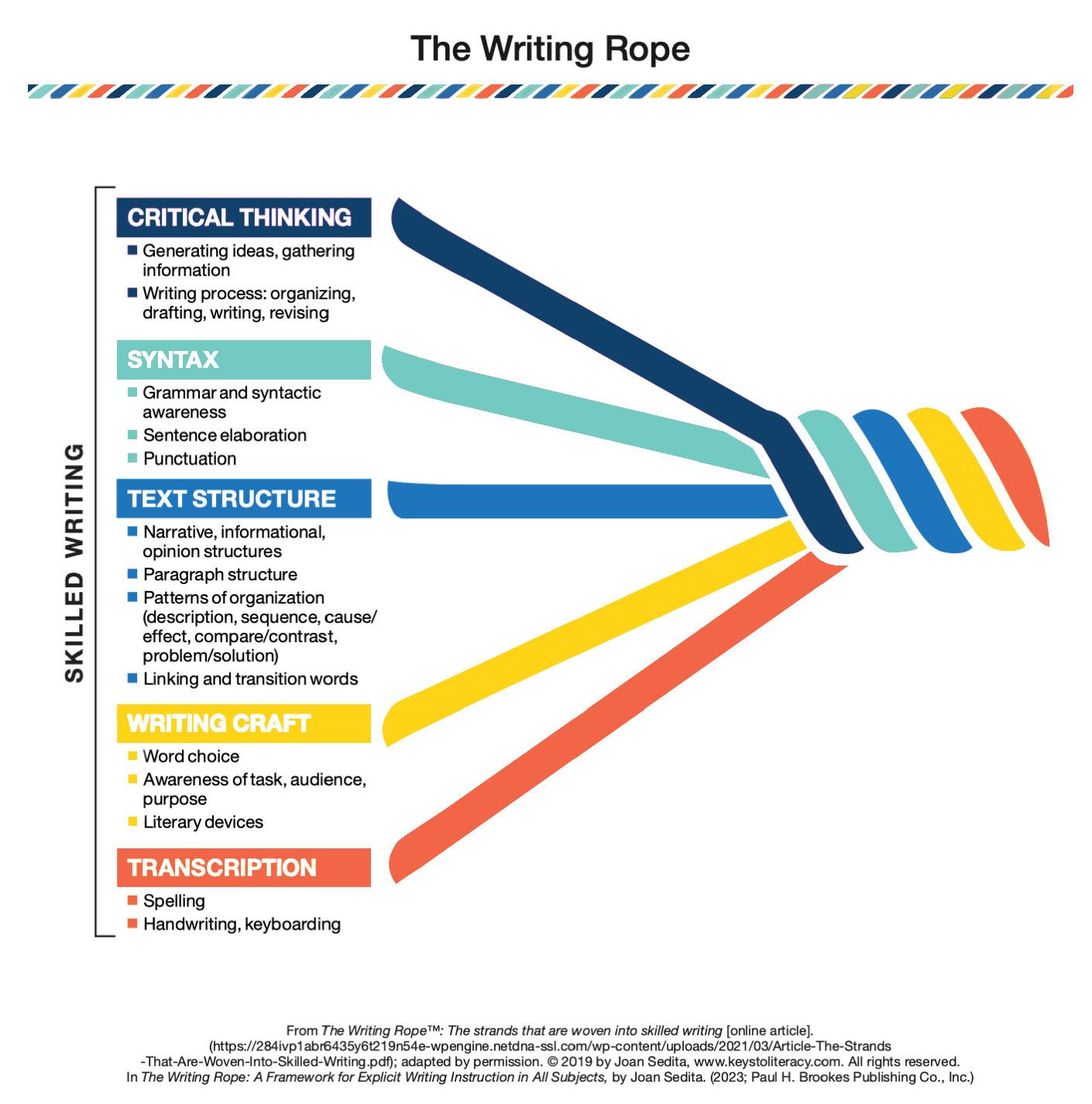
• For writing: transcription, writing craft, text structure, syntax and critical thinking
• For speaking: pronunciation and articulation, syntax, conversational skills and presentation skills
• For listening: attentiveness, nonverbal communication, memory recall and providing feedback including asking questions, seeking clarification and demonstrating comprehension.
• Equitable
• Epic believes literacy education is complex and requires our commitment to be purposeful and deliberate in all levels of literacy development across all contexts. We acknowledge the support needed for the nonacademic barriers our students face including poverty, physical and mental health and lack of social-emotional skills that impact the ability to learn at the highest levels. Further, Epic educators recognize social and cultural diversity within our schools. Our learning environments provide access to rich literacy experiences that include print, digital, audio and visual resources to ensure equitable student-centered literacy engagement.
Epic Charter Schools recognizes that literacy instruction is based on the Science of Reading. “The science of reading is a vast, interdisciplinary body of scientific-based research about reading and issues related to reading and writing” (The Reading League). Literacy development begins in infancy and continues throughout our lifetime.
The Simple View of Reading
The simple view of reading (Gough & Turner, 1986) is a formula demonstrating that reading has two basic components: word recognition and language comprehension. The simple view of reading uses a mathematical equation to demonstrate that a student must have proficiency in both word recognition and language comprehension to be a proficient reader.
Scarborough’s Reading Rope (2001) further details the components of word recognition and language comprehension. Word recognition skills are constrained skills, meaning readers master these skills. Phonological awareness, decoding and sight recognition are all part of word recognition. Language comprehension skills are unconstrained because we never completely master them but we do become increasingly strategic when using these skills. Language comprehension skills consist of background knowledge, vocabulary, language structures, verbal reasoning and literacy knowledge. Word recognition skills are sometimes referred to as foundational skills. The scope and sequence of these skills starts before pre-kindergarten and is usually mastered by the end of fourth grade.
Epic Charter Schools recognize that literacy is built on reciprocity between reading and writing. Reading is the input of learning and writing is the output of learning.
Scarborough’s Reading Rope
Language Comprehension
Background Knowledge
facts, concepts, etc.
Vocabulary
breadth, precision, links, etc.
Language Structures
syntax, semantics, etc.
Verbal Reasoning
inference, metaphor, etc.
Literacy Knowledge
print concepts, genres, etc.
Word Recognition
Phonological Awareness
syllables, phonemes, etc.
Decoding
alphabetic principle, letter-sound correspondences etc.
Sight Recognition
of familiar words
INCREASINGLY
INCREASINGLY AUTOMATIC
The Simple View of Writing
The Simple View of Writing is a formula demonstrating that reading has two basic components: word recognition and language comprehension. The simple view of reading uses a mathematical equation to demonstrate that a student must have proficiency in both word recognition and language comprehension to be a proficient reader.
Scarborough’s Reading Rope (2001) further details the components of word recognition and language comprehension. Word recognition skills are
constrained skills, meaning readers master these skills. Phonological awareness, decoding and sight recognition are all part of word recognition. Language comprehension skills are unconstrained because we never completely master them but we do become increasingly strategic when using these skills. Language comprehension skills consist of background knowledge, vocabulary, language structures, verbal reasoning and literacy knowledge. Word recognition skills are sometimes referred to as foundational skills. The scope and sequence of these skills starts before pre-kindergarten and is usually mastered by the end of fourth grade.
Disciplinary Literacy
Disciplinary literacy is not just teaching ELA standards through other core subject areas. Rather, disciplinary literacy is embedded in core content areas in middle and high school (Shanahan, 2008). Disciplinary literacy focuses on the different purposes for reading, writing and understanding based on a specific content area. When teaching core content areas, it is important for students to understand how scientists, mathematicians and historians read text, write responses and think about their specific content areas (Shanahan, 2008).
Components of Literacy
We, Epic Charter Schools, believe that ELA is a multifaceted subject. In order to ensure all of our students are future ready for our ever-changing
world, we understand that robust literacy instruction must include:
• Family and Community Empowerment and Partnerships .
• Standards Based and Knowledge-Focused Instruction .
• Systematic Use of Data .
• A Tiered System of Instruction and Intervention
• Professional Learning.
Family and Community
Empowerment and Partnership
Epic recognizes and celebrates what research and evidence has long shown: the care-giver of students is their first and most impactful teacher–this is especially true with literacy. “Family Engagement is a full, equal, and equitable partnership among families, educators, and community partners to
What are Literacies within the Disciplines? The following lists for each of the major content areas, while not comprehensive, can act as starting points through which communities of teachers can begin to think in terms of disciplinary literacy (Lent, 2016).
Read Write Think
Science When scientists read, they
• Ask "Why?" more than "What?"
• Interpret data, charts, illustrations
• Seek to understand concepts and words
• Determine validity of sources and quality of evidence
• Pay attention to details
History When historians read, they
• Interpret primary and secondary sources
• Identify bias
• Think sequentially
• Compare and contrast events, accounts, documents and visuals
• Determine meaning of words within context
Math When mathematicians read, they
• Use information to piece together a solution
• Look for patterns and relationships
• Decipher symbols and abstract ideas
• Ask questions
• Apply mathematical reasoning
English Language Arts
When students of English read, they
• Understand how figurative language works
• Find underlying messages that evolve as theme
• Assume a skeptical stance
• Pay attention to new vocabulary or words used in new ways
• Summarize and synthesize
When scientists write, they
• Use precise vocabulary
• Compose in phrases, bullets, graphs, or sketches
• Use passive voice
• Favor exactness over craft or elaboration
• Communicate in a systematic form
When historians write, they
• Create timelines with accompanying narratives
• Synthesize info/evidence from multiple sources
• Emphasize coherent organization of ideas
• Grapple with multiple ideas and large quantities of information
• Create essays based on argumentative principles
When Mathematicians write, they
• Explain, justify, describe, estimate or analyze
• Favor calculations over words
• Use precise vocabulary
• Include reasons and examples
• Utilize real-word situations
When students of English write, they
• Engage in a process that includes drafting, revising, and editing
• Use mentor texts to aid their writing craft
• Pay attention to organization, details, elaboration and voice
• Rely on the feedback of others
• Avoid formulaic writing
When scientists think, they
• Tap into curiosity to create questions
• Rely on prior knowledge or research
• Consider new hypotheses or evidence
• Propose explanations
• Create solutions
When historians think, they
• Create narratives
• Rely on valid primary and secondary sources to guide their thinking
• Compare and contrast or ponder causes and effects
• Consider big ideas or inquiries across long periods of time
• Recognize bias
When Mathematicians think, they
• Consider patterns
• Utilize previous understandings
• Find connections
• Estimate, generalize, and find exceptions
• Employ mathematical principles
When students of English think, they
• Reflect on multiple texts
• Ask questions of the author
• Consider research or others ideas
• Discuss ideas and themes
• Argue both sides of a point
From "Disciplinary Literacy: A Shift that Makes Sense," by Releah Lent, in the February
promote children’s learning and development from birth through college and career” (Mapp, 2021). Therefore, utilizing the guidance of the National Association for Family, School, and Community Engagement (NAFSCE), Epic ensures that their families and communities are not only connected through technology and activities but also through the supports that ensure families are equipped to better enhance their student’s literacy outcomes.
Epic Parent Learning Community
Epic Charter Schools will create and maintain a web-based platform to clearly communicate goals and strategic actions. Caregivers and community partners can access Family Engagement newsletters along with tools designed for empowering these key stakeholders in student success. These include but are not limited to:
• Brief “Take 5” how-to videos on capturing literacy moments throughout the day to support and grow foundational literacy skills, growing comprehension skills, supporting academic vocabulary and using questioning strategies as students grow.
• Expert-created Family Guides for Pre-K through Grade 6 curated and provided by OSDE in English and Spanish.
• Grade-level and age-band trainings provided online and in person on ways for caregivers and community members to support literacy outside the classroom or online learning.
• Epic Parents as Teachers (EPAT) contacts for direct communication and support to caregivers.
• Shared materials from past Engagement Expo trainings on Epic curriculum, instruction and learning opportunities.
• Calendar of in-person interactive opportunities to provide literacy-based educational opportunities which can include but are not limited to: Family Expos, field trips, spelling bees, science fairs, Read Across America, living wax museums, geography bees, Engagement Expo, author visits, community read alouds and peer tutoring.
Epic Charter Schools partners with families to collaboratively design and implement reading
plans to individually support student learning and accelerate literacy growth for all students as part of each student’s Individualized Learning Plan. Epic’s internal parent literacy team will help parents develop literacy skills needed for themselves so they can successfully work with their students. This literacy team will help caregivers with literacybased needs from learning to read to providing resources to help advance their current reading skills. Specifically in the Epic model, these are necessary skills that guardians need to feel empowered to support student learners in their literacy journey and for continued success at Epic Charter Schools.
Resources:
Family engagement and student success: What the research says Impact of Family Engagement | Youth.gov.
The Impact of Family Engagement on Student Achievement, Networks: An Online Journal for Teacher Research
Family engagement is critical to student success— especially now | The Thomas B. Fordham Institute
Parental Involvement in Your Child’s EducationThe Annie E. Casey Foundation.
Three Powerful Examples of Family Engagement in Schools.
Standards-Based, KnowledgeFocused Instruction
What is Standards-Based and Knowledge-Focused Instruction?
Standards-based, knowledge-focused instruction teaches academic standards through the acquisition of specific knowledge and skills by students. In other words, students acquire the competencies of academic standards through content-rich learning experiences that build a broad and robust knowledge base.
This instructional approach provides a structured and rigorous educational experience that equips students with a strong foundation of knowledge
and skills, ensuring that they are well-prepared for further education and future success in the workforce or military. By aligning instructional materials, strategies and assessments to core knowledge-infused standards, students reap the benefits of a consistent, cohesive and sequential education.
Key Terms:
Academic Standards: guidelines that specify what students should know and be able to do at different grade levels or stages of education. Standards provide common expectations for student learning, inform planning, calibrate pedagogy, foster collaboration across and within departments and maintain accountability.
Core Knowledge: a body of fundamental knowledge and skills, including key facts, concepts and principles in mathematics, science, history, literature and the arts, that are considered central to a wellrounded education and to functioning effectively in society. An established sequence of core knowledge concepts builds students’ background knowledge.
Background Knowledge: also known as prior knowledge or schema, refers to the information, experiences and understanding that an individual possesses before encountering new information or experiences. It serves as the foundation upon which new knowledge is built. Background knowledge encompasses a wide range of topics, including academic subjects, personal experiences, cultural knowledge and general information. This existing knowledge and understanding influence how a person perceives, interprets and integrates new information and experiences. Background knowledge plays a significant role in the learning process and has a profound impact on a student’s ability to acquire new information, make connections and understand complex concepts.
Future-Ready and 21st-Century Skills: skills such as critical thinking, problem-solving, communication and collaboration that prepare students for the demands of the modern workforce and society. Epic ensures that students are future ready by equipping them with habits of success, creative know-how, wayfinding abilities and content knowledge.
Standards Alignment within Epic’s Literacy Plan
Epic’s Literacy Plan is aligned to Oklahoma Academic Standards and the ELAOK Framework and incorporates recursive, integrated instruction across all eight overarching standards listed below, ensuring coherence among instructional strategies, curriculum choices and classroom assessments. This ensures students receive instruction in skills and standards multiple times through the academic year and throughout the span of their PK-12 education. As students revisit standards, they will progressively delve deeper into the material, enhancing their comprehension and independent skill sets.
Standard 1: Speaking and Listening
Students will speak and listen effectively in a variety of situations including, but not limited to, responses to reading and writing.
Standard 2: Reading Foundations/Reading Process and Writing Process
Students will develop foundational skills for future reading success by working with sounds, letters and text. Students will use recursive processes when reading and writing.
Standard 3: Critical Reading and Writing
Students will apply critical thinking skills to reading and writing.
Standard 4: Vocabulary
Students will expand their working vocabularies to effectively communicate and understand texts.
Standard 5: Language
Students will apply knowledge of grammar and rhetorical style to speaking, reading and writing.
Standard 6: Research
Students will engage in inquiry to acquire, refine and share knowledge.
Standard 7: Multimodal Literacies
Students will acquire, refine and share knowledge through a variety of written, oral, visual, digital, nonverbal and interactive texts.
Standard 8: Independent Reading and Writing Students will read and write for a variety of purposes including but not limited to academic and personal for extended periods of time.
Literacy Development for Key Populations
Literacy Development for Birth to PreKindergarten-Aged Students
Epic recognizes that literacy development begins at birth and that families and caregivers play the most crucial role in the development of a child’s early literacy skills. Epic believes it is essential to support families in cultivating early literacy skills. Epic Beginnings, our school district’s outreach for children aged birth to five, aligns with the Oklahoma Early Learning Guidelines (OKDHS, 2011) for Ages Birth through 36 months, Ages 3-5 and Oklahoma Academic Standards for Pre-Kindergarten
Literacy Development for Multilingual Students
Epic honors that literacy development for multilingual learners involves thoughtfully delivered instruction to assist multilingual learners as they learn English. Epic teachers utilize instruction that is designed to help multilingual learners acquire English to a level of proficiency that maximizes their capacity to engage successfully in academic studies taught in English while also cultivating literacy in their native language.
Literacy
Development for Special Education
Students
Epic supports all students learning to read, write and think critically and is committed to providing instruction and resources to meet each student’s needs. For special education students, Epic thoughtfully provides necessary accommodations and modifications for students with learning differences to access grade-level content.
Literacy Development for Every Epic Student
Epic believes every student should receive daily explicit, systematic and cumulative Tier 1 instruction in phonemic awareness, phonics, vocabulary, fluency, comprehension and writing to ensure all students receive a solid foundation in literacy. Epic believes every student should receive just-in-time skill-based interventions through a tiered system of support for literacy achievement.
Evidence-based instruction is necessary for every student to achieve at high levels. The What Works Clearinghouse Practice Guides is a resource for highly effective instructional strategies
Tiered System of Instruction and Intervention
Epic believes in and aligns with the statement in the Oklahoma Comprehensive Literacy Plan: “In order for students to succeed at high levels, they must receive high-quality literacy instruction. Comprehensive literacy instruction for all students and programs are centered on a multitiered system of supports with frequent monitoring of student progress and provide quality interventions to students where needed. Literacy instruction that includes a multitiered system of supports ensures equitable learning opportunities for all students, resulting in closing achievement gaps.” 1
A tiered system of instruction and intervention aims to provide excellent proactive literacy instruction so that students make adequate ongoing progress as readers, writers and thinkers in grades PK–12 and to ensure that extra targeted assistance is available to students when and where needed.
A tiered system of literacy instruction provides regular use of reading assessment (screening) to identify those who need help and then guides teachers on what might be helpful. Most students’ needs are expected to be met through a strong core reading program and excellent instruction in reading, writing, speaking and presenting and critical thinking within the classroom (Tier 1). Tiers 2 and 3 identify
1 Oklahoma Comprehensive Literacy Plan June 2020
that a student’s current level of literacy indicates the need for additional instructional services and resources to progress to on-grade-level academic performance. The higher the tier, the more intense and frequent the intervention. The tiers are flexible and fluid, relying on progress monitoring and data analysis to make decisions about movement between the tiers. The tiers do not indicate or align with special education identification or services.
Tier 1 services include direct instruction from the teacher and standards-based core curriculum on grade-level standards designed to engage and challenge students. Tier 1 services are provided to every student.
Additional tiers of support are defined by the area of need and grade level. They may include differentiated instruction, additional time, additional intensity, small teacher-student ratios, use of specific materials or strategies and use of technology-based programs.
Students in need of Tier 2 services require supplemental direct teacher instruction. Teachers should use benchmarking and screening data and additional diagnostic data to determine specific skills that need targeted. Teachers (or interventionists) should provide supplemental direct teacher instruction to target the identified skills. This instruction can be provided to small groups of students who are all showing deficiencies on the same targeted skills. It is recommended that these students receive supplemental instruction from the teacher (or another teacher trained and assigned to provide the supplemental instruction) targeting the identified skills for at least 15 minutes, three to five times per week.
Students in need of Tier 3 services require intensive intervention in addition to the other services currently being provided to the student. Teachers (or assigned specialists) should start providing intensive interventions to individual students (or no more than three students) to target the identified skill deficiencies. It is recommended that these interventions are provided for 30 minutes daily and progress should be monitored weekly to determine
if the intervention is working or if the intervention and/or frequency and/or duration need to be adjusted.
Students in kindergarten through 3rd grade require a Student Literacy Intervention Plan (SLIP) and dyslexia screening as required by the Strong Readers Act (SRA) if they are in need of Tier 2 or Tier 3 services.
Teachers and administrators use data to understand student needs (diagnostic assessment) and to track student progress. Epic shall provide staff with professional development appropriate to the types of reading, writing and oral language (e.g., phonemic awareness, phonics, fluency, vocabulary, comprehension) likely to be seen at different grade levels (birth to 5, K–1, 2–3, 4–5, 6–8 and 9–12), including evidence-based approaches that should be used at each tier of support and how to use the types of data as part of the Epic Literacy Plan.
Systematic Use of Data
Epic Charter Schools recognizes long-standing and persistent gaps in literacy outcomes, especially achievement gaps between Black, Hispanic, multilingual learners, American Indian, students with disabilities and under-resourced students. We understand that multiple sources of reliable and valid data must be used to make appropriate instructional and programmatic decisions for each student. The Instructional Leadership Development and Educational Technology teams can pull data from multiple sources to help educators and administrators identify learning and instructional trends for individual students and groups of students at any time during the school year.
Systematic Use of Data
Student
Whole Child Success
Screeners and Diagnostics
Universal Screening: The primary aim of universal screening assessments in early reading is to swiftly evaluate students in critical skills strongly associated with future reading success. During fall, winter and spring seasons, every student will undergo testing to gauge their current reading abilities and levels. This data will inform the placement of students into appropriate tier groups.
Per the guidelines of the Strong Readers Act (SRA), all students in kindergarten through 3rd grade
undergo screening three times annually, utilizing one of the universal screening assessments approved by the Oklahoma State Board of Education. The purpose of this screening is to identify reading deficits, enabling the delivery of suitable instruction. If students’ performance falls below grade level after screening with an approved universal screener, they will be required to participate in an additional screener to determine whether they exhibit characteristics of dyslexia.
Dyslexia Screening: The aim of this screening is to provide supplementary insights for students grappling with reading difficulties. It seeks to identify the potential risk of dyslexia and thereby guide instruction and interventions effectively. It is crucial to note that this screening assessment does not serve as a dyslexia diagnosis or identify other specific reading disabilities.
Curriculum-Based Measures (CBMs): CBMs constitute a series of brief tasks, often with student scores compared to benchmark goals based on grade-level expectations. These tasks are typically timed to measure both accuracy and automaticity. Automaticity is the ability to perform tasks reflexively or without conscious effort and is vital for students to develop foundational skills that free up their working memory for higher-level skills requiring strategic thinking. Without automaticity of these foundational skills, students may expend too much working memory on lower-level tasks such as phonemic awareness and decoding, making it challenging to master the higher-level skills necessary for comprehension.
Diagnostic Assessments
Diagnostic assessments play a crucial role in progress monitoring, enabling a more precise pinpointing of a student’s specific reading difficulties. When a student’s performance falls below a benchmark score, it can signify issues at various stages in the reading process. Responding with an intervention targeting fluency, for example, may not address the root cause of the problem for a student who needs support with decoding digraphs. A diagnostic assessment, on the other hand, can pinpoint a specific foundational skill that requires focused intervention and, in some cases, can even recommend specific interventions for educators. Diagnostic assessments are an expected part of the MTSS process in serving Epic students.
IDENTIFY
Universal Screening
Administer a universal screener to all students at the beginning, middle and end of the year to determine who is reading below benchmark and who is at risk.
ANALYZE
Diagnostic Assessments
Administer diagnostics to identify the lowest deficit skill to begin interventions where the breakdown in mastery occurred.
IMPLEMENT
Plan Interventions
Implement individualized explicit and systematic instruction using a multi-sensory approach building on previously taught information, following a scope and sequence ranging from simple to complex.
TRACK
Progress Monitoring
Set goals and evaluate progress toward a learning target for the specific skill being targeted by the intervention.
REFLECT Evaluate Data
Evaluate in order to adjust, continue or fade out. Record and Share this information with stakeholders and decision-making team.
Summative Assessment – Summative assessments are generally infrequent and cover major components of instruction such as units, semesters, courses, credits or grade levels. They are typically given at the end of a defined period to evaluate students’ performance against a set of on-level, standards-based learning targets for the instructional period.2 These assessments can provide information at the individual, roster, school and district level. Therefore, feedback and growth can occur in targeted areas needing improvement as well as on a larger scale.
Formative Assessment: Formative assessments are used to evaluate student understanding of key learning targets, provide targeted feedback and adjust instruction on a moment-to-moment and day-to-day basis.3 These assessments can provide information on both a smaller and larger scale, supporting growth as an ongoing process more rapidly since they can be administered quickly and informally.
Formative assessments are key to student and instructor success. To best support student growth, formative assessments should occur often and with
Type of Formative
Formal
A student takes a 4-question quiz independently over Story Elements to identify the student’s understanding of OAS 3.3.R.3.
Informal
A student reads aloud a section from the text, and the teacher asks, “Who is the main character? How do you know that?”
immediate feedback. As the instructor engages with student work, the instructor can identify student needs and adjust instruction to support the student at their level.
It is important to note that formative assessments can be both formal and informal. Informal formative assessments can occur in day-to-day interactions. While formal formatives tend to occur more often than summative assessments, they are often short graded items that can contribute to a student’s grade, portfolio or display of ability and can inform instruction for the teacher.
Responding to Formative Assessments with Instruction
When a student displays mastery on a formative assessment, they are more than ready to move on to a more advanced skill or strategy.
When a student displays proficiency (80% or above), they are ready to move to the next skill or strategy. However, the teacher should continue to include the skill or strategy in the spiral review to support the goal of mastery.
A student fills out a graphic organizer independently to identify if the claim in the argumentative essay is substantiated or unsubstantiated to identify the student’s understanding of OAS 8.3.R.6.
As students discuss the argumentative essay via Zoom, the teacher takes note of who utilizes the terms substantiated or unsubstantiated correctly and who identifies the claims correctly.
2 As defined by the Oklahoma Comprehensive Literacy Plan June 2020
3 As defined by the Oklahoma Comprehensive Literacy Plan June 2020
• End of lesson snapshot of learning achieved
• Graded item
Since formal formative assessments are completed independently and on paper (digitally or physically), they can be used as evidence of a student’s learning for formal purposes.
Teachers can also use this information to identify students gaps in knowledge to target instructional needs.
• During learning snapshot of understanding
• Casual and less daunting to many students
Teachers can identify student needs at any point in learning with strategically placed questions and/or notes about student participation in learning. This information can also be used to identify student’s gaps in knowledge to target instructional needs. However, it is anecdotal and cannot be used for formal purposes.
When a student displays a basic or below basic understanding of material (60%–79%), the teacher should evaluate the missed questions and/or sections of the formative in order to revisit the subject with targeted support. Additionally, the teacher should continue to include the skill or strategy in the spiral review to support the goal of mastery.
When a student displays minimal understanding of the material (59% or below), the teacher should evaluate the missed questions and/or sections of the formative in order to determine whether the lack of understanding is due to confusion about the skill being assessed or foundational or other skills necessary to engage with the current skill. Consistent scores of minimal understanding indicate that a student could need intervention in skills and strategies that serve as foundational knowledge necessary for more advanced skills.
Formal District-Wide Assessments
Epic currently administers the following assessments:
OSTP (Oklahoma School Testing Program) 3rd-8th
Renaissance STAR (Standards Test for the Assessment of Reading)
2nd-8th 9th-12th (RISE)
Renaissance STAR Early Literacy Kinder-1st
STAR CBM (Rapid Naming) Kinder-3rd
Formal Assessment Administration Fidelity and Accuracy
At Epic, students complete assessments in person or via Zoom or Google Meet. All assessments from PK-12th grade are administered on a prescribed calendar of testing windows.
Holistic assessment data refers to a pedagogy in which the teacher is conducting an ongoing formative assessment of the whole child’s learning experience, including but not limited to the child’s written and spoken production of knowledge gained, the child’s process of learning and retaining
information, the child’s response to the learning environment and the way in which the child integrates all of these processes together.
This ongoing integrated and formative assessment serves as a continuous diagnostic for the educator to consistently respond to the student’s needs in an individualized approach. Holistic assessment can be either formal or informal, but it is generally considered diagnostic as the pedagogical approach theorizes that assessment is a tool for improved teaching and learning.
By utilizing formal and holistic assessment measures, educators engage in a dynamic process that requires attention to detail, collaboration and adaptability. It is a valuable tool for making informed decisions and improving the quality of care or support provided to individuals or the effectiveness of processes and systems.
Rubrics for Assessments and Feedback
Rubrics can serve as a powerful tool to support educators in providing clear and immediate feedback to support student growth and measure difficult-to-quantify features of English language arts. Rubrics can be used in a formative or summative manner and formally or informally to provide the diagnostic information necessary to continue to support student growth in the current and future academic years.
Age-Appropriate Assessments
The method of assessment in high school, middle school and upper elementary school may look vastly different from the method of administering assessments for primary elementary-aged students (PK–2nd grade). While it is generally expected that 3rd grade students and older can read the material on which they are being tested independently, sit quietly in a testing environment for periods of time and respond to test questions in multiple methods (multiple choice, fill in the blank, short answer, etc.), the same expectation may not be reasonably applied to students in 2nd grade and younger.
Students in the primary elementary grades will need support in recording testing answers and in
understanding the purpose of the assessment itself. Testing and assessment in these grades should be performed in a one-to-one setting in which the educator guides the student through an assessment, recording information with fidelity to the student’s response while also ensuring the assessment is a true reflection of the student’s current ELA needs.
Professional Learning
Epic Charter Schools is committed to ensuring a professional community that continually learns and grows through promoting, expecting and providing access to evidence-based practices grounded in science-based literacy and reading research.
Epic will ensure instructional staff are continually engaged in receiving and facilitating up-todate literacy practices training and professional development. All of Epic’s workforce will continually engage in professional learning opportunities that improve our students’ literacy outcomes as futureready community members. Participation in highquality literacy professional learning is essential for high levels of student literacy achievement and Epic’s sustainability and growth as a national model of individualized instruction for every student.
Epic believes in ongoing professional learning for all instructional personnel. Professional learning should offer choices and vary on degree of time availability, staff interest and area of need. A tiered approach to professional learning is appropriate as it meets the needs of the instructional staff while also ensuring Epic students are receiving literacy instruction from highly skilled educators.
Levels of Professional Learning at Epic
Universal Literacy Professional Learning
• All new and existing Epic employees complete annual compliance training through Epic Learning Community that includes modules focused on:
• English Language Learners’ needs and supports.
• Dyslexia and Dysgraphia supports.
• Very brief overview of the Science of Reading.
More Specialized Professional Learning
• Free and available to all Epic employees are online literacy trainings with completion credentials:
• Science of Reading–modules provided through Oklahoma State Department of Education (PreK-8).
• Reading 101 Learning Modules–modules provided online by Reading Rockets (PreK8).
• Reading & Writing in the Disciplines–modules provided by Annenberg Learner (6-postHS).
• UFLI Training .
Explicit Literacy Professional Learning:
• Lexia LETRS–courses of study based in the science of reading for early childhood educators as well as for elementary educators.
• Orton-Gillingham Academy–training on dyslexia, neurobiology of reading, understanding language, and lesson design.
• National Board Certification.
Literacy Plan Authors
2023-2024, 2025-2026
Curriculum and Instructional Coaching
Lauren Barnes
Educational Technology
Nancy Glover
ELA+
Amber Parks
Chelsey Walters
Kara Armoudian
Hillary Love
Family Engagement Department
Kristi Rich
Instructional Leadership Development
Emily Redmond
Heather Rydin
One on One
Missy Quintero
Danielle Rhymes
RTI
Christa Knight
Dana Charlow
Michelle Harris
School House
Kara Jamet
School Support
Michelle Seybolt
Shayna Kutt
Special Education
Amy McLemore
Virtual Learning Center
Kim Nelson