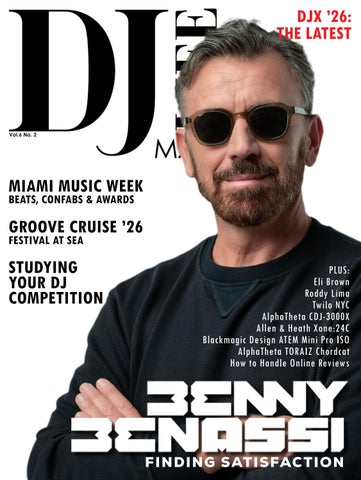
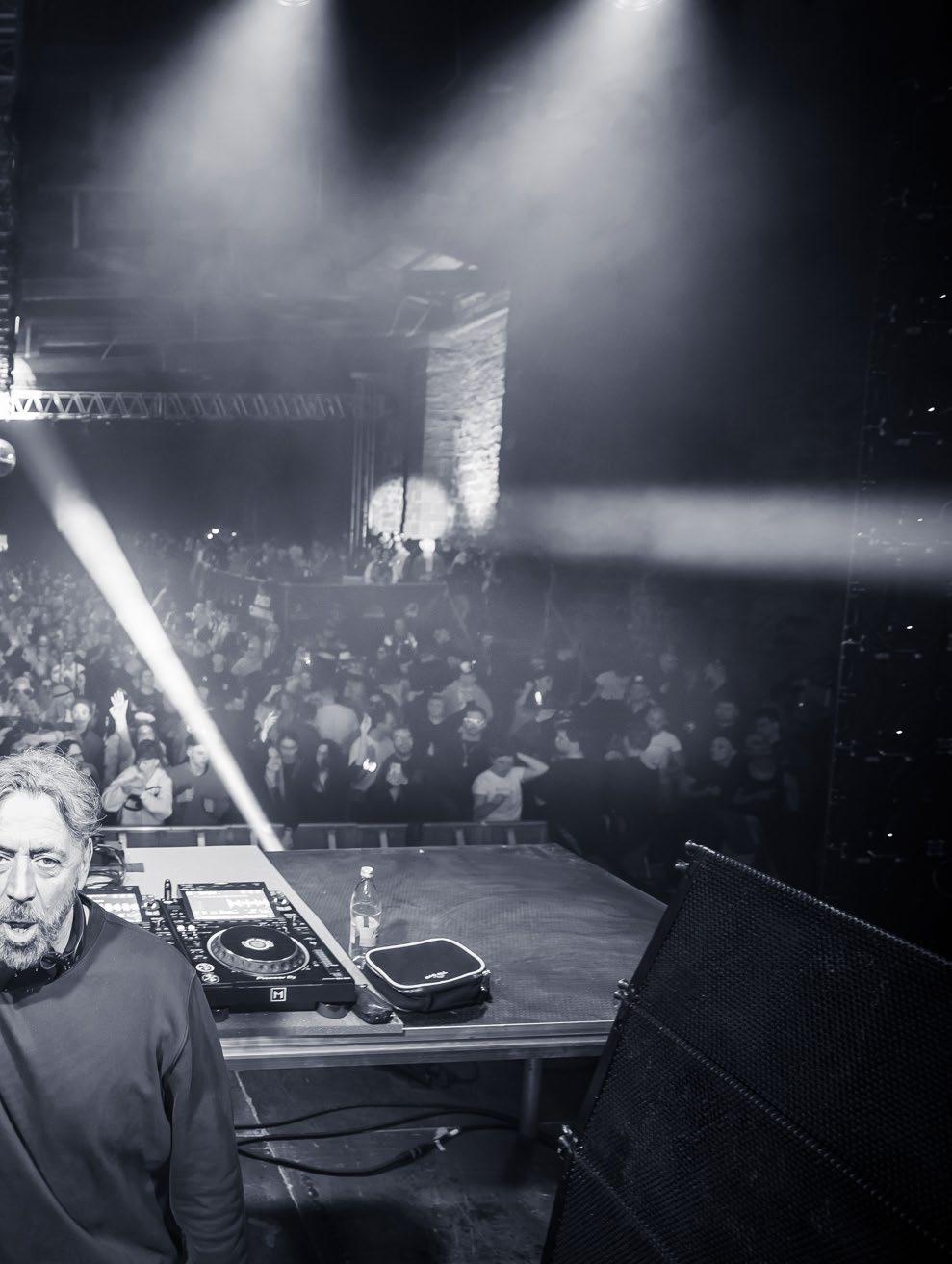
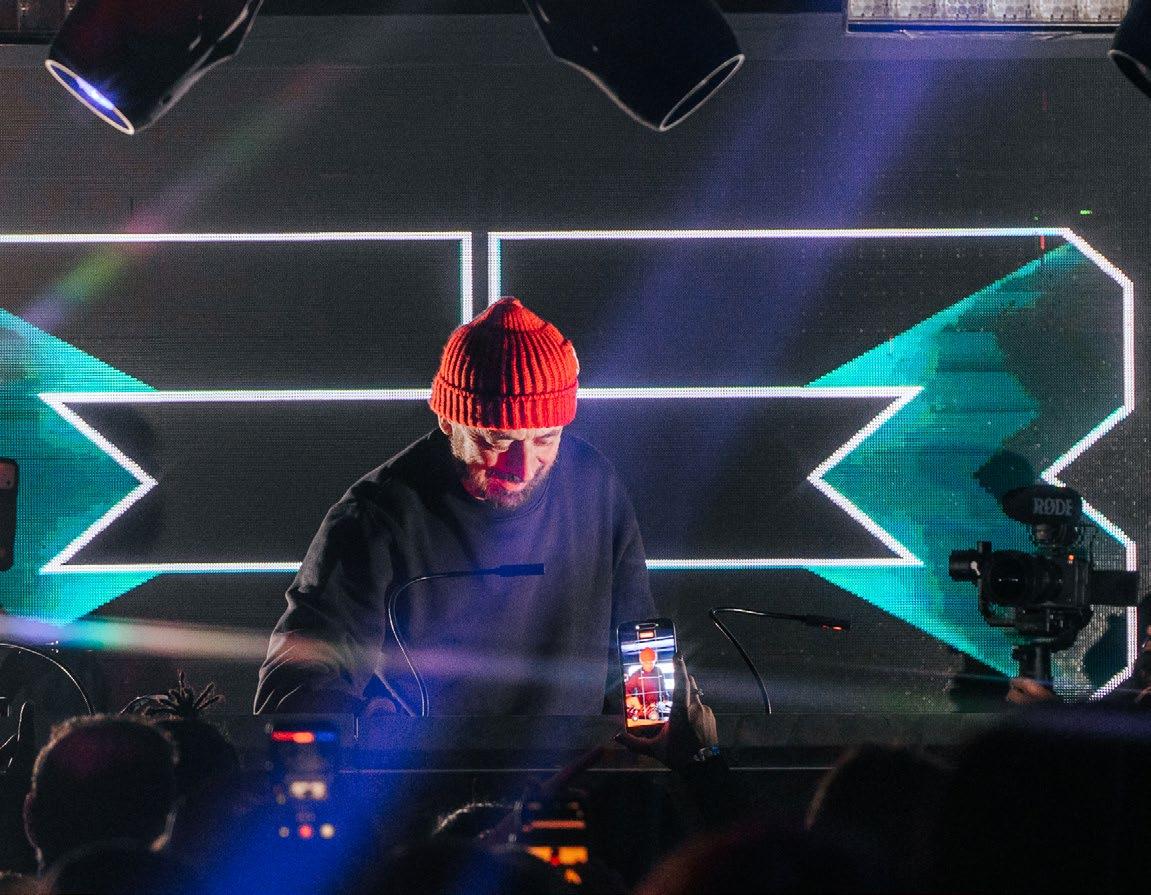
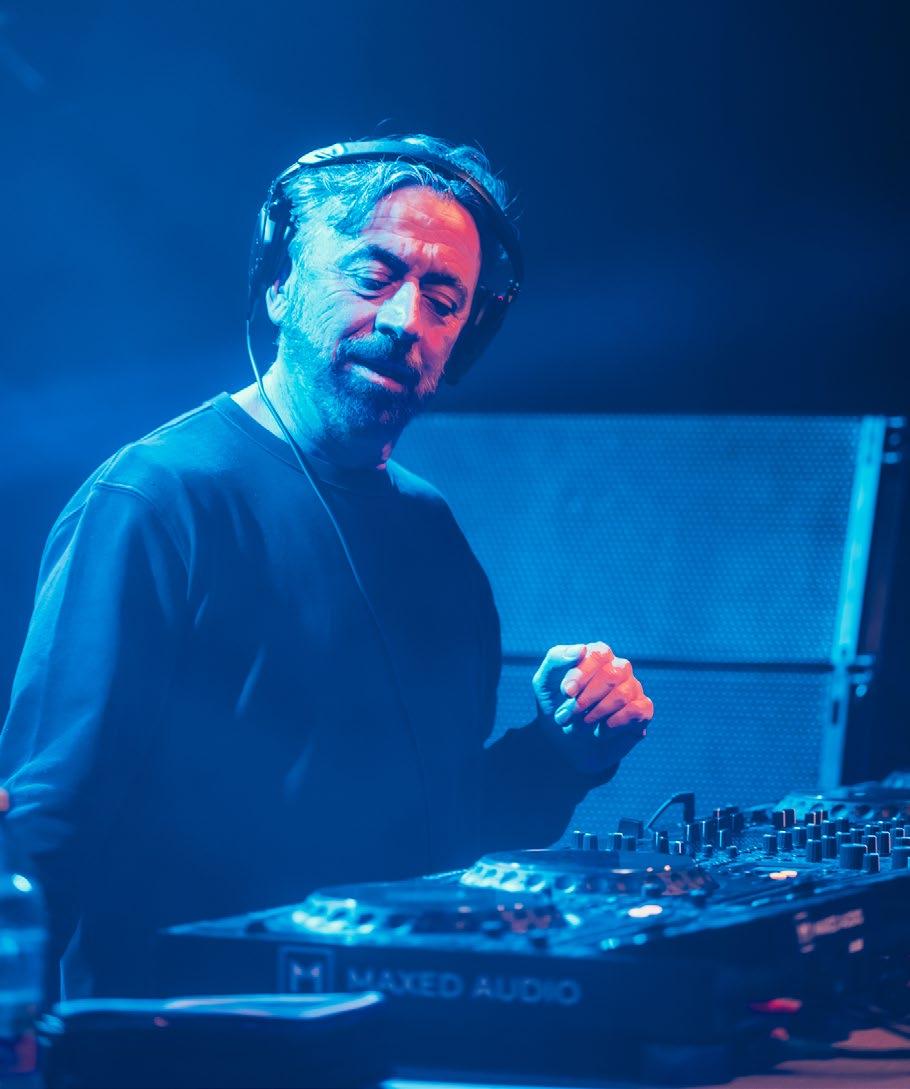
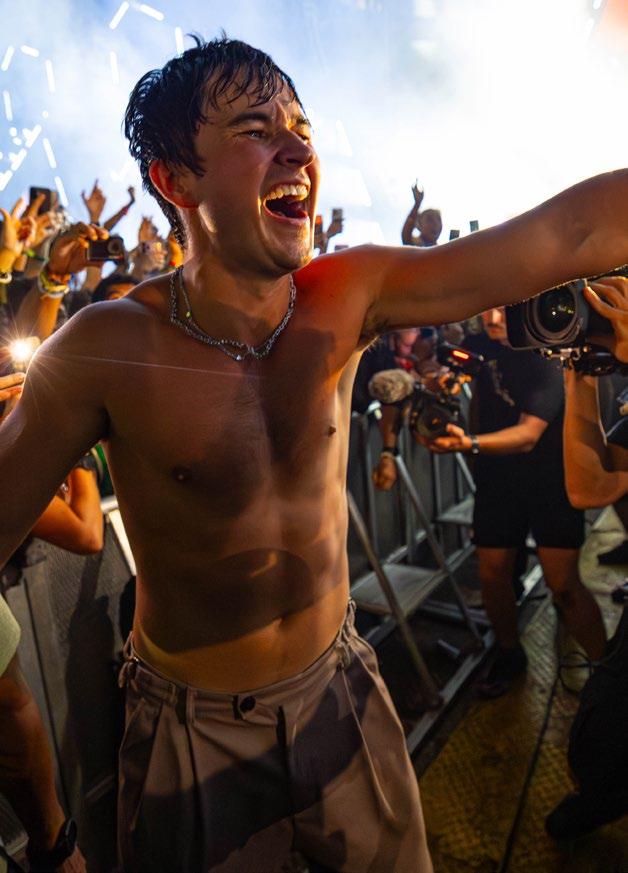
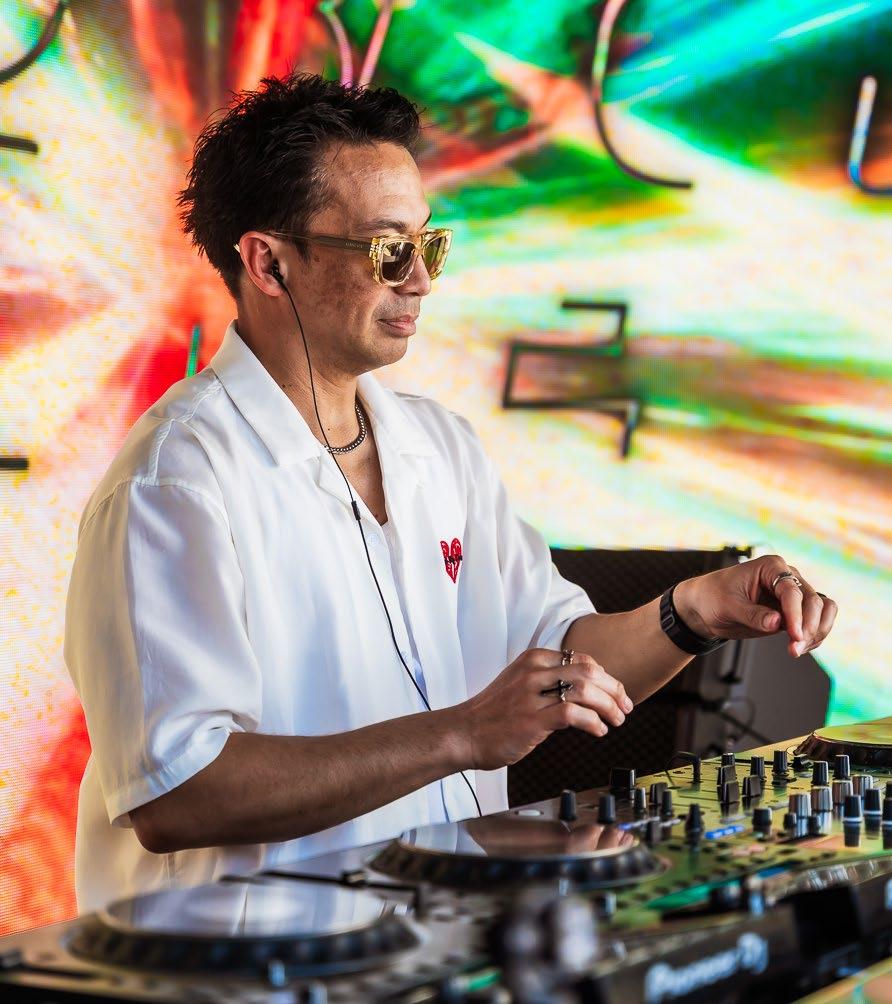
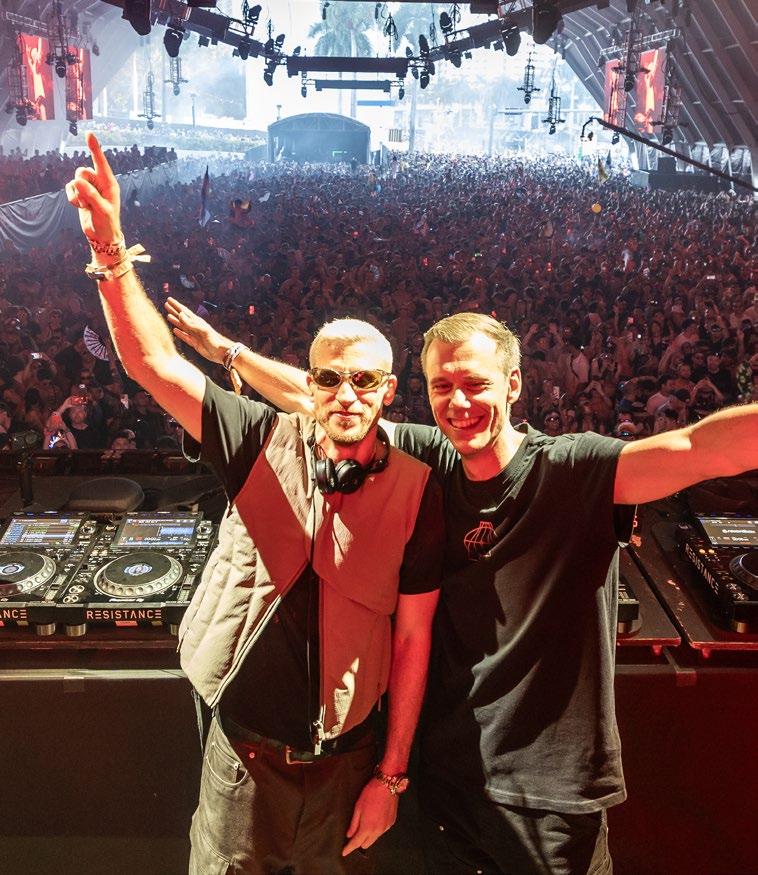
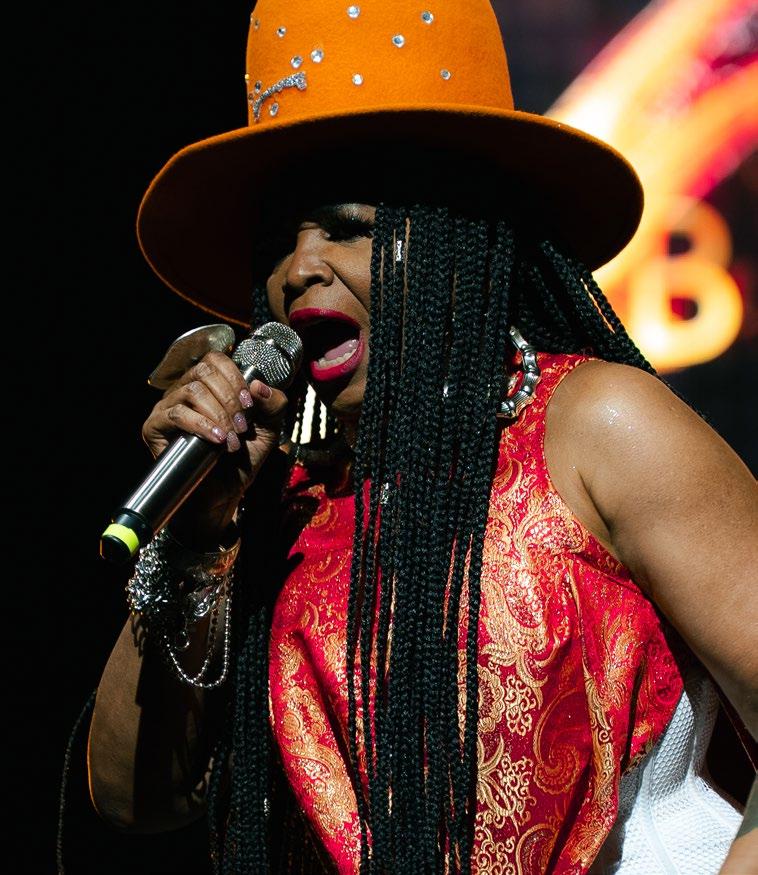
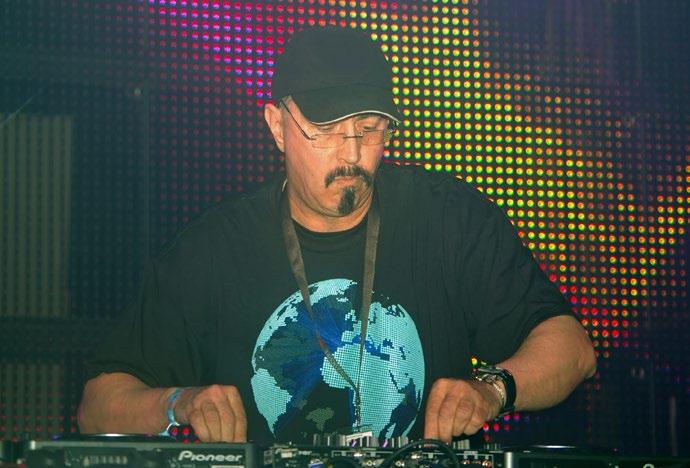
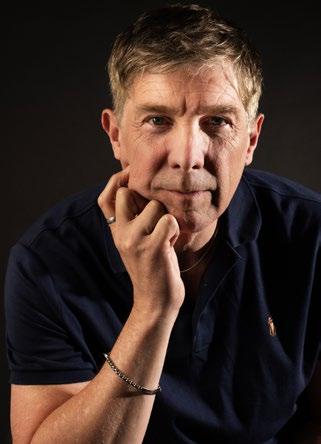
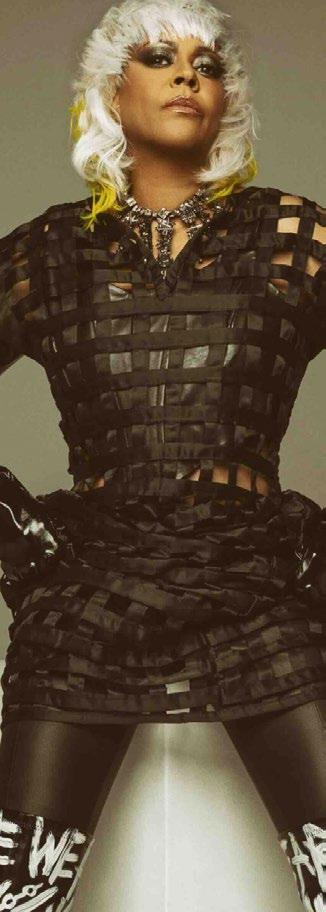
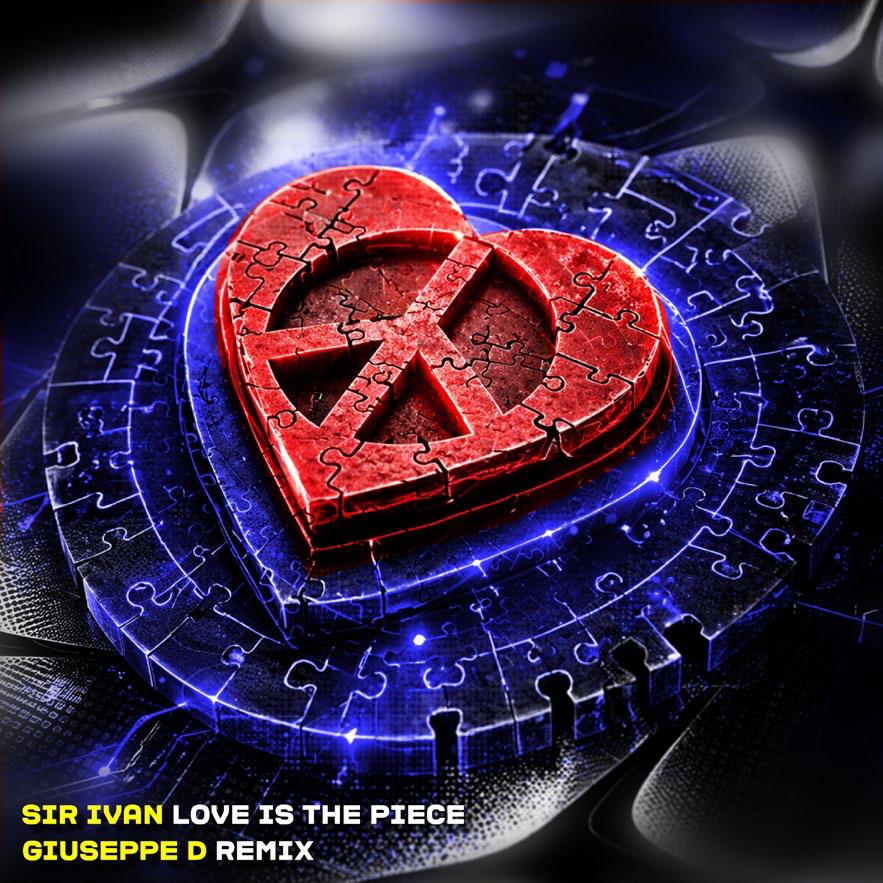
DJ LIFE MAG 2026, Vol.6 No.2 Featuring Benny Benassi
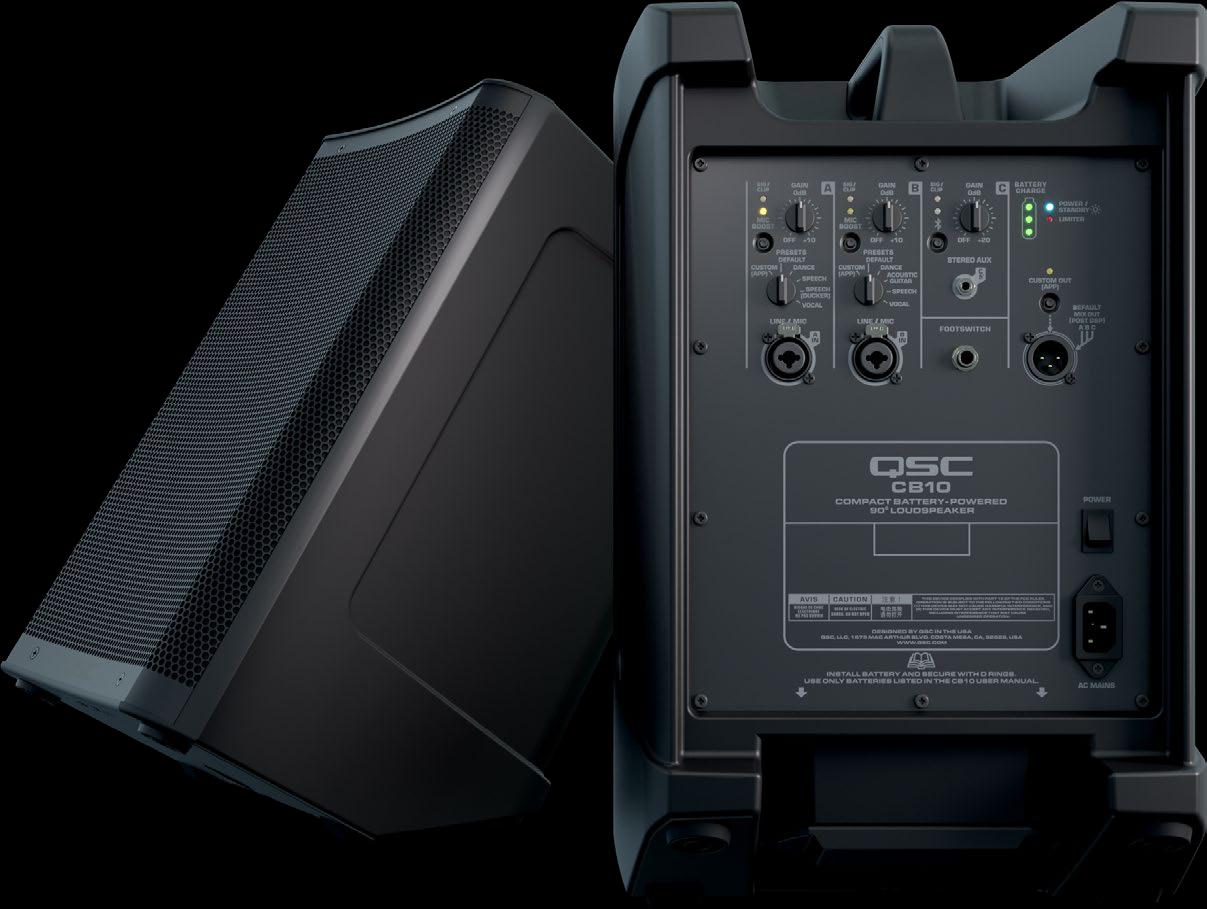
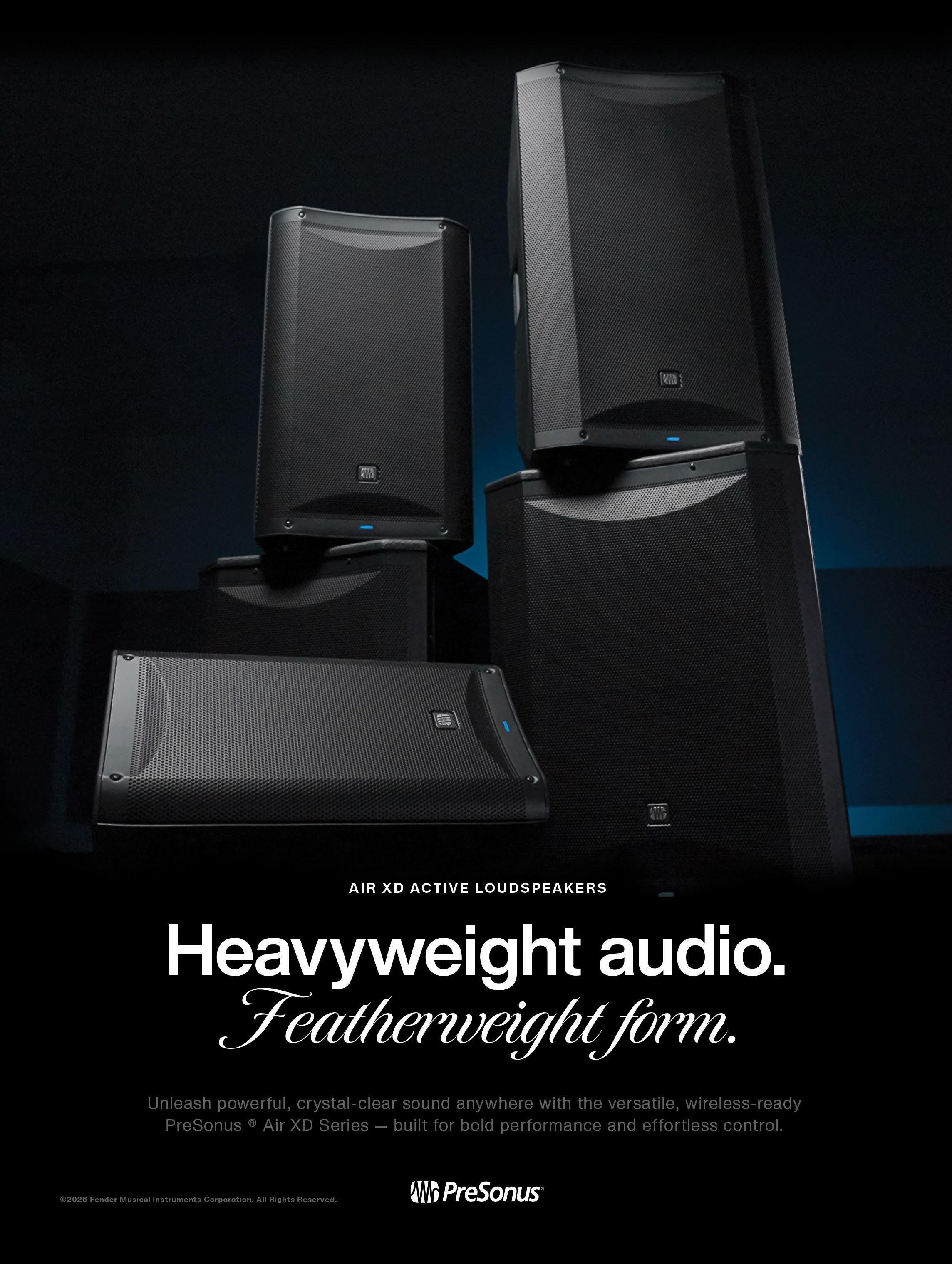
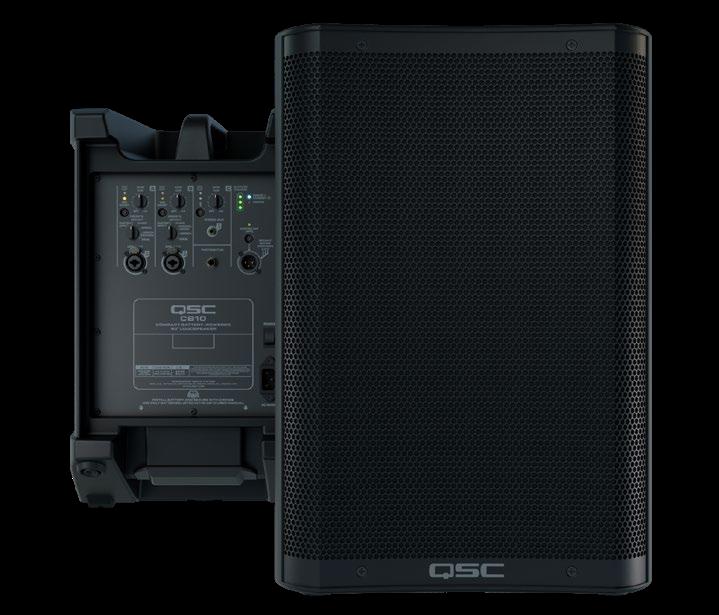
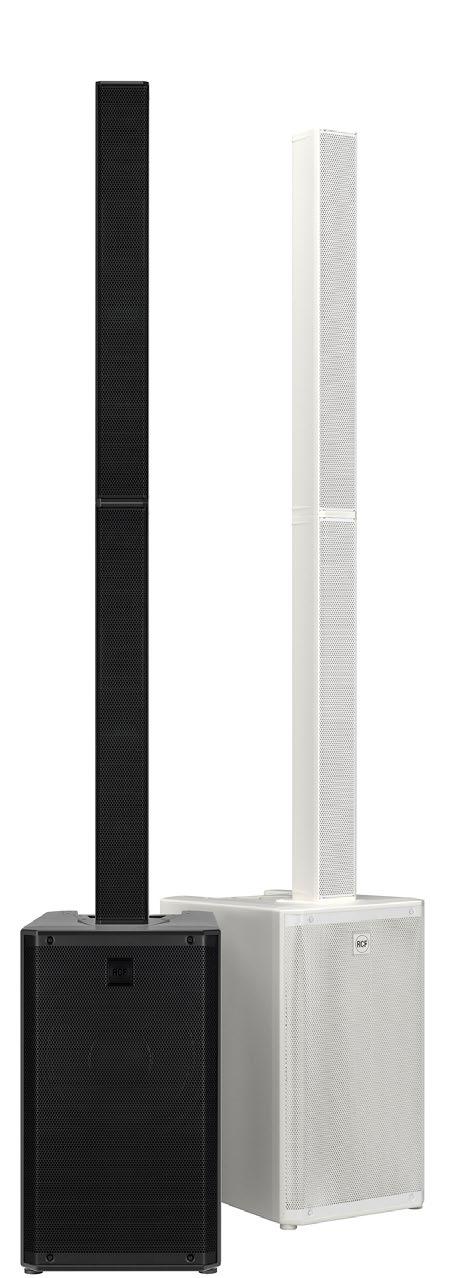
The CB10 is the ultimate compact loudspeaker system, ofering unrivaled audio performance, unmatched versatility and battery-powered portability.
• 127 dB peak SPL
• 10-inch high-output woofer
• 1-inch compression driver
• Bluetooth® audio and control (w/Loudspeaker Control app)
• User-swappable battery with up to 12 hours of runtime
• 200 ms room delay
• 6-Year Warranty* (1 year on battery)
MIAMI MUSIC WEEK: DJS, CONFABS, AWARDS & MORE
By Jim Tremayne
Miami, Fla. – This past March 24-29, the dance-music world again visited South Florida for Miami Music Week.
In addition to annual events like Ultra Music Festival and Winter Music Conference, both of which took place downtown, the Electronic Dance Music Awards and the new Shift Miami conference graced several South Beach venues. Also, various unaffliated club, pool, and outdoor venues rocked the area from Wynwood to Washington Street. As always, DJ LIFE was there to take it all in:
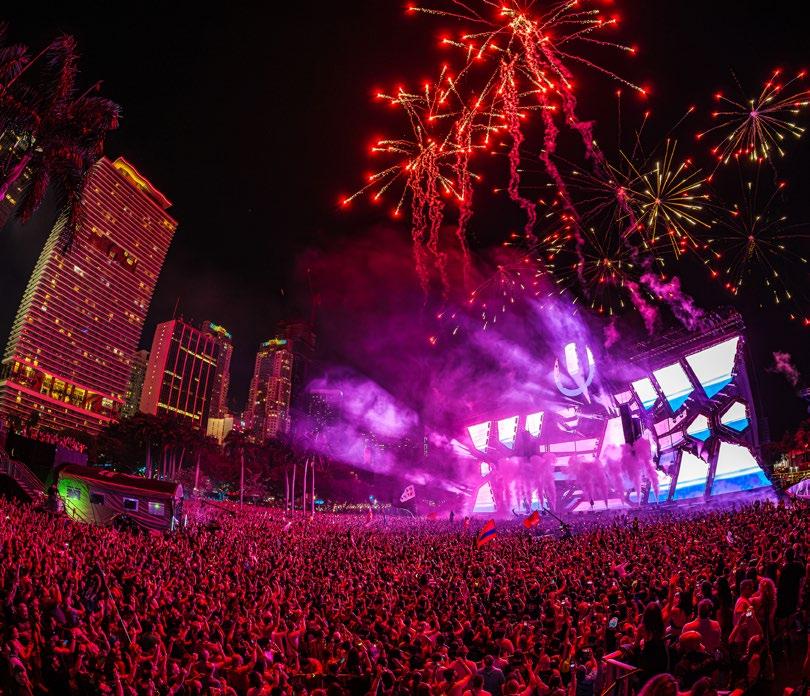
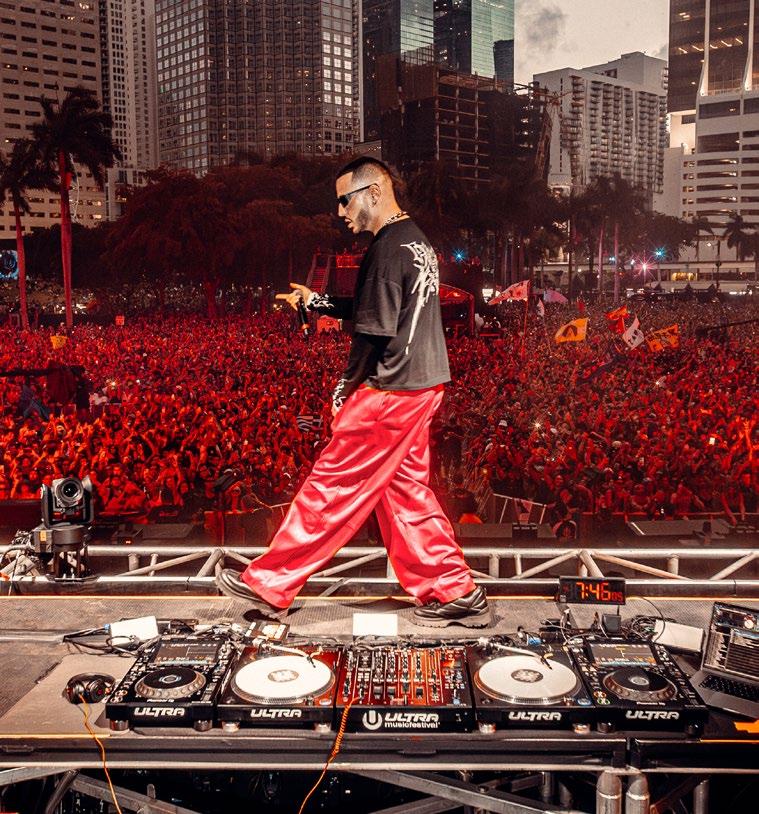
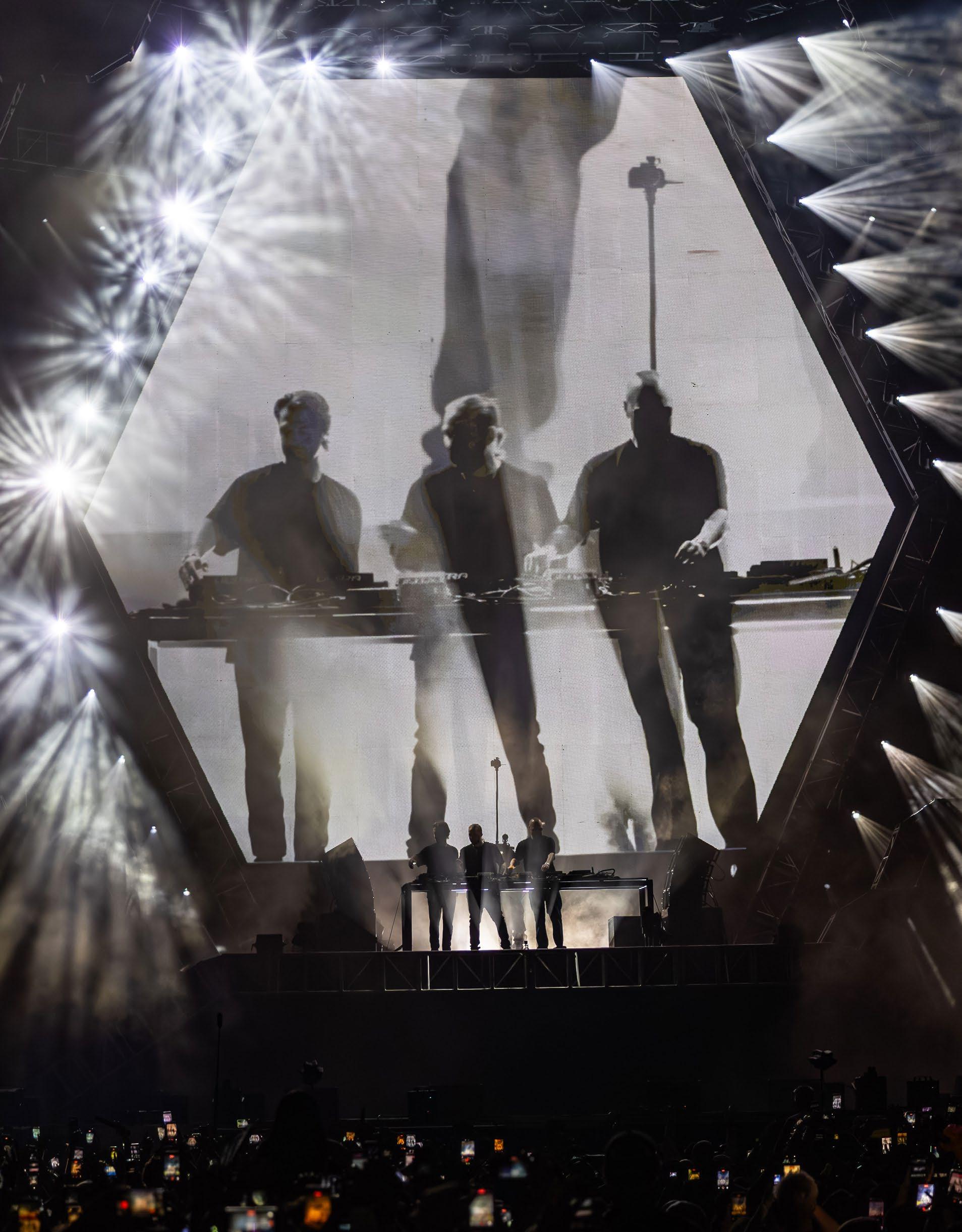
UMF: On March 27-29 at Bayfront Park, Ultra Music Festival produced its 26th edition and delivered a new package of big moments for fans. The seven-stage event presented sets from some of the world’s top DJs – John Summit, Major Lazer, Adam Beyer, Armin van Buuren, Steve Aoki, and more. And as is so often the case at Ultra, there were surprises, like a special reunion of Swedish House Mafa with Eric Prydz.
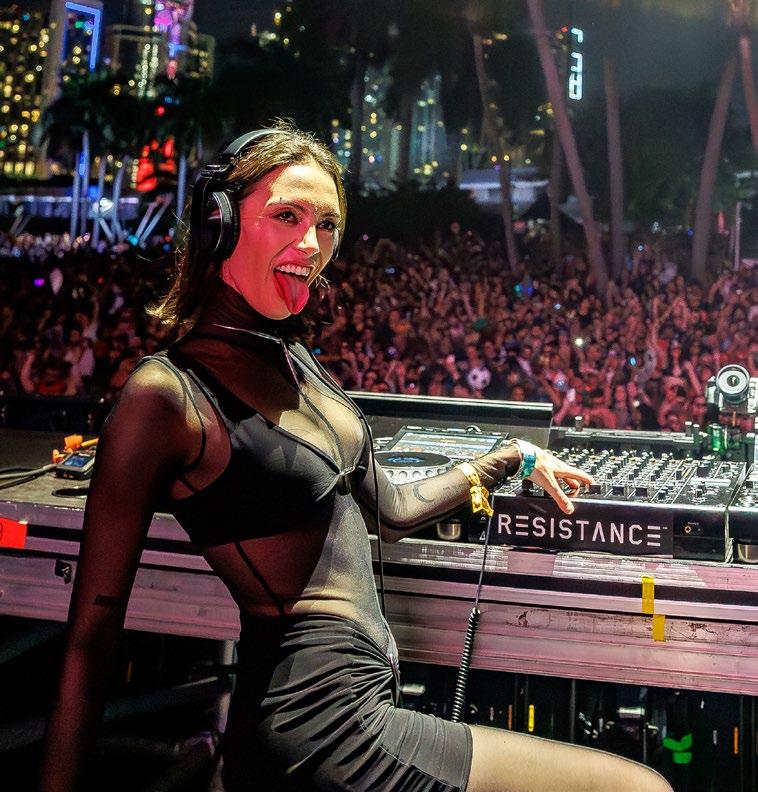
Other Highlights: On March 28, Deep Dish won the day at Resistance The Cove stage with a set that was a perfect mix of vocals and churning, proggy grooves, as it featured burners like Volkoder’s “Move Baby” and their own remixes of crowd-pleasers like Martin Solveig’s “Say Hello” and Fleetwood Mac’s “Dreams.”
Also on Saturday, at the Resistance MegaStructure, the mid-day set from legendary British duo Sasha & Digweed delivered progressive-house thrills with punchy tracks like Lello B’s “L.O.V.E.” and brain-ticklers like Zuccasm’s “Away Loss.”
EDMAs: Presented and co-produced by IHeartRadio’s Sean “Hollywood” Hamilton, the EDM Awards fred up The Clevelander South Beach hotel by drawing some of the biggest DJ/artists in the dance-music scene. Held March 29, the show presented almost 50 awards in a large range of categories to the industry’s top names. Once again, DJ
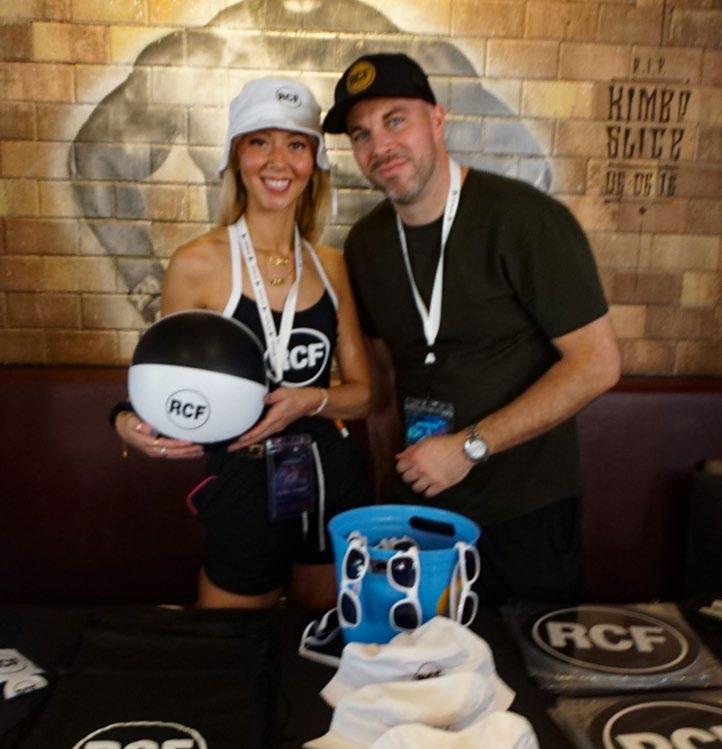
LIFE served as a media sponsor for the event – other sponsors included RCF, BASSBOSS, Electro-Voice and JetPack.
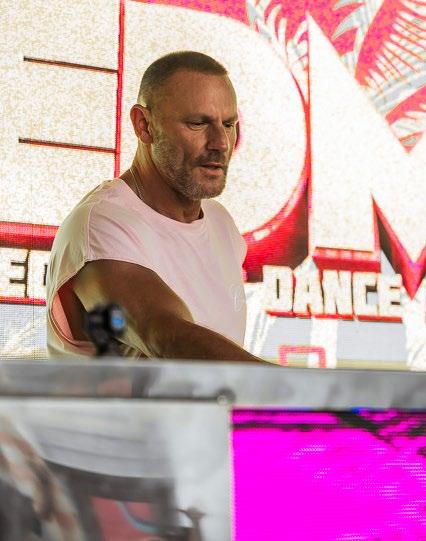
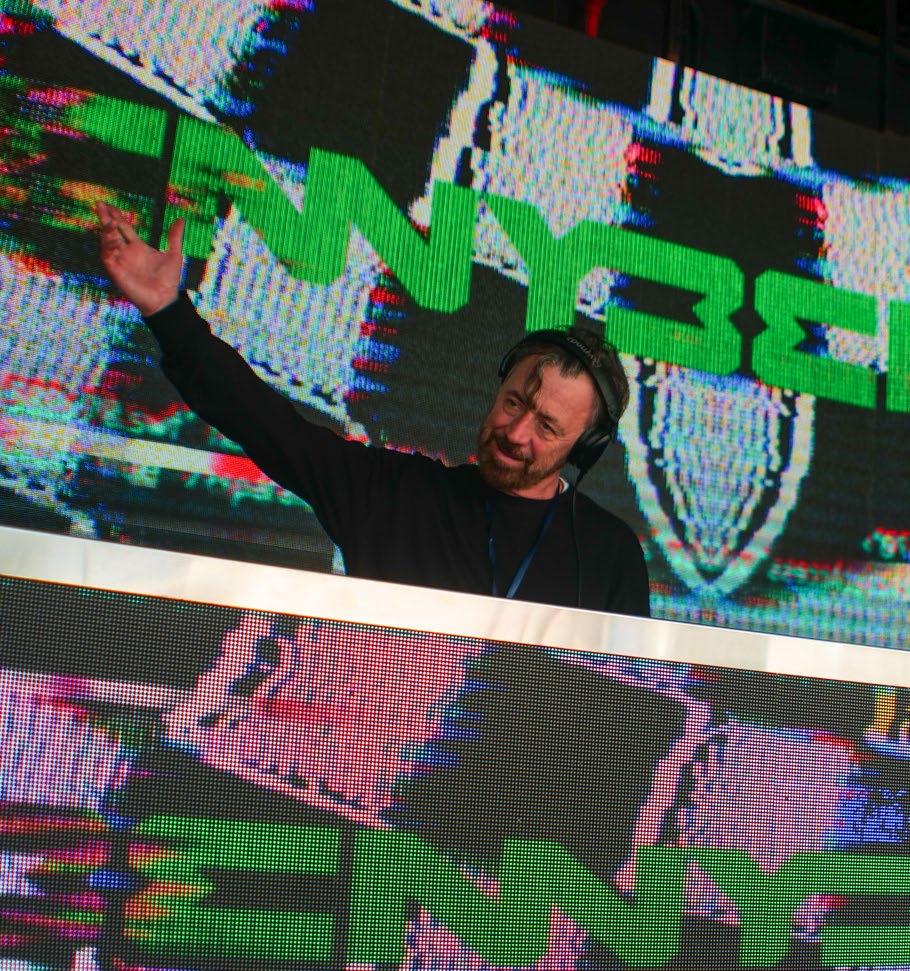
The EDMA show at the hotel’s outdoor bar area presented surprise DJ sets from the likes of Benny Benassi, Seven Lions, and Laidback Luke. (To see ’26 winners, go here.)
WMC: Running March 24-26 at the Kimpton EPIC Hotel in downtown Miami, the 36th edition of WMC featured panels/workshops, sponsored pool parties, an exhibit hall and the International Dance Music Awards ceremony.
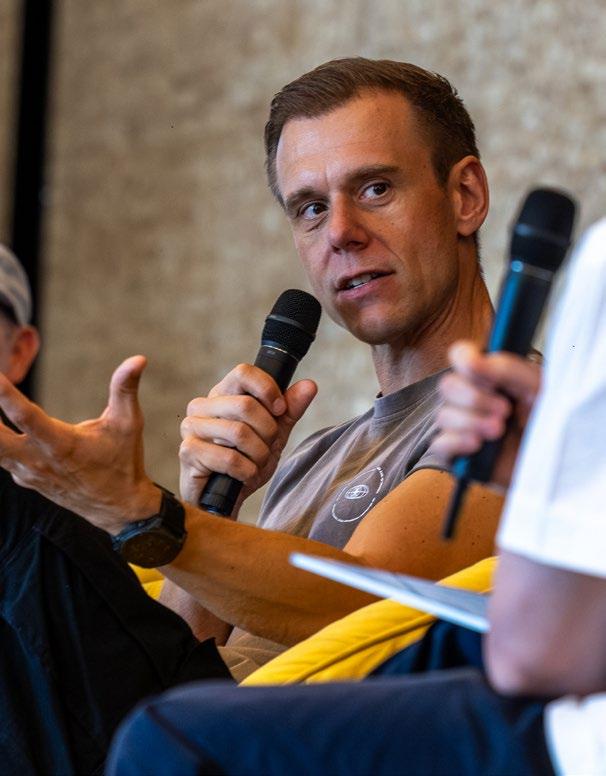
Highlights included Thursday’s L-Acoustics-presented seminar “Beyond the Booth: DJs as Spatial Composers.”
The panel saw tech-forward talents like Joachim Garraud, Laidback Luke and Nostalgix discuss a future that includes immersive sound in electronic music and L-Acoustics DJ, a new system designed to transform traditional DJ sets into 3D sound experiences. (Ed. Note: Check the next issue of DJ LIFE for more on that topic.)
Shift: At his Interactive Masterclass on Wednesday, Markus Schulz discussed elements from his career – production, DJing techniques, running his Coldharbour Recordings label – that could be benefcial to attendees.
When asked about how he likes to wrap up a long DJ set, Schulz said: “I like to end on an emotional note – with something like, say, Robert Miles’ “Children” – because I remember when I’d go see someone like Danny Tenaglia or Junior Vasquez, they’d leave us feeling an emotion, something deep. I know how it feels to walk out of a club with that feeling.”
Afterward, in his “Building a Set” seminar, Ookay detailed the different approaches in playing a variety of sets –clubs, festivals, openers – and stressed the idea of making sure your productions are always available. “As an artist,” he said, “you should only be two clicks away from another DJ always being able to access your music.”
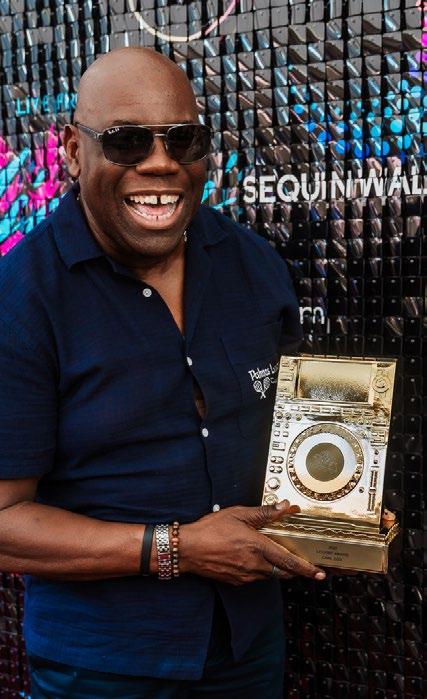
Carl Cox: EDMA winner. Gabe Garza
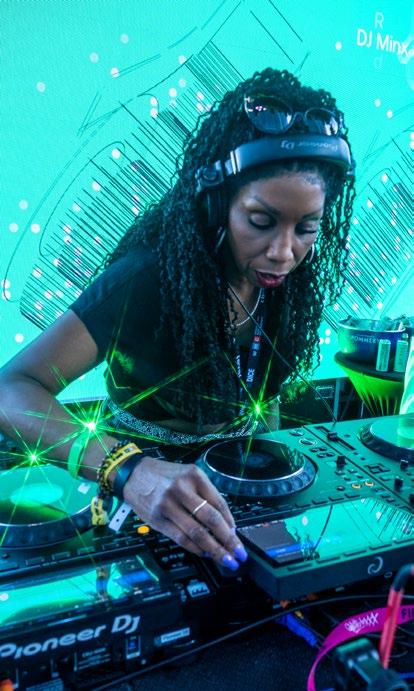
WMC: DJ Minx @ Rekids Party. @vivicphotostudio
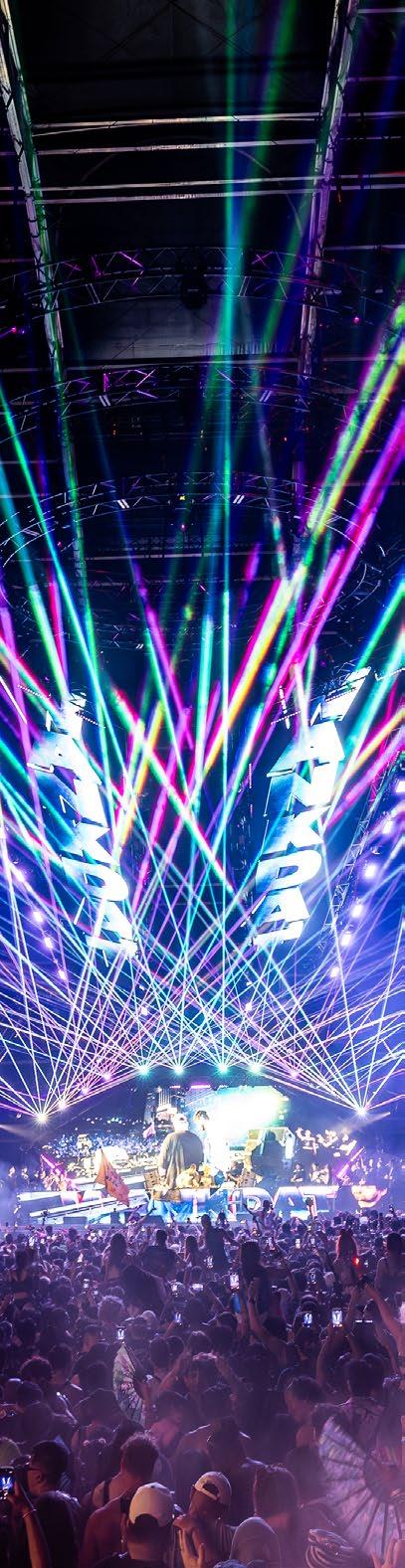
Boom: Ultra Fest blasts off. ALIVE Coverage
IN THIS ISSUE
With Another Big Year Ahead of Him, Benny Benassi Discusses His New Album & Refects on His Infuential Legacy By
Mark Mancino
8 Feedback
DJX’26: Latest Sessions Announced for Atlantic City Show
32 Club Spotlight
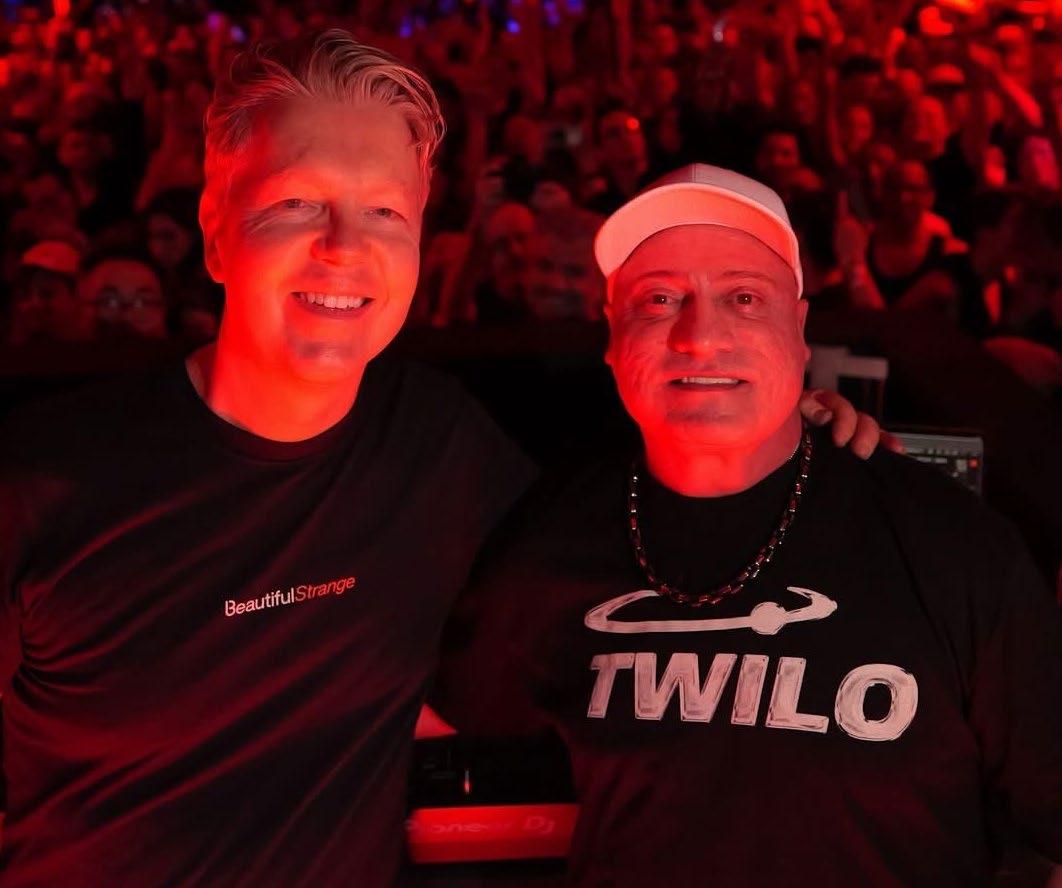
NYC’s Twilo: Two Special Nights
34 Playback
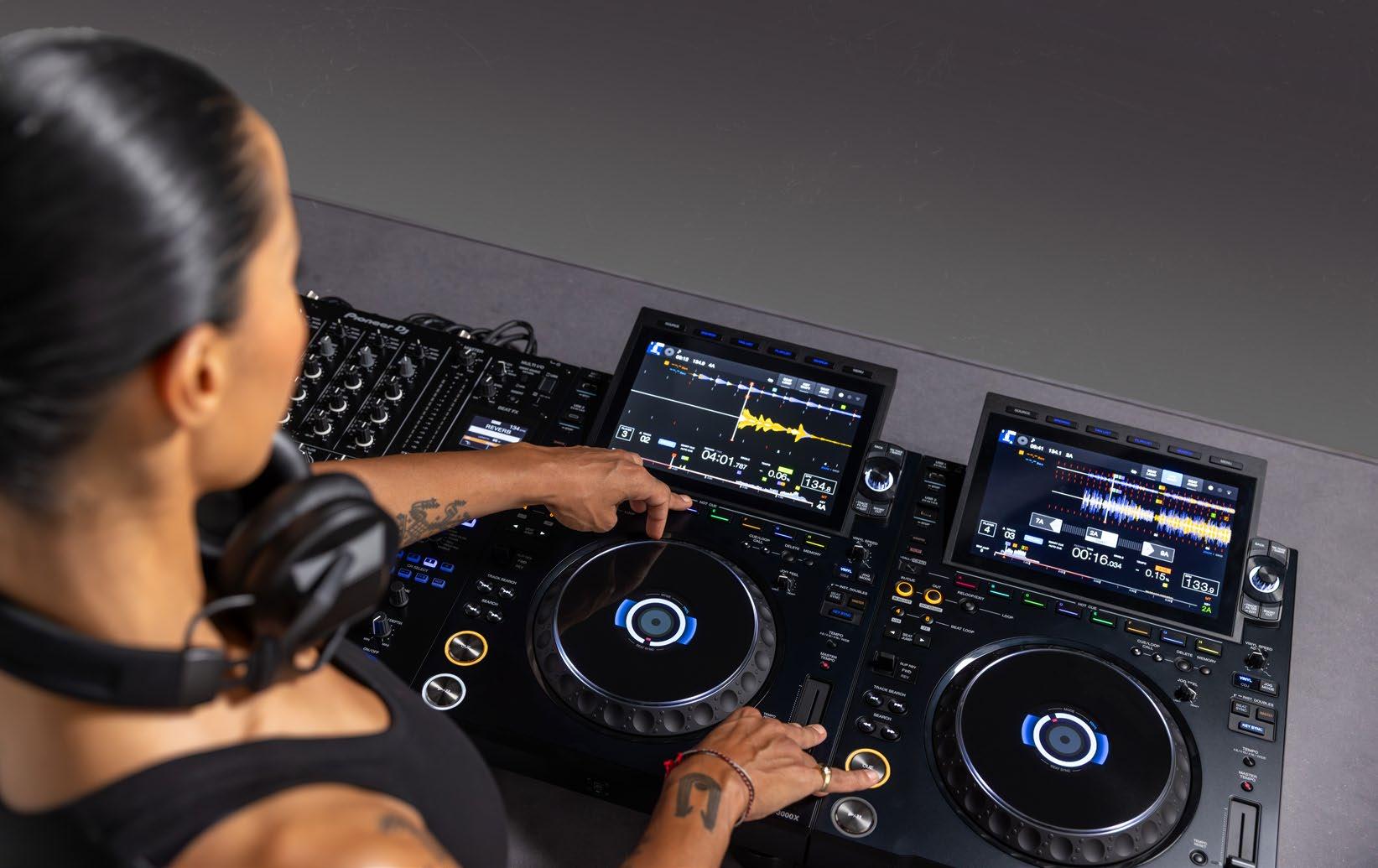
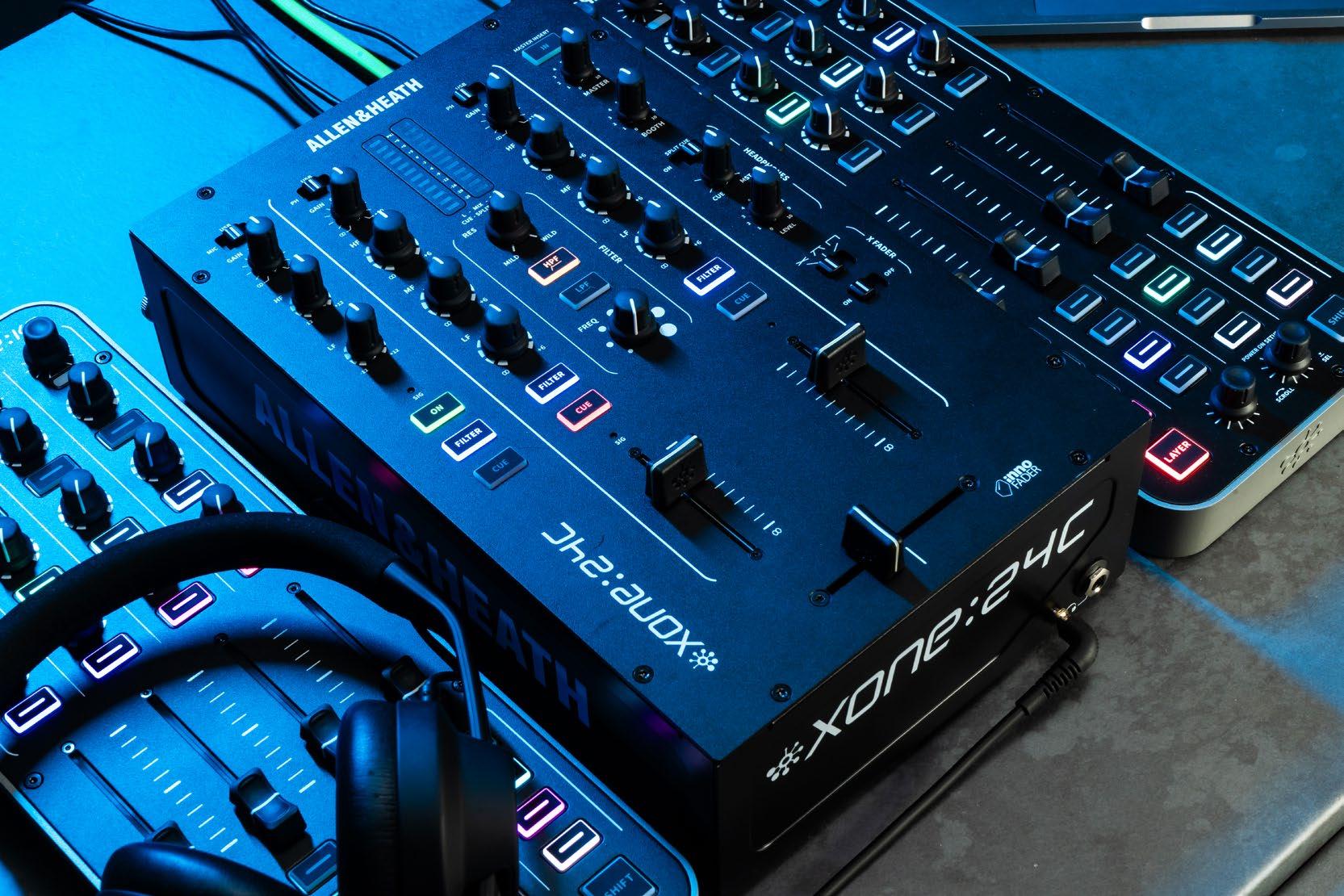
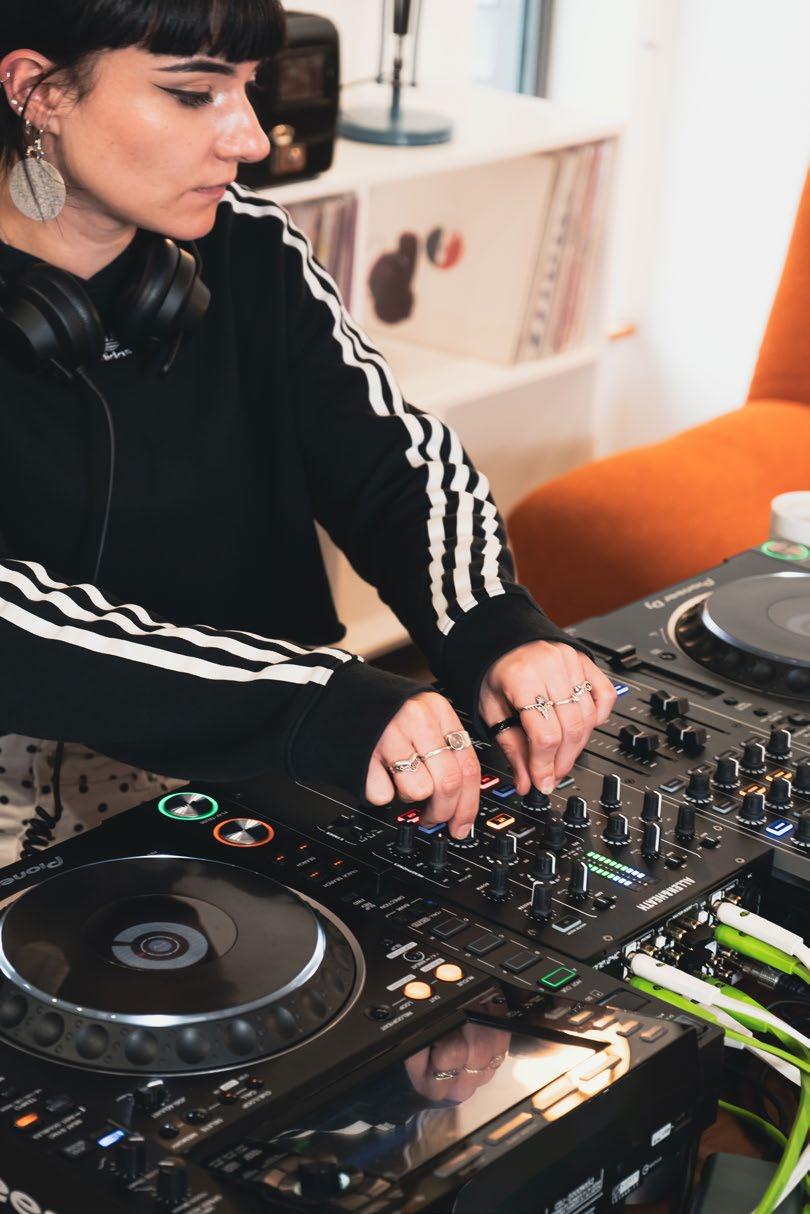
AlphaTheta CDJ-3000X & Allen Heath Xone: 24C
38 Studio Session
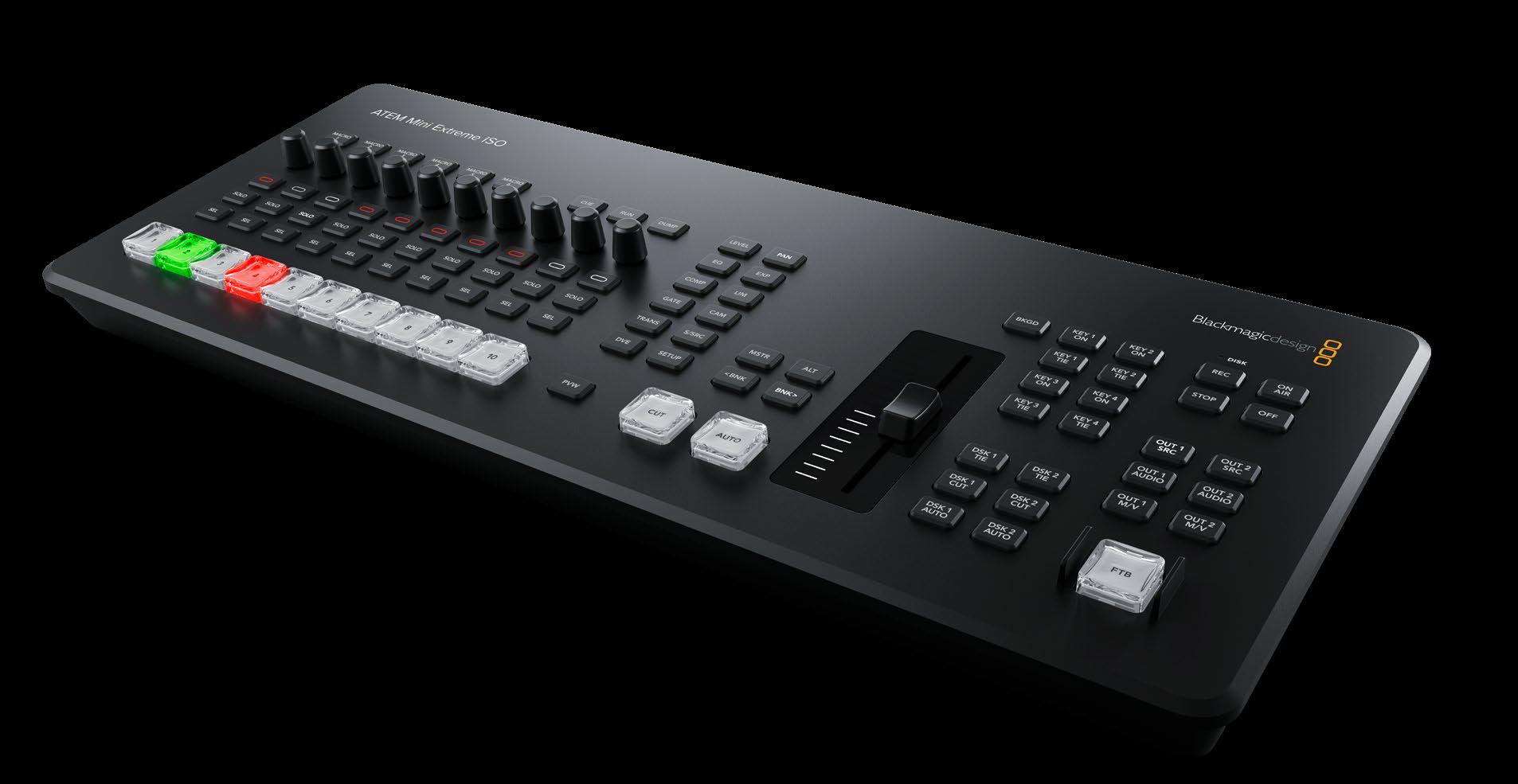
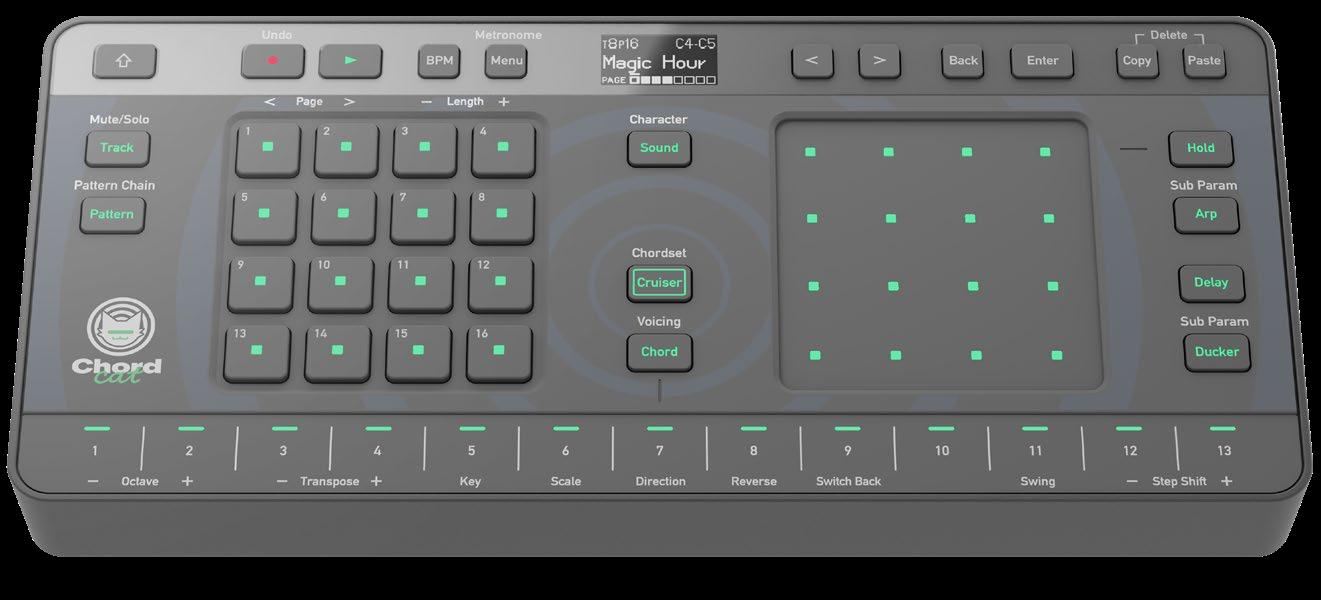
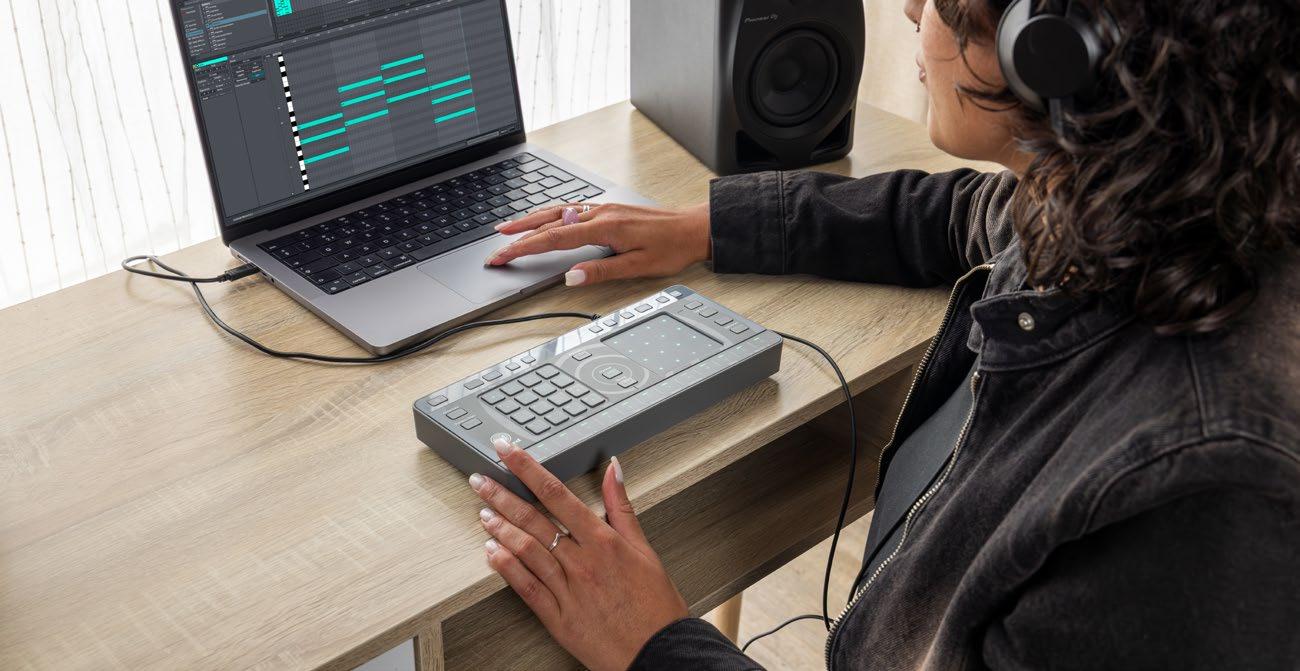
Blackmagic Design ATEM Mini Pro ISO & AlphaTheta TORAIZ Chordcat
42 Mobile DJ Profle
New England’s Mike Benoit
44 DJ Business
How to Study Your Competition as a DJ
46 Gear
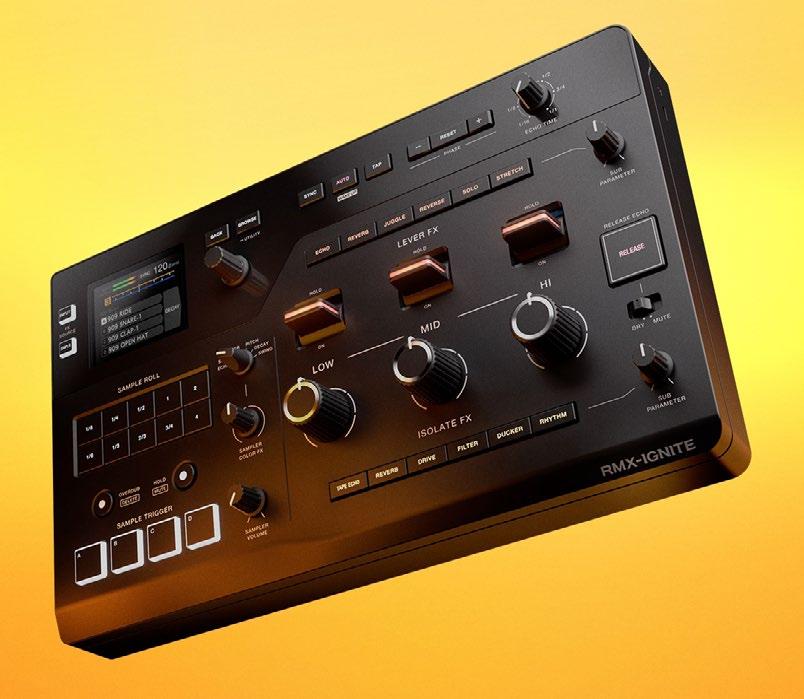
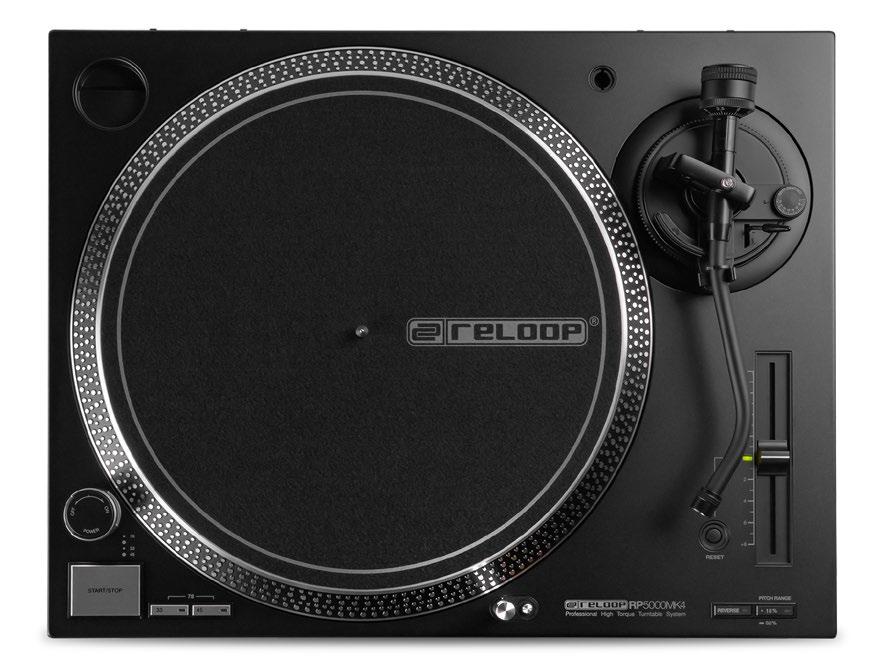
New Products from Reloop, RCF & More
54 Tracks
Phat Tracks from ManyFew, Crystal Waters & More
56 Club Play Chart
The Hottest Records, As Reported by Our Top U.S. Record Pools
Jakob Buzan
AT LONG LAST…
We’ve been covering hitmakers from the EDM scene since the early ’90s days of DJ Times . While we’ve done interviews with Benny Benassi, we’ve never had the opportunity to make him a cover subject. So, fnally, at long last, we did connect with the Italian talent – and now he graces our cover at DJ LIFE
The DJ/producer best known for hits like “Satisfaction” and “Cinema” and his Grammy-winning remix of Public Enemy’s “Bring the Noise” sits down with our Mark Mancino to discuss Feel The Bass, his latest album, and to refect back on a sensational career. Satisfaction indeed.
As usual, in this issue we offer our coverage from a very busy Miami Music Week this past March. Not only did DJ LIFE serve as a media sponsor for the EDM Awards, but we also spent time at Ultra Music Festival, Winter Music Conference downtown and the new Shift conference on South Beach. (Also, we gathered plenty of useful content for upcoming issues.)
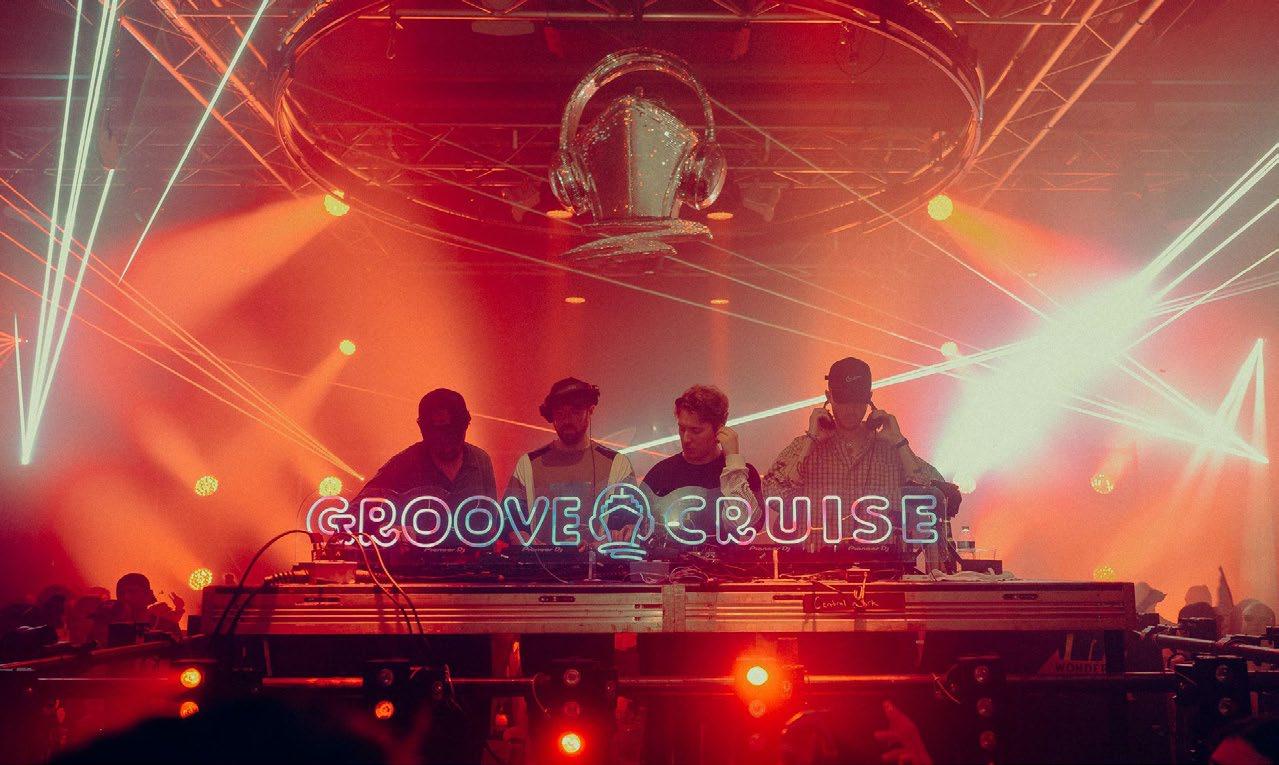
In the Sound Bites section, Mr. Mancino interviews rising star Roddy Lima, while I connect with leading techno DJ/artist Eli Brown soon after his Ultra-fest set. Additionally, we offer some looks from the Groove Cruise, which presented top jocks like John Summit and Cloonee on its annual “festival at sea.” In Club Spotlight, we enjoy a blast from the past with a one-off weekend this past March 6-7 at legendary NYC haunt Twilo with legendary duo Danny Tenaglia and John Digweed on the decks – fashbacks for sure.
This issue fnds a pair of extended gear-review sections. In Playback, our Denver-based DJ/scribe Wesley King takes on the AlphaTheta CDJ-3000X media player and the Allen & Heath Xone: 24C hybrid mixer. In Studio Session, Wes tests out the AlphaTheta TORAIZ Chordcat, while Brooklyn-based DJ Mike Márquez runs the Blackmagic Design ATEM Mini Pro ISO HDMI switcher/recorder.
For the mobile-entertainment world, New Jersey-based author Brian Lawrence has a pair of offerings. In a feature, he details how wedding DJs can best handle online customer reviews. In Business Line, he explains how studying your competition is one of the most effective ways to get ahead yourself. And in Mobile Profle, we meet with New Hampshire-based Mike Benoit, a man of service to his country, his community, and, of course, his dancefloor.
And don’t forget the upcoming DJX, which will run Aug. 10-13 at the Hard Rock Hotel & Casino in Atlantic City, N.J. As always, we’ll have an exhibit hall full of the latest DJ-related technolo-gies, demo rooms from the industry’s leading pro-audio companies, sponsored After Dark parties, and a slate of more than 30 educational seminars, panels and keynotes. (In fact, check some of the just-announced educational seminars on the opposite Pg. 8.) If you’re a DJ of any stripe looking to improve yourself in any number of ways, DJX has something for you. For the very latest, please visit www.djxshow.com
Cheers,
Jim Tremayne Editor, DJ LIFE
editor-in-chief
Jim Tremayne jtremayne@hazanmediagroup.com
editor-at-large Brian O’Connor boconnor@@hazanmediagroup.com
web editor and social media manager Mark Mancino mmancino@@hazanmediagroup.com
contributors Joe Berinato, Chris Caruso, Shawn Christopher, Paul Dailey, Reed Dailey, Chris Davis, DJ Deets, Tony Fernandez, Tommy D Funk, Lexi Ferguson. Greg Hollmann, Wesley King, Brian Lawrence, Mike Márquez, Lily Moayeri, Jordan St Jacques, Jeff Stiles, Ashley Teffer, Danny Turner, Phil Turnipseed, Joshua Volpe, Travis Wackerly, Curtis Zack
chart coordinator Dan Miller dmiller@hazanmediagroup.com
creative director Janice Pupelis jpupelis@hazanmediagroup.com
director of technologies and project management Steve Thorakos sthorakos@hazanmediagroup.com
Chairperson & COO/Co-Publisher Robin Hazan rhazan@hazanmediagroup.com
President & CEO/Co-Publisher Shawn Hazan shazan@hazanmediagroup.com
visit our website: www.djlifemag.com 516.767.2505
Editorial and Sales Offce: DJ Life, Oyster Bay, NY 11771. (516) 767-2505 • (Sales/all other business): (516) 767-2505 • djlife@hazanmediagroup.com.
Editorial contributions should be addressed to The Editor, DJ Life Mag, Oyster Bay, NY 11771 or sent to JTremayne@hazanmediagroup.com.
DJ Life Mag is published bi-monthly starting with the second month annually.
Atlantic City, N.J. – Set for Aug. 10-13, DJX’26 will happen at Hard Rock Hotel & Casino in Atlantic City, N.J. As always, the show will present DJ-centric exhibits, educational seminars, and sponsored After Dark events. (For the latest info, please visit www.djxshow.com.) Here are a few of the seminars set for the 2026 edition of DJX:
Bet On Yourself: Why You’re Capable of More.
As a DJ, are you seeking more fulfllment, more growth and certainly more money?
DJ vet Mike Benoit’s tutorial will aim to create intentional growth by identifying weak points in your performance and business, learning how to invest in the right areas at the right time, and building a truly wellrounded DJ career that compounds year after year.
The DJ Inquiry Playbook: AI-Powered Replies (Done Right).
Most DJs lose leads because their inquiry replies don’t create momentum. How to avoid that scenario? In Scott King’s ideaflled session, he’ll show you how to use AI to respond faster, sound more confdent, and keep leads engaged so they actually want to continue the conversation. You’ll see real examples and leave with plugand-play templates and prompts you can use right away.
DJX 2026 T-SHIRT DESIGN CONTEST
BACK BY POPULAR DEMAND!
Resilience Strategies for DJs: Thriving in a High-Pressure Industry.
How does one navigate the oftenbumpy waters of the DJ world? In this detail-rich tutorial, Philly mobile Chuck Zerambo will provide DJs with practical resilience strategies to strengthen mental toughness, maintain confdence, and perform at a high level even in diffcult situations. Prepare to be lifted.
The Psychology of the Guest.
The DJX T-Shirt Design Contest Returns
DJX ’26 is Blueprinting the Future And You are Part of the Plan This Isn’t Just a T-Shirt. It’s DJX History in the Making. Make Your Mark! DESIGN. SUBMIT. SEE IT EVERYWHERE.
Presented by Lazarus Stark of Maryland’s Epic Events, this won’t be a sales seminar – it’ll be a perspective seminar. This will be a crash course on people skills, one that’ll show you: how to maximize the ROI for every other vendor onsite; the emotional ROI of framing moments or letting them breathe; and how to set up everyone on the team for a seamless effort. He’ll help you succeed by understanding your guests and clients at a deeper level.
SUBMIT YOUR DESIGN
The design must embody the theme “Blueprinting The Future”
Must Include: DJX ’26 “Blueprinting The Future”, DJX ’26 Offcial Logo and Show Dates.
Design Specs: 1-sided or 2-sided (no sleeves), up to 2 color art on black shirt, Transparent PNG with a maximum size of 9” x 12” @300dpi.
Deadline Date: June 1, 2026
Visual Assets: Downloadable Zip fle
Email Art to: DJX@hazanmediagroup.com
Subject Line: “DJX ‘26 T-Shirt Design Submission”
WINNER PERKS
n DJX Mainstage Announcement + MC Cameo
n 1 Lifetime ALL-ACCESS Pass to DJX
n Spotlight Feature in DJX Remix Newsletter
n Show Floor Arena LED Screen Feature
n Announced / Mentions in:
• DJX Monthly Remix Newsletter
• DJX News Post
• DJX Socials & Instagram collaborations
n Post-show Feature in DJ LIFE Digital Issue
WINNING DESIGN REVEAL: August 11, 2026, on the DJX Mainstage.
RODDY LIMA: EASING INTO THE SPOTLIGHT
Roddy Lima is rapidly securing himself as one of the most exciting new exports in global dance music – and 2026 is already shaping up to be his biggest year yet. Hailing from São Paulo, the Brazilian DJ/producer has swiftly gone from an emerging name to an international force within the electronic-music circuit.
In remarkably short time – fueled by raw club instincts, magnetic live sets, and a sound that balances driving techno energy with groove-heavy, techhouse fair – Roddy Lima has already managed major releases on Drumcode, sold-out global tour dates, and a performance at the Do LaB stage at Coachella ’26.
Riding high through his recent successes, momentum hit a new highs with his single “Awake,” which arrived via Drumcode as part of DC4 Vol. 3 The track is a late-night weapon built for peak-hour pressure – it’s hypnotic, stripped-back, and pulsing with tightly controlled energy that locks into a rolling rhythm before erupting into a high-octane drop. It also marks Lima’s offcial debut on the renowned Drumcode imprint, founded and managed by globally acclaimed artist Adam Beyer.
Lima’s Drumcode milestone follows a strong start to the year, including “Lick It,” his collaboration with Sarah de Warren released through Insomniac Records. The single further cemented his reputation for delivering club-ready cuts that translate effortlessly from underground rooms to massive festival stages. With releases on imprints like Repopulate Mars, Experts Only, Black Book Records, and Truesoul, Roddy has already gained major Beatport traction and earned the attention of tastemakers including FISHER, John Summit, Anyma, and PAWSA.
On the touring front, his ascent has been just as rapid. Standout appearances at Miami’s Club Space and Hï Ibiza have proven his ability to command dance foors – and his 2026 schedule continues to expand with major dates across the U.S. and beyond. Most notably, Lima is gearing up for a highly anticipated debut at Coachella’s fan-favorite Do LaB stage this April –an essential stomping ground for electronic artists and one of the fest’s most celebrated dance-music stops.
DJ LIFE: Have you always been a fan of dance music?
Roddy Lima: I was lucky that when I was a teenager, the electronic-music scene in Brazil was just starting to take shape. Later on, artists like Alok and Vintage Culture really helped pave the way for people like me to be here today. I didn’t lock myself into one genre back then, and I still don’t. I like to experiment in the studio and see where the music naturally takes me.
DJ LIFE: Who were some of your earliest musical infuences? How about who inspires you most now?
Lima: I really like Ricardo Villalobos. He helped shape and push the genre in a way that was ahead of its time, breaking away from traditional structures and exploring sound in a very raw, almost experimental way.
DJ LIFE: What were some of your earliest nightclub memories?
Lima: I used to go to a lot of raves with my friends. We would arrive right at the beginning and stay until the very end, being some of the last people to leave. We were underage at the time, and I still remember walking through the woods to get to the parties – that feeling is one of my strongest memories. It was very raw and exciting, and it really shaped my connection to that environment.
DJ LIFE: How about a standout memory from one of your very frst DJ gigs?
Lima: Some of my frst DJ experiences were at small parties that I organized with friends for people from our school. It was a very small crowd, but it meant a lot to me at the time. Those moments were my frst real connection with music in a performative way, and they played an important role in getting me started on this path.
DJ LIFE: Did DJing or production come frst for you?
Lima: Production actually came frst for me. I didn’t have access to CDJs in the beginning, so I was already getting booked for shows before I had much hands-on experience DJing in a traditional setup. That really shaped my journey. My identity as an artist started in the studio. When I eventually got behind the decks, it felt like an extension of the music I was already creating, rather than the other way around.
DJ LIFE: What was the gear you frst learned to DJ with? How about your DJ setup now?
Lima: These days, I play on a Pioneer DJ setup with four CDJ-3000s, a DJM-V10 mixer, and an RMX unit. But in the beginning, I actually learned how to DJ on a DDJ-WeGO controller. As I grew more confdent and comfortable, I gradually expanded my set-up. It really evolved alongside me as an artist – the more I learned, the more I wanted to push myself creatively with a bigger setup.
Festival Fave: Lima’s set to hit America’s top events.
DJ LIFE: Let’s dive into your studio. What’s your DAW? Are there any plug-ins or software you’d want to recommend to producers?
Lima: I primarily use FL Studio as my DAW. But honestly, I don’t believe there’s a “best” DAW or must-have plug-in. Any tool can get you there if you really understand it. For me, it’s less about chasing new gear and more about mastering what you already have. Any synth can sound incredible in the right hands. Once you push your tools to their full potential, that’s when you start developing your own sound.
DJ LIFE: Walk us through what a typical day in the studio is like for you…
Lima: Honestly, there’s no such thing as a “typical” studio day for me. Anywhere and anytime can turn into a session. Whenever an idea hits, I just start working on it, no matter where I am or what I’m doing. Making music feels very natural to me. Once I’m locked into an idea, time just disappears. I can forget to eat, drink – everything. I fully immerse myself in the process and just follow where the music takes me.
DJ LIFE: Your single “Awake” marks your debut on Drumcode. What did that moment feel like for you personally and creatively?
Lima: It was a recognition of the work I’ve put in over the years. I’ve been a fan of Adam Beyer for a long time and really respect Drumcode, so I focused on staying true to my sound while ftting into their world.
DJ LIFE: “Lick It” with Sarah de Warren showcased another side of your sound. How do collaborations change your creative process?
Lima: Working on “Lick It” with Sarah de Warren pushed me creatively in a different way. Collabs take you out of your bubble –you’re building something together and it becomes a conversation. Her vocals added a whole new emotional layer and really guided where the track went. It made me approach the production in a more dynamic, expressive way, something I love exploring.
DJ LIFE: Do you prefer to work with your collaborators in-person or virtually?
Lima: Producing is a very personal moment for me. Most of the time I’m alone, and I feel comfortable that way. Honestly, I hardly do collabs, and most of them have been remote. It works well because you can spend hours testing sounds and experimenting without anyone’s approval or being in a hurry.
DJ LIFE: You’ll be playing at upcoming festivals like EDC Las Vegas, Coachella, and Breakaway. How do you go about preparing for sets?
Lima: Every set starts with understanding the space and the moment. Playing festivals like EDC Las Vegas, Coachella, and Breakaway Festival, the crowd energy is completely different from a club, so I prepare with that in mind. I’ll build a rough structure – how I want to open, where I want to take the energy, and a few key moments – but I never lock myself into a fxed set. Reading the crowd is everything.
DJ LIFE: Are there tracks you always like to include?
Lima: I usually go through a lot of unreleased music and edits, testing what feels right and what tells the story I want to create. There are defnitely a few tracks I like to keep in my rotation, either my own or records that have a strong emotional or energetic connection, but I don’t believe in “must-play” tracks. Each set is its own experience, and I want it to feel unique for that specifc crowd and moment.
DJ LIFE: Looking at your recent tour dates and upcoming gigs, you’ll be playing at nightclubs and music festivals. In what ways is your process different – beforehand or behind the decks – when playing a nightclub set vs. a festival set?
Lima: The approach is pretty different, both in preparation and in the moment. With festival sets, like the ones at EDC Las Vegas or Coachella, you’re working with a limited time slot and a massive, diverse crowd. So, I focus more on impact, strong openings, defned transitions, and moments that hit quickly. It’s about capturing attention fast and creating something memorable in a short window.
In a nightclub, it’s almost the opposite. You have more time to build a journey and go deeper musically. The crowd is usually there specifcally for that sound, so I can take more risks, play longer blends, and explore subtler grooves. It becomes less about big moments and more about creating a fow that evolves naturally over hours.
Behind the decks, the biggest difference is how I read the room. At a festival, I’m constantly adjusting to a wide range of energy levels, while in a club, it’s more about locking into a shared frequency with the crowd and slowly shaping that connection throughout the night.
– Mark Mancino
Making Waves: Lima’s latest on Drumecode.
ELI BROWN: COMING IN HEAVY
Sometimes it’s best to catch a DJ right after a big, exhilarating gig while he’s still basking in the afterglow. Lucky for us, we were able to snag a few minutes with British techno sensation Eli Brown not long after his rousing set at Ultra Music Festival in Miami Beach this past March 28… and from most of his answers, you can tell that this was no ordinary show.
No, he wowed the throng inside the Resistance MegaStructure with a late-afternoon set that included a string of his furious faves like “ Wavey” and “Be The One.” In addition to dropping evergreen cuts like Fatboy Slim’s “Star 69” and Da Hool’s “Meet Her at the Love Parade,” he broke out “Coming in Heavy,” his new collab with Pan-Pot, the 100th release on his Arcane imprint. Then, he revealed a genuine surprise, as trance titan Armin van Buuren joined him onstage to debut their new collab “Silence.” Yes, madness ensued.
As his modern version of techno continues to rise – it’s generally harder, faster and somewhat more dramatic than previous versions – we caught up with Eli Brown, one of the genre’s genuine stars.
DJ LIFE: I really enjoyed the MegaStructure set. What’s it like playing daytime techno in an airplane hangar?
Jordan Landwehr
Eli Brown: Thanks, mate – I had such a great time at Ultra. Going on around 6 p.m., worked out really well, I think, because people were still full of energy and dancing from start to fnish. The Resistance Megastructure is an iconic and massive stage, I’ve been looking forward to playing it – and it didn’t disappoint.
DJ LIFE: Creatively, how did you approach “Coming In Heavy,” your new banger collab with PanPot?
Brown: I sent some stems over to Pan-Pot, and then we went back and forth testing out different ideas. They’re absolute legends, and I really respect what they do, so working on the track has been a great experience. I think we managed well to bring both our sonic identities together on this track –U.K. meets German techno!
DJ LIFE: Generally, how do you approach collabs? How do you share and bounce ideas?
Brown: For me, the best collaborations happen organically. It usually starts with a rough idea or groove, and then we’ll go back and forth, trying different things and leaving each other space to explore. That’s where the interesting stuff happens, when it’s not forced and you end up somewhere you wouldn’t have gone on your own.
DJ LIFE: Musically, what were your frst infuences? What made you want to pursue music?
Brown: I’ve always been obsessed with music and my friend’s sister used to bring back tapes from raves. But going to raves myself as a teenager changed everything. That feeling of being in a room where everyone’s connected through sound… I think that’s what made me want to do this, to try and create those same moments for other people. Early on, it was all about jungle and drum-n-bass, and artists from that scene had a big impact on how I hear rhythm and bass even now. Later on, seeing DJs like Carl Cox play was a big moment as well, as it opened my mind to where I could take things.
DJ LIFE: You grew up in Bristol, a town known for its musical diversity – everything from Way Out West to Massive Attack – how did that
town’s music and club scene infuence you?
Brown: Bristol had a massive infuence on me. It was such a melting pot of sounds and all happening at the same time: jungle, drum-n-bass, rave, house, techno. I went to local nights in Bristol all the time and was just soaking it all in. That openness really shaped how I approach music. Growing up in that environment taught me not to be boxed into one genre, but to take different infuences and turn them into something that still feels like your own.
DJ LIFE: So, how has your sound evolved over the years? It’s dark and aggressive, but with memorable moments – huge drops and builds – perfect for big gatherings. Where did that come from?
Brown: A lot of that comes from my early experiences going to raves in Bristol. I was always drawn to music that had a darker edge, but also something memorable that sticks with you after the night. Over time, I’ve tried to bring that into a more modern techno context, especially playing bigger stages. Balancing that underground feel with something impactful enough to connect with a large crowd, without losing the identity of the sound.
DJ LIFE: What are your main studio tools?
Brown: I mainly work in Ableton Live, as it’s easy and convenient, especially when travelling. I love creating ideas on planes when I’m limited with sounds, as it forces me to be creative and think outside the box. My set-up is fairly streamlined. I don’t rely too heavily on loads of hardware, but I’ve got a few bits I’ll use for sound design and texture when needed.
DJ LIFE: For years in America, techno always seemed like the “cool kids’ music,” in that it was a relatively insular hipster scene that almost seemed to enjoy its own relative anonymity. But in the past decade, the genre has broken through to a much bigger place – especially here in the U.S. – and you’re one of the artists that’s helped put it in that place. How do you view the genre, its scene and your place in it now?
Brown: Not sure I would say techno has ever been a genre for hip-
sters, but I think techno has defnitely grown into something much bigger over the last decade. There’s upsides and downsides to it, but I like to focus on the positive, which is that more people are open to exploring the genre of techno and are curious, especially in places like the U.S., where the scene has expanded massively. For me, personally, techno is and always will be about connection, on the dancefoor and beyond. That’s what drew me to it in the frst place, and that’s what I try to bring across in my music and my sets.
DJ LIFE: What are three tracks that are always in your “DJ box” and why?
Brown: Da Hool’s “Meet Her at the Love Parade.” This track embodies that ’90s rave feeling, and it works for small clubs, as well as big stages. My own “Be The One.” This track changed a lot for me and, to this day, people still absolutely love it. It’s a great feeling to see it connect with new audiences over and over again. Also, Zombie Nation’s “Kernkraft 400.” What can I say? This track never gets old.
DJ LIFE: What are a few of your favorite clubs to perform?
Brown: Space Miami because nothing beats the sunrise, coconut water and C02. Motion in Bristol – it’s sadly now closed, but I cut my teeth there and it will always hold a special place in my heart. Also, Brooklyn Storehouse –it’s not really a club, but a massive dark warehouse where techno goes hand-in-hand.
DJ LIFE: What’s next for you?
Brown: I’ve got a lot in the works at the moment. I’m constantly in the studio, and there’s a lot of new music coming out soon, which I’m really excited to share. I’m also putting a lot of focus into evolving the live shows, making them bigger and more immersive, as I’m playing some of the biggest shows of my life this year. My label Arcane is also doing very well – we just celebrated our 100th release, which is an incredible milestone. So yeah, there’s lots going on, but that’s how I like it. Standing still is not an option for me.
– Jim Tremayne
WITH
ANOTHER BIG YEAR AHEAD OF HIM, BENNY BENASSI DISCUSSES HIS NEW ALBUM & REFLECTS ON HIS INFLUENTIAL LEGACY
BY MARK MANCINO
SATISFACTION
There are artists who defne moments in dance music history – an d then there are those who defne entire blueprints. Benny Benassi stands frmly i n the second category.
When he and his cousin Alle Benassi frst unleashed “ Satisfaction ” in 2002, the track didn’t simply dominate clubs… it rewired them. Its distorted bassline, mechanical groove, and stripped-back futurism helped establish the foundation of electrohouse as we’ve come to know it, infuencing everything from Ibiz a residencies to the eventual rise of main-stage festival culture.
But the story of Benny Benassi has never been a one-record legacy. In fact, he boasts a celebrated career that spans across more than two decades, where he’s consistently balanced underground credibility with mainstream impact, building a catalog that’s refective of both innovation and longevity. From his European Border Breaker Award-winning debut album Hypnotica to 2008’s Rock ’N’ Rave , Benassi steadily evolved his sound while maintaining the signature grit and pressure that made him unmistakable from the very beginning. Along the way, he’s become one of the rare producers whose work continues to dominate the nightclub circuit, radio airwaves, and festival stages.
That ability to bridge worlds reached new heights with the Grammy-winning remix of Public Enemy’s “Bring The Noise,” a groundbreaking collision of European electro and American hip hop, which only further help set the stage for countless future cross-genre crossovers. His impact expanded even further with 2011’s Electroman , featuring his smash hit “Cinema ” with Gary Go – a record that later exploded into a global phenomenon when Skrillex reimagined it into a Grammy-winning remix that helped introduce a new generation to the power of electronic music in the U.S. It’s not even just about his own tracks and DJ sets because Ben assi’s fngerprints
are found throughout modern pop and dance culture. From co-writing Madonna’s “ Girl Gone Wild ” for MDNA to working with artists as varied as Ne-Yo, Kelis, Lil Yachty, Chris Brown, T-Pain, John Legend, and David Guetta, he has remained a trusted collaborator over the course of his career. At the same time, he’s continued to command stages globally with noteworthy sets at Coachella, Electric Daisy Carnival, Tomorrowland, and Ultra, among others.
Benassi has even leveled up in recent years, reintroducing his DNA to a new generation through a ’22 rework of “Satisfaction ” with David Guetta – only further cementing his current-era momentum with “Love Is Gonna Save Us,” his ’25 collaboration with ARTBAT. Now he’s pushing towards the future yet again – this time with newest album Feel The Bass , an unapologetically clubfocused statement that reconnects with the intensity that defned his early rise coupled with a sound that fts today’s modern dancefoors.
More than a nostalgic return, Feel
The Bass truly feels representative of a full-circle moment for an artist who continues to shape the movement he helped create. With a new wave of stripped-back electro energy surging through clubs worldwide, Benassi once again fnds himself at the center of the sound – and this time not as a reminder of the past, but as a force progressively steering the future. As he prepares for the anticipated drop of his latest full-length album and another massive year of touring – including summer runs through Ibiza and Mykonos and an upcoming Canadian tour – Benassi, 58, sat down with DJ LIFE to talk all about it.
rukes.com
DJ LIFE: Who were some of your earliest musical infuences?
Benny Benassi: They were defnitely rooted in the Italodisco of the ’80s. I grew up in an area of Italy that was home to so many clubs, what we used to call “discoteche,” and the musical culture there was incredible. What is defned as Italo-disco today was simply “club music” to us back then; it was the music that brought the night to life. Being Italian, I grew up looking up to icons like Giorgio Moroder and producers like Mauro Malavasi, who helped shape a unique sound bridging Italo-disco and funk. Those roots are still the foundation of how I approach music today.
DJ LIFE: Which artists do you fnd inspire you most today?
Benassi: Max Styler – his sound is truly incredible. Then there’s Laherte, whom I’ve also collaborated with; I really like his approach and the way he constructs his tracks. And fnally, Massano, who has a very strong sonic identity and great energy in his productions.
DJ LIFE: Which of the breakthrough artists are you into as of late?
Benassi: I always keep a close eye on what’s happening in Italy. I’m a huge fan of Meduza – they’ve grown so much over the last few years and have really put the Italian sound on the global map. I also enjoy following GENESI, as well as younger guys like SQU4RE or ESSENTIA, who are bringing fresh perspectives to the club scene. Overall, I’m really impressed by the production quality and the diversity of sounds found in contemporary electronic music today.
DJ LIFE: What did your frst DJ set-up look like? How about today?
Benassi: It very basic: two turntables, not even Technics SL-1200s, which were already the industry standard back then, but belt-drive models, because I couldn’t afford
the “real” ones. I had a small, simple two-channel mixer and an equalizer that I’d try to patch in before the mixer to tweak the sound of the vinyl before it hit the main signal. It was all very DIY, but that was the beauty of those years: you learned how to make do with what you had. Today, my set-up is much more advanced, but it stays fairly classic: I still use turntables, CDJs, and Pioneer DJ mixers, updating them as I go. The difference is that today’s technology makes everything much more instant and accessible.
DJ LIFE: What about on the studio side? What’s that evolution been like?
Benassi: I started out with my cousin Alle, who was the true musician of the family. I was more the DJ of the duo, while he was the one with the technical and productionfocused vision. Our frst studio was tiny: a 16-channel mixer, with a few channels that didn’t even work, a Korg M1, which was a staple back then for house basslines and pianos, and a Roland sampler with very limited memory. It was an era defned by sampling everything, from drums to grooves.
Over the years, the studio has evolved tremendously. The space Alle and I built is still the hub of my work today, and we’ve designed the layout specifcally to ft how we create now. Everything is centered around a fast workfow in Ableton Live, but we always make sure to integrate hardware gear to give the sound its own unique character. The set-up itself is also built for collaboration; with a dual workstation and shared spaces, it’s much easier for us to work as a team and let the creative ideas fow naturally.
DJ LIFE: Did you start producing or DJing frst?
Benassi: DJing – I held a residency for many years in the clubs around my area, during a time when the clubbing world was completely different from what it is today. Back then, your world was your city; there weren’t constant fights, and you didn’t have the chance to travel as easily as you do now. However, I was lucky because my region had so many clubs and a very vibrant scene. Eventually, I felt the need to create something of my own: remixes, edits, and custom versions. But doing that back then was complicated; we didn’t have the tools we have today. So, I decided to team up with my cousin and build a studio together. That’s where my whole production journey began.
DJ LIFE: What’s some wisdom you can offer aspiring DJ/producers today?
Benassi: Giving advice is always tricky, especially since I come from a completely different era. When I started out, I had to support myself through music, so I often had to adapt to the clubs and the crowd; I couldn’t always follow a strict artistic line. Today, however, I’d tell young producers to try and defne their own identity as early as possible. Follow the labels you truly love, study them, understand their sound, and then produce music that is consistent with that vision. And above all, send your records to the right labels, not just to anyone willing to release them. Artistic direction makes all the difference today.
DJ LIFE: Entering your new era… why the title Feel The Bass?
Benassi: The title Feel The Bass comes from a very specifc memory. When I was a
Jordan Sabillo
Create your own music videos and live stream concerts with ATEM Mini Pro! Simply connect up to 4 HDMI cameras or computers and start streaming. The buttons on the panel are used to switch video sources just like a professional broadcaster! You can add titles, picture in picture effects and more! Plus the built in Fairlight audio mixer has EQ, compressor, limiter and noise gate effects on all inputs!
Create Concert and Music Videos
ATEM Mini Pro includes everything you need. All the buttons are positioned on the front panel so it’s very easy to learn. There are 4 HDMI video inputs for connecting cameras and computers, plus a USB output that looks like a webcam so you can connect to Zoom or Skype. ATEM Software Control for Mac and PC is also included, which allows access to more advanced “broadcas t” features!
Use Professional Video Effects
ATEM Mini is very similar to live production switchers used by broadcast television stations. This means it has professional effects such as a DVE for picture in picture effects for layering images and positioning graphics. You get lots of transition effects for mixing between sources and a green screen keyer for replacing backgrounds with exciting graphics.
Live Stream Training and Conferences
ATEM Mini Pro supports live streaming via its Ethernet connection or mobile data when using a phone connected via USB. This means you can live stream to YouTube or Facebook in much better quality and with perfectly smooth motion. You can even connect a USB hard disk or flash storage to the USB connection and record your stream for upload later!
Monitor
all
Video Inputs!
With so many cameras, computers and effects, things can get busy fast! ATEM Mini Pro model features a “multivie w ” that lets you see all cameras, titles and program, plus streaming and recording status all on a single TV or monitor. There are even tally indicators to show when a camera is on air! Only ATEM Mini is a true professional television studio in a small compact design!
kid, in the clubs I used to go to, the subwoofers were often positioned right under the stage or the booth. I’d stand close by because I was fascinated by the physical displacement of air. I could feel the bass physically, inside my body. Those big analog speakers from the ’80s had an incredible, almost hypnotic impact. To this day, that sensation is something I look for in music: turning up the volume and feeling the bass move through the air. Feel The Bass is exactly that.
DJ LIFE: How did you approach this album project?
Benassi: When we started working on the album, which was a massive team effort, I had a pretty clear direction in mind. I wanted to return to a certain type of sound, closer to my roots: what I’ve always defned as electro-punk or electro-house. It’s also a time when these sounds are making a comeback, so it felt natural to lean into them. It wasn’t so much a “mission” as it was a feeling: bringing that sound back, but with contemporary energy and production.
DJ LIFE: From start to fnish, how long did the album take?
Benassi: We started selecting the frst tracks about a year ago, right around the
time I started hearing this type of sound again in the sets of DJs I follow and respect. It reminded me a lot of things from the past, like the early Boys Noize records, and that general electro energy from 20 years ago. From there, everything took off: track selection, development, and then the collabs.
DJ LIFE: Are there any tracks on the album that you feel really capture your essence, more than any other?
Benassi: Yes, in particular, “Dead Limit,” the collab with Laherte – it really takes me back to my original sound, but with a more current edge. I feel a real sense of continuity between the past and the present.
DJ LIFE: Which album tracks have road-tested the best so far?
Benassi: I’ve road-tested pretty much every track live, including at major festivals, by working them into my DJ sets. The response has been incredible across the board. If I had to pick one, I’d say “Superstar” with Chris Nasty, a producer from my hometown with whom I collab often. In more house-oriented contexts, “Chicago Baby,” my collab with Felix Da Housecat, also works really well. It has a very specifc energy that I love to play.
DJ LIFE: What was the process on the album’s collabs?
Benassi: The collabs on the album came together in different ways, but due to timing, we often work remotely, swapping stems and ideas. With Felix Da Housecat, for example, we actually had a lot of fun working via video calls. With ARTBAT, the collaboration was born from a remix they did of an old track of mine, which sparked a creative dialogue. With other artists who are closer to home, like SQU4RE or Chris Nasty, we’re often in the studio together. It depends on the project, but the priority is always to keep the creative fow alive.
DJ LIFE: Do you have a preference when it comes to collabs – swapping ideas virtually or working in-studio?
Benassi: It depends a lot on the artist. Some people are more introverted, while with others, you hit it off immediately. Studio sessions are great, but that’s not always where the record is born. Sometimes it’s better to swap ideas, take your time, and develop them in your own space, then bring everything together by working on the stems. Stepping into a studio with someone and creating something great isn’t always automatic. In fact, often the best ideas come later, when you’re alone. That’s why I don’t have a specifc preference: in many cases, it works better to let everyone stay in their own creative world.
DJ LIFE: Your Grammy-winning remix of Public Enemy’s “Bring The Noise” was one of the earliest major electro/hip-hop collisions. Did you realize you were opening a door for future crossover culture?
Benassi: To be honest, at the time, I didn’t realize what was happening. We were in a period when club music was very electronic and often instrumental, and we felt the need to bring in vocals; you couldn’t really play an entire set of just instrumental tracks. So, we started overlaying a cappellas on electro beats, and that’s where the idea for the Public Enemy “Bring The Noise” remix came from. We didn’t have the sense that we were breaking new ground, but in hindsight, many urban artists, especially in the U.S., started gravi-
OUR MISSION GROWTH THROUGH INNOVATION @
THE EDIT @ DJX refects the inevitable convergence of DJing, music production, and content creation—driven by technology, collaboration, and the moderncreator economy. Our mission is to expand the community, create opportunity, and unite these worlds to drive the industry forward.
Curated, Pre-Built, All-Inclusive Displays allow participating brands to focus on increasing sales, exposure, direct interaction with our audience, not planning and logistics.
This exclusive neighborhood is designed for studio-focused brands, showcasing everything from bedroom set-ups to dedicated home and semi-pro studios.
From DAWs to desks, mics to monitors, software to storage, plug-ins to preamps, and computers tocables — THE EDIT covers all the essentials for today’s creators.
August 10-13, 2026
Hard Rock Hotel & Casino
Atlantic City, New Jersey
tating toward that European electro sound. It was a very interesting moment.
DJ LIFE: Let’s talk “Satisfaction.” You helped defne a whole sound with the track. What do you remember about that track coming together?
Benassi: I remember pretty much everything about “Satisfaction.” My cousin wrote those notes while he was in Tunisia, stuck in a taxi traffc jam during soundcheck for a concert. When he got back to the studio, he turned those notes into that famous riff. We looked at each other and knew right away that it was incredible. From there, we looked for a sound that was rude, dirty, and heavily compressed. Those were the years when we really pushed that kind of processing. That’s exactly where it all started.
DJ LIFE: Did you guys realize right away that “Satisfaction” was different?
Benassi: Yes, we knew immediately. The frst time I played it in the club where I was a resident, the man-
ager came up to the booth and said: “What is this techno music? You’re emptying the foor!” So I knew right then it was a strong track, almost “annoying” in a way. And that’s exactly why it worked.
DJ LIFE: And what has it meant to your career?
Benassi: Certainly, “Satisfaction” opened the doors for me to make a living through music, travel the world, and play the biggest clubs and festivals. It was the key that allowed me to turn a passion into a life.
DJ LIFE: Outside dance music, which artists are some of your favorites?
Benassi: I often listen to more “legendary” artists. Among my favorites are defnitely Pink Floyd – I still listen to them all the time.
DJ LIFE: What albums do you love?
Benassi: Some of Pink Floyd’s work is defnitely among my all-time favorite albums, like Wish You Were Here. And I’d also have to say a Daft Punk album. For me, they remain an absolute point of reference, like Discovery
DJ LIFE: If you had to choose three of your own tracks to play in all your future sets, what would they be?
Benassi: I’d go with: “Beautiful People,” “Cinema,” and “Satisfaction.” They represent three different moments of my journey and capture my musical identity well.
DJ LIFE: How do you view the difference between the American electronic scene and the European scene?
Benassi: The Italian and European scene has grown so much in recent years, especially regarding festivals. In Italy, we have major events like Kappa FuturFestival or Nameless Festival, and brands like Electronic BBQ are also growing fast. However, I experienced the explosion of massive festivals frsthand in the U.S. I’ve been lucky enough to play Coachella, Ultra Music Festival, and EDC. America was ahead of the curve on that front for years, even though Europe has incredible events like Tomorrowland. At the same time, I still love smaller clubs: you have a direct connection with the crowd there that is simply irreplaceable.
DJ LIFE: Have there been any strange occurrences at your gigs, maybe something that make you laugh now?
Benassi: One of the strangest things that has happened to me, and it still happens occasionally, is when the power goes out completely. You’re in the booth, the monitor lights are still on, but the dancefoor suddenly goes silent and you don’t know what’s happening. The frst few times, I thought I’d played the wrong record and “cleared” the room. Then you realize the amplifers just cut out… it’s a very surreal moment.
DJ LIFE: For you, was there ever a “pinch-me” moment, where you knew this was more than just a hobby?
Benassi: One of the frst moments I realized something big was happening was when I started getting calls from France. That’s when it all kicked off: the frst organized bookings, a manager, a tour manager. In that moment I thought: OK, maybe this is becoming something serious.
DJ LIFE: How have the DJ/producer world and the dance-music scene itself changed over time?
Benassi: What has stayed the same is that, ultimately, the music speaks for itself. A good bassline or a well-crafted distorted sound still makes a foor dance today just like it did back then. What has changed most is everything surrounding it: social media, video, image. Today, even the “drop” is tied to how it’s flmed, shared, and told. It used to be all about the moment right in front of you, in real-time. Now, there’s a virtual dimension that has become fundamental.
DJ LIFE: What’s next for you?
Benassi: I’m currently preparing for the summer season, which will be very intense, as always. I’ll be in Ibiza and Mykonos, where Cavo Paradiso remains one of my favorite clubs in the world, and then I have a major tour coming up in Canada.
Jakob
Buzan
'26
SCENES FROM ANOTHER WILD WEEK IN SOUTH FLORIDA
By MMW Photographers
Miami, Fla. –
This past March 24-29, the EDM world again visited South Florida for Miami Music Week. In addition to annual events like Ultra Music Festival and Winter Music Conference, which took place downtown, the Electronic Dance Music Awards and the new Shift Miami conference graced South Beach. Additionally, various unaffliated club and outdoor events rocked the area from Wynwood to Washington Street. It all looked like this:
Wankdat: Wooli B2B Crankdat at Ultra. ALIVE Coverage
Barbara Tucker @ I Am House Orchestrated. Alex Gnecco
Mainstage: DJ Snake at Ultra fest. Arno Partissimo
The Cove Stage: Sara Landry @ Resistance. ALIVE Coverage
Swedish House Mafa: Saturday night closers. @rudgrcom
Swag Aplenty: RCF’s booth at Shift. @eye.kandy
Armin van Buuren: WMC’s Power of the Mix panel. @vivicphotostudio
A Review on Reviews
“ “ How Wedding DJs Can Take Better Care of This Part of Their Business
By Brian Lawrence
Most wedding DJs focus on planning calls, timelines, music preparation, vendor coordination, and the day’s fow. Reviews usually arrive later, once the couple is back to normal life or someone remembers to send a link. They’re appreciated, but they aren’t always handled with the same intention as other parts of the business.
That approach made sense for a long time. But it doesn’t refect how couples search or decide today.
Reviews now play a meaningful role in how wedding DJs are understood online. They infuence local visibility, how often you appear on Google Maps, and how confdent platforms are in recommending your business to engaged couples searching in a specifc area. They also shape frst impressions when couples compare several DJs side by side and try to decide who feels experienced, reliable, and easy to work with.
Most DJs don’t ignore reviews. They simply underestimate how much weight they carry.
Reviews Are Read in Groups, Not Individually
When engaged couples scroll through reviews, they’re rarely reading them line by line. They’re scanning and absorbing an overall picture.
They notice how recently the weddings took place. They note whether weddings similar to theirs recur. They notice venue names they recognize.
They notice whether reviews describe full wedding days or just the party portion.
Search platforms evaluate reviews in much the same
way. Patterns count more than individual comments. That’s why reviews subtly defne how established a wedding DJ appears. A profle flled with consistent, recent, wedding-specifc language sends a very different signal than one with scattered or outdated feedback.
Responses Shape How Your Wedding Business Comes Across
Responding to reviews changes how your entire profle reads. When couples see thoughtful responses, they see a DJ who stays engaged after the wedding. That is important in an industry built on trust, communication, and follow-through. When reviews go unanswered, the profle appears incomplete and less attentive.
Timely responses also help keep your profle active. But more importantly, they show future couples how you communicate. For many couples, responsiveness during planning is one of the biggest stress points. Your review responses give them an early sense of what to expect.
A short, sincere reply often does more than a polished paragraph. The goal is acknowledgment, not manicured copy.
It’s Reasonable to Help Couples Leave Stronger Reviews
Most couples want to say something kind. Many don’t know which details are helpful.
A little guidance goes a long way. Asking couples to mention the venue name, the type of ceremony, or how
the planning process felt adds clarity. Encouraging them to discuss communication, organization, or how smoothly the day went provides reviewers with useful insights.
These details help people reading the review picture themselves working with you. They also help platforms better understand what kind of weddings you regularly support.
Reviews Can Come from More Than a Couple
Reviews from actual clients are essential, but they aren’t the only perspective that speaks for a brand.
Planners, venues, and coordinators see how you operate behind the scenes. They notice how you handle timelines, transitions, and unexpected changes. They notice whether you collaborate well and whether you bring calm or friction into the room.
Guests often notice different things. They note energy, pacing, the activity on the dance foor, and when special guests, like a grandparent, are enjoying themselves too. Their feedback refects the guest experience that couples value.
These voices add credibility and depth to your profle. They also refect the collaborative reality of wedding work. As long as the feedback is honest and clearly based on real experience, it belongs in the mix.
Early On, Numbers Help. Over Time, Rhythm Matters More
A wedding DJ with very few reviews struggles to stand out visually. When couples compare options, volume infuences which profles feel more established and are clicked frst (as long as the reviews are positive). That initial perception matters more than most people realize.
Once you reach a comfortable baseline, steady activity becomes the priority. A consistent fow of wedding-related reviews keeps your profle feeling current. It signals that couples are still hiring you and still having good experiences.
Be Intentional About Where Wedding Reviews Live
Not all review platforms infuence couples in the same way.
Wedding-specifc platforms play a role, especially earlier in the planning process. Google plays a major role in how couples search locally and compare vendors near a venue they’ve already booked. If one review platform looks strong and another looks thin, that imbalance affects visibility on Google.
Strengthening the platform that supports local discovery helps engaged couples fnd you sooner and with more confdence.
One practical approach is to revisit couples who have already left positive feedback elsewhere. Reusing the core sentiment, slightly adjusting the wording to avoid duplication, and providing a direct link make the request easy and respectful.
Responses Are Part of Your Public Wedding Presence
Wedding reviews remain visible long after the celebration itself.
Your responses remain visible as well. They show how you publicly acknowledge couples.
“
“ Responding to reviews changes how your entire pro le reads. When couples see thoughtful responses, they see a DJ who stays engaged after the wedding.
They show how you communicate when no sale is involved. They show whether appreciation feels noticed or overlooked.
Handled with care, reviews support trust and reinforce professionalism.
Closing Thoughts
Reviews infuence who engaged couples see, who feels established, and who they reach out to frst. Paying attention to response timing, review language, consistency, and platform balance keeps this part of your business healthy. And while this article is wedding-focused, this applies to every other part of your business. In addition, the more reviews you get, the more you learn about how your brand is viewed. Some of the best content, testimonials and headlines to use on your website and social media can be borrowed from your reviews.
In addition, reviews will help you get recognized by AI channels and give your business more authority, expertise, and trust, which can help your Google rankings.
Treating reviews as an ongoing responsibility refects the same care couples expect throughout the planning process. For DJs who want to be seen as steady, experienced, and dependable, that care shows up long before the music starts.
Brian D. Lawrence is the co-author of “From Browsing To Booking” and owns a wedding and event industryfocused web design and SEO agency. Please visit www. brianlawrence.com.
FESTIVAL AT SEA
For Groove Cruise ’26, 13 Stages Rocked for 96 Straight Hours
Images by Groove Cruise Photographers
By Jim Tremayne
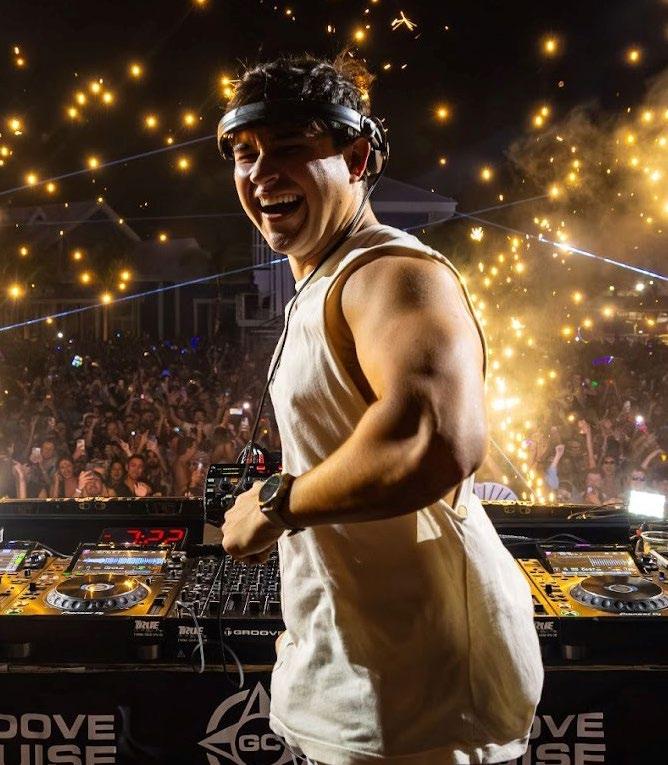
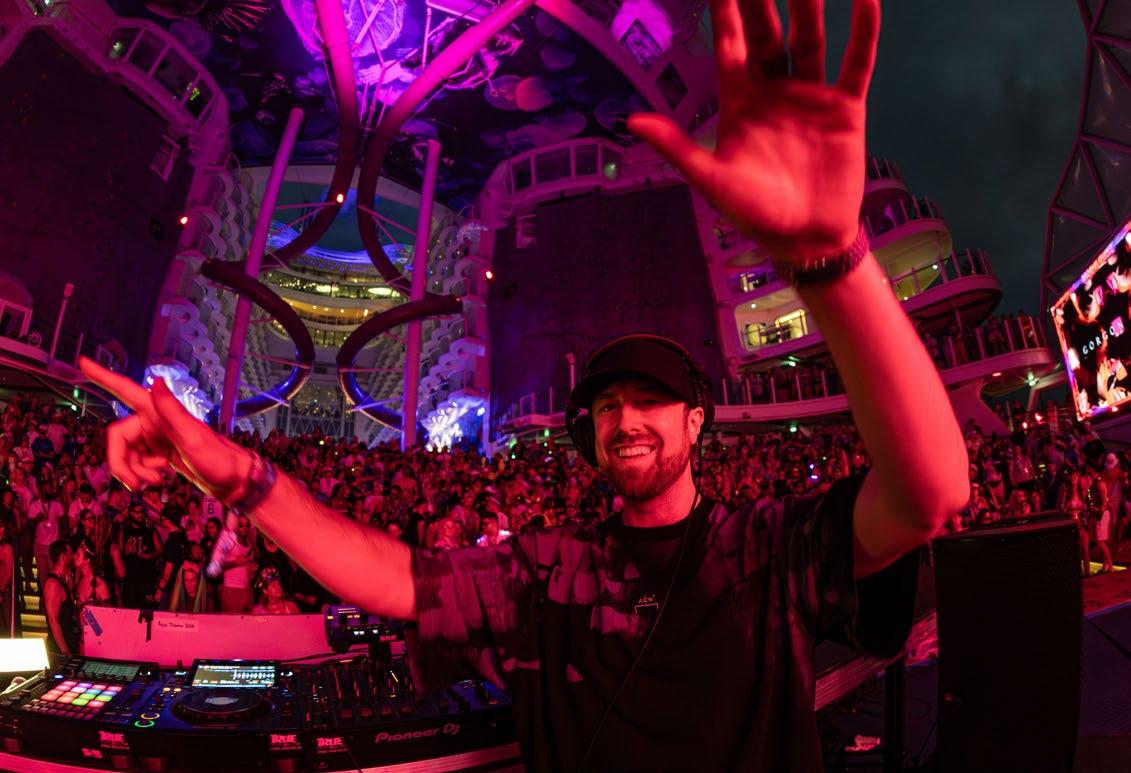
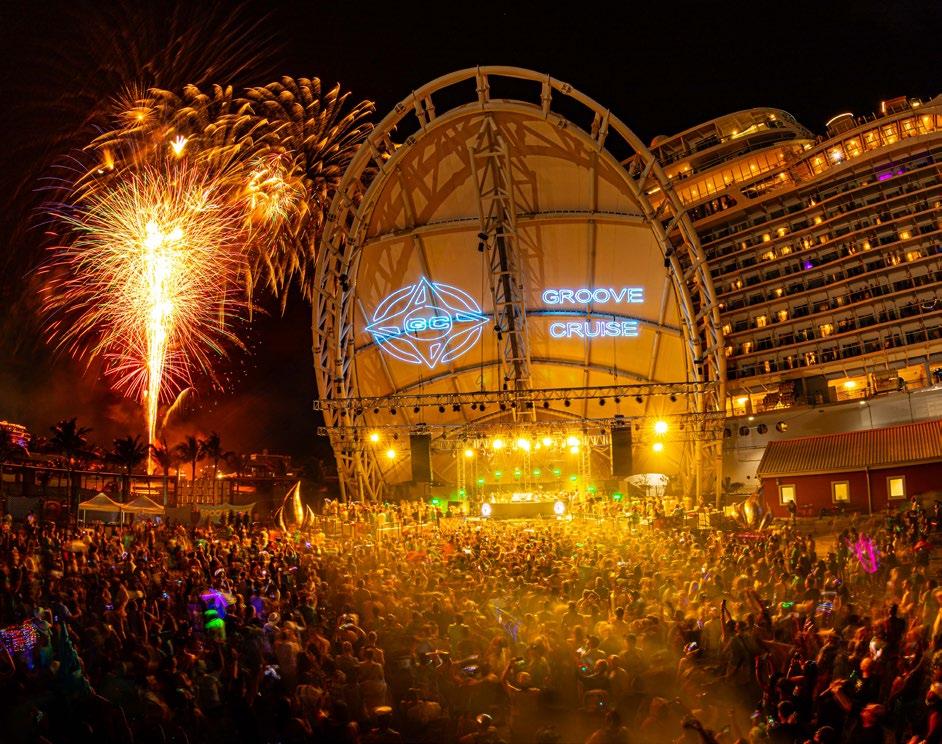
Miami, Fla. – This past Jan. 22-25, the 2026 Groove Cruise drew nearly 5,000 attendees to Royal Caribbean’s Wonder of the Seas for 96 non-stop hours of “a festival at sea.” Produced by Whet Travel, the Groove Cruise’s 13 onboard stages presented some of the industry’s top DJs and featured daily themed events.
Going from Port of Miami to Nassau, Bahamas, the Groove Cruise also featured a special destination party at the new Royal Beach Club on Paradise Island, featuring John Summit.
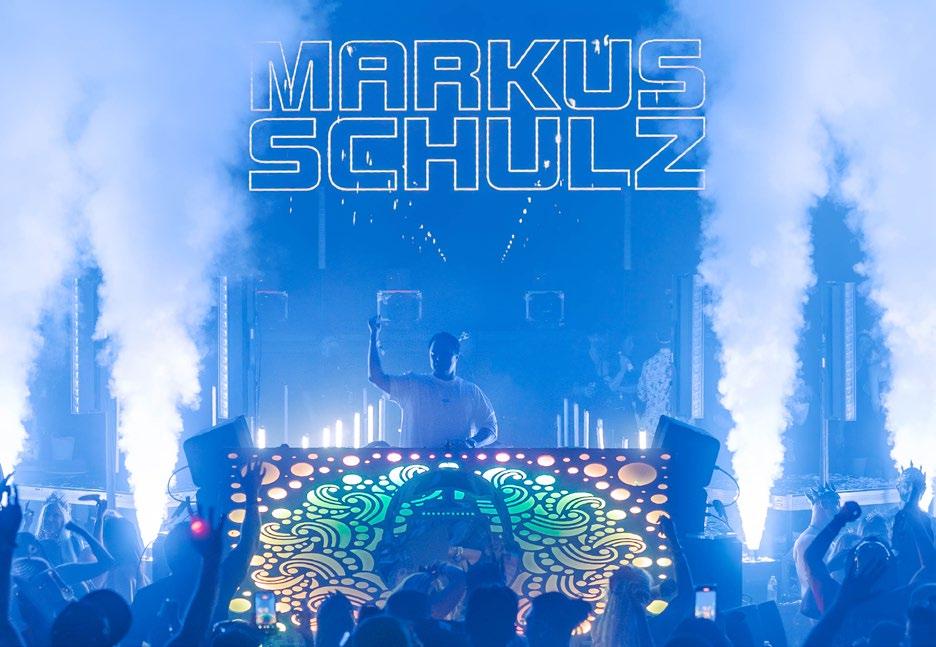
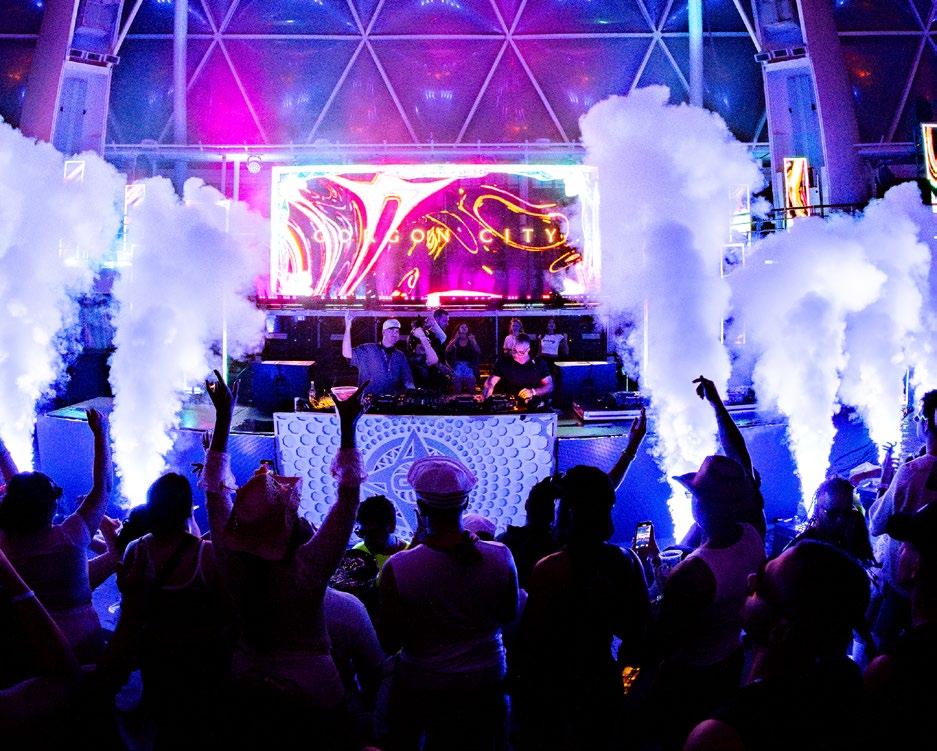
Other Groove Cruise talents included Cloonee, Gorgon City, Chris Lorenzo, Darude, Daxson, Gene Farris, Green Velvet, Joel Corry, Lilly Palmer, Markus Schulz, Max Styler, Sarah De Warren, and Cassian. The 38th voyage of the Groove Cruise looked like this:
7 Bubbles: Day ravers get grooving. @rudgrcom 1 2 3
1 L-R: Max Styler, Foamo, Ranger Trucco & Cloonee. @LVLVISUALS
2 Star Time: John Summit at Paradise Island. @rudgrcom
3 Day Party: The beats get going early. EEMYAJ.VISUALS
4 Laser Lighting: John Summit leads the way. @rudgrcom
5 Bangin’ Onboard: Party reaches its peak. @rudgrcom
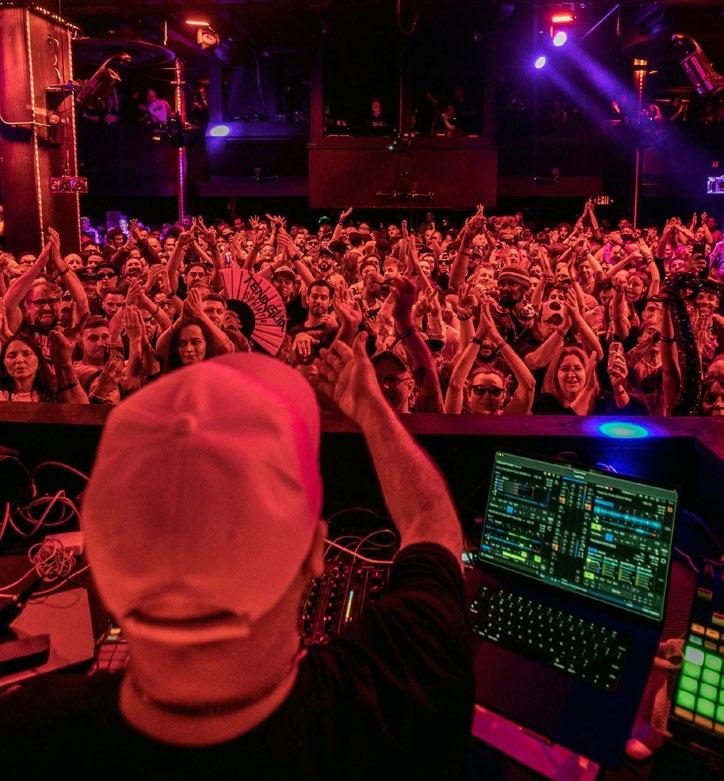
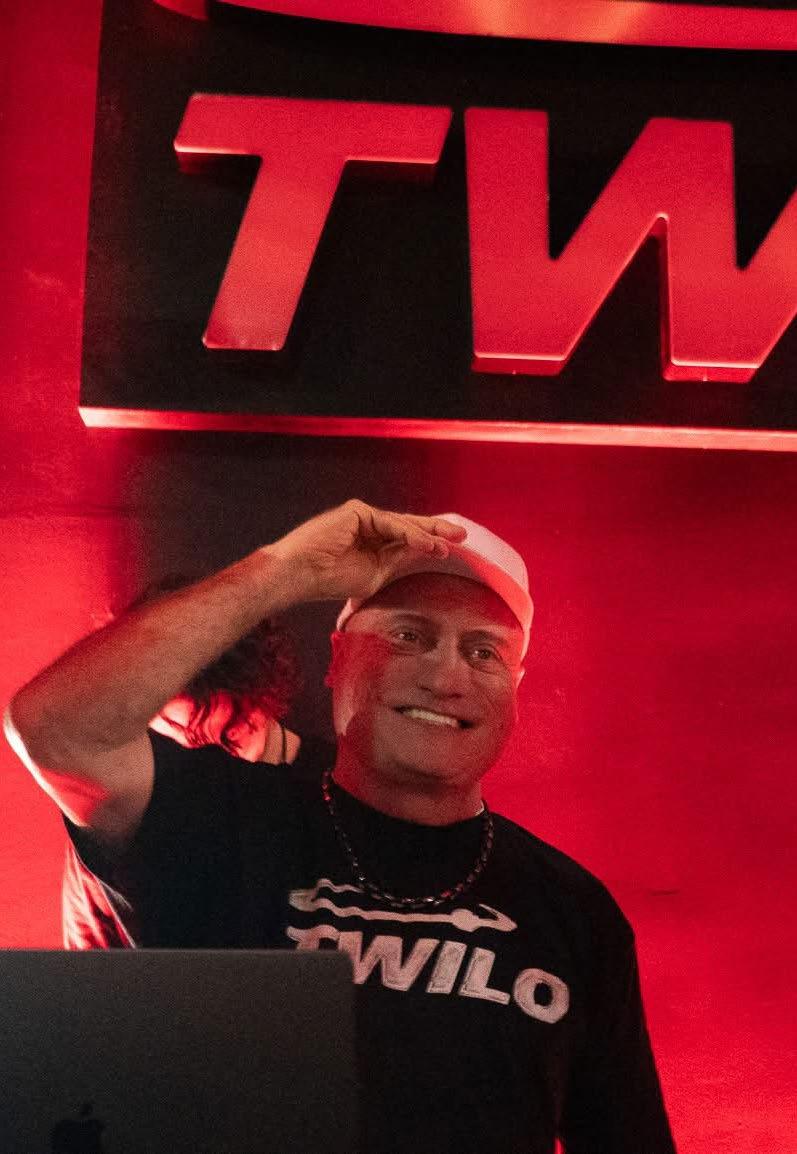
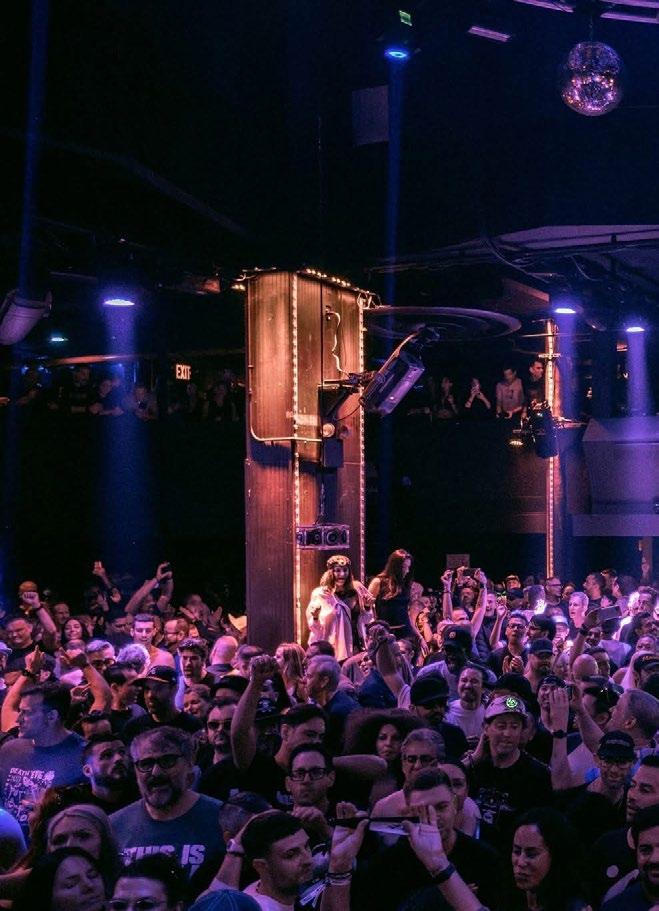
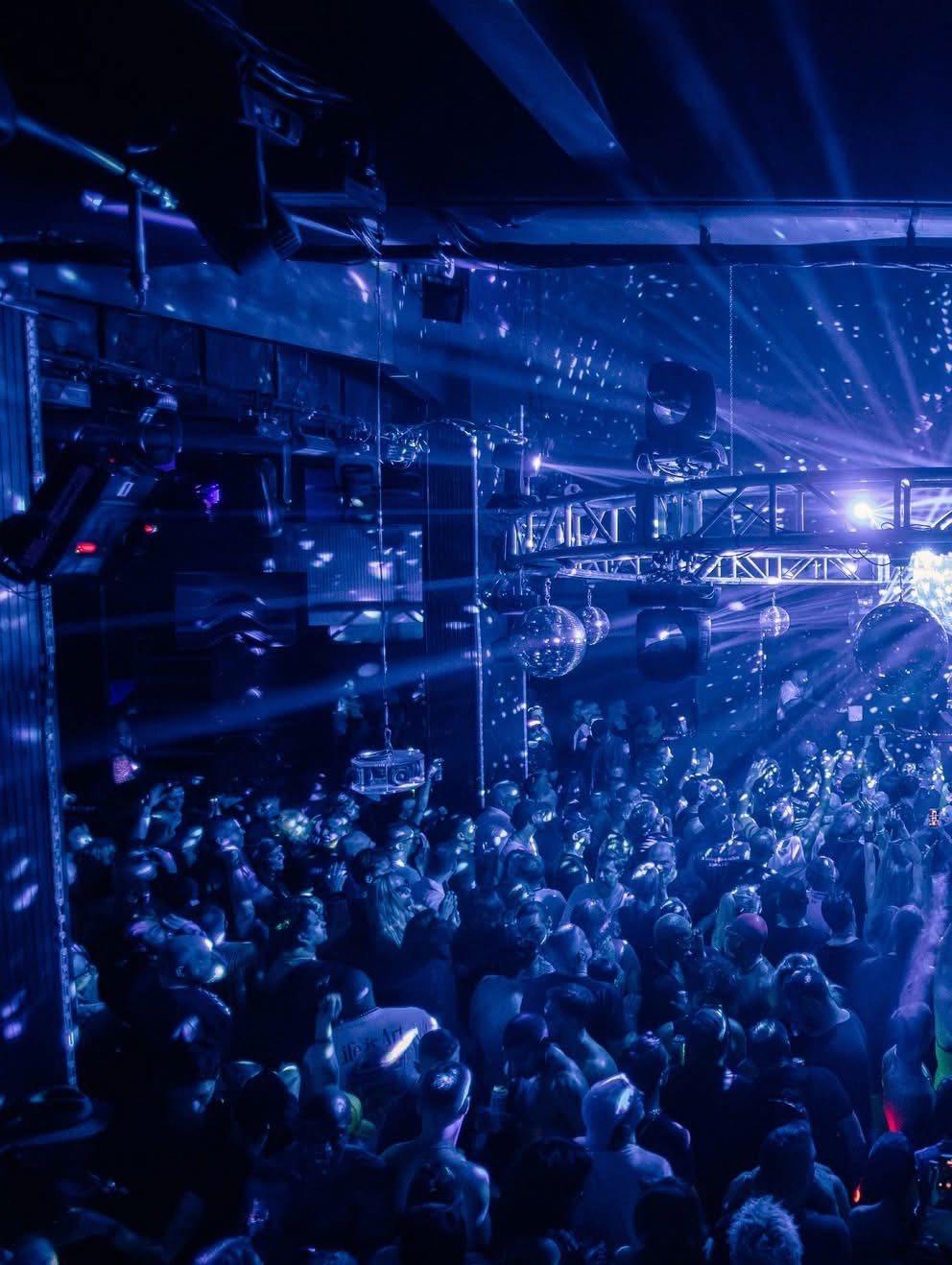
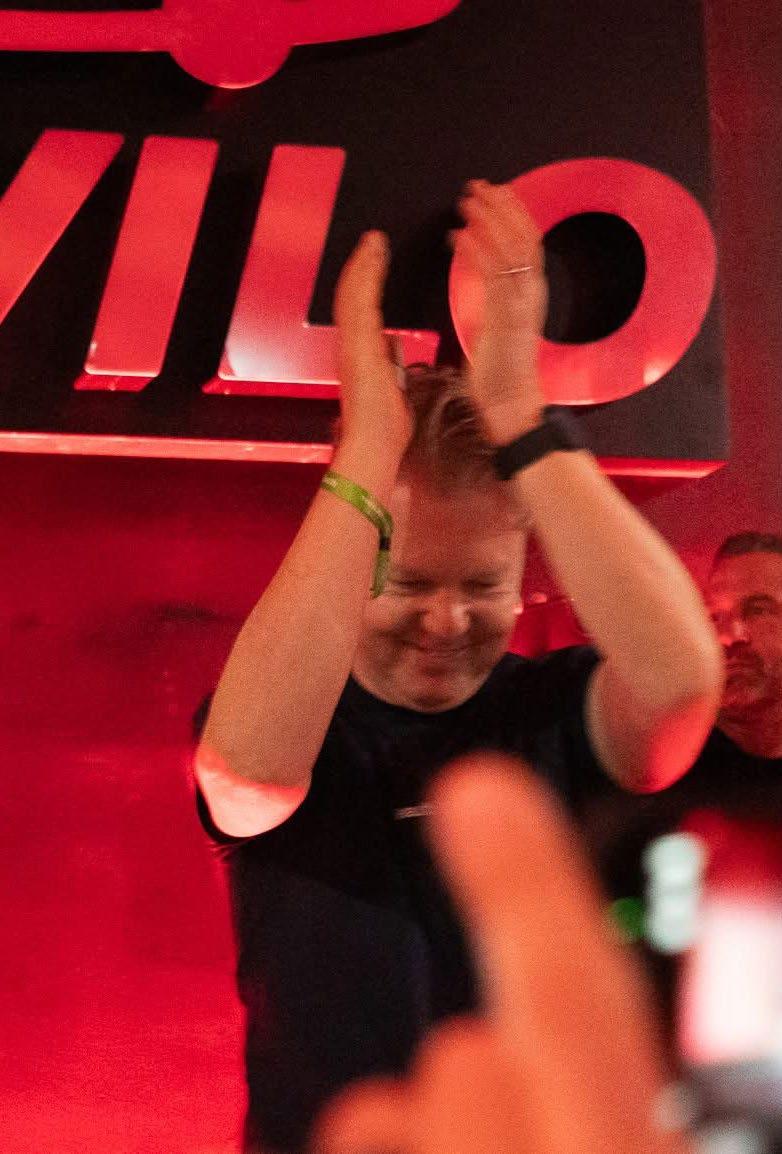
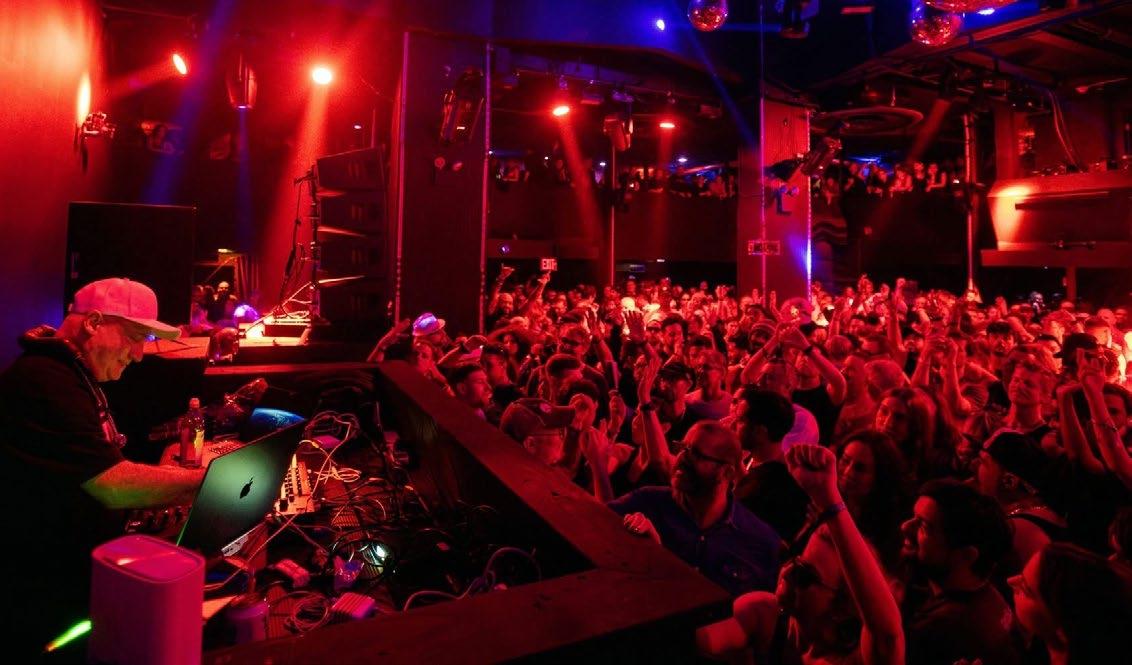
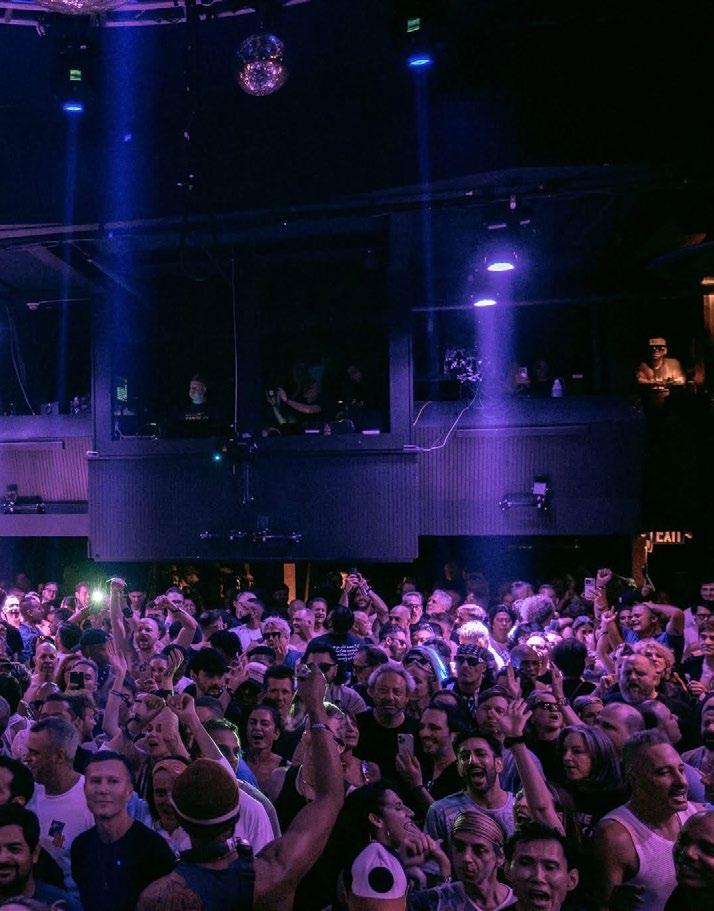
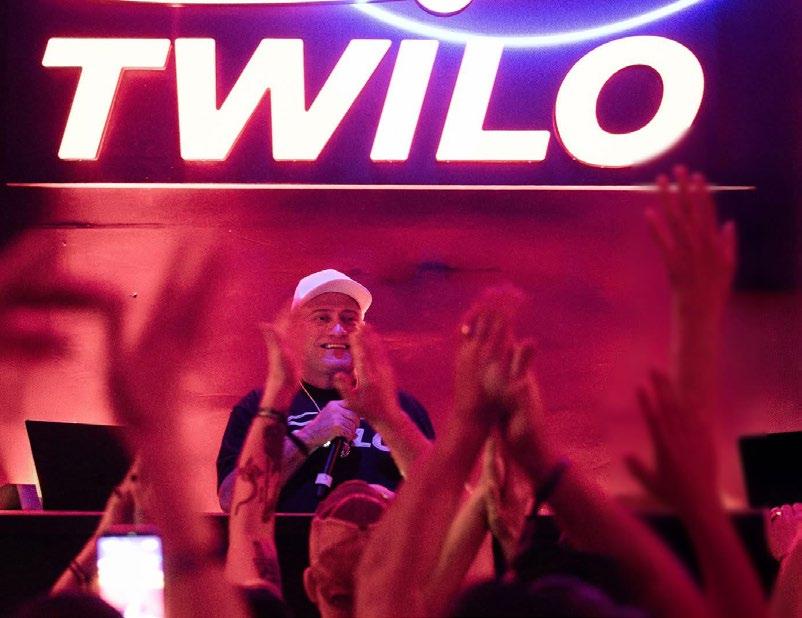
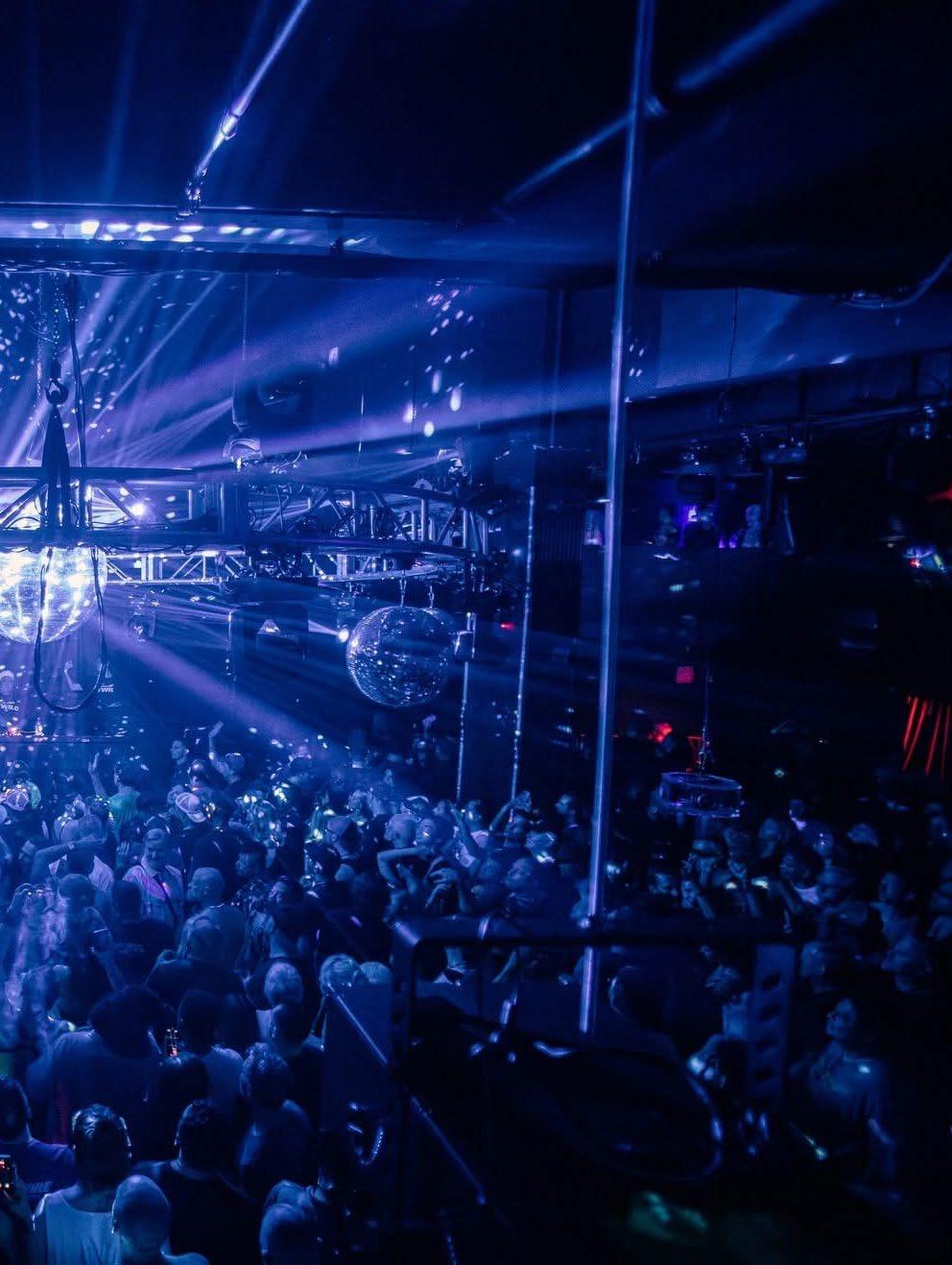
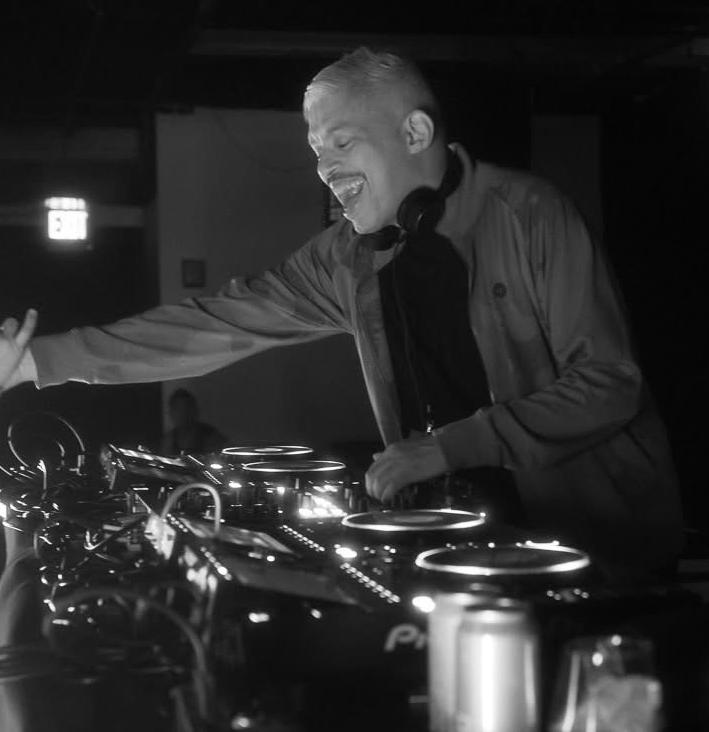
New York City – It was a return to what many recall as a “golden era” of New York clubbing as a pair of DJ titans re-visited Twilo, a Gotham landmark venue that ran from 1995 to 2001.
Yes, this past March 6 and 7, the venerable Danny Tenaglia spun two nights at the legendary Chelsea club that opened especially for this weekend. In bringing along another heavy-hitter, John Digweed, for the opening night, Twilo fans got to see a pair of former club residents spin pleasing sets of progressive, tribal house and classics. It all looked like this:
Friday Night Set: Diggers gets busy.
The Logo: A legendary venue re-visited.
DT: Good night & good morning.
Music Is the Answer: Twilo lit up.
Photos by Yuliya Skya, Trel Brock & David Lovas.
Applause: DT & Diggers thank the crowd.
Dancin’
Peak Hour: Tenaglia gets going.
Full House: Twilo deep into the night.
Men of the Moment: Digweed & Tenaglia.
Upper Room: Benny Soto on the decks.
& Prancin’: DT lays it down.
A NATURAL EVOLUTION: ALPHATHETA’S CDJ-3000X
By Wesley King
For decades, one thing has remained remarkably consistent in the DJ world: If you walk into a serious club booth anywhere on the planet, chances are good you’ll fnd a pair of fagship media players from the company once known as Pioneer DJ. The CDJ platform has been a fxture in professional environments for years, evolving from spinning physical discs to today’s solid-state, network-connected digital workfows.
In recent years, the DJ landscape has shifted, of course. Streaming services have become commonplace, DJs increasingly expect cloud access to their libraries, and performance workfows have grown more sophisticated. At the same time, AlphaTheta (the successor brand to Pioneer DJ after it was spun off from the Pioneer mothership) has been carefully redefning its identity and product lineup.
Enter AlphaTheta’s CDJ-3000X, the latest evolution of the company’s fagship professional media player. Positioned squarely at the very top of the DJ gear hierarchy, the 3000X builds on the foundation laid by the CDJ-3000 while introducing a number of technological improvements aimed at modernizing the platform for the next generation of performers. When I reviewed the original CDJ-3000 a little over fve years ago, I described it as the company’s fagship player designed for the highest levels of the DJ market. The 3000X clearly intends to keep that crown frmly in place.
In an era where controllers and all-in-one systems dominate the conversation, the fagship media player remains something of a different beast. These are tools built for touring artists, festival stages, and permanent club installations. These are environments where reliability, performance feel, and familiarity matter just as much as cutting-edge features. The CDJ-3000X represents AlphaTheta’s latest attempt to refne that balance.
First Impressions
Unboxing the CDJ-3000X feels immediately familiar to anyone who has spent time with previous fagship decks. The industrial design closely follows the aesthetic language introduced with the CDJ-3000: a clean, professional look with a large central jog wheel, expansive touchscreen, and a layout that remains instantly recognizable to experienced DJs.
That familiarity is intentional. Professional DJs rely heavily on muscle memory, and radical changes to core controls can be disruptive in performance environments. Fortunately, AlphaTheta has preserved the classic layout while refning the details. Buttons feel frm and responsive, with satisfying tactile feedback. The jog wheel, long a hallmark of the company’s decks, continues to feel excellent under the fngertips, with adjustable tension and the kind of smooth mechanical response that DJs expect from
CDJ-3000X: Clearer displays, faster browsing & more.
top-tier gear.
The most obvious visual upgrade is the display. The 3000X features a larger 10.1-inch capacitive touchscreen, up from the 9-inch display on the original CDJ-3000. The screen is brighter, clearer, and able to present more information at once, including an expanded browser view capable of showing up to 16 tracks simultaneously. Navigation through playlists, waveforms, and performance controls feels fuid, and the improved graphical interface does a better job presenting detailed track information without feeling cluttered.
Connectivity has also evolved. USB media remains central to the workfow, but AlphaTheta has made some notable changes to the front panel of the player. The SD card slot found on the original CDJ-3000 has been removed and replaced with a USB-C port (in recognition, I think, of the reality of how DJs tote around their digital libraries), as well as an NFC touchpoint. The NFC feature allows DJs to tap a smartphone running rekordbox mobile to quickly authenticate and access cloud-based libraries.
Connectivity has also become more important in this generation, with Pro DJ Link continuing to support multideck setups that share media and metadata across players. Pro DJ Link networking remains present for multi-deck setups, allowing DJs to share media across players and integrate lighting or other performance gear.
Overall, the 3000X makes an immediate impression as a refned piece of professional equipment. It’s solid, thoughtfully laid out, and unmistakably built for serious performance environments.
Hands On
Once powered up and integrated into a typical DJ setup, the real strengths of the CDJ-3000X begin to emerge.
One of the biggest improvements lies in the underlying processing power. The new player feels faster across the board, from loading tracks to navigating large libraries and rendering waveforms. DJs who work with massive collections will appreciate the responsiveness, especially when quickly browsing and loading tracks during a live set.
Under the hood, AlphaTheta has also upgraded the audio path with a new ESS Technology digital-to-analog converter and redesigned power supply, contributing to improved signal-to-noise performance and a punchier low-frequency response.
The enhanced touchscreen interface also brings meaningful workfow improvements. Unlike earlier generations that sometimes felt like touchscreens grafted onto traditional hardware, the 3000X’s interface feels more modern and interactive. Gesture-based navigation and improved waveform visualization make it easier to locate cue points and structure transitions quickly.
Another major evolution is the deeper integration with modern music-management workfows. While earlier CDJ models relied heavily on pre-analyzed libraries prepared in rekordbox, the 3000X reduces some of that friction by supporting more advanced onboard analysis and broader connectivity options. That fexibility can make life easier when you’re working across multiple libraries or arriving at a venue with a last-minute set change. The player also
supports the newer Device Library Plus database format used by rekordbox, allowing faster handling of large music collections.
Performance features remain a highlight as well. The deck includes the familiar array of hot cues, looping controls, and beat jump functionality that allow DJs to manipulate tracks creatively during a set. The 3000X also introduces several new cue-based performance modes. Gate Cue allows audio to play only while a Hot Cue button is held, enabling rapid “tone-play” style performance. Smart Cue automatically updates the temporary cue point when jumping to a Hot Cue, helping maintain smooth workfow during fast mixing. In addition, the updated Touch Cue workfow makes it easier to set cue points directly from the monitored position on the waveform.
Where the 3000X truly distinguishes itself, however, is in the subtle refnements. Waveform displays are clearer and easier to read, timing adjustments feel precise, and browsing through music libraries is noticeably faster. None of these changes may sound dramatic individually, but together they create a noticeably smoother experience behind the decks.
If there’s any learning curve at all, it’s mainly in adapting to the expanded interface capabilities. DJs accustomed to older CDJ models may need a little time to explore the deeper menu structures and newer features. But the fundamentals remain exactly where you expect them to be.
Conclusions
The AlphaTheta CDJ-3000X represents a careful evolution of the company’s fagship media player rather than a radical reinvention, and that’s almost certainly by design. In professional DJ environments, consistency and reliability matter enormously, and the 3000X preserves the familiar workfow that has made CDJ players a global club standard for decades.
What AlphaTheta has done instead is refne and modernize the platform. Faster performance, improved displays, deeper connectivity, and a more capable interface all combine to make the 3000X feel like a natural progression from its predecessor. The experience is smoother, more responsive, and better aligned with today’s digital DJ workfows.
Of course, this level of capability comes at a premium price. With an MAP of $2,999 each, the CDJ-3000X sits frmly in fagship territory, just like its predecessor, albeit at roughly $500 more than the launch price of the original CDJ-3000. That sort of price means that the CDJ-3000X is aimed squarely at professional DJs, touring artists, and venues outftting serious booths.
For those environments, however, the investment makes sense. The CDJ-3000X delivers the performance feel, durability, and workfow familiarity that have long defned the CDJ platform, while adding the kind of modern capabilities that today’s DJs increasingly expect. In short, the CDJ-3000X doesn’t try to reinvent the club booth — it simply makes the industry’s most recognizable deck even better.
Xone:24C:
ALLEN & HEATH’S ACE HYBRID MIXER
By Wesley King
Allen & Heath, the venerable U.K.-based maker of audio gear for live sound, audio production, and the DJ market, doesn’t just make mixers; it has played a key role on the music scene for decades, building its reputation on robust design, thoughtful layout, and a certain no-nonsense British engineering sensibility.
One could argue that the Xone DJ-mixer line has earned its own type of mythology because it chases feel and sound, not just features. The Xone:VCF flter is a great example of both; a voltage-controlled analog circuit that’s more than just some sort of audio garnish.
In any case, Allen & Heath and the Xone line hold a special place in my heart. One of my earliest serious investments in my DJing work was acquiring a Xone:3D shortly after release. When they came out over 20 years ago, it felt genuinely groundbreaking: a proper analog mixer at the core, with MIDI control and a built-in audio interface meant to bridge the physical and software worlds in a way that was still new for working DJs.
So where does the Xone:24C land in that legacy? It’s not trying to be a fagship booth monument like a 92 or 96. It’s doing something more practical: taking the essential “Xone-ness” (analog path, proper flter, solid fader feel) and putting it into a compact, modern hybrid mixer built for real-world home rigs, small rooms, and mobile setups.
A Little History: Allen & Heath began with the Xone:22, which then graduated to the Xone:23, and now we have this third mark of the two-channel units, the Xone:24, a
2+1, all-analog DJ mixer. In creating the Xone:24C, Allen & Heath kept that analog foundation, but added a built-in USB-C audio/MIDI interface and a powered USB hub, so it can act like the connective tissue of a hybrid setup.
That “C” isn’t a minor suffx, it changes the use cases: Streaming and simple recording : It can route a clean master feed straight to a computer without extra hardware.
DVS workfows : It supports a DVS-oriented routing mode, intended for timecode control while still mixing through the analog channels.
DAW/capture workfows : There’s a DAW mode aimed at recording channels in a way that supports post-editing and rework.
If you want a pure, compact, analog mixer and you already have a favorite interface, the Xone:24 is the cleaner buy. But if your set-up lives half in a laptop, the 24C is the one that actually matches how a lot of DJs work in 2026.
First Impressions
At just under $700, the Xone:24C sits in a very competitive slice of the market: serious two-channel mixers where build quality and sound matter, but you don’t necessarily want to pay fagship prices. In that context, the price looks reasonable, especially when you com-
pare it to common alternatives.
The 24C’s sales pitch is also refreshingly focused: two main channels plus an aux channel, analog signal path, Xone:VCF flter, an Innofader crossfader, and a connectivity story that’s clearly designed for modern laptops and USB-C devices. It’s compact, but it doesn’t look like a “budget” mixer trying to cosplay as pro gear. Users who’ve gotten hands-on time with the 24C tend to describe it as minimalist, effcient, and solid, with a feel that’s clearly in the Xone family, even if it’s not as luxurious as a 96. That’s a take I agree with.
On the 24C you get a 3-band isolator-style EQ and the Xone:VCF with high-pass and low-pass modes, frequency sweep, and resonance control. The flter is still the headline feature because it enables transitions that don’t rely on onboard digital effects. You can ride the cutoff, lean on resonance for tension, and do clean “subtract-and-swap” moves. Also worth calling out: the 24C includes a master insert/FX loop on the rear panel.
Where the 24C separates itself from a lot of comparably priced analog mixers is with that suffx: the C. The built-in interface is specifed as 24-bit/96kHz, and the user guide describes it as a 12-channel (3 stereo-in/3 stereo-out) USB sound card, with multiple routing modes (Stream, DVS Pro, and DAW).
Hands-On
DJ mixers are famously hard to review because the best ones don’t scream for attention; they simply disappear. What I’ve personally found as I use the 24C is that it aligns well with the common threads I’m seeing, in that people seem to like the sound quality and analog vibe; it has a minimalist, easy-to-learn layout; and it offers functionality that’s at home across both traditional and hybrid set-ups, making it feel like a “small rig centerpiece,” not just a mixer.
What tends to get fagged as shortcomings I’m not sure I’m quite as on board with:
Metering preferences. Some users want more granular per-channel metering than a “signal-present”-style approach. (Personally, I tend to use my ears as my judge.)
No onboard digital effects. If you’re coming from a traditional-fagship-type DJ mixer, this is a different philosophy. (For me, built-in effects tend to be a bit gimmicky.)
Two-channel limitation. That’s not a faw so much as a constraint. (In my view, if you want to run three or four decks all night, you should be shopping in a different aisle.)
One thing I found myself not loving are the faders. They have a great deal more lateral movement than I like, which seems to be quite common among DJ mixers at this point, the makers of which are no doubt choosing from a limited range of the same basic off-the-shelf component options.
In any case, with a real set-up, the 24C looks best when you lean into what it’s made for: two strong sources (turntables or media players), plus a fexible third lane via Aux or USB for a sampler deck, a drum machine, or other source. The user guide even spells out those kinds of Aux USB uses (sampler deck, third virtual deck, FX
“Where the Xone:24C separates itself from a lot of comparably priced analog mixers is with that suffx: the C.”
return, separate app audio). In my mind, that’s a modern hybrid sweet spot.
Conclusions
At just under $700, the Xone:24C feels appropriately priced for what it is: a compact, pro-grade analog mixer with a genuinely useful, modern USB-C implementation. It’s not trying to win a spec-sheet war with onboard FX and performance pads; it’s trying to be the mixer you buy because you care about sound, transitions, and tactile control, and because you want your laptop to integrate cleanly without turning your booth into a cable-management horror flm.
If you want an affordable entry into Allen & Heath’s Xone ecosystem and you mostly mix with two channels, it makes a strong case. And if, like me, you still have a soft spot for the “hybrid-revolution” era that the Xone:3D helped defne, the 24C feels like a modern, simplifed descendant of that same idea: take analog seriously, then make the digital integration clean, instead of overkill.
Blackmagic Design: Streams into Full Productions
By DJ Mike Márquez
In the previous issue, I reviewed the Blackmagic Design Pocket Cinema Camera 6K Pro and wrote: “Today, livestreamed DJ sets are no longer just a stopgap. They have become a legitimate path to real bookings, wider exposure, and sustainable DJ careers.” So, in this following issue, I want to help DJs build off that idea.
When I was live-streaming during the pandemic, one of the benefts I had was location. I was streaming outdoors, and the backgrounds of the many New York City locations I picked every Sunday morning and Monday evening were enough to lure viewers in, along with the exclusives I was playing at the time.
For this article, however, we are going to focus on being inside. And there lies the problem.
With one camera angle, presumably focused on you DJing in front of your gear, things can get boring after a while. That is why I highly recommend adding a second, or if possible, a third camera angle. Maybe a side view. Maybe a top-down view.
“But Mike, how can we rotate or switch between those shots live?”
Simple. An HDMI switcher.
A switcher allows you to rotate or manually switch through different cameras while live-streaming or recording. And the No. 1 HDMI switcher I have tested for this purpose is the Blackmagic ATEM Mini Pro ISO.
There is another ATEM Mini Pro, but the ATEM Mini Pro ISO takes everything good about the standard model and turns it into a powerful multi-ISO recorder. Physically, it is identical to the original ATEM Mini Pro. Under the hood, however, Blackmagic added recording capabilities that completely
ISO Recording Workfow
The ATEM Mini Pro ISO’s big idea is simple, but powerful: Record everything!
The ATEM Mini Pro ISO records your program output, which is what your audience sees on screen, but it also records each HDMI input separately. That gives you fullquality, standalone fles of each camera or source instead of forcing you to live with a single, mixed program feed.
If you are a one-person operation and did not get a chance to switch to the overhead shot while you were cutting it up live, no problem. In post-production, you can swap to that shot because the switcher recorded all the individual video ISOs.
Individual Video ISOs
Each HDMI input is captured as its own H.264 MP4 fle. That means if you want to re-edit the live show, create highlight reels, or correct a bad cut, you have the original footage available without additional capture steps.
Multi-Track Audio
Audio is recorded independently as well. The ATEM produces separate audio fles for each input and mic source, which allows you to remix or rebalance levels in post.
If your audio levels or routing were imperfect during the live production, you can fx that cleanly during editing. And for my Twitch friends, this is a big one. You can route your mic to one input and your music to another so your replay does not have you shouting out, “Mr.Hotbod108764!” every time someone drops bits or subs.
Automatic DaVinci Resolve Project
While you are switching live, the ATEM Mini Pro ISO is constructing a timeline behind the scenes. It logs cuts, dissolves, overlays, DSKs, stills, and graphics.
When recording stops, the unit exports that timeline as a DaVinci Resolve project fle. (I will explain DaVinci Resolve in a second.) Open that project and you get a timeline refecting exactly what happened live, with each source on its own track. From there, you can adjust cuts, change transitions, or swap in different camera footage without starting over.
What’s DaVinci Resolve?
Super simple… DaVinci Resolve is a free video-editing program that lets you cut videos, fx audio, adjust lighting and color, and export fnished videos all in one place. If you have ever used an app like CapCut or InShot on your phone, Resolve does the same basic job, just with way more control and better quality.
Apps like CapCut and InShot are great for quick social clips, but they are designed to be fast and limited. DaVinci Resolve’s free version gives you tools normally found in paid, professional software without a subscription, which, let’s face it, us DJs do not need another subscription. Basically, with Resolve, you can:
• Edit long videos like DJ sets, interviews, or livestream replays
• Improve bad lighting from club, bar, or home studio footage
• Clean up audio so that voices and music sound balanced and professional
• Create content for YouTube, Instagram, and podcast video from the same project
If CapCut is like mixing on a controller with sync and presets, DaVinci Resolve is like stepping into a full DJ booth. It takes a little more learning, but you are not boxed in, and you do not have to pay to get started.
Why This Matters?
It’s about editability and speed. Now, going back to the Automatic DaVinci Resolve projects, this workfow bridges live production and post production in a way that makes it both faster and more fexible. Instead of accepting the live program as fnal, you can:
• Move cuts slightly earlier or later to improve pacing
• Change a fade to a hard cut or vice versa
• Replace a mixed program clip with the full-quality ISO from a camera
• Fix audio problems by using the separate audio fles to rebalance levels or remove noise
For anyone producing VOD versions of live streams, show highlights, or polished masters, that ability to surgically edit the live output is a game-changer.
Integration with Blackmagic Pocket Cinema Cameras
The ATEM Mini Pro ISO becomes even more powerful when paired with Blackmagic Pocket Cinema Cameras like the Pocket Cinema Camera 6K Pro that I previously reviewed.
You can enable camera recording directly from the ATEM, and the cameras will record continuously in Black-
magic RAW with synced timecode. That means you can:
• Live switch in HD while capturing full-resolution RAW from each camera
• Open the Resolve project and relink to RAW fles to build a full UHD master
• Use Resolve’s grading tools on RAW footage for cinematic color and dynamic range
In short, you get the speed of live switching with the fnishing quality of a multi-camera RAW shoot.
Practical Use Cases:
In-Depth DJ Streams
Gamers love ISO workfows because they can capture their console feed, face cam, overlays, and other HDMI sources separately. For DJs, imagine switching to your Serato, rekordbox, or djay Pro screen to show jog work or crate digging. That makes it easy to cut highlight reels or reframe content in post without compromise.
Interviews & Panel Shows
As someone who has hosted and produced an interview show with many big names in dance music (“DJs After Dark”), I can tell you live conversations move fast. Sometimes a reaction gets missed or a camera punch comes late. With per-input recordings and a Resolve timeline, you can recover those moments, refne pacing, and clean up cuts for a polished fnal edit.
Who Benefts Most?
The ATEM Mini Pro ISO is ideal for creators who want fast turnarounds and the ability to improve live mixes in post. That includes DJ streamers, studio DJs, event producers, content creators, and anyone using Blackmagic cameras who wants a smoother pipeline into DaVinci Resolve.
Final Thoughts
The ATEM Mini Pro ISO turns a compact switcher into a hybrid live and post-production tool. By recording multiple ISOs, separate audio, and exporting a Resolve project that mirrors the live mix, it removes many of the compromises traditionally faced when delivering both live and on-demand versions of a show.
Plain and simple, any DJ who is trying to heighten their online presence using video would be crazy not to consider the ATEM Mini Pro ISO. The Pro ISO turns a boring DJ stream into a fully produced behemoth. It saves time and increases creative control to the point where it looks like you have a team behind you.
If you are serious about properly recording your DJ sets, the ATEM Mini Pro ISO is a non-negotiable.
Key Features at a Glance:
• Five simultaneous recorders, program output plus four HDMI input ISOs
• Multi-track audio fles, separate audio tracks recorded for post-production
• Real-time DaVinci Resolve project, the switcher builds a timeline while you cut and saves it when recording stops
• Compatible with Blackmagic Pocket Cinema Cameras, record RAW fles with synced timecode
• MAP Price, $545
HARMONIOUS:
ALPHATHETA’S TORAIZ CHORDCAT
Chord Cruiser: Features a myriad of chord combos.
By Wesley King
Over the past decade or so, one of the most interesting developments in electronic-music production has been the steady rise of “idea machines.” These are tools designed not necessarily to fnish an entire track, but to spark one; to generate grooves, melodies, and harmonic structures quickly enough that inspiration doesn’t evaporate before you can capture it. Devices like grooveboxes, portable sequencers, and sketchpad-style instruments have increasingly become part of the modern EDM workfow, complementing traditional DAWs rather than replacing them.
AlphaTheta, the new name of what was formerly Pioneer DJ, has occasionally ventured beyond the DJ booth and into music-production hardware. Longtime followers will remember earlier entries under the TORAIZ name like the SP-16 sampler and the SQUID sequencer. The TORAIZ Chordcat represents a return to that territory, but with a very different angle. Instead of focusing primarily on beats or synthesis, the Chordcat is built around harmony, specifcally, the generation and exploration of chord progressions.
That alone caught my attention. As someone who produces a fair amount of EDM in my home studio, I’ve always been fascinated by tools that make harmonic experimentation easier. And after having a Chordcat in my studio for several months, I can say that it’s one of the more intriguing, and unexpectedly enjoyable little creative devices I’ve used in quite some time.
First Impressions
The frst thing that struck me about the Chordcat when I pulled it from the box was just how compact it is. The de-
vice weighs less than a pound, and is small enough to slip easily into a backpack or gig bag.
Its fat, minimalist design feels almost like a cross between a groovebox and a game controller, with a clean layout of buttons, a small screen, and an XY pad for navigation and effects control. The build quality is solid, and the controls have a satisfying tactile feel. It’s clearly intended to be portable, and it can run either from USB-C power or from six AA batteries, making it easy to use away from the studio desk.
Under the hood, the Chordcat is an eight-track groovebox with a 16-step sequencer capable of expanding to 128 steps per pattern. Each track can host its own instrument, and the device includes 145 sound presets and 16 drum kits covering synths, basses, pads, and other basic production staples.
But the star of the show, and the reason this device exists in my view, is the Chord Cruiser system. In essence, it’s a chord-generation engine that can navigate through a huge database of harmonically compatible chords. The system can propose up to roughly 110,000 possible chord combinations, presenting them in a way that allows you to quickly audition and select progressions.
In other words, rather than forcing you to program chords manually or rely strictly on theory, the Chordcat encourages you to explore harmony interactively. It’s a clever concept.
Hands On
After several months of using the Chordcat in my studio, I’ve come to think of it less as a groovebox and more as a creative catalyst.
For most of today’s mainline music genres, as well as many forms of EDM, chord progressions can serve as the emotional backbone of a track. A simple progression is the foundation for countless tracks. But the magic often comes from the color added around those core harmonic movements. That’s where the Chordcat gets interesting. If you dig into a little music theory, most of what we call “harmony” still starts with simple triads, major or minor, built by stacking intervals (typically thirds) above a root. From there, the “fancy” chord names often come from one of two moves: Either you extend the chord by add-
sketching out. On paper, the chords were labeled with fairly elaborate names, but when you listened to them in context, they were essentially just familiar minor and major movements with a little extra harmonic favor. The Chordcat made that discovery process fast and fun.
Another practical use I found was generating chord beds for breakdown sections. EDM breakdowns often rely on lush pads and evolving harmonic movement, and the Chordcat’s ability to wander through related chords made it easy to audition different emotional directions without stopping to think too hard about theory.
ing extra tones (7ths, 9ths, and beyond), or you swap out the third for a neighboring tone. That’s where the classic sus2/sus4 move that shows up constantly in guitar charts because it creates tension and openness without changing the root/ffth foundation.
That’s exactly the vibe I got from Chordcat’s Chord Cruiser suggestions. It doesn’t just hand you vanilla major/minor blocks; it routinely throws in suspended chords and other popular “color” variants alongside the more obvious 7th/9th extensions. They’re the kinds of options that can look harmonically exotic on the screen, but often amount to tasteful seasoning on otherwise familiar progressions.
And frankly, that’s part of the appeal: in EDM contexts, where you might want a progression to feel a little more emotional, a little more sophisticated, or just less predictable, those suspended and extended options can give you lift and movement without forcing you into full-on jazz theory or a bunch of fnger-twisting chord voicings.
In a typical session with the Chordcat around, I might start a track by building a drum groove inside my DAW, usually in Ableton Live, and then reach for the Chordcat to experiment with harmonic ideas. With the key and scale set, the Chord Cruiser suggests compatible chords that can be auditioned instantly. The workfow encourages exploration: tap through possibilities, fnd something interesting, record it, move on.
One evening, for example, I stumbled into a progression that felt perfect for a melodic house track I was
AlphaTheta also provides a companion utility called Chordcat Manager, which allows patterns created on the device to be exported as MIDI into a DAW. That workfow makes it easy to use the Chordcat as a harmonic sketchpad while letting your favorite software instruments handle the fnal sound design.
Conclusions
After spending so much time with the AlphaTheta TORAIZ Chordcat in my studio, I’ve come away genuinely impressed, and perhaps a little surprised by how often I’ve reached for it. Its greatest strength lies in its ability to encourage harmonic exploration without demanding deep theoretical knowledge. By presenting musically compatible chord suggestions and letting you move through them fuidly, it creates a kind of creative feedback loop that can lead to interesting ideas very quickly.
For EDM producers, in particular, that’s valuable. Dance music often lives or dies on the strength of its chord progressions, and the Chordcat provides a fast way to discover new ones, or to add subtle harmonic color to familiar progressions.
At a street price in the neighborhood of roughly $300, it’s also fairly approachable for a dedicated creative tool like this. Considering its portability, sequencing capability, and the sheer number of harmonic combinations it can generate, it occupies a unique niche in the modern production toolkit as an engaging little device that can spark inspiration when you need it most.
By Jim Tremayne
New England DJ: Man of Many Services
the fre service, earning my paramedic degree along the way. I became a career frefghter in 2012 and now serve as a Firefghter/Paramedic for the City of Manchester, N.H., Fire Department, IAFF Local 856. I’m still actively involved in both the fre service and the National Guard, so between balancing DJing, the frehouse, military service, and family, life defnitely keeps me busy.
DJ LIFE: What got you frst interested in music?
Benoit: I grew up in Manchester, N.H., and I was lucky enough to discover my love for music from a young age. In ffth grade, I joined the school band as a trombone player, and I quickly realized how much I truly loved performing in front of people.
DJ LIFE: How did that progress?
Benoit: After high school, I was torn between the military, music, and becoming a frefghter. I couldn’t decide, so I found a way to do all three. I was fortunate enough to pass an audition with the Army Band, and I enlisted three weeks later. That ended up setting the stage for so much of what came next in my life.
DJ LIFE: What got you into DJing?
Manchester, N.H. – Mike Benoit has always been a guy for whom service to his country and his community has been a paramount motivation. In addition to running MJB Entertainment, which services most of New England, he’s a local frefghter and a National Guardsman in his New Hampshire hometown.
For Benoit, 36, the wedding market remains his biggest moneymaker, and it’s a market, he says, that’s evolving in sometimes challenging ways. How does he do it all? Let’s fnd out:
DJ LIFE: You have a long, professional history of service –can you detail that?
Mike Benoit: I come from a long line of military service and am at least the fourth generation in my family to serve our country. I enlisted in the Army right out of high school and have served in the New Hampshire Army National Guard since 2008. For the frst 15 years of my military career, I was a musician in the 39th Army Band, performing throughout New England and even in Central America.
DJ LIFE: How did the frefghter gig happen?
Benoit: At the same time, I pursued a civilian career in
Benoit: DJing was never on my radar at all. It wasn’t something I had ever really thought about growing up, and it wasn’t until I was in the Army Band and met my frst squad leader that everything changed. He was a great guy named Kevin Sawler. He was about 15 years older than me, but he was always like a big brother to me. We had a lot in common, and we both played trombone together in the Army Band. He was also a wedding DJ, and one day he asked if I’d be interested in coming out as his assistant. He took me to two or three weddings over the next few weeks. I was instantly hooked. I remember saying to him, “Wait a minute – you get paid to do this?” He brought me out several more times, showed me how weddings worked, lent me some gear to help me get started, and introduced me to the team at Main Event Entertainment. I eventually signed on with Main Event and started doing my own weddings.
DJ LIFE: Are you a single operator now?
Benoit: That’s a good question, and it’s actually been a pretty recent change for me. I was with a multi-op DJ company for over 10 years, and I really enjoyed both the team environment and the volume of events I was able to do with them. Recently, I decided to go out on my own and rebrand as a solo-op. That move gave me the freedom to make more of my own decisions about the business, work more closely with the people and venues I
Solo Project: Mike Benoit recently went single-op.
truly wanted to align with, and position my pricing more realistically to where I believe I ft in the market.
DJ LIFE: How recently?
Benoit: I launched my own business in December of 2025, and so far I’ve been exceeding every metric I originally set for myself. Right now, I’m the only DJ in the company, and I don’t know that I necessarily want to change that. I do subcontract some additional services when needed, but not other DJs.
DJ LIFE: How many events do you do each year?
Benoit: I cap myself at 50 weddings per year. I still work another full-time job and have a family at home as well, so that number helps me maintain a strong balance while still giving each event the attention it deserves. That said, I do take on some additional miscellaneous gigs throughout the year, including bars, clubs, holiday parties, and other specialty events as they come up. I also work with a few local networking groups and will usually DJ for their events when they’re hosted.
DJ LIFE: What’s your breakdown of events?
Benoit: It’s roughly 85-percent weddings, 10-percent bars and clubs, and 5-percent miscellaneous private or specialty events. Weddings are defnitely the core of my business and where most of my time and focus goes. That’s where I’ve built the strongest part of my brand, and it’s also where I feel I bring the most value in terms of planning, hosting, and creating a full experience for clients. The investment in weddings is also very different –so, from a business standpoint, it makes a lot of sense to keep that as my primary focus. That said, I really do enjoy playing bars and clubs. Those events let me lean a little more into pure mixing and crowd energy, and I think they help keep me sharp creatively.
DJ LIFE: What makes your company unique within the market?
Benoit: The way that I market myself. I put nearly 100-percent of my marketing efforts into social-media content, because that’s where my clients are fnding me. At this point, social media and referrals make up pretty much my entire business.
DJ LIFE: Why does it work so well for you?
Benoit: I’m very dynamic in what I share. I try to show people everything about what I do. I post clips from weddings, showcase transitions, talk about hot-button topics, give tips, and also share parts of my personal life. I want people to really see who I am, so that they know exactly what and who they are booking. I think that authenticity matters, and I think people can feel it.
DJ LIFE: Where do you ft in your market, and what are your services?
Benoit: My pricing sits a bit higher in the market than most other DJs in the area, but not by a lot. I’m comfortable with that because I know the level of energy, experience, and professionalism that I bring to an event. As for services, I offer full DJ/MC services, uplighting, premium dance lighting, photo booth, Justice of the Peace services – yes, I do often offciate and DJ at the same time – plus CO2 cannons, LED sticks, dancing on a cloud, saxophone fusion, live musicians, and more.
DJ LIFE: What gear do you have in your set-ups?
Benoit: I have a Macbook Pro M3 running Serato DJ and a Danny Max Infnity Booth. Controllers, I have Pio-
neer FLX10 and Denon DJ Prime. Speakers, I have a mixture of RCF and Electro-Voice, depending on the event. I have a Behringer Flow 8 digital mixer for main system audio control, plus Shure wireless SLXD systems. I have Soundswitch DMX control with the Control One built into my booth. I have lots of Both Lighting units. I use Gravity Stands and ProX totems for lighting stands. All cabling is from NLFX Pro Platinum cables.
DJ LIFE: What’s interesting or particular about your market?
Benoit: New England is a very unique area for weddings. We have a little of everything – mountain-top weddings, seaside weddings, barns, ballrooms and everything in between. Being based out of southern New Hampshire, I am an hour’s drive from Boston, the mountains, the lakes, the ocean, and the farms. So, we could be doing a luxury wedding on a wharf in Newport, R.I., one day, and a rustic barn in the White Mountains the next. I really like the variety. It makes things interesting and dynamic.
DJ LIFE: How have clients evolved over the years?
Benoit: People are defnitely looking for something extra in their weddings now. They don’t want the same experience they’ve already seen at every other wedding they’ve attended. Because of that, I’ve found myself doing a lot more custom edits for specialty moments and formalities, and couples are being much more intentional about the overall feel they want for the night.
I also think couples today are much more aware of style and pacing when it comes to music. I can’t tell you how many inquiries I get from couples specifcally looking for a DJ who can quickmix or bring more of a club-style feel to a wedding. A lot of today’s couples are late-millennials and early Gen Z, and many of them spent plenty of time in college and after college going out to bars and clubs. They want to tap back into some of that energy and nostalgia on the biggest day of their lives.
The challenge, like anything else in this business, is staying ahead of trends and being able to adapt without losing what actually works. That’s why I’m always pushing myself to practice more, get more creative with my mixes, listen to other DJs, and stay open to learning. If you want to stay relevant in this industry, you have to keep evolving.
DJ LIFE: What have been the hottest songs for you recently?
Benoit: Justin Bieber’s “Beauty and a Beat” has surged lately. Tate McRae has a bunch of great tracks right now, “Tit for Tat” is doing the best for me. I am also a big fan of the new Bruno Mars album and I like to drop some of the album cuts when I can. “On My Soul” is probably my favorite.
DJ LIFE: You’ll present a tutorial at DJX’26 (“Bet On Yourself: Why You’re Capable of More”). What can attendees expect?
Benoit: At its core, it’s about growth. Not just as a DJ, but as a business owner, a performer, and a professional. The whole idea is that most of us are capable of more than we think – but getting there takes honesty. It takes being willing to take a real look in the mirror, identify the areas where you may be falling short, and then do the work to improve them. That could be your mixing, your mic work, your client communication, your branding, your planning process, your business habits. Whatever it is, the point is to stop avoiding the weak spots and start attacking them.
How to Study Your Competition as a DJ
By Brian Lawrence
Most DJs have a pretty good idea of where they ft in their market. But here’s the thing: couples looking for a DJ aren’t evaluating you based on the same criteria you use to judge yourself or your fellow DJs.
They’re making a decision with limited information, and they usually do it quickly. What catches their attention is what’s easy to understand and compelling. Studying your competition is one of the most effective ways to learn how to grow your business.
Looking Beyond Pricing & Packages: When DJs think about competition, the frst instinct is usually to compare pricing, packages, and maybe years in business. That’s only the surface. It doesn’t tell you why a couple chooses one company over another.
Viewing Your Website Like a Couple: Pull up your website and two or three competitors at the same time. Take a step back and look at them the way a couple would, not the way you would.
Which one feels easier to understand? Which one gives you a clearer picture of what the night will be like? Which one feels more established, more organized, more thought through?
How You & Your Competitors Show Up: Are they all about themselves? Or are they really speaking to the couple’s worries and concerns, as they plan their big day? Maybe they’re using words that make the couple feel like they’re the focus, or maybe they’re just talking about how great they are. This can also help you refect on how to stand out from your competitors.
Clarity Over Design: It’s not just about having a cool website or following the latest design trends. What also counts is whether your site can clearly tell visitors what makes you special without making them dig for it. If people have to hunt around to fgure out what sets you apart or even what you actually do, you’re already behind the competition. An effective website should make it obvious what you’re about right from the start, so visitors don’t have to do extra work to get it. It should be clear what you offer beyond just “DJ or Photobooth Services” within the frst few seconds of landing on your site.
What Reviews Really Show: One of the most valuable and underused areas of competitive research is reviews. Most DJs will glance at review scores. It’s more important to focus on how they describe their experience. Spend time studying reviews of your competitors across platforms – WeddingWire, The Knot, Google, Yelp. Those reviews are telling you what your competitors are doing well from the client’s perspective. They’re also showing you what couples value enough to write about after the fact. Look at how your competitors respond to reviews. Are they responding with authenticity and speaking directly to the reviewer? Or are they responding generically? Using Reviews to Shape Your Content: When we build
websites, one of the most valuable assets we use to craft powerful content and headlines is the passionate, authentic feedback from delighted clients expressed in their reviews.
Visibility & AI Presence: To dig even deeper, search your competitors by name. See what comes up. Look beyond their website. Are they being featured in blogs? Are they listed in directories you’re not part of? Are there articles, interviews, or mentions that extend their presence beyond their own platform? These things all really count for AI visibility.
When you’re searching for competitors, include your city, the region you’re in, and some general terms like “wedding DJ” or “wedding music” in your search. Then, take a look at who keeps coming up in the results – are there any DJs or companies that consistently appear?
When a company shows up in lots of different places – like search results, AI mentions, directories, and blog posts – it can make them look more impressive, even if what they offer is pretty similar to what you do. This can give them a stronger overall presence, just because they’re more visible.
Social Media & Interaction: Social media is becoming increasingly infuential in shaping decisions. It’s less about what is being posted and more about how a company interacts. You may notice that social-media posts sometimes appear in Google results. When you do your own socialmedia posts, factor in some keywords in the post, as long as it sounds natural.
Secret Shopping the Experience: One of the most revealing exercises you can do is to go through the inquiry process as if you were a potential client (aka secret shopping) Get in touch and ask if they have anything available. Then, pay attention to how they get back to you.
How quickly do they reply? Is the response personalized or templated? Do they ask questions that show an understanding of the event, or do they move straight to pricing?
Turning Insight Into Action: When you notice a competitor has really detailed, thoughtful reviews, that’s a cue to be more thoughtful in how you ask your clients for their feedback. You want to make sure you’re getting the best possible input from them, so you can use it to improve and grow. It’s all about being intentional and strategic in how you collect and use feedback from your clients.
Seeing Your Business Clearly: When you study your competition, you can see your business from a different perspective, like how your customers see it. This helps because when you’re working on something every day, you can get too close to it and not see things clearly. By looking at what others are doing, you can gain a fresh perspective and improve your business.
Brian D. Lawrence is the co-author of “From Browsing To Booking” and owns a wedding and event industry-focused web design and SEO agency. Please visit www.brianlawrence.com
CASE CLOSED
The Volta Series marks the next evolution of Headliner fight cases – engineered for DJs who demand faster setups, cleaner power, and smarter integration. Distributed by Mixware, every Volta case features road-ready construction, heavy-duty transport wheels, integrated 4-way power distribution and 1U onboard gear mounting for a true plugand-play workfow – delivering a streamlined, professional DJ setup. The Volta Series includes power-ready fight cases for: RANE DJ SYSTEM ONE controller; Pioneer DJ DDJ-FLX10 controller; Pioneer DJ DDJ-REV5 performance controller; and AlphaTheta XDJ-AZ digital DJ system. Mixware/Headliner 11070 Fleetwood St., Unit F Sun Valley, CA 91352 (818) 578-4030 www.colorkeyled.com
THE IGNITER
AlphaTheta has released the RMX-IGNITE, a next-generation effector that combines dynamic sound-shaping control with advanced effects to enable new levels of live performance. Users can create visually and sonically striking performances with the unit by using the levers and large knobs to intuitively control its array of effects. Make live remixes with the enhanced sampler section by adding groove and expression to samples with the new Groove Roll feature. And, with the latest DSP and high-grade audio converters, the unit delivers professional-level sound quality. The unit features a 3-Band FX section equipped with two types of effects: Lever FX, which instantly change sound to capture inspiration in the moment, and Isolate FX, which enable smooth and dynamic transformations. The unit’s sampler section comes preloaded with 20 carefully selected samples from Loopcloud, a leading royalty-free sounds platform.
AlphaTheta Corp. 2050 W 190th St #109 Torrance, CA 90504 (424) 488-0480 www.alphatheta.com
SPIN SPIN SUGAR
Germany’s Reloop, distributed Stateside by American Music & Sound, has released the RP-5000 MK4 high-torque turntable. The unit boasts a precision-manufactured, die-cast aluminum platter, a statically balanced, S-shaped tonearm equipped with hydraulic lift, anti-skating and a universal connection designed for cartridge systems (SME). DJs can enjoy maximum versatility with three speeds (33⅓, 45 and 78 rpm), an adjustable pitch range (plus-minus-8-, 16- or 50-percent), a smooth clickless pitch fader and a reverse switch, making this the ideal setup for home use, club sets or advanced scratch routines. The pitch reset button and clearly marked tempo scale ensure DJs always stay in sync with the beat, even in the intensity of a club showdown, allowing them to react swiftly. The positioning of each button has been chosen with ergonomic principles in mind for optimal workfow and suffcient clearance from the tonearm.
Reloop/American Music & Sound 310 W. Newberry Road Bloomfeld, CT 06002 (800) 431-2609 www.reloop.com
ALL-IN-ONE
HISONG Music Technologies has released the AirStudio S1, an all-in-one mobile recording capsule built for musicians and content creators. AirStudio S1 is a DAW-compatible compact studio condenser/enhanced dynamic mic with built-in wireless in-ear monitors along with a full audio interface and mixer that works seamlessly with mobile devices, desktops, laptops and recording setups. Features include: pro-grade dual-pattern microphone; 13mm dynamic diaphragm speakers; Cubasis LE for iOS comes at no charge with any purchase; seamless integration with top DAWs including Logic Pro, Ableton Live, Cubase, FL Studio and Pro Tools as well as mobile DAWs like GarageBand and BandLab; a built-in, high-performance DSP enables real-time adjustments for reverb, EQ and noise reduction; up to 8 hours of use from both the microphone and ear buds; and Smart Control via HISONG Link App.
HISONG Music Technologies 27 Hathaway Irvine, CA 92620 (714) 869-1414 www.hisong.io
BATTERY-OPERATED
QSC has released the CB10 compact battery-powered loudspeaker system – a solution for event-production pros, DJs and mobile entertainers. The CB10’s compact but powerful 10-inch low-frequency driver delivers exceptional lowend reproduction and extension, while its 1-inch compression driver ensures superior high-frequency response and coverage, without distortion. The integrated 3-channel mixer allows simple and easy connections for microphones and instruments, as well as streaming Bluetooth music. Input presets and DSP further optimize system performance and ease of setup. It can operate for up to 12 hours on its battery, which is user-swappable without tools, and it can be mounted on a speaker stand or deployed on the foor via its integrated tiltback angle.
QSC 1675 MacArthur Blvd. Costa Mesa, CA 92626 (800) 854-4079 www.qscaudio.com
IT’S KAOSS!
Korg 316 S Service Rd. Melville, NY 11747 (631) 390-6500 www.korg.com
Korg has released the KAOSS Pad V, a 5th-generation, dual-touch effects processor and sampler featuring a reimagined, responsive interface for realtime, expressive sound manipulation. Designed for modern producers, vocalists, and DJs, it offers 300 presets, advanced sampling/looping, and a new Voice FX engine. Like its predecessors, the unit is built around the expressive interfacing of the iconic XY pad, but this 5th-gen processing powerhouse goes beyond mere dual-axis sonic transfguration. Multi-parameter modulation arrives via the unit’s two-fnger control mode, while the voltaic Voice FX engine joins simultaneous Mic, Line, USB, and MIDI inputs with studio-caliber audio connectivity, transforming your hardware, software, or hybrid rig into a single point of pliable, polychromic precision.
GET THE GIG
Chauvet DJ has released its GigBar 3 ILS. The system offers Instant Light Show technology that wirelessly syncs multiple fxtures of different types. Get in and out quickly, and spend less time on set-up, with an ILS-compatible 3-in-1 pack-n-go kit that comes with tripod, wireless footswitch and carry bags. GigBar 3 ILS includes an LED strip for eye-candy effects, LED pars for color wash coverage, and LED derbies that send multicolored chasing beams across the dancefoor. Add up to four additional fxtures to create your own custom mobile lighting set-up. Reversible tripod bracket allows for upsidedown mounting. With easy navigation, users can access all functions directly from the full-color LCD display.
Shure has introduced the SLX-D+ wireless microphone system, which has applications for a variety of uses, including performance and content creation. SLX-D+ features wide tuning across all components up to 138 MHz, enabling seamless countrywide deployment and minimizing inventory complexity. Systems can operate across multiple frequency bands, reducing the need to own several product variants. The new ShowLink Ease technology provides real-time, two-way communication between receiver and transmitter. Once synced, the transmitter remains paired to the receiver every time it is powered on. This allows for automated radio frequency (RF) set up, and remote parameter adjustments, eliminating the need for physical proximity and streamlining live management from performance to performance.
Shure 5800 W. Touhy Ave Niles, IL 60714 (847) 600-2000 www.shure.com
IN THIS COLUMN
RCF has introduced the new EVOX J 3-way, active column system range for portable sound. The range, available in black or white, includes EVOX J9, EVOX JMIX9 and EVOX J11. At the range’s heart is a highfrequency section: a 1.75-inch neodymium compression driver (Kapton dome) loaded by RCF’s True Resistive Waveguide, engineered to deliver constant 120- by-40-degree coverage and designed to reduce horn harshness. The midrange is handled by an array of 3-inch neodymium cone transducers that integrates the HF section to provide the focused “single-source” feel associated with point-source systems. Low frequencies come from a 12-inch woofer in a bass-refex enclosure. A new generation of Class-D amplifcation delivers 2,100 watts (J9/JMIX9) or 3,500 watts (J11), providing signifcantly more headroom than previous architectures.
RCF 101 Circle Drive N. Piscataway, NJ 08854 (732) 902-6100 www.rcf-usa.com
[Mobile Monday Spotlight] presents in
Jake Alexander
DJ Jeff Greene
DJ Dyzell
DJ Gary Lucca
DJK-SLY
Wendy Walker
DJ IMMS Mike Beltran
DJ Deni-D
STREAMIN’
AKG has introduced the C-Series of professional condenser microphones. Designed with musicians, podcasters, YouTubers, and streamers in mind, the new C104, C114, and C151 models deliver AKG’s signature detail and clarity helping transform performances and interviews into compelling productions. Their broad frequency response ensures the full richness of every sonic element is faithfully preserved. Each mic in the series features a precision-engineered, transformerless FET circuit that delivers an ultra-low noise foor and expansive dynamic range – providing exceptional audio capture across all source types. With a refreshed, contemporary aesthetic that pays homage to AKG’s design legacy, these mics look as striking on camera as they sound during playback.
AKG/HARMAN International 400 Atlantic St. 4th Floor Stamford, CT 06901 (800) 473-0602 www.akg.com
FLEXIBLE FIXTURE
ADJ has released the 40 HEX Panel IP fxture, which features big output, lime-infused and UV-enhanced color mixing, a robust IP65-rated casing, wireless connectivity, and versatile rigging options. Capable of wash, blinder, color strobe or eye candy functionality, it is ideal for busy rental houses or event production companies looking for the perfect mix of functionality, reliability and ROI. The panel fxture features a 10by-4 matrix of high-performance 20-watt HEX LEDs. Each LED combines red, green, blue, amber, lime and UV elements with independent dimming control to generate a vast collection of output colors.
ADJ 6122 S. Eastern Ave Los Angeles, CA 90040 (323) 316-9722 www.adj.com
CONTENT STUDIO
Yamaha has released the URX Series of professional audio interfaces for creators. The URX Series offers audio performance with 32-bit/192 kHz support, ultra-low noise operation, and integrated mixing and routing. URX Series lineup, available in black and white fnishes, includes: URX44 B/W; URX22 B/W; and URX44V B/W. As all-in-one solutions, all three URX models come equipped with onboard DSP mixing tools and effects integrated into the touchscreen’s GUI, as well as a touch panel interface, carefully selected physical knobs, and support for compatible controllers, enabling a highly intuitive and speedy workfow. The URX44V adds HDMI-USB video/audio interface capability, making it a powerful hub for recording, streaming, and production. Yamaha Corporation of America 6600 Orangethorpe Ave. Buena Park, CA 90620 (714) 522-9011 www.usa.yamaha.com
ManyFew
“Love And Hope”
Yousef & Kuuda Circus Recordings
“Your Love Is All I Need” (Remixes) ManyFew ManyFew Records
Gospelly and raise-the-roof tingly, the piano-hook driven “Ocean Drive Mix” from the Swedish duo gives the feels in a big way. The “Extended VIP Mix” delves deeper, but still shines big for the dancefoor. Whoppingly good.
–
Jim Tremayne
“Can You Handle It”
John Morales feat. Tasha LaRae Do It Anyway
The legend that is John Morales takes on the wonderful Sharon Redd disco track from 1980. Reconstructed in its entirety – and with new vocals from LaRae – this souped-up version certainly does the original justice and is an excellent new interpretation.
“Shine” EP Crackazat Freerange
Everyone’s favorite jazz-house funker returns, and two mixes of the title track dominate proceedings, with the dub just about edging it over the full-vocal version. The EP also features another sublime dub and a Karizma remix for good measure. Class all round!
Driven by a heavy bounce and punchy percussion, revered U.K. producer Yousef delivers a deep, passionate house cut built for any room. Taken from his No. 1 album I Operate in Purple, Brighton trio Kuuda pushes it further, enriching it with emotional drip, while Greek producer Red Weeller ups the intensity with a superb tech-house rerub.
– Joe Berinato
“Polk Salad Annie”
Tony Joe White & The Flying Mojito Bros. Swamp Records
The swamp-rock tune made famous by Elvis Presley gets a groovy house treatment to irresistible effect by London’s Flying Mojito Bros. Also available on the deluxe version of the upcoming remix LP, The Swamp Fox, this hip-swingin’ single lays it down gritty and greasy for the dancefoor.
– Jim Tremayne
“Feel It”
Sonic Soul Orchestra feat. Daniel Thomas Groove Odyssey
From Sonic Soul Orchestra (aka JP Firmin), this is a neat take on the old Revelation disco classic, faithful to the original with the chords and a solid vocal from Thomas. The remix is where things really heat up, as Bobby & Steve take the unmistakable Isaac Hayes “Turn Around” hook and supply dancefoor devastation.
– Curtis Zack
“Firecracker (M’s Disco Magic)”
M Is For Motion
Rye 51 Music
Here, this Yellow Magic Orchestra classic is reimagined into a contemporary house journey. With remixes by DJ Industrial Badger, Alphabet Mafa and Rafael M all providing their own unique interpretations, it’s no wonder Ibiza is all a buzz and ready to break it out this summer.
– Joe Berinato
Sonic Soul Orchestra
Kuuda Crackazat
– Curtis Zack
– Curtis Zack
John Morales
The Flying Mojito Bros.
“Earth Can Be Like Heaven”
The Weather Girls
Quantize
As you’d expect from Quantize, its latest is an all-out vocal celebration. All mixes come from label chief DJ Spen and Thommy Davis (ably assisted by Michele Chiavarini), providing a modern-day disco treat, which will leave you begging for more.
– Curtis Zack
“Gravity”
Michael Gray & Sian-Lee
Sultra
A teaser from the new album dropping in the next couple of months from Michael Gray, “Gravity” is a superb slice of electronic disco-house. With an instantly catchy vocal hook from Sian-Lee and great synth vibes, this one should do very, very well.
– Curtis Zack
“Otro Dia” (Jesús Fernández Remix)
Gregor Salto & KUENTA
Salto Sounds
On Salto and vocalist KUENTA’s energetic, Latin blazer, Spain’s Fernández delivers a powerhouse rework that leans into a bold, tribal-driven vibe. With piercing whistles, chugging percussion, native instrumentation and vocal incantations, it unfolds into a dance ritual – channeling the spirit of Masters At Work with a touch of AfroMedusa at the helm.
– Joe Berinato
“Spotlight Burns”
Soneec & Soultizer
LIP
Another super stylish vocal number from Soneec & Soultizer – great keys, strings and vocal all combine for a track that works the soulful foors a treat.
– Curtis Zack
“Show You the Way”
DJ Fudge & Kiko Navarro
Discoterraneo
Fudge and Navarro hook up again for a feel-good disco workout. Originally a short, sampled hook, this has now been turned into a feshed-out song that’s already receiving lots of plays from the scene’s heavyweights.
– Curtis Zack
“Still In Love” (Remixes)
Crystal Waters
I Am House
Deep and pumping, Ferreck Dawn’s remixes churn boldly and pursue a dark, proggy route. The “Extended Vocal Mix” is the fave here with its dominating synth stabs.
– Jim Tremayne
“Believe in Me”
Groove Disciple feat. Phebe Edwards
Category1 Music
First-class soulful house music out of the U.K. is the order of the day here –Groove Disciple hits the mark again. With mesmerising vocal performance from Edwards and production by Richard Earnshaw and David Osborn, this is one of those cuts that sounds better with every spin.
– Curtis Zack
“Feels So Right”
Beat Rivals & Andre Espeut
Rival Beat Records
A feel-good tune built to last all season. London-based indie label and producers Beat Rivals – founded by Soulshy and Krazy K – deliver a soulful punch with elegant chords, twangy melodies, and a funky, driving 4/4 bassline. U.K. soul/jazz/nu-disco/deep-house vocalist Espeut tops it off with smooth, perfectly placed vocals.
– Joe Berinato
The Weather Girls
DJ Soneec
DJ Fudge
Gregor Salto
Michael Gray
Crystal Waters
CLUB PLAY CHART
National Latin Dance Pool Chart
■ Gary Canavo masspooldjs Saugus,MA
■ DJ Sticky Boots The HyperMiXx Syndicated
■ Dan Mathews Rhythm 105.9FM + Syndicated
■ Manny Esparza Nexus Radio Chicago,IL
■ Howard HK Kessler In The Mix With HK Syndicated
■ Randy Schlager KNHC 89.5FM Seattle, WA
■ DJ Ilan Fong Multiple Pod Casts Columbus, OH
■ DJ Spawn
Most Added Tracks
Elizalde Y Edgardo Nunez Vencedor Fono
4
Sola Mia (2026) Oye Ent.
5 Kalimete De Otro Planeta Suenos
Reporting Latin Pools
■ Latinos Unidos Record Pool
■ Salsamania Latin Record Pool
■ Lobo/Bass Record Pool
■ North East Record Pool
■ Mixx Hitts Record Pool ■ Ritmo Camacho Record Pool