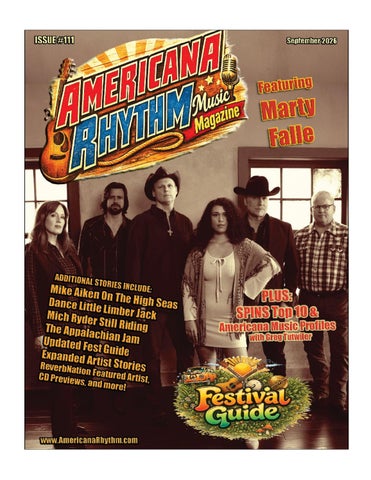
This time, instead of “by Mike Aiken,” it’s About Mike Aiken. Mike was unavailable to pen this himself for this issue as you will soon understand why. Don’t worry, it’s a happy story!
If anyone has truly earned the title “Wayward Troubadour,” it’s Mike Aiken.
Long before he became an internationally recognized singersongwriter, accomplished sailor, and respected storyteller, Mike was simply a young dreamer who ran away from home to pursue music. Thatrestlessspirithasneverlefthim. Instead, it has carried him across continents, through thousands of performances, and over more than 30,000 miles ofopen ocean aboard his own sailboat.
For Mike, life has never been about choosing between music and adventure. The two have always beeninseparable.
Today, Mike and his wife, Amy, are enjoyingone ofthe mostambitious chapters of their lives as they sail their liveaboard vessel, Ocean Girl, across the Atlantic Ocean to Spain. Whilemanymusicians spend their days touring highways,the Aikens often chart their course by wind, tides, and weather forecasts.
“It’s a very serious and large undertaking,” Mike explains.“Wewereup to our ears in boat preparations to pull it off.”
Americana Rhythm is published six times a year.All correspondence should be sent to PO Box 45, Bridgewater VA, 22812 or email to greg@americanarhythm.com. Copies of Americana Rhythm aremadeavailablefreeatvarious pickup locations within thepublication’s region.SubscriptionsareavailableinsidetheUnited States (only) for $24 US currency made payable by check or money order sent to, Subscriptions at PO Box45, Bridgewater, VA, 22812. Foreign subscription requests should be sent to greg@americanarhythm.com. Copyright 2022. All rights reserved. Reproduction of any content, artwork or photographs is strictlyprohibitedwithout permission of thepublisher or original owner. All advertising material subject to approval.
PUBLISHER/EDITOR IN CHIEF
GregE. Tutwiler
Associate Editor
EdTutwiler
MARKETING & PROMOTION
MarkBarreres (GrassRootsNetworking.com)
ADVERTISING
Business office 540-433-0360
advertising@americanarhythm.com
Mike Aiken
Andrew McKnight
DanWalsh Rebecca Frazier
life—carefully prepare for the journey, then embrace whatever adventure awaits.
Unlikemanyartistswhosimplywrite songs about faraway places, Mike and Amy live the stories they tell. Both are licensed sea captains who havechosenanuncommon lifestyle, living aboard their sailboat while exploring coastal communities throughout North America and beyond. Their travels become the inspiration for songs filled with colorful characters, working waterfronts, quiet anchorages, and the freedom found just beyond the horizon.
It’sa lifestyle that inevitably invites comparisons to the late Jimmy Buffett. While Buffett popularized
Preparing a vessel for anAtlantic crossing isno small task. Every system aboard must be inspected and upgraded, safety equipment carefully checked, and navigation plans refined. Mike has even installed Starlink satellite internetaboardOceanGirltoreceive weather updates and maintain emergency communications during the crossing.
“The data is expensive,” he laughs, “but in my best dreams, we’ll do a few live streams from mid-ocean. We’ll see how the weather gods treat us.”
Those words perfectly capture the philosophy that has guided Mike’s
the romance of life on the water, Mike and Amy are living it every day. Their songs aren’t fantasies about escaping—they’re firsthand accounts ofthe people, places, and experiences they’ve encountered whilesailingand performing across twocontinents.
On stage, the pair create a musical chemistry that’s as natural as their lifetogether.
Mike’s warm, weathered voice is perfectlysuited tothestorieshetells, while hisaccomplished guitar work provides the foundation for songs
continued on page 4
Mike Aiken
continued from page 2
rooted in Americana, folk, roots rock, and coastal influences. Amy complements him beautifully with crystal-clear harmonies, tasteful percussion, and an engaging stage presence that brings warmth and energy to every performance.
Together, they transform concerts intoshared journeys.
Whether performing in intimate listening rooms, historic theaters, waterfrontfestivals, music clubs, or large outdoor events, the Aikens invite audiences into their world through vivid storytelling, memorable melodies, and genuine authenticity. It’s a connection that leaves audiences feeling less like spectators and more like fellow travelers.
That authenticity has earned Mike and Amy recognition far beyond their home waters.
Over the years, they have released sevennationally andinternationally acclaimedalbums,receiving airplay onAmericana,folk,andindependent radio stations throughout North America and Europe. Mike’s
songwriting reflects decades of experience both on land and at sea, blending thoughtful observations with memorable hooks and rich narratives.
His collaborative writing has also taken him to two ofAmerica’s great songwritingcommunities—Austin, Texas, and Nashville, Tennessee— where he continues to work alongside respected writers while maintaininghisowndistinctivevoice.
Behind the scenes, Amy plays another important role in their musical journey. She manages Northwind Records, the independentrecordlabel thecouple
established in 2002 to produce and distribute their music while maintaining complete creative independence.Theirentrepreneurial spirit has allowed them to build a career on their own terms, connectingdirectly with fanswhileremainingtrue totheirartisticvision.
Their commitment extends well beyond performing.
In 2005, Mike and Amy founded the Aiken & Friends Fest, a music festival dedicated to supporting music education. Bringing together talented performers and loyal fans, the event has become both a celebration of live music and an opportunity to invest in future generations ofmusicians.
That dedication to community reflects the same generosity found throughout theirperformancesand theirlives.
Mike is also a familiar voice to readersofAmericanaRhythmMusic Magazine,wherehechroniclesmany ofhis adventures from the road and
the sea. His stories offer readers an authentic glimpse into the life of a modern troubadour—equal parts musician, sailor, explorer, and storyteller.
Perhaps that’s what makes Mike Aiken sucha uniqueartist.
Many musicians spend theircareers searching for songs to write. Mike simplylivesthem.
Every harbor, everyhighway, every festival, every sunrise at sea, and every unexpected encounter becomes another chapterwaitingto be told through music. Alongside Amy, he has created a life that embraces curiosity, courage, and creativity in equalmeasure.
As Ocean Girl points her bow towardEurope and the vastAtlantic stretches beyond the horizon, another adventure is already underway. New ports will be visited. New friendships will be formed. New stories will unfold. And somewhere along the way, another song will undoubtedly be born.
For Mike and Amy Aiken, the destinationhasneverbeenthepoint. The journey has always been the music.
Dancing...
continued from 6
Unlike the elaborate European marionettes suspended by strings, the Appalachian Limber Jack evolved into a hand-operated figure usedin conjunction with a wooden paddle or balance board. A flexible push rod attached to the body allowed the performer to make the figure dance by rhythmically striking the board with the foot or hand. The result was first a toythat requirednostrings and was durable enough for mountain homes but quickly became a musical instrument that could accompany the lively fiddle music heard throughout the region with rhythm percussion and entertainment as well.
The Limber Jack performer is a frequent part of old-time string music ensembles. One cancatch such aperformance at many of the jams held about.Ifindthe performance mesmerizing almost hypnotic everytime Iencounter such an event. Limber jack performers seem to all have their own personal version of the device. It might be made to resemble the performer or a well known figure. They will dress them in clothes made for small dolls and use yarn toserve as hair.
Adding A Band Member
If you are into string music, especiallyold-time fiddleandbanjo tunes, you might want to expand your band members to include a Limber Jack performer.
Should you be down to the Floyd Country Store in Floyd, VA for their Friday night jam, you can select and purchase your very own Limber Jack from the store while you are there.
Once you have your very own personalizedLimber Jack, here is how you make it dance: To make him dance,youneedtobe seated. Tuck the dancing paddle partly under your hip. Hold your Limber Jack by the stick over the paddle so the dancing feet just
touch. You then tap the paddle in time to the music. When it bounces up to hit Jack’s feet the feet create a clackingsound.With practice, you can dance Jack’s loose-limbedarms andlegs tothe rhythm of music by shaking him down on the beat so his feet will clickon the correct time.Talented Limber Jack performers can create a buck dancing phenomenon at the end of that stick.
If I have piqued your interest, let me encourage you to point your computerbrowser totheYouTube web site and search out Limber Jackperformances.Thereyouwill see some folks with skills that bring their little wooded figure almost to life.
Should you find this to be, you can purchase ready made plain Limber Jacks from various internet sources such as:
Mitch Ryder’s story doesn’t begin on a stage— it starts with a radio.
“Myfather, prior togetting married to my mother, was a singer on the radio in Detroit,” Mitch recalls. “That’s back when they used to have big bands come in, and people would come in and guest sing.”
One of those guest performers, he notes, wasDannyThomas, aglimpse intotheentertainmentworldthatleft animpression ona youngRyder.But after World War II, radio changed, the big-band era faded, and his father’s musical career quietly disappeared.
His mother brought a different influenceintothehome.“Mymother wasfrom the South, Tennessee,and she wasa bigHankWilliamsfan, and she would sing when I was a toddler…alldaylong, I’dhearevery Hank Williamssong everrecorded.”
Music filled the house, though it wasn’t his onlyambition. “In school Iexcelled in artandmusic, and Iwas a very good cartoonist, which is
what Iwas settingmy sightson.But music proved tobe morepowerful, and so the rest is, as they say, history.”
That history began early. Rydercut his first record at 17. “It was something I wanted to do… I thought, well, you know, give it a try, and I did.” The record didn’t chart, but itopened the door to the opportunity that would change everything.
While performingat a Detroitclub called The Village, he met a group ofmusicianscallingthemselves,The Rivieras. “They were the house band for the night, and … we decided we wouldget together and trya couple rehearsalsand seehow it panned out.” They recorded a localdemothatcaughttheattention ofproducer.
“He sent that demo copy to New York City to a gentleman named Bob Crew, who was famous for making all the hits with the Four
Seasons… that’s when the success came.”
The Rivieras soon became Mitch Ryder & The Detroit Wheels, launching a string ofhits including “Devil with a Blue Dress On” and “Jenny Take a Ride.” Yet Ryder says thatremarkablerunlastedonlyabout threeand ahalfyears beforemilitary service,drugs,andchangingpriorities pulledthe bandapart.
Breaking Away andFinding Europe
Ryder continuedrecordingas a solo artist, but frustrations with the business side ofthe industry grew.
“I did write some music for that label, but Mr. Crew owned the publishing. He had his own stall of writers … and hewanted complete controlofpublishing.”
Eventually, Rydersued to leave the label. “After the group didbreak up andtheWheelswenttheirownway, I sued Mr. Crew to get out of my contract. I wasn’t happy there either.”
Ironically,whilehiscommercialpeak in America was relatively brief, Europebecame the place where his career trulyflourished.
Over nearly five decades, Ryder built what he calls a “very solid career inEurope,” whereaudiences embracedhisevolvingcatalograther thansimplyrelivinghisAmericanhits.
“The audience that came to see me perform in Europe didn’t requestor want to hear ‘Devil with the Blue
continued on page 10
Mitch Ryder
continued from page 9
Dress On’… they were more interested in the catalog that I had establishedin Europe.”
When I asked if he still performs those classics overseas, his answer was direct.
“Not in Europe. They’re absolutely a part of what I do in America, because that’sall my American fans have to reference. They weren’t privy totheEuropean material.”
Hiscareer hasbecome somethingof a tale of two continents: a beloved hitmakerinAmericaandacontinually evolving recording artist across Europe.
Family, Health, and Perspective
Foratime,Ryderthoughtretirement might be next. He moved from Michiganto Georgia,hopingtoenjoy warmer weather.
“Iactually moved down to Georgia forabout seven and a halfyears,and was thinking ofretiring downthere, mostly because of the weather,” he says.
Life had other plans. “Over that span ofseven and a half years … three of our children and one ofourgrandchildrendeveloped four different distinct kinds of cancer, at different times … so we moved back up north, where everybody is, to help whatever we could do to help.”
Despitethosefamilyhardships—and his own scoliosis, which now requires him to perform while seated—he never lost his desire to play.
“There’s twothings Ilovemorethan earth itself: my wife andmy music, and both of them bring me great pleasure,” he says. “Ising sitting on a bench, much as a guitar player would do, and I sound great. I still gotthepipes,andIgooutwith great energy, and it’s a good show.”
A Career
Still Moving Forward
Ryder’s partnership with Ruf Records has introduced him to a new generation of listeners while returning him tothe Billboardblues charts.
“They’re basically a blues lable, so it was a challenge for them to take
onanestablishedrockand rollblues artist,” he explains. “But it did do something good—it managedtoget mebackon the American Billboard charts inthe bluescategory … back on the charts in America was a big deal for me.”
HislivereleaseSongsfromtheRoad is already available, but he’s especially excited about his upcomingstudioalbum,Everyone’s Servant,NoOne’sSlave
“It’s probably thebest record Iever did … going into the studio at my age,notknowingwhen thenext one would come, I put everything I knew into it, and it shows in the music. It’s just a wonderful recording.”
The album features all-original material written specifically for Ryder and will be supported by anotherEuropeantour. Even then, he’s already looking beyond it.
“I’m writing, you know, I just continue to write,” hesays.“I’vegot three songs for the album that we haven’t even booked the studio for. So… you just keep marching forward.”
His songwriting remains as spontaneous as ever. Voice recorders sit by his bed, in the kitchen, and in his pocket, ready wheneverinspirationstrikes. “In case something pops—melody, a word, an idea,” he says. Sometimes the music comes first, othertimesthelyrics. “There’sa few different ways to approach it for me.”
For an artist who has navigated changing musical eras, industry battles, personaltragedy,andhealth challenges,MitchRydercontinuesto do what he’s always done—keep moving forward. The title of his newest album may be the most fittingdescriptionofthemanhimself: Everyone’sServant,NoOne’sSlave
Greg Tutwiler
John Locklar; AcousticallyCovered
FEATURE ARTISTS
For John Locklar, music has never been just something to listen to—it has always been something to live.
OriginallyfromSanDiego,California, Locklar’smusical journeyhas taken him through South Lake Tahoe before eventually settling in Park Rapids, Minnesota, where he now performs as Acoustically Covered. His original music blends acoustic rock with touches of reggae, blues, andfunk,whilehisliveperformances draw from a wide range of artists andinfluences.Whetherperforming original songs like “GivenHerself Away,”“Blindman,”and “Touch,”or reimagining familiar favorites, Locklar approaches every performancewith thesame passion that first captured him as achild.
“I have always been drawn to music,” he says. “In fact, my earliest memory was plucking strings of a guitar under the edge of the bed as my Dad said, ‘There’ll be time for that tomorrow.’” That influence beganat home. Locklar’s father was a workingclubmusician duringthe 1970s, performing country music throughout Southern California. While his father’s style wasn’t the direction Locklar would ultimately take,growing uparound livemusic planted a seed that never stopped growing.
“My Dad was a working club musicianinthe’70s,” he recalls.“His genre was country.” It wasn’t until
1978, however, that everything cameintofocus.LivinginSouthLake Tahoe, Locklar found himself backstage during a three-day concerteventfeaturingBritishLions, Blue Öyster Cult, and other major acts.Localmusicianswere recruited to help with stage setup, giving him a front-row view of professional touring musiciansatwork.
“I was just off stage watching the crowdgo wild forthe strobe special effects on Blue Öyster Cult’s Godzilla,” he remembers. “It both moved my soul and inspired me.” That experience ignitedsomething inside him, but another encounter proved just as important.
“A guy named Woody was the first personthattook interest inmyown musical ability and helped me develop my talent,” Locklar says. “It only takes one person to change your life—for methatwasWoody.” Woodyencouragedhim,helpedhim book his first month of performances, and ultimately gave Locklar the confidence to pursue musicseriously.
That first stretch ofgigs led to one ofthe most treasuredpossessions in his life. “He helped me scrape togethermy first month ofgigs and Iended up buying my firstguitar at
Lake Tahoe Music in 1978, a Guild D25 called Ms. Ruby. Istill own this guitar and she’s my go-to on stage.”
More than four decades later, Ms. Ruby remains by his side, a constant reminderofwherethe journey began. Although Locklar earns much of his performance income through cover songs, he refusesto be boxed into a single musical category.
“As an artist making a living doing cover music, I like diversity,” he says. “My style is bluesy-rock— think Croce and America to Seger, Red Hot Chili Peppers, Matchbox Twenty, toJohnnyLang,and lots of other musicIcan‘funk’up.”
One thinglistenersshouldn’texpect is countrymusic.“It ain’t country,” he laughs. “My roots growing up in San Diego were soul music driven. I used to walk down to the corner store where Icould listen to threepartharmonies from winos hangin’ inthe parking lot.”
Thoseunexpectedmusicalmoments becamejustasinfluentialasanything playing on the radio. Locklar also began writing songs shortly after purchasing Ms. Ruby. “I’ve written songs since the late ’70s after Ms. Ruby and Istarted having musical conversations,” hesays. “Typically, if I feel it, I can let sounds slip into songs.”
Rather than following a rigid songwriting formula, his process is intuitive. Inspiration begins with a feeling, allowing melodies and rhythms to emerge naturally until they become complete songs.
Today,Locklarperformsthroughout Park Rapids and the surrounding Minnesota communities under the name Acoustically Covered. The regionhasdevelopeda thrivinglocal music scene that he and his wife have fully embraced. “We just love it,” he says. His performances include private parties, community events, restaurants, breweries, and other local venues where audiences appreciateboth hisoriginalmaterial and his distinctive approach to familiar songs.
“I’m currentlyperforminginthePark Rapidsand surrounding areaunder the name Acoustically Covered, as a solo artist,” he says. “Private gigs, special events, local work—I’m retired, so any day I play is fantastic!”
Retirement has given him the freedom to focus entirely on enjoyingmusic rather thanchasinga career. “I retired about ten years ago,” he explains. “Moved to where we used to vacation, left the corporate gigs behind and haven’t looked back! Small crowds are enjoyable too.” For Locklar, success isno longer measured by venue size or audience numbers. It’s measured by the simple opportunity to continuemakingmusic.
Inan eraincreasingly influencedby technology, Locklar also offers one finalpiece ofadvice that reflects his lifelong relationship with music. “Make sure they continue to make music, not AI-generated,” he says. “Actually playit, understandit,hold open mics atyourhouse, encourage and collaborate with other musicians.”
It’s fitting advice from someone whose earliest memory was reaching for the strings ofa guitar—and who, decades later, is still finding new conversations with the same faithful instrumentthatstarteditall. “Be someone’s Woody,” he exclaimed.
Marty Falle: Bluegrass’s Elite Storyteller
Why Song of the Holler Confirms Marty Falle as One of the Most Important Appalachian Songwriters Working Today.
There is a dirt road somewhere in Eastern Kentucky that Marty Falle never really left. Physically, he may spend much of his time in Nashville recording studios. His music now reaches listeners throughout the United States, Europe, Australia, and beyond. His records have climbed bluegrass androots charts,earnedairplay on stations thousands of miles from the Appalachian Mountains, and established him as one of the most prolific independent songwriters working in bluegrass today.
Yet artistically,he remains where he began, in the he coal camps, church pews, the family farms, the timber ridges,and the hollers tucked deep into the mountains where stories still matter.
Those places are more than settings in Marty Falle’s songs.They are the foundation of everything he writes.That realityhas become increasingly important in a music industrythat often values immediacy over substance, attention over depth, and algorithms over artistry.
As I listened repeatedly to Song of the Holler, Falle’s newest release,one thought kept returning: This is not merely an album. It is a preservation project. It is oral history set to music. It is a literaryworkdisguisedas a bluegrass record. And it may ultimately stand as the strongest artistic statement of his career.
The Last Album Artist
Modern music rewards speed. Release a single; build momentum. Release another; feedthe algorithm. Then repeat.Albums increasinglyfunction as collections of content rather than complete artistic statements. Marty Falle has chosen a different path.
Over the last four years, he has written and released more than
120 original songs across 10 albums, building one of the largest independent catalogs in contemporary bluegrass music.
The achievement is remarkable not because of the volume. It is remarkable because of the consistency. Every project expands the same literary universe. Every album explores familiar themes from new angles. Every song contributes another chapter to a larger Appalachian narrative.
Coal miners, Farmers, Preachers, Immigrants, Mothers, Fathers, Veterans, Working men, Working women, Addicts seeking redemption. Families struggling to hold on.Againandagain, these characters populate Falle’s music.Because theyreappear,listeners begin to recognize them. Not as characters;As neighbors, As family. As people they know.
That is the mark of a mature storyteller. World building.It is the abilityto create a place sovividly thataudiences feel theyhave lived there. Like William Faulkner returning repeatedly to Yoknapatawpha County, Marty Falle continues returning to Appalachia.The names change.The stories change. The setting remains.
Writing from the Inside
Many songwriters attempt to write Appalachian songs. Far fewer successfullycaptureAppalachianlife.Thedifferenceusually comes down toperspective.Some writers observeAppalachia.Falle writes from inside it. His songs understand details outsiders fre-
quently miss. The importance of a lunch pail. The symbolism of a church supper. The quiet pride inside a patched-up home; The dignity of difficult work; The faith that sustains families through hardship.
These details appear throughout his catalog because they are not decorative. They are authentic. They are lived experience. Authenticity has become one of the
defining characteristics of his songwriting.
Falle’s music rarely sounds researched.It sounds remembered. That distinction explains whylisteners continue connecting with the songs. They recognize the truth inside them.
Song of the Holler
The titletrackimmediatelyestablishes the album’s ambitions. Inspired by author K.D. McIntyre’s novel Song of the Holler, the composition explores hidden truths, family legacy, memory, and the enduring power of storytelling.
The songunderstands something fundamental about Appalachian culture. Stories are inheritance. Families pass down more than land. They pass down memories. Theypass downsecrets.Theypass down songs.
By Mark Thompson
Inspired by a novel by K.D. McIntyre, “Song of the Holler” is a story of hidden truths, family legacy, andthe power of music to carry history across generations. Falle explains.“At its heart,this is a tribute to the stories, people, and music of the Appalachian holler.”
For McIntyre, the collaboration felt natural. “When I wrote the book Song of the Holler, I always felt like the storycarriedarhythm of its own. It wasn’t just meant to be read—it was meant to be heard. Collaborating with Marty allowed that story to take on a whole new life through music.”
The author’s assessment of Falle may be even more revealing.
“Martywas the perfect choice for thissongbecausehe brings a level of authenticity that you can’t fake.He understands the roots of bluegrass and the emotion behindit,andthat was exactlywhat this story needed.”
That authenticity appears throughout the album. The title trackfeels less like an adaptation andmore like a continuation.The storymoves beyondthe page and into the musical traditions that helpedshapeAppalachia itself.It is one of the strongest examples of literature and bluegrass intersecting in contemporary roots music.
Portal 31 and the MenUnderground
If the title track establishes the importance of memory, “Portal 31” establishes the importance of work. The song serves as a powerful tribute to generations of Eastern Kentucky coal miners.
To outsiders, coal is often discussed through economics or politics.ToAppalachians,coalhas always been personal. Coal paid mortgages. Coal built churches. Coal fed families. Coal also buriedfathers and claimedbrothers. Coal demanded sacrifice.
continued to page 15
Danny Joines
Danny Joines spent 20 years helping other musiciansachieve theirgoals, as anationaltourdirector. The Central City, Kentucky native managed tours and produced concerts for folks like John SchneiderandChristianDaviswhilealso performingonstage aspartofthe bandplayingHarmonica andfiddle.
Today this veteran musician has shifted the spotlight to his ownmusic puttinghis efforts into his Bluegrass and Americana releases. Danny saidhis family’s music roots run backfor generations. “My grandfather on my dad’s side, Hazel Joines, was a cousin to Merle before he got famous,” he recalled. “When Iwas stilltoo short to reach the footpedal onthe drums,Iwas sittingonthe stool playing the snare and the high hat,” he said.
Danny picked up the fiddle around the age 15, and “never looked back,” he quipped. “I had several, and was in and out of several bands along the way, including the stints with John Schneider and Christian Davis until covid shut things down, and that’s when I pushed out one of my Bluegrass singles, which ended up charting in the top 20,andI’vebeenpushingmystuffouteversince.”
Danny said he recalledspecifically, at nine years old, a cousin had returned from Nashville where he had recorded a 45 rpm record. “That day, I wrote a song. I was gonna be a songwriter. And I’ve been doing it ever since.”
Dannysaidgrowingup30 milesfrom the oldBill Monroe home place in Kentucky, bluegrass has always been a significant part of his musical influence. “So when I picked up the fiddle, it was just a natural thing that the bluegrass side came outof me.”
Danny’s latest single, “Lonesome Sound Of A Fiddle,” was inspired by the idea of Bill and his wife as they began dating as young lovers.
Sadie Wechgrewupin a smallfarming community allthe wayonthe otherendofthe earthinSouthland, New Zealand. Sadie said she was given her first guitar when she was 12 years old, for her birthday. “Ever since I was little, I was always singing,” she recalled.“There’ssomanyfamilyvideosofmesinging, even when I was three,” she said. “I was always walking around with something in my hand pretending it was amic, and singing into it.”
Sadie remembers learning that her grandma on her dad’s side was trained in opera, and had a huge influence on her dad’s side of the family. Many of them sang and played in choirs, and whenever they had the chance to be together, she remembers the times were filled with music. “Itfueled this underneath drive to play and perform music, and I remember always feeling like, ‘yeah, this is what I want to do.”
While becoming a famous artist would be a welcome achievement,Sadie saysthat it’sreally about beingable to create music that people can relate to that really drives her to pursue it as a career. “Music issuchapowerfulthinginourliveswhere itcan cause and evoke so many different emotions. If I am able to do that for people, then that’s all that matters to me,at the end of the day.”
Sadie said she had a few lessons for the guitar,andthe piano, when she was younger, but has only really been taking it seriously for about the past four years. It was an old friend’s wedding where she was asked to perform that sparked the journey for her. She wrote and performedanoriginalsongfortheirfirst dance.
Sadie spends hertime writingand recordingmusic, and sharing her songs on social media while she gathersenoughmaterialforanupcomingalbum,and spends her warmer season months fronting a band, performing for variousparts of weddings.
Texas soul is what Houston-based singersongwriter,MicahEdwardscallsthe music he creates. It’s a blend of country storytelling and vintage soul, that leans into blues, roots, R&B, and evenhonky-tonk, butitemulates anidentity allof it’s own.
“I was born in California,butI’ve beeninTexaslong enough to call it home,” Micah remarked. The father of three said his parents weren’t very musical at all, but he and his sister, Madeline (Edwards), were raised on a deep appreciationofmusic.“Probablyforthefirst10 years of my life I didn’t knowthere was anything other thanthe Doobie Brothers…andjazz,”he laughed. “We were raised on 70s music, and jazz, and bigband and swing.”
“It wasn’t till I moved to Texas that my 50 year old neighbor introduced me to George Strait,” he laughed. “It was “Amarillo By Morning,” and I just fell in love and never looked back.”
Ateacherintroduced Micahto aCountry legends radio station. “That was it. I’m a deep appreciator of song writing, and have a care for instrumentation – howa song is structured, and how a story is told,” he said. “And you find that both in Country and Jazz, and soul and R&B. That’s what I’mdoingnow– blendingthe twosounds,andthat’s what you can hear on this new record, Texas Soul.”
It’s the sophomore release from Micah, which packagesaseriesofpre-releasestogetherto completethe package.ThinkLeonBridges,andCharlie Crockett with their vintage textures, but add in a buttery blend of Texas landscapes, and you get a musicaljourneyallitsown.
Texas Soul released on May 1st of this year, and feelslike a love letterto the unsungcommunities of smalltown Texas, the neon-litdance halls, and the quiet back roads where stories unfold.
Sadie Wech
Micah Edwards
Music Profiles
favorite Podcast platforms!
Falle
continued from page 12
The best coal mining songs understandthis duality.Theyneither romanticize nor condemn. They tell thetruth.“Portal 31”succeeds because it understands the humanity behind the history.
Listeners can almost hear the mantrip rattling through darkness. They can imagine lunch pails resting on calloused knees. They can feel the nervous silence before the day’s workbegins.The song reminds listeners that generations ofAppalachianmen willinglydescended intodarkness so their families might have light. That reality deserves remembering. And Falle remembers it.
Lunch Pail Testament
One of the album’s finest compositions is the song, “Lunch Pail Testament.” The title alone feels quintessentiallyAppalachian.The lunch pail becomes more than an object. It becomes a symbol of responsibility,provision,stewardship, and sacrifice. Keeping your word.
Throughout Appalachia, work has traditionally represented more than income. Work representedcharacter.Aperson’s reputation often depended upon whether they could be counted on. Did they show up? Did they keep their word? Did they provide for their family? Didtheyfinish what they started?
Those values echo throughout the song. The result feels almost biblical in tone. Not because it quotes scripture, but because it reflects a worldview where responsibility itself becomes sacred. The song functions as a workingman’s gospel;And in doing so, it captures something increasingly rare in contemporary music:Respect for ordinarylabor.
Feed Sack Curtain
One of Falle’s greatest strengths is his ability to write about poverty without exploiting it. Too many writers mistake hardship for drama.Falle understands that hardship is simply reality for many families. “Feed Sack Curtain” demonstrates this beautifully. The imagery is unforget-
table. Feed sacks transformed into curtains, with families stretching every dollar.
Mothers creating beauty from scarcity. Children growing up with little money but plenty of love.The songnever asks for pity. Instead, it celebrates resilience.
Appalachian people have rarely wanted sympathy. They wanted respect. That is why “Feed Sack Curtain” understands the difference.
Perhaps most importantly, the songhonorsAppalachian women whose contributions often go unrecognized. Entire communities survived because of women who quietlycarriedextraordinaryburdens.The songserves as a tribute to them.
Grace Fell Like Rain
Every great Appalachian record contains moments of faith. Not because faith is fashionable, but because faith remains central to the culture itself.“Grace Fell Like Rain” stands amongthe strongest gospel compositions of Falle’s ca-
reer. The premise is simple and powerful. A drought-stricken Kentucky farm becomes a metaphor for the human soul. A farmer can prepare the ground, plant the seed,andworktirelessly. Yet ultimately, he depends upon rain.
Thesame is truespiritually.People strive, work, hope, and pray.And eventuallydiscover that grace often arrives when hope appears exhausted. The song succeeds because it tells a story rather than deliveringa sermon.Listeners arrive at the message themselves. That subtlety gives the song power.
Prayer for the PoisonedMan
Few songs on the album demonstrate Falle’s compassionmore effectively than “Prayer for the Poisoned Man.” Addiction has touched countless Appalachian families. Too often discussions about addiction reduce people to statistics. The song refuses to do that.Instead,itpresents addiction as a human struggle; A family struggle. A spiritual struggle. A deeply personal struggle.
continued to page 19
Listen to the expanded interviews by searching Americana Music Profiles on all of your favorite Podcast platforms!
Artie Tobia
Native Newyorker, singer-songwriter, Artie Tobia has quietly and successfully released five albums through the past years, all while working a “day” job, raising a family, and laying the ground work for a post-retirement music career.
The latest iteration of his roots-rock band, Red Tail Revival, has enjoyed recent success at SWSX in Austin, TX, and Barefoot Country Music Fest, in Wildwood NJ. And Artie has received some interest in the sync license world for his original material.
Artie’s origins connect all the way back to Italy, and his music having a connection to a great-great grandfather who toured with American music composer, John Phillips Souza.
“All of his children had music in their lives one way or another,” Artie reflected, “so I’ve got a little bit of music DNA,” he quipped.
“I’ve always had an interest in music. I remember coming home from school and watching Elvis movies,” he exclaimed. He started his first band in high school, “and never really looked back since. It just feels so natural, like it’s something I’m supposed to be doing.”
A chance encounter with the Marshall Tucker band led to a moment on stage when Artie got invited out to sing, “Can’t You See,” with the band. “I got to go out and sing a verse and the end of the some with them – it was pretty awesome,” Artie exclaimed.
That opened doors, and an eventual invitation to return to SWSX and a billing performance with guys like Ketch Secor from Old Crow Medicine Show and John Popper of Blues Travelers, followed by some multi-state festival invites. “Things are clicking, and feels really good to have these opportunities.” He said.
Red Tail Revival feels like more than a band. It is a re-branding for sure. But it also seems that it has expanded horizons and strengthened connections. It’s a revival of the heart and soul of Americana for Artie and his band mates. And the flow seems to say the best is still on the way.
To find out more, visit www.artietobia.com
We BeAppalachian Jamin’
Someone once toldme that there are folks that do and then there are folks that watch those that do. Iguess Ihave been of that latter group all my life when it comes to Americana string music.I am certainly not a doer but Isure love to watch and listen to all the fine musicians thatare doers.Sometimes justgettingtowatch, listen, and of course, write about it is enough. If one wants to watch and listen to the doers hone their craft, there is not a more pure location to be than at a musical gathering referred to as a Jam. While I have attended a fewJams over my years with this magazine,maybe you have not had the honor. Should that be the case, in the followinglittle essay,let me tell you some things that I have learned about old-time and bluegrass Jams.
While both old-time music and bluegrass music is made by musicians using the same basic acoustic music instruments; and musicians of both of these groups join others of their kind in musical Jams from time to time for the camaraderie and to learn and improve their crafts; this is where the similarities diverge. Thus, some definitions are in order before we go much further:
Old-time music is as old as North America
It developed along with the various folk dances of the earliest settlers such as square dancing, contra dancing, and such. Old-time music is played on acoustic instruments: always the fiddle anda non-resonatorstyle banjo along with other plucked instruments such as guitar and mandolin. The simple banjo–fiddle duet has historically been the most common configuration to play old-time music. When played as an ensemble, musicians play the melody instruments in unison.
Bluegrass music is a sub-genre of American country music.
It developed in the 1940s in the Appalachian region of the US and derives its name from the band named, Bill Monroe and the Blue
By Edward Tutwiler
Grass Boys, who were the first nationally popular group of that genre. The bluegrass music has roots in African-American centric sounds such as jazzandblues as well as European sources such as ballads and dance tunes (some old-time tunes find their way into the bluegrass song book as well). Bluegrass musicis traditionallyplayedexclusivelyon acoustic instruments such as the fiddle, mandolin,
banjo, guitar, andupright bass. Music played bluegrass style is up-tempo and consists of instrumental solos andimprovisations.
This information was more than you needed but one should understand these differences in styles to best understand the way the Jams of each genre forms.In both cases,a bluegrass or an old-time Jam begins as an informal gathering of like-minded musicians but the execution is different.
Old-Time Jams are democratic and community-focused. The musicians at a modern-day old-time Jam usually sit in a circle (or might just as likelysit in a group) with members taking turns calling the tunes to be played. The music they play is traditional and was/is mostly used for dancing. The musicians do not take individual solos. They play their melody instruments (mostlyfiddles and banjos) together in unison. All playing sessions remain in one tuning key for an extended period and musicians frail the banjo strings instead of finger-picking them. The tunes are repetitive and are designedto lock into a continuous, driving groove. As a pure listener to an old-time Jam, one is struck by the repetitive nature of the presentation. However, as a dancer, one is almost driven to move. At the Merlefest music festival, as well as other big continued on page 19
Jams
continued from page 16
music festivals, the promoters place largesheets ofplywoodnear the Jam locations just waitingfor the dancers. These improvised dance floors are soon filled with folks doing flat-foot and buck dancing.
Bluegrass Jams are highly structuredandimprovisation-focused.Participants sit in a circle, take turns callingfor the songs or tunes for the group to play. The musicians play by ear without usingwritten music sheets. (Participants learn tofollowthechord progressions andmelodies bylistening to others and watching their fretting-hand fingering.) Theusualinstruments are:acoustic guitar, fiddle, banjo, mandolin, and upright bass. Occasionally, a musician will show up at a bluegrass Jam with a mouth harp, a resonator guitar, or sometimes even an accordion. Usually these instruments are welcomed into the circle as well.Musicians typically play with driving rhythms;
and it is interesting to note that bluegrass banjos have a resonator pan attached to make them louder andare typically played3fingerstyle withsteel fingerpicks. During a song, one musician will take a virtuosic, improvised solo while the rest of the circle provides backup. The lead is then
passed to another instrument in the circle.As a pure listener at a bluegrass Jam, one finds oneself watchingindividualmusicians as they play and listening for slight differences in style. Bluegrass music is more attuned for listeningthan it is for dancingalthough sometimes folks still try.
While doing my research for this piece, I uncovered a summation on bluegrass and oldtime Jams by Mr. Bud Bennett on the Appalachian Music and Culture web-site. Mr. Bennett wrote, “One of the nice things about bluegrass and old-time music is that it is prettyeasyto see it live and that is really somethingthat is almost a core value of the music. Those of us who play this kind of music seem to reallyenjoy gettingtogether tointeract withthe community, toshare songs and admittedly to show off a little. When groups of musicians gather together to play bluegrass orold-time,thereis a real sense of belongingtobe feltand I can’t help but think it is because this kind of music was played at and for community dances and such; it’s almost like the communitymentalityorspirit is genetically encoded into the songs. The term jam I suppose comes from the tendency of musicians to play at or around the melody of a song, to kind of experiment with it and find a new and interesting way to play it or
to maybeplay a counter-melody instead. What ismeant by a bluegrass or old-time jam is that a group of musicians get together in a big pile and play songs together, all taking turns naming the next tune and sitting back to enjoy the musical and personal interactions.”
Continuing A Tradition
I foundmyself wondering where this tradition of Jamming got started and how it evolved. The Hudson ValleyBluegrassAssociation answeredmy wondering by relating thisfact, “Before thecommercialization of country music through radioand recordings, the playing of musicwas an interactive, participatory community pastime. Neighbors gather with one another on porches or at local meeting placesto swap songs and learn tunes by ear. In our modern times, Jamsserve as the lifeblood of passing these traditions down to new generations.”
So, dear readers, are you ready to start your own Jam? Starting a
Jam requires a clear location, a defined genre focus, and basic organizational structure. Begin by securing an accessible location with plenty of room and good acoustics. Decide your genre focus, and clearly advertise that choicetoyour intended audience as you spread the word. Be sure to clearly define expected skill level andinstrument lineup. On Jam night, arrangethe hall seating so all the folks can see each other. Theleader startstheJam by defining the expectations, and then playinga simple rhythm so everyone can catch the same tempo before launching into a tune. TheJam leader then callsthe first tune and key to be played, and thefun begins.
In closing, if you have never attended a Jam as a picker or observer, I hopethis little essay has piqued your interest in doing so soon. Just look around your neighborhooda bit. I’m surethere is one goingon somewhere closeby thisvery weekend.
Falle
continued from page 15
Most importantly, it presents redemption as possible. Not easy, notguaranteed,butpossible.That balance between honesty and hope defines much of Falle’s strongest work.He acknowledges sufferingwithout surrenderingto despair. The result feels authentic because itreflects reallife.Most people live somewhere between brokenness andredemption.This songunderstands that reality.
Jonathan Yudkin andtheNashville Team Nosongwritercreates workinisolation.Amajor reason for the success of Song of the Holler is the extraordinary team assembled around the project. At the center stands Jonathan Yudkin; Producer,arranger,multi-instrumentalist;Architect.
For years, Yudkin has helped translate Falle’svisionintorecordings that balancetraditionalbluegrass instrumentation with con-
temporaryproduction.His greatest strength maybe restraint.The arrangements never overwhelm the songs.
Instead, they create space for the stories tobreathe.The supporting cast reads like a who’s who of modern roots music: Carl Miner, Rob Ickes, Matt Menefee, Mike Bub, Brian Allen, Kim Parent, Carly Greer, Jenee Fleenor. Each contributesexceptional musicianship, yet none distract from the material. Everyone serves the song.That discipline elevates the entire project.
The RecognitionQuestion
No honest assessment of Marty Falle’s career can ignore an increasinglyobvious question.Why has a songwriter with more than 120original songs,multiple charting albums, international radio success, and one of the largest catalogs in contemporary bluegrass not receivedbroader industry recognition?
The answer is complicated. Awards often reward visibility.
continued to page 20
https://bluegrasscountry.org/festivals/
Welcome to the summer edition of SPINS. We offer you a curated variety of new music listening experiencesfrom some artists you may, or may not have heard of. Of the many
we encounter throughout the year, we share what we think are some you would also enjoy. In no partucular order, here are 10 of the freshest ones that have come across mydesk in the past few months!
Pleasecheck them out, and ifyou likesome, let the artist know how you found out about their music.
As always, support them when you can, and help all of us help keep music live! Yay Spring!
Got one you want us to consider? send it to:
Uncle Woody The Spin Doctor, PO Box 45 Bridgewater, VA 22812
At just 16, the lefthanded guitar picker, singer, songwriter has already started turning heads. The North Carolina teen already has a grip on story telling. His debut album, 11 tracks, eight original and one cover shows depthbeyond his years. Keep an eye on this young man.
Jim Lauderdale Country Super Hits, Vol 2 www.jimlauderdalemusic.com
Jim Lauderdale and The Po’ Ramblin Boys The Birds Know
We’re featuring a little differently here; A two - for ... Jim Lauderdale is a two-time Grammy winner, and an A-list Nashville songwriter. He’s also a recording super-star. Featured here are albums number 38, and 39! The first is Country Super Hits Volume 2, a 13-track release featuring fresh, traditional-leaning honky-tonk, ballads, and country music, rather than a compilation of older hits. The next one is a second partnership with the traditional bluegrass group, The Po’ Ramblin’ Boys. It’s a follow-up of sorts to a 2023 release. Bothof these are great intheir ownway, and well worth the add to your collection!
Trey Hensley
Can’t Outrun The Blues www.treyhensley.com
Trey Hensley is a Grammy award-winning artist and two-time IBMA Guitar Player of the year winner (‘23, ‘25) He beganplaying music at just 11 years old withMarty Stuart and EarlScruggs. He spent many years traveling with Rob Ickes before venturing out on his own. This is his first solo album. It smokes!
This is the third solo project fromNashville based, singer-songwriter, Lance Cowan. The veteran Americana music promoter has paid close attentionto the acts he works with, leaning into all the creative energy they bring. Lance has curated all that knowledge beautifully into this collection.
Daniel Grindstaff & The Uptown Troubadours www.danielgrindstaff.com
This is a new configurationfor the banjo virtuoso. Danielhas spent a career with other musians like Jesse McReynolds, Osborne Brothers, and Marty Raybon. In 2024 he had a IBMA nod for his song, “Forever Young,” featuring Dolly Parton. You’ll want to check this out.
Matthew Curry
One For The Ride www.rufrecords.de
Think 70s Americana, Folk Rock for Matthew Curry’s new album, OneFor The Ride. The Bloomington, IL born and raised Curry picked up a guitar at age four. Matthew has toured withacts like The Doobie Brothers, Steve Miller Band, and Peter Frampton. That’s big shoes, and Matthew holds his ownwell!
R.W. Hampton My Country www.rwhampton.com
R.W, was borna cowboy. He grew up inTexas and worked onranches allover the American West. That life influenced his music as he became one of the leading Western Entertainers in America. R.W. writes his family, Chritian values into music. His latest, My Country, is a charming example.
The Kody Norris Show Spirit Of America www.thekodynorrisshow.com
Kody Norris and crew are two-time SPBGMA Entertainers of the Year, and allit takes is one live show to make you understand how that happened. Steeped in the style of classic BillMonroe and good ‘ol classic country grassKody Norris makes some pretty good studio music too. Check out their latest.
Jim Hurst Travels & Time
www.jimhurst.com
Jim Hurst is a two-time IBMA Guitar Player Of The Year winner, and is often considered one of the top guitar pickers in the bluegrass industry. This new 13-track album, Travels &Time, features Jim at the top of his gamestory telling, and contemporary bluegrass guitar picking.