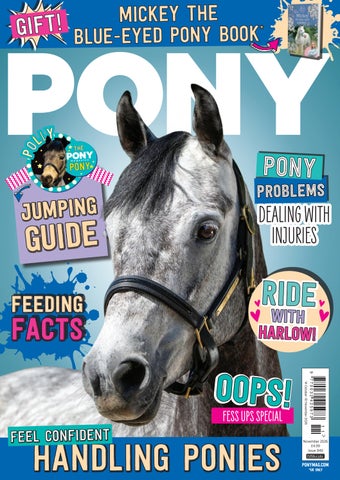
PO
E TH EY CK MI GIFT! BLUE-EYED PONY BOOK*
LLYy
THE
pony
jumping
PONY
PROBLEMS
guide
DEALING WITH INJURIES
FEEDING
RrIiDde wit
FACTS
14 October–10 November 2026
1 1
handling ponies
770032 425973
oops! FESS UPS SPECIAL
9
Feel confident
h harlow!
November 2026 £4.99 Issue 949 DJMurphy
PONYMAG.COM *UK ONLY
competition
ready Get the most out of show days with our awesome tips and advice!
T
here’s nothing more exciting than heading to a competition with your fave pony, but there’s so much to remember. From how to make the day run smoothly to wowing the judges with your performance, we’re here to help.
Time on your side
you’ll u are, the less nervous The more prepared yo to do it… feel. Here’s how we like it ng you need and tick thi ery ev of • Make a list . ing yth an t ge for don’t off as you go so you day before. the kit ur yo all ck • Pa ble for the day. Work • Write down a timeta owing start of your class, all backwards from the rd, ya the at dy rea ng enough time for getti up your number, tacking g tin llec co g, llin ve tra and warming up. u’ve ssage, make sure yo • If you’re doing dre if en Ev y. da the e learned the test befor ’s for you, knowing what it g llin ca is e on me so . us foc u relax and coming up will help yo Make sure you read ss? cla g pin jum • Entered a ully. lk wa the course caref the course plan and
8
PONY magazine
Top tip
Your nerves can rub off on your pony – by allowing enough time so you don’t feel stressed about being late, you’ll help them stay relaxed and happy, too.
Wise warm-ups
Whatever discip line you’re compe ting in, it’s a good idea to ha ve a familiar wa rm-up routine in place. Every po ny is different so ask your instructor to he lp you work out a pl an. In addition to lo osening their m uscles and preparing them for the work ah ead, an importa part of your wa nt rm-up is ensurin g your pony is listening to your aids and focuse d on their work. Include transiti ons, circles, turn s and maybe ev lateral work to he en lp you do just th at!
Top tip
If you’re competing at a new venue, do some research beforehand – ask horsey friends, look online, and even at Google maps, to get a better idea of what to expect on the day.
PONY magazine
9
Harlow’s fitness fixes Whatever you love to do with your pony, getting their body ready for the challenge is key. Here’s how I do it!
M
y herd is an amazing mix of types, personalities and sizes, but one thing is true for them all – being fit enough to do the work that’s asked of them is important for their wellbeing, preventing injury and having a good time! Here are my top eight fitness tips.
Make a plan If your pony needs to get fitter and stronger, work out a plan to get you to where you need to be. First, be honest about how fit your pony is now. Then, if you’re aiming for a particular show or event, think about what level of fitness and kinds of work they need to be able to do by then. Next, work backwards from the show date or goal and make a broad plan for each week.
20
PONY magazine
Top tip
If your pony’s behaviour changes – either when you’re handling or riding them – this can be a sign that something’s up. Speak to an experienced adult and discuss any concerns with your vet.
too Don’t change
much
The most important thing in your plan, and when you ride, is to only change time or intensity of your pony’s work, never both at the same time. So – either a longer schooling session OR more canter work in the same length session. This is important to avoid strains while your pony’s body adapts to what you’re asking.
Mix it up So you love showing? Me too! But that doesn’t mean your pony won’t benefit from other kinds of exercise. This is called cross-training and all the top-level competitors use it, which is reason enough for me! My fave things to do are some in-hand work, hacks and poles
Keep checking
in
Your pony’s body isn’t a machine, and just like us they can get aches and have off days. So, while you’re riding remember to ask yourself ‘how is my pony feeling today?’ If the answer is ‘not quite like normal’ then take it easy.
rs
matte t n e m e v o m l Al
I’m so lucky to have the herd at home, but it can be a bit of a challenge to meet all their needs, especially when they’re so different. The most important thing to remember is that steps count. So, for example, Cloudy can’t have unlimited access to grass because he gains weight so easily. But that doesn’t mean keeping him stabled – it’s why we have all-weather turnout pens, so he can keep moving (which is good for his brain as well as his body) without the worry of eating too much rich grass.
PONY magazine
21
TOP TIP
Take your time when working with ponies, even if you’re in a hurry. The calmer you are, the more settled they will be.
handle with care Be confident handling and being around ponies with our awesome advice!
J
ust like us, every pony is unique and can behave in different ways. This means that while you may be confident handling the pony you know best, it can feel daunting being around one you don’t know. But the more you know about pony behaviour, the easier it’ll be! We’re here to help!
54
PONY magazine
Safety first
Whether you’re handling a pony you know well, or one you’ve never dealt with before, safety always comes first. • Wear your riding hat, gloves and boots when leading, riding or handling. • Don’t handle loose ponies. Put on a headcollar and tie them up safely before you begin. • Approach ponies quietly and calmly – note their response to you and respect
their personal space. • Avoid sudden or fast movements and use a low, calm voice. • Spend time with a new pony before asking them for anything. This allows you to understand more about their personality and helps them to feel safe and confident with you. • If you don’t feel ready to handle a pony, ask an experienced adult for help.
understanding behaviour
Ponies can’t speak, but they’re communicating with you all the time. When you know a pony well, that special bond you share means you often know how they’re feeling without having to think about it. But with a new pony you’ll have to work a bit harder to look for the subtle signs that tell you how they’re feeling. So what are you looking for? A pony’s body language is the biggest clue, as well as their behaviour. Once you can spot how they’re feeling, you can respond – and this is where the magic happens! When ponies feel understood, it boosts their confidence and helps them trust you more. Amazing, right?!
Take it easy
Ponies are amazing at hiding when they feel worried, so here are some of the tell tale signs... • Eyelids in a triangle shape above the eye (kind of the pony equivalent of frowning). • Raised head carriage. • Snorting or whinnying. • Turning away from you. • Not wanting to stand still. • Moving suddenly. Of course, there are lots more signs a pony might display that will tell you they’re stressed, but it’s important to try recognise them, then take things easy and go at the pony’s pace.
Just chillin’
These are some of the signs to look for that let you know a pony is feeling calm and relaxed... • Soft nostrils (not flared or tensed). • Round eyelids (with minimal wrinkles showing). • Relaxed head position (not high in the air). • Ears relaxed to the side (not pricked forward or pinned back). • A floppy bottom lip (definite sign of a chilled-out pony!). • Resting a hindleg (this position makes ponies less able to gallop away from danger, so they won’t do it if they’re feeling worried). • Dozing. • Eating – it sounds funny, but when ponies are stressed or worried they’ll usually stop eating to pay attention to what’s going on around them.
PONY magazine
55