

Our new series focuses on your pony’s way of going. This month we’re talking straightness!
Teaching your pony to go straight, whether you’re riding on the flat or over fences, has sooo many benefits. But what does straightness really mean and how can you achieve it? Let’s find out.
Having a straighter pony helps…
• them build muscle more evenly, which can reduce the risk of injury
• you to gain better marks in dressage tests
• build the foundations for the higher levels of any discipline
• you jump more clear rounds
• to make them more enjoyable to ride
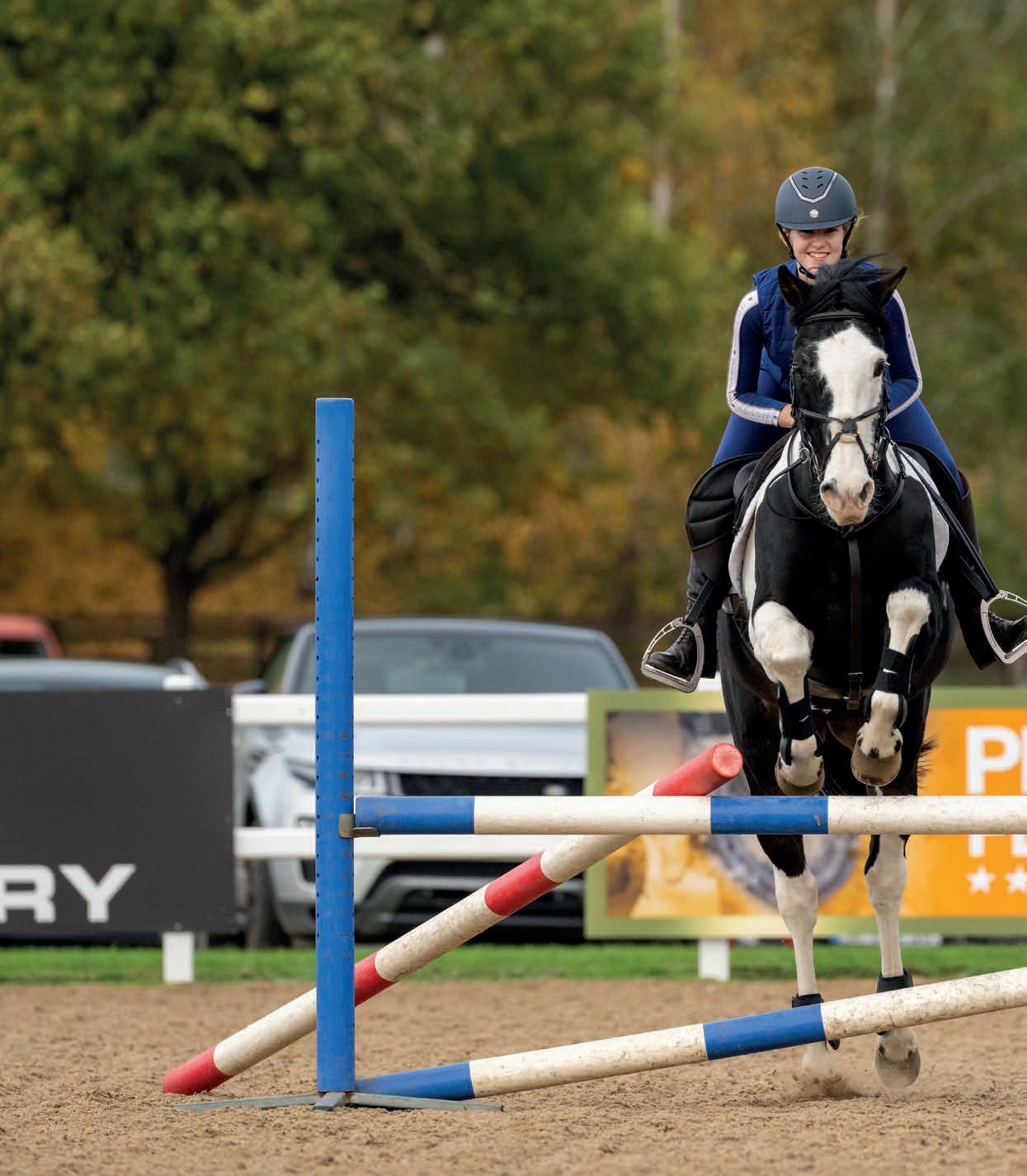
Having your pony straight means they’re working evenly on both sides, with perfect alignment from their poll to their tail. A straight pony carries equal weight on all four legs and is balanced in all three paces and over fences. Like us, ponies are naturally one-sided, so it’s our job to help them straighten up. Our clever exercises will help you do just that!
When your pony’s working straight, their hind feet will follow the same tracks as their front feet. did you know?did you know?
If you compete in dressage you’ll need to perfect your centre lines, but even if you don’t, practising straight lines along the centre line is a good exercise to do.
As you approach the short side, ride a half 10-metre circle from the corner marker onto the centre line. Keep your pony channelled equally between both hands and legs as you make your turn, then ride positively forward. Remember to look ahead in the direction you want to go.
As you approach the end of the arena, ride another half 10-metre circle in the other direction to change the rein. Repeat the exercise now you’re on the other rein and see which feels easier for your pony.
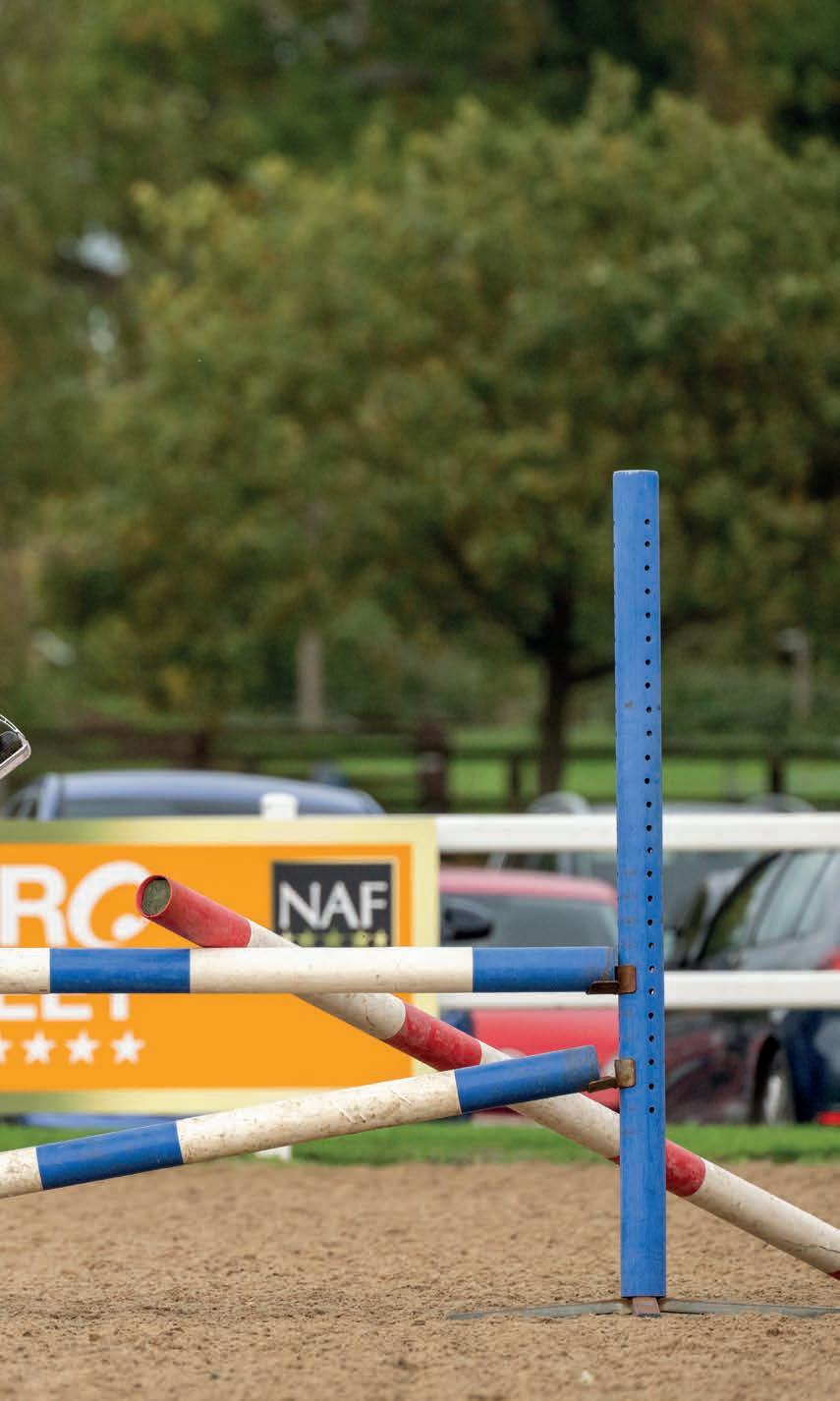
If your pony needs help to stay straight, place poles a metre apart either side of the centre line and ride between them.
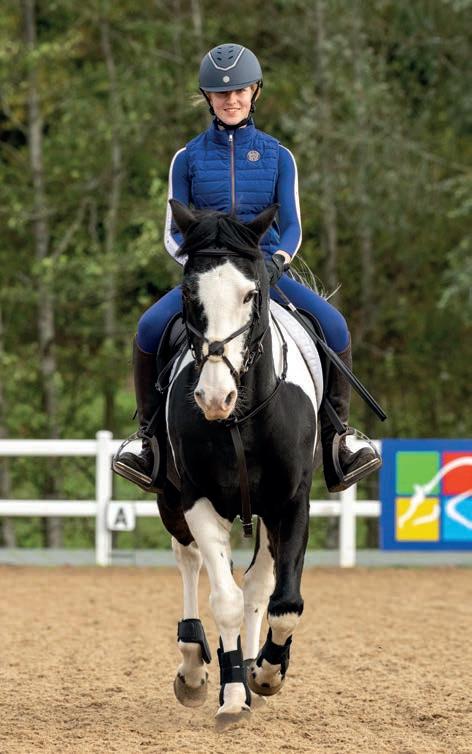
Polework is a great way to work on your pony’s straightness and there are so many lines you can ride over poles. Try these for starters...
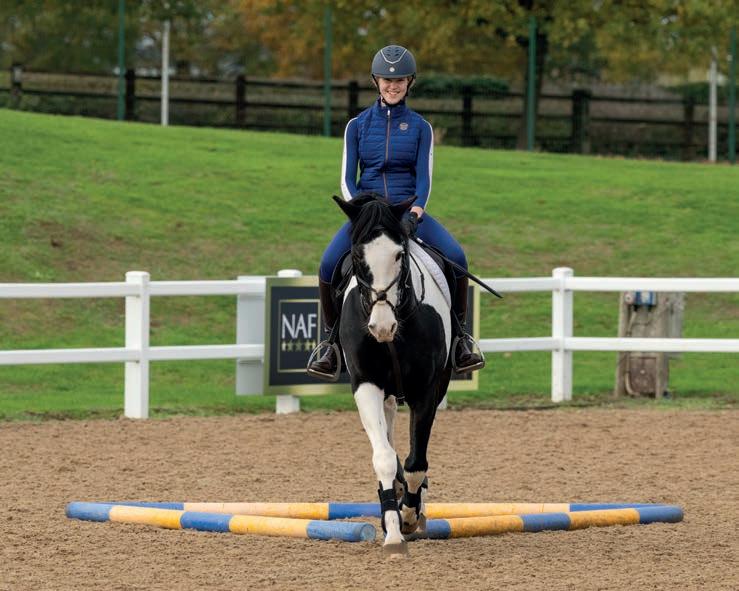
Place a square of poles somewhere in the middle of your arena so that the ends touch each other. It’s better to use poles with coloured segments as this gives you points to aim for.
Keeping your pony channelled between both legs and reins, start by riding over the middle segments of two poles in a straight line. Change the rein each time so you approach the poles from both directions.
If everything’s going to plan, up the challenge by riding over the points of the poles, where the ends meet each other. Then try riding over a point, making a left or right turn and riding out over the middle of another pole.

Some ponies can find water complexes super spooky. After all, they don’t know what’s underneath the surface or how deep it is, and any ripples can quickly change how the light reflects. But, if you’re keen to go crosscountry or just have some fun with your pony, then feeling confident with water is a must!
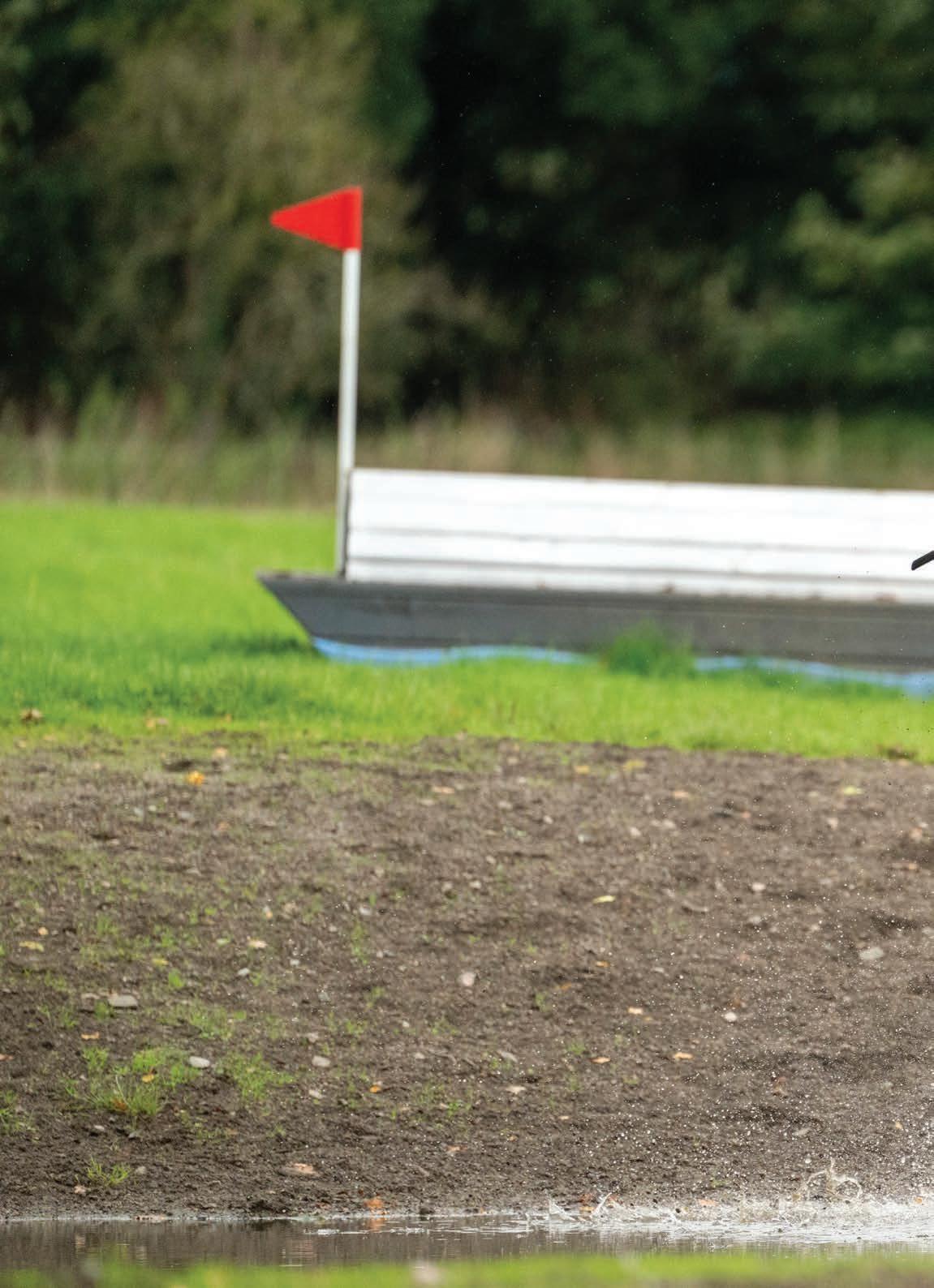
Alex Bragg is a farrier turned 5* event rider based in Somerset.
Once your pony is warmed up and has confidently jumped a couple of inviting fences, start to head towards the water complex so your pony can see it. Ride lots of circles and turns in trot to keep them moving forward – you can wiggle around the jumps nearby to keep them focused on your aids while still in view of the water.
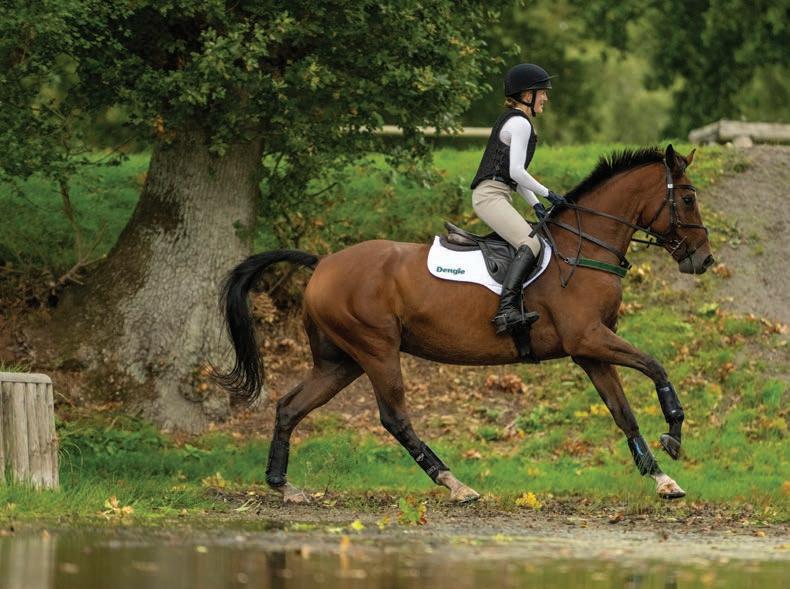
Trot a large circle around the water. Then, when you feel ready, come back to walk and ride a loop so you can approach straight on and with plenty of space for your pony to see what you’re asking. Wrap your legs around your pony’s sides and keep a soft (not long or loose!) rein contact. If your pony hesitates or stops, don’t nag them with your leg. Allow them to look at the water and stretch their neck down, and reassure them with your voice. Take a breath, then encourage them forward with gentle, clear aids, rewarding them as soon as they take a step forward.
Even if your pony is used to water, it’s a good idea to reintroduce them gradually when schooling to keep their confidence cup filled up.
Going cross-country schooling with a friend who has an experienced, confident pony is a great way to make your sessions even better and set up your pony for success!
Ask your friend to give you a lead through water, firstly in walk, then working up through the paces. This will help your pony realise there aren’t any monsters lurking beneath the surface!
It can feel upsetting if your pony is reluctant to get their feet wet. Getting frustrated will make them feel even more worried and anxious, which means they’ll be even less likely to go in the water! This behaviour is them trying to communicate with you, so pause for a moment and speak to your coach to work out what’s causing the problem and how you can calmly resolve it to restore your pony’s confidence.
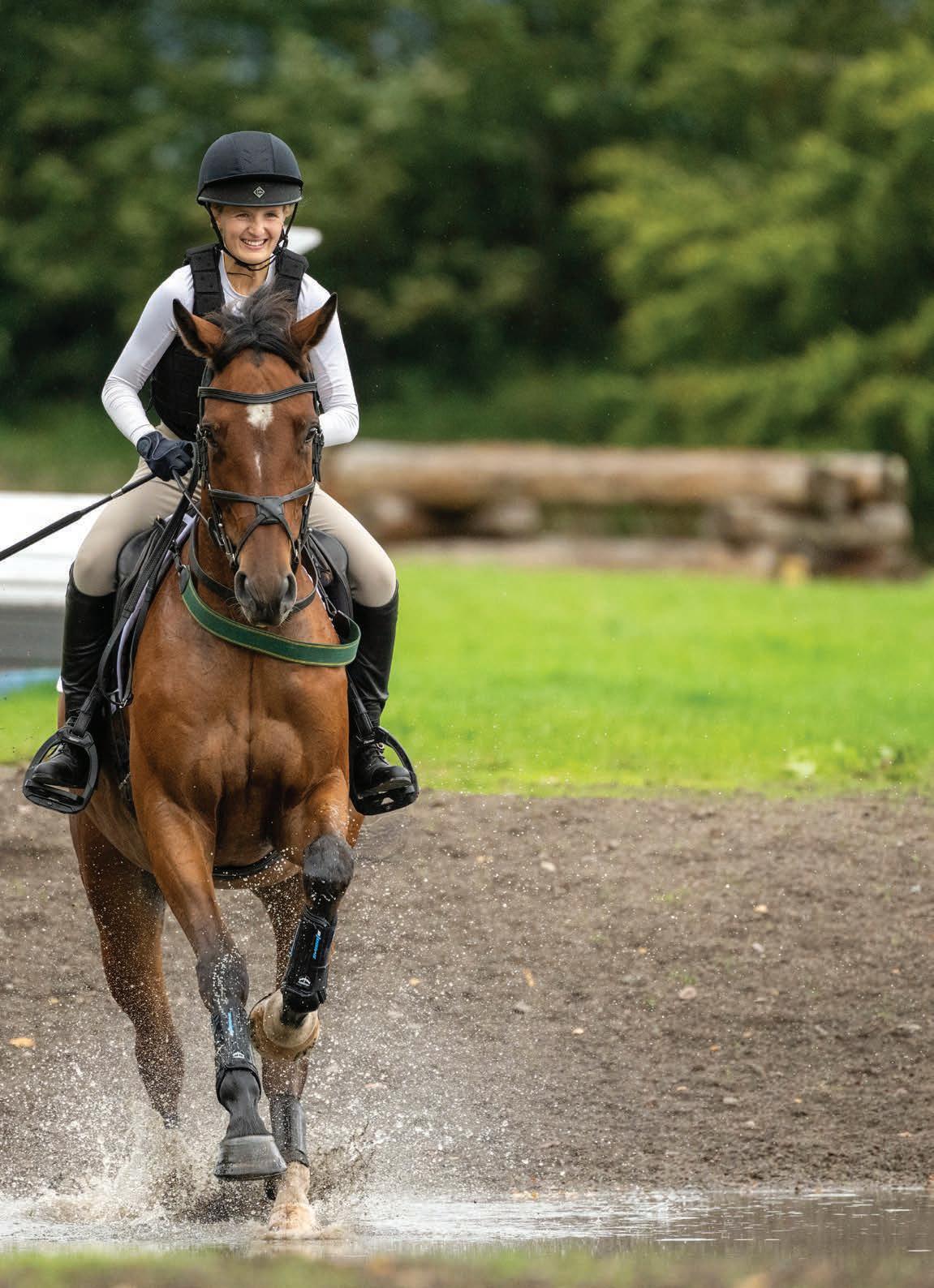
Look after your pony’s health this summer with our helpful guide!
From beach rides and camps to competition days and clinics, summer offers endless opportunities to have fun with your fave pony. However, you really don’t want health issues to halt your plans. With a little attention to detail you can keep your pony looking and feeling their best all through the hotter months of the year. Let’s find out more!
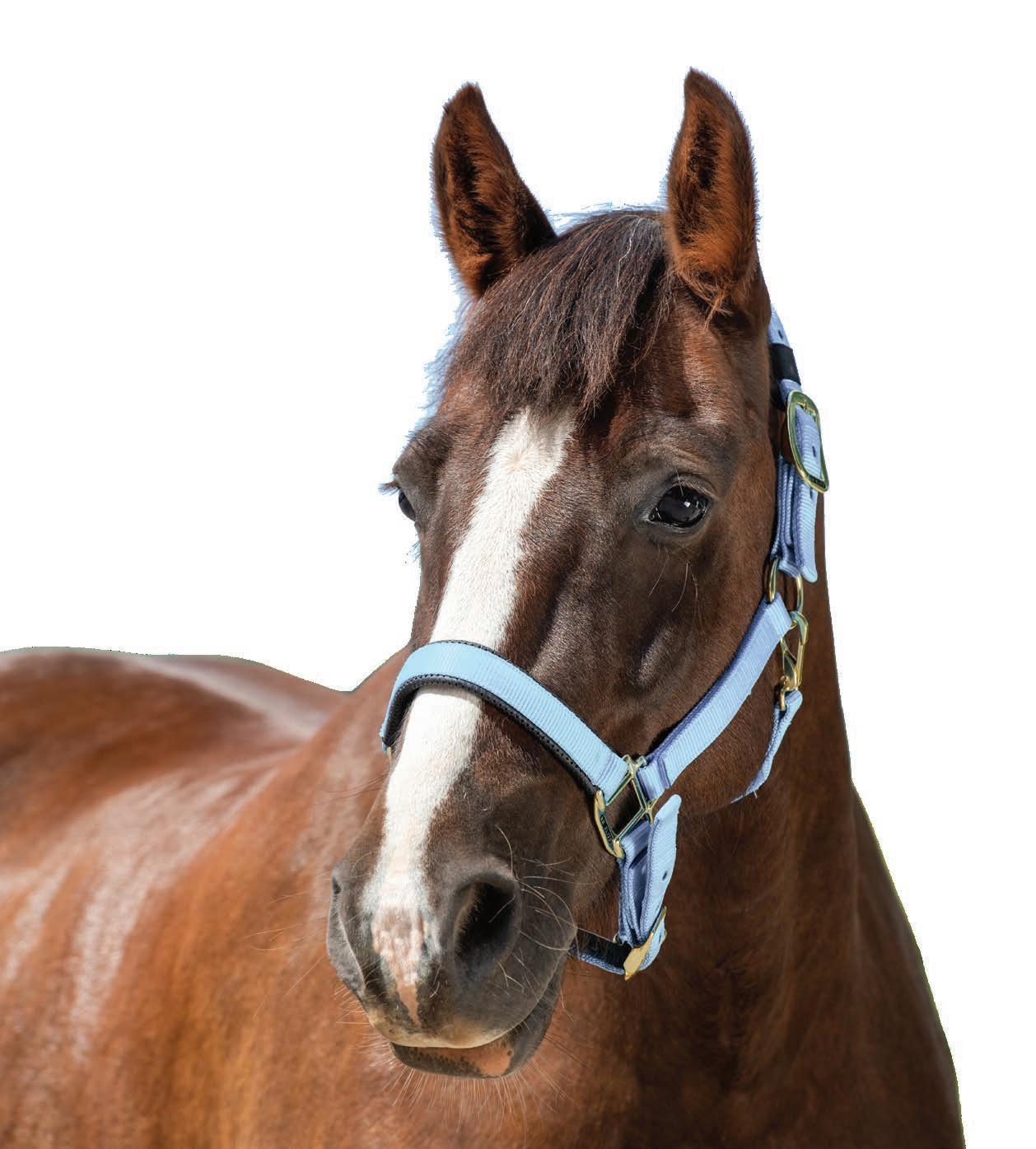
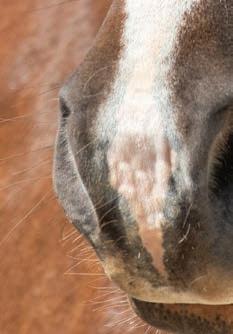
Buying a fly mask with a nose cover provides UV protection for pinknosed ponies.
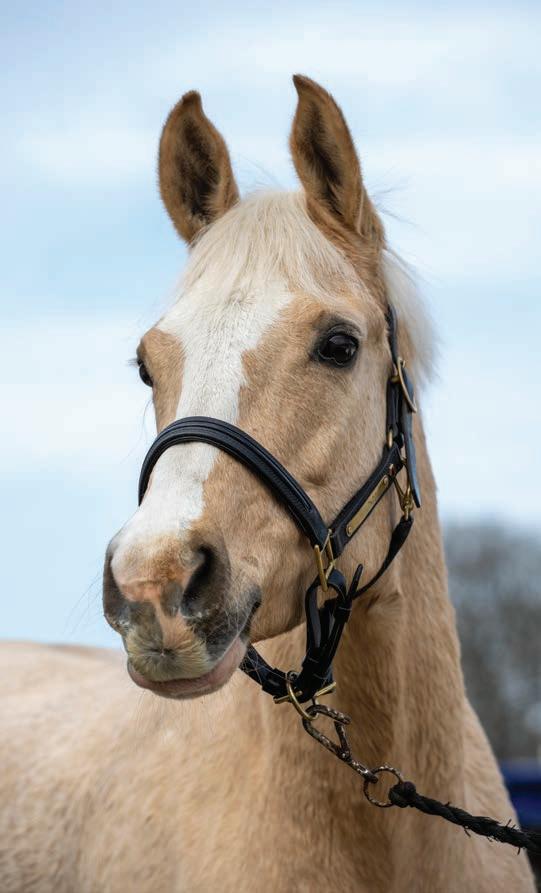
Ponies with pink skin are particularly prone to getting sunburnt when it’s hot. If you need to offer protection, apply pony-safe suncream before riding or turning out.
Summer is also a peak season for skin infections, because even the smallest of cuts can quickly attract flies. If your pony has a small cut, ask an experienced adult to help you deal with it promptly and, if in doubt, call your vet.
Managing your pony’s weight in summer can be tricky, especially if they’re a good-doer. Being overweight places more stress on your pony’s joints and body systems, and can lead to metabolic issues such as laminitis, too. To help keep your pony trim…
• weight tape and body
condition score every fortnight and track the results so you can spot changes
• restrict access to grass by strip grazing, using a track system, or fitting a muzzle when turned out
• soak hay for at least one hour to reduce sugar levels
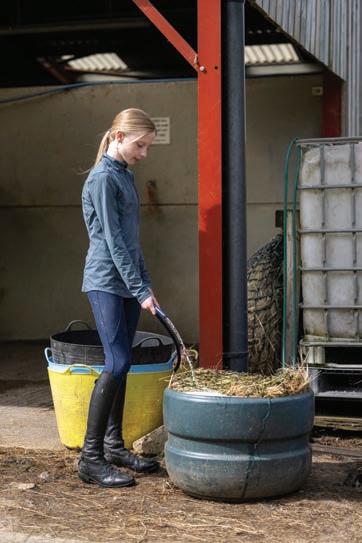

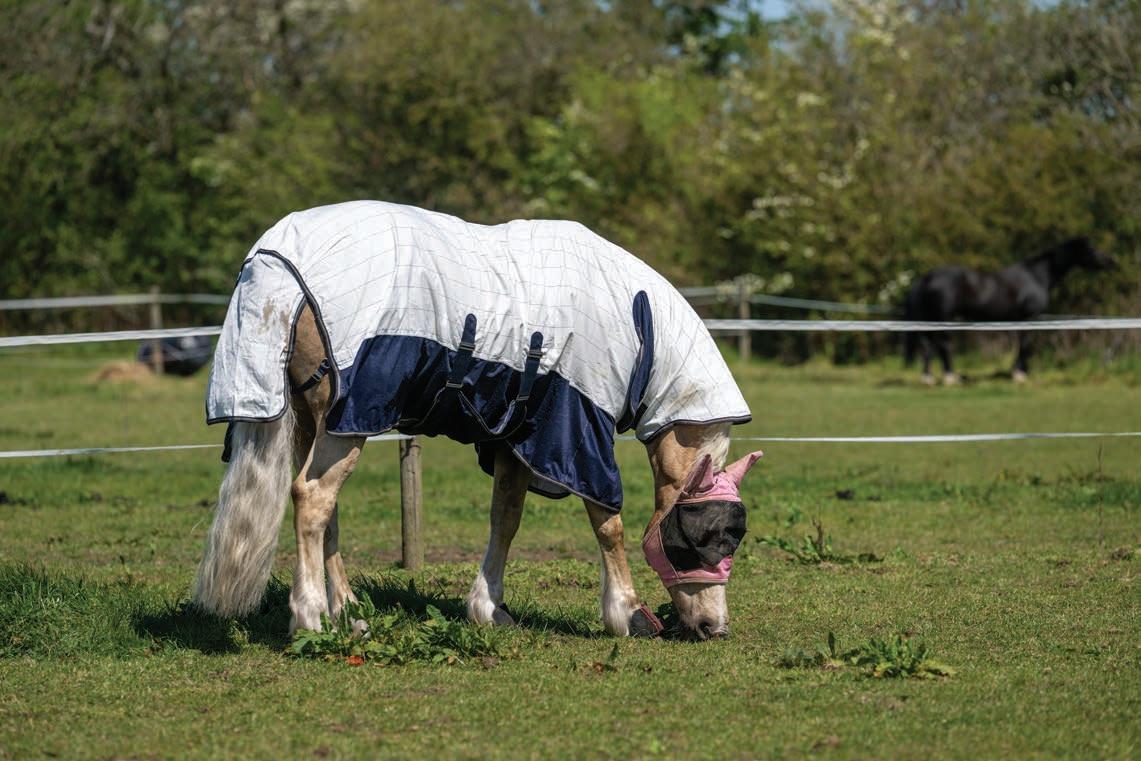
One of the biggest summer challenges is keeping flies and other biting insects away from your pony. As well as stocking up on fly repellent, cover your pony with a well-fitting fly rug and mask when they’re in the field. Keeping your pony’s field, stable and the surrounding areas of the yard clean and tidy will discourage flies, too.
If your pony suffers with sweet itch, special care is needed. Talk to your vet for advice.
There are supplements you can feed your pony that are designed to deter flies. did you know?did you know?
In hot weather, ponies can suffer from heatstroke and dehydration just like people can, so take the following precautions…
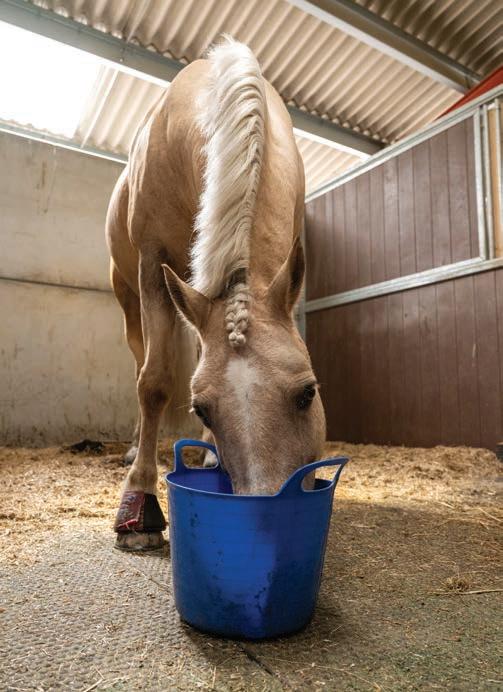
• Make sure your pony always has access to clean, fresh water
• Provide shelter in the field or consider stabling your pony during the day and turning out at night
• Ride early in the morning when it’s cooler
• Wash off your pony after work – the evaporating water helps cool them down
• Avoid travelling ponies when it’s hot
• If you suspect your pony has heatstroke, call your vet immediately