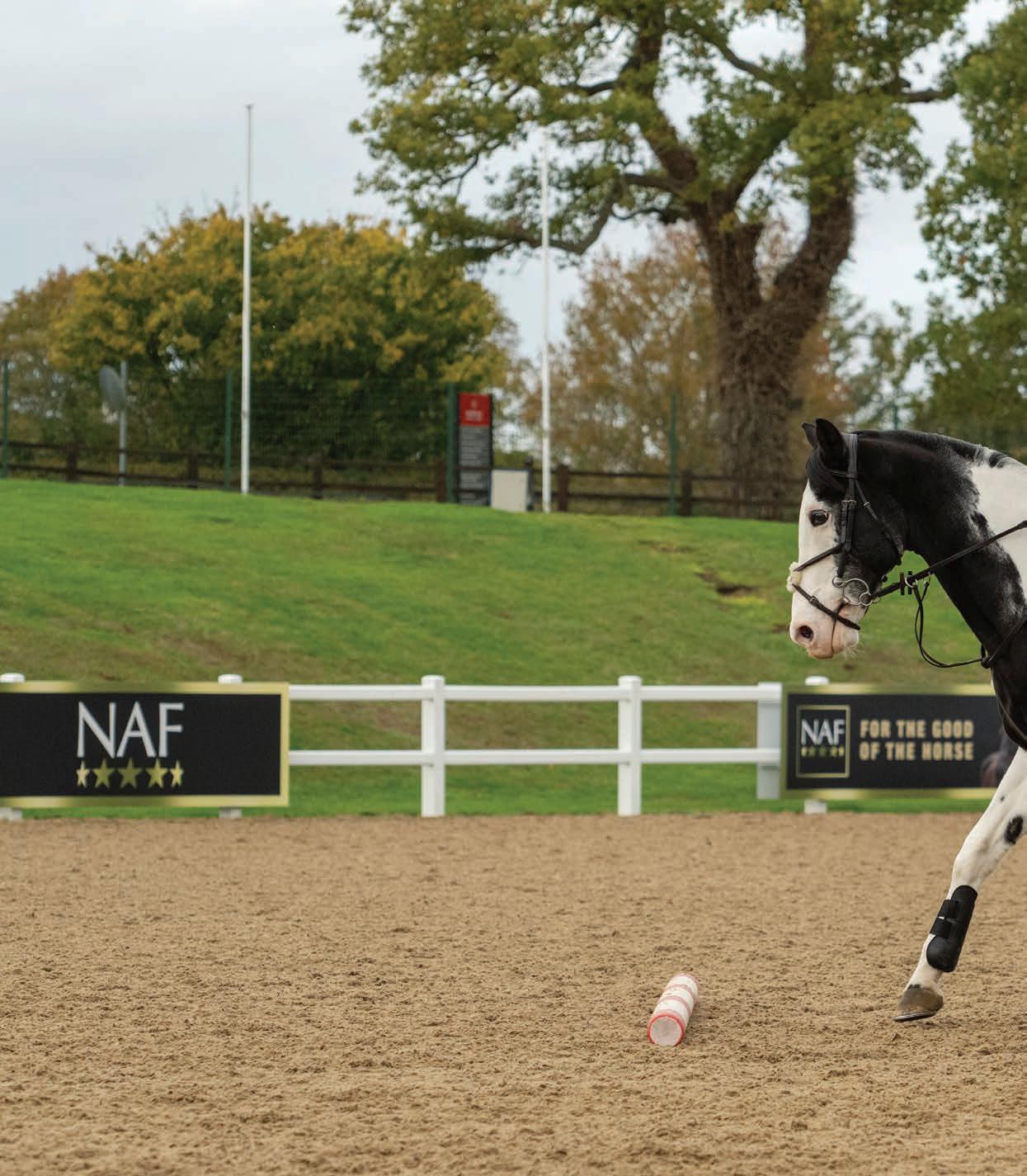
Teach your pony to work in a good rhythm. We’re here to help you do just that!
Whether you’re schooling at home, competing in dressage, heading out for a hack or tackling a course of fences, having your pony in a good rhythm is the key to success. Let’s find out more!
Rhythm is the first scale of training and refers to the regularity and timing of your pony’s footfalls. Each pace has its own natural rhythm:
• Walk is a four-beat pace where your pony moves the right hind leg followed by the right foreleg, then the left hindleg followed by the left foreleg.
• Trot is a two-beat pace where your pony moves their legs in diagonal pairs.
• Canter is a three-beat pace. Your pony will move their outside hindleg, followed by the inside hindleg and outside foreleg together and finally the inside foreleg.
Before you work on your pony’s rhythm, check in on your own riding. Make sure you’re riding with a balanced seat, equal weight on both seat bones, a consistent rein contact and that you’re allowing your pony to move freely forward in all paces. After all, your pony can only work in a consistent rhythm if you’re giving the right signals. 4 4 1 1 3 3 2 2 2 2 2 2 1 1 1 1
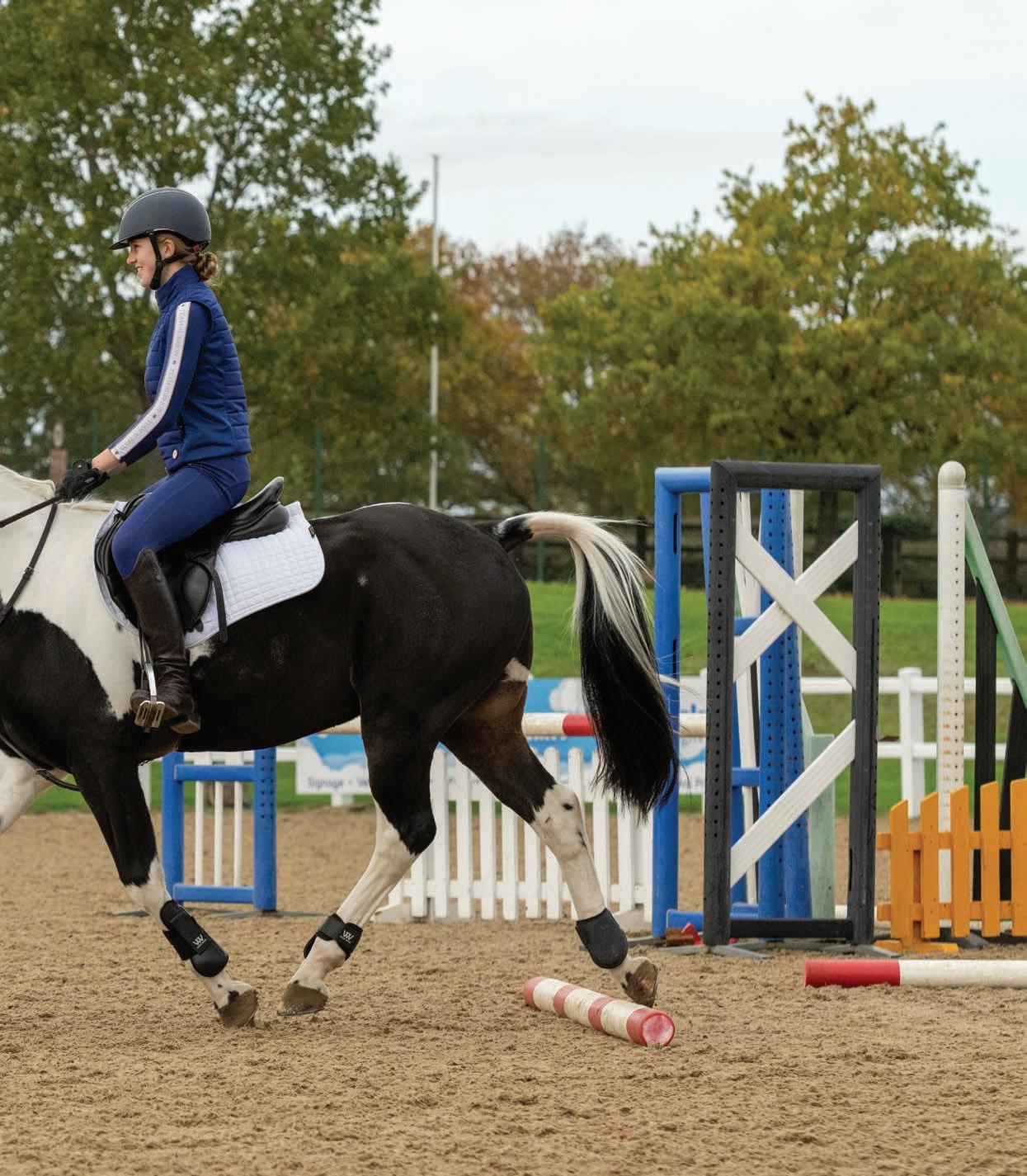
Developing a good rhythm takes time, especially if your pony tends to rush or lacks energy. did you know?did you know?
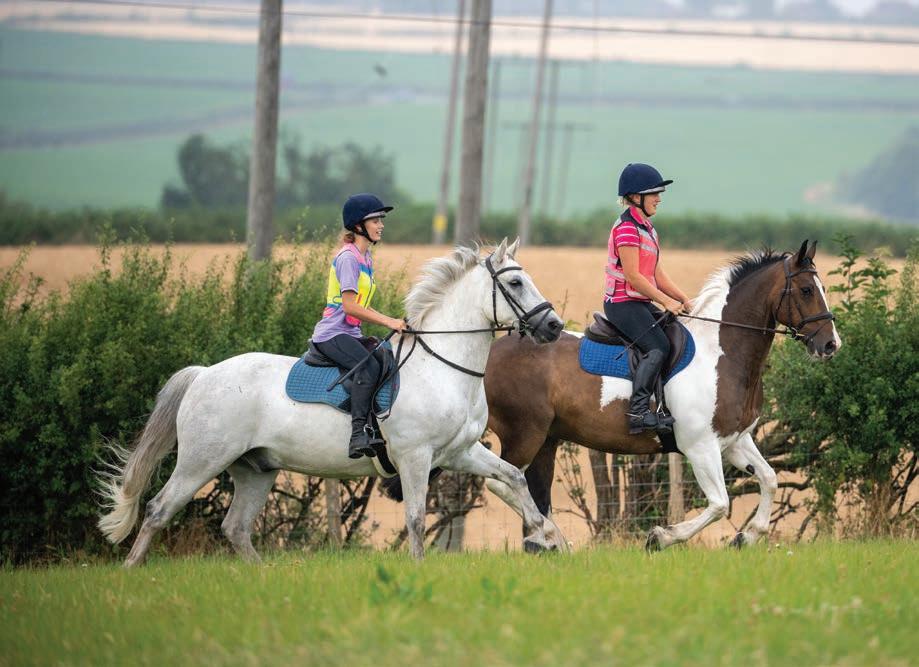
Work on establishing a consistent rhythm on a 20m circle –this is the best place to start because the curved line helps your pony to stay balanced.
Start in walk or trot, then build up to canter once you and your pony have established a good rhythm. Start by counting out loud the beats of your pony’s footfalls (one, two, three, four in walk, one, two, one, two in rising trot and one, two, three in canter). Doing this is like having your very own metronome and helps you both stay relaxed.
You’ll start to notice whether your pony is staying in time with your counting. If they begin to rush, ride some half-halts to slow the rhythm, and if you need more energy, use your leg aids to encourage your pony a little more forward.
Ask your instructor or an experienced adult to watch you and your pony from the ground to check you’re working in a good rhythm.
Take your riding skills to a whole new level by setting and tracking goals!
Big or small, goals offer us something we can work towards. Whether you want to nail canter transitions, ride on the beach or qualify for a championship one day, goal setting is the key to success. Let’s find out more.
Are you familiar with the SMART method? Riders of all levels use this system because it makes goals clearer and easier to achieve.
SMART goals are…
• Specific – be clear about exactly what you want to achieve
• Measurable – track your progress
• Achievable – keep your goals realistic
• Relevant – choose goals that matter to you
• Time bound – set sensible deadlines for each stage.
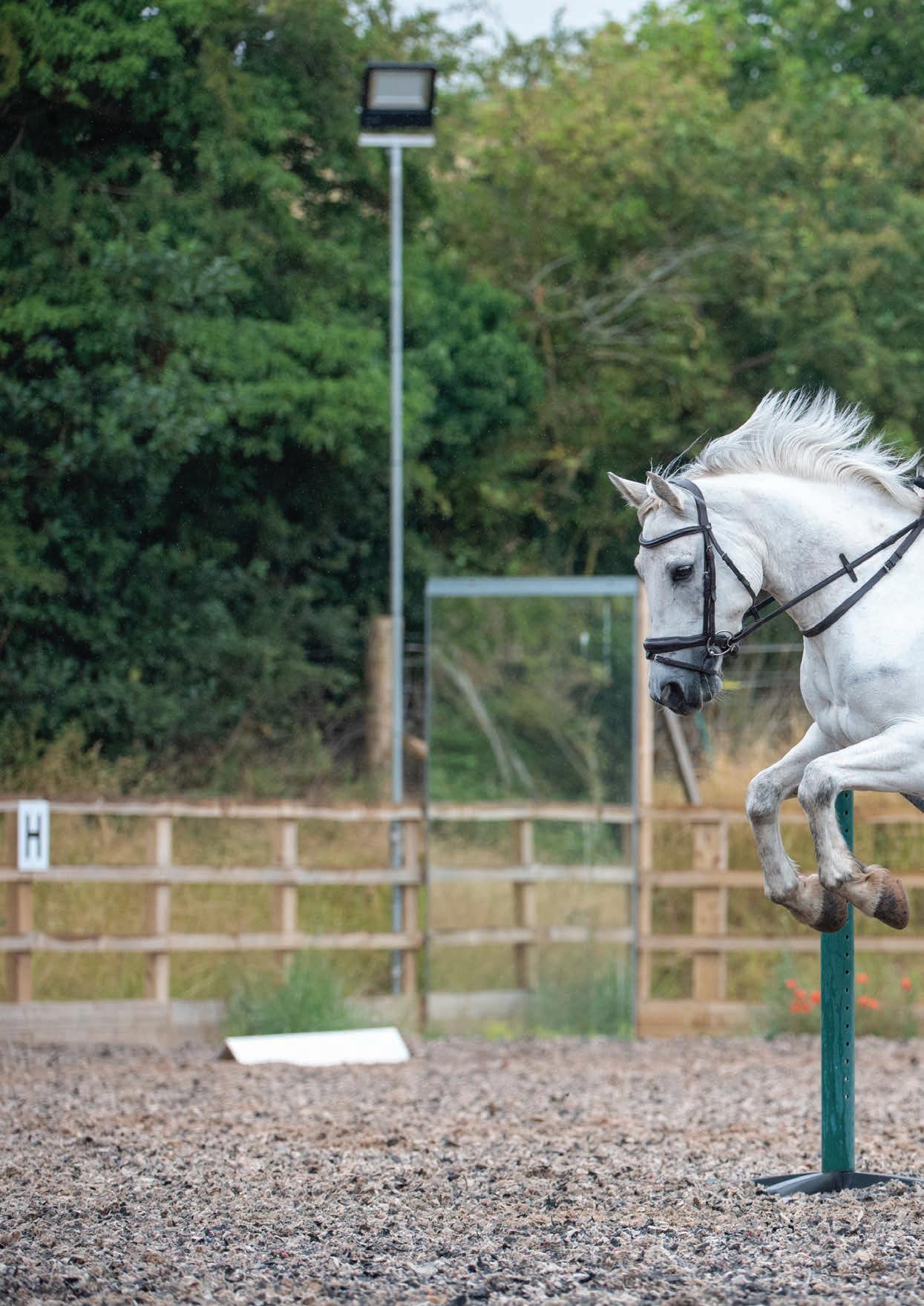
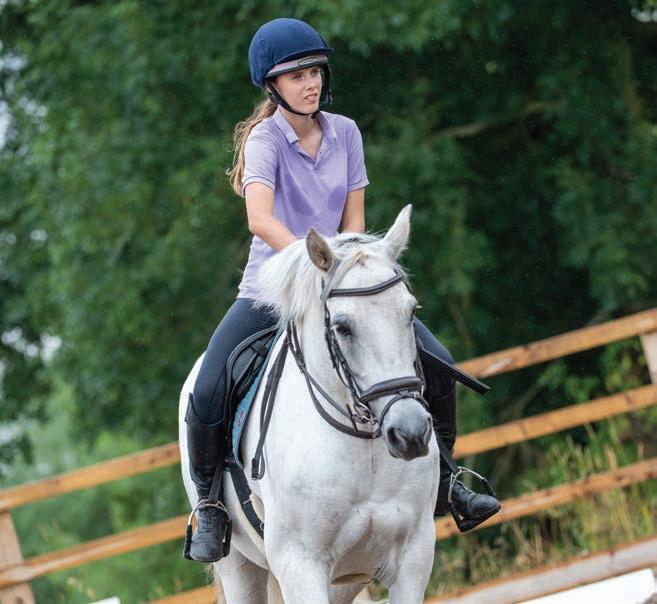
them down
It’s great to have big ambitions but sometimes huge goals can feel a bit overwhelming, unless you break them down into smaller ones. For example, if your ultimate goal is to take part in a fun ride, your smaller goals might include…
• being able to hack out with one or two friends confidently
• cantering your pony in company
• hiring a cross-country course
• riding out in bigger groups Whatever your ultimate goal, set stepping stones to help you get there.
Be specific. Instead of saying ‘I want to improve my dressage’, say ‘I want to gain more than 60% in a Prelim test by the end of the year’.
Sometimes you might need to alter your goals, and that’s absolutely fine. Maybe one of your smaller goals isn’t as achievable as you first thought, or perhaps school work has got in the way of your riding plans. Breaking your goals down into even smaller ones or allowing yourself a longer time frame doesn’t mean you’ve failed, it simply means your progress has taken a few twists and turns!
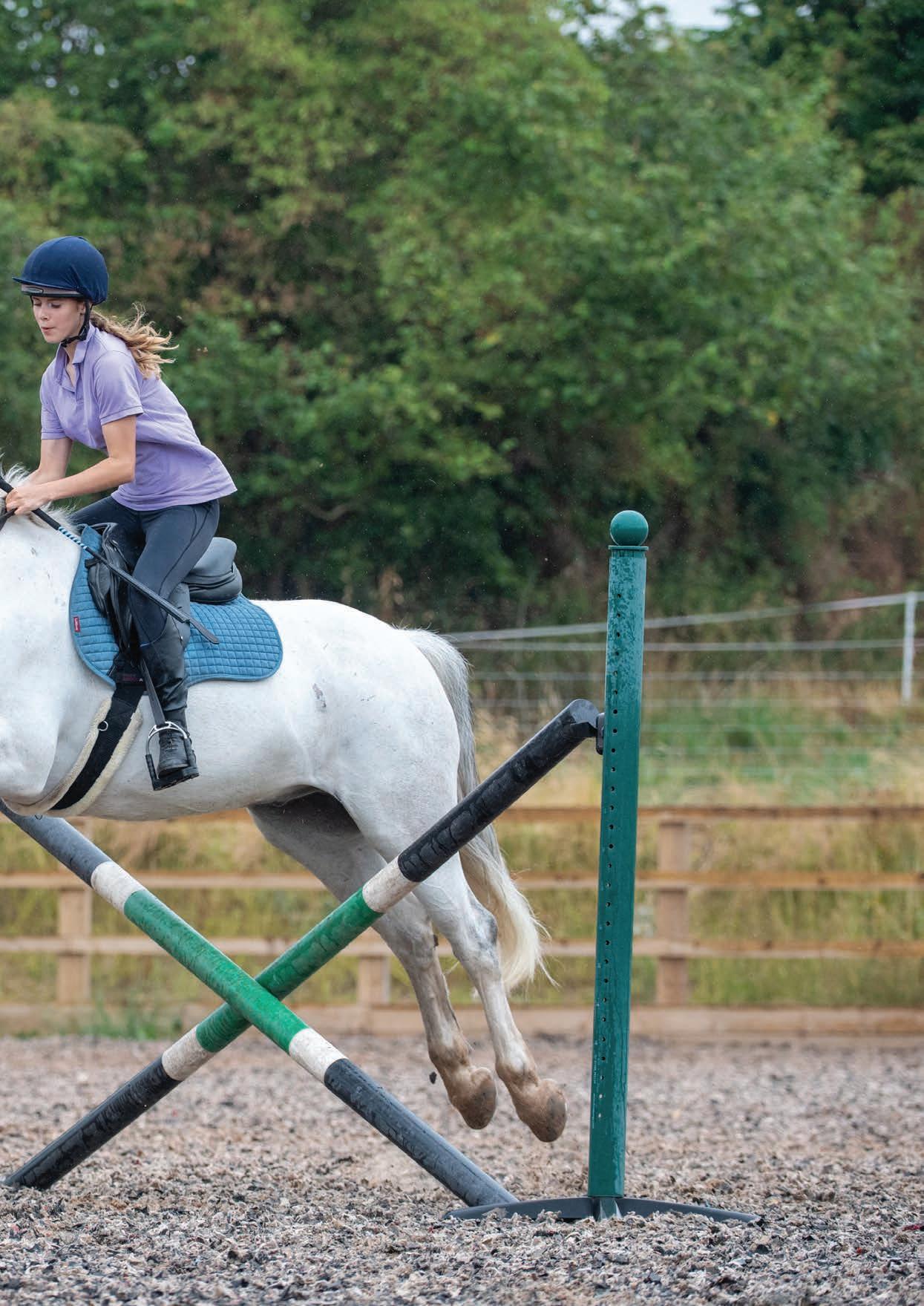
One of the best ways to stay motivated with your goals is to keep a record of your progress, and a riding journal is just the job! After each ride, write down…
• what you felt went well
• one thing that improved
• anything you found tricky
• the things you’re going to work on next time By doing this, you can look back and see just how much progress you’ve made!
did you know?did you
Goals don’t need to involve riding. They could be building your groundwork skills or improving your stable management!
Remember to enjoy the journey and celebrate the smaller wins. Some days things might not go to plan, but often those days teach us more than the ones where everything went well.
Get clued up on all things supplements right here!
Ever ventured into the feed room at your pony’s yard and wondered what all the different tubs and bottles on the shelves are for? They’re feed supplements and are used to help balance ponies’ diets, and add nutrients to support their health.
As with anything diet-related for your pony, it’s always best to get advice from a qualified nutritionist, who will be able to decide what products are best based on lots of different factors, such as their age, weight, any health conditions and the kind of work they do.
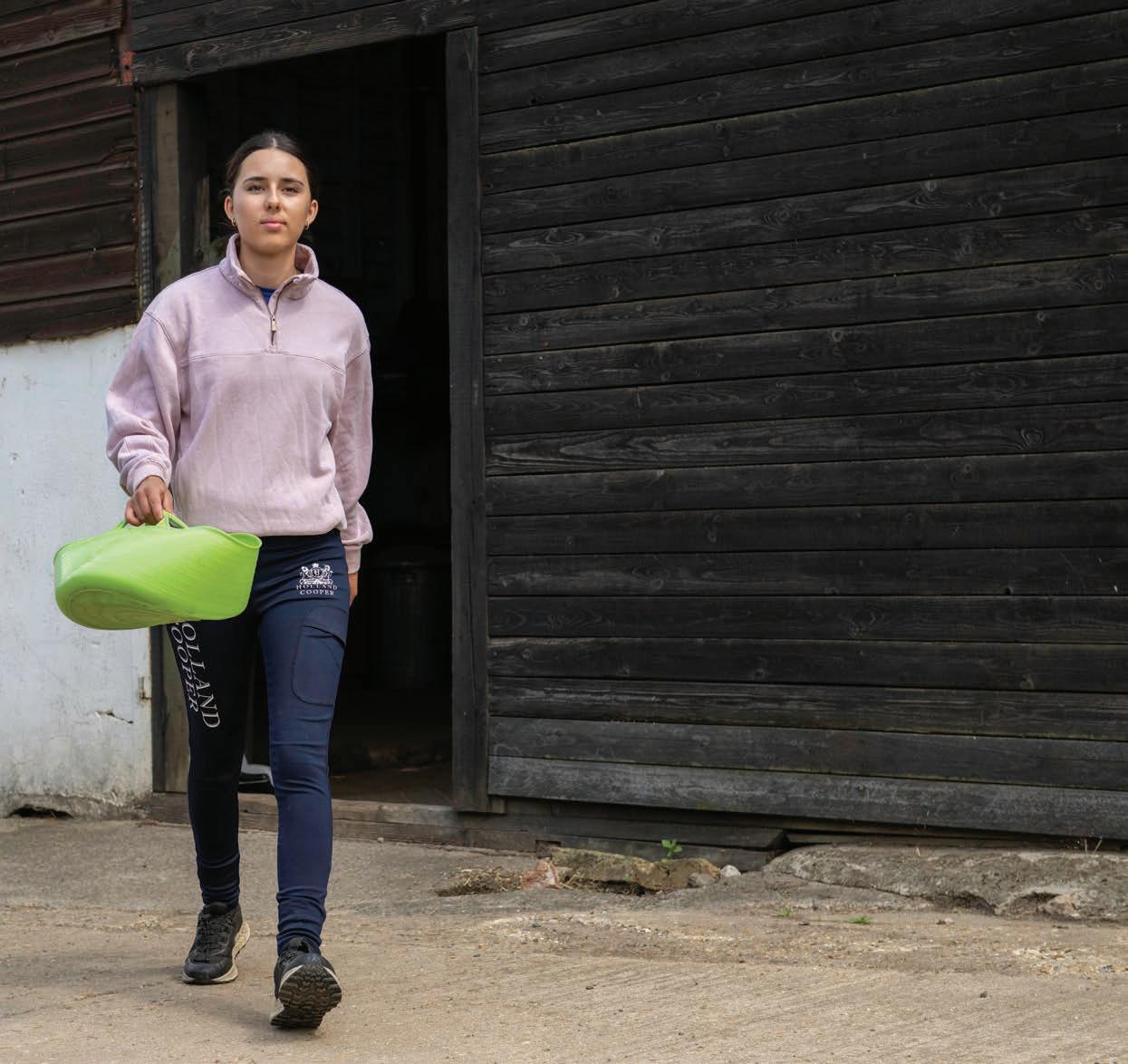
If you’ve visited a tack shop, you’ll know how many different types of supplement there are available – it’s a bit mind boggling, to be honest! Here are the basics that are good to know…
• Supplements come in either powdered, pelleted or liquid form.
• Broad-spectrum vitamin and mineral supplements are similar to feed balancers (so you don’t need to feed both) – as long as they’re fed at the recommended rate, your pony will receive all the nutrients they need to stay healthy.
• Specialised supplements are formulated to help support particular areas of health, such as hoof quality or joint mobility.
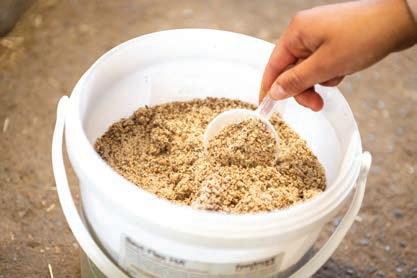
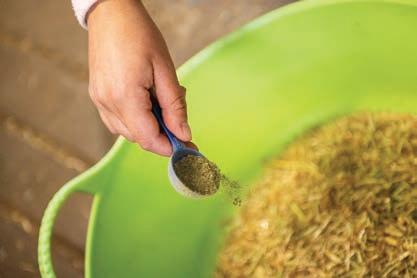
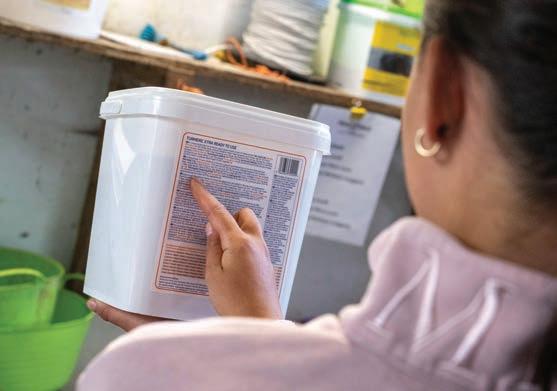
Always read the label to help you work out how much of a particular supplement to feed. It will depend on your pony’s weight, but might also be affected by their workload. If you don’t feed the recommended amount, your pony won’t receive the correct quantity of ingredients needed to have the intended effect. However, don’t be tempted to feed too much – it could cause health issues, plus it’s a waste!
Before you open a new tub or bottle of supplement, look at the use-by date, and check whether there’s a limit on how long it can be open for. This is important because some products can go off after a certain amount of time, so it needs to be used within that period, or safely thrown away if there’s any left.
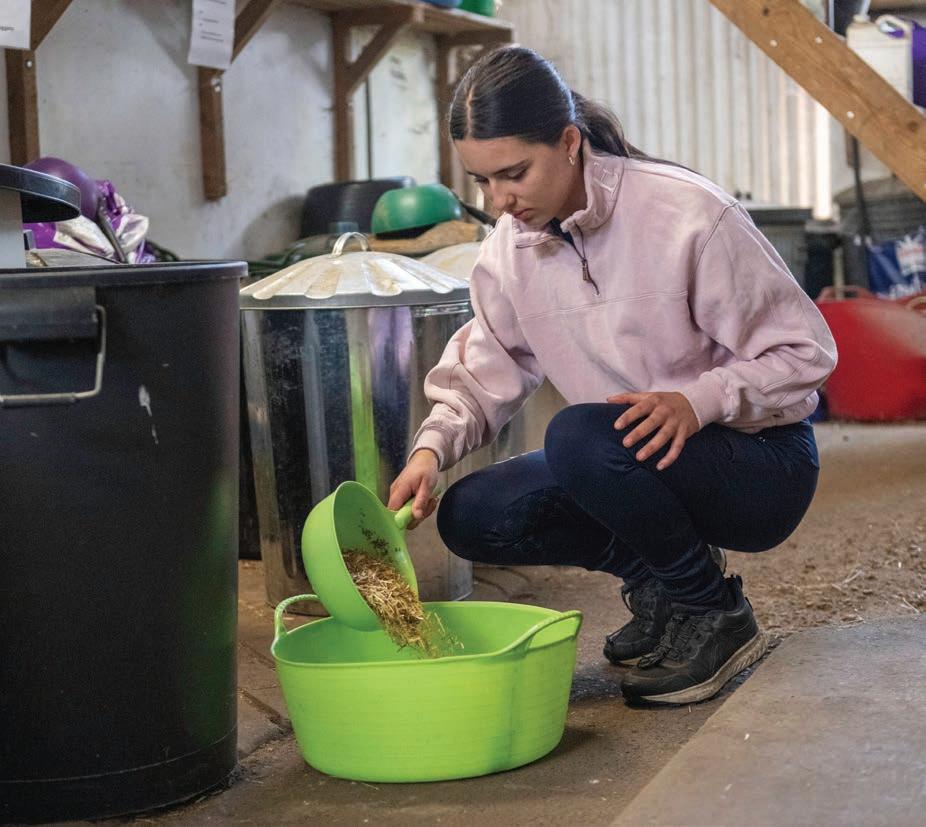
It’s important to store supplements safely –this means securely closing the lid after each use, and having a separate scoop or measure for each supplement to avoid cross-contamination.
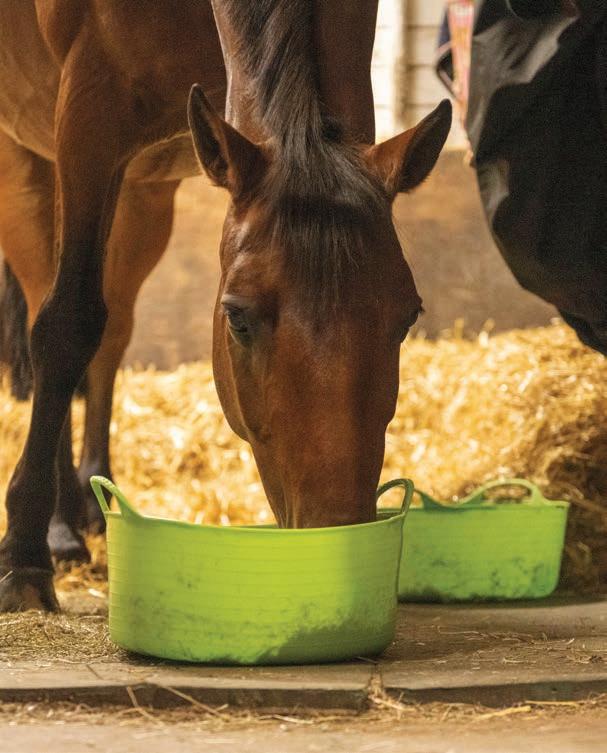
Check the feeding instructions, too – but for most, you simply add the supplement last to your pony’s bucket feed. Sprinkle onto the feed, add water as usual and mix well.
If your pony is fussy, then you could try adding a small amount of a fibre-based mash to their bucket feed to help hide the supplements, or chop or grate some carrot into it. There are even supplements with extra flavourings – such as mint – to help tempt your fussy feeder.