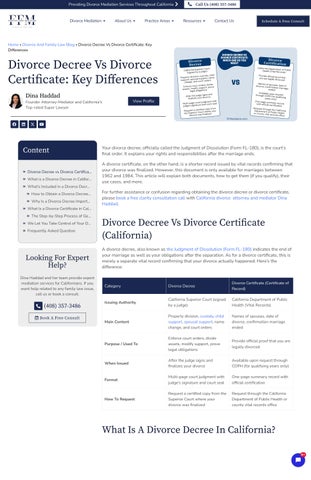

DivorceDecreeVsDivorce Certificate:KeyDifferences

DinaHaddad Founder Attorney-Mediator
Top-rated
Divorce Decree vs Divorce Certifica
What is a Divorce Decree in Califor
What’s Included in a Divorce Decr
How to Obtain a Divorce Decree
Why Is a Divorce Decree Import
What Is a Divorce Certificate in Cal
The Step-by-Step Process of Ge
We Let You Take Control of Your D
Frequently Asked Question
LookingForExpert Help?
Dina Haddad and her team provide expert mediation services for Californians If you want help related to any family law issue, call us or book a consult (408)357-3486
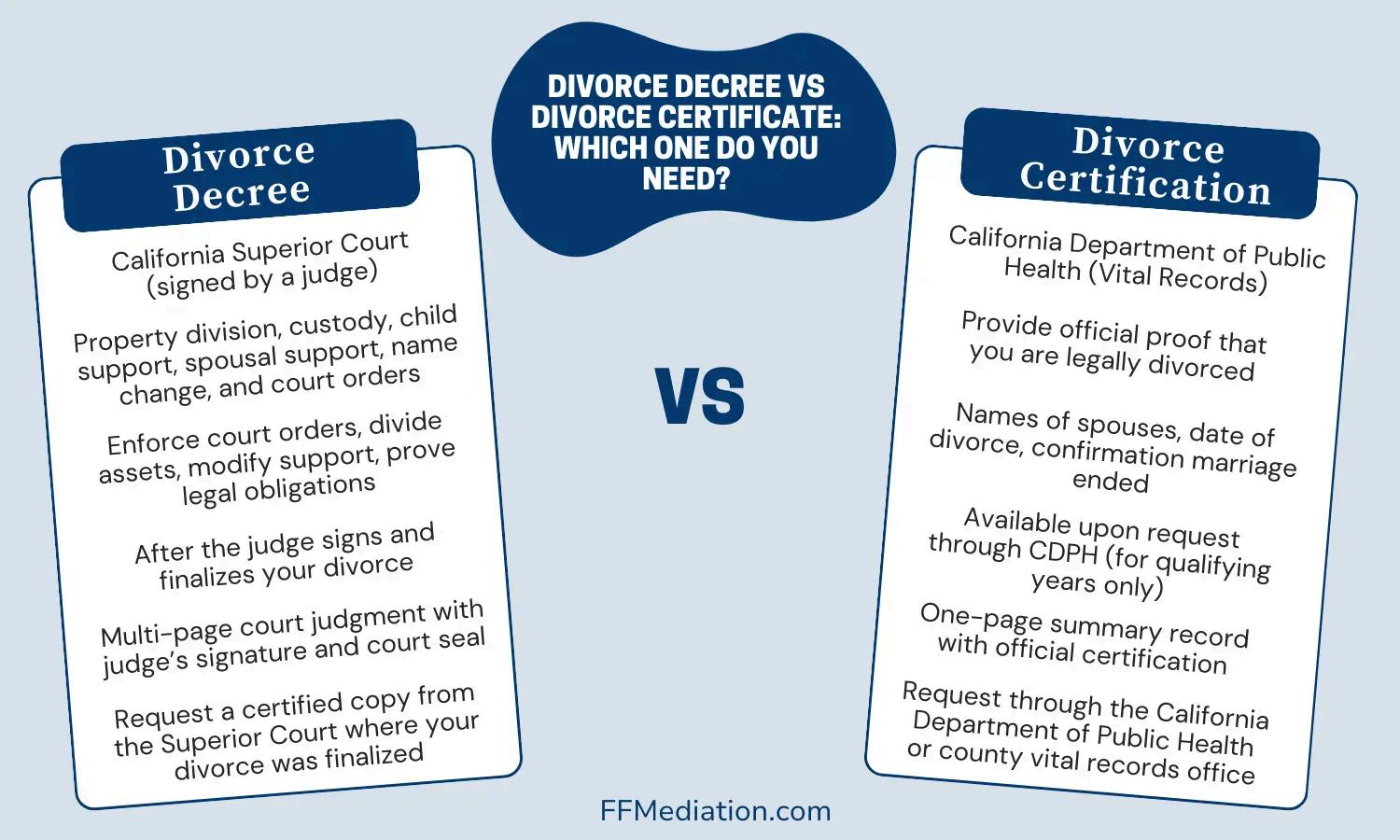
Your divorce decree, officially called the Judgment of Dissolution (Form FL-180), is the court’s final order It explains your rights and responsibilities after the marriage ends
A divorce certificate, on the other hand, is a shorter record issued by vital records confirming that your divorce was finalized However, this document is only available for marriages between 1962 and 1984 This article will explain both documents, how to get them (if you qualify), their use cases, and more
For further assistance or confusion regarding obtaining the divorce decree or divorce certificate, please book a free clarity consultation call with California divorce attorney and mediator Dina Haddad
DivorceDecreeVsDivorceCertificate (California)
A divorce decree, also known as the Judgment of Dissolution (Form FL-180) indicates the end of your marriage as well as your obligations after the separation As for a divorce certificate, this is merely a separate vital record confirming that your divorce actually happened Here’s the difference:
Purpose / Used To
When Issued
Enforce court orders, divide assets, modify support, prove legal obligations
After the judge signs and finalizes your divorce
Provide official proof that you are
Available upon request through CDPH (for qualifying years only) Format
Multi-page court judgment with judge’s signature and court seal
One-page summary record with official certification
How To Request
Request a certified copy from the Superior Court where your divorce was finalized
Request through the California Department of Public Health or county vital records office
Divorce Certificate (Certificate of Record)
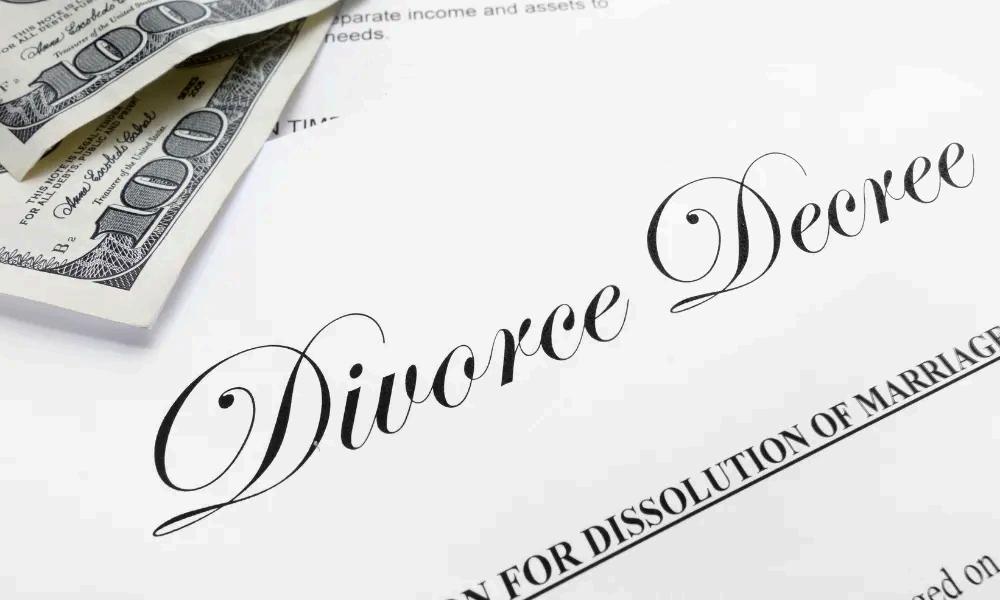
The Divorce Decree is referred to as the Judgment of Dissolution (FL-180) and this is the Final Court Order that dissolves your marriage
“Divorce decree”, “divorce judgement” or “Judgment of Dissolution” are all referring to the same document As such you can use them in conjunction with one another; however, the official title is “Judgment of Dissolution” Nevertheless, the divorce decree serves four important purposes:
1 It legally terminates your marriage
2 It outlines how your property and debts are divided
3 It sets child custody, visitation, and support orders
4 It establishes spousal support and other enforceable obligations
It’s very important to recognize that a Divorce Decree is different from a Marital Settlement Agreement (MSA) A Marital Settlement Agreement (MSA), is an agreement on all material terms of your divorce with your spouse, that is then presented to the Judge for review and approval Upon the approval by the judge, the MSA is changed to a Divorce Decree that may be enforceable by law
Read More: Learn about the Common Law Marriage in California
WhatʼsIncludedInADivorceDecree?
The Divorce Decree contains all key terms of your divorce like how property and debt will be divided as well as child custody & visitation rights, child support, and spousal support orders
It will also mention your full legal name and basic identifying details along with the date of your marriage
Depending on your divorce case specifics the Judgment of Dissolution may include a name change as well as other obligations such as the parties’ respective insurance coverage responsibilities and/or tax obligations In addition to these details you will see the Judge’s Signature and the Court Seal which makes this document legally binding
To obtain a copy of the Judgment of Dissolution (FL-180), you can contact the Superior Court for the County in which your divorce was filed and make a request
To be able to receive your divorce decree, you should:
Complete and submit Form FL-180
File all final paperwork with the court clerk
Note: If your divorce was finalized elsewhere, like Texas, California courts can’t help you You’ll need to request the document from the state where your divorce was granted
To get a certified copy of your divorce decree, contact the clerk’s office of the superior court that handled your divorce They will request a fee, which is typically a set fee plus an additional
A Divorce Decree is confirmation of your marital status by law that you are divorced; it also permits you to change your name, get remarried, have child and spousal support enforced as well as distribute assets in accordance with the terms of your divorce Learn more about how I know if my divorce is finalized
You may be subject to penalties for doing any of these things prior to obtaining your decree, which will likely delay, and possibly stop your divorce proceedings entirely
WhatIsADivorceCertificateInCalifornia?
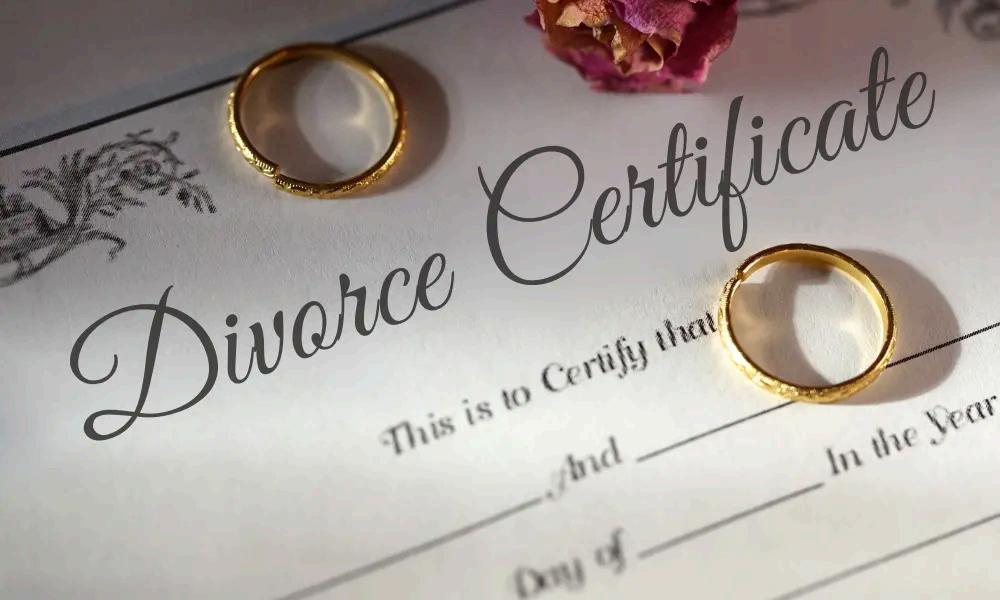
There is no true document called “Divorce Certificate” issued by California courts Most people usually refer to a Certificate of Record as the divorce certificate, which is issued by the California Department of Public Health or the county vital records office
It’s important to note that California courts no longer issue these records, and this only applies to marriages between 1962 and 1984
Regardless, Certificate of Record is a document only confirming that your divorce happened It doesn’t contain any important details like property division, child custody or child support All these are found in the Judgement of Dissolution (FL-180)
The divorce Certificate of Record can be used for the following purposes:
1 It may be required if you plan to remarry
2 Provides official proof that your marriage has legally ended
3 Update government records, such as Social Security or identification documents
4 Help confirm your marital status for administrative or record-keeping purposes
If your marriage was between 1962 and 1984, you qualify for a Certificate of Record Marriages after this period can only get the Judgement of Dissolution (FL-180), which can be used for either proof of marriage or for updating government details TheStep-By-StepProcessOfGettingTheDivorce Certificate
Disclaimer: This section only applies to qualified parties whose marriage was between 1962 and 1984
Step1:GatherTheRequiredInformation
Before you ask for a copy of your divorce certificate, get as much information about the divorce as possible
This will include both spouses ’ complete names, the date of divorce, and in which county your divorce was finalized Getting this information beforehand, makes it easier to find your divorce certificate
Step2:IdentifyTheCounty&Court
Identify which county issued your divorce, and then obtain the certificate from that county/court using one of three methods: in-person, via mail, or online (the county’s method may vary)
You’ll need to fill out and send the VS-113B form , which is the official document used to request a Certificate of Record
Submit your request to either the Superior Court Clerk or vital records office then pay the necessary fee, usually $18 per certificate copy you request
WeLetYouTakeControlOfYourDivorce
So what is the difference between a divorce decree and a certificate? A Divorce Decree, also known as a Judgement of Dissolution, officially ends your marriage and dictates what both parties’ obligations regarding asset division, spousal support, child support, child custody, and more
As for the Divorce Certificate, also known as the Certificate of Record, this only proves that your marriage ended, without any sensitive divorce terms It can be received by divorced couples whose marriages were between 1962 and 1984
Do you have questions for your unique situation? Schedule a free consultation with Families First Mediation today!
FrequentlyAskedQuestion
Q.IsADivorceDecreeTheSameAsADivorceCertificateInCalifornia?
Q WhatIsTheFinalDivorceDocumentCalledInCalifornia?
Q HowDoIKnowIfMyDivorceIsFinalizedInCalifornia?
Q.DoesADivorceDecreeExpire?
Wasthishelpful?
Yes No