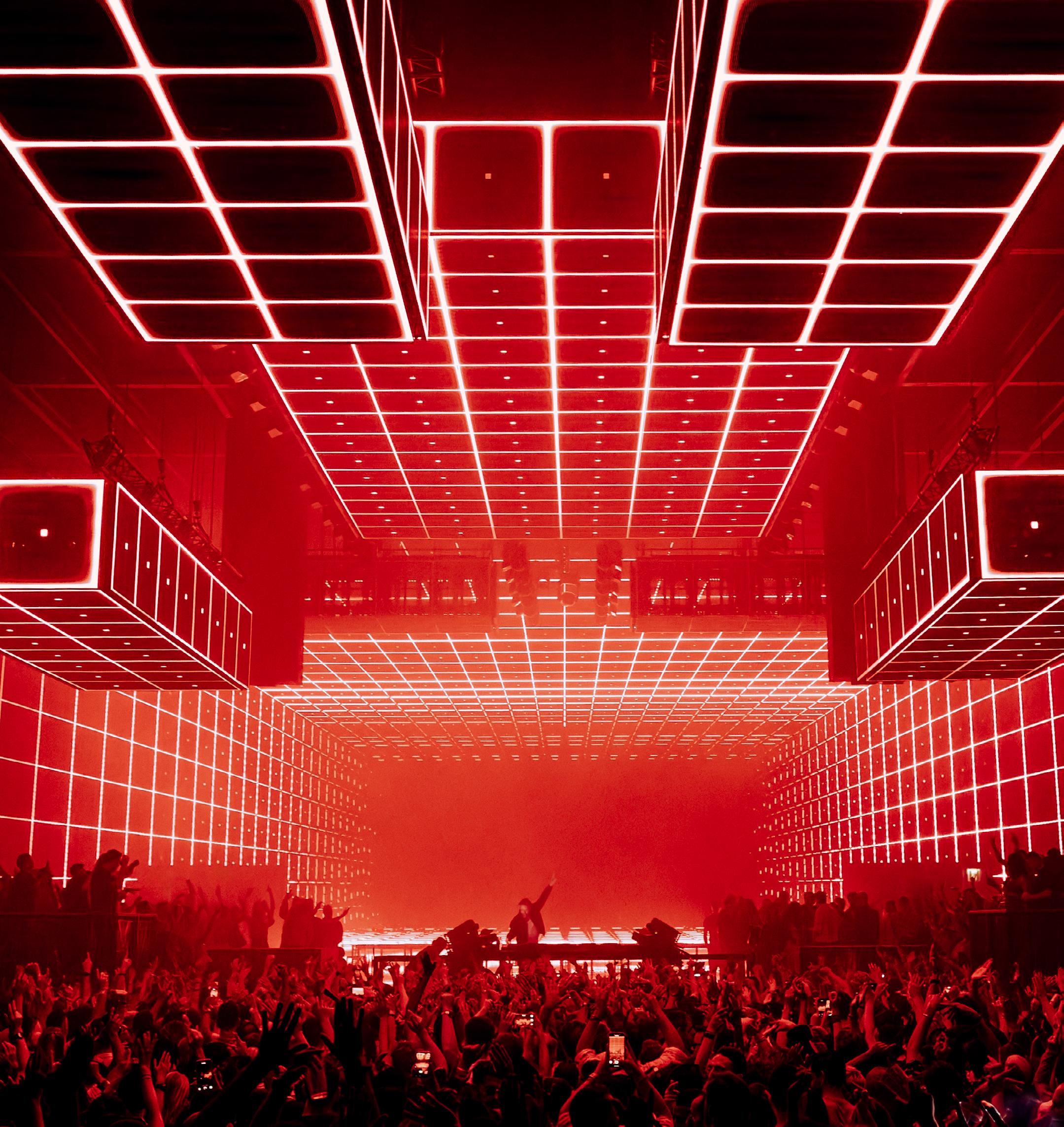
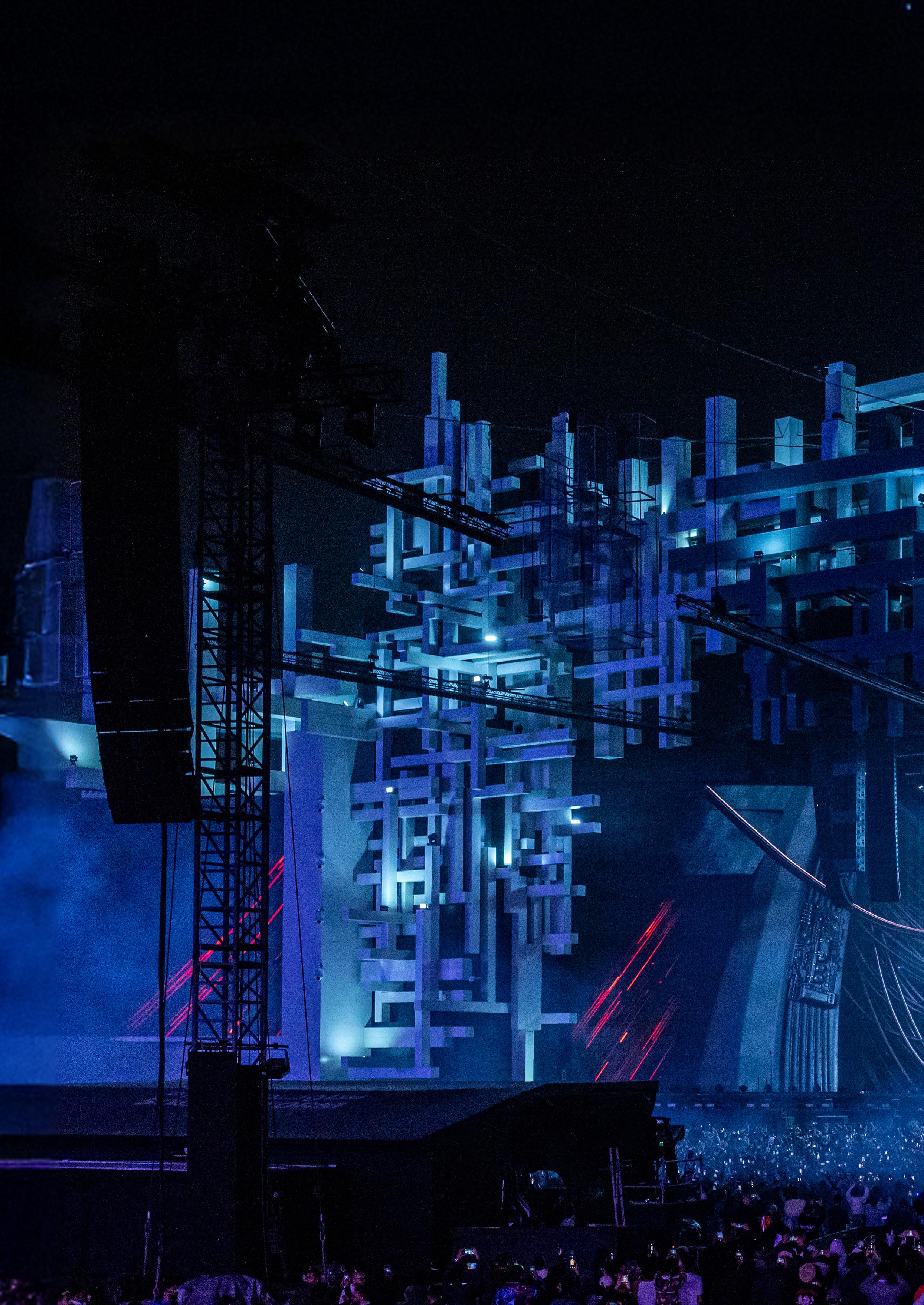
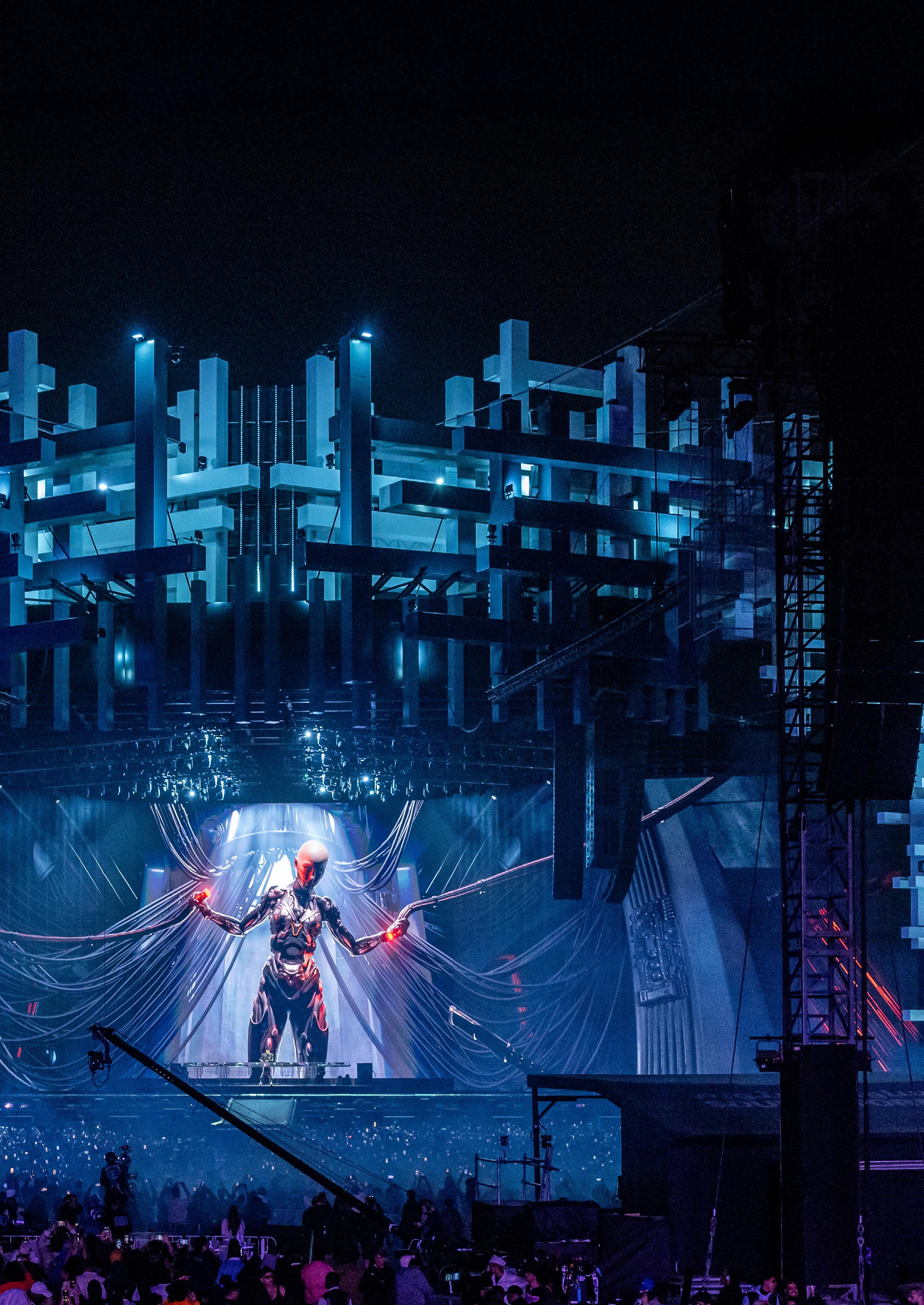
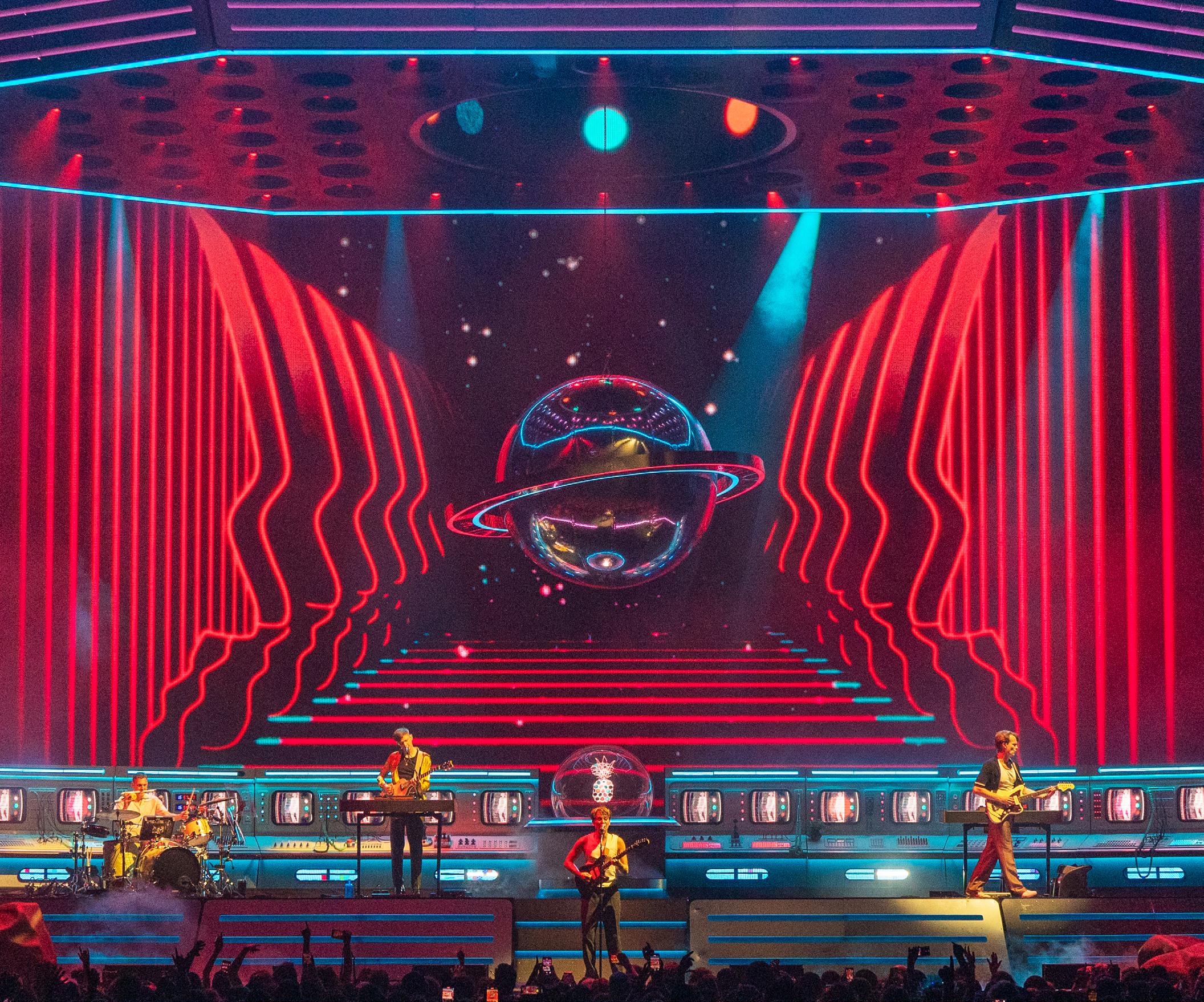
Image Credits: David Guetta at [UNVRS] - High Scream
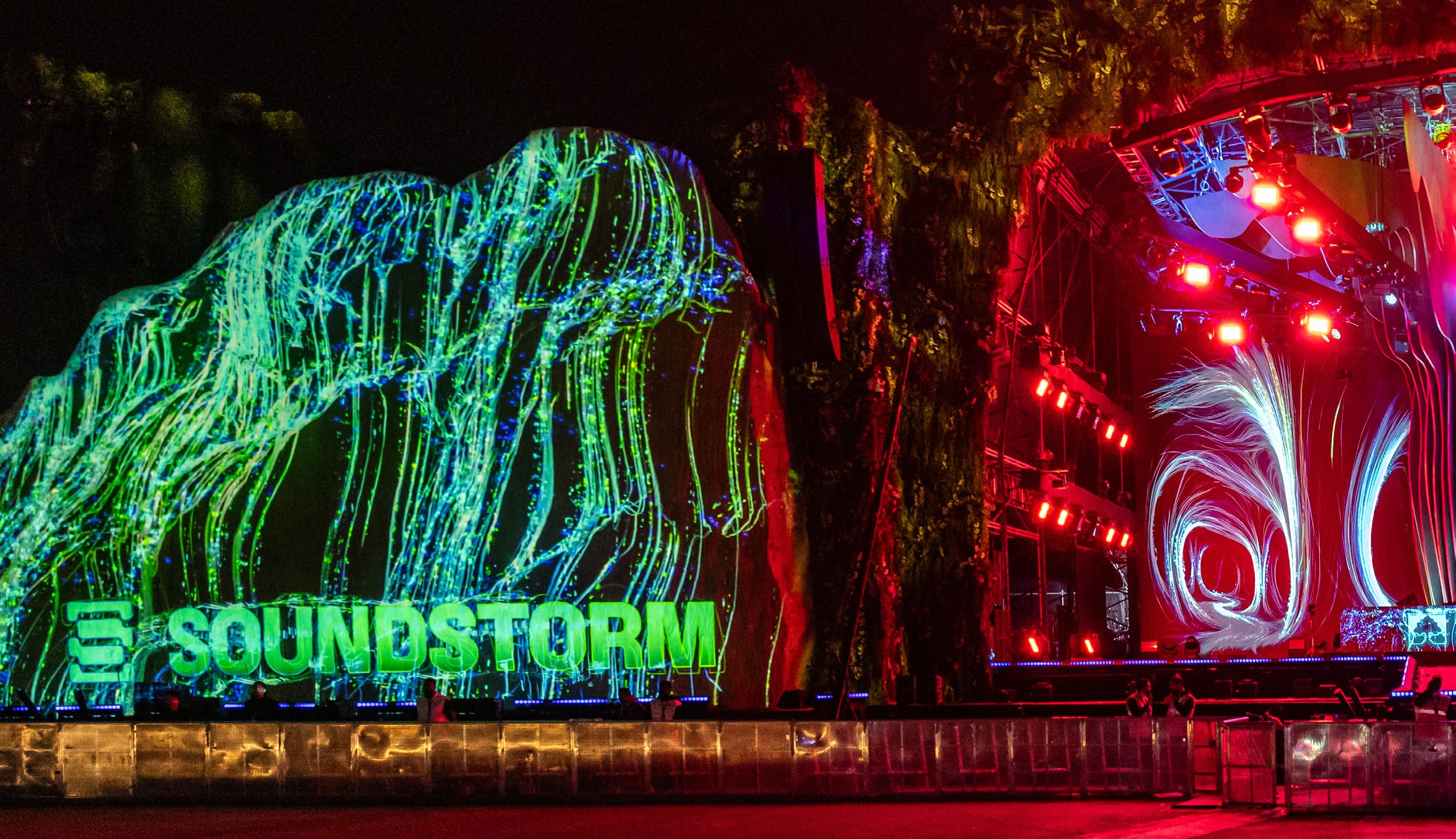
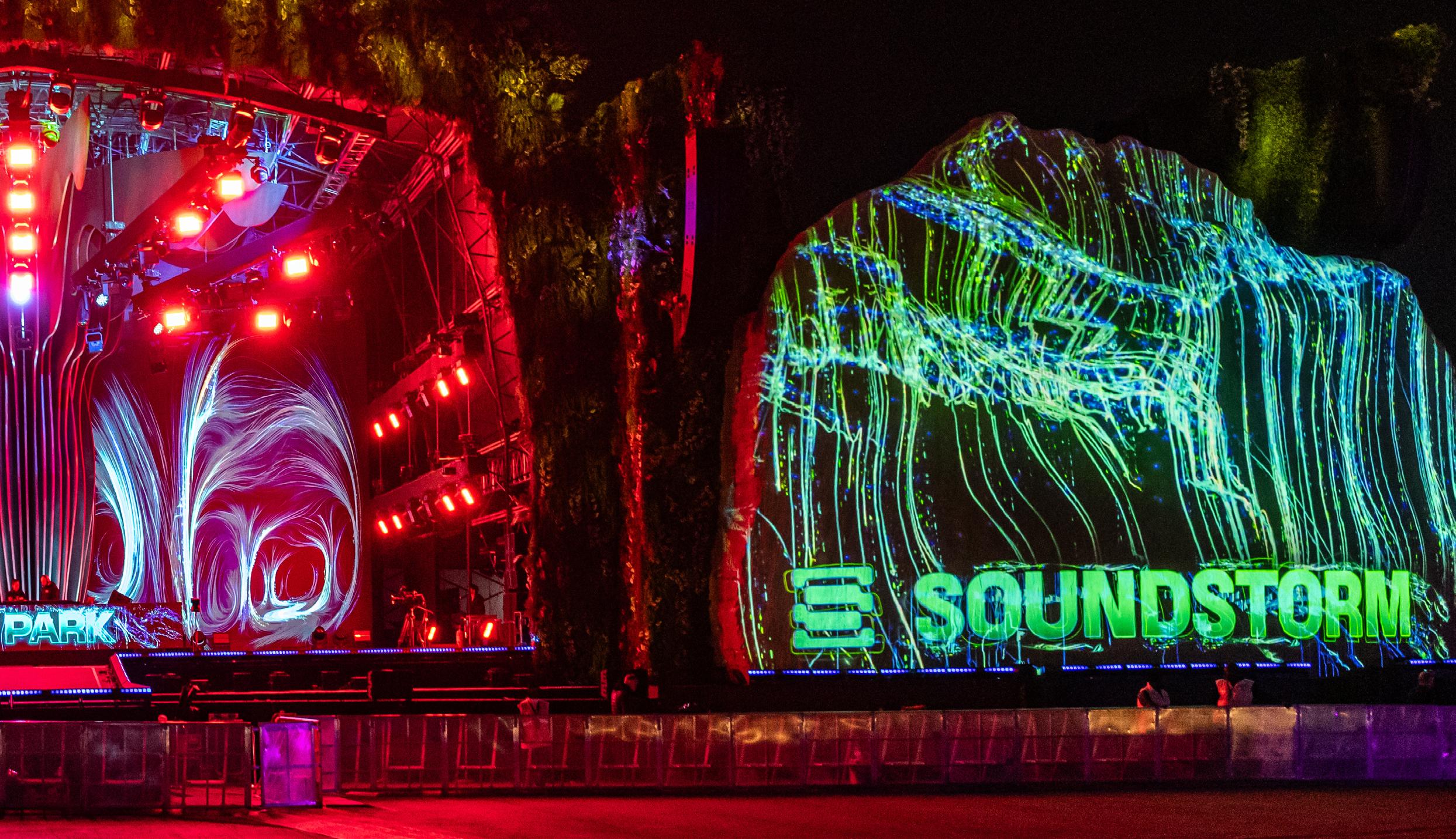
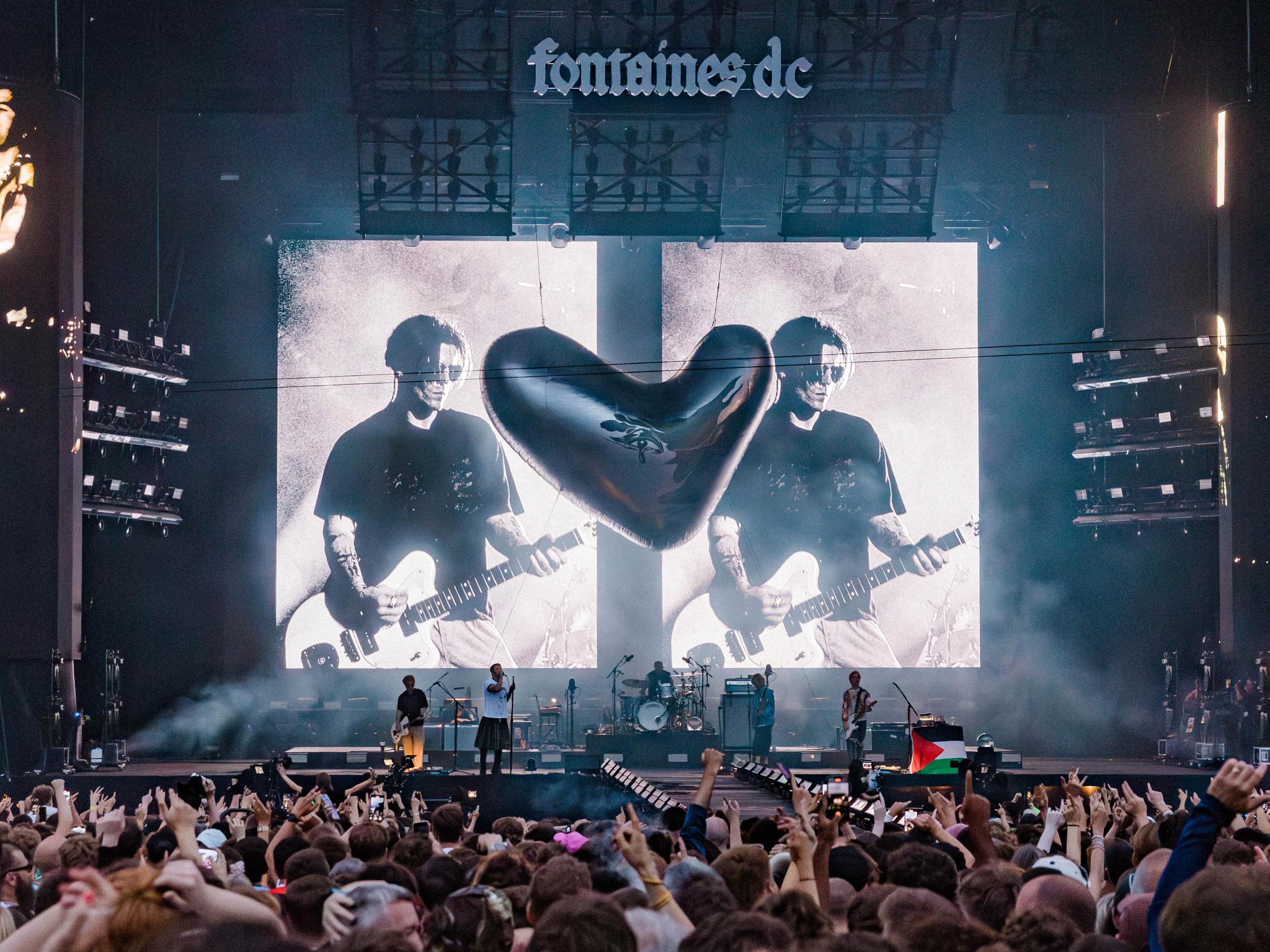
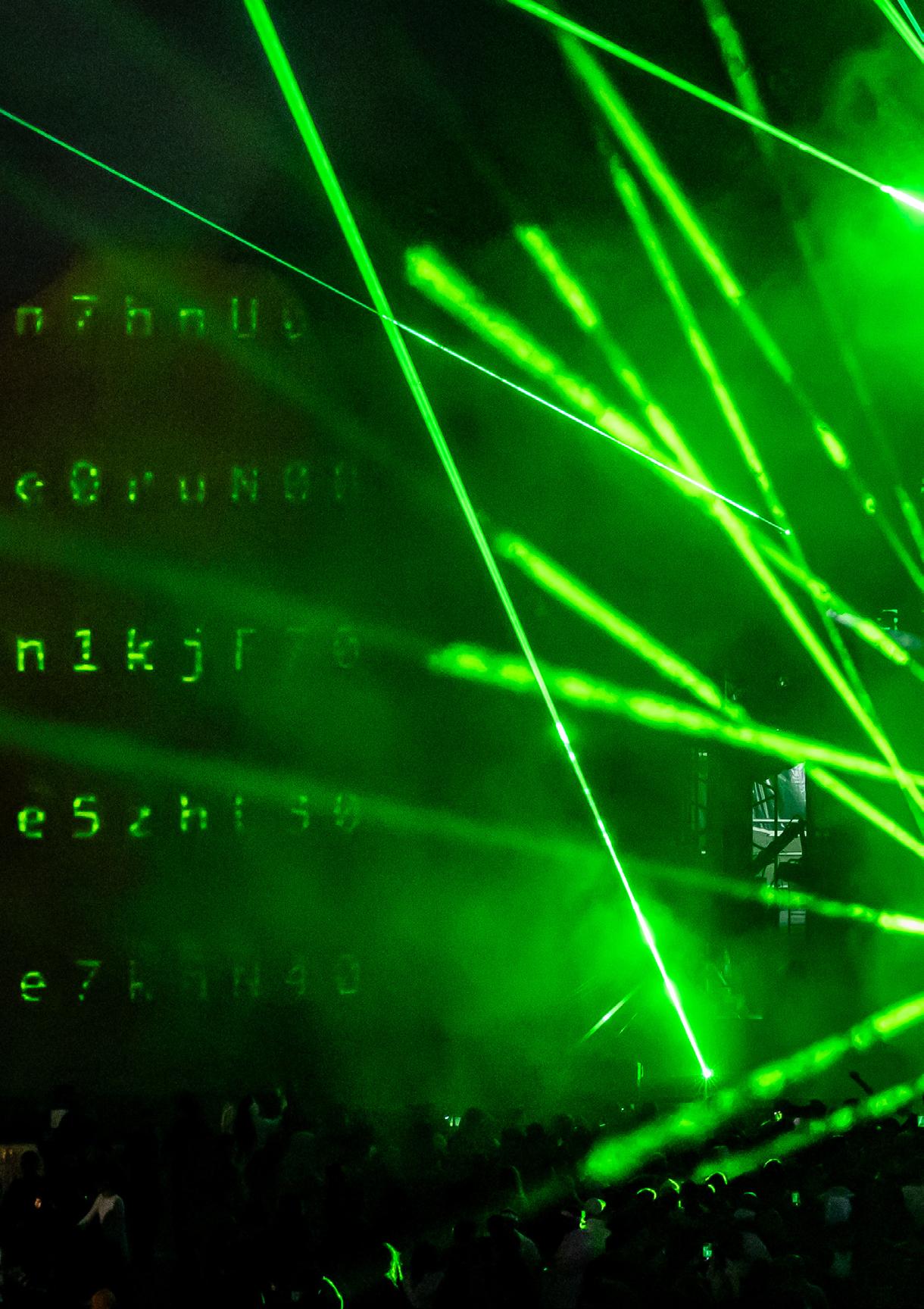
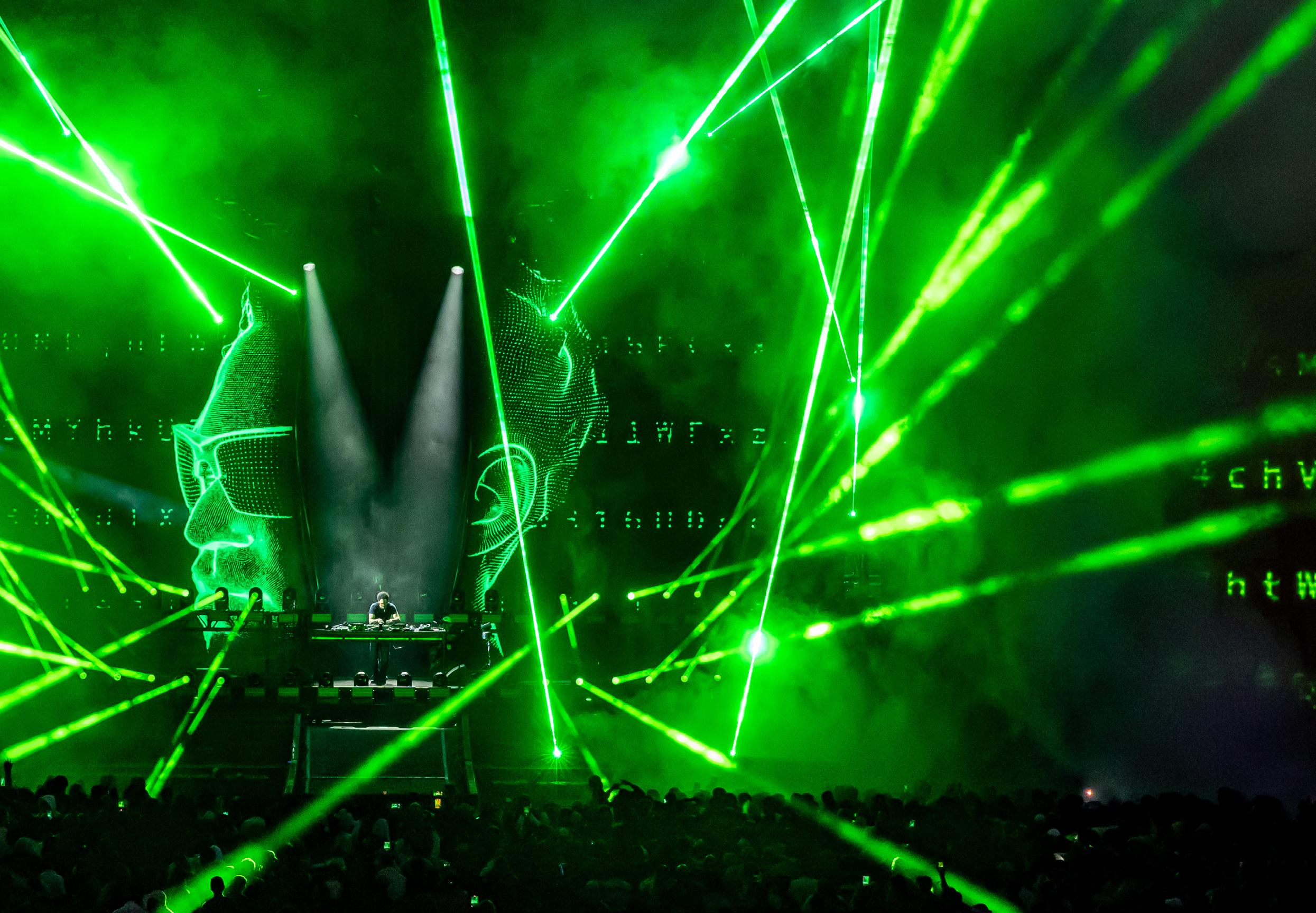
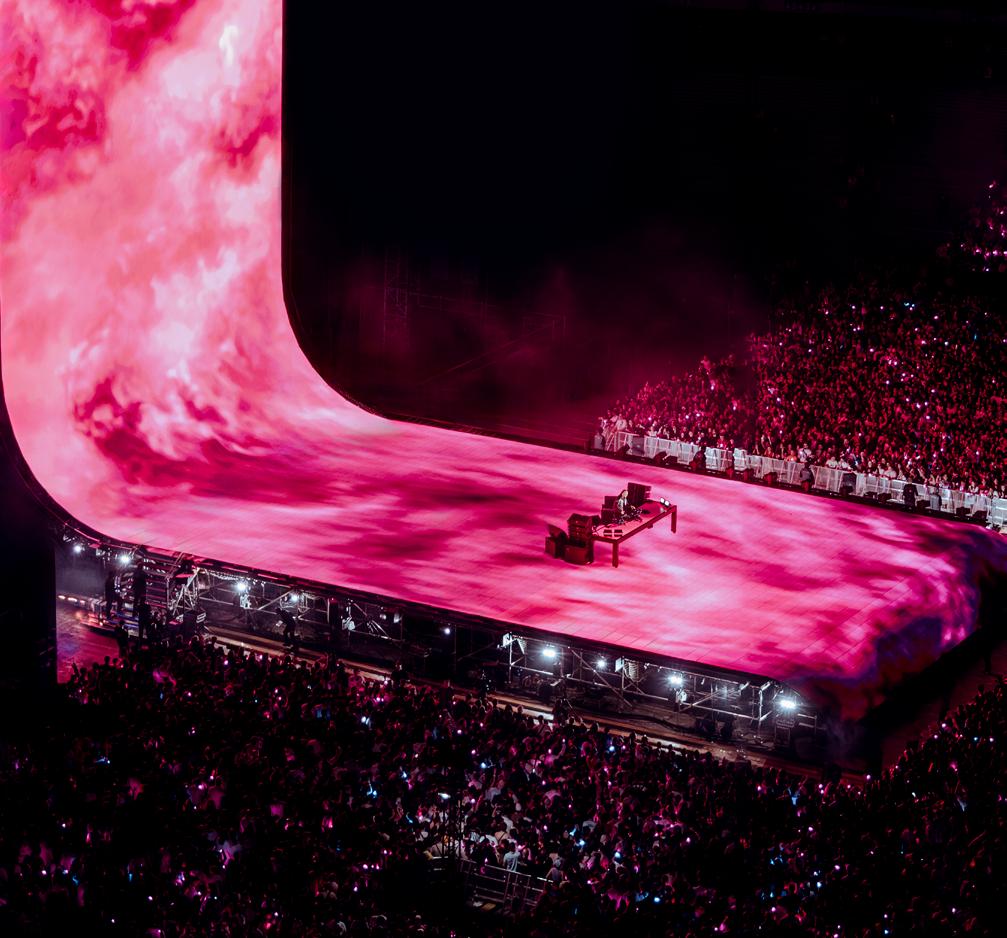
Image Credits: MDLBEAST Soundstorm 2025 - Christophe Viseux Photography



For more than 20 years, Disguise has been part of the live entertainment world.
What began as a software to help Massive Attack with their show visuals has grown alongside the industry itself, expanding into film, sports broadcast, immersive installations and large-scale experiences around the world. Being present across so many corners of media and entertainment has given us a rare perspective, from early creative exploration through to final delivery.
Today, that perspective feels more valuable than ever. Creative ambition is accelerating, technology is evolving at pace, and audiences are expecting deeper, more meaningful ways to connect with the experiences they attend. Fan engagement has become the common thread running through every conversation, whether it is a live show, an immersive space or a global destination venue.
Across the projects we support, a few shifts are becoming clear. AI is changing how content is created and how quickly ideas move from concept to reality. Live events are pushed further through real-time, immersive and interactive workflows and new approaches to scale. New spaces are emerging across the world, redefining what venues can be. And above all, experiences are being designed with the audience firmly at the centre.
This annual magazine exists to share those insights. It brings together the trends we believe will shape the year ahead, with the aim of empowering our creative community to build the next generation of unforgettable experiences.
Fernando Küfer CEO - DISGUISE
We are living through a golden age of live entertainment. The ‘Taylor Swift Effect’ sparked a conversation about the way a single tour could shift an entire economy, but since then, something larger has taken shape. The scale, ambition and cultural reach of live shows has accelerated far beyond the landmark tours that first signaled this shift.
In fact, live entertainment has become a global cultural force - and local fan favourites are increasingly going global. Genres such as K-Pop, J-Pop, Latin and Country music are topping global streaming and tour revenue leaderboards and filling arenas far from their original markets, drawing audiences across borders. Instead of waiting for their favourite artists to come to them, fans are now flying across continents, treating concerts as cultural events that connect them to something bigger than the music itself. At the same time, a second force is reshaping the landscape: the desire to share these experiences online. Younger generations in particular document everything, and a show’s impact is now often measured by how well it travels across social feeds.
Live entertainment now sits at the intersection of culture, commerce and community - and that scale comes with new expectations.
This raises an important question for anyone planning a major production: how do you meet an audience whose expectations keep climbing?

“Live shows now carry extraordinary weight. We’ve seen them move economies, shape culture and bring millions of people together across borders. With that scale comes responsibility. Our role is to ensure the creative community has the tools, insight and confidence to meet rising expectations and deliver experiences that feel bigger, bolder and truly unforgettable. After more than twenty years in live entertainment, we remain focused on one thing: enabling our customers to build what audiences will demand next.”
Tom Rockhill COO - DISGUISE
LATAM: emerging global giants
K-Pop’s global influence
World economic impact
31.5B
global streams generated by Bad Bunny in 2025 (Luminate)
$490M generated by Latin music in 2025 (Music Business Worldwide)
$4.7B
projected value of the LATAM market by 2033 (Market data forecast)
90.4B
global on-demand streams generated by Top 100 K-Pop artists (Luminate)
$228M
grossed by K-Pop acts on Billboard Top Tours (Billboard)
50%+
of respondents rate K-Pop as “very popular” in their country (Statista)
$8.27B
generated by the UK live events industry in 2023 (Access All Areas)
$407M
generated by Beyoncé’s Cowboy Carter Tour (Billboard)
19.2M “music tourists” travelled to gigs and festivals in the UK (StandOut Magazine)
Live events are growing. Stages are no longer simple backdrops but architectural environments, built from vast LED surfaces that wrap, tower and stretch across the audience’s field of view. This scale is made possible by advances in display technology, processing power and media systems that allow productions to deliver visuals at unprecedented resolution, night after night, across global tours. Despite that technical leap, the way content is delivered has remained largely unchanged.
Pre-rendered video continues to be the backbone of most live productions. It offers control, consistency and reliability, which makes it the natural choice for shows that need to retain their look and feel from one city to the next.
But as stages expand and visual ambition grows, new playback models are growing in popularity. To combat the challenge of larger screens, heavier content, tighter timelines, and less flexibility once a tour is on the road, real-time tools started to appear alongside traditional playback, first as enhancements and effects, and increasingly as a way to give shows more freedom to adapt if that’s the creative vision.
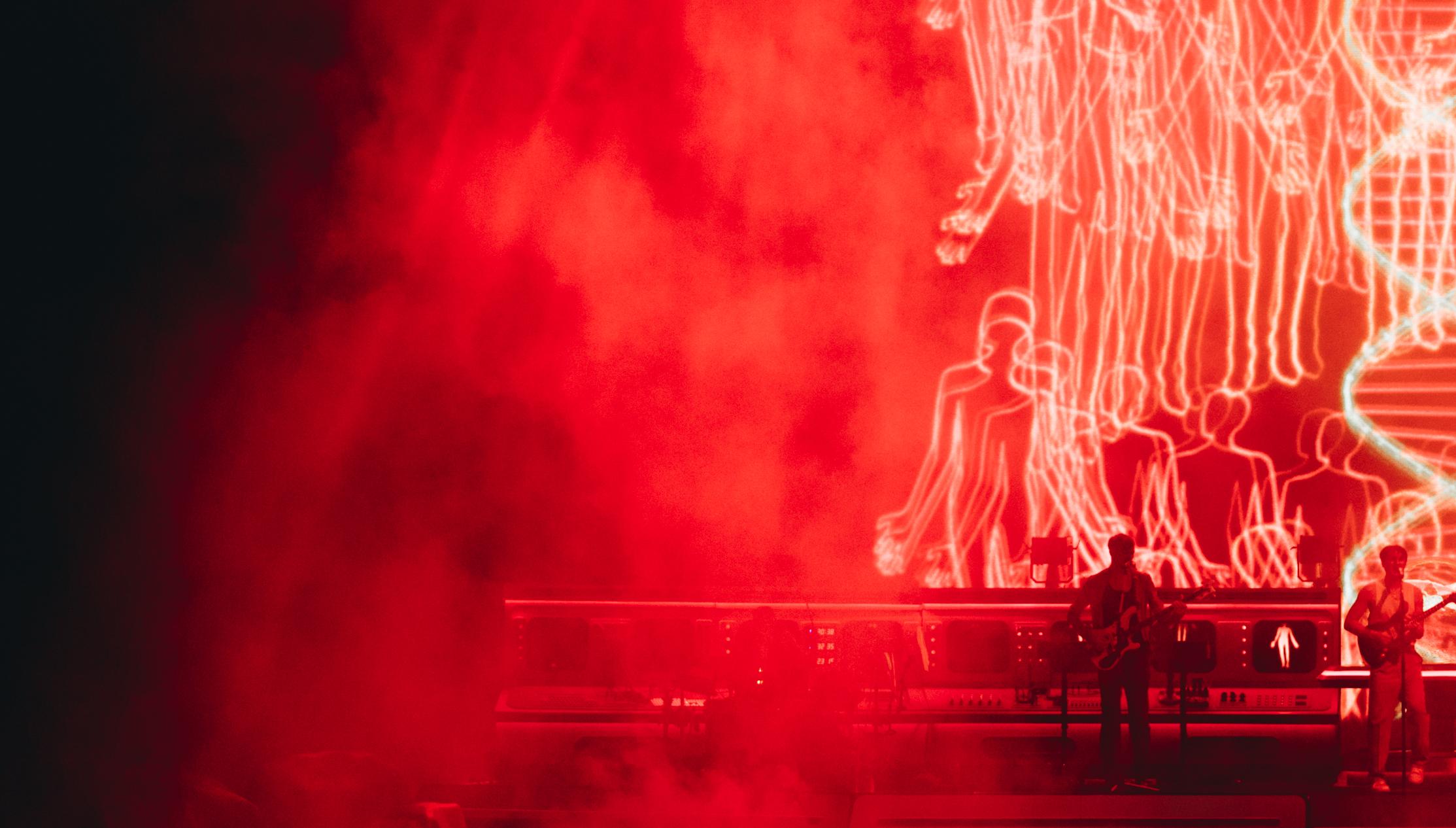
There is a logistical reality driving a shift in the industry. As venues get bigger and screens get wider, the “data weight” of a tour is increasing. Filling massive LED surfaces with uncompressed video creates terabytes of data. And, as any operator knows, transferring 10 terabytes of footage across servers doesn’t take minutes, but days.
Real-time technology offers a smarter way to handle this scale. Instead of carrying heavy video files for every second of the set, operators can generate content on the fly.
This unlocks a new level of touring agility. In the real world, no two venues are identical; a screen might be a wide panorama in a stadium one night and a tighter, boxier configuration in an arena the next. With real-time workflows, the content can simply be re-rendered to fit the canvas. The visuals can breathe and adapt to the specific geometry of the performance, ensuring the show looks bespoke to every venue without hours of re-editing.
“Flexibility has become a key priority for today’s show designers, and Disguise is committed to creating scalable, accessible solutions that help productions adapt seamlessly across different venues and budgets. The launch of our portable, software-only solution, X1, is a gamechanger for our users, allowing teams to retain creative quality while remaining agile on tour.”
Raed Al Tikriti CPTO - DISGUISE
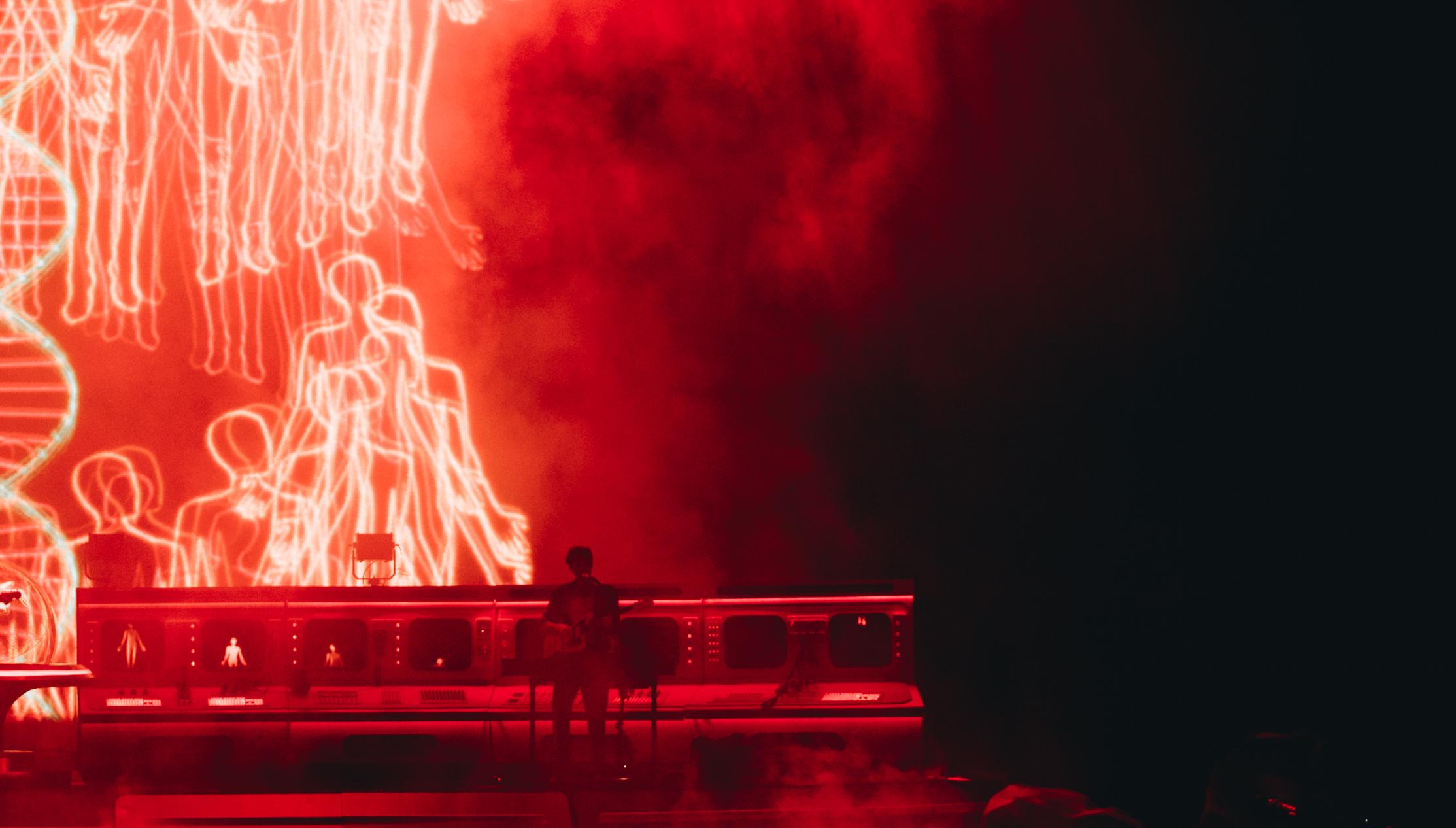
Innovative teams are already using real-time workflows to push the audience experience further. Here’s how distinct sectors are using this tech to elevate the show:
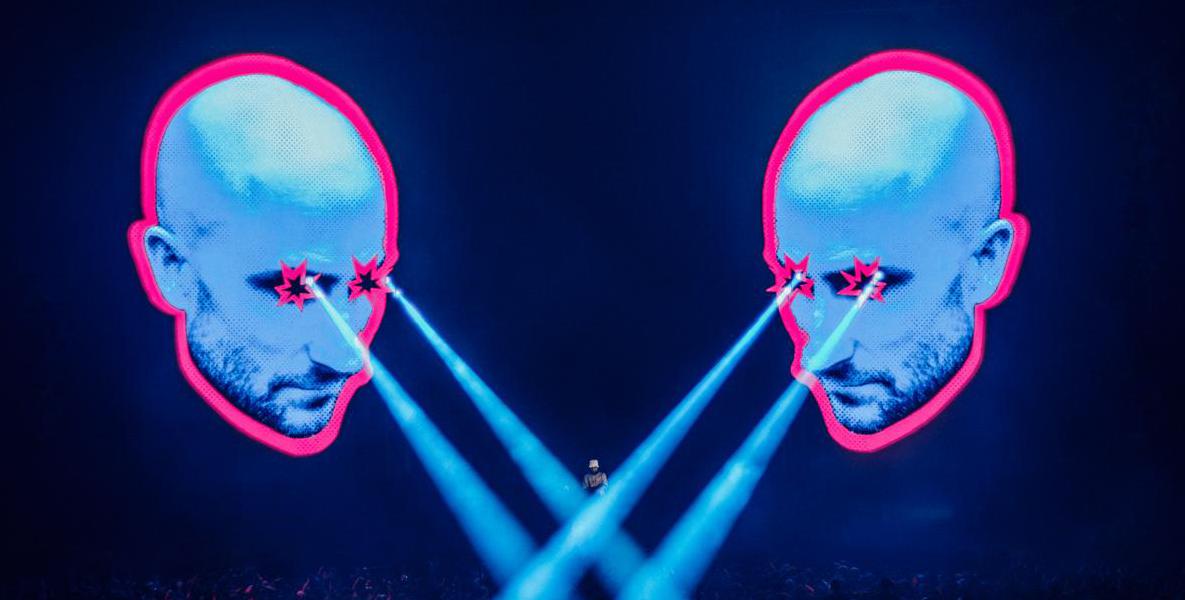
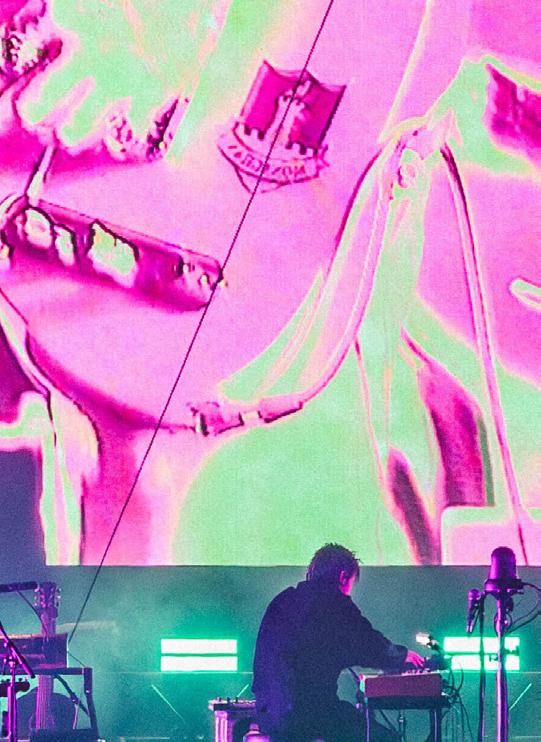
For touring acts, the most immediate application is transforming IMAG. Rather than just displaying a standard camera feed of the singer on the side screens, productions are using real-time engines like Notch to treat the live video as a canvas. We are seeing particle systems that emanate from a performer’s movements, or digital lighting that re-lights the artist’s face in real-time. It blends the live human element with digital artistry seamlessly, ensuring that even fans in the back row feel intimately connected to the magic on stage.
In the electronic music space, the workflow is becoming fluid, turning the entire venue into a living organism. Features such as Variable Timecode Speed and integrations with DJ equipment are allowing visuals to truly jam with the artist. If a DJ slows down a track to build tension, the visuals slow down automatically. We saw this powerfully at Zillion in Belgium, where the team linked the lighting desk directly to the Unreal Engine environment. When the physical lights in the club turned red, the virtual world on screen turned red instantly. For the audience, this creates a total sensory wrap-around; they are immersed in a cohesive atmosphere where the lights, the beat, and the video feel like one single, breathing entity.
At the extreme end of the scale, venues like the Sphere are demonstrating what happens when real-time is baked into the architecture. These environments serve as testbeds for high-resolution generative art, proving that real-time content can hold up at 16K+ resolutions. They are pioneering “data-driven art,” where external variables - like local weather data or audience noise levels - can fundamentally alter the visual mood of the venue.
The next great leap for audience immersion is the convergence of real-time visuals with spatial audio. When a visual system and a spatial sound system listen to the same data, the result is total immersion. Imagine a sound swirling around the arena physically passing behind your head, while the visual environment ripples in the exact same trajectory across the screens. It turns a concert into a 360-degree world.
Touring shows still need to deliver flawlessly across venues, crews and conditions, with tight synchronisation between lighting, audio, automation and media remaining key.
Real-time tools have reached maturity and are increasingly becoming more stable, better understood and easier to integrate into existing pipelines. What once felt experimental is becoming a practical part of the process - rather than replacing pre-rendered workflows, real-time content is finding its place alongside them, adding flexibility without sacrificing control.
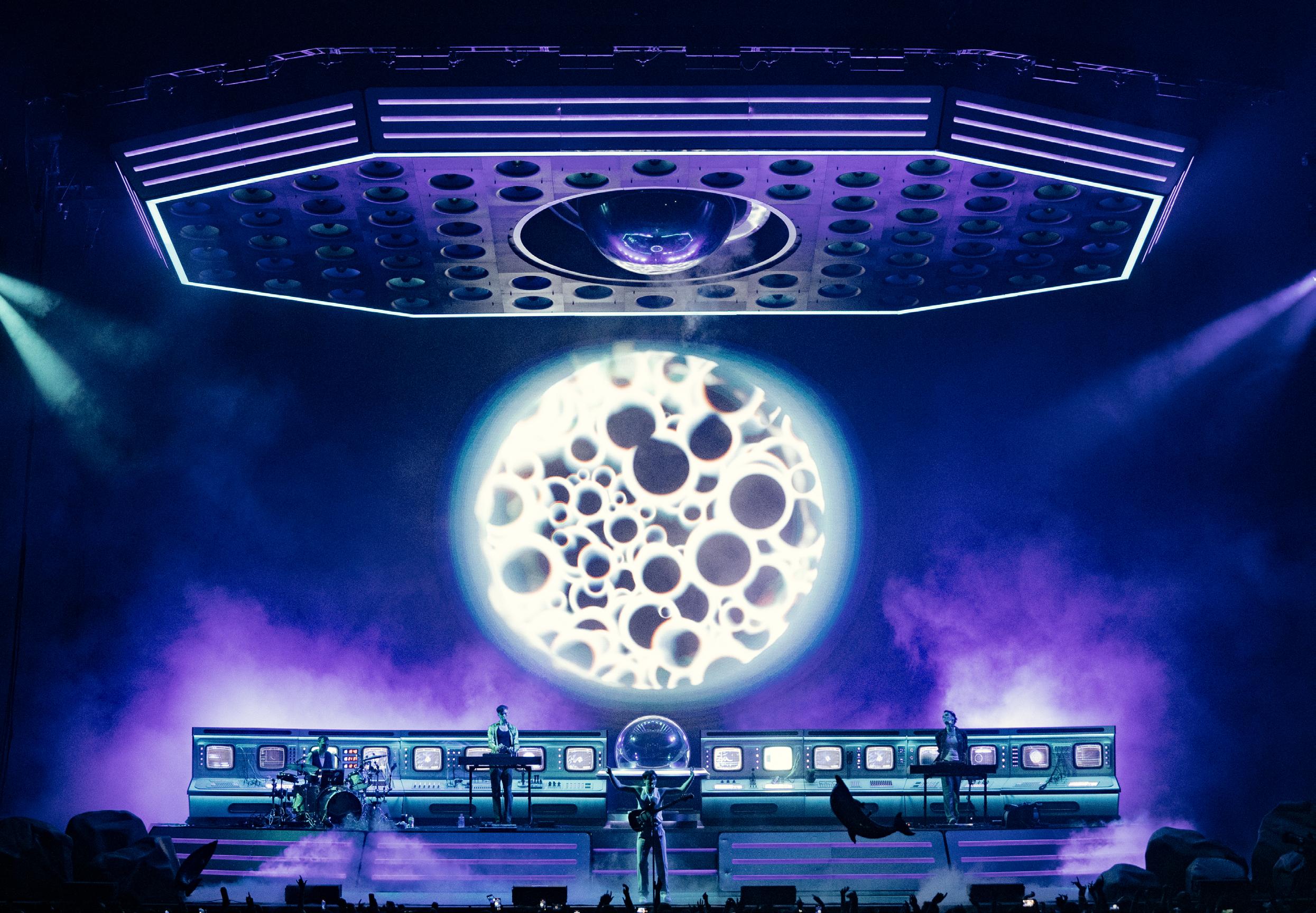
When we look at the industry today, we’re seeing a gap in adoption. On one side, we have experimental club culture - agile and unafraid to improvise. On the far other side, we have purpose-built behemoths like The Sphere - venues designed specifically for high-resolution generative content. But in the middle, where most touring and live shows live, there is a massive opportunity waiting to be seized.
What makes this shift especially powerful is how directly it changes the audience experience. When designers generate content in real-time, no two nights have to feel the same. Visuals can respond to the performance, the pacing of the set, or the energy in the room. A show becomes something lived rather than repeated.
That uniqueness carries weight beyond the venue. Moments that feel unrepeatable are the ones audiences share, talk about and travel for each year. In a world where live experiences are measured as much by memory as by reach, real-time content creates the kind of shows people actively seek out, return to and remember.
As workflows stabilise and creative teams gain confidence, real-time content will move from the experimental edges to the centre stage of global touring. For artists willing to make that leap, the reward is the ability to create experiences that are not just bigger, but truly iconic, ultimately pushing your live event further than it has ever gone before.
We are living in a moment of extraordinary technical possibility, and theatre has quietly been leading the way. Long before digital tools became central to conversations about live entertainment, theatre makers were already working within a clear creative discipline: story first, technology second. This approach has shaped theatre for decades. Directors, set designers, choreographers, lighting and video teams have always shared a single creative space, building worlds collaboratively and allowing the narrative to dictate every technical decision. In theatre, technology has never been the headline. It exists to support pacing, emotion and atmosphere, and it only earns its place when it serves the story.
What is changing now is not the philosophy, but the toolkit. As theatre productions increasingly adopt video, projection and digital systems, they are using them with remarkable restraint. Screens become architecture. Projection reshapes space. Video extends the physical set. In the most compelling productions, the audience rarely notices where the technology ends and the scenery begins. They simply accept the world unfolding in front of them because the technology makes the story so believable.
This makes theatre an essential reference point for the wider live entertainment industry. While other sectors might chase scale and spectacle, theatre demonstrates how technology can deepen immersion without overwhelming performance. It shows what happens when digital tools are woven into the fabric of a production rather than layered on top. In this section, we explore how theatre is using technology in this way, not to chase spectacle, but to deepen narrative. These productions offer a clear lesson for the wider live entertainment industry: when creativity sits at the centre, technology becomes incredibly powerful.

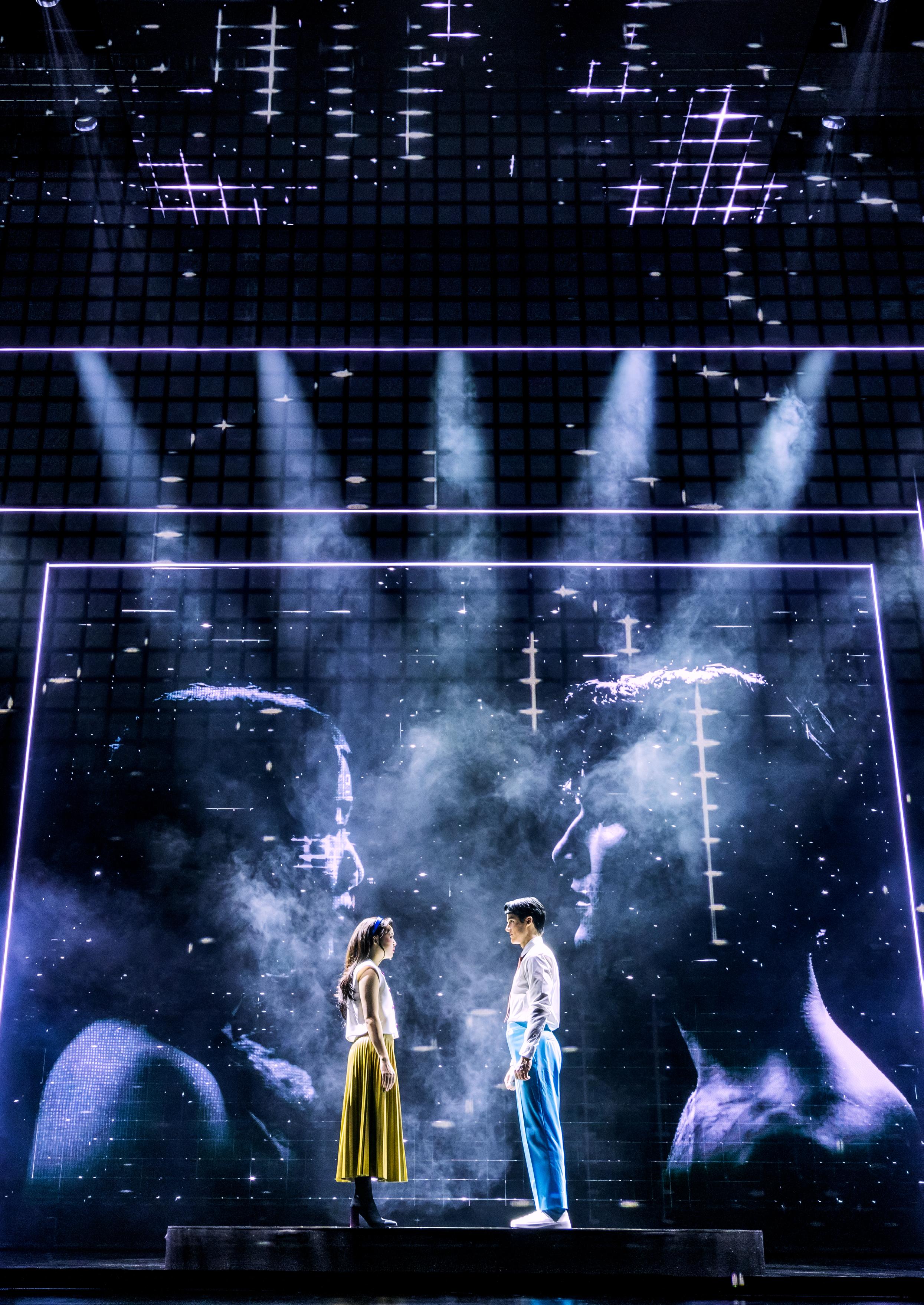
“On Maybe Happy Ending, we wanted to use video for storytelling purposes, as an extension of the on-stage elements. When Oliver and Claire leave their tiny box apartments, we go on a journey with them, and video supports their adventure the whole way through. At times subtly gesturing to the motion of a road and passing buildings, to a bustling ferry terminal and wide open landscapes. The content on the LED tiles combines with lighting and stagecraft to show the expansiveness of the scenery that surrounds them.”
George Reeve Video Designer on Maybe Happy Ending

In Disney’s Hercules the Musical, the challenge was pace. The production moves rapidly between the heights of Mount Olympus, the shadows of the Underworld and the familiar world of mortals. Video serves as the engine behind these transitions. It holds the dramatic rhythm of the production, allowing each new environment to appear with the immediacy of a page turning, providing a seamless transition for the audience.
To transport audiences into the stillness of the California redwoods, the creative team behind Redwood used video to reshape the physical architecture of the stage. Each scenic tile became part of an LED forest, shifting and breathing with the emotional tone of the show. The result is a set that feels almost alive, expanding and contracting with the story rather than sitting behind it.
“We had to design a space that could transition between a forest and Jesse’s memories. We had this idea of an expansive, immersive forest filled with moving trees that could change or even shift into a city scene seamlessly. The answer to doing this was using LEDs.”
This theatre adaptation of Netflix’s popular franchise uses projection-mapped video to blur the boundary between the physical stage and the supernatural. Carefully sculpted projection warps walls, alters shadows and reshapes environments in real time. The video becomes part of the set rather than an effect layered on top of it, allowing the show to stage moments that feel impossible while preserving the integrity of the theatrical world.
In Maybe Happy Ending, video is used as an extension of the physical set. LED tiles expand the world beyond the apartment, carrying the audience with the characters as they move through streets, buildings and ferry terminals. Scenes shift fluidly, without breaking the narrative, allowing locations to appear and disappear in rhythm with the story. The technology stays subtle and integrated, broadening the stage while keeping the focus firmly on the characters and their journey.

We believe that this level of video integration will define the future of theatre. The shift is already underway. Productions are finding new ways to weave digital elements into scenic design so closely that the audience experiences them as a single, cohesive world. This deepens the emotional connection between the story and the viewer. The technology is present, yet its presence is invisible. What remains visible is the world being created.
There is a broader message here for everyone working in live entertainment. As shows continue to grow in scale, and as audiences become accustomed to more ambitious visual experiences, the foundation of a powerful production remains the same. It begins with a clear creative vision. Technology plays its strongest role when it is used with intention, shaping the experience without overshadowing it.
After exploring how real-time content is reshaping large-scale productions and how theatre is redefining the creative process, we turned to our own team at Disguise, and community, to understand what they believe will influence the next wave of live entertainment. These conversations revealed a set of themes that highlight where the industry is heading and how technology and creativity are likely to evolve together.

Ollie Newland
Product Manager
DISGUISE
“One of the clearest trends is the gradual movement toward IP-based video systems. Lighting and audio made this transition years ago, while video has been slower to follow - largely because it is inherently the most demanding media format to transport over IP, with significantly larger data rates per second than lighting or audio. Touring environments demand reliability and simplicity, which is why SDI remains so common. Even so, the advantages of IP are becoming increasingly difficult to ignore, and the transition of video onto a single, unified production network is emerging as the logical next step for live shows and immersive experiences.
An IP network allows media to move through a single system rather than through clusters of bespoke or dedicated hardware. By leveraging fibre-based video distribution, IP systems can carry significantly larger data rates over greater distances than traditional baseband signals. This enables higher resolutions, increased frame rates, and greater colour fidelity, while also allowing more signals to travel over fewer physical connections – reducing overall system complexity as production scales. The shift will take time, especially for shows that travel from venue to venue, but the foundation is being built now. Over the next few years, this approach will begin to feel less experimental and more like the natural progression of the workflow.”
“I’m really excited by the greater shift toward realtime, generative, and interactive content. Instead of rigid timelines and using solely pre-rendered visuals, we’re now building flexible, responsive systems with deeper integrations between video, lighting, audio, and automation. These setups often now put the media server at the center of productions as a central show control engine generating visuals, tying in lights reacting to what’s happening on stage, the audience’s engagement and what’s being felt in the moment.
While keeping artistic intent in human hands, AI, used thoughtfully, is beginning to enhance workflows, giving teams more control over a show’s look and freeing them to focus on creativity rather than managing the mechanics of making visuals a reality. It’s unlocking new levels of control, responsiveness and creative freedom within live events.”

Jason Clairy
AMER Sales Director for Live Events

Ellie Clement Video Designer on Radiohead’s 2025 Tour
“Advances in GPU performance and the rise of AI-assisted tools are speeding up the creative process in noticeable ways. Teams can now explore concepts, variations and refinements at a pace that was simply not possible a few years ago. Ideas that once required long render times or significant resources can now be shaped quickly, which gives designers more space to experiment.
For emerging artists, this shift is particularly meaningful because it lowers the barrier to entry. For larger productions, it allows creative teams to refine details and push their ideas further without sacrificing time or quality. This new pace is beginning to influence both the scale and the ambition of the work being produced.”

Alexandra Coulson VP of Marketing DISGUISE
“Audience behaviour is increasingly shaping how live events create value for artists, promoters, and brands. Global tours from artists such as Taylor Swift and Beyoncé have demonstrated that a live show is no longer a single moment in time, but a cultural ecosystem that lives on across platforms, devices, and communities.
This shift extends the life of a live event beyond the final cue. The performance becomes the starting point for an ongoing relationship that continues across phones, homes, and social platforms. For marketers, this mirrors what we’ve seen around the most culturally resonant tours: sustained conversation, repeat engagement, and brand alignment that travels with the audience long after the show ends. The result is a move from one-night visibility to sustained presence creating deeper engagement, measurable interaction and new sponsorship models built on participation and longevity, not just exposure.”
Despite rapid change across the industry, one idea remains constant. The shows that resonate most are the ones built on strong creative foundations. Technology can elevate a story, but it cannot replace the thought, craft and emotional clarity that form the backbone of memorable work. Across every department - audio, video, lighting, and beyond - our teams return to the same principle: master the basics, collaborate with people who bring out the best in the work, and keep the story at the centre of every decision. Innovation becomes meaningful only when it strengthens the connection between the artist, the audience, and the collective team bringing the show to life.
The next era of live entertainment will grow from a combination of these influences. IP-based workflows will quietly reshape the technical infrastructure. Faster content creation will expand what is creatively possible. Data will blur the line between design and performance. Audience interaction will extend the show beyond the venue. Together, these changes point toward a future where technology serves creativity with more intention. The most exciting opportunities lie not in the tools themselves, but in how they allow artists to imagine, refine and share the worlds they want to create.
Join the Circle
Help define the future of live and immersive entertainment.
Creators Circle is Disguise’s global ambassador programme - built to connect, recognise and amplify the voices of our community.
By bringing together experienced power users and emerging creators, the programme helps close the talent gap, accelerate shared learning, and champion diversity and inclusion across our industry.
Creators Circle members will have the opportunity to be featured in future editions of this annual magazine - sharing insights, experiences and work that inspire others to create.
Sign-up below using the QR code.
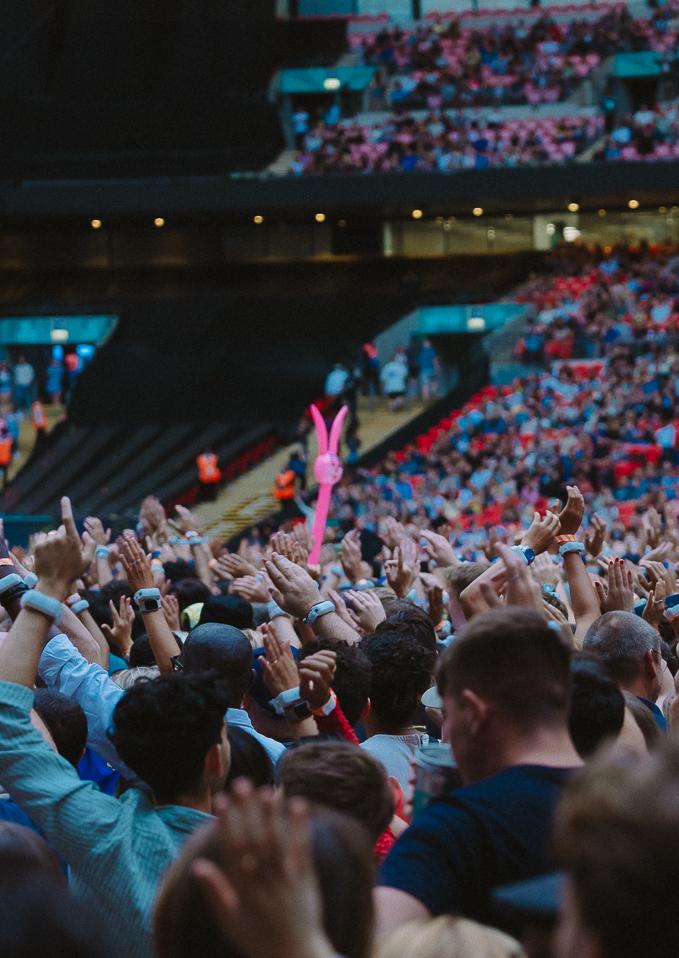
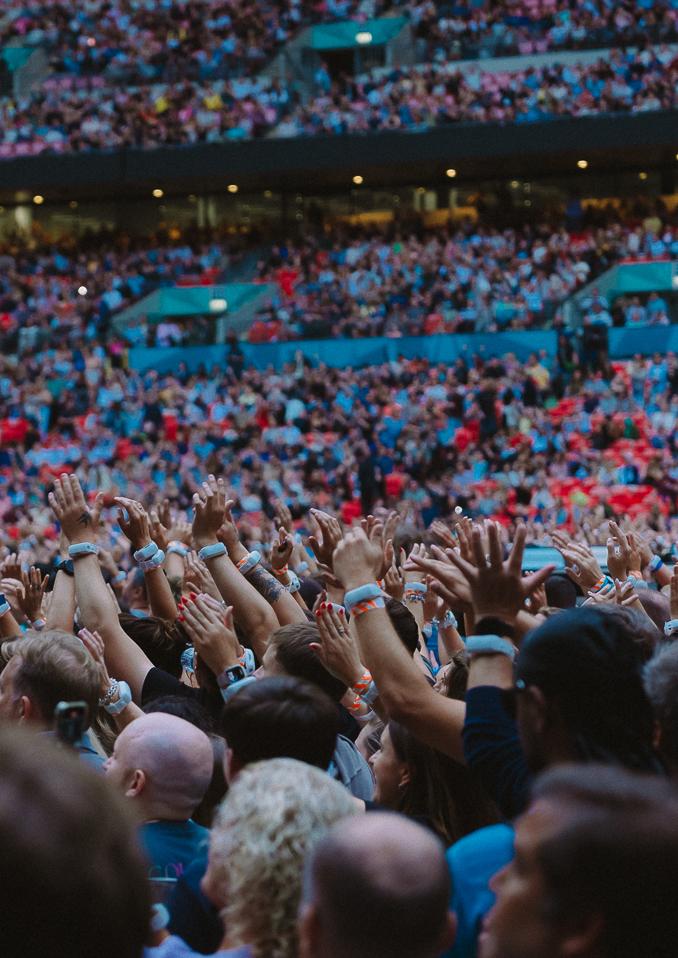
Fan engagement is undergoing its biggest shift in decades. Across both sports and live music, audiences are more connected, more discerning and more digitally fluent than ever before, and their expectations are reshaping what live experiences must deliver. But key differences remain, with loyalty among sports fans under greater pressure.
While sports fans may seek real-time stats, replays and data-driven insight, live music audiences are driven by emotional closeness - the feeling of being seen, heard and connected to the artist and the crowd. Yet the underlying demand is the same. Fans want proximity to the action, moments of interaction, and experiences that acknowledge their presence. From immersive visuals and shared crowd moments, to exclusive content and seamless digital services, what was once considered an enhancement has become a baseline for showing up in person.
As fandom evolves, the most engaged audiences are proving to be the most valuable. They spend more, return more often and advocate more loudly. In response, sports clubs, production teams and venues are investing in technologies that elevate every stage of the live journey, from personalised touchpoints to interactive content and emerging AI-led experiences. The message is increasingly clear: the future of fan engagement belongs to those who can deliver seamless, emotionally resonant, and participatory experiences that turn casual spectators into committed, lifelong fans.
70%
of Gen Z and Millennial sports fans want more access to in-stadium stats (Deloitte)
6x
higher spending likelihood among highly engaged fans vs. casual fans (Deloitte)
89% of fans are more likely to return to a sports venue if they have a personalised experience (Zipdo)
80% of fans say concerts and festivals are among their most emotionally powerful experiences (Live Nation)
70% of concertgoers want more interactive live experiences (Zipdo)
Fandom has entered a new era. What once revolved around passive spectatorship and predictable routines now moves at the speed of digital culture, defined by instant access, constant connection, and audiences who expect far more than just a seat in the arena. With 77% of Gen Z preferring to watch sports outside of the stadium, and online streaming of concerts becoming more prevalent, venues must do more to add value for their fans and ensure their physical presence.
To win back attention - and maintain it - sports clubs and live event venues must create experiences that pull fans into the heart of the action, forge genuine closeness with players and artists, and embrace technology as an essential part of the spectacle. These shifts aren’t simply enhancements, they are the new baseline for engaging modern audiences.
“Stadium owners have the power to transform their venues into next-gen, live entertainment campuses. From elevated fan engagement and sponsorship sales enablement, to third party event attraction, digital gamification, and year-round storytelling opportunities, there are so many ways for these stadiums of the future to appeal to modern day fans, boost their revenue, and make a real business impact.”
Jake Stone SVP of Sales - DISGUISE
Transform spectators into active participants
Today’s fans don’t want to simply watch sports and entertainment - they want to shape it. When it comes to a live event, there are so many opportunities for audiences to play an active role - whether that’s influencing stadium-wide visual displays, contributing to crowd-powered moments or iterating with realtime content that unfolds alongside the game itself. As the boundary between spectator and participant continues to blur, next-generation venues will lean heavily on interactive, gamified elements that turn the crowd into a collective force rather than a passive backdrop. For modern fans, impact is everything - they want to feel their presence, see their contribution, and leave knowing they helped write a piece of the match-day story.
Win the attention game
In an always-on media landscape, attention is fleeting and fiercely contested. Modern fans arrive at a stadium with smartphones in their pockets and a myriad of things competing for their focus. Venues only have moments to capture their attention before it slips away. That means every second inside the stadium needs to deliver when it comes to creating an entertaining experience for fans. From multisensory content to layered visual moments and unexpected bursts of spectacle, the match-day experience must feel rich, dynamic, and relentlessly engaging. In this environment, constant entertainment isn’t an add-on, it’s the baseline for keeping fans in their seats and locked into the moment.
Make it personal
Personalisation has become a universal expectation, and sports is no exception. Today’s fans want experiences shaped around their preferences, not one-size-fits-all moments. The more a venue can empower supporters to tailor their match day, whether through personalised lighting at their seat, curated content during half time, or interactive features that reflect their interests - the more valued and invested those fans will feel.
The desire for individuality is amplified by the rise of player-driven fandom. Younger audiences in particular are drawn to content that spotlights their favourite athletes, and real-time player stats and behind-the-scenes moments can help bring them closer to their heroes. For modern fans, match day isn’t just about the team on the pitch - it’s about the players who feel like part of their world.
Underpinning all of this is the fact that today’s fans are digital natives. For them, technology isn’t optional, it’s expected. From cutting-edge LED and projection displays, to AR overlays that bring the pitch and jumbotrons to life, and AI-powered features that enable hyper-personalisation, technology offers endless ways to surprise, engage and delightand the more innovative, the better. By integrating these tools thoughtfully, venues have an incredible opportunity to incorporate a plethora of technology into their space in order to elevate the overall experience for fans and create memories that will last forever.
By playing by these new rules, venues can elevate every moment, deepen fan connection, and create experiences that linger long after the final whistle. In the modern era, the smartest stadiums aren’t just spaces to watch a game - they’re platforms for interactive, unforgettable fan journeys.
There are new rules for nextgen stadiums to play by when it comes to drawing fans in, keeping them engaged, and leaving them wanting more. But what does that look like across an actual match-day experience, from the moment fans arrive, to well after the final whistle?
We’ve broken down how to apply these principles throughout the full visitor journey, from getting fans through the door, to keeping them in their seats, and creating memories that last long after they leave.
In a world where attention is fleeting, the stadiums that win will be those that treat fan engagement not as a moment, but as a continuous journey that begins before kick-off and lives on long after the crowd has gone home.
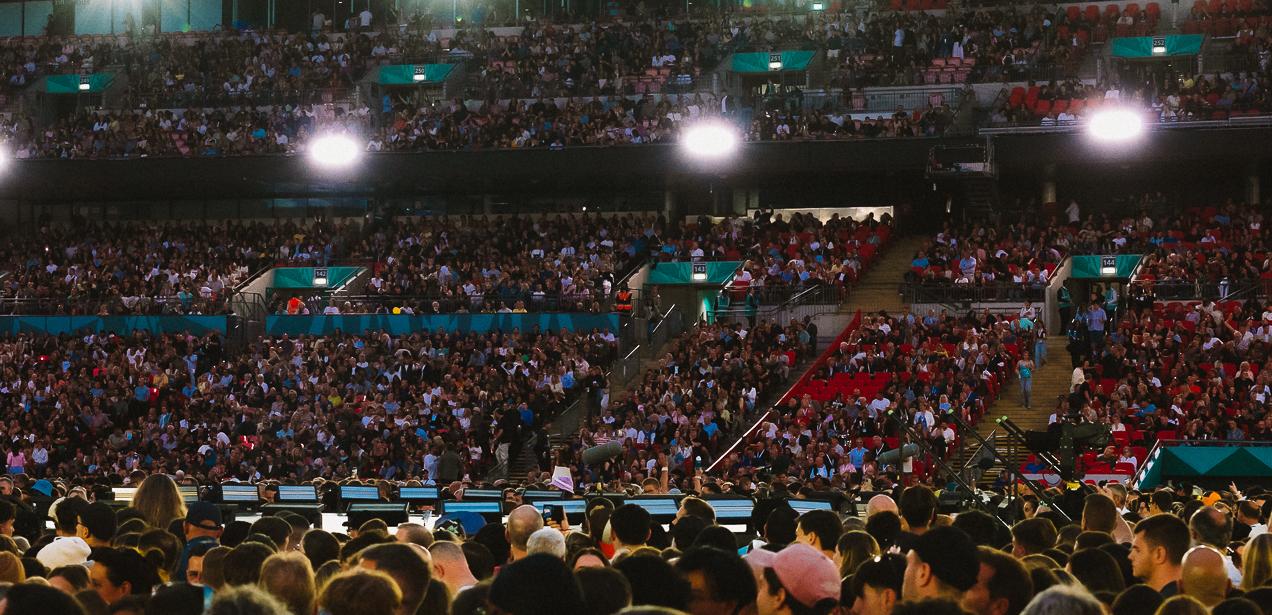
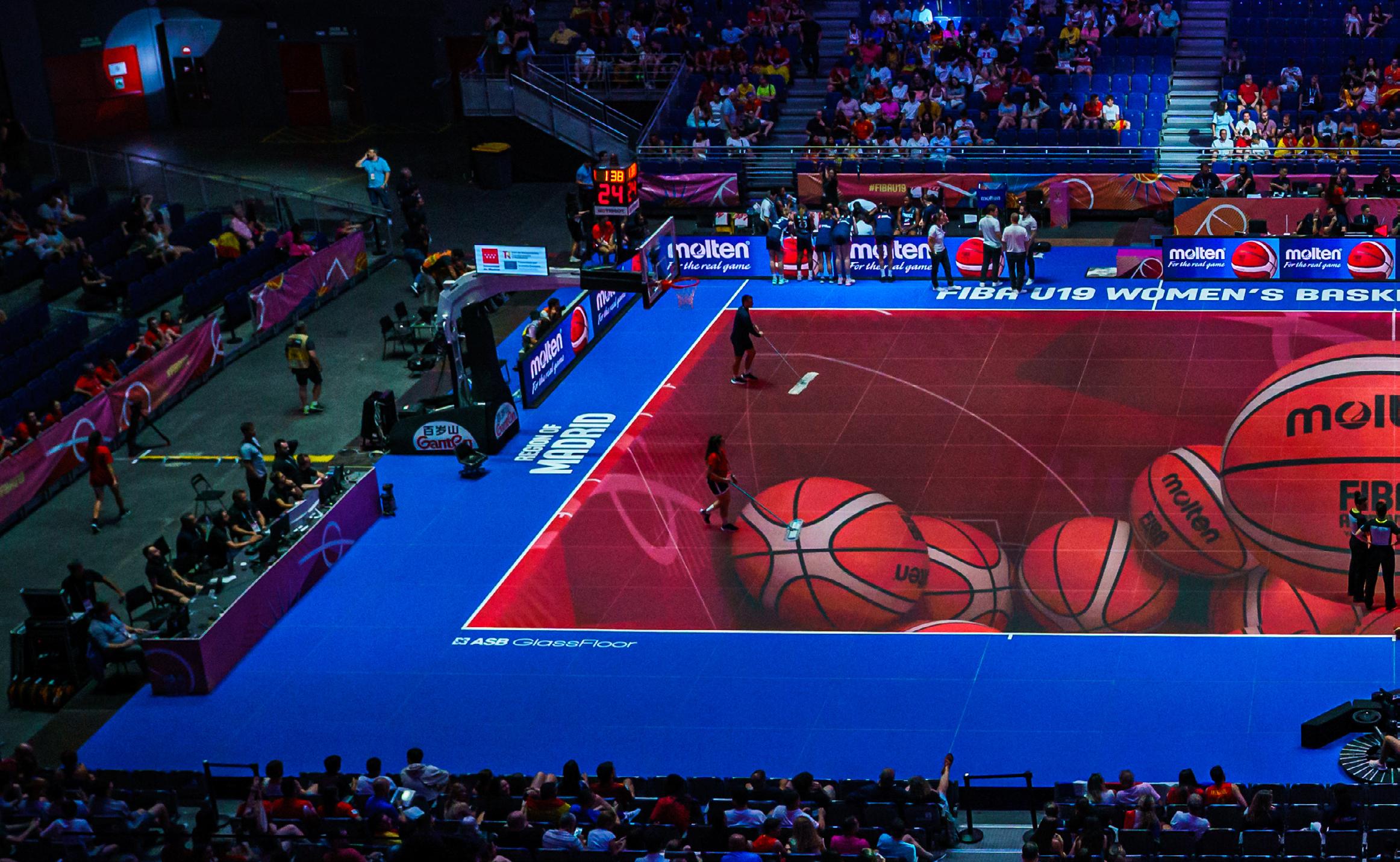
“Sports venues are no longer static spaces used only on game day. Interactive technologies like ASB GlassFloor’s LumiFlex LED flooring effectively help teams and venues engage fans and boost revenue, whether it’s adding interactive elements during games or unlocking content opportunities for sponsors. This transforms stadiums into always-on, programmable environments that can engage fans year-round.”
Read on to see how fans can be engaged at every step of their journey.
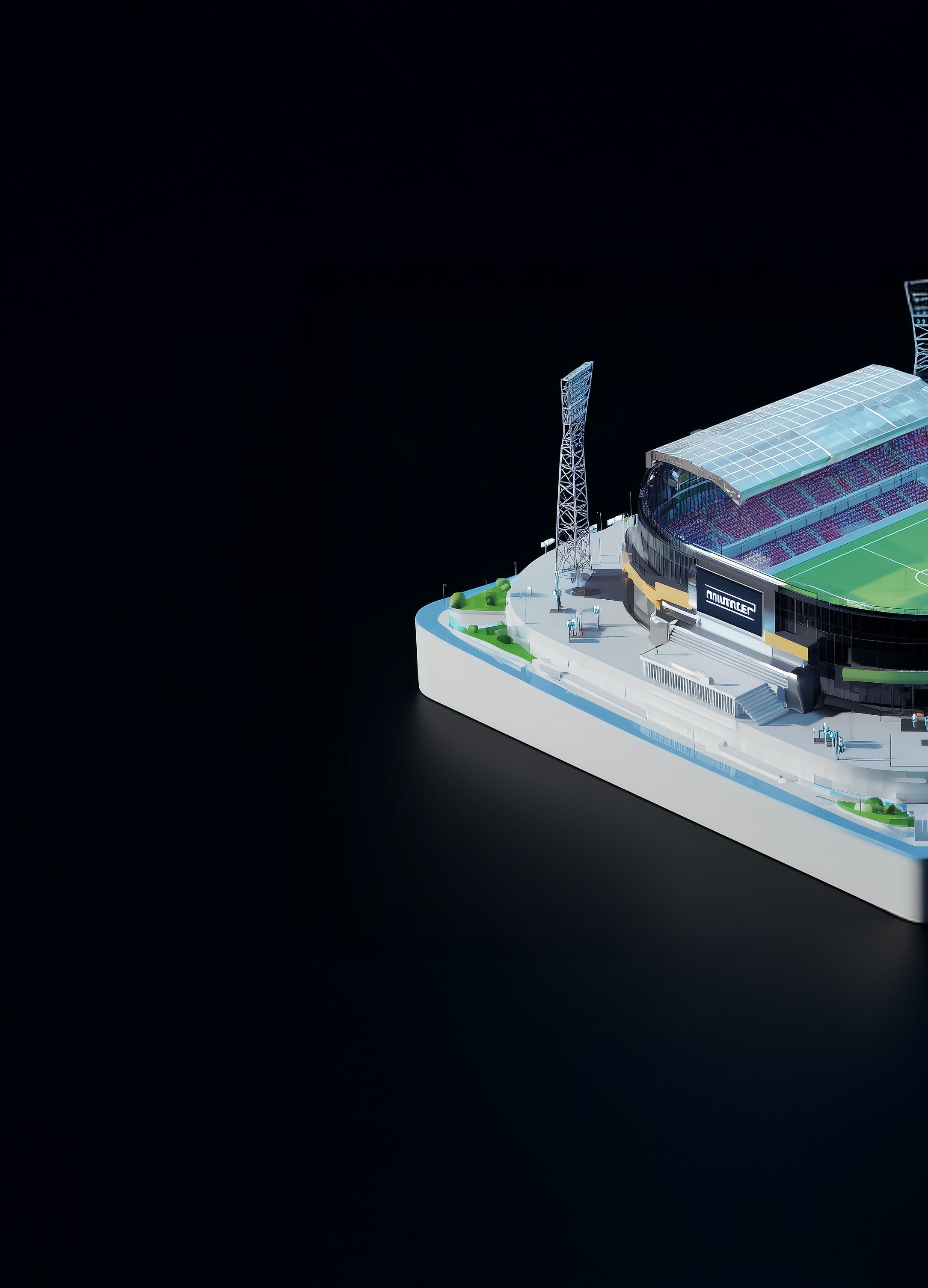
Today’s fans need constant stimulation - and real-time, data-driven graphics are a powerful way to keep them engaged. From dynamic jumbotron scoreboards to on-pitch moments triggering stadium-wide special effects, venues can turn live data into entertaining, educational bursts that enrich the fan experience. Innovations such as ASB Glassfloor’s interactive LED flooring push this even further, tracking on-pitch movement and performance in real-time to give fans unparalleled insight into their favourite players.
Stadium exteriors are prime real estate for building pre-match hype - and LED is the star of the show. Sports venues should think big and look to examples like the Las Vegas Sphere when it comes to transforming the outside of their stadium into a dynamic canvas that can do everything from advertising the match to welcoming fans and setting the tone for the rest of match day. The experience starts here.
While the players warm up offpitch, stadiums can transform their jumbotrons into pre-match storytelling engines. Venue-wide digital takeovers featuring fanfavourite athletes - complete with highlight reels, stats and iconic career moments - help build anticipation and set the tone before kick off. It’s a simple way to bring fans closer to their heroes and elevate the energy across the stadium.
Fans don’t want to just sit back and watch - they want to shape their own experience. With smart tools from providers like Cue, spectators can influence match-day moments through live polls and interactive prompts, or even appear on the big screen via integrated camera feeds. Crowd energy can also be harnessed, with decibel levels triggering on-screen reactions and sparking chant-offs where the loudest side sees their team colours take over the stadium. When the crowd drives the content, everyone becomes a part of the action.
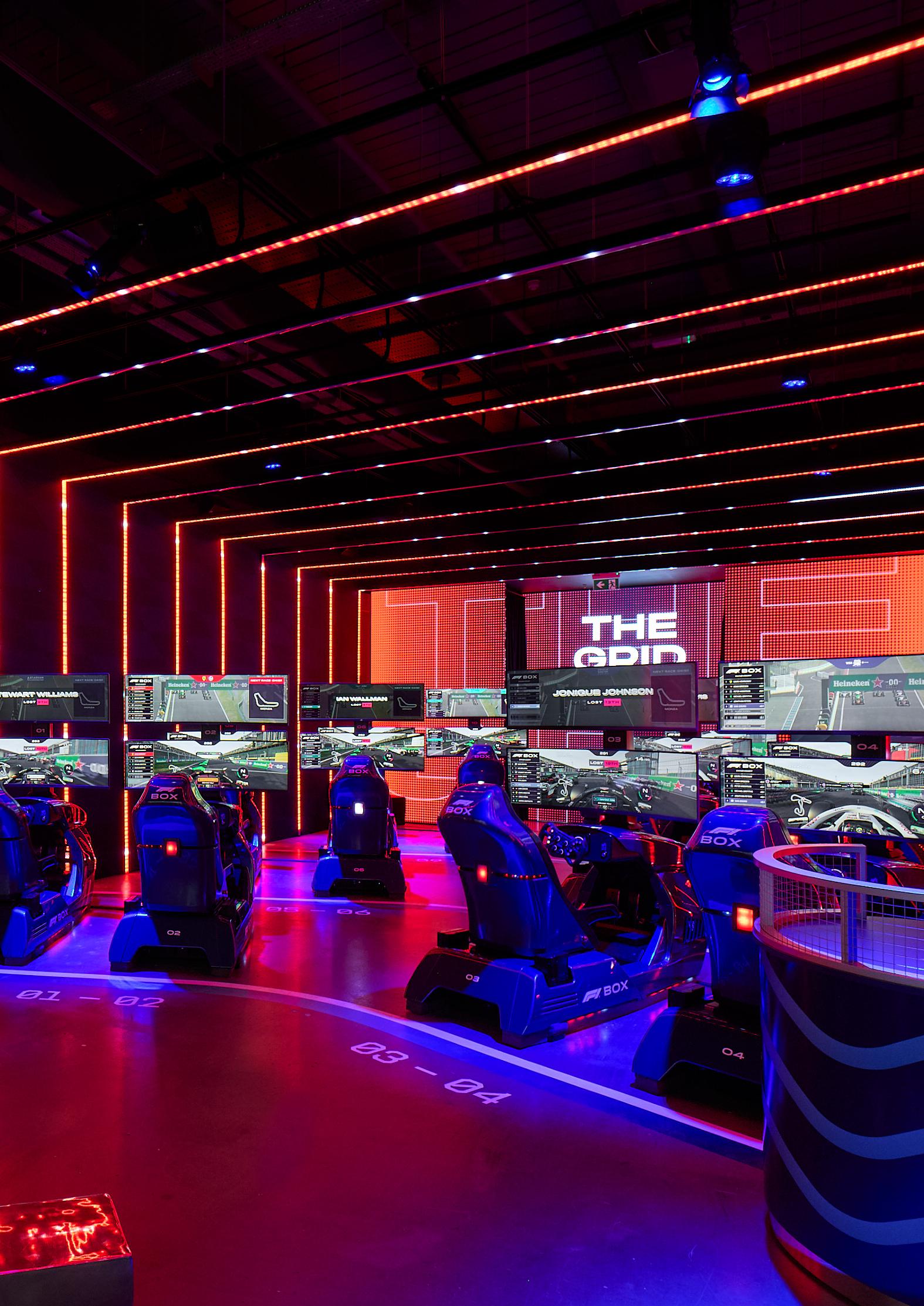
One of the biggest challenges facing stadium owners is keeping fans in their seats - and nothing does that better than tapping into competitive spirit. By adding gamified digital elements to the in-seat experience, venues can turn spectators into active participants, offering quick games via dedicated console or smartphone integration that can trigger reactions on the LED displays and influence the atmosphere in real-time. The Intuit Dome is already leading the way, with integrations from Pixmob and SpinFX providing interactive moments for fans to enjoy in the stands.
The match may end, but the experience doesn’t have to. By prioritising fun, interactive and visually striking moments, venues can create memories that fans want to capture and share on social media, extending the excitement of match day beyond the venue and tapping into the ripple effect of fan-to-fan influence.
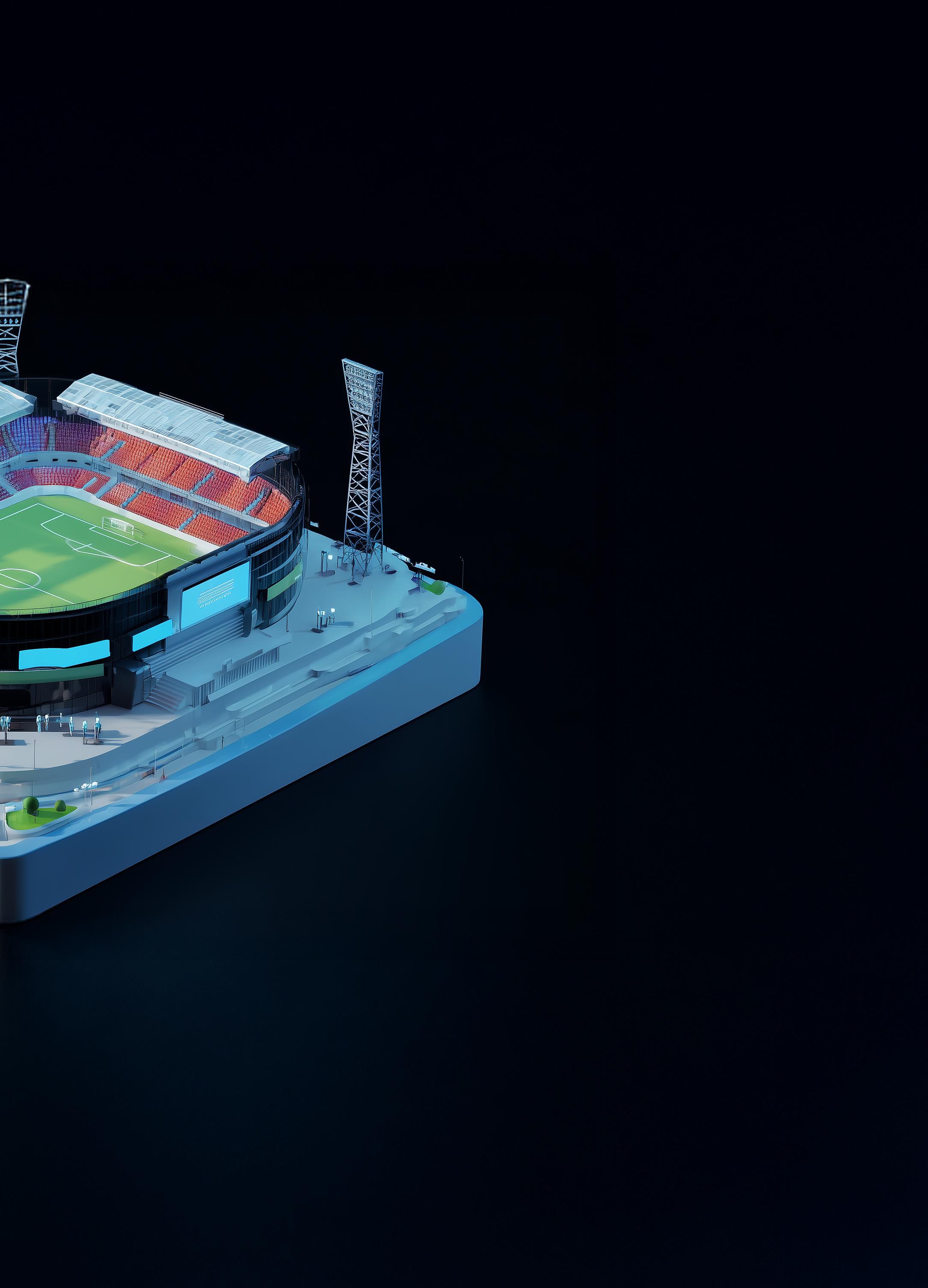
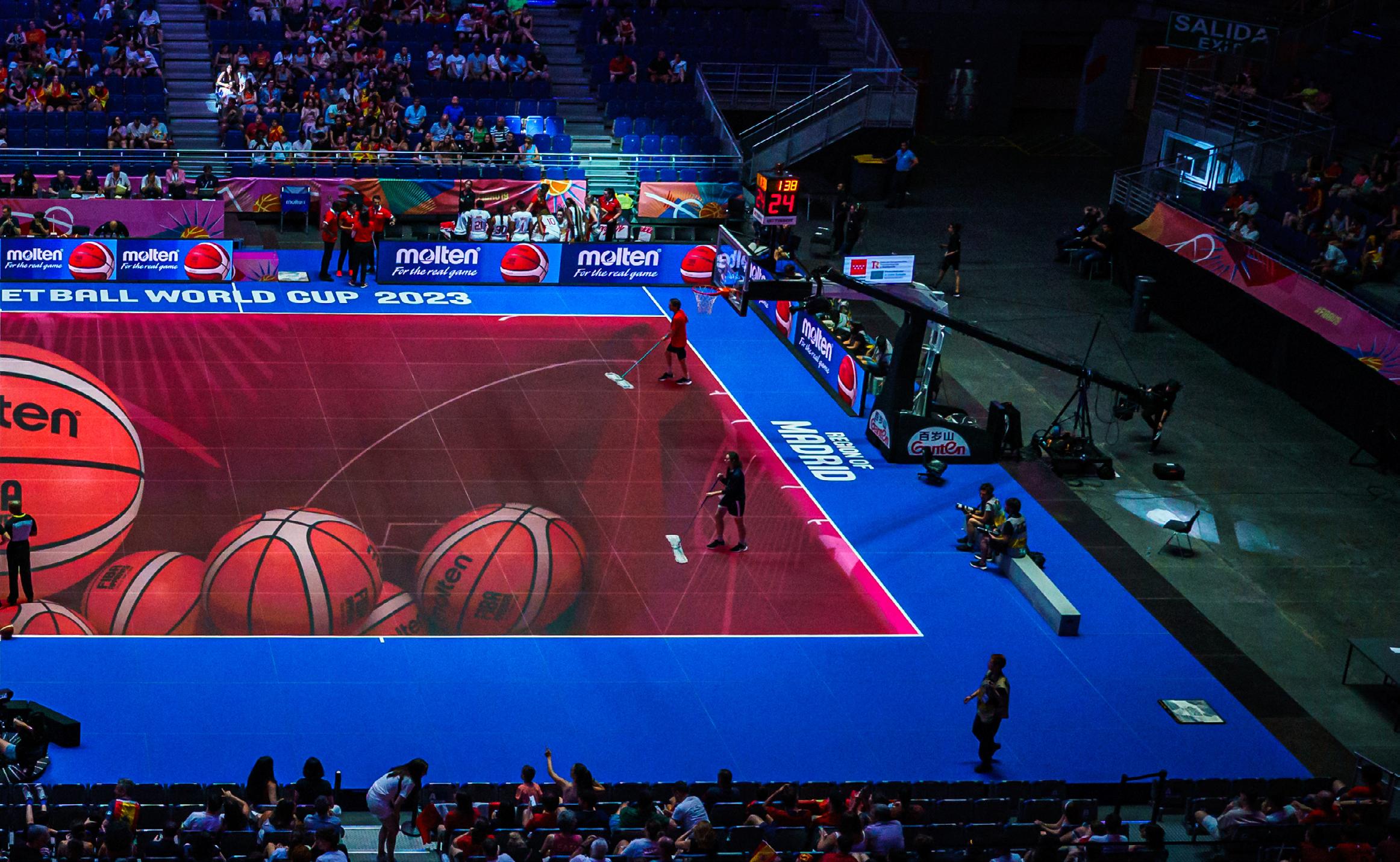
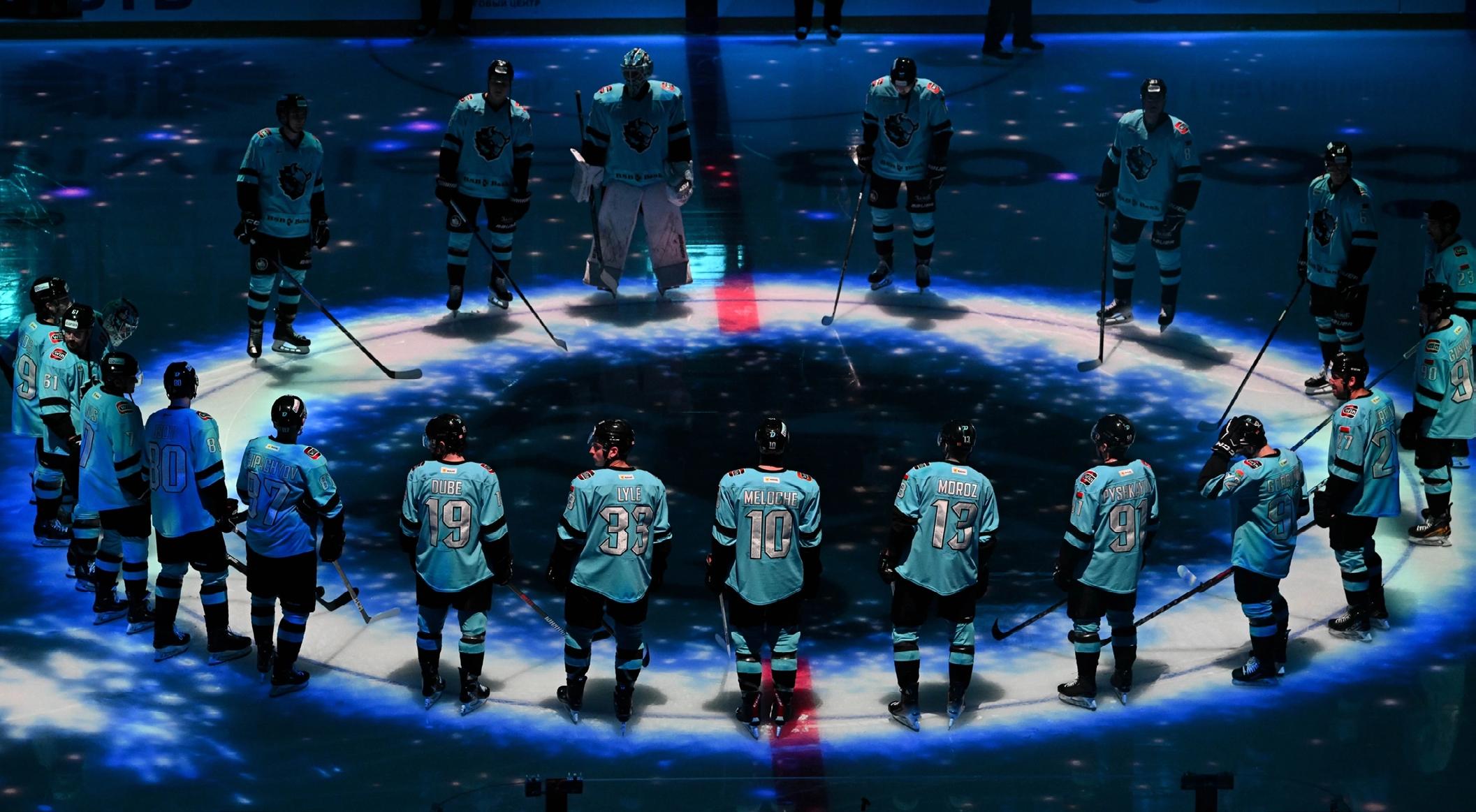
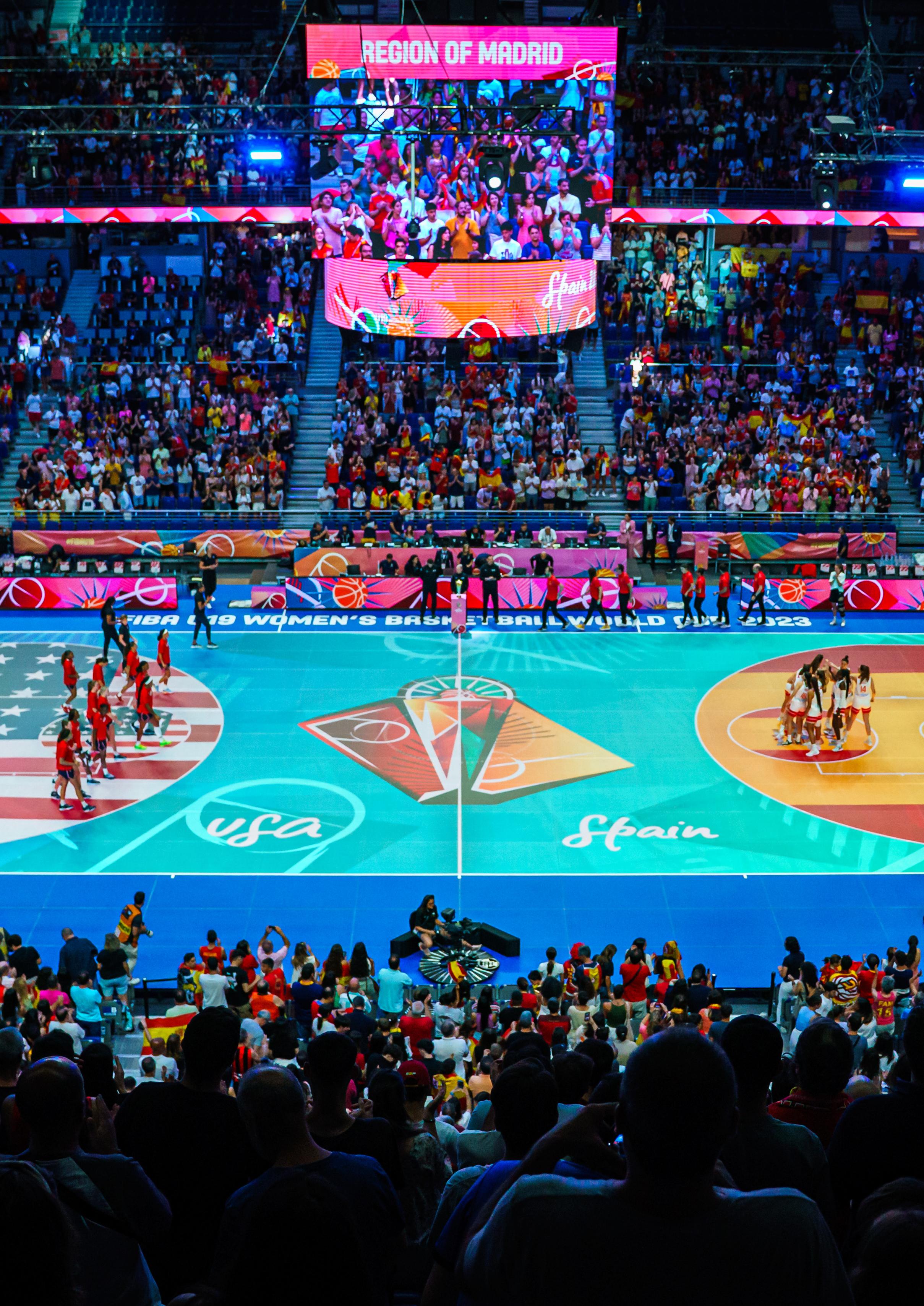
Keep energy levels up during down time by putting on a show fans won’t forget. With dynamic LED effects and large-scale projections, venues can transform into an immersive storytelling experience. Think beyond traditional displays and reimagine your pitch as a projection canvas, amplifying scale and drama to take things to the next level. Or, you can also utilise exterior LED to create some fun visual moments for fans to enjoy outside the stadium.
Even after fans leave, engagement shouldn’t stop. Technology allows venues to tell stories year-round, keeping fans connected between matches. Tottenham Hotspur, for example, uses in-house XR production to create high quality branded content that offers behindthe-scenes access to players’ lives, strengthening connection and ensuring fans will return.
POST-MATCH
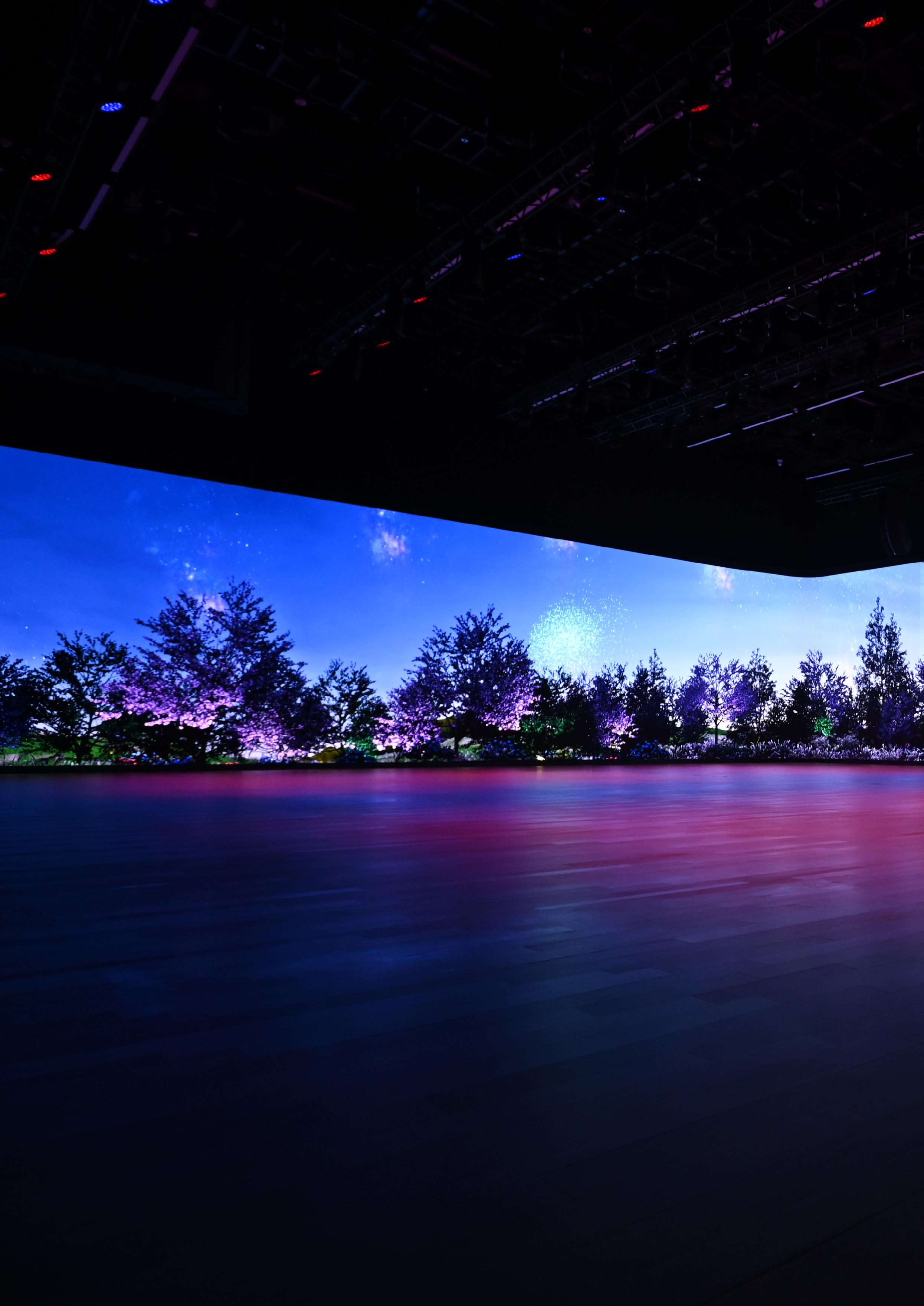
The experience economy is booming. But nextgeneration experiences are only as compelling as the venues that host them. As audiences demand more immersive, flexible and always-on moments, stadiums and arenas are being reimagined as techfirst, multi-use platforms - spaces designed not just for events, but for constant relevance. The challenge that operators and owners face is not just how to fill seats, but how to build environments that justify physical presence in a digital-first world.
The market is already responding. Stadiums now account for the largest share of global entertainment venue revenue, while a growing proportion host concerts, festivals, exhibitions and community programming alongside sport. Investment is flowing rapidly into smart infrastructure, extended reality, and connected systems that allow venues to personalise, adapt and operate year-round. In parallel, flexible and shared event spaces are becoming big business, reflecting a shift away from single-purpose builds toward blank-canvas environments designed to evolve with audience demand. Nowhere is this transformation more visible than in the Middle East. In Saudi Arabia, venue development sits at the heart of placemaking, tourism and economic diversification. Massive giga-projects tied to Vision 2030 - and the 2034 FIFA World Cup - are delivering a new generation of stadiums and districts built specifically for long-term, multi-purpose use. These are not standalone spaces, but integrated cultural, entertainment and community hubs with cuttingedge technology at the heart, designed to host everything from global sport and esports to festivals, exhibitions and daily social life. At this scale, venue design is no longer an operational consideration; it’s a strategic lever shaping the future of live experience itself.
30%
of stadiums and arenas now host non-sporting events (Verified Market Reports)
$68.3B
projected value of the shared, multi-purpose event venue market by 2035 (WiseGuy Reports)
41%
the amount of total entertainment venue revenue held by stadiums and arenas (Market Intelo) The Rise of the Middle East +32%
$431B
total investment driving Saudi Vision 2030 giga-projects (Knight Frank)
100+
new event-ready facilities slated for completion under giga-projects (Mordor Intelligence)
year-on-year growth in Saudi Arabia’s events infrastructure capacity (Arab News)
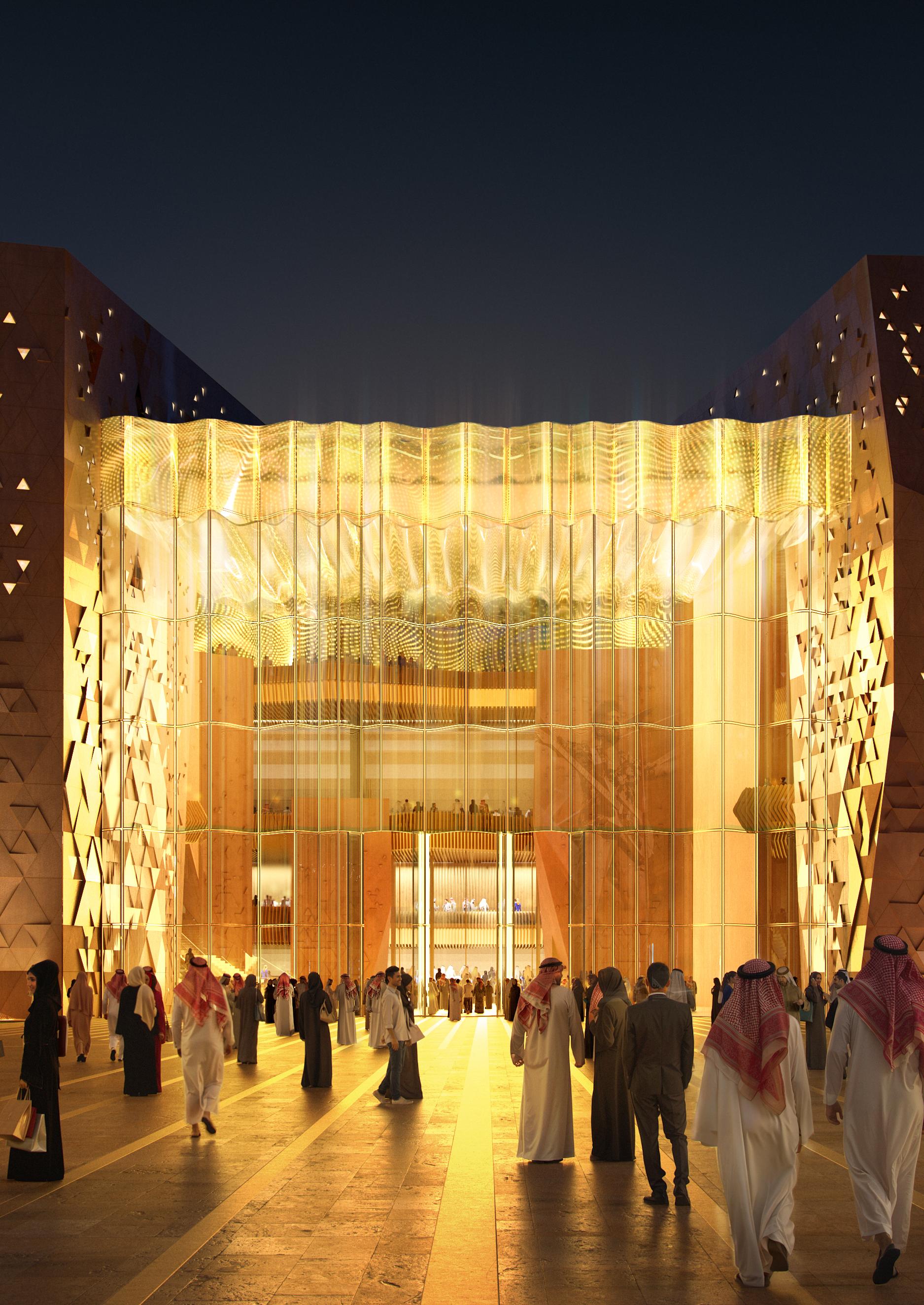
For much of the past decade, immersive experiences have been treated as add-ons - mapped onto existing spaces, or installed temporarily to create fleeting moments of spectacle. But today, that mindset is rapidly being dismantled, and nowhere is this shift more visible, or more ambitious, than in the Middle East. Across this region, immersive storytelling is no longer something placed on top of architecture after the fact. It is being designed into the very bones of cities, museums, cultural districts, and entertainment destinations.
Architecture is no longer just hosting experiences, it’s actively shaping them. And in doing so, the Middle East is positioning itself as a global north star for next-generation immersive environments.
“Five to ten years ago, immersive experiences were often layered onto existing spaces,” says Karl Jenkins, co-founder of A Loud Minority, a leading technical production consultancy based in Dubai specialising in creative and technical direction and production.
“Today, the built environment is no longer a backdrop to an experience, it’s the co-author.” That shift has fundamentally changed how immersive projects are conceived. Architects, master planners, and immersive designers are increasingly collaborating from the earliest stages, allowing structure, materiality, acoustics, circulation, and even climate to influence narrative and interaction. In the Middle East in particular, buildings are being designed as experiential frameworks - spaces that anticipate media and storytelling as part of their DNA rather than an afterthought. This approach reflects a broader rethinking of what architecture is for. Buildings are no longer static containers, they can be reimagined as dynamic platforms to evoke emotion, meaning, and engagement.

Karl Jenkins Co-founder
A Loud Minority
“The Middle East is rapidly building brand new venues from scratch, enabling them to embed immersion, storytelling and technology into the design from the very beginning.”
DISGUISE
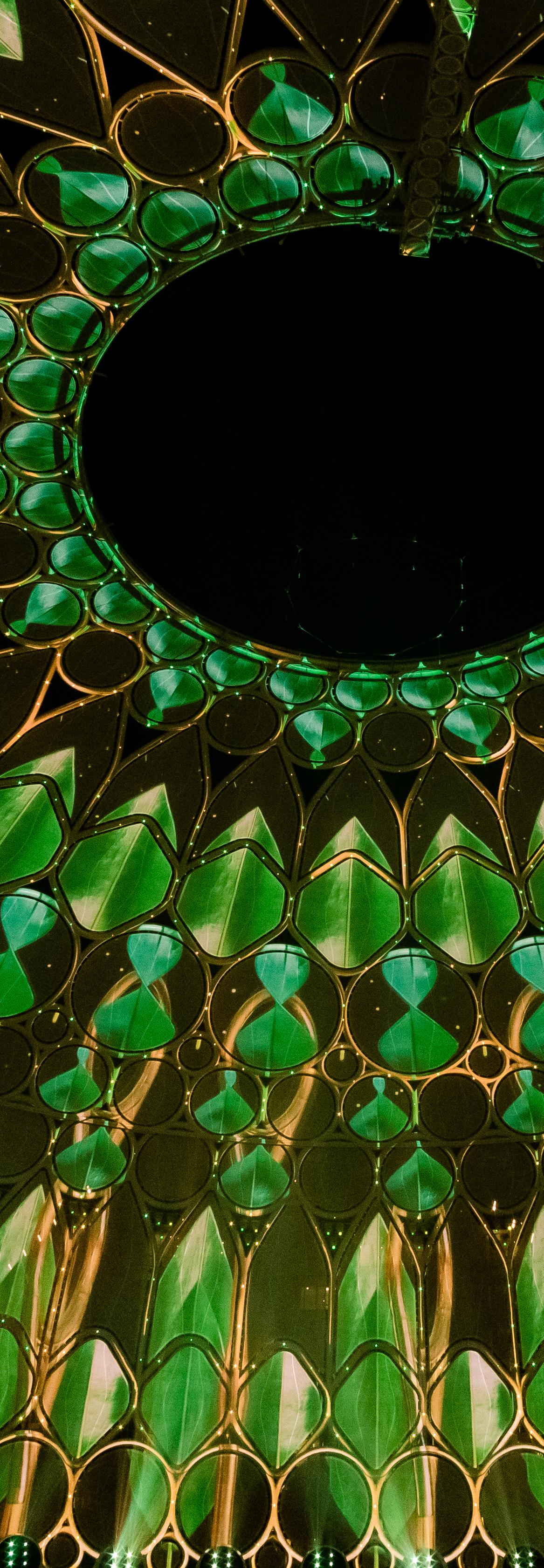
The Middle East has become a uniquely powerful testing ground for immersive environments because it combines several rare conditions: scale, speed, and ambition.
“This is the biggest region in the world for gigaprojects,” says Raed Al Tikriti, Chief Product & Technology Officer at Disguise. “The Middle East is special in that it is rapidly building brand new venues, and even entire cities like Qiddiya from scratch, enabling developers to totally rethink how things can be done and allowing them to embed immersion and storytelling into the design right from the start.”
Giga-projects have also recalibrated what immersive can mean. “Scale is no longer limited to a room or even a building,” says Jenkins. “It can encompass districts, landscapes, and entire visitor journeys that unfold over days.”
Demographics matter too. With a predominantly young population (around 71% of Saudi Arabia’s population are under 35 according to GASTAT) and a strong focus on tourism, experience-led development that speaks to digital-native audiences is no longer optional.
Jenkins also identifies a willingness to rethink fundamentals within the region. “There’s a freedom here to ask big questions - What should a museum be? What is a public space? - without being constrained by legacy thinking. And crucially, immersive storytelling isn’t just spectacle, it’s tied to cultural identity, tourism strategy, and future-facing national narratives.”

This freedom in creative thinking goes hand-in-hand with a decisiveness that directly fuels innovation. Project approvals in the region often come straight from senior leadership, keen to adopt a fast-moving, innovation-led approach to attract local audiences and tourists alike. Technology, as a result, is rarely an afterthought but a vital component of new projects from the start. It’s embedded as an infrastructure, alongside power, water and transport. Digital twins, adaptive media systems and sensor-driven environments are becoming standard rather than experimental.
“Awareness of technology is very high in the region,” Tom Rockhill, COO at Disguise, explains. “They have the knowledge, the manpower, and the budget. Technology is foundational to these new cities - they want to do what’s never been seen before.”
Despite its futuristic outlook, immersive storytelling in the Middle East remains deeply rooted in regional identity. Rather than replicating global precedents, clients consistently push for originality. Museums and cultural institutions are frequently tasked with telling national stories through contemporary, immersive means, and there is a desire to merge culture thoughtfully with technology to tell the story of the region in a way that connects with the new generation. Jenkins points to the region’s storytelling traditions as a powerful influence. “There’s a deep relationship between story, place, and identity,” he says. “We’re often working with symbolism, epic journeys, and layered meaning. The challenge, and the opportunity, is creating experiences that feel futuristic while remaining grounded in heritage and collective memory.”
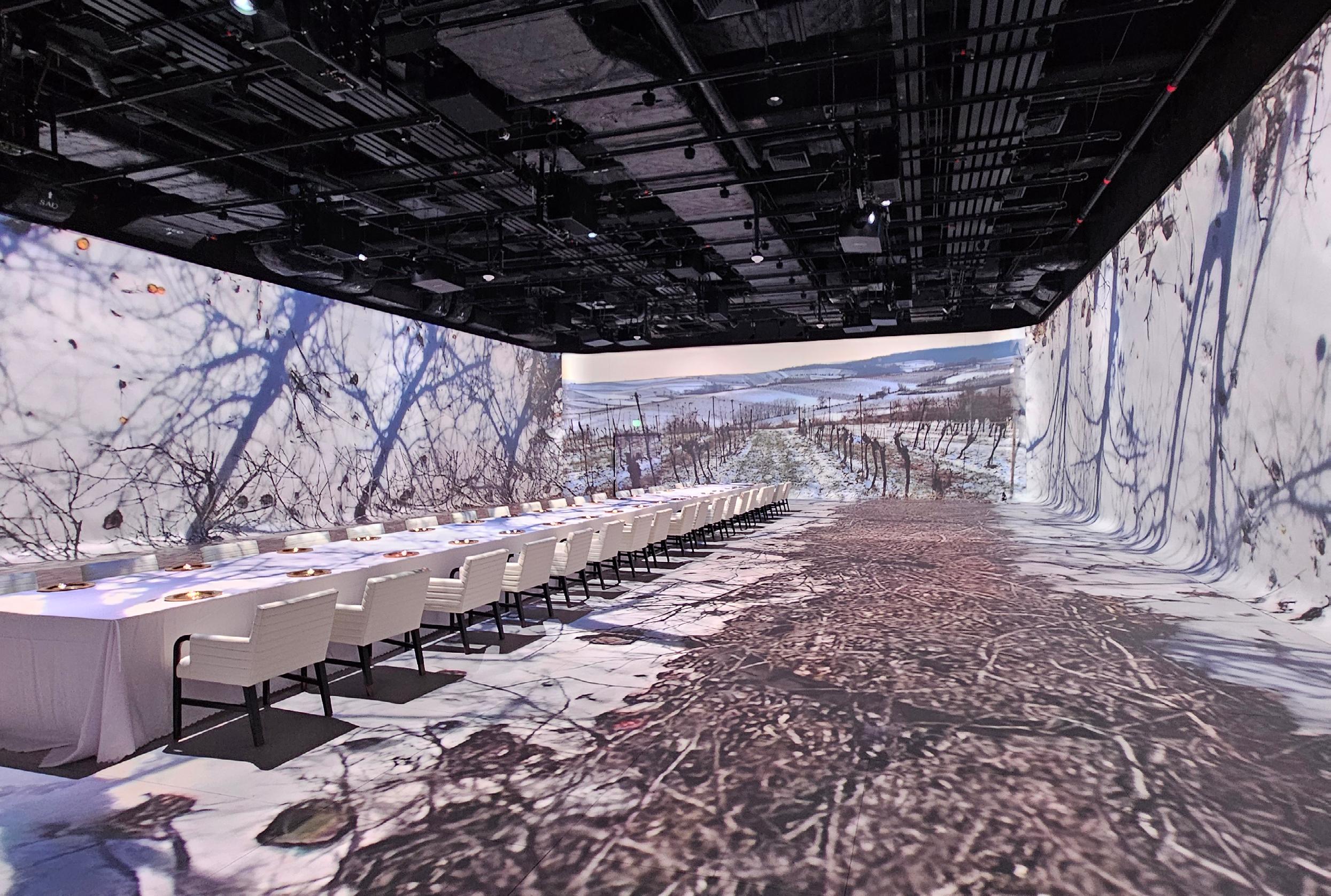
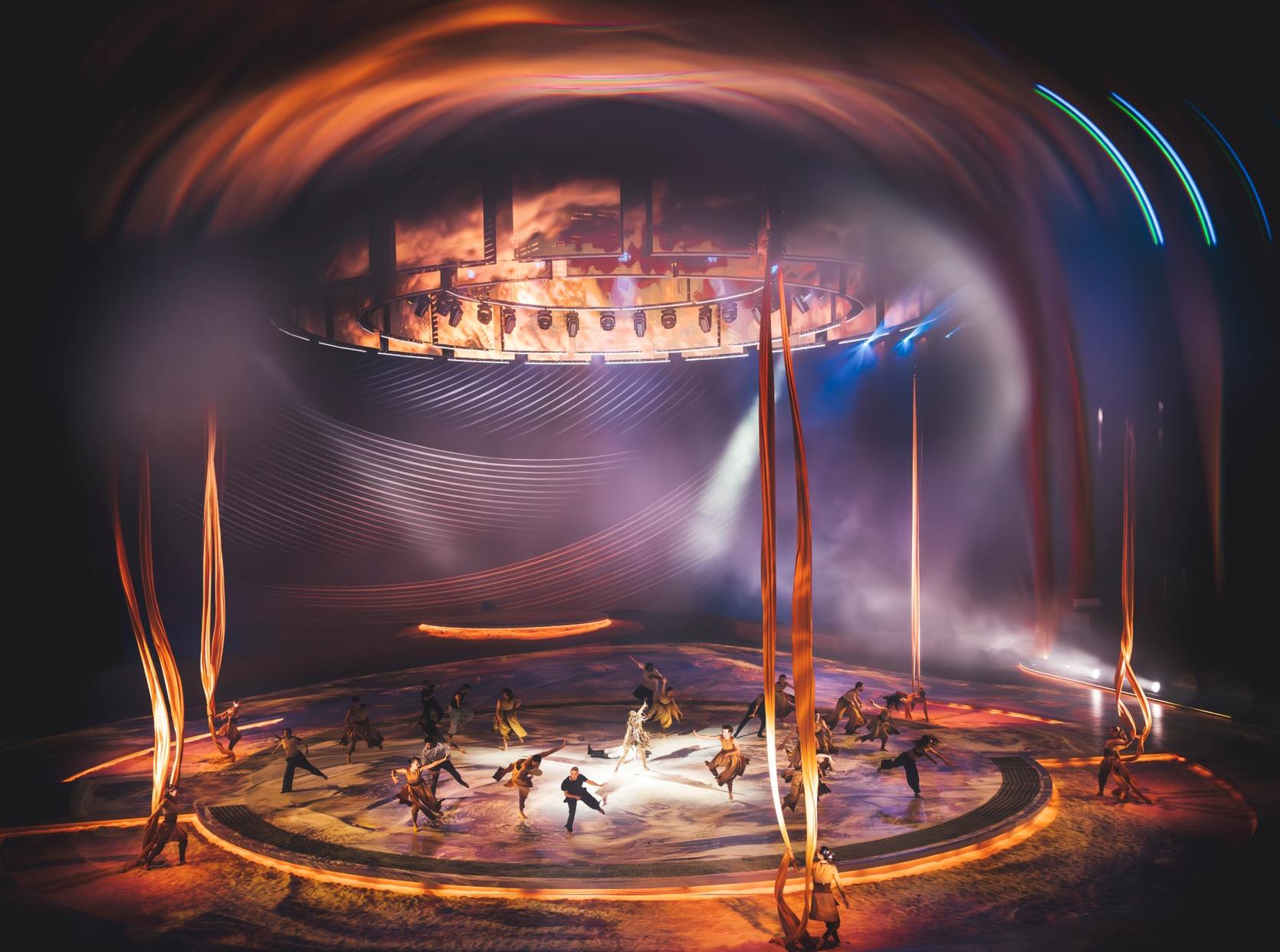
While immersive experiences have often been seen as temporary, Middle Eastern projects are increasingly designed for evolution rather than obsolescence. “There’s a shift away from oneoff installations toward living systems,” Jenkins explains. “Longevity is about relevance - the ability to refresh narratives, respond to cultural moments, and integrate future technologies.” This is reflected in constant upgrades across the region, from media infrastructure to stadiums and fan zones tied to major global sporting events. The goal is clear - to remain at the forefront, not just once, but continuously.
Looking ahead, it’s not hard to see the line between architecture and immersive media dissolving almost entirely. “Architecture will behave more like software: adaptive, responsive, updateable,” predicts Jenkins. “It won’t just house experiences; it will be the experience.”
“If other regions could adopt one mindset from the Middle East, it might be this balance of long-term vision and bold execution. As city-scale immersive ecosystems begin to emerge, where architecture, media, data, and storytelling operate seamlessly, the Middle East isn’t just imagining the future of immersive environments - it’s pioneering it.”
- DISGUISE

Entertainment venues are undergoing a significant transformation, and none are witnessing this shift closer than leading architecture firm, HKS, who specialise in the sports and entertainment space. Disguise sat down with Alex Thomas, Regional Design Director and Adrian Cohen, Architect Associate, to hear how design briefs are evolving, what audiences are demanding, and why the built environment will always have a vital role to play.

Alex Thomas Regional Design Director - HKS
Hi Alex and Adrian, thank you for joining us! To kick things off, how would you say audience expectations are changing when it comes to stadiums and arenas?
Alex: Audiences in today’s world have a greater awareness of other experiences than ever before. There is more choice and more competition between acts, shows, and venues, and people now expect much more when they purchase a ticket to an event. At the same time, different events, clients, and fan bases all have different expectations - so it’s never one size fits all.
Adrian: Every ticket should genuinely do something for the fan. It needs to offer a reward or an additional interaction, adding extra value. You now have to consider that the experience starts from the moment you purchase or even search for a ticket, not from the moment you approach the venue. As a result, providers now have to think about integrating countless more touchpoints along the way. It’s not just about physical location anymore - the environment and the overall experience is merging.
Live sport and entertainment now increasingly compete with digital experiences at home. How can architecture help venues offer something audiences can’t get anywhere else?
Alex: There are certain elements of the “in real life” experience that are truly unique and irreplaceable. Being part of a large crowd and sharing the noise, the singing, the chanting - it’s a spine-tingling feeling, and thoughtful venue design can help to amplify those moments. At the other end of the spectrum, digitalonly experiences have the ability to reach far more people. So it’s our job as designers to think about how we can merge the best of both worlds. There’s a very interesting role for technology to play in creating some of those hybrid scenarios.
Adrian: In-venue experiences have the ability to affect all the senses. Recently, I had the pleasure of attending the incredible Hans Zimmer concert, where distinct vibrations literally rippled through the crowd, with only those present feeling its intensity and purpose. It’s exciting to think of technology as an immersive dial that can modify sight and sound, to create a unique and personalised experience. However, it has to be used for the right reasons as a tool to achieve desired immersion.

How early is technology now being considered in the architectural process, and which technologies are having the biggest impact on venue design?
Alex: We view technology as a layer within the design process from the very beginning. It’s a material for us to use the same way as steel, timber and fabric. Not to throw technology in for the sake of it, but to see if it can provide a solution or elevate the experience in some way. I love the fact that technology allows us to flex time and space to create something constantly new and exciting within the same four walls. Take the Cosm immersive entertainment venue in LA, for example - the architecture and technology combine to make visitors really feel as though they have front-row seats at a live event, whether it’s a London Premier League football match, or a cultural experience from the other side of the world.
Adrian: I totally agree. Technology is a fantastic solution, often to problems you don’t know exist at the beginning of a project. Venues that don’t push for innovation from the very start of the process are missing out on huge opportunities to create something truly impactful that will be adored by fans. Whether it’s visual technology that elevates content on LED screens to enhance the physical spectacle, or providing real-time player statistics, technology adds a new reality to the physical experience and fundamentally changes the game when it comes to fan engagement.
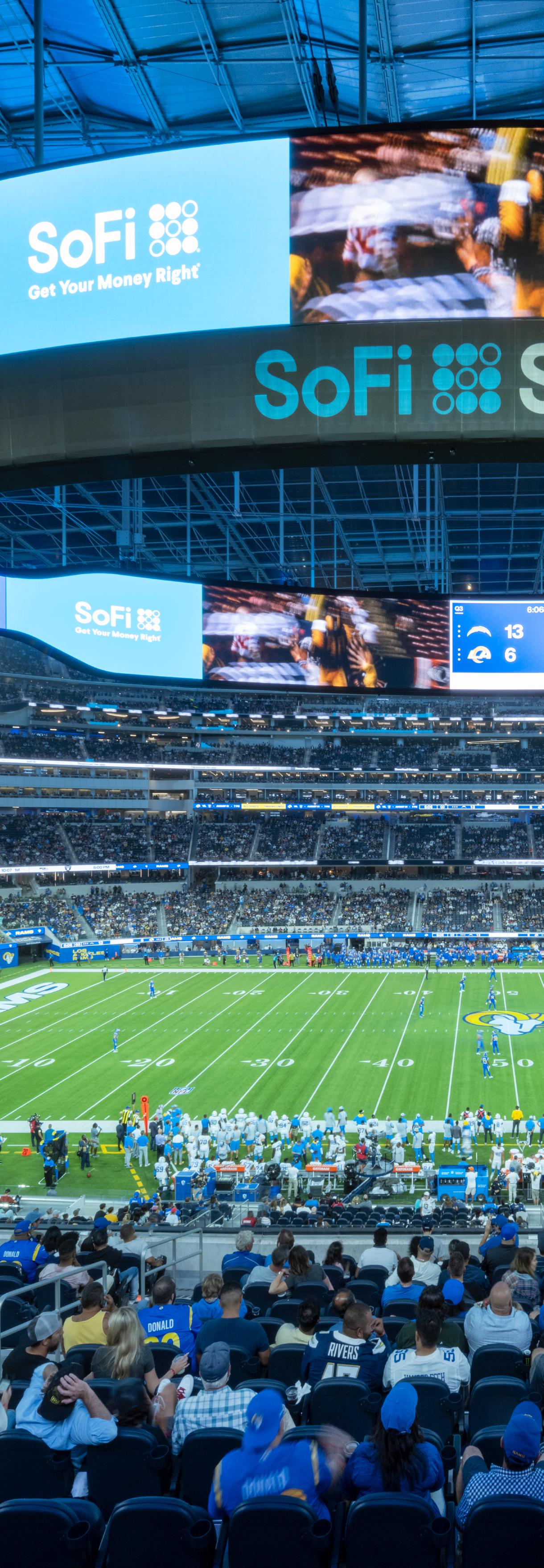
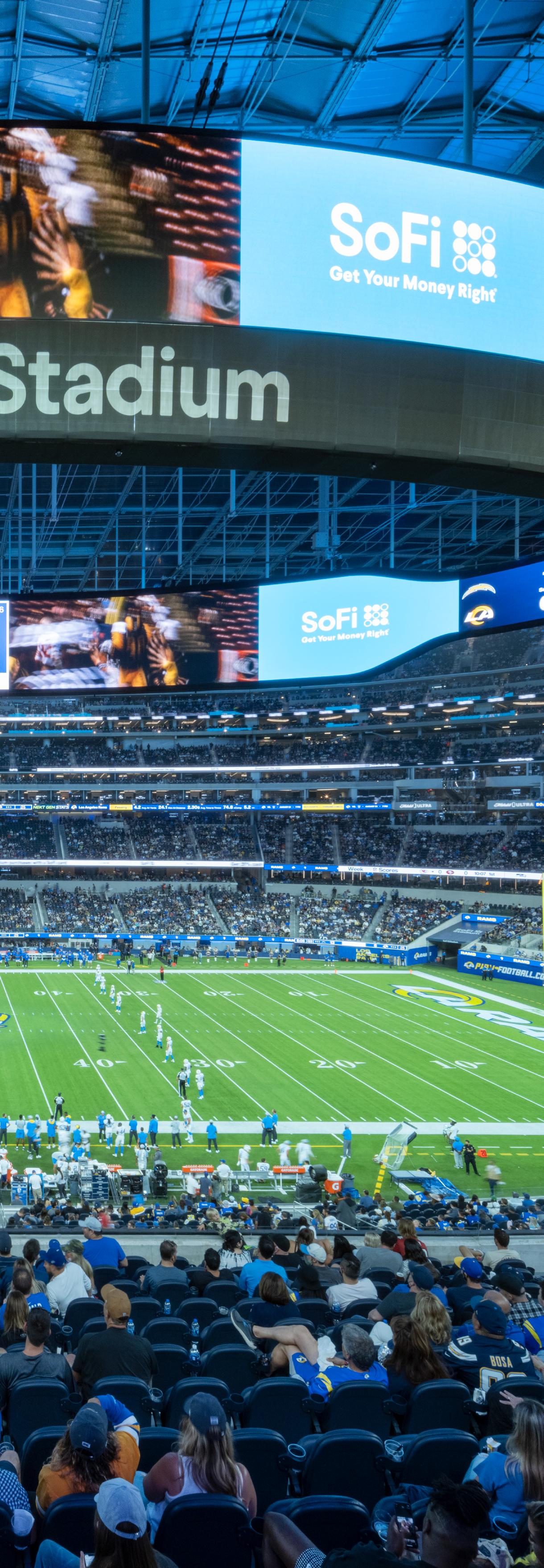
Alex: From our experience designing and innovating immersive venues like Cosm, there are some lessons we have applied to every project since. The building is a canvas, and the range of events you can host on that canvas is endless. The sport, music, show, whatever it is, is entirely interchangeable. The immersive design lesson is to flip your perspective so that instead of thinking about just the event itself, you think through the lens of your guest. You have to find the right balance between architecture, event and experience. Fans want to leave our world and become immersed in another. Lighting, smell, visuals, even temperature - everything has a part to play in transporting guests to that alternative world just for one evening.
Adrian: What’s interesting is that many people heavily involved in the immersive industry aren’t necessarily from a technology background. More often than not, they are from theatre and performance backgrounds, which means they are storytelling and engagement experts. When we look at data on what people love about an experience, we see demand not only for a strong narrative but also for opportunities to participate. That’s something stadiums and other venues can really lean into: creating spaces that allow fans to have the interactive experiences they’re looking for. Imagine, say, a stadium could come to life and actually become a character that can interact with and relate to you as a fan - there’s huge potential to learn from immersive venues and build that same level of audience connection.
We’re seeing stadiums and arenas evolve into year-round destinations rather than single-purpose venues. How is this shift changing briefs and design priorities?
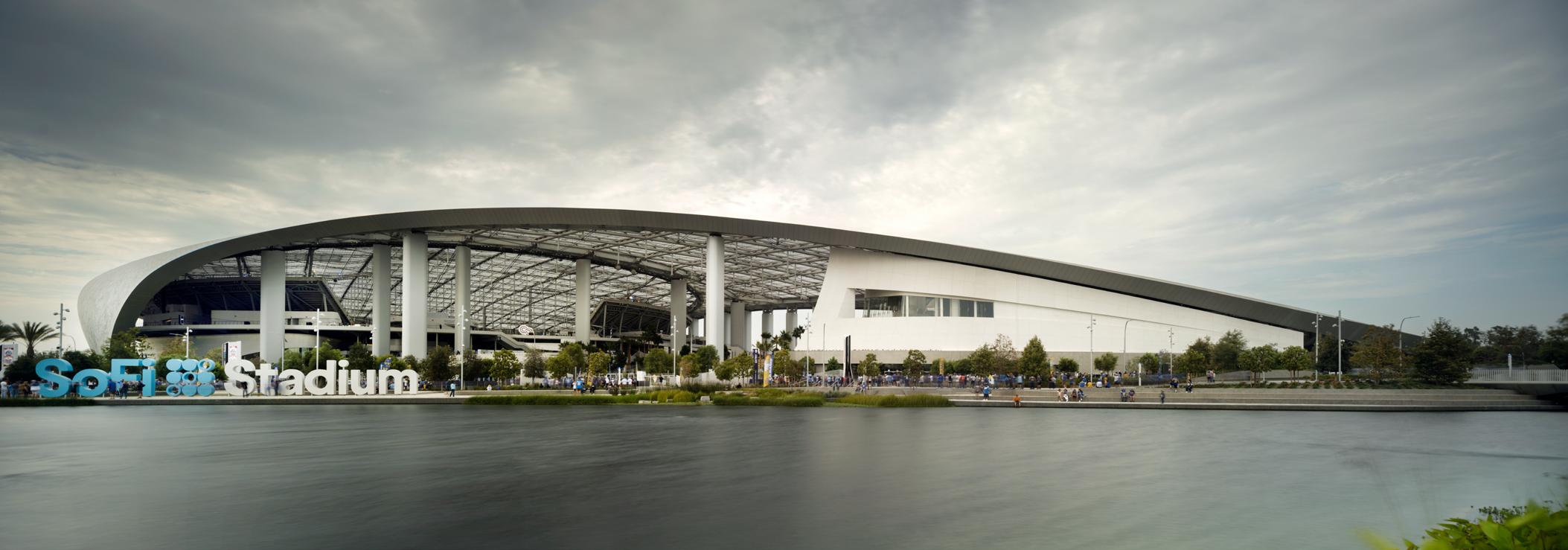
Adrian: “Sweating the asset” has become a key term in conversations we’re having with venues. Owners and operators want to make sure they’re getting the most from their investment and unlocking the full potential of multi-use spaces. A stadium is not just a stadium anymore - it’s a hub for social gatherings, concerts, a wide range of sports, and multiple revenue streams. Building adaptability into the plan is essential. SoFi Stadium in LA is a strong example of a venue that has embraced this approach, integrating with multiple apps, experimenting with AR, and investing in advanced technology to create a flexible infrastructure that will help ensure relevancy across many types of events for years to come.
Alex: Many of the briefs we receive are now far more sophisticated and packed with research and detailfrom economic factors and demographic trends to technical innovation. But this is important, because if you’re not asking the right questions in your brief, you’re not tapping into the full potential of your venue. Designers have a great deal to offer in terms of innovation and insight. We like a well researched brief, but we also like having the space to offer suggestions. These ‘venues of the future’ often act as a point of crossover between many different topics including urban regeneration, sports teams and local community. Designers are well positioned to find more interesting, effective immersive outcomes to bring all these factors together.
Do you see meaningful differences in how venues are being designed across regions, and what can emerging markets or mature markets learn from each other?
Alex: No one wants a one-size-fits-all global solution - part of attending events around the world is all about the cultural experience. Ideas might travel between different regional marketing and we’re seeing lots of cool innovations happening at venues all over the world. But just because you see something that works in an arena in LA, that doesn’t necessarily mean it will work in South Korea. Take a step back and think, why did it work in LA? And what would the equivalent be in South Korea, without replicating it like-for-like?
Adrian: The Middle East is a particularly notable region. There is heavy investment in entertainment, sport, and innovation, with teams learning from mature markets but driven by the ambition to create something entirely new and never seen before. There is a strong understanding and early adoption of where fan engagement is heading, reflected in the hosting of major events such as the Six Kings Grand Slam and countless high-profile boxing matches, as well as in the scale and ambition of the venue designs. There is so much opportunity out there to innovate in this exponentially evolving world, and for us as designers, that’s incredibly exciting.
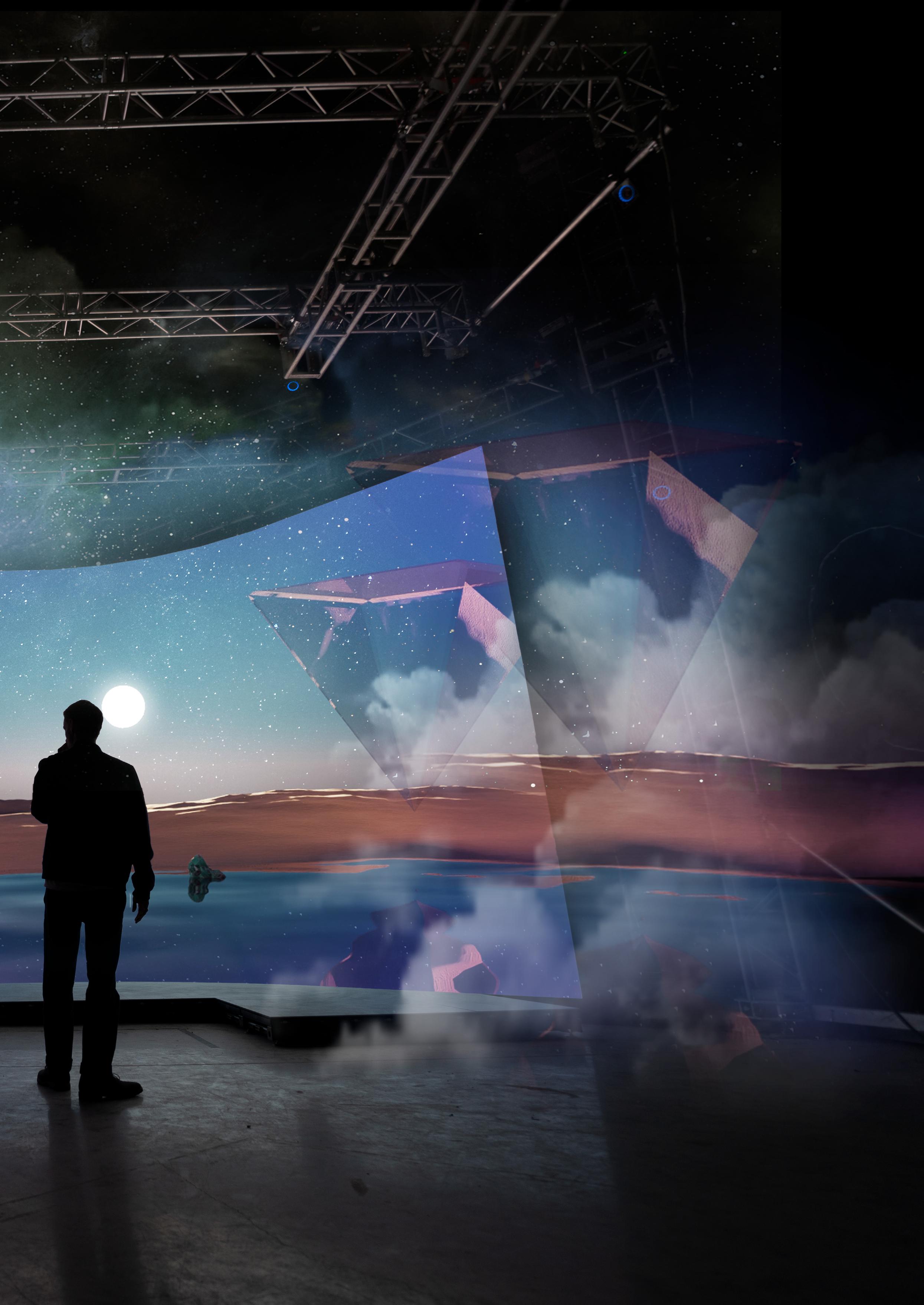
It happened quietly, and then all at once. Artificial intelligence has moved from the experimental fringes to the very centre of the global economy. From logistics to advertising, finance to manufacturing, AI has embedded itself into the daily tools and decisionmaking processes that keep the world moving. The question is no longer if it will reshape industries, but how deeply and continuously it will embed itself into the way we work, create and make decisions.
This acceleration isn’t accidental. It is the result of a synchronised global ecosystem pushing forward in unison. NVIDIA has redefined the limits of computational power, providing the hardware engine for this new era. Microsoft and AWS are building the vast cloud architecture to support it, while OpenAI, Google DeepMind and Meta set the pace for generative models that make AI accessible to the public. Meanwhile, heavy investment from Alibaba and Baidu is driving foundation models and cloud AI across Asia, ensuring this shift is truly global in scale.
Beyond scale and speed, one of the most significant outcomes of this moment is democratisaton. AI is lowering barriers to entry across industries - reducing dependence on specialised resources, removing friction caused by language, geography, access and connecting talent around the world through shared tools and platforms.
But what does this macro-economic shift mean for the entertainment industry?
The same sophisticated architectures driving the global industry are now flowing into our creative pipelines. We are seeing these tools enter the studio; they are influencing real-time content, previz, worldbuilding, and content workflows. But this is not a narrative of replacement - in the creative industries, AI can be a catalyst rather than a substitute, compressing timelines, removing friction from workflows, and creating more space for what ultimately matters: the idea.
“We believe AI is an accelerant to enabling Creators. We see these tools as a way to democratise access, lower barriers to entry, and empower today’s creators and future generations to build, experiment and do extraordinary things.”
Raed Al Tikriti CPTO - DISGUISE
The Creative Sentiment
The Efficiency Gain
69% of creative professionals say AI unlocks new ways to express creativity (Google)
66% say AI helps them create better content (Google)
40% performance improvement seen when workers use generative AI (Mit to Harvard Business School)
The Market Momentum $347B
projected global AI market size by 2026 (Statista)
37% expected annual growth rate (CAGR) of the AI market (Statista)

64% of organisations are already leveraging generative AI (Google)
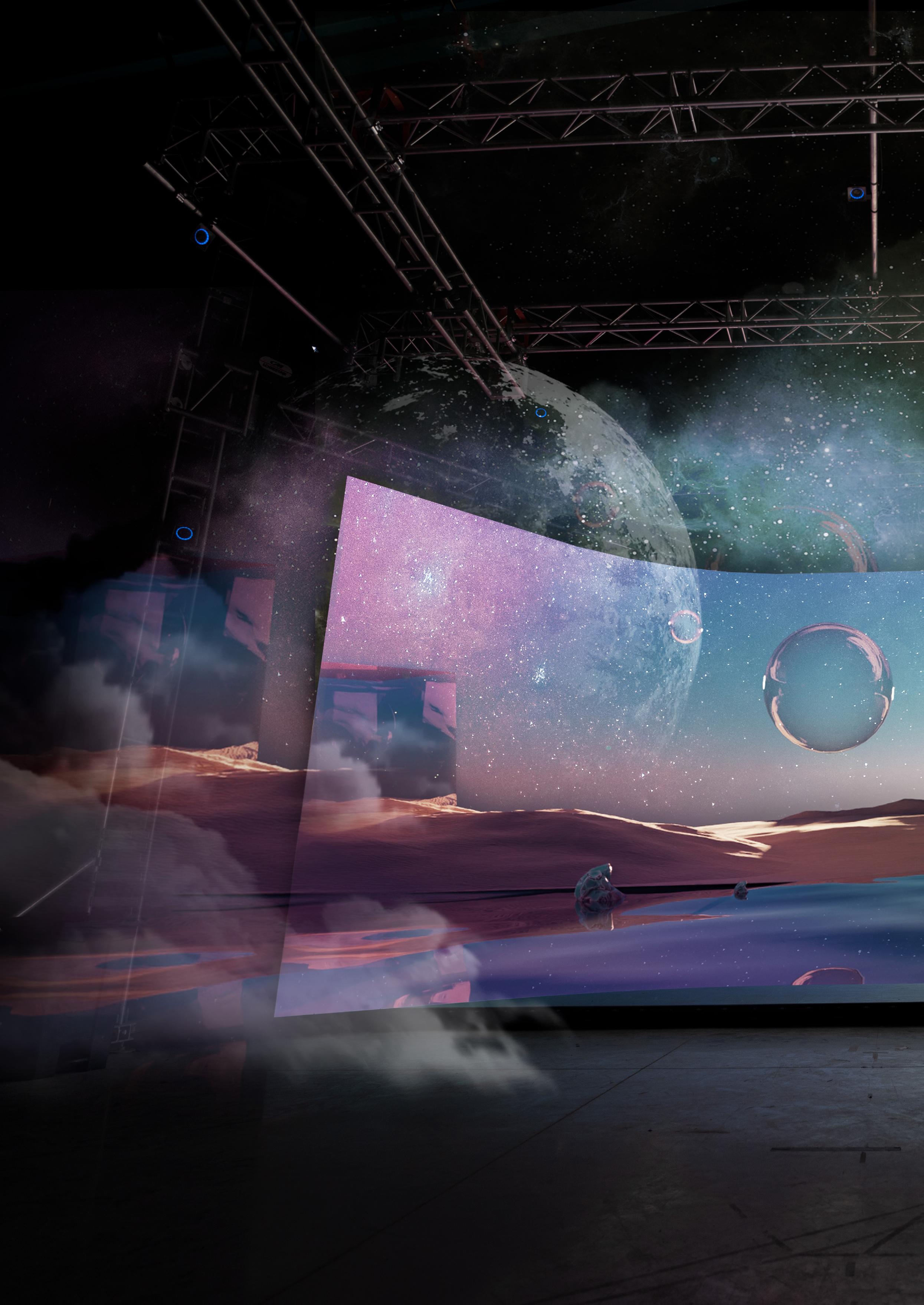
Imagine typing “enchanted forest” into a text box, then seeing a fully explorable 3D world generated in real time, like a video game. With advances in AI world modelling, this is on the cusp of becoming possible.
If you’re in the media and entertainment industry, these AI advances could soon make it faster and easier to engage audiences than ever before. But whether you’re developing a themed entertainment environment or projection mapping at a music festival, AI can also come with issues, such as understandable concerns around content and IP ownership, authenticity, job security, and more.
How will this evolve as we begin 2026? To find out, we asked our Innovation Director, Peter Kirkup, who spearheads Disguise’s AI strategy.
“Right now, many AI video generation tools only output to 720p SDR or HD, which is not high res enough for live event visuals. Plus, results often fall into the uncanny valley territory unless you input very detailed prompts, making it risky to use with live audiences. But things are progressing fast.”
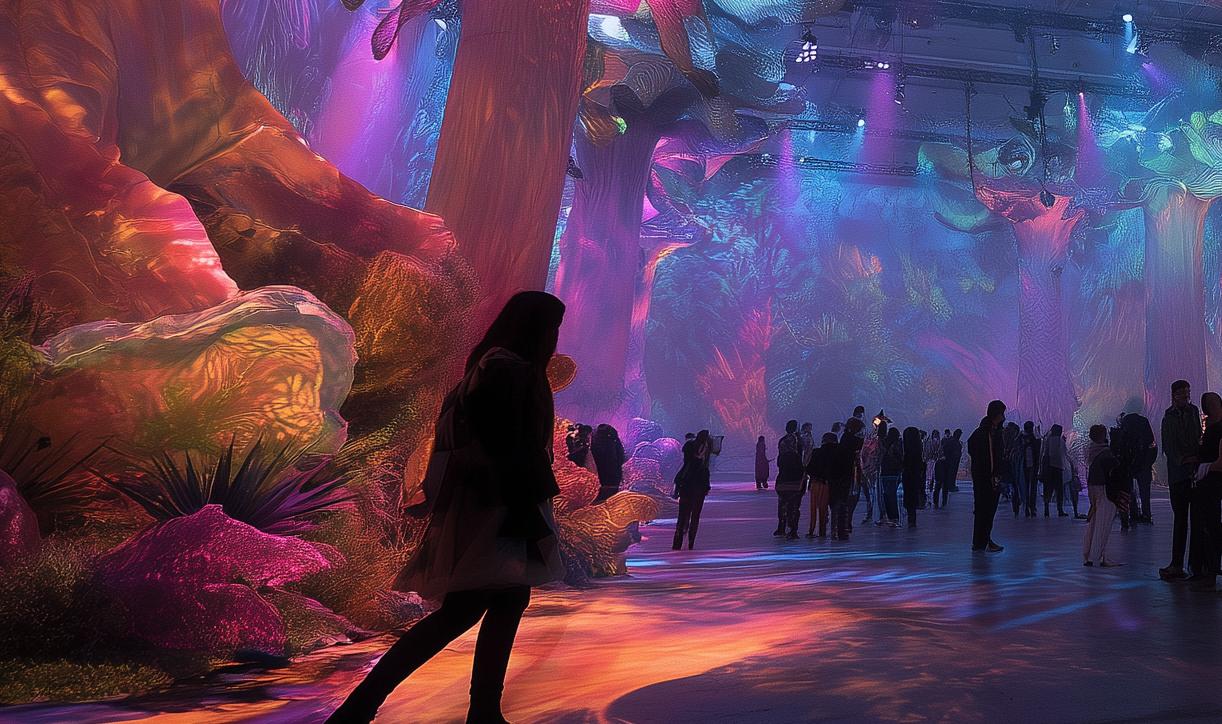
Peter Kirkup Innovation Director - DISGUISE
While video and image generation has been at the centre of many headlines around AI, Kirkup reveals that most AI breakthroughs have been about speed and iteration, rather than fully AI-generated productions. All this means that, so far, use cases for AI are more practical, with applications such as:
Many teams in both film and live events are using AI for previs to help iterate through ideas quickly. This is making it faster and easier to get buy-in early on in the project. If the director or band asks to see a concept, for instance, teams can use AI to quickly generate images of their ideas. They can then jump on a call to talk through options and use AI to make further changes on the fly during the conversation. That trims pre-production time down by a lot.
Assistants like Disguise’s Ask AId3n tool are now enabling programmers to create bespoke, scripted integration tools for LED visuals, without having to build them from scratch. “Creating a live event or virtual production involves many repetitive tasks like building out timelines or factoring in stage sizes. AI assistants can take a task that used to take an hour and shorten it to just five minutes,” explains Kirkup.
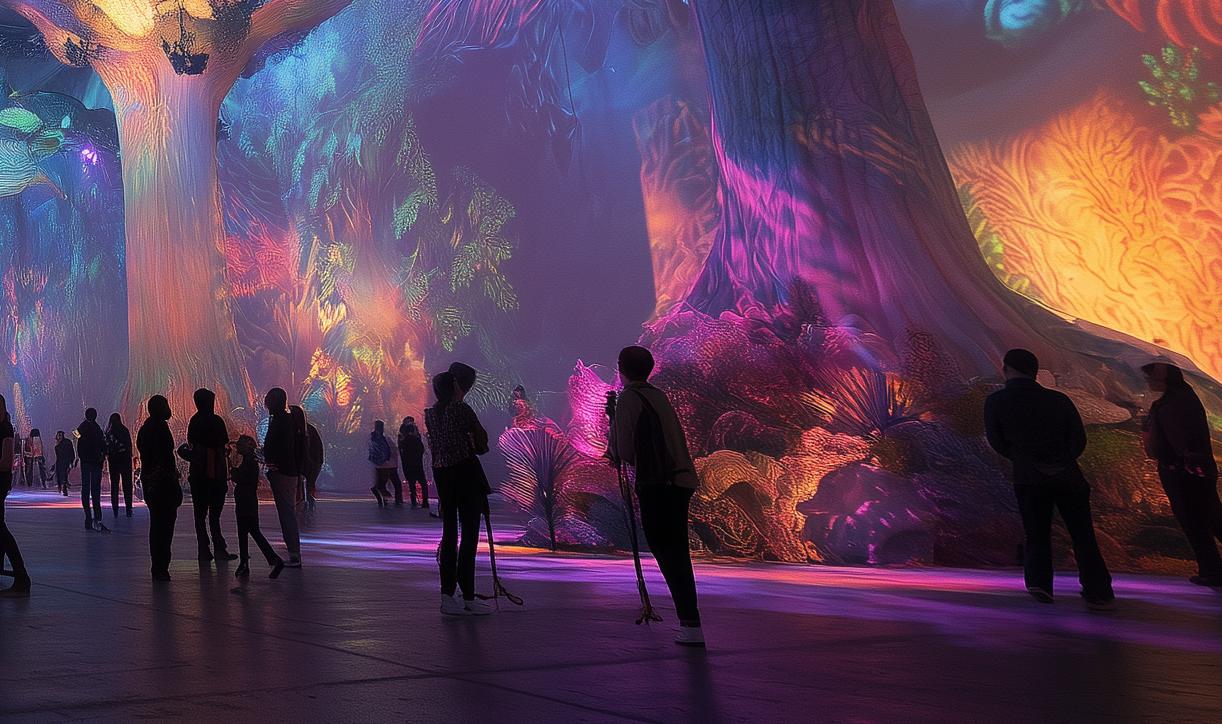
Of course, the fact that fully AI-generated productions are still rare doesn’t mean that there aren’t some very real issues involved in implementing the technology. As AI becomes more advanced, creatives are rightfully concerned about job loss and their IP being used without permission or proper compensation. Already, this has led to lawsuits such as The New York Times v. OpenAI, as well as the Hollywood strikes. Some films are even now stating that no AI was used in their credits.
The next best solution, according to Kirkup, is to implement proprietary or “bring-your-own” AI models trained on approved data. “This would help ensure safety, confidentiality, and IP integrity,” he explains.
“Virtual production or live events professionals could create AI models using proprietary data, so that any outputs generated from their AI would be made using only art created by their own in-house team of human artists. Those artists would already be receiving compensation for their IP on the project, whether AI was used or not.” As well as avoiding IP infringement issues, Kirkup adds that using proprietary AI models also has another advantage. “This method allows for a closed-loop system, so you’re not relying on sending potentially confidential data to an unknown cloud provider,” he adds. “That would mitigate privacy concerns about cloud services. It would also mean that if the internet goes down during a live event, it won’t matter: connectivity issues won’t break the immersion for your audience.”
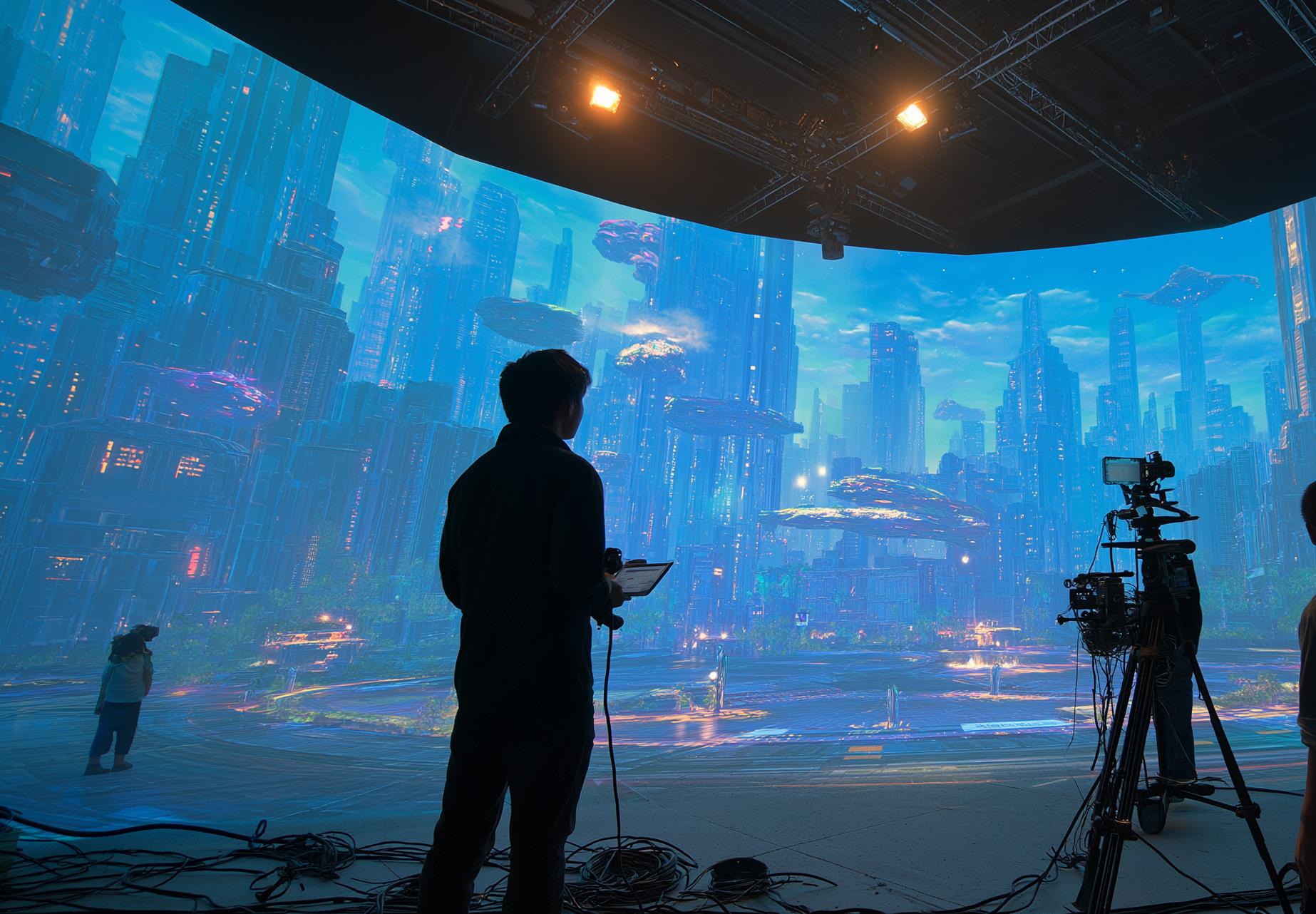
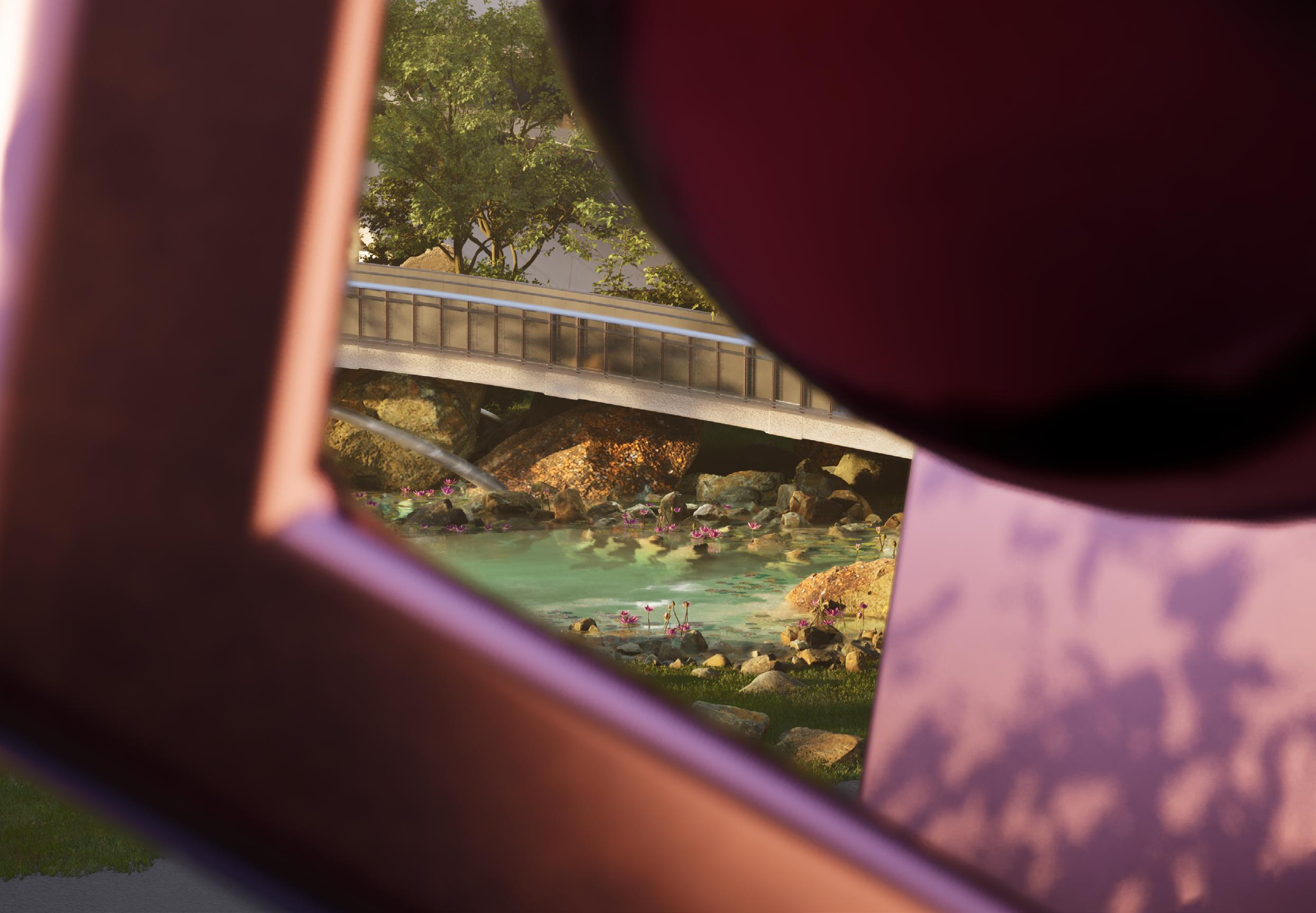
“A solution around data issues is for AI companies to indicate their training data sources, similar to licensed models from companies like Getty. Another is detection and watermarking, but these are still emerging and imperfect. They won’t catch infringements every time.”
Peter Kirkup Innovation Director - DISGUISE
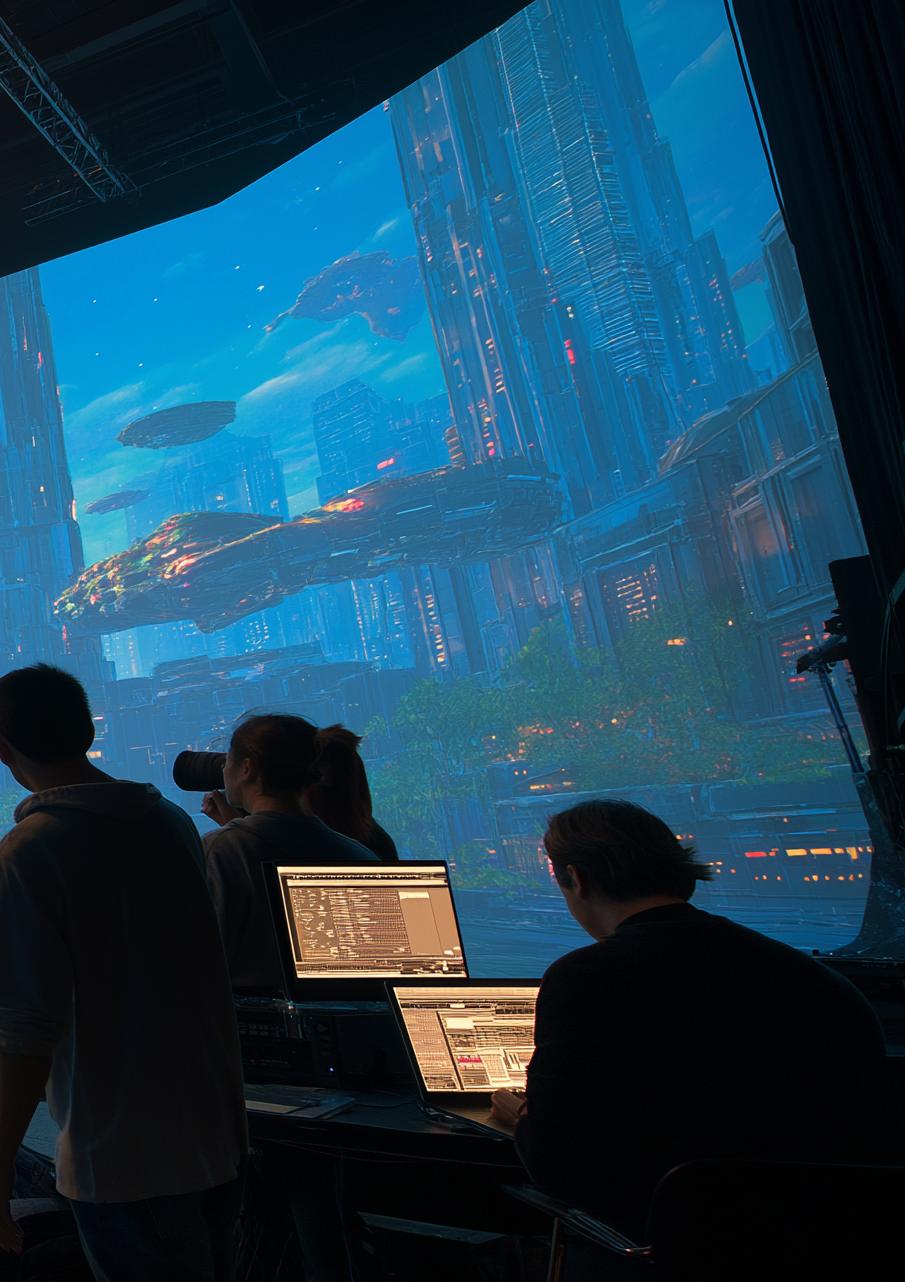
As we look to 2026 and beyond, Kirkup is hopeful that AI will be used responsibly, so it can be seen as a storytelling tool rather than a threat to jobs. “I think AI should always raise creative quality, not lower it,” he says. “We need to focus on that goal more in the future.” To do this, Kirkup suggests evolving roles, rather than removing them. As well as protecting artist IP and compensation, he suggests offering upskilling courses to help creators prompt, critique, and shape AI output. “We need to make AI work for us, and treat it as a tool that’s no different from After Effects or Photoshop,” he explains. “AI needs to remove boring tasks to let humans focus on emotion, craft, and imagination. That way, the industry can embrace experimentation while remaining grounded in ethics and authenticity, so more creatives unlock creative boundaries to bring their ideas to life.”
If you’re currently assessing AI’s potential, you’re not alone: research shows that 90% of companies are either using or exploring AI. So what determines whether AI will actually be helpful? Often, the most successful solutions depend on whether experts can fine-tune the technology for their specific industry. A generic, one-size-fits-all AI tool will rarely be as effective for niche use cases.
That’s why our team at Disguise decided to develop AI solutions. After 20 years of experience in the media and entertainment industry, we aim to help teams tell better stories, faster, using AI tools created specifically for their workflow, rather than being shoehorned in. In this article, we take you behind the scenes to see how our AI tool, Ask AId3n, works, and to give further insight into other specialised AI solutions that our creative department is finding helpful.

“We’re experimenting with AI and figuring out which of the thousand ways to use it best supports our creativity. Right now, AI image generation is a great accelerator at the beginning of an idea, when you don’t have the shape of a concept just yet. As someone who thinks in pictures and has to efficiently translate that into a coherent plan, ideating with prompts simply helps us get to the good stuff faster.”
Brian Allen VP of Creative Services - DISGUISE
Disguise’s Creative Services team first began exploring AI as a creative assistant. The team, which develops projects including touch and audio-reactive immersive installations and virtual art productions for clients around the world, currently uses AI-generated images to quickly brainstorm different ideas. Tools like Flora allow the Creative Services team to collaboratively review AI-generated images, text, and video. This helps to create moodboards and treatments, and refines the visual direction of a project. However, some best practices should be followed to ensure ethical standards, including:
The pace of change in AI is accelerating, and no single team can track every new model or tool. AI literacy is less about knowing everything and more about sustained curiosity - exploring what’s relevant and sharing insights. As adoption grows, a culture of continuous learning remains essential.
As AI becomes more widely adopted, training practices are coming into sharper focus. Thoughtful, transparent data sourcing is increasingly recognised not only as essential for privacy, but as a way to build trust and long-term value into AI-driven systems.

Although visually striking, AI images often reveal errors on close inspection, like missing anatomy or warped objects. This is fine for some aesthetic inspiration, but it shouldn’t escape notice if the images are going to be shared externally.
AI image generation can take days off the concept development process, but it shouldn’t be the only source of inspiration. Keep an eye on more traditional channels as well. Aesthetics you see online, in books, and around your environment can even inform your AI prompts.
After experimenting with using AI to save time when brainstorming ideas, the Disguise team realised AI could also be used to optimise the project set-up process in Disguise’s Designer Pro software. This would save creatives even more hours typically spent on time-consuming or repetitive tasks, like creating timelines or keyframing sequences.
To help Designer users with a better, more automated solution, Disguise’s technical experts developed Ask AId3n, an AI assistant designed specifically for Designer Pro. “Ask AId3n is there to support automation, acceleration, and day-to-day problem solving,” says Peter Kirkup, Innovation Director at Disguise. “Rather than simply putting a chatbot into our software, we wanted to develop an AI tool that would turn tasks that take hours into tasks that take just a few minutes. That way, creatives can focus on delivering the best production possible.”
To use Ask AId3n, all users need to do is type a question into a chat-based interface within the Designer Pro UI. This can range from simple questions such as “how do I add blur?” all the way through to more complex technical tasks. For example, teams working on concert visuals can instruct Ask AId3n to set up the screen and stage for that particular venue, leaving creatives with more time to focus on perfecting the visuals.
“If you’re concerned that Ask AId3n’s results won’t be exactly right, you can review and edit the Python code that Ask AId3n generated to fix it manually,” Kirkup explains. “Alternatively, you can also give Ask AId3n the ‘fix it’ prompt to fix the code with AI, so it’s as accurate as possible. That gives us a glimpse into a future where AI isn’t seen as a threat, but rather a timesaver that can live inside professional workflows in a safe, highly controlled way.”
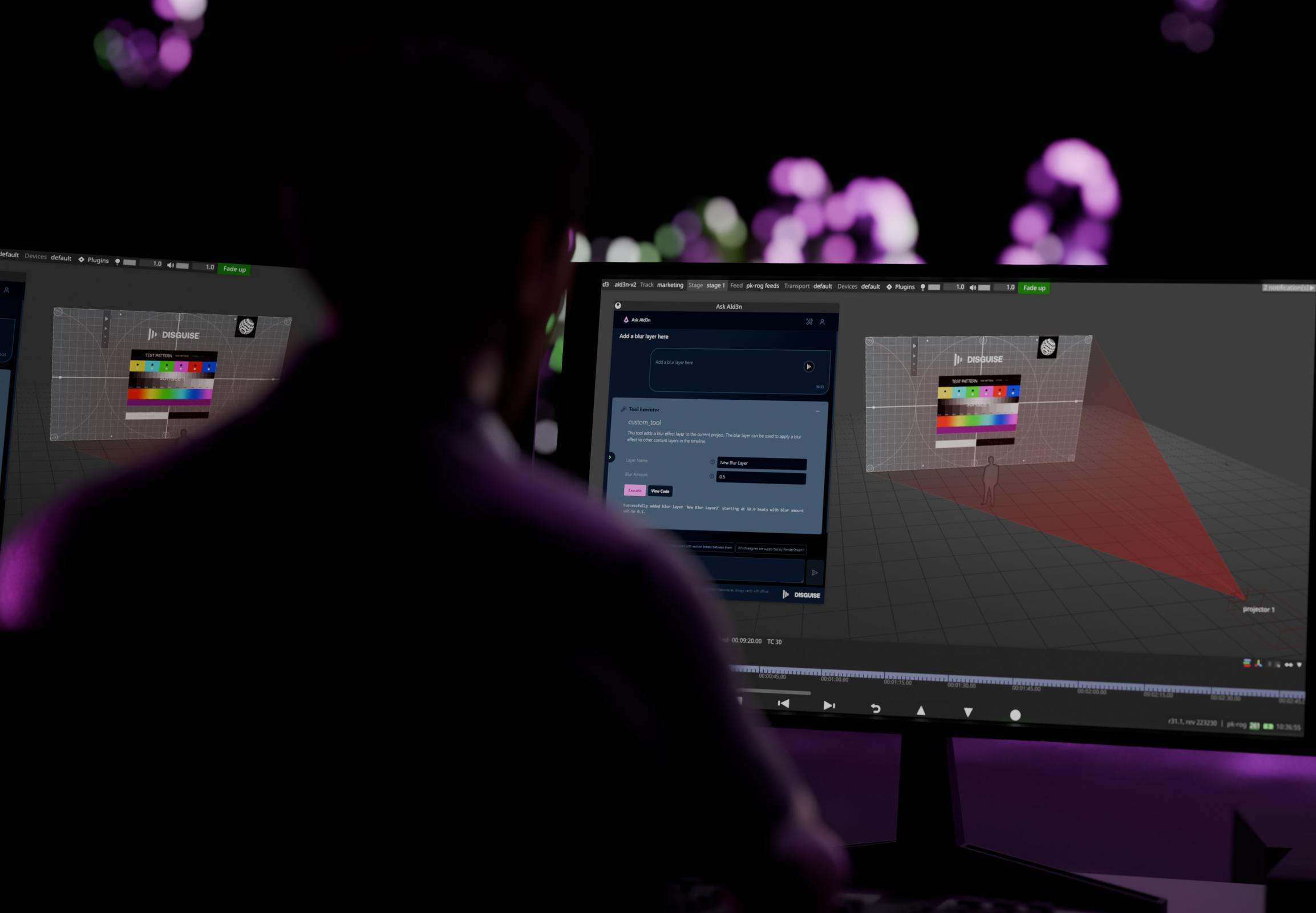
“Ask AId3n is there to support workflow automation, pipeline acceleration, and day-to-day problem solving. It’s an assistant that can speed up repetitive, technical tasks so that creatives can focus on delivering the best production possible.”
Peter Kirkup Innovation Director - DISGUISE


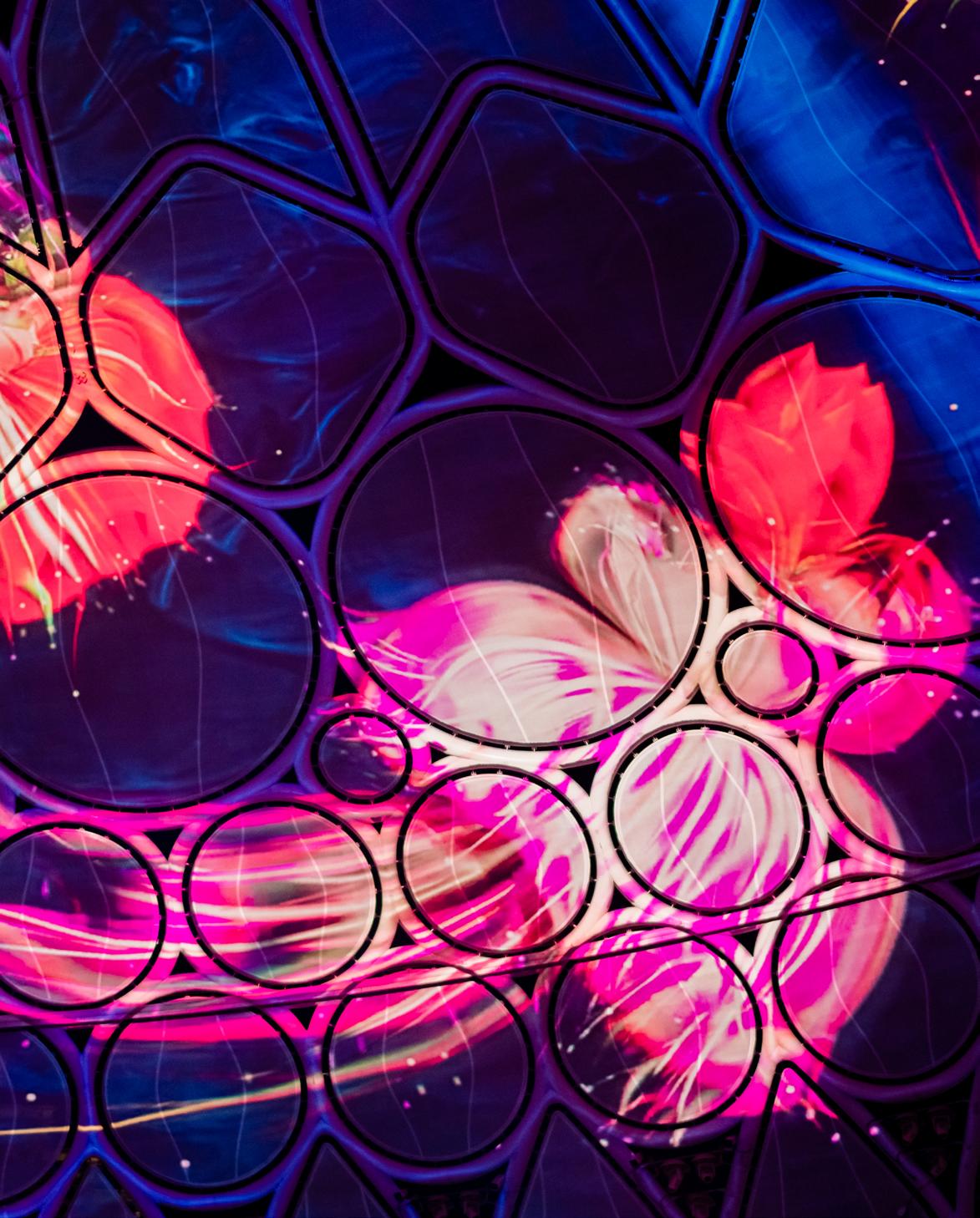
Recently, Creative Services used Flora to conceptualise the advertising for Disguise’s GX 3+ media server. The canvas feature enabled the team to feed the platform reference images and text-based prompts, rapidly iterating different visual directions. This freed up time to further refine and elevate their ideas, quickly landing on a bold floral animation that became the basis of the project’s creative direction.
“AI content generation is a great accelerator at the beginning of an idea, when you don’t have the shape of a concept just yet,” says Brian Allen, VP of Creative Services at Disguise. “As someone who thinks in pictures and has to efficiently translate that into a coherent plan, ideating with prompts simply helps us get to the good stuff faster.”
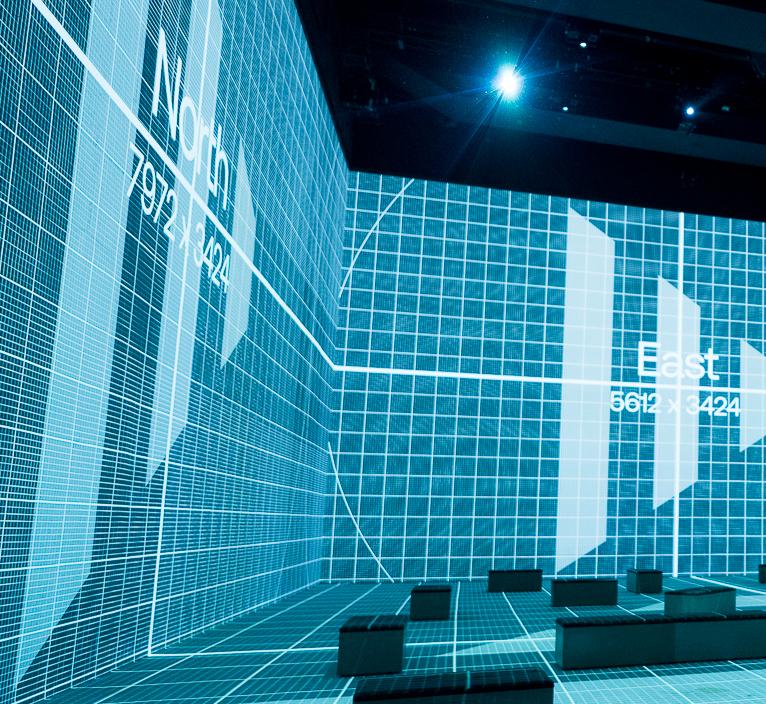
Audience expectations are changing fast. People want experiences that feel more personal, immersive, interactive and memorable - whether they’re in a theatre, a festival, a stadium, or an entirely new kind of space built for storytelling.
At the same time, technology continues to open new possibilities. Not as an end itself, but as a way to help creators shape richer worlds, experiment with new formats and respond to how audiences engage today.
The next wave of live and immersive entertainment will be defined by those who can combine creativity, craft and technology in ways that truly resonate.
This is where Disguise comes in - working alongside our users, customers, partners, and creator community to help them stay ahead of these shifts, adopt new approaches and continue redefining what live and immersive experiences can be.