


August & september 2026
SWEET SUCCESS
Local beekeepers thriving in St. Clair
LEVI & FRIENDS
These children find the perfect place
Traveling the Backroads
Eleanor Shirley Isbell
Mural Project Celebrating Pell City history
Page 32
St. Clair Training School New historic marker
Page 34 ‘Mater Recipes
Page 46
Deanna Lawley
Library recognizes years of dedication and work
Page 48
St. Clair Fair
Returning for third year
Page 50 Medical Special Helms comes full circle
Healthcare providers
Caring for children
Page 54
Page 62
Page 66
Accessible, affordable care
St. Clair Business Goodgame leads boom
Final Focus Words of wisdom
Page 68
Page 70
Page 82




Carol Pappas is editor and publisher of Discover St. Clair Magazine. A retired newspaper executive, she served as editor and publisher of several newspapers and magazines. She won dozens of writing awards and was a Distinguished Alabama Community Journalist at Auburn. She serves as president/CEO of Partners by Design, which publishes Discover and LakeLife 24/7 Magazine®.
Roxann Edsall
Roxann Edsall is a freelance writer and former managing editor of Convene Magazine, a convention industry publication. She has a degree in (broadcast) journalism from the University of Southern Mississippi, worked as a television news reporter in Biloxi and as a reporter and assignments editor in Birmingham.
Mackenzie Free is an experienced and nationally published photographer with a bachelor of fine arts degree. She is a Birmingham native now cultivating life on a farm in Steele with her husband and four daughters.
Graham Hadley is the managing editor and designer for Discover The Essence of St. Clair Magazine and also manages the magazine website. Along with Carol Pappas, he left The Daily Home as managing editor to become vice president of the Creative Division of Partners by Design multimedia company.

David Smith, aka BamaDave, is originally from Birmingham. He and his wife Renee made Logan Martin Lake their home 19 years ago. He is a freelance photographer, videographer and drone pilot. He has worked for ESPN’s College GameDay Show for the last 25 years as a cameraman and drone pilot. He has won 12 Emmys with the show and was ESPN’s first drone pilot.

Elaine Hobson Miller is a freelance writer with a B.A. in journalism from Samford University. She was the first female to cover Birmingham City Hall for the Birmingham Post-Herald, where she worked as reporter, food editor and features writer. She is a former editor of Birmingham Home & Garden magazine and staff writer for Birmingham magazine.
Paul South, a native of Fairfield, is an Auburn graduate with a degree in journalism and a double minor in history. He also has a Juris Doctorate degree from the Birmingham School of Law. Although sports writing was always his first love, he had a versatile career as reporter, columnist and first full-time sports information director at Samford University.
Joe Whitten was born in Bryant on Sand Mountain. When he arrived in Odenville in 1961 to teach at St. Clair County High School, he found a place to call home. Joe was active in the Alabama Writers’ Conclave and the Alabama State Poetry Society. The society named him Poet of the Year in 2000. Joe has also published several local history books.
Bob Crisp has worked as a photojournalist and freelance photographer in St. Clair and Talladega counties for 40 years. The University of North Alabama graduate joined the staff of The Daily Home in 1986 where he won over 100 awards from the Alabama Press Association and The Associated Press. He has also worked in commercial photography, weddings and portraiture through Bob Crisp Photography.


In August 2011, we dreamed of creating something special for our new marketing company. It was a practical endeavor. We needed a core product to build our brand and stabilize our income base.
Barely past our first birthday, Partners by Design – a small group of veteran journalists – of course, decided it had to revolve around the art of storytelling. It’s what we know. It’s what we do.
And 15 years later, we’re still doing it and loving every minute of this adventure of discovery. That first issue of Discover, The Essence of St. Clair was as diverse and fascinating as our county itself. And why not? It defines St. Clair – a smorgasbord of intriguing people, places and events you simply need to know more about.
That first issue had all of that and more: Horse Pens 40, the boulder “climbing capital,” the sport of catfish noodling on our lakes, the origin of local honey in Odenville, a spectacular mountain home, a savory story of summer’s bounty atop Chandler Mountain, the story behind Lyman Lovejoy, often called the mayor of St. Clair, backroads travel to Beason Cove and the poignant story of rebuilding of Shoal Creek Valley from the deadly tornado that ravaged it in April 2011.
Quickly following congratulations on the birth of our new magazine was fear from our readers that we would ‘run out’ of stories like those. We didn’t. And we won’t. Why? Because we know there is a story around every corner and inside just about everyone we meet.
So put your fears aside and discover a crop of fresh ones in this issue.
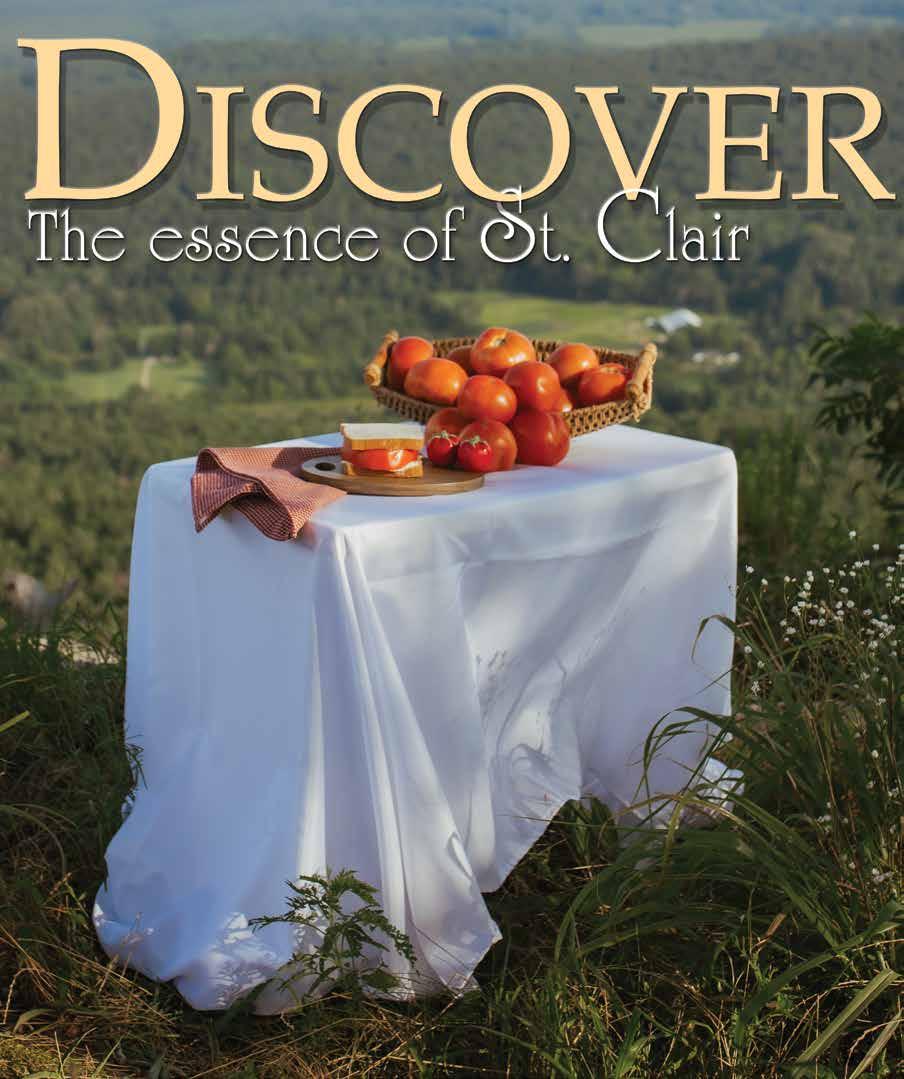
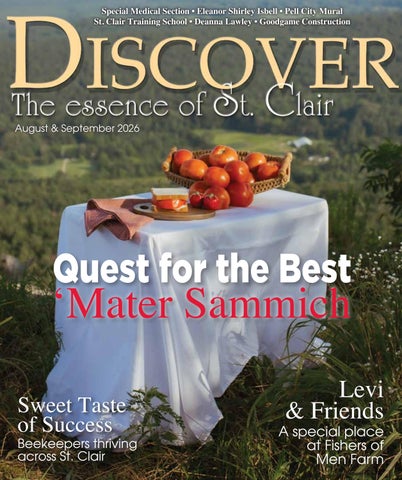
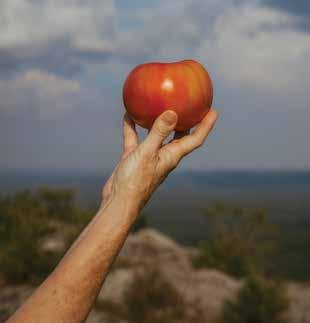
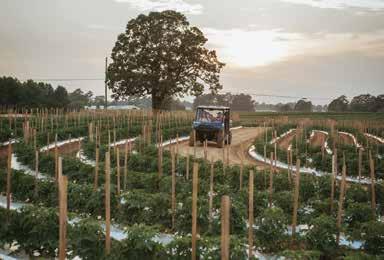
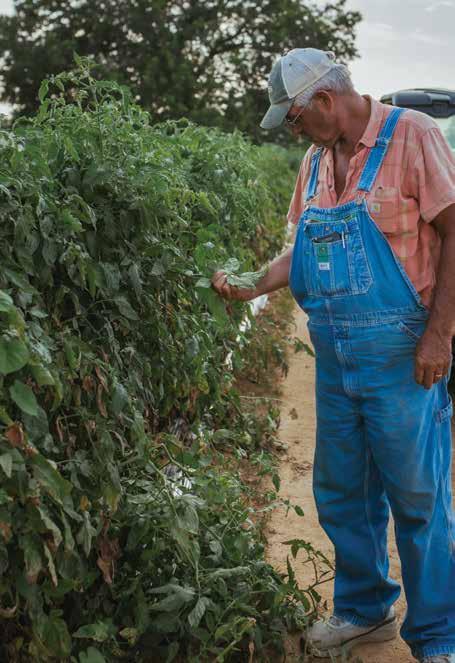
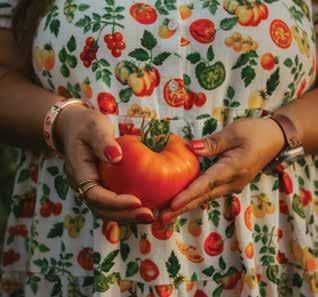
We travel up to Chandler Mountain, long known as a ‘tomato capital’ in the country, in search of the perfect ‘mater sammich,’ as we call it around these parts. We think writer Roxann Edsall and photographer Mackenzie Free found it on a mountaintop overlooking St. Clair County.
The county fair is back – a new tradition growing bigger,
better and stronger – at the county’s ag and event center in Odenville in September.
We’ll explore how special needs children and families have discovered a special farm for coming together as Levi and Friends to make memories. And Pell City Historical Society sees just how special their new historic mural in downtown Pell City has already become as it greets visitors and admirers on a daily basis.
We often share stories of giving back to community, but Deanna Lawley’s is an extra special one indeed. Raising nearly $100,000 for the Pell City Library, Lawley coordinates group travel around the world through Friends Bound for New Horizons. She’s raised tens of thousands more in fundraisers for Pell City Schools Education Foundation and Museum of Pell City.
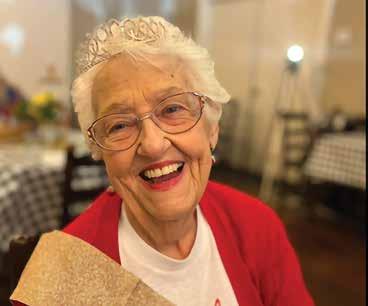
We’ll get a glimpse into the history of the Moody area through the eyes of Eleanor Shirley Isbell. After all, at 92, she’s lived most of it.
You’ll find these stories and more in this issue of Discover. Turn the page and discover it all with us!
Carol Pappas Editor and Publisher
Carol Pappas • Editor and Publisher
Graham Hadley • Managing Editor and Designer
Dale Halpin • Advertising
Patrick Stokesberry • Graphic Designer
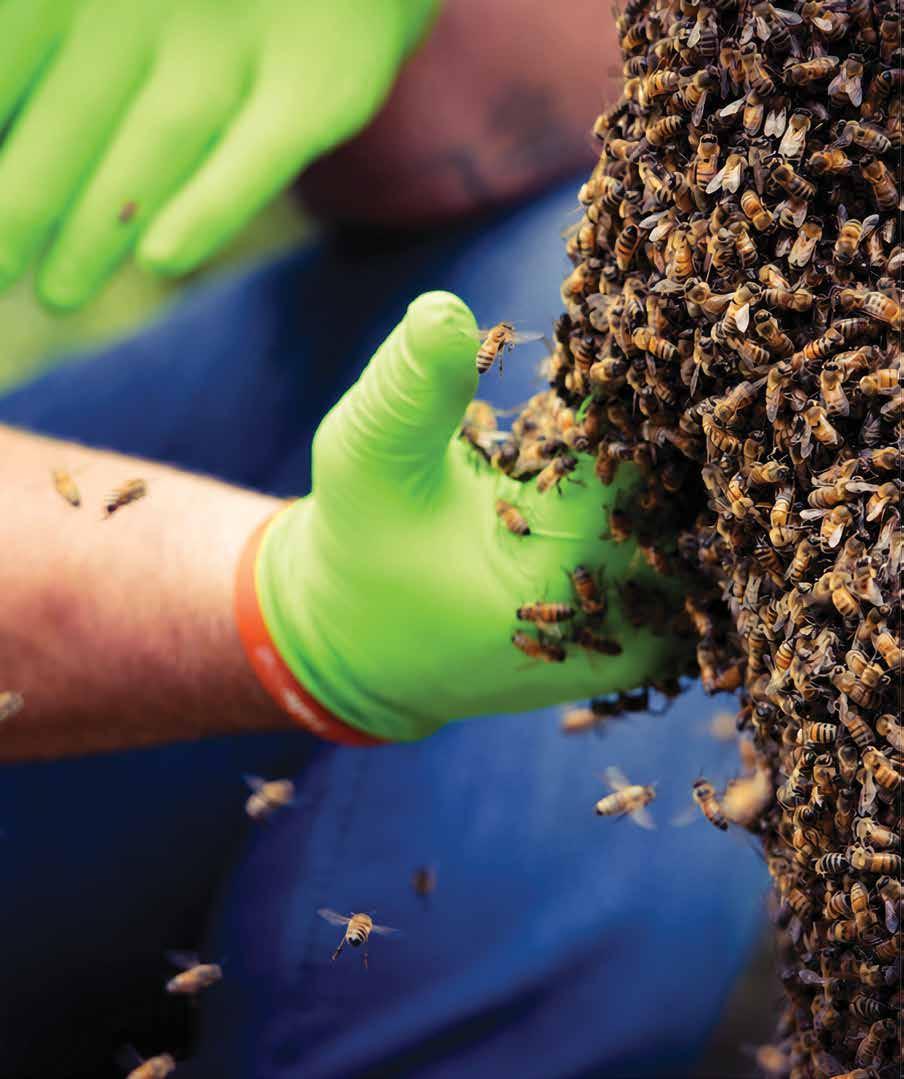
Local beekeepers are helping boost St. Clair County’s reputation while protecting pollinators, building healthy hives and turning hard work into a sweeter agricultural story.
Story by Paul South
Photos by Ben Orvis
Submitted photos
The sweetest agriculture story in St. Clair County is flying under the radar – literally.
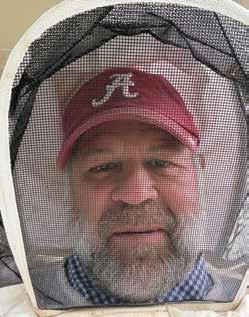
Just ask Bill McTyeire, Daniel Kirby and Nikkie Posey. The trio are part of a buzzing business –beekeeping and honey production.
“I’m passionate about bees,” McTyeire said.
That’s the story, it seems, for McTyeire, Kirby, Posey and beekeepers and researchers across the country. The bee population is critical to food

production. So, by extension, the small insects are vital to humanity’s survival.
And the sweet amber liquid they produce is a popular product, found on and in everything from hot breakfast biscuits to bourbon.
Honey bees themselves are under siege, thanks to the Varroa mite, herbicides and pesticides, climate change and human development.
Nosh Crockette, the Honey Bee Outreach and


Development Coordinator at Auburn University, spelled out the impact if bee populations and pollinating plants disappear.
“If pollinators disappeared, we’d be at risk of losing many of the crops we rely on, and our produce options could become extremely limited,” Crockette said.
There are more than 400 species of native bees in Alabama and some 2,000 beekeepers registered in the state, Crockette said. Auburn researchers collaborate with beekeepers to help minimize the impact of the mites on honey bees.
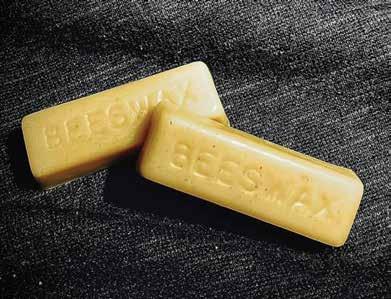
The honey bee doesn’t only produce the thick, sweet amber liquid used in American kitchens. Nor is it just about beeswax, candles, lotions and balms.
“Honey bees help pollinate many fruit, nut and vegetable crops, with some crops such as almonds being reliant on the bee population to produce fruit,” Crockette said.
McTyeire, Kirby and Posey are on the front lines of the quiet battle to save bee populations.
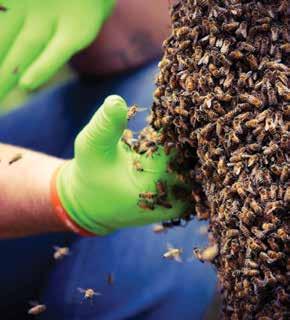
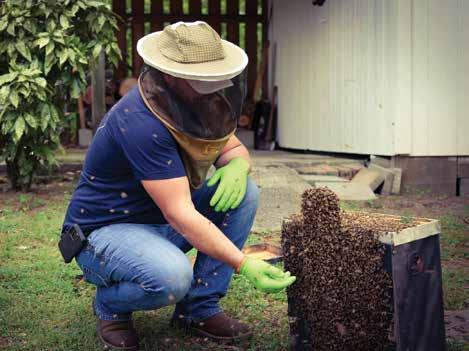
Bill McTyeire spent more than 34 years as a landscape contractor. Now, bees are his focus. He travels throughout the region capturing swarms of the insects when local landowners call.
“Bees are my passion now,” he said. “I love dealing with bees.”
That’s seemingly the story of the growing beekeeping industry.
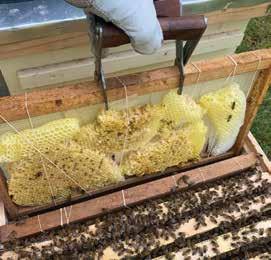
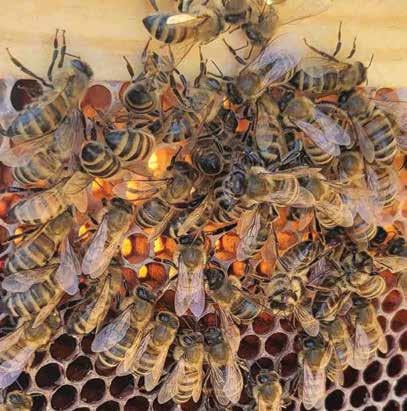
McTyeire has been keeping bees since 2020. His bee and honey production has been up and down. Early on, he bought packages of bees. Then he switched to purchasing “nucs,” a nucleus of bees. Nucs are five or six frames of bees – a queen, honey, pollen, drones and babies, everything needed for a successful start. In central Alabama, beekeepers have only about a two-month window in summer for developing hives.
But McTyeire is “really into” capturing wild swarms of bees that attach their colonies to tree limbs and the like.
“If you’re a deer hunter, you like to go out and get the biggest buck. If you’re a beekeeper, for me, catching a wild swarm of bees. Or someone calls me and says, ‘Hey, I’ve got a wild swarm of bees in a tree in my yard. Are you interested?’ If I can get ‘em to the ground, I’m interested. I’ll put on my bee suit, and I’ll go. I’ll take ‘em home and put them in the bee




yard.”
Right now, the hobbyist has 35 hives, up from 11 last winter. In peak season, from May through July, there are an estimated 100,000 bees per brood box.
“My ultimate target is probably going to be 50 (hives). I’ve grown so fast,” he said.
Though small, bees are some of the most intelligent members of the animal kingdom, flying up to five miles looking for pollinators. Most return to the hive. It’s baked into their DNA.
“They’ll visit like 5,500 flowers and produce like a 12th of a teaspoon of honey in their lifetime,” he said. “That’s each individual bee.”
What drew McTyeire to beekeeping?
“I do it for the love of the bees,” he said. “I’ve never been a patient person at all. I’m very impatient. When I get into a hive working with bees, you have to be patient. You can’t get in a hurry. You have to be very methodical when going through a hive box.”
Hive management is critical, especially when battling the honey bee’s public enemy number one.
“If you do good, proper hive management and then you treat your bees for Varroa mites – I don’t treat them for anything else. The mites are the number one killer,” he said.
According to a survey led by Auburn in collaboration with Oregon State University and the Apiary Inspectors of America, beekeepers lost 39.9 percent of their colonies in 2025-26. Keepers saw record losses in 2023-24 (55.1 percent) and 202425 (55.6 percent).
Failure to maintain a healthy bee population can devastate the food chain.
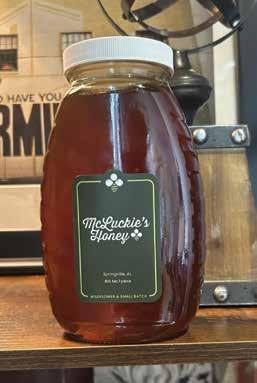
In terms of honey production, 2025 was a good year for McTyeire’s company, McLuckie’s Honey, that he and his “sidekick,” Laura Niemann, sell.
He sold 60 two-pound jars and 120 one-pound jars of his wildflower small batch honey last year. He’s also seen his smooth, not-too-sweet honey, with a pleasing floral aftertaste become a barter currency.
Neighbors will trade their offerings for a jar of his honey.
“It’s like money,” he said. “Every year is kind of a yo-yo. I do small-batch honey. I don’t want to be a bigwig. I want to sell what I have and try to grow my bee yard and to help other people learn about bees.”
The bottom-line lesson?
“Without the bees, we’re all goners,” he said. “I’m passionate about bees. I’m passionate about honey. But that’s not my main goal. It’s about building a healthy population of bees. We’ve got to do a better job as Americans and humans to save the bees,” McTyeire said. “When they’re gone, so are we.”
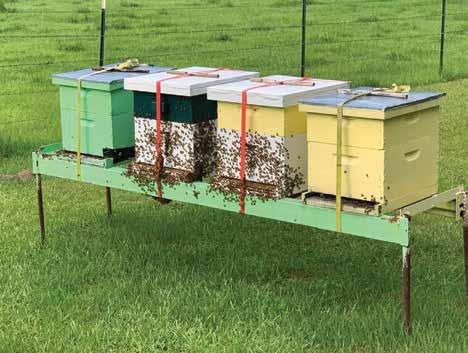
Four of McTyeire’s hives
Daniel Kirby of Odenville serves with McTyeire and Nikkie Posey on Springville’s Bee City, U.S.A. board. His honey of a story began in 2015 as a hobby that’s now a flourishing family business, Bee Still Honey Company, LLC. It’s built on feral bees caught in the wild. Unlike packages of bees, the wild, hardy creatures have already adapted to the colder winter weather in east central Alabama.
For Kirby, the life of the bee is a source of boundless fascination.

“Just the life of a honey bee, the way they interact and communicate and live their lives,” Kirby said. “They work as one organism. It takes all of them working together to make it. Just the way they communicate with each other to complete what they have to do.”
He added, “If humanity was like honey bees, we wouldn’t have any problems whatsoever.”
A native of Rome, Georgia, Kirby worked a variety of jobs from pipefitting and welding to law enforcement before discovering the bee business.
“God has really blessed us,” Kirby said. “Last year, we grew like 200 percent.”
Bee Still had 100 colonies in 2025, 200 this year. But like McTyeire, the number is constantly changing.
Echoing McTyeire, Kirby’s biggest challenge is fighting off the Varroa destructor mite and pesticides.
The bees are brilliant. Like homing pigeons, many will return home after searching two to five miles, even in harsh conditions, for food and water.
“Could you imagine flying five miles for food and water and by the time you get home you’ve used half of it? They work themselves to death. They don’t sleep,” Kirby said.
Divine providence brought Kirby and his wife to St. Clair County. “We think it was a God thing, honestly,” he said. “There were a ton of little things that brought us here.”
Those “little things” included Springville’s “Bee City” designation.
Like McTyeire and Crockette, Kirby paints a dire picture for humanity if honey bees were to disappear. However, he believes increased awareness has helped bee populations turn the corner.
People have really started paying attention to honey bees in the past few years in trying to keep them alive, Kirby said. “The Varroa was the main threat, but we’ve got that pretty much under control.”
The bee business is blossoming, not only in St. Clair County, but across the country. And honey is fast becoming a big boost for the human immune system. One note: Heating honey, or adding it to hot coffee or tea, kills the healthy enzymes and bacteria in the natural sweetener.
“I predict that in a few years there’s going to be a honey shortage ... unless there are more beekeepers. The youth are not getting interested in beekeeping. We teach classes to 4H and to school classes,” Kirby said. “But all the wellness and health stuff has really taken off in the past five years. Everybody is wanting healthier products and they want honey.”
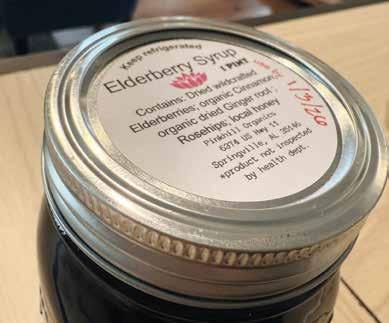
Posey’s beekeeping and her store, Pinkhill Organics in Springville, came together in 2019. Health was the big draw.
“The medicinal qualities of honey first and wanting to have that for myself and my family. But I also make Elderberry syrup for my store and having good honey to make it with was also important,” Posey said.
She has 10 hives and more than 1 million bees. The insects provide a big challenge, Posey said.
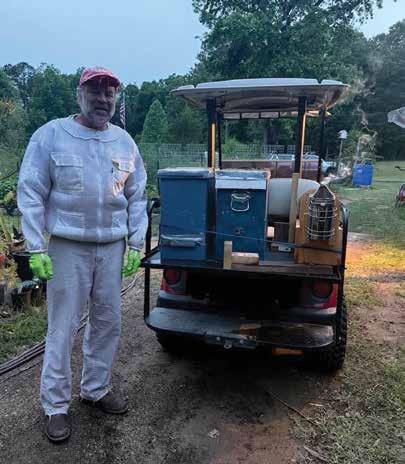
McTyeire and his removal ‘cargo’






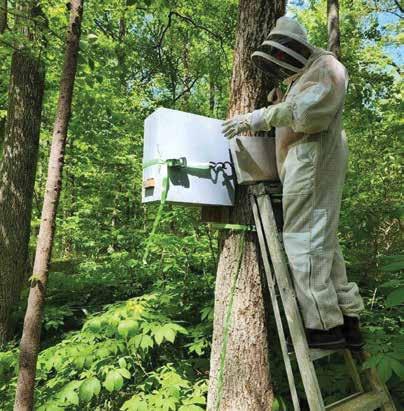
McTyeire retrieving one of his swarm traps off a tree on his neighbor’s property
“Bees are curious creatures, and some years you lose hives and they abscond. This past winter, I lost five hives. You can catch swarms and do everything right. But sometimes, the little Airbnb you’ve set up for them, they just don’t like. The bees themselves are most frustrating.”
For example, when Posey and her family were starting their apiary, they bought packages of bees, costing $300 a pop. All flew away. Since then, the focus is on feral bees. It takes 18 months to two years to establish honey-producing hives.
Posey produced more than 10 gallons of honey last year. She expects to produce 25 gallons this year.
Posey made a key point about bees.
“They are the only insects that give us a product we can eat,” she said. “Honey bees aren’t the only pollinators. But people are more and more understanding of the role (of bees). When it’s swarming season in March, I see a lot more posts (on social media). ‘Does anyone know a beekeeper?’ It seems a lot of people are trying to save the bees.”
For those who want to increase the bee population, delay spring yardwork. “Let the dandelions come up. Let little flowers come up and let clover grow,” Posey said.
“The bees are going to work that and use that as their initial sources of nectar and pollen. If people would delay mowing for that pristine yard. But if you have some property, let it grow up. Those wild things are important to the bees as well. Let the natural things grow.”
Beekeepers are popping up across St. Clair County, from
Washington Valley to Chandler Mountain. There are also beekeeping groups. A local elementary school promoted beekeeping in its summer reading program.
“More and more people come into my store are interested in beekeeping,” Posey said.
While honey can seemingly be used in countless ways, one simple way to eat the sweet treat seems most popular, at least for Niemann and Posey.
“By the spoonful.”
And as for a last piece of advice to potential beekeepers, Posey said, “The frustration is absolutely worth it. A piece of advice my mentor gave me when we bought packaged bees and they flew away, he said, don’t give up. And I would encourage people to support local beekeepers and buy their honey. Be mindful of the honey you’re buying. If you see honey in the store with a label that says, ‘USDA Certified Organic,’ there’s no such thing.”
What’s the bee lesson for humanity?
“Teamwork is important for the success of society,” she said. “If you think of each colony of bees as its own society, it takes their teamwork aside from personalities. If we can take that lesson of teamwork and how successful that is and how successful that can be for our community – even here in Springville – that it takes all of us to have a successful community.” l



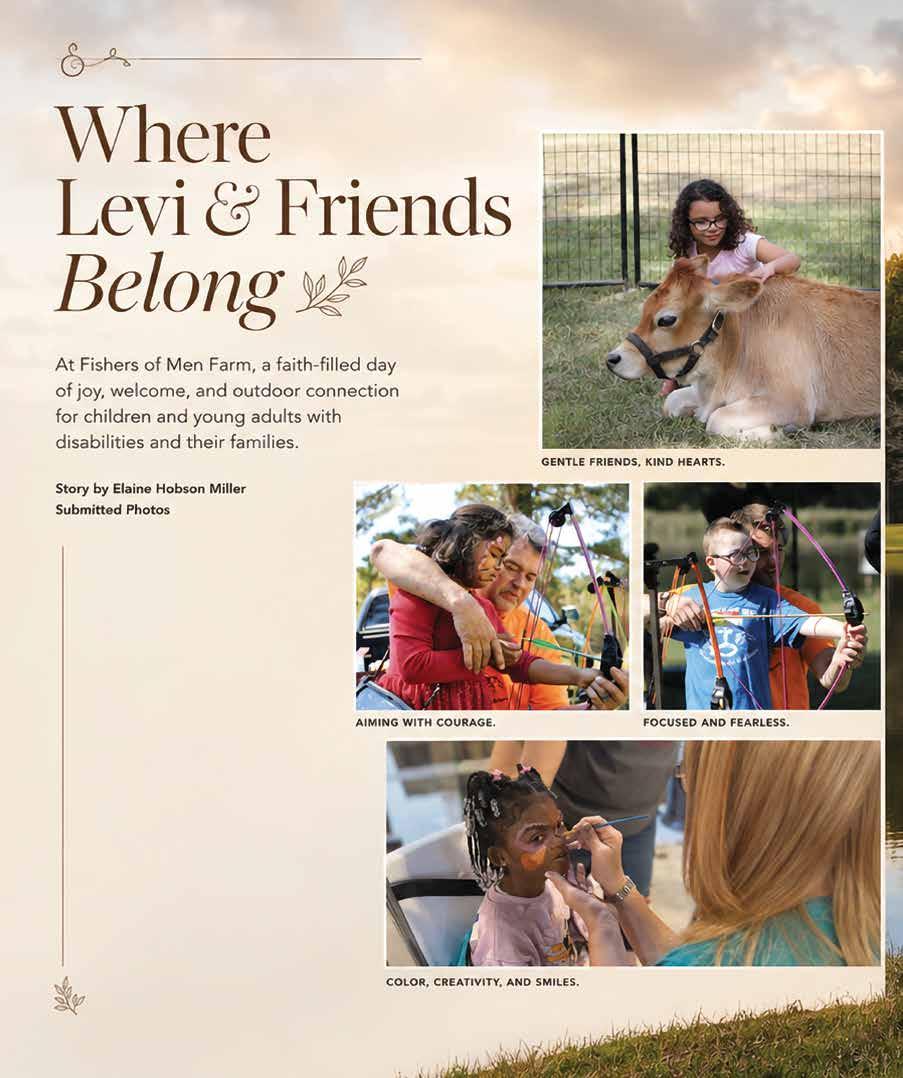
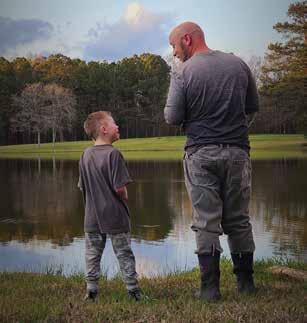
On the day Eddie and Dedra Adams first looked at their 80-acre farm in Steele, a thunderstorm came up. When the couple and their Realtor took shelter on the porch of a 100-year-old wooden house, Dedra looked out over the five-acre lake in front of the house and proclaimed, “This is where we’ll raise our boys.”
The couple had two sons at that time and had been looking for property that would help them fulfill their dream of building a Christian family retreat. While it would be another seven years before the family actually moved to the farm, the boys were raised spending lots of weekends there.
“Noah was 7 and Caleb was 5 when we bought this place in 2013, but we didn’t move here until 2020,” says Dedra. “Eddie and the boys occasionally used a tiny camper to spend time up here together during that first seven years, but more importantly, the ministry began very quickly, within the first six months.”
They dubbed their acreage Fishers of Men Farm, a ministry dedicated to helping families and individuals
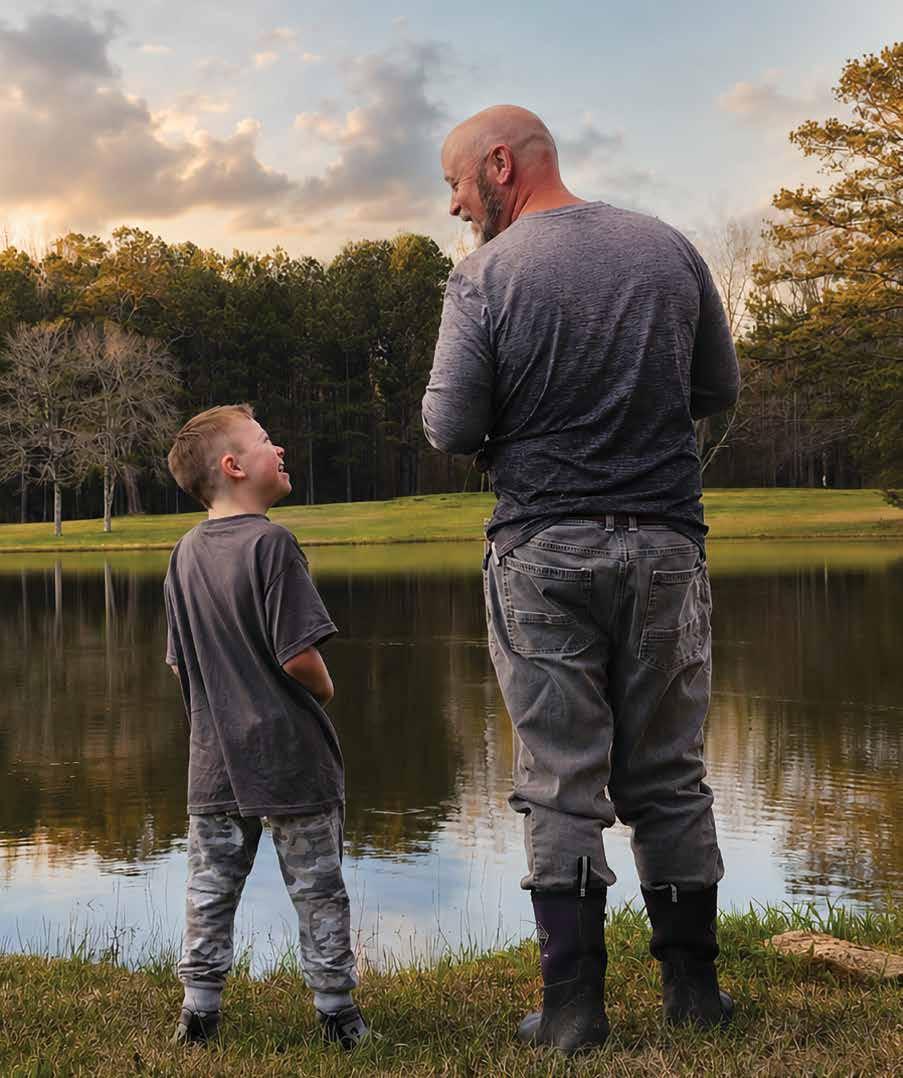

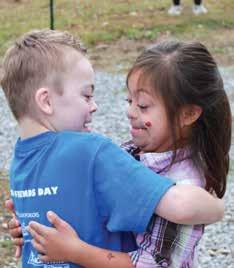





reconnect with God and each other through activities in His great outdoors. “We’ve had men’s ministry events, church services and picnics, father-son campouts, weddings, family reunions, family Christmas parties and anniversary celebrations here,” Dedra says.
The couple is particular about what they allow to be held on their property. “We drew up bylaws that say events cannot contradict God’s word,” says Eddie. “We host Christian events or any event that promotes family. We also do smaller events like church cookouts. The Farm is used to promote and strengthen family relationships through activities such as hunting, fishing, hiking and camping.”
When their third son, Levi, was born in 2015 with Chromosome 9p Deletion Syndrome and Down Syndrome (see sidebar), the couple quickly realized how isolated families often feel when they have children with physical or mental disabilities. Their special-needs son inspired the couple to add another event to their roster, a Levi and Friends Day aimed at supporting these families.
“Within the first two years of having Levi in our lives, our hearts were burdened by the number of families who also have children with disabilities, but who do not have a strong, loving community surrounding them, helping them realize they are not alone on this journey,” says Dedra. “We are blessed with a community and a church (Faith Community Fellowship in Springville) that embraces Levi. We want these families to know they are not alone either.”
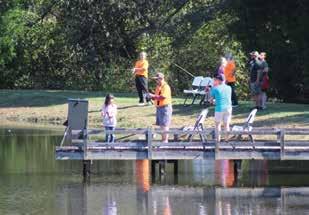
That’s how Levi and Friends Day, or LaF Day, as they affectionately call it, came about. By far the largest event on the Farm, it’s usually held on the second Saturday in October. (That’s the 10th this year.) It’s a free, all-day event for families with kids with disabilities. “We share resources with them, tell them about programs that help them, and love on them, so they won’t feel so isolated.”
Dedra sends Facebook invitations as well as digital versions via her contacts list. She tells folks to invite others as well. “Attendees need to RSVP, though, so I’ll know how many
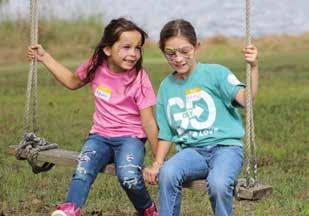
goody bags to make up for the kids and will have a head count for the food team,” she says. The bags contain items such as fidget spinners, stickers, snacks and sometimes T-shirts.
Levi & Friends is now the biggest event the farm sponsors and involves other Christianbased ministries that donate time to be part of it. “Hunting for Christ comes out and does archery,” Dedra says. “Canoe Creek Stables brings a petting zoo, Miss Magoo’s Reptile Zoo brings snakes and lizards.”
“We have hayrides, fishing teams, a cooking team that donates food and time, and 40-50 volunteers helping out,” Eddie says. “We assign buddies when the families check in, and they help the kids navigate through the day so the parents can relax. A lot of these kids have never shot a bow and arrow or caught a fish. We try to give them a country experience.”
Some of the kids have autism, others, Down syndrome, some are blind and some are limbless. “We welcome kids and young adults with any kind of disability,” Eddie says. “One girl without arms shot a bow and arrow here with her feet one year. She also caught several fish.”
Advertising is mostly by Facebook, word-ofmouth and local churches. About 150 people attended the event last year, including families and volunteers. “We had at least 50 kids from 33 families here in 2025,” Eddie says.
Fishers of Men Farm fulfills dreams God placed on the couple’s heart at various times in their lives. Eddie, a physical therapist at Back in


Story by Elaine Hobson Miller
Levi Adams, who turns 11 in November, is a very special child who brings joy to his family every day.
He has Chromosome 9p-Deletion Syndrome, as well as translocation Down Syndrome. The former means part of Chromosome 9 is missing, according to Dedra. “Neither us, nor the eight specialists he has, have ever met anyone with his specific genetic makeup, but his pediatrician described it accurately, saying, ‘All this means is that he will write his own story.’”
And so he has.
“When he was diagnosed in-utero, we were told multiple times that because of the many markers indicating chromosomal abnormalities, he would probably never walk, never talk, be severely intellectually disabled, which would probably render him wheelchair bound in a vegetative state for life, and all that only IF he survived outside the womb,” Dedra says.
Levi not only survived but is thriving. His development was delayed, and he does have intellectual disabilities and continues to have medical complexities. But before he was born, God promised Dedra in a dream that he would walk one day.
“Within the first year after his birth, when I was doubting that we would ever see him walk, the Lord confirmed His promise through three other people who also had dreams of Levi walking,” she says. “And sure enough, at almost 5-years-old, Levi began walking completely on his own.”
Levi is considered non-verbal, although he has roughly 25 words or word-approximations (his version of words), about 20 signs, as well as the ability to use LAMP – an assisted technology device that allows him to communicate through pushing word buttons. Because of his intellectual disabilities, this will most likely be the way he communicates for the rest of his life.
“As the saying goes, ‘Actions speak louder than words,’ and this is true for Levi,” Dedra says. “He has this incredible ability to communicate with others without using words. His smile, his eyes, his laughter and his hugs communicate more than most of our words ever could. He is a gift and teaches us so many lessons about life, love, strength and purpose!”
There are no textbooks or medical information that can tell them exactly who Levi will be, or what he will be capable of doing or achieving. All they know is that Levi has a level of joy and love that seems to be straight from God.
“It’s definitely not natural. It’s supernatural,” Dedra says.



















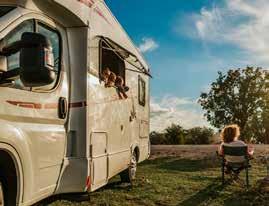

Motion in Springville, was raised in Pinson, and grew up spending a lot of time visiting his grandfather’s farm in Blount County. That gave him the desire to own his own farm one day.
Dedra, who taught pre-K at Springville Elementary School for several years but will be working at the front desk at the new Springville Intermediate School this fall, was born to missionary parents in Guatemala, and grew up there.
Shortly after they were married, the couple did a short-term mission trip to Brazil. They’ve done medical and evangelical missions there, evangelical crusades and Bible teaching in Uganda, built churches in Honduras and helped build an orphanage in Costa Rica. It seems that their two older sons may be following in their parents’ footsteps.
“They are such incredible young men,” says Dedra. “Having a sibling with disabilities has influenced them a lot. Our oldest, Noah, who is 20, has a heart for rescuing trafficking victims. Caleb, 18, just graduated high school with honors, and feels called into ministry, but he’s not sure what that looks like just yet.”
Proceeds from their Fishers of Men property rentals go to support Fishers of Men International Ministries, a 501c3 non-profit organization that supports mission trips for them and others.
“We formed a 501(c) 3 because we had some big donations, and we wanted to let donors take tax deductions,” Dedra says. “We still have ministry partners we’ve had from the beginning.”
“We tithe 10 percent to two other local ministries, Hunting for Christ and Restoration Academy,” Eddie says.
There have been lots of donations of services, too, especially when constructing the farm’s buildings. “We’ve had electrical, plumbing and carpentry skills donated,” he says.
They are still in Phase I of their Master Plan, which includes a gazebo, two fishing piers and a covered pavilion with tables and chairs. They also have an equipment barn, and Eddie wants to add a handicapaccessible shooting house.
Their rustic, board-and-batten Event Barn, like the other buildings on the farm, is handicap accessible. It has a kitchen, bathrooms, meeting room with a stage and an outdoor grilling area. Its inside walls are decorated with fish caught in the farm’s lake and deer heads harvested on the property, as well as photos of baptisms in the lake and other events. “The tin wall boards in the bathrooms came from an old barn in Trussville,” Eddie points out.
Phase II of their Master Plan includes taking the road to the other side of the property and building handicap-accessible cabins.
“It’s on our hearts to build some guest cabins, and our design is to do three across from the lake,” says Eddie. “We want two-bedroom cabins, about 1,000 square feet each, that we can rent to anyone or provide to a family with special-needs or even missionaries on a temporary basis. We hope this is the next thing God lets us do. But there will be no charge to families with disabilities. We will have to get a road into that area,” too.
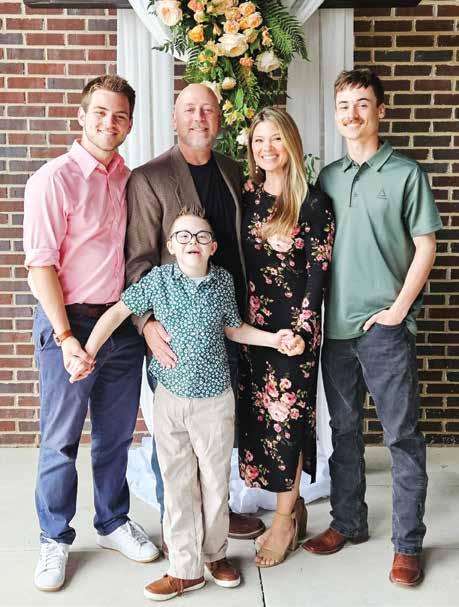
They’ve come a long way since first viewing the farm in 2013. “It was way overgrown then,” Dedra says. “It had that dilapidated farmhouse, which we weren’t able to save.”
The house had to be torn down, but the couple salvaged all they could from it and used parts in building their family home. The clawfoot tub, the cast-iron, wall-mounted sink and washboards are all part of their house now, and the farmhouse’s foundation of hand-carved stone is part of their fireplace. They also saved a lot of the lumber, stone and tin and continue to find uses for those.
“This place was a blank canvas when we first saw it,” Eddie says. “The sisters who owned it wanted it to become a church camp. They had seen our brochure and wanted us to have it. They already had two cash offers, but one of the sisters said, ‘We’ll wait on them.’ We had to get financing,” he says.
“Praise the Lord, we closed within 60 days from the time we first saw the property. I think God set this aside for His purposes years ago. We are excited to see what God does with the farm in the future. He owns the farm, we are just the caretakers of it.” l

Eleanor Shirley Isbell Living Moody’s amazing history for 92 years
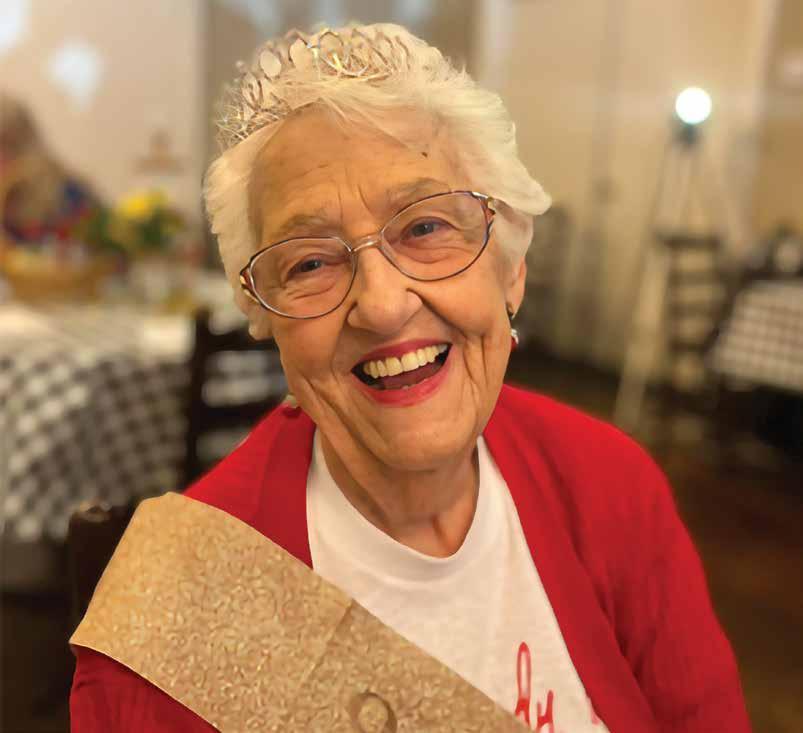
Story by Joe Whitten
Come, travel the backroads to meet a 92-year-old lady whose life has exhibited the love, joy and peace of God throughout the years.
Eleanor Shirley Isbell always has a ready smile and a chuckle or laugh as she reminisces about her life.
Although born in Acmar on August 18, 1934, her birth certificate lists Atmore, Alabama, as her place of birth.
“Mamas didn’t go to the hospital to have babies in those days,” she explained. “So, on my birth certificate, they’ve got Atmore because in Montgomery, they had never heard of Acmar.”
Clyde and Edith Bishop Shirley lived in the St. Clair County coal mining community of Acmar when Eleanor was born, and Clyde worked the mines. Sisters Linda, Margaret and Mary arrived at regular intervals.
From Acmar, the family moved to a house in today’s city of Moody. She remembers well living there. “In one side of the house was mama and daddy and us kids, and in the other side was my grandmother and grandfather Bishop. I spent a lot of time running back and forth,” she chuckled. “And I remember grandmother had this wood cookstove. It had a warmer on it above the stovetop, and after breakfast, she would put the leftover biscuits in the warmer. So, when I was going through there, she would take a biscuit and put some sugar in the biscuit for me,” she smiled, relishing the memory. “It’s a wonder somebody didn’t give us a whipping for running through there!”
The Shirley family moved a few times, and then Clyde built a house on today’s U.S. 411, a dirt road in those days. Eleanor described Clyde’s method of construction. “When my daddy built something, he just built it. No measurements. No nothing,” she said. “At this house he built, it had a grocery store in front, and we lived in the back. But, again, not a professional builder,” she emphasized.
Her sister Margaret’s room was next to the store, and the plank wall had knotholes. The flickering shadows that came from the store through the knotholes frightened Margaret every night.
It seems Clyde enjoyed building because Eleanor remembers living in other houses he built with his “saw it and nail it” method. He may have been a little like the self-taught country carpenter whose policy was, “It may be a little cattywampus, but it’ll all come out in the wash.”
She attended Moody Elementary and Middle School, graduating from the ninth grade there. For high school, she rode the bus to St. Clair County High School in Odenville, where she graduated in 1953.
In 1954, she married Milton Isbell – and that’s a story of its own.
“You know how in Junior High there’s always one male student that all the girls are in love with,” she began. “There was no way that I was ever gonna get to date that one because his father made whiskey.”
With eyes still twinkling, she continued. “Here’s the deal. Milton was friends with the boy that all the girls were in love with, so my first date with Milton was a double date with the whiskey maker’s son – who was the driver – and his girlfriend. Me and Milton were in the back, and I dated him because the other boy was in the front seat.
“We dated a few more times – and Milton used to say I
Eleanor and Milton’s 50th wedding anniversary
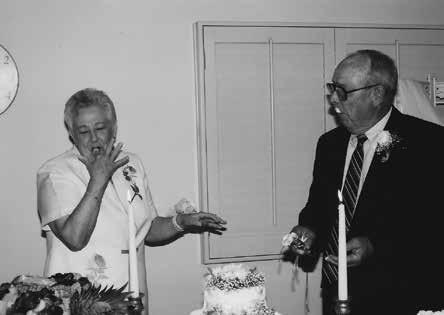
chased him, but I don’t remember chasing him. Anyway, we got married after he joined the Navy.” And the marriage lasted until Milton’s death, August 28, 2018 – 64 years.
Milton was in the Navy when they married and stationed in Alameda, California, so Eleanor bought a one-way ticket to San Francisco.
Crossing the US to California, she recalled, “I didn’t think much about it until I got that one-way ticket, and I thought, ‘Oh, no! I may never be coming back to Alabama!’”
Her fear was unfounded, though. About a year later, Milton was reassigned to Pensacola, Florida, where he worked in the print shop. He worked at that job until he was discharged from the Navy, and he kept the same print shop job as a civilian when he was discharged from the Navy.
Their son, Tim, was born in 1955 in Pensacola, and the Isbells lived there until he was about a year-and-a-half old. On the weekends, they would head back to Moody.
“One time when we were going back from Moody to Pensacola, and we hit a mule. I was in the front seat holding Tim – back then babies didn’t have to be in the back seat like they do today. We hit the mule, and it went up in the air, and it came back down, through the windshield the side I was on. And that mule got up, shook itself and ran off.”
Trying to locate the owner of the mule was a lost cause. “Nobody owned that mule,” she laughed. “Nobody claimed it, and of course we had to have a lot of work done on the car.”
The weekends traveling back and forth grew old, so the family moved to Leeds. Later, they moved in with Milton’s mom and stepfather. That house was right up the hill from the new Civic Center in Moody. Eleanor and Milton had two rooms at the back of the house and daughter Susan was born there in 1958.
Their next house was built by a company who just put up the outside walls. “So, that’s what we got,” Eleanor recalled. “We moved into that house and wasn’t anything done inside but studders. Not anything, and Milton gradually got it fixed, and we lived there 49 years.”
Father knows best
Pop, Clyde Shirley, could give good, blunt advice. Eleanor told of a time he kept her and Milton focused. “Daddy gave us a lot next door to them. So, we got the foundation built,
and somebody was going to Florida, and we wanted to go. We didn’t have any money, so I went to my daddy to ask for money to go to Florida, and he said, ‘Do you want to go to Florida, or do you want to build a house?’” After a hearty laugh, she added, “So, we didn’t go to Florida.”
Including the Navy, Milton held down several different jobs. He worked for a little while at Ft. McClellan until they had a huge layoff. He was a milkman for a while and then he worked at Murry’s Garage. Then he went to work at Greystone Golf Course. Eleanor enjoyed several tournaments and met some famous golfers while Milton worked there. That ended one day when Milton had a confrontation with his boss, picked up his toolbox and said, “I’m going home.”
The very next day, Milton went to work at the Cahaba Country Club golf course, where his son Tim was employed. Tim had started working there when he was 14 years old. Milton worked there until he retired.
Eleanor also held several jobs during her working years. She spent 20 years with Dun and Bradstreet. “I worked a little while in every department,” she said. “Over the years, I must have been private secretary for eight or nine men at Dun and Bradstreet.” When she asked to be in sales because she knew those men earned the most, they refused her request, and she left the firm.
From there she spent 15 years in real estate. Then she tried retail sales for a while but quickly grew tired of that job. But that led to work she probably enjoyed the most.
The family was members of Leeds Assembly of God where Dan Ronsisvalle was pastor. One day she was at the church with others to go visit the sick and shut-ins of the church. The pastor pulled her aside and asked her if she would be his secretary. The secretary, his wife, wanted to give up the job. Eleanor agreed to take that church position
After she had been there for some months, she had surgery. As she recuperated at home, Pastor Ronsisvalle called and said, “I don’t like bookkeeping. I want you to be the church bookkeeper.” Eleanor said, “Well, I’ll have to pray about that.” Ronsisvalle replied, “You don’t need to pray about that.”
She became the bookkeeper, but it wasn’t long until the church needed a treasurer, and he asked her to take that job, and she did.
“At Leeds Assembly of God,” she reminisced, “I was secretary, I was bookkeeper and treasurer – and I did everything but sweep the floors,” she said. “I really enjoyed working for Ronsisvalle. I would go dragging in some days, and he’d come bouncing in, singing and carrying on, and say, ‘Good morning, Sunshine!’ And here I was with my head on my desk. He was always so happy.”
She paused and added quietly, “And I miss him, I miss him. I worked for my church for over 20 years. I worked until I was 81. My last day was July 4, and I turned 81 in August.”
Eleanor wrote an article titled, “Moody, Alabama, “Then and Now,” which was published in Cherish, The Quarterly Journal of the St. Clair County Historical Society in October
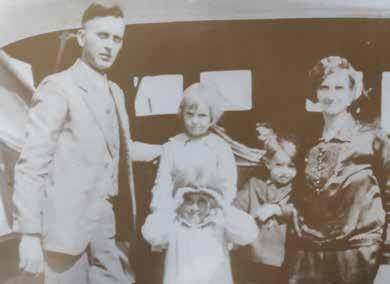
A.E. Moore family. Mr. Moore was first Mayor of Moody
1993. In it, she told how Benjamin Epps Moody arrived in St. Clair County. “He came with his family from the hills of North Carolina in 1820 to homestead a section of land granted to him when James Monroe was the country’s president.
“Mr. Moody built a one-room log cabin with a chimney at one end. He worked many long hours at building his chimney, digging the clay from his own land and molding the bricks by hand and baking them in an open fire. Years later, when the growth of his family demanded more room, the log cabin was torn down from around the chimney and a new house was built in its place.” The house has been reworked several times, but it and the chimney still stand in 2026.
Other families came to the area. “The good news had spread to North Carolina,” Eleanor wrote. “Soon there were homes belonging to the Moores, Kerrs, Lamberts, Taylors, Spruiells, Kirks, Adkins, Hawkins and Fulmers. Many of these family descendants live in Moody presently… These [early] folks were hardworking and loved liberty and opposed slavery. Not a single family owned slaves.”
People on foot, horses and wagons wore trails in four directions from the Moody home, and the community began to be called Moody’s Cross Roads.
Eleanor herself has lived and remembers a great deal of Moody’s history, since her dad, Clyde, rallied forces to found the town of Moody. Eleanor calls it “Pop’s last adventure.”
In 1962, Moody citizens learned that Leeds was interested in annexing the Moody area into the city of Leeds. Clyde went into action. He chose a group of men, one of them an attorney, who went to Montgomery and had the City of Moody incorporated.
“You’ll laugh at this,” Eleanor chuckled, “Pop hand-picked the first mayor and five counselors, and the election was without opposition. Mayor, A. E. Moore, and as counselors, he was counselor number one. Then, Hermon Waid, Hubert Adkins, Rodney Miles, and Jimmy DeShazo.” Milton Isbell was the first City Clerk, but that only lasted about two meetings, and he knew that job was not for him.
The first Town Hall was an addition to Clyde Shirley’s Swap Shop. “Remember, Daddy was not a good carpenter,” Eleanor

Quality of life isn’t something we just talk about.
It’s something to experience every day.


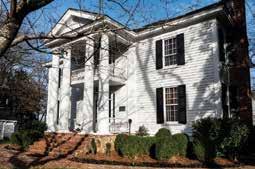
Where Hist y Lives
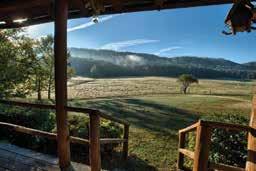
Farm Living




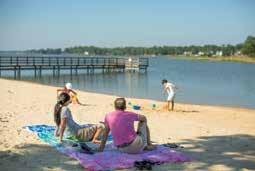
Be er Point of View

Family Friendly
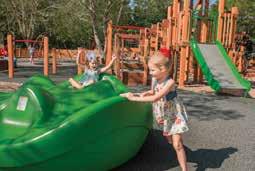
Home Cookin’ A kid’s castle
Whether you’re raising a family, growing a business, retiring simply looking f m e om life, find it here in St. Clair County. Opp tunities are around every bend.
… WHERE THE �I���G �S ���Y


laughed. “He just threw things up, you know. No measuring tape or anything. Well, that’s what the Swap Shop was – just thrown up. So, for the first Town Hall, Daddy just added a little more to the Swap Shop.” She paused and added nostalgically, “My daddy was something else!”
In 1980, Eleanor herself made Moody history for being the first woman elected to the Moody City Council. She recalled that she was preparing peanut butter and jelly sandwiches when “a still small voice said, ‘Run for Moody City Council.’ ‘Why would I do that,’ I wondered, but I knew my Pop would love me serving on City Council.” She got her name on the ballot with two others who were campaigning for the office. The general election ended in a runoff. Eleanor won the runoff.
After winning, she had a lot to learn. She spent many hours reading legal papers and learning laws and procedures. She credits then City Attorney Jim Hill as helping her the most in learning the ropes.
She ran for re-election, losing by 35 votes in a run-off. During that election, she recollected, “My mom said, ‘I will vote for you, but I pray that you lose.’” She laughed, and added, “God delivered me from politics!”
In her Cherish article, Eleanor pondered the future of Moody. “Who knows,” she wrote, “where the [present] growth will end? My dad paid $300 for seven plus acres in 1948. A couple of years ago, an acre of that same land sold for nearly one hundred thousand dollars. No one can be certain how much bigger Moody will get. There are rumors of a large discount store such as Wal-Mart or K-Mart coming to Moody. The rumors come and go. However, no matter how big it grows or how busy it gets (thousands of cars traveling daily on Highway 411), I still can close my eyes and picture two dirt roads known as Moody’s Cross Roads, where there was little traffic and only two stores, Hannon’s and Forman’s groceries, and a few friendly folks. It was home then, and come what may, Moody will probably always be home sweet home to me.”
In God’s providence, Eleanor has lived to see and know how the City of Moody has grown. She recently expressed her joy, by saying, “In thinking back to the add-on first Town Hall, I stand in awe of our lovely City Hall today, the great library and Civic Center.”
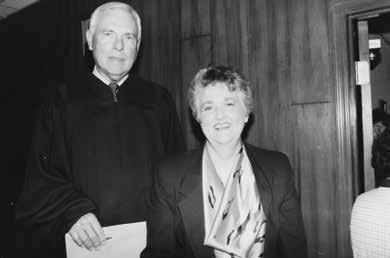
Although she deals with several health issues, Eleanor is the same cheerful Eleanor she has always been. Retired St. Clair County Judge and current State Rep. Jim Hill’s observations about her suit her well.
“When I think of Eleanor Isbell, it makes me smile, because every time I saw her, she had a smile on her face. She had a great outlook on life and was a pleasure to see and to be with.
“I met Eleanor probably 40 years ago. She was a Realtor in the Leeds/Moody area. I was a young lawyer, and a fair amount of my practice was real estate. Many times in church, we talk about the fruits of the Spirit – love, joy, peace, etc. Eleanor not only knew what they were, she exhibited them and lived them.
“I would be remiss if I did not mention Eleanor’s husband, Milton, who was just like her. They were a wonderful couple and perfectly matched.
“They say everyone makes you happy. Some people when you see them coming, and some when you see them going.
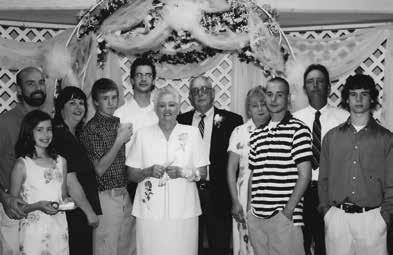
Eleanor always made you happy when you saw her coming. She is truly a special person. If the world were full of Eleanor Isbells, it would have a lot less problems than it has now and be a much better place to live.”
And all who know her agree. Thank you, Eleanor, for your 92 years of blessing the lives of others. l
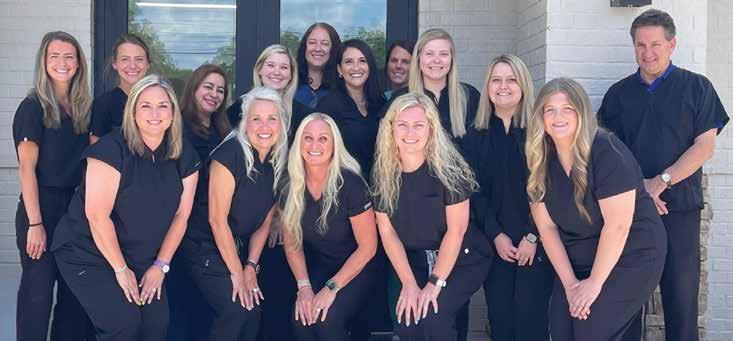







Custom dentures designed, created, and placed the same day.
We o er implant solutions to replace missing teeth and restore your smile for years to come.
Our skilled team is here to make your journey comfortable, seamless, and stress-free.
We’re committed to honest care and beautifiul, lasting results
Restore your ability to chew, speak, and smile with confidence.
Walk in for your appointment and walk out with a brand new smile.
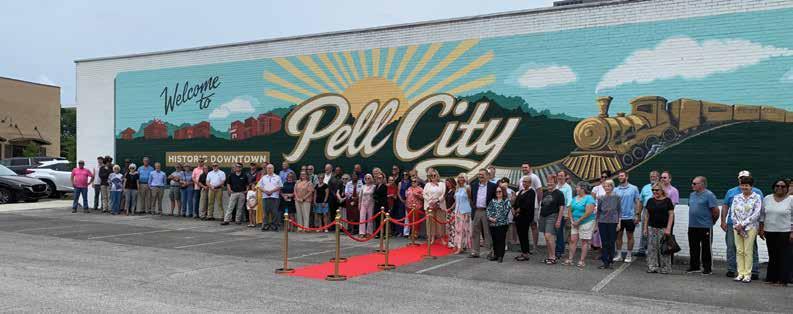
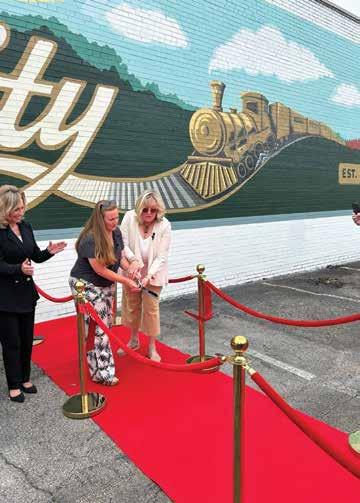
Sometimes the path to taking a good idea to reality presents more than a few challenges along the way. But when you see the 86-foot mural welcoming you to Pell City’s Downtown Historic District, you’ll know the journey was well worth it.
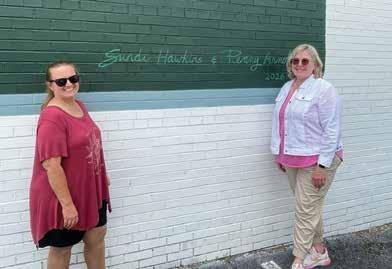
Three years ago, Pell City Historical Society envisioned and began discussion and planning for a historic mural, which led to a red-carpet ribbon cutting ceremony in late May paying tribute to the artists and all who played a role in making it happen.
“The mural is beautiful and nicely depicts Pell City’s historical past, and I believe it will inspire future projects our community will support and accomplish,” said interim Historical Society President David Murphy.
The mural isn’t the first project the Historical Society has spearheaded for downtown. Historic downtown flags were provided for Cogswell Avenue lampposts, focusing attention on the city’s historical roots firmly planted downtown.
Local artists Penny Arnold and Sundi Hawkins created the new mural that majestically stretches across a white wall backdrop and depicts the founding of the town and key elements of its growth – a train, the mill, its businesses.
“When people look at this mural, my hope is that they feel a deep sense of pride in our city and see the boundless potential of our community,” Councilman Jay Jenkins said during the ceremony.
Denise Olivastri led the project, participating in the mural content along with Vicki Harmon, developing the letter of consent, securing the artists and the location at Glitz & Glamour, 2007 Cogswell Avenue. Pell City Council put its stamp of approval on the proposed artwork, and the artists went to work, completing it in record time.
“This amazing artwork serves as a visual bridge connecting our historic past with our bright future,” Olivastri told the crowd gathered for the ceremony as she acknowledged all who had a role.
She gave “a huge thank you to Pell City Sparklight for their alliance and cooperation in helping bring our city’s history to life!
As funding co-sponsor and partner along with the Historical Society, they have joined us in giving our community a beautiful historic landmark that celebrates our roots. We are incredibly grateful to them for their kindness and generosity.”
She lauded city officials who were supportive of the historic mural undertaking throughout the project. “Your belief in the importance of public art and preserving the spirit of our downtown, helped make this vision possible. Thank you for recognizing how initiatives like this can bring people together, attract new visitors and create lasting memories for future generations.”
The mural’s location also deserved gratitude – “a huge thank you and much appreciation to Union State Bank who owns this building and to Pam Everidge and her husband, Steve, the owners of Glitz and Glamour, who generously and excitedly agreed to allow us to utilize the wall as the blank canvas for this incredible work of art.”
A special thank you went to Mason Roberts at SherwinWilliams for supplying the vintage colors “to bring this mural to life.”
There were unexpected, but welcome role players as well. “We also want to thank Tim Mogren who just showed up and out and generously and freely provided the boom lift from THM Electrical which helped our artists complete their project in record time.”
Landon Honeycutt, who assisted with the scissor lift from The Rental Men, and Greg Gossett from the City Street Department, who installed the barriers around the wall perimeter to keep artists safe, were among those specially recognized.
Calling Hawkins and Arnold “incredible artists,” Olivastri stressed, “thank you is too small of a word for the talent, dedication and countless hours of hard work you put forth. Always smiling, always positive, you both worked diligently through long days and nights to bring this monumental vision to life, and your incredible creativity has added beauty, inspiration, joy and character to our dear city,” she said.
“This vibrant masterpiece of a mural will be admired by the masses for years to come, due to your tireless efforts, vision and skill. Our community is completely in awe of your work.”
Motioning to the crowd, Olivastri noted, “This historic mural belongs to all of us, and stands as a symbol of unity, progress and hometown pride. I hope it brings joy and a smile to your face every time you pass by.” l

Thelma
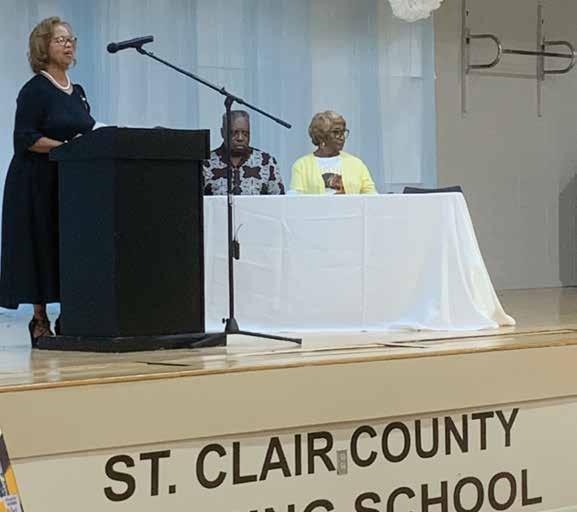
O’Neal Jones addresses the crowd at the dedication
Jennifer Gover gazed up at the historic marker with gold letters etched across the deep blue background and smiled.
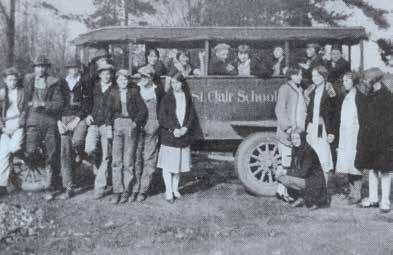
It was that unmistakable look of satisfaction at the end of a long journey home, her work was done. St. Clair County Training School is now an official, historical landmark.
The school is already listed in the Alabama Register of Landmarks and Heritage. Thee marker with the official seal of the Alabama Historical Association was erected by the St. Clair County Training School Alumni Association, led by President Don Allen and Vice President Barbara Collins.
In late June, alumni unveiled the marker in a special ceremony at the Pell City school site, now known as The Legacy Center, during the Alumni Association’s reunion weekend.
The marker tells the story of the school and its origin – history Gover researched and worked in collaboration with the Historical Commission to develop.
It was dedicated in 1922 as “the Colored Industrial Institute, also called the Rosenwald Negro School at Pell City.” It began as a one-room classroom on two acres with one teacher. The land purchase and construction were made possible through the Julius Rosenwald Foundation and local community matching funds totaling $2,900.
A 1922 Birmingham News story described it as “the largest and best equipped school for Negroes in St. Clair County.”
In 1934, the state Board of Education was requested to change the name to St. Clair County Training School and add an extra teacher. Four years later, the St. Clair Board of Education approved extending the high school department to meet training school requirements and the state department approved the name change.
As part of the federal New Deal Program, the Public Works Administration allotted funds to build
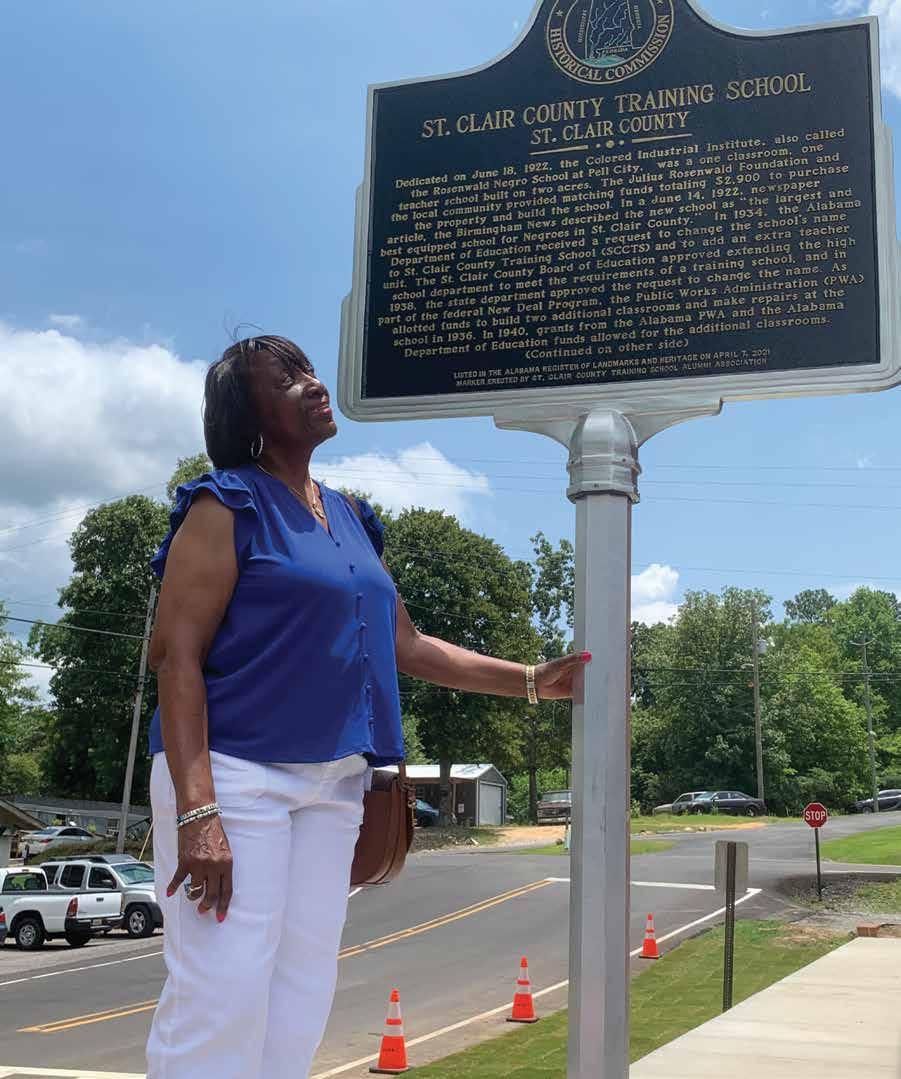
Jennifer Gover, who researched and wrote the content for the marker, admires the finished product
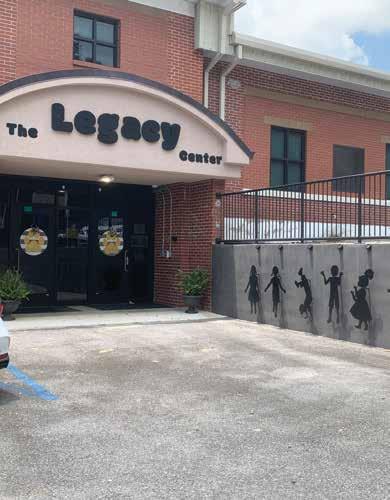
The training school is now called The Legacy Center and continues its education role in community – this time as pre-kindergarten
two more classrooms and make repairs.
From its beginning in 1922, the school educated Blacks in the surrounding communities of Pell City, Cropwell, Riverside, Piney Woods, Ragland and Acmar with the final class graduating in 1969 when the school closed for integration – 15 years after the Supreme Court’s Brown v. Board of Education decision called for an end to “separate but equal” schools.
Over 100 people attended the June ceremony, where former elementary school principal and SCCTS alumnus Thelma O’Neal Jones delivered the keynote address. “Our grandparents dreamed of a better future for us,” Jones told the crowd. “We were the first generation of education achievements,” many of whom went on to college.
The lessons they learned there extended well beyond academics. They were lessons “upon which our lives were built,” she said. “We celebrate more than a building. We celebrate a legacy.”
Videssa Woods talked of the history of the school and its importance in all of the alumni’s lives. “Without history,” she asked them to remember, “there is no present.” l
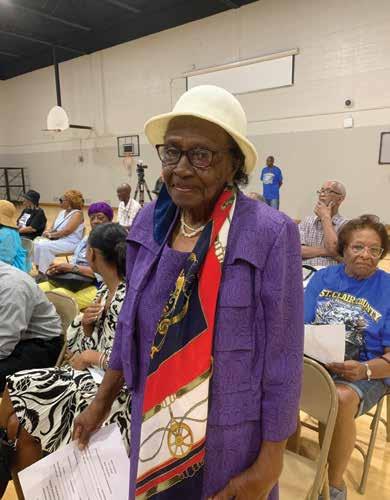
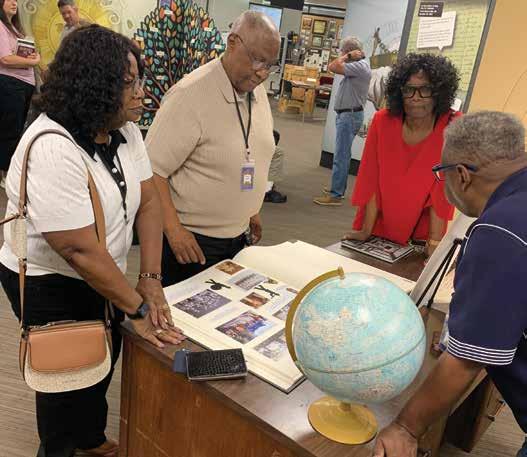
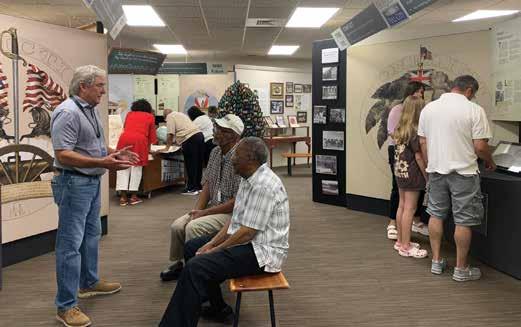
During the reunion weekend, alumni gathered at the museum to see the “Breaking Barriers” exhibit

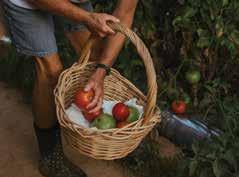
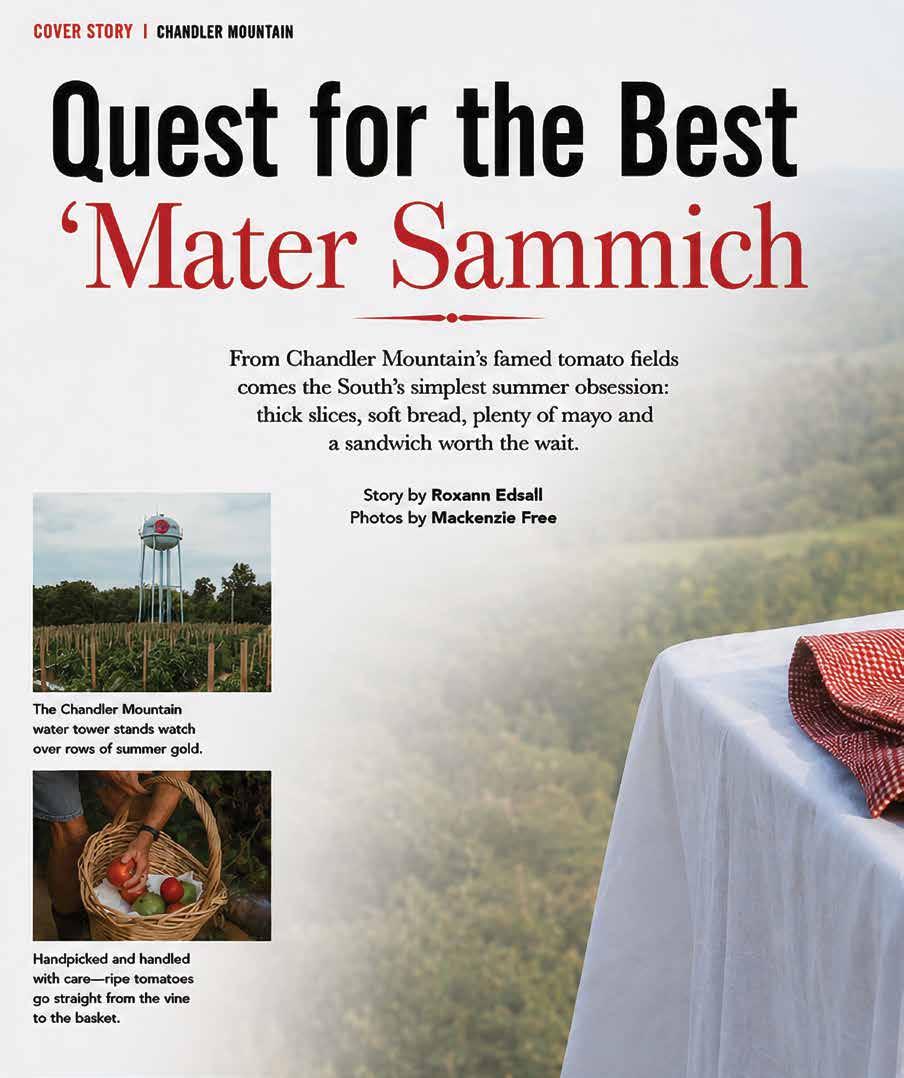
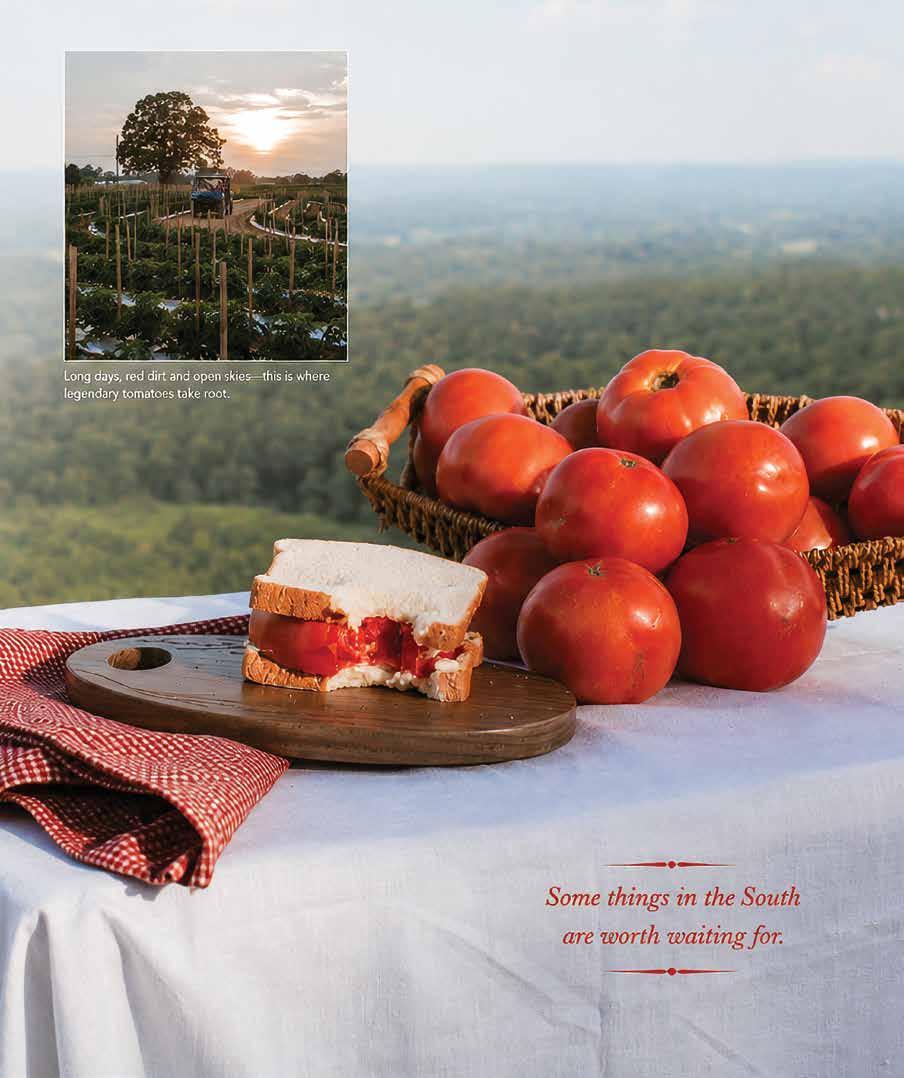
Any way you slice it, the facts are clear. Southerners love a good “mater sammich.” Long considered the staple of summertime goodness, the tomato sandwich is the belle of the Southern culinary ball. Top fans include former President Jimmy Carter, who was well known for his love of this simple summer fare made with ripe tomatoes, mayonnaise, and bread.
“I love a good tomato sandwich!” says Springville resident Tiphanie Gatgens. “I love good, soft white bread with several big slices of tomatoes with Duke’s mayonnaise (although my mother swore by Bama mayo). Add a good bit of salt, and sometimes pepper. And now I’m in the mood for a tomato sandwich.”
“Tomatoes speak of summer,” adds Texas transplant Heidi Cupstid-Bader, now a Pell City resident. “As a child, we’d pick them from my dad’s garden.
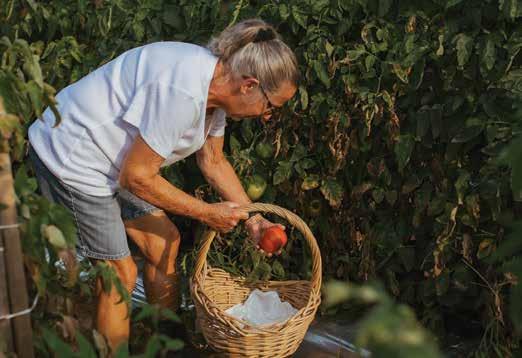
We’d come home with buckets of vegetables, but before we started shelling peas, we had a delicious tomato sandwich and a cold glass of sweet tea. It’s not just the sandwich; it’s childhood summer memories.”
Even the movie industry recognizes the emotional connection to the tomato sandwich experience. In the 1996 movie “Harriet the Spy,” while 11-year-old Harriet makes her school lunch, her mother suggests some variety in sandwich choices. Harriet quickly admonishes her mother for even suggesting that she take something other than her beloved tomato sandwich. “I know what I like,” she flatly stated.
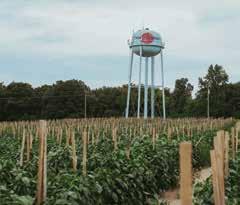
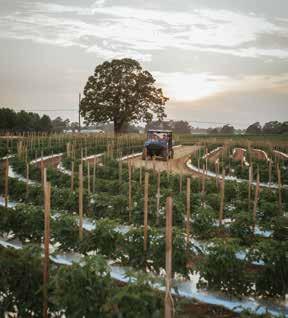
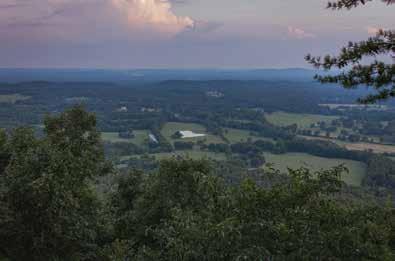
Southerners know what they like, too, and for tomato lovers in north and central Alabama, quenching the hunger for a tomato sandwich begins with a trip to Chandler Mountain beginning around July 4 when the first fruits are ready. Due to the volume of tomatoes produced and shipped from there, Chandler Mountain is known as the unofficial “Tomato Capital of Alabama.” And because of the sandy soil and breezy, cooler temperatures, Chandler Mountain is uniquely suited for producing high-quality flavorful tomatoes.
The Chandler Mountain tomato is something of a love story, the desire for the unattainable finally quenched after months of waiting. The season is four months long, at best, so these beauties are unavailable for the remaining eight months of the year. For tomato sandwich lovers, the wait is torture. Thankfully, the wait is over and until the end of October or early November, the tomato sandwich is back on the menu.
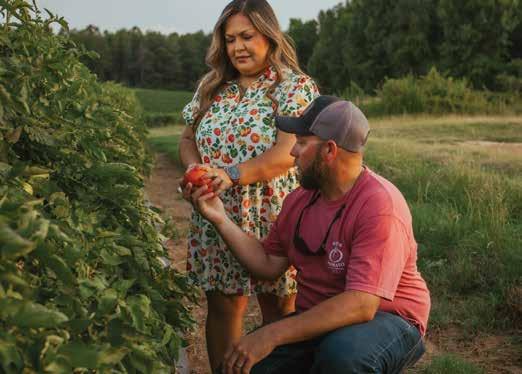
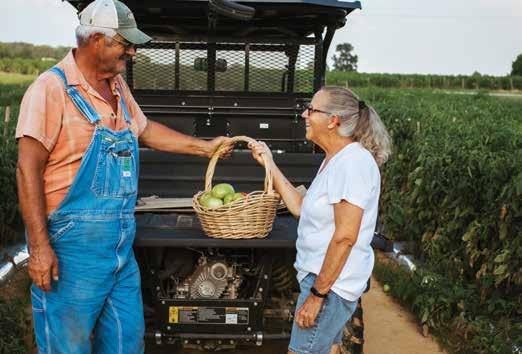
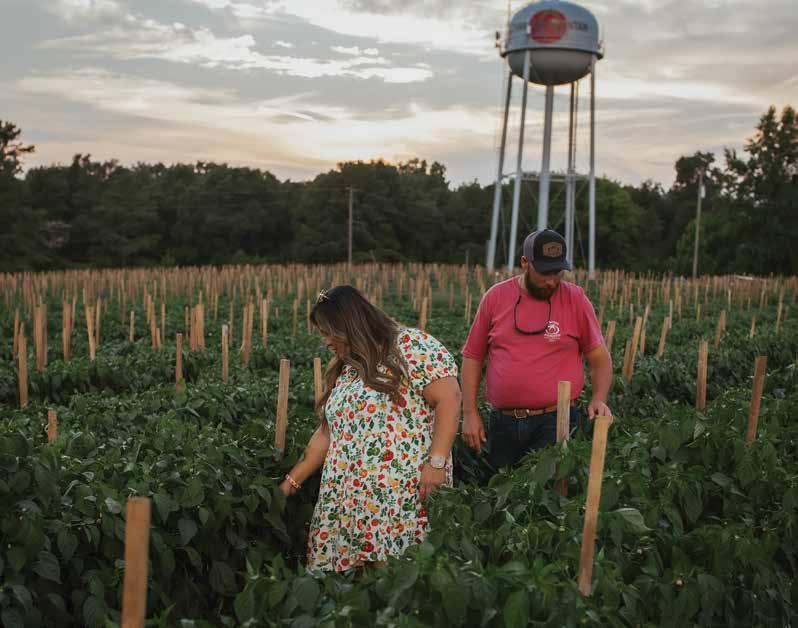
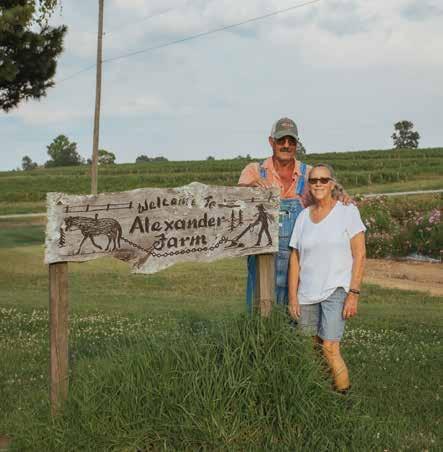
Chandler Mountain is home to several multigenerational tomato farms. Paul and Cindy Alexander own Alexander Farms in Steele. Paul, who also serves as pastor of Reeves Grove Baptist Church in nearby Whitney, is the third generation of his family to work the farm. He runs the farm with Cindy and his brother, Glenn. With no children to pass the farm down to, the couple is taking it a season at a time, with no immediate plans for retirement. “The Lord’s blessed us,” says Alexander.
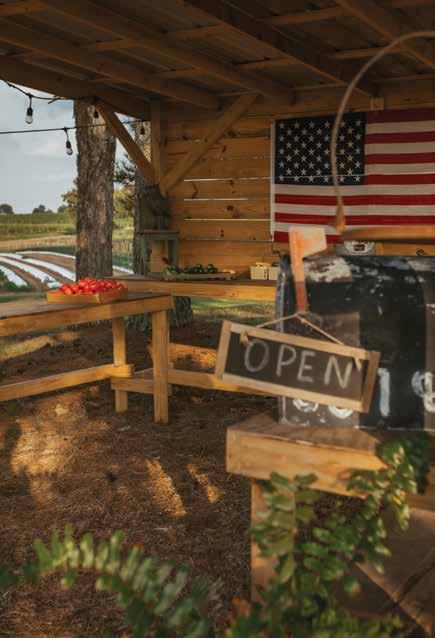
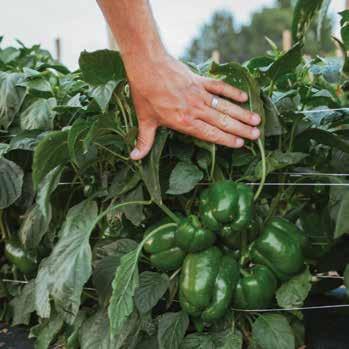
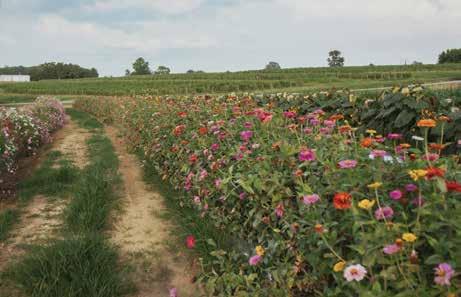
The Alexanders have 240 acres and use 60 acres for their tomato crops. They hope to produce 100,000-150,000 25-pound boxes of tomatoes to sell. In addition to tomatoes, they grow squash, cucumbers, corn, okra, peas, peppers, pumpkins, peanuts, and flowers, most of which they sell from the farmstand on their property. The farm produces two varieties of tomatoes called Lancer and Patsy, both are big rounds and perfect for tomato sandwiches.
Paul and Cindy Alexander with a basket of their
They still laugh when they tell the story of the day the lady came with knife in hand to test their product. “She said she’d bought tomatoes somewhere else last year and didn’t like them,” said Alexander. “She had a knife with her and asked if she could cut into one. I told her to help herself and if she didn’t like it, I didn’t want her to buy it. Both she and her husband tried it, and the





As the market shifts into a new season, the right Realtor makes all the di erence. at’s where Laurie Brasher comes in.
▶ EXTENSIVE MARKET KNOWLEDGE Local expertise. Proven results.
▶ HIGHLY RATED Consistently trusted. Often recommended.



▶ NAVIGATING THE MARKET Guides you every step of the way.
▶ DEDICATED WORK ETHIC Delivering for her clients
Let’s make your next move the best one! Together!










husband said, ‘Now, that’s a tomato!’ And they come back about every two weeks (during the season) to buy more.”
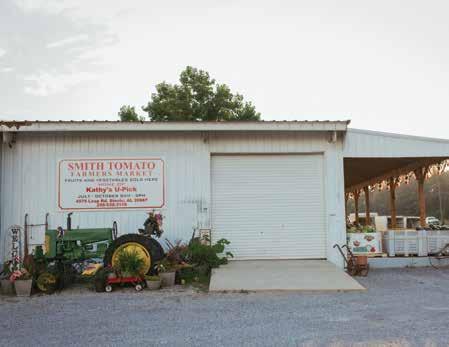
Just up the road at Smith Tomato Farm, Chad Smith grows many types of heirlooms, rounds, Romas, grape tomatoes, cherry tomatoes, and yellow non-acid tomatoes. Their 300acre farm, which his uncle started in 1965, features 80 acres of tomatoes and 20 acres of other vegetables and pumpkins. Their typical crop yield is five million pounds of tomatoes.
“Last year we had bad weather, and certain insects were more of a problem. Because of that, about 50 percent of the farmers went out of business,” said Smith. “That’s why I tell people it’s important to buy from local farmers. This year’s crop is better than last year’s.”
Tomatoes are widely recognized as a superfood, which is reportedly good for your heart, eyes, skin, and bones. They are also high in vitamin C and lycopene, both powerful antioxidants. Ironically, the tomato is even better for your body when cooked, especially in olive oil. According to a finding released by the National Institutes of Health, cooking tomatoes in healthy fats like olive oil greatly increases the body’s ability to absorb the beneficial lycopene.
Whether you crave tomatoes because of their health benefits or simply for the taste, there are many ways to prepare them. Salads, pastas, soups, stews, and chili have their flavors amplified by the addition of tomatoes. The best tomatoes, however, can stand on their own, dressed only in mayonnaise and bread.
All hail the tomato sandwich. While not universally loved, the tomato sandwich is a summertime ritual in the South. However, there is serious contention in the tomato sandwich arena. People are fiercely passionate about their own recipe for this most sacred of summertime fare.
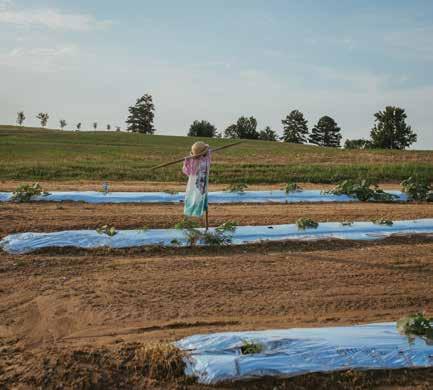
Alexander Farms also grows pumpkins for their stand in September
For instance, should the tomato be peeled or not? What type of bread should the tomato be nestled between? What spices or herbs are used (salt and pepper, garlic, paprika, oregano, basil)? While most agree the mayonnaise should be applied liberally, people tend to be zealous regarding the brand of mayo to use. Lastly, are other ingredients invited to the party? Many around the country include bacon, leafy greens, or cheese.
Traditionalists call for a simple approach, allowing the tomato flavor to shine. Around here, it’s a simple recipe, with essentially 3 ingredients – tomato, cheap white bread, and mayonnaise, along with salt and pepper. And then there’s the finesse.
The tomato should be an heirloom variety from a local farm,
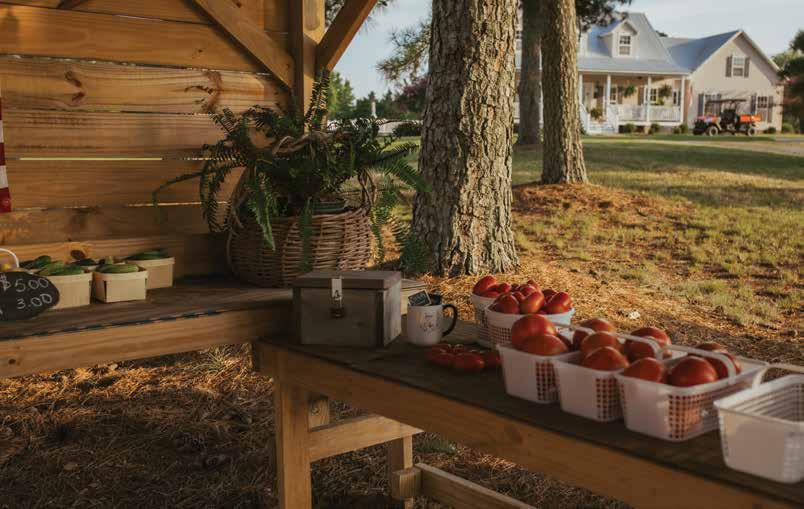
preferably from Chandler Mountain, and should be large enough to fill out the bread. Cut a beefy slice of at least one inch. Slather one slice of cheap white bread with Duke’s (or Hellmann’s or Blue Plate). Place tomato slice on the bread, then liberally cover the tomato with more mayonnaise. Salt and pepper before finally placing second piece of cheap white bread on top of tomato.
Pell City native Joe Dorough looks forward to the arrival of ripe fresh tomatoes on the Fourth of July. “My favorite is the better boy variety!” he says. “Use Duke’s mayonnaise on sourdough bread and if you want more flavor, add four slices of thick bacon and a slice of Vidalia onion. This is southern soul food!”
Dorough’s friend, Fayne Howell, agrees with the mayonnaise choice but insists that white Sunbeam bread is the only option. “Sometimes I add a slice of Vidalia onion,” she adds with a smile, “but only if I won’t be in close proximity to people.” Her favorite sandwich tomato is the Cherokee Red.
A common sentiment when eating a tomato sandwich is that it is best eaten over the kitchen sink. Biting into the juicy goodness is sure to leave your arms, if not your clothes, dripping with tomato succulence. The juice from the tomato blends perfectly with the mayonnaise and seeps into the white bread, creating a thin, wet, pulpy, somewhat precarious vessel for holding the tomato.
There are many variations and adaptations to this recipe worldwide. Some regions prefer sourdough,
wheat bread, or even biscuits. Some toast the bread. Still more variations surround the seasonings and additional ingredients. One of the most surprising twists comes from beyond our planet. Crumbs in zero gravity can float away and become problematic for equipment, so tomato sandwiches in space are made with tortillas.
One thing people do agree on is that one should not skimp on the mayonnaise. In a comedy sketch, author and humorist Sean Dietrich, known as “Sean of the South,” suggests that only by using a masonry trowel can you really get enough Duke’s on your tomato sandwich. At Smith Tomato Farm, Smith tells the story of his uncle, Carl, who when asked what they put on their tomatoes at the farm to make them taste so good would answer “mayonnaise” with a grin on his face.
Truly what makes Chandler Mountain tomatoes taste so good, says Smith, is the sandy, rich, and well-drained soil, along with the elevation at which the plants grow. “When you have well-drained soil,” explains Smith, “it dries out and you can add water as you need it. The next thing is the steady air flow and cooler weather. The expertise and the timing of certain things you do is a big thing, too.”
Cathy Limbaugh of Lincoln is a huge fan of Smith Farms tomatoes. She and husband, Curtis, enjoy a spin on the classic tomato sandwich using homemade biscuits with butter, tomatoes, and cheese. “It was always a special Friday night dinner when my mother lived with us,” she remembers. “We still enjoy them when tomatoes are in season.”
So, what will your tomato sandwich cost this year? “It’s simply supply and demand,” explains Alexander. “If everybody’s got good crops, the product is out there, and the price is going to be pretty cheap. And the market can change from week to week.”
As long as the supply is there, the demand for Chandler Mountain tomatoes is sure to be strong. The mighty ‘mater sammich may not actually be manna from Heaven, but after the long wait for the perfect tomato, it just feels Heaven sent. It’s just so good it’ll make your tongue slap your brains out. l














Story
by Carol Pappas
Submitted Photos
When Deanna Lawley was a child, a less-than-harmonious trip to the dentist one day with her mother ended abruptly when Lawley bit the dentist.
Her mother was “horrified” with the actions of her 6-yearold, she recalled, “and she turned me over to my daddy.”
But her father had a deal to dangle in front of the precocious, albeit challenging, child that just might make the next visit a bit less dramatic.
He coerced her into behaving at the dentist’s office with the promise that he would buy her that book she had been wanting – Black Beauty – “the one with the shiny cover.”
The father-daughter ‘deal’ was struck, and it not only became the key to a smooth office visit that day, it unlocked a lifetime of love for reading. “24 hours later I had my book,” she said.
And she’s been reading ever since.
As a career path, she naturally chose teaching English and for decades, she shared her passion for the written word with countless Pell City High School students. In retirement, she paints books through travel.
Forming a group called Friends Bound for New Horizons, Lawley guides trips across the globe. They have become
learning adventures that have raised nearly $100,000 for the Pell City Library.
The first trips generated funds for Pell City Schools Educational Foundation and later grew successful enough to support the library and after that, Museum of Pell City, a nonprofit she co-founded.
Among her early travelers were Library Director Danny Stewart and Carolyn Hall, a longtime library supporter. One day Hall wryly told her, “There’s no reason why you can’t give money to the library,” which led to years of travel – and funding – for the library.
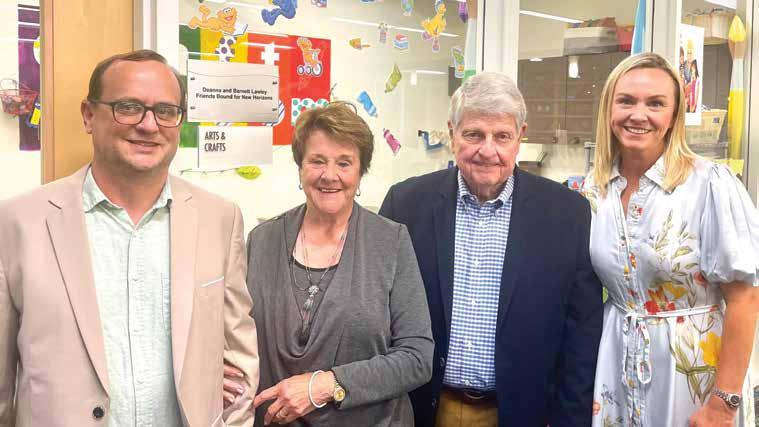
Guild members sought to honor her in a special way, and they named a room in the library for her.
Actually, there were two rooms that needed naming – arts and crafts and teens – and Lawley chose arts and crafts. She picked arts and crafts, not only for the creativity and imagination found inside, but she joked she had years of teaching teens, and “most” were not too entertained. “Arts and crafts are fun for any age – my PCHS teens, not so much. They were getting ready with research and Shakespeare for college.”
“She wanted to see the happy, fun part,” said Stewart.
“There was a desire to have something to pay her back for all the money she has raised over the years,” Stewart said. “We thought it was only fitting to name a room after her.”
She shares the honor with husband Barnett, who not only has helped her with the trips over the years, he has given back to the community as a public servant, a conservationist and a volunteer in many different arenas.
“How deserving,” Stewart said. “They are a great couple in philanthropic endeavors.”
A reception in her honor featured a meet and greet hour on a beautifully decorated patio at the Municipal Complex followed by dinner in the banquet room. “The ladies of the Guild were extremely good hostesses. It was so much more than we
anticipated. It was such a lovely event, and the patio was a perfect venue for such an occasion.”
Making it even more special was when she learned her good friends, John Wandrisco of United Distributors and St. Clair Commissioner Bob Mize supported the event, making it “such a fine affair.”
Lawley sees her fundraising work on the library’s behalf as a labor of love. “I’ve always loved to read. I am very pleased to be connected to the library,” she said, recounting childhood memories in Newnan, Georgia, where the library was housed in a historic Carnegie building on the courthouse square. It was “holy ground to me. It was a major influence on me as a child.”
And now, she gets to give that gift back in her own way, helping new generations learn to treasure the riches of the library just like she discovered so long ago. l


Story by Paul South
Jodi Shirley had a dream. Her perseverance turned it into reality.
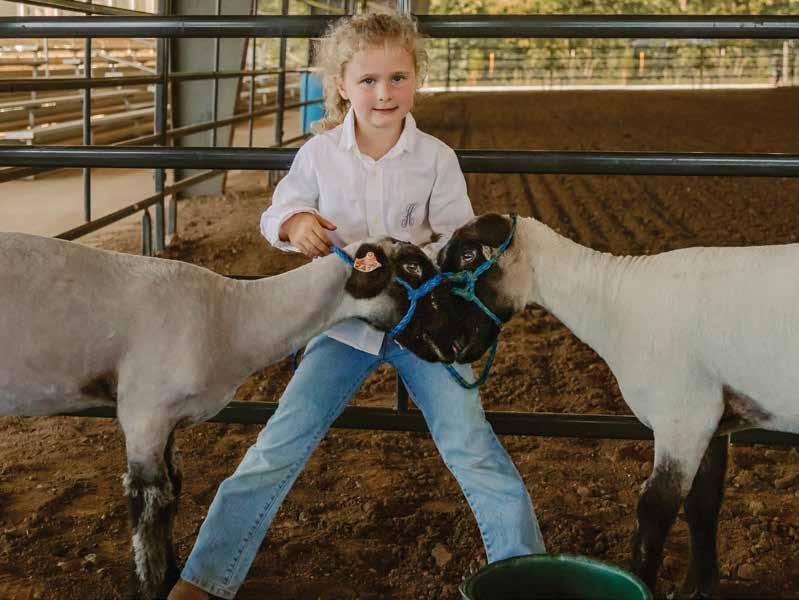
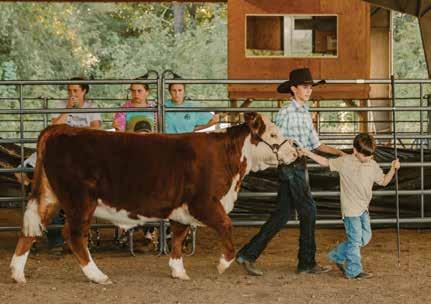
Her daughter raised and showed lambs at county fairs across Alabama and in Mississippi, Georgia and Tennessee, but not close to home. “We didn’t have a local fair for these kids to show [their livestock],” she said. “Our livestock kids did not have their own fair to show sheep, cattle, and hogs. I said, ‘We’ve got to change that.’”
And they did. The St. Clair County Fair now enters its third year.
Shirley serves as the assistant coordinator of the St. Clair County Soil and Water Conservation District and is chairperson of the St. Clair County Fair Committee.
The fair is set for October 2 and 3 at the St. Clair County Agriculture Multi-Event Center at 100 Arena Drive in Odenville.
“It took us a few years to get things together,” she said. “It took us a year and a half or two years before we actually got it off the ground. We just pulled different community leaders together.”
Those leaders came from the county’s agricultural community – the St. Clair County Cattleman’s Association, the Women’s Committee of the Alabama Farmers Federation, the Alabama Cooperative Extension Service, Future Farmers of America and the county’s business community.
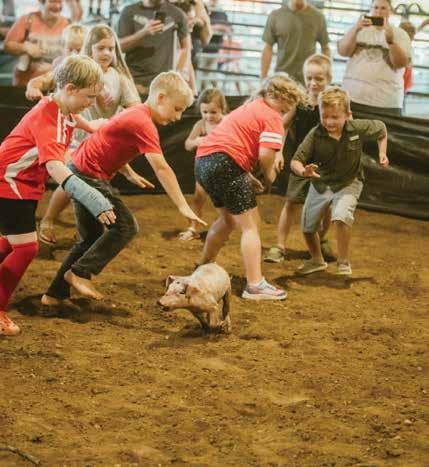
As a result, fair admission, parking and rides are free. And the fair celebrates St. Clair’s rich farming heritage, giving blue ribbon honors to everything from pies to pigs to pickles, quilts to crafts.
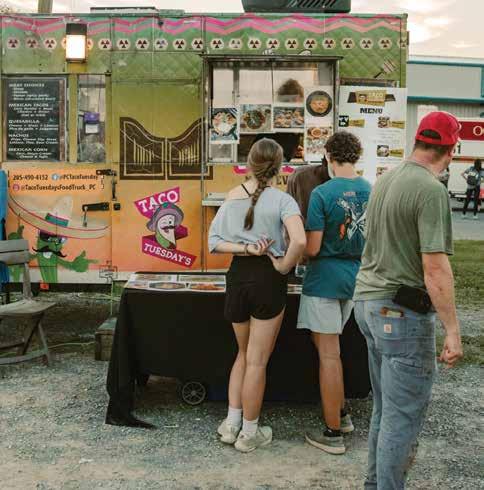
Fairgoers can feast on everything from corn dogs to cotton candy, to funnel cakes and caramel apples, staples of fair menus. Music for every taste from gospel to rock ‘n’ roll will fill the autumn air.
Families only have to pay for food, games or to buy crafts and other products. “We just brainstormed and said a lot of prayers, and it just all came together somehow,” Shirley said.
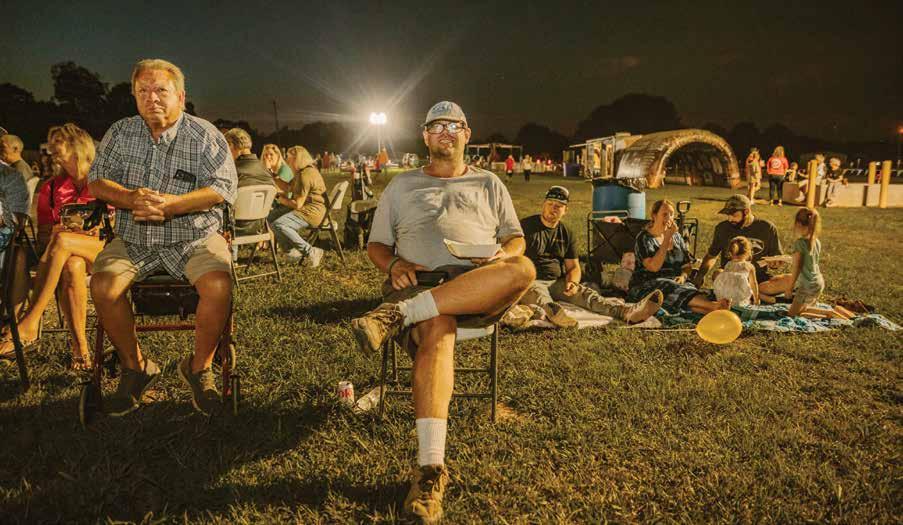
In each of its first two years, the fair attracted 5,000 folks and rave reviews.
“It’s been very positive,” she said. “We’d love to have a Ferris wheel. And people want better rides. But in year three, we’re taking baby steps.”
In its early years, the fair featured a rockclimbing wall, spinning teacups and a mechanical bull, swings, mini airplanes and bounce houses.
“The whole feel-good county fair is what we’re going for with the corn dogs and the lemonade and the funnel cakes and the candy apples, of course. Those are real important.”
Full disclosure: Shirley is a confessed candy
apple aficionado. But while apples may have her taste buds, the livestock showing has her heart.
“The [agriculture] world is my favorite,” she said. “Watching these kids get out there and present their animals and work super hard. Most of the work is behind the scenes. All of the dedication and work is put in at home typically.”
Part of the fair’s mission is to educate the community about the county’s agriculture, roots that run deep in St. Clair County. Local farmers demonstrated milking. Herding dogs showed off their skills. Plus, there’s a petting zoo.
“We love to educate the community about what it is, because a lot of people don’t know what livestock showing is, or what it’s about,” Shirley said. “There are so many people who go to the grocery store and think those items just happen to be there. But there’s somebody somewhere who’s worked from daylight to dark to make that happen. It’s nice to see the whole picture.”
Along with support from the business and agriculture community, a small army of volunteers makes the fair go.
“Everybody knows their part,” Shirley said.
Bo Lindsey, a self-described “farm girl who learned to ride a cow before I could ride a horse” while spending time on her grandparents’ farm in Shoal Creek Valley, has been a fair volunteer from the start.
She shuttles families from the parking area to the fair and sees a change in families after a fun night. Free admission helps spark the fun, especially in these tough economic times.
“That’s the joy of it right there,” Lindsey said. “You’ve got families that can’t afford to take their kids nowhere because they’re trying to make ends meet. Let those kids wear themselves out.”
She recalled times when fairgoers would try to pay for parking. “You see when they open their wallet there ain’t much

in there,” Lindsey said.
And when they find out about free parking and admission and rides? “They light up and thank us,” she said. “It’s not us. God made it happen. You see it in people’s eyes. To see Mama and Daddy able to tell their kids, ‘Cut loose.’ That makes it worth it to me.”
Lindsey has a treasure trove of stories from her time as a volunteer. Free admission makes a difference. “There was a lady who had four kids,” Lindsey remembered. “Her husband was working two jobs. She had to take her kids … People just don’t have money anymore.”
The fair is a no-stress, unhurried, affordable family event.
She described the fair’s free rides as “bodacious,” adding, “I was talking to one lady who had five kids. She was trying to figure out how much it would cost for the rides. I told her, ‘It don’t cost you a dime. Put your kids on ‘em.’ That was just fun.”
Lindsey carries memories of the inaugural fair in her heart. “You will never top the first year,” she said. “It was just raw and innocent and joy and peace,” she said.
That joy and peace were sparked by something desperately needed these days. “Unity,” Lindsey said. “There just was. There were people who were your neighbors that you got to talk to. You got to meet their kids. I saw Mamas and Daddies talking while their kids were riding rides.”
At the end of the day, beyond the food and fun and neighbors meeting neighbors, Shirley hopes folks will see agriculture beyond farmers and tractors and big fields.
“It goes so much beyond that. From the pencils we write with to the sports that we play that depend on the hides from some of these animals to the helmets we use to protect our children, everything starts with ag.”
But it’s even more than that, she said. “Not to be religious, but truly, God gave us this beautiful land and all of these creatures and all of these herbs for us to grow our food,” Shirley said. “That’s where it all starts. This is to celebrate that. I hope people come away with a better understanding of what agriculture truly is.”
Why is the fair important? “Because it is the


community,” Lindsey said. “Everybody’s gotten away from this, and you end up with people who don’t know each other. That’s not community. This (the fair) is what communities are supposed to do. You’re supposed to get together, get to know each other, spend some time with each other. That doesn’t mean you have to talk to everybody that comes to the fair. But you’re going to meet some people you ain’t never talked to, and it’s fun just to get to know folks.”
Driving the shuttle, picking up families at the end of the evening, Lindsey notices something. They leave with a pocketful of memories.
“When they first get there, the kids are all excited, right?” Lindsey said. “At the end, the kids are worn out and excited. But the Moms and Dads? They’re at peace. You know you’ve done something right when you ask Mom and Dad if they had a good time.
“They look at each other and smile and go, ‘Yeah. We did.’” l
When Dr. Rock Helms returned home to Pell City in 1999 after his residency, he was joining the physician who had cared for him as a child. That physician was Dr. Bill McClanahan, whose decades of faithful service helped shape healthcare in Pell City.
“Dr. McClanahan taught me that medicine is ultimately about people,” Helms said. “He loved this community, loved his patients, and modeled what it means to care with compassion.”
In 2001, Helms, McClanahan, Dr. Carl Frosina and others founded Northside Medical Associates. What began as a small, independent practice grew over the next two decades into one of the region’s largest physician-led groups, eventually serving the community with around 20 providers and more than 200 employees before being sold in 2020.
Following the sale, contractual obligations required Helms to establish his next practice in nearby Vincent. Helms Healthcare quickly became a thriving clinic there, and after one year, he was able to return to the community he had always hoped to serve.
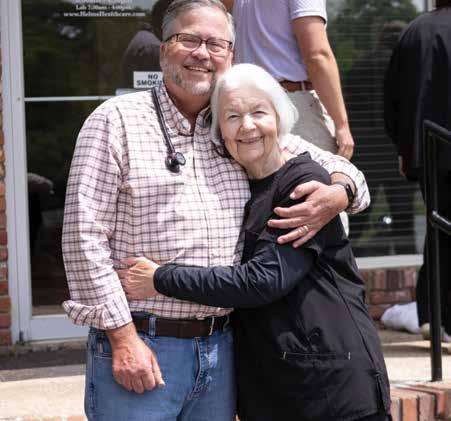
“My goal was always to come back,” Helms said. “Pell City is home. Vincent has become a wonderful practice that continues to grow, but returning here, feels like coming full circle.”
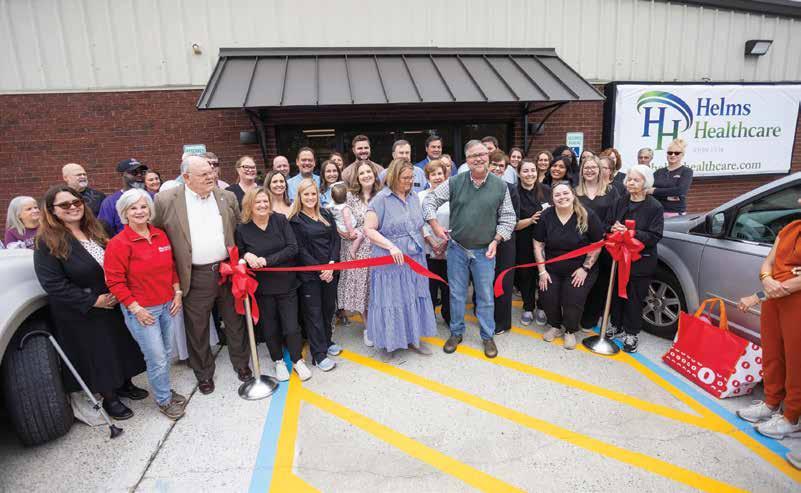
Today, Helms Healthcare operates from a new 8,000-square-foot facility designed around one sim-
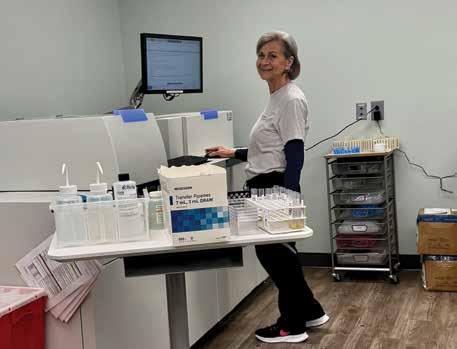
Debbie Brown, lab manager, in new state of the art facility



Dr. Helms takes pride in a “human,” not a recording, answering phones. She is affectionately known as “Miss Betty.”
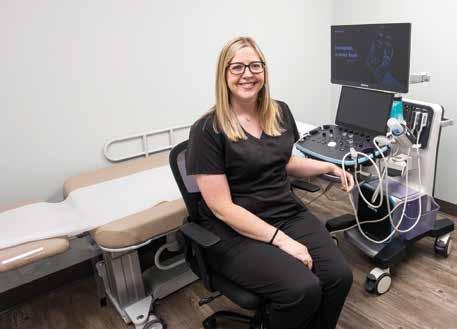
ple philosophy: healthcare should be personal, accessible, compassionate, and centered on the patient. The practice offers comprehensive primary care, seven-day urgent care, digital X-ray, a hospital-grade laboratory, advanced vascular ultrasound, and plans to add one of the region’s most advanced CT scanners, capable of high-quality cardiac CT imaging.
When patients call, they speak with a real person, not an automated system, and every member of the team is trained to create an environment where patients feel welcomed, respected, and heard.
“Technology matters,” Helms said. “But people never stop needing kindness. We want every interaction, from the first phone call to the front desk to the exam room, to communicate that every patient matters.”
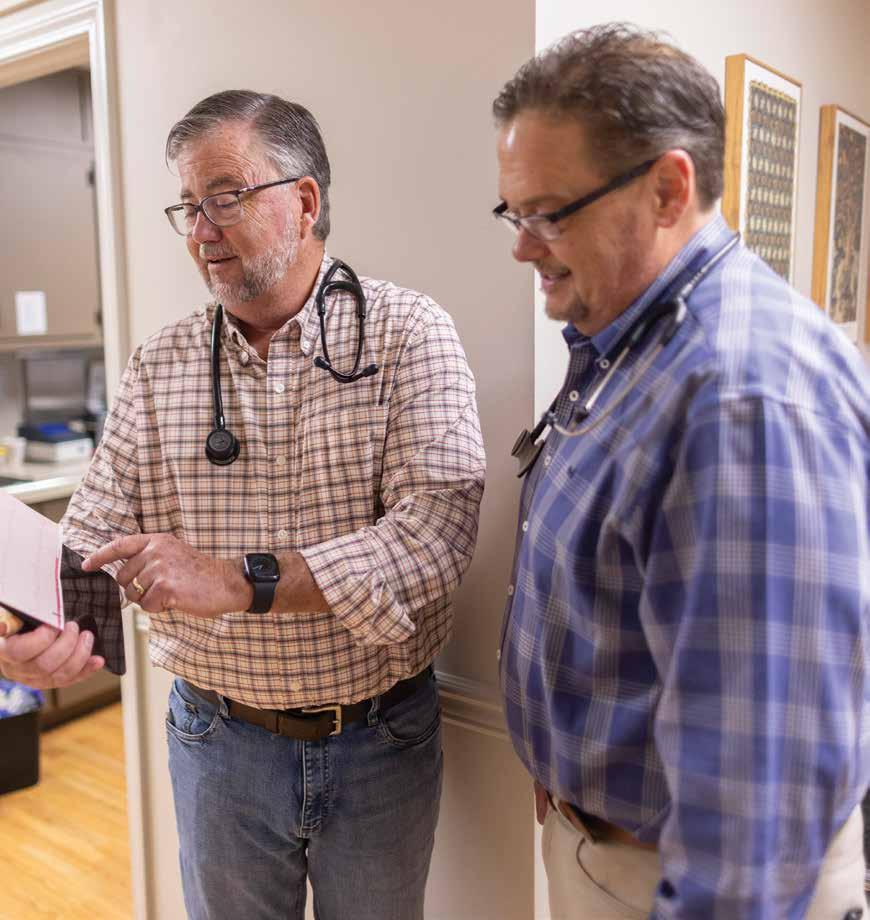
He also believes the future of primary care is physician-led team care, built around relationships, accessibility, and patient choice. He works closely with exceptional nurse practitioners and physician assistants, building strong relationships and continually discussing cases throughout the day.
“Even when I’m not physically in the
Helms on the move daily, taking care of patients at both locations
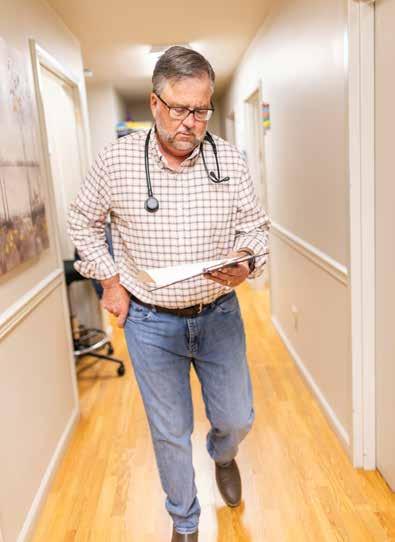
exam room, I’m often involved behind the scenes, reviewing complex cases, discussing treatment plans, and helping guide patient care.” Each patient develops an ongoing relationship with a primary provider who knows them well, while Helms serves as the physician leader of the team.
Patients who would like Dr. Helms personally involved in a visit are always welcome to request that, whether as a new patient, during an annual visit, or anytime they want another set of eyes on their care. “The choice belongs to the patient,” Helms said.
He credits UAB St. Vincent’s St. Clair, along with generations of nurses, specialists, and primary care physicians for helping create a community where patients increasingly receive excellent care close to home.
He names longtime colleagues with genuine gratitude. “One of the things I’m most grateful for is the physicians who have invested their lives in serving this community,” he said. “I’m thankful for mentors like Dr. Bill McClanahan, Dr. Carl Frosina, for my longtime partner Dr. Michael Dupre, and for colleagues, such as Dr. Rick Jotani, Dr. Barry Collins, Dr. Ilinca Prisacaru, Dr. Hunter Russell, Dr. Steve Fortson, Dr. Laura Johnson, and many others. We’ve taken different paths, but we’ve always shared the same purpose, caring for the people of Pell City.”
Over the years, Helms says another part of his life has grown just as much as his practice – his faith. “My relationship with Christ has changed the way I see medicine,” he said. “Today,
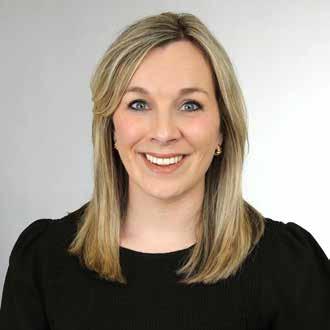
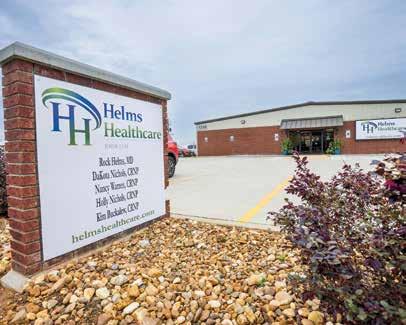
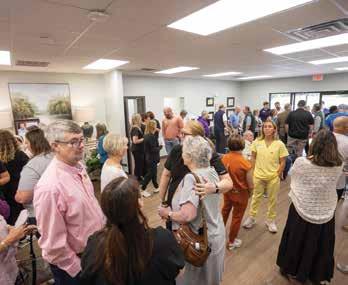
my deepest desire is to honor God by serving the people He places in front of me each day.”
He emphasizes that those conversations are always patient-led. “I never want anyone to feel uncomfortable or pressured,” he said. “But when a patient asks me to pray with them or wants to talk about faith, it’s one of the greatest privileges of being their physician.”
Looking ahead, he hopes to see continued growth and collaboration across the entire medical community. “If people remember anything about my career,” he said, “I hope it isn’t a building or a piece of equipment. I hope they remember that I loved this community, respected my colleagues, cared for people with compassion, and tried to honor God in the way I served.”
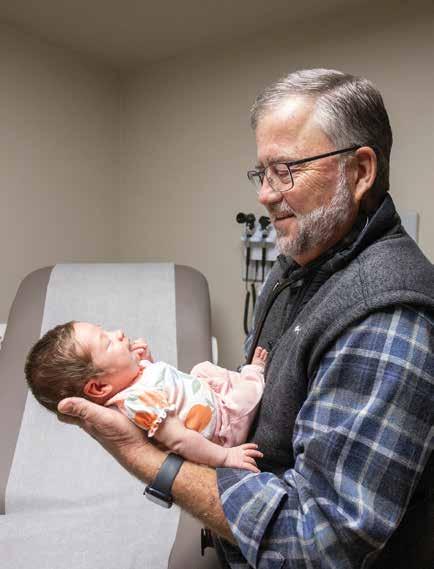



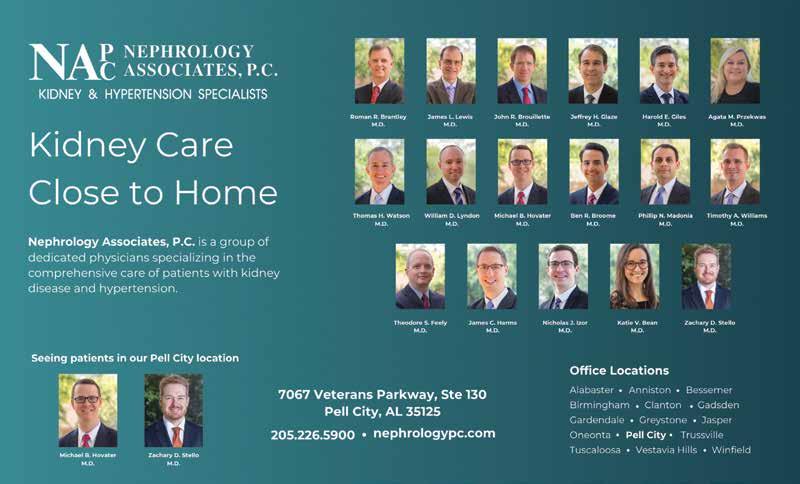
There’s good news for Alabamians living with limited income and resources. The Medicare Extra Help program—also known as LIS—expanded in 2025. If your income is below 150% of the federal poverty level, you may now qualify for full Extra Help benefits.
This means you could pay lower or no premiums, reduced Part D drug copays and reduced or no Part D deductible for your prescriptions. Many people don’t realize they’re eligible—so it’s worth checking.
For example, in 2025, individuals earning less than $23,475 per year (or couples earning less than $31,725 per year) may qualify as long as your assets are below the specified limits. You could save hundreds of dollars each year on the medications you rely on!
To see if you qualify for Extra Help, call: The Social Security Administration at 1-800-772-1213, between 8 a.m. and 7 p.m., Monday through Friday. TTY users should call 1-800-325-0778
Medicare can be complex, and it’s normal to feel uncertain with so many parts and plans to consider. Blue Cross and Blue Shield of Alabama understands this and offers Medicare plans grounded in decades of experience and trust. For generations, Blue Cross has been a steady partner for individuals and families, providing coverage that gives you confidence and peace of mind as you navigate your healthcare choices. With a name you can depend on, you can feel secure making important decisions about your health.
Selecting the right Medicare plan is a crucial decision, and it’s important to consider several factors to ensure the best fit for your needs. Here are some considerations to help you decide:
Is your doctor in the plan’s network?
What will your prescription costs be?
What are your overall monthly expenses?

Are you covered when you travel?
Are there extra benefits like dental, vision and hearing?
Understanding that every individual has unique healthcare needs, Blue Cross offers a variety of plan options to ensure that you find the right fit:
• A Part C Medicare Advantage plan
• Offers all-in-one coverage
• Combines medical and prescription drug benefits with extras like vision and dental
With 90 years of experience, Blue Cross and Blue Shield of Alabama offers trusted healthcare coverage. Our extensive network includes 90% of doctors and 100% of hospitals in Alabama,1 providing access to top-tier care statewide. We offer comprehensive plans that cover medical expenses, prescription drugs and include additional benefits like dental, vision and hearing.
Our commitment to quality is reflected in high customer satisfaction and ratings, with Blue Advantage plans earning 5 stars for “Member Experience with Health Plan” and 4 stars overall in 2025.2 Our emphasis on customer service ensures you’re never alone in navigating your healthcare options.
Choosing Blue Cross means peace of mind, with local resources and straightforward plans designed to make your Medicare journey simple and easy.
• A Medicare Select Plan or type of Medigap Medicare Supplement plan
• Provides fewer out-of-pocket costs for Medicare-covered services
To get more information or talk to a local advisor, call 1-855-978-5186 (TTY 711) or visit BCBSALMedicare.com/BA23, 8 a.m. – 8 p.m. CST.3
• A Medicare-approved Part D plan
• Pairs with C Plus or Original Medicare
• Helps pay for prescription drugs
Time was in St. Clair County when patients seeking medical care had to travel great distances to get the care they needed. That time has passed. St. Clair is now a regional medical hub offering primary, specialty and urgent care. Throughout the St. Clair County region, comprehensive medical services are often found just a few minutes away.
Here’s a glance at what the region’s major medical providers offer:
7063 Veterans Parkway
Pell City
• Advanced wound care center
• Emergency care
• Gynecology
• Lab
• Nuclear medicine
• Neurological services
• Orthopaedics
• Pain management
• Physical therapy
• Radiology (MRI, CT, mammography, bone density, and ultrasound scans)
• Respiratory care
• Sleep disorders center
• Speech therapy
• Sports medicine
50 Medical Park Dr. E. Birmingham (Trussville)
• Behavioral health
• Cancer care
• Cardiovascular services
• Diabetes care
• Digestive disorder care
• Endoscopy procedures
• Emergency services
• Orthopaedics
• Primary care
• Pulmonology
• Same-day surgery
• Sleep disorder care
• Surgical weight loss
• Thoracic surgery
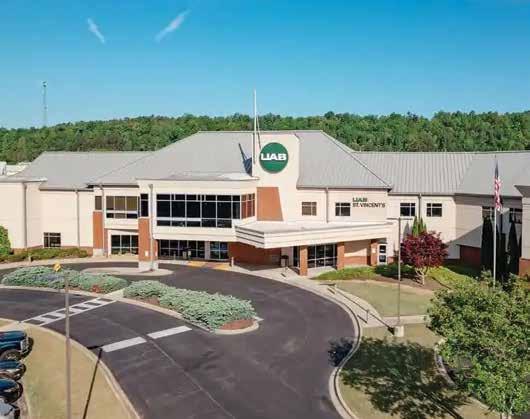
1141 Payton Way Leeds
• Primary Care- for adults and children
• Dermatology
• Endocrinology
• GI Surgery
• Nephrology
• Neurology
• OB/GYN
• Orthopaedics
• Lab and Imaging
• 3D mammography, MRI, and bone density scanning
• Ultrasound
• Low radiation dose CT scanner
• Digital X-ray units
• Radiologist review of all exams, with same-day reporting













48 Medical Park Dr. E., Ste 154 Birmingham (Trussville)
• Annual health evaluations
• Physical exams
• Preventive care, including health screenings and physical exams, for patients of all ages
• Routine care for women, including Pap smears and pelvic and breast exams
• Well-child care
• Obstetrics & gynecologic care
• Management of chronic conditions such as hypertension, diabetes, asthma
• Flu shots and routine immunizations
• Treatment of minor injuries
• Drainage of simple abscesses (pus-filled areas)
• Treatment of minor wounds and cuts
1310 WA Goodgame Parkway
Pell City
131 Florey Street
Vincent
• Primary Care
• Urgent Care
• Extended Hours
• Preventive Care
• Lab Walk-Ins
• X-ray
• Advanced Imaging
• Infusion Therapies
• Comprehensive lab services
• Telehealth
74 Plaza Drive
Pell City
2834 Moody Parkway
Moody 7201 Happy Hollow Road
Trussville
Services may not be available at all locations
• Primary Care
• Medicare Navigation
• Urgent Care
• Walk-In Clinics
• Chronic Care Management
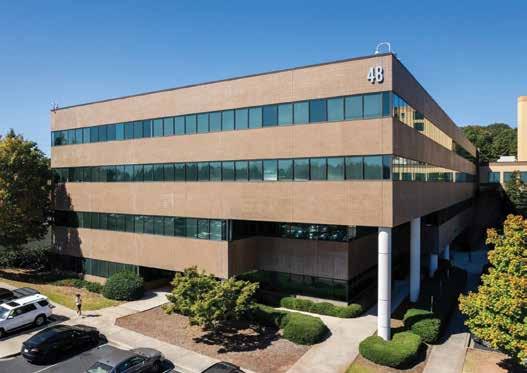
• Transitional Care
• Palliative Care
• Same-Day Sick Visits
• Telehealth
41 Eminence Way, Suite A Pell City
• Primary Care
• Specialist Care
• Family Wellness Care
• Women’s Health
• Sports Medicine
• Outpatient Care
• Onsite Diagnostics
• Onsite Physical Therapy
• Extended hours, including Sunday clinic
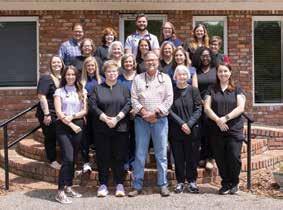
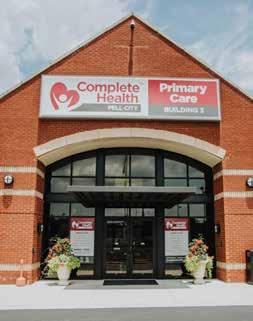


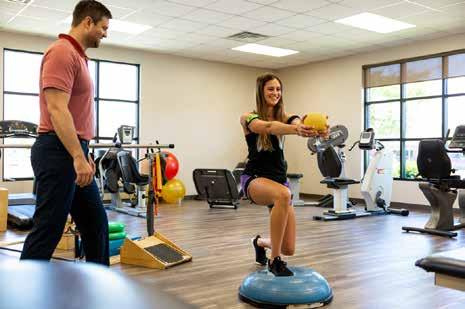
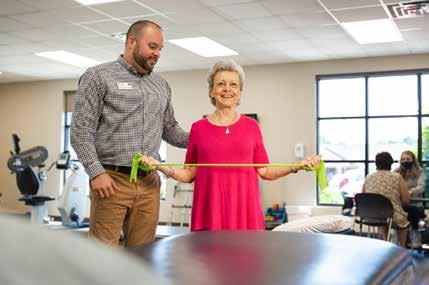

In the St. Clair County region’s medical community, pediatric services play a prominent role. From birth to adolescence to young adulthood, the region is home to four clinics specializing in the care of younger patients. They are:
Pediatrics East
(Children’s of Alabama)
520 Simmons Drive Trussville
• Well-child exams
• Newborn care
• Immunizations
• Same-day sick visits
• Sports and school physicals
• Adolescent medicine
• Chronic disease management (including asthma, ADHD, diabetes)
• Referrals to Children’s specialists
• After hours pediatric coverage
• Patient portal (MyChart)
Main Street
Pediatrics
2850 Dr. John Haynes Drive Pell City
• Newborn care
• Well child visits
• Sick visits
• Mental health
• Lab tests
• Vaccines
• COVID-19
• Primary care
Purohit Pediatrics
2468 Moody Parkway Moody
• Routine check-up
• Immunizations
• Treatment of illness
• First aid guidance
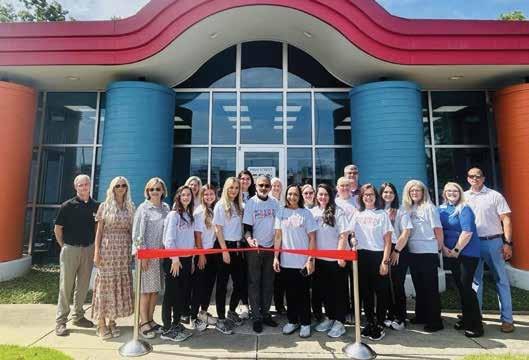
• Developmental
• Adolescent health
• Nutritional counseling
• Physical exams
• Injuries
• Chronic condition management
• Behavioral screenings
• Wellness
• Sports physical
350 Springville Station Blvd.
Springville
• Well child checks
• Sick care
• Acute injuries
• Vaccinations
• Sports physicals
• Sensory inclusive visits







Ensuring healthcare is affordable and accessible, St. Clair County residents can benefit from services at the St. Clair County Community Health Clinic and the St. Clair County Health Department.
Established in 2018, the St. Clair Community Health Clinic (SCCHC) is a 501(c)(3) nonprofit organization providing charitable primary healthcare to low-income, uninsured St. Clair County residents between ages 19 and 64.
Its work is made possible through grants, donations, and “most importantly – the time and talent of community volunteers,” according to its website.
Those who qualify are able to receive care for a copay not exceeding $20, which enables the clinic to provide affordable access to essential health services. They include:
• Primary care visits
• Chronic disease management (diabetes, hypertension, etc.)
• Physical Therapy
• Mental health services and counseling
• Health education
• Wound care
• Referrals to specialty care when available
The clinic is located at 205 Edwin Holladay Place in Pell City.

In the Northeastern Division of Alabama Department of Public Health, St. Clair County Health Department offers to the public:
• WIC (Women, Infants and Children) services
• Environmental
• Home care
• Clinical services to the public.
• Clinical services include STD (sexually transmitted disease) testing and treatment, family planning, childhood and other vaccines, and breast and cervical cancer screening.
• The health department is located at 1175 23rd N. in Pell City.
• WIC Satellite Clinic
In addition to the main clinic location in Pell City, 1175 23rd St N,, a satellite clinic is open on Thursdays for WIC services. Call 205-594-4919 to make an appointment.
The satellite clinic is located at 31675 U.S. Highway 411 in Ashville.





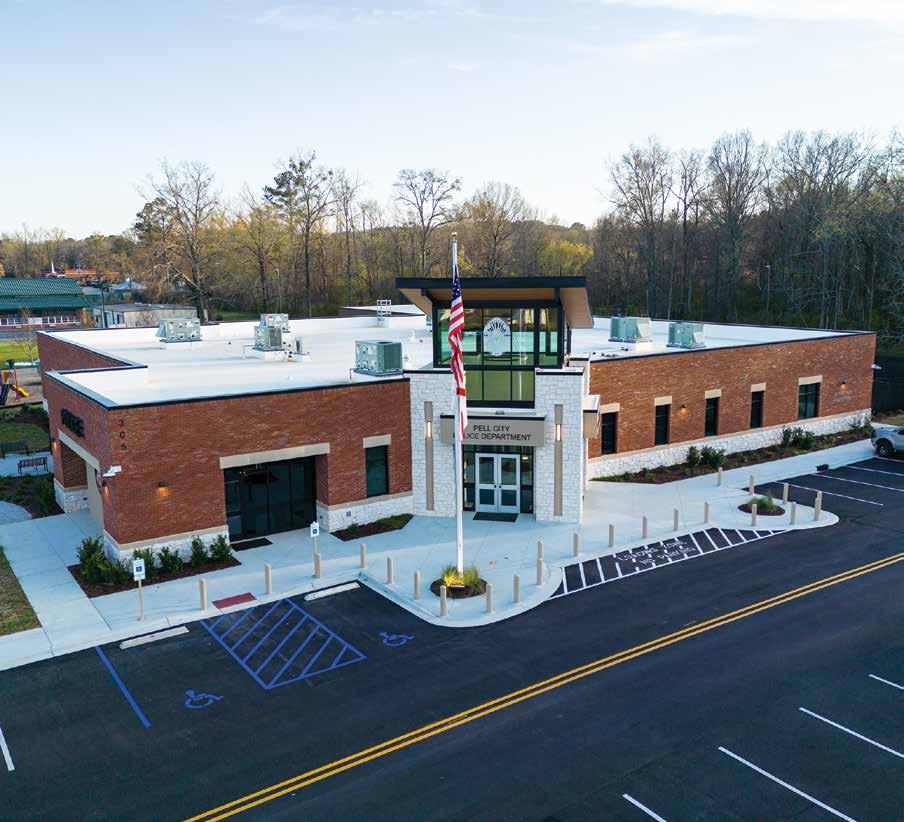
From structures where souls are nourished, to buildings helping first responders and physicians help and heal the body, Pell City is in the midst of a construction boom.
New police and fire stations, a new medical clinic and a new Sunday school building at the 123-year-old First Baptist Church of Pell City are only part of the story. The Goodgame Company construction trailers have popped up all over town.
Jason Goodgame, president of Goodgame Company, said the company, as well as the city, “has a lot going on.”
For example, Goodgame built a new state-ofthe-art facility for the Pell City Police Department and as of mid-June, a new Pell City Fire Department Station was near completion.
“On top of that, we completed the addition to Pell City First Baptist Church. We’re in the process of adding on to Royal Foods following the fire damage, and we have a fire-protection project underway at Benjamin Moore,” Goodgame said. “We finished large expansions at Ford Meter Box, Allied Minerals, Douglas Rulmeca and Town and Country Ford in 2025. Those projects closed out a cycle where Goodgame Company, Inc. had the best three years in the company’s history.”
Ford Meter Box, headquartered in Wabash, Indiana, manufactures waterworks products and has done so since 1898. Allied Minerals purchased Riverside Refractories in 2017 and later expanded into a 300,000-square-foot footprint on Truss Ferry Road. Douglas Manufacturing joined forces with Rulmeca to provide conveyor components across North America.
Goodgame Company also built the new Pell City location of Helms Healthcare, bringing Dr. Ronald “Rock” Helms back to his hometown.
Goodgame put the mushrooming construction activity in perspective. “Just remember, construction is always in arrears, so when we sell a job and build out the job, it can be 12 months between our first meeting with a customer and when we break ground. Then, those projects are usually between eight and 12 months,” he said. “So you have to keep a healthy backlog, because you are always trying to churn the next job.”
While Goodgame Company’s backlog is not as strong as in years past, Goodgame said there is still a boom happening in Pell City.
“Absolutely,” Goodgame said. “There are other
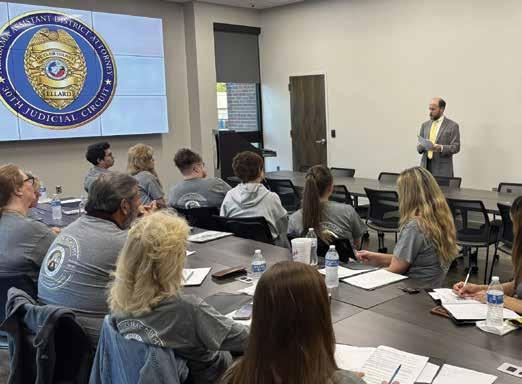
St. Clair Assistant District Attorney Austin Ellard addresses Citizen Police Academy in new conference area

Reception area for police department’s new home
developments going on that we’re not involved in, and that shows the activity is broader than just our projects.”
Those new businesses include a development with Ulta and Hobby Lobby, as well as restaurants including Olive Garden, Outback Steakhouse and others. There is also a new dental practice and other space for retail opportunities to expand.
“There is a boom,” Goodgame said. “There’s no question. Pell City is growing, and people are seeing an opportunity to come here and do business, especially in retail, which has always been a difficult area for Pell City. Harbor Freight moving into an existing retail space is a good example. That kind of activity adds sales and ad valorem tax revenue, and the city’s leadership in promoting controlled, positive growth has helped get us to where we are.”
There was a time, with two Sunday services and two Sunday schools, Dr. John Thweatt said, when his congregation felt like two churches.
The COVID-19 pandemic changed all that.
“It brought us back together and let us go back to one Sunday school between the two services. It didn’t feel like two churches anymore. It was one church. People could go to one Sunday school and choose which service they wanted to go to – the early traditional or later contemporary service,” he said.
He added, “It was so positive, I and the leadership decided that we needed to do whatever we could to keep it to one Sunday school.”
The answer? A new addition.
“At one time we looked at relocation, but it was out of our price range. It just didn’t work.”
The church opted to stay on the corner it called home. And it began to explore things it needed – an elevator in the sanctuary building, new restrooms and classroom spaces. The church settled on a connecting building between the sanctuary and the rest of campus. A welcome center with a covered entrance was also created.
“We put a cross out in front of the new building,” Thweatt said. “We just tell everybody to meet us at the cross.”
He added, “Now we can put smaller classes upstairs, older classes upstairs because of the elevator. It opened up a lot of different variety for us.”
The new building is just under 10,000 square feet. The total investment was just over $4 million.
But beyond square feet and dollars and cents, the church asked key questions. “Who are we not reaching? How are we not helping people? We’ve got people who can’t get around. We still have limitations in our sanctuary, but these are things we’re still trying to address so that we can minister to everybody in our community.”
The church is growing, getting back to pre-COVID numbers thanks to the one Sunday school, Thweatt said. Both worship services are full. New people are being reached and others baptized. That’s different from many Southern Baptist churches that have either plateaued or are declining in membership.
“It’s made us multigenerational again,” Thweatt said.
Thweatt has pastored First Baptist for a quarter century. What does the new addition mean to the life of the church?
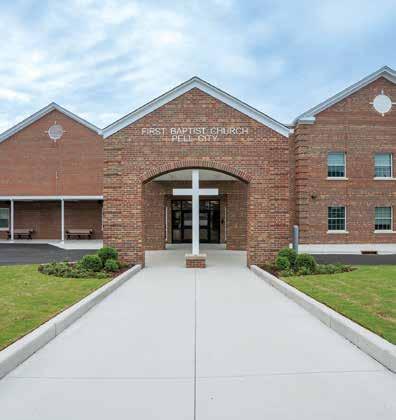
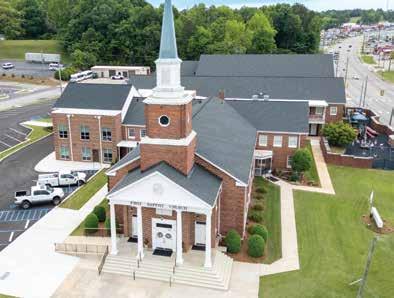
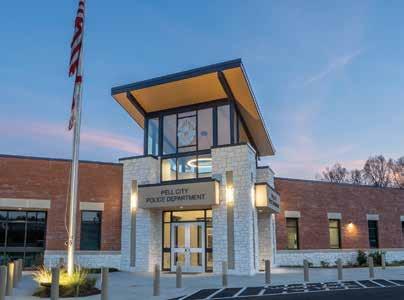
At Goodgame Company, Inc., relationships are not the only thing we build, but they are the most important. We’re proud to be part of the Pell City community and honored to help build the places that bring our hometown together. Every project is an opportunity to deliver not only quality construction, but a quality experience.
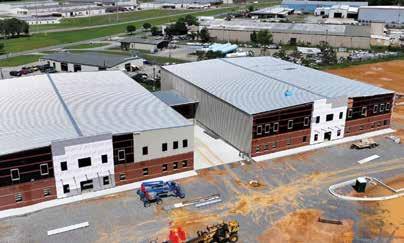






































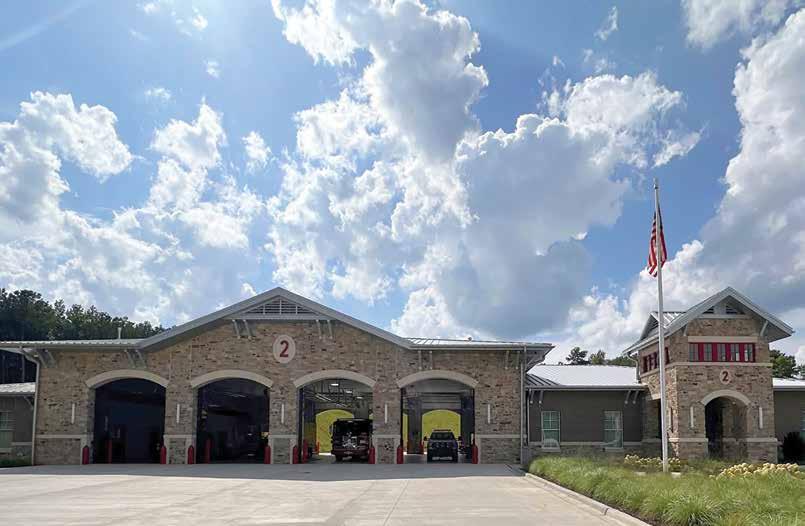
New fire department on U.S. 231 South nearing completion
“You’d have to see it, but when I walk out of my office, it goes right into the new welcome center and down the long hallway on the first floor,” Thweatt said. “I’m still in shock. It’s brought us back to something people are proud of. People say they love it.
“You see people talking and fellowshipping,” he added. “It’s brought us back together and prepared us so we can keep growing.”
Pell City Manager Tim Kurzejeski was preparing for an open house at the new 16,000-square-foot police department completed earlier this year. It includes command and emergency operations centers, evidence storage, a workout facility and other space to create what Kurzejeski called, “an all-encompassing police department” for the city.
“A state-of-the-art stand-alone police department,” he said. “It’s a workable space where different parts of the police department have their own working, usable area. As the police department grew, it was pretty tight quarters, and it was tough for those guys to do their job.”
The new department also includes cutting-edge technology.
“It’s going to make their job a lot easier,” Kurzejeski said. “They are able to process (crime) scenes and solve crimes more
efficiently. That’s better for the public.”
A new fire station is under construction to replace the facility at the Civic Center. As with the police station, the fire department had outgrown the Civic Center space.
Kurzejeski served as the city’s fire chief before being named city manager.
“We are completing the project,” he said. “It’s about a two-tothree-year project from the concept to completion. (The Civic Center station) was the oldest fire station in the city, built in the early 1980s. Kind of like with the police department, with the growth of the city, the fire department had outgrown that space, with apparatus and assigned personnel.
“I feel like with the (police department) and the new fire station, these two projects are buildings that not only the departments can be proud of, but that the city as a whole can be proud of,” he said.
The new emergency services buildings are built for the long haul.
“What people need to understand is that with these two projects (police and fire stations), they were built and designed for long-term use,” Kurzejeski said. “You’re talking about a fire station they had been in nearly 50 years. We truly took our team and brainstormed and made sure these new buildings were going to be functional and efficient for a long time. Sixty years


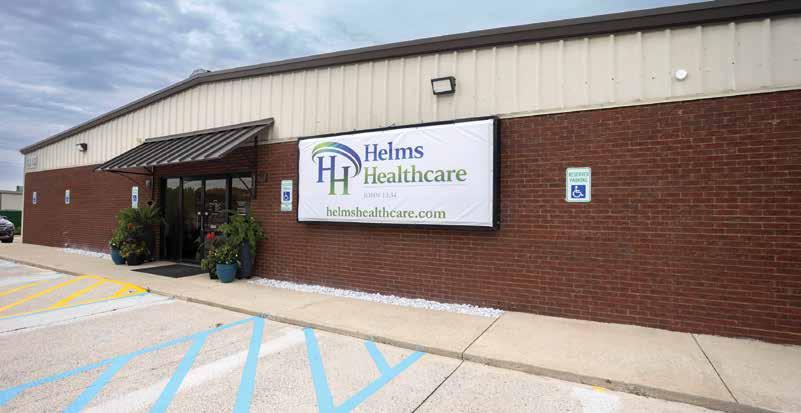
from now, this (new fire station) will still be the fire station. So, you’ve got to do it right.”
For Pell City’s firefighters, the new station is more than a workplace.
“They are there for 24 hours at a time,” Kurzejeski said. “It’s their home.”
What does all this building mean for Pell City?
“These particular projects we see going on around our city, it just shows the growth that our city is seeing,” Kurzejeski said. “It also shows the main reasons people are coming to Pell City. There’s a focus on the quality of life.”
He added, “The First Baptist Church addition and the different projects that we’ve seen around I-20 with restaurants coming in – Pell City is one of the growing cities, and St. Clair County is one of the top five growing counties in the state. It’s because we offer a good quality of life. People see that there’s a cost benefit to investing in the city.”
Kurzejeski arrived in Pell City 30 years ago.
“I know how it’s changed since I got here in 1996,” he said. “It’s a great place to work, a great place to call home. We are really working – everyone at times doesn’t see it – but we’re going to manage our growth to be the most beneficial for the people who live here.”




Life through the lens of Mackenzie Free
“You can’t always get what you want… but if you try sometime, you just might find you get what you need.”
It was the late ‘90s, and I was entering my teenage years when I finally realized this piece of sage advice my father repeatedly offered me wasn’t his at all… it was Mick Jagger’s.
My dad, perpetually cool, was, of course, borrowing his wisdom from the Rolling Stones. I was just too young to know the difference.
But that’s the thing about words of wisdom … it doesn’t really matter whether they came from a song or sermon, a movie or a magazine.
The best words, if strung together just right, take on a life of their own. Eventually, they stop belonging to the people who first wrote them. They get absorbed into everyday life. They become mottos and mantras. They become advice fathers give their children, phrases we share on social media or scribble down in journals, words we repeat to ourselves & carry with us so long we often forget where they even came from. That’s what good words do. They settle into you.
They become part of the lens you see the world through. Over the years, I’ve realized that, thanks to my dad & an aging rock star in impossibly tight pants, that lyrical line has become just that for me— an anthem of sorts.
Not because life has handed me everything I wanted… there’s certainly a lot that I don’t have and probably never will … but, time and time again, life has given me exactly what I need.
- Mackenzie FreeWife, mother, photographer &