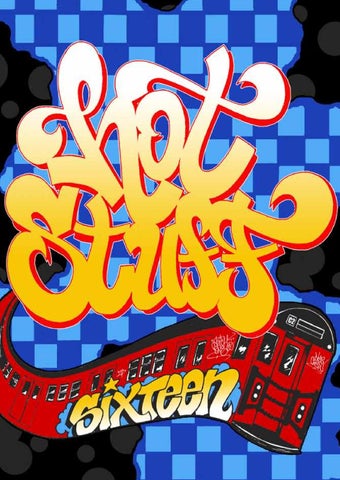
2
CONTENTS 1. Dynamix II 4 by Oliver Way 2. Sugar Hill Special
16
3. The Sylvia Robinson Story
22
4. Cheryl The Pearl (Cheryl Cook) interview by Jason Armitage (dr.j)
28
5. Vintage Article: Sugar Hill Gang Hits The Top
34
6 The New Library Sounds by Skeme Richards (The Nostalgia King)
40
7. Serch AKA DJ Serch
46
8. Young Pulse 13 Favourite Cuts
54
9. Disco Era Acetates & Ephemera by Disco Patrick & Wild Life Archive
60
10. Colab: The Rise Of A Collective Rebellion In The New York Art World by Pat Vogt aka 360 illuminati
68
11. DR JEKYLL & DJ HYDE by Guillaume aka Wildstyle Guy
86
12. Audio Aggregates by Spankie Dee (Sedgwick Records)
100
13. The Hidden History Of Uk Dance Music by Deejay DSL
128
14. Disco And Hip Hop Flyers courtesy of Brandon Himmel
136
South Florida an area synonymous with sun-drenched beaches, the vibrant nightlife, and neon lights that conjure up images of Miami Vice. This unique cultural melting pot, also happens to be the birthplace of one of electronic music’s influential and often unsung genres of electronic music: Electro Bass. This sound, characterised by its driving 808 beats, futuristic synthesizers, and often politically charged or socially conscious lyrics, emerged in the 1980s, quickly becoming the soundtrack to breakdancing battles, and cars cruising up and down the strips, pushing bass frequencies into uncharted territory. Popularised internationally by groups such as 2 Live Crew due to their visual and lyrical content. A side note feels important here due to the impact that 2 Live Crew had globally:
from Riverside, California. A year later Luther Campbell aka Luke Skyywalker (a Miami based DJ, promoter and label owner) convinced them to move to Miami and joined the group. Soon after the final member Mark Ross aka Brother Marquis completed the group. Al the heart of this new scene, a group that consistently pushed the boundaries and delivered some of the genre’s most iconic tracks was Dynamix II. A duo that are not from Miami, but further up the coast of Florida, West Palm Beach. The partnership has undergone several changes, but David Noller has consistently been the founding member. While recording their debut and eventual Gold-selling biggest hit, ‘Just Give The DJ A Break’ (1987), the group derived their name directly from the mixing console they were working on. David recalls: “It was a British console called Dynamix. It had 24 channels, 8 sub channels, and 2 outs. And on the top of the mixer it said Dynamix 24, 8, 2. The engineer in the studio asked me what our artist name was. I put my hand down on the mixer and it happened to cover up the 24 and 8, I glanced down and I just saw Dynamix 2. That’s it! It just worked.” The Genesis of a Sound: S. Florida & Miami’s Unique Musical DNA
2 Live Crew first release feat. Mr Mixx, Fresh Kid Ice, Amazing Vee Originally David Hobbs aka Mr Mixx, Chris Wong Won aka Fresh Kid Ice, and Yuri Vielot aka Amazing Vee were originally
4
To understand Electro Bass, one must first understand Miami itself. In the 1980s, the city was a nexus of diverse influences. Latin rhythms, particularly Cuban and Caribbean sounds, were omnipresent. Disco and funk had laid a solid foundation for dance music.
Mixer Dynamix 24, 8, 2. Legendary label T.K Rec (named after owner Terry Kane) home of KC & The Sunshine Band and Blowfly besides others, run by music producer Henry Stone, was from Miami. Criteria Studios (owned by Henry Stone) where Amos Larkins (who has been refered to as the Rick Ruben of S. Florida - get into him later) used to hang out when the Bee Gees were making their ‘Saturday Night Fever’ album. The burgeoning hip-hop scene from New York was making its way south, albeit with a distinct Miami twist. The readily available and relatively affordable Roland TR-808 drum machine became the heartbeat of this new sound. Its deep, sustained, booming bass drum and crisp snare provided the perfect rhythmic canvas. Synthesizers, often Korgs and Yamahas, contributed the melodic hooks and futuristic textures that defined the genre. Unlike the more narrative-driven hip-hop/ electro funk emerging from New York pioneered by producers such as Arthur Baker, John Robie, Man Parrish, Newcleus, Mantronix, and Hashim, Miami Electro Bass often focused on raw energy, danceability,
and a slightly more abstract approach to lyricism. In the early 80’s David Noller spent his summers in New Jersey discovering the new Hip Hop & Electro Funk sound coming out of NY. “I grew up like half down here and every summer I was up there in New Jersey. All the New York radio stations were crystal clear. In the early 80’s Kiss FM was really hot there, WBLS was another urban station. And then there was 92 KTU I WKTU that had Paco’s Supermix on it. They would air these mixes by Aldo Morin from Cutting Records, Dynamic Duo, Shep Pettibone and the Latin Rascals, they had the best of the best doing these tape edits. At age 12, is when I got my first Technics 1200 turntable. I had only one, then I had another one that was belt driven. About 6 months later I managed to get another Technics 1200. I had all my friends in high school and grade school coming over my house to hear me play. I was already into roller skating as a kid. I was in the speed team and I was going to
5
the skating rink, so I was always listening to this music. We would skate the sessions and they’d have this thing where they’d say ‘shufflers only’, where you’re just bob-bing back and forth listening to the music. We’re all 16, 17, 18 years old listening to this music. In 1982 I started to DJ at the skate rink and was sort of the conduit to bring that music I was hearing in New Jersey down there because I was buying the records. I was playing Planet Rock, Looking for the Perfect Beat, 1.O.U all this stuff from Afrika Bambataa, Arthur Baker, Freeez, Kraftwerk, ELO, Yellow Magic Orchestra all that stuff.” South Florida was experiencing a ((boom)) in hip hop culture by then, with breakdancing and graffiti flourishing alongside the music. “When I was 18 I migrated into playing at a teen club called Metropolis. It was owned by this guy called John Addison, that had been involved in Studio 54 and moved down to Florida. They had the original pin spots from Studio 54 for the lighting at the club.” David’s passion for the music eventually made him curious about the sounds he was hearing on the records he played. He slowly began adding studio equipment to his DJ set up, starting out with the infamous Roland TB-303. “I knew that they used it on two big records I listened to, Shannon ‘Let The Music Play’, and ‘Give Me Tonight’. They also used a Roland JX-3P for that scratching sound. I wanted to get a 3P as well, eventually I did.” While Miami Bass is defined by the Roland TR-808’s signature bass kick, Dave favoured the E-mu SP-1200 drum machine, using this to make ‘Just Give The DJ A Break’. This choice was instrumental in achieving the song’s distinctive multipitched bass tone, a creative preference proved to be a game-changer for the genre. “It was at Norberto Morales aka The Candyman’s ‘Bass Station studios’ whose in-
6
house engineer Eric Griffin brought us in to record.” Bass Station was also a label which released ‘Just Give The DJ A Break’ and later also became a club where Dyna mix II would perform. “The bassline all came about because there’s a function of the SP-1200 to be able to take a sound and multi pitch. I was inspired by Sweet T & Jazzy Joyce ‘It’s My Beat’ on Profile Records to pitch the bassline. I wanted the tempo to be 122 BPM, all the tracks I liked were at this tempo which gives the beat a little bit of time to breathe in between the kick drum. Eric wanted it around 115 as he was from a R&B background and wanted the track to be around the tempo of Joyce Sims “All & All”, I wanted it at the tempo of ‘Planet Rock’ , Looking For The Perfect Beat’, Body Mechanic, this kind of stuff. Finally we arrived at a compromise
and it was one 118. Although I was forever upset about it. 122, that’s the magic number. So I’d bring it up whenever I played it. So I had the rest of the track ideas laid out with how it was going to go with the scratches and stuff. We went back and forth with the beat a couple of times trying to make it so we kept it interesting, so it wasn’t just like one beat just constantly looping. It’s something you hear in a lot of the Dynamix II tracks still to this day.” Other notable producers were also defining this new style of bass music, most notably Adrian Hines (aka MC A.D.E.). In 1985, Hines produced arguably the first Miami Electro Bass song, ‘Bass Rock Express’ (4 Sight Records).
That same year, Amos Larkins (aka MCB) produced ‘ Ghetto Jump’ as Krush 2 with Luke Campbell (later known as Luke Skywalker of 2 Live Crew), creating an Electro sound distinct from the styles coming out of New York or LA. Other early pioneers of the sound included James McCauley (aka Maggotron), Pretty Tony (who produced artists like Freestyle and Debbie Deb), and The Beat Club, known for their 1988 hit single ‘Security’. The Rise of the Independents The Miami Electro Bass scene was largely an independent phenomenon. Major labels were slow to recognize its potential,
leaving a fertile ground for enterprising local producers and small labels. Companies like Pandisc, Jamarc, Bass Station, Debonaire Records, Joey Boy, 4 Sight, and Hot Productions became instrumental in disseminating the sound. These labels, often operating out of storefronts or even homes, were deeply connected to the community, understanding its tastes and giving local talent a platform. This independent spirit fostered a sense of creative freedom that allowed artists to experiment and evolve the sound without external pressures. Clubs like the Pac Jam and the Exchange became crucial proving grounds, where DJs would test new tracks on eager crowds. The dancefloors were a vibrant mix of breakdancers, B-boys and B-girls, and club-goers, all moving to the pulsating rhythms.
7
College and mainstream radio stations played a vital role in breaking new records and building the scene, with 99 Jamz, Hot 105, and Power 96 being among the first to support the music. “The Miami radio stations weren’t playing the stuff that New York played. They were playing Miami Bass. And they were also playing the stuff that they had to play because of ‘Payola’. They had to play Rock n’ Roll music, and stuff like that on the radio that no one wanted to hear at the time. Power 96 had this contest called ‘Power Wars’ where they would play a song from a Rock band and a Miami Bass song and ask listeners to call in to vote which song they wanted to win. They put a Dynamix II song up against a Guns n Roses song and we unanimously won. We were #1 on Power Wars for 8 weeks I think in a row.” The music filtered onto the streets picked up by Miami’s car cruising scene with the owners installing massive sound systems, to see who could have the biggest bass. The music started to be produced as a reflection of this, offering the car owners
8
bigger and bigger bass frequencies. This was highlighted in the music with releases such as Lady Tigra ‘Cars That Go Boom’, and M.C.B (Amos Larkin) ‘It’s Your Scratch (Do What You Wanna Do)’ which came in a sleeve stating this was ‘Bass for your car’.
Dynamix II: Pushing the Sonic Envelope Among the myriad of talented artists and groups that emerged from this era, Dynamix II stood out as true pioneers. Formed
by Dave Noller & Lon Alonzo who both started out as DJs in Palm Beach. Dave later adopted the DJ name Scratch D, while Lon was known as DJ Ace ‘Ace in the place’. Alonzo was influenced by Kraftwerk after his father bought back one of their albums while on a business trip to London.
artist in the same genre of music at some point playing a show. He was already doing stuff with Maggotron, but his big song was with Breezy Beat MC called ‘Shake the Joint’. It was a huge song on the radio.”
Claudio Barrella aka Debonaire Dynamix II consistently delivered tracks that were both innovative and immensely popular. They immediately established a signature sound. These tracks were quintessential Miami Electro Bass: driving beats, squelchy 303 basslines, and robotic vocal samples, all designed to ignite a dancefloor. The partnership with Alonzo was short lived and in 1988 they went their separate ways, with Lon taking on the name Catch 22 and starting a label called Ace Records. II wasn’t long before David began producing with Claudio Borrello (aka Debonaire). One of their most iconic and enduring tracks, “Bass Generator” (1990), perfectly encapsulated the power and allure of the genre. With its relentless beat, menacing synth stabs, and a vocal sample that introduced the new duo (Scratch D & Debonaire) declaring, “Bass - for the dancefloor”. It became a staple in clubs and car soundsystems alike. The track’s sheer intensity and hypnotic rhythm solidified Dynamix ll’s reputation as masters of the Electro Bass sound. David remembers: “He (Debonaire) was very popular down here in Florida. And it’s impossible not to bump into another
9
They recorded the Dynamix II tracks ‘Don’t Touch That Dial’, ‘Bass Generator’ ‘Ignition’ and went their separate ways. Claudio went on to continue recording as Debonaire and running his label of the same name. Both are still going strong today. David worked as a solo artist for several years before joining forces with Scott Weiser in 1991. Together, they recorded the Dynamix II album ‘You Hear It, You Fear II’. “I had some rappers that had introduced me to Scott. He was into Industrial music and liked stuff that was darker. He hung out at Respectables, which was a club that played music from groups like The Cure, New Order, Front 242, Nitzer Ebb, and other EBM music. We met at this restaurant that became a bar after the restaurant closed, and they would have local artists come in to play. He was talented enough with the SP-1200 and sequencing to consisder working together. When we did Techno Bass (1991), I remember the two of us would just go at this thing. Sending the loppy disc back and forth adding sequences and sounds, then arranging it into a song. He got heavily into the car audio thing, and we started making music specically
9
for car audio bass. It was very electronic, tonnes of bottom end. The bass was just so ridiculous that when you played it in the car audio system, it was overwhelmingly booming. They’d have bass contests at car meets to see who had the loudest bass sound system. People would come in there with their cars decked out with SPL level meters to measure the sound pressure level and ind out, oh, my God, this thing’s 120 decibels. Then the next one is 135 db.”
shows at select events & festivals. Todd Walker was born and raised in Palm Beach. He met Scott during high school. They were introduced by a mutual friend-who happened to be Scott’s cousin and quickly struck up a friendship. During this time, Scott would often play Todd his new material for Dynamix II
Which is similar to standing 50ft from a military jet engine taking off! In 1997 Scott teamed up with Todd Walker, and together they formed, Jackal & Hyde, an act that became known for a unique blend of Electro Bass and Industrial, dubbed ‘Electrocore’. They were quickly signed by the label Hallucination, and released their first EP ‘Beyond/ Get Down To My Technique’. This project extended a partnership that began when they recorded an album as Bass Junkies titled ‘System Terminator’ (Dynamix II Records). Todd continued to release solo projects under the pseudonym Bass Overlords releasing ‘License to Bass’ (1997) and ‘Through Bass and Time’ (1998) on IBP Records. He went on to release many tracks under various aliases on compilations and then became ‘HydrashocK’ in 2015. Given their long shared history with David, the group occasionally shared the stage for Jackal & Hyde vs. Dynamix II live
10
Todd: “I remember going over to Scott’s house, he had the Yamaha SY77 set up and he was playing me a new Dynamix II music, I was like, oh my gosh, you’re in Dynamix, we all grew up with Dynamix playing bass in our cars. I always wanted to get into music, I had a buddy who had turntables and I would always mess around on the decks making mix tapes. Scott introduced me to Dave, he would tell me that I had to get a Roland 606. I remember it was 1989 that I bought my first bit of gear, it was the Roland 606 that I got from a pawn shop, I still have it today, I’ll
Jackal & Hyde vs. Dynamix II live, Tampa, Florida. Photo Credit: Brian Miller never get rid of it. Dave let me borrow his Casio CZ-101 and I started to learn the basics of synthesizers, and I went from there. In 1994 Scott and I teamed up to record together. We released a single titled ‘Set My Mind In Motion’, and ‘The Human Computers’ under the name Activate. They came out on Dynamix II Records.” Scott eventually moved on to a solo career, David also pursued solo releases and other collaborations, having success as Scratch-D & DJ Bomb releasing the hit song ‘The Red Pill’ in 2001. The story continued in 2019 when Todd joined Dynamix II, cementing their current lineup. Their first release ‘Got That Booty’ shot to #1 on the Beatport breaks chart!
11
Todd Walker & Dave Noller / Dynamix II (live) Todd: “It was kind of a natural fit, you know, how it progressed, a natural progression that made total sense. We had already worked on music and performed live together.” Beyond the Beats While many of Dynamix II’s tracks were instrumental or focused on dancefloor anthems, they also delved into use of the vocoder. Tracks like “Techno Bass” explored the evolving landscape of electronic music, while others touched upon themes of technology and the future. They weren’t afraid to experiment, incorporating elements of techno, house, and industrial music into their Electro Bass foundation. The group’s willingness to evolve and incorporate new sounds kept their music fresh and relevant. They weren’t content to simply repeat a formula; instead, they continually pushed the boundaries of what Electro Bass could be. This innovative spirit earned them respect from both their peers and a dedicated fanbase. The Impact and Legacy The influence of Miami Electro Bass and groups like Dynamix II extends far beyond the sun-drenched streets of South Florida. Their sound became a foundational element for countless electronic music genres that followed. The heavy use of the 808 drum machine in hip-hop, particularly in the Southern rap scene, can be directly traced back to Miami Electro Bass. The genre’s futuristic aesthetic and emphasis on synthesis also foreshadowed the rise of techno and house. Artists from across the globe, from Detroit
12
techno pioneers to European electro artists, have cited Miami Electro Bass as a significant influence. The raw energy, the focus on rhythm, and the often minimalist yet incredibly effective arrangements found in Dynamix II’s work continue to resonate with producers and DJs today. While the mainstream music industry often overlooked Electro Bass, its impact on underground music culture is undeniable. It fostered a vibrant community, gave a voice to a unique regional sound, and proved that independent artists could create music that was both innovative and commercially successful on their own terms. Dynamix II, with their consistent output of seminal tracks and their unwavering commitment to pushing the sonic envelope, remain one of the most important groups to emerge from this fertile period. Their music continues to be played in clubs, sampled by producers, and celebrated by fans who recognize the enduring power and innovation of Miami Electro Bass. The thump of the 808 and SP-1200, the futuristic synth melodies, and the raw energy that defined their sound are a testament to a truly unique and influential chapter in electronic music history. The Electro Bass scene of the 1980s and early 90s was, and is to this day, a vibrant, innovative, and deeply influential movement that helped shape the landscape of electronic music. At its core, groups like Dynamix II were instrumental in defining and evolving this sound, leaving a legacy that continues on. “Dii are one of the pioneers and innovators of the 80s US Electro movement” (Anthony Rother)
“David is Electro personified. I’m not only a fan from day one, but a friend from the
Dynamix II studio present day
David Noller, Egyptian Lover, R-Fresh @ Dynamix II studios
13
first day we met on the Marlboro Tour . Dynamix II have defined techno bass with their over the top bass and precise dance music grooves that stand the test of time. There have been many Miami bass clones but none equal to what David has fortified. Truly legendary and a gentleman to boot. David is a legend” (Keith Tucker I DJ K-1 I formerly Aux 88) While David continues to DJ under the moniker Scratch D, Todd delivers Live Hybrid DJ sets as ‘HYDE’. In addition to their active solo careers, the duo unites to propel the futuristic Dynamix II sound forward, performing live at clubs and festivals. Dynamix II “Got That Booty” is out now. Keep an eye on their more website for new releases.
DYNAMIXII.COM Instagram & Facebook: /dynamixii Written by Oliver Way (EPM Music)
14
Todd Walker & David Noller / Dynamix II (live). Photo Credit: Def Jeff
15
15
16
sugar hill special Article from record World magazine August 1, 1981 By Nelson George
NEW YORK-You may have first heard it in a disco. The bass line and the drums sounded familiar, but what are those voices doing? Or you may have been walking down the street, sweating in the summer heat, when this noise attacked your eardrums. It was one of those portable stereo players, “boxes” to the well informed. But it wasn’t playing just disco, but something so different that you had to stop and listen. It sounded like nursery rhymes, but considerably more risqué. And, man, it made you tap your feet! Had Been Building To the deejay at the disco and the kid with the box, it was nothing new. At certain clubs in Harlem and the South Bronx, it had been happening for several years. Young men wearing gold chains, hats tilted sideways, and sneakers tied in a most bizarre fashion had been rapping over already recorded records since about 1974. Street kids like Eddie Cheeba (slang for marijuana), Kurtis Blow (slang for cocaine), and the pioneer rapping deejay Hollywood had been building a cult of followers with “hip -hops” and “everybody say, ‘Ho!’ “ The Fatback Band had even released a record, “King Tim Ill (Personality Jock)” on Spring Records, that first documented this rapping deejay’s style.
But it wasn’t until the summer of 1979 that rap moved from its home in the New
17
York ghetto and not only penetrated the heartland of America, but went on to become an international success and a profound influence on popular music made by both black and white musicians. “Rapper’s Delight” was this record heard around the world, the first release by a new group called the Sugar Hill Gang and a new label called Sugar Hill Records. When it first hit the street I visited a family friend, Joe Long, owner of Brooklyn’s popular Birdel’s record store. Standing behind the counter I heard voice after voice ask for “Rapper’s Delight” or “that funny record” or “the hip hop record.” Long, a man who doesn’t laugh easily, couldn’t conceal his amusement. He was smiling and taking in the dollar bills. I wondered, who was the Sugar Hill Gang and what was Sugar Hill records? The Gang was three Englewood, New Jersey teenagers: Guy O’Brien alias Master Gee, Mike Wright alias Wonder Mike, and Hank Jackson alias Big Bank Hank, who pooled their voices into a collective sound, one that was as interesting in ensemble as on solo rap passages. Sugar Hill Records was Sylvia and Joe Robinson, two legendary industry veterans who for many years had run All Platinum Records, a highly successful black independent. Through their efforts, Sylvia had enjoyed a fine solo career, highlighted by the million -seller “Pillow Talk”, a masterpiece of campy erotica; the Moments had emerged as a fine ballad -singing -vocal group in the great R&B tradition (their “Love on a Two -Way Street” is a slow dance classic just revived by Stacy Lattisaw); and “Shame, Shame, Shame” by Shirley & Company was one of the best examples of the R&B-disco synthesis of the early 1970s and one of the few dance records of that era to receive widespread critical acclaim. The Robinsons obviously had an ear for public taste, and with “Rapper’s. Delight” it took a most remarkable form. Using the instrumental track from Chic’s “Good Times” as a basis (just as many rappers did at clubs) they invented phrases and utilized existing rap rhymes and street slang to create something so fo-
17
reign to most music listeners, it was positively enchanting. But the roots of rap, particularly the call and response between deejay and audience, go back to Africa. Over the years this technique has been transferred through field hollers, spirituals, gospel, the blues, and soul, to this present generation of black youth. As saxophonist Arthur Blythe says of his playing, rap is “in the tradition.” Among the ancestors of this current generation of rappers there are many who must be acknowledged. Oscar Brown, Jr. and Eddie Jefferson, each in his own style, illustrated musical possiblities of the human voice that are apparent in the work of many rapping deejays. The great black radio deejays of the late 1940s to the early 1970s were in many cases direct influences on current rappers; their rapport with listeners and their slippery jive talk is still vivid in the minds of those who grew up hearing them. The “toasting” deejays of Jamaica began in the 1960s in a manner similar The Sugar Hill Gang to today’s rappers, playing house parties and social gatherings with a pile of the hottest dance records. They “toasted” or rapped over these tracks to heighten the party mood. “Dub,” dance music stripped down to its rhythmic muscle, was their creation, and a similar style has evolved in contemporary black pop. The tough Chicago blues of Muddy Waters and Howlin’ Wolf and the macho personae of Wilson Pickett and James Brown are spiritual fathers of today’s confident rappers. “Rapper’s Delight” and subsequent Sugar Hill releases would affirm these influences and establish the company as dominant in the rap market. A number of Sugar Hill’s records are, in this writer’s opinion, going to be regarded as genuine pop classics. Some pioneered new techniques in the idiom, others were just extraordinarily effective dance records. At the top of the list of Sugar Hill’s instant classics is “Rapper’s Delight,” which broke rap worldwide and opened the door for other Sugar Hill acts and rappers to cash in. “Freedom” by Grandmaster Flash and the Furious Five, produced by Joey Robinson, is powered by a relentless bass line and a crackling use of drums and hand claps. The mix on this record defines the
18
term “hot.” The vocal interplay of these five South Bronx rappers (Melly Mel-Melvin Glover; Mr. Ness-Eddie Morris; Guy Williams-Rahiem; Keith Wiggins-Cowboy; Kid Creole-Danny Glover) was energetic and good-natured, full of youthful enthusiasium and spirit. Kid Creole’s rhymes for “Freedom” were quite witty. Noel Coward he isn’t, but when was the last time Coward “turned a party out”? Everyone on the Staff Contributes to Sugar Hill’s Continuing Success. Here’s a look at some of the other people who play a part in the Sugar Hill story. Donna Jones started as a receptionist at All Platinum Records and is now Sugar Hill’s assistant promotion director. Though “some people just don’t like rap records,” Jones says, she as been able to overcome such attitudes by gaining a “strong rapport” with the 75 stations she regularly speaks to. She credits Joe Robinson with teaching her all the techniques necessary to get records played. Independent promotion people who aid the Sugar Hill cause are: Stephanie McCoy, who works the Carolinas; Moe Preskell, who is based out of Florida but covers the nation; James McKinsey of Cleveland; Leonard Forbes, a national promoter; and Gene Miller of Memphis. Leslie Jackson is Sugar Hill’s assistant promotion director. The Bergen Community College graduate has been with the company over a year and deals primarily with radio. Jackson is responsible for working with 80 stations.
Dawn Johnson assists Cookie Rufino in managing Sugar Hill’s international business. She started at the company as Joe Robinson’s secretary, but wanted to expand her knowledge of the industry and asked to work with Rufino. Sharon Cope is Sugar Hill’s receptionist. She moved to New Jersey after living most her life in Knoxville, Tennessee. “I find it a great pleasure to work for Sugar Hill Records,” she says. “I have worked for all different types of businesses, but working at Sugar Hill you feel such a closeness with everyone it is like being part of one big family.” Deborah Jones Smith is a designer who has done the outfits worn by all the Sugar Hill acts as well as for Muhammad Ali and Sylvia Robinson. “Making clothes for the Sugar Hill Records groups has been a great experience for me,” she says. “Seeing the clothes you create on a stage is a special feeling that is very hard to describe.” Linda Jones is a secretary at Sugar Hill. Previòusly she worked at Roulette Records, and for such performers as Archie Bell, Michael Henderson and Gladys Knight and the Pips. Industry veteran Agnes Pellas has worked at Riverside, Springboard International, Arista, Chess -Janus, and the Robinsons’ previous company, All Platinum Records. As Sugar Hill’s sales and production manager, she is heartened by the success of Sugar Hill. “It’s great to be back working for J.R.,” she says. Floreta Waldburg assists both the sales and production staffs at Sugar Hill, working closely with Pellas. She is a graduate of Elizabeth City State University, North Carolina.
Warren Moore (best friend of Joey Robinson Jr. ) and sometime stand-in for Wonder Mike of Sugar Hill Gang.
Leslie Jackson on the phone.
Sugar Hill employees Pansy Cooper front, Iris Perkins in rear.
Sugarhill’s office.
Sugar Hill receptionist/secretary Grea Davis.
19
The Sylvia Robinson Story record World magazine, 1981 By BRIAN CHIN and NELSON GEORGE.
Sylvia Robinson’s creative instinct has seen her through nearly 20 years as a record producer and executive, and even longer as a recording artist. Her late ‘50s R&B hit with Mickey Baker, “Love Is Strange,” is a highlight in rock ‘n’ roll history; her solo hit, “Pillow Talk,” and such productions as the Moments’ “Love on a Two Way Street” and Shirley & Company’s “Shame, Shame, Shame” helped usher in ‘70s black music, and, in the dawn of the ‘80s, her work as the pioneer producer of rap records is her latest trendsetting stroke. Raised at 137th Street and Lenox Avenue in Harlem, Sylvia learned piano as a child and greatly admired the opera singing of her sister, Audrey Vanderpool. Sylvia herself was recording for Savoy Records at the age of 12, as “Little Sylvia.” When school was out and on weekends, she sang concert dates; then, in high school, she took up the guitar: her teacher was Michouston ‘Mickey’ Baker. As the writing and performing team Mickey & Sylvia, they enjoyed some moderate local hits on the Rainbow label. But it was on RCA’s Groove subsidiary that one of their songs broke through as a national hit. Groove Records, Sylvia recalls, had never had a hit: “It was a tax write-off label. ‘Love Is Strange’ was supposed to be the last record on Groove; it had served its purpose.” When the record started selling, “they tried to stop it, but it became a hit.
22
(Even) if you take a hit record and put it in the garbage can, you can’t stop it.” The record, a charming mixture of calypso, R&B, and pop, is probably best remembered for Baker’s spicy guitar licks and for Sylvia’s witty and seductive calls in a spoken bridge: “Come here, lover boy ... oh, lover boy ... baby ... “ Always a popular cover tune, among the most notable revivals of “Love Is Strange” is the neo -soul version sung by Peaches and Herb late in the ‘60s, and the early ‘70s reggae/funk fusion by Paul McCartney and Wings. Mickey and Sylvia were transferred to the pop -oriented Vik label when RCA discontinued Groove; according to former Groove head Bob Rolontz (quoted in Arnold Shaw’s book “Honkers and Shouters”), “Love Will Make You Fail in School” sold some 400,000 copies. But after about four years of recording, Mickey Baker relocated to France. By that time, Sylvia was already in permanent “partnership” with her husband, Joe Robinson, whom she met on a boat cruise to Bear Mountain. “I was with some friends of mine, and he was out with his friends,” Sylvia recalls, “and we met coming back from Bear Mountain.” She introduced him to the record business, and together they founded Ben-Ghazi Enterprises, which published “Love Is Strange” and Sylvia’s other compositions. Early in the ‘70s, Joe and Sylvia’s music -making shifted into high gear with
the formation of the Englewood, New Jersey -based All Platinum label. Their releases on All Platinum and on the associated labels Turbo, Stang, Vibration and Astroscope regularly hit the pop and black charts through the decade. George Kerr’s crushing, soulful six -minute revival of the Chuck Jackson oldie, “Hey Girl” (retitled, “(Three Minutes To) Hey Girl”), was one early hit, and dance sides by Willie and the Mighty Magnificents were among the company’s first national breakouts. In 1970 and 1971, two key top 40 pop hits put All Platinum on the map: “Love on a Two Way Street,” by the Moments, and “Where Did Our Love Go,” by Donnie Elbert. Elbert’s wistful, tenor -voiced interpretation of the Supremes’ classic was the only record he would release on All Platinum, but the Moments, on Stang, were already consistent hitmakers in the R&B market when “Love on a Two Way Street” became one of 1970’s biggest crossovers. The cut, co -written by Sylvia, drew on doo-wop and “beat concerto” influences, and with the stark, unusual imagery of the lyric, the total effect was grandly dramatic. The original Moments, according to Sylvia, were a
Washington, D.C. quartet. Later, in their crossover period, Al Goodman, Billy Brown and Harry Ray made up the group. Original member Moe Moore is still producing for Sugar Hill. When Sylvia wrote for and produced the Moments, the accent was definitely on love. “The girls are basically interested in a group that sells love-that was the image I gave them. They were romantic and, for some reason, women like high voices.” The Moments’ biggest hits reflected Sylvia’s viewpoint and personality: “I guess I’m a dreamer,” she offers, and most of these records do have a dreamy, soft - ocus atmosphere the floating, almost endless (eight minutes) sway of “Sexy Mama”; the understated but moving “Not on the Outside,” and the subtle, articulate Carole Bayer Sager tunes that made up the “Moments With You” album. The current Moments group carries on the tradition with the BOS-charted “Baby, Let’s Rap Now.” In the mid -’70s, the company’s hit output accelerated, starting with Sylvia’s own hit, “Pillow Talk.” The song started as a tune Sylvia submitted to Al Green. She put down a demo and took it to Green’s producer, Willie Mitchell. “He told me it was
23
a little too mature, with all that breathing going on ... He let Al hear it later that day, and (Green) said, ‘You do it so well yourself, why don’t you use it?’ To them, it wasn’t too ‘free’ a track (for Green’s vocal style). I was a little disappointed because I could really hear Al doing it.” At All Platinum, she was encouraged to sing the song herself, but she had already erased the track with her voice: “I just put my voice on it so I could demonstrate how he could sing it. I had no plans of doing it myself I was just into producing. I put five or six other people on it (in the lead vocal).” About a year later, Sylvia was going through a cabinet full of old tapes and a box fell into her hands that contained a tape of her “Pillow Talk” track. “I made a dub upstairs and took it home. I played it in the house and thought, ‘Are they crazy?’ “ But she made another dub, which was brought to Frankie Crocker, who was just in the process of transforming the WBLS format. “He played it that night “ and “Pillow Talk” was on its way to top -10 pop success. The record also marked the birth of the Vibration label. Disagreements with the distributor of All Platinum product prompted Sylvia to establish a new label so that she could direct her hit to an old friend and help his distributorship get back on its feet. Such a decision would occur again, when Joe and Sylvia released their enormously successful Sugar Hill hits to smaller distributors and mom-and-pop stores in advance of the large chains and rack jobbers. Other memorable records in the All Platinum line included team -ups of Sylvia with Latin star Ralfi Pagan, for a remake of the international hit “Je T’Aime”; Sylvia with the Moments, on “Sho-Nuff Boogie”, and the Moments and Whatnauts for “Girls,” an early disco hit. In the early disco period of the mid -’70s, many of their uptempo sides, smoking soul dancers mixed with a characteristic crackling high, broke through the clubs and helped define the form of disco. Among them: the Rimshots’ “Super Disco,” “Soul Train” and their cover version of “7-6-5-4-3-2-1 (Blow Your Whistle)”; Retta Young’s top 40 crossover, the breezy “Sending Out an S.O.S.”; Brother to Brother’s version of Gil Scott -Heron’s “In the Bottle.” About that time, the late Linda Jones was also recording for All Platinum, on the Turbo label; having established her name previously with sides
24
such as”Hypnotized,” her last records before her passing were intensely felt, overwhelmingly emotive soul ballads. Jones rapped and hollered her soul out in unforgettable style on the remakes of “Your Precious Love” and “Not on the Outside.” Gladys Knight has said that Linda Jones was among her favorite singers. In 1975, Sylvia contacted an old friend, Shirley Goodman, and they set dance floors shaking with another pop crossover hit, “Shame, Shame, Shame.” Sylvia recalls: “I wrote the song and knew the kind of voice I wanted for it, but had no artist with me that I could hear doing ‘Shame, Shame, Shame’.” The track was already recorded when Goodman’s name was suggested. Goodman had also been half of a duo in rock’s early years: “Let the Good Times Roll,” Shirley and Lee’s biggest hit, needs no other introduction than the title. Since then, Goodman had been singing some sessions with the Rolling Stones, notably and was working at Playboy Records when Sylvia called and sent a ticket for her to fly in to New Jersey. A young singer, Jesus Alvarez, was paired with her, and together they made up Shirley and Company. Sylvia tested the track at Adam’s Apple, a hot club at the time, decided that the sound was not bright enough, and returned to the studio for a remix. When the finished product hit the streets, it was a major club, R&B, and pop hit that was even praised among rock critics and fans when John Lennon named it as his favorite record in an interview. In the closing years of the decade, fewer hits came out of the company, and the situation was serious when Sylvia came upon a phenomenon that would eventually surpass her earlier triumphs in sheer commercial clout. She recounts: “I happened to go to a disco one night. I hadn’t been in a long time; that particular day I had been to a religious picnic and a prayer meeting. My niece was giving a birthday party at the Harlem World Disco that evening it wasn’t my birthday (but she was giving it anyway.) I got home late with my son, and I was really tired. I didn’t feel like going, but I couldn’t disappoint her. My feet hurt because of my heels, but I smiled and tried to have a good time. “All of a sudden, I heard these guys rapping in the microphone. Something hit
25
me I thought they were fantastic. So that made my whole night. Prior to that, I had been depressed. The company wasn’t going well. Usually, I can write my way out of a predicament, but this time I couldn’t. There was nothing creative in me this time, because I had been drained with all the heartaches worrying about losing my company. But a voice said to me down there, ‘That’s a concept.’ I decided that was going to save me. And the rest is history.” History indeed. “Rapper’s Delight,” by the Sugar Hill Gang, was an instant smash of unprecedented magnitude. Street talk and demand for the record was intense; retailers called it their biggest ever 12 -inch single, and even their best selling record ever. By the time the record ran its course, it had sold millions of copies internationally, and had hit number one in a long list of countries. Sylvia’s judgment and expertise accounted for much of the way “Rapper’s Delight” and the succession of Sugar Hill rap hits sound. “They were rapping to a lot of different music at Harlem World, but I decided to use the ‘Good Times’ bass line because I thought that right then it was the best to rap to.” Subsequent records such as Grandmaster Flash and the Furious Five’s “Freedom” and the Sugar Hill Gang’s “8th Wonder” are generally held to be superior productions, but it’s indisputable that “Rapper’s Delight” must be considered the granddaddy of the genre. The later records, Sylvia said,
26
were recorded at H&L Studios, which Sugar Hill has just acquired. Since then, a brand new studio, Sweet Mountain, has been completed: “Everyone’s thrilled. The sound here is fantastic.” One particular landmark is “The Adventures of Grandmaster Flash on the Wheels of Steel,” a stunning, livein -the -studio recording of some of Flash’s best cutting and mixing techniques. “I wanted to do something I like that for a long time,” says Sylvia. “I spoke to Flash about it and he said, ‘On a record? Are you serious?’ The kids really like doing that on turntables. It took about a day to do, directly from record to tape. Flash is really the best.” Sylvia’s upcoming projects include a Sequence album, a Sugar Hill Gang album and her own album, about which she remains low-key: “That’s just the way I am.” But she’s positive that the rap marketplace will continue to demand high -quality product: “As long as people can talk, they’ll rap more people can talk than sing.” And she’s equally proud of her son Joey’s success in production. “He’s observed since he was a little boy. He was right there when I was recording.” As much pleasure as she’s gotten from songwriting, production and seeing her songs sung along to at concerts, she readily admits: “My first love is my family.”
Soul Jazz Records presents
JUNGLIST! OLD SKOol ragga, d&B, Jungle 1993-95 Featuring
CUTTY RANKS DJ VERN AND DJ ASH BIZZY B & MT M-BEAT REDROSE KROME & TIME TERROR FABULOUS
BRAINKILLERS POISON CHANG DUB TWO (BIZZY B & TDK) TOP CAT LEMON D JOSEY WALES, BEENIE MAN & INI KAMOZE27
Cheryl the Pearl (Cheryl Cook) interview by Jason armitage (dr.j) Jason Armitage (Dr.J) is the founder of the Roots Forward Records label in Canada. The label ran successfully from 2011 - 2019 and put out rare and unreleased 80’s and 90’s rap music on vinyl and cassette. The label’s discography included music from legends Marley Marl, Schoolly D, Krown Rulers and countless others. Jason is an avid collector of funk, disco, and house music and has been deejaying actively since 1991. He also hosts the “Expansions” radio show - one of Canada’s longest running programs devoted to classic rap and funk music. Cheryl the Pearl (Cheryl Cook) of The Sequence
1.Talk about your childhood in South Carolina and how music played a role in your life as a young person. Well, coming up in Columbia, SC I would hear my grandmother singing around the house and then when I went to church I would see different people leading songs and I would always try to sing along with them. Then, I think I saw Diana Ross and The Supremes on the Ed Sullivan Show and I was like “I wanna be like that”. I knew every song that came on the radio and my mother said, “this girl just picked up on these songs so fast”. I’d be in the back seat of the car just singing along with the radio, so that’s where it began. Then, as I got older, I met Angie (Stone). Her aunt lived next door to us. I started getting into talent shows and different things. As we got older and in high school, we both just did a lot of talent shows and things of that nature. Her father was a gospel singer, so he was teaching her certain things, and I was picking up stuff from my grandmother and what I saw on television. I started seeing Aretha Franklin, Millie Jackson, Billie Holiday, and started getting more into Chaka Khan and Natalie Cole. All of the females that were coming out with music as I was growing up. As I was getting older, you had Parliament Funkadelic.
28
They were doing talking over the songs and stuff. It was easy for me to write because I was writing poetry at a young age, so I started to pick up on what they were doing. 2.How did you connect with Angie B & Blondie to form The Sequence? Angie and Blondie, we all lived close to each other, we were all friends. When me and Angie started singing together and I was like “we need a third person”. My sister didn’t want to do it so I asked Blondie if she wanted to join. And so that became The Sequence. I think we were together maybe two or three weeks before the Sugarhill Gang came to Columbia, SC. We had practiced songs that we had wrote, and then we wrote raps just in case, because a rap group (The Sugarhill Gang) was coming. We got to the Township auditorium and were promised backstage passes. We got there and there was no passes. So we standing outside, everybody had gone in and the road manager from the Sugar Hill gang walked past us and was like “why are y’all not in there?” And we was like, “we were supposed to get backstage passes”. We felt we could beat those guys rapping and we wanted to get back there to meet them and, you
know, express ourselves. And so he was looking at Angie at the time and said “I’m gonna get you in”. And she said “no, you gonna get all three of us in”. So he took us in, took us backstage and introduced us to another guy that was telling us to send him a cassette. We was like, “no, somebody got to hear us. We can beat those guys. We rap and we sing. We can beat those boys rapping.” And so, Miss Sylvia Robinson was backstage and she said “I will listen to you”. And so we went in the room with her and we started singing songs first. And she was like, “Nah, it’s not quite what I’m looking for”. And then she said,” y’all say y’all can rap?” And I was like, “yes ma’am, we rap also, can we do Funk You Up?” And she said, “yeah, let me hear it”. So we started singing Funk You Up. She was feeling it. She was up dancing and smiling. Then when it was time for (Sugarhill Gang) to go on stage we asked Sylvia if we can go out there with her because we know a lot of our classmates and people from Columbia would be out there in the audience. So we got out there and were the background singers for Sugarhill Gang, as we knew “Rappers Delight” by heart.
Sylvia saw that we weren’t scared of the stage. So when we came off the stage and they were getting ready to pack up to leave, she said “I’m gonna make you girls stars. I’m gonna send for y’all next week”. We were like really? “I’m gonna send for y’all. You go home and talk to your parents and who do I call”? We said to call Blondie because I was going to Benedict College at the time and Angie was still in high school (she was 17). So we waited for the call, got home, told our parents, all excited and everything. My mom’s just like, “wait and see if she calls, let’s just wait and see if this is real”. And so (Sylvia) called Blondie and Blondie called me and Angie and said that the flights and the tickets are at the airport. To get on that plane Friday. And Harold, who got us in, will pick us up at the airport and bring us to the studio. We went in, we got there, he picked us up, we got to the studio. They were already in the studio ready for us, but Miss Robinson told him to take us and our suitcases to the hotel and go get something to eat and then bring us back. So she gave us $100 a piece to go and get something to eat. We dropped off our suitcases and we just
29
wanted some McDonald’s. He took us there, we ate, and then he took us back to the studio. After we finished recording the vocals and stuff we listened to what we had done and we was just like shocked, ‘cause everybody was having a ball and saying the song was gonna be a hit. So first time out the box we hit with “Funk You Up” and the rest is history. 3. You were one of only a few acts in the foundational early years of recorded rap music. What were some of the obstacles and challenges that you faced during that time? The fellas were very accepting of us. We were like brothers and sisters ‘cause we traveled together, just like a Motown bus. Basically we was on the Sugarhill Gang bus because that’s who we had traveled with, but we had maybe 3 other bus loads that was coming along with the other groups. Now we didn’t know the other groups, but we all got to know each other as we traveled. We all got to laugh and joke and play around. We used to throw water on the guys. We would go upstairs to our room and get some water and a trash can, fill it up and wait for them to come up the steps then just dash off and run back in the room. They were fun. We were kids. We were doing what kids was doing, you know,
just fun things. You know, I don’t have nothing that I could say bad about any of the artists that was at the company, and I feel like they probably feel the same way because that’s something we could never forget. We all traveled together and we created something with this rap music that they said would be over within five years. And forty some years later, it’s still going. When we were told this could be up in five years we figured we just gotta get in what we can get in, you know. But it didn’t stop there. Other rappers started coming, especially in the males. The males always dominated, but every two or three years you might get that female that would stand out. But what I love about our time is Miss Robinson had it so that we had style, we had class. We didn’t have to take all our clothes off to make a statement or to sing our music. You know, we couldn’t do that. We couldn’t even curse on the records. You hear a couple of beeps on certain records where they didn’t want to offend anybody and they didn’t want radio not to play the music. Today I think radio plays a big part in allowing music to be played unfiltered, allowing artists to do whatever they want to do. (In our time) we couldn’t do that. You had churches that would come up about your music. If your music was too vulgar churches would come up and shut it down, so we had to keep it clean. So all of the Sugar Hill music is clean. You won’t hear one curse word nowhere. 4. Discuss the recording process in the Sugar Hill Studios for your early recordings. I was the head of the A&R department (at Sugar Hill) at 19, so I would book studio time for the different artists to go in and out. I’m the first black female A&R person for hip hop. We’re the first female rap group with an original rap record that did 500,000 copies in three weeks. We’re the first, Angie and I, females to write for male artists. So we’re the first in a lot of different lanes when it comes to this
30
hip hop game. They had no idea of how much of our time and our work went into that studio. They had great engineers, Steve Jerome, Eric Thorngren, I think his name, and Chris Lord-Alge, he’s one of the biggest engineers out there now still. He was a nice guy, humble. Sometimes he would come down to the studio with me and we would be down there with different musicians creating. Reggie Griffin, Chops the band, Clifton “Jiggs” Chase, you had different Parliament Funkadelic people coming through there. James Brown came through there. The Whispers came through there. George Benson came through there. We wanted James Brown to be on our record “Cold Sweat”, but Joe didn’t want to pay him the money he was asking for ‘cause he was just getting out of jail. So that was a moment that I wish would have happened for us. The only other people we recorded with was the Sugarhill Gang, Spoonie Gee and Kory-O (“Funk It Up 85”). We were into the funk, you know? I listened to Bootsy Collins, Larry Graham, Ohio Players, Rick James, Bohannon. I was listening to everybody that was coming out during that time, so a lot of the stuff was created around that funk music. And then Angie would do the ballads if we had ballads. That was her break, you know, coming in and doing ballads. So that would make our show a little bit different than everybody else ‘cause we could break it down and do the ballads.
cake”. And so I would go and I would just sit in the studio with her and watch her and learn from her. Her son Joey said, “come work with me”. So if you listen to the West Street Mob chorus “Let’s Dance, I know you got the fever, let’s dance, come on and get down”. That’s us. That’s me and Angie. There’s another one on there called “Ooh Baby”. We were doing work on the album, but it was our vocals. I think we got like 3 songs on the album. We also had did “8th Wonder”, “Apache” and “In the Fast Lane” with Sugarhill Gang”. The average listener would have no idea that you had input on that stuff or was involved in the background piece of it. We’d be on the party tracks for Furious, Treacherous and everybody in the studio, you know, doing those things. Back then they didn’t have the clap machine. We had to stand at the microphone and clap. We would have like 8 or 10 people in the studio all clapping down the track. All these little things and pieces that make a record click. The kazoos that you hear on the Flash record (“Freedom”) that’s all us standing around blowing!
5. Did you feel like you had creative control of the music you were recording during that period? Yes, but we just didn’t get the credit for it. They weren’t giving us production credit. We would do all the recording and do all the voices with the music, but then Miss Robinson would come in and she would mix and master everything. We hadn’t got to the stage where we could mix and master and understand that language of it. She was like my mentor and like a mother to me. She would say, “come here, let me teach you how to bake a
31
6. How did the folks back home respond to your success once your records started to catch on? Everybody was happy. Family members, friends, high school friends, they were all cheering for us. We met a lot of great artists. We travelled with Con Funk Shun, Cameo, Midnight Blue. Parliament Funkadelic used to come to our concerts. They would have a concert, then finish up and come to where we were. We did a show with the O’Jays. It felt like a dream. I kept saying “this can’t be real”. It’s like you in a dream but you’re not dreaming. 7. How did your career change in the later years at Sugar Hill? I was down there until the end of it, all way up until the day that the feds came and shut the doors on it. It was slowly coming down because people had not been coming around. Things had started withering down. Not a lot of people were coming around during that time in terms of artists coming in to do work, or just artists coming down period. (In the earlier days) it was a good time for us, the parking lot would sometimes be full with artists playing basketball and coming into the studio, but when it turned bad it was a sad time. You know, because where do you go from here? Where do you go music-wise, because all I knew was Sugar Hill, right? So I can’t just leave Sugar Hill now and go to another company. And even if other people went to other companies, they never extended the invitation. So I started doing home care, taking care of senior citizens. When you work around the sick it gives you a new respect for life and keeping things real solid. So I went through that, but then often when I had time off I would go to Pow Wow, LB, or some of the other producer’s houses and record things. I have tons of music to come, stacks of music to come. 8. You have been hugely influential as a pioneer in the rap community. How do you want to be remembered as an artist? I’m kind, I’m nice, I’m generous. I love giving. When I got it to give, I don’t mind sharing. I’m a people person. I love children, I love animals. I love God most of all. I do the best that I can. I’m not gonna do something halfway. It’s gotta be right
32
or nothing at all. I’m very firm about that with the music, lyrics and everything. With your craft you can always learn. You can always pick up something else or pick up other instruments or different things to help you to get your music across. If music is what you wanna do, you gotta be in it 100%. Respect people. Respect, you know, goes a long ways. You can’t think you better than everybody else. You gotta be humble. You know, I try to keep my life in my lane easy. I’m 64 now. I’m not 18 anymore, but I keep my lane easy. And I know who my players are, so it may take some of them time to get to that level. But this is who I am. I love everybody and hopefully everybody love me, you know? If I had to do it all over again, I would. With all the mistakes and all the little things that, you know, went along with being in that business, I wouldn’t change it for nothing in the world because at one point that was the best time of my life. I was young. We were doing things. So when you’re young, just stop and smell the roses. And as my grandmother and my mother would say “look out for a rainy day” Y’all know what that mean? Just be careful with your money.
33
VINTAGE ARTICLE Sugar Hill Gang hits the top Innovative “Rappers delight “ wins over the disco crowd. Article in Disco beat 1980 Volume 1, Number 7
“Go out and find the three best” rappers you can get.” That was the instruction given by record producer Sylvia Robinson to her son Joey, and realizing the value of always listening to your mother he proceeded to put together an act that rocketed to fame with a song that has been one of the hottest things in Cleveland area discos for the past several weeks. It’s not just this area in which the’ Sugar Hill Gang is popular though, they are getting quite a bit of attention all over the country and it’s only a matter of less than five months that they have been working together. Robinson put together ‘Sugar Hill Records Limited as’ a distribution company and the first thing the group did. “Rappers Delight”, was a hit and continues to retain its immense popularity. The ‘ song was number nine in the’ Cleveland top 30 two months ago, moved up to the number two’ last month, just failing to beat out “No More Tears” for the top spot and held fairly steady this month slipping only one notch to number three. In fact it came in number 11 for the last half year in Disco Beat’s listing of the best 30 disco hits since this magazine has been in existence. Two natives of New Jersey and one from the Bronx are the main ingredients. They do a good job of introducing themselves in “Rappers Delight”, and much can be learned about each of their personalities just by listening to the lyrics. Moaning about Lois Lane, hotels, motels, Holiday Inns and his own sexual prowess
is Henry (better known as Hank) Jackson. He’s the big man of the group, carrying quite a bit of weight on his six foot frame, but the way he moves while performing would give no indication that the excess baggage he carries is slowing him down any. “I do love to eat,” he laughingly admits. “In fact I was working for a place called Crispy Crust Pizza when Joey came around and boy did I like the fringe benefits of that job.” Hank was born in the Bronx and graduated from Bronx Community College with an A.S. degree in Oceonography. Quite athletic for a man his size, he won several wrestling championships while attending college. After graduation Jackson found it difficult to attain a position in the field he ‘specialized in, so being without work he took the job with Crispy Crust. When the business expanded to Englewood, New Jersey the owner was so pleased with his work that he put him in charge of that franchise. Therin was the vehicle for which he was to eventually meet his two rapping buddies. Michael Wright, who is 22 like Jackson, was born in the Garden State and attended school in Englewood prior to a stint in the United States Army. “Wonder Mike”, to put’ it mildly, is quite good looking with entrancing grey eyes, and when he flashes’ those at the ladies in the audience his rapping becomes secondary. Besides his obvious singing talent, Wright is accomplished in sketching, painting and poetry. He also likes to read, and he mentions the bible as the book he likes to open the most. “You know I have to think that the Lord
35
The youngster of the group is 17 year old Guy O’Brien and here’s another’ one who delights the ladies with his good looks. Looking. even younger on stage than he does close up, he shows an immense amount of talent for a performer his age and it’s obvious that this young man has quite a career in music ahead of himself. Guy is now a senior at Dwight Morrow High School in Englewood, but he is not neglecting his studies. “I have a tutor and I’ve found that that can be tougher than a classroom when it comes to adhering. to a strict study schedule,” he laughs. When he does have spare time “Master G” enjoys football, gymnastics and flying . In fact he is the proud owner of a student’s pilot license.
had a great deal to do with our coming -together and the success we have enjoyed with “Rappers Delight”, he reflected. “How else can you explain the way we came together, and the instant success we have enjoyed. Whatever part he played in this l owe him so much for the good things that have happened to me in all aspects of my life.”
These three young men are by no means the entire amount of talent in the Sugar Hill Gang. Backing them up with musicare Doug Wimbish, bass player; Skip McDonald, lead guitar ; Keith LeBlanc, drums ; Nate Edmunds, keyboard; and Craig Derry, congo player. All of them are quite good and each got to show off a bit of individual talent when they performed at the Casino East for a one night stand earlier this month. Edmunds literally held the crowd breathless when he left the keyboard to sing “Got A Thing For You”, and a solo performance by LeBlanc had the crowd in .an uproar. The “Gang” will soon be releasing their first album, and they did a couple of cuts from the selections that will be on that disc. Included will be a rap called “Sugar Hill Groove”, and that selection proved quite popular at Casino East. “Touring can be quite tiring,” admits Wright, “but it also is great fun and being together as much as we have has really helped our development as a group.” There is a possibility of a tour to Europe in the future and the Gang has already enjoyed some success with a jaunt to Montreal. “Actually we were surprised at the reception we got up there,” Jackson said “They really loved what we did and we’re eager to return’. “ Each of the them write their own raps and then they get together to put the connecting points into place. “We base much of what we say on personal experiences,” Wright commented. “I mean I
36
37
Everything is cool with that and they’re not really upset about it,” Jackson commented. The Gang really likes to get out to the disco when they have the chance and enjoy dancing to just about any disco artist. They concur that disco isn’t even close to being dead. “Something like it will always be around, there are just too many people who enjoy the sound and love to party to it,” O’Brien said.
actually did go over to a friends house to eat one night and it was an awful experience. So I thought about it, wrote the rap and it just fit with what Hank and Guy were doing.” The success of the Sugar Hill Gang has already brought about other rappers and they admit that they enjoy what they started. For awhile there was some talk that the music behind Rappers Delight was going to cause problems with Chic, since it sounded so much like their “Good Times” .
38
As for them, they ‘re not going to let their instant success go to their heads. “We like to rap, and as long as the public enjoys listening, then we enjoy doing. It’s the reaction of the listening public that keeps us going and right now we’re going good,” Wonder Mike conluded.
39
The New Library Sounds By SKEME RICHARDS (THE NOSTALGIA KING)
Back 2013 or so, I started to notice a new found love and appreciation brewing within the scene for library music not only from a collectors standpoint but also with several bands and artists beginning to create music that felt very reminiscent of what we had seen and heard in television shows and movies of the 1960’s and 1970’s. Obviously inspired by some of the great musicians of the past who made a living creating iconic music for film and television via labels like KPM, DeWolfe Sound Effects, Bruton, Themes International Music, Sound Work Shop to name a few. While names like Alan Hawkshaw, Keith Mansfield, John Cameron, Alan Tew, Piero Umiliani and Alessandro Alessandroni and more were goto names within the industry that composed a treasure trove of music out that collectors would lose sleep over just to obtain what they were on the hunt for. With so much of this music, especially the highly sought after rare grails only changing hands from time to time and usually within a certain circle, the genre felt endless with new discoveries being explored all of the time. With so much already out there, the well became widened with new and unique labels who specifically focused on reissuing and sometimes debuting previously unreleased projects like Four Flies and Sonor Music Editions as well as compilations being curated to spotlight a particular composer as we’d seen with Piero Umiliani “Grazie!” put together by Mike Wallace. And in 2018 we saw the release of The Library Music Film documentary directed by Paul Elliott and Sean Lamberth which follows record producer, composer and library music enthusiast Shawn Lee as he travels from his recording studio in London, through Europe, and California, USA to search out and interview the great pioneers of library music. The Library Music Film was a great look into not only those pioneers but also many of the modern day heavyweight collectors who specialized in the genre including Jazzman Gerald, Young Einstein, Mr. Thing, Mike Wallace, Cut Chemist and Alfonso Carrillo (of Rendezvous) and who have built amazing collections dedicated to those greats.
40
41
As with all things old, there is always something new to be birthed that pays tribute to the past even if indirectly, and there is also still that lineage that connects the dots and brings things forward to the present. I started noticing a certain renewed interest of cinematic compositions along with an increased presence of vinyl releases that would be released over the next few years and as a DJ and writer / reviewer of music, I thought that it was not only right to review these releases on my Nostalgia King site, but to also highlight some of them on a project. Over the next few months, I gathered all of the promo releases sent to me by record labels across the globe and purchases that I had made and set out to record a mix and release it on cassette tape to give listeners peek inside of what would become the norm in our listening experience. The end result and finished project was complete and was simply titled, “New Library Sounds” which I would release via Record Breakin’ Music in 2017. Although inspired by the past, these new releases weren’t specified with a particular genre or title and some would later call it, “cinematic funk” but the inspiration was obvious and library music was the driving factor. The music that these albums featured weren’t composed to accompany and particular movie or TV show, but when closing your eyes and using your imagination you could easily tell a story and see just how every scene in your mind would play out. The compositions were well thought out and filled with emotions and themes that make them the perfect backdrop for any film director to seek out and utilize for independent or major motion picture productions. It’s been almost 10 years since the release of New Library Sounds and the music still sounds new and refreshing, there’s still plenty of artists and labels releasing great music that should find it’s way into any collection if you’re a fan of the genre which deeply incorporate a wide array of sounds from Jazz to electronic to atmospheric backdrops of sea and space. Whether you are someone looking for something new to add to your crates or need a refresher course on what is out
42
there, I’ve decided to bring you a short list of essentials that should be in your daily listening rotation and ones that have become favorites for me that I know you’ll enjoy. Sean Wolcott - Light Music For Heavy Industry (2025)
Seattle based musician and composer Sean Wolcott is someone who not only does the sound of library music extremely well, but also film soundtracks to films that don’t necessarily exist, but should which his “Lady Swordfighter” and “Lady Swordfighter: Escape From Hachijo-jima cap-
tured the essence of Japanese samurai films perfectly. With an incredible catalog of records in only a few short years, his “Light Music For Heavy Industry” is a gem that captures the golden age of library music perfectly. From the cover to music, Wolcott’s name is synonymous with authenticity and that’s exactly what you’ll get with his releases which he records in his analog surroundings of 1960’s and 1970’s studio gear.
Whatitdo Archive Group - The Black Stone Affair (2021)
Sandro Galileo - Ribelle Di Mare (2021)
Philadelphia’s Eraserhood Sound has become a label that you should really be familiar with for many reasons but their Sandro Galileo “Ribelle Di Mare” LP was something special with story behind it that connects the dots to complete what began may years before. “In the fateful year of 2020, Vincent John and Maxwell Perla of Eraserhood Sound were fortunate enough to stumble upon the score to the long-lost, never completed 1974 Italian film Riblle Di Mare. It was not long before they realized they had discovered an opus, written by legendary film composer Sandro Galileo in what was supposed to be his final soundtrack. Cruelly, the film was abandoned before it could be completed, and the ashes of Galileo’s final work were swept aside and forgotten. Ribelle Di Mare in all its glory was produced and performed by house band Fantasy 15 in their signature “Synth & Soul” sound which range in style from dramatic Philly Soul balladry, Spaghetti Western r&b, and Italian library funk.”
Billed as a previously unreleased film soundtrack to a globetrotting adventure/ western-noir written and directed by aspiring visionary, Stefano Paradisi which never saw the light of day but was rediscovered when the soundtrack’s master reels were recently recovered and its audio meticulously restored and remastered by J.J. Golden in Ventura, CA. Luckily for us, we get to experience what could have been and should have been and finally is available for our enjoyment in cinematic soundtrack history. Cinephonic - Visions (2023)
Cinephonic’s sophomore release “Visions” is a baroque funk tour-de-force – an intriguing concept album made up of ancient medieval and baroque themes, refracted through a modern prism of soul,
43
jazz and psychedelia, all performed by a massive fourteen-piece ensemble, and meticulously captured to analogue reelto-reel tape. Drawing inspiration from classic film and library music, Cinephonic expands on the sound with elements of cinematic soul, psychedelic rock, and spiritual jazz, creating a rich, evocative, and complex soundscape that juxtaposes intricate compositions with dark funk backbeats – a kind of epic soundtrack for a film that never existed. Glenn Fallows and Mark Treffel – The Globeflower Masters Vol.1 (2021)
very distinct styles and musical paintings for the big screen. From Spaghetti Westerns to Japanese cinema, action, adventure and late night coastal drives are what you’ll find here on this masterpiece. Independent Orchestra - IO 2 (2025)
The Sounds of Glenn Fallows and Mark Treffel always seem to hit the right note and spots and their series, The Globeflower Masters are perfect listening. With 2 volumes under their belt, The Globeflower Masters Vol. 1 takes its inspiration from classic soundtrack and cinematic composers such as Axelrod, Morricone, Gainsbourg, Jean-Claude Vannier and Piero Umiliani. With a lineup of inspirations such as the aforementioned, there should be a standard that’s set to carry on tradition and that’s exactly what Fallows and Treffel have done. Hampshire & Foat - “Nightshade” - Library Music Vol. One (2018) The duo of Hampshire & Foat have great history together with their releases and in 2018 they recorded “Nightshade - Library Music Vol. One” which is a serious collection of compositions created in the same vein as those recorded in the 60’s and 70’s yet strikingly new and exciting featuring
44
Stockholm Sweden’s Independent Orchestra “IO 2” is the newest release on this list and maybe one of the most important ones as well. It reaffirms that the new library sounds are still reaching new heights as the appreciation grows and musicians dive in head first to create amazing works of art. “IO 2” is an absolute masterpiece of musicianship that checks all of the boxes for those who enjoy the aesthetics of library, soundtracks and jazz. A perfect 10 track LP where each title fits the sound and theme perfectly and each one takes you on a magical journey of soundscapes that piques your imagination.
Larry Manteca - Library Music Series 01 / Crime (2024)
Prefuse 73 does an amazing job capturing what very well be my favorite types of film, gritty 1970’s New York cop and Poliziotteschi Italian heists and “New Strategies For Modern Crime” checks all of the boxes in capturing that sound perfectly. Whether your a fan The French Connection or Milano Calibro 9, the sounds here on this two volume recording is dramatic, intense and action filled. Mike Wallace - Theme & Beat 01 (2024)
The 2 Headed Deer label has been releasing some amazing library music over the last few years and one that really struck a chord with me was Larry Manteca’s “Library Music Series 01 / Crime” which happens to be a film genre favorite. The label has put together a track compilation focusing on crime, noir, and thriller genres recorded by the italian band “Larry Manteca” between 2013 and 2023 in various studios in Milan and its province and inspired by Polizieschi / Spaghetti Crime Film soundtracks , orbiting musical genres from West Coast jazz and inner-city funk to psychedelic and synth-infused sounds . Definitely one for the fans of Stelvio Cipriani, De Angelis brothers, Fidenco ,Piccioni, Umiliani ,Bruno Nicolai , etc. Prefuse 73 - New Strategies For Modern Crime Vol.1 & Vol. 2 (2024)
DJ, producer, collector, composer and multi instrumentalist that should definitely be on your radar, Mike has taken his love of library music to higher grounds. Known as a collector with exquisite tastes in records of varying genres who spent 20+ years amassing and absorbing music from across the globe, he took his love of library music even more serious when he set out to learn how to play the music that he loved so much. From sharpening his skills in multiple instruments and building a full recording studio to finally in 2024 releasing his debut LP, Theme & Beat 01,things came full circle for Wallace who now inspires the same way he was inspired by Piero Umiliani. With 3 volumes under his belt and more projects in the works, Mike Wallace is the perfect example of “do what you love and you’ll never work a job”.
45
Serch AKA DJ Serch
This magazines cover is made by Serch AKA DJ Serch. In this article he highlight his graffiti work and DJ career in his own words.
My name is Serch AKA DJ Serch and I was born and raised in a town called Zwolle, The Netherlands. And this year it’s exactly 40 years ago that my graffiti escapades began. As a young kid I was already into drawing; from fantasycars and -figures to all kinds of other subjects. When I was a little older I tried to create cartoons and alternative logo’s for sportsbrands like Nike and Puma. In the late 70’s I also became interested in music, at first it was the stuff that my two older brothers blasted out loud from their rooms like Queen, Deep Purple, Reo Speedwagon, Kiss and The Sex Pistols. But it didn’t take long before I developed my own taste in music which shifted from The Police and Madness to The Jacksons and other discodance stuff. And in 1982 I became a huge fan of Michael Jackson after he released Thriller. My first introduction to hiphop culture came one year later when a new kid called Dio entered my class in primary school. The Rock Steady Crew just released “Hey you…” and we all tried to dance like them but we sucked big time.
But this new kid actually had some serious skills and he even already had a cool nickname which was Dr.Shock. It suited him perfectly because his electric boogie skills were of the hook. Dio and I immediately connected, we became friends and he tought me some electric boogie and breakdance moves. It was my interest in breakdancing that actually made me tune in to the Dutch televisionnetwork VARA on the 20th of September 1985. Style Wars came on that evening and this turned out to be a life changing event because the images of these kids painting the NYC subway and the stupidfresh art that they made blew me out of my socks. So from that point on my breakdancecareer was over and I became a graffitiwriter instead! After some bullshit names I started to write Raze in 1986 and my first real crew was called The Fresh Art Criminals. The other members were Avolt, Duke, Ownone and my brother from another mother Cruz AKA Pauluz.
The early graffiti days; “Like This” sketch from 1985
Doing the electric boogaloo in 1984
46
When I got caught in 1987 I layed low for some time but the ink and spraypaint was already in my blood so I got back in the game Iater that year. I changed my name to Serch and got down with the ITB
Raze” tag in orange, Zwolle 1987. Note the Cruz and Caer tags in black
Serch (on the right, sitting) in front of a freshly painted piece. Also in the picture are fellow ZF members Come, Going and Create, Assen 1989
Back in the day paint stash with classic brands like regular Motip, Trendy Color and ofcourse Sparvar
Representing in the legendary Freestyle magazine in 1989 Wildstyle “SE” in the Old Factory hall of fame, Zwolle 1989
Raze piece in Zwolle from 1991, for old times sake
Serch painting the DJ booth and rocking the turntables at a hiphopjam in 1994, with a young Jurskee (Turn it Loose) on the floor
47
crew featuring Caer, Dare, System and the crew’s president Mozes. A little later we started the Zwolski Force which consisted of basically every real writer from my hometown like Come, Chico, Going, Deart, Desk, Zeck and so on. That was a great time, the citycenter was totally covered in tags and we had a huge old factory as our hall of fame or better yet playground. In the early 90’s graffiti became less popular and alot of my local friends stopped writing so for me it was time to look beyond the borders of my hometown. In 1992 there was this huge graffiti exhibition in Groningen called Coming from the Subway where I ran into Sezar from Amstelveen. We exchanged adresses and met up in Amsterdam some weeks later to do a piece together. In the months that followed we hooked up on a regular basis, we added Bel, Math, Rough, Zender and a few years later Herz and Azhq to our team and dubbed ourselfs the NES crew. The letters N.E.S. stood for Neurotic Expression of Style and our main objective was to do fullcolor burners on great visible spots, mostly right in the citycenter of Amsterdam. But it didn’t take long before we hit the streets with tags, throw ups and quick pieces, including trams and other objects. Eventually we went to every corner of our country and even made some historical trips to Berlin in januari 1994, NYC in the fall of 1995, Copenhagen in 1996 for the Sub Cult festival and the Wiesbaden jam in 2000. In 2006 I received an email by Bates from Copenhagen, he told me about a really interesting project that he was down with called The Exchange and asked me if I would be interested to participate. I was just going through a rough fase in life so at first I wasn’t too sure if this was the right time for such a thing. But after some thoughts I decided to give it a go and that was the best decision ever. I got to meet and paint with the coolest people ever and even got on tour along the westcoast of the US with them. Besides this I was asked to join some legendary crews from NYC that I could only dream of in the 80’s when I first saw their work in Subway Art, Getting Up or on Style Wars. This era was an absolute highlight in my writingcareer and I cherish that till this day.
48
Serch doing a Bates sketch for the Exchange project The love for music stayed as well throughout all these years and I eventually became a dedicated hiphopfan. This all started in 1983 when one of my friends hooked me up with a tape full of 12” versions of discodance tracks. One of the tracks turned out to be The Message by Grandmaster Flash and the Furious Five. At first I really had to get used to this totally new sound but before I knew it I was hooked. Our local recordstores only had a very small importsection with some early Tuff City, Sugarhill and Westcoast electrofunk records but at least it was a start. Our main source for new hiphoptracks in those early days were two radioshows called The Wild World and The Soulshow. I still have all the tapes from the shows that I recorded back then and it is still unbelieveble to hear all the great and obscure tracks that they played. (from Captain Rock to Schoolly D, from Roxanne Shante to Dr. JR Cool and from Ray Rock & KC to Egyptian Lover). By that time I also discovered Rhythm Import recordstore in Amsterdam and bought as much records as my teenager budget allowed me to. I got my first set of Technics SL1300 turntables and a Realistic 32-1200 C mixer in 1992 and my innitial thoughts were to only practice at home a little bit. But after some time I scored two SL 1200’s and a better mixer and found myself DJ-ing more and more, including gigs in Paradiso, The Milky Way, The Duivel and Mazzo (all in Amsterdam) and even in Berlin, Italy and during the Exchange tour in the US. In the 90’s I released a dozen mixtapes and in the early 2000’s DJ Suez and myself formed The Classical Two DJ crew and we did two mix CD’s under that name.
Serch his room in 1992 with the Technics SL1300 turntables and the Realistic mixer
Killing scrapcans after painting a full color endto-end, Germany 1998
NYC 1995; Standing on stage (in the middle with the white shirt) and painting the original amphitheater from the movie Wild Style
Burning Berlin in 2005
Serch “Writers Delight” Sugarhill style in Leeuwarden 2009
49
The early NES years: Sezar and Serch, Amsterdam 1993
Rocking the classic Vondelpark tunnel with Bel, Amsterdam1994
Drachten 1997
NEScrew production in Amsterdam 2000
50
Amersfoort 2004
Bolsward 2018
Groningen 2013
All we Wrote festival Berlin 2022
51
faces also a large younger crowd came through. We decided to continue with a series of jams and we even got the chance to bring legends like DJ Jazzy Jay, DJ Cash Money, Chiefrocker Busy B, Donald D, Ed OG and Edan over to perform.
Chiefrocker Busy Bee & Serch in front of Hedon, Zwolle 2001 Poster designed by Serch for a hiphopjam in Zwolle 1989 From being heavily involved in the music and graffiti it was just a small step to organize hiphop-jams in my hometown, and who could I do this better with then my main man Cruz! We developed a concept in which every aspect of the culture was represented, loosely inspired by the Hiphop Blockjams that DJ Suez organized in Akhnaton (Amsterdam) around that time. So on May 15th 1998 club Hedon in Zwolle opened it’s doors for the first “Ultimate BBoy Breakdown”, which was changed to “Grand Concourse” in the year 2000 by the way. We were really surprised to see that the very first jam was almost sold out and that besides the older familiar
We also had open mic sessions during these jams and some of the younger local guys that grabbed the mic were actually very talented. So when 3 of them approached us with a tape of their own material we decided to give them a chance and booked them as a supportact for Duvel Duvel at the next jam. They first operated under different names but after some shows they choose the name Opgezwolle and they had a very young kid named Typhoon already under their wing. We helped them out with the artwork for their first release called “Spuugdingen” and when the album dropped we organized a “Grand Concourse Special” to celebrate their release. And as the saying goes….the rest is history. Much love to Sanne, Inez & Aron and peace to Disco Patrick and the Hot Stuff crew, Cruz and the Zwolski Force, Smash and the X-Files crew, Sezar and the NEStars, DJ Suez C2, my brothers Tich, Part, Ree2, Chain3, Yes2 and the rest of the NYC posse, Dejoe, Inka, Poet, Nesk and the Berlin massive, Bates and The Exchange project and everybody else that I am down with. Serch NES / ZF 2025
Rico from Opgezwolle freestyling with DJ Jazzy Jay during a “Grand Concourse” jam in Zwolle 2000
52
(For more about Serch, be on the look out for the upcoming NES-crew book….)
Poster for the first Ultimate B-Boy Suez and Serch (Classical 2) supporting Lord Finesse, Breakdown party, Zwolle 1998 Arnhem 2005
The Classical 2 at Akhnaton, Amsterdam for their All City hiphop jam
53Zwolle 2025, still rocking
On the 1&2 at a Born to Roll party in Berlin, 2007
Diggin’ for records at Fat Beats NYC in 1995
53
Young pulse 13 favourite Cuts
Young Pulse is a Paris-based producer, DJ, record collector, and mixing engineer, recognized as a driving force in today’s disco and house movement. His sound — built from years of digging through funk, boogie, hip-hop, house, and every groove with real backbone — is the direct result of a lifelong obsession with records. He started collecting at 15 and never stopped, shaping a library of rare pressings, deep cuts, and club-tested essentials that fuel both his sharp productions and his signature edits. As a resident of Paris’ soulful temple, the world-renowned Djoon Club, and curator of the DISCOvery party, his selections bridge past and present with the precision of someone who knows every inch of his crates. Beyond the booth, he runs Mochi Records and Funky French League, extending his collector’s instinct into releases that celebrate and preserve the culture. For Hot Stuff, these 13 records tell the story of the finds and fascinations that continue to fuel his work behind the decks and in the studio.
54
1. Laurie Destal – Frivole De Nuit (1982, RCA Victor) One of my favorite French disco-funk records, featuring powerful female-empowerment lyrics that challenge stereotypes in a failing relationship. The core message is freedom, and “Carefree at Night” would be a fitting translation of its title.
2. Sherman Hunter – Dance To Freedom (1981, Dealers Choice) Definitely one to be happy to own — a true modern soul gem and an uplifting masterpiece. A prime example of disco-funk’s power to transcend: an eight-minute groove that not only fills the dancefloor, but also lets the dancer breathe, release, and be free.
3.Jackie Esam – Movin’ (1985, B.M.C.A.) A fusion of Cameroonian rhythmic sensibilities with the electro-funk and boogie aesthetics that swept through France and Europe in the mid-80s, Jackie Esam’s Movin’ hits with both groove and sophistication. With Jean-Claude Naimro of Kassav adding his unmistakable Caribbean zouk touch on synths, the track bridges continents in sound. Not a mainstream release, it has that underground vibe that just feels special when you drop it.
55
4. Hunt’s Determination – Scotty Beam Me Up (no dates, Earwax) A monster of P-Funk style energy: heavy bass, tight drums, and bold grooves that insist you move. This Flint, Michigan crew dropped this 12-inch, and though the release year remains elusive, the sound is timeless. “Scotty Beam Me Up” is pure dancefloor rocket fuel, and the flip “Hey Mister D.J.” keeps that momentum going strong. Hidden gem status — this one rewards the serious diggers.
5. Mass Appeal – Let’s Funk It Up (1980, Premiere Records) A Miami holy grail and an absolute dancefloor weapon. The A-side Let’s Funk It Up is the star here: a fast-paced disco-funk stormer with fiery vocals and a killer clavinet break that takes the track over the top. It’s one of those rare cuts, raw, tight, and unstoppable, that instantly lifts the room.
56
56
6. The Shades Of Love – Come Inside (1979, Scorpgemi) A true New York disco gem, this version of Come Inside stands out for its raw, deep energy. Produced by Lonnie Johnson, the group delivers an intense performance with a driving bassline and captivating horns. Less polished than Bonnie Oliver’s version from the same year, this take feels more authentic and sensual — perfect for deep-disco sets.
7. Jeanie Tracy – I Want You (1982, Fantasy) From her debut 1982 LP Me And You, this track is a perfect fusion of disco, boogie, and gospel. It features a killer synth-clavinet break, and the backing vocals evoke the same feel and punch as Sylvester’s I Need You, though I Want You comes across as a bit more modern and polished. The track’s dynamic energy and soulful delivery make it a standout on the album.
8. Board Of Directors – Hanging Tough (1978, Record Symphony Corporation) Hanging Tough is a jazz-funk B-side that hits every time. Clavinet riffs, explosive horns, and a Latininfused groove make it a dancefloor favorite — pure energy from start to finish, and a must-have for collectors and DJs alike.
57
9. ThunderbolT – Love Is So Funny (1982, Rapture) One of the ultimate boogie grooves — horns that hit like cannon fire, percussions that cut deep, and a synth bass that rumbles through the floor. The vocals add just enough sweetness to balance the fire. Absolute ancefloor magic.
10. Benny Rose – It’s Only You (1984, Tropical Budda Records) A full-on upbeat boogie banger that never fails to move the crowd. It’s Only You perfectly bridges boogie and 80s modern soul, with infectious grooves and irresistible energy. Tropical Budda Records, mostly known for Latin releases, also dropped gems like Joey Pastrana & His Bag Of Trix – Breaking At The Party, showing they had a knack for boogie too.
11. Odeon - Disco Boy (1977, Valiant) An Italian orchestral disco-funk masterpiece with a jazz edge. Both sides sizzle: heavy brass sections, tight bass and drums, and instrumental arrangements that let the music speak for itself. A record that’s as dynamic as it is infectious — perfect for listeners who love their disco with funk and sophistication.
58
12. Clarence Jackson – Our Love Will Last Forever (1984, RR) A standout mid-80s modern soul track and a true banger in my sets. Built for the dancefloor, it delivers heartfelt vocals over lush instrumentation, brimming with emotion and impeccable production — a track that always moves the crowd.
13. Ricky Womack & New Age Christian Ensemble – Use Me (1989, WFL records) A gospel masterpiece with a live, late-80s energy that could carry on for hours. Vivian Haynes leads as solo vocalist, taking the listener to soaring heights, while the choir delivers a magnificent, full-bodied backdrop. An uplifting track that resonates both on the dancefloor and in the soul.
59
Disco era acetates & ephemera Disco Patrick & Wild Life Archive Presenting part one of a unique correspondence between two archival collections. Rare disco era acetates of edits & mixes played by pioneering DJs at iconic New York venues, drawn directly from Disco Patrick’s collection, are placed alongside complementary historical ephemera - including original invitations and membership cards - courtesy of Wild Life Archive. These audio artifacts and the respective printed matter are paired piece-forpiece, creating a tangible link between the music and the dance floor. The following pages map the timeline in which these influential New York venues originally opened their doors, while the dates of the acetates and ephemera vary according to when each item was produced.
Flamingo, 599 Broadway, New York Membership card - 1980
60
Cerrone - Supernature (edit) Sunshine Sound acetate - 1978
61
12 West, 491 West Street, New York Membership card - circa 1978
62
Donna Summer - I Feel Love (Patrick Cowley remix) Sunshine Sound acetate - 1978
63
Galaxy 21, 256 West 23rd Street, New York Member mandate letter - 1975
64
Salsoul Orchestra - Magic Bird of Fire (Francois Kevorkian edit) Sunshine Sound acetate - 1977
65
New York New York, 33 West 52nd Street, New York Poster invite - 1977
66
Gloria Gaynor - I Will Survive (Warren Gluck remix) Sunshine Sound acetate - 1978
67
COLAB: THE RISE OF A COLLECTIVE REBELLION IN THE NEW YORK ART WORLD by Pat Vogt aka 360illuminati
By the late 1970s, New York was a city coming apart and coming alive at the same time. The fiscal crisis had carved out vast pockets of abandonment across Manhattan; industrial buildings sagged empty, the city hovered near bankruptcy, and whatever remained of the formal art world had retreated into a narrow band of SoHo galleries. In that diminished sphere, a handful of dealers and collectors effectively determined what art mattered— and who mattered enough to be seen. It was inside this tightening frame that Collaborative Projects Inc. emerged, with the disarmingly casual acronym Colab.
By the end of the decade, Colab had begun to experiment with a new frontier of cultural distribution: public-access cable television. Their early program All Color News quickly gave way to Potato Wolf, a weekly, mostly live half-hour that moved between performance, sketch, video, and whatever else the participants felt inclined to try. Later, Red Curtain offered more finished film and video work. Broadcast on Manhattan Cable, these shows became an extension of Colab’s open meetings—anyone could participate, and the distinction between studio and street became nearly irrelevant.
Beginning around 1977, Colab formed not from a manifesto or theory but from necessity: a loose federation of young artists who found one another in cheap studios, half-renovated lofts, and the unruly circuits of downtown film, music, and performance. Its members—painters, filmmakers, performers, photographers, writers, video artists—shared neither a style nor a doctrine. What fused them was a shared impatience with an art system that had become too small for the city that surrounded it. The roster reads today like a prehistory of museum wall labels: Kiki Smith, Jenny Holzer, Tom Otterness, Christy Rupp, Jane Dickson, Walter Robinson, Charlie and John Ahearn, Stefan Eins. But Colab was not built on future fame. It was built on the conviction that art could be made and circulated collectively, outside the market’s narrow channels. The group applied for grants together, voted on how money would be spent, and pooled skills and labor. The system was part survival strategy, part political argument: a refusal of the idea that the only legitimate art was that which had passed through the hands of a dealer.
Real Estate Show Manifesto. Two-sided poster in English and Spanish, 1980. (Pat Vogt Collection).
68 8
69
A hand-painted photocopied poster details the June 7th episode of Potato Wolf, a Colab sponsored cable-access television show. The episode was filmed at White Columns, New York’s oldest alternative art space, 1983. Design: Bobby G (Robert Goldman). (Pat Vogt Collection).
10
11
Beth B & Scott B, Tom Otterness, Exotic Events, Times Square Show calendar, poster, 1980. (Pat Vogt Collection).
Colab’s activities echoed the wider ecosystem of downtown New York: punk and no wave, xerox zines, early hip-hop, graffiti. These worlds rarely appeared in museums or commercial galleries; they belonged to clubs, sidewalks, basements. Colab positioned itself at the crossroads of these subcultures, a place where mediums mixed and collaborations felt inevitable. Meanwhile, uptown, another vital node was taking shape. In 1978, Stefan Eins opened Fashion Moda in the South Bronx—an experimental laboratory where invention, technology, local culture, and art intertwined. Co-directed early on by Joe Lewis and William Scott, Fashion Moda operated at once as community center, art space, and unlikely international venue, giving graffiti and hip-hop artistry an early platform well before they entered the critical mainstream. It was also at Fashion Moda that one of Christy Rupp’s earliest and most defining interventions unfolded. In 1979, the space exhibited Rat Patrol, part of her larger project Animals Living in the City, which explored how urban wildlife served as an ecological mirror of municipal policy and social neglect. Only months earlier, Rupp had plastered thousands of life-sized rat posters across downtown during a sanitation workers’ strike. At Fashion Moda, those rats migrated uptown, occupying the gallery as spectral inhabitants of the city’s ecological failures. Installed amid the South Bronx’s own struggles with waste management, poverty, and infrastructural abandonment, Rat Patrol made visible the ways in which environmental and political crises were shared across boroughs. It was one of the first moments when the ecological urgency of Rupp’s downtown activism—deeply intertwined with Colab—materialized within Fashion Moda’s walls, positioning the South Bronx not as a distant subject but as an active site of dialogue and resistance. Because Eins was also a Colab member, a constant flow of ideas, artists, and energy moved between the two spaces. One of the most emblematic results of that exchange was City Maze (1980), created by Colab artist Jane Dickson in collaboration with Bronx graffiti writer John “Crash” Matos. Built from painted cardboard panels, City Maze formed a labyrinth coated in Crash’s unmistakable hand. Part installation, part playground, the project is now recognized as one of the early large-scale collaborations between a downtown artist and a Bronx graffiti writer—its porousness emblematic of the moment. Christy Rupp Rat Patrol poster, 1979. There were originally 2000 offset posters: 1,000 with the rat facing right; 1,000 with the rat facing left. Signed by Christy Rupp. (Pat Vogt Collection)
72
Christy Rupp, Animals Living In Cities, ABC No Rio (double sided East Village Eye centerfold, 1980. (Pat Vogt Collection).
Christy Rupp, Xerox Rat Patrol posters, 1979. Rupp added her poster wherever rats were claiming new territory. (Photo’s Christy Rupp)
Christy Rupp, Xerox poster for the Times Square Show, 1980. Signed by Christy Rupp. (Pat Vogt Collection)
73
Only weeks later, Colab would embark on the project that became its defining legend: The Times Square Show. Installed in a former massage parlor in a Times Square still known for pornography, hustling, and neon decay, the exhibition ran nonstop for the entire month of June 1980. Painting, video, performance, poetry, sculpture, music, makeshift installations—all collided within the building’s cramped, sweating walls. Participants included Jean-Michel Basquiat, Keith Haring, Holzer, Smith, Otterness, Eins, Rupp; and from the graffiti world, Fab 5 Freddy, Lee Quiñones, and Futura 2000— writers whose presence marked a profound shift in how their work would be received. For these graffiti artists, the Times Square Show functioned as a hinge between worlds. Fab 5 Freddy’s inclusion helped cement his emerging role as a cultural diplomat, connecting uptown hip-hop with downtown art and leading directly to collaborations that would define early hip-hop’s visual language—including his later role in Wild Style. For Lee Quiñones, already a legend on subway trains, the show helped recast him as a studio artist, someone whose large-scale canvases would soon find their way onto the walls of the Fun Gallery and, eventually, museums. And for Futura 2000, whose
abstract approach to graffiti distinguished him from his peers, the exhibition became an early point of entry into the downtown avant-garde, prefiguring his collaborations with musicians and fashion designers. Keith Haring, then still an SVA student known primarily for his chalk drawings in subway stations, found in the Times Square Show a first exposure to the interdisciplinary downtown network that would shape his career. His presence within the show’s heterogeneous mix—graffiti, street culture, conceptual texts, video, performance—clarified the path he would soon follow: public, democratic, and visually urgent. One of the show’s most enduring artifacts is its poster, designed by Jane Dickson with contributions from Charlie Ahearn. Based on the ubiquitous street hustle three-card monte, the screen-printed image functioned as more than publicity—it was a condensed argument about risk, illusion, and survival in a district shaped by spectacle. Dickson also produced an animation derived from the poster that appeared on an electronic billboard, slipping the exhibition into the district’s relentless visual avalanche.
Jane Dickson and Charlie Ahearn, Poster, Times Square Show, 1980. (Photo: Gallery98)
74
Dickson’s animated Spectacolor ad for a Times Square billboard, 1980.
75
16
Fashion Moda gallery poster (Bronx). Design: Stefan Eins, 1985 (Pat Vogt Collection).
17
Times Square Show event photo by Terise Slotkin, 1980.
Beth B & Scott B, Tom Otterness, Exotic Events, Times Square Show calendar posters, 1980. The photo’s of the framed posters were taken at the Basquiat, The Artist and His New York Scene show at Schunck, Heerlen, The Netherlands, 2019. (Pat Vogt Collection).
78
Times Square Show center fold in East Village Eye magazine, Invite and fl yer by Alan Moore, 1980. (Pat Vogt Collection).
79
Yet the poster was only one note in a larger, unruly chorus. The Times Square Show never adopted a single graphic identity. Instead, promotion manifested as a proliferation of styles: screen prints, xeroxed leaflets, hand-drawn flyers—each produced by whichever artist happened to be near a copier or a silk screen. In a conventional exhibition, branding provides coherence; here, it was gleefully abandoned. The resulting visual cacophony mirrored the show itself: punk graphics, cinematic lettering, graffiti’s bold lines, all circulating simultaneously. This multiplicity did not reflect chaos so much as a principle: authorship as shared terrain, collaboration as open invitation, the city as both medium and distribution system. From the Times Square Show’s improvised gift shop emerged another defining Colab experiment: the A. More Store, a storefront for affordable multiples and artist-made objects. Named partly for Colab member Alan Moore—who championed the idea— the shop opened first on Broome Street and later collaborated with galleries like Gladstone, Tilton, and White Columns. With taglines like “You won’t pay more at the A. More Store,” it offered a direct line between artists and audiences, circumventing traditional gallery economies. In 1982, Colab and Printed Matter co-published Art Direct, a mail-order catalogue offering A. More Store editions by artists including Holzer and Smith. Together with Potato Wolf, the A. More Store signaled Colab’s investment not only in alternative exhibition formats but in alternative economies. The Times Square Show also helped catalyze a new constellation of East Village galleries in the early 1980s. Chief among them was Fun Gallery, founded by underground film actress Patti Astor and Bill Stelling in 1981. Astor—fresh from her appearance in Ahearn’s Wild Style—recognized the charge coming from uptown hip-hop and graffiti cultures and gave artists like Futura 2000, Lee Quiñones, Lady Pink, Dondi, Zephyr, and Fab 5 Freddy their first dedicated platform. Fun Gallery also exhibited Basquiat and Haring, both of whom benefited from the crosscurrents Colab and Fashion Moda had set in motion. Beyond exhibitions and media experiments, Colab also staged explicitly political interventions. On New Year’s Day 1980, members occupied a cityowned building in protest of rampant speculation and vacancy. The action, known as The Real Estate Show, ended in immediate eviction but ultimately yielded a new space on the Lower East Side: the birth of ABC No Rio, which would become a longlived home for art, punk shows, activism, and community work. Fashion Moda Presents GAS (Graffiti Art Success for America) poster, curated by Johnny CRASH Matos, 1980. Below: Jane Dickson, “City Maze” poster with “Come and get lost stamp”, 1980. Signed by Jane Dickson. (Pat Vogt Collection).
80
• John Fekner, Decay, Fashion Moda poster, signed by John Fekner, 1980. • Daze (Chris Ellis) Fashion Moda fl yer, 1985. • Keith Haring, Fun Gallery poster, 1983. His exhibition at the Fun Gallery was a gesture of solidarity with the other graffiti artists represented by the low-budget East Village space. The posters were fi nanced by Haring himself, who personally handed them out to the many fans fl ocking to the gallery. • Fashion Moda, Graffiti Exhibition Poster, 1985 feat. The Tag Master Killers A-one, Toxic and Kool Koor, deciples of RAMM:ELL:ZEE, 1985. • Fashion Moda African American Classical Music poster, 1988. Design by Sheila Prevost and Phase-2. (All posters Pat Vogt Collection)
81
22
23
Beth B & Scott B, Tom Otterness, Exotic Events, Times Square Show calendar, poster, 1980. (Pat Vogt Collection).
• Fashion Moda Party Freaks fl yer. Design: Phase2, 1982. • Fashion Moda Bewond Word fl yer. Feat. Phase2, Vulcan, Daze, Delta, A-One and Koor. Curated by Phase2. Nov.7-Dec-3, 1987. Design: Phase2. • Original Artwork for “Fashion Moda Benefit Portfolio” by James Poppitz, 1985, ink on vellum. • Fashion Moda Folk Art fl yer. Feat. Sisco Kid, Phase2, Freedom, Jem, Buddy Esquitre and Stefan Eins. • Colab member Alan Moore presents a triangular fl yer for the 1981 exhibition Absurdities at ABC No Rio, organized by No Rio’s own, Bobby G (Robert Goldman).
84
(All fl yers and poster, Pat Vogt Collection)
Fashion Moda poster, 1980.Design by Stefan Eins featuring a photograph by Walter Robinson of a sculpture bust by John Ahearn; offset print, 13 x 13 ½ in. No gallery was more radical in the late 1970s and early 1980s than Fashion-Moda, an art space founded by Colab member Stefan Eins in the South Bronx. In late 1980s Stefan Eins created a collection of posters for the space using the distinctive logo he designed with words in English, Spanish, Russian and Chinese. From the start Eins’ Fashion Moda posters caught the eye of the art world. This design was featured in “Some Posters from Fashion Moda,” Artforum, January 1981. It was also included in the Museum of Modern Art exhibition “Looking at Music: Side 2,” 2009. (Pat Vogt Collection).
Within this sphere, Christy Rupp played a particularly acute role. Her Rat Patrol project—part of Animals Living in the City—had already traced the ecological consequences of municipal neglect downtown. Installed uptown at Fashion Moda, it bridged boroughs and audiences, demonstrating how deeply art and urban activism were fused in this milieu. Back at Fashion Moda, collaborations with Colab continued to develop, including joint presentations such as Events: Fashion Moda, Taller Boricua, and Collaborative Projects, Inc. at the New Museum in 1980. Fashion Moda remained independent, with its own board and programming, while Colab maintained its horizontal structure. But the two operated as intertwined forces reshaping the city’s artistic landscape. Colab’s influence radiates across several dimensions of art history. It democratized production, proving that artists could build their own infrastructures— venues, distribution networks, retail systems— outside traditional institutions. It acted as a hinge between subcultures: downtown art, punk, and
no wave intersecting with uptown hip-hop, graffiti, and neighborhood communities. It redefined the relationship between art and activism, using exhibitions, cable TV, and street interventions to make visible the city’s most urgent problems. And it helped launch careers that would eventually reshape contemporary art. From today’s vantage point, the record is unmistakable: Colab, Fashion Moda, ABC No Rio, Fun Gallery, Potato Wolf, the A. More Store, and projects like Rat Patrol form not a set of anecdotes but a coherent and consequential field. Together they forged a new model of artistic practice— self-organized, interdisciplinary, rooted in the city, and unambiguously engaged with social realities. That model has long since entered the annals of art history, but its reverberations remain, shaping the ways contemporary artists form collectives, claim urban space, and imagine what a cultural ecosystem can be.
85
DR JEKYLL & DJ HYDE by
Guillaume aka Wildstyle Guy
In Belgium, land of beer and compromise, my friend Jim once lived a double life. By day, he was a charismatic university professor — PhD here, multiple degrees there, immersed in academic work and respected by colleagues and students alike. But when the sun went down and the turntables called, he transformed. By night, he was the freaky DJ who couldn’t be boxed in — a monstrous party animal and a walking library of rhythm, blending retro with nouveau, crashing electro funk into punk rock, bouncing from Sugarhill Records to 99 Records, sliding from Jean-Michel Jarre to Iggy Pop as if it all belonged together. Because it all belonged together, under the only genre that mattered: good music.
label, a killer groove will always make you move. If you had met Jim about 25 years ago - maybe by the bar, just before his set - this is the kind of mix you might have expected. Well, roughly; I’m not Jim. This is only my b-boy memory, funk-warped from back then, and I know his real mix would’ve stretched much further in styles. Still, he’s the one who made me discover these sure-shots long before Shazam existed - or rediscover some, glowing differently under his touch as he worked the decks for a delighted crowd deep into the night. Long Train Runnin’ – Traks (1982)
Jim wasn’t a technical DJ by conventional standards. He didn’t care about tight blends or polished routines. He scratched like a wild child yet played like a natural-born selector, flipping through his mental crates and stitching together the tracks that made him feel alive. Sometimes it worked like magic, sometimes it collapsed into chaos. Either way, it was unforgettable. I remember dropping by his apartment back in the day — we couldn’t even open the door fully. Vinyl records were stacked everywhere, leaving only narrow paths to move through. At first glance it looked messy, almost impossible to navigate, but Jim carried the entire map in his head — who’s who, what’s where, and which record belonged to which moment. This was the CD-ROM era, yet Jim was already doing what Spotify only pretends to do now: making playlists with intent. He’d burn CD-Rs filled with his picks — not random beats or matching BPMs, but carefully sequenced journeys through genres. Those eclectic compilations were half education half celebration, and proved that whatever the
86
Everyone knows the Doobie Brothers’ original from 1973. But Jim preferred the Italian cover by Traks. This quartet of DJs from Rome managed to deliver an even punchier, funkier take — a California riff reborn on European dancefloors. I first stumbled on the OG DB version in 1989 via UTFO’s Doin’ It! album, packed with samples. Later, it became a breaker’s delight when Battle Squad — with the incredible lineup of Storm, Swift Rock, Maurizio The Next One and Emilio —
87
performed to this track and won Battle of the Year in 1991 (back then simply called The Battle). The beauty is, it almost never existed: the Doobie Brothers originally played Long Train Runnin’ as a nameless jam to stretch live sets, until producer Ted Templeman saw its potential. He pushed Tom Johnston to scribble down some lyrics, and the result became one of their biggest hits — a track that would later echo through hip-hop samples, b-boy battles and, of course, an Italians-Do-ItBetter remake.
A Love Bizarre – Sheila E. (1985)
Swinger’s Holiday — Ann-Margret (1966)
A little-known gem associated with Swedish-American actress and singer Ann-Margret, Swinger’s Holiday mixes jazz-pop energy with the smooth charm of easy listening — a true lounge cocktail. You won’t hear Ann-Margret Olsson’s voice here; it’s an instrumental track arranged and conducted by jazz pianist Marty Paich, father of David Paich who later founded the band Toto. It’s my favorite cut from the movie soundtrack The Swinger, which also features Quincy Jones. You can imagine the grin on Jim’s face watching people try to dance to jazz-pop that didn’t follow the usual fouron-the floor rule. I think he discovered this through the Mood Mosaics series in 1997. Jim wasn’t obsessed with first pressings or pricey collectibles; he just wanted to make people move. A nice compilation or a new repress would do just fine in those pre-Serato, pre-CDJ days. He had a large collection but for him, vinyl was never the destination, only the vehicle.
88
Co-written with Prince and stretching to 12 glorious minutes, A Love Bizarre is a percussion-driven, sensual groove that’s impossible not to dance to. Prince handled the backing vocals and even played several instruments, yet he still gave full credit to Sheila E. — his protégé, and niece of Latin percussionist Coke Escovedo (of I Wouldn’t Change a Thing fame). The official video was lifted straight from a scene in the 1985 hip-hop film Krush Groove, even though the track never appeared on the movie soundtrack. And here’s a personal memory: I once saw Prince at the O2 Arena in London. The concert had ended, house lights were up, most of the crowd had already left… and then, suddenly, Prince returned with his band to play A Love Bizarre. It felt like a private encore, performed just for me and my wife (and, okay, the handful of lucky stragglers still inside). Pure purple privilege. Controversy – Prince (1981) Part funk jam, part philosophical riddle, this track saw Prince fuse groove and thought into the night — people danced, but he made them think while they moved. Black or white? Straight or gay? It was both a dance track and a manifesto. Midway, Prince even recites the Lord’s Prayer, a move that drew accusations of blasphemy. But Jim wasn’t afraid of controversy — he was controversy. The song perfectly captures the provocative sound that defined Prince in the early ’80s. For a while, I thought Blade Runner might
89
89
vered by radio legend The Electrifying Mojo, renowned for introducing artists like Prince, Parliament-Funkadelic or Kraftwerk to Detroit airwaves. The track is sometimes misattributed to Prince, thanks to its vocal style, Minneapolis groove, and the supposed nod to Sheila E. And that faux-British accent? Pure Melvin Riley Jr. flair — as he once explained: “I like that kind of accent, so I thought I’d use that sound. Wordy Rappinghood – Tom Tom Club (1981)
have influenced his style, but the Kid of Minneapolis was already wearing trench coats before the film came out — pulling instead from punk, new wave, and the New Romantic scene. The trench became more than clothing: a rebellious, gender-fluid statement, a canvas for nonconformist messages that mirrored the daring, boundary-pushing sound of his music. I once skipped an overpriced VG- of the 12’’ only to get lucky the next day — one NM for a penny. Oh Sheila – Ready For The World (1985)
Detroit’s falsetto-heavy answer to Prince. Cheesy? Maybe. Catchy? Absolutely. Jim may have been led to this one by Belgian brothers 2manydjs — masters of genre-crossing — who slipped the Oh Sheila acapella into their 2002 cult mix As Heard On Radio Soulwax Part 2. RFTW were a six-piece crew of schoolmates from Flint, Michigan, who first made noise in local talent shows before being disco-
90
A Talking Heads spin-off, mixing funky pop with a fun, proto-rap twist. With its nonsense rhymes, multilingual verses, and bouncy bassline, it sounded silly — until you realized it was brilliant. Wordy Rappinghood features the chorus “What are words worth?”, echoing techniques like William Burroughs’ cut-up method — a playful approach where existing texts are sliced apart and rearranged to create unexpected new meanings. Released in 1981 on Tom Tom Club’s self-titled debut, the track borrows from a traditional Moroccan children’s rhyme, A Ram Sam Sam, turning nursery-song fun into clever commentary on communication. Tom Tom Club was the side project of Talking Heads’ husband-and-wife duo Chris Frantz and Tina Weymouth, named after a Bahamian dancehall where they first rehearsed in 1980. Their eclectic blend of new wave, funk, and global rhythms fit perfectly into early ’80s club culture, with Wordy Rappinghood and Genius of Love quickly evolving from underground curiosities to crossover hits.
91
91
Love Bandit – Otis Clay (1983)
Forget Southernness — this was Otis Clay stepping into the electro moment. Drum machines snap, bass bumps in square pulses, and the vocoder ghosts his voice like a robot double. The real shock is the contrast: Clay had earned his stripes with raw, gospel-infused Chicago soul and the Memphis sound of Hi Records. Yet in 1983, he traded horns for machines, tradition for futurism. A soul veteran, later inducted into the Blues Hall of Fame, testing vocoders at the dawn of electro. Jim used to play the “Vocoder Mix” credited to a certain Louis XVI — yes, named like the beheaded king. It’s actually better than the straight vocal cut: stranger, sharper, more forward-looking, like a glimpse of an oddball future Clay never fully pursued. Once again, the B-side wins.
Jamaican singer, songwriter, model, and actress Grace Jones was untouchable — fierce, androgynous, sculpted as much in sound as in image. This track, built on a dub-reggae chassis tricked out with downtown funk, wasn’t just a groove; it was a statement. Grace commanded the dance floor like a dominatrix of rhythm, and she knew it. After ruling New York’s Studio 54 nightlife, Jones grew restless as disco’s shine began to fade. With Warm Leatherette (1980), she pivoted to a tougher, hybrid sound — reggae, funk, and new wave — and by Nightclubbing (1981), she had perfected it with Sly & Robbie and her partner-in-vision JeanPaul Goude. The instrumental for Pull Up To The Bumper was first sketched during the Warm Leatherette sessions but set aside by producer Chris Blackwell. Jones revived it for Nightclubbing, adding her own lyrics and turning it into one of the album’s defining singles. Its sexually charged innuendo proved too much for some US radio stations, which banned it outright. Nothing fuels fame like forbidden fruit. Bring The 7 Nation Army – White Enemy (2003)
Pull Up To The Bumper – Grace Jones (1981)
The anonymous UK artist behind this 45 didn’t blend The White Stripes and Public Enemy — he slammed them together. This wasn’t some refined DJ tool but a glorious explosion, and Jim thrived on chaos. He craved impact more than transitions. Mash-ups were usually hit-ormiss, but this one landed like a fist: the White Stripes’ stadium chant colliding with Public Enemy’s militant bars. It wasn’t about finesse — it was about forcing worlds to clash. Bootleg mash-ups
92
93
93
pressed on white-label vinyl, underground and unruly — pure Jim. Candy People – The Memphis Horns (1972)
Just as Motown had the Funk Brothers, Stax Records had the Memphis Horns — the sound behind nearly every Stax recording with horns. Spinning out of The Mar-Keys, Stax’s first studio session band in Memphis, they began as a sextet before narrowing to their two anchors: Wayne Jackson on trumpet and Andrew Love on tenor sax. Their horns lifted a ton of gold and platinum records and countless charting hits, from Al Green’s Let’s Stay Together to Isaac Hayes’ Shaft. In 2012, the duo even received a Grammy Lifetime Achievement Award for their impact. Yet the Memphis Horns were never just sidemen. On their own records, they pushed into unexpected places. Candy People is a prime example — a jazz-funk instrumental that lands between b-boy music and a circus theme, delightfully unpredictable. Like Jim. Le Serpent — Guem & Zaka Percussion (1978) Le Serpent is hypnotic percussion at its finest: Guem’s masterful hand-drumming, paired with his students in Zaka Percussion, creates a trance-like groove that is both primal and precise. A bridge between funk, disco, and world music, delivering rhythm in its purest, almost spiritual form. French-Algerian percussionist Abdelmadjid Guemguem was a teacher much like Jim, he taught percussion as a
94
language of dance— an art in motion he had perfected through his own practice. Le Serpent became well known in France, particularly after being reintroduced in the ’90s as the main theme of a popular TV show. Assquake – Major Swellings (2005)
A cosmic disco banger from Norway — weird, slow-building, irresistibly funky. The kind Jim loved to drop with a mischievous smile, knowing most of us had no idea what it was. Yet an attentive ear could catch the reference: a cover of Munich Machine’s Space Warrior produced by Giorgio Moroder in 1979. That’s why the back cover of the self-titled LP reads “In memory of all the originals: dancers, disc-jockeys, and music makers.” Major Swellings aka Prins Thomas helped define “space disco” alongside fellow Norwegian Lindstrøm. And Jim? He once
95
95
danced to Assquake, katana in hand, knocking a frame clean off the wall — just an ordinary night at his crib, where booze and e-digs sometimes led to shitty records showing up in the mailbox days after we’d forgotten. Guts! (Remix) – Ulfuls (1996)
early hip-hop pioneers like Fab 5 Freddy and Grandmixer DST, while also championing world, punk, and avant-garde sounds under the vision of producer Bill Laswell. In Belgium, Abele Dance was even the theme of a TV show in the ’80s — maybe Jim’s source of inspiration. A Japanese garage-rock band remixed into a disco inferno. Ulfuls, a quartet formed in 1988 in Osaka, took their name from a misprint on one of their favorite LPs, where “Soulful” appeared as “Ulful.” Jim used to spin Guts! in its dub mix by Funky Gibbons — better known as DJ Harvey (alongside Marbo) — the English DJ and producer now based in LA. Harvey has long been a cult figure in club culture, known for edits and remixes spanning disco, house, and beyond. His reputation even earned him a cameo as himself in Mission: Impossible – Fallout. Back in 1985, a trip to NYC sparked his obsession: inspired by hip-hop, he bought his first pair of Technics, practiced endlessly, and even tagged walls with graffiti crew TDK (Tone Deaf Crew). Abele Dance — Manu Dibango (1984) Cameroonian saxophonist Manu Dibango is mostly remembered for the mighty Soul Makossa, but Abele Dance carries a different energy — one that always reminds me of Jim. Released in 1984 on the legendary Celluloid Records, the track blends Afro-dance grooves with electro-funk textures, showing Dibango’s gift for reinvention. Celluloid itself was a boundarybreaking label: founded in Paris and later rooted in New York, it became home to
96
Plastic Doll — Dharma (1982)
Plastic Doll dropped in 1982, crafted by prolific producers Matteo Bonsanto, Luciano Ninzatti, and Stefano Pulga — the same trio behind aliases like Kano (I’m Ready), Sphinx (Collision), and later Pink Project (B Project, with Paul Manners replacing Bonsanto). They even ran their own short-lived label in Milan, System Music. Dharma’s Plastic Doll captures Italodisco at its peak: lush synth pads, crisp hi-hats, shimmering percussion, and fat basslines, topped with nonchalant vocals — equal parts dancefloor energy and pop sophistication. While Kano, Sphinx,
and Pink Project all released full LPs — rare in a singles-driven scene — Dharma remained a one-off. The track resurfaced on Gianluca Pandullo’s excellent 2004 comp I-Robots Italo Electro Disco Underground Classics for Irma Records — another discovery I owe to Jim. And like dominoes falling, I can’t help but wonder: did I-Robots itself draw inspiration from I-f’s Mixed-Up in the Hague, the seminal 1999 mix that reignited Italo-disco ? Jim knew how to keep you dancing. But of course, not every experiment landed. For instance, one night Jim dropped the acapella of Michael Jackson’s Smooth Criminal. The crowd held its breath, waiting for the moment when he would slam a killer beat underneath. But he never did. He just let the naked vocal run, awkward and exposed. The dancefloor deflated, and the whole thing flopped hilariously. Jim probably laughed harder than anyone. That was him — unafraid of failure, willing to risk disaster for the possibility of magic. Jim was no b-boy, but that never stopped him from jumping into the cypher. He’d throw himself in — spilled beer on the floor, no matter — top rock, get down and somehow freeze. All instinct, no training. For a moment, he might have fooled you… but only for a moment. Usually, he trailed his b-boy friends to the bongo beat of Apache, imitating their moves, happy just to echo the vibe. But one evening at Madame Jojo’s in London, local breakers were warming up to Keb Darge when copycat-Jim surprised everyone: he went first, stepping in as if he belonged there. No shame in his game. And behind the wheels of steel, the same free spirit burned. He once dropped Babe Ruth’s The Mexican at a techno party, confusing the crowd but electrifying his hip-hop pals. He played for the heads, not the club owners. That was loyalty. And pure, unapologetic rebel attitude. At his funeral, colleagues spoke of a man we barely recognized — calm, serious, devoted to teaching and research. A man they didn’t even call Jim, because Jim was never his real name. It wasn’t a stage name or a mask but an alter ego, like David Bowie and Ziggy Stardust: two faces, one brilliant mind. A duality, like side A and its remix on side B: two identities, one vinyl record. Sure, we all wear different hats depending on the moment…
97
but Jim wore his like crowns. To us, he was simply Jim — the crazy one, daredevil and scandalous, but also the old friend, musical and cultured. We knew the renowned doctor too — I even deejayed at his graduation party — yet hearing coworkers remember him still hit hard, just as they would’ve been stunned to meet the party rocker. Sometimes, one of his students would bump into the raw Jim in a club and walk away dazed, as if they’d seen a ghost at the turntables. And whenever he published a scientific book — dense and mostly unreadable — he’d still sneak in a shout-out to our b-boy crew, NBS. The academic and the beast were never far apart. That day, he left us with one last mix: Iridium – Lullabies in the Dark (2008)
One of his own projects, with Vito De Luca aka Aeroplane (who notably remixed Grace Jones and Sébastien Tellier). To hear his music in that moment was haunting — a reminder that Jim didn’t just collect records, he also created some. Iridium is one of the rarest and hardest elements on Earth, resisting corrosion and heat; just as Jim’s sound resisted time and trends. La Ritournelle – Sébastien Tellier (2004) Majestic and bittersweet, this song of love and loss rides on the eternal Afrobeat pulse of Tony Allen — Fela Kuti’s legendary drummer, bandleader, and co-architect of the genre. Often interpreted as a journey between nostalgia and euphoria, La Ritournelle captures that fragile space
97
Jim lived like he knew time was short. He partied harder, played louder, and laughed longer — until the clown wasn’t funny anymore, until he flirted too much with the dark side of the Force. But even Anakin was once full of light, life, and love. I can only reminisce about the best in him, because his best wasn’t just good — it was top shelf. Like that time I was hanging out with friends when my phone rang: Jim’s name on the screen, but not his voice. Instead, it was Stijn — a Belgian musician often called the Flemish Prince — inviting us live and direct to his nearby concert, with the audience watching… Somehow, Jim, front row, had managed to pass his Nokia 3310 onto the stage and pull us in. where joy and sorrow coexist. Uplifting yet melancholic. Sébastien Tellier described it as evoking an immense sky, both blue and grey. With its hypnotic repetitions, subtle variations, and minimal vocals, this piece carries the weight of remembrance. A perfect farewell. Amsterdam – David Bowie (1973)
David Bowie interpreting Jacques Brel’s melancholy ode to sailors and city nights. Belgian roots, British voice, universal duality. It felt like Jim’s story distilled into music. Brel’s theatrical songwriting left a deep mark on Bowie, who admired his ability to turn raw emotion into timeless storytelling. Jim once told me that seeing Bowie live was his greatest concert experience — even better than that Beastie Boys show we’d seen together. Watching my homie leave the stage to this song was such a rock’n’roll curtain call.
98
Time flies. Whenever I hear those tracks now, I can’t help but think of Jim. These records are his echo — still spinning long after the party ended, like that long train running somewhere on a scratched CDR. His sudden passing a few years ago caught me by surprise; I hadn’t seen him in ages. By then, he had become someone else — a new nickname, a new look, a new life… another self, I suppose. But I’m no shrink, and I’m no judge. I just miss the one who earned his moniker from a supposed resemblance to Jim Morrison of The Doors. My truest way to remember him is not as Dr Jekyll or DJ Hyde, but simply as Jim — the man who lived in two parallel worlds and left us dancing in between. This is a tribute to my larger-than-life music mate, may he rest in peace. But it’s also a salute to all the DJs who will never see their names in lights: the bedroom selectors, the local heroes, the weekend warriors. The ones who live music to the fullest, not for fame or money, but for the joy of discovery. The ones looking for the perfect beat, pressing play at the right moment, sharing songs with a friend and bringing people together. Music culture isn’t built by headliners or algorithms alone — it’s also written by unknowns like Jim, who turned his own story into one unpredictable mixtape. Here’s to you all. Guillaume aka Wildstyle Guy IG : wildstyleguy_collection
99
Audio aggregates A light-hearted interview with London-based designer Tom Williams about his obsessive line drawings of iconic audio gear. Interviewed by Spankie Dee (Sedgwick Records) Interrupted by Gareth Henderson (Lush Distribution) Spankie: As both a designer and a lover of classic audio gear these illustrations are a perfect match. But, why go to all the effort? Tom: Well, I remember being a little kid in Leeds. I’d go to my granddad’s office and there were always pieces of audio gear in the background. He’d have a Quad hi-fi and these huge electrostatic speakers. He’d play classical through to jazz and always had the latest hi-fi thing. I was always fascinated, though not allowed to touch. And then there was my dad. He’d actually build his own speakers and amplifiers and set them up in his office. When I was about 15 he bought me a cheap amplifier and speakers to get me started. So, it’s always been around me, all this stuff. I guess that’s where the appreciation for these objects comes from. Obviously, they sound good, too. There is a focus on listening to good sounds in the right way. Then when you get older you start appreciating the industrial design of them – their aesthetics. So the illustrations are just, I guess, a way to try and capture that aesthetic and present it in a very simple form for visual appreciation. Gareth: Tom, the other day you were explaining it as “the act of stripping design down to the most simple thing…” Tom: Thanks for the reminder. Yes, the industrial design is gorgeous and the best way to treat it is a simple line drawing. It’s the simplicity. They are so attractive because they all have a clear purpose. And the aesthetics are driven by that. So, drawing them in that way really brings it out. Drawing a dial, a button or some other part and trying to capture its simplicity. My natural inclination as a designer is to create stuff that is quite clean and direct. So, this gear speaks to me. These iconic bits of gear all have their own stories – the Technics turntable used by Mancuso at the Loft; the Columbia GP3 portable; the classic Revox studio tape machine from the 1970s and 1980s. Gareth: And you still collect stuff like that, right?
100
Tom: I don’t think ‘collect’ is the right word. I mean, I had to stop, really, because it gets too much. You run out of space to even cook. At one point I had so many amps in the loft and I was swapping them in and out. I thought I can’t keep doing this. Then you start getting into valves. “Valve swapping.” It just gets ridiculous. Then you become more concerned about the acoustics of your room rather than the equipment itself. Spankie: For many years you were very heavily involved in club culture and DJing. What I’ve discovered over the years is that many of the people who love to produce sound, whether they be DJs, beat makers, music producers or musicians, very rarely become audiophiles. Of course, there is a financial element to this. But, I wonder if it’s more because of a love of the directness and immediacy of music in clubs as opposed to the very separate, sterile audiophile journey. Tom: Yeah, it’s interesting because Gareth and I went to Om club (in London) last night. It was amazing to see how listening-bar culture and club culture have mixed. 20 or 30 years ago clubbing was not necessarily about how good the system was, it was about the music and the volume. Just wait for the bass to hit and come out with your ears buzzing. Which is fine because it works. But now, at Om they’ve basically built an audiophile sound system within a club. It’s amazing that this stuff is becoming more and more interesting to people for some reason.The whole audiophile thing has gone a bit mainstream due to people being exposed to it in listening bars in particular. Spankie: The illustrations are obviously reverential, but they are not pure nostalgia, right? Tom: In a way, I think these illustrations are motivated by the fact that for most people music has become virtual. It’s intangible. It’s something on a screen that you flick through. These drawings are almost a longing for that world where you did need a big fat tape deck to play your music in the street or you did need a turntable or a particular amplifier. I like that world of mechanical objects reproducing sound and I think we are losing that a little bit now.
Spankie: Yeah. Well, I suppose we’d better wrap this up. It’s going to sound like a very arty farty interview… Tom: Perhaps we took it too far? Too cerebral? Too highbrow? Tom Williams’ work can be found at www.tomwilliams.design
101
PROMAX J-1 (1987)
PROMAX
4 BAND STEREO RADIO DOUBLE CASSETTE R
FM
88
SW1
2.3
SW2
7.3
90
94
96
98
3.2
8.5
530
AM
92
2.6
10.0
600
700
1
4.0 12.0 800
900
WAY SPEAKER SYSTEM
MODE DIGITAL CLOCK
STEREO
MONO
POWER SET
MODE/ADJUST TAPE
ON
OFF
TAPE CO
0 3 CONTINUOUS PLAY B
PEAK LEVE
A
PLAY
TAPE DIRECTION 100
50
0
-10 -5 0 +3 +6
REWIND
PLAY
FFWD
STOP/EJ
PAUSE
HIGH SPEED HIGH
MIX VOLUME EXT. MIC
10 BAND GRAPHIC
MAX
+10
LEFT
RIGHT
0
MIXING -10
MIN
MIC
PROMAX J-1 (1987)
ECHO VOL.
80Hz
150Hz
300Hz
600Hz
800Hz
1.5k
RECORDER J-1
100
102
104
5.0
106
108
MHz
FREQUENCY MODULATION
7.3
MHz
SHORT WAVE 1
MHz
SHORT WAVE 2
kHz
AMPLITUDE MODULATION
6.0
15.0
19.0
1000
1200
22.0
1400
1600
WAY
E
TAPE
O/I
NORMAL
METAL
CrO2
/II
STEREO / I
PLAYBACK
STEREO / I
FUNCTION AUX/CD
OUNTER
SPEAKER SYSTEM
TUNING
BAND
PHONO
RADIO
FM
SW1
SW2
AM
RESET
3 7
EL METER
HIGH SPEED DUBBING B
A RECORD PLAY
TAPE DIRECTION 100
50
0
-10 -5
METAL
0 +3 +6
RECORD
PLAY
REWIND
FFWD
STOP/EJ
PAUSE
D DUBBING NORMAL
C EQUALIZER
kHz
BALANCE
VOLUME
LEFT
MAX
RIGHT
MIN
PHONES
+10
0
-10
4.5kHz
7kHz
13kHz
16kHz
karaoke
108
109
TECHNICS SL-110 (1975)
O T B O INA M S U L IL T
O
R
R
ON
OFF
33
TECHNICS SL-110 (1975)
SPEED
ON
45
33
45
STOP
START DIRECT DRIVE PLAYER SYSTEM SL –110
O T O INA R T M S U L IL B
O
R
33
115
REVOX A77 MK IV (1974)
117
9 8 4
PL AY
STOP
REC
MONITOR I STEREO
PU
T N AB
RI
T GH
LE F
7
8
O
IN
T
M ON
10
9
IE C
I
I
6
0
2
5
1
3
4
BAL ANCE
REVOX A77 MK IV (1974)
BAL ANCE
PHONES
MIC CH I
4 6
A 7 7 – ST E R EO – TA P E R EC O R D E R
10
IC
X
II
10
9
IC
7
8 7
6
6
0
0
1
5
3
4
2
3
4
LEVEL
LEVEL
2
5
1
MIC C H I I
3 3∕4
8
9
AU
II
P OW E R I R A HI • M
O •L
X
O •L
AU
R EC O R D I R A HI • M
OFF
7 1∕2
COLUMBIA GP-3 (2002)
COLUMBIA GP-3 (2002)
PORTABLE PLAYER MODEL GP-3
PITCH CONTROLLER
ON/OFF
POWER
VOLUME
EARPHONE
The Hidden history of uk dance music By Deejay DSL
On the 5th September 2023, the late, Legendary DJ & Producer Paul “Trouble” Anderson was honoured by the London borough of Camden-based ‘Music Walk of Fame’ association, which is now an internationally recognised UK Cultural attraction, first established in 2019. Since its launch, the Camden Music Walk of Fame, which was inspired by Hollywood’s famous Walk of Fame, has honoured such industry luminaries as Amy Winehouse, The Who, and Janis Joplin, to name a few. Although presented as a posthumous award given several years after his untimely Death in 2018 at the age of 59, the Camden Plaque, was well received by his Family, friends and supporters and viewed as very significant moment, because it not only honoured the memory and career of the late DJ/Producer, but was also an important acknowledgement of UK Dance music Culture itself, which at present is currently enjoying a cultural resurgence, following the bleak and financially lean years during and immediately after the Covid “Lock-Down”. In many ways, this Award felt like a double Win for the industry, not only for Paul Anderson the individual, but also for ‘Black’ Dance music culture as an entity of its own, which has, for far too long, always been looked upon as the ‘Poor’ underground relation to Pop or Popular mainstream music. Throughout his adolescence and adult life, Paul “Trouble” Anderson had championed and indeed lived to place Black music on the Map, and therefore what better person than him to be venerated as the de facto Ambassador of UK Dance Music & Culture, by the British Music establishment. Also Honoured with a commemorative plaque on the same day, was fellow Kiss FM presenter, and Co-founder, Gordon Mac, who has also championed the cause of Dance Music throughout the years on his various radio platforms, from Kiss FM during the 1980s, to Colourful in the early 2000’s, then finally through his most recent venture MI-Soul Radio, launched in 2015.
128
129
UK Dance Music Godfather the late Paul “Trouble” Anderson, next to commemorative plaque Early Foundations As part of our examination into the hidden history of UK Dance music, it is also necessary for us to take a deeper look at the Cultural and Socio-Political conditions, which existed during the three decades in which Rare Groove most thrived in the UK, and the circumstances which first gave birth to the music within the U.S., to provide us with a clearer, and much broader picture of how this scene was able to grow and thrive and influence other later music genres. In the immediate post-war years, Jazz and Rhythm & Blues (R&B) began to have a significant presence in the UK, when American Jazz and R&B artists, such as Louis Armstrong, Duke Ellington & Fats Domino, made an impact on the British music scene, with what popularly came to be known as ‘Rock and Roll’, that laid the groundwork, for the later fusion of Jazz and Soul called Funk, and then Disco. According to legendary Essex DJ Chris Hill: “people think music started where they first heard it, it didn’t because there’s a continuance. All that music that later became Jazz Funk, its roots are in that 1940s music”.
1940s Social interaction between Black American GI’s and English Women Dancing to Jazz Music
130
The availability of American records, both Jazz and R&B, played a pivotal role in introducing British audiences to these genres, which enabled young people, most notably within the East-End of London, and throughout the UK, to gain exposure to American artists and their innovative sounds. By the 1950s and 60s, Dancehalls and Social Clubs were popular venues for music and dancing, which provided a platform for local bands to perform a mix of Jazz, R&B, and early rock and roll. These venues served as incubators for emerging talent, as spaces where people could engage with live Dance music. The Mod subculture, which gained popularity in the late part of 1960s, was characterized by a passion for fashion and music. Mods embraced R&B, Soul, and early Funk music, which heavily influenced the music preferences of the era. This subculture celebrated stylish attire and a love for soulful sounds. The Northern Soul movement, which would partly or indirectly give birth to what later came to be known as Rare Groove, along with its various branches that emerged since the late 1960s – 70s, such as the Soul and Funk scene in Essex. Northern Soul enthusiasts were devoted to collecting rare and obscure American Jazz & Soul tracks, as part of a subculture of collecting and dancing to these rare records, which had a lasting impact on the broader Soul (Dance Music) scene, to later emerge in the UK. Also during that era, another musical phenomenon, known as Funk first began to emerge in the underground clubs in the UK, which was a derivative of Jazz and R&B, which first gained prominence in the United States, with artists like James Brown, Sly and the Family Stone, and Parliament-Funkadelic who pushed the boundaries of traditional black music to a much wider demographic. The funk sound, characterised by its infectious rhythms and Dance grooves, was fully embraced by British audiences and became an integral part of the Essex music scene.
UK Essex Club scene pioneer, the late Chris Hill, next to Dancers from the Northern Soul scene Record Collecting and DJ Culture began to evolve during this period, with DJs starting to explore a wide range of rare and obscure music styles of Jazz-Fusion, Soul, and Funk. This musical exploration and emphasis on collecting obscure music played a crucial role in introducing new and diverse tracks to audiences, which would later be the driving force behind the rise of the Rare Groove scene within the UK. Live Music and Local Bands also played a vital role in creating and sustaining the music scene in Essex, as well as in the West End venues, such as the legendary Ronnie Scott’s Jazz Club. These establishments often incorporated Jazz, Soul, and Funk elements into their performances, adding to the rich tapestry of musical influences. These early influences and developments set the stage for the vibrant and diverse Jazz,
131
131
Soul, and Funk Scene that would emerge in Essex (East End) & West End club scenes during the 1970s. The fusion of these various musical styles, the passion for dance, and the innovative spirit of the times all contributed to the unique character of the diverse tapestry of London’s Dance music scene in that era. By the early to mid-1980s, all of these musical elements, which had been growing in the London clubs, coalesced together with the Jamaican (Reggae) Sound System culture, and exploded onto public attention through Pirate Radio. As we detailed in Part 1, the UK’s unique Pirate radio culture acted as a conduit to provide DJs, who had already been crafting their skills in the Clubs, with a platform through which to spread their music and talents to wider audiences and age demographics. Stations such as Invicta, JFM, LWR, Kiss FM, Studio One FM & Faze One FM, aside from helping to make their Presenters become household names, created the conditions necessary for both old and new manifestations of American Black music, such as Hip Hop & House, to thrive.
Pirate radio pioneer DJ Camilla, next to staff members of the famous Groove Records store Defined by its emphasis on rediscovered, often obscure tracks from the period of the 1970s & 80s and earlier, particularly Soul, Funk, Jazz-Fusion and Disco, Rare Groove was more than just a revivalist movement. It functioned as both a curatorial and a cultural platform of expression rooted in the African American tradition of Musical identity and resistance. The emergence of Rare Groove must be situated within the broader historical context of post-war Black British cultural life, particularly focused on the experiences of second-generation Caribbean (Windrush) immigrants navigating structural marginalisation, racialised policing, and socioeconomic inequality. In this context, the genre became a medium through which marginalised communities could assert agency and cultivate a sense of belonging through collective memory and shared musical heritage. The music’s “rarity” was not merely about obscurity, but about defining a musical heritage that had been undervalued by mainstream British Societal Narratives. Black music has always enjoyed popularity in the UK, ever since the 1940’s, when African American G.I.’s, and later migrant workers from the Caribbean (Windrush), began interacting and infusing their musical influences into British society. At a period, when Racial Segregation was still Law in the U.S. Jazz and Rhythm & Blues music took the UK by storm, during the 2nd World War, providing a very affective vehicle to breakdown racial and social barriers at the time. Long before the arrival to the UK of House, Electro, Hip Hop & Afrobeats, there existed a set of loosely connected music genres, which defined London’s Dance music culture, forming the Dance Soundtrack of the late 70s & 80s. Inspired growing up by South London Event Promoters Badge & Tubbs, as well as popular Sound System – Streetwave Soul Sound, DeeJay DSL would also receive Mentorship from DJ Shola of Clapham, later embarking upon a reasonably successful, yet turbulent Professional career as a Pirate Radio, Party & Club DJ / Promoter in South London, which would last until the Early 1990s.
132
Blessed with a Photographic memory of music, DeeJay DSL has spent many years conducting years of independent research into the history of Black music, most notably the genre that has collectively come to be known as “Rare Groove”. Growing up, DeeJay DSL was often Torn between two worlds, or genres of Rare Groove. On the one hand, he always enjoyed and aspired to the West End Rare (Soul/Jazz/Funk and Boogie) Club scene, but lived in an environment where (Reggae) Sound Systems and later 2-Step Blues Dance Rare Grooves were most prevalent. This naturally made him develop a Deep love and appreciation for both aspects of the music.
Sound System pioneers Jazzie B of Soul II Soul, next to Reggae (Dub) legend Jah Shaka The main purpose of this book is to ‘Give Props’ or Recognition to the Heroes / ‘Sheroes’ and Pioneers, both known and unknown, both sung and unsung of the Rare Groove; the Parent of all UK Black Dance Music. The people and elements who made it possible for both strands of the music to grow and flourish, from the beginning during the early scene of the mid 1970s right through to the present, from the Record Shops, Sound Systems, Pirate Radio Stations, DJs, nightclubs, Warehouses, Promoters, & Blues Dances (House Parties). Other than paying reverence to the past pioneers of the UK Rare Groove genres, the other aim of this study is to attempt to document and preserve the legacy of this aspect or part of the history of Black music in the UK, at a time when Black Music was seen as source of Love, Light & Inspiration to millions around the world, which today is quickly fading into memory. Fela ‘Anikulapo’ Kuti, James Brown & Bob Marley were three of the most influential and Iconic Black Artists of their Era who terrified the establishment because of the powerful social Commentary Messages contained within their Music, and how these messages affected the masses of people around the World. As American Black music evolved from its primal Soul, Funk & Jazz Roots, it developed into Disco, which represented the Pinnacle of the Most financially and commercially successful forms of the music during the 1970s.
Musical Cultural influencers Fela Kuti, Bob Marley & James Brown.
133
133
In the UK, it began to slowly split off or Diverge into an independent Sub-genre of its own, which eventually came to be known as “Good Grooves” or Rare Groove, by those who associated with the music and raved at the Clubs and House Parties. However, it was not until around 1986 – 87 that Norman Jay officially coined or established the phrase as the Title of his radio show on Kiss FM: “The Real Rare Groove Show”. Following that, the term would become more widely popular following the release of RCA / Arista’s compilation LP: “Rare: A Collection of Rare Grooves”, compiled by legendary West End Dancer & DJ Dez Parkes, which featured material from various Funk, Soul & Jazz artists, making the term Rare Groove become part of the everyday vocabulary. Pioneer Funk / Soul DJ & Producer Barrie. K. Sharpe, founder of the group Diana Brown & The Brothers, released a book chronicling his experiences within the industry. Sharpe, along with his partner Lascelles Gordon, who went on to become a Percussionist with the original Brand New Heavies, were the first to play ‘Rare Grooves’ during their residency at the prestigious Wag Club in 1984. Sharpe goes on to illustrate how he began playing Funk & Soul, which they had purchased as youngsters years earlier, during the early 1970s, which went down well with the clubbers at the Wag Club. According to Sharpe, this was the earliest example of the ‘Original’ Rare Groove scene in the UK. It has been said, Barrie. K. Sharpe, whose events were popularly known at the time as ‘Cat in the Hat,’ decided to eventually abandon his residency at a certain West End Club. This boycott was done as a show of solidarity to his ‘Black’ friends, due to the blatantly Racist (unofficial) policies being practised towards Blacks at the time. Some experts like Barrie. K. Sharp has argued that the 2-Step (Blues Party) scene ‘Hijacked’ the term Raregroove from the earlier ‘Funk’ Pioneers, of which he was part, and that this book embraces and celebrates both scenes as part of the same British Black musical experience. In ‘87, DJ’s like Stephen Rumney began mixing the mellow grooves with Funk at the Africa Centre, whilst DJ’s like Dirty Den (Company Soul Sound) were gaining access to the warehouses and record store basements in Manchester and the US where they were able to dig deeper to uncover musical Gems that many others who only relied on London record shops were unable to get hold of. According to Stephen Rumney, Rare Groove: “has magical and mystical vibrations that make us tingle when we hear it, music that connects us, music that combines soul with funk, and above all music that makes you want to shake your ass and get funky on the dance floor. It’s rare, not because it’s hard to find but because in a world of mediocrity and pop-pap it’s rare that musicians hit ‘The Sweet Spot’……… Raregroove, has nothing to do with Rarity it’s about the excitement of digging for, and celebrating the very best music of the genre, discovering new music and expanding the knowledge base and about the records that stoked the dancefloor for the boogie dancers and created the ‘ride’... a killer groove in the playout box is simply the tool with which a DJ takes a packed dancefloor of boogie dancers on a Journey regardless of rarity or format.... Listening to DJs like Barrie Sharpe [Cat In The Hat] and Jazzie B [Africa Centre]. Hearing tracks on a large rig is the only way of truly testing if a track is going to be part of the Raregroove pantheon, as it’s a genre that is specifically about playing music to a discerning boogie crowd who love to get down to funky rhythms while the subs are pumping. The sweeter, mellower vibes and tracks like “Slipping In To Darkness” are used by the DJs to give the dancers a chance to come down during the set before dropping a rocket and ramping up the floor again. In a nutshell, Raregroove is all about ‘The Ride’, which is why the spectrum spans from slower 2-Step like Body Fusion to Jazz Funk classics like “Expansions”. Meanwhile, around the same period on the other side of the spectrum, DJs like Dirty Den & DJ Legs of Latest Edition and other prominent Rare Groove collectors and later “Music Dealers” who were digging in Northern cities and the US were at the cutting
134
edge of opening up new music to bring back to the DJs in London. The Sweet ‘Seductive’ Soul & Smooth Jazz Fusion of the 2-Step Blues Dance scene was more about Classy Soul vocals and Hypnotic and intimate rhythms, than the High Energy of the Rawer and more aggressive Boogie / Funk grooves played at the earlier West End Club scene. Despite the UK being the place where many forms of Black music have come to prosper and thrive, the Homegrown Black talent have seldom enjoyed the benefits or Fruits of this dynamic. Unafraid to tackle and examine these types of uncomfortable contentious issues, the “Unknown Story of Rare Groove” is a tour de force of easy to digest Historical chronology, which pulls no punches, in its attempts to untangle the complexed Symbiosis which connects the various strands of UK Dance culture, by taking you on an exciting, often Candid journey through the various aspects of contemporary UK Dance music. A Music scene, which was largely created by the First Generation ‘Children of the Windrush’ Caribbean Pioneers, who collectively represent the best of UK Talent & Creativity.
Left – Right: UK Dance Music DJ – Pioneers, Dez Parkes, Norman Jay, Fitzroy Buzzboy & Barrie K. Sharpe This book also examines the music’s huge Economic potential, from the birth of the Original West End Rare Groove scene in the 1970s through to the evolution of its ‘2-Step’ underground counterpart born out of the Reggae Sound System (Blues Dances) of the 1980s. At a time when the Jamaican presence in the UK & Sound System Culture are in the public spotlight, with many from the Golden generation of the 1960s starting to pass away, it is more important than ever to document their legacy, so this book could not have come at a better or more appropriate time, to contribute towards preserving this rich history for Future Generations to come. This book aims to, more than anything else, “GIVE PEOPLE THEIR FLOWERS (CREDIT & RECOGNITION) WHILST THEY ARE STILL ALIVE”, as well as relate the entire background story that has never ever been told in its entirety.
135
135
Disco and hip hop Flyers courtesy of Brandon Himmel
January 30, 1982
136
May 4, 1984
137
August 19, 1983
Februar 27, 1982
138
March 7, 1981
139
140
February 9, 1979
December 19, 1980
141
October 19, 1973
142
August 26, 1976
143
March 11, 1982
144
December 21, 1979
October 26, 1974
October 1, 1982
March 9, 1982
February 5 1978
January 12, 1980
145
March 17, 1979
146
February 16, 1980
147