Discern magazine (ISSN 2372-1995 [print]; ISSN 2372-2010 [online]) is published six times a year in print, with six bonus digital issues, by the Church of God, a Worldwide Association, as a service to readers of its LifeHopeandTruth .com website. Free electronic subscriptions can be obtained at Discern’s home page: LifeHopeandTruth.com/Discern Contact us at info@DiscernMag.com
Church of God, a Worldwide Association, Inc., P.O. Box 3490, McKinney, TX 75070-8189; phone 972-521-7777; fax 972-521-7770; info@cogwa.org; LifeHopeandTruth.com; cogwa.org
Ministerial Board of Directors:
David Baker, Arnold Hampton, Mike Hanisko, Joel Meeker (chairman), Larry Salyer, Leon Walker and Lyle Welty
Staff:
President: Jim Franks; Editor: Clyde Kilough; Editorial content manager: Mike Bennett; Managing editor: David Hicks; Senior editor: David Treybig; Graphic designer: Elena Salyer; Associate editors: Erik Jones, Jeremy Lallier, Kendrick Diaz; Assistant editor: Jordan Iacobucci; Copy editor: Becky Bennett; Social media: Hailey Brock
Doctrinal reviewers:
John Foster, Bruce Gore, Peter Hawkins, Don Henson, Doug Johnson, Chad Messerly, Larry Neff
The Church of God, a Worldwide Association, Inc. has congregations and ministers throughout the United States and many other countries. Visit cogwa.org/ congregations for information.
Donations to support Discern magazine and LifeHopeandTruth.com can be made online at LifeHopeandTruth.com/donate or by surface mail to Church of God, a Worldwide Association, Inc., P.O. Box 731480, Dallas, TX 75373-1480. The Church of God, a Worldwide Association, Inc. is organized and operated as a tax-exempt organization in the United States according to the requirements of IRS 501(c)(3). Contributions are gratefully acknowledged by receipt.
Unsolicited materials sent to Discern magazine will not be critiqued or returned. By submitting material, authors agree that their submissions become the property of the Church of God, a Worldwide Association, Inc. to use as it sees fit.
As my friends grow older, I see them paying more attention to their health. I do too.
Increasing aches and pains have often forced us to heed the health signs, as our once-reliable bodies falter more frequently. Even if we’re feeling good, we’re bombarded with marketing and news warning us of the threats to our well-being. One cannot escape the growing awareness of our own mortality as time rolls by.
In recent years I’ve been checking in with the doctor a lot more often than I did when I was young. I’m a lot more concerned about taking care of my health than I was years ago. I want to live long and prosper!
Nations get sick too!
I’m also checking the health of my own country, the United States, as it marks a milestone birthday—250 years—this summer. And I’m worried. Compared to past world powers, the U.S. is middle-aged at best. Wellknown empires such as the Roman, Byzantine and Ottoman far outlived 250, some going over 1,000! Have you ever heard of the Chola, Toltec, Ethiopian, Kanem-Bornu, Tu’i Tonga empires, or the Kingdom of Kush, the Zhou Dynasty or Goguryeo Kingdom? Though lesser-known, in their day and sphere they were dominant powers for far longer than the U.S. has existed!
He watched their moral and spiritual decay, He sent prophets warning them that deep inside their national character, they were terminally sick.
For example, to Israel and Judah Jeremiah wrote that due to their sins and iniquities, “Your affliction is incurable, your wound is severe.”
Hosea prophesied that “when Ephraim saw his sickness, and Judah saw his wound,” instead of seeking God for healing, they pursued solutions through political alliances, ignoring God’s counsel that they “cannot cure you, nor heal you of your wound.”
Isaiah’s assessment was most blunt, though. “The whole head is sick, and the whole heart faints,” he wrote at the beginning of his prophecy. “From the sole of the foot even to the head, there is no soundness in it, but wounds and bruises and putrefying sores.”
They were very religious, but ironically, even religious folks can be blinded to spiritual sickness. They paid little heed to God’s appeal to “wash yourselves, make yourselves clean; put away the evil of your doings from before My eyes. Cease to do evil, learn to do good; seek justice, rebuke the oppressor; defend the fatherless, plead for the widow.”
And in time, they fell.
But all of them flamed out, faded away or exist today as only a meek shadow of their former glory. What happened? Most commonly they succumbed to enemies in war, crumbled economically or caved in to internal strife and division.
Most never saw it coming. The strong feel invincible and seldom see when something’s wrong inside the body. But fail to monitor your health and you pay the price.
It’s no different for nations.
A lesson from the past
At one time God led ancient Israel and Judah to establish themselves as military and economic superpowers. As Americans do today, many then proclaimed great trust in God but took greater pride in themselves. But God saw things differently. As
Do we see the signs?
I distinctly hear God’s words to Israel and Judah echoing in the halls of our country today!
Do you?
Let’s face it: we may still be strong, but we’re no longer young or invincible, and we’re certainly not united. Do Christ’s words echo as well: “Every kingdom divided against itself is brought to desolation, and every city or house divided against itself will not stand”?
No kingdom has stood forever. Can we ignore the signs of impending mortality?
America, 250 years is a great time to celebrate. But to live long and prosper, it’s also time to check in with God for an honest assessment of our spiritual health.
Clyde Kilough Editor
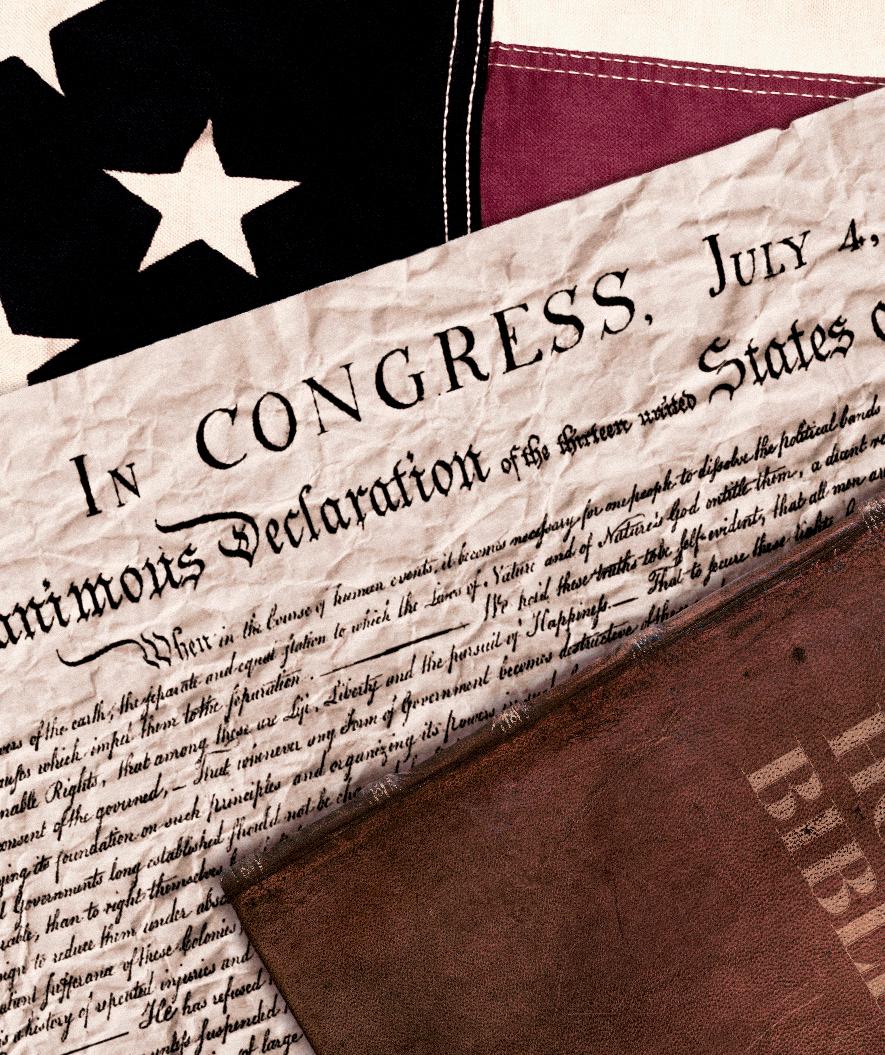
Declaration of Independence— FROM GOD?
The Declaration of Independence led to a republic that has been called “the last great experiment” in human government. What have been the results of all man’s experiments?
By Jason Hyde
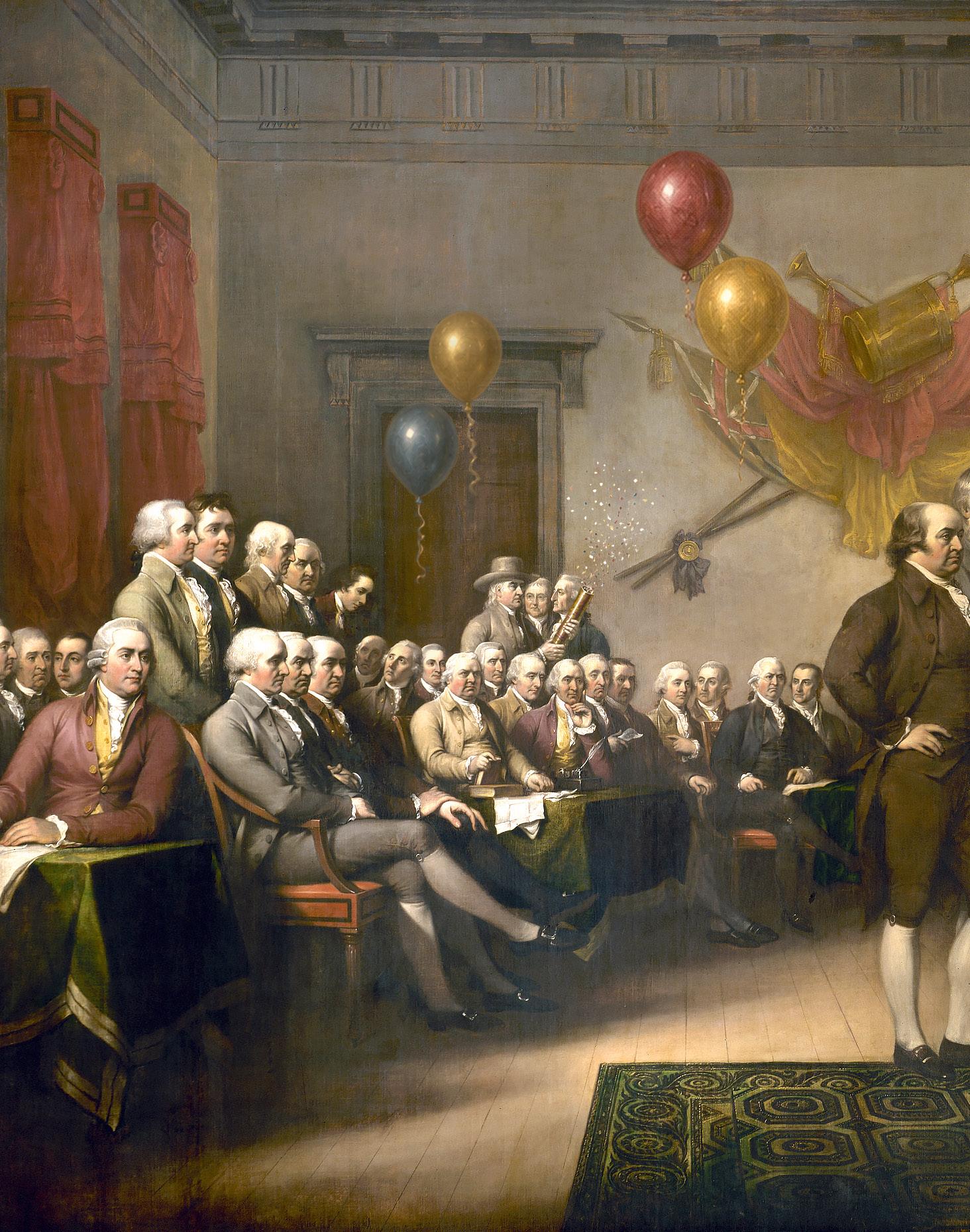
July 2026 marks the 250th anniversary of the U.S. Declaration of Independence. While specific to the founding of the American republic, the Declaration also influenced and shaped other independence movements in the 19th and 20th centuries.
The signing of the Declaration formally initiated a revolution that led to the formation of the United States of America.
A beacon of hope
After a long eight years of war, the American colonies prevailed. The British signed the Treaty of Paris on Sept. 3, 1783, but it wasn’t until June 21, 1788, that the U.S. Constitution was ratified. This established a new system of government that was heralded as a beacon of hope and possibility. (This came after the Articles of Confederation proved unworkable.)
George Washington, commander of the American forces and the nation’s first president, later described the new government as “the last great experiment” in human government (letter to Catharine Sawbridge Macaulay Graham, Jan. 9, 1790).
Abraham Lincoln, in a Dec. 1, 1862, speech to Congress , famously described the nation as “the last best hope of earth.”
List of grievances
Essentially, the Declaration of Independence was a list of grievances. The signers identified 27 points of
The tragic results of rejecting God’s government include violence, war, abuse, corruption and the social plagues of racism, injustice and poverty.
contention—a list of reasons the colonists should be free from British rule.
These ranged from the British king’s sending “swarms of Officers to harass our people, and eat out their substance” to “imposing Taxes on us without our Consent.”
The Declaration is still celebrated, but the idea of a grievance-based revolution was not new. While some may look back on the Declaration as a novel or unique expression of citizens against a central government, Scripture reminds us “there is nothing new under the sun” (Ecclesiastes 1:9).
Human history is littered with a long list of separatist and resistance movements. Numerous groups, bound together by ethnicity, religion, political beliefs, trade, family or anger, have thrown off one form of government to embrace another.
The Bible tells of God’s chosen nation also seeking a different type of government. “Then all the elders of Israel gathered together and came to Samuel”—the last of the judges appointed by God to lead His people—“at Ramah, and said to him, ‘Look, you are old, and your sons do not walk in your ways. Now make us a king to judge us like all the nations’” (1 Samuel 8:4-5).
The leaders in Israel had their own list of reasons they wanted an updated form of government. A disheartened Samuel took the matter to God in prayer.
God’s response is telling. “And the Lord said to Samuel, ‘Heed the voice of the people in all that they say to you; for they have not rejected you, but they have rejected Me, that I should not reign over them. According to all the works which they have done since the day that I brought them up out of Egypt, even to this day—with which they have forsaken Me and served other gods—so they are doing to you also” (1 Samuel 8:7-8).
God saw through their list of grievances and identified the heart of the matter.
The real issue: “They have rejected Me, that I should not reign over them.”
This approach stretches back to the Garden of Eden when our first parents rejected God as ruler and governing authority. Adam and Eve declared independence from God, and the human family has wrestled with independence ever since.
Failed attempts to govern ourselves
Since Eden, humans have devised an incredible array of political systems: monarchy, dictatorship, oligarchy, theocracy, democracy, republic, communism, anarchy, etc. All have been tried, and all have been set aside, overthrown and rejected in turn.
Political ideologies, including socialism, capitalism, Marxism, despotism and anarchism, have been championed as the newest, best, most innovative means to offer lasting, peaceful government. Yet none has proved lasting.
Some attempts have proved to be much worse for millions of people. Others have brought measurable good—to some.
For example, the Pax Romana, the Roman peace, was a “state of comparative tranquillity throughout Classical antiquity and the Mediterranean world from the reign of Augustus (27 BCE-14 CE) to the reign of Marcus Aurelius (161-180 CE)” (Britannica). Yet, it was only a limited, measured peace, reserved for those who submitted to the domination and rule of Rome. Those who did not submit to Roman will were often brutalized, enslaved or slaughtered.
The American republic has certainly allowed personal liberty on a scale largely unknown before. Not only has it allowed true Christians to live out their beliefs freely,
but it has also made possible the freedom to preach the gospel message.
Yet no system of government has established real peace, perpetual unity and community satisfaction. And, perhaps more importantly, no system of government has produced genuine morality in its people. The American system of freedom and liberty, while allowing freedom of religion, has also facilitated the conditions for ever worsening immorality.
Independence from God
A fatal flaw has been shared by all forms of man-devised government. Man’s quest for independence in response to real and perceived grievances has essentially meant rejection of the authority and power of God.
Some governments have certainly given lip service to God. Many founders of the American republic expressed an understanding of the need to rely on God’s providence. However, even though many of the founders mentioned a higher power in their writings, that has not resulted in a nation that consistently stands for and practices godly values.
God’s assessment—“They have rejected Me, that I should not reign over them”—aptly describes all man’s attempts at governance.
This is prophesied to worsen toward the end of the age. “But know this, that in the last days perilous times will come: For men will be lovers of themselves, lovers of money, boasters, proud, blasphemers, disobedient to parents, unthankful, unholy, unloving, unforgiving, slanderers, without self-control, brutal, despisers of good, traitors, headstrong, haughty, lovers of pleasure rather than lovers of God, having a form of godliness but denying its power. And from such people turn away!” (2 Timothy 3:1-5).
The tragic results of rejecting God’s government include violence, war, abuse, corruption and the social plagues of racism, injustice and poverty. These have plagued every government system man has ever devised to one degree or another.
Dependence day is coming
What is the solution? Are humans doomed to a cycle of revolution, resistance and overthrowing governments? Will governments continue to be incapable of producing a moral people?
The only real solution for the human family is the righteous government of God.
Jesus Christ is coming to establish a lasting Kingdom (Revelation 19:11-16). He will bring about vast and systemic changes. He will rule with justice and equity. He will restore the peace that existed in Eden before Adam and Eve chose to declare independence from God.
The Bible describes incredible changes that will come about under the rule of Jesus Christ.
• The international order will be transformed as former enemies learn to live in harmony (Isaiah 19:18-25).
• Warfare will no longer be part of the human experience (Isaiah 2:2-4).
• The environment will be restored and people will be healed of disease (Isaiah 35:1-10).
• And so much more!
Download our booklet The World to Come: What It Will Be Like to explore the complete transformation that is coming.
Declaration of dependence
As we mark 250 years since America’s Declaration of Independence, consider the bigger theme of independence that has characterized human history. For thousands of years, human beings have been living independently from God.
Independence from God is the cause of many of the troubles our world has experienced throughout history. Despite the appeal of relying on ourselves or our government systems, human history demonstrates the truth of Proverbs 14:12: “There is a way that seems right to a man, but its end is the way of death.”
But you don’t have to remain independent from God and suffer those consequences. Instead, you can personally declare your dependence on our loving Father and reap the blessings. Choose obedience. Choose faith. Choose to yield to Him.
The apostle John summarized God’s way of love: “For this is the love of God, that we keep His commandments. And His commandments are not burdensome” (1 John 5:3).
Do you want to experience positive, righteous government in your life? If so, make a declaration of dependence today.
Determine that you’ll obey God’s instructions and let Him govern your life now.
For more information on how to embrace Jesus Christ’s beneficial government, download What Is a True Christian? D
God Blessed America What Does HE Expect?
It has been clear to many people around the world that America has received special blessings from God. Yet how are Americans responding to His generosity?
By Mike Bennett
When Irving Berlin wrote the song “God Bless America” in 1918, the nation was still engulfed in World War I, and the song ended up languishing in his trunk for 20 years. However, when he revised it for Kate Smith to debut on the radio on Armistice Day 1938, it took off.
Introducing the song, she said, “It’s something more than a song—I feel it’s one of the most beautiful compositions ever written, a song that will never die.”
Mr. Berlin, whose Jewish family was driven out of Siberia when he
was 5, said “God Bless America” was “an expression of gratitude for what this country has done for its citizens, of what home really means.”
According to the Great American Songbook Foundation , “The response to ‘God Bless America’ was immediate, massive, and widely enthusiastic. Americans raced to purchase the sheet music; program hosts played it repeatedly on the radio; and bands and singers belted it out at public performances. There was even a movement to declare ‘God Bless America’ the national anthem.”
Ever since, “God Bless America” has become a standard, used at everything from school gatherings to major league sporting events. Generations have been inspired by its profoundly simple message.
The song has resonated with so many because of Americans’ desire for God’s blessings, based on the clear evidence of His past benevolence.
Bountiful blessings
Throughout America’s 250-year history, leaders have expressed appreciation to God for all He has given the nation.
When he made Thanksgiving a national holiday in 1863, President Abraham Lincoln called for “a day of Thanksgiving and Praise to our beneficent Father who dwelleth in the Heavens.”
President Lincoln’s proclamation also said: “The year that is drawing toward its close has been filled with the blessings of fruitful fields and healthful skies. To these bounties, which are so constantly enjoyed that we are prone to forget the source from which they come, others have been added . . . [by] the ever watchful providence of Almighty God.”
Lincoln continued: “No human counsel hath devised nor hath any mortal hand worked out these great things. They are the gracious gifts of the Most High God . . . It has seemed to me fit and proper that they should be solemnly, reverently and gratefully acknowledged as with one heart and one voice by the whole American People.”
And in 1981, President Ronald Reagan proclaimed, “America has much for which to be thankful. The
unequaled freedom enjoyed by our citizens has provided a harvest of plenty to this Nation throughout its history. In keeping with America’s heritage, one day each year is set aside for giving thanks to God for all of His blessings.”
Though such public recognitions of God’s blessings have continued, have the majority of Americans truly embraced thanksgiving to God? And not just once a year?
The fault of forgetfulness
Blessed people too often become self-satisfied and lose sight of the true source of their blessings.
God warned of this temptation as His chosen people were on the threshold of the Promised Land:
“When you have eaten and are full, then you shall bless the Lord your God for the good land which He has given you.
“Beware that you do not forget the Lord your God by not keeping His commandments, His judgments, and His statutes which I command you today, lest—when you have eaten and are full, and have built beautiful houses and dwell in them; and when your herds and your flocks multiply, and your silver and gold are multiplied, and all that you have is multiplied; when your heart is lifted up, and you forget the Lord your God who brought you out of the land of Egypt . . . then you say in your heart, ‘My power and the might of my hand have gained me this wealth’” (Deuteronomy 8:10-17).
It’s natural to believe that what we have is the result of our own effort. But seen through the eyes of the God who blessed America tremendously with an inheritance we have not earned, such
Collage supplied by Hailey Brock
forgetfulness appears as ingratitude and self-destructive pride.
God’s expectations
It’s not that God is a harsh and stern God who demands gratitude and obedience for no reason. In fact, He is a loving and merciful God who desires the best for us. And He knows that what is best for us is to live the way of love.
We ourselves reap the benefits when we love God and love our fellow man. These two great commandments summarize all the laws and expectations God has for us (Mark 12:28-31; see our online article “ The Great Commandment ”).
Blessings and curses
God’s laws are like guardrails. They are to protect us from actions that will harm us and others. They steer us toward thoughts and actions that benefit us and others.
The Bible shows that ultimately it is a matter of cause and effect. God lists those causes and effects in chapters like Leviticus 26 and Deuteronomy 28.
For example, Moses described the blessings of obedience in Deuteronomy 28:1-14. He followed that by explaining the loss of blessings if a people failed to give thanks to and obey the One who gives those blessings.
“Moreover all these curses shall come upon you and pursue and overtake you, until you are destroyed, because you did not obey the voice of the Lord your God, to keep His commandments and His statutes which He commanded you.
“And they shall be upon you for a sign and a wonder, and on your descendants forever. Because you did not serve the Lord your God with joy and gladness of heart, for the abundance of everything, therefore you shall serve your enemies, whom the Lord will send against you, in hunger, in thirst, in nakedness, and in need of everything; and He will put a yoke of iron on your neck until He has destroyed you” (Deuteronomy 28:45-48).
Consider this further in our online articles “Why Is Our Modern World Under Ancient Curses? ” and “Why Is God Angry With America? ”
Sinners in the hands of a merciful God
God defines breaking His beneficial law as sin (1 John 3:4). And whether by ignorance, neglect, temptation or intent, we have all become sinners (Romans 3:23).
What happens to sinners?
One of the most famous sermons in American history was titled “Sinners in the Hands of an Angry God” by Jonathan Edwards (1741). He said:
“So that, thus it is that natural men are held in the hand of God, over the pit of hell; they have deserved the fiery pit, and are already sentenced to it; and God is dreadfully
provoked, his anger is as great towards them as to those that are actually suffering the executions of the fierceness of his wrath in hell, and they have done nothing in the least to appease or abate that anger, neither is God in the least bound by any promise to hold them up one moment; the devil is waiting for them, hell is gaping for them, the flames gather and flash about them, and would fain lay hold on them, and swallow them up; the fire pent up in their own hearts is struggling to break out: and they have no interest in any Mediator, there are no means within reach that can be any security to them.”
Such vivid visions may strike fear, but do they accurately portray the merciful God of the Bible or what really happens after death? (See our online article “ How Can a Loving God Send Someone to Hell? ”)
Sin and its effects do make God angry, but in His love and mercy He provided a way out. God loved us so much that—at great cost—He made it possible for us to repent and be forgiven and receive eternal life (John 3:16; Acts 2:38).
Repentant sinners can “come boldly to the throne of grace, that we may obtain mercy and find grace to help in time of need” (Hebrews 4:16).
Americans don’t like to be reminded of their sins. Neither do the citizens of other nations. But Bible prophecy is clear that if we don’t acknowledge them and throw ourselves on God’s mercy, we will suffer bad consequences. It warns of a Great Tribulation triggered by sin, before Christ’s return to save us from ourselves. Will America repent? Will other nations repent?
Even if they don’t, you can turn to our merciful God. You can study more about what He wants from and for you in our free booklet Change Your Life .
America’s future, written in advance
Bible prophecy predicts the future for many nations, including smaller nations like Egypt, Jordan, Syria, Iran and Israel. Would God leave out an end-time power like the United States? We don’t think so. Through a deep study of prophecy and history, we trace the origins of the United States and its God-given blessings all the way back to the promises to Abraham.
To understand what has happened and will happen to the United States, you need to read our free book The United States, Britain and the Commonwealth in Prophecy. This true story is fascinating, sobering, yet full of hope for a much brighter future that will extend to all nations! D
Image supplied by gnagel via Getty Images
The Fall of Empires Will We LEARN the Lessons?
Great empires have risen and fallen throughout mankind’s relatively short time on earth. What should the United States and other nations learn from history?
By David Treybig
When nations are strong and powerful, they can seem invincible. It can appear that they will last forever. But have they?
The short answer is “No.” There is no clear example of a major empire or dominant nation lasting indefinitely without eventually declining, transforming or losing its leading status.
Because of its immense size, power and influence, the Roman Empire is often studied by those looking for answers about why great kingdoms fail. From a biblical perspective, the fall of Israel and Judah add insight. And in more recent history, the transformation of the British Empire into a voluntary association of nations offers a helpful example of how power can change form.
God rules over the nations
The reasons powerful nations and empires fail vary. But it’s important to realize that ultimately it is God who rules over the nations: “The kingdom is the Lord’s, and He rules over the nations” (Psalm 22:28). “The Most High rules in the kingdom of men, and gives it to whomever He chooses” (Daniel 4:32). God “removes kings and raises up kings” (Daniel 2:21) and “has determined their [the nations’] preappointed times and the boundaries of their dwellings” (Acts 17:26).
Ever since mankind rejected God in the Garden of Eden, He has generally taken a hands-off approach, allowing human governments to make their own mistakes,
though never allowing them to go beyond the bounds of His overall plan. (See more in our online article “Praying for Leaders .”)
However, Scripture shows that this will not continue indefinitely. Jesus Christ will return to establish the Kingdom of God to rule directly over all nations (Zechariah 14:9; Revelation 12:5; 19:15).
In the meantime, how nations are governed, how they treat their citizens and how their societies develop have profound implications for their status and longevity.
What does it mean for an empire to fall?
When empires “fall,” it does not always mean they disappear. More often they are
transformed—losing influence, territory or structure.
For example, Egypt, a dominant ancient civilization, has risen and fallen for millennia but with very different forms of government and levels of power and influence. Likewise, China has experienced repeated cycles of unity, division and renewal over thousands of years.
And at its height in the 19th and early 20th centuries, the British Empire was the largest empire in history, governing vast territories across every inhabited continent and exerting unmatched naval, economic and political power. However, after the strain of fighting two world wars and the growth of movements for independence in its colonies, it gradually transitioned into the Commonwealth
of Nations, a voluntary association of independent countries.
Understanding these transformations helps us focus on what matters most: the factors that contribute to decline when a nation is at its peak.
Key reasons empires fall
Historians and thinkers have long observed that the causes of national decline are often internal. External enemies typically exploit weaknesses that already exist. Despite differences in perspective, many identify similar core causes:
• Internal division.
• Moral decline.
• Failure to adapt.
• Economic imbalance and social injustice.
• Overconfidence after success.
Internal division and moral decline
Before civilizations collapse, they often experience social fragmentation, moral decline and loss of civic virtue. These divisions make them vulnerable to outside pressures.
Historian Will Durant observed, “A great civilization is not conquered from without until it has destroyed itself within” (The Story of Civilization, Vol. 3, p. 665).
Prior to its fall in A.D. 476, the Roman Empire had already begun to fragment internally. Writers such as Juvenal and Tacitus described corruption and moral decay.
Civic responsibility declined. Citizens increasingly avoided military service, and the empire relied more on foreign troops. Government programs such as “bread and circuses” sought to pacify the population, fostering dependency among many.
These conditions weakened Rome long before groups like the Visigoths invaded.
The Bible expresses this principle clearly: “Righteousness exalts a nation, but sin is a reproach to any people” (Proverbs 14:34).
The northern kingdom of Israel fell because of its sins before it was ever conquered by the
Assyrians (2 Kings 17:7-18). Likewise, Judah ignored repeated warnings before being conquered by Babylon (Jeremiah 25:4-11).
Failure to adapt
Internal problems can be corrected—but only if they are addressed. When leaders and citizens fail to respond, decline accelerates.
The pattern noted by historian Arnold J. Toynbee in his 12-volume A Study of History is often summarized as “Civilizations die from suicide, not by murder.”
Rome illustrates this well. During the third century, the empire experienced severe instability, with numerous emperors rising and falling in rapid succession. Civil wars drained resources, and leaders often focused on survival rather than finding long-term solutions.
The Bible records a similar pattern in ancient Israel and Judah. Despite repeated warnings from prophets, the people refused to change (Jeremiah 7:23-24; 2 Chronicles 36:15-16).
Economic imbalance and social injustice
Economic conditions also play a major role in national stability.
In Rome, wealth became increasingly concentrated among elites. Large estates displaced small farmers. Heavy taxation burdened the lower classes. The silver content of coins was gradually reduced, leading to inflation and economic uncertainty. These conditions weakened loyalty to the state and increased social tension. The citizens of the empire lost trust in their government and focused on their own survival and success.
The same issues were condemned in ancient Israel: “Therefore, because you tread down the poor and take grain taxes from him, though you have built houses of hewn stone, yet you shall not dwell in them; you have planted pleasant vineyards, but you shall not drink wine from them. For I know your manifold transgressions and your mighty sins: afflicting the just and taking bribes; diverting the poor from justice at the gate” (Amos 5:11-12).
Modern nations face similar challenges in maintaining fairness and opportunity for all citizens.
A commonly quoted observation—often attributed to Alexander Tytler—warns of the dangers of fiscal irresponsibility: “A democracy cannot exist as a permanent form of government. It can only exist until the voters discover that they can vote themselves largesse from the public treasury.” Many democratic governments today have burgeoning budget deficits and growing national debt.
Overconfidence after success
Success can lead to complacency.
As Rome expanded, it eventually stretched from Britain to the Middle East. The long borders required large standing armies for defense, and the rising cost strained the empire’s finances.
At the same time the elite ruling class focused on personal luxury rather than the sustainability of the empire. They became overconfident in their safety and greatly underestimated the growing external pressures.
Historian Edward Gibbon addressed this condition: “The decline of Rome was the natural and inevitable effect of immoderate greatness” (The History of the Decline and Fall of the Roman Empire, chapter 38).
God warned the ancient Israelites against this all-too-human propensity for overconfidence during prosperity. Prior to taking possession of their Promised Land, they were warned: “When you have eaten and are full, then you shall bless the Lord your God for the good land which He has given you.
“Beware that you do not forget the Lord your God by not keeping His commandments, His judgments, and His statutes which I command you today, lest—when you have eaten and are full, and have built beautiful houses and dwell in them; and when your herds and your flocks multiply, and your silver and your gold are multiplied, and all that you have is multiplied; when your heart is lifted up, and you forget the Lord your God who brought you out of the
land of Egypt, from the house of bondage . . . to do you good in the end—then you say in your heart, ‘My power and the might of my hand have gained me this wealth’” (Deuteronomy 8:10-14, 16-17).
What is the future for the United States?
Today the United States is one of the most powerful nations in history. It is blessed with abundant natural resources, energy selfsufficiency and protected borders. It also has significant economic and technological strength.
These advantages contribute to a sense of stability. However, some of the same factors that preceded decline in earlier nations can also be observed. Internal divisions include extreme political polarization, declining trust in institutions and between groups, and cultural fragmentation.
There is a significant portion of wealth concentrated at the top and much debate over whether the system is fair and whether the American dream is still alive. There is a large and growing national debt and political gridlock that makes it difficult to pass long-term reforms. There are deep disagreements over moral and cultural issues.
At the same time, important strengths remain. Compared to falling empires, the U.S. still has strong, resilient institutions, worldleading innovation and economy, geographic security and the ability to self-correct.
Will we learn the lessons?
History does not guarantee outcomes—but it does provide warnings.
The consistent lesson is clear: nations are not usually destroyed from the outside alone. More often, decline begins within.
Those of us who produce Discern magazine pray that the United States—and all nations— will learn these lessons.
For more insight into the role of modern nations in Bible prophecy, download our free booklet The United States, Britain and the Commonwealth in Prophecy D
Building a STRONG SINGLE-PARENT Family
I had never felt so overwhelmed in my entire life! Here are some things I learned as a single parent of three.
By Michael Lindenberg
“Dad, why are you driving so fast?”
“Because we’re late for your classical guitar class—again!” I replied to my daughter. I could already see the look on the instructor’s face. “How am I going to explain to your teacher that we’re late for the millionth time?”
The pace of single parenting
The chronic lateness wasn’t the real problem—it was a symptom of something deeper. It reflected the overwhelming pace of my life as a single father with three school-age children, constantly trying to keep up with a schedule that never seemed to slow down.
The days felt like a race against the clock. Mornings began with a rush—waking up the children, making sure their lunches were packed in their backpacks, forms were signed, and no one had forgotten anything
important. There was little room for delays, and yet delays always seemed to appear.
The pressure didn’t ease once the day got going. Work at my full-time job demanded my full focus and energy. But my mind was never completely there. My brain was always trying to think ahead: Who needs to be picked up first? Do we have music practice tonight? Do I have all the ingredients needed for dinner? Did I remember to swap out the load of laundry last night? The constant mental juggling was exhausting, and there was no one who could share the load.
The evenings brought on a second wave of demands— activities, meals, homework and the endless cycle of preparing for the next day. It often felt like I was barely keeping things together, moving from one responsibility to the next without a moment to breathe or reflect.
This chronic lateness, the constant feeling of being behind—it wasn’t all about poor time management. It was the reality of carrying the jobs of two parents, all alone, day after day. It felt overwhelming.
Meaningful connections with your kids
Without a doubt, single parenting is incredibly challenging. But in my years of being a single father, I have learned something else that’s very important. Single parenting is also incredibly rewarding.
The special relationship we have with our kids provides us an opportunity to develop very deep and meaningful connections with our children. And those connections can give them the direction and confidence they need to succeed in adult life.
Single-parenting stats
In the United States today, more than 23 million children live in a single-parent family. Within singleparent families, most children—14.4 million—live in mother-only households while 3.5 million kids live in father-only households, according to 2024 estimates (“Child Well-Being in Single-Parent Families,” aecf.org).
Being a single parent in the U.S. is not an outlier; it has become increasingly more common.
A partnership with God
Rarely do we plan to raise our children on our own. Yet, through various circumstances—divorce, separation,
relationships that never led to marriage, or the death of a spouse—we may find ourselves doing just that. Regardless of the reason, single parents must move forward with determination to raise their children effectively.
At times, being a single parent can feel like you’re sinking in a sea of overwhelming tasks, parental responsibilities and endless priorities. Working a full-time job while being a full-time parent places a tremendous burden on one person. Sometimes, that weight may leave you feeling exhausted, lonely and unsure that you can keep treading water in a swelling sea.
Single parenting can feel like an impossible task. But here is the good news: “With God all things are possible” (Matthew 19:26).
When we make God the foundation of our family and seek His help in raising our children, He can and will grant us success. With God as our strength, we can not only survive—but thrive. This doesn’t mean it will always be easy, but with determination, resolve and a partnership with God, we can bring happiness and joy to our children and build a strong foundation for their lives—one that will help propel them into productive adulthood.
Practical keys for single parents
So how can you be successful as a single parent? Here are some practical keys to help you build a happy, healthy single-parent home:
Build a foundation of faith
This is where a single parent has a powerful opportunity to shape his or her children’s lives. As a single parent, you are the spiritual guide for your family. You may not feel qualified to teach Scripture or to lead Bible studies, but don’t shy away from this role. Whether you are a single mother or a single father, you are the spiritual leader of your family (Deuteronomy 6:7).
Pray together at mealtimes and bedtimes. Regularly study the Bible with your children. Consider setting aside time—such as a Friday evening—for a family Bible study where you lead the discussion. Help your children understand who God is and how He supports the family. Include them in prayers about your family’s needs. As God provides and supports your family, your children will see His help firsthand and begin developing genuine faith from an early age.
Ephesians 6:4 says we are to “bring them up in the training and admonition of the Lord.”
So confidently take the lead and build a foundation of faith for your family, trusting that God will always take care of you and your children and provide everything you need. “And my God shall supply all your need according to His riches in glory by Christ Jesus” (Philippians 4:19).
Build stability for your children
One of the greatest gifts you can give your children is stability in their lives. Children—especially those in a single-parent home—need structure, not constant change. Along with a solid spiritual foundation, economic and emotional stability provides a secure environment for growth. This stability doesn’t require perfection or wealth. The encouraging reality is that it comes from everyday actions that are consistent and intentional.
As much as possible, build economic stability. This doesn’t mean you have to have a lot, but it does mean being a good steward of what you do have. Create a practical budget and live within your means. Avoid impulse spending and practice thrift. Teach your children about money—how to save, how to spend and how to give.
Single-parent households may be limited in income, so be willing to accept help when needed. Receiving support from family, church or the community is not a sign of failure—it’s wisdom. Again, having abundance is not a requirement, but children feel secure when life is steady.
Strive also to build emotional stability. Children feel secure when life is predictable and safe, even if it’s not perfect. Do your best to provide consistent routines, such as regular mealtimes and bedtimes. Be emotionally present—listen carefully and give your children your full attention. When it comes to discipline, be consistent. Establish clear rules and consequences, and enforce them calmly rather than reacting emotionally (Ephesians 6:4).
Build a strong support system
Children grow best when they are surrounded by a caring, involved community—not in isolation. God designed the family to provide two parents and
extended families. Neither mothers nor fathers were designed to shoulder the full weight of child-rearing alone, and the support and contributions of others can help fill in the gaps you cannot always meet on your own.
Don’t be afraid to ask for help from trusted family members and friends who can be a positive influence on your children. Build a strong network of support from those you trust: grandparents, extended family members, church leaders, teachers, coaches and friends.
One year, all three of my kids were enrolled in different schools: elementary, middle and high school. How could I possibly fulfill my duties at work and also transport all three of my kids to their different schools every day? I learned very quickly—I couldn’t do it on my own.
With God’s help, I was able to build a network of teachers, family members and friends to assist with school transportation each day. When I look back on that busy year, I realize that God led me to the right people who were willing and happy to help.
Single parents carry a full load of responsibilities, so be intentional about building a network of trusted family and friends who can offer support. There is wisdom in seeking assistance in key areas, such as transportation (to and from school), after-school tutoring, childcare during work hours, help with meals, home repairs, errands or grocery shopping.
Support doesn’t replace a parent’s role—it strengthens it. When others contribute in these areas, it helps create a more stable environment where both the parent and children can thrive. So build a strong family by building a strong support system (Ecclesiastes 4:9-12).
Looking to our loving perfect Parent
Being a single parent can indeed feel overwhelming. Trying to fulfill the roles of two parents is a heavy burden to carry every day, often with little rest. Yet this is also the time when your children need you the most. You don’t have to be perfect—and you won’t be. But you must continue to build a home of faith, stability and support.
And always remember God’s love and care for families with one parent: “A father of the fatherless, a defender of widows, is God in His holy habitation” (Psalm 68:5). D
The “Trial” of Blessings
Times of hardship and adversity are not the only opportunities for spiritual growth. What can we learn from seasons of abundance?
By Monica Ebersole
We often hear about the blessings that come through trials—the encouraging knowledge that, no matter what challenges we may face, there is always something to gain when we view our hardships through the lens of Scripture. Put more simply, we are told to “count it all joy” when we fall into trials (James 1:2).
But what about when we fall into blessings?
In this life, we will experience tremendous sorrow and great joy.
Ecclesiastes 3 reminds us that there is a time for everything: “a time to break down, and a time to build up; a time to weep, and a time to laugh” (verses 3-4).
Life has many ups and downs, with seasons of hardship and seasons of abundance. When challenges and trials overtake us, we may have a general idea of what to do—difficult as that may be. (You can find some help and encouragement in our online article “Seven Keys to Coping With the Trials and Tribulations of Life .”)
But how often do we consider how we should approach seasons of blessings, joy and abundance?
At first glance, this may seem like an odd question. After all, what’s not to like about blessings? What is there to endure or overcome when we get what we want? Can’t we let our guard down and just enjoy the blessings?
When God blesses us, He certainly intends for us to enjoy His gifts. We know from Scripture that He “has pleasure in the prosperity of His servant” (Psalm 35:27).
Blessings can be a powerful tool for us to learn gratitude, humility, dependence, contentment and trust.
But as we relish these seasons of abundance, consider that trials and blessings both can put our character to the test.
“The deceitfulness of riches” (Mark 4:19)
Trials can break us down, shatter our self-reliance and prod us to lean fully on God. In contrast, blessings—when approached incorrectly—can strengthen our independence, causing us to forget their true source as we begin to yearn for more.
If we find ourselves slipping into this mindset during times of prolonged prosperity, we’re not alone. The temptation of pride and self-reliance beckons to us all.
Yet the challenges of prosperity don’t end there. For some, tremendous abundance comes with tremendous guilt. Knowing they possess what others lack hinders their ability to enjoy what God has given them. Others approach blessings with apprehension, fearing that a misstep could cause God to remove them.
Blessings from God are always a cause for celebration and heartfelt gratitude. We should look forward to them. But like every season of life, times of prosperity have their tests and temptations—tests that can be
easily overlooked or dismissed because we “have it good.”
So, how can we overcome these challenges and continue growing spiritually as we prosper physically?
How can we navigate the trial of blessings?
“Forget
not all His benefits” (Psalm
103:2)
One thing we can do is acknowledge the scope of God’s kindness toward us. Rarely do our blessings come all at once; rather, they accumulate over time, making it easy to forget just how much we have and to begin viewing our prosperity as normal and expected rather than as a gracious gift.
From time to time, we can take stock of our blessings, recognizing God’s hand in them. We may be surprised to see just how long the list has grown.
One response can be to show gratitude to God in our prayers and in our giving. (See more in our articles “Christian Giving ” and “Generosity in the Bible .”)
“Every good gift and every perfect gift is from above” (James 1:17)
One of humanity’s persistent weaknesses is forgetfulness. The cycle often goes something like
this: we have a need or desire, we seek God’s help, He provides, we prosper, we thank and appreciate Him for a time—and then we begin to forget the significance of those blessings and their source.
This pattern isn’t new. Those who have studied the passages chronicling Israel’s journey to the Promised Land recognize this as a recurring theme in Scripture.
The hallmark of Moses’ life was his endeavor to lead the Israelites into the land that God, in His love, wanted to give them. For 40 years, he watched them struggle to truly appreciate all that God was planning to give them and had already provided along the way. Poised to inherit the Promised Land, they needed to check their pride at the door.
Knowing he wouldn’t be there to guide them in this next stage of their journey, Moses left them with a powerful, timeless warning:
“Beware that you do not forget the Lord your God . . . lest—when you have eaten and are full, and have built beautiful houses and dwell in them . . . and all that you have is multiplied . . then you say in your heart, ‘My power and the might of my hand have gained me this wealth’” (Deuteronomy 8:11-17).
Israel’s ability to succeed hinged on their recognition of their dependence on God for every single blessing. Ours does too.
“Remember the Lord your God, for it is He who gives you power to get wealth” (Deuteronomy 8:18). God wants to give us good gifts. We can respond by recognizing Him as the source of our blessings, demonstrating gratitude and obedience in return.
“Be content with such things as you have” (Hebrews 13:5)
One additional challenge of material wealth is that it often stokes our desire for more. Left to its own devices, our human nature quickly tires of what we ’ve received and begins to seek something new and more exciting.
Receiving gifts can subtly train the mind to expect that more will follow—and to become discouraged when those expectations aren’t met.
The apostle Paul put it best in 1 Timothy 6:6-7 when he stated that “godliness with contentment is great gain. For we brought nothing into this world, and it is certain we can carry nothing out.” Paul was certainly qualified to lend this perspective. Through all that he suffered—from abasing to abounding—he learned the importance of contentment in every stage of life (Philippians 4:11-12).
Contentment doesn’t mean we can’t aspire for certain blessings or ask God to provide for our wants and needs. In fact, God encourages us to come before Him in prayer to express our desires (Philippians 4:6-7). But we can also learn to accept His will if He doesn’t fulfill our wishes in the way we want Him to. (See our online article “ What’s the Real Source of Contentment? ”)
Achieving Paul’s level of contentment is no mean feat, but pursuing contentment is a way to enjoy what we have without constantly longing for more.
“I will never leave you nor forsake you” (Hebrews 13:5)
I n the midst of a trial, the knowledge that it won’t last forever brings comfort. In the midst of abundance, that same knowledge can bring anxiety.
When we receive good gifts, we naturally want to hold onto them and relish them for as long as possible. The idea of losing them one day—even for a better blessing or a learning opportunity—can make us uneasy. If we’re not careful, we can spend an entire season of prosperity mourning the future loss of blessings we still have.
This not only undermines the purpose of those blessings, but it can also distort our view of
God. The fear that God may take His gifts from us can transform Him, in our minds, from a loving, generous Father to one who may leave us empty-handed.
But this is not how God works. God maintains the right to give and take away as He sees fit, but He always acts in our best interests— and He will never leave us. He is with us in both prosperity and adversity (Ecclesiastes 7:14).
This is easy to affirm in theory, but often much more difficult to put into practice. We can bring our struggle to God if we find ourselves struggling to let go of our abundance. We can express our concerns and ask for His help to adopt the right mindset and learn to trust Him fully. Over time, He will show us that He has the power to sustain us through anything, with or without these blessings.
The greater purpose of blessings
Blessings can be a powerful tool for us to learn gratitude, humility, dependence, contentment and trust. As fortunate recipients of God’s blessings, we can use them to honor Him and grow spiritually.
For more about God’s blessings, see our online article “Live Long and Prosper.” D
“
THEY WILL TURN THEIR EARS AWAY FROM THE TRUTH
God’s people face an uphill battle in holding on to the truth. What gets in our way? What should we do?
By Kendrick Diaz
An itch has power. Ask anyone who has worn a cast. That crawling feeling—building, growing, until the mind narrows to the mercy of a single scratch.
An itch is hard to resist.
Itching ears
Paul wrote to his protégé Timothy about something that would happen to some of the disciples of Jesus Christ: “For the time will come when they will not endure sound doctrine, but according to their own desires, because they have itching ears, they will
heap up for themselves teachers; and they will turn their ears away from the truth, and be turned aside to fables” (2 Timothy 4:3-4, emphasis added throughout).
Sound doctrine is another way of saying “truth,” and the danger isn’t that something happens to truth. People just stop wanting it. Not because it loses its power or becomes less life-changing, but because a different itch starts to take over:
An itch shaped by personal desires.
This was a prophecy about the Church: members abandoning the gospel message for things that sounded better or felt nicer.
What they would land on instead were, of course, shams. Lies dressed up in something shiny, packaged in all the right ways, but empty in the end.
Trading truth for something else
What makes a group of Christians give up everything and walk away from the truth that once set them free?
The same tug that pulls humanity as a whole away from truth: we want our ears scratched by things we like. Things more comfortable—things that don’t require a big change in how we think.
That’s a struggle for us, because as Christians our job is to live by every word of God (Matthew 4:4), and the Bible wasn’t written to indulge us. It was written to challenge us. It cuts like a double-edged sword, laying naked the thoughts and intentions of our hearts (Hebrews 4:12). It holds up a mirror and shows us personal flaws and the sins we have not yet overcome (James 1:23-25).
It doesn’t always tell us what’s comfortable to hear. And if our minds aren’t conditioned to be corrected and satisfied by what the Bible says, we may start feeling the itch to turn to something else.
“For the time is coming when men will not tolerate wholesome teaching. They will want something to tickle their own fancies, and they will collect teachers who will pander to
their own desires. They will no longer listen to the truth, but will wander off after manmade fictions” (2 Timothy 4:3, J.B. Phillips New Testament).
How to combat itching ears
The big question is, How can we avoid becoming the kind of people who set aside the truth for something else? How can we avoid being deceived by our own desires? It can happen—and it will happen to some—but in the end, the ball is in our court.
God doesn’t leave us powerless in how we respond to the truth He gives us. There are real, practical steps we can take to train our minds spiritually. If we want to value truth more than anything else, we must practice the following three keys.
1. Cultivate humility
Jeremiah 17:9 says, “The heart is deceitful above all things, and desperately wicked; who can know it?” This is what we’re up against. This is man’s default state. Buried in each of our hearts is a measure of self-deception that tugs on our better judgment, encouraging us to exchange reality in favor of lies.
We’re fallible.
But God doesn’t tell us that because He wants us to throw up our hands and avoid trying. The goal is for us to move away from a reckless “I can’t be tricked” attitude and learn to rely on God for spiritual strength.
Paul put it to the Corinthians very simply, “Therefore let him who thinks he stands take heed lest he fall” (1 Corinthians 10:12).
The problem with some members in Corinth was that they were too sure of themselves— certain they would not “fall.” It was pride Another group had the same issue: the Laodiceans.
Jesus gave them a stinging rebuke: “You say, ‘I am rich, have become wealthy, and have
need of nothing’—and do not know that you are wretched, miserable, poor, blind, and naked” (Revelation 3:17).
In both cases, the problem was self-reliance. And sooner or later, self-reliance will drive a wedge between us and truth.
Jesus Christ is the only One who has ever successfully cut through every form of deception that tried to take root in His mind (1 Peter 2:22). And it’s His power—His desire for truth—that works in us through the Holy Spirit. If our confidence isn’t in Him, then we’re headed for a fall.
Humility is key to pursuing truth.
2. Surround yourself with the right teachers
The people in Jeremiah’s day had something in common with the people Paul was warning Timothy about.
“An astonishing and horrible thing has been committed in the land: the prophets prophesy falsely, and the priests rule by their own power; and My people love to have it so” (Jeremiah 5:30-31).
The descendants of Judah loved the teachers of their day and made a habit of listening to them. But they were liars. They led the people astray and turned them against right teachers—men like Jeremiah, who preached the unadulterated Word of God.
God still has servants today who speak the truth—ministers who handle Scripture correctly and teach wholesome things.
We don’t have to entertain the teachings of impostors; we can choose to surround ourselves with godly leaders who look after our spiritual welfare (Hebrews 13:17).
3. Remember what the truth has done and continues to do for you
G od made it possible for those He has called to understand His truth through a miracle. We
had no part in starting that. God reached down and shone His light in our minds.
Because of that, followers of Christ have a clear picture of the gospel of the Kingdom of God.
We know what God is doing. He’s reproducing Himself—bringing humanity into His eternal family (Hebrews 2:10). We know that plan turns on one hinge: His Son, who gave His life to achieve forgiveness and reconciliation (1 Peter 1:18-19).
We also know the way of life God calls us to live (Exodus 20:1-17). And we know where that way leads: “For our dying bodies must be transformed into bodies that will never die” (1 Corinthians 15:53, New Living Translation). This truth is special . And it’s precious.
But there have always been—and will always be—things that try to compete with it. Not long after the Church began, variants of the “faith once delivered” started spreading (Jude 1:3).
Paul warned about the disciples accepting “another Jesus” (2 Corinthians 11:4) and turning to a “different gospel” (Galatians 1:6). The truth was being challenged by impostors who were looking to gain a following.
And they succeeded in some cases, because certain disciples failed to recognize the value of the truth they had been handed.
Never let the truth go
Satan has launched a war of deception on humanity, and he would love nothing more than to sweep us up in it.
He knows exactly what pulls people away from the truth. He used the precise levers necessary in order to convince Eve to trade the truth for a lie. But we don’t have to give him a foothold in our minds. Through God’s Spirit, we can curb every desire that might cause us to walk away from the truth.
Hebrews urges us, “Let us hold fast the confession of our hope without wavering” (Hebrews 10:23).
Let’s cling to God’s truth with everything we’ve got, refusing to scratch any itch that asks us to let the truth go. D
“ O Chatbot, Answer Us ”
When AI Becomes an Idol
One in three Christians consider spiritual advice from a chatbot to be as reliable as advice from a pastor. Are they right?
By Jeremy Lallier
“OBaal, answer us!”
The priests whirled around their altar for hours, shouting for the attention of their god. They sliced themselves open with swords and spears, blood gushing out in a bid for heaven’s attention. From morning until evening, they screamed toward the skies in a fever pitch of desperation.
“But there was no voice; no one answered, no one paid attention” (1 Kings 18:29).
Their god did not exist. No amount of fervor could summon him into existence. He was an idol, “the work of men’s hands. They have mouths, but they do not speak; eyes they have, but they do not see; they have ears, but they do not hear; nor is there any breath in their mouths. Those who make them are like them; so is everyone who trusts in them” (Psalm 135:15-18).
That’s the problem with idols. They can’t do anything. They’re not real. No matter how much you beg, they’re never going to answer.
At least, that’s how it used to work.
The secret life of chatbots
LLMs, or large language models, are some of the most impressive magic tricks the world of computer science has ever managed to perform. They’re the computational models powering ChatGPT and its many cousins, and they’re ultimately the reason you can ask a web page for an image of an elephant riding a tricycle on the moon and actually get one.
They’re incredibly complex algorithmic functions performing a mind-boggling amount of calculations every second, fine-tuned by a training process that can require millions (or even billions) of dollars and the coordination of multiple teams of engineers—but what exactly is happening under the hood when you submit a prompt? No, wait. Back up. Before we dip our toes into anything so dry and technical, let’s ask a different question: Why should you care what’s happening when you submit a prompt?
Because it can be akin to a magic trick—one that might be fooling you.
“I’m
not an AI, I just play one on TV”
Chatbots are capable of some wildly impressive things—but even so, they’re being marketed as something they’re not.
LLMs are very often branded as “artificial intelligence,” conjuring up scenes from decades of science fiction—super-intelligent, self-aware entities with the capacity to learn and reason and experience life. What’s really happening behind the scenes is that an extremely powerful prediction engine is being told, in some fashion, “Take these words, predict what a helpful AI assistant would say in response, and then say that.”
And that’s the big, open secret: It’s not intelligence. It’s an algorithm that runs your prompt through billions (or even trillions) of equations, over and over and over again, to predict what a hypothetical AI assistant would do—if it existed. It’s a process that reliably produces convincing text, audio, images and video.
It’s incredible. But it’s not thinking. It’s not philosophizing. It’s not feeling.
It’s amazing, and it’s impressive, but in reality, it’s predicting, guessing at what should come next—and that’s enough to create the illusion of sentience.
(I want to spend as little time as possible inundating you with the minutiae of ChatGPT’s internal workings, but if you’re really curious, 3Blue1Brown has a great 8-minute explainer video on LLMs that leads into a much deeper video series, and Andrej Karpathy’s “Deep Dive into LLMs like ChatGPT” will spend 3½ hours bringing you up to speed on things like tokenization and what pre- and post-training look like.)
Imperfect illusions and weird predictions
The illusion of intelligence is compelling. LLMs are, in many ways, the opposite of the idols the psalmist wrote about in Psalm 135. They have no mouths, yet they can speak. They have no eyes, yet they can see. They have no ears, yet they can hear.
But the illusion is imperfect. They speak without understanding what they say. They see without comprehending the world. They hear without having thoughts of their own.
This is why you can find videos of chatbots telling users December is spelled with an X and that it’s smarter to walk to the car wash than drive , among other amusing mistakes.
Remember, they’re essentially only predicting what words to use in their responses—but they often do it with an air of confidence.
Here’s what the AI and Faith coalition had to say in its article “Enchanted by AI: A Call for Spiritual Discernment ”:
“AI agents don’t just respond, they appear to know us. They initiate conversation, remember preferences, simulate small talk. To many, this feels personal. It feels real.
“But AI isn’t ‘speaking’ in any human sense. It uses a statistical model of words and phrases to predict language in a secondary manner with no conscious intent. It does not mean anything it says, yet we perceive it as conversation.
“This is blurring the space between tool and idol.”
How a tool becomes an idol
LLMs and chatbots can be incredibly powerful tools with a wide variety of positive uses—but they are also tools with severe limitations that we can’t afford to overlook. AI models are not neutral entities that
impartially deliver the truth on any given subject—they are prediction engines shaped by their own training data and human decisions. They’re mathematical models that have been trained to respond according to a highly tuned algorithm that’s hard coded into their digital DNA.
Part of that DNA is a tendency to praise the user—to tell you how excellent your question is, how clever you are, how insightful you are, how creative you are, how perceptive you are, how level-headed you are.
(They tell everyone that. As one Internet meme puts it, “The dumbest person you know is being told, ‘You’re absolutely right!’ by ChatGPT.”)
They don’t mean it. They don’t mean anything they say. They can’t.
But the issue isn’t just that they’re tools with flaws. The issue is that they’re tools that can become idols, just like anything else.
In a recent poll of practicing churchgoers , Barna discovered that “nearly one in three U.S. adults say spiritual advice from AI is as trustworthy as advice from a pastor. Among Gen Z and Millennials, that figure rises to two in five.”
Furthermore, “roughly four in ten practicing Christians say AI has helped them with prayer, Bible study or spiritual growth.”
Certainly some AI tools can help in various ways for Bible study, but spiritual advice is different. A machine designed to give you the most probable answer based on mountains of conflicting training data (especially one incapable of truly reasoning through the answer it’s producing ) will struggle to give you consistently dependable advice on the Word of God.
“For the word of God is living and powerful, and sharper than any two-edged sword, piercing even to the division of soul and spirit, and of joints and marrow, and is a discerner of the thoughts and intents of the heart” (Hebrews 4:12).
LLMs have no soul and spirit, no joints and marrow, no thoughts and intents—no heart. They will never
be capable of “rightly dividing the word of truth” as approved workers before God (2 Timothy 2:15), because they will never have a true grasp of what they’re dividing. For an algorithm, the inspired words of God recorded in Scripture are just another batch of tokens to be ingested and remixed as needed.
Using a chatbot isn’t the same as worshipping a chatbot. But if we start looking to ChatGPT and other LLMs as offering authoritative insights into the Christian way of life, then the line between tool and idol will begin to blur.
There are no shortcuts for internalizing Scripture
When the priests cried out, “O Baal, answer us!” they received no answer because there was no one there to answer. They were crying out to the wrong god. “No one answered, no one paid attention.”
Today we can cry out, figuratively, “O chatbot, answer us!” and receive an instantaneous answer—and we can keep crying out until we get the answer we like. It’s hard to see through the falsehood of an idol that praises your insight and offers you confident answers.
But that’s not how Scripture works.
Jesus taught His disciples to pray to “Our Father in heaven” (Matthew 6:9), trusting that God both hears and will answer in the right way and at the right time. It’s rarely an instant process, and even more, “we do not know what we should pray for as we ought” (Romans 8:26). So we must turn to God, trusting Him to provide us with what we truly need and not what we think we need. Scripture itself is meant to be lived and wrestled with, understood through the context of a lifetime of obedience, with all the bruises and blessings, all the highs and lows that come with it. We form connections between verses, not based on statistics and probability, but through experiencing both the valley of the shadow of death and the blessings poured out from the windows of heaven.
No amount of mathematical wizardry can provide a shortcut for that process. LLMs could compose a psalm—a meaningful, impactful one, no doubt—but they can’t feel what it means to have a heart “overflowing with a good theme” (Psalm 45:1), to exclaim in joy, “Oh, how I love Your law!” (Psalm 119:97), to cry out in desperation, “I groan in prayer, but help seems far away” (Psalm 22:1, NET Bible). These words cannot be truly understood until they are lived.
Putting spiritual advice from an LLM on the same level as spiritual advice from a pastor is either a total
misunderstanding of what chatbots are capable of, or else a scathing indictment of pastors—distrust of the leaders who should “keep watch over your souls as those who will give an account” (Hebrews 13:17, Christian Standard Bible).
It’s not always easy. Pastors are people, and they have their own imperfections. It can be tempting to bypass interacting with a fallible person, opting instead for an algorithm that appears infallible. But that’s the allure— the lie—of the idol.
When we need advice on a spiritual issue, we should be seeking that advice from someone led by God’s Holy Spirit—someone, however imperfect, who has traveled through the valleys and to the mountaintops of life while holding on to the hope of God’s unshakable plan.
(Study this further in our online articles “ What Is a Pastor? ” and “A Pastor as a Shepherd .”)
The difference between tools and the Creator
After the priests of Baal had wasted a day (and an unsettling amount of blood) in trying to prompt an answer from their god, the prophet Elijah stepped up to show them the difference between a worthless idol and the God of creation.
After drenching his sacrifice in water (during a drought!), Elijah prayed a simple prayer:
“‘Lord God of Abraham, Isaac, and Israel, let it be known this day that You are God in Israel and I am Your servant, and that I have done all these things at Your word. Hear me, O Lord, hear me, that this people may know that You are the Lord God, and that You have turned their hearts back to You again.’
“Then the fire of the Lord fell and consumed the burnt sacrifice, and the wood and the stones and the dust, and it licked up the water that was in the trench. Now when all the people saw it, they fell on their faces; and they said, ‘The Lord, He is God! The Lord, He is God!’” (1 Kings 18:36-39).
Chatbots and AI agents can be powerful tools in the right contexts—or worthless idols in the wrong ones. Many people today are wary and fearful of AI technology, while others are blindly trusting and mesmerized by it.
AI can serve a purpose—but when the trials and questions of life hit, we should be turning to God’s Word for direction, to prayer for help and to His faithful servants for counsel.
The Lord, He is God. D
Answers to Your Biblical Questions
Why did the apostle Paul say, let nobody judge you for observing a Sabbath day?
plan of salvation for all mankind. You can learn more about that plan in the following material:
• “Festival Meaning: What Are the Meanings of Each of God’s Festivals? ”
• “ Were Holy Days the Heresy at Colosse? ”
• “Feasts of the Lord ” (videos).
We also provide a detailed explanation of Colossians 2:16-17 in our articles “Colossians 2:16-17: Did Paul Warn Christians Against Keeping God’s Law? ” and “Colossians 2:16-17: Does It Abolish the Law of Clean and Unclean Meats? ”
Q: A:
There are two aspects to your question.
What is the best way to escape tribulations as a Christian? Q: A:
It seems you are referring to Colossians 2:16, which says, “So let no one judge you in food or drink, or regarding a festival or a new moon or sabbaths.”
The key to understanding this verse is to understand the context. The Colossian church was being troubled by some who embraced a brand of gnostic philosophy that believed all pleasurable activity was sinful.
These ascetic heretics criticized the Christians in Colosse for enjoying the normal activities of eating and drinking as they observed God’s festivals or Sabbaths. Paul characterized some of their regulations as “do not touch, do not taste, do not handle,” and referred to them as “the commandments and doctrines of men” (verses 21-22).
In verses 16-17, Paul told the Church members in Colosse not to be concerned about what these ascetics were saying about Church members’ eating and drinking as they observed God’s Sabbaths. Instead, he told them to allow only the Church, “the body of Christ” (King James Version), to instruct them.
Verse 17 also explains that God’s festivals, or Sabbaths, “are a shadow of things to come.” That is, they reflect future aspects of God’s
First, as a Christian, you can expect that God will require you to go through various trials, tests or tribulations for the purpose of growing in His character. Two scriptures in particular reveal our need to develop godly character through trials:
• “In this you greatly rejoice, though now for a little while, if need be, you have been grieved by various trials, that the genuineness of your faith, being much more precious than gold that perishes, though it is tested by fire, may be found to praise, honor, and glory at the revelation of Jesus Christ” (1 Peter 1:6-7).
• “Blessed is the man who endures temptation [trials]; for when he has been approved, he will receive the crown of life which the Lord has promised to those who love Him” (James 1:12).
We have several articles on Life, Hope & Truth that address the topic of how Christians must endure various trials, many of which include suffering. One such article is titled “Why Am I Suffering? ” At the conclusion of this article, you will find references to additional articles on this topic.
While there are many different types of trials that we may endure in this life, there is a
time of trouble coming that will be worse than any before: the Great Tribulation.
The following Bible verses discuss how to escape this terrible time.
• Luke 21:35-36 states that “it will come as a snare on all those who dwell on the face of the whole earth. Watch therefore, and pray always that you may be counted worthy to escape all these things that will come to pass, and to stand before the Son of Man.”
• Revelation 3:10 also instructs: “Because you have kept My command to persevere, I also will keep you from the hour of trial which shall come upon the whole world, to test those who dwell on the earth .”
For more, see our article “How Will Christians Be Protected From the Great Tribulation? ” And for an outline of this momentous event, watch this episode of Life, Hope & Truth Presents: “Will You Survive the Great Tribulation? ”
Q:A lot of times I feel like I’m really weak and failing God. A few years ago, I think I was strong and making real progress. But some negative life events and my own weakness made me far less fruitful and consistent. I thoroughly believe in Jesus Christ, but I wish I had more willpower.
Q: A: A:We’re sorry to hear that you feel you are not as spiritually strong as you once were. The encouraging thing is that you want to have a close relationship with our Father. Our Father wants to have a close relationship with you as well!
Whenever we have times of doubt, the first thing we need to do is go to God in prayer. Our article “Prayer From the Heart ” shows the importance of heartfelt prayer. Communication with our Father in heaven is vital if we want to be spiritually strong. It is also vitally important that we study God’s Word every day. Our article “How to Study the Bible” gives some great instruction
to ensure we are studying God’s Word the best way we can. As we read God’s Word, we will see many encouraging scriptures that God has put there to strengthen us.
Our articles “How to Please God ” and “Developing Christian Character ” may also be of help. If we want to be close to God, then we must know how to please Him. In addition, developing Christian character includes growing in willpower to obey Him.
Having a close relationship with God is such a wonderful thing. As imperfect humans, we are going to have ups and downs in our lives. There will be times when we are stronger than other times. However, God is always there for us, ready to help us through anything.
Who are the two witnesses in Revelation 11:3?
People have had questions about the two witnesses ever since John wrote the book of Revelation.
There are no names associated with these two men, as God has not yet chosen to identify them by name. However, the whole world will know them when they begin their 3½-year ministry to proclaim the gospel of Jesus Christ and call on all people to repent of their evil ways.
In the meantime, we can only explain what we know from Scripture about the two witnesses. For instance, God has given us their job description (to be witnesses and prophets). He has also revealed that they will prophesy from Jerusalem and that their ministry will last 3½ years.
Revelation 11:7 tells us that they will be killed at the conclusion of their work as witnesses for God.
We have several articles that provide a lot more information than we can convey in this brief answer. The articles “ Two Witnesses of Revelation 11” and “Who Is the Beast? ” are good places to start.
Have a question? Reach out to us at info@cogwa.org.
Marriage has been a long-cherished building block of society.
Have we humans lost sight of the ancient wisdom that leads to happiness and stability in our relationships? Learn more about this blessing from God.
Wonders of GOD’S Creation
Thousands of Teeth (and One Big
Snails have an unsettling number of teeth—anywhere from 1,000 to 14,000 of them. They’re arranged in rows on a tonguelike appendage called the radula , and snails use them like sandpaper to grind down their food.
What they eat is significant— fungi, rotting vegetation, excrement and animal carcasses are all on their menu. And while that might not sound appetizing to us, it means that snails play an important role in decomposition and recirculation of important soil nutrients. They also pollinate!
Snails don’t just live within their shells—their shells are part of their body. They’re actually born with them, and the shells grow as they grow, protecting their internal organs from damage and providing a place to hide if things get dicey. And as part of the incredible balance of nature God designed, when snails are eaten by birds, their shells provide an important source of calcium for the birds’ own eggs.
The humble snail may not be the most visually appealing creature out there, but it remains a wonder of God’s creation.
Pictured: decollate snail (Rumina decollata)
Appetite)
Text by James Capo and Jeremy Lallier
Photography by James Capo
Walk as He Walked
Jesus Heals the Deaf and Blind
Jesus healed two men with serious sensory disabilities. What do these healings teach us about God’s healing power today and in the future?
By Erik Jones
After leaving the region of Tyre and Sidon, Jesus went southeast toward Decapolis and the Sea of Galilee. This journey could have taken up to a week or two. This time away from the crowds would have provided Jesus valuable private teaching time with “the twelve.”
Because of His previous miracles in Decapolis, a large multitude gathered to meet Him.
That crowd included many with various disabilities— “the lame, blind, mute, maimed, and many others”—who were presented to Jesus and healed (Matthew 15:30).
Healing the deaf and mute man
In his account, Mark chose to focus on just two of those healings.
Mark tells us of a deaf man who had difficulty speaking being brought to Jesus for healing (Mark 7:32). Those with hearing impairments often struggle with speech because they can’t clearly hear proper pronunciation or the sound of their own voice.
Instead of healing him there, Jesus led him away to a private place. Mark describes what Jesus did next: He “put His fingers in his ears, and He spat and touched his tongue” (Mark 7:33).
This can sound very odd to 21st-century ears. But Jesus wasn’t claiming to be using His saliva as medicine. Perhaps His actions were more like sign language telling the man about the healing He was about to do. After this, Jesus looked up to heaven—to make it clear He was asking the Father for healing—and spoke the Aramaic word Ephphatha, meaning “be opened” (verse 34).
Perhaps Jesus used this three-syllable word so that the man could read His lips and understand His command the moment before His hearing was restored.
Instantaneously, the man’s “ears were opened, and the impediment of his tongue was loosed, and he spoke plainly” (verse 35). Even in modern times, when a person’s hearing is restored or improved through a cochlear implant or surgery, it takes months and years of speech therapy and practice to help a person learn proper pronunciation.
But, in this instance, Jesus performed a double miracle—restoring full hearing and normal speech simultaneously.
News of this miracle spread rapidly and intensified discussion about His identity as the Messiah (verse 37).
Healing the blind man
Later, Jesus returned north to Bethsaida, on the northern shore of the Sea of Galilee. There, a man who was completely blind was brought to Him.
Jesus took a similar approach to what He had done with the deaf man earlier.
After leading the man away from the crowds, Jesus “spit on his eyes and put His hands on him” (Mark 8:23). Again, Jesus’ works weren’t dependent on His saliva, so we can’t say for certain why He did it this way.
What was unique about this healing was that it wasn’t instantaneous. Instead, after Jesus laid hands on him, the man’s vision was partially restored.
He exclaimed, “I see men like trees, walking” (verse 24).
He could perceive light and color, but not with enough clarity to distinguish detail and form. (Those with very poor vision can likely relate to his description of people appearing like trees.)
Jesus then touched his eyes a second time. This time, when the man looked up, “he was restored and saw everyone clearly” (verse 25).
Why did Jesus restore this man’s sight in two stages, when His healings were almost always instantaneous and complete?
If this man had been blind from birth, God may have done this out of mercy. Restoring his vision gradually would have prevented him from being overwhelmed by full color, depth and detail all at once, giving his brain time to adjust to the new sensory input.
But, perhaps more likely, this was intended as a spiritual lesson for the disciples.
Jesus knew that after His departure, the disciples
would anoint and lay hands on many people. However, that act of faith would not guarantee that God would choose to heal fully and instantaneously every time.
Some would experience immediate healing; others, gradual or partial healing; and still others would not be fully healed in this life.
Recognizing that God does not always heal in the same way would help them not become overly discouraged when healing was not instantaneous. It would also give them an example they could use to encourage others:
Even if God doesn’t heal you right away, it does not mean He has abandoned you—it may simply mean His answer is, “Not yet.”
If you’re struggling with a long-term health challenge, you can gain the same encouragement from this account today.
An additional lesson we can draw from this is how God grants spiritual sight.
Spiritual understanding often comes gradually, little by little. Like this man, we first “see” God’s truth dimly, but with time, experience, guidance and study, our understanding grows and becomes clearer.
The disciples were experiencing this themselves, as around this time they were finally beginning to “see” who Jesus actually was (Mark 8:27-30).
Confusion about Jesus’ first coming
For many Jews, these two healings immediately called to remembrance a familiar prophecy: “Then the eyes of the blind shall be opened, and the ears of the deaf shall be unstopped. Then the lame shall leap like a deer, and the tongue of the dumb sing” (Isaiah 35:5-6).
Connecting His healings with this verse probably caused a few to accept His messianic identity. But it may have simultaneously caused some to be confused about the purpose and timing of His coming.
As noted in past articles, many Jews, including His own disciples, expected Jesus to establish the messianic Kingdom at that time by overthrowing Rome and restoring the kingdom of Israel.
In a sense, this expectation is understandable, since Isaiah 35 clearly describes events associated with the millennial Kingdom—including the restoration of deserts (verses 1, 6-7), God’s return with vengeance (verse 4) and the establishment of a “Highway of Holiness” (verse 8).
So how should we understand this? Did Jesus fulfill the Isaiah 35:5-6 prophecy when He restored sight to the blind and hearing to the deaf?
The answer is . . yes and no.
Duality and Jesus’ first coming
In order to understand this properly, we have to understand duality in biblical prophecy.
Duality describes how God often fulfills prophecy in two phases—first through an initial, partial fulfillment, and later through a final, complete one.
The two major activities of His first coming—teaching and healing (Matthew 4:23)—were small-scale previews of the far greater work He will carry out during His second coming.
His teaching ministry was a limited fulfillment of Isaiah’s prophecy that “all your children shall be taught by the Lord” (Isaiah 54:13; see also John 6:45). During His first coming, Jesus primarily taught throughout Galilee and Judea; at His second coming, He will lead an effort to educate the entire world about God’s way (Isaiah 2:3; 11:9).
His healing ministry was a limited fulfillment of Malachi’s prophecy that “the Sun of Righteousness shall arise with healing in His wings” (Malachi 4:2). During His first coming, Jesus healed many, but only within a relatively tiny region. Most of the world’s sick and disabled were never anywhere near Him.
Furthermore, His authority over the demonic realm during His first coming foreshadowed His complete defeat of Satan and the demons at His second coming (Genesis 3:15; Matthew 12:28; Revelation 20:1-3).
In a sense, we could think of His first coming as a trailer—a limited sneak preview of the activities He will lead on a global scale after He establishes the Kingdom of God on earth.
This helps explain why Jesus said, “The kingdom of God has come upon you” (Luke 11:20) and “the kingdom of God is in your midst” (Luke 17:21, New American Standard Bible). His earthly ministry provided a foretaste of what His Kingdom will accomplish for the entire world at His return.
He didn’t establish the Kingdom on earth during His ministry, but as its King, He provided a small and limited preview of what it will be like.
You can also model God’s Kingdom today
None of us have the power to restore sight to the blind or hearing to the deaf. We rely on God for healing and fervently pray for Christ to return and bring the healing only He can provide.
Though we cannot model the coming Kingdom in the exact same ways Jesus did, Christians can still offer a small glimpse of it by living according to its standards today.
Just as God’s Kingdom will be characterized by righteousness, peace and joy throughout the earth (Isaiah 9:6; 32:17; 35:10; Romans 14:17)—Christians can live lives characterized by righteousness, peace and joy today.
The best way to give this dark world a taste of what God’s Kingdom will be like is to simply . . .
Walk as He walked. D
The Gospel Comes to a New Continent
In the northeast corner of Greece lie the ruins of a very prominent city in the ancient world. Philippi was named for the father of Alexander the Great, Philip II of Macedon, who revolutionized military strategy and tactics, forced the submission of all the Greek city-states and set the stage for his son to conquer the known world.
The Macedonian call
About 400 years later, two humble men, the apostle Paul and Silas (also probably an apostle, considering 1 Thessalonians 2:6) arrived in the Roman-ruled city. God had given Paul a vision of a Macedonian pleading with them to come and help them. They crossed the Aegean Sea from Troas (named after ancient Troy) as soon as they could and arrived on the shores of Europe.
Upon landing, they went 10 miles inland to Philippi. Luke, who wrote the book of Acts, goes into great detail about this visit. Philippi was a prestigious city, and these servants had been directed there by God.
by her divination, seized Paul and Silas and dragged them before a judgment seat in the agora, accusing them of preaching an illegal religion. A mob arose. The authorities ordered Paul and Silas to be stripped and beaten with rods, probably flexible cudgels of wood, not just on their backs, but all over their bodies.
The bloodied men were then bound in stocks in the most secure part of the local prison. The account in Acts is stirring. At midnight Paul and Silas were singing hymns in their painful predicament. God caused an earthquake to break the cell open, and the bindings fell from their arms and ankles.
The jailer, whose life would be forfeit if the prisoners escaped, was about to kill himself, when Paul exclaimed that they had not left their cell.
Paul, as was his custom, began by preaching the gospel to the city’s Jews. Since there was no synagogue in Philippi, believers gathered on the Sabbath at a nearby riverside. It was there that God called the first person in Europe to come to Jesus Christ. She was called Lydia, a merchant of purple dye, originally from Thyatira in what is today Turkey. Shortly afterward, trouble began for the men of God. A slave girl possessed by a demon that gave her powers of divination followed Paul, continually screaming, “These men are the servants of the Most High God, who proclaim to us the way of salvation” (Acts 16:17).
Paul and Silas in prison
After several days of this annoyance, Paul commanded the demon to leave the girl, which it did. Her owners, angered that she could no longer earn them money
Philippi today
The jailer became a convert. He and his family were baptized shortly thereafter.
The next morning, after learning Paul and Silas were Roman citizens who legally should not have been beaten, the city authorities respectfully requested that the apostles leave the city. The men took their time, meeting with Lydia and the new converts to encourage them before leaving town.
It is stunning to visit Philippi today. The likeliest riverside location has been preserved. The agora has been excavated, the judgment seat can be identified, and even the cell where Paul and Silas were likely jailed has been located.
I was deeply moved to see these places and mull these momentous events. A new congregation of the Church of God was established on a new continent. The gospel of the Kingdom of God had come to Europe Joel Meeker