
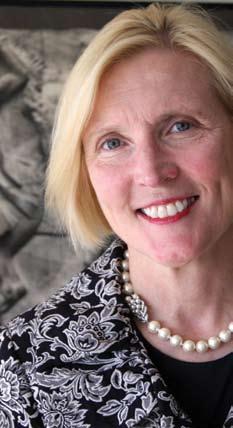
Louise Frechette’s two chickens
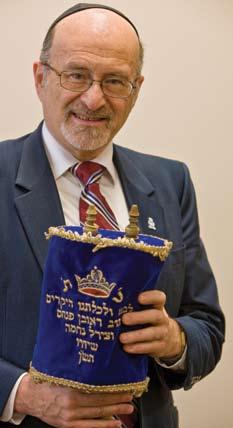
r abbi r euven b u L ka’s miniature torah
Geor G iy m amedov’s po L ar bear
r ick h i LL ier’s
aFG han honour
i man k ha L ed a bde L hamid’s
a tari G ame
m e L c appe’s roya L memento and more
Canadians on risky patrol in the Arabian Sea
Survival tips for the holiday season
Norway’s ambassador on its 17-year-old carbon tax






Well-preserved natural paradises and cities listed as Cultural World Heritage sites. That’s sensational. That’s Brazil.
Encompassing 21 islands and islets, the archipelago of Fernando de Noronha is one of the most paradisiacal sites on earth. The state of Pernambuco, in the Northeastern region of Brazil, houses another true jewel: Olinda, the second Brazilian city listed by UNESCO as a Cultural World Heritage site. Get to know Pernambuco and other must-see sites in Brazil on your next vacation. It’s sure to be an unforgettable experience.”
www.braziltour.com
Keynote speaker
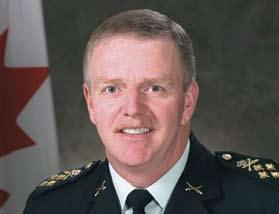
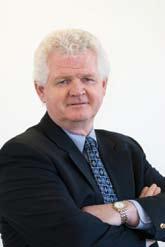
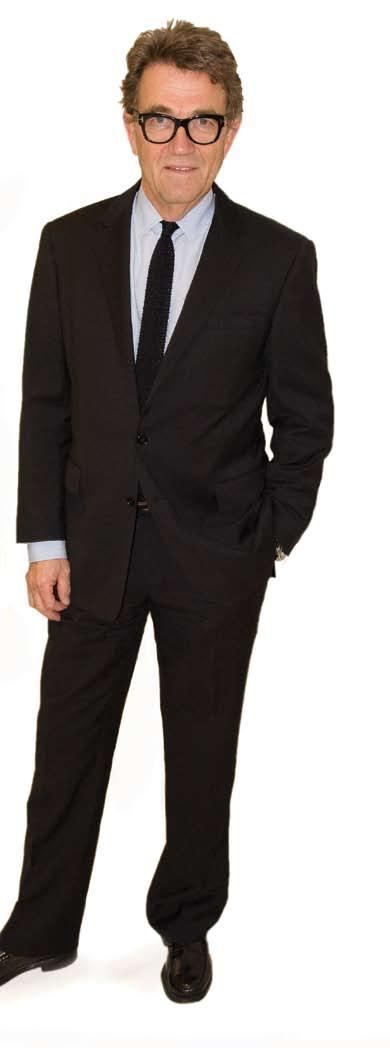
Gen. Rick Hillier
Panelists (Confirmed at press time)
Scott Taylor Editor and Publisher of Esprit de Corps magazine
Robert Fowler Special Envoy to Niger, with the rank of UnderSecretary-General in the Secretariat of the United Nations
Michael Vladars Norman Paterson School of International Affairs, Carleton University
Check our website for updates.
Proceeds from this event will go to
Journalist with CBC
Maclaren Hall, Ashbury College Tuesday, November 25, 2008, 6:30 p.m.
General admission $50 (includes refreshments and sandwiches)
VIP $75 (cocktail reception with speakers and reserved seating)
Seating is limited, so purchase your tickets early online at www.ashbury.ca/events
For information call 613-749-9630 ext. 500 or email letsdebateit@ashbury.ca









PUBLISHEr
Neil Reynolds
ASSOCIATE PUBLISHEr
Donna Jacobs
EDITOr
Jennifer Campbell
ArT DIrECTOr
Paul Cavanaugh
ADVErTISING ADVISOr
Cu Van Ha
cu@prestoncatalogue com
1-613-262-4908 or 1-416-600-4908
COPY EDITOr
Roger Bird
BOOKS EDITOr
George Fetherling
CONTrIBUTING EDITOrS
Daniel Drolet
George Abraham
CULTUrE EDITOr
Margo Roston
CONTrIBUTING WrITErS
Laura Neilson Bonikowsky
Anthony Cary
Margaret Dickenson
Fred Donnelly
Dayanti Karunaratne
Patrick Lennox
Peter Van den Weghe
CONTrIBUTING PHOTOGrAPHErS
Ulle Baum
Bill Blackstone
Larry Dickenson
Bob Diotte
Tyrel Featherstone
Frank Scheme
Dyanne Wilson
BUSINESS MANAGEMENT
Jessie Reynolds
WEBMASTEr
Leslee McCabe
DIPLOPOrTAL WEB PArTNErS www diploportal com
Alastair Sweeny
Richard Evers
(Northern Blue Publishing)
PUBLISHEr EMErITUS
Lezlee Cribb
ADVErTISING INQUIrIES
Contact Neil Reynolds or Donna Jacobs reynolds diplomat@sympatico ca jacobs diplomat@sympatico ca
SUBSCrIPTIONS
Diplomat & International Canada is published six times a year Subscription rates: individual, one year $35 70 For Canadian orders add 5 per cent GST U S orders please add $15 for postage All other orders please add $25
SUBMISSIONS
Diplomat & International Canada welcomes submissions
Contact Jennifer Campbell, editor, at editor@diplomatonline com or (613) 231-8476
DIPLOMAT & INTErNATIONAL
CANADA
P O Box 1173, Station B
Ottawa, Ontario Canada K1P 5R2
Phone: (613) 259-3038
Fax: (613) 259-5481
E-mail: info@diplomatonline com www.diplomatonline.com
Published by
Sparrow House Enterprises Inc


Verbatim: Diplomats at the UN get animated over South Ossetia
Good Deeds: U S envoy supports the NAC and meets Tony
in our cover piece, writer Dayanti Karunaratne polled diplomats, academics, writers, journalists and a retired soldier – but not about their thoughts on world peace or economic stability . Instead, in the spirit of the holidays, Ms . Karunaratne examined the universal act of giving The idea of offering gifts crosses all boundaries and everyone has a best gift story, so Ms Karunaratne asked these busy, public-spirited Canadians to get personal and tell her about the best gift they’ve ever received . We bring you 12, and if you’re so inclined, think of them as your own 12 days of Christmas . Turn to page 18 to read about Russian Ambassador Georgiy Mamedov’s chance to touch a polar bear, and retired Gen Rick Hillier’s trip to the one-time royal palace in Kabul ou’ll also find the story of former UN Deputy Secretary General Louise Frechette’s two chickens from Burkina Faso, as well as the story of Rabbi Reuven Bulka’s tiny, perfect Torah . In our Dispatches section, we bring you an update from Patrick Lennox, our correspondent and academic-turnedpirate-chaser Mr Lennox was aboard HMCS Protecteur and HMCS Iroquois this fall, Canadian elements in a fleet of warships in the Arabian Sea as part of the U . S . -led Operation Enduring Freedom . The mission had been expanded to stopping Somali pirates who had been strangling UN World Food Programme supplies sent to starving people in Somalia Dr Lennox describes the work of the Canadians and his own experiences on board in late summer and fall
We also launch an expanded books section and introduce our new books editor, George Fetherling . A novelist and poet, Mr Fetherling clearly also spends much of his time reading everything he can – from international affairs to travel He kicks off his regular contributions with an exhaustive look at books on China He also serves
up F r O nt

up a few suggestions on spy books, as well as an analysis of the dark side of globalization In all, his piece mentions 35 titles Also in our books section, contributing editor George Abraham offers a look into three books on the art of spying
Up front, we excerpt from a fascinating Security Council transcript – believe it or not, these debates do get exciting by times – of discussions in the wake of the Russia-Georgia conflict over South Ossetia . We also interview Norwegian Ambassador Tor Berntin Naess on his country’s carbon tax, the huge pension fund it has created with its oil and gas revenues and his sense of Prime Minister Stephen Harper’s feelings toward Europe
In our Delights section, we feature the story of Mona Parsons, the only Canadian woman to have been imprisoned by the Nazis during the Second World War . Parsons was decorated by the U .S . and British governments but is a virtual unknown in her native land Meanwhile, Margaret Dickenson shares her tips for entertaining during the holidays The cookbook author is just back from Frankfurt, where she received her fourth international award In a run-off of the best cooking and wine books from the past 12 years, Ms . Dickenson’s book, Margaret’s Table – Easy Cooking & Inspiring Entertaining, was recognized as the “best of the best entertaining books ”
Also in Delights, Margo Roston writes about the majestic home of Hungarian Ambassador Pál Vastagh and his wife, Liza And wine columnist Pieter Van den Weghe brings us a taste of Spain, a great but too often ignored wine-producing country . For those longing to escape the cold of Canada, our back-page travel piece takes you to Thomas Jefferson’s sunny garden at Monticello
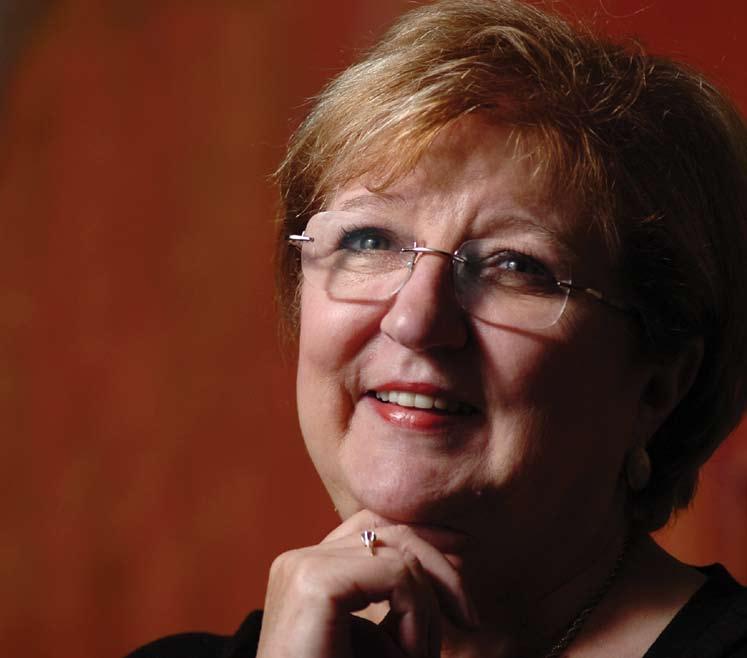
Photographing Louise Fréchette, former United Nations deputy secretary general, at her home in Montreal was a pleasure, says Montreal-based photographer Tyrel Featherstone “During the shoot a friend and fellow diplomat arrived, acting as a smiling aide for the photograph which certainly could have been a major step in getting a perfect smile ” The photographer said his subject quickly “took the edge off the shoot with her wit and sense of humour ”Now a researcher at the Centre for International Governance Innovation, Ms . Frechette kicks off our Small Gifts package with a tale of two chickens .
CO ntribut O rs
dayanti karunaratne, author of “small Gifts”

Dayanti Karunaratne is an Ottawa-based freelance journalist Since graduating from Carleton University’s journalism program in 2006, she has worked on the news desk at the Port Hope Evening Guide, the Ottawa Citizen, and the Molokai Times in Hawaii In addition to the Diplomat magazine, her writing appears in the Ottawa Citizen, Ottawa Citizen Style Magazine, Ottawa Magazine, Preston Catalogue, among others . Recently, she worked with the Ottawa International Writers Festival to bring award-winning writers to the national capital . Her favourite gift is Jon Winokur’s Writers on Writing, a collection of quotes about writing given to her by her father for Christmas when she was 14 years old Fred donnelly, author of “the presidential philosopher’s Garden”

editor
Born in Montreal, Fred Donnelly teaches history at the University of New Brunswick in Saint John . He completed his doctoral studies in British history at Sheffield University in England Widely published in various magazines, newspapers and academic journals he recently completed a research fellowship at the Robert H Smith International Center for Jefferson Studies in Monticello, Virginia . Interested in a broad range of cultural travel experiences, Dr Donnelly has recently visited 16 countries outside North America and many states in the U S Married with two grown children and two grandsons, he lives in the town of Rothesay, New Brunswick
when an international crisis – such as the recent and still-not-entirely resolved conflict in Georgia – occurs, what do the ambassadors of combatant or conflicting countries and their various allies say to one another? Do the gloves come off? How rough does it get?
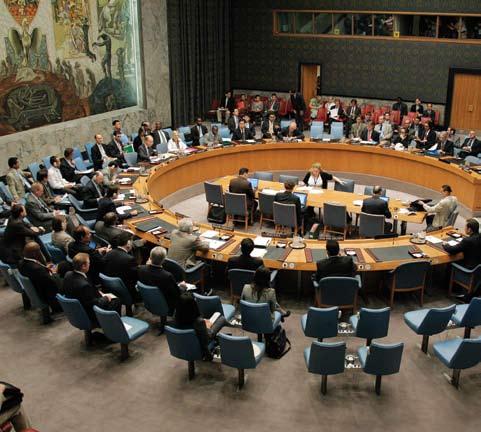
ambassadors at a un thesecurityCouncilmeetingon issue of south Ossetia, aug. 28, new York.
Below are excerpts from a two-hour, sometimes acrimonious, UN Security Council debate on Aug 28, less than a month after a war between Georgia and its South Ossetian and Abkhazia regions which quickly drew a military attack and occupation by Russia . Russia backs the two regions
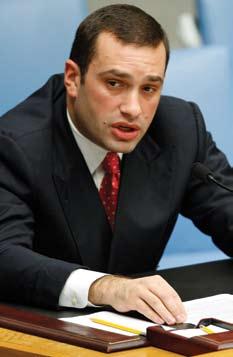
irakli alasania (Georgia’s un ambassador) [speaking before the s ecurity Council]: It is brutally evident that today we are dealing with a Russian-Georgian conflict instigated by Russian territorial ambitions against my country . The present situation and wars that took place in recent memory, and common sense, suggest that, unless confronted by the international community, Russian policies will eventually force a military confrontation elsewhere These bleak prospects are all the more unfortunate given the region’s, and particularly Georgia’s, recent political and economic progress .
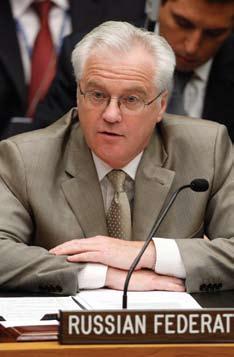
Vitaly Churkin ( r ussian Federation’s a mbassador and security Council permament r epresentative): Russia has recognized the independence of South Ossetia and Abkhazia, aware of its responsibility for ensuring the survival of their brotherly peoples in the face of the aggressive and chauvinistic policy of Tbilisi
Through the aggressive attack on South Ossetia on the night of 8 August 2008, which caused numerous casualties, including among peacekeepers and other Russian citizens, as well as preparations for similar actions against Abkhazia, [Georgian President Mikheil] Saakashvili himself put an end to the territorial integrity of Georgia by using crude and blatant military force against people whom, in his own words, he wanted to see as part of his State Saakashvili left them no other choice but to provide for their own security and to seek to exercise the right to self-determination as independent States
In that regard, we cannot fail to recall the role that was played by those who have throughout the years pandered to the
militarist regime of Saakashvili, supplied him with offensive weapons in violation of the regulations of the OSCE (Organization for Security and Cooperation in Europe) and the European Union, dissuaded him from shouldering his obligations on the non-use of force and inculcated in him a complex of impunity, including, among other things, with regard to his authoritarian actions to crush dissidents in Georgia
We know that, at specific stages, the external patrons attempted to restrain Saakashvili from irrational military escapades But he clearly was completely out of control
jean-pierre lacroix (France’s deputy un ambassador): Less than six months ago — as well as a year ago, two years ago and 10 years ago — the Council unanimously and strongly reaffirmed its commitment to respect the territorial integrity of Georgia within its internationally recognized borders A few days ago, the Permanent Representative of the Russian Federation said that recent events had “dashed” the Council’s resolutions on Georgia Such statements are of concern and are clearly contrary to the Charter of the United Nations Security Council resolutions cannot be challenged, much less nullified, by military action
sir john sawers (Great britain’s un ambassador): Let me be clear Russian military action and Russia’s recognition of Abkhazia and South Ossetia constitute a unilateral attempt to redraw the borders of a neighbouring country through the use of force It is our view that that is entirely unacceptable and unjustified It is in direct contravention of the founding principles of the United Nations and is in defiance of numerous resolutions adopted by the Council . It is also a flagrant breach of Point 6 of the agreement signed by President Dmitry Medvedev Condemnation of Russia’s actions has come not only from the foreign ministers of the Group of Seven (G7), Russia’s partners in the G8, but from many parts of the international community, as the enormous implications of Russia’s actions sink in . Russia’s decision has grave humanitarian and political implications . We have heard justifications for Russia’s actions based on the need to prevent humanitarian catastrophe But what we have seen in recent weeks is ethnic Georgians being pressured to flee from their homes in South Ossetia and Abkhazia Tuesday’s decision by Russia will encourage those in South Ossetia and Abkhazia who are bent
on violence and intimidation, and there is already credible evidence that they have accelerated their work
We call on Russia to do three things: first, to abide by international law as the basis for resolving this crisis; secondly, to act now to ensure full and free humanitarian access to Abkhazia and South Ossetia and to prevent violence and intimidation against ethnic Georgians — and that does not mean requiring ethnic Georgians to accept Russian citizenship as the price of remaining in South Ossetia; and thirdly, to implement urgently and in full its undertakings under the six-point agreement, including withdrawal of its forces to the positions occupied prior to 7 August . It is unacceptable that, over two weeks since the agreement was signed, Russian forces continue to occupy parts of Georgia well beyond the conflict zones
alejandro wolff (u s deputy ambassador to the un): Over the course of these meetings, certain facts have not changed: first, Russia’s military invasion of Georgia; secondly, Russia’s continued occupation of parts of Georgia in contravention of the ceasefire agreement negotiated by President [Nicolas] Sarkozy on behalf of the European Union; and thirdly, Russia’s disregard for Georgia’s territorial integrity We now recognize those stubborn facts for what they were: a prelude to Russia’s illegal attempt to redraw the borders of its neighbour . If this wanton effort to dismember Georgia through military force under the guise of self-defined peacekeeping cannot be condemned, the very foundations of the international order that this organization was founded to uphold will be in jeopardy.
mr. Churkin (russian Federation): If, here in our Chamber today we were to be visited, for the first time, by aliens from outer space, I am sure that after they had listened to our discussion, their hearts would be filled with pride for the members of the Security Council, for these people who are so full of principles, at how consistently they champion the principles of international law .
I must say that I in particular liked the statement of the Permanent Representative of the United States reminding the members of the Security Council that states must refrain in their activity from the use or the threat of the use of force I would now like to ask the representative of the United States whether he has found
" i understand that it is hard
FO
r s O me members OF the r ussian leadership t O belie V e that the sOV iet u ni O n is dead."
R USS i A ' S Vi TA ly Ch UR ki N :
" sO what were we supp O sed t O d O ? w as sO uth Ossetia supp O sed t O ask nat O t O inter V ene with FO r C e?"
the weapons of mass destruction in Iraq yet, or is he still looking for them? I would like to ask the representative of the United States whether we haven’t heard threats from Washington against another Member of the United Nations or to use force against that other Member and even wipe it off the face of the earth?
Now, today, Prime Minister [Vladimir] Putin, in an interview on CNN, said how he, at the opening ceremony of the Olympic games on the evening of 8 August — that was the morning of 8 August in Georgia at the height of the beginning of the hostilities of Georgia against South Ossetia — appealed to President Bush, asking the President of the United States to assist in ending the bloodshed, to which President Bush said, “nobody wants war ” But, it turns out that Mr Saakashvili did not agree with him Mr Saakashvili simply did not agree with President Bush
So what were we supposed to do? Was South Ossetia supposed to ask NATO to intervene with force? Well, NATO was busy in Afghanistan and Kosovo, and in Iraq American and NATO troops were busy, those troops could not be asked to help South Ossetia So they asked Russia, because that is Russia’s mission to show concern for the security and safety of the peoples of the Caucuses
As for the use of force, of course, it is bad to use force . But as long as that question has been raised, I once again would like to remind the Council how NATO armed forces were used in Kosovo Incidentally, Georgia has closed its radio and television channels, excluding everything except Georgian information, and is continuing to broadcast anti-Russian propaganda .
Did we bomb the television tower in Tbilisi? No . But NATO, on one of the first days of the war, went off and bombed the television tower in Belgrade, because they did not like the kind of broadcasts that were being transmitted They spared neither Serbian nor foreign journalists So that is the use of force for you
mr. alasania (Georgia): I suppose that most members of the Security Council expected the Georgian representative to become emotional However, today we see the representative of the Russian Federation becoming very emotional about the facts, about the legal analysis and about the consequences of this meeting I would like to say that I feel that he is a very honest man who does not really feel comfortable with
the arguments supplied to him from his capital to respond to the arguments of the majority of the members of the Council Those arguments were only intended to denounce as illegitimate the actions carried out by the Russian Federation
First, all the historic and legal analyses are set against the backdrop of the Soviet Union I believe it is very clear that 90 per cent of the population of Georgia voted in the referendum on independence, with 61 per cent of the Autonomous Republic of Abkhazia also voting for the independence of Georgia from the Soviet Union I understand that it is hard for some members of the Russian leadership to believe that the Soviet Union is dead . You can do nothing about it . As much as you wish it, you cannot resurrect the Soviet Union by recognizing parts of the State of Georgia
So, clearly, this all was pre-planned I think we should not judge the events starting from what happened in August Just remember: a year ago, when in the Security Council we were cautioning and alerting members of the bombardments by the Russian Federation on Tsitelubani, very
close to the vicinity of the South Ossetian conflict zone Then, Council members, you will remember that insurgents, led by Russian Special Forces officers, were detained and neutralized by Georgian forces inside Abkhazia, Georgia You will remember how authoritatively we were sounding the alarm that there was an imminent threat against Upper Abkhazia, Georgia, just a few months ago, and that infrastructure was being built by the Russian Federation precisely to accommodate their offensive military operation, namely the building of the railroad infrastructure which, as we were saying, was unfortunately used to occupy my country, to attack Upper Abkhazia and to ethnically cleanse Georgians from Upper Abkhazia .
m r. w olff ( u s .): I was not intending to take the floor I am not psychologist, and I do not know what brought on the free association we heard from Ambassador Churkin
There are eight members of this council that have recognized Kosovo, eight members that concluded that recognition was the right thing to do None of them did it
under the cover of force, as we have heard There is a body of resolutions related to Iraq, which we are all quite familiar with, and violations of those resolutions over many years There were divisions on the Iraq war, those are well-known We thought we had overcome them . Apparently there seem to still be some lingering frustrations . But there is no territorial ambition or desire to dismember Iraq As for Afghanistan, we have a coalition in place trying to consolidate a democracy — again, with no territorial ambitions — and trying to help the democraticallyelected government
We have heard specious comparisons before . They cannot detract or deflect from the facts before us, and those remain very clear As I have said before, facts are stubborn things Russia invaded Georgia, Russia is occupying Georgia, and under that occupation, Russia is dismembering Georgia, in full disregard of that country’s territorial integrity No amount of effort to compare it with completely unrelated and dissimilar situations can excuse that .
– Compiled by Donna Jacobs






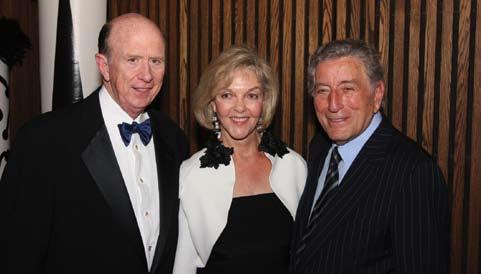
when Tony Bennett came to Ottawa in October to play to a sold-out crowd at the National Arts Centre Gala, it represented the culmination of more than three years of cooperation between the NAC’s Summer Music Institute and U S Ambassador David Wilkins and his wife, Susan
Mr and Mrs Wilkins met the legendary crooner in the Salon at a VIP reception before his performance Oct . 4 . But, for this fundraising gala, they’ve done more than shake the guest star’s hand . Each fall, since they arrived in Canada in June 2005, they have hosted a private cocktail reception the night before the annual gala, for sponsors and donors The reception takes place at their Rockcliffe residence and they provide the nibbles and the wine
Supporting music programs for youth is something that’s important to the couple, particularly Mrs . Wilkins
“In my wife, Susan, you have a big supporter in programs which focus on encouraging the talents of children and young people,” Mr Wilkins said “We have been honoured to support the National Arts Council in activities such as the Summer Music Institute . We’ve been happy to invite them to our home, and salute their work ”
From the beginning, they’ve also been strong supporters of the National Arts Centre’s Summer Music Institute (SMI), which is funded through the Gala-supported National Youth and Education Trust The trust provides support to an array of artistic and educational programming the NAC undertakes for young Canadians .
This year’s gala raised $835,000 for the trust and included an announcement of a “Pinchas Zukerman 60th birthday scholarship fund” with a $60,000 gift to support international scholarships for the Summer Music Institute Mr Zukerman is the musical director of the National Arts Centre Orchestra .
The NAC has been grateful for the support of Mr . and Mrs . Wilkins .
“His Excellency David H Wilkins and Mrs Susan Wilkins have been fervent supporters of the NAC Summer Music Institute (SMI) for several years now,” said Jayne Watson, director of communications for the NAC “They take a keen interest in the students in particular and love to hear first-hand of their experiences in the SMI .”
In the summers of 2006, 2007 and 2008, the Wilkins opened their historic Rockcliffe residence to SMI participants, faculty and donors with a reception in their honour
“The purpose of this annual event was to celebrate the SMI, thank those individuals and corporate representatives who had given so generously to the SMI,” Ms Watson said “Ambassador Wilkins traditionally speaks from the grand staircase and thanks all those who support the program, and honours the students, faculty and SMI administration His words are always warm, heartfelt and meaningful to everyone ”
Ms Watson said Mr and Mrs Wilkins always greet each student personally and ask him or her where they are from, and about their experience at SMI

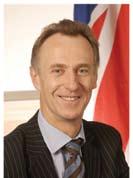
bFirst name: Anthony
last name: Cary
CitiZenship: British presented Credentials as ambassadOr: Feb. 7, 2007
preViOus pOstinGs: Sweden, Malaysia, United States
ritain’s relationship with Canada has changed in many ways over the years – but it has never ceased to be the “healthy and cordial alliance” that John A Macdonald once described . That is partly because we retain close ties of blood – not just of Canada’s early settlers, but of a steady migration ever since There are perhaps a million firstand second-generation British nationals living in Canada, and some 850,000 British visitors every year .
In part, it is because of our busi -
ness links The UK is the second-largest investor in Canada with foreign direct investment of $39 billion Canada, for its part, has more than $59 billion invested in the UK, making it the third largest investor there . Bilateral trade in goods and services is worth about $20 billion in each direction, and the UK is Canada’s second-largest export market
But it goes much wider than that Britain and Canada share a common outlook, too We are Commonwealth partners . We are allies in NATO . We fight shoulder to shoulder in Afghanistan We are both members of the G8 We co-operate naturally and easily
And we are about to share yet another experience Canada and the UK are next in line to host the Olympic Games: Vancouver in the spring of 2010, and London in the summer of 2012 .
In its winning bid to host the 2012 Games in London, Britain declared its ambition to host “an inspirational, safe and inclusive Olympic and Paralympic Games” which would “leave a sustainable legacy not just for London but the whole of the UK ” And that is what we shall do The legacy will be wide-ranging – extending far beyond sport to wider aspects of society, education and health We see the Games as a wonderful opportunity to introduce the world to modern Britain: a place of diversity, a nation open to the world, a Britain grasping the challenge and the opportunity of the shift to low carbon, an economy offering companies a springboard for global growth
Canada, too, has high ambitions for Vancouver 2010, and looks for a long legacy from its Games And there is much we can do together to help one another achieve our ambitions .
That is why, in February this year, UK Trade and Investment signed a memorandum of understanding with the Ministry of Economic Development in British Columbia providing for consultation, co-operation, and the sharing of best practice on the “economic legacy arising from hosting an Olympiad .” The Games offer

a catalyst and an inspiration for businesses to grow and globalize And that means almost all businesses – not just those in the obvious sport-related sectors
As Lord Digby Jones noted when he was in Vancouver to sign the agreement, the economic potential is tremendous, and the opportunities that will flow from the Games can be maximized if we work in partnership
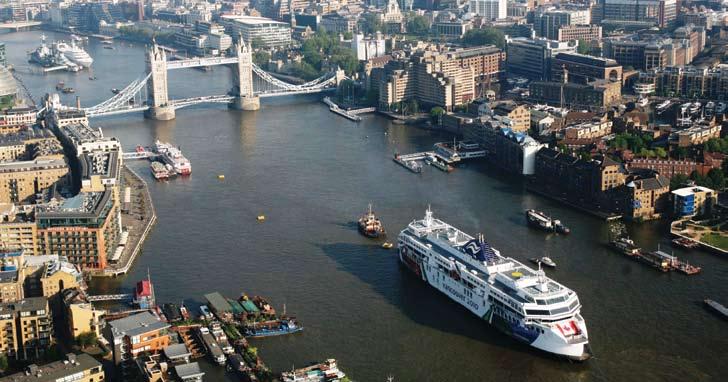
That partnership has already begun In July, for example, a B C Ferry, newly built in Germany and wrapped in Vancouver 2010 signage, was anchored in the Thames en route to its commissioning in Vancouver And UK Trade and Industry has launched the Host2Host program to encourage alliances for mutual business benefits . Canada is the first partner in this program
But beyond business opportunities, we want other lasting effects The Games will be a time when the eyes of the whole world will be focused on modern Britain, and what it represents “Sustainability” will be a London Olympics theme with five aspects: combating climate change; reducing waste; enhancing biodiversity; promoting inclusion and improving healthy living
We already have ambitious national targets in all these areas, and in others more specifically related to the Games To take one example, the Olympic Delivery Authority, which is the public body responsible for developing and building the new venues and infrastructure for their Games and their use post-2012, has undertaken to recycle or re-use 90 per cent of materials being cleared from sites as it designs Olympic venues and parklands It recently confirmed that it was beating that target
As 2010 draws closer, we shall be seeking to learn and benefit from Vancouver’s experiences in the lead-up to your own Games, in the conduct of them, and in the aftermath We have been deeply impressed by your preparations, and I have no doubt we can draw lessons from your example The formal and informal mechanisms now in place to share information and experience will help us meet our goal of an inspirational, safe and inclusive Olympic and Paralympic Games in 2012, with a sustainable legacy not just for London but the whole of the UK
Apart from all that, it would be nice if we could both win some medals – and I wish Canada every success
Anthony Cary is Britain’s high commissioner

mbassador tor berntin naess, a career diplomat, came to Canada three years rior to that, he was a special advisor in uropean department of foreign affairs. n the wake of an election where a proposed carbon tax was a major issue, Diplomat ediennifer Campbell interviewed him to get his views on that and to find out how orway pulls off all of its enlightened energy policies.
iplomat magazine: I wanted to ask you about Norway’s energy policy and how it, as an oil exporting nation, deals with the revenue that these exports generate erntin n aess: Well, we are well-off economically We found oil in the 70's Since then, we have had an increased production of oil . The oil production is [at its peak] now, it will start to be reduced from now on We still have lots of gas in the north of Norway
Norway’s handled its oil wealth in a totally different way than CanYou’ve taken oil revenue and put it into savings . What does that say about Norwegians that they were will-
There was a long discussion about how to spend the money from this resource and it was decided and accepted by the people that this was wealth not only for the people living in Norway then but also for their children and their grandchildren, It was very difficult to take that decision but since then, more than 90 per cent of all income from the sector has been given to the pension fund That fund is growing and is now the biggest pension fund (worth $452 billion Cdn), in the hands of one owner It is a discussion every year about whether they should take money from the energy sector to use for infrastructure, in the health or education sectors but so far, they have been able to stay with the decision from the early 70's . It has been very difficult but we have always had strong governments
Is there a lesson for Canada there?
Yes, we think so I can see there is an interest in Canada about our resource management and the way we have spent I have met with local author-
ities, Norwegians, universities, students across the country . I inform them about our energy sector . Some Canadians know about it, but very few . Most people are impressed because it’s very different than how the money has been used in Alberta I remember one comment from a provincial minister in Alberta, as reported in the Globe and Mail, saying ‘We have nothing to learn from Norway ’
We are the sixth biggest producer of hydropower – there, Canada is bigger than Norway. We are the fifth biggest exporter of oil in the world; we are the third biggest gas exporter in the world We export gas by pipelines to Western Europe and we export liquid gas to North America from the northern part of Norway on tankers
dm: You have had a carbon tax since 1991 . Was it a battle to get people to accept it?
tbn : It was accepted . We know that we have lots of carbon that we produce and [because of this] it was accepted We have a government that is very strong on environment And now that we have a challenge with CO2 emissions from the energy sector, people understand they have to take some responsibility.
dm : Would Stephane Dion have been elected in Norway?
tbn : (Shrugs) I know that my minister went to Montreal (for the UN Climate Change Conference) in December 2005 when Stephane Dion was environment minister and she, and we, were impressed with him then .
dm: Is it fair to say the carbon tax wouldn’t have killed Mr Dion in Norway?
tbn: No, I don’t think it would have It is an issue that is important in Norway And we have a very strong environment minister He’s minister for environment and international development at the same time
dm: What’s the most pressing issue you’ve dealt with since arriving in Ottawa?
tbn: Ever since I arrived, I’ve been hearing of the ‘upcoming election ’ It’s been constant [Canada] had an election in 2006 and, ever since, [Canadians have] been talking about the upcoming election Yesterday, we had the election and today, they’re talking about an upcoming election again .
dm : So that’s what’s dominated?
tbn : Yes, that is what I will remember from political life in Canada It dominates my impression We used to be very close, Canada and Norway We have worked very closely together in multilateral fora and that’s been a tradition for many years . During my period here, I don’t feel we have been so close . The interest for Europe in Canada has not been the same as it used to be Peace and reconciliation is very important for Canada still but it’s not like you used to work It’s a change It may depend on the minority government and looking forward to elections You have a Conservative government that’s not so close to the centre-left government we have in Norway.
dm: On the subject of trade, what’s Norway’s position on a Canada-EU trade agreement?
tbn : We are following it very closely We have now, finally, concluded a trade agreement between Canada and EFTA countries (Norway, Switzerland, Iceland and Liechtenstein – all non-EU members) that has not passed the Parliament, because of the election, but that has been on the agenda for more than 10 years We have negotiated, finalized the negotiations, we have signed the agreement but it needs a final ratification
dm: You enjoy some of the EU privileges . In the unlikely event that Canada signs with the EU first, do you benefit?
tbn: Yes, we are a part of the EU single market without being a member I am actually surprised to hear of all the trade restrictions between provinces in Canada That said, I have to remember that Canada is so huge
dm: Is there any point in Norway becoming a member of the EU?
tbn: Not at this point It’s difficult to explain why The distance from the north of Norway is so far It’s mentally far Then we have resources, which we’re very careful with, and we are among the founding fathers of NATO, so security policy in Norway is not the reason for being a member . And, we have been very well off so we didn’t need the EU for economic reasons which may have been the case for other countries There are reasons for being alone, but at the same time we feel very much alone Our relations with the EU say that we have to follow up on many decisions they take at the EU, but we’re not at the table We do take part in some meetings but we don’t have a vote .


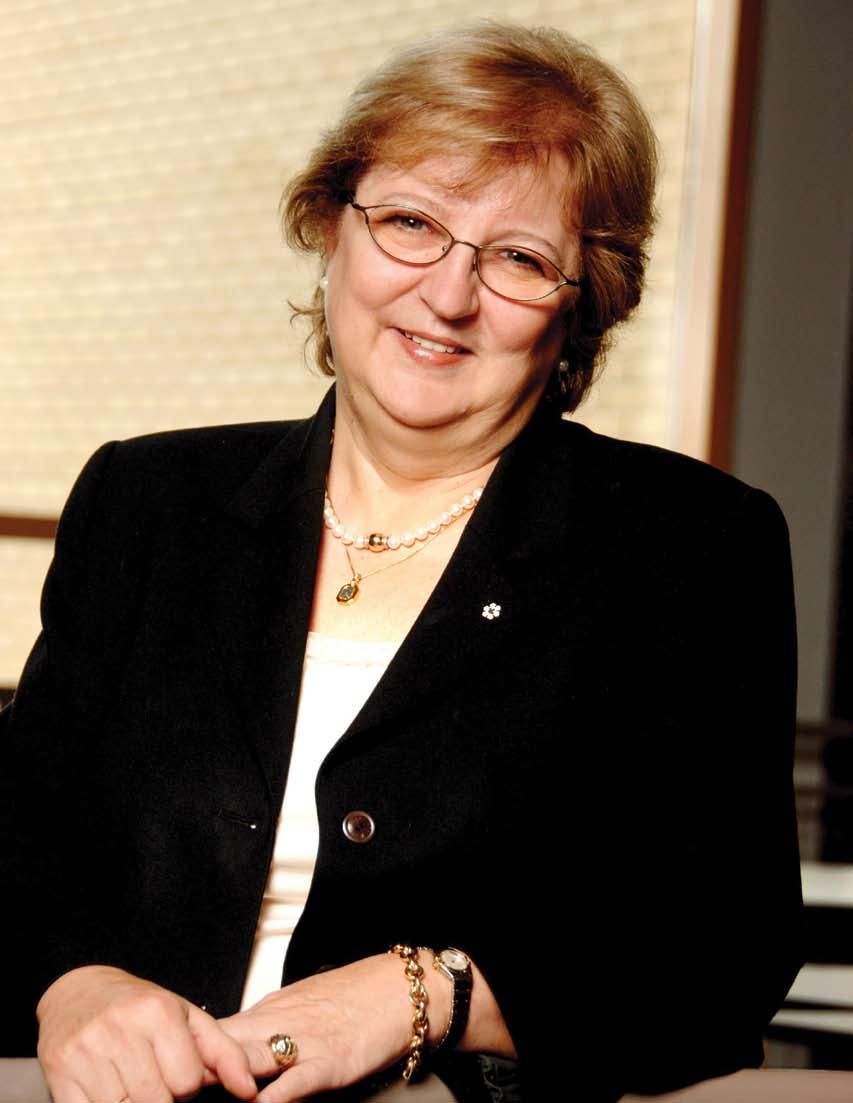
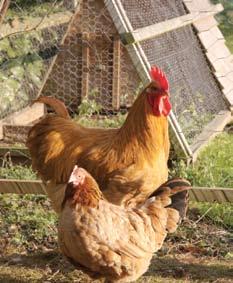
Former United Nations Deputy SecretaryGeneral louise Fréchette was touched by a gift of two chickens she received from women in a UN micro-credit program in Burkina Faso.
By Dayanti Karunaratne
Giving is a universal language . It crosses the world and runs through all religions . The giving of gifts during the holiday season can mean many different things . Some people put a lot of thought into special presents for their loved ones, while others opt for charitable donations in their name instead . Others, who still exchange gifts in the traditional way, acknowledge that it is really experiences that make the holidays memorable, experiences that can be seen as unassuming gifts in and of themselves .
To salute the holidays, we’ve collected some tales of favourite presents from the past . Whether for Christmas, Hanukkah or Eid, whether the gift is a professional token of appreciation or child’s toy, these stories reveal the power and potential of the giving spirit .
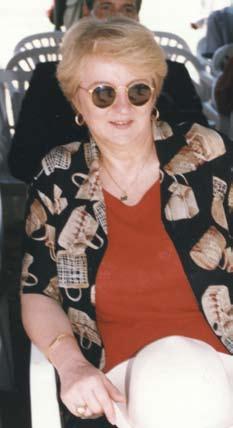
When Louise Fréchette was the United Nation’s deputy secretary general, she found herself in the awkward position of being unable – in more ways than one – to accept a gift .
In 1998, she was visiting a village outside the Burkina Faso capital of Ouagadougou, where she had helped establish a microcredit program for women “They showed me what they did with the money, which was very touching because they were minute amounts,” explains Ms . Fréchette, who now works at the Centre for International Governance Innovation .
“At the end, I had a session with all the women … and then I was given two live chickens! Now, I’m a city person I’ve never held a live chicken in my hand!” says Ms Fréchette She was rescued from her embarrassment by a member of her staff who knew the custom, and took the chickens away.
“And then we found a way to return them discreetly to the village people who needed them more than I did
“That was quite a touching event, and one I will never forget Because a gift is a gift and those people were very, very generous and this was not a symbolic gift This was a great honour that they were giving me .”
russian Ambassador Georgiy Mamedov says he’s received “lots of fancy stuff” in his years of service to his country, but the most exciting gift for him was an extraordinary opportunity in Churchill, Man , when he travelled to the northern port a couple of years ago for the inauguration of a shipping line between Murmansk and Churchill
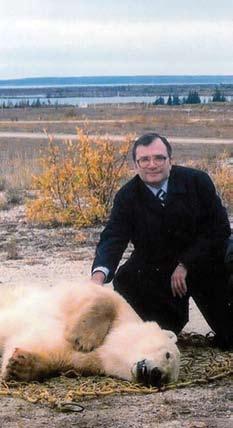
“Everyone was excited on the ground and they suggested I look around,” Mr Mamedov recalls, “and the most interesting things there are all those polar bears .” It would be his only chance to see them up close, so his tour guides suggested a trip to the “polar bear prison ”
But on visiting the huge prison, his hosts had a surprise “They suggested that I should pet one of them Can you imagine? One would never dare to come close to this terrible carnivore,” Mr Mamedov says .
“I thought it was a joke but they said ‘no, we’re serious .’” The next moment, the ambassador was out of the car, approaching the beast
“It was a beautiful, sunny day in late autumn and here he was, a sedated, huge polar bear – with open eyes,” Mr Mamedov says, his voice quavering as he relived the memory.
“They told me he can see me and he
understands that I am the prey, but he can only keep his eyes open and breathe slowly, that he can’t move at all,” he explains, adding that he was “trembling” as guides took the photo . “I saw many things in life but never did I imagine that I would come close to a polar bear And it was a very special feeling – his fur is not like fur for a hat or coat It’s very tough,” he says
“So I patted him on the head and later they sent me a photograph with your humble servant [Mamedov] kneeling, patting this huge, terrible, terrifying polar bear . ” This photo is now the highlight of his collection at his home in Moscow, where he can share it with his grandson
Similarly, it’s life-changing moments that also make the best gifts for United States Ambassador David Wilkins For him it’s experiences ranging from those in private at home to very public events that have made Christmas memorable
Mr Wilkins and his wife, Susan, adopted their first child in 1975 just 11 months before his wife gave birth to their second child “When you think back to that first Christmas with your first child … it’s a memory that lasts a lifetime ”
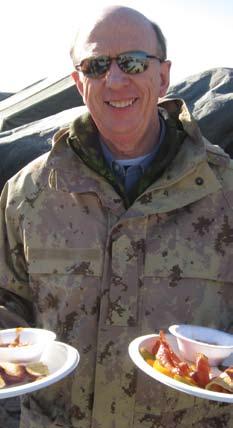
Last year, Mr Wilkins received another Christmas gift experience, an opportunity to visit Canadian forces in Afghanistan .
“It was really awe-inspiring,” says Mr Wilkins “It made me so thankful that I live in North America – and so thankful for the people that go abroad and put themselves in harm’s way.”
Mr . Wilkins spent Christmas Eve, Christmas Day and Boxing Day in and around Afghanistan, including remote operating bases, serving Christmas dinner with Gen Rick Hillier and Defence Minister Peter MacKay, and generally having an eye-opening trip
Despite being away from his wife and children for the first time in many years, “there wasn’t a place I’d rather be more,” Mr Wilkins says, “because it truly had a profound impact on my life ”
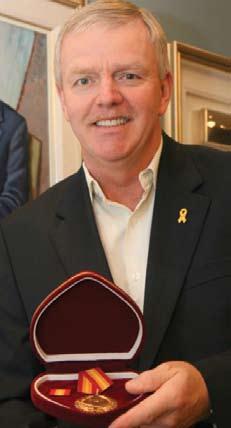
Afghanistan also had a profound effect on retired Gen. rick Hillier, who received a special gift on August 8, 2004 – the day before he handed over command of the NATO mission in Afghanistan to his successor .
“President Karzai invited me to the Presidential Palace in Kabul for lunch and informed me that Afghanistan owed me a debt,” says Gen Hillier, recalling that the president said “he appreciated my service and wanted to award me a medal, but a medal so important that the ‘father of the country,’ the former king, who at 91 was
living in the same compound, would present it to me that night ”
With great anticipation, Mr Hillier and his friends Col . Bill Brough and Canadian Ambassador Chris Alexander went to the palace .
“We met the former king and his sonin-law – who was 82 himself,” says Gen Hillier of an evening that saw the group enjoying each other’s company in French, English, Dari and Pashto
“Then, at the appropriate moment,” recalls Gen . Hillier, “the former king got to his feet, and, in front of the press and television cameras pinned the decoration for meritorious service on me, a boy from Newfoundland Surreal!”
For Mr Hillier, this moment just barely surpasses the silver stick he received from the Toronto Maple Leafs that made him an “honourary Leafs alumnus ”
A similar gift of recognition tops the list for Carleton University President roseann runte Ms Runte says these honours are important to her because they are designed to continue her legacy of engagement and education
“When I was leaving Victoria University eight years ago,” recalls Ms Runte, “a group of women – teachers and colleagues, all friends of mine – got together
and they created a scholarship in my name ” Ms Runte served as president of Victoria University, at the University of Toronto from 1994-2001 .
“And they weren’t wealthy people, [but] they created this scholarship for a student at the university,” explains Ms Runte, “and I just thought that was the nicest gift anyone could possibly imagine ”
Especially important to Ms Runte was the scholarship’s goal – bringing dedicated teachers into the profession . “We always need good teachers, and there aren’t that many encouragements to go into the field of education,” Runte says “A lot of people think of going into medicine or law, but not that many people want to go into education ”
More recently, the administration at Old Dominion University in Virginia, where she had spent seven years as president, wanted to honour Ms . Runte by naming a building after her .
“I said no! I’m too young for that!”
But she relented in part and agreed to let them name the campus quadrangle in her memory – with one condition, that the university ask everybody using the quadrangle “to say hello to other people, so that it is a place where nobody is lonesome because everybody says hello to you . ”

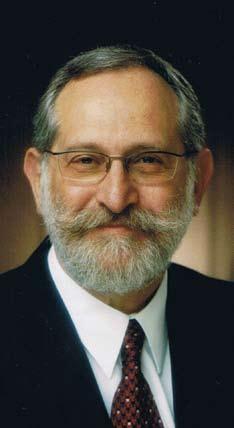
For religious leaders like rabbi reuven Bulka, special gifts are those with sacred power And while Rabbi Bulka insists that his family and congregation are gifts in themselves, one tangible present stands out as the best .
“It’s an entire Torah scroll, the sacred scroll of parchment that has the five books of Moses,” says the Jewish leader, who received the gift – there was no special occasion – about 15 years ago from his late father
“It’s a miniature one, but it’s perfectly legitimate,” explains the rabbi . “It’s usable, and it’s a great thing to have . There are occasions that it’s a custom to carry it around and I am able to give it to people who are, say, a little bit older and don’t have the strength to carry a heavy one ”
This gift is not only sacred, but also reminds Rabbi Bulka of his father “He was not a wealthy man, but when he knew that [the small Torah] was available he basically saved up in order to get it . So the whole thing in terms of his thinking … has so many components of parental love and care ”
Ottawa’s new imam, Khaled Abdelhamid, also instills religious meaning into the exchange of gifts . The festival of Eid at the end of Ramadan, for example, al-
ways includes giving children sweets – or money to buy sweets – the imam explains Older family members give the gifts, called Eidia, to the children over the course of the day as a form of prayer . “After that sometimes we go outdoors and let the children play games,” Imam Abdelhamid says “When you have joy on this day, you worship Allah,” he explains “We thank Allah to have the chance to attend the holy month ”
And while Imam Abdelhamid counts every Eid gift special because it was imbued with thankfulness from his loved ones, one present stands out in his mind . “It was before computers,” the imam recalls, “but it had a lot of games in it It was electronic – an Atari That was really something ”
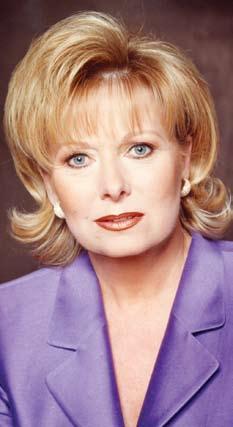
Other times just the fact that someone close to you considered your taste and passion and took time to choose accordingly can really have an impact . This is the case for Pamela Wallin Despite a life of touring the world as journalist, diplomat and public speaker, an image of her hometown holds the top spot in her heart when it comes to gifts
“I once received a painting by Murray McLachlan” Ms Wallin says . “Even though he’s known as a musician, his first
love was painting
“It’s called 20 kilometres outside Wadena,” she says of the landscape “Apparently he was touring the region, as painters do,” she explains, “and, totally unbeknownst to me, he passed through my hometown .” While there, Mr McLachlan painted 20 kilometres outside Wadena
Described as a contemporary version of a work by Doris McCarthy – a student of Group of Seven painter Arthur Lismer –the painting hangs proudly in Ms Wallin’s Toronto home . “It was special to me not only because Murray is a good friend,” Ms . Wallin says, “but also because it was connected to my whole life ”
Mel Cappe , who now works at the Institute for Research on Public Policy, received many gifts when he was high commissioner for Canada to the UK And though twin vases and expensive bottles of scotch were appreciated, a personalized gift he received a couple of years ago tops them all
“It was 2006, when I was leaving my position as high commissioner to the UK,” Mr Cappe says, “that I received my most exotic gift
“It was from Prince Edward, Earl of Wessex . He called me in when he heard that I was leaving and he presented me
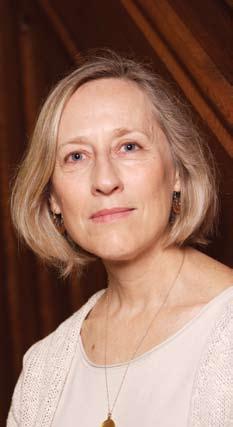
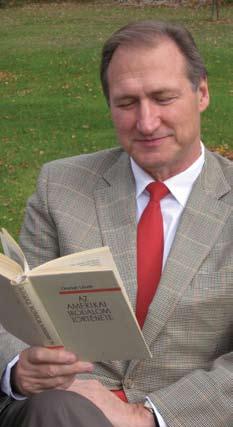
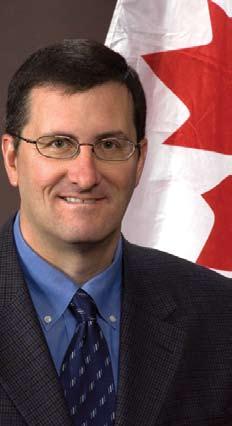
with a wrapped box ” In it was a framed, signed photo of the prince himself “And since I am such a royalist,” Mr Cappe says, “I thought that was pretty special . ”
Well-chosen gifts can also spark the imagination, affecting a person for years to come When author Elizabeth Hay was a child, gifts were few and far between, and usually utilitarian, like clothing “And then, when I was 13,” Ms Hay says, her voice slowing down to savour the memory, “my uncle in Pennsylvania sent me a recording of Die Fledermaus, the operetta by Johann Strauss, and I was just thrilled by that ”
The author, who was born in Owen Sound, Ont , describes the gift as “very special, personal and thoughtful I hadn’t ever had a gift like it before I hadn’t even been given a book before – we used the library when I was a girl!
“So to receive this album was really, really thrilling,” Ms . Hay says, “and the music transported me, it was so beautiful I think after that, I began to hope that I would be orphaned,” the author laughs, “so that I could go and live with my uncle ”
More recently, Ms Hay read about a Venezuelan orchestra that teaches poor children to play classical music . The story
reminded her of her uncle’s gift “The brains behind this, a man named José Antonio Abreu, made the point that to deprive the poor of great high art is a terrible form of oppression,” Ms Hay says . “And it just rang so true to me, especially given the experience I had when I was 13 ”
Gabor Csepregi, president of Dominican University in Ottawa, who was born and raised in Hungary, has similar feelings about children’s Christmas gifts due to a gift he received as a young man . “We received only one single gift,” during his boyhood Christmas mornings says Dr Csepregi, “and it was very small, either a car or a small train – not a whole set, maybe just an engine – or maybe a book later on
“And I still cherish very much a book I received when I was 17,” he recalls It was The History of American Literature by Orszagh Laszlo “After that I read Mark Twain, John Steinbeck, Thorton Wilder in greater interest ” Dr Csepregi still has that book – and continues to read the books of Twain, Wilder and other American greats
Because of this, he now believes in gifts that allow children to “step a little bit further .” In this way, he says, “it’s not only a present for the present, but also a present
for the future
“I think that we should not be afraid of giving children books, so they can learn how to read and expand their imagination and their emotional world .”
On the other hand, some reach a certain age and decide they have received enough gifts For Fen Hampson , director of the Norman Paterson School of International Affairs at Carleton University, Christmas is about finding new ways of giving
“Every year since the mid-’90s I get a cheque from a close family member for Christmas,” Dr . Hampson says “It’s payable to the charity of my choice ” Last year he donated the money to the Ottawa Humane Society “But it changes from year to year It’s gone to help homeless people, one year it went to the Shepherds of Good Hope
“At a certain age we all realize we have far too many possessions,” Dr . Hampson explains, “and that it’s much nicer to give something to someone else that they can give to someone who really needs it I think it’s a tradition that maybe we should all try to emulate ”
Dayanti Karunaratne, who graduated from Carleton University in 2006, is an Ottawa writer and editor .
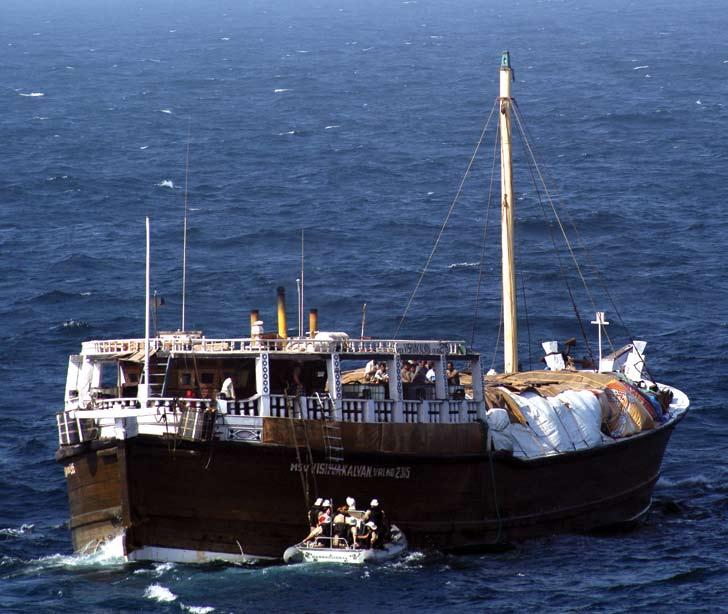
i t’s not just a fghanistan that occupies Canadian forces personnel – Canada is also taking the lead in the arabian sea
By Patrick Lennox
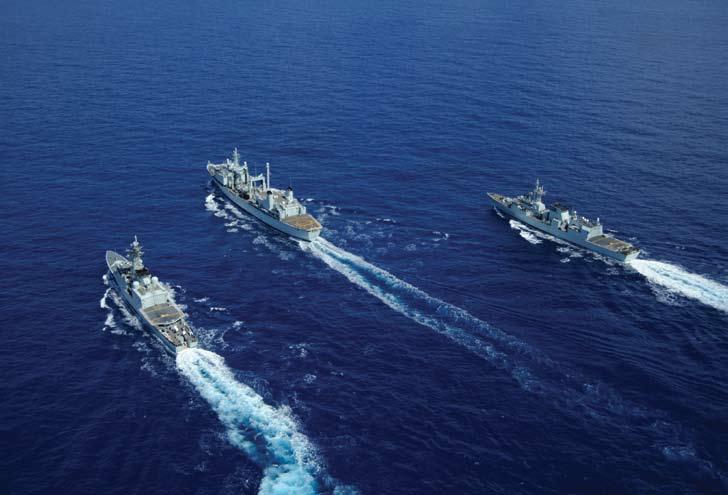
way back in mid-April, 850 Canadians on board three Canadian warships left home ports in Esquimalt and Halifax, met up in the Caribbean Sea, had a few beers and a few laughs in San Juan, Puerto Rico, and headed across the Atlantic, through the Straits of Gibraltar and the Mediterranean Sea, through the Suez Canal and the Red
Sea, through the Strait of Babel Mendeb and finally into the Gulf of Aden and the Gulf of Oman—the two main regions of the Arabian Sea
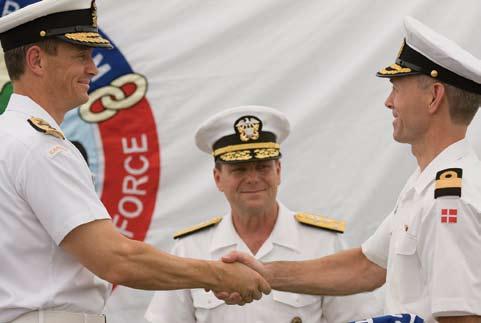
Along the way, in early June in Aqaba, Jordan, Canadian Commodore Bob Davidson and his staff on board HMCS Iroquois took command of a multilateral coalition of warships known as Combined Task
Force 150 that has been operating in the Arabian Sea as part of the American-led Operation Enduring Freedom Comm Davidson took over from the French Navy’s Rear Admiral Jean-Louis Kerignard Some 105 days later, during the Muslim holy month of Ramadan, Comm Davidson would pass the baton to the Danish Commodore Per Bigum Christensen at a spec-
tacular ceremony in Manama, Bahrain
Although it generated fewer headlines than the concurrent mission in Kandahar, Afghanistan, this was nevertheless one of the most significant deployments of the Canadian Forces since 9/11 I had the unique opportunity to see a good portion of it first-hand .
In my last article for Diplomat, I wrote about the first leg of this deployment Recounting my experiences embedded with the crew of HMCS Iroquois, as we sailed from Halifax down into the Caribbean Sea to meet up with Protecteur and Calgary on the eastern side of the Panama Canal, I expressed optimism about the future of the mission – a sentiment very much in tune with the crew’s thinking back in April .
I flew home from San Juan in early May to fulfill some obligations at the Centre for Military and Strategic Studies where I work, and to teach a class on Canada and World Politics at the University of Calgary As soon as I finished in mid-August, I flew to Dubai I was met at the airport by a woman who was part of the Canadian task group’s forward logistics staff . She was holding a sign with my name “Dr Lennox, I’m Alex and I’ll be driving you to Fujairah ”
I thought I was headed for a muchneeded night’s sleep at the Hotel Intercontinental and then off to Muscat, Oman, the next day to meet the ships . But plans had changed while I was in the air . Fujairah is a two-hour drive through the desert from Dubai Six years ago, it barely existed, but it is now a rapidly-growing, commercially-aggressive new Middle Eastern city that has sprung up wildly and almost randomly out of the desert sand HMCS Protecteur , the West Coast supply ship, would be alongside the jetty there until the 23rd of August .
During the drive to meet up with the crew of Protecteur , Alex provided some insight into how the deployment had been going “People are frustrated,” she said “There’s not much going on out there ”
The summer months in the Arabian Sea correspond with the monsoon season – a time when the sea swell kicks up about a meter and deters dhows from venturing out on long journeys . In particular, traffic from the Makran Coast of Pakistan to Yemen – a route frequented by drug smugglers and known as the “hash highway” – is significantly reduced during this period of the year
Dhows are the 18-wheelers of this region . They are a main mode of transportation for all types of goods – from food to
automobiles to livestock—and are also commonly used for fishing With their antiquated hull design – long, usually about 100 feet, and narrow – and their wooden frames and ornate paint jobs, they look like relics from the 18th century Most dhows, however, have very modern engines and are equipped with the same sort of global positioning systems and
navigational radar technologies as a warship . Accordingly, they are the vessel of choice for the transportation of heroin and hashish and arms because they are nearly impossible to search by hand while underway, and because they blend in well with a high percentage of the legitimate maritime traffic in the Arabian Sea
With so few dhows on the water during monsoon season, the operational tempo was expected to be somewhat reduced during the time Canada would command CTF 150 This expectation was indeed borne out After over two months in the patrol box doing seemingly nothing, the sailors on board Protecteur were seriously questioning why Canada had chosen to make such a large contribution to this region at this time in the year . The questioning and confusion reached from the lowest ranked seamen on the ship all the way to the officers in the wardroom
Commodore Davidson explained his sense of the mission in a “Town Hall” meeting given on board Protecteur in late August The deployment was about four things: maritime security, maritime influence, theatre security cooperation and public affairs Each of these was interrelated to some extent with the other Creating a more secure maritime environment in the region leads to greater influence within it, and part of this effort must involve the cooperation of regional navies and coast guards Getting the message out to people here and taxpayers back home that Canadian ships are in these waters
to perform good deeds is essential to the success of the mission, to the realization of Canada’s foreign and security policy goals, and, ultimately, to the future of the Canadian Navy To this end, between early June and mid-September, CTF 150 conducted 14 boardings of suspect dhows, visited 18 different ports in the region, and intervened in eight separate instances wherein the safety of life at sea was in jeopardy Lives had been saved, relationships had been made, partnerships had been formed and nurtured in the region, and drug runners had been deterred
On top of this, HMCS Ville de Quebec , which originally had been deployed on a NATO mission in the Mediterranean Sea, was re-tasked to the Horn of Africa region to escort UN World Food Program vessels from Mombasa, Kenya into Mogadishu, Somalia CTF 150 would now, in relation to this, be shifting the bulk of its assets to the Gulf of Aden in an effort to combat the growing problem of piracy off the coast of Somalia . The refocusing of the mission on this issue of piracy was welcome news . It gave new life to Protecteur’s crew, as the possibility of making a difference on this issue appeared very real, indeed Canada had recently signed on to the United Nations Security Council resolution which had created a mandate for the warships of countries working with Somalia to enter its territorial waters in pursuit of pirates . People were starving in Somalia, and this was only being exacerbated by the inability of relief from the World Food Program to get supplies past Somali pirates into Mogadishu In theory, then, this was a mission heaven-made for the Canadian ships: a UN-backed multilateral effort designed to return stability and human security to a troubled part of the world was in perfect alignment with two of the basic commandments of Canada’s favoured global role
Ville de Quebec successfully escorted World Food Program vessels into Mogadishu down south, and in the process contributed to feeding hundreds of thousands of Somalis But frustration soon set in again amongst the crews of Protecteur and Iroquois as it became more and more clear how difficult dealing with the pirates of the Gulf of Aden would prove
The Gulf of Aden is situated between Somalia and Yemen and extends from the Strait of Babel Mandeb in the west out to Oman It is a passage through which approximately 60 cargo vessels of various sizes travel each day
The typical pirate attack is launched
by a handful of Somalis from a small skiff – a 15-foot aluminum boat, with a small outboard motor Usually wielding AK-47s and rocket-propelled grenade launchers, the pirates board their targets using cheap ladders and without much in the form of resistance Once the vessel is under control, it is taken to Eyl, a small inlet on the eastern coast of Somalia, where piracy has become an extremely lucrative cottage industry A seven-figure ransom is generally negotiated over a period of weeks or even months, and eventually the ship along with its millions in cargo and crew are exchanged for a bountiful profit for the pirates
One might think that setting up a route for vessels transiting the Gulf of Aden that would be patrolled by anywhere from 10 to 12 multi-billion dollar warships along with a variety of air assets – helicopters, uninhabited aerial vehicles, maritime reconnaissance and patrol aircrafts – would be sufficient to either deter or entirely prevent further attacks from the ragtag pirates in this region Interestingly, once this tactic was introduced by CTF 150, the rate of piracy seemed only to escalate . This
year, Somali pirates have been responsible for more than 50 attacks on merchant vessels in the Gulf Fourteen of these attacks have occurred in July and August alone Currently at Eyl, more than 300 hostages and 13 vessels are being held for ransom
The problem with sending warships to battle pirates is that once a commercial vessel is taken, there is little to be done (short of employing Special Forces teams) that could guarantee the safety of the hostages
After a French yacht was pirated, a French frigate temporarily “chopped out” from under CTF 150’s command and went on a national tasking which involved picking up a Special Forces unit in Djibouti and taking back the yacht and the two French citizens who were being held hostage by the pirates at Eyl . The French Special Forces unit rescued the hostages, and in the process killed one pirate and took six others prisoner
This success emboldened French President Nicolas Sarkozy to call out the international community for being so timid in the face of a criminal activity that could not be allowed to continue to pay.
“I hope France is not the only country that assumes its responsibilities,” said Mr . Sarkozy as he called for a global effort to stamp out the piracy pandemic
Mr Sarkozy’s comment was bizarre
Two French ships had been under Comm Davidson’s multinational CTF 150 command and both would have been well aware of the difficulties of trying to create a comprehensive presence across such a vast body of water . Unless shipping companies start to embark security teams to help them through the Gulf of Aden, there is no way that even twice as many coalition warships with aggressive rules of engagement could guarantee the security of all of the nearly 22,000 cargo vessels that pass through the Gulf each year
Consider the following as an example of the basic problematique
In early September, while I was back aboard Iroquois, an Italian vessel carrying cargo through the recommended transit route was targeted by pirates The skipper of the vessel called out on the radio for help from coalition warships in the area, as he had been advised to do by the International Maritime Organization . Iroquois
i t generated fewer headlines than Canada’s mission in Afghanistan, but those aboard hMCS Protecteur and hMCS iroquois which patrolled the Gulf of oman and the Gulf of Aden as part of the U.S.-led operation enduring Freedom, were nevertheless involved in one of the most significant deployments of the Canadian Forces since 9/11.
happened to be about 40 kilometres to her west . The Captain of Iroquois, Brendan Ryan, told the skipper of Orsolina’s to hang in there, and that we were on our way Capt Ryan increased Iroquois’ speed to 26 knots and began to close on the targeted ship, while Commodore Davidson sent the Helicopter from the USS Gridley (codenamed “Battlecat”) into the area It would be nearly an hour, however, before either “Battlecat” or Iroquois would arrive on the scene
As the minutes ticked by and her lights became visible on the horizon, the skipper reported that the pirates were no longer in sight As we came up on the merchant vessel in the twilight, I could see that the skipper had smartly aimed all of her fire hoses over the upper deck and turned them on full blast . It was this defensive tactic that ultimately deterred the pirates who were nowhere to be found by the time we arrived on the scene Both Iroquois and “Battlecat” searched that night for the pirates in their skiffs, but to no avail In total, while the coalition focused on the piracy problem – a space of approximately three weeks beginning at the end of
August – there was a handful of instances like this, wherein one could argue that a warship or a helicopter appearing on the horizon sent the pirates to scattering But more common was the distress call that could not be answered, and the frustrating subsequent capturing of yet another vessel by a crew of Somali pirates
Without having Special Forces embarked, aggressive rules of engagement from home governments, and concrete plans for dealing with the sticky issue of detainees, maintaining a presence in these waters is about the most coalition warships can do against the asymmetrical threat of piracy
Dealing with the drug problem in the region is similarly challenging as the following example should suggest .
Towards the end of Canada’s command of CTF 150, on the 11th of September, Iroquois received an intelligence report that a 500-ton cargo dhow would be travelling from Oman to Somalia carrying 100 kilograms of narcotics The street value of the illicit cargo was thought to be about $10 million dollars – a drop in the bucket of Afghanistan’s total annual production, but
an amount substantial enough to generate a few headlines back home and some recognition for the sailors who had put so much into a deployment that was looking more and more like it would go off without any tangible results
By mid-morning Iroquois radar had picked up the dhow trolling along just inside Omani territorial waters . By early afternoon the dhow made its move across the Gulf towards Somalia . We waited over the horizon for her to get outside of Omani waters before closing quickly on her position and cutting her off in international waters The boarding party was then dispatched to take control of the dhow
“You can shoot us if you find any drugs on board,” was the refrain from the dhow’s skipper who expressed amusement at watching his crew being photographed for identification by Lt (Navy) Jon Lee, one of the leaders of Iroquois’ boarding party
One hundred kilograms of drugs might seem like a lot, but on a cargo dhow packed with 850,000 kilograms of foodstuffs, it is like trying to find a needle in a haystack . The boarding party conducted
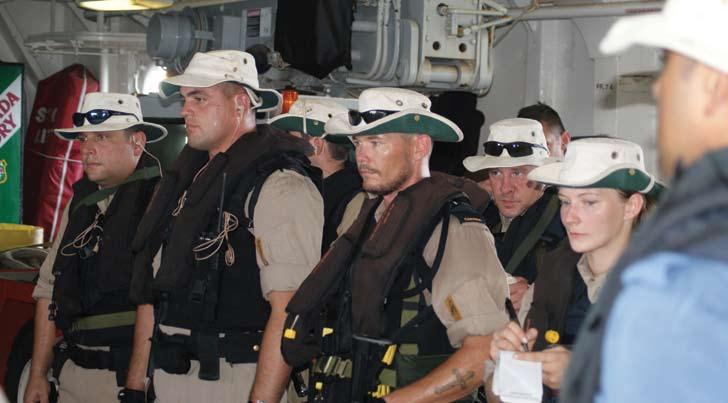
an initial search of the vessel, but before long it was dusk, and the search would have to wait until morning Teams from the crew were sent over to the dhow in shifts to keep watch throughout the night as the Iroquois tracked alongside, illuminating the dhow by spotlight At dawn, the search began in earnest, with teams of 15 sailors cycling through the dhow in two-hour shifts scouring its hold and slinging around rice bags in hopes of finding something out of place
The sailors would return to Iroquois drenched in sweat, exhausted, with fingers bleeding from the rough exteriors of the food bags After 26 hours of this, Iroquois was out of time We needed to be in Manama, Bahrain for the change of command ceremony in a few days so the job would have to be passed off to the boarding party from the USS Gridley
Gridley’s team searched for another 48 hours, but found nothing before turning the dhow loose, only to board her again 48 hours later, this time with chainsaws to tear her insides apart This final attempt to find the drugs proved unsuccessful, and once again the dhow was let go Without high-tech vapour-sensing equipment or a trained dog to sniff out the dope, this sort of a search was clearly a major challenge . As their time in the patrol box drew to a
close, it became clear that under Canada’s command there would be no big drug busts to write home about, and no decisive victories over the pirates of the Gulf of Aden to be claimed . These were hard pills to swallow for the sailors .
But drug-peddlers and pirates weren’t the entire reason for the significant sea presence that Canada had established for almost four months in this region Thinking in broader terms about the strategic relevance of the Arabian Sea quickly reveals a number of compelling reasons for Canada’s contribution to CTF 150 this summer .
The Arabian Sea is a region of the Indian Ocean bounded to the east by India, Pakistan and Iran, to the north by the United Arab Emirates and Oman, and to the west by Yemen, the Maldives, and Somalia This “Arc of Instability” consists of more than two million strategically-vital square nautical miles, and contains two of the world’s five most important oil choke points – Babel-Mandeb between Yemen and Djibouti, and the Strait of Hormuz between the most northern part of UAE and Iran
With the “return of history” brought on by China’s rise, Russia’s rebound, India’s awakening, Iran’s ambition, and the ongoing and seemingly intractable
conflicts in Iraq and Afghanistan, the geopolitical centre of gravity has shifted east decisively This has made the Arabian Sea some of the most important maritime real-estate on the planet . Accordingly, the United States has positioned its Fifth Fleet – the world’s premiere naval force – in the region; established a base in Djibouti, and maintained and upgraded bases in Qatar and Bahrain in support of three separate command structures which cover these waters and those that extend further into the northern-most point of the Persian Gulf . These commands, which are known by number – CTF 150, 152, and 158 – are all ultimately under the strategic guidance of United States Naval Forces Central Command (NAVCENT), which is personified at the moment by Vice Admiral William E Gortney
CTF 150 is the largest of the three areas of responsibility by a long shot, and even extends into the Red Sea, all the way up to the Suez Canal . The economies in the Arabian Peninsula and, indeed, the broader system of economic globalization on the whole, would suffer significantly were the sea lanes of communication throughout the CTF 150 area of responsibility to become unserviceable Approximately 50 per cent of the world’s oil production and 95 per cent of the Far East trade to Europe
transits these waters Yet Babel-Mandeb is surrounded by political instability in Yemen and Somalia, and, to this day, Iran threatens to blockade Hormuz in response to the possibility of Israeli air strikes against its nuclear facilities
Thi S S e A PR e S e NC e
D e M o NSTRAT e S T o o UR
C lo S e ST A llie S AND T o T he
R e ST o F T he W o R l D T h AT W e
AR e AN e NGAG e D MAR i T i M e
NAT io N W i T h A CAPAB le AND
PR o F e SS io NA l NAV y W illi NG
T o ST e P UP AND e V e N TA ke T he
le AD i N MA ki NG SUBSTANT i A l
C o NTR i BUT io NS T o S e CUR i T y
AND D e V elo PM e NT i N AN
AR e A CR i T i CA l T o G lo BA l
STAB ili T y.
With 3 3 million barrels of oil crossing Babel-Mandeb and 17 million crossing Hormuz each day, the global economy de-
pends heavily on the maintenance of these waters as reliable and secure avenues for commerce Securing these central supply lines from disruptive forces is, accordingly, the stipulated mandate of CTF 150
There is, however, arguably a great deal more at stake than securing these sea lanes for commerce The maintenance of the status quo international system, which is based primarily on the preponderance of American power, depends on the constant presence of a dominant Americanled armada in the area of our concern A critical mass of western and western-allied warships in the Arabian Sea and Persian Gulf results in a critical absence of rival warships in these waters Were Chinese, Russian, and Iranian hulls to command these sea lanes, it would mark a significant shift in the distribution of power in the international system
At its most fundamental and essential level, then, CTF 150 is about sea presence and commanding the commons Accordingly, CTF 150 comprises ships and air assets from the navies of France, Denmark, Germany, Britain, Pakistan, Singapore, Japan (which only supplies gasoline freeof-charge to the coalition members and does not partake in any of the operations), Canada, and, of course, the U S
Beginning with Operation Apollo which was Canada’s initial naval contribution to the Afghanistan campaign, Canada has put 25 ships into the Arabian Sea since 9/11 . In doing so it has accomplished a number of related ends which,
while perhaps less immediately tangible than drug busts and foiling pirates, go far beyond either of these in terms of realizing the country’s interests abroad
First, maintaining a presence in the Arabian Sea demonstrates to governments in the region that Canada is committed to security and development here, where Canadian soldiers are dying at an alarming rate, and where chaos seems to loom around the corner of each day’s news cycle
Second, this sea presence demonstrates to our closest allies and to the rest of the world that we are an engaged maritime nation with a capable and professional navy willing to step up and even take the lead in making substantial contributions to security and development in an area critical to global stability
Finally, such a demonstration could, in the future, open opportunities for Canadian diplomats to fulfill a role they have traditionally relished: being the world’s innovative problem-solver . With this region much like a leaky dam in constant need of a fix, Canadian foreign-policy makers should not discount the role of pride and influence that can be demonstrated when our diplomats are employed in solving significant problems on the world stage Moreover, having naval assets forward deployed to this region acts as a multiplier for the realization of Canada’s diplomatic and economic objectives . What this brief account of Canada’s contribution to CTF 150 in the Arabian Sea this summer should demonstrate is that naval assets are an extremely flexible and dynamic tool at the disposal of Canadian foreign-policy makers Forward-deployed ships can engage meaningfully in a range of defensive, diplomatic, developmental, and humanitarian relief operations . And although they might not generate the same number of headlines as boots on the ground, this is precisely the sort of global engagement that Canadians should ask from their military
Patrick Lennox is the J L Granatstein Post-doctoral Fellow at the Centre for Military and Strategic Studies at the University of Calgary. He was embedded with HMCS Protecteur and HMCS Iroquois from August 19th to October 9th 2008 During this period he was made an honorary member of Iroquois’ wardroom and awarded the South West Asia Service Medal with bar by the government of Canada for serving more than 30 days in the theatre of operations .
In this special, expanded books section, Diplomat magazine presents a comprehensive review of new and classic books on China – as well as an eclectic review of new books on spying. Here’s a list of the books we review or reference:
books on China
Olympic Dreams: China and Sports 1895–2008 by Xu Guoqi, 2008
China’s Great Leap: The Beijing Games and Olympian Human Rights Challenges, edited by Minky Worden, 2008
Peking: A Historical and Intimate Description of Its Chief Places of Interest, by Juliet Bredon, 1919
In Search of Old Peking, by L C Arlington and William Le, 1935
The Years That Were Fat: Peking, 1933–1940, by George N Kates, 1952
The Last Days of Old Beijing: Life in the Vanishing Backstreets of a City Transformed by Michael Meyer, 2008
Legends of the Building of Old Peking, by Hok-Lam Chan, 2008
The Search for a Vanishing Beijing: A Guide to Chinas Capital through the Ages by M A Aldrich, 2006
Beijing: From Imperial Capital to Olympic City by Lillian M Li, Alison J Dray-Novey and Haili Kong, 2008
Beijing Time by Michael Dutton and Hsiu-ju Stacy Lo and Dong Dong Wu, 2008
The Forbidden City by Geremie R Barmé, 2008 Earth Then and Now by Fred Pearce, 2008
China, A History by Arthur Cotterell, 1988
A History of China by J A G Roberts, 1999
All Under Heaven: A Complete History of China, by Rayne Kruger, 2003
China, A New History, by J K Firbank, 1992 China, A History by John Keay, 2008
Voices from Shanghai: Jewish Exiles in Wartime China edited by Irene Eber, 2008
China During the Great Depression: Market, State, and the World Economy, 1929-1937 by Tomoko Shiroyama, 2008
Village Gate at War: The Impact of Resistance to Japan, 1937–1945 by Dagfinn Gatu, 2008
The Chinese State at the Borders by Diane Lary, 2007 Border Landscapes: The Politics of Akha Land Use in China and Thailand by Janet C Sturgeon, 2005
books on spying (and travel)
Semi-Invisible Man: The Life of Norman Lewis by Julian Evans, 2008
Spanish Adventure by Norman Lewis, 1935 Sand and Sea in Arabia by Norman Lewis, 1938 Ways of Escape: A Memoir by Graham Greene, 1982, paperback 2007
Dangerous Dossiers: Exposing the Secret War against America’s Greatest Authors by Herbert Mitgang, 1988
A Dragon Apparent by Norman Lewis, 1955, paperback 2003
The Quiet American by Graham Greene, 1955 Golden Earth: Travels in Burma by Norman Lewis, 1952
The Spy’s Bedside Book: An Anthology, by Graham and Hugh Greene, 1957
books on globalization’s dark side
McMafia: A Journey through the Global Criminal Underworld by Misha Glenny, 2008
The Rebirth of History: Eastern Europe in the Age of Democracy by Misha Glenny, 1993 Global Outlaws: Crime, Money, and Power in the Contemporary World by Carolyn Nordstrom, 2007 Economic Gangsters: Corruption, Violence and the Poverty of Nations by Raymond Fisman and Edward Miguel, 2008
By George Fetherling
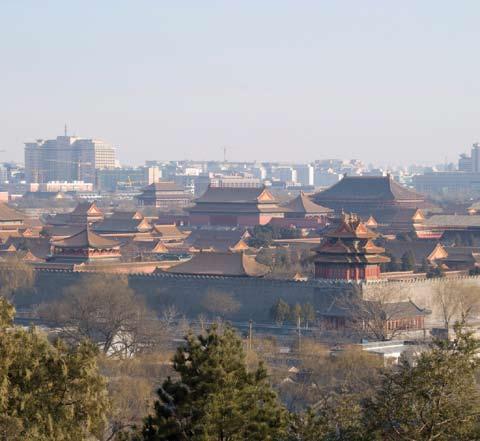
with the 2008 summer Olympics behind us, a number of books on the subject have tumbled, not unexpectedly, into a kind of limbo For instance, Olympic Dreams: China and Sports 1895–2008 by Xu Guoqi (Harvard University Press, US$29 .95 paper) has lost much of its currency while keeping its useful historical perspective Another example is China’s Great Leap: The Beijing Games and Olympian Human Rights Challenges (Publishers Group Canada, $20 95 paper), a collection of essays edited by Minky Worden, the communications director of Human Rights Watch . Alas, many of its insights into human rights threaten to retain their pertinence for generations . Their Olympic context, however, is already too old to be urgent—yet nowhere near old enough to be historical That still leaves us, though, with a number of fine recent books on Beijing itself published in the run-up to the Games They all have one element in common: they document the wholesale destruction of entire sections of the city .
The specifics are new but the cry is an old one, for many of the books about Beijing beloved by generations of readers in the West arose from the same impulse
Juliet Bredon was a scholarly Englishwoman who, in the first decades of the twentieth century, wrote prolifically and well on Chinese practices and places . Many still hold dear her book Peking: A Historical and Intimate Description of Its Chief Places of Interest, which was first published in 1919 In other words, less than 10 years after the overthrow of the last dynasty, an event that led to China’s (and indeed Asia’s) first republic . In that process the old imperial capital lost its status as the new government was established in Nanking (later Nanjing) The way that so much of Peking (though hardly all of it) survived such drastic political and cultural change must have given Bredon’s readers a feeling of reassurance—for a while
In those days, the British were, commercially at least, the de facto rulers of much of China . They also took over such
governmental tasks as running China’s customs and excise and its postal system These were concessions Britain had won following the Opium Wars of the mid19th century The Customs bureaucracy was overseen by Sir Robert Hart (whose biographer Bredon became) One of his underlings was a U .S . expatriate named L . C . Arlington, who collaborated with William Lewisohn, a British journalist and former army officer, to produce In Search of Old Peking, published in 1935 Its intent was to be the authoritative guide to the city that had been declining precipitously for 30 years, without having exhausted the possibilities for further decay. The warlord era was only a few years past, and the Japanese seizure of the city lay right round the corner
Like Bredon before them, Arlington and Lewisohn began what they thought of as a guidebook to streets, neighbourhoods and landmarks But once completed, it turned into something quite different: a kind of syllabus for nostalgic readers wishing to summon up the spirit of the old days by comparing the present to the past . In this way, their book goes together with George N Kates’ fine memoir The Years That Were Fat: Peking, 1933–1940, a marvellous piece of prose that seems to have found its way onto many people’s lists of desert-island reading Kates, another expat American, had come to China to study, and to emulate as far as it was possible to do so, the nearly extinct habits of the scholar-officials who had dominated the civil service from one dynasty to another, century after century Kates published the book in 1952, when Mao Zedong was remaking the city, much as, in former times, Haussmann redrew the master plan of Paris, Hitler that of Berlin and Stalin that of Moscow and as Robert Moses was trying to do in the case of New York: disasters all, though not uniformly so Mao razed the city’s massive stone walls, evidently considering them relics of European colonialism, though they went back many centuries before the white foreigners He was equally reckless and ruthless with entire sections of the city . But in Mao’s case there was more than ego and personal ambition at work, for his revamping also involved a sense of historical preservation much different from that found in the West The notion that something old should be pulled down so that a modern up-to-date facsimile of it can be put up in its place, as a sort of memorial to the past, is one with deep roots in Chinese civilisation In a way, this idea
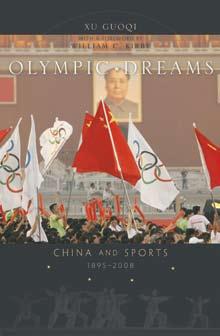
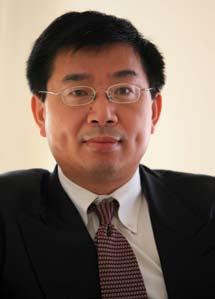
informs Bredon, Arlington and Lewisohn, and Kates (whose books, by the way, are available in modern reprints, which is why I describe them here)
Since the economic reforms of the 1980s, the process of destruction in China’s cities, a kind of public policy backed up bulldozers, has increased many fold until the scale and speed are almost unimaginable . This is especially true in Shanghai, the country’s business centre and the heart of this new China It is said to have two thousand skyscrapers Now a vocal but not always effective countervailing movement has come along, resisting the destruction of traditional Chinese housing and streetscapes in the rush to make the Shanghai skyline look as much as possible
like any in the West (or even worse, like Bangkok’s) That the same dilemma is also playing itself out in Beijing is one of the lessons we can take away from a variety of recent books
The one receiving the most attention— nearly all of it highly positive—is The Last Days of Old Beijing: Life in the Vanishing Backstreets of a City Transformed by Michael Meyer (Raincoast Books, $28 95) Meyer, who has worked for various NGOs, first went to China in the 1990s From that time until the height of Olympic preparations, a million and a quarter Beijing residents were dispossessed of their traditional homes in the narrow lanes (often almost impassably narrow) called hutong . It is a word worth knowing, for none of the English equivalents, such as alley, courtyard or mews, conveys the essential characteristic of hutong The term suggests a kind of communal living combined with privacy and set apart by the self-help and sense of community so often found in slums
For a couple of years, Meyer, who taught school nearby, occupied two unheated rooms made of mud and straw . They had minimal electricity, and the toilet was out of doors a few houses down the road This hutong, called Bamboo Slanted Street, was tucked away in Dazhalan, an obscure neighbourhood that came into being 600 years ago: a tiny place by Chinese standards, with fewer than 60,000 people . Meyer sketches a number of the neighbourhood characters, but the texture of the book is less reportorial than evocative, for he sees clearly how the westernisation and modernisation that the Olympics hastened and certainly symbolised, are, in a funny way, the continuation of Mao’s antiwesternisation In 1949, the year the communists came to power, there were 7,000 hutong . By the time the Olympic Site was being put up, only 1,300 remained . There will be far fewer the next time a count is made, even though much of Beijing’s vernacular housing, like the western architecture once so common in cosmopolitan Shanghai, is being saved—for conversion into high-end shops, restaurants, corporate offices and the like . So far at least, Beijing has not begun tearing down hutong to make room for monuments offering tributes to what it has just razed Or at least it isn’t doing so as a matter of routine Meyer did discover, however, that a place he was seeking out called Ancient Culture Street has been levelled so that New Ancient Culture Street can both supplant it and call it to mind . The western media of late have made
much of the hutong controversy and what it represents, and in this regard it is especially interesting to have Meyer introduce us to one of China’s leading public intellectuals, the painter and fiction writer Feng Jicai, who has become an activist in the barely tolerated preservationist movement, deriving much of his thinking from the works of Jane Jacobs But in the end, Meyer’s book is a special kind of literary work, not too different from The Years That Were Fat in the way it weaves cultural and social observation into the conventions of the deeply felt memoir Legends of the Building of Old Peking by Hok-Lam Chan (University of Washington Press, US$60) is a far more serious history of the city’s evolution, and seems a likely candidate for a long life, though such statements are always conjectural
Other books that deplore the sacrifice of old Peking to modern Beijing have not been scarce The Search for a Vanishing Beijing: A Guide to China's Capital through the Ages by M .A . Aldrich (University of Washington Press, US$49 . 50) is precisely the sort of neighbourhood-by-neighbourhood and district-by-district survey the title suggests One wonders whether it too might find a second life as a work of nostalgia once change makes it obsolescent or even obsolete A highly readable and certainly informative general narrative of the city’s history (with special emphasis on the last thousand years) is Beijing: From Imperial Capital to Olympic City by Lillian M . Li, Alison J Dray-Novey and Haili Kong (H B Fenn, $20 95 paper) One shouldn’t take the phrase “Olympic City” too much to heart, for the book is an easy and educational trot through the past that doesn’t put undue emphasis on the practical importance or even the symbolism of the recent ballyhoo . Much of what comment does come up is found in the final chapter, which deals with the historic preservation problem—without addressing this paradox of China’s past and present with analysis that is even remotely as subtle, nuanced and thoroughly thought-out as that found in Beijing Time by Michael Dutton and two associates, Hsiu-ju Stacy Lo and Dong Dong Wu (Harvard University Press, US$26 .95) . In some ways, the latter book resembles Michael Meyer’s Although it is not a memoir, it does try to reveal the often troubled daily existence of ordinary Beijingers, both those born there and those who are part of the mass migration from remote rural regions Life, it seems to say, has been made far more complex, and sometimes more perilous,
by the government’s underlying intellectual assumptions (rather than ideological or even economic ones) about how quickly they must pull down, not the monumental past, as Mao did, but the workaday past, to make room, physically and otherwise, for the trackless conurbation that will pave over what until now has been a relatively navigable city of 10 million or so . Harvard has also published The Forbidden City (US$19 95) by Geremie R Barmé, the Australian historian of the Pacific region (who wrote the introduction to the modern edition of Arlington and Lewisohn’s In Search of Old Peking) It is a small gem of a book in a Harvard series of such bijoux called Wonders of the World .
Fo R MAN y Si N olo G i STS i N
T he We ST, W he T he R CAR ee R
ACAD e M i CS , i ND e P e ND e NT
SC hol ARS o R ( AS W i T h
NUM e R o US A M e R i CAN
e XAMP le S ) F o RM e R D i P lo MATS ,
T he U l T i MAT e C h A lle NG e i S
T o PR o DUC e A R e ADAB le o N e-
V ol UM e hi ST o R y o F Chi NA ,
A C i V iliz AT io N S o ANC ie NT,
C o MP le X AND h UG e T h AT i T
M e ASUR e S T he h UBR i S o F SUC h
AUT ho RS AS W ell AS T hei R
STAM i NA
Curiously, the strongest image of Beijing I am left with at the end of this exercise is a photograph from another new book, Earth Then and Now by Fred Pearce (Firefly Books, $29 . 95 paper) This is a work of what has come to be called re-photography, an artistic genre in which photographers pinpoint the spot from which an old archival photo was taken and, for comparative purposes, try to shoot the exact same scene as it appears today For example, a battlefield as it looked when fighting took place there in the nineteenth century next to the same view now, showing how suburban housing or highways
have encroached on the past Pearce’s book follows this method in various cities round the world The differences he chronicles, however, are related more to environmental change than to development as such On a left-hand page, he presents a large photo of Tiananmen Square taken in 1997 . All looks fine . On the facing page is a photo of the same scene in 2003 The sky, the air, the ground–everything–is a bright orangey yellow, the result of one of the ever more common and ever worsening sandstorms brought on by desertification in that part of the country Of course, Beijing is frequently dry at certain times of year, given its proximity to the Gobi . Untold numbers of people still alive today can remember when camel caravans supplied the city with drinking water But the present situation is different In the rush to find ways of feeding the populace–a constant throughout Chinese history–vast areas to the west of Beijing have become so depleted that the fields are turning to dust .
briefly (far too briefly), some other new books on China:
For many Sinologists in the West, whether career academics, independent scholars or (as with numerous American examples) former diplomats, the ultimate challenge is to produce a readable one-volume history of China, a civilization so ancient, complex and huge that it measures the hubris of such authors as well as their stamina These books appear at irregular intervals One example is China, A History (1988) by Arthur Cotterell, who is otherwise most often associated with his works on mythology and ancient cultures generally. Another is A History of China (1999) by J A .G . Roberts (retitled A Concise History of China for the U .S . edition, to reassure consumers there rather than intimidate them) Both authors are English whereas the late Rayne Kruger, who wrote All Under Heaven: A Complete History of China (2003), was South African The equally late J K Firbank, after whom Harvard’s East Asian research centre is named, was an enormously influential American who had the ears of the State Department but was also to some extent one of its tongues Several years ago, his classic China, A New History, first published in 1992, was enlarged and updated by Merle Goodman, another specialist in the field
All the above is leading somewhere: to China, A History (HarperCollins Canada, $55 . 95) by John Keay who, although he
has published a great deal about East Asia, is better known for his books on South Asia, particularly his general narrative of India’s past The History is written with the thoughtful authority that comes from long years of study and reflection But he has made the curious and ill-considered decision to end the main text with the communist victory of 1949, adding only a brief epilogue about the subsequent 59 years, during which time virtually everything in China has been turned upside down more than once
Voices from Shanghai: Jewish Exiles in Wartime China edited by Irene Eber (University of Chicago Press, US$29) is a small book with a long reach . It will seem indispensable to those of us who, whenever the yoga teacher tells us to go to our “happy place”, imagine ourselves in Shanghai as it was between the two world wars, when it was called the Paris of the Orient or, in reference to the title of a popular book about the city, “the paradise of adventurers ” Yet Shanghai was in many ways a wretched place to live back then . Human life was not always highly valued, and the city was ruled by a hideous collation of politicians, generals and gangsters that no film noir could even begin to suggest
Adjoining the majority Chinese part of the city were the enclaves of foreigners who lived with immunity from Chinese law: the British, French and Americans, Japanese and White Russians most famously but perhaps 35 or so other groups as well Following the Anschluss and Kristallhacht in 1938, the city received many thousands of Jews from Poland and elsewhere in central Europe Hitler had priorized his persecution of them, so that the first wave to arrive in Shanghai consisted largely of doctors and other such educated professionals . They were followed in time by artists and intellectuals And so on Once the European war started in 1939, German ships could no longer call at Shanghai, so the refugees travelled aboard Italian vessels (until Mussolini entered the war in 1940) or Japanese ones (until Japan, having already invaded China, joined Germany against the U . S and Britain)
Eber’s book consists of fascinating documents—poems, fueilletons, short fiction, extracts from letters and diaries—discovered in a number of Shanghai’s Yiddishand German-language newspapers and magazines of the period Only one of the selections had ever been translated into English until Eber took on the task, producing this haunting and valuable book .
For so many people, this is the most fascinating period in modern Chinese history (which is to say, recent history, by the standards of Chinese civilisation) because it was chaotic in such a number of different ways, either simultaneously or sequentially. It is no coincidence that China During the Great Depression: Market, State, and the World Economy, 1929-1937 by Tomoko Shiroyama (Harvard, US$45), studying a topic seldom attractive to English-language scholars, ends at the point where Dagfinn Gatu’s Village Gate at War: The Impact of Resistance to Japan, 1937–1945 (UBC Press, $29 05 paper) begins The global economic emergency played out differently in the East than in the West . By 1937, trade and
century: the Rape of Nanking in which the number of civilians raped, tortured or killed totalled 300,000
For a number of complex historical reasons, the protection of national borders in Asian tradition is an issue taken even more seriously than it is in the West, even when, as is the case now, we are at our touchiest and most paranoiac . In The Chinese State at the Borders (UBC Press, $32 95 paper), Diane Lary brings together thirteen historians of China, including the always enlightening and highly readable Timothy Brook, to discuss various aspects of Chinese border theory down through the centuries . Persistent reading of the news is enough to show the extent to which China’s concern with its cartographic parameters persists at a high level of discord and suspicion Border Landscapes: The Politics of Akha Land Use in China and Thailand by Janet C Sturgeon (University of Washington Press, US$22 50 paper) can be taken as a full-length case-study The Akha are one of the region’s so called hill-tribes, speaking a language rooted in Tibet and Burma . Akha live in the latter place but are also a significant minority in Laos and Vietnam Sturgeon examines in detail why it is that the Akha on either side of China’s border with Thailand have led such vexing lives Most of the factors relate to politics and policy but others are bound up in trade, for this area includes the notorious Golden Triangle .
ninvestment were picking up in Britain and North America, part of a recovery that the Second World War would complete But in that same year, the poor Chinese were already engaged in a full-scale war against the invading Japanese
Japan called its plan to conquer other Asian countries “the Great East Asian CoProsperity Sphere,” showing a grasp of euphemism rivalled only by that of Chiang Kai-shek who named his dreaded secret police the Bureau of Statistics Before the end of the year, the Japanese had captured Nanking, an event that led to one of the most infamously brutal events of the 20th
orman Lewis was (and still is) the travel writer most admired by other travel writers, a beautiful stylist who was never less than timely in his choice of subjects and sometimes downright prescient His talent for prose, which began at such a high level that it changed relatively little over half a century, can be enjoyed without first being dissected Suffice to say that the pitch and rhythm of his sentences made fine paragraphs and the paragraphs fine books . As for his knack for going to places where trouble would soon break out, it is explained only now, five years after his death at age 95, in a new biography
– Semi-Invisible Man: The Life of Norman Lewis by Julian Evans (Random House of Canada, $65) Lewis, we are surprised (but not amazed) to learn, was working for British intelligence all along .
Lewis was also a novelist, printmaker, and motorcycle- and auto-racer—and businessman He built up a chain of photography shops in London and elsewhere in the UK He had already published his first travel narrative, Spanish Adventure , when, one day in 1937, a regular customer with whom he was particularly friendly— a supposed hobbyist photographer who was actually a figure in the Colonial Office—recruited him to go to South Yemen on the Arabian peninsula to take photographs Photography was illegal in the strictly Islamic country, as were wearing silk and pointing at the moon As Evans writes, Yemen “had no electricity, no roads and not more than a half dozen doctors for three million people [and] almost the only foreigners admitted were fur- and coffee-merchants and arms dealers…” By a less than startling coincidence, the country became a British protectorate later that same year And the following year, Lewis published a second book, Sand and Sea in Arabia Thus was established a symbiotic relationship, or perhaps a mutually parasitic one, between the travel writer with perfectly plausible cover, and a tentacle of HM government that could get him into places that otherwise might be difficult to access
Of course, such use of English literary figures, especially those who also had held positions in Fleet Street, was widespread . During the First World War, Somerset Maugham was dispatched to Russia with the quixotic assignment of trying to prevent Lenin from withdrawing from the allied cause During the Second, Graham Greene, a great admirer of Lewis’s writing by the way and a person with vague MI6 ties for the rest of his life, was monitoring foreign shipping in Liberia, as recounted in Ways of Escape: A Memoir , of which there is a new paperback edition (Key Porter Books, $19 95) At the same time, off the opposite coast of Africa, Malcolm Muggeridge was performing the identical task on Madagascar Britain thus stands in contrast to the U S Other than the early years of the CIA, when it attracted people such as William F . Buckley, the American intelligence community was less likely to use authors as spies than it was to spy on them itself This situation not widely understood until 1988 when Herbert Mitgang, long a literary fixture at the New York Times, published Dangerous Dossiers: Exposing the Secret War against America’s Greatest Authors
During the 1939–45 war, Lewis received some formal training in the craft
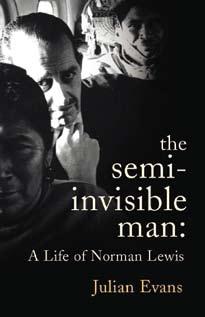
iN 1951 he WAS i N R e C e NT ly
i ND e P e ND e NT B URMA ,
i NSP e CT i NG W h AT WAS e V e N
T he N T he ho P ele SSN e SS o F i TS
S i TUAT io N … i N 1957 he WAS
i N P ANAMA , T he Do M i N i CAN
Re PUB li C AND hA i T i, A ll
ho T - SP o TS o F o N e S o RT o R
AN o T he R , AS W ell AS C UBA , W he R e T he he AD o FF i C e
ho P e D he W o U l D ACCUMU l AT e
i NS i G h T i NT o T he M o T i V e S o F
T hi S yo UNG C ASTR o C h AP W ho
WAS F i G h T i NG A GU e RR ill A
ACT io N UP i N T he M o UNTA i NS
at the War Intelligence Training Centre at Matlock in Derbyshire where students were taught to be “information gatherers, route finders, security for conferences, liaison, interrogators; they organised house searches, improvised prisons, rounded up suspects [and later, once in Europe] made contact with resistance organisations, screened refugees, imposed curfews, intercepted Axis agents, watched brothels, vetted war brides, sometimes prostitutes,
and attempted to solve the, as in Italy, insoluble problems of controlling black markets and mafia allegiances ” The last of these proved especially useful to Lewis, who later wrote a book about the Italian mafia
In 1950, Lewis spent a considerable amount of time in what was still colonial Indochina, at one point travelling with the beleaguered French soldiers, as described in A Dragon Apparent This, surely one of his finest books, appeared in the year after his departure, or four years before Greene’s no less prophetic novel The Quiet American In 1951 he was in recently independent Burma, inspecting what was even then the hopelessness of its situation and having the experiences described in Golden Earth: Travels in Burma (1952) In 1957, he was in Panama, the Dominican Republic and Haiti, all hot-spots of one sort or another, as well as Cuba, where the head office hoped he would accumulate insight into the motives of this young Castro chap who was fighting a guerrilla action up in the mountains
Intelligence from all these places was being run out of Jamaica — by Ian Fleming of the Sunday Times , who by then had already turned some of the insider knowledge he acquired in British Naval Intelligence into Casino Royale and Dr No Just how deeply and how far back this tradition of literary espionage extends is illustrated in The Spy’s Bedside Book: An Anthology, published in 1957 by Graham Greene and his brother (and fellow intelligence type) Hugh Greene It was out of print for years but is now available once again (Random House of Canada, $34 95)
everyone seemed to know that McMafia: A Journey through the Global Criminal Underworld by Misha Glenny, a British reporter associated with strife in the Balkans and the author of The Rebirth of History: Eastern Europe in the Age of Democracy, would do good business . The mere fact that there is a separate Canadian edition (Anansi, $29 95), unusual for a work of international true crime journalism, is proof of that McMafia must surely count as one of the most widely reviewed books of the year, for it is indeed a fully researched and skilfully written tour through the world’s criminal gangs, not only the familiar ones such as the Co-
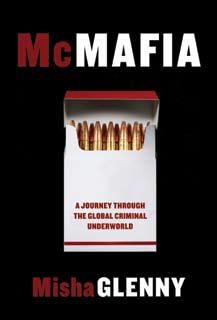
lumbia drug cartel (whose annual profit is estimated at US$8 billion) but the scarier if often less permanent ones that spring up as soon as government breaks down (as happened, to take the most obvious example, in the former Soviet Union)
Glenny’s main title is a bit misleading, for he doesn’t show (nor could he) that the many organisations he takes us through are somehow connected to one another, like a chain of fast-food outlets The subtitle is more revealing; this is indeed a sort of travel book in which Glenny goes to a score of regions and countries seeking out crime experts who have cautionary (or sometimes frightening) tales to tell He then uses the results to arrive at some of useful generalisations Still, the way the book has used up so much publicity oxygen has meant that other worthwhile and serious works in the same area have not received their fair share of attention One recent example is Global Outlaws: Crime, Money, and Power in the Contemporary World by Carolyn Nordstrom (University of California Press, US$21 95 paper) What promises to be another is Economic Gangsters: Corruption, Violence and the Poverty of Nations by Raymond Fisman and Edward Miguel (Princeton University Press, US$24 .95), which is appearing appeared just now . The point of all three is the link between criminality and nationality— rather than the lack of nationality, as one might suppose from the Glenny’s title
George Fetherling is Diplomat’s books editor His most recent book is Tales of Two Cities: A Novella Plus Stories (Subway Books)
Diplomats and embassy employees may exchange their personal cheques without paying extra fees. Accu-Rate Corporation specializes in electronic and cheque payments in over 55 currencies.





By George Abraham
the 19 hijackers who brought down the Twin Towers on 9/11 did so on the cheap, at a cost of just US$500,000 . They were pitted against a superpower’s intelligence community with a combined budget at the time of $40 billion Yet, like Pearl Harbour in 1941 and the launch of Sputnik in 1957, the spooks did not see it coming Beyond the asymmetry of it all, America’s spymasters had not war-gamed a scenario in which a bunch of educated frequent flyers would pilot planes into skyscrapers at their own peril It was the dawn of a new era in intelligence gathering
Kim Philby, the spy who double-crossed Britain for the Soviets, saw his vocation plainly as the gathering of “secret information from foreign countries by illegal means .” Although intelligence gathering and analysis has evolved since then into something much broader, with clandestine sources accounting for just five per cent of what passes as “intelligence," spying is still approved of by virtually every government – whether totalitarian or democratic Ultimately, one country’s heroic spy is another’s traitor
Diplomatic missions are often brazenly used as a façade for spying, and have been since at least the 15th century when the Italians began collecting intelligence by setting up permanent embassies abroad Soon, other European governments emulated the envoys of Venice
Those early forays were a far cry from the capabilities of the Central Intelligence Agency, which was created shortly after the Second World War with the primary mission of combating the spread of communism This goal was eventually achieved with the collapse of the Soviet Union in 1991 It was at this triumphal moment that James Woolsey, a former director of the CIA, warned his nation against complacency and pointed to the next enemy then lurking on the horizon: “We have slain a large dragon but we now live in a jungle filled with a bewildering variety of poisonous snakes … it may have been easier to watch the dragon ”
The three books cited here on intelligence generally confirm the view that the threat of Islamist terrorism is far more complex and unpredictable than shadow-boxing with the Soviet Politburo . If intelligence gathering used to be the art
of technological gadgetry supporting the human spy, the balance has shifted the other way.
Robert Wallace and h keith Melton, Spycraft: The Secret History of the CIA’s Spytechs from Communism to Al-Qaeda, Dutton Publishers, 2008, 550 pages
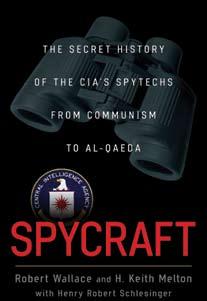
Written by a former director of the CIA’s office of technical services (Mr Wallace) and a historian on clandestine devices (Mr Melton), this book should whet the appetite of those interested in the technology of spying Although largely devoted to James Bondian listening and concealment devices, the book also offers insight into the “technological trail” from the early 1980s, the period when states began sharing sophisticated weapons and technology with terrorist surrogates After that, crude timers and rudimentary explosives were a thing of the past
This link to states helped CIA investigators track down and get a conviction against a Libyan national for the 1988 bombing of a PanAm flight over Lockerbie, Scotland . It was clear that the plane was brought down with 400 grams of explosive Semtex in a cassette player carried in a brown Samsonite suitcase However, it was not until 18 months later that the chance discovery – 130 kms away from the crash site by a passerby – of a T-shirt with a Maltese label with a circuit board fragment stuck to it that investigators
tracked the evidence back to the regime of Moammar Gadhafi . And sometimes it was a link to many states . American agents in Afghanistan in the weeks following 9/11 discovered ordnance from Russia, China and Pakistan, and, ironically, material that their CIA colleagues had provided to the mujahideen when they were fighting the Soviet invaders
Mr Hitz was the CIA’s inspector general from 1990 to 1998, and he weaves a compelling view of espionage in the 21st century . Identifying the “inner councils of jihadists” as the target, the author says finding and infiltrating them is going to be hard because of the West’s cultural ignorance of the people who wish it harm The fact that most terrorists plan their martyrdom from the sanctuary of failed states is not going to help, either
Mr . Hitz sees the same seven motivations as ever for spies: ideology, money, intimidation, revenge, excitement, ethnic solidarity and friendship But he says the dynamics have changed: “Islamist terrorism is a far greater challenge to U S intelligence in terms of penetrating hostile terrorist cells than the Cold War ” Although the “cultural ignorance” is similar to the steep learning curve at the beginning of the Cold War, this time, the author
PR o BAB ly l AST AS lo NG
AS T he STRUGG le AGA i NST
sibility of progress and greater prosperity brought about by a globalized economy and more personal freedom will trump a philosophy based on hate, suicide and destruction ”
Allen W. Dulles, The Craft of Intelligence, Globe Pequot Press, paperback in 2006, 280 pages
says, “We are the bad guys ” He points to the fact that the West is viewed with unfriendly eyes in much of the Middle East, making the battle against terrorism that much harder
These books implicitly recognize that the fight against terrorism will probably last as long as the struggle against communism But they are optimistic about the outcome As Mr Hitz puts it: “The pos -
This book by the original doyen of American intelligence offers insight into why the U S created the Central Intelligence Agency and its role in the Cold War Its opening chapter sketches the history of spying back to the 5th century BCE and the quest for “foreknowledge” in matters of state . Dulles also deals with the tension between a democratic society with the “uncontrolled yen of the press to know everything” and the values of its spymasters
Predictably, he concludes: “It is not our intelligence community which threatens our liberties ”
The late former CIA director elaborates on the times when his agency gave the U .S . president adequate forewarning, but acknowledges that failures get more press than success He cites the Suez Crisis of 1956 as emblematic of the public’s misper-
ception Rather than being an intelligence failure, Mr Dulles asserts, “U S intelligence had kept the government informed but, as usual, did not advertise its achievement . ”
George Abraham is Diplomat’s contributing editor


afew years ago, I started to take note of a few interesting trends in what people thought of wine . One of the more curious trends was the apparently common lack of enthusiasm for an entire country’s wine Blind wine tastings truly made me aware of it When people were asked the point of origin for a mystery wine, Spain was hardly ever suggested And, often, Spanish wines were greeted with surprise when they were revealed . Why? Shouldn’t a country with a wine history dating back 3,000 years, more land area planted with grapes than any other nation (about 1 2 million hectares) and a climate generally warmer and more reliable than either France or Italy be a respected and well known power
it was s pain’s as C ensi O n t O the e ur O pean u ni O n in 1986 that trulY heralded a wa V e OF m O derni Z ati O n a C r O ss the entire lands C ape OF s panish wine.

landscape of Spanish wine As a result, more change has occurred in the last 20 years than ever before . No longer is Spain’s identity dominated by Rioja and Jerez (the source of Sherry) Now, thanks to all these changes, other regions are showing their strength and are muscling their way in .
613.745.9400

in the world of wine? Why are so many people unaware or disinterested in Spanish wines? It’s often suggested that too many dull and drowsy wines due to old techniques and outdated technology are the reason for these perceptions Sometimes I think it’s because everybody seems to have had at least one encounter with Sherry that went horribly awry
Well, enough of this, I say There’s no better time to become acquainted with Spanish wines It’s not just because of some great recent vintages (‘03, ‘04 and ‘05), or because they’re tremendous value for your dollar It’s also because you have a rare opportunity to really experience a wine culture in the midst of great change Think of it as getting to witness a turning point in history through a wine glass
Technology is at the core of all this unprecedented change Initially, Spain was slower than other nations in adopting modern wine production methods, as winemakers generally lacked either the finances or the desire required for change . It wasn’t until the late 1970s as Spain’s political and economic isolation was ending after the passing of General Francisco Franco that things began to change A program of investment in the early 1980s helped, but it was Spain’s ascension to the European Union in 1986 that truly heralded a wave of modernization across the entire
Modern techniques such as night harvesting and low temperature fermentation are helping Spain to produce whites that are fresh and lively Excellent examples made from Verdejo, Sauvignon Blanc and Viura can be found from Rueda In Penedés, international grape varieties such as Chardonnay and Gewurztraminer are having success and the resulting wines show great varietal character . Then, there’s my favourite Spanish white which come from Rías Baixas and is made from the Albariño grape These truly fascinating wines possess refreshing acidity and flavours of peach and apricot
The up-and-coming red wine regions producing exciting wines seem countless For great value, look to the Monastrell (Mourvèdre) dominant wines of Jumilla and Yecla or the Tempranillo-based wines of Toro and La Mancha As with the whites, international grape varieties are finding success in Penedés and brilliant examples of Cabernet Sauvignon and Pinot Noir can be had The wines of Ribera del Duero and Priorat, though typically more austere in style and often significantly pricier, are powerful and awe-inspiring .
Of course, Spain’s great challenge is to avoid the danger that all of the world’s wine cultures face in today’s global market The increasing number of wines appearing in a common, homogenous style is threatening the extinction of the individual character of both regions and grape varietals . The trick will be in finding the right balance between the wisdom and character of the past and the power that new equipment and techniques bring As Spain is experiencing this change so profoundly, its producers can certainly lead the way Try a Spanish wine and experience history unfolding
Pieter Van den Weghe is the sommelier at Beckta dining & wine .
By Laura Neilson Bonikowsky
mona Louise Parsons was the only Canadian woman to be imprisoned by the German army during World War II Although she wasn’t in the military, and she wasn’t a spy, she risked her life to protect Allied airmen who had been shot down Despite her heroism, her story is barely known by Canadians .
Parsons was born in Middleton, N .S . in 1901, the daughter of a successful businessman She had a comfortable life and grew up to be an independent woman intent on a career on the stage She studied acting and moved to New York City in 1929, becoming a Ziegfield showgirl Her dreams of a brilliant acting career didn’t pan out so she trained to become a nurse and found a position in the office of a Park Avenue doctor .
Early in 1937, Parsons met wealthy Dutch businessman, Willem Leonhardt, who was visiting New York They were married in September of that year The couple settled in Holland to a life of privilege They built their dream home, Ingleside, where Parsons sparkled as a socialite . Leonhardt commuted to work in Amsterdam in his expensive cars . Their idyllic life was shattered when the Nazis invaded in 1940
The Leonhardts joined a resistance unit that rescued downed Allied airmen They built a secret apartment in their attic where airmen could hide until the resistance unit could get them out safely. Unfortunately, their involvement was short-lived; a Nazi informer betrayed them to the Gestapo in 1941 They were arrested, Parsons in September and Leonhardt in December,
and held in separate prisons . A Nazi tribunal was held the day after Leonhardt’s arrest and Parsons
was condemned to death With dignity and stoicism, she successfully appealed her death sentence, which was commuted to life imprisonment in 1942 . She was transported to prisons and camps in Germany and in 1945 was moved to Vechta Prison, a former reform school
There, she met Baroness Wendelien van Boetzelaer, with whom she planned to escape when an opportunity arose They got their chance during an Allied bombing raid . When the men’s side of the prison was razed, the women were taken outside The warden, the school’s former principal, opened the gates, telling the women they could take their chances with the Allied bombs or German bullets
Parsons and van Boetzelaer made a break for it Over a three-week period, they made their way to the Allies Parsons used her acting skills to pose as a mentally addled woman with a cleft palate, feigning a speech impediment to cover her accented German Meanwhile, van Boetzelaer, who spoke several languages including fluent German, did all the talking as Parsons’ “niece ” They became separated near the Dutch border and Parsons eventually reached a Canadian battalion, the North Nova Scotia Highlanders .
Parsons and Leonhardt were reunited after the war, but he never fully recovered from his imprisonment and died in 1956 Parsons returned to Nova Scotia
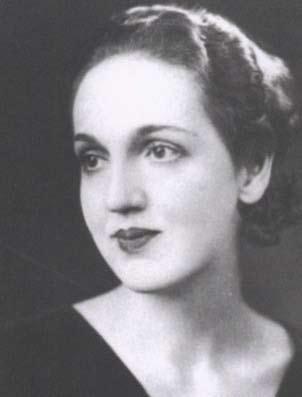
in 1957, where she became reacquainted with a childhood friend, Harry Foster They married in 1959 and lived in Halifax Foster died in 1964; Parsons moved back to Wolfville in the late 1960s, where she remained until her death in 1976 .
Mona Parsons received a commendation for her war efforts from British Air Marshal Lord Tedder and U S President Eisenhower But from the Canadian government, nothing Today, if you visit her gravesite in the Willowbank Cemetery, all you will see is a simple inscription: Mona L. Parsons, Wife of Major General Harry Foster .
Laura Neilson Bonikowsky is the associate editor of The Canadian Encyclopedia

For many, every day seems to be saturated with activities and a realization that another hectic day is in store for tomorrow So life spins on at a dizzying pace Soon the holiday season will be part of that whirlwind Some may have figured out an effective strategy for incorporating these relentless demands into their daily lives with the least amount of stress and fuss I certainly have done so . My motto is keep it simple . And that applies to decorating our home, planning the menu and arranging the table Here’s our formula for decorating our home and the tree:
1 First, pick one or two colours for a theme Strive to be creative and original (think blue and silver, copper and gold, sage green and pink, purple and gold, burgundy and gold, old rose and ivory) .
2 . Choose one type of container to act as an accent piece (for example, glass vases) and have them in multiples and in different sizes These can be quickly and artistically filled with Christmas balls, cones and boughs
3 Limit the types of resources you have to work with (perhaps only balls, ribbon and candles), but buy them in generous quantities . Take advantage of sidewalk sales, pre-Christmas specials, and even Boxing Day sales for subsequent years’ themes
4 To quickly decorate your home, focus on the tree first Then move to the other rooms
5 . Add decorative highlights (e .g ., bows and/or balls) to wreaths that would repeat your basic colour theme . Install them in key locations – indoors or out
6 Remember to save a portion of your key resources for decorating the dining room table You don’t have to have fresh flowers, and thus decorations last for weeks without further attention When it comes to the menu, my approach is similar . Many families wait all year to indulge in their annual traditional holiday dinner/feast It might involve a huge extended family and a well orchestrated event Others are spontaneous with decisions possibly being made as one peruses what’s available at the local supermarket on Christmas Eve Regardless of the circumstances, the holiday dinner is certain to be special and the menu should

reflect this . Think of including hors d’oeuvres to enjoy with a pre-dinner drink, an appetizer and/or soup, main course and trimmings, optional cheese course, dessert and chocolates
Sounds complicated?
Not at all Here are my tips:
1 Recognize your limits and do not be afraid to cut back or consider options
2 Many items can be purchased and served very successfully (and discretely) along with your personal contributions
3 Take advantage of special fruits, vegetables and other products which supermarkets bring in for the holiday season .
4 Main course does not necessarily need to be turkey, roast beef or a leg of lamb . It might make good sense to choose something that requires less time and supervision in the kitchen The result could be far more interesting, much more appreciated and with the hosts spending time relaxing with each other and their guests
5 Bring out those items (e . g . , seafood, soups, sauces, ice cream, baking) which you have tucked away in your freezer for busy times exactly like this
6 When it comes to setting the table,
let your chosen theme continue to rule . Harmony and consistency will be achieved without any extra fuss . Here's a perfect holiday dessert
lemon phyllo napoleons
Makes 4 servings
2 sheets phyllo pastry
2 tbsp (30 mL) unsalted butter, melted
2 tbsp (30 mL) granulated sugar
Lemon Cream Filling:
1 cup (250 mL) heavy cream (35% fat), chilled
2 1/2 tbsp (38 mL) icing sugar (first addition)
1 cup (250 mL) lemon curd (recipe follows), chilled Garnish (optional):
2 tbsp (30 mL) icing sugar (second addition)
1 1/2 oz (45 g) bittersweet chocolate, melted
1 Place one sheet of phyllo pastry on a clean work surface with long side in horizontal position; brush with melted butter
Lay another sheet on top of first and brush with butter Cut phyllo horizontally into 3 equal strips and then vertically into 4 equal portions to produce 12 squares . Sprinkle top of each square with granulated sugar .
2 . Transfer phyllo squares (sugar side up) to parchment paper lined baking sheets
Bake in a preheated 400 °F (200 °C) oven until golden and crisp (about 2 1/2 to 4
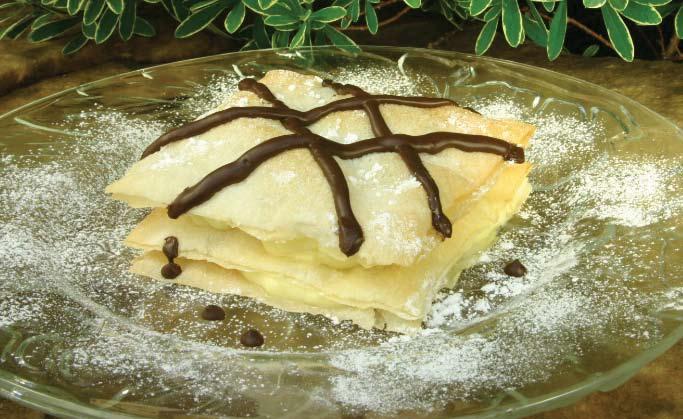
minutes) Remove from oven; transfer to wire cooling rack
3 Beat cream in a medium-size chilled bowl with chilled beaters until cream begins to thicken Add icing sugar; continue beating until firm peaks form
4 . Place lemon curd in a second medium size bowl . With a rubber spatula, carefully fold whipped cream into lemon curd and combine thoroughly to produce a Lemon Curd Filling (Makes about 3 cups or 750 mL ) If not using immediately, refrigerate
5 Just before serving, add a dab (i e , 1 tsp or 5 mL) of Lemon Cream Filling to centre of 4 individual over-sized plates Then top each with one baked phyllo square; add 1/4 cup (60 mL) of Lemon Cream Filling to each square and spread evenly to about 1/3 inch (0 8 cm) from edges of square Top each portion with another phyllo square Repeat process crowning with a third phyllo square
6 Dust Lemon Phyllo Napoleon and plate with icing sugar (shaken through a fine sieve) and decorate with piped lines of melted chocolate For best results, serve as soon as possible so that phyllo pastry remains crisp
Velvety lemon Curd
Makes about 1 1/4 cups or 300 mL
2 eggs
2 egg yolks
1/2 cup (125 mL) granulated sugar
1/4 cup (60 mL) fresh lemon juice, strained
1/4 cup (60 mL) orange juice, strained
1 tsp (5 mL) grated lemon zest 1 tbsp (15 mL) butter (unsalted), soft
1 In a medium size bowl, whisk together eggs and egg yolks until smooth
2 . In a small saucepan over medium-high heat, combine lemon and orange juices, sugar and lemon zest . Stir until sugar is dissolved and mixture comes to a boil
3 Gradually and in a steady stream, whisk hot juice mixture into beaten egg mixture Pour combined mixture into saucepan
4 Place saucepan over medium-low heat, add butter and whisk constantly until mixture is thick and bubbling (about 4 to 5 minutes) .
5 Remove lemon curd from heat and immediately transfer to a bowl (to avoid overcooking)
6 If not using until later, place cooled lemon curd in an airtight plastic container and store refrigerated for up to a week
See www margaretstable .ca for more information .


By Margo Roston
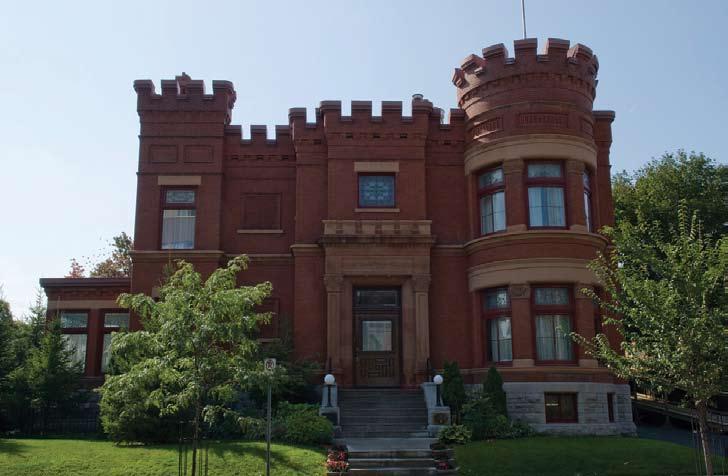
when Thomas Birkett built his castle on the corner of Metcalfe and Waverley streets, Metcalfe was just a dirt road for horses and carriages The year was 1896, and the former mayor of Ottawa owned a profitable hardware business on Rideau Street and large properties including the land where the National Arts Centre and the Cartier Square Drill Hall now stand
He built the three-storey red brick house in Baronial Gothic style, with a turret and crenellated roofline; the building echoed a medieval castle, with a sandstone archway framing the front door There was a large stable in the back The rare design enhanced a neighbourhood populated by other wellto-do members of the capital’s business class Mr Birkett, who also served as an alderman and a Conservative MP, was one of the town’s first citizens to own a motor car .
Following his death in 1920, his castle had a variety of owners – the Japanese embassy, the Boy Scouts of Canada, which used it as its headquarters, and the Heritage Canada Foundation
But its past glory was brilliantly revived when the Hungarian government bought it in 1994 A meticulous renovation, inside and out, has drawn raves and won several heritage awards for restoration The original house serves as the residence while a new wing, at 299 Waverley St ., houses the embassy
Today, Hungarian ambassador Pál Vastagh, his wife, Liza, and their daughter Eniko, live in the heritage property, surrounded in the main floor reception rooms by mahogany wainscotting, panelled walls, and decorative plaster crown moldings . A breathtaking mahogany staircase rises from the foyer and one of the first gas
fireplaces in the city is in the front hall for all to admire
“We are proud of this house,” says the ambassador . More than 1,100 people visited during Doors Open Ottawa in 2007
Added to the historic Canadian character of the house are many touches of Hungary A bust of St Stephen, the first king of Hungary, greets visitors and acts as a backdrop for official photographs
And the large dining room contains many examples of hand-painted Herend porcelain, made in the town it’s named for and known around the world for its beautiful patterns of birds, flowers and butterflies
The china is used for official dinners and teas in the embassy and one pattern, called Victoria, is named for the magnificent Herend dinner service Queen Victoria ordered after seeing it at the Great Exhibition of London in 1851 .
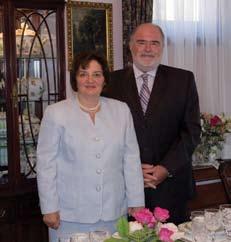
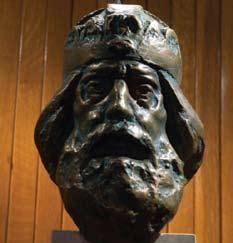
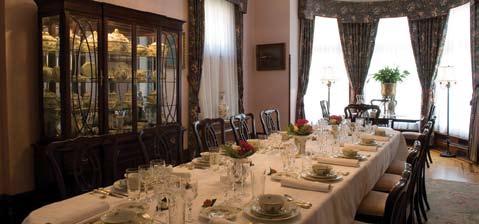

Among other treasures are charming folkloric statuettes created by Hungarian ceramicist Margit Kovacs They are among Mrs Vastagh’s favourite items in the house, which also has on display paintings by Hungarian masters and an important collection of engraved historical maps
The former language teacher greets us with a light lunch of open-face Hungarian sausage sandwiches, cheese bow ties, and delicate pastries known as kepviselofank, literally translated from the Hungarian as “member of parliament donuts ”
“Hungarians are famous for hospitality,” she says, adding that they entertain often, inviting up to 150 guests for standup receptions, and 22 for sit-down dinners that include many Hungarian dishes . A new chef has just arrived from their homeland, but only cooks for formal occasions, taking on non-culinary household duties the rest of the time
“But we are happy with four for dinner,” says the ambassador, a former justice minister and member of the Hungarian parliament for nearly 20 years . After almost two years in Ottawa, he is still enjoy-
ing his first diplomatic posting .
“It is a very interesting job, in a good place with a friendly atmosphere,” he says “We are absolutely satisfied ”
The couple is involved with Hungarian cultural activities, including a visit by Gov Gen Michaëlle Jean to Hungary scheduled for November and an exhibit of antique Hungarian lace to be on display at a gala at Rideau Hall .
The location of their home in the heart of the city is convenient for the whole family Their daughter can walk to the University of Ottawa where she is a firstyear student, “and we can walk to get some milk if we need it,” they say And the ambassador and his wife regularly walk to the YM/YWCA where they work out, swim and “sit in the sauna, meeting Canadians,” he says
One of Ottawa’s premier houses is not only an elegant example of earlier days in Ottawa but a warm and beautiful home highlighting the hospitality and friendliness of its Hungarian residents
Margo Roston is Diplomat’s culture editor .




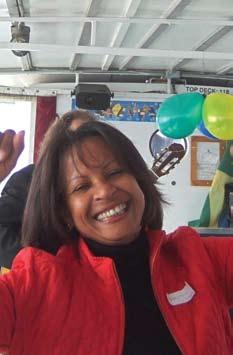
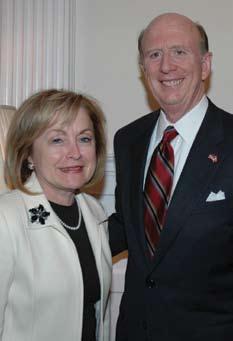
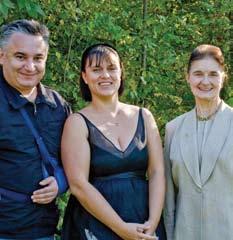
this paGe 1. More than 100 diplomatic spouses, diplomats and staff members from embassies joined some 30 Canadians from the Canadian Federal of University Women’s diplomatic hospitality group for a boat cruise on the ottawa River oct. 3. Vera lucia Ribeiro de Andrade Pinto, danced to the music of ottawa's Brazilian group Florquestra. • 2. From left: zaharia Daniela (Romania), leonard Constant, guitarist from Florquestra and Stela Andrei (Romania.) (Photos: Ulle Baum) • 3. From left: Caroline liu (Taiwan), Myrna Rosales (Philippines), Ulle Baum, president of the diplomatic hospitality group, and Minsu Wong, (Taiwan). (Photo: yumiko Tsunakawa-Toma.) • 4. Bulgarian-Canadian violinist Ralitsa Tcholakova (middle) and pianist elaine keillor (right), performed a concert in support of Sinfonia ottawa at the Chelsea home of Peggy and Jay Atherton Sept. 21. Macedonian Ambassador Sasko Nasev attended. (Photo: Bill Blackstone) • 5. American Ambassador David Wilkins and his wife Susan hosted a reception oct. 14 to help raise awareness for hiPPy, home instruction for Parents of Preschool youngsters, a parent-involvement, school readiness program. Mr. Wilkins is shown here with MPP Madeline Meilleur. (Photo: Phillip Mirsky)
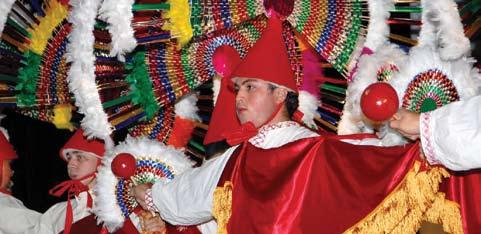
this paGe 1. Mexican Ambassador emilio Goicoechea and his wife Juliette ohleyer hosted a national day party at the Government Conference Centre Sept. 16, which included cultural performances. • 2. Mr. Goicoechea and Ms. ohleyer. (Photo: Mexican embassy) • 3. Ambassadors from the european Union took part in a tree-planting ceremony at Manor Park Public School Sept. 22 as part of the environment online network’s Global Tree Planting Day. From left, French Ambassador Francois Delattre, Finnish Ambassador Risto Piipponen and city councillor Jacques legendre. (Photo: Bob Diotte) • 4. iraqi MP layla Alkhafaji, who spent 10 years in prison in iraq for opposing Saddam hussein, visited the iraqi embassy in ottawa, and had a tour of Parliament, in late August. She’s shown here with ottawa-orleans MP Royal Galipeau. • 5. out-going indian high Commissioner Rajamani Narayan and his wife Regina were welcomed to the Malayali Association of ottawa’s celebration of onam, the biggest festival of the state of kerala, india. offering flowers at the Sept. 13 event are Malavika Sajan (left) and lakshmi Pattatheby.
edward evelyn Greaves
high Commissioner for barbados
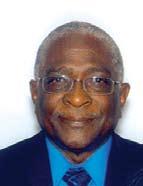
Mr Greaves comes to diplomacy from politics though he’s had a number of positions since his public life
He worked for the civil service from 1959-67 and joined the Barbados Workers’ Union as an education officer in 1968 . He became the deputy general secretary for the organization and then head of its Labour College from 1974 to 1996 During those years, he was also a Member of Parliament (1971-1981) and again from 1986 to 1994 He was a member of the Senate a member of the cabinet In 1996, he became a “senior specialist” for worker’s activities at the ILO Caribbean Office and was an industrial relations specialist from 2002 until his appointment .
Mr Greaves has a BA from the University of West Indies and a master’s in education from Rutgers in New Jersey
shamel elsayed nasser ambassador of egypt
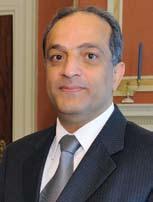
Mr Nasser comes to Ottawa after working in Cairo as deputy foreign minister, responsible for African and African Union
The ambassador completed a bachelor’s degree in engineering from El Azhar University in 1978 and then attended the ministry of foreign affairs’ diplomatic institute in 1980 . Some 18 years later, he completed a degree in law at Cairo University.
He has held positions as ambassador to Ethiopia and permanent representative to the African Union He also had diplomatic postings in Sarajevo, Vienna and Moscow and was a member of Egypt’s delegation to the United Nations in New York
Born in Cairo in 1954, Mr . Nasser is married and has two children . He speaks Arabic, French and English .
risto piipponen ambassador of Finland
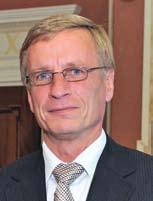
Mr Piipponen joined the ministry of foreign affairs in 1987 as an attaché in the trade policy department One year later, he was posted to Brussels, which kicked off a series of foreign postings in quick secession, including Canberra in 1989, Algiers in 1991 and Geneva in 1992 . He served as first secretary at the EU Secretariat in 1995 and then as counsellor at the embassy in Paris
He returned to headquarters in 2000 as director-general of EU affairs and coordination and was appointed as ambassador to Cyprus in 2004 before his appointment to Canada .
Mr . Piipponen, 51, has a master’s in science from the Turku School of Economics and Business Administration (1980) and an LLM from the University of Helsinki (1984) He is married and has three children
Georges de la roche
ambassador of Guatemala
Mr . de La Roche came to diplomacy from
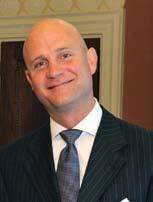
the business world . He joined the ministry of foreign affairs in 1996 after having worked as a plant manager at Calzado Universal S A in Guatemala City, and then as CEO of Tiendas Unidas S A for four years
Upon joining the foreign service, he was posted as first secretary and consul at the embassy in Warsaw . He then went to the Hague in the Netherlands for a year before being posted to the embassy in Washington where he served as ministercounsellor, counselor-congressional liaison and as first secretary and counsellor
He has a master’s degree in international public policy from Johns Hopkins University and a BA from Tufts University He speaks Spanish, English, French, Italian and Polish .
Mr de La Roche, 42, is married with three young children
sigridur a thordardottir ambassador of iceland
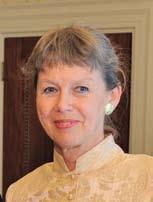
Ms Thordardottir comes to diplomacy from a 16-year career in politics She was a member of Althingi (Iceland’s parliament), as a member of the Independence Party, from 1991 until 2007
During her time in Parliament, she was minister of the environment (2004-2006)
and minister for Nordic cooperation from 2004 until 2005 She chaired the standing committee on foreign affairs for one year, and the committee on education and culture from 1991 to 2002 and was vice-president of Parliament for a year beginning in 2006 .
Prior to her political career, Ms . Thordardottir was an elementary school teacher for 16 years and during that time, she also served on municipal councils
She has a BA from Akureyri College and is married to Rev Jon Thorsteinsson Mosfellsbaer They have two adult daughters and six grandchildren
miriam Ziv ambassador of israel
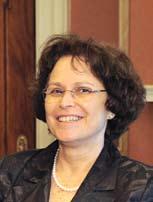
Ms . Ziv’s appointment as ambassador to Canada is a return for her . She served as vice-consul at the Toronto consulate from 1974-79 That appointment came two years after she joined the ministry of foreign affairs as a cadet
She worked in various positions at headquarters until 1986 For the following five years, she was deputy director of the arms-control division before being
appointed minister-counsellor at the embassy in Rome
She was director of the economic division from 1997-99 and then head of the Middle East economic affairs department She served as deputy director-general for Africa from 2001-05 when she was named deputy-director for strategic affairs and granted the rank of ambassador .
Ms Ziv is married to Ariel Kenet, a retired diplomat, and they have two sons, Michael and Amit
wilhelmus julius petrus Geerts ambassador of the netherlands
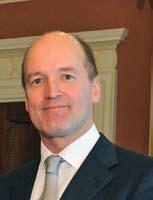
Mr Geerts is a career diplomat who joined the foreign service in 1988 and prior to coming to Ottawa, he served, for two years as deputy director-general for political affairs Before taking on that position, he served as deputy head of mission in Washington from 2002 until 2006
Prior to that, Mr Geerts spent seven years as foreign policy advisor to Prime Minister Wim Kok Before joining the Prime Minister’s Office, he worked on humanitarian matters at the foreign ministry and served at the Netherlands embassy in
Singapore
Mr Geerts, who taught high school before joining the foreign service, has a master’s degree from Nijmegen University and studied at Boston College He is married to Thea Geerts-Kuijper and they have two daughters . He speaks English, German and French .
Dominican Republic niurka alexandra Carrion baez Counsellor
ecuador luis alfredo Velarde santamaria Military Attaché
Germany jörn rohde Minister-Counsellor
Mauritius dhanandjay Goboodun Second Secretary
New zealand john ashley rolan johnston Counsellor
Russia leonid savinov Counsellor
Sudan mugahid mohamed syaed ahmed Attaché
kureng akuei pac Garang Counsellor
United kingdom samantha louise pass Second Secretary
AFGHANISTAN
His Ex Omar Samad Embassy of the Islamic Republic of Afghanistan
240 Argyle Street
Ottawa, Ontario K2P 1B9
TEL 563-4223 FAX 563-4962 contact@afghanemb-canada net www afghanemb-canada net
ALBANIA
His Ex Besnik Konci
Embassy of the Republic of Albania
130 Albert Street, Suite 302 Ottawa, Ontario K1P 5G4
TEL 236-4114 FAX 236-0804 embassyofalbania@on aibn com
ALGErIA
His Ex Smail Benamara Embassy of the People’s Democratic Republic of Algeria
500 Wilbrod Street
Ottawa, Ontario K1N 6N2
TEL 789-8505 FAX 789-1406 www.embassyalgeria.ca/eng.htm
ANGOLA
His Ex Miguel Maria N Puna Embassy of the Republic of Angola 189 Laurier Avenue East Ottawa, Ontario K1N 6P1
TEL 234-1152 FAX 234-1179 info@embangola-can org www embangola-can org
ArGENTINA
His Ex Arturo Bothamley Embassy of the Argentine Republic 81 Metcalfe Street 7th Floor Ottawa, Ontario K1P 6K7
TEL 236-2351 FAX 235-2659 embargentina@argentina-canada net www argentina-canada net
ArMENIA
Mr Arman Akopian Chargé d’Affaires
Embassy of the Republic of Armenia 7 Delaware Avenue Ottawa, Ontario K2P 0Z2 TEL 234-3710 FAX 234-3444 embottawa@rogers com www armembassycanada ca
AUSTrALIA
Australian High Commission
50 O’Connor, Suite 710 Ottawa, Ontario K1P 6L2
TEL 236-0841 FAX 236-4376 www canada embassy gov au
AUSTrIA
His Ex Werner Brandstetter
Embassy of the Republic of Austria
445 Wilbrod Street
Ottawa, Ontario K1N 6M7
TEL 789-1444 FAX 789-3431
Ottawa-ob@bmeia gv at
AZErBAIJAN
Mr Farid Shafiyev Chargé d’Affaires
Embassy of the Republic of Azerbaijan
275 Slater Street, Suite 904-C
Ottawa, Ontario K1P 5H9
TEL 288-0497 FAX 230-8089
BAHAMAS
His Ex Michael D Smith
High Commission for The Commonwealth of The Bahamas
50 O’Connor Street, Suite 1313
Ottawa, Ontario K1P 6L2
TEL 232-1724 FAX 232-0097
ottawa-mission@bahighco com
BANGLADESH
His Ex A M Yakub Ali
High Commission for the People’s Republic of Bangladesh
340 Albert St , Suite 1300
Ottawa, Ontario K1R 7Y6
TEL 236-0138 FAX 567-3213
bangla@rogers com www bdhc org
BArBADOS
His Ex Edward Evelyn Greaves
High Commission for Barbados
55 Metcalfe St., Suite 470
Ottawa, Ontario, K1P 6L5
TEL 236-9517 FAX 230-4362
ottawa@foreign gov bb
BELArUS
Mr Pavel Pustovoy Chargé d’Affaires
Embassy of the Republic of Belarus
130 Albert Street, Suite 600
Ottawa, Ontario K1P 5G4
TEL 233-9994 FAX 233-8500 belamb@igs net
BELGIUM
His Ex Jean Lint
Embassy of Belgium
360 Albert Street, Suite 820
Ottawa, Ontario K1R 7X7
TEL 236-7267 FAX 236-7882 Ottawa@diplobel org www diplomatie be/ottawa
BENIN
His Ex Honoré Ahimakin Embassy of the Republic of Benin
58 Glebe Avenue
Ottawa, Ontario K1S 2C3
TEL 233-4429 FAX 233-8952 ambaben@benin ca
BOLIVIA
His Ex Edgar Torrez Mosqueira Embassy of the Republic of Bolivia
130 Albert Street, Suite 416
Ottawa, Ontario K1P 5G4
TEL 236-5730 FAX 236-8237 embolivia04@yahoo com
BOSNIA-HErZEGOVINA
His Ex Milenko Misic Embassy of Bosnia and Herzegovina
130 Albert Street, Suite 805
Ottawa, Ontario K1P 5G4
TEL 236-0028 FAX 236-1139 embassyofbih@bellnet ca www bhembassy ca
BrAZIL
His Ex Paulo Cordeiro Pinto Embassy of the Federative Republic of Brazil 450 Wilbrod Street
Ottawa, Ontario K1N 6M8
TEL 237-1090 FAX 237-6144 mailbox@brasembottawa org
BrUNEI DArUSSALAM
Her Ex Rakiah Haji Abdul Lamit High Commission for Brunei Darussalam 395 Laurier Avenue East Ottawa, Ontario K1N 6R4 TEL 234-5656 FAX 234-4397 bhco@bellnet ca
BULGArIA
His Ex. Evgueni Stoytchev Embassy of the Republic of Bulgaria 325 Stewart Street Ottawa, Ontario K1N 6K5 TEL 789-3215 FAX 789-3524
BUrKINA FASO
Her Ex Juliette Bonkoungou Embassy of Burkina Faso 48 Range Road Ottawa, Ontario K1N 8J4 TEL 238-4796 FAX 238-3812 burkina faso@sympatico ca www ambaburkina-canada org
BUrUNDI
Her Ex Appolonie Simbizi Embassy of the Republic of Burundi 325 Dalhousie Street, Suite 815
Ottawa, Ontario K1N 7G2 TEL 789-0414 FAX 789-9537 ambabottawa@yahoo com http://ambabucanada le-site info
CAMErOON
His Ex Anu’a-Gheyle Azoh-Mbi
High Commission for the Republic of Cameroon
170 Clemow Avenue
Ottawa, Ontario K1S 2B4
TEL 236-1522 FAX 236-3885
CHILE
His Ex Eugenio Ortega Riquelme Embassy of the Republic of Chile
50 O’Connor Street, Suite 1413
Ottawa, Ontario K1P 6L2
TEL 235-9940 FAX 235-1176 echileca@chile ca www chile ca
CHINA
His Ex Lijun Lan Embassy of the People’s Republic of China 515 St Patrick Street
Ottawa, Ontario K1N 5H3
TEL 789-3434 FAX 789-1911
www chinaembassycanada org
COLOMBIA
His Ex Jaime Giron-Duarte Embassy of the Republic of Colombia
360 Albert Street, Suite 1002
Ottawa, Ontario K1R 7X7
TEL 230-3760 FAX 230-4416
embajada@embajadacolombia ca www embajadacolombia ca
CONGO (ZAIrE)
Ms Louise Nzanga Ramazani Chargé d’Affaires
Embassy of the Democratic Republic of the Congo 18 Range Road
Ottawa, Ontario K1N 8J3
TEL 230-6391 FAX 230-1945
COSTA rICA
Her Ex Emilia Maria Alvarez Navarro
Embassy of the Republic of Costa Rica
325 Dalhousie Street, Suite 407 Ottawa, Ontario K1N 7G2
TEL 562-2855 FAX 562-2582 embcrica@travel-net com www costaricaembassy com

CÔTE D’IVOIrE
His Ex Louis Leon Boguy Bony Embassy of the Republic of Côte d’Ivoire
9 Marlborough Avenue
Ottawa, Ontario K1N 8E6 TEL 236-9919 FAX 563-8287 acica@ambaci-ottawa org www ambaci-ottawa org
CrOATIA
Her Ex Vesela Mrden Kora´c Embassy of the Republic of Croatia 229 Chapel Street Ottawa, Ontario K1N 7Y6 TEL 562-7820 FAX 562-7821 Croatia emb@mvpei hr www croatiaemb net
CUBA
Her Ex Teresita de Jesús Vicente Sotolongo Embassy of the Republic of Cuba 388 Main Street Ottawa, Ontario K1S 1E3 TEL 563-0141 FAX 563-0068 cuba@embacuba ca www embacuba ca
CZECH rEPUBLIC
His Ex. Karel Žebrakovský Embassy of the Czech Republic 251 Cooper Street Ottawa, Ontario K2P 0G2 TEL 562-3875 FAX 562-3878 ottawa@embassy mzv cz
DENMArK
His Ex Poul Erik Dam Kristensen
Royal Danish Embassy 47 Clarence Street, Suite 450 Ottawa, Ontario K1N 9K1 TEL 562-1811 FAX 562-1812 ottamb@um dk www ambottawa um dk
DOMINICAN rEPUBLIC
His Ex Luis Eladio Arias Nunez Embassy of the Dominican Republic 130 Albert Street, Suite 418 Ottawa, Ontario K1P 5G4 TEL 569-9893 FAX 569-8673 www drembassy org
ECUADOr
His Excellency Franklin Chávez Pareja Embassy of the Republic of Ecuador 50 O’Connor Street, Suite 316 Ottawa, Ontario K1P 6L2 TEL 563-4286 FAX 235-5776
EGYPT
His Ex Shamel Elsayed Nasser Embassy of the Arab Republic of Egypt 454 Laurier Avenue East Ottawa, Ontario K1N 6R3 TEL 234-4931 FAX 234-4398 egyptemb@sympatico ca www.mfa.gov.eg
EL SALVADOr
His Ex Rafael Alfaro
Embassy of the Republic of El Salvador 209 Kent Street Ottawa, Ontario K2P 1Z8 TEL 238-2939 FAX 238-6940 embajada@elsalvador-ca org
ErITrEA
His Ex Ahferom Berhane
Embassy of the State of Eritrea
75 Albert Street, Suite 610 Ottawa, Ontario K1P 5E7
TEL 234-3989 FAX 234-6213
ESTONIA
Rasmus Lumi
Chargé d’Affaires
Embassy of the Republic of Estonia
260 Dalhousie Street, Suite 210
Ottawa, Ontario K1N 7E4
TEL 789-4222 FAX 789-9555
embassy ottawa@mfa ee
www estemb ca
ETHIOPIA
Embassy of the Federal Democratic Republic of Ethiopia
151 Slater Street, Suite 210 Ottawa, Ontario K1P 5H3
TEL 235-6637 FAX 235-4638 infoethi@magi com
www ethiopia ottawa on ca
EUrOPEAN UNION
His Ex Dorian Prince
Delegation of the European Commission to Canada
150 Metcalfe St #1900
Ottawa, ON K2P1P1
TEL 238-6464 FAX 238-5191 delegation-canada@ec europa eu
www delcan ec europa eu
FINLAND
His Ex Risto Ensio Piipponen
Embassy of the Republic of Finland
55 Metcalfe Street, Suite 850
Ottawa, Ontario K1P 6L5
TEL 288-2233 FAX 288-2244
embassy@finland ca
FrANCE
His Ex Francois Delattre
Embassy of France
42 Sussex Drive
Ottawa, Ontario K1M 2C9
TEL 789-1795 FAX 562-3735
www ambafrance-ca org
GABON
His Ex André William Anguilé
Embassy of the Gabonese Republic 4 Range Road, P O Box 368
Ottawa, Ontario K1N 8J5
TEL 232-5301 FAX 232-6916 ambgabon@sprint ca
GErMANY
His Ex Matthias Martin Höpfner Embassy of the Federal Republic of Germany 1 Waverley Street
Ottawa, Ontario K2P 0T8
TEL 232-1101 FAX 594-9330 germanembassyottawa@on aibn com
GHANA
Her Ex Margaret Ivy Amoakohene
High Commission for the Republic of Ghana
153 Gilmour Street
Ottawa, Ontario K2P 0N8
TEL 236-0871 FAX 236-0874
ghanacom@ghc-ca com www ghc-ca com
GrEECE
His Ex Nikolaos Matsis
Embassy of the Hellenic Republic
80 MacLaren Street, Suite 76
Ottawa, Ontario K2P 0K6
TEL 238-6271 FAX 238-5676 embassy@greekembassy ca www greekembassy ca
GUATEMALA
His Excellency Georges de La Roche Embassy of the Republic of Guatemala
130 Albert Street, Suite 1010
Ottawa, Ontario K1P 5G4
TEL 233-7237 FAX 233-0135 embassy1@embaguate-canada com www embaguate-canada com
GUINEA
Mrs Hawa Diakité
Counsellor & Chargé d’Affaires Embassy of the Republic of Guinea 483 Wilbrod Street Ottawa, Ontario K1N 6N1 TEL 789-8444 FAX 789-7560 ambassadedeguinee@bellnet ca
GUYANA
His Ex Rajnarine Singh High Commission for the Republic of Guyana 151 Slater Street, Suite 309 Ottawa, Ontario K1P 5H3 TEL 235-7249 FAX 235-1447
HAITI
Ms Marie Nathalie Menos-Gissel Chargé d’Affaires Embassy of the Republic of Haiti 130 Albert Street, Suite 1500 Ottawa, Ontario K1P 5G4 TEL 238-1628 FAX 238-2986 bohio@sympatico ca
HOLY SEE
His Ex The Most Rev Luigi Ventura Apostolic Nunciature 724 Manor Avenue Ottawa, Ontario K1M 0E3 TEL 746-4914 FAX 746-4786
HONDUrAS
Mr Javier Valladares Chargé d’Affaires Embassy of the Republic of Honduras 151 Slater Street, Suite 805 Ottawa, Ontario K1P 5H3 TEL 233-8900 FAX 232-0193
HUNGArY
His Ex. Pál Vastagh Embassy of the Republic of Hungary 299 Waverley Street Ottawa, Ontario K2P 0V9 TEL 230-2717 FAX 230-7560 www mfa gov hu/emb/ottawa mission ott@kum hu
ICELAND
Her Excellency Sigridur Anna Thordardottir Embassy of Iceland
360 Albert Street, Suite 710 Ottawa, Ontario K1R 7X7 TEL 482-1944 FAX 482-1945 icemb ottawa@utn stjr is
INDIA
Ms Narinder Chauhan Acting High Commissioner High Commission for the Republic of India
10 Springfield Road Ottawa, Ontario K1M 1C9
TEL 744-3751 FAX 744-0913 hicomind@hciottawa ca www hciottawa ca
INDONESIA
His Ex Djoko Hardono
Embassy of the Republic of Indonesia
55 Parkdale Avenue
Ottawa, Ontario K1Y 1E5
TEL 724-1100 FAX 724-1105
info@indonesia-ottawa org www indonesia-ottawa org
IrAN
Mr Bahram Ghasemi
Chargé d’Affaires
Embassy of the Islamic Republic of Iran 245 Metcalfe Street
Ottawa, Ontario K2P 2K2
TEL 235-4726 FAX 232-5712 iranemb@salamiran org www salamiran org
IrAQ
His Ex Howar M Ziad
Embassy of the Republic of Iraq 215 McLeod Street Ottawa, Ontario K2P 0Z8 TEL 236-9177 FAX 236-9641 media@iraqembassy ca www iraqembassy ca
IrELAND
His Ex Declan Kelly
Embassy of Ireland
130 Albert Street, Suite 1105
Ottawa, Ontario K1P 5G4
TEL 233-6281 FAX 233-5835
Ottawaembassy@dfa ie www embassyofireland ca
ISrAEL
Her Ex Miriam Ziv
Embassy of Israel
50 O’Connor Street, Suite 1005
Ottawa, Ontario K1P 6L2
TEL 567-6450 FAX 567-9878 info@ottawa mfa gov il www embassyofIsreal ca
ITALY
His Ex Gabriele Sardo
Embassy of the Italian Republic
275 Slater Street, 21st Floor Ottawa, Ontario K1P 5H9
TEL 232-2401 FAX 233-1484 ambital@italyincanada com www italyincanada com
JAMAICA
Her Ex. Evadne Coye
Jamaican High Commission
275 Slater Street, Suite 800 Ottawa, Ontario K1P 5H9
TEL 233-9311 FAX 233-0611 hc@jhcottawa ca
JAPAN
His Ex Tsuneo Nishida
Embassy of Japan
255 Sussex Drive
Ottawa, Ontario K1N 9E6
TEL 241-8541 FAX 241-2232 infocul@embjapan ca www ca emb-japan go jp
JOrDAN
His Ex Nabil Ali Barto
Embassy of the Hashemite Kingdom of Jordan
100 Bronson Avenue, Suite 701 Ottawa, Ontario K1R 6G8
TEL 238-8090 FAX 232-3341
KENYA
Her Ex Judith Mbula Bahemuka High Commission for the Republic of Kenya
415 Laurier Avenue East Ottawa, Ontario K1N 6R4
TEL 563-1773 FAX 233-6599 kenyahighcommission@rogers com www kenyahighcommission ca
KOrEA, rEPUBLIC
His Ex Soo-dong Kim Embassy of the Republic of Korea 150 Boteler Street
Ottawa, Ontario K1N 5A6 TEL 244-5010 FAX 244-5034 www emb-korea ottawa on ca
KUWAIT
His Ex Musaed Rashed Al-Haroun Embassy of the State of Kuwait 333 Sussex Drive Ottawa, Ontario, K1N 1J9 TEL 780-9999 FAX 780-9905
LATVIA
His Ex Mar gers Krams Embassy of the Republic of Latvia 350 Sparks Street, Suite 1200 Ottawa, Ontario, K1R 7S8 TEL 238-6014 FAX 238-7044 embassy canada@mfa gov lv www ottawa mfa gov lv
LEBANON
His Ex Massoud Maalouf Embassy of Lebanon 640 Lyon Street Ottawa, Ontario K1S 3Z5 TEL 236-5825 FAX 232-1609 info@lebanonembassy ca www lebanonembassy ca
LESOTHO
Her Ex Mots'eoa Senyane High Commission for the Kingdom of Lesotho
130 Albert Street, Suite 1820
Ottawa, ON K1P 5G4 TEL: 234-0770 FAX: 234-5665
LIBYA
His Ex Ahmed Ali Jarrud Embassy of the Great Socialist People’s Libyan Arab Jamahiriya 81 Metcalfe Street, Suite 1000 Ottawa, Ontario K1P 6K7 TEL 230-0919 FAX 230-0683 info@libya-canada org
LITHUANIA
Her Ex Ginte Damusis Embassy of the Republic of Lithuania
130 Albert Street, Suite 204 Ottawa, Ontario K1P 5G4
TEL 567-5458 FAX 567-5315
MACEDONIA (rEPUBLIC OF)
His Ex Sasko Nasev Embassy of the Republic of Macedonia
130 Albert Street, Suite 1006 Ottawa, Ontario K1P 5G4
TEL 234-3882 FAX 233-1852
MADAGASCAr
His Ex Simon Constant Horace Embassy of the Republic of Madagascar
3 Raymond Street
Ottawa, Ontario K1R 1A3
TEL: 567-0505 FAX 567-2882
ambamadcanada@bellnet ca www madagascar-embassy ca
MALAYSIA
Mr Mohamed Hatimi Abas
Acting High Commissioner High Commission for Malaysia
60 Boteler Street
Ottawa, Ontario K1N 8Y7
TEL 241-5182 FAX 241-5214 malottawa@kln gov my
MALI
His Ex Mamadou Bandiougou Diawara
Embassy of the Republic of Mali
50 Goulburn Avenue
Ottawa, Ontario K1N 8C8 TEL 232-1501 FAX 232-7429 ambassadedumali@rogers com www ambamalicanada org
MEXICO
His Ex Emilio Rafael Jose Goicoechea
Embassy of the United Mexican States
45 O’Connor Street, Suite 1000
Ottawa, Ontario K1P 1A4
TEL 233-8988 FAX 235-9123 info@embamexcan com www embamexcan com
MONGOLIA
His Ex Gotov Dugerjav
Embassy of Mongolia
151 Slater Street, Suite 503
Ottawa, Ontario K1P 5H3
TEL 569-3830 FAX 569-3916 mail@mongolembassy org
MOrOCCO
His Ex Mohamed Tangi Embassy of the Kingdom of Morocco
38 Range Road
Ottawa, Ontario K1N 8J4
TEL 236-7391 FAX 236-6164
MYANMAr
Mr Maung Maung Chargé d'Affaires
Embassy of the Union of Myanmar
85 Range Road, Suite 902
Ottawa, Ontario K1N 8J6
TEL 232-9990 FAX 232-6999 meottawa@rogers com
NETHErLANDS
His Ex Wilhelmus J P Geerts
Embassy of the Kingdom of the Netherlands
350 Albert Street, Suite 2020
Ottawa, Ontario K1R 1A4
TEL 237-5030 FAX 237-6471 Ott-cdp@minbuza nl
NEW ZEALAND
Her Ex Kate Lackey
New Zealand High Commission
99 Bank Street, Suite 727
Ottawa, Ontario K1P 6G3
TEL 238-5991 FAX 238-5707 info@nzhcottawa org www nzembassy com/home cfm?c=38
NIGEr
Her Ex Nana Aicha Foumakoye Embassy of the Republic of the Niger
38 Blackburn Avenue
Ottawa, Ontario K1N 8A3
TEL 232-4291 FAX 230-9808
NIGErIA
Ex Iyorwuese Hagher High Commission for the Federal Republic of Nigeria
295 Metcalfe Street
Ottawa, Ontario K2P 1R9 Tel 236-0521 Fax 236-0529
NOrWAY
His Ex Tor Berntin Naess Embassy of the Kingdom of Norway 150 Metcalfe Street, Suite 1300 Ottawa, ON K2P 1P1
TEL 238-6571 FAX 238-2765 emb ottawa@mfa no www emb-norway ca
O/OF EASTErN CArIBBEAN STATES
His Ex Brendon Browne High Commission for the Countries of the Organization of Eastern Caribbean States
130 Albert Street, Suite 700 Ottawa, Ontario K1P 5G4
TEL 236-8952 FAX 236-3042 echcc@travel-net com www oecs org/ottawa/index html
PAKISTAN
His. Ex. Musa Javed Chohan High Commission for the Islamic Republic of Pakistan 10 Range Road Ottawa, Ontario K1N 8J3
TEL 238-7881 FAX 238-7296 parepottawa@rogers com
PALESTINE
Mr Amin Abou-Hassira Head of the General Delegation 45 Country Club Dr , Ottawa, Ontario K1V 9W1
TEL: 736-0053
FAX: 736-0535 palestinegd@rogers com
PANAMA
Her Ex Romy Vásquez de González Embassy of the Republic of Panama 130 Albert Street, Suite 300 Ottawa, Ontario K1P 5G4
TEL 236-7177 FAX 236-5775 embassyof panama@gmail com
PArAGUAY
His Ex Juan E Aguirre Martinez Embassy of the Republic of Paraguay
151 Slater Street, Suite 501 Ottawa, Ontario K1P 5H3 TEL 567-1283 FAX 567-1679 consularsection@embassyofparaguay ca
PErU
His Ex Jorge Juan Castañeda Mendez Embassy of the Republic of Peru 130 Albert Street, Suite 1901 Ottawa, Ontario K1P 5G4 TEL 238-1777 FAX 232-3062 emperuca@bellnet ca
PHILIPPINES
His Ex Jose S Brillantes
Embassy of the Republic of the Philippines
130 Albert Street, Suite 606
Ottawa, Ontario K1P 5G4
TEL 233-1121 FAX 233-4165 embassyofphilippines@rogers com
POLAND
His Ex Piotr Ogrodzinski Embassy of the Republic of Poland 443 Daly Avenue
Ottawa, Ontario K1N 6H3
TEL 789-0468 FAX 789-1218 Ottawa@polishembassy.ca
POrTUGAL
His Ex Joao Pedro Silveira Carvalho Embassy of Portugal 645 Island Park Drive
Ottawa, Ontario K1Y 0B8 TEL 729-0883 FAX 729-4236 embportugal@embportugal/ottawa org
rOMANIA
Her Ex Elena Stefoi Embassy of Romania 655 Rideau Street
Ottawa, Ontario K1N 6A3
TEL 789-3709 FAX 789-4365 Romania@romanian-embassy com http://ottawa mae ro
rUSSIA
His Ex Georgiy Mamedov Embassy of the Russian Federation 285 Charlotte Street Ottawa, Ontario K1N 8L5 TEL 235-4341 FAX 236-6342 rusemb@rogers com www rusembcanada mid ru
rWANDA
Her Ex Edda Mukabagwiza Embassy of the Republic of Rwanda 121 Sherwood Drive
Ottawa, Ontario K1Y 3V1
Phone: 569-5420/22/24 Fax : 569-5421/5423
generalinfo@ambarwaottawa ca www ambarwaottawa ca
SAUDI ArABIA
Mr Abdullah Saleh A Al Awwad Chargé d’Affaires
Royal Embassy of Saudi Arabia 201 Sussex Drive
Ottawa, ON K1N 1K6
TEL 237-4100 FAX 237-0567
SENEGAL
His Excellency Issakha Mbacke Embassy of the Republic of Senegal 57 Marlborough Avenue
Ottawa, Ontario K1N 8E8
TEL 238-6392 FAX 238-2695 ambassn@sympatico ca
SErBIA
His Ex. Du˘san T. Batakovi´c Embassy of the Republic of Serbia 17 Blackburn Avenue
Ottawa, Ontario K1N 8A2
TEL 233-6289 FAX 233-7850
generalinfo@serbianembassy ca www serbianembassy ca
SLOVAK rEPUBLIC
His Ex Stanislav Opiela Embassy of the Slovak Republic
50 Rideau Terrace
Ottawa, Ontario K1M 2A1
TEL 749-4442 FAX 749-4989
ottawa@slovakembassy ca www ottawa mfa sk
SLOVENIA
Ex Tomaz Kunstelj
Embassy of the Republic of Slovenia
150 Metcalfe Street, Suite 2200
Ottawa, Ontario K1P 1P1
TEL 565-5781 FAX 565-5783 vot@gov si
SOUTH AFrICA
His Ex Abraham Sokhaya Nkomo High Commission for the Republic of South Africa 15 Sussex Drive
Ottawa, Ontario K1M 1M8
TEL 744-0330 FAX 741-1639 rsafrica@southafrica-canada ca www southafrica-canada ca
SPAIN
His Ex Mariano Alonso-Burón Embassy of the Kingdom of Spain
74 Stanley Avenue
Ottawa, Ontario K1M 1P4
TEL 747-2252 FAX 744-1224 embespca@mail mae es www embaspain ca
SrI LANKA
Mr Chandrasekara A H M Wijeratne
Acting High Commissioner High Commission for the Democratic Socialist Republic of Sri Lanka
333 Laurier Avenue West, Suite 1204
Ottawa, Ontario K1P 1C1
TEL 233-8449 FAX 238-8448 www srilankahcottawa org
SUDAN
Her Ex Faiza Hassan Taha Armousa Embassy of the Republic of the Sudan 354 Stewart Street Ottawa, Ontario K1N 6K8
TEL 235-4000 FAX 235-6880
SWEDEN
Her Ex Ingrid Maria Iremark Embassy of Sweden 377 Dalhousie Street
Ottawa, Ontario K1N 9N8
TEL 244-8200 FAX 241-2277 Sweden ottawa@foreign ministry se www swedishembassy ca
SWITZErLAND
His Ex Werner Baumann Embassy of Switzerland 5 Marlborough Avenue
Ottawa, Ontario K1N 8E6
TEL 235-1837 FAX 563-1394 ott vertretung@eda admin ch
SYrIA
His Ex Jamil Haidar Sakr
Embassy of the Syrian Arab Republic
151 Slater Street, Suite 1000
Ottawa, Ontario K1P 5H3
TEL 569-5556 FAX 569-3800 www syrianembassy ca
TAIPEI Economic & Cultural office
David Tawei Lee, Representative
45 O’Connor Street, Suite 1960
Ottawa, Ontario K1P 1A4
TEL 231-5080 FAX 231-7112 publicaffairs@on aibn com
TANZANIA
His Ex Peter Kallaghe
High Commission for the United Republic of Tanzania
50 Range Road
Ottawa, Ontario K1N 8J4
TEL 232-1509 FAX 232-5184 tzottawa@synapse ca www tanzaniahighcommission ca
THAILAND
His Ex Snanchart Devahastin
The Royal Thai Embassy
180 Island Park Drive
Ottawa, Ontario K1Y 0A2
TEL 722-4444 FAX 722-6624 thaiott@magma ca
TOGO
His Ex Bawoumondom Amelete Embassy of the Togolese Republic 12 Range Road
Ottawa, Ontario K1N 8J3
TEL 238-5916 FAX 235-6425
TrINIDAD AND TOBAGO
Her Ex Camille Rosemarie Robinson-Regis
High Commission for the Republic of Trinidad and Tobago
200 First Avenue, Third Level
Ottawa, Ontario K1S 2G6
TEL 232-2418 FAX 232-4349 ottawa@ttmissions com
TUNISIA
His Ex Mouldi Sakri Embassy of the Republic of Tunisia 515 O’Connor Street
Ottawa, Ontario K1S 3P8
TEL 237-0330 FAX 237-7939 atottawa@comnet ca
TUrKEY
His Ex Rafet Akgünay Embassy of the Republic of Turkey 197 Wurtemburg Street
Ottawa, Ontario K1N 8L9
TEL 789-4044 FAX 789-3442 turkishottawa@mfa gov tr
UGANDA
His Ex. George Marino Abola High Commission for the Republic of Uganda 231 Cobourg Street
Ottawa, Ontario K1N 8J2 TEL 789-7797 FAX 789-8909 uhc@ugandahighcommission.com www ugandahighcommission ca
UKrAINE
His. Ex. Ihor Ostash Embassy of Ukraine 310 Somerset Street, West, Ottawa, Ontario, K2P 0J9 Tel 230-2961 Fax 230-2400 www ukremb ca
UNITED ArAB EMIrATES Embassy of the United Arab Emirates 45 O’Connor Street, Suite 1800 Ottawa, Ontario K1P 1A4 TEL 565-7272 FAX 565-8007 safara@uae-embassy com www uae-embassy com
UNITED KINGDOM
His Ex. Anthony Cary British High Commission 80 Elgin Street Ottawa, Ontario K1P 5K7 TEL 237-1530 FAX 237-7980 www britainincanada org
UNITED STATES OF AMErICA
His Ex David Wilkins
Embassy of the United States of America 490 Sussex Drive Ottawa, Ontario K1N 1G8 TEL 238-5335 FAX 688-3088 www usembassycanada gov
UrUGUAY
Embassy of the Oriental Republic of Uruguay
130 Albert Street, Suite 1905
Ottawa, Ontario K1P 5G4
TEL 234-2727 FAX 233-4670
VENEZUELA
Jose Antonio Manlio Rodriguez de la Sierra Llerandi Chargé d’Affaires
Embassy of the Bolivarian Republic of Venezuela
32 Range Road
Ottawa, Ontario K1N 8J4
TEL 235-5151 FAX 235-3205
www misionvenezuela org
VIETNAM
His Excellency Duc Hung Nguyen
Embassy of the Socialist Republic of Vietnam 470 Wilbrod Street
Ottawa, Ontario K1N 6M8
TEL 236-0772 FAX 236-2704
YEMEN
His Ex Abdulla Abdulwali Nasher Embassy of the Republic of Yemen 54 Chamberlain Avenue Ottawa, Ontario K1S 1V9
TEL 729-6627 FAX 729-8915
www yemenincanada ca
ZAMBIA
His Ex. David Clifford Saviye High Commission for the Republic of Zambia
151 Slater St , Suite 205
Ottawa, Ontario K1B 5H3
TEL 232-4400 FAX 232-4410
ZIMBABWE
Her Ex Florence Zano Chideya Embassy of the Republic of Zimbabwe
332 Somerset Street West
Ottawa, Ontario K2P 0J9
TEL 237-4388 FAX 563-8269























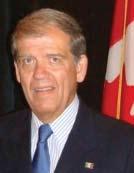
By Emilio Goicoechea Ambassador of Mexico
As Ambassador of Mexico to Canada, it gives me great pride to provide you with just a sampling of the fantastic tourism opportunities my country has to offer.
I especially invite you to visit the wonderful colonial city of San Miguel de Allende, with its Sanctuary of Jesús Nazareno of Atotonilco, described by art specialists as the equivalent of the Sistine Chapel in the Americas, and therefore inscribed in the list of UNESCO World Heritage Sites.
Another gem not to be missed is the impressive pyramid in Mexico’s Yucatan peninsula, known as the Temple of Kukulkan. Below, you can read about the fascinating shadows cast during the spring and fall equinoxes.
More than one million Canadians visit my country every year, meaning that Canada is the second largest tourist market for Mexico. Also, more Canadian corporations are choosing Mexico as a convenient location for conferences and mid-sized meetings.
Mexico takes tourism very seriously. President Felipe Calderon has expressed his commitment for this sector by increasing the budget for this industry. More resources will be invested in international promotion and advertising as well as in research.
So, expand your horizons and escape from winter to take in Mexico’s cultural treasures, natural beauty and the
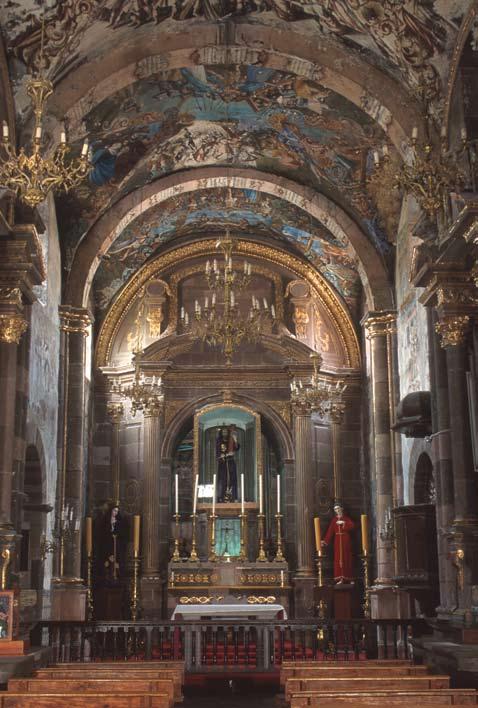
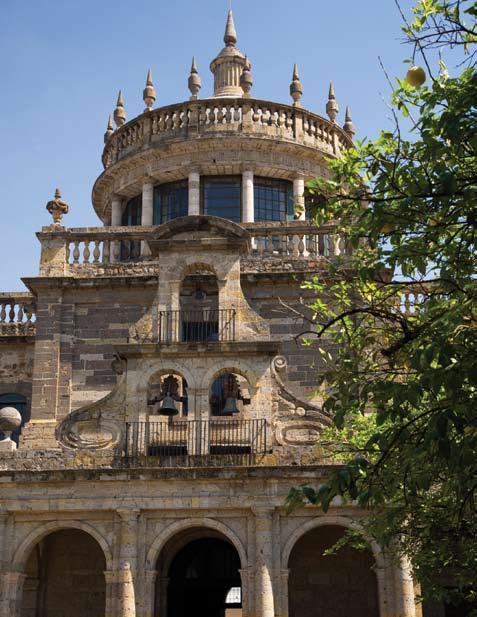
warmth of its people. Make this year’s vacation an unforgettable experience.
Hope you can visit also Mazatlan, my hometown and its great carnival, next February, and be ready to experience my country.
Mexico is perhaps best known abroad as a resort destination. It is indeed an excellent option for leisure holidays, but for the traveller willing to explore the country beyond the beaches, there is a fascinating world waiting to be discovered.
From the pre-Hispanic monumental temples to the detailed baroque paintings of the Cupola of Atotonilco, the
Sistine Chapel of the Americas, Mexico has countless sights to offer its visitors. Contemporary Mexico also boasts cutting-edge architecture, a remarkable cultural life and gastronomic treasures to please the seasoned connoisseur.
It certainly takes more than one visit to fully appreciate the many layers of cultures and identities that exist in every corner of the republic. But to catch a glimpse of this fascinating world, embark with us on a journey through the cultures of Mexico.
close encounter with An enchAnting lAnd Mexico is a land of encounters. Exceptionally rich in history, the coun-
try has been the meeting point of many cultures, who cohabited and blended together to form the present-day mexicanidad.
We generally distinguish three Mexicos, in reference to three cultural periods. First, there is pre-Hispanic Mexico, the realm of the ancient Mayan, Aztecs, Olmecs and other Native American cultures who built astonishing monuments that have stood the test of the centuries and who made important scientific advances.
Then there’s Spanish colonial Mexico, which can be admired in some of the most beautiful and well-preserved historic towns in this hemisphere. Strolling down cobblestone streets of San Miguel de Allende or Guanajuato, among lavishly detailed cathedrals and architectural gems, one truly senses this touch of the Old World.
Last, but not least, there’s modern independent Mexico, a young, dynamic compound of the above – most visible in the influential culture Mexico exports through a young generation with global ambitions. Reinterpreting every day the millenary traditions of their nation, they offer new references in gastronomy, literature, cinema and more.
Pre-hisPAnic cultures
Mexico has a lot in common with other American nations in terms of history. However, it is certainly the country that was best able to reconcile and integrate elements of the pre-Hispanic cultures into its national identity.
Mexicans everywhere now take a great pride in descending partly from cultures which were able to build monumental temples and cities of hundreds of thousands without using draught animals or the wheel.
Ethnographers have found traces of dozens of different Amerindian nations in Mexico. The most advanced among them, such as the Mayan, had achieved astonishing technological developments. The Mayans had created a complex ideographic writing system that took Europeans decades to decipher. Mayan scientists had also developed a parallel mathematical system using the number zero centuries before it was introduced in Europe from India. Their astrologers were extremely skillful. For example, their calculation of the orbital revolution of Venus was only 14 minutes off what has been determined through modern methods.
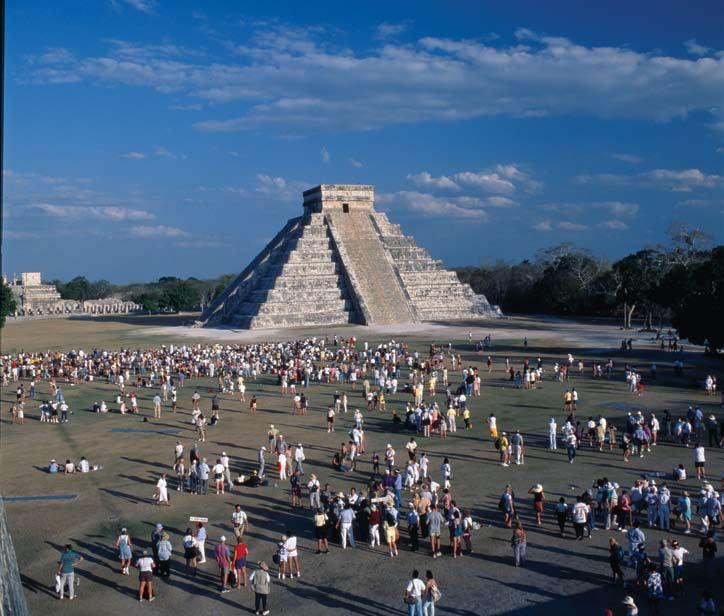
chichen itzá, yucAtán
A vibrant example of the genius of the ancient Mayan can be observed at the site of Chichen Itzá, in the state of Yucatán.
This large pre-Hispanic city located in the northern centre of the Yucatán Peninsula was distinguished last year by international voters as one of the New Seven Wonders of the World.
Chichen Itzá was probably founded in the 6th century AD. It was not governed by an individual but by a council composed of members of elite ruling lineages. In the later period, the city centralized and dominated politically, socially, economically and ideologically the Northern Mayan lands.
Experts believe the collapse of Chichen Itzá came about around 1221, after a civil war broke out. The place was never completely abandoned but the population declined and no new constructions were built after the political collapse.
the teMPle of KuKulKAn At chichen itzá
Kukulkan was the Mayan equivalent of the Aztec god Quetzalcoatl, the feathered snake. The temple of this central divinity is at the heart of Chichen Itzá. It is often referred to as El Castillo or “the castle.” It is a famous pyramid with stairways on all four sides. During the spring and fall equinoxes, the north
corner of the structure casts a shadow in the shape of a serpent – Kukulkan – slithering down with the movement of the sun. Thousands of people gather every year at the site to see the breathtaking spectacle brought by the light and shadow effect on the temple.
Another important feature of the site is the Cenotes, a series of large natural waterholes that provided water to the city and were used in sacrificial and ceremonial rituals. Artefacts of gold, jade, pottery, clothes and wooden weapons were recovered from the bottom of the Cenotes. The most famous is the Cenote Sagrado or “sacred cenote,” dedicated to the rain god.
Other major pre-Hispanic sites can
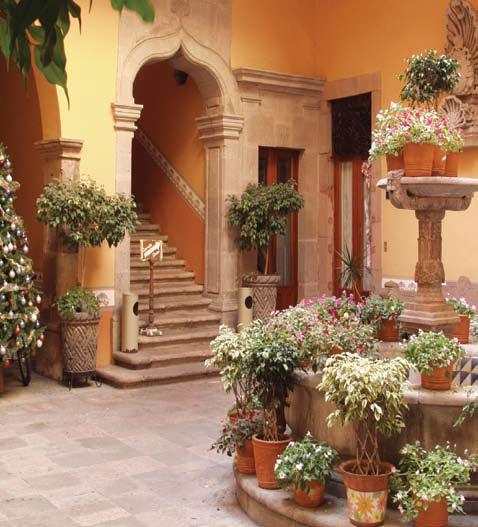
be found at Tulum, also located in the Yucatán peninsula, and at Teotihuacán, on the outskirts of Mexico City.
the coloniAl Period
The Spanish colonial regime changed the face of Mexico in many ways, and provided the second main pillar of the Mexican identity to come. Fervent Spaniards erected large cathedrals, temples and countless other buildings, adapting the European styles and methods to their new American land.
New Spain was then at the forefront of the development of the baroque style in architecture and visual arts. This is most visible in the Colonial Gems, Tesoros Coloniales, a series of carefully-protected towns with an unrivalled charm.
Towns such as Guanajuato, Guadalajara (Jalisco), Aguascalientes, San Miguel de Allende (Guanajuato), Querétaro, and Durango, San Luis Potosí and Zacatecas are perfect examples of
the European-style refinement that was common in Mexico under the Spanish colony.
Most of those towns are now recognized as World Heritage Sites by UNESCO.
sAn Miguel de Allende
The latest site to have received such an honour is San Miguel de Allende and the Sanctuary of Jesús Nazareno of Atotonilco, mentioned above. It features some of the most impressive examples of artful architecture in the Americas. The paintings found in the sanctuary, mainly by Miguel Antonio Martínez de Pocasangre and Rodríguez Juárez, demonstrate the mastery of the artists.
The turn of the 20th century was a flourishing period in Mexican art. The Revolution of the 1910s planted seeds of hope in the country, and this is reflected
in the intensely political art production of the first half-century.
Artists such as Frida Kahlo, Diego Rivera, José Clemente Orozco or Rufino Tamayo attempted to tie the multiple faces of Mexico into a new modern identity. They included in their work numerous aspects of the pre-Hispanic cultures, in both form and contents, and founded a truly Mexican school: passionate, colourful and proud.
Rethinking education like a motor of progress, the secretary of education at the time, José Vasconcelos, launched an ambitious educational project, in which art played a main role – he offered certain walls to Mexican painters so they could paint murals. These murals would later represent a basic reference in Mexican art.
Hotels, banks and several buildings were waiting to be decorated. Various murals were planned, not only by government agencies.
Without a doubt, the greatest project and one of the last ones of the movement, was the Ciudad Universitaria or University of Mexico, a plastic integration in which painting, sculpture and architecture merged with the landscape in a great esthetic synthesis. The participating painters were Juan O’Gorman, José Chávez Morado, Francisco Eppens, Diego Rivera, David A. Siqueiros and a team of architects.
Emilio Goicoechea is Mexico’s ambassador to Canada.
abouT The mexico TouriSm board
The Mexico Tourism Board (MTB) brings together the resources of federal and state governments, municipalities and private companies to promote Mexico’s tourism attractions and destinations nationally and internationally. Created in 1999, the MTB is Mexico’s tourism promotion agency, and its participants include members of both the private and public sectors. The MTB has offices throughout North America, Europe, Asia and Latin America.
for furTher informaTion
For travel and tourism information about Mexico, please contact the MTB’s Canadian Press Room directly at 1-866-895-5297, by e-mail at canadianpress@visitmexico.com, or visit the web site www.visitmexicopress.com.
To access an online warehouse of free, downloadable b-roll, visit www.thenewsmarket. com/visitmexicopress.

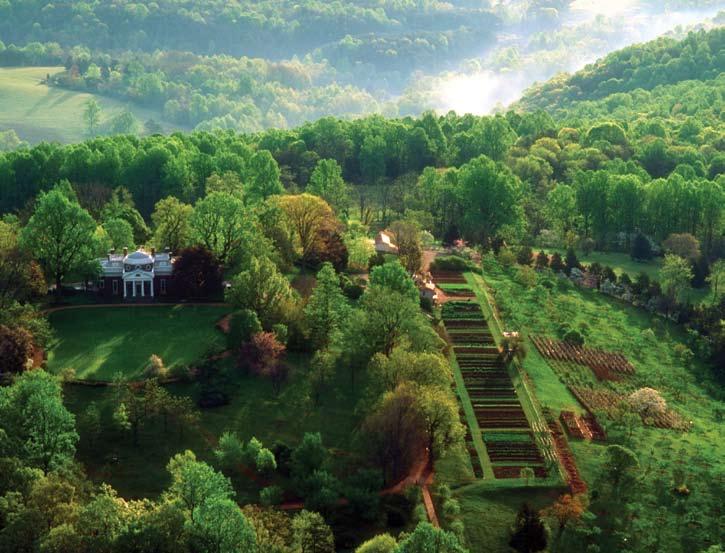
By Fred Donnelly
Few buildings in the United States of America can rival the iconic status of Thomas Jefferson’s Monticello Under construction and re-construction from 1770 to the 1810s, its neo-classical architectural outline has been featured on the American five-cent piece since 1938 with the exception of two years (20042005) when it was replaced for a Louisana Purchase commemorative Intended as a showcase for a new style of building for a new nation, Monticello was also a plantation for agricultural experimentation
Most famous in this context was the third U S president’s garden, a south-facing terraced enclosure 25 metres wide and 325 metres long anchored in the hillside by
a stone wall Its sunny exposure lengthened the growing season in Virginia’s piedmont, and created a micro-climate A wooden palisade kept out marauding local deer The whole was further sheltered from the harshest rays of the sun by a perimeter of cherry trees .
Intended as the food supply for the large Jefferson household and its many guests, the garden was also a testing ground for fruit and vegetable varieties new to the region or even to the North America itself Using a Philadelphia seed supplier and his many international contacts, Jefferson filled his garden with 95 kinds of fruit, nuts, vegetables and herbs Included in this cornucopia were plots of
eggplant, okra, onions, lettuce, sea kale, Italian broccoli, tomatoes, Turk’s cap squash, 20 varieties of beans and many types of imported peas Through an intermediary in London, Jefferson obtained a variety of rice brought back from Indonesia by Captain William Bligh whose HMS Bounty was the scene of the famous mutiny.
Jefferson’s garden was part of a larger plantation worked by over 100 slaves and adjacent to oval-shaped flower gardens with a central fish pond, an orchard with hundreds of apple and peach trees, a grove of ornamental trees introduced from afar and an extensive vineyard .
Many of the new types of trees did not
survive in Monticello’s hilly uplands, and the Jeffersonian attempt to produce wine failed Local plant diseases and insects attacked the European grapes and Virginians had to wait until the 20th century when the problem was solved and a proper Virginia wine came into the world . Likewise, plans for a large-scale sugar maple plantation went largely unfulfilled . Jefferson was intrigued by the possibility that maple sugar might someday replace slave-produced West Indian cane sugar He had more success with the vegetable varieties in his rationally planned garden
Monticello is a national and international heritage site, not just because of its famous 18th century architectural structure but also because it restores an early site of important American agricul-
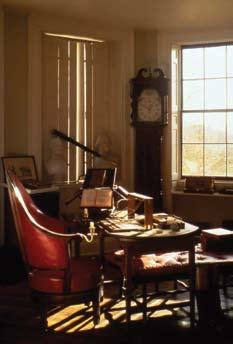
tural innovations Jefferson often stated the importance of introducing new and useful plants for cultivation While he received seeds from abroad, he also sent seeds of native American species to his many international acquaintances Such activities were an integral part of the Age of Enlightenment . So we find Thomas Jefferson, gardener, retired U .S . president, and philosopher writing in 1811:
“No occupation is so delightful to me as the culture of the earth and no culture comparable to that of the garden ”
Fred Donnelly teaches at the University of New Brunswick in Saint John, and has recently returned from a Robert H Smith research fellowship at Monticello .
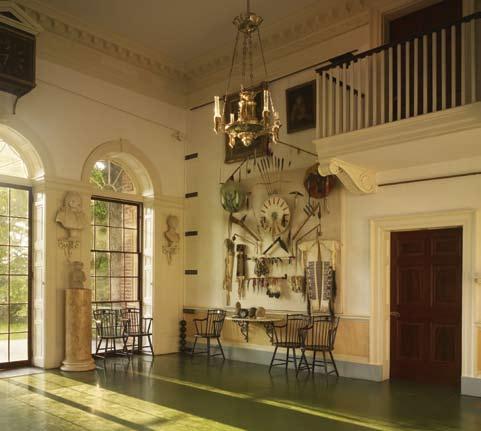

Always ensuring the best service for the diplomatic community, Accu-Rate Corporation offers free courier service for embassy currency exchanges and payroll conversion.For your personal consultation please call: Marie Boivin Managing Director 613-596-5505 ext. 101 marie@accu-rate.ca


KitchenAid.ca