

George Fetherling on books: Civil War diplomacy
Wolfgang Depner on the TOP 10 smallest countries on Earth
Jessie Reynolds on travel: Awesome Australia


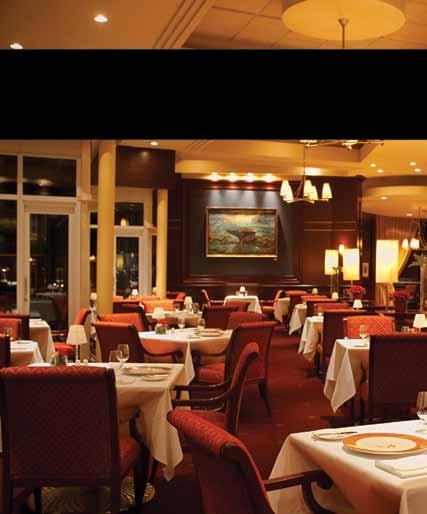
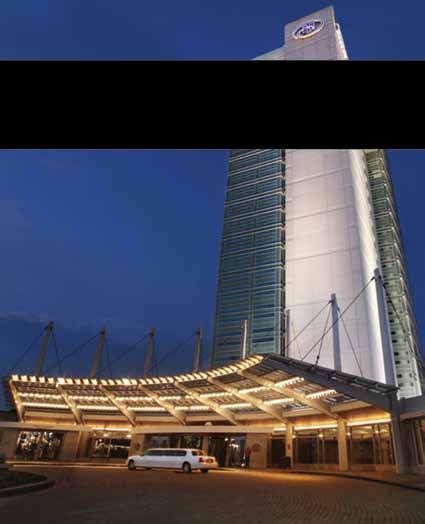
Recipient of the prestigious CAA-AAA
Five Diamond distinction since 2001, Le Baccara offers French-inspired cuisine, where delectable dishes and vintage wines come together to embody an unforgettable dining experience.
Courteous service, elegant décor and a delightful atmosphere ideal for an exceptional evening.
Five-course menu $95 | Wine flight $65 Price per person. Taxes and service not included. Wednesday to Sunday from 5:30 p.m. to 11 p.m.
PRIVATE SALON available for groups of 10 to 30 guests.
Reservation: 819 772.6210
Located minutes from downtown Ottawa, the luxurious five-star Hilton Lac-Leamy offers complimentary banquet facilities able to accommodate 50 to 1,500 guests, customized menus, multilingual personnel, free outdoor monitored Diplomat parking, not to mention the Theatre and Casino!
To enquire about our facilities, please contact our Account Executive and Protocol Specialist, Maryse Morin, at 819 790.6487 maryse.morin@casino.qc.ca

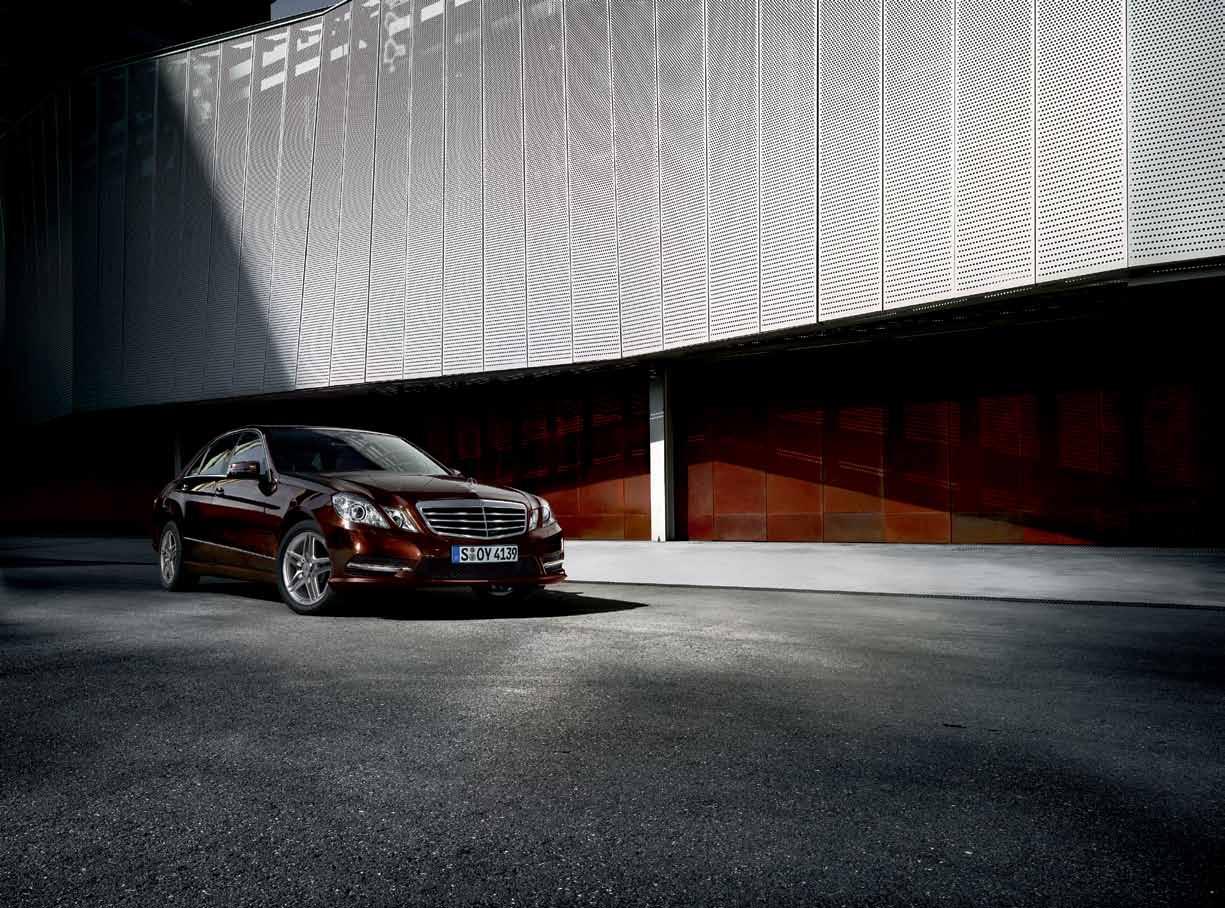
Star Motors of Ottawa was founded in 1957. It has been owned and operated by 3 generations of the J. Mierins family. The dealership now has the distinction of being the oldest Mercedes-Benz franchise retained under the same ownership in Canada. Our newly expanded state-of-the-art facility is located at 400 West Hunt Club Road. Our success is directly attributable to our devotion to providing complete customer satisfaction.






The
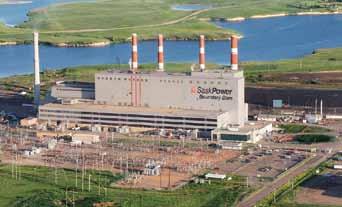
SaskPower is leading the development of the world’s first and largest integrated clean coal/carbon capture and storage project at the Boundary Dam Power Station in Estevan, Saskatchewan, Canada.
The $1.2 billion government-industry partnership between the Government of Canada, Government of Saskatchewan, SaskPower and private industry will see the full integration of a rebuilt coal-fired generation unit with carbon capture technology into the operation of a commericial power station, resulting in low-emission electricity and carbon dioxide (CO2) for enhanced oil recovery operations.
The Role of Coal Saskatchewan has an estimated 300-year supply of coal. Lignite coal currently provides more than 50 per cent of provincial electricity. Coal-fired generators operate 24 hours a day, seven days a week, and are a very reliable form of electrical generation. It is essential that SaskPower has these base load generators in the supply mix. However,
doing so in today’s economic and regulatory environment requires meeting new standards to address emerging regulatory requirements and to satisfy new societal demands.
The BD3 ICCS Demonstration Project will transform the aging Unit 3 at Boundary Dam Power Station into a reliable, long-term producer of more than 110 megawatts (MW) of clean base load electricity, while enhancing provincial oil production and reducing greenhouse gas emissions by capturing one million tonnes of CO2 per year.
Research has shown that CO2 can be safely and permanently stored in underground geological formations such as deep saline aquifers. It is believed that CO2 can remain geologically secured for thousands of years.











Do you have a clear view of the people and organizations you deal with?
KPMG Corporate Intelligence can help you get the information you need quickly, thoroughly, discreetly and legally.
There’s lots of information out there, beyond the search engines, and we know where to look.
Our network is on the ground now— around the world—with access to the background information sources you need.
Mitigate your financial risks and reputational risks.
Get the whole picture.
Contact KPMG Corporate Intelligence: Peter Armstrong 416 777 8011 pearmstrong@kpmg.ca
www.kpmg.ca

PUBLISHER
Donna Jacobs
ASSOCIATE PUBLISHER
Neil Reynolds
EDITOR
Jennifer Campbell
ART DIRECTOR
Paul Cavanaugh
BOOKS EDITOR
George Fetherling
CONTRIBUTING EDITOR
Don Cayo
CULTURE EDITOR
Margo Roston
CONTRIBUTING WRITERS
Chantaie Allick
Wolfgang Depner
Margaret Dickenson
Charles Doran
Else Berit Eikeland
Fen Osler Hampson
Ulrich Lehner
Alex Crescent Massinda
Leslie Moreland
Laura Neilson Bonikowsky
Jessie Reynolds
Margo Roston
Elena Stefoi
Chitranganee Wagiswara
Pieter Van den Weghe
CONTRIBUTING PHOTOGRAPHERS
Ulle Baum
Ashley Fraser
Sam Garcia
Serge Gouin
Serge Tremblay
Lois Siegel
Dyanne Wilson
BUSINESS MANAGEMENT
Jessie Reynolds
WEBMASTER
Pixelera, www pixelera com
DIPLOPORTAL WEB PARTNERS www diploportal com
Alastair Sweeny
Richard Evers (Northern Blue Publishing)
PUBLISHER EMERITUS
Lezlee Cribb
ADVERTISING INQUIRIES
Contact Donna Jacobs
donnajacobs@gmail com
SUBSCRIPTIONS
Diplomat & International Canada is published four times a year Subscription rates: individual, one year $35 70 For Canadian orders add 13 per cent HST U S orders please add $15 for postage All other orders please add $25
SUBMISSIONS
Diplomat & International Canada welcomes submissions Contact Jennifer Campbell, editor, at editor@ diplomatonline com or (613) 2318476
DIPLOMAT & INTERNATIONAL
CANADA
P O Box 1173, Station B
Ottawa, Ontario Canada K1P 5R2
Phone: (613) 422-5262
E-mail: info@diplomatonline com www.diplomatonline.com
Published by Sparrow House Enterprises Inc



The way we see it, being strong, reliable, trustworthy and forward-thinking is what true character is all about. These qualities are at the heart of everything we do. And that’s why, for more than 120 years, millions of clients across Canada, the U.S. and Asia have trusted us to help them with their biggest financial decisions. To learn more, please visit manulife.com



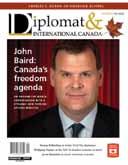
Boil down John Baird’s general philosophy to his job as Canada’s foreign minister and you get this: principle and pragmatism In a speech to the United Nations General Assembly last September, the outspoken politician singled out countries — Iran, North Korea, Burma — for unprincipled behaviour
In a wide-ranging, end-of-year interview with Diplomat’s publisher, Donna Jacobs, the man who represents the country on the world stage discussed his new job, the crowning achievement in a remarkable 17-year political career (He’s only 43 years old ) In our cover piece, we also learn about one of his most important causes — spreading freedom to practise religion across the globe — and about his preference for Tim Hortons coffee, his goto radio station and his love of cats . Further in our Dispatches section, we have a brand new Top 10 list — this time of tiny, well-run countries As writer Wolfgang Depner explains, small can sometimes be beautiful
We also give you a primer on all the shipbuilding activity announced by the federal government last fall — with photographs and specs on each vessel . And we have the story of Dabaab’s refugee camps — an overcrowded dilemma for policymakers at the UNHCR
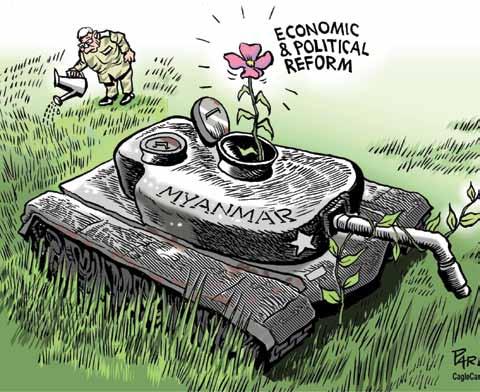
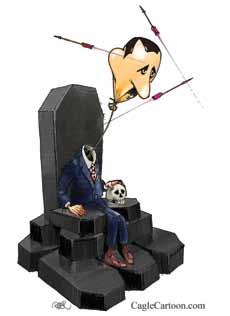
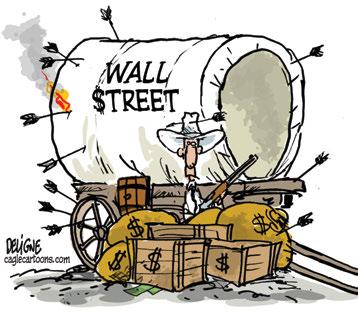
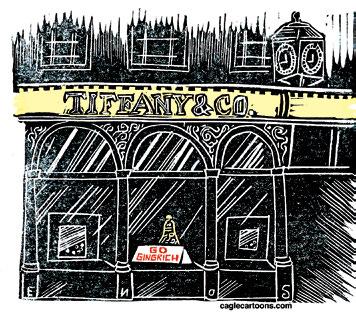
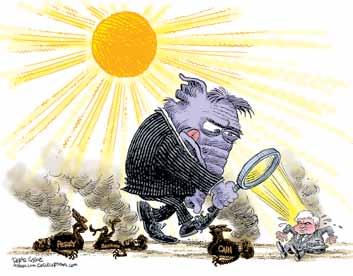
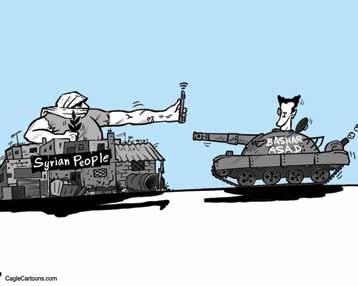
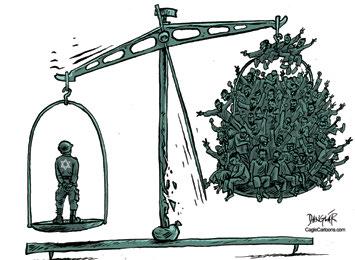
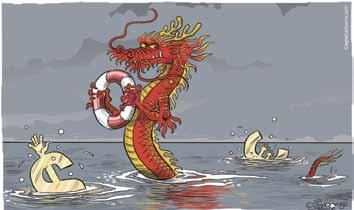
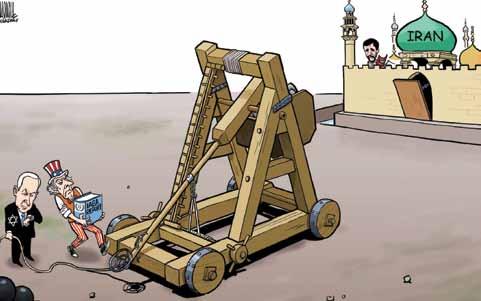
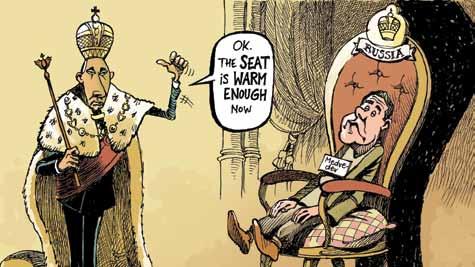
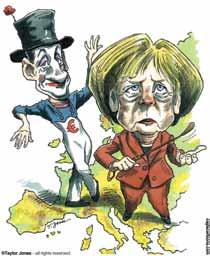
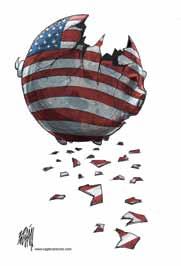
Up front, as always, we bring you a selection of cartoons from around the world Needless to say, the euro plays a starring role in this batch .
Columnist Fen Hampson has a cautionary tale about the turbulent 1920s and 1930s, arguing that big trouble comes in times like these We also have a column by Swiss Ambassador Ulrich Lehner, who writes about his country’s landmark banking system reforms . In Diplomatic Agenda, Norwegian Ambassador Else Berit Eikeland writes about her country both as an oil power and a Northern power
We have trade articles from Romanian Ambassador Elena Stefoi, Sri Lankan High Commissioner Chitranganee Wagiswara and Tanzanian High Commissioner Alex Crescent Massinda .
In our Delights sec tion, books editor George Fetherling devours eight war books, including one on how AngloAmerican diplomacy helped avert world war and another on how Canada — along with British and other Allied forces — invaded Russia from Vladivostok As Mr Fetherling points out, the story is not widely taught in Canadian history classes as it was “a singular failure .”
In our column on entertaining, Margaret Dickenson offers a global stroll through the pancake world and comes up with a recipe of her own Meanwhile, wine columnist Pieter Van den Weghe tells us where to find unique Pinot Noirs
In Canadiana, writer Laura Neilson Bonikowsky gives us a fascinating historical tale about the “Pig War” of San Juan Island, which was claimed by both Britain and the U S because of its strategic military location between the Strait of Juan de Fuca and the Strait of Georgia
Among our new arrivals to the diplomatic corps, we have ambassadors from Korea, El Salvador, Philippines, Angola and Switzerland .
In our regular residence feature, writer Margo Roston and photographer Dyanne Wilson visit the home of Indian High Commissioner Shashishekhar Gavai and his wife, Rina And to round things out, writer Jessie Reynolds takes an adventurous tour of Australia
Jennifer Campbell is Diplomat’s editor
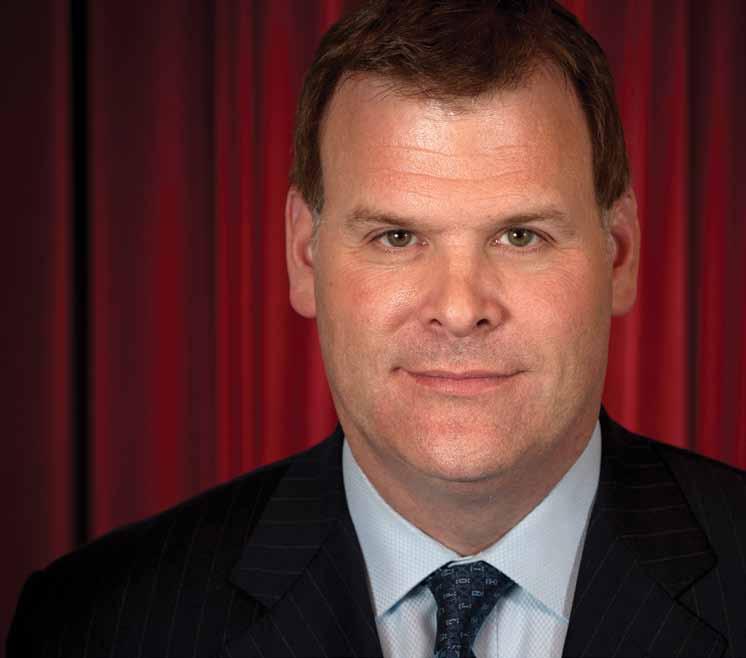
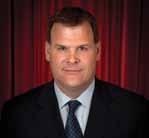
Photographer Ashley Fraser had 30 minutes to shoot Foreign Affairs Minister John Baird in his office in the Centre Block She spotted two panels of red velvet drapes on either side of a trio of Gothic windows and pulled them together to make what she thought would be a regal background — something subtlely showing the minister's monarchist side . Our package on John Baird and Canada’s foreign policy begins on page 34 .
C on T ri BUT ors
Charles F. Doran
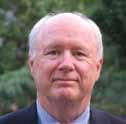
Dr Doran is the Andrew W Mellon Professor of International Relations and director of Canadian Studies at Johns Hopkins School of Advanced International Studies in Washington, D .C . He developed the “power cycle theory” of state rise and decline (shifting tides of history) His theory appears in the Encyclopedia of Political Science He was elected to the Council on Foreign Relations and to the Cosmos Club in 1991 He received the Governor General’s International Award for Canadian Studies in 1999, and the International Studies Association’s Distinguished Scholar Award for Foreign Policy in 2006 He’s listed in Who’s Who in the World and the Dictionary of Eminent Social Scientists (DESSA)
Ulrich lehner
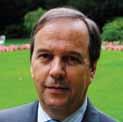
The Swiss ambassador took up his duties in Canada in late 2011 . Born in 1954, he was educated in Sion, Toronto and Geneva He holds a master’s in political economy from the University of Geneva and a postgraduate diploma in security policy studies
He joined the Swiss foreign service in 1981 and has been posted in Portugal, Brazil, Norway, Italy, Egypt and France While in Switzerland, he was director of the Geneva Centre for Security Policy, head of policy planning and the head of the multilateral division of the foreign ministry
Prior to coming to Canada, he was ambassador to France and Monaco
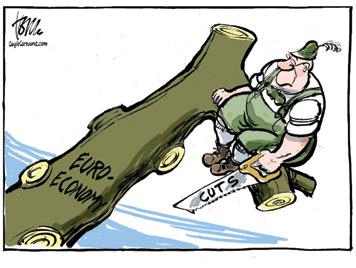
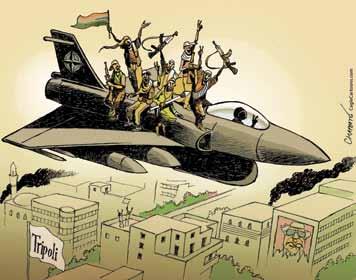
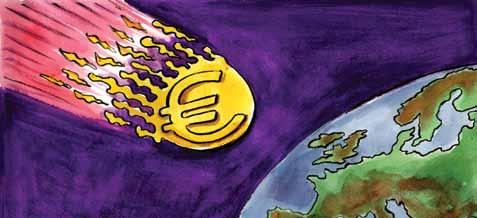
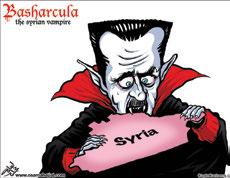
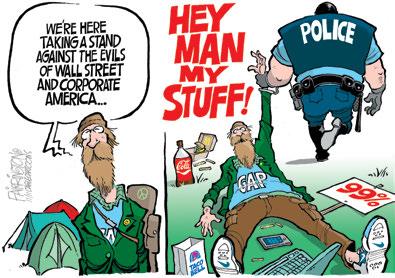
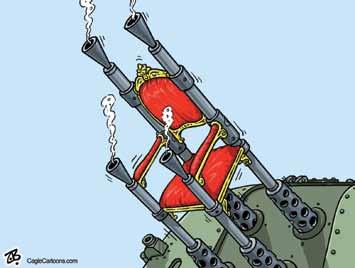
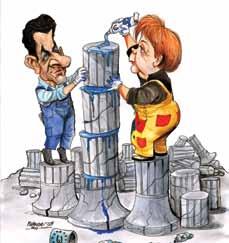
of Greece“ by Petar Pismestrovic, Kleine Zeitung, Austria
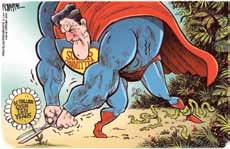
“The Not-So-Super Committee“ by Rick McKee, The Augusta Chronicle, U.S.
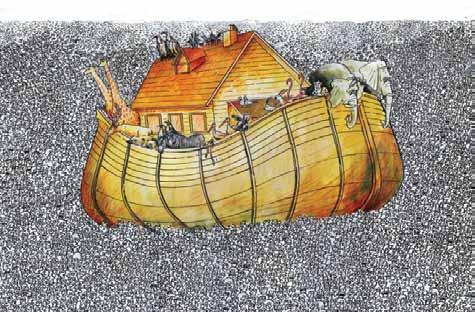
“Population and Noah's Ark“ by Pavel Constantin, Romania
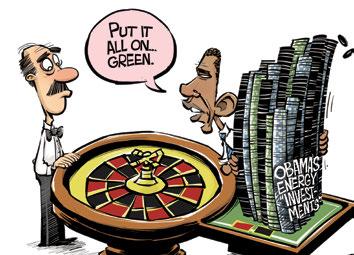
“Green Investments“ by Eric Allie, Caglecartoons.com, U.S.
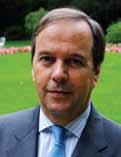
By Ulrich Lehner Ambassador of Switzerland
switzerland has recently signed tax treaties — introducing something called “the final withholding tax” — with the United Kingdom and Germany . These treaties have aroused the interest of other governments in Europe (and overseas as well) and have given rise to significant public discussion What is the final withholding tax and how does it work?
For tax authorities in industrialized countries, one of today’s great challenges is how to deal with the undisclosed assets of their citizens . Voluntary disclosure initiatives are often costly and burdensome for governments In the UK, for example, two recent voluntary tax disclosure initiatives needed the involvement of some 7,000 taxpayers to raise US$351 million in taxes
In the light of these ef forts, the tax treaty which the UK recently signed with Switzerland appears to provide substantial budgetary income with significantly less administrative effort Switzerland — or, rather, Swiss banks — will pay the UK a lump-sum, up-front payment of 500 million Swiss francs (US$542 million) which will be refunded to them as sufficient tax revenues are raised from UK resident clients . This sum will be topped up with further payments based on a oneoff, flat-rate tax on existing undisclosed assets and, also, a withholding tax on future capital income
A similar agreement has been signed with Germany The initial lump sum payment to Germany is even higher, amounting initially to 2 billion Swiss francs (US$2 17 billion), again followed by further payments .
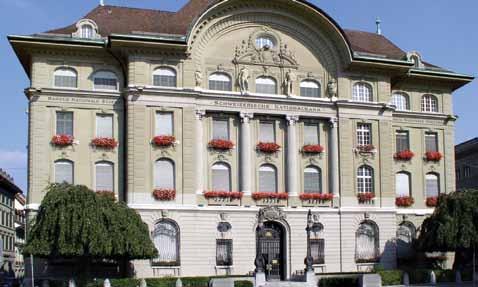
a new financial market strategy
Two years ago, following the upheavals and changed market structures on global financial markets, the Swiss government decided to follow a new strategy with regard to the Swiss financial centre . The main elements of this new policy are the strengthening of international competitiveness and resilience to crises At the same time, the new strategy sought to improve access to financial markets and to guarantee the integrity of Switzerland as a financial centre The new strategy affirmed Switzerland’s longstanding policy of fighting financial crimes, including money laundering, and of returning illicit assets of politically-exposed persons to their countries of origin, and complemented this objective by ensuring full international cooperation against tax evasion
The decision by Switzerland to concentrate on the management of taxed monies in its banks is thus embedded in its financial market strategy . It might be useful to recall at this stage that the financial sector is a supporting pillar of the Swiss economy Its contribution to the country’s 2010 gross domestic product (GDP), at current prices, of US$598 9 billion, is approximately 12 percent
how does the final withholding tax work? Switzerland is not interested in untaxed
money In order to provide a satisfactory solution to partner states to tax the undisclosed assets of their citizens, Switzerland has developed the model of the final withholding tax This tax guarantees the full remittance of taxes claimed by partner states on the existing untaxed assets and future income of their citizens in Switzerland The tax is deducted from the credit balance of the relevant person on an anony m ous basis More specifically, the Swiss bank deducts a flat-rate tax sum on existing assets from UK and German resident clients (past) and on investment income and capital gains (future) respectively, and forwards these sums to the Swiss Federal Tax Administration The latter then transfers these monies to the respective British and German tax authorities
Once the tax has been levied, the tax liability is deemed to have been settled — hence the term final withholding tax . The tax rates that will be applied have been negotiated with both the UK and Germany and are aligned with the tax rates applicable in these countries, in order to avoid any distortion of competition with regard to taxes
Privacy is guaranteed
The question may then be asked whether this is the end of bank secrecy — one of the pillars of the Swiss banking sector .
This is definitely not the case The aim of the system is to transfer to partner states the taxes due on the past and future income of their citizens However, the taxation is anonymous Therefore, the protection of privacy and the discreet treatment of bank clients in Switzerland are still guaranteed .
The final withholding tax enables people to invest their assets in a safe and politically reliable financial centre in the heart of Europe, with legal security and a stable currency, yet at the same time, to settle their tax obligations to their home countries anonymously
As an alternative to anonymous taxation, clients have the choice of disclosing their bank data to the tax authorities of the UK or Germany In such cases, they will be subject to retrospective taxation on an individual basis Clients who are unwilling to accept either system will be obliged to close their accounts in Switzerland
safeguard mechanism
As for new untaxed investments from the UK or Germany entering Switzerland,
land each year As an additional facet of Switzerland’s new policy, this type of exchange of tax information goes further than the OECD standard; it does not set any specific pre-condition for the enquiry to be initiated In response to such queries, Switzerland will provide the account number of the particular citizen to the relevant partner state (assuming that this person holds a Swiss account) The double taxation treaty will then provide other opportunities to the partner state to learn account details as well as further relevant information
Although Switzerland is ready and willing to exchange tax information on a treaty basis, as prescribed by the international standard set by the OECD, it is decidedly not in favour of an automatic exchange of tax information The automatic exchange of information generates vast amounts of data which is often unusable and irrelevant The final withholding tax system deducts the tax where it is due without generating an additional administrative burden for the partner state to analyze superfluous data
ing tax, who claim that it can be circumvented by using post-box companies, trusts and other “specialized vehicles ” A closer look at the treaties, however, reveals that this is not the case Swiss banks are bound by strict money-laundering regulations, which oblige them to identify the ultimate beneficiary behind such structures . T he information exchange system provided in the treaties obliges Switzerland to inform the partner state of the existence of assets of their citizens in cases where funds are held in the name of a “specialized vehicle ”
The final withholding tax has had a successful start, and it is likely to be the leading and preferred alternative to the automatic exchange of information in the future Both the UK and Germany have indeed acknowledged that the agreed system will have a long-term impact that is equivalent to the automatic exchange of information in the area of capital income . While the treaties have been signed with both Germany and the UK, they will prob-





our globalized world is unraveling This is not the end of globalization, but it is something we have seen before It is called retrenchment
It is a phenomenon characterized by declining levels of interdependence in global trade and investment, beggar-thyneighbour policies as states (especially new entrants in the global economy) look out for their own interests and don’t play by the rules, a corresponding weakened capacity for collective action among the world’s leading nations, and the progressive weakening of international institutions that are the bedrock of a sound global order .
The first great era of globalization unfolded in the second half of the 19th Century It was an era marked by a dramatic increase in worldwide trade, investment, labour mobility and prosperity But it was followed in the 1920s and 1930s by declining interdependence as countries introduced a wide range of protectionist measures to shield jobs and local industry.
Great Britain introduced the Commonwealth Imperial system, which granted favourable access and free trade on reciprocal terms to its Dominions (Canada among them) and colonial territories In 1926, B ritain introduced the Empire Marketing Board to encourage Britons to buy goods from their current and former colonies .
The United States wanted it both ways . Although the U S pressured Canada to abandon the Imperial preference system, it still wanted to keep its own tariffs and restrictive policies in place The SmootHawley Tariff Act (1930) smacked America’s trading partners, including Canada, hard . By some estimates, worldwide trade in the 1930s shrank by almost a third as countries retaliated against each other .
The retrenchment phenomenon of the inter-war years also had an ugly political side as countries struggled with massive unemployment, inflation and the broader consequences of economic depression in their societies In Weimar Germany and Italy, national socialism reared its ugly head as Hitler and Mussolini rode to power on a xenophobic wave of popular protest, replacing democracy with brutal dictatorship
The leaders of the Anglo-Saxon world (Britain, the U S , Canada, Australia) wrestled with a different kind of problem — isolationism — as their societies turned inward and refused to deal, at least initially, with the dark storm clouds that were gathering over Europe .
The League of Nations, an instrument for collective global security which had been crafted out of the Paris peace settlements following the end of the First Great War, also proved incapable of dealing with a series of aggressive acts by the Axis Powers in the 1930s .
History does not repeat itself . But today, in the second decade of the 21st Century, we too are grappling with a renewed
bout of retrenchment and the attendant political risks that come with a downturn in global economic fortunes and a weakening of international institutions
The causes of the current crisis are complex, but they are rooted in a variety of ills
The world continues to struggle with the fallout of the 2008-09 financial crisis, and now a second one with the impending collapse of the Eurozone monetary regime
The deep bonds of European integration have been weakened by Italy, Greece, Portugal and Spain who are wrestling with unsustainable levels of public debt and are struggling to cut public expenditures at a time when their own economies are contracting and many people — especially the young — are out of work . If the Eurozone collapses, the ambitious enterprise that was launched by Jean Monnet and the other founders of the European Union will be seriously compromised Democracy, too, is paying a price as unelected technocrats are catapulted into positions of power in countries such as Greece and Italy to fix fiscal problems that the politicians can’t, or won’t
I f Europe is not able to manage the
crisis because of its own internal political constraints and contradictions, everyone will be a loser as contagion spreads .
To make matters worse, Washington is mired in its own unrelenting fiscal and budgetary battles Partisan politics has yielded to ugly class warfare as Democrats and Republicans take each other on Whether markets and investors are prepared to live with the continuing political uncertainty until the November 2012 election remains to be seen
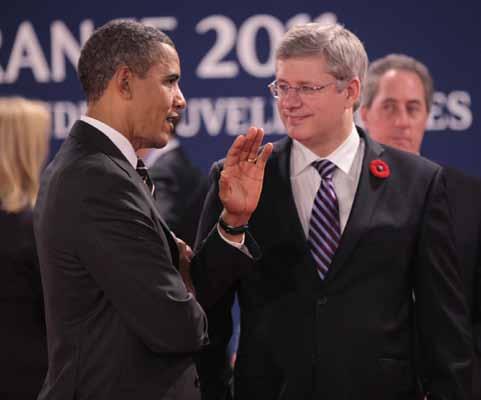
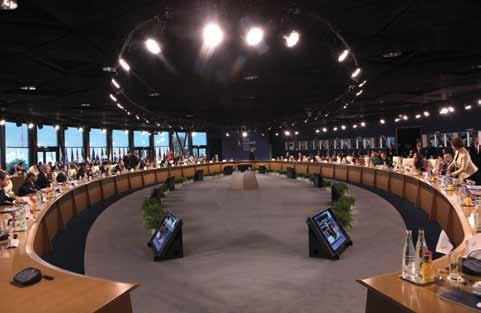
The international architecture that was forged out of the 2008-09 economic crisis is proving woefully inadequate G20 summits of world leaders have degenerated into exercises of indecision, fingerpointing and mutual recrimination . The G20 summit held in early November 2011 in Cannes, France, was by all accounts a failure The political and economic crisis in Greece hijacked an agenda that was supposed to come up with a long-term plan to rebalance the global economy, promote financial stability and address pressing new issues such as global food security
The Bretton Woods system of international institutions, the bedrock of post-Second World War global economic recovery and prosperity, is fumbling and crumbling This is especially true of the world trading system The World Trade Organization has failed to conclude a new agreement on world trade, notwithstanding successive rounds of negotiations at Doha Talks are stuck in neutral because of major disagreements about trade liberalization in agriculture and in a number of other sectors .
The deeper problem here is that global economic interdependence has increased dramatically since the 1980s, but the institutional framework that is required to monitor, regulate and provide for crisis management has not kept pace We are thus seeing political retrenchment as countries grapple with the instabilities caused by private and government excesses (primarily excessive borrowing by consumers and governments alike)
As economic conditions worsen, governments are tempted to retrench further, leading to an uncoordinated spiral of noncooperative behavior
T he inadequate pace of global finance and economic sector governance is matched in the field of international security At first, the late 1980s and 1990s seemed to mark a new era of the United Nations as the global mechanism through which conflicts could be monitored, managed and resolved The institution had some notable successes in all corners of the world — Namibia, Mozambique, Cambodia, and El Salvador and, more recently, East Timor .
T he success rate, however, was matched by a failure rate, as the UN fell short of effective action in Bosnia, Somalia, Rwanda and Haiti, and was marginalized in the face of terrorist attacks on the United States and the subsequent U S decision to attack Iraq and Afghanistan
Instead of building strengthened global security institutions, the general international pattern has been to cast doubt on the relevance of established ones Instead
of innovation, we have witnessed expansion, dilution and confusion
Nowhere is this more apparent than in the Middle East and North Africa where, as the Arab Spring sputters and descends into chaos, there has not been much more than hand-wringing by Western countries as opportunistic neighbours exploit mounting bedlam for their own religious and political ends
Another aspect of our r etrenching world is that those countries that are rising powers in the international system — China, India, and Brazil, for example — are not yet showing the kind of leadership that is expected of them . They have still to acquire the shared sense of responsibility for global governance and stewardship of the international system that come with great power status
China’s reluctance to grant reciprocity to its trading and investment partners is symptomatic of this problem . So, too, are its depressed exchange rate policies, which are a continuing bone of contention, especially with the U S China, Russia and India were offside with other members of the UN Security Council over Libya They have also done precious little to thwart Iran’s nuclear ambitions or to use their influence to promote peaceful regime change in Syria .
The rising powers of our new world are still wedded to old patterns of behaviour Power-sharing has to mean burden-sharing and reciprocity if global institutions in economics and security are going to function effectively
The central and most powerful actors in the international system are all — in one way or another — troubled by domestic political and economic pressures, yielding to short-term political imperatives over issues of identity, employment, health, ageing, trade and jobs
As new entrants into the world economy game the old system further, thereby weakening it and reducing its credibility, Western governments will be further tempted either to go it alone or simply to withdraw . In such a world, ther e will be less growth and greater political instability The inter-war years of the last century are a stark reminder of the trouble that comes when there is diminished will, capacity and leadership for collective action
Fen Osler Hampson is Chancellor ’s Professor and director of The Norman Paterson School of International Affairs at Carleton University
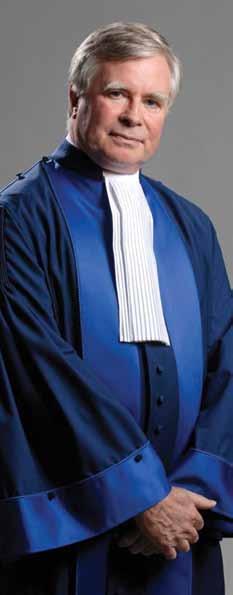
Canadian lawyer and diplomat Philippe Kirsch was the first president of the International Criminal Court (ICC) and served as a judge on the court from 2003 to 2009. Prior to that, he worked for Foreign Affairs for 30 years. He served as assistant deputy minister for legal, consular and passport affairs, as deputy permanent representative to the UN, as legal adviser for the department and, finally, as ambassador to Sweden.
He retired from that position to become a judge at the ICC, not a surprising appointment since he chaired the committee that established the court in the first place. In 2009, he received the Order of Canada for his contributions to international criminal law. Diplomat last interviewed him when he was still at the court, so editor Jennifer Campbell thought it was time to get caught up on what he’s been doing since he left that position nearly three years ago. She spoke with him by phone from his home in Sallèles d'Aude, France.
Diplomat m agazine: The last time we spoke, you were heading up the International Criminal Court at the Hague What have you been doing since you left that job?
Philippe Kirsch: I left in March 2009 . Three days later, I was appointed judge ad-hoc at the International Court of Justice in a case concerning [war crime suspect] Hissène Habré — it’s a dispute between Belgium and Senegal as to whether and where he should be tried or prosecuted I still have that job because the case is not finished . [Habré was the leader of Chad from 1982 until he was deposed in 1990 . Human rights groups allege he is responsible for thousands of deaths ]
I spent a couple of years doing a lot of conferences, which I decided to reduce in 2010 because it was just too time-consuming I must have done 40 or 50, some of them in Canada, including the last one at the Trudeau Foundation in December, 2010, in Winnipeg My main two activities this year have been the Bahrain Commission of Inquiry and the Libyan Commission
Dm: But in theory, you’re retired, correct?
PK: I heard rumours to that effect (laughs) but I think I was very wrong on what retirement is supposed to be . I had [it only for] the first three days .
Dm: What have you been doing with the Libyan Commission?
PK: The situation has changed a lot [as a result of the National Transitional Council coming to power and the death of Gadhafi] . The first part of the mission of the commission was obviously to focus on abuses committed by the Gadhafi regime during the repression of demonstrations in February
The situation changed in the sense that it moved from a situation of disturbances, in a [nation] which was still formally at peace, to non-international conflict,
where you had a government fighting a force that was organized Then you had a parallel international conflict involving a coalition of states and NATO, but this was a separate conflict The international allies had no control over what was happening on the ground or over the two parties to the non-international conflict The commission then had to investigate allegations of violations of international humanitarian law, not only of human rights law
That was the context in which we conducted our first mission . We went to Tobruk and Benghazi to see the National Transitional Council and we went to Tripoli to see the representatives of the Gadhafi regime at the time We visited prisons and interviewed many people, also in Egypt and Tunisia Our first mission was still in a situation where you had two poles, the government and the opposition, or rebellion .
What happened in the [autumn of 2011] was that the focus moved almost entirely to the National Transitional Council Our next report, which is due in March, will still deal a lot with violations of the law during the past armed conflicts, but will probably focus increasingly on the National Transitional Council and the forces working with it, now being the only game in town Therefore we will have to look at what happens on that score because the mandate that we have is not limited to the conduct of the Gadhafi regime The resolution asks the Commission to investigate all violations in the territory So we have to look at everything .
D
m : How long do you expect to be involved?
PK: I think the next report [in March 2012, to the UN Human Rights Council] will be the final report We are planning two missions of the commissioners: one in December [2011] and one in January, both preceded by a long mission by investigators who will be with us again when we’re in the territory . An advance mission just came back [in November] from Tripoli to report on the situation
Dm: At the same time as you’re studying the Libyan situation, you’re also one of five members of the Bahrain Independent Commission of Inquiry
PK: Yes . The commission looked into events when there were demonstrations
which were repressed by the government with excessive force and where other allegations of abuse have been made, for example, with respect to detention and treatment of detainees, arrests, investigations and trials that may not have been conducted properly . As a result of such allegations, the King of Bahrain appointed this independent commission of inquiry with five foreign commissioners
Dm: Do you take it as a good sign that the King appointed an independent commission?
PK: It’s a hopeful sign It is obviously more healthy if a neutral commission is appointed at the national level by the authority of that country than if it is imposed by the international community It’s better for society The commission is absolutely impartial I know all the commissioners They are people who aren’t going to be influenced by one side or the other We’re going to say what we think, whoever has or has not done what .
D m : Did the King choose the commissioners?
PK: He chose the head of the commission, Professor Cherif Bassiouni, an EgyptianAmerican who teaches at DePaul University in Chicago and who was also the chair of the Libyan commission before I took over . I’m not sure what the process of selection was of the other commissioners .
[Note: The commission released a 500page report after this interview in November It took 9,000 testimonies, offered a chronology of events and documented 46 deaths and 559 allegations of torture There were also some 4,000 cases where employees were dismissed for protesting . The report was critical of security forces which it said used “force and firearms” in an “excessive manner that was, on many occasions, unnecessary, disproportionate and indiscriminate ”]
D m : On the topic of the International Criminal Court, can you talk about your aspirations for the court and what you think will become of it?
PK: The perception I have from a distance is that the ICC is much more solid than it was two or three years ago First of all, there was the reference of the Libyan situation, which was the second referral by the [UN] Security Council [after the situation in Darfur] It now has seven situations . But the point is that, in addition to what it actually does, it seems to be
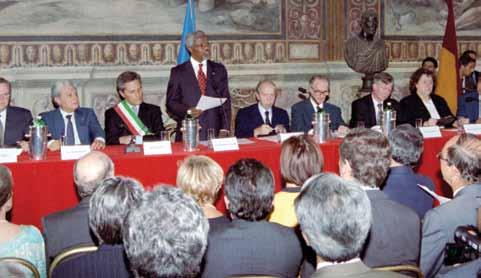
perceived today as a much more natural piece of the international landscape than it used to be I don’t detect the same kind of attacks, or at least the great suspicion, that existed a few years ago I also note so many references to the ICC across the world As soon as a situation develops, where crimes seem to have been committed, the first reaction is often that the ICC should deal with it There’s that, and the fact that the number of states [parties to the Rome Statute which governs the ICC] has risen to 119, which is quite a few more than when I left . Overall, I think the court situation has been improving
That doesn’t mean it doesn’t have major hurdles to go through still For example, it could work more efficiently It will also continue to work in an international environment that is difficult because, by definition, all situations that are referred to the ICC are linked to some kind of political situation with big interests — so someone will always have an interest in making things difficult
And again, I guess at some point, it will be important for the ICC to move away from its exclusive focus on Africa I found it understandable that it initially [focussed on Africa] for a variety of reasons, including the gravity of the crimes committed, and also because a number of African states had accepted its jurisdiction That is not necessarily the case in other regions in which crimes are committed If the ICC has no jurisdiction over a particular situation, because the state concerned has not accepted it, there’s no way it can get the case except through the Security Council . So it is limited in the exercise of its mandate . That said, I think it will be necessary
to visibly broaden its scope of activities geographically, albeit still within the limits of its mandate .
D
m : To what do you attribute the successes that have made the court more prominent?
PK: For one, I think the institution is better known and understood than it was For a long time there were great confusions between the ICC, the International Court of Justice, the ICTY [International Criminal Tribunal for the former Yugoslavia] — all those institutions I think the ICC now really has acquired a stature of its own The other thing is the way it has conducted itself, and that’s something I was extremely attentive to when I was president It has never conducted proceedings on any other basis than the law When the ICC is accused of bias, the accusation is always based on vague, broad statements, on perceptions I never saw an attack on the actual reasoning by a chamber, for example, because they are simply based on very solid legal grounds And I t hink that reassured some states that were concerned about having a court [with] a political bent
Dm: What are your long-term hopes for the ICC?
PK: My major hope for it remains what I’ve had in mind since the Rome Conference [which created the judicial body in 1998] — that the ICC will be able to fulfill its mission, [which will happen] only when you get very close to universal acceptance [by countries of the world] At the beginning, the number of ratifications increased very fast, then it slowed . It’s
picked up again now It’s making a dent in Asia The Philippines ratified recently; Malaysia and Indonesia made public statements that they would Those things are important
Tunisia has now ratified, also That is an important indication in the Arab World, which is still badly lacking in terms of participation It is gradually improving but it will take a long time to reach its destination Yet, universality remains the most important thing for different reasons One is functional The court cannot function properly or take certain situations if its jurisdiction is not accepted Another is a matter of principle . Its mission is, by definition, universal . If a large part of the world is seen to escape its jurisdiction, it is not good for the institution It will continue to be perceived, I wouldn’t say as a European court anymore, but at least as a court which is unable to deal with situations where obvious crimes have been committed .
Dm: So that’s the first step .
PK: The situation is improving: 119 countries is not bad when you compare, for example, with the International Court of Justice, where about 60 countries have accepted its compulsory jurisdiction after 60 or more years of existence
Dm: What do you see as the timeline for this? Is 60 years a realistic goal?
PK: I hope it will be before that . This is something that’s not been understood — how much it has been accepted in very little time People focus on the fact that you don’t have major states — the U S , China, India, Russia — but they don’t


compare The International Court of Justice has none of those, either
D m : You’re now living in the South of France Have you lived in Canada since you left for Sweden in 2003?
PK: No, because I went straight [from Sweden] to the Netherlands . [The ICC operates from The Hague] Now I’ve moved to the South of France, not necessarily permanently but to discover a bit of sun in my life My wife is here but my daughters are in Montreal, and my sister, also So I do go back to Canada and they come [to the South of France] too
Con G o
Thomas lubanga Dyilo: Alleged founder of the Union des Patriotes Congolais (UPC) and the Forces patriotiques pour la liberation du Congo (FPLC), alleged commander-in-chief of the FPLC and alleged president of the of the UPC. He is charged with war crimes including enlisting and conscripting children under the age of 15 into the FPLC and using them to participate actively in hostilities and armed conflict, both international and internal. His trial began January 2009.
Germain Katanga, aka “simba“ and mathieu ngudjolo Chui: Katanga is alleged commander of the Force de resistance patriotique en Ituri (FRPI) and Chui is the alleged former leader of the Front des nationalists


et intégrationnistes. They are charged with war crimes including using children under the age of 15 to take part in hostilities, directing an attack against a civilian population, willful killings, destruction of property, pillaging; sexual slavery and rape. They are also charged with crimes against humanity, including murder, rape and sexual slavery. Their trial began November 2009.
Bosco ntaganda: Former alleged deputy chief of the Forces patriotiques pour la liberation du Congo (FPLC) and alleged chief of staff of the Congrès national pour la defense du people (CNDP) armed group. He’s allegedly criminally responsible for three counts of war crimes including enlistment and conscription of children under the age of 15 and using children under the age of 15 to participate actively in hostilities. Mr. Ntaganda is at large.
Callixte mbarushimana: Alleged executive secretary of the Forces Democratiques pour la Liberation du Rwanda-Forces Combattantes Abacunguzi (FDLR-FCA). He’s charged with five counts of crimes against humanity including murder, torture, rape, inhumane acts and persecution and six counts of war crimes including attacks against civilian population, destruction of property, murder, torture, rape and inhuman treatment. His trial began in September 2011.
Cen T ral aF ri C an r e PUB li C
Jean-Pierre Bemba Gombo: Alleged president and commander-in-chief of the Movement for the Liberation of Congo (MLC). He’s charged with two counts of crimes against humanity, including murder
Downtown Ottawa
100 Bronson Ave - An Address of Distinction
∙ Walking distance to shops/dining/arts
∙ Minutes to Parliament Hill
∙ Near Embassies
∙ Spacious, luxurious suites
∙ Stunning river and city views
∙ Residents lounge
∙ Rooftop terrace
∙ A/C, heat & water included Appliances included
∙ 1 Bedroom Suites (900 sq. ft)
∙ 2 Bedroom Suites (1500 sq. ft)
and rape, and three war crimes, including murder, rape and pillaging. His trial began in November 2010.
U G an D a
Joseph Kony: Alleged commander-in-chief of the Lord’s Resistance Army (LRA). He is charged with 12 counts of crimes against humanity including murder, enslavement, sexual enslavement, rape, inhumane acts of inflicting serious bodily injury and suffering. He’s also charged with 21 counts of war crimes including murder, cruel treatment of civilians, intentionally directing an attack against a civilian population, pillaging, inducing rape and forced enlistment of children. Mr. Kony is at large.
vincent otti: Alleged vice-chairman and second-in-command of the Lord’s Resistance Army (LRA). He’s charged with 11 counts of crimes against humanity, including murder, sexual enslavement, and inhumane acts of inflicting serious bodily injury and suffering. He’s also charged with 21 counts of war crimes including inducing rape, intentionally directing an attack against a civilian population, forced enlistment of children, cruel treatment of civilians, pillaging and murder. Mr. Otti is at large.
okot odhiambo: Alleged deputy army commander and alleged commander of two brigades of the Lord’s Resistance Army (LRA). He’s charged with two counts of crimes against humanity, including murder and enslavement. He’s also charged with eight counts of war crimes, including murder, intentionally directing an attack against a civilian population, pillaging and forced enlisting of children. Mr. Odhiambo is at large.
Dominic ongwen: Alleged commander of one brigade of the Lord’s Resistance Army (LRA). He’s charged with three counts of crimes against humanity, including enslavement, and inhumane acts of inflicting serious bodily injury and suffering. He’s also charged with four counts of war crimes, including murder, cruel treatment of civilians, intentionally directing an attack against a civilian population and pillaging. Mr. Ongwen is at large.
sUD an
ahmad muhammad harun: Former minister of state for the interior and minister of state for humanitarian affairs of Sudan. He’s charged with 20 counts of crimes against humanity including murder, persecution,
forcible transfer of population, rape, inhumane acts, imprisonment or severe deprivation of liberty and torture. He’s also charged with 22 counts of war crimes including murder, attacks against the civilian population, destruction of property, rape, pillaging and outrage upon personal dignity. Mr. Harun is at large.
ali muhammad ali abd-al-rahman: Alleged leader of the militia/Janjaweed. He’s charged with 22 counts of crimes against humanity including murder, deportation or forcible transfer of population, imprisonment or other severe deprivation of physical liberty in violation of fundamental rules of international law, torture, persecution and inhumane acts of inflicting serious bodily injury and suffering. He’s also charged with 28 counts of war crimes, including violence to life and person, outrage upon personal dignity, in particular humiliating and degrading treatment, intentionally directing an attack against a civilian population, pillaging, rape and destroying or seizing of property. He is at large.
omar hassan ahmad al Bashir: President of the Republic of Sudan. He’s charged with five counts of crimes against humanity,

“Alice has excelled at Elmwood— in her studies, as an athlete and as a role model. Once a quiet girl, she’s grown into a confident young woman who inspires her classmates. With the skills she’s learned here, she is ready to take on the world. ”
-Ms. Derbyshire, Grade 11 Teacher
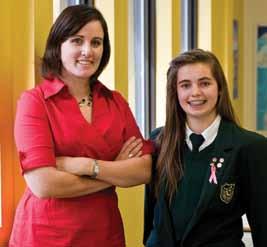
There is one thing that every single girl at Elmwood School has: potential. We see it in the classroom, on the field, in the halls and all around us. We believe that every girl comes to us with untapped potential, and it is our job to help her discover it.
Elmwood School Highlights:
• Outstanding graduate achievement and university placement
IB Programme at all levels ensures ease of mobility for diplomatic families
• Supportive atmosphere eases transition to new school and city
• Inspiring, dedicated faculty
• Diverse, globally aware student body
including murder, extermination, forcible transfer, torture and rape. He’s also charged with two counts of war crimes including intentionally directing attacks against a civilian population, or against individual civilians not taking part in hostilities, and pillaging and three counts of genocide, including genocide by killing, genocide by causing serious bodily or mental harm and genocide by deliberately inflicting on each target group conditions of life calculated to bring about the group’s physical destruction. Mr. Al Bashir is at large.
abdallah Banda abakaer nourain and saleh mohammed Jerbo Jamus: The former is commander-in-chief of Justice and Equality Mouvement Collective-Leadership, one of the components of the United Resistance Front. The latter is former chief-of-staff of SLA-Unity and currently integrated into Justice and Equality Mouvement. They are charged with war crimes including violence to life, intentionally directing attacks against personnel, installations, material, units or vehicles involved in a peacekeeping mission and pillaging. Their case is at the pre-trial stage.
Kenya
William samoei ruto and henry Kiprono Kosgey: Mr. Ruto is a suspended minister from Kenya’s government; Mr. Kosgey is a current member of parliament and chairman of the ODM. They are charged with crimes against humanity including murder, forcible transfer of population and persecution. Their case is at the pre-trial stage.
Joshua arap sang: Currently head of operations at Kass FM in Nairobi. He is charged with crimes against humanity including murder, forcible transfer of population and persecution. His case is at the pre-trial stage.
Francis Kirimi muthaura and Uhuru muigai Kenyatta: Mr. Muthaura is currently head of the public service and secretary to the cabinet of Kenya; Mr. Kenyatta is deputy prime minister and minister for finance of Kenya. Both are charged with crimes against humanity including murder, forcible transfer, rape, persecution and other inhumane acts. Their case is at the pre-trial stage.
• ESL instruction available from JK to Grade 12
•
For more information on the advantages of an Elmwood education, please visit elmwood.ca. Inspiring girls
mohammed hussein ali: Currently CEO of the Postal Corporation of Kenya. He is charged with allegedly contributing to the following crimes against humanity: murder, forcible transfer, rape, persecution and other inhumane acts. His case is at the pre-trial stage. D

By Leslie Moreland
worldwide, 443 million school days are lost each year due to preventable water- and sanitation-related diseases The lack of clean drinking water and basic toilet facilities in schools and communities throughout the developing world results in millions of children missing out on a chance to attend school, an experience which would equip them to build brighter futures for themselves and their families
It’s hard to imagine going to school and spending the day worrying about where you’ll be able to relieve yourself in private, or where you’ll get a drink of water to quench your thirst at lunch For Canadians, this is a completely foreign notion When I was growing up in smalltown Ontario, the thought never even crossed my mind Every day, I’d let the tap run, feel the cool, clean water from the fountain hit my mouth, and flush the toilet without a second thought . Yet, for millions of school-aged children around the world, days spent without access to clean water and toilets is their unfortunate reality
Access to clean water, basic sanitation and hygiene education are the ABCs of international development and form the very building blocks of social and economic development in communities around the world . They are also integral to the health and well-being of individuals and entire communities . Sadly, the great importance of these basic services at schools has been almost entirely overlooked However, without such facilities and training, schools risk becoming places that actually cause sickness, and in turn severely hinder the fight against global poverty
WaterCan’s Clean Water for Schools program works to support the provision of clean water, basic sanitation and hygiene
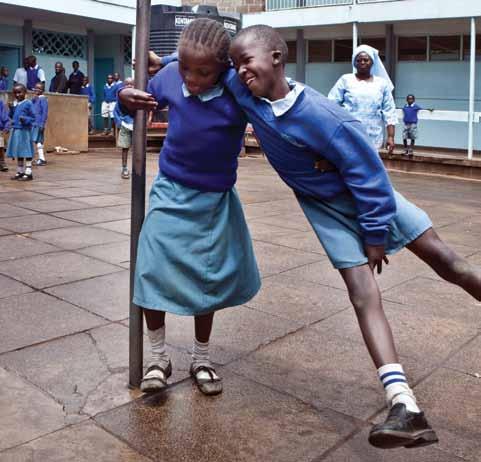
At Joseph Apuodo School in Nairobi, Kenya, safe drinking water and basic sanitation facilities have helped create a healthy school environment where learning, laughing and playing, rather than stomach aches and diarrhea, are top of mind.
education Since 2006, we’ve been working with local communities and African partners to find sustainable, communitydriven water and sanitation solutions for schools throughout Ethiopia, Kenya, Uganda and Tanzania And the costs are reasonable: by WaterCan’s formula, $25 buys an African child water for life
When boys and girls don’t have access to clean water on school grounds, the consequences can be severe and life-altering For example, children are in danger of suffering from water- and sanitation-related diseases such as skin and eye infections, diarrhea and intestinal parasites These diseases contribute to malnutrition and often hamper both physical and mental development, making learning difficult
The sad reality of dirty and unhygienic school environments is that they also discourage students, particularly young girls, from even attending school With-
out clean, private and gender-segregated toilet facilities, girls are prevented (by embarrassment or by their families) from attending school during menstruation This contributes to a significant disparity in male and female primary-school graduation rates Understandably, qualified teachers are also less willing to work at schools that don’t offer these basic services . This further prevents children from getting an education that could help their families and communities break the pervasive cycle of poverty
I r ecently had an opportunity to sit down with an inspiring young girl at Bar Chando Primary School in western Kenya She told me what her life was like before WaterCan and our partner SANA (Sustainable Aid in Africa) helped the school complete a 25,000-litre rainwater harvesting tank, four handwashing facilities and 13 toilets to benefit the 447 students
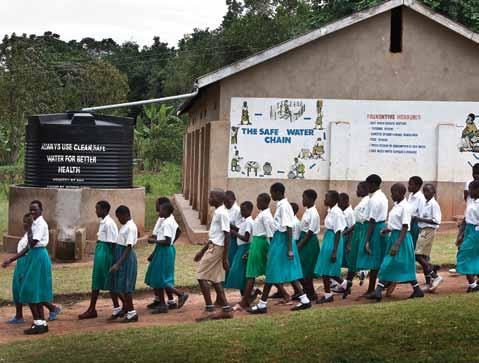
“Before the new tank was constructed, we only had one tank and would still need to collect water from the pond,”
the girl said “I remember having to miss class time not only to collect the water but also because I suffered a lot from stomach

pains and diarrhea But this isn’t the case anymore Now we have clean water to last us the term We can drink it, the teachers can have tea and we can wash our hands The girls can even shower ” This girl and her classmates have learned to manage the water and, by practising conservation, there is enough water to meet the demands of the school for all three semesters
According to the head teacher at Bar Chando, enrolment is up, absenteeism is down and academic performance has improved since completion of this project in 2010
It is amazing to see the difference a small project like this can make in the lives of school children — not only physically but mentally as well The morale at the school is high and I know more good things are yet to come
WaterCan’s Clean Water for Schools program is funded entirely by the Canadian public . Thank you for making this program such a success . Please visit www . watercan com to learn more about this program and how you can get involved
Leslie Moreland is an Ottawa-based program officer for WaterCan
Ahockey tradition, now three years old, started as a way for military attachés to get together with their colleagues from National Defence in a lighthearted, casual way . In the beginning, the team of military attachés posted to Ottawa from all over the world was a rag-tag bunch with ill-fitting gear but they had spirit — and bravely took on a National Defence team made up of senior Canadian officers, led by Chief of Defence Staff General Walt Natynczyk . The game helped raise funds for Canadian military families
It wasn’t a bad showing with a final score of eight to five in favour of the Canadian team After all, prior to the two months of weekly practices leading up to that 2008 game, some of the attachés had never skated before .
“For many of us, [the start of practices] was the first time we put on skates,” said Capt Mauricio Velasquez, the Chilean attaché and one of the game’s big supporters His team practises every Wednesday at 2 p m and then challenges the Canadian DND team twice a year, autumn and spring
And the fundraising game they plan for this spring might be a more even match . While an exhibition game in late November yielded a final score of nine for DND to five for the attachés, the teams had looked fairly evenly matched during the first period And, Major Marie-Claude Carré, a deputy director who works in the foreign liaisons section of National Defence, says the attachés played a warm-up game against members in her office and ended pulling off a win — seven goals to six
“I’m sure it was confidence-building for them,” Maj Carré said
But mostly, it’s just for fun and camaraderie anyway
“It’s really about having nice times, to improve relations between attachés . We are now really good friends,” Capt . Velasquez said . And the games expand those good relations to their colleagues in the Canadian Forces
“It’ s not only a game,” he said “It’s more than that ”
Capt Stuart McCubbin, who referees the games, said the funds raised in the spring game will go to the Military Family Resource Centres, which are on every Canadian base Funds are raised primar-
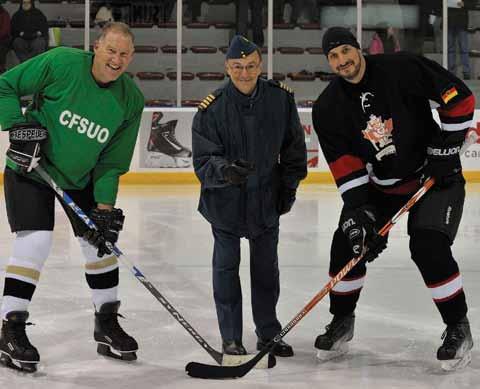
One of two annual games between the attachés and the Canadian Forces team (Canadian Forces Support Unit, Ottawa) took place at the Ottawa University Arena Nov. 23. The puck was dropped by Colonel Robert Perron for General Walter Natynczyk and German attaché Lt. Col. Kay Kuhlen.
ily through corporate sponsorships, which also provide a post-game celebration with a reception and a friendly drink
“The idea is to get together and have fun,” Capt . McCubbin said . “The attachés have really embraced the hockey ”
Maj Carré said it’s been a great teambuilding exercise for the foreign service attachés (FSA) based in Ottawa (some foreign attachés accredited to Canada are based in Washington) She said it has allowed them “to develop bonds and friendship around a truly Canadian activity.”
“In turn, the hockey games [against] senior Canadian Forces members aim to establish, build and maintain strong relationships in an informal and friendly environment,” she explained “They get to know some of our senior officers on a less formal basis .”
That, and their non-hockey goal score: To raise $20,000 for military families this year

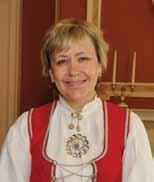
FirsT name: Else Berit
lasT name: Eikeland
CiTiZenshiP: Norwegian
PresenTeD CreDenTials as amBassaDor: Oct. 2, 2009
PrevioUs PosTinGs: Philippines, San Francisco and London.
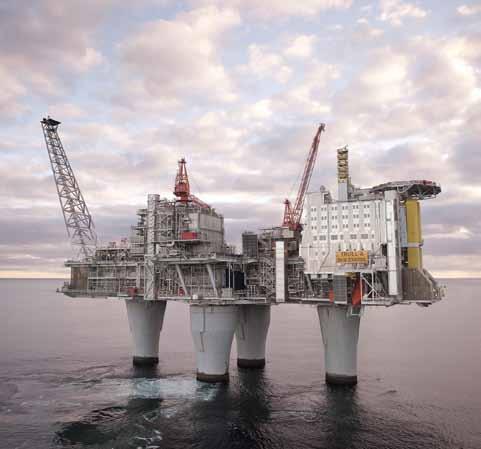
the strong Norwegian interest in global energy affairs stems from the fact that Norway is a major energy nation With just five million people, our country is the world’s second-largest natural gas exporter, the fifth-largest petroleum exporter (oil and gas together) and sixth in the world in terms of hydropower production
We provide Europe with 35 per cent of its gas imports, a significant contribution to European energy security
Our country is among the very few that are net exporters of energy. Statoil, partly owned by the Norwegian government, is among the world’s leaders in deep-water offshore oil and gas production, and another Norwegian company, Statkraft, is Europe’s largest renewable energy company The revenues and taxes from oil and gas production are channeled to the Government Pension Fund Global, which is among the largest sovereign wealth funds in the world, with a value close to US$550 billion
In addition, Norway runs the world’s most comprehensive petroleum technology assistance program “Oil for Development” provides experience and advice to more than 20 oil and gas countries in the developing world . And Norway is currently developing renewable energy support programs in such countries .
Climate change and energy policy
Energy policy cannot be separated from the global efforts to combat climate change For Norway, this is the overreaching perspective — global warming is a major global concern for our government The energy sector is a key to this and we believe big emission cuts must be taken
worldwide if we are to stop global warming from escalating . Norway’s long-term sustainable energy policy lays the foundation for a low-carbon pathway for our society . This combines two responsibilities — to develop fossilfuel resources in the most sustainable way possible, and to develop renewable energy sources
Norway will offer some solutions by producing carbon-neutral energy such as hydro or wind power, and by providing less carbon-intensive solutions (such as relatively cleaner gas) and carbon capture and storage (CCS) technology For countries such as Canada and Norway, which
will depend on fossil fuels for decades, it is essential to decarbonize natural gas and coal . Co-operation between Canada and Norway, reconfirmed by the recent visit of Norwegian Energy Minister Ola Borten Moe, is crucial in making more advanced CCS technologies to do so economically — in order to bring CCS technologies to market
energy production in the arctic
The International Energy Agency expects energy demand to increase by at least 30 percent by 2030, and the Arctic could be among the most promising untapped energy regions in the world According to estimates by the U S Geological Survey, the Arctic may hold as much as 22 percent of the world’s remaining oil and gas reserves, though there is, of course, considerable uncertainty attached to this number .
To balance environmental and climate concerns in this framework is a challenge for Arctic nations such as Russia, Norway,
Canada and the U S Provided that environmental and climate concerns are adequately handled, we believe it is feasible to slowly start exploring how to harvest significant energy resources in the Arctic In fact, a major conference on how to prevent oil spills in the Arctic took place under the Arctic Council’s auspices in Oslo in October and was attended by Canadian officials We don’t expect a major rush or conflicts over energy resources in the region, as ownership and governance are already well-established through the United Nations Law of the Sea Convention
T here are a number of examples of new energy opportunities in the far north . They include the Shtokman project (led by Russia’s Gazprom, with Norwegian and French interests on a large offshore gas field in the Barents Sea), the new deal between Rosneft of Russia and Exxon of the U S in the Kara Ocean, last year’s delimitation agreement between Norway and Russia in the Barents Sea, and Chinese investment in an LNG plant in the same area .
energy production moves north
The High North is a main focal point for the Norwegian government The aim is to safeguard a sustainable development there, and this implies expanding economic activities to develop employment, growth and welfare The energy sector is an important part of this . Norway has had fantastic exploration results this year In the mature, fully developed North Sea, the Aldeous/Avaldsnes oil discovery might prove to be among the all-time top five oil fields ever discovered in Norway Then there are the Skrugard oil discovery and the Norvarg gas find, both in the Barents Sea . There is also an ongoing effort to open up the area around Jan Mayen and new areas in the southern Barents Sea for oil and gas exploration
Norway struggled for many years to solve the secrets of oil and gas in this body of water The first discovery came in 1980, but it took more than 25 years to get it into production . Today, the future looks much brighter We have LNG production . We have an oil discovery under development in the High North as well as the Skrugard site Thirty years after opening this area for exploration, the northern energy focus has made a big push forward The recent visit of Norway’s energy minister to Canada underlines the partnership between Canada and Norway for sustainable management of our respective northern energy resources . D
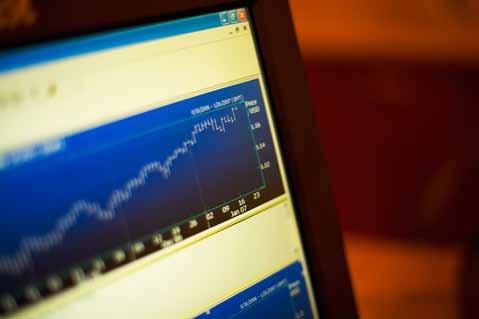
At Accu-Rate Corporation our team of highly experienced currency traders and foreign banking partners allow us to negotiate currency prices lower than any other currency dealer or commercial institution.

For your personal consultation please call: Marie Boivin Managing Director 613-596-5505 ext. 101 marie@accu-rate.ca
Accu-Rate Corporation 2573 Carling Ave. (613) 596-5505

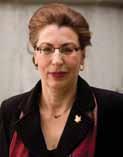
By Elena Stefoi
the embassy of Romania in Ottawa pursues two complementary trade objectives The first is to stimulate bilateral dialogue to increase trade and identify new niches of economic co-operation The second is to harmonize the bilateral relations between Romania and Canada with the commercial policies of the EU acquis (body of European Union law) .
Visits to Bucharest in 2009 and 2010 by International Trade Ministers Stockwell Day and Peter Van Loan led to the acceleration of the signing of a FIPA (Foreign Investment Promotion and Protection Agreement) And when the president of the Romanian Senate and his Canadian counterpart met, both in Bucharest and in Ottawa, bilateral trade was part of their agendas Romania’s minister of foreign affairs also discussed possibilities for economic cooperation with federal ministers on his Canadian tour in 2011
This is the most recent chapter in the long-time partnership that Romania and Canada enjoy, one guided by a solid legal framework, with agreements on double taxation avoidance, nuclear co-operation and trade, legal assistance on criminal matters, FIPA and social security
A s an EU member, Romania applies “communitarian policies” in the commercial area but also takes part in adopting European strategic decisions . Thus, Romania is an active supporter of the Canada-EU Trade Agreement (CETA) . We hope it will entrench consistent and modern practices that benefit both sides and extend outward to wider international economic relations
The total volume of Romanian-Canadian bilateral commercial trade in 2010 was US$257 million, of which $123 .4 million were Romanian exports to Canada, and $133 7 were Canadian exports to
Romania T hese figures represent a 78 percent increase over 2009 figures for Romania’s exports, and a decrease of Romania’s commercial trade deficit with Canada of $73 million In the first half of 2011, Romania’s exports increased by 122 percent when compared to the same period in 2010
Romania’s exports to Canada include tires and auto parts, common metals, generators, power transformers, furniture, clothing wear and accessories . From Canada, Romania mainly imports solvents, reactive agents, transmission equipment, medical drugs, cereals, radiators, electric panels and optical instruments
We would like to see a greater openness to the Canadian market for the following Romanian goods: IT equipment and cellular technology, naval radio-detection and radio-sound machines, warning monitors
along with optical, photographic and medical instruments and equipment Romanian wines, including Chevalier Dyonis Merlot, Feteasca Neagra Reserve, Terra Romana Millenium and Prahova Valley Reserve, are relatively new products introduced on the beverage market . The latter two have reached Canada through its Atlantic Gateway (New Brunswick) where they have gained connoisseurs’ praise
As of December 2010, some 1,562 Romanian-Canadian companies were registered in Romania, operating mainly in the agri-foods, transport, construction, and tourism sectors . Bombardier, SNC Lavalin and Intelcan Technosystems Inc ., among others, have expanded their operations in my country We would like a more
active Canadian presence, through direct investment, in the aeronautic and defence industries, unconventional and atomic electric energy, the petroleum industry, IT, tourism, agriculture and in the agri-foods industry Infrastructure projects offer a wide variety of opportunities — a large percentage of the 30 billion euros provided by EU structural funds are destined for this sector .
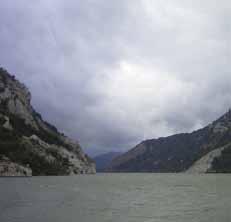
Geographically, Romania is wealthy in important waterways . The Danube River, Europe’s second-longest, passes through or borders 10 countries and Romania enjoys direct access to more than a quarter of the river’s length With Romania’s coastline on the Black Sea, as well, maritime transport ranks as another attractive area of expansion with Canada .
However, the current level of bilateral economic exchanges is far below potential of the two markets and economies Canadian investors should take note that Romania is recognized globally for its ICT experts (At Microsoft headquarters in the U S , the second spoken language after English is Romanian) . Romania’s unconventional ener gy sector is a very appealing area for investment and trade Recently, Ernst & Young’s worldwide ranking of investment-worthy countries awarded Romania 45 points out of 100, placing it in the category of attractive states for foreign investors And Ernst & Young ranked Romania 16th out of 35 countries worldwide (just ahead of the Netherlands and Japan) for its potential for unconventional energy sources and related infrastructure — wind (land/water), solar, geothermal and biomass
Worth noting is Romania’s unique corporate tax of 16 percent (among the lowest in the region), the flexibility of the local labour market and government incentives for initial investment in renewable energy. The government also offers individually tailored stimulus packages for investment projects in conventional industries, including tourism and construction
We await your trade and investment proposals in any domains of interest mentioned above Another point of interest: In 2012, we are planning a Romanian-Canadian Business Forum in Ottawa .
Elena Stefoi is Romania’s ambassador to Canada Reach her at email: romania@ romanian-embassy com or 613-789-4037
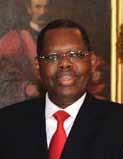
By Alex Crescent Massinda
iam grateful for this opportunity to comment on the main aspects of relations between Canada and Tanzania, and I will touch on three: trade, investment and tourism
With respect to trade, our two countries have close and long relations . Since 2009, Tanzania has been one of 20 countries, and only seven from Africa, that are priority partners in development co-operation and principal beneficiaries of Canadian assistance Since 2004, we have had a trade agreement that permits duty-free access into Canada for most goods produced in Tanzania
But the level of trade between the two countries is still minimal . According to official figures, Canadian exports to Tanzania in 2009 were worth $52 4 million; mainly in textile products and heavy machinery For a major trading country, and compared to what Canada exports elsewhere, this is very little And exports from Tanzania to Canada (excluding minerals) in the same period were far lower — worth a mere $3 million . These were mainly vegetable products The main drag on Tanzania’s part is lack of capacity to assure reliable production and to supply a market that is so far away Producers in Tanzania prefer to sell to countries in the Middle East, Southeast Asia and Europe; and buyers in Canada prefer to source from Asia, Latin America or even West Africa
To overcome this challenge, we have taken steps to encourage investors from across the globe, including Canada, to invest in sectors of our economy that offer high returns These include agriculture, agro-processing, lapidary and manufacturing Through the Tanzania Investment Centre (TIC) and Export Processing Zones (EPZA), we have mechanisms and incentives which, coupled with a sizable skilled
and semi-skilled labour force and low production costs, ease the process and cost of investing in Tanzania . End products from EPZA can then be exported to Canada at competitive rates
Fo r their part, investments are estimated at more than $2 billion with Canadian mining companies among the largest foreign investors in Tanzania Despite persistent challenges of inadequate power supply and infrastructure constraints, we offer comparatively attractive and competitive terms to investors
Two developments will improve the situation Firstly, we have a new mining act with impartial, consistent and predictable legal provisions for the protection of interests of all stakeholders This will increase harmony and trust and promote business . Secondly, negotiations for a Foreign Investment Promotion and Protec-
could be utilized now in the pursuit of our objectives . Such people could also be the channels and catalysts to drum up Canadian interest in investing in these sectors
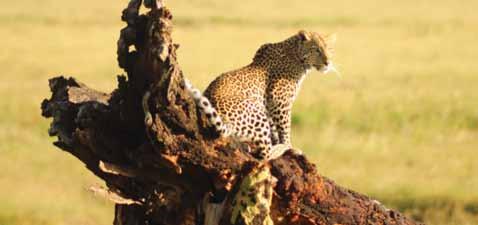
Finally, Tanzania offers a unique combination of tourist attractions From exotic Zanzibar to the spectacular Ngorongoro Crater, from the Plains of Serengeti teeming with wildlife in their millions to the sight of snow in the tropics on the summit of Mt . Kilimanjaro, the highest free-standing mountain in the world, we have it all in abundance and in a combination unlike anywhere else on earth
My mission is to make these gems of nature known as widely as possible in Canada so as to tap into the tourist market here on a higher scale And we are succeeding . For example, between 2005 and 2008, Canadian tourists to Tanzania increased by 50 percent from 11,000 to
tion Agreement (FIPA) between our two countries are nearly completed When concluded, FIPA will create a framework of legally binding rights and obligations for the protection of investors’ interests, and thus attract more Canadian investors
And there are other potential areas of investment in Tanzania apart from mining . In the 1970s and the 1980s, Canada provided extensive technical assistance to Tanzania in the sectors of agriculture and infrastructure, especially the railway system Right now, boosting agricultural output and reviving railways are among priority areas in our development plans Some of the experts who were involved then are still active in the same or related fields here . They have good knowledge of our problems and needs, and such assets
16,500 There was a slight dip in 2009 and 2010 due to the economic crises and their adverse effects on the global tourism industry, but we expect numbers this year to exceed the 2008 level
Our focus and interest go beyond attracting tourists from Canada Tourism is a major sector in our economy. Last year, we had about 800,000 tourists and we expect this number to rise to 1 2 million by 2015 This surge will create more investment opportunities in the hospitality industry, and I believe that Canadian firms are well placed to join in
Alex Crescent Massinda is Tanzania’s high commissioner to Canada . Reach him at contact@tzrepottawa ca or 613232-1509 ext 24
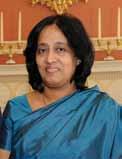
By Chitranganee Wagiswara
diplomatic relations between Canada and Sri Lanka date back to the 1950s From its inception, the Canadian International Development Agency (CIDA) has been a development partner to Sri Lanka . Against this background, our bilateral relations have evolved and the projects such as Colombo International Airport, the Canada-Sri Lanka Friendship Road, the Hardy Technical Training Institute, the Maduru Oya Reservoir and the extension of Gal Oya transmission lines are testimony to this close relationship
Sri Lanka’s strategic location between the East and the West, and its liberalized economic policies, including free-trade agreements with India and Pakistan, gives investors access to a sub-regional market with a population of more than 1 3 billion
In addition, Sri Lanka enjoys preferential market access to China and South Korea (under the Asia Pacific Trade Agreement) and to the EU, U S . and Canada under respective tariff agreements .
To facilitate trade, Sri Lanka has reached agreements on the promotion and protection of investment and on avoidance of double taxation with most countries, including Canada
In the aftermath of the defeat of terrorism in May 2009, Sri Lanka recorded an impressive GDP growth of eight percent in 2010 while maintaining 17 percent growth in its exports Sri Lanka’s exports to Canada in 2010 recorded growth of 22 3 percent — from US$ 101 3 million in 2009 to US$123 9 million in 2010 Canada’s exports were up by 15 5 percent in 2010 from US$292 9 million in 2009 to US$ 338 .5 million in 2010 . Canada has become the single largest supplier of wheat to Sri Lanka while apparel and clothing
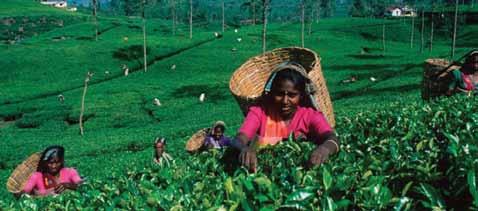
accounted to 53 percent of Sri Lanka’s exports to Canada Solid and pneumatic tires, rubber-based products, auto industrial components, coconut fibre products, tea and spices are among Sri Lanka’s exports to Canada
Sri Lanka supplies world-renowned designer labels: among them, Marks & Spencer, NEXT, Victoria’s Secret's PINK, Gap, Levis, Triumph, Reebok and Tommy Hilfiger Sri Lanka is a producer of “Garments without Guilt” and is home to the first among seven manufacturing facilities in the world to be awarded the LEED platinum rating, setting a global benchmark for green apparel factories
Affectionately known as the Island of Gems, Sri Lanka boasts more than 70 varieties of gems Among them, the worldrenowned blue sapphire, known as the Ceylon Sapphire, takes pride of place due to its colour, clarity and lustre . Although the origin of the sapphire in Princess Diana’s engagement ring — later worn by Duchess Kate Middleton — is a well-guarded secret, the Sri Lanka Gem and Jewellery Association claims it did come from Sri Lanka 35 years ago Other famous stones from Sri Lanka include the British Royal Jewel (a 105-carat chrysoberyl cat’s eye), the Blue Giant of the Orient, the Queen Mary of Romania Sapphire and the Rosser Reeves Star Ruby The Star of Lanka, a 193-carat sapphire, is displayed at the Royal Ontario Museum in Toronto Today, Sri Lanka is fast emerging as a design centre, offering high-quality hallmarked silver, gold and platinum jewellery collections .
Sri Lanka is the third-largest exporter of orthodox black tea . Ceylon Tea, one of the finest black teas, is also the world’s first
to achieve the status of “ozone-friendly tea . ” Recognized under the Montreal Protocol, Ceylon Tea adheres to ISO 3720, the international quality standards set for producers and packagers of black tea The tea market in Canada continues to grow; Sri Lanka’s tea exports to Canada have increased by 14 percent in 2010 compared to 2009 (January-September)
Sri Lanka has abundant tourist attractions, which have made tourism a booming industry with more than 45 percent growth last year over the previous year . The agreement signed this year between Air Canada and SriLankan Airlines provides connections from Europe and Asia to major cities in Canada
As for Canadian investment opportunities, key among them are infrastructure projects, including housing, hospitals, roads, public transport, property development and power-sector projects including solar power
I invite visitors to the Sri Lanka Expo 2012 International Trade Fair, March 2830, 2012, in Colombo The trade fair will provide a forum to explore opportunities in the areas of trade, investment and tourism . Participants will be offered three nights free in reputable hotels . With a 92 percent literacy rate and many skilled workers, Sri Lanka is an emerging economy in a land of many untapped opportunities Sri Lanka welcomes Canadian entrepreneurs
Chitranganee Wagiswara is Sri Lanka’s high commissioner to Canada Reach her at slhcit@rogers .com or contact the Sri Lankan commercial section in Toronto at 416-323-2159

By Charles F. Doran
oh America! Still buried in a painful recovery from recession, while coping with record nine percent unemployment levels, the United States appears unable to reach conclusive decisions about a strategic path for recovery . At least to outsiders, the two-party political system seems fatefully polarized and therefore paralyzed . Partly as a matter of style and presidential choice, the United States seems less dominant on the world stage, encouraging NATO to take the lead in some aspects of the air and ground war in Libya, for example, and pulling troops out of Iraq on a schedule outlined by President Obama in his election campaign . Fr om the Washington perspective, Canada appears quite prosperous and politically content Following the spectacular decline of the federal Liberal party, as well as of the Bloc Quebecois in Quebec and the corresponding ascendancy of the NDP in the latest federal elections, the majority-government Conservative party under Prime Minister Harper is in a strong position to exercise leadership Having benefited from the wise fiscal policy of then-Finance Minister Paul Martin and carefully nurtured by Conservatives during their subsequent interregnums as minority government, Canada corrected its fiscal imbalances in timely fashion . Prudently regulated, Canadian banks avoided the “bundling” of opaque securities and therefore escaped the excesses of the financial debacle leading to the recession Even with a slow-down in the export of manufactures to floundering Europe and struggling America, Canada benefits from the 30 percent of its economy involved with commodity exports, mostly consumed by strong Asian demand . Yet it is a mistake to misjudge America .
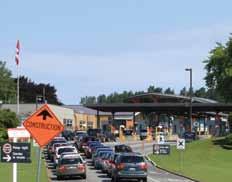
Still by far the largest and richest economy in the world, possessing the most flexible and massive military capability, which remains the backstop for global order, the United States enjoys a diverse and balanced economy marked by a capacity for innovation and entrepreneurship . Invention of shale gas “fracking” is only the most recent example of this propensity Unless dragged down by the fiscal and monetary mess in Europe, the U S economy is slowly edging out of difficulty toward a more robust growth path, this time on a much more productive foundation
But crazy things do happen, politically, in the United States during an election year Despite the noise and contention, the bills do get paid The ideal may be the enemy of the good, yet the American Congress will muddle through with minimalist legislation until the signals from the electorate become less ambiguous This is likely to happen in November . Politics in the time of James Madison [the fourth U .S . president] was no less turbulent than it is today and with similar capacity to point in new directions Misjudging either the vitality of the American political system, or the capacity of the U S economy to recover, is a fool’s game
Every news talk show and every newspaper opinion page tells a story about the “rise of China ” Admittedly impressive in terms of rapidity, and massive in scope and economic impact, the ascendancy of China among the Great Powers is not historically unique China’s power cycle will be shaped by a dynamic that has always mapped the structural trends of history, and it will include the same “critical points” of shifted trend that have challenged every other rising power his-
torically A single dynamic of structural change is transforming the power cycles of all of the great powers — and the expectations that each has about its future security and foreign policy role (See the special volume, Power Cycle Theory and Global Politics, published by The International Political Science Review, Vol 24, No 1, January 2003)
China’s accelerating rise up its power cycle has been accompanied by ebullient expectations about its foreign policy opportunities . B ut China will soon pass through an inflection point on its power cycle where everything will change Governments are then likely to face a very distraught China The level of its relative power, which had been increasing at accelerating rates, will — even if its absolute growth rate does not diminish — suddenly begin to increase more slowly due to the “bounds of the system” that contours each of the state power cycles
Suddenly China’s prior foreign policy expectations will look at risk Half of the country will still be undeveloped Huge inequalities of wealth will challenge the social message of the Communist Party Demographic shifts worsened by the onechild policy will disrupt its nascent social net . Nationalism and paranoia inside China concerning its foreign policy role will confront other actors over Taiwan, the South China Sea, and maritime and naval passage Canada and the United States can help China stick-handle its way through this systems transformation Yet not just trade and commerce will be at stake in this future interval of crisis . Japan, the United States, Europe, Canada, Australia, Russia, and quite possibly India, will need one another and will require strength, patience and major diplomatic skill
Bilateral Trauma
Consider the bilateral Canada-U S stress and strain, for example, regarding the postponed Keystone Pipeline . Is the United States turning its back on Canada? Realism tells a different story. The Obama Administration faces a tough election fight Environmentalists traditionally support the Democratic Party Obama needs them After the November election, a victorious Obama Administration or a triumphant Republican candidate will probably approve the Keystone Pipeline . TransCanada knows this . This is why TransCanada
is also working with Nebraska to re-route the pipeline around aquifers so as to bolster its case
But how do Americans view Canadian strategems? Do they fear sale of heavy oil to China? Are they persuaded by the effort to build an alternative pipeline to the Pacific Coast? Someday that may occur . But such a pipeline faces even greater permitting problems than Keystone Construction will not happen any time soon
S imilarly, Americans are aware that of the six or so up-grading facilities that were on the books, only one survived the recession The market determines these commercial outcomes . Both unused refinery capacity of the right type, and large demand, exist on the U S Gulf Coast and elsewhere in the United States Canada is the natural supplier by reason of proximity The United States needs Canadian oil, both conventional and heavy
A merican policy-makers also know that the capacity to make dry tailings commercial could occur within five years . Elimination of wet tailings that now occupy 66 square miles of Alberta’s surface area would make the environmental record of the oil sands look much better Until technical breakthroughs in the development of alternative energy sources eliminate the need for fossil fuels, the oil sands will supply oil to the United States, paid for at world prices .
Don’t Underestimate the United states!
Observers of trade and commerce often are impressed with very high GDP growth rates in Asia Yet Europe and the United States buy Canada’s manufactures and services, not just its raw materials With their neo-mercantilist approach to trade, many Asian countries do not . Why substitute growth for development? Political risks in some of these markets are also very high Moreover, the size of the American and European markets is often undervalued Of course these regions must escape the drag of the recession They will, albeit slowly
Reassessment of priorities, and restructuring, continually take place in Washington . Washington has not given up on the 21st Century — far from it Knowing the United States well, Canada understands that this determination of the American people and its firms expresses America’s latent dynamism
Charles F . Doran is director of the Center for Canadian Studies at John Hopkins University.

613-424-3234
pat.corriveau@rbc.com
613-860-5775 jordan.arias@rbc.com
Your new home doesn’t come with mortgage advice. We do.
Whatever your home financing needs are, as mobile mortgage specialists with RBC Royal Bank®, we can help.
Votre nouveau domicile ne vous offer pas de conseils financiers. Nous en avons.
Quels que soient vos besoins en financement immobilier, a titre de prets hypothecaires a RBC Banque Royale®, nous pouvons vous aider.
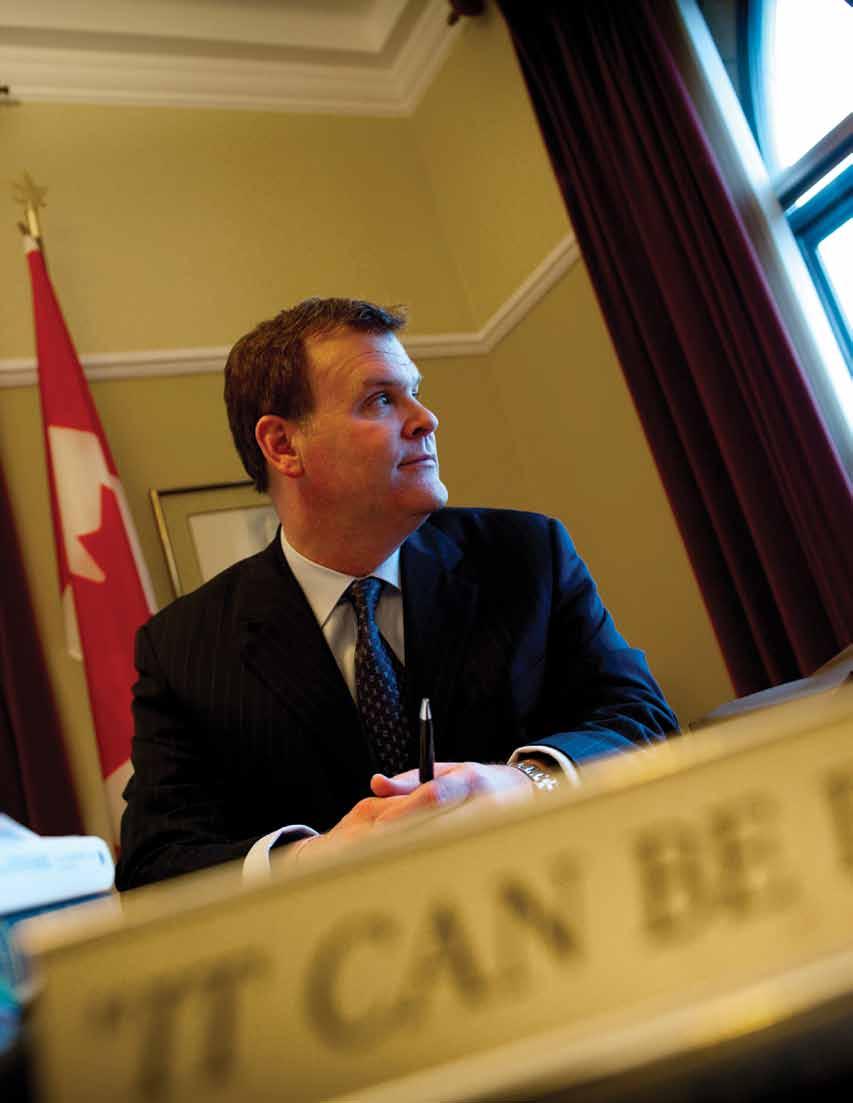

the Conservative government champions religious freedom as a “bedrock” freedom: “societies that protect religious freedom are more likely to protect all other fundamental freedoms,” foreign affairs minister John Baird says. “they are typically more stable and more prosperous societies.”
By Donna Jacobs
n the small ante-room to John Baird’s parliamentary office, you have to consciously avoid knocking over the official greeter: a sizeable statue of John Diefenbaker that reposes on the front corner of a desk .
Inside his corner office is a photo of Mr Baird in his 20s capturing a warm smile from Prime Minister Brian Mulroney. In a glass case sits a faded folded flag, the last Red Ensign to fly over 24 Sussex under the residency of Prime Minister Diefenbaker . It was given to Mr . Baird by his friend, Mr . Diefenbaker's stepgrandson, who unfortunately recently passed away Two paintings by Mr . Baird's grandmother — fine copies of Cornelius Krieghoffs – adorn one wall . And between two gothic windows hangs an original A .Y. Jackson of wind-pruned pine trees . “Every minister is allowed to borrow one painting from the National Art Gallery,” he says . “Before this painting, I borrowed a Jean Paul Lemieux [a 20th-Century Quebec painter] for four or five years . ”
On a desk filled with papers and books, is a sign that reads “IT CAN BE DONE .”
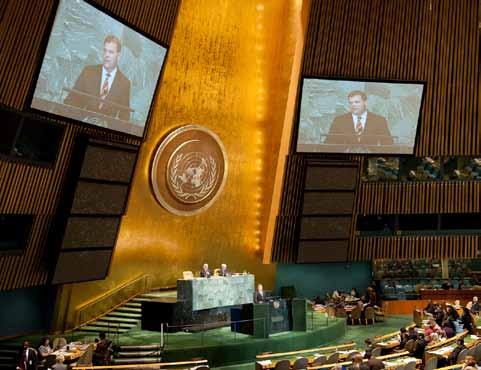
He explains: “It’s just an attitude Presid ent [Ronald] Reagan had that sign on his desk I mentioned this to a friend one day, and the next day I had two or three of them ”
Politics is really about addressing problems, he says . He cites an example that illustrates his implacable reluctance to compromise on issues that really count
“At the G8 North Africa-Middle East ministers’ meeting [in Kuwait in November], we were pushing hard for something about religious freedom to put in the [final meeting] communiqué ” But when he looked, it was missing .
“‘Oh, I’m sorry,” he was told . “It was taken out at the last minute The text is closed We can’t reopen it ’”
“Well, yes, you can,” Mr Baird said
“No We already put it to bed,” came the reply
“’Well, I’m not agreeing to it,’ I said ‘It’s something I’m fighting for and I want this . Religious freedom is something that’s important to Canada . ’”
Indeed, Mr Baird says religious freedom is “the bedrock freedom ” He elaborated in his inaugural speech to the UN General assembly in September:
“Societies that protect religious freedom are more likely to protect all other fundamental freedoms . They are typically more stable and more prosperous societies . This view has been reinforced in consultations
I’ve had around the world so far
“I honestly believe it is critically important that Canada is uniquely placed to protect and promote religious freedom around the world We are a country of many ethnicities and religions, but we all share one humanity — one of tolerance, one of acceptance, one of peace and security ”
He and his advisers met with one of the co-chairs who had said the Canadian statement on religious freedom couldn’t be done “An hour later he called back and said it was done .”
It could be done .
There could scarcely be a better place –– or a harder place — to forcefully, powerfully present Canada’s foreign policy than the UN General Assembly
In the gloves-off style that Canadians have seen during question period, Foreign Affairs Minister John Baird told the General Assembly that Canada will be an outspoken ally of freedom around the world
And, in that speech, deliver ed only four months into his new portfolio, John Baird “named names” — referred directly to countries whose representatives were sitting right in front of him He criticized their oppressive tactics to suppress freedom .
“The UN speech was very much a reflection of my views, of issues I care about and of issues the government cares about,” he said in an end-of-year interview “The one thing that people often shy away from is making critical statements face-to-face with someone . Sometimes, though, tough things need to be said .
“I did it publicly,” he says “You look out and you see Iran sitting there and you see Burma sitting there, you see North Korea sitting there I’ve had some difficult meetings and discussions with my counterpart in Sri Lanka
“When you speak out on behalf of oppressed people,” he says, “the oppressors sometimes don’t like it . ”
If there was a surprise, it was the immediate reward: “I think I had more than 40 ambassadors or heads of mission in the room line up to congratulate me on it So it was all positive ”
One ambassador told him that a lot of his comments needed to be said “Another, from one of the countries I’d just singled out, came up and said ‘Oh, great speech, Minister ’ I don’t know if that was just a diplomatic nicety,” Mr Baird laughs, “or whether he hadn’t heard that part ”
(In a neat twist, Mr Baird worked as a young assistant to Perrin Beatty during Mr Beatty’s last post as minister of foreign affairs for the Kim Campbell government from June to October, 1993 . Thus, Mr . Baird was with Mr . Beatty at the UN to hear a very young French foreign minister, Alain Juppé, speak Mr Juppé is, again, France’s foreign minister, and John Baird, in a very different capacity, had a reminiscing chat after hearing him, once again, speak to the General Assembly in September .)
In his own address, Mr . Baird raised the issue of questionable UN financial practices He reminded his audience that Canada is the seventh-largest contributor to UN finances and pointedly added that the UN faces “challenges” with its “financial probity and operational effectiveness ”
And in, by far, his most-honed criticism of its august self, Mr Baird lambasted UN hypocrisy . He said the UN is faltering, enfeebled as it strays from its founding mandate to keep peace, suppress aggression and promote basic freedoms for all people on earth
“Or,” he said, “as Canadian Prime Minister John Diefenbaker told this Assembly during his defence of the world’s persecuted minorities: ‘We are not here in this assembly to win wars of propaganda We are here to win victories for peace ’”
The UN is weakened, Mr Baird said, when the presidency of its own disarmament conference in Geneva gets passed “to a regime [North Korea] involved in the illicit transfers of weapons, material and technology ” (Canada made headlines by boycotting the conference last July.)
The UN is weakened, he said, “when Iran, which mocks the values of this organization through outrages such as refusing to allow entry to UN observers on human rights, is permitted to seek leadership roles, such as a vice-presidency of the General Assembly and a spot on the Commission on Population and Development . ”
He criticized the UN members who don’t take a public stand when courage and basic integrity are required “The greatest enemies of the United Nations are those who quietly undermine its principles,” he said, “and, even worse, by those who sit idly, watching its slow decline ”
He said Canada will not treat attacks on human rights and innocent civilians by staying silent and treating countries’ aggression and suppression as purely internal-affairs, no-comment matters
“We respect state sovereignty, but Canada will not ‘go along’ or look the other way when a minority is denied its human rights or fundamental freedoms It is our common duty to uphold the rights of the afflicted, to give voice to the voiceless ”
Mr Baird says he also speaks privately, prodding countries to grant their people basic freedoms From all appearances, he takes an open-handed, good-will personal approach that has served him well in his 17-year political career Indeed, he says many of the skills he learned from his previous posts are directly transferable — though nuance plays a greater role in foreign affairs and diplomacy.
An extrovert, he has no difficulty connecting with people Ottawa’s diplomatic corps has noted, with appreciation, his frequent and unexpected attendance at diplomatic events, especially right after his appointment and before his travels began
His personable and tough mix apparently works well with trading partners, such as China It allowed him to mention China, Canada’s second largest trading partner, in his UN speech: “I stand with Roman Catholic priests and other Christian clergy and their laity, as they are driven underground to worship in China while their leaders are detained ” And his government has raised the issues of Tibetans, Uyghurs and Falun Gong practitioners at the United Nations
John Bair D a T a G lan C e
John Russell Baird, 43, holds a political science degree from Queen’s University and was elected Progressive Conservative MPP for Nepean-Carleton in 1995 at age 26. Provincially, he served successively as minister of community and social services, of energy, of francophone affairs, of children and youth services, and as government house leader. Federally, he was elected as a Conservative MP for Ottawa-West Nepean in 2006 and has since served as president of the Treasury Board, minister of the environment, minister of transport, leader of the government in the House of Commons, briefly adding minister of the environment to his portfolio before being named foreign minister in May, 2011. Maclean’s magazine and the Historica-Dominion Institute named him 2010 Parliamentarian of the Year after a vote by his colleagues in all parties in the House of Commons.
He also singled out Iran, calling for the right of Iranian citizens to practise Christianity, defending those charged with apostasy, defending the wrongly imprisoned and persecuted Bahá’í community And Burma for its discrimination against Muslims and Buddhists And Pakistan, where he declared Canadian solidarity with Pakistan’s Shahbaz Bhatti and Salman Taseer, who were assassinated by extremists for speaking out against unjust blasphemy laws And he singled out Egypt for its attacks on Egyptian Coptic Christians And Iraq, where al-Qaeda has driven out many Christians and minorities and where Canada implemented a program to resettle refugees And he voiced support for the Ahmiddya community, which faces violence in different parts of the world . Making a personal connection with for-
eign ministers allows Canada to ride over the rough spots in their countries’ relationships, he says
“At some point, you’ve got to put things behind you . Sheikh Abdullah [bin Zayed bin Sultan Al Nahyan, foreign minister of the UAE] surely has that view and I agree with him,” says Mr Baird, referring to a dispute over Canadian landing rights for UAE airlines and the UAE’s retaliatory closure of a Canadian military base
“We had really good meetings in the Middle East [in November] in the United Arab Emirates and Kuwait . You get a chance to get to know your colleagues, and discuss issues like Syria, like the Middle East peace process, like Iran “T hroughout the Gulf and the Middle East,” he said, “there is deep concern about Iran’s nuclear program ”
Canada has joined with U S and Great Britain in imposing greater sanctions on Iran Asked about use of force to prevent Iran from acquiring nuclear warheads, Mr Baird responds evenly: “I think President Obama has said there are no options off the table Obviously, the first thing we’d like to see is change in Iran and, obviously, [we need] to take every single diplomatic effort we can take . ”
Diplomacy comes down to good personal relationships And even with friends and allies, he still promotes Canada’s values on freedom “You can say not just what our concerns are, but why It’s not just ‘We don’t like this ’ It’s ‘This is something that deeply concerns us and this is why we’re concerned — and why you should be concerned about it as well . ’”
How has Canadian foreign policy changed from the Chretien era? “On a person level, I like Mr Chretien so I’m not a critic of Mr Chretien,” he says “I just think we’ve taken a different approach It’s principled and I think it’s best styled as ‘not going along to get along ’ And while that’s a phrase, I think it also has some profound meaning . We promote Canadian values — even when it’s not easy to do it — and promote Canadian interests ”
Translated, it means Canada won’t go along with the “double standard” that castigates some UN members while ignoring abuses of others
“People line up to c riticize and condemn Israel for every fault but they’re not nearly as aggressive when [it comes to] Iran or North Korea . [Look at] the inordinate amount of attention that Israel gets compared with others Why wouldn’t
they single Iran out for its human rights record?” (In November 2011, Canada was lead co-sponsor for the ninth time of the annual UN General Assembly resolution condemning Iran’s human rights violations The resolution passed by a record majority margin .)
The Harper government unequivocally supports “Israel’s right to exist,” he said in his UN speech “We uphold its fundamental right, like any member state, to defend innocent civilians against acts of terrorism Just as fascism and communism were the great struggles of previous generations, terrorism is the great struggle of ours
“And far too often, the Jewish state is on the front line of our struggle and its people the victims of terror Canada will not accept or stay silent while the Jewish state is attacked for defending its territory and its citizens
“Over the past century, the world was infected by a lethal combination of utopian ideology and brutal despotism that spawned totalitarian regimes which enslaved their own peoples . Apologists tried to persuade us that the ideology of communism was benign Canadians knew
a John Bair D li G h T nin G ro U n D
on african democracy: “We welcome the turning over of power in African states as part of the democratic movement. There are still many challenges in Uganda, in Zimbabwe, in Somalia, in South Sudan. On the downside is the famine in Somalia and al-Shabab, the al-Qaeda-linked Muslim terrorist group which is having a huge effect — not just on Somalia but also on the number of refugees going into Kenya. Piracy, which is having a huge effect even on Kenya’s tourism, is also wreaking havoc on the west coast, including Ghana.”
on russia: “With Russia, we have not-bad relations. On some issues, such as climate change and the Arctic, we work well with the Russians. I’ve had two bilateral [meetings] with my colleague, Sergey [Sergey Lavrov, Russia’s foreign minister.] Just because you don’t agree, it doesn’t mean you can’t have a good relationship, a frank exchange back and forth. On a personal level, he’s an interesting guy. And I think it is always good to get a sense not just of what someone’s position is, but why.”
Regarding Russia’s veto (along with China) of a General Assembly motion censoring Syria for its attacks on protesters, he says: “I’ve certainly pushed [the Russians] to do it. The lack of condemnation is obviously disappointing and it doesn’t serve the UN very well. But the Arab League has stepped up to the plate with sanctions, which is phenomenal.”
say the word ‘alleged.’ I have been briefed and the facts are very strong. I’m not the minister of justice in the U.S. that has to oversee a fair trial. The facts are compelling. And it is outrageous. This is an attack on diplomacy. It is incredibly serious.”
on diplomatic relations with iran: A diplomatic stand-off has existed since Iran’s ambassador was expelled for the murder by torture of Iranian-Canadian photojournalist Zahra Kazemi in Iran in July 2003 for taking photos outside Tehran’s notorious Evin Prison. If Iran wants to re-open relations with Canada, they could, says Mr. Baird, “have their president [Mahmoud
Iran's 40-megawatt heavy water reactor near Arak
Ahmadinejad] stop denying the Holocaust happened. They can have their leader say he doesn’t want to push all Jews and Israel into the sea. They could permit international inspection of their nuclear program.” And, he said, they could apologize for Zahra Kazemi’s murder.
better We took a stand — for freedom and fundamental human rights
“We stood against oppression in Germany. We stood with the brave people of Ukraine and those of the other captive nations of Central and Eastern Europe .
“Canada does not just ‘go along’ in order to ‘get along ’
“We will ‘go along,’ only if we ‘go’ in a direction that advances Canada’s values: freedom, democracy, human rights and the rule of law ”
How does he walk the line between trade and human rights? “I think you’re more likely to be successful by engaging
on the drug problem in latin america: He says his colleague, Diane Ablonzsky, is doing a lot of work and the prime minister is providing leadership. “We see Colombia has made great progress in attacking its drug challenges, [yet] a lot of the drug trade has moved up into Central America and that’s a challenge. It’s a big concern. We work well with the OAS [Organization of American States], with the countries in the region and with the United States.”
on visa requirements for mexican and Czech travellers: It is “our problem, not theirs,” he says. “It costs an average $55,000 to adjudicate a refugee claim. Don’t forget that taxpayers pay for the lawyers for both sides. We pay for the process and then [we pay for] the appeals. It’s very expensive. That’s why you have the visa requirements — to stem the claimants.”
on iran’s alleged plot to assassinate saudi arabia’s ambassador to the U.s.: “I don’t
on the arab spring: Many people are “standing up for their rights” in the Middle East and Africa. “I think people have to be realistic. Libya is not going to go from Gadhafi to Thomas Jefferson overnight. Each of the countries will go at its own pace. Obviously you’re not going to go to full western-style democracy, nor necessarily should you.
“Tunisia is looking very promising.”
Yemen’s President Ali Abdullah Saleh’s promise to step down, with elections early this year, signal “a brighter future” for Yemen’s people. “Egypt has struggled. The initial reports on the election are positive — the first election of many. Morocco passed its constitution by huge, huge margin; King Mohammed VI really embraced reform in a big way. King Abdullah II in Jordan has really expedited reforms they were already working on. In Saudi Arabia, you‘ve got to support every step forward. The decision to grant women the right to vote in local elections was a positive step. I’d like to see them go much farther.”
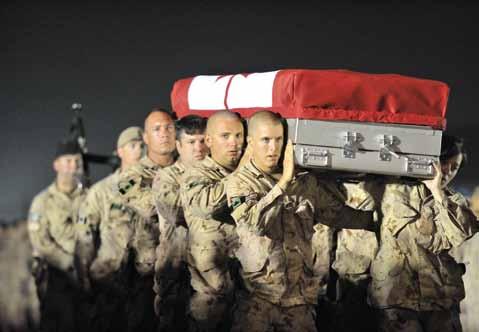
[in talks] than not engaging . I’m continually struck every day by the importance of relationships in this business .”
Canada is following a dual path in which principle co-exists with pragmatism: The Harper government’s “Prosperity Agenda” buttresses a federal government’s most basic job: to protect its people These days, that means more than military and national security . It means financial security — preservation of a healthy economy
Take Libya, where Mr Baird met with the chair of the National Transitional Council, Mustafa Abdul Jalil, and other council members “When I visited Libya, for example, yes we’re there to promote Canadian values, freedom and the role of women in a new Libya At the same time, we’re there to promote our national interest, which is Canadian business and the economic prosperity of our country and Libya’s
“How do we make sure that Canadian companies who have half-finished projects can get in there and finish them? There are opportunities for economic benefit for Canadians and support of the Libyan people . So I think we’ve got a focused agenda ”
He responds to the observation that many countries are selling natural resources to essentially state-owned companies in China, which is buying heavily into the oil sands
“China has a lot to offer Canada Canada has a lot to offer China Our relations have to be of benefit to both of us, like any relationship,” he says . “We welcome
Chinese investments in the resource sector, the oil sector . It’s been good for the Canadian economy It’s been good for the Chinese economy
“Would we want to sell any one country, or any one company, the entire resource or majority of a resource in one deal? Obviously that would be disconcerting . But the oil and gas interests are widely held . ”
Equally pragmatic, he notes that China accounts for one of every two elevators built in the world — and that China is now the No 1 buyer of Canadian softwood “At the same time,” he says, “300,000 or 400,000 people are lifted out of poverty by a growing economy in China It’s an amazing thing .”
He explained Canada’s economic policy to the prestigious Washington-based Foreign Policy magazine just weeks after becoming foreign affairs minister: “For Canada and our government, the No 1, the No 2, and the No 3 issue are jobs and the economy, jobs and the economy, jobs and the economy.”
While the U .S .-Canada working group is good, he told Foreign Policy, border trade is increasingly wrapped in red tape and slowed by regulations, to the mutual detriment of the two highly-integrated economies As an example, he chose the Windsor-Detroit Ambassador Bridge: “$130 billion worth of trade goes over one bridge And if there is a tie-up at the border, there is a tie-up in manufacturing — which could be deadly for manufacturing on both sides ”
What are his top goals for 2012? He identifies his top goal as the promotion of Canadian interests and values “in a big way ” His second goal is working on the Prosperity Agenda .
“It’s huge . So are our free trade negotiations with Europe and with India, and border perimeter security and thinning of Canada-U S border [the recently announced Beyond the Border agreement] Keystone XL Pipeline, our relationship and trade with the United States and expanding our trade relationship with China — they are all important . ”
For the government’s Prosperity Agenda, Mr . Baird works with Trade Minister Ed Fast, who also deals with U S Buy America protectionism while seeking Canada’s membership in the Trans-Pacific Partnership, whose nine member nations are working towards a free-trade agreement
In less than six years, Canada has signed free trade agreements with Colombia, Jordan, Panama, Peru, the European Free Trade Association member states of Iceland, Liechtenstein, Norway and Switzerland, and most recently with Honduras Pending are agreements with the European Union, Ukraine, Morocco, Korea, Andean Community Countries (Colombia and Peru), the Caribbean Community (CARICOM), the Dominican Republic, Honduras — with possibilities of Guatemala, El Salvador and Nicaragua In the future, think Singapore, and, potentially, Turkey
“Diane Ablonczy, [Calgary-Nose Hill MP and minister of state of foreign affairs for the Americas and consular affairs] obviously takes the lead on the Americas . And Deepak Obhrai, [Calgary East MP and parliamentary secretary to Mr Baird] does a lot of work in Africa and Asia ”
Ask how he sees 2012 and beyond, he responds: “I think Europe is in a real financial crisis with the sovereign debt cris is It’s significant Look at the challenges the United States is facing The Super Committee just failed . They have an inability to get control of the problem . We’re very blessed in Canada to have it under control Our system is more conducive to problem-solving
“Economic uncertainty is the biggest challenge The third-quarter numbers came out today — 3 5 percent economic growth in Canada, which is pretty darn good . ”
But don’t suggest that Canada is lucky to have avoided the worst of the cascading economic crises He growls: “It’s not ‘lucky ’
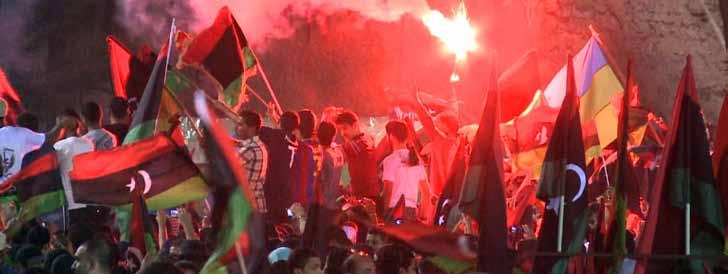
“You’ve got to work at that every day You’ve got to focus on jobs and the economy every single day ”
If there is a pure-principle heart to Canada’s foreign policy, it is the government’s $5 million new “Office of Religious Freedom ” Mr Baird met in October with some 100 people from across the country to discuss the new office, and will lobby cabinet and the Conservative caucus for this foreign-affairs initiative
“It’s not freedom of religion,” he explains . “It’s freedom to practise your religion That’s more expansive than just having a Bible in your own home
“I think it’s imperative that the office operates in the [foreign affairs] department It needs to harness the resources of our missions abroad, our people on the ground Whether it tracks with consular issues, whether it tracks with missions around the world, I think it’s really important to be in the department . ”
He says he often raises the topic of freedom to practise one’s religion when he’s abroad
“I think it’s got to be more than a perfunctory raising: You check a box ‘I raised it ’ I think you hammer home how important the issue is to the government of Canada, to the people of Canada . Sometimes it’s more warmly received than others [but that] doesn’t mean you shouldn’t raise it ”
On the other hand, he doesn’t “hector” people: “You’ve got to try to be persuasive At the same time, one person is not going to change a country It takes consistent, coordinated effort ”
He says Canada will join other countries in this effort: Suzan Johnson Cook, U . S . ambassador for international reli -
gious freedom, “does a great job ” Italian Foreign Minister Franco Frattini “is really passionate about this . So we’re not alone by any stretch .”
Will he eventually try to have a religious freedom centre established right at the UN? He smiles: “Let’s get the centre established [in Canada] But we are smoothing the way The prime minister provided a lot of leadership during the G8 Summit in Deauville, France in May 2011 There were two or three references to religious freedom .”
As strongly as Mr . Baird feels on this issue, he is clear that this is Prime Minister Harper’s issue Mr Harper, besides mentioning it in the Throne Speech, made it “part of the election platform It’s something he believes strongly in,” says Mr Baird, “and something our team and our party believe strongly in . ”
How close are his, Mr . Harper’s and the
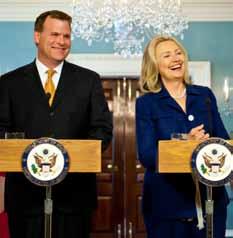
cabinet’s views on foreign policy? Foreign policy is hammered out in cabinet and in discussions, he says, and it’s not always smooth agreement . “I think people would be astounded We have some really good debates, really good discussions around the cabinet table We don’t always agree on everything
“It’s funny, obviously we’re a team,” he says “The PM is leader of the team On foreign policy, the PM and I do share a lot — not everything — of the same views . Our views on Israel are remarkably similar We have good debates, discussions ”
And, he says, they’ve had lots of time to work out their foreign affairs policy “I travelled to three G8s with him before I was foreign minister Environment is an economic portfolio, a regulatory portfolio and, increasingly, a foreign affairs portfolio .
“I’ve travelled extensively with him on foreign policy, on bilaterals with a wide variety of people Also, as a member of P and P [the cabinet committee on priorities and planning], you obviously consider every issue, every file ”
During cabinet talks, he says, “the PM welcomes different perspectives . He’s a very good listener . At the same, he brings values to the table — as we all do .”
The debate can get very spirited, he says, because everyone’s set of values and principles are complex “Those who disagree with [our views] say that they’re narrow ideologies and that they’re rigid ”
He chuckles: “People on the left have values and principles . People on the right have rigid ideologies . ”
His own “rigid ideology” is, he says: “I believe in freedom ”
a J o hn Bair D C om P en D i U m
“It’s always easier to shut up and go along with the crowd.”
“From the Liberals under [Lester] Pearson to the Liberals under Jean Chretien, the Liberal Party has had a very distinct view of foreign policy. I think it was very different before Pearson. Prime Minister [Brian] Mulroney was not shy about disagreeing with Margaret Thatcher and Ronald Reagan on sanctions in South Africa. He was very aggressive in fighting for that. And that’s the [country’s] tradition. [Prime Minister John] Diefenbaker did the same in the Commonwealth with apartheid, taking strong principled stands. I think there are more [Canadian] roots in that [kind of foreign policy].”
“When we came to office and Stephen Harper was elected Prime Minister, Canada was [world-ranked at] No. 31 on peacekeeping. I think most Canadians thought that our soldiers in Afghanistan were on a peacekeeping mission. They were never told, they never understood, that this was not a peacekeeping mission, that the soldiers were not wearing the blue beret.
“[In terms of raising the status of the military in Canada] Stephen Harper did a lot of it. Peter MacKay has done a lot of it. Rick Hillier has done a lot of it. Gordon O’Connor has done a lot of it. Walter Natynczyk has done a lot of it. You know, 20 years ago, Canadian Armed Forces members sometimes didn’t want to wear their uniforms in public; now when they go into Tim Hortons, two or three people try to buy them a cup of coffee. The amount of support for the Canadian Forces is significant.
“And Canada’s history was not being ‘an honest broker’ on all sides [of an issue]. In the Second World War, we took a strong stand from Day 1. World War I, the same. The First Gulf War, the same. We stand up for what we believe in and that’s the real history of the country.”
“Our Royal Canadian Air Force flew 10 percent of the total strike sorties against Gadhafi’s forces, and our Royal Canadian Navy helped enforce the maritime blockade. Canada has paid heavily — both in dollar terms and in priceless human toll — to fulfill our UN obligation to support the lawful government of Afghanistan.”
The Keys T one X l Pi P eline
“We were disappointed [with President Barack Obama postponing his decision until 2013.] I think most observers of the timing and the decision have come to certain conclusions which I’ll leave for them [to express].
“My approach to dealing with the Americans, with Hillary [Hillary Clinton, U.S. secretary of state] is that when all you talk about is irritants, [laughs] you quickly become irritating. I was told that [former Secretary of State] Condoleezza Rice once described the agenda of a meeting with a Canadian foreign minister as very similar to a condo committee board meeting.
“So Hillary and I talk about issues that are multilateral, and then we discuss the two issues I’ve been pushing with my American counterparts, which are Beyond the Border [facilitat-
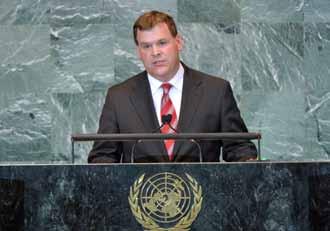
ing trade] and the Keystone XL.
“We’re making good progress on Beyond the Border, which is very important to the Canadian economy. And we are obviously concerned with the delay [emphasis on the word delay] in Keystone. They’re working hard on the rerouting of it around the aquifer in Nebraska. But Canada can’t be held captive to special interests south of the border. We’ve got to diversify our markets. That’s why the [proposed Gateway] pipeline to the West Coast is so important.”
Cana D a as ‘hones T B ro K er’
“I want to be the first foreign minister in the world to recognize a newly independent Palestinian state when it negotiates peace and security [directly] with Israel.
“Did these people [who want Canada to be an “honest broker” in the Middle East] say that Canada lost its status as an honest broker when we went to war early with Hitler’s Germany? We did that early in the Second World War. We didn’t try to be an honest broker [with] Germany and [our Allies].
“What does an honest broker mean? I mean, if you’re looking at Hezbollah or Hamas, you don’t want to be an honest broker if they’re international terrorist organizations.
“The Palestinian Authority — we have, I think, a constructive relationship with them. They obviously don’t share an opinion on a major file. Hamas is an international terrorist organization and has launched thousands of rockets against civilian populations in a fellow liberal democracy [Israel].”
Forei G n P oli C y vs. D omes T i C P oli T i C s
“A lot of foreign policy isn’t partisan.
“I work very well with Dominic LeBlanc, the Liberal foreign affairs critic. Paul Dewar [former NDP critic] is a great guy. I’m getting to know Hélène Laverdière [NDP critic] and I’m off to a good start with her. We worked very well on the Libyan mission, consulting Parliament when I was House Leader for the first round. And I had good negotiations and discussions with [then Liberal critic] Bob Rae and Paul Dewar on the second round, and the third one was a fairly civil debate and discussion. We tried to be more open. On the Libyan mission, we made officials available to fully brief the opposition parties at every step they wanted it. So I think that was a good day for Parliament when all parties supported it.”
o n T he P ersonal si D e: a Tim h or T ons F an
Q: How long are your days?
A: Every day is different. There’s a huge amount of travel. Visits to Indonesia, Italy, Libya, the U.S., China, Brazil, Colombia, Costa Rica, Honduras, Mexico, Netherlands, France, Turkey, Australia, Kuwait, UAE, Germany and Lithuania. There`s a huge amount of reading. An obviously significant amount of my time is spent engaging. (On this day, after question period, he’ll meet successively with the chargé d’affaires of Sudan, the prime minister of Georgia and Alex Neve, secretary general of Amnesty International Canada.)
Q: When you`re home, what is your daily schedule?
A: I’m up every morning at 6 o’clock, listen to the Steve Madely [CFRA] show ‘til 6:30 and then I get up and go.
Q. Breakfast?
A: Cereal and milk.
Q: Do you drink coffee?
A: I’m addicted to Tim Hortons. I stop every morning on the way to work and have a Tim Hortons.
Q: Do you drive to work?
A: I have a driver. I read the newspapers very quickly: the Ottawa Sun, the Ottawa Citizen, the National Post, The Globe and Mail and the Toronto Star (when it’s available). I live in East Nepean so I don’t have a long trip to read them.
Q: What regular meetings do you attend?
A: I meet with the deputy [Morris Rosenberg] several times a week but every Monday I have a private meeting with him and get briefed on a good number of issues. And there's P&P [cabinet’s priorities and planning committee], Eastern Ontario caucus and national caucus, and meetings with the inner cabinet on Thursday mornings every few weeks.
Q: Working lunch?
A: I grabbed a salad in the cafeteria today and ate it during prep for question period. Some days I’ll put some vegetarian chili in the microwave.
Q: Are you a vegetarian? Do you eat meat?
A: No.
Q: Do you eat fish, eggs, cheese?
A: Yes.
Q: What do you eat for dinner?
A: [Big laugh] I eat out. My favourite foods are sushi, Thai, Chinese.
Q: How do you do with so much travel abroad — jet lag?
A: I’ve learned it’s always good to fly at night. We went to the Libya meeting, to Italy and France. We left at 8 a.m. When we landed it was already 11:30 at night, so 5 or 6 p.m. our time. I couldn’t sleep all night.
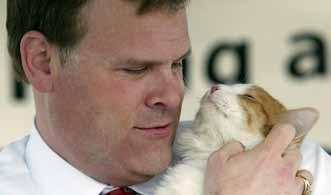
Mr. Baird at the opening of the Ottawa Humane Society's new facility with Chance the cat.
Q: Do you exercise?
A: No.
Q: Is there a sort of Clan of the Cat in the Harper government?
A: There is a sort of cat clan. There is a group of us. Laureen [Harper] had me over to 24 Sussex [last spring]. She had some kittens from the Ottawa Humane Society that she had taken and was nursing. [Both cat lovers, the Harpers have fostered many kittens for later adoption.] There were two or three really cute ones.
Then [strangely] she said: ``You probably wouldn’t want to take them. You’d be travelling all the time.” I looked at her — and that was before the cabinet shuffle — and I went [he makes a quizzical face and laughs].”
(Days later, he was appointed foreign affairs minister. Call it a case of letting the cat out of the bag.)
Another cat person is Marjory LeBreton [government Senate leader]. Monte Solberg [former citizenship and immigration minister] was a cat person. So was Sandra Buckler [Mr. Harper`s former communications director]. There are a lot of us.
Q: How do you relax?
A: I go out with my friends.
Q: When do your days end?
A: I try to always get to bed by, at the latest, 11 or midnight. I’m not a nighthawk.
Q: Books you’re reading?
A: I was just given Richard Gwyn’s book Nation Maker — Sir John A. Macdonald: His Life, Our Times. I took it with me on my last trip but I didn’t have a chance to get to it because I was working or reading for work.
I did a book review for The Globe [and Mail newspaper] — Craig Oliver’s book, Oliver’s Twist. [Oliver's Twist: The Life & Times of an Unapologetic Newshound].
Q: How do you deal with criticism, in country and out?
A: You learn to have a thick skin. You’re human like everyone else. At the same time, if you believe in what you’re doing, that’s better than if all you did is to listen to your critics every day.
Donna Jacobs is publisher of Diplomat
The federal government has awarded contracts worth $28 billion for the building of 28 vessels — naval warships and civilian (Coast Guard) ships both — that will modernize the country’s aging sea-faring fleet . Halifax-based Irving Shipbuilding Inc . will build the warships . Vancouver Shipyards Co . Ltd . will build the Coast Guard ships . The new vessels will vastly increase Canada’s ability to patrol Arctic waterways . Here’s what the biggest shipbuilding program in the country’s history will provide .
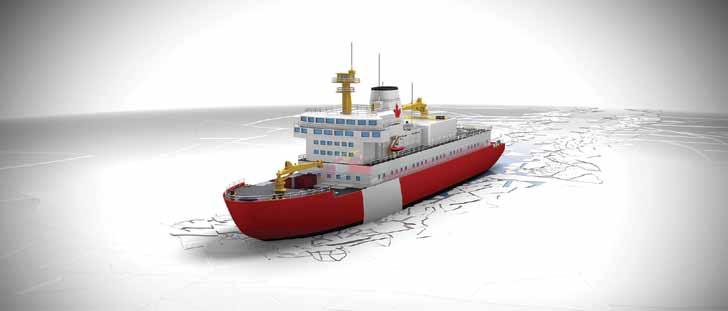
Category: New polar icebreaker, non-combat
Building location: British Columbia
Construction time frame: 2013-2017
Number of vessels to be built: One
Details: A new polar icebreaker will be built for the Canadian Coast Guard, one of the centerpieces of the Harper government’s northern strategy. The icebreaker is meant to support the work of several departments and agencies, deliver the full range of Coast Guard programs and establish a strong federal presence in the Arctic.
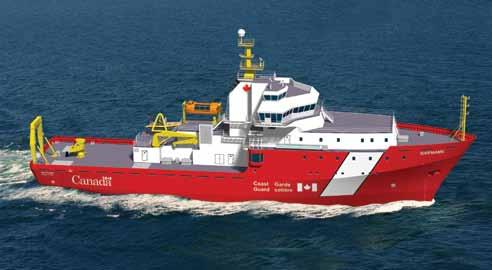
Vessel type and category: Offshore fisheries science vessels, non-combat
Building location: British Columbia
Construction time frame: 2011-2014
Number of vessels to be built: Three
Details: These offshore fisheries science vessels will be commissioned to replace four aging Coast Guard ships on the east and west coasts that, according to the Fisheries and Oceans department, provide a platform from which critical scientific research and ecosystem-based management can be performed.
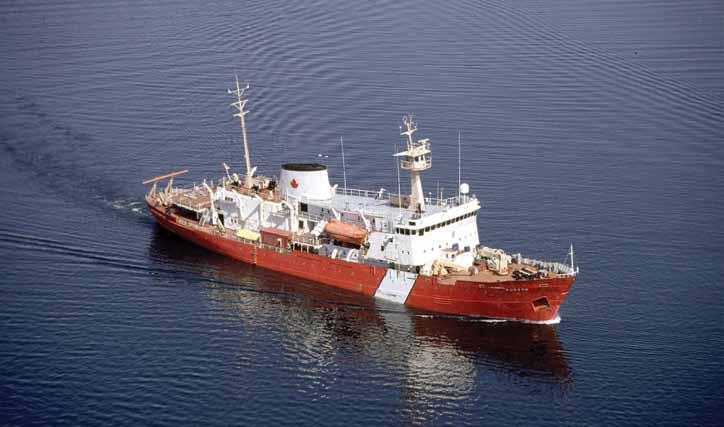
Vessel type and category: Offshore science vessel, non-combat
Building location: British Columbia
Construction time frame: 2011-2013
Number of vessels to be built: One
Details: A new offshore oceanographic science vessel will be built to replace the Canadian Coast Guard Ship Hudson, shown above, its largest scientific research vessel. It was built in 1963 and the Coast Guard reports that “its replacement is critical to fulfillment of the department’s science mandate as well as mandates of other government departments and agencies.”
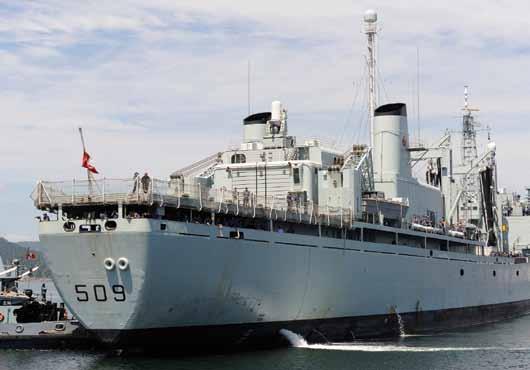
Vessel type and category: Joint support ships
Building location: British Columbia
Construction time frame: Not specified
Number of vessels: Two, possibly three
Details: These two joint support ships will be built for National Defence, with an option for a third, to help bolster the navy’s warships, permitting them to remain at sea for significant periods without going to shore for fuel. The new ships will replace two Protecteur class auxiliary oiler replenishment vessels, like the one shown here at left, very large ships that hold extra fuel to replenish frigates and destroyers.
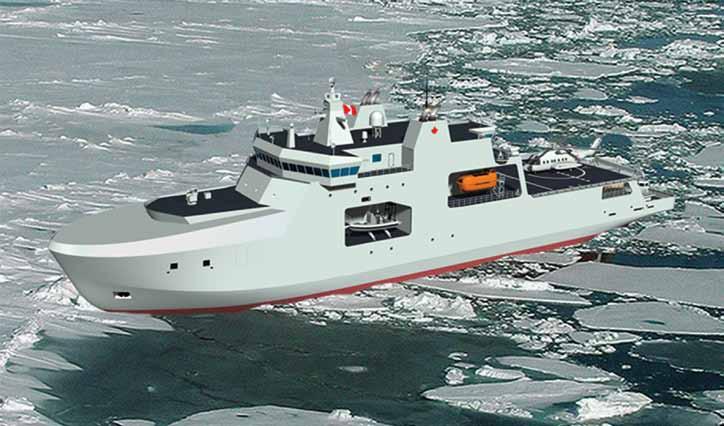
Vessel type and category: Arctic/offshore patrol ships
Building location: Halifax
Construction time frame: 2012-2019
Number of vessels: Six to eight
Details: Six to eight Arctic/offshore patrol ships, like the one shown in the rendering above, will be commissioned. They are a new complement. These ships will conduct armed sea-borne surveillance in Canada’s waters, including the Arctic Ocean. They are meant to enhance Ottawa’s ability to assert Canadian sovereignty and provide surveillance and support to other government departments, DFO and the Coast Guard.
Vessel type and category: Combatants
Building location: Halifax
Construction time frame: Not specified
Number of vessels: 15
Details: These Canadian surface combatants will replace three destroyers, such as the HMCS Athabaskan, shown here, and 12 frigates used by the Royal Canadian Navy. The destroyers are the larger of the warships in the naval fleet and are used for command and control in the operating theatre. They are run by 280 crew members, including air detachment. The frigates are smaller, more nimble in the water and considered the backbone of naval operations — holding crew of 225, including air detachment. While all the new vessels will be based on a common, single-hull design that is the same size, the frigate and destroyer variants will be fitted with different weapons, communications, surveillance and other systems, the details of which have yet to be determined. D
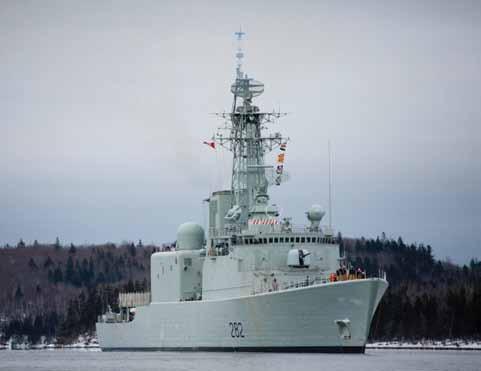
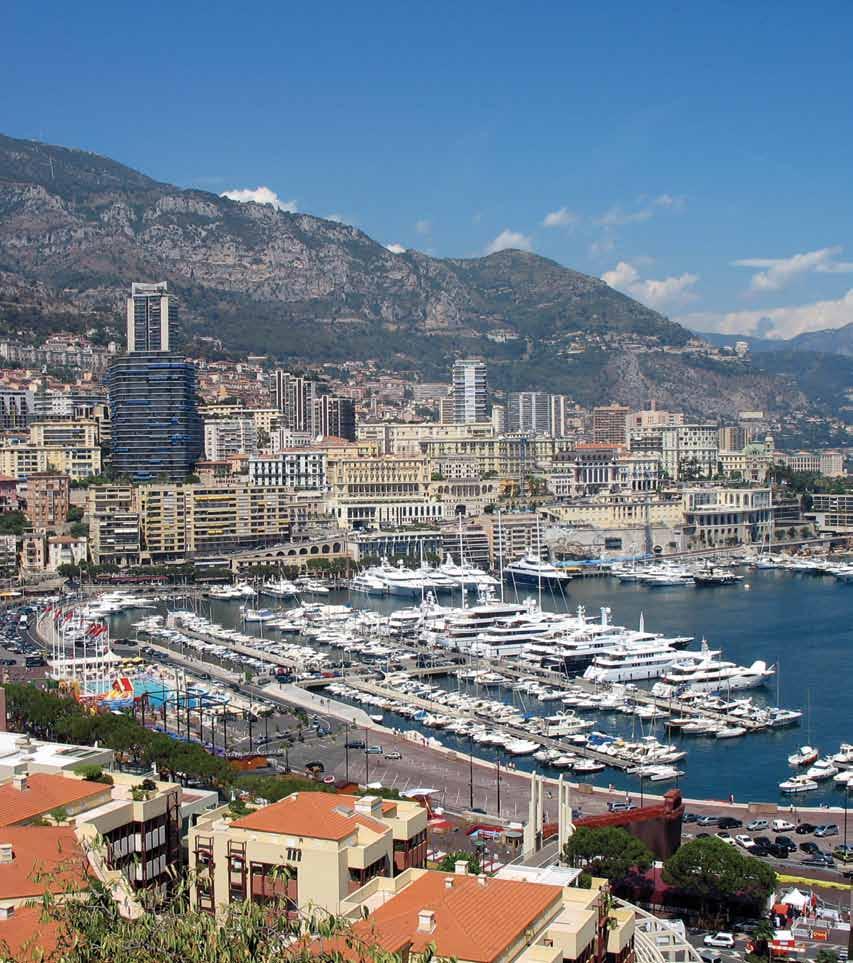
Monaco,
here, is sixth on our Top 10 list of the world’s smallest well-run countries.
these microstate countries have influenced or inspired their larger neighbours, through various means — economic muscle, political skill, environmental and moral leadership
By Wolfgang Depner
size matters The reality is that the smallest sovereign states might not receive a whole lot of respect from the larger, more populous members of the international community
Many so-called microstates are fairly recent creations . And many require special economic, environmental and governance assistance to overcome their size-related disadvantages, according to extensive research by the United Nations, the World Bank and the Commonwealth Secretariat
This absence of control and influence also extends to the political sphere, since many microstates lack the financial and material means to pursue their own diplomatic interests against bullying neighbours, and if necessary, defend their own territory Irish-American writer Leonard Wibberley famously spoofed the military impotency of microstates in his novel The Mouse That Roared, which later became a movie in which Stanley Kubrick-favourite Peter Sellers plays the military leader, prime minister and Queen of Grand Fenwick, a tiny Alpine duchy Faced with bankruptcy, the duchy invades the United States with longbow-men on the hope that their inevitable defeat would inspire the U S to shower the duchy with a generous Marshall Plan-like compensation package Let us say that this plan does not exactly pan out . Even prosperous and prestigious Mo-
naco exercises its own sovereignty “in accordance with the fundamental interests of the French republic,” according to The Economist and depends on its large neighbour for military protection, a fate many microstates share
Indeed, had it not been for the charmed diplomacy of American movie icon Grace Kelly on behalf of her husband, Prince Rainier III, in his dispute with powerful French president Charles de Gaulle over the status of his principality as tax haven during the 1960s, Monaco might have suffered “asphyxiation” at the hands of France .
More recently, in 2009, tiny Liechtenstein had to accept a verbal attack from Germany over the grand duchy’s refusal to co-operate in hunting down tax evaders Two years earlier, Liechtenstein officials had to learn that some 1,170 Swiss troops had “invaded” their country after they had made a navigation error during a night exercise . How did they find out? They received a call from colleagues in Bern!
Liechtenstein, for the record, lacks an army of any kind While this rather humorous event does not cast the Swiss army in the most professional light — the misguided soldiers carried rifles, but no ammunition during their nightly stumble through the woods — it underscores the genuine vulnerabilities of microstates,
something Luxembourg discovered during the first half of the 20th Century, when German troops occupied it not once, but twice, on their way toward France and Belgium
Many microstates now face a different form of threat to their continued existence: climate change If current trends hold true, oceanic microstates such as Tuvalu could soon become uninhabitable, a possibility that has prompted the Maldives, a nation of 1,200 low-lying islands in the Indian Ocean, to consider buying land elsewhere in the region
I n other words, it is not easy being small But small can also be beautiful, as this list aims to showcase Drawing on a range of economic variables such as gross domestic product (GDP), health, educational achievements and other intangibles, this list shows that being tiny can be fine On e way or another, these 10 countries have found ways to influence or inspire their larger neighbours, be it through their economic muscles (as in the case of Singapore), political skill (Luxembourg), environmental leadership (Monaco) or moral leadership (San Marino) Indeed, as globalization continues to ameliorate the advantages of size in rewarding flexibility, some of these microstates are poised to play larger roles on the global stage . Granted, none of them achieves perfection But then again, who does?
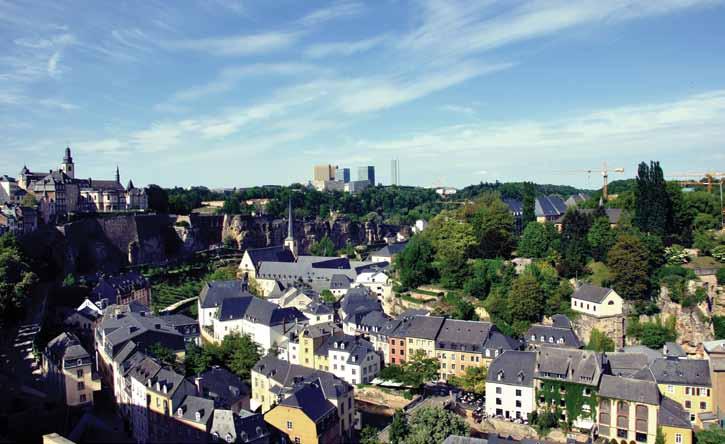
Geography has blessed, and until recently cursed, this grand duchy, which consistently finishes among the elite in rankings that measure livability Less than half the size of Prince Edward Island, at 2,586 square kilometres, Luxembourg borders Germany to the east, France to the south and Belgium to the west (Many of its 500,000 residents speak three languages — French, German and Luxembourgish, a German dialect) . This location has made this former steel-manufacturing centre an attractive base for broadcasters such as the German-owned Radio Television Luxembourg (RTL) Group and the foreign-owned finance sector, which accounts for about 28 percent of GDP
This economic portfolio has made Luxembourg the third-most prosperous country in the world based on per-capita GDP But this irreversible proximity to France and Germany has also made Luxembourg an object of strategic desires over the centuries, perhaps no more so than during the first half of the 20th Century when the First and Second World War caused significant damage . Against this background, Luxembourg abandoned its historical policy
Treaty Organization (NATO) in 1949 . Eight years later, it sought economic security by becoming a founding member of what has since evolved into the European Union
Certainly within Europe, this preference for working through international organizations has earned Luxembourg considerable influence, where old political hands, such as Jean-Claude Juncker, have played a significant role in the creation of the Euro currency. As of this writing, it remains uncertain whether this legacy will survive If it does, Luxembourg will have played its historic part in further uniting Europe
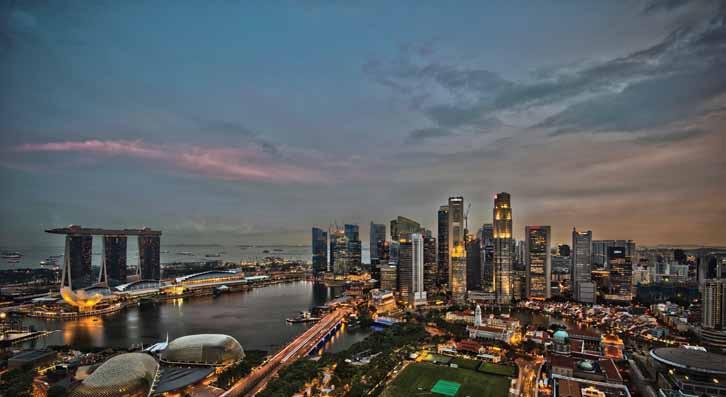
This island nation of some 4 7 million people controls a combined land and sea territory of less than 700 square kilometres But if this figure ranks Singapore as one of the smallest nation-states, its location between Malaysia and Indonesia grants it an immense, if not disproportionate, amount of strategic influence, for it sits near one of the most important shipping lanes in the world Not surprisingly, Singapore’s port ranks among the world’s busiest In 2010, more than 120,000 vessels called on the port
Granted, it might be tempting to dismiss the status of Singapore as an accidental product of geography But such a position would prohibit us from seeing the skill with which the elites of Singapore (under the leadership of the long-ruling People’s Action Party) have leveraged the human capital of their resource-poor land to the country’s benefit . They have turned a multi-ethnic, multi-religious, multilingual polyglot into one of most livable and prosperous states, whose virtually corruption-free economy grew by almost 15 percent in 2010 on the strength of highend exports, such as consumer electronics and pharmaceuticals
Singapore also continues to position itself as an escape hatch for global financial institutions, whose corporate leaders might be unwilling to face tougher restric-
tions in the northern hemisphere While one might have good reasons to question the ethics of this behaviour, it speaks to the ability of this resource-poor country to quickly spot and fill niches Newsweek, for example, recently ranked Singapore as the most economically dynamic state
Such flexibility, however, appears to be unlikely in other spheres of Singaporean society The country continues to enforce strict laws and penalties against actions that may be legal or may be minor offences in Canada . They include jaywalking, littering, spitting, smoking in public places, and the importation and sale of chewing gum Acts of graffiti remain punishable through caning And this catalogue of apparent crimes and their punishments hardly represents the worst, as Singapore continues to crack down on homosexuality and other perceived vices
Freedom House, a Washington-based non-governmental organization tracking civil liberties, currently ranks Singapore as “partly free” and heading in the wrong direction, thanks to measures that restrict public assembly and press freedoms, a frustrating condition that has even appeared on Washington’s radar This said, Singapore and its eponymous capital, also known as the Lion City, might be truly the mouse that roars, at least when it comes to being heard in the global economy
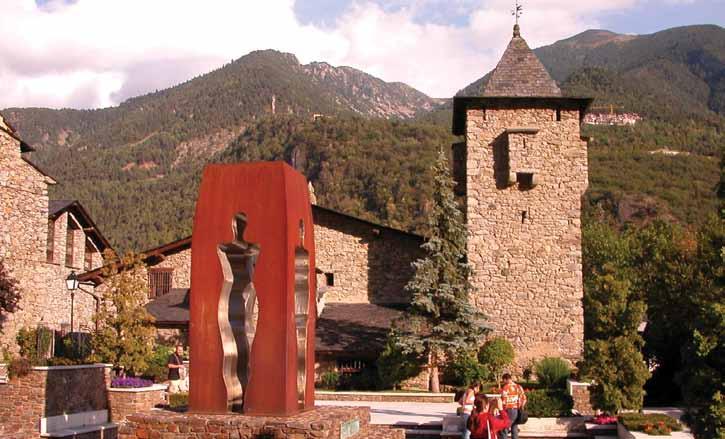
Andorra’s location, wedged between France and Spain in the Pyrenees Mountains, has endowed the country with one of the most unique forms of government in human history From 1278 to 1993, Andorrans lived in a diarchy (or co-principality) ruled jointly by outsiders — the Bishop of the Catholic diocese Seu d’Urgell in bordering Spain and the French head of state
While this unusual, if not anachronistic, form of rule formally ended in 1993 with the adoption of a constitution that transformed Andorra into a representative democracy, the Bishop of Seu d’Urgell and the French President continue to serve as ceremonial heads of state
They certainly have reasons to speak highly of their country, even if they do not reside in Andorra per se . A member of the European Council, the Organization for Economic Co-operation and Development and the United Nations, Andorra is one the healthiest and wealthiest places in the world Its infant mortality rates rank among the lowest and its 85,000 residents can expect to reach an age in excess of 82 years, the fourth-highest life expectancy in the world, according to the CIA World Factbook On the economic side of the ledger,
Andorra ranks 12th in the world in terms of GDP per capita . Much of this wealth comes from financial services and tourism . While Andorra has recently agreed to open up its opaque tax laws following pressure from the international community, its alpine mountains and duty-free shopping continue to attract foreign visitors and their money Some nine million tourists, mostly from France and Spain, visit annually, secure in the knowledge they are traveling in a country free (for the most part) of major social pathologies and at peace with the world around it even if outsiders might struggle to find Andorra on a map
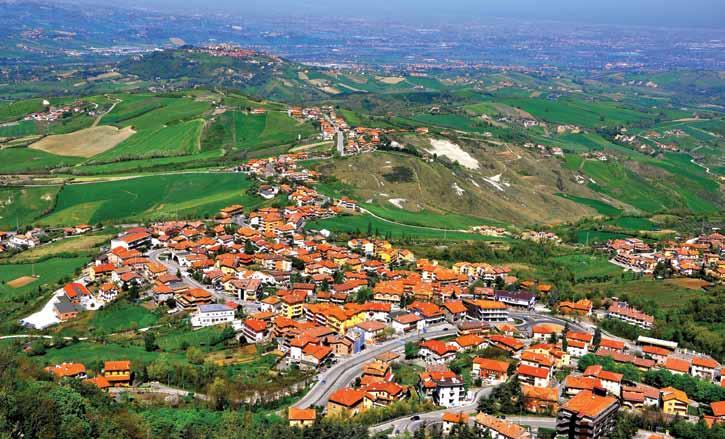
Officially known as the Most Serene Republic of San Marino, this prosperous enclave of 60 square kilometres in the Apennine Mountains of Italy has often served as a safe harbour for persecuted groups who were seeking shelter from the countless storms of history that have swept over this part of Europe According to legend, this tradition as a place of refuge from the powerful forces of oppression dates back to 301 A .D when a stonemason named Marnius founded San Marino as a sanctuary for Christians who were trying to escape the religious intolerance of the declining Roman Empire Over time, their descendants have granted asylum to Italian nationalist Giuseppe Garibaldi and his Red Shirts during the unification of Italy in the 19th Century and some 100,000 Jews who were trying to escape fascism during the 20th Century
While San Marino could not entirely escape the devastation of the Second World War, over the centuries it has stubbornly maintained its political independence in the face of ambitious aggressors, such as the powerful Borgias of the Italian Renaissance, Napoleon, the Austrian monarchy and Mussolini . San Marino has managed
this diplomatic balancing act without sacrificing its republican traditions, which date back to its founding days . But San Marino is not just the oldest republic It also possesses the oldest constitution, which has been effective since 1600, well before the United States would adopt its constitution to become the second-oldest constitutional republic It is therefore more than appropriate to give the final word on San Marino to the man who eventually freed the United States from the tyranny of slavery, U S President Abraham Lincoln Writing in May of 1861, after he had received an admiring letter from the Regent Captains of San Marino on the occasion of his first inauguration, Honest Abe penned this still-fitting sentiment . “Although your dominion is small, your state is nevertheless one of the most honoured in all history.”
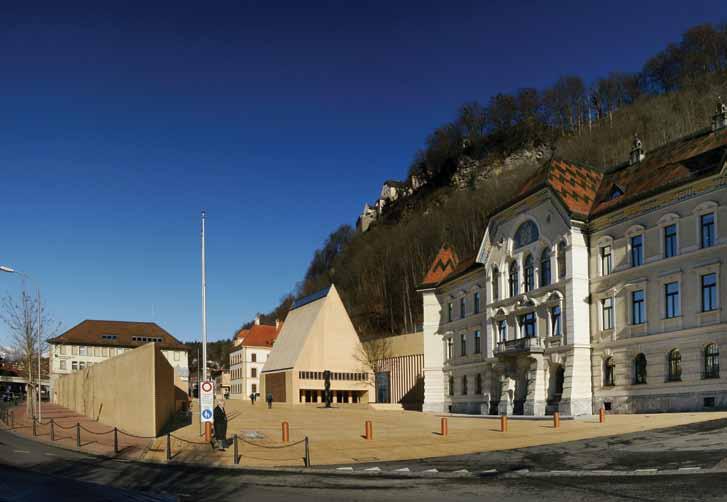
Lodged between Switzerland and Austria, this principality of 160 square kilometres bears the name of what once was one of the most powerful houses in the aristocratic order of Austria, indeed, in all of continental Europe Loyal to a fault, Liechtensteins served the House of Habsburg as political advisers and as military generals from the late 13th Century until its collapse in 1918 Almost exactly 200 years earlier, Liechtensteins had achieved one of their greatest ambitions, when the Austrian Crown granted them a princely possession — today’s Liechtenstein
With Napoleon’s dissolution of the Holy Roman Empire of German Nation, Liechtenstein became independent, a status confirmed during the Congress of Vienna Liechtenstein retained close ties with the Austrian rump state after 1918 until its forced Anschluss (annexation) to Nazi Germany in 1938 Neutral during the Second World War and the Cold War, Liechtenstein has deepened its economic and monetary ties with Switzerland to the
point that many Swiss consider it as the 27th canton of their country
The similarities do not stop there Like its larger neighbour, Liechtenstein has prospered as a picturesque but powerful financial centre, whose banks manage the fortunes of the rich, the famous and perhaps the infamous, with, shall we say, a high level of discreetness, which not all of its larger neighbours have always appreciated, until recently This said, it is hard to argue with success The 35,000-plus residents of Liechtenstein are the second highest per-capita earners in the world and confront few, if any, major social problems .
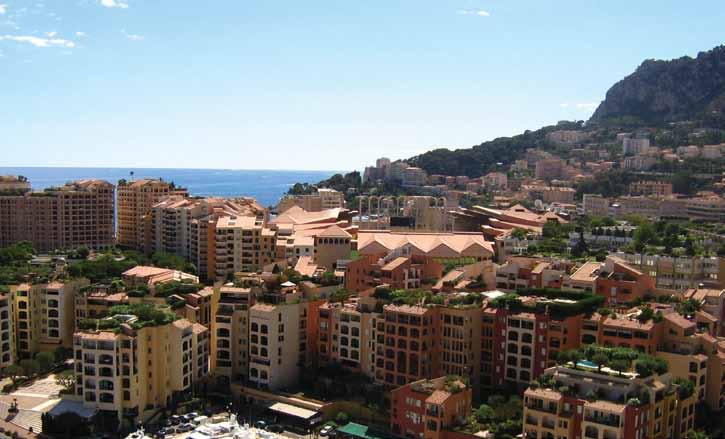
Katharine Hepburn once called Monaco “the pimple on the chin of the south of France . ” Ouch! This acidic quip about Monaco’s apparent status as a feudal outcrop of France must have doubly hurt the Monegasques, for it originated from an immortal cinema icon, whose celebrity represents the very stock in which the principality has traded since 1956 when Prince Rainier III of the Grimaldi family married Alfred Hitchcock’s iconic and icy muse, Grace Kelly, partly out of love, partly out of need to save his principality from financial ruin
W hile this historic period with its tragic personalities has long faded into Hollywood lore, this principality of less than 30,000 residents continues to charm the imagination of audiences around the world as the Mediterranean playground of the rich, the famous, and the beautiful . Fa ced with on-going pressure from the international community to bring its opaque banking sector into line, the principality continues to diversify its economy by attracting high-end, non-polluting industries in the arts and entertainment sector (notwithstanding its annual Formula One Race) . This economic strategy seems to be paying off as Monaco boasts
the world’s lowest unemployment rate, according to The CIA World Factbook: zero percent
The principality has also sought to sharpen its global leadership in environmental matters by placing part of its shoreline under environmental protection and promoting the local use of ‘green’ products such as organically grown food and electro-powered vehicles . But for all of its newly-found earnestness, Monaco did turn back the clocks to its more extravagant days on July 2, 2011, when Crown Prince Albert married the former South African Olympic swimmer, Charlene Wittstock It was the first royal wedding since his father had married another striking blonde, Grace Kelly
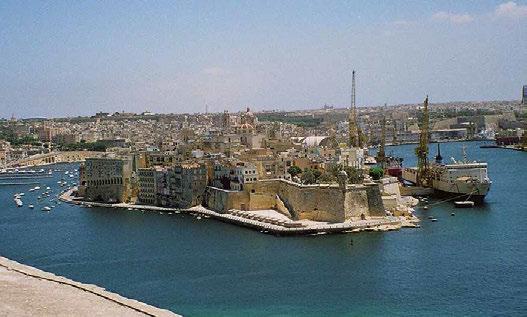
The attractions of this island chain include a Mediterranean climate that produces hot, dry summers and mild, rainy winters; rugged, if not dramatic, coastlines that have had several supporting turns in Hollywood blockbusters; and countless historical sites that span the breadth of human history, from the Neolithic through the classical GrecoRoman era to modernity
Yes, Malta offers much to recommend itself to anyone who seeks a break from the ordinary Its strategic location in the middle of the Mediterranean, between Sicily and the North African coast, has certainly made the archipelago a prized possession over the centuries Its historical functions varied wildly: as the forward fortress of the Christian Knights of Malta against the expanding Muslim Ottoman Empire during the 16th Century, as an unsinkable British aircraft carrier during the Second World War or as a major shipping centre today This trade supplies a significant share of the country’s GDP, along with tourism, agriculture, fishing and financial services
Granted , Malta is neither as rich nor as influential as Luxembourg, the other microstate that holds membership in the
European Union and the Euro-zone Its 408,000 residents (most of whom live on the eponymous main island, a rock of 246 square kilometres) import most of their food and energy from the outside Malta also possesses limited fresh water supplies And if these infrastructure challenges are not demanding enough, Malta has become a call of port for illegal immigrants crossing the Mediterranean from North Africa in rickety boats Yet if the history of this former British colony is any indication, its resourceful people will likely survive for a long time in a place that is as unique as their culture, forged through countless influences
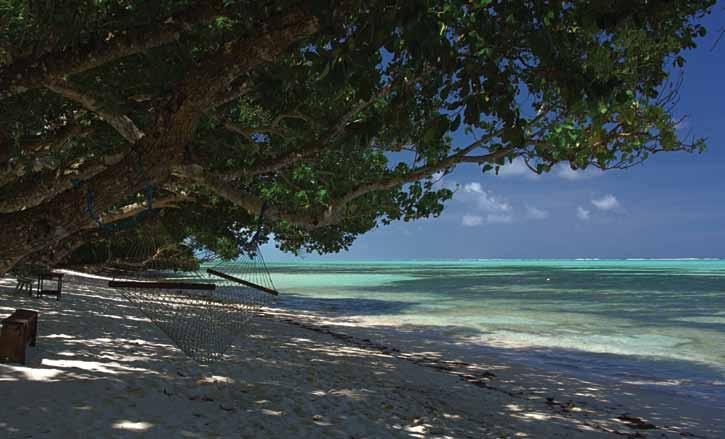
On Oct 31, 2009, the U S Department of Justice announced it had transferred six Muslim Chinese (also known as Uyghurs) from the terrorist detention facility in Guantanamo Bay on Cuba to another island on the other side of the globe, namely Palau, a small Pacific nation some 500 kilometres south of the Philippines Freed from charges of terrorism against the United States, the men did not wish to return to their native China, on fears that officials there might prosecute them as terrorists, as Beijing continues to crack down on Muslim separatists A long-time ally of the United States, Palau does not recognize China and eventually resolved the impasse by offering itself as the temporary home for up to 17 Uyghurs .
This unusual transfer turned the eyes of the world to what must surely be a hidden gem Despite its tropical climate, this archipelago of atolls attracts few foreign tourists But those who have discovered Palau over the years have consistently raved about its pristine beauty Its coral reefs are particularly popular among recreational divers, partly because they might get a chance to experience sharks up close and personal . Conscious of this fact, the
government of Palau has worked with surrounding Pacific island nations to protect this increasingly threatened animal, by creating the first world’s shark sanctuary in 2009
This wise policy promises to lessen Palau’s economic dependence on the United States by boosting the domestic tourism industry, poised to make gains in the future thanks to foreign investors, who have recognized the island’s potential Such an influx promises to boost the average percapita income of Palau’s 21,000 residents, which is already 50 percent higher than that of the Philippines But in a way, this prospect of more development is also a pity
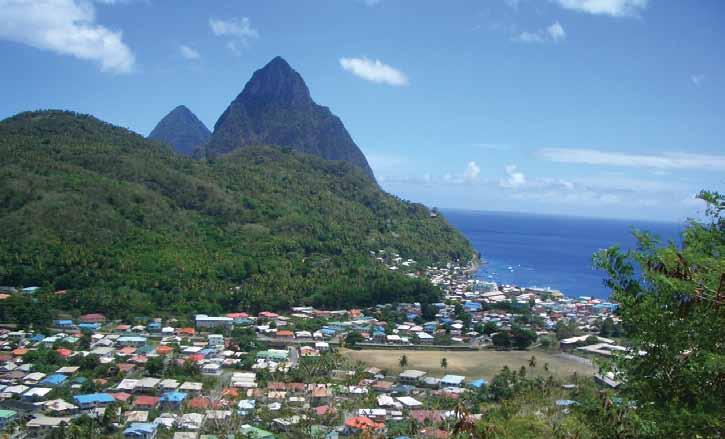
The path to Brazil, where World Cup 2014 takes place, is still a long shot for the Canadian soccer team However, one of the benefits of their qualification efforts thus far was getting to play and winning on the lush, tropical island of Saint Lucia in the eastern Caribbean But while few Canadians regularly follow their soccer team, it is likely that even fewer could find Saint Lucia on a map
The island nation certainly deserves a closer look since its recent history and immediate present highlight many of the common problems faced by many of the world’s microstates But this observation should not obscure the genuine accomplishments of this Caribbean island nation of some 162,000 residents Most of their ancestors came to Saint Lucia against their will, as African-born slaves, forced to work in the sugarcane plantations that made Saint Lucia such a profitable and prized colonial possession during the 17th and 18th Centuries
It is, per haps, no wonder then that ownership of Saint Lucia ping-ponged between France and the United Kingdom 14 times before the latter became the island’s final colonial master in 1814 . This relationship formally ended in 1979, well
after the major phase of decolonization had run its course . Since this occasion, Saint Lucia has forged an economic base that consists of banking and of tourism — the country’s largest employer Yes, this member of Commonwealth confronts some inescapable economic realities, such as its dependence on foreign energy sources and tourism dollars, which tend to dry up during economic downturns . Saint Lucia, nonetheless, possesses one of the most diversified economies in the region, as its government seeks ways to revive its manufacturing sector It can also lay claim to literary prominence, as the birthplace of Derek Walcott, who won the 1992 Nobel Prize for Literature, among other honours Indeed, Walcott is yet another reason why Canadians would do well to learn a thing or two about Saint Lucia, as he taught at the University of Alberta, in Edmonton, for a three-year engagement that ended last autumn
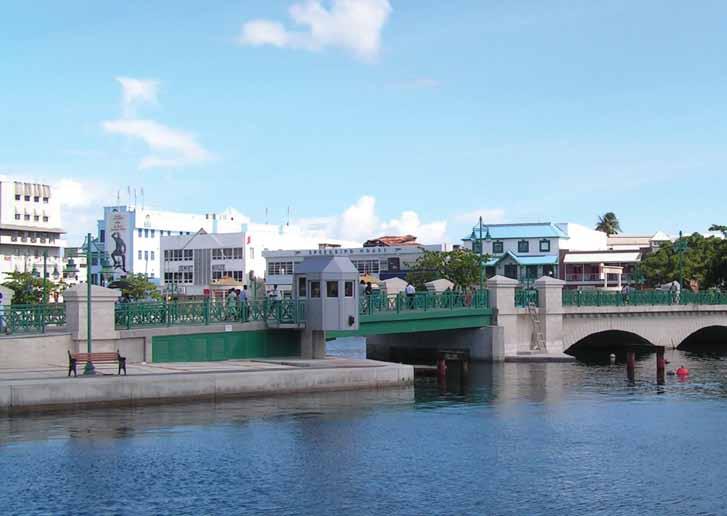
Newsweek claimed in its 2010 country ranking that the “best countries tend to be small, rich, safe, and cold ” Well, Malta and, to a lesser degree, Barbados [population 285,000] prove that a nation can be small, relatively well-off, safe and blessed with a climate that does not chill your bones for a good portion of the year Thanks to its financial sector, which operates in the same time zone as major financial centres in the eastern United States, this island nation at the outer eastern edge of the Caribbean enjoys one of the highest per-capita incomes in the region . Other major sources of income include tourism, agriculture and light manufacturing, with emerging Brazil being the country’s most important trading partner alongside Trinidad and Tobago
T hanks to major government investments in education, Barbados also possesses one of the most educated workforces in the region . Unfortunately, not all of the country’s best and brightest stay
home Several prominent names in the world of popular entertainment (Rihanna) and literature (Canadian Austin Clarke, who holds the Order of Canada) have joined countless others in leaving Barbados for greener pastures . The country must wrestle with a growing debt-to-GDP ratio But then again, which country does not face that problem these days?
Wolfgang Depner’s most recent publication, Readings in Political Ideologies since the Rise of Modern Science, co-edited by Dr . Barrie McCullough, is scheduled for release by Oxford University Press Canada in 2013 .
Kenya’s refugee camps, the largest in the world, are overcrowded. what to do?
By Chantaie Allick
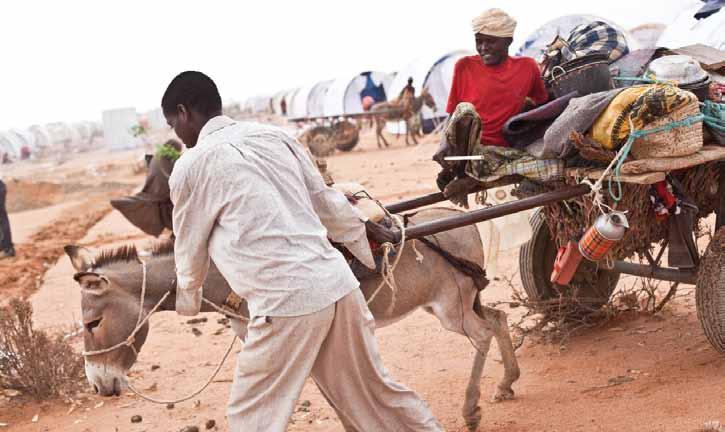
more than 100,000 Somalis have fled to Kenya in the past six months to escape a drought and famine that has decimated the East African country They trek across barren, drought-ravaged, sand-covered land in blowing wind to do so
Then, they arrive at Dadaab, an overcrowded settlement made up of dirt pathways, administrative buildings, large, self-sustaining markets and tin-roofed shacks and tents in neat rows surrounded by thick wood fences made of branches Children run around, and goats wander the open spaces dotted with thin-limbed trees where some of the town’s brownskinned inhabitants have spent their lifetimes
For the past 20 years, in the desert-like border region of the eastern part of Kenya, a strange settlement of stateless Somalis
has established an uncertain existence in the Dadaab refugee camps: lives spent in exile . The camps are the largest and most overcrowded in the world At the beginning of 2011, the settlement, built for 90,000, had more than 300,000 refugees competing for space and resources
The complex was built in 1991 to house refugees from the Somali civil war After the initial mass arrival in 1991 and 1992, a steady inflow of Somalis has continued to arrive at the settlement, which is made up of three camps set up with mud houses, open markets, schools, administrative buildings and borehole wells on an open swath of land provided by the Kenyan government Desperate women and children have walked for days to reach the shelter and food provided by the United Nations High Commissioner for Refugees (UNHCR) .
In 2011, the camps received 140,000 refugees, almost half of them in June and July alone . The UNHCR expected that, by year’s end, more than 500,000 people would be crammed into a space meant to house less than one-fifth of that number
Improvements made at the camps over the years are now being overwhelmed by this mass influx Better shelter, sanitation, food distribution, policing and protection have all been sacrificed, while riots, rape and insecurity have once again become the norm
Some had to wait days in the early hours of the emergency for food or assistance Many fell through the cracks Some died
An expansion of the camps, planned to address the original overcrowding, is now being filled with rows of white UNHCR tents to accommodate the new arrivals
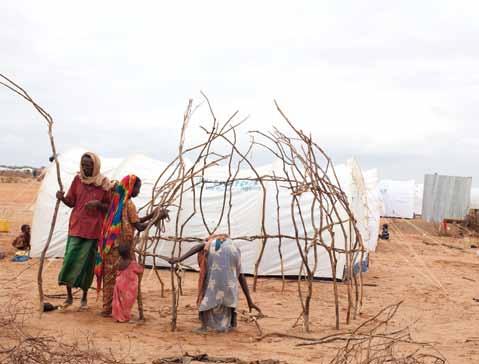
Aid workers worry about running out of water; in some areas of the camps, 1,250 people share one tap
Lessons have emerged from 20 years at Dadaab, where what began as a temporary solution has spanned generations
Overcrowding wouldn’t be an issue if not for the protracted situation that has been left to fester . Dr . James Milner, a Carleton University expert in refugee issues, says: “The idea of simply providing humanitarian assistance to refugees in camps is not going to lead to a solution ”
Dr Milner sees three options: repatriation, resettlement or local integration But a return to Somalia through repatriation isn’t a realistic option for Somali refugees and resettlement to another country would have been more easily done before Sept 11, 2001
Local integration of refugees into Kenyan society may, however, be a more viable option It would require the Kenyan government to offer citizenship (or another form of legal status) for refugees in much the same way that Tanzania did in 2010 . This would allow refugees freedom to move beyond the confines of the camps, permitting them to work and to contribute to Kenyan society While the Kenyan constitution has been amended to allow for this solution, the political will doesn’t exist to implement it
Kenya has a long, problem-fraught history of hosting Somali refugees . Security concerns have caused the government to
adopt a policy of containing refugees in the camps Kenya has often been lauded for its willingness to allow the refugees into the country, but without the freedom to leave the camps, the refugees have few options
Dr Milner says the current crisis is an opportunity to make Kenya, which has long abdicated all responsibility to the UNHCR, a full partner in dealing with refugee issues Given the circumstances in Somalia, it’s more than probable that Kenya will continue to host its refugees for many years
Security problems are not a new phenomenon in refugee camps, but deciding how to deal with them in the future has to include lessons from what has worked in the past
With this latest influx of people, and the subsequent scarcity of resources, security has once again become an issue at Dadaab But more policing isn’t the only answer In fact, according to Dr Milner, it isn’t a matter of simply increasing the number of officers Nuanced and innovative responses are needed — what Dr Milner calls “targeted interventions ” Better training for police officers has worked in the past As well, the UNHCR has employed counselors to help the victims of crime
The UNHCR and other aid organizations have been warning of a crisis in the region for several years, says William Spindler, a UNHCR spokesman in
Dadaab Still, the world was unprepared for what happened “The infrastructure is in place,” he said, “but what caught everyone by surprise was the number of people who arrived in such a short period .”
Famine and drought were once problems contained within a country’s borders, he explained As environmental disasters become more common, mass movement across borders may as well The world needs to be prepared with funds, food and supplies
Yet the UNHCR doesn’t have a permanent budget . Instead, each year it appeals to governments for handouts . Each year, the organization must raise 95 percent of its budget
In its final 2011 global appeal, the UNHCR budgeted $223 million for operations in Kenya The influx of refugees during the year led to a budget shortfall of between 20 percent and 40 percent It’s difficult to budget for unexpected disasters . An operating budget would make it easier . Indeed, the financial pressure is not only about more money – but, rather, about being able to spend funds as needed rather than as directed by donor countries
Accor ding to Alexandra Lopoukhine, who works with Care Canada (the UNHCRs main partner on the ground in Dadaab), the solution here is to use permanent funds to merge emergency response with development initiatives in the camps — including the cost of higher education Those permanent funds would help support development projects within the camps They could, for example, be used to introduce new farming techniques that would help refugees produce their own food and lower their dependence on the agency for day-to-day survival . That in itself would go a long way to solving many of the issues in the camps This could include working with the United Nations Development Program to increase water and food supplies
All of t he experts agree that finding solutions for Dadaab, and for those who live there, is complicated . If solutions had been sought more aggressively in the past, rather than letting the Somalis languish in the stateless life of UNHCR handouts, the camps would have been at least partially cleared out and better able to accommodate the latest influx Alas, millions of aid dollars have been put into Dadaab and yet the world is no closer to a long-term solution for the camps’ inhabitants .
Chantaie Allick is a reporter and writer based in Toronto
As we begin to observe the bicentenary of the War of 1812, it’s hard to miss the importance of a passage on the very first page (the first of 958) in Amanda Foreman’s impressive new book A World on Fire: Britain’s Crucial Role in the American Civil War (Random House of Canada, $40) One legacy of that war, she writes, summarizing the political and diplomatic mood of London in the decade before the Civil War, was the fear that the United States would invade Canada (for a third time) The anxiety was partly in response to “a conviction among Americans that they should never stop trying” to do just that . But there was a second factor as well . Forty years had passed but it “was neither forgiven nor forgotten in England that precious ships and men had had to be diverted from the desperate war against Napoleon Bonaparte in order to defend Canada ”
Dr Foreman, an English-reared resident of New York, educated at Sarah Lawrence College and Oxford, has written a masterful and exciting one-volume history of the Civil War itself, with all its gore and (a popular Civil War concept) glory Yet she’s done far more than that She focuses on how old-fashioned diplomacy prevented what could have been a world war of sorts, as the British Empire took up one quarter of the global land mass . The heart of the matter was the familiar possibility that the Northern government would annex Canada, as the U S secretary of state, William H Seward, kept insisting it do That would have had the effect of bringing Britain into the war as a Southern ally The cooler head of Abraham Lincoln sought nothing of the kind, famously saying “One war at a time . ” The British too had no wish for such an outcome . The situation, however, came to a boiling point several
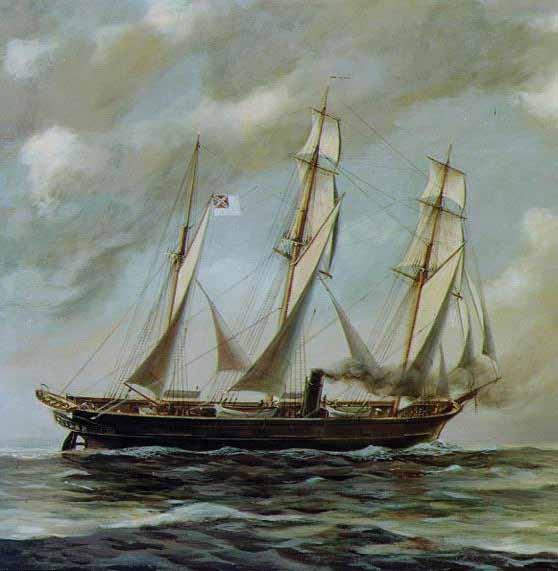
times, thanks to the intrigues of Confederate diplomats in Canada, Britain and France
In Canada, there were Confederate representatives posted to Halifax, Montreal and Toronto They were mere “commissioners” because the South wasn’t recognized by any other country and so had no embassies or ambassadors . These Canadian commissioners didn’t work together terribly well (one reason being that they didn’t all report to the same branch of the Confederate government in Richmond) Even individually they were not quite successful, despite having a secret fund of a million dollars in gold: a tremendous amount of money for a government that, throughout the war, had difficulty even keeping its soldiers clothed and shod
The commissioners’ plans to encourage anti-war sentiment in the North and execute a series of clandestine raids into U S territory were generally unworkable, though one venture — a raid on the town of St Albans, Vermont — was successful enough that it didn’t end in ludicrous failure . The success rate, however, didn’t matter so much as the fact that such events took place at all By permitting them to proceed, Britain seemed to have assumed an ambiguous if not downright passive attitude to its own neutrality laws Many British and British colonial subjects living in the Northern states got caught up in various drafts while the towns along the U S -Canada border were full of official recruiters, as well as “crimpers” who impressed innocent fellows into service in
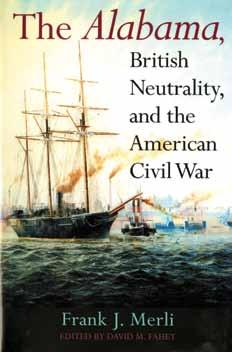
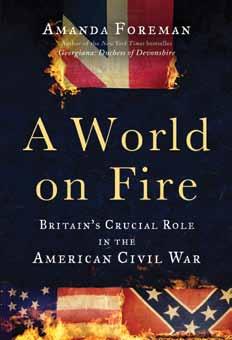
a kind of low-grade kidnapping And of course individuals of many other nationalities rushed to America to join the one army or the other
T he United States and Britain came closest to declaring war on each other in the first year of the conflict . In November 1861, an American warship, the San Jacinto, commanded by Charles Wilkes, stopped a British mail packet, the Trent, in international waters off the Bahamas and abducted the Confederate commissioners to London (James M Mason) and Paris (John Slidell) . The pair were taken to Boston and imprisoned . Americans cheered
and Britons fumed Whitehall responded with demands so stern that Prince Albert himself intervened to soften the language, though the terms remained intact: release of the two men and a full explanation for such a blatant violation of international law . The deadline for an answer was seven days . While the British government awaited the response, it quickly made plans for strengthening Canada’s defences Britain’s minister in Washington, Lord Lyons, privately informed the hawkish William Seward of the reply’s contents but waited until December 23 to deliver it officially That gave him just enough time to lower the diplomatic temperature . At a cabinet meeting on Boxing Day, the Americans sent a sheepish note deploring Captain Wilkes’ actions and promising release of the two prisoners in January
In only two years at sea, the Confederate raider Alabama, powered by both canvas and steam, sailed the Atlantic and Pacific top to bottom, while also going as far afield as South Africa and the Indian Ocean Its ship’s motto was Aide-toi, et Dieu t’aidera — “Help yourself and God will help you ” Of the total of 158 U S ships destr oyed by the impoverished Confederate Navy, the Alabama sank 65 of them Its exploits made it, in Dr Foreman’s words, “the most famous ship afloat [as the] entire English-speaking world knew her history . ” But it would not be afloat much longer . It lost a duel with the USS Kearsarge off France in mid-1864
In some ways, however, the Alabama was only representative of a much broader effort
As soon as the war got underway, the United States began blocking Southern ports on the Atlantic (and later New Orleans as well), launching its strategy of trying to starve the Southerners to death All the South could do was to build ships overseas both to harass U S commerce and run the blockade where possible Remember that Rhett Butler of Gone with the Wind was a blockade-runner by profession . What you won’t learn from the film is that he was probably using a ship built in England or France with financial help from the members of the Royal Exchange in London or cotton brokers in Liverpool Having no access to Southern ports, Confederate warships like the Alabama , and so many others, were born in Britain or Europe and never saw their home country, for they stalked the world’s shipping lanes, resupplying in whatever neutral ports would have them . Like sharks, they never slept
So desperate was the Confederat e government for ships that it tried to buy some from China In his new, but posthumously published, book The Alabama, British Neutrality, and the American Civil War (Indiana University Press, US$22 .95), the American historian Frank J Merli calls the coveted Chinese flotilla a “paranaval force, a squadron of some six or eight ships of a class that contemporary terminology might designate coastguard cutters ” Another historian has called it a “mosquito fleet ” In the end, the deal fell through owing to a failure of diplomacy by the various parties .
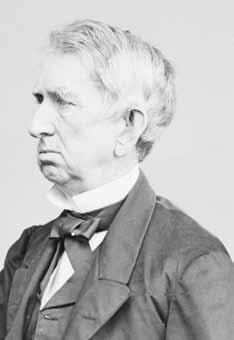
Canada is where the Anglo-American war, if there were to be one, would have broken out
Canadians wer e overwhelmingly against slavery (which John Graves Simcoe had outlawed in Upper Canada in the 1790s) So, too, were Britons not connected to one of the manufacturing cities in the Midlands or to big capital generally. But the English intelligentsia and others, indeed much of the Empire, endorsed the Confederacy, or at least the idea of it C aught between the lines, so to speak, diplomats had to tread carefully, at least in public Lord Lyons confided in a letter to Lord Russell, the foreign secretary, that Seward had some plan to tour England on a good-will mission The British knew it would turn into an ill-will mission instead . L ord Palmerston, the prime minister, joined in, telling Lord Russell that Secre-
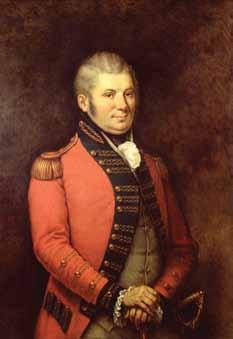
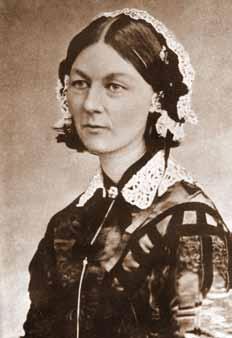
tary Seward was “vulgar and ungentlemanlike and the more he is seen here the less he will be liked .” Seward was furious about all the Confederate activity underway in plain sight on Canadian soil, while the governor general of Canada, Lord Monck, struggled to preserve the letter of Britain’s neutrality laws
For his part, British Prime M inister Palmerston “was not in the least interested in petty recruiting scandals, except as a counterargument to Northern complaints
about the Alabama ” His worry, rather, was that the U S would take over complete control of the St Lawrence River and thus keep British vessels from using it Connected to this in several important ways was the possibility that naval warfare on the Great Lakes, the site of one of most important American victories in the War of 1812, would resume This, despite the fact that the Rush-Bagot treaty had demilitarized these waters in 1817 For most of the Civil War, the only naval vessel on the Lakes was an American gunboat guarding Confederate prisoners on the southern shore of Lake Erie . But this could change quickly, given the British obligation to defend the Canadas and the South’s extensive (if not always smoothly run) infrastructure at important points along the border This subject is a highly complex one that a Canadian historian, John Bell, surveys in his new book Rebels on the Great Lakes: Confederate Naval Commando Operations Launched from Canada, 1863—1864 (Dundurn, $27 .99 paper) . Mr . Bell clearly has infinite patience, an excellent nose for tracking, and a serious but likeable prose style: a combination all too rare
Once the Civil War sputtered to its end, the U S sought recompense from England for allowing construction of the Alabama at an English shipyard (at Birkenhead in Cheshire) . It also demanded reparations for all the U .S merchant shipping lost in attacks by the Alabama and other Confederate raiders, putting the figure at two billion dollars (or, as one especially powerful senator suggested, all of Canada, in lieu of cash) Palmerston reacted angrily but died before the end of 1865 The liberal Gladstone, who became prime minister in 1868, acknowledged the principle involved but thought the dollar amount ridiculous . An international commission was established to consider the matter The affair dragged on for the remainder of the decade, and beyond
William Seward, who once proposed to President Lincoln that the U S declare war on the whole of Europe as a way of distracting the nation’s mind from the slavery problem, was in an expansionist mood, as usual Having engineered the American purchase of Alaska from the Russians in 1867, he now suggested that the British payment take the form of Nova Scotia, the Red River Colony (in what’s now Manitoba) and the land that would come to be British Columbia . To Seward, the last of these was the most important, as it could be merged with Alaska . He died, out of office, in 1872, by which time
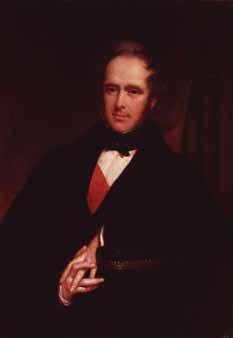
Hamilton Fish, a new and less combative secretary of state, was in place The figures appointed to resolve the matter (Sir John A Macdonald among them) found in the Americans’ favour In the end, Britain paid $15 5 million, offering an apology but admitting no guilt The relevant document, the Treaty of Washington, deserves to be better known . Many cite it as one of the first milestones on the road to multilateral and multinational arbitration, the codification of international law, and so on
Dr Foreman’s book is full of compelling individuals as well as politics and ideas For example, some exceptional journalists strut across her pages, most particularly the near-legendary W . H . Russell—“Russell of the Crimea .” It was he who coined the phrase “the thin red line ” He is often said to have invented the profession of war correspondent as well (eroding the tradition by which commissioned officers dashed off occasional despatches even while in the saddle) The Crimean War of 1853-56, in which Britain, France and the Ottoman Empire fought the Russians to settle a bar bet about the Holy Land, was the single greatest influence on the American Civil War — strategically, tactically, even sartorially — but most importantly in the terrible level of carnage that resulted There is a useful comparison to be made between Dr . Foreman’s work and another new book, The Crimean War in the British Imagination by Stefanie Markovits (Cambridge University Press, US$99)
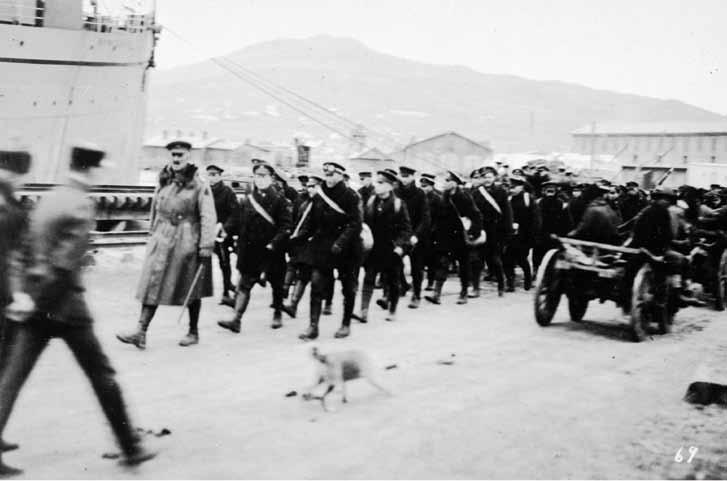
In the Crimea (where his first-hand reportage caused an unknown Florence Nightingale to take up battlefield nursing), Russell didn’t shy from reporting the true horrors that he saw He assumed the same tone in America He preferred a tent full of common soldiers to a seconded front parlour full of generals . As one colleague commented, “He is a good chap to get information, particularly from the youngsters ” So naturally his employer, The Times of London, sent him to America when war broke out there The newspaper later recalled him, however, on the grounds that he was too sympathetic to the South, or at least not sympathetic enough to the North . Curiously, the same paper had no qualms about Francis Lawley, its reporter who followed the Southern armies and was outrageously blind to their every flaw and misstep As a reader, I’m delighted to find that Dr Foreman discusses Edward Dicey, who promoted the Northern armies for the Spectator and wrote what is still an endearing pro-Union memoir, Six Months in the Federal States . It is not to be confused with, but simply
contrasted to, Three Months in the Southern States (April, May and June 1863) by Lieutenant Colonel Arthur J F Fremantle of the Coldstream Guards He took leave from the service to travel in all 11 Confederate states, using letters of introduction from one official or another (even Jefferson Davis) to gain an audience with the next general on his list . Studying the Confederate army through the eyes of a professional soldier left him with solid collegial respect for his hosts His handsomely written book is still in print as a 1991 paperback edition (University of Nebraska Press, US$18 95) Dr Foreman uses this one, too, to good effect . To state the matter as simply as possible, then, the most important diplomatic question of the American Civil War was whether to take sides in a divorce (in war as in real life, always a risky proposition)
A similar situation, one involving Canada and its numerous allies arose near the end of the First World War and continued on for a time afterwards . In 1917, the year of both the February and October revolutions, Russia deposed the czar (who was
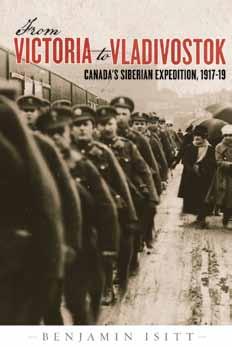
executed the following year) and ran through two prime ministers . The country was a shambles of starvation and unrest .
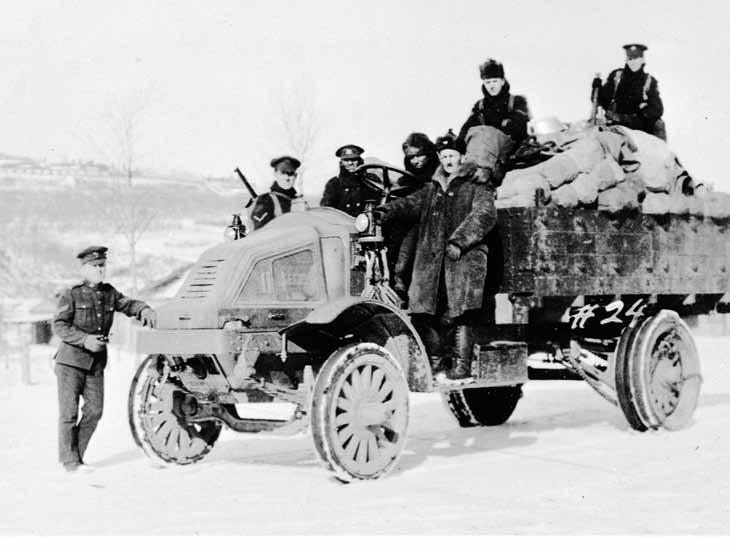
When V I Lenin came to power, he made good on his promise to withdraw Russia from the alliance of Western powers fighting the Germans and others Whereupon a civil war erupted between the Bolshevik Red Army and the conservative White Army. Eager for a less unfriendly Russian regime as well as for Russia’s oil (that old story), Canada, Britain and others decided it was a splendid moment to invade Russia from Vladivostok and other points in the Russian Far East where the Whites were strongest This episode, commonly called the Intervention, is not widely spoken of or taught in today’s Canada, for it proved a singular failure
B enjamin Isitt examines the mess in close detail in From Victoria to Vladivostok: Canada’s Siberian Expedition, 1917−19 (UBC Press, $29 95 paper) As his title suggests, he pays special attention to one unit that departed from Victoria — but not before staging a small mutiny. Many or most of the men were conscripts . To get some of
them onto the transport vessel, officers had to resort to their service revolvers and use their heavy canvas belts as whips Few of these soldiers who entered through Vladivostok ever proceeded far enough inland to actually reach Siberia, where all the others, coming overland from the north and east, were to join up Some Canadians, however, did reach Omsk, in the centre of the country There, in partnership with the British, they were able, for a time, to hold together the White government It needed propping as it was as wobbly as three-legged table . Its leader, somewhat oddly, was a Czech admiral . Like the Reds, the Whites and their foreign friends were continually battling for control of the Trans-Siberian Railway (ironically, the most significant engineering megaproject of the last few czarist regimes)
Mr Isitt makes the point that our participation was one more step towards an independent Canadian foreign policy, a matter of great concern and pride, es-
pecially given Canada’s role in the late unpleasantness in Europe The world war had finally come to an end only a few months before the launch of the Intervention, which sputtered on for at least another year . But that’s about the best that can be said of the expeditionary force Like those of other nationalities, Canadian troops had become entangled in this hopeless effort when they were already sick of war For many people, the Intervention became a mirrored symbol of the class warfare breaking out at home . Labour unions were major players in fomenting dissent, though radical farm movements and some of the intelligentsia were important as well The language was often extremist In their book When the State Trembles: How A.J. Andrews and the Citizens’ Committee Broke the Winnipeg General Strike (University of Toronto Press, $35 paper) Reinhold Kramer and Tom Mitchell quote one union organizer telling a crowd in 1919: “Drafts [that is, conscripts] are being
shipped to Vancouver so that they can go across to Russia to massacre the proletariat there Let us have justice and if not, then blood will be spilled in this country ”
The literature of the Winnipeg General Strike and related events is quite extensive of course, but now, in these times of protests, the subject of labour v. capital in the broader sense is being taken up afresh . Of new books in the field, perhaps the most important (and certainly the best written) is Seeing Reds: The Red Scare of 1918−1920, Canada’s First War on Terror by the Vancouver historian Daniel Francis (Arsenal, $27 95) The last part of the subtitle may sound over the top, but the book isn’t about ideology. Rather, it’s a study of how both sides in a major conflict create propaganda in order to promote paranoia Were this text in digital form, a reader could indeed do a search-and-replace, substituting the word terrorist for each use of reds, and end up understanding how the strife of one era is so often revisited upon another . Another example, a quite accidental discovery, hit me in 2010 when the University of Toronto Press celebrated the centenary of Canadian Who’s Who by producing a facsimile of the first edition The personages listed in the 1910 version ($19 95 paper) are exactly those you would expect to



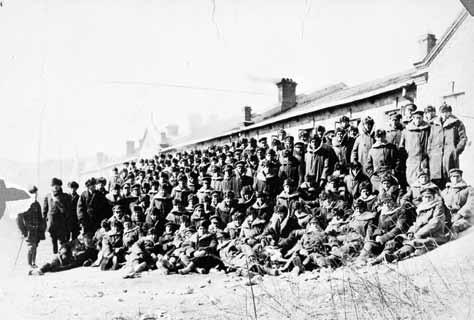
Canadian soldiers at Gornostai Barracks in 1919. In his book, author Benjamin Issitt says one soldier noted that the Czarist-era buildings were "better than anything we had in Canada."
find: Sir Wilfrid Laurier, Nellie McClung, and a great many figures in finance and railways The reprint also includes all the advertisements from the 1910 original Law firm s and insurance companies dominate But there is also a brazen fullpage ad for the Thiel Detective Service, an


American-based firm of strike-breakers with offices in Canada’s four largest cities, not to mention the latest trouble spots in Mexico
George Fetherling’s most recent book is Indochina Now and Then (Dundurn Press)


By Laura Neilson Bonikowsky
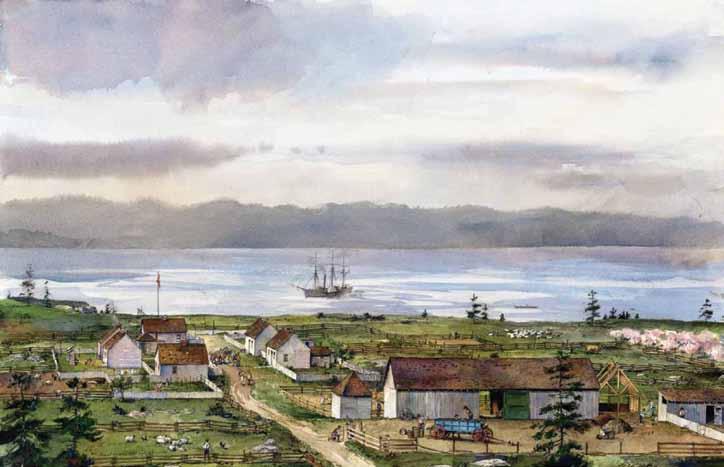
the boundary between Canada and the United States was a matter of dispute between 1783 and 1872, when the issue was arbitrated by German Emperor Wilhelm I . The last portion of the boundary had been ambiguously determined by the Oregon Treaty of 1846, which extended the 49th parallel “to the middle of the channel which separates the continent from Vancouver’s Island, and thence southerly through the middle of said channel, and of Fuca’s Straits, to the Pacific Ocean .”
However, the “middle of the channel” could have applied either to Rosario Strait, to the east of San Juan, Orcas and Lopez islands, or to Haro Strait, to the west of the islands San Juan Island, which was claimed by both Britain and the U S , was a strategic military position; the country that owned the islands would dominate the waterways connecting the Strait
of Juan de Fuca with the Strait of Georgia
The Hudson’s Bay Company had claimed San Juan Island in 1845 and established salmon curing stations along the western shoreline by 1851 In 1853, the U S claimed the three islands as part of the new Washington Territory In response, the Hudson’s Bay Company established Bellevue Sheep Farm in December 1853 In only six years, it grew from 1,369 sheep to more than 4,500 on stations across the island . A boundary commission established in 1856 failed to resolve the issue satisfactorily for both sides By the spring of 1859, American troops had been stationed on the island and 18 Americans had staked claims on prime sheep-grazing land The British considered them squatters and their claims illegal .
On June 15, 1859, the tense situation exploded . An American farmer, Lyman Cut-
lar, found a big pig rooting in his garden, eating his potatoes Cutler shot and killed the pig, which was owned by Charles Griffin, who ran Bellevue Farm . Cutlar offered Griffin $10 in compensation, but Griffin wanted $100 Cutlar argued that he shouldn’t have to pay for the pig at all because it had trespassed on his property
When British authorities threatened to arrest Cutlar and evict his countrymen, American settlers demanded military protection from Brigadier-General William Harney, in command of the Department of Oregon The anti-British Harney dispatched 64 soldiers to San Juan Island to prevent British ships from landing James Douglas, governor of Vancouver Island, concerned that American squatters would occupy the island if not kept in check, sent three warships and ordered Rear Admiral Robert Baynes to land marines on the island and engage the Americans Baynes
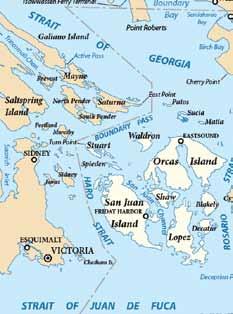
declined, citing the foolishness of involving “two great nations in a war over a squabble about a pig .”
By the end of August, there were 461 American troops in place with 14 field guns and eight 32-pounder naval guns opposing five British warships carrying 52 guns The Americans dug in and the British fired practice shots into the bluffs along Griffin Bay Commanding officers were ordered not to fire the first shot, but to defend themselves if necessary, instigating a battle of taunts and insults as each side tried to goad the other into aggression It was amusing for tourists arriving on excursion boats from Victoria and the officers from both sides who shared whisky and cigars at Charles Griffin’s home
W hen news of the situation reached Washington and London, shocked officials set about defusing it President James Buchanan sent General Winfield Scott to negotiate with Governor Douglas They reached a settlement in November, agreeing to reduce their presence to no more than 100 men on each side, with the British camp established at the north end of the island and the American camp at the south . The two camps had an amicable relationship for 12 years until the matter was turned over to Kaiser Wilhem I He referred it to a committee of three that met in Geneva for most of a year before deciding in favour of the United States on October 21, 1872, establishing the marine boundary through Haro Strait
Laura Neilson Bonikowsky is the associate editor of The Canadian Encyclopedia .
At Accu-Rate Corporation our team of highly experienced currency traders and foreign banking partners allow us to negotiate currency prices lower than any other currency dealer or commercial institution.
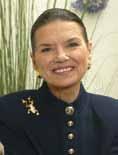
who doesn’t like crêpes? When in doubt over what to serve, you can always turn to crêpes Although many see them as a special treat for breakfast (and so they are), they may be creatively introduced into virtually any part of a menu Crêpes Suzette set aflame with brandy can proudly lay claim to being one of those universally popular desserts .
A s a child growing up on a farm in Northern Ontario, crêpes were not part of our family’s culinary vocabulary, never mind menu As a matter of fact, neither was the word menu On the farm back then, we just planned and prepared meals M om, however, did make the most extraordinary pancakes, sometimes stuffed with jam and cottage cheese before being lovingly baked in a woodstove oven That was a surprise usually reserved for stormy winter days
My next serious and fr equent encounter with “pancakes” was when my husband, our wee daughter and I moved to Moscow in the early ’70s . An evening ballet performance at the Bolshoi inevitably meant feasting on blinis and caviar at intermission To be honest, I impatiently waited for the intermissions to come, eager to savour once again the greatest culinary experience Moscow had to offer at that time These blinis were small yeastraised pancakes, made with buckwheat flour so they tended to be slightly heavy. Always accompanied by chilled vodka, that remarkable combination has retained a principal position (in one form or another) in my repertoire of recipes throughout the decades
With a move to Brussels, crêpes soon took centre stage These paper-thin pancakes — subtle in flavour, delicate, tender and flexible — lend themselves to all sorts of splendid creations Immediately, my
Russian blinis and caviar (always served with luscious dollops of sour cream), reemerged on our entertaining menus as crêpes and caviar either served rolled as an hors d’oeuvre or flat as an appetizer at the table Even repeat guests would count on their reappearance and disappointment reigned if I decided to give the crêpes a break
Would it be surprising if I said that a move to South Korea meant my crêpes and caviar experienced another mutation? Inspired by the appealing “pouch-like” shape of the popular Asian dish, dim sum, my crêpes evolved into irresistible “sachets ” Filled with sour cream and caviar, each little sachet was securely tied closed with a carefully knotted fresh chive stem . On our return to Canada, Canadian smoked salmon replaced the caviar .
But crêpes have a life far beyond Crêpes Suzette and crêpes and caviar They marry well with a broad spectrum of flavours, from savoury to sweet: seafood, poultry, escargots, avocado, fruit, custards, ice cream, just to name a few Such combinations are easily assembled and without exception, always scrumptious . Just think, have you ever not enjoyed a crêpe? Crêpes also like being pampered — dusted with icing sugar, drizzled with syrup, bathed with sauces and garnished artistically with fresh herbs, berries, nuts or curls of dark chocolate
Savoury crêpes are the perfect solution as a main course for a brunch or light lunch, particularly when served with a side salad . Equally so, sweet crêpes for
dessert will have those at the table scraping their plates and wishing for more .
The beauty of crêpes is that the batter can be prepared in advance, placed in airtight plastic containers and kept refrigerated for up to two days or frozen for months without compromising the quality of the final product I always keep crêpe batter on hand in my freezer Once thawed, batter will appear to have separated, but worry not . Transfer it to a bowl and whisk it thoroughly before dropping it onto a preheated (medium-low heat) griddle or skillet
The following recipe is one of my latest creations It’s an hors d’oeuvre that will leave guests puzzled, surprised and reaching for yet another You will need a little patience as you perfect the cooking technique; however, it will be well worth the effort Bon Appétit!
Bocconcini Crêpe sandwiches
Makes 16 hors d’oeuvres
1 tbsp (15 mL) all-purpose flour
Pinch of salt
1/2 cup (125 mL) crêpe batter*
1/3 cup (80 mL) chopped smoked turkey thigh (or ham)
1 1/4 tsp (6 mL) vinaigrette (a mustardherb variety)
1 1/2 tbsp (23 mL) coarsely chopped fresh dill weed
2 tbsp (30 mL) bocconcini cheese, chopped 1 1/2 tbsp (23 mL) pesto aioli mayonnaise
1 tbsp (15 mL) mayonnaise
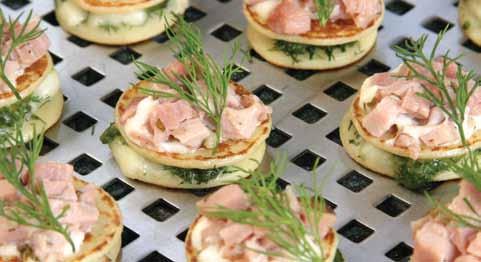
1/5 tsp (pinch) finely chopped fresh garlic
Garnish: 16 petit sprigs of fresh dill weed
1 Whisk flour and salt into crêpe batter to form a smooth, slightly heavier mixture
Toss chopped smoked turkey (or ham) with vinaigrette and set aside .
2 . Preheat a medium-size nonstick skillet placed over medium-low heat . Slowly and carefully drop four small portions (i e , about 3/4 tsp or 4 mL) of crêpe batter onto skillet to create coin-size crêpes (diameter: 1 inch or 2 5 cm) Quickly top each cooking crêpe first with 1/4 tsp (1 mL) of chopped dill weed, then 1/3 tsp (2 mL) of bocconcini and finally 1/4 tsp (1 mL) pesto, keeping all ingredients within the perimeter of the tiny crêpe
(Note: Do not turn over ) Promptly transfer crêpes to a plate
3 Repeat procedure (i e , step 2) to make 4 more garnished petit crêpes and transfer them to the plate
4 . Drop 8 similar petit portions of crêpe mixture onto the skillet . As crêpes set, turn them over and cook briefly Remove the crêpes from the skillet one at a time, and place each squarely on top of one of the cheese and pesto garnished crêpes to create tiny “crêpe sandwiches” Promptly transfer crêpe sandwiches to a parchment paper lined tray; cover closely with plastic wrap
5 . Repeat formula (Steps 2 to 4) to make 8 more crêpe sandwiches .
6 . Prepare the mayonnaise by whisking together mayonnaise and garlic; set aside
7 Up to 45 minutes before serving, add a touch (i e , 1/8 tsp or 2 drops) of Aioli Mayonnaise to top of each crêpe sandwich, top with 3/4 tsp (4 mL) of chopped smoked turkey (or ham) mixture and garnish with a small sprig of fresh dill weed Cover loosely with wax paper and refrigerate until shortly before serving .
* To make 1 1/3 cups (325 mL) of crêpe batter, sift together 1/2 cup (125 mL) of all purpose flour and 3/4 tsp (4 mL) of granulated sugar in a small bowl In a medium size bowl, beat together one egg, one egg yolk and 1/2 cup (125 mL) of milk
Continue to beat constantly, gradually add half the flour mixture to the milk mixture; add another 1/4 cup (60 mL) of milk, the remaining flour mixture and finally 2 tbsp (30 mL) of melted butter Beat well
Margaret Dickenson is the author of the international award winning cookbook, Margaret’s Table — Easy Cooking & Inspiring Entertaining, as well as creator and host of the TV series, Margaret’s Table . See www margaretstable ca

Chef’s Paradise
A division of C.A.Paradis Inc.
Open Monday-Saturday, 8am - 5pm 1314 Bank Street, Ottawa ChefsParadise.ca

Pinot Noir can provide one of the greatest experiences a wine drinker can have Young wines entice with aromatics and flavours of cherry, plums and violets As Pinot matures, the wines grow more savoury and aspects of mushroom, earth and game evolve On the palate, the texture is extraordinary . This is a red wine which doesn’t rely upon alcoholic power and weight to succeed and its elegance and haunting beauty are beyond many grape varietals
But, there is a rub Quite a few, in fact
Pinot Noir is fickle and maddeningly inconsistent When compared to other red varietals, the disparity between the highs and lows in quality is staggering Even in Bur gundy, Pinot Noir’s home and zenith, there are no guarantees Part of this is due to Pinot Noir’s lack of genetic stability and its resulting tendency to mutate In Burgundy, where the grape is thought to have been grown since at least the 4th Century, there are more than 1,000 types of Pinot Noir . While all of these clones exhibit similar qualities, they differ in many respects Some do not produce quality fruit and many prefer different soils and climates In the vineyards, for reasons of convenience and economy, many growers in Burgundy and elsewhere have given into the temptation of planting clones which require less maintenance and provide larger yields Unfortunately, the resulting wines have not contributed to Pinot Noir’s positive reputation
Pinot Noir also costs more to produce and sell Yields of fruit must be kept low for good-quality wine The vines are highly susceptible to mildew, rot and disThey tend to die young and many plants stop producing wine-worthy fruit after three decades . All of these factors contribute to higher prices While it may be easy to find a $12 bottle of reasonably good and identifiable Cabernet Sauvignon, $12 will not cut it for the same level of quality in a Pinot , Pinot Noir is also not a good Though it has been planted far and wide throughout Europe and beyond, it wasn’t happy about it . For a long time, only a few tolerable expressions of Pinot were produced outside of Burgundy something changed Growers started to select clones more appropriate for their environments They experimented in the vineyard and the winery
Over time, certain regions such as California, Oregon and New Zealand began to succeed with this temperamental grape and established their own reputations for crafting perfect Pinot Noir The resulting delicious, and, while some critics state they may never be Burgundy at its very best, neither is much of Burgundy end of compelling Pinots from new places is continuing . More and more regions, typically with cooler and more marginal climates, are contributing a new
facet to Pinot Noir . What follows are three such distinctive Pinots .
First, we have a fun one from Italy’s northern province of Alto Adige It’s a 2010 Pinot Nero produced by Colterenzio
This wine is light to medium-bodied and has loads of joyful cherry flavour The structure’s elegant and fresh and there’s a note of an earthy minerality on the finish
With excellent food pairing capabilities, this Pinot is great value at $22 Purchase and home delivery in Ontario of this charming wine is available through the Stem Wine Group (www stemwinegroup com)
For a far more Burgundian expression of Pinot Noir, we go to wine produced by one of my favourite Canadian wineries, Five Rows . The winery is located in Niagara’s St . David’s Bench VQA subappellation and is operated by the Lowrey family, who have farmed the area for five generations The current generations, Howard and Wilma Lowrey and their son, Wes, produce some of Canada’s most compelling wines Despite the challenging vintage providing many nervous moments and demanding much vineyard work, their 2008 Pinot Noir is a delicious combination of bright cherry and black raspberry aromas and favours with notes of floral, vanilla bean and spice Only 106 cases were made, and, while this wine will not appear in the LCBO system, it is available from the winery (www fiverows .com) for $50 a bottle .
Next is a Pinot Noir fr om an unexpected place . It’s the Laura Catena’s 2009 “Luca” Pinot Noir from Argentina While there are very good Pinots emerging from Patagonia in Argentina’s south, this wine comes from Mendoza’s Uco Valley The grapes are sourced from a dessert vineyard which is at an altitude of more than 1,400 metres The location provides lots of sunshine and very cool nights . Enticing aromas of cherry, spice and smoke lead to a silky and complex palate This beautiful Pinot is available from Vintages for $28 (CSPC#175570)
Even when the producers and regions are familiar, selecting a bottle of Pinot Noir is often similar to playing Russian roulette However, the three suggested wines can point you in the right direction .
Pieter Van den Weghe is the sommelier at Beckta dining & wine
By Margo Roston
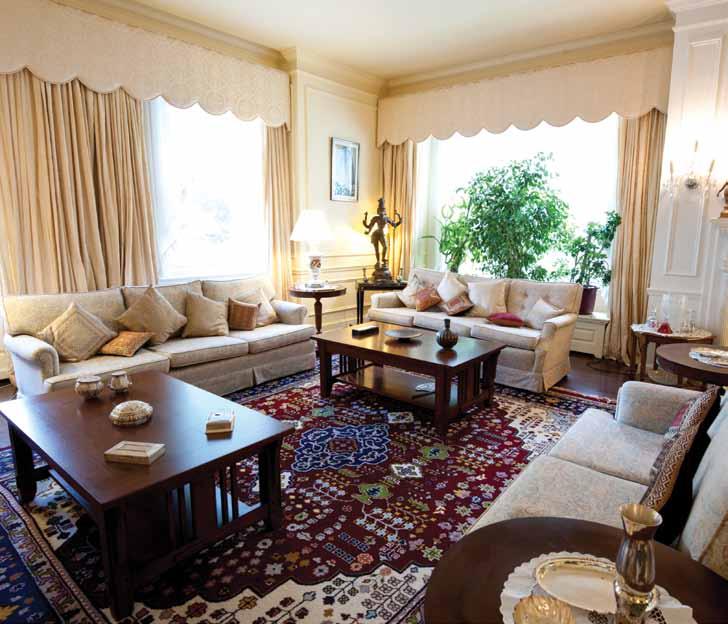
when a house is sold during a game of bridge, the players might need a little glass of port to get over the shock When the deal is made between the guys over a drink in the library without consulting their wives, a double is probably in order
It sounds like fiction but it actually happened in the Acacia Avenue home that is now the residence of the Indian high commissioner . The house has an interesting
history. But these days, it is a cultural beacon for those who enter . Many sculptures and artworks from India are highlighted in the spacious reception areas where High Commissioner Shashishekhar Gavai and his wife, Rina, entertain
Like so many houses in the area, this one has its roots in the lumber business Built in 1909 by civil engineer Allan Gilmour Mather, whose father had a connection with the Gilmour Lumber
Company, the home was designed in the Edwardian Classical style . It made an imposing sight with its white-painted brick exterior, a gallery running across the front and sides and a notable red tile roof The house was probably designed by Mather's uncle, local architect James Mather, Martha Edmond speculates in her book Rockcliffe Park: A History of the Village.
According to Edmond, the stock market crash of 1929 forced Mather to sell his
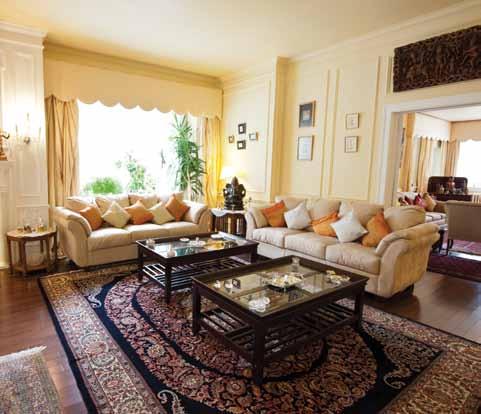
home to Shirley Woods, Sr , whose father James founded the Woods Manufacturing Co , makers of their famous Woods sleeping bag Apparently one of these bags accompanied Roald Amundsen through the Northwest Passage in 1903 and warmed Admiral Byrd in the Antarctic . Shirley, himself, designed the first down-filled vest for Second World War soldiers .
A passionate renovator, Woods removed the massive porch and gallery (revealing a finely-detailed veranda at the top of the front steps) and covered the brick with stucco In 1934, Woods sold his house to his friend Edmund Newcombe when he was visiting with his wife for a game of bridge The two men, taking a break for a drink in the library, made the deal and then came out to tell their stunned spouses
T he Indian government bought the house from the Newcombes in 1950 oday, the impressive seven-bedroom mansion sits in a large garden, partly hidden by a cedar hedge . Once inside, visitors are greeted in the large entrance Gavai who is wearing a brilliant peacock blue sari trimmed with gold embroidered peacocks, the national
The entrance is dominated Atop the mantel are brass Hindu gods and, in front, a large traditional brass candle holder Heavy brass temple bells line the stairway to the
ain floor, there are two large cream-coloured reception rooms filled with art and Indian carpets Of special interest are two stunning marble and gold vases from Rajasthan, India’s largest state, that compete with the couple’s collection of more than 150 bells from a variety of Silver tables brighten the main reception area, also home to a collection
Another collection of blue and white china from Japan and China, and paintings of Krishna, the central figure in Hinduism, fill the walls, tables and breakfronts in the rooms Silk pillows add dashes of colour to the for-
“The blue room,” a favourite of Mrs Gavai, is a small and charming sunroom looking out over the garden and backyard patio
The expansive dining room is themed in burgundy and blue and can seat up to 18 guests, who dine on china and use silverware featuring the crest of India “And the food is all homemade,” Mrs Gavai says . She has two helpers who keep the house in shape and do the cooking
A typical meal at the residence includes
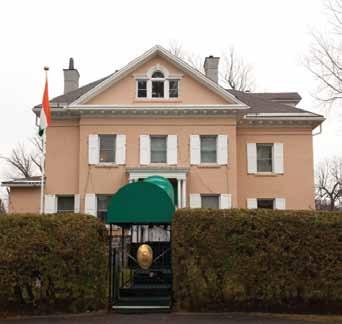
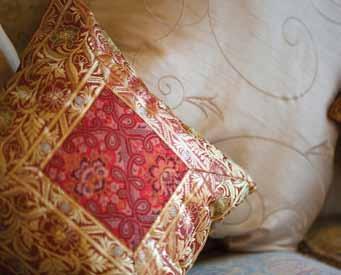
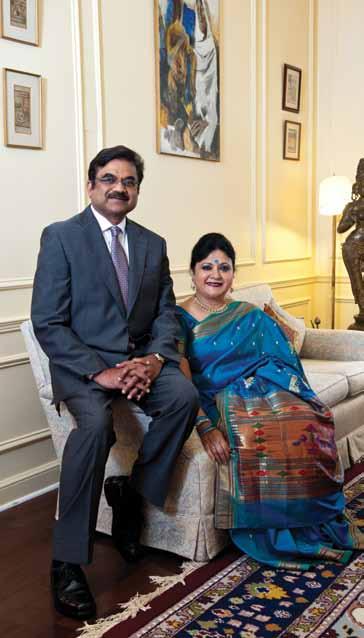
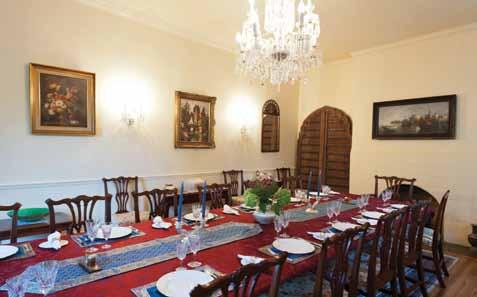
Clockwise from top left: The exterior of the home on Acacia Road; the Gavais; the dining room where guests are often treated to Mrs. Gavai’s cooking; some Indian pillows, which add lovely accents to the receiving rooms.
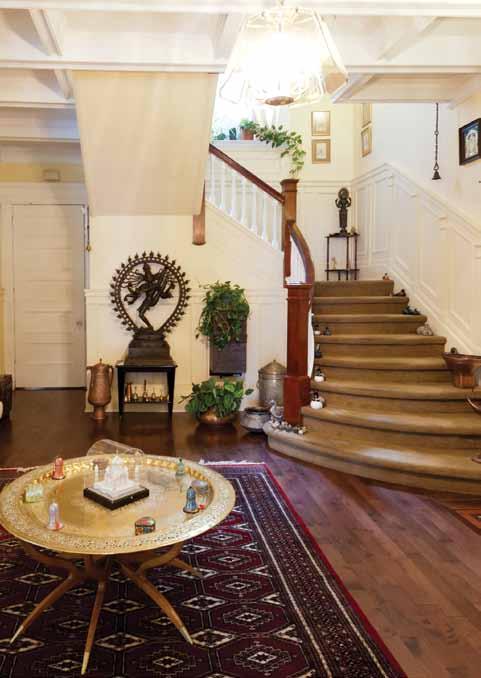
a fish, meat and chicken course, distinctly seasoned with spices to give the dishes different flavours and colours Five or six vegetarian dishes and rice pilaf round out the sumptuous meal Three Indian desserts always complete the feast .



The high commissioner and his wife are both culturally active in Canada . They have a large constituency of more than one million people of Indian descent living in this country With 2011 declared the Year of India in Canada, the couple has promoted 108 events across the country — dance and musical events, a film festival and a trade fair . “There has been a big audience for our events,” says Mr . Gavai And his wife, who organized the Indian Women's Association to promote her country, is equally pleased with its success
Visiting the Indian High Commissioner's residence in Ottawa is a charming cultural and educational tour of an exotic land, an experience enhanced by the delightful diplomats who live there . D
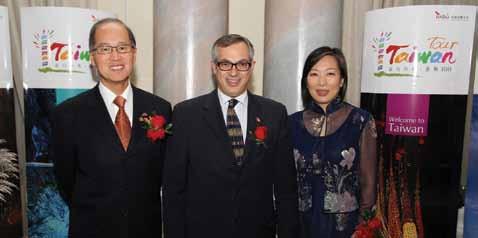
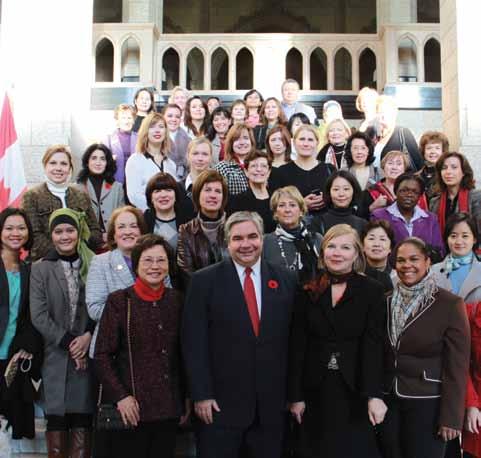
1. In celebration of Taiwan's Centennial National Day, David Taiwei Lee, representative for the Taipei Economic and Cultural Office in Canada, and his wife, Lin, hosted a reception at the Château Laurier in October. Six cabinet ministers, including Treasury Board President Tony Clement (centre), seven senators and 68 MPs attended. (Photo: Dennis Chen) 2. The Canadian Federation of University Women's diplomatic hospitality group took a tour of Parliament in November, compliments of Government House Leader Peter Van Loan. Participants are shown here. Standing to the right of Mr. Van Loan (front, centre) is organizer Ulle Baum. (Photo: Darlene Stone) 3. To mark Albania’s national day, Ambassador Elida Petoshati took part in a flag-raising ceremony at Ottawa City Hall. It was the first time the Albanian flag has been raised by the City. (Photo by Ulle Baum) 4. Greek deputy foreign minister, Demetri Dollis, right, visited Ottawa in September and Ambassador Eleftherios Anghelopoulos hosted a reception in his honour. 5. Armenian Ambassador Armen Yeganian and his wife, Maria, hosted a national day reception in October. 6. Romanian Ambassador Elena Stefoi hosted a national day reception at Ottawa City Hall on Dec. 1. From left, Russian Ambassador Georgiy Mamedov, Ms. Stefoi and Ottawa Mayor Jim Watson. (Photo: Lois Siegel)
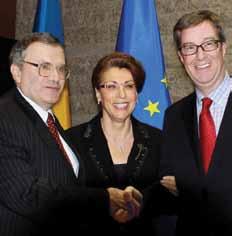


1. Cuban Ambassador Teresita Sotolongo, right, hosted a reception in honour of Cuba’s culture day. She’s shown with Cuban painter Yoel Finalé, centre, and curator Lilia Faulkner. 2. Czech Ambassador Karel Zebrakovsky and his wife, Marketa Zebrakovska Smatanova, marked their national day with a reception at the National Arts Centre in October. From left, Courtnay Romkey Darville, Ms Zebrakovska Smatanova and Larry Lederman, Canada's former chief of protocol. 3. The delegation of European Union to Canada and member states of the EU presented their 4th annual EU Christmas concert at the Notre Dame Cathedral Dec. 9. From left, Laura Mennill, director of the Lisgar Collegiate Institute String Ensemble, EU Ambassador Matthias Brinkmann, Timothy Piper, director, organist and pianist for the Christ Church Cathedral Girls' Choir and Robert Filion, musical director of the Chorale De La Salle. (Photo by Ulle Baum)
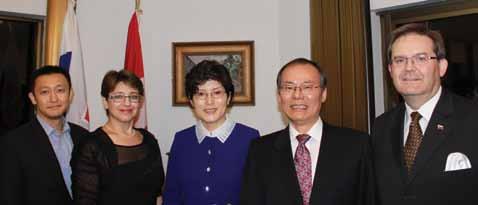
1. Brunei High Commissioner Rakiah Lamit hosted the annual general meeting of the women ambassadors of Ottawa in November. From left, Ms. Lamit, Rwanda High Commissioner Edda Mukabagwiza, Norwegian Ambassador Else Berit Eikeland, Albanian Ambassador Elida Petoshati and Honduran Ambassador Sofia Lastenia Cerrato Rodriguez. 2. ”An Exploration of Scottish Culture” was hosted by the Fort Glengarry Garrison, 78th Fraser Highlanders regiment, at the Royal Ottawa Golf Club. From left, Captain Bruce MacRae, British High Commissioner Andrew Pocock and Peter Milliken, former speaker of the House of Commons. 3. To mark the 19th anniversary of the constitution of the Slovak Republic, Ambassador Milan Kollar and his wife, Sona Kollarova, hosted a reception at the embassy in September. From left, Paul Hong, senior policy adviser to foreign affairs minister John Baird, Sona Kollarova, Nam Misook, Korean Ambassador Nam Joo-hong and Slovak Ambassador Milan Kollar. (Photo: Ulle Baum)

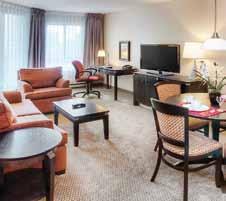






Spacious suites in the heart of Ottawa!
Condominium-sized suites that provide you with plenty of room to stretch out and relax. Each suite includes a fully equipped kitchen, ensuite laundry and your choice of one or two bedrooms.
• Excellent location, steps from great shopping, fine dining, entertainment
• Easy access to embassies, government offices and the business district
• Complimentary WiFi throughout hotel
• Free local calls • Free daily newspaper
• Indoor pool, 24-hr fitness facility
Extended Stay Rates Available
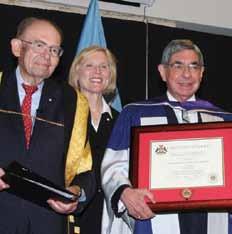
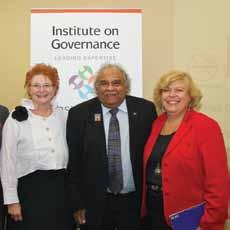
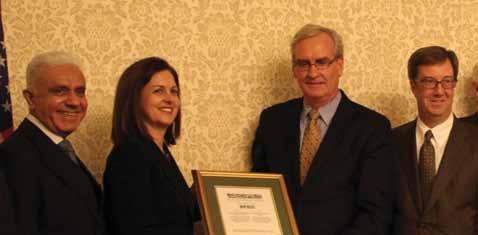
1. The Association of Progressive Muslims of Canada presented an award to U.S. Ambassador David Jacobson, which was accepted by his wife, Julie, at the association‘s annual Eid dinner. From left, Zul Kassamali, vice-president of APMC Toronto, Mrs. Jacobson, event emcee Charles Coffey and Ottawa Mayor Jim Watson. (Photo: U.S. embassy) 2. Algerian Ambassador Smail Benamara, right, hosted a national day celebration at his embassy in November. He’s shown with Lawrence Cannon, strategic adviser at Gowlings. (Photo: Ulle Baum) 3. Icelandic Ambassador Sigridur Anna Thordardottir and her husband, Jon Thorsteinsson, attended a dinner at Restaurant 18, featuring celebrated Swedish chef Gustav Trägårdh. The following evening, Swedish Ambassador Teppo Markus Tauriainen hosted a private dinner in his home. (Photo: Lois Siegel) 4. Australian indigenous leader Tom Calma spoke at the Institute on Governance (IOG) in November about a campaign dedicated to improving the health and well-being of Australia's indigenous citizens. From left, IOG president Maryantonett Flumian, Mr. Calma, Marion Lefebvre, vice-president for aboriginal governance. (Photo: Bruce MacRae) 5. The Turkish Embassy, in cooperation with the Turkish-Canadian Cultural Association, presented a free painting workshop in November at Ottawa City Hall. Turkish artist Hikmet Cetinkaya gave the workshop. Ambassador Rafet Akgunay and his wife, Zeynep, are shown in front of one of his paintings. (Photo: Ulle Baum) 6. Oscar Arias, former president of Costa Rica, received an honourary degree from Carleton University. From left, Carleton chancellor Herb Gray, president Roseann O'Reilly Runte and Mr. Arias. (Photo: Mike Pinder)
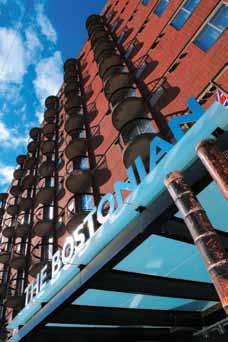


agostinho Tavares da silva neto ambassador of angola
Mr Tavares da Silva Neto joined Angola’s foreign ministry in 1977 after completing studies at the Karl Marx Institute in Luanda Much later, he would also complete a degree in international relations at the University of Brasilia
But before that, he held several governmental positions In 1982, he was head of the department of human resources in the secretary of state for cooperation In 1987, he was sent to Spain, on his first foreign posting, as an administrative attaché In 1997, he moved on to India, where he served as third secretary before returning to headquarters in 2000 as head of the Asia and Oceania department .
From 2000 to 2005, he served as first secretary, and later counselor, at the embassy in Brazil before returning to his former job at headquarters (head of the Asia and Oceania department)
Mr Tavares da Silva Neto speaks Portuguese, Spanish and English He is married to Prudence de Sousa Carneiro da Silva and has five children .
oscar mauricio Duarte Granados ambassador of el salvador
Mr Duarte Granados is an academic who came to diplomacy later in his career After completing studies at the Karl Marx Institute of Economics in Bulgaria, he completed a master’s degree in law and social sciences in 2000 A few years later, he received a master’s in human rights and education for peace
Mr Duarte Granados began his teaching career at the University of El Salvador in 1993 . He became deputy dean of the school of law and social sciences in 2003, a position he kept until 2011 In 2003, he also became a member for the council of University of El Salvador and a member of the board of directors of the school of law and social sciences He has represented the University at the Central American council for integration and has worked, since 2004, as a member of the examina-
tion board for international relations at the university Between 1998 and 2001, he was a coordinator of assistance for refugees and victims of Tornado Mitch in Usulutan, El Salvador
Mr . Duarte Granados is married . He speaks Bulgarian, English, basic Macedonian and Spanish .
nam Joo-hong ambassador of Korea
Mr Joo-hong comes to diplomacy through academia He has a bachelor’s degree in political science and international relations from Konkuk University in Seoul, a master’s in strategic studies from the University of Aberdeen in the UK and a PhD in political science and international relations from the London School of Economics
He began his career as a research fellow at Harvard University’s centre for international affairs, and then became a professor at the National Defence College He then worked as a special adviser in charge of security and unification at the national security planning agency and as deputy secretary-general of the national unification advisory council . He then became a professor at Kyonggi University’s graduate school of unification and security and later at the same university’s graduate school of politics and policy He added the title of dean of that school in 2003 Between 2007 and 2008, he was a senior adviser to the 17th presidential transition committee and became ambassador for international security affairs at the Korean ministry of foreign affairs and trade in 2010 .
Mr Joo-hong is married with a son and a daughter
leslie B. Gatan ambassador of the Philippines
Mr Gatan is a career diplomat who joined the service in 1983, in the office of the United Nations and other international organizations He spent three years in that job before being posted to Sri Lanka as third secretary and vice-consul After that, he was posted for five years to Switzerland as first secretary and consul after which he re -
turned to headquarters and became director of ASEAN affairs His next posting, as minister-counsellor, was to Thailand, where he spent two years before being sent to Italy as counsellor and consul for a year and then to Belgium as minister for another year .
Back at headquarters, Mr . Gatan spent a year as special assistant in the office of the undersecretary for policy before being sent to the United Nations in New York for six years, first as minister and then as deputy permanent representative He then returned to headquarters as assistant secretary of the office of the UN and other international organizations .
He has a b achelor of arts in political science, a bachelor of business management and a masters in urban and regional planning He is married to Lydia Debbie Mijares
Ulrich lehner ambassador of switzerland
Canada isn’t new for Mr . Lehner, a career diplomat who wrote the Swiss foreign service exam in 1981 and joined soon after Part of his early education took place in Sion, his birthplace and then, for a time, in Toronto before he moved on to study in Geneva . He has a degree in economic and social science from the University of Geneva and a post-graduate diploma in security policy studies
His first posting, for one year, was to Portugal as an attaché He then spent a year as third secretary at the embassy in Brazil before being sent as second secretary to the embassy in Norway . He returned to headquarters as an officer in the policy planning branch and later headed the office for peace policy
In 1991, he went to Rome as counselor for four years and then followed that up with four years at the embassy in Egypt From 1998 to 2002, he was director of the Geneva Centre for Security Policy and from 2004 to 2007, he headed the political division responsible for international organizations Prior to coming to Canada, he served for four years as ambassador to France and Monaco In Canada, he’s dually accredited to Bahamas
Mr Lehner is married to Federica Lehner Timbal, and has two children . He speaks French, German, English, Italian and Portuguese .
Afghanistan
abdullah sabet mushahed
Third Secretary
Algeria omar Zeggai
Second Secretary
Australia
spiros Drossos
First Secretary Thomas Fuller
First Secretary
evan Peter Gallagher
Attaché
mark Joseph Kennedy
Attaché
maree Clare Warton Attaché
Bangladesh
aparna rani Paul Second Secretary
Benin
mahugnon magloire Kiki Attaché
Brazil
elter nehemias santos Barbosa
Second Secretary
Burkina Faso
Ketokata roselyne e Kambou sanou
Second Counsellor
China
hanming hu
First Secretary hua Jin
First Secretary Jin liu
Minister-Counsellor and Deputy Head of Mission Zhiming Qu First Secretary lanchun Zhang Minister-Counsellor
Czech Republic robert Tripes Minister-Counsellor
Egypt mohamed salah ali Attaché
ibrahim osman mohamed Bakkar Attaché
European Union
José antonio Torres lacasa First Counsellor Penelope Joan Ward Attaché
France
ilde valérie GorguetComba
First Secretary Frédéric michel régis Kaplan Minister-Counsellor
Georgia Ketevan markozia
Second Secretary
Hungary maria Toth Attaché
Indonesia sylvia masri
Third Secretary agoes soebagio Attaché
sulistya Widayanta Attaché
Iran
mohammad reza Khodai
First Secretary amir hamzeh shirani nejad
Third Secretary
Israel liliane haim First Secretary and Consul
Japan
Toshitaka higashira
First Secretary naotaka sugawara
Second Secretary
Jordan Bashar abdel-majid abu Taleb
First Secretary
Korea, Republic min eui hong
Third Secretary Bongwoo Ko
Minister-Counsellor
Libya
abubaker m a. Karmos Chargé d’Affaires
Mali
Boubacar Ballo First Counsellor
Mexico
mauro salas medrano Attaché
Morocco nadya Talmi
Minister-Counsellor
Niger ichaou amadou
First Secretary and Chargé D’affaires
Norway
Tobias Frambe svenningsen Minister-Counsellor
Philippines
eric Gerardo Tamayo
First Secretary and Consul
Poland
agata Wiktorowicz
Third Secretary
Romania
Dorian mihai
Minister-Counsellor
Russia
mikhail Gorbunov
First Secretary alexey Klyachin
Attaché
Saudi Arabia mr. naif mutib m al Quwayd
Attaché
solaiman abdulrahman al Theeb
Attaché
hubaysh muaddi B.
aldawsari
Attaché nasser masoud h
aldawsari
Attaché
hammad saleh s aldhidan
Attaché
Fahad Zaid a algubaa
Attaché
hajjaj rwidan s alharbi
Attaché
Fahad m m alkahtani
Attaché
ahmed nawar o. alnadwi
Attaché
abdulaziz rashed m alnajada
Attaché
nasser mohammed sh. alosaimi
Attaché
hani abdullah s alrashoudi
Attaché
abdulaziz hamed a alwasel
Attaché
ahmed mohammed s. Bin
musaed
Attaché
majed s m. Bin showeil
First Secretary ismail mohammed rashad i. najjar
Attaché
Senegal saiba sylla
First Counsellor
Slovak Republic Jan Galoci
First Secretary
Trinidad And Tobago
Cynthia veronica Danielsobion
Attaché
Turkey
Gizem emel
Second Secretary memik yasar Attaché
Ukraine
oksana Kozlovska First Secretary
United States of America susan elizabeth astleyCass
Attaché
David alan Brackins
Attaché
scott henry learmonth
Attaché
steven louis Pike
First Secretary
Christopher robert riche
Minister-Counsellor viet Dung vietnam vu
Minister-Counsellor
Zambia mirriam Tundu Third Secretary
your


Mary Burke-Cameron Account Manager
Embassy/Not-For-Profit Markets 613-564-2951 mary.burke-cameron@rbc.com

Kim Nguyen Account Manager
Embassy/Not-For-Profit Markets 613-564-2777 kim.nguyen@rbc.com

Myriam Sepulveda
Diplomat Account Manager
613-564-2784
myriam.sepulveda@rbc.com
AFGHANISTAN
Embassy of the Islamic Republic of Afghanistan
240 Argyle Street
Ottawa, Ontario K2P 1B9
TEL 563-4223 FAX 563-4962 contact@afghanemb-canada net www afghanemb-canada net
ALBANIA
Her Ex Elida Petoshati
Embassy of the Republic of Albania
130 Albert Street, Suite 302 Ottawa, Ontario K1P 5G4
TEL 236-4114 FAX 236-0804 embassyofalbania@on aibn com
ALGERIA
His Ex Smail Benamara Embassy of the People’s Democratic Republic of Algeria 500 Wilbrod Street
Ottawa, Ontario K1N 6N2
TEL 789-8505 FAX 789-1406 www embassyalgeria ca/eng htm
ANGOLA
His Ex Agostinho Tavares da Silva Neto
Embassy of the Republic of Angola 189 Laurier Avenue East Ottawa, Ontario K1N 6P1
TEL 234-1152 FAX 234-1179 info@embangola-can org www embangola-can org
ARGENTINA
His Ex . Arturo Bothamley Embassy of the Argentine Republic 81 Metcalfe Street 7th Floor Ottawa, Ontario K1P 6K7
TEL 236-2351 FAX 235-2659 embargentina@argentina-canada net www argentina-canada net
ARMENIA
His Ex Armen Yeganian Embassy of the Republic of Armenia 7 Delaware Avenue Ottawa, Ontario K2P 0Z2
TEL 234-3710 FAX 234-3444 armcanadaembassy@mfa com www armembassycanada ca
AUSTRALIA
His Ex Justin Hugh Brown Australian High Commission 50 O’Connor, Suite 710 Ottawa, Ontario K1P 6L2
TEL 236-0841 FAX 236-4376 www canada embassy gov au
AUSTRIA
His Ex Werner Brandstetter
Embassy of the Republic of Austria
445 Wilbrod Street
Ottawa, Ontario K1N 6M7
TEL 789-1444 FAX 789-3431
www austro org
AZERBAIJAN
His Ex Farid Shafiyev Embassy of the Republic of Azerbaijan
275 Slater Street, Suite 904-C
Ottawa, Ontario K1P 5H9
TEL 288-0497 FAX 230-8089
BAHAMAS
His Ex Michael D Smith
Bahamas High Commission
50 O’Connor Street, Suite 1313
Ottawa, Ontario K1P 6L2
TEL 232-1724 FAX 232-0097
ottawa-mission@bahighco com http://bahamas com
BANGLADESH
His Ex A M Yakub Ali High Commission for the People’s Republic of Bangladesh
340 Albert St , Suite 1250
Ottawa, Ontario, K1R 7Y6
TEL 236-0138 FAX 567-3213
bangla@rogers com www bdhc org
BARBADOS
His Ex Edward Evelyn Greaves High Commission for Barbados
55 Metcalfe St , Suite 470
Ottawa, Ontario, K1P 6L5
TEL 236-9517 FAX 230-4362 ottawa@foreign gov bb
BELARUS
Embassy of the Republic of Belarus
130 Albert Street, Suite 600
Ottawa, Ontario K1P 5G4
TEL 233-9994 FAX 233-8500 belamb@igs net
BELGIUM
Hi Ex Bruno van der Pluijm Embassy of Belgium
360 Albert Street, Suite 820
Ottawa, Ontario K1R 7X7
TEL 236-7267 FAX 236-7882
ottawa@diplobel fed be www diplomatie be/ottawa
BENIN
His Ex Honoré Ahimakin Embassy of the Republic of Benin 58 Glebe Avenue
Ottawa, Ontario K1S 2C3
TEL 233-4429 FAX 233-8952 ambaben@benin ca
BOLIVIA
His Ex Edgar Torrez Mosqueira Embassy of the Republic of Bolivia
130 Albert Street, Suite 416 Ottawa, Ontario K1P 5G4
TEL 236-5730 FAX 236-8237 info@emboliviacanada com www emboliviacanada com
BOSNIA-HERZEGOVINA
Her Ex Biljana Gutic-Bjelica Embassy of Bosnia and Herzegovina 130 Albert Street, Suite 805 Ottawa, Ontario K1P 5G4
TEL 236-0028 FAX 236-1139 embassyofbih@bellnet ca www bhembassy ca
BRAZIL
His Ex Piragibe dos Santos Tarrago Embassy of the Federative Republic of Brazil 450 Wilbrod Street Ottawa, Ontario K1N 6M8 TEL 237-1090 FAX 237-6144 mailbox@brasembottawa org
BRUNEI DARUSSALAM
Her Ex Rakiah Haji Abdul Lamit High Commission for Brunei Darussalam 395 Laurier Avenue East Ottawa, Ontario K1N 6R4 TEL 234-5656 FAX 234-4397 bhco@bellnet ca
BULGARIA
His Ex Evgueni Stoytchev Embassy of the Republic of Bulgaria 325 Stewart Street
Ottawa, Ontario K1N 6K5 TEL 789-3215 FAX 789-3524 embgottawa@hotmail com
BURKINA FASO
Her Ex Juliette Bonkoungou Embassy of Burkina Faso 48 Range Road Ottawa, Ontario K1N 8J4 TEL 238-4796 FAX 238-3812 burkina faso@sympatico ca www ambaburkina-canada org
BURUNDI
Mrs Justine Semonde Chargé d'Affaires
Embassy of the Republic of Burundi
325 Dalhousie Street, Suite 815
Ottawa, Ontario K1N 7G2
TEL 789-0414 FAX 789-9537 ambabottawa@yahoo ca www ambabucanada com
CAMEROON
His Ex Solomon Azoh-Mbi Anu’aGheyle
High Commission for the Republic of Cameroon 170 Clemow Avenue
Ottawa, Ontario K1S 2B4 TEL 236-1522 FAX 236-3885 cameroon@rogers com www hc-cameroon-ottawa org
CHILE
His Ex Roberto Ibarra García Embassy of the Republic of Chile 50 O’Connor Street, Suite 1413 Ottawa, Ontario K1P 6L2 TEL 235-9940 FAX 235-1176 echileca@chile ca www chile ca
CHINA
His Ex . Junsai Zhang
Embassy of the People’s Republic of China 515 St Patrick Street
Ottawa, Ontario K1N 5H3 TEL 789-3434 FAX 789-1911 www chinaembassycanada org
COLOMBIA
Her Ex Clemencia Furero Ucros Embassy of the Republic of Colombia 360 Albert Street, Suite 1002
Ottawa, Ontario K1R 7X7 TEL 230-3760 FAX 230-4416 embajada@embajadacolombia ca www embajadacolombia ca
CONGO (ZAIRE)
His Ex Dominique Kilufya Kamfwa Embassy of the Democratic Republic of the Congo 18 Range Road Ottawa, Ontario K1N 8J3 TEL 230-6391 FAX 230-1945
COSTA RICA
His Ex Luis Carlos Delgado Murillo Embassy of the Republic of Costa Rica 325 Dalhousie Street, Suite 407 Ottawa, Ontario K1N 7G2 TEL 562-2855 FAX 562-2582 embcr@costaricaembassy.com www costaricaembassy com

CÔTE D’IVOIRE
Embassy of the Republic of Côte d’Ivoire 9 Marlborough Avenue
Ottawa, Ontario K1N 8E6
TEL 236-9919 FAX 563-8287 acica@ambaci-ottawa .org www ambaci-ottawa org
CROATIA
His Ex. Veselko Grubišić Embassy of the Republic of Croatia 229 Chapel Street Ottawa, Ontario K1N 7Y6 TEL 562-7820 FAX 562-7821 Croatia emb@mvpei hr www croatiaemb net
CUBA
Her Ex Teresita de Jesús Vicente Sotolongo Embassy of the Republic of Cuba 388 Main Street Ottawa, Ontario K1S 1E3 TEL 563-0141 FAX 563-0068 cuba@embacuba ca www embacuba ca
CZECH REPUBLIC
His Ex. Karel Žebrakovský Embassy of the Czech Republic 251 Cooper Street Ottawa, Ontario K2P 0G2 TEL 562-3875 FAX 562-3878 ottawa@embassy mzv cz
DENMARK
His Ex Erik Vilstrup Lorenzen
Royal Danish Embassy
47 Clarence Street, Suite 450 Ottawa, Ontario K1N 9K1
TEL 562-1811 FAX 562-1812 ottamb@um dk www ambottawa um dk
DOMINICAN REPUBLIC
His Ex Jose Del Carmen Urena Embassy of the Dominican Republic 130 Albert Street, Suite 418 Ottawa, Ontario K1P 5G4 TEL 569-9893 FAX 569-8673 www drembassy org
ECUADOR
His Ex Andrés Teran Parral Embassy of the Republic of Ecuador 50 O’Connor Street, Suite 316 Ottawa, Ontario K1P 6L2 TEL 563-4286 FAX 235-5776
EGYPT
His Ex Wael Ahmed Kamal Aboul Magd Embassy of the Arab Republic of Egypt 454 Laurier Avenue East Ottawa, Ontario K1N 6R3
TEL 234-4931 FAX 234-4398 egyptemb@sympatico ca www mfa .gov eg
EL SALVADOR
His Ex Oscar Mauricio Duarte Granados
Embassy of the Republic of El Salvador 209 Kent Street Ottawa, Ontario K2P 1Z8
TEL 238-2939 FAX 238-6940 embajada@elsalvador-ca org
ESTONIA
Mr Riho Kruuv
Chargé d’Affaires
Embassy of the Republic of Estonia
260 Dalhousie Street, Suite 210
Ottawa, Ontario K1N 7E4
TEL 789-4222 FAX 789-9555
embassy ottawa@mfa ee
www estemb ca
EUROPEAN UNION
His Excellency Matthias Brinkmann
Delegation of the European Commission to Canada
150 Metcalfe St Suite 1900 Ottawa, ON K2P1P1
TEL 238-6464 FAX 238-5191 delegation-canada@ec europa eu
www delcan ec europa eu
FINLAND
His Ex Risto Ensio Piipponen
Embassy of the Republic of Finland
55 Metcalfe Street, Suite 850
Ottawa, Ontario K1P 6L5
TEL 288-2233 FAX 288-2244 embassy@finland ca
FRANCE
His Ex Philippe Zeller
Embassy of France
42 Sussex Drive
Ottawa, Ontario K1M 2C9
TEL 789-1795 FAX 562-3735
www ambafrance-ca org
GABON
Embassy of the Gabonese Republic
4 Range Road, P O Box 368
Ottawa, Ontario K1N 8J5
TEL 232-5301 FAX 232-6916
ambgabon@sprint ca
GERMANY
His Ex Georg Witschel
Embassy of the Federal Republic of Germany
1 Waverley Street
Ottawa, Ontario K2P 0T8
TEL 232-1101 FAX 594-9330
info@otta diplo de http:/www ottawa diplo de
GHANA
His Ex Richard Benjamin Turkson
High Commission for the Republic of Ghana
153 Gilmour Street
Ottawa, Ontario K2P 0N8
TEL 236-0871 FAX 236-0874
ghanacom@ghc-ca com
www ghc-ca com
GREECE
His Ex Eleftherios Anghelopoulos
Embassy of the Hellenic Republic
80 MacLaren Street, Suite 76
Ottawa, Ontario K2P 0K6
TEL 238-6271 FAX 238-5676
embassy@greekembassy ca www greekembassy ca
GUATEMALA
His Excellency Georges de La Roche
Embassy of the Republic of Guatemala
130 Albert Street, Suite 1010
Ottawa, Ontario K1P 5G4
TEL 233-7237 FAX 233-0135
embassy1@embaguate-canada com
www embaguate-canada com
GUINEA
Embassy of the Republic of Guinea 483 Wilbrod Street
Ottawa, Ontario K1N 6N1
TEL 789-8444 FAX 789-7560 ambassadedeguinee@bellnet ca
GUYANA
His Ex Harry Narine Nawbatt High Commission for the Republic of Guyana
151 Slater Street, Suite 309 Ottawa, Ontario K1P 5H3
TEL 235-7249 FAX 235-1447
HAITI
Ms Marie Nathalie Menos-Gissel Chargé d’Affaires
Embassy of the Republic of Haiti
130 Albert Street, Suite 1500 Ottawa, Ontario K1P 5G4 TEL 238-1628 FAX 238-2986 bohio@sympatico ca
HOLY SEE
His Ex Pedro Lopez Quintana Apostolic Nunciature 724 Manor Avenue Ottawa, Ontario K1M 0E3 TEL 746-4914 FAX 746-4786
HONDURAS
Her Ex Sofia Lastenia Cerrato Rodriguez Embassy of the Republic of Honduras 151 Slater Street, Suite 805 Ottawa, Ontario K1P 5H3 TEL 233-8900 FAX 232-0193
HUNGARY
His Ex László Pordány Embassy of the Republic of Hungary 299 Waverley Street Ottawa, Ontario K2P 0V9 TEL 230-2717 FAX 230-7560 www mfa gov hu/emb/ottawa mission ott@kum hu
ICELAND
Her Excellency Sigridur Anna Thordardottir Embassy of Iceland 360 Albert Street, Suite 710 Ottawa, Ontario K1R 7X7 TEL 482-1944 FAX 482-1945 icemb ottawa@utn stjr is WEB: www iceland org ca
INDIA
His Ex Shashishekhar M Gavai High Commission for the Republic of India 10 Springfield Road Ottawa, Ontario K1M 1C9 TEL 744-3751 FAX 744-0913 hicomind@hciottawa ca www hciottawa ca
INDONESIA
Her Ex Dienne H Moehario Embassy of the Republic of Indonesia 55 Parkdale Avenue Ottawa, Ontario K1Y 1E5
TEL 724-1100 FAX 724-1105 info@indonesia-ottawa org www indonesia-ottawa org
IRAN
Mr Kambiz Sheikh Hassani
Chargé d'Affaires
Embassy of the Islamic Republic of Iran
245 Metcalfe Street
Ottawa, Ontario K2P 2K2
TEL 235-4726 FAX 232-5712
iranemb@salamiran org www salamiran org
IRAQ
His Ex Abdulrahman Mohammed Al-Hussaini
Embassy of the Republic of Iraq 215 McLeod Street Ottawa, Ontario K2P 0Z8
TEL 236-9177 FAX 236-9641 media@iraqembassy ca www iraqembassy ca
IRELAND
His Ex John Raymond Bassett
Embassy of Ireland
130 Albert Street, Suite 1105
Ottawa, Ontario K1P 5G4
TEL 233-6281 FAX 233-5835
Ottawaembassy@dfa ie www embassyofireland ca
ISRAEL
Her Ex Miriam Ziv
Embassy of Israel
50 O’Connor Street, Suite 1005 Ottawa, Ontario K1P 6L2
TEL 567-6450 FAX 567-9878 info@ottawa mfa gov il www embassyofIsreal ca
ITALY
His Ex Andrea Meloni Embassy of the Italian Republic
275 Slater Street, 21st Floor Ottawa, Ontario K1P 5H9
TEL 232-2401 FAX 233-1484 ambital@italyincanada com www italyincanada com
JAMAICA
Her Ex Sheila Ivoline SealyMonteith
Jamaican High Commission
151 Slater Street, Suite 1000 Ottawa, Ontario, K1P 5H3
TEL 233-9311 FAX 233-0611 hc@jhcottawa ca
JAPAN
His Ex Kaoru Ishikawa
Embassy of Japan
255 Sussex Drive Ottawa, Ontario K1N 9E6
TEL 241-8541 FAX 241-2232 infocul@embjapan ca www ca .emb-japan go .jp
JORDAN
His Ex Basheer Fawwaz Zoubi
Embassy of the Hashemite Kingdom of Jordan
100 Bronson Avenue, Suite 701 Ottawa, Ontario K1R 6G8
TEL 238-8090 FAX 232-3341
www embassyofjordan ca ottawa@fm gov jo (embassy) ottawa-consular@fm gov jo (consular)
KAZAKHSTAN
His Ex Yerlan Abildayev
Embassy of the Republic of Kazakhstan
56 Hawthorne Avenue
Ottawa, ON K1S 0B1
TEL 788-3704 FAX 788-3702
KENYA
His Ex Simon Wanyonyi Nabukwesi High Commission for the Republic of Kenya
415 Laurier Avenue East Ottawa, Ontario K1N 6R4
TEL 563-1773 FAX 233-6599 kenyahighcommission@rogers com www kenyahighcommission ca
KOREA, REPUBLIC
His Ex Nam Joo-hong Embassy of the Republic of Korea
150 Boteler Street Ottawa, Ontario K1N 5A6 TEL 244-5010 FAX 244-5034 www emb-korea ottawa on ca
KUWAIT
His Ex Ali Al-Sammak Embassy of the State of Kuwait 333 Sussex Drive Ottawa, Ontario, K1N 1J9 TEL 780-9999 FAX 780-9905
LATVIA
His Ex Juris Audarins Embassy of the Republic of Latvia
350 Sparks Street, Suite 1200 Ottawa, Ontario, K1R 7S8 TEL 238-6014 FAX 238-7044 embassy canada@mfa gov lv www ottawa mfa gov lv
LEBANON
Embassy of Lebanon
640 Lyon Street Ottawa, Ontario K1S 3Z5
TEL 236-5825 FAX 232-1609 info@lebanonembassy ca www lebanonembassy ca
LESOTHO
Her Ex Mathabo Theresia Tsepa High Commission for the Kingdom of Lesotho
130 Albert Street, Suite 1820
Ottawa, ON K1P 5G4
TEL: 234-0770 FAX: 234-5665
LIBYA
His Ex Abdulrahman Abututa Embassy of the Great Socialist People’s Libyan Arab Jamahiriya 81 Metcalfe Street, Suite 1000 Ottawa, Ontario K1P 6K7
TEL 230-0919 FAX 230-0683 info@libya-canada org
LITHUANIA
Her Ex Ginte Damusis Embassy of the Republic of Lithuania
150 Metcalfe Street, Suite 1600 Ottawa, ON K2P 1P1 TEL 567-5458 FAX 567-5315 ginte damusis@lithuanianembassy ca www lithuanianembassy ca
MACEDONIA (REPUBLIC OF)
His Ex Ljuben Tevdovski Embassy of the Republic of Macedonia
130 Albert Street, Suite 1006 Ottawa, Ontario K1P 5G4
TEL 234-3882 FAX 233-1852
MADAGASCAR
His Ex Simon Constant Horace Embassy of the Republic of Madagascar
3 Raymond Street
Ottawa, Ontario K1R 1A3
TEL: 567-0505 FAX 567-2882
ambamadcanada@bellnet ca www madagascar-embassy ca
MALAYSIA
Her Ex Dato’ Hayati Ismail High Commission for Malaysia
60 Boteler Street
Ottawa, Ontario K1N 8Y7
TEL 241-5182 FAX 241-5214 malottawa@kln gov my
MALI
His Ex Mamadou Bandiougou Diawara
Embassy of the Republic of Mali
50 Goulburn Avenue
Ottawa, Ontario K1N 8C8
TEL 232-1501 FAX 232-7429 ambassadedumali@rogers com www ambamalicanada org
MEXICO
His Ex Francisco Javier Barrio Terrazas
Embassy of the United Mexican States
45 O’Connor Street, Suite 1000
Ottawa, Ontario K1P 1A4
TEL 233-8988 FAX 235-9123 info@embamexcan com www embamexcan com
MONGOLIA
His Ex His Ex Zalaa Uul Tundevdorj
Embassy of Mongolia
151 Slater Street, Suite 503
Ottawa, Ontario K1P 5H3
TEL 569-3830 FAX 569-3916 mail@mongolembassy.org
MOROCCO
Her Ex Nouzha Chekrouni Embassy of the Kingdom of Morocco
38 Range Road
Ottawa, Ontario K1N 8J4
TEL 236-7391 FAX 236-6164
MYANMAR
His Ex Kyaw Tin
Embassy of the Union of Myanmar 85 Range Road, Suite 902
Ottawa, Ontario K1N 8J6 TEL 232-9990 FAX 232-6999 meottawa@rogers com
NEPAL
His Ex Bhoj Raj Ghimire Chargé d'Affaires
Embassy of Nepal
408 Queen Street
Ottawa, ON K1R 5A7
TEL 680-5513 FAX 422-5149
NETHERLANDS
His Ex Wilhelmus J P Geerts
Embassy of the Kingdom of the Netherlands
350 Albert Street, Suite 2020
Ottawa, Ontario K1R 1A4
TEL 237-5030 FAX 237-6471 Ott-cdp@minbuza nl
NEW ZEALAND
His Ex Andrew Needs
New Zealand High Commission 99 Bank Street, Suite 727
Ottawa, Ontario K1P 6G3
TEL 238-5991 FAX 238-5707 info@nzhcottawa org www nzembassy com/canada
NIGER
Her Ex Nana Aicha Foumakoye Embassy of the Republic of the Niger 38 Blackburn Avenue
Ottawa, Ontario K1N 8A3 TEL 232-4291 FAX 230-9808
NIGERIA
Ex Iyorwuese Hagher
High Commission for the Federal Republic of Nigeria 295 Metcalfe Street
Ottawa, Ontario K2P 1R9 Tel 236-0521 Fax 236-0529
NORWAY
Her Ex Else Berit Eikeland
Royal Norwegian Embassy 150 Metcalfe Street, Suite 1300 Ottawa, ON K2P 1P1
TEL 238-6571 FAX 238-2765 emb ottawa@mfa no www emb-norway ca
O/OF EASTERN CARIBBEAN STATES
His Ex Brendon Browne High Commission for the Countries of the Organization of Eastern Caribbean States
130 Albert Street, Suite 700 Ottawa, Ontario K1P 5G4 TEL 236-8952 FAX 236-3042 echcc@oecs org www oecs org/ottawa
PAKISTAN
His Ex Akbar Zeb High Commission for the Islamic Republic of Pakistan 10 Range Road Ottawa, Ontario K1N 8J3 TEL 238-7881 FAX 238-7296 parepottawa@rogers com
PALESTINE
Mr Amin Abou-Hassira
Head of the General Delegation 45 Country Club Dr , Ottawa, Ontario K1V 9W1
TEL: 736-0053 FAX: 736-0535 palestinegd@rogers com
PANAMA
His Ex Francisco Carlo Escobar Embassy of the Republic of Panama
130 Albert Street, Suite 300 Ottawa, Ontario K1P 5G4
TEL 236-7177 FAX 236-5775 embassyof panama@gmail com
PARAGUAY
His Ex Manuel Schaerer Kanonnikoff Embassy of the Republic of Paraguay
151 Slater Street, Suite 501 Ottawa, Ontario K1P 5H3
TEL 567-1283 FAX 567-1679 consularsection@ embassyofparaguay ca
PERU
His Ex José Antonio Bellina Embassy of the Republic of Peru
130 Albert Street, Suite 1901
Ottawa, Ontario K1P 5G4
TEL 238-1777 FAX 232-3062 emperuca@bellnet ca
PHILIPPINES
His Ex Leslie B Gatan Embassy of the Republic of the Philippines
130 Albert Street, Suite 900
Ottawa, Ontario K1P 5G4
TEL 233-1121 FAX 233-4165 embassyofphilippines@rogers com www philippineembassy ca
POLAND
His Ex Zenon Kosiniak-Kamysz Embassy of the Republic of Poland 443 Daly Avenue
Ottawa, Ontario K1N 6H3
TEL 789-0468 FAX 789-1218 ottawa info@msz gov pl
PORTUGAL
His Ex Pedro Moitinho de Almeida Embassy of Portugal 645 Island Park Drive
Ottawa, Ontario K1Y 0B8
TEL 729-0883 FAX 729-4236 embportugal@embportugal/ottawa org
QATAR
His Ex Salem Al-Shafi Embassy of the State of Qatar (Temporary) 1 Rideau Street, Rm 162-164
Ottawa, Ontario K1N 8S7
TEL: (613) 241-4917
FAX: (613) 241-3304
ROMANIA
Her Ex Elena Stefoi Embassy of Romania 655 Rideau Street
Ottawa, Ontario K1N 6A3
TEL 789-3709 FAX 789-4365 Romania@romanian-embassy com http://ottawa mae ro
RUSSIA
His Ex Georgiy Mamedov Embassy of the Russian Federation 285 Charlotte Street Ottawa, Ontario K1N 8L5 TEL 235-4341 FAX 236-6342 info@rusembassy ca www rusembassy ca
RWANDA
Her Ex Edda Mukabagwiza High Commission for the Republic of Rwanda 121 Sherwood Drive
Ottawa, Ontario K1Y 3V1
Phone: 569-5420/22/24
Fax : 569-5421/5423 generalinfo@ambarwaottawa ca www ambarwaottawa ca
SAUDI ARABIA
His Ex Osamah Bin Ahmad Al Sanosi Ahmad
Royal Embassy of Saudi Arabia
201 Sussex Drive
Ottawa, ON K1N 1K6
TEL 237-4100 FAX 237-0567
SENEGAL
His Ex Amadou Tidiane Wone Embassy of the Republic of Senegal 57 Marlborough Avenue
Ottawa, Ontario K1N 8E8
TEL 238-6392 FAX 238-2695 Info@ambsencanada org
SERBIA
His Ex Zoran Veljic Embassy of the Republic of Serbia 17 Blackburn Avenue Ottawa, Ontario K1N 8A2 TEL 233-6289 FAX 233-7850 generalinfo@serbianembassy ca www serbianembassy ca
SLOVAK REPUBLIC
His Ex Milan Kollár Embassy of the Slovak Republic 50 Rideau Terrace
Ottawa, Ontario K1M 2A1 TEL 749-4442 FAX 749-4989 emb ottawa@mzv sk www mzv sk/ottawa
SLOVENIA
Ex Tomaz Kunstelj Embassy of the Republic of Slovenia 150 Metcalfe Street, Suite 2200 Ottawa, Ontario K1P 1P1 TEL 565-5781 FAX 565-5783 vot@gov si http://ottawa veleposlanistvo si/
SOUTH AFRICA
Her Ex Mohau Pheko High Commission for the Republic of South Africa 15 Sussex Drive Ottawa, Ontario K1M 1M8 TEL 744-0330 FAX 741-1639 rsafrica@southafrica-canada ca www southafrica-canada ca
SPAIN
His Ex Eudaldo Mirapeix
Embassy of the Kingdom of Spain 74 Stanley Avenue Ottawa, Ontario K1M 1P4 TEL 747-2252 FAX 744-1224 embespca@mail mae es www embaspain ca
SRI LANKA
Her Ex Chitranganee Wagiswara High Commission for the Democratic Socialist Republic of Sri Lanka
333 Laurier Avenue West, Suite 1204 Ottawa, Ontario K1P 1C1 TEL 233-8449 FAX 238-8448 slhcit@rogers com www srilankahcottawa org
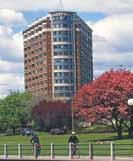
SUDAN
Embassy of the Republic of the Sudan
354 Stewart Street
Ottawa, Ontario K1N 6K8
TEL 235-4000 FAX 235-6880
SWEDEN
His Excellency Teppo Markus Tauriainen
Embassy of Sweden
377 Dalhousie Street
Ottawa, Ontario K1N 9N8
TEL 244-8200 FAX 241-2277
Sweden ottawa@foreign ministry se www swedishembassy ca
SWITZERLAND
His Ex Ulrich Lehner
Embassy of Switzerland
5 Marlborough Avenue
Ottawa, Ontario K1N 8E6
TEL 235-1837 FAX 563-1394 ott vertretung@eda admin ch
SYRIA
Embassy of the Syrian Arab Republic
46 Cartier Street
Ottawa, ON K2P 1J3
TEL 569-5556 FAX 569-3800 www syrianembassy ca
TAIPEI Economic & Cultural office
David Tawei Lee, Representative
45 O’Connor Street, Suite 1960
Ottawa, Ontario K1P 1A4
TEL 231-5080 FAX 231-7112 publicaffairs@on aibn com
TANZANIA
His Ex Alex Crescent Massinda
High Commission for the United Republic of Tanzania 50 Range Road
Ottawa, Ontario K1N 8J4
TEL 232-1509 FAX 232-5184 tzottawa@synapse ca www tanzaniahighcommission ca
THAILAND
His Ex Udomphol Ninnad
The Royal Thai Embassy 180 Island Park Drive
Ottawa, Ontario K1Y 0A2
TEL 722-4444 FAX 722-6624 thaiott@magma ca
TOGO
Embassy of the Togolese Republic 12 Range Road
Ottawa, Ontario K1N 8J3
TEL 238-5916 FAX 235-6425
TRINIDAD AND TOBAGO
His Ex Philip Buxo High Commission for the Republic of Trinidad and Tobago
200 First Avenue, Third Level
Ottawa, Ontario K1S 2G6
TEL 232-2418 FAX 232-4349 ottawa@ttmissions com
TUNISIA
His Ex Mouldi Sakri Embassy of the Republic of Tunisia 515 O’Connor Street
Ottawa, Ontario K1S 3P8
TEL 237-0330 FAX 237-7939 atottawa@comnet ca
TURKEY
His Ex Rafet Akgünay Embassy of the Republic of Turkey 197 Wurtemburg Street
Ottawa, Ontario K1N 8L9v TEL(613) 244-2470 FAX 789-3442 embassy ottawa@mfa gov tr www turkishembassy com
UGANDA
His Ex George Marino Abola High Commission for the Republic of Uganda 231 Cobourg Street
Ottawa, Ontario K1N 8J2
TEL 789-7797 FAX 789-8909 uhc@ugandahighcommission com www ugandahighcommission ca
UKRAINE
His Ex Ihor Ostash Embassy of Ukraine 310 Somerset Street, West, Ottawa, Ontario, K2P 0J9 Tel 230-2961 Fax 230-2400 emb_ca@ukremb ca www ukremb ca
UNITED ARAB EMIRATES
His Ex Mohamed Abdulla M Bin Mutleq Al Ghafli
125 Boteler Street
Ottawa, Ontario K1N 0A4
TEL 565-7272 FAX 565-8007
Consulate FAX: 565-1444 www uae-embassy ae/ca reception@uae-embassy com
UNITED KINGDOM
His Ex Andrew Pocock British High Commission 80 Elgin Street Ottawa, Ontario K1P 5K7 TEL . 237-1530 FAX 237-7980 www britainincanada org
UN REFUGEE AGENCY
Furio de Angelis
UNHCR Representative in Canada 280 Albert Street, Suite 401
Ottawa, Ontario K1P 5G8
Tel: 613-232-0909
Fax: 613-230-1855
www unhcr ca
UNITED STATES OF AMERICA
His Ex David Cary Jacobson
Embassy of the United States of America
490 Sussex Drive
Ottawa, Ontario K1N 1G8
TEL 238-5335 FAX 688-3088
www usembassycanada gov
URUGUAY
His Excellency Elbio Oscar Rosselli Frieri
Embassy of the Oriental Republic of Uruguay
130 Albert Street, Suite 1905
Ottawa, Ontario K1P 5G4
TEL 234-2727 FAX 233-4670
VENEZUELA
Embassy of the Bolivarian Republic of Venezuela
32 Range Road
Ottawa, Ontario K1N 8J4
TEL 235-5151 FAX 235-3205
www misionvenezuela org
VIETNAM
His Ex Sy Vuong Ha Le
Embassy of the Socialist Republic of Vietnam
470 Wilbrod Street
Ottawa, Ontario K1N 6M8
TEL 236-0772 FAX 236-2704
YEMEN
His Ex Khaled Mahfoodh Bahah Embassy of the Republic of Yemen 54 Chamberlain Avenue Ottawa, Ontario K1S 1V9
TEL 729-6627 FAX 729-8915
www yemenembassy ca
ZAMBIA
His Ex Nevers Mumba High Commission for the Republic of Zambia
151 Slater St , Suite 205
Ottawa, Ontario K1B 5H3
TEL 232-4400 FAX 232-4410
ZIMBABWE
Her Ex Florence Zano Chideya Embassy of the Republic of Zimbabwe
332 Somerset Street West Ottawa, Ontario K2P 0J9
TEL 421-2824 FAX 422-7403 info@zimottawa com visa@zimottawa com www zimottawa com










Volvo Cars Diplomat Sales has been serving the diplomatic community with private and official cars since 1956. The program includes unique benefits such as competitive prices, special diplomatic offers, various specifications, customized delivery, international warranties and more. Please contact your Volvo Diplomat dealer St. Laurent Volvo in Ottawa to learn more about how to enjoy your special diplomatic benefits.
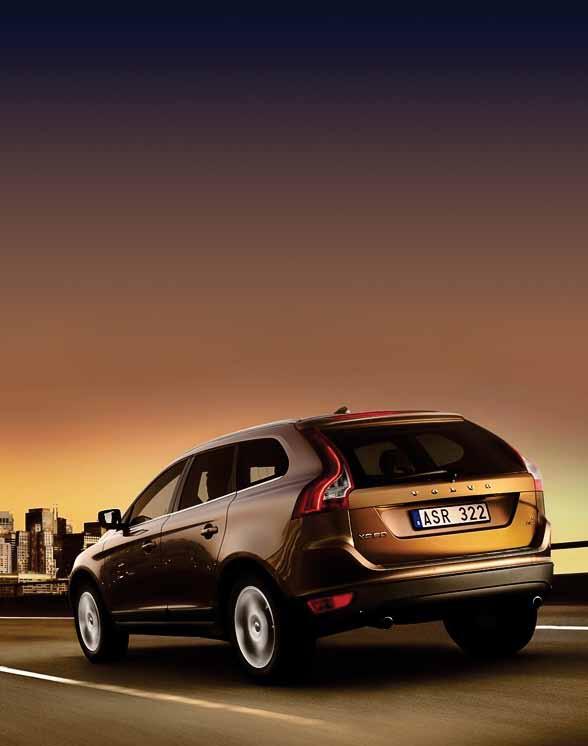
THE VOLVO XC60 AND VOLVO S60 TEST DRIVE THE AWARD WINNERS
With advanced dynamic chassis, stunning design and powerful engines, the Volvo XC60 crossover and the Volvo S60 sedan offer fantastic driving experiences - and they are among the safest cars you will find on the market. Both models have received multiple awards such as 'International Truck of the Year' and 'International Sedan of the Year,' along with great reviews in leading automotive magazines. Test drive at your authorized diplomat dealer, St. Laurent Volvo in Ottawa.
ejohnson@stlaurentvolvo.com



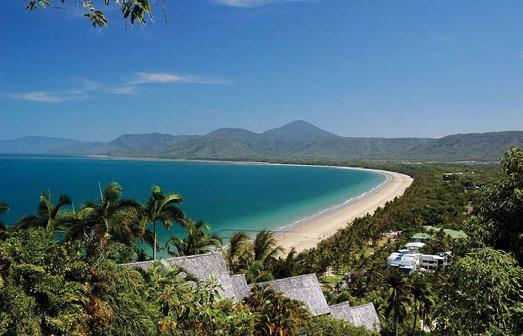
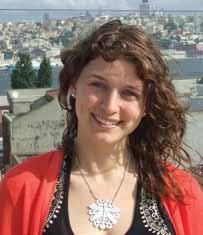
By Jessie Reynolds
Cairns: Days 1-6
As a natural spectacle, North Queensland is comparable to the Rockies in Canada or Death Valley in the U .S It offers, in other words, a unique experience . On my 14-day tour, I made sure to visit Cairns and Port Douglas before heading south to Sydney
Cairns (pronounced ‘cannes’) has the towel and postcard stores of many oceanside towns, but also offers fine dining, a well-maintained boardwalk and various public parks, including a children’s playground straight out of Tim Burton’s imagination
The Hilton Cairns is an ideal base for your North Queensland visit It’s close to ocean, city and esplanade The restaurant, Hanuman, provides a great breakfast buffet (Once we worked through the difference between tomato sauce and ketchup — there is none — and the difference between a latte and flat white — again,
they’re the same thing — I very much enjoyed my early morning meals ) By night, Hanuman transforms into a fine Indian restaurant with dishes of amazing variety. When it comes to wine, be ready anywhere in Australia for pages of menus listing only Australian wine by region, and rightly so (Aside from a slightly acidic edge, the house wines are generally quite good ) Hanuman has a winner in an Australian Sauvignon Blanc, Salitage Treehouse (2008)
The Hilton offers fantastic service, both in terms of dining and front desk and concierge staff . They are incredibly knowledgeable, friendly and happy to direct you to off-the-beaten-track dining, shopping and bar options They also will accommodate requests, no matter how unusual Har der pillow? Not a problem Store your bags for a day, three days after you checked out? Of course . Still, if you want water with lunch, or a morning coffee, be ready to ask at least two different people
and to wait for between 10 to 20 minutes
Spend one day walking the boardwalk It might take only an hour or so to go from start to finish, but stop at some of the restaurants, shops, cafés (which make truly excellent coffee) and the numerous gelato shops, and the day will race by happily.
The boardwalk also covers the resort and yacht club area, then past local bars and stores, and the uniquely-shaped (and very large) public swimming pool It could easily belong to a five-star resort and looks out over the ocean to the mountains
Several tours leave from Cairns to the Great Barrier Reef and nearby rainforests I recommend skipping the Ocean Spirit dinner cruise . The boat stays in the harbour, traveling in slow circles, and doesn’t provide views any better than had it stayed moored to the pier Many of the best tours depart from Port Douglas, an hour north of Cairns
A short drive from downtown Cairns — “hire” a car, take the bus or hail a cab — is the A J Hackett Cairns bungee jumping company. If you aren’t the sort to try it, they also operate a gigantic swing that sends horizontally prone patrons zooming down a huge arc at incredible speeds If you are more of an observer, or need some liquid courage, they also have a well-stocked bar and make a mean white Russian
A lso close to Cairns is the Kuranda cable-car and railway . The company’s website (www .ksr .com .au) has extensive information about travel options Allow at least six hours for both legs of the trip I opted for the cable-car going one way and for the railway on the return The cable car takes you to Kuranda via two stops in the jungle at which you can take a guided tour, explore on your own, or just find a place to lean and look at the beautiful waterfalls .
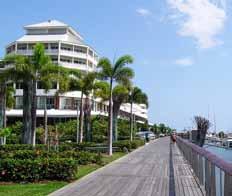
Located
Kuranda is a somewhat charming — and distinctly friendly Go through town towards the amphitheatre and you will pass entrances to very beautiful jungle walks (of varying degrees of difficulty) Coming from eastern Ontario, I’m used to walking carelessly through forests . In North Queensland, it’s safest to operate on the assumption that everything is poisonous: spiders, caterpillars and plants Wear closed-toe shoes whenever you’re leaving a town or city and carry bug spray, even if you’re there in the Australian winter
The Kuranda jungle paths take you past ancient trees, plant-filled valleys, streams gliding over shallow waterfalls and along riverside pathways . If you take the cable car into Kuranda and the railway back, you see more than if you use one transportation method round trip The cable car affords an amazing view of Cairns, the ocean and the nearby mountain ranges The train takes you around heart-poundingly sharp corners beside a mountainside cliff and through several tunnels . The train station is directly beside the main shopping centre in Cairns that offers anything you might need (towels, local gifts, clothing, boomerangs, etc ) Note that most of the shops in Cairns close at 5:00 p m and only the night market (featuring mostly trinkets,T-shirts, on-site massages, leather hats and overpriced local opal jewelry), which is near Cairn’s central bus station, is open for shopping after hours
It seems that everything closes early due to the mass exodus to restaurants and bars Cairns, in the downtown core, caters to backpackers and a somewhat younger demographic So be ready for noise if you go into town and leave the boardwalk .
If you want a few minutes of solitude, kick off your shoes, walk along the boardwalk to the public pool, dip your feet in the water and enjoy the breeze coming off the ocean — and then head to the patio at Villa Romana Trattoria for a flat white Sitting there in the sun, sipping coffee and writing my postcards was the perfect way to say goodbye to Cairns after a wonderful week .
Port Douglas is a much more natural escape than Cairns It’s the gateway to the Great Barrier Reef, the Daintree National Park and many other natural attractions There are fewer backpackers and less feeling of evening excess . That’s not to say that there isn’t a thriving nightlife, though Some of the restaurants and bars in Port Douglas are the most popular in the entire region
No matter where you’re staying downtown, take a morning walk towards Four Mile Beach and you’ve basically mapped the whole town You can orient yourself using the one main street, the marina and Four Mile Beach .
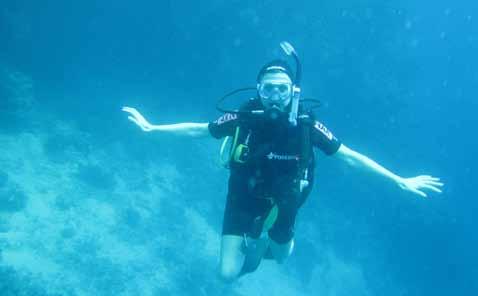
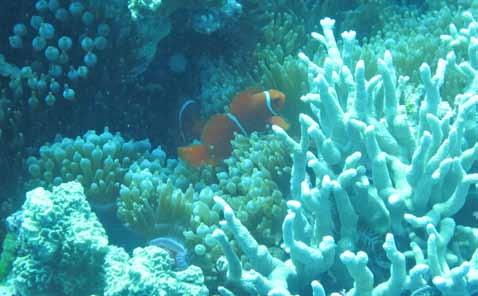
If you can, stay near the town’s main street or near Four Mile or opt for one of the many inclusive apartment residences These often have pools, kitchenettes, inroom laundry facilities and patios which are great for enjoying your homemade pina coladas and margaritas The Port Douglas Queenslander has one of the best rates, an excellent central location and, despite a lack of some common amenities (shampoo, extra towels, evening service and an office that closes at 9 p m ), it’s a good option if you’re staying for more than a few days I found myself appreciating the laundry machines as you will certainly use all your towels at least twice a day
You will find grocery marts that provide ingredients for a fantastic meal . This
comes in handy when you’re ready for a break from the astronomical prices of a meal in Port Douglas, and Australia, in general (Comparisons are easy as the Canadian and Australian dollars are roughly equivalent ) A plate of pasta? $30 One small scoop of gelato? $5 One side garden salad? $15 Having said that, make sure you head to 2 Fish for the barramundi dinner . Tell the restaurant’s Nick that Gerhard — a local tour guide who recommends the place — sent you
For breakfast every day, I walked to the Beaches Café on Four Mile Beach The owners are fantastic and will make whatever you want if they have the ingredients Show up before the 8:00 a .m . rush and get your breakfast to go, walk 10 meters to the beach and sit on the golden sand to enjoy
your breakfast and (heavenly) cappuccino
The tourists of Port Douglas disappear between 8 a m and 5 p m — due to the numerous one-day adventures on offer
Try the scuba diving day at the Great Barrier Reef with Poseidon Tours . Buses pick you up at your hotel (regardless of where you’re staying in town — be out front or be prepared for the honking horn when the driver arrives) We were on the boat by 8:30 a m and ready to start diving (after a very in-depth and humour-filled lesson) by 10 a m when we arrived at the reef Alternatively, you can snorkel above the reef
John De Boer, who’s been diving for more than 20 years, was our leader . He took all the stress out of the experience and did everything he could to make it memorable I recommend doing all three available dives Each site is different We visited one site with cliffs of reef that made you feel as though you were parasailing rather than scuba diving The sheer size and the presence of sea turtles, sharks (smaller reef sharks, though we were told to be diligent in looking for larger sharks nearby and to head towards the bottom of the reef if we did see one) gave it a prehistoric feel Another dive was a shallow underwater hill with more sand and colorful fish (including Nemo) By the last dive, you’re a seasoned pro and can enjoy taking underwater pictures
Either bring your own underwater camera or rent one of their high-quality underwater Canons for $55 The advantage of renting the camera on board is that they can simply swap your camera’s memory card and return it to you afterwards They also offer a fairly impressive lunch .
If you’re doing a half-day tour, or are taking a day off from tours just to relax, rent bikes to tour the city, shop in Port Douglas or head 20 minutes out of town to Silky Oaks for afternoon tea It’s a gorgeous (but not conveniently located) resort near Port Douglas The entrance is framed with tall, beautiful, windblown sugar cane plants .
The local community of Mossman, a city close to Port Douglas, relies on sugar cane for much of the region’s employment With a decrease in production over the past few years, the sugar refinery in Mossman is innovating and has recently registered a patent to use different, fibrous parts of the plant as a natural sweetener The sugar-farming community works as a cooperative, using a railway that circles the cane fields and harvests an equal portion of each farmer’s plantation so no
individual farmer is affected by daily price increases and decreases Also, local farmers are planning to grow cocoa, vanilla and sugar cane, a combination they say makes this area unique as the only one to grow the main ingredients for purely locally made chocolate .
After a day at the reef, or fishing, dry off and go visit the other natural wonders in the area, such as Daintree National Park Take a look at the many pamphlets, which seemingly are on every flat surface in the town, or just sign up with BTS Tours They’re flexible (I called at 6 p m for a tour for the next day at 8 a m without a problem .) Their Daintree Rainforest tour starts off with a very informative jungle walk which takes you past ancient trees Tour guides place the age of one of them at somewhere between 600 and 1,200 years Aside from just being in the rainforest, hearing the silence (many of the animals are nocturnal) and feeling small and awestruck, keep your eye out for gigantic spiders — and take in babbling brooks heading down into deep valleys, towered over by the huge sun-stealing trees that form the rainforest’s canopy
The Daintree National Park is a UNESCO World Heritage site and has certainly earned this honour as the world’s oldest continuously living rainforest Locals and tourists take good care of it, including those few residents who live (without electricity connections and using only generators) on the Daintree side of the Daintree River, which you reach only by ferry
After a jungle walk, BTS took us to see Al, the operator of the only Daintree River boat cruise The cruise was a lovely opportunity to put on more bug spray and enjoy
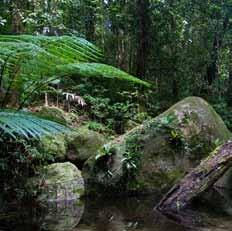
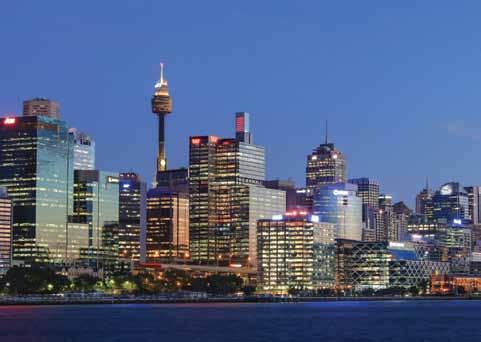
the breeze coming off the ocean .
A l talked mostly about the importance of the mangroves (around 30 of the world’s 60 varieties exist in the Daintree area) and why preservation of this unique tree is necessary to the ecosystem in the area He also spoke quite a bit about crocodiles, which seems to be a common pastime in Australia’s north . All of the locals have at least one story about their pet being eaten, seeing one while out fishing or warning tourists to take the threat seriously On the cruise, Al pointed out several logs which turned out to be fourmeter crocodiles Used to the sound of his boat (a glorified tin can), they would swish their gigantic tails and swim alongside us for a few minutes before heading back to the river’s edge to wait for an unsuspecting pet, tourist or wild pig
After the boat tour, we headed to the BTS campsite With a small natural clear water pond at hand, we canoed and swam (“don’t worry about the eels, they’re more scared of you than you are of them”) while our guide prepared lunch – fantastic barbecued Australian lamb (and fish and vegetarian alternatives) with several other side dishes, including coconut rice and a fresh fruit salad
After lunch, we tour ed Cape Tribulation (“Cape Trib”), Cow Bay and, of course, a gelato shop The beach at Cape Trib is a large, gorgeous semi-circle of pale sand and a very shallow decline into the ocean . At the very least, take your shoes off and walk along the surf (being mindful
of the crabs that are hidden just below the sand’s surface)
sydney is like a more-southern Vancouver but bigger (population: 4 5 million) with more varied neighborhoods and crazy, crazy driving
There is so much to do that you need at least two weeks to see it all . In my five days, I managed a sort of “must see” list, but did miss a few
Downtown Sydney is divided into sections Circular Quay is a harbour-front region Its ferries will take you to wellknown Manley and other ocean-side suburbs of Sydney . The ferry is a cheap and fantastic way to get views of the city, the famous Opera House and Harbour Bridge Darling Harbour contains the downtown skyscrapers and much of the dining and nightlife in the city The Rocks, the first settled area in Sydney, has many historical buildings and higher-end artisan stores Kings Cross is the city’s red light district which, during the day, at least, is interesting . Further afield are Manley and Bondi, the latter of which boasts the worldfamous surfing beach
The entire city is peppered with amazing shopping and dining At Sushi Rio in Darling Harbour, the chefs stand in the middle of a bar fitted with an electronic sushi train . They’ll tell you what’s in each roll that makes its way past you and will also make sushi to order . It was fantastic
and one of the cheaper meals I had in Sydney, at around $40
A city walk through downtown offers architectural explorations with museums, churches — make sure to see St Andrew’s Cathedral after dark — and the Queen Victoria Building (a shopping centre) .
The Sheraton Four-Points hotel is very well located in Darling Harbour, a 15-minute walk to Circular Quay, the Rocks and downtown shopping It offers fairly good rates and is part of a trusted hotel chain Due to Sydney’s prices, you might consider a smaller boutique hotel Make sure to check the online specials for the large chain hotels downtown . I was offered a “free night” coupon The Sheraton’s breakfast buffet is fantastic Or, equally timesaving is McDonald’s and enjoy the Mates Brekkie Box, if only to have a chance to reflect on the subtle language differences between Australia and North America Professor Henry Higgins would surely be fascinated . (They have lackies, we have elastics They have a long black and we have a coffee . Something suspicious to us is suss to them ) Another cuisine tip: La Renaissance Café and Patisserie, where the fruit custard tart and French custard layer pastry will make you wish you had
skipped lunch and headed right to dessert This convenient ly located eatery at the Rocks should be on the cuisine bucket list of all Sydney travelers
As many tourists do, I headed to Bondi Beach for a day of surfing . Let’s Go Surfing offers group and private lessons and is the only school to operate on the famous beach It is so famous, in fact, that the lifeguards are featured on their own TV show The water, year round, is quite warm, but be ready for chilling winds if you are suiting up in the winter, as I was We had the beach to ourselves and after some good instructions and lessons, I was able to get in some real surfing . And the feeling is unbelievable
After surfing, head to Gould Street for great Bondi shopping when you’re ready for a break from the main street’s tourist beach shops Don’t miss Abode for unique gifts and jewelry and Gusto Espresso Bar when you need some energy Having eaten my way across the east coast of the country, I was pleased to finally find an edible salad in Australia . Le Paris Go, a charming café filled with locals, has an amazing grilled halloumi cheese salad
Getting around Sydney is quite simple if you’re willing to try the bus system
Just make sure to buy your tickets from convenience stores as many routes don’t sell them on the buses themselves It’s a great way to get back and forth to Bondi and it takes you through several parts of the city that you wouldn’t otherwise see The city also has an efficient monorail and train system
Back downtown, I headed for the major shopping area There are three or four large shopping centres side-by-side downtown They range from big box stores to high-end malls filled only with luxury-priced boutiques . If you’re looking for a different shopping experience, visit Paddy’s Market or Paddington — both are an experience
After shopping what else is there to do but head out for an excellent lamb dinner?
Adria Rybar & Grill in Darling Harbour served a combo dinner (if you’re seated between 6 and 7 p m , you get a glass of house wine, a main course and dessert for $30 .) The sticky date pudding was fantastic . If you’re looking for something quick and fun, head to Pancakes on the Rocks (in Darling Harbour) They have unusually good prices compared to their neighbours
At 8:30 a m , the first Hop On Hop Off city tour bus arrives at the Sydney aquarium Next, get off at the Opera House to have a glass of wine at the Opera Bar (try Bantry Grove’s 2009 Chardonnay), walk over to the nearby gardens and then hop back on until you’re ready to catch the other bus to Bondi
For something special on my last night, I walked around the harbour and ended up at Nick’s, the premier seafood restaurant in the city The prices were totally unreasonable, but the food was unparalleled While bug salad might not sound appealing, it is actually a slightly sweeter and lighter version of lobster and provided the culinary highlight of the whole trip The shared seafood platter (complete with lobster, mussels, oysters, calamari, john dory, king prawns and blue swimmer crab) was the scene stealer at most tables, creating both a tower of seafood and also a fun and romantic mood for couples sharing the dish
From its Barrier Reef to its mountain-ofseafood supper, Australia invites a traveler to memorably experience a unique part of the world through the senses — on a truly grand scale
Jessie Reynolds lives in Toronto and works as an analyst with Barrick Gold Corporation’s Security and Crisis Management Group She travels whenever she can




Behind this beautiful renovation is a team of experts. And well-honed processes that were over 55 years in the making. This and more ensured a worry free, meticulously planned renovation. When you look closer at OakWood, you’ll see why your renovation will be completed to the highest quality, on-time and on-budget with no surprises. Visit OakWood.ca to schedule a free QuickQuote for your renovation
oakwood.ca 613 236.8001