
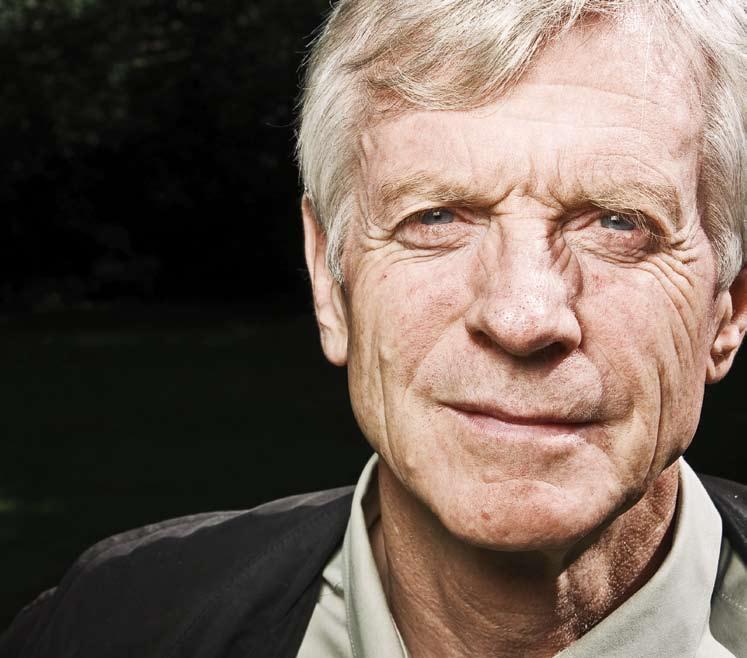

George Fetherling: To Timbuktu and beyond
Aaron Shull: Why Canada needs a foreign spy agency
Destinations: A special invitation to Brazil






PUBLISHER
Neil Reynolds
ASSOCIATE PUBLISHER
Donna Jacobs
EDITOR
Jennifer Campbell
ART DIRECTOR
Paul Cavanaugh
ADVERTISING ADVISOR
Cu Van Ha
cu@prestoncatalogue com
1-613-262-4908 or 1-416-600-4908
COPY EDITOR
Roger Bird
CONTRIBUTING EDITORS
Daniel Drolet
George Abraham
CULTURE EDITOR
Margo Roston
CONTRIBUTING WRITERS
Luis Arias
Laura Neilson Bonikowsky
Don Cayo
Margaret Dickenson
George Fetherling
David Kilgour
Paulo Cordeiro Pinto
Pieter Van den Weghe
CONTRIBUTING PHOTOGRAPHERS
Ulle Baum
Bruce McCrae
Frank Scheme
Lois Siegel
Ben Welland
Dyanne Wilson
BUSINESS MANAGEMENT
Jessie Reynolds
WEBMASTER
Leslee McCabe
DIPLOPORTAL WEB PARTNERS www diploportal com
Alastair Sweeny
Richard Evers
(Northern Blue Publishing)
PUBLISHER EMERITUS
Lezlee Cribb
ADVERTISING INQUIRIES
Contact Neil Reynolds or Donna Jacobs reynolds diplomat@sympatico ca jacobs diplomat@sympatico ca
SUBSCRIPTIONS
Diplomat & International Canada is published six times a year
Subscription rates: individual, one year $35 70 For Canadian orders add 5 per cent GST U S orders please add $15 for postage All other orders please add $25
SUBMISSIONS
Diplomat & International Canada welcomes submissions Contact Jennifer Campbell, editor, at editor@diplomatonline com or (613) 231-8476
DIPLOMAT & INTERNATIONAL
CANADA
P O Box 1173, Station B
Ottawa, Ontario Canada K1P 5R2
Phone: (613) 259-3038
Fax: (613) 259-5481
E-mail: info@diplomatonline com www.diplomatonline.com
Published by


Get the new year off to a great start Explore the latest in automotive luxury. Order your new custom-built Volvo of your choice and enjoy on all packages and options* . Hurry to your Volvo agent to take advantage of this limited-time offer After that , all aboard and off you go Life is better lived together
Order your new custom-built Official Embassy Volvo and receive up to current Diplomat Pricing Privileged to serve you.
*discount already included on S60 and S80 pricing posted in this ad
* SPECIAL NE W YE AR SAVINGS OFFE R (ME TALLIC NOT IN CLUD E D) VALID ON VOLVO S8 0 , S60 , V70 , XC70 , XC90 AND C70 UNTIL MARCH 31 , 20 0 8
In s p i t e o f m u c h e a r n e s t t a l k b y g o v -
e r n m e n t s , c o a l i t i o n s , a n d t h e U n i t e d
N a t i o n s i t s e l f , h u m a n r i g h t s a b u s e s persist while the world passively watches It’s a source of great frustration for David K i l g o u r, a l a w y e r a n d p o l i t i c i a n w h o ’ s spent most of his life fighting for international causes. This tall wiry man with the agility and energy of an Olympic athlete will take up pretty well any cause when he perceives injustice I remember running into him one evening in Room 200 of the West Block With his trademark lightning speed, he gave me the details of a story about a young Iranian who was about to b e e x e c u t e d. “ I s t h e re a n y t h i n g y o u c a n do?” he asked. “They’re going to kill him tomorrow ”
T h a t ’ s w h a t D a v i d K i l g o u r d o e s A n
i n j u s t i c e h a s o c c u r r e d ? D o s o m e t h i n g – now One of his best-known efforts was h i s l e a d e r s h i p ro l e i n p ro d u c i n g a n i ndependent report, co-authored by David Matas, senior legal counsel for B’nai Brith Canada, into allegations of organ harvesting of Falun Gong practitioners in China. B u t t h a t ’ s j u s t o n e e x a m p l e – t h e re a re dozens more causes he has championed in the name of basic human rights
I n o u r c o v e r e s s a y, M r K i l g o u r l i s t s
t h e w o r l d ’ s h u m a n - r i g h t s t ro u b l e s p o t s and argues that Canada must reassert its o n c e - g o o d i n t e r n a t i o n a l r e p u t a t i o n b y encouraging democracy in the planet’s 40 surviving despotic regimes. He also offers a five-point plan on how Canada can encourage democratic revolution in China
In the same package, Diplomat contributor Don Cayo visits some of the world’s m o s t t ro u b l i n g p l a c e s : t h e K i l l i n g F i e l d a t C h o e u n g E k , w h e re P o l P o t ’ s K h m e r Rouge killed some 20,000; Auschwitz and Birkenau, where German Nazis and their
c o - c o n s p i r a t o r s k i l l e d a s m a n y a s 1 . 5 m i l l i o n , m o s t o f t h e m J e w s ; a n d t h e n t o Rwanda where Hutus hacked hundreds o f t h o u s a n d s o f t h e i r Tu t s i n e i g h b o u r s to death Mr Cayo discovered that these s a c re d s i t e s o f re m e m b r a n c e a re t re a t e d

b y s o m e a s a m u s ement parks of evil b ut h e s t i l l r e c o m m e n d s v i s i t i n g t h e m b e c a u s e most people treat them with the solemnity they deserve. On a personal l e v e l , h i s g r i m t r a v e l s stirred in him a resolve to speak out sooner and more strongly
Both Mr Kilgour and Mr Cayo make t h e p o i n t t h a t w h i l e w e f e r v e n t l y t h i n k “never again,” we keep seeing atrocities “again and again ”
H u m a n r i
t s w e re f ro n
c e n t re this summer thanks to last month’s Beijing Olympics which also brought attention to another world problem: the environment. R e p
p
sions, is adding emissions equivalent to those of Alberta, every single month, she discovers.
There’s much else in this issue. Writer
reviewer George Abraham looks at recent publications on oil; food columnist Margaret Dickenson offers a few culinary tricks while culture editor Margo Roston tours
Fatma Al-Khalifa.
And, we introduce a new wine columnist Beckta dining & wine customers will know Pieter Van den Weghe’s face He’s been running the front part of the restaurant for the past couple of years and took o v
s Stephen Beckta, who’s been delighting our
i n c e 2004. But time pressures involved in opening a second restaurant meant he had to put his pen to rest And, we know you’ll enjoy the words of his successor Welcome, Pieter
Jennifer Campbell is Diplomat’s editor
Photographer Ben Welland: “I felt I was going into this shoot blind. I hadn’t researched this man at all I’d forgotten that a month earlier, when researching organ harvesting in China, I’d seen a press conference he’d done I was sure that the guy behind the podium was the next social awareness prophet Then, in his garden photographing him, I realized the unthinkable I’d promised I wouldn’t forget But I did His name His cause Everything I am a part of the problem. I picked the man’s brain. Now I'm a champion for his cause. People need to know. And I needed to remember.”
David Kilgour, cover essay author
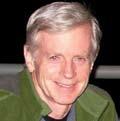
David Kilgour, one of Canada’s longests e r v i n g M P s , t o o k a h a n d s - o n c o u r
in international affairs as Secretary of State Latin America and Africa (’97-’02) and Secretary of State, Asia-Pacific (’02’03). His domestic experience is equally extensive In the Conservative governments of Joe Clark and Brian Mulroney, h e
minister for CIDA, minister of Indian a n d N
transport.
Since his ‘retirement’ as an MP in 2005, he has given speeches and met with prod e mo
s He is a fellow of the Queen’s University Centre for the Study of Democracy and a director of the Washington-based Council for a Community of Democracies (CCD)
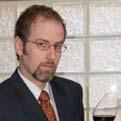
Pieter Van den Weghe, Diplomat’s new wine columnist
P i e t e r Va n d e n We g h e i s t h e s o m m elier and a service manager at Ottawa’s re n o w n e d B e c k t a d i n i n g & w i n e A t Beckta since June of 2006, he had previo u s l y b u i l t u p m o re t h a n 1 3 y e a r s o f e x p e r i e n c e s e r v i n g i n a n d m a n a g i n g restaurants and hosting countless wine e v e n t s a n d d i n n e r s . M r. Va n d e n Weg h e i s a g r a d u a t e b o t h o f A l g o n q u i n College’s Sommelier Program and the Wine and Spirits Education Trust’s Advanced Certificate (with a WSET Professional Certificate in Spirits thrown in for fun) Whether it’s looking after guests a t B e c k t a o r g u i d i n g p e o p l e t h ro u g h a t u t o r e d w i n e t a s t i n g , M r Va n d e n Weghe’s style of service is warm, informative and subtle.
’The
Nazanin Afshin-Jam responds to Diplomat’s interview with Iran’s chargé d’affaires
Af t e r r e a d i n g a n i n t e r v i e w w i t h
Seyed Mahdi Mohebi, the (former) c h a r g é d ’ a f f a i r e s o f t h e I s l a m i c Republic of Iran’s Ottawa embassy in the July-August issue of Diplomat magazine, I shook my head in disbelief
He said: “Iran has turned into a great country Just compare for a moment what Iran was before to what it is now – in any arena, whether military, education, wome n ’ s i s s u e s , i n d u s t r y. A l l o f t h e s e h a v e been changed during these 30 years [since the revolution] regardless of enemies, regardless of pressure and sanctions For a little example, 55 per cent of Iran’s university educators are women ”
I f I r a n h a s “ t u r n e d i n t o s u c h a g re a t country,” why would it be experiencing the No 1 brain drain in the world as docum e n t e d i n I M F ’ s 2 0 0 6 re p o r t ? W h y a re thousands of Iranians escaping via dang e ro u s ro u t e s t h ro u g h I r a q ’ s l a n d m i n einfested mountains to try to claim refugee status through the UNHCR?
Iran is one of the wealthiest countries in the world, but its leaders are more interested in expanding Islam, in supporting f o re i g n f a c t i o n s s u c h a s H e z b o l l a h a n d H a m a s t h a n l o o k i n g a f t e r t h e i r c i t i z e n s ’ social welfare. One-third of Iranians live u n d e r t h e p o v e r t y l i n e a n d m a n y m o re must work two or three jobs just to make ends meet This explains the massive unemployment, excessive inflation, despondent population and spike in drug abuse, prostitution and HIV/AIDS
Iran has the highest number of executions in the world per capita. Students who s t a n d u p f o r f re e d o m , w o m e n w h o d emand equal rights and workers who ask for their right to unionize face imprisonment, torture and even execution Thousands more are being persecuted daily for their ethnicity or religious beliefs Among the most oppressed are the Baha’is, whose seven leaders were recently arrested and whose students are not allowed to attend university unless they recant their faith.
While Iran’s founding father, Cyrus the G re a t , a d v o c a t e d f o r re l i g i o u s t o l e r a n c e a n d a n e n d t o s l a v e r y 2 , 5 0 0 y e a r s a g o , today, Azeris, Kurds, Baluchis, Christians, Z o ro a s t r i a n s , J e w s , S u n n i M u s l i m s a n d Sufis fear the implementation of a new bill calling for the execution of converts and o f b l o g g e r s w h o p ro m o t e “ p ro s t i t u t i o n , apostasy or corruption.”
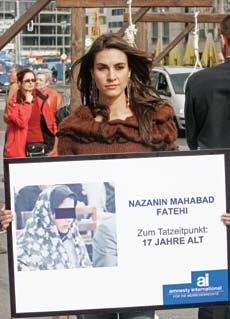
sentenced to hang in Iran in 2007 for defending herself and her niece during an attempted rape.
How can women’s conditions have improved – as Mr. Mohebi suggests – when the life of a woman is valued at half of a man’s life under the law?
Why was Nobel Peace Laureate Shirin Ebadi forced to stop practicing as a judge simply based on gender? Women can no longer run for the presidency, let alone attend a soccer match at the local stadium They must ask permission from their husbands or fathers to travel. There is inequali t y i n d i v o rc e , c u s t o d y a n d i n h e r i t a n c e laws, to say nothing of the forced veiling of women Mr Mohebi credits the current regime with the success of women’s 55 per cent participation in university teaching Why, then, has a new bill been introduced in parliament to put a quota on admitting women to university?
Mr. Mohebi is wrong to claim “Iran’s j u d i c i a r y s y s t e m i s j u s t l i k e a n y o t h e r country’s. It’s a system that works independently It has rules we must trust the system, the judge ”
We cannot trust a system that stones to death Jafar Kiani for adultery despite the order forbidding that execution from the head of the judiciary
How can we trust a system that executes c h i l d r e n i n b r e a c h o f t h e I n t e r n a t i
Covenant on Civil and Political Rights and the Charter of the Rights of the Child – to which Iran is a party – with more than 130 minors currently on death row?
What other “judiciary” allows its judges to rule based on elm-‘ghazi (divine knowle
engaged in homosexual activity with a 13year-old boy and so hanged in public?
I w a s a l s o o ff e n d e d t h i s
M
about Zahra Kazemi, who was an Iranian national We have gone through that It’s a little off the topic now ”
A C a n a d i a
tured and murdered in the hands of Iran’s government Her body has still not been re t u r n e d t o h e r s
n i n C a n a d a We c a n never talk too much about Zahra Kazemi, even if Saeed Mortazavi, himself, an official implicated in her murder, is tried in an international tribunal for crimes against humanity
I h o p e t h a t t h e r e a d e r s o f D i p l o m a t recognize that President Mahmoud Ahmadinejad, supreme leader Ali Khamenei and charge d’affaires Seyed Mahdi Mohebi do not represent the voices of the Iranian people, the vast majority of whom thirst for a free, secular, democratic system based on human rights and the rule of law
If the contents of this letter were ever b ro a d c a s t i n I r a n i a n m e d i a , t h
likely be imprisoned and possibly killed
Edi t o r ’s no t e : Nazanin Afshin-Jam was b o r n i n Te h r a n d u r
n g t h e I r a n i a n R e v o l ut i o n . H e r f a m i l y w a s f o rc e d t o f l e
migrate to Canada when her father was jailed a
under the new regime. She is an international h u
r, actress and former Miss World Canada 2003. S h e i s c o - f o u n d e r a n d p re
t h e S
o p Child Executions organization and currently serves on the board of the Canadian Race Relations Foundation. Ms. Afshin-Jam mounted a s u c c e s s f u l c a m p a i g n
Fatehi, 21, sentenced to hang in Iran in 2007 for defending herself and her niece during an a
one of their three attackers Ms Afshin-Jam received the “hero for human rights award” at the UN, and will be given the UBC alumni global citizenship award this fall.
Our Caribbean countries have a unique relationship with Canada, going back to the
c o l o n i a l p a s t w h e n , f o r a t i m e , the Atlantic provinces and some
C a r i b b e a n t e r r i t o r i e s s h a r e d
t h e s a m e c o l o n i a l g o v e r n o r. Trade between the then-British
We st I n di e s a n d t h e At l a n t i c p r o v i n c e s b e g a n w e l l b efore those provinces traded
e l s e w h e re i n C a n a d a I t i s
n o t s u r p r i s i n g t h e r e f o r e that the fledgling Royal Bank of Canada established its first-
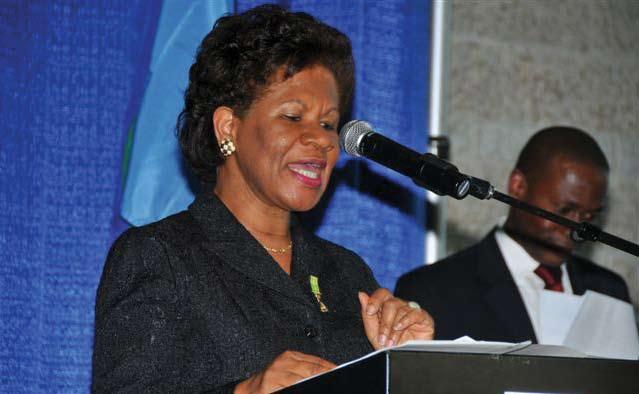
EvadnetheCoye,whoaddressed CARICOM reception June 4, 2008.
e v e r b r a n c h i n t h e B a h a m a s , w h i l e t h e Bank of Nova Scotia chose Jamaica as the site for its first branch. Nor should it be surprising that the most enduring items of our trade in goods are rum from the Caribbean and fish from Atlantic Canada
Today our relations are much more complex than (they were) then Flowing from our shared principles and values, we have m a n y c o m m o n c o n c e r n s a t t h e i n t e r n ational and regional levels, concerns which have seen us join forces to secure mutual objectives Canada has maintained its support of CARICOM development goals not only at individual country level, but also as a regional integration movement Touri s t s f ro m o u r c o u n t r i e s e x c h a n g e v i s i t s , though with the weather in our favour, the exchange is also in our favour.
I m p o r t a n t l y, t h o u g h , t h e p e o p l e - t opeople links are not just through tourism, as the substantial presence of Caribbean
cedents in all walks of life in Canada will a
the enrichment of Canada’s multicultural heritage At the same time, the Caribbean diaspora remains engaged with their native lands and supportive of our region’s thrust for sustainable development, good governance and the security of our demo c r a t i c i
citizens, they are well placed to influence political outcomes of interest to their native and adopted countries
We m a r k t h e 3 5 t h a n n i v e r s a r y o f t h e founding of CARICOM at a time of serio u s g l o b a l e c o n o m i c c h a l l e n g e s , c h a llenges which at best, could slow down the region’s development. The global prices o f f o o d a n d e n e rg y a re c a u s i n g di ff i cu lties for countries with stronger economies t h a n o u r s A
both developed and developing countries, any hope for a new development-centred g l
into the gulf of inflexibilities and protectionism. What began so encouragingly as t
Among those who could suffer most will
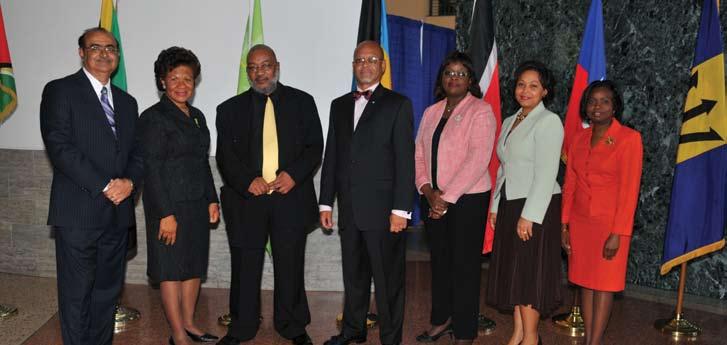
b e s m a l l , v u l n e r a b l e e c o n o m i e s s u c h a s ours in the Caribbean
While the deepening of our integration movement into the CARICOM single market and economy will help to mitigate the shocks, our openness to external markets will not spare us. If here in Canada it is said that when the U.S.A. sneezes, Canada catches a cold, CARICOM states could go as far as adding pneumonia to the imagery, since we would also catch cold from both Canada and the U S A
But this is not about gloom and doom It’s about confronting the challenges of the future and the strategies which at national and regional levels we implement to secure our objectives. It’s about recognizing a n d h o n i n g t h e c r e a t i v e g e n i u s o f o u r people and enhancing the opportunities of each sector of our societies to strengthen our development It’s about effective, coordinated response to the socio-economic issues which bedevil our countries And it’s about the support from, and collaboration with, friendly countries to achieve our development goals.
I t i s s i g n i f i c a n t t h e n , t h a t t h i s 3 5 t h a n n i v e r s a r y a l s o s e e s t h e d e e p e n i n g o f Canada-CARICOM relations, which took a positive step forward when (Prime Minister) Stephen Harper met with Caribbean leaders in Barbados in July last year We welcome the start of the implementation o f t h e p r o g r a m s f o r d e v e l o p m e n t s u pport which the prime minister pledged in Barbados. His visit marked the renewal of the exchange of high level visits between Canada and the Caribbean We look forward to the Canada-CARICOM summit to be held here later this year and anticipate t h e c o n t i n u a t i o n o f C a n a d a - C A R I C O M trade negotiations, which should lead to an agreement by the end of 2009.
O n b e h a l f o f t h e g o v e r n m e n t s a n d peoples of the Caribbean community, my c o l l e a g u e s a n d I a n d t h e s t a ff o f o u r respective missions affirm to you our vision
o f a C a r i b b e a n w h o s e c re a t i v e , re s i l i e n t
a n d s k i l l e d p e o p l e u n i t e s u c c e s s f u l l y i n the fight against poverty and for sustaina b l e d e v e l o p m e n t ; a C a r i b b e a n a l re a d y r e n o w n e d f o r i t s b e a u t y a n d g e n e r o u s
h o s p i t a l i t y, n o w t o b e k n o w n a s c e n t re s of excellence in various streams of human
e n d e a v o u r ; a C a r i b b e a n w h o se c h i l dre n a r e d r a w n b a c k t o p l a y t h e i r p a r t i n a v i b r a n t e con omy w h e re t h e r i g h t s of a l l are respected Our work here in Canada is sustained by that vision
Evadne Coye is the Jamaican high commissioner.

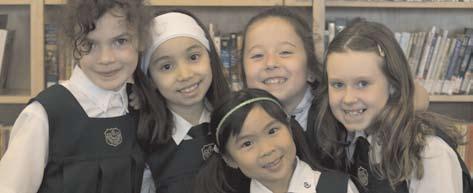
The Canadian Council for the Blind has created a relationship with not just one but several embassies and high commissions in Ottawa
S o f a r, t
the council by hosting fundraisers. Most hosted dinners for 10 to 20 people where the head of mission acted as the host and t h
raise money for its programs The council a l w a y s h a s a
d usually sends a couple of blind or visionimpaired clients as well
R o m a n i a n A
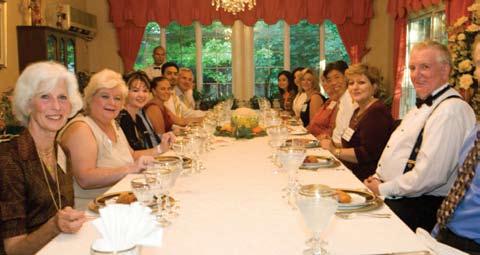
h
in her capacity as president of the Ottawa Diplomatic Association. The Iraqi embassy, under Ambassador Howar Ziad, co-hosted the event which attracted several diplom a t s , b u s i n e s s l e a d e r s a n d p o l i t i c i a n s , i n c l u d i n g H o u s e o f C o m m o n s S p e a k e r
Peter Milliken, and received support from Foreign Affairs and International Trade
“The embassies have shown real generosity,” said Jim Prowse, executive director of the council. “The dinners give us a chance to talk to them about our programs a n d i t g i v e s t h e m a c h a n c e t o t a l k t o u s and tell us about their organizations ”
O b v i o u s l y, t h e c o u n c i l h a s b e n e f i t e d financially from the relationships But it’s also gained a lot from the networking opportunities.
“ J u s t m e e t i n g p e o p l e f r o m d i f f e r e
helps,” Mr. Prowse said.
The council, for example, has started a computer training program for the blind and vision-impaired thanks to the funds r a i s e d T h a t m i g h t b e
t h i n g d i pl o m a t s w o u l d b e i n t e re s t e d i n d o i n g i n their countries, Mr Prowse said
“And there are the small things. Peter M i l l i k e n c a m e t o t h e R o m a n i a n e v e n t a n d c o m m
b we were doing for the blind That sort of thing keeps politicians focused on the issue,” he said
Many of the dinners came about after t h e C a n a d i a n C o u n c i l f o r t h e B l i n d i nvited diplomats to take part in its annual c u r l i n g b o n s p i e l . T h e F i n n i s h e m b a s s y used the opportunity to do a little team-
building with its staff, Mr. Prowse said.
“ We h a d a r e a l l y g o o d s h o w i n g a t that,” he said
His group is trying to create an intern a t i o n a l b l
g u
interest his new diplomatic contacts who might want to take the program to their countries too.
“ Yo u n e v e r k n o w h o w t
will grow,” he said.
The Thai ambassador hosted the most recent dinner and when one of the counc i l ’ s
hesitate: He offered to send a car around t o p i c k h e r u p A n d
u s
e o f many heartwarming stories he could tell, Mr. Prowse said.

FIRST NAME: Luis
LAST NAME: Arias
CITIZENSHIP: Dominican Republic
PRESENTED CREDENTIALS AS AMBASSADOR: Oct. 2, 2007
PREVIOUS POSTINGS: Professor and dean of legal sciences at University of Santo Domingo.
Th e D o m i n i c a n R e p u b l i c , a n a t i o n
w it h it s sha re of h i stor ic a l f i rst s, i s on t he verge of a not her – t h i s t i me i n its relat ions wit h Ca nada.
Quisqueya, as the Dominican Republic
u s e d t o b e c a l l e d b y i t s o r i g i n a l Ta i n o s inhabitants, is the site of the first permanent European settlement in the Americas In fact, it was the first colony in America – colonized by Spain in 1492 – and gained i t s i n d e p e n d e n c e f ro m H a i t i o n F e b 2 7 , 1844 to become a formal republic.
S a n t o D o m i n g o , t h e n a t i o n a l c a p i t a l , w a s a l s o t h e f i r s t c o l o n i a l c a p i t a l i n t h e New World and the site of the first cathedral, university, European-built roads and fortress
The latest first comes in the form of a partnership with Canada Final negotiations are under way for a free trade agreement (FTA) between the two countries to f o s t e r e c o n o m i c i n t e g r a t i o n b y p ro g re ss i v e l y e l i m i n a t i n g b a r r i e r s t o t r a d e a n d investment
B i l a t e r a l t r a d e r e a c h e d $ 1 6 0 m i l l i o n from January to May, with Canadian exports accounting for most – $112 million – or a 62 per cent increase over the same period in 2007
I n a re g i o n a l c o n t e x t , t h e D o m i n i c a n R e p u b l i c i s a m o n g a n u m b e r o f c o u ntries completing trade negotiations with Canada Mexico, Chile, Costa Rica, Peru and Colombia have already signed agreements
The Dominican Republic and Canada are coming up on their second round of n e g o t i a t i o n s , s c h e d u l e d f o r S e p t 2 9 i n Santo Domingo. The first round was held last December in Ottawa, with Dominican
and Canadian experts joining businessmen r e p r e s e n t i n g t h e Agrobusiness Board and the DominicanCanadian Chamber
o f C o m m e rc e T h e
r o u n d w e n t w e l l
a n d c o n c l u d e d
w i t h b o t h p a rt i e s t h i n k i n g t h e a g r e e m e n t c o u l d
b e f a s t - t r a c k e d a n d m a y b e c o mpleted by the end of 2008
ploratory meetings between Canada and t
a r t o f Canada’s formal effort, starting in 2007, of developing ties with Latin America and the Caribbean countries. Canadian agreements are on the horizon with Panama, El S a l v a d o r, H o n d u r a s , N i c a r a g u a , G u a t emala and the Common Caribbean Market, known as CARICOM
Canada already has a privileged status in the Dominican Republic, particularly in the mining sector, thanks to Barrick Gold’s $2.8 billion investment earlier this year in Cotui, a small town at the centre of the island According to official data, Canadian investment in our country, between 1996 a n d M a rc h 2 0 0 6 , re a c h e d $ 6 4 5 m i l l i o n , including mining, finance, tourism, trade a n d s e r v i c e s B
g ro w
s t The total investment for all of 2006 alone w a s $ 1 . 8 b i l l i o n t h a n k s t o
ments in the mining sector later that year. A C a n
countries, with heavy equipment exports f
ture Meanwhile, the Dominican Republic m a i n
textiles to Canada
D o m i n i c a n e x p o r t s t o C a n a d a a r e mainly nickel, agriculture products such as cacao, coconuts, vegetables and cigars, f i n e s t o n e s f o r j
p ro d u c t s f ro m C a n a
i a n i n v e s t m e n t s i n f re e z o n e s i n e l e c t ro n i c s , t e x t i l e s , a g ro -
i n d u s t r y, m e d i c
p p l i e s , c
t t o n a n d shoes Dominican’s free zones, like those elsewhere, receive raw materials imported f r e e o f t a x e s o r t a r i f f a n d e x p o r t f i n a l products under a special customs regime
to facilitate placement in the international market.
C a n a d i a n e x p o r t s a r e d i v e r s i f y i n g a connection that started in the early 18th century in the north part of the country a n d i n c l u d
q u i p m e n t , p r i n t i n g
products and the production of Dominican coins by the Royal Canadian Mint When it comes to tourism, the Dominican Republic beckons Canadians to desti-
nations like Puerto Plata, Samana, Punta C a n
from Canada, second only to those from
annual visitors from Canada in the next few years
In a globalized world, creating a climate of confidence and legal protection for foreign investors is in itself a form of capital. O
correspond to a universal legal framework of protection for foreign investment
Political life has been reinforced in recent decades to the point where we have an outstanding democratic process thanks to a free and transparent electoral process which has counted on high participation
At Accu-Rate Corporation our team of highly experienced currency traders and foreign banking partners allow us to negotiate currency prices lower than any other currency dealer or commercial institution.
For your personal consultation please call: Marie Boivin
Managing Director
613-596-5505 ext 101 marie@accu-rate.ca
Accu-Rate Corporation 2573 Carling Ave. (613) 596-5505 World Exchange Plaza 111 Albert St. (613) 238-8454

from its citizens and support from the international community
Our country covers 48,442 square kilometres and has almost 10 million inhabitants
O
modern in the Caribbean, receiving visitors and local travellers from eight international airports and 11 seaports situated close to production activities, and harness-
tions
This development has been spurred by a decade of intense free trade negotiations I
Panama Next came the 2004 Dominican R e p
Agreement with the U S
T h e D o m i n i c a n R
with CARICOM during negotiations with 2 5 E u ro p e a n U n i o n s t a t e s i n a re c e n t l y c o m p l e t e d a g r e e m e n t . C o l o m b i a a n d
M E R C O S U R ( t h e S o u t h e r n C o m m o n M a r k e t o f A r g e n t i n a , B r a z i l , P a r a g u a y and Uruguay) have expressed their intent i o n t o s i g n a F TA w i t h t h e
Republic
T h e m




agreement (as set out in Article XXIV of the 1994 Customs and Trade Agreement, p a r t o f t h
and the Dominican Republic are:
progressive elimination of trade and investment barriers;
• recognition of differences in size and degree of development among countries and equitable solutions to problems that arise from these differences;
• promotion, protection and enhancement of foreign direct investment
• diversification of trade;
• efficient bureaucratic procedures
The goals go beyond physical commodities They include immigration concerns, education, labour, professional recognition and environmental considerations.
Certainly an FTA with Canada would contribute to the growth and consolidation of our relations It would fortify peace and democracy and strengthen the fight against poverty Conditions in both count
signing the agreement Let’s profit from this opportunity
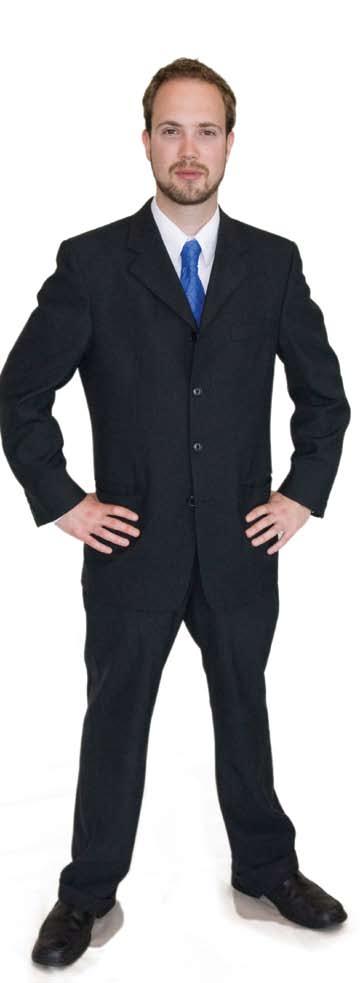
has just graduated with a gree in international affairs and a which he did through a combined tween the University of Ottawa’s and Carleton University’s Norman hool of International Affairs school, he wrote a major research n the need for a foreign intelliervice in Canada And while other ts flip burgers and pour coffee y their tuitions, he’s been workwith disarmament expert Trevor dlay and former United Nations eputy secretary-general Louise rechette on her nuclear energy study He spoke with Diplomat editor Jennifer Campbell
DIPLOMAT: Is there an argument for a Canadian Foreign Intelligence Agency? Is there a need?
Aaron Shull: I think there’s a push and pull going on with reect to foreign intelligence in this untry There’s a push from the ent Conservative government r election platform in 2006, they they were going to pursue this Safety Minister) Stockwell Day uently backed off of this, pubaid that they’re going to expand te of CSIS rather than create a foreign intelligence agency The m the federal court There’s a reon by Justice Edmond Blanchard SIS wasn’t able to use wiretaps orially, meaning in another couns something CSIS has done quite They’ve just never applied for a fore So, what this means is that gime, governing both the foreign question and governing CSIS s in need of repair The Conserllingness to move on this file, with this decision of the federal eans the time to amend the CSIS w.
o y o u t h i n k S t o c k w e l l D a y ked off because of the Federal Court decision?
A S : N o , I t h i n k i t w a s m o r e
a q u e s t i o n o f m o n e y S i m p l e money It’s just too expensive establish a new service. And I k it would be as politically fea-
sible. But I think the reason we need one of these services is fairly pronounced. We c a
We
ligence, which we’re not able to do right now We’re not able to send an intelligence a g e n t o v e r s e a s t o g a t h e r i n
g e n c e We’re leading a G8 country that doesn’t h a v e t h i s c a p a c i t y. E v e n N e w Z e a l a n d has it. The fact is that the CSIS act is antiquated. The reasons that once meant we didn’t need that foreign focus are no longer persuasive
DM: Could you see both happening – rewriting the CSIS act and establishing this foreign intelligence agency?
A S : I think so but what is more likely is that they’ll expand the mandate of CSIS. T h a t w a s ( S t o c k w e l l ) D a y ’ s p o s i t i o n. S o t h e y r e w r i t e t
i n t e l l i
– wiretaps, opening mail, things like that – and you also allow them to collect fore i g n i n t e l l i g e n c
in this country is that we separate foreign intelligence and security intelligence. Security intelligence relates to threats against the security of Canada and foreign intelligence relates to everything else – political, economic and trade-related intelligence A l l o f t h a t w o u l d b e c o n s i d e re d f o re i g n i n t e l l i g e n c e a n d o u t s i d e o f t h e m a n d a t e of CSIS
DM: The CSIS mandate seems pretty narrow. Is that a concern?
AS: The wording is very vague so as long as they can show it’s a threat to Canada, they had pretty much carte blanche The d i re c t o r o f C S I S i s o n
a
s a y i n g that they have the same types of power as the CIA (Central Intelligence Agency) but this decision from the court would seem to gravitate against that That means the legislation that gives this agency its investigative powers is in trouble. Think about it this way: The case that was before the c
They subsequently went overseas and we d
dacted from the decision But they go, and CSIS asks for a warrant and the Federal Court says they’re not allowed to investigate these individuals. So they could be
Eliminate the spider veins from your legs and face by simple injection.
Ultrasound injections cut the need for varicose vein surgery. This exclusive service is available at Dr. Beaupré’s Clinics.
ONE OF CANADA’S LEADERS WITH OVER 25 YEARS EXPERIENCE



plotting a terrorist attack against us and o u r s e c u r i t y i n t e l l i g e n c e a g e n c y d o e s n ’ t have lawful authority to investigate them? You could ask the agency in the country they went to but what if it was Syria, and Syria doesn’t want to help? Based on this federal court decision, that’s all a terrorist would have to do. It’s something that’s not found in any other country in the world and to be frank, if you were to bring this up before any democratic electorate, they would think it was crazy
D M : L e t ’ s t a l k a b o u t y o u r w o r k a t t h e
United Nations
A S : I w a s t a s k e d b y Tr e v o r F i n d l a y a t
NPSIA to undertake a research paper on the international legal regime that deals with nuclear weapons. There was a meeting bringing together all sorts of experts on the topic I was asked to go for the afternoon It was quite a surreal experience because Trevor asked me, after class one day, if I could work for him part-time I said I could do four or five hours a week
The following week, he asked if I could fly to the UN for this meeting. It culminated i n a w e l l - re c e i v
d s t u d y o n t h
p i c. I t was about how countries are preventing the spread of nuclear weapons and how t h e y ’ v e d e a l t w i t h t h e i r n u c l e a r o b l i g ations
DM: You’ve worked with Louise Frechette on the nuclear file How is that?
A S : We’ve had several good discussions a b o u t t h e i s s u e a n d a b o u t w h a t s h e thought of my paper. She was at the conference in Australia that I was invited to speak at She’s quite a golfer so I’ve challenged her to a golf game next time we’re b o t h i n Wa t e r l o o ( t h e p r o j e c t i s b a s e d there, out of the Centre for International Governance Innovation ) She tells it like it is so she’s a nice person to be around. She’s very charismatic and the stories she tells and the experience she has had are quite amazing
D M : W h a t a re y o u r t h o u g h t s
uclear situation?
AS: The future of nuclear power is going t o s h a p
with robust regimes and regulatory frameworks put in a nuclear power plant. It’s a completely different thing if a developing c
y d o e s ,
a t we’re all in the same boat here because if there’s a nuclear accident in a developing country, it will absolutely kill the nuclear regime globally As a feasible, safe power option, it won’t be seen the same way
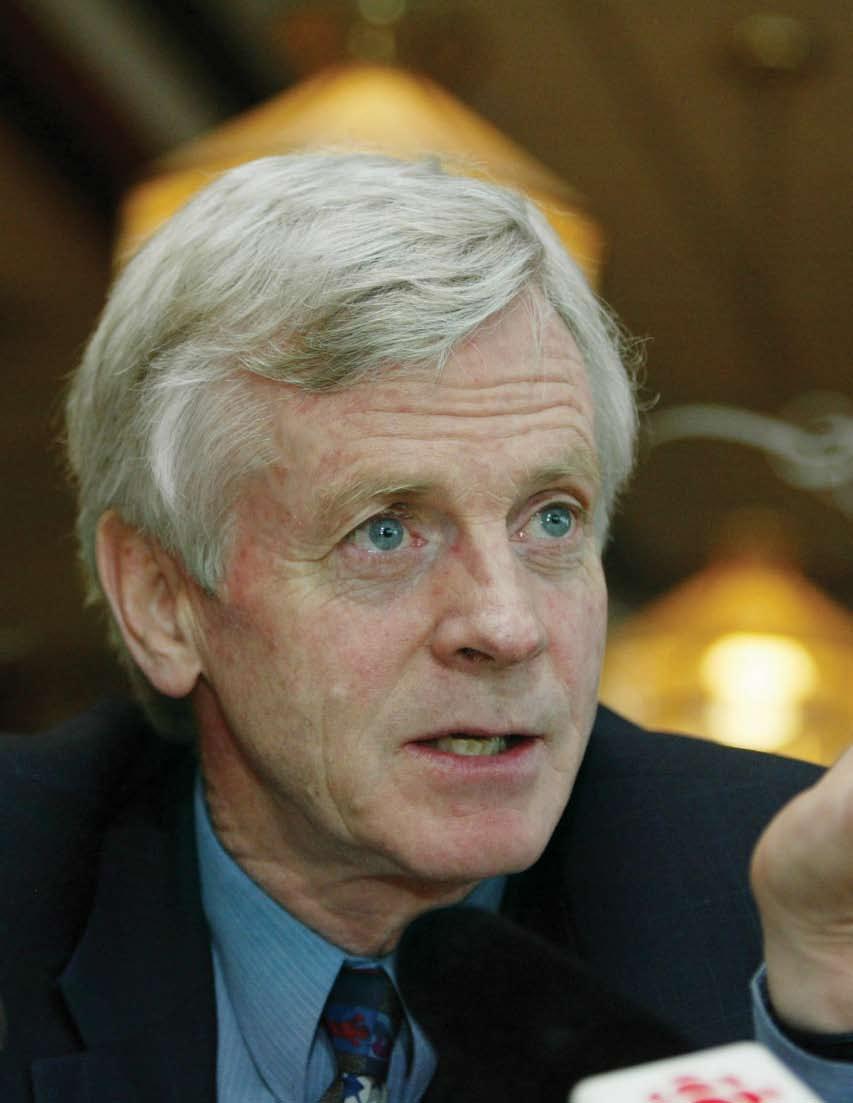

Rebel MP, globe-trotting champion of defenceless people, David Kilgour
never stops
David Kilgour travels the world (more than 100 countries, and counting) as an indefatigable champion of human rights. He goes to the places where people live wretched lives — and die wretched deaths. He speaks courageously on their behalf. He confronts the criminal regimes that cause vast suffering. His goal, in two simple words, is responsible government. With 40 despotic governments still in power, he argues that Canada must do more to challenge them and to subvert them. In this special essay for Diplomat magazine, Mr. Kilgour analyses the global grip of malignant government on millions of voiceless people. From genocide in Darfur
to repression and persecution in China, Burma, Zimbabwe, Iran, Vietnam and North Korea, the constituency of the former member of parliament now extends beyond Canada to the world In his essay, he offers, as an example, a five-point Canadian strategy to further the cause of democratic revolution in China.
He brings to his international work a life remarkably rich in talent, skills and experience. The former Alberta ranch hand and trail guide and Toronto journalist was on the boxing team at the University of Toronto while pursuing his law degree. He became a Vancouver assistant city prosecutor and Manitoba crown attorney before beginning his 26-year, eight-term career as an Alberta MP. He has written four books; his latest, Uneasy Neighbo(u)rs, co-authored with former U.S. diplomat, David Jones.
Mr Kilgour and his wife, Laura, have four grown children.
His international travels and his political career are perfectly parallel. And tempestuous – he often flies into the storm. As with his most recent – and last – act as an MP, he puts principle first. In 2005, he resigned from Prime Minister Paul Martin’s Liberal Party. At the top of his 10-point grievance list that he personally presented to Mr Martin was Canada’s inaction on Darfur and his appeal to send Canadian troops to stand between murderers and their victims. He has also sought legal protection for Canadian whistleblowers.
He champions a sharp increase in Canada’s international aid (from 0.025 per cent to 0.7 per cent of GDP.) Unsatisfied as an MP with the lack of progress, he left the Liberal party in 2005 to sit as an independent, threatening the fragile Liberal minority government.
Principles had already propelled him in and out of the Liberal and Conservative parties. In 1987, he was dismissed as parliamentary secretary by then Prime Minister Brian Mulroney for criticizing his government’s ethics and its treatment of Western Canadians. In 1990, after he voted against the GST, he was expelled from the Progressive Conservative caucus and sat as an Independent Progressive Conservative before joining the Liberal Party in 1991. What is the common thread that has run through his enduring national and international activism?
“I hope it’s the view that every single human being is equal in the eyes of God – and should be in the eyes of the UN and everybody else. But some are more equal than others,” he once said. “Some are certainly more equal than others.”
By David Kilgour
Wit h t h e B e i j i n g Oly mp ic s ove r, t h e w o r l d n o w s e e m s l i k e l y
t o e x a m i n e m o r e c a r e f u l -
l y w h a t C h i n a d o e s a t h o m e a n d i n t e rn at ion a l ly It s c u r r e nt r e c ord vexe s s ome of u s who b el ieve t hat t he core va lue s of t he Oly mpic Cha r ter a nd Oly mpic movement sta nd for huma n dig n it y a nd equalit y for a l l members of t he hu ma n fa m i ly The rise of Ch i na i n recent years has been i n t he opposite direct ion, whet her among it s ow n p e o pl e o r i n c o u nt r i e s , s uc h a s Bu r m a a nd Suda n, wh ic h a r e e s s e nt ia l ly now parts of its econom ic empire
M a n y C a n a d i a n s t h i n k o u r o w n n a -
t i o n a l g o v e r n m e n t s h o u l d e n g a g e m o re effectively with vulnerable peoples. In the case of the cyclone that ravaged Burma in May, for example, the refusal of the country's military junta to accept external humanitarian relief left even more Burmese i n p e r i l D i d r e s p o n s i b l e g o v e r n m e n t s around the world not have a responsibility to deliver humanitarian relief to as many Burmese victims as feasible, possibly by dropping food and medicine from aircraft covertly?
What of Sudan, where another military r e g i m e h e a v i
o r m o r e t h a n f i v e y e a r s t o d e s t r o y a large community of Africans in Darfur for blatantly racist reasons?
T h e p r e s i d e n t o f t h e I n t e r n a t i o n a l
Criminal Court – Judge Philippe Kirsch of Canada – offered one good reason for indicting Sudanese President Omar al-Bashir when he said recently that his court’s concern is justice, not politics Canada and 105 other countries, not including China, have b y t re a t y b e c o m e m
o f t h e c o u r t and given it jurisdiction over crimes such as genocide, crimes against humanity and war crimes. Unfortunately, Bashir is proba b l y s a f e f ro m a n y a r re s t w a r r a n t i s s u e d from the ICC while he remains president of Sudan
Genocide Convention
D o e s t h e U N G e n o c i d e C o n v e n t i o n o f 1948 apply to Darfur as well? It certainly a p p e a r s t o a p p l y – c
around the world
anywhere intended to “destroy in whole or in part members of a racial, national, religious or ethnic group ” Unfortunately, e n f o r c
weakness No actions were launched under its provisions against anyone for most of the six subsequent decades. The World Court dealt the convention a further blow last year in a decision – almost unanimous
genocide which occurred in Bosnia in the 1990s
Some jurists assert that the UN Genocide Convention is retroactive because it merely codifies pre-existing principles of
international law If so, it should apply to the Armenian Genocide of 1915, Stalin’s Ukrainian Famine in the winter of 1932-33 and the Nazi Holocaust, which continued until Hitler ’s virtually final days as Fuhrer in 1945. How many lives might have been
saved if the details of both the Holocaust and Ukraine’s famine had become public k n o w l e d g e s o o n e r ? T h e e s s e n t i a l f a c t s
w e re k n o w n a b o u t b o t h s i t u a t i o n s s o o n
e n o u g h , b u t t h e r e a l p r o b l e m w a s t h e absence of the political will to end these c r i m e s . T h u s t h e “ n e v e r a g a i n ” o f 1 9 4 5 became the “again and again” of Rwanda and Darfur. One retired Canadian diplomat even said a couple of years ago: Canada had no strategic interest in Rwanda, thereby admitting the normally unspoken callousness of too many world diplomats and politicians in 1994 and today Lest we forget, what follows is a brief roll call of subsequent kindred horrors.
Bosnia-Kosovo
With about 60 other governments, Canada d e p l o y e d s o l d i e r s t o b o t h p a r t s o f t h e f o r m e r Yu g o s l a v i a i n t h e m i d - 1 9 9 0 s u n-
d e r t h e N ATO b a n n e r Th e U N S e c u r i t y C ou n cil p rov ed u n a b l e t o a ct , p r i ma r i l y because Russia threatened continuously t o u s e i t s p e r m a n e n t v e t o t o p ro t e c t t h e government of Serbia. Action came far too late. The ethnic cleansing that persisted in parts of Bosnia, including the brutal threeyear siege of Sarajevo, will forever remind the world of the lack of political resolve
a m o n g E u ro p e a n g o v e r n m e n t s a n d t h e
UN Security Council during those years Srebrenica, where 7,000 Muslim men and boys were slaughtered, also must not be forgotten.
The catastrophe in Rwanda is described carefully in Romeo Dallaire’s book Shake Hands with the Devil Suffice it to say here that – beyond the heroic roles played by Gen Dallaire, Major Brent Beardsley and the locally-engaged staff at the Canadian m i s s i o n i n K i g a l i – t h e p e r f o r m a n c e o f Canada’s politicians, diplomats and other o ff i c i a l s w a s d e e p l y d i s a p p o i n t i n g O n e R w a n d a n n u n t o l d m e i n 1 9 9 7 t h a t
l i f e w a s s a v
d
h e n a C a n a d
p
i e s t confronted a mob armed with machetes in rural Rwanda and persuaded them to leave Linda Malvern’s more recent work, Conspiracy To Murder: The Rwandan Genocide, notes that just before the killing began one new machete for approximately every t h re e R w a n d a n m e n w a s i m p o r t e d i n t o Rwanda from China
From Prime Minister Jean Chrétien and throughout the Canadian government, no one can claim any credit for responsible leadership during the events of April-July 1994. Gen. Dallaire points out in his book, f o r i n s t a n c e , t h a t a s t h e U N F o rc e c o m -
mander he was expected to take Canadian peacekeepers with him on his assignment – but he could obtain none to take from Ottawa This, in turn, made it even more difficult to persuade other governments to provide soldiers The indifference of our Foreign Affairs ministry’s senior management to what was occurring will remain a c a u s
$80 million in weapons, aircraft and spare p a r
T
i s included an A-5 Fantan bomber aircraft, h e l i c o p
there in violation of UN resolutions China’s government has long used the t h re
6 , 2 0 0 2 , t h e t o w n o f Nhialdiu was wiped out to make way for a C h
nearby Leal. According to James Kynge’s award-winning book of 2006, China Shakes the World, “Mortar shells landed at dawn, followed by helicopter gun ships directing fire at the huts where the people lived Antonov aeroplanes dropped bombs and r
troops with pro-government militias then s
s a n d more than 20 tanks...” About 3,000 of the town’s 10,000 residents perished that day.
T h e g e n o c i d e i n S u d a n ’ s p ro v i n c e o f D a r f u r s i n c e A p r i l 2 0 0 3 h a s i n a l l p ro bability cost the lives of as many as 400,000 African Darfurians The party-state in Beijing continues to assist Omar al-Bashir ’s regime in Khartoum, including financing and supplying arms in exchange for taking most of Sudan’s oil production at muchreduced prices. China officially sold about
peace activities in Darfur It has essentially traded its veto (and many innocent lives) for cheap oil Bashir appointed Musa Hilal, the one-time leader of the murderous militia, the Janjaweed, to a position in his g o v e r n m e n t M r H i l a l h a s b e e n q u o t e d as expressing gratitude for “the necessary weapons and ammunition to exterminate t h e A f r i c a n t r i b e s i n D a r f u r. ” N o t l o
in Darfur, later claiming it was a mistake Virtually every independent observer says it was a deliberate attack
Mr Bashir ’s refusal to accept the UNp
ments reflects nothing more or less than his politically-based decision to deny the UN-African Union Mission in Darfur the personnel essential for an effective peace mission in Darfur
When the active support for the Darfur genocide by China’s government caused serious questions about about the Beijing O l y m p i c s , t h e p a r t y - s t a t e l a u n c h e d a
propaganda campaign to re-position itself as a “friend of Darfur ” In this misinform a t i o n e ff o r t , n o m e n t i o n w a s m a d e o f China’s trivial humanitarian assistance in Darfur or of the fact that numerous water sources in Darfur have been deliberately destroyed by Sudan’s regular forces and by the Janjaweed. Water sources are targeted by Khartoum’s bombers; the Janjaweed have often denied civilian access to water points and have raped women and girls seeking to collect water for desperate families Darfurians themselves now seem w e l l a w a re o f B e i j i n g ’ s ro l e i n t h e i r t o rment and destruction
T h e r e i s m o u n t i n g c o n c e r n t h a t t h e Khartoum-Beijing alliance will cause the U N p e a c e k e e p i n g f o rc e i n S u
b e a s i n e ff e c t i v e a s w e re t h e p e a c e k e e p i n g forces in Rwanda and Bosnia The actions of the government of China across Darfur can only be seen as actively promoting the annihilation of an African people for economic advantage
Burma
O n e o f t h e b r a v e s t a n d m o s t p r i n c i p l e d
l e a d e r s h a s n o w b e e n u n d e r h o u s e a rrest for most of 18 years In the national u p r i s i n g d u r i n g 1 9 8 8 i n w h i c h t h e a r m y killed an estimated 3,000 civilians, Nobel P e a c e l a u re a t e A u n g S a n S u u K y i m a d e her first speech as an opponent of Burma's military dictatorship. When the junta allowed an election in 1990, Suu Kyi and her N a t i o n a l L e a g u e f o r D e m o c r a c y ( N L D ) w o n a b o u t t w o - t h i rd s o f t h e v o t e s c a s t The generals allowed none of the elected representatives to take their seats and Suu Kyi has remained under house arrest for most of the past 18 years The UN Special r a p p o r t e u r h a s c o n f i r m e d a s a “ s t a t einstigated massacre” the attack on a Suu Kyi procession in May 2003, northwest of Mandalay, when ab out 100 people were killed, including the NLD photographers; Suu Kyi was herself wounded
I n w h a t b e c a m e m o re p ro - d e m o c r a c y protests last September, junta troops fired a u t o m a t i c w e a p o n s a t p e a c e f u l d e m o nstrators and entered monasteries to beat a n d m u r d e r B u d d h i s t m o n k s w h o h a d protested. The junta had earlier received a $1.4 billion package of arms from Beijing – so it seems clear where the fatal bullets and guns were made At the UN Security Council, the representatives of China and R u s s i a , w h o h a d e a r l i e r u s e d t h e i r v etoes to remove Burma from the council’s agenda (after keeping it off its agenda continuously since the country's crises of 1990 and 1988 until late 2005) even prevented
t h e S e c u r i t y C o u n c i l f r o m c o n s i d e r i n g sanctions The two governments also mana g e d t o k e e p t h e S e c u r i t y C o u n c i l f ro m issuing a condemnation of the junta’s use of deadly force
T h e N a rg i s c y c l o n e i n t h e I r r a w a d d y Delta struck in May, which the junta first p r e t e n d e d ( b y c o n t i n u i n g t o b r o a d c a s t an opera on government television) had never happened The regime newspaper later suggested that foreign humanitarian aid was unnecessary because the victims
c o u l d l i v e o n f ro g s I t s p r i o r i t y w a s a ttempting to bully citizens into making the dictatorship constitutional in a referendum on a junta-drafted constitution.
B e i j i n g p r o t e c t s t h e g e n e r a l s i n e x -
c h a n g e f o r m o s t o f t h e c o u n t r y ’ s n a t -
u r a l g a s I t a l s o h a s g a i n e d t h e r i g h t
t o b u i l d a $ 2 b i l l i o n o i l p i p e l i n e f r o m
B u r m a ’ s c o a s t o n t h e B a y o f B e n g a l t o China’s Yunnan province This will allow
C h i n a t o t a k e d e l i v e r y o f M i d d l e E a s t
o i l w i t h o u t p a s s i n g t h ro u g h t h e n a r ro w
S t r a i t o f M a l a c c a , w h i c h c o u l d b e s h u t
d o w n i n t h e c a s e o f a s e r i o u s c o n f l i c t .
North Korea
T h e b r u t a l d i c t a t o r s h i p o f K i m J o n g I l rivals that of Robert Mugabe’s Zimbabwe
f o r a n y “ w o r s t g o v e r n a n c e ” g o l d m e d a l today It is no coincidence that Beijing supports both regimes, although its attempt to ship $70 million in arms to Mr. Mugabe
after he lost the first round of the recent p re s i d e n t i a l e l e c t i o n w a s b l o c k e d w h e n dock workers in South Africa refused to u n l o a d s
Crisis Group (ICG) in Brussels, China now does about $2 billion in annual bilateral trade and investment with North Korea About 150 Chinese companies operate in the country The ICG asserts that China’s priorities with the government in Pyongyang currently include:
• incorporating North Korea into the development plans of its three northeastern provinces to help them achieve stability;
•
re
achieving a denuclearized North Korea;
q
ence in both capitals as leverage with the U.S. on the Taiwan issue;
• and avoiding a situation where a nuclear North Korea leads Japan and/or Taiwan to become nuclear powers
In October 2006, after North Korea had completed an underground test of nuclear weapons, the Economist magazine called on the U S , China and Russia to make sacrifices to avoid a nuclear arms race in Asia and the Middle East. “The Chinese could, if they wished, starve North Korea’s peo-
ple and switch off the lights,” the magazine noted in its lead editorial, but added that pressure of any kind was unlikely to persuade Mr Kim to give up his bomb
S
Iranian government currently include the p e r s e c u t i o n o f e t h n i c a n d
norities and women (in a kind of gender apartheid, under Sharia law, the life of a woman is worth half that of a man); and the imprisonment, torture and execution of political prisoners and prisoners of cons c
control over the country's media.
mize its government and help to maintain re
power Trade and investment from abroad also provide Tehran with funds that often are not used for the health, education and general welfare of Iranians but instead for funding terrorist groups abroad, including Hezbollah and Hamas, under the mantle of “expanding the Islamic Empire.”
China-Iran trade has grown from $200 m i l l i o n i n 1 9 9 0 t o $
includes conventional arms and ballistic missiles for Iran despite Tehran’s declared h o s t i l i
y
o “ g o d l e s
m u n i s m ” a n d Beijing’s severe persecution of its Uyghur M u s l i m s B e i j i n g s i m p l y i g n o re s t h e realities of theocratic rule in Tehran. A major a t t r a ct i on f or Te h r a n i s Be
n g ’s p e r man e n t s e a t o n t h
U N S e c u r i t y C
u n c i l , which is useful for resisting Western pressure on nuclear and other issues T h e re a re i n d i c a t i o n s t h a t C h i n a h a s helped with Iran’s Shahab-3 and Shahab4 m e d i u m - r a n g e b a l l i s t i c m i s s i l e s B o t h a re c a p a b l e o f re a c h i n g a n y s t a t e i n t h e Middle East; the Shahab-4 could hit significant portions of Europe. Two years ago, the U.S. government imposed penalties o n e i g h t C h i n e s e c o m p a n i e s f o r e x p o r ting material that can be used to improve I r a n
Middle East, China’s policy of providing Iran with nuclear weapons technology is i n j e c t i n g a h i g h l
into the region.
By providing Iran with weapons that could be used in support of Islamic fundamentalism, the potential for religious conflict becomes greater Old hatreds between Iranian and Iraqi religious groups could fl are u p i n t h e fut u re N u cl ear we ap on s would give Iran a strategic weapons system that could allow the regime to act even more aggressively. Israel could be brought f u r t h e r i n t o t h e s i t u a t i o n , b e l i e v i n g t h a t
t h e o n l y r e a s o n Te h r a n w o u l d w a n t a nuclear weapon is to use it against Israel China’s goal of securing reliable sources of oil and gas is probably being hindered
r a t h e r t h a n h e l p e d b y i t s w e a p o n s s a l e s to Iran by encouraging the Americans to extend their military presence there to deter Iran’s use of force.
C a n a d a i n i t i a t e d t h e s u c c e s s f u l l ypassed UN General Assembly resolution
i n l a t e 2 0 0 7 , w h i c h d r e w a t t e n t i o n t o numerous human rights abuses in Iran, including confirmed instances of torture and cruel, inhuman or degrading treatment or punishment (flogging and amputations) and execution of persons who were under the age of 18 at the time their offence was committed.
I n re c e n t m o n t h s , t h e g o v e r n m e n t i n
Te h r a n h a s l o c k e d u p a l l s e v e n s e n i o r leaders of the country’s 300,000-member
B a h a ’ i s p i r i t u a l c o m m u n i t y N o t a w o rd w a s h e a r d a b o u t t h e m f o r a l m o s t f o u r weeks It also fired missiles at the approximately 4,000 UN-protected residents, including about 60 Canadian citizens living in Ashraf city in Iraq.
The list of groups and individuals persecuted across China is long New victims were added during the Beijing Olympics, including the two women in their 70s sentenced to one-year terms of “re-education through labour” for attempting to hold a legal protest during the Olympics.
There is not much doubt, however, that overall the Falun Gong community is the m o s t i n h u m a n l y t re a t e d D a v i d M a t a s , the Winnipeg-based international human rights lawyer, and I, concluded our own i n d e p e n d e n t i n v e s t i g a t i o n l a s t y e a r We found to our deep and continuing concern that, since 2001, the government in China a n d i t s a g e n c i e s h a v e k i l l e d t h o u s a n d s of Falun Gong practitioners, without any form of prior trial, and then sold their vital organs for large sums of money, often to “organ tourists” from wealthy nations We a m a s s e d a s u b s t a n t i a l b o d y o f e v i d e n c e and became convinced beyond any doubt that this crime against humanity has occurred and is still happening. (Our report can be accessed at www.organharvestinvestigation net)
Mr Matas and I interviewed a number of Falun Gong practitioners sent to forced labour camps without any form of prior h e a r i n g s i n c e 1 9 9 9 , w h o m a n a g e d l a t e r to leave both the camps and China itself
T h e y t o l d u s o f w o r k i n g i n a p p a l l i n g conditions for up to 16 hours daily with
no pay and little food, with many of them s l e
m T h e y m a d e export products, ranging from garments to chopsticks to Christmas decorations for multinational companies
T
each one of them In my judgment, it is the lethal combination of totalitarian governance and anything-is -permitted economics that allows this kind of governance to persist
The Chinese Medical Association agreed with the World Medical Association quite recently that “organ tourists” will not be able to obtain further organ transplants in China Whether this promise was anything m
o benefit the Beijing Olympiad remains to be seen Another worry is that organs seized from unwilling “donors” across China will now go to wealthy Chinese patients with the grotesque commerce thus continuing in the same volume.
Virtually all independent bodies agree
world’s independent media to their home c o u
, however, many are now better informed about exploited Chinese workers, official nepotism and corruption, harassment of religions and democrats, and the constant party-state abuse of the natural environment
I n a l l t h e s e s i t u a
, p e r v a s i v e i n d i fference from the international community encourages them t o cont inue . Human dignity on our shrunken planet, however, is becoming more indivisible by the day. The R2P concept is a Canadian concept, a d o p t e d a t t h e 2 0 0 5 U N Wo r l d L e a d e r s Summit at UN headquarters
The formal outcome document released at the summit said that nations have “the responsibility to protect” their populations “from genocide, war crimes, ethnic cleansi n g a n d c r i m e s a g a i n s t h u m a n i t y. ” T h e international community’s obligation is to “help states exercise this responsibility ” R2P can be invoked by the international c o m m u n i t y t h r o u g h t h e U N S e c u r i t y C o u n c i l “ o n a c a s e - b y - c a s e b a s i s ” a n d “ i n c o - o p e r a t i o n w
o r g a n i z a t
a s a p p r o p r i a t e ” w h e n national states are “manifestly failing to protect their populations from genocide,
war crimes, ethnic cleansing and crimes against humanity ”
No mention was made of natural disasters, but it seems clear that when a regime, s u c h a s B u r m a ’ s , d e n i e d m u c h - n e e d e d f o o d a n d m e d i c i n e t o i t s p e o p l e , i t w a s engaging in a crime against humanity and should thus be subject to intervention by o t h e r g o v e r n m e n t s u n d e r R 2 P. U n f o r t unately, military force can be used only with the authorization of the often-immobilized UN Security Council
A major challenge for R2P in the future is that the party-state in China strongly favours a ‘walled world’ in which sovereign authoritarian governments can do as they wish to their own populations with impunity. Over the past three decades, as approximately 50 countries in various parts of the world have adopted one or another f o r m o f m u l t i - p a r t y d e m o c r a c y a n d t h e rule of law, Beijing’s party-state observed this phenomenon with horror It champio n s , f i n a n c e s a n d p
h e m
fering colourations left around the world – wherever it has influence.
C h i n e s e d i p
m
t s d o t h e
o s t t o p e r su a de g ov e r n me n t s i n de ve l op i n g countries that following the China Model w o u l d f re e t h e m f ro m t h e o f t e n - p a i n f u l social consequences of the stringent economic discipline in place since the financial crises in Asia, Latin America and Russia in 1997 and afterwards, and the rigorous loan requirements which both the World Bank and the IMF enforce
One-party regimes are thus able to push b a c k n o w a d a y s w i t h m o r e c o n f i d e n c e against independent media, civil society groups and human rights organizations Plentiful aid from Beijing for governments w i t h n a t u r a l r e s o u r c e s g i v e s o p t i o n s to leaders who previously had been comp e l l e d t o r e l y o n d o n o r c o u n t r i e s t h a t i n s i s t e d o n p ro g re s s o n h u m a n d i g n i t y among their nationals Canadians, Europeans and others, who favour some pooled sovereignty in institutions like the EU and N ATO a re t h u s c o m p e t i n g i n c re a s i n g l y with the Great Wall approach of the Beijing government.
Complicating the world scene even further is the reality that if “anything goes” in the economy of China, “bespredel” (a Russ i a n w o rd t h a t m e a n s “ w i t h o u t l i m i t s ” ) appears to be an accurate way to describe R u s s i a n f o re i g n p o l i c y u n d e r V l a d i m i r P u t i n a s p r i m e m i n i s t e r G e o rg i a ’ s g o ve r n m e n t , o f c o u r s e , s h o u l d n e v e r h a v e attacked South Ossetian’s capital of Tskhinvali with rockets.
We should support the freedom aspirations of the Chinese people
1) Zero tolerance for unfair trading practices.
There should in future be zero tolerance in Canada when unfair trade practices are used by the government of China or exporters there, including currency manipulation of the yuan, theft of intellectual property and the continued refusal to honour commitments made by Beijing to the World Trade Organization upon joining in 2001. Japan, India, South Korea and the other rule-of-law democracies in Asia and the Pacific must be our favoured trading partners in the region until the government of China begins to respect the rules of international commerce.
2) Canadian jobs and our own economy must be the priority
According to a fairly recent survey of more than 1,000 Canadian businesses by the Canadian Manufacturers and Exporters, onefifth of Canadian manufacturers responded to the rising loonie by shifting production to China. A Montreal business leader told me that approximately 50 companies from his province would not be manufacturing in China now without Export Development Corporation (EDC) financial help. This should stop. No taxpayer money should be going to relocate Canadian jobs to China or anywhere else. Goodyear Tire laid off about 850 employees when it closed its manufacturing facility near Montreal last year in favour of moving to China, yet tires made in China have since been recalled elsewhere as safety hazards.
3) Canadian values must be asserted continuously in dealings with Beijing.
All rule of law governments, including Canada’s, must cease being naive about the party-state in Beijing. The regime continues to rely on repression and brutality to maintain itself in office, but what are Canadian diplomats in China doing effectively to show themselves to be the friends of the poor, persecuted and voiceless across China? What are they doing to advance the rule of law and human dignity? Fully realizing the differences, Canada might seek a role in China not very different from the one we had in establishing popular democracy in South Africa in the late 1980s, which is viewed by some as our country’s finest leadership role internationally in many years.
4) Apply some lessons of non-violent civic resistance elsewhere to China.
There are lessons to be applied very carefully in China (in light of the Tiananmen protest experience in 1989 and elsewhere since) from the non-violent civic resistance which occurred in Russia, Ukraine, the Philippines, Chile, Poland, Hungary, East Germany, Czechoslovakia, the Baltic states, South Africa, Serbia, Peru, Georgia, Romania and other nations. Each situation was different in terms of boycotts, mass protests, strikes and civil disobedience. In all, however, authoritarian rulers were delegitimized and their sources of support, including their armed defenders, eventually abandoned them. The government of Canada should make it clear to all that it stands with the oppressed hundreds of millions of nationals in China and its client states elsewhere and seeks a peaceable transition to the rule of law, respect for all, and democratic governance.
5) Let’s stop listening exclusively to self-interested China business lobbies.
It is now clear that economic liberalisation in China is not necessarily going to lead to the end of political Leninism in Beijing and its client countries. Torture and coerced confessions, party-state killing of Falun Gong practitioners and others extra-judicially, systematic abuse of the Tibetan and Uyghur minorities, nation-wide exploitation of Chinese workers and families, the lack of any kind of social programs for most Chinese – all are incompatible with human dignity and the norms of the 21st century. There is no rule of law anywhere in China and its "courts" are a sham. The party-state shows continuing contempt for the natural environment (except in Beijing before and during the Olympics). Many "experts" on China abroad, including Canada, kowtow to the party-state because they think that their careers require support by the party. It's time to draw conclusions about China from facts on the ground to support human dignity consistent with the best Canadian values.
Conclusion
Despite all, the new China is stirring in the direction of vast and profound change. Hundreds of thousands of Chinese students have studied abroad and are now an increasingly important part of the political, economic and social fabric at home. Undoubtedly they return with new ideas and the experience of life in rule-of-law and democratic countries. It is hard to see them settling back into authoritarian rule for long. Chinese tourists are now venturing abroad as never before and are seeing for themselves life in different socio-political environments. Despite strenuous effort to clamp down on religion, tens of millions of Chinese are reclaiming their right to believe. Temples, churches and mosques are clandestinely mushrooming across China. These developments and others will lead demands for greater freedoms by word of mouth. Canada and all friends of the people of China need to recognize this phenomenon and position ourselves to support the new tide of expectations that a younger generation of Chinese will bring to bear on all these issues.
– David Kilgour
S e e k i n g s i l e n c e a t t h e w o r l d ’ s ‘ a m u s e m e n t
parks of evil’
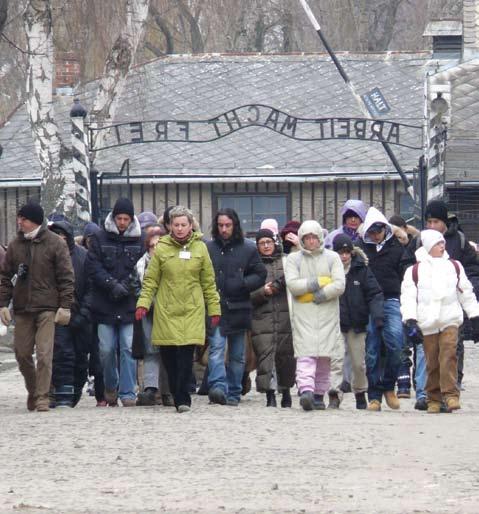
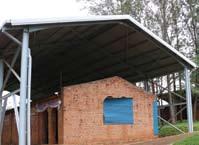
Vancouver writer Don Cayo has traveled of late to some of the earth’s vilest places. Not landscapes that are merely ugly or unpleasant or unsafe, but places so sullied by evil that they’re no longer fit for ordinary life. First was Tuol Sleng, the high-schoolcum-prison in Phnom Penh, and the nearby Killing Fields where Pol Pot’s Khmer Rouge minions murdered 20,000 fellow Cambodians. Then Auschwitz and Birkenau, the death camps in Poland where Nazis – German and kindred spirits from other countries – killed as many as a million and a half people, mostly Jews. Finally two rural churches in Rwanda where machete-wielding Hutus beat their way though barred doors and windows, and even brick walls to hack to death thousands of their Tutsi neighbours. He returned home with these reflections:
By Don Cayo
So m e p e o p l e w a l k t h r o u g h t h e s e
s it e s i n t e a r s, m a ny i n t houg ht f u l si lence. But I was saddened to f i nd t here are also louts – t he loudmout hs wit h
t h e i r p e t t y d r a m a s t o d i s s e c t , t h e g u y snea k i ng a smoke i n Ausc hw it z, t he g igg ler s w it h pr ivate jok e s, t he k now-it-a l l s w it h b or i ng t he or ie s, t he sh a mele s s pict u re-ta kers who pop f lashes ever y where, even i n t he Ausc hwit z crematorium
A n d t h e n t h e r e w a s K e n H e a n d I f o u n d o u r s e l v e s i n C a m b o d i a , s h a r i n g a t a b l e i n a b u s y re s t a u r a n t a f t e r i n d ep e n d e n t l y v i s i t i n g t h e K i l l i n g F i e l d a t C h o e u n g E k – a p l a c e o f m e a n d e r i n g p a t h w a y s t h ro u g h m a s s g r a v e s t h a t l e f t me with a powerful need to be alone with my thoughts
“ D i d j a g o g u n - s h o o t i n g ? ” t h e y o u n g Australian asked
No, I said, I did not. I didn’t tell him my re a c t i o n w h e n m y t u k - t u k d r i v e r u rg e d me to stop at an adjacent shooting range a s I l e f t C h o e u n g E k I w a s re p u l s e d b y the thought that, having just spent time contemplating the work of homicidal maniacs, I’d then pretend to be one
“Too bad,” said Ken, compensating for my lack of enthusiasm with an excess of his own. “You get to empty the clip in an AK-47 for 30 bucks U.S. Or – I couldn’t
afford that much – I got to shoot a Colt 45 for just $10 It was great!”
T h i s r e p r e s e n t s t h e w o r s t o f t h e “ a m u s e m e n t p a r k o f e v i l ” a p p ro a c h t o remembrance I encountered this phrase in a blog entry by Christopher Tuckwood, a Canadian on the student board on genocide prevention of the U.S. Holocaust Memorial Museum. For some, he noted, such sites are just one more place to go, gawk and get the T-shirt
M r Tu c k w o o d w a s s h o c k e d b y t h e Disneyesque atmosphere he found at Auschwitz during a summer visit I was there in winter, a quieter time when I was lucky e n o u g h t o e n c o u
displays But I understand his point I was struck by the irony that, at a site infamous for the businesslike efficiency with which its victims were murdered, Holocaust remembrance is practised on an industrial s c a l e a s w e l l T h e f o o t f a l l s o f a m i l l i o n visitors a year are wearing grooves in the stairways of the most-visited prison buildi n g s , a n d e ro d i n g t h e p a v e d o r c o b b l e d walkways and roads And at the exhibits that should be most powerful, your ears are assailed by the din of competing tour g u i d e s l e c t u r i n g t o a s m a n y a s h a l f a dozen close-crowded groups I got a small taste of this kind of thing at the first stop on my tour of evil, Choeung Ek. I made the rounds twice, first early in
the morning when I walked alone I read t h e s i g n s , w r i t t e n i n s t i l t e d E n g l i s h , b u t poignant nonetheless And I tried to process this awful information and the dismal aura of the place
T h e n I h i r e d a g u i d e t o h e l p m e f i l l
i n a n y g a p s . H e t u r n e d o u t t o b e a g l i b
y o u n g m a n w h o m e r e l y d e s t r o y e d t h e
c o n t e m p l a t i v e a t m o s p h e re w h i l e t e l l i n g
m e n o t h i n g I h a d n ’ t re a d f o r m y s e l f o n the signs And he horrified me when he swung open the glass door of site’s domin a n t s t u p a – a t o w e r i n g m e m o r i a l b u i l t to house recovered bones – and plucked out two conveniently placed skulls, one g a s h e d w i t h a m a c h e t e a n d o n e b a s h e d with a cudgel, to illustrate how economically the victims were dispatched. By that time, late morning, tour groups
o f c h a t t e r i n g t o u r i s t s w e re b e g i n n i n g t o arrive I left
Tu o l S l e n g , t h o u g h b u s y, w a s m o r e conducive to reflection Visitors respected e a c h o t h e r ’ s s p a c e a s w e w e n t t h ro u g h classroom after classroom, each now full o f c r u d e l i t t l e c e l l s , o r s t e e l b e d f r a m e s on which prisoners were tortured, or gutw re n c h i n g o ff i c i a l p h o t o s o f p r i s o n e r s , some of them children
At both of the Rwanda churches – left much as they were except, in the case of t h e s m a l l e r o n e , f o r a n u g l y m e t a l s h e l l
o v e r t h e o r i g i n a l b u i l d i n g t o p r o t e c t i t from the weather – I was the only visitor.
T h e g u i d e s q u i e t l y e x p l a i n e d t h e b a s i c details, then left me on my own.
Despite the “amusement park of evil”
s y n d r o m e t h a t i n t r u d e d o n s o m e o f m y v i s i t s , I r e c o m m e n d t h e s e e x p e r i -
e n c e s Tr u e , t o o m a n y p e o p l e t r o m p through some of these small spaces, but the thoughtful comments in guest books tell me, a few louts notwithstanding, most visitors are powerfully affected.
It’s almost impossible not to choke up at Choeung Ek’s “killing tree” where Khmer thugs bashed babies’ brains out to save the p r i c e o f a b u l l e t Yo u c a n ’ t o v e r l o o k t h e vastness of Birkenau – a place built for the sole purpose of killing “weak” Jews and housing strong ones for the short months it took to work them to death – without your stomach churning. You can’t contemplate the rough hole knocked in the wall of the Ntarama church without imagining you hear the Hutu mob running amok, or smell the fear of the cowering Tutsi families
I n Tu o l S l e n g , w h a t p a r t i c u l a r l y touched me were the endless ranks of official photographs These are mug shots, not artistic in any way. But they’re all that’s left to mark the passing of the legions who
died Most looked despairing, some as if they’d already died inside, though a few dared to stare at their captors in defiance These institutional photographs somehow t o u c h
knew were soon to end – that I saw in Poland and Rwanda.
I n A
y haunted by a room full of human hair – a tiny percentage of what was “harvested” by the Nazis to be woven into blankets In Rwanda, no one – certainly not I – stayed dry-eyed through the last room, a chronicle of the lives of children who died in the slaughter, in Kigali’s small, but powerful, memorial building. T h e
p
a k out stronger and sooner I shall henceforth be less tolerant of the myriad excuses that t
us – falls back on to when a slaughter is under way
Some of the shameful inactions of the past are well known – the Allies’ failure to bomb the railway that took more than a million t o t heir deat hs at Birk enau, or the UN’s inaction in Rwanda Nor is the w o r l d d
Darfur or the Congo
We need a lower and simpler standard of when to say enough is enough, and we need the means and will to enforce it.
The idea of military intervention to protect a population at risk has taken an awful hit as a result of the post-invasion mess in Iraq But, like Paul Collier, the Oxford economist who wrote The Bottom Billion, I believe the right interventions could end evil Collier cites the example of the British in Sierra Leone A few hundred troops ended, in short order, a decade-long war that killed at least 75,000 and maimed tens of thousands.
T h e re h a v e b e e n re p e a t e d p ro p o s a l s for the UN to mount a standing force that c o u l d re s p o n d q u i c k
y
rg e n t s i t u ations Dr Collier suggests such a force to protect fragile governments if they are acting for the good of their people I think the m a n d a
people at risk, even – perhaps especially – when the danger they face is the government that should be protecting them
It’s a lie to say “Never again” when we settle for “Again and again ”
Don Cayo is a columnist for the Vancouver Sun Visit www canada com/vancouversun/news/blogs/ to see his blog on globalization issues.
Nazi death camps in Poland, the Killing Fields of Cambodia, the city streets, even churches, homes and schools of Rwanda – these are the sites that spring to mind when most of us think about modern-day mass murder
But what happened in these places is in no way unique. According to Genocide Watch, a non-profit group that works to prevent mass killings around the world, the last century's toll includes:
1.5 million Armenians
3 million Ukrainians
6 million Jews
250,000 Gypsies
6 million Slavs
25 million Russians
25 million Chinese
1 million Ibos
1.5 million Bengalis
200,000 Guatemalans
1.7 million Cambodians
500,000 Indonesians
200,000 East Timorese
250,000 Burundians
500,000 Ugandans
2 million Sudanese
800,000 Rwandans
2 million North Koreans
10,000 Kosovars
This adds up to one death every 42 seconds – about the length of time it takes to read this list aloud – all day, every day, for 100 years. Not to mention the on-going, slow-motion slaughter in Darfur where at least 200,000 have perished. Or the carnage in the Democratic Republic of Congo. There, five years after the purported end of an awful war that has killed 5.4 million, the International Crisis Group estimates that up to 1,200 people a day (one every 72 seconds) continue to die from unabated violence.
‘On a global scale, our oil sands are a flyspeck’
Ugly, yes, but with perspective they compare well to other projects
By Laura Neilson Bonikowsky
Ex t r a c t i n g b it u m e n f r o m A l b e r t a’s soi l i s a d i r t y busi ness Med ia a nd
e n v i r o n m e n t a l i s t s h a v e r i g h t l y
c a l led at tent ion to it s env i ron ment a l de -
s t r uc t io n A nd t h e s e c r it ic s c o nt i nu e t o
pi l lor y t he i ndu st r y long a f t er we’ve a l l got ten t he poi nt t hat oil sa nds operat ions
e m it c a r b o n d i ox id e, a g r e e n h o u s e g a s t hat cont ributes to climate c ha nge.
Oil sands development is a dilemma .
I t p o s i t i o n s C a n a d a t o b e c o m e a w o r l d leader in oil supply Ti m e magazine says
t h e s e A l b e r t a r e s o u r c e s a r e “ C a n a d a ’ s
g r e a t e s t b u r i e d e n e r g y t r e a s u r e ” t h a t “could satisfy the world’s demand for petroleum for the next century ” But getting at them would place Canada among the top defilers of the planet.
The industry gets a lot of negative press – a n d t h a t ’ s n o t a b a d t h i n g b e c a u s e i t could keep harmful effects in check But it gets more press than other environmentally damaging activity, and that is a bad
t h i n g , b e c a u s e m o s t p e o p l e o n l y k n o w w h a t t h e y ’ r e t o l d A s u r v e y o f l e a d i n g Canadian newspapers shows disproport i o n a t e c o v e r a g e . O v e r 1 5 m o n t h s , f o u r leading dailies reported on the oil sands’
c o n n e c t i o n t o c l i m a t e c h a n g e i n 2 3 0 i ndividual articles The equally damaging Asia-Pacific Gateway initiative to promote
t r a d e b e t w e e n N o r t h A m e r i c a a n d A s i a
r a t e d o n l y f i v e a r t i c l e s T h a t ’ s a r a t i o o f 46:1 and shows the myopic tunnel vision
w i t h w h i c h t h i s c o u n t r y v i e w s t h e o i l sands industry.
There is no doubt that environmental d a m a g e i s t h e i n e s c a p a b l e c o s t o f o u r comfortable, oil-dependent lifestyles But the oil sands represent the tip of a melting iceberg when it comes to global warming R e f u s i n g t o l o o k a t t h i s i n d u s t r y w h i l e i g n o r i n g o t h e r h u m a n a c t i v i t i e s l e a v e s the door open to environmental risks that might be held at bay by an informed public. There is no bright side to the impact of bitumen extraction This is not a defence of the industry, but demonizing a single activity by an industry we rely on and resent will not solve the problem If we’re serious about minimizing our environmental footprint, we need to pull our heads out of the oil-soaked sand and take a good look at the entire environmental situation.
Bitumen is a viscous oil that does not flow unless heated or diluted with lighter h y d ro c a r b o n s I t u n
140,200 square kilometres, with roughly 420 square kilometres currently disturbed by surface mining Oil sands operations look horrendous – huge machines belching smoke tear up the earth and dig giant craters, polluted waters pour out of pipes. But give it some perspective Alberta, with 661,848 square kilometres, comprises 6 63 per cent of Canada The mining area is 0 3
fields with cattle grazing look picturesque, e v e n w h o l e s o m e B u t t h e s e n e w B r a z i lian fields are largely responsible for that country’s fourth-place ranking in global carbon emissions
The deforestation of the Amazon basin is going forward with humanity’s typical lack of foresight. The biofuel industry is irony writ large. It is doing exactly what it is supposed to prevent: producing more global warming Using land to grow fuel d e s t ro y s v e g e t a t i o n t h a t s t o re s c a r b o n , and these vast tracts of land produce only m
rain forest is the planet’s primary carbon warehouse Destroying it releases carbon into the atmosphere, carbon that should b e s t o re d i n i t s b ro a d l e a v e s a n d h e a v y trunks. The crops replacing it are minor substitutes The current rate of deforestation accounts for 20 per cent of the world’s carbon emissions
As Michael Grunwald explains in Time, t
per cent of Alberta On a global scale, the mining area is a flyspeck and its emissions a whisp
C
world’s carbon emissions . The oil sands industry produces four per cent of Canada’s emissions. So the oil sands operation produces less than 001 per cent of global emissions
Oil sands extraction requires stripping away trees and brush and removing the t o p
y target because the scarred earth provides tangible evidence of the harm done. This s
o t h e r human activities that can appear benign b
A
example is the conversion of the Amazon region into savannah, with vast swaths of carbon-storing rainforest cut or burned to make room for cattle, or soybeans to fuel t h e “ c
i a h a s become the world’s third-largest carbon emitter by bulldozing and burning wilderness to grow palm oil trees for biodiesel. M a l a y s i a , f o l l o w i n g s u i t , h a s a l m o s t n o uncultivated land left One-fifth of Americ a n - g r o w n c o r n i s s o l d f o r e t h a n o l , s o American farmers are switching from soybeans to corn, and Brazillian farmers are expanding their soybean fields to pasture, so cattle producers are clearing adjacent forest for grazing land.
A s t u d y l e d b y P r i n c e t o n re s e a rc h e r Ti m S e a r c h i
magazine in February 2008 confirms that g
y increases greenhouse gases, but we didn’t see it coming because biofuel studies ignored the impact of land use Converting carbon-storing wilderness to agri-fuel production releases “17 to 420 times more carbon dioxide than the annual greenhouse gas (GHG) reductions that these biofuels would provide by displacing fossil fuels ” I n s
2 0 per cent carbon saving, corn-based ethanol nearly doubles greenhouse emissions over 30 years and increases GHG for 167 years. Using American corn land to grow switchgrass for fuel increases emissions by
50 per cent Ethanol made with sugarcane is the only biofuel that cuts emissions by more than it costs to produce it
Advocates of the biofuel industry assert that crop yields will increase and use less land and energy – because the latter will be produced by farm waste. Mr. Searchinger a p p l a u d s t h i s p o ss i b i l i t y, b u t p o i n t s o u t that growing fuel is an inefficient use of good cropland, a fact born out by current global food shortages that are a by-product of converting cropland to grow fuel
O u r e n v i ro n m e n t a l i m p a c t i s n o t restricted to energy production Trade uses
e n e rg y f o r t h e s h i p s , t r a i n s , t r u c k s a n d aircraft that carry goods, and has a huge, seemingly invisible environmental cost. A case in point is the Asia Pacific Gateway initiative, which will “make Canada the g a t e w a y b e t w e e n N o r t h A m e r i c a a n d Asia for business, trade and investment,” according to the program’s press releases
P ro p o s e d b y t h e L i b e r a l g o v e r n m e n t i n
2 0 0 5 a n d m o d i f i e d b y t h e C o n s e r v a t i v e government in 2006, it was announced as
t h e A s i a - P a c i f i c G a t e w a y a n d C o r r i d o r Initiative.
It represents billions of dollars in trade
It also represents a 300-per-cent increase
i n c o n t a i n e r v o l u m e a n d a 2 5 - p e r - c e n t
i n c re a s e i n b u l k c a rg o s h i p m e n t s a t t h e
Port of Vancouver by 2020 It will triple the number of trucks on highways, and require an extensive expansion of the roads, bridges, rail lines, and port facilities that support it. Its planners talk about a “green gateway”; its literature includes references to environmental assessments and wildlife overpasses But there are no references to the resulting increase in GHG emissions, and the media have largely ignored it
Canada’s major partner in the Pacific
G a t e w a y w i l l b e C h i n a , w i t h i t s q
depends heavily on coal, which produces 7 0 p e r c e n t o f t h e n a t i o n ’ s e l e c t r i c i t y, with demand growing in tandem with its economy With its own coal sufficient reserves for 100 years, in 2005 it began opening a coal-fired power plant every week, all spewing toxic soot, sulfur and carbon d i o x i d e . A t m
Steven S. Cliff at the University of California have predicted that China’s coal will increase global warming gases to such a degree that they will exceed that of all industrialized countries combined over the n e x t 2 5 y e a r s T h e C h i n e s e g o v e r n m e n t has been reluctant to invest in plants with expensive advanced technology, allowing o l d e r e q u i p m e n t w i t h 7 5 - y e a r l i f e s p a n s instead.
C h i n a i s t h e N o 1 e m i t t e r o f c a r b o n dioxide in the world Given its large population, its emissions are lower per capita than in the United States, previously the h i g h e s t e m i t t e r, b u t C h i n a ’ s r i s i n g s t a ndard of living means electricity consumpt i o n i s r i s i n g . C o m p a re i t s i m p a c t t o o i l sands operations. China, which accounts for 20 per cent of global emissions, is adding an additional Canada’s-worth of emissions each year and one Alberta’s-worth of emissions each month
Are ordinary people aware of all these things? Probably not Information is not easy to find and the media are not helping, so consumers and voters are not making i
because environmental decisions are comp
T h e Kyoto Protocol is a perfect example Targets for reducing carbon emissions have b
cians which suggests the environmental risk of political hot air is not really a joke.
Good changes are happening – slowly The Globe and Mail reported in May that the federal government is reconsidering ethanol production and rethinking legislation to boost ethanol in Canadian gasoline, citing concerns about food shortages and t h
Gateway project is proceeding on sched-
C
sponse to coal shortages
ment in March issued the first oil sands reclamation certificate to Syncrude Canada for the 104-hectare Gateway Hill site, a few kilometres north of Fort McMurray, a
that was scraped away to get at the bitumen underneath
Alberta requires oil sands developers t
healthy state Stockpiled topsoil and muskeg are returned to mined-out areas and overburden is used for landscape recons
ro c
s s c o ntinues throughout the life of the project, and industry must post financial security equivalent to the cost of reclamation Nonc o m p l i a n c e c a n b e p e n a l i z e d i n s e v
ways, including administrative penalties To q u a
, re c l a i m e d l a n d m u s t h a v e m a t u re d s u fficiently to be returned to the Crown. To date, 4,500 hectares have been reclaimed and five million trees and shrubs planted It takes decades for an area to be certified – for Gateway Hill, nearly three decades That’s a long time in human terms, but in the lifespan of the planet it’s a blink The earth has a remarkable capacity for healing, once we stop wrecking it. W h i l e c o r p o r a t i o n s n e e d t o c l e a n u p their acts, the public must be involved too. It’s impossible to eliminate human impact o n t h e p l a n e t ; i n t r u t h , i f h u m a n s w e re really committed to doing the best thing for Earth, they’d would stop making more humans and allow the planet to revert to its natural state But that Swiftian modest proposal goes too far. We don’t have to become dumpster-diving freegans or revert to the hunter-gatherer economies of our forebears to live environmentally ethical lives But we do have to push for government action, demand that media give us all the facts, and look closely at everything we do to our environment
Laura Neilson Bonikowsky is an Alberta writer.
by George Fetherling
One of the interesting things one o f m a n y a b o u t To Ti m b u k t u f o r
a Haircut: A Journey through West Africa (Dundurn, $26 99 paper) is that its a u t h o r, R i c k A n t o n s o n , i s t h e p re s i d e n t and CEO of Tourism Vancouver, the convention and visitors’ bureau What does h e d o w h e n h e n e e d s t o g e t a w a y f ro m
t h e a i r o f b u re a u c r a t i c c o n f i n e m e n t t h a t must inevitably accompany such a highlevel position in the tourism industry? He certainly doesn’t become a tourist himself Instead he assumes the role of a serious traveller, the kind that can turn out a book
s u c h a s t h i s o n e , re l a y i n g t h e s t o r y o f a rough and rugged journey (he loved every arduous minute) while, at the same time, p ro v i d i n g t h e n e c e s s a r y h i s t o r i c a l , g e ographical and cultural context, expressed with charm and sensitivity.
Of course Timbuktu struggles under the weight of so much old-fashioned romance as to make it an easy place to write about b a d l y a n d a n e s p e c i a l l y d i ff i c u l t o n e t o write about well I suppose all of us have a mental picture of it, stuck out there in the Sa h a r a , a n a n ci e n t ci t y o f l o w b u i l di n g s w i t h w a l l s m a d e o f m u d ( u s i n g a t e c hnique the local people called banco). And I suppose most everyone knows by now o f t h e u n c o u n t e d t h o u s a n d s o f a n c i e n t
A r a b i c m a n u s c r i p t s t o b e f o u n d t h e r e , many still in private homes, where they’re b e i n g e a t e n a w a y b y s a n d a n d i n s e c t s
Significant numbers of people in the West, i n c l u d i n g M r. A n t o n s o n , a r e w o r k i n g against the odds to help Africans preserve these writings, whose presence is perhaps the most vivid reminder of what a great seat of Islamic learning the city was centuries ago, when it was also, not in the least coincidentally, a place of great wealth
Added to its appeal for travellers is the f a c t t h a t Ti m b u k t u , a l t h o u g h n o l o n g e r forbidden to infidels as it was once upon a time, is still almost absurdly remote, even in the context of Mali, one of the world’s
p o o re s t c o u n t r i e s , w i t h a b y s m a l t r a n sp o r t a t i o n a n d c o m m u n i c a t i o n s A s M r
A n t o n s o n w r i t e s , “ A l t h o u g h Ti m b u k t u exists, there is a consensus that it is, in fact, nowhere ” Yet at a certain point in his life, when he was in his late 50s, Mr Antonson felt there “was no more fitting” or symbolic a place to visit than Timbuktu. The
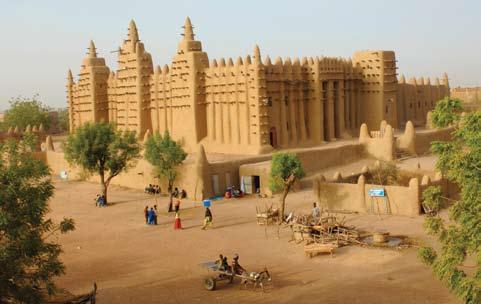
very name gives off a sense “of ‘beyond,’ of ‘difference,’ and ‘silence ’” The city rose to greatness as a hub of the trade in salt, gold and slaves It achieved its zenith in the 14th century, and ever since then its name “has meant ‘can’t get there’ to Westerners, and every traveller dreams of having been to such a place ” Timbuktu first appeared on a European map in 1373 but centuries passed before Europeans actually visited The 18th cent u r y s a w t h e i d e a o f g o i n g t o Ti m b u k t u become something of a geographical fad, in somewhat the same way that searching f o r t h e f a t e o f S i r J o h n
a t e 1 9
t u r y. I n o n e 2 1 - y e a r period, 43 expeditions set out to reach the already folkloric city None made it The
this particular ambition is that of Mungo Park, a Scot, who nearly but didn’t quite reach his goal in 1795 and again in 1805 Shortly after the second attempt, he either drowned in the Niger River or was murdered by the Tuareg, a people Antonson spends some time with on his way back o u t i n t o
d e r Gordon Laing, found his way into the city, only to be murdered a month later Many others perished from the journey itself A number of the early explorers started out from Tripoli or Fez on the Mediterranean,
thereby maximizing the time spent in the desert
For his part, Mr Antonson began on the Atlantic coast, at Dakar in Senegal, travell i n g t o B a m a k
, t h e c a p i t a l o f M a l i , b y rail. No one he talks to is sure such a train even exists. So, having once been on the Transsiberian Railway, he naturally seems to have suspected that he must be ready for anything He ends up crammed into a tiny compartment with three African men, one of whom, Ebou, asks him why in the world he’s going to Bamako “‘I’m going to Timbuktu,’ I said. ‘Tombouctou,’ Ebou c o r re c t e d . A n d w i t h t h a t h e a d d e d , ‘ I t ’ s v e r y f a r. ’ I l i s t e n e d t o t h e m t a l k a m o n g t h e m s e l v e s , a n d n o t i c e d m y f ru s t r a t i o n w i t h t h e We s t A f r i c a n
I a s k e d a b o u t F r e n c h w o r d s t h a t E b o u said were not French They were speaki n g B a m b a r a , i n t e r s p e r s e d w i t h F re n c h
p h r a s e s a n d u t t e re d w i t h a F re n c h l i l t
T h e i r
w e t b r a n c h e s o n o u r w i n d o w
l l e d m e to sleep.” Later, he switches to road and river travel
Like much of the most rewarding travel literature, Mr Antonson’s narrative turns o u t t o b e m
d e s t i n a t i o n H e h a s a g o o d e y e “ I f y o u s a w a t h o u s a n d p e o p l e i n M a l i , n o t w o would be dressed alike”, he writes. “Occa-
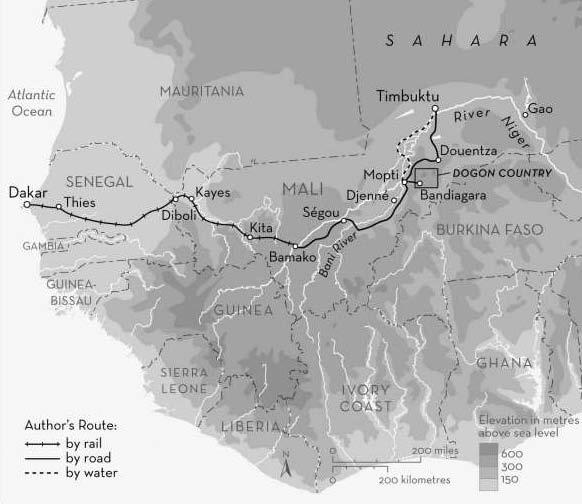
sionally they would look similar, but only by chance Absent was the Western commonality of fashion, similarity of suit and skirt, slacks and jacket It seemed true, too, o f t h e i r p e r s o n a l i t i e s . T h e i n d i v i d u a l i t y was intense, based on the struggle for life, the indifference to community judgment, and the fact that one ate and wore what w a s h a n d y T h e u n i f o r m i t y o f p o v e r t y seemed to result in an absence of the ambition to conform in dress ” Antonson will no doubt be interested in Bogolan: Shaping Culture through Cloth in Contemporary Mali by Victoria L. Rovine (Indiana University Press, US$24.95 paper), which shows the effects of globalisation on the methods and motifs of traditional Malien textiles
S t r a n g e l y, M r A n t o n s o n w r i t e s v e r y little of Timbuktu and Mali in terms of Islam, though you might expect the important role the city once played in spreading Islamic teaching and trade to be another key consideration in assessing its present appeal. Surely it is no coincidence that this is the third Canadian book on the subject to come out in as many years Another is Timbuktu: The Sahara’s Fabled City of Gold ( M c C l e l l a n d & S t e w a r t , $ 3 4 9 9 ) b y t h e well-respected husband-and-wife team of Marq De Villiers and Sheila Hirtle, who have done other books on Africa as well Then there is 52 Days by Camel: My Sahara Adventure by Lawrie Raskin, an illustrated
book for adolescents The new revised edition (Annick Press, $26 95 cloth) contrasts c o n t e m p o r a r y c e l l - p h o n e -
with antiquarian Timbuktu while retaining the previous edition’s topics, such as the position of Muslim women in Malien society.
No doubt the current confrontation between Islam and the West is also responsible for the new edition, the umpteenth i
(Penguin Group
travelled there by kayak and tries to write somewhat in the tradition of Hemingway w
absence is what made Hemingway’s style seem fresh in its day Not all Mr Jenkins’ books are written this way Off the Map: Bicycling across Siberia also Penguin, $17 95 paper is less hokey, though the means of transport it describes is no less contrived. To see what a more skilled author can do with such epics of solitary travel, I recommend Traversa: A Solo Walk across Africa, from the Skelton Coast to the Indian Ocean by Fran Sandham (Penguin, $30)
But I have let myself wander away from the subject of Mr Antonson, who can be quite wry at times On a Timbuktu street, he watches as “a lady used a flat pan to remove lumps of bread from the oven and
slipped them onto a tray beside the stove
We purchased two loaves, breaking pieces from them and eating as we walked The garnish of sand was subtle ” In the end, he returns to Canada with self-knowledge as well as information “Those who call [Timbuktu] home do not share the foreigner ’s fascination,” he writes . “The city’s mystique is powerful only until you arrive. I’d like to pretend it’s different, but it isn’t ” Mali won its independence from France i n 1 9 5
Since then, following a coup, it has slowly
west. Why have most of the countries that t
A
of Africa been mired so often in civil war and related tragedy? A dozen years ago, Robert D Kaplan, in his book The Ends of the Earth: A Journey at the Dawn of the 21st Century, suggested the answer may lie in a dangerous contradiction: the fact that rivers in the region flow east-west whereas t r i b a l a l l e g i
. I
I interpret him correctly, he was suggesting that European colonialism, which existed i n We s t A f r i c a o n l y b e c a u s e t h e r i v e r s emptying into the ocean permitted trade, did not always adhere closely to the other factor when carving the area into political units. Perhaps they felt they had to act as they did, given all the competition. The D u t c h , t h e S p a n i s h , t h e P o r t u g u e s e a n d the British were quite active and successful in the region at various times, though the francophone powers were always the dominant players (and so French remains the lingua franca) This slice of history is complicated and more than a little dirty C o n s i d e r t h e D e m o c r a t i c R e p u b l i c o f t h e C o n g o . B e
rule on this piece of the map in 1877, supplanting the various indigenous leaders
F o r a g e n e r a t i o n b e g i n n i n g i
territory was called the Congo Free State This was during the period when it was in fact not free in the least, because Léopold II of Belgium took personal ownership of i
of the population met their deaths. It was this fiefdom that Joseph Conrad made the s e t t i n g o f H e
ror” referred to in the novella is slavery, a practice introduced to wring profit from ivory and rubber The arrangement was a major scandal even at the time, so that even before the king’s death in 1909, the land ceased being a commercial corpora-
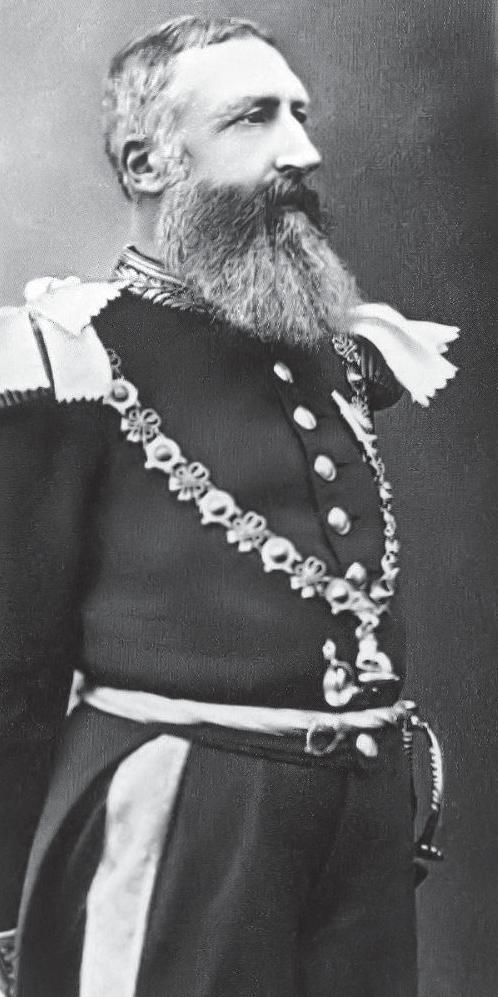
tion and reverted to colonial status as the B
y 1960s, whereupon it emerged as the Republic of the Congo. More recently, from
one of the numerous coups in the region, Zaire The current name, Democratic Republic of the Congo, is not a boast about the democracy to be found there, for the country has managed to elude such status. Rather, it is a way to distinguish the Democratic Republic of the Congo from its next-door neighbour, the Republic of Congo (without the define article before C
simply the French Congo Many outsiders still tend to confuse the two present states For this reason, the pair of them encourage the informal inclusion of their capital cities (which are in sight of each other) as part of the names: “Democratic Republic of the Congo–Kinshasa” (formerly Léopoldville) a
The fact that the latter and much smaller nation lives somewhat in the shadow of


the other only makes B
Magic and Rebellion in the Republic of Congo by Cassie Knight (Raincoast, $35) all the more valuable
Ms Knight is a British specialist in Africa who, following the civil war of 1998–9 9
Services, from a base in Brazzaville . Her b
ing Although charm, however scarce, is universal, those particular individuals no doubt stood out all the more in a culture t h
zarre (Bizarreville?) In thoughtful prose t
up, gradually, layer upon layer, a picture of the country’s decidedly less endearing s
are commonly observed and many taller re
slaves She is not judgemental, though she has a serious purpose, as when she writes o f h
Nguesso, a former communist who filled a vacuum brought on by coups and assassinations and was himself deposed, only to elbow his way back to power six years later The president uses the country’s oil revenues to strengthen the military while
exhibiting “an absolute disregard for human life and for human suffering Like the French before them, [he and his cronies] are interested only in profit [rather than] development Since independence in 1960 there has been no official enquiry into the conduct of the French administrators and concessionary companies that wreaked so much destruction across the country, and the French similarly turn a blind eye to the w ro n g d o i n g s o f t h e C o n g o l e s e g o v e r nment [ ]” Various militias roam the countryside, including one headed by a man w h o c l a i m s t o b e t h e re s u r re c t e d J e s u s “Independence”, Ms Knight writes, “was not an easy new beginning for Congo.”
B
M y g o o d f o r t
C
a m p l e , T h e U n c e r t a i n B u s i n e s s o f D o i n g
G o o d : O u t s i d e r s i n A f r i c a by Larry Krotz, a Canadian who has written frequently of h u m a n i t a r i a n p ro j e c t s o n t h
n e n t (University of Manitoba Press, $24 95) and D u s t f ro m O u r E y e s : A n U n b l i n k e re d L o o k at Africa (Wolsak & Wynn, $19 paper) by Joan Baxter, another Canadian. Ms. Baxter h a s re p o r t e d o n A f r i c a n m a t t e r s f o r t h e BBC World Service and the Sunday Times in London as well as for the Globe and Mail and the Toronto Star In 2002, for instance, she was one of the first journalists to penetrate the rebel-held areas of Côte d’Ivoire, another former French colony, during its own most recent civil war.
Yet another new Canadian book on the region is Shrines in Africa edited by Allan C h a r l e s D a w s o n ( U n i v e r s i t y o f C a l g a r y Press, $39 95) This collection of essays on the roles played by spiritual shrines is part of the University of Calgary’s admirable “Africa: Missing Voices” series A number of other university presses in North Ameri c a , a n d n o t a l w a y s t h e o n e s y o u m i g h t t h i n k o
in the field of African studies. One of the best is the “Blacks in the Diaspora” project from Indiana University Press Among its forthcoming titles is Deep Roots: Rice Farmers in West Africa and the African Diaspora edited by Edda L Fields-Black (US$34 95), a p p e a r i n g i n D e c e m b e r L o o k i n g m u c h farther ahead than that is risky. But don’t be surprised to see mention of several new works on Nigeria, now that the oil fields in that predominately Muslim nation are drawing closer attention from the United States (whose military created its first-ever Africa Command last year)
George Fetherling’s most recent book is Tales of Two Cities: A Novella Plus Stories (Subway).
Diplomats and embassy employees may exchange their personal cheques without paying extra fees. Accu-Rate Corporation specializes in electronic and cheque payments in over 55 currencies.For your personal consultation please call: Marie Boivin Managing Director 613-596-5505 ext 101 marie@accu-rate.ca
Corporation 2573 Carling Ave. (613) 596-5505
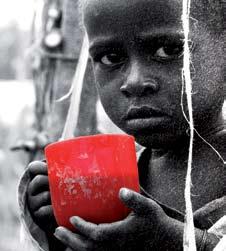

Dining room set for 8, made in Brazil in 1962. Polished Jacarandá (similar to Mahogany or Rosewood). Set includes polished table 155cm x 105cm with 2 additional leaves of 33cm each; 8 finely tooled leather chairs; Jacarandá hutch and display cabinet with glass doors. Can.$ 15,000 Frank H. Scheme (613) 562-2161 (viewing by appointment).
George Abraham
Fe w p o l i t i c i a n s h a v e e m u l a t e d t h e courage that U S president Gerald Ford showed in January 1975 when he told his astonished nation, “Yes, gasoline and oil will cost more than they do now ” The president warned that “Americans are no longer in full control of their own national destiny, when that destiny depends on uncertain foreign fuel at high prices fixed by others ” He was referring to the five-month oil embargo imposed by Arab oil producers that had ended a few months before, in March 1974.
Mr. Ford’s candour helped in the short run, driving down oil imports and hence America’s foreign dependency, but in the long continuum of history, it made little difference Crude oil imports accounted for roughly 37 per cent of U S needs at the time, but have since increased to 60 p e r c e n t t o d a y, w i t h C a n a d a b
g t h e s u p e r p o w e r ’ s l a rg e s t a n d m o s t re l i a b l e foreign supplier. According to Jay Hakes, h e a d o f t h e U S E n e r g y I n f o r m a t i o n Administration, between 1993 and 2000, the world’s biggest oil consumer spends $1 billion a day on imported fuel to keep its lights burning and its vehicles on the road
There are many who argue that b ot h oil exporters like Canada and importers such as China and India face a moment of truth similar to the oil shock of the early 1 9 7 0 s Wi t h p r i c e s a t h i s t o r i c h i g h s a n d no sign of retreating below $100 a barrel, politicians are reluctant to follow the lead of Mr Ford and tell their publics the true story: The days of cheap oil are behind us Further, the convergence of the security, environmental and economic implications of the oil trade should force the world to p a u s e a n d t a k e s t o c k , b u t t h e g e n e r a l l y stoic responses from corporate titans and political leaders convey a sense of business as usual
Our selection of books incorporates the theme of why oil has provoked more wars and the spilling of more blood than gold, diamonds or even water.
James Laxer, Oil, Groundwood Books, 2008, 145 pages
T h i s b o o k b y l o n g - t i m e w r i t e r a n d professor of political science at York University offers a largely neutral primer on w h y o i l o c c u p i e s a u n i q u e g e o p o l i t i c a l space. “Neutral” is important and helpful because when it comes to petroleum, it’s
hard to sift fact from ideology What you t
corporations, utilities, importers, or oilexporting governments.
public interest and the course adopted by petroleum companies, offering a slate of seven solutions – none of them dramatic
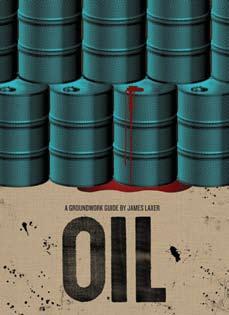
Mr Laxer offers a concise history of the oil industry, starting with its origins on the eve of the American Civil War, in 1858, with the drilling of an oil well in Petrolia, Ont , followed the next year by another in Pennsylvania In the book’s final chapter, the author asks this open-ended question: Who will consume the last barrel of oil?
T h e a u t h
alone should not be allowed to dictate the answer because oil corporations work for short-term goals such as quarterly results and maximizing shareholder value rather than stewarding one of humanity’s most precious resources
Jay Hakes, A Declaration of Energy Independence, John Wiley and Sons, 2008, 252 pages
S
agrees with Mr Laxer that the big oil corporations cannot be the sole arbiters of the public good Given oil’s complicated relationship to the economy, the environment and national security, the author calls on the White House to mediate between the
President Richard Nixon launched Project Independence on Nov 7, 1973, at the height of the Arab oil embargo Comparing this goal to the Manhattan project that produced the world’s first atomic bomb and the Apollo mission that launched a man on the moon, Mr Nixon set this lofty
under Project Independence, we shall be able to meet America’s energy needs from America’s own energy resources ” It took several years before this resolve could result in actual cutbacks, but between 1977 a
were cut by half.
The original oil shock may be a faraway
m
“panic factor” continues to rule gasoline prices The fact that oil supplies can be cut off at several strategic choke points such as the Strait of Hormuz in the Persian Gulf and sections of the Baku-Ceyhan pipeline, aggravate the uncertainty, but the author adds to the irrationality of it all by linking
o i l re v e n u e s w i t h t h e m a y h e m o f 9 / 11 : “Without money derived ultimately from oil, the terrorists could not have struck ”
Andrew Nikiforuk, The Tar Sands: Dirty Oil and the Future of a Continent, Douglas & McIntyre, 2008, 217 pages
T h i s b o o k c o u l d h a v e a n i m p a c t o n the discourse surrounding this country’s petroleum resources and Canada’s emerg e n c e a s a n “ e n e rg y s u p e r p o w e r ” a n d the supplier of choice to the Americans
A p ro v o c a t i v e w r i t e r f ro m C a l g a r y, M r Nikiforuk’s thesis can be summed up in these dire words: “The world’s cheapest and cleanest oil has been consumed. The r e a l i t y o f d e p l e t i o n n o w d e m a n d s t h e mining of the dirtiest.”
The cost of extracting oil from the tar sands makes it the most expensive fossil fuel mined anywhere on earth It is three times as costly as conventional oil, with the author estimating the production cost at around $32 a barrel It requires burning costly natural gas, pumping millions of litres of precious fresh water, and laying w a s t e a l a n d s c a p e b y e x c a v a t i n g e n o rmous amounts of earth The writer com-
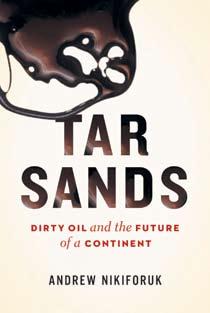
pares the operation to “burning a Picasso for heat ” M r. N i k i f o ru k o ff e r s c o m p e l l
dence to buttress the argument made by both Dr. Hakes and Mr. Laxer, that laissez-faire company executives cannot be
allowed to determine oil policy He contends that the $200 billion invested so far in tar sands development has not undergone rigorous environmental, economic or social analysis, and aims his most damning assertions at the Alberta government Mr. Nikiforuk agrees with other experts (the New York Times’ Thomas Friedman, among others) who have postulated that there is an inverse relationship between the price of oil and the quality of democracy in a producing state This is as true of Alberta as it is for Azerbaijan
“Oil hinders democracy and corrupts the political process through the absence of transparent reporting and clear fiscal accounting. Alberta, a classic petro state, has one of the least accountable governm
C
haves like an impervious Middle Eastern state ” Most Canadians would disagree, b u t o n e c
with an involuntary “Ouch!”
George Abraham is Diplomat’s contributing editor.

An y o n e w h o c o o k s h a s a f e w t r i c k s f o r g e t t i n g t h e j o b d o n e
m o r e q u i c k l y a n d w i t h g r e a t e r
c o n f i d e n c e T h e y m a y b e a s s i m p l e a s buying pre-chopped garlic in oil, relying on commercial sauces and rubs, or adding a package of this or that to boost the flavour My trick is my inventory of basic recipes
P e r h a p s t h e m o s t f r e q u e n t q u e s t i o n
I a m a s k e d i s , " D o y o u c o o k t h i s w a y
e v e r y d a y " ? M y r e s p o n s e i s a l w a y s t h e
s a m e " Ye s , b u t I n e v e r s t a r t c o o k i n g from scratch thanks to my supply of in-
d i s p e n s a b l e b a s i c re c i p e s w h i c h c a n b e prepared in advance in small pockets of time ”
These simple recipes include both savoury and sweet items. Most may be kept o n h a n d f o r w e e k s o r m o n t h s i f a p p ropriately stored in the refrigerator, freezer
o r a c o o l d r y c u p b o a r d I n d e e d , o p e n
m y r e f r i g e r a t o r d o o r a n d y o u ’ l l f i n d a variety of mayonnaises, and vinaigrettes,
c h u t n e y s , c h o c o l a t e c u p s , b a l s a m i c re d
w i n e d r i z z l e , c a r a m e l , b u t t e r s c o t c h a n d
a s l e w o f o t h e r s a u c e s , a l l r e a d y t o b e called into service when required. In my freezer, you’ll find small, air-tight, plastic
c o n t a i n e r s s t a n d i n g i n t a l l , l o n g r o w s , and filled with garlic butter, herb cream cheese, pesto, cooked wild and sushi rice, crêpe batter and even lightly spiced flour
f o r d u s t i n g m e a t P a s t r y s h e l l s / d i s k s / squares are kept in a cool dry basement cupboard
T h e s e r e c i p e s c a n b e u s e d i n d e p e n -
d e n t l y o r a s a c o m p o n e n t o f o t h e r re c i -
p e s , a d d i n g f l a v o u r a n d a p ro f e s s i o n a l
t o u c h Wi t h o u t t h e s e b a s i c re c i p e s a t m y
f i n g e r t i p s , e v e n e v e r y d a y m e a l p re p a r a -
t i o n f o r t w o ( n e v e r m i n d e n t e r t a i n i n g
d o z e n s ) w o u l d b e a b i t o f a h a s s l e M y basic recipes keep me relaxed, organized
a n d e n a b l e m e t o s e r v e a n e x c i t i n g m e a l
a s e a s i l y a s s o m e t h i n g m o re o rd i n a r y.
T h e s e r e c i p e s a r e a l s o v e r s a t i l e . F o r example, the crêpe batter can be used to make sweet or savoury crêpe recipes from my breakfast crêpes to ice-cream stuffed d e s s e r t c r ê p e s , t o b l i n i s w i t h c a v i a r, avocado rolls, or pancake coins with goat cheese and sun-dried tomatoes
A n u m b e r o f f r i e n d s , c o l l e a g u e s a n d
r e a d e r s h a v e a d o p t e d t h i s t r i c k . T h e y a d m i t t o h a v i n g b e c o m e m

Of course, for many
available at local supermarkets. A number of readers may have their own versions for at least some of these recipes
I should add that I also keep on hand supplies of other frequent ly used ingred
prepare For example, chopped fresh garlic, chopped and/or toasted nuts are kept in air-tight containers in the refrigerator; grated fresh gingerroot, lemon and orange zest are in the freezer; chopped ginger in syrup and crushed black peppercorns are stored in a kitchen cupboard
So, there’s my secret I never start cooking from scratch My avocado crêpe rolls use two basic recipes – crêpe batter and zesty ginger mayonnaise
Bon Appétit!
i c i e n t a n d c o n f i d e n t i n t h e kitchen, and more comf o r t a b l e a b o u t e n t e rtaining with more time available to spend with their guests
AVOCADO CRÊPE ROLLS
Makes 12 rolls (six hors d’oeuvre servings)
1 avocado, ripe (about 9 oz or 250 g)
1 2 p r
inches or 11 cm)
1 to 1 1/2 tsp (5 to 8 mL) lemon juice
/
1/4 cup (60 mL) sour cream
2 tbsp (30 mL) Zesty Ginger Mayonnaise (recipe follows) or plain mayonnaise
1 t b s p ( 1 5 m L ) b l a c k
well-drained lumpfish roe), optional 3/4 tsp (4 mL) maple syrup
1 Cut avocado in half, remove stone and p e e
lemon juice and set aside
2. Immediately, lay out crêpes on a clean f
tsp or 5 mL) and a touch of Zesty Ginger Mayonnaise (1/2 tsp or 3 mL) Place one w
tion near bottom edge of crêpe; sprinkle central area of avocado with caviar (1/4 tsp or 1 mL) and drizzle with a few drops (i.e., 1/16 tsp or 0.3 mL) of maple syrup.

3 S t a r t i n g f ro m b o t t o m e d g e , ro l l c r ê p e securely around avocado wedge to form a roll Arrange rolls with seam-side down
4 If not serving immediately, place rolls in an airtight plastic container and store refrigerated for up to three hours
To make 1/4 cup (50 mL) of Zesty Ginger Mayonnaise, mix together thoroughly 1/4
c u p ( 5 0 m L ) o f m a y o n n a i s e , 1 t e a s p o o n (5 mL) of peeled and grated fresh gingerroot, and 1/3 teaspoon (2 mL) granulated sugar Store refrigerated
BUCKWHEAT
Makes about about five dozen small crêpes
3/4 cup (180 mL) all-purpose flour
3/4 cup (180 mL) buckwheat flour
1/2 tsp (3 mL) salt
1/2 tsp (3 mL) ground ginger
2 cups (500 mL)* milk
1 1/2 tbsp (23 mL) white vinegar
3 large eggs
3 egg yolks
3 tbsp (45 mL) molasses
3 tbsp (45 mL) butter or margarine, melted
1 In a large bowl, sift together flours, salt and ginger
2 In a medium bowl, combine milk and v i n e g a r ; s e t a s i d e f o r a b o u t 1 0 m i n u t e s
Add eggs, egg yolks and molasses to milk mixture. Using an electric mixer, beat ingredients together.
3 Make a well in centre of dry ingredients and pour in milk mixture; beat to form a smooth batter Beat in melted butter Allow batter to rest refrigerated for at least 30 minutes
4 To make crêpes, stir batter thoroughly and spoon 1 tbsp (15 mL) into a preheated non-stick skillet or griddle over mediumlow heat. Immediately (i.e., before beginning another crêpe), using the underside
o f t h e s p o o n , q u i c k l y s p re a d b a t t e r i n a circular motion to form a small crêpe (diameter: 4 1/2 inches or 11 cm)
5 C o o k c r ê p e s u n t i l b u b b l e s o n s u r f a c e burst and batter just sets Using a pancake
f l i p p e r, c a re f u l l y p e e l c r ê p e f ro m s k i l l e t and turn over; cook second side briefly.
6. Stack cooked crêpes on a plate, cover with wax paper and place in an airtight plastic bag until ready to use (Refrigerate if not using until later )
Margaret Dickenson is author of the international award-winning cookbook Margaret’s Table – Easy Cooking & Inspiring Entertaining.

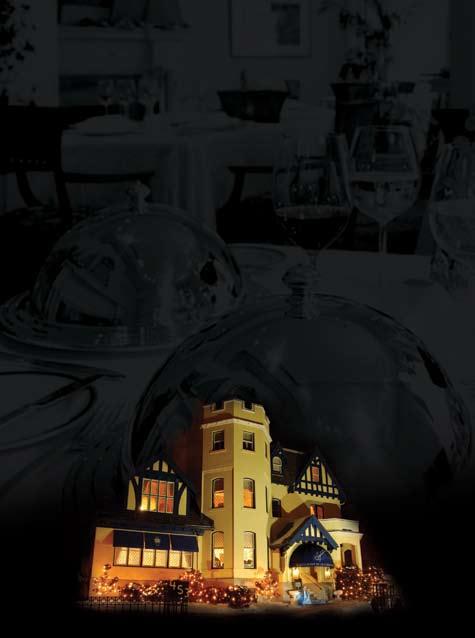
Ambassador's residence a Rockcliffe gem
By Margo Roston
The O t t a w a R i v e r s p a r k l e s b e l o w t h e
p a t i o , f r a m e d b y t h e G a t i n e a u h i l l s
b e y o n d . L o o k i n g e a s t , t h e e y e f o llows the graceful river towards Montreal . And through the trees, there’s a glimpse of the historic boathouse at the Ottawa New E d i n b u rg h C l u b T h e p a t i o a n d i t s v i s t a s – i t s b l a c k a n d g o l d w ro u g h t - i ro n r a i l i n g
w i t h h a n g i n g b a s k e t s o f r e d p e t u n i a s , i t s s e n s e o f s e r e n i t y – i s o n e o f t h e m o s t breathtaking spots in the capital.
The Kuwaiti ambassador ’s residence on A c a c i a L a n e , a q u i e t c u l - d e - s a c i n R o c k -
c l i f f e , i s s i t u a t e d o n o n e o f t h e p r e m i e r
l o c a t i o n s i n t o w n a n d t h e h o u s e i t s e l f i s a strikingly modern building that is a model of elegance and Arabic detail
A m b a s s a d o r M u s a e d A l - H a r o u n a n d his wife, Fatma Al-Khalifa, say their home with its spectacular scenery is “one of the most wonderful parts of the job . The view
is amazing and the terrace is gorgeous and it is a new modern home,” he says.
F ro m t h e s
t re a l a rc h i t e c t A r m a n d D a d o u n a n d w a s finished in 1998
Arabic influences are obvious from the exterior, and once inside guests are immediately struck by the details Through the imposing front door, a large marbled foyer w i t h a h u g e c h a n d e l i e r a n d t a l l a r c h e s
l e a d s t o t h e m a i n r e c e p t i o n r o o m s a n d ,
dead ahead, the patio
“This is the Arab way of building,” says t h e a m b a s s a d o r, “ w i t h a b i g h a l l . ” H u g e
w i n d o w s l o o k i n g o u t o v e r t h e p a t i o a n d
t h e g l o r i o u s v i e w, a l l h i g h l i g h t e d b y t h e
i n t e r i o r y e l l o w o c h r e w a l l s , a d d t o t h e light in the foyer
T h e h o m e h a s t h r e e l a r g e f o r m a l r o o m s A c o m f o r t a b l e s i t t i n g r o o m w i t h
f l o r a l - p r i n t d r a p e s a n d c r e a m - c o l o u r e d
s o f a s , i s h i g h l i g h t e d b y a l a r g e I r a n i a n
c a r p e t , a g o r g e o u s c
Iranian revolution
“It belonged to a Supreme Court judge i n Ira n a nd h ad
the ambassador
A bright red “smoking room”
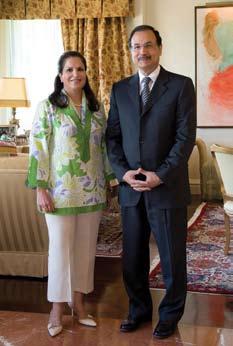
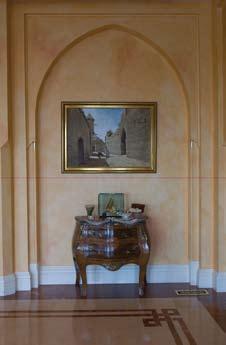
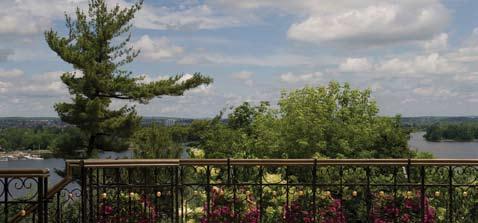


re l a x i n g a n d c h a t t i n g “ B u t w e c a n ’ t c a l l
i t a s m o k i n g ro o m a n y m o re , ” l a u g h s t h e ambassador.
T h e d i n i n g r o o m w i t h i t s f o u r c r y s t a l chandeliers dominates the western side of the house Covered in green wallpaper, the
re c e s s e d c e i l i n g w a s p a i n t e d g o l d b y t h e
a m b a s s a d o r ’ s w i f e , c re a t i n g a n o p u l e n c e
h i g h l i g h t e d b y a s s o r t e d g o l d - c o l o u r e d
p i e c e s o f o b j e t s d ’ a r t s c o l l e c t e d b y M s A l -
K h a l i f a a n d a r r a n g e d o n s i d e b o a rd s a n d
o n t h e l a r g e t a b l e . S h e o r d e r e d s o m e o f the pieces from Mexico, some she painted
h e r s e l f H e r d i n i n g ro o m t a b l e i s c o v e re d with a gold hand-embroidered tablecloth, specially ordered from Damascus, Syria
“ I h a d t o s e n d i t b a c k t w i c e , ” s h e s a y s , “before it came back perfect ”
Besides its formal reception rooms, the h o u s e h a s f o u r b e d r o o m s f o r t h e f a m i l y
a n d t h re e s t a ff b e d ro o m s . T h e c o u p l e h a s
t w o s o n s a t t e n d i n g h i g h s c h o o l i n O t -
t a w a a n d t w o d a u g h t e r s s t u d y i n g i n t h e
U . S . , j u s t a s t h e i r f a t h e r d i d m a n y y e a r s ag o. The house is manag ed b y a staff t hat
i n c l u d e s t w o h o u s e k e e p e r s , a c h e f a n d a c h a u ff e u r T h e m o d e r n k i t c h e n i s h i d d e n
i n t h e b a s e m e n t a n d t h e f o o d i
stairs in a dumbwaiter
W h e n t h e y e n t e r t a i n , t h e r e i s o f t e n Arab food on the menu, mostly classic rice dishes with lamb, and sometimes chicken o r
can easily entertain 60 guests for dinner
for their retirement, it’s a safe bet their Ott
a place in their hearts
Margo Roston is Diplomat's culture editor.

Ah , p o o r r o s é O f t e n d i s m i s s e d a n d r a r e l y t a k e n s e r i o u s l y, n o other style of wine encounters as much prejudice or disregard . Yet hardly a n y o t h e r
p t u re s b r i g h t freshness, seductive fruit and liveliness of character in a single glass Only a handful o f w i n
w i d e a v
e t y of foods Even fewer are as no-nonsense tasty on a warm day And no other wine is as pretty
Rosé wines are essentially white wines made with red grapes. The best examples have the crisp freshness of a white and the depth of flavour of a red
There are three ways to make still rosé w i n e W
t
c re a t e rosé by blending white and red wines, this practice is mostly used for creating pink champagne and sparkling wine
P
p
613.745.9400


A p a r t m e n t l i v i n g m a d e e a s y ve r t i ca.ca


n d immediately fermenting that juice as you would with a white wine Though there is little contact with skins of the grapes, a small amount of pigment is carried off by the juice to make a delicately coloured wine These rosés are known as vin gris
The similar saignée (‘to bleed’) method is the second way to create a rosé wine .
T h i s i s a u s e f u l t o o l f o r w i n e m a k e r s t o increase the skin-to-juice ratio especially after heavy rains occur before harvest and the grapes are swollen with too much water Here, juice is siphoned off the macerating skins and pulp, and these bleedings are fermented separately to create a rosé This technique allows for two wines from a s i n g l e h a r v e s t : a c h a r m i n g ro s é a n d a red wine that would otherwise have been weak and lacking depth of flavour.
Th e t h i rd me t h o d i s c l i n i ca l l y k n o w n a s “ a b b re v i a t e d
i n i f i c
i o n ” H e re , t h e j u i c e re m a i n s i n c o n t a c t w i t h the crushed grapes for between eight and 72 hours depending on grape variety and the wishes of the winemaker For instance, in St-Saturnin in the south of France, the j u i c e t r a d i t i
still romantic name, vin d’une nuit or ‘wine of one night ’ With modern winemaking technology and precise temperature cont ro l , w i n e m a k e r s c a n n o w p ro l o n g t h i s period of juice and skin contact while still being able to create wine that is fresh and vibrant in style. Most quality rosés are created this way.
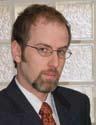
by Chinese and Indian
great dance partner in
grilled cheese sandwiches.
For a Canadian rosé wine, I always look forward to the release of Malivoire’s Ladybug Year after year, this Niagara winery consistently crafts one of the best rosés in Canada, and the 2007 is a stunner Made mostly of Cabernet Franc with a dose of Gamay Noir, this wine is brimming with s t r a w b e r r y, r h u b a r b , a n d m a r a s c h i n o c h e r r y a ro m a s a n d f l a v o u r s . A t $ 1 6 , i t ’ s a steal. Other great producers of rosé in Niagara include Angels Gate Winery and Flat Rock Cellars
B e s i d e s O n t a r i o , t h e re a re f re s h a n d delicate Cabernet Franc rosés in France’s L o i r e r e g i o n , b u t , f o r e x a m p l e s w i t h greater depth, head south for the Tavels a n d L i r a c s o f F r a n c e ’ s R h ô n e Va l l e y. I f you’re eating rich meat dishes and it’s too h o t t o d r i n k b i g re d s , t h e s e a re p e r f e c t .
Made from Grenache, they possess a commanding presence and intensity of flavour rarely seen in other rosés Though a tad pricier, they’re worth it For my money, I recommend Château d’Aqueria
If it’s value you’re after, check out rosés (rosato) from Italy and rosado from Spain. Italian rosés from the northeast tend to be delicate while their southern counterparts are richer and gutsier Spanish rosés come m o s t l y f ro m N a v a r r a a n d R i o j a a n d a re usually made with Grenache
California, meanwhile, is partly respons i b l e f o r a n t i - ro s é f e e l i n g s t h a n k s t o i t s liquid candy known as White Zinfandel Look to Californian producers like Randall Graham’s Bonny Doon who make a great rosé called Vin Gris de Cigare.
T h o u g h s u m m e r i s o v e r, t h e r e ’ l l n o d o u b t b e a f e w m o re w a r m e v e n i n g s t o enjoy a bottle of rosé Brave wine drinkers, willing to stand out, will be rewarded when they pick a good one
Pieter Van den Weghe is the sommelier at Beckta dining & wine.
By Laura Neilson Bonikowsky
History and legend have much in common. History refers to events of the past Legend is based on reality, with the drama and pathos enhanced over time At the intersection of history and legend reside heroes like Captain William Jackman, who came to the rescue on October 9, 1867
Jackman sailed into Spotted Harbour, Labrador ahead of a storm and went ashore to visit his friend, John Holwell. After their “mug-up” they walked along the coast despite the gale blowing up Hearing a gunshot, they rushed up a hill and spotted a fishing schooner, the Sea Clipper, floundering on a reef 150 metres (500 feet) from shore Some versions of the story report 365 metres (400 yards).
Jackman and Holwell could see crew and passengers at the rail, or clinging to the shrouds, depending on the storyteller
It is evident where history becomes legend it is unlikely they could see anyone aboard a boat 300 metres away through the rain and crashing waves of a brutal storm at night But this is the stuff of legend.
There were reputedly 27 people crowded aboard, for the ill-fated Clipper had run down another boat, the Loon, earlier and taken the vessel’s complement aboard before the Loon sank
Holwell ran for help Jackman kept watch, knowing the impossibility of a lifeboat reaching the schooner before it broke up in the vicious storm. Impulsively shedding his clothes, he rushed into the frigid water. He tried to swim, but the waves pushed him back He swam underwater, surfacing to breathe
Taking the first man on his back, he turned shoreward, the waves helping him reach shore Plunging into the raging surf again and again, Jackman rescued 11 by the time Holwell returned with help.
In some versions of the story, Jackman, alone on the beach, guided by fisher’s instinct, saw the ship Knowing that none knew its fate, he determined to save the desperate souls clinging to the luckless vessel, and sent the first rescued man for help
The dory the rescuers brought was useless in the rough sea. They tied coils of rope together. Jackman tied one end
around his waist, swam to the boat and tied the other end to the rail With the rope and rescuers’ assistance, he swam back and forth for over two hours, rescuing everyone
He stumbled onto the beach, the hushed crowd watching in disbelief. Jackman was finishing some tea when someone said a person was missing, the cook of the Loon, who had been injured in the collision with the Clipper Jackman rushed into the towering waves for the 27th time, against the crowd’s objections; the woman was probably dead
On board, he found her lying in water. Some stories place her in her berth, about to expire. Jackman brought her to shore, but she died two days later Or, you could
say, she lived only long enough to kiss Jackman goodbye.
The British Royal Humane Society awarded Jackman a silver medal He died in 1877, aged 39, because, said many, “of the strain his superhuman exertions had placed on his heart ” The largely unknown Jackman, whom none has “risen to record…in immortal verse,” has been remembered in a discordant ballad entitled “The Man Who Saved the Day” and by Canada Post’s “Legendary Heroes” series in 1992 Labrador City’s Captain William Jackman Memorial Hospital commemorates him
A daring man, a desperate situation, heroic deeds the stuff of legend And history.
Laura Neilson Bonikowsky is the associate editor of The Canadian Encyclopedia
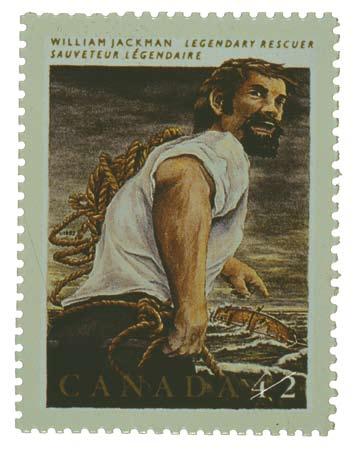
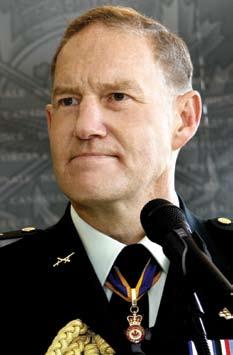
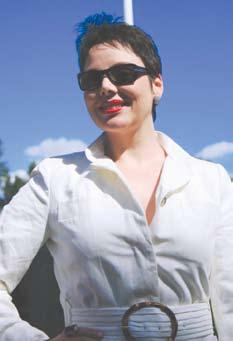
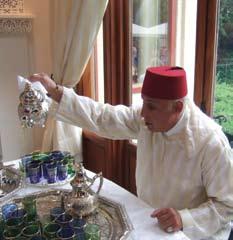
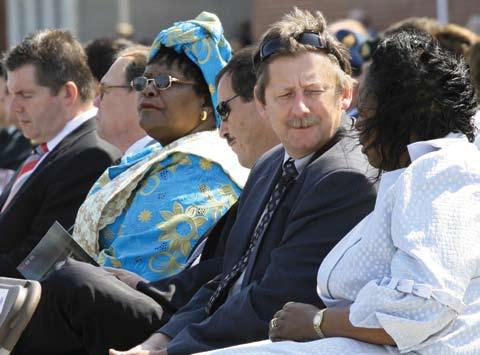
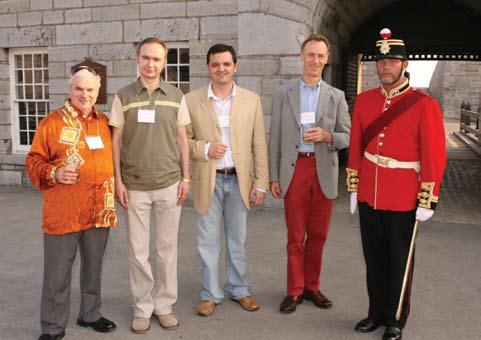
THIS PAGE 1 Walt Natynczyk, the new chief of defence staff, was installed July 2 • 2 The diplomatic corps, including (from left) Slovenian Ambassador Tomax Kunstelj, Swiss Ambassador Werner Baumann, Kenyan High Commissioner Judith Bahemuka, Algerian Ambassador Smail Benamara, Ukrainian counselor Igor Kyzym and Zimbabwean Ambassador Florence Chideya, attended his installation. (Photos: Lois Siegel) • 3. House of Commons Speaker Peter Milliken hosted his annual diplomatic reception in Kingston in June. A cocktail reception was held at Fort Henry National Historic Site followed by a barbeque at the Royal Military College Shown from left: Mr Milliken, Bosnian Ambassador Milenko Misic, Serbian Chargé d’Affaires Dusan Vujacic, British High Commissioner Anthony Joyce Cary and a Fort Henry guard. • 4. Mohamed Taouzri, of Montreal, served Moroccan tea at Ambassador Mohamed Tangi’s national day reception July 30. (Photo: Ulle Baum) • 5. Honduran Ambassador Beatriz Valle attended U S Ambassador David Wilkins and his wife Susan’s 4th of July party (Photo: Frank Scheme)
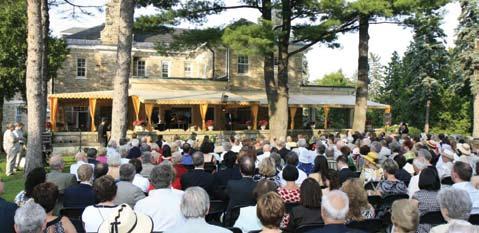

THIS PAGE 1 Italian Ambassador Gabriele Sardo hosted his annual fundraiser in support of Opera Lyra June 25 Guests ate fresh parmesan cheese, drank Italian wine and enjoyed the music of performers in the opera company (Photo: Frank Scheme) • 2 Early Music Ensemble of Kiili (Estonia) performed at the University of Ottawa July 9th for Estonia’s 90th anniversary (Photo: Ulle Baum) • 3 Croatian Ambassador Vesela Mrden Korac and her husband, Marko, hosted a national day reception June 10 Shown: Mr and Mrs Korac with Deepak Obhrai, left, parliamentary secretary for foreign affairs (Photo: Bruce MacRae) • 4 Argentine Ambassador Arturo and Maria Angélica Bothamley took part in a private polo game at the club of Kim and David Levy July 26 (Photo: Frank Scheme) • 5 U S Ambassador David Wilkins and his wife, Susan, share a kiss before several thousand guests arrived at their final 4th of July party in Canada (Photo: Frank Scheme)
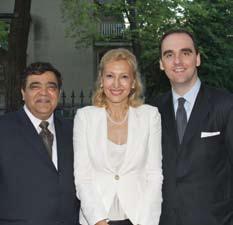
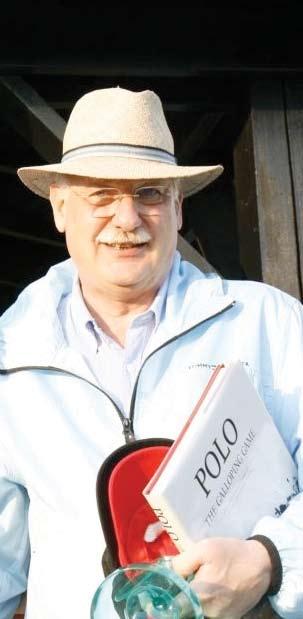
Louis Léon Boguy Bony Ambassador of Cote d’Ivoire
Mr Bony was at university for 10 years, s t u d y i n g e c o n o m i c s , l a w, h i s t o r y, a n d political science, obtaining a master ’s and o t h e r p o s t - g r a d u a t e c e r t i f i c a t i o n , b e f o re he became an instructor at the Université de Paris in 1986. Also in Paris, he worked briefly for UNESCO and a young Africans group before joining the ministry of foreign affairs in 1989
Since then, he’s held various positions, including working on the Europe desk, advising the cabinet, and working on the diplomatic affairs desk In 2000, he became a technical consultant to the president and stayed on as advisor to his successor. He was given the rank of ambassador in 2004. Most recently, he’s worked as a special advisor to a third president, in charge of diplomatic affairs
Mr Bony is married He speaks English and French
André
William Anguilé Ambassador of Gabon
with a master ’s in international relations from the University of London in 1989
For the following several years, he was a counselor at embassies in London and Brussels before being named a human rights advisor to the secretary of state for justice in 1997. Two years later, he became a diplomatic advisor to the minister of defence In September 2004, he became political counselor at the United Nations’ political department in New York where he stayed until 2006 For the past two years, he’s been at the ministry, working as director-general on the Africa desk.
Mr. Anguilé is married and has four children. He speaks French, English, and German
Iyorwuese Hagher
High Commissioner for Nigeria
wright Over his varied career, he’s also served as a senator, cabinet minister and – more recently – diplomat
Dr. Hagher taught leadership studies at St. Clements University. His political career was a successful one as he was an elected senator at the age of 33, after which he served twice as a cabinet minister, once as minister of health and once as minister of power and steel For a year beginning in 1995, he was also a participant in the constitutional conference that formed the current constitution.
The envoy studied English and dramatic arts at Ahmadu Bello University in Zaria, and eventually obtained a PhD Prior to this assignment, he had been ambassador to Mexico, Costa Rica, Guatemala and Panama
Rakiah Haji Abdul Lamit
High Commissioner for Brunei Darussalam Ms. Lamit joined the civil service in 1985.
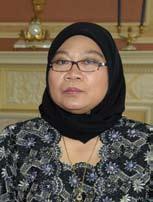
Since then, she’s worked in several areas including the political, protocol, ASEAN a
APEC national secretariat, and the APEC logistics secretariat She was involved in the establishment of the policy planning department
She was posted as second secretary to the high commission in London from 1990 to 1993 and as first secretary to the high commission in Malaysia from 1994 to 1999. She was then posted as minister-counsellor at the embassy in China
Ms Lamit has a bachelor degree in South East Asian studies and social anthropology from the University of Kent at Canterbury where she studied from 1982 to 1985
Ms. Lamit, 48, is single and has an adopted daughter.
Massoud Maalouf Ambassador of Lebanon
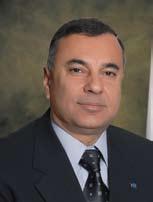
Mr. Maalouf joined the ministry of foreign affairs in 1972 after three years of working for the government His first posting came immediately and for the next five years, he worked at the embassy in Nigeria That was followed by two years at the consulate-general in Montreal and later postings to Tunisia, the Holy See and Washington before he was appointed as ambassador
t o C h i l e i n 1 9 9 5 H e w a s a m b a s s a d o r t o Poland in 2003 and non-resident ambassador to Lithuania, Latvia and Estonia at the same time
Positions he held at headquarters included director of protocol, director of Arab affairs in the political and consular department and director of economic affairs.
Mr. Maalouf, 62, has a master ’s degree in economics from Saint Joseph University and speaks Arabic, French, English and Spanish He is married and has two children
Jorge Castaneda
Ambassador of
Peru
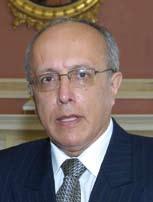
M r C a s t a n e d a ’ s p o s t i n g i n O t t a w a re presents a return for the career diplomat
While his former wife was posted in Ott a w a i n 1 9 9 1 , h e c a m e a l o n g a n d d i d a master ’s degree in international relations at Carleton University At the time, marr i e d c o u p l e s c o u l d n ’ t w o r k a t t h e s a m e mission
Mr Castaneda, 59, joined the ministry in 1970 and his first posting, to Poland, came two years later Subsequent postings have included the former Soviet Union, United States (Houston), Uruguay, Ecuador, Bolivia and Argentina before he returned to Poland as minister in 1996 and as ambassador three years later He also served as ambassador to Thailand The envoy has held numerous positions at headquarters including director of human resources in 1995 and undersecretary of administration in 2007 He is married and has four children.
Anu’a-Gheyle Solomon Azoh-Mbi
High Commissioner for Cameroon
Mr Azoh-Mbi started his diplomatic career in 1985 as a diplomat in litigations service
Three years later he moved on to work as d e p u t y s e r v i c e h e a d f o r o ff i c i a l v i s i t s i n the department of protocol In 1991, he became an advisor at the secretariat general and four years later, he was a senior advi-
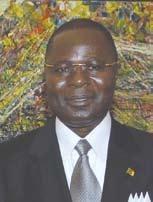
sor in the same office In this capacity, he represented Cameroon at several international conferences including at the United Nations, Afr ican Union, Commonwealth and the Francophonie.
Mr Azoh-Mbi studied international relations at the International Relations Institute of Cameroon between 1982 and 1985 Prior to that, he studied at the University of Yaounde, where he received a bachelor degree in history and sociology
The career diplomat, 50, is married and has four children.
Algeria
Ali Iguerguigui, First Secretary
El Mouloud Bousbia, Minister-Counsellor
Australia
Jason Dean Gallagher, First Secretary
Dorothy Harvey, First Secretary
Bangladesh
Monirul Islam, Deputy High Commissioner
Bolivia
Claudia Maria Alexis Rocabado Mrden, First Secretary
Brazil
Julio Cesar Ferreira Da Silva Junior, Counsellor
Bulgaria
Rumyana Yordanova, Third Secretary
Chad
Naimbaye Yelke Dasnan, Attaché
Tchouli Gombo, First Secretary N-Bashir Nurane, Counsellor
Chile
Hector Luis Vera Rivas, Attaché
China
Wenxiong Yang, Third Secretary
Xinyu Zhang, Second Secretary
Mei Wang, Second Secretary
Colombia
Cesar Felipe Gonzalez Hernandez, Minister-Counsellor
Cuba
Manuel Rosendo Peterssen Jimenez, Attaché
France
Simon Robert Moulie, Minister-Counsellor
Germany
Angelika Sieglinde Andorfer-Eisl, Attaché
Anja Barbara Plagenz, Third Secretary
Martina Kriemhilde Brink-Bauer, Attaché
Reinold Hugo Herber, Attaché
Rainer Bauer, Attaché
Helmut Peter Finger, Counsellor
Greece
Georgios Galanos, Defence Attaché
Guatemala
Federico Jose Urruela Arenales, First Secretary
Hungary
Tamas Kiraly, Deputy Head Of Mission
India
Narinder Chauhan, Deputy High Commissioner
Indonesia
Bambang Mulyanto, Deputy Head Of Mission
Iran
Bahram Ghasemi, Chargé D’affaires
Israel
Eyal Ben Ary, Counsellor
Jamaica
Georgette Novelet Smith, Attaché
Japan
Akiko Muramoto, Third Secretary
Hiroaki Kodama, First Secretary
Jordan
Mo’ath A.S. Al Zo’ubi, Third Secretary
Kazakhstan
Zhanbulat Murzalin, Second Secretary
Adilzhan Ruziyev, Second Secretary
Mexico
Alberto Lozano Merino, Counsellor
Mongolia
Amartuvshin Gombosuren, Second Secretary
Netherlands
Erik Boer, Deputy Head Of Mission
New Zealand
Mark Roger Smith, Counsellor
Saudi Arabia
Mohsen Marei H. Alshmlany, Attaché
Serbia
Branimir Filipovic, Minister-Counsellor
Sierra Leone
Rasie Binta Kargbo, Minister-Counsellor
Saspo Ibrahim Sankoh, First Secretary
Spain
Ignacio Sanchez De Lerin Garcia-Ovies, Deputy Head Of Mission
Francisco Javier Cuchi Oterino, Counsellor
Switzerland
Bernadette Maria Hurschler, First Secretary
Martin Zbinden, Attaché
Trinidad And Tobago
Patricia Goodridge, Attaché
Tunisia
Raoudha Hosni, Attaché
United States Of America
Jeffrey Todd Cooper, Attaché
Alan Eric Greenfield, Minister-Counsellor
Kurt Frederick Van Der Walde, First Secretary
Ricardo Anthony Scheller, Attaché
James Lawrence Mc Cauley, Coast Guard Attaché
Donna Marie Barbano, Attaché
Robin Ann Tilsworth, Minister-Counsellor
Theresa Cardinal Brown, Attaché
Vietnam
Hoanh Nam Nguyen, Minister-Counsellor
AFGHANISTAN
His Ex Omar Samad Embassy of the Islamic Republic of Afghanistan
240 Argyle Street
Ottawa, Ontario K2P 1B9
TEL 563-4223 FAX 563-4962 contact@afghanemb-canada net www afghanemb-canada net
ALBANIA
His Ex Besnik Konci
Embassy of the Republic of Albania
130 Albert Street, Suite 302
Ottawa, Ontario K1P 5G4
TEL 236-4114 FAX 236-0804 embassyofalbania@on aibn com
ALGERIA
His Ex Smail Benamara
Embassy of the People’s Democratic Republic of Algeria 500 Wilbrod Street
Ottawa, Ontario K1N 6N2
TEL 789-8505 FAX 789-1406 www.embassyalgeria.ca/eng.htm
ANGOLA
His Ex Miguel Maria N Puna Embassy of the Republic of Angola 189 Laurier Avenue East Ottawa, Ontario K1N 6P1
TEL 234-1152 FAX 234-1179 info@embangola-can org www embangola-can org
ARGENTINA
His Ex Arturo Bothamley
Embassy of the Argentine Republic 81 Metcalfe Street 7th Floor Ottawa, Ontario K1P 6K7
TEL 236-2351 FAX 235-2659 embargentina@argentina-canada net www argentina-canada net
ARMENIA
Mr Arman Akopian Chargé d’Affaires
Embassy of the Republic of Armenia 7 Delaware Avenue Ottawa, Ontario K2P 0Z2 TEL 234-3710 FAX 234-3444 embottawa@rogers com www armembassycanada ca
AUSTRALIA
His Ex William Fisher Australian High Commission
50 O’Connor, Suite 710 Ottawa, Ontario K1P 6L2 TEL 236-0841 FAX 236-4376 www canada embassy gov au
AUSTRIA
His Ex Otto Ditz
Embassy of the Republic of Austria
445 Wilbrod Street
Ottawa, Ontario K1N 6M7
TEL 789-1444 FAX 789-3431
Ottawa-ob@bmeia gv at
AZERBAIJAN
Mr Farid Shafiyev Chargé d’Affaires
Embassy of the Republic of Azerbaijan
275 Slater Street, Suite 904-C
Ottawa, Ontario K1P 5H9
TEL 288-0497 FAX 230-8089
BAHAMAS
His Ex Michael D Smith
High Commission for The Commonwealth of The Bahamas
50 O’Connor Street, Suite 1313
Ottawa, Ontario K1P 6L2
TEL 232-1724 FAX 232-0097
ottawa-mission@bahighco com
BANGLADESH
His Ex A M Yakub Ali
High Commission for the People’s Republic of Bangladesh
275 Bank Street, Suite 302
Ottawa, Ontario K2P 2L6
TEL 236-0138 FAX 567-3213
bangla@rogers com www bdhc org
BARBADOS
His Ex Edward Evelyn Greaves
High Commission for Barbados
55 Metcalfe St., Suite 470
Ottawa, Ontario, K1P 6L5
TEL 236-9517 FAX 230-4362
ottawa@foreign gov bb
BELARUS
Mr Pavel Pustovoy Chargé d’Affaires
Embassy of the Republic of Belarus
130 Albert Street, Suite 600
Ottawa, Ontario K1P 5G4
TEL 233-9994 FAX 233-8500 belamb@igs net
BELGIUM
His Ex Jean Lint
Embassy of Belgium
360 Albert Street, Suite 820
Ottawa, Ontario K1R 7X7
TEL 236-7267 FAX 236-7882 Ottawa@diplobel org www diplomatie be/ottawa
BENIN
His Ex Honoré Ahimakin Embassy of the Republic of Benin
58 Glebe Avenue
Ottawa, Ontario K1S 2C3
TEL 233-4429 FAX 233-8952 ambaben@benin ca
BOLIVIA
His Ex Edgar Torrez Mosqueira Embassy of the Republic of Bolivia
130 Albert Street, Suite 416
Ottawa, Ontario K1P 5G4
TEL 236-5730 FAX 236-8237 embolivia04@yahoo com
BOSNIA-HERZEGOVINA
His Ex Milenko Misic Embassy of Bosnia and Herzegovina
130 Albert Street, Suite 805
Ottawa, Ontario K1P 5G4
TEL 236-0028 FAX 236-1139 embassyofbih@bellnet ca www bhembassy ca
BRAZIL
His Ex Paulo Cordeiro Pinto Embassy of the Federative Republic of Brazil
450 Wilbrod Street
Ottawa, Ontario K1N 6M8
TEL 237-1090 FAX 237-6144 mailbox@brasembottawa org
BRUNEI DARUSSALAM
Her Ex Rakiah Haji Abdul Lamit High Commission for Brunei Darussalam 395 Laurier Avenue East Ottawa, Ontario K1N 6R4 TEL 234-5656 FAX 234-4397 bhco@bellnet ca
BULGARIA
His Ex. Evgueni Stoytchev Embassy of the Republic of Bulgaria 325 Stewart Street Ottawa, Ontario K1N 6K5 TEL 789-3215 FAX 789-3524
BURKINA FASO
Her Ex Juliette Bonkoungou Embassy of Burkina Faso 48 Range Road
Ottawa, Ontario K1N 8J4 TEL 238-4796 FAX 238-3812 burkina faso@sympatico ca www ambaburkina-canada org
BURUNDI
Her Ex Appolonie Simbizi
Embassy of the Republic of Burundi
325 Dalhousie Street, Suite 815
Ottawa, Ontario K1N 7G2
TEL 789-0414 FAX 789-9537 ambabottawa@yahoo com http://ambabucanada le-site info
CAMEROON
His Ex Anu’a-Gheyle Azoh-Mbi High Commission for the Republic of Cameroon
170 Clemow Avenue
Ottawa, Ontario K1S 2B4
TEL 236-1522 FAX 236-3885
CHILE
His Ex Eugenio Ortega Riquelme
Embassy of the Republic of Chile
50 O’Connor Street, Suite 1413
Ottawa, Ontario K1P 6L2
TEL 235-9940 FAX 235-1176 echileca@chile ca www chile ca
CHINA
His Ex Lijun Lan
Embassy of the People’s Republic of China
515 St Patrick Street
Ottawa, Ontario K1N 5H3
TEL 789-3434 FAX 789-1911
www chinaembassycanada org
COLOMBIA
His Ex Jaime Giron-Duarte
Embassy of the Republic of Colombia
360 Albert Street, Suite 1002
Ottawa, Ontario K1R 7X7
TEL 230-3760 FAX 230-4416
embajada@embajadacolombia ca www embajadacolombia ca
CONGO (ZAIRE)
Ms Louise Nzanga Ramazani
Chargé d’Affaires
Embassy of the Democratic Republic of the Congo 18 Range Road
Ottawa, Ontario K1N 8J3
TEL 230-6391 FAX 230-1945
COSTA RICA
Her Ex Emilia Maria Alvarez Navarro
Embassy of the Republic of Costa Rica
325 Dalhousie Street, Suite 407
Ottawa, Ontario K1N 7G2
TEL 562-2855 FAX 562-2582
embcrica@travel-net com
www costaricaembassy com

CÔTE D’IVOIRE
His Ex Louis Leon Boguy Bony Embassy of the Republic of Côte d’Ivoire
9 Marlborough Avenue
Ottawa, Ontario K1N 8E6 TEL 236-9919 FAX 563-8287 acica@ambaci-ottawa org www ambaci-ottawa org
CROATIA
Her Ex Vesela Mrden Kora´c
Embassy of the Republic of Croatia
229 Chapel Street
Ottawa, Ontario K1N 7Y6 TEL 562-7820 FAX 562-7821 Croatia emb@mvpei hr www croatiaemb net
CUBA
Embassy of the Republic of Cuba
388 Main Street
Ottawa, Ontario K1S 1E3 TEL 563-0141 FAX 563-0068 cuba@embacuba ca www embacuba ca
CZECH REPUBLIC
Mr Stanislav Benes
Chargé d’Affaires
Embassy of the Czech Republic 251 Cooper Street
Ottawa, Ontario K2P 0G2 TEL 562-3875 FAX 562-3878
ottawa@embassy mzv cz
DENMARK
His Ex Poul Erik Dam Kristensen
Royal Danish Embassy
47 Clarence Street, Suite 450 Ottawa, Ontario K1N 9K1
TEL 562-1811 FAX 562-1812 ottamb@um dk www ambottawa um dk
DOMINICAN REPUBLIC
His Ex Luis Eladio Arias Nunez
Embassy of the Dominican Republic
130 Albert Street, Suite 418 Ottawa, Ontario K1P 5G4
TEL 569-9893 FAX 569-8673 www drembassy org
ECUADOR
Mr Oscar Felipe Izquierdo Arboleda
Chargé d’Affaires
Embassy of the Republic of Ecuador 50 O’Connor Street, Suite 316 Ottawa, Ontario K1P 6L2 TEL 563-4286 FAX 235-5776
EGYPT
Mrs Hala Samir El Bishlawy Chargé d’Affaires
Embassy of the Arab Republic of Egypt 454 Laurier Avenue East Ottawa, Ontario K1N 6R3
TEL 234-4931 FAX 234-4398 egyptemb@sympatico ca www.mfa.gov.eg
EL SALVADOR
His Ex Rafael Alfaro
Embassy of the Republic of El Salvador 209 Kent Street
Ottawa, Ontario K2P 1Z8
TEL 238-2939 FAX 238-6940 embajada@elsalvador-ca org
ERITREA
His Ex Ahferom Berhane
Embassy of the State of Eritrea 75 Albert Street, Suite 610
Ottawa, Ontario K1P 5E7
TEL 234-3989 FAX 234-6213
ESTONIA
Rasmus Lumi
Chargé d’Affaires
Embassy of the Republic of Estonia
260 Dalhousie Street, Suite 210
Ottawa, Ontario K1N 7E4
TEL 789-4222 FAX 789-9555
embassy ottawa@mfa ee
www estemb ca
ETHIOPIA
Embassy of the Federal Democratic Republic of Ethiopia
151 Slater Street, Suite 210 Ottawa, Ontario K1P 5H3
TEL 235-6637 FAX 235-4638 infoethi@magi com www ethiopia ottawa on ca
EUROPEAN UNION
His Ex Dorian Prince Delegation of the European Commission to Canada
150 Metcalfe St #1900
Ottawa, ON K2P1P1
TEL 238-6464 FAX 238-5191 delegation-canada@ec europa eu www delcan ec europa eu
FINLAND
Embassy of the Republic of Finland
55 Metcalfe Street, Suite 850
Ottawa, Ontario K1P 6L5
TEL 288-2233 FAX 288-2244 embassy@finland ca
FRANCE
His Ex Francois Delattre
Embassy of France
42 Sussex Drive
Ottawa, Ontario K1M 2C9
TEL 789-1795 FAX 562-3735
www ambafrance-ca org
GABON
His Ex André William Anguilé
Embassy of the Gabonese Republic
4 Range Road, P O Box 368 Ottawa, Ontario K1N 8J5
TEL 232-5301 FAX 232-6916 ambgabon@sprint ca
GERMANY
His Ex Matthias Martin Höpfner
Embassy of the Federal Republic of Germany 1 Waverley Street
Ottawa, Ontario K2P 0T8
TEL 232-1101 FAX 594-9330 germanembassyottawa@on aibn com
GHANA
Her Ex Margaret Ivy Amoakohene
High Commission for the Republic of Ghana
153 Gilmour Street
Ottawa, Ontario K2P 0N8
TEL 236-0871 FAX 236-0874 ghanacom@ghc-ca com www ghc-ca com
GREECE
His Ex Nikolaos Matsis
Embassy of the Hellenic Republic
80 MacLaren Street, Suite 76
Ottawa, Ontario K2P 0K6
TEL 238-6271 FAX 238-5676 embassy@greekembassy ca www greekembassy ca
GUATEMALA
Embassy of the Republic of Guatemala
130 Albert Street, Suite 1010 Ottawa, Ontario K1P 5G4
TEL 233-7237 FAX 233-0135 embassy1@embaguate-canada com www embaguate-canada com
GUINEA
Mrs Hawa Diakité Counsellor & Chargé d’Affaires
Embassy of the Republic of Guinea 483 Wilbrod Street
Ottawa, Ontario K1N 6N1 TEL 789-8444 FAX 789-7560 ambassadedeguinee@bellnet ca
GUYANA
His Ex Rajnarine Singh High Commission for the Republic of Guyana
151 Slater Street, Suite 309 Ottawa, Ontario K1P 5H3 TEL 235-7249 FAX 235-1447
HAITI
Ms Marie Nathalie Menos-Gissel Chargé d’Affaires
Embassy of the Republic of Haiti
130 Albert Street, Suite 1500 Ottawa, Ontario K1P 5G4
TEL 238-1628 FAX 238-2986 bohio@sympatico ca
HOLY SEE
His Ex The Most Rev Luigi Ventura Apostolic Nunciature
724 Manor Avenue
Ottawa, Ontario K1M 0E3
TEL 746-4914 FAX 746-4786
HONDURAS
Her Ex Beatriz Valle Embassy of the Republic of Honduras
151 Slater Street, Suite 805 Ottawa, Ontario K1P 5H3 TEL 233-8900 FAX 232-0193
HUNGARY
His Ex. Pál Vastagh Embassy of the Republic of Hungary
299 Waverley Street Ottawa, Ontario K2P 0V9 TEL 230-2717 FAX 230-7560
www mfa gov hu/emb/ottawa mission ott@kum hu
ICELAND
Olof Dogg Sigvaldadottir Chargé d’Affaires Embassy of Iceland
360 Albert Street, Suite 710 Ottawa, Ontario K1R 7X7 TEL 482-1944 FAX 482-1945 icemb ottawa@utn stjr is
INDIA
His Ex Rajamani Lakshmi Narayan High Commission for the Republic of India
10 Springfield Road Ottawa, Ontario K1M 1C9
TEL 744-3751 FAX 744-0913 hicomind@hciottawa ca www hciottawa ca
INDONESIA
His Ex Djoko Hardono
Embassy of the Republic of Indonesia
55 Parkdale Avenue
Ottawa, Ontario K1Y 1E5
TEL 724-1100 FAX 724-1105
info@indonesia-ottawa org www indonesia-ottawa org
IRAN
Mr Bahram Ghasemi
Chargé d’Affaires
Embassy of the Islamic Republic of Iran 245 Metcalfe Street
Ottawa, Ontario K2P 2K2 TEL 235-4726 FAX 232-5712 iranemb@salamiran org www salamiran org
IRAQ
His Ex Howar M Ziad
Embassy of the Republic of Iraq
215 McLeod Street Ottawa, Ontario K2P 0Z8
TEL 236-9177 FAX 236-9641 media@iraqembassy ca www iraqembassy ca
IRELAND
His Ex Declan Kelly
Embassy of Ireland
130 Albert Street, Suite 1105
Ottawa, Ontario K1P 5G4
TEL 233-6281 FAX 233-5835
Ottawaembassy@dfa ie www embassyofireland ca
ISRAEL
His Ex Alan Baker
Embassy of Israel
50 O’Connor Street, Suite 1005
Ottawa, Ontario K1P 6L2
TEL 567-6450 FAX 567-9878
info@ottawa mfa gov il www embassyofIsreal ca
ITALY
His Ex Gabriele Sardo
Embassy of the Italian Republic
275 Slater Street, 21st Floor Ottawa, Ontario K1P 5H9
TEL 232-2401 FAX 233-1484
ambital@italyincanada com www italyincanada com
JAMAICA
Her Ex. Evadne Coye
Jamaican High Commission
275 Slater Street, Suite 800
Ottawa, Ontario K1P 5H9
TEL 233-9311 FAX 233-0611 hc@jhcottawa ca
JAPAN
His Ex Tsuneo Nishida
Embassy of Japan
255 Sussex Drive
Ottawa, Ontario K1N 9E6
TEL 241-8541 FAX 241-2232
infocul@embjapan ca www ca emb-japan go jp
JORDAN
His Ex Nabil Ali Barto
Embassy of the Hashemite Kingdom of Jordan
100 Bronson Avenue, Suite 701
Ottawa, Ontario K1R 6G8
TEL 238-8090 FAX 232-3341
KENYA
Her Ex Judith Mbula Bahemuka High Commission for the Republic of Kenya
415 Laurier Avenue East Ottawa, Ontario K1N 6R4
TEL 563-1773 FAX 233-6599
kenyahighcommission@rogers com www kenyahighcommission ca
KOREA, REPUBLIC
His Ex Soo-dong Kim Embassy of the Republic of Korea 150 Boteler Street
Ottawa, Ontario K1N 5A6 TEL 244-5010 FAX 244-5034 www emb-korea ottawa on ca
KUWAIT
His Ex Musaed Rashed Al-Haroun Embassy of the State of Kuwait 333 Sussex Drive Ottawa, Ontario, K1N 1J9 TEL 780-9999 FAX 780-9905
LATVIA
His Ex Mar gers Krams Embassy of the Republic of Latvia 350 Sparks Street, Suite 1200 Ottawa, Ontario, K1R 7S8 TEL 238-6014 FAX 238-7044 embassy canada@mfa gov lv www ottawa mfa gov lv
LEBANON
His Ex Massoud Maalouf Embassy of Lebanon 640 Lyon Street Ottawa, Ontario K1S 3Z5 TEL 236-5825 FAX 232-1609 info@lebanonembassy ca www lebanonembassy ca
LESOTHO
Her Ex Mots'eoa Senyane High Commission for the Kingdom of Lesotho
130 Albert Street, Suite 1820
Ottawa, ON K1P 5G4 TEL: 234-0770 FAX: 234-5665
LIBYA
His Ex Ahmed Ali Jarrud Embassy of the Great Socialist People’s Libyan Arab Jamahiriya 81 Metcalfe Street, Suite 1000 Ottawa, Ontario K1P 6K7 TEL 230-0919 FAX 230-0683 info@libya-canada org
LITHUANIA
Her Ex Ginte Damusis Embassy of the Republic of Lithuania
130 Albert Street, Suite 204 Ottawa, Ontario K1P 5G4
TEL 567-5458 FAX 567-5315
MACEDONIA (REPUBLIC OF)
His Ex Sasko Nasev Embassy of the Republic of Macedonia
130 Albert Street, Suite 1006 Ottawa, Ontario K1P 5G4
TEL 234-3882 FAX 233-1852
MADAGASCAR
His Ex Simon Constant Horace Embassy of the Republic of Madagascar
3 Raymond Street
Ottawa, Ontario K1R 1A3
TEL: 567-0505 FAX 567-2882
ambamadcanada@bellnet ca www madagascar-embassy ca
MALAYSIA
Mr Mohamed Hatimi Abas
Acting High Commissioner High Commission for Malaysia
60 Boteler Street
Ottawa, Ontario K1N 8Y7
TEL 241-5182 FAX 241-5214 malottawa@kln gov my
MALI
His Ex Mamadou Bandiougou Diawara
Embassy of the Republic of Mali
50 Goulburn Avenue
Ottawa, Ontario K1N 8C8
TEL 232-1501 FAX 232-7429 ambassadedumali@rogers com www ambamalicanada org
MEXICO
His Ex Emilio Rafael Jose Goicoechea
Embassy of the United Mexican States
45 O’Connor Street, Suite 1000
Ottawa, Ontario K1P 1A4
TEL 233-8988 FAX 235-9123 info@embamexcan com www embamexcan com
MONGOLIA
His Ex Gotov Dugerjav
Embassy of Mongolia
151 Slater Street, Suite 503
Ottawa, Ontario K1P 5H3
TEL 569-3830 FAX 569-3916 mail@mongolembassy org
MOROCCO
His Ex Mohamed Tangi Embassy of the Kingdom of Morocco
38 Range Road
Ottawa, Ontario K1N 8J4
TEL 236-7391 FAX 236-6164
MYANMAR
Mr Maung Maung Chargé d'Affaires
Embassy of the Union of Myanmar
85 Range Road, Suite 902
Ottawa, Ontario K1N 8J6
TEL 232-9990 FAX 232-6999 meottawa@rogers com
NETHERLANDS
Embassy of the Kingdom of the Netherlands
350 Albert Street, Suite 2020
Ottawa, Ontario K1R 1A4
TEL 237-5030 FAX 237-6471 Ott-cdp@minbuza nl
NEW ZEALAND
Her Ex Kate Lackey
New Zealand High Commission
99 Bank Street, Suite 727
Ottawa, Ontario K1P 6G3
TEL 238-5991 FAX 238-5707 info@nzhcottawa org www nzembassy com/home cfm?c=38
NIGER
Her Ex Nana Aicha Foumakoye Embassy of the Republic of the Niger
38 Blackburn Avenue
Ottawa, Ontario K1N 8A3
TEL 232-4291 FAX 230-9808
NIGERIA
Ex Iyorwuese Hagher High Commission for the Federal Republic of Nigeria
295 Metcalfe Street
Ottawa, Ontario K2P 1R9
Tel 236-0521 Fax 236-0529
NORWAY
His Ex Tor Berntin Naess Embassy of the Kingdom of Norway 90 Sparks Street, Suite 532
Ottawa, Ontario K1P 5B4
TEL 238-6571 FAX 238-2765 emb ottawa@mfa no www emb-norway ca
O/OF EASTERN CARIBBEAN STATES
His Ex Brendon Browne High Commission for the Countries of the Organization of Eastern Caribbean States
130 Albert Street, Suite 700 Ottawa, Ontario K1P 5G4
TEL 236-8952 FAX 236-3042 echcc@travel-net com www oecs org/ottawa/index html
PAKISTAN
His. Ex. Musa Javed Chohan High Commission for the Islamic Republic of Pakistan 10 Range Road
Ottawa, Ontario K1N 8J3 TEL 238-7881 FAX 238-7296 parepottawa@rogers com
PALESTINE
Mr Amin Abou-Hassira Head of the General Delegation 45 Country Club Dr , Ottawa, Ontario K1V 9W1
TEL: 736-0053 FAX: 736-0535 palestinegd@rogers com
PANAMA
Her Ex Romy Vásquez de González Embassy of the Republic of Panama 130 Albert Street, Suite 300 Ottawa, Ontario K1P 5G4 TEL 236-7177 FAX 236-5775 embassyof panama@gmail com
PARAGUAY
His Ex Juan E Aguirre Martinez Embassy of the Republic of Paraguay
151 Slater Street, Suite 501 Ottawa, Ontario K1P 5H3 TEL 567-1283 FAX 567-1679 consularsection@embassyofparaguay ca
PERU
His Ex Jorge Juan Castañeda Mendez Embassy of the Republic of Peru
130 Albert Street, Suite 1901 Ottawa, Ontario K1P 5G4
TEL 238-1777 FAX 232-3062 emperuca@bellnet ca
PHILIPPINES
His Ex Jose S Brillantes
Embassy of the Republic of the Philippines
130 Albert Street, Suite 606
Ottawa, Ontario K1P 5G4
TEL 233-1121 FAX 233-4165 embassyofphilippines@rogers com
POLAND
His Ex Piotr Ogrodzinski Embassy of the Republic of Poland 443 Daly Avenue
Ottawa, Ontario K1N 6H3
TEL 789-0468 FAX 789-1218 Ottawa@polishembassy.ca
PORTUGAL
His Ex Joao Pedro Silveira Carvalho Embassy of Portugal 645 Island Park Drive
Ottawa, Ontario K1Y 0B8
TEL 729-0883 FAX 729-4236 embportugal@embportugal/ottawa org
ROMANIA
Her Ex Elena Stefoi Embassy of Romania
655 Rideau Street
Ottawa, Ontario K1N 6A3
TEL 789-3709 FAX 789-4365 Romania@romanian-embassy com http://ottawa mae ro
RUSSIA
His Ex Georgiy Mamedov Embassy of the Russian Federation 285 Charlotte Street
Ottawa, Ontario K1N 8L5
TEL 235-4341 FAX 236-6342 rusemb@rogers com www rusembcanada mid ru
RWANDA
Her Ex Edda Mukabagwiza Embassy of the Republic of Rwanda 121 Sherwood Drive
Ottawa, Ontario K1Y 3V1
Phone: 569-5420/22/24 Fax : 569-5421/5423
generalinfo@ambarwaottawa ca www ambarwaottawa ca
SAUDI ARABIA
Mr Abdullah Saleh A Al Awwad Chargé d’Affaires
Royal Embassy of Saudi Arabia
201 Sussex Drive
Ottawa, ON K1N 1K6
TEL 237-4100 FAX 237-0567
SENEGAL
His Excellency Issakha Mbacke Embassy of the Republic of Senegal 57 Marlborough Avenue
Ottawa, Ontario K1N 8E8
TEL 238-6392 FAX 238-2695 ambassn@sympatico ca
SERBIA
His Ex. Du˘san T Batakovi´c Embassy of the Republic of Serbia 17 Blackburn Avenue
Ottawa, Ontario K1N 8A2
TEL 233-6289 FAX 233-7850 generalinfo@serbianembassy ca www serbianembassy ca
SLOVAK REPUBLIC
His Ex Stanislav Opiela Embassy of the Slovak Republic
50 Rideau Terrace
Ottawa, Ontario K1M 2A1
TEL 749-4442 FAX 749-4989 ottawa@slovakembassy ca www ottawa mfa sk
SLOVENIA
Ex Tomaz Kunstelj
Embassy of the Republic of Slovenia
150 Metcalfe Street, Suite 2200
Ottawa, Ontario K1P 1P1
TEL 565-5781 FAX 565-5783 vot@gov si
SOUTH AFRICA
His Ex Abraham Sokhaya Nkomo High Commission for the Republic of South Africa 15 Sussex Drive
Ottawa, Ontario K1M 1M8
TEL 744-0330 FAX 741-1639 rsafrica@southafrica-canada ca www southafrica-canada ca
SPAIN
His Ex Mariano Alonso-Burón Embassy of the Kingdom of Spain
74 Stanley Avenue
Ottawa, Ontario K1M 1P4
TEL 747-2252 FAX 744-1224 embespca@mail mae es www embaspain ca
SRI LANKA
Mr Chandrasekara A H M Wijeratne
Acting High Commissioner High Commission for the Democratic Socialist Republic of Sri Lanka
333 Laurier Avenue West, Suite 1204
Ottawa, Ontario K1P 1C1
TEL 233-8449 FAX 238-8448 www srilankahcottawa org
SUDAN
Her Ex Dr Faiza Hassan Taha Armousa Embassy of the Republic of the Sudan 354 Stewart Street Ottawa, Ontario K1N 6K8
TEL 235-4000 FAX 235-6880
SWEDEN
Her Ex Ingrid Maria Iremark Embassy of Sweden 377 Dalhousie Street Ottawa, Ontario K1N 9N8 TEL 244-8200 FAX 241-2277 Sweden ottawa@foreign ministry se www swedishembassy ca
SWITZERLAND
His Ex Werner Baumann Embassy of Switzerland 5 Marlborough Avenue
Ottawa, Ontario K1N 8E6
TEL 235-1837 FAX 563-1394 vertretung@ott rep admin ch
SYRIA
His Ex Jamil Haidar Sakr
Embassy of the Syrian Arab Republic
151 Slater Street, Suite 1000
Ottawa, Ontario K1P 5H3
TEL 569-5556 FAX 569-3800 www syrianembassy ca
TAIPEI Economic & Cultural office
David Tawei Lee, Representative
45 O’Connor Street, Suite 1960
Ottawa, Ontario K1P 1A4
TEL 231-5080 FAX 231-7112 publicaffairs@on aibn com
TANZANIA
His Ex Peter Kallaghe
High Commission for the United Republic of Tanzania
50 Range Road
Ottawa, Ontario K1N 8J4
TEL 232-1509 FAX 232-5184 tzottawa@synapse ca www tanzaniahighcommission ca
THAILAND
His Ex Snanchart Devahastin
The Royal Thai Embassy
180 Island Park Drive
Ottawa, Ontario K1Y 0A2
TEL 722-4444 FAX 722-6624 thaiott@magma ca
TOGO
His Ex Bawoumondom Amelete
Embassy of the Togolese Republic 12 Range Road
Ottawa, Ontario K1N 8J3
TEL 238-5916 FAX 235-6425
TRINIDAD AND TOBAGO
Her Ex Camille Rosemarie Robinson-Regis
High Commission for the Republic of Trinidad and Tobago 200 First Avenue, Third Level
Ottawa, Ontario K1S 2G6
TEL 232-2418 FAX 232-4349 ottawa@ttmissions com
TUNISIA
His Ex Mouldi Sakri Embassy of the Republic of Tunisia 515 O’Connor Street
Ottawa, Ontario K1S 3P8 TEL 237-0330 FAX 237-7939 atottawa@comnet ca
TURKEY
His Ex Rafet Akgünay Embassy of the Republic of Turkey 197 Wurtemburg Street
Ottawa, Ontario K1N 8L9 TEL 789-4044 FAX 789-3442 turkishottawa@mfa gov tr
UGANDA
His Ex. George Marino Abola High Commission for the Republic of Uganda 231 Cobourg Street
Ottawa, Ontario K1N 8J2
TEL 789-7797 FAX 789-8909 uhc@ugandahighcommission.com www ugandahighcommission ca
UKRAINE
His. Ex. Ihor Ostash Embassy of Ukraine
310 Somerset Street, West, Ottawa, Ontario, K2P 0J9 Tel 230-2961 Fax 230-2400 www ukremb ca
UNITED ARAB EMIRATES
His Ex Hassan Al-Suwaidi Embassy of the United Arab Emirates 45 O’Connor Street, Suite 1800 Ottawa, Ontario K1P 1A4 TEL 565-7272 FAX 565-8007 safara@uae-embassy com www uae-embassy com
UNITED KINGDOM
His Ex. Anthony Cary British High Commission 80 Elgin Street Ottawa, Ontario K1P 5K7
TEL 237-1530 FAX 237-7980 www britainincanada org
UNITED STATES OF AMERICA
His Ex David Wilkins Embassy of the United States of America 490 Sussex Drive Ottawa, Ontario K1N 1G8
TEL 238-5335 FAX 688-3088 www usembassycanada gov
URUGUAY
His Ex Alväro M Moerzinger
Embassy of the Oriental Republic of Uruguay
130 Albert Street, Suite 1905
Ottawa, Ontario K1P 5G4
TEL 234-2727 FAX 233-4670
VENEZUELA
Jose Antonio Manlio Rodriguez de la Sierra Llerandi
Chargé d’Affaires
Embassy of the Bolivarian Republic of Venezuela
32 Range Road
Ottawa, Ontario K1N 8J4
TEL 235-5151 FAX 235-3205 www misionvenezuela org
VIETNAM
His Excellency Duc Hung Nguyen
Embassy of the Socialist Republic of Vietnam
470 Wilbrod Street
Ottawa, Ontario K1N 6M8
TEL 236-0772 FAX 236-2704
YEMEN
His Ex Abdulla Abdulwali Nasher
Embassy of the Republic of Yemen
54 Chamberlain Avenue Ottawa, Ontario K1S 1V9
TEL 729-6627 FAX 729-8915 www yemenincanada ca
ZAMBIA
His Ex. David Clifford Saviye High Commission for the Republic of Zambia
151 Slater St , Suite 205
Ottawa, Ontario K1B 5H3
TEL 232-4400 FAX 232-4410
ZIMBABWE
Her Ex Florence Zano Chideya
Embassy of the Republic of Zimbabwe
332 Somerset Street West Ottawa, Ontario K2P 0J9
TEL 237-4388 FAX 563-8269






















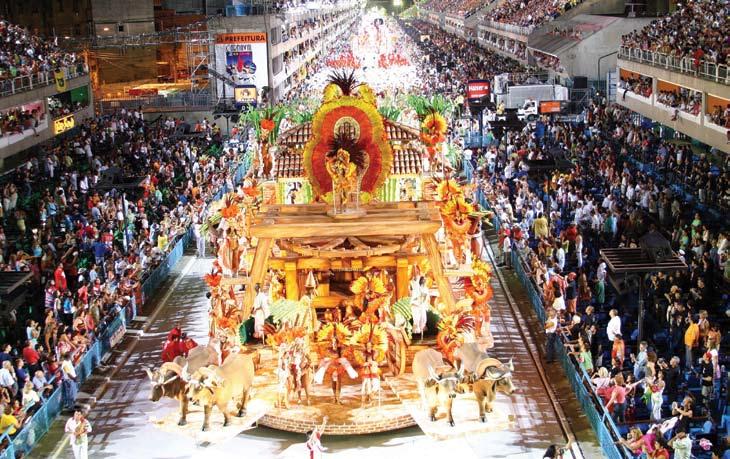
By
Cordeiro
Th i s y e a r, B r a z i l
c e l e b r a t e s t h e
2 0 0 t h a n n i v e r -
s a r y o f t h e a r r i v a l o f the Portuguese royal
f a m i l y t o t h e - t h e n small town of Rio de
J a n e i r o Q u e e n M aria I and João (John), 40, the Prince Regent, had to leave Lisbon to escape Napoleon’s F r e n c h t r o o p s a n d s u f f e r e d t h e f a t e o f many European monarchs – they lost their crowns and sovereignty. Portugal was then a small European power whose world empire comprised the 19 administrative captaincies of Portuguese America, as well as settlements and factories in Africa, India, China and Oceania (East Timor)
My son, João, who lives in Rio, recently h e l p e d t o s e t u p a m u s e u m e x h i b i t i o n named “1808 – Rio, Capital of Portugal.”
Humour aside, it is an expression of truth T h e 1 8 0 7 P o r t u g u e s e e v a c u a t i o n w a s m
Court, with more than 15,000 people, plus the royal library, the navy, marine corps, le Cabinet des medailles for the first time ever, crossed the Atlantic as unwilling tourists
land
They rediscovered their South Americ a n c
“
surprise, many of them liked it. And the Prince Regent liked Brazil most of all.
In 1814, Wellington defeated Napoleon at Waterloo and everybody in Lisbon and L o n d o n
a n t e d t h e P o r t u g
e R o y a l s to return to Europe In 1815, John raised Brazil from the low status of colony to a kingdom equal in stature to Portugal
Queen Maria I died in Rio and John was s a c re
and the Algarves (a southern Portuguese
region) He stayed in Brazil until 1821 The long permanence of the Court led to the establishment of central government institutions in Rio, including a Ministry of Foreign Affairs. It provided a centre of gravity for the collection of colonies established during the previous three centuries (Portuguese navigators, on their way to India, had found the coast of Bahia in 1500 ) I n 1 8
pendence from Portugal and proclaimed himself Pedro I, Emperor of Brazil. In 1889, Brazil became a republic. This unique historical event in the Americas can still be
60 kilometres southwest of Rio de Janeiro, where King John’s descendents still live close to the old emperor ’s summer palace, now the Imperial Museum
p e n d e n t re p u b l i c s , P o r t u g u e s e A m e r i c a kept its unity This cohesiveness has made Brazil today’s fifth-largest country in the w o r l d , w i t h a t o t a l a r e a o f 8 , 5 4 7 , 4 0 3 5 square kilometres or half of the landmass of the South American continent For the country’s more than 186 million people, Portuguese is the official language.
In 1807, it took Prince John almost three m o n t h s t o s a i l f ro m L i s b o n t o S a l v a d o r de Bahia Today, it is much easier to visit B r a z i l ’ s m a n y a t t r a c t i o n s t h a t w e l c o m e tourists from every part of the world, all year long The diversity of culture and the s c e n e r y a re t h e c o u n t r y ’ s s t ro n g p o i n t s But the best part – the one you only get to know when you arrive there – is the Brazilian people.
One of the most fascinating characteristics of the Brazilians is their generous, c o m p a s s i o n a t e s p i r i t , b u o y e d b y t h e i r good and irreverent sense of humour This vast country welcomes people with open arms And while Brazilians have arrived from around the world, Africans, Amerindians and the Portuguese form the core o f o u r n a t i o n h o o d . D u r i n g c e n t u r i e s o f immigration, Italians, Japanese, Spaniards, Germans, Syrians, Lebanese, Ukrainians, Koreans, Chinese, Poles, Spanish-speaking South Americans, Armenians and Angolans have continued to join our population They integrated with our culture surprisingly harmoniously to make Brazil even richer and more fascinating. In combination, these qualities make Brazil the ideal d e s t i n a t i o n f o r v i s i t o r s w h o s e e k b o t h a beautiful and welcoming environment
R e c e n t l y, a p r o m i n e n t t r a v e l m a g azine celebrated Brazil’s “7,000-kilometre beach ” It is almost true, as we have a long c o a s t l i n e d o t t e d w i t h b a y s a n d i s l a n d s , e n c h a n t i n g p a r a d i s e s o f s a n d y b e a c h e s and green and turquoise waters. Among the most visited are the famous beaches o f I p a n e m a a n d C o p a c a b a n a o n R i o d e Janeiro’s coast; Joaquina, near Florianopolis in southern Brazil and famous for its national and international surfing championships; Praia do Forte, on the northern coast of Bahia; and the marvelous beaches of Fernando Noronha archipelago, one of the best places for scuba diving.
The heart of Brazil also reserves natural treasures that enchant and surprise even t h e m o s t e x p e r i e n c e d t r a v e l e r s A m o n g t h e s e r a r i t i e s i s F o z d o I g u a ç u ( I g u a z u Falls), a city located along the triple border of Brazil, Paraguay and Argentina whose greatest attraction is the impressive row of 275 waterfalls cascading more than 60 metres.
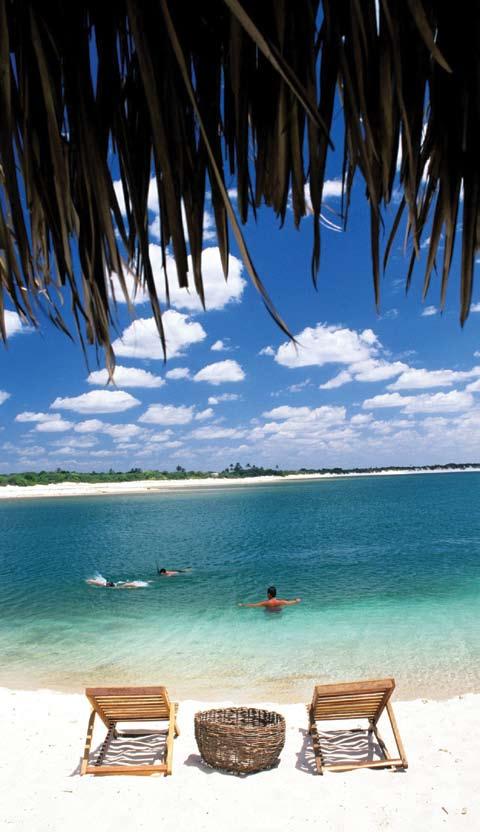
Brazil has 7,000 kilometres of beach coastline. Shown here, Lagoa Azul near Natal, the City of Sun.
A n d w e m u s t n o t f o r g e t t h e A m azon, one of the world’s icons of ecology and biodiversity and the world’s largest equatorial forest, located in the north of the country and covering approximately
5 5 million square kilometres It occupies 61 per cent of the Brazilian territory and expands beyond The tourists who arrive t h e re h
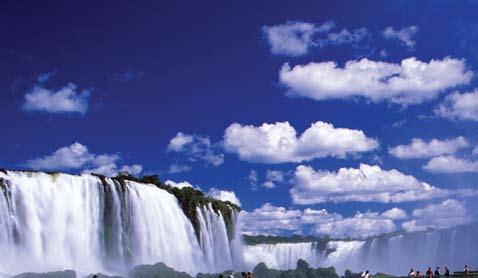
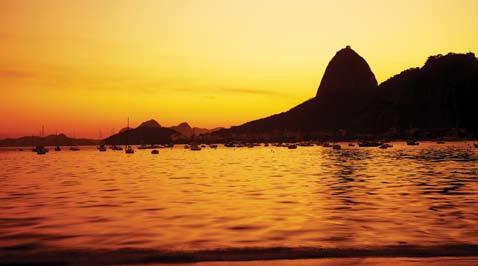
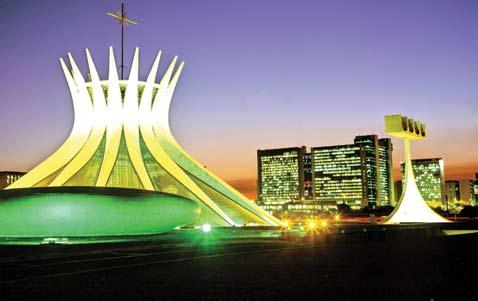
expeditions, with guided hikes and trails For those who do not want to participate in adventure, just relaxing and appreciati
scenery of the Amazon delights the eyes and rests the soul
I
re . You find it in the immensity of the desertlike white sands of Lençois Maranhenses, in the rivers so wide they look like seas, in the 250,000 square kilometres of Mato Grosso Swamplands Beauty also reigns
trees that line the seashores of Alagoas, the Chapada Diamantina, Bahia and Pico Itatiaia in Rio de Janeiro. At the National Park o
UNESCO World Heritage Site in the State of Piauí, one can admire 33,000 rock paintings in 360 archeological sites, that show that man has inhabited the Americas for the last 48,000 years, challenging the ac
e Bering Strait much later.
Architecture is one of the most lasting m
buildings reveal an era’s customs, trends
strolling through large museums or city s
past. Many Brazilian cities and sites have been declared as World Heritage Sites by UNESCO. They include:
Historic city of Ouro Preto, State of Minas Gerais
This city holds on its stone roads a small piece of Brazil’s history Founded by the end of the 17th century, it remains as proof
s c u l p
humble mulatto leper who turned out to be a master of the Baroque style
Historic city of Olinda, State of Per nambuco Olinda was founded in the 16th century
O
to 1654 and rebuilt afterwards, this twin city of Recife, capital of the State of Pernambuco, has kept a harmonious balance
b
monuments, which have given this city a unique charm
Ruins of São Miguel das Missões
L
Grande do Sul, these ruins hold valuable
remains of the Jesuit Missions that once thrived in the area They were built in the indigenous lands of Guaranis between the 17th and 18th centuries and stand out for t h e i r v a r i e t y o f s h a p e s a n d e x c e p t i o n a l state of conservation
Historic Centre of Salvador, State of Bahia
F i r s t c a p i t a l o f t h e c o u n t r y, f r o m 1 5 4 9 to 1763, Salvador preserves, until today, c o u n t l e s s re n
b u i l d i n g s , w
t h m o r e t h a n 1 8 0 a n c i e n t Catholic churches, colonial-era fortresses, and 30 kilometres of urban sandy beaches
A peculiarity of the old city is the wealth of colours of its colonial mansions. Salvador may be the most important centre of the Afro-Brazilian culture – a feast for the eyes and the palate
Historic Centre: São Luis, State of Maranhão
Founded by the French in the beginning of the 17th century, it was later occupied by the Portuguese and invaded by the Dutch. A s t h e P o r t u g u e s e re c l a i m e d i t p e r m anently, they preserved the original plans of
rooted in the old Kingdom of Dahomey, now the African republic of Benin B o
Campo, State of Minas Gerais
Built in the second half of the 18th century, it consists of a church filled with magnificent rococo-style adornments, of Italian inspiration Aleijadinho’s famous sculptures of the biblical prophets decorate its stairway There are also seven chapels illustrating the passion of Christ, with scenes that might have inspired Mel Gibson's feature film The Passion of the Christ
Brasília, the federal capital
In contrast with other examples of Brazil’s h e r i t a g e ,
“ w
r l d heritage site” for being a unique example of innovation, a truly modern city, in the aesthetic sense of the word Brasília comb i n e s t h e
Costa and the creative buildings of architect Oscar Niemeyer. It is a watershed in t h e h i s t o r y o f p l
built many planned cities such as Goiania, on
Always ensuring the best service for the diplomatic community, Accu-Rate Corporation offers free courier service for embassy currency exchanges and payroll conversion. -
For your personal consultation please call: Marie Boivin Managing Director 613-596-5505 ext 101 marie@accu-rate.ca
Historic centre of Diamantina City, State of Minas Gerais
Founded during the diamond rush of the 1 8 t h c e n
y, i t ’ s a
, cultural and artistic triumph over the adversities imposed by its location
Historic centre of Goiás City, State of Goiás
Former capital of the State of Goiás, it perfectly represents the colonial occupation of central Brazil in the 18th century
T h e
y
chains that have been operating in Brazil for some time, as well as by Brazilian hotel c o m p a n i e s a n d q u a i n t “ b
fasts” known as pousadas. Certain areas, such as the Green Coast, in the south of the State of Rio de Janeiro or the Sauípe Coast, near Salvador de Bahia, or Natal, Recife and Fortaleza, boast internationalquality resorts
In describing the marvels of Brazil, we s h o u l d n o t f o rg e t t h e c i t y o f S ã o P a u l o , with 18 million inhabitants in its metrop o l i t a n z o n e a n d c a p i t a l o f t h e S t a t e o f São Paulo, the industrial powerhouse of Brazil Excellent museums and restaurants c a n b e f o u n d t h e re , a s w e l l a s a v i b r a n t cultural life
Rio de Janeiro, the Marvelous City, is so beautiful, that even we the baianos (I a m f ro m B a h i a ) re c o g n i z e i t s e m i n e n c e Porto Alegre, Florianopolis, Curitiba are world-class cities. Manaus and Belém, in the Amazon, have old opera houses and organized festivals
Brazil gives to its ambassadors abroad l ’ e m b a r a s d u c h o i x I f y o u g o t h e re , y o u might feel like King John VI who went to Brazil as a scared Prince Regent and left as King of Portugal, sad to leave a land he learned to love.
Brazil is still a developing country with i t s s h a re o f
a rg e dose of urban violence, infrastructure that i s f a r f
and regional inequalities Since independence in 1822, the building of democracy, rule of law and the full enjoyment of human rights have been goals to be attained We are getting closer to fulfilling them.
with his September 23rd visit to Canada, opens what we hope will be a new chapter in the already good Canadian-Brazilian relationship What a perfect time for you to visit Brazil!
Paulo Cordeiro de Andrade Pinto is Brazil’s ambassador to Canada.
Our exclusive Jenn-Air® Floating Glass brings the drama of your dream kitchen to life. Available in black, this versatile style can either blend into or contrast with your décor The high gloss front sur faces clean easily, and are complemented with the right touch of gleaming stainless steel. In a lead or suppor ting role, Floating Glass shines.
Discover the possibilities of Jenn-Air® Floating Glass at Universal Appliances.

1915 Bank Street, Ottawa • 613-521-5002
www.universalappliances.com ®Registered trademark/TM Trademark of Jenn-Air, U.S.A.©2008. All Rights reser ved.
Introducing the Audi Diplomat Sales Program. Receive special diplomat pricing on a great range of vehicles from the power ful S8 to the unmistak able Audi Q7 to the luxurious A8. Contact Liza Mrak at Mark Motors for more details.