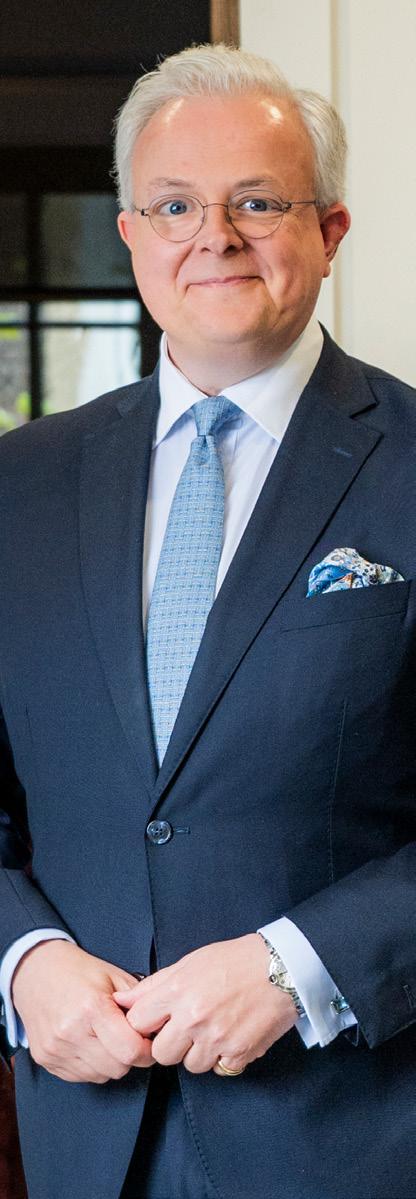
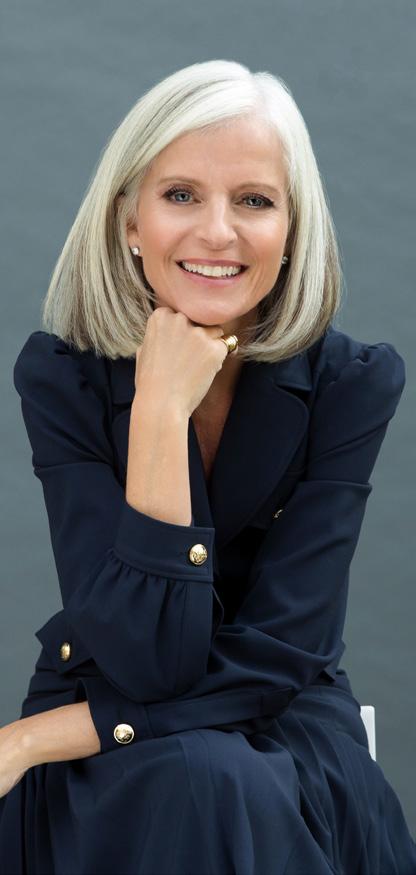
Jennifer Campbell, Editor Jcampbell@diplomatonline.com 613-291-2901
Website www.diplomatonline.com
A MESSAGE FROM OUR PUBLISHER
As Canada continues to redefine its place in an increasingly complex and competitive global landscape, one thing has become abundantly clear: The world is paying attention to Canada once again.
From renewed international partnerships and expanding trade ambitions to growing investments in defence, technology, energy, critical minerals, artificial intelligence, infrastructure and diplomacy, Canada is entering a new era of global engagement. This era demands stronger international dialogue, deeper economic co-operation and smarter diplomatic relationships.
Over the past three months alone, we have seen Canada accelerate efforts to diversify global partnerships beyond traditional markets, strengthen NATO and defence commitments, attract foreign investment, expand technological innovation and position itself as a stable and trusted global partner amid geopolitical uncertainty. Canada’s growing role is creating new opportunities for international co-operation and strategic alliances.
At Diplomat & International Canada, we have not only observed these developments, we’ve also actively participated in shaping them. This edition reflects that vision.
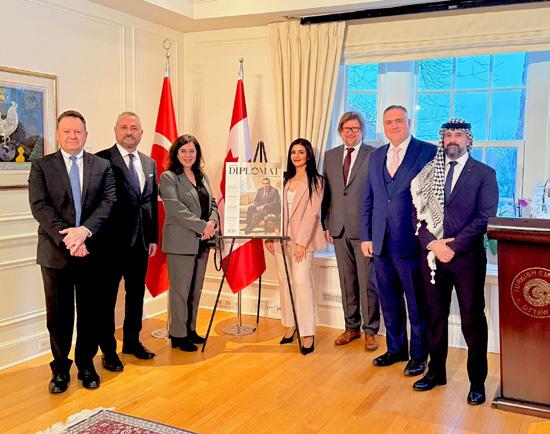
A strong example is our growing partnership with the Republic of Türkiye. We’ve recently had the privilege of working closely with the Embassy of Türkiye in Canada. Türkiye’s growing engagement with Canada comes at an important moment. As a strategically positioned regional and global power, Türkiye continues to demonstrate remarkable capabilities across multiple sectors. Our collaboration has demonstrated what modern diplomacy and economic engagement should look like: pro-active, strategic, business-oriented and future-focused.
At Diplomat, our mission since 1989 has been to serve as a bridge between Canada and the world. Today, that mission is more important than ever. This publication is about opening doors for international collaboration, promoting trade and investment opportunities, strengthening cultural diplomacy and helping Canada build stronger global relationships in an increasingly interconnected world.
As publisher, I am proud to see our platform continue to evolve into one of Canada’s most trusted and influential international affairs publications, reaching readers across Canada and internationally.
Looking ahead, we remain committed to expanding our partnerships with players who share a common vision of international co-operation and progress. The future belongs to those who build bridges, not walls. We will continue building bridges with strength, credibility, vision and purpose.
Sincerely,
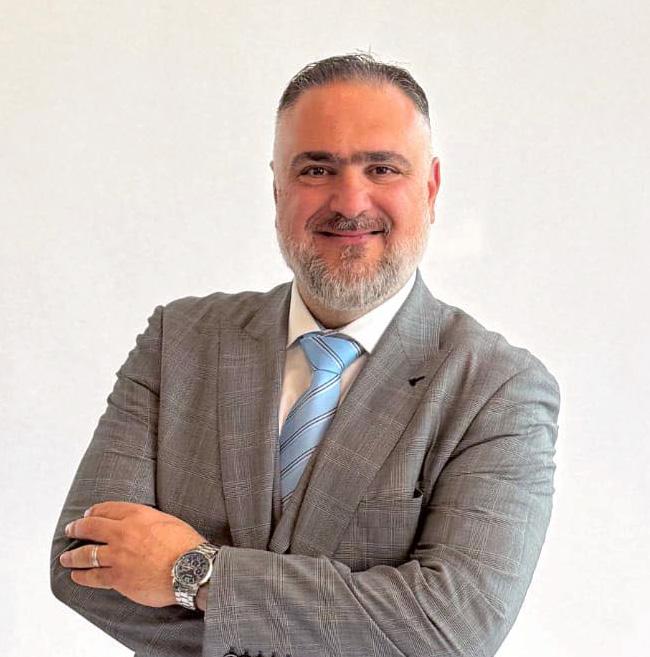
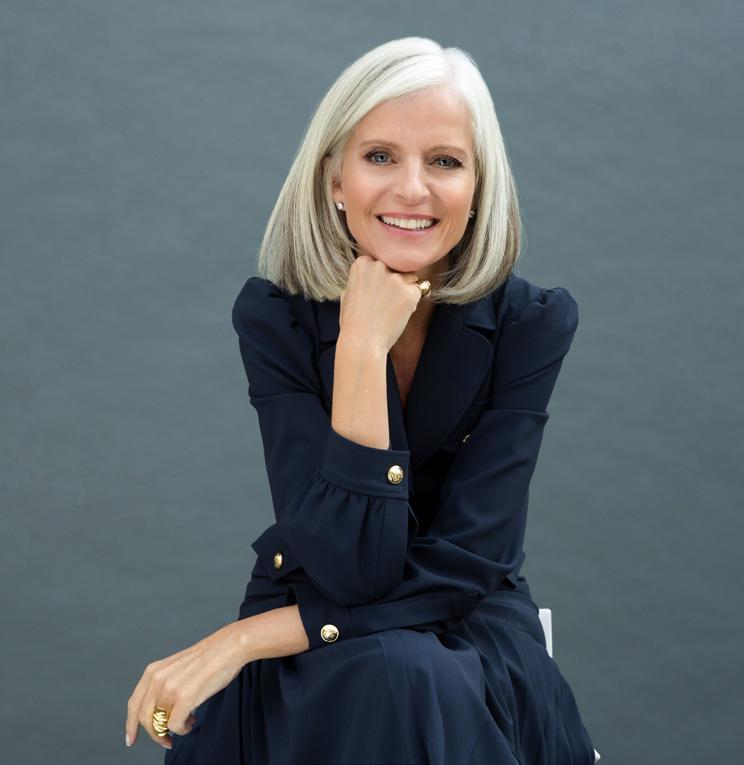
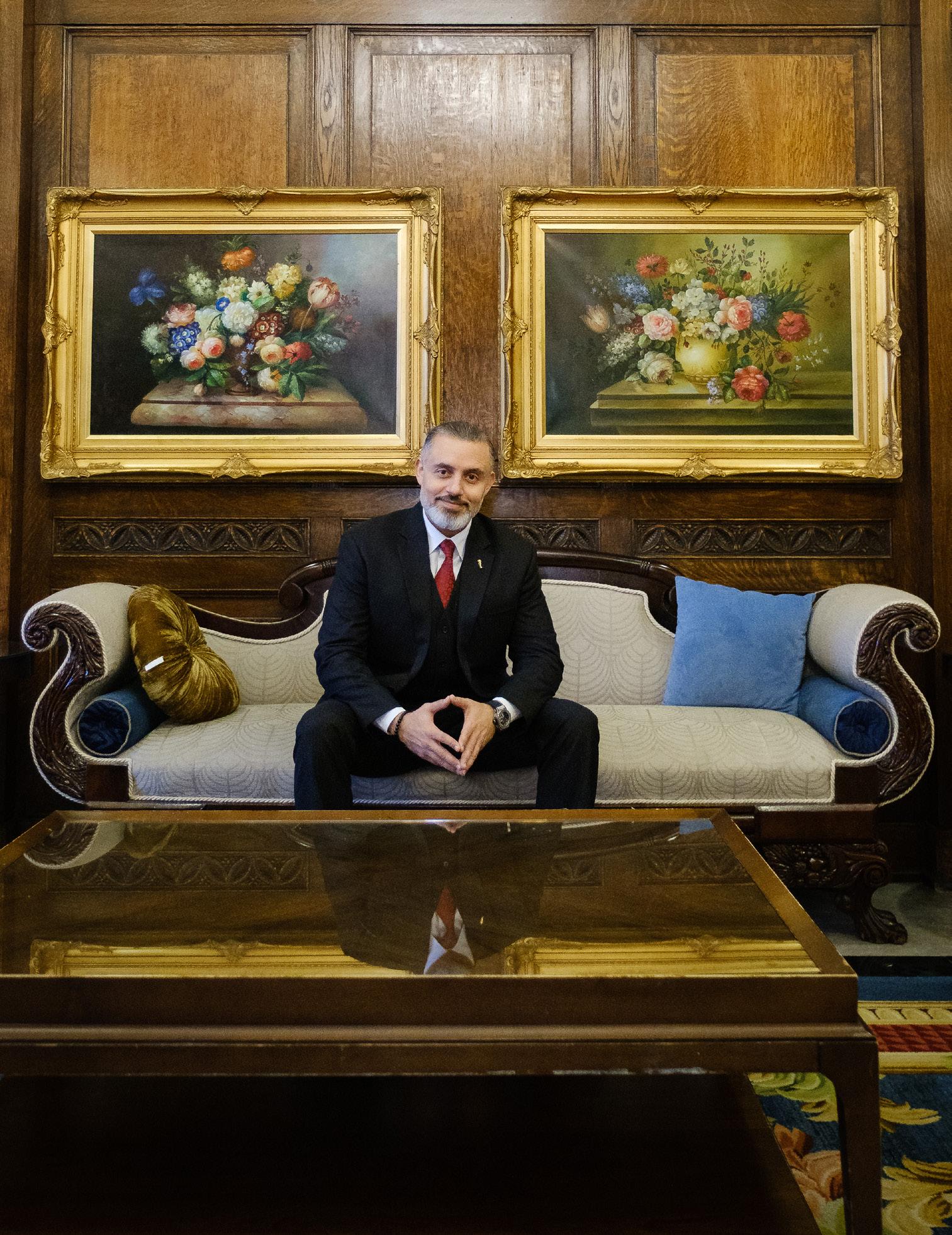
Abdel Karim Awwad Publisher, president & CEO Diplomat International
Canada magazine Canadian Academy of Protocol & Event Management awwad@diplomatonline.com
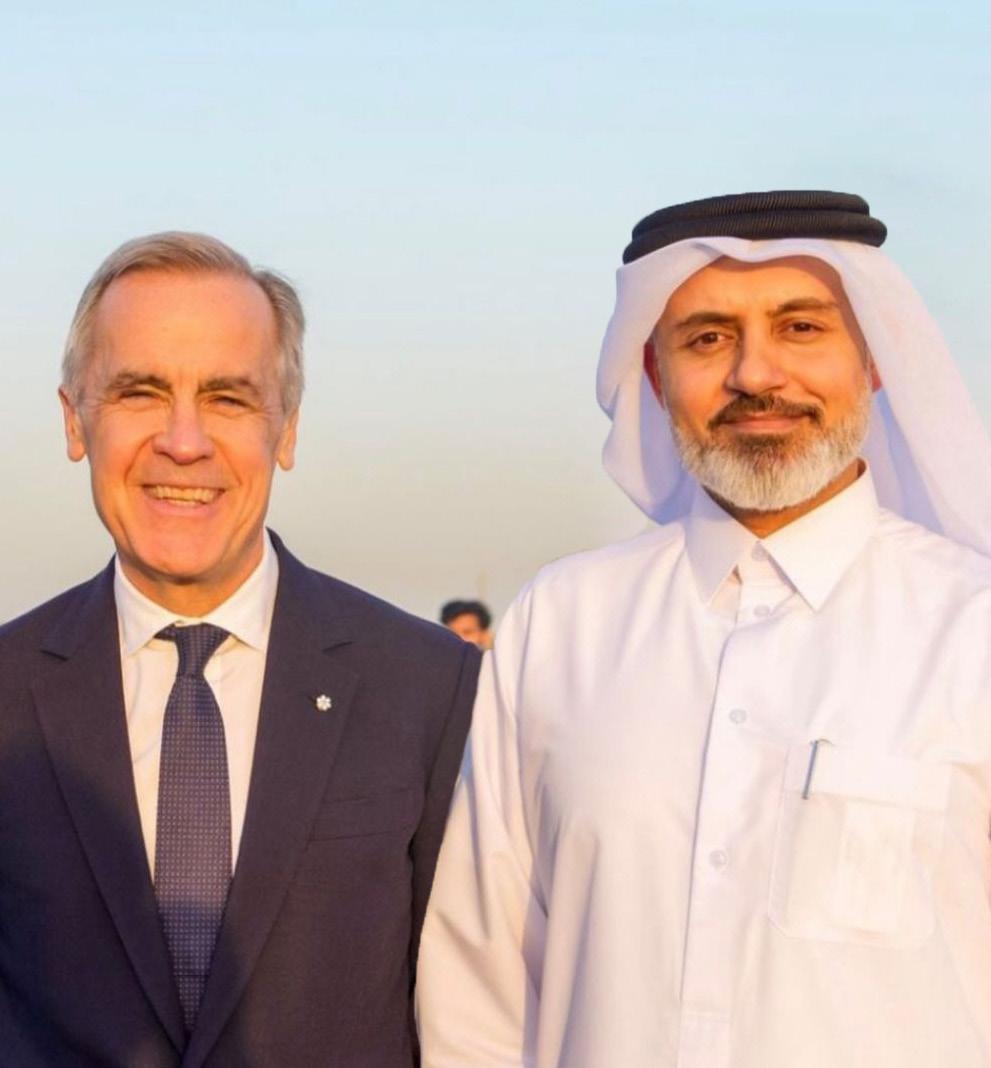
| Photo: Mohammed J. Alsaber
EDITOR’S NOTE
Being an observer of international affairs is a full-time job these days. On the geopolitical stage, things are changing, developing, growing and shrinking at breakneck speeds and in Canada, the pace is the same. Take the job of Prime Minister Mark Carney, who’s been busy selling Canada all over the world since he was elected 15 months ago. Equally busy has been International Trade Minister Maninder Sidhu. In this issue, we met with him
at Global Affairs Canada to talk about his job and how he plans to deliver on Carney’s promise to increase non-U.S. exports to $300 billion a year by 2030.
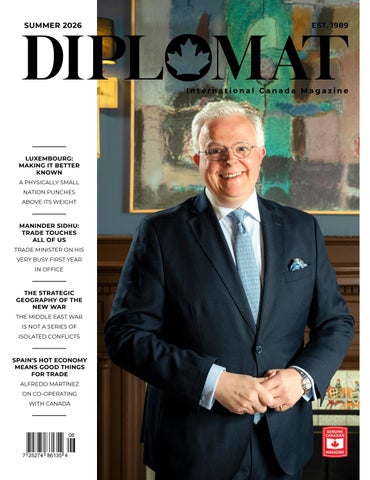
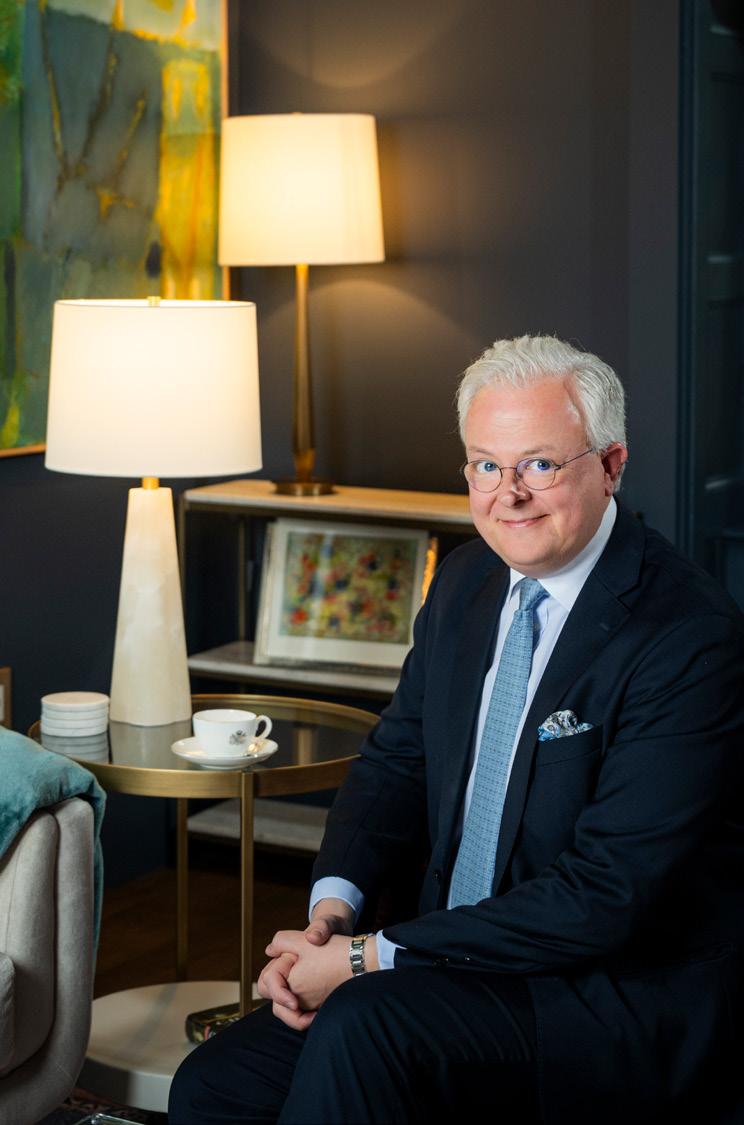
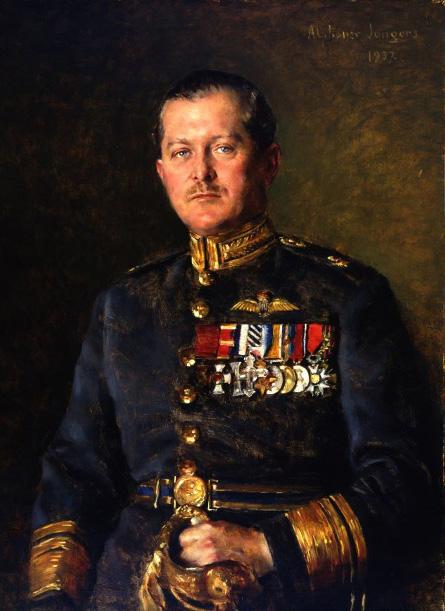
On our cover is Jean Claude Kugener, the indefatigable ambassador from the Grand Duchy of Luxembourg. Already in his short tenure — he only officially opened his country’s first resident embassy in Ottawa in June 2025 — he’s hosted several very important visitors, including Deputy Prime Minister and Foreign Minister Xavier Bettel, who came to inaugurate the new embassy, and, more recently, Prime Minister Luc Frieden. Luxembourg is a geographically small but deeply influential country, especially in financial sectors, and a European Union member state and member of NATO. Mr. Kugener gave us a wide-ranging interview and we also have a piece on the country’s history and another on Alphonse Jongers, an esteemed 20th-century Luxembourg-born artist whom most people think is either French or Canadian. In a related story, we interview Isabelle Hudon, Canada’s chief negotiator for the Defence and Security Resilience Bank. Canada and Luxembourg are already both committed participants.
And there’s much else, including Fen Osler Hampson’s column on the future world order in the alleged absence of multilateralism as well as interviews with the ambassadors of Spain, Ecuador, Argentina and Qatar. Our defence expert Joe Varner writes about the geographically sweeping war in the Middle East, and our science maven, Laura Neilson, writes about the promise — or is it? — of hydrogen as a fuel. Writer Robyn Waite interviewed Stéphane Jobin, director-general of the Canadian Foreign Service Institute about where Canada’s diplomats go to study languages, protocol and so much more.
In our “delights” section, we feature summer food, German wine and Canadian festivals you should consider attending. We hope you enjoy this issue.
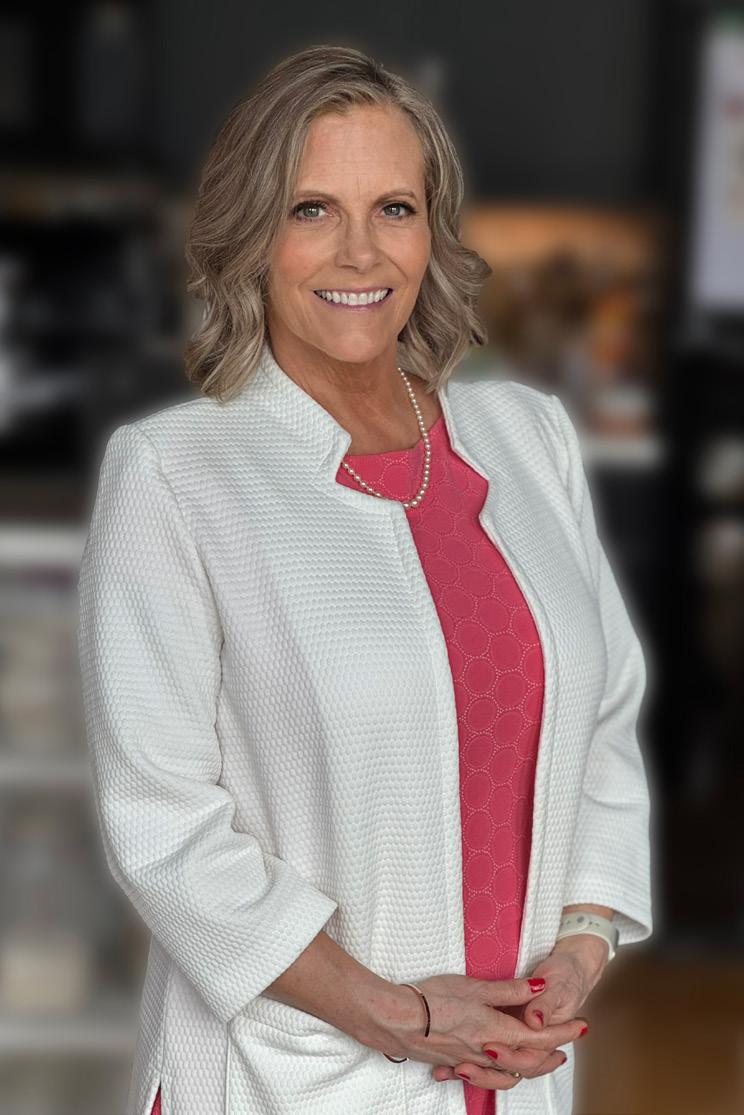
Jennifer Campbell Editor, Diplomat
International Canada magazine Jcampbell@diplomatonline.com
| Photo: Brigitte Bouvier
A BROKEN MULTILATERAL SYSTEM
By Fen Osler Hampson
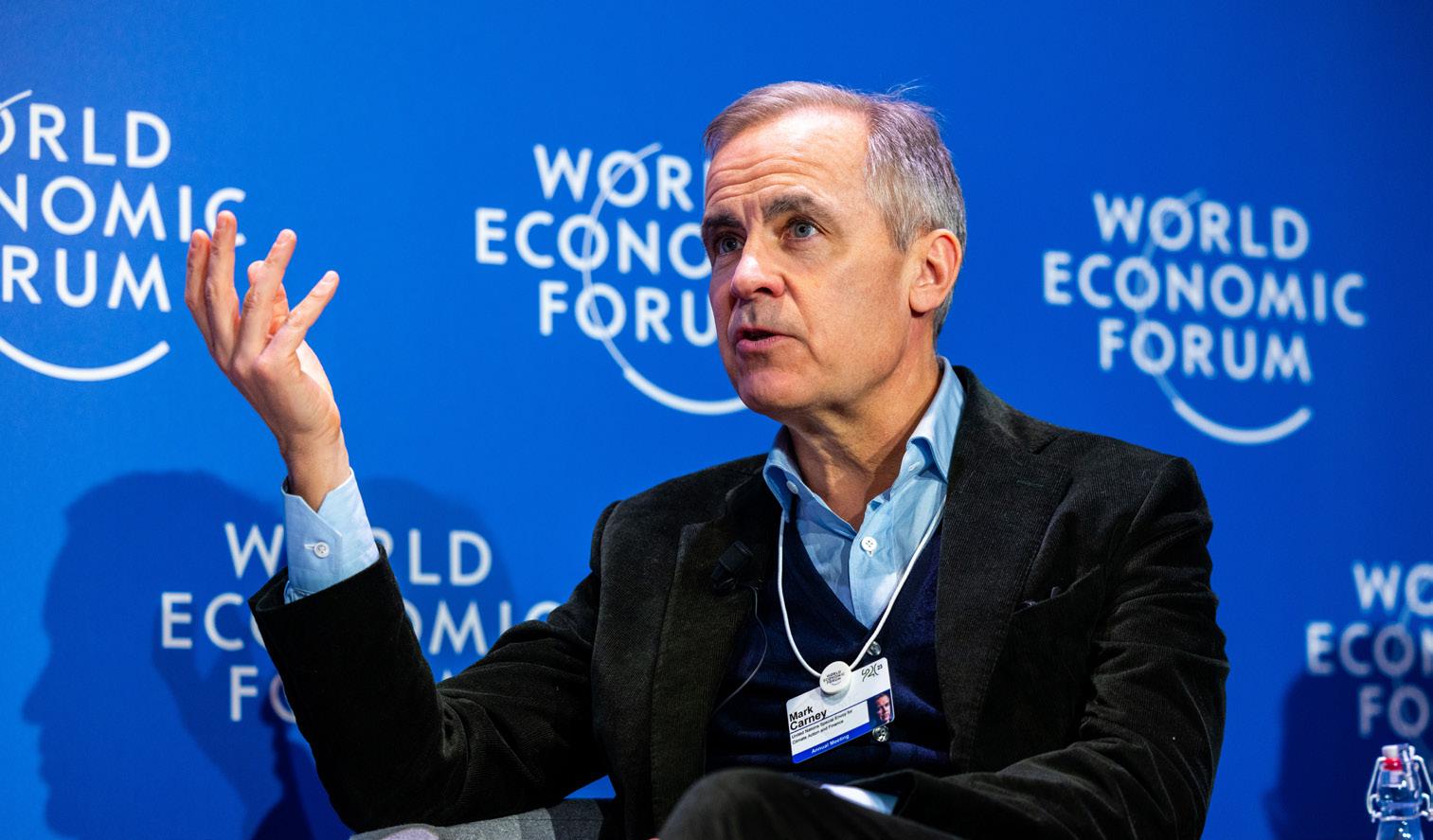
Mark Carney is right that something fundamental in the world has broken. In January 2026, at the World Economic Forum in Davos, he declared that the rulesbased international order was over, describing the present moment as one of “rupture.” His message was stark. Powerful states once chafed against shared rules and violated them at the margins. Now they appear intent on breaking the system itself. What the Canadian prime minister left open was the question that matters most to everyone else. If the old order is over, what’s left? And what does this brave new world mean for middle powers like Canada?
The answer begins with a simple point. The multilateral system has not entirely collapsed. Climate conferences
still grind on. Health, trade, human rights, arms control and peace and security negotiations continue across different forums. The crisis is not about activity. It is about authority. The core norms of the post-war system no longer constrain the strongest actors to the extent they once did. The United States, China and Russia now challenge established rules and international law in different ways and to varying degrees.
This phenomenon is not entirely new. The rules of the post-war order were never fully coherent or consistently observed. During the Cold War, vetoes in the Security Council repeatedly blocked action on major crises and initiatives. Other states worked around deadlocks through peacekeeping, procedural innovations and by
As Prime Minister Mark Carney said in his Davos address, the world order is broken. What makes sense now is a strategy that relies on coalitions of middle powers rather than on faith in great power self-restraint.
shifting negotiations to other forums. The pattern was one of crisis, blockage, workarounds and adaptation. What has changed is the extent to which major powers now reject the idea that they should be constrained at all.
That rejection is evident in the trade regime, the security order and the law of the sea. The United States has attacked trade multilateralism through unilateral tariffs, the erosion of most-favoured-nation treatment and the deliberate paralysis of the World Trade Organization’s dispute settlement body. Russia has violated the norm of territorial sovereignty in Georgia, Crimea and in its fullscale war against Ukraine. China has refused to accept legal limits in the South China Sea, defied arbitration rulings and intensified its claims over Taiwan. These are not technical disputes over interpretation. They are direct contests over sovereignty, non-intervention, collective security and the authority of international law itself.
The result is a world of co-existing and competing normative orders. There is no longer a single agreed centre of gravity. Yet that does not mean all order is gone. Climate co-operation is one example. When shared vulnerability is visible and concrete, states can still find
Climate conferences still grind on. Health, trade, human rights, arms control and peace and security negotiations continue across different forums. The crisis is not about activity. It is about authority.
selective convergence. The question is how to protect these islands of co-operation while dealing with those who want to opt out of basic rules in other domains.
At the same time, the institutional landscape has become crowded and fragmented. Since 1945, the number of international institutions has grown exponentially. The system today is diffuse, dispersed across global, regional, subregional and issue-specific levels. Alongside the United Nations and the Bretton Woods institutions sit BRICS, the New Development Bank, the Asian Infrastructure Investment Bank, the Quad, the Shanghai Cooperation Organisation and a growing number of ad hoc coalitions of the willing.
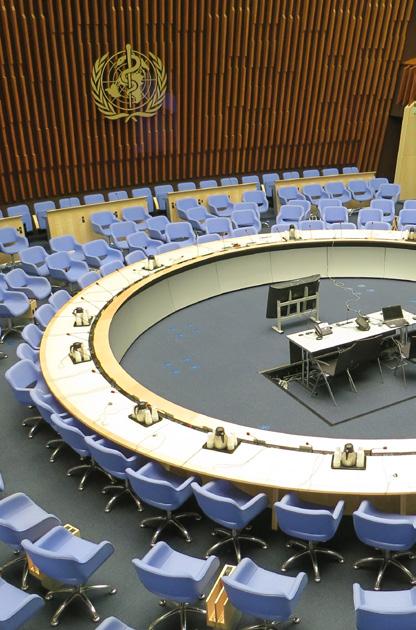
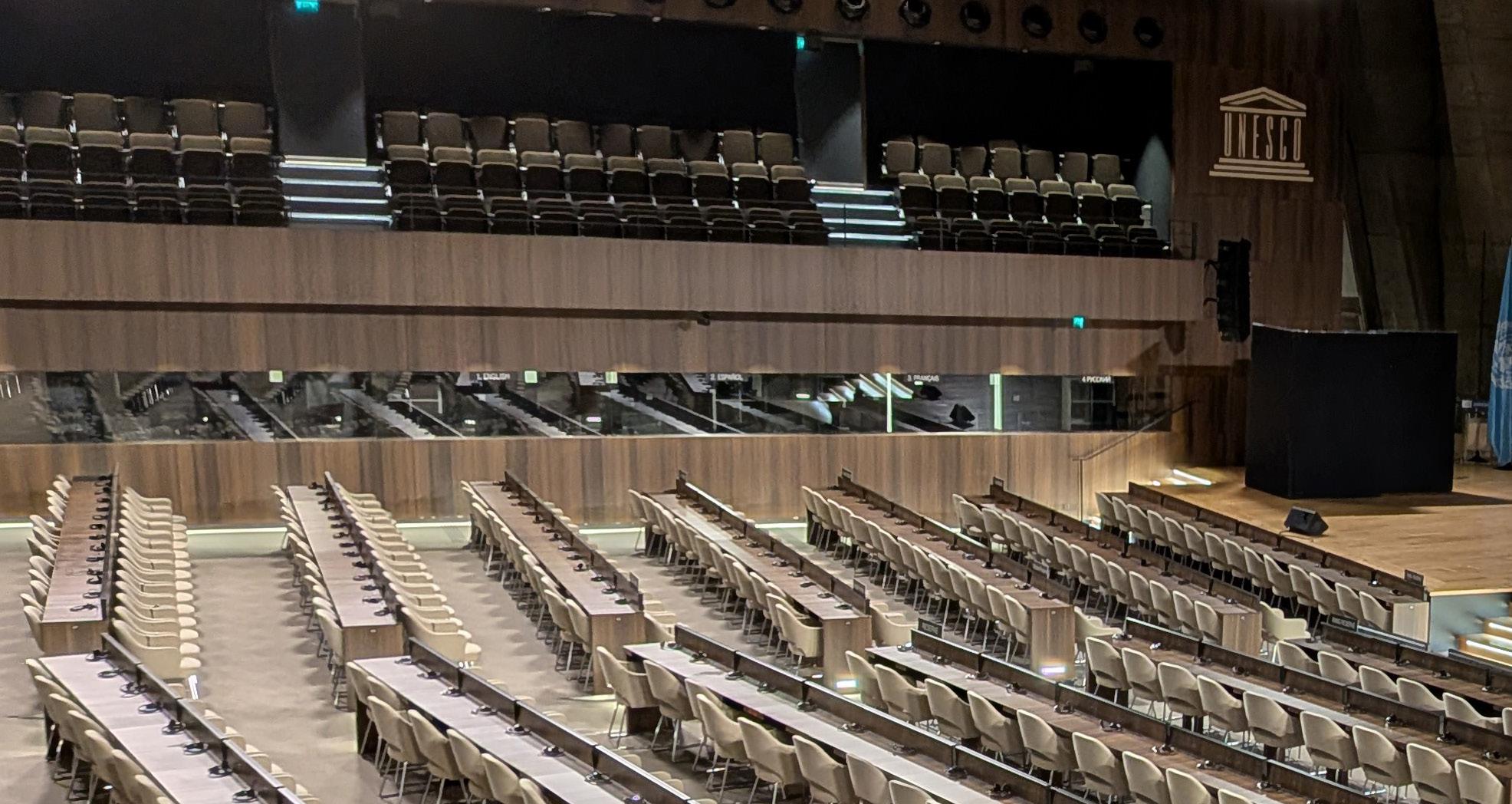
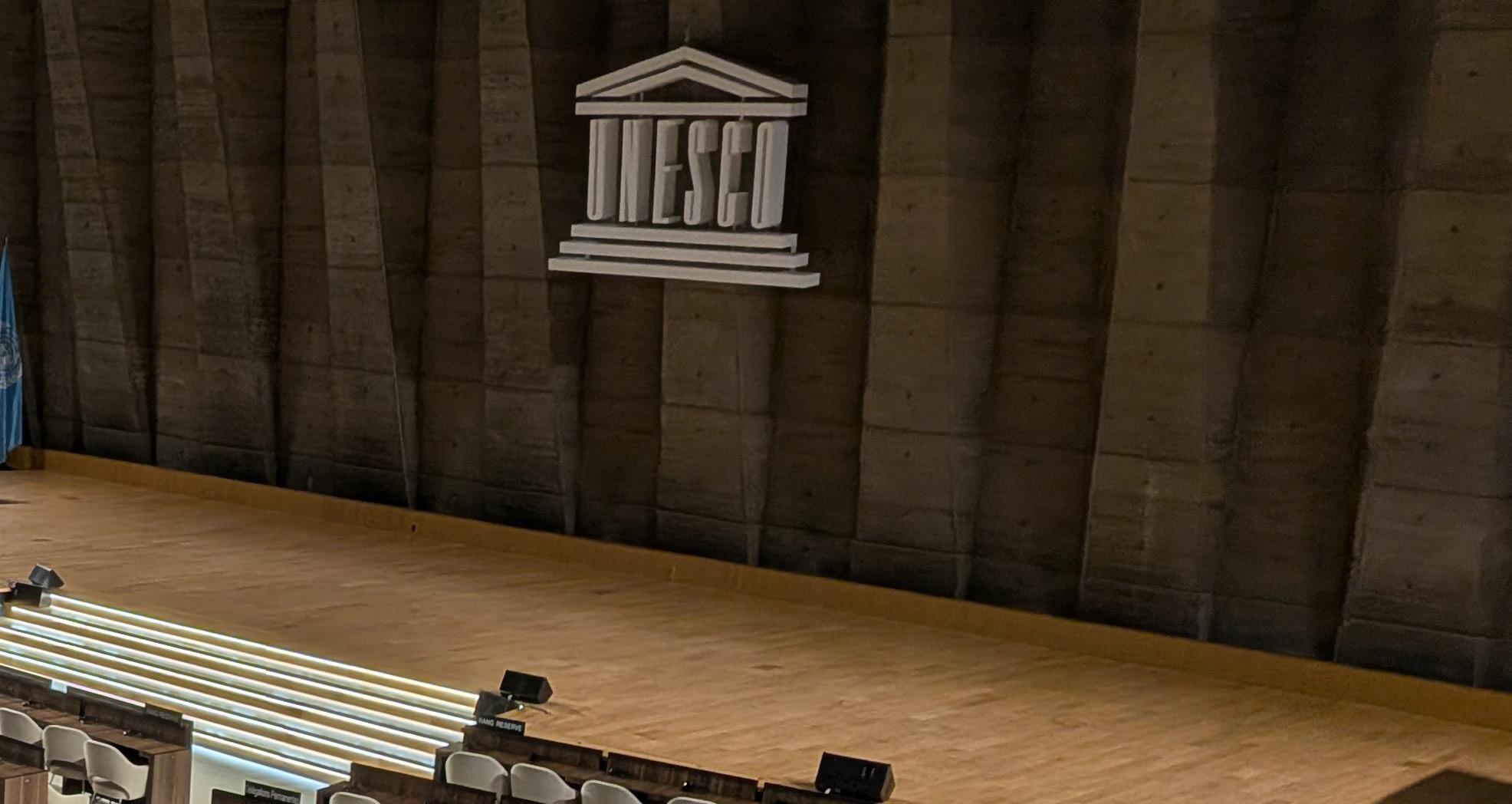
The United States has withdrawn from climate agreements, human rights bodies, the World Health Organization, UNESCO (pictured here) and arms-control frameworks. | Photo: WHO
The result is a world of co-existing and competing normative orders. There is no longer a single agreed centre of gravity. Yet that does not mean all order is gone.
Emerging powers such as China, India and Brazil have sought institutions they can shape and lead because reform of older bodies has been slow or blocked. This is not a clean break with the old order. It is a messy overlap. The jury is still out on whether it will replace the old order.
This fragmentation matters because it reshapes how negotiations work. It encourages forum shopping and smaller coalitions. It leads to variable geometry and issue-by-issue deals rather than comprehensive bargains. Outcomes become less predictable, and coherence across forums is hard to sustain. Yet fragmentation also offers escape routes. When deadlock blocks progress in a major body, states can move to another venue or form new coalitions. Fragmentation is therefore both a problem to be managed and an adaptive feature to be used.
Here, the role of middle powers comes into clearer focus. The United States has withdrawn from climate agreements, human rights bodies, the World Health Organization, UNESCO and arms control frameworks and has ordered a sweeping review of its multilateral commitments. It is no longer acting as a benevolent hegemon. It is increasingly a spoiler. China and Russia challenge core legal and security norms from different directions. In this environment, small and medium-sized states cannot rely on a single guardian of the system. They must lock arms together and act in concert.
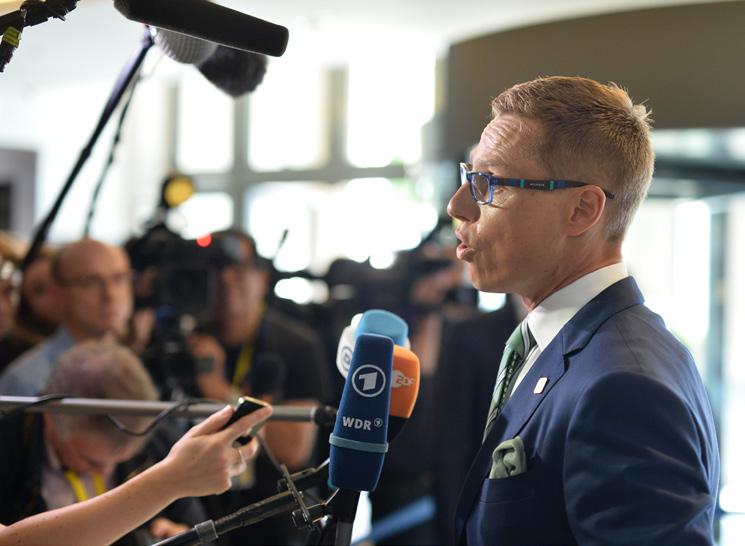
Finnish President Alexander Stubb has put the choice bluntly. For small and medium-sized states, there is no acceptable alternative to the multilateral order. The alternative is a world in which the strong make the rules and the weak suffer as they must. Carney describes this
rupture. Stubb explains what is at stake for those who did not cause it. Together, they point to a strategy that relies on coalitions of middle powers rather than on faith in great power self-restraint.
To make that strategy real, we need a more honest language for multilateralism. We should not treat it as a single, unified system. It is better understood as a multiverse of forums, shifting coalitions and issue-specific arrangements. Negotiations are kaleidoscopic. Alliances form and shift. Rules vary across venues. Outcomes depend on adaptive coalitions rather than fixed institutions. For middle powers, the central task is to build these coalitions and use them systematically across different issues.
History offers a suggestive model. The Hanseatic League was an informal alliance of cities and merchant guilds in medieval northern Europe. It built a commercial and defensive network to resist predatory neighbours and protect shared interests. Its power rested on trade, finance and collective action rather than on territorial conquest. A 21st-century equivalent would look different, but could follow the same logic.
Such a coalition could bring together advanced democracies such as Canada, the United Kingdom, the European Union, Norway, Japan, South Korea, Australia and New Zealand. Together, they account for roughly 31 per cent of world GDP, more than either the United
Finnish Prime Minister Alexander Stubb says there’s no alternative to the multilateral order. l Photo: European People's Congress
States or China alone. Their main leverage is economic and financial, not military. The organizing principle could echo NATO’s Article 5 in economic form. An economic attack against one would be treated as an attack against all. That commitment would blunt divide-and-conquer strategies that great powers now use through tariffs, export controls and targeted sanctions.
The scope of such a league should extend beyond trade. It could co-ordinate responses to climate commitments, non-proliferation, sanctions design, investment screening, technology standards and the defence of basic multilateral norms. Middle powers cannot enforce every rule everywhere. They can, however, raise the cost of normbreaking and reward compliance in targeted, cumulative ways. Over time, repeated joint action by a coalition that controls a large share of global output and finance can shape expectations, even for the largest states.
This brings us back to Carney’s rupture and the global institutional order. Do we really want to replace the UN
Security Council with an informal board of great powers that manages peace on their own terms? Do we want to abandon the Paris climate accords and slide back into unconstrained fossil-fuel expansion? Do we want to watch the Non-Proliferation Treaty hollow out, and nuclear weapons spread more freely? Do we want to trade a rules-based trading system for closed trading blocs and open economic warfare? The answer to each question is no.
The task is not to pretend the old order can be restored as it was. The task is to prevent a rupture from leading to a full-scale collapse. That means more negotiation, not less. It means stronger coalitions of middle powers, tougher and more targeted rules and real consequences for those who defect. Middle powers cannot, by themselves, rebuild a coherent, rules-based order. They can keep its core alive, adapt it to a fractured world, and make it costly for any great power to live entirely outside the law. That is how they will help save what still matters in the multilateral system Carney declared to be over.
In his now-famous speech at the World Economic Forum in Davos, Canadian Prime Minister Mark Carney argued that something fundamental in the world order had broken. Our writer imagines what’s next for middle powers. | Photo: World Economic Forum
FREE ADVICE FOR THE NATO SUMMIT
Canada has met the two-per cent spending target, but is it spending on the right things?
By Robyn Waite
When the 2026 NATO Summit takes place in Ankara, Türkiye, in early July, Canada can boast that it has met its two per cent spending target and military expert Joe Varner thinks that deserves some praise.
"Whenever the government does things in the right direction, they should be given credit," says Varner, a senior fellow at the Macdonald-Laurier Institute. "I'm impressed that we've made the two per cent target." But he's quick to add that he has "a lot of questions about the math." Much of the rapid increase, he notes, comes from personnel salary increases, reclassifying Coast Guard operations, the Transport Canada Challenger fleet and spending across other departments — none of which builds combat capability.
So where should the money go? Varner's priorities are unglamorous, but urgent: getting infrastructure up to code, restoring depleted ammunition supplies and spare parts, rebuilding vehicle fleet maintenance across the navy and air force, and investing seriously in personnel retention and recruitment. "The real issue is combat capability and readiness," he says, and right now, Canada's existing forces need to be brought back
to fighting shape before talk of investing in a force of the future means anything.
Varner sees a deeper problem undermining Canada's defence posture: the politicization of procurement. Decisions about what equipment the military buys, he argues, are increasingly driven by electoral calculation rather than operational need. His prime example is the current debate over fighter jets. Canada committed to purchasing American-made F-35s, but amid deteriorating relations with the Trump administration, Ottawa has begun courting Sweden's Saab Gripen as an alternative. Varner cautioned against the move, noting that the U.S. controls the so-called "kill switch" on both aircraft, and the F-35 is the better, if not best, aircraft. "On land you can have parity. At sea and in the air, you have to be the very best or you wind up dead," he says, while also arguing that a country Canada's size simply cannot sustain two fighter fleets with separate parts, training and simulators.
With NATO allies warning of a possible confrontation with Russia within five years, Varner says there's no time for such political manoeuvering. He's blunt about the current tensions with Washington, but counsels patience. The storm will pass, he says, but Canada can't afford to wait it out doing nothing. "As uncomfortable as that may be for people who don't like Donald Trump, we can't hinge our national security on not liking him.” His advice: “Make a deal with the Americans on the weapon systems we need to defend our North,” a move that would “take a lot of the heat down with the U.S.” while strengthening Canada’s position as a capable ally within NATO.
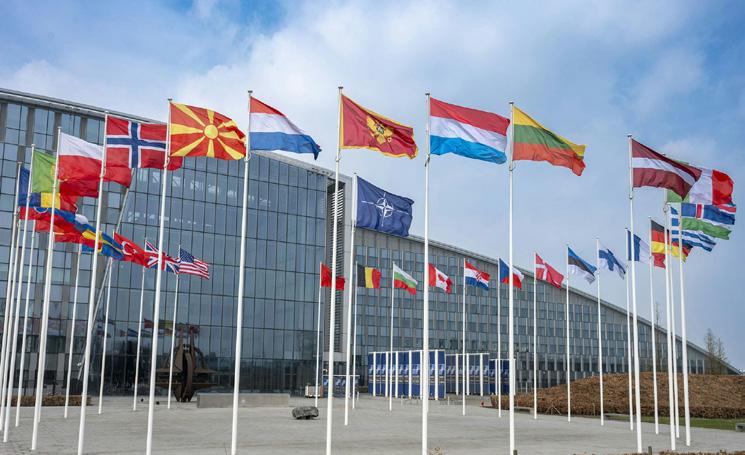
The 2026 NATO Summit takes place in Ankara, Türkiye, in July.
| Photo: NATO
Canada Wants Sovereign Space-Based Domain Awareness
NorthStar leads the way with a bridge between Canada and Luxembourg
Detecting Anomalies in Space
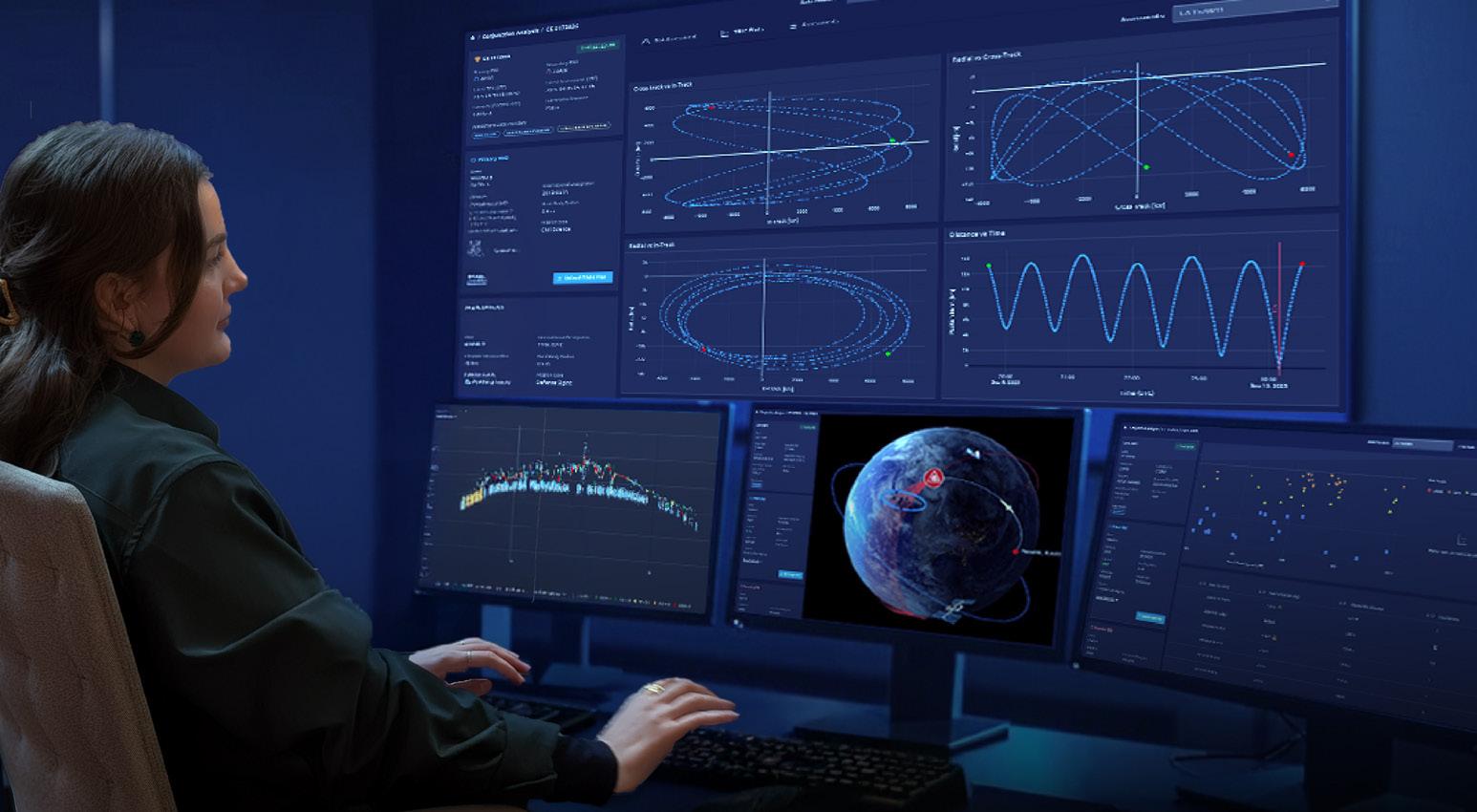
NorthStar Earth & Space, headquartered in Montreal, QC is defining how space is both monitored and governed. As indicated in Canada’s Defence Industrial Strategy, pressure mounts to secure the long-term sustainability and security of space with sovereign space domain awareness (SDA) as a lead priority.
NorthStar has led the way in SDA since January 2024, with the launch of its first-ofits-kind commercial constellation to actively scan space and deliver continuous, high-fidelity insights to track where space objects are and how they behave. These services enable more timely decision-making across government, commercial, and defence sectors making Canada a world leader in this activity.
While expanding its unique space-based perspective, NorthStar fills critical coverage gaps over oceans and polar regions, of specific interest to Canadian security. Integrating patented advanced modelling, simulation, and data fusion delivers a unified operational picture.
Since 2019, with a pioneering investment from the Luxembourg Future Fund, NorthStar has been an active member of Luxembourg’s
space ecosystem reflecting the significant role that data services and AI will play to keep space sustainable. The European HQ supports the US Space Force and allied Space Operations centres in their daily activities, a testament to the trust placed in NorthStar's operational capabilities. In addition, the enterprise’s US operations in Washington, D.C. supports the US Space Force, DARPA, and other SDA programs of record.
Selection to the NATO DIANA Accelerator Program in early 2026 is an indicator of the international community’s confidence in the company’s ability to address critical security challenges. NorthStar strengthens connectivity across NATO partners while positioning itself at the forefront of emerging frameworks that will govern space activity in the future.
Together, Canada and Luxembourg demonstrate how sovereign capability and a trusted partnership addresses the demands of an increasingly complex orbital environment, supporting independent national decision-making while contributing to collective space safety and long- term sustainability.
‘TRADE TOUCHES ALL OF US’
Trade Minister Maninder Sidhu has overseen negotiations for several free trade agreements in his first year on the job.
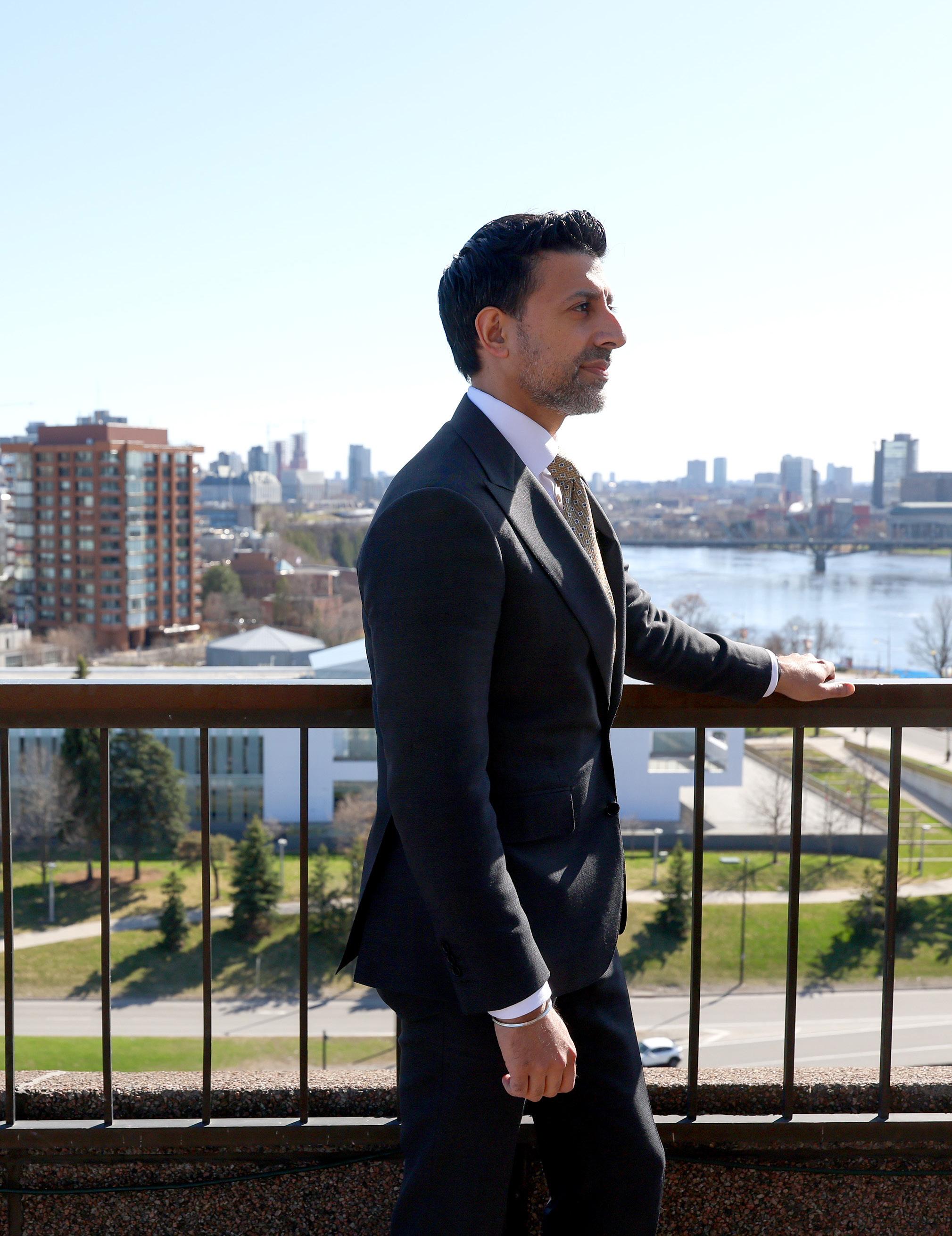
Maninder Sidhu is the MP for Brampton East and has been Canada’s minister of international trade since May 2025.
A former entrepreneur, he worked as an international trade consultant, helping businesses expand to new markets by advising on customs regulations, supply chains and cross-border logistics. He was first elected to Parliament in 2019 and served as parliamentary secretary to his predecessor, Dominic LeBlanc, for four years. Before that, he was parliamentary secretary to the minister of foreign affairs and then to the minister of international development. He is a married father of two girls.
Diplomat magazine: We read about all the ways Canada is adapting its trade strategy in response to rising global protectionism and economic nationalism. How would you describe the approach you’re taking, alongside Prime Minister Mark Carney, who seems to be leading the charge?
Maninder Sidhu: Look, we're in a different world. As you know, I spent 13 years in the private sector before politics, facilitating international trade, so duties, tariffs and free trade agreements [FTAs] are [things] I'm very familiar with. Now it's exciting to be on this side of the table where I can bring forward FTAs for the very businesses that will utilize them. That [past] knowledge is very helpful for me, because there's a practical sense of
trade that we need to understand here in Ottawa to make sure that businesses are able to [succeed].
The trade agenda is very, very important, especially with what's happening with our largest trading partner right now. For the longest time, as you know, all of our eggs have been in one basket, and we need to diversify. And we're diversifying as fast as possible. We're moving [faster than] we've never seen before. Typically, the government of Canada would sign one or two trade agreements a year. We've done multiple in 12 months alone since I became minister. We concluded [agreements with] Indonesia [and] Ecuador, and the UAE investment agreement, which was started under prime minister [Stephen] Harper 11 years ago. I got that done in 60 days when we took office to make sure we're able to facilitate more investments. That led to a $70 billion commitment from the UAE. Also [look at] what we're doing with the European Union around safe procurement.
The European Union [is] investing just like Canada is in its defence sector. I was able to get my negotiators to make sure we get into [Europe's] 150 billion euro Security Action for Europe or SAFE Instrument.] We're the only nonEU country being welcomed into that
Maninder Sidhu
Photo: David Kawai
procurement process, which means hundreds of millions of dollars of procurement opportunities Canadian companies can now bid on. That is a big win for Canada.
And this year, we're moving with more than a handful of [other] free trade agreements. ASEAN, Mercosur, India, Thailand, Philippines, UAE, Saudi Arabia — that’s seven I’m negotiating all at once. I've got more resources in the budget for more trade negotiators — actually close to $20 million because we're used to doing one or two. The trade agenda is the top mandate item for all the ministers. For me, particularly, because trade touches all of us, but also it impacts our economy very deeply. Seventy per cent of our economy is driven by international trade. One in five jobs directly [and] indirectly — millions of Canadians are employed by international trade.
If you look back in time, Canada-U.S. trade, was over 80 per cent [of our total trade] for the longest time. Now it's down to the low 70s. There will be a time when hopefully it goes down to 50 per cent as we expand into other markets. It's not about replacing the U.S. market. The U.S. will always be an important partner for Canada, but it's about adding to that. What more can we do in other parts of the world?
DM: What are the measurable targets for Canada’s trade diversification strategy over the next two years?
MS: The prime minister has, very publicly and repeatedly, said that our goal is to hit $300 billion of additional non-
U.S. exports within 10 years. And so how are we going to get there? What are we measuring? What are our ROIs [returns on investment]?
What I look at is the non-U.S. trade numbers. So last year alone, non-U.S. exports were up by 17 per cent, which is a phenomenal number. It shows there's momentum there. It shows that Canadians and businesses are resilient. They're willing to diversify. But also, I look at the ports and what they're reporting to us. The Port of Vancouver just reported 170 million metric tonnes, which is the largest in their history in terms of cargo they've handled and moved. That means more shipments to China, Japan, South Korea, and then you come to the other end of the country, on the East Coast, the port of St. John's just reported a 30 per cent jump in cargo. That is a big jump for Canadian businesses doing business overseas, because, the cost of flights to get to trade shows is very different than just going down south. Businesses are committed more than ever. When I was in the private sector, businesses [would ask] ‘Why would I go to any other market when I have the largest market beside me?’ But now businesses see the opportunities. They need certainty, and frankly, what's happening [in the U.S.] doesn't present them with a lot of certainty. They're looking at other markets, and we're facilitating those opportunities.
DM: What three countries are your top priorities for expanding Canada’s trade footprint beyond traditional partners like the United States?
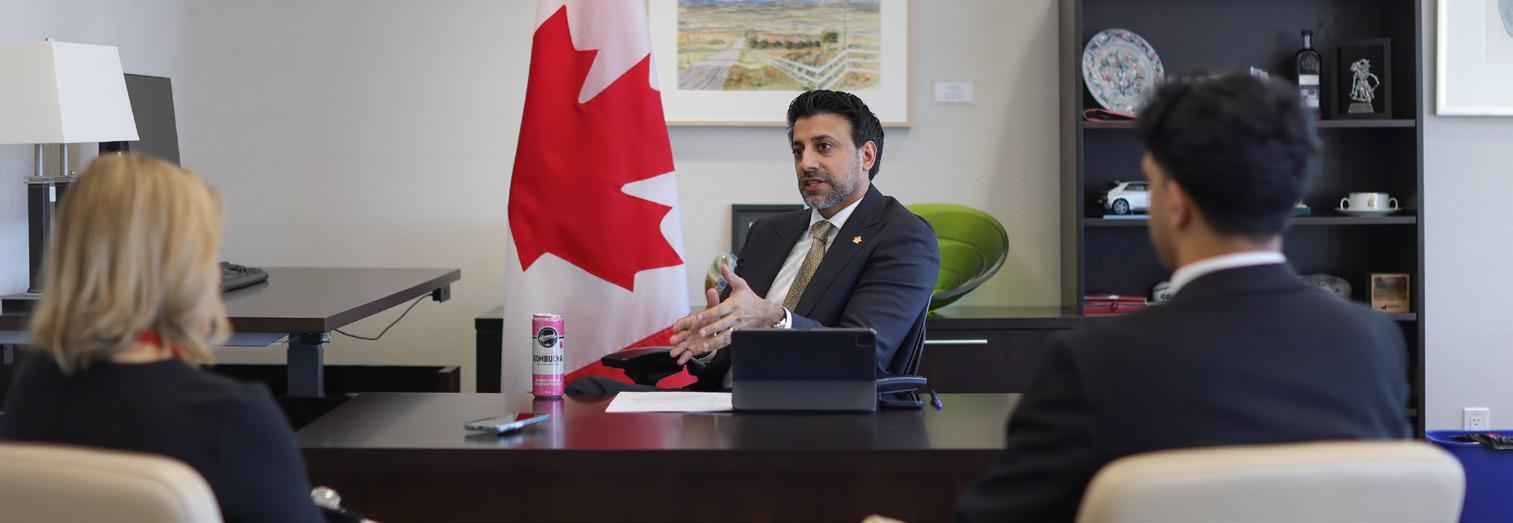
Prime Minister Mark Carney has tasked International Trade Minister Maninder Sidhu with helping Canada hit $300 billion in additional non-U.S. exports within 10 years. Sidhu is shown in his office, during our interview with him. | Photo: David Kawai
MS: There are a lot of opportunities in China. I was just there 10 days ago with the prime minister in January. We unlocked billions of dollars of opportunities in the agriculture and the seafood sector — that's canola, that's beef, that's seafood, such as lobster. But also we're looking at e-commerce. I met with Alibaba, with the prime minister [and] the CEO there, because their customer base is over one billion. We had a meeting to talk about how we get more Canadian small- and medium-sized enterprises on their platforms. The Chinese consumer wants to pay for good-quality Canadian products.
After China, I would say second is the European Union. It’s huge for Canada. We did roughly $30 billion in trade. And, as you know, just speaking in the defence sector alone, there's this big race to hit our five per cent NATO targets in defence investments. If you calculate all that in the European Union alone, that's over a trillion dollars of investment or procurement opportunities for Canadian companies and the EU SAFE procurement [initiative] allows us preferential access to the market.
The third country, I would say, is India. India's growth is phenomenal. It's six to seven per cent year over year. I was there not too long ago [and] I sat down with the energy minister, Minister [Hardeep Singh] Puri who, quite frankly, said, India needs 70 per cent more energy by 2040. That's how fast they're growing. They're looking to Canada to fill that energy need, but they also have a growing appetite for good quality agriculture products
The Port of Vancouver just reported 170 million metric tonnes, which is
the largest in their history in terms of cargo they've handled and moved. That means more shipments to China, Japan, South Korea, and then you come to the other end of the country, on the East Coast, the port of St. John's just reported a 30 per cent jump in cargo.
and so that's part of that conversation with India. We made a public commitment that we would expand trade with India by 50 per cent in the next five years. I'm negotiating a free trade agreement that will help get us there, and also investments between India and Canada.
DM: Do you expect to finalize that trade agreement soon?
MS: I hope to get it done this year. I'm very optimistic. India also needs 3,000 more airplanes in the next 10 years and we have a huge aerospace industry, as you know, in Quebec and Ontario — from Airbus to De Havilland to Bombardier to Bell Textron helicopters — so there's a huge potential there for the aerospace industry. But also in mining. India wants to diversify. They're looking to diversify their trading partners, especially around critical minerals. India’s Minister [Piyush] Goyal, my counterpart, will be bringing India's largest business delegation to Canada. So lots of Indian [businesspeople are] coming to Canada in May, to explore opportunities in terms of what more can we do.
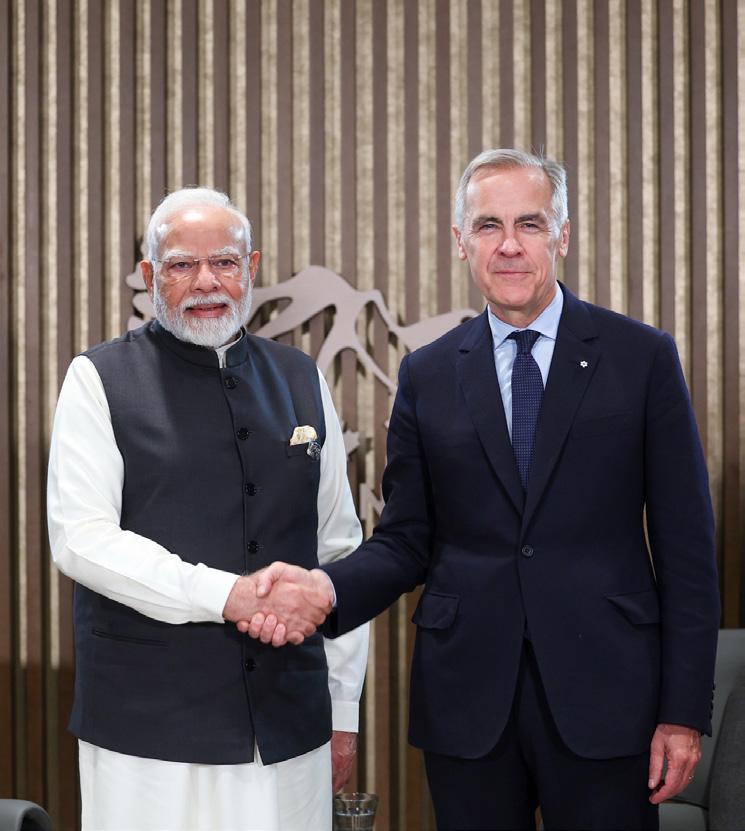
India is one of Canada’s priority countries for trade. As such, Mark Carney invited Indian Prime Minister Narendra Modi to the G7 in Kananaskis, Alta., in June 2025.
| Photo: GODL-India
DM: On India: What has changed that makes a CanadaIndia deal more realistic in 2026 than it was before?
MS: First of all, governments have changed. Context has changed. The U.S. is also an important trading partner in India and China and supply chains and critical minerals also matter. They’re part of the equation. This is why Prime Minister Carney formed the Critical Minerals Alliance at the G7. [Part of the conversation was how Canada can] help stabilize some of the critical mineral supply chains. We are a reliable partner and India needs a reliable partner. They want to diversify at the same time we want to diversify, so there's momentum there from both sides, but it's also around energy, around mining. We have two dialogues that are happening right now. We have an economic conversation between me and the trade minister, but there's also a law enforcement dialogue around public safety and how we keep our community safe. I truly believe we can do both of those things at the same time and move forward on our economic relationship.
DM: We’ve talked a little bit about China, but can you tell me more about Canada’s trade prospects there?
MS: Look, the first trip to China was to unlock some of the things that have been holding us back in terms of
agriculture, but also to explore opportunities around investments — where we welcome investments, where the Chinese welcome investments. We’ve been clear on some of our parameters of where we welcome industry. I would say agriculture, energy, consumer products are part of that conversation, but also financial services. Finance Minister François-Philippe Champagne was there not too long ago, right before I went to China, to have that conversation. Both of us are co-chairs of the economic task force with China and we were there exploring opportunities. Also, electric vehicles were part of that conversation. As you know, in January we committed to 49,000 electric vehicles from China, and so part of my trip was to sit down with many of those manufacturers. I sat down with XPeng; I sat down with BYD; I sat down with Ion, which is part of the Guangzhou Automobile Group. [They are] some of the largest manufacturers in China. They're looking at Canada as a market. We're looking at the Chinese as a joint venture opportunity to say we’d love for you to come set up shop, utilize the Ontario auto workers to build your autos. My riding — I'm a Brampton East MP — is where Stellantis is. That’s where you’re hearing about layoffs — 1,000 people looking for work. When I talk to those workers, they tell me, ‘Man, we want to just build cars.’ To me, the question is ‘How do we bring affordable cars to Canada?’ but [also] ‘How do
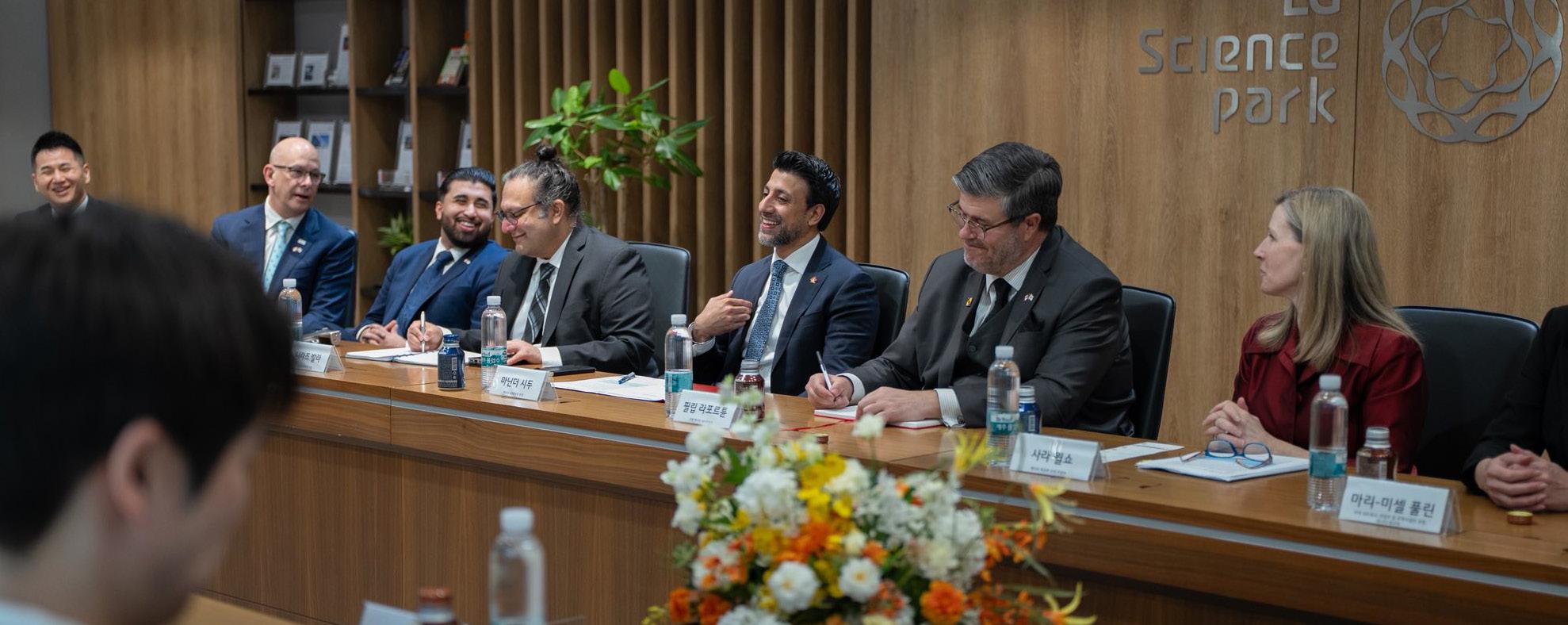
International Trade Minister Maninder Sidhu toured the LG Science Park in Seoul, South Korea, in April. | Photo: Office of Minister Sidhu
we get Canadians to build these cars?’ That's part of the calculation and the conversation we're having with China.
The 49,000 [number] enables them to come explore Canada and then make that investment decision, because no one's going to invest billions of dollars into production lines unless they understand the market. That was the conversation we had. I was in the factory myself. I saw a lot of people, a lot of robots — there were a lot of both. But, that's the future, right? And Canadians have asked us to bring them more affordable options. [Our allies are] doing the same thing with joint venture opportunities. [They’re doing it] in Spain. They're doing the same in the United Kingdom, and they're doing the same in Austria.
DM: That sounds like part of the answer to my question on how Canada balances free trade with protecting key domestic industries such as the auto industry?
MS: Yes, but also, what are we doing on other strategies? We did launch our auto strategy, and part of that is [looking at] how we make our auto industry more resilient and be able to pivot to, say, for the defence industry.
On the defence industrial strategy, 70 cents of every dollar that we invest [in defence] goes to the U.S. We
On the defence industrial strategy, 70 cents of every dollar that we invest [in defence] goes to the U.S. We need to invest that and Europe has long inverted that where they import 30 per cent and spend 70 per cent domestically.
The defence industrial strategy requires us to work with many partners around the world to bring that capacity to Canada.
need to invest that and Europe has long inverted that where they import 30 per cent and spend 70 per cent domestically.
The defence industrial strategy requires us to work with many partners around the world to bring that capacity to Canada. I was just in South Korea, talking about bringing that capacity home. I was just talking to the Europeans about bringing that here as well. That’s how you make our supply chains more resilient. If you look at our industrial strategies and come back to the trade agenda, a lot of them have trade built in. The defence industrial strategy has 50 per cent defence exports built into it. You cannot have a resilient defence industry without exports. In my shop, I’m pushing Export Development Canada [EDC] to
Canada’s defence industrial strategy requires it to work with many partners around the world. International Trade Minister Maninder Sidhu is shown here in South Korea, while exploring the possibilities there. | Photo: Office of Minister Sidhu
do more defence deals, also the Trade Commissioner Services, CCC [Canadian Commercial Corporation], so we're all kind of leveraging all of those government tools to be able to sustain and grow the defence industry.
DM: What is Canada’s operating framework on China now? Is it derisking, selective engagement or something else?
MS: Look, I think with China, we have a red line. We all know that. That's what we've been very clear about. Like I mentioned, in agriculture, in energy, in consumer goods [for example.] The Chinese have some of the best battery storage technology ever, best EV technology out there. What can we learn from that? How can we incentivize them to come here and do some joint venture opportunities? What can we do around financial services because the market is massive with four billion consumers? Part of that is an understanding that this is how mature diplomacy works. You need to have those
candid conversations behind closed doors of how far can we go, where we welcome you and where do we think it's not worth your time?
DM: On the trade deal with MERCUSOR, what has to happen politically and substantively before a deal becomes realistic, and what is the government’s best case-scenario timeline?
MS: On Mercusor, I was there in August in Brazil to relaunch the negotiations. As you know, they stalled and became very stale. It's a conversation that's been happening over multiple years, and I truly believe all of these FTAs take political engagement because every country in the world wants to diversify trade. It's nothing new. Everyone's standing in line to do an FTA with someone, and capacity becomes an issue, so you have to continue to engage at the political level, to get on someone's radar, to push through where your negotiators get stuck.
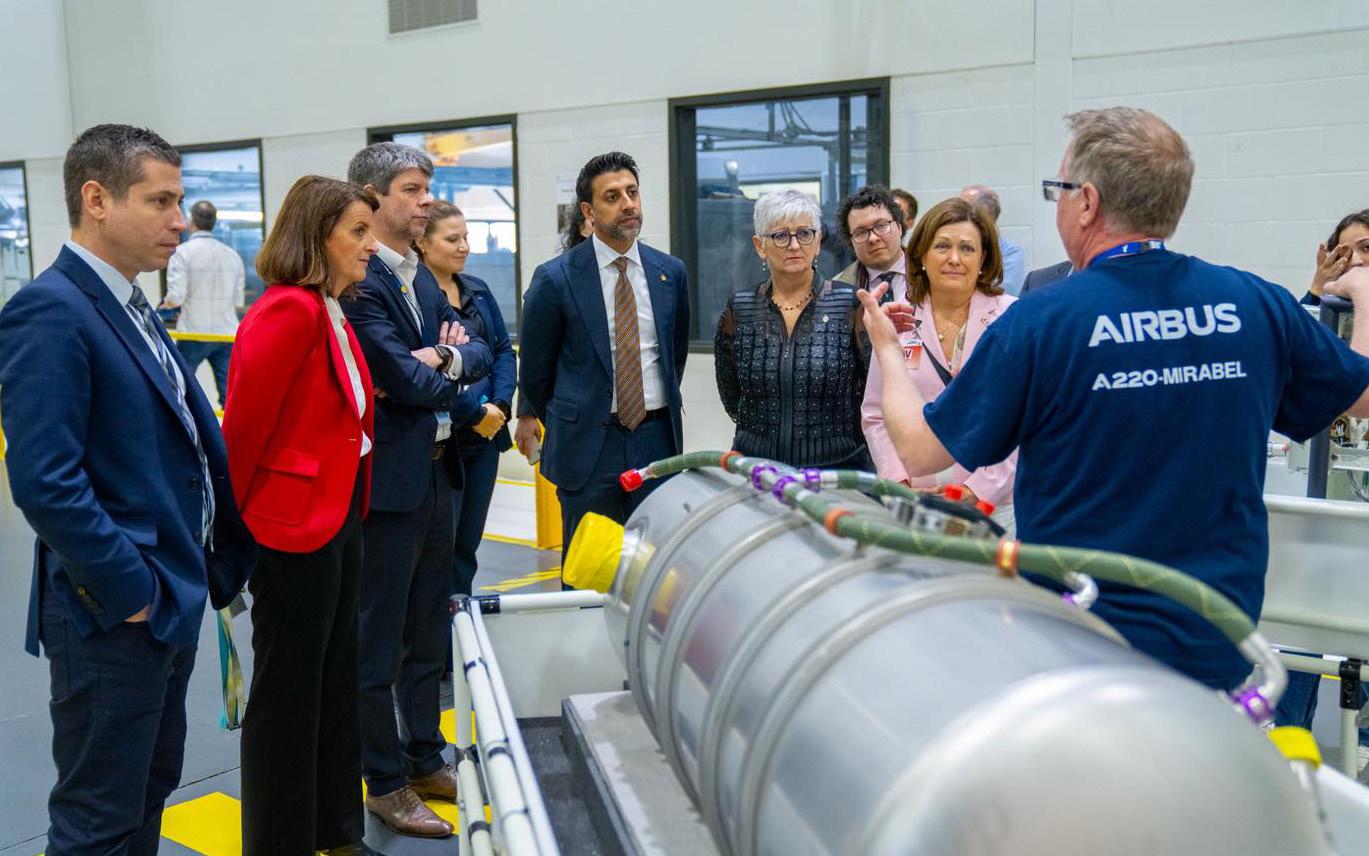
International Trade Minister Maninder Sidhu visits Airbus in Mirabel, Que. The company works with more than 800 Canadian suppliers. | Photo: Office of Minister Sidhu
We have a phenomenal team of negotiators, but sometimes it requires some political push. On MERCUSOR, I was just in Cameroon at the World Trade Organization meeting a few weeks ago, where I sat down with Uruguay, Argentina and Brazil to really push forward. I just met with the Argentinians again this morning, and with Uruguay again. I've talked to the Brazilian foreign minister. We're really pushing forward to say, ‘Hey, how do we get this done this year?’ Because this is the time to get it done. We've seen them sign with European Union. They have an agreement with the EFTA [Iceland, Liechtenstein Norway and Switzerland] countries now, and so I truly believe now's the time to leverage it — there's a lot of goodwill that's built up because they're dealing with some of the same issues that we're dealing with, with the U.S.
DM: I guess there’s probably also a sense that Canadians have spent a lot of time on that deal over the years, so why let that go to waste?
MS: Right. And the context has changed — and the way Canada is perceived has changed as well. You heard Prime Minister Carney’s Davos speech about middle powers coming together. Canada has convening power, and that's kind of what Canada is known for right now. There's a lot of respect out there, a lot of built-up capital, because of Prime Minister Carney and his partnerships all around the world, and so people want to do more with Canada.
DM: What are the remaining sticking points to the free trade deal with ASEAN finalizing this year?
MS: I don't negotiate in public. There's always going to be some things to work through, but I'm feeling very confident that we can get that one done this year as well. Again, on that, I engage with all of my counterparts. [The Philippines] is the chair of ASEAN and they've identified a Canada-ASEAN FTA as one of their key priorities. That will drive the political will. ASEAN is 10 plus one countries with Timor Leste now, so you can
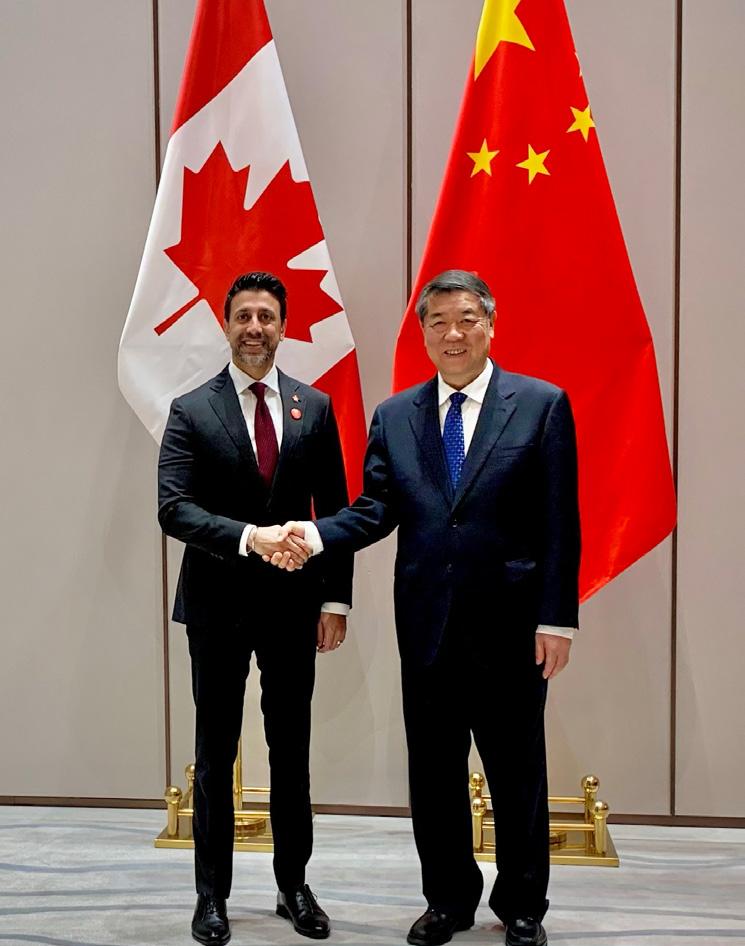
International Trade Minister Maninder Sidhu met with Chinese Vice Premier He Lifeng in April to discuss trade in electric vehicles, renewable energy and agriculture.
| Photo: Office of Minister Sidhu
JD.com, a company that serves 700 million customers through its e-commerce platform, is based in China. International Trade Minister Maninder Sidhu met with officials there when he visited the country. | Photo: Office of Minister Sidhu
imagine negotiating with [that many] countries. It's not easy.
In fact, my negotiators are in Jakarta this week to get the next round done and really move forward. I do see us getting that done this year.
DM: Is it still a priority for Canada that trade deals reflect modern priorities such as labour rights and environmental standards?
MS: Absolutely. Our principles haven't changed as Canada, but what I would say is you need to meet some countries where they're at. And the prime minister has been very clear that we need to take the world as it is, not as we wish it to be. If you have a developing country that can't enforce binding labour provisions, you can put it in there, but are they actually going to be binding? And sometimes it's better to just encourage. Our partners in Australia have done that really well. They’ll negotiate an FTA, but that will be phase 1, so you get that signed, and we'll help you build up capacity so we can have binding agreements on the next one.
Instead of taking the approach as in the past, where we're going to come in and lecture you, it’ll be more handholding, we’ll encourage [progress.]
DM: How important is AI to your portfolio?
MS: I have yet to negotiate a trade agreement with AI, but I think, for the business community, if you talk about digital trade, it’s very important. I just launched negotiations on digital trade agreement with the European Union. My friend, [EU Trade Commissioner] Maroš [Šefčovič] was here in Toronto not too long ago, where we announced that.
Digital trade is not something abstract. It's how e-commerce is done. It's how software is traded and sold online. It's gaming. So it’s a lot of things that touch our lives. It's how payments are handled. So yes, technology and AI are very important to trade, and we need a better way to facilitate more of that, and that's why we're now negotiating a digital trade agreement [with Europe]. That is the way of the future. That's how future trade will be done, but we need mechanisms in place to be able to facilitate that conversation.
DM: Does digital trade become an item in the trade agreements you’re negotiating?
MS: [Modern trade agreements like] the CPTPP have a digital trade chapter. Most of our FTAs will have a digital chapter, but the digital trade FTAs with the European Union will go a little bit deeper, because that digital trade chapter was done when we negotiated CETA, which was long before the CPTPP.
Some of our trade agreements may require bilateral trade agreements, rather than going back and re-opening them. That's the easier process. Those are conversations that we're having. We're learning a lot from Singapore, which does digital trade really well.
DM: We know Canadian entrepreneurs aren't always great at going through the red tape required to access trade
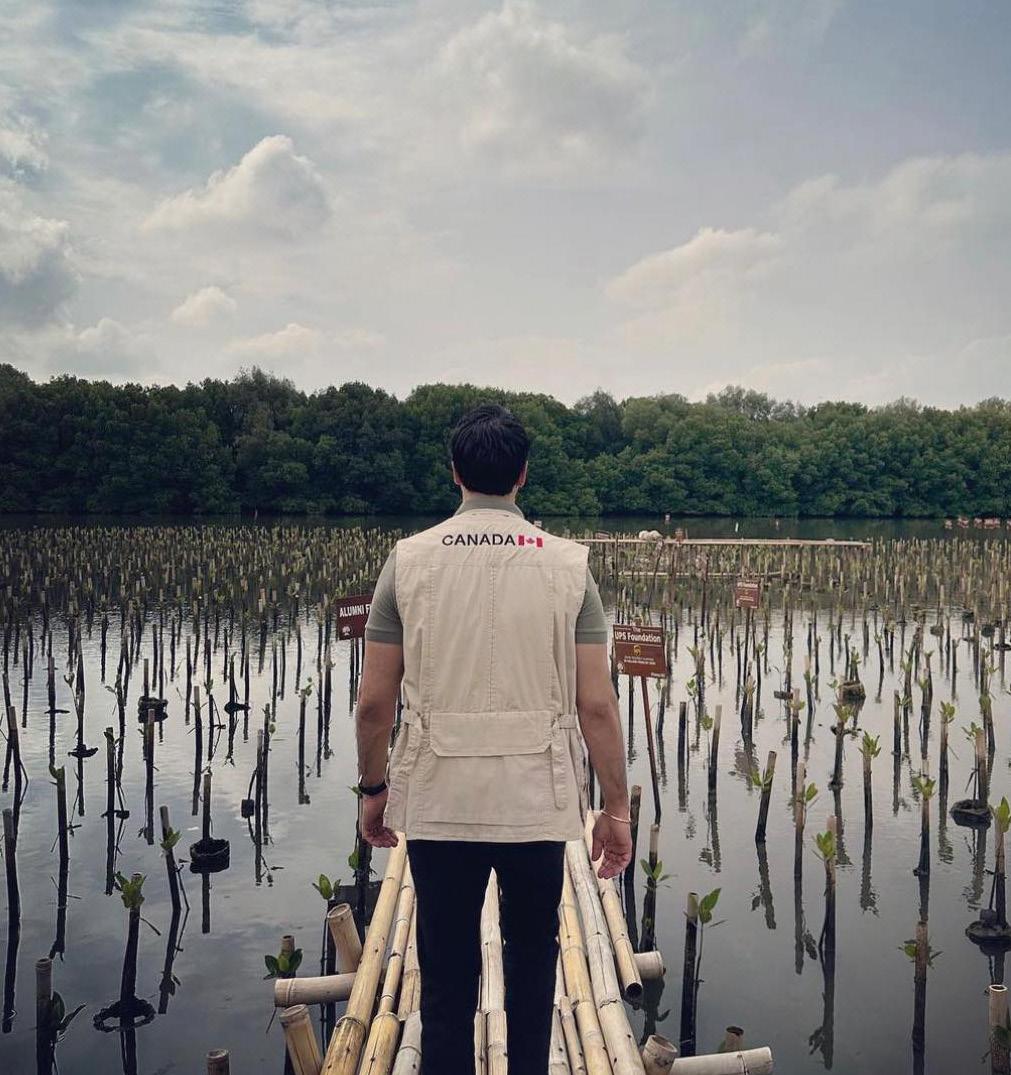
Maninder Sidhu visited a $20-million project by Canada to restore and protect mangroves in the coastal communities of Indonesia during his first term in Parliament. | Photo: Office of Minister Sidhu
Canada has convening power, and that's kind of what Canada is known for right now. There's a lot of respect out there, a lot of built-up capital, because of Prime Minister Carney and his partnerships all around the world, and so people want to do more with Canada.
agreements we have in place. How can you encourage that? Or do you see that as part of your job or is it more the job of EDC and the Trade Commissioner Service?
MS: I definitely see that as part of my job. As I was saying, I spent 13 years in the private sector utilizing all these FTAs to my customers' advantage, that was my job as a trade consultant. I want to be able to sign FTAs that businesses will actually use, so part of that is, ‘How do we get businesses export-ready?’ In budget 2025, you'll see that we have the SME [small- and medium-sized] export readiness program to really work with the chambers and get their businesses export-ready. After they're exportready, they can use my CanExport program, which has about $69 million, to get to trade shows, do market research, get legal advice, [etc.] But also, once you have your first order, [we need to ask] how we are facilitating that order through EDC? In budget 2025, we asked EDC to facilitate $25 billion more of transactions of exports outside this country.
DM: Is there anything you want to add?
MS: Investment attraction is also one of my responsibilities, because it relates directly to exports. So when I say, foreign direct investment, if you look at last year's numbers, we had roughly $100 billion of foreign direct investments. It's the highest it's been in 18 years. All the energy projects are mostly export, critical minerals as well. There's an investment summit coming up in September, which I'm helping the prime minister on. Invest in Canada is under my responsibilities.
The investment attraction directly helps me with my exports, because I'm able to build those major projects and get more exports out the door. So it's really the FTAs, the small businesses, the investments and the industrial strategies that are bringing the whole trade agenda together. And if you look at every single industrial strategy we've released, there's always a trade component in each and every one of them, because of our economy that’s dependent by 70 per cent on trade.
DM: One last question from me: What are the top three industries that are ripe for investment in Canada?
MS: Oh, definitely energy. Look, we have over a handful of liquid natural gas projects that are in various phases of development, mining for sure, just because that's where the world is going, they're looking for a stable supply. That's why we have our Critical Minerals Alliance, bringing like-minded countries together. But also on the infrastructure side of things, our ports are at capacity, or almost at capacity. And this is why we launched our trade Diversification Corridors Fund — $5 billion — and that's where I'm working with the transport minister to be able to make sure that we're giving our ports that added capacity, inland terminals, working with the rail lines, because you need to be able to ensure that freight rates stay affordable. If there's too much demand and not enough supply, freight rates will go through the roof, and our diversification efforts will slow down. Having everything in [order for those] incoming investments is very, very important to our country's economic resilience.
|
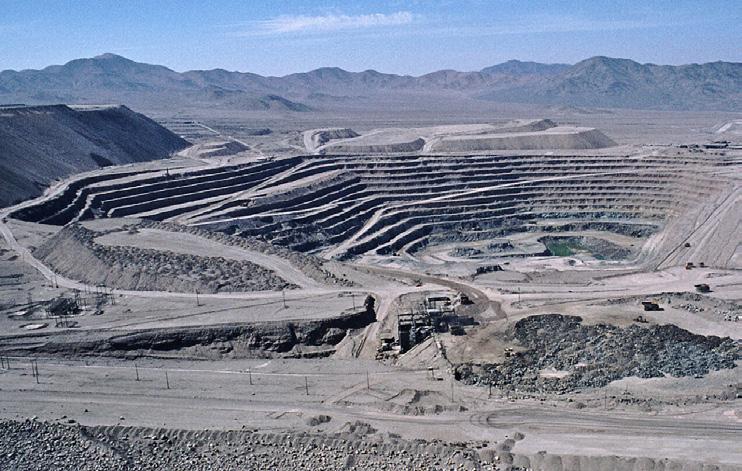
Canada’s Critical Minerals Alliance brings like-minded countries together and mining is ripe for investment in Canada. Shown here is a copper mine.
Photo: Reinhard Jahn, Mannheim
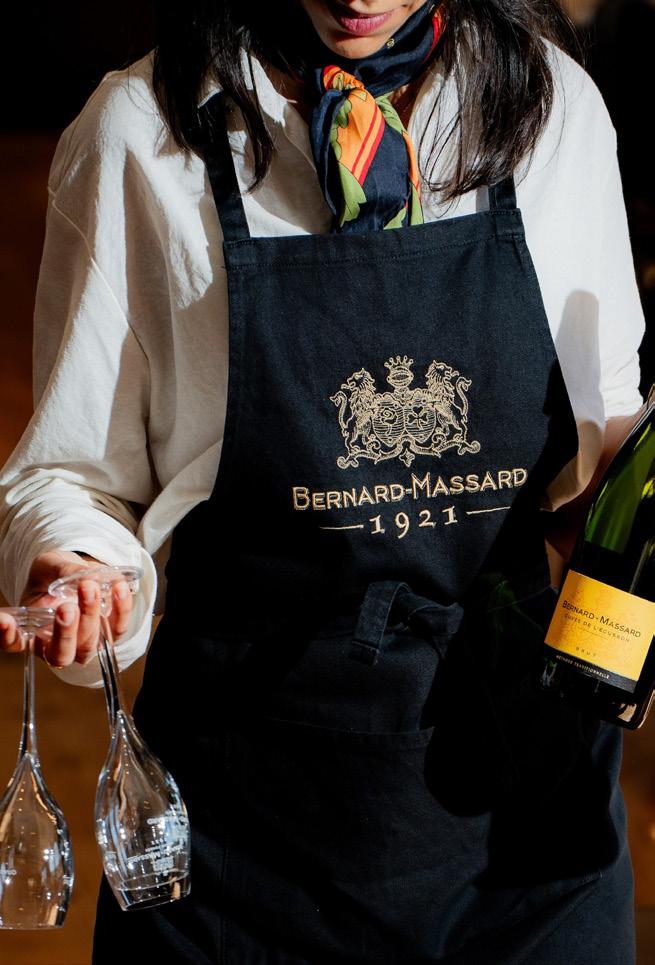
Founded in 1921 in Grevenmacher, in the heart of Luxembourg’s Moselle region, Bernard-Massard has grown over the past century into the country’s leading producer of sparkling wines.
Now in its fifth generation of family ownership, Bernard-Massard is committed to producing wines of exceptional quality, in keeping with tradition, while continuously evolving its practices in terms of quality, social responsibility, and environmental stewardship.
Behind every bottle stands a team of 90 people, working in the vineyards, the cellars, and alongside customers, united by a single ambition: to make every tasting of a Bernard-Massard cuvée a moment of genuine pleasure and connection.
For more than a century, the house has stayed true to the values and entrepreneurial spirit of its founders. Guided by passion, exacting standards, and an unwavering commitment to quality, Bernard-Massard crafts and brings to market a distinguished range of sparkling cuvées and fine Luxembourgish wines year after year
Today, Bernard-Massard stands as Luxembourg’s leading family-owned producer of both still and sparkling wines, with an annual output of nearly 3.5 million bottles. Its reputation extends well beyond Luxembourg’s
borders. As a proud ambassador of Luxembourgish winemaking expertise abroad, the house exports its wines to more than 20 countries. Present in Belgium since its founding, it has steadily built a presence in key markets around the world, notably in Finland, Great Britain, Japan, and Canada.
In Canada, Bernard-Massard has maintained a special relationship for many years with a market that has embraced its wines with real enthusiasm, thereby playing its part in bringing the story of Luxembourgish winemaking to this vast and remarkable country.
The first shipment of the Cuvée de l’Écusson, the company’s flagship wine, to Canada dates back to 1996. Since then, Canada has become BernardMassard’s second-largest export market.
The many accolades earned at international competitions speak for themselves. They serve as a testament not only to the quality of the wines, but to the dedication, rigor, and day-to-day commitment of every member of the team.
ARGENTINA ' S AMBITIONS
Canada and Argentina are both countries of immigration, natural resources and shared challenges, says Argentine Ambassador Josefina Martínez Gramuglia.
By Alexia Wilkinson Naidoo
Last year marked the 85th anniversary of diplomatic ties between two countries — Canada and Argentina — that, while on opposite ends of the Americas, have become close friends and allies.
Representing Argentina, and leading the charge in Canada on trade, investment, cultural exchange and strategic co-operation between these two vast nations is Ambassador Josefina Martínez Gramuglia, a respected diplomat whose career has put her in the middle of multilateral forums, economic reforms and high-level international summits.
Her passion for international affairs was sparked at an early age.
“I was reflecting this morning,” said Martínez Gramuglia in a recent interview with Diplomat magazine, “I think I knew from my very early years, in high school, that I wanted to explore the world.”
Growing up in the 1980s with limited access to global news, she said she eagerly awaited the weekly international supplements that arrived with newspapers. After completing a law degree, Martínez Gramuglia successfully entered Argentina’s Foreign Service Academy in 2000, passing through rigorous examinations and interviews that are known for their competitiveness.
Her career highlights have been numerous, including a posting at the United Nations in New York, which coincided with Argentina’s tenure on the Security Council. As a junior diplomat, she was responsible for voting on critical resolutions.
“This is me voting at the Security Council,” she recalls, pointing to a nearby photograph of her at the UN. “It was a formative experience.”
Subsequent assignments for Martínez Gramuglia included a role in Washington, D.C., focused on Argentine-U.S. political affairs, and a return to Buenos Aires where she played a significant role in the preparations and execution of Argentina’s 2018 G20 presidency. That summit was notable for bridging developed and emerging economies on pressing issues ranging from digital transformation and infrastructure to sustainable finance and global trade rules.
A POSTING IN CANADA
When Martínez Gramuglia arrived in Canada in 2021, it was at the height of the COVID-19 pandemic. “I presented my credentials by Zoom,” she said, describing the virtual ceremony conducted with Canada’s Chief Justice — not the usual diplomatic protocol, which would be in-person with the governor general. At the time, Julie Payette had resigned as governor general and Mary Simon had yet to be appointed.
Despite the restrictions, Canada's diplomatic community provided strong support through virtual networking sessions organized by Global Affairs Canada. “Global Affairs tried their best,” she said, noting how their efforts helped recreate essential connections in a time of isolation.
Argentine Ambassador Josefina Martínez Gramuglia holds a cup for a traditional Argentine drink called "mate." Her sister bought her the cup when she became a head of mission. | Photo: Ashley Fraser
From a very early age, Argentine Ambassador Josefina Martínez Gramuglia says she knew she wanted to “explore the world.” | Photo: Ashley Fraser
It didn’t take her long to settle in. “Canadians are warm, eager to get to know you,” she says, describing Canada now as her “home away from home.”
Today, she leads a small but dynamic embassy team. “We have three diplomats and myself — a fantastic team,” she says, praising their energy, dedication and the fresh perspectives brought by a generational shift in priorities. This compact structure, she says, allows for agility in pursuing the many bilateral objectives her country shares with Canada.
The parallels between Canada and Argentina are striking and provide a solid foundation for deeper co-operation.
“Argentina is a country of immigration and Canada is a country of immigration,” she says, pointing out the historical influx of Europeans that profoundly shaped both cultures. Also shared, she says, are the vast landscapes and natural endowments, federal governance systems and shared challenges, such as managing climate resilience, sustainable resource extraction and building thriving and resilient societies.
“We are like mirrors — one in the northernmost part of the Americas, the other in the southernmost,” she added.
TRADE: ROOM TO GROW
On the economic front, Martínez Gramuglia described the ties between Canada and Argentina as being robust and demonstrating impressive growth.
According to Global Affairs Canada, bilateral merchandise trade reached $2.5 billion in 2024 — a notable increase of 44 per cent from the previous year — with continued momentum into 2025. Of that, Canadian exports to Argentina were valued at nearly
Martínez Gramuglia pointed out that Canada continues to rank
as
one
of
the
leading foreign investors in Argentina, particularly in its mining sector. This investment is central to both countries’ strategies for critical minerals — essential for the global energy transition and advanced technologies.
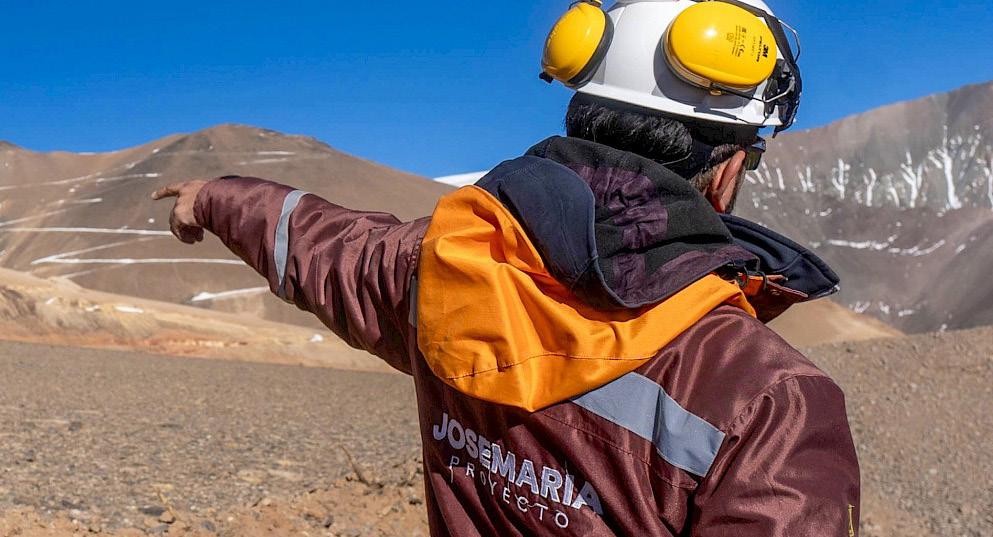
Canada is one of Argentina’s leading foreign investors, particularly in the mining industry. Shown below is a surveyor at a copper and gold mining project in Argentina.
| Photo: Lundin Mining
$423 million and included nuclear machinery; ores, slag and ash; pharmaceutical products; electrical machinery equipment; and iron and steel products. In the same year, Canada imported from Argentina $2.1 billion worth of goods, including soybean oil, iron, steel, and precious metals, principally gold and silver, due to Canada’s presence in the Argentinian mining sector. Canada also imports wine, biodiesel and various food products such as seafood, fruits and vegetables.
Martínez Gramuglia pointed out that Canada continues to rank as one of the leading foreign investors in Argentina, particularly in its mining sector. This investment is central to both countries’ strategies for critical minerals — essential for the global energy transition and advanced technologies.
Additional initiatives in renewable energy have focused on Patagonia’s world-class wind resources and Canada’s small modular nuclear reactors to power artificial intelligence data centres. There is a lot of excitement, she says, about combining Canada’s technological leadership in nuclear safety and both countries’ abundant energy resources.
President Javier Milei, elected in 2023, has introduced reforms designed to restore and enhance investor confidence. Foremost among these is the regime for large investments (RIGI), which provides 30-year guarantees of fiscal, regulatory and currency stability for qualifying projects exceeding US$200 million in value.
“Your capital is safe. Your money and your success are a priority — and our success [is,] too,” Martínez Gramuglia tells Canadian businesses during outreach events. Several Canadian-linked projects have already embraced these incentives, including McEwen Copper’s ambitious $2.7 billion Los Azules copper development, which received RIGI approval in September 2025, and the Vicuña joint venture between BHP and Lundin Mining, which submitted its application in December 2025 for incentives covering a multi-billion-dollar copper, gold and silver project in San Juan province.
Perhaps in line with Canada’s interest in diversifying trade partnerships, negotiations toward a CanadaMERCOSUR (Argentina, Brazil, Paraguay, Uruguay) free trade agreement gained renewed traction in late 2025.
Argentina’s energetic malambo folk dance has charmed audiences across Canada.
| Photo: Ministerio de Cultura de la Nación Argentina
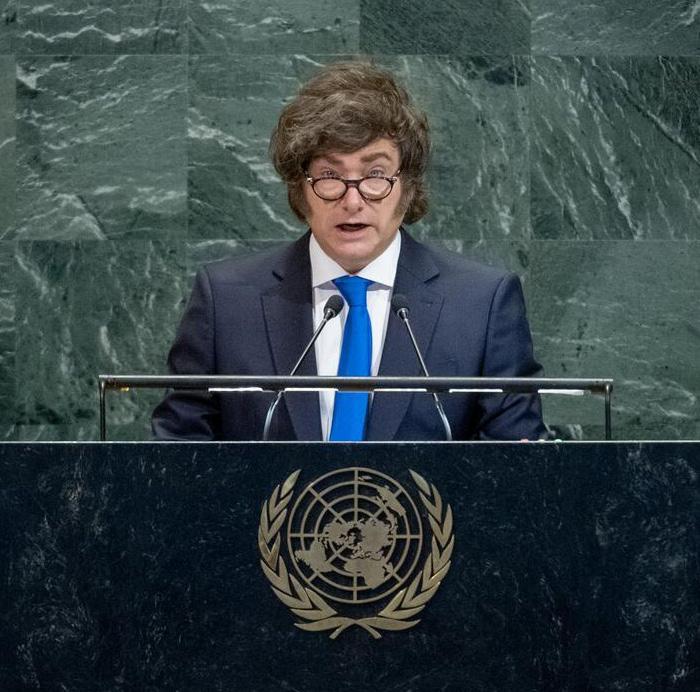
Argentine President Javier Gerardo Milei speaks at the United Nations. Canada and Argentina share positions on promoting democracy in the world.
| Photo: United Nations
Both sides have expressed hope that a comprehensive deal might be reached by the end of 2026. A successful agreement could open substantial opportunities across agriculture, manufactured goods, services and investment flows.
Multilateral alignment between the two countries remains strong, says Martínez Gramuglia, and it is more important than ever in the current turbulent times.
Canada and Argentina share positions on promoting democracy in the Western Hemisphere, ensuring food security and addressing global challenges within frameworks such as the G20 and the Organization of American States, she says.
Martínez Gramuglia is also passionate about cultural diplomacy and how it can serve as a bridge for building connection and mutual understanding. “Tango, football, wine, beef — they are very much associated with our country,” she says, while emphasizing how these cultural exports complement broader efforts to showcase Argentina’s diverse identity.
Performances of tango and the energetic malambo folk dance have captivated audiences at prestigious venues such as the National Arts Centre in Ottawa and at the Calgary Stampede, where Canadians witnessed a particularly fiery show.
As a woman leading a diplomatic mission, Martínez Gramuglia offers candid reflections on the unique challenges of the profession. “We have an added responsibility,” she says, referring to balancing family responsibilities in a career defined by frequent relocations and demanding schedules. “You need a strong partner — I’ve been blessed,” she adds.
She actively champions initiatives and groups such as Ottawa’s Women Heads of Mission network, which now comprises 23 members based in Ottawa. The group organizes collaborative events, panels on global leadership and meetings with the Canadian community, amplifying women’s voices in international relations.
In an era of geopolitical reconfiguration, Martínez Gramuglia’s stewardship continues to ensure that Canada-Argentina relations not only endure but thrive. Her commitment to diplomacy is unwavering: “I cannot see myself doing anything else. I love what I do.”
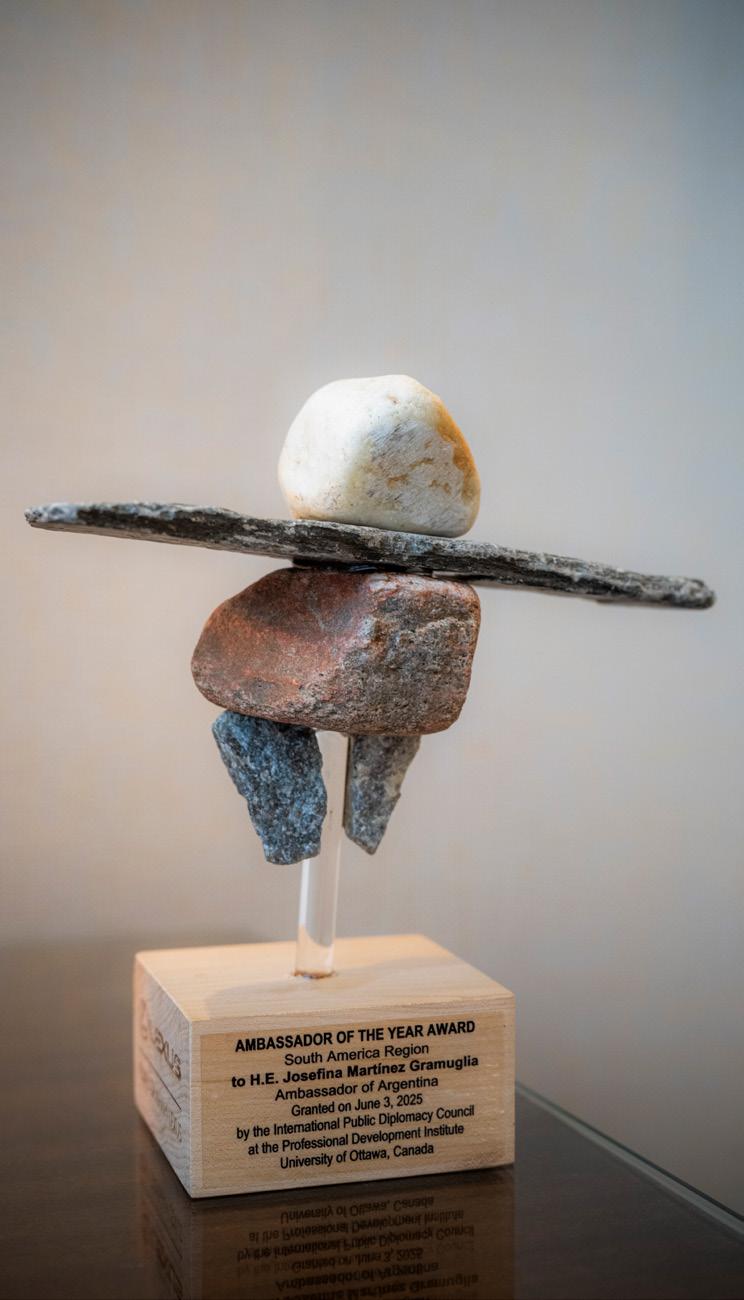
Ambassador Martínez Gramuglia received an ambassador of the year award from the University of Ottawa’s Professional Development Institute.
| Photo: Ashley Fraser
Keeping Canada Connected Where It Matters Most
A Luxembourg partnership supporting Canada’s national resilience, remote industries, and the digital inclusion of every community.
Connectivity gaps in remote and rural communities remain among the most persistent challenges facing Canadian policymakers. Where terrestrial broadband cannot reach, the costs are real: limited economic participation, reduced access to health and education services, and communities left outside the digital economy.
Closing that gap is not just a policy commitment. It is a foundation for national equity and prosperity. SES brings decades of global satellite expertise and a deep commitment to this work. Headquartered in Luxembourg and operating the world’s largest multi-orbit satellite fleet, SES partners with Canadian enterprises and government agencies to deliver resilient, high-performance connectivity to remote northern sites, business operations, and communities that need it most.
Supporting Canada’s Resource Economy
The mining, oil and gas, and energy sectors driving Canada’s economic strength are accelerating digital transformation at remote sites far beyond fibre’s reach. SES space-based solutions deliver the bandwidth, reliability, and low latency these operations require, supporting automation, worker safety systems, environmental monitoring, and ESG compliance across Canada’s most demanding environments.
Resilience When It Matters Most
When wildfires sever ground networks or floods isolate northern towns, satellite connectivity becomes a critical communications lifeline for first responders, emergency coordinators, and essential services. SES’s multi-orbit satellite network—spanning Geostationary Orbit (GEO), Medium Earth Orbit (MEO), and access to Low Earth Orbit (LEO)—provides the redundancy that critical infrastructure demands, ensuring government agencies and communities stay connected when terrestrial links fail.
A Partnership Built for the Long Term Luxembourg and Canada share a long tradition of international partnership, and SES reflects those values in how it works. The next chapter of that commitment is meoSphere, SES’s next-generation MEO network—a scalable, multi-mission architecture built to deliver resilient connectivity, advanced in-space services, and mission flexibility to government agencies and enterprises across Canada.
For northern communities, that means reliable broadband without compromise. For industry, it means connectivity that scales with ambition. SES is here as a partner in building a more connected, resilient, and inclusive Canada. To learn more, visit www.SES.com.
Connected Across Canada
EUROPE'S No. 1
Building bridges between Luxembourg and Canada
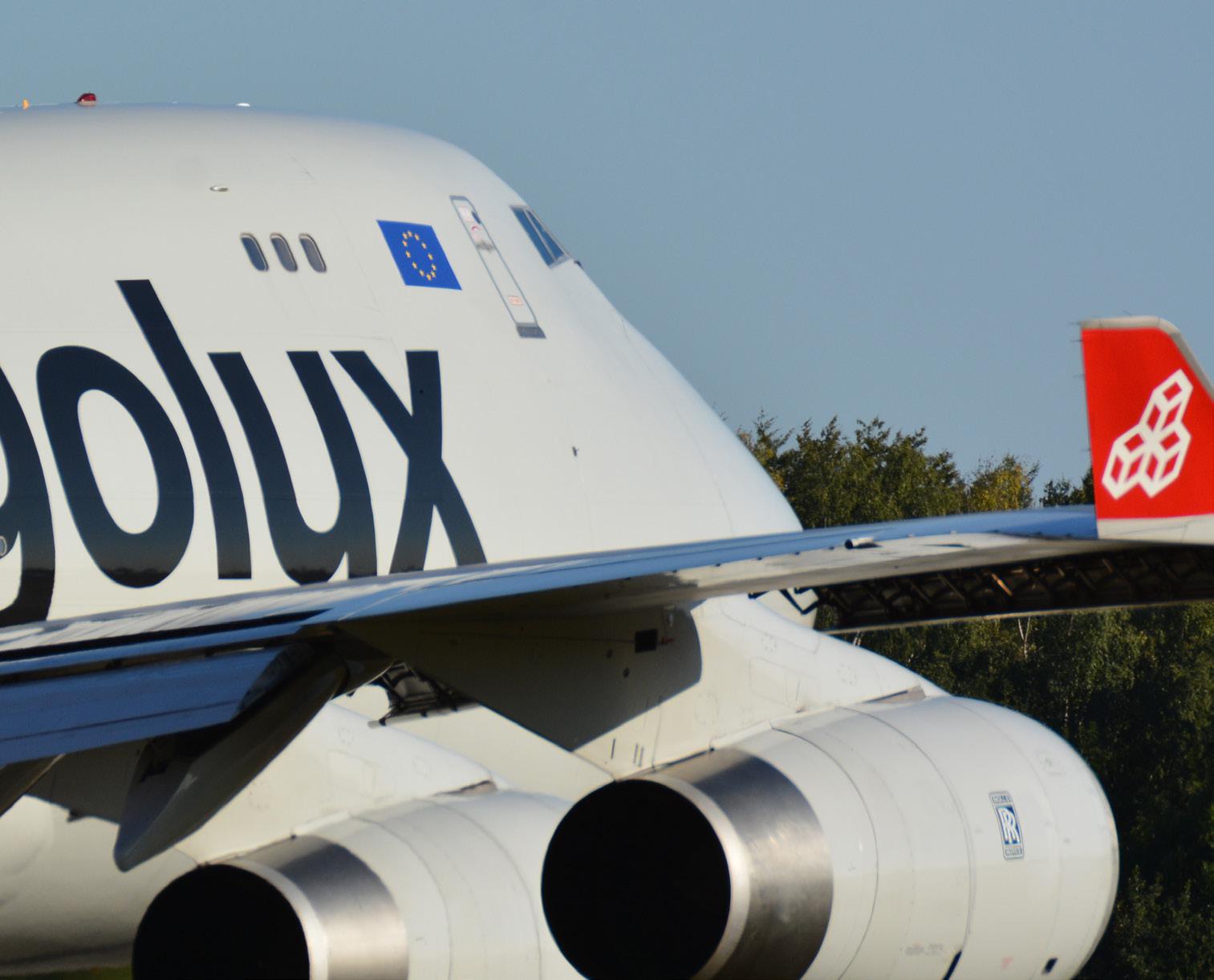
Cargolux Airlines International, based in Luxembourg, is Europe’s No. 1 all-cargo airline and a recognized leader in the international air freight industry. Founded over 55 years ago, the company has built a reputation for reliability, innovation and operational excellence, serving as a vital link in international trade and supply chains worldwide. The airline is also long-standing contributor to Luxembourg’s vibrant economic scene, actively promoting industrial expertise around the globe.
Cargolux operates on an extensive global network covering over 50 destinations worldwide with both scheduled all cargo flights as well as charter services. The carrier offers numerous services in North Ameri-
ca across Canada, the United States, and Mexico. The airline started operating into Canada in 1989 with services to Montreal, Quebec, and Edmonton, Alberta before channeling its Canadian operations through Calgary, Alberta. Cargolux is the only international cargo operator to offer services in the province, and this year marks the 25th anniversary of the successful partnership between the airport and the airline. Cargolux currently operates a weekly connection between Luxembourg and Calgary to support transatlantic trade flows, for time critical, industrial, agricultural and energy related cargo in particular.
To complement its flight operations and enhance connectivity, Cargolux also offers extensive trucking ser-
vices in the region. On the east coast, the road feeder network links Toronto and Montréal to Chicago and New York. In western Canada, trucking services connect Edmonton, Calgary and Vancouver, with Seattle and Los Angeles in the US Pacific North West. This road network ensures door-to-door solutions for customers and ensure shipments can be seamlessly connected through hubs for timely transportation.
As a cargo-focused airline, Cargolux operates a fleet of 30 dedicated Boeing 747 freighters, that can accommodate any kind of shipment. With its diversified product portfolio, the airline provides tailored transport solutions for a wide breadth of cargo including perishables, pharmaceuticals, live animals, outsized and high value shipments. To support this global
operation and ensure service excellence across the network, the Cargolux Group counts over 4,200 employees worldwide. With more than 90 offices in over 50 countries, the team of professionals ensure seamless door to door cargo solutions round-the-clock.
The airline’s homebase also serves as the main Maintenance center for the company’s aircraft and the main hub for commercial operations. Cargo handling at Luxembourg airport is done by Luxcargo handling, a subsidiary of Cargolux, ensuring transparency and security throughout the transport process. As Europe’s 8th largest air freight platform, the hub can accommodate up to 12 wide-body aircraft simultaneously for an annual capacity of 1,200,000 tons.
LUXEMBOURG: MAKING IT BETTER KNOWN
The last Grand Duchy in the world, Luxembourg is a geographically small country with a population of just 680,000. Yet it punches above its weight in many regards, and has a long history of friendship and co-operation with Canada.
By Abdel Karim Awwad
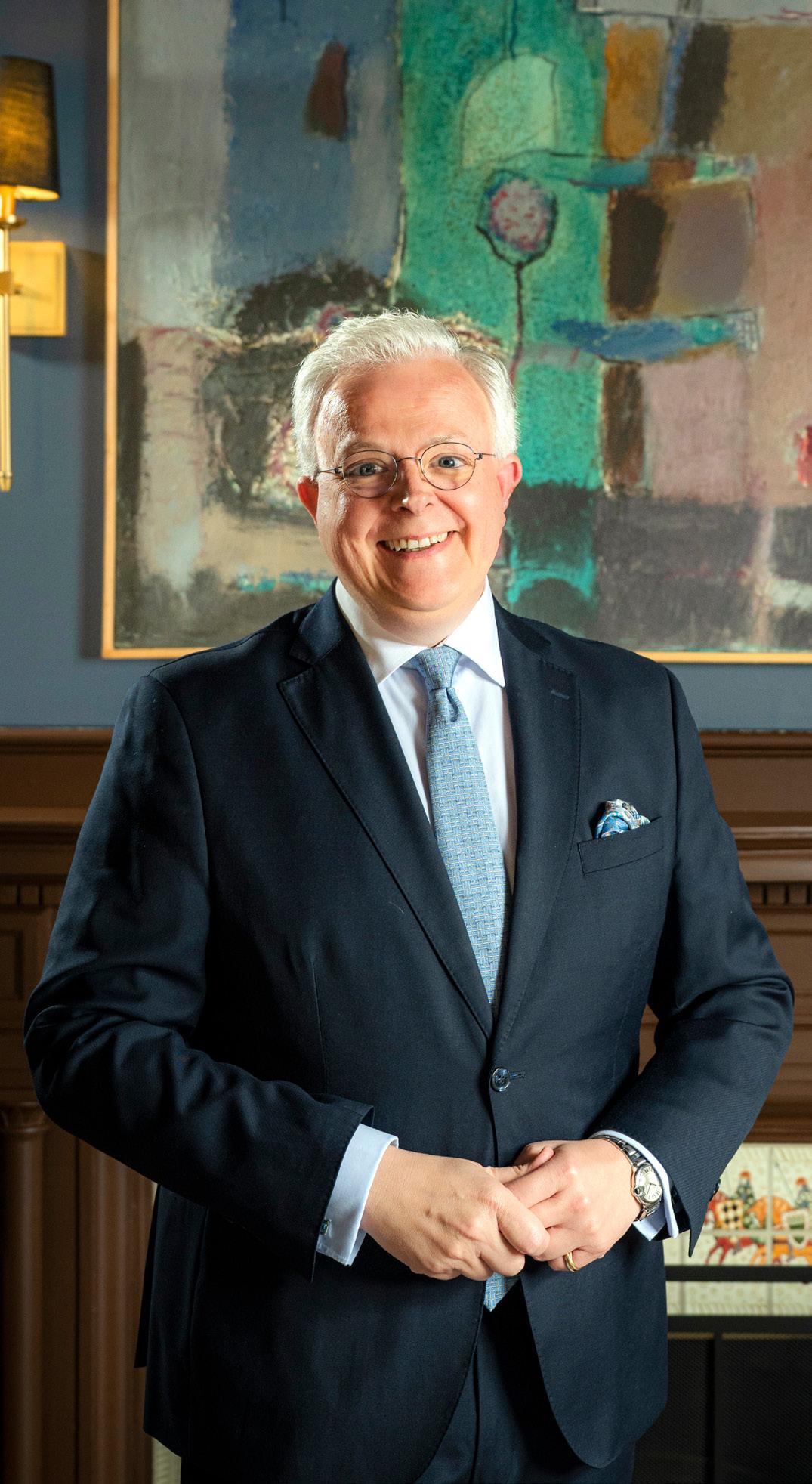
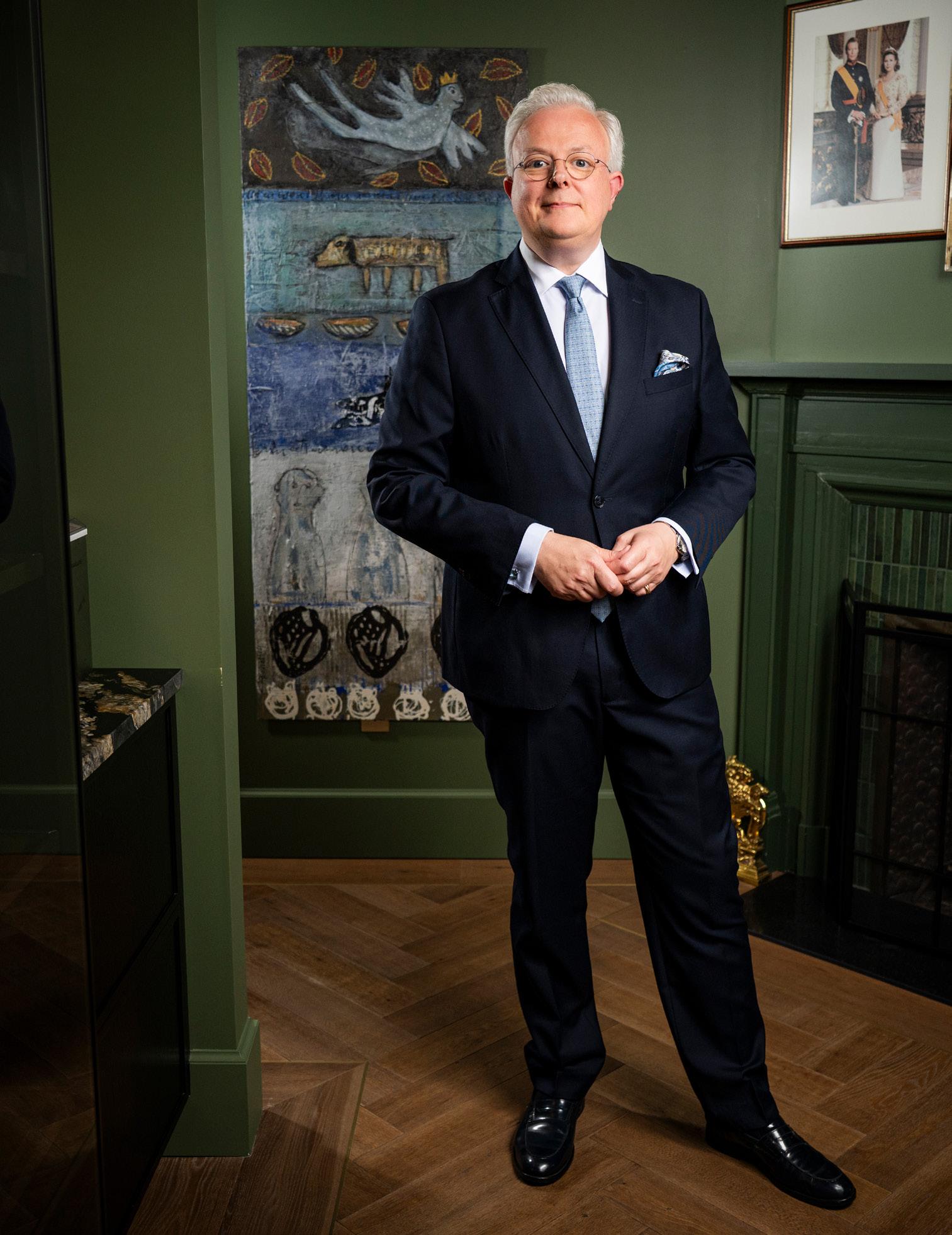
Jean Claude Kugener made history in Canada when he arrived for his posting as ambassador of the Grand Duchy of Luxembourg.
He is the first resident ambassador for his country and was responsible for opening a brand new embassy here. He’s made it his mission to make sure Canadians know more about the Grand Duchy by the time he leaves than they did when he arrived.
He previously served as head of mission to the Holy See; ambassador to India, with concurrent accreditation to Nepal and Sri Lanka; and deputy head of mission in the U.K., Russia and Germany. He agreed to a wide-ranging interview with Diplomat. We spoke in May.
Diplomat magazine: How would you characterize the state of the relationship between Luxembourg and Canada?
Jean Claude Kugener: I am happy to say that the bilateral relations are excellent and have intensified considerably since the official opening of the resident Luxembourg embassy in Canada in 2025.
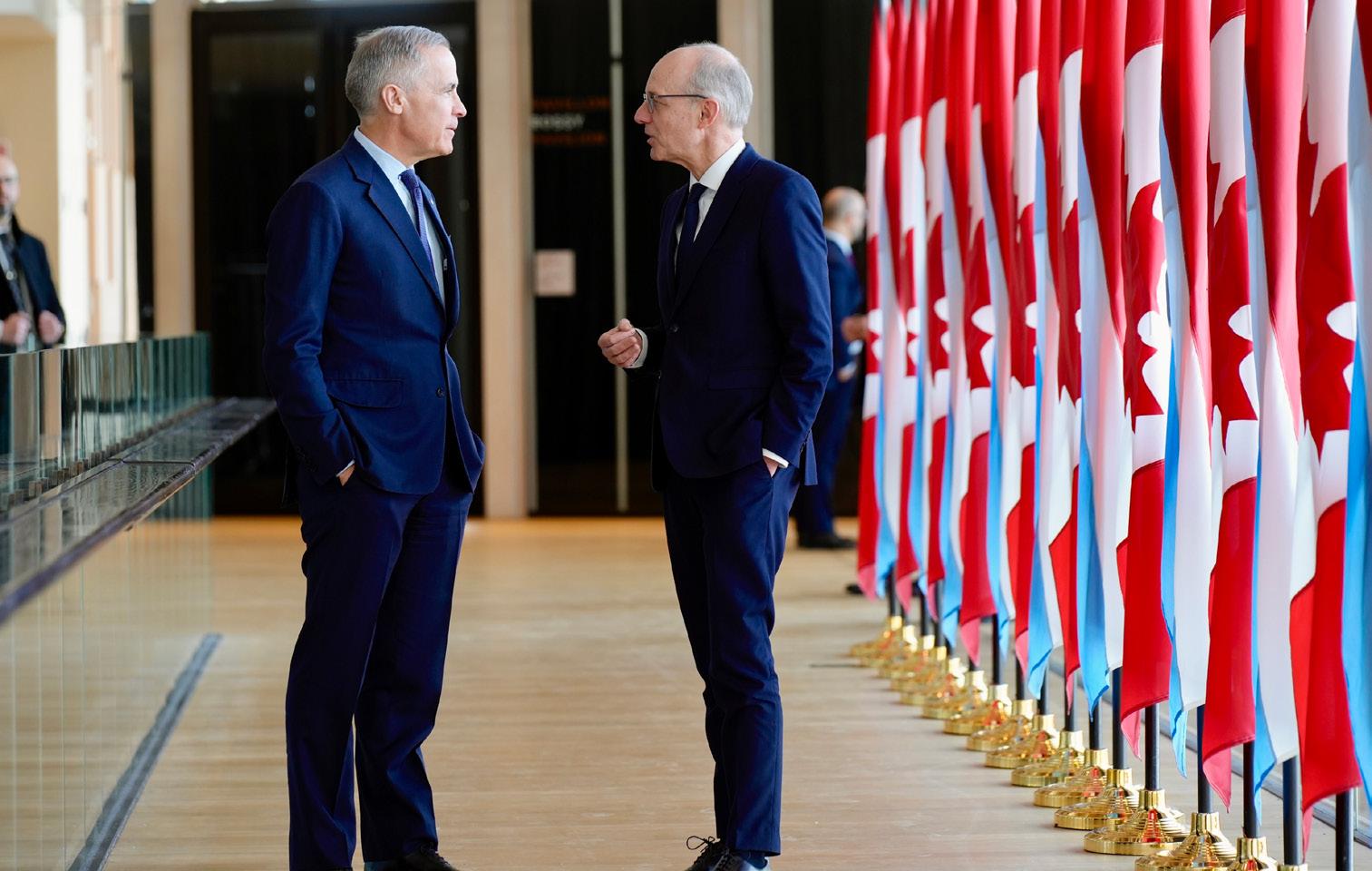
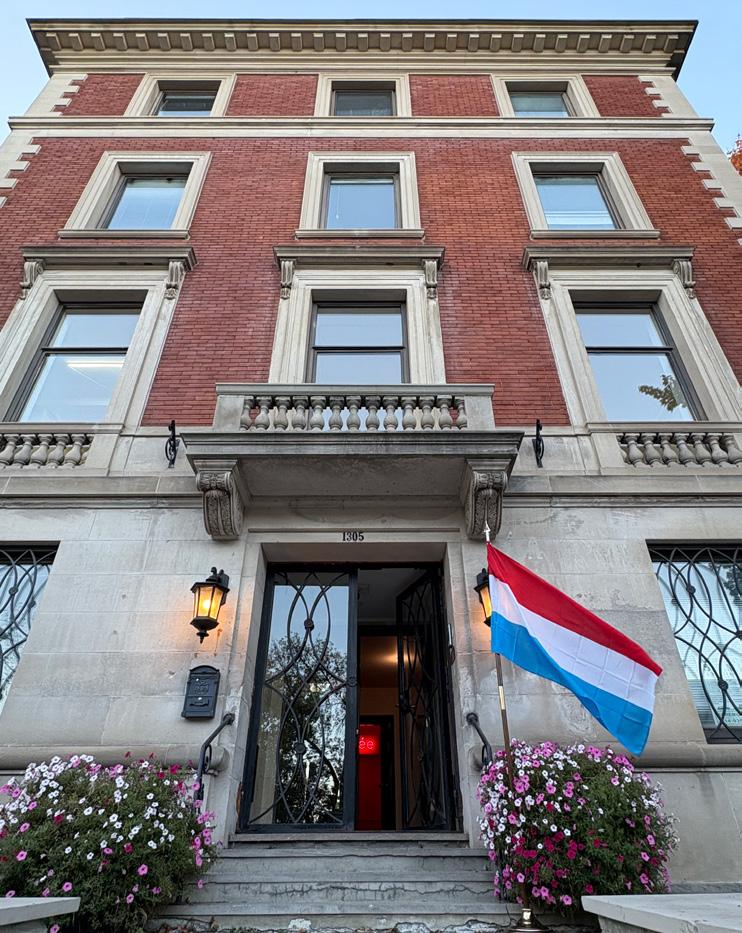
Since the opening of the embassy, we’ve had the privilege of organizing the visits of our Culture Minister Eric Thill in Quebec in May 2025, our Deputy Prime Minister and Foreign Affairs and Foreign Trade Minister Xavier Bettel in Ottawa in June 2025 for the official opening of the new embassy, Finance Minister Gilles Roth in Montreal, Ottawa and Toronto in October 2025 and Prime Minister Luc Frieden in Ottawa in February 2026 and, at press time, we are eagerly anticipating the official visit of the president of the Chamber of Deputies of the Grand Duchy of Luxembourg Claude Wiseler in June 2026. His visit will include time in Ottawa
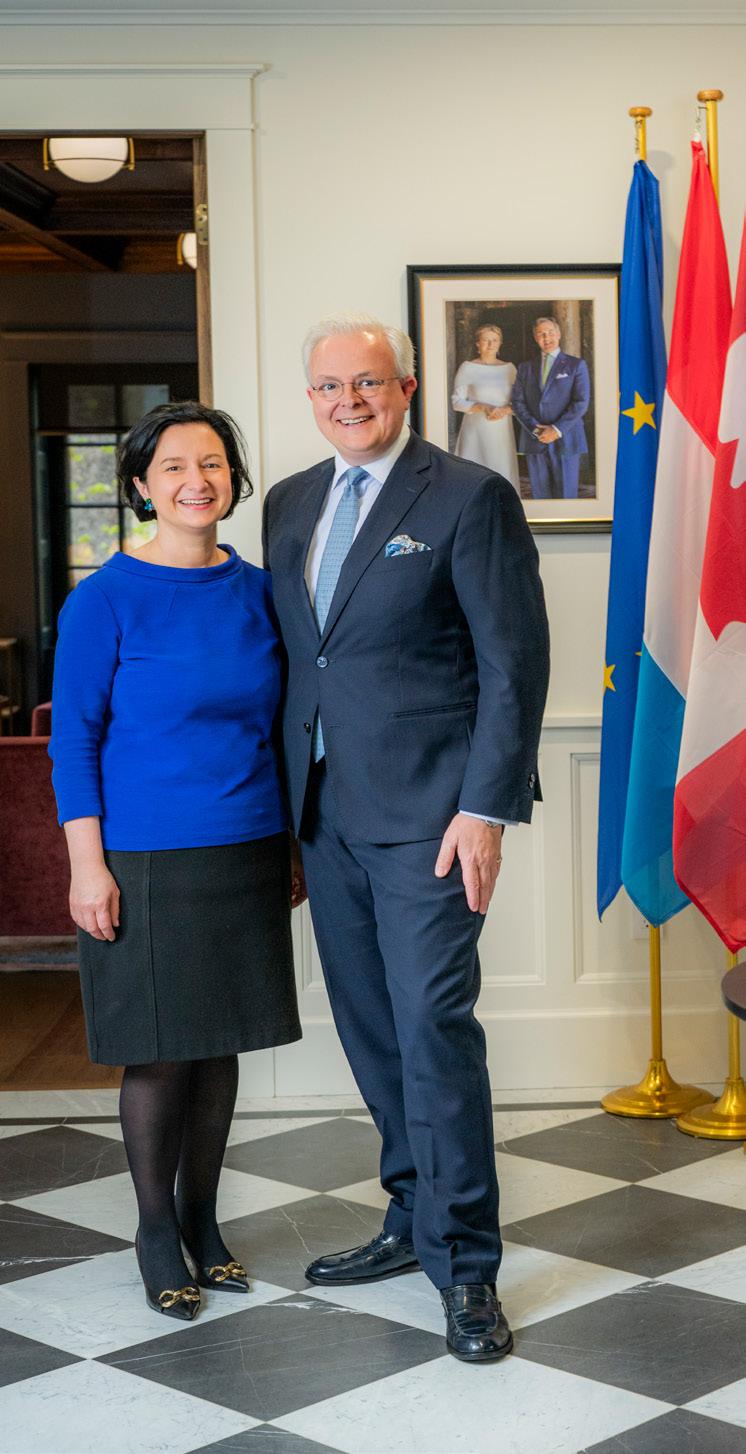
Luxembourg Ambassador Jean Claude Kugener is his country’s first resident ambassador to Canada and was responsible for setting up the embassy.
| Photo: Ashley Fraser
and Quebec. It is the first visit of a president of the Luxembourg Chamber of Deputies in Canada.
Our countries are working closely together, notably in multilateral institutions and different ministerial administrations ranging from NATO to the United Nations and the Francophonie.
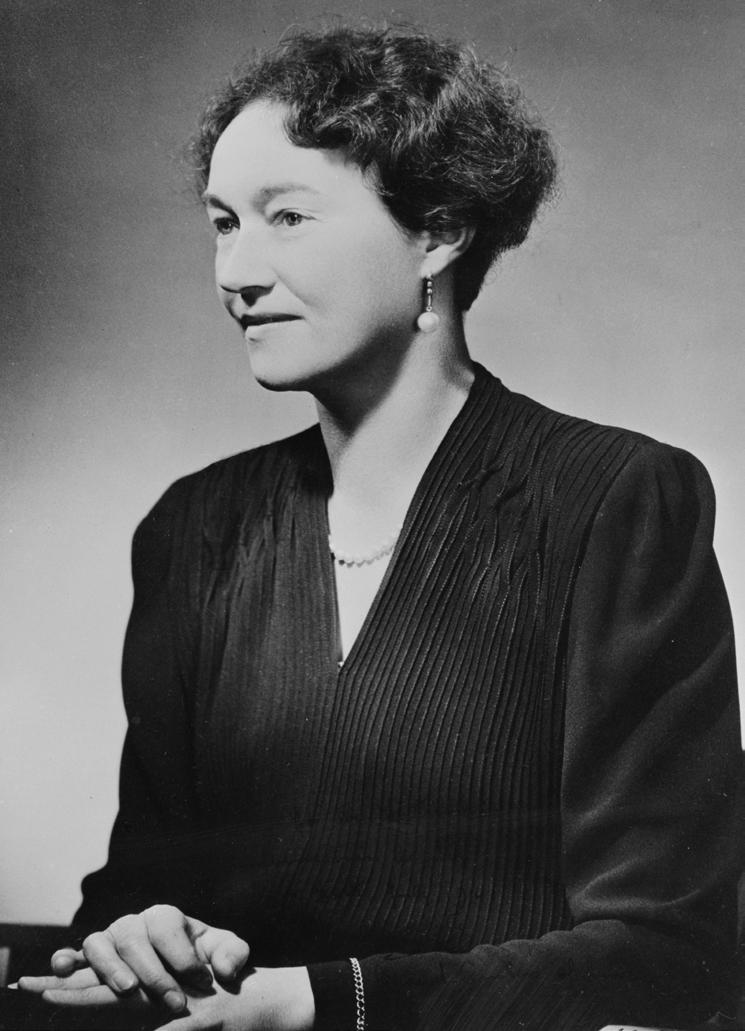
The newly “reinforced” presence of Luxembourg in Canada also helps to recall our historic relations. During the Second World War, following the invasion of neutral Luxembourg, Their Royal Highnesses Grand Duchess Charlotte, Prince Félix and their children arrived in exile in Montreal on Oct. 14, 1940. On Nov. 6, 1940, prime minister Pierre Dupong
and justice minister Victor Bodson joined the sovereign with their families. With the grand duchess and the prime minister present in the same city, the Luxembourg government-in-exile was established in Montreal and its offices were located on the eighth floor of the Sun Life building from January 1941 to May 1944.
Over the last year, we have been in touch with many archivists and researchers from Montreal and Quebec to Ottawa to find historic documents in the provincial and federal archives and learn more about this period. It seems that Luxembourg was the only country to have established its government-in-exile in Canada during those dark years of the Second World War.
Much remains unknown and has not yet been thoroughly researched. Hence, I would like to launch an appeal to historians or students in history to take an interest in this fascinating research. During the reception I hosted in Montreal last October to commemorate the arrival in exile of the royal family and the members of the government 85 years ago, Quebec’s International Relations Minister Christopher Skeete recalled that Montreal was the capital of the Grand Duchy and the headquarters of its governmentin-exile during those years. What better moment than now to recall and commemorate this period in our bilateral relations, to talk about these deep historic links and to thank the provincial as well as the federal authorities for the welcome and hospitality granted to Luxembourg during those difficult and determining years? We are currently looking into ways in which the embassy can create and display a commemorative plaque acknowledging our sincere gratitude for the hospitality granted by Canada during this challenging period.
DM: You are Luxembourg’s first resident ambassador in Canada. What are your key priorities for your time in Canada?
JCK: Indeed, I landed in Ottawa on Nov. 14, 2024, with a mandate to create the 35th bilateral Luxembourg Embassy in our diplomatic network. The to-do list
Luxembourg Ambassador Jean Claude Kugener has been in Canada since November 2024 and has already had official visits to Ontario, Quebec, British Columbia and Alberta. | Photo: Ashley Fraser
What better moment than now to recall and commemorate this period in our bilateral relations, to talk about these deep historic links and to thank the provincial as well as the federal authorities for the welcome and hospitality granted to Luxembourg during those difficult and determining years?
included the creation of a new chancery with a consulate, economic and cultural sections in addition to finding a residence, hiring and training the locally recruited employees and thereby laying the foundations for the new embassy to grow over the coming decades. With the creation of the consulate within the embassy, we will be able to offer the full consular assistance in-house after decades of consular assistance generously provided by the Belgian consulate-general in Montreal for our 1,000-plus citizens living and working in Canada.
I have already undertaken official visits in Ontario, Quebec, British Columbia and Alberta to talk about our existing bilateral relations and make them better
known. Most recently, I had the privilege to meet Alberta officials, including Lt. Gov. Salma Lakhani; Ric McIver, speaker of the Legislative Assembly; Alberta Premier Danielle Smith and Finance Minister Nate Horner; Joseph Schow, minister of jobs, economy, trade and immigration and Transportation and Economic Corridors Minister Devin Dreeshen in Edmonton and discussed our bilateral co-operation with Canada in general and the province of Alberta in particular, as well as new opportunities for co-operation. In Calgary, for example, a visit to the airport and meeting with the CEO of the airport authority was a great opportunity to discuss the co-operation with Luxembourg’s Cargolux Airlines International, Europe’s No. 1 all-cargo airline and the only international cargo operator to offer services in Alberta for the past 25 years.
The presence of Luxembourg companies throughout Canada illustrates the diversity of the sectors involved. For example, the satellite company SES, which operates the world’s largest multi-orbit satellite fleet, is active in various provinces delivering high-performance connectivity, particularly in remote areas, and provides satellite connectivity for first responders or emergency services in case of wildfires or floods.
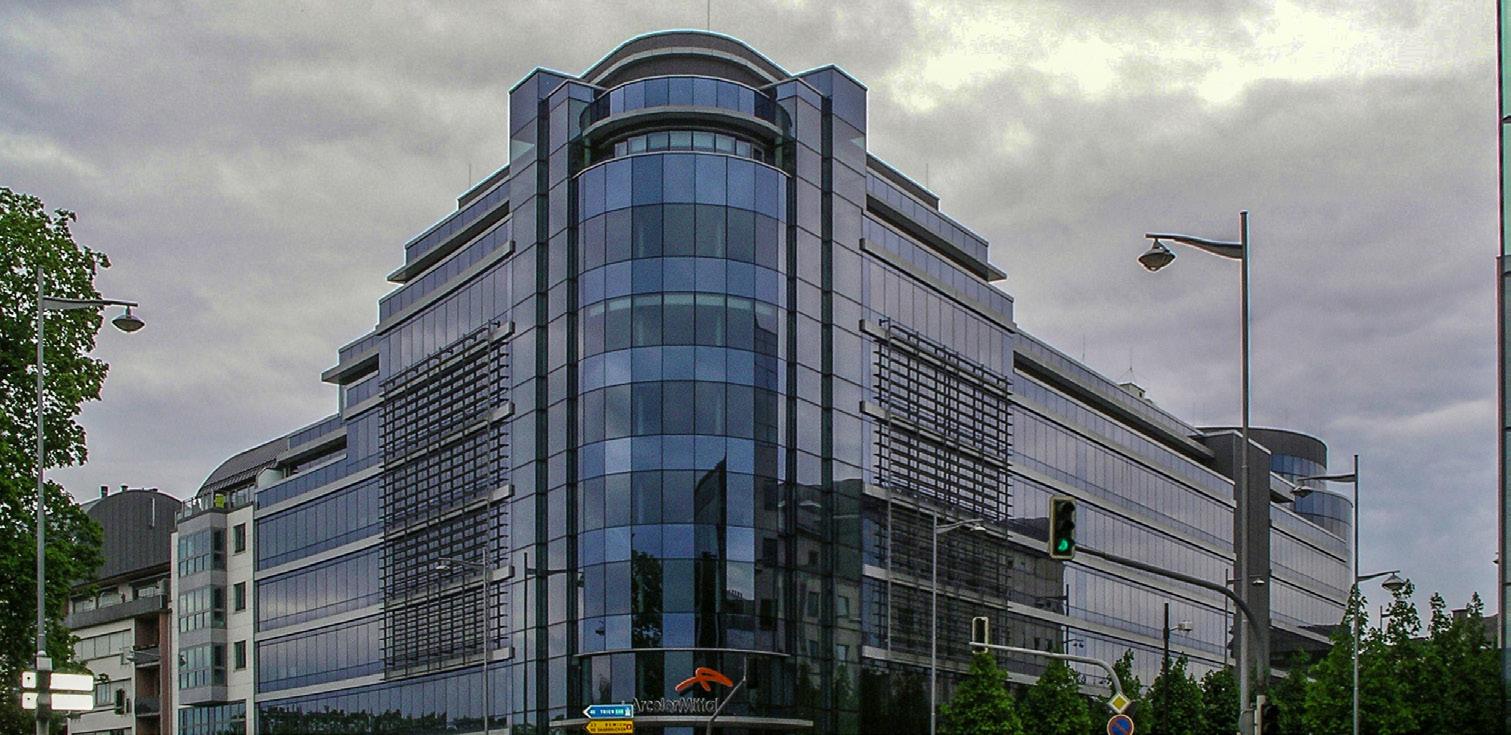
corporation, headquartered in Luxembourg City. It was the world's largest producer of steel in
ArcelorMittal S.A. is a Luxembourg-based multinational steel manufacturing
2019. | Photo: Meffo
The Luxembourg-headquartered ArcelorMittal, Europe’s No. 1 steel producer, is one of the largest and most active steel producers in Canada following its acquisition of Dofasco in 2006. ArcelorMittal’s heavy steel beams can be found in many large-scale projects throughout the country, such as, for example, Docks 16 and 17 in the port of Trois-Rivières or the mega-columns utilized in the 1 Bloor West building in Toronto, which is Canada’s first supertall structure.
Batipart Luxembourg owns, among others, the Humaniti Tower and Hotel in Montréal and has owned Parc Oméga since 2019 and Parc Safari since last year. iNUI
Studio deploys its AIR TOUCH technology, among other “Made in Luxembourg” applications, in the St-Hubert restaurants throughout Quebec, while Bernard-Massard, wine and crémant (sparkling wine) producer since 1921, has been distributing its premium crémants through the Société des Alcools du Québec (SAQ) in Quebec for the past three decades.
Many bilateral treaties and agreements bind our two countries. In the financial sector, the first bond listing of the Government of Canada at the Luxembourg Stock Exchange happened 40 years ago, and the convention
to avoid double taxation and prevent tax evasion, signed in 1999, was a milestone. In the cultural relations, the bilateral Luxembourg-Canada audiovisual co-operation agreement entered into force in 2021 and the cultural co-operation agreement was signed in October 2021. The youth mobility agreement signed in July 2019 is very popular, allowing young people from both countries to travel and work in the other country for a one-year period. But there are still many areas where we can do more to intensify this bilateral co-operation.
In recent decades, we’ve had honorary consuls in Alberta, British Columbia, Ontario and Quebec, as well as in Ottawa.
With the opening of the embassy, we closed the consulate in Ottawa and I had the privilege of thanking Honorary Consul Paul Willox for nearly 13 years of personal dedication to strengthening our bilateral ties. With his Luxembourgish wife Christiane, he assisted me tremendously during the first weeks and months following my arrival in Ottawa. In Toronto, Shauneen E. Bruder, our honorary consul since 2011, has been of invaluable assistance throughout the years, from consular assistance to the many ministerial and official trade and financial missions. Among my other priorities is nominating new honorary consuls in Calgary, Montréal and Vancouver.
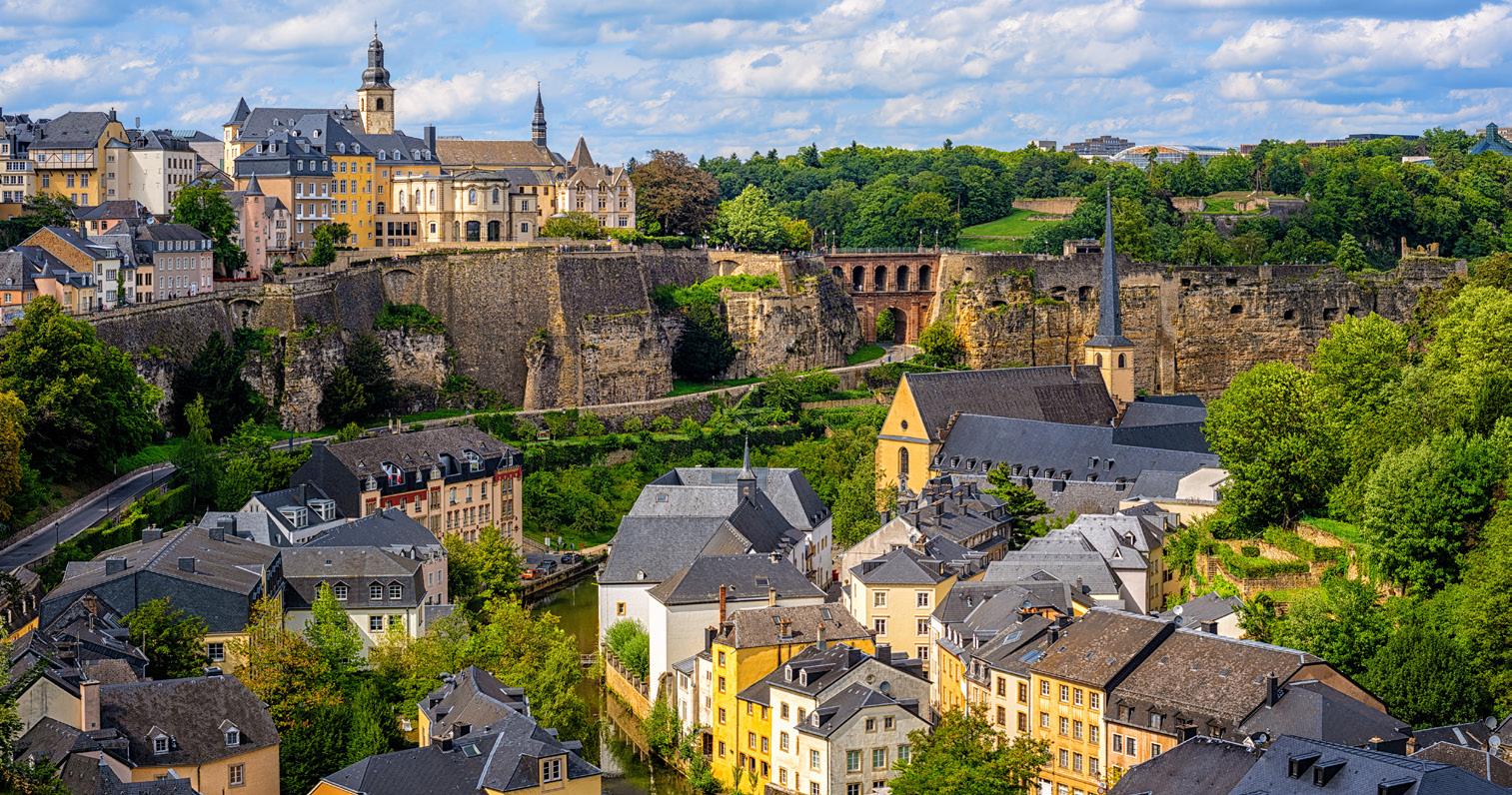
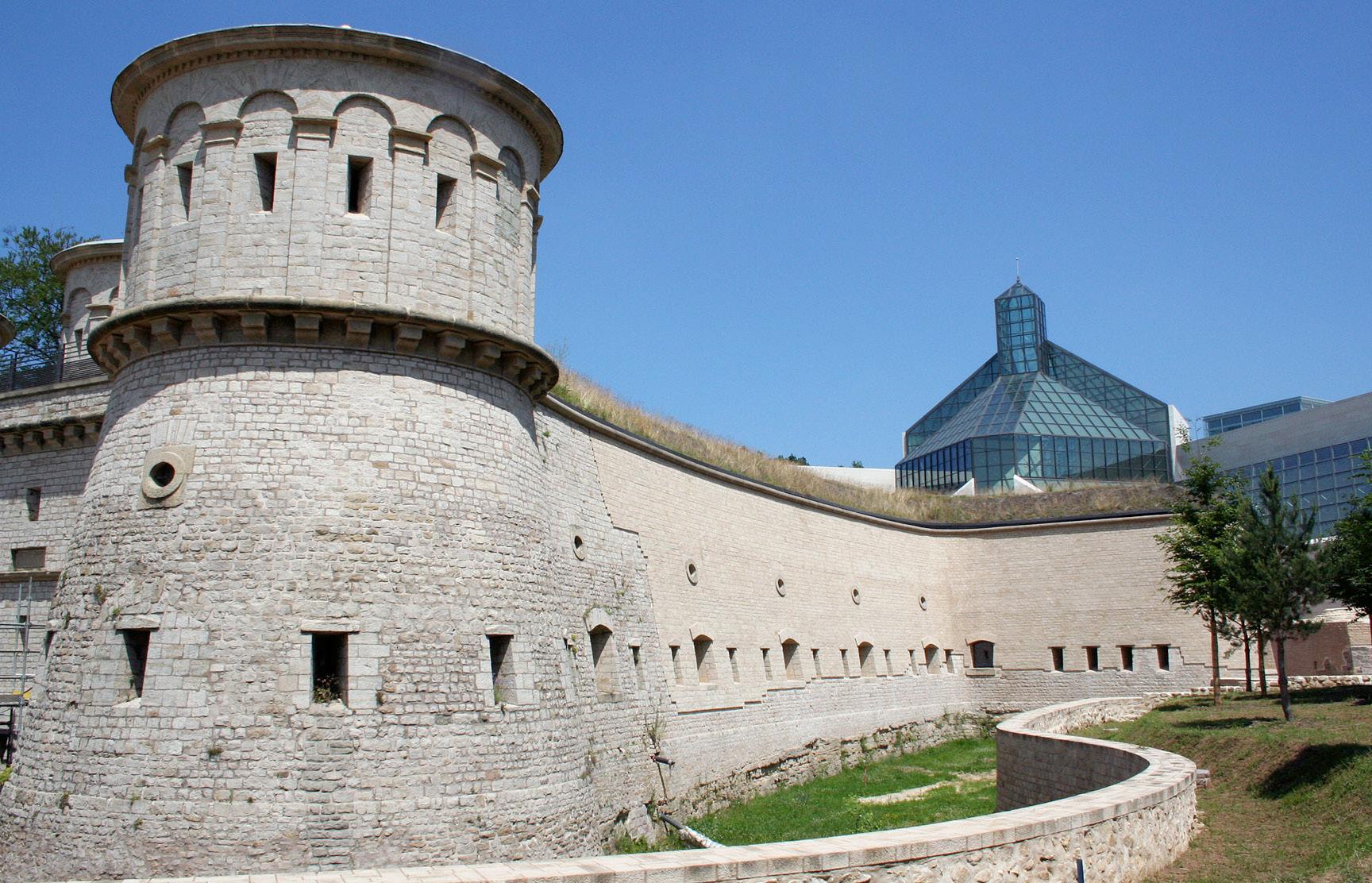
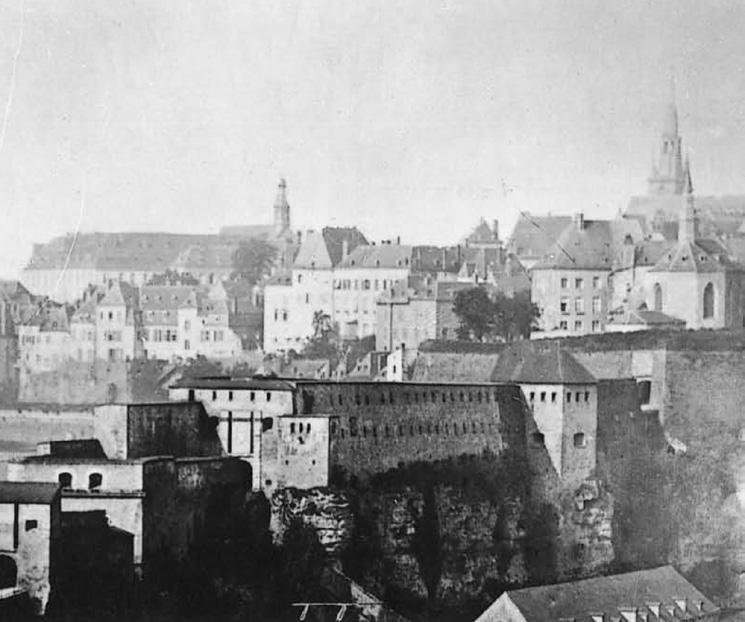
Luxembourg's Old City Fortifications date back to the 10th century. | Photo: Adobe Stock
I do hope that at the end of my four-year term in Canada, Luxembourg — the only remaining Grand Duchy worldwide — will be a little better known and the bilateral ties will have been further strengthened.
DM: Canada recently established a high commission in Fiji, and a consulate in Greenland. Given the importance of Luxembourg as an investor in Canada, are you working on convincing Canada to establish an embassy in Luxembourg?
JCK: The decision by the Luxembourg government to open a resident embassy in Canada was taken five years ago. The inauguration of the embassy in June 2025 coincided with the 80th anniversary of our diplomatic relations. Towards the end of her exile abroad, Jan. 3, 1945, back in London, Her Royal Highness Grand Duchess Charlotte received the credentials of William Turgeon, who became the first non-resident ambassador of Canada to Luxembourg based in Brussels. Hugues Le Gallais, the first non-resident Luxembourg ambassador, based in Washington, presented his credentials to Gov.-Gen. Alexander of Tunis in April 1950 and my predecessors have been co-accredited to Canada from Washington during the last seven decades.
According to the Canadian statistics, Luxembourg is the ninth largest foreign direct investor (FDI) in Canada (fifth European country) today and our economic, trade and financial relations have been strengthened in recent decades. Luxembourg ratified the Comprehensive Economic and Trade Agreement (CETA) on May 7, 2020, and the presence of many Luxembourg companies in Canada and Canadian companies in Luxembourg illustrate these bilaterally strong relations. Total trade in goods and services has grown steadily over the last decade, placing Canada as Luxembourg’s 18th trading partner.
Two months ago, finance ministers Gilles Roth and François-Philippe Champagne signed a CanadaLuxembourg Financial Sector Policy Dialogue and in
According to the Canadian statistics, Luxembourg is the ninth largest foreign direct investor (FDI) in Canada (5th European country) today and our economic, trade and financial relations have been strengthened in recent decades.
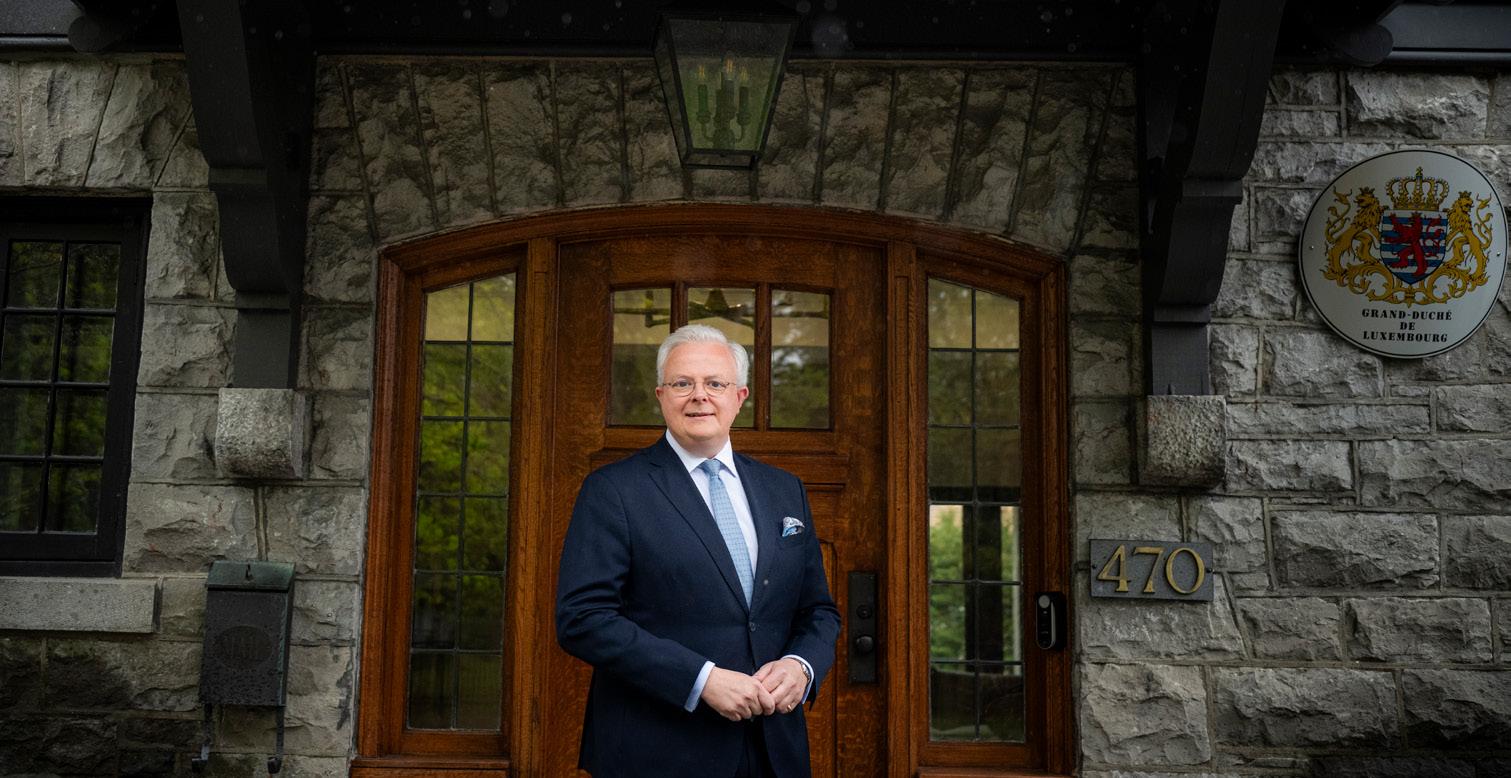
Jean Claude Kugener, ambassador of Luxembourg, stands in front of his official residence in Rockcliffe Park. | Photo: Ashley Fraser
January, the McGill Luxembourg Centre for Finance and [the] new McGill Master of Management in Finance (MMF), a globally ranked part-time master’s in finance in Luxembourg, was established. It is the first in Europe — indeed a historic launch. The University of Luxembourg has signed inter-university co-operation agreements with six Canadian universities and the youth mobility program shows growing interest.
With the creation of the embassy in Canada, our government has also taken the decision to simultaneously create a Luxembourg Trade and Investment Office (LTIO) to further strengthen our
business relations as well as a Maison du Grand-Duché du Luxembourg (MGDL), dedicated to the cultural promotion of Luxembourg in all its diversity. During my travels and numerous visits and meetings throughout the country, I very quickly realized the added value of a permanent presence in Canada. Canada is the only G7 country without a resident embassy in Luxembourg, but we are working closely together in Luxembourg and Ottawa with the non-resident embassy in Brussels accredited to the Grand Duchy.
DM: You’ve had an illustrious career, having been head of mission to the Holy See, India, accredited to Nepal and
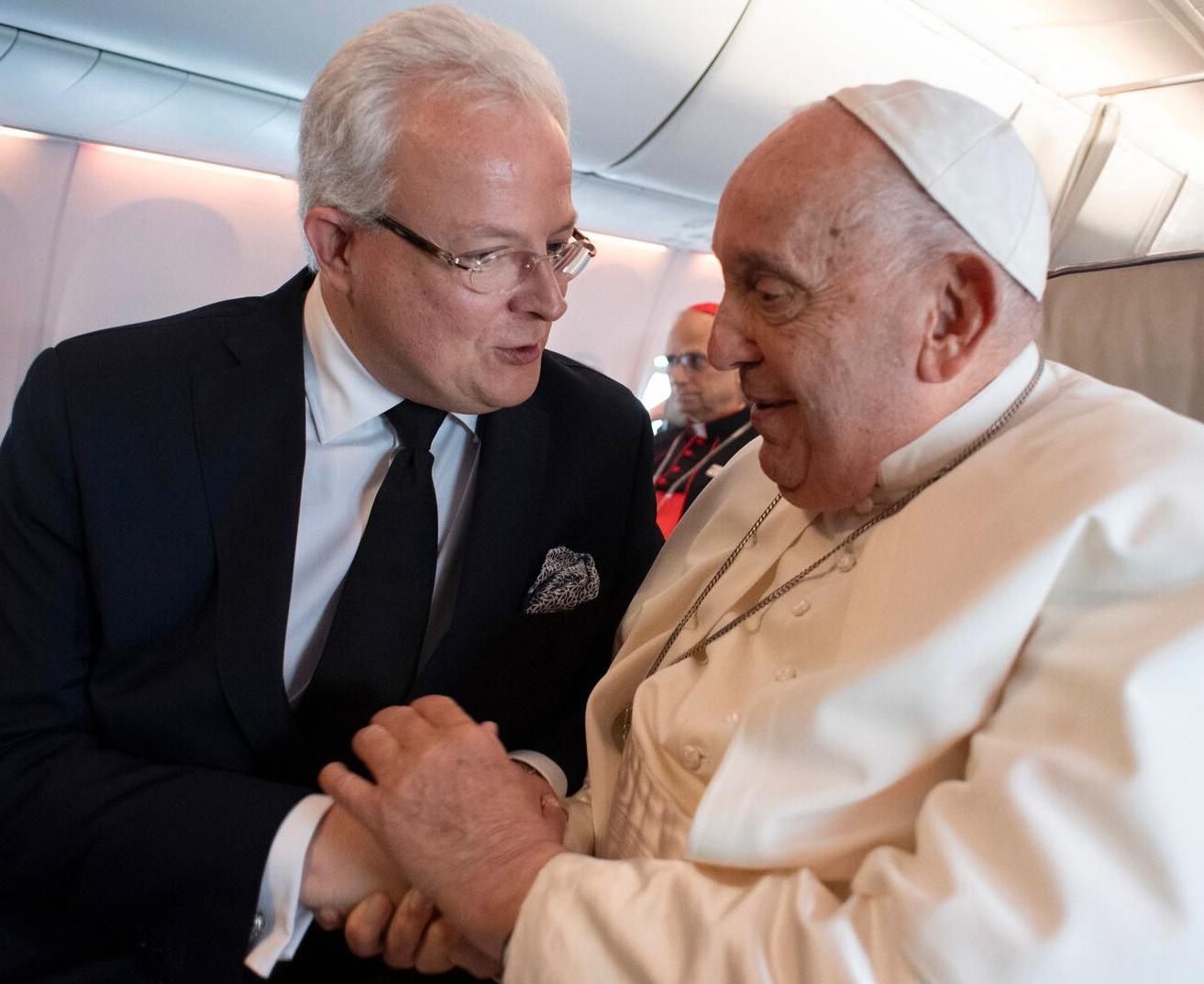
Before coming to Canada, Jean Claude Kugener was non-resident ambassador to the Holy See and director general of consular affairs and cultural relations at the foreign ministry in Luxembourg, He says his tenure was made memorable by the official visit of Pope Francis to the grand duchy in September 2024. | Photo: Compliments of Jean Claude Kugener
Sri Lanka, and with deputy head of mission positions in the U.K., Russia and Germany. Can you share some of the lessons from those postings?
JCK: It would be a challenge to quote all the lessons learned and the experiences collected during all those postings, which I learned alongside my wife throughout my diplomatic career, beginning in 2000. It is a privilege and I feel blessed for the opportunity to discover each country, its people, its specificities and its culture while promoting the Grand Duchy and its strong historic ties with those countries.
Before landing in Ottawa in November 2024, I was the director-general for consular affairs and international cultural relations at the foreign ministry and non-resident ambassador to the Holy See. During these years, not a single day resembled the previous or next one, from daily consular support for our citizens throughout the world to the consular assistance for the thousands of Ukrainian citizens arriving in Luxembourg after the Russian invasion of Ukraine.
During those three years, I also had some cultural highlights, having been the president of the European Institute of Cultural Routes by the Council of Europe, which is headquartered in Luxembourg. I also participated in the creation process of the new museum in Schengen, which re-opened to mark the 40th anniversary of the Schengen Treaty and contributed to Luxembourg’s return to the Eurovison Song Contest (ESC), 30 years after its last participation in 1993. Luxembourg has won the contest five times and hosted the ESC in 1962, 1966, 1973 and 1984.
This tenure was also especially marked by the official visit of His Holiness Pope Francis to the Grand Duchy in September 2024. It was an unforgettable visit that I helped to organize with many interlocutors in Luxembourg and the Holy See.
Every posting had its special moments, highlights and challenges and we always tried, my wife Pascale and I,
Every posting had its special moments, highlights and challenges and we always tried, my wife Pascale and I, to discover as much as possible of the country and meet its people during our private travels.
Ambassador Kugener and his wife, Pascale Kugener-Barbier Saint Hilaire.
| Photo: Ashley Fraser
to discover as much as possible of the country and meet its people during our private travels. Establishing a new embassy inevitably takes a lot of our free time, but as soon as we’ll find the moment, we’ll make good use of our mandate in Canada to visit the various provinces and regions. Last year, I had the unique opportunity to attend the Northern Tour of ambassadors organized by Global Affairs Canada, which enabled a fascinating discovery of the vastness of the country, meeting the different communities, people and officials throughout this tour, which marked me a lot and was a perfect introduction.
DM: How can Luxembourg and Canada strengthen their partnership within the European Union and NATO frameworks?
JCK: Luxembourg and Canada are among the 12 founding members of the North Atlantic Treaty Organization (NATO) and are co-operating very well in many multilateral
organizations. Despite the difference in size of our countries, we both committed to the NATO five per cent defence investment objective, grounded in ambitious military capability targets. The concept of solidarity remains a priority for Luxembourg and the government puts a special emphasis on investing in capabilities, beyond our NATO targets, where we have a significant added value due to our proven expertise. Last month, our defence and finance ministers presented Luxembourg’s very first defence industry strategy. In space, our countries are already actively co-operating bilaterally and Luxembourg will continue to strengthen NATO’s space capabilities through secure satellite communications and Earth observation capabilities. Building on the success of GovSat-1, the first communications satellite of LuxGovSat, the public-private joint venture between the Luxembourg government and SES Satellites, the government will finance the acquisition, launch and operation of GovSat-2, a second government and defence communications satellite.
Luxembourg Prime Minister Luc Friesen visited Ottawa in February 2026. He’s shown here with Prime Minister Mark Carney.
| Photo: The government of the Grand Duchy of Luxembourg
Like Canada, Luxembourg continues to uphold the importance of international law and the rules-based order, which is why we have a very clear stance on Russia’s full-scale war of aggression against Ukraine: Our military, political, humanitarian and reconstruction support for Ukraine’s sovereignty and territorial integrity remains unwavering.
Over the past few months, we have worked closely with the Policy Insights Forum, which organized a NATO-Private Sector Engagement (NPSE) mission, with 14 defence and defence-related organizations and security industry executives, led by former deputy prime minister John Manley. The group travelled to Luxembourg to meet Luxembourg-based defence industrial companies and related associations, including LuxDefence, the Chamber of Commerce, the Luxembourg Space Agency and the NATO Support and Procurement Agency. These missions help us to bring industry and business people together and discuss future bilateral projects and co-operation.
Allow me as well to highlight the co-operation in the creation of the new multilateral Sovereign-backed Defence, Security and Resilience Bank (DSRB). During his official visit to Ottawa in February, Prime Minister Luc Frieden discussed with Canadian Prime Minister Mark Carney the relevance of a multilateral-lending institution to ease access to favourable credits and reinforce allied cohesion.
The DSRB is complementary to other existing multilateral institutions and instruments.
Over the past few months, we have worked closely with the Policy Insights Forum, which organized a NATO-Private Sector Engagement (NPSE) mission, with 14 defence and defence-related organizations and security industry executives, led by former deputy prime minister John Manley. [...] These missions help us to bring industry and business people together and discuss future bilateral projects and co-operation.
As both our countries are NATO allies and AAA-rated nations in terms of lenders, Luxembourg shares Canada’s approach and intends to offer its financial expertise by hosting the European hub of this new multilateral institution. Luxembourg already hosts numerous international bodies, in particular the headquarters of the European Investment Bank as well as established NATO-related structures, such as the NATO Innovation Fund [and] the NATO Support and Procurement Agency (NSPA), which has been headquartered in the Grand Duchy since 1968. Recently, I’ve had the pleasure to meet Paula Folkes, associate assistant deputy minister [at] Public Services and Procurement Canada, who is the general manager of the NSPA in Luxembourg beginning in September 2026. It is yet another CanadianLuxembourg connection between our countries.
Finance Minister François-Philippe Champagne and Luxembourg Finance Minister Gilles Roth signed a letter of intent aimed at establishing a structured and enhanced dialogue on financial sector policies in February 2026. | Photo: MFIN Lux
DM: How does Luxembourg see its role in the European Union?
JCK: The Grand Duchy has always played a vital role in the European Union, from creating the Coal and Steel Community in 1952 to the founding of what would become the European Union in 1957. Luxembourg, one of the three official capitals of the EU along [with] Brussels and Strasbourg, is home to several major EU institutions, such as the Court of Justice, the European Investment Bank, the European Public Prosecutor’s Office [and] the Court of Auditors, and different departments from the commission and the European parliament. Three former Luxembourg prime ministers have led the European Commission, including Gaston Thorn from 1981 to 1985, Jacques Santer from 1995 to 1999 and Jean-Claude Juncker from 2014 to 2019. Former prime minister Pierre Werner can be considered one of the forefathers of the EURO currency: He presented his project for a monetary union (the Werner Plan) to the European Commission in 1970.
Luxembourgers are known for being “true Europeans.” Luxembourg is in the heart of Europe, bordering Belgium, France and Germany, with the origins of Lucilinburhuc being first mentioned in the year 963. With a population of approximately 680,000 people, in addition to the 230,000 daily cross-border commuters working in the Grand Duchy, 47 per cent of Luxembourg’s population is made up of foreigners representing 180 different nationalities. European citizens represent 38 per cent of the resident population. It is a truly cosmopolitan and multilingual population with Luxemburgish, French and German as the three official languages.
A recent census revealed that English is the third most spoken language in the country and widely spoken in the business and financial sectors. With large Portuguese and Italian communities, those languages are also very prominent in daily life as well as Spanish, Slavic and Nordic languages. Hence it is a beautiful and very diverse melting pot.
The Grande-Duchesse Joséphine-Charlotte Concert Hall (also known as the Philharmonie Luxembourg) is located in the European district in the Luxembourg City quarter of Kirchberg. | Photo: VT98Fan
Luxembourg is a living microcosm of European integration and Europe Day, on May 9, is an official holiday in the Grand Duchy, commemorating the Schuman Declaration. It doesn’t surprise that the birthplace of the “Father of Europe” Robert Schuman, in Clausen in Luxembourg City, hosts the Luxembourg Centre for Contemporary and Digital History. Schuman’s childhood in Luxembourg had a profound effect on him and laid the foundations for his commitment to a united Europe presenting the “Schuman Declaration” in 1950 as French foreign minister.
Luxembourg attaches a high importance to its relations with and within the European Union and its member states. Every government continues playing a crucial role in furthering European integration and development. Last year, we celebrated in Schengen, a small wine-producing village on the banks of the Moselle River bordering France and Germany, the 40th anniversary of the Schengen Treaty, which abolished internal border checks inside the Schengen Zone and allows free movement of people and services within the 29 countries belonging to the zone, which represents more than 450 million people.
Allow me to highlight as well the Benelux Union, an intergovernmental union of Belgium, the Netherlands and Luxembourg established in 1944. Commonly seen as a forerunner to European integration, Benelux cooperation focuses on the domestic market and the economic union, sustainable development as well as justice and interior affairs.
DM: What initiatives do you plan to promote Luxembourgish culture in Canada to boost tourism and cultural understanding?
JCK: In some areas our cultural links are already very deep. Audiovisual co-productions are based on a bilateral Luxembourg-Canada agreement signed in 1996, which aims to foster and support co-productions between both countries. In 2022, Luxembourg was the country honoured at the Cinemania Francophone Film Festival in Montreal, celebrating the bilateral co-operation between the producers, the distributors and our artists. Last year at the 31st Cinemania Festival, I hosted the first Luxembourg Soirée with nine Luxembourg films and coproductions taking part in the festival with the opening
In 2022, Luxembourg was the country honoured at the Cinemania Francophone Film Festival, shown above, celebrating the bilateral co-operation between the producers, the distributors and its artists.| Photo: Cinemania
Luxembourg is in the heart of Europe, bordering Belgium, France and Germany, with the origins of Lucilinburhuc being first mentioned in the year 963. With a population of approximately 680,000 people, in addition to the 230,000 daily cross-border commuters working in the Grand Duchy, 47 per cent of Luxembourg’s population is made up of foreigners representing 180 different nationalities.
film On sera heureux, a Quebec-Luxembourg-Moroccan co-production by Léa Pool.
I am happy to say that the cultural exchanges are quite diverse, and I was delighted to attend during a recent visit to Luxembourg a concert at the Philharmonie
Luxembourg by Maestro Gustavo Gimeno, current music director of the Toronto Symphony Orchestra, who was the music director of the Luxembourg Philharmonic Orchestra from 2015 to 2025. Recently, I met the four gallerists from Montreal who attended the annual Luxembourg Art Week and we had an extremely fruitful exchange about the lessons learned and our cultural cooperation in general.
Since my arrival in Ottawa, I have been in contact with Luxembourg author Charles Werner, who researched the life and oeuvre of the Luxembourg-born Canadian artist Alphonse Jongers (see a story on this artist on page 60.)
I realized that this portrait artist, famous in North America at the beginning of the century, had been wrongly identified as a Basque, French or American painter. His works can be found from Rideau Hall, the House of Commons, the Senate and the National Assembly in Quebec to the National Gallery of Canada, fine art museums in Quebec, the Canadian War Museum, McCord Stewart Museum and the McGill Art Collection. It was my pleasure to organize a salon with Mr. Werner to present his findings about the life and work of Alphonse Jongers in Montreal and to learn about his findings about the artist’s oeuvre in the various public and private collections.
This year, we celebrate the 160th anniversary of the first book of Mi’kmaq hieroglyphs compiled and printed by the Luxembourg missionary Christian Kauder in Nova Scotia in 1866. This first compilation of hieroglyphs, printed by Leopoldinenstifflung [Austrian Leopoldine Society] in Vienna and considered as a major source in the linguistic and cultural research of the Mi’kmaq, is being commemorated with a special stamp by the Luxembourg Post.
Understanding Luxembourg culture also involves delving into the national language, ”Lëtzebuergesch," which originated from the Moselle Franconian dialects dating back to the fifth and sixth centuries. In Toronto, I was
When he was last in Luxembourg, Ambassador Jean Claude Kugener had the pleasure of seeing Maestro Gustavo Gimeno, current musical director of the Toronto Symphony Orchestra, who was the director of the Luxembourg Philharmonic Orchestra from 2015 to 2025, perform. | Photo: Quincena Musical
delighted to meet certified Luxembourgish teacher Liz Wenger, who has created Learn Luxemburgish courses and online language courses.
Cultural understanding also goes with artist exchanges, and we are happy to welcome the Luxembourg artist Sam Krack this summer, celebrating this year the 10th anniversary of the “artists in residence” at the “Fonderie Darling” in Montreal, thanks to excellent co-operation with the Kultur | lx Arts Council Luxembourg. Later this year, the Casino Luxembourg will welcome Quebec artist Marc-Olivier Hamelin for his Casino Display residency.
And we must not forget the tourism industry. The capital, Luxembourg City, has been marked by centuries of history, shaped by tradition and modernity in natural and green surroundings. The old city and its fortress around the Grand Ducal Palace have been on the UNESCO World Heritage list since 1994. The remains of the centuries-old fortifications are among the many tourist attractions in Europe, called the “casemates,” with 17 kilometres of underground tunnels. The capital is home to a considerable number of museums from the MUDAM, built by world-renowned architect I.M. Pei, to the Fortress Museum, the national art museum and the Villa Vauban.
Due to its unique geological features, Luxembourg is home to an array of different landscapes, which include the dense woodlands and valleys of the Ardennes, the fascinating rock formations of the Mullerthal region and the region of red earth, with its former mining landscapes, as well as the vineyards of the Moselle region. The Grand Duchy has one of the densest certified hiking networks in Europe, all laid out in breathtaking settings. Many other tourist attractions in the capital and throughout the country are worth discovering, including the Vianden medieval castle, which is often cited among the world’s most beautiful castles, or the unique photo exhibition
The Schiessentümpel waterfall in the valley of the Ernz Noire in the Mullerthal region of Luxembourg is one of many interesting rock formations in the region.
| Photo: Vincent de Groot
Family of Man created by the Luxembourg-born American artist Edward Steichen, which was shown in 150 museums worldwide before its permanent installation at Clervaux Castle in 1994. In 2003, the collection was listed on the UNESCO Memory of the World register.
DM: What is a common misconception about Luxembourg that you frequently encounter in Canada?
JCK: During my visits throughout the country, I indeed face questions about Luxembourg, the country, its people and the language.
“Is there anything to see and do in Luxembourg?” I am asked. Of course… Luxembourg’s origins date back to the 10th century, and the Luxembourg Dynasty reigned over the Holy Roman Empire in the 14th century. It is a country filled
with history and tradition, but resolutely turned towards the future and investing in the diversification of its economy, to guarantee prosperity and security to its dynamic population. Among the praise Luxembourg gets as a place to live, work and raise a family, allow me to mention here that The Times of London called Luxembourg as Europe’s best-kept hiking secret while the Deutsche Bank puts Luxembourg at the very top in its quality-of-life ranking.
I also encounter a few stereotypes when talking to Canadians about Luxembourg. No, Luxembourg is not only a “huge bank,” but has a thriving financial sector that abides by the highest international standards of transparency. Luxembourg is a country that is doing relatively well, but we struggle, like many others, with levels of poverty and growing inequalities. The financial sector is a cornerstone of the economy and the 126
Fort Thüngen is a historic fortification built in 1732 in what is now Luxembourg City . It was rebuilt in the 1990s alongside the development of the Mudam, Luxembourg’s museum of modern art, which can be seen in the distance. | Photo: Jean-noël Lafargue
banks from 25 different countries play an important role in the prosperity of the country. The successful and innovative financial sector receives an AAA credit rating every year. However, the government is well aware that sustainable growth must rely on a diverse economy and is therefore actively working on implementing its diversification strategy into the economic domains of the future, including IT, AI, clean energy and health tech.
Luxembourg remains the largest centre for investment funds in Europe and the second largest worldwide. In 2016, the Luxembourg Stock Exchange launched the first Green Exchange worldwide, becoming the world leader in green finance. Many fintech companies have chosen Luxembourg as a European headquarters or hub and the Grand Duchy continues to attract companies active in blockchain and digital payments. Today, the country’s economy is robust and diversified, with industries
that range from steel to satellites and car component manufacturing to logistics and a fast-developing hub for technological innovation. But Luxembourgers have not forgotten that they owe their prosperity to their farming ancestors as well as to those who toiled in the mines and steel industry in the south of the country.
The big advantage of the small Grand Duchy in the very heart of Europe is its international, multilingual and skilled workforce, its openness, its pragmatism and its understanding of the importance of co-operation and mutual assistance at the international level. This mindset resonates very well with the openness, diversity and dynamism of Canada, and I look forward to taking our bilateral relationship to new levels during my tenure here.
Abdel Karim Awwad is the publisher of Diplomat magazine.
In 2016, the Luxembourg Stock Exchange, whose entrance is shown here, launched the first green exchange in the world. | Photo: JWH
LUXEMBOURG’S RICH HISTORY
The world’s last remaining grand duchy was passed between many empires before being named in independent state in 1815. By the Embassy of Luxembourg and Maison du Grand-Duc
The history of the Grand Duchy can be traced back to the year 963, when Count Siegfried of the Ardennes, founder of the House of Luxembourg, acquired the rocky outcrop of the “Bock,” an area situated at the heart of Luxembourg City, the present-day capital of the country. The small fortress known as Lucilinburhuc was in the vicinity of the former Roman road from Reims to Trier, a
territory that was part of the western fringe of the Holy Roman Empire.
The counts of Luxembourg succeeded in increasing their wealth rapidly through marriages, land purchase, ties of vassalage and war. In the late 13th century, Luxembourg occupied a vast area between the Meuse
Luxembourg’s royal family on the balcony of the Grand Ducal palace, following the enthronement of Grand Duke Guillaume V. | Chamber des députés
and Moselle rivers and was envied for its powerful and strategic geographic position in the heart of Europe. In 1308, Count Henry VII was elected King of the Romans, and a papal legate crowned him Emperor of the Holy Empire in Rome in 1312. In the 14th century, Luxembourg became one of the most influential dynasties in Europe and three members of the Luxembourg dynasty bore the imperial crown: Henry VII, Charles IV and Sigismund. As Emperor Sigismund left no sons, his line of the House of Luxembourg extinguished on his death in 1437.
From the 15th to the 17th centuries, the Duchy belonged to the Habsburgs. In 1684, the French troops of King Louis XIV besieged Luxembourg and the country remained under the French rule until 1697 when it was returned to the Habsburgs. During these 13 years, Marshal Sébastien Le Prestre de Vauban redesigned the fortifications of Luxembourg, transforming it into a renowned fortress that was considered impregnable. King Louis XIV inspected it in May 1687, after completion.
Luxembourg occupied a vast area between the Meuse and Moselle rivers and was envied for its powerful and strategic geographic position in the heart of Europe.
In 1715, following the war of Spanish Succession, the southern part of the Netherlands was included in the territory belonging to the Austrian branch of the Habsburgs. The 18th-century was a period of peace and prosperity, but in 1795, French revolutionary troops besieged the fortress, and Luxembourg was, again, annexed to France. The fortress was liberated in 1814, following the Napoleonic wars. At the Vienna Congress in 1815, Luxembourg was given the status of a grand duchy and was formally declared independent, but it was placed under the control of the Netherlands and assigned to King Wilhelm I of Orange-Nassau. He henceforth also bore the title of Grand Duke.
The Grand Ducal Palace in Luxembourg is the official residence of the grand duke of Luxembourg. | Photo: EEJCC
From 1830 to 1839, the Belgian Revolution drew most of Luxembourg into the new Belgian state, but the 1839 Treaty of London divided the territory, giving the western part to Belgium and leaving the eastern part as the Grand Duchy of Luxembourg. The treaty also reaffirmed that the Grand Duchy of Luxembourg remained under the rule of the House of Orange-Nassau. During his visit in 1841, King Wilhelm II of Prussia declared that “Luxembourg had to be governed by Luxembourgers” and gradually the structures of an independent state were to be put in place, including the establishment of the first constitution.
The dissolution of the German Confederation following the Austro-Prussian War in 1866 triggered the “Question of Luxembourg,” which resulted in the Treaty of London in May 1867. The fortress was dismantled, and the grand duchy was declared perpetually neutral under the guarantee of the signatory powers. In 1890, after King Wilhelm III died, his daughter, Queen Wilhelmina, succeeded to the throne of The Netherlands. In Luxembourg, however, the Nassau Family Pact of 1783
permitted only male succession and, as a result, Adolphe of Nassau-Weilburg succeeded to the Luxembourg throne.
H.R.H. Grand Duke Adolphe (1817–1905) became the first sovereign of the current dynasty of Luxembourg and his descendants have succeeded since. His eldest son, William IV (1852–1912), succeeded to the throne on Grand Duke Adolphe’s death November 17, 1905.
Grand Duke William IV (1852–1912) had six daughters and, foreseeing a succession crisis, he promulgated a new family statute in 1907 allowing his eldest daughter, Princess MarieAdélaïde, to be declared heiress to the throne.
On June 18, 1912, Grand Duchess Marie-Adelaide (1894–1924) became the first sovereign born on Luxembourg soil since John the Blind in 1296. Two years later, German troops invaded the grand duchy and violated its neutrality during the First World War. After a tumultuous period with violent disturbances, the grand duchess abdicated in favour of her younger sister, Charlotte, in January 1919.
Then-Governor General Roland W. Michener, far right, and his wife, Norah, second from left, went to Luxembourg on a state visit at the invitation of the Grand Duke Jean and Grand Duchess Joséphine-Charlotte in April 1971. | Photo: Maison du Grand Duc
H.R.H. Grand Duke Adolphe (18171905) became the first sovereign of the current dynasty of Luxembourg and, since then, his descendants have succeeded him to the throne.
Grand Duchess Charlotte (1896–1985) reigned for 45 years, from 1919 to 1964. On Sept. 28, 1919, a dual referendum was held and 78 per cent of the population voted in favour of the dynasty. Grand Duchess Charlotte married Prince Félix of Bourbon-Parma on Nov. 6, 1919.
THE MONTREAL CONNECTION
On Oct. 14, 1940, five months after Nazi Germany invaded Luxembourg, Grand Duchess Charlotte, Prince Félix and their six children arrived in Montreal in exile. After a brief stay at the Ritz-Carlton Hotel and the Mascouche Manor, the grand ducal family settled at 1305 Avenue des Pins in Montreal, which today houses the contemporary art gallery Pangée.
On Nov. 6, 1940, prime minister Pierre Dupong and justice minister Victor Bodson arrived, along with their families, in Montreal. The Luxembourg government-in-exile was thus established there, with its offices located on the eighth floor of the Sun Life building from January 1941 to May 1944. In January 1941, Grand Duchess Charlotte was
received by Gov.-Gen. Alexander Cambridge and Princess Alice at Rideau Hall in Ottawa.
The Hereditary Grand Duke Jean attended Laval University from late 1940 until October 1942, before entering the Royal Military College at Aldershot in England in November 1942. Prince Charles studied at the Jesuit College in Quebec City, and Princesses Elisabeth, Adélaïde, Marie-Gabrielle and Alix were educated at the Collège Jésus-Marie de Sillery. In late 1941, Grand Duchess Charlotte and Prince Félix moved to Washington, but the children continued to attend schools in Quebec.
The Grand Duke Jean volunteered in the Irish Guards Regiment, and in September 1944, he crossed the Luxembourg border with his father Prince Félix and the American troops that liberated the grand duchy during the Battle of the Bulge. After the liberation of Luxembourg and an exile in Montreal, Washington and London, Grand Duchess Charlotte returned to Luxembourg on April 14, 1945.
When they were living in Montreal during the Second World War, Grand Duchess Charlotte, Prince Felix and their six children settled at this address — 1305 Avenue de Pins.
The “Bock,” pictured here in 1867, is in the heart of Luxembourg City. | Photo: Wiki.
At the end of her exile in London, the grand duchess received the credentials of William Turgeon, who became Canada’s first non-resident ambassador to Luxembourg, having travelled from Brussels to London for this accreditation. This date marks the establishment of official diplomatic relations between Luxembourg and Canada. The 80th anniversary was celebrated in 2025, alongside the opening of the new resident Luxembourg embassy in Canada.
In April 1953, Hereditary Grand Duke Jean married Princess Joséphine-Charlotte of Belgium. In November 1964, Grand Duchess Charlotte abdicated in favour of her eldest son and lived at castle Fischbach until her death in 1985. During their 36-year reign, the grand duke and the grand duchess welcomed Canadian Gov. -Gen. Roland Michener for a state visit to Luxembourg in April 1971. In July 1976, their royal highnesses
Grand Duchess Charlotte (1896-1985) reigned for 45 years, from 1919 to 1964. On September 28, 1919, a dual referendum was held and 78 per cent of the population voted in favour of the dynasty.
attended the Summer Olympic Games in Montreal with eight Luxembourgish sportsmen and the grand duke and duchess were granted a private audience by gov.-gen. Jules Léger at Rideau Hall. In February 1990, the Grand Duke, the Grand Duchess and the Hereditary Grand Duke Henri attended the Winter Olympics in Calgary.
In 2000, Grand Duke Jean abdicated in favour of his son Grand Duke Henri. Born on April 16, 1955, at the castle of Betzdorf, Germany, Henri did his military officer training at the Royal Military Academy in Sandhurst, and studied political science at the
Grand Duchess Charlotte | Photo: Arnott & Rogers, Montreal
Grand Duke Guillaume of Luxembourg with his wife, Grand Duchess Stephanie, their two sons — Prince Charles and Prince François — and his parents, Grand Duke Henri and his wife, Grand Duchess Maria Teresa. | Photo: Maison du Grand Duc
University of Geneva. On Feb. 14, 1981, he married
Maria Teresa Mestre y Batista, and the royal couple has five children and nine grandchildren. Grand Duke Jean died in April 2019 at the age of 98, and had become the world’s oldest living monarch at the time of his death.
GRAND DUKE GUILLAUME’S LEGACY
Grand Duke Guillaume was born in November 1981 and married Countess Stéphanie de Lannoy in 2012. In May 2020, Prince Charles was born to them, followed by
Prince François in March 2023. Then-Hereditary Grand Duke Guillaume took part in economic missions with different ministers and business delegations to Canada in April 2000, September 2004, October 2005, May 2005, May 2012, March 2014 and June 2022. The last economic mission included a large business delegation of more than 100 Luxembourg companies from various sectors.
After a 25-year reign, Grand Duke Henri abdicated in favour of his son, Guillaume V, who became the new Grand Duke of Luxembourg in October 2025.
Former Grand Duke Henri sits with now Grand Duke Guillaume at Henri’s abdication ceremony in October 2025. | Photo: Alexandors Michailidis - European Council
LUXEMBOURG’S WELL - PAID PORTRAITIST
Alphonse Jongers eventually made his home in Canada and may have claimed France as his birthplace, but he was in fact born in the Grand Duchy of Luxembourg.
By Peter Simpson
The popular intersection between Alphonse Jongers and his adopted Canadian home may be the Luxembourg artist’s portrait of Honorary Air Marshal William Avery Bishop, VC, DSO and BAR, MC, DFC. He is more familiar to generations of Canadians as First World War hero Billy Bishop.
The painting, in the collection of the Canadian War Museum, portrays Bishop as every bit a hero from Canada — strong yet humble, resolute yet reserved. Bishop’s chest of medals contrasts effectively with the muted background. Stillness prevails in the moment, but beneath the surface lies the instinctive reflexes that helped Bishop to become one of the first ace fighter pilots.
It’s not clear who commissioned the portrait but “the donation came directly from the Bishop family via his son Arthur in 1968,” says Stacey Barker, a historian of arts and military history with the war museum. “Bishop and Jongers lived in Montreal at the same time.” Barker adds that the portrait was displayed at the Canadian National Exhibition in 1940, “along with portraits of other wellknown Canadian airmen, in the hopes of encouraging enlistment in the RCAF.”
This, surely, would have pleased Jongers, who embraced Canada fully, and permanently. He arrived in this country in 1896 with the surname Jungers, which he changed to
Jongers. He spent some years in the United States, where he completed portraits of political and social luminaries, then returned to Canada and Montreal and lived in a suite at the Ritz-Carlton Hotel on Sherbrooke Street until he died at age 72.
“His gay outlook on life, his rich sense of humour, his witty and tolerant comments on men and affairs made him a
Alphonse Jongers’ painting depicting Canadian First World War hero Billy Bishop hangs at the Canadian War Museum. | Photo: CWM 19680068-001, Beaverbrook Collection of War Art, Canadian War Museum
A portrait of Mary Higginson Sears by Alphonse Jongers. l Photo: MutualArt
welcome and attractive figure in social and artistic circles here and wherever he went,” wrote The Montreal Gazette. That quote appeared in a recent article in the National Gallery of Canada Magazine by researcher Charles Werner, who also published a 2024 monograph on Jongers. The artist was born in Mondercange, Luxembourg. He studied at the École des Beaux-Arts de Paris and later at the Prado Museum in Madrid. He found his way to Montreal and changed his name to Jongers, “no doubt in order to make it easier to pronounce,” Werner wrote.
This is where some misinformation seems to have arisen. Most sources state that Jongers was born in any of various locations in France — because Jongers told the newspapers so. On his wedding licence, he wrote “Manderange, France,” which doesn’t exist. At times he claimed to be Dutch, or from the Basque country. “There could be several reasons for this, one of them being that France was a more prestigious origin than the hardly known Luxembourg,” Werner surmised in an email. Jongers’ birth certificate indeed lists Mondercange, Luxembourg.
In Montreal, he soon caught notice of the press and of rich prospective clients. His paintings included portraits of staid gentlemen and colourful ladies, including a 1916 portrait of Mae Caldwell-Plant, wearing a blue dress while seated on a blue chair. It is as much a study in blue as his 1906 portrait of the wife and daughter of Benjamin Guggenheim is a study in white fabrics.
His portraits of male sitters were most successful, the newspapers said. In Canada, he painted practically the entire gentry of the day, including the governor general and, The Gazette reported in 1937, “a long list … of outstanding figures in law, medicine, the Army and commerce.” In the U.S., his subjects included George Hearn, a wealthy merchant and art collector, and Philander Chase Knox, the secretary of state.
His work hangs in leading galleries in Canada and the U.S., including the National Gallery of Canada in Ottawa and the Metropolitan Museum of Art in New York City. He was also hailed in France, where he completed his schooling and was later awarded the French Legion of Honour. In Canada, he was made a member of the Royal Canadian Academy.
According to The Montreal Standard, Jongers was “one of the highest paid portrait painters in Canada.” A later Standard headline trumpeted that he had “made financial success of art.” Perhaps the newspaper was surprised by the artist’s success because, as it had also once reported, “he was squarely built and looked more like a prize fighter than an artist.”
He worked until nearly the end of his life, in what newspapers called his “sumptuously decorated apartment” at the Ritz-Carlton that served as both home and studio. He died there in 1945, with a self-portrait left unfinished on his easel.
Peter Simpson has written about the arts in Ottawa for three decades.
In Canada, Luxembourgish artist Alphonse Jongers painted practically the entire gentry of the day, including the governor general. l Photo: Archives of Ontario
URGENCY DRIVES RAPID NEGOTIATIONS
Most multilateral negotiations take much longer, but those for the Defence, Security and Resilience Bank went quickly because the countries all felt a sense of urgency. Canada and Luxembourg will be founding members.
By Jennifer Campbell
Whatever you do, don’t tell Isabelle Hudon something can’t be done.
Hudon is the president and CEO of the Business Development Bank of Canada (BDC), and was Canada’s lead negotiator for establishing the charter for the Defence, Security and Resilience Bank (DSRB).
The DSR Bank will be a multilateral bank owned by nation-states — NATO members and their Indo-Pacific allies are all potential members — and designed to mobilize the capital needed to help like-minded allies and partners finance their capabilities for the defence, security and resilience of the democratic world. It will be built for scale and backed by sovereigns and promises of
HMS Prince of Wales (R09) has been deeply involved in several major NATO missions, regularly operating as a command ship and leading allied carrier strike groups.
| Photo: NATO
affordable capital for governments, smarter and faster procurement and unlocked private capital by providing guarantees that enable commercial banks to fund defence and security firms across the supply chain.
Among its advantages will be its ability to offer longterm financing that helps nations strengthen defence capabilities without sacrificing domestic priorities or breaching fiscal limits. In addition, many NATO members don’t have AAA ratings and therefore face higher borrowing costs. The DSRB will have its own AAA rating, pooling allied credit strength. Its creators suggest thinking of it as a co-operative buying scheme with individual bills and collective discounts.
“What I'm most proud of is having been able to successfully negotiate a charter within 30 days,” Hudon told Diplomat the day after negotiations on the 50-page charter concluded. “Everyone told me it's impossible, [but] don’t go there with me. Don't tell me [something's] impossible.”
She does recognize why people offered that caution, because “in diplomacy, things are way slower than [in] business,” and in multilateral settings, they move even more slowly.
“[But] we all felt a sentiment of urgency, and we kept it along the way,” Hudon says. “I'm proud to see my country hosting this bank, but what I'm most proud is to have been able to negotiate successfully a charter, 50-plus pages, 12 chapters, many articles, in 30 days. And you can imagine — we stopped on every word and every comma.”
Canada was unanimously chosen to headquarter the bank. What city will host is still being discussed, but Hudon said not to assume it will be Montreal just because the negotiations happened there. “That was [quite simply] because I live in Montreal,” she says.
Toronto, Ottawa/Gatineau, Montreal, Halifax and Vancouver are all vying for the headquarters, which comes with an estimated 3,500 jobs.
Isabelle Hudon is the president and CEO of the Business Development Bank of Canada and was Canada’s chief negotiator for the Defence, Security and Resilience Bank being established by NATO members and allies. l Photo: BDC
Hudon says she’s been disappointed by the emphasis on which city will host the headquarters while there’s been less interest in the bank’s purpose.
“I recognize that it’s a huge thing, which city will host, but I would encourage you to educate your readership about the purpose of the bank.”
The idea for the bank came from Rob Murray, who was previously the head of innovation at NATO and the founder of NATO’s Defence Innovation Accelerator for the North Atlantic. He began working on the idea in 2018.
COUNTRIES YET TO PUBLICLY DECLARE THEY’RE IN
The charter is important, but it’s not the only task.
There were 20 countries in the negotiation room, some as full participants and some as observers. Hudon says she can only confirm that Luxembourg and Canada will be founding members and that there’s potential for all of the countries that were represented in Montreal to become founding members.
“I’m not saying there will be 20, but there’s a real potential for those 20 countries to become founding members,” she says. “And then what's going to be important is the members that will be welcomed after, [those who] will decide to join. In life, there's always the early adopters and the followers. Usually early adopters are not in great numbers.”
Critics have charged that the DSRB it isn’t necessary because there are other defence financing initiatives.
“I’m the wrong person to say that to,” Hudon says, laughing. "I lead a bank exclusively dedicated to small- and medium-sized enterprises, and there’s a trend whereby, if you're an entrepreneur, you're not the top business [priority] for commercial banks to deploy money towards.”
She quotes an annual Organization for Economic Co-operation and Development report that shows that capital available for companies in Canada and many countries interested in joining the bank is growing year after year, but that the portion of the pie going to SMEs have been shrinking each year.
Florence Parly, one-time minister of France’s armed forces, examines a Cadex CDX-40. Cadex is a Canadian arms manufacturer that could be eligible to access the new Defence, Security and Resilience Bank being established. | Photo: French Army
Vancouver is one of the cities vying for the headquarters of the Defence, Security and Resilience Bank. | Photo: Adobe Stock
“There’s a lot more appetite for big deals, big companies, global companies, for commercial banks than smaller [companies],” Hudon says. “On top of that, when you think about the SMEs in the defence sector, it makes it even more difficult.”
She says out of a portfolio of $50 billion at BDC, only $400 million goes to the defence sector.
Hudon says that the DSRB is the only such institution that is dedicated to financing SMEs that are specifically in the defence sector. “Find me another bank that has that mandate,” she says, adding that the money that will be deployed through DSRB will come from banks in the countries that are members and that should a borrowing SME require components from outside their country, they will have to get them from a supplier in a DSRB member country.
When she concluded the negotiations, the above point was one she emphasized to her follow country
negotiators. “You're in or you're out — it's your decision, but if you're out, you're [losing access for] your countries and businesses to procurement that goes through the [DSRB] — they’re losing that opportunity.
NEXT STEPS
Now that the charter has been negotiated, what’s left to be fully agreed on is Section A, which is the capital requirement for each country to enter membership.
“No one in the room during negotiations had the power or the capacity to say yes or no to the numbers that were provided to each country,” she says. “That's the next big milestone for countries — Section A, [which is] the capital requirement. We [also] need to make sure that all countries in the room sign the charter, but between now and then, there’s a lot of conversations at the political level and in diplomacy to make sure that we close the deal. This chapter needs to be owned by diplomacy.”
Jennifer Campbell is the editor of Diplomat.
Ottawa is making a pitch to be the home of the new Defence, Security and Resilience Bank’s headquarters as part of its growing defence hub. | Photo: Harley D.
Sponsored content
FERRERO’S GLOBAL LEGACY: Bridging Luxembourg and Canada through excellence
With roots anchored in Italian craftsmanship, a global headquarters in Luxembourg, and products sold in more than 170 countries, Ferrero’s journey is a testament to quality, innovation, and international collaboration that resonates with Canadians.
Ferrero’s story began in Alba, Italy, where master confectioners combined tradition and creativity to produce exceptional chocolate and confectionery. Using the abundance of hazelnuts in the Piedmont Region, Mr. Michele Ferrero created a delicious blend of cocoa and hazelnuts to ensure chocolate was available
and affordable for all. His dedication to craftsmanship continues today and is evident in every product, blending meticulous attention to detail with the finest ingredients. Italian heritage remains at the heart of Ferrero’s operations, inspiring a commitment to excellence that is recognized worldwide.
Following the success in Italy, Mr. Michele Ferrero set his eyes on the rest of Europe. He looked to establish an office in Luxembourg in 1973 because it gave Ferrero access to major European markets – Germany, France and Belgium.
For decades, Luxembourg has served as the Global headquarters for Ferrero, symbolizing its commitment to international growth and cooperation. The
choice of Luxembourg reflects Ferrero’s trust in the country’s vibrant business environment and its position as a gateway to global markets. This strategic location enables Ferrero to foster deeper partnerships with Canada, enhancing bilateral relations and opening doors for shared prosperity.
ICONIC BRANDS CRAFTED IN CANADA
While iconic brands like Ferrero Rocher, Nutella, and Tic Tac originated in Italy, today, they are crafted with care in Brantford, Ontario. Since the plant’s opening in 2006, the company has invested significantly in its growth with more than 1500 employees across Canada manufacturing and marketing these beloved brands. In April 2025, the company further reaffirmed its commitment to Canada with a $445 million expansion in Brantford to produce global innovation like Ferrero Rocher chocolate squares and Nutella Biscuits.
“At Ferrero Canada, we honour our Italian heritage and Luxembourg roots while forging meaningful partnerships across Canada. Our commitment to
excellence drives us to create products loved by Canadians, and we look forward to deepening our collaboration with government and diplomatic leaders for a brighter, shared future,” says Omar Zausa, President, Ferrero Canada.
As Ferrero builds on its legacy of craftsmanship, innovation, and responsible leadership, the company remains dedicated to its growth globally and locally. The future is bright for Luxembourg-Canada relations, with Ferrero at the forefront of global excellence.
SPAIN AND CANADA: THE MANY CONNECTIONS
Spain is the fastest growing economy in the developed world and it is heavily invested in Canadian infrastructure.
By Jennifer Campbell
When King Felipe VI of Spain came to Canada in May, it was a reunion of sorts for him and Spanish Ambassador Alfredo Martínez. That’s because the ambassador was chief of protocol for the Royal Household of Spain for the first seven years of Felipe’s reign as king, during which time the ambassador managed the king’s agenda.
He was also involved in intense reform of the Royal Household — reforms that were designed to modernize the Spanish monarchy and promote greater transparency within it. But the two men — three years apart in age — knew each other before that because Martínez was deputy chief of protocol for the Royal Household between 2007 and 2012 when Felipe VI was Crown Prince. Martínez was responsible for the international agenda and public activities of the crown prince and princess and he has great admiration for the man who is now king and head of state for Spain.
“Spain has probably one of the best [heads] of state in the world due to his vision, talent, leadership and integrity,” Martínez says. “He's very well educated, intellectually speaking, but also civically speaking. He's an incredible, serious professional. As you can see, I admire him.”
And, for Felipe, his visit to Canada was a reunion with his alma mater, Lakefield College School near Peterborough, Ont.
“We have a monarch who happens to be deeply rooted in Canada,” the ambassador says.
The king was accompanied by the deputy prime minister and the minister of economy, trade and business, the state secretary of trade and a large business delegation and that was not “by chance,” Martínez says, adding that Canada’s diversification efforts are being felt and taken seriously in Spain and indeed all of Europe.
“At the end of the day, we need to seize the momentum and the timing matters in life, in business and in bilateral relations,” he says. “The visit had an economic, trade and investment and technology purpose. It was a very economic-oriented visit.”
ECONOMIC TIES
The ambassador says there are three pillars of the Spanish-Canadian business relationship — trade, investment and technological co-operation.
“On trade, we need to uplift the free trade agreement between Canada and
Spanish Ambassador Alfredo Martínez welcomed King Felipe VI to Ottawa in May, 40 years after the king graduated from Lakefield College School near Peterborough, Ont. | Photo: Ashley Fraser
the European Union — CETA [Comprehensive Economic Trade Agreement],” Martínez says. “Spain was among the first countries to ratify it. It came into force Sept. 21, 2017, and by December, Spain had ratified it fully. We firmly believe that uplifting CETA in this moment of diversification can be done by exploring all the clauses and the regulations and taking them to their full potential, including the negotiation of the digital services agreement.”
Spain is the fourth largest economy in Europe and it’s the fastest growing economy in the developed world, along with the U.S. In addition to trade, Canadian investment in Spain amounts to more than $12 billion annually and is increasing almost every year.
“In Spain, you are focusing mostly on green energy, renewables and real estate,” Martínez says, adding that renewables are hugely important for Spain. Already, 58 per cent of its energy is produced through renewables. Meanwhile, Spain’s investments in Canada are in
energy, infrastructure and transport, so the respective investments are complementary.
“The development of critical infrastructure is at the core of Canada,” he says. “And in that, we are world leaders.”
Spanish companies are, for example, working on tunnelling, design and station construction of several subway lines in Toronto, including the Eglinton, Scarborough and new Ontario line. In Vancouver, the Broadway Line is being built by Acciona and Aecon. In Quebec, Dragados is building a bridge between Quebec
Spain is the fourth largest economy in Europe and it’s the fastest growing economy in the developed world, along with the U.S. In addition to trade, Canadian investment in Spain amounts to more than $12 billion annually and is increasing almost every year.
King Felipe VI of Spain, shown here in an earlier photo, came to Ottawa in May with a very business-focused delegation. | Photo: Vox Congreso
City and Île d’Orléans. Highway 407, which spans the Greater Toronto area, is managed by a Spanish company. All told, Martínez says, investment in infrastructure projects that are already underway is $30 billion euros (approximately $48 billion Cdn) and that doesn’t include those in the pipeline.
“We are already in the market and we deliver,” Martínez says. “Our companies in engineering, infrastructure and transportation are world leaders.”
The third pillar Martínez cites is digital and technological.
“In that sector, Spain has world-leading companies such as Indra, Multiverse and Airbus,” the ambassador says, adding that the new tankers purchased for the Royal Canadian Air Force are European as are Canada's search and rescue planes in Canada. Spain is also buying aircraft from Canada.
“We have so many things to do together in this new technologically advanced economy,” he says. “Part of it is on cyber development and advanced algorithms, quantum capacity, but also in the defence and security industry, where Indra is doing an incredible job.” He says middle powers such as Spain and Canada need to work together in the digital economy.
“This is also about the future of humanity,” he says. “Do we want these companies, which are controlling the process, to be transparent or not, adapting to democratic values or not? We need democratic sovereignty on AI and to work among like-minded countries such as Canada and Spain.”
Further on business relations, Martínez points to his work with the Spanish Institute for Foreign Trade, ICEX. Each year, the institute selects 10 to 15 Spanish startups and matches them with Canadian firms through the program “Desafía”.
“And you know what? Spaniards and Canadians like each other,” he says. “And therefore, we work well together.”
Martínez says he’s already seen the power of Carney’s diversification efforts in the sheer number of business delegations heading to Spain and he says it’s clear the European Union has become a more important priority for Canada.
DEFENCE CO-OPERATION
Spain and Canada are both NATO members, and share the same trans-Atlantic values and principles, the ambassador says, adding that the two countries met their NATO spending commitments of two per cent of GDP at almost the same time. He says Spain respects Canada’s opinion that it must reindustrialize its defence industry.
He suggests a careful approach, however, saying that the increase in spending has to be tempered because
“proliferation can pave the way also to certain interests, which probably don’t match with the vision of universal values that we share.”
Also on defence, Martínez notes that Spain is also contributing to Operation Reassurance in Latvia, under Canada’s command, with 600 Spanish troops. Meanwhile, Spain commands the NATO mission in Slovakia and has another 4,000 soldiers serving in other military operations worldwide.
When it comes to the longevity of NATO, Martínez isn’t worried.
“It was born, of course, in the Treaty of Washington, on April 4, 1949, and since then, it has been a very useful tool,” he says. “It is a defensive tool and from the European perspective, NATO is extremely important. It's proven to be necessary regarding our major challenge, which is the
Spanish Ambassador Alfredo Martínez points to a reproduction of a map drawn in 1500 by Juan de la Cosa, one of Christopher Columbus’s cartographers. It is considered the first known depiction of the North American continent. The original is preserved at the Naval Museum in Madrid. | Photo: Ashley Fraser
“Modern diplomacy must be a diplomacy of action,” Martínez says. “So mobilizing and inspiring people becomes extremely important and sometimes more important that administration-to-administration relations.”
Russian aggression against Ukraine. For a European, that's an essential issue. It's about sovereignty of the states. It's about respect of international law, and it's about defence of principles and values. Ukraine is fighting for their lives and for ours. This is how we see it.”
PEOPLE-TO-PEOPLE RELATIONS
“Modern diplomacy must be a diplomacy of action,” Martínez says. “So mobilizing and inspiring people becomes
extremely important and sometimes more important that administration-to-administration relations.”
He has, therefore, developed the Spanish Chamber of Commerce in Canada, which he says is a “vibrant organization” that’s creating opportunities for both countries. His embassy also created an association of Spanish scientists in Canada, “so we can work together in science, innovation and technology.”
Horizon Europe is an initiative that aims to build cooperation between the European Union and Canada in the digital revolution. It has allocated 95 billion euros for developing common scientific and innovative projects across the European Union, and within Canada.
“We need to develop tools together — software applications, how we manage data. In order to stimulate this scaling-up process, you need to have the tools,” Martínez says.
Canada is the first non-European Union country to belong to Horizon Europe.
“We are integrating our scientific and innovation ecosystems and this program has been so successful that between 2027 and 2034, it will be renewed [with a budget of] 178 billion euros,” he says, adding that Horizon Europe encourages collaborative projects between various universities across Canada and EU.
THE SPANISH LANGUAGE
The ambassador is proud of the Canada Association of Hispanists, which includes an "outstanding" professor specialized in the study of the Spanish language and culture and has relevant members from 84 universities throughout Canada. In Alberta alone, there are 34 teachers sent from Spain every year to teach Spanish to upwards of 7,000 Albertans.
“We are the fastest-growing foreign language being taught in the world and there are 1.7 million Canadians
The Spanish Embassy in Ottawa sits on Stanley Street in pretty New Edinburgh. | Photo: Ashley Fraser
who speak Spanish,” he says. “The Spanish language grants us the possibility to be deeply rooted in the world. There are 635 million Spanish speakers [worldwide]. We are the second mother tongue, second language of international communication and third language on the internet. We are second on social media.
“Language is culture; it’s a way to relate with each other, and it creates trade and investment.”
CULTURE AND GASTRONOMY
“For us, gastronomy is definitely part of our culture, but it also has economic value,” Martínez says. “Civilization was born around the table, when we have dialogues, when we exchange viewpoints. And for us, Spanish gastronomy shows some of the rich culture of Spain.”
The week he met with Diplomat, Martínez had facilitated a meeting between Canadian Fisheries Minister Joanne Thompson and her Spanish counterpart, Luis Planas Puchadas, in Barcelona.
“Barcelona hosts the largest seafood fair in the world,” he says. “Spain consumes a lot of fish. After the Japanese, we are the highest consumers of fish in the world. But, he adds that Spain’s 96 million tourists a year add to the demand for fish, and Canada has “incredible fish.”
The Spanish government has a program called Restaurants from Spain through which it accredits the best Spanish restaurants and supermarkets around the world. “We have accredited 10 restaurants in Canada, plus three Spanish supermarkets,” he says. “I always present the certificates and pay them a visit. The result is you are promoting trade through the ingredients, and you’re promoting culture through gastronomy.”
The love of Spanish cuisine in Canada is in part due to a spike in tourism. The ambassador says 700,000 Canadians visited Spain last year and because of the number of tourists, the flight connections have dramatically improved.
“Connectivity is already in 17 different destinations,” Martínez said. Those include Toronto-Iberia, which launched on June 13, with Halifax-Madrid on June 16 with WestJet and Montreal-Majorca started June 17. Other destinations include Málaga, Valencia, and the Canary Islands.
Martínez says the number of tourists visiting Canada has also increased.
The ambassador points out a photograph of Pablo Picasso taken in 1955 by André Villers. It hangs in the embassy. Picasso was born in Málaga, Spain.
| Photo: Ashley Fraser
The embassy is home to three works by Picasso. | Photo: Ashley Fraser
“Canada has such an incredible reputation, so it’s not about tourist flowing one way, but both ways,” he says.
The Camino de Santiago, an ancient network of pilgrimage routes leading to the shrine of St. James in the Cathedral of Santiago de Compostela in Galicia, is one of Spain’s main tourist attractions. Martínez says the Canadian Company of Pilgrims has 4,000 permanent members across Canada while L'Association Du Québec à Compostelle has 3,000 members. Both organizations exist to help people undertaking the pilgrimage. Each year more than 35,000 Canadians make the trip, and many of them interact with others from 193 nations who go for the same reason.
“Some go for religious reasons, others want to be in touch with nature and others with art,” Martínez says.
SEEING CANADA
Martínez has been in Canada for four years, and he’s been to every province and all three territories, something most Canadians can’t claim.
“As ambassadors, even if we represent institutions and the institutional framework is permanently in our mind and heart, we know that in the end, almost everything starts with people,” he says. “It’s so important, so increasing the visits and exchanges is truly essential.”
Martínez says has “fallen in love completely” with Canada.
“We have so many things in common as middle powers,” he says. “You are the ninth economy in the world, we are the 12th. We have very open societies. We are both people who [love nature.] And Spain has a policy with multilateralism, international law, humanitarian law. We are predictable. If [Canada] has a United Nations resolution, we will be backing that. We feel that respect and dialogue are the major [tenets of diplomacy].”
Jennifer Campbell is the editor of Diplomat.
Spanish Ambassador Alfredo Martínez has visited every province and all three territories in Canada because in the end, "almost everything starts with people."
| Photo: Ashley Fraser
Sponsored content
RELENTLESS INNOVATION: The Husky Technologies journey
From its humble beginnings in Toronto in 1953 to a global industry leader, Husky Technologies has defined itself through one core principle: Relentless Innovation. Always pushing boundaries, the company’s trajectory shifted permanently in 1958 with a high-performance thinwall mold for coffee cups. This breakthrough proved that Husky didn't just sell hardware, it provided complete system solutions.
A HISTORY OF FIRSTS
Husky’s timeline is a masterclass in market anticipation. By the 1970s, the company was already building its global footprint, establishing offices in North America, Asia, and Europe to provide responsive, localized service and support. In 1977, Husky pioneered the use of PET for bottle manufacturing by introducing a 12-cavity mold — the industry's largest at the time. This was followed in the 1980s by the launch of their hot runner business, which further revolutionized the sector by reducing waste through the direct transfer of resin from machine to mold. By the 1990s, Husky’s focus on industrializing mold production established the company as one of the largest mold makers in the world, a position it still holds today.
The European Heart: The Luxembourg Campus
A pivotal moment in Husky's global expansion was the 1984 establishment of its European Headquarters in Luxembourg. Today, the Dudelange campus serves as a critical manufacturing and R&D hub, featuring a Global Technical Center that drives European innovation through the lens of Husky’s "TargetZERO" sustainability mission.
GLOBAL LEADERSHIP TODAY
Serving brands and producers in more than 140 countries, today Husky differentiates itself through the delivery of complete, integrated systems, solutions, and services. While competitors sell individual components, Husky delivers integrated systems, combining machines, molds, hot runners, auxiliaries, and
real-time proactive monitoring — to enable its customers to achieve the lowest total cost of production. By relentlessly evolving to support 100% recycled PET (rPET), bio-materials, and medical-grade polymers, Husky continues to lead the way in developing high performance manufacturing solutions that meet the essential needs of people around the globe.
THE FIRST 100 DAYS
Diplomat interviewed Qatari Ambassador
about his first 100 days in Canada and about the strategic relations he’s helping to build.
By Alexia Wilkinson Naidoo
Tariq Ali Faraj Al-Ansari
When Canadian Prime Minister Mark Carney stepped onto the tarmac in Doha earlier this year, the reception was more than ceremonial — it was strategic. The visit, the first by a sitting Canadian prime minister to Qatar, marked a turning point in a relationship that has long remained underdeveloped.
At a moment when Canada is actively seeking to diversify its global partnerships, the trip signalled intent: to deepen ties beyond traditional allies and build something more durable with countries that share a forward-looking economic vision.
Just days later, Qatar’s newly appointed ambassador to Canada, Tariq Ali Faraj Al-Ansari, arrived in Ottawa in the depths of winter. Within hours of presenting his credentials, he began assessing not just the operations of the embassy, but the broader architecture of the bilateral relationship. His conclusion was immediate: there was untapped potential, and a need for more dialogue.
“We are getting too much news,” he says, reflecting on the modern media environment. “24/7. You can’t turn it off.” What might sound like a passing observation is, in fact, central to his diplomatic philosophy. In a world saturated with information — much of it fragmented or amplified for attention — he sees a growing need for clarity, context and direct engagement. “Media can play a constructive role,” he adds. “Because we have stories to tell.”
Al-Ansari’s own story is shaped by nearly three decades in diplomacy, spanning roles from financial oversight in Qatar’s foreign ministry to high-level negotiations at the United Nations. His time in New York, particularly during
Qatar’s tenure on the Security Council, exposed him to the mechanics of global power — conflict files, sanctions regimes, counterterrorism frameworks. Later, his work with the UN Alliance of Civilizations reinforced a different lesson: that sustainable diplomacy depends as much on cultural understanding as it does on political leverage.
That dual perspective — hard strategy paired with soft power — now defines his approach in Canada. The Carney visit to Doha laid the groundwork for a 10-year bilateral strategy covering trade, investment, defence, education, health and culture. But Al-Ansari is quick to point out that symbolism alone is not enough. “We didn’t want just a ceremony,” he says. “We wanted a plan.”
In a world saturated with information — much of it fragmented or amplified for attention — [Al-Ansari] sees a growing need for clarity, context and direct engagement.
Canadian Prime Minister Mark Carney and Qatari Ambassador Tariq Ali Faraj Al-Ansari met in Doha just before the ambassador arrived in Ottawa to begin his Canadian posting. | Photo: PMO
Tariq Ali Faraj Al-Ansari has had a variety of postings over his career, including the United Nations in New York. He was also ambassador to South Africa and non-resident ambassador to Angola, Namibia, Zimbabwe, Botswana and Lesotho. Before coming to Canada, he was ambassador to Egypt and permanent representative to the League of Arab States in Cairo. | Photo: Dan MacDonald
What distinguishes this plan is its structure: measurable objectives, annual high-level reviews and a clear intention to translate political momentum into economic reality.
That translation is already underway. One of the most visible examples is the Qatar Investment Authority’s US$500 million investment in Ivanhoe Mines, a Canadian company positioned at the centre of global critical mineral supply chains. Copper and other such materials are not only essential to clean energy transitions; they are increasingly tied to advanced manufacturing, aerospace systems and defence technologies. The investment reflects a broader Qatari strategy: to move decisively into sectors that will define the next generation of economic growth.
At the same time, the two countries are working to finalize a foreign investment promotion and protection agreement, along with a double-taxation agreement. Both agreements are expected to conclude this summer. Long discussed but never realized, these frameworks are widely seen as the missing link in the relationship. For Al-Ansari, they are foundational. Without them, investment remains tentative with them; it becomes scalable. They would allow companies from both countries to establish fully owned operations, reduce financial friction and operate within a predictable legal environment.
This emphasis on structure and growth reflects Qatar’s own economic journey. Once heavily reliant on fossil fuels, the country has spent decades building a diversified investment model anchored by its sovereign wealth fund and a network of specialized agencies. It is a model that has allowed Qatar to weather regional instability while continuing to expand globally. During the conversation, Al-Ansari offers a notable endorsement
As it diversifies away from a reliance on fossil fuels, Qatar has spent decades building a sovereign wealth fund. Qatar’s Stock Exchange is pictured here, far right. | Photo: Tumash Marcybylin
Canadian Prime Minister Mark Carney meets with Sheikh Tamim Bin Hamad Al Thani at the Royal Palace.. | Photo: PMO
Once heavily reliant on fossil fuels, the country has spent decades building a diversified investment model anchored by its sovereign wealth fund and a network of specialized agencies.
of Canada’s recent move toward establishing its own sovereign wealth fund.
“Congratulations for Canada,” he says. “We are happy to share our experience.” The remark is more than diplomatic courtesy. It signals a recognition that both countries are converging on a similar understanding: that long-term resilience requires strategic capital deployment, not just market participation.
Global instability, of course, remains a constant backdrop. Yet Al-Ansari’s outlook is pragmatic. Having worked in
regions marked by conflict, he sees volatility not as an anomaly, but as a condition of modern geopolitics. “The more challenges we have,” he says, “the more we need to work together.” Rather than slowing co-operation, current tensions appear to be accelerating it — pushing both countries to finalize agreements, expand partnerships and explore new areas of alignment.
Among those areas, artificial intelligence (AI) stands out. For Al-Ansari, AI is both an economic driver and a governance challenge. He recalls the early days of BlackBerry, a Canadian innovation that transformed global communication, and suggests that AI carries even greater implications. “There must be international norms,” he says. “We must use this technology to serve humanity.” Yet the conversation quickly moves beyond civilian applications. AI now sits at the core of modern defence systems, cybersecurity frameworks and aerospace technologies — fields where Canada holds significant expertise.
When Canadian Prime Minister Mark Carney met with Sheikh Tamim Bin Hamad Al Thani at the Royal Palace in Doha in January, the meeting was more strategic than ceremonial. | Photo: PMO
That expertise is embodied in companies such as Bombardier and CAE Inc., which represent the depth of Canada’s aerospace and simulation capabilities. For Qatar, whose aviation sector is among the most advanced in the world, the overlap is compelling. One of the more consequential developments in Al-Ansari’s first 100 days has been the agreement to expand defence cooperation, including plans for a Canadian defence attaché office in Doha. While such arrangements are standard among close partners, they signal a deeper level of trust and co-ordination.
The implications extend into areas that blur the line between civilian and military domains. Aerospace collaboration, pilot training, advanced simulation and even space-adjacent technologies, such as satellite systems and airspace security, are all potential avenues for co-operation. These are sectors where investment horizons are long and capital requirements high, making sovereign wealth funds particularly relevant. In this sense, financial strategy and security policy are increasingly intertwined.
Yet for all the focus on investment and technology, Al-Ansari is equally committed to cultural diplomacy. In 2026, Canada and Qatar launched a “Year of Culture,” bringing exhibitions, performances and exchanges to cities across both countries. For him, this is not an afterthought, but a core component of diplomacy. “Culture helps people understand each other,” he says. “It prevents stereotypes.” In a relationship where public familiarity remains limited, such initiatives are essential to building trust at a societal level.
His emphasis on human connection is shaped in part by his experience during the COVID-19 pandemic, when he oversaw complex repatriation efforts in South Africa. The crisis, he says, was a reminder of vulnerability and resilience. “It taught me how precious life is,” he reflects, “and how important it is to use good times wisely.” It is a lesson that now informs his sense of urgency. Waiting for ideal conditions, in his view, is a mistake. Progress must happen in parallel with uncertainty.
Canadian companies such as Bombardier, whose Global 6500 jet which has military use, is pictured here, have deep expertise in aerospace technology such as AI. | Photo: Bombardier
Perhaps the most revealing insight comes when he describes his role as ambassador. “The ambassador is not a team captain trying to win,” he says. “He must be ambassador of both countries.” It is a philosophy rooted in reciprocity, understanding not only one’s own national interests, but those of the host country, and working to align them. It also reflects the reality of modern diplomacy, where success is measured less by victories than by the durability of relationships.
Despite arriving in the middle of winter, Al-Ansari has embraced Canada with enthusiasm, noting its diversity, institutional strength and openness. With roughly 10,000 Canadians living in Qatar, the relationship is already underpinned by human connections. What is now emerging is something more structured and strategic: a partnership grounded in investment, reinforced by legal frameworks and expanding into technology, defence, and culture.
As he marks his first 100 days, Al-Ansari is already looking ahead, not just to the next round of meetings, but to the
long-term architecture of the relationship. The goal is not simply to build ties, but to embed them: in agreements, in institutions, and in shared projects that will outlast any single diplomatic posting.
In a world defined by constant noise and shifting alliances, that kind of deliberate, multi-layered engagement is rare. But it is precisely what this moment seems to demand. “Without challenges,” he says, “we would not learn.”
In his first three months in Canada, Ambassador Al-Ansari has set the tone for his work going forward, with enthusiasm about the possibilities ahead for Qatar and Canada. He has begun to build a framework, quietly but deliberately, for how two distant nations might navigate an increasingly complex world together.
Alexia Wilkinson Naidoo has worked in journalism and government, including at Global Affairs Canada, for the past 20 years.
Canada and Qatar are celebrating a Year of Culture in 2026. It will bring exhibitions, performances and exchanges to cities across both countries. MP Yasir Naqvi is in the foreground of the photo on the left. | Photos: Ülle Baum
40 YEARS OF LINKING CANADIAN ISSUERS TO EUROPEAN INVESTORS
As Luxembourg and Canada celebrated 80 years of diplomatic relations with the opening of the Luxembourg embassy in Ottawa last year, the Luxembourg Stock Exchange marked another milestone: the 40th anniversary of the first listing by the Government of Canada at the exchange.
By Julie Becker, CEO of the Luxembourg Stock Exchange
In 1985, the Government of Canada listed its first bond at the Luxembourg Stock Exchange (LuxSE), marking the beginning of what has become a long and fruitful listing journey in Luxembourg. Since then, the sovereign issuer has brought multiple benchmark bonds to LuxSE and paved the way for other Canadian issuers to follow suit.
The choice of Luxembourg was not a coincidence, as the Grand Duchy holds the position as the preferred listing destination for a significant number of public and private issuers across different industries and geographies. Situated at the heart of Europe, Luxembourg has a dynamic financial centre and is a reference when it comes to international capital markets. LuxSE has long been the world’s leading listing venue for international debt securities, with more than 52,000 financial instruments listed on its markets as of April, 2026. LuxSE provides issuers from across the world with access to European investors and serves as an essential piece of the puzzle when international issuers seek to diversify their investor base.
Today, we serve 20 Canadian issuers, with 840 outstanding securities listed on LuxSE, raising more than USD 500 billion. In addition to the Government of Canada, major provinces such as Ontario, Quebec and British Columbia bring their international bonds to LuxSE. We also serve as the chosen listing venue for leading banks including Canadian Imperial Bank of Commerce (CIBC), National Bank of Canada, Royal Bank of Canada (RBC) and Bank of Nova Scotia, as well as for pension
plan provider OMERS, Canada’s export credit agency Export Development Canada and Canada Mortgage and Housing Corporation’s trust. In the first quarter of 2026, Canadian issuers raised USD 37 billion through 70+ new securities listed at LuxSE, with CIBC topping the list as the most frequent Canadian issuer.
LuxSE has helped shape important developments in international capital markets, especially as a pioneer in the field of sustainable finance. In 2016, we created the Luxembourg Green Exchange (LGX), a platform dedicated exclusively to sustainable securities. LGX serves as a meeting place between issuers of sustainable securities and impact-conscious investors, and today encompasses 2,300 sustainable securities from 340 issuers raising USD 1.5 trillion for projects with green and social benefits. Six Canadian issuers currently have their sustainable bonds listed on LuxSE and displayed on LGX, with the National Bank of Canada being the most active Canadian issuer on LGX.
LGX helps mobilise capital for sustainable development by bringing transparency and clarity around sustainable investment opportunities. The overall objective of LGX is therefore similar to that of Canada’s Sustainable Investment Taxonomy; namely to reorient capital flows towards projects that bring meaningful and sciencebased green or social outcomes. In 2025, LuxSE also increased its focus on transition finance by establishing the Transition Finance Gateway, providing climate transition data on non-financial corporate issuers.
At LuxSE, we are constantly looking to make the listing experience as smooth and efficient as possible for our Canadian issuers, bringing them closer to European investors.
THE STRATEGIC GEOGRAPHY OF THE NEW MIDDLE EASTERN WAR
The war in the Middle East cannot be understood as a series of isolated conflicts. Iranian missile strikes, attacks on Western military installations and threats to maritime trade routes are all occurring within the same strategic space.
By Joe Varner
The war unfolding across the Middle East is no longer defined primarily by Gaza. While the Gaza conflict triggered the current crisis, it has since been overtaken by a far broader confrontation centred on Iran and the strategic rivalry between Tehran, Israel and the United States.
What began as a series of proxy confrontations has evolved into a more direct interstate conflict involving missile strikes, air operations and the mobilization of Iranian-aligned forces across multiple theatres. The strategic question is no longer whether the war will expand beyond Gaza, but whether the Middle East has already entered a new phase of regional conflict defined by interconnected battlegrounds stretching from the Mediterranean to the Indian Ocean.
Israeli and American strikes on Iranian military infrastructure have significantly altered the strategic landscape. Attacks on missile facilities, air defences and elements of Iran’s nuclear program have represented the most direct military pressure on Tehran in decades. Iran has responded with missile and drone attacks against Israeli territory, U.S. military installations across the region, including bases in the Persian Gulf and its Gulf State neighbours. The shadow war that long defined the
Israeli and American strikes on Iranian military infrastructure have significantly altered the strategic landscape in the Middle East. Here, an American guided-missile destroyer transits the Suez Canal. | Photo: U.S. Navy
Israel-Iran rivalry has therefore shifted into open military confrontation.
The conflict has also widened geographically through the activation of Iran’s regional network of allied forces. Hezbollah opened a northern front from Lebanon, while Iranian aligned militias in Iraq and Syria have launched drone and rocket attacks against American installations. These operations are designed less to defeat Western forces than to impose costs and demonstrate Iran’s ability to threaten U.S. military presence across the region.
At sea, the risks of escalation are equally significant. Iran has warned that the conflict could threaten maritime traffic through the Strait of Hormuz, one of the world’s most important energy chokepoints. In the Red Sea, the Houthis retain the missile and drone capabilities previously used to disrupt commercial shipping near the Bab el Mandeb, a corridor through which 15 per cent of global trade and almost 30 per cent of the world’s container traffic passes.
What has emerged is a conflict stretching across a continuous strategic arc linking the Eastern Mediterranean, the Levant, the Red Sea, the Arabian Sea, the Persian Gulf and the Indian Ocean. Israeli operations in Lebanon, Iranian missile strikes, militia attacks on Western bases, Gulf State neighbours and the vulnerability of key maritime chokepoints now form
part of a single regional system of warfare. The corridors through which energy, commerce and military power move have become the central terrain of the war itself.
THE NORTHERN ANCHOR
At the northern end of the Middle Eastern strategic arc lies the Eastern Mediterranean, a maritime basin where European security interests intersect directly with the conflicts of the Levant. The region sits astride the sea lanes that connect the Suez Canal with southern Europe and lies along NATO’s southern flank. Instability in this theatre therefore rarely remains confined to the Middle East. Military escalation, energy politics, migration flows and great power rivalry all converge along this stretch of coastline.
Israel occupies the central strategic position within this northern theatre. Its armed forces remain the most technologically advanced military capability in the region, combining a highly capable air force, layered missile defence systems, precision strike capabilities and sophisticated intelligence networks. In the current war with Iran, these capabilities have allowed Israel to conduct sustained operations across multiple theatres while defending its territory from missile and drone attacks originating from Iran and its regional partners.
For years, the most serious immediate military threat to Israel came from Hezbollah in Lebanon. Over two
Refineries on Kharg Island, Iran’s primary oil export terminal. | Photo: Khosro Heyratnegari
Israeli operations in Lebanon, Iranian missile strikes, militia attacks on Western bases, Gulf State neighbours and the vulnerability of key maritime chokepoints now form part of a single regional system of warfare.
decades, Hezbollah built one of the largest missile arsenals in the world outside the control of a national army, including tens of thousands of rockets and increasingly precise guided systems capable of striking Israeli cities, infrastructure and military installations. That arsenal formed a central pillar of Iran’s regional deterrence strategy.
The current war has altered that balance significantly. Israeli air and ground operations across southern Lebanon have inflicted severe damage on Hezbollah’s military infrastructure. Command networks, logistics hubs and missile launch facilities have been repeatedly targeted, and substantial portions of Hezbollah’s arsenal have been destroyed or disrupted. Hezbollah remains a dangerous actor and retains the ability to launch attacks against Israel, but its operational capacity has been degraded. The northern front therefore remains volatile, but no longer represents the overwhelming missile threat that Israeli planners feared earlier in the conflict.
Syria has also undergone a transformation that reshapes the northern strategic landscape. The change of government in Damascus has disrupted the networks through which Iran previously projected influence toward the Mediterranean. For years, Syria functioned as the central land bridge connecting Iran to Hezbollah in Lebanon. Today that corridor is far less secure. The new Syrian authorities are attempting to stabilize a state weakened by more than a decade of civil war and are wary of allowing Syrian territory to become the primary battlefield of the regional war. Iranian advisers and allied militias remain present in parts of the country, but their freedom of movement is increasingly contested and
subject to both Israeli military pressure and shifting political conditions within Syria itself.
The position of external powers in the Eastern Mediterranean has also shifted. Russia once maintained a significant military presence in Syria centred on the naval facility at Tartus and the Khmeimim air base. Since the escalation of the regional war and the political upheaval in Damascus, that presence has been reduced and its operational influence downgraded. Moscow retains some assets in the region, but its ability to shape events in the Levant has diminished compared with at the height of the Syrian civil war.
The northern theatre has also expanded westward as the war with Iran has pushed beyond the traditional Levantine battlefield. Iranian missile launches during the conflict have crossed Iraqi and Syrian airspace toward the Eastern Mediterranean, with several missiles intercepted over Turkish territory by NATO air defences. In multiple incidents, ballistic missiles entered Turkish airspace and were shot down by NATO systems protecting the alliance’s southern flank.
Hezbollah, whose troops are shown here, opened a northern front from Lebanon while Iranian-aligned militias in Iraq and Syria have launched drone attacks against American installations. | Photo: Tasnim News Agency
The conflict has also reached the island of Cyprus, where British sovereign bases serve as key logistical hubs for Western operations in the region. Iranian drones struck RAF Akrotiri, a Western sovereign base area, in March 2026, causing limited damage, but marking the first direct attack on a British military installation during the war. British officials have also reported Iranian missiles fired in the direction of Cyprus as part of Tehran’s broader retaliation campaign.
These developments illustrate how the northern theatre of the war now extends far beyond Israel’s immediate borders. The Eastern Mediterranean has become a strategic intersection where Israeli operations, Iranian missile strikes, NATO air defences and European security concerns all converge. What once was a localized confrontation along Israel’s northern frontier has evolved into a much wider contest across the northern rim of the Middle East.
LEVANTINE CORRIDOR
The Levantine corridor that stretches east from the Mediterranean converges on Iraq, which has become one of the most consequential arenas of the wider regional war. Geography places Iraq at the junction between
the Levant and the Persian Gulf, making it the strategic hinge that connects Iranian influence in the east with the Mediterranean theatres to the west. Control over this corridor once allowed Iran to sustain logistical and military links to allied forces across Syria and Lebanon. Today, the corridor remains central to the regional conflict, but its most active front has shifted to Iraq itself, where Iranian-aligned resistance groups are increasingly confronting the American and NATO military presence.
Over the past several years, Iran has cultivated extensive relationships with militia organizations operating inside Iraq, many of which emerged during the campaign against the Islamic State. These groups later became integrated into the Popular Mobilization Forces, a collection of militias formally recognized within Iraq’s security structure, but retaining varying degrees of independence from the Iraqi government. Several of the most powerful formations maintain close operational and ideological ties to Iran’s Islamic Revolutionary Guard Corps. Since the escalation of the regional war, these militias have played a significant role in Iran’s strategy of applying pressure on Western forces in the region. Drone attacks, rocket strikes and indirect fire incidents have increasingly targeted American and coalition military installations across Iraq. Bases hosting U.S. personnel, intelligence facilities and logistical hubs supporting regional operations have all faced periodic attacks. While most of these operations have been limited in scale, their cumulative effect has been to create persistent security challenges for Western forces operating in the country.
These attacks are not intended to defeat American forces outright. Instead, they represent a strategy of sustained pressure designed to increase the political and military costs of maintaining a Western presence in Iraq. By targeting bases and logistical nodes, Iranian-aligned militias aim to complicate American operations and to demonstrate that Western forces remain vulnerable across the Levantine corridor.
A specialized, elite tactical unit within the Iran Revolutionary Guards Corps takes part in a training exercise. | Photo: M. Hasan Zarifmanesh
The political consequences of this campaign have already begun to shape the military landscape. Several NATO countries participating in coalition missions in Iraq have reduced their military footprint or withdrawn personnel in response to the deteriorating security environment. European governments that had contributed trainers, advisers and logistical support to stabilization missions have reassessed their presence as militia attacks increased and as the broader regional war intensified. Although NATO maintains a training mission in Iraq and the U.S. continues to operate major installations, the overall coalition footprint has become more cautious and more limited.
The political consequences of this campaign have already begun to shape the military landscape. Several NATO countries participating in coalition missions in Iraq have reduced their military footprint or withdrawn personnel in response to the deteriorating security environment.
This shift has strategic implications for the balance of power within Iraq. A reduced Western military presence creates greater space for Iranian-aligned groups to operate while placing additional pressure on the Iraqi government to navigate between competing external powers. Baghdad continues to rely on Western assistance for intelligence, training and counterterrorism operations, yet it must also manage the influence of powerful militia organizations that maintain close ties to Tehran.
Iraq’s geographic position ensures that these tensions reverberate beyond its borders. Instability within Iraq affects both the Levant to the west and the Persian Gulf to the south. If Iranian-aligned militias continue to target Western military installations and as long as coalition forces maintain a presence on Iraqi soil, the country will remain one of the most volatile fronts in the broader contest for influence across the Middle East.
A guided-missile destroyer defeats a combination of Houthi missiles and unmanned aerial vehicles in the Red Sea in 2023. The sea is now being pulled into the war with Israel, the U.S. and Iran. | Photo: U.S. Navy Mass Communication Specialist 2nd Class Aaron Lau
THE RED SEA CORRIDOR
Further south, the strategic geography of the Middle East shifts from land corridors to maritime routes. The Red Sea forms one of the most critical arteries of global commerce, linking the Mediterranean through the Suez Canal with the Indian Ocean. Ships travelling between Europe and Asia pass through this narrow maritime corridor before reaching the Bab el-Mandeb strait, the chokepoint that connects the Red Sea to the Gulf of Aden and the wider Indian Ocean trading system. A significant share of global trade and energy shipments moves through these waters each year, making the stability of this route essential not only to the Middle East but to the global economy.
The entrance of the Houthis in Yemen into the broader regional war has transformed the Red Sea into an increasingly dangerous theatre. The Houthi movement, formally known as Ansar Allah, has aligned itself with Iran and has increasingly acted as part of Tehran’s wider network of regional partners. Since joining the conflict, the Houthis have launched ballistic missiles and long-range drones toward Israel, seeking to demonstrate that the war with Iran extends beyond the immediate Levantine battlefield. Although many of these projectiles have been intercepted before reaching Israeli territory, the attacks
Instability within Iraq affects both the Levant to the west and the Persian Gulf to the south. If Iranian-aligned militias continue to target Western military installations and as long as coalition forces maintain a presence on Iraqi soil, the country will remain one of the most volatile fronts in the broader contest for influence across the Middle East.
illustrate the expanding geographic scope of the war and the ability of Iranian-aligned actors to threaten targets hundreds of kilometres from their base of operations.
The strategic importance of the Houthis derives not only from their ability to strike Israel, but also from their geographic position along the southern entrance to the Red Sea. Yemen’s western coastline overlooks the Bab el-Mandeb strait, a narrow passage through which a substantial portion of global maritime commerce must pass. From positions along this coastline, the Houthis possess the capability to threaten vessels moving through the corridor using anti-ship missiles, drones, naval mines and small boat attacks.
Aircraft attached to a carrier air wing sit on the flight deck of an aircraft carrier in support of Operation Epic Fury. | Photo: U.S. Navy
Previous Houthi operations demonstrated how vulnerable this maritime corridor can be. Missile and drone attacks against commercial vessels forced shipping companies to divert traffic from the Red Sea and reroute vessels around the southern tip of Africa. Such diversions add weeks to transit times and impose significant costs on global supply chains. Should the Houthis resume or expand such operations as the regional war escalates, the Bab el-Mandeb could again become one of the most dangerous chokepoints in the world’s trading system. The Houthis also possess the potential to threaten neighbouring states across the wider Red Sea basin. Their missile and drone capabilities place parts of the Horn of Africa within range, including coastal infrastructure and maritime traffic operating near Djibouti and Eritrea. The Horn of Africa hosts several foreign military facilities and lies along the same shipping lanes that connect the Red Sea to the Indian Ocean. Escalation in Yemen could therefore draw additional regional actors into the conflict and further destabilize one of the most strategically important maritime corridors on the planet.
The Red Sea has therefore become an increasingly significant theatre within the broader Middle Eastern war. Missile attacks on Israel, threats to maritime traffic, and the possibility of expanding strikes across the Red Sea basin all highlight the role of the Houthis as a disruptive force within the regional strategic system. As the conflict between Israel and Iran continues to unfold, the Bab el-Mandeb chokepoint and the wider Red Sea corridor may become one of the decisive geographic arenas in determining how far the war spreads beyond the Levant.
THE PERSIAN GULF CENTRE OF GRAVITY
At the eastern end of the Middle Eastern strategic system lies the Persian Gulf, which remains the centre of gravity of the regional war. While the Levant and the Red Sea have become active theatres of conflict, the Persian Gulf continues to hold the greatest strategic importance because it contains the energy infrastructure on which the global economy depends. The narrow waters of the
gulf host some of the world’s largest oil export terminals and serve as the maritime gateway for energy shipments moving toward global markets.
The Strait of Hormuz sits at the heart of this system. This narrow passage between Iran and Oman forms the exit point through which much of the gulf’s oil exports must pass before entering the wider Indian Ocean. For decades, the strait has been one of the most heavily monitored waterways in the world, precisely because of its vulnerability. The current war has now pushed that vulnerability to the forefront of global strategic calculations.
In response to Israeli and American strikes on Iranian military and nuclear infrastructure, Iran has moved to disrupt maritime traffic through the strait. Iranian naval units, missile forces and coastal defence systems have been deployed along the northern shore of the waterway, and shipping traffic through the strait has been severely curtailed. The closure of the Strait of Hormuz has transformed the conflict from a regional war into a crisis with global economic implications. Energy markets have reacted sharply because a sizable portion
Russia once maintained a significant military presence at Khmeimim air base, shown here, but that presence has been reduced since the regional war and upheaval in Damascus. | Photo: Kremlin
of global seaborne oil exports normally moves through this passage.
Iran’s ability to threaten the strait has long formed a cornerstone of its deterrence strategy. The Islamic Revolutionary Guard Corps Navy maintains fast attack craft, anti-ship missile batteries, naval mines,and drone capabilities designed to disrupt maritime traffic in the confined waters of the Gulf. These forces are optimized for operations in narrow waterways where larger naval vessels face limitations in manoeuverability. In the current crisis, Iranian forces have used these capabilities to signal their willingness to impose economic costs on Israel and its Western partners. A recent Iranian missile strike attempt against the U.S.-U.K. airbase at Diego Garcia in the Indian Ocean demonstrated the expanding reach of Tehran’s missile arsenal. The base lies 4,000 kilometres from Iran, and the attack indicated that Iranian intermediate-range ballistic missiles are now capable of reaching targets far beyond the Middle East, potentially placing parts of Western Europe, Central Asia and substantial portions of the Indian Ocean region within range.
The United States and its allies maintain a substantial military presence across the gulf to respond to precisely
this scenario. American naval forces operating from Bahrain and other regional facilities conduct patrols designed to ensure the freedom of navigation through the strait. Air bases across Qatar, the United Arab Emirates and other gulf states host aircraft capable of monitoring Iranian missile activity and protecting maritime routes. These installations form the backbone of the Western military posture in the region.
Gulf Arab states also possess significant defensive capabilities. Saudi Arabia and the United Arab Emirates have invested heavily in missile defence systems, air forces and naval assets designed to protect energy infrastructure and shipping routes. Yet even these capabilities cannot fully eliminate the vulnerability created by the narrow geography of the strait. A determined effort to disrupt shipping can impose significant economic costs even if it cannot permanently close the waterway.
The closure of the Strait of Hormuz therefore represents one of the most consequential developments of the war. It demonstrates Iran’s capacity to expand the conflict beyond the immediate battlefield and into the global energy system. It also highlights the vital role
An Iranian missile strike against the U.S.-U.K. airbase at Diego Garcia, shown here, demonstrated the expanding reach of Tehran’s missile arsenal.
| Photo: Senior Airman Rebeca M. Luquin, U.S. Air Force
of geography in shaping the dynamics of the regional war. Control over the narrow maritime corridors of the Persian Gulf remains one of the decisive strategic factors in the wider confrontation between Iran, Israel and their international partners.
If the war continues, the Persian Gulf will remain the most strategically sensitive theatre of the conflict. The security of the Strait of Hormuz will determine not only the stability of regional energy markets, but also the broader economic consequences of the war for the international system.
GEOGRAPHY AND THE FUTURE OF THE MIDDLE EASTERN WAR
The current war demonstrates that the Middle East cannot be understood as a series of isolated conflicts. The region functions instead as a connected strategic system in which developments in one theatre quickly reverberate across others. The geography linking the Eastern Mediterranean, the Levant, the Red Sea, the Arabian Sea, the Persian Gulf and Indian Ocean binds
together missile ranges, maritime chokepoints, energy infrastructure and military basing networks.
As the conflict between Israel, the United States, and Iran has expanded, these geographic linkages have transformed local confrontations into a wider regional war. Iranian missile strikes, attacks on Western military installations and threats to maritime trade routes are all occurring within the same strategic space. The result is a conflict that is less about territorial control than about shaping the security architecture that governs the region’s most critical corridors of power.
Understanding that geography is therefore essential not only to interpreting the current war, but also to anticipating how the balance of power in the Middle East may evolve as the conflict continues to unfold.
Joe Varner is the author of Canada’s Asia-Pacific Security Dilemma and a senior fellow at the Macdonald-Laurier Institute and the Center for North American Prosperity and Security in Washington.
The dignified transfer of remains of six U.S. soldiers killed in an Iranian drone strike in March. | Photo: Daniel Torok, White House
HYDROGEN: FUEL OF THE FUTURE OR PIPE DREAM?
Hydrogen is still much discussed but the obstacles to it becoming a fuel of the future are many. Diplopmat details them.
By Laura Neilson
There’s a lot of buzz these days about hydrogen and decarbonization. The demand for low/no-emission hydrogen is expected to fuel economic growth and create employment while it reduces atmospheric carbon. But transitioning to a hydrogen-based economy has huge obstacles. And it’s hard to separate the hype from the science.
Hydrogen as an economic foundation is not a new idea. In 1970, electrochemist John Bockris envisioned the “hydrogen economy” in which hydrogen carried emissions-free energy in multiple capacities. Cost, technological immaturity and lack of motivation impeded the realization of his theories. Today, as U.K. engineers Nigel Brandon and James Brandon explain, we have “hydrogen in the economy.” It is not the economy.
We see hydrogen as the fuel of the future; it’s actually the energy of the past. Hydrogen formed in the universe’s first minutes. Identified as an element in 1766, hydrogen’s number on the periodic table is 1. In 1800, English scientists developed electrolysis, a process using electricity to separate water’s hydrogen and oxygen. William Grove created the first hydrogen fuel cell in 1842.
WHAT IS HYDROGEN?
Hydrogen is the simplest, most abundant element in the universe but it is rare on Earth. It comprises 0.14 per cent of Earth’s crust by weight and exists bonded to other elements, such as water (H2O) and methane (CH4). It’s essential for life, existing in all animal and plant tissue. However, it’s difficult to get — we can’t dig or drill for it. We capture it by breaking its bond with other
Many see hydrogen as a fuel of the future, but it’s actually the energy of the past as it formed in the universe’s first few minutes. | Photo: Adobe Stock
elements, which we mainly do using fossil fuels. It’s called “grey” hydrogen when fossil fuels are involved, but becomes “blue” by adding a carbon-capture step. The goal is “green hydrogen,” created electrolytically using renewable sources, that is solar, wind or water.
USING HYDROGEN
Although hydrogen has been used for decades in multiple applications, what’s touted most is its application in transportation, with water its emission. When you separate hydrogen and water molecules, hydrogen stores energy (hydrogen is an energy carrier, not a source). When used in a fuel cell, the hydrogen releases its energy and recombines with oxygen, returning to a lower-energy state as water whose buildup degrades fuel-cell performance, decreasing efficiency and raising costs.
Using hydrogen as fuel is not the same as using fossil fuels because hydrogen has specific requirements for storage and transport. Hydrogen takes up a lot more space than gasoline to store the same amount of energy. To overcome space requirements, hydrogen requires compression, liquefaction or chemical storage, adding complexity and cost. Additionally, we can’t simply put
It’s called “grey” hydrogen when fossil fuels are involved, but becomes “blue” by adding a carbon-capture step. The goal is “green hydrogen,” created electrolytically using renewable sources, that is solar, wind or water.
hydrogen into existing infrastructure such as steel gas tanks or pipes because metals absorb hydrogen atoms, causing corrosion and cracking.
Hydrogen production can have a significant environmental impact depending on how it’s created. According to MIT’s Climate Portal, “close to 95 per cent of hydrogen production is from fossil fuels like natural gas and coal … we emit 920 million tonnes of [carbon dioxide] each year to produce 97 million tonnes of hydrogen.”
CARBON REDUCTION: HOW ARE WE DOING?
Switching to hydrogen is part of the United Nations’ strategy to reduce greenhouse gas (GHG) emissions to net-zero, thereby holding the increase of global temperatures to below 2 C above pre-industrial levels. It
hasn’t proven easy. The Kyoto Protocol (which came into effect in 2005) established emission-reduction targets averaging five per cent of 1990 levels by 2008–2012. Its goals were unmet.
The Paris Agreement, which came into effect in 2016, replaced the Kyoto Protocol, setting goals to reduce emissions by 40 to 45 per cent by 2030, achieving netzero by 2050. Although countries around the world have enhanced their climate policies, the agreement’s goals have not been met and the initial milestone was reset to 2035.
WHAT ABOUT CANADA?
The federal government’s Overview of Canada’s Greenhouse gas emissions (1990–2024) shows GHG emissions increased between 1990 and 2007, decreased in 2008 and 2009, stabilized until 2019, then dropped to below the 2009 level in 2020 (remember COVID?) Since then, emission increases remain above 1990 levels. Canada’s 2025 progress report indicated that, by 2030, emissions would likely be reduced by only 28 per cent below 2005 levels.
WHAT’S WRONG?
The UN’s Emissions Gap Report 2024 delivered dire warnings of “debilitating impacts” world-wide if we don’t “cut off greenhouse gases.” If only we could just turn off a tap. But economic and population growth have increased energy demands; emission cuts in some countries offset increases in others; and fossil fuels still dominate global energy. The hurdles are enormous.
Aviation is probably the hardest sector to decarbonize. Hydrogen provides more energy by mass but less by volume than kerosene (jet) fuel. At sea level and ambient temperature, 3,000 litres of gaseous hydrogen gives the same energy as one litre of kerosene fuel.
Pressurizing that 3,000 litres reduces it to six. Lowering the temperature to -253 C, where gaseous hydrogen becomes liquid, reduces six litres to four, but still with only the energy of one litre of jet fuel.
Airbus invested considerably in designing cutting-edge liquid hydrogen tanks and in 2020 unveiled the ZEROe project to explore the feasibility of developing the world’s first hydrogen-powered commercial aircraft by 2035. In
A hydrogen-fuelled bus operates in Covent Garden in London. | Photo: Tyler Duhaney
Hydrogen
provides more energy by mass but less by volume than kerosene (jet) fuel. At sea level and ambient temperature, 3,000 litres of gaseous hydrogen gives the same energy as one litre of kerosene fuel.
April 2026, Airbus announced it was delaying the timeline until the late 2040s.
Hydrogen vehicles share some of the concerns of airplanes, including water buildup, inadequate fuelling infrastructure and prohibitive development costs. Automakers that have pulled back from hydrogen cars include Honda, Volkswagen, BMW and Toyota, which is still investing in trucks and buses.
Hydrogen is an excellent choice for longer-range applications — trucks and buses. However, hydrogen bus trials in Whistler, B.C, Edmonton and Winnipeg were cancelled due to high costs, range loss in winter, mechanical issues with frequent roadside breakdowns
and limited hydrogen availability. In addition, hydrogen’s flammability was a concern.
WHAT’S NEXT?
In the face of challenges with transitioning fully to hydrogen fuel, some countries and companies are rethinking their commitments.
Hydrogen has potential for decarbonization, but the current costs of development are too great. Oil groups, including Exxon Mobile and BP, have abandoned upwards of 60 projects. European Union countries facing financial challenges are reconsidering what they can commit to.
The United States is investing more heavily in electric vehicles and batteries. Germany, the U.K. and Japan are scaling back, limiting subsidies and reassessing plans.
Although hydrogen will continue to have a role in industry and transportation, its expectations have to be tempered by reality. For now.
Laura Neilson, MA (Eng), is an Alberta writer and researcher with a keen interest in science.
The proposed Airbus ZERO, a blended body-wing hydrogen aircraft. | Photo: Airbus
THE BUSINESS OF DIPLOMACY
Ecuadorian Ambassador Esteban J. Crespo Polo spends more time in corporate boardrooms in Toronto than at diplomatic events in Ottawa and elsewhere.
By Mick Gzowski
Esteban J. Crespo Polo has led the successful conclusion of an Ecuador-Canada free trade agreement that should be signed soon. | Photo: Ashley Fraser
Ecuadorian Ambassador Esteban J. Crespo Polo is not a career diplomat. Trained as an economist with a master’s degree in business administration, until 2024 he was running the family business, Hormipisos Cia Ltda. Under his leadership, it became the largest paver producer in Latin America.
Crespo Polo took a temporary turn from business to diplomacy as a way of giving back for the opportunities life has given him. He accepted this diplomatic post because his friend President Daniel Noboa asked him to do so, for the good of their nation.
His Ecuadorian family is a prominent one with a storied lineage: he’s related to Doña Francisca Coya, a princess of the Inca Empire; his great-grandfather, Luis Cordero Crespo, served as the nation’s president near the end of the 19th century; and his uncle, Alfredo Crespo Cordero, was Ecuador’s ambassador in Ottawa from 1994 to 1996.
His wife, Alexandra Jimena Morejon Andrade, who is an economist, and two of their three children are with him in Ottawa. She and their 10-year-old son will return to Ecuador in the fall to continue the boy’s schooling, despite his newfound enthusiasm with living in Ottawa. Their eldest, Carolina, 23, is in Cuenca completing an architecture degree, and Isabella, 20, is in her third year at the University of Ottawa.
“I'm not a traditional ambassador,” Crespo Polo says of his desire for business-oriented diplomacy with Canada. “What they usually do is that they maintain relations. I try to create more value in the relations.”
ECUADOR-CANADA TRADE
So far Crespo Polo’s diplomatic efforts have led to the successful conclusion of two years of negotiation for an Ecuador-Canada free trade agreement, which Crespo Polo expects will be signed this summer. Bilateral trade between the two nations totalled $1.9 billion in 2024 and has grown rapidly in the past few years. According to
Bilateral trade between the two nations totalled $1.9 billion in 2024 and has grown rapidly in the past few years.
Global Affairs Canada “commercial relations between Canada and Ecuador are complementary, especially with respect to the majority of trade of agricultural products, including tropical fruits, flowers, cacao and seafood to Canada; and wheat, lentils, and peas to Ecuador.”
Ecuador’s is “an economy driven by commodities,” Crespo Polo explains. “It's a very large producer of fresh
Ambassador Esteban Crespo Polo is in Ottawa with his wife, Alexandra Jimena Morejon Andrade (shown with him here), and two of their three children. | Photo: Ashley Fraser
produce, the largest shrimp exporter on the planet… and the largest banana exporter on the planet.”
Crespo Polo describes Ecuador’s commercial axis as tri-polar: the U.S. for institutional and high-value trade; China for large-scale trade and commodities; and the Pacific/Andean region for regional integration.
Given that Ecuador’s current tariffs are on average more than twice as high as Canada’s — 6.8 per cent versus 3.2 per cent — tariff elimination could be particularly advantageous for Canadian businesses exporting to the Ecuadorian market, and mildly helpful going the other way, too.
Opposition politicians in Canada, however, have not expressed great excitement about the pending FTA. Crespo Polo notes that an MP recently referred to the deal as so minor as to be considered “a rounding error.”
Ecuador benefits from Canadian direct investment in its country, valued at $4.3 billion in 2024, which is the most recent available number. This has tripled over the last five years, making Canada one of Ecuador’s largest foreign investors, largely due to investments in the mining sector.
But despite the bilateral economic advantages of this trade, some left-leaning groups in Canada led by the Canadian Centre for Policy Alternatives opposed an FTA. It wrote of a concern that Canadian mining companies may “exacerbate a dire human rights situation and pose a threat to ecologically sensitive areas of the country.”
Until 2023, international environmental economic opposition was focused more on the estimated 1.7 billion barrels of crude oil located under the Yasuni National Park, one of the most ecologically diverse sites on the planet.
Luis Cordero Crespo, former president of Ecuador and grandfather of the ambassador, published the groundbreaking Diccionario Quichua-Castellano y Castellano-Quichua, which remains a vital historical and linguistic resource for the Indigenous languages of Ecuador. | Photo: Compliments of the ambassador
Ecuador sits at a high elevation due to the equatorial bulge and its stratovolcano Chimborazo, pictured here. | Photo: Eduardo Navas
Crespo Polo describes Ecuador’s commercial axis as tri-polar: the U.S. for institutional and high value trade; China for large-scale trade and commodities; and the Pacific/Andean region for regional integration.
Yasuni National Park is on the Amazonian northwestern border with Peru and is a designated UNESCO Biosphere Reserve. It is also home to two Indigenous tribes, the Tagaeri and the Taromenane, who have decided to remain uncontacted, living in a legally protected voluntary isolation from modern communities.
Oil exploration first began in the park in 1995, and when additional roads were built to assist it, environmentalists such as Jane Goodall and E.O. Wilson urged the
government to leave the resource untapped. Indigenous groups and environmentalists then called for a national referendum on the issue. In a 2007 response, president Rafael Correa launched the Yasuni-ITT Initiative, which offered to leave the park’s oil untouched in exchange for US$3.6 billion over 12 years from foreign donors, to replace Ecuador’s lost revenue. Hollywood stars Leonardo DiCaprio and Edward Norton and former U.S. vice president Al Gore pledged financial support as did several countries, though notably not Mexico, the United States or Canada. By 2013, an Ecuadorean federal commission concluded that the numbers pledged were not sufficient to replace the oil revenue and the initiative was scrapped, with the president announcing that “the world has failed us.” Oil drilling began in the park in 2016 and a later president, Lenin Moreno, expanded the buffer zone in the park in the area intended to protect Indigenous communities.
It’s worth noting that since 2002, there have been 14 presidential elections in Ecuador, with nine national referendums on major issues. Voter turnout is usually above 80 per cent in Ecuadorean elections. In August 2023, Luisa González won the presidential election on the same day that a referendum on leaving the crude oil untouched in the Yasuni area was held. It passed with 58.97 per cent of the vote. Less than two months later, Daniel Noboa was voted in as the country’s leader, a victory he would repeat in February and April of 2025.
A VALUABLE LANDSCAPE
The Ecuadorean mainland sits between Colombia and Peru with its Galapagos Islands province situated about 1,000 kilometres west, in the Pacific Ocean. The Andes range runs north-to-south and the country boasts four distinct climactic zones, including parts of the Amazon forest. Ecuador's Andean highlands region sits at a very
high elevation while the coast and Amazon basin are at sea level. Its stratovolcano Chimborazo, though not even the tallest peak in the Andes, actually reaches closest to the stars of any place on Earth, including Mount Everest.
Crespo Polo describes Ecuador as “very diverse, with the most beautiful nature that you can find in a very restricted amount of space.”
Global Affairs warns Canadians to avoid all travel within 20 kilometres of the Ecuadorean border with Colombia due to cartel activity, and in the southern portion of the border with Peru due to the presence of landmines and unmarked minefields. On the coast and in the ports of the northern Esmeraldas province, Canadians are advised to avoid non-essential travel due to risks of violent crime.
Above: These mazapán figures from the ambassador's collection are made from bread dough by Ecuadorian artisans in the town of Calderón.
Below: This traditional nativity set represents the faith and devotion of Catholic Ecuadorians to their country.
| Photos: Ashley Fraser
Ecuador is a global hotspot for hummingbirds, hosting roughly 132 species — nearly one third of the world's total. | Photo: Ashley Fraser
The Ecuadorean mainland sits between Colombia and Peru with its Galapagos Islands province situated about 1,000 kilometres west, in the Pacific Ocean. The Andes range runs north-to-south and the country boasts four distinct climactic zones including parts of the Amazon forest.
“Security is complicated because Colombia and Peru are the largest cocaine producers in the planet,” Crespo Polo explains. “And [we] being the largest banana producers, the volume of containers that move through our ports is tremendous.
"The fight against drug smuggling is highly concentrated and tries to control the cocaine trafficking, which has caused a lot of violence around the ports,” he adds. “It's only bananas, 8,000 containers a month. So the probability of Mexican cartels and
Colombian guerrillas contaminating our fresh produce cargo turned out to be very big and we are experiencing that.”
Despite those criminal concerns, Crespo Polo notes that Canadian tourism to his country is increasing, with Air Canada planning direct flights from Toronto and Montreal to Quito in December. He stresses that travel in Cuenca, Quito and the Galapagos is very safe. Cuenca is also becoming popular with expat retirees, who emigrate there for the spring weather and natural surroundings.
“It's not cheap tourism,” Crespo Polo says, though retirement costs are low. “But if you really want to invest in a trip, take the opportunity to go there. You go to lodges in the forests and to the Galapagos. It is a once in a lifetime experience.”
Mick Gzowski is a writer and filmmaker based in Aylmer, Que.
The Taromenane Indigenous tribe lives in legally protected voluntary isolation from modern communities. | Photo: Daniel Cima
BACK TO SCHOOL
The Canadian Foreign Service Institute has been giving Canada’s diplomats everything from pre-posting training and leadership development to intercultural effectiveness classes. It also has 40 languages on its curriculum.
By Robyn Waite
Located on the edge of a residential neighbourhood in Gatineau, there is a school that most Canadians have never heard of. It has no sports team, no convocation ceremony, and its students are already on the payroll. But the Canadian Foreign Service Institute (CFSI) may be one of the most consequential classrooms in the country. Founded in 1992, the CFSI is where Canada’s
diplomats, who represent the interests of the federal government abroad, learn to be diplomats; before they head on their first posting, between assignments and at every stage of a career that can span decades and several countries. The Institute trains not only foreign service officers, but all Global Affairs Canada employees, including those who are locally engaged staff sitting at headquarters, and officers from other departments heading into internationally focused roles.
The institute operates as a professional school embedded inside its own department. Prior to enrolment at CFSI, officers are recruited through a separate competitive process, but once they arrive, the CFSI shapes their development.
The curriculum is broad. For example, onboarding programs for new staff coming into any role with Global Affairs Canada; pre-posting preparation for foreign service officers going abroad; leadership development for heads of missions; specialized programs across trade,
These foreign officer recruits stand on the steps of the Bisson Building after they graduated in 2023. | Photo: CFSI
consular, and political work; intercultural effectiveness training and language instruction in more than 40 languages (this year’s priority languages are Chinese, Spanish, Arabic, Japanese, Portuguese, Russian, Turkish and Ukrainian), with roughly 130 learners in intensive full-time language study at any given time. The aim is always to “equip [staff] to represent Canada on the global stage, to have the knowledge [and] the judgment they need to represent Canada effectively,” says Stéphane Jobin, the institute’s director-general and dean. Students learn through scenario-based exposure and real-world case studies and simulations as well as from peers at advanced stages of their career with relevant experiences.
Ask Jobin what makes an effective diplomat and he starts with adaptability and resilience, “because the world changes so fast that our diplomats are moving from one file to the other. They might be working on a top policy priority; for example, doubling non-U.S. trade, but then there might be some consular case that trumps everything and they'd then move to that. And with the higher demand and the pressure on resources, our diplomats need to be adaptable and effective in various contexts very quickly.”
Language and understanding of other cultures are next. Intercultural effectiveness “is essential to defending
The institute operates as a professional school embedded inside its own department. Prior to enrolment at CFSI, officers are recruited through a separate competitive process, but once they arrive, the CFSI shapes their development.
Canadian interests… [and] starts with speaking the language,” Jobin says. And then comes judgment and networking. Diplomats must have a willingness to leave the office and build real relationships, which is not only necessary for the role, but protective of their careers in this age of artificial intelligence (AI). “If a diplomat stays in their office, they’re easily replaceable by a machine based in Canada, [which is] a lot less expensive,” he says.
One of the institute’s unique strengths is its agility. As it’s part of Global Affairs Canada, rather than being at arm’s length, the CFSI can easily assess and see shifts in government priorities and pivot quickly.
“For example,” says Jobin, “at the time of COVID, we pivoted to online learning really, really quickly.” A significant more recent pivot has been toward economic diplomacy because Canada’s economic security context has completely changed. In the space of months, the institute has rolled out new courses on the global
The Canadian Foreign Service Institute operated on the edge of a residential neighbourhood in the Hull sector of Gatineau for 34 years. The institute has since moved to an office building in Centretown. | Photo: CFSI
economy, macroeconomics, international trade and economic security and resilience, and is launching a course on the practice of economic diplomacy this fall.
“All of our diplomats must be comfortable talking about trade,” Jobin says. While the government is focusing on economic interests within its international relations, Jobin was clear that we shouldn’t compare Canada to the U.S. “We are training our diplomats the Canadian way. And it involves a strong emphasis on the rulesbased international order, co-operation, [and] respect for human rights.” Not only are Canadian values integrated into all programs, but the institute also has courses on anti-racism and human-centred leadership.
The institute is also adapting to tighter resources. Global Affairs Canada is undergoing significant budget reductions, and while Jobin says the CFSI has not been asked to do more with less, it is “doing things differently with less.”
AI specifically is being leveraged to find efficiencies. For example, CFSI is using AI for language learning. The school has a cutting-edge AI-powered tool, comparable to the best commercial products, but purpose-built for what Canadian diplomats and staff engaged in international relations need to know when they represent Canada abroad in terms of the language they speak and use.
In the space of months, the institute
has rolled out new courses on the global economy, macroeconomics, international trade, and economic security and resilience, and is launching a course on the practice of economic diplomacy this fall.
Asked about his vision for the institute’s future, Jobin was clear.
“If we continue to be nimble, we’ll be fine… We should continue to be excellent in diplomatic training. But we should never forget that it’s a daily exercise to update.” Jobin acknowledges the need for CFSI to evolve as Canadian priorities evolve. He’s confident the school can stay relevant based on the expertise and success of its work to date, but also because of the up-andcoming generation. They have an openness to training and learning that his generation didn’t have. “Strong diplomacy begins with strong preparation,” he says. When posted in Japan, he learned about nemawashi, which means the mingling of roots in Japanese, but in the context of this discussion, “it means preparing well before you do anything important, especially through networking, learning and development,” Jobin says.
A graduation celebration for foreign service officer recruits in 2023) in from of the Bisson Building the institute has since vacated. | Photo: CFSI
A SEASONED DIPLOMAT
Stéphane Jobin was born in Burundi, where his parents were volunteers with a Canadian non-governmental organization. “They were not supposed to have babies on assignment,” he says, “but they did.” That early introduction to life abroad never let go, sparking his interest in foreign service.
A lawyer by training, Jobin joined what was then External Affairs in 1991 and has just marked 35 years in the service. He originally asked to be posted near Burundi, but the department sent him to Japan instead, where he stayed for nine years across two postings, learned Japanese, and met his wife, Annick Goulet — a journalist who would later join the foreign service herself. Together they lived
in China, Russia and Japan. They had two daughters and adopted a son in China. Eventually, Jobin went to Ethiopia as ambassador to the African Union, while his wife became ambassador to Romania, Bulgaria and Moldova at the same time.
When he returned to Ottawa, Jobin worked on files such as the G7, which was G8 at the time, and international security programs on conflict prevention and peacebuilding. He also worked in a program that reduced the threat of weapons of mass destruction. Now, as director-general and dean of the CFSI, he is focused on channeling all of it into training the next generation by building the learning function within the department.
Stéphane Jobin has been director-general and dean of the Canadian Foreign Service Institute since 2023. He retired in June. | Photo: Abdel Karim Awwad
Scaling infrastructure for global energy security
In an era defined by rapid industrialization and shifting geopolitical dynamics, energy has emerged as a critical constraint on global economic progress. Westbridge Renewable is addressing this challenge by establishing itself as a leading developer of renewable energy and digital infrastructure across Europe, the United Kingdom, the United States and Canada.
A proven institutional track record
Westbridge’s management team brings deep institutional experience, having overseen more than $3 billion in energy transactions. This expertise enables the company to navigate complex regulatory environments and secure strategic agreements with corporations, institutional investors, and independent power producers (IPPs). Westbridge is focused on delivering utility-scale power-generation assets across multiple jurisdictions.
Strategic integration with Luxembourg
As its portfolio becomes increasingly international, Westbridge is aligning its legal domicile with Luxem-
bourg. This transition reflects a strategic evolution, aligning the company’s structure with its global shareholder base and long-term growth ambitions.
Luxembourg’s world-class financial and legal framework provides a stable and transparent environment, supporting Westbridge’s capital markets strategy. This positioning enhances the company’s ability to facilitate cross-border investment and execute large-scale infrastructure projects on a global scale.
Powering the digital and industrial future
Combining technical expertise with disciplined capital deployment, Westbridge is developing infrastructure designed to meet the demands of a rapidly evolving energy landscape. Westbridge is a proven leader in utility-scale renewables development, with a diversified asset base that includes datacentres combining renewable power with high-efficiency data processing, positioning Westbridge at the intersection of two growth sectors.
By strengthening its presence across Canadian and European markets, the company contributes to decarbonization while enhancing energy resilience. From its new base in Luxembourg, Westbridge looks forward to deepening partnerships with international stakeholders to support a more secure and sustainable energy future.
CONNECT TO AMAZING FLAVOR
with delicious choices prepared by our flying chefs
ENJOY THE TASTE OF SUMMER
By Margaret Dickenson
I have long believed that the essence of summer entertaining lies not in the complexity of recipes, but rather in the ability to receive and enjoy the company of visitors with a certain degree of effortless elegance. Like an artist's palette, summer in particular offers us garden-fresh fruit, vegetables and herbs as well as the finest of other ingredients, which only require thoughtful enhancement to achieve rewarding culinary results.
In this collection, I have curated three of my original creations that embody the spirit of summer entertaining. Each recipe is designed not only to delight guests’ palates, but also to be visibly inviting. They are designed to be a celebration of flavour and finesse.
As always, these recipes are deeply personal, created from experience, travel and a lifelong passion for culinary artistry. I invite you to bring these well-tested recipes to your own table this summer. Bon appétit!
WATERMELON SALAD WITH
SESAME BALSAMIC SAUCE
This chilled watermelon salad boasts a complex array of flavours, textures and colours and it is quick and easy to prepare. Present it as a fruit plate for breakfast, or as an appetizer, particularly for al fresco dining, or as a palate cleanser salad at an elegant dinner party.
• To taste, fresh basil or mint leaves
• To taste, salt
• 1 1/3 tablespoons toasted pine nuts (or 1/4 cup walnut pieces)
SESAME BALSAMIC SAUCE
1/4 cup balsamic vinegar
2 tablespoons granulated sugar
2 tablespoons sesame oil
PREPARATION
1. To make the Sesame Balsamic Sauce: Place balsamic vinegar and granulated sugar in a small non-stick skillet over medium-low heat. Stir constantly until sugar melts and mixture comes to a boil. Reduce heat to low and allow the mixture to simmer, stirring constantly, until reduced to 3 tablespoons of balsamic vinegar syrup. Immediately transfer to a small bowl and refrigerate until thoroughly chilled. Then, whisk sesame oil into balsamic vinegar syrup to create a fairly thick Sesame Balsamic Sauce that when drizzled will retain a thread-like path.
2. Cut 2 circular slices (thickness: ¾-inch) off the cut end of the half-watermelon. Then, keeping the rind intact, cut each slice in half to create 4 half-moon shapes. Finally, cut 3 of the half-moon pieces into 4 pie-shaped wedges to create 12 pieces. Chill until ready to serve.
INGREDIENTS
• 1/2 of a regular sized seedless watermelon (horizontally cut)
• 3/4 cup feta cheese, crumbled
3. For 4 individual portions, just before serving, arrange 3 watermelon wedges artistically on each of 4 separate dinner plates.
4. Sprinkle watermelon wedges very lightly with salt. Scatter crumbled cheese over the watermelon and plates.
5. Whisk the Sesame Balsamic Sauce very well as the sauce tends to separate. Immediately drizzle 1 ½ teaspoons of sauce over each individual serving of the watermelon salad.
6. Scatter plates with fresh basil or mint leaves according to taste, and then with nuts. Serve promptly.
BLUEBERRY AND MAPLE CREAM MERINGUE TIMBALES
Here is a chic and easy dessert that can be quickly folded together just before serving. It requires no complicated ingredient list nor real culinary skills. Take a few minutes to organize the ingredients in advance. The result is like feasting on a delicate cloud that melts in your mouth within seconds — a small taste of heaven.
• 3 tablespoons grated lemon zest
• 1 cup heavy cream (35 per cent fat), chilled
• 2 1/2 tablespoons icing sugar
• 1 teaspoon maple extract
• 1 1/2 cups fresh blueberries, divided
• 1/3 cup walnut pieces
GARNISH (OPTIONAL)
4 sprigs of fresh mint
PREPARATION
1. Break meringues into “fingernail” size pieces; set aside.
2. Whisk together maple syrup and lemon zest.
3. In a medium-sized chilled bowl, whip cream with chilled beaters until cream begins to thicken. Add icing sugar and beat until soft peaks form, then add maple extract. Continue to beat until stiff peaks form.
4. Drizzle and gently toss blueberries with only 1 tablespoon lemon-infused maple syrup.
5. Just before serving, gently fold meringue and walnut pieces into the maple whipped cream, then fold in only 1 1/3 cups (325 mL) of blueberries.
6. For individual servings, place a cylinder (diameter: 3 inches) in the centre of a plate. Gently spoon in one quarter of the delicate berry and meringue cream.
Carefully remove the cylinder.
7. Artistically drizzle each dessert and plate with about 1 ½ tablespoons lemon-infused maple syrup. Garnish with a few of the remaining blueberries and a sprig of fresh mint.
8. Serve promptly.
INGREDIENTS
• 1 1/2 ounces baked meringues
• 1/2 cup maple syrup
Note: Commercial meringue shells, which are available in grocery stores and bakeries, may be used.
GRILLED SALMON WITH MACADAMIA AIOLI SHRIMP TOPPING
Sugar and strategically chosen spices are caramelized into the flesh of grilled salmon before it is generously garnished with an absolutely decadent macadamia-shrimp topping. Prepare one serving or dozens, on a barbecue grill or in a grill pan or skillet.
INGREDIENTS
• 4 skin-on salmon fillets (7 oz each, about 1 1/4-inch thick)
• 2 tablespoons light brown sugar
• 2 teaspoons smoked paprika
• 2/3 teaspoon ground cumin
• 1/2 teaspoon salt
• 1/4 teaspoon ground pepper
• 2 teaspoons olive oil
• 2/3 cup romaine lettuce, very thinly sliced
• 1 cup Zesty Ginger Mayonnaise (see note 1)
MACADAMIA AIOLI SHRIMP TOPPING
• 1/2 cup coarsely diced shrimps (peeled and cooked)
• 1/4 cup coarsely chopped macadamia nuts
• 2 teaspoons chopped fresh chives
• 1/2 to 1 teaspoon finely chopped fresh garlic
• 1/2 teaspoon lemon juice
• 1/8 to 1/4 teaspoon Sriracha sauce
• 2 tablespoons mayonnaise
• To taste salt
PREPARATION
1. To make the Macadamia Aioli Shrimp Topping, toss together all indicated ingredients (makes about ¾ cup).
2. In a small bowl, combine brown sugar, smoked paprika, cumin, salt and ground pepper.
3. Wipe fillets dry with a paper towel. Place fillets skin side down on a baking sheet. Rub olive oil over the flesh sides before sprinkling with spice mixture and gently rubbing it into the flesh.
4. Allow fillets to rest for 20 minutes.
5. Meantime, oil well and preheat a barbecue grill (see note 2) for direct high heat (450 F to 500 F).
6. Grill salmon fillets with skin side down and lid closed for 5 to 6 minutes. Turn fillets over, close lid, and cook for another 2 minutes or until the central core is still slightly translucent. (Note: For a moist and silky texture, an instant-read thermometer registers 125 F to 130 F).
7. Transfer fillets to a platter to rest for 1 to 2 minutes before removing the skin. Or leave it on if you like.
8. Serve salmon fillets with sugar-crusted surface up. Sprinkle with lettuce and crown with Macadamia Aioli Shrimp Topping. If desired, garnish with sprigs of fresh herbs. Finally, artistically drizzle plates with Zesty Ginger Mayonnaise and pass extra at the table.
Note 1: Zesty Ginger Mayonnaise: Whisk together 1 cup mayonnaise together with 1 1/2 tablespoons peeled and grated fresh ginger root plus 1 1/3 teaspoon granulated sugar.
Note 2: As an alternative, a hot grill or skillet may also be used.
GERMAN WINE DRIES OUT
Stereotypes about all German wines being off-dry or sweet are simply wrong.
By Janet Dorozynski
Mention German wine to many wine drinkers and the response is often predictable. They’ll reference sweet or off-dry Riesling, at times accompanied by a polite grimace. While Germany certainly still produces these styles, and in many cases brilliantly, that stereotype fails to capture the whole story. If you spend time with Germany’s top producers and wines, a far more nuanced story unfolds, one defined by precision, place and a commitment to drier wines.
My own relationship with German wine dates to my early days of studying wine and has deepened through years of regular travel across the country. I even lived for a time
in Bonn, an experience that sharpened my palate and understanding of quality German wines.
VDP: THE GERMAN WINE GOLD STANDARD
Many top German wines bare the VDP designation, VDP for Verband Deutscher Prädikatsweingüter. The name is clearly a mouthful for non-German speakers, but is shorthand, along with the VDP eagle symbol on the bottle, for wines from the influential association of estates founded in 1910 and committed to high production standards.
The VDP classification system is constructed around geography and quality, across Germany’s 13 wine regions, like the system in Burgundy. At the base are VDP.
Gutswein‚ estate wines that serve as an introduction to a producer’s style, followed by VDP.Ortswein, sourced from a village’s best sites and offering a clearer sense of place. The hierarchy becomes more exciting with VDP.Erste Lage, wines from first growth vineyards comparable to Burgundy’s Premier Cru sites and prized for their consistency and distinct character. At the pinnacle of the quality pyramid sits VDP.Grosse Lage, Germany’s equivalent of Grand Cru vineyards.
Dry VDP wines carry the designation Grosses Gewächs (GG), which is the sweet spot, figuratively speaking, for German wine. These wines are precise, expressive and built to age, offering some of the most nuanced interpretations of top vineyard sites anywhere in the world.
Membership in the VDP is by invitation only and standards are high. Low yields, hand harvesting and approval by blind tasting panels are mandatory. Sustainability is not a marketing angle, but becoming a baseline, with organic, biodynamic and regenerative practices increasingly common across member estates.
The legacy of the VDP is unmistakable and significant. Its rigorous standards and vineyard-based quality
A tasting of dry German wines put on by the VDP association takes place each August in Wiesbaden. VDP is a designation denoting wine from Germany's leading wine estate.
| Photos: VDP by Peter Bender
classification system was instrumental in shaping excellence in modern German wine. VDP classification rules also served as the blueprint for the recently reformed national German wine law, which previously centred on sugar-based ripeness.
MY ANNUAL TASTING PILGRIMAGE OF VDP WINES
My curiosity and appreciation for German wine have evolved into a yearly ritual and pilgrimage to taste the country’s finest dry wines. Each August, the VDP unveils its top dry wines to international trade and media at the Grosses Gewächs Vorpremiere tasting in Wiesbaden.
While VDP producers make wines from various grape varieties, Pinot Gris, Pinot Blanc, Chardonnay, Spätburgunder (aka Pinot Noir and yes, Germany makes red wine) among them, Riesling reigns supreme and accounts for more than 55 per cent of VDP vineyards. The variety is perfectly suited to Germany’s cool climate, and its late-budding and long ripening cycle, combined with increasingly warmer growing seasons, have encouraged growers to embrace drier styles with confidence. Fully ripe fruit and balanced acidity are now the rule rather than the exception with the finest GG Rieslings striking an equilibrium of power with restraint. With time in bottle, they only grow more compelling.
VDP GG wines remain relatively scarce on export markets, but for those willing to seek them out, the reward is substantial. For me, every Vorpremiere tasting reinforces the consistency of VDP wines and offers a glimpse into up-andcoming varieties and regions, such as Silvaner from Franken and Lemberger (Blaufränkisch) from Württemberg. It also offers the opportunity to taste emerging categories such as VDP.Sekt, that point to an exciting future for traditional method German sparkling wine.
Janet Dorozynski is a writer, wine and spirits judge and contributor to the Oxford Companion to Wine. She holds the diploma from the Wine & Spirits Education Trust (WSET) and is a WSET-certified educator.
TOP WINES FROM VORPREMIERE 2025
By producer name, vineyard, grape variety, vintage and region:
Rainer Sauer, Grosses Gewächs Escherndorf am Lumpen1655, Silvaner 2024, Franken
Schäfer-Fröhlich, Grosses Gewächs Bockenauer
Felseneck, Riesling 2024, Nahe
The picturesque Baden wine region in Germany is shown here.
| Photos: VDP by Peter Bender
IT’S SUMMER FESTIVAL TIME
By Peter Simpson
S ummer, like this column, is too brief to squeeze in every great cultural opportunity. From coast to coast, Canada must be considered one of the world’s great nations for summer nights full of music at festivals.
The nation’s capital buzzes with festivals, from Ottawa Jazzfest to Ottawa CityFolk — plus the two prominent capital festivals included below. This list is far from comprehensive, but it includes a broad swath of musical styles and settings. Note that lineups may change, so be sure to check show times for any artist you hope to see.
Mariposa Folk Festival
July 3 to 5, Orillia, Ont.
mariposafolkfestival.com
We’ll start with one of the oldest in the country, born in 1961 in pleasant Orillia, just north of Toronto. After a peripatetic period, it returned to Orillia.
It has an international lineup in 2026 that includes Billy Bragg, Steve Earle, Father John Misty, Taj Mahal, Sarah Harmer and the eccentric and energetic Lemon Bucket Orkestra. (For more folk, see Edmonton Folk Festival.)
Photo: Deb Halbot, Mariposa Folk Festival
Calgary Stampede music series
July 3 to 12, Calgary, Alta. calgarystampede.com
The self-billed “Greatest Outdoor Show on Earth” dates as far back as 1886, but the concert series that is now part of it is all modern. American rapper/actor A$AP Rocky plays July 4, Canadian superstar Alanis Morissette plays July 11 and artists ranging from DJ deadmau5 to country musicians such as Ashley McBryde play smaller stages. There’s also, of course, a whole lot of racin’ and ropin’ and wearin’ of Stetsons
Ottawa Bluesfest
July 9 to 19, Ottawa, Ont. ottawabluesfest.ca
Canada’s largest music festival brings a truly international lineup of musicians to the great lawn of the Canadian War Museum. Canadian legends the Guess Who headline on the final night, and other festival headliners include Gwen Stefani, Limp Bizkit and a world of musical sounds — from the Swedish psych rockers Goat to American singer/ songwriter Valerie June to the recent meme-explosion of Quebec’s enigmatic duo Angine de Poitrine.
Festival d’été de Quebec
July 9 to 19, Quebec City feq.ca
Like Ottawa Bluesfest, this summer festival goes 11 days (the same 11 days) and has an eclectic lineup with something for almost everyone, including country, rock, hip-hop, folk and lots of chansons. The entire city celebrates during the festival, with endless opportunities to be entertained.
Def Mama Def | Photo: Dylan Page
Photo: Calgary Stampede
Jelly Roll | Photo: Greg Kolz
Chamberfest
July 23 to Aug. 2, Ottawa, Ont. chamberfest.com
Ottawa’s chamber music festival opens with a version of Purcell’s opera Dido and Aeneas that’s scaled to fit inside the wonderful Dominion-Chalmers deconsecrated church downtown. Other events range from vocalist Alex Samaras’ presentation of Elvis Costello’s Juliet Letters, to santur specialist Amir Amiri to Honens piano competition winner Élisabeth Pion in her Chamberfest début.
Chamberfest | Photo: Curtis Perry
YQM Country Fest
Aug. 27 to 29, Dieppe, N.B. yqmcountryfest.ca
A late-summer blast of commercial country music, with headliners Zach Top, Eric Church and Post Malone. The festival is new so it’s difficult to pin down its precise feel, but top-notch country music is guaranteed. (See “Boots and Hearts festival” in Burl’s Creek, Ont., for more country.)
Post Malone | Photo: Greg Kolz
BISQFest
Sept. 3 to 6, Banff, Alta. banffcentre.ca/bisqfest
It may sound like a French soup, but it’s actually an international stew of performers in the Banff International String Quartet Festival. Alberta’s own pianist Jan Lisiecki will perform, as will Grammy Award-winning cellist Steve Isserlis. The Dalí Quartet will play music by Latin American composers. All of this is surrounded by the glorious Rocky Mountains.
Dior Quartet | Photo: Rita Taylor
DIPLOMATS TAKE TO THE STAGE
Several talented diplomats took out their instruments and performed at a benefit concert held at the Delegation of the Ismaili Imamat.
By Ülle Baum
Betty Léon, wife of Colombian Ambassador Carlos A. Morales and past-president of the Heads of the Mission Spouses Association, came up with the idea for a fundraiser after seeing a band that included several diplomats, including Japanese Ambassador Kanji Yamanouchi perform at the Japanese residence last year. The Heads of the Mission Spouses Association (HOMSA) organized a sold-out
diplomatic charity concert this spring where ambassadors, diplomats and their children not only enjoyed performing, but also did so for a good cause. Their performances raised $10,000 for the Rideau Hall Foundation.
European Union Ambassador Geneviève Tuts performed Chopin's Prelude in E Minor, Op. 28, No. 4, at a fundraiser organized by Heads of the Mission Spouses Association in support of the Rideau Hall Foundation. | Photo: Ülle Baum
Meiliūenė (Lithuania), Tiina Väljaste (Estonia), Heidy Calonge (Peru) and Betty Léon (Colombia) spent four months organizing the extravaganza.
The invitation to participate was sent out to all diplomatic missions and, in the end, HOMSA partnered with the Delegation of the Ismaili Imamat, the Delegation of the European Union, the Embassies of Colombia, Hungary, Japan, Kazakhstan, Luxembourg, Madagascar, Panama, Serbia, Slovenia and Spain.
A diverse range of musical styles was part of the unforgettable night — Colombian Ambassador Carlos A. Morales sang in Japanese and played the tiple, a Colombian musical instrument with 12 strings. Diana Kussainova, daughter of Kazakh Ambassador Dauletbek Kussainov, sang "Promise" by Icelandic singer and songwriter Laufey. EU Ambassador Geneviève Tuts played Chopin's Prelude in E Minor, Opus 28, No. 4. Steinway Piano Gallery Ottawa was a sponsor of the event. "This evening
we heard music from across the world — different traditions, cultures, genres, and history, all performed by artists from different countries. Music transcends all barriers and inspires us to recognize that despite the differences, we are from one humanity," said Mahmoud Eboo, representative of the Delegation of the Ismaili Imamat, who graciously hosted the event alongside his wife Karima.
The concert was such a success that organizers hope to make it an annual event.
“It is the hope of the organizers that a charity concert like this, featuring talented members of the diplomatic community, could become an annual tradition in the nation's capital,” said Tiina Väljaste, spouse of Estonian Ambassador Margus Rava.
Ülle Baum is Diplomat’s staff photographer and a contributing writer.
Gabriel Comba represented the Delegation of the Ismaili Imamat at the fundraising concert by playing his guitar. | Photo: Ülle Baum
Colombian Ambassador Carlos A. Morales sang a popular Japanese song called Kawa no Nagre no Yōni. He was accompanied by pianist Seiya Uchinami of Japan, violinist Sonia Cáceres of Colombia, bassist Alberto Horst of Panama and drummer Mario Wiesen of Luxembourg. | Photo: Ülle Baum
DIPLOMATIC CONTACTS
AFGHANISTAN
His Ex. M. Hassan Soroosh Y. 240 Argyle Ave., Ottawa, K2P 1B9
Tel: (613) 563-4223 contact@afghanembassy.ca
ALBANIA
Her Ex. Artemis Malo
302-130 Albert St., Ottawa, K1P 5G4 Tel: (613) 236-3053 embassy.ottawa@mfa.gov.al
Ms. Marie-Francoise Suzan 1110-85 Albert St., Ottawa, ON K1P 6A4
Tel: (613) 238-1628 info@ambassade-haiti.ca
HOLY SEE
His Ex. The Most Reverend Ivan Jurkovic Apostolic Nunciature 724 Manor Ave., Ottawa, ON K1M 0E3
Tel: (613) 746-4914 nuntiatura@nuntiatura.ca
HONDURAS
Mr. Aldo Federico Rosales Espinoza 504-130 Albert St., Ottawa, ON K1P 5G4
Tel: (613) 233-8900 assistant@embassyhonduras.hn
HUNGARY
His Ex. Miklos Lengyel Deputy Head of Mission & Chargé d’affaires, a.i. 299 Waverley St., Ottawa, ON K2P 0V9 Tel: (613) 230-2717 mission.ott@mfa.gov.hu
ICELAND
His Ex. Audbjorg Halldorsdottir 710-360 Albert St., 7th floor, Ottawa, ON K1R 7X7
Tel: (613) 482-1944 ottawa@mfa.is
INDIA
His Ex. Shri Dinesh K. Patnaik 10 Springfield Rd., Ottawa, ON K1M 1C9 Tel: (613) 744-3751 hoc.ottawa@mea.gov.in
INDONESIA
His Ex. Muhsin Syihab 55 Parkdale Ave., Ottawa, ON K1Y 1E5
Her Ex. Shazelina Binti Zainul Abidin 60 Boteler St., Ottawa, ON K1N 8Y7
Tel: (613) 241-5182 mwottawa@kln.gov.my
MALDIVES
His Ex. Abdul Ghafoor Mohamed c/o Embassy of the Maldives to the UN 250-1100H St., NW, Washington, D.C., DC 20005 Tel: (202) 516-5458 WashingtonInfo@foreign.gov.mv
MALI
Mr. Amadou Diallo 50 Goulburn Ave., Ottawa, ON K1N 8C8 Tel: (613) 232-1501 ambassade@ambamali.ca
MALTA
His Ex. Mark Anthony Pace 401-275 Slater St., Ottawa, ON K1P 5H9 maltahighcommission.ottawa@gov.mt
His Ex. Djibril Niang 1200-81 Metcalfe St., Ottawa, ON K1P 6K7 ambarimOttawa@diplomatie.gov.mr
MAURITIUS
1709 N St., NW, Washington, D.C., DC 20036
Tel: (202) 244-1491 mauritius.embassy@verizon.net
MEXICO
His Ex. Carlos Manuel Joaquin Gonzalez 1000-45 O’Connor St., Ottawa, ON K1P 1A4 Tel: (613) 233-8988 infocan@sre.gob.mx
MICRONESIA
His Ex. Jackson T. Soram 1725 N St., N.W., Washington, D.C., DC 20036 dcmission@fsmembassy.fm
MOLDOVA
His Ex. Sergiu Odainic 801-275 Slater St., Ottawa, ON K1P 5H9 Tel: (613) 695-6167 ottawa@mfa.md
MONACO
Her Ex. Maguy Maccario Doyle c/o Embassy of the Principality of Monaco 888 17th St. NW, Suite 500 Washington, D.C., DC 20006 Tel: (202) 234-1530 embassy@monacodc.org
MONGOLIA
Her Ex. Sarantogos Erdenetsogt 1620-130 Albert St., Ottawa, ON K1P 5G4 Tel: (613) 569-3830 ottawa@mfa.gov.mn
MONTENEGRO
His Ex. Jovan Mirkovic 1610 New Hampshire Ave. NW Washington, D.C., DC 20009 Tel: (202) 234-6108 Fax: (202) 234-6109 usa@mfa.gov.me
MOROCCO
Her Ex. Souriya Otmani 38 Range Rd., Ottawa, ON K1N 8J4 Tel: (613) 236-7391 sifamaot@maec.gov.ma
MOZAMBIQUE
His Ex. Alfredo Fabiao Nuvunga 1525 New Hampshire Ave. NW Washington, D.C., DC 20036 Tel: (202) 293-7146 washington.dc@embamoc.gov.mz
MYANMAR
Mr. Zaw Tun Oo
336 Island Park Dr., Ottawa, ON K1Y 0A7 Tel: (613) 232-9990 meottawa@rogers.com
NAMIBIA
c/o Embassy of the Republic of Namibia 1605 New Hampshire Ave. NW Washington, D.C., DC 20009
Tel: (202) 986-0540 info@namibiaembassyusa.org
NAURU
Permanent Mission of Nauru to the UN
1601-300 E 42nd St., New York, NY, NY
10017
Tel: (212) 937-0074 nauru@onecommonwealth.org
NEPAL
His Ex. Bharat Raj Paudyal
408 Queen St., Ottawa, ON K1R 5A7
Tel: (613) 680-5513 nepalembassy@rogers.com
NETHERLANDS
Her Ex. Grietje Landman
2020-350 Albert St., Ottawa, ON K1R 1A4
Tel: (613) 237-5031 ott-bb@minbuza.nl
NEW ZEALAND
Her Ex. Wendy Matthews
150 Elgin St., Suite 1401 Ottawa, ON K2P 1L4
Tel: (613) 238-5991 info@nzhcottawa.org
NICARAGUA
1627 New Hampshire Ave. N.W. Washington, D.C., DC 20009
His Ex. Muhammad Saleem 10 Range Rd., Ottawa, ON K1N 8J3 Tel: (613) 238-7881 pahicottawa@mofa.gov.pk
PALAU
His Ex. Hersey Kyota 200-1701 Pennsylvania Ave. NW Washington, D.C., DC 20006 Tel: (202) 349-8598 info@palauembassy.org
PALESTINE
Palestinian General Delegation 18 The Driveway, Ottawa, ON, K2P 1C6
Tel: (613) 736-0053 caemb@mfae.gov.ps
PANAMA
His Ex. Ricardo Jose Aleman Alfaro 803-130 Albert St., Ottawa, ON K1P 5G4
Tel: (613) 236-7177 embpanamacanada@mire.gob.pa
PAPUA NEW GUINEA
1825 K St. NW, Suite 1010 Washington, D.C., WA 20006 Tel: (202) 745-3680 info@pngembassy.org
PARAGUAY
418-130 Albert St., Ottawa, ON K1P 1B1 Tel: (613) 567-1283 / 1005 embaparcanada@mre.gov.py
PERU
His Ex. Manuel Talavera Espinar 1901-130 Albert St., Ottawa, ON K1P 5G4 Tel: (613) 238-1777 embassy@embassyofperu.ca
PHILIPPINES
His Ex. Jose Victor Chan-Gonzaga 30 Murray St., Ottawa, ON K1N 5M4 Tel: 613-233-1121 embassyofphilippines@rogers.com
POLAND
His Ex. Witold Miroslaw Dzielski 443 Daly Ave., Ottawa, ON K1N 6H3 Tel: (613) 789-6542 ottawa.info@msz.gov.pl
PORTUGAL
His Ex. Bernardo Fernandes Homem de Lucena 645 Island Park Dr., Ottawa, ON K1Y 0B8 Tel: (613) 729-0883 ottawa@mne.pt
QATAR
His Ex. Tariq Ali F. H. Al-Ansari 150 Metcalfe St., 8th Floor and 12th floor Ottawa, ON K2P 1P1 Tel: (613) 241-4917 Ottawa@mofa.gov.qa
ROMANIA
His Ex. Bogdan Manoiu 655 Rideau St., Ottawa, ON K1N 6A3 Tel: (613) 789-3709 ottawa@mae.ro
RUSSIA
His Ex. Oleg Stepanov 285 Charlotte St., Ottawa, ON K1N 8L5 Tel: (613) 235-4341 info@rusembassy.ca
RWANDA
His Ex. Prosper Higiro 404-294 Albert St., Ottawa, ON K1P 6E6 Tel: (613) 569-5420 ambaottawa@minaffet.gov.rw
SAINT KITTS AND NEVIS
His Ex. Samuel Alharjai Berridge 421 Besserer St., Ottawa, ON K1N 6H4 Tel: (613) 518-2447 mission@hcstkittsnevis.ca
SAINT LUCIA
1250-1629 K St. NW Washington, D.C., DC 20006 Tel: (202) 364-6792 embassydc@gosl.gov.lc
SAINT VINCENT AND THE GRENADINES
Her Ex. Louanne Gaylene Gilchrist 704-1629 K St. NW, Washington, D.C., DC 20006
Tel: 202-364-6730 mail@embsvg.com
SAMOA
His Ex. Paolelei Luteru Permanent Mission of Samoa to the UN
685 Third Ave. , 44th St., 11th Floor, Suite 1102
New York, NY 10017
Tel: (212) 599-6196 samoa@samoanymission.ws
SAN MARINO
His Ex. Damiano Beleffi Permanent Mission of San Marino to the UN
327 East 50th St., New York, NY 10022 Tel: (212) 751-1234 sanmarinoun@gmail.com
SAO TOME AND PRINCIPE
c/o Permanent Mission of Sao Tome and Principe to the UN
1807-675 Third Ave., New York, NY 10017
Tel: (212) 651-8116 rdstppmun@gmail.com
SAUDI ARABIA
Her Ex. Amal Yahya Almoalimi
201 Sussex Dr., Ottawa, ON K1N 1K6
Tel: (613) 237-4100 caemb@mofa.gov.sa
SENEGAL
His Ex. Gorgui Ciss
381 Kent St., 4th Floor, Ottawa, ON K2P 2A8
Tel: (613) 238-6392 info@ambsencanada.org
SERBIA
His Ex. Stefan Tomašević 21 Blackburn Ave., Ottawa, ON K1N 8A2 Tel: (613) 233-6280 communication.ottawa@mfa.rs
SEYCHELLES
Permanent Mission of Seychelles to the UN
400C-685 Third Ave., New York, NY NY 10017 seychelles@un.int
SIERRA LEONE
His Ex. Amara Sheikh M. Sowa c/o Embassy of the Republic of Sierra Leone 1701 - 19th St. NW, Washington, D.C., DC 20009 Tel: (202) 939-9261 hoc@embassyofsierraleone.net
SINGAPORE
His Ex. Chin Siong Tan c/o Ministry of Foreign Affairs, Tanglin Singapore 248163 Singapore Tel: +65 6379-8000
SLOVAK REPUBLIC
Her Ex. Viera Grigova
50 Rideau Terrace, Ottawa, ON K1M 2A1
Tel: (613) 749-4442 emb.ottawa@mzv.sk
SLOVENIA
His Ex. Andrej Medica
2200-150 Metcalfe St., Ottawa, ON K2P 1P1
Tel: (613) 565-5781 sloembassy.ottawa@gov.si
SOLOMON ISLANDS
Her Ex. Jane Mugafalu Waetara Permanent Mission of Solomon Islands to the UN 1105-685, 3rd Ave., New York, NY
10017
Tel: (212) 599 6192 simun@solomons.com
SOUTH AFRICA
His Ex. Rieaz Shaik 15 Sussex Dr., Ottawa, ON K1M 1M8 Tel: (613) 744-0330 hc.ottawa@dirco.gov.za
SOUTH SUDAN
300-1015 31st St. NW Washington, D.C., DC 20007 Tel: (202) 600-2238 southsudan.official@gmail.com
SPAIN
His Ex. Alfredo Martinez Serrano 74 Stanley Ave., Ottawa, ON K1M 1P4 Tel: (613) 747-2252 emb.ottawa@maec.es
His Ex. Jamal Abdullah Yahya Al-Sallal Embassy of the Republic of Yemen 54 Chamberlain Ave. Ottawa, ON K1S 1V9 Tel: (613) 729-6627 yeminfo@yemenembassy.ca
ZAMBIA
His Ex. Kennedy Mpolobe Shepande 900-130 Albert St., Ottawa, ON K1P 5G4 zhc@zambiahighcommission.ca
ZIMBABWE
His Ex. Cecil Toendepi Chinenere 332 Somerset St. W., Ottawa, ON K2P 0J9 Tel: (613) 421-1242 zimfaottawa@gmail.com
NEW ARRIVALS
Nandy Somé-Diallo
Ambassador of Burkina Faso
Nandy Somé-Diallo started her career in 2005 as a director at Burkina Faso’s ministry of territorial administration, decentralization and security. She was promoted to high commissioner of the province of Houet with the same organization until 2015 and served as governor of the central-north region from 2015 to 2019. She continued with that organization as a project manager until 2020, after which she became a mediator.
Between 2022 and 2024, she was minister of solidarity, humanitarian action and national reconciliation of gender and the family, later serving as minister of humanitarian action and national solidarity.
She has a diploma in administration from the National School of Administration and Magistracy and a master’s degree in geography. She is a mother of three and she speaks French, English and Doula.
Ki-mo Lim Ambassador of the Republic of Korea
Ki-mo Lim has previously served as Korea’s ambassador to Brazil (2021-2024), and Argentina (2018-2019).
In 1991, he passed Korea’s high diplomatic service exam, and joined the foreign ministry. Some notable roles include deputy minister for protocol affairs and directorgeneral for Latin American and Caribbean Affairs. His previous overseas postings include the United States, Switzerland and China.
Ambassador Lim holds a bachelor’s in language and literature from Seoul National University and a master’s in global affairs and policy from Yonsei University. He has completed all doctoral course work in public policy at Sungkyunkwan University in Seoul. He was also a visiting scholar at the University of California (UCSD) and the China Foreign Affairs College in Beijing.
Lim is married with two daughters.
Bernardo Fernandes Homem de
Lucena
Ambassador of Portugal
Ambassador Lucena joined the foreign service in 1987 as state protocol officer. In 1991, he became the diplomatic adviser to Portugal’s foreign minister, after which he was sent to Paris as embassy secretary. He then served as consul-general in Maputo, Mozambique. He was deputy European correspondent and then European correspondent between 2000 and 2002. He was director of international multilateral organizations between 2002 and 2004 and then deputy chief of mission at the embassy in Italy from 2004 to 2008.
Lucena served as deputy secretary general at the foreign ministry from 2009 to 2011 before becoming ambassador to Cape Verde, serving from 2011 to 2016. He was senior diplomatic adviser and sherpa to the prime minister from 2016 to 2017 and permanent representative of Portugal to the Organization for Economic Co-operation and Development from 2017 to 2022. He was posted as ambassador to Ireland later in 2022.
The ambassador is married to Rita Lucena and they have four children.
Darm Boontham
Ambassador of Thailand
The ambassador joined the Thai foreign ministry as third secretary in 1994. Two years later, he was sent to the United Nations in Geneva as second secretary. He was promoted to first secretary in 1998. He returned to headquarters in 2000 and worked in the department of treaties and legal affairs before being sent to Paris as counsellor. He returned to the ministry’s treaties and legal affairs department as director. A year later, he returned to Paris as minister-counsellor, where he stayed for two years.
In 2015, he was sent as minister to Cambodia. Three years later, he became ambassador to Morocco, where he spent two years, before returning to headquarters as directorgeneral of the department of South Asian, Middle East and African affairs. Two years later, he became ambassador to Saudi Arabia.
Shazril Bin Suhaimi, Malaysian consul general, met with Abdel Karim Awwad in Vancouver. 6. Kazakh Ambassador Dauletbek Kussainov met with Diplomat in his office. 7. Mongolian Ambassador Sarantogos Erdenetsogt briefed Diplomat's team on her country. 8. Netherlands Ambassador Margriet Vonno welcomed Diplomat to her office.
Shown here are: 1. Diplomat publisher Abdel Karim Awwad with Spanish Ambassador Alfredo Martínez at the Embassy of Spain. 2. From left, Yves Laberge, vice-president and general manager of Star Motors; Lebanese Ambassador Bachir Tawk; Bill Ayad, COO at TAAG; Rania Odeh, director of business development at TAAG; Senator Mohammad Khair Al Zaibak; Egyptian Ambassador Ahmed Abdallah Ibrahim Hafez; Turkish Ambassador Can Dizdar and Qatari
Furaj Al-Ansari at the launch of Diplomat’s spring issue, hosted by Dizdar and his wife, Demet.
3.
met with Diplomat in his office. 4.
H. Al-Ansari met with Diplomat in his office. 5. Ahmad
EVENTS SUMMER 2026
A SLOVAKIAN VISIT
To mark the visit of Marek Eštok, Slovakian state secretary of the ministry of foreign and European affairs, Slovakian Ambassador Viera Grigová hosted a reception at the embassy.
Photos: Ülle Baum
LITHUANIA’S NATIONAL DAY
To mark the 108th anniversary of the Day of the Restoration of the State of Lithuania, Ambassador Egidijus Meilūnas and his wife, Galina Meilūnienė, hosted a reception the National Arts Centre.
Photos: Ülle Baum
BULGARIA-CANADA: 60 YEARS OF DIPLOMATIC RELATIONS
To mark the 60th anniversary of the establishment of diplomatic relations between Bulgaria and Canada, Ambassador Plamen Georgiev hosted a reception alongside Giovanna Mingarelli, co-chair of the Canada-Bulgaria Inter-Parliamentary Friendship Group. l Photos: Ülle Baum
JAPAN’S NATIONAL DAY
To mark Japan’s National Day and the Birthday of the Emperor, Ambassador Kanji Yamanouchi hosted a reception in the ballroom of Fairmont Château Laurier. | Photos: Ülle Baum
RAISING MONEY THROUGH MUSIC
To mark the 75th anniversary of Canada-Germany diplomatic relations, German Ambassador Tjorven Bellmann hosted a fundraising event for the Friends of National Arts Centre Orchestra (FNACO) at her residence. Music by C.P.E. Bach, Milton Barnes and Ludwig van Beethoven was performed by musicians from the National Arts Centre Orchestra.
Photos: Ülle Baum
TÜRKIYE’S HERITAGE REPATRIATED
An official ceremony marking the return of cultural property to Türkiye took place at the Canadian Conservation Institute. Madeleine Chenette, parliamentary secretary to the minister of Canadian identity and culture and minister responsible for official languages, and Turkish Ambassador Can Dizdar attended. Ottoman-area manuscripts seized in Vancouver in 2024 were returned at the ceremony, which was organized by Heritage Canada. | Photos: Ülle Baum
A TASTY FUNDRAISER
The Y Embassy Chef Showcase took place at Lansdowne Park. The embassies of China, Ecuador, Ethiopia, Germany, Ghana, India, Indonesia, Jamaica, Jordan, Malaysia, Pakistan, Philippines, Sri Lanka, Tunisia and Uganda participated. Ethiopia and the Philippines tied for the judge’s award with Indonesia as the runner-up. The best-dressed booth went to Indonesia and the best beverage was a tie between Indonesia and Germany. The people’s choice award went to Indonesia. $60,000 was raised for YMCA of the National Capital Region programs.
Photos: Ülle Baum
NPSIA’S AMBASSADORS SPEAKER SERIES
Carleton University’s Norman Paterson School of International Affairs hosted its Ambassadors Speaker Series featuring EU Ambassador Geneviève Tuts at the Westin Hotel in Ottawa. Her talk was titled: “The European Union and Canada: Friends and Allies in Challenging Times.” Larry Lederman, who has been convening the talks for several years, announced this would be his last.
Photos: Ülle Baum
KAZAKHSTAN'S NEW CONSTITUTION
Kazakhstan’s constitutional reforms were discussed at a roundtable held in the Senate of Canada. The event was organized by the Embassy of Kazakhstan and brought together representatives of Canada’s political, parliamentary and expert communities to exchange views on the adoption of Kazakhstan’s new constitution and the future of Kazakhstan-Canada cooperation. | Photos: Ülle Baum
PDAC 2026
The Prospectors & Developers Association of Canada, the world's premier mineral exploration and mining convention, took place in Toronto March 1-4. the convention attracted 32,155 participants, 800 presenters and 1,300 exhibitors from around the world attended. | Photos: Ülle Baum.
INDONESIA UNESCO
Indonesian Ambassador Muhsin Syihab and his wife, Mariam Rahmania Syihab, hosted a cultural event marking the first anniversary of the inscription of Raden Ajeng Kartini’s letters being named on the UNESCO Memory of the World Register, a global list of documentary heritage.
Immigration Minister Lena Diab spoke at the event. | Photos: Ülle Baum
"LADIES ONLY" IFTAR EVENT
The Ambassadors of Morocco, Saudi Arabia, Malaysia and Jordan hosted an Iftar for women only, where they shared the spirit of Ramadan and broke the fast together. The members of the Women Heads of Missions Group, parliamentarians and the members of the community attended the event at the Saudi Arabian Embassy. | Photos: Ülle Baum
GREECE NATIONAL DAY
On the occasion of the Greek national day, Ambassador Ekaterina Dimaskis hosted a reception at the National Gallery of Canada. Rob Oliphant, parliamentary secretary to the foreign affairs minister, spoke, as did the ambassador.
Photos: Ülle Baum
A DUTCH NATIONAL DAY IN BLOOM
The Dutch national day took place at the Drill Hall at HMCS Carleton, near Commissioner’s Park, to get people as close as possible to the tulips, said Ambassador Margriet Vonno. The event took place May 5, Dutch National Liberation Day, which marks the end of the occupation of the Netherlands in 1945, a day that’s deeply meaningful for Dutch-Canadian relations. A few days later, Her Royal Highness Princess Margriet and Pieter van Vollenhoven officially opened the Canadian Tulip Festival. | Photos: Embassy of the Netherlands
CELEBRATIONS OF ALL THINGS EUROPE
European Union Ambassador Geneviève Tuts hosted a reception May 5 at the Grand Hall of the Canadian Museum of History to celebrate Europe Day and the 50th Anniversary of the Delegation of the European Union to Canada. Canadian Minister of Foreign Affairs Anita Anand spoke. The day before a flagraising ceremony took place at Ottawa City Hall. Ottawa Mayor Marc Sutcliffe attended.. Photos: Ülle Baum
VACATION & TOURISM SHOW
The embassies of Latvia, Lithuania, Nepal and Vietnam and the high commissions of India, Kenya, Tanzania and Zambia, tourism organizations from Egypt, Tunisia, China, Cuba, Jamaica, Korea, and travel agencies representing many other countries participated at annual 29th Travel and Vacation Show in Ottawa at the Rogers Centre.
Photos: Ülle Baum
MARKING ASIAN HERITAGE MONTH
Canadian Identity and Culture Minister Marc Miller hosted an official celebration for Asian Heritage Month 2026 at the National Gallery. Asian Heritage Month is marked in May.
Photos: Ülle Baum
ESTONIAN AND FINNISH WINTER FUN
The Estonian and Finnish embassies hosted a Finno-Ugric sledding day at MacDonald Gardens Park. Traditional Estonian vastlakuklid treats were served.
Photos: Ülle Baum
UNDER ONE ROOF
Integrated Professional Services Tailored to You and Your Business
In today’s fast-paced world, leaders—whether entrepreneurs, diplomats, or executives—face parallel demands: managing complex organizations and mandates while pursuing personal and legacy goals. Time, trust, and strategic alignment become invaluable.
Recognizing this, Ottawa entrepreneur Andrew Abraham transformed his boutique accounting firm into TAAG—a multidisciplinary professional services group designed to serve a full spectrum of business and personal needs. TAAG offers a rare, integrated model that combines accounting, legal, marketing, and wealth advisory services under one roof. This holistic approach empowers small to mediumsized enterprises and high-net-worth individuals to streamline operations, protect assets, and accelerate growth—all with a single trusted partner.
TAAG professionals work alongside you to establish strategic objectives, optimize core functions, and amplify your brand. Whether you’re building a business, a legacy, or both, TAAG is your advisor in prosperity.
Accounting + Tax is the cornerstone of the TAAG ecosystem, forming the foundation upon which our integrated advisory services were built. We provide customized solutions in bookkeeping, payroll, financial statements, tax filings, and special advisory services. Our team goes beyond compliance to deliver strategic insights that support
your financial clarity and operational efficiency. For clients seeking deeper financial oversight, we offer a Virtual Chief Financial Officer (VCFO) service— reducing time and cost burdens while enhancing decision-making. We also specialize in estate planning, succession strategies, family trusts, and related tax matters, ensuring your personal and business interests are protected and aligned across generations.
TAAG Law is North America’s pioneer of Entrepreneur Law,™ offering tailored legal services to business owners, investors, and high-net-worth individuals from coast-to-coast. We support entrepreneurs with day-to-day operations and long-term goals—capital raising, tax mitigation, and exit strategies. Our approach blends Bay Street sophistication with Main Street practicality, delivering responsive, proactive counsel. From selfincorporated professionals to real estate developers and manufacturers, we serve clients nationwide across industries. As your trusted advisor, we’re available seven days a week to ensure your corporate, commercial, and succession planning needs are aligned with your broader personal and business objectives.
Wealth + Family Office provides sophisticated financial planning and wealth advisory services to high-net-worth Canadian families. Using state-of-theart analytics software, we create custom financial
plans that also uncover inefficiencies—such as poor design, missed opportunities, and unnecessary taxes or expenses. Our boutique model focuses on a smaller client base, allowing us to deliver deeper, more personalized service and strategic guidance not typically offered by traditional investment firms. We align every plan with your family’s long-term financial goals, ensuring clarity, confidence, and continuity across generations.
Marketing + Design delivers tailored digital marketing, branding, web, strategy, content creation, graphic design, and niche publishing services. Our experienced creative and technical teams craft strategic marketing solutions backed by decades of agency and project expertise across diverse industries. We help clients reach and engage their audiences with precision—advancing brand visibility, accelerating growth, and achieving corporate marketing objectives. Services are available à la carte or through our flexible Virtual Chief Marketing Officer (VCMO) model, giving you access to seniorlevel marketing leadership without the overhead.
To start a conversation, contact TAAG at reception@taag.ca, and visit us at TAAG.ca
CANADIAN ACADEMY
OF PROTOCOL & EVENT MANAGEMENT
The strategic power of protocol in a globalized world
Protocol is more than etiquette. It is the language of international respect and trust, and the foundation of meaningful global relationships.
In an increasingly interconnected world, international success requires understanding the power of diplomacy and human connection. The Canadian Academy of Protocol and Event Management stands at the forefront of that
engage globally with impact, excellence and credibility.
Through specialized training, advisory services, insight-driven programming and global best practices, the Academy equips organizations, institutions, and professionals with the expertise required to navigate today’s cross-cultural landscape with confidence and professionalism.
Position your organization as the lead of global engagement through the power of protocol and international excellence.