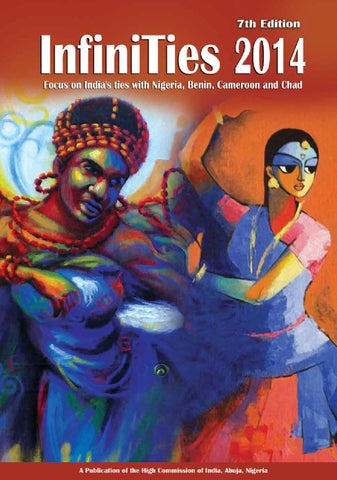
India: Billion Opportunities
The Land Of A
C•o•n•t•e•n•t•s High Commissioner's Foreword.....................................................................................................................................4 ITEC Day Celebrations in Abuja.....................................................................................................................................5 India’s Africa Policy: Continuity, Change and Challenges .............................................................................................8 India's Foreign Policy................................................................................................................................................... 11 Airtel Nigeria: A Profile.................................................................................................................................................16 Exim Bank Extends Lines of Credit of USD 100 Million to the Government of the Federal Republic of Nigeria......... 18 IDSA’s Interaction with Delegation from the Institute of Security Studies (ISS), Abuja, Nigeria.................................. 19 India Becomes Nigeria’s Most Preferred Destination for Medical Tourism ................................................................20 Siddha System of Medicine: Eco Friendly and Patient Friendly...................................................................................22 India to Build Textile Institute in Kaduna......................................................................................................................24 India’s Import of Nigeria Crude Oil to Reach 116.8M Barrels in 2014..........................................................................25 Indian, Nigerian Firm to Enhance ICT Education.........................................................................................................26 Indian Auto Firms, TATA, TVS to Set up Plants in Nigeria...........................................................................................27 Nigeria: "The Dawn of A New Era…." The India-Africa Business Series 2013............................................................28 Nigeria, India to Set up Off-grid Solar Power Framework............................................................................................30 Round Table Discussion on “Revitalization of India-Nigeria Relations”....................................................................... 31 A Glimpse of Nigerian Navy Chief, Vice Admiral DJ Ezeoba Visit to India .................................................................32 3rd Economic Mission Africa-India .............................................................................................................................33 Foreign Minister of Chad Visits India............................................................................................................................34 World's Eating Indian Rice...........................................................................................................................................35 Solar Salt......................................................................................................................................................................36 Indian Film Festival in Abuja - Bringing India, Nigeria Closer......................................................................................38 Published by High Commission of India, 15, Rio Negro Close, Off Yedseram Street, Maitama, Abuja, Nigeria Tel: 234-708-062 2800-4 (5 lines) Fax: 234-708-062 2805 Email: info.abuja@mea.gov.in Website: www.indianhcabuja.com
Editor: Harun Riaz
Produced by
Visual & Graphics: Hari Sharma
Krest Publications B-7/17/1, Safdarjang Enclave New Delhi - 110029, India Tel: 91-11-4653 9323 Fax : 91-11-4610 5603 E-mail: editor@diplomacy.in
Sub-Editor: Khushboo Kumari
Printing: Rave India
Project Co-ordinator: R.K. Verma Marketing: Ajit Thakur
Disclaimer: InfiniTies: A Focus on India's Ties with Nigeria, Benin, Cameroon and Chad is a special publication. The views expressed in this journal are those of the contributors and do not necessarily reflect the views of the High Commission of India. The magazine is produced to promote bilateral ties. The journal has no commercial value and is not for sale, it is for private circulation only.
High Commissioner's Desk
mPpk;qDr
HIGH COMMISSIONER
Hkkjr dk mPpk;ksx] vkcwtk ŸukbZthfj;k½
High Commission of India, Abuja (Nigeria)
Foreword On March 06, 2014, I presented my credentials to His Excellency Mr. Goodluck Ebele Jonathan, Hon'ble President of the Federal Republic of Nigeria. While I am in the process of completing the same formality in respect of Benin, Cameroon, Chad and the ECOWAS (Economic Community of West African States) Commission, I am very happy to learn that the 2014 edition of Infini-Ties, the home publication of High Commission of India, Abuja will be ready for its release on the occasion of our Independence Day on August 15, 2014. Based on my experience of just a few months, I reckon that my tenure in Abuja will not only be challenging, but also very rewarding. Our bilateral relations are growing and steadily deepening and widening in many fields. The resilience of India and its democracy have been unambiguously reaffirmed in the smooth conduct of recent elections to our Parliament and transition to new Government. We consider Nigeria the largest democracy in Africa and wish Nigerians peaceful and successful elections in 2015. At the outset, our bilateral trade has been growing. It is estimated at close to US$17 billion during 201314. Nigeria is our largest trading in Africa and India is the largest trading partner of Nigeria in the world. Further, it is said that after the Federal Government of Nigeria, the largest employer in the country is the Indian owned industry. An India Show is scheduled in Lagos in August 2014 to showcase the Indian industry's experience and potential to work in tandem with its Nigerian counterpart for mutual benefits. Second, the number of Nigerian citizens visiting Indian for medical treatment is growing. While facilitating Nigerians visiting Indian for medical treatment, we are encouraging Indian entrepreneurs to set-up healthcare facilities in Nigeria. Third, over 200 Nigerians visit India every year under Government of Indian funded Indian Technical & Economic Cooperation (ITEC) program apart from various other scholarships. Simultaneously, ever more Nigerians are going to Indian Universities to enroll themselves in various degrees on self-financing basis. We are now persuading Indian universities to consider investing in Nigeria to establish presence here.
InfiniTies
I wish the 2014 edition of Infini-Ties grand success.
4
(A.R. Ghanashyam)
Bilateral Ties
ITEC Day Celebrations in Abuja
I
TEC Day Celebrations were held in Abuja on March 27, 2014 at the newly built India House. A large number of Nigerians ITEC alumni who recently returned from India attended the event. Speaking on the occasion, High Commissioner of India H.E. Mr. A.R. Ghanashyam, exhorted them saying that they were the informal Ambassadors of India, who can act as bridge in strengthening relations between India and Nigeria. Some Nigerians including Commodore Daji former DA of Nigerian HC in New Delhi who attended 1 year course at NDC shared their experiences. A documentary film prepared by PD Division was shown on the occasion. Year-wise utilisation of ITEC slots since 2010 to 2014 are as under: Country
201011
201112
201213
201314
Nigeria
167
177
188
209
Benin
11
2
12
12
Cameroon
17
13
25
35
Chad
5
4
11
7
ECOWAS Commission, Abuja*
6
(*First ever allocation of slots for ECOWAS) 3. This year the most popular courses under ITEC programme were:
(i) Technical Courses like: (a) Training on Fertilizer Control; (b) Power Transmission; (c) Bio-medical Equipment Maintenance (ii) SMEs and Rural Development (iii) Information Technology. 4. The large number of slots were utilised by Nigeria and Cameroon i.e. 209 and 35 respectively, which was a matter of satisfaction. High Commission of India would like Benin and Chad to utilise more slots despite the constraints of language faced by their nationals. Nigeria was one of our few partner countries who have been able to utilise more than 200 ITEC slots allocated to them. India
will continue to assist Nigeria, Benin, Cameroon and Chad in capacity building through ITEC programme. 3. This year the most popular courses under ITEC programme were: (i) Technical Courses like: (a) Training on Fertilizer Control; (b) Power Transmission; (c) Bio-medical Equipment Maintenance (ii) SMEs and Rural Development (iii) Information Technology. 4. The large number of slots were utilised by Nigeria and Cameroon i.e. 209 and 35 respectively, which was a matter of satisfaction. High Commission of India would like Benin and Chad to utilise more slots despite the constraints of language faced by their nationals. Nigeria was one of our few partner countries who have been able to utilise more than 200 ITEC slots allocated to them. India will continue to assist Nigeria, Benin, Cameroon and Chad in capacity building through ITEC programme.
Commercial Transport Solutions From:
Passengers Cars, Taxi and Buses
Light, Medium and Heavy Commercial Vehicles
Passenger Tricycles (Three Wheelers)
www.simba.com.ng | mtd@simba.com.ng | 0800 CALL SIMBA
Cargo Tricycles (Three Wheelers)
Alternative Energy Solutions In Collaboration With:
Inverters and Online UPS Systems
Solar and Renewable Energy Solutions
Solar Lanterns and Solar Mobile Chargers
www.simba.com.ng | solar@simba.com.ng | 0800 CALL SIMBA
Energy Management Systems For Telecom
ICWA Analysis
India’s Africa Policy: Continuity, Change and Challenges Dr. Nivedita Ray and Dr. Sandipani Dash*
I
ndia and African countries have nurtured mutuality of worldviews and interests through century-long engagements. The relationship, driven by new imperatives of globalisation, has witnessed steady expansion. It has, over the years, acquired momentum through a series of policy interventions such as ‘Focus Africa’ programme, ‘Team-9’ initiative and ‘India Africa Forum Summit (IAFS)’ process. Initiated in the year 2008, the IAFS process, in particular, has been the most defining policy initiative that has ushered in a qualitative transformation of India’s relations with Africa. It has elevated the relationship to the summit level and has provided an institutional framework for cooperation at continental, regional and bilateral levels. As a consequence, political understanding, security cooperation, trade and investment collaboration, energy partnership, development partneship, and diaspora linkages between both regions have been enhanced. While preparing for the IAFS-III in 2014, New Delhi must recognise issues and concerns that are likely to affect the sustainability of its relationship with Africa, necessitating a calibrated, coherent and holistic policy approach.
InfiniTies
Political Cooperation
8
The political solidarity, based on the common colonial experience, provides an anchor for strong relations between India and Africa. Both sides recognize the importance of democratic
governance, human rights, decentralization, institutions of parliamentary democracy, elections and justice system, as evident in their joint policy documents. The Africa-India Framework for Enhanced Cooperation declared under the IAFS-II in 2011 does articulate their commitment to partner on such political issues. The exchange of visits at the level of heads of state/government, ministers and officials has facilitated the political relationship between the two sides, which has witnessed a steady growth. There is, however, need for more frequency in exchanges of political visits to further boost this relations. While India is trying to move from a ‘structural’ to a ‘substantive’ democratic process, a majority of African countries are engaged in a strong quest for their democratic entitlements. In Africa, competitive claims over electoral mandates have, many a time, led to ethnopolitical violent contestations, in which the AU and other regional groupings have played their roles as effective moderators. A member of the African Union (AU) Partners Group, India should constantly articulate its constructive position on these political developments, giving a boost to ‘political globalization’ in Africa. Furthermore, there is scope for both India and Africa to carry forward such process, by adding impetus to their ongoing common efforts towards reforms of the global security and governance institutions. Since these institutions have intense interface with the African states
and societies, efforts should be made to ensure that India’s solidarity on political issues and developments catches African people’s imagination. Security Cooperation Sustainable development, peace and security are common goals for India and Africa. As the third largest contributor of personnel to the United Nations Peacekeeping Operations (UNPKO), India’s significant participation in the conflict-containment and reconstruction process is acknowledged in Africa. India and Africa, indeed, continue their close cooperation, including through regular consultations at the UN, at the AU and in New Delhi/national capitals. Both remain committed towards operationalisation of the African Standby Force through special training programmes. To further deepen this engagement, a holistic understanding of the current security situation in Africa, linked to competition between dominant global powers and new challengers over the continent’s economic space, is required. The rising significance of emerging powers in Africa has resulted in more securitization of commercial stakes by external powers. The Western actors, in particular, selectively use political dissent as strategic opportunities in the specific African countries. In some cases, this has resulted in irresponsible military interventions, creating scope for further security unrest in the continent. The complex security scenario has, indeed, provided
ICWA Analysis
India’s security cooperation with Africa, therefore, needs a greater thrust. As a victim of terrorism, India could partner in the proposed multilateral and regional counter-terror initiatives in Africa. Moreover, India’s position in the case of politico-armed intrastate conflicts in Africa – i.e. protection of the sovereignty and territorial integrity of the conflict afflicted country along with the sensitivity towards the legitimate aspirations of its people - needs to be articulated in a more proactive and pronounced fashion.
should be on value addition and beneficiation in commodity trade, by supporting the expansion of manufacturing bases in Africa through Public Private Partnership (PPP) model. More significantly, a cooperative mechanism needs to be evolved for social auditing of the commercial engagement between India and Africa.
economic growth. This creates a scope for trade and investment partnership in the energy sector, and further consolidation through a calibrated synchronization between hydrocarbon resource production linkage and capacity building cooperation.
To this effect, it is time for New Delhi to take initiative in framing policy guidelines for Indian entrepreneurs venturing into Africa.
Development cooperation, with special focus on capacity building, remains the cornerstone of India-Africa engagement under the framework of South-South cooperation. Since 1964, India has been pursuing various training and skill development schemes under the Indian Technical and Economic Cooperation (ITEC) and Special Commonwealth African Assistance Programme (SCAAP). But India’s development cooperation with Africa has acquired greater salience under the process of economic globalization, which has brought economic growth along with increased social disparity in both regions. In response to these new socioeconomic imperatives, IAFS-I in 2008 marked a milestone in India’s development cooperation with Africa. Under the IAFS process, a number of policy initiatives, ranging from capacity building measures, including training, skill development, scholarships and institution building, to line of credits (LOC) and grants, are announced to partner with Africa in its developmental endeavours.
Energy Cooperation Energy partnership is a prime driver of India-Africa economic engagement, since energy security
Economic Cooperation The century-long economic linkage between India and Africa has evolved from an ancient people-led mercantile exchange to the current private sector-led industrial trade and production partnership, with the facilitating political support. While there is a steady increase in the volume of trade and equity cooperation between two sides, the issues concerning equilibrium and content of trade remain major challenges in the recent years. Another pertinent concern of this partnership under the process of ‘economic globalization’ is to synergise the collective interests of the people of India and Africa on the one hand and the sectoral corporate interests on the other. The sustenance and consolidation of the rising India-Africa economic cooperation necessitates a multistakeholder approach. Emphasis
is the prerequisite of economic growth and stability. Africa is relatively a new energy space in the oil and gas map of the world. Indian economy is heavily dependent on the hydrocarbon energy import, with diversification of its overseas energy supply as a constant policy priority. In this context, energy/resourcerich Africa, therefore, assumes immense significance for India. Africa’s quest for favourable capital investment and intermediate, costeffective technology for industrial expansion coincides with India’s requirement for hydrocarbon resources to sustain its rising
Development Cooperation
As an alternative development partner, India’s capacity building initiatives have been appreciated by the African countries. The effectiveness of such measures is, however, questioned on the counts of procedural hindrances, implementation gap, time and cost overrun, visibility deficit, and most importantly, their
InfiniTies
space for radical mobilisation along extremist/religious fault lines. This is evident from the steady rise in terror attacks in Africa in the recent years, evoking an urge for the creation of an effective counter-terror response mechanism under the aegis of the AU and other regional groupings.
9
ICWA Analysis relevance to developmental needs and priorities of the target people. To ensure an effective management of these projects, constant monitoring and periodic evaluation is a timely requirement. Nevertheless, a more fundamental answer to this problem would be to address the structural deficiency of the IAFS process, which is premised on the Banjul formula, giving primacy to discretion and decision of the AU Commission, rather than considering the choice and judgement of the concerned country, where the development projects are being implemented. Diaspora The century-long diaspora linkages between India and Africa have regained significance under globalisation. Diaspora has, indeed, come to be recognised as a critical resource, both for the country of origin and their adopted homeland. Its crucial role in the exchange of capital, science and technology, knowledge innovation and human values is increasingly being realised, instead of the earlier perception as a parochial racist affiliation. In Africa, India’s policy on the issue of its diaspora has witnessed a perceptible shift, from an ‘active dissociation’ to a ‘proactive association’ over the decades.
InfiniTies
India’s current engagement with its diaspora in Africa is, nonetheless, part of its larger global diaspora policy. New Delhi, however, needs to navigate its policy specifically towards its diaspora in Africa, keeping in view their increasing significance as well as their uniqueness underpinned by the heterogeneity, social
10
positioning and complex identity. In the IAFS-I 2008 Declaration, it was emphatically mentioned that both sides would like to partner in harnessing diaspora resources for their mutual benefit, with the inspiration from Africa’s engagement in similar efforts. The subsequent policy pursuit of diaspora factor in India-Africa partnership, for building links and strengthening bilateral relations, has yet to receive the adequate focus and required momentum. Recommendations Political/Security Cooperation a) The exchange of political visits requires greater thrust, with special focus on relatively smaller states. b) Commitment to cooperate in the strengthening of the African Court of Justice and Human Rights deserves serious attention. c) India’s position on political and security crisis situations needs to be articulated in a more proactive and pronounced fashion. d) There should be greater push for reforms of global institutions of security and governance by mobilising support of the African countries. e) India could try and partner in the proposed multilateral and regional counter-terror initiatives in Africa. Economic/Energy Cooperation f) There should be greater push for reforms of global economic institutions by mobilising support of the African countries. g) T h e s u s t e n a n c e a n d
consolidation of the rising India-Africa economic cooperation necessitates a multi-stakeholder approach and social auditing. h) The imbalance in the content of bilateral trade needs to be rectified. i) Emphasis should be laid on value addition and beneficiation in commodity trade. j) There should be larger Indian investment in energy sector, with a focus on buy back option. k) There is a need for calibrated synchronization between energy resource production linkage and capacity building cooperation. Development Cooperation l) For ensuring an effective implementation of development projects, regular monitoring and timely review are required. m) Relevance of Banjul formula adopted for organizing the IAFS process necessitates introspection and interrogation; but this has to be undertaken as an African initiative. Diaspora n) Specific policy needs to be designed for engaging diaspora in Africa, keeping in view their uniqueness, by the heterogeneity, social positioning and complex identity. o) The policy announcement of partnership on harnessing diaspora for mutual benefits calls for priority attention. *Dr. Nivedita Ray and Dr. Sandipani Dash are Research Fellows at the Indian Council of World Affairs, Sapru House, New Delhi.
Distinguished Lectures
India's Foreign Policy
I thank you for inviting me to give this commencement address. I congratulate the new alumni who have earned the privilege of being educated at this prestigious institution. The education you will receive will be the foundation on which you will build your life. I wish you well. You now join others like you who have the responsibility to make India a leading nation. This will be possible only if we have highly capable managers, engineers, scientists, doctors, academicians and others of a similar calibre. A strong academic foundation is the basis for producing such talented and trained people. You will receive this at IIM Indore, a premier institution, which will instil in you the desire to enquire, to analyse and to learn and to value ideas. Most of you will be very successful individuals. But you must always bear in mind that you should in some manner give back to society and the people who have nurtured you. I hope you will imbibe these lessons at IIM Indore which maintains an outreach to society, through its activities aimed at providing its
alumni rural immersion and social sensitivity and its association with local schools. I am glad that the Institute has collaborations with a number of similar Institutes around the world and that the PG Programme has an international focus. This is essential as India becomes more and more a part of the globalising world. In the early seventies when I graduated, selfsufficiency was the bedrock of our economic philosophy and our external economic interactions were limited to limited exports, essential imports and acquisition of technology and concessional finance. However by the time I joined the Foreign Service in the mid-seventies the first oil shock had hit us. We came to realize how events in far off lands could affect our wellbeing. Consequently we had to gear up export promotion. But our export basket was limited. I recall working as a commercial officer in Germany in the early eighties basically promoting exports of garments and textiles, leather and sports goods, hand-tools, tea and coffee. The IT revolution was far off.
The balance of payment crisis in 1991 provided another shock to our economic moorings and we began the process of liberalizing our economy and enhancing our linkages with the global economy. Investment promotion became the new mantra. This has served us well leading to increasing competitivity, accelerated growth and increasing prosperity. With a higher growth trajectory and our GDP touching $ 2 trillion, our international standing has gone up and today we are members of the G-20 group of leading economies. Our international trade has grown fivefold in the last decade from $140 billion to $760 billion in the last fiscal. Foreign investment flows both inward and outward grew even faster increasing over ten fold in the last decade to $47 billion in 2012-13. Remittances from Indians working abroad burgeoned to over $65 billion during the past year. The growth of software exports from India has highlighted to us the importance of global markets especially those in North America. International economic engagement today is vital given our dependence on imported energy and other natural resources and a large part of our
InfiniTies
By: Amb (Retd) Sanjay Singh
11
Distinguished Lectures
economy is dependent on it. As managers it will therefore be essential for you to understand the world around us and our country’s relationship with it. I will in my address underline the basic principles guiding Indian foreign policy and our major relationships.
InfiniTies
It is clear that India is in transition in a fast-changing world. Our economy and security is being shaped increasingly outside national boundaries, including in the domain of outer space, seas or cyber space. Globalization has produced winners and losers leading to growing power shifts between and within nations and societies. This will require greater understanding and adjustment among nations and a new architecture of global governance to maintain peace and stability which is vital for our progress and development. As global inter-dependence and integration deepen and as the global centre of gravity shifts to our region, Indian engagement with the world will deepen and we will encounter new challenges and opportunities.
12
India will respond in a manner true to itself. A country with a five thousand year old history and culture cannot parrot the opinion of others or follow them blindly. Its responses will reflect ideas such as those of individual liberty and freedom which are dear to every Indian. India’s commitment to internationalism, independence of judgment in the conduct of external relations, support for the democratization of the world order, and contributions to the maintenance of international peace and security are enduring legacies of our national movement. These ideals enjoy strong support across the political spectrum in India and also inform Indian participation in the Non-Aligned Movement and in the creation of trans-continental regional groups. These groups include the
BRICS, which brings together Brazil, Russia, India, China and South Africa. Similarly, the IBSA Dialogue Forum brings together India, Brazil and South Africa. Our engagement with the world continues to be driven by the enduring objectives of creating an enabling environment of peace and stability to pursue our national development goals; ensuring the security of the nation; including energy and food security, and helping India catch the next wave of science, technology and innovation; and fulfilling our international responsibilities and domestic requirements by participating in deliberations on global issues such as climate change, trade, counter-terrorism, and cyber security and strengthening efforts against nuclear proliferation.
the countries we interact with, particularly in the immediate neighbourhood. The revolution in communications be it through the internet or social media has had profound consequences for the world at large, and in the formulation and implementation of India’s foreign policy. There are multiple determinants influencing outcomes. Close partnership between the foreign policy establishment and civil society in its broadest sense, with trade and industry, the media and the growing overseas Indian communities, among others is equally important. This is critical in dealing with a world which is changing by the day, a world in which there are multiple stakeholders promoting India’s interests abroad in diverse fields. As managers working in different areas, you too will contribute to
As Indian expatriates, investment and trade grow globally in numbers and significance, promoting and protecting their interests and welfare has become an integral part of Indian diplomacy. We are seeking further reform of multilateral institutions such as the United Nations Security Council, World Bank and IMF to reflect contemporary realities and to improve their ability to address new challenges and provide a supportive international economic environment, enhanced investment flows, transfer of technology, and an open multilateral trading regime. As Indian expatriates, investment and trade grow globally in numbers and significance, promoting and protecting their interests and welfare has become an integral part of Indian diplomacy. India’s foreign policy is, ultimately, the sum total of what every arm of our country does vis-à-vis
promoting Indian interests abroad and the fashioning of our foreign policy. I might add that I hope some of you will do this directly by taking up a career in the Foreign Service. South Asia When we look around the world we can see a pattern that successful countries economic engagement with their neighbours is generally significant. This is notwithstanding the state of their bilateral relationship. This is true of most countries in Europe. In North America both Canada and Mexico are among the largest economic partners of the US and vice versa. China’s largest economic partners barring the US are in its neighbourhood
Distinguished Lectures
In our immediate neighbourhood of South Asia, India has been driven by the vision of encouraging regional integration to bring about peace and prosperity for the more than one and a half billion people living in this region. As part of this vision, India has been implementing a policy of asymmetric engagement in providing greater market access to our neighbours, which enables integration, in a mutually beneficial manner. This asymmetry will have to continue simply because India has the largest economy. India's vision of regional economic integration is based on enhanced intra-regional trade in goods and services, investment flows and enhanced regional transport and communication links. Cooperation for capacitybuilding and to enhance the sense of a South Asian identity is being undertaken. SAARC is a vehicle in this process. The challenges to the process of integrating the economies of South Asia cannot be understated. These challenges are rooted in history but we have to persevere. It was therefore heartening to witness a new beginning marked by the presence of South Asian leaders at the swearing in of the new Government led by Prime Minister Narendra Modi.
We have towards this objective made major efforts in reducing the ‘trust deficit' between India and Pakistan and to carry forward constructive and result oriented engagement towards resolving all outstanding issues peacefully as well as promoting people-to-people contacts and cultural exchanges. We have welcomed Pakistan's efforts to normalize trade relations with India by moving from positive to negative lists, and their eventual elimination through introducing NDMA (Non discriminatory market access). It is estimated that the indirect trade between the two countries is nearly three times the direct trade of around $ 3 billion p.a. However we must also bear in mind that for more than three decades the north-western parts of the Subcontinent have seen much turbulence and this conflict has affected not only India but the entire world. We need to defeat the scourge of violent extremism that has taken root there. However, for progress to be made, it is imperative that the territory of Pakistan and the areas under its control are not utilized for aiding and abetting terrorism directed against its neighbours. It is equally important that the terrorist machinery that draws its sustenance from Pakistan be shut down. As Afghanistan prepares for a historic political, security and economic transition, India is committed to support the efforts of the Afghan people to reconstruct their war-ravaged economy and the creation of a stable, united and prosperous Afghanistan integrated with the South Asian region. Our External Affairs Minister’s recent visit to Bangladesh underlined continuing improvement in bilateral and sub-regional cooperation with
Bangladesh in areas such as the power sector, water resources management, physical connectivity, the environment and sustainable development as well as on security related issues. That the Prime Minister’s first visit abroad was to Bhutan underlines the uniquely warm and special relations between our countries and the similarity in the perception of our strategic interests. India is Bhutan’s largest trade and development partner, and the source of supplies of most of the essential commodities required by Bhutan. Development of hydropower in Bhutan has been the centre-piece of our bilateral cooperation and win-win partnership. Such hydropower cooperation also could also be extended to Nepal our other Himalayan neighbour provided it is willing. India is a major trading partner of Nepal. Nearly 60% of Nepal’s foreign trade is with India and 50% of its FDI comes from India. Around 40% of tourists in Nepal come from India and more than 5 million Nepalese find employment in India. Our development cooperation covers a broad canvas. Today, India and Sri Lanka enjoy a robust trade and investment relationship, with bilateral trade growing rapidly in the last decade to a current level of around US$ 5 billion. India has also emerged as Sri Lanka’s largest Foreign Direct Investment partner and its biggest source of tourism. Following the conclusion of the armed conflict in May 2009, India has partnered with Sri Lanka in programmes for reconstruction and rehabilitation of Internally Displaced Persons, with the objective of helping them return to normal life as quickly as possible. Myanmar is the only ASEAN (Association of South East Asian Nations) Country with whom
InfiniTies
Japan, South Korea, Taiwan and Hong Kong and vice versa. The economic relations between China and the US demonstrate that countries can continue to do business despite differences. Unfortunately this is not true of South Asia. Our trade with our South Asian neighbours is less than 5% of our global trade even though for some of them India is their largest economic partner. Our major lacuna is to the West, where not only is the economy of Pakistan largely closed to us but our connectivity to markets in Iran and Central Asia and to their energy resources is limited. We have to alter this paradigm.
13
Distinguished Lectures
we share a land boundary. When we talk of a "Look East Policy” we first look at Myanmar which is important both for peace and stability on our North Eastern borders and direct road connectivity to South East Asia. Myanmar along with China partnered India in the launch of Panchsheel, whose 60th anniversary was recently marked by a ceremony in Beijing in the presence of our Vice President and the Presidents of China and Myanmar. China, as an immediate and our largest neighbour, is a priority in India's foreign policy with which we wish to establish a strategic and cooperative partnership. The prosperity and progress of 2.5 billion Indian and Chinese people would be a major driver of the Asian resurgence and global prosperity and stability. China has emerged as India’s the largest trading partner, and our engagement with China is now multi-faceted. Naturally, as between any two large countries, there are areas of convergence as well of divergence between our nations, such as on the Boundary Question. We maintain dialogue with China with the objective of minimizing such differences and bridging them and maintaining peace and tranquillity on our borders. East and South East Asia
InfiniTies
The big development over the past two decades in our continent has been the evolution of the process of Asian re-integration and a shift of the global centre of gravity to Asia, owing to rapid economic growth. The growth in Japan, then in the Tiger economies of Korea, Taiwan, Singapore, Malaysia, and now the rise of China, India and Indonesia has bolstered this process.
14
The "Look East Policy” informs the process of India reaching out and participating in this economic
dynamic as well as reviving its civilisational contacts with East and South-East Asia. Initiated in the early 1990s, it was a natural corollary to the economic reform agenda launched in 1991 and of our efforts towards globalisation. Closer relations with countries of ASEAN were at the core of the "Look East Policy”, given their centrality in the evolving economic and political architecture of the region. The ASEAN –India partnership creates a region of around 1.9 billion people with a GDP of over US$3.7 trillion. India has a Free Trade Agreement (FTA) in goods in place with ASEAN with two way trade exceeding US$80 billion. In the broader Asia-Pacific region India has developed close economic partnership with Japan, Korea, China, Australia and New Zealand. These are countries with which we also cooperate under the aegis of the ASEAN centred regional political structures. We have joined the countries of the region in negotiating a region wide free economic space that will be known as the Asian Regional Comprehensive Economic Partnership RCEP. While our Look East Policy began with a strong economic emphasis and content, it has expanded to encompass strategic and security engagement in the region. The idea of an ‘Asian Federation’ deeply animated the Indian national movement. Promoting political solidarity and economic cooperation within a newly liberated Asia was one of independent India’s first diplomatic initiatives possibly somewhat ahead of its time. More than six decades later, many of these ideas have become a reality. We are working to build a regional architecture that promotes cooperation, reinforces convergence and reduces the risks of confrontation and conflicts, such as those related to the
situation in the South and East China Seas. A stable and secure Asia, Indian Ocean and the Pacific Region are key requirements for India’s own security and prosperity in the 21st century. West Asia The blitzkrieg of ISIS through North Western Iraq and the status of Indians in that part of Iraq are being highlighted by our media daily. This has drawn our attention to the other flank of India: West Asia, Iran, and the Arab world. Today the region has acquired particular salience as our largest economic partner, larger than Europe, the US or China, with our economic engagement exceeding over $200 billion p.a. Over 7 million expatriate Indians live there, contributing to the economy of the area and sending back valuable remittances estimated at over $40 billion p.a. The region is also the source of 70% of our oil and gas requirements. With its burgeoning sovereign wealth funds it could also become a major investment partner. It will always remain a key part of our neighbourhood, with great significance for our economy and our security. The future of West Asia is a cause for concern. The increasingly lethal conflict in Syria and now Iraq is not only a tragedy for their people, but also threatens stability and security in the region and beyond. This is symptomatic of the malaise affecting the broader West Asia region which requires reform of its political and economic arrangements in order to meet the aspirations of its people. Our relations with the developed world have been essential in acquiring technology, know-how, capital and markets. There is an increasing convergence of interests with the United States, and the relationship between our two great democracies has been
Distinguished Lectures
The strategic partnership between India and European Union has
with great potential, such as oil and gas, energy, pharmaceuticals, chemicals, fertilizers, and mining. In the developing world India has historically had close ties with the countries of Africa. In the spirit of South-South cooperation we have contributed substantially to capacity building in African countries. India also extends concessional finance for developing social and economic infrastructure. India-Africa trade has grown in a decade from $5 billion in 2002 to over US $ 70 billion in 2012 and the continent has become an important source
India-Africa trade has grown in a decade from $5 billion in 2002 to over US $ 70 billion in 2012 and the continent has become an important source of raw materials and energy. been further strengthened by EU participation in India’s development agenda. Germany, France, UK and other countries of Europe are important trade and investment partners and sources of technology and know-how. With the finalization of the broad based Trade and Investment agreement our partnership will assume even greater global significance in the years to come. Our special and privileged strategic partnership with Russia is multifaceted covering areas such as defence, energy, hightechnology trade, investment, space, science and education. Russia remains a key defence partner for India as we move into a stage of joint design, development, and production of key defence platforms. Vikramaditya, the aircraft carrier recently inducted into the Indian Navy and the Kudankulam nuclear power project are examples of our strategic partnership. We have mutual investments and cooperation in a number of areas
of raw materials and energy. In the pursuit of our commitment for peace and security in the continent, more than 6,500 Indian soldiers participate in UN Peacekeeping Operations in various parts of Africa. Our engagement with Latin American countries has grown into a multi-faceted one. In the past decade our trade and investment cooperation with the region has multiplied manifold and today stands at over $30 bn. As you can see from my preceding remarks, India today is a country with a global presence. India affects and is affected by its relationships with a vast number of countries worldwide. As advances in communication and technology continue to make the world smaller, the interdependence of the global community will only intensify. A Greek philosopher once said "Change is the only constant in life,� and this is increasingly true in our globalised world.
Our interactions with the outside world have expanded exponentially and this will- like it or not- impinges on your lives. It expands the opportunities available to you but also creates new challenges. In the future for example managers with foreign language skills will be more sought after- especially perhaps those who know Chinese. When I graduated options for careers, material possessions, leisure and other aspects of life were pretty simple and limited. It was either a Fiat or an Ambassador car. There being limited opportunities in business, it was either government service or the public sector, the armed forces or as professionals or academics. Your options and choices will be much more varied and complex and the larger world will constantly impinge on your consciousness as well as be your oyster. I am confident that your stay at IIM Indore will equip you to make the correct choices and deal with the current environment defined by accelerating change. However in this process of making a choice some advice is eternal. Be guided by truth and ethical conduct. Be broadminded and develop tolerance for multiple viewpoints. Be humble. Always keep your mind open and make knowledge and hard work your partners in life. By adhering to these principles, you may not always succeed, but you can always be proud of yourself and what you stand for, regardless of whether you succeed or fail. With these words, I wish the new PGP batch all success. I also wish IIM Indore, its faculty and staff all the best in the years ahead. I am sure that the institute will set higher and higher standards of excellence in the future. Ambassador (Retd.) Mr. Sanjay Singh delivered this address at Indian Institute of Management, Indore on 4th July, 2014.
InfiniTies
transformed into a global strategic partnership over the past decade. The large Indian community in the US strengthens these bonds. The US remains a key source of technology, investment, innovation and resources, and one of the most important destinations for our goods and services. We have a strong and growing defence relationship and expanding defence trade and collaboration and increasing intelligence and counter-terrorism cooperation.
15
Airtel Nigeria: A Profile Airtel Nigeria (Airtel Networks Limited), a leading mobile telecommunication services provider in Nigeria and a member of Airtel Africa Group, is committed to providing innovative, exciting, affordable and quality mobile services to Nigerians, giving them the freedom to communicate, rise above their daily challenges and drive economic and social development. The company made history on August 5, 2001 by becoming the first telecoms operator to launch commercial GSM services in Nigeria and has scored a series of many "firsts" in the highly competitive Nigerian telecommunications market including the first to introduce toll-free 24-hour customer care; first to launch service in all the six geo-political zones in the country; first to introduce affordable recharge denominations; first to introduce monthly free SMS and first to introduce monthly airtime bonus. A truly innovative company, Airtel has shown resilience, charting new paths in meeting the demands and needs of its esteemed stakeholders. The company has demonstrated strong commitment to the growth of telecommunication infrastructure and services in the country by deepening network coverage and enhancing distribution as well as providing affordable services to empower more Nigerians. In Nigeria, Airtel is working tirelessly to live up to an ambitious vision of becoming the most loved brand in the daily lives of Nigerians as it offers a superior brand experience and a portfolio of innovative products & services ranging from exciting voice solutions to innovative data packages and mobile broadband. Also, the company is continuously making a positive impact in the communities in which it operates through the expansion of its networks to rural areas and through an extremely robust CSR programme to uplift underprivileged children in poor, rural communities. SOCIAL INVESTMENT/CSR With a vision to become Nigeria’s most loved brand, Airtel’s concept of social responsibility is not limited to a concern with welfare schemes, charity work, or the occasional support for Health, Education, Security/Emergency, Sports, and the Arts. The company is positioned as an integral part of society, which must be socially responsible at all times in all its dealings, maintaining high ethical standards and compliance with the rules and regulations in its methods and practices of doing business. Airtel is currently partnering with the government in the provision of education for less privileged children. As part of its social investment in Nigeria,Airtel has initiated a partnership with the Ministry of Education to build and maintain schools, where rural children across the country will be provided free education and free books. In May, 2011, the company commissioned its first Adopted School, Oremeji Primary School 2 in Ajeromi Ifelodun Local Government Area of Ajegunle, Lagos State. The newly commissioned Oremeji Primary School 2 is a six classroom block with an office for the head teacher and water borehole with lavatory facilities for the boys and girls as well as male and female teachers. As part of the programme, Airtel also provided school uniforms, furniture, books and school bags for the children. All these were accomplished within a record time period of 3 months. Airtel intends to replicate the models in other areas in Nigeria as it recently announced its intention to adopt more schools across the geographical zones it operates. Today, Airtel has not just earned its social license in many communities where it operates but is also leading a quiet revolution in the delivery of quality primary education across the country. It has transformed the lives of thousands of underprivileged kids, built and renovated schools from the Interiors of Ediba, a community in Cross Rivers State through Oke-Agbo, a community in Ogun State and Amumara, a community in Mbaise, Imo State to Ajegunle, popular Lagos Community. In all of these, the company has invested millions of naira completing multi-million naira renovation projects and has donated hundreds of thousands of note books, text books, school uniforms and other learning materials. While it has maintained a robust capacity building programme for hundreds of primary school teachers to ensure quality education is delivered, it has also completed borehole facilities and other facilities to make learning more enjoyable and in a much more conducive environment. COMMERCIAL OFFERINGS Airtel is committed to becoming Nigeria’s number 1 Mobile Internet services provider, providing youth and the young-at-heart with the most innovative bouquet of mobile digital solutions to enable them come alive in everything they do. Airtel has a rich blend of products and services, including a loaded bouquet of Value Added Services designed to support the growth and sustenance of businesses, and enhance the effectiveness and efficiency of individuals. Airtel offers telecoms users across the country with an opportunity to choose specific mobile solutions that reflect their lifestyles and aspirations, enabling them to communicate freely with friends, family members, business partners and associates and realise their dreams at pocket-friendly rates. This is part of its vision of ensuring that affordable telecoms solutions are provided for different classes of Nigerians, with particular attention to age groups, income levels and lifestyles, preferences and requirements. Awards Since 2003 when awards started in the telecoms sector in Nigeria, Airtel has consistently walked home with the Best Customer Care Operator of the Year awards. In 2003, it was crowned as the Most Customer Sensitive Network by Handwriting on the Wall of Thisday Newspapers following the result of a poll conducted on telecommunications consumers countrywide. Same year, it received the Best Customer-friendly Network at the maiden edition of the Telecoms awards. The following years, it picked up the Best Customer Care Operator (2005 and 2006) by Telecoms Awards, GSM Company of the Year 2005, by City People, and the Best Customer Care Mobile Company (2006) by IT & Telecoms Digest. The unbroken endorsement for the company’s long good customer care service tradition continued when it again rose above its peers in the Telecommunications Industry to win the Best Customer Care Award for 2009 in a ceremony organised by Nigerian Information Technology and Telecom Awards (NITTA). This came a year after the industry umpire, the NCC placed its approval seal on Airtel’s rich customer care tradition by awarding it the Telecom Network with the Best Customer Care Service prize, during a live television show at the 5th Anniversary edition of the popular Telecoms Consumers Parliament in the nation’s capital city, Abuja. The company also walked home with the best customer care operator award in last year’s edition of Telecoms Awards just as a reputable Public Relations Group named Airtel Best Operator in CSR for its programmes in developing the education sector. This year Airtel emerged the Most Innovative Company, Brand of the Year and Consumer Friendly Operator of the year Awards in this year’s edition of the Nigerian Telecoms Awards. The Chartered Institute of Personnel Management (CIPM) adjudged the Telecoms Operator with the Best Human Resources Practices in 2012 and 2013.
17
InfiniTies
Bilateral Ties
Exim Bank Extends Lines of Credit of USD 100 Million to the Government of the Federal Republic of Nigeria
E
xport-Import Bank of India [Exim Bank] has, at the behest of the Government of India, extended a Line of Credit [LOC] of USD 100 million to the Government of the Federal Republic of Nigeria, for financing three projects; [i] supply and commissioning of transmission lines, distribution transformers for 96 communities in three senatorial zones of Enugu State; [ii] Substation including solar mini grid electrification and solar street lighting in the state of Kaduna and [iii] construction of 2 x 26 MW gas-based power plant in the cross river state in the Delta Region of the southern part of Nigeria.
T
InfiniTies
he LOC Agreement to this effect was signed in Kigali, Rwanda on Thursday, May 22, 2014, by Mr. Yaduvendra Mathur, Chairman & Managing Director on behalf of Exim Bank and Dr. Ms. Ngozi OkonjoIweala, Coordinating Minister for the Economy / Honourable Minister of Finance, on behalf of the Government of the Federal Republic of Nigeria, during the 49th Annual Meeting of the African Development Bank Group at Kigali, Rwanda.
18
This is the first LOC to the Government of the Federal Republic of Nigeria. Under the LOC, Exim Bank will reimburse 100% of contract value to the Indian exporters, upfront upon the shipment of equipment and
Mr. Yaduvendra Mathur, Chairman & Managing Director on Behalf of Exim Bank Concluding the Line of Credit Agreement of USD 100 Million with Dr. Ms. Ngozi Okonjo-Iweala, Coordinating Minister for the Economy / Honourable Minister of Finance, on Behalf of the Government of the Federal Republic of Nigeria, at the 49th Annual Meetings of the African Development Bank Group at Kigali, Rwanda. goods / provision of services. Major export items from India to Nigeria are transport equipment, machinery and instruments, pharmaceuticals and nonbasmati rice, electronic goods, and manufacture of metals. With the signing of this LOC Agreement, Exim Bank has now in place 190 Lines of Credit, covering 76 countries in Africa, Asia, Latin America, Europe, Oceania and the CIS, with credit commitments
of over USD 10.43 billion, available for financing exports from India. Exim Bank's LOCs afford a risk-free, non-recourse export financing option to Indian exporters. Besides promoting India’s exports, Exim Bank’s LOCs enable demonstration of Indian expertise and project execution capabilities in emerging markets. Source: Exim Bank of India
Bilateral Ties
IDSA’s Interaction with Delegation from the Institute of Security Studies (ISS), Abuja, Nigeria
The delegation was briefed on the historical ties that bind India and Nigeria and dating back to the 1950s. Bilateral relations have been marked by good economic relations, and also vital societal linkages. Key areas for dialogue between the two countries include terrorism, drugs and piracy. The delegation was also briefed on India’s mutual relationship with Nigeria, and India’s challenges with the issues of terrorism and insurgency. India and Nigeria
have several commonalities such as large populations, democratic political systems, and multicultural and diverse societies; the two countries also share common challenges such as terrorism and insurgency. Though the buzzwords of India’s foreign policy in Africa are capacity building and human resource development, the two countries need to move beyond defencetraining cooperation and look into larger strategic perspectives. The interaction also touched upon India’s long experience with counterterrorism and counterinsurgency. Some key points highlighted on these issues include: there is a need of different policy approaches towards internal violence/ terrorism and terrorism/violence abetted from external support or inspiration; use of minimum force to bring one’s own people in the
mainstream; and, that the solution has to be a coherent government approach rather than fragmented. It was generally agreed that building communication and transport facilities in terrorism and insurgency affected areas, employment generation, tough security measures to bring the insurgents on the negotiating table, efficient border management, and synergy among government and security agencies are key to achieving a solution. The idea of inclusive growth and diversity is crucial for both countries to achieve sustained peace and stability. International cooperation and sharing of best practices will be important ingredients in this process. Report prepared by Saurabh Mishra, Research Assistant, IDSA and Princy George, Research Assistant, IDSA
InfiniTies
T
he ISS delegation was composed of Nigerian scholars and officials from agencies including the Foreign Service, police, security forces, pharmaceuticals, and food and drugs control. The delegation brought together members of several agencies under one umbrella to study security challenges and solutions to these issues.
19
India Becomes Nigeria’s Most Preferred Destination for Medical Tourism
I
InfiniTies
ndian hospitals saw 18,000 Nigerians on medical visas in 2012, a trebling in numbers in the last three years. With Nigerian politicians more determined than ever to stop this loss of foreign exchange, Indian hospital groups looking long term see the future as building hospitals in Nigeria.
20
47% of Nigerians visiting India in the year 2012 did so to get medical attention, according to figures from the Indian High Commission. These 18,000 medical tourists spent $260 million in scarce foreign exchange in the process (Around $15,000 per medical tourist).
This trend results from the inequality in access to healthcare and dearth of medical facilities, which have remained major, upsets to Nigeria’s healthcare. The trend of referring patients from health institutions in Nigeria to similar institutions in India is a common practice. This development has made many Nigerians lose confidence in the ability of the nation’s healthcare institutions to deliver quality healthcare. Mike Chukwu of Assetswise Capital has identified low standards of patient care, an absence of worldclass hospitals and diagnostic centres and the stunted growth of the healthcare system in the country, as responsible for this massive medical tourism to India; “A poor pipeline for high skills, poor health value chain, as well as low health insurance cover,
Pate says that it is essential to unlock the market potential for health services in the country by creating an enabling environment for the private sector to grow.
have led to weak effective demand for healthcare services, resulting in poor economics of scale for hospital services in the country. Medical equipment in some hospitals is bedeviled with irregular maintenance and upgrades, and diagnostic services not readily within reach, raising questions of quality control, availability, timeliness and reliability. Ambulatory services are often not available or affordable. There is an absence of internationally recognised certifications, a weak regulatory and supervisory framework, and weak framework for legal indemnities. There is poor management, plus poor staffing in
terms of number and specialties of doctors and other healthcare providers. These have resulted in the low standard of care in the country.” Chukwu advised that the approach to reversing the medical tourism problem in Nigeria must be to develop private sector healthcare“There is need to improve access to capital, develop and enforce quality standards, mobilise public and donor money to the private sector, modify local policies and regulations to foster the role of the private sector and foster health insurance.” Health minister Muhammad Ali
Another top Indian hospital has sealed a deal to set up collaborative medical services in Port Harcourt, Rivers State, at the First Rivers Hospital. Medical cases can be properly examined and successfully managed in Nigeria without the extra burden of overseas travels while only complicated surgeries will be directed to Ruby Hall Clinics in Pune for specialist care. The investment means an upgrade for facilities and healthcare services at First Rivers Hospital, as well as providing online/real time and direct access to specialist consultants’ expertise at Ruby Hall Clinic. Source: International Medical Travel Journal
InfiniTies
47% of Nigerians visited India in the year 2012
The Federal Ministry of Health will look at regulations to discourage growth of medical tourism and review fiscal policies (economic incentives, tax, foreign exchange, import tariffs) that affect healthcare, to create more favourable economic incentives for doing business in the healthcare sector.
21
Indian Feature Story
Siddha System of Medicine: Eco Friendly and Patient Friendly By Dr. K. Parameswaran*
T
he stall set up by the Central Siddha Research Institute in Chennai was one of the more popular stalls in the just concluded Bharat Nirman PIC at Karaikkal, Puducherry. According to officials who manned the stalls, an average of about 150 patients had consultations at the stall itself, each day of the campaign.
traditional lunch in South India by having a serving of Rasam – which is actually a kind of soup. The Rasam consists of various ingredients that act as initiators of proteolysis – the breaking down of protein. This helps in making the digestion of meals as well as in generating a feeling of well being in the minds of the people who have enjoyed the meal.
Dr. Jagat Jothi Pandian, Director, Central Siddha Research Institute, said that one of the reasons for
Science of Siddha The scientific basis of Siddha
all this knowledge to her son Lord Muruga. He transferred the whole gamut of his knowledge to his principal disciple, the august sage Agasthya. Agasthya taught 18 Siddhars and they spread this knowledge among human beings. The word Siddha is derived from the term Siddhi that roughly means the attainment of a specialized ability. The term also refers to the eight supernatural powers, the attainment of which is one of the ultimate aims of human endeavor. Those who attained or achieved the above said powers are known asSiddhars. There were 18 important Siddhars in olden days and they developed this system of Siddha medicine. Historically, it is believed that there were 18 main Siddhars. The saintAgasthya is believed to be the father of siddha medicine. Siddhars were of the concept that a healthy soul can only be developed in a healthy body. So they developed methods and medication that are believed to strengthen their physical body and thereby their souls.
InfiniTies
the new found acceptance of Siddha Medicine is its scientific foundation. According to Dr Pandia, the science of Siddha Medicine is akin to the science behind daily, ordinary life.
22
For example, Dr Pandian points to the practice of finishing off the
has a long and varied history. Tradition says that it is the oldest traditional treatment system generated from Dravidian culture. Palm leaf manuscripts say that the Siddha system was first described by Lord Shiva to his wife Parvathy. Parvathy explained
The manuscripts of Siddha point out that gradually the teachings of the 18 Siddhars coalesced into a cogent system of medicine. Today there are recognized siddha medical colleges, run under the government universities, where siddha medicine is taught. Basic Principles Siddha medicine means medicine that is perfect. Siddha medicine
Indian Feature Story
Generally the basic concepts of the Siddha medicine are almost similar to that of the other Indian health science called ayurveda.. The only difference appears to be that the siddha medicine recognizes predominance of Vaadham,Pitham and Kapham in childhood, adulthood and old age, respectively, whereas in ayurveda, it is totally reversed: Kapham is dominant in childhood, Vaathamin old age and Pitham in adults. The National Institute of Siddha National Institute of Siddha is a premier institute of Siddha medicine. It functions from Tambaram in Chennai. The main aim of the institute is to provide
research and higher studies facility and help in securing global recognition for the Siddha system of medicine. It is one of the seven apex national-level educational institutions that promote excellence in Indian systems of medicine. It is also the national headquarters of the Central Council of Research in Siddha (CCRS), the exclusive body for Siddha research.
to create an exclusive body for Siddha research called the Central Council of Research inSiddha (CCRS), after a long period of pressure from the Siddha community in Tamil Nadu and elsewhere. The new council was headquartered in Chennai, and the council was officially formed in September 2010.
In 2010, the Archaeological Survey of India (ASI) declared the institute, which is located on the remains of megalithic burials sites, as a protected monument, resulting in a ban imposed by the National Monuments Authority (NMA) on renovation or repairs of the existing buildings at the premises.
The First World Siddha Day was celebrated on 14 April 2009. It was inaugurated by Shri Surjit Singh Barnala, the then Governor of Tamil Nadu. Aiming at emphasizing the relevance of Siddha Medicine in modern times and celebrating its eco friendly nature, the dya is being celebrated annually in a befitting manner. The third Siddha Day was celebrated in Trivandrum, Kerala, while the World Siddha Day celebrations in 2012 had Chennai as its venue.
Till 2010, the research council of Siddha was functioning under the CCRAS in New Delhi, which was established in 1978. In March 2010, the AyushDepartment of the Union Health Ministry decided to bifurcate CCRAS
World Siddha Day
*Assistant Director, Press Information Bureau, Madurai (India)
InfiniTies
claims to be proficient in revitalizing and rejuvenating diseased organs and in maintaining the ratio between the three basic qualities of human nature and physique – the Vaadham, Pitham and Kapham.
23
Bilateral Ties
India to Build Textile Institute in Kaduna The institute intends to start with a six months training programme with an initial intake of 30 students.
InfiniTies
T
24
he Indian government is set to build a textile institute in Kaduna State. The institute would provide Nigerians opportunities to acquire modern skills in operating textile machines and manufacturing textile materials, an Indian delegation to Kaduna has said.
She said the Indian government would fund the establishment of the institute.
The Head, Africa Initiatives and Industry Research of IL&FS Cluster Development Initiative Limited, Milan Sharma, said at the Sir Kashim Ibrahim House, Kaduna, on Friday that once the Kaduna State Government provide them with land, the institute intends to start with a six months training programme with an initial intake of 30 students which would increase as the programme progresses.
the gradual return of peace and stability to the state.
According to the Indian delegation, Nigeria has lots of textile potentials as a renowned producer of cotton while Kaduna State was chosen because of its reservoir of textile industries and
The Governor, Mukhtar Yero, in his response, pledged the support of Kaduna State Government for the institute, just as he urged the delegation to immediately go into discussion with the Commissioner for Land and other government officials to decide how the state government can assist and collaborate with the
Indian government and Indian company on the institute. “Kaduna State is reverting back to its normal position as one of the safest and most secured state where you can do business in Nigeria. Kaduna has always been textile industry town- most of which are closed down due to
problem of power supply but the federal and state governments are working hard to produce enough power for the industries,” he said. Mr. Yero added, “Kaduna State also grows cotton so we will support you. Kaduna State government will provide space for your project because it will provide job opportunity for our youth.” Source: Premium Times
Bilateral Ties
India’s Import of Nigeria Crude Oil to Reach 116.8M Barrels in 2014
I
By Olowa Peter
ndia’s import of Nigeria crude oil is projected to grow by 26 percent to reach 116.8 million barrels in 2014 all things being equal as shown by Business Day Research and Intelligent Unit (BRIU) in their current edition of Nigerian Oil and Gas Industry Report yet to be RELEASED TO THE PUBLIC. According to 2013 World Oil Outlook, a report released by the Organisation of the Petroleum Exporting Countries (OPEC), India’s demand for crude oil is to grow by 3 percent from 3.8 million barrels per day in 2013 to 3.9 million barrels per day in
Oil Workers at Okrika Jetty 2014 all other factors remaining constant. BRIU calculations show that Nigeria’s share of India import will increase from 8 percent in 2014 and 2015 to 10% in 2016.
2014, with Nigeria accounting for 8.2 percent of India’s import in 2014, this is equivalent to 0.32 mbpd or 116.8 million barrel for the year under review. The Nigerian National Petroleum Corporation (NNPC) quarterly petroleum information shows that in the first three quarters of 2013, India had the top spot of Nigeria crude oil export with
importation of 73.12 million barrels, equivalent of 13 percent of Nigeria total export during the period. We expect that when the last quarter report for 2013 is released India’s import figure should be as high as 92.49 million barrels. This implies that India import from Nigeria will increase by 26 percent to 116.8 million barrels by
The NNPC’s quarterly report shows that India crude oil imported from Nigeria in the first three quarter of 2013 was more than US crude oil imported in the same period by 3.64 million barrels, total Africa import by 11.88 million barrels, total South America by 5.01 million barrels and total Oceanic pacific by 60.84 million barrels.
InfiniTies
Nigeria accounting for 8.2 percent of India’s import in 2014
This position is supported by analysis carried out by energy research firm, Platt, on India. Platt holds the view that India is the single-largest importer of Nigeria crude. Richard Swann, editorial director of London-based Oil News, a Platts publication, said that “the emergence of India as the largest consumer of Nigerian crude occurred rapidly over the past years”.
25
Bilateral Ties
Indian, Nigerian Firm to Enhance ICT Education
A
Nigerian firm, Linkserve Group and Indian-based Talentedge have entered into a master franchise agreement that will foster the Talentedge's massive expansion into the African continent. Talentedge, (erstwhile KarROX) is an Indian premier Education Company driving employability and enhancement through learning technologies. According to the firms, the deal which was signed by Founder/Chairman, Linkserve Group, Mr. Chima Onyekwere (OON), Talentedge Managing Director, Mr. Aditya Malik and Head International Business of Talentedge, Ms. Sreedevi Sreekumar will bring to the Nigerian market a rich bouquet of Technology Training applications that have already helped change IT learning in India and other developing nations.
government training programmes. The agreement would also allow Linkserve to open Training Centers and work with other sub-franchisees to increase the educational knowledge base in Nigeria for a better trained employment workforce. Speaking on the agreement, MD, Talentedge said: "We are extremely delighted to sign an agreement with Linkserve Group as part of our endeavour to change the landscape of education in Nigeria by introducing affordable and quality education for millions
of students. Even though we have been operational in Nigeria as karROX, we are now re-entering the country with renewed vigour by partnering with a strong player IT Industry like Linkserve. We hope to replicate the high standards of education set by us in India in Nigeria." According to him, with this pact, the firm aims to set the benchmark for quality and accessible education in both India and abroad. Founder/Chairman, Linkserve Group said: "This partnership is
InfiniTies
Talentedge, through its multiple product lines, offers a bouquet of learning courses like individual learning programmes, campus learning programs, corporate education programmes and
26
in line with the company's vision to bring to the Nigerian market quality educational training matched with the innovative spirit of Linkserve as a true IT Pioneer in Nigeria. Talentedge and Linkserve would help the Federal Government improve the quality of IT education and to ensure that Nigeria truly benefits from the increased advancement in this field and benefits from IT manpower outsourcing opportunities in the world today." Source: All Africa
Business Partnership
Indian Auto Firms, TATA, TVS to Set up Plants in Nigeria Companies were encouraged to come to Nigeria by National Automotive Industry Development Plan
T
wo of India’s vehicle manufacturing companies, TATA and TVS Motor Companies, on January 10, 2014 said they were interested in establishing automobile plants in Nigeria.
The representatives said both companies were encouraged to come to Nigeria by the new National Automotive Industry Development Plan, NAIDP, recently approved by the Federal Government late last year.
The Principal Executive Officer (Information), National Automotive Council, NAC, Bello Rasheed, said in Abuja that the top management executives of both companies have already made their intentions known in separate visits to the Director General of NAC, Aminu Jalal.
The NAC spokesperson said the visitors were provided with technical details, administrative
requirements and NAIDP guidelines for setting up vehicle industrial plants in the country. Established in 1945, TATA Motors is ranked the world’s fifth truck manufacturer and India’s largest automobile maker. Its products include cars, buses, utility vehicles, SUVs, trucks, armoured and military vehicles. The company
Mr. Rasheed said the TATA delegation comprised P. Gangadharan, N. Menon and Fred Obi, while the TVS team included K. Srinivasan, J. Vignesh and Rajan Menon.
is also the new owners of Land Rover and Jaguar brands.
Source: Premium Times, January 10, 2014
InfiniTies
Similarly, TVS Motors, which is among the world’s top ten twowheeler manufacturers, produces a wide range of motor cycles and three-wheelers.
27
Nigeria: "The Dawn of A New Era‌." The India-Africa Business Series 2013 By Perchstone & Graeys
InfiniTies
I
28
n a major milestone, the Nigerian law firm of Perchstone & Graeys, led a delegation of top Nigerian Government functionaries, Nigerian business leaders and some of the country's finest legal minds, for a day conference themed "Securing Energy for Emerging Markets: The AfricaAsia Experience" and networking "business to business" sessions with their Indian counterparts at the Federation of Indian Chambers of Commerce (FICCI) Federation
House, New Delhi, India on June 7, 2013. The partnership between Perchstone & Graeys and FICCI, which culminated in this groundbreaking event, could hardly have come at a better time as India recently overtook the United States of America to become the biggest purchaser of Nigeria's oil. Regardless of this development, enormous opportunities abound for commercial parties from both
two countries in the immediate future; particularly in the area of energy cooperation between the two countries whose combined population is approximately 1.5 billion. Dr. Didar Singh, Secretary General, FICCI, welcomed the Nigerian contingent and spoke on behalf of the 250, 000 Indian members of FICCI, noting that in view of the place of India and Nigeria in the world economy, the IndoAfrican alliance over the course
of 85 years of the its existence, this conference was a culmination of the partnership between the two nations in deepening their economic activities. Mr. Osaro Eghobamien, SAN, Managing Partner, Perchstone & Graeys, stated that the Firm had been bringing together the business community, policy makers and legal community in Nigeria through its Annual Law Series; with this being the first to be held outside Nigeria. He noted that free flow of trade between both countries could be enhanced by a good legal framework and in view of the many similarities between Nigeria and India in terms of common colonial heritage, judicial system, ethnic diversity, adversities, population, and even the emerging threat of terrorism, India's innovations are worthy of emulation by Nigeria. He concluded that as India's hydrocarbon needs cannot continue to be met by the Middle East alone, the focus would now naturally turn to Nigeria, which
would herald the dawn of a new era for both countries. The day's deliberations commenced with the address of the Nigerian Hon. Minister for National Planning; Dr. Shamsuddeen Usman, and formal presentation of Nigeria's economic blueprint by his representative; the Director of Macroeconomic Analysis, Dr. Babatunde Lawal, to Dr. Singh. The former Nigerian Minister of Power, and Chairman/ Chief Executive Officer (CEO) Geometric Power Limited, Professor Barth Nnaji; also a speaker at the event, emphasized the need for regional integration as part of the solution to Nigeria's electricity deficit, adding that addressing electricity generation without addressing the other processes in the value chain had proved to be insufficient in the past and would continue to be insufficient into the future. Other speakers at the event included Amb. Talmiz Ahmad, Energy Consultant IOT Infrastructure and Energy
Services Limited, former Indian Ambassador to Saudi Arabia; Mr. Ajay Kumar, Head, Africa Business Development, ONGC Videsh; Dr. David Ige, Group Executive Director, Gas & Power, NNPC; Mr. Narendra Taneja, CoChairman, FICCI Hydro-carbons Committee and President, World Energy Policy Summit; Mr. Austin Avuru; Managing Director/CEO Seplat Petroleum Development Company Limited, Dr. Dere Awosika, former Permanent Secretary Federal Ministry of Power and Mr. Saurabh Bhasin, Partner, Trilegal. In closing the event His Excellency, the Nigerian High Commissioner to India; Amb. Ndubuisi V. Amaku, representing the Hon. Minister of Foreign Affairs, Amb. Gbenga Ashiru, praised the uniqueness of the conference, thanked the organizers for their collaborative effort and charged the assembled Indian business community: "If you have not yet come to Nigeria, then you have not yet started doing business!".
InfiniTies
A cross section of the audience and resource persons
29
Bilateral Ties
Nigeria, India to Set up Off-grid Solar Power Framework Meanwhile, the Nigerian Electricity Regulatory Commission (NERC) has said that disclosure of vital information as demanded by the Freedom of Information (FOI) Act 2010 was necessary to douse unnecessary tensions in such complex sector like Nigeria’s Electricity Supply Industry (NESI).
A
s part of measures put in place to boost electricity supply in the country, Nigeria and India have concluded plans to set up an off-grid solar powered system across selected locations in Nigeria. Already, an agreement to actualise the objectives of the project has been signed by the two parties involved. A statement from the ministry of power in Abuja disclosed that the ministry and Indian-based power firm, Bharat Heavy Electricals had put pen to paper to commence with the project.
InfiniTies
According to the statement, from the plan, which was unveiled, Bharat Heavy Electricals has been given the nod to commence studies on the project with a view to climaxing it with the settingup of solar based independent projects in selected locations starting with Bida in Niger State.
30
Although, details of the expected capacity and funding mechanism for the project were not disclosed,
the Permanent Secretary in the ministry, Godknows Igali, had expressed delight at the prospect of the proposed project. Igali stated that the project would unbundle the enormous potentials in Nigeria’s power sector, assuring that Nigeria’s open door policy for genuine investors in the power sector and fruitful collaboration with the Indian company would be leveraged to make a success of the project. The Secretary of Government of India, Department of Heavy Industries, Dr. Sutanu Behuria, who led the team at the signing ceremony expressed India’s interest in the provision of funds in various forms for the development of Nigeria’s power sector. Behuria stated that Bharat had got the necessary capacity to deliver on the project considering its experience from operations in 12 African countries, which he described as robust and will come in handy in assisting Nigeria realise its vision for uninterrupted power supply.
Chairman of NERC, Dr. Sam Amadi, stated at an interactive session with chief executives of ministries, departments and agencies (MDAs) of the federal government alongside the House of Representatives Committee on reform of government in Abuja that contrary to insinuations, an open government enjoys more stability and efficiency. Amadi explained that embracing the FOI law would not provide an organisation the freedom to act in justifiable manners, adding that NERC as a regulator would remain open to required disclosures as mandated by the law. “The most difficult challenge to the FOI law is conceptual hurdle because of the erroneous belief of what disclosure would do to an organisation, contrary to that, an open government is more stable and efficient as feedbacks from citizens and customers improve organisational processes and outcomes,” Amadi stated. He also advised managers of government agencies to understand that without transforming the corporate culture of their agencies, making the paradigm shift required to fully embrace the FOI law would be challenging.
Bilateral Ties
Round Table Discussion on “Revitalization of India-Nigeria Relations”
A
Round Table discussion was organized on June 4, 2013 by the Indian Council of World Affairs with a fourteen-member delegation from Nigeria’s apex policy think-tank and training institute, namely the National Institute for Policy and Strategic Studies (NIPSS), representing the high echelons of the Nigerian Defence Services, Police, State Administration, Customs, and the Foreign Affairs Ministry, etc. Ms. Shamma Jain, Joint Secretary, ICWA commencing the Round Table the bilateral ties between IndiaNigeria had expanded and deepened substantially during the last few years; making India, Nigeria’s second largest trading partner with a bilateral trade turnover of US $ 17.3 bn in 20112012. She invited Ambassador H.H.S. Vishwanathan, former High Commissioner to Nigeria,
L-R) Dr Abubakar Tanimu, Permanent Secretary, Katsina State Government, Mr. Amin Ikioda, Rear Admiral, Nigerian Navy and Prof. Olu Obafemi, Director of Research, National Institute for Policy and Strategic Studies (NIPSS), Kuru, Nigeria academic, scientific, technological and IT arenas. Ms. Shamma Jain, Joint Secretary, ICWA, in her welcoming remarks, provided an overview of the burgeoning India-Africa partnership, and mentioned that
to chair the discussion. Amb. Vishwanathan, recalling his stint in Nigeria in the mid-2000, highlighted India’s historical ties with Africa, which have been strengthened over the years with India’s contribution to the
human resource development, skill development and capacity building in Africa, along with the Indian private sector’s growing presence, across the continent in multi-sectors, such as power, energy, hydrocarbons and telecommunication, etc. The other Indian discussants, which included former ambassadors and academics, covered various themes, such as UN peacekeeping, security issues in Africa, global governance and the need to reform the political and financial global architecture, as also the security challenges in Nigeria, including the activities and ideological leanings of Boko Haram. The Nigerian delegates raised several queries about India’s development strategy, transformation of its economy, institution-building, education system, women development and housing programmes, etc. The vibrant discussion concluded on a congruent note that India and Nigeria, leading regional players, should harness the potential fully for a more engaging partnership on bilateral as well as regional and global issues.
InfiniTies
In line with the NIPSS theme for the current training course – “Strengthening Institutional Framework and the Transformation Agenda in Nigeria”the leader of the Nigerian delegation, Professor Olu Obafemi, a prolific playwright, novelist, and author of several books and novels, expressed keen interest in learning more about India’s vast experience of socioeconomic development, particularly its achievements in the economic,
31
Bilateral Visit
A Glimpse of Nigerian Navy Chief, Vice Admiral DJ Ezeoba Visit to India The Chief of Naval Staff, Admiral D.K. Joshi with the CNS Nigerian Navy, Vice Admiral D.J. Ezeoba, in New Delhi on December 09, 2013.
Vice Admiral DJ Ezeoba, CNS Nigerian Navy presenting Memento to Minister of State for Defence Mr Jitendra Singh at South Block
InfiniTies
The Chief of Naval Staff, Admiral D.K. Joshi with the CNS Nigerian Navy, Vice Admiral D.J. Ezeoba, in New Delhi on December 09, 2013.
32
The CNS Nigerian Navy, Vice Admiral D.J. Ezeoba paying homage at Amar Jawan Jyoti, India Gate, in New Delhi on December 09, 2013.
Bilateral Visit
3rd Economic Mission Africa-India (8 – 12 April 2013, New-Delhi)
Africa-India Economic Mission 2013
Madam Minister and Mr. Tony Tedebe Ngarbaroum Ngartola visited the Jain Irrigation pavilion
Group photo of the Chad delegation
InfiniTies
Meeting with the Indian company Lucky Exports concerning agricultural equipments
33
Bilateral Visit
Foreign Minister of Chad Visits India
The then External Affairs Minister meeting with H.E. Mr. Moussa Faki Mahamat, Minister for Foreign Affairs and African Integration of Republic of Chad in New Delhi (August 13, 2013)
M
oussa Faki Mahamat, Minister for Foreign Affairs and African Integration of Republic of Chad, paid an official visit to India on 12-13 August 2013. During his visit he met Salman Khurshid, external affairs of India. The visit was aimed at increasing bilateral cooperation between the India and Chad.
InfiniTies
Relations between India and Chad remain cordial and there is considerable goodwill and admiration for India. Tehre is large scope for mutually beneficial co-operation in hydrocarbon, infrastructure and capacity building sectors.
34
Chad is a member of TEAM-9 (Techno-Economic Approach for African Movement) initiative comprising of eight West and Central African countries seeking to benefit in technical and economic spheres through cooperation with India. Chad has been a beneficiary of India Line of Credit of US$ 50 million for five projects which they highly appreciate.
The then External Affairs Minister with H.E. Mr. Moussa Faki Mahamat, Minister for Foreign Affairs and African Integration of Republic of Chad in New Delhi (August 13, 2013)
The then Minister of State for External Affairs Mrs. Preneet Kaur meeting with H.E. Mr. Moussa Faki Mahamat, Minister for Foreign Affairs and African Integration of Republic of Chad in New Delhi (August 13, 2013)
World's Eating Indian Rice By Ninad D. Sheth, Business World India is world's biggest rice exporter and will export a record 11 million tons of rice in 2014
The current political turmoil in Thailand is set to give a further boost to Indian rice exports. Indonesia, Nigeria, Saudi Arabia and Russia are among the biggest importers of rice from India. The average price per ton for Basmati rice was about $1300 in 2012, a 20 per cent increase year on year. However, prices are likely to fall slightly this year.
Says R Sundarsen, executive director, All India Rice Exporters Association, “India has three distinct advantages in the international rice market. Our Basmati rice is of the best quality in the world. This allows for higher price realisation. With about 7 million hectares under rice cultivation we have one of the world highest acreages producing rice. Finally our non basmati rice is very price competitive in the international market and thus it allows us to cater to price sensitive markets such as Africa.” Indications are that even in 2014 India will remain the top dog in
rice exports. In the coming year, India may export a record 11 million tons of rice. However, the industry needs some policy measures especially given the Indian government's tendency to abruptly announce a ban on rice exports as was done a few years ago. Policy consistency and incentives for more rice mills in the South of India that produces a quantum of non-Basmati rice but which has to be milled in the northern states, could consolidate India’s pole position in the global rice market. Source: Ministry of External Affairs
InfiniTies
Indian rice is going global. India has emerged as the world's biggest rice exporter. In 2013, India exported a staggering 9.3 million tons of rice. It overtook Thailand in 2012 to emerge as the world’s biggest exporter of rice. According to an estimate by the Food and Agriculture Organisation (FAO), India will remain the top exporter in 2014 with Vietnam now at number two with about 7.8 million tones of rice exported and Thailand at number three with about 7.7 million tones.
35
Solar Salt By M.V.S. Prasad Director, PIB, Chennai
C
InfiniTies
ommon salt touches the lives of almost everyone. Indian salt industry has made rapid strides during last six decades. From an import dependent nation at the time of Independence, today it ranks third amongst 120 salt producing countries, with an average annual production of about 24 million tonnes. The Indian Salt Industry after meeting country's domestic requirements of 18 million tonnes, exports about five million tons of salt to 20 countries.
36
Out of the total of salt produced in the country annually, 70% salt is produced from sea brine and 28% salt comes from subsoil brines and the remaining 2% is produced from lake brines/salt rocks. Mandi in Himachal Pradesh is the only source of rock salt in India. In India, Gujarat, Tamil Nadu and Rajasthan contribute to about 96% of the country's salt production. Gujarat contributes 75% to the total production, followed by
Tamil Nadu (11%) and Rajasthan (10%). Other states such as Andhra Pradesh, Maharashtra, Orissa, Karnataka, West Bengal, Goa, Himachal Pradesh, Diu & Daman also contribute to a small extent. About 62% of the total production is from large salt producers, 28% is contributed by small scale producers and rest by medium scale producers. Most of the salt is produced by private sector only. The Indian salt industry uses labour intensive technology in contrast to high level of mechanization in salt industry of nations like Australia, Canada, France, USA etc. India exports surplus production of salt to the tune of about 35 lakh tonnes on an average. Major countries importing salt from India are Japan, Bangladesh, Indonesia, South Korea, North Korea, Malaysia, U.A.E., Vietnam, Qatar etc. Nearly 30% of total salt produced goes for human and animal
consumption and thus can be a potential carrier of essential micronutrients for combating various diseases normally occurring from deficiency of such nutrients in human body. Salt is also required as a basic feedstock in many of the chemical industries. Worldwide about 60% of the salt produced is used in chemical industry, mostly for producing chlorine, caustic soda and soda-ash which are further utilized in the processes like, organic synthesis, polymer and petrochemicals and petroleum refining etc. and is also required in applications such as de-icing, water treatment or coolants etc. The salt content in the oceans is 'virtually inexhaustible.' Besides this there are substantial deposits of salt in major salt producing countries. There are mainly three ways of producing salt (a) direct mining of rock salt, (b) forced evaporation of brine, and (c) solar evaporation
Indian Feature Story
of brine. The most common and energy efficient method is progressive evaporation and concentration of sea, subsoil or lake brines in various condensing and crystallizing pans utilizing solar energy. In general, purer the salt the more valuable it is. Moisture in salt, mainly due to the presence of excess impurities of magnesium salts, is also detrimental as it can lead to the caking up of salt besides being an unwanted baggage during transportation of salt. For example, if 10 million tonnes of salt has to be transported from the fields by road, a 4% moisture level in salt would amount to ca. 40,000 unnecessary trips! A dry salt thus helps reduce the carbon footprint. Over the years a series of inventions have taken place in the area of solar salt. CSIRCentral Salt & Marine Chemicals Research Institute, a premier salt research institute has made a commendable contribution in the development of novel cost effective technologies of high purity solar salt production. The Indian salt industry in general lacks adoption of novel methods of solar salt production leading to inferior quality of harvested salt than countries such as Australia and Mexico. Improving the quality of such impure salt requires mechanical washing and other chemical treatments. CSIRCentral Salt & Marine Chemicals Research Institute, along with various State Governments and Salt Department, the Government is continuously pursuing the programmme of improving the quality of solar salt in a cluster
development fashion as well as in the form of establishment of model salt farms which serve as demonstration units among the salt producers. Mechanization/modernization of solar salt works and use of saline wastes of various industries during solar salt production will also lead to enhancement in salt productivity. The latter will help not only in improving yield
Indian salt industry is targeting production of 40 million tons salt by 2020 to meet its domestic requirement of 25 million tons an export about 10 million salt. It can be achieved by effective utilization of the available 6.1 lakh acre land and increasing productivity using modern technology. The slat industry is to be mechanized, merger of the salt works to increase the size of operation and use of solar plant in place of traditional electric / diesel power is to be encouraged.
InfiniTies
but also in improving the quality of slat and mitigation of environmental hazards g ener al l y oc c ur r ed fr om discharge of effluent in sea or other at other places. Heavy losses in salt production are incurred as a consequence of unfavourable climatic conditions like heavy rainfall etc. Such issues can be addressed partially by mechanization and automation of solar salts. The mechanization of salt works will not only help in overcoming the problems of shortage of desired manpower engaged in salt production activities but will also help in improving the quality and yield of solar salt.
37
Indian Film Festival in Abuja Bringing India, Nigeria Closer
T
he First Lady of Nigeria, Dame Patience Jonathan, recalled popular Hindi films "Sholay" and "The Burning Train" and well-known Indian actor Amitabh Bachchan as she expressed hope that the Nigerian and Indian film industry could engage in partnerships to foster closer bilateral ties. Addressing the inauguration of the first ever Indian Film Festival at Abuja, Dame Jonathan, the chief guest, said the contribution of the film industry in India and Nigeria in terms of wealth creation and revenue generation cannot be overemphasized.
InfiniTies
The First Lady conveyed the special greetings of Nigerian President Dr Goodluck Ebele Jonathan to the event. She said that like Nigeria with a population of over 160 million, "India is equally blessed with a huge population of over 1.2 billion.�We can therefore imagine what this translates to in economic terms."
38
"We look forward to the possibility of stakeholders in the film industry from Bollywood and Nollywood (Nigeria film industry) engaging in partnerships or exchange programmes that will yield mutual benefits and promote better understanding between our two
countries," she said at the event held March 31at the Silverbird Cinema complex. The opening ceremony was attended by about 250 invited dignitaries, including senior politicians, diplomats, members associated with the Nigerian film industry- Nollywood, eminent personalities and selected members of the Indian community. Declaring the festival to celebrate 100 years of India films open, Dame Jonathan said she was happy that the festival was "bringing together citizens of the two sister countries in a special atmosphere of celebration". Indian High Commissioner A.R. Ghanashyam, welcoming Dame Jonathan and other dignitaries, said that conceptualization to implementation of the film festival took less than four weeks "thanks to the commendable cooperation and contribution of a large number of Nigerian and Indian stakeholders". The Richard Attenborough directed Academy award winning film "Gandhi" was the inaugural film of the festival.
The High Commissioner expressed hope that the festival would "ultimately lead to a Nigerian Film Festival in New Delhi, preferably inaugurated with the latest Hollywood movie "Half of a Yellow Sun" based on the book of the same name by Nigerian author Chimamanda Ngozei Adichie". Ghanashyam also spoke about the "vast scope for mutually beneficial cooperation between our two countries in the area of filmmaking by virtue of complementing comparative advantages and experiences the two countries enjoy in the area". The opening ceremony was followed by dinner for all the invitees and screening of "Gandhi". Bollywood stars, including Shah Rukh Khan, Naseeruddin Shah, Anil Kapoor, Deepika Padukone, Sonam, Dimple Kapadia and John Abraham sent their best wishes for the film festival. Among the Indian films screened were "Lagaan", "Pardes", "Chak De India", "Stanley ka Dabba", "Jodhaa Akbar", "Sholay", "Devdas", "Dhoom 2" and "3 Idiots". The festival concluded with a closing ceremony on April 6. Source: India Africa Connect
Building Africa’s Largest Petrochemicals Hub in Nigeria... Indorama Eleme Petrochemicals Limited
Indorama Eleme Petrochemicals Limited (Indorama Group) PMB. 5151, East West Expressway, Eleme Port Harcourt, Rivers State Nigeria infoepl@indorama.com.ng customercare@indorama.com.ng
v POLYMERS - HDPE, LLDPE, PP, PPCP, PET v FERTILIZERS v METHANOL