A REPORT FROM THE DIOCESAN CURIA
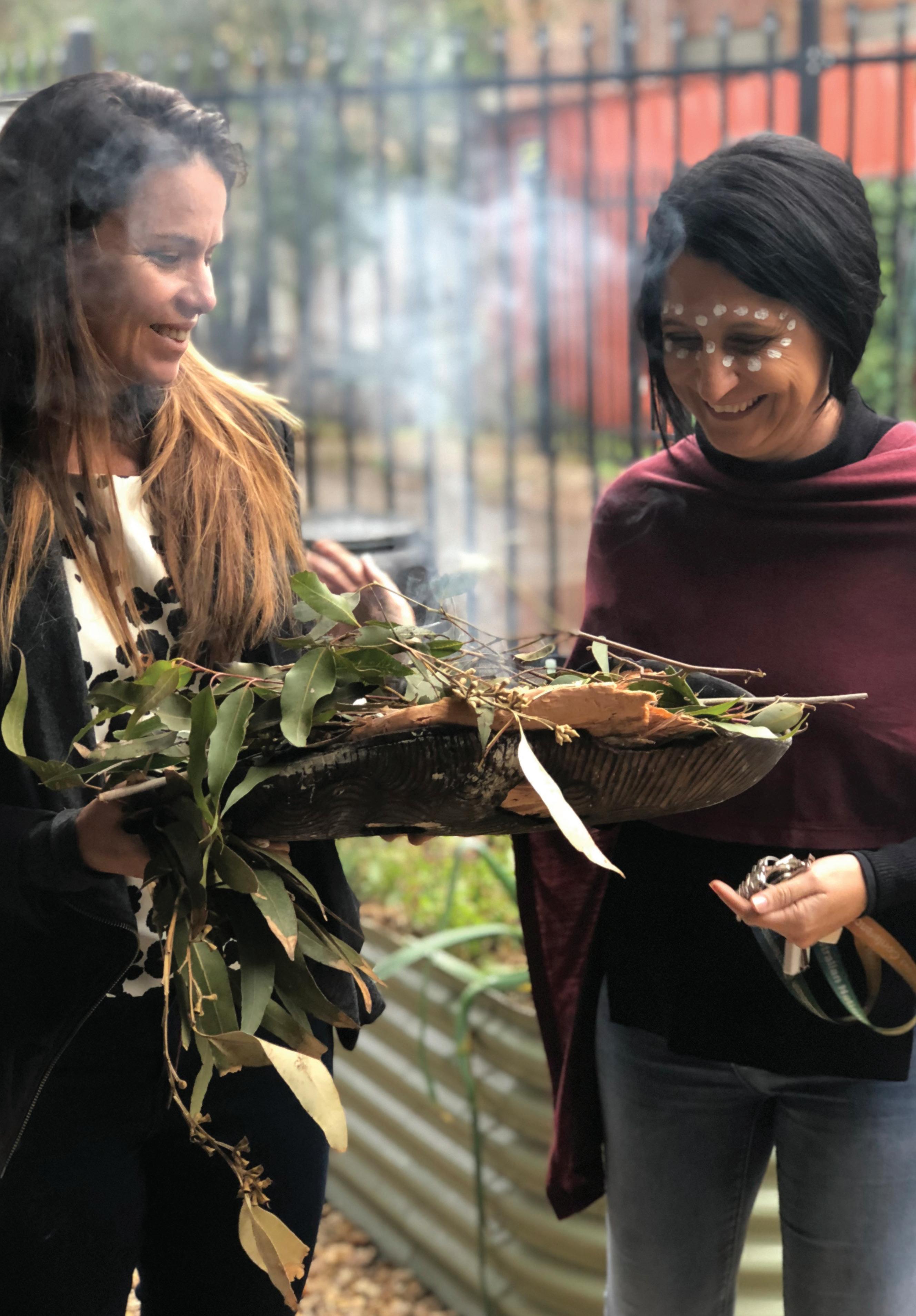

We acknowledge Aboriginal Peoples are Australia’s First Peoples and the traditional owners and custodians of the land in which we live the joy of the Gospel and share it with the world. We are in the country of the Worimi, Gamileroi, Wonarua, Wiradjuri, Darkinjung, Biripi and Awabakal peoples. We respectfully acknowledge their Elders, celebrate their continuing culture and the living memory of their ancestors.
To live the joy of the Gospel and share it with the world.
The Diocesan Synod of 1992-93, acting on behalf of the diocesan community, resolved to embrace and promote the Vatican II understanding of the Church’s mission contained in the following:
The Church, because it is the People of God and the Body of Christ enlivened by his Spirit, is called to be a sign and instrument of communion with God and of unity among all people (LG1).
The Church exists to promote the Kingdom of God on Earth (LG5). This it does by proclaiming Christ – the Good News of God’s love for all people – and by working in the world for justice, peace and reconciliation.
This mission finds its source and summit in the Eucharist (LG11) which, when lived in everyday life and celebrated in the liturgy, is both the living symbol of Christ’s life, death and resurrection and celebrates the deepest identity of the Church as a communion of life, love and truth (LG9).
All those who, through Baptism, have been initiated into the community of the Church have the right and duty to participate in its life and mission as a response to the Spirit in their lives (LG3). We are called to live out the commandment of Jesus: ‘Love one another as I have loved you’ (Jn 15:12).
f Seek First the Kingdom of God (Mt 6:33)
f The Equality of All Believers
f Faith Development is a Life-Long Process
f The Dignity of the Human Person
f Diversity of Gifts
f Diversity of Ministries, Unity of Purpose
f Servant Leadership
f Decision-Making by Discernment
f Read the Signs of the Times
f Concern for Ecumenism
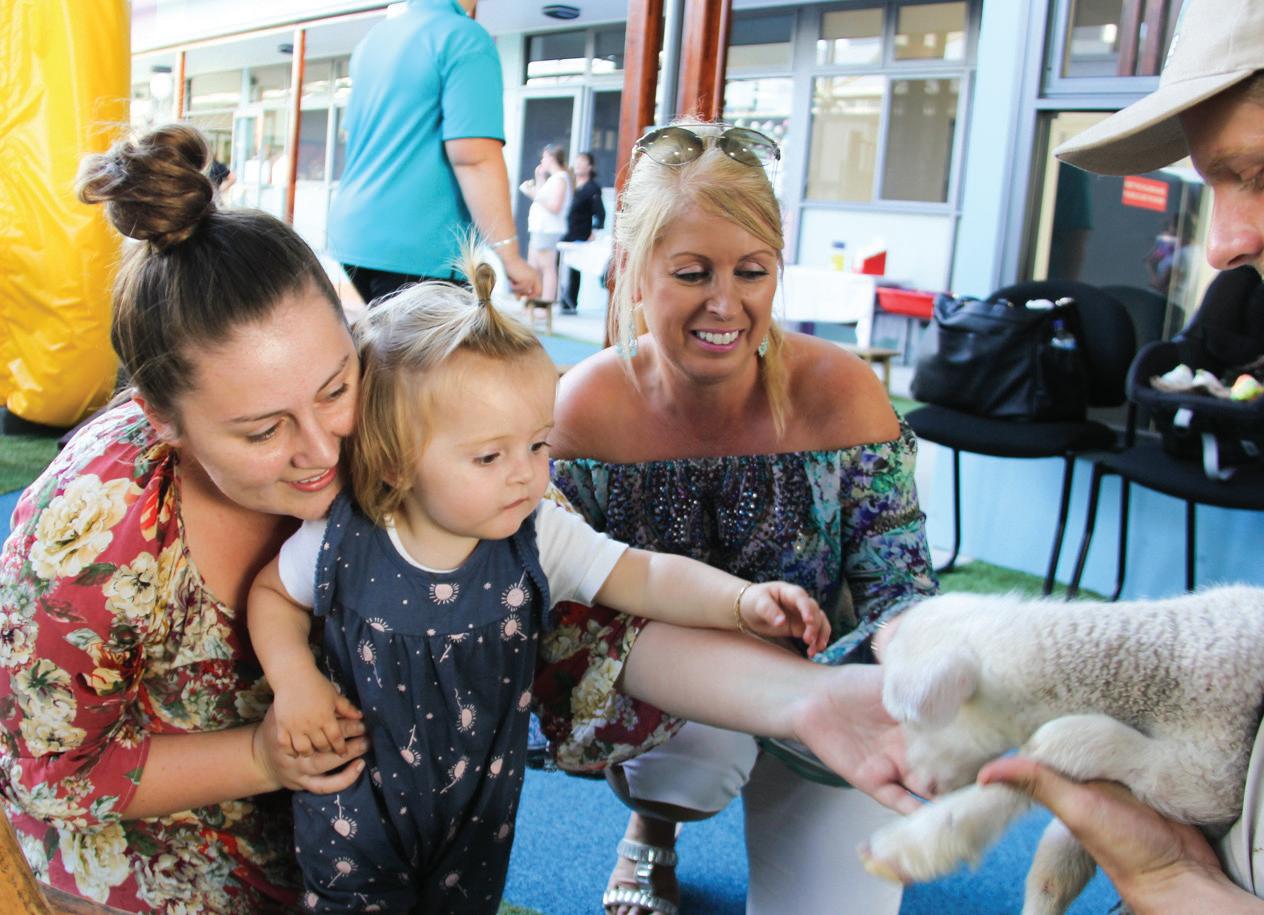
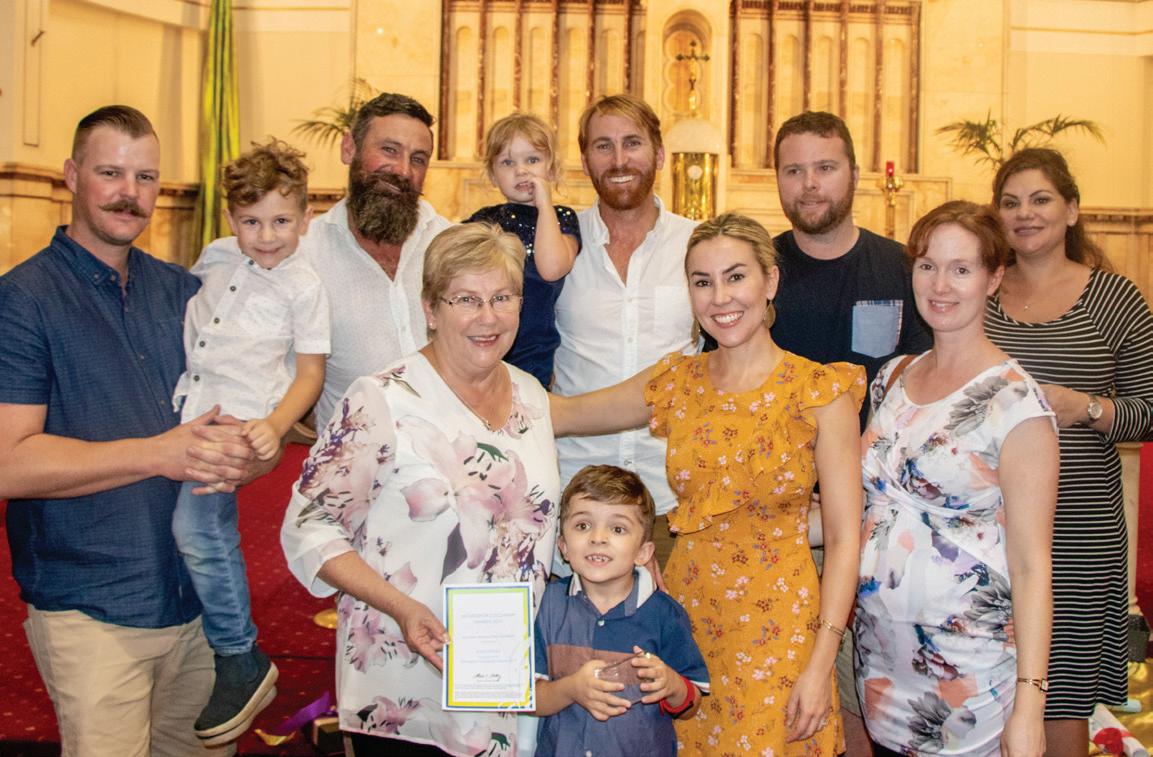
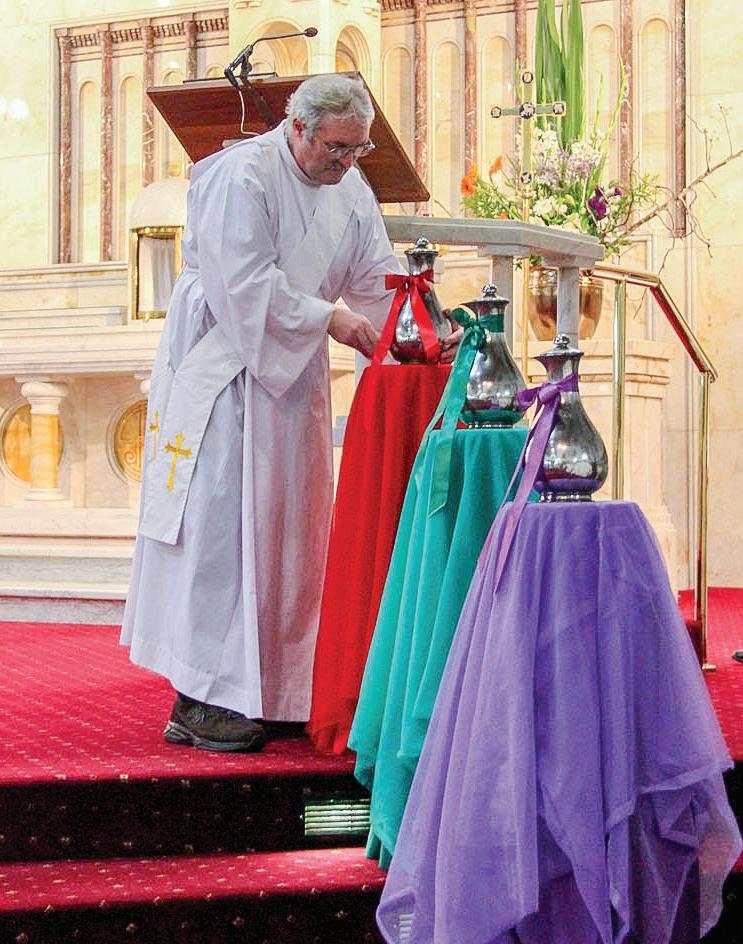
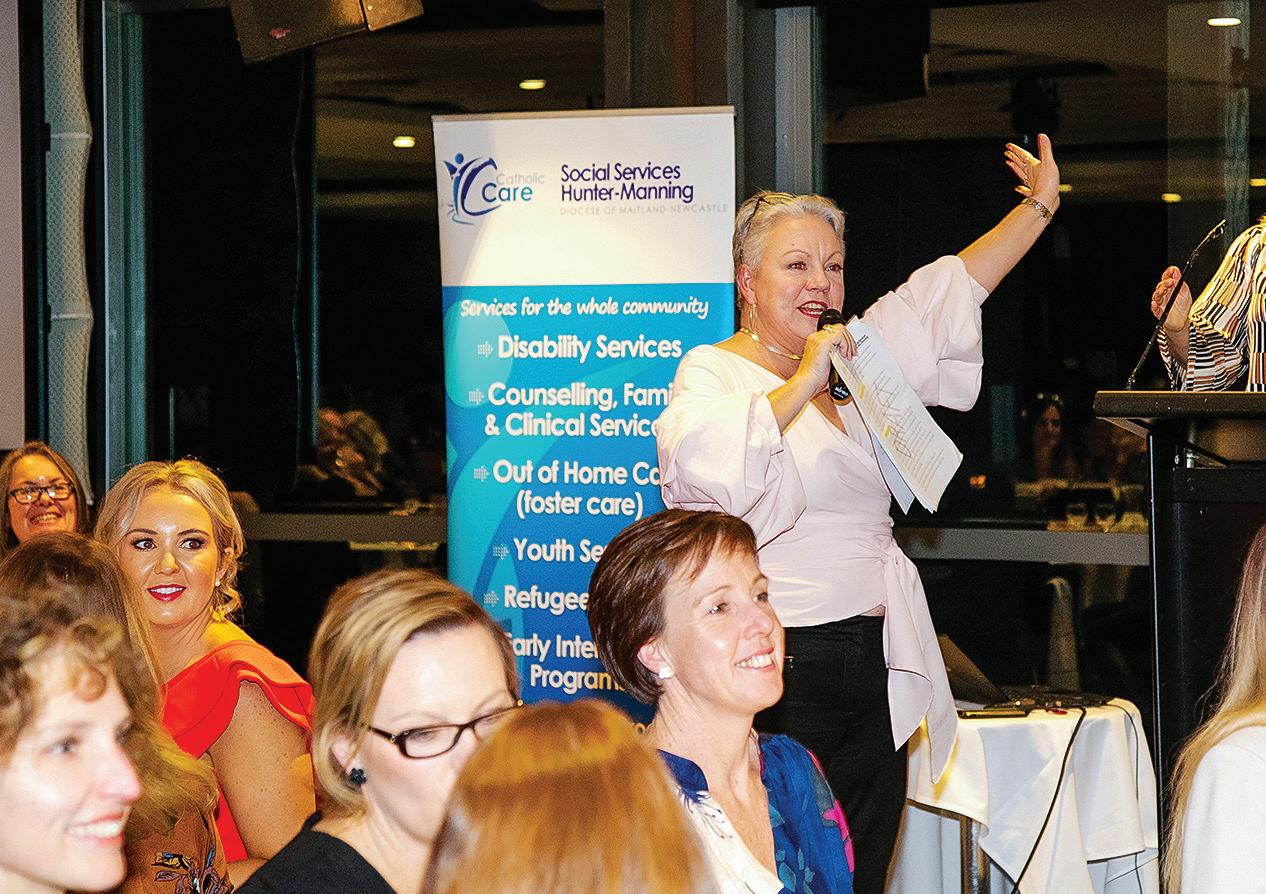
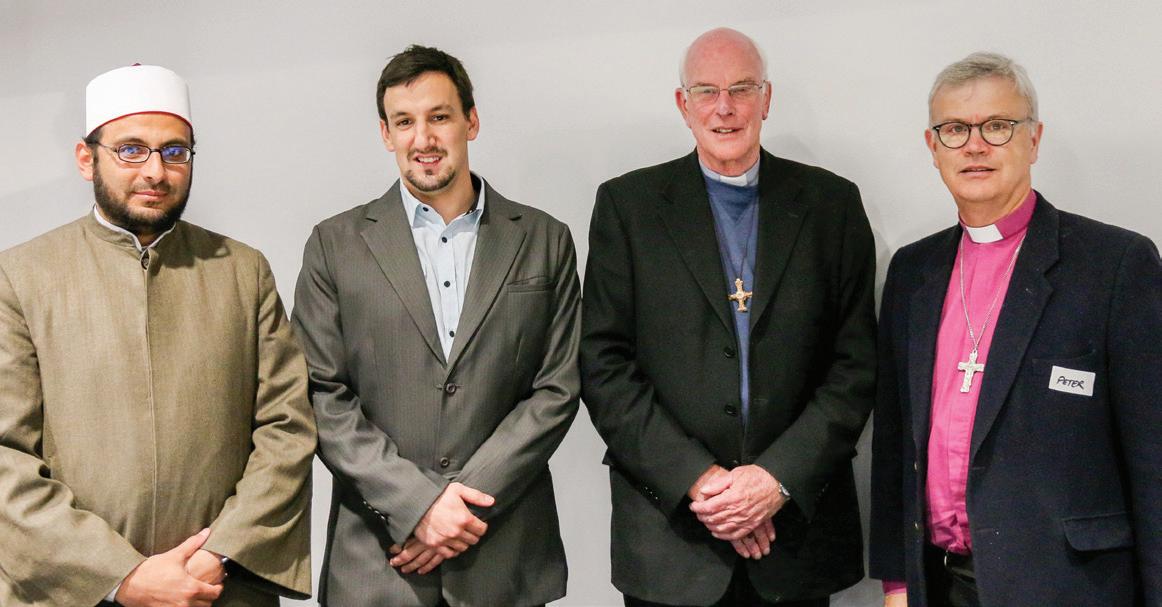
5. St Nicholas Early Education Cardiff Open Day
6. Called to Serve Mass in February
7. Interfaith Dialogue about Mary in Maitland
8. Deacon John Mahony at Chrism Mass
9. Celebrating St Patrick’s Day
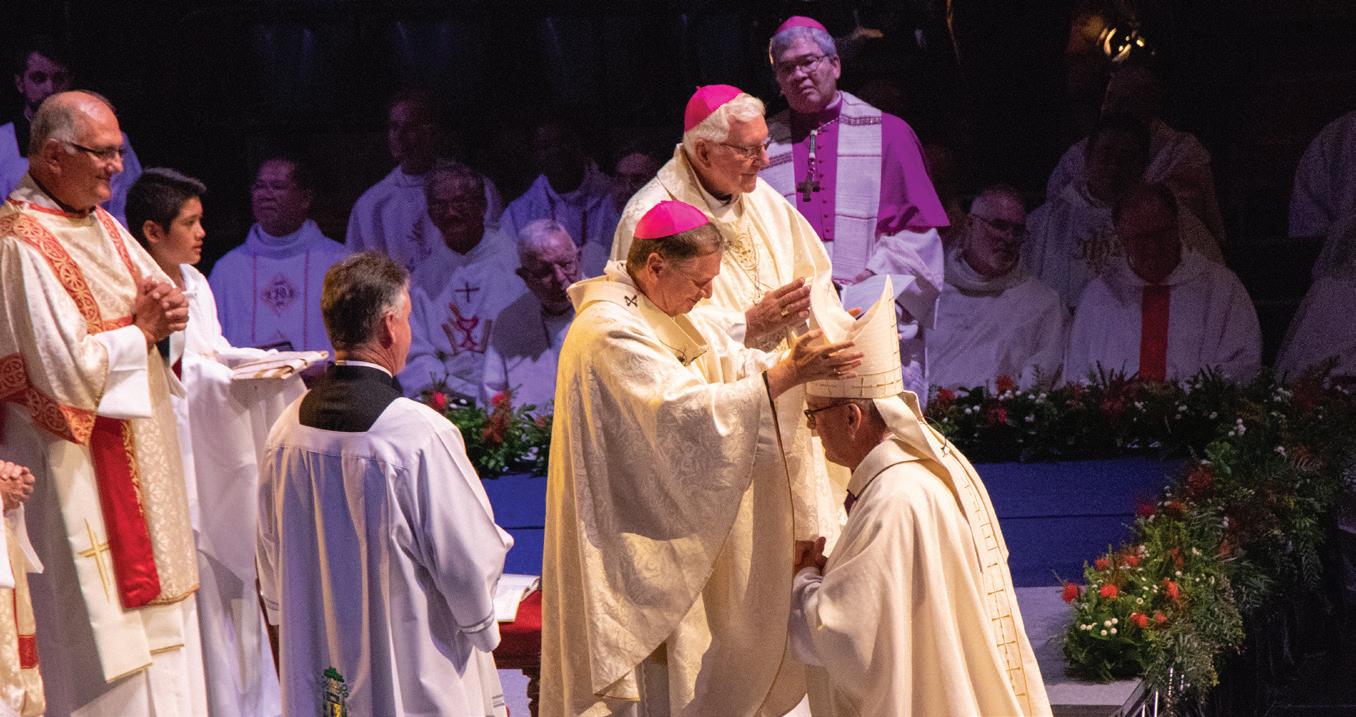
10. Our Vicar General Brian Mascord is ordained Bishop of Wollongong
12. Tracey Spicer hosted by CatholicCare in July speaking on empowering women
A great virtue of these Year in Review reports is that in their pages you will find quite close-up portraits of some of the people, activities and occasions that form the story of Maitland-Newcastle this year. To all those who visit the sick, prepare the children for sacraments, work in the tuckshop, make the cake or serve in a myriad of ways each day, Hail to you! and ‘Thanks’.
At the level of diocesan agencies, 2018 has once again seen an expansion of services. St Nicholas Early Education Centres have opened in Lochinvar and Cardiff, St Bede’s High School at Chisholm opened its doors to its first Year 7 group and new CatholicCare centres brought new services to Singleton and Muswellbrook. We also were finally able to open significant new estates of affordable housing at Boolaroo and Mount Hutton. On the other hand, it was a great disappointment that, with a construction boom in Newcastle driving up building costs, we were unable to proceed
with our affordable and social housing project on the old Empire Hotel site in Hunter Street.
One feature of the year has been our progress in meeting our needs for ordained ministers. We have three new deacons; John Lovell back from Rome, Anthony Coloma after his studies in the Philippines and pastoral engagements here, and Graham Fullick who continues his studies in Rome. Kevin Gadd is progressing towards ordination as a deacon, having been admitted as a Candidate this year, and Solomon Okovido, at the seminary in Sydney, by the time you are reading this, will be officially admitted as a Candidate for diaconate and priesthood. The two young men from Nigeria, Kingsley and Kizito, who have been experiencing Australian parish life and ministry in East Lake Macquarie this year, will pick up their seminary studies in Sydney in 2019. Our discussions with the Vocationist Fathers about establishing
a community here have progressed to the point of working though the immigration requirements. Fr Joseph Figurado has already come to us from Sri Lanka, intending to join the Diocese officially in due course.
On the other hand, Fr Brian Mascord left to become Bishop of Wollongong, which we celebrate and mourn in roughly equal measures. Fr George Mullappallil is about to leave us to follow his missionary calling elsewhere and he will be greatly missed.
And we mourn the loss of two priests who have passed since our last Year in Review, Glen Walsh and Harry Hughes.
I wrote last year of our plans to achieve greater unity and coherence in aspects of the diocese’s administration by having, for example, one diocesan finance directorate, one communications team and one information technology team, rather than separate teams in each agency of the Diocese; this has been challenging. It has
taken time and effort to bring things together and is still a work in progress.
That restructure in the administration is part of the larger plan known as ‘Many Parts. One Body. One Mission.’
Another central plank of that plan was the establishment of a Council for Mission as a prime body for consulting with a broad cross-section of the diocesan community about our diocesan activities. In part, this is intended to ensure that direction-setting and policy are not dominated by the concerns of the officials in headquarters but remain responsive to the needs and insights of the people on the ground. This Council has now been formed and has begun to meet.
Finally, 2018 has been the year of the Royal Commission Report, which was released just before Christmas 2017. The Truth Justice and Healing Council’s report to the bishops and religious leaders has also been released, as has the Church’s response to
the Royal Commission’s recommendations. The National Redress Scheme has also commenced operations. All of this is very welcome as a giant contribution to the protection of children in Australian institutions and to delivering a measure of justice to survivors of abuse. At a local level, we had the Lina’s Project acknowledgement of our history of abuse in 2017. Arising out of that was my commitment to an annual day of commemoration. This began in parishes this year and will grow with time and experience. There has also been a lot of work done on a fitting memorial to those who suffered abuse at the former Marist Brothers, Hamilton. I am glad to say that, shaped by a brief developed by survivors, a design for a reflective, public memorial at the College has been created and will be built in early 2019.
Meanwhile, our people in Zimmerman Services continue to provide a high level of training and oversight in child protection measures for all diocesan personnel. Their
Healing and Support team give assistance of many kinds to survivors and their families on a daily basis. It was gratifying to see the Royal Commission acknowledge the strides the diocese has made in this area. We also continue to reach settlements regularly with survivors of their claims against the diocese. We have not yet been notified of any claims against us under the National Redress Scheme.
I close with thanks to all who have contributed to the production of this Year in Review and more thanks to those whose good works provide its substance.
May God bless you all.
Most Reverend William Wright Bishop of Maitland-Newcastle
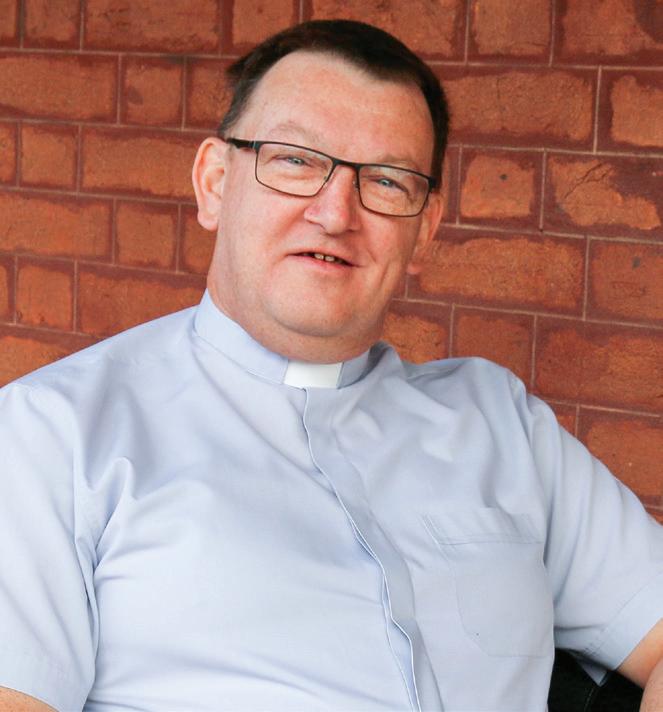
Twelve months ago, we were preparing to farewell my predecessor as Vicar General, Fr Brian Mascord, following his appointment as Bishop of Wollongong. The news of that appointment was still ‘sinking in’ as 2017 came to a close. It proved to be only one of the changes that our Church of Maitland-Newcastle would have to face as we navigated our way through 2018.
While changes in personnel and structures within the broad sweep of the Diocesan Curia were challenging, the one thing that hasn’t changed – and should never change – is the commitment that we all have to the mission that Jesus entrusts to us.
Whether we are parishioners or employees, whether we are involved in education, social services or pastoral ministries, whether we are clergy or lay, the one thing that should guide us is the recognition that as Church we are called to do one thing and one thing alone:
Go therefore and make disciples of all nations, baptising them in the name of the Father and of the Son and of the Holy Spirit. (Mt 28:19) That one command from Jesus to the
What remains important is the mission of the Church and only the mission of the Church. Everything else must serve the mission because that is the nature of the Church in the world.
disciples at the end of Matthew’s Gospel is as imperative today as it was when first spoken. It is at the heart of all that we are and all that we do, today as much as in days past.
We haven’t always lived up to that command. We have at times gotten it very, very wrong. But it remains the one thing we are called to and we are constantly required to discern how best we, the Church, can do that in the here and now, in this time and place.That process of discernment requires us to listen to the promptings of the Holy Spirit as we look to the future, being open to the possibility that the way things were once done might not be the way they will be done tomorrow or next year.
What remains important is the mission of the Church and only the mission of the Church. Everything else must serve the mission because that is the nature of the Church in the world.
Over 50 years ago, the bishops of the Church assembled for the Second Vatican Council and made this orientation very clear as they wrote in the Pastoral Constitution of the Church in the Modern World:
Inspired by no earthly ambition, the Church seeks but a solitary goal: to carry forward the work of Christ under the lead of the befriending Spirit. And Christ entered this world to give witness to the truth, to rescue and not to sit in judgement, to serve and not to be served.
(Gaudium et Spes, n.3)
And so we, the Church of MaitlandNewcastle, engage in early childhood, primary and secondary education. We respond to social needs and offer services to meet those needs. We evangelise and witness to our faith through innumerable initiatives of our parishes.
And we do all of that, and everything else, because we are Catholic, because we are Church.
Over the coming years, through the opportunities presented by the National Plenary Council and our own Diocesan Synod, the Church of Maitland-Newcastle and the broader Church in Australia will have the opportunity to take the time for deliberate discernment.
These opportunities to discern about how best we might respond to the call to ‘go and make disciples’ and respond to the needs of the world as Christ would respond are an opportunity not to be wasted. It will be exciting, it will be challenging, and it will require an openness to the possibility of more change for us the Church.
But most of all it will require all of us to commit ourselves again to the one thing that truly matters, the singular and indispensable mission of the Church.
Father Andrew Doohan Vicar General of Maitland-Newcastle
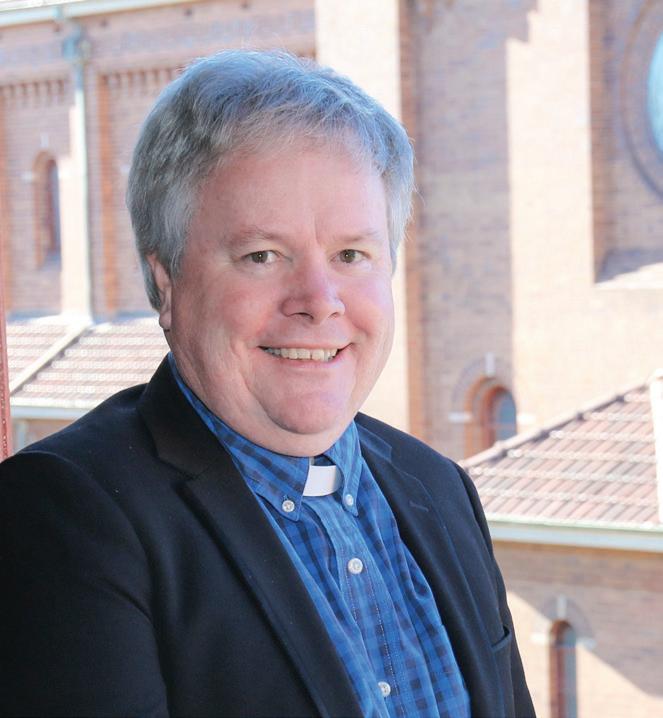
In March 2017 Bishop Bill announced a reformation of our Diocesan Curia. One Mission - One Body - Many Parts, was what the bishop called the initiative. I am aware that a number of other members of the Diocesan Leadership Team will also be reflecting on this initiative in this publication, for in truth it consumed most of 2017 and early 2018. Thus I wish to limit my reflections to the following areas.
I believe it is important to have some understanding of why such a change was needed. There were a number of factors.
In more recent years both the State and Federal governments have been changing many laws. These changes have seen the level of accountability increase and, of course, has led to an increasing amount of recourses needed for both the resulting paperwork and time that is associated with such compliance. The process for inducting
volunteers into parishes and other parts of our church is but one example. How do we ensure that we are compliant with government legislation?
Another motivator for the reformation was the fact that over the last 30 years or so, the staff in the central office had grown from a couple of dozen to a couple of hundred. In general terms, this growth was a response to a need and no overall diocesan plan was in place to manage and direct this growth. All of these individuals were doing a good job, but duplication, gaps and lack of unity in direction were all becoming factors impacting on our effectiveness as an organisation.
While these reasons are practical worldly reasons, we exist as a Church for another reason: so you must go and make disciples of all nations. Baptize them in the name of the Father and of the Son and of the Holy Spirit. Teach them to obey everything I have commanded you (Matthew 28.19-20). This is our primary task. While our central office (Diocesan Curia) fulfils an important function for us in the modern world, it is generally not the place where this Great Commission from Jesus occurs. Our central office exists to support, empower and guard those within our church that are engaged in this One Mission given to us by Jesus.
That being said we have a choice as to how we work and operate as a central office. While we can take best corporate practice and apply this to the way we structure ourselves, St Paul would put it in different
words: … suppose the foot says, “I am not a hand. So I don’t belong to the body.”
By saying this, it cannot stop being part of the body. And suppose the ear says, “I am not an eye. So I don’t belong to the body.” By saying this, it cannot stop being part of the body. If the whole body were an eye, how could it hear? … (1 Corinthians 12:1227). We as Church are One Body made up of Many Parts. For the body to work effectively all parts are important and all must work together.
The issues, challenges and questions contained in my brief summary are the topics that the Trustees and Diocesan Leadership Group discussed for some time before recommending to the Bishop that change was needed. Such change impacts on individuals. I wish to thank all those involved and effected for their time, commitment and engagement in the process. Having been through such a restructure in my own working life I can understand the individual impact. I also wish to acknowledge that the change has caused stress and anxiety for some and excitement for others. I look forward to another year of working with you to achieve the One Mission given to us by Jesus.
Rev Matthew Muller Chancellor and Canonical Advisor
Our central office exists to support, empower and guard those within our church that are engaged in this One Mission given to us by Jesus.
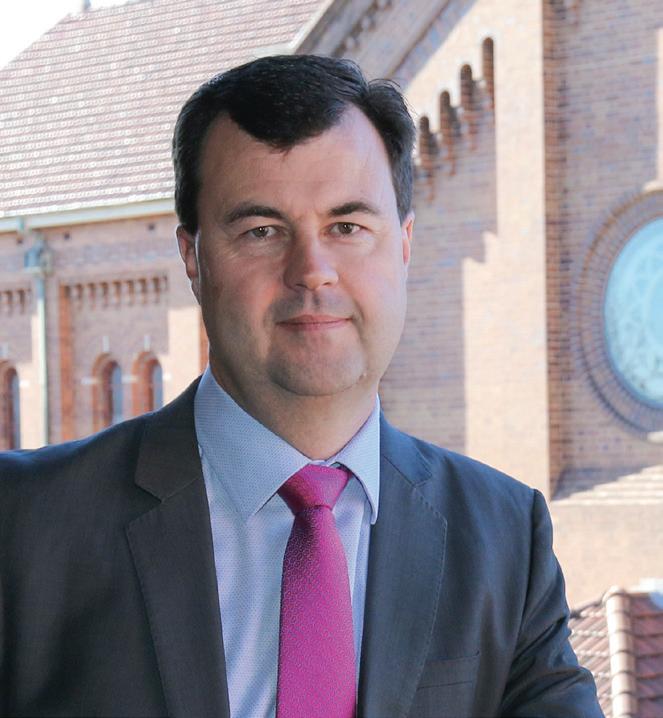
The past year has been an eventful period. The Diocese embarked on significant changes in how it operates and these have proven challenging but are beginning to show benefits. There is now greater collaboration and understanding of the many parts of the Church’s works. We have welcomed many new staff and farewelled a number of long-standing employees.
There has been recognition following the Royal Commission that governance must be strengthened. We have been working to improve processes, systems and skills in order to respond to the community’s expectations. This is ongoing but at the forefront of the changes being made to how the Diocese operates.
The protection of children and vulnerable people remains a key priority of the Diocese. Whilst Zimmerman Services has been a bedrock of this focus, we expect that the Church’s commitment to safeguarding children and vulnerable people will be tested by audits and detailed scrutiny. This is expected and welcomed and it will provide assurance and certainty that diocesan and parish activities are safe.
The Diocese also continues to meet the demands for healing and support for those affected by abuse. This is difficult and requires significant resources, but must happen. The Diocese has committed to the
National Redress Scheme and is working with a number of survivor groups to seek ways to work towards healing.
In terms of education we saw St Bede’s at Chisholm accepting its first students in early 2018. This was especially satisfying for me as I remembered walking around the paddocks that are now home to the most modern secondary school in the Diocese. We can also see the Catholic community which has developed around the Chisholm precinct with St Aloysius Catholic Primary School, St Nicholas Early Education and St Bede’s.
We have unfortunately had to defer the opening of Catherine McCauley College at Medowie due to delays in approvals. We believe this is the right decision to ensure the school can provide students with the best possible facilities and environment to achieve their educational outcomes. The new opening date is now 2021.
Expansion of St Mary’s Gateshead and St Joseph’s Lochinvar has been well received with strong enrolments and we look forward to some outstanding HSC results in 2019.
Gerard Mowbray has taken the reins in the Catholic Schools Office as Acting Director of Schools and we wish him well as he works with the school communities to meet their ambitious goals in 2019.
During 2018 we saw three new St Nicholas Early Education centres open at Cardiff, Chisholm and Lochinvar. These new early education services have been well received by their communities and we see the links with our schools and CatholicCare developing over time.
These centres are examples of some of our core beliefs as Catholics through the support of families, support of their dignity in work and the importance of children in our community. We anticipate opening a St Nick’s at Raymond Terrace in January 2019 with further centres opening at Branxton and Maitland later in 2019. Planning continues for other locations.
In the latter part of 2018 we have seen St Nicholas expand into before and after school care as well as vacation care. Such services have commenced at Glendale and Chisholm, with a number of other sites to follow in early 2019. This is an exciting development which again aims to support families and meet the needs of our local communities.
CatholicCare has seen its key programs continue to grow. The Permanency Support Program has replaced Out of Home Care and is now seeing additional children supported. Extensive communication and promotion has seen many new carers join the families who already offer vulnerable children a loving home.
With new offices recently opened in Singleton and Muswellbrook there are more opportunities for CatholicCare to deliver services to the community and tender for funding to expand into new areas. Led by Gary Christensen, there has been significant planning undertaken to prepare CatholicCare for the changing social services environment.
Pastoral ministries are preparing for the Plenary Council in 2020. This opportunity for the Church to listen to the community is probably one of the most significant events in the history of Australian Catholicism. We hope that the broader community will take this chance to “listen to what the spirit is saying” and share their input with the plenary.
As I’ve mentioned, the past year has been frantic and constantly changing which has thrown up daily challenges. Nonetheless, we are blessed with people willing to meet these challenges and provide education, social services and other vital supports to our community. For this we are grateful.
Sean Scanlon Vice ChancellorAdministration
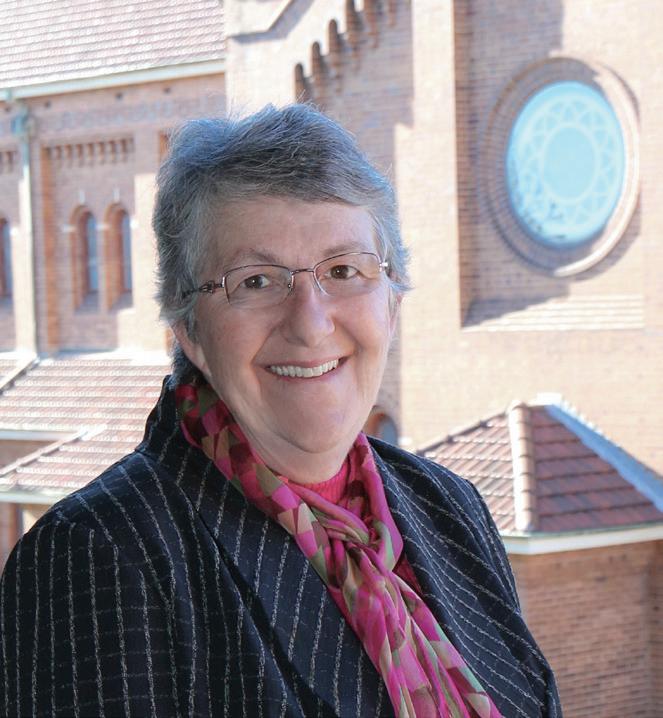
One cannot help but notice the many church buildings which form part of our landscape, either for worship, education or community services. Our society would be the lesser if those who work or minister from these locations no longer provided such services of pastoral care, rituals, teaching or outreach. Each local community must have people in it who are socially and spiritually responsible for the well-being of those who live in that place, the place they call home.
For centuries the Catholic Church has relied upon the parish to be the eyes, ears, hands, feet and heart of the community in which it finds itself. In 2013, Pope Francis wrote the following about parishes in Evangelii Gaudium (n.28):
The parish is not an outdated institution; precisely because it possesses great flexibility, it can assume quite different contours depending on the openness and missionary creativity of the pastor and the community. While certainly not the only institution which evangelizes, if the parish proves capable of self-renewal and constant adaptivity, it continues to be “the Church living in the midst of the homes of her sons and daughters”. This presumes that it really is in contact with the homes and the lives of its people, and does not become a useless structure out of touch with people or a selfabsorbed group made up of a chosen few.
The parish is the presence of the Church in a given territory, an environment for hearing God’s word, for growth in the Christian life, for dialogue, proclamation, charitable outreach, worship and celebration. In all its activities the parish encourages and trains its members to be evangelizers. It is a community of communities, a sanctuary where the thirsty come to drink in the midst of their journey, and a centre of constant missionary outreach. We must admit, though, that the call to review and renew our parishes has not yet sufficed to bring them nearer to people, to make them environments of living communion and participation, and to make them completely mission-oriented.
Our diocesan services exist to assist in making real the Pope’s vision of a parish which serves the local community. The question that is being asked by the Plenary Council – What do you think God is asking of us in Australia at this time? – requires some big picture responses but it will be at the parish level that renewal takes place. Our Diocese will use the consultative process of preparing for the Plenary Council for our own 2019 Diocesan Synod.
The purpose of the newly formed Council for Mission, which is the key advisory strategic group in the diocese to the Bishop, is to provide the prophetic voice of the Spirit and a broader vision, so God’s mission is revealed and lived out actively within and outside the local church. A representative group have been invited to draw on their experiences and wisdom to ignite and reenergise our direction forward.
At the diocesan level, pastoral ministries give voice to ecumenical and interfaith initiatives, social justice networks, ministering to and with young people, faith formation opportunities and resourcing communities liturgically. Chaplain ministers are present in our hospitals, gaols, at the port, in sport, in industry, in the armed services, at the university and within CatholicCare. We provide support to those who minister to
For centuries the Catholic Church has relied upon the parish to be the eyes, ears, hands, feet and heart of the community in which it finds itself.
children in our parishes and relationship education to those exploring marriage, while also providing grief and loss programs, and Family Ministry Co-ordinators seek to enhance the building of relationships within parishes and their schools.
We also connect with other Catholic organsiations who serve the community locally, nationally and globally such as Caritas, Catholic Mission, Calvary Mater Hospital, St Vincent de Paul, Catholic Healthcare, Catholic Women’s League, Council for Australian Catholic Women, Cursillo etc.
Our baptismal response is to go, make, baptise and teach, given as the great commission in the Gospel of Matthew (28:18 – 20):
And Jesus came and said to them, “All authority in heaven and on earth has been given to me. Go therefore and make disciples of all nations, baptizing them in the name of the Father and of the Son and of the Holy Spirit, and teaching them to obey everything that I have commanded you. And remember, I am with you always, to the end of the age.”
Teresa Brierley Vice Chancellor Pastoral Ministries
The year 2018 will be most remembered for the implementation of system growth, improvement in leadership and service to our school communities. The personnel from the Catholic Schools Office, comprising Teaching and Learning, Religious Education and Spirituality, the Secretariat and the Office of Director have maintained exceptional leadership and service to its schools in a time of substantial change.
The need for commitment and support for Catholic education was certainly necessary as the impact of the findings of the Royal Commission into sexual abuse became evident in the community. As well, the ongoing debate over state and national government policy for funding for lowfee-paying Catholic schools also required engagement, lobbying and attention to ensure Catholic schools remained open and available to the community.
School calendars reflected very busy and vibrant activities in liturgy, prayer, social justice, classroom teaching, sporting and cultural events. Much of the work goes unrecognised but the effect on the students and their parents is considerable.
We are also making a major investment in gifted education, having introduced a program aimed at identifying high-achieving students. This program is much like university tuition and we have appointed 20 specialist mentors.
We have also established online virtual academy for these students as part of this program. The academy has 35 chosen students from years five, six and seven enrolled in the virtual academy at the end of term two. The program will include year eight students in 2019.
Despite a decline in NSW Catholic school enrolments, our schools in the Diocese of Maitland-Newcastle have seen a 1.8% increase in enrolments with the opening of St Bede’s Chisholm, the expansion of St Joseph’s Lochinvar and St Mary’s Gateshead to accommodate senior students.
Students from our schools in the Diocese of Maitland-Newcastle have achieved some outstanding results in the HSC in 2018 with one of our students in the First in Course list, seven in the All Rounders list and 146 in the Distinguished Achievers list.
Clayton Carlon from All Saints’ College, St Mary’s Campus, Maitland achieved First in Course in New South Wales for Industrial Technology.
Other students in the Top Course Mark in the state were:
f Bradley Montroy of All Saints College, Maitland – second in Engineering Studies
f Alex Vaughan of St Catherine’s, Singleton – fifth in Industrial Technology
f Sophie Derkenne of All Saints College, Maitland – fifth in English (Extension Two)
f Sydney Slade of All Saints College, Maitland – eighth in Geography
f Matthew Parvin of St Clare’s in Taree –ninth in Industrial Technology
On the All Rounders list there were five students from All Saints’ College, Maitland and two students from St Francis Xavier’s College, Hamilton. They were:
f Lily Cains - All Saints’ College, Maitland
f Clayton Carlon - All Saints’ College, Maitland
f Sophia Derkenne - All Saints’ College, Maitland
f Bradley Montroy - All Saints’ College, Maitland
f Sydney Slade -All Saints’ College, Maitland
f Jasmine Sullivan - St Francis Xavier’s College, Hamilton
f Hannah Hickey - St Francis Xavier’s College, Hamilton
On the list of students who achieved Band 6 results there were 29 students from St Catherine’s Catholic College, Singleton, 34 students from All Saints’ College, 37 from St Francis Xavier’s College, 21 from St Joseph’s High School, Aberdeen, 21 from St Clare’s High School, Taree and 17 students from St Paul’s Catholic College, Booragul.
Diocesan Dux, for achieving the highest ATAR in all our schools, was Jasmine Sullivan of St Francis Xavier’s, Hamilton.
The generosity of the Teachers Helping Teachers Fund assisted Tonga through the creation of a central Tongan Schools Office and two containers of equipment to refurbish classrooms after cyclones ravaged the islands.
We need to celebrate the gift of education delivered by our schools in the Diocese. We also need to celebrate the ordinary, the fundamental day-to-day classroom teaching and the effect it has on young lives.
The ordinariness of school life where one sees the extraordinariness of the Holy Spirit at work with those who continue to serve the Church in such a meaningful way every day when they serve in the ministry of Catholic education.
Within this context and despite the challenges that beset education, 2018 has been a vibrant year in Catholic schools with the CSO, staff, parents, students, clergy and supporters maintaining a strong future for the education delivered by our schools.
Gerard Mowbray Acting Director of Schools
At CatholicCare our mission is to listen and respond to the needs of local communities by working together to build a stronger, fairer and kinder society that values children, young people and families. Through Christ’s mission, we seek to provide opportunities for people to realise their full potential.
This year has been one of tremendous change within the social services sector. As with all change, it presented our organisation with great opportunities and a few challenges. As I reflect on the year that was I feel very proud of the CatholicCare team including our staff, carers and volunteers. I am particularly proud of how each team member has navigated the changes and the positive outcomes that have been achieved for vulnerable people. Our team is passionate, engaged and committed to undertaking the good works of the church. Throughout the year we have worked diligently to achieve the outcomes listed in our 2017-2020 Strategic Plan. The fruit of this work can be seen in the increase in the services we offer, after additional funding was secured in a number of program areas across the Diocese.
Some of our many highlights throughout the
Our team is passionate, engaged and committed to undertaking the good works of the church.
year include: the receipt of a new five-year funding agreement with NSW Family and Community Services to provide permanency support programs; our Brighter Futures early intervention child protection team becoming accredited as SafeCare practitioners; presentations from internationally acclaimed autism expert Dr Tony Attwood; the volunteers at the Taree Community Kitchen serving over 10,000 meals to our vulnerable friends in the community; the implementation of the MOJO mental health support groups in our Personal Helpers and Mentors program; a significant increase in clients accessing our clinical and counselling programs; and our ongoing collaboration with the Newcastle Knights, with players spending time with our NDIS participants and young people in the Supported Independent Living program.
Being responsive to local community needs is at the heart of everything we do and this is reflected in the opening of our Upper Hunter offices in Singleton and Muswellbrook, where we have received a new three-year funding agreement from NSW Family and Community Services for the provision of family preservation packages in the Upper Hunter. The opening of our Muswellbrook office is a demonstration of our commitment to be part of the local community, as we welcomed a number of non-government agencies to join us as co-tenants in our office to create a community hub of likeminded organisations.
Collaboration with parishes and agencies
of the Diocese is an essential part of how we respond to the Bishop’s call for us to embrace Many Parts, One Body, One Mission. Our commitment to collaboration is reflected in our partnership with Holy Name Parish in Forster and St Patricks Parish in Singleton where we established offices in colocation with both parishes. Our collaboration with the Catholic Schools Office is reflected in the establishment of our newest program known as Beyond the Gates in partnership with St Mary’s College Gateshead, our parenting support programs at St Joseph’s Primary School in Taree and the involvement of students from St Clare’s’ High School, Taree at the Taree Community Kitchen.
As a recipient of government funds, provided by the tax payer, it has been essential that we demonstrate good financial stewardship to ensure our ongoing sustainability. This has meant making some difficult decisions about service direction, but our participant’s best interests always remain at the forefront of our thinking. The work that we do in service of the church would not be possible without the ongoing support of our Bishop and the CatholicCare Advisory Board and I thank them for their direction, guidance and support throughout the year.
Gary Christensen Director, CatholicCare Social Services
In 2018 there were 58 Catholic Schools in the Diocese of Maitland-Newcastle
is the total number of Catholic school students enrolled in 2018 19,301
21
400,000
154,475
Catholics in the region (2016 census) Parishes in the Diocese of MaitlandNewcastle 38
80
Ministries of the diocesan church
66 Clergy There are currently
24 incardinated, 11 international, 0 religious, 1 on loan, 17 retired and 13 deacons
12 Religious congregations
1,884,648
The Five Foundations inform the ways the people of God in our diocese are disciples. The stories and images on the following pages are representative of people working across parishes, schools, social services, religious congregations and chancery ministries. We acknowledge the myriad ways in which the Catholic Church provides vital outreach within our communities. At the centre of each story is Jesus. The following pages, and the quotations from Pope Francis on this page, illustrate just a fraction of the many ways in which the people of the Catholic Diocese of Maitland-Newcastle live their faith every day.
GATHERS PEOPLE FOR PRAYER, SACRAMENT AND LITURGICAL CELEBRATION... IS EUCHARISTIC IN LIFE AND WORSHIP.
“Often, in face of a burden of life or a situation that pains us, we try to talk about it with someone who listens to us, with a friend, with an expert... It is a great good to do this, but let us not forget Jesus! Let us not forget to open ourselves to Him and to tell Him about our life, to entrust people and situations to Him.”
Angelus 9 July 2017
ENGAGES PEOPLE IN THE TRANSFORMATION OF SOCIETY - OUTREACH THROUGH MERCY AND JUSTICE - TO BUILD THE KINGDOM OF GOD.
“I prefer a Church which is bruised, hurting and dirty because it has been out on the streets, rather than a Church which is unhealty from being confined and from clinging to its own security. I do not want a Church concerned with being at the centre and then ends by being caught up in a web of obsessions and procedures.”
Evangelii Gaudium n49.
FOSTERS COMMUNITY, HOSPITALITY, WELCOME AND RESPECT... AN IDENTITY GROUNDED IN COMMUNIO.
“Jesus fell in love with our smallness and it is for this reason he chose us. He chooses the smallest – not the greatest, the smallest –and reveals himself to the little ones. We have been chosen because of love and this is our identity. If you want to understand something of the mystery of Jesus, lower yourself” Feast of the Sacred Heart 2017
FACILITATES SPIRITUAL GROWTH AND PROMOTES EMPOWERMENT THROUGH EDUCATION AND FORMATION.
“I invite all Christians, everywhere, at this very moment, to a renewed personal encounter with Jesus Christ, or at least an openess to letting him encounter them; I ask all of you to do this unfailingly each day. “
Evangelii Gaudium n3.
FOSTERS EFFECTIVE CHRISTIAN LEADERSHIP, COMMUNICATION, ORGANISATIONAL AND MAINTENANCE STRUCTURES.
“Pastoral ministry in a missionary key seeks to abandon the complacent attitude that says: “We have always done it this way”. I invite everyone to be bold and creative in this task of rethinking the goals, structures, style and methods of evangelization in their respective communities.”
Evangelii Gaudium n33.
BY AMY THEODORE
For the past 10 years, a successful initiative between Mai-Wel LabourForce Solutions (Mai-Wel) and the Catholic Schools Office (CSO) has been helping students with a disability who are about to leave high school, find an employment path that is right for them.
The initiative was inspired by the then Principal of Holy Spirit Primary School, Kurri Kurri, Roger Whitney, who approached Mai-Wel about providing employment to a young person with a disability who was volunteering at the school.
Following the successful employment of the volunteer at the school, Mai-Wel approached the CSO to propose an ongoing partnership to help former Catholic school students with disabilities and/or those
experiencing disadvantage, by placing them in Catholic schools throughout the Diocese to complete traineeships and gain qualifications.
One of the trailblazers of the initiative was Jarrod Lantry, a former student of St Joseph’s College, Lochinvar. Jarrod has an intellectual disability and was approaching the end of his education journey when he obtained a grounds maintenance traineeship at St Joseph’s through the initiative.
Upon completing the traineeship, Jarrod was successful in securing permanent employment at the College as a member of the grounds staff, where he still works today. Every traineeship is designed around the needs and capabilities of the student and consists of 15 hours a week over a twoyear period, helping students who face challenging circumstances to reach their full potential. At the end of the traineeship, MaiWel assists students in securing a place of
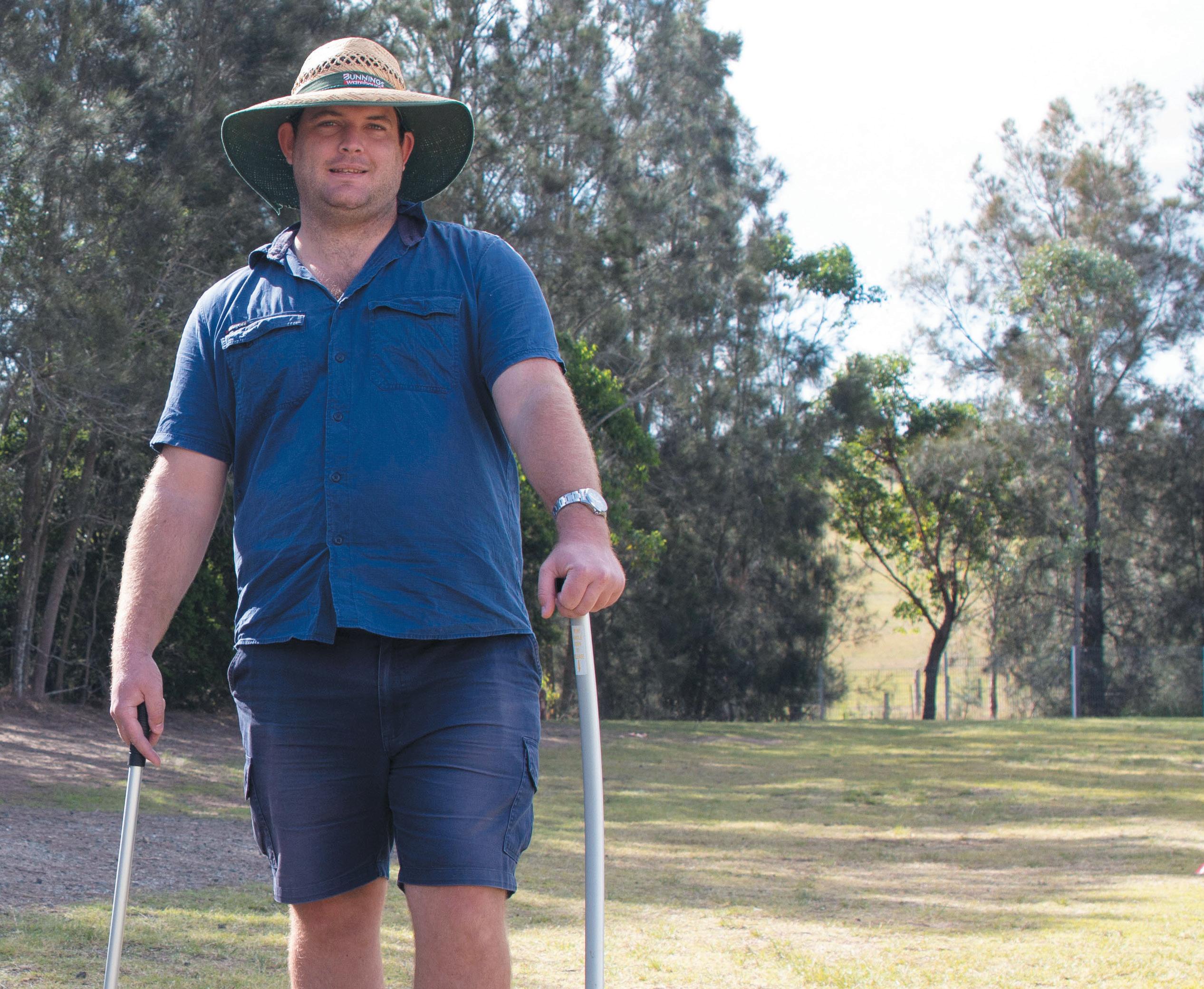
employment to enable them to continue on their career pathway.
Not only do the trainees improve their vocational skills, they also gain increased confidence and a sense of self-worth, helping them see how they can be a part of, and make a difference in, their communities. The traineeship offers experience in real work environment. This allows the trainee to gain skills which they can transfer to a range of different occupations, while developing their social and workplace communication skills.
Mai-Wel staff provide support to trainees both on and off site during this two-year period, to ensure that they develop the necessary skills and work ethic to succeed.
Over the course of the training, support and assistance is gradually withdrawn as the trainee’s competence increases. Mai-Wel also supports the CSO in providing access to the Disabled Australian Apprenticeship Wage Scheme, helping to offset wage costs.
“This initiative helps to provide self-esteem building opportunities for young people progressing through the Catholic education system,” said Industry Engagement and Strategic Partnerships Facilitator at Mai-Wel, Tracy Forbes.
“The CSO traineeship arrangements and partnership provide a great opportunity to give these young people that first step on a career path and we will continue to work with the CSO, host schools and trainees to ensure
the continued success of this initiative.”
To date, the initiative has been able to assist 12 students in furthering their careers, with a majority of the completed traineeships based in grounds work or administration.
“It’s an outstanding initiative and it’s been a fabulous journey,” said Assistant Director for Secondary School Projects, Gerard Mowbray.
“It’s about creating a pathway for students who have some employment challenges. I think it creates quality outcomes for them and quality outcomes for our schools; the schools benefit by having an experienced pair of hands they wouldn’t normally have had.”
BY BRITTEN THOMPSON AND ELIZABETH SNEDDEN
In an effort to better serve residents of the Upper Hunter, CatholicCare HunterManning opened brand new offices in Muswellbrook and Singleton this year.
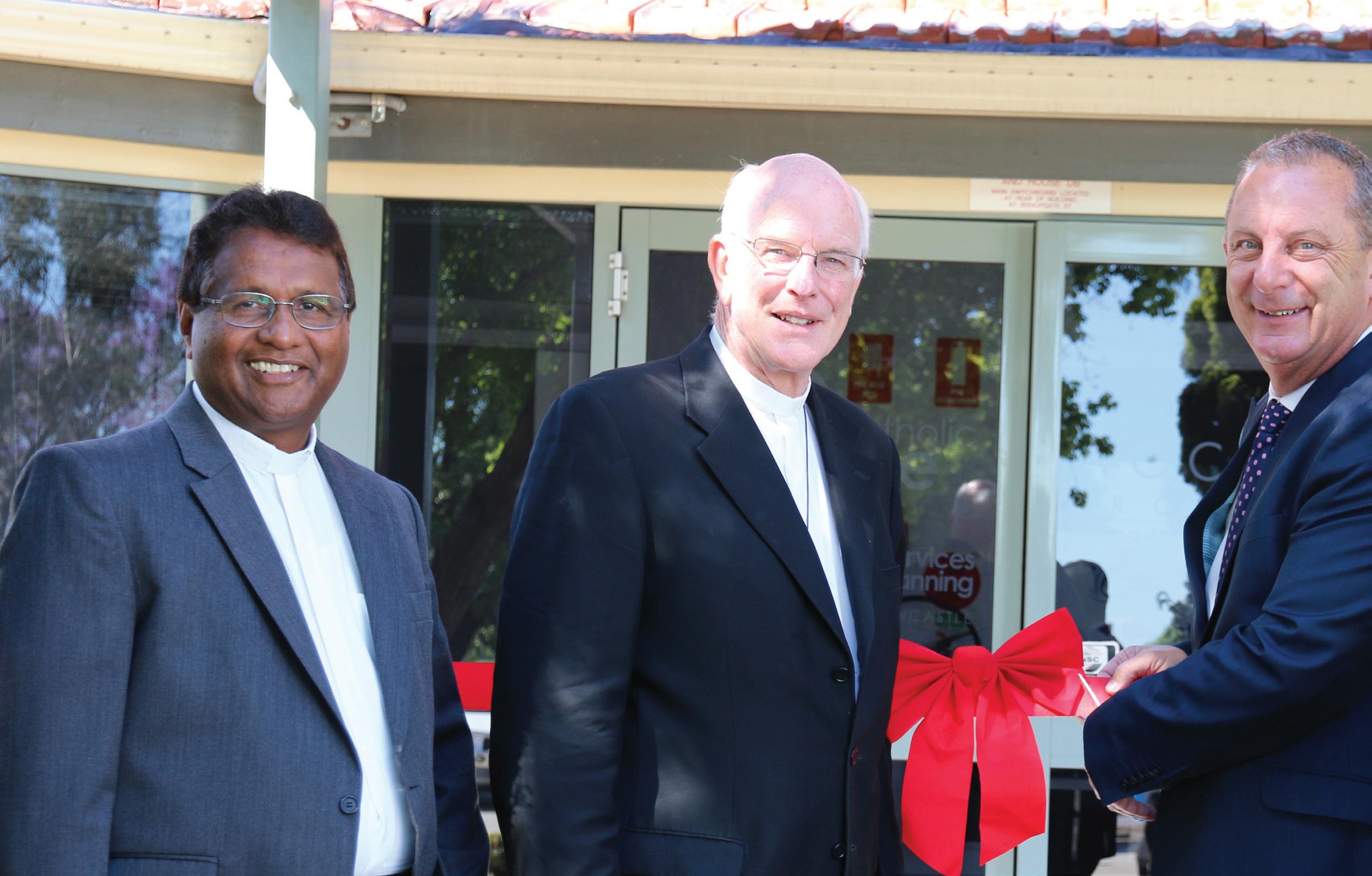
Bishop Bill Wright and Upper Hunter MP, Michael Johnsen, were on hand to celebrate the opening of the Muswellbrook Community Hub, which brings CatholicCare, Access Programs and One Door Mental Health under one roof.
“Opening our Muswellbrook office enables CatholicCare to extend the services we provide the wider Hunter community in general, but in particular to the number of young people and children who need our support,” said Gary Christensen, Director of CatholicCare Social Services.
“An increasing number of children are unable to live with their birth families, and the situation is now at crisis point.
“In NSW, there are more than 18,000 children and young people living in out of home care.
“In line with recent changes announced by the NSW government, CatholicCare is working in local communities to recruit and assess carers and hopefully entice more locals to consider becoming carers, which will assist in addressing the massive shortfall across regional NSW.”
Upper Hunter MP, Michael Johnsen and Bishop Bill Wright also officially opened CatholicCare Social Services HunterManning’s newest office in Cambridge Street, Singleton.
Through this new office, CatholicCare will expand on their existing services to provide disability support, counselling and Permanency Support Programs (foster care) to those in need in the Upper Hunter region.
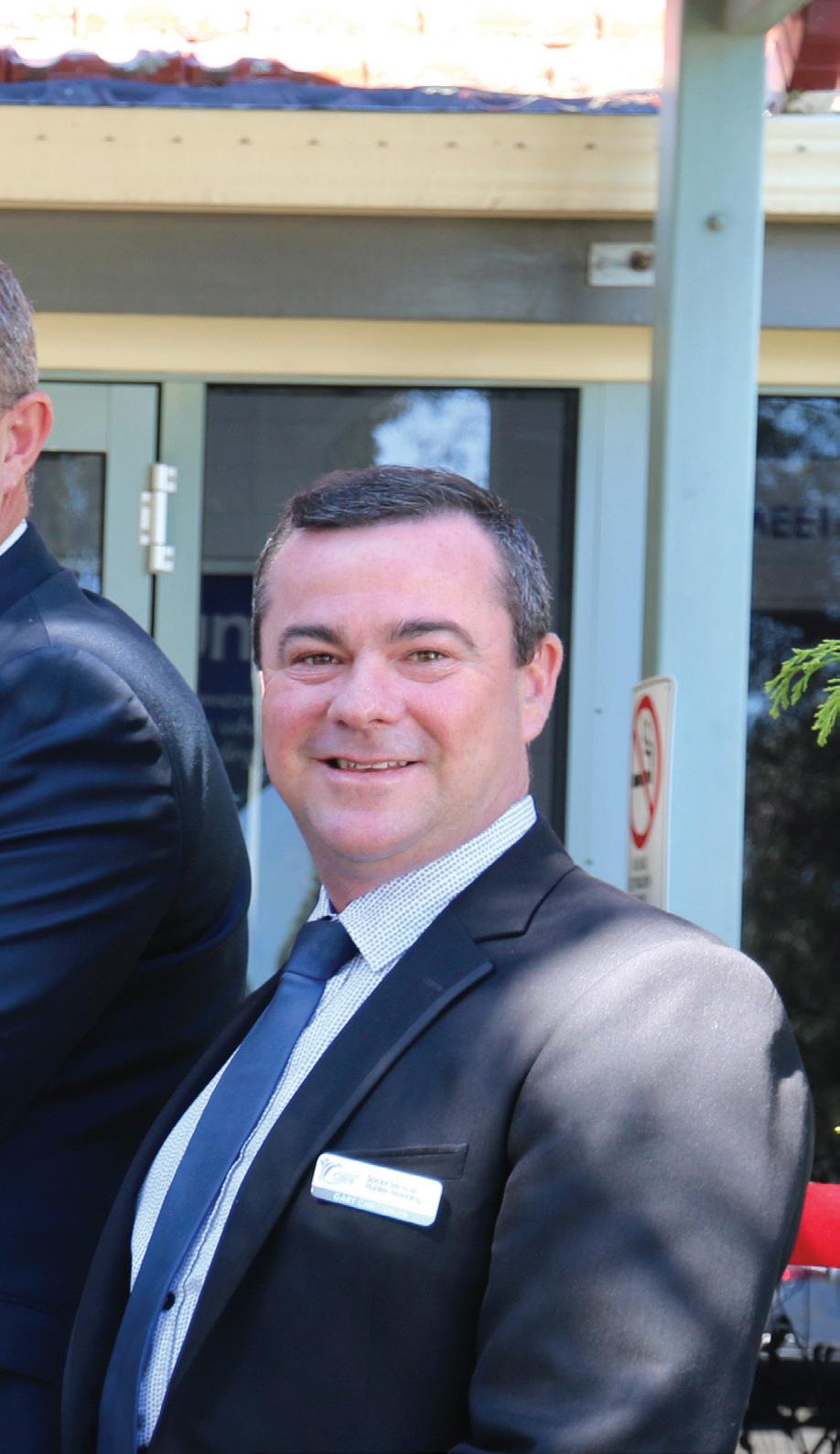
Over 70 people attended the Singleton opening including representatives from Singleton and Branxton Parish, Department of Family and Community Services, Singleton Council, Singleton Chamber of Commerce, St Catherine’s Catholic College, the Diocese of MaitlandNewcastle, St Nicholas Early Education Centre, the Catholic Schools Office and CatholicCare.
“The opening of the new office is CatholicCare’s response to the strong interest from the Upper Hunter community in our social services, particularly from those interested in becoming foster carers, as well as to those seeking to access affordable counselling and clinical services,” said Gary.
“The new office also enables us to extend the services we provide the wider Hunter community in general but in particular to
the number of young people and children who need our support.
“There are almost 20,000 children and young people in New South Wales in Permanency Support Programs (foster care) – and of these 49% live in the Hunter and Central Coast. By working with the local community, we want to help these children and young people.
“Because of the changing landscape of social services at both a national and state level, including the recent introduction of the National Disability Insurance Scheme, CatholicCare’s aim is to diversify the services we provide in order to meet the needs of the people we support.
“Through our Permanency Support Programs, disability services, counselling and clinical assessments, CatholicCare will continue to connect with those children and young people in the community who are most in need of our services through offices such as the new one at Singleton.
“From actively listening when children and young people aren’t feeling all that great, through to providing a supportive and safe place for children, young people and those living with a disability, CatholicCare’s aim is to play its part in helping such children and young people reach their full potential.”
BY ANNE CAMPBELL
The Catholic Development Fund (CDF) has had another successful year in supporting schools, parishes, agencies and associates of the Diocese.
The CDF has planned to fund $43 million for projects relating to construction of new school buildings, purchase of school lands and significant school building upgrades including Stage 1 of the construction work at St Bede’s Chisholm, Stage 1 at St Mary’s College Gateshead and a refurbishment of the St Lawrence Flexible Learning Centre in Broadmeadow.
In addition, the CDF has helped fund the opening of three new St Nicholas Early Education Centres in Chisholm, Cardiff and Lochinvar and will provide further funding for six more centres to open
over the next two years, at an estimated cost of $15 million.
There has been significant regulatory change that has impacted the CDF throughout 2018 and this has impacted on the services the CDF has been able to provide to our clients. We would like to thank our loyal customers for their continued support of the CDF and the Diocese.
The surplus funds from the CDF are vital in supporting the Pastoral works of the Diocese which help ensure we remain a local church on mission.
The CDF aims to provide competitive rates on our Term Investments and invites you to contact the friendly staff to provide more details.
BY AMANDA SKEHAN
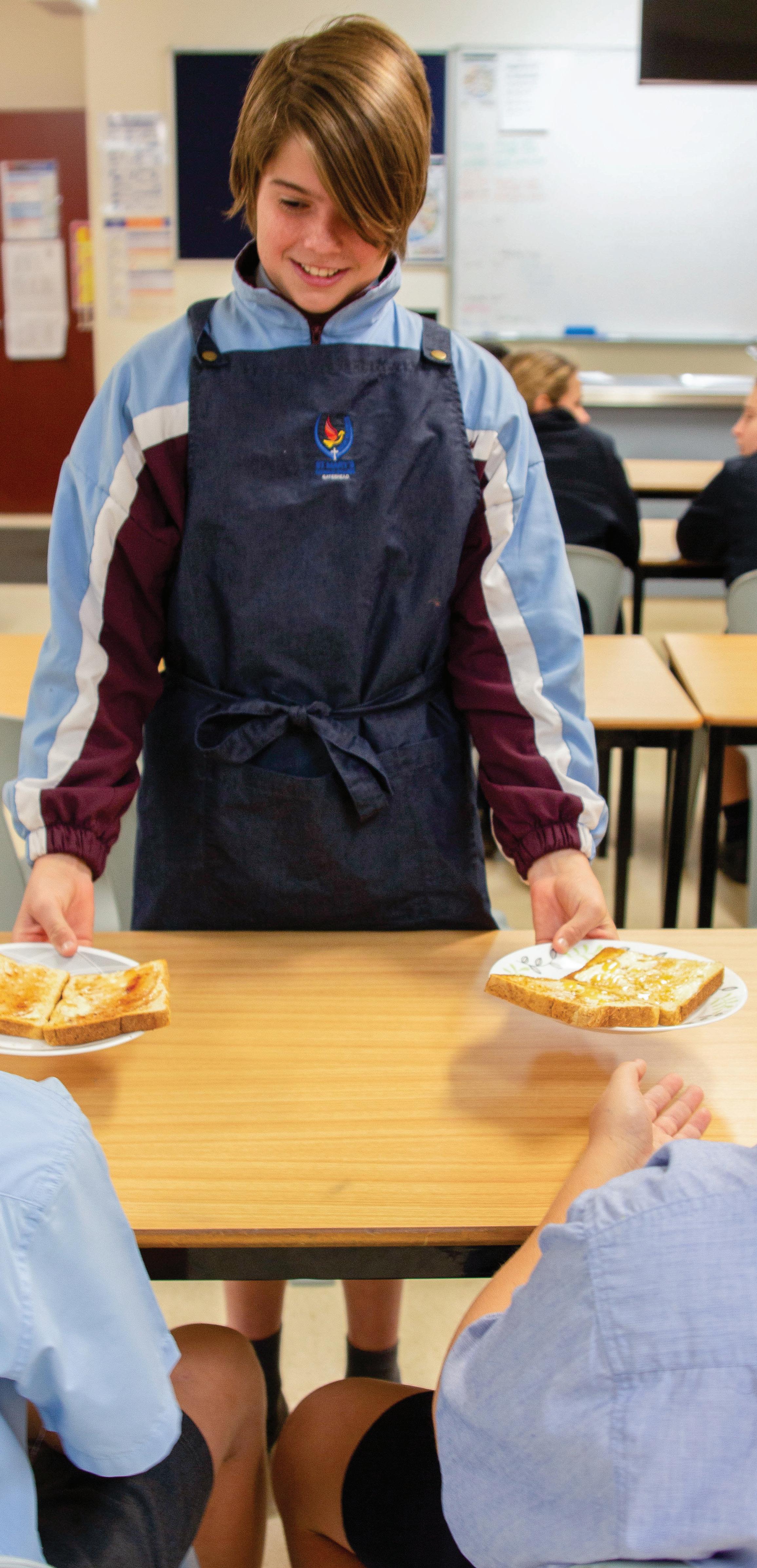
This year the school community of St Mary’s Catholic College, Gateshead, will celebrate the 10th anniversary of the operation of its Breakfast Club.
Launched in 2008, the Breakfast Club was created to ensure students were getting the most important meal of the day, enabling them to be more focused in their morning lessons.
After approaching the Red Cross to gain an understanding of how the Breakfast Club could operate, the concept was initiated by then Assistant Principal, Louise Roach; Year Co-ordinator, Patrick Beisler; Food Technology Assistant, Christine Shaw and supported by many generous students and staff, most notably Janice Lawrence and Debbie Hill.
Thanks to Christine’s tireless commitment to co-ordinating the program, along with continual support from Janice and Debbie, the Breakfast Club continues to operate smoothly and is able to feed 100 to 180 students each week.
“So many students and staff have shared in the running of the breakfast club,” said Christine Shaw.
“It is the collective effort of so many people operating out of a spirit of generosity and service which we will be celebrating during the 10th anniversary.”
Brian O’Neill, from the local conference of St Vincent de Paul, has been instrumental in the Breakfast Club’s operation from the beginning, ensuring students have fruit to eat every morning. The college receives two boxes of fruit each week, which is available free of charge to all students.
The Breakfast Club also provides the opportunity for the school community to give real meaning to the college motto, ‘Ready to Serve’. Staff and students work side by side to provide a service to students in need.
Students delight in being given the responsibility of service. They continually rise to the occasion to help create a relaxed, caring and inclusive environment that ensures everyone feels welcome.
“Community means to care” (Jean Vanier) and this is demonstrated in a profoundly positive way through the operation of the Breakfast Club – and it is a gift to be celebrated,” said Principal of St Mary’s, Larry Keating.
BY AMANDA SKEHAN
“It is that unity and difference that we celebrate tonight as we assemble to pray for the inclusive and integrated approach to children with special needs,” the words of Bishop Michael Malone’s homily 21 years ago, are as relevant now as they were then.
The Diocesan community gathered together to celebrate the Annual Special Needs Mass at Holy Spirit Church in Kurri Kurri. The perfect hosts for the Mass were parishioners, students, family, friends and staff of Holy Spirit Primary School, Kurri Kurri, who welcomed all to share Mass, presided by Bishop Bill Wright.
“Tonight we gather to celebrate the breaking of bread with our Lord and God,” said Director of Schools, Dr Michael Slattery.
“We gather to celebrate diversity, and inclusivity and difference. It is a hallmark of being fully human.
“It is what Catholic schools do as their moral purpose by taking the message of Jesus and applying it to caring and loving others.
“Tonight we celebrate being differently abled.”
Bishop Bill spoke of arriving in this Diocese from Sydney and being highly impressed by the standard of care and support offered to students with special needs in our community.
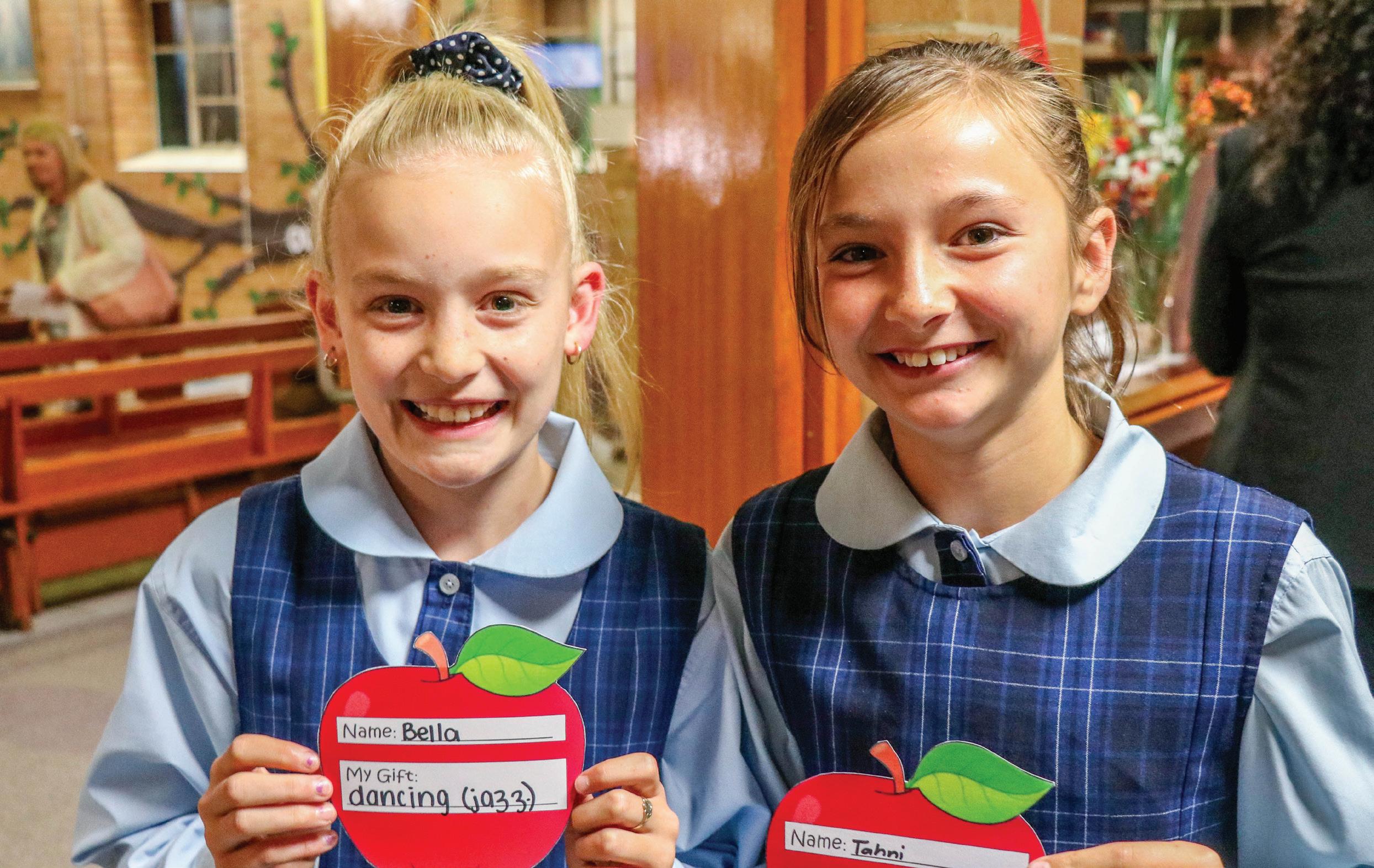
As part of the theme for this year’s Mass, students from around the Diocese were invited by principal, Paul O’Heir, to place a
piece of fruit with their name and spiritual gift written on it on the artwork trees that lined the walls of the church, signifying sharing their ‘gift’ with others.
The school choir and band kept the congregation enlivened with hymns, celebrating our differences and how those differences define us and our community.
The Special Needs Working Party and the Federation of Parent and Friends Association looks forward to proudly supporting the 22nd Annual Special Needs Mass in 2019.
BY ASHLEIGH BANKS
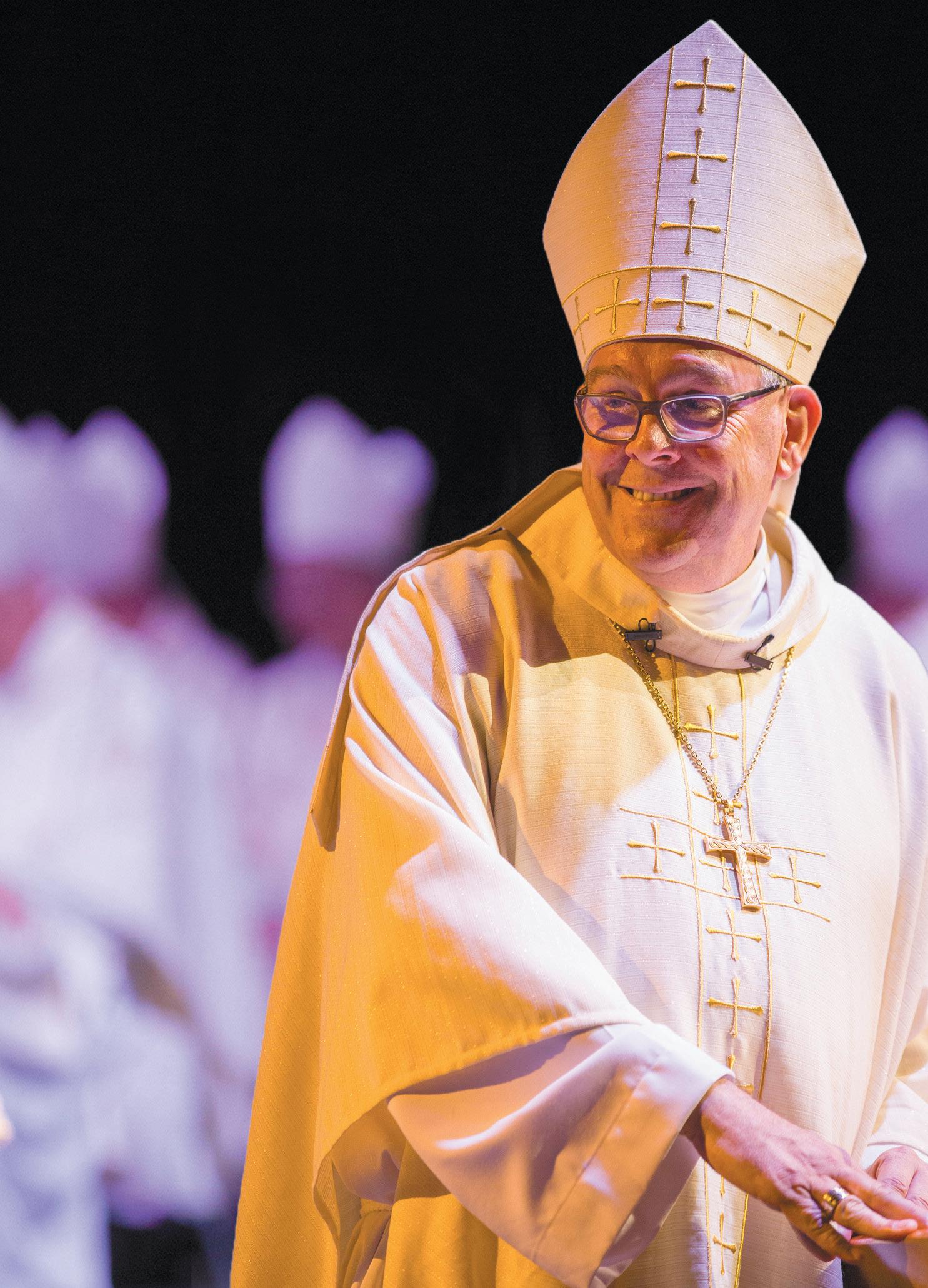
The Most Rev Brian Mascord DD, the fifth Bishop of Wollongong “wasn’t overly keen on the priesthood” as a young man and never expected to be appointed a bishop.
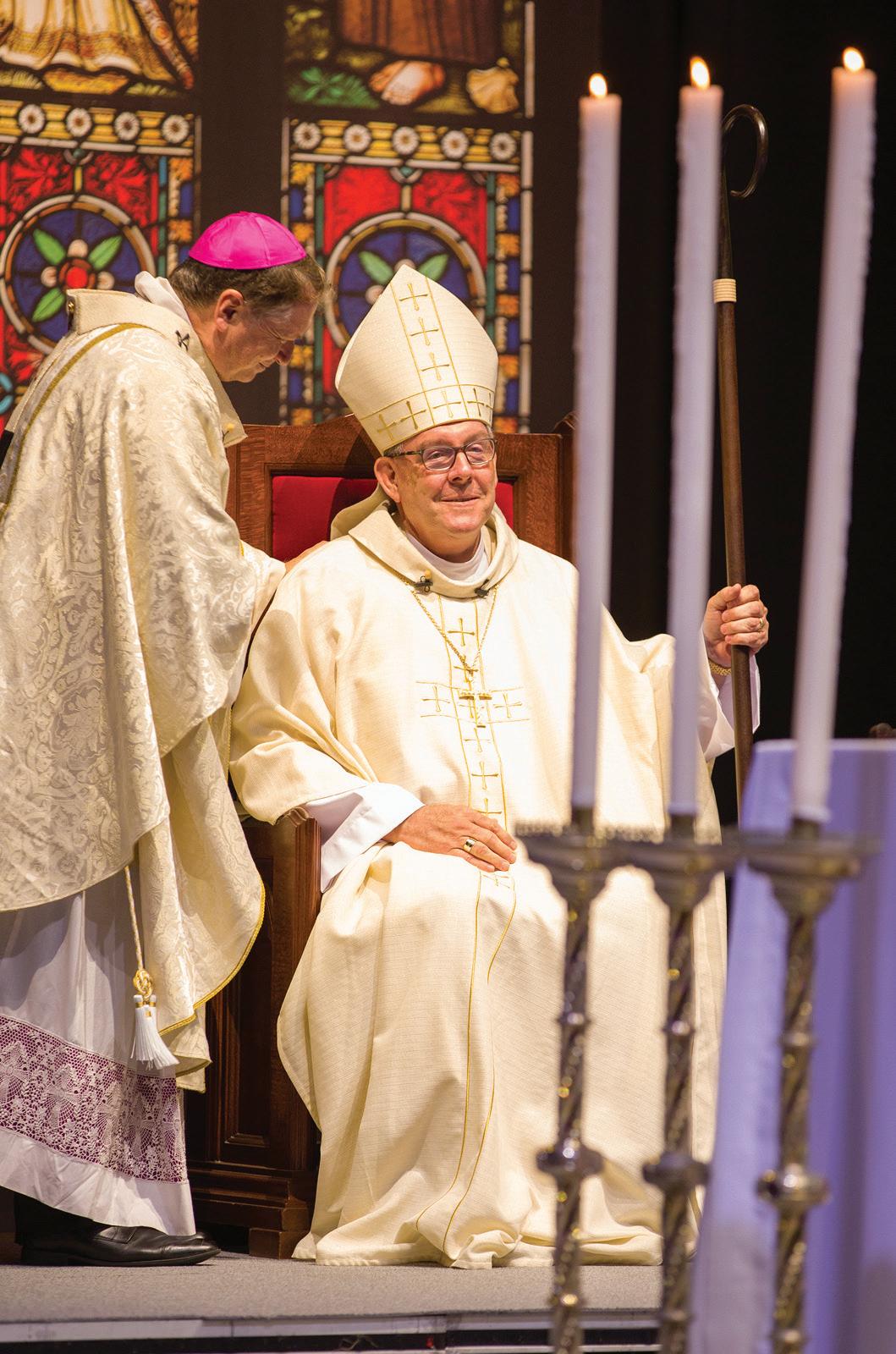
In front of a crowd of 4,500, the former Vicar General of the Diocese of Maitland-Newcastle was ordained as the senior authority over the Illawarra region’s Catholic church.
It was one of the largest Catholic episcopal ordinations ever held in Australian history - attended not only by 34 Australian bishops and 113 priests but also by the Apostolic Nuncio in Australia, His Excellency Most Reverend Adolfo Tito Yllana.
“It has been a really nerve-wracking experience, not in a horrible way, but I never thought this would happen to me,” Bishop Mascord said prior to his ordination.
“It wasn’t a thing I had aspired to, I was very happy being a priest and working in parishes and with the people so it came as a real shock when the nuncio [the church’s ambassador] rang me in November and asked me to take this on.
“But I see this as about the church, it was always about God. It is not about me personally, I’ve been asked to take on a leadership role, I’m a stranger in Wollongong and I’m going to have to learn a great deal – and I look forward to that.
“Already the welcome I have received (in Wollongong) has been amazing.”
Brian’s predecessor - Bishop Peter Ingham - had been in the role since 2001.
Bishop Brian said he hoped he could put his own stamp on the Diocese of Wollongong while honouring the high-regard the community has for long-standing Bishop Ingham.
“Peter has fulfilled an amazing role of leadership in a very difficult time – and I hope that I can build on that leadership,” he said.
“The Royal Commission has given us profound opportunities
to look at who we are as a church and the way we relate with people, and how we see ourselves.
“We need to read the signs of the times, and respond to them.”
In his homily for the ordination, Archbishop Another Fisher OP, quoting St Augustine, said:
“If as a bishop I feel tossed about in the open sea, as a Christian I find myself in safe harbour. Now Bishop Brian will have the benefit of many safe harbours of the Illawarra and Shoalhaven!
“We look to our Bishop-elect to be a good man and a good Christian before all else, to model for us faith, hope, charity and the other virtues. Happily, on his own account, Brian has been surrounded from childhood by ‘tremendous’ people such as his grandmother and beloved parents who’ve shown him how to recognise and respond to God in everyday life, expressing faith practically in service.
“Brian, a few weeks before you were named bishop, I met you at the Holy Sepulchre in Jerusalem as you led a pilgrim group in the footsteps of Jesus. You were deeply moved, as I was, to celebrate Mass upon the very slab on which the dead Christ lay and from which he rose for our salvation.
“Even as your lifelong pilgrimage brings you now to Wollongong, you must in a sense keep your heart fixed on that sepulchre. For in the end, the Church is not built by the faithful, the clergy, even the successors of the apostles.”

BY TRACEY EDSTEIN
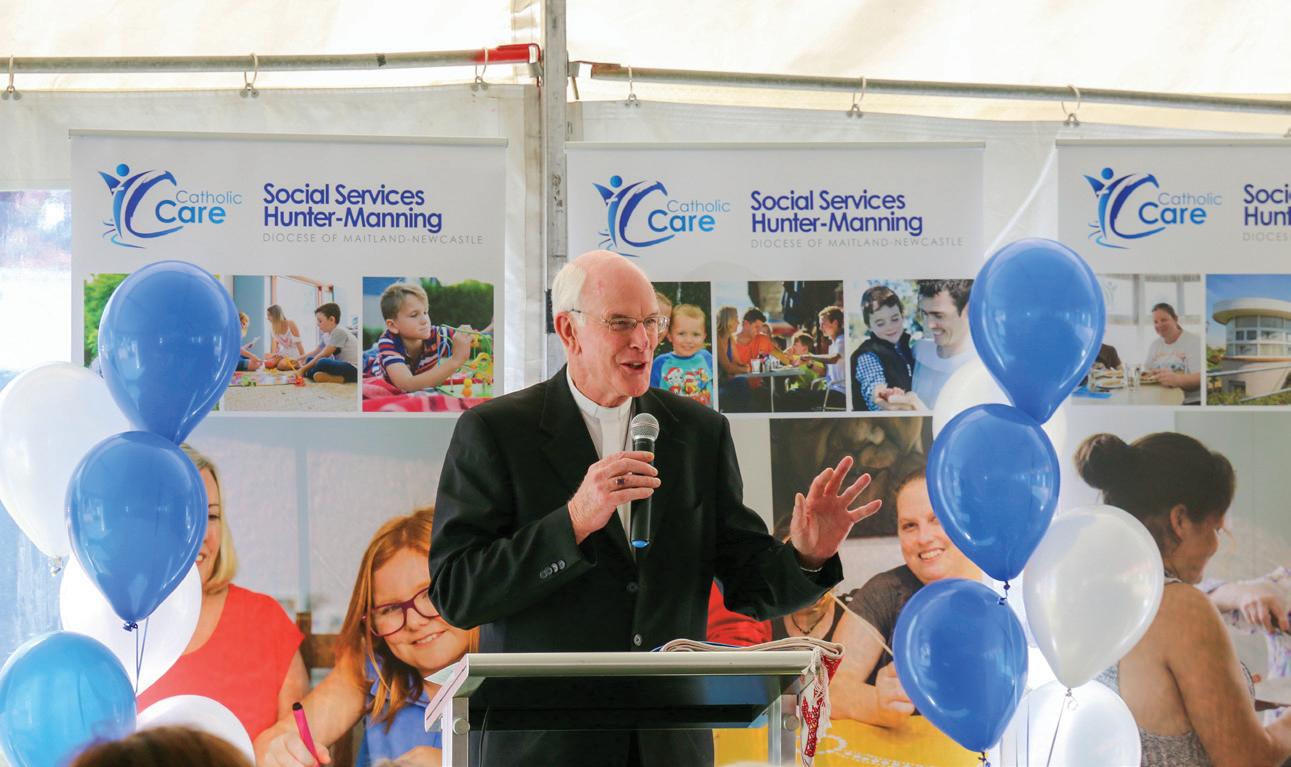
Addressing the People of God at the liturgy to launch Project Compassion 2018, Bishop Bill reminded the congregation that Pope Francis is continually urging us to be a church that goes out .
“From today’s gospel [where Jesus tells his disciples to go to the lost sheep of the House of Israel] you can see why Pope Francis wants us to live that way. It’s not Jesus’ calling to be a star in his home town, but to go out – to the people who are like headless chooks!”
The Prayer of the Faithful that followed Bishop’s homily was brought to life with reference to this year’s Project Compassion weekly stories and the dramatic contribution of students belonging to the ASPIRE program.
The refrain – Hear then what our God asks of you: to live justly, to love tenderly and to walk humbly with your God – punctuated

the liturgy at Sacred Heart Cathedral.
The concluding rite saw Bishop Bill send the members of the congregation out, as Pope Francis wishes.
“I am not just giving out Project Compassion boxes. I am commissioning
you to take up Caritas’ Compassion Project and do all you can to create a just future for all….this Lent I commission you to contemplate, pray, listen, act justly, be generous, and fast from the things in your life that are unjust.”
BY BRITTEN THOMPSON
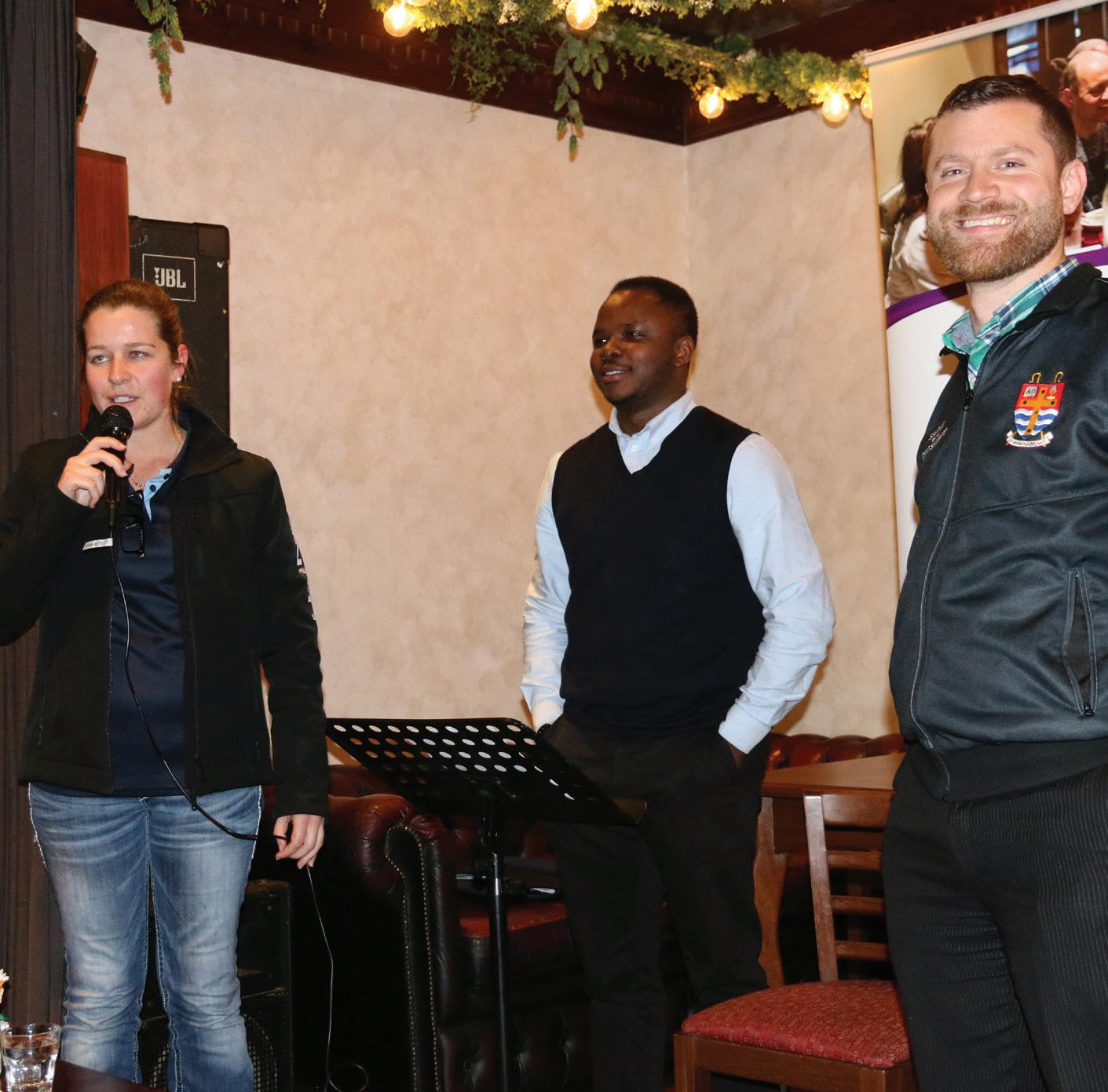
Youth from across the Hunter Valley were invited to join the Catholic Youth of St Joseph’s Catholic Church, East Maitland, to celebrate the official launch of the Year of Youth.
In the spirit of realising new horizons and spreading joy, youth groups from around the Chisholm region kicked off the Year of Youth with a fun-filled day of activities for all to enjoy, including sumo wrestling in inflatable sumo suits; appearances by the timeless and beloved Disney characters, Mickey and Minnie Mouse; a photobooth to take commemorative photos; a craft table; hair braiding; and, perhaps most exciting of all, will be the pieface showdown table.
Immediately after all of the fun activities, there was a showing of some of the highlights from the Australian Catholic Youth Festival. This took place in December of last year and the event marked the official launch of the Year of Youth. After the showing, students from the Chisholm region performed a lively hymnal musical performance before mass before all attendees were invited to a barbecue.
The St Joseph’s Year of Youth launch is an excellent opportunity for young people to evangelise through fellowship.
BY BRITTEN THOMPSON
The Catholic Church is providing Australians with the opportunity to define the future of the Church in Australia with the Plenary Council 2020.
While the Plenary Council is, in part, a response to the Royal Commission into Institutional Responses to Child Sexual Abuse, it also provides the Catholic community with the opportunity to play a role in the consultation process as the Church embarks on a restart and a refresh by asking the question: what is God asking of the Church Australia.
It is an opportunity for the Catholic community in Australia to affect real and much-needed change in their Church.
The consultation process began in Canberra where four open dialogue sessions were held. These sessions were aimed at engaging with disenfranchised Catholics who have left the Church in the wake of the Royal Commission. The sessions were held away from any Church-owned property to create an air of neutrality and an environment where everyone could speak their mind.
The dialogue sessions are the first step in a three-stage process: dialogue, discernment and legislation.
The process will culminate in a meeting involving all the bishops in Australia in Adelaide to be held in March of 2021. The goal of the members of the Plenary Council will be to distil the proposals resulting from the Plenary Council 2020 and transform them into points of action which will
determine the future of the Catholic Church.
What is God asking of the Church of Australia? This is the question which inspired the members of the Australian Catholic Bishops Conference as they planned the Plenary Council.
Plenary Council 2020 will mark the first council to be held in Australia in 80 years.
A Plenary Council is the highest form of communion between local arms of the church across Australia. While the final stage of Plenary Council 2020 will involve a meeting of Australian bishops, the purpose of this type of communication is intended to engage with the entirety of the Catholic community in a dialogue.
The purpose of these dialogues is to discern how the different faith communities live the Gospel amidst the questions and challenges faced on a day-to-day basis.
The Plenary Council itself is made up of representatives from the Church laity, religious, ordained ministers and the bishops of Australia.
Plenary Council 2020 is one of the most ambitious consultation processes ever undertaken by the Catholic Church in Australia. The consultation process is largely inspired by Pope Francis’ encouragement of fostering a synodal church which listens to its people.
The purpose of these dialogues is to
discern how the different faith communities live the Gospel amidst the questions and challenges faced on a day-to-day basis.
While Plenary Council 2020 is an opportunity to bring about large-scale change to the Church in Australia, as an arm of the larger international Church, all suggested changes from the Plenary Council must be sent to Rome for approval prior to their enactment.
While the Plenary Council aims to address concerns of Australia’s faith communities, it is important for the broader community to take interest in the Plenary process and not let it go on without disruption and behind closed doors.
The Council represents a crucial turning point for the Church in Australia and it should not be handled as business as usual.
BY TRACEY EDSTEIN
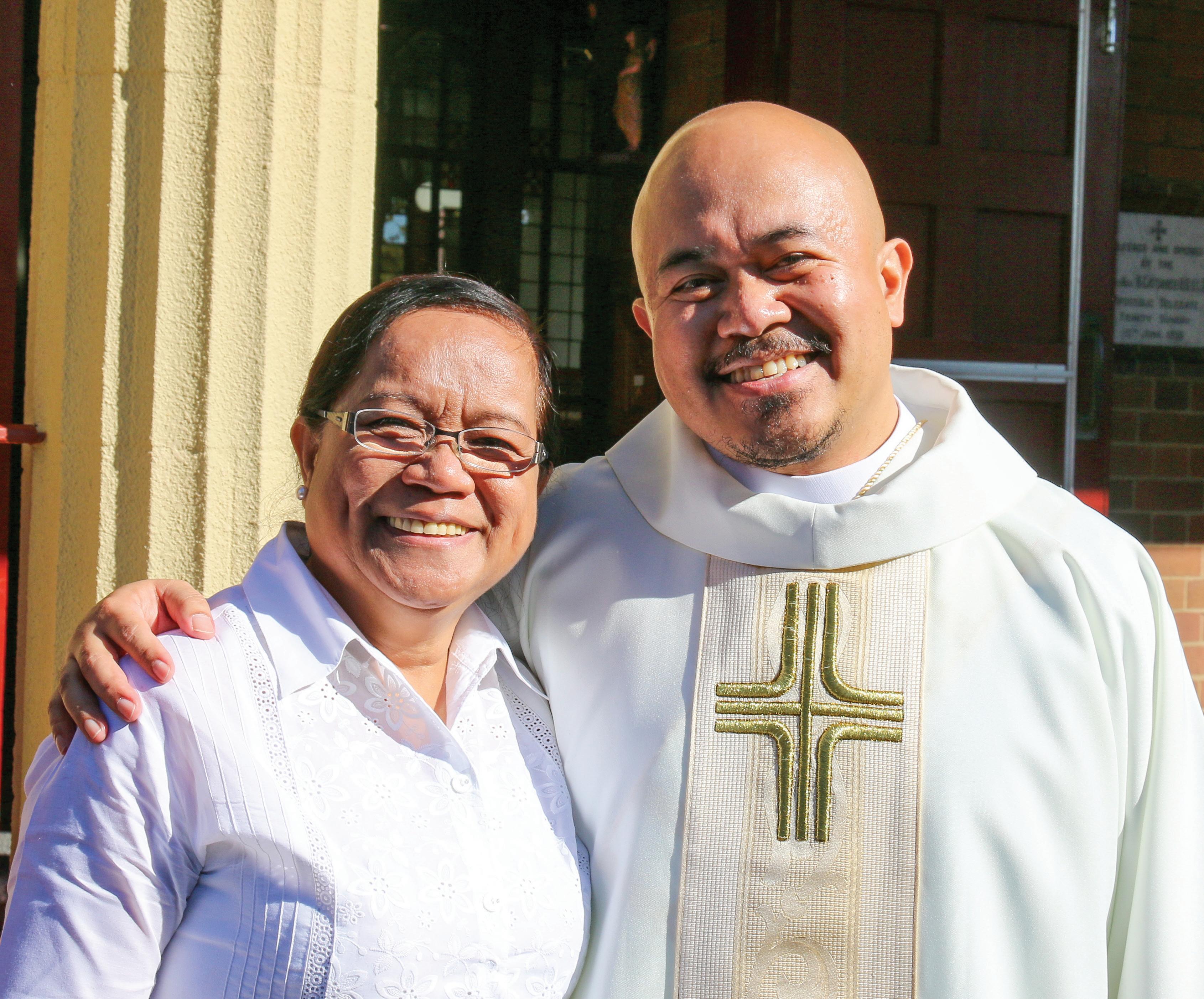
Anthony Vesorio Coloma was ordained to the diaconate by Bishop Bill Wright at Sacred Heart Cathedral on Sunday, 24 June – fortuitously the feast of St John the Baptist.
Bishop Bill pointed out the scriptures emphasise that John was chosen by God. “Anthony is being ordained not into the clergy, but for the people of this community who have come to know him.”
To Anthony he said, “You’ve had a longish journey – it’s a life story – also a story of a calling and a leading and assent. It’s important to maintain that sense that we have been chosen by God.
“You are God’s man – but not in the sense that ‘It’s me and God’. You must strive to be a person of communion – and you will always be a deacon, even though, please God, you will be ordained priest shortly.”
A large congregation, including his mother, Isabelita, was there to support Anthony, to pray with him and to celebrate with him after the liturgy.
The final words of the recessional hymn, Christ, Be Our Light by Bernadette Farrell, captured the spirit of the occasion:
Many the gifts, many the people, Many the hearts that yearn to belong.
Let us be servants to one another, Making your kingdom come.
Afterwards Deacon Anthony said, “I am deeply touched by the support and the affection shown to me by the people in Newcastle. I have felt very much at home. My prayer is that they would keep me always conformed in the ways of Christ and faithful to my lifetime commitment of service to God and God’s people.”
Anthony has settled in the MerewetherHamilton area and is a Religious Assistant at St Benedict’s Parish. He is the Secretary of the Parish Pastoral Council and a scripture teacher at Hamilton South Public School.
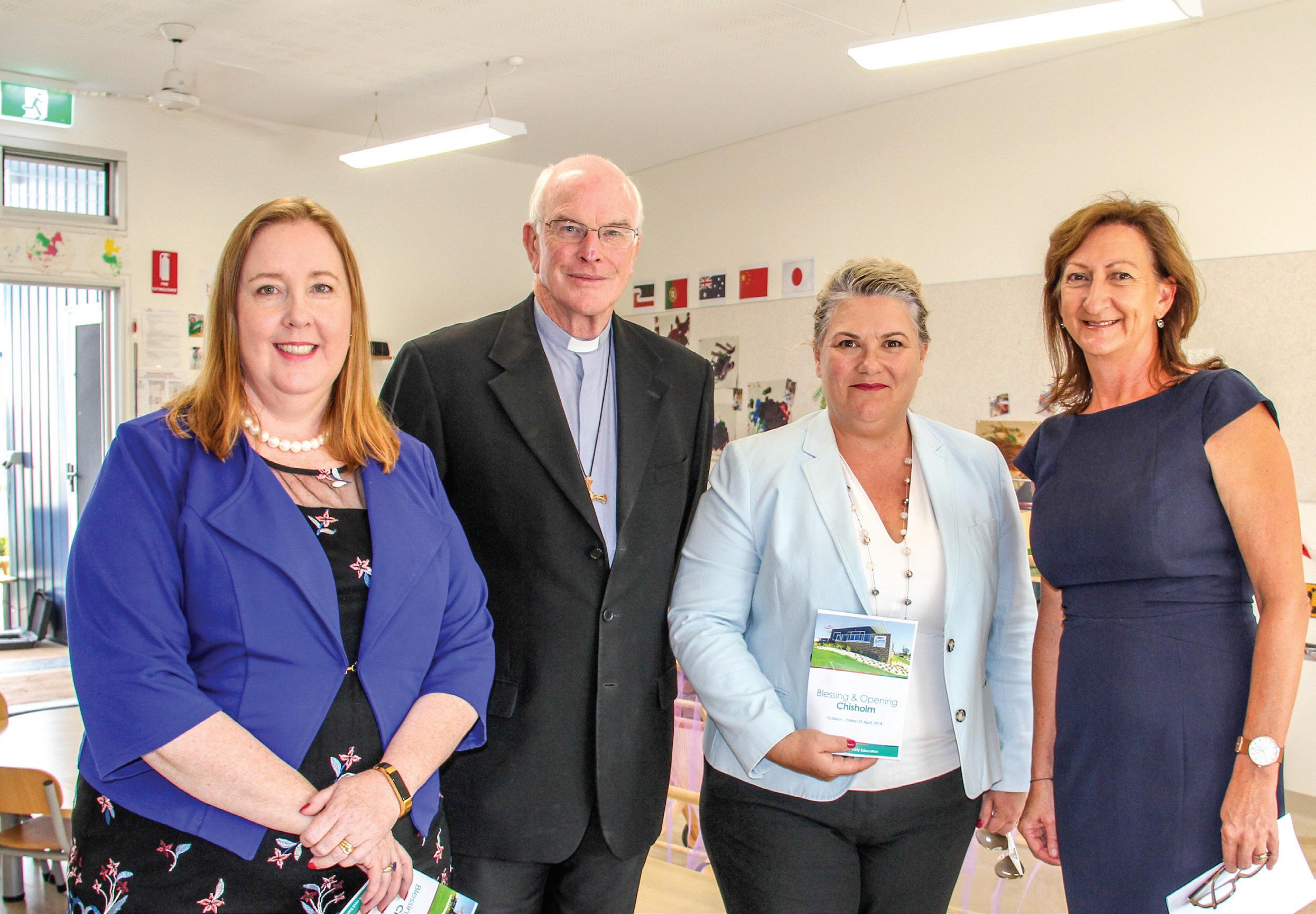
BY JOANNE ISAAC
It was a day of celebration for St Nicholas Early Education, Chisholm, as Bishop Bill Wright blessed and officially opened the centre.
The St Nicholas children were full of excitement as preparations were made for the guests.
Centre Director, Selena Rosee, and the fantastic staff at Chisholm, went to great efforts to ensure that the wonderful Centre was showcased on this special day.
The blessing and opening commenced with an Acknowledgement of Country from General Manager of St Nicholas Early Education, Kerri Armstrong. Kerri then explained to guests that the children at every St Nicholas service begin the day with an acknowledgement of country. The children then presented this lovely version to the delight of those gathered.
CEO of the Catholic Diocese of MaitlandNewcastle, Sean Scanlon, then welcomed everyone and spoke about the early days of planning St Nick’s at Chisholm.
“Looking back on the days that this was a cow paddock, the opening of this centre is quite an achievement,” said Sean.
Sean also spoke with pride about the whole site, with St Nicholas Early Education officially taking its place on the same site as St Aloysius Primary School and St Bede’s Catholic College. Families living in the area now have the wonderful option of a single drop-off point each morning.
Bishop Bill led a Blessing Rite. In his homily, Bishop Bill noted that those who worked
at St Nicholas were blessed in that they witness the very best of humanity every day through the children in their care.
Bishop Bill walked through the centre, blessing both the rooms and outdoor areas and the educators and children. While he was doing so, children from St Nicholas entertained guests with a rousing version of “We’re going on a bear hunt” and then, when the Bishop returned, a beautiful prayer of thanks.
Federal Member for Paterson, Meryl Swanson MP, Member for Maitland, Jenny Aitchison MP and parish priest of Chisholm, Fr Paul O’Neill, all attended the event.
BY AMY THEODORE
Former students of St Joseph’s Girls High School, Merewether, came together for a whole school reunion organised by T’ese Butler, Pauline Boyce, Cathy Doyle and Margie Harris.
St Joseph’s Girls High School operated from 1932 to 1984 alongside the neighbouring primary school, St Joseph’s Primary School, Merewether.
The 291 guests who attended the reunion spent the morning exploring the old school grounds, which still house St Joseph’s Primary, before heading to lunch at South Newcastle Rugby League Club.
Attending the high school from 1968 to 1971, T’ese Butler enjoyed the opportunity to take a walk down memory lane.
“I adored having the opportunity to relive and share some of those memories, particularly with other girls and teachers who shared the same path in life, said T’ese.
“You cannot live in the past but it is always wonderful to take time to revisit ‘old times’,
especially when you remember them with great affection.”
There were two speakers on the day, Sister Ellen Royan rsj and Gabi Hollows.
Sister Ellen was at St Joseph’s from 1963 to 1972, teaching a range of subjects including Art, History, Geography, Commerce and Religious Education, and was also known to join the girls at sport.
Sister Ellen spoke of the strong community spirit which existed within the school and the differences in education today.
As a decade emerging from hard times, Sister Ellen remembered a system with fewer teaching aids, no funding from the Government and very few textbooks on hand. Sister Ellen reminisced on collecting poems from the ABC sheets and making her own books to share with the students, before reciting a few of her favourites to guests.
“There were many parts of the reunion that I thoroughly enjoyed but the highlight for me was listening to Sr Ellen speak and seeing
the smiles and joy on the girls’ faces as they listened,” said T’ese.
“Listening to Sr Ellen brought me a waterfall of emotions and memories that I will always cherish. The Sisters were wonderful and supportive role models who taught me to believe in myself and to be true to myself.”
A former student of St Joseph’s and founding director of the Fred Hollows Foundation, Gabi Hollows shared the fond and funny memories of her school days.
“Apart from Sr Ellen, it was great just seeing so many happy faces, so many hugs, hearing the laughter and giggles – just like old times,” said T’ese.
“As you get older and experience more of life you come to realise the value of some of the things you learnt or lived earlier in your life. I always liked school but it was not until I was older that I realised that not everyone had been as fortunate as I had been. I look back and can see just how magical my time at school was and how valuable the lessons I learnt were.”
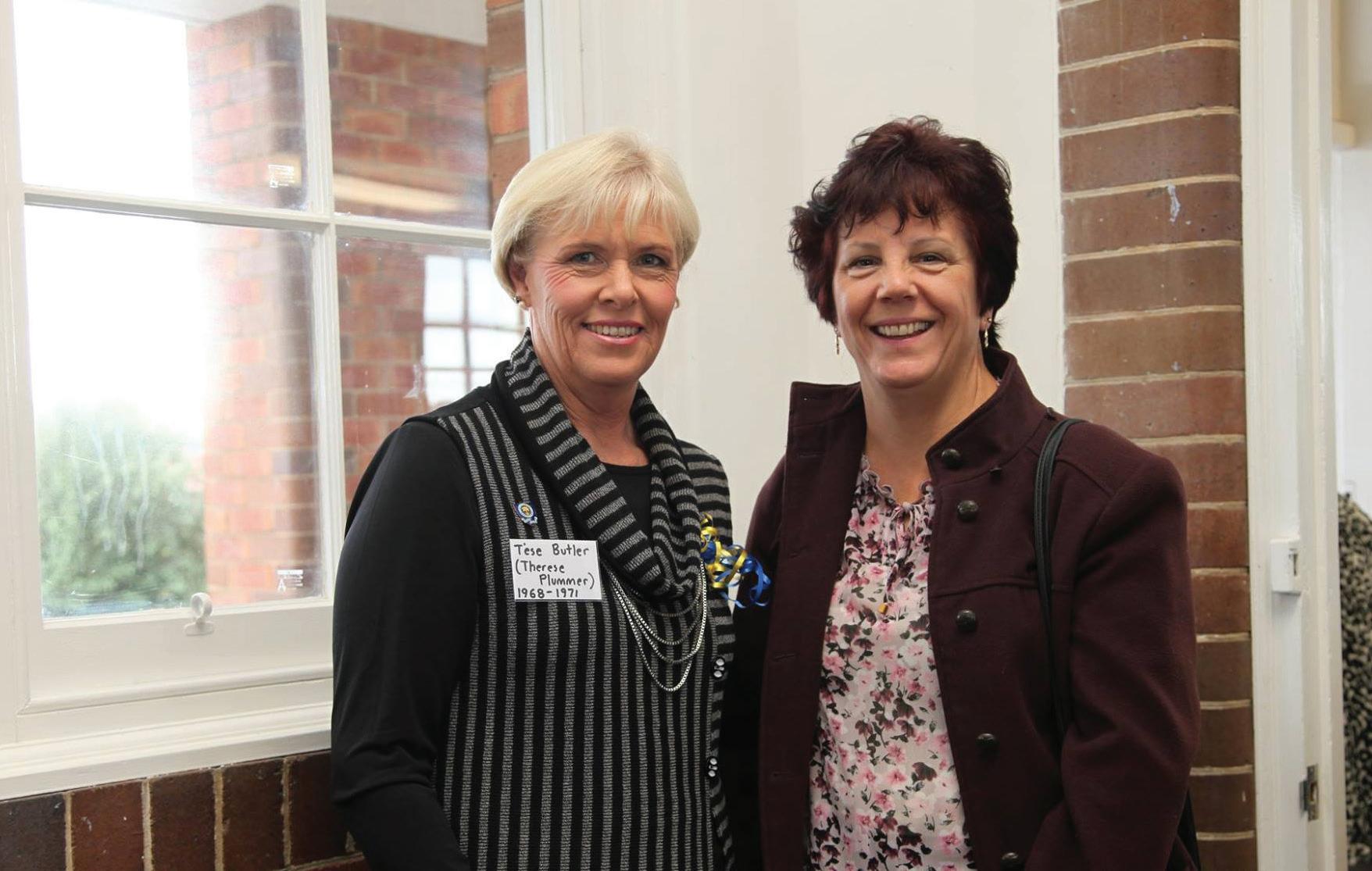
T’ESE BUTLER AT THE ST JOSEPH’S GIRLS HIGH SCHOOL REUNION
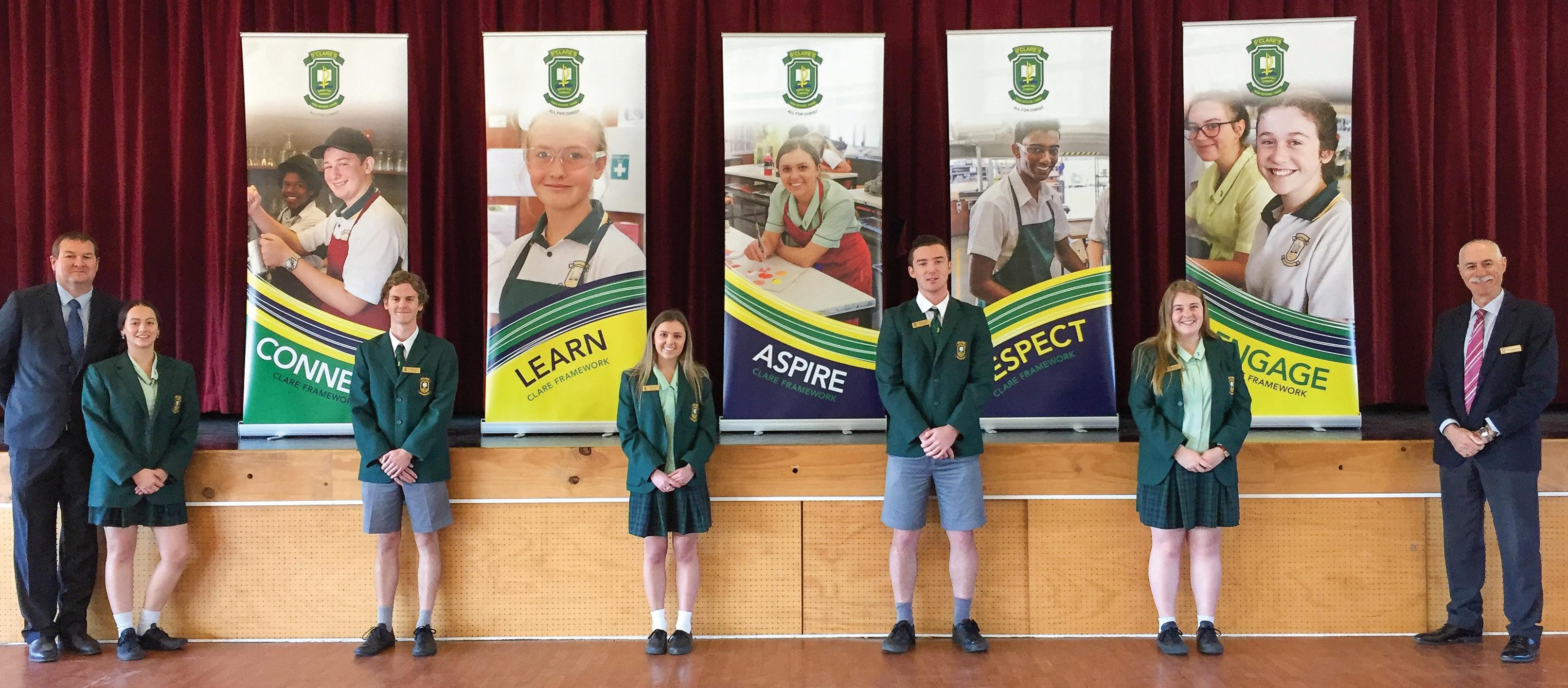
BY AMY THEODORE
With statistics showing that many adolescents suffer from mental illness, many schools are now acknowledging the need to provide students with a holistic approach to education with a stronger focus on students’ wellbeing.
St Clare’s High School, Taree is one and it is trailing a Positive Education CLARE framework aimed guiding staff to enhance the wellbeing of students using this framework. This teaches students how to develop a positive attitude, emotions, relationships and a sense of purpose about self, school and life.
Currently in a trial phase, the program has been implemented at St Clare’s High School in a number of ways.
The framework is embedded into all aspects of school life – spiritual, academic, pastoral and co-curricular – and represents five key
domains: Connect, Learn, Aspire, Respect and Engage (CLARE).
The Connect domain highlights the importance of having strong relationships with faith, tradition and community to enhance overall wellbeing.
The Learn domain teaches staff and students how to respond and adapt to difficult circumstances in an open-minded and optimistic way that will enable them to thrive and become more resilient.
The Aspire domain focuses on the individual – how they can be the best, most authentic version of themselves and find a sense of purpose in life.
The Respect domain teaches staff and students to show love, kindness, generosity and fairness to all of those around us and our environment. It develops an
BY ELIZABETH SNEDDEN
CatholicCare Social Services HunterManning, in partnership with the Federation of Parents and Friends Association in the Diocese of Maitland-Newcastle, invited Dr Tony Attwood to present a free information session in Maitland for carers, parents and teaching staff of children with Autism Spectrum Disorders (ASD).
Dr Attwood is a clinical psychologist who
has specialised in ASD since he qualified as a clinical psychologist in England in 1975 and is renowned worldwide for his work.
He currently has his own private practice, is an adjunct professor at Griffith University, Queensland and a senior consultant at the Minds & Hearts Clinic in Brisbane. As a published author, Dr Attwood has been invited to be a keynote speaker at many Australasian and International Conferences.
understanding of the need to treat people the way you would like to be treated.
The Engage domain develops an awareness around ones’ psychological connection to life and the impact of positive relationships and engagement on an individuals’ wellbeing and achievement.
Students participate in weekly lessons about the framework, learning about each of the different domains and completing age appropriate activities from Beyond Blue about relationships, resilience, self-worth and personal responsibility.
Students and staff have also begun to implement the framework and its language when planning school events and fundraisers and by getting involved in community events such as ANZAC Day and the Taree CatholicCare community kitchen.
He presents all over the world and is a prolific author of scientific papers and books on the subject.
It was an absolute privilege to have him present to our community on topics including;
f Making Friends: Strategies to improve social understanding and friendship skills.
f The latest research in Autism Spectrum Disorders.
BY AMANDA SKEHAN
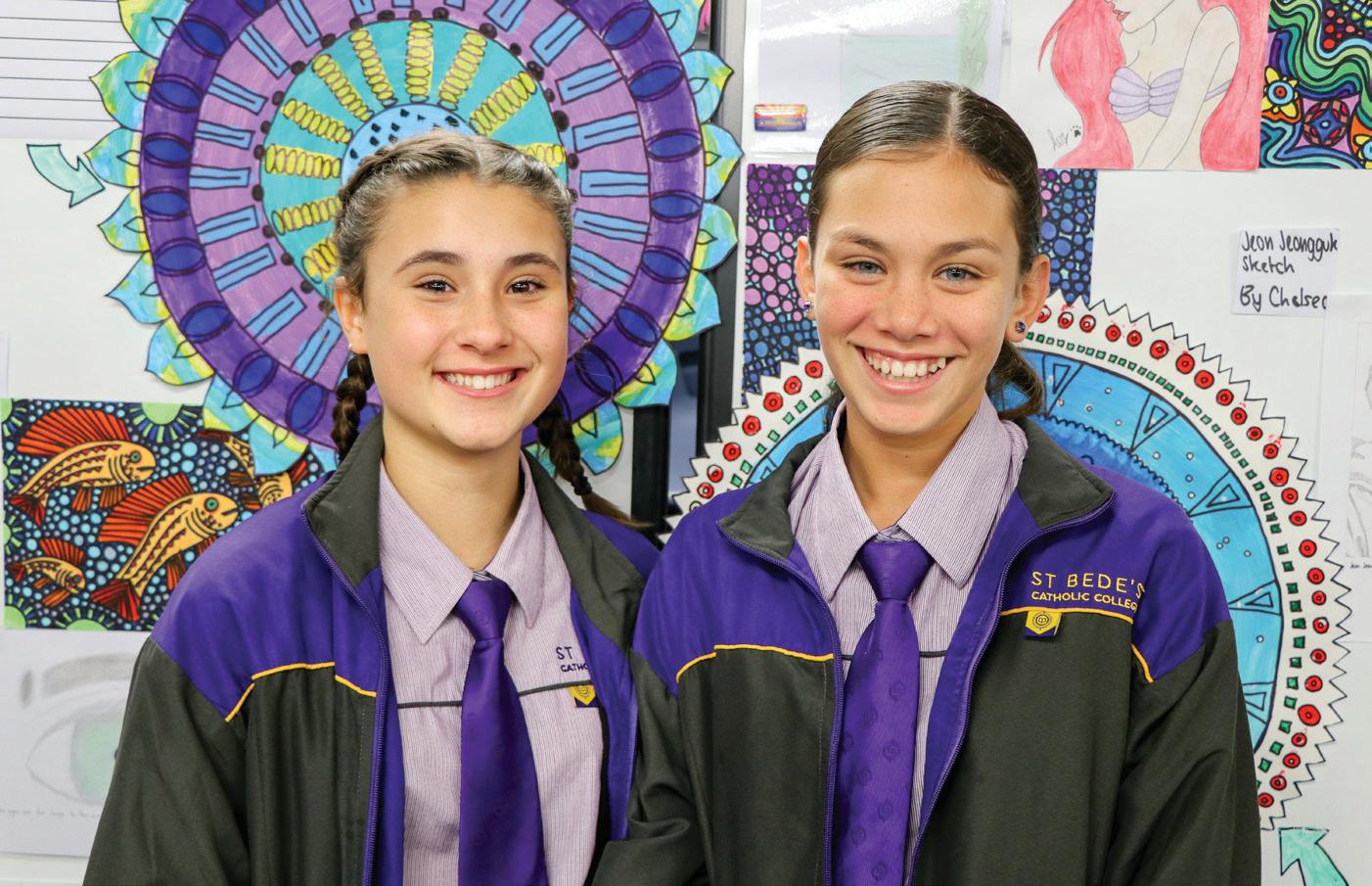
New diocesan secondary school, St Bede’s Catholic College, Chisholm, hosted a Student Showcase Evening early in June to show what they are all about…community, education and loads of talent!
Despite the cold weather and a pending State of Origin Rugby League game, some 350 people attended this event. The evening saw students proudly exhibit some of their amazing works and brought the community together. Included at this event were musical items, art displays, live scientific experiments and robotic demonstrations, poetry recitals, literature exercises and an Indian multicultural stall. There were also tours of the new building for parents and friends.
In moving into a magnificent new building that is unlike any other in its unique and modern design, students will be taught in state-of-the-art facilities. The building is designed to cater for up to 420 students with a mix of open and closed learning areas. This is in addition to the FLV that has comfortably catered for the current 110 students.
With the College’s initial cohort of Year 7 students on their journey to making history as St Bede’s first graduates, this contemporary and growing school will introduce an additional new year group each year until it becomes a full Year 7 to 12 co-educational college of over a thousand students in 2023.
After several years of planning, the first stage of the master plan for St Bede’s has been completed, comprising an entry plaza, car parking, a forecourt, playground and the
In addition to offering insight and information, Dr Attwood was also available to answer questions at both these sessions.
CatholicCare and the Federation of Parents and Friends Association took the unique step of offering complimentary registration so that we could instill a greater understanding and awareness of ASD and consequently provide greater support to the local ASD community.
Registrations was open to parents, carers of students and staff from Catholic schools in the Diocese of Maitland-Newcastle
first of four interconnected buildings.
Included on the ground floor of this truly contemporary air-conditioned building are an expansive entry and administration facilities, meeting rooms, staff room, kitchen, uniform shop, large walkways and break-out spaces, bathrooms, storage rooms and a workshop area. The middle floor includes a number of cluster learning areas, a learning hub/ library, a huge science lab, an equally huge food technology kitchen, art room, male and female clinics, bathrooms and more walkways and break-out spaces. The top floor includes music and performing arts spaces, a specialised Learning Support Centre and cluster learning areas that will eventually be transformed into a senior learning area as additional buildings are completed.
as well as to parents, carers and clients of CatholicCare Social Services HunterManning and their families.
“Having been interested in Autism Spectrum Disorders for nearly 50 years, I’m passionate about sharing my understanding and working with parents and professionals to help children and adults who have autism,” said Dr Attwood.
“In the last few years I have learned so much more about Asperger’s syndrome, especially the value of special interests in the daily lives of those who have Asperger’s syndrome,
The St Bede’s community is now on the countdown to moving into the new building which will further provide the College with an opportunity to continue to develop a culture of high quality, values-driven contemporary learning.
“As we are not confined by out-dated building designs and an entrenched culture, St Bede’s is a dynamic school community that embraces opportunity and innovation. All staff are committed to creating a school community which provides students with a range of skills to best equip them for a changing society and workplace.
“Underpinning all that we do at St Bede’s are the core values of love, truth, compassion and justice,” said principal, John Murphy.
relationships where one partner has Asperger’s syndrome and the characteristics of girls and women who have Asperger’s syndrome.”
The event was well attended with over 200 people registering, and many had the opportunity to ask Dr Attwood questions providing them with immense insight into their experiences with ASD.
CatholicCare provides a thorough Autism Assessment Service for children, adolescents and adults utilising gold standard assessment tools.
BY AMY THEODORE
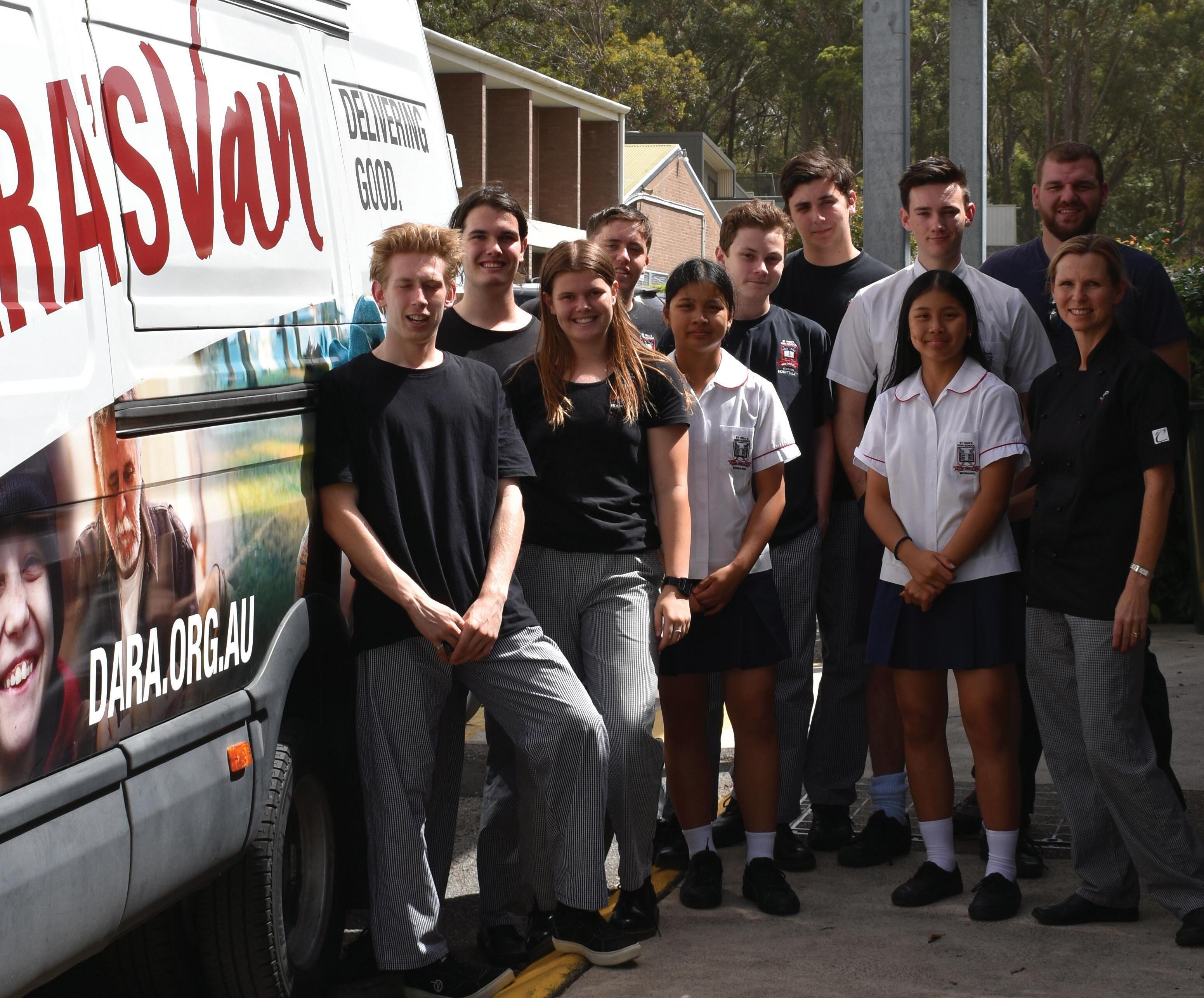
Throughout 2018, St Pius X High School, Adamstown, St Francis Xavier’s College, Hamilton, St Joseph’s College, Lochinvar and St Paul’s Catholic College, Booragul have been lending a helping hand to the DARA Van.
At St Pius X, 75 Food Technology students have been involved in meal preparation for the van. With food ingredients delivered by DARA, the Year 10 students made dishes such Chicken Chasseur and Lamb Risoni to be served out to those in need. As well as being a valuable social justice activity for the students, the preparation of meals also ties in with the school’s Catering and Food Service curriculum. Catering for the DARA Van has given students hands-on experience with food preparation and cooking for large numbers and taught them more about team work and time management.
Students at St Joseph’s, Lochinvar have been living out the mission of the Josephite Sisters to assist the impoverished and marginalised in society by volunteering their services with DARA. A group of Year 11 students and 20 staff members have “rolled up their sleeves and got the job done” throughout 2018. The opportunity to help with DARA will continue to be offered to students at the college into the future.
During November, Year 12 Hospitality students from St Paul’s Catholic College, Booragul also got on board to help DARA,
by preparing and cooking food throughout the month.
Another 21 students from Year 9 Food Technology also contributed by designing their own sweet food items, preparing and supplying them to DARA’s Van.
“Upon volunteering with DARA’s Van I was able to provide those less fortunate with a nutritious meal, warm beverages and was able to interact with other members of the community in a positive and caring way,’ said Samantha Claridge, a Year 12 student at St Joseph’s.
“Through this volunteering program, I was able to gain an insight into other people’s situations and learn a little more about each individual by socialising and communicating with them with DARA’s Van.
“I am able to see first-hand the gratitude and smile on the people’s faces when they are able to interact with new people and enjoy a meal together.”
“When volunteering with the van we help out in a variety of ways,” said Noah Hurn, another student at St Joseph’s.
“This includes making tea, coffee and milo
(lots of milo), preparing meals, setting up places for people to sit and eat, cleaning up and providing friendly conversation.”
“Volunteering for DARA’s Van is one of the most rewarding experiences I have had. I had the sense of satisfaction that I had done something to better the community.”
“I became involved in DARA as a way to become part of the broader community and to better understand those struggling in my area,” said Olivia Nicolas, Year 12 student from St Francis Xavier.
“I helped serve people refreshments and food, as well as interacted with individuals who I wouldn’t usually be able to interact with.
“The DARA Van has reinforced aspects of selflessness and reaffirmed the importance of compassion in my day to day life.
“My volunteering experience has taught me the importance of having an active role in my community and it has allowed me to gain insight into how other people live and the effects marginalisation can have amongst vulnerable.”
BY BROOKE ROBINSON
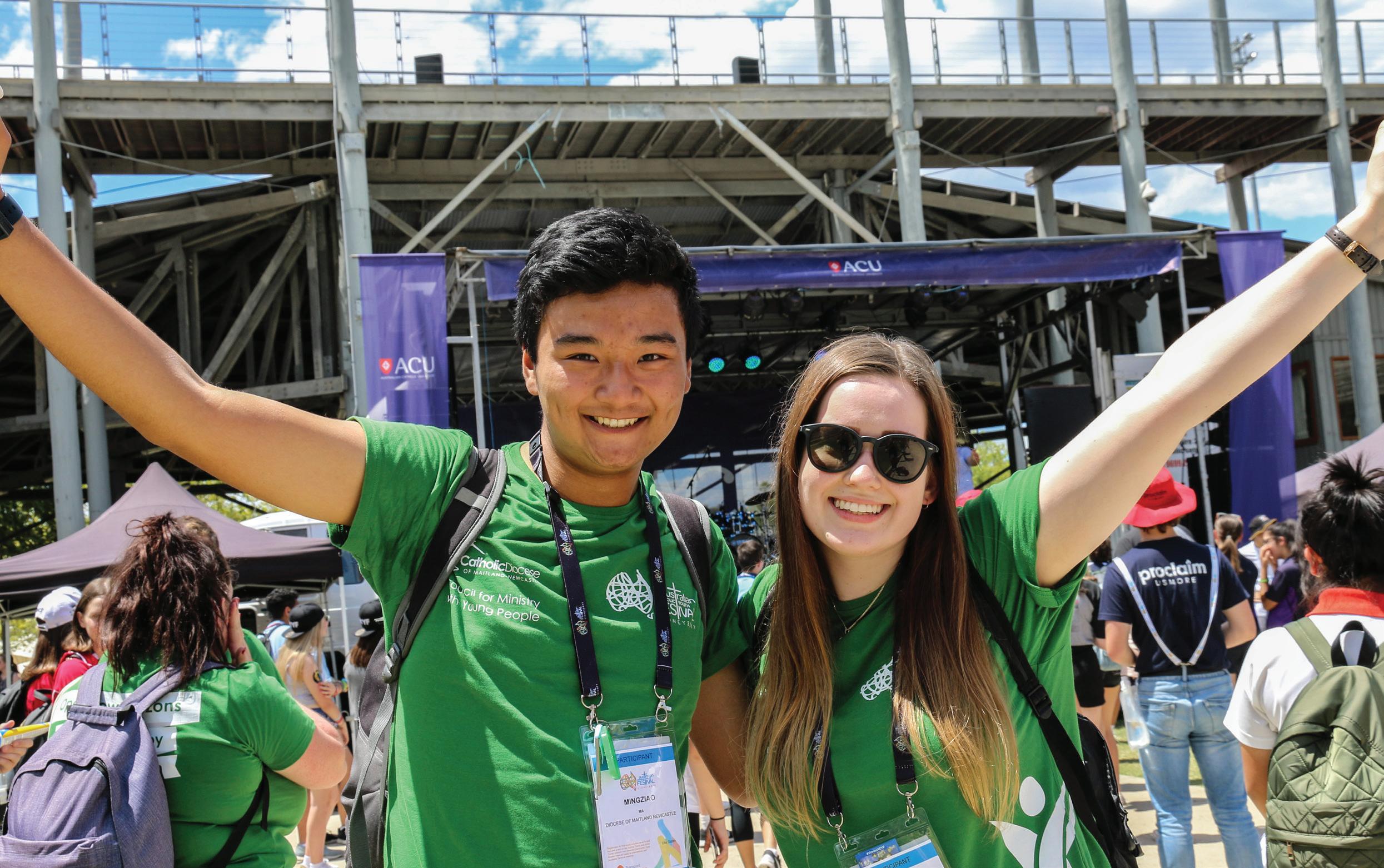
Tens of thousands of young Australian Catholics spent three days celebrating their faith in Sydney. The Australian Catholic Youth Festival (ACYF) welcomed participants from all over Australia and invited them to concerts, workshops, fun activities and prayer.
Maitland-Newcastle was well represented, as Isabella Crebert from St Joseph’s Lochinvar, led two Hail Marys in the rosary, in front of the crowd of 19,000 at the plenary.
There were many workshops to choose from and Bishops X-Change created an opportunity for young people to speak directly to their bishops about the issues facing society today.
Lyvia Pozywio and Rosa Obeid from St Joseph’s Lochinvar attended the Bishops X-Change on the topic of same-sex attraction.
Rosa said, “It was very passionate, and so interesting to hear people’s different views and experiences.”
Parish Liaison member of the ACYF Steering Committee, Sam Hill, spoke at two Bishops X-Change sessions about her experiences of Vocations and Mental Health. Our own Bishop Bill shared and answered questions from the youth in the X-Change on vocations.
Prioress of Jamberoo Abbey, Sr Hilda Scott, osb was a favourite presenter of many of our pilgrims. Sr Hilda led the 19,000 pilgrims through a process of being silent, listening to some scripture verses, then asking God to speak to them through the verse that stood out. She said, “If you want to know the joy of God, become a person who is familiar with the scriptures. After you have spoken to God, create a time of silence as God speaks to your soul. Do that every day & I promise you will know that you are never alone, and loved by God.”
Sr Hilda also put out a challenge, “Before you leave, find a place alone, give God the green light to love you, & hand over your life to God. Each day, God is going to guide you through everything you do”.
Group leaders, Shane and Leanne Hyland, were impressed by the workshops their group decided to attend. They participated in “Getting Real: Challenging the Sexualisation of Society.” Leanne said, “It led to great conversations afterwards, and showed maturity, that these young people were capable of dealing
with difficult issues. Also, the atmosphere of the festival allowed the youth to be themselves, raise arms and sing, do things they wouldn’t usually do. They felt the presence of the Holy Spirit.”
The last day of the festival began with workshops, and then a pilgrimage to the Domain. Maitland-Newcastle pilgrims walked across the Harbour Bridge, through Circular Quay and the Rocks to join the massive crowd gathered for the Closing Mass. Archbishop of Sydney, Anthony Fisher, and most of the Australian bishops concelebrated Mass.
Archbishop Fisher asked the pilgrims, “Have you had fun with friends? Have you learnt a lot? Have you prayed a lot? Have you come closer to Jesus?” All questions were answered with a loud chorus of ‘yes’!
Closing Mass ended with the announcement that in December 2019, ACYF would be held in Perth WA. The night ended with an amazing fireworks display, which served as the perfect ending to an inspiring and joyful festival. ATTENDEES
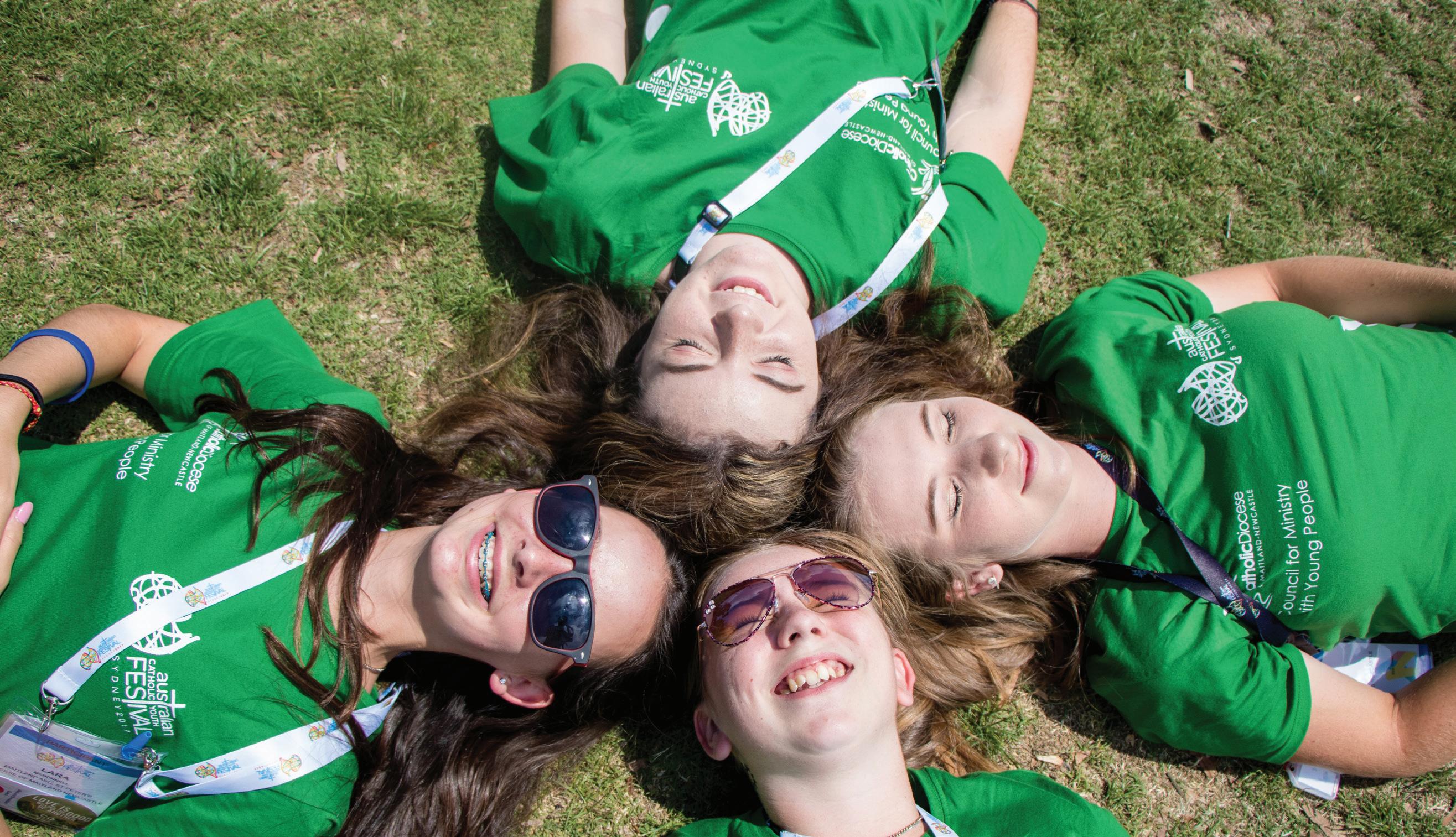
BY MARK TOOHEY
The work of Catholic Mission continues to inspire people, young and old, across the Diocese of Maitland-Newcastle to make a positive difference in disadvantaged communities around the world. This is shown through awareness raising activities and financial support provided annually to Catholic Mission projects.
For example, all parishes of the Diocese participate in our annual Church Appeal, while schools are invited to run annual mission support activities. Many do so in October, which is World Mission Month. Other important sources of support come from generous individuals who commit to our regular giving programs such as Children’s Mission Partners or the CSO’s Teachers Helping Teachers workplace giving program.
So, who is Catholic Mission? We are the
international missionary agency of the Catholic Church in Australia. Compelled by the message, life and love of Jesus Christ, Catholic Mission raises funds for mission and brings together Australians for mission, both in Australia and around the world.
Catholic Mission works with communities around the world to bring the fullness of life to all people through a range of crucial projects. From catechism training to water and sanitation facilities, the initiatives we support address needs identified at the grassroots level, as local church leaders serve their communities by planning and implementing these projects. At Catholic Mission, we provide the funding and program support to ensure their long-term sustainability.
Catholic Mission encourages our supporters to consider how ‘You are Mission!’
BY BERNADETTE GIBSON
Marking four years since the inception of the role of Education Officer, Formation for Mission, 2018 has seen a number of achievements in Faith Formation across the Diocese.
The first cohort of early career teachers completed the three-year “Doorways” program. This program aims to provide newly appointed teachers with an opportunity to encounter the person of Christ, experience the Church as a positive expression of Christ’s mission in the world and to appreciate the power of personal witness to this mission.
The Dominican retreat program for San Clemente was written and delivered; pilgrims completed The Aussie Camino; a trial local Camino experience for Maitland-Newcastle was undertaken; thirty individual school
retreat programs were conducted introducing staff to a variety of church encyclicals and letters, Vatican documents and spiritual practices, with a heavy emphasis on prayer and scripture; a pilgrimage to Ireland was completed, a retreat program for support staff and Education Officers was undertaken and there was a continual exploration of Indigenous Spirituality.
A significant focus for the year has been on leadership, recognising and acknowledging the link between Catholic School Identity, Faith Leadership, Leadership Formation” (Neidhart and Lamb, 2016) and the reality that leaders, staff and families may equally sit as people “injured, as drifters or dissenters” (Richard Gaillardetz, 2018) by, from or to faith.
As part of this focus involved the
Many have taken to heart Pope Francis’ invitation to trade the couch for a pair of walking shoes and to get up and make a difference in the world. The irony is that they do not need to travel great distances to make a great difference. Motivating for mission in their own schools, parishes and communities has generated a lot of fun, awareness raising and effective fundraising activities among the community.
In 2017-18, people across our Diocese contributed $445,949, enabling life-saving medical and health education projects in Uganda and child-focused education and teacher-training projects in Myanmar.
If you too would like to join us on our mission to make a difference or keep up to date on the difference your support makes, visit www.catholicmission.org.au/donate
development of a second part to the threeyear induction program for newly appointed Assistant Principals and Principals called “We are Called and We Are Challenged”. This program requires leaders to intentionally engage with a vision of leadership beyond the corporate. It highlights the pivotal importance of “God conscious” leadership.
Part one connects the ecclesial and secular purposes of the catholic school. Part two, “Sentinels,” unpacks five central themes which emerge from church documents related to Catholic Education since Vatican II. It also addresses and presents a case for the challenge of critical belonging in the church for staff and for families. This is grounded in the work of systematic theologian Richard Gaillardetz and is central to the question of ensuring the unique and distinctive character of Catholic schools with authenticity.
BY SARA MURDOCH AND AMY THEODORE

As Australia experienced one of the driest winters on record, staff and students across the Diocese held fundraisers to raise money for our farmers doing it tough.
St Therese’s Primary School, New Lambton, spent the day dressed as farmers and brought along a $2 donation to help raise money for the Buy a Bale campaign.
Throughout the day the students watched newsfeeds about the drought and also read stories about life on the farm.
In total, the school community of St Therese’s raised $1715.55 which will be directly donated to the Buy a Bale campaign which helps farmers affected by drought feed their livestock in times of need.
Rosary Park Catholic School, Branxton, paired its annual Book Fair parade with a fundraiser for drought-affected farmers with students dressing as farmers. Families made donations during the parade and the school’s Mini Vinnies sold milkshakes throughout the day. The school raised over $1300 for Buy a Bale.
St Patrick’s Primary School, Lochinvar, celebrated Grandparents’ Day while also
incorporating Book Week celebrations showing support for local farmers.
Staff and students dressed up as pirates, explorers, treasure hunters and genies and brought in donations to go towards Buy a Bale.
The day began with a morning tea for guests followed by a liturgy in the school hall before students were divided up into their sporting houses and participated in a variety of in-classroom activities around the Book Week theme, ‘Find Your Treasure’.
“This is a wonderful opportunity for our school community to come together to celebrate the wonderful happenings at St Patrick’s,” said Jacqueline Wilkinson, Principal at St Patrick’s, Lochinvar.
“We raised in excess of $1,500 for the Buy a Bale campaign - and we also had a very successful flash mob performance,” she added.
The school community of St Clare’s High School, Taree, combined their Feast Day celebrations with their farmer fundraising.
After a Mass, students from the Student Representative Council organised a day of fun activities to raise money to support struggling farmers in need. All students dressed as farmers and participated in student-led activities such as decorating cupcakes, ice-cream sundaes, egg and spoon races, a lolly guessing competition and entertained their guests with live music.
“Students and staff put a huge effort into making the day enjoyable and successful. I was particularly proud of the way our young students and staff collaborated to produce a great number of stalls and events that gave both the stall holders and their peers a great opportunity to learn and have fun together,” said Principal Peter Nicholls.
The community of St Clare’s raised an impressive $4,000 for our farmers.
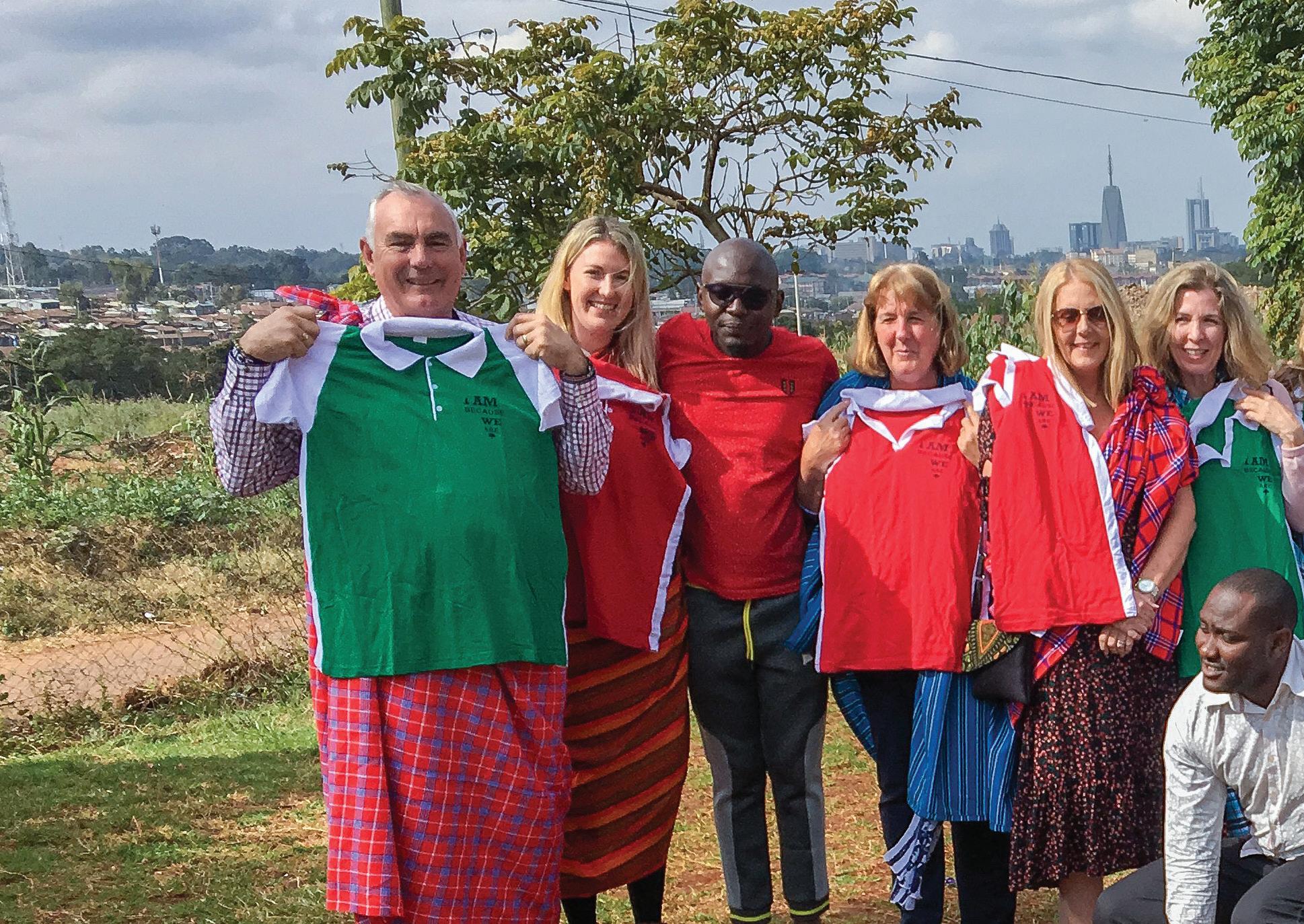
BY AMY THEODORE
The 2018 Kesheni Kenya Immersion program saw staff from the Catholic Schools Office head off on a two-week trip to Nairobi in Kenya. The travellers visited a number of Catholic agencies including the Ruben School, Ruben Medical Centre, Kurt Fearnley Centre, Mary Rice Centre for handicapped children, Women for Women Centre, an Advocacy Centre, St Joseph’s Home for the Destitute, Br Beausang School Embulbul and Youth and Health Clinic programs.
This is what some of the participants had to say about the trip:
“The immersion is a significant personal and professional opportunity which further develops a sense of personal spirituality, leadership, interpersonal skills, inspiration, and engagement with those impoverished
and disempowered. Our hope is that each participant will become an agent for change in their own community and motivate others to support those less fortunate in Australia and overseas. Michael and I enjoyed observing the growth of participant’s every time and it is a joy for us to share the experience with those seeking some answers to questions in life, its meaning, and our place in the world.”
– Alison Slattery, Immersion Leader
“As we set off for Africa none of us could really articulate what was awaiting us at the end of our 32-hour journey. The sights, sounds and smells that met us in Nairobi provided a stark realisation that we weren’t in Oz anymore. As with any trip, it was the people who shaped my experience, with both my fellow pilgrims and the people we
met enlivening my time.
“Seeing the work of the people we met was humbling, inspiring and daunting all at once. For me it was truly seeing Jesus in 2018, walking the streets of Kibera or Mukuru slum, connecting with people through compassion, empathy, hope and love. From the young people who run a youth group, to the fathers who manned the gates of schools and the teachers and principals, all of whom felt moved to respond to a need within their community.
I am so grateful and blessed to have shared this time in Kenya. It was an awakening of my heart, eyes and mind and is something that will shape my spirit for many years to come.”
– Veronica McLoughlin – Principal of St Dominic’s Centre, Mayfield
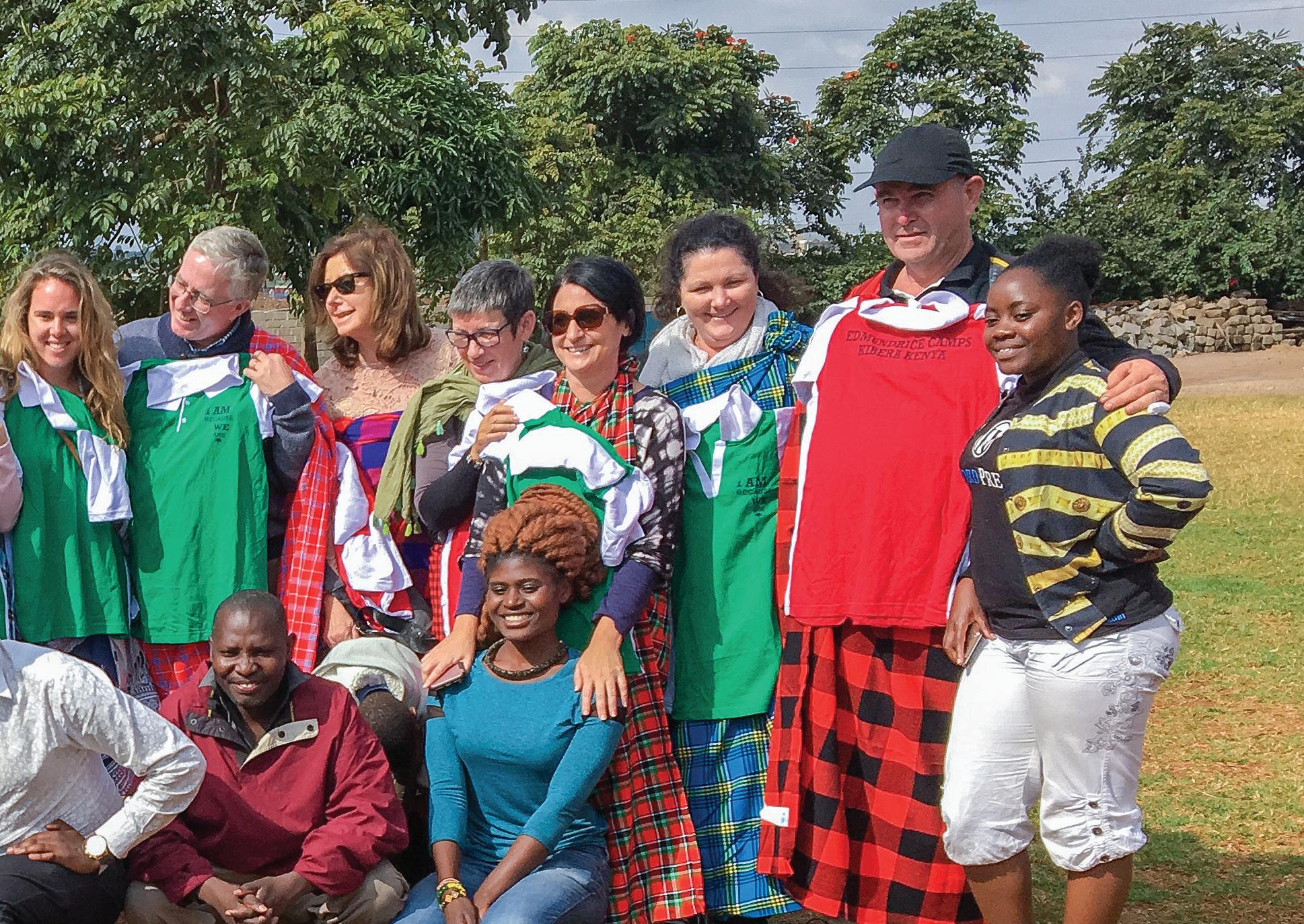
“Kesheni 2018 was an amazing, inspiring and life-giving journey for me. Yes, confronting but also sobering to see the smiles and happiness of these wonderful Kenyan people who make the most of their daily lives with what they have, not with what they want.
“Our group bonded well and looked after each other day by day. I found it enriching to know colleagues and new people on another level. The opportunity to see firsthand the varied and numerous ministries catering for the local people was extraordinary. The sense of welcome and appreciation for our efforts and donations was even more extraordinary!
“Our third week was very fulfilling with great satisfaction and a sense of achievement with the Early Learning Centre renovation project. The reaction of the children along with Br Frank O’Shea and staff was a sight to behold! A life experience that will stay with me forever. Asante sana!”
– Leigh Peacock, Principal of St Joseph’s Primary School, Kilaben Bay
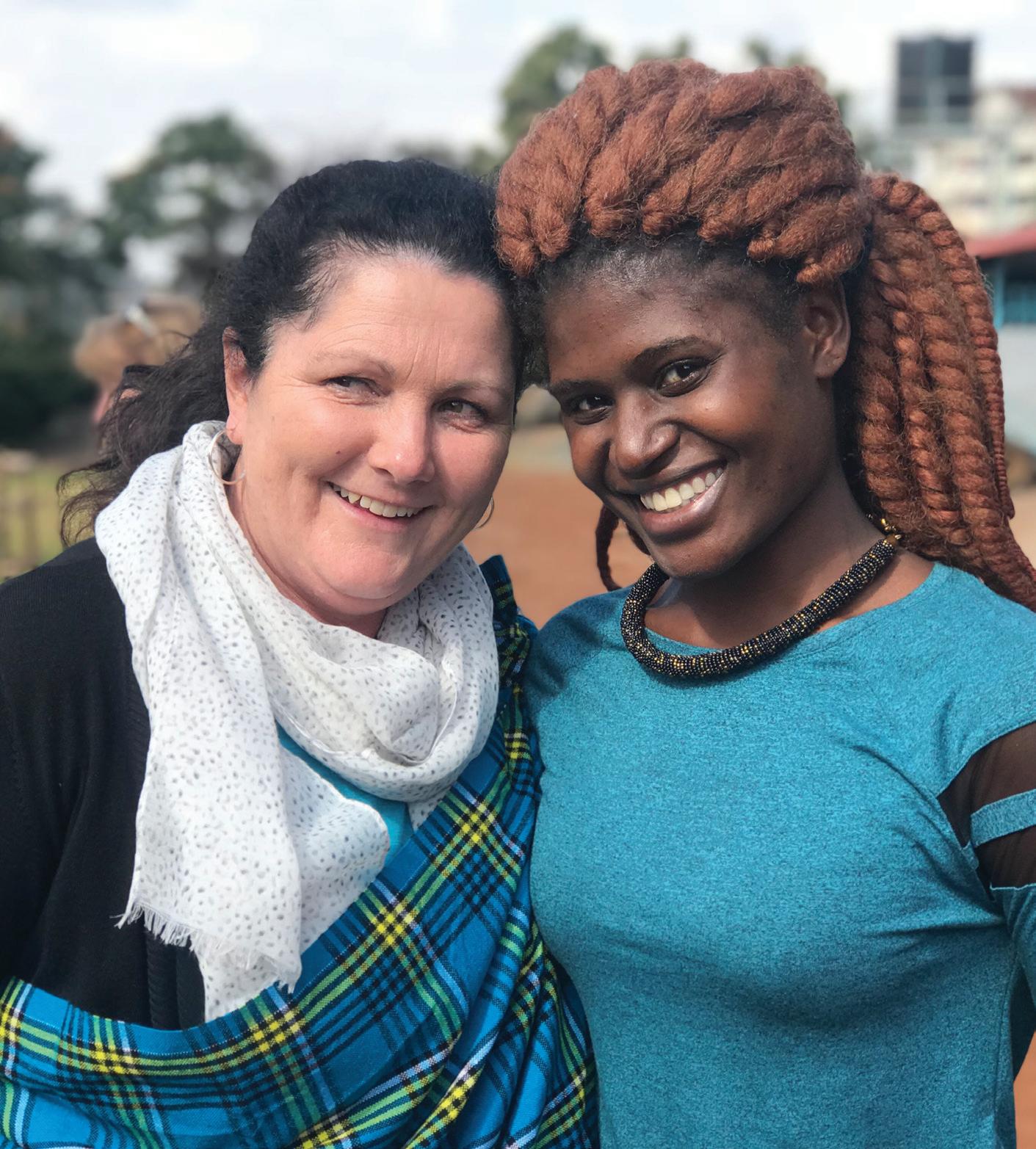
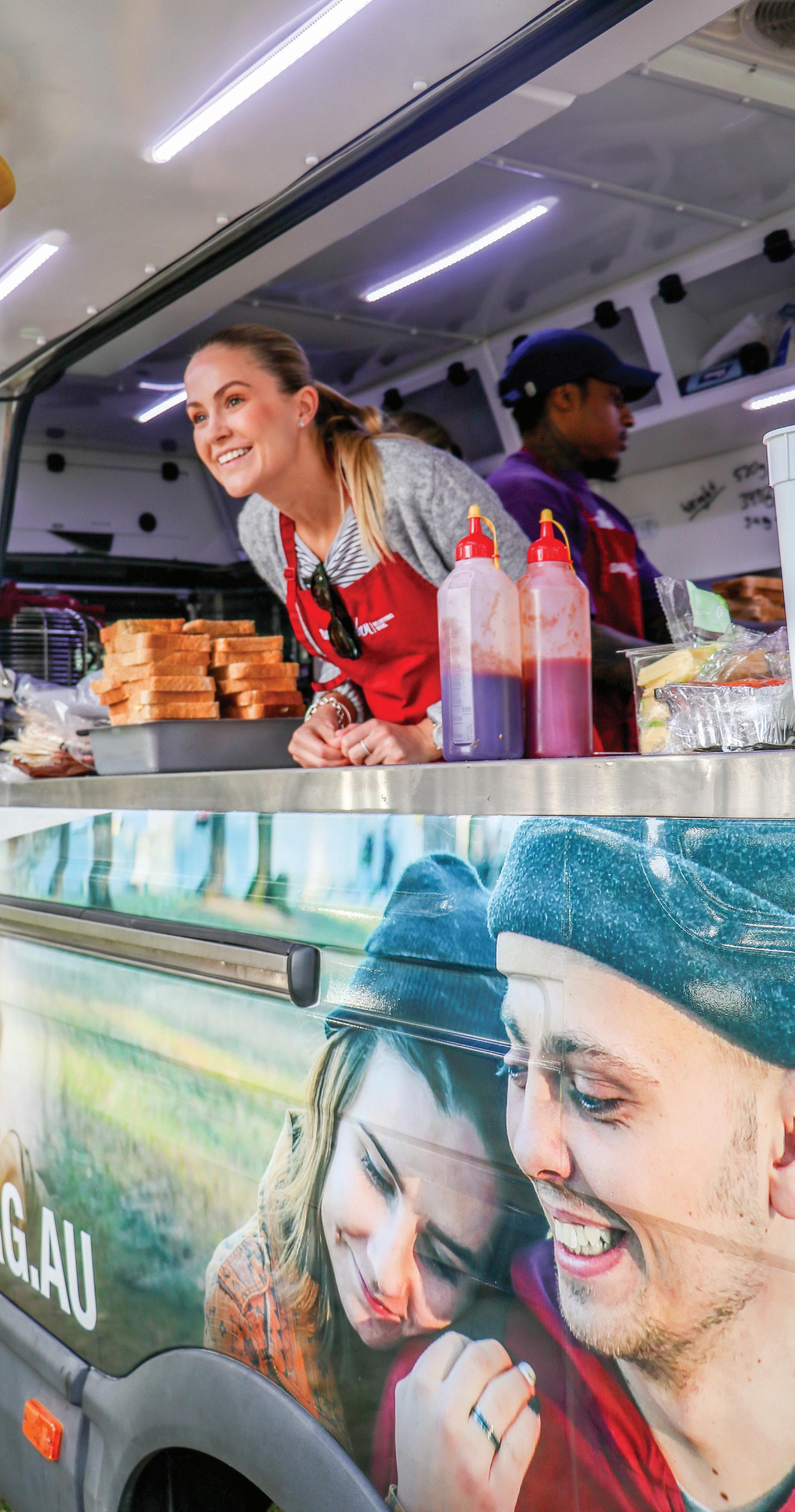
BY GARY CHRISTENSEN
This year has been a year of achievements and change for the Development and Relief Agency (DARA) and its services.
DARA passed its first year anniversary in July 2018. It continues to provide between 150 and 180 meals per week – and has now served more than 4,000 meals.
In October and November DARA’s Van reached its first anniversary of its expanded services at the new sites of Nelson Bay, Raymond Terrace and Maitland. Since then we have received requests for additional services.
Another great success has been DARA’s collaboration with Orange Sky Laundry, with the two vans co-locating at sites and providing valuable services to those in need. The ability to provide washing facilities and further conversation is valued by our friends. Since the start of the collaboration, Orange Sky has completed 13,860 kilograms of washing as well as, with DARA’s van volunteers, provided 3,630 hours of conversation/socialisation.
Students from two of our secondary schools, St Francis Xavier College, Hamilton and St Joseph’s College, Lochinvar, as well as cooking meals for the Van, also provided volunteer support with teams of students and supervising teachers rostered to assist on the van at both the Islington and Maitland sites.
We have had a number of presentations throughout the year to share information about the work of DARA’s Van with groups such as Rotary clubs, Probus clubs and political branch meetings. We also held a parish breakfast.
Our volunteer teams continue to provide valuable support to the team leaders – Baden Ellis and John Sandy - and friendly service and socialisation opportunities for our friends who seek our assistance. The support provided by members of these volunteer teams is greatly appreciated.
We also extend our appreciation to Maitland Mutual, Peters Real Estate, Maitland Toyota, John Rarity Fruit and Vegetable Warehouse and the Wests Group for continuing to provide food preparation advice and their generous financial support.
BY GARY CHRISTENSEN
The Refugee Hub is a place of welcome for both the newly arrived in Newcastle as well as to those who have been in Australia for some years. We aim to “walk the path” with the newly arrived, empower them, teach them and give them a pathway to independence.
In August, we had to move from the premises at 3 Wilson Street, which has been the home to Refugee Hub for many years. Nonetheless, the Refugee Hub will be maintaining its important work whilst it settles into a new home at Mayfield.
Our Adult Migrant English Program (AMEP)/ SEE Language Support Program has been running for many years under the leadership of a dedicated volunteer, Mrs Trish O’Dowd. The students are predominantly female and receive assistance with their coursework and extension/individual tuition and conversational English where needed.
One universal need of all people presenting to Refugee Hub is employment. This is a complex need for these people as it means navigating English language competency, Centrelink, Job Active providers and previous skill and qualification certifications. We work
to assist with these needs where we can.
Each person has unique circumstances and needs an individual approach. This program provides the opportunity for us to offer the most value. However, it is a time-intensive program and can be implemented only once a significant amount of information has been obtained and a good relationship has been formed.
This men’s program aims to provide a dedicated weekly time for men to socialise and learn English. It has been running for 22 weeks with the format of a one-hour English lesson. It is followed by a barbecue where participants can establish friendships and connections with the hope that they become a resource for each other. Participants then progress to an advanced level where they learn about workplace terminology and vocabulary in readiness for mentoring and work-placement opportunities.
Our Pathway to Independence workshops aim to give information and provide a pathway to independence while negotiating everyday life. During the year we successfully conducted a legal workshop outlining the process for making a will and
establishing a power of attorney. Gilbert and Tobin Lawyers (Sydney) and Hunter Community Legal were very supportive in delivering this program.
We also have a number of other future workshops in the pipeline with topics such as budgeting and financial management for families, successful tenancy and home ownership, buying a car, parenting in Australia and tactics for drug and alcohol awareness.
As part of our recreation and cultural engagement, the Refugee Hub runs a bike safety workshop for the newly arrived in the July school holidays each year. There is the potential for additional workshops as needed.
Refugee Hub has also supported 12 clients through Cooks Hill Surf Life Saving Club (SLSC) to participate in a weekend beach/ surf safety workshop run over three weeks.
Lastly, during the 2018 season of Refugee Hub’s Community Soccer Project, 13 youths received funding for registration at Jesmond Soccer Club, club kit and additional soccer items from Kingsgrove Sport.
BY GABRIELLE SUTHERLAND
The year 2018 marks a significant year for the community at St Joseph’s College, Lochinvar as they welcome the first female leader since 1994, Principal Patricia Hales.
As a former St Joseph’s student herself taught by the Josephite nuns, Mrs Hales has returned to create a community of learning where students, staff and families are valued and respected for their uniqueness, and students are encouraged to embrace new challenges and reach their full potential.
“I feel very privileged and humble to return to St Joseph’s as a female leader, I feel as though I am standing on the shoulders of giants – the women who taught me were overwhelmingly strong, intelligent and determined – they inspired within a desire to be the best I could be, to work hard and be considerate of others, to dream a little about possibilities,” said Mrs Hales.
Prior to the open liturgy at St Joseph’s, Mrs Hales said she felt an overwhelming sense that the spirits of the sisters who taught her were there by her side.
“I truly felt a spiritual call to the College, that God was calling me to a special mission
– that it was the right time for me from a career and life perspective – I felt I had the experience and wisdom to lead the College at an important time in their journey.
“I feel that the Josephite tradition is simply part and parcel of who I am as a personthe sisters’ resolve to provide an education for young women, their compassion for the less fortunate, their desire to share in and walk together in the ordinariness of life were just so evident and lived that it just seemed to be the way we should live our own lives.”
Mrs Hales has worked for the Diocese of Maitland-Newcastle for over 30 years. She has taught at St Catherine’s Catholic College, Singleton, St Francis Xavier’s College, Hamilton and ASC, St Peter’s and St Mary’s Campus, Maitland, as well as enjoyed eight years at the Catholic Schools Office in a variety of roles.
Mrs Hales said that she is looking forward to being part of the energy of a Year 7 to
11 school, as there is such diversity across the year groups as well as having the opportunity to share her experience and expertise with her staff.
“I truly hope that all students will grow and flourish in an environment where they are respected as young adults. I hope that they will reap the benefits of being in a place that is imbued with the Josephite tradition and that this will inspire them to be strong, open minded, compassionate and well informed.
“In collaboration with the staff and Year 11 students, I hope to establish some spaces in the College that will give the senior students the opportunity to develop their independence and form a cohesive bond that will pay dividends for their learning and future pathways.”
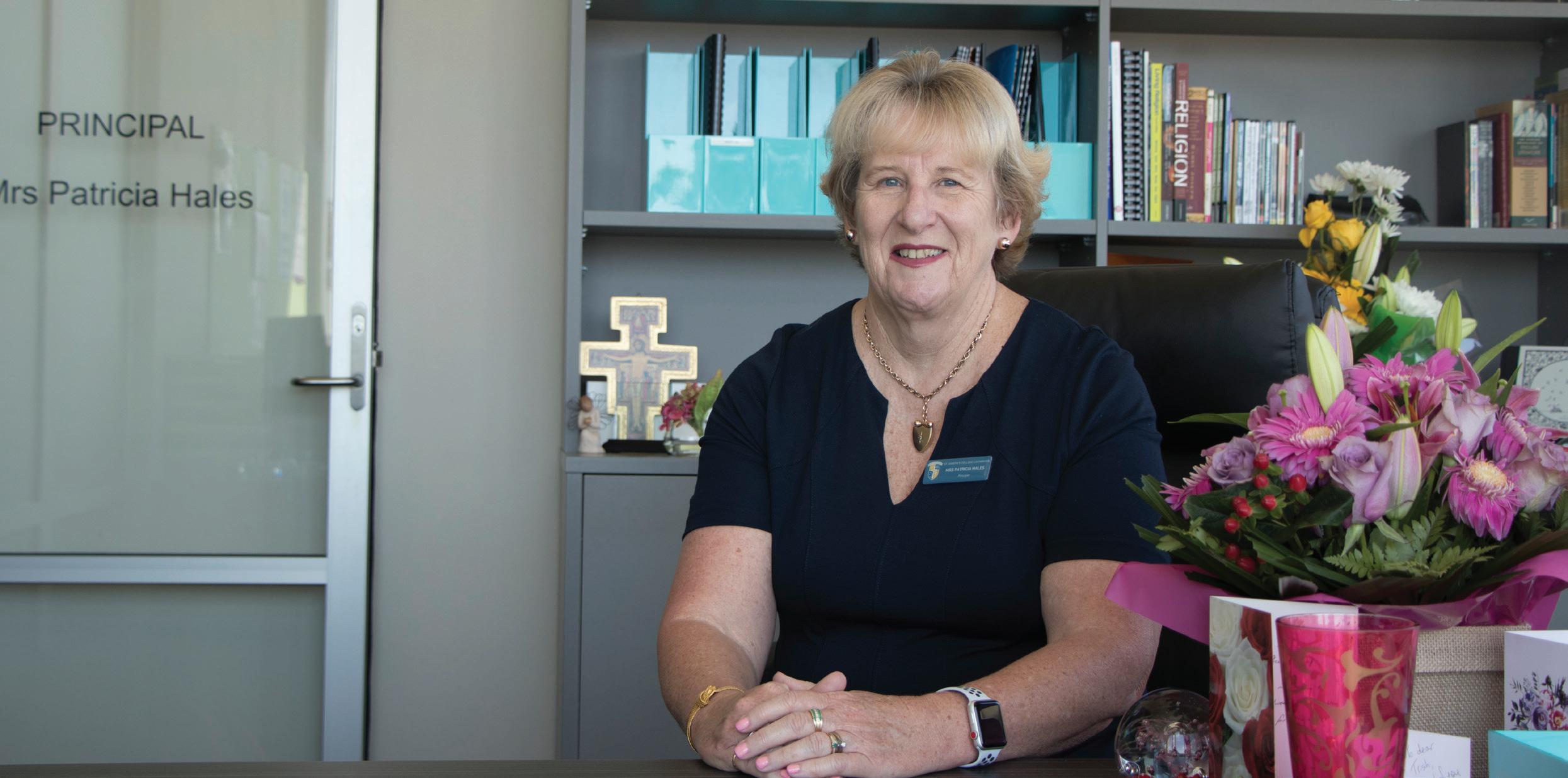
BY TRACEY EDSTEIN & JOHN KINGSLEY-JONES
Bishop Bill Wright appointed Fr Andrew Doohan, Dean of Sacred Heart Cathedral, as Vicar General for the Diocese of MaitlandNewcastle.
Fr Andrew is Chair of the Diocesan Liturgy Council and Master of Ceremonies to Bishop Bill. This appointment means that Fr Andrew will become a member of the Diocesan Leadership Group.
Fr Andrew hails from Casino and was ordained in 2007. He then became parish priest of St Benedict’s, Inner Newcastle, and Dean, in 2015.
As Bishop Michael pointed out in his homily, Andrew’s call was not one that he could answer instantly. “Some of you may say, ‘It’s a pity he wasn’t ordained years ago when he finished his studies! Why has it taken him so long?’ To say such things is not to understand the process of a call to follow Jesus….The truth is: perhaps Andrew wasn’t ready years ago to respond to Jesus’ call.”
Completing his Higher School Certificate in 1985, he worked in banking and finance for several years, then embarked on studies for the priesthood in 1992. While he did not proceed to ordination then, he did gain valuable experience in a variety of church-related fields: ‘chaplain’ at St John of God Hospital Burwood and St Vincent’s Darlinghurst, project manager for a church computerisation project and office administrator at Carlingford parish.
While answering the call was a prolonged process, Andrew can isolate a moment when the notion took hold: “I can remember,
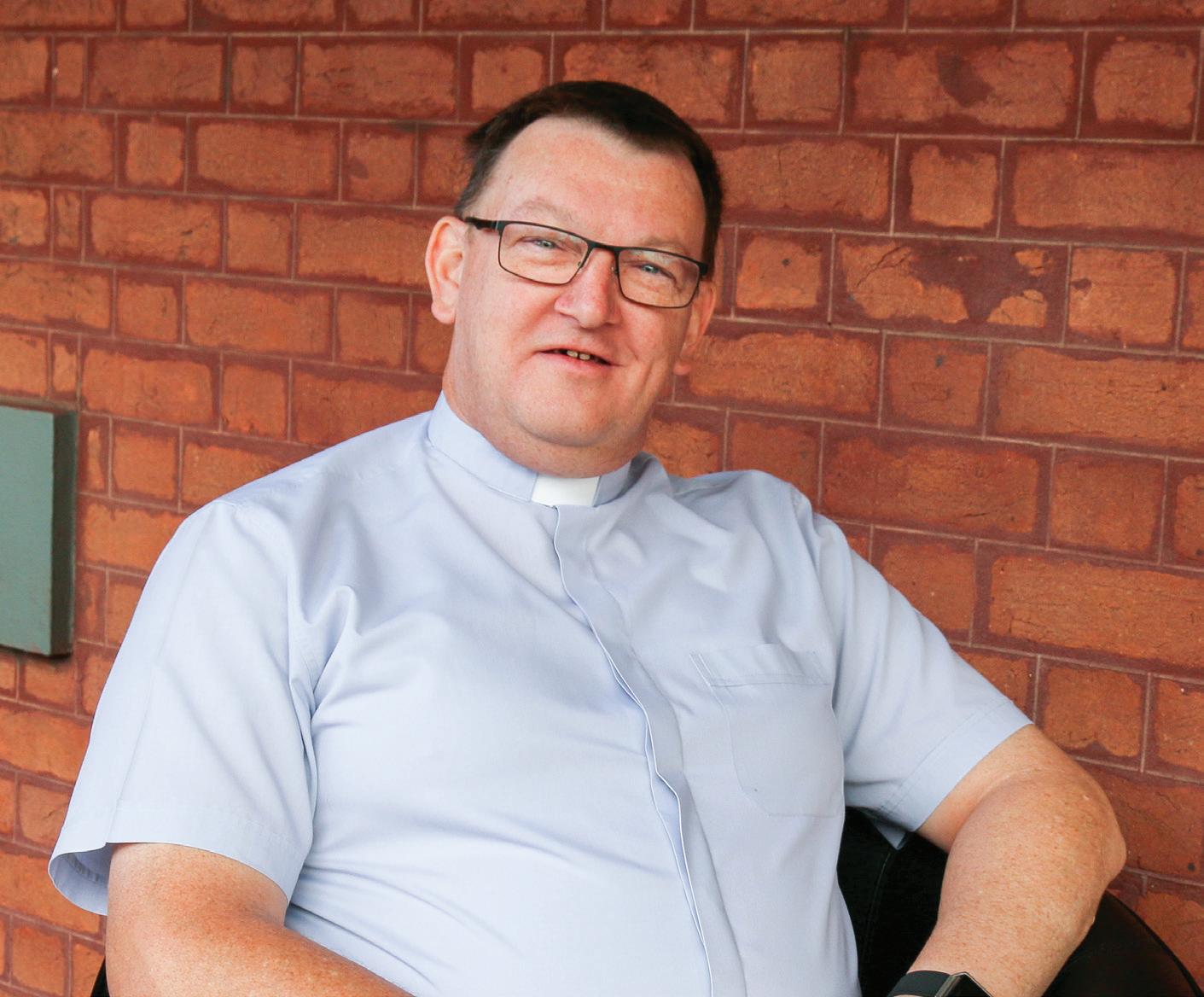
clear as day, Sunday evening Mass at the cathedral at Lismore, which was a ‘young people’s Mass’, thinking that priesthood would be something I could do.” Looking back, he sees that diverse experiences –work, study, relationships, travel, pursuing good music and good coffee! – all contributed to his formation, as effectively as the seminary years.
Andrew spent the last two and a half years, leading to and following ordination to diaconate, in the Parish of East Lake Macquarie (formerly Belmont, Swansea and Windale parishes). The opportunity to test the call to priesthood, day by day, was instrumental in helping him, ultimately, to say ‘yes’. That time also allowed him to get to know the diocese, people and priests, and to feel part of the diocesan community.
Andrew looks forward to ministering in Raymond Terrace and Bulahdelah, with the guidance of parish priest, Fr Derek Garner. He will particularly relish exploring
the possibilities that liturgy offers. In gaining his Masters degree, he majored in liturgy, so the parishes where he serves will certainly benefit from his expertise.
While Andrew is very well qualified academically for priesthood, he recognises that it is at the local level that most people experience church, and so it is the day to day rhythm of parish life that you need to “get right”. When I spoke to him just after ordination, he was full of anticipation for the ‘day to day’ experiences that priest and people share.
While he admitted that there were always doubts and questions, “There is a powerful sense that this is what I’m supposed to do. The day I stop questioning is the day I’m ready to be rolled into the grave, because the questions allow me to say ‘yes’, again and again and again….for me, nothing else makes sense.”
BY SEAN SCANLON
There were a number of major milestones in 2018 for the Many Parts, One Body, One Mission change project.
One of the main aims was to establish a Shared Services structure for Human Resources, Finance, Technology Services, Communications and Assets, and Property Services in order to improve the quality of what we do and to better meet the needs of the Diocese and its agencies.
The successful establishment of Shared Services will enable the leadership of each diocesan agency to focus on their core activities, reduce confusion across agencies and diminish duplication of staff and resources. This will also enable staff within Shared Services to have opportunities for a broader experience.
Establishing a Shared Services structure is one of the four pillars of change the Diocese is undertaking as part of the Many Parts, One Body, One Mission change project. The other three pillars of change are:
f establishing a Council for Mission
f expanding the Diocesan Leadership Group (DLG) to include the Director of Catholic Schools Office and the Director of CatholicCare
f charging existing agency boards and councils to exercise governance.
Bishop Bill has now established a Council of Mission for the whole Diocese to review our overall direction as Church, establish priorities for the development of our ministries, agencies and services and foster collaborative initiatives between agencies.
The Council for Mission is a key advisory strategic group of the Diocese to the Bishop. Its purpose is to provide the prophetic voice of the Spirit and a broader vision, so God’s mission is revealed and lived out actively within and outside the local church.
By building up a sense of trust and unity among all peoples, the Diocese will be recognised as a visible and credible sign and instrument of communion with God and so fulfil its mission.
Another change was the result of Bishop Bill's decision to create a new position in the Diocese - that of Chief Executive Officer (CEO).
My role as the CEO is authorised and responsible for the oversight of the Diocese of Maitland Newcastle and its agencies by way of delegated authority from the Bishop and the Trustees. The CEO is expected to provide effective leadership for the Diocese through input into the strategic direction of
the Diocese, as set out by the Council for Mission and the Bishop, by development and implementation of strategic and operational plans for all agencies.
The CEO acts in accordance with the direction of the Bishop for Church matters, the Trustees for civil matters, and church teachings.
We have also created a new group as part of the Many Parts, One Body, One Mission change project known as the Operating Management Group (OMG). The purpose of this group is more operational in nature and works with the DLG to execute the work of the Council for Mission at a Diocesan level.
In conclusion, I believe we are on the verge of a new chapter in the history of the Diocese of Maitland-Newcastle. I have every confidence that the platform we have established – and the pillars of change we have implemented and are implementing –will serve us well into the future.
One of the main aims was to establish a Shared Services structure for Human Resources, Finance, Technology Services, Communications and Assets, and Property Services in order to improve the quality of what we do and to better meet the needs of the Diocese and its agencies.
BY SHAC ARCHITECTS & AMY THEODORE
SHAC, the Newcastle architecture design studio based in Islington, NSW, has won the Prestigious Blacket Prize and the NSW Education Award at this year’s NSW Institute of Architecture Awards for Stage One of St Patrick’s Primary School, Lochinvar.
The design studio was also named the winner of the Educational Architecture category at this year’s Newcastle Architecture awards for the new development.
St Patrick’s was a grateful recipient of financial support from the NSW Government, provided under the Building Grants Assistance Scheme and distributed by the Catholic Block Grant Authority. This grant was complemented by a contribution from the Diocesan Schools Building Fund (to which diocesan families contribute) to help build the first stage.
The development, which will house Kindergarten and Year One classes, features individual learning spaces, a communal learning area and an outdoor learning space.
The flexible layout and playful features will help maximise student engagement and promote more complex and abstract thinking while also being responsive to the varying needs and capabilities of students.
The open environment is aimed at encouraging collaborative learning as well as enabling students to ask questions and express their ideas. The new environment is also more conducive to building inclusive
relationships between students and teachers and between the students themselves.
The development’s hub for teachers is where staff can collaborate, plan and share their programs. It will also be a ‘think tank’ venue which gives students a space where they can work together in groups, either independently or with a learning support assistant.
SHAC describes the contemporary space as a ‘pod’ design which differs from most traditional classroom layouts. It is aimed at giving students access to a world of opportunity and innovation, allowing them to develop all the necessary skills to succeed in learning and in life.
This ‘pod’ design will be replicated across the school, including in the Stage 2 development which will provide learning spaces for Years 2, 3 and 4.
“Creating physical and social learning environments has a positive impact on children’s learning, wellbeing, happiness and creativity,” said Education Officer for Early Learning at the Catholic Schools Office, Kim Moroney.
“When designing and establishing the Kindergarten and Year One classrooms at St
Patrick’s, decisions were carefully made in relation to space, layout, air and light quality, fittings, furnishings and resources.”
Working closely with SHAC, St Patrick’s was able to provide an educational input throughout the design, planning and development phases, informing SHAC architects of the important necessities and variations required to satisfy student and staff needs.
“SHAC and the planning team from the Catholic Schools Office co-operated closely to ensure a quality result of which I am immensely proud,” said Principal of St Patrick’s, Jacqueline Wilkinson.
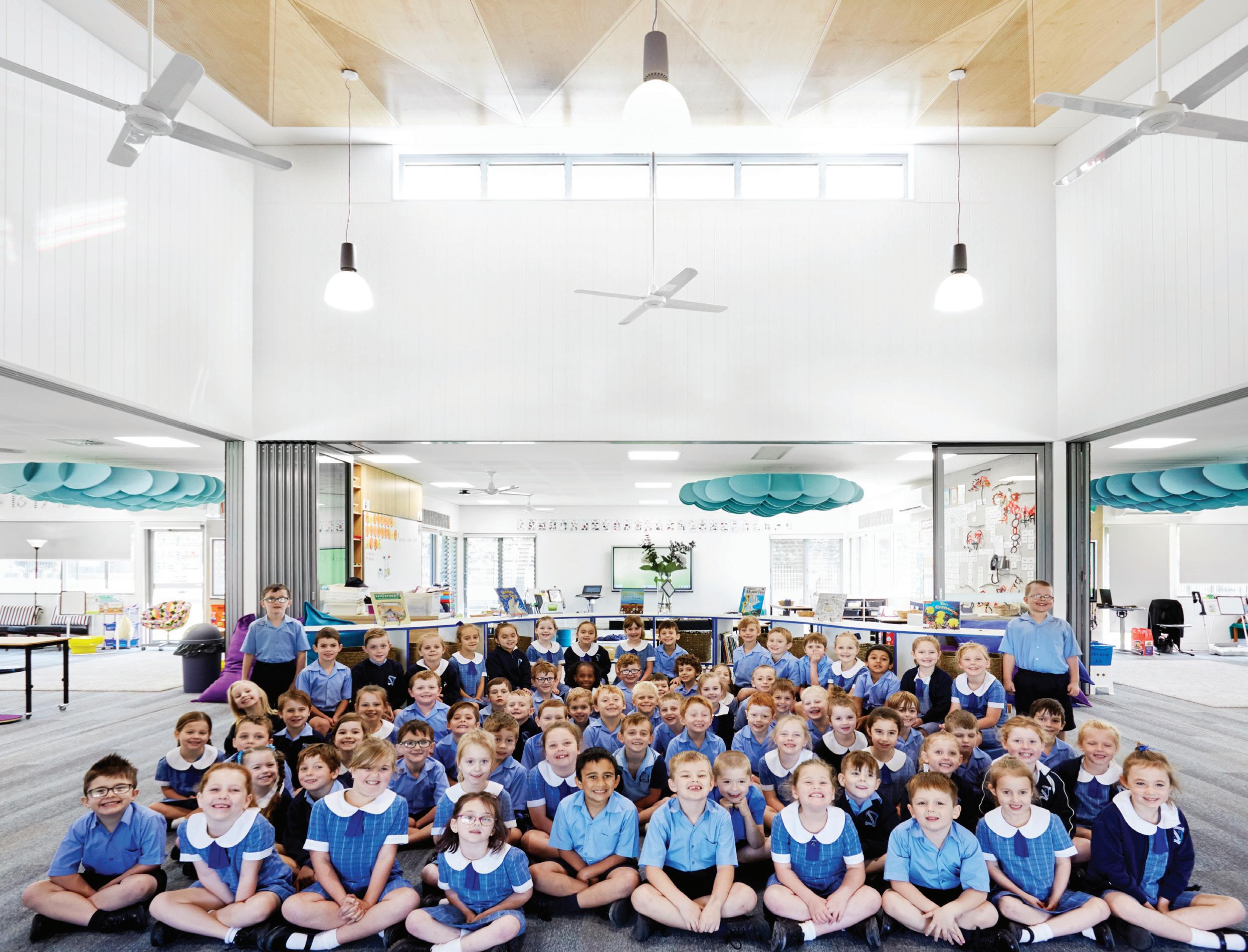
“The very talented team members from SHAC Architects and Christopher Vlatko were great to work with. Chris always challenged our thinking and helped us really explore and imagine what could be. He patiently listened to our concerns, interpreted our ideas and responded to the needs of our community.
“We look forward to the continued development at St Patrick’s to cater for the growing community who seek a faith-based education.”
For the year ending 31 December 2017
The financial information provided above is an extract of Audited Special Purpose Accounts and as such cannot be seen as representative of audited financial accounts.
For the year ended 30 June 2018
CatholicCare is endorsed as a Deductible Gift Recipient under the Income Tax Assessment Act 1997, upon winding up or dissolution of CatholicCare, or if the deductible gift recipient status is evoked, any property or income must be transferred to another deductible gift recipient and is therefore restricted.
BALANCE SHEET
The Catholic Development Fund (CDF), which started over 50 years ago, was established to assist with building schools in the Diocese of Maitland-Newcastle. It is a very different entity today.
It now operates as a provider of financial services to the Diocese, assisting with the management of finances not only for the Diocese but also for its agencies, its 57 schools and the 39 parishes in the Hunter Manning region.
“To help us support the Diocese its agencies, schools and parishes, the CDF is able to accept funds from external clients for Term Investments and for Notice Saver accounts,” explains Anne Campbell, CDF Office Manager.
“The CDF is also a provider of financial services to all the Catholic schools and all the parishes of the Diocese.
“We also provide loans to the Diocese for a range of projects and activities,” she adds.
So why should anyone invest in CDF?
The funds invested in the CDF are used to provide financial support to the Diocese which enables the Diocese to carry out a range of activities such as:
f building new schools – such as St Bede’s Catholic College in Chisholm which opened its doors earlier this year and Catherine McAuley Catholic College in Medowie which is a $26 million development due to open in 2022

f expanding St Nicholas Early Education through the building and opening of new early education centres at Cardiff, Chisholm and Lochinvar as part of a program to expand the number of long day care centres under the St Nick’s brand to 20 within five years
f building affordable housing – the Diocese has delivered 74 dwellings to the community with sites at Maitland, Mayfield, Booragul and Mount Hutton
f acquiring and refurbishing offices for CatholicCare in Singleton, Muswellbrook and Forster
f delivering refugee services through the Refugee Hub which identifies, reaches out and supports those in our community who are disadvantaged, marginalised, oppressed or isolated by cultural, ethnic or religious differences
f supporting the Diocese’s work in youth ministries, chaplaincy and parish services – we spend about $1 million a year on this
f supporting Zimmerman Services which provides a range of services to assist survivors and their families on their individual healing journeys.
If you would to find out more about Term Investments or Notice Saver accounts, please contact the CDF on 1800 810 330.
Catholic Diocese of Maitland-Newcastle 841 Hunter Street
Newcastle West NSW 2302
P: (02) 4979 1111 E: enquiries@mn.catholic.org.au www.mn.catholic.org.au

Catholic Schools Office
841 Hunter Street
Newcastle West NSW 2302
P: (02) 4979 1200 E: info@mn.catholic.edu.au www.mn.catholic.edu.au
CatholicCare Social Services 50 Crebert St Mayfield NSW 2304
P: (02) 4979 1120 E: ccenquiries@catholiccare.org.au www.catholiccare.org.au
Catholic Development Fund 841 Hunter Street
Newcastle West NSW 2302
P: (02) 4979 1160 E: cdf@mn.catholic.org.au www.cdfmn.com.au
St Nicholas Early Education 841 Hunter Street
Newcastle West NSW 2302
P: (02) 4979 1110 E: enquiries@stnicholasmn.org.au www.stnicholasmn.org.au
www.dara.org.au