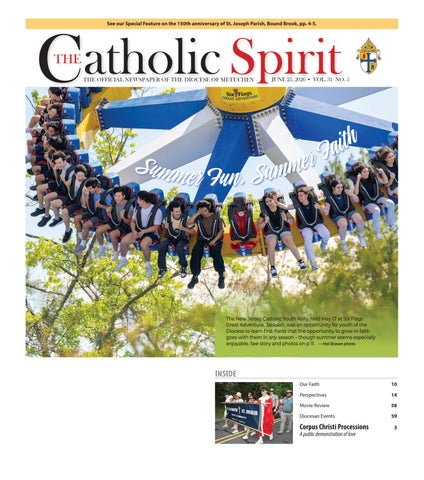
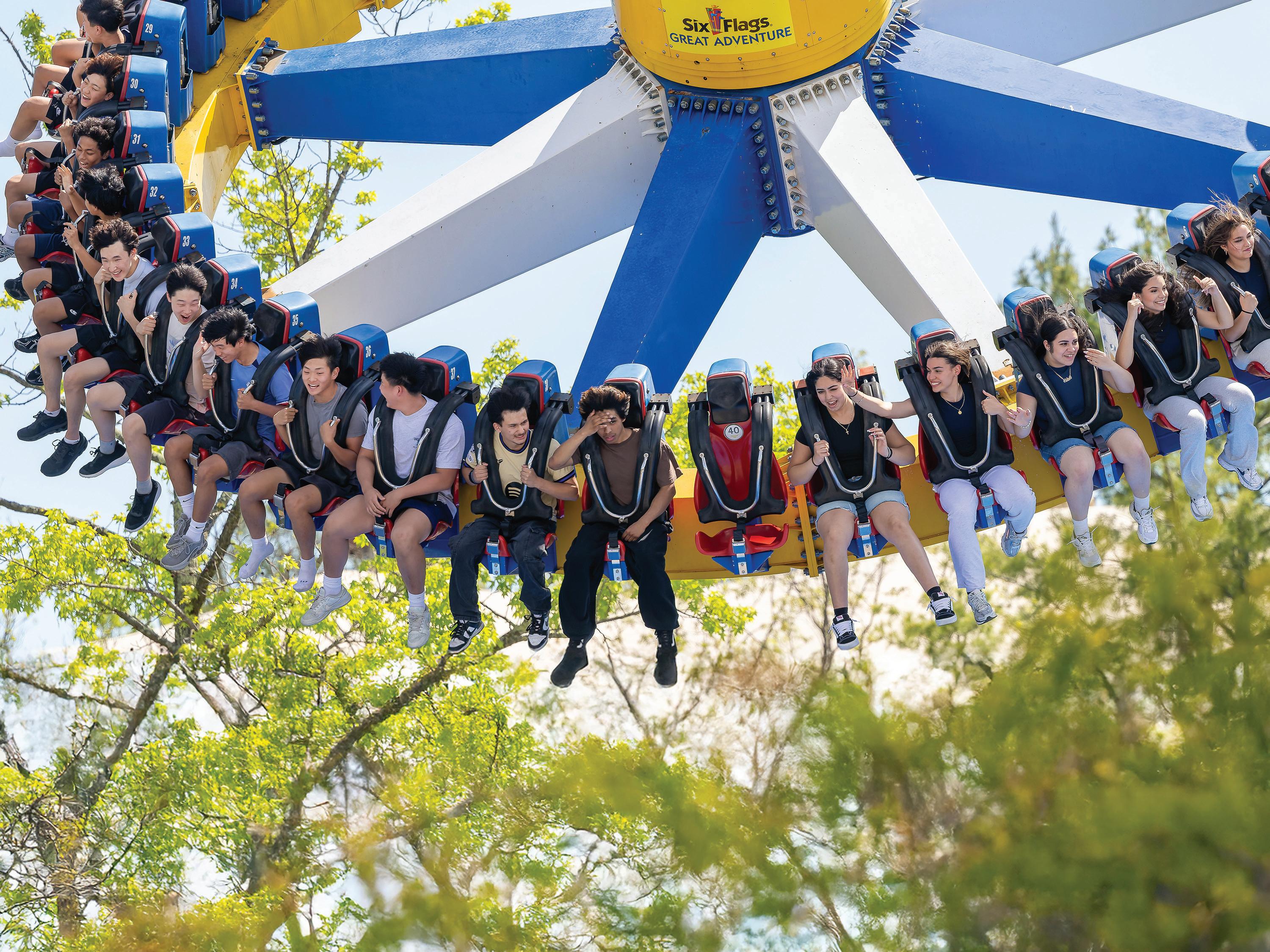
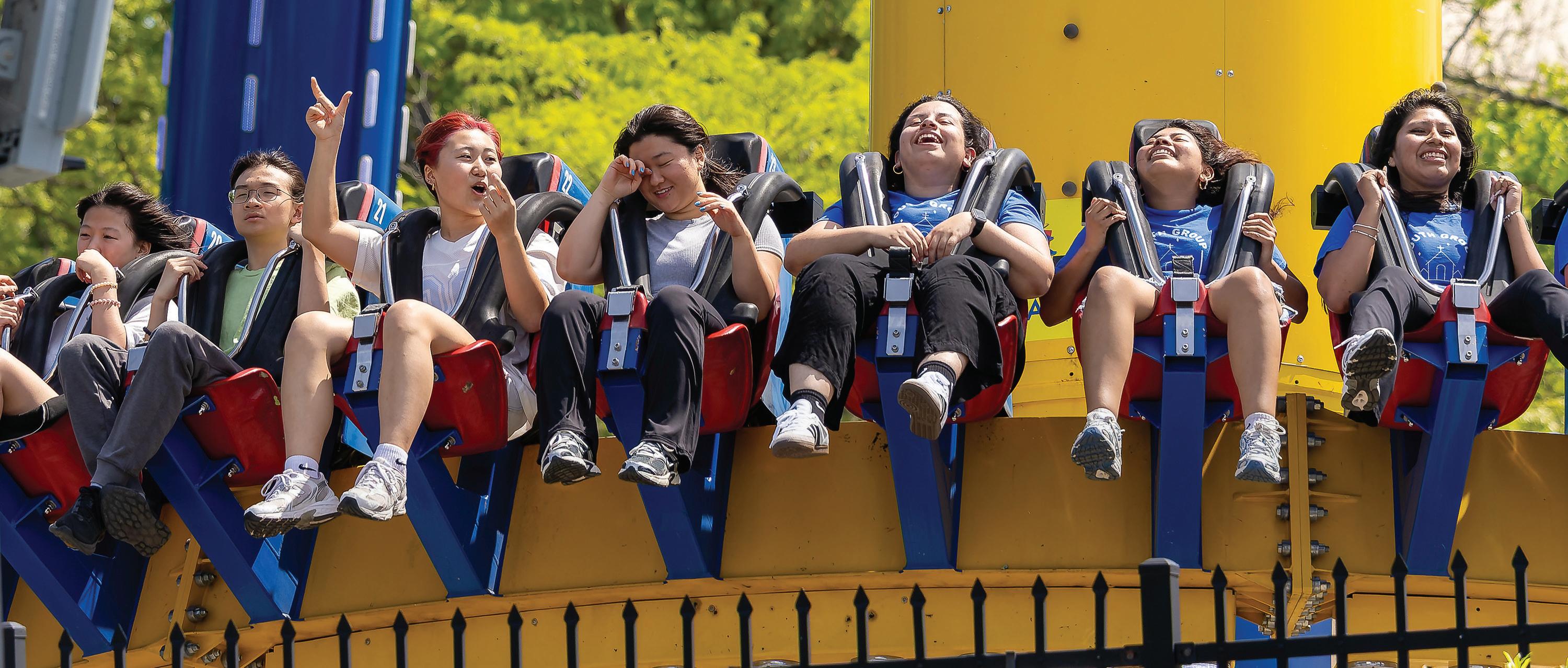
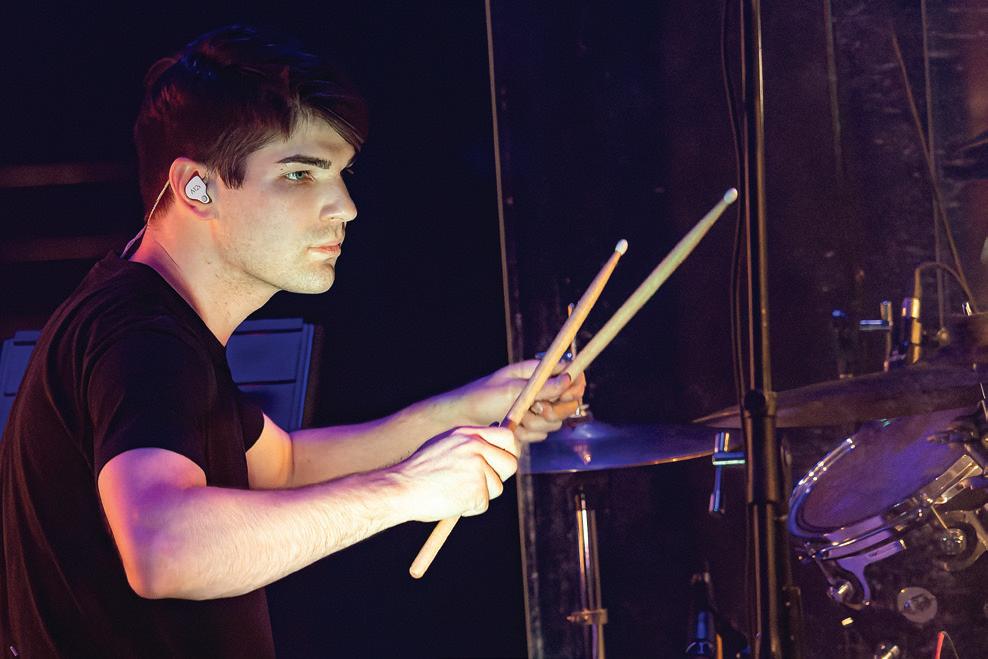
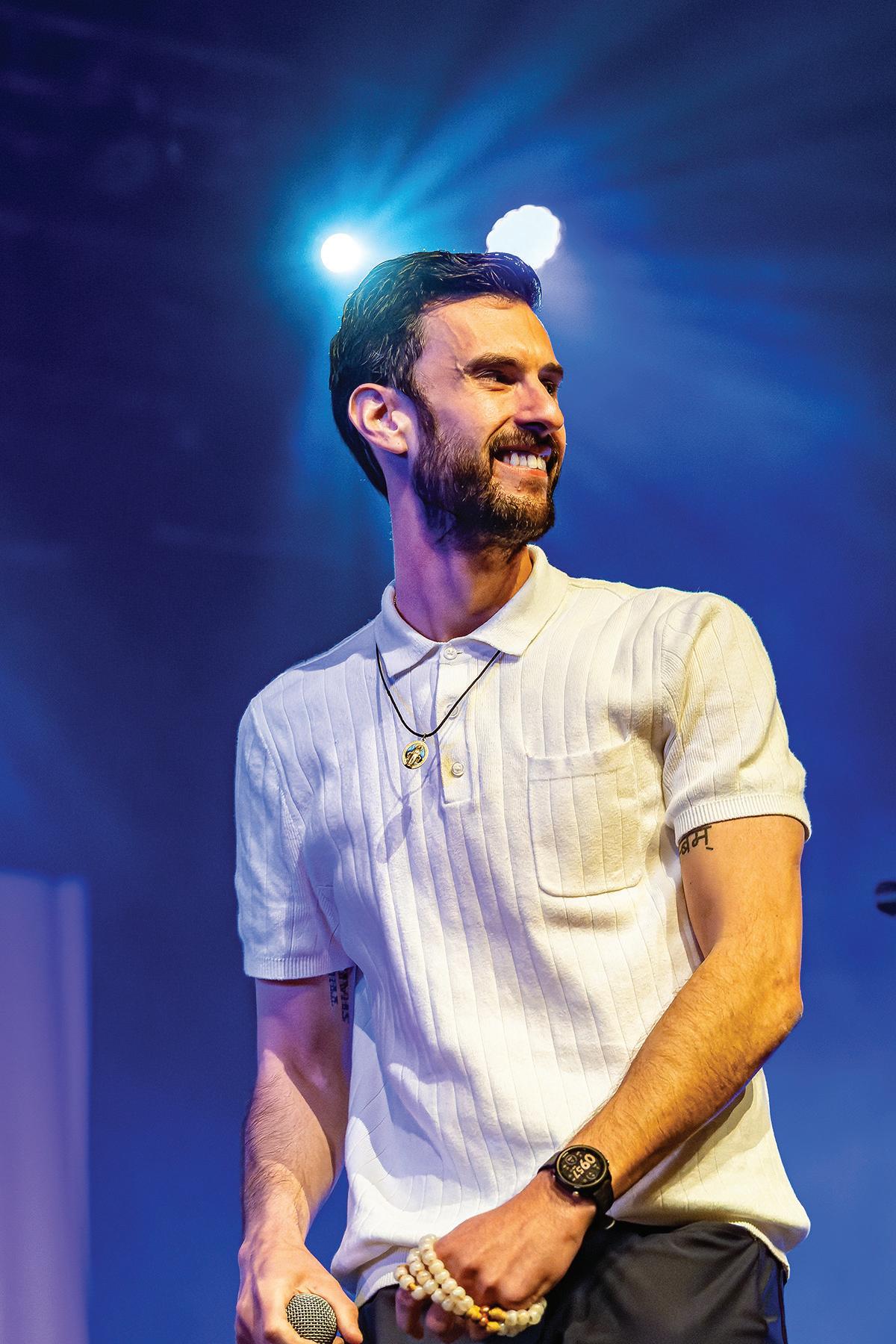
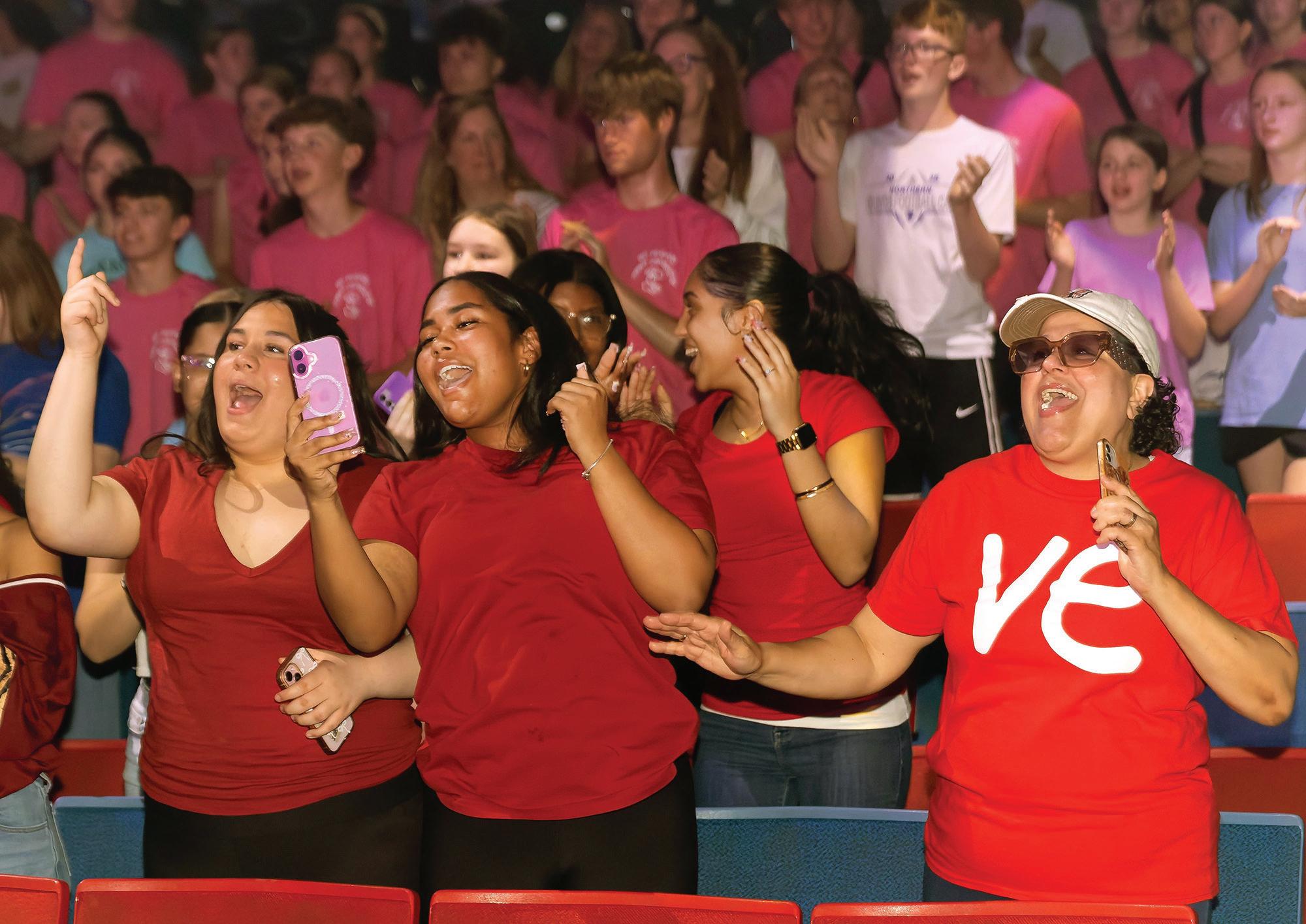
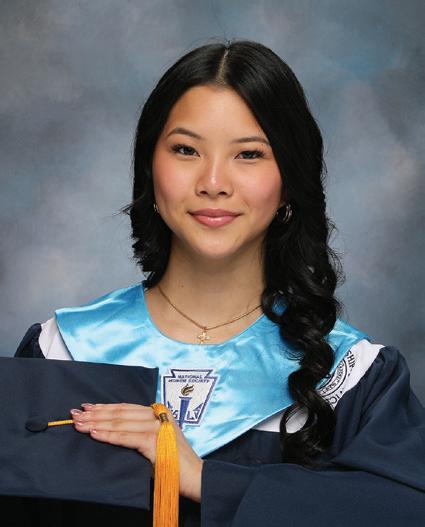
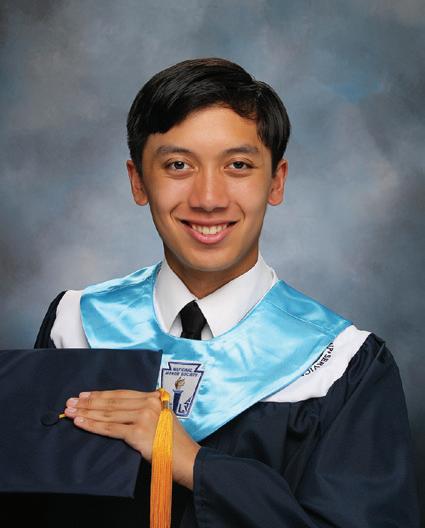
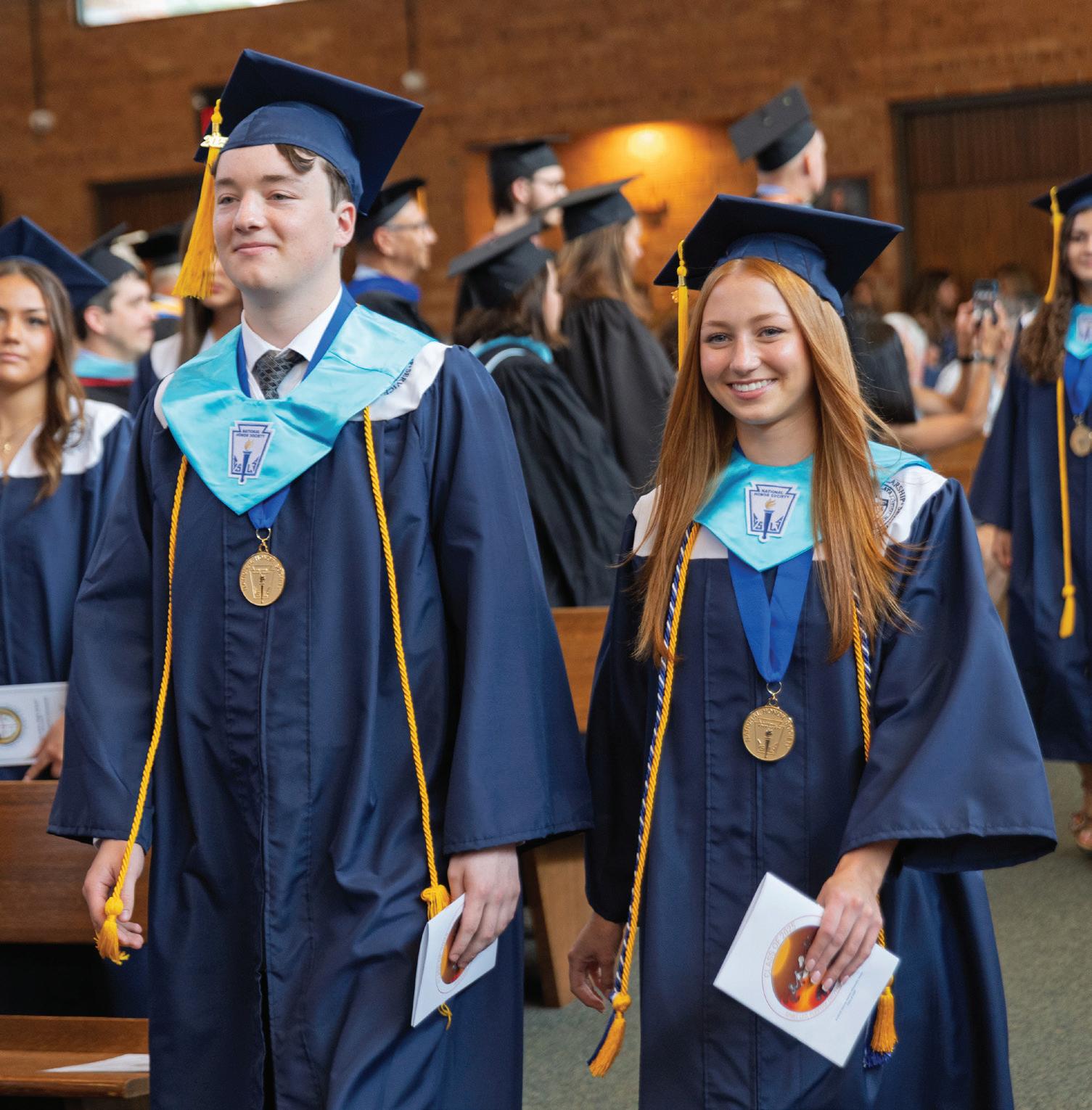
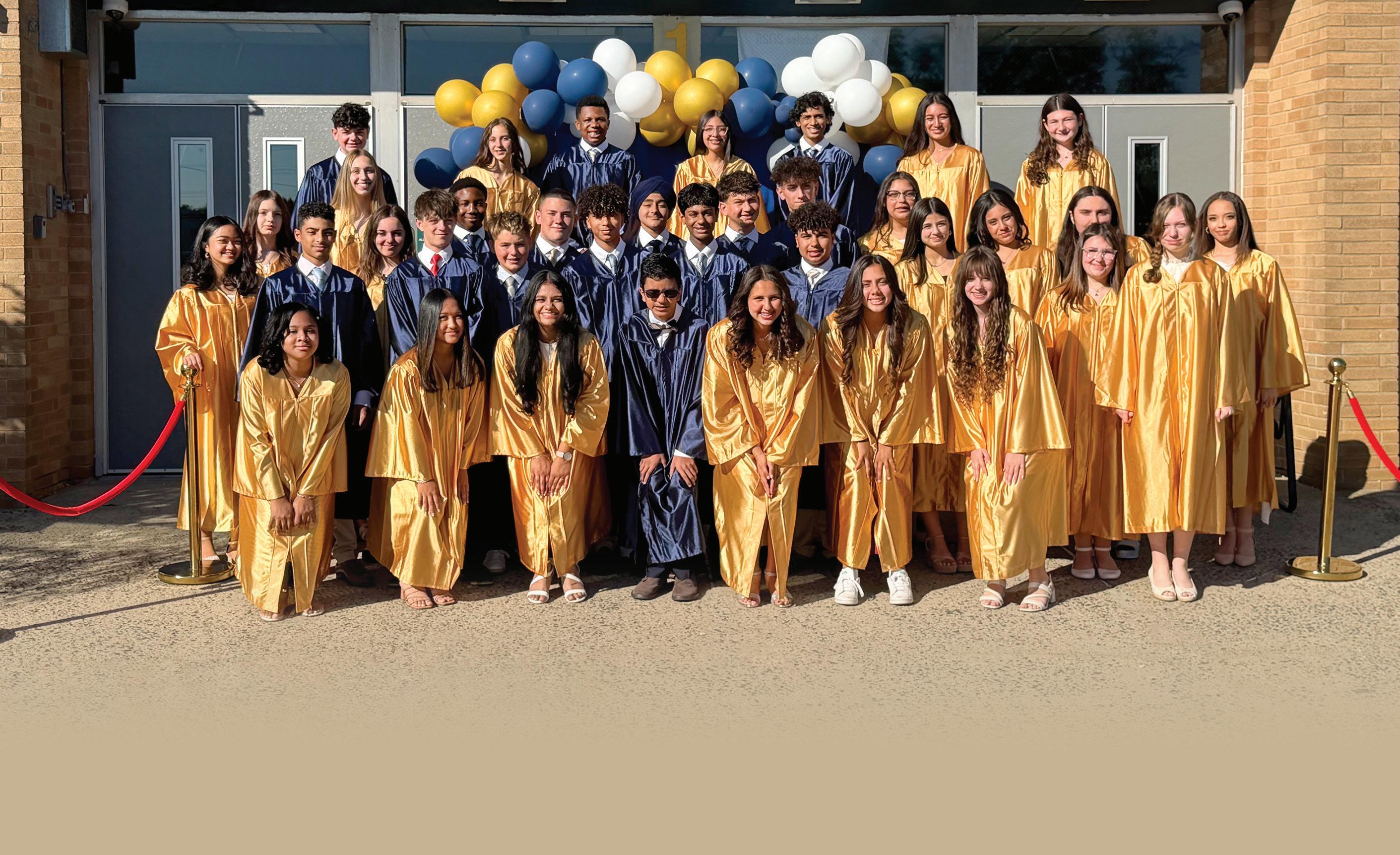
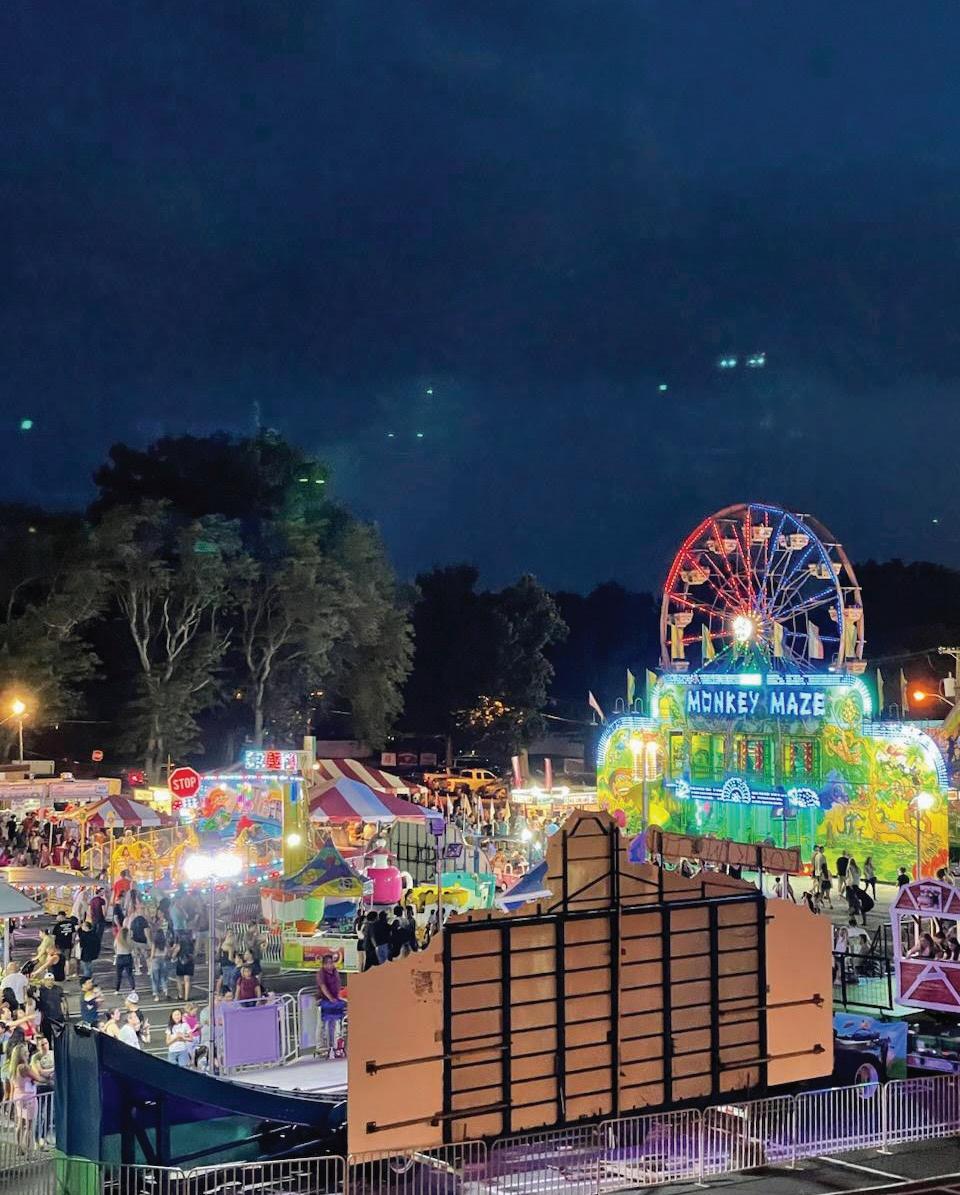
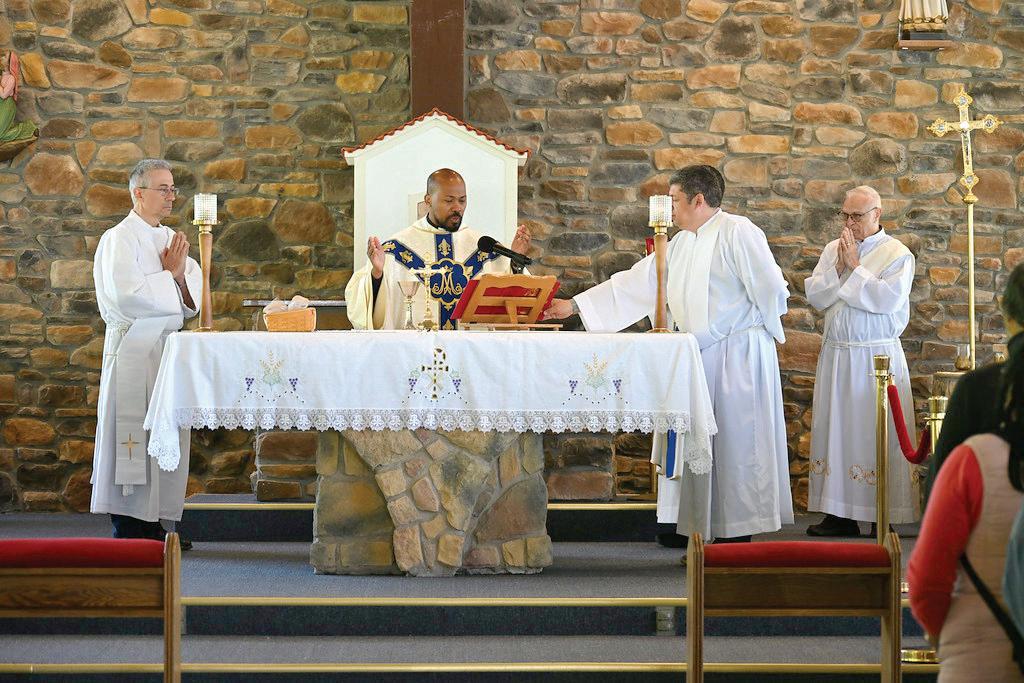
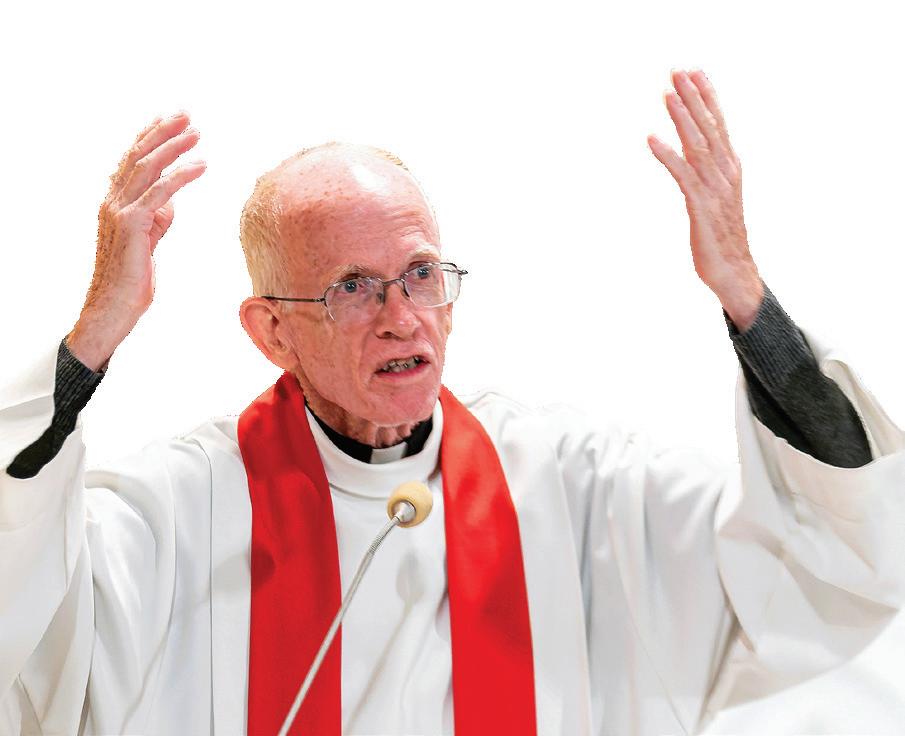
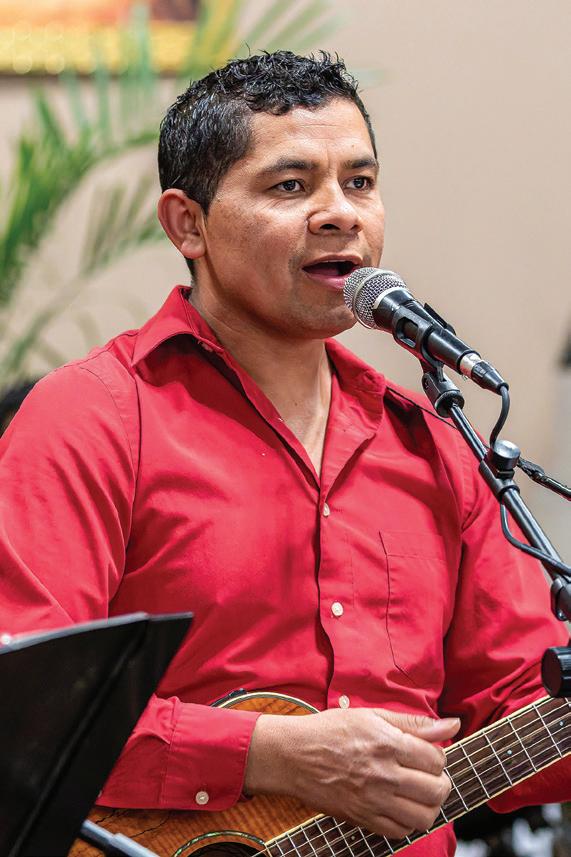
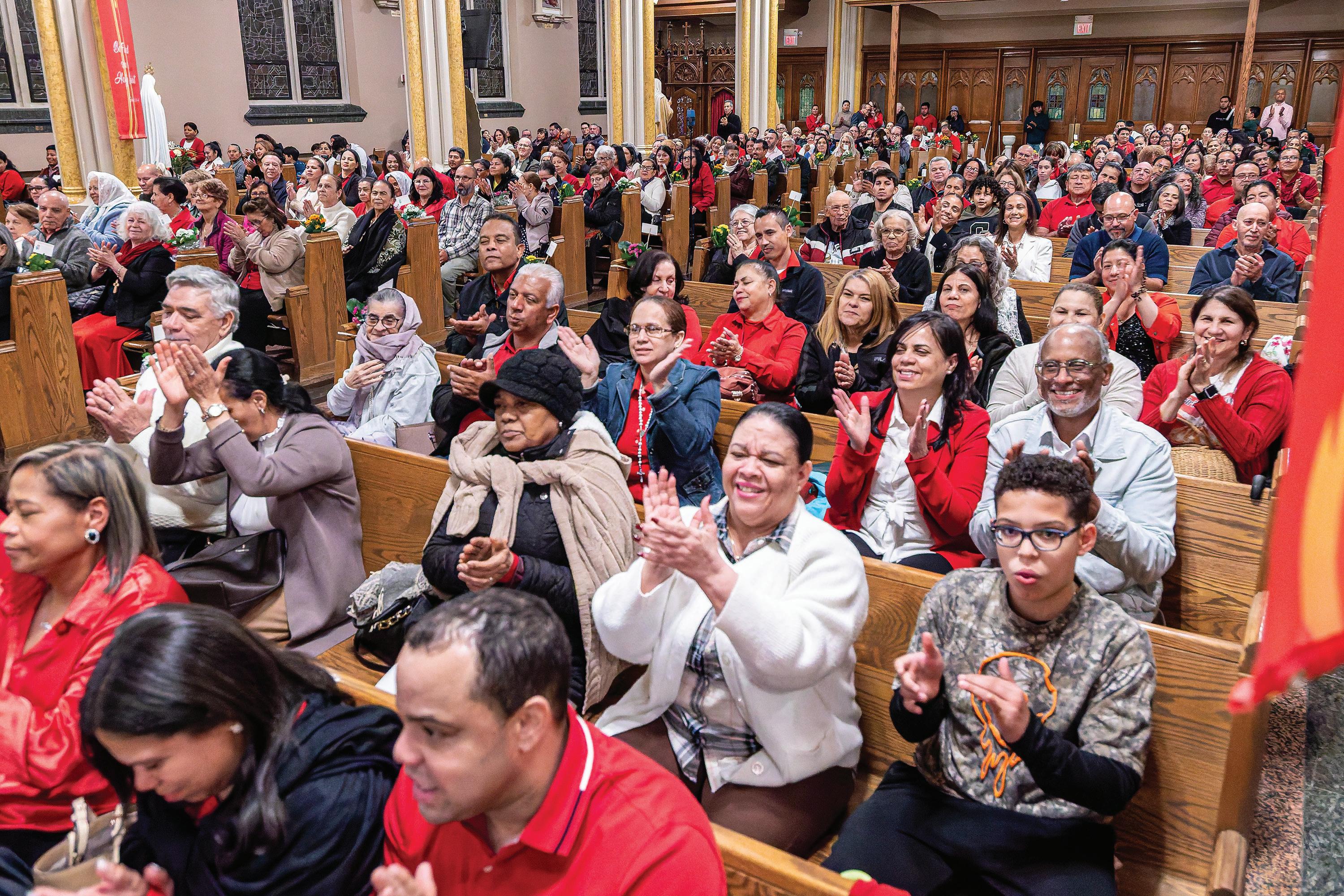
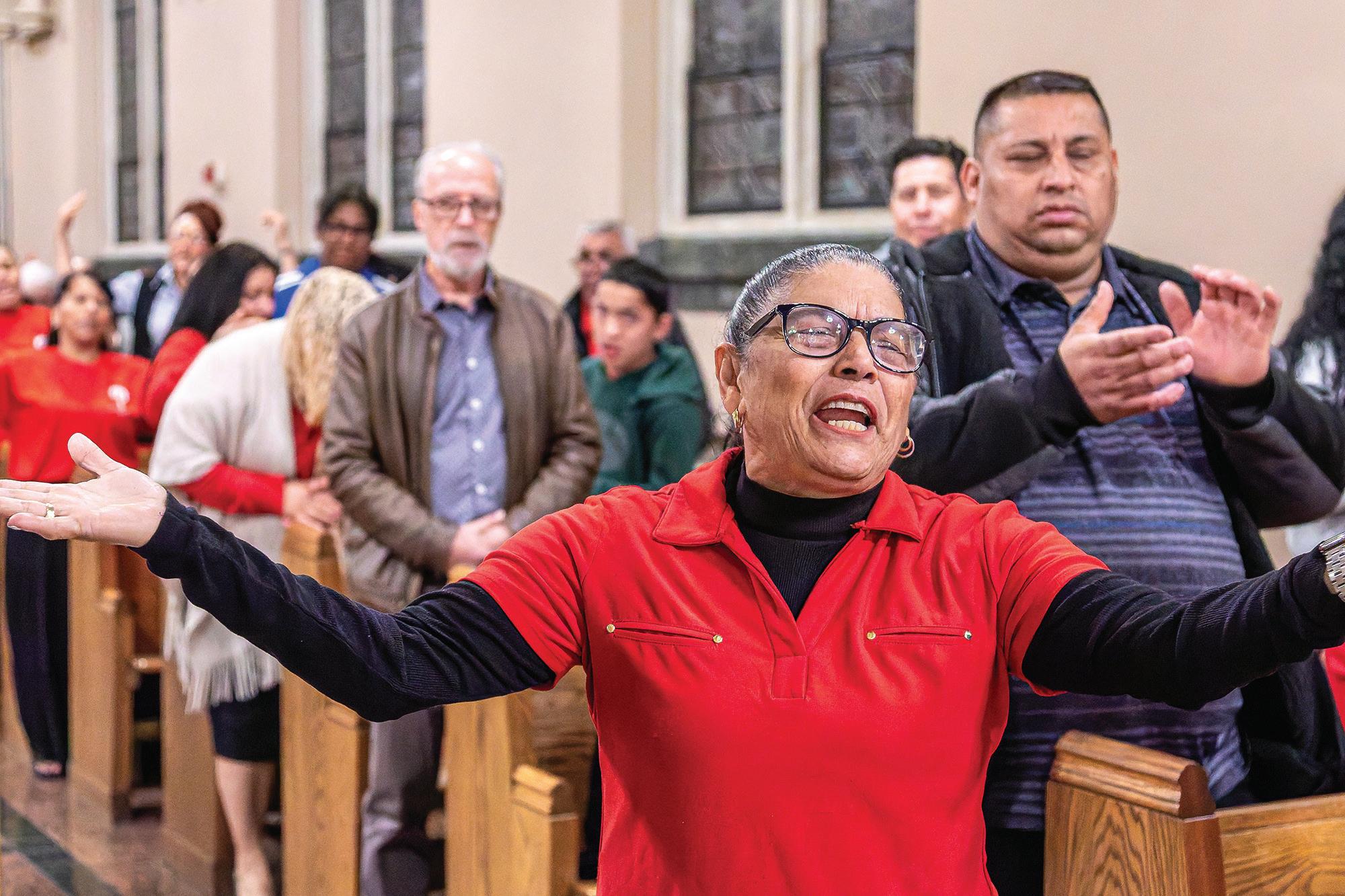
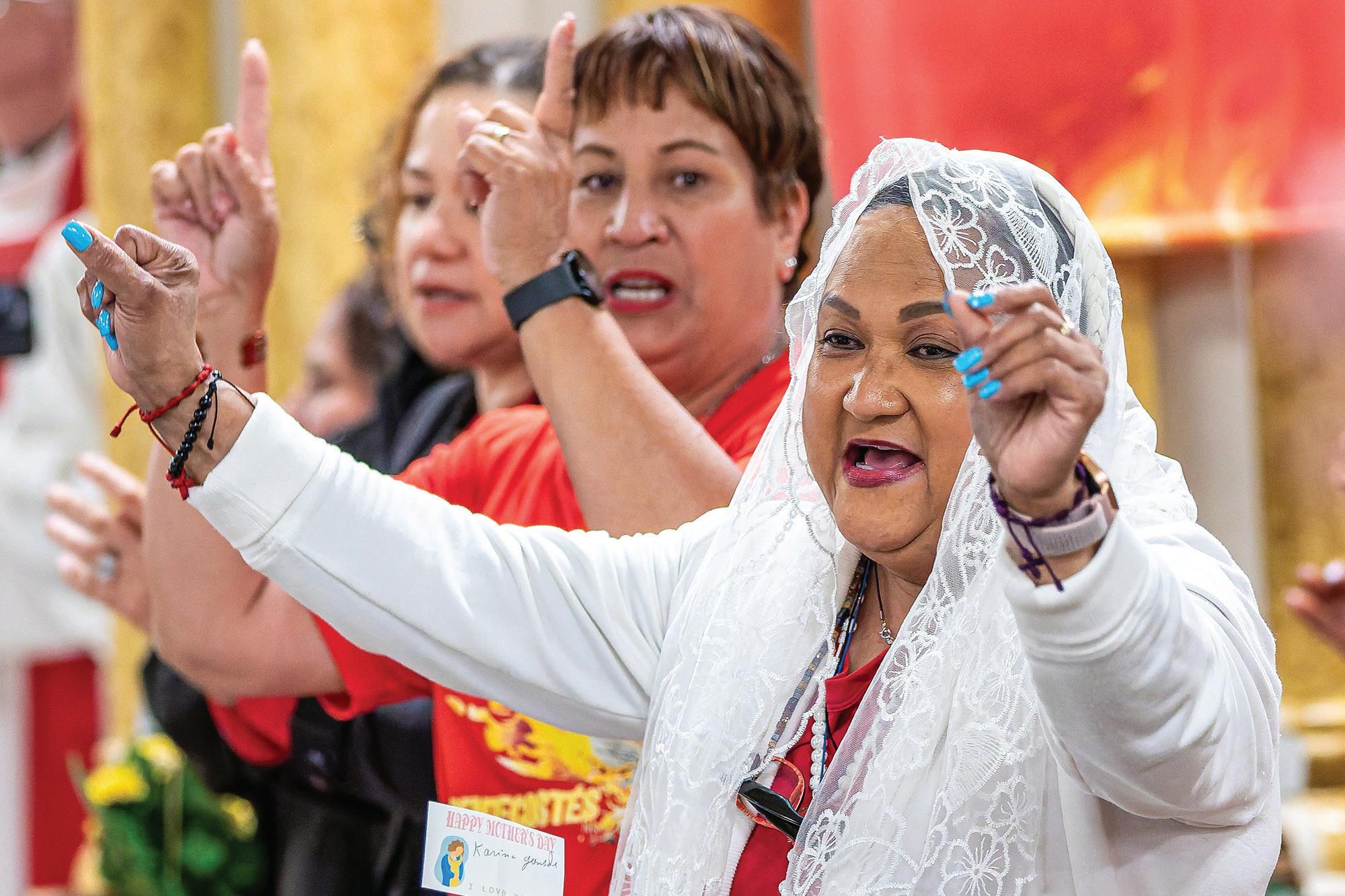
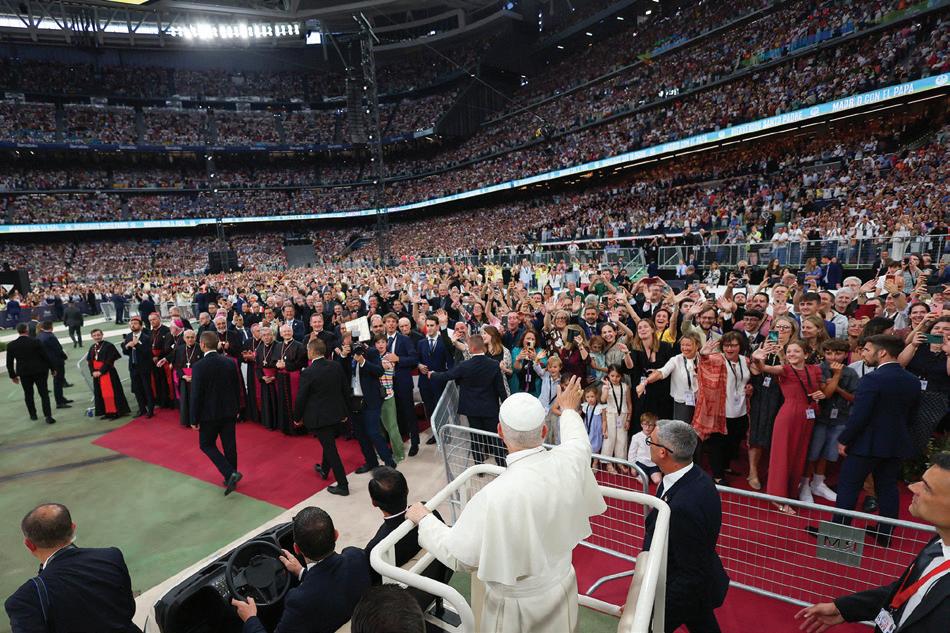
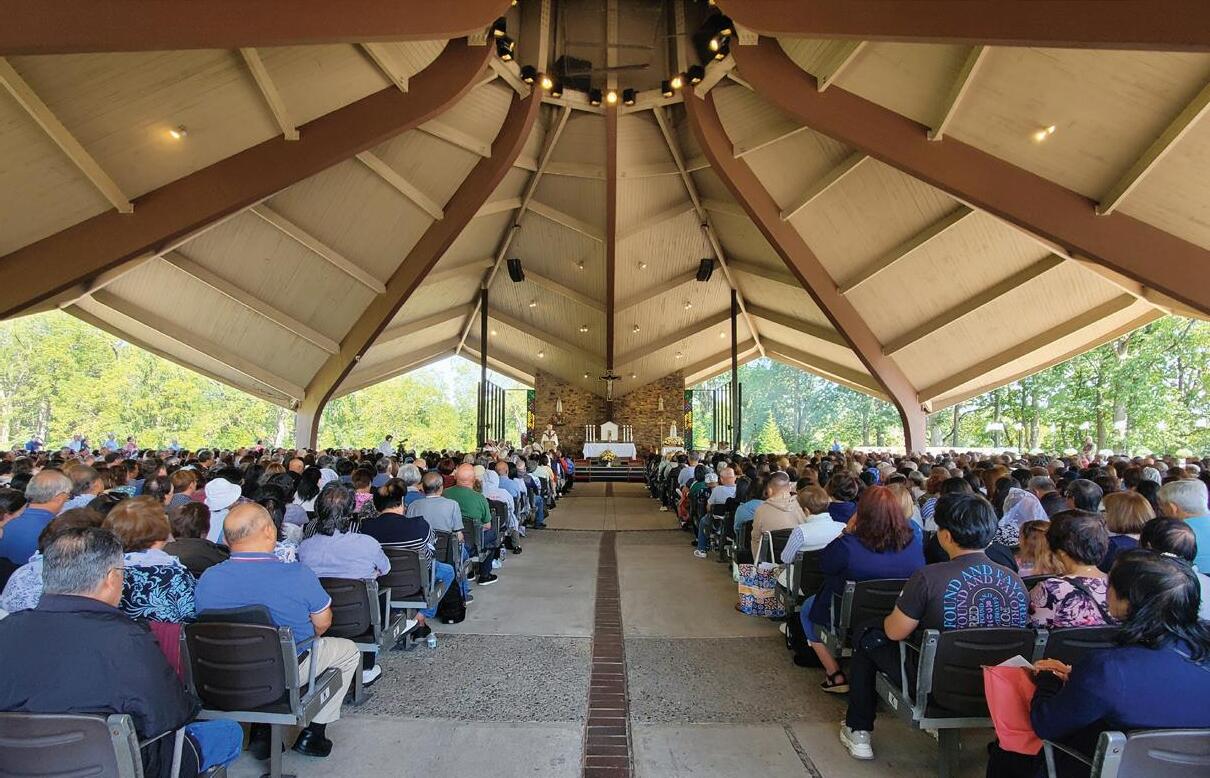
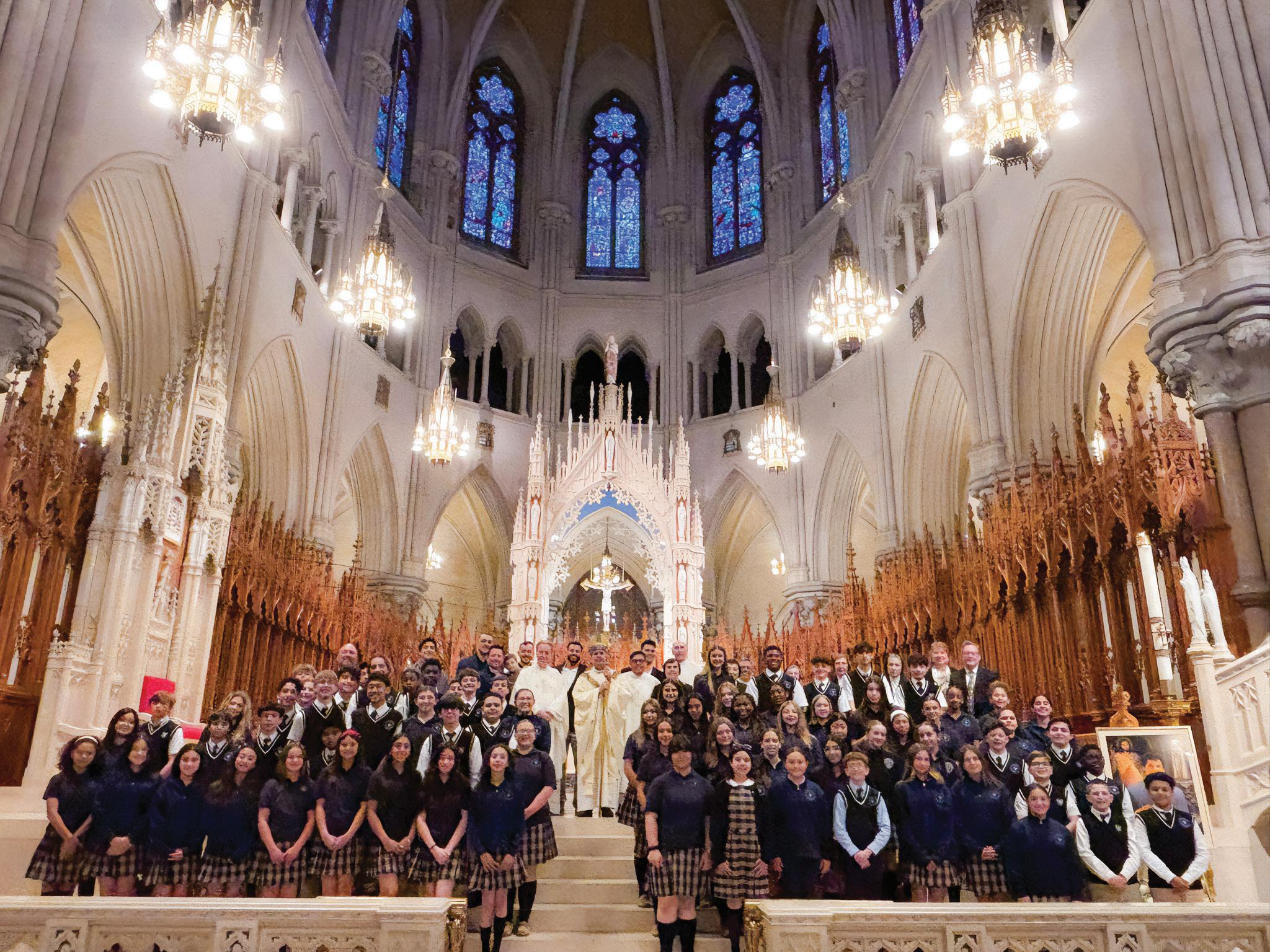
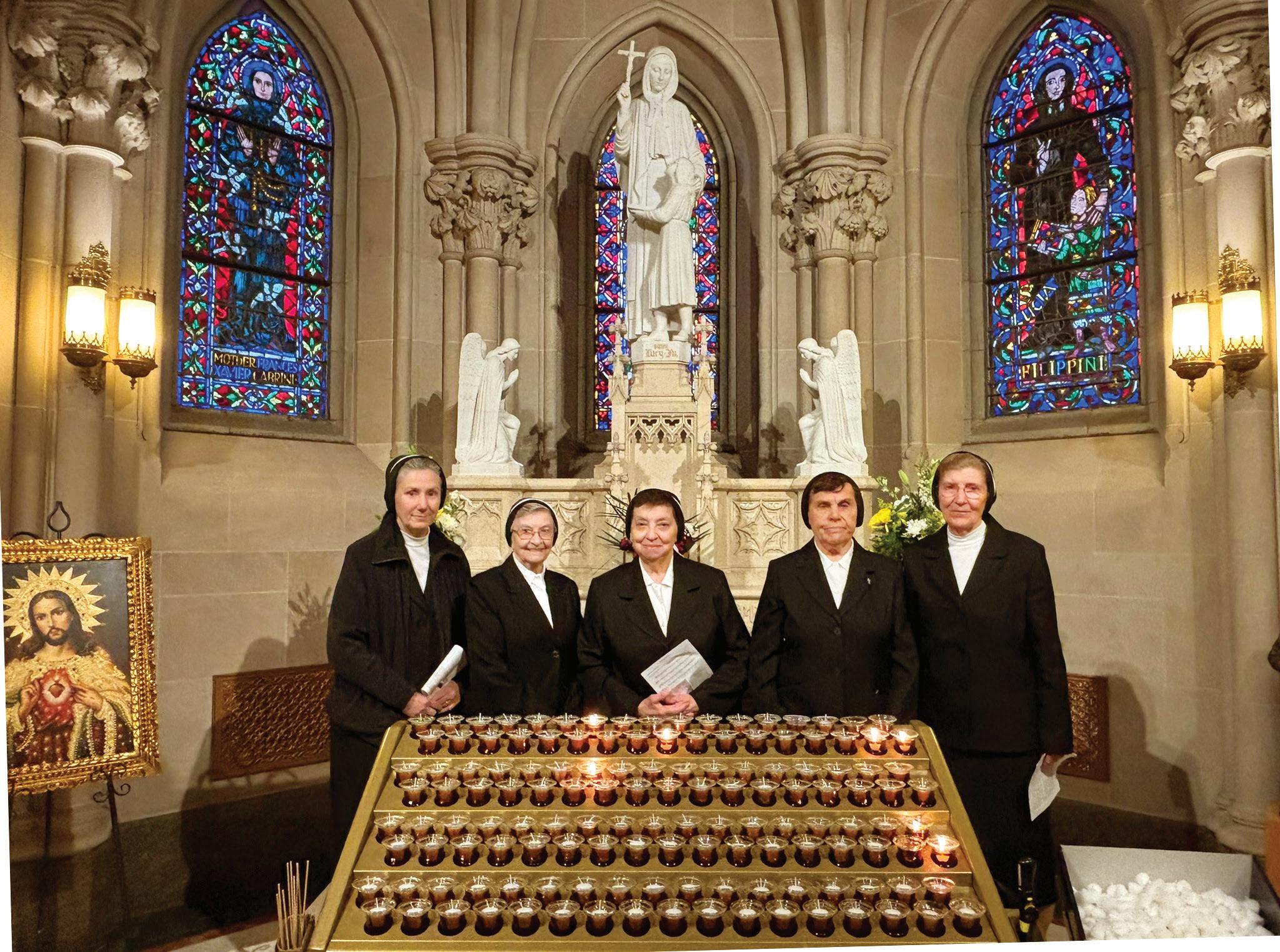
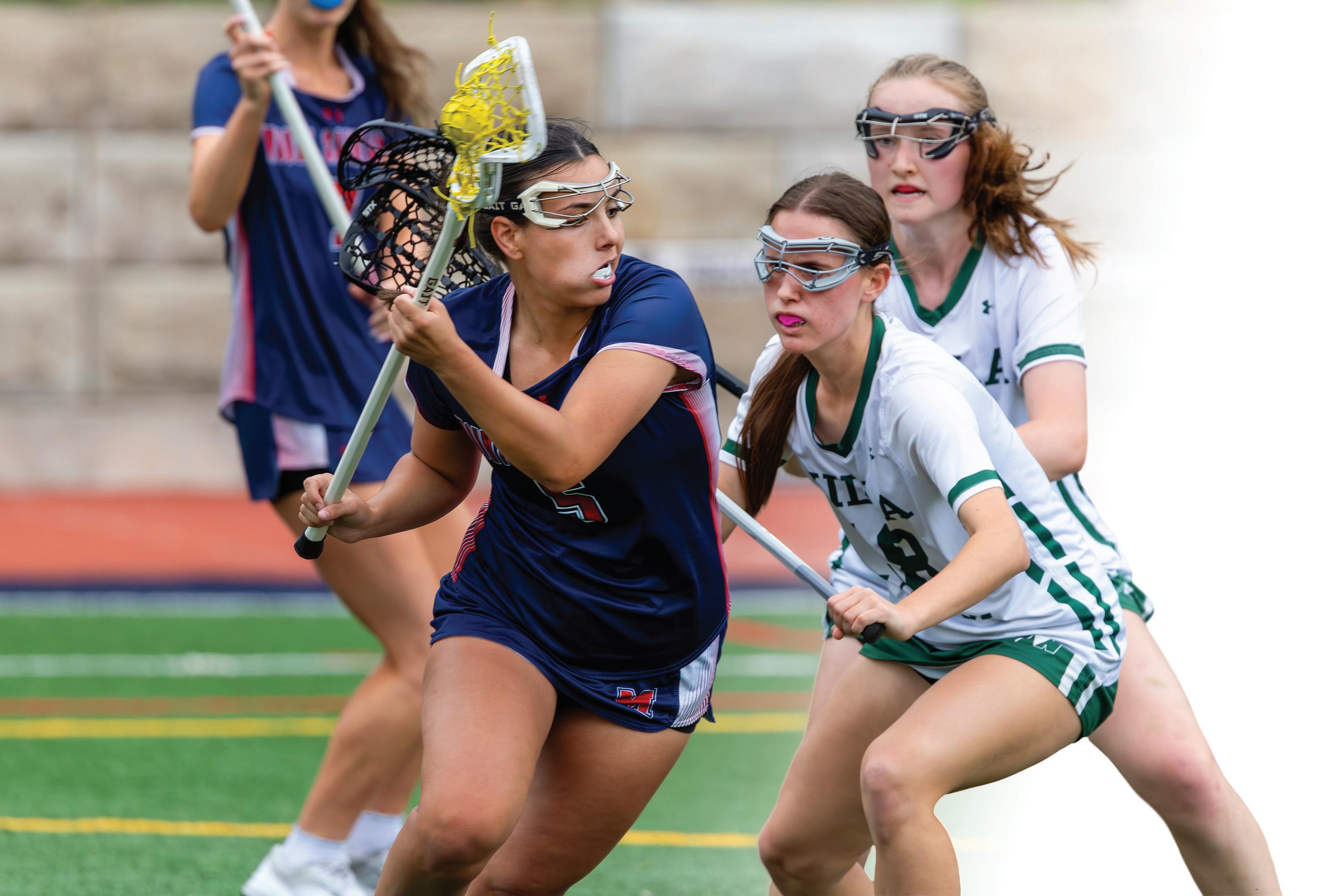
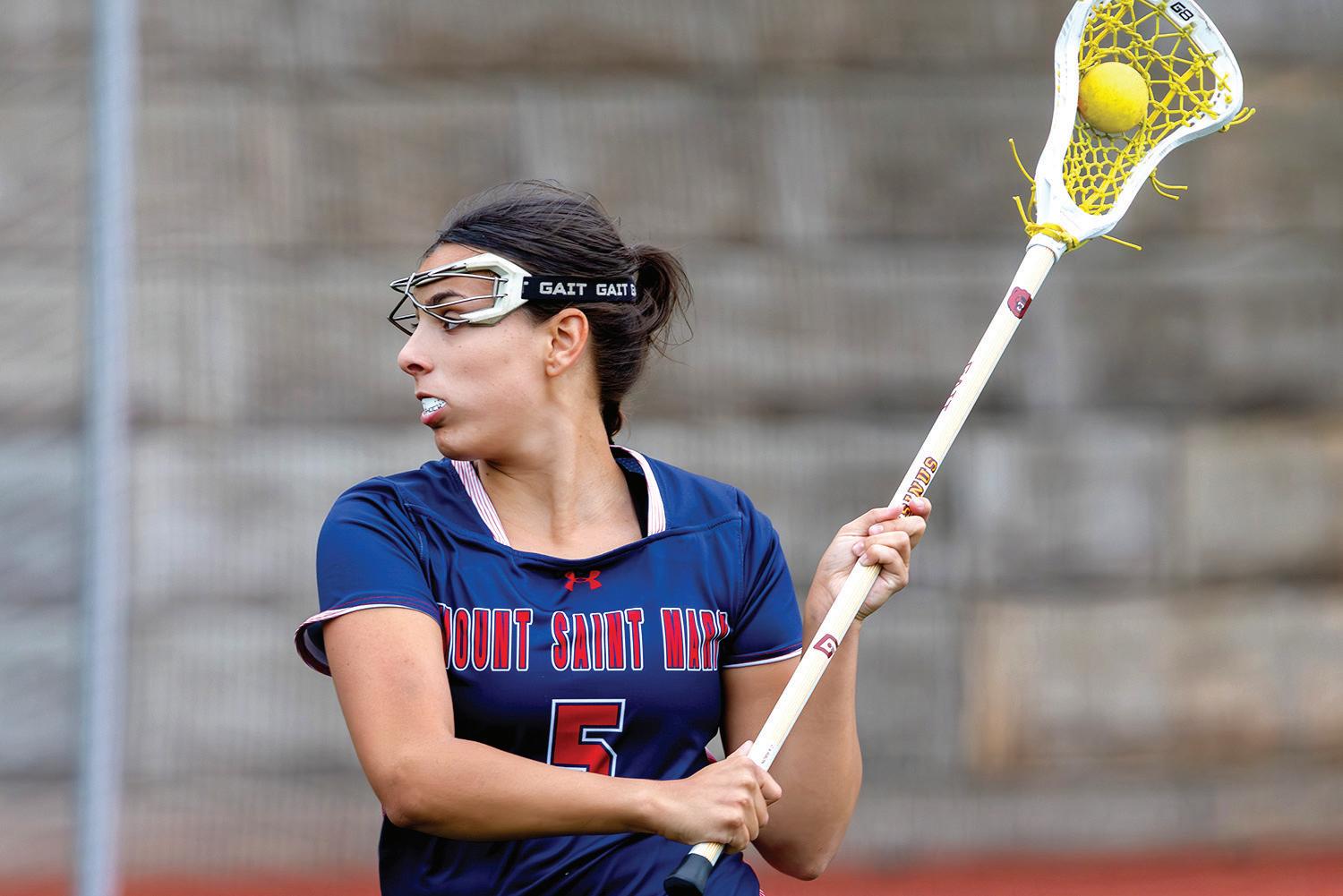
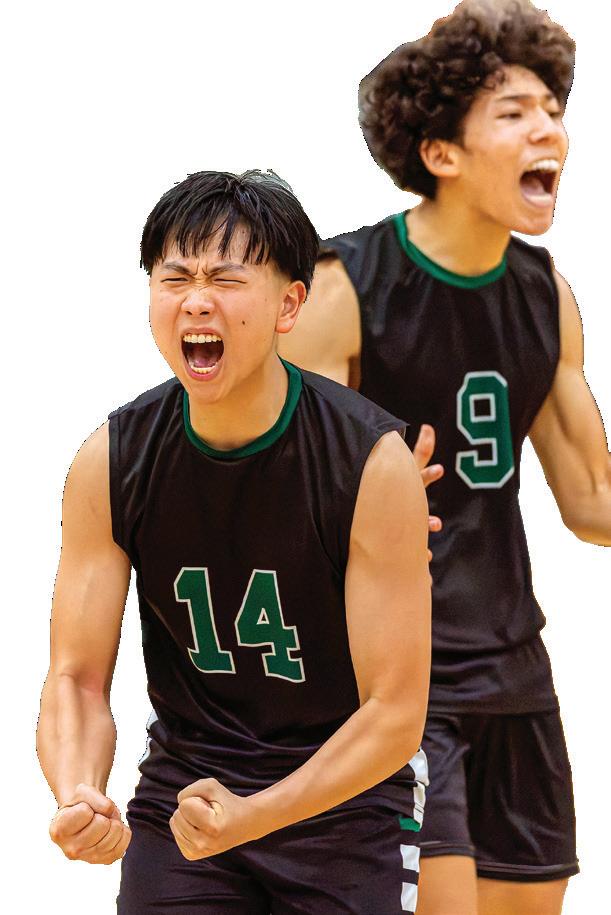
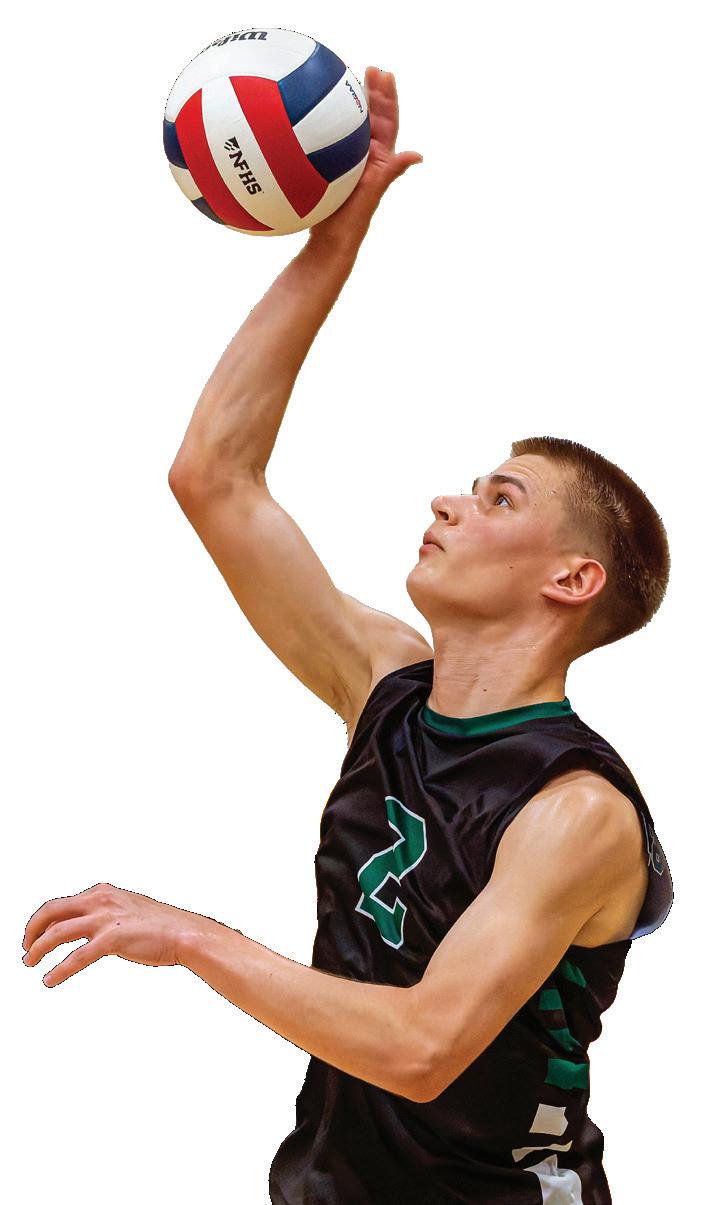
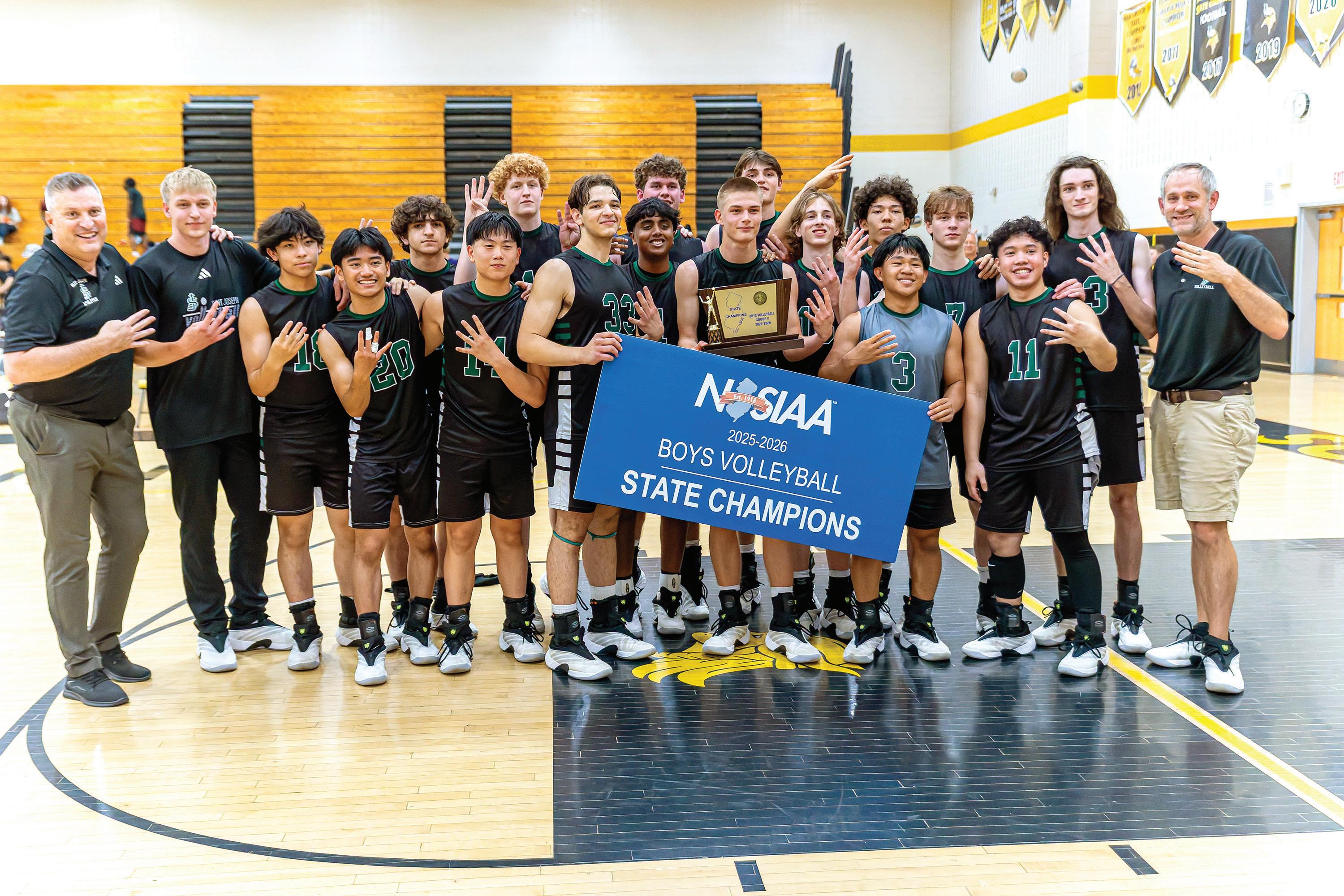
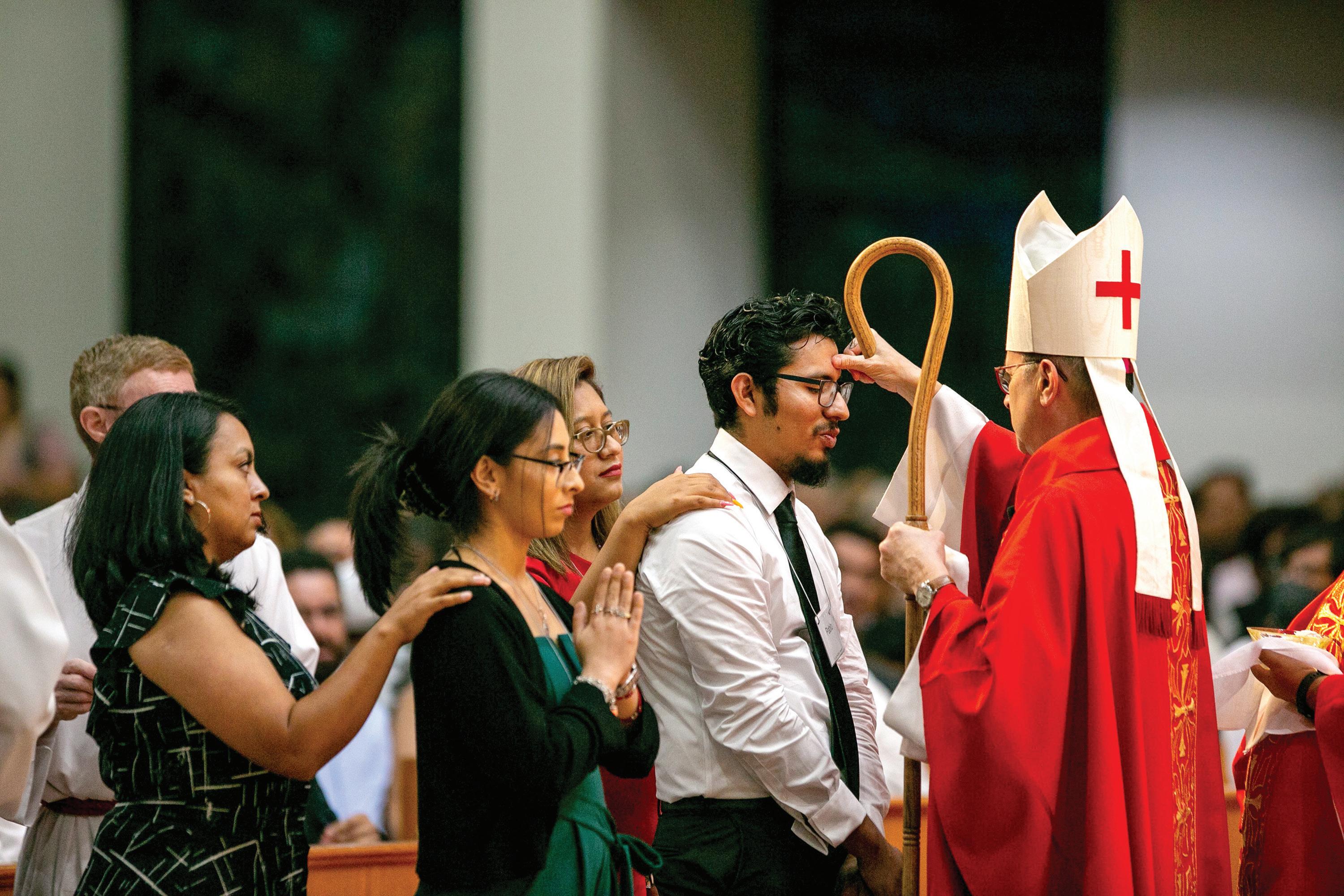
The New Jersey Catholic Youth Rally, held May 17 at Six Flags Great Adventure, Jackson, was an opportunity for youth of the Diocese to learn first-hand that the opportunity to grow in faith goes with them in any season – though summer seems especially enjoyable. See story and photos on p 11. —Hal Brown photo
Food for thought for June: Dick Tracy, Magnifica Humanitas, Consecration to the Sacred Heart
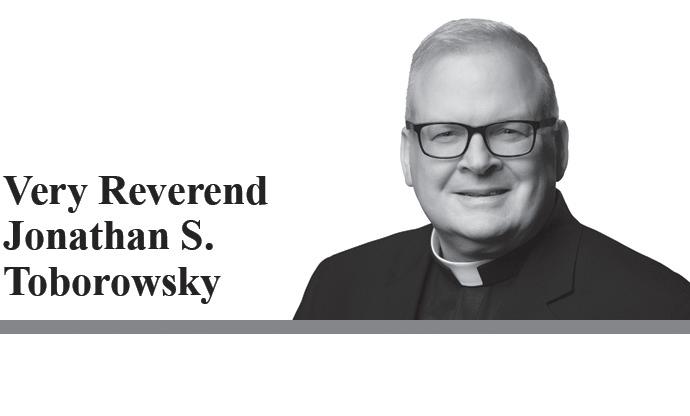
Dear brothers and sisters,
Who remembers Dick Tracy?
Growing up as a child in the 1970s, the highlight of my Sunday was the comic section of the NY Daily News (I know, you were expecting me to say the highlight of my Sunday was Mass. But I didn’t become a Roman Catholic until I was in my early 20s). Every Sunday a big, fat newspaper was delivered to our door, wrapped on the outside by the comic pages. While my mother and grandmother took apart the rest of the paper, the comics were mine. The front cover of the comics section was always the same, the adventures of the detective Dick Tracy. Ask anyone my age and they’ll tell you the coolest thing about Dick Tracy (besides fighting bad guys who had funny names) was a 2-way TV/radio he wore on his wrist. As a young child, this was the most amazing gadget I could imagine having, and more than a few hours were spent pretending I was Dick Tracy and talking into my wrist while doing “detective work” watching my neighbor tend to his vegetable garden.
If you’re reading this and you’re over 55, you understand. But if you’re under 55 you need to know that, at the time, most family homes had only one telephone and one television, and neither could be taken out of the house with you. How different our world is today, with hi-tech watches and phones and tablets that allow us to keep in contact with people (not just with a phone call, but also by text message or video conferencing), access the news of the world, watch video of some major event on the other side of the world as it is happening, or even waste time watching videos of dogs snoring or eating pup-cups. We’ve come so unbelievably far so incredibly quickly in the technological breakthroughs I’ve witnessed in my lifetime, that I know I’m not able to even imagine what the next 20 years will bring.
Perhaps this is why Pope Leo XIV chose to dedicate his first Papal Encyclical to the topic of “safeguarding the human person in the time of Artificial Intelligence”. Following in the footsteps of his predecessors beginning with his namesake, Pope Leo XIII, the Holy Father is using his first Encyclical to add his own link the chain of papal writings on the topic of social justice in our world. It’s not, shall we say, “light reading.” But neither is it complicated theology.
If you’re looking for a history of Catholic Church teachings on social justice at different times in history, you need only read Chapters 1-2 of Magnifica Humanitas. If you want to take it to the next step and talk about those teachings in light of the most recent modern technology, then keep reading into Chapters 4-5. Even the Holy Father acknowledges what he writes is not a comprehensive treatment, but his observations about modern technology in light of the Church’s teachings on human dignity and the primacy of human intelligence. (MH par. 97) The document is available for free on the Vatican website (in multiple languages) at www.vatican.va.
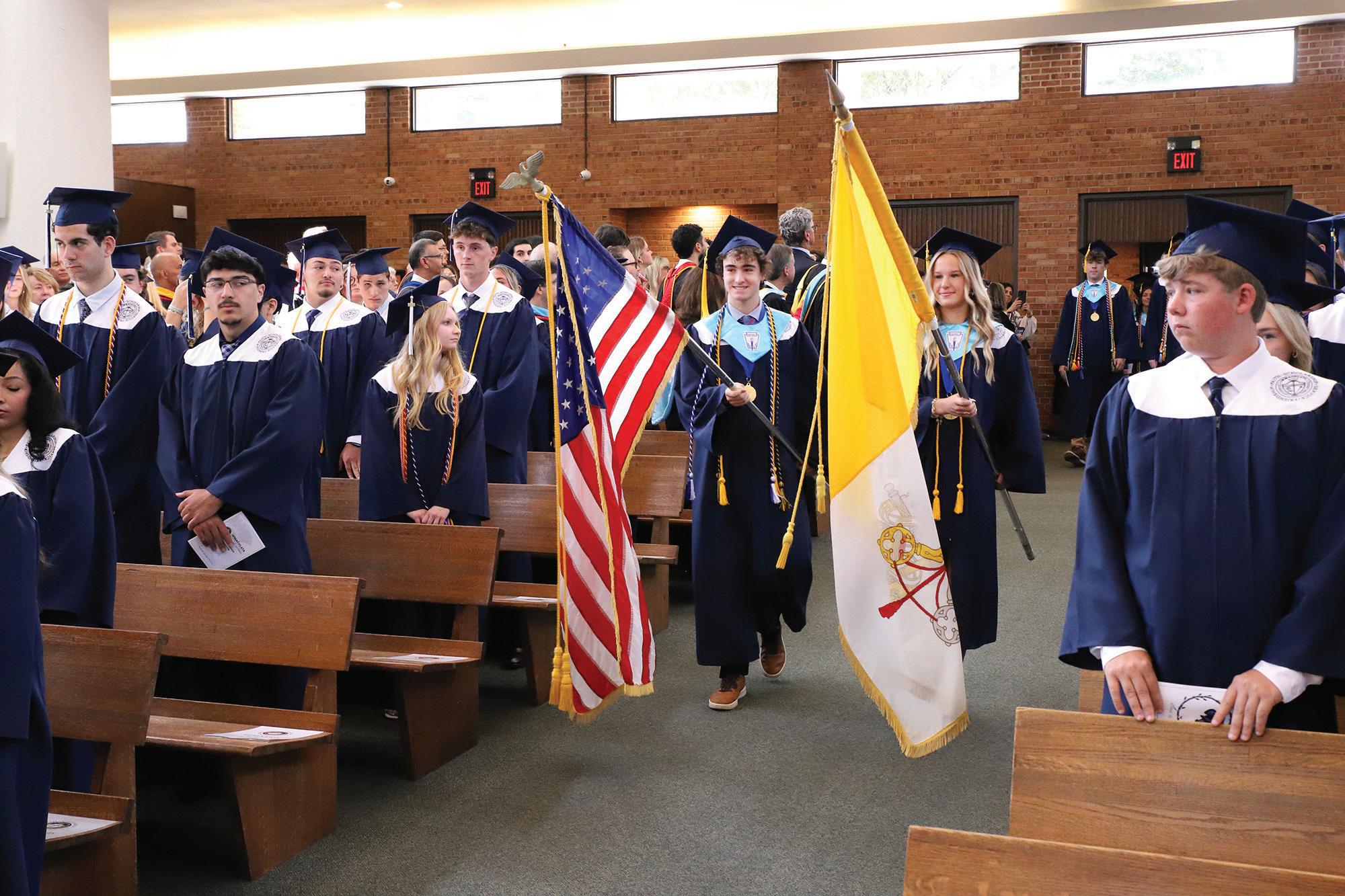
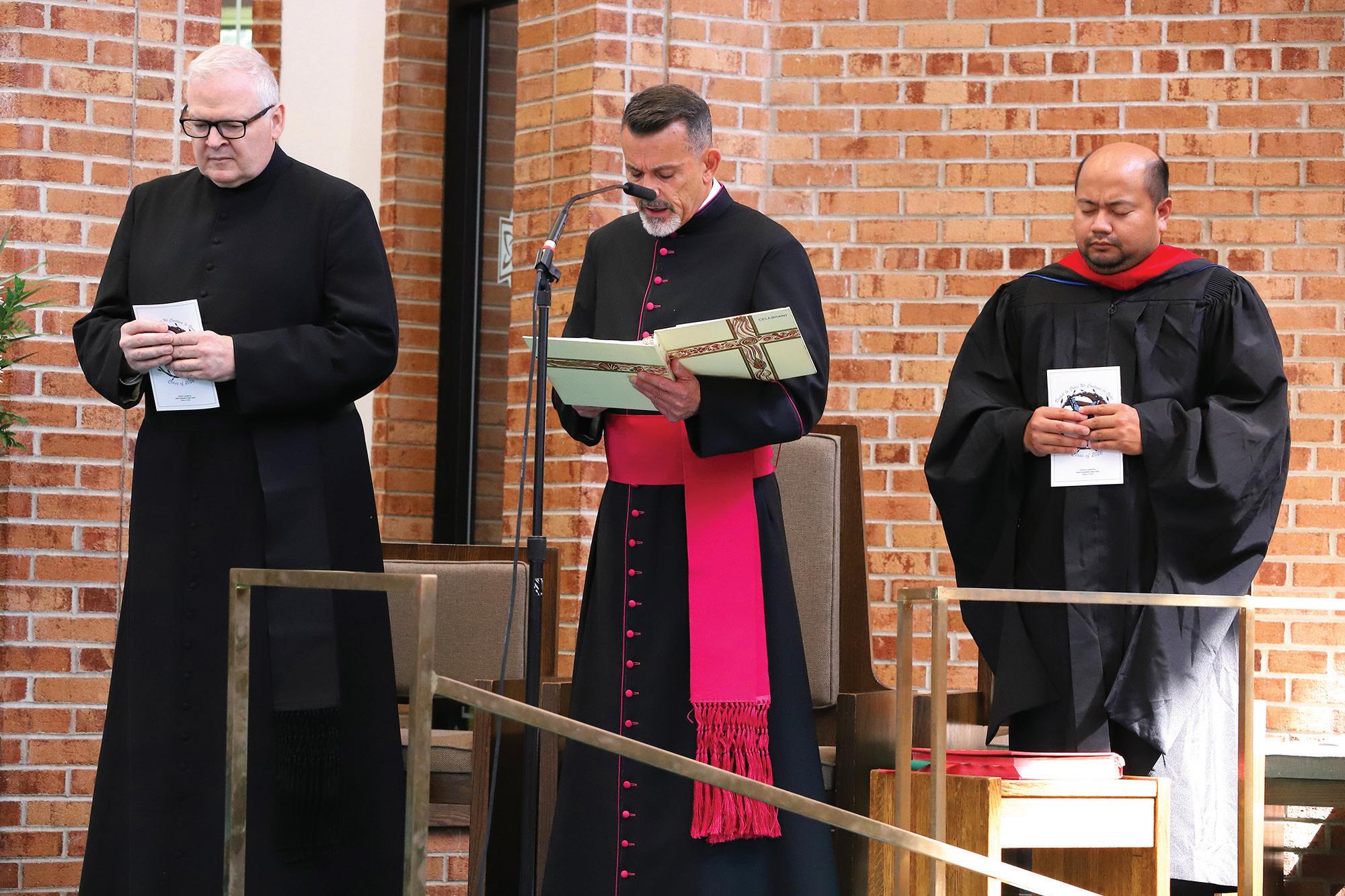
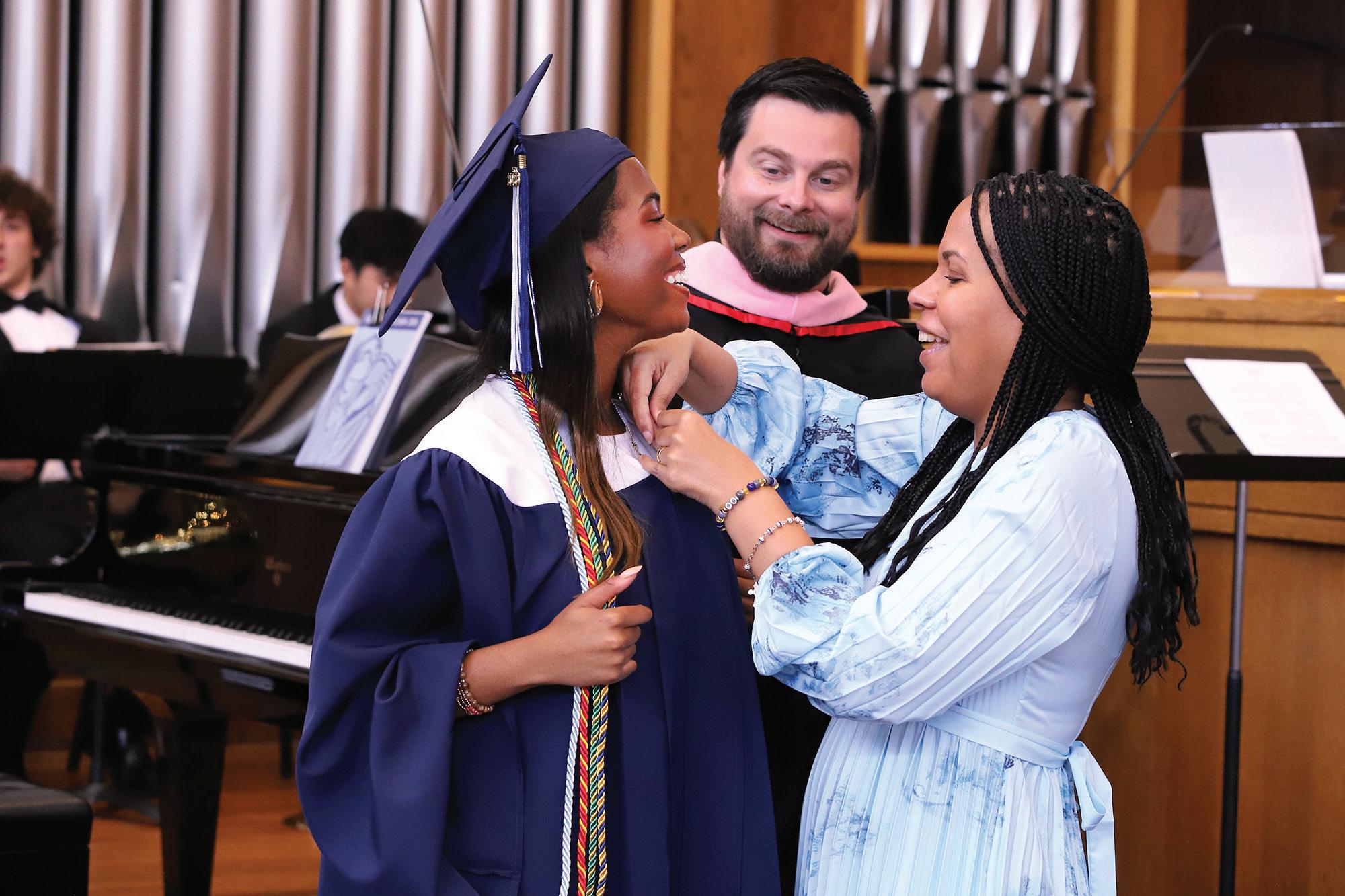
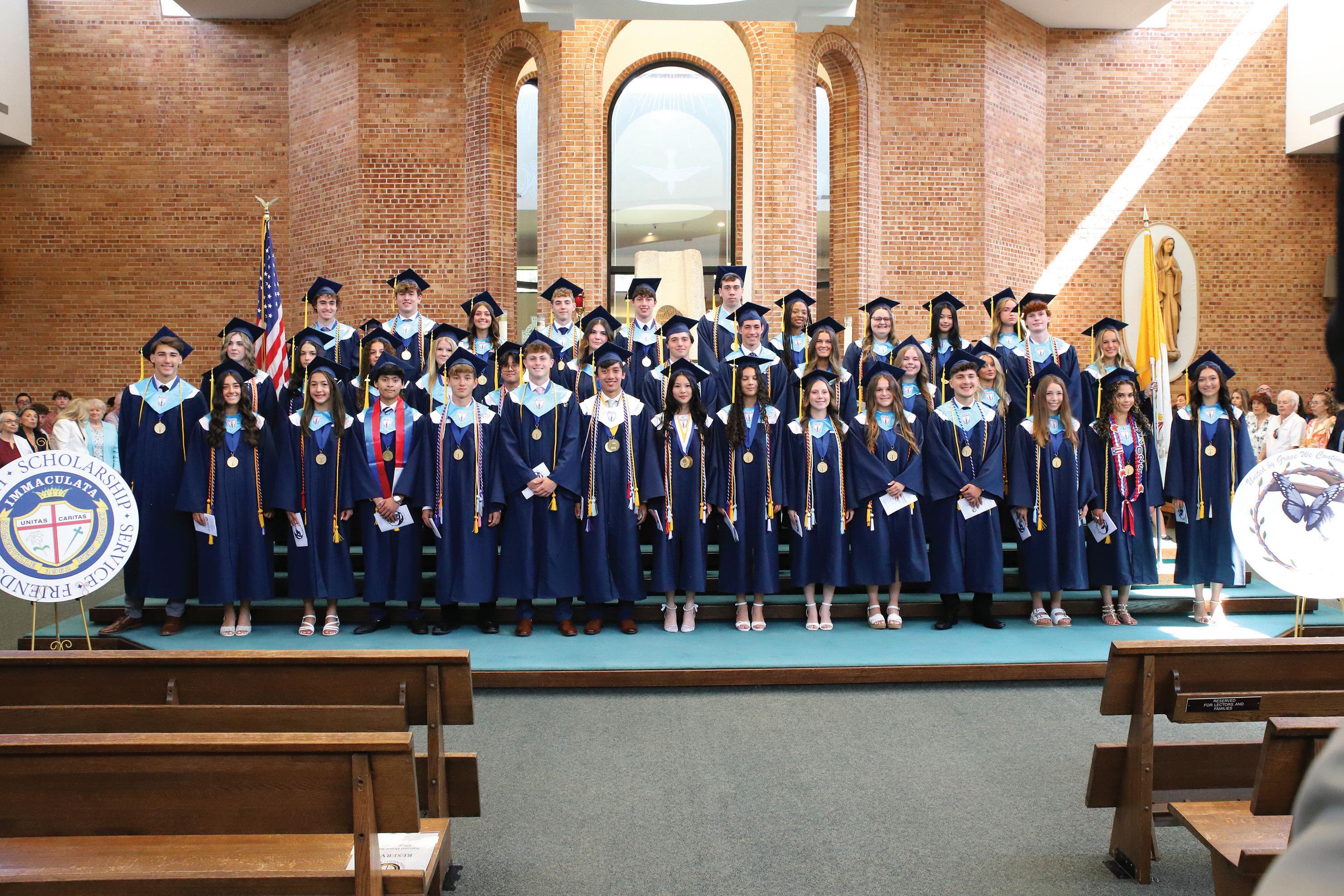
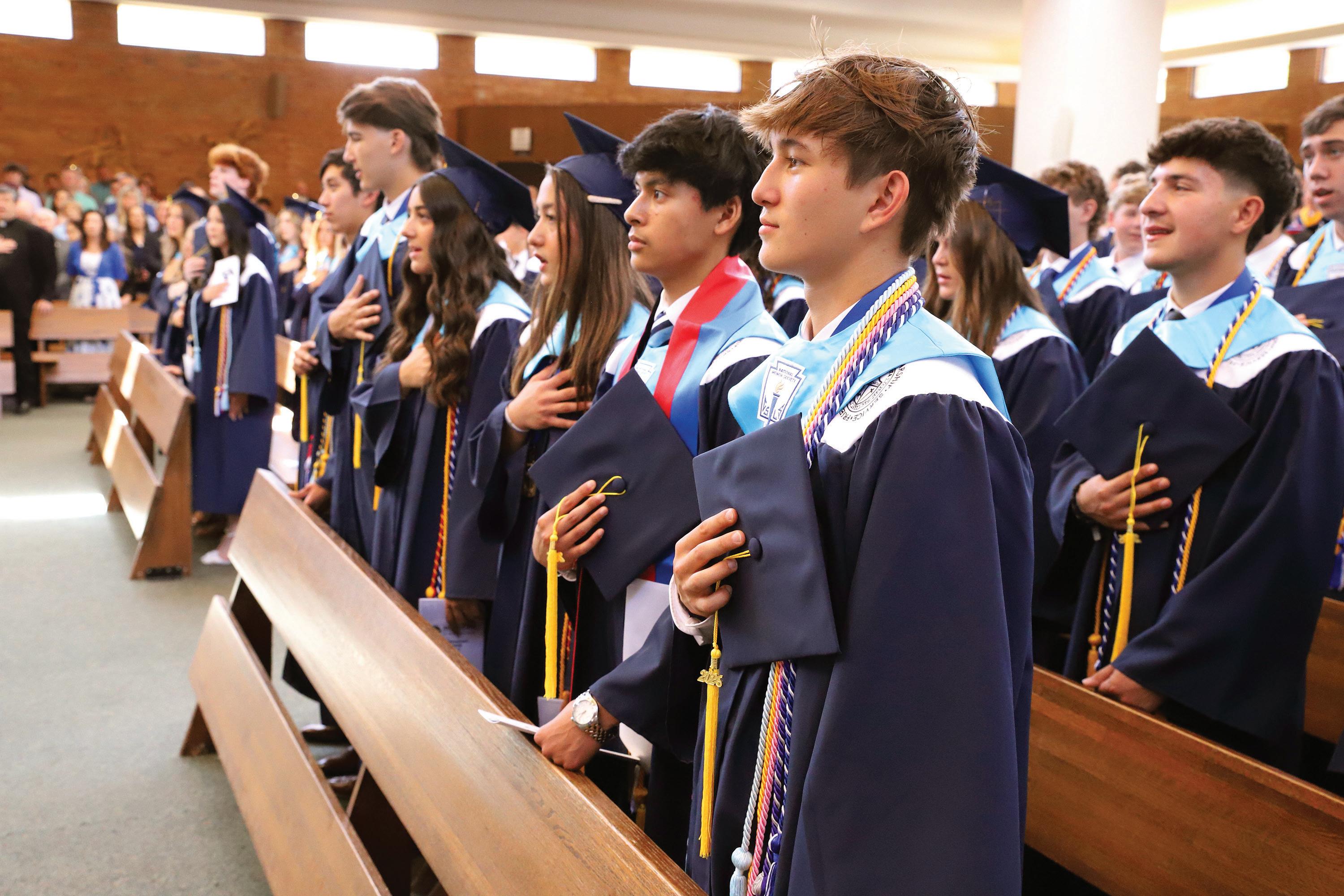
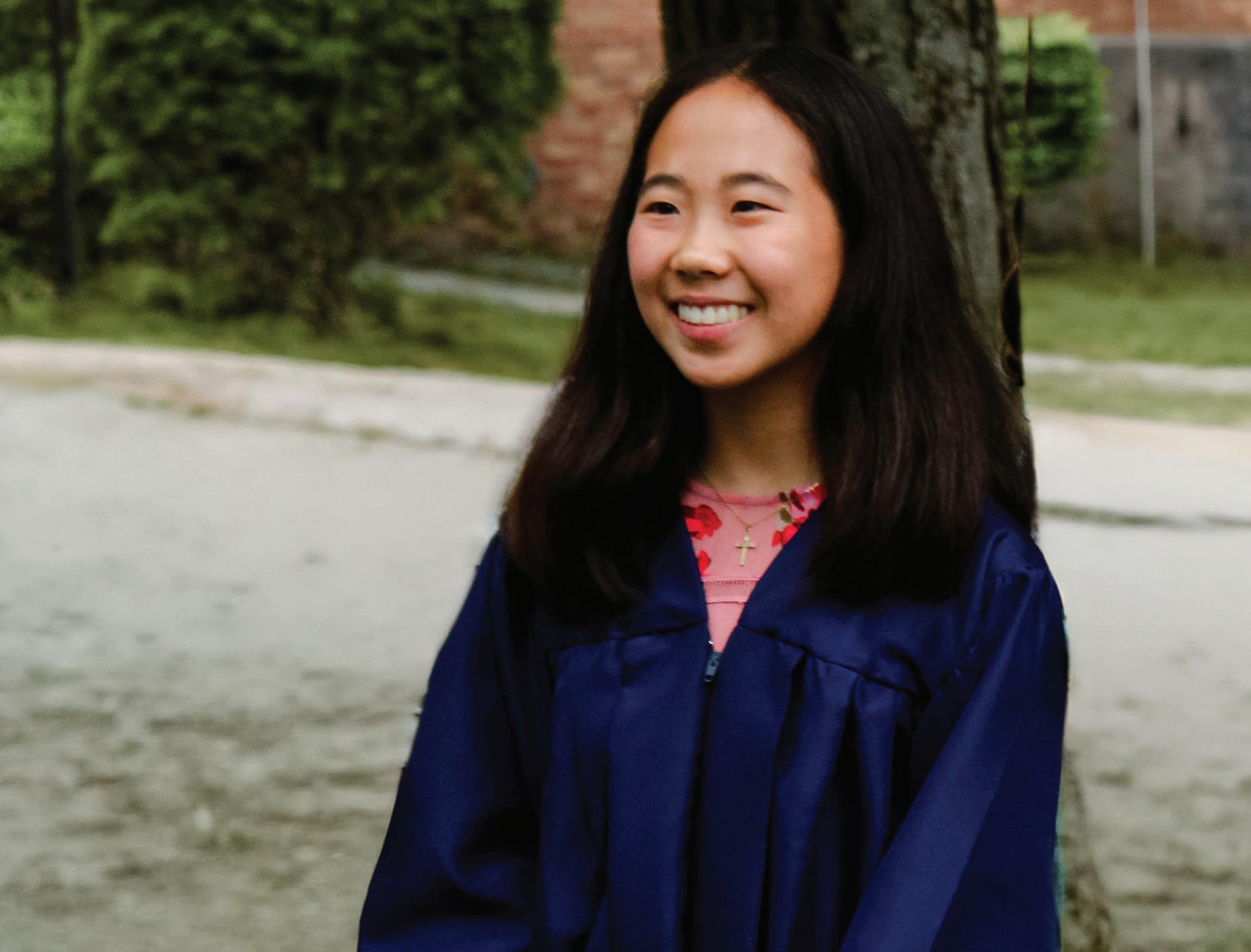
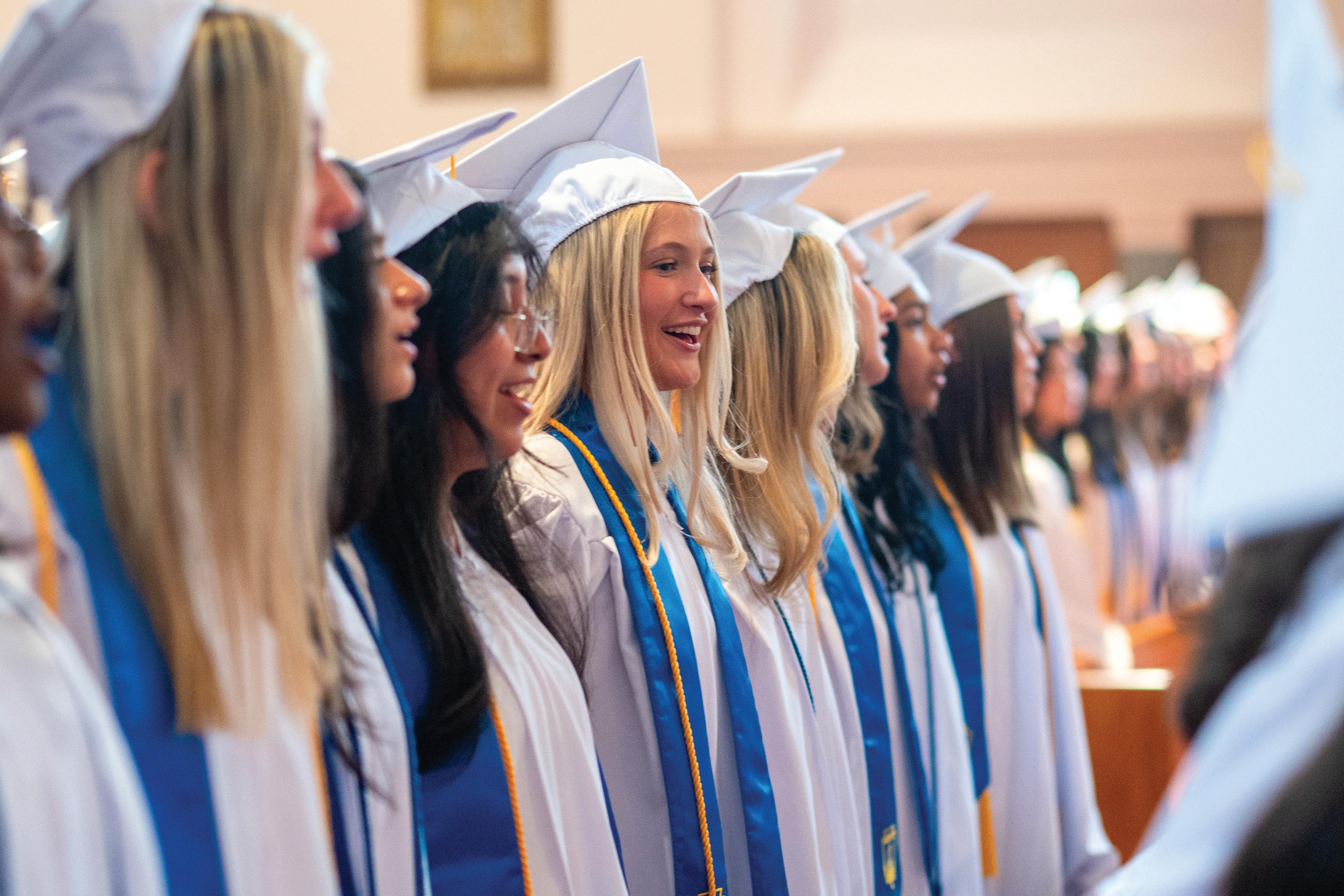
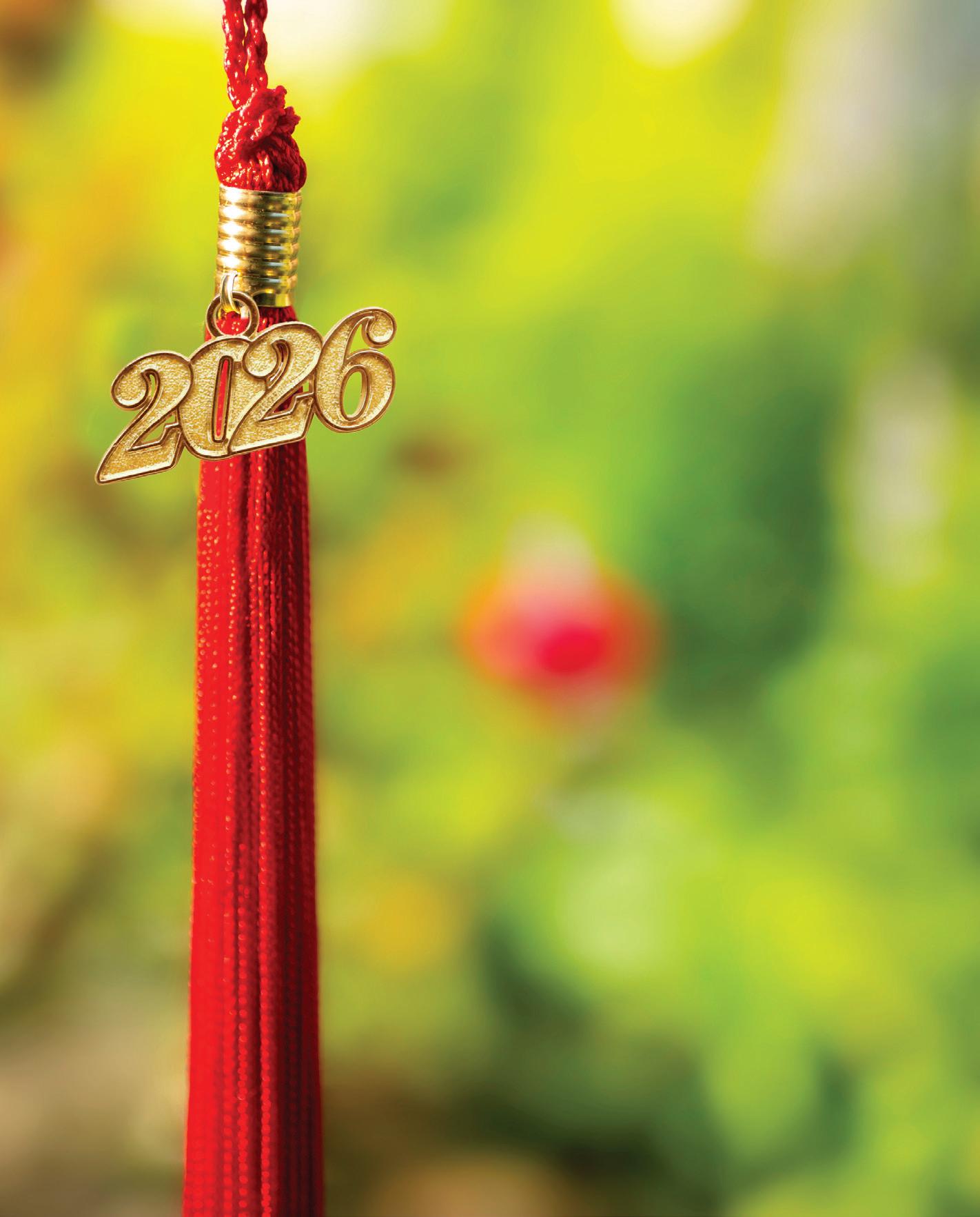
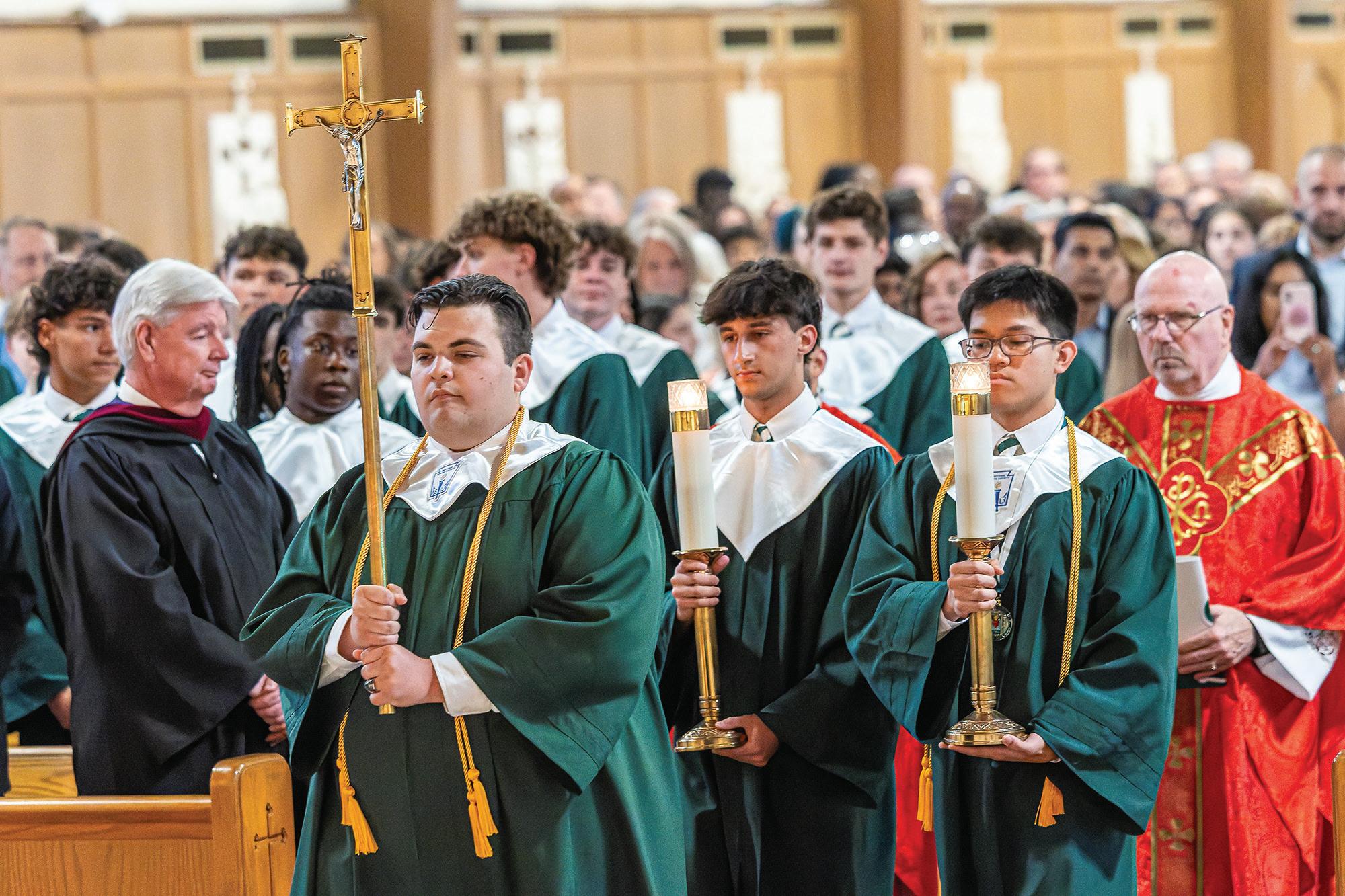
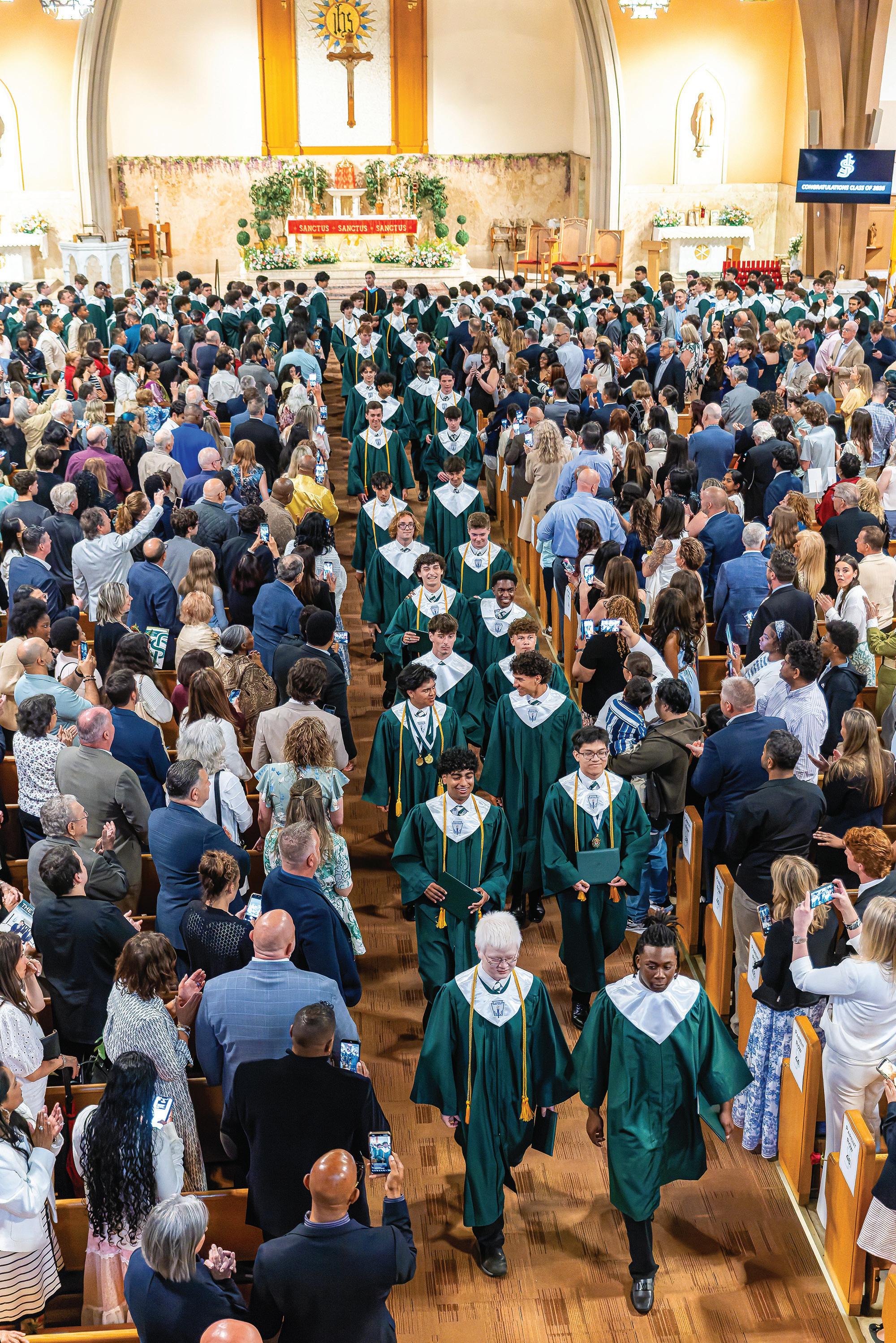
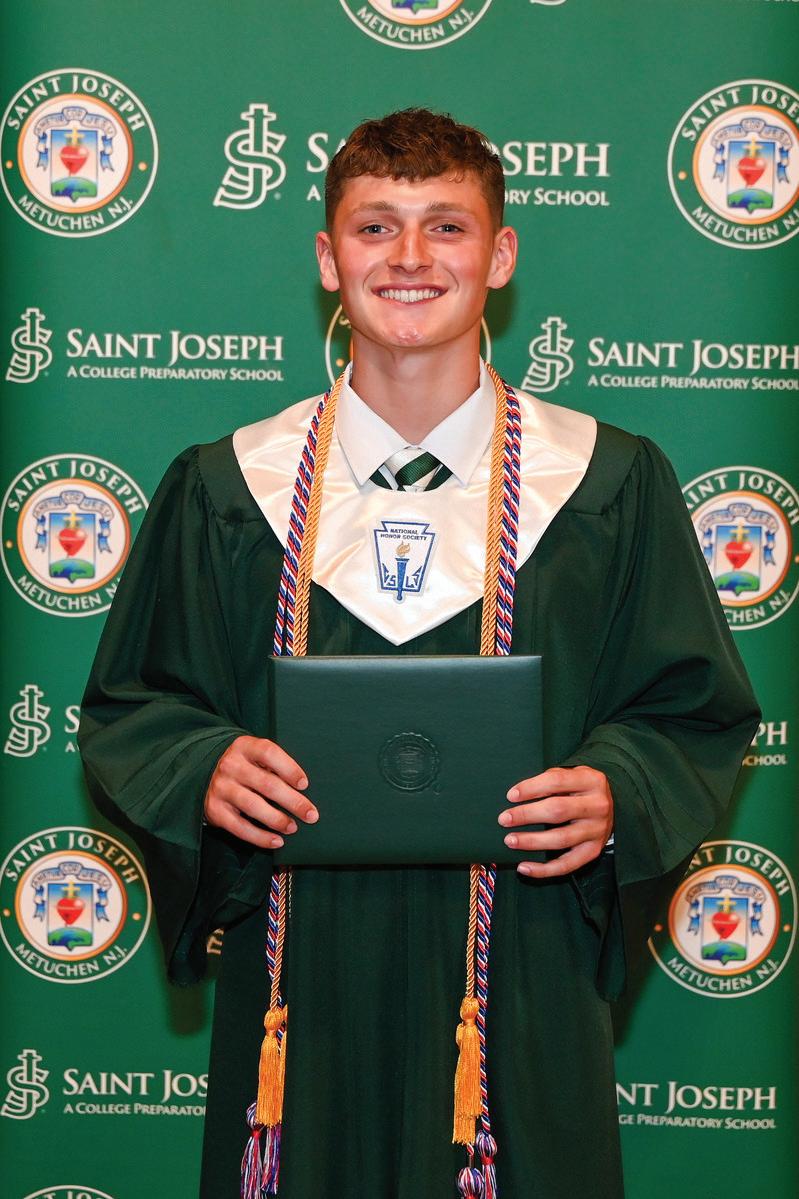
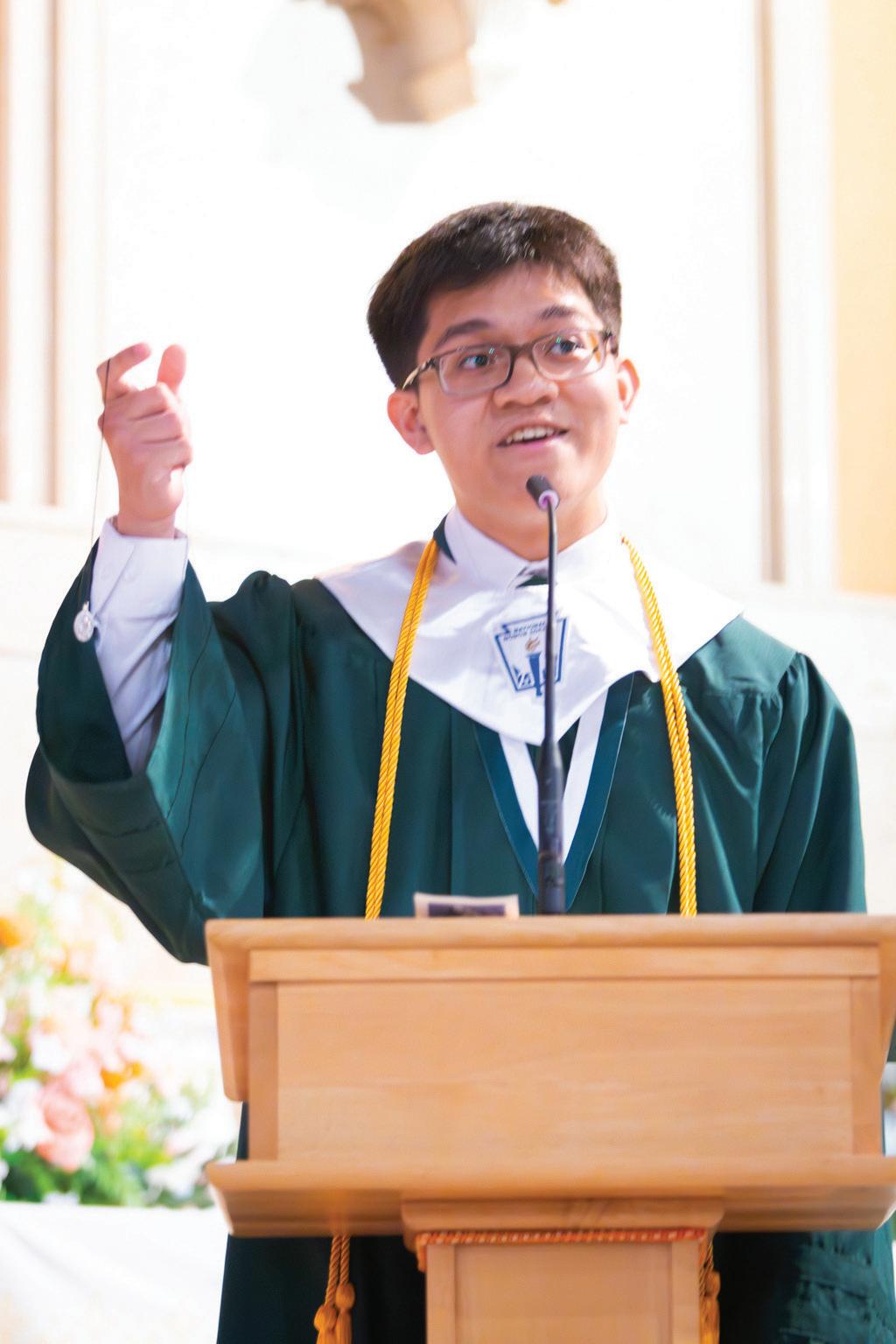
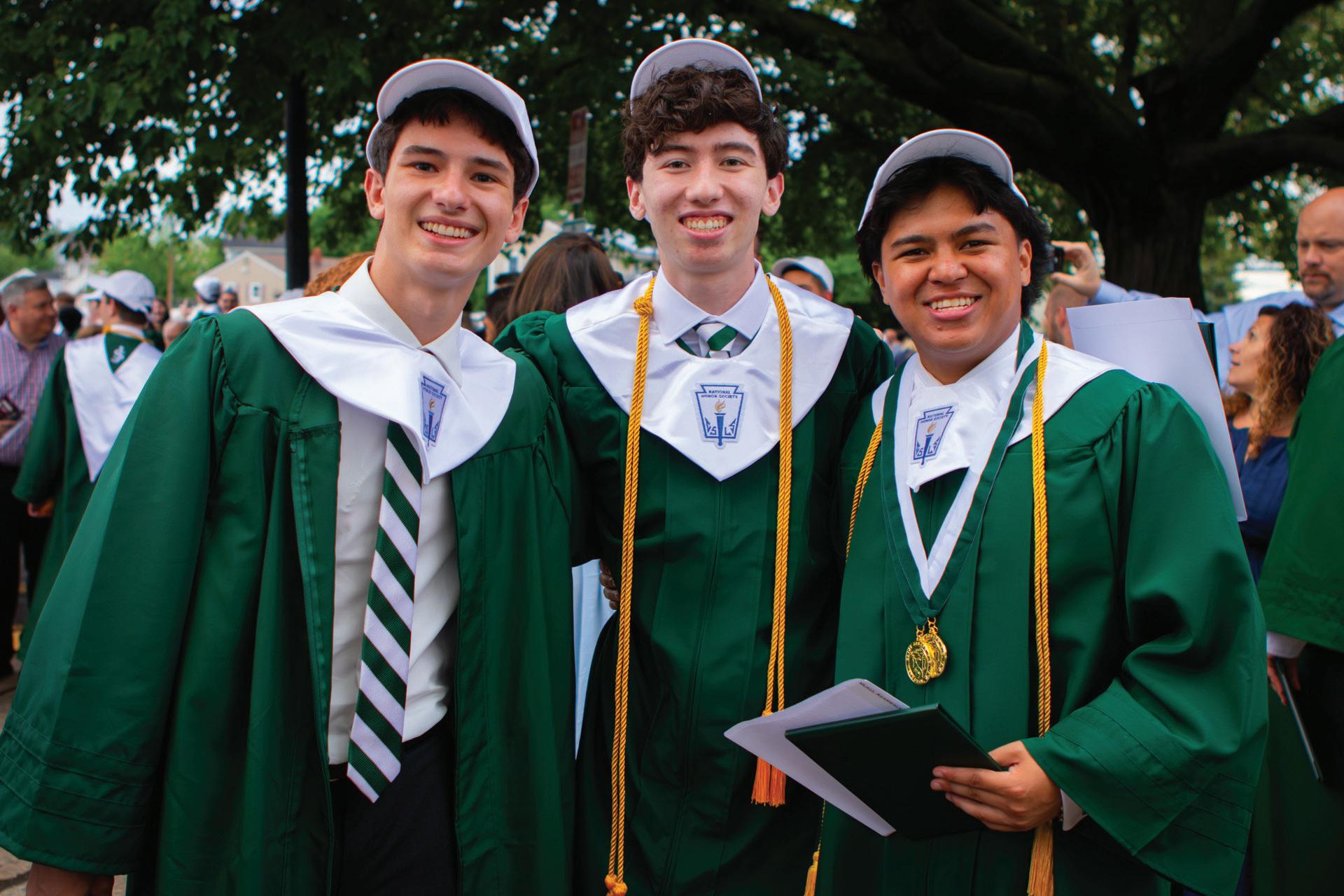
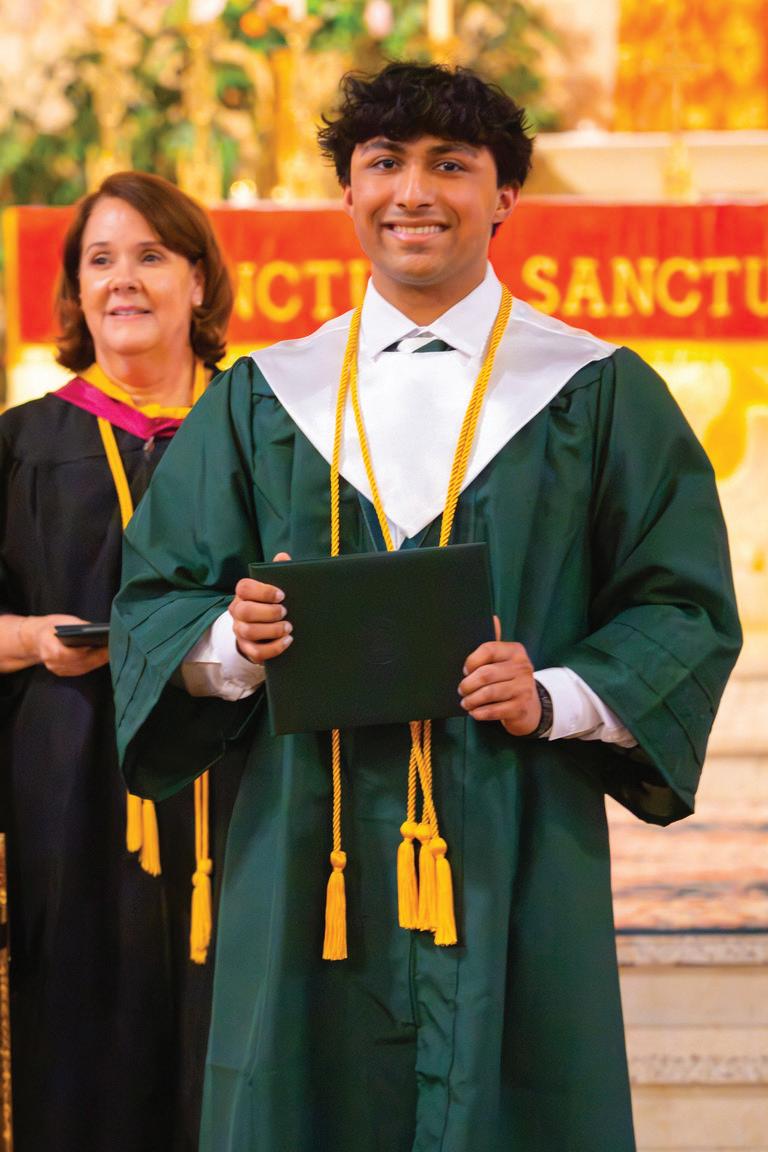
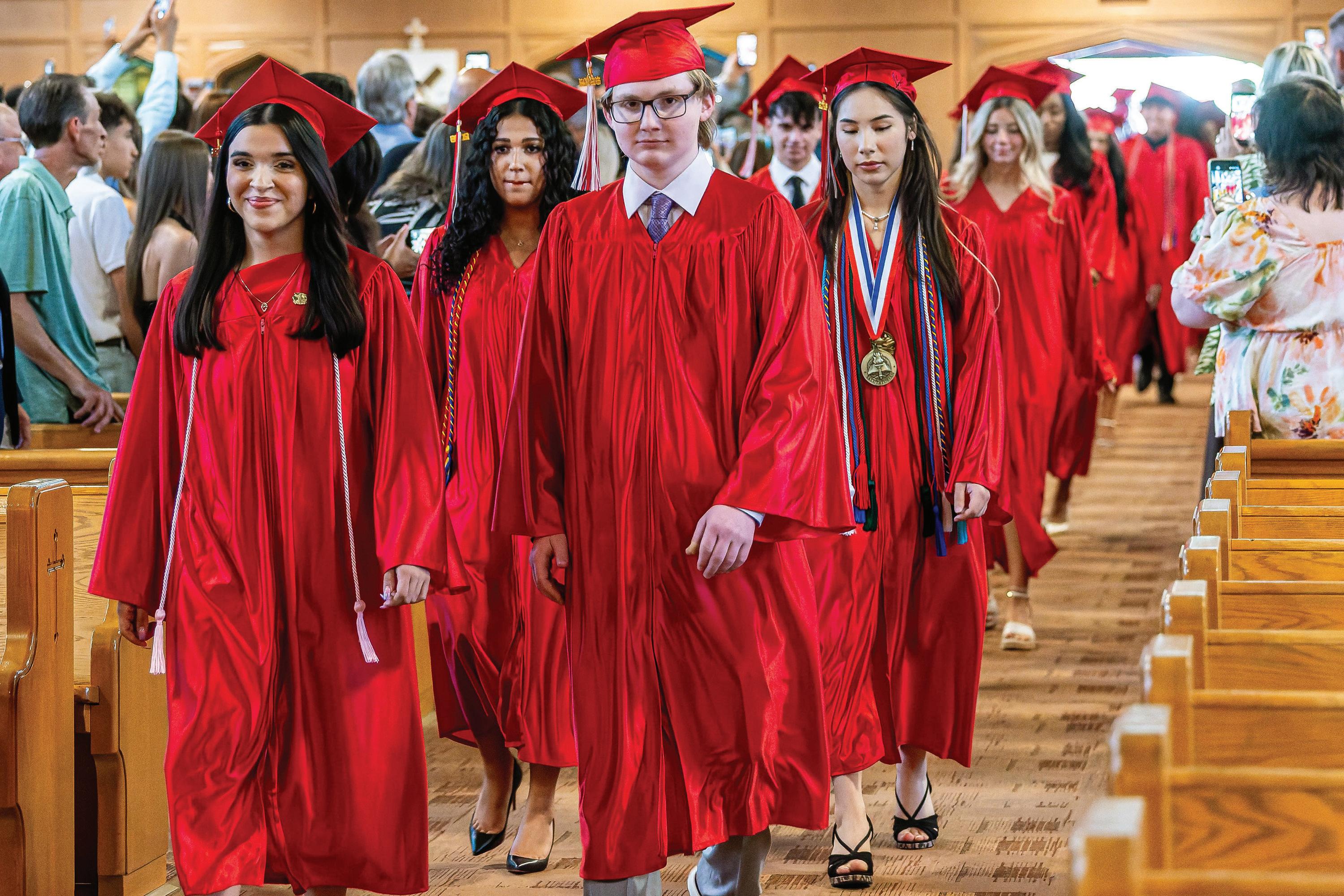
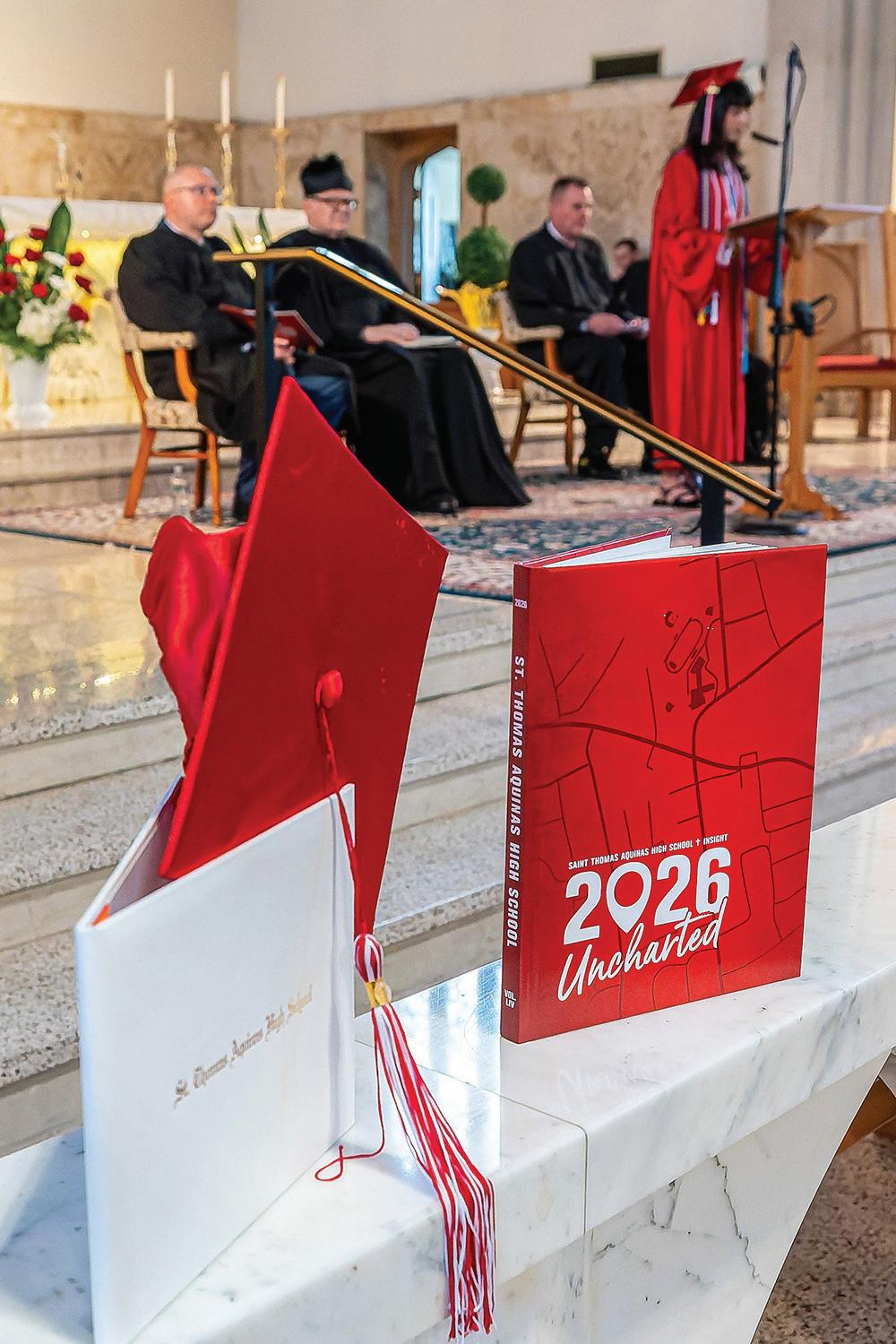
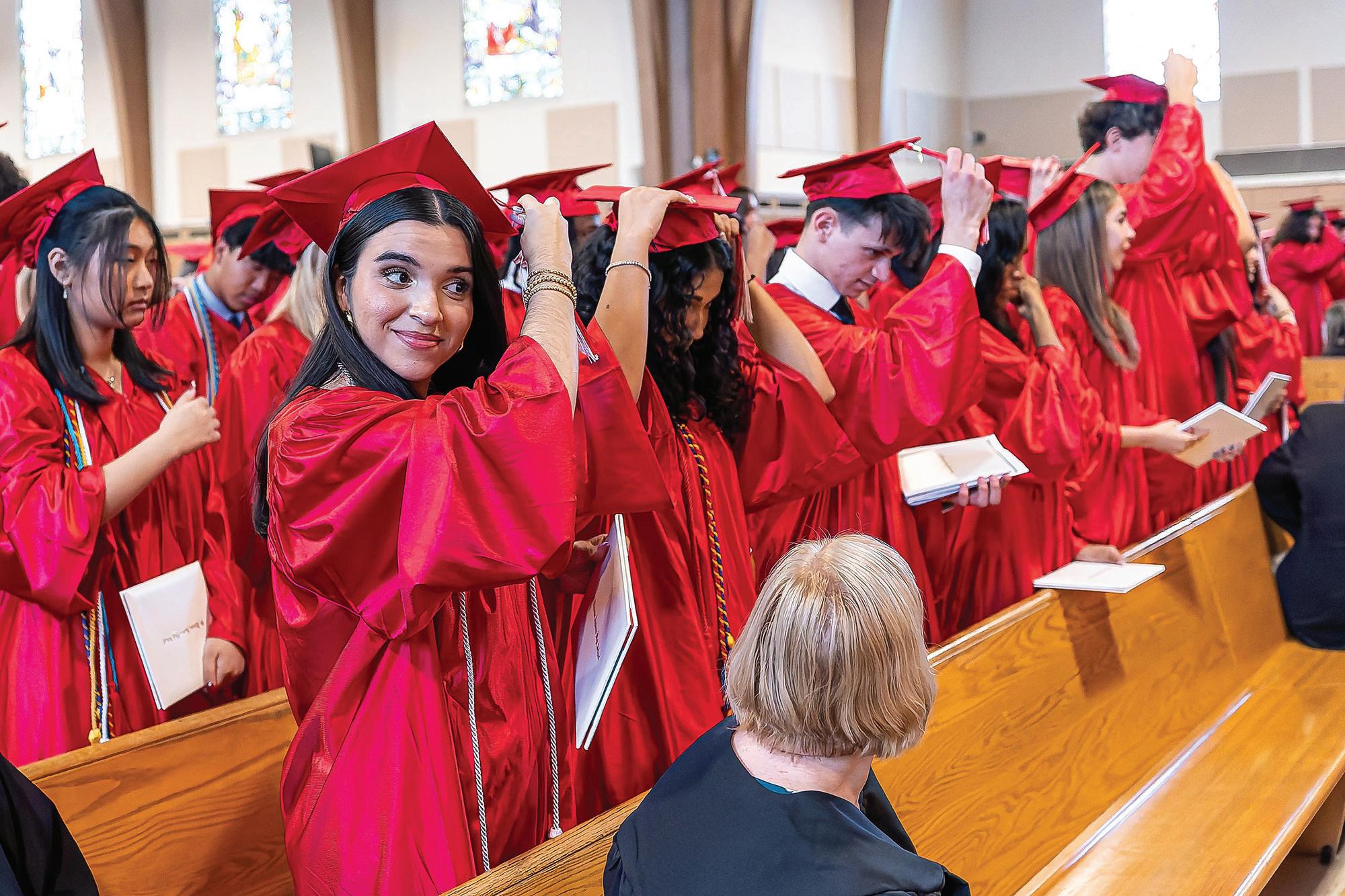
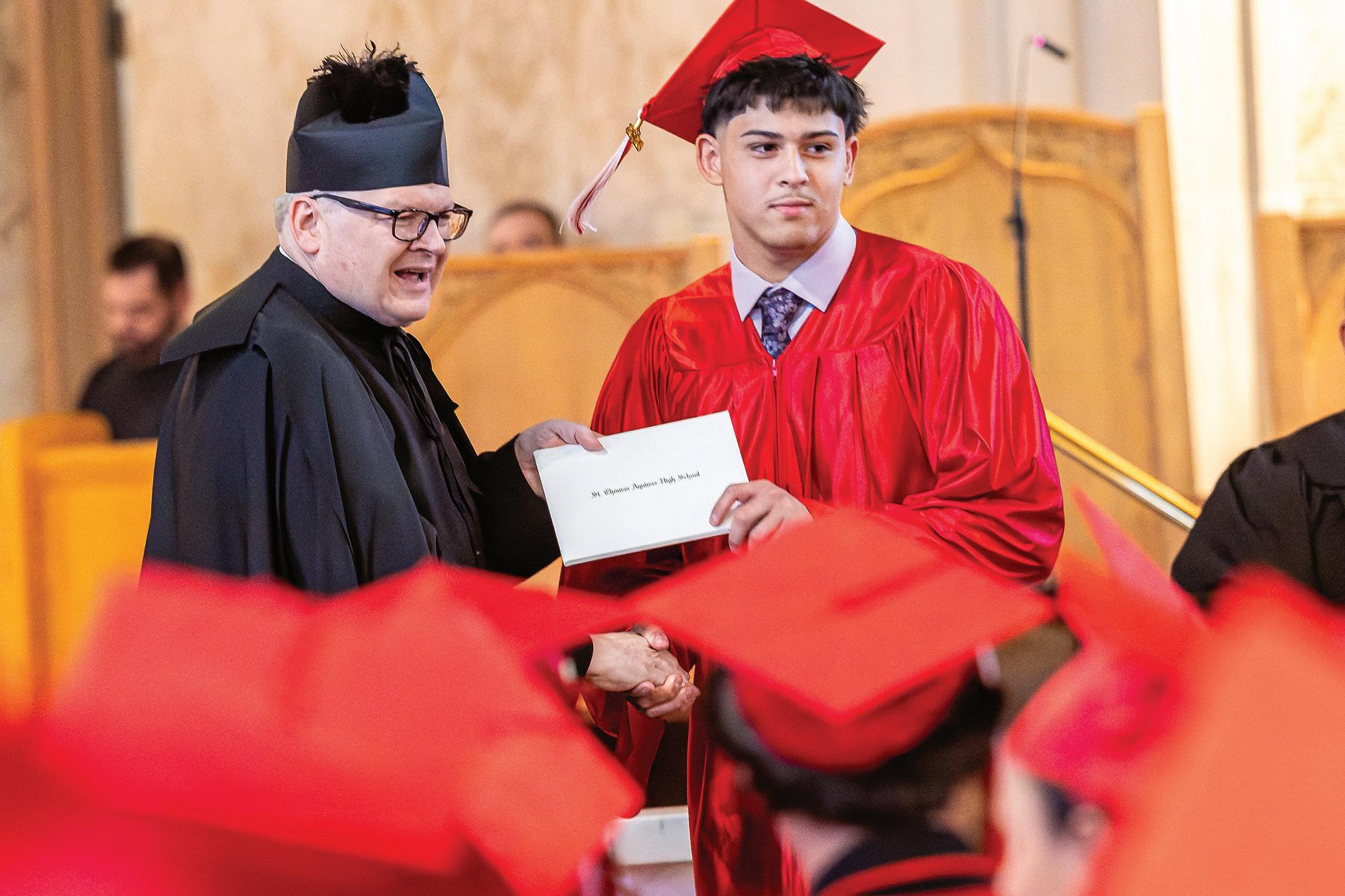
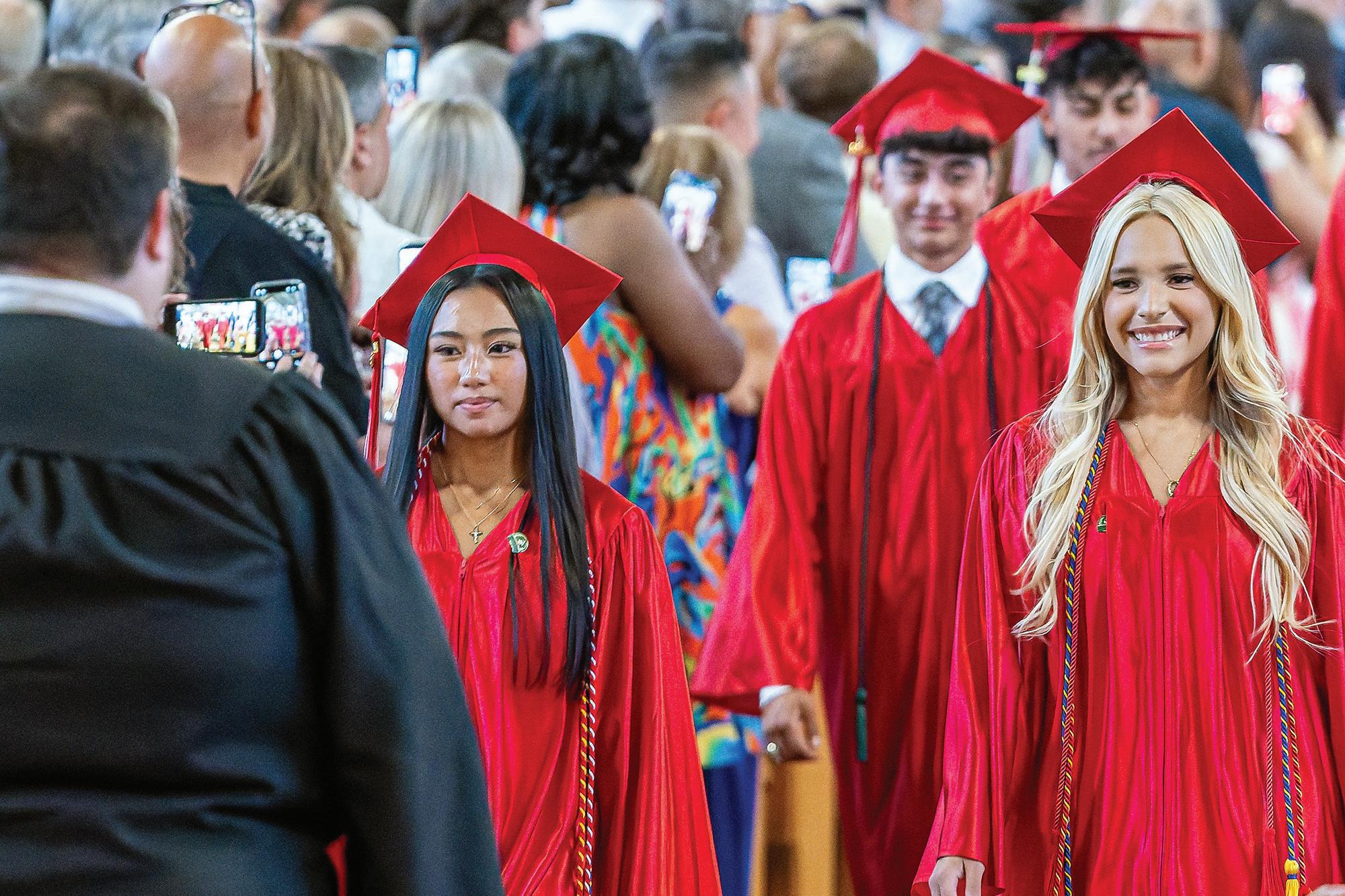
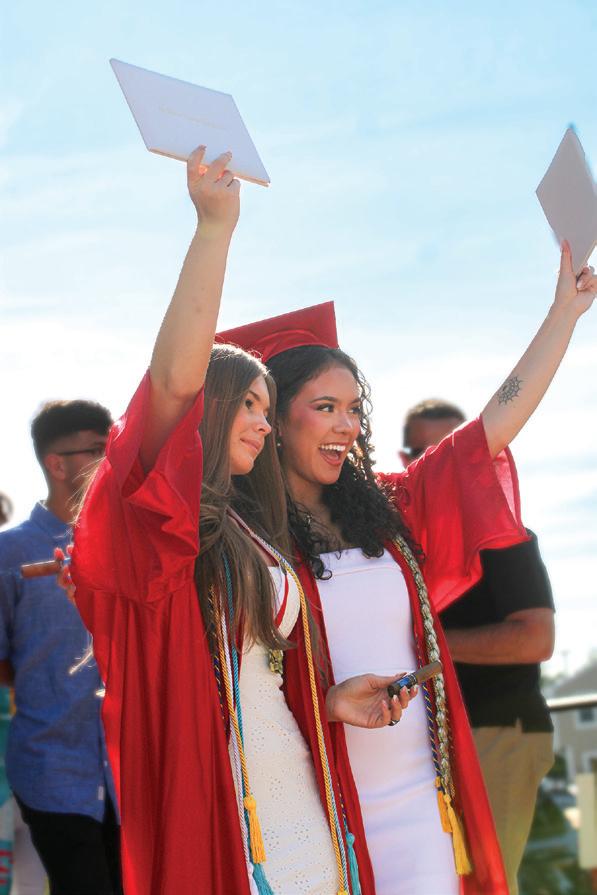
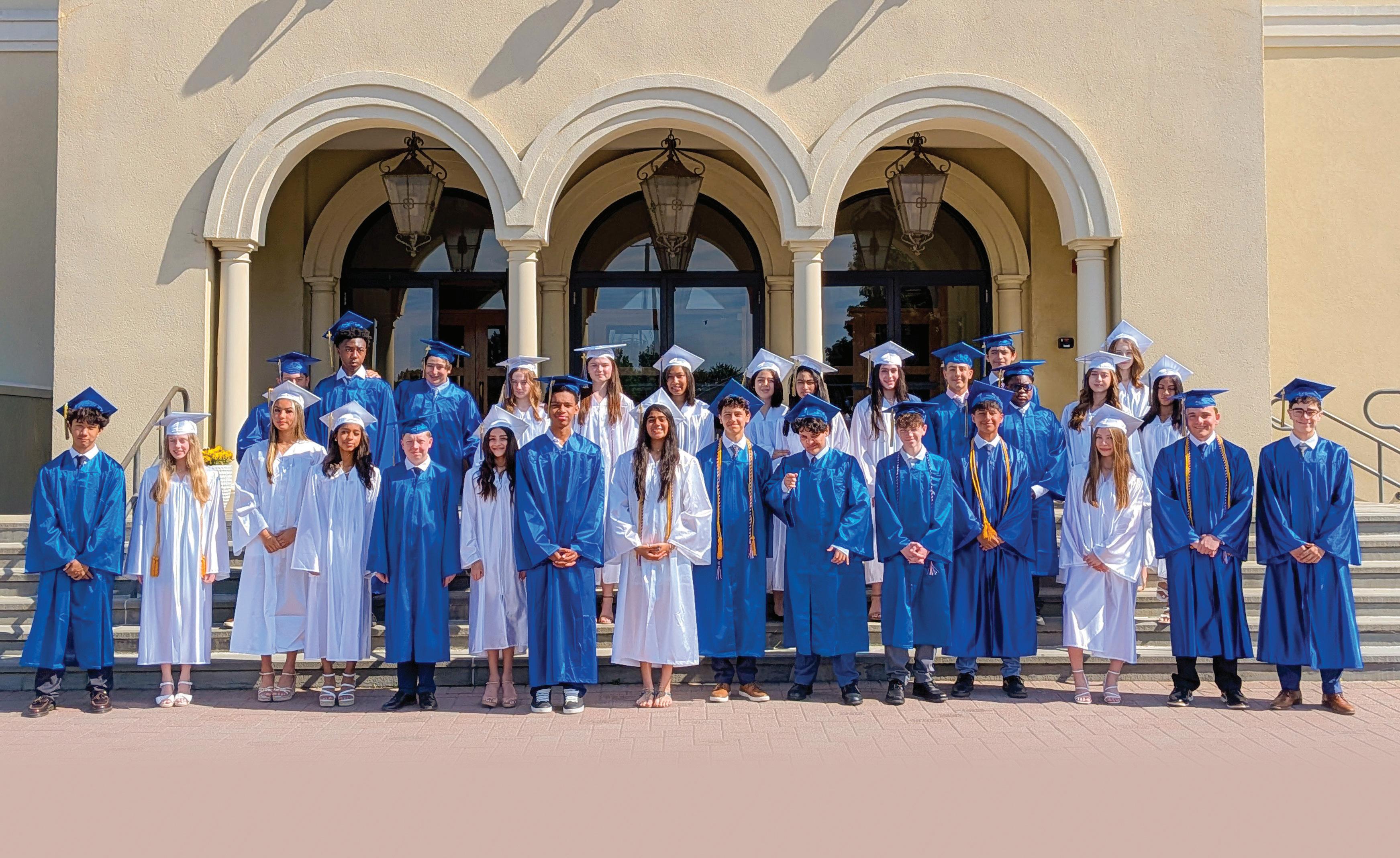
Shifting topics, June has been a busy month for various reasons. It began with my presence at several high school graduation ceremonies, representing the Diocese to congratulate our Class of 2026
graduates and their families. Though I only attended the high school graduations, let’s say a prayer of thanks for all the Catholic schools of our Diocese, for all who graduated as well as the teachers, administration, and staff. Long may they flourish!
That was followed by my attendance at the annual Spring meeting of the United States Conference of Catholic Bishops. Though not a bishop, it was explained to me that I go to represent all of you, the people of the Diocese of Metuchen, who even without a bishop are entitled to a vote in the various items the USCCB considers. The trip was also made special by concelebrating at the Mass at which the United States was consecrated to the Sacred Heart of Jesus by the U.S. Bishops to commemorate our 250th anniversary.
The following week was a welcomed break as I returned to my alma mater seminary for the annual retreat they offer for priests. “Everybody needs a little time away,” the band Chicago sang. There is truth in that, and I hope you will all get the opportunity to take some time this summer to recharge your batteries, whether physical, emotional, or spiritual.
Finally, as I’ve done in the past, may I ask you to continue praying to The Holy Spirit to enlighten and inspire Pope Leo in his task of choosing the next Bishop of Metuchen.
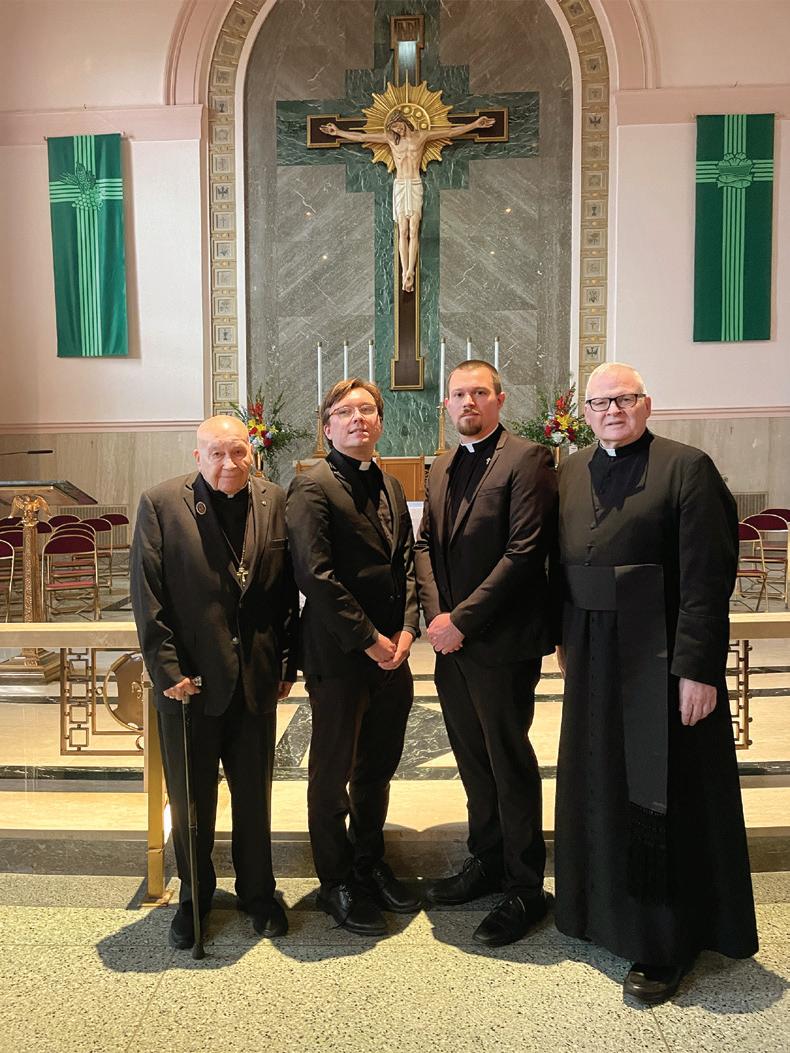
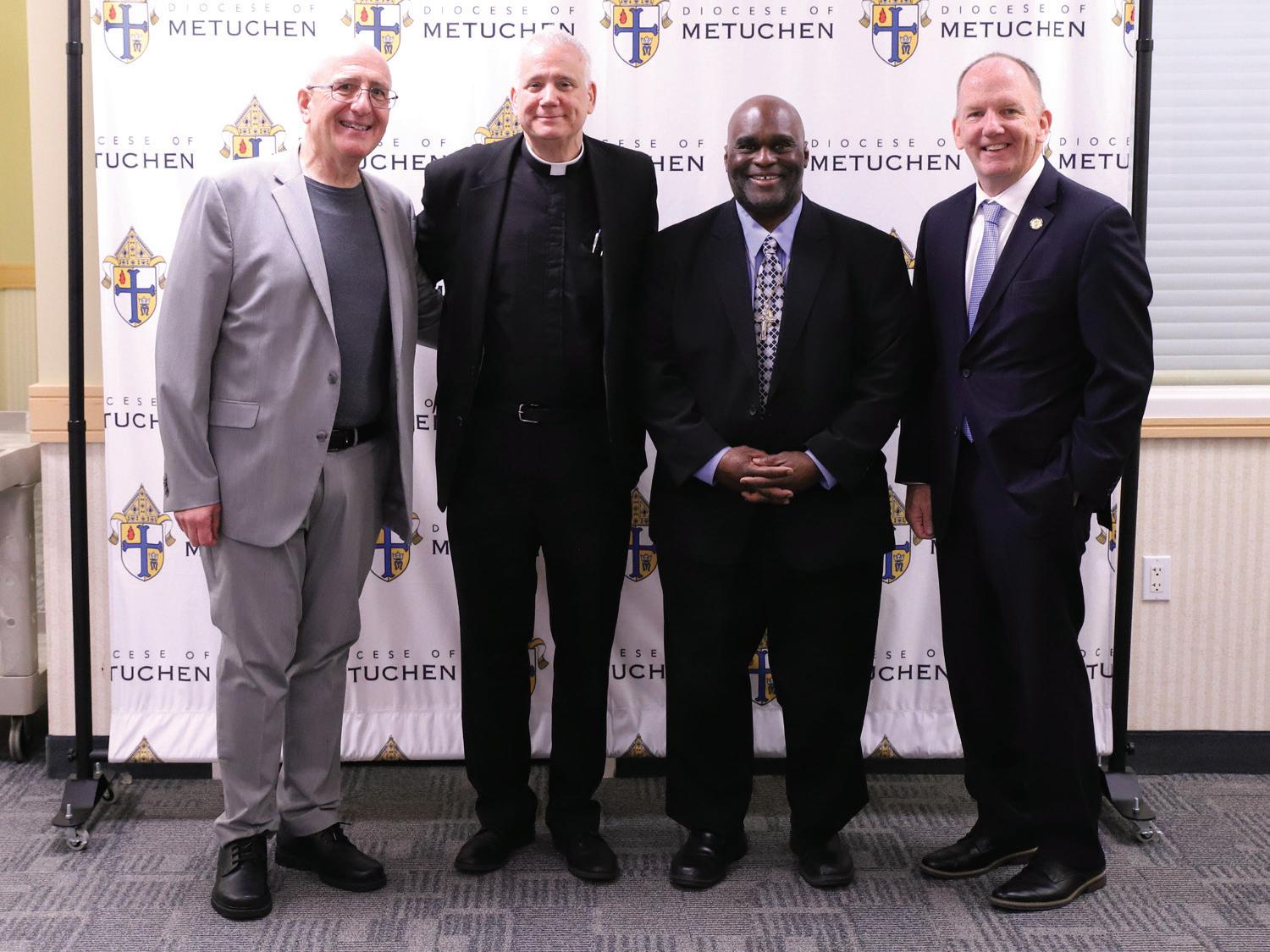
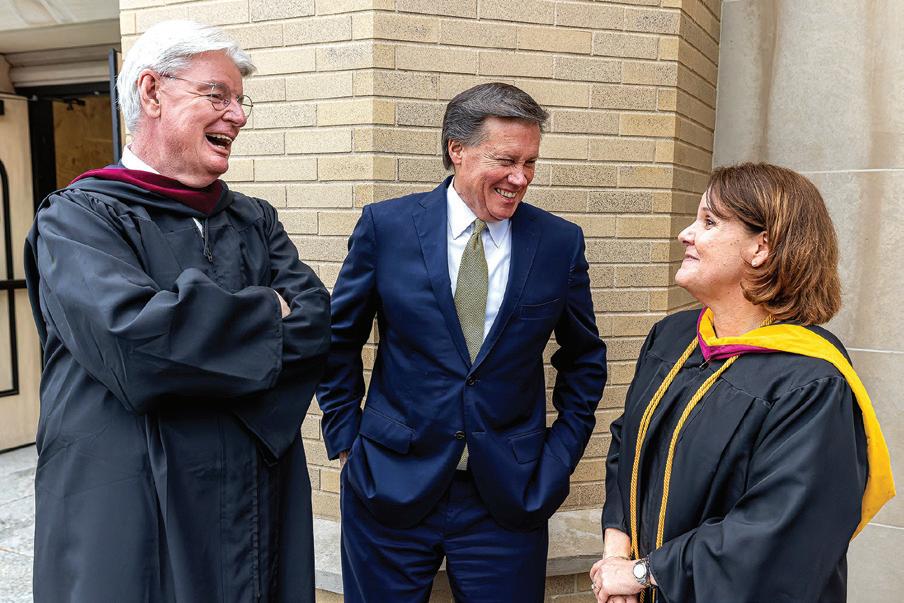
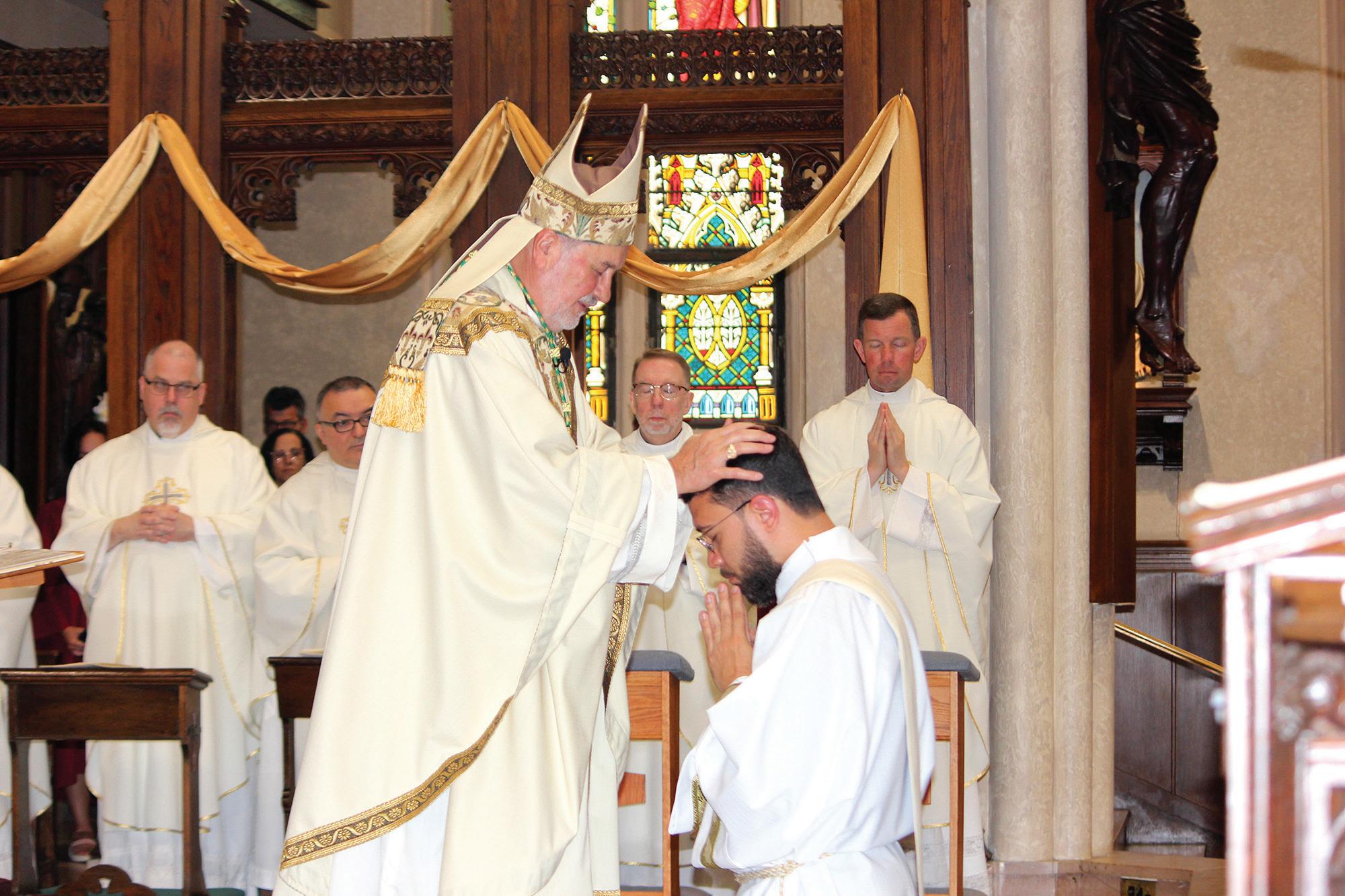
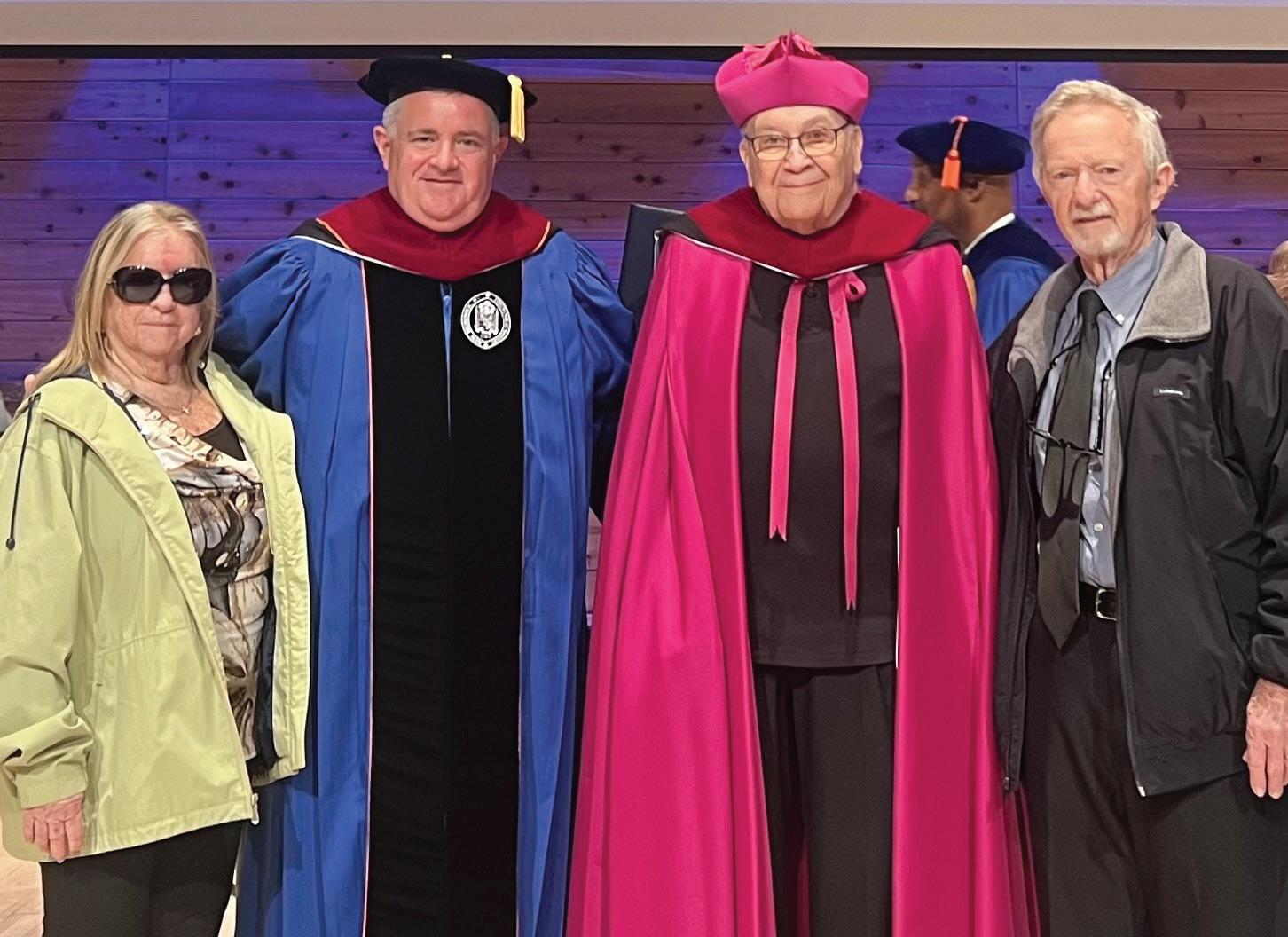
Bishop Emeritus Paul G. Bootkoski and Diocesan Administrator Father Jonathan S. Toborowsky pose with, left, Deacon James Prumos and, right, Mr. Patrick Rasimowicz, as they anticipated their Ordination on June 20. Bishop Bootkoski ordained Deacon Prumos to the Priesthood and Rasimowicz to the Diaconate in the Cathedral of St. Francis of Assisi. The full story of their Ordination will appear in the July issue of the Catholic Spirit. In the meantime, readers may access a photo album of the ceremony at catholicspirit. com, home page. —Courtesy photo
Prayer for a New Bishop
Lord Jesus Christ, Eternal High Priest and Good Shepherd, we thank you for the many blessings that you have poured on our local Church of Metuchen. We thank you for James, our fifth Bishop, and for his many gifts in shepherding your people.
Hear our prayer for the selection of a new bishop for the Church of Metuchen. We pray for Leo, our Pope, that he is given wisdom in discernment and given wise counsel as he selects our next bishop who would be ever more conformed to You, the Divine Master.
Lord, we pray that our next bishop will have a heart on fire for you and for your Church. May he be filled with wisdom, faithfulness, holiness and zeal for reigniting the faith and spreading the Gospel throughout our Diocese.
Through the prayers of the Blessed Virgin Mary, Your mother and ours, draw our new bishop, and the flock entrusted to his care, to the fullness of eternal life, where you live and reign with the Father and the Holy Spirit, God, forever and ever, Amen.
How to report abuse If you were sexually abused by a member of the clergy or anyone representing the Catholic Church, or you know of someone who was, you are encouraged to report that abuse to local law enforcement, the New Jersey Division of Child Protection and Permanency at 1-877-NJ ABUSE (652-2873) or 1-800-835-5510 (TTY/TDD for the deaf), and also the Diocesan Response Officer at (908) 930-4558 (24 hours/7 days a week).
Corpus Christi Processions:
A public demonstration of love and faith
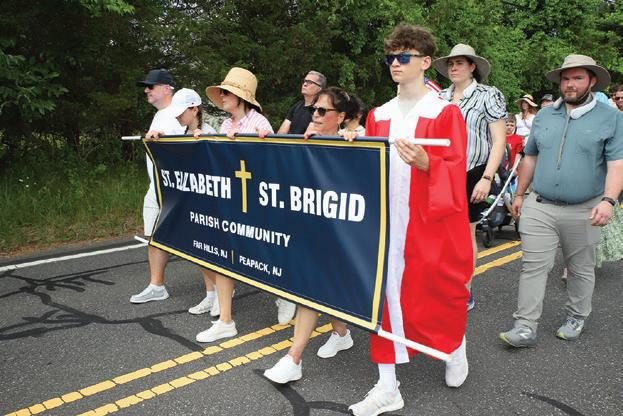
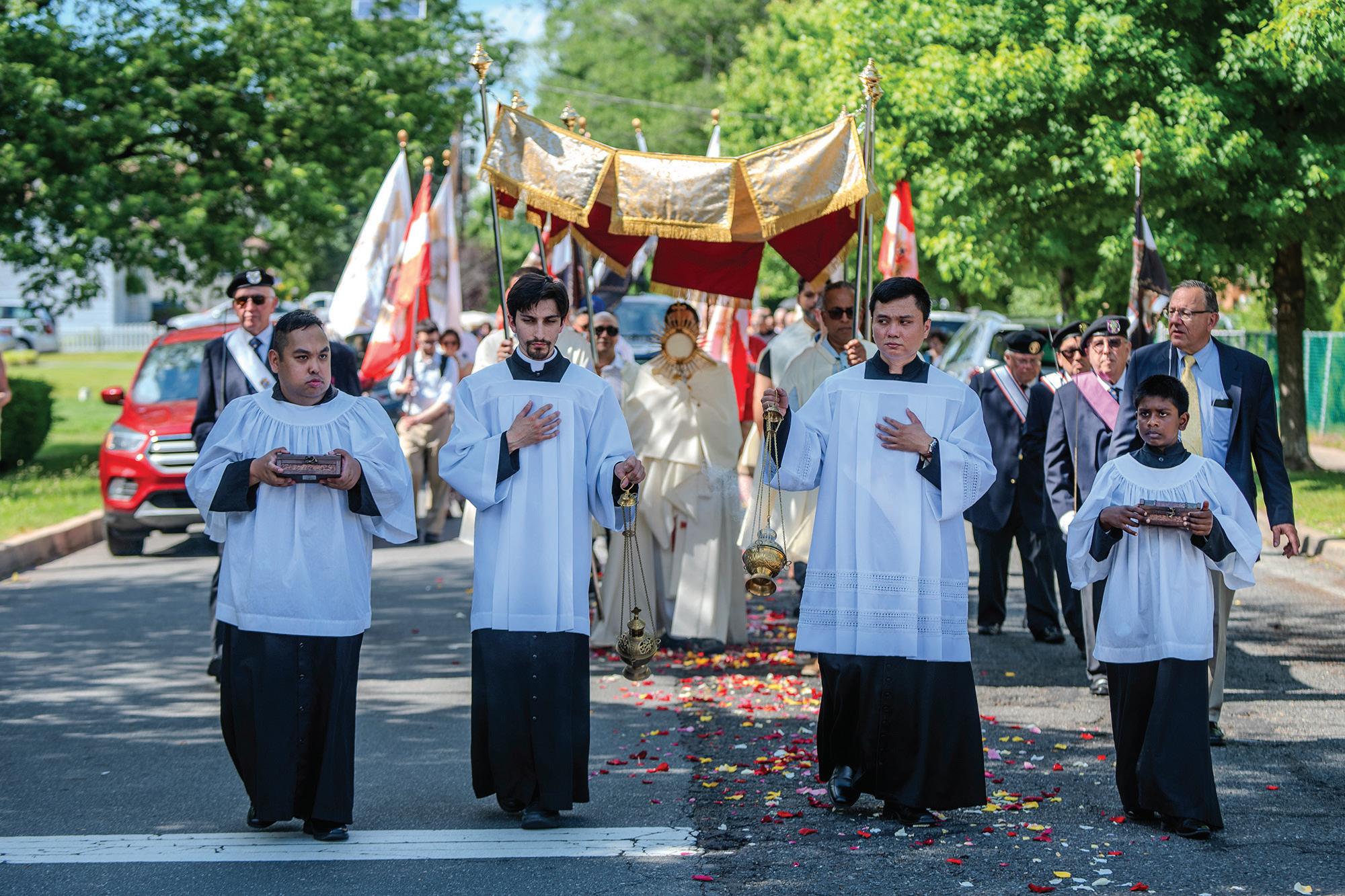
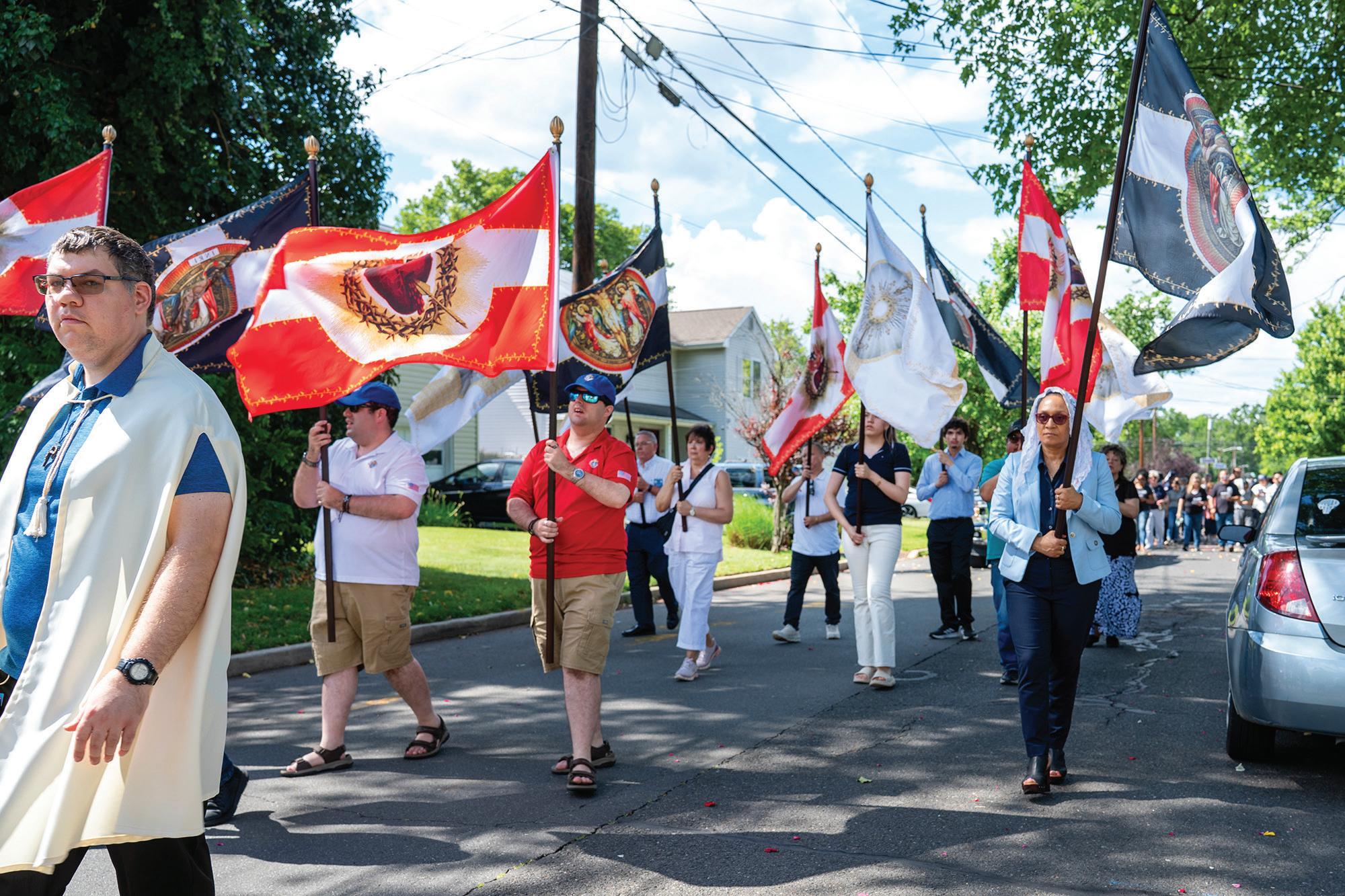
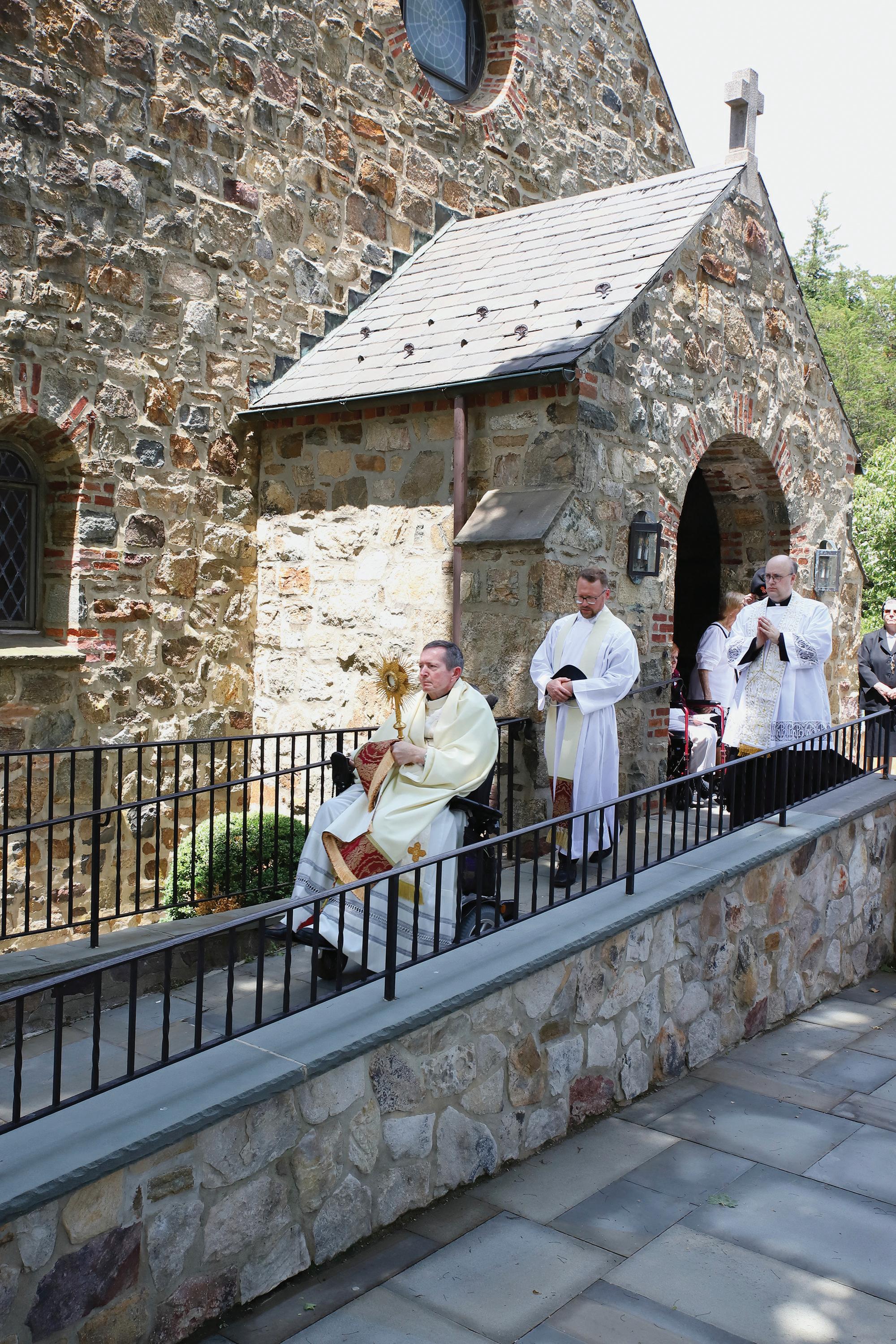
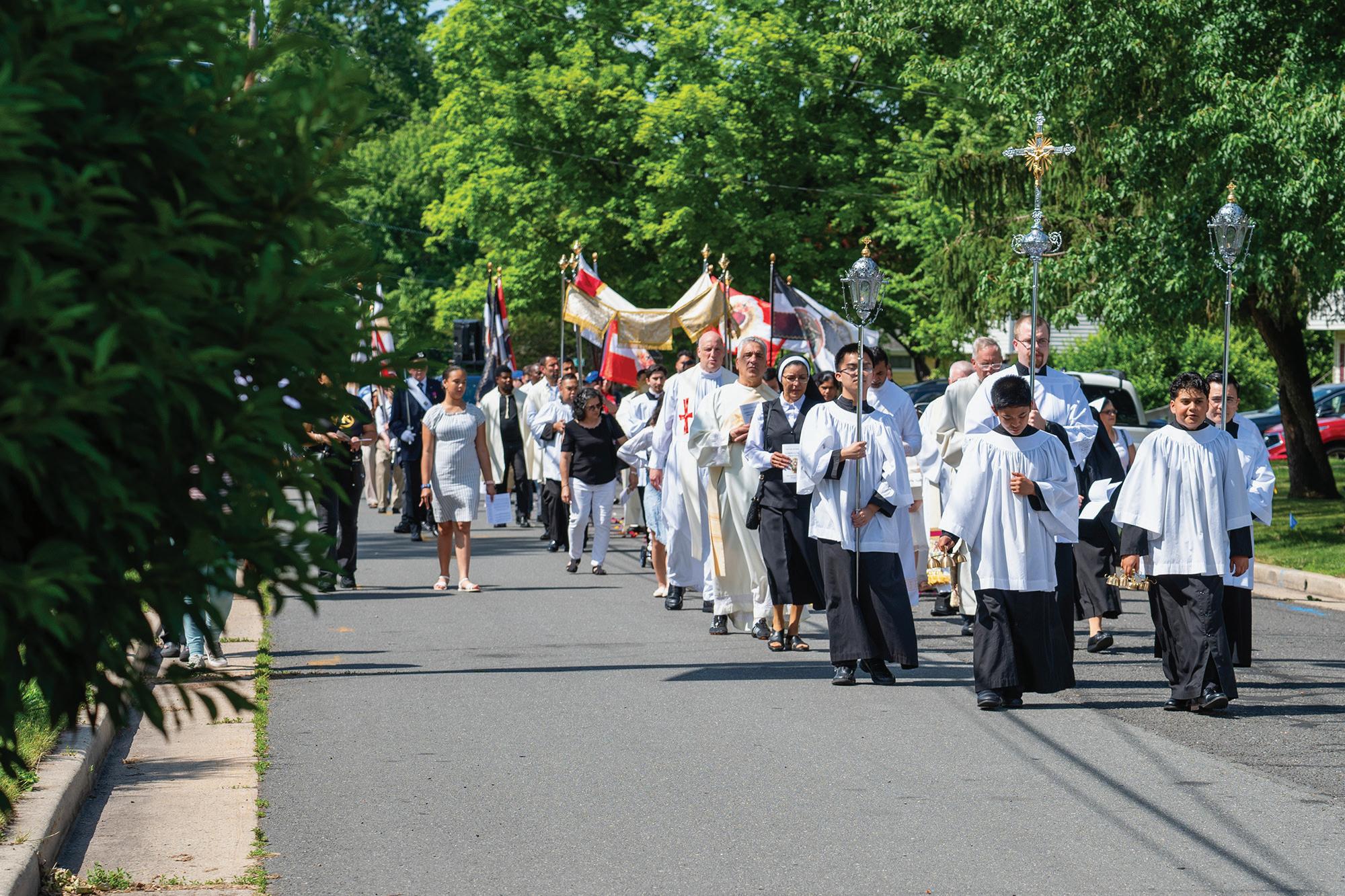
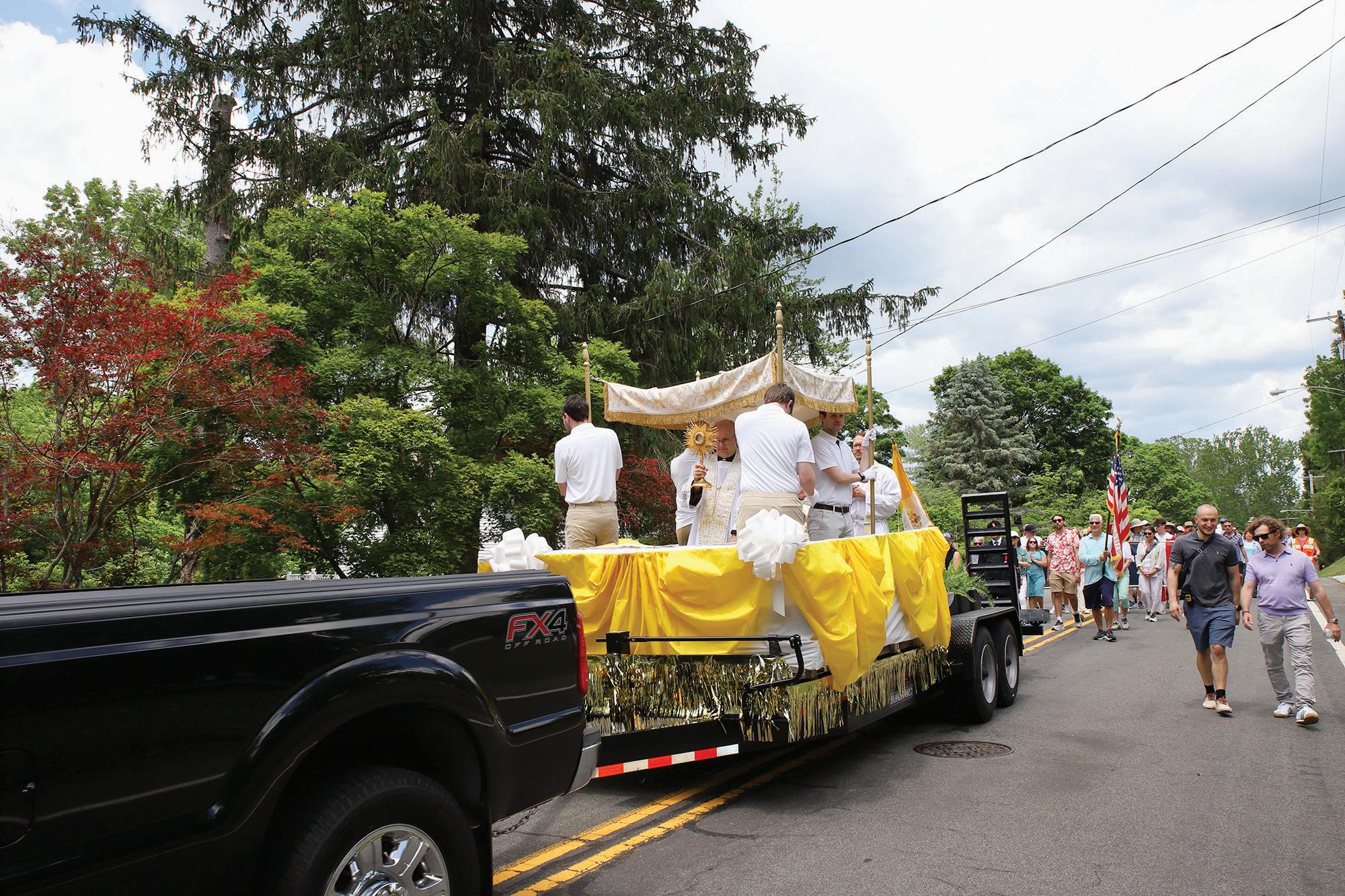
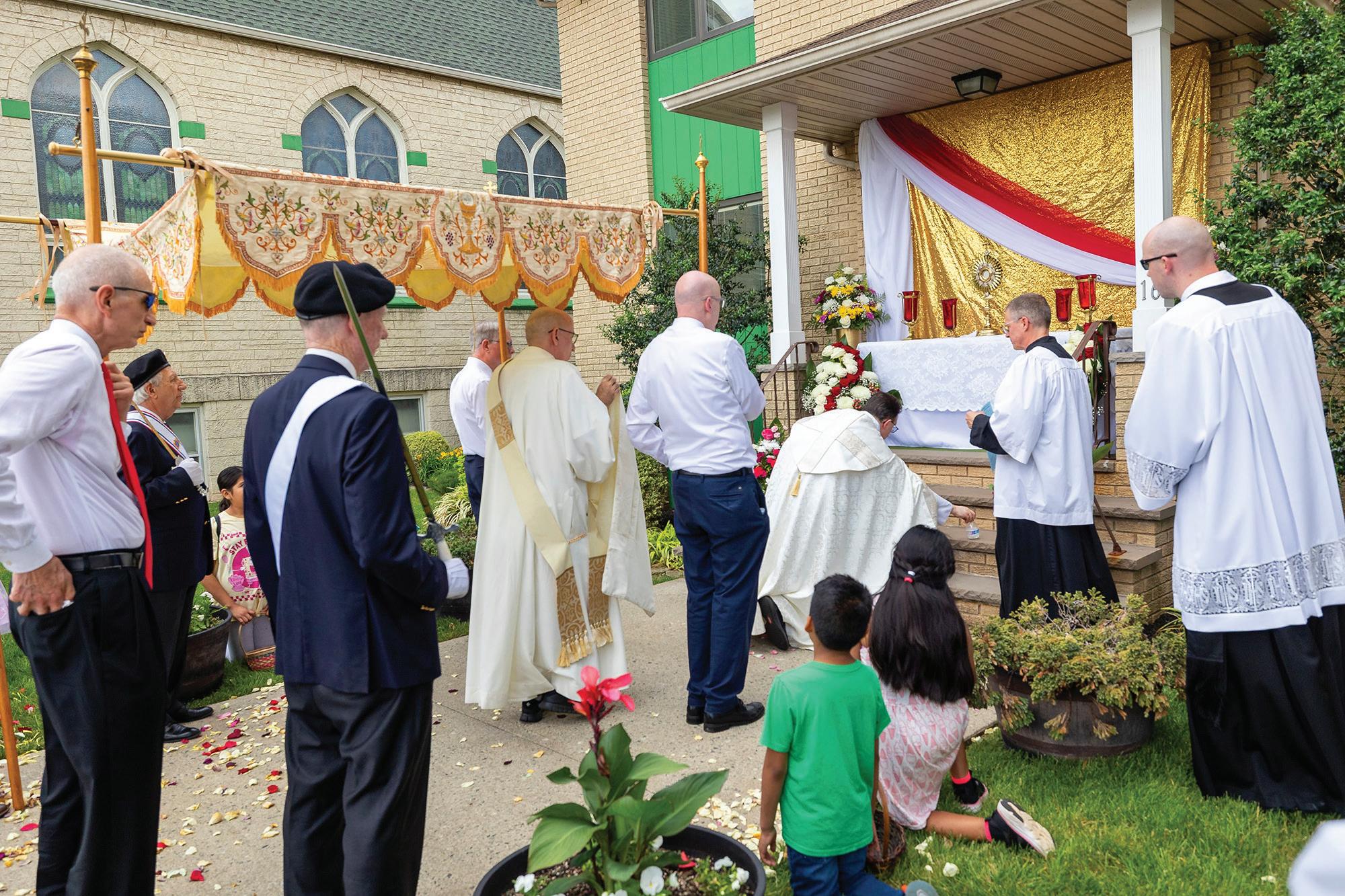
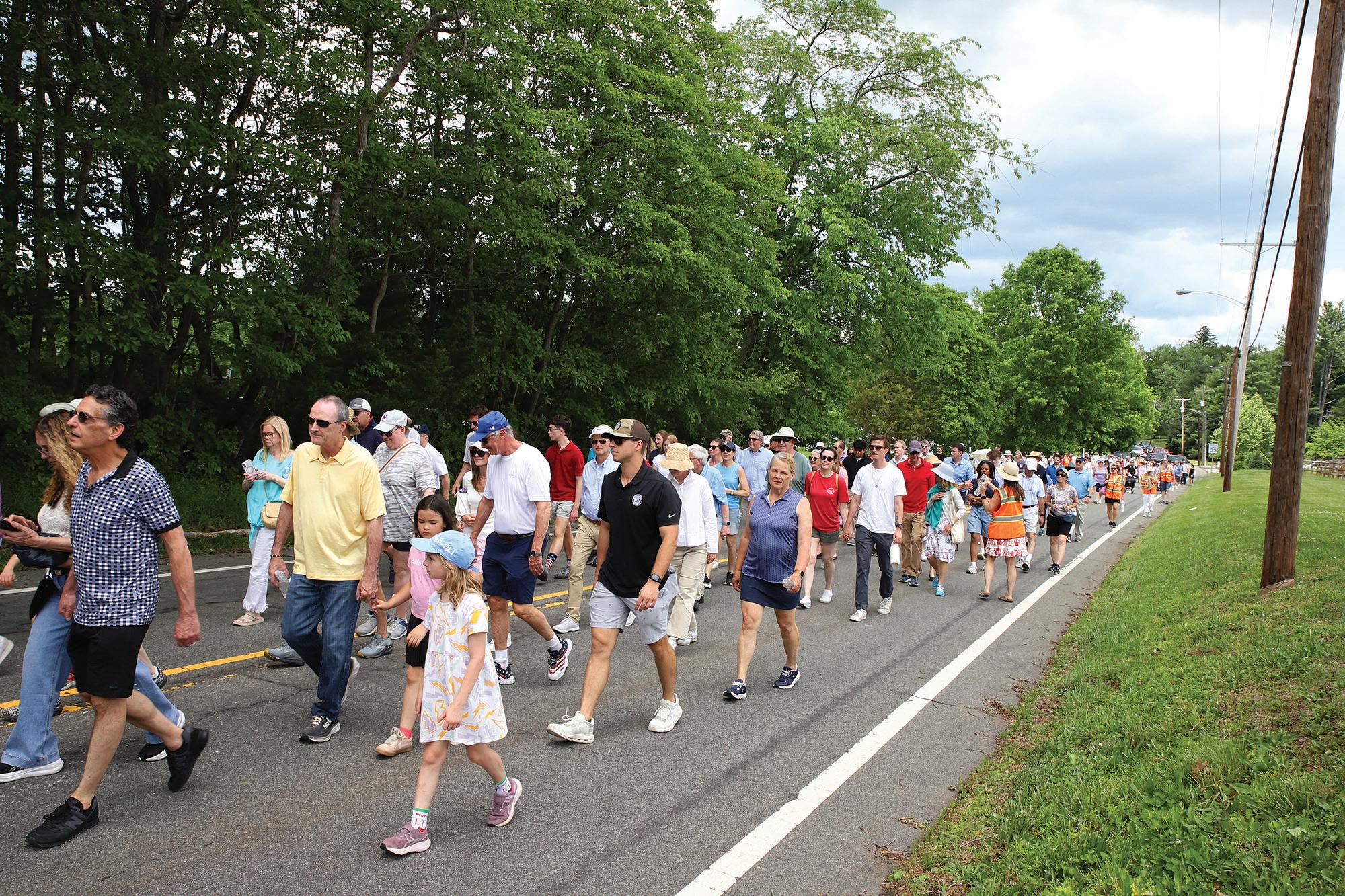
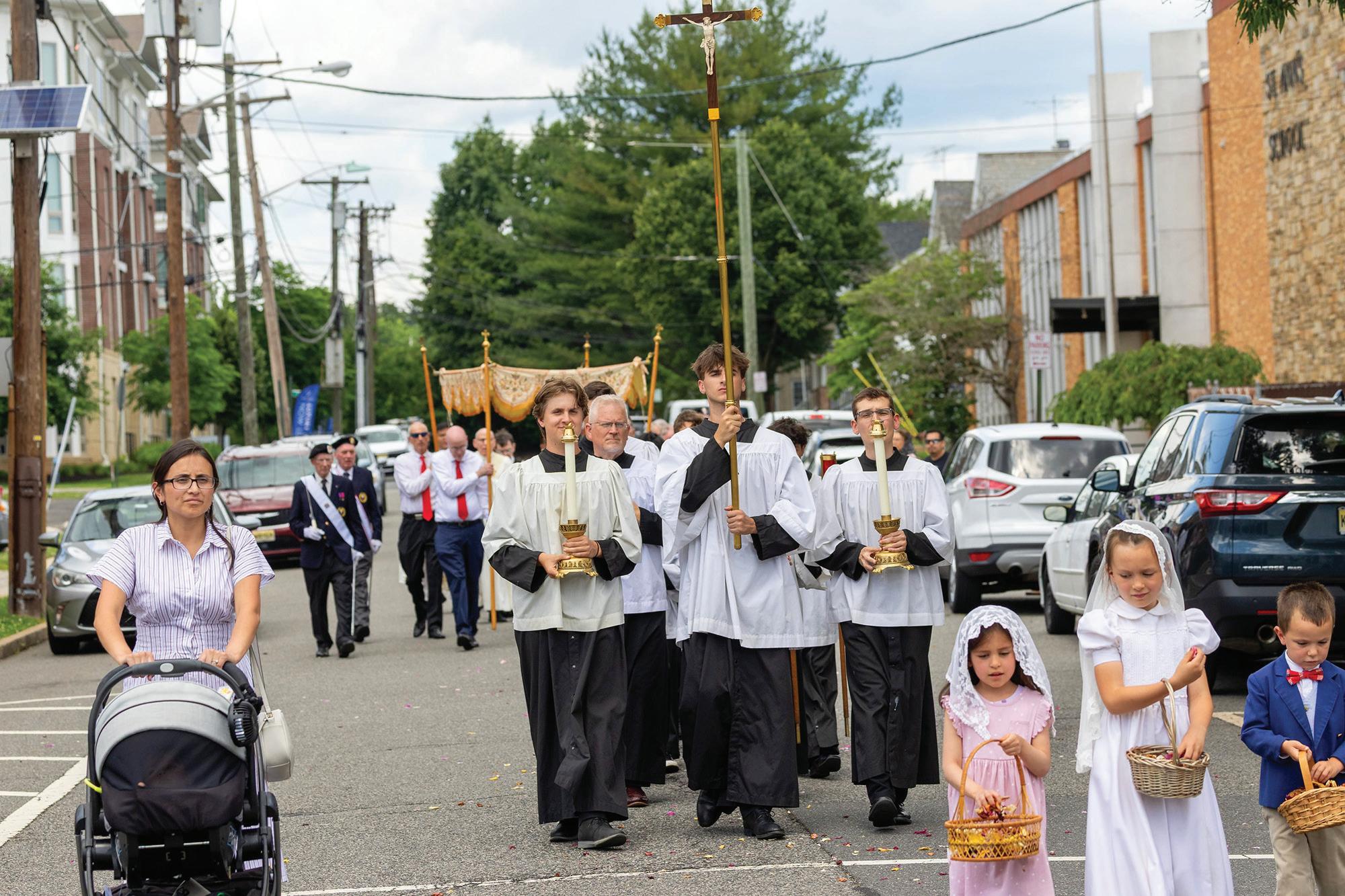
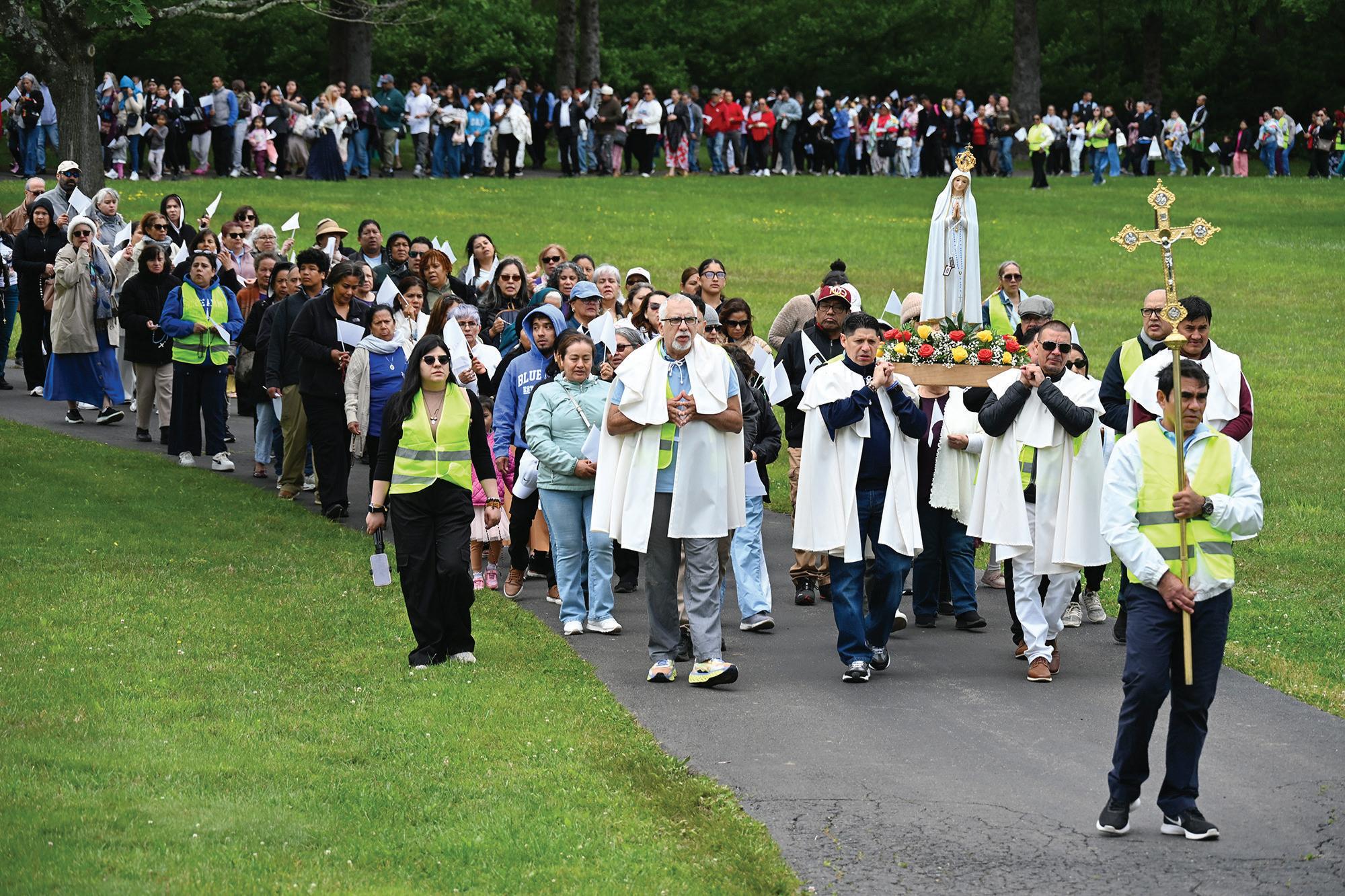
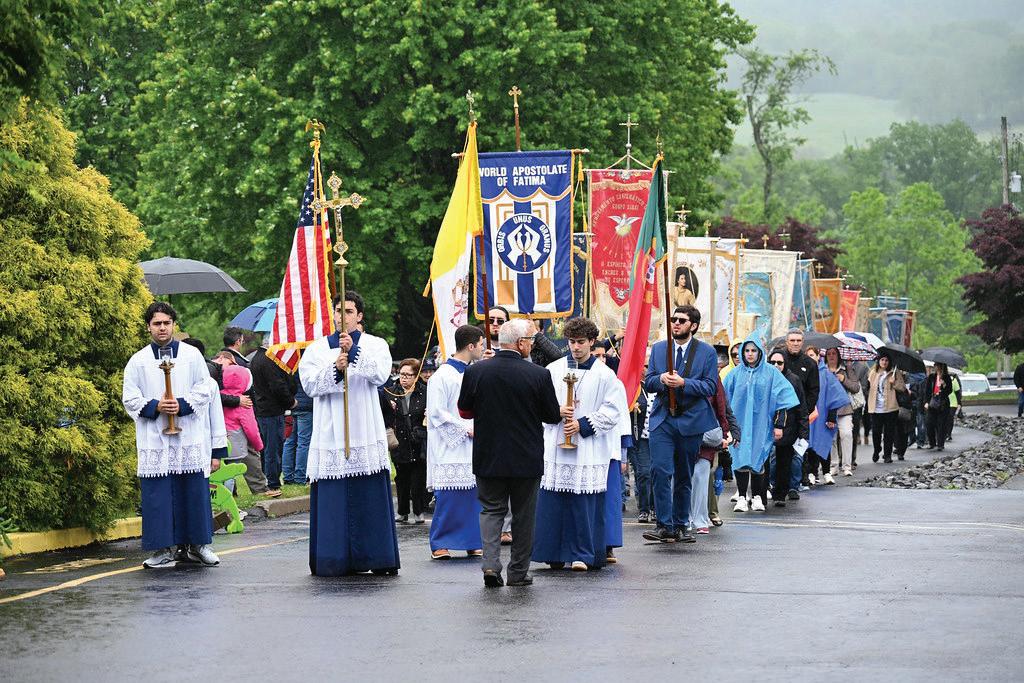
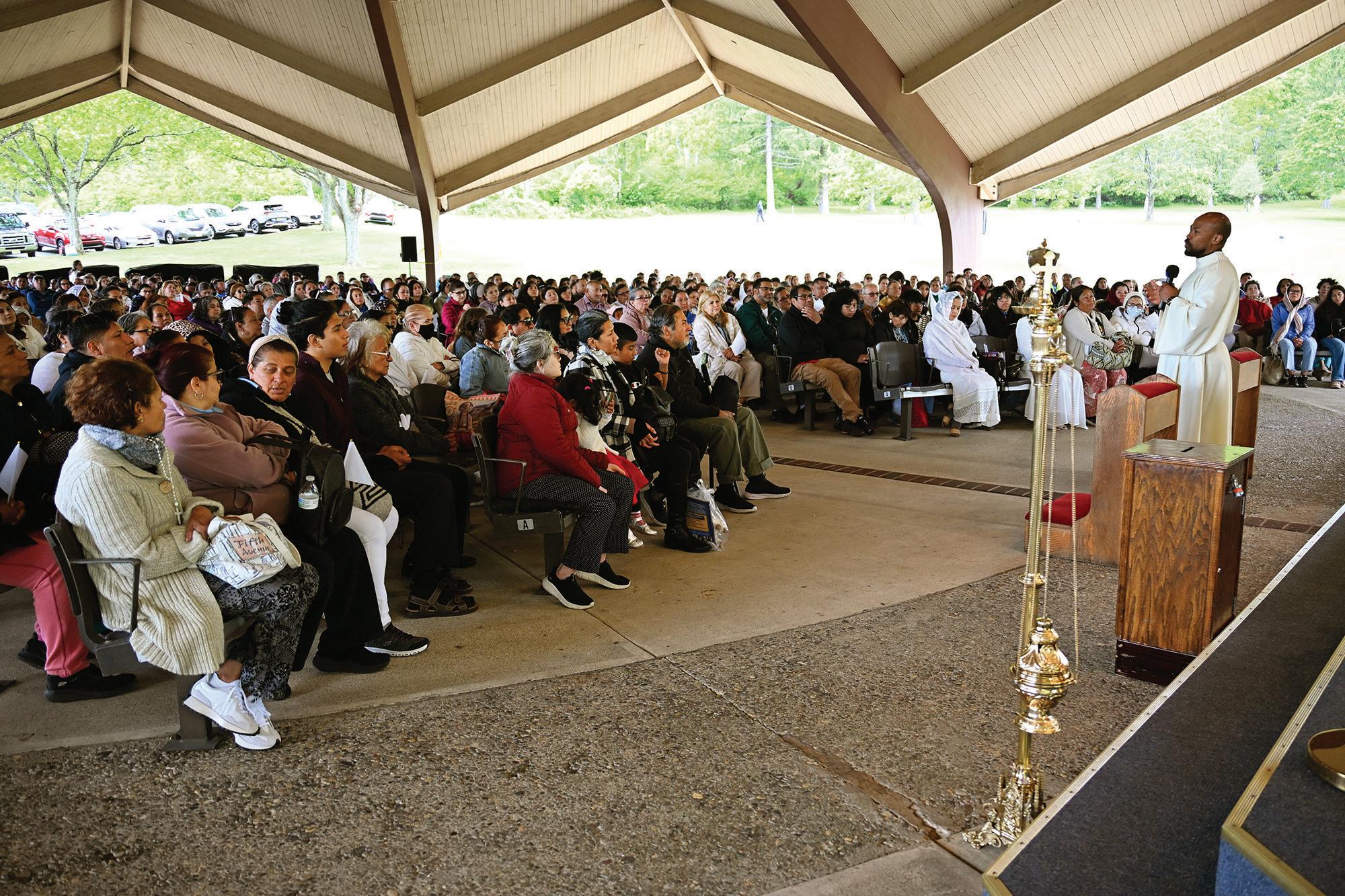
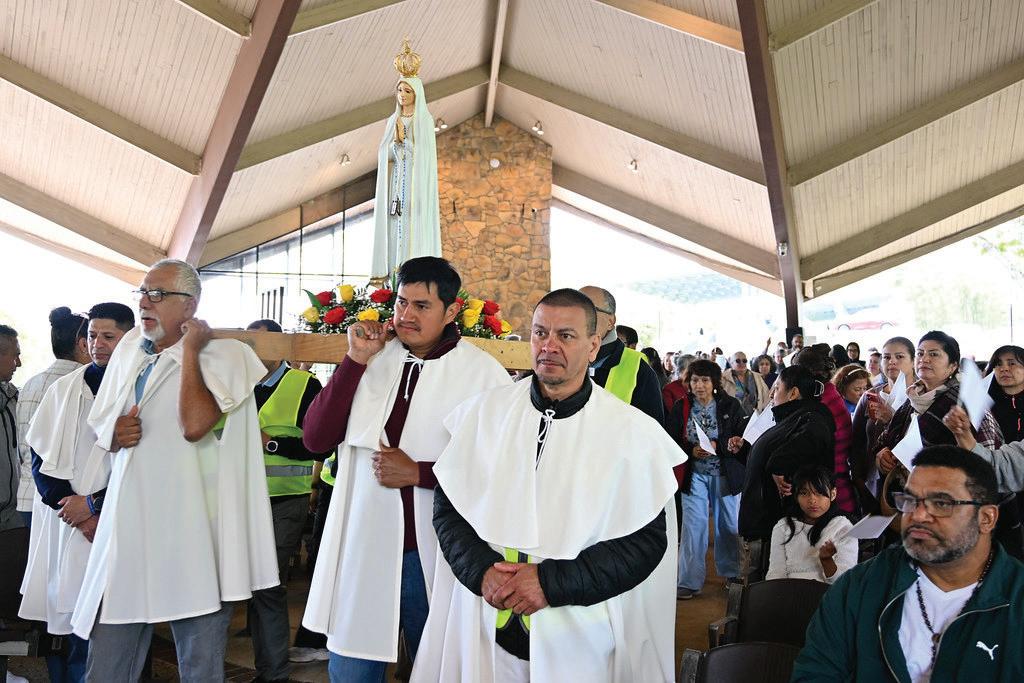
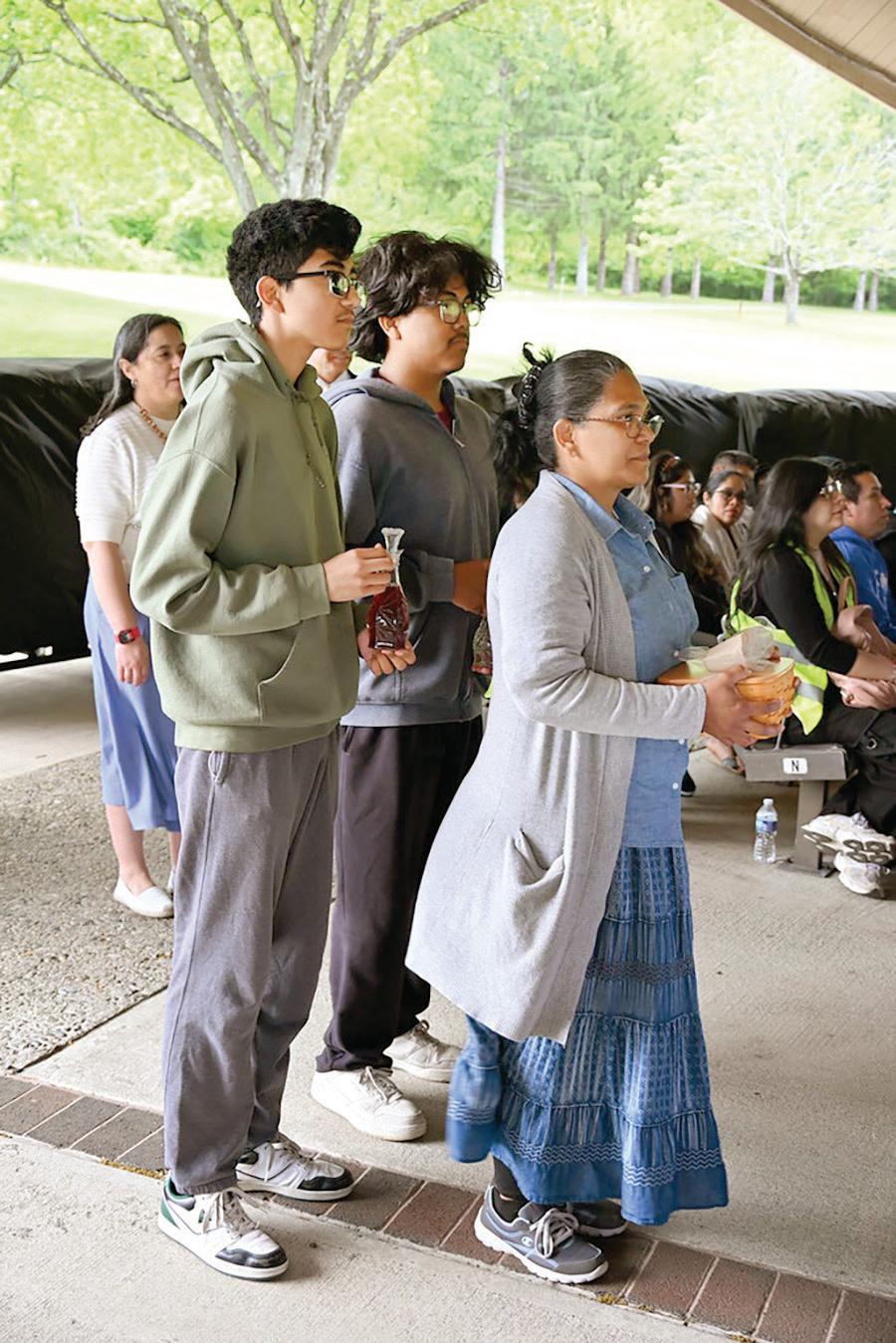
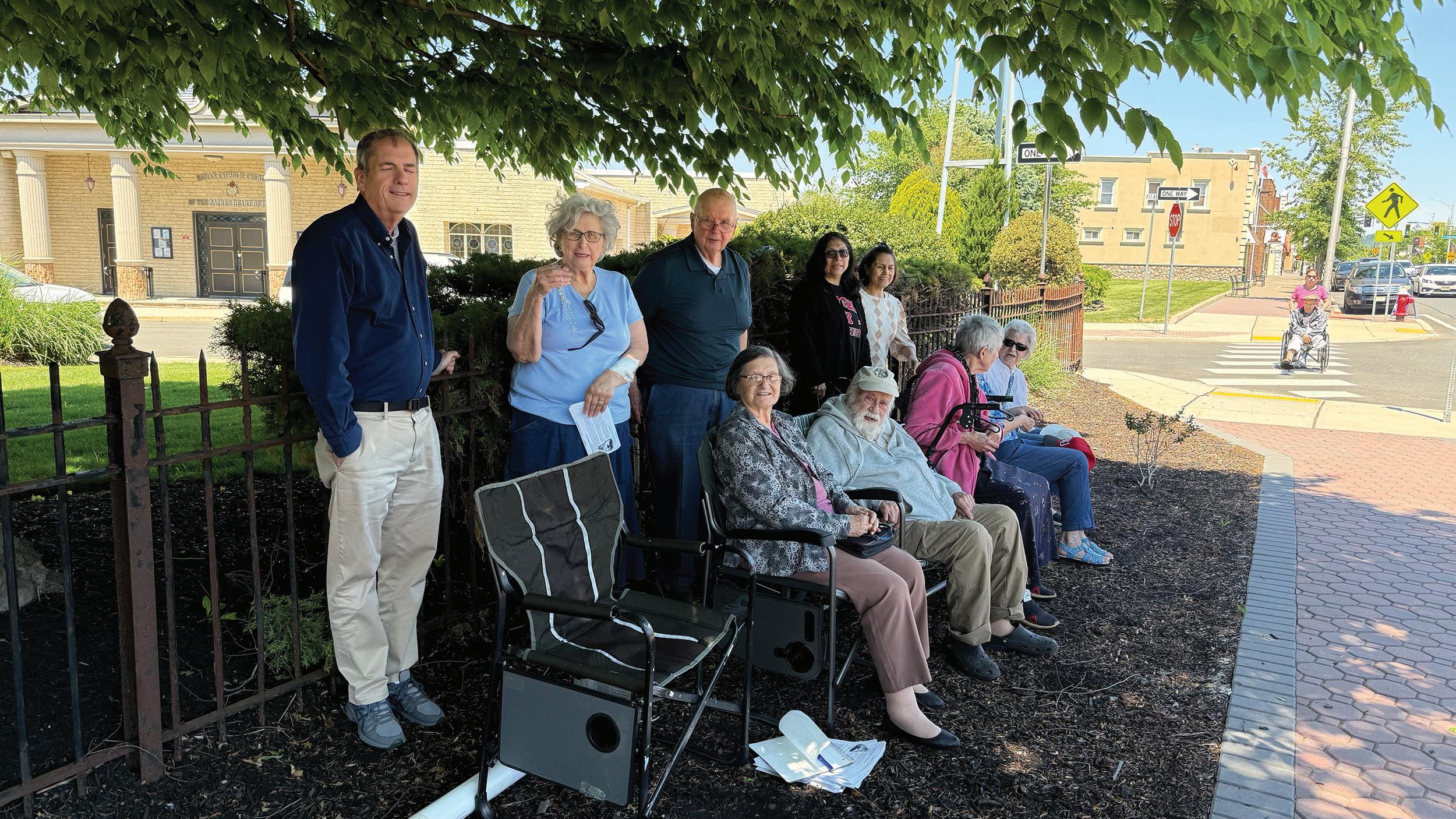
Faith took to the streets throughout our Diocese as the faithful gathered to celebrate the Solemnity of Corpus Christi, the Feast of the Most Holy Body and Blood of Christ. In neighborhoods and parish communities large and small, they united in prayerful witness, following Our Lord present in the Blessed Sacrament through public processions that have been a cherished Catholic tradition for centuries. • The photographs on this page capture moments of joy, devotion, and unity, revealing the beauty of parish life and the deep faith of those who participated, with clergy, religious, families, altar servers, musicians, volunteers and local police making these events possible. • These processions offered a powerful testimony of faith and love, bringing Christ into the heart of our communities and inviting all who witnessed them to reflect on His abiding presence among us.
1, 2, 3, Our Lady of Fatima, Piscataway, —Mark Lee photos
4, 5, Shrine Chapel of the Blessed Sacrament, Raritan, —Hal Brown photos
6, 7, 8, St. Elizabeth and St. Brigid, Peapack, —John Batkowski photos
See our photo album for Our Lady of FatimaCorpus Christi Procession 2026 at Catholicspirit.com.
See our photo album for St. Elizabeth and St. BrigidCorpus Christi Procession 2026 at Catholicspirit.com.
Pastoral care for Catholics in Bound Brook can be traced back to 1858, when Newark-based German Benedictine monks began their ministry there – with Masses celebrated in private homes and even above a shoe store on Main Street.
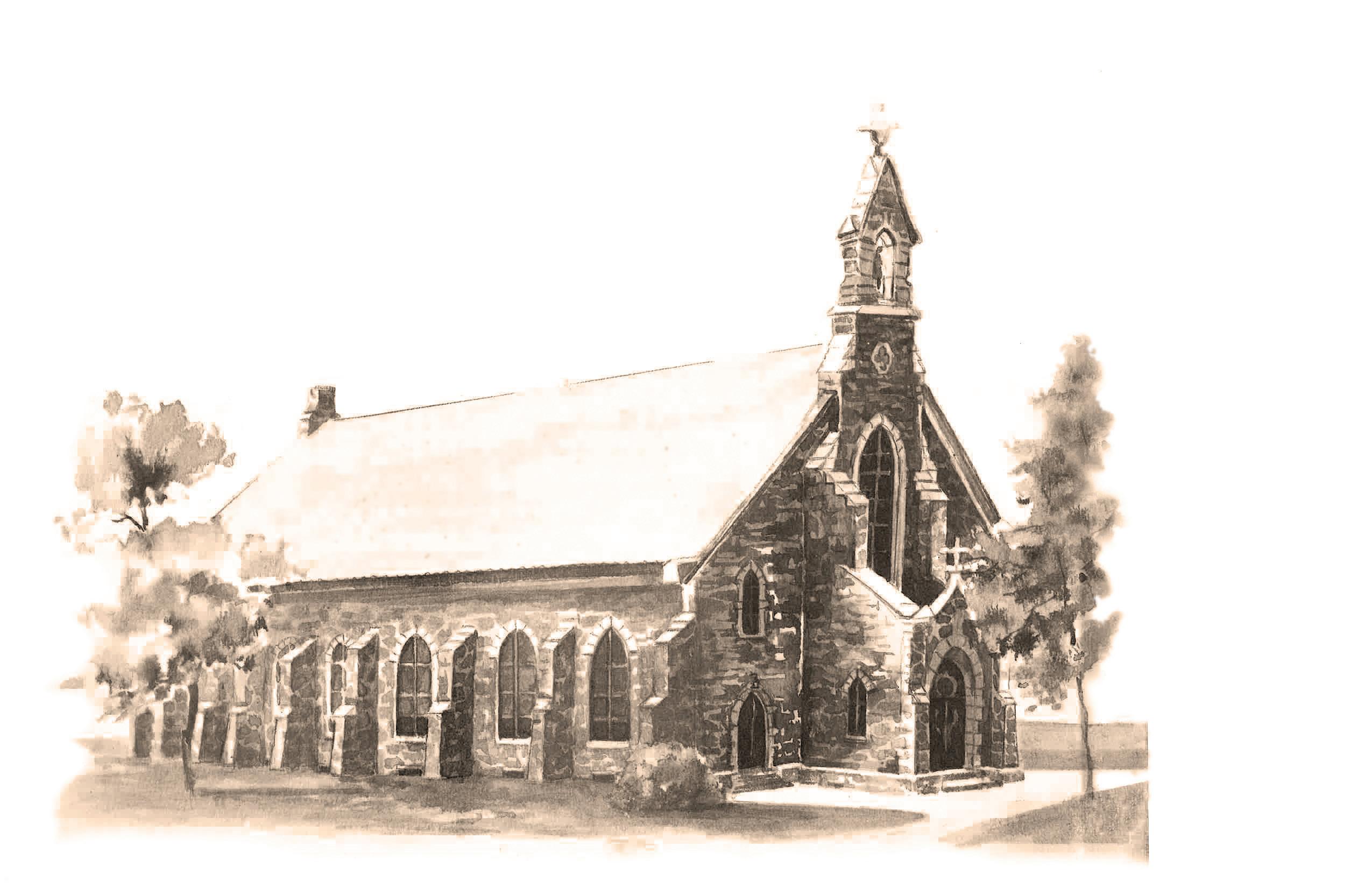
Years later, a small Catholic church was built and was later established as a permanent mission – with the official dedication of St. Joseph Parish taking place in December 1876.
Today, as the faith community marks 150 years of ministry in the small borough, the parish community continues to serve a diverse population and strives to meet the pastoral needs of each of its members.
“Bound Brook is, and has been for awhile, the poorest town in Somerset County,” said Msgr. Joseph Kerrigan, who serves as pastor. “So, for a relatively small parish like ours to survive 150 years is something to celebrate. And that, despite our small size, we’re fairly vibrant, is another cause for joy.”
Bound Brook parish celebrates 150
years of faith, community
By David Karas, Correspondent
Marking a milestone
That vibrancy has come to bear as part of several anniversary celebrations that have already taken place this year. On March 19, the Feast of St. Joseph, the parish came together to honor its founding. The celebration included Mass celebrated by Father Edwin Leahy, headmaster of St. Benedict’s Preparatory School in Newark and a member of the St. Benedict Abbey.
“The Benedictine order from Newark started our church, so it was so appropriate for us to have him with us,” said Kathy Champignon, who has been a member of the parish for four decades and now serves as pastoral assistant –providing support in the office and with faith formation activities. “What a dynamic speaker – he had the whole church praising God and celebrating our parish.”
On May 1, the Feast of St. Joseph the Worker, a special Mass was celebrated by Father Charles O’Connor, who served as the pastor there for 23 years. The service was followed by a dinner and fellowship with members of the parish community. Both celebrations featured a choir that included past and current parishioners.
“Father Charlie had been pastor here for 23 years before being transferred to St. Cecilia in Monmouth Junction,” said Champignon. “It warmed the heart to hear him preaching and singing again in our church.”
The parish will again celebrate this year’s milestone with Mass and a picnic on the church grounds on August 30. With the goal of honoring the many cultures that comprise the parish community, the picnic will feature food from countries all around the world.
“St. Joseph Catholic Community in Bound Brook is a truly unique place,” said Champignon. “We have parishioners from many countries and cultures. We work together, play together and most importantly, pray together.”
A long history of faith in Bound Brook
The parish’s first worship space – a small frame church – was built in 1865, when the community was still German-speaking. That structure was torn down in 1889, and in 1891 a new stone church was dedicated – and at the time was considered “the most beautiful house of worship in Somerset County.”
Planning for a new church began in 1964, and ground was broken in December 1969. The first Mass in the new church was celebrated on Christmas in 1970, and the brick, hexagonal contemporary-style church building – the largest Catholic church in Somerset County at the time – was dedicated on February 21, 1971.
The history of St. Joseph Parish includes the opening of its first school in 1893. The original school remained in operation until 1913, and was later reestablished in 1920 with classes held in the church before a new school building was constructed. In 1991, the institution merged with St. Mary School to form Holy Family Academy, which remained in operation until 2011.
The parish became the center for the Spanish-speaking Catholic community in Somerset County by 1970, and the establishment of Spanish-speaking ministries – like faith formation and marriage encounter – would come to follow.
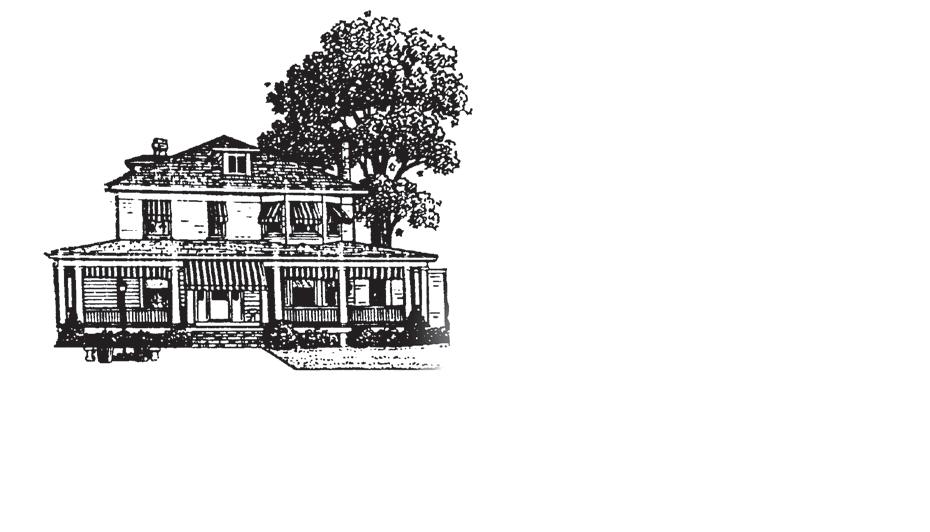
sketch
St. Joseph Parish
R. Wilson
A ‘port of first call’
Msgr. Kerrigan noted the diversity among his parish as a defining characteristic of the faith community.
“Bound Brook and our parish have, over the years, been a ‘port of first call’ for arrivals to the United States, starting with the German migrants who founded the parish, to a wave of Irish, Italians, and, especially in the last 40-50 years, groups from Latin America,” he said. “We know of at least 16 Latin American countries represented in our parish, and although there is no really dominant one, our Costa Rican representation would be unique compared to other parishes in the Diocese.”
Such a diverse parish family has necessitated adaptations over the years, including ensuring that the parish is meeting the liturgical and social needs of its members. Today, that includes bilingual programming.
“I think the fact that our parish lives out fairly seamlessly our two languages – Spanish and English – is unique,” he said. “We have roughly the same amount of programming in each language, and we do quite a bit together.”
There is also a wide range of spiritual opportunities for members of the parish, including groups for those who are drawn to the charismatic movement, contemplative prayer and devotion to the Divine Mercy of Jesus.
‘Everybody helps as a community’
Deacon Edgar Chaves, who also serves as director of the diocesan Hispanic Evangelization Office, has been attending Mass at St. Joseph Parish – what he calls his “prayer home” – since 1989, and has been a parishioner since 1992. The faith community played a big role in his discernment to become a deacon, he shared.
“Saint Joseph has always been a very supportive parish, with no ethnic differences,” he said. “Everybody helps as a community, from putting down fresh mulch in the spring to clearing the snow in the winter.”
He noted that the Latino community plays a big role in parish life for all of their parishioners.
“We celebrate Our Lady of Guadalupe (Mexico), Our Lady of the Angels (Costa Rica), The Assumption (Guatemala), Nuestra Señora de la Altagracia (Dominican Republic), and so many other celebrations because of our diversity,” he said. “The Latino community supports each other all the time, regardless of what we are celebrating.”
Along a similar vein, Msgr. Kerrigan notes the spirit of the St. Joseph Parish family, and the close connections that its members share.
“There’s a kindness and humility in the parish congregation as a whole that I think people find refreshing and unique,” said Msgr. Kerrigan. “This permeates the way we run our parish office and guide people through sacramental processes. We try to find reasons to say ‘yes’ to pastoral needs for all who pass through our doors.”
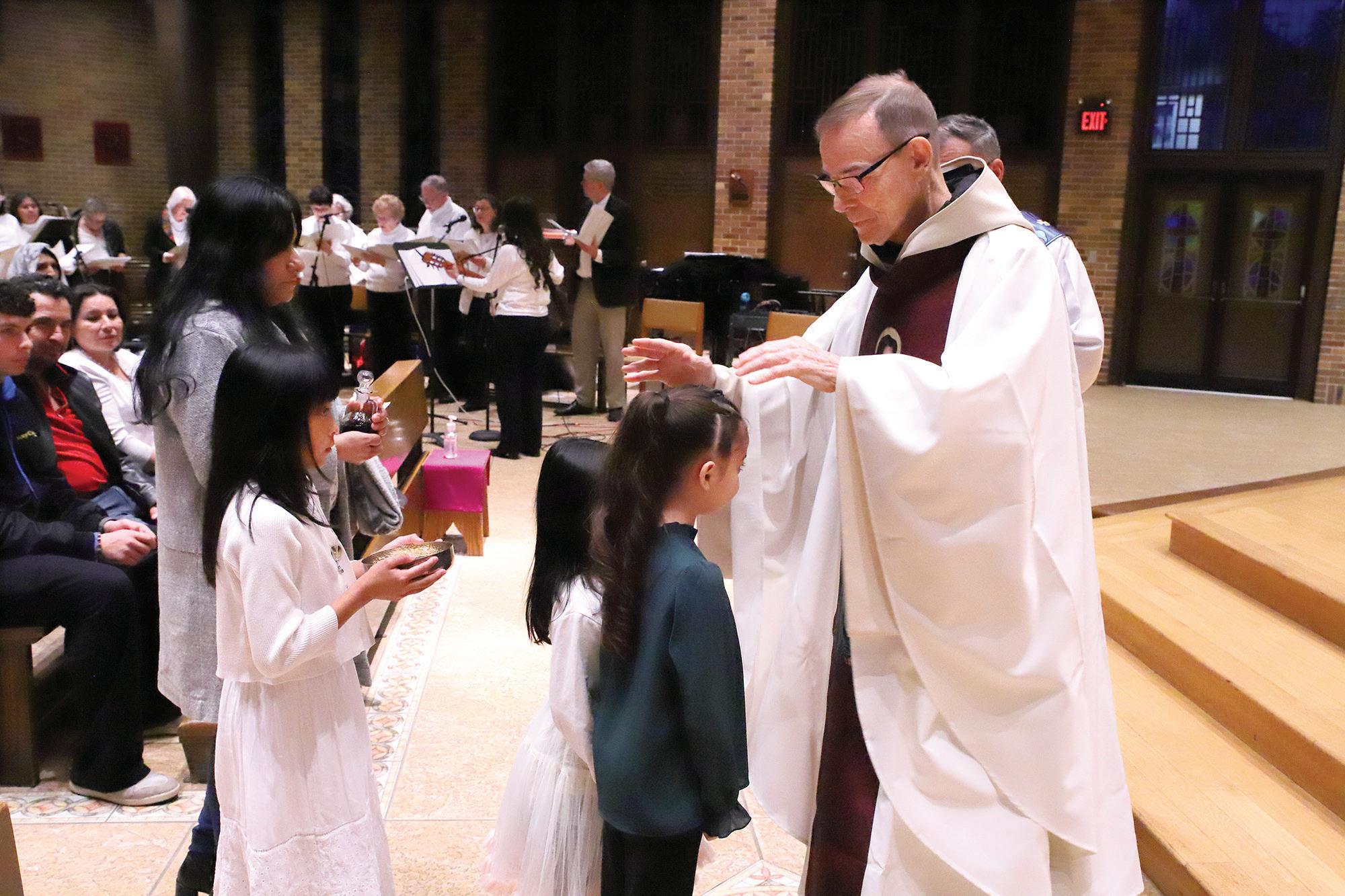
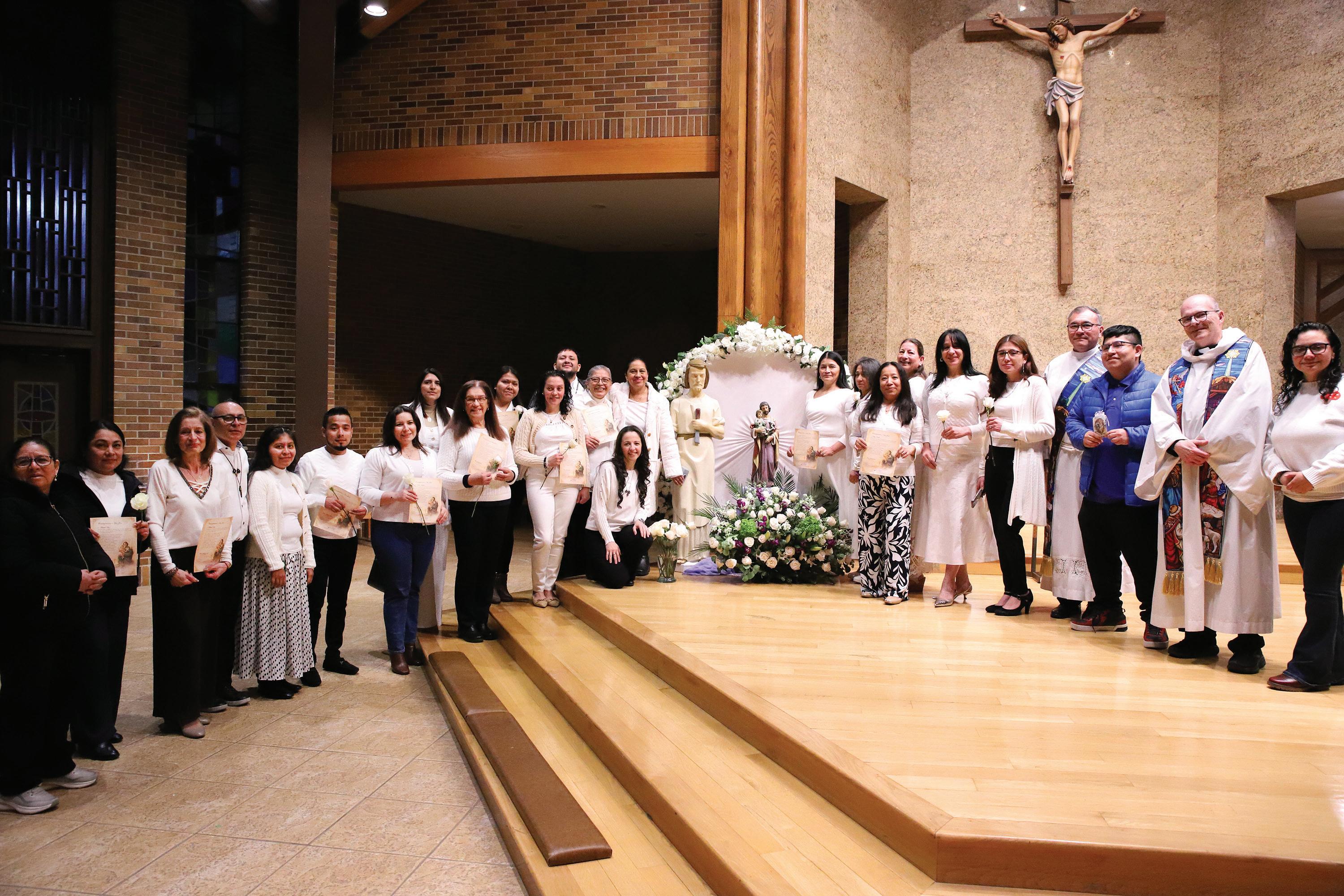
1 Benedictine Father Edwin Leahy, headmaster of St. Benedict’s Preparatory School, Newark, blesses youth who brought forward the gift of bread and wine for the March 19 Mass for the Feast of St. Joseph.
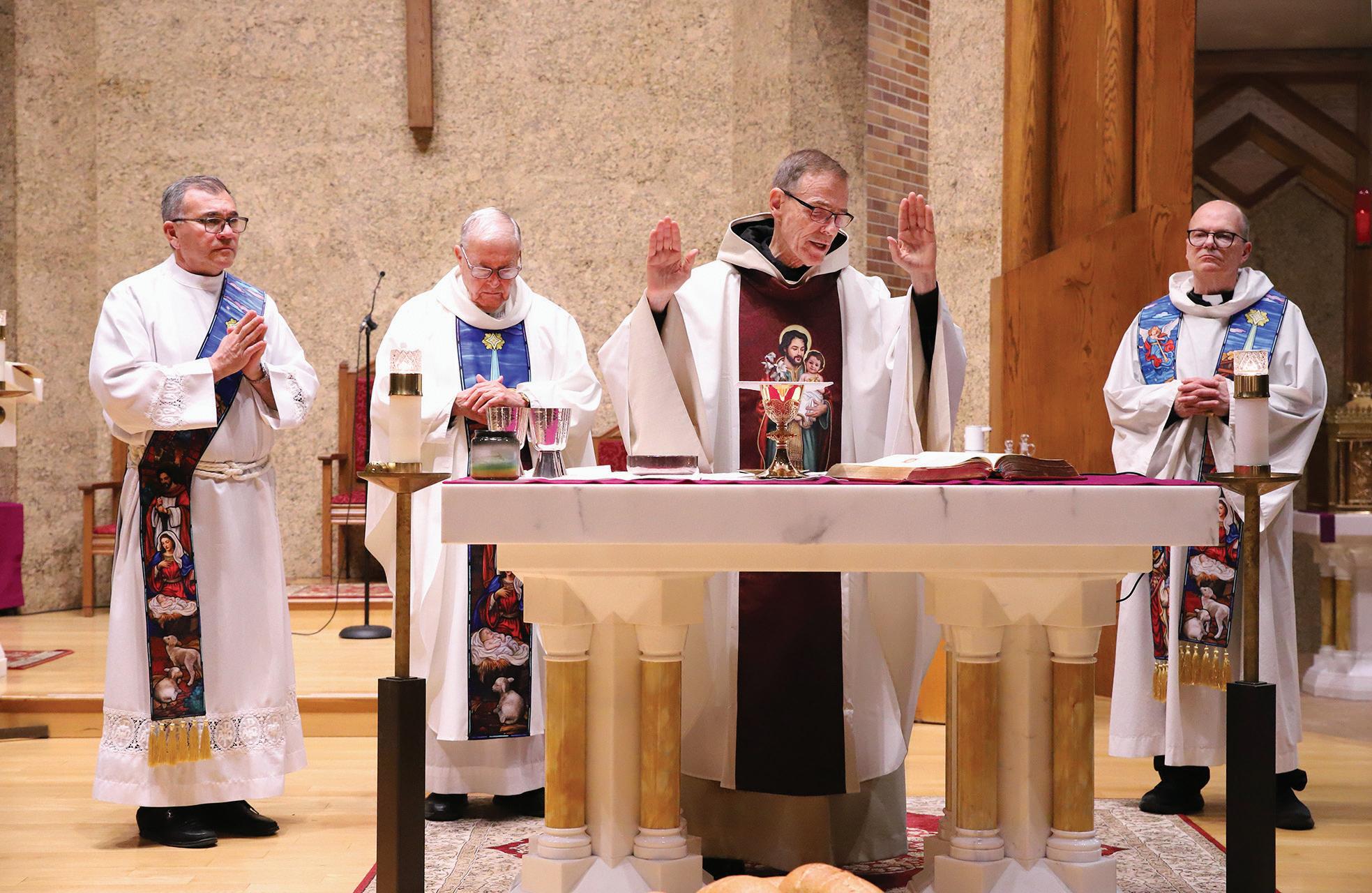
2. Benedictine Father Edwin Leahy, center, celebrates Mass with Msgr. Joseph Kerrigan, right; Father John Pringle, left, weekend assistant and former parish administrator from 2018-20, assisted by Deacon Edgar Chaves, far left. The March 19 Mass also celebrated the founding of the parish through the ministry of German Benedictine monks.
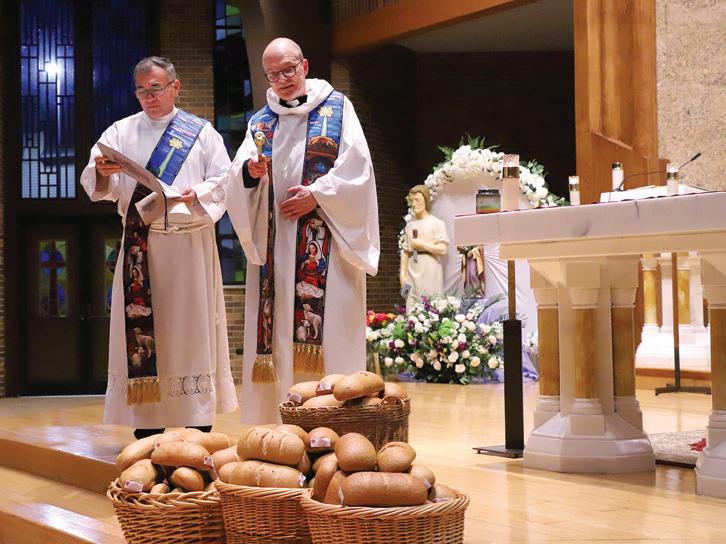
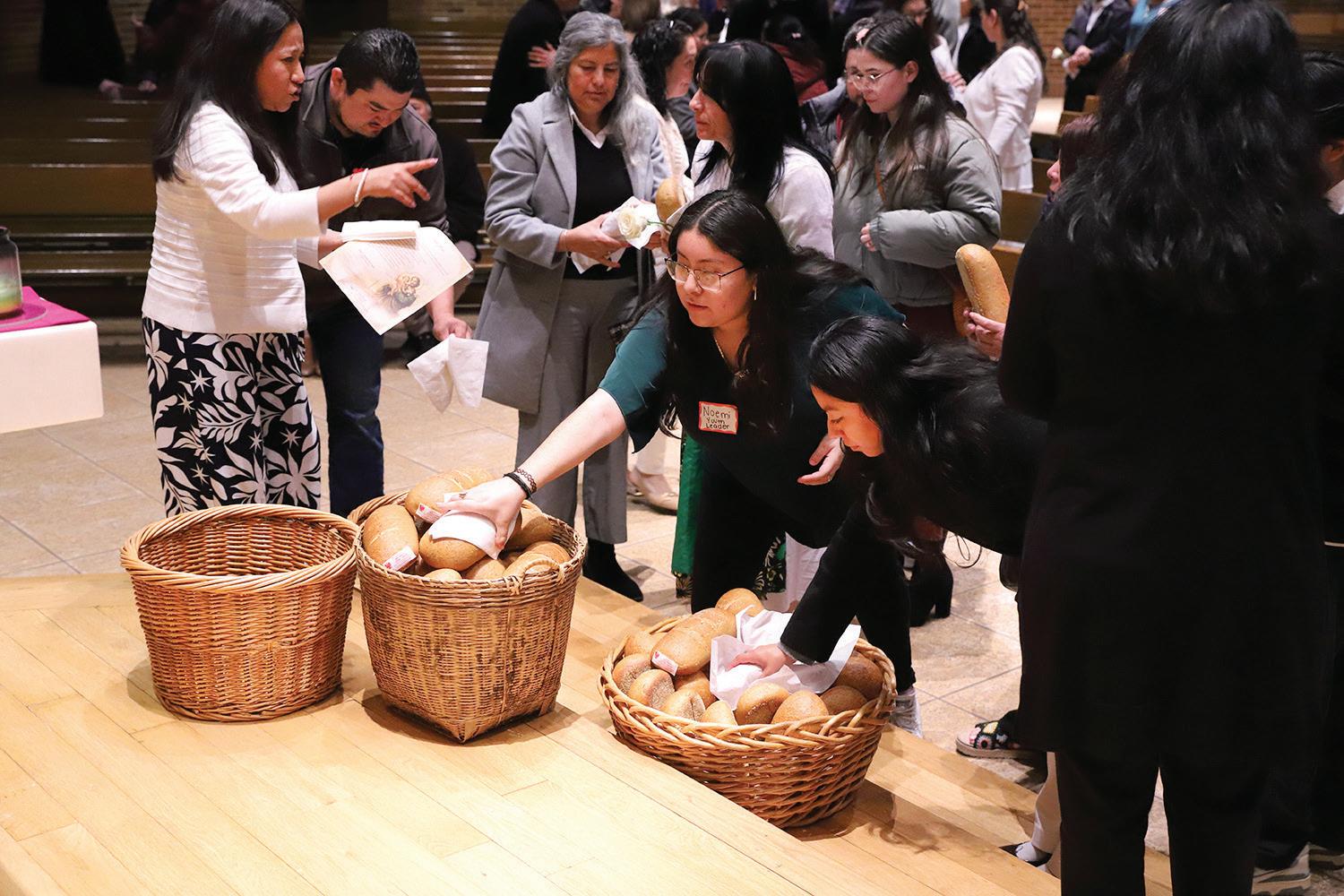
3, 4. On the feast of St. Joseph, the parish maintains a remnant of the Italian tradition of blessing and distributing small loaves of bread, which this year came from the Polish bakery, Syrena Bakery, in Brooklyn.
5 As part of the March 19 St. Joseph Feast celebrations a group of parishioners, pictured, consecrated themselves to St. Joseph, praying certain prayers every day for more than a month in advance.
—John Batkowski photos
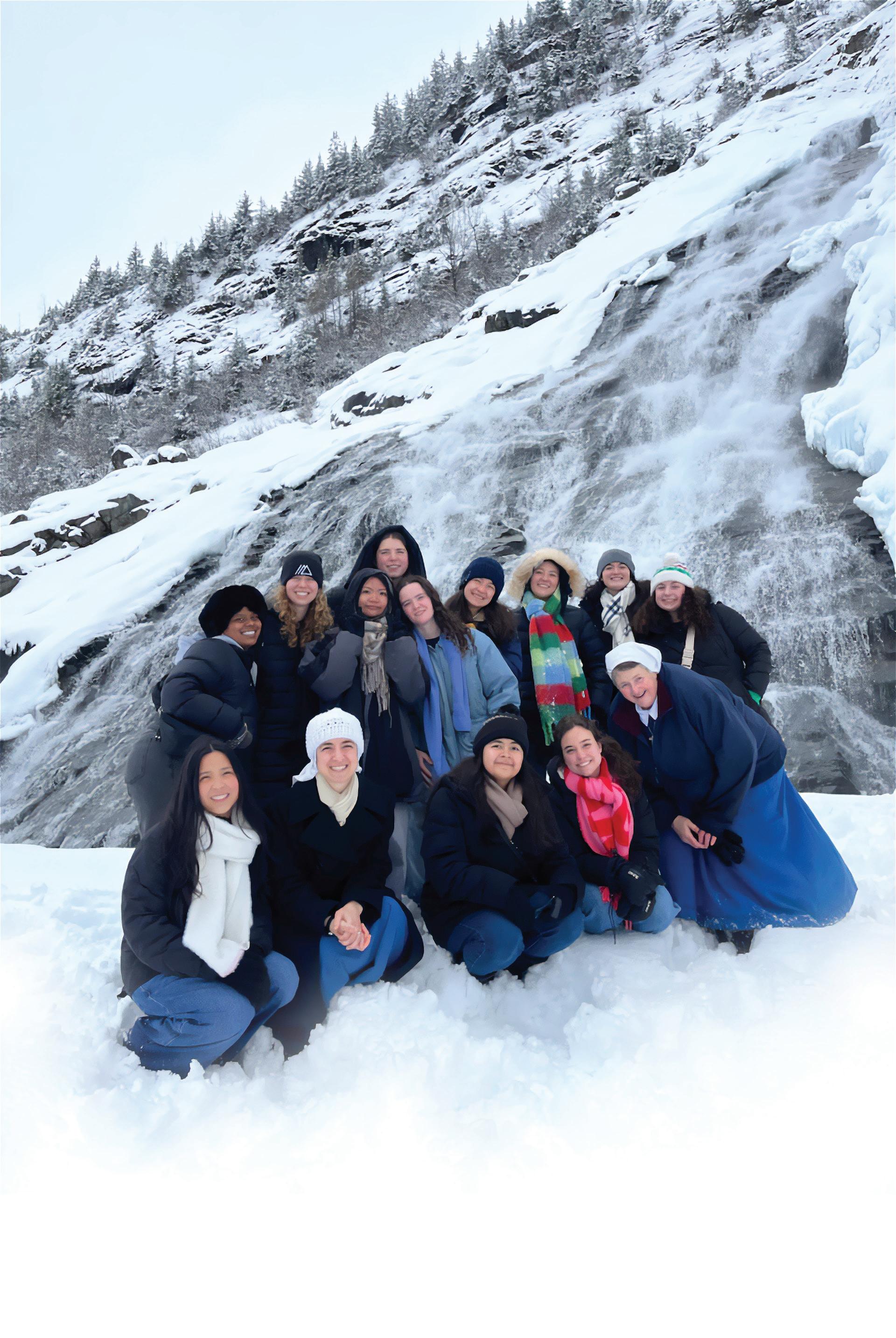
Women religious and female college students from Rutgers University’s Catholic Center are continuing to join forces to serve the Lord and his most vulnerable in Juneau, Alaska, via their Alternate Spring Break trips.
The original connection between Rutgers University in New Brunswick and the Alaskan community in need 2,800 miles away was forged by Juneau native Anna Cordova, whose faith had been reawakened when she settled in central New Jersey to pursue her ballet career. Now married and back in her native Alaska, the dancer still assists the Center’s SPO missionaries and Sister of Jesus our Hope Anna Palka and Sister Lorraine Doiron.
As in years past, Sister Anna was gratified by the warm welcome from the Juneau residents for the Rutgers contingent. She said, “We were delightfully surprised. Hospitality in Juneau rivals that in the South. They were so gracious; that is who they are. It was a culture shock for us.”
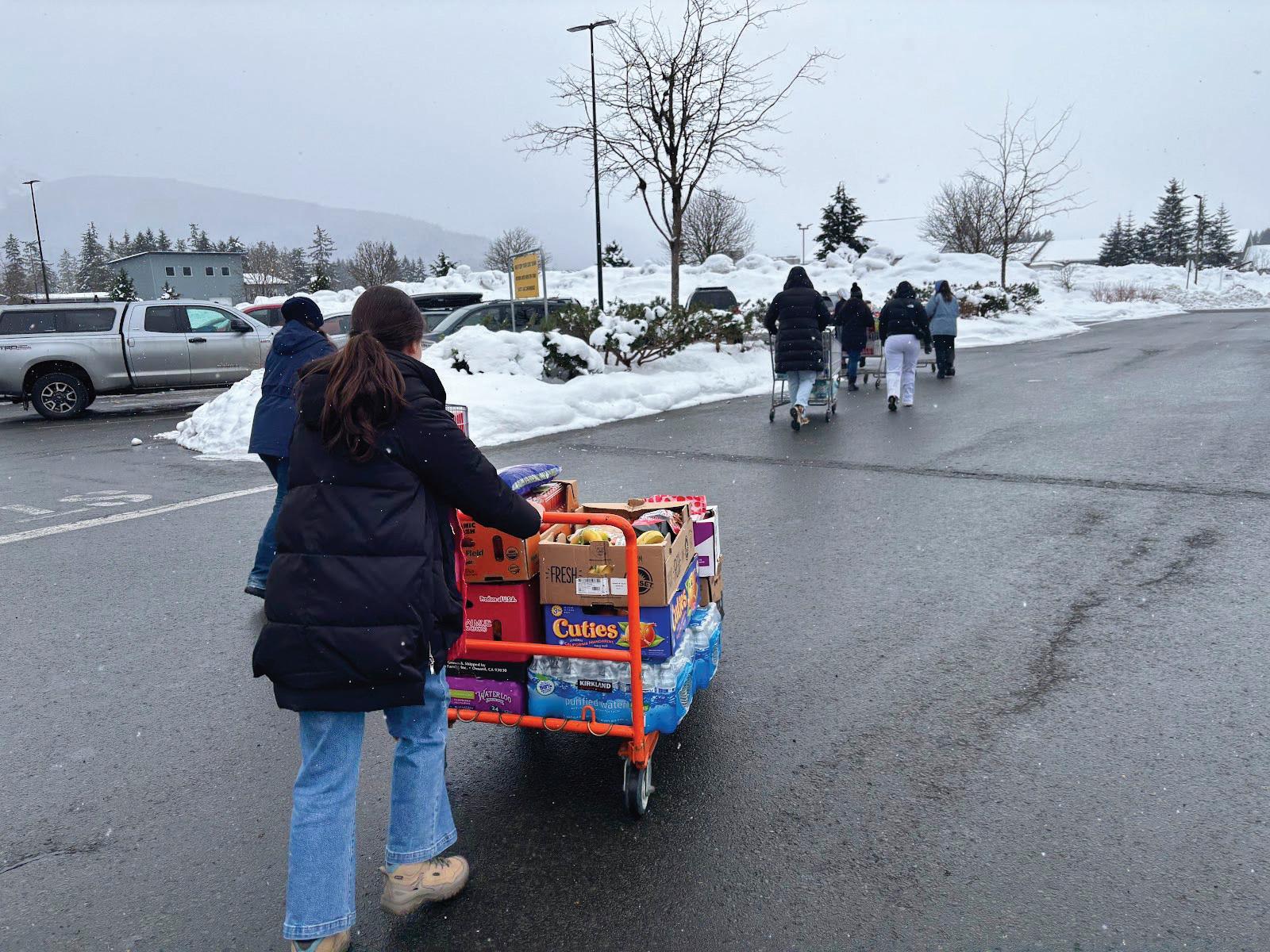
While in Juneau, the group sorted and distributed bags of clothing in the St. Vincent de Paul store, and prepared hot meals in the local soup kitchen. Their physical toils were surpassed by their spiritual contributions, Sister Anna said.
“The women brought light,” she recalled, “met God in the homeless, and brought [the needy] his joy and his love. They saw Jesus in the homeless people and chatted with them – simple things, like saying a prayer, hearing why they were estranged from their families. This may have been the first time the women heard things like this.”
The New Jersey group, in turn, were supported by their religious leaders; Sister Anna stated, “We told them how to cope: give it to Jesus, for it is not ours to carry, but Jesus who is suffering in them and with them. He is the one who will help them. We are there for just a week, and we cannot solve everything.”
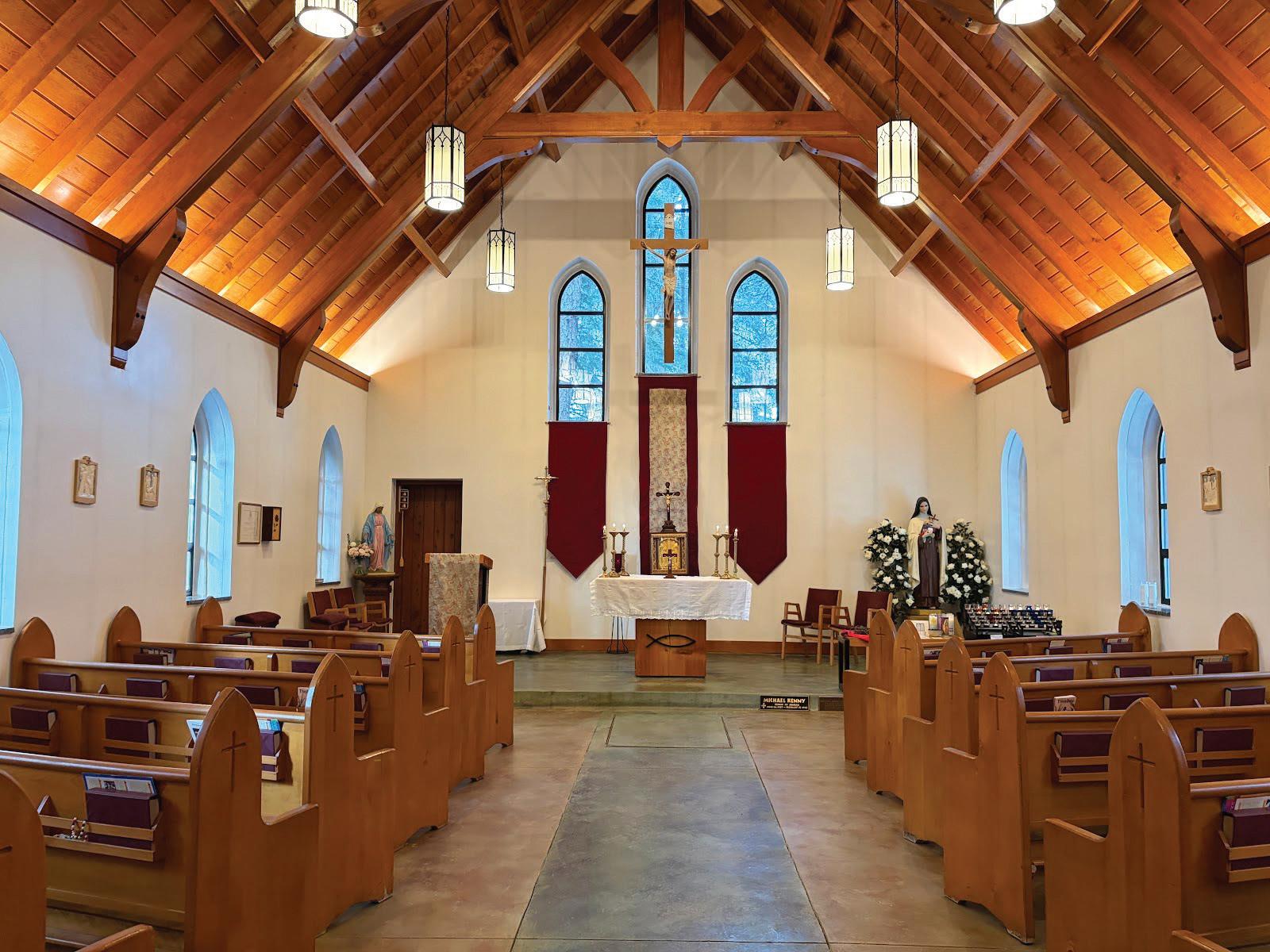
The faith-centered retreat service trip adopts a theme each year. The March trip built their prayer and generous service around the topic of joy, which perfectly defined their accommodations in the National Shrine of St. Thérèse of Lisieux, the patroness of the missions. “It was very peaceful,” Sister Anna recalled. “We stayed in cabins, and the chapel was right on the water.”
Prayer is an integral part of the experience for the college women, with daily Mass, Liturgy of the Hours and Night Prayer opportunities for spiritual reflection. Small group discussions allow the participants to reveal
Women-led Catholic Center mission trip aids Alaskan needy
By Christina Leslie, Contributing Editor
Religious, missionaries and female Rutgers University students dedicated their March 13-20 spring break to service, travelling to Juneau, Alaska, to work with the needy.
At top, the group poses at Nugget Falls in Juneau’s Mendenhall Glacier Visitor Center (Lyla Dimino photo).
At bottom, from left: the famed Northern Lights paint the night sky (Leilany Rojas photo); the chapel at the National Shrine of St. Thérèse of Lisieux served as home for the week (Emily Kunikowski photo), and Catholic workers transport food from a big box warehouse to replenish the local soup kitchen. (Cassandra Schaffer photo.)
how they saw God in their charitable work.
“We also served with the parish youth group, and it was encouraging for those kids to see the young adults still practice their faith in college,” Sister Anna said.
The New Jersey college students were able to reap the rewards of their service, Sister Anna said, with free time to shop at the cruise ship dock, hike in the breathtaking natural beauty of the 49th state or spend time inside playing board games and talking. Moreover, added Sister Anna, “we give the women an experience and opportunity to go outside of themselves. [The Catholic Center is] in New Brunswick, so we see homeless everywhere.
[These trips] take us off the East Coast and into a whole different culture. This shows [the women] they can help outside of their comfort zone and be mindful they are serving out of love for God and this person in front of them. The Gospel has a face and a name: this person they are ministering to.”
As for the retreat leaders, they, too, reap benefits. Sister Anna declared, “I am proud of how the women go into the week and let the stories [of the needy] touch their hearts. It gives me the grace of ministering to them. They give me joy seeing how hungry they are for the Gospel, for God’s love and for joy. I am refreshed. I am filled. We are their spiritual mothers for the week.”
Mission trips with solely women as participants have unique advantages, Sister Anna reflected, as she described the bonds of faith formed during the Alaskan retreats.
“At night, when we share our experiences of the day, we are able to share deeper and feel safer,” she began. “In today’s society, female friendships are often under attack and not easy to navigate. We have the opportunity for the women to be healed by fellow women and want good for them.”
Sister Anna continued, “With this generation, often they may compete against one another and don’t trust each other. At the retreat, all women have a safe place, and a good environment; they can trust one another, lean on each other for support, and show vulnerability with each other that can be profound. Women share from their hearts, and when they give their witness, it is different when it is all women.
The religious concluded that the college -age retreatants are “free to be themselves; even that is healing. They are mindful of each other’s needs, and we give them sacred space to experience deep friendship and deep sisterhood. It builds them up as women. Women are different, and that’s a good thing.”
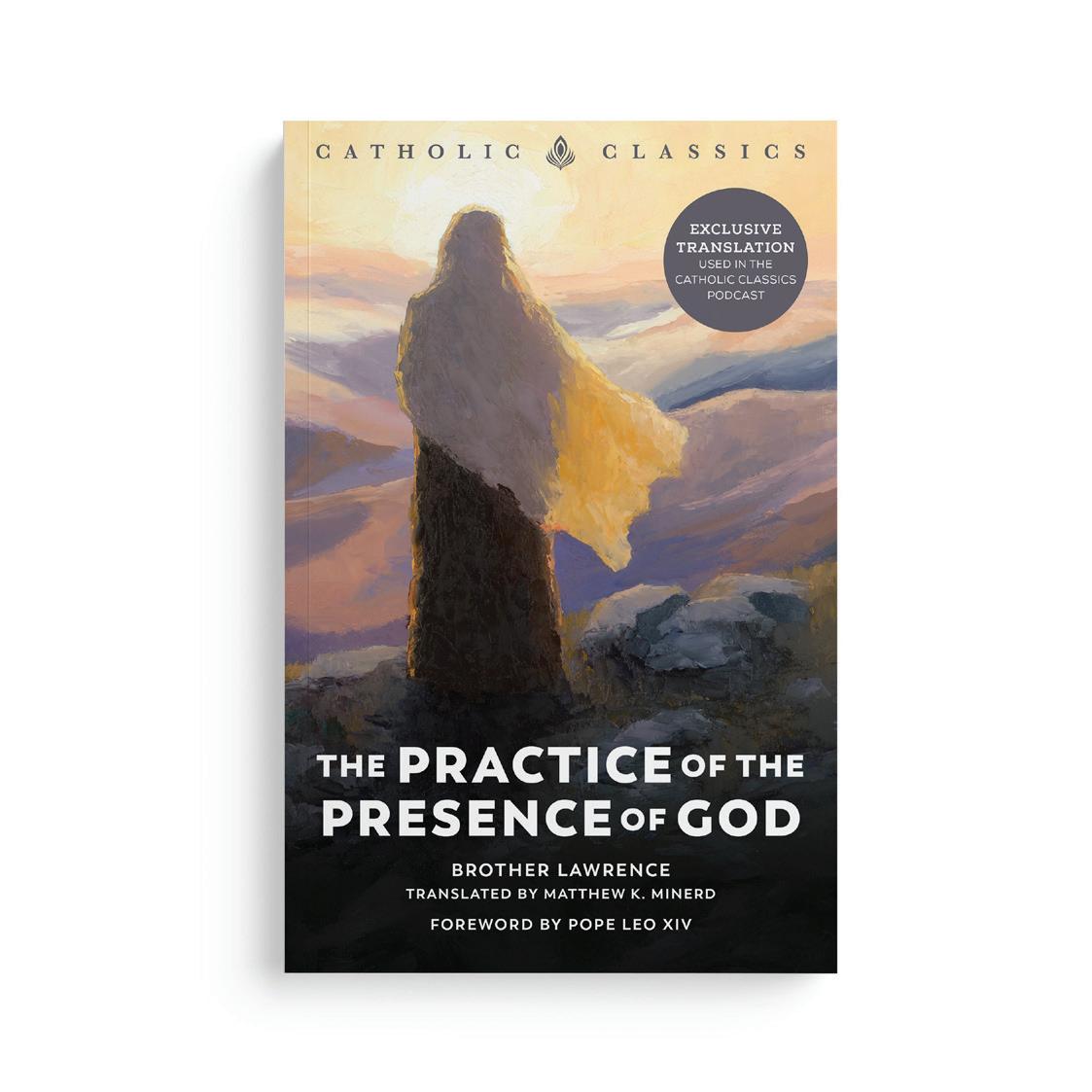
Pope Leo’s summer spiritual reading list recommendation: ‘The Practice of the Presence of God’
By Kimberley Heatherington OSV News
It’s a slim volume; the Ascension Press edition of “The Practice of the Presence of God” by the 17th-century French Carmelite friar Brother Lawrence of the Resurrection runs just 131 pages in the print edition, with notes.
But the little book, published this year and retailing around $21, is now making impressive devotional waves more than three centuries after it was written.
The reason is not simply its enduring spiritual value, but also that Brother Lawrence has since secured a rather notable literary patron: Pope Leo XIV.
On the papal plane returning to Rome after his first international trip to Turkey and Lebanon, Pope Leo held an in-flight press conference.
“There’s a German journalist on here,” he said in the course of replying to a question, waving his hand over the jet’s passengers, “who said to me the other day, ‘Tell me one book – besides St. Augustine – that we could read to understand who Prevost is’” (referring to the pontiff’s civilian name, Robert Prevost).
Pope Leo’s answer? “The Practice of the Presence of God.”
“It describes, if you will,” he explained, “a type of prayer and spirituality where one simply gives his life to the Lord and allows the Lord to lead. And if you want to know something about me,” the Pope concluded, “that’s been my spirituality for many years.”
Ascension’s version not only includes a foreword by Pope Leo – written for the edition released by the Vatican Publishing House, Libreria Editrice Vaticana – but each chapter is also accompanied by commentary and an online podcast from Father Gregory Pine, a Dominican friar, theology professor and director of the Thomistic Institute, and his sister, Rebecca Dougherty, a theologian and podcaster.
The brother and sister team talked to
OSV News to tell readers why Brother Lawrence is still relevant reading.
“The encouragement of the book is that we can be in conversation with God; that we’re intended to be in conversation with God,” said Father Pine. “Whereas, I think a lot of us experience our life as if we were in conversation with ourselves, about ourselves. That’s not God’s original intention for us – he wants us to be in conversation with him, and with each other about him … in a way that’s more enriching and joy-giving.”
His sister agreed. “The overall theme – or the overall invitation and idea – is that God is present to us at all times, everywhere, to everyone,” Dougherty said.
“And so we simply need to tap into that presence – it’s not like we need to do another devotion, or add another thing to the spiritual to-do list,” she explained. “We simply open ourselves up – at every moment of the day, no matter what we’re doing; folding the laundry, doing
the dishes, mowing the lawn, walking the dog – to the presence of God, a God who is always and everywhere present to us.”
Brother Lawrence’s own direction is this: “The holiest, most common, and most necessary practice in the spiritual life is to practice being in the presence of God – that is, to take delight in His divine company, accustoming oneself to it, speaking humbly and conversing lovingly with Him at all times, at every moment, without rule or measure, especially in times of temptation, suffering, dryness, distaste, and even in moments of infidelity and sin.”
Most important of all: Don’t overthink it.
“A lot of us are tempted to overcomplicate the spiritual life – we’re worried that there’s a code or a key that we’re missing out on to the spiritual life,” Father Pine observed. “When in fact, the code – the key – it’s just Jesus. But obviously, we can be better at listening
to Jesus and responding to Jesus – and that’s what the book tries to do.”
“A lot of people feel like they’re busy; there’s just so much on their plate – ‘I don’t have time for another thing; another devotion,’” Dougherty added. “But it’s very simple and straightforward. It’s short, it’s doable.”
And what was it like for the siblings to collaborate for the volume?
“She’s one of my best friends. She’s just got a really delightful approach to the Christian life, the spiritual life, and the perspective of a mom and wife,” Father Pine shared.
“We have always been kind of kindred spirits growing up,” recalled Dougherty. “Then our vocations brought us in different directions. So it’s fun to have a project to work on together.”
The designation “classic” can sometimes be overused, but both Father Pine and Dougherty feel it’s merited in the case of “The Practice of the Presence of God.”
“There’s a handful of books we continue to come back to because at the end of the day, everyone’s trying to get at the most foundational truths,” said Father Pine. “I think in the course of the Church’s history, some people have just received graces and charisms to perceive and then communicate that better than others. Brother Lawrence of the Resurrection is one of those people.”
Ultimately, said Dougherty, people just need to make a start.
“I think sometimes there’s this idea … that we have to be perfect,” she said. “But just do it and God will make it perfect, because he loves us and wills our good, wills our happiness, wills our best. We don’t have to gather ourselves up, to then present ourselves to God. He’s with us already,” Dougherty advised. “And so we can entrust ourselves to him – he does the heavy lifting, for and with us.”
Kimberley Heatherington is an OSV News correspondent. She writes from Virginia.
Kids that stole the show in Spain: a curious boy, a blind guide and
By Ines San Martin, OSV News
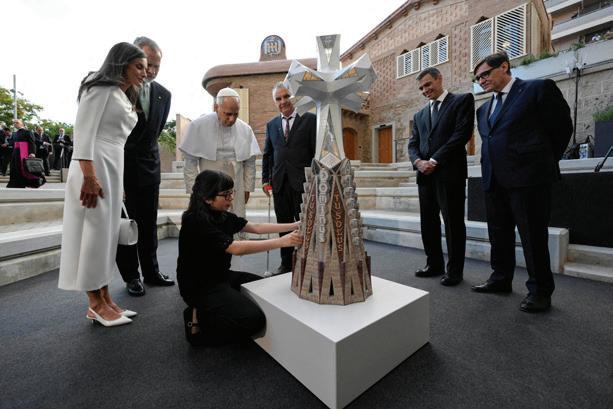
Children became some of the biggest stars of Pope Leo XIV’s June 6-12 visit to Spain, with several encounters highlighting the Pope’s warm and pastoral style. Along popemobile routes and at public events, young people repeatedly drew the Holy Father into memorable exchanges that captured international attention. One of the most talked-about moments came in Barcelona, where 6-year-old Renzo Pons Mendoza asked Pope Leo about soccer, suffering, poverty, loneliness and forgiveness. The Pope responded with candor, encouraging friendship with Jesus, urging care for isolated elderly people and emphasizing that God never abandons his children. At the Sagrada Familia, 13-year-old blind violinist Valentina Sánchez guided the Pope through an accessible model of the newly completed Jesus Christ Tower, showcasing how people with visual disabilities can experience architecture through touch. Meanwhile, 5-year-old Inés Rivero received one of the Pope’s own rosaries during a prayer vigil, creating a brief but unforgettable moment for her family when she struggled to get the rosary she wanted to give the Pope off her wrist. For her mother, Fernanda, the moment carried a deeper meaning. “It was like a hug from God to our family through the Pope and through Inés,” she told OSV News. “He transmits so much peace, so much of God’s love.”
a girl with a rosary
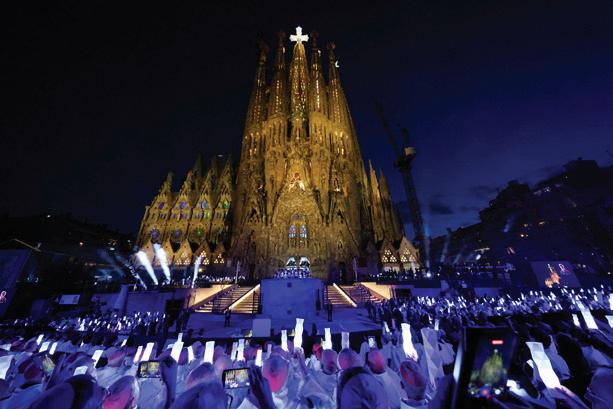
Bishops hold lamps during the inauguration of the Tower of Jesus Christ and its blessing by Pope Leo XIV at the Basilica of the Sagrada Familia during his apostolic journey in Barcelona, Spain, June 10, 2026. —OSV News photo/Nacho Doce, Reuters
Blind girl Valentina Sánchez, 13, shows Pope Leo XIV, Spain’s King Felipe and Queen Letizia, Prime Minister Pedro Sanchez and President of the Generalitat Salvador Illa a reproduction of the Tower of Jesus Christ of the Basilica of the Sagrada Familia during the Pope’s apostolic journey in Barcelona, Spain, June 10, 2026. —OSV News/Simone Risoluti, Vatican Media
Bishops consecrate United States to Sacred Heart of Jesus
By Jean Gonzalez, OSV News
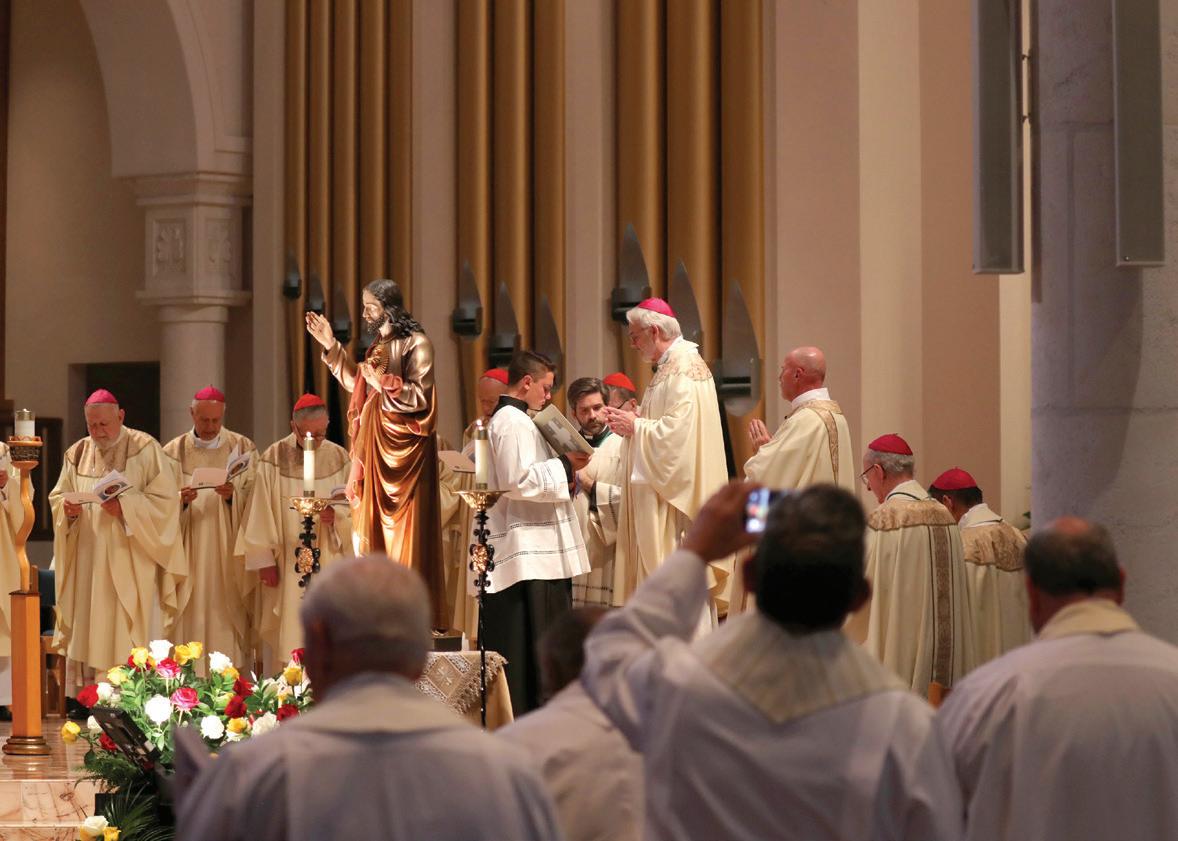
A sea of white robes and zucchettos of pink and magenta in the pews. A statue of Jesus welcoming the faithful with his exposed Sacred Heart upon the foot of the altar.
A setting fit for a June 11 Mass that united U.S. bishops gathered for their spring plenary June 10-12. After concluding the second of two days of public sessions, they left the Omni Resort in ChampionsGate for a half-hour drive up Interstate 4 for the spiritual refuge that is the Basilica of the National Shrine of Mary, Queen of the Universe in Orlando.
And the Mass was a momentous one as it served to formally consecrate the United States to the Sacred Heart of Jesus, as part of the celebration of the 250th anniversary of the signing of the Declaration of Independence.
Archbishop Paul S. Coakley of Oklahoma City incensed the altar after processing in from the thick humidity and cloudy skies of a typical Orlando afternoon outside the shrine. The president of the U.S. Conference of Catholic Bishops was joined on the altar by bishops and deacons of the Orlando Diocese.
“Clothe us, Lord God, with the virtues of the heart of your son, and set us aflame with his love,” the archbishop prayed in opening the Mass.
More than 200 bishops were present, along with about 150 observers, mostly benefactors and staff of the Diocese of Orlando. The monstrance used ahead of Mass for Eucharistic adoration was from the Servants of the Pierced Hearts, a Miami-based religious institute.
The relics of St. Margaret Mary Al-
Archbishop Paul S. Coakley of Oklahoma City, president of the U.S. Conference of Catholic Bishops, concelebrates Mass as bishops consecrate the country to the Sacred Heart of Jesus at the Basilica of Mary Queen of the Universe in Orlando, Fla., June 11, 2026, during their spring plenary assembly. —OSV News photo/Bob Roller
acoque – the French Visitation sister who experienced visions of Jesus revealing his Sacred Heart – were also present at the Mass, on loan for the consecration from the Knights of Columbus.
In his homily, Archbishop William E. Lori of Baltimore described the Sacred Heart of Jesus not as an “abstract devotion,” but as a “visible sign of love.”
He explained why the Church consecrates. He described it as an act of faith and acknowledgment of the need for God’s mercy, wisdom and guidance. It is also an act of hope. It is “a heart that has known joy and sorrow, friendship and betrayal, suffering and sacrifice,” he said.
The act of consecration is an act of
faith and hope, the archbishop said, but it is also an acknowledgment of God’s faithful work and love in the world and how we as people and as a Church have not always “clearly reflected that love.”
“Indeed, it is sometimes obscured almost beyond recognition,” the archbishop added. “To be sure, there have been moments of extraordinary witness and holiness. But there have also been moments of failure, division and sin. Consecration requires the humility to acknowledge both.”
And why the Sacred Heart? Because it reveals a savior who “desires not merely our obedience, but our friendship; not simply our service, but our communion with Him,” he said.
“To consecrate ourselves to the Sacred Heart is ultimately to accept Christ’s invitation to remain in His love and to allow that love to shape every aspect of our lives, public and private,” Archbishop Lori said. “It is a declaration that the future does not belong merely to political movements, economic forces, or human plans. The future belongs to God.”
The act of consecration does not just happen among the shepherds, but also the sheep. In speaking to the laity both in the pews at the shrine and watching on the livestream, Archbishop Lori said the act of consecration is one the faithful and leaders do together.
“This consecration is not something the bishops do for you. It is something we do together,” he said. “The renewal of the Church and our nation will not come through declarations alone. It will come through disciples who remain in Christ’s love and bear the good fruit of holiness in families, parishes, communities and in their daily lives.”
The Sacred Heart reconciles divisions and transforms hardened hearts, the archbishop said.
“It means building communities – ecclesial and civil – where truth is proclaimed clearly and charity is practiced generously. It means resisting the temptation to define ourselves by division, ideology or resentment,” Archbishop Lori said. “We consecrate our nation, not because it is perfect, but because it is beloved by God. We entrust to the Heart of Christ our achievements and failures, our hopes and anxiety, our present challenges and our future aspirations.”
Jean Gonzalez, editor with Florida Catholic Media, is helping cover the bishops’ spring plenary for OSV News.
Pope Leo: Whoever immerses in the Sacred Heart no longer lives for themselves
By Junno Arocho Esteves, OSV News
At the final Mass of his visit to Spain, Pope Leo XIV called on Christians to look beyond the allure of commerce and profit and instead embrace the vocation of hospitality and the wisdom that comes from the encounter with the vulnerable and the suffering.
Celebrating the final Mass June 12 at the main commercial and cruise port in Tenerife, the Pope said that Christians living in the Spanish islands, “at the center of migratory routes,” have an opportunity to learn and grow in faith from those who come seeking a better life.
“The greatest grace is to allow ourselves to be evangelized by those we assistand to recognize the mysterious wisdom of God written in their very flesh,” he said.
Before making his way to the port, the Pope made a brief stop at the residence of Bishop Eloy Alberto Santiago of Tenerife. Making his way to the balco-
ny, Pope Leo greeted hundreds of people gathered outside the bishop’s residence, hoping to catch a glimpse of the pontiff.
Thanking them for “this beautiful welcome,” the Pope also expressed his gratitude for “the welcome you give to all migrants.”
“We all want to be recognized for the human dignity that God gave us when He created us,” he said. “We are all brothers and sisters: some Peruvians, some Colombians, some Venezuelans, some from Tenerife. We are all one single family.”
After departing the residence, the Pope boarded his popemobile and greeted thousands lining the streets, waving and welcoming the Pope.
According to the Vatican press office, an estimated 40,000 people were present for the Pope’s final Mass in Spain. In his homily, the Pope began by reflecting on the Church’s celebration of Continues on page 59
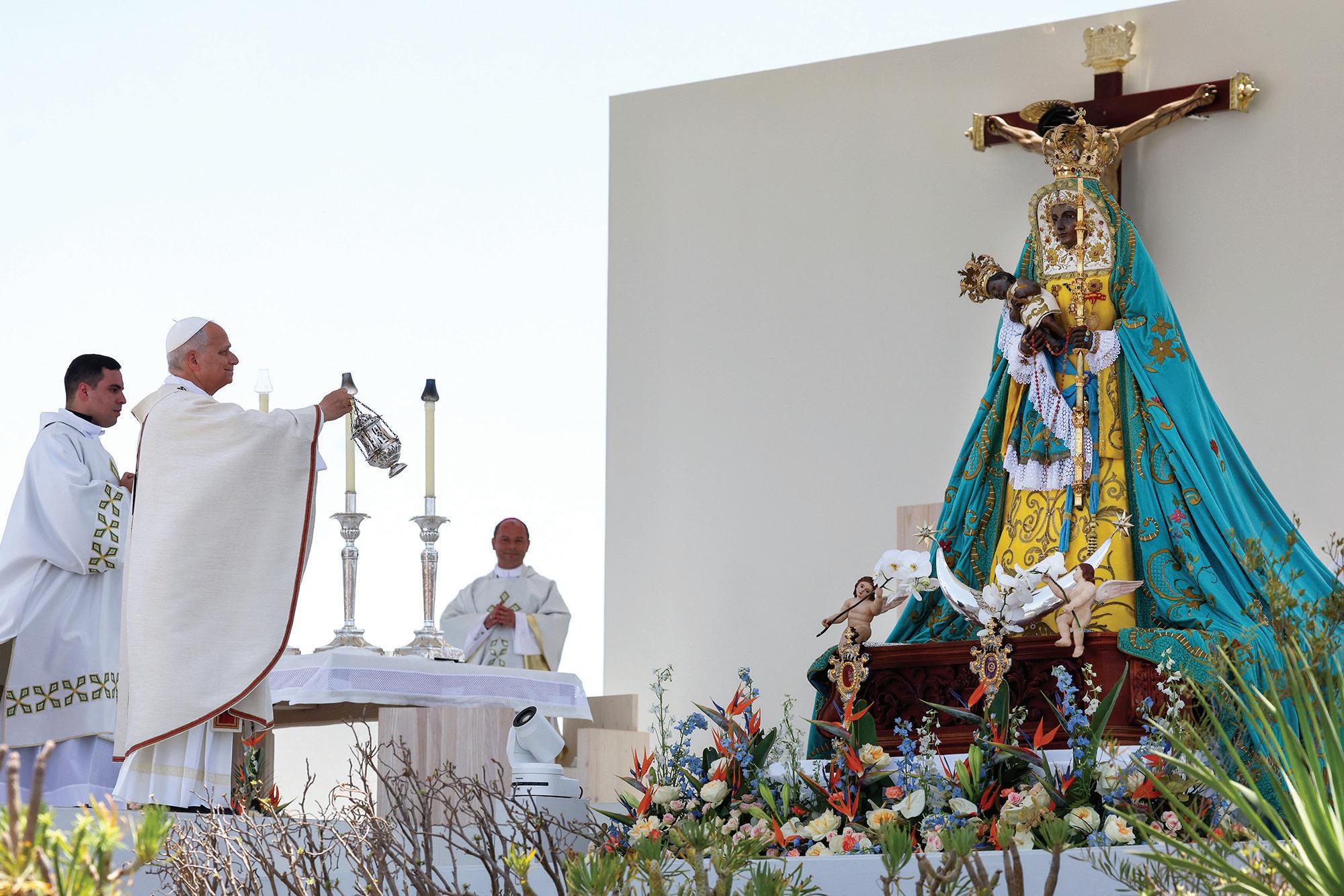
Pope Leo XIV celebrates Mass at the Port of Santa Cruz de Tenerife, Canary Islands, Spain, June 12, 2026, on the day he meets with migrants and humanitarian organizations, as part of a seven-day apostolic journey to Spain.
—OSV News photo/Yara Nardi, Reuters
Why the bishops consecrated the United States to the Sacred Heart of Jesus
By Archbishop Thomas G. Wenski OSV News
On June 11, during their spring meeting in Orlando, bishops of the United States gathered at the Basilica Shrine of Mary, Queen of the Universe, to consecrate the United States to the Most Sacred Heart of Jesus. The consecration celebrates America’s semiquincentennial, that is, the 250th anniversary of the signing of the Declaration of Independence.
In linking the 250th anniversary of the Declaration of Independence with the devotion to the Sacred Heart, the bishops invite us to reflect with gratitude on the blessings God has bestowed on our nation but, at the same time, devotion to the Sacred Heart demands that we consider how we might foster truth, justice and charity in American life. Thus, our celebrations around the Fourth of July will foster a constructive and forward-looking patriotism as opposed to a divisive, exclusionary, blind nationalism.
In his book “Memory and Identity,” St. John Paul II wrote of the difference between a constructive patriotism and a destructive nationalism: Patriotism is love for everything to do with our native land – its history, its traditions, its lan-
guage, its natural features. It is a love which extends also to the works of our compatriots and the fruits of their genius. Whereas nationalism involves recognizing and pursuing the good of one’s own nation alone, without regard for the rights of others, patriotism is a love for one’s native land that accords rights to all other nations equal to those claimed for one’s own. Patriotism, in other words, leads to a properly ordered social love.
We are called to bring our faith into the actions we take and the lives we lead in our communities. We celebrate the ways the Church has contributed to a more just world, and we invite all in our society to see the face of Christ reflected in each sister and brother. In “Dilexi Te,” Pope Leo XIV invited us to contemplate Christ’s love, which moves us out on our mission to attend to our sisters and brothers suffering in the world today, particularly in our care for poor and vulnerable people. As we meditate on Christ’s self-offering for the sake of all, we are naturally led to ask why we, too, should not be ready to give our lives for others.
On the eve of our nation’s 250 birthday, we recognize that our American exper-
iment in democracy is still a work in progress. As American Catholics, we recognize how far short our nation falls in many areas in forming a more perfect union. But while we recognize flaws and work to correct them, we also acknowledge the blessings of liberty we enjoy in this great country. In spite of extreme polarization, bitter partisanship and entrenched divisions, we Catholics do not despair of America.
We love America, but let’s love her as Jesus loves, not just with a sentimental, saccharine love but with love in truth – a love that is stronger than sin. A love that names the sin not to damn the sinner but to call the sinner to conversion of heart and mind. For the love that opened its arms on a cross of wood and opened its side to a soldier’s lance piercing his heart is love that believes that the sinner can be redeemed.
While predating our nation’s independence, devotion to the Sacred Heart has developed over the centuries following the experiences of St. Margaret Mary Alacoque (1647-1690) and the apparitions she witnessed in the 17th century. Since then, popes have lauded the practice of consecration of the self, home and even whole nations to the Sacred
“We are called to bring our faith into the actions we take and the lives we lead in our communities. We celebrate the ways the Church has contributed to a more just world, and we invite all in our society to see the face of Christ reflected in each sister and brother.”
Heart. In his encyclical instituting the solemnity of Christ the King, Pope Pius XI, drawing on the teaching of Pope Leo XIII, commended the “pious custom” of consecrating the nation to the Sacred Heart of Jesus as a way to recognize the kingship of Christ.
Devotion to the Sacred Heart, like the more recent devotion to Divine Mercy, echoes the invitation that Jesus makes in the Gospels to those who are “weary and heavily burdened” because of sin and hurt to turn to him for mercy, healing and restoration. Indeed, devotion to the Sacred Heart of Jesus and devotion to the Divine Mercy have one and the same message, namely, that humanity is good and is greatly loved by God, and God generously offers mercy to all.
St. John Paul II once said: “It is this love which must inspire humanity today, if it is to face the crisis of the meaning of life, the challenges of the most diverse needs and, especially, the duty to defend the dignity of every human person.”
Most Sacred Heart of Jesus, have mercy on us!
Archbishop Thomas G. Wenski leads the Archdiocese of Miami.
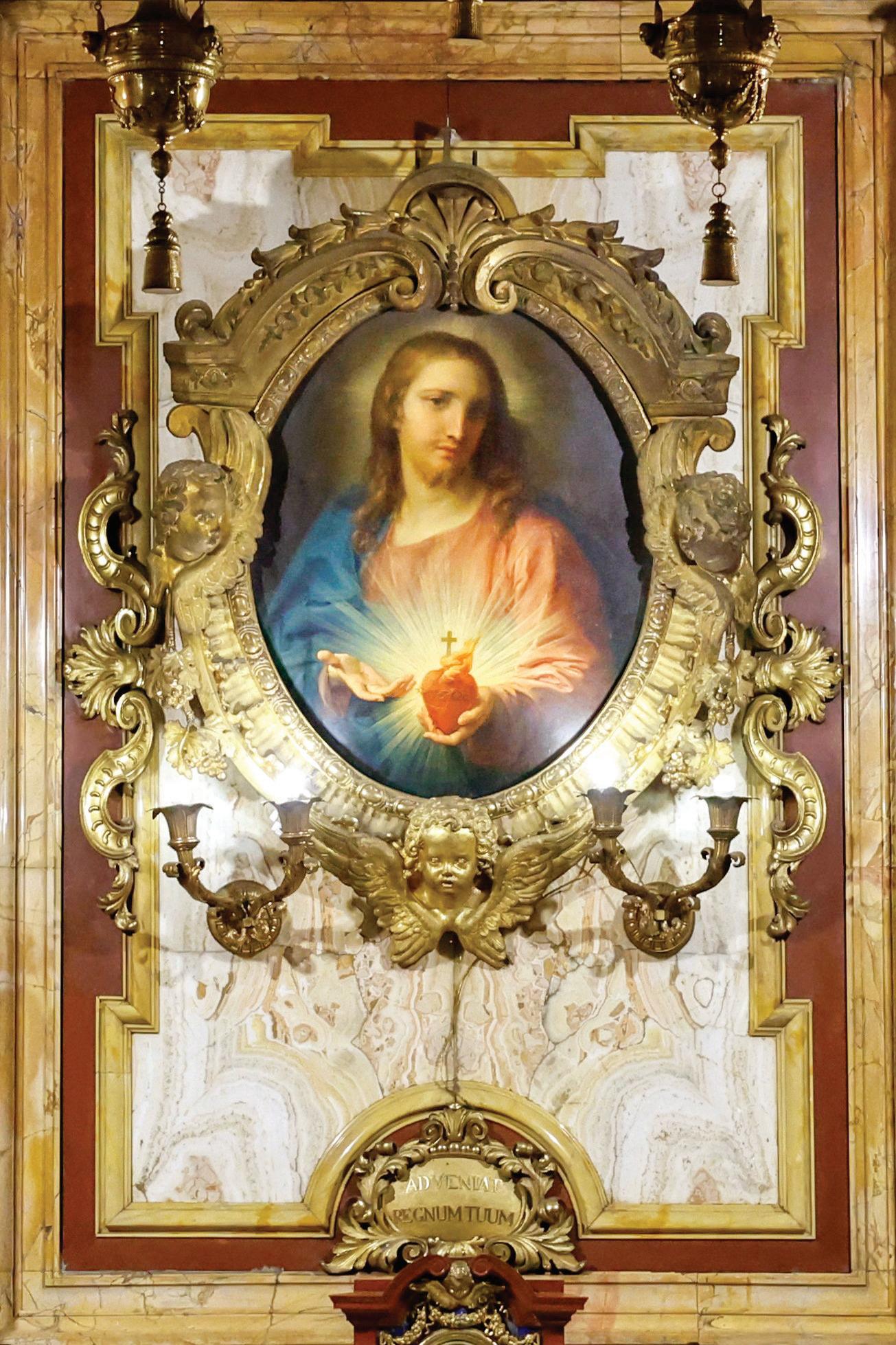
A painting by Pompeo Batoni of the Sacred Heart of Jesus from 1767 is displayed in an ornate frame inside the Jesuit Church of the Gesù in Rome, Oct. 22, 2024.
—CNS photo/Lola Gomez
The Holy Spirit: Giving, sustaining, raising up life for eternity
In the late spring and early fall, parishes throughout the Diocese of Metuchen celebrate the Sacrament of Confirmation. Coupled with the great Feast of Pentecost and the Most Holy Trinity, it is always the Church’s hope that people gain a better understanding of Who the Holy Spirit is and the tremendous God-given gift He is to us.
The Holy Spirit always was and always will be. Like our Heavenly Father and Jesus, the Son of God, the Holy Spirit is God, and therefore is eternal.
In the age of AI (artificial intelligence) we are often reminded that massive data centers are necessary (taking up many acres of land) to generate AI in order to provide proper cooling for these systems that cost and deplete our resources, especially the water in residential neighborhoods.
The recent encyclical of Pope Leo XIV, his first papal encyclical, titled “Magnifica Humanitas: On Safeguarding the Human Person in the Time of Artificial Intelligence,” teaches and warns that unchecked AI threatens to concentrate power in the hands of a few tech leaders, widen inequality, and undermine human dignity.
There is nothing “artificial” about the Holy Spirit. In fact, the Holy Spirit enhances our lives and does not cost us. Yet He is infinitely more powerful than AI. The Holy Spirit does not deplete our resources but enhances our resources and our very lives.
In the Book of Genesis, the first book of the Bible, we recognize how the Holy Spirit was at work in the very
Bishops urge G7 powers to prioritize dignity of the human person, global peace at summit
Tyler Arnold, EWTN News
The heads of the Catholic bishops’ conferences for every country in the Group of Seven (G7) are encouraging government leaders to prioritize the dignity of the human person, global peace initiatives, and environmental issues in the upcoming summit.
Leaders from the seven global powers — the United States, Canada, France,
beginning. We read the first words of the Bible that the Holy Spirit breathed life over the waters and gave them the wellspring of all holiness. (Genesis 1:2).
In your life and mine, the Holy Spirit has been at work from the beginning as well. He breathed life into our souls at the very first moment of conception in our mother‘s wombs. Our parents are responsible for our bodies. Our DNA, for example, matches that of our parents. But it is the Holy Spirit, who breathes life; who animates us – giving us our unique human lives.
The Holy Spirit always moves in one direction and that is in the direction of life. If the Holy Spirit went on vacation for one moment or less, all of what we know in this world, and in this universe would fall apart. All life exists thanks to the Holy Spirit.
Consider the grapes that make wine and the wheat that makes bread. In the grape vineyards and in the field of wheat, it is the Holy Spirit who breathes life into these elements to help them grow.
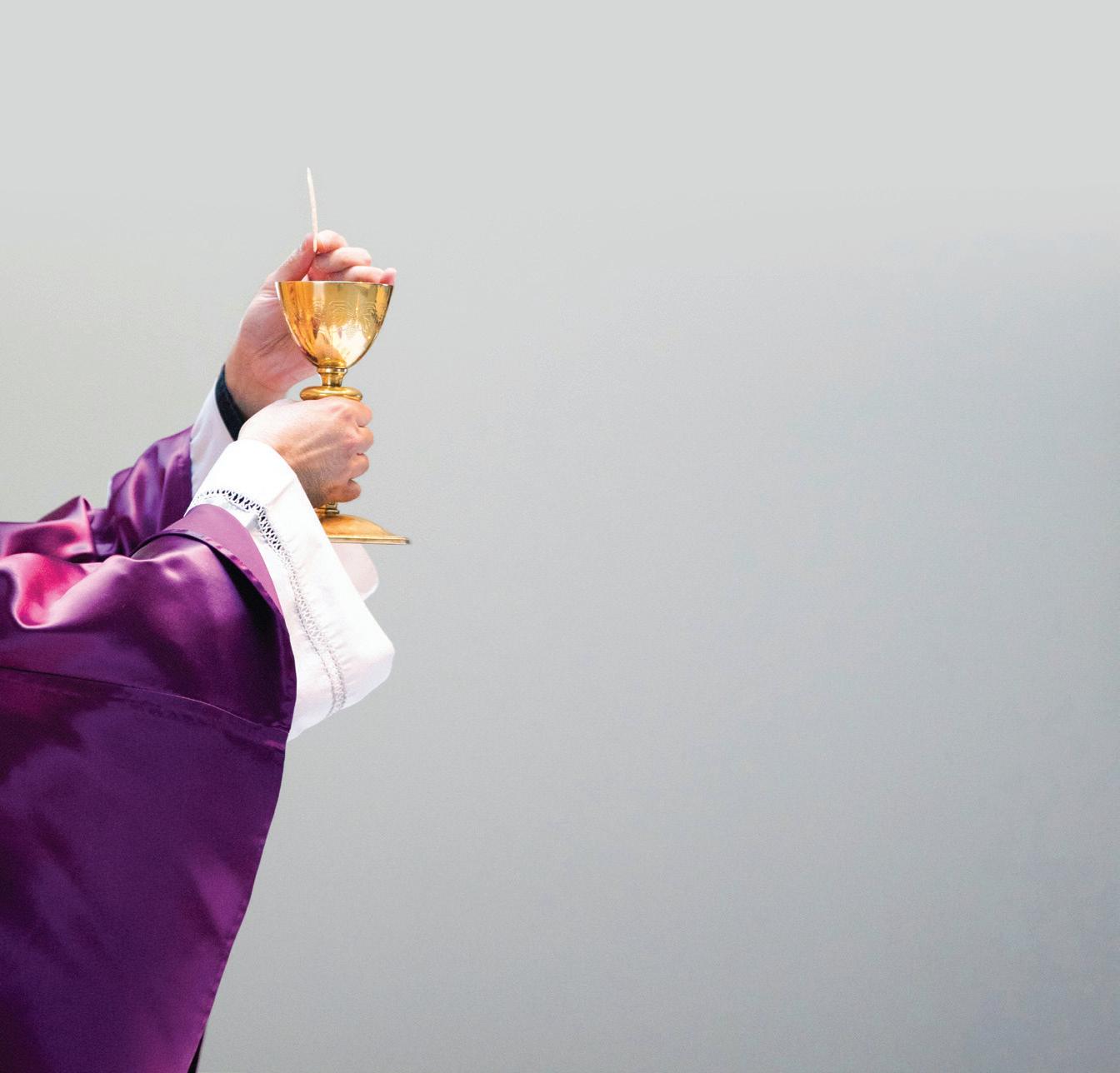
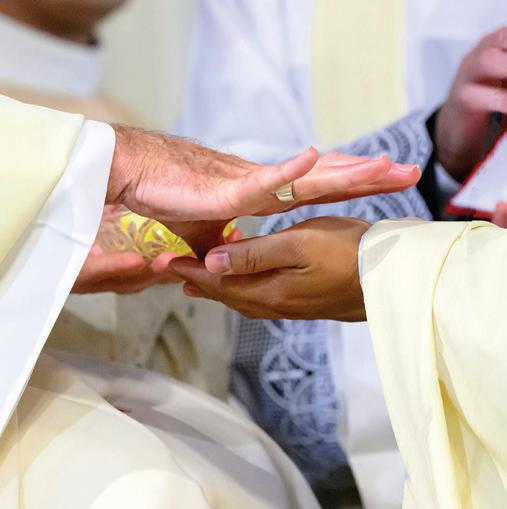
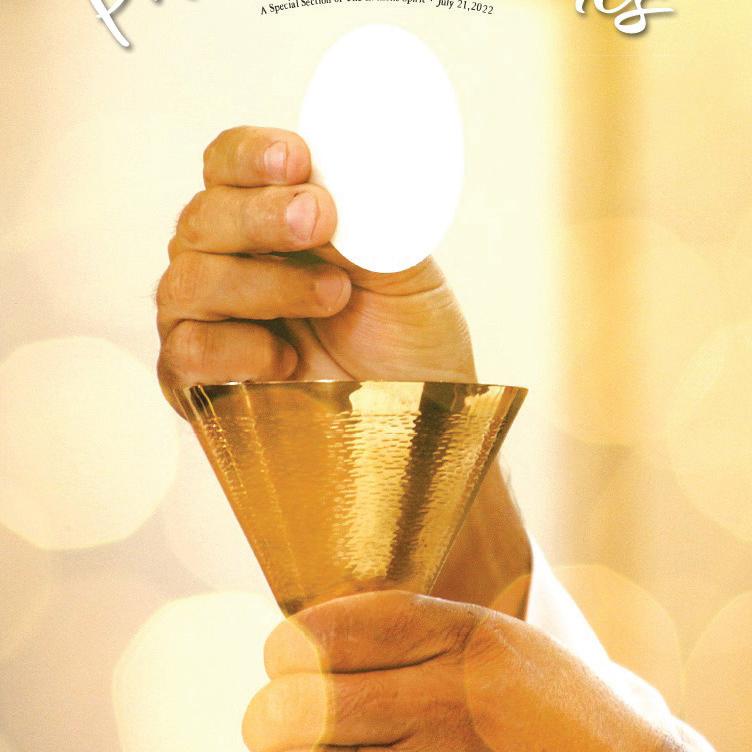
And then later … when the bread is prepared to be used for Holy Communion and when the wine is prepared and placed into the chalice, what happens at every Holy Mass? The priest (who acts in the Person of Jesus Christ – in persona Christi) places his hands over the bread and the wine and calls upon the Holy Spirit to transform these earthly elements into the Body and Blood of Jesus. And that is Who we receive at every Mass – the Body, Blood, Soul and Divinity of Jesus.
At the Last Supper, of course, Jesus as our High Priest was present in the flesh and it was unnecessary for any
It is the Holy Spirit who breathed new life into our souls (supernatural life) when we received the Sacrament of Baptism and were born again in the waters of Bptism; making us members of the Royal Family of Christ! (Jesus Christ is our King. We are his adopted sons and daughters through Baptism).
Let me tell you what the Holy Spirit does at every Holy Mass.
Germany, Great Britain, Italy, and Japan — were scheduled to meet for the annual G7 summit in Evian-les-Bains, France, from June 15–17. G7 summits focus on issues of international cooperation among the powers.
On June 12, the heads of the bishops’ conferences from each power issued a joint statement outlining their priorities. “Building Bridges for Peace, Justice and Human Dignity,” touches on ongoing conflicts, such as the Russia-Ukraine war and wars in the Middle East, and emerging technology such as artificial intelligence (AI).
“Amid armed conflict, geopolitical fragmentation, the crisis of multilateralism, growing inequalities, climate disruption, and accelerating technological change, we affirm that the dignity of the human person must remain the foundation of political and economic governance,” the bishops wrote to the political leaders.
The bishops encouraged the nations to
Advocate – thus giving the Holy Spirit as “Lord and giver of life” the power to provide life to the elements of bread and wine, transforming them into the body and blood of Christ through the person of the priest authorized to act in the person of Christ.
Through the Sacrament of Baptism we received the Most Holy Trinity into our souls. Later, those who receive the Sacrament of Confirmation, confirm and affirm what their parents and Godparents did on their behalf so many years before. They are saying YES, as it were, to wanting the fullness of God’s Holy Spirit to take up permanent residence within their souls. Therefore, the officiating bishop or priest says: “Be sealed with the gift of the Holy Spirit.”
And with the great blessing of the Holy Spirit comes the gifts of the Holy Spirit and the fruits of the Holy Spirit. So, we need not look outward seeking God and His many gifts because He is now permanently in our souls (Father, Son and Holy Spirit). What are His gifts?
In the Old Testament we learn about the gifts of the Holy Spirit: wisdom, understanding, knowledge, counsel, fortitude, piety, and fear of the Lord. They are spiritual “power tools” that serve to honor God (Isaiah 11:1-2).
other priest to be present, acting in His person. Likewise, it was unnecessary to call upon the Holy Spirit to come down from above upon the elements of bread and wine to transform them because Jesus was there (and we know that where one person of the Holy Trinity is present so are the other two)!
Later, when Jesus Ascended to the Father, He sent the Holy Spirit as our
cooperate with one another on peace efforts and adhere to international laws, warning that geopolitical tensions are causing international order to erode and stating that international institutions like the G7 are “indispensable for preventing conflicts.”
Some concerns listed by the bishops are the protecting of civilians and promoting justice among people. The document urges G7 powers to “strengthen these institutions so that they might better serve the global common good.”
The bishops also emphasized safeguarding religious freedom and protecting religious minorities, families, prisoners of war, and the displaced.
“Churches and religious communities can help rebuild trust, accompany those wounded by war, and create the social and moral conditions for lasting peace,” the bishops wrote. “Through its local presence, humanitarian commit-
There are also the fruits of the Holy Spirit listed in Galatians 5:22 which are love, joy, peace, patience, kindness, goodness, faithfulness, gentleness, and self-control. We need both the gifts of the Holy Spirit and the maturing fruit of the Holy Spirit for a balanced Christian life. Artificial Intelligence can sometimes be a valuable tool when used properly and prudently. The Holy Spirit always moves in the direction of life: always giving it, sustaining it and raising it up for all eternity.
Father Hillier serves as diocesan director, Office of Pontifical Mission Societies, the Office for Persons with Disabilities and Censor Librorum. —Mateus Campos Felipe photo/Unsplash
ment, and capacity to build bridges among peoples, the Catholic Church remains a credible partner for peace and dialogue.”
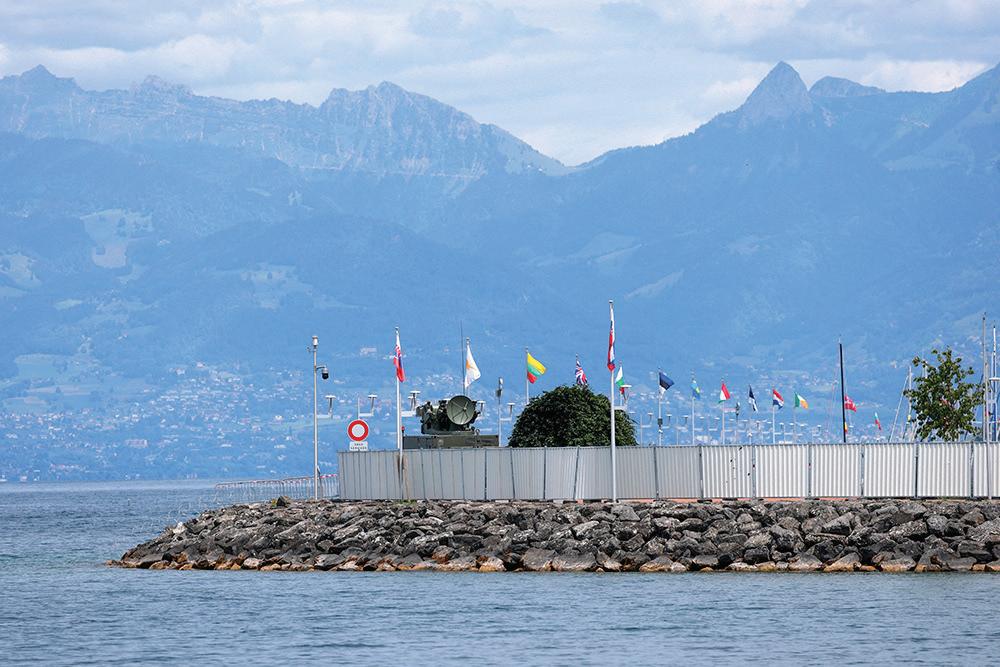
Flags flutter at a security site of the French army near the Lake Leman ahead of the G7 summit in Evian-les-Bains, France, June 12, 2026. The episcopal conferences of the G7 nations issue a joint statement, Building Bridges for Peace, Justice and Human Dignity,” ahead of the June 15-17 meeting. —OSV News photo/Denis Baliboouse, Reuters
Rollercoasters, rides, faith-building make memorable moments for Catholic youth
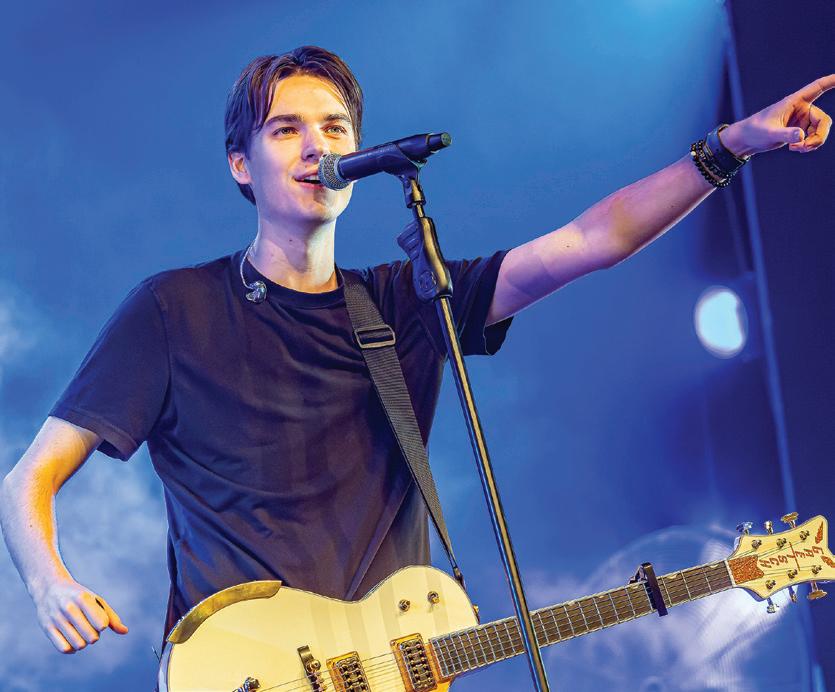
The Scally Brothers, Zach, 2, and Jake, 3, give an inspired performance for the young audience. Jay Donofrio, 5, diocesan director, Office of Youth and Young Adult Ministry, takes the stage at the opening ceremony.
—Hal Brown photos
By Mary Morrell, Editor-in-Chief
Six Flags Great Adventure, known as one of the largest and most ambitious theme parks on the East Coast, became host for some 1,300 youth May 17, gathered for a spirit-filled day of faith and fun during the 2026 New Jersey Catholic Youth Rally.
The day began in the Showcase Arena with an opening ceremony organized by Diocese of Metuchen’s Youth and Young Adult Ministry, and included prayer, witness and a musical presentation by The Scally Brothers, Jake and Zach, who hail from Toledo. The duo’s dynamic, faith-filled music has grown an ever-expanding fan base internationally among youth.
The day ended with a closing ceremony, including Mass, organized by the Diocese of Trenton’s Youth and Young Adult Ministry. Situated in the Batman Stunt Arena, Mass was celebrated by Father Martin O’Reilly, diocesan chaplain for youth and young adult ministries, and concelebrated by priests from other dioceses. Music was provided by the Praise and Worship Band led by Deacon Gez Ford of St. David the King Parish, Princeton Junction, and comprised of music ministers from around the Diocese of Trenton.
In between, youth, youth ministers
and chaperones spent the day enjoying the many rides and unique experiences the park has to offer.
Brian Flanagan, coordinator of youth ministry in St. James Parish, Basking Ridge, recalled the day, saying, “We’ve been bringing teens to Six Flags for the N.J. Catholic Youth Rally for many years. Recently, we had a ‘Senior Night’ where some of our seniors shared some favorite youth ministry memories, and several of
mission trips, but it shows that the Six Flags event is a perfect blend of the spiritual life with an everyday life fun event with friends. Mountaintop experiences like retreats are crucial, but sometimes sitting next to your Catholic friend atop a rollercoaster hill can also have a lasting impact!”
For Esther Dutra, youth minister in St. James Parish, the annual event is an opportunity to deepen connections with the youth. “I love the bonding time with the teens outside of the church building, I feel like they tend to be more comfortable sometimes, and Six Flags is one of the
great opportunities we have for that. The conversations we have in the car help me build relationships with students I may not have known very well before. Riding roller coasters together is also a lot of fun because we get to see them in a different environment, and the time spent talking while waiting in line creates meaningful connections.”
Dutra recalled one of her favorite memories from the previous year’s rally, when “two students decided to go on summer mission trips because of conversations we had during the car ride. They even asked to be in the same car again for the mission trip. I love the opportunity to build strong relationships with our students, and this is one of my favorite ways!”
hy would the Catholic Church set up its own parallel school system in the United States?
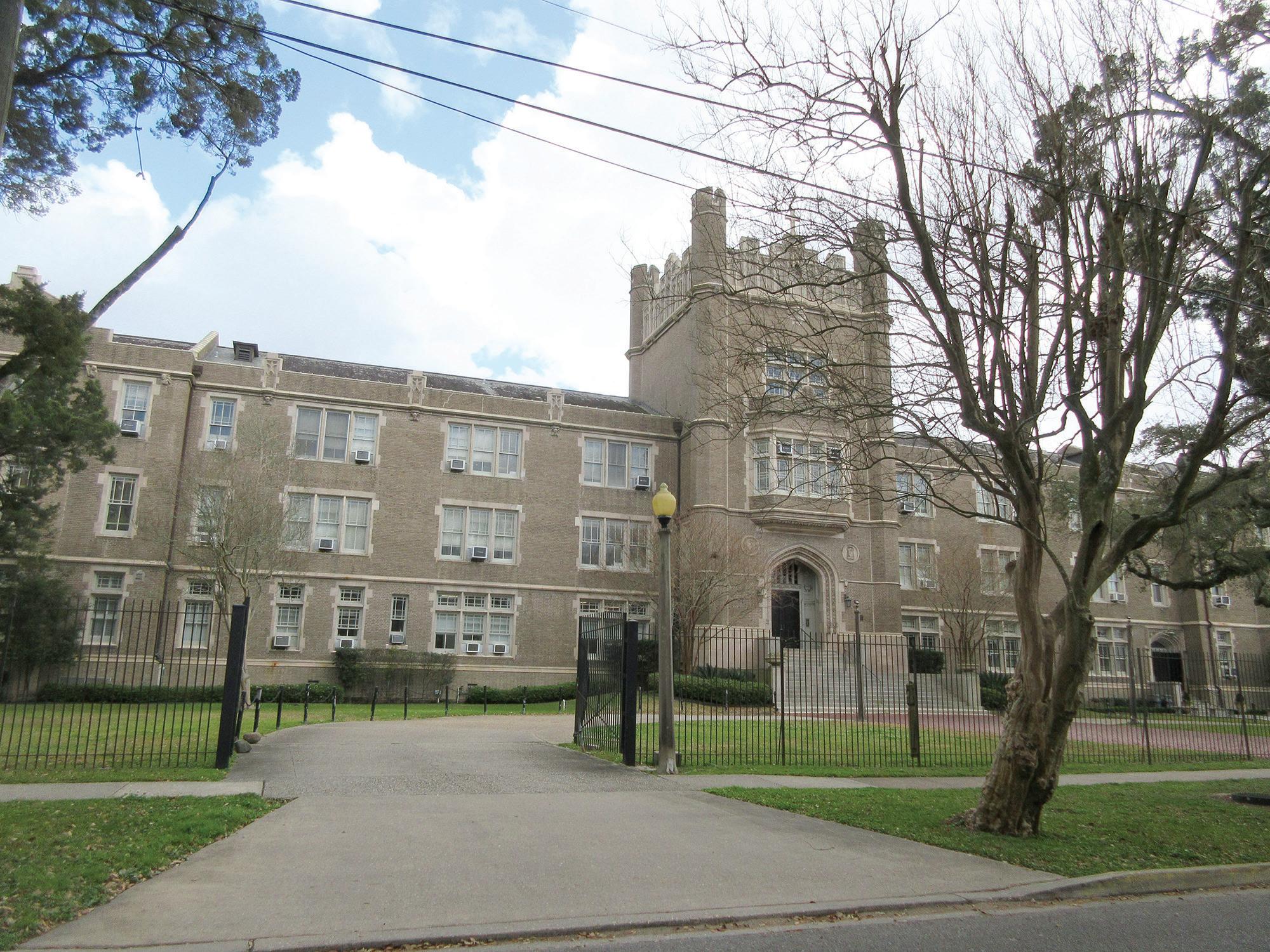
The first Catholic school in America was opened in St. Augustine, Florida, in 1606. In New Orleans, Ursuline Acade my, founded in 1727, is still in operation today as the oldest Catholic school in the United States.
One Catholic complaint about public schools was the presence of both subtle, and sometimes not so subtle, anti-Cath olic messages in school textbooks. For example, “Dr. Scudder’s Tales for Little Readers about the Heathen” describes the various non-Christian religions throughout the world. In the author’s mind, Catholics were numbered among the non-Christian heathen.
He wrote: “My dear children … I want you to … think how many millions of people embrace the religion both of the Greek and Roman Catholic churches – a religion which is nothing more nor less than paganism, with a few Christian doctrines added to it.”
“Hale’s History of the United States” contained a sentence that began like this: “As the duke was a Catholic, and as the Catholics, from their numerous bloody persecutions and universal intolerance, were regarded by the people, who were nearly all Protestants, with dislike and dread…” These are extreme examples and most anti-Catholic messages were far more subtle. For example, a student might be asked to identify the subject and the verb in the following sentence: “Martin Luther saved Europe from enslavement by the Roman Church.”
Catholic textbooks possessed a similar bias. Of course, they were written by Catholic scholars, for Catholic students, printed by Catholic publishers, and intended for use in Catholic schools. They did not even make a pretense at being objective and non-sectarian.
The other Catholic complaint was the burden of double-taxation whereby Catholics are required to pay taxes for public schools that they will never use while supporting Catholic schools through their donations. Newark Bishop James Roosevelt Bayley summarized these objections in his 1872 pastoral letter:
“I know that it is a heavy burden, and demands great sacrifices on our part to support parochial schools, at the same time that we have to pay taxes for the support of the State Schools. But there is no help for it. We would gladly avail ourselves of the Public Schools if it was in our power to do so. But as they are at present conducted it is impossible for us to send our children to them. The Public Schools in this State are virtually Protestant Schools, as much as if Protestantism was the established religion of the State; and I have yet to find out the difference between Church and State and Schools and State, as these schools are managed.”
In 1840, New York Bishop John Hughes reasserted the demand for state funding of parochial schools and threw down a rather bold pedagogical gauntlet to the state saying “if we do not give as
Catholic Schools in America, Part I
By Carl Ganz, Special Contributor
good an education, apart from religious instruction, as is given in the public schools, to one third a larger number of children for the same money, we are willing to renounce our just claim.” Ultimately, Bishop Hughes’ offer was not accepted.
In the mid-1800s, it was common for Protestant ministers to serve on school boards, as officers in teacher organizations, or be employed as school examiners or principals. As a result, public schools had a rather overt Protestant bias, and they were not shy about flaunting it. Classroom use of the King James Bible exemplified this bias.
The King James Bible was not an acceptable translation for Catholics. It lacked the Deutero-canonical books, emphasized the commandment against graven images, and contained a number of translation errors which substantially altered the meaning of several passages.
At the beginning of every school day, students read passages from the King James Bible and said the Our Father which they ended with the Protestant “For thine is the kingdom, the power and the glory now and forever.” In one extreme case at a Boston public school, a Catholic student had his hands repeatedly struck by a ruler for refusing to read from the King James Version of the Bible. His parents filed suit against the teacher but lost.
More than just the text of the King James Bible itself was the idea of reading it without commentary. Protestants are comfortable with reading the Bible and drawing conclusions directly from it. Catholics are not. The Bible is a series of seventy-three books written over the course of three millennia in long-dormant languages employing literary genres intended for cultures that no longer exist.
Proper interpretation requires decades of scholarship in the fields of history, anthropology, archaeology, theology, and linguistics, with mastery of such languages as Latin, Greek, Hebrew, Syriac, and Aramaic. Catholics are expected to rely on commentaries written by such scholars rather than try to interpret Scrip-
eral bishops felt that the first building constructed in a new parish should be a school, not a church, and several parishes arranged their construction schedules in just this sequence.
Newark Bishop Winand Wigger was so strongly opposed to Catholic students in public schools that in February 1890 he ordered the denial of absolution to any parents who sent their children to one without a good reason. He was not alone in doing this. This sanction was part of the diocesan regulations of Cleveland and Cincinnati also.
Wigger had been leading up to this decision for a while. In September 1887 he spoke to the German Catholic Convention in Chicago about “parents who believed that if they bring their children to Mass or Confession, their whole religious duty toward them has been completed. These parents are blind.”
ture directly.
Catholics and Protestants have much in common, especially in their shared Judeo-Christian morality. Still, there was great concern among Church leaders that aiming for a least common denominator to accommodate everyone would lead to watered down moral formation. This alone was enough to justify the herculean effort of creating a separate Catholic school system.
Within a few decades, however, these sectarian concerns disappeared. By the late nineteenth century, the chief complaint from Catholics was not the Protestant influence of public schools, but rather the secular influence. When Catholics complained about public schools, it was about their godlessness, not their sectarian nature. By the dawn of the twentieth century, a Catholic priest could stand with a Protestant clergyman so as to publicly agree with him on the public school issue; the times, they had a-changed.
There exists an ample supply of powerful statements from bishops emphasizing the importance of the Catholic schools. Bishop Bayley wrote: “The school-house has become second in importance to the House of God itself.” This sentiment was reinforced by the statutes of the Diocese of Newark adopted in 1878 which decreed:
“With the exception of the Most Holy Sacrifice, the administration of the sacraments, and the preaching of the word of God, let the pastors place their solicitude for the school before all other duties of their office. Nothing should be begun, except what is absolutely necessary either in the church or in the rectory, before a Catholic school is built and well established.”
In 1850, Archbishop Hughes declared, “The time has almost come when we shall have to build the schoolhouse first and the church afterward.” Ninety years later, Newark Bishop Thomas Walsh said, “I would rather lay the cornerstone of one Catholic school than lay the cornerstone of ten Catholic churches.”
Echoing Archbishop Hughes, sev-
Denial of absolution was unusual even by the standards of most other bishops of the era. Bishop Bayley is on record as opposing such a penalty. Writing to Bishop Bernard McQuaid of Rochester in 1874, Bayley remarked, “Every parent is bound to secure a Christian education for their children so far as possible. And we are bound to do all that we can to establish and encourage good Catholic schools. But to lay down the broad rule, that no parent who sends a child to a public school, can receive absolution, is neither good theology, nor good sense.” In 1893 the Papal Delegate ordered Wigger to rescind it. The thinking behind so draconian a sanction was that Catholic schools were tuition-free, the cost being borne by the parish as a whole. This removed the main barrier to attendance – money. The only other reason for possibly choosing a public school over a Catholic one would be proximity to the home which, in the close urban setting where many Catholics lived at the time, would be difficult to justify. Some parents thought the public schools were academically superior, a fact the Church recognized and strove to rectify. Some parents considered Sunday school sufficient for indoctrinating their children in the Catholic faith since they reasoned a standard academic curriculum was mainly secular anyway. Many bishops disagreed. They saw Sunday school as a fall back mechanism, something that was merely a better-than-nothing solution. Bishop Michael O’Farrell of the Diocese of Trenton had little use for weekly catechism classes that he said went by “the very pretentious and deceiving title of Sunday-schools … Yet, this is what many parents count upon.”
Next month, we’ll examine the decrees of the Church councils on Catholic education as well as constitutional challenges to school funding as we take Catholic schools into the twenty-first century. Carl Ganz Jr. is a member of the New Jersey Catholic Historical Commission and the diocesan Commission for Historical Records. He is a parishioner of Immaculate Conception Parish, Somerville, and the author of several books on American Catholic history.
Ursuline Academy, New Orleans. — Infrogmation of New Orleans photo/Wikipedia
A Brief History of the Catholic Church in Central New Jersey Part II:
By Father Michael Krull Special Contributor
On July 29, 1853, Blessed Pope Pius IX created ten new dioceses across the United States, the most created in one day, and a record that still stands today. Among the new dioceses were Burlington, Vermont, consisting (as it still does) of the entire state; the city of Brooklyn, which was not yet incorporated into New York City, and the Diocese of Newark, covering the entire state of New Jersey. Over the next 28 years, the growth of New Jersey – and with it, the increased numbers of Catholics – would lead in time to the division of the Diocese.
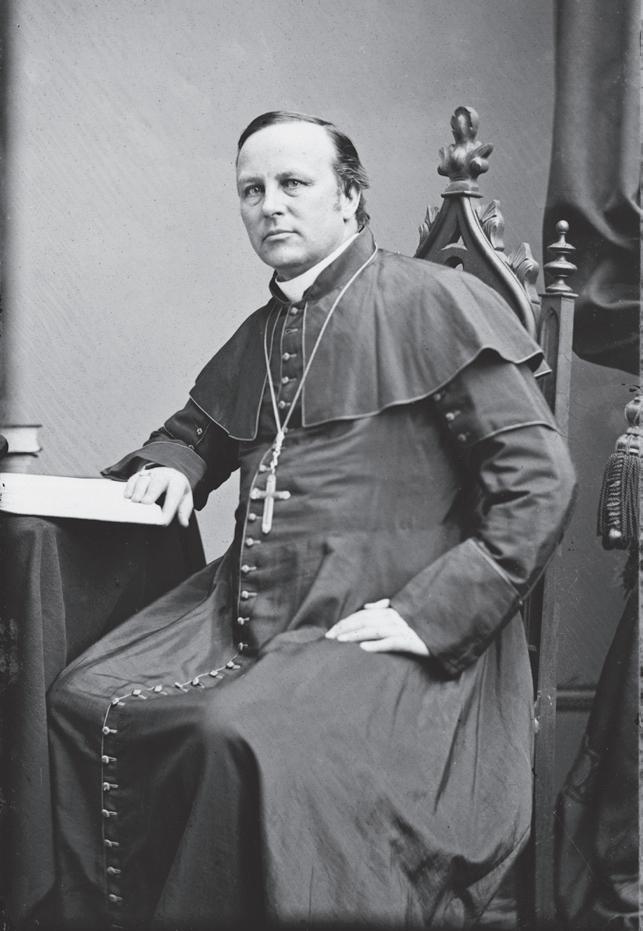
Two bishops from similar yet different backgrounds would lead the Diocese of Newark during those years, and both would eventually leave Newark on their promotions to lead more prominent archdioceses. And to the benefit of historians, both left detailed diaries of their daily comings and goings: priest assignments, church dedications, travels, parish visitations. And in the case of the first bishop, laying the foundations on which the Catholic Church in New Jersey continues to build.
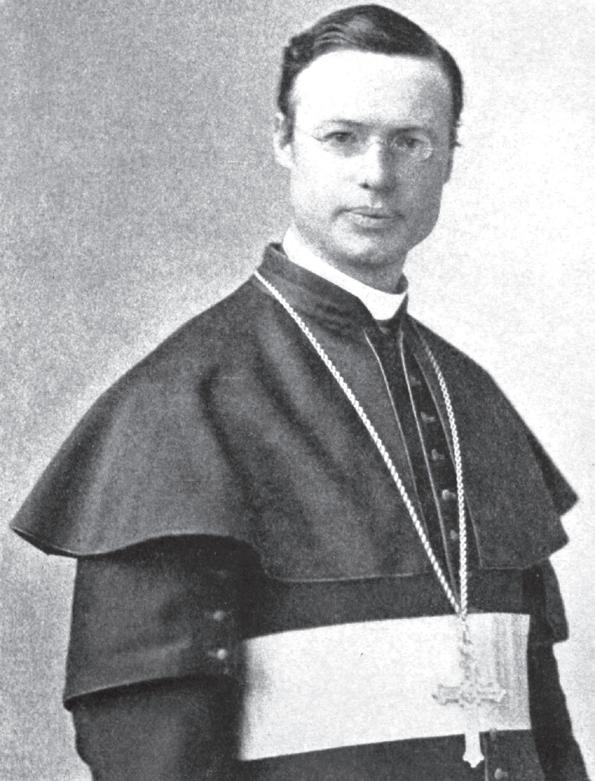
James Roosevelt Bayley – 1853-1872
an understatement. Born in 1814 to Guy Carleton Bayley, half-brother of Saint Elizabeth Ann Seton and Grace Roosevelt (her nephew James was the father of President Franklin D. Roosevelt), the young James Bayley grew up in Mamaroneck, New York, in a happy and devoutly Episcopalian family. Like his father and grandfather, he contemplated a medical career, but then decided to study for the Episcopal ministry.
Shortly after his ordination he soon began questioning his Episcopalian faith as his aunt had done years before and as
The Newark Years 1853-81
other relatives had subsequently done, and his friendships with other Catholic priests, including the young Father John McCloskey (later to be named the first cardinal from the United States) had a strong influence on him.
In 1842, he was received into the Catholic Church in Rome. Arriving back in the United States he was determined to become a Catholic priest and was sent by the formidable Bishop John Hughes of New York for studies at St. John’s College (now Fordham University), and soon after was ordained a priest by Bishop Hughes at the Old St. Patrick’s Cathedral on March 2, 1844.
With his ordination, Father Bayley began a fast track. He went back to St. John’s College not as a student but as its vice president and professor. Less than two years later, he was serving as a pastor on Staten Island. Six months later, he was appointed secretary to Bishop Hughes, where he gained experience as the Catholic population of New York increased.
Consecrated a bishop on October 30, 1853, in old St. Patrick’s Cathedral by Archbishop Cajetan Bedini, who had been sent from Rome to see the status of the Catholic Church in the United States (a tour that produced a number of anti-Catholic protests), Bishop Bayley arrived in Newark on the warm morning of November 1, 1853 for his installation at St. Patrick’s Church in downtown Newark, which would serve as the cathedral of the new Diocese.
At the time of the creation of the Diocese of Newark, there were 33 churches and missions and 30 priests to serve them throughout the whole state. With growth throughout New Jersey, Bishop Bayley established new missions and parishes. In 1858, a mission was established in Bound Brook. That same year, Mass was celebrated in Phillipsburg and the following year a mission was established in Hampton.
Father James McKay of St. Joseph’s Church in Newton built a frame church in Hackettstown, and missions were established in three of Father Farmer’s old mission stops, in Oxford, Basking Ridge and East Millstone.
In 1867, the first truly ethnic parish was established, St. John the Baptist in New Brunswick for the large German Catholic population in that area. And in 1871, a small mission initially dedicated to St. Joseph was established for the Catholics living in Metuchen. Bishop Bayley blessed the original St. Francis Church on July 2, 1871.
During his tenure, Bishop Bayley blessed four churches which would be the future see cities of New Jersey: St. John’s in Paterson, St. Mary of the Assumption in Trenton, Immaculate Conception in Camden and St. Francis, Metuchen. Most notably, Bishop Bayley was instrumental
in the creation of Seton Hall College, originally in Madison, N.J., but later moved to South Orange, and the establishment of the Sisters of Charity of St. Elizabeth – a university and religious community which continue to serve Catholics in New Jersey.
In 1873, Bishop Bayley was appointed as Archbishop of Baltimore, the nation’s primatial see, where he remained until his death (which occurred on a visit to Newark) on October 3, 1877. After funeral services in Newark and Baltimore, he was laid to rest beside his saintly aunt in Emmitsburg, Maryland.
Bishop Michael Corrigan – 1873-81
Unlike his predecessor, Michael Corrigan exemplified the growth of the Catholic Church in New Jersey. Born to
Irish immigrant parents in Newark in 1839, Corrigan was, like Bishop Bayley, born and raised into a family of means – his father was a prosperous businessman in Newark, which meant that young Michael and his siblings led a more privileged lifestyle than many other Irish-American Catholic children of that time – his family was what many referred to as “lace curtain Irish.”
He studied at a private Catholic school in Wilmington, Delaware, before attending college at Mount St. Mary’s in Emmitsburg, Maryland. Graduating from there in 1859, Bishop Bayley sent the young Corrigan to Rome, where he was a member of the first class of the new North American College. Ordained in Rome on September 19, 1863, Father Corrigan returned to Newark, and like Bishop Bayley before him, was soon on a fast track of ecclesiastical advancement.
Teaching at Seton Hall College and the seminary there, he was later named vice president of the college. On February 11, 1873 (the 15th anniversary of the first apparition of Our Lady of Lourdes, France), Corrigan was named the second bishop of Newark, several
months shy of his 34th birthday, becoming the youngest bishop in the United States. Consecrated a bishop in St. Patrick’s Cathedral in Newark on May 4, 1873, a year when a severe economic panic gripped the United States, Bishop Corrigan, like his predecessor, took to the road on annual parish visitations throughout the state, recording his observations in his well-preserved diary. In addition to clerical moves, deaths and routine business, he especially noted the appearance of church buildings, both inside and out. In 1873, he blessed the cornerstones of St. Philip and St. James in Phillipsburg and St. Mary, Star of the Sea in South Amboy (returning in 1876 to bless the completed church there). 1877 saw him blessing the new church of St. Mary in Stony Hill as well as visits to Metuchen and Oxford. 1878 saw him blessing the cornerstone, and later the new church of St. James in Jamesburg, as well as visits to Hackettstown, Washington, Oxford, Phillipsburg, Hampton and Clinton. The following year he blessed the cornerstones for the churches in Flemington, High Bridge and Clinton. While many churches received high marks, many other churches around the state received unflattering remarks, often for things as simple as the wrong number of altar cloths, leaky roofs and artificial flowers. By 1880, the Catholic Church in New Jersey had grown considerably. A few years earlier, in 1876, Bishop Corrigan, in his annual report to Rome, had requested that a new diocese be created to serve the ever-growing needs of the Church in New Jersey, suggesting the state capital of Trenton as the location for the new diocesan see. However, in 1880, shortly after blessing the new church of St. John in Dunellen, Bishop Corrigan was appointed coadjutor Archbishop of New York to John Cardinal McCloskey. Bishop Corrigan left Newark on November 9, 1880. He became Archbishop of New York on McCloskey’s death in October, 1885. New York Catholic historian Thomas Shelley points out that Archbishop Corrigan, both as coadjutor and ordinary, oversaw the greatest expansion of the Archdiocese. Corrigan served in New York until his death on May 5, 1902, several months after seriously injuring himself in a fall while inspecting the construction of the Lady Chapel in St. Patrick’s Cathedral. Backtracking a bit – Bishop Corrigan’s 1876 report to Rome regarding the creation of a new Diocese in central and southern New Jersey would come to fruition less than a year after his move to New York. Father Krull serves as chair of the diocesan Commission for Historical Records and is pastor of Our Lady of Peace Parish, North Brunswick.
Left photo by Mathew Benjamin Brady - public domain, Library of Congress Prints
14 The Feast of Corpus Christi invites us to see Jesus in each other
One year at a First Communion Mass, the children, after receiving the Body of Christ for the first time, stood in front of the altar and sang “His Banner Over Me Is Love.” Why would they sing this song? Because, they were filled with joy and wanted to share their bliss with their moms and dads who brought them to this special day.
On the feast of the Body and Blood of Christ, the Scriptures remind us of the importance of the covenant which Jesus established at the Last Supper – where, through word, action, bread and wine, the Lord promised his disciples that he would remain with them always. It was this Last Supper ritual which became the New Covenant on the following day as Jesus suffered and died on the Cross. On Corpus Christi, then, the Church acknowledges what we often take for granted: that in the Eucharist, Jesus is really and truly present.
While no one denies that the Eucharist is a messianic banquet, a feast which nourishes the communicants, the Church
I die before I die
also teaches that every time we celebrate Mass on this Altar, we re-present the sac rifice of Calvary, which means the Eu charist is a sacrifice of expiation, too. Transcending time into the realm of eterni ty, where a perpetual liturgy is taking place in heaven, at every liturgy, we tap into the one sacrifice of the Cross, and reap the infinite merits of Christ’s oblation which Jesus has authorized us, the Church, to apply to the living and the dead.
These graces include: nourishment, healing, forgiveness, strength, union with God, a greater union with our fellow Christians and the assur
ance that heaven really exists.
Is it any wonder then that we call
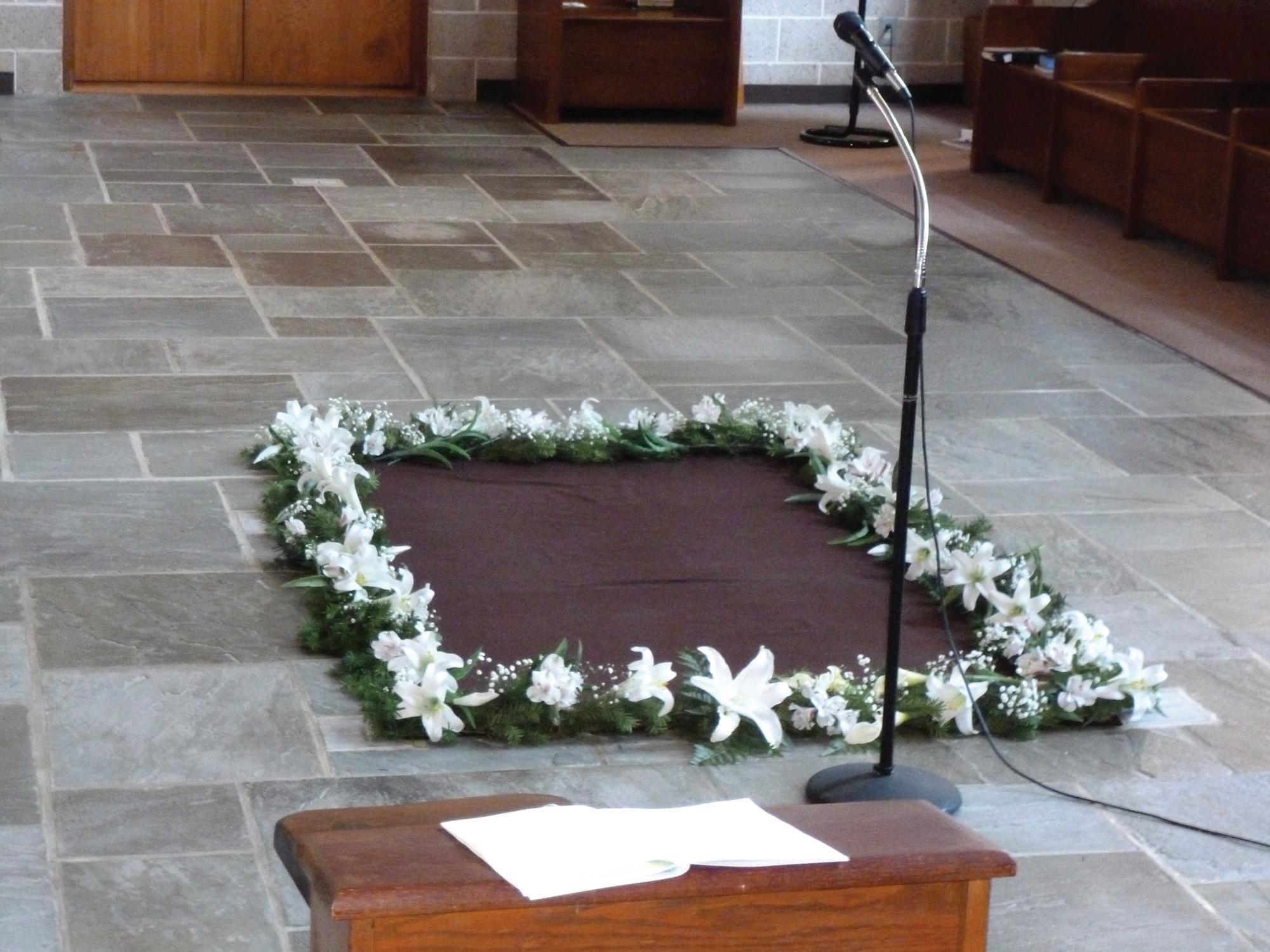
Anyone who has witnessed the Or dination of new priests will remember the moment when the Litany of the Saints is chanted over them. The candidates for ordination lie prostrate on the floor while the choir calls down prayers, blessings and protection from God and the saints on the soon-to-be priests.
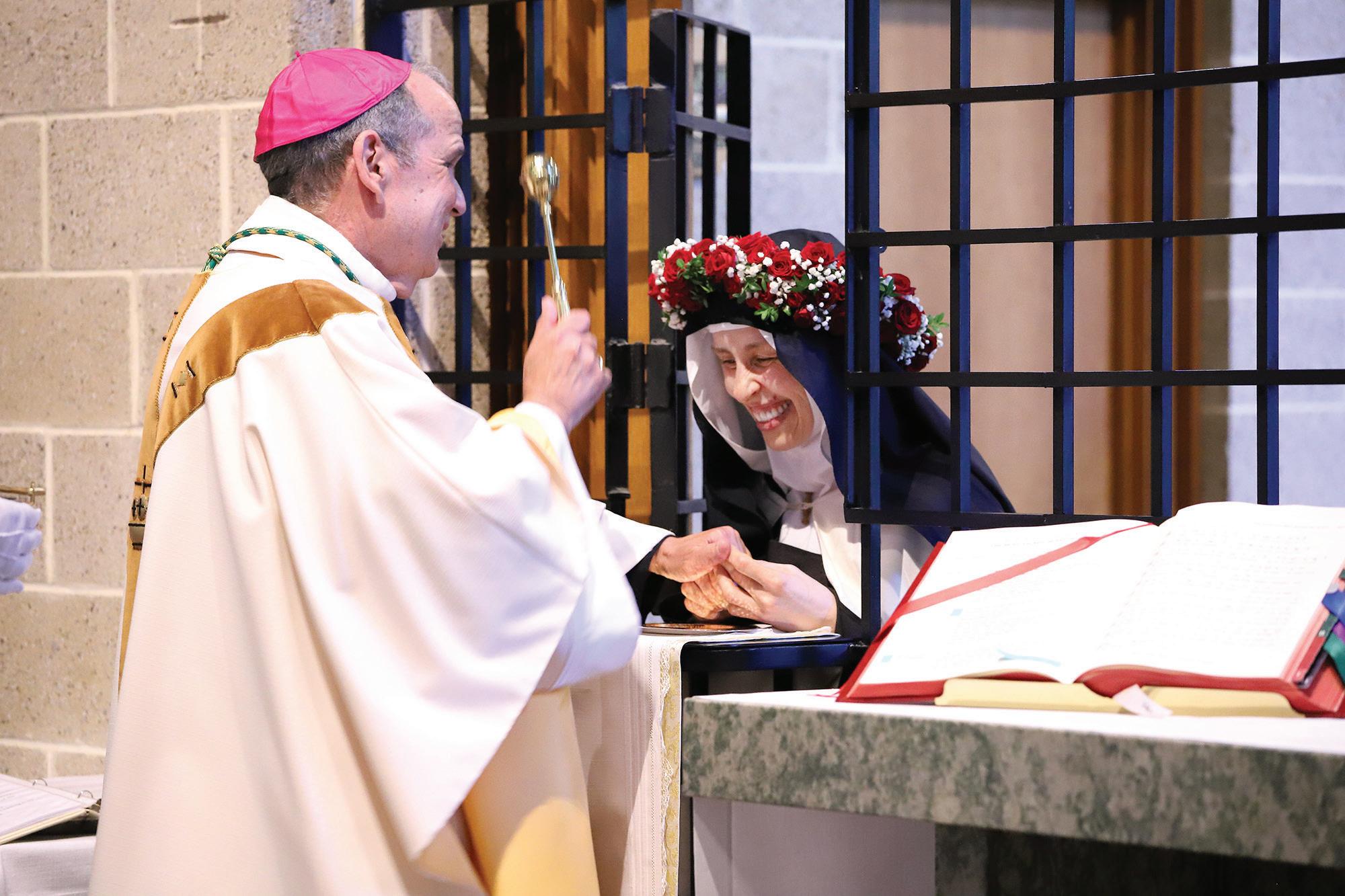
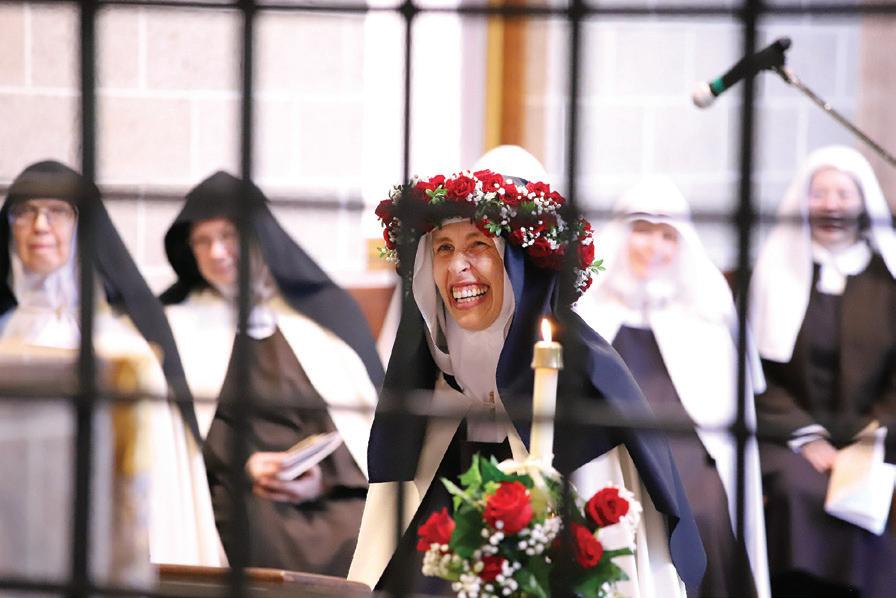
A similar ceremony is part of the profession of solemn vows of our nuns, but with a notable difference. The candi-
dates for priestly ordination lie directly on the floor, their head supported on their hands. The nun lies on a pall, with her arms outstretched in the form of a cross, completely covered with her veil and white mantle. A pall is the cloth that is stretched over a coffin and here it is laid out for the sister who will soon publicly vow herself to God until death.
All this sounds gruesome and depressing until we remember why she is doing what she is doing. She has been called by God to give herself to him in the religious life; this means that she has the vocation to show to everyone what our vocation as Christians really means.
Unlike an Ordination, which is a Sacrament, religious profession is simply a public expression of what we are all meant to be because of our Baptism. Baptism unites us to God in Christ, and it enables us to share God’s own life first here on earth and then in its fullness for all eternity with him in heaven. Religious, men and women, are called to stand out as living icons of the life in heaven.
The Collect for the Mass for vocations to the religious life asks, “Holy Father, who, though urging all the faithful to perfect charity, never cease to prompt many to follow more closely in the footsteps of your Son, grant, we pray, that those you have chosen for this calling may, by their way of life, show to the Church and the world a clear sign of your Kingdom. Through our Lord Jesus Christ, your Son, who lives and reigns with you in the unity of the Holy Spirit, God, forever and ever.”
Men and women religious are called to reveal to everyone what it means to be a member of the kingdom of God. We do
Jesus, who is God, comes to us on this altar? Indeed, Jesus has kept the promise which he made to his disciples: to remain with is followers until the end of time. All we have to do is recognize him.
The feast of Corpus Christi, invites us to recognize Jesus’ presence not only in the Eucharist but also in each other who bear Christ in our bodies and souls and to respond to this personal presence with love with adoration. The song choice for those First Communicants was right on target; for their angelic voices remind us that “his banner over us is love.”
Father Comandini serves as diocesan coordinator of the Office for Ongoing
this by living our three vows of chastity, poverty and obedience in a community. We try by the graces God gives us to live obedience by doing God’s will here “on earth as it is in heaven.”
By our vow of poverty, we possess nothing, not even ourselves, because we accept to receive everything from God, sharing in the Son’s reception of his whole being from his Father.
By our vow of chastity, we seek to live in the total communion with God and every human being that makes of our body the perfect expression of God’s own love. By living in community, we try to give witness to the call we have received to be living icons of the kingdom of God.
The life of God that we each receive at Baptism will be made perfect in heaven. This world is too small a place for it to flower into fullness, for we are called to a life that we can’t even imagine. “We are God’s children now; what we will be has not yet been revealed.”
Yet if we are to live that life, we must desire it, and in order to desire it, we must have some glimpse of what it is. This is the vocation of men and women religious: to shine out as beacons to all the children of God and to show them their real dignity and that it is possible to attain to that dignity.
The litany of the saints calls down upon the sister the help of God and the saints, and it also welcomes her already into their company as, with their aid, she seeks to give to the world a slight glimpse of the glory to which we are all called.
Sister Gabriela of the Incarnation is a member of the Discalced Carmelites order in Flemington. Learn more at www. flemingtoncarmel.org.
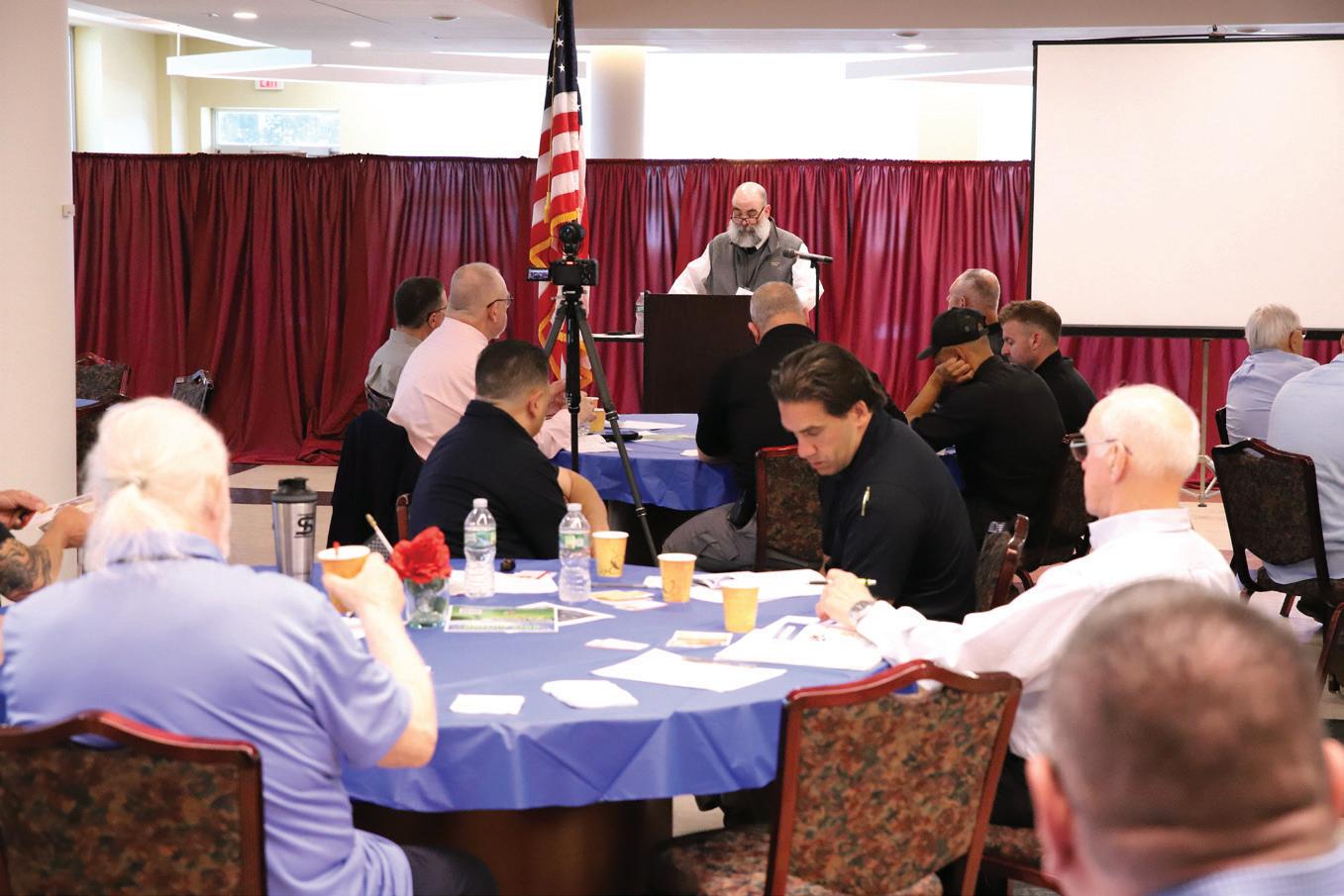
The first annual Formation Event for Police Officers held June 13 in the St. John Neumann Pastoral Center, Piscataway, brought together some 50 police officers hailing from 11 police departments from New Jersey, New York and Pennsylvania.
Organized by the diocesan Department of Evangelization and Communication, the day focused on the theme of courage and the spiritual and emotional challenges faced by law enforcement officers.
The event began with Mass celebrated by Diocesan Administrator Father Jonathan S. Toborowsky. In his homily, he reflected on the life of St. Anthony of Padua, whose feast day was being celebrated. St. Anthony had hoped to serve as a missionary but found himself on an unexpected path after illness altered his plans.
Father Toborowsky suggested that many officers may likewise have found themselves in places they never anticipated. He also noted that St. Anthony, the patron saint of lost things, can remind us that people sometimes lose their way spiritually and benefit from opportunities for prayer and reflection. Officers, he said, are called to live out the good and serve others through their vocation.
In his welcoming remarks, Carlisle acknowledged the burdens carried by law enforcement personnel. Constant exposure to trauma, he said, can lead to
Formation event addressed spiritual, emotional challenges for law enforcement officers
By Robert Christie, Correspondent
exhaustion and spiritual fatigue. Faith, therefore, must be more than an occasional practice; it should be a daily source of strength. He thanked the officers for their service and encouraged them to draw upon the support of the Church.
The first speaker, Father Larry Richards, best-selling author of “Be A Man!” and founder of The Reason for Our Hope Foundation, challenged attendees to deepen their relationship with Christ as the foundation of courage. “Jesus Christ had more courage than anyone else,” he said, emphasizing that Jesus drew strength from His relationship with the Father.
He encouraged officers to spend time in daily prayer, even if only for a few minutes, and to rely on Scripture when confronting the darkness and suffering they encounter in their work.
The second speaker, Deacon Harold Burke-Sivers, a Benedictine Oblate who is an internationally renowned au thor and preacher, and host of Beacon
of Truth on EWTN radio, drew on the biblical story of David and Goliath. He asked officers to identify the “Goliaths” in their own lives – whether pride, addiction, anger, or other personal struggles. Just as David faced the giant with five stones, Burke-Sivers pointed to the five decades of the rosary as a spiritual weapon for confronting life’s challenges and strengthening one’s faith.
The final speaker was South Brunswick Acting Chief of Police Jim Ryan, whose more than three decades in law enforcement have been guided by a deep faith. Speaking on resilience, hope, and trust in God, Ryan shared his personal experience of surviving a life-threatening episode of atrial fibrillation in November 2024. Although his heart stopped twice, he recalled feeling a profound sense of peace and a conviction that God still had
aged officers to recognize the blessings and miracles present in their own lives and to rely on faith during difficult times.
As the event concluded, Carlisle encouraged participants to share their experience with fellow officers and help build support for future gatherings.
Several officers from South Plainfield reflected on the day’s impact. Dennis Yuhasz spoke about the importance of faith and family, particularly as the father of two daughters. Michael Pellino discussed the challenge of reconciling faith with the evil and suffering he has witnessed in law enforcement. Ryan Bartunek, who serves as a department resiliency officer, explained the growing emphasis on helping officers navigate mental health challenges through peer support, resilience training, and educational programs.
Jim Vargas, director of faith formation for the N.J. Knights of Columbus, one of the sponsors, stressed, “A day of recollection is a great start but what comes next is really what is important.”
Michael Hunsider, retired after 28 years from the Banger police department acknowledged, “I appreciate this day. I always felt that the Church did not do enough for police officers, this is a great start.”
Throughout the day, speakers returned to a common message: courage is not simply a professional requirement for police officers, but a spiritual virtue strengthened through faith, prayer, and community.
Presenters for the June 13 event include, from left, Deacon Vincent Brigande, director of pastoral care, St. Peter’s University Hospital and retired NYPD officer; Father Larry Richards, Diocese of Erie, Pa.; Deacon Harold Burke-Sivers, Archdiocese of Portland, Ore., and Acting Chief James Ryan, South Brunswick Police Department.
By Deacon Patrick Cline Correspondent
I must admit I was intrigued and somewhat confused when all the deacons of the Diocese received an invitation to attend a Formation Event for Police Officers at the St. John Neuman Pastoral Center on Saturday, June 13. Although this first ever “Resiliency” Conference was primarily for active and former police officers, deacons and priests were also encouraged to attend.
I know a number of deacons and some priests in
Adam Carlisle, Secretary of the Secretariat of Evangelization and Communication, offers remarks to participants at the June 13 Formation Event for Police Officers in St. John Neumann Pastoral Center, Piscataway. —John Batkowski photos
Please watch for a video about this event coming soon to our Catholic Spirit website story and social media platforms.
Reflection: The virtue of courage in each person’s life
Metuchen are currently serving or retired from various law enforcement positions, but the vast number of us are not. However, I believe both callings appeal to those who feel a need to be of service to others. Besides, a morning of spiritual formation is not something to be passed up anytime.
The theme of the morning was “Courage,” referencing a definition of that virtue by C. S. Lewis in his 1942 novel, “Screwtape Letters” that courage cannot exist without fear. That reality is understood by every police officer as they face potential life and death sit-
uations daily as part of their lives. But we all face fear at times throughout our lives to one degree or another and courage is how we deal with it.
The three presenters have backgrounds in law enforcement and thus their stories and examples were often couched in terms to which the men and women from the profession could immediately relate. But the messages underlying the stories are universal ones that we all must hear and ponder in our hearts.
Deacon Harold Burke-Sivers formally Director of Public Safety in the University of Portland, Oregon,
challenged us to ask, “Can God see his reflection when he looks at me?” Father Larry Richards, the son of police officers, reminded us that it is the shield of Jesus Christ that leads and protects us. Acting Chief James Ryan of the South Brunswick Police Department used examples from his life to remind us how often we fail to appreciate the miracles, little and big, which occur in our lives. Although intended for a specific audience the overall message of the morning was one that provided me a time to reflect on my relation with the Lord and the place of the virtue of courage in my life.
Cross Catholic Outreach’s Home-Building Program Restores Hope to Once-Desperate Families
When Cross Catholic Outreach discovered the terrible living conditions poor families had to endure in many of the world’s developing countries its leaders decided to make the construction of new homes for the needy a top priority. It has since pursued that objective by working with Catholic ministries already serving overseas with funding provided by Catholic foundations and individual donors in the U.S.
“Our goal has been to build simple but sturdy homes — usually from cement block or prefabricated cement panels — to ensure the houses we provide offer poor families greater security and protection from storms,” explained Michele Sagarino, president of Cross Catholic Outreach. “Local Church leaders are involved in the work every step of the way.”
Cross Catholic Outreach’s homebuilding initiatives have grown significantly in recent years and are now taking place in countries all over the world. (See related story on opposite page.)
“While it has been heartbreaking to travel to developing countries and see the kinds of homes families are raising their children in, it has been heartwarming to see how fervently local Church leaders are working to solve that problem,” Sagarino said. “And thanks to our compassionate donors in the U.S., we can provide them with the funding and professional support they need to get the job done. If it weren’t for their heroic efforts and the generosity of U.S. Catholics who support this outreach, I can’t imagine how those families or the elderly poor would ever escape the poverty in their communities
ABOVE: The simple but sturdy homes Cross Catholic Outreach builds for families in developing countries are seen as an answer to prayer and a blessing from God. LEFT: The homes the ministry constructs differ from location to location depending on what local Church leaders have requested, but the floor plan shown here provides a good example of the kind of house most families receive.
and improve their lives. The new, safe housing we provide changes their living conditions dramatically, and it gives these families a foundation for building a better future.”
While the houses it builds for poor families vary based on their location and cultural practices in the countries where they are located, most are two to four-room, cement block structures with a metal roof, secure windows and sturdy, lockable doors. Where possible,
the ministry also works with its in-country ministry partner to provide kitchen facilities, wash basins and adjacent latrines.
“‘These new homes are lifetransforming blessings, and we make it clear they’re a gift from God,” Sagarino said. “That’s our ultimate goal. We want to bless people materially and spiritually — to restore their hope and strengthen their faith.”
Readers interested in supporting
Cross Catholic Outreach’s food programs and other ministries to the poor can contribute by using the brochure inserted in this issue or by sending a tax-deductible gift to Cross Catholic Outreach, Dept. AC06062, PO Box 97168, Washington, DC 20090-7168. The ministry has a special need for partners willing to make gifts on a monthly basis. Use the inserted brochure to become a Mission Partner.
“Day of Prayer” Blesses Catholics Involved in Overseas Missions of Mercy
Thousands of Catholics in the U.S. are marking Thursday, August 15, on their home calendars — first, to celebrate Mass on the Solemnity of the Assumption of the Blessed Virgin Mary, which is a holy day of obligation. Second, to prepare for what has become a very popular annual event — Cross Catholic Outreach’s Day of Prayer. On that day, the ministry’s staff joins with the Papal Almoner, His Eminence Cardinal Konrad Krajewski, to pray for the intentions of their supporters and ministry partners working throughout
the developing world.
“We consider our spiritual programs as important as the material blessings we provide to the poor, and this one is particularly close to my heart,” explained Michele Sagarino, president of Cross Catholic Outreach. “That’s why we set aside this day each year to pray for the special intentions we’ve received online and through the mail.
I know our donors are grateful for that prayer time too. We often hear how much they appreciate the fact that we want to stand by their side, whether they are asking for help with an urgent
need or simply want us to join them in a prayer of thanksgiving for a blessing they have already received.”
Cardinal Krajewski, the first Prefect of the Dicastery for the Office of Charity, will also offer the holy sacrifice of the Mass at the Vatican on behalf of the many prayer intentions Cross Catholic Outreach collects. This exceptional honor is a highlight for those who participate in the Day of Prayer.
“I was thrilled that Cardinal Krajewski agreed to celebrate Mass on the Solemnity of the Assumption
of the Blessed Virgin Mary in conjunction with our Day of Prayer,” Sagarino said. “He’s such a wonderful man, such a loving servant of God and advocate for the poor.”
Those interested in having their prayer intentions included in this year’s Day of Prayer do so through the ministry’s website — CrossCatholic. org — or by sending them to the ministry by mail.
“We look forward to praying for each and every intention we receive,” Sagarino said. “We consider it a blessing to offer that support.”
Ministry Seeks Support From US Catholics To Build Homes for Poor Families in Developing Countries
Travel through the remote parts of almost any developing country and you are likely to find people living in crude, patchwork shelters, often without any access to electricity or modern plumbing. Most homes are little more than one-room shanties with walls fashioned from rusty metal sheets, scrap lumber, tarps and scavenged plastic.
“Their houses become as hot as an oven in the summer and leak like a sieve when it rains,” lamented Michele Sagarino, president of Cross Catholic Outreach, one of the leading Catholic ministries working to improve the living conditions of the poor by replacing substandard housing with new, sturdier homes. “It breaks my heart to think those families and children have had to endure that way of life year after year, generation after generation.”
This is what motivates Sagarino’s ministry to partner with local Catholic leaders to build safer, more substantial homes for those who need them most. Its efforts are funded by U.S. Catholics, many of whom have worked through the ministry for years, supporting these housing outreaches, as well as other programs to benefit the poor.
“Many of our donors in the U.S. have been very generous in their support of our efforts to build safer, sturdier homes for the poor. Some say it is because they feel God has blessed their lives and they want to give back in a way that will help others. Some do it because they understand how important a home is to creating stability and security in a family,” Sagarino said.
“Once a struggling family is provided with a safe place to call home, they can focus on improving their lives in other ways, using their resources to educate their children, take care of medical needs and pursue better employment opportunities. It’s an incredible blessing in their lives.”
Sagarino, who has been involved in humanitarian outreaches for more than two decades, considers providing better housing for children and the frail elderly the highest priority, and her Catholic ministry partners serving in the developing world agree.
“It is clear that the vulnerable in a community are at greatest risk, so our in-country ministry partners focus on protecting them,” she explained. “They create a strategy for reaching out to those people, and with the support of our generous Catholic donors in
Some “fortunate” families live in old, one-room stone or wood houses, but these are typically crumbling with age, have leaky roofs and include interior kitchens that fill the small space with smoke when meals are prepared.
the U.S., we provide the funding to purchase the materials and hire any professional workers needed in the construction process.”
Because it has a global reach, Cross Catholic Outreach works with a wide range of Church partners, and each of them has the freedom to achieve its goals in different ways. Some replace or repair existing homes in their current locations while others build entire communities of new houses and develop significant supportive services in those areas, including wells for safe water, adding blocks of toilets to improve sanitation and even constructing schools or clinics to serve the area’s neediest families. It is this flexibility in pursuing ministry goals that has made Cross Catholic Outreach respected and appreciated among so many Church leaders serving the poor overseas.
“From the very beginning, our ministry was founded to empower local Catholic ministries and support the work they wanted to accomplish. We don’t dictate how they should serve in the community. We focus on giving them the tools and resources they specifically request so they can fulfill the missions of mercy God has placed
on their hearts,” Sagarino said. “That is also why we have so many housing projects underway around the world. Church leaders in developing countries have seen the suffering of families living in unsafe homes, and they are eager to offer them a better way of life.”
While providing safe housing serves an obvious purpose by improving a poor family’s living conditions, Sagarino said the gift actually has a much greater impact than most people realize.
“When people move from a terrible
How To Help
place into a sturdy home, their hope is restored. They feel they can finally escape generations of poverty and provide a better life for their children,” she said. “Our efforts also support the greater work of the diocese, its parishes and the priests and religious sisters serving in those communities. That is intentional on our part. We believe any effort to lift the poor out of poverty must include both material and spiritual support. There is no other way to achieve a lasting transformation of families and communities. God must be at the center of everything we do.”
To fund Cross Catholic Outreach’s effort to help the poor worldwide, use the postage-paid brochure inserted in this newspaper or mail your gift to Cross Catholic Outreach, Dept. AC06062, PO Box 97168, Washington, DC 20090-7168. The brochure also includes instructions for becoming a Mission Partner and making a regular monthly donation to this cause.
If you identify an aid project, 100% of the donation will be restricted to be used for that specific project. However, if more is raised for the project than needed, funds will be redirected to other urgent needs in the ministry.
“The Spirit of God allows us to find a new way of approaching and experiencing life. He puts us in touch with our inmost self, beneath all the masks we wear. He leads us to an encounter with the Lord by teaching us to experience the joy that is his gift. He convinces us, as we just heard in Jesus’ words, that only by abiding in love, will we receive the strength to remain faithful to his word and to let it transform us.
The Spirit opens our interior borders, so that our lives can become places of welcome and refreshment.”
Serendipity?
“God-incidence”?
How about, a prompting of the Holy Spirit?
Growing up, I had one other Sunday family religious ritual besides Mass attendance. At the dinner table, my father convened an informal discussion about the homilies we each heard at the various Masses my siblings and parents attended that day. We lived within walking distance of St. Cecelia Church in Iselin, and at one point the parish offered 14 weekend Mass options. For our family of eight, and our differing sports, work or sleep schedules, we would usually cover at least two or three of those Masses. And, as an avid altar server in grammar school, I sometimes had three homilies to report on alone.
At one point over the years, I began prefacing my dinner remarks with something on the order of, “Well, I would have said…” or “If I was preaching, this would have been my message…” Looking back, the seed of a priestly vocation was probably taking root at that point.
~ Pope Leo XIV,
Homily for Mass on the Solemnity of Pentecost, St. Peter’s Square Sunday, 8 June 2025
In my early twenties and not yet in seminary training, I was encouraged to hear a priest say that it was important for him to preach “with the Bible in one hand and The New York Times in the other.” At that point in my life, some of the best homilies I heard had elements of both biblical wisdom and current events weaved artfully in them.
It turns out that his comment wasn’t so random. Later I learned that Karl Barth (1886-1968), one of the most important Protestant theologians of the 20th century, once said, “Take your Bible and take your newspaper, and read both. But
interpret newspapers from your Bible.”
I haven’t charted a road map to precisely navigate the path from current events to lectionary preaching, but I have learned to trust in serendipity, which in these instances can also be described as a prompting of the Holy Spirit.
As an example, earlier this spring, with the first anniversary of Pope Francis’ death approaching on April 21, and then followed by Earth Day the next day, I felt compelled to include Pope Francis’ contribution to care of the earth in the daily homily. But I also know you can’t force such things and need to respect the given texts. But when I first reviewed the readings for Earth Day (Wednesday of the 3rd Week of Easter), a gift-wrapped surprise awaited me. The responsorial psalm for the day was from Psalm 66, with the refrain: “Let all the earth cry out to God with joy.” And, as I hadn’t preached on the daily Psalm in awhile, it was a double blessing.
A few weeks later, with Mother’s Day on the horizon, I began wondering if the holiday would only be mentioned in my welcoming remarks at Mass, the general intercessions and a blessing of mothers toward the end of Mass. As I let myself be absorbed by the readings for that Sixth Sunday of Easter, the words “comfort” and “joy” jumped out at me –the comfort offered by the promised Comforter, or Holy Spirit (John 14:15-21), and the joy of the early Church leaders in spreading the Gospel (Acts 8:8). I thought of the comfort and joy offered by mothers. And, strangely, I thought of the lyrics of the classic Christmas carol, “God Rest Ye Merry, Gentlemen.” So I asked our music leader to play and sing the carol right after the Gospel was proclaimed, and with the congregation rightly confused, I unraveled the connections between comfort and joy, the readings and Mother’s Day.
These are two of many similar ex-
amples when a message takes shape for me in a way that seems serendipitous but is probably better ascribed as a small prompting of the Holy Spirit. And preaching is just one very tiny slice of life where Spirit-inspired serendipity can be present. When I mentioned to an active participant at the Mt. St. Mary House of Prayer that I was thinking of a future column on serendipity, she responded by recounting a series of what she called “God-incidences.” Several years ago, she was browsing The Catholic Spirit and came across an ad for a program at the House of Prayer to be given by a priest (not of our diocese) with whom she and her husband had taken classes about 20 years earlier. She had never heard of the House of Prayer, but because of the priest they decided to attend. Shortly after, her husband had need of the priest’s counsel for what proved to be a fatal disease, and the priest then presided at the funeral and continued to journey with the widow through months of grief. She joined the priest’s parish and became more active in the House of Prayer, saying that she “was blessed with a new group of friends at both the parish and House of Prayer… God put all these people, whom I very much needed, into my life at the exact time I needed them most.”
In his 1975 apostolic exhortation Evangelii Nuntiandi, St. Pope Paul VI called on believers to let the Holy Spirit be the guide “as the decisive inspirer of their plans, their initiatives and their evangelizing activity ... The Holy Spirit places on lips the words which could not be found by ourselves.” In our daily serendipities or coincidences, we may be getting that very guidance from the Holy Spirit.
Msgr. Kerrigan is pastor of St. Joseph Church, Bound Brook, and an instructor in the Institute of Contemplative Leadership at Mepkin Abbey, SC.
—Johannes Plenio photo/Unsplash
Faith, Hope, Gratitude, and the Promise of Tomorrow
A message to the graduates of 2026
By Barbara Stevens, Sister Mary Louise Shulas, and Joseph Diskin
Graduation is one of the most meaningful moments in the life of a young person. It marks the end of one important chapter and the beginning of another filled with new possibilities, new responsibilities, and new dreams. As we celebrate the graduates of our Catholic schools in 2026, we do so with hearts filled with pride, gratitude, and tremendous hope for the future.
Our graduates leave our schools carrying far more than diplomas and academic accomplishments. They carry with them the values, faith, and life lessons that have shaped who they are and who they are becoming. Throughout their years in Catholic education, they have learned not only how to succeed in the classroom, but also how to live lives rooted in compassion, integrity, service, and love.
In today’s world, young people face many challenges and uncertainties. There are pressures, distractions, and moments that can sometimes create doubt or fear about the future. Yet despite those challenges, we remain deeply optimistic because we know the strength and resilience that have been nurtured within our students through their Catholic education and their relationship with God.
Hope is one of the most powerful gifts we can hold onto in life. Hope allows us to move forward even when the path ahead is unclear. It reminds us that God is always with us, guiding and strengthening us through every success and every setback. Our graduates have already demonstrated courage, perseverance, and determination throughout their journeys. They have overcome obstacles, adapted during difficult times, supported one another, and continued to grow both academically and spiritually.
As they prepare for college, careers, military service, religious vocations, or other exciting opportunities, we encourage them to continue leading with hope. The world needs young people who believe in goodness, who choose kindness, and who are willing to bring light into the lives of others. Every graduate has the ability to make a meaningful difference in the world simply by living with faith and compassion.
Gratitude is another lesson that will serve our graduates well throughout their lives. Taking time to appreciate the blessings around us helps us remain grounded and joyful. None of us achieve success alone. Behind every graduate stands a community of parents, grandparents, teachers, coaches, pastors, friends, and mentors who have offered encouragement, sacrifice, prayers, and love along the way.
We hope our graduates always remember the people who believed in them during moments of uncertainty and celebrated them during moments of achievement. Gratitude strengthens relationships, deepens our faith, and reminds us of God’s presence in our daily lives.
Optimism is equally important as graduates begin this next chapter. Optimism is not pretending life will always be easy; rather, it is the belief that challenges can be overcome and that brighter days are always ahead. Optimistic people inspire others. They lift spirits, create positive change, and help build stronger communities. Our Catholic schools strive to form young people who lead with confidence, humility, and joy, and we see those qualities reflected so clearly in the Class of 2026.
Most importantly, we pray that our graduates continue to keep their Catholic faith at the center of their lives. Faith provides strength during difficult times and guidance during moments of uncertainty. It teaches us to care for the vulnerable, to stand up for what is right, and to live with purpose and compassion. In a world that often moves quickly and demands so much, faith reminds us to slow down, listen to God’s voice, and trust that we are never alone.
The values learned in Catholic schools extend far beyond graduation day. The lessons of service, prayer, leadership, forgiveness, and respect for others become the foundation upon which meaningful lives are built. Whether our graduates realize it now or not, the experiences they have shared within their Catholic school communities will continue to shape their decisions, relationships, and character for years to come.
The Class of 2026 represents the very best of our Catholic schools. These graduates are thoughtful, talented, compassionate, and resilient young men and women with limitless potential. They have already shown tremendous strength and promise, and we are confident they will continue to accomplish extraordinary things.
As educators and members of this faith-filled community, we are incredibly proud of each and every graduate. We thank them for the joy they have brought to our schools and for the example they set for younger students who will follow in their footsteps.
To the graduates of 2026: Continue to dream boldly, work hard, and trust in God’s plan for your life. Never underestimate the impact you can have on others through simple acts of kindness, leadership, and faith. Carry forward the lessons you have learned, the friendships you have formed, and the values that have guided you throughout your Catholic education. Remember always that your future is filled with promise because you walk forward with faith, hope, gratitude, and love.
On behalf of the Office of Catholic Schools, may God continue to bless you, guide you, and watch over you in all the years ahead.
20 Immaculata High School recognizes senior class
By Christina Leslie Contributing Editor
Focusing on its four pillars of faith, scholarship, service and friendship, Immaculata High School celebrated the academic and spiritual accomplishments of its Class of 2026 during a June 4 Baccalaureate Mass and June 5 commencement and award ceremony held in the Somerset parish’s Immaculate Conception Church.
Msgr. Joseph G. Celano, director of Immaculata High School and pastor of Immaculate Conception Parish, was accompanied at the altar by Father Jay Alquiros, the school’s director of Catholic Identity. Father Jonathan S. Toborowsky, diocesan administrator, congratulated the graduates, saying, “This day is yours to
to keep moving, so long as you remember all the people that you used to be.’”
“The point of high school is growth,” countered Valedictorian Vanessa Gunawan, who aims to study finance at the University of Pennsylvania. “When we choose to grow beyond our adversities, we refuse to let it define us, choosing growth over comfort and familiarity.” Gunawan advised her fellow graduates, “Welcome the uncertainty. Let it pull you towards discovery, let it inspire you, change you, and scare you, because beyond uncertainty lies growth, and beyond growth lies opportunity, the opportunity to flourish into the person you are meant to be.”
One by one, students stepped forward to receive their diplomas from Father Toborowsky and IHS principal Edward J. Webber, then posed for a picture to immortalize the event. Immaculata’s strong emphasis on legacy enrollment was evident during the presentation: some 18% of the Class of 2026 are offspring of previous IHS graduates and/or current staff members, including Evelyn Margaret Webber, daughter of principal Edward Webber, Class of 1999.
embrace. Wherever you go, where there is any Catholic church, any tabernacle, there is a home, a safe place, where you
Salutatorian Toby Moreno, who plans to continue his studies at Seton Hall University and seek a career as a doctor, smiled as he recalled the friendships he had made at the Somerville high school with the aid and teamwork of so many of his fellow seniors. “The biggest lesson I learned is that you never get to where you are on your own,” he said. Quoting English actor Matt Smith, Moreno added, “‘We all change. When you think about it, we are all different people all through our lives. And that’s okay, that’s good, you got
Awards and scholarships by the dozen were granted to the industrious and talented group in scholastic, civic, performing arts and other pursuits. Collectively, graduates earned more than $40.1 million in scholarship offers, and 90.2% of scholarship recipients received awards that exceeded the equivalent cost of four years of Immaculata tuition. Reflecting the secondary school’s emphasis on contribution to its community, the Class of 2026 graduated with 100 percent participation in volunteer service despite no formal service-hour requirement being in place.
Photo at left, Father Joseph G. Celano, director of Immaculata High School and pastor of Immaculate Conception Parish, Somerville, leads a prayer at commencement exercises, with, left, Father Jonathan S. Toborowsky, diocesan administrator, and Father Jay Alquiros, the school’s director of Catholic Identity. —John Batkowski photos
See our photo album for this event at Catholicspirit.com.
ACADEMIC AWARDS
Highest General Average (Valedictorian)
Gift of the Spartan Club, Vanessa Adeline Gunawan
Highest General Average (Salutatorian)
Gift of the Spartan Club, Toby Emmanuel Moreno
Excellence in Theology Gift of the Knights of Columbus, Martinsville Council 5959 and Knights of Columbus, Somerville Council 1432
Vanessa Adeline Gunawan
Excellence in Biology
Gift of the IHS Administration, Kezia M. Wong
Excellence in Business Education
Gifts of the Vossen Family and Murray Family, Vanessa Adeline Gunawan
Excellence in Chemistry
Gift of the IHS Administration, Chloe Francesca Polk
Excellence in Computer Science
Gift of the Vossen Family, Michael William Horgan
Excellence in English Gift of the Fraternal Order of Eagles 2137, Gabrielle Grace Marie Lake
Excellence in Fine Arts Gift of the Visual Arts Department, Carmella Mia Ibañez
Excellence in French Gift of Jean and Charles Kline ‘69, Madeleine Anne Messinger
Excellence in Journalism Gift of the Journalism Program, Sienna Milan Smith-Nesbitt
Excellence in Mathematics
Gift of the IHS Administration, William Paul Cantono IV
Excellence in Physics
Gift of the IHS Administration, Conor Steven Quinn
Excellence in Social Studies Gift of the Fraternal Order of Eagles 2137 and Knights of Columbus, Somerville Council 1432, Liam Joseph Nolan
Excellence in Spanish Gift of the IHS Administration, Amalie Elizabeth Imbriglio
Excellence in Latin
Gift of IHS Administration, Adam Francesco Sandborg
The Van Doren Award for Excellence in Dramatics Gift of the Drama Department, Amelia Kathryn Lordi
Excellence in Performing Arts
Gift of Mary Francis Gertsen, Ria Justine Lamzon
Immaculata High School Awards
PERFORMING AND VISUAL ARTS AWARDS
Marie Laggini Vocal Award Gift of the Friends of Marie Laggini, Evelyn Margaret Webber
Excellence in Music and Service to Church and Community Gift of the Music Department, Gabrielle Grace Marie Lake
The Edward “Ted” Gaughan Memorial Award
Gift of the Music Department, Hailey Roseann Stahl
The Louis Armstrong Award Gift of the Music Department, Emily Katherine Nichols
The John Philip Sousa Award Gift of the Music Department, Emily Katherine Nichols
The Susan Bruns ’75 Award Gift of the Music Department, Natalie Elizabeth DiStefano
Excellence in Illustration Gift of the Visual Arts Department, Jewel Magdalena Maia Davis
Excellence in Graphic Design Gift of the Visual Arts Department, Michael Everett Drelich
Excellence in Photography
Gift of Mariano Films, LLC, Haylie Rose Hansen
Excellence in Videography
Gift of Mariano Films, LLC, Hailey Roseann Stahl
Excellence in Broadcasting
Gift of Mariano Films, LLC, Emily Katherine Nichols
The Sister Dolores Margaret Scholarship for Excellence Gift of the Sister Dolores Margaret Scholarship Fund, Emily Katherine Nichols
SERVICE AWARDS
President of Student Council
Gift of Monsignor Joseph G. Celano, Richard Singleton Whaley
President of Senior Class
Gift of the Student Council, Tyler Robert Kasper
President of National Honor Society
Gift of the National Honor Society, Lillia Asdghig Ariyan
President of Spanish Honor Society
Chloe Francesca Polk
President of French Honor Society
Mark Lawrence Plocic
President of Tri-M Music Honor Society
Gift of the Sister Dolores Margaret Scholarship Fund, Natalie Elizabeth DiStefano
Service to Magnificat Yearbook
Gift of the Immaculata Journalism Program, Marissa Catherine Lo Medico
National Honor Society Service Chair Gift of the National Honor Society, Chloe Francesca Polk
President of Rho Kappa National Social Studies
Honor Society Chloe Francesca Polk
Diocese of Metuchen Saint Timothy Award
Joseph Robert Cummins, Chloe Francesca Polk, Angela Antoinette Wyka
Diocese of Metuchen Saint Mother Theresa Award
Joseph Robert Cummins, Angela Antoinette Wyka
The Immaculata Volunteer Service Award
recognizes the students who have served the community over the past 12 months: Bronze Medal for 100-174 hours, Silver for 175-249 hours and Gold for 250+ hours. The Platinum Level, which is a distinct honor, is given to the students who acquire over 1000 hours of service in 4 years.
Platinum Award
Joseph Robert Cummins, Caroline Joan Duffey, Chloe Francesca Polk, Liana J. Walter
Gold Award
Bo Austin Almeida, Lillia Asdghig Ariyan, Thomas Holden Capozzi, Joseph Robert Cummins, Kevin Thomas Daly, Jewel Magdalena Maia Davis, Dominick Casey DeAngelo, Natalie Elizabeth DiStefano, Caroline Joan Duffey, Vanessa Adeline Gunawan, Andie Kate Heuer, Justin Patrick Hummel, Carmella Mia Ibañez, Amalie Elizabeth Imbriglio, James Fallon Kennedy, Kateryna Kravchuk, Tucker Scott Nerger, Liam Joseph Nolan, Chloe Francesca Polk, Christopher Patrick Ryan, Adam Francesco Sandborg, Liana J. Walter, Evelyn Margaret Webber, Richard Singleton Whaley
Silver Award
Ashley Grace Kouras, Amelia Kathryn Lordi, Conor Steven Quinn, James Vincent Roccanova, Kennedy Grace Ruscetta, Sienna Milan Smith-Nesbitt, Christian Alexander Tozzi
Bronze Award
Caitlyn Marie Baum, Francis Joachim Campomanes, Kevin Jonathan Cornyn, Ria Justine Lamzon, Grace Kathryn Levanda, Toby Emmanuel Moreno, Hailey Roseann Stahl
Campus Ministry Award
A gift in honor of Deacon David Lang ‘83 Lillia Asdghig Ariyan, Justin Patrick Hummel
Sister Regina Karen McNeill Award Gift of Campus Ministry, Vitaliano Marcogliese
ATHLETIC AWARDS
Scholar Athlete - Skyland Conference
James Fallon Kennedy, Kezia M. Wong
Scholar Athlete - Somerset County
Caroline Joan Duffey, Riley Joseph Gorman
Scholar Athlete - NJSIAA Toby Emmanuel Moreno
The Michael Vecchio Memorial Award
Gift of Irene Vecchio, James Vincent Roccanova
Spartan Athletic Award Gift of the IHS Administration, Ryan Brayden Auten, Caroline Joan Duffey
RECOGNITION AWARDS
The Robert Briski Citizenship Award
Gift of Mrs. Carol Briski, Christopher Patrick Ryan
The John Collins ’76 Memorial Award
Gift of the Knights of Columbus, Somerville Council 1432 and AOH Somerset County, Saint Patrick Division 1
Joseph Robert Cummins
The Robert Colucci ’08 Award for Leadership Gift of the friends of Rob Colucci
Richard Singleton Whaley
The Kristin A. Culley ‘96 Award for Leadership Gift of Mr. and Mrs. Joseph Culley, Juan Carlos Bayas
The Christine Fox Frauenheim ’83 Memorial Scholarship Gift of the Frauenheim Family, Micaela Catherine Beardsley
The Goitz Family Award Gift of the Goitz Family Angela Antoinette Wyka
The Kenneth G. Herrmann ’81 Memorial Award Gift of Kevin Bobrowski, Melany Tatiana Jiron Juarez
The Thomas M. Jubak, Jr. ’80 Memorial Award
Gift of Mr. and Mrs. Thomas Jubak Sr. Conor Steven Quinn
The Susan Kelly ’80 Memorial Award
Gift of the Unitas Caritas Foundation and The Class of 1980 Golf Outing Benefactors
Jewel Magdalena Maia Davis
Law Enforcement Award
Gift of the Somerville Police Benevolent Association, Local 147, Ria Justine Lamzon
The J. Brandon (“Mackie”) & Stephanie Maxwell Award for Merit Gift of Helen and Robert Ribbans, Joseph Henry Amabile, Kennedy Grace Ruscetta
Alice McIntyre, RN Memorial Award
Gift of David Boyda, Samantha Mae Carrino
The Angelo Mystrena Memorial Award Gift of Aaron ‘89 and Michele Kowalski, Bryan Christopher Cadillo
The Richard D. Tyler Memorial Award
Gift of Mrs. Richard Tyler, Thomas Holden Capozzi
“Semper Fidelis” Award
Gift of the Marine Corps, Bo Austin Almeida
Spartan Alumni Award
Gift of the Spartan Alumni Association, Carmella Mia Ibañez, Tucker Scott Nerger
The Sheila M. White Memorial Award
Gift of the IHS Administration, Simon Joseph Beiran, Ashley Grace Kouras
Christian Spirit Award
Gift of the Spartan Club, Emily Katherine Nichols
U.S. Army Green Beret Staff Sergeant
Andrew T. Lobosco ’98 Scholarship Award
Gift of James Boyda ’12, James Fallon Kennedy
The Monsignor Eugene B. Kelly Award
Gift of the IHS Administration, Justin Patrick Hummel
They didn’t just succeed — they distinguished themselves in the areas that matter most for college and character.
50% are in an Honor Society
100% Campus Ministry participation (229 hours per student)
$40.1M Scholarships in total
Mount Saint Mary Academy
24 Mount Saint Mary Academy celebrates graduation of 76 women
By Robert Christie, Correspondent and David Karas, Correspondent
As Valedictorian Mackenzie Daly addressed fellow members of her graduating class, she remarked on her own surprise that she was speaking on stage at the graduation ceremony for Mount Saint Mary Academy, Watchung.
“Who would have thought that the scary girl from freshman year who always wore her AirPods would be up here today? Definitely not me, but that is one of the beautiful things about the Mount,” said Daly. “This small environment forces you to get out of your shell, to try new things, and to experience a truly unique four years that form lifetime bonds. We have made countless memories together and have learned lessons of confidence, compassion, time management, and a prioritization of our faith that has adequately equipped us to be changemakers in the world, and I hope to provide you with one final insight before we venture
into adulthood.”
Daly was one of 76 young women who marked their high school graduation on a beautiful Saturday morning. Family members, friends and loved ones packed every pew of the Chapel of the Immaculate Conception for the ceremony, which included school leaders as well as Bishop Emeritus Paul G. Bootkoski and Diocesan Administrator Father Jonathan S. Toborowsky.
This year’s cohort of graduates have a lot to celebrate – including 100 percent college acceptance to four-year colleges and universities; 588 offers of admission from 177 different institutions, including schools in 32 states as well as Canada; and over $35 million in scholarships and merit awards offered. In addition, 26 of the graduates will continue their studies at a Catholic or religiously affiliated institution.
In her address, Daly expressed her appreciation to God, her parents and the school’s faculty and staff including Mercy Sister Lisa D. Gambacorto, – and also
offered some sage advice to her peers.
“Decompress to be fully present,” she encouraged. “Don’t get caught up in social media.”
Assistant Directress Jacqueline Muratore, a graduate herself, distributed diplomas to members of the class, who each slowly approached the lower altar as the piano vamped underneath. The faculty and staff then rose to sing its tribute to the class, “Find Your Wings.”
The ceremony included recognition of three National Merit Commended students, as well as 16 who earned entrance into the 2026 Cum Laude Society’s Mount Saint Mary Chapter, and 52 who were members of the National Honor Society.
In her address, Salutatorian Sabeina Tse noted that her last name is translated to “thank you” in Chinese. She kicked off her speech by offering her gratitude to everyone, before reflecting on her own journey at the school.
I was really anxious going into high school,” she said. “Coming from public school, I was terrified I was making the wrong choice by entering a small, religious, all-girls private school wearing the same skirt everyday – with constant reminders not to roll them – and a name tag, that I definitely did not lose, with total strangers.”
She shared that as a freshman, the then-senior class seemed so “senior” to her, but by the time she became a senior herself, she didn’t feel that way at all.
“I was still stressed about school and sports, and I definitely was not one of the tallest people at school,” she said. “But I guess sometimes we get so caught up in our heads that we forget how differently other people might perceive us.”
“I don’t know about you guys, but
She also encouraged her fellow graduates to take a moment to soak in the last moments with their class – “this class of 76 girls – the most intimate, small group of classmates you will ever belong to again.”
4.0 GPA or higher each year for all four years at Mount Saint Mary Academy: Sarah Algier, Aashrita Banerjee, Maddison Cudia, Mackenzie Daly, Isabella DeLuca, Zoe Drivas, Meghan Dwyer, Julia Kot, Siena Lahr, Gemma LoGrippo, Maeve Mooney, Maria Pasqua, Sabrina Tse, and Madilyn Zatorski
The Bishop’s Religion Award
Gift of the Diocese of Metuchen, Gemma LoGrippo School Leadership Award
Gift of the Alumnae, Sarah Algier, Eavan Batista, Courtney Carew, Sophia Chmura, Isabella DeLuca, Zoe Drivas
School Spirit Award Gift of the Fathers Club, Grace Kelly and Megan Purcell
Christian Leadership Award Gift of Campus Ministry, Julia Kot and Gemma LoGrippo
Venerable Catherine McAuley Award
Gift of the Sisters of Mercy, The student who made the most of her potential while at Mount Saint Mary Academy: Jenna Brennan, Maria Klein, and Shani Muchiri
Sister Mary Eloise Claire Kays, RSM Memorial Award
Former Directress of Mount Saint Mary Academy
The student who best exemplifies grace and Mercy hospitality: Iyanna Ali and Celeste DelGuercio
Sister Mary Kerwin, RSM ‘45 Memorial Award
Former Directress of Mount Saint Mary Academy
The student who best exemplifies school loyalty and compassionate service: Maeve Mooney and Madilyn Zatorski
Sister Diane Szubrowski, RSM Humanitarian Service Memorial Award Former New Jersey
Regional Community President of the Sisters of Mercy, The student who has performed an extraordinary amount of service: Aashrita Banerjee, Kelsey Quane, and Frances Studer
Outstanding Leadership Award
Gift of the Directress, Not an annual award: Courtney Carew
At bottom left, Father Jonathan S. Toborowsky, diocesan administrator, congratulates a graduate upon receiving her diploma. At bottom right, Mount Saint Mary Directress Lisa Gambacorto embraces a graduate set to start a new journey upon graduation. —Mark Lee photos
See our photo album for this event at Catholicspirit.com. —>
CONGRATULATIONS TO THE
$116,500 in scholarships earned from Catholic high schools
$125,744 in scholarships earned from Vocational and Magnet high schools
$242,244 in total scholarships
St. Joseph High School graduates 130
By Christina Leslie Contributing Editor
For the last time as undergraduates, the 130 members of the St. Joseph High School, Metuchen, Class of 2026 – clad in green gowns, white sashes and sunny smiles – walked proudly down the center aisle of Sacred Heart Church, South Plainfield May 21 for the school’s annual baccalaureate Mass and commencement ceremony. Hundreds of family members, friends, benefactors and faithful had gathered to celebrate the milestone in the lives of the young men educated by the Brothers of the Sacred Heart.
Father Michael G. Krull, pastor of Our Lady of Peace Parish, North Brunswick, was principal celebrant of the liturgy, and was accompanied by Father Randy Gamboa, campus chaplain. In his homily, Father Krull advised the young men to “look back with gratitude and look forward with hope” as they considered their time at St. Joseph. The priest, a member of the St. Joseph Class of 1976, urged the graduates, “Start a new journey today; enjoy the new graces God has for you. Use your hopes, dreams, gifts and talents to make a difference in your lives and the lives of others.”
David Adlao, who will pursue a degree in mechanical engineering from Stevens Institute of Technology, Hoboken, and Saahir Vazirani, aiming to complete his studies in financial engineering at Princeton University, were named co-valedictorians and addressed their classmates at the ceremony.
Adlao held up a silver medal portraying St. Joseph holding the baby Jesus which all students had received at freshman orientation, saying, “For me, this medal symbolizes the instant unity and brotherhood we all experienced at St. Joe’s. My hope is that the friendships and the lessons and the resilience and the dreams that we have attained throughout our time here … This is just the beginning of the diverse lives we are about to embark on and the dreams we are about to chase.”
Vazirani described the hard work and sacrifice he had experienced throughout the 1,360 days he spent at St. Joseph, acknowledging “the constant juggling, balancing different interests and priorities as though each one were a lit torch, knowing that dropping even one meant real risk of failing to meet my self-imposed expectations.” Through both teamwork and individual efforts, Vazirani assured his fellow graduates, “You are unconquered. You have been formed by this sanctuary, by each other, and by every hurdle in your path.”
Anne Rivera, principal in the Catholic high school, launched the members of the class with affection. “We want you to outgrow us,” she said. “That is what we have prepared you to do.” Jessamyn Bergin, dean of studies, read aloud the names of the 130 students who had earned their
diplomas, as Rivera; John G. Nolan, Jr., president; Miguel Cabrita, assistant principal and director of admissions, and Ryan Carter, dean of students, handed the new graduates their diplomas. The class maintained a quiet, reverent demeanor at first, but as the final name was announced, the boys turned as one to face their parents, roaring in delight and fist-pumping as the congregation burst into applause.
Father Krull extended congratulations and prayers from former Metuchen Bishop James F. Checchio (who now serves as Archbishop of New Orleans). Echoing the former Metuchen shepherd’s oft-spoken message, Father Gamboa advised the graduates, “If any of you feel the call to the priesthood, call us.”
For the first time in recent memory, no members of the Brothers of the Sacred Heart order were present at the graduation; a large tree had fallen onto their house during the previous evening’s storm, making the house inaccessible. Thankfully, the brothers were unharmed.
The 130 members of the Class of 2026 had been awarded $37.5 million in scholarship monies, 65% of them reaping scholarships worth more than four years of St. Joseph tuition, as well as a 100 percent college acceptance rate. The young men also fulfilled 15,845 service hours.
Scenes from St. Joseph High School, Metuchen, graduation include, bottom left, school President John Nolan; Chairman of the Board of Directors John Langdon, and Principal Anne Rivera, enjoying commencement activities. —Hal Brown photos
See our photo album for this event at Catholicspirit.com.
Saint Joseph HS Awards
SACRÉ COEUR AWARDS AND FALCON AWARDS
Art National Honor Society
Sacré Coeur Award: Hayden Conner
Falcon Award: David Shenker
Chess Team
Sacré Coeur Award: Robert Boyke
Falcon Award: Alexander Arrevillagas College Bowl
Sacré Coeur Award: Aiden DaSilva
Falcon Award: Titus Solomon
Entrepreneurship Club
Sacré Coeur Award: Ved Vyas
Falcon Award: Isaiah Ashong-Mettle
German National Honor Society
Sacré Coeur Award: Andrew Hoang
Falcon Award: Christopher Iatauro
International Thespian Honor Society
Sacré Coeur Award: Giovanni Fighera
Falcon Award: Isaiah Ashong-Mettle
Investment Club
Sacré Coeur Award: Titus Solomon
Falcon Award: Wyatt Kovacs
Latin National Honor Society
Sacré Coeur Award: Ved Vyas
Falcon Award: Andrew Varley
Math League
Sacré Coeur Award: Justin Trivino
Falcon Award: Ved Vyas
Model United Nations
Sacré Coeur Award: Saahir Vazirani
Falcon Award: Luke McCabe
Falcon Award: Wyatt Kovacs
National Honor Society
Sacré Coeur Award: Robert Boyke
Falcon Award: Luke McCabe
Robotics Team
Sacré Coeur Award: Jon Branco
Falcon Award: Amil Islam-Gomes
Science National Honor Society
Sacré Coeur Award: Ved Vyas
Falcon Award: Ruthwik Panga
S.J. Broadcasting
Sacré Coeur Award: Isaiah Ashong-Mettle
Falcon Award: Aiden DaSilva
Spanish National Honor Society
Sacré Coeur Award: Saahir Vazirani
Sacré Coeur Award: Luke McCabe
Speech And Debate Team
Sacré Coeur Award: Mukul Agarwala
Theatre Company: Actors
Sacré Coeur Award: Aaron Manalo
Falcon Award: Joseph Kickey
Theatre Company: Tech
Sacré Coeur Award: Brian Burke
Falcon Award: Kieran Geraghty
Tri M Music National Honor Society
Sacré Coeur Award: Giovanni Fighera
Falcon Award: Brady Cooper
Vignette: Literary Magazine
Sacré Coeur Award: Santino Oliveti
Yearbook: Evergreen
Sacré Coeur Award: Mukul Agarwala
Falcon Award: Aditya George
Campus Ministry
Sacré Coeur Award: Aiden DaSilva
Falcon Award: Titus Solomon
Falcons and Friends
Sacré Coeur Award: Christopher Lawlor
Falcon Award: Logan Disimile
Falcons for Safety
Sacré Coeur Award: Sandor Tomei
Falcon Award: Jonathan Castano
S.J. Outreach
Sacré Coeur Award: Joseph Kickey
Falcon Award: Jacob Penley
Student Council
Sacré Coeur Award: Aiden DaSilva
Falcon Award: Justin Trivino
ACADEMIC AWARDS
Cum Laude
Four-year (seven semester) cumulative GPA > 3.8
Brady Cooper, Ryan Gyomber, Christopher Iatauro, Christopher Lawlor, Thomas Leuszkiewicz, Mbithi Matata, Samarth Patade, Zain Ragab, Cristian Rodriguez, Morgan Schwarz, Derian Wubbenhorst
Magna Cum Laude
Four-year (seven semester) cumulative GPA > 4.0
Mukul Agarwala, Kristian Almanzar, Julian Arango, Isaiah Ashong-Mettle, Howard Askelson, Patrick Barnett, Jon Branco, Luke Celauro, Devin Conner, Phillip Cui, Jayden Dela Plaza, Connor Emmich, Aditya George, Kieran Geraghty, Ryan Hilongos, Gavin Kozak, Tyler Krupa, Colton Leahy, Aaron Manalo, Aryan Nair, Srian Neupane, Robert Noble, Ruthwik Panga, Benjamin Peter, Dylan Pierce, Ayden Raju, AJ Shearer, David Shenker, Zachary Smith, Spencer Symonds, Sandor Tomei, Benjamin Yao
Summa Cum Laude
Four-year (seven semester) cumulative GPA > 4.40
Ryan Abbott, Justin Adackapara, David Adlao, Alexander Arrevillagas, Mason Atkins, Benjamin Backiel, Robert Boyke, Brian Burke, Jonathan Castano, Hayden Conner, Aiden DaSilva, Daniel Diaz, Giovanni Fighera, Andrew Hoang, Amil Islam-Gomes, Joseph Kickey, Wyatt Kovacs, Joseph Marinello V, Luke McCabe,
Harrison McCormick, Matthew McKeon IV, Thomas Myers, Sebastian Nino, Santino Oliveti, Jason Paul Parel, Jacob Penley, Matthew Shallis, Titus Solomon, Carter Tarpley, Justin Trivino, Antonio Tuccio, Andrew Varley, Saahir Vazirani, Carlos Venegas Banuelos, Ved Vyas, Michael Wellet III
SPECIAL AWARDS
Alumni Award: Joseph Marinello V and Justin Trivino Bishop’s Religion Award: Luke McCabe
Capt. Walter C. Callari “Lead By Example” Scholarship: Joseph Marinello V Dino Galiano ’79 Memorial Scholarship: Giovanni Fighera
Gavin Macdonald ’81 Memorial Scholarship: Jason Paul Parel
Joseph Mangiapane ’98 Memorial Scholarship: Justin Trivino
Robert B. Pearson Memorial Scholarship: Carlos Venegas Banuelos
Cpl. Kevin Reinhard ’05 Memorial Scholarship: Matthew Shallis
Ryan Terracciano ’09 Memorial Scholarship: Sebastian Nino
DEPARTMENT AWARDS
Computer Science and Applied Technology
For Excellence: Srian Neupane Department Award: Ved Vyas
English
For Excellence: Giovanni Fighera
Department Award: Reginald Bropleh Jr. Fine and Performing Arts
For Excellence: Hayden Conner Department Award: Tyler Lechner
Health and Physical Education
For Excellence: Daniel Diaz
Department Award: Brody Picariello
Mathematics
For Excellence: Titus Solomon Department Award: Andrew Varley
Science
For Excellence: Giovanni Fighera Department Award: Sebastian Nino
Social Studies
For Excellence: Aiden DaSilva Department Award: Luke McCabe Theology
For Excellence: Antonio Tuccio
Department Award: Joseph Marinello V World Languages German
For Excellence: Andrew Hoang Department Award: Christopher Iatauro Latin
For Excellence: Giovanni Fighera Department Award: Thomas Myers Spanish
For Excellence: Sebastian Nino Department Award: Joseph Marinello V
HONORS DIPLOMA
David Adlao
Aiden DaSilva
Giovanni Fighera
Wyatt Kovacs
National School Recognition Award:
David Adlao, Alexander Arrevillagas, Robert Boyke, Aiden DaSilva, Giovanni Fighera, Andrew Hoang, Wyatt Kovacs, Harrison McCormick, Thomas Myers, Sebastian Nino, Jason Paul Parel, Jacob Penley, Benjamin Peter, Matthew Shallis, Titus Solomon, Carter Tarpley, Justin Trivino, Saahir Vazirani, Ved Vyas, Benjamin Yao
National First-Generation Recognition Award:
Phillip Cui, Daniel Diaz
Saint Joseph High School 50th Annual
Robert Frost Literary Contest 2025
Senior Division (first, second, and third place)
Fiction:
“Let Not Be Forgotten” – Jason Paul Parel
“The Unknown” – David Adlao
“The Minister’s Black Trousers” – Benjamin Backiel
Nonfiction:
“AI Literacy and Transparency” – Saahir Vazirani
“Early Plane Concepts” – Kieran Geraghty
“The Issue with Addiction and How We Can Fix It” –
Titus Solomon
Poetry:
“Decisions, Decisions” – Daniel Diaz
“And” – Giovanni Fighera
“Grim Removal” – Santino Oliveti
Edison Rotary Seniors of the Month
Justin Adackapara, David Adlao, Mukul Agarwala, Julian Arango, Benjamin Backiel, Devin Conner, Hayden Conner, Aiden DaSilva, Giovanni Fighera, Andrew Hoang, Wyatt Kovacs, Christopher Lawlor, Luke McCabe, Sebastian Nino, Ayden Raju, Matthew Shallis, Titus Solomon, Spencer Symonds, Justin Trivino, Andrew Varley
Edison Rotary “Senior of the Year”
Justin Adackapara
Athletics
NJSIAA Scholar Athlete Award: Michael Wellet III
GMC Scholar Athlete Award: Carlos Venegas Banuelos
GMC Sportsmanship Award: Ryan Hilongos
New Jersey Math League
Tied for 9th Place Overall: Justin Trivino
Catholic Advanced Math 6th Place Overall: Justin Trivino
Catholic Advanced Math 10th Place Overall: Ved Vyas
National German Exam
Level III – Leistungsurkunde: Derian Wubbenhorst
Level IV – Leistungsurkunde: Andrew Hoang
Latin Classics Day Academics Competition
Silver Medalists: Giovanni Fighera, Jayden Jefferson, Harrison McCormick, Thomas Myers, Santino Oliveti, Matthew Shallis, Ved Vyas
National Latin Exam
Cum Laude: Giovanni Fighera
National Classical Etymology Exam
Maxima Cum Laude: Santino Oliveti
Magna Cum Laude: Giovanni Fighera, Ved Vyas
National Roman Civilization Exam
Maxima Cum Laude: Ved Vyas
Santino Oliveti Titus Solomon Justin Trivino Saahir Vazirani
Scholar-Athlete Award: Robert Boyke
Valedictorian Award: David Adlao, Saahir Vazirani
HONORS PREVIOUSLY AWARDED
National Merit, Commended Students
David Adlao, Alexander Arrevillagas, Robert Boyke, Aiden DaSilva, Giovanni Fighera, Andrew Hoang, Thomas Myers, Sebastian Nino, Titus Solomon, Carter Tarpley, Justin Trivino, Saahir Vazirani, Ved Vyas
Magna Cum Laude: Giovanni Fighera
Seal of Biliteracy – German
Functional Fluency: Andrew Hoang
Seal of Biliteracy – Latin
Functional Fluency: Giovanni Fighera, Harrison McCormick, Kieran Geraghty, Matthew McKeon IV, Thomas Myers
Seal of Biliteracy – Spanish
Functional Fluency: Luke McCabe, Sebastian Nino, Justin Trivino, Carlos Venegas Banuelos
Outstanding Senior Award
Congressman Pallone’s Office: Saahir Vazirani
Co-Valedictorian: David Adlao
Co-Valedictorian: Saahir Vazirani
St. Thomas Aquinas graduates 144 Trojans
By Christina Leslie Contributing Editor
Charged to “remember who you are: brothers and sisters, sons and daughters of God,” the 144 members of the St. Thomas Aquinas High School Class of 2026 marked an important milestone in their educational journey at a baccalaureate Mass and graduation ceremony June 4 in the Church of the Sacred Heart, South Plainfield. Family, friends, faculty and staff of the Edison Catholic high school witnessed the red-robed young men and women as they strode confidently into the church, members of the One Trojan Family determined to take their place in the future.
Father David E. Keyes, the school’s vice president for Catholic Mission, served as principal celebrant and homilist of the Mass, and was assisted by seminarians and priests of the Metuchen
Diocese from the school’s sending parishes. In his homily, the priest recognized the ceremony was “one of those moments that carries weight … a call to mission that you are being sent.”
The world they were entering was louder, faster and less stable than ever before, Father Keyes admitted, and urged the youth to “remain profoundly human. What the world needs is not just for you to be smarter or more successful, but more full of wisdom,” he continued, and to see their lives in the light of Christ.
“Leave with a true and real foundation of faith, truth and character,” Father Keyes advised. “Choose Christ every day without fear, use knowledge for something good. The world is changing but Christ is not; he is the same yesterday, today and forever.”
Class Moderator Vincenzo Dama ’14, announced the name of each member of the graduating Class of 2026; diplo-
mas were conferred by Father Jonathan S. Toborowsky, diocesan administrator.
Two exemplary recipients of the high school diploma were its class Valedictorian Priya Hawaldar, and Salutatorian Sofia Bertocci.
Likening the members of her class to a mosaic of their experiences, Hawaldar, bound for Fordham University to major in neuroscience and philosophy, said, “The Class of 2026 is itself a grand, unique mosaic. And what this mosaic provides us is not a tapestry of the future, but the values that define us, and will continue to define us after we leave here today.”
Bertocci, enrolled to study computer engineering in Purdue University this fall, paraphrased philosopher John Locke’s concept of the tabula rosa, or blank slate, and noted the many influences we encounter through life change us. Interests, values, perspectives, and habits “have come from those around us and combined in
their own unique way for each of us,” she declared, “so while the familiar aspects of our high school years may not physically be there, the imprints left within each of our souls will never fade.”
The 144 graduates of the Class of 2026 earned more than 683 college acceptance letters; they achieved 100% college acceptance with an average GPA of 3.68 and an average SAT score of 1110. All told, the students were awarded over $37 million in scholarships, and accumulated 22,800 community service hours over the course of their four years at St. Thomas Aquinas High School.
See our photo album for this event at Catholicspirit.com.
on
—Photos
this page by Hal Brown
STAHS Awards and Contributions
FINE AND PERFORMING ARTS AWARDS
Insight Editor: Carley Schwarz
Insight Editorial Staff: Lillian Chadwick and Nicole Casas
Broadcast Journalism Outstanding Contribution Behind the Scenes: Katerina Xon, Madison Jackson, and Joanna Marzan
Director’s Award for Participatory Excellence in the STA Drama Department: Isabel Amaya-Fernandez, Raquel Diaz, Jonah Fennell-Powell, Jazleene Granflor, John Lacko, Joanna Marzan, Madison Moore, Kiameesha Moore, India-Lillie Randolph, Ryan Regula, Destiny Rodriguez, and Reshma Solomon
Director’s Award for Outstanding Dedication to the STA Drama Department Over Four Years: Kelly Bonner, Dylan Cavanaugh, Alayshia McCutcheon, Connor Moore, Sidney Reiman, Francesca Smullen-Dempsey, Cadence Wertz, and Mariel Matanguihan
Director’s Award for Excellence in Acting Over Four Years: Kelly Bonner, Alayshia McCutcheon, Connor Moore, Sidney Reiman, Francesca Smullen-Dempsey, and Cadence Wertz
Director’s Award for Outstanding Performance in Dance: Kelly Bonner and Isabel Amaya-Fernandez
Director’s Award for Outstanding Featured Performer: Cadence Wertz and Connor Moore
Director’s Award for Outstanding Production & Backstage Management: Joanna Marzan and Mariel Matanguihan
Director’s Award for Outstanding Lighting Design & Management: Dylan Cavanaugh
Director’s Award for Most Improved Performer Over Four Years: Sidney Reiman and Alayshia McCutcheon
Director’s Award for Most Outstanding Performer Over Four Years: Francesca Smullen-Dempsey
Friends of South Amboy Scholarship: Albion Ahmetaj
The 2026 Pat Sempier Foundation Scholarship: Brandon Falke
ACADEMIC AWARDS
Excellence in S.T.E.M.: Brianna Mercado and Kirsten Castaneda
Excellence in Technology: Dylan Cavanaugh
Excellence in Writing: Reshma Solomon
Art Award: John Lacko
English Award: Brianna Trenery
Mathematics Award: Sofia Bertocci
Biological Science Award: Priya Hawaldar
Physical Science Award: Leahana Ortiz
Social Studies Award: Priya Hawaldar
Health & Physical Education Award: Olivia Guarino and Tyler Tyliczka
Spanish Award: Reshma Solomon
French Award: Deborah Kramer
Italian Award: Lucia Merendino
Bishop Checchio Religion Award: Reshma Solomon
FOUR-YEAR HONORS PROGRAM RECOGNITION
The following students successfully completed St. Thomas Aquinas High School’s Four-Year Honors Program, demonstrating a sustained commitment to academic excellence, character development, and intellectual growth throughout their high school careers:
Sofia Bertocci, Kirsten Castaneda, Emma Figueiredo, Victoria Figueroa, Dylan Gowdy, Priya Hawaldar, Madison Jackson, Brianna Mercado, Alyssa Olegario, Leahana Ortiz, Barbara Quiroz, Sidney Reiman, Shelby Reno, Jenna Risley, Carley Schwarz, Reshma Solomon, Meriam Sourial, Brianna Trenery, and Alayne Villamar
TOP 10 PERCENT OF THE CLASS
The following students earned distinction as members of the Top 10 Percent of the St. Thomas Aquinas High School Class of 2026, recognizing their outstanding academic achievement and dedication throughout their high school careers:
Sofia Bertocci, Kirsten Rose Castaneda, Harrison Eng, Emma Figueiredo, Jazleene Granflor, Priya Hawaldar, Madison Jackson, Gabriella Komorek, Deborah Kramer, Joanna Marzan, Desiree Montelibano, Leahana Ortiz, Shelby Reno, Carley Schwarz, Reshma Solomon, Brianna Trenery, Alayne Villamar, Nola Wenger, and Leilani Wiggins
Valedictorian: Priya Hawaldar
Salutatorian: Sofia Bertocci
—Below, Heather Grande photo
“Congratulations to our graduates. Blessings and best wishes for a bright future as you continue to walk with our Lord.”
500 State Street, Perth Amboy, NJ 08861 732-442-9533 pacatholicschool.org
Mackenzie Grace Daly
Mount Saint Mary Academy
Valedictorian and 11 track and field records! Princeton, here she comes! With love and gratitude to God, The Daly Family.
Mira Grace Ellis
Immaculata High School
Dearest Mira, God’s Love is within every part of you. Become all God calls you to be! We adore you!
Christina M. DuPiche
Holy Savior Academy
Congratulations Miss Valedictorian!
We are so proud of you!
A new chapter begins! We Love U, Mom & Dad
Rocco Burdi
Immaculate Conception, Annandale
Congratulations, Rocco! We are so proud of you. Wishing you continued success at Delbarton. God Bless you. Love, Mom, Dad, Joe & Marialana
Justin Scaramuzzo
St. Joseph High School
Justin, from Friday nights to graduation day, your journey has made us proud. Congratulations, and keep chasing your dreams!
For our graduates, from our Popes
As the academic year comes to a close and many students look toward a new chapter of life, may they be encouraged by the wise words of our Popes for graduates.
“Part of being young is desiring something beyond everyday life and a secure job, a yearning for something really truly greater. Is this simply an empty dream that fades away as we become older? No! Men and women were created for something great, for infinity. Nothing else will ever be enough … The desire for a more meaningful life is a sign that God created us and that we bear his ‘imprint.’ God is life, and that is why every creature reaches out towards life.”
– Pope Benedict XVI
“In your daily lives, be intrepid witnesses of a love that is stronger than death. It is up to you to accept this challenge! Put your talents and your youthful enthusiasm at the service of the proclamation of the Good News. Be the enthusiastic friends of Jesus who present the Lord to all those who wish to see him.”
– Pope St. John Paul II
“You might say to me: Father, but I have my limits, I am a sinner, what can I do? When the Lord calls us, he doesn’t worry about what we are, what we have been, or what we have done or not done. Quite the opposite. When he calls us, he is thinking about everything we have to give, all the love we are capable of spreading.”
– Pope Francis
Gabriella Oropesa
St. James School, Woodbridge
Gabriella, Mom, Dad, Patrick & all your family are so proud of you as you graduate St. James 2026 & begin SJV.
Madison Patalano
St. Francis Cathedral School
We are so incredibly proud of you! Have fun at STA! Love, Mom, Dad and Logan
“There is no saint without a past, or a sinner without a future. The pearl is born of a wound in the oyster! Jesus, by His love, can heal our hearts and turn our lives into genuine pearls. As Saint Paul said, the Lord can show His power through our weakness (cf. 2 Cor 12:9).”
– Pope Francis
“[Jesus] alone fully knows who we are and why we are here; young people, he knows your heart, your indignation in the face of discrimination and injustice, your desire for truth and beauty, for joy and peace. Through his friendship, he listens to you, motivates you, and guides you, calling each of you to a new life … He does not want us to be servants, nor ‘activists’ of a political party; he calls us to be with him as friends, so that our lives may be renewed. And witness arises spontaneously from the joyful newness of this friendship. It is a unique friend-
Heavenly Father.
We thank you for the gift of our children and ask that you surround our graduates with Your grace. Bless them with hope as they step into the future with eager and open hearts.
Guide them to use the knowledge, skills, and insights they’ve gained through their education for the good of all humanity. Nuture their growth in faith and an awareness of your constant love and presence.
AMEN.
ship that grants us communion with God, a faithful friendship that helps us discover our dignity and that of others, an eternal friendship that not even death can destroy, because the risen and crucified Lord is its source.”
– Pope Leo XIV
“A Christian is a man or woman who knows how to live in the moment and also knows how to live in time … Perhaps we might feel that we are masters of the moment. But it is a trap to believe that we are masters of time. Time is not our own. Time belongs to God. … We may be masters of the moment, but there is only one Sovereign over time: Jesus Christ.”
– Pope Francis
Shared from the Basilica of the National Shrine of the Immaculate Conception, Washington, D.C
‘I found the love of my life in Jesus’
Sister makes solemn profession with Discalced Carmelites order
By David Karas, Correspondent
Sister Teresa grew up in Poland and first came to the United States when her family of practicing Catholics moved to New Jersey in 1997. Growing up, she acknowledges that she viewed her faith as “just a tradition” that she didn’t take very seriously.
“I lived by my own rules and values. In my twenties, my priority was to find the love of my life and get married,” she recalls, noting that something changed in her mid-twenties. “At 26, I started to think more seriously about life, and to question the existence of God, which sparked my reconversion.”
That reconversion was further fueled by an experience of God’s love at the Catholic pilgrimage site of Medjugorje in Bosnia and Herzegovina.
“It was so profound I was shocked when I thought that people did not believe in God,” she said. “From then on, I knew the only thing that would make me happy was to do His will. At the time I worked in the medical field. I loved helping people, but I still had a longing for something more.”
She went on to enter the Carmel of Mary Immaculate and St. Mary Magdalen, Flemington, at the age of 33 in 2018, and after nine years of formation, Sister Teresa of Divine Mercy, O.C.D., made her solemn profession at the order’s monastery on June 12.
“A religious profession is a total gift of self to God, a gift of my will through obedience, my body at the service of the Church through chastity and renunciation of possessions through poverty. It is radical, but when one loves nothing seems too much,” said Sister Teresa. “I found the love of my life in Jesus, the perfect spouse. He will have to fill in where I lack and sustain me in my daily desire for transformation in Him and through Him.”
Even before entering her order, Sister Teresa was filled with a desire to do God’s will. In 2014, she spent nine
months traveling around Australia in a van, leading retreats for school-aged children primarily in grades seven through twelve.
“For the first time in my life, I felt like I was at the right place at the right time and felt very fulfilled. I think this is what doing God’s will feels like,” she recalled. “During that time, I felt the call to become a bride of Christ. This was a struggle as my understanding of religious life was a bit skewed. God needed to heal some wounds and He did.”
When she returned to the United States after her time in Australia, she was ready to explore religious orders. While she initially wanted to look at active orders, her attraction to St. Teresa and her desire for prayer, silence and withdrawing from the world led her to the Flemington monastery.
“There was a constant desire on my heart to pray for the Church, especially for priests, and the conversion of sinners – for them to experience God’s love,” she shared. “This is part of the Carmelite charism; the other, greater part is trans-
forming union with God through contemplation. My spiritual director helped me to find this community. After the first visit with the superiors of the community, I felt like this place was a great fit.”
Formation in the order begins with one year of the aspirancy phase, when a woman learns about the community and members get to know her – including the option of up to three months of a live-in at the monastery. If a candidate applies and is accepted, she enters as a postulant – a phase that lasts for one or two years and includes classes. That is followed by the Novitiate phase, when she receives her habit and becomes a novice for two years. The next phase involves temporary vows of chastity, poverty and obedience for a period before the final phase of making solemn vows.
“Because our formation takes about 9 years – a friend quipped that is as long as medical school – by the time you get to your solemn profession you are imbued in the values and life of the community,” said Sister Teresa. “There are a few things that change, like becoming an official member
of the community chapter where you take part in voting and take a yearly personal retreat. To me those are formalities, living our daily life is my joy.”
She added that she enjoys the structure and rhythm of life in her order.
“I think we all have that deep desire in our hearts to be loved and to belong that is fulfilled through our God-given vocation,” she said. “For a cloistered religious the daily choice is not between good and evil but between good and greater good. It is constant growth and discernment through union with God.”
Sister Teresa acknowledges that religious life may not be for everyone but adds that “for those who are called to it, nothing else will suffice.”
She continued: “Even if not everyone has the vocation to be a Carmelite nun or a Carmelite friar, they are called to a deep relationship with God. Each of us is called to holiness.”
To learn more about the Carmel of Mary Immaculate and St. Mary Magdalen, and about the formation process, visit https://flemingtoncarmel.org.
Top left, Bishop Manuel Cruz, auxiliary bishop of Newark, blesses Sister Teresa of Divine Mercy after the reception of the black veil. Top right, joining principal celebrant, Bishop Cruz, at the altar, are Bishop Gregory J. Studerus, auxiliary bishop of Newark; Father Irek Pierzchala, Father Tomasz Koszalka, newly ordained Father Konrad Kosiek, all from the Newark Archdiocese, along with Father John Primich, chaplain, and Deacon William Chirinos, both from the Metuchen Diocese. Above left, Sister Teresa’s parents, Tadeusz and Dorota Halat, bring up the gifts during the Mass. —John Batkowski photos
See our photo album for this event at Catholicspirit.com.
Blessings continue to flow upon an orphaned Brazilian priest spiritually adopted by St. Augustine of Canterbury Parish – the blessing of faith, the blessing of friendship, the blessing of family despite different roots or bloodlines.
Father Kaique Duarte Santos, ordained for the Diocese of Fall River, Mass., was presented with another kind of blessing as he celebrated his first Mass June 7 –an apostolic blessing from His Holiness Pope Leo XIV thanks to the efforts of St. Augustine of Canterbury Parish pastor, Reverend Canon Robert G. Lynam.
Father Lynam and the Kendall Park congregation had first met the future cleric, then enrolled in Seton Hall University and Seminary, South Orange via fellow seminarian Jonathan Abouhayla. Santos’ friendly demeanor, pastoral skill and deep faith endeared him to the congregation, who became a surrogate family to the young man whose parents and brother were deceased, even fulfilling the tradition of presenting him with a custom-made chalice engraved with his parents’ names. (see “Kendall Park parish spiritually adopts Brazilian deacon,” March 26, 2026 issue.)
Father Lynam described the monthslong procedure necessary to apply for such recognition from the Pope.
“I wrote to Archbishop Luis Martin de San Martin, OSA, the Papal Almoner of the Dicastery for the Service of Charity at the Vatican,” the pastor began. “My letter was hand delivered by a friend who works at the Vatican.” The Archbishop, learning of the Brazilian priest’s faith despite the loss of his parents “was very moved,” Father Lynam said, and the letter made its way through the Secretary of State’s office of the Vatican.
The request was approved, Father Lynam continued, “and while I was in Rome in April, I received a phone call to come to the Elemonsoria Apostolica for the parchment. My original letter has the writing from the Secretary of State office that it was approved and my writing was placed on the apostolic blessing from Pope Leo. I can remember when I walked into the office to receive the parchment,” he said. “Everybody stopped because of the importance of this blessing.”
Following Father Santos’ first Mass in St. Anthony Church, East Falmouth, part of St. Joseph Guardian of the Holy Family Parish, Falmouth, Father Lynam stood before the congregation and presented the document to the unsuspecting cleric. “I believe in divine providence,” he began, and described how the young Brazilian clergyman incorporated himself into the life of
An “adopted son” of St. Augustine of Canterbury Parish, Brazilian-born Kaique Duarte Santos, is ordained to the priesthood June 6 by Bishop Edgar M. da Cunha for the Diocese of Fall River, Mass. (top left). At his first Mass celebrated June 7, (top right) Father Santos embraces Father Robert G. Lynam as the N.J. priest presents him with an Apostolic Blessing from Pope Leo. Bottom, Father Santos jubilantly holds the document aloft. —Photo, top left, courtesy of the Diocese of Fall River, Mass. Other photos courtesy of St. Augustine of Canterbury Parish.
the St. Augustine community. “Everyone fell in love with him,” Father Lynam continued. “I had to do something very special, very unique.”
Father Lynam read the document of faith aloud to the congregation, inscribed with the location of Father Santos’ Ordination and the name of its author, the 267th Pope.
“I cordially impart the Apostolic Blessing to the Reverend Father Kaique Duarte Santos on the occasion of his Ordination to the Sacred Priesthood, and through the intercession of the Virgin Mary, I invoke an abundance of heavenly graces,” it proclaimed in ornate calligraphy. “Signed, Leo XIV,” Father Lynam
said. The congregation audibly gasped and applauded as Father Santos held the blessing aloft and smiled broadly.
The new priest expressed his gratitude for the treasured document and illustrated the same faith-filled humility and heart for service which first endeared him to the pastor and people of St. Augustine of Canterbury.
“A priest is not a priest for his own sake, for his own life,” Father Santos began. “Count on my prayers, count on me as a priest, a brother, a friend; I don’t want to be that guy up on the altar that you can never reach. I am a witness: when you give your life to God, he gives you a hundredfold. He takes nothing
from us, he gives us everything, more than we could ever imagine. You can always count on my desire for heaven and my desire to help you go to heaven.”
Later, in a Facebook post, Father Santos continued, “The priesthood was never about me. It is about Christ. It is about standing beside those who suffer, seeking those who are lost, carrying those who have fallen, proclaiming the Gospel without fear, and laying down one’s life so that others may find Life,” he wrote. “When the last day of my life comes, may I look upon the Good Shepherd and hear from Him these words: ‘You brought home the sheep I entrusted to your care.’”
Annual Hispanic Pilgrimage draws pilgrims closer to God, brings ‘comfort for our souls’
By Marlen Claros, Special Contributor
Despite the windy and cold weather on May 30 hundreds of faithful Catholics from the Spanish-speaking community of the Diocese of Metuchen gathered at the Blue Army Shrine in Asbury for their Annual Hispanic Pilgrimage. United in faith, they came together for a day of prayer and reflection, celebrating and commemorating St. Francis of Assisi.
Deacon Edgar Chaves, director of the Office of Hispanic Evangelization, was the first to speak about caring for our planet and reflected on how St. Francis of Assisi calls us to become more aware of our responsibility to care for the environment.
He emphasized the importance of caring for the earth, which invites us to a deeper conversion of heart. Together, we reflected on how to live a life of simplicity, following the example of St. Francis.
Deacon Chaves brought to everyone the importance of caring for our “Mother Earth,” as St. Francis of Assisi recognized the planet as the nourisher of all life, calling it “Sister Earth” or “Mother Earth” because it sustains and nurtures us.
During the Holy Hour, the community contemplated God’s presence through Eucharistic Adoration and was able to adore the Blessed Sacrament through
moments of prayer led by Deacon Paul Flor, music provided by the Hispanic Charismatic Movement’s Music Ministry, and silence. This also was a time to draw closer to God through the Sacrament of Penance, thanks to the ten priests who joined the pilgrimage to hear confessions.
We found comfort for our souls through this pilgrimage as we walked together and professed one faith as a whole family of faith. Many of the pilgrims opened their hearts and allowed God’s presence to enter more deeply into their lives.
Following a morning filled with prayer, reflection, and worship, pilgrims gathered to share their meals. Lunch provided an opportunity to reconnect with friends, meet new pilgrims, and strengthen the bonds of community that unite us in faith. As we shared food and conversation, we experienced the joy of being one family in Christ, grateful for the day’s blessings and the opportunity to journey together.
After lunch, we gathered to pray the Holy Rosary, led by the 14 Hispanic candidates for the permanent diaconate, sing hymns, and participate in the Marian procession. It was a special moment that reminded us, as Catholics, of the beautiful gift we have in our Blessed Mother. We profess our faith and our belief that Mary loves us and always leads us closer
to her Son, Jesus Christ.
Scan the QR code to view a photo album at World Apostolate of Fatima, USA, Flickr page.
On this day, we honored and venerated Our Lady of Fatima, entrusting to her our prayers, hopes, and intentions. We prayed with confidence that she would hear our supplications and intercede for us sinners before her Son.
Through the Rosary and the procession, we experienced the unity of our faith and the comfort of knowing that we are never alone on our journey. With Mary’s loving guidance, we continue to walk toward Christ with renewed hope, trust, and devotion.
Following this beautiful moment of devotion to Mary, the pilgrims gathered for the celebration of the Holy Mass, the high point of the day.
The principal celebrant for the afternoon Mass was Father Gustavo Rodriguez, parochial vicar of Immaculate Conception Parish, Somerville, and coordinator of the Hispanic Lay Formation. Concelebrating the Mass was Father Ronald Vega, parochial vicar of Mary, Mother of God Parish in Hillsborough.
The Gospel reflection was delivered by Deacon Basilio, who invited the faithful community to reflect on three things that stood out in the Gospel: the Cross, humility, and simplicity. He reminded us that, as followers of Christ, we must
always keep our eyes on the Cross of Jesus, because without the Cross there is no Resurrection. Through sacrifice, perseverance, and trust in God, we are transformed and drawn closer to Him.
Deacon Basilio also emphasized that the Gospel invites us to embrace a life of simplicity, following the example of St. Francis of Assisi. Just as St. Francis chose a life centered on God rather than material possessions, we too are called to live with humble and grateful hearts, placing our trust in the Lord. Through simplicity, we become more attentive to God’s presence, more compassionate toward others, and better stewards of the gifts He has entrusted to us.
Deacon Basilio also reflected on the example of humility and simplicity that Jesus teaches us through His life and ministry. He encouraged us to live with humble hearts, recognizing our dependence on God and our call to serve others with love. In a world often focused on power and recognition, the Gospel invites us to embrace simplicity and place our trust fully in the Lord.
His message served as a powerful reminder that the Christian journey is one of faith, sacrifice, and hope, always leading us toward the joy of the Resurrection and a deeper relationship with Christ.
Annual Pentecost Vigil is living experience of the Holy Spirit for Hispanic community
By Lettie Melillo, Correspondent
St. John Paul II Parish, Perth Amboy, welcomed some 200 faithful from the diocesan Hispanic Charismatic Renewal Movement, a collection of several prayer groups within the Diocese, for the annual Pentecost Vigil, May 23. The vigil, held in St. Stephen Church, a worship site of the parish, brought together faithful from various communities to join in prayer and praise to commemorate the descent of the Holy Spirit upon the Apostles 50 days after Easter.
The result was a joyful, spirit-filled feast day, awash in red – representing the fire of the Holy Spirit – and filled with hymns, readings, worship and a special solemnity in appreciation for the gift of the Holy Spirit
Monsignor John Gordon, pastor of St. Joseph Parish, Carteret, served as celebrant, assisted by Deacon James Prumos.
Monsignor Gordon thanked the community for gathering to celebrate the birth of the Church and for allowing the Holy Spirit to be part of their daily lives, stressing that the gifts and talents given by the Holy Spirit are used in service to the community. Monsignor further reminded
the congregation about the beauty of a community that joins together to pray and worship, sharing that the events of this special day were a reminder that no one is meant to walk alone in life’s journey.
Monsignor Gordon spoke of the importance of serving and worshipping as a community, saying that, when community comes together in this way, it can build a strong and loving Church, one that helps each person overcome difficulties through individual service and support. He emphasized the need for daily prayer to the Holy Spirit, as well as reading Sacred Scriptures, in order to understand the Spirit’s teaching.
For the Hispanic Charismatic community, the vigil is an experience of encounter and discernment through which it is called to be led by the Holy Spirit to deepen the gifts and fruits of the spirit and to respond with creativity, unity and hope.
For those in attendance, there was a recognition that Pentecost is not just a celebration, but the living experience of the Spirit who continues to guide, renew and encourage the faithful. The celebration was highlighted at the end with the
Exposition of the Blessed Sacrament, as a reminder of the true presence of God in our community.
“For the Hispanic Charismatic community, the vigil is an experience of encounter and discernment through which it is called to be led by the Holy Spirit to deepen the gifts and fruits of the spirit and to respond with creativity, unity and hope.”
See our photo album for this event at Catholicspirit.com.
—Hal Brown photos
Knights, children join hands to support seminarians
By Christina Leslie Contributing Editor
For more than 25 years, a letter writing exercise sponsored by the Knights of Columbus has joined together schoolchildren, catechists, and Knights in their quest to promote vocations and bolster the faith of seminarians aiming to serve as leaders of the flock of Christ. The Knights of Columbus Seminarian Letter Project, instituted in 2000 by the Knights’ New Jersey State Council, encourages students in Catholic schools and parish religious education programs to send handmade letters, cards and drawings to men studying for the priesthood.
Created by John Tirado, a Knight of the Camden Diocese, the project nurtures vocations in the young while providing men studying for the priesthood much-needed prayerful support from members of their future flocks. This past October, the Knights’ Supreme Council included the project in its revised Vocations Handbook as the “Vocations Letter Initiative.” Over its quarter-century of existence, the project’s reach has spread to all 50 states and countries such as Ukraine and the Philippines.
Two Knights of Columbus councils in the Diocese of Metuchen were pleased the letters proved to be both faith-filled
educational exercises for the students and sparked joy in the seminarians.
Easter Joy
This year marked the first time the St. Lawrence Council 10281 attempted the project, declared Grand Knight Charles Foronjy. “John Tirado contacted me and sent me a few sample letters,” he said. “I called [parish catechetical leader] Judy Logan to help.”
Armed with a list of seminarians for the Diocese of Metuchen who were studying around the globe, Logan, who ministers in St. Lawrence Parish, Laurence Harbor, enlisted the help of young Catholics in her program to write to the men. Messages were shared, envelopes were sealed and stamped, and about two dozen letters arrived in the hands of the seminarians just after the Easter holidays.
“I have been in the Knights for a long, long time,” said Foronjy. “As Grand Knight, it is my responsibility to do anything I can for Knights, and I thought that this would also be a good idea for the kids.”
Logan added, “We made sure that ev ery seminarian for the Metuchen Diocese would receive a letter, and that our sixth, seventh and eighth grade religious educa tion students received guidance on how to
write a letter (a little-practiced skill in this age of electronics and emojis.)”
“We would absolutely do this again,” Logan stated. “At least the children learned what vocations are all about; many in this generation have no clue. We try to enlighten them about what is out there. They seemed receptive to it.”
Christmas Tidings
Ken Zagari, Grand Knight of Delaware Valley Council 7581, learned about the Seminarian Letter Project from Tirado during a seminar last fall.
“I thought, ‘This is something the seminarians would appreciate,’” he recalled, and contacted Gloria Nardone, who ministers as parish catechetical leader in Our Lady of Victories Parish, Baptistown, and St. Edward the Confessor, Milford, the parishes supported by the council. Zagari learned nine seminarians from the Metuchen Diocese were studying at Immaculate Conception Seminary of Seton Hall University, South Orange, and with the help of Nardone, about a dozen Confirmation prep religious education students
is not easy to become a priest,” he admitted. “The seminarians would appreciate the letters, it would help them get through the day and understand what they are doing.”
One letter, addressed to transitional Deacon Thomas Pluhar, read in part: “I am writing to you because I heard you are following the call of Jesus to serve him as a priest. I would like to express my appreciation for following your call. We need your spiritual guidance and you will help so many people. We need our priests to receive the Sacraments. You will be the bridge between God and his people and you will save many souls. Thank you so much for your decision. I will say a prayer for you.”
Father Thomas Ryan receives Doctor of Ministry in Prophetic Urban Ministry
During his current pastorate at Holy Family Parish, New Brunswick, Father Thomas Ryan recognized a vulnerable population: those struggling with homelessness. Their struggles became more obvious when many places were closed during the COVID -19 pandemic. It was, therefore no surprise that Father Ryan chose homelessness as the project for his doctoral degree with his thesis titled “Nowhere to Lay My Head – Overcoming Homelessness in New Brunswick, N.J.”
On May 23, Father Ryan received his Doctor of Ministry Degree with Distinction from the New Brunswick Theological Seminary.
This degree, as described by NBTS, is designed for ministers and leaders who, with a heart for the city, fight for justice, build communities, and transform lives, explaining, “This D. Min. concentration nurtures a prophetic theological understanding for (encountering, engaging, and enhancing) the 21st-Century church and the complex lives of those impacted by urbanism.”
Father Ryan’s thesis focuses on the homeless community in New Brunswick and the local organizations that attempt to meet their needs. Father Ryan, who also participates in the leadership committee of the local Ecumenical Rotating Emer-
gency Winter Men’s Shelter, was also awarded the Faculty Council Doctor of Ministry Award. The award recognized that the work of his thesis “shows the most potential to transform communities for faithful mission and services.”
This year, Father Ryan celebrates 33 years of priestly ordination, ministering in leadership positions throughout Middlesex County, for 23 years in parishes located in either New Brunswick or Perth Amboy. All of those years were spent working with first- and second-generation immigrant communities, including families with backgrounds from the many Spanish-speaking countries, as well as Hungarians, Polish, Irish, German and Slovak.
Father Ryan has been invited to assist with requests such as offering prayers at various events and dinners and tending to the personal spiritual needs of those involved in community service outside his parish assignments. He serves as chaplain to fire departments, police departments, New Jersey State Firemen Exempt Organization, and the Middlesex County 200 Club
In 2012, when Hurricane Sandy impacted New Jersey, Father Ryan took a lead role in the disaster operations. Under his leadership, the Lady of Victories
Parish, Sayreville, received the Diocese of Metuchen Charities Community Servant Award in 2013. Father Ryan assists with national training in disaster operations coordinated by Catholic Charities USA, and represents Catholic Charities in serving on the Emotional and Spiritual Care Committee of the National Volunteer Organization Active in Disaster (NVOAD). He is presently serving as Vice Chair of that committee.
As part of the data gathering for his thesis, Father Ryan has worked closely with both the Homeless Community and the various organizations that provide
homeless services. Through interviews, meetings and informal interactions, he has identified gaps between the services required and the services currently available. He is working closely with the local organizations to close those gaps.
The New Brunswick Theological Seminary was founded in 1784 – one of the first seminaries established in North America. It is a multiethnic, intergenerational, ecumenical theological institution of higher education that instills creative, contextual, and critical thinking and a passion for justice that reflects God’s transforming love in Jesus Christ.
Manville parishioners give public witness to Fatima apparitions
By Robert Christie, Correspondent
On the bright, blustery morning of May 15, following the 11 a.m. Mass at the Church of Christ the Redeemer in Manville, 12 parishioners strode to the main thoroughfare and set up under the shade of a tall tree, just 20 feet from the traffic.
Almost all of them were senior citizens. Some sat in chairs; some leaned against the wrought-iron fence behind the group.
closest to the 13th of the month.
“We started many years ago, in 1978, at a local mall, but after six years it became too noisy, so we moved here,” said group member Dora Perna. “After 18 years I handed over leadership of the group, but I stay actively involved.”
Her motivation was inspired by a trip to Fatima, Portugal, as well as to Lourdes, France. She learned the story behind the contemporary devotion to Our Lady of
cousins, Francisco and Jacinta Marto. The appearances began that May 13 and continued once a month until October. The children described the Marian apparitions as “more brilliant than the sun.”
After investigations and controversies, on October 13, 1930, the Vatican declared the visions “worthy of belief.”
In Manville, Dolores Finlan took over leadership of the Public Square Rosary Crusade about five years ago. On this windy day, she unfurled a well-used, 20-foot-wide vinyl red, white, blue and black banner and stretched it between two
trees. The banner stated that “100 years ago Our Lady of Fatima requested: PRAY THE ROSARY.” It also read: “As human efforts fail to solve America’s key problems, we turn to God through his Holy Mother.”
On this Saturday the group prayed the Glorious Mysteries of the rosary. Before beginning, Finlan distributed a five-page handout explaining the group’s program. This began with a list of 15 specific prayers of petition, followed by special requests of the parishioners. The agenda for the rest of the day included singing “Immaculate Mary,” followed by the Angelus. Participants prayed the Rosary and recited Fatima prayers after each decade.
The group also recited the Litany of the Blessed Virgin; St. Maximillian Kolbe’s “Prayer of Total Consecration”; the Divine Praises; then sang “O Sanctissima.”
Occasional honks from passing traffic offered support to the praying parishioners,
“We will be here for the six consecutive months, on the Saturday closest to the 13th of the month, immediately following the 11 o’clock Mass,” Finland said, adding, “Come rain or come shine.”
In addition, the group prays the Rosary the first Saturday of every month; the event is open to all.
Father Thomas Ryan, center left, stands with Bishop Emeritus Paul Gregory Bootkoski and Father Ryan’s parents, Ann Marie and Tom Ryan, May 23 at New Brunswick Theological Seminary. —Courtesy photo
—Robert Christie photo
St. Joseph School fosters diverse, close-knit community of learners
ulation,” said the fourth- and fifth-grade blend teacher, who also teaches middle school social studies. “Students from many different countries, cultures, and religions come together each day, bringing unique perspectives and experiences that enrich our classrooms and strengthen our school family.”
Michael Szewczyk, who has also been teaching fourth and fifth graders there since 2019, shared a similar reflection on the “diversity, equity, and inclusion” that permeates the Carteret school’s hallways.
“The broad ancestry of our students genuinely represents the five major continents,” he said, also noting how faith is woven into curricula across disciplines. “After 35 years of teaching in a New Jersey public school district, I can comfortably teach young learners about the Sacraments, the Beatitudes, and the Good News of Jesus in our lives.”
Sloboda echoed Szewczyk’s sentiments about faith and learning.
“What also makes our school special is the way faith and learning are connected, as students are encouraged
Welcome to Saint Joseph Catholic School!
The school community of Saint Joseph gathers together around the Gospel “Good News” to explore, study, and understand the knowledge of the world. We educate our students to become responsible, spiritual young adults who respect themselves and others and use their gifts and talents to make positive contributions to the needs of society and the future of the world.
to reflect on Catholic teachings and values throughout their daily classes and activities,” she said. “In addition, our small class sizes allow for personalized instruction and meaningful relationships between students and teachers.”
Reflections like these capture the essence of the school community that principal Liane Matti works to cultivate and support alongside her faculty. Each day begins with homeroom, prayer and announcements, before students move through their classes for the day. Instruction in each grade includes differentiated learning to meet individual needs, as well as hands-on learning and enrichment through the arts, technology and physical education.
This past school year, the faculty have emphasized literacy among students, including a Read Bright phonics program for those in Pre-K4 through the third grade. There have also been expanded extracurricular opportunities, including chess, music, readers theater, drama, cheerleading, rhythmic gymnastics, yearbook, photography, track and field, soccer, basketball and others.
“Each program supports social-emotional growth, fosters collaboration, and helps students develop important life skills such as responsibility, time management, and independence,” said Matti. “Our after-school programs play an important role in preparing students for the expectations of high school by encouraging accountability, leadership, and engagement beyond the classroom.”
Matti said that students look for ward to coming to school each day because “they feel known, valued, and challenged.” She praised the dedicated teachers who work to meet each student where they are, and who are committed to helping their pupils grow and to pre pare them for what lies ahead.
She also noted the strong integration of faith, and the close relationship the school has with their pastor, Msgr. John Gordon.
“Whether celebrating Mass with our students, visiting classrooms, or simply being a visible and supportive presence, Father John helps to foster a deep connection between our parish and school community,” Matti said. “His leadership strengthens our mission and reminds our students and staff that faith is lived each day.”
She added that the school’s mission, and the Catholic faith, are part of every aspect of the community.
“We live our mission each day by grounding all aspects of school life in the Gospel message and our commitment to developing the whole child – academically, spiritually, and socially,” she explained. “Faith is woven throughout the day through prayer, instruction, and a culture rooted in respect, dignity, and compassion.”
One example of this is something that Szewczyk reminds his students, and has them recite, each time they walk pass the school’s chapel: “Character is doing the right thing especially when no one is watching, but Jesus always has his eyes on us.”
He added, “I do not want my stu-
dents to walk away and think of this as a somber warning. Instead, I want students to realize that they are not alone in this big world and that someone is always keeping watch and guiding them as they
dents, Luiz Sandoval, said that his favorite part about going to St. Joseph School is gathering for Mass with the school community, and helping out afterwards.
“We get to unite and praise God and Jesus,” he said. “We pray to our Savior and we get to straighten up the auditorium chairs after.”
Fellow fifth grader Maya Koech noted how she enjoys seeing students in different grades interacting with each other. One of her classmates, Erioluwa Olubanjo, shared a similar observation about the sense of community they experience there.
“My favorite thing about Saint Joseph School (is) the loving and caring people in it who always take their time to help you on a subject, question, or concern,” she said. “They make sure to take their time to teach you. That’s my favorite thing.”
Aiza Khan, who is also in the fifth grade, shared what she tells her mom when she asks why she enjoys St. Joseph School so much.
“I tell her it’s because I know I could fix the world slowly, but there will be some cracks,” said Khan. “Each smile gives the hope of a better world. So, I try to make someone smile or laugh each day in hope of changing the world.”
—St. Joseph Facebook photos
Complete devotion to Christ is a demanding way of life
13th Sunday in Ordinary Time (A)
Our readings this 13th Sunday in Ordinary Time focus both on the depth of the relationship between Christ and his people as well as on the radical demands this relationship places on the life of each disciple. The wonder of Christ’s love is revealed in these readings, as is the devotion which Christ seeks in return.
The second reading this Sunday is taken from St. Paul’s Letter to the Romans. In this section of the letter, Paul is writing about the power of Baptism and the intensity of the relationship that arises between the baptized person and Christ Jesus. Paul asks, “Are you not aware that we who were baptized into Christ Jesus were baptized into his death?” (Romans 6:3). This question implies that Baptism is first an entry into the death of the Lord; in fact, the original symbolism of the water of Baptism was of a tomb. As the person stepped more deeply into the water and was eventually submersed, this symbolized descending with Jesus into the tomb.
The meaning of this symbolic “dying with Christ” was that, just as death brings an end to earthly ties and allures, so also Baptism brings about an end to our attachments to sin and worldly desires; Paul explains, “When a man dies, of course, he has finished with sin” (Romans 6:7). Freed from concerns of the flesh, the baptized person is then available to live their life totally for Christ.
Paul also mentions the reward for dying with Christ, writing “if, then, we have died with Christ, we believe that we shall also live with him” (Romans 6:8). Just as Baptism inserts us into Christ’s death, it also makes us part of Christ’s Resurrection. Just as Christ rose to a new life of glory, we too rise to glorious lives as children of God, free from sin and heirs to God’s eternal kingdom.
Having died and risen with Christ, however, implies our total devotion to our Heavenly Father. The radical totality of this expectation is seen in today’s Gospel: “Whoever loves father or mother more than me is not worthy of me, and whoever loves son or daughter more than me is not worthy of me” (Matthew 10:37). This shocking statement is not meant to compromise the love within our families, but to emphatically point out that love of God must always come first. We must seek to love God through our
love for our family members and others; we must seek to honor God by the way in which we organize the various details of our lives. Our Baptism makes us new people, spiritually free from every obstacle and attachment that could hinder our relationship with the Lord. As baptized people, every moment of our day must be about working toward God’s greater honor and glory; St. Paul explains, “you too must think of yourselves as dead to sin and living for God in Christ Jesus” (Romans 6:11).
If the expectations seem high, they pale in comparison to the rewards promised to those who strive to meet them. Our Gospel and first reading speak of the blessings that will flow to those who carry out God’s will. The Gospel tells us that anyone who receives a prophet, a holy person, or anyone in need will receive an abundant reward because in receiving this guest, they have received and honored Christ who entrusted that guest to them.
This is touchingly illustrated in our first reading from the Second Book of Kings. The Shunemite woman and her husband go out of their way to show kindness and hospitality to Elisha, known to be a man of God. In reward for their goodness, God favored them in their old age with a son, the greatest of all possible blessings for this elderly couple. God’s blessings always far exceed our efforts! This vignette is especially important in our day as we strive to welcome and serve every person who appears before us – recognizing in them, however similar to us or different they may be – a beloved sister or brother in Christ – our Baptism into Christ’s life and death certainly requires this. Pope Leo XIV developed this theme in his teaching about how genuine Christian love, the love that fills those who have died and risen in Christ changes the world, it “breaks down every barrier, brings close those who were distant, unites strangers, and reconciles enemies. It spans chasms that are humanly impossible to bridge … it works miracles and knows no limits.” (Leo XIV, Dilexi Te, par. 120).
These readings serve as a reminder that following Christ is never simply a matter of convenience; we must never be content with welcoming Christ only into carefully selected areas of our life that offer little challenge. Rather, as disciples, we are called to live our lives in complete devotion to Christ, allowing his agenda to rule our day, his example to shape our every word and deed. It is truly a demanding way of life, but the opportunities it opens to ennoble our own lives and those of others are unparalleled as we work toward the goal of all faith – our salvation.
Msgr. John N. Fell serves as diocesan director of Priest Personnel.
SCRIPTURE SEARCH®
SCRIPTURE SEARCH®
Gospel for June 28, 2026
Gospel for June 21, 2026
Matthew 10:37-42
Matthew 10:26-33
Following is a word search based on the Gospel reading for the Thirteenth Sunday in Ordinary Time, Cycle A: lessons for disciples. The words can be found in all directions in the puzzle.
Following is a word search based on the Gospel reading for the Twelfth Sundy in Ordinary Time, Cycle A: a lesson in being unafraid. The words can be found in all directions in the puzzle.
SECRET WHAT I SAY LIGHT WHISPERED HOUSETOPS THE BODY DESTROY BOTH SPARROWS SOLD NOT ONE HAIRS HEAD COUNTED AFRAID EVERYONE BEFORE OTHER FATHER DENIES ME DENY
LOVE FATHER MOTHER MORE THAN ME WORTHY DAUGHTER CROSS FINDS MY SAKE RECEIVES SENT ME REWARD RIGHTEOUS WHOEVER GIVES LITTLE ONES A CUP COLD WATER DISCIPLE
Let us pray for the respect and protection of human life in all its stages, recognizing it as a gift from God.
Senior Care at Home
Senior Care at Home is the lower cost alternative to nursing homes or assisted living. Family Care Placement, LLC, provides live-in caregivers allowing them the comfort of their own home. We specialize in placing FILIPINO caregivers. All candidates are fluent in English with excellent References. For our personalized placement services, call Karen at
Sister Barbara McDermott, RSM, 73, passed into eternal life on May 18, at McAuley Hall Health Care Center in Watchung.
Born in Brooklyn, New York, to Thomas McDermott and Mary Hughes, Barbara was raised in a close-knit Catholic family and received her early education at St. Jerome Elementary School, followed by Catherine McAuley High School. She continued her education at Georgian Court College (now University) in Lakewood, where she earned a bachelor’s and master’s degree in elementary education and later a master’s degree in theology.
her teaching talents to third graders at St. Joseph School, Keyport, for one year, then for four years to second graders at Our Lady of Victories School, Sayreville, where she also taught the first Communion class.
Mercy Sister Phyllis McGuire, 90
Sister Phyllis McGuire, a devoted Sister of Mercy whose life was marked by faith, compassion, and steadfast service to others, passed away on May 3 at Overlook Medical Center in Summit, New Jersey. She was 90 years old.
Barbara dedicated much of her life to education, serving as a second-grade teacher at Whiting Elementary School for 25 years. She also taught second-grade religious education classes at St. Luke Parish in Toms River for more than a decade. Her gentle spirit, patience, and devotion to her students left a lasting impression on generations of young learners. In 1999, she entered the Sisters of Mercy, beginning a new chapter of service and spiritual commitment. She began her life in Mercy with the Sisters in Bradley Beach, a time Barbara remembered fondly.
She completed her novitiate at the House of Mercy in St. Louis and later ministered as a teacher at McAuley School in North Plainfield. She brought
Sister Barbara found joy in playing the piano and listening to music, simple pleasures that brought her peace and renewal. Her life of mercy extended beyond the classroom. She lovingly cared for her parents, even moving home for several years to help them when their health was failing. In recent years, Sister Barbara was part of the community at St. Ann’s in Keansburg, before her illness brought her to McAuley Hall.
Sister Barbara will be remembered for her quiet kindness, her deep faith, and her unwavering dedication to the works of mercy. She was predeceased by her parents and is survived by her brother, Thomas McDermott.
May she rest in peace and continue to inspire all who were touched by her life of faith and service.
A funeral Mass was celebrated May 22 at McAuley Hall, St. Catherine of Siena Chapel, Watchung, with burial following at Holy Redeemer Cemetery, South Plainfield.
Memorial donations may be made to the Sisters of Mercy, 1645 US Highway 22 West, Watchung, New Jersey, 07069.
To place your ad in the directory please call Mary at 732-529-7934
Born on March 31, 1936, to Philip and Nora McGuire, Phyllis was raised with strong roots in her Catholic faith. She attended St. James Elementary School in Woodbridge, NJ, and graduated from St. Mary High School in South Amboy. From a young age, she felt a call to religious life and a deep desire to serve as a Sister of Mercy, a dream she carried in her heart for many years.
Her early adult life was one of service and perseverance. She honorably served in the Navy Reserves from 1956 to 1960. In later years, she worked in various roles, including positions with a Chevrolet dealership, Sears, and as purchasing manager at the Newark Star-Ledger. Beyond her many commitments, she found joy in travel, enjoyed the game of tennis, and took great pride in her Irish heritage, which remained a cherished part of her life.
Phyllis experienced both love and profound loss in her personal life. She was married, and though that marriage was later annulled, she cherished her role as a mother. She is survived by her son, David Robert Bialecki. She was predeceased by her beloved daughter, Jennifer, whose death at the tender age of six was a heartbreak that shaped much of Phyllis’s spiritual journey, deepening her reliance on God’s mercy and grace.
In 1989, at the age of 53, Phyllis courageously answered the call she had long
carried, entering the Sisters of Mercy from St. Matthew the Apostle Parish in Edison, New Jersey. Her commitment deepened, and at age 60, she joyfully professed her final vows in 1996, embracing fully her vocation as a Sister of Mercy. Throughout her 36 years as a Sister of Mercy, Sister Phyllis ministered with dedication and compassion. She served in various roles, including as secretary at Mount Saint Mary Academy and as business manager at McAuley Hall Health Care Center. Her most impactful ministry was at Tioga County Rural Ministry in Owego, New York, where she served first as vice president and then as director. There, she became a visible sign of mercy and hope to those in need, advocating tirelessly for the poor and marginalized. In recognition of her extraordinary contributions, she was named the 2008-2009 Woman of the Year by the Owego Lions Club.
In her later years, Sister Phyllis embraced a ministry of prayer and presence, remaining faithful to her calling, offering prayer, encouragement and volunteer service at McAuley Hall and Riverview Medical Center.
Sister Phyllis will be remembered for her deep faith and her unwavering commitment to the ideals of mercy, compassion, and justice.
A funeral Mass was celebrated May 8 at McAuley Hall Health Center, Watchung, with interment following in St. Gertrude Cemetery, Colonia.
Memorial donations may be made to the Sisters of Mercy, 1645 US Highway 22, Watchung, NJ, 07069.
Saint Peter’s honors three employees celebrating 50 years of service
Saint Peter’s Healthcare System, New Brunswick, has a long-standing reputation for delivering quality healthcare services in tandem with compassionate care. When ever a patient or family member shares a success story about their experience at Saint Peter’s, a recurring theme in each is the way they were treated by everyone they encountered—from physicians and nurses to technicians and administrative staff. There seems to be a “magic” ingredient that every employee possesses, regardless of their position at the hospital.
A closer examination of the situa tion reveals that the employees find their tasks and responsibilities rewarding as is evidenced by their longevity of ser vice. Three employees marking 50 years each were recognized with Saint Peter’s Service Awards. Each of those honored shared their personal story about how they arrived at their current position and the secret behind what’s kept them at the organization well beyond the average term of employment, not just here, but anywhere. Here are some of their stories:
Ruth Bellan, BA, AAS-N, RNC, Mother-Baby Nurse
Ruth Bellan was introduced to Saint Peter’s by a friend who was working there and told her about an open position as a part time unit clerk in orthopedics. She interviewed for the position, was hired, and then transferred to a full-time role in the nursery after finishing nursing school. In addition to her role as a Mother-Baby nurse, Saint Peter’s has been witnessed to many of Ruth’s personal life cycle events. She met her husband at Saint Peter’s, delivered all three of her babies here and two of her grandchildren were born here.
What stands out most in her mind are the amazing changes she has seen over the years regarding the progression and advances of modern medicine. When she started, syringes were still made of glass and needles were still being sharpened by hand.
“It’s been such a privilege to be part of the team in the nursery. If I had to describe the past 50 years in just a few words, I’d say it’s been a privilege and a joy,” she says.
“To this day, when I wake up and think about coming here, it is something I feel so positive about; it makes me look forward to every day. Over the years, I’ve worked per diem at other places, but Saint Peter’s has always been my home.”
Thomas’ wife Bonnie also works for Saint Peter’s. She worked for 43 years in the intensive care unit before retiring. As for the biggest change that Thomas has witnessed in his half century working as a CAT (computed axial tomography) scan technician, he recalls that the hospital performed five CAT scans a day back in 1983; today they perform six an hour.
a job in the business office. Joanne had already planned to start work at another hospital but decided while she was here that it wouldn’t hurt to apply for the open position in the OR. While her mother didn’t get the job, Joanne did and has been at Saint Peter’s ever since.
Joanne credits her longevity in the position to the co-workers she enjoys working with, many who have become lifelong friends along the way. “It’s a great place to work,” she says. “I’ve learned so much from my fellow colleagues and we found connection through shared values, so much so that it feels more like a family than a job.”
Joanne has seen tremendous chang-
Pope Leo encyclical on AI shows need for humanity in healthcare, says expert
By OSV News
Shortly after the May 25 release of Pope Leo XIV’s encyclical “Magnifica Humanitas,” which calls for artificial intelligence ethics to be grounded in Catholic social teaching on God-given human dignity, OSV News spoke with clinical medical ethicist Daniel J. Daly, the founding executive director of the Center for Theology and Ethics in Catholic Health.
Daly, author of “The Structures of Virtue and Vice” and an associate professor of moral theology at Boston College, shared with OSV News his thoughts on
the current state of AI in health care, and how the Catholic vision of the human person can shape AI ethics in that sphere.
He noted that healthcare systems are largely, and aggressively, adopting AI, but with a focus that tends to be more on the administrative side as opposed to the clinical, patient-facing side. But he said that healthcare “is not as binary as AI would make it out to be. It’s much more nuanced.”
He said that medical indications have to be applied with prudence, noting that AI lacks that ability, and that as a tool, it is also vulnerable to biased data. As the use of AI expands in healthcare,
Daly said the Pope underscores the need to remain grounded in God-given human dignity, seeking to treat the whole person and recognizing that human limitations can ultimately only be transcended through a relationship with God.
“For nearly 120 years, we’ve been a cornerstone of the New Brunswick and greater Middlesex County community, saving lives, healing the sick and infirmed, and bringing new life into the world,” said Leslie D. Hirsch, FACHE, president and CEO of Saint Peter’s Healthcare System. “But what really sets us apart is the ‘magic’ of Saint Peter’s: the unwavering compassion of our dedicated staff! Their shared commitment to our Catholic mission of service and the friendships that have developed as a result of countless hours spent together caring for others is why Saint Peter’s has many employees with decades of service.”
Engineers from Levita Magnetics, a Silicon Valley-based medical device company, move two MARS (Magnetic-Assisted Robotic surgery) robots for an upcoming surgery at Clinica Las Condes, in Santiago, Chile, Sept. 8, 2025. Daniel Daly, executive director of the Center for Theology and Ethics in Catholic Health, spoke with OSV News May 27, 2026, about the impact of AI on healthcare, and how Pope Leo XIV’s new encyclical on AI can help address that impact. —OSV News photo/Pablo Sanhueza, Reuters
Pictured L to R are: June-Anne Garafano, VP & Chief Human Resources Officer, Saint Peter’s Healthcare System; Thomas Lynch, RT, CAT Scan Technician, Dept. of Radiology, Saint Peter’s University Hospital; Ruth Bellan, BA, AAS-N, RNC, Nurse, Mother-Baby Unit, Saint Peter’s University Hospital; Joanne Augimeri, RN, Clinical Nurse Coordinator, Operating Room, Saint Peter’s University Hospital; Leslie D. Hirsch, FACHE, President and CEO of Saint Peter’s Healthcare System. —Paul B. Papier photo
WORLD & NATION
Pope Leo scores with 80,000 Spanish Catholics in Real Madrid soccer stadium
MADRID (OSV News) – Madrid’s famous Bernabéu soccer stadium, normally packed with fans of the Real Madrid football club, roared with cheers and songs of praise to the Lord on June 8 as 80,000 Catholics prayed together with Pope Leo XIV. In an unscripted moment at the start of the evening of testimony, music and prayer, Pope Leo joked, “I think that for a player, scoring a goal in this stadium is a major milestone in life. But … today, the Church in Madrid scored an amazing goal that will go down in history!” The Pope encouraged Catholics to share the Gospel in urban life and highlighted the growing phenomenon of adults discovering or returning to the faith. Responding to the testimony of a recently baptized young man, he said, “Baptism truly changes lives.” After his speech, Pope Leo led the crowd in praying the Our Father together before bestowing his apostolic blessing. The evening event in Bernabéu stadium was the final public engagement of the Madrid leg of the Pope’s seven-day apostolic journey to Spain.
Pope Leo’s encyclical a call to ‘recover the mystery’ of humans, says
Eastern Catholic scholar
US State Department awards CRS a disaster response assistance grant
Pope Leo XIV waves as he arrives for a meeting with the diocesan community at the Santiago Bernabeu Stadium in Madrid June 8, 2026, during his June 6-12 apostolic journey to Spain. —OSV News photo/Yara Nardi, Reuters
SOUTH ORANGE, N.J. (OSV News) – As the faithful continue to distill Pope Leo XIV’s recently released encyclical, Magnifica Humanitas, OSV News spoke with Ines Murzaku, professor of ecclesiastical history and director of the Catholic studies program at Seton Hall University in South Orange. Murzaku, an expert on Eastern Catholics and Christians, told OSV News that the Eastern Catholic perspective on the encyclical is crucial to understanding Pope Leo’s call to ground artificial intelligence in God-given human dignity. “The Eastern Catholic take would be that this encyclical is not anti-technology; it is anti-Babel,” said Murzaku. “Pope Leo XIV gives us a biblical contrast between Babel and Jerusalem. Babel is technological power without communion; while Jerusalem is patient rebuilding every brick through prayer and shared responsibility.” She added that “the Eastern Catholic lens deepens this contrast by asking not only whether AI is useful, but whether it forms or deforms the human person. Does it help us see the person as an icon, heart and body? Or does it turn the person into a function or a media profile?” This is why, Murzaku added, “the Eastern Catholic voice matters.” The Eastern reading of Magnifica Humanitas is “part of the catholicity of the Church.”
Ines Murzaku, professor of ecclesiastical history and director of the Catholic studies program at Seton Hall University, is seen in this undated photo. Murzaku told OSV News that through the lens of Eastern Catholicism, Pope Leo XIV’s encyclical “Magnifica Humanitas” is a call to recover the mystery of the person. —OSV News photo/Seton Hall University
WASHINGTON (OSV News) – The U.S. Department of State announced June 5 that a $240 million grant in humanitarian and disaster response assistance, the first of a series of such grants, will be made to Catholic Relief Services, the overseas charitable arm of the Catholic Church in the U.S. State Department officials said the grant is the first in a series of awards the State Department intends to make to “trusted and vetted implementing organizations,” the department said in a press release. CRS said the funding will support its global rapid response fund, used to quickly get assistance to countries in crisis, such as Ethiopia, Haiti, Nigeria and the Democratic Republic of the Congo. “CRS is grateful for the opportunity to reach more people affected by crisis, at a time when humanitarian needs far exceed available resources,” Jennifer Poidatz, CRS’ vice president for humanitarian response, said in a statement. “We appreciate the leadership of the United States and of national governments committed to responding to new and enduring crises.” The State Department said in its press release that CRS demonstrated its “capacity to provide assistance in challenging political environments,” citing Cuba, where department officials said “its local partnerships enabled humanitarian assistance to reach those in need without regime interference.”
Indigenous people attend Pope Francis’ celebration of Mass at Commonwealth Stadium in Edmonton, Alberta, July 26, 2022. Indigenous leaders and scholars joined with Roman Catholic bishops and scholars in Edmonton May 26-29, 2026, for a symposium about the “Doctrine of Discovery” and its enduring negative impact on Indigenous peoples. —CNS photo/ Paul Haring
EDMONTON, Alberta (OSV News) – Catholic and Indigenous leaders gathered in Edmonton, Alberta, May 26-29 for a symposium examining the legacy of the so-called “Doctrine of Discovery” and its impact on Indigenous peoples in North America. The doctrine is commonly linked to 15th-century papal documents, as well as later legal and political theories that were used to justify European claims to lands already inhabited by Indigenous communities. Held at St. Joseph Seminary, the knowledge-sharing gathering brought together Indigenous scholars and leaders with Catholic bishops and academics to discuss how those ideas contributed to the loss of Indigenous rights, self-governance and control of traditional territories. The meeting built on a 2023 Vatican statement formally repudiating concepts associated with the doctrine. That statement affirmed the inherent human rights of Indigenous peoples and said historical papal texts cited in support of colonization “have never been considered expressions of the Catholic faith.” The symposium was co-sponsored by two Vatican dicasteries and the Canadian Conference of Catholic Bishops. At the end of the meeting, participants promised to continue meeting – online and in person – and to educate their local communities about the “Doctrine of Discovery” and the ongoing harm it causes. Compiled
Nelly, a 30-year-old mother of three, who was forced to flee the family’s home during armed attacks, poses after receiving relief aid at a Catholic Services distribution site in the Central African Republic as part of the Mou Maboko program May 3, 2023. —OSV News photo/ Jennifer Lazuta, Catholic Relief Services
Stepping forward in charity
Catholic Charities preschools celebrate another year of success
By Tiffany Workman Special Contributor
The final days of a school year always arrive with bittersweet chaos. It’s a season full of emotions – where teachers and students both feel the quiet tug of saying goodbye to the community they’ve built, right alongside the anticipation of summer. Ultimately, the end of the school year is a celebration of growth, leaving a chapter behind and the happiness of what lies ahead.
Catholic Charities, Diocese of Metuchen is proud to offer two preschool programs, both in New Brunswick. The YES Early Learning Center at St. Ladislaus which had 105 preschool children this year, and the YES Early Learning Center at Holy Family Parish which had 125 students enrolled this year. Both centers are home to wonderful and free preschool programs for New Brunswick residents.
Every June, both centers celebrate their wonderful students with end of the year performances for both students returning next year and those who are moving up to kindergarten.
Preparation for graduation and end-of-year ceremonies begins in the beginning of May and usually continues for approximately six weeks. During this
time, teachers work closely with students to practice songs and ceremony routines. This is in addition to students’ daily activities. Teachers want to ensure children feel confident, comfortable, and excited about their special day.
This year, the YES Early Learning Center at St. Ladislaus has 52 preschool children moving up to kindergarten, and the YES Early Learning Center at Holy Family Parish has 65 students moving up.
“The transformation of the children over the year has been amazing,” said Kawanna Anderson, Center director of the YES Early Learning Center at Holy Family. She continued, “We are so proud of their hard work and the dedication the teachers and staff have put in all year long.”
Anderson credits her teachers for all they’ve done to keep this year running smoothly. “All of the staff comes each day with a smile and a positive outlook. Their efforts continue to make a huge impact on each child in our program that will give them a strong foundation for the future,” said Anderson.
“Moving up and graduation is a celebration of growth, achievement, and new beginnings,” said Tara Mack, Center director, YES Early Learning Center at St. Ladislaus. “While we are excited to see our students move on to the next stage of their educational journey, we are
also proud of the strong foundation they have built during their time with us.” She continued, “Watching our children develop into confident, curious, and capable learners is one of the greatest rewards of early childhood education.”
Mack notes one of the most significant areas of growth has been the students’ development of independence and self-confidence. At the beginning of the year, many children were learning classroom routines, building social skills, and developing the ability to communicate their needs. By the end of the year, they have seen tremendous growth in their ability to work collaboratively, problem-solve, follow multi-step directions, express themselves verbally, and engage in meaningful learning experiences.
Like Kawanna Anderson, Mack extends her heartfelt gratitude to the dedicated teachers, teacher assistants, family workers, support staff, and administrative team. Their commitment, patience, and passion create a nurturing environment where children can thrive.
Both schools are grateful for the ongoing support of Catholic Charities, New Brunswick Public Schools, and our community partners who help make our program successful.
With over 30 years of experience, CCDOM provides high-quality, affordable
childcare programs that actively engage children through hands-on experiences and youth development. Their programs support children at every stage, helping them learn, grow, and thrive in a safe, nurturing, and engaging environment.
Those residents interested in preschool for their child should contact the schools directly. To contact the YES Early Learning Center at 115 Robeson Blvd call 732-249-3881. To contact the St. Ladislaus Childcare Center at 197 Somerset Street in New Brunswick, please call 732-214-1475.
If you have further questions regarding enrollment, please reach out to billing staff in your specific county. For Warren and Morris Counties, please call 908454-2074. For Somerset and Middlesex Counties, please call 732-934-2800. For more information on the childcare services offered at Catholic Charities visit ccdom.org/child-care.
For more information about Catholic Charities Diocese of Metuchen, please visit ccdom.org. LIKE and follow us on Facebook, Instagram, and X @ccdom1 to stay updated on upcoming events and ways we help clients get the services and assistance they need.
Workman is the Communications Specialist in the Office of Communications and Public Relations
A Preschooler from the YES Early Learning Center at Holy Family is ready to move up to Kindergarten.
Preschoolers from the YES Early Learning Center at St. Ladislaus perform their end of the year song.
Catholic Charities, Diocese of Metuchen celebrates their students with end of the year celebrations. —Tiffany Workman photos
‘Not only to observe but to know living things’
When I was young, my dad would take me to Montgomery Ward, the mail order catalogue and department store chain, every Saturday. After spending some time shopping, we would go the cafeteria where we would slide our trays down the line and be sure to pick up the fluted glass filled with homemade chocolate pudding and a dollop of whipped cream.
While we were eating, he would ask me to carefully observe the people around us, their clothes, their shoes, their mannerisms, their choice of food, how they ate and how they spoke.
He stressed that I should pay attention to the little things, because they could sometimes tell you the biggest things about a person. Then he would pick out one person, and we would share with each other our “version” of who that person might be, based on our observations.
The importance of the game, he said, was not simply to be right about what we see, which is viewed through the lens of our own experiences. The importance was learning to observe with attention, not only with your eyes, but your heart and mind, as well.
I have carried the memories and the lessons of those times throughout my life
and have come to understand the thought that “human behavior is eloquent.”
But over the years, I have also learned that there is nothing more eloquent than nature, which may explain, in part, my need to save any of God’s creatures that I come across who are ill or broken – caterpillars making their way across a busy parking lot, a baby mole, abandoned birds or turtles trying to cross the road.
Yesterday, there was a mouse sitting in the middle of my kitchen floor. My husband called me to come and take care of my little friend.
The mouse was young and obviously sick or injured. He tried to run but could only manage a little waddle. I picked him up by the tail and put him in a box. I planned to put him in the field near our house, but worried about his condition.
As I pondered things, I watched his little body shudder so I stroked his tiny head. I watched him curl up in the corner and close his eyes. Then he died. Then I cried.
At that moment, this tiny creature was not one of the vermin that finds its way into any space with food and snacks in our kitchen cabinets. It was just a mouse, a creature of God, doing what we do instinctively – try to feed ourselves, protect ourselves, find a comfortable place to live or rest.
When we spend time being attentive to the wonders of creation, our observations take on a deeper meaning, and we may find ourselves in agreement with Thomas Merton, who wrote:
A Redemptorist Spiritual Center overlooking the Atlantic Ocean offering preached retreats, days of prayer and use of the facility for outside groups.
LOYOLA JESUIT CENTER
161 James Street • Morristown, NJ 07960 973-539-0740 • Fax: 973-898-9839 www.loyola.org • retreathouse@loyola.org Retreats for lay men, women, priests, religious; days/evenings of prayer. Groups planning their own programs are welcome.
THE SHRINE OF ST. JOSEPH 1050 Long Hill Road, Stirling, NJ 07980 908-647-0208 • www.stshrine.org Day & Overnight Retreats Gift & Book Shop - open daily
ST. JOSEPH BY THE SEA 400 Route 35 North, S. Mantoloking, NJ 08738 732-892-8494 • sjbsea@comcast.net • sjbsea.org
A Retreat House Sponsored by the Religious Teachers Filippini overlooking the Atlantic Ocean and Barnegat Bay. Offering days of prayer, retreat weekends, spiritual programs, meetings and staff days.
“I want not only to observe but to know living things, and this implies a dimension of primordial familiarity which is simple and primitive and religious and poor. This is the reality I need, the vestige of God in His creatures. And the light of God in my own soul.”
Quote from “When the Trees Say Nothing” by Thomas Merton
VILLA PAULINE RETREAT AND SPIRITUAL CENTER 352 Bernardsville Road, Mendham, NJ 07945
Sr. Theresa Marie Tran, SCC 973-543-9058 • villapauline@scceast.org
Newark Cathedral Basilica a joy filled visit for St. Augustine students
By Edward Modzelewski Special Contributor
“This is the day the Lord has made, let us rejoice and be glad in it.” In the words of Reverend Canon Robert G. Lynam, “que joia!”
On May 12, members of the community of St. Augustine of Canterbury Parish, Kendall Park, including middle school classes, made a pilgrimage to the Cathedral Basilica* of the Sacred Heart, Newark, to celebrate a beautiful liturgy celebrated by the Most Reverend Manuel A. Cruz, auxiliary bishop of the Archdiocese of Newark.
We gathered to celebrate St. Lucy Filipini, as she is the model and guide for our students at St. Augustine. Her charism emanates through the halls of St. Augustine School where the students walk in her footsteps to truly, in St. Lucy’s words: “Love God.” We also gathered to celebrate the 42nd anniversary of the priestly Ordination of Father Robert Lynam, pastor of St. Augustine Parish.
Father Bob has served as pastor of St. Augustine’s for the last 32 years and has truly embodied the spirit of the Good Shepherd in his priestly ministry.
Also in attendance were representatives from the diocesan Schools Office, including Barbara Stevens, secretary of the Secretariat of Education; Joseph Diskin, superintendent of schools, and Sister Mary Louise Shulas, director of curriculum.
Upon arrival to the Cathedral, the students from St. Augustine were able to take a walking tour to view the magnifi cent art and architecture that is the Basil ica. They were able to see the beautiful stained-glass windows, the many chapels that surround the main altar, and one very special artifact – the papal chair that St. John Paul II used on his papal visit to the United States in 1995. That chair had a temporary home at St. Augustine’s for almost a year.
During Mass, Father Bob spoke beautifully about the need for role mod els and the need to follow in the footsteps of those who will lead our youth on the right path. He spoke about his love for St. Lucy Filipini and how she has accom panied him on his journey as a priest for the last 42 years. He also spoke about St. Carlo Acutis, and his reverence and ado ration of the Holy Eucharist. Father told the students that St. Carlo’s love for the Eucharist is an inspiration to not only the students of St. Augustine, but the youth all over the world.
At the conclusion of the liturgy, all students, led by two flower bearers, processed to the chapel of St. Lucy Filipini, along with Bishop Cruz, Father Bob and the Filippini sisters to sing St. Lucy Filipini’s song in Italian: Astro de Lucia.
This Mass was not only a celebration of role model saints or the 42 years of Father Bob’s holy and dedicated priesthood.
It was the gathering of a faith-filled community joined together to give praise and glory to God the Almighty Father so that we in turn can be the light that this world so desperately needs right now.
Edward Modzelewski serves as principal of St. Augustine of Canterbury School, Kendall Park.
* A cathedral basilica is a church that serves as both the bishop’s seat (cathedral) and has been granted special status by the pope (basilica) due to its historical, spiritual, or architectural significance.
On the Feast of St. Lucy Filippini, May 12th, which also marked the 42nd anniversary of the Ordination of Father Robert Lynam, pastor, 6th-8th graders in St. Augustine of Canterbury School, Kendall Park, experienced a special Mass at the Cathedral Basilica of the Sacred Heart, Newark, cele brated by Bishop Manuel Cruz, Auxiliary Bishop of Newark.
Religious Sisters Filippini, bottom left, gather in the chapel of St. Lucy Filippini, to be joined, bottom right, by Bishop Manuel Cruz, clergy, students, teachers and guests for prayer and a hymn.
—Courtesy photos
Congratulations to the Saint James School Class of 2026
The St. James School community proudly honors its 8th grade graduates, celebrating their achievements, growth, and dedication throughout their years at SJS. As these students prepare to take their next steps into high school, they carry with them the strong foundation of Catholic values instilled during their time at Saint James School.
Faculty and families alike commend the Class of 2026 for their hard work, leadership, and commitment to excellence. The school extends its heartfelt congratulations and encourages each graduate to continue striving for success while remaining grounded in faith, service, and integrity.
May their years ahead be filled with purpose, perseverance, and the confidence to meet every challenge with grace.
For
Father’s Day,
five saints who were fathers
By OSV News
St. Joseph rightfully holds pride of place as the most significant fatherly saint in the Church’s canon for his essential role as Jesus’ foster father. While he is the supreme model for Christian fathers, there are many saints who were also fathers from whom men leading families can learn and seek prayerful intercession:
1. St. Basil the Elder (d. 350). St. Basil the Elder and his wife, St. Emmelia, lived in modern-day Turkey and raised a family of 10 with several saints: the younger St. Basil, St. Gregory of Nyssa, St. Macrina and St. Peter of Sebaste. When St. Basil returned from Athens University puffed up with self-importance, St. Macrina persuaded him to become a monk and to use his gifts for God’s purposes.
2. St. Augustine of Hippo (354-430). Before he was a bishop, priest or even a Catholic, St. Augustine was a father. Before his conversion at age 32, St. Augustine had a son, Adeodatus, out of wedlock with a longtime concubine. St. Augustine ultimately parted from this woman with great difficulty and Adeodatus remained with him. Father and son were baptized together by St. Ambrose in Milan when the boy was 15. Augustine was deeply devoted to his intellectually gifted son, who shared in his theological discourses. However, Adeodatus died around age 16, causing Augustine immense heartache. Ultimately his grief lifted his mind towards the eternal and detachment from earthly things.
3. St. Isidore the Farmer (c. 10701130). A humble peasant born near Madrid, Spain, St. Isidore married and worked the same fields all his life. He and his wife had one son, who is said to have been miraculously saved from drowning in a well. However, that son later died as a child. Always devout, St. Isidore visited church on his way to work, prayed while
ploughing and made local pilgrimages. Legends associate him with miraculous feedings of birds and a crowd of poor men. He was canonized in the company of Ignatius Loyola, Francis Xavier, Teresa of Avila and Philip Neri in 1622.
4. St. Thomas More (1478-1535). Born in London, St. Thomas studied at Oxford, married and had four children with his first wife, Jane. After she died, he remarried a widow and adopted her daughter and took in two other girls who needed a home. He was a devoted father who gave his daughters the same education as his sons. King Henry VIII took this brilliant lawyer into his service in 1518, knighted him and named him lord chancellor. But St. Thomas broke with the king when he divorced Catherine of Aragon and set himself up as supreme head of the church in England. In 1532 St. Thomas resigned his post, and in 1534 he was arrested when he refused to take the oath to the new Act of Succession. Imprisoned for more than a year in the Tower of London, he was convicted of treason and beheaded. He was canonized in 1935.
5. St. Louis Martin (1823-1894)
A French watchmaker who later ran his wife’s lacemaking business, Louis married St. Marie Zelie Guerin in 1858. They had nine children; four died in infancy and five -- including St. Thérèse of Lisieux -entered religious life. During their 19-year marriage, the couple was known to attend Mass daily, pray and fast, visit the elderly and the sick, and welcome the poor into their home. St. Louis was a generous husband and father and rose to the challenge when St. Zelie’s death made him a single father with young daughters. He took joy in being tender and kind with his children while giving them structure and requiring personal discipline. In 2015, Sts. Louis and Zelie became the first married couple with children to be canonized in the same ceremony.
A statue of St. Joseph and the Child Jesus is pictured in this June 10, 2026, file photo.
—OSV News photo/ Megan Marley
Mount Saint Mary’s Emily Castela leans on faith to have illustrious lacrosse career
By Greg Johnson, Correspondent
With her lacrosse career at a crossroads, Emily Castela found direction through her faith.
Castela enjoyed an impressive freshman season at Mount Saint Mary Academy, but her production dropped off as a sophomore. She felt she had improved as a player, and yet girls around her were having more success with scoring.
Until communicating with God, she considered abandoning her plan to play college lacrosse.
“It was hard for me to be happy for them, but at the same time be disappointed with myself,” Castela said. “I think I felt a little bit of jealousy, but as I dealt with it for the rest of the season, I really did pray a lot about it. I asked God to help me get rid of my jealousy and any selfishness that I had, and just do what I could do to help the team win. I think embracing that role really helped me.”
Persevering through that adversity resulted in a great reward. Castela recently graduated as one of the school’s all-time leading scorers with 235 points, capped off with a historic senior season in which she netted 89 goals.
Although it was a challenging spring for the team with a 9-13 record, Castela took pride as a captain in helping the Lions improve. They won seven of their
final 10 games including the first round of the Non-Public State Tournament.
“Me and some of my other friends that are also seniors, we had a lot of conversations about it. We knew, regardless of how good we are as a team, we can still take it as seriously as we want to, and the more serious we take it, the better we’re going to perform,” Castela said. “We put a lot of effort into scouting and watching film and practicing and doing individual work, because we realized that this is our last season and we don’t need to win every game to be successful.”
That dedication from a young age drove Castela to become a player who is now set for Division III lacrosse at Ursinus College while majoring in elementary education.
She got into the sport at age four, mostly because her sister, Rachel, who is two years older, picked up a stick at that time. She played recreational lacrosse from second grade through eighth grade and club lacrosse from third grade through high school.
When she scored just 30 points as a sophomore after totaling 38 as a freshman, Castela committed herself more to weight-lifting, speed training and stick skills with around 500 to 600 repetitions of wall ball every day.
Castela also bought ESPN+ so that she could watch college lacrosse games
and enhance her IQ.
“I would constantly be watching film and watching what these high-level players do in their dodges and moves so that I could imitate it,” Castela said. “Then I would go to the field and I would record myself in slow motion, and I would go back and do it like 100 times until I actually perfected that specific dodge, literally up until the movement of my toes and the angle of my shins. I’m a big perfectionist, so that was super important to me to get it down as accurately as I could.”
Castela was one of the best attackers in New Jersey this spring with at least five goals in eight different games including a career-high nine goals plus two assists on May 1 in a thrilling 16-15 win against Somerville.
In addition to her physical attributes and mental acumen, she feels that be ing a lefty creates unique deception for defenses.
“I think being a left-handed player opens up a lot for the offense as a whole because it balances out the field really nicely,” Castela said. “I think it’s tough if you have seven righty attackers. It be comes a little uneven and everyone’s try ing to go down the right side. But when you have a lefty attacker, I think it opens up opportunities not only for my other teammates, but for myself, because the
Left, Emily Castela led Mount Saint Mary with 89 goals this season and recently graduated as one of the school’s all-time leading scorers with 235 points.
Below, Mount Saint Mary senior attacker Emily Castela carries the ball during a home game on May 14 against Villa Walsh.
defense is usually not expecting someone to dodge to their left.”
The Lebanon, New Jersey native feels ready to take her talents to Ursinus largely because of her high school experience.
The Mount has a similarly small environment, and it offered her an education that she will always cherish. One of her favorite aspects was being in classrooms with a crucifix above the chalkboard.
“I think the academics at Mount are incredible,” said Castela, whose Catholic school education began at Immaculate Conception in Annandale. “I really like the faculty and staff. They really pushed us beyond our limits, and it was never to the point where it felt like we couldn’t do it. We always had the support around us to go beyond our limits without burning out, and that was awesome.”
—Hal Brown photos
St. Joe’s volleyball ties New Jersey record with fourth straight state championship
When Miguel Cabrita attended Saint Joseph High School, Metuchen, from 1987-1991, he excelled on the volleyball court but was part of Falcons teams that came up short in the state final three times. He then dedicated his life to coaching in 1994, and he continues to guide the program to new heights.
St. Joe’s tied the New Jersey record with its fourth straight state championship when it defeated Randolph in the Group II final, 3-0, on June 10 at South Brunswick High School.
“Every one of them is special,” said Cabrita, who has guided St. Joe’s to seven state championships in his 22 seasons as head coach. “Everybody keeps saying, ‘After you win so many, does it kind of blend in?’ But they’re all very unique. You remember those moments, you remember those players, you remember the work that got them there. It actually helps me set the bar for the younger guys. We set markers where, ‘By accomplishing this, teams who have done this have won state championships.’ So when you tell the younger guys that, they buy in and they want to achieve them as well.”
St. Joe’s finished the season 28-4, its best record during this historic fouryear run. Cabrita said this is the most accomplished Falcons team since the 2008 squad went 43-1 (before the state capped how many matches you could play).
That was also when New Jersey only crowned one state champion. The sport has grown and there have been four group champions annually since 2023. St. Joe’s has won Group II every time – something no school in any other grouping can claim.
As a result, the Falcons are attracting more and more volleyball talent to
By Greg Johnson, Correspondent
Right, St. Joe’s senior Dominic Nycz hits the ball. Left, St. Joe’s junior Noah Cruz, left, and sophomore Saizo Takenaga celebrate during the Group II state final on June 10 at South Brunswick High School.
Below, the St. Joe’s volleyball team poses after defeating Randolph on June 10 at South Brunswick High School to capture the Group II state championship.
—Hal Brown photos the school.
win the next three.
The Falcons won more emphatically against Randolph – whom they also defeated last year, 2-0 (when the state tournament was best-of-three matches) – as they quickly responded from a 5-2 deficit to win the first set, 25-20, and never trailed in the second set on the way to a 25-19 win.
Nycz admitted the players had to persevere through fatigue in the final set, as they only played best-of-three matches during the regular season. But they were also used to it from playing quad matches (three opponents in one day) three times this spring.
“We do that deliberately to battle test them, endurance test them, mentally test them, and so this is actually quick compared to what we’re normally used to seeing,” Cabrita said.
In addition to his flurry of kills, Nycz recorded eight digs and three blocks.
Other St. Joe’s standouts included Saizo Takenaga with seven kills, 14 digs and 24 assists; Brendan Kane with nine kills, three blocks and one dig; Noah Cruz with 16 assists and seven digs; and Jayden Dela Plaza with 24 digs and three assists.
It was a total team effort against a Randolph squad whom St. Joe’s was fa miliar with and knew would be out for
“A decade ago, you wouldn’t really see kids looking for schools for volleyball, and now it’s becoming a thing,” Cabrita said. “The more success they put out, even our younger guys buy in. Our freshman and JV (teams) want to play year-round, they want to play club, they want to play in the summer, and that’s where the success starts. I told the boys, ‘This sport is not a three-month sport. If you stop playing in May or in June and don’t start again until March, you’re never going to be at the top.’ So these guys all put the work in in the offseason.”
The catalyst over the last three years was Dominic Nycz, an outside hitter who transferred to St. Joe’s from Woodbridge
after his freshman year. He wanted to raise his confidence with a higher-level volleyball program and challenge himself with the rigorous academics at St. Joe’s.
Nycz led the Falcons in this year’s state final with 21 kills, including the go-ahead spike in the third set where St. Joe’s rallied with five straight points to take a 19-16 lead before eventually winning, 25-20.
“We can come back a lot from that, and we’re a very resilient team,” Nycz said. “I know when we’re down and we have a deficit in points, we always come back.”
That was especially the case in the South Jersey Group II sectional final against Barnegat on June 5, when St. Joe’s dropped the first set and rallied to
revenge after last season. But the Falcons
“We’re the team to beat,” Nycz said. “I would say they’ve been watching film on us all year. They’ve been hunting us down. They really wanted us, but I guess we wanted it more in the end.”
And the end resulted in St. Joe’s matching the four straight state titles that Old Bridge won from 2018-22, which is what Nycz envisioned when he transferred in three years ago.
“I would say I accomplished what we could have done,” said Nycz, who will attend NJIT for college and hopes to make the volleyball team as a walk-on. “That’s four in a row right there. I think we did great there. That’s all I really wanted.”
QThis past week a member of our parish was confirmed at Sunday Mass, but it was just our parish priest who did the Confirmation. I always thought Confirmation had to be done by a bishop? Is it allowed for a priest to confirm, or was the recent Confirmation at my parish an invalid sacrament?
AThe short answer is that while the Latin (a.k.a. “Roman”) Catholic Church normally envisions a bishop as being the minister of Confirmation, there are some scenarios where a simple priest is able to celebrate this sacrament.
First, let’s refresh our understanding of what the Sacrament of Confirmation is. According to the Code of Canon Law, Confirmation is a sacrament by which “the baptized continue their path of Christian initiation. They are enriched with the gift of the Holy Spirit and are more closely linked to the Church. They are made strong and more firmly obliged by word and deed to witness to Christ and to spread and defend the faith” (Canon 879).
The Catechism of the Catholic Church gives us some useful background on the development of the sacrament:
“In the first centuries Confirmation generally comprised one single celebration with Baptism, forming with it a ‘double sacrament,’ according to the expression of St. Cyprian. Among other reasons, the multiplication of infant baptisms all through the year, the increase of rural parishes, and the growth of dioceses often prevented the bishop from being present at all baptismal celebrations. In the West the desire to reserve the completion of Baptism to the bishop caused the temporal separation of the two sacraments. The East has kept them united, so that Confirmation is conferred by the priest who baptizes” (CCC 1290).
This passage of the Catechism references the difference in practice between the Western Latin Catholic Church and Eastern Catholic Churches (such as, for example, Byzantine, or Maronite Catholics). Eastern Catholic practice emphasizes the unity of the Sacraments of Initiation, which is why Eastern Catholic priests routinely confirm infants immediately after Baptism. In contrast, Latin Catholics emphasize the connection between Christian initiation and the apostolic role of the bishop, which is why for
Latin Catholics, Confirmation is usually delayed after Baptism so that it can be conferred by a bishop personally.
As to your question specifically, for Latin Catholics, Canon 882 of the Code of Canon Law tells us that although “the ordinary minister of confirmation is a Bishop,” nevertheless “a priest can also validly confer this sacrament if he has the faculty to do so, either from the general law or by way of a special grant from the competent authority.”
A “faculty” in this sense is essentially the proper necessary permission to administer a sacrament or perform some other canonical act.
The law itself gives the faculty to “a parish priest, or indeed any priest” to administer the Sacrament of Confirmation in an emergency where there is danger of death, with no additional permissions required (See Canon 883, 3). But I’m guessing this was not the situation you witnessed at your parish!
In less extreme scenarios, a diocesan bishop may also make a special decision to “grant to one or several specified priests the faculty to administer this sacrament” if “necessity so requires” (Canon 884).
Generally, this canonical “necessity” pertains to reasonable pastoral goals. For example, an already-baptized Catholic may need to be confirmed, but may not fit into the normal parish timeline for reception of the sacrament, as might be the case for an unconfirmed Catholic bride or groom who is seeking Confirmation before their upcoming wedding (See Canon 1065, 1).
Or on the other hand, sometimes a diocesan bishop might delegate a priest to celebrate the Sacrament of Confirmation if the bishop finds himself unable to do this. For instance, if the diocesan bishop is struck by a sudden serious health issue, he might send a delegated priest to administer the sacrament in his place rather than postpone a scheduled parish Confirmation Mass.
Auxiliary Bishop Italo Dell’Oro of Galveston-Houston anoints the head of a confirmation candidate at St. Mary Magdalene Catholic Church in Humble, Texas, June 5, 2022, during a celebration of the sacrament of confirmation. —CNS photo/ James Ramos, Texas Catholic Herald
In Secrets of the Sacred Heart, bestselling author Emily Jaminet invites you and your family to discover the life-changing power of devotion to the Sacred Heart of Jesus. Rooted in the twelve promises Jesus made to St. Margaret Mary Alacoque in the 1600s, this timeless Catholic devotion offers modern families exactly what they long for today: peace in the home, strength in suffering, and a refuge in times of trial.
“A Great Blessing.”
“No one is more powerful than Jesus. No family is stronger than when Jesus is in it. This book is a sure guide and a great blessing. I cannot recommend it more highly.”
—Fr. Nathan Cromley President of St. John Institute
Recommended reading about the Sacred Heart of Jesus
On June 11, 2026, as part of the celebration of the 250th anniversary of the signing of the Declaration of Independence, the U.S. bishops consecrated the United States of America to the Sacred Heart of Jesus. Parishes around the country were encouraged to join the bishops in celebrating the consecration of our nation to the Sacred Heart. In honor of this consecration and in celebration of America’s Semiquincentennial Anniversary, The Catholic Spirit recommends the following books:
Winner of a 2013 Excellence
the Association of Catholic Publishers.
In A Heart on Fire: Rediscovering Devotion to the Sacred Heart of Jesus, Rev. James Kubicki, SJ, presents a persuasive and engaging guide to the Sacred Heart of Jesus, an age-old and often misunderstood Catholic devotion. He delves into the rich theological and spiritual roots of the devotion and demonstrates how the faithful may encounter the Sacred Heart of Jesus in one another, scripture, the sacraments, and especially in the Eucharist.
“Splendid Book.”
“At first communion I was taught to say first thing every morning, Sacred Heart of Jesus, I place all my trust in Thee!’ Reading Father Kubicki’s splendid book has only made that prayer all the more sincere and meaningful.”
—Most Rev. Timothy M. Dolan Archbishop of New York
Awarded second place in spirituality by the Association of Catholic Publishers and an honorable mention in classical spirituality by the Catholic Media Association.
Fr. Joe Laramie, North American director of the Pope’s Worldwide Prayer Network, offers a nine-day retreat that draws on the wisdom of Ignatian spirituality and the Sacred Heart devotion to help you know God’s love and desires for you.
Love Him Ever More is a powerful encounter with the Sacred Heart of Jesus that will help you encounter Christ in the world today and deepen your personal relationship with him.
“Engaging and Heartwarming.”
“I found Love Him Ever More to be engaging, spiritually impactful, and heartwarming. I highly recommend this self-guided retreat by Fr. Joe Laramie.”
—Emily Jaminet Author of Secrets of the Sacred Heart
To purchase a copy of the book, please scan the QR Code or follow this link: https://www.avemariapress.com/collections/sacred-heart
of a
Holy Habits from the Sacred Heart by Emily Jaminet is the perfect companion for anyone seeking to deepen their relationship with Jesus and foster a more faith-filled, loving home.
Jaminet offers ten simple, transformative habits rooted in the Sacred Heart devotion that will bring peace, healing, and unity to your home. They’re actionable steps anyone can take to live with greater love, humility, and purpose.
“A Timeless Treasure.”
“Written from her own devotion and love of the Most Sacred Heart of Jesus, Emily Jaminet tenderly illuminates the virtues and graces available to marriages that welcome Jesus to reign in their hearts and homes.”
—Carrie Schuchts Daunt Presenter and prayer minister, John Paul II Healing Center
Winner of a third-place award for spirituality books from the Catholic Media Association.
in Publishing Award from
Winner
honorable mention award in the family life category from the Catholic Media Association.
Sacred Heart: His reign has no end Sagrado Corazón: Su reino no tendrá fin
By John Mulderig, OSV News
NEW YORK (OSV News) – As America’s Catholic bishops prepare to mark the semiquincentennial by consecrating the nation to the Sacred Heart of Jesus, a French docudrama that can aid viewers in understanding the full significance of such an action makes its timely appearance.
A Fathom Entertainment presentation, “Sacred Heart: His Reign Has No End” will have a limited theatrical run June 9-11 and June 14. The version screening on June 10 will be dubbed in Spanish.
Following its initial release in France last fall, the film proved to be phenomenally popular, with ticket sales reaching the half-million mark in a country usually regarded as deeply secular. This unusual development clearly indicates that the movie resonated with audiences in a way that even its creators may not have expected.
Filmmakers Sabrina and Steven J. Gunnell examine the origins, meaning and enduring relevance of devotion to the Sacred Heart. They begin their exploration even before the landmark revelations received in the 1670s by St. Margaret Mary Alacoque, a Burgundian Visitation nun, showing that earlier
saints had focused on the subject in medieval times.
Using reenactments, interviews and archival images, the Gunnells also highlight the theological connection between the Sacred Heart and the Eucharist. This is done, in part, by recounting a few of the many Eucharistic miracles granted to the Church over the centuries.
By profiling contemporary devotees of the Sacred Heart, including formerly inactive Catholics, the picture demonstrates the impact the insights given to St. Margaret Mary continue to have on the lives of people around the world. Locations visited range from the gang-infested streets of a Parisian suburb to the once war-torn Central American country of El Salvador.
An excellent and enjoyable catechetical resource, the feature is also both moving and uplifting. It can be recommended for all but the youngest kids.
For theater locations and showtimes, go to: sacredheartfilm.us
Dubbed into English.
The film contains gory images of the Crucifixion. The OSV News classification is A-II – adults and adolescents. Not rated by the Motion Picture Association.
Por John Mulderig, OSV News
NUEVA YORK (OSV News) – Mientras los obispos católicos de Estados Unidos se preparan para conmemorar el 250.º aniversario consagrando la nación al Sagrado Corazón de Jesús, un docudrama francés que puede ayudar a los espectadores a comprender el pleno significado de tal acto llega en un momento oportuno.
Presentada por Fathom Entertainment, la película “Sagrado Corazón: Su reino no tendrá fin” (“Sacred Heart: His Reign Has No End” en inglés) tendrá una proyección limitada en cines los días 9, 10, 11 y 14 de junio. La versión que se proyectará el 10 de junio estará doblada al español.
Tras su estreno inicial en Francia el otoño pasado, la película gozó de una popularidad extraordinaria, alcanzando el medio millón de entradas vendidas en un país habitualmente considerado profundamente secular. Este fenómeno inusual indica claramente que la película conectó con el público de una manera que quizás ni siquiera sus creadores habían previsto.
Los cineastas Sabrina y Steven J. Gunnell examinan los orígenes, el significado y la vigencia de la devoción al Sagrado Corazón. Comienzan su exploración incluso antes de las revelaciones fundamentales recibidas en la década de 1670 por Santa Margarita María de Alacoque –religiosa de la Orden de la Visitación originaria de la región de Borgoña–, mostrando que santos anteriores
ya habían centrado su atención en este tema durante la época medieval. Mediante recreaciones, entrevistas e imágenes de archivo, los Gunnell también destacan la conexión teológica entre el Sagrado Corazón y la Eucaristía. Esto se logra, en parte, relatando algunos de los numerosos milagros eucarísticos concedidos a la Iglesia a lo largo de los siglos. A través de los testimonios de devotos actuales del Sagrado Corazón –incluidos católicos que se habían alejado de la fe–, la película muestra el impacto que las revelaciones recibidas por Santa Margarita María siguen teniendo en la vida de personas de todo el mundo. Los lugares visitados abarcan desde las calles plagadas de pandillas en un suburbio de París hasta El Salvador, país centroamericano que en el pasado fue escenario de conflictos bélicos.
Además de ser un recurso catequético excelente y ameno, la película resulta conmovedora y edificante. Es recomendable para todo tipo de público, excepto para los niños más pequeños.
Para consultar las salas de cine y los horarios de proyección, visite: sacredheartfilm.us
Doblada al inglés (y al español, por tiempo limitado).
La película contiene imágenes explícitas y sangrientas de la Crucifixión. La clasificación de OSV News es A-II (adultos y adolescentes). No ha sido clasificada por la Motion Picture Association.
Sacred Heart film’s US showings coincide with Bishops’ National Consecration Scan these QR codes to learn more about this film in the news.
Sacred Heart film breaks all records in secular France for viewership and public backlash
Filmmakers Steve and Sabrina Gunnell –the husband-and-wife team behind the movie – join to share why they felt called to bring this story to the big screen.
AUG 10-14 16
JUL 12 OCT 22-25
Diocesan Events
Children’s Choir Summer Camp, Cathedral of St. Francis of Assisi, Metuchen, for all high school students and rising grade 3-8 students from any parish. Youth will participate daily in choir rehearsals, music theory classes, composer projects, and singing for Cathedral’s 12:10 Mass. There will also be fun outdoor activities (weather permitting), games, and snacks. Plus, each chorister will have an opportunity to play the Cathedral’s pipe organ. On Aug. 16 there will be a barbecue after the noon Mass. Tuition for the week is $250. For registration information, please contact Chris Deibert at Music@StFrancisCathedral.org.
AROUND THE DIOCESE
3:30 pm, NPM (National Assoc. of Pastoral Musicians) Metuchen Summer Choral Festival will present a concert entitled “Be Joyful in the Lord” at Our Lady of Lourdes Church, 390 County Rd. 523, Whitehouse Station. A reception will follow. Extraordinary sacred choral music will include works by John Rutter, Joel Raney, G.F. Handel, Elain Hagenberg, Randall Thompson, J.S. Bach, Mack Wilberg and others. For more information see www.npmmetuchen.org or contact Festival Director, Jim Cole at npmchoralfestival@gmail.com.
SAVE-THE-DATE, Women’s Cursillo Weekend at the Blue Army Shrine, Asbury. Interested attendees may contact Metuchen Cursillo at contact@metcursillo.org or refer to their website at www.metcursillo.org.
DIOCESAN PROGRAMS
COURAGE is a ministry for persons who experience unwanted same-sex attraction. For more information please call 908-562-2476 or email couragecnj@gmail.com.
Adoration at Pastoral Center – The faithful are invited to Eucharistic Adoration at the St. John Neumann Pastoral Center, Tuesday mornings from 9 -11:45 a.m. As Pope St. John Paul II noted. “The Church and the world have a great need of Eucharistic adoration.” Anyone interested in signing up should contact Maria Agnese at magnese@diometuchen.org.
Perpetual Adoration – Shrine Chapel of the Blessed Sacrament The Shrine Chapel of the Blessed Sacrament, Raritan, is looking for adorers to sit with the Blessed Sacrament Monday through Friday from 10:00 a.m. to 4:00 p.m. Exposition of the Blessed Sacrament is also being offered the first Saturday of each month (Night Vigil) from 8:00 p.m. to 8:00 a.m. Anyone interested in signing up should visit https://blessedsacramentshrine.com.
Volunteers Needed – Catholic Charities Thrift Store and Food Pantry Catholic Charities needs volunteers for their thrift store and food pantry in Phillipsburg. Your time can directly help those in need. Contact Maria Hunter at 732-387-1315 or mhunter@ccdom.org to learn more about how you can contribute.
Watch for the upcoming editions of The Catholic Spirit
Priest and Deacon Ordinations and Priest Jubilees. Issue is dated July 23, 2026 ad space reservation deadline June 29
To reserve your space call Mary Gregory at 732-529-7934 or email at mgregory@diometuchen.org.
SELLING YOUR HOME?
Willing to buy your home or townhouse in as-is condition. Quick 30 day cash closing. I’m a Licensed realtor in the State of NJ. Call or text Eugene “George” Pantozzi 908-392-2677.
Did you see hiding on a page in this issue?
Sherlock
Be among the first three to email mgregory @diometuchen.org with the correct page and receive a $5 Dunkin gift card. Include a suggestion for a story we decide to use from your parish, organization or school, receive a $10 Dunkin gift card. Please include your name, address and parish name.
Pope Leo reminds faithful Sacred Heart is a ‘sea of love’ for those who follow him
Continues from page 8
the solemnity of the Sacred Heart, which he said was a day “when the Heart of Jesus reveals itself to us as the heart of history.”
That heart, he noted, “shows us how not to get lost in a futile struggle: ‘God sent his only Son into the world so that we might live through him.’ It is in giving of ourselves that we truly live. Otherwise, we spin in a void.”
Tenerife’s vocation to hospitality challenges both those who arrive to spend their vacations as well as those who live and work on the island to not “reduce everything to commerce and profit.”
“Those who enjoy more and live better each moment are those who have given up dipping here and there, always on the lookout for what they do not have,” he said. “They experience what it means to appreciate each person and each thing, learning familiarity with the simplest things and how to enjoy them.”
Reflecting on the day’s Gospel reading from St. Matthew, the Pope said it served as a reminder of the “wealth of the poor,” which is a paradox “that points
directly to the life of Jesus, to his truth, to the path upon which he continues to ask us to follow him.”
“Growing up in precarious circumstances, learning to survive in the most adverse conditions, trusting in God with the assurance that no one else takes them seriously, and helping one another in the darkest moments, the poor have learned many things that they keep hidden in their hearts,” the Pope said, citing his apostolic exhortation on love for the poor, “Dilexi Te” (“I have loved you”).
Pope Leo concluded his homily by thanking the people of Tenerife for “making this island a place of encounter with the heart of Christ in the friendly and hospitable faces of people and fraternal communities.”
“This is the heart of the Gospel, the heart of Christ,” he said. “Whoever immerses themselves in it no longer lives for themselves. Open this sea of love to everyone! This is my wish and my prayer for you and for all those who will come to know you.”
Junno Arocho Esteves is an international correspondent for OSV News. Follow him on X @jae_journalist.
Why do more families choose Saint Peter’s University Hospital to have their babies? Because, along with our renowned comprehensive maternity services, we care for you with skilled hands and warm hearts. Through our TeamBirth model of care, our goal is for expectant mothers to feel heard and supported making their own right choices for their birthing experience. From low-risk to high-risk pregnancies, we have everything you need for the months leading up to, during, and af ter delivery. To learn more, visit saintpetershcs.com/maternity