The COURIER
Fond Farewell
By NICOLE WENINGER
�
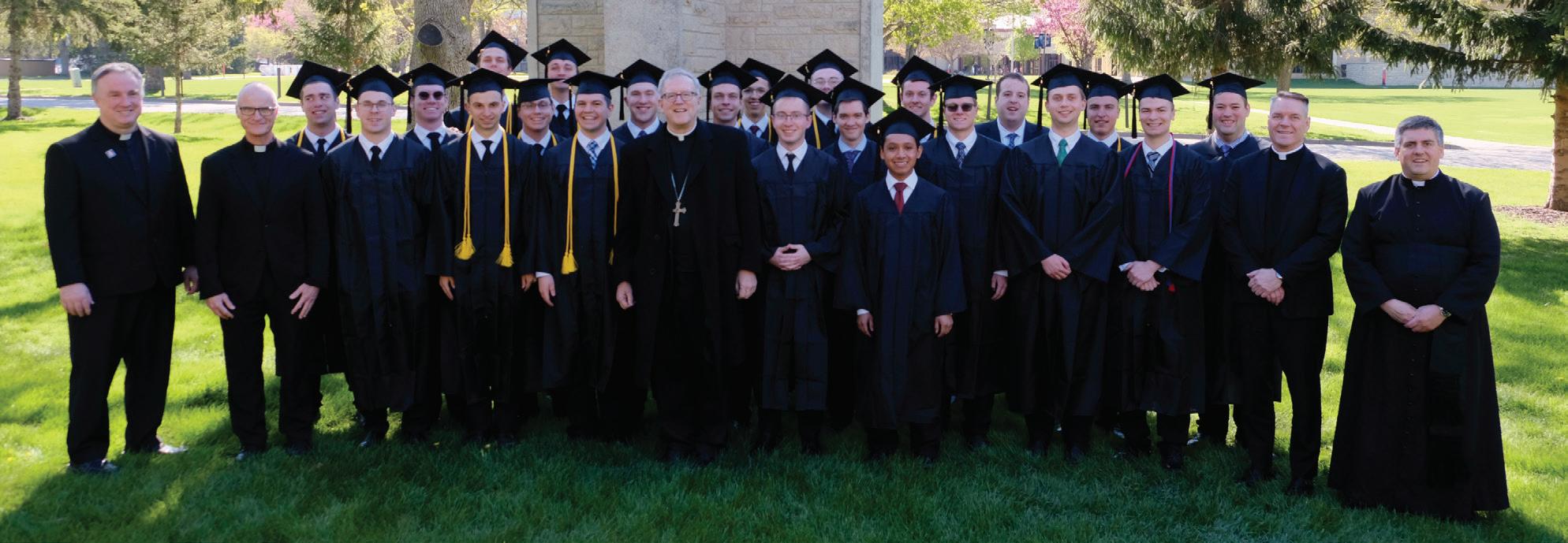
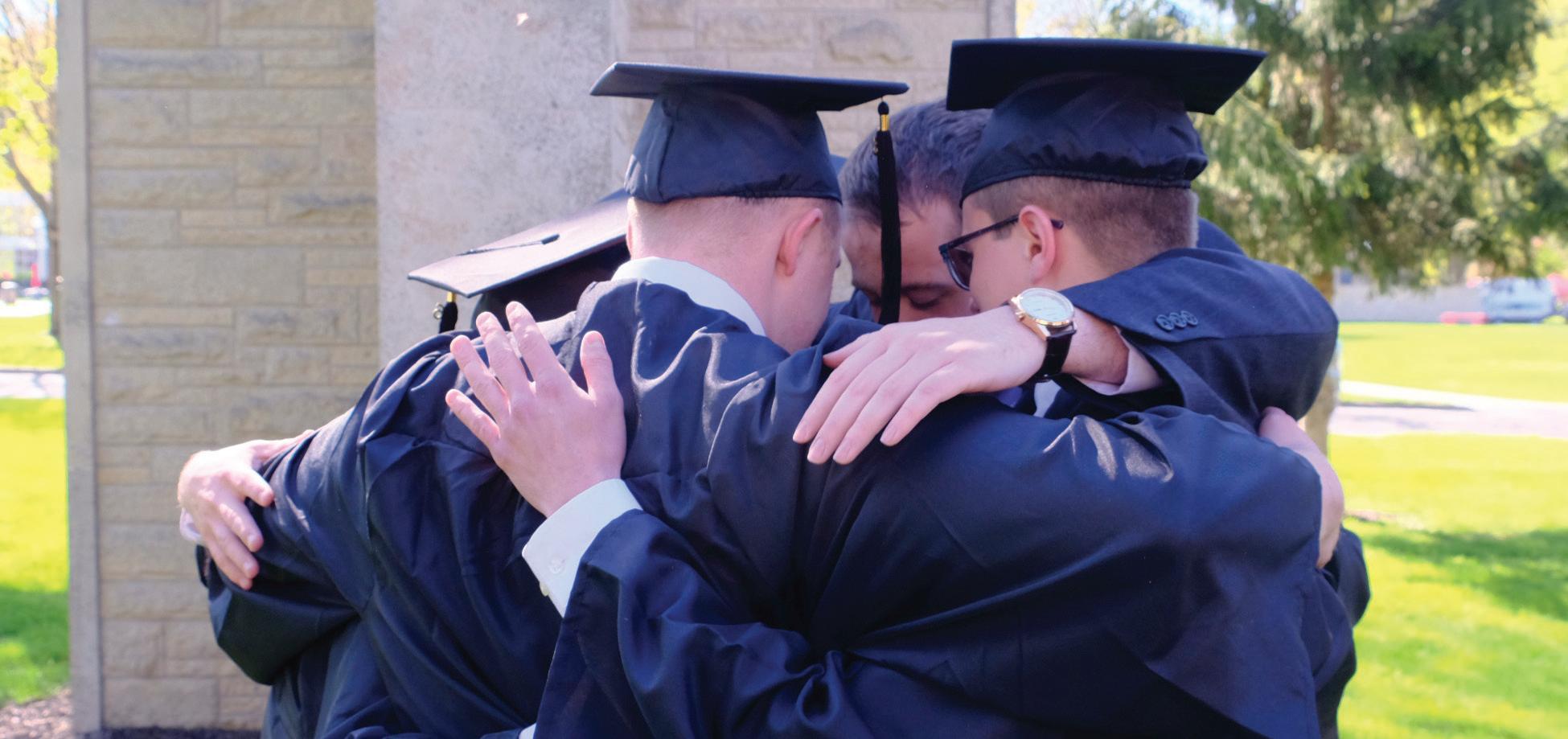
n the blink of an eye, another academic year has passed and Immaculate Heart of Mary Seminary (IHMS) celebrates another class of graduating seminarians.
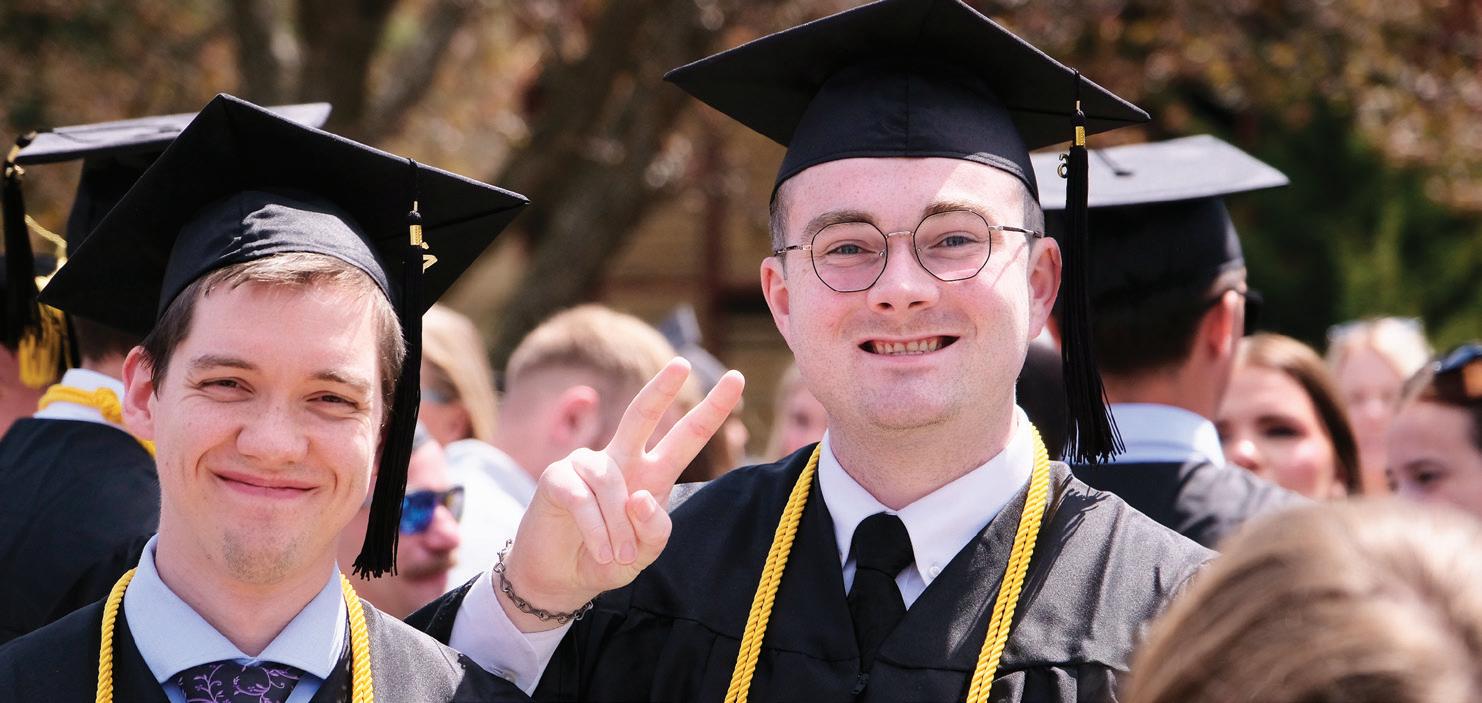
On May 2, IHMS was blessed to witness 21 seniors walk across stage during Saint Mary’s University’s graduation ceremony in Winona. We were fortunate to have so many seniors this year, to help lead 22 propaedeutic (freshman) seminarians, one of the largest propaedeutic cohorts IHMS has seen in almost a decade. It was a joy to watch them as they guided the new seminarians just as their seniors did for them.
The graduation weekend began with the May
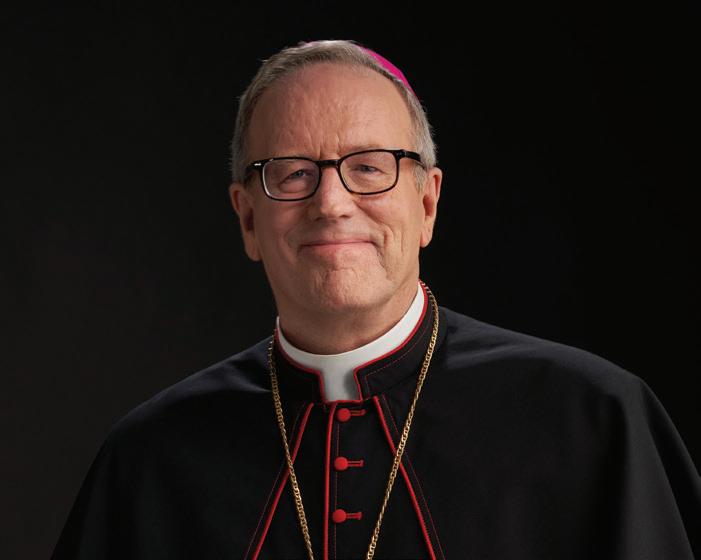
Crowning of the Blessed Virgin Mary, a tradition that honors our most Blessed Mother near Mother’s Day. IHMS was blessed to have Bishop Barron present to lead the ceremony and join the formators, seniors, and their families for the annual Baccalaureate Mass in St. John Vianney Chapel. A beautiful commencement ceremony took place the following day as the graduates walked across stage and celebrated their academic achievements throughout their time at IHMS and Saint Mary’s University. We thank all those who have followed the journey of these men and have supported them spiritually, emotionally and financially. We are forever grateful for the love and strength your support has provided, and we ask that
From Our Graduates
Graduating Seniors from DOW-R Catholic High Schools Reflect on the Impact of Catholic Education in Their Lives
� ongratulations to the 2026 graduates of the Diocese of Winona-Rochester's four Catholic high schools: Cotter in Winona, Lourdes in Rochester, Pacelli in Austin, and Loyola in Mankato. As they prepare for their next chapters, we've asked the following graduates to reflect on the Catholic education that has helped bring them this far.
Grayson Bickler Pacelli Catholic Schools
For as long as I can remember, a Catholic education has been a part of my life. It has helped shape who I am, not just as a student, but as a person. Going to a Catholic school like Pacelli means learning the same important subjects as anywhere else, while also learning values like kindness, respect, responsibility, and service to others. It teaches you how to succeed in life while staying grounded in your faith.
Faith is what makes the experience truly special. Without religion class, Mass days, prayer, the rosary, and Stations of the Cross, school would feel incomplete. It would be like a peanut but-
Graduates, cont'd on pg. 10 Farewell, cont'd on pg. 6
The Courier Insider
Magnifica Humanitas
By HANNAH BROCKHAUS, EWTN News
VATICAN CITY, May 25, 2026 - In his encyclical Magnifica Humanitas, published Monday, Pope Leo XIV calls on society and AI developers to implement “shared standards of social justice” in order for artificial intelligence to respect human dignity and serve the common good.
AI is not a morally neutral tool; it matters not only how it is used but how it is designed, Leo writes in “Magnifica Humanitas: On Safeguarding the Human Person in the Time of Artificial Intelligence,” published May 25. Magnifica humanitas means “magnificent humanity” in Latin.
He also warns that “a more moral AI is not enough if that morality is determined by a few … In fact, as with every major technological shift, AI tends to amplify the power of those who already possess economic resources, expertise, and access to data.”
The first encyclical letter of Leo XIV covers a wide range of social issues, focusing heavily on the impacts of AI in the areas of education, the economy, unemployment, work, the development of young people, human trafficking, and war.
He proposes the principles of Catholic social doctrine - the dignity of the person, the common good, the universal destination of goods, subsidiarity, solidarity, and justice - as guidelines for decision-making and the “criteria for judging whether technologies truly serve humanity or are subjugating it.”
While rejecting dichotomous thinking that pits the opportunities of AI against its risks, or enthusiasm against fear, Leo offers a stark assessment of the technological paradigm the world finds itself in today and describes a path of progress that serves people “or a progress that subjects them to the mentality of power.”
“The risk extends beyond the misuse of certain technologies. More gravely, the pervasive technocratic paradigm in which we are immersed, and that is amplified by the digital revolution and AI, threatens to normalize an antihuman vision,” he writes.
Leo borrows the term “technocratic paradigm” from Pope Francis’ 2015 encyclical Laudato Si', in which, Leo writes, Francis critiqued a paradigm “that seeks to reduce everything to an object to be dominated.”
In that antihuman vision, he continues, “the fullness of life is equated with having more, reducing weakness, eliminating uncertainty, and exerting total control. When efficiency becomes the ultimate measure of value, human beings are tempted to see themselves as a project to be optimized rather than as persons called to relationship and communion.”
According to Pope Leo, the central question - safeguarding our humanity - is something everyone should have a role in answering.
He invokes one of his spiritual guides, St. Augustine of Hippo, quoting from “De Civitate Dei” (“The City of God”): “‘Two loves have built two cities: the earthly city, the love of self even to the contempt of God; the heavenly city, the love of God even to the contempt of self.’ As throughout history, these two loves continue to contend for dominance in our hearts today.”
From Catholic Social Doctrine to the Fight for Power
The encyclical’s 245 paragraphs are broken down into an introduction and five chapters, with the first two dedicated to an explanation of the development of the Church’s social doctrine from Pope Leo XIII to today, the main principles of that doctrine, and how they can be applied to the current technological age.
Chapter 3 introduces “the technocratic paradigm” of artificial intelligence and the imbalance of digital power.
Chapter 4 turns to the importance of safeguarding truth, democracy, work, education, and human freedom in the age of AI, while the fifth chapter is dedicated to an analysis of the normalization of war, the fight for power, and how everyone has a responsibility to help build a civilization of love through the cultivation of peace and justice.
Throughout the encyclical, Leo draws on the image of construction to ask how humanity will respond to the new technological age. Humanity, he says, must choose between building the Tower of Babel (Genesis 11:1-9) and building a city where God and humanity can dwell together, as Nehemiah gathered together people to rebuild the walls of Jerusalem after the Babylonian exile (Nehemiah 2-6).
“In light of these two images, the Holy Spirit challenges us today regarding our relationship with technology and the ongoing digital revolution,” he writes. “Technology has the power to heal, connect, educate, and protect our common home; but it can also divide, exclude, and generate new forms of injustice.”
Pope Leo XIV draws on quotations from
• Hard copies are distributed at DOW-R parishes on the first or second weekend of each month.
• An online version may be viewed at www.dowr.org/offices/courier/index.html
• To be added to the home delivery list free of charge, readers should send their names and addresses to:
Diocese of Winona-Rochester The Courier 2907 Jeremiah Lane NW Rochester, MN 55901 or nreller@dowr.org
prominent 19th- and 20th-century thinkers, both Catholic and Jewish, including St. John Paul II, Victor Frankl, Hannah Arendt, J.R.R. Tolkien, Giorgio La Pira, and Father Romano Guardini, to argue that while technology is not a solution in itself to humanity’s problems, nor is it inherently evil.
“In practice, however, technology is never neutral, because it takes on the characteristics of those who devise it, finance it, regulate it, and use it,” he writes.
The choice, he continues, is not between a “yes” or “no” to technology but “between constructing Babel or rebuilding Jerusalem; between a power that claims to dominate the heavens and a people who work together in the presence of God to rebuild the walls of fraternal coexistence.”
Frequently cited sources for the encyclical letter include Pope Benedict XVI’s encyclical Caritas in Veritate and the Compendium of the Social Doctrine of the Church.
Writing that he does not wish to give a comprehensive overview of AI, the pope points readers to previous writings by the Church on AI, in particular, the 2025 note Antiqua et Nova by the Dicastery for the Doctrine of the Faith and the Dicastery for Culture and Education and Quo Vadis, Humanitas?, published earlier this year by the International Theological Commission - both of which are cited often in the footnotes of Magnifica Humanitas
Christian Humanism and the Technocratic Paradigm
The pope writes about the mindsets of transhumanism and Magnifica Humanitas, cont'd on pg. 13
Child Abuse Policy Information
117 - 6
Most Reverend Robert E. Barron, Publisher
Nick Reller, Associate Editor
Telephone: 507-361-3068 E-mail: nreller@dowr.org
Publishing Schedule: Monthly - Deadline for advertising & articles is the 10th of the month prior.
(ISSN 0744-5490)
The Diocese of Winona-Rochester will provide a prompt, appropriate and compassionate response to reporters of sexual abuse of a child by any diocesan agent (employees, volunteers, vendors, religious or clergy). Anyone wishing to make a report of an allegation of sexual abuse should call the Victim Assistance Coordinator at 507-454-2270, Extension 255. A caller will be asked to provide his or her name and telephone number. Individuals are also encouraged to take their reports directly to civil authorities. The Diocese of Winona-Rochester is committed to protecting children, young people and other vulnerable people in our schools, parishes and ministries. The diocesan policy is available on the diocesan web site at www.dow.org under the Safe Environment Program. If you have any questions about the Diocese of Winona-Rochester’s implementation of the Charter for the Protection of Children and Young People, please contact Michael Gerard at 507-361-3377, or mgerard@dowr.org.
The Courier is the official publication of the Diocese of Winona-Rochester 2907 Jeremiah Lane NW, Rochester, MN, 55901 Vol
June Saint St. Germana Cousin
Feast Day: June 15
s
t. Germana Cousin’s life was filled with hardship and suffering, yet her deep trust in God led to a life of holiness. Born in the late 16th century in the small village of Pibrac, France, she suffered from birth defects and disease. After the death of her mother, Germana was neglected by her stepmother and ignored by her father. Afflicted with scrofula, a painful disease that disfigured her hand, she was often isolated and made to sleep in the stable.
Given the task of tending sheep, Germana spent long hours alone in the fields. Rather than becoming bitter, she transformed her solitude into prayer. She developed a profound relationship with God, frequently praying the Rosary and lifting her heart to
The
Holy
Father's Intention for June 2026
For the Values of Sports
Let us pray that sports be an instrument of peace, encounter, and dialogue among cultures and nations, and that they promote values such as respect, solidarity, and personal growth.
Him throughout the day. Her love for the Eucharist was strong, and she strived to attend Mass, although it often required sacrifice.
Despite her poverty, Germana showed remarkable charity. She shared what little food she had with those poorer than herself. According to tradition, when she was accused of taking bread to give away, the food in her apron was miraculously revealed as flowers.
Germana’s faith was simple but unwavering. She entrusted herself completely to God, accepting suffering with patience and offering it in love. Though overlooked in life, her holiness became widely known after her death at the age of 22 in 1601.
When her body was exhumed decades later, it was found to be incorrupt, leading to increased devotion and recognition of her sanctity. She was
Germana’s generosity and trust in God despite unjust accusations.
What Other Miracles
Did St. Germana Perform?
Other reported miracles include the parting of a flooded river to allow her to attend Mass and the protection of her sheep from wolves through prayer. After her death, her body was discovered to be incorrupt, meaning it had not decomposed as expected. More than four hundred healing miracles were attributed to her intercession.
How Is St. Germana Depicted in Sacred Art?
St. Germana is most often depicted as a youngtimes accompanied by sheep. She may also be shown carrying a Rosary or holding flowers, recalling the miracle associated with her life. In some images, her
dition. These artistic elements highlight
ity and her deep spiritual beauty, showing how grace transformed her life despite outward hardship. Although some art highlights her early life and depicts her physicalditions portray her as glorified, healed, and
This Month in The Courier Archives
---------------------------------25, 50 & 75 Years
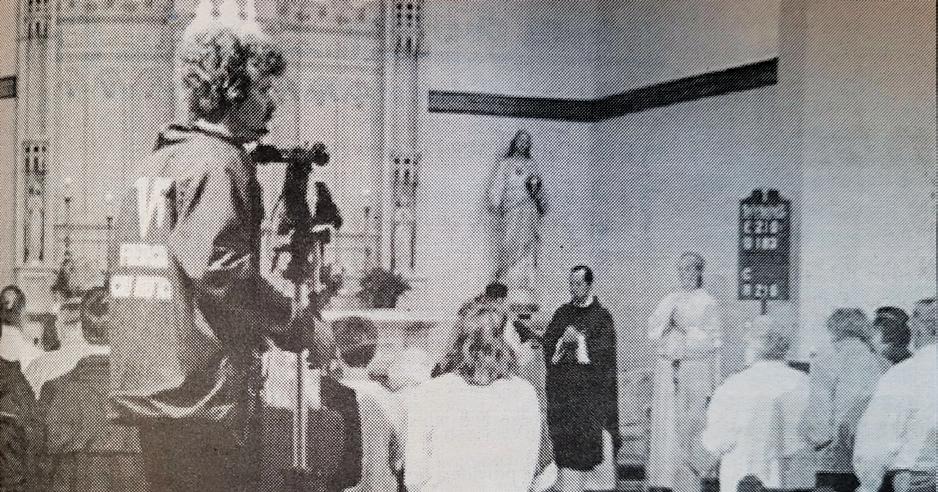
As the cameras roll, Father Thien Nguyen celebrates a Sunday Televised Mass at All Saints Church in New Richland, the featured parish for the TV Mass the last two Sundays in July. The first two Sundays of July will be done at St. Aidan's in Ellendale. Other parishes hosting upcoming TV Masses are St. Joseph in Waldorf, Sacred Heart in Heron Lake, St. Joseph in Lakefield, and St. Mary in Geneva. The Sunday Televised Mass is produced by the diocesan Communications Office as a service of the Diocese of Winona, and is supported by viewer contributions and by gifts to the Annual Diocesan Appeal.
Reprinted from June 2001.
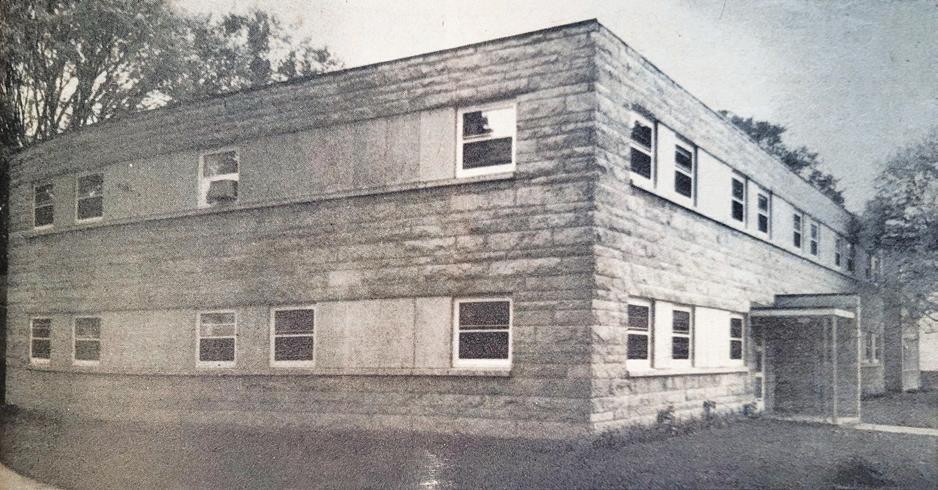
The Diocese of Winona, as part of its plan to move the Bishop's residence and the Chancery, took possession of the Cathedral of the Sacred Heart Convent, 55 West Sanborn Street, Winona, on June 21.
Bishop Loras Watters, announcing the conclusion of negotiations with the Cathedral of the Sacred Heart Parish, said that the diocese is purchasing the convent building for $150,000.
The Chancery, which is the administrative headquarters for the bishop and his staff, and the Bishop's residence, which is adjacent to the Chancery, are currently located at 275 and 255 Harriet Street, respectively.
The current Chancery and Bishop's residence, both three-story wood structures, are for sale. Together they have been appraised at about $165,000. [...] Reprinted from June 25, 1976.
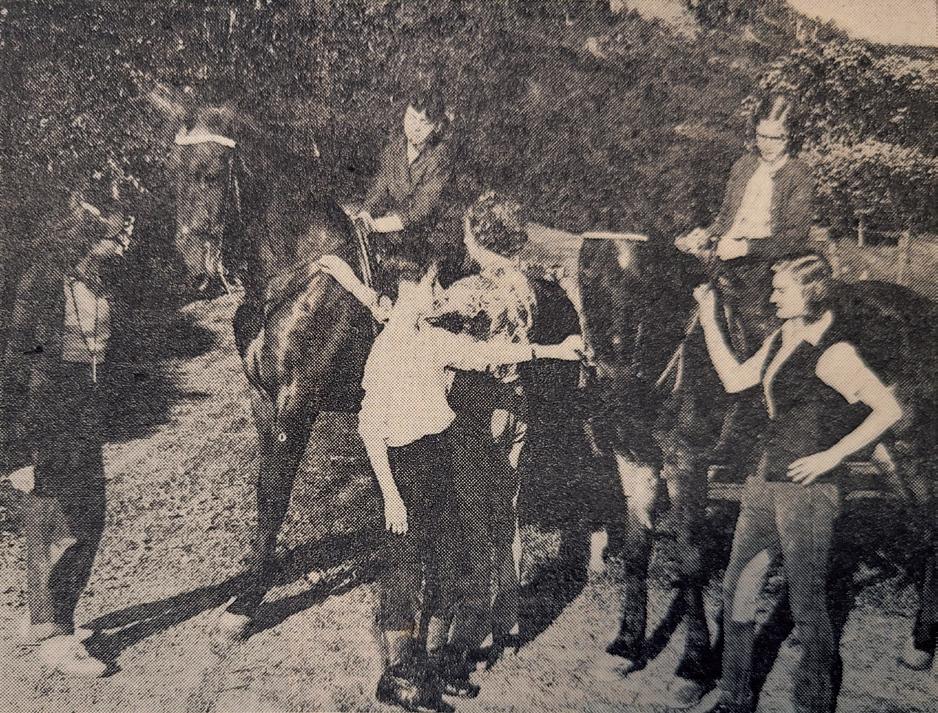
In a new program, the Winona Catholic Recreational Center's 30 teenagers are enjoying riding and riding instruction at the Winona Saddle and Bridle Club. Miss Frances Kroner, far right, women's activity director, is shown above explaining how to check on tack. From the left, mounted, are Phyllis Cunningham and Carol Joswick; standing, Madelyn Chouinard, Michael McCormick and Mrs. E. J. Holehouse, a manager at the Saddle and Bridle Club.
Reprinted from June 17, 1951.
From the Bishop
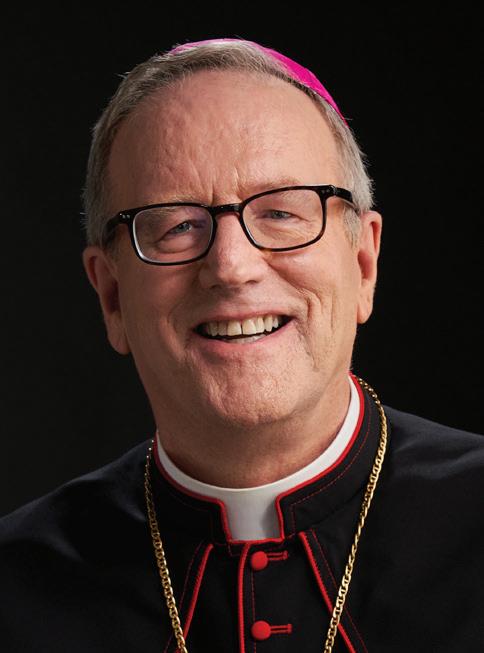
Below is the address Bishop Barron gave at the 250 Rededicate event in Washington, D.C., on May 17, in honor of our nation’s 250th anniversary.
abraham Lincoln carefully added the phrase "under God" to the Gettysburg Address when he was actually delivering the speech: "that this nation, under God, shall have a new birth of freedom." We know this because the earliest written versions, prepared in advance, do not have the phrase. What was it that prompted our greatest president to add these words? Was it intended simply as pious boilerplate? Or did it signal something of central importance?
I believe that Lincoln intuited, even as he gave his most significant speech, that this theological addition was crucial to the point he was trying to make about our country. He knew that God is essential to any coherent account of democracy, freedom, and equality. On this great 250th anniversary of our country's founding, I should like to say just a few words about this relationship between belief in God and the coherence of a democratic system.
Let us look, first, at the great American principle of equality. Through the famous phrase "four score and seven years ago," Lincoln was drawing the attention of his audience to the founding, more precisely to the hot summer of 1776 when a young Virginia lawyer was laboring over a
*indicates event open to public
June 2, Tuesday
8:00 a.m. - Catholic University of America Fellows MeetingZoom
2:00 p.m. - DOW-R Finance Council - The Chancery, Rochester
June 4-5, Thursday-Friday
Called and Sent Diocesan Gathering - St. Mary's University, Winona
One Nation Under God
rather significant text. In the prologue to the Declaration of Independence, Thomas Jefferson wrote, "we hold these truths to be self-evident, that all men are created equal."
The words slip too easily through our minds, due to their familiarity. But we ought to de-familiarize them. In what sense precisely are all people equal? In point of fact, our inequalities seem much more obvious. We are not equal in size, intelligence, creativity, beauty, energy, moral virtue, accomplishment, etc. And in classical political philosophy, the basic inequality of people is taken for granted. In fact, in both Plato and Aristotle, the recognition of these differences is key to the establishment of right social order. For Plato, only a handful of specially gifted people are capable of government, and for Aristotle, most people are suited either for slavery or for what he called "private life." Only a small group of truly excellent people are capable of the public life. If you had suggested to either Plato or Aristotle that it is self-evident that all people are equal, they would have laughed at you.
So what happened? Though our founding fathers were indeed influenced by the classical political philosophers, they were also heirs to another tradition, namely, that of the Bible. And Jefferson gives away the game when he slips a simple but very telling word into his formulation: "all men are created equal."
What Jefferson and the other founders knew from their Christian formation is that all people, despite their enormous inequalities, are equally children of God and therefore equal in human dignity. Take God out of the equation and equality quickly disappearsand this is evident in polities both ancient and modern. Take God out of the equation and certain individuals and groups will quickly become
June 5, Friday
*2:00 p.m. - Presbyteral Ordination - Basilica of St. Stanislaus Kostka, Winona
June 6, Saturday Mass and Lunch with Totus Tuus Missionaries - The Chancery, Rochester
June 7, Sunday
*10:30 a.m. - Corpus Christi Mass - Resurrection, Rochester
marginalized, manipulated, abused, disenfranchised. Lincoln knew the importance of this: "dedicated to the proposition that all men are created equal." Our nation was conceived under this principle and we fought the Civil War over it.
At Gettysburg, Lincoln said that our nation was "conceived in liberty," and he expressed his hope that it would have "a new birth of freedom." Jefferson said that all people are "endowed by their Creator with certain inalienable rights. Among these are life, liberty, and the pursuit of happiness." So, I want to talk about freedom, but permit me to say a word first about rights in general.
We take the language of rights so for granted that we don't realize how strange it is. If you had asked a person from the ancient world if all people had fundamental rights, he would have frowned at you. Some people have rights and prerogatives, but most people should do what they're told. Plato thought that the Guardians should have strict control over the lives of the auxiliaries and the common people (artisans and farmers). And Aristotle, as we saw, thought that the vast majority of human beings had no business participating in government.
So what happened? Again, there is a phrase in the Declaration that gives away the game: "endowed by their Creator." Where do our rights come from? They don't come from the government or through political consensus or through majority vote. They come from God and therefore they belong to everyone. If they came through any of those other routes, they could be rescinded. And of course, this very denial of rights has been on vivid display in numerous countries in the last century. It should not be surprising that these were precisely countries that denied the existence of
June 10-12, WednesdayFriday
USCCB Assembly - Orlando, FL
June 16, Tuesday
Minnesota Catholic Conference Board Meeting - St. Paul, MN
Wednesday, June 17
St. Paul Street EvangelizationRochester
Thursday, June 18
1:00 p.m. - Immaculate Heart of Mary Seminary Finance
God.
But let us focus on the particular right that Lincoln highlighted at Gettysburg: liberty. We are indeed the land of the free: we have a Liberty Bell; we reverence a Declaration of Independence; the highest civilian honor the President can bestow is a Medal of Freedom, etc.
Why is freedom such an important thing? It is essential to human dignity. No one wants to be under the boot of someone else; no one wants to be oppressed, put down, ignored, bossed around. And if everyone has the dignity of a child of God, then everyone has a right to freedom.
But there is more. Freedom is the condition for the possibility of love, and love is what makes us fully alive. Thomas More said that God made the plants for their simplicity and the animals for their innocence; "but man he made to serve him wittily in the tangle of his mind." He could have added "and in the decisions of his will." God could have made us automotons, but automotons are incapable of love. If you're forced to love, you're not really loving.
And this points to an even deeper truth. There are two very distinct understandings of freedom. The first I might call "freedom of indifference." This is the liberty to decide what I will do simply on the basis of my own private choice. It is arbitrary freedom, pure freedom of choice. And it is what most people today understand by the term.
But the Bible and the classical tradition and the Founders of our country had a different understanding of freedom. I will call it "freedom for excellence." This is not so much liberty of choice but rather "the disciplining of desire so as to make the achievement of the good first possible and then effortless."
Council - IHM Seminary, Winona
Sunday, June 21
*8:00 a.m. - Mass - Holy Redeemer, Eyota
Monday, June 22
Premier Banks Clergy Golf Outing - Owatonna
Sunday, June 28
*9:30 a.m. - Mass - Co-Cathedral of St. John the Evangelist, Rochester
Think of the way in which someone becomes, over time, a free speaker of a language or a free player of a musical instrument. In both cases, the value of the language or the instrument works its way so thoroughly into the mind, heart, and body of someone that it becomes second nature to him.
On the first reading of freedom, law is, at best, a necessary evil, something accepted faute de mieux ("for lack of something better"). But
Officials
The Most Rev. Robert Barron, Bishop of the Diocese of WinonaRochester, announces the following:
Pastor
Rev. Mariano Ruiz, IVE: appointed Pastor of St. James Parish in St. James and St. Mary Parish in Madelia, effective June 1, 2026.
Parochial Vicar
Rev. Jaime Abúndiz, IVE: appointed Parochial Vicar of St. James Parish in St. James and St. Mary Parish in Madelia, in addition to Ss. Peter and Paul Parish in Mankato, effective June 1, 2026.
Diaconal Ministry
Rev. Mr. Gabriel Rysavy: ordained a transitional deacon for the Diocese of WinonaRochester on May 23, 2026; appointed to diaconal ministry at St. Francis of Assisi Parish in Rochester, effective May 24, 2026, through the coming school year.
Non Nisi Te Domine
Bishop Robert Barron
Bishop's Calendar
Under God, cont'd on pg. 5
on the second reading, law is the friend of freedom, for it shapes desire in accord with the good. Might I submit that this is the kind of freedom that the Founders are talking about; this is the freedom that Lincoln is extolling and for the re-birth of which he is calling?
In the prologue to the declaration, Jefferson referenced "the laws of Nature and of Nature's God." Can we see now how this reference to law is perfectly congruent with the emphasis on freedom, once we understand the kind of freedom Jefferson intends? What are the "laws of nature" to which Jefferson refers? This is an ancient idea, repeated by the medieval scholastics, and reverenced by the Founders' teachers, that there are moral principles discoverable through reason and embedded in the very nature of human beings. Life, friendship, art, play, knowledge, religion, etc.
These are the goods that order human freedom.
Now, where do these values come from? They come, Jefferson insists, from "Nature's God." There is an eternal law that grounds the natural law that informs the positive law which gives order to freedom.
Thomas Aquinas saw the three types of law in a kind of Russian doll, nesting relationship.
And lest this sound too medieval, permit me to draw your attention to a piece of writing from one of the very greatest Americans, a man who stood, in the late summer of 1963 on the steps of Lincoln's memorial and shared his dream of racial equality with America. A short time before that address, Martin Luther King wrote a letter to a group of white Christian ministers who were skeptical of his methods during the civil rights era. From the Birmingham jail, where he was incarcerated,
King responded.
He said that he couldn't delay in his protest, for he was fighting against unjust laws, which amount finally to an affront against God. Listen to what he said, "One may well ask: ‘How can you advocate breaking some laws and obeying others?’ The answer lies in the fact that there are two types of laws: just and unjust. I would be the first to advocate obeying just laws. One has not only a legal but a moral responsibility to obey just laws.
But then King contrasts this with obedience to an unjust law: “Conversely, one has a moral responsibility to disobey unjust laws. I would agree with St. Augustine, “an unjust law is no law at all.”
And in clarifying the difference, he turns to St. Thomas Aquinas: “Now, what is the difference between the two? How does one determine
Una nación bajo Dios
por EL OBISPO ROBERT BARRON
A continuación se incluye el discurso que pronunció el obispo Barron en el acto «250 Rededicate», celebrado en Washington D. C. el 17 de mayo, en honor al 250.º aniversario de nuestra nación:
abraham Lincoln añadió cuidadosamente la frase «bajo Dios» al discurso de Gettysburg en el momento mismo de pronunciarlo: «que esta nación, bajo Dios, renazca a la libertad». Lo sabemos porque las primeras versiones escritas, preparadas con antelación, no incluyen esa frase. ¿Qué fue lo que llevó a nuestro más grande presidente a añadir esas palabras? ¿Se trataba simplemente de una fórmula piadosa de rigor? ¿O señalaba algo de importancia fundamental?
Creo que Lincoln intuyó,
incluso mientras pronunciaba su discurso más significativo, que este matiz teológico era crucial para el argumento que intentaba exponer sobre nuestro país. Sabía que Dios es esencial para cualquier explicación coherente de la democracia, la libertad y la igualdad. En este gran 250.º aniversario de la fundación de nuestro país, me gustaría decir unas pocas palabras sobre esta relación entre la fe en Dios y la coherencia de un sistema democrático.
Analicemos, en primer lugar, el gran principio estadounidense de la igualdad. Con la famosa frase «hace ochenta y siete años», Lincoln llamaba la atención de su audiencia sobre la fundación, más concretamente sobre el caluroso verano de 1776, cuando un joven abogado de Virginia se afanaba en la redacción de un texto de gran importancia. En el prólogo de la Declaración
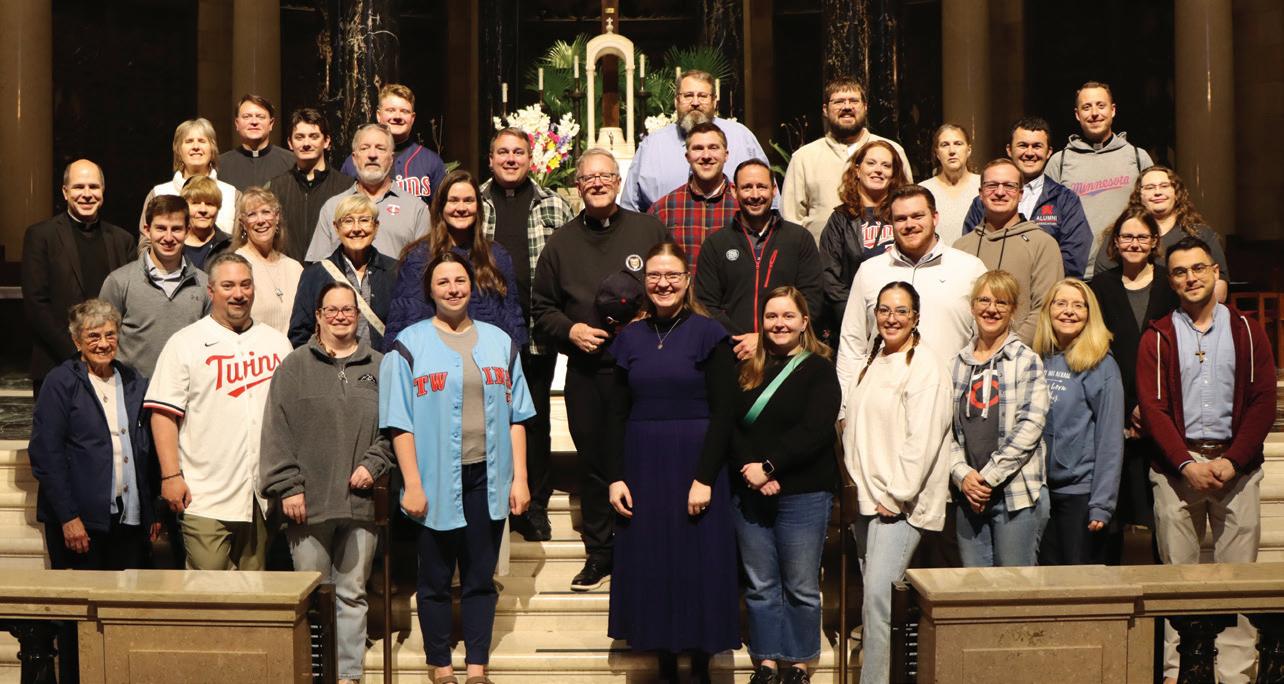
On May 20, B�shop Barron celebrated his 40 anniversary of priesthood with diocesan and Word on Fire staff, with a Twin Cities field trip, featuring Mass at the Cathedral of St. Paul, followed by a Twins game at Target Field.
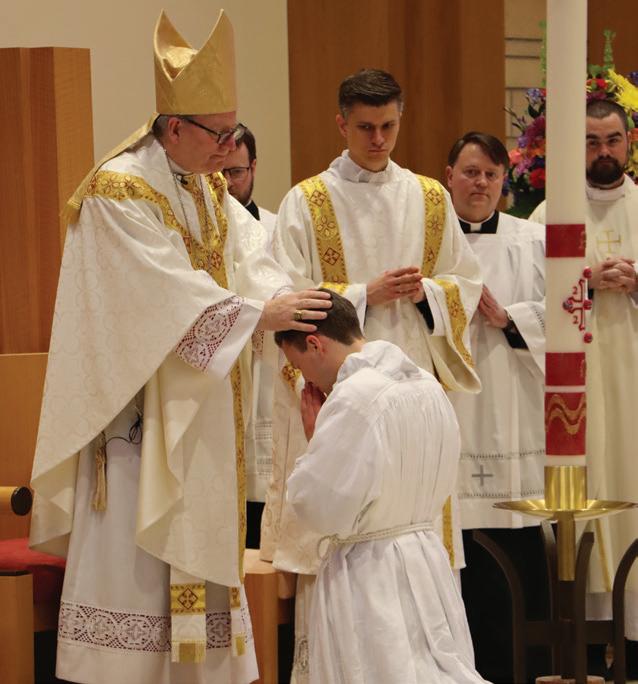
On May 23, he ordained Gabriel Rysavy a transitional deacon for the Diocese of Winona-Rochester at the Co-Cathedral of St. John the Evangelist in Rochester. Deacon Gabriel will now minister to St. Francis of Assisi Parish in Rochester for one year before, God-willing, he is ordained a priest. Watch for more in-depth ordination coverage next month!
whether a law is just or unjust?
A just law is a manmade code that squares with the moral law or the law of God. An unjust law is a code that is out of harmony with the moral law. To put it in the terms of St. Thomas Aquinas: An unjust law is a human law that is not rooted in eternal law and natural law.”
What could be more American than King’s letter and what could be more redolent of the spiritual tradition? He was an American political figure but he was entirely inspired by the call to serve justice, which he had received as a young man from God. And he saw clearly the link between freedom for his people and subservience to the law, properly understood.
Conclusion
I know it has been mentioned often, but I believe it bears repeating: there is an enormous difference between the French
and American revolutions. Both were events at the end of the 18th century; both were conditioned by the Enlightenment. But whereas the French Revolution involved a break with religion and an overt hostility to religious institutions, the American did not. And whereas the French Revolution deified human reason, the American did not. The Parisian revolutionaries turned Notre Dame Cathedral into a "Temple of Reason," but the American revolutionaries, almost to a man, were conditioned by Biblical assumptions and convictions. And this is precisely why I can stand on this National Mall today as both a proud Catholic bishop and a proud American citizen and say, "God bless the United States of America."
de Independencia, Thomas Jefferson escribió: «Sostenemos como evidentes estas verdades: que todos los hombres son creados iguales». Estas palabras se nos escapan con demasiada facilidad de la mente, debido a lo familiares que nos resultan. Pero deberíamos deshabituarnos de ellas. ¿En qué sentido, exactamente, son todas las personas iguales? De hecho, nuestras desigualdades parecen mucho más evidentes. No somos iguales en cuanto a estatura, inteligencia, creatividad, belleza, energía, virtud moral, logros, etc. Y en la filosofía política clásica, la desigualdad básica entre las personas se da por sentada. De hecho, tanto para Platón como para Aristóteles, el reconocimiento de estas diferencias es clave para el establecimiento de un orden social adecuado. Para Platón, solo un puñado de per-
sonas especialmente dotadas son capaces de gobernar, y para Aristóteles, la mayoría de las personas son aptas o bien para la esclavitud o bien para lo que él llamaba «vida privada». Solo un pequeño grupo de personas verdaderamente excelentes son capaces de llevar una vida pública. Si le hubieras sugerido a Platón o a Aristóteles que es evidente por sí mismo que todas las personas son iguales, se habrían reído de ti.
¿Qué ocurrió entonces?
Aunque nuestros padres fundadores se vieron indudablemente influenciados por los filósofos políticos clásicos, también eran herederos de otra tradición, a saber, la de la Biblia. Y Jefferson se revela cuando introduce una palabra sencilla pero muy reveladora en su formulación: «todos los hombres son creados iguales».
Lo que Jefferson y los demás fundadores sabían por su formación cristiana es que todas las personas, a pesar de sus enormes desigualdades, son igualmente hijos de Dios y, por lo tanto, iguales en dig-
nidad humana. Si se elimina a Dios de la ecuación, la igualdad desaparece rápidamente, y esto es evidente tanto en las sociedades antiguas como en las modernas. Si se elimina a Dios de la ecuación, ciertos individuos y grupos se verán rápidamente marginados, manipulados, maltratados y privados de sus derechos. Lincoln era consciente de la importancia de esto: «dedicados a la proposición de que todos los hombres son creados iguales». Nuestra nación fue concebida bajo este principio y luchamos en la Guerra Civil por él.
En Gettysburg, Lincoln dijo que nuestra nación había sido «concebida en libertad» y expresó su esperanza de que viviera «un nuevo renacimiento de la libertad». Jefferson afirmó que todas las personas «han sido dotadas por su Creador de ciertos derechos inalienables. Entre ellos se encuentran la vida, la libertad y la búsqueda de la felicidad». Por eso, quiero hablar de la libertad, pero
Bajos Dios, cont'd on pg. 6
6
Farewell, cont'd from pg. 1
you continue to pray for this group of men as they continue to the next chapter of their formation.
In the 2026-27 formation year, IHMS graduates in formation for ministry in the Diocese of WinonaRochester will be in the following locations: Michael Rahm: Pontifical North American College in Rome, Italy
Bajos Dios,
cont'd from pg. 5
permítanme decir primero unas palabras sobre los derechos en general.
Damos por sentado el lenguaje de los derechos hasta tal punto que no nos damos cuenta de lo extraño que es. Si le hubieras preguntado a una persona del mundo antiguo si todas las personas tenían derechos fundamentales, te habría mirado con el ceño fruncido. Algunas personas tienen derechos y prerrogativas, pero la mayoría debe hacer lo que se le dice. Platón pensaba que los Guardianes debían ejercer un control estricto sobre las vidas de los auxiliares y la gente común (artesanos y agricultores). Y Aristóteles, como hemos visto, pensaba que la gran mayoría de los seres humanos no tenían por qué participar en el gobierno. Entonces, ¿qué pasó? Una vez más, hay una frase en la Declaración que lo revela todo: «otorgados por su Creador». ¿De dónde proceden nuestros derechos? No proceden del gobierno, ni de un consenso político, ni del voto mayoritario. Proceden de Dios y, por lo tanto, pertenecen a todos. Si procedieran de cualquiera de esas otras vías, podrían ser revocados. Y, por supuesto, esta misma negación de los derechos ha quedado claramente de manifiesto en numerosos países durante el último siglo. No debería sorprender que se tratara precisamente de países que negaban la existencia de Dios.
Pero centrémonos en el derecho concreto que Lincoln destacó en Gettysburg: la libertad. Somos, sin duda, la tierra de los libres: tenemos una Campana de la Libertad; veneramos la Declaración de Independencia; el más alto honor civil que el presidente puede otorgar es la Medalla de la Libertad, etc. ¿Por qué es tan importante la libertad? Es esencial para la dignidad humana. Nadie quiere estar bajo el yugo de otra persona; nadie quiere ser oprimido, menospreciado, ignorado o mandoneado. Y si todos tienen la dignidad de un hijo de Dios, entonces todos tienen derecho a la libertad.
Pero hay más. La libertad es la condición para que el amor sea posible, y el amor es lo que nos hace sentir plenamente vivos. Tomás Moro dijo que Dios creó las plantas por su sencillez y a los animales por su inocencia; pero al hombre lo creó para que le sirviera con ingenio en la maraña de su mente. Podría haber añadido «y en las decisiones de su voluntad». Dios podría habernos creado como autómatas, pero los autómatas son incapaces de amar. Si te obligan a amar, no estás amando de verdad.
Y esto apunta a una verdad aún más profunda. Hay dos concepciones muy distintas de la libertad. A la primera la llamaría «libertad de indiferencia».
Stephen Ferrazzano, Jacob Fiala, Samuel Miron, Timothy Zappa: St. Paul Seminary in St. Paul, MN
Nicole Weninger is the marketing and communications associate for Immaculate Heart of Mary Seminary and the Catholic Foundation of Southern Minnesota.
Es la libertad de decidir lo que haré basándome simplemente en mi propia elección privada. Es una libertad arbitraria, pura libertad de elección. Y es lo que la mayoría de la gente entiende hoy en día por el término.
Pero la Biblia, la tradición clásica y los fundadores de nuestro país tenían una concepción diferente de la libertad. Yo la llamaré «libertad para la excelencia». No se trata tanto de la libertad de elección como de «la disciplina del deseo para que el logro del bien sea primero posible y luego natural». Piensa en la forma en que alguien llega a hablar con soltura un idioma o a tocar con soltura un instrumento musical con el paso del tiempo. En ambos casos, el valor del idioma o del instrumento se integra tan profundamente en la mente, el corazón y el cuerpo de alguien que se convierte en algo natural para él.
En una primera lectura de la libertad, la ley es, en el mejor de los casos, un mal necesario, algo aceptado a falta de algo mejor. Pero en una segunda lectura, la ley es amiga de la libertad, pues moldea el deseo de acuerdo con el bien. ¿Puedo sugerir que este es el tipo de libertad del que hablan los Fundadores; esta es la libertad que Lincoln ensalza y cuyo renacimiento está pidiendo?
En el prólogo de la Declaración, Jefferson hizo referencia a «las leyes de la Naturaleza y del Dios de la Naturaleza». ¿Podemos ver ahora cómo esta referencia a la ley encaja perfectamente con el énfasis en la libertad, una vez que comprendemos el tipo de libertad al que se refiere Jefferson? ¿Cuáles son las «leyes de la naturaleza» a las que se refiere Jefferson? Se trata de una idea antigua, repetida por los escolásticos medievales y venerada por los maestros de los Fundadores, según la cual existen principios morales que pueden descubrirse a través de la razón y que están arraigados en la propia naturaleza de los seres humanos. La vida, la amistad, el arte, el juego, el conocimiento, la religión, etc. Estos son los bienes que ordenan la libertad humana. Ahora bien, ¿de dónde proceden estos valores? Proceden, insiste Jefferson, del «Dios de la Naturaleza». Existe una ley eterna que fundamenta la ley natural que inspira el derecho positivo que da orden a la libertad. Tomás de Aquino veía los tres tipos de ley en una especie de relación anidada, como las muñecas rusas.
Y para que esto no suene demasiado medieval, permítanme llamar su atención sobre un texto de uno de los estadounidenses más destacados, un hombre que, a finales del verano de 1963, se subió a las escaleras del monumento a Lincoln y compartió con Estados Unidos su sueño de igualdad racial. Poco antes de ese discurso, Martin Luther King escribió una carta a un grupo de pastores cristianos blancos que se mostraban escépticos respecto a sus métodos durante la era de los derechos civiles. Desde la cárcel
de Birmingham, donde se encontraba encarcelado, King respondió.
Dijo que no podía retrasar su protesta, pues luchaba contra leyes injustas, lo que en última instancia equivale a una afrenta contra Dios. Escuchen lo que dijo: «Uno bien podría preguntarse: “¿Cómo puedes defender que se incumplan algunas leyes y se cumplan otras?” La respuesta radica en el hecho de que hay dos tipos de leyes: justas e injustas. Yo sería el primero en defender el cumplimiento de las leyes justas. Uno tiene no solo la responsabilidad legal, sino también la moral, de obedecer las leyes justas.
Pero luego King contrasta esto con la obediencia a una ley injusta: “Por el contrario, uno tiene la responsabilidad moral de desobedecer las leyes injustas. Estoy de acuerdo con San Agustín: “una ley injusta no es ley en absoluto”.
Y para aclarar la diferencia, recurre a santo Tomás de Aquino: «Ahora bien, ¿cuál es la diferencia entre ambas? ¿Cómo se determina si una ley es justa o injusta? Una ley justa es un código elaborado por el hombre que concuerda con la ley moral o la ley de Dios. Una ley injusta es un código que no está en armonía con la ley moral. Por decirlo en términos de Santo Tomás de Aquino: una ley injusta es una ley humana que no tiene sus raíces en la ley eterna y la ley natural».
¿Qué podría ser más estadounidense que la carta de King y qué podría evocar más la tradición espiritual? Era una figura política estadounidense, pero se inspiraba por completo en la llamada a servir a la justicia, que había recibido de Dios cuando era joven. Y veía claramente el vínculo entre la libertad de su pueblo y la sumisión a la ley, entendida correctamente.
Conclusión
Sé que se ha mencionado a menudo, pero creo que vale la pena repetirlo: hay una enorme diferencia entre la Revolución Francesa y la Revolución Americana. Ambas tuvieron lugar a finales del siglo XVIII; ambas estuvieron condicionadas por la Ilustración. Pero mientras que la Revolución Francesa supuso una ruptura con la religión y una hostilidad manifiesta hacia las instituciones religiosas, la estadounidense no fue así. Y mientras que la Revolución Francesa deificó la razón humana, la estadounidense no lo hizo.
Los revolucionarios parisinos convirtieron la catedral de Notre Dame en un «Templo de la Razón», pero los revolucionarios estadounidenses, casi sin excepción, estaban condicionados por supuestos y convicciones bíblicas. Y precisamente por eso puedo estar hoy aquí, en el National Mall, como orgulloso obispo católico y orgulloso ciudadano estadounidense, y decir: «Dios bendiga a los Estados Unidos de América».
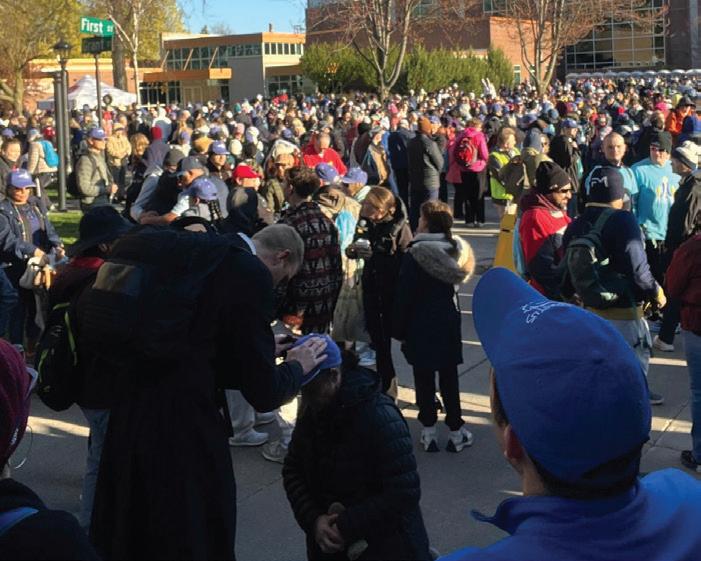
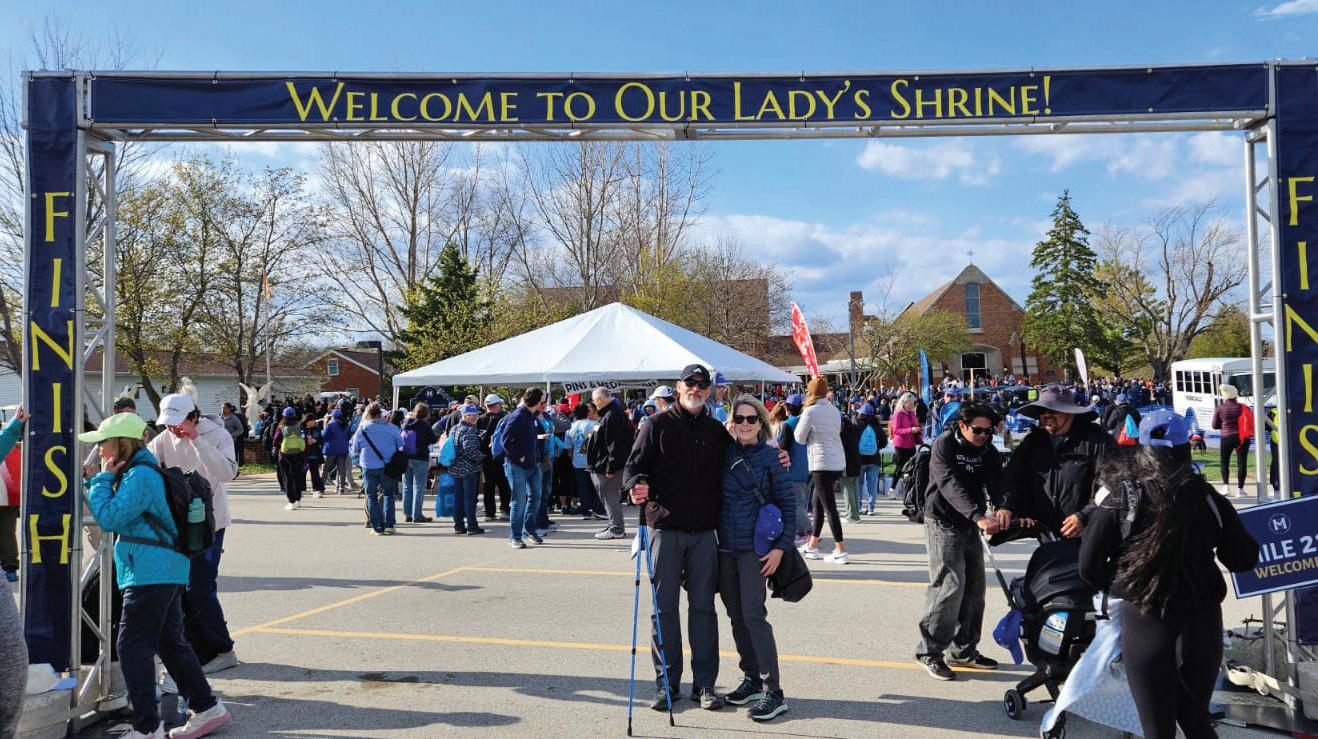
Diocese of Winona-Rochester Participates in the 2026 Walk to Mary
By BRIAN HANSEN
I am the Queen of Heaven who prays for the conversion of sinners.... Make a general confession and offer Communion for the conversion of sinners. If they do not convert and do penance, my Son will be obliged to punish them.
-Our Lady of Champion, to Adele Brise
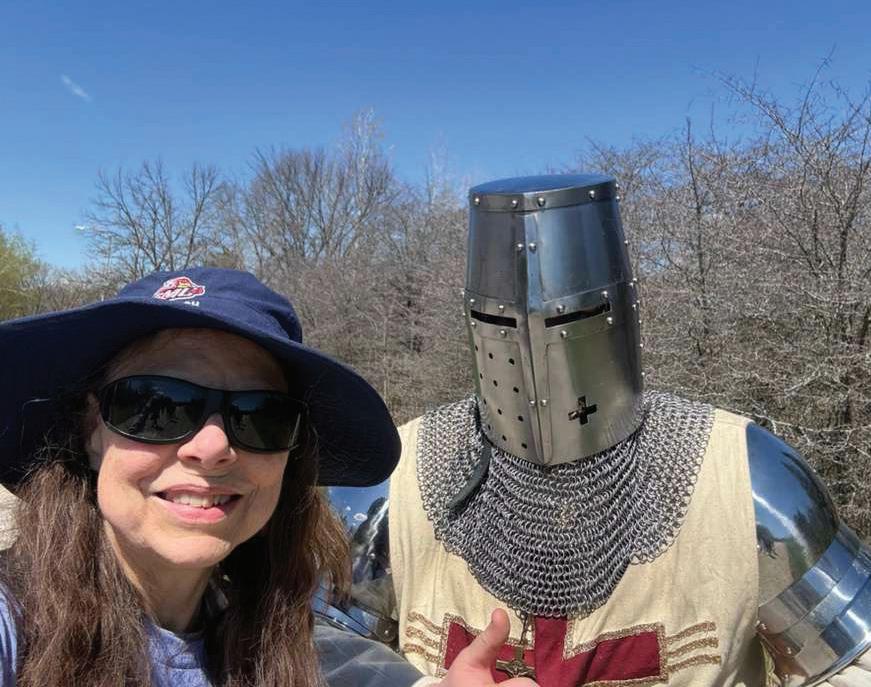
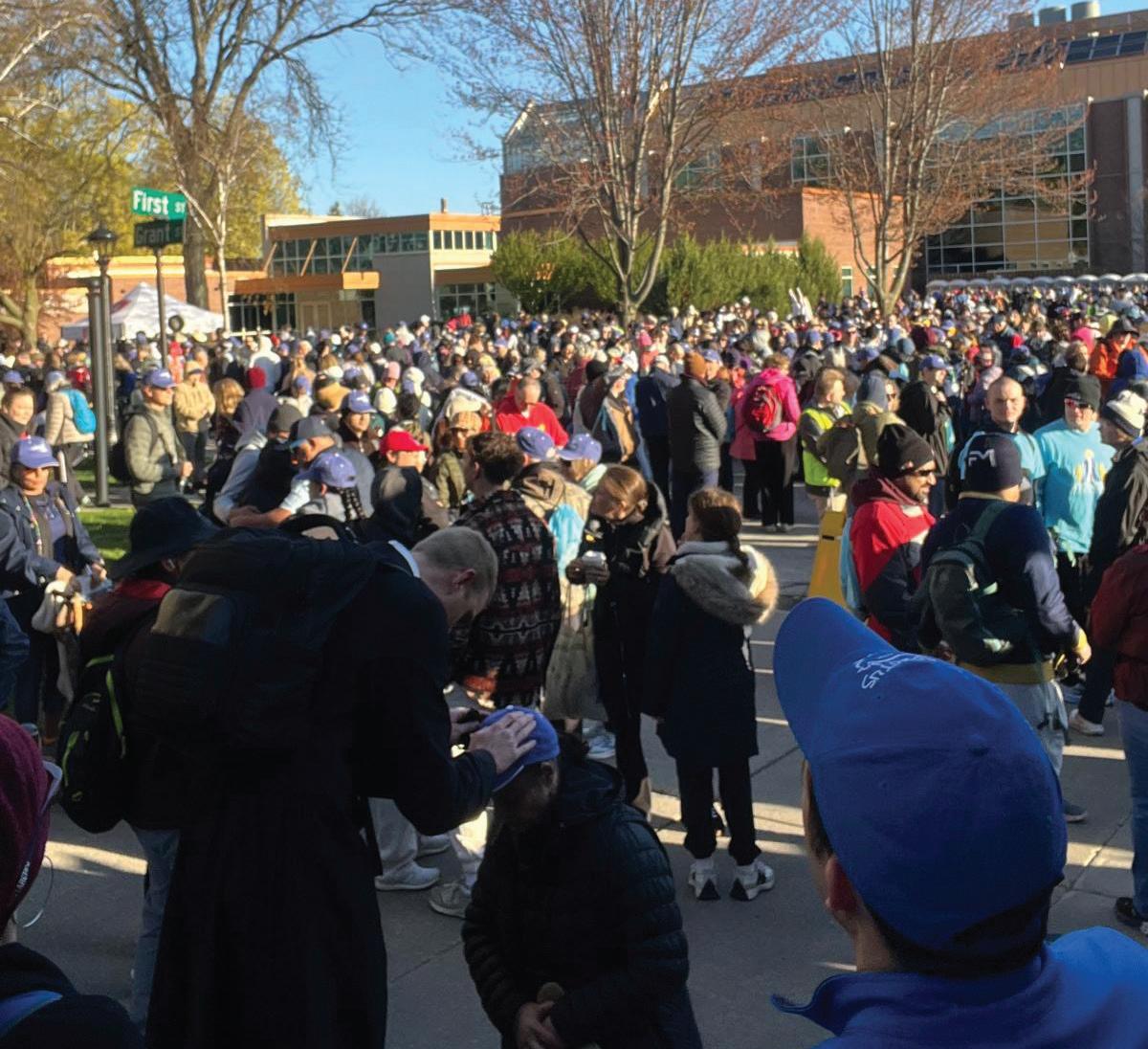
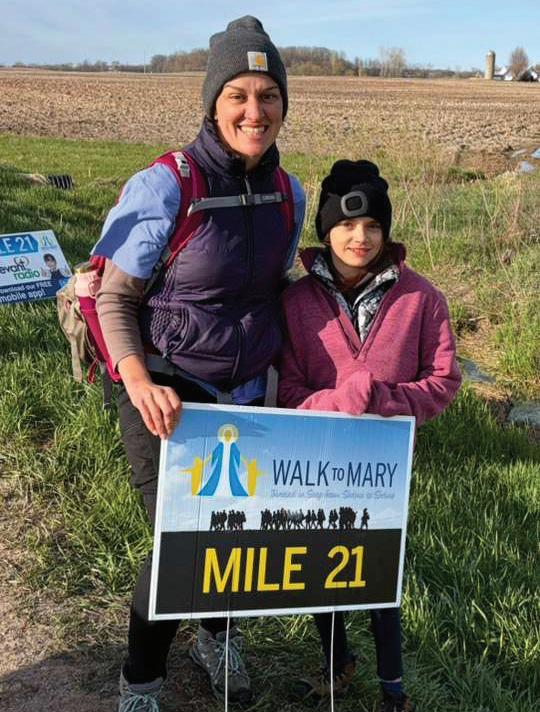
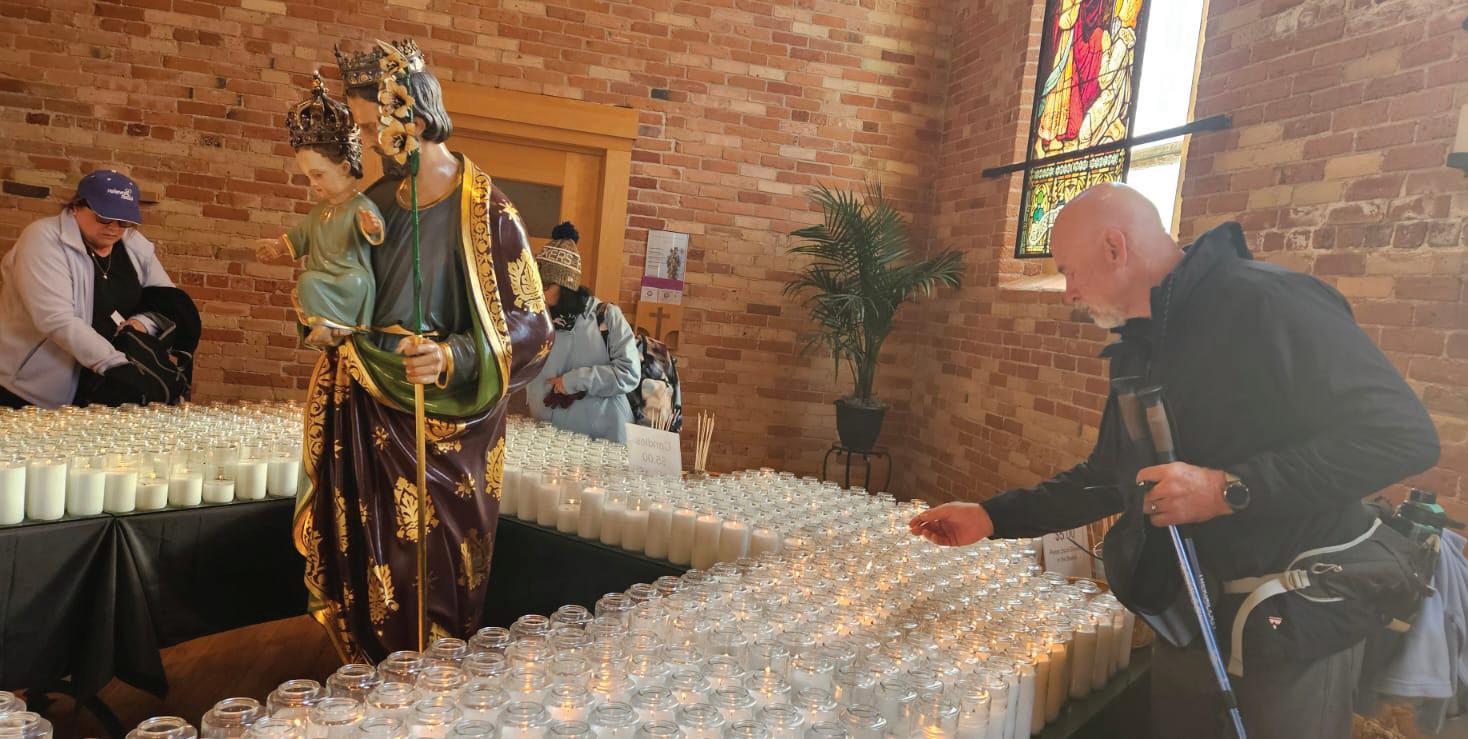
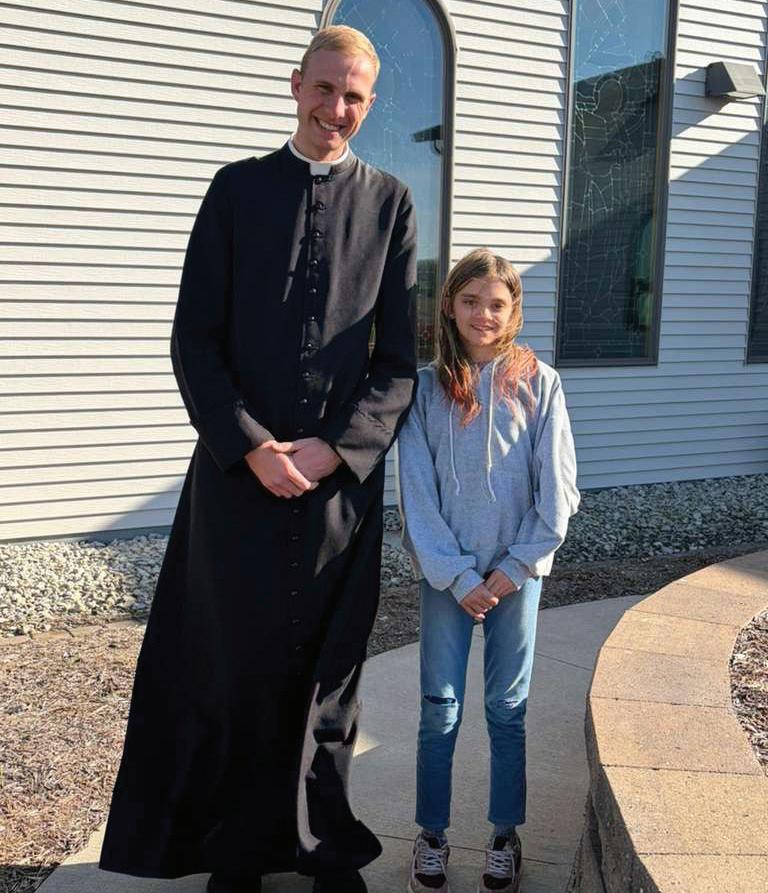
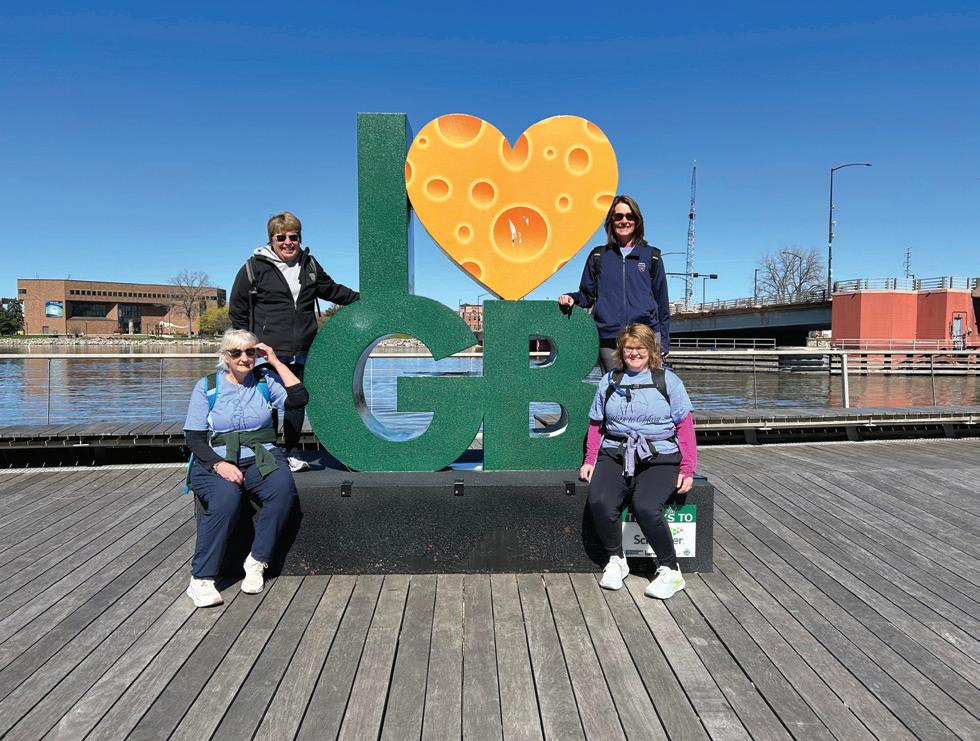
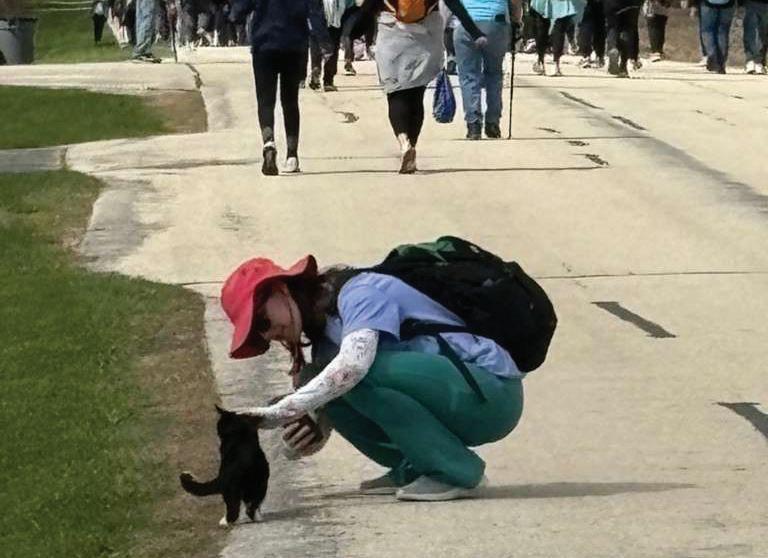
on Saturday, May 2, 31 pilgrims from the Diocese of Winona-Rochester experienced the annual Walk to Mary pilgrimage. For over 13 years now, in early May, people of various ages, races, and nationalities all come together to participate in this sacred pilgrimage. In one day, pilgrims walk 22 miles to the National Shrine of Our Lady of Champion (OLC). This shrine is the only Church-approved Marian apparition site in the United States of America. I would like to express my deepest gratitude to Fr. Tim Welch, our pilgrimage group’s chaplain, and all those who participated in our diocese’s second Walk to Mary. Thank you also to any people in our diocese who accepted my invitation in the previous Courier issues to pray for our pilgrimage group. Your prayers made all the difference in making this weekend a truly blessed and spiritually transformative experience!
Brian Hansen is the coordinator of adult & lay formation for the Diocese of Winona-Rochester.
Happy Anniversaries!
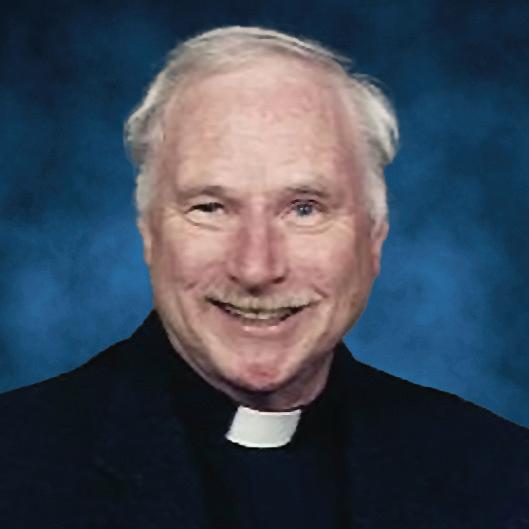
Rev. James Hennessy (65 years a priest) was born in Winona, to William and Anna (O’Dea) Hennessy. He studied philosophy at Immaculate Heart of Mary Seminary in Winona and then completed his theology degree at St. Paul Seminary in St. Paul. On May 27, 1961, Father Hennessy was ordained to the priesthood at the Cathedral of the Sacred Heart in Winona by the Most Rev. Edward A. Fitzgerald. Father Hennessy later studied education at St. Mary’s College in Winona. Father Hennessy’s assignments as parochial vicar were at St. Theodore in Albert Lea, St. Joseph in Owatonna, Queen of Angels in Austin, and St. Francis of Assisi in Rochester. As pastor, he served at St. Martin in Woodstock, St. Mary in Lake Wilson, Our Lady of Mount Carmel in Easton, Mater Dolorosa in Delavan, Assumption of the Blessed Virgin Mary in Canton, St. Olaf in Mabel, St. Rose of Lima in Lewiston, St. Anthony of Padua in Altura, and St. Casimir in Winona. Additional assignments include instructor at Marian High School in Owatonna, Pacelli High School in Austin, and Lourdes High School in Rochester; member of the Presbyteral Council; chaplain for St. Mary’s College in Winona; and Canon Penitentiary for the Diocese of Winona. On July 1, 2003, Father Hennessy joined the ranks of senior priests of the diocese.
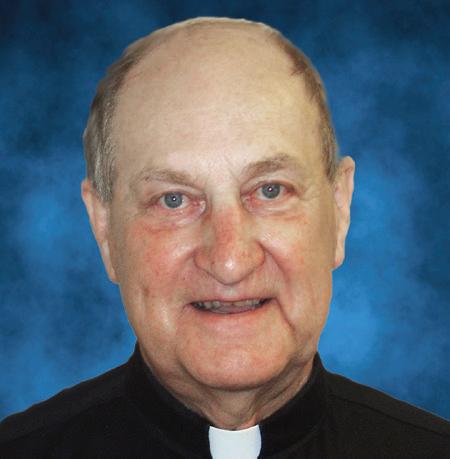
Rev. Robert Stamschror (65 years a priest) was born in Wabasha, to Joseph and Mary (Koob) Stamschror. He studied philosophy at Immaculate Heart of Mary Seminary in Winona and completed his theology degree and an M.A in education administration at the Catholic University in Washington, D.C. He also received an M.A. in religious education from Seattle University in 1973. On May 27, 1961, Father Stamschror was ordained to the priesthood at the Cathedral of the Sacred Heart in Winona by the Most Rev. Edward A. Fitzgerald. He was assigned as parochial vicar at St. Casimir in Winona, and as an instructor at Cotter High School in Winona. He also served as principal and instructor at Loretto High School in Caledonia; parochial administrator at St. Nicholas in Freeburg and St. John in Caledonia; chaplain at St. Mary’s College in Winona; diocesan director of religious education; co-pastor and pastor at St. John Nepomucene in Winona; and as the secretary of the diocesan Pastoral Council. From 1976 to 1979, he worked as Representative for Religious Education, Dept. of Ed. United States Catholic Conference, Washington, D.C., and as Executive Secretary for the National Conference of Diocesan Directors of Religious Education, CCD, Washington, D.C. From 1980 to 2000, Father Stamschror was an instructor and member of the pastoral team at St. Theresa College, and the editor for youth ministry at St. Mary’s Press in Winona. On September 14, 2000, Father Stamschror joined the ranks of senior priests for the diocese. Since then he has continued his ministry in Winona at St. Anne’s of Winona and Callista Court, and at the Christian Brother Residence at St. Mary’s University; and served as a member of St. Anne of Winona’s Foundation Board, the Tau Center Board of Directors, and on the Board of Directors, Center for Ministry Development, Tacoma, WA.
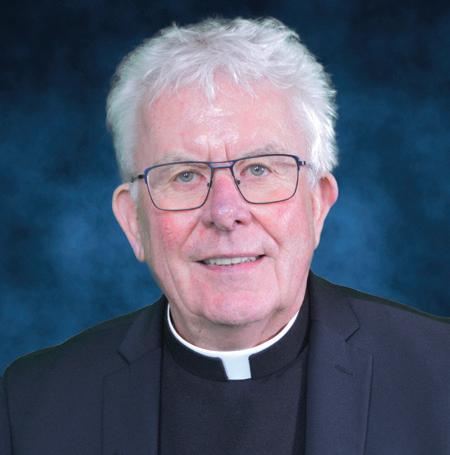
Rev. Msgr. Gerald Mahon (55 years a priest) was born in Rochester, to Edward and Gertrude (McCoy) Mahon. He studied philosophy at Immaculate Heart of Mary Seminary in Winona and then completed his theology degree at St. Paul Seminary in St. Paul. On May 28, 1971, Monsignor Mahon was ordained to the priesthood at St. Francis of Assisi in Rochester by the Most Rev. Loras J. Watters. Monsignor Mahon later pursued graduate studies in spirituality at St. Louis University in St. Louis, MO. Monsignor Mahon served as parochial vicar at St. Mary in Winona; was pastor at St. Casimir in Winona; and his other assignments include instructor for Cotter High School in Winona; director of youth and vocations, assistant director of apostolic activity, master of ceremonies, director of continuing education for the priests, moderator of the curia, vicar general, vocations director, director of pastoral planning, and ecumenical director, all for the Diocese of Winona; faculty, admissions counselor, spiritual director, vice rector, and rector of the Immaculate Heart of Mary Seminary in Winona; chaplain for the Cabrini Home in Winona and Lourdes High School in Rochester; spiritual director of RENEW; member of the Presbyteral Council, College of Consultors, Priests’ Assignment Committee; and canonical administrator of Calvary Cemetery in Rochester. In 1997 Monsignor Mahon was named Domestic Prelate. Monsignor Mahon was appointed to St. John’s parish, Rochester in 1994 which continued with the elevation of the Co-Cathedral of St. John the Evangelist and service at the Co-Cathedral until retirement, July 1, 2025.
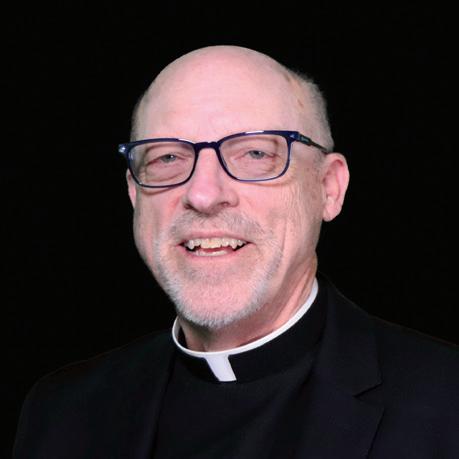
Rev. John Kunz (50 years a priest) was born in Madelia to Robert and Evelyn (Lenhoff) Kunz. He studied philosophy at Immaculate Heart of Mary Seminary in Winona and completed his theology degree at St. Paul Seminary in St. Paul. On May 21, 1976, Father Kunz was ordained to the priesthood at the Cathedral of the Sacred Heart in Winona by the Most Rev. Loras Watters. Father Kunz's assignments as parochial vicar were at St. Stanislaus in Winona and St. Francis of Assisi in Rochester. As pastor, he served at St. Matthew in Vernon Center, St. Mary in Winnebago, St. Teresa in Mapleton, St. Joseph in Good Thunder, Mater Dolorosa in Delavan, Sacred Heart in Waseca, and St. John the Baptist in Mankato. Other assignments include instructor for Cotter High School in Winona, Immaculate Heart of Mary Seminary in Winona and Lourdes High School in Rochester; chaplain for the School Sisters of Notre Dame at Good Counsel Motherhouse in Mankato; member of the Commission on Sacred Liturgy; dean for the Mankato Deanery; member of the Presbyteral Council, the College of Consultors, the Priests’ Committee for Capital Campaign, and the Pension Plan for Priests Board of Trustees; administrator at St. Teresa in Mapleton, St. Joseph in Good Thunder and St. Matthew in Veron Center; instructor and canonical administrator for Loyola Catholic Schools in Mankato; and canonical administrator of Calvary Cemetery in Mankato. On July 1, 2025, Father Kunz joined the ranks of senior priests in the diocese.
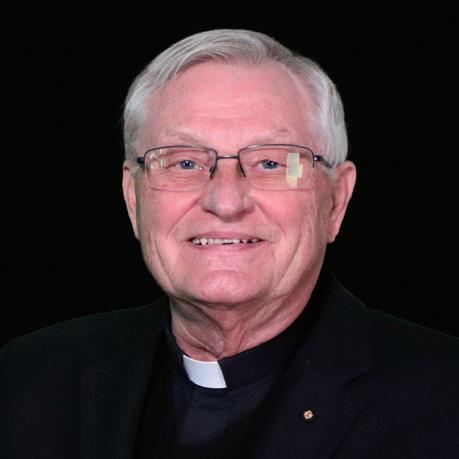
Rev. Msgr. Gerald Kosse (50 years a priest) was born in Caledonia to Clemens and Mary (Wilkes) Kosse. He studied philosophy at Immaculate Heart of Mary Seminary in Winona and completed his theology degree at St. Paul Seminary in St. Paul. On May 21, 1976, he was ordained to the priesthood at the Cathedral of the Sacred Heart in Winona by the Most Rev. Loras Watters. Monsignor Kosse’s assignments as parochial vicar were at Sacred Heart in Waseca, St. Francis of Assisi in Rochester, St. Augustine in Austin, St. John in Rochester, St. Stanislaus Kostka in Winona, and the Cathedral of the Sacred Heart in Winona. As pastor, he served at Our Lady of Mount Carmel in Easton, St. John the Baptist in Minnesota Lake, St. Adrian in Adrian, Our Lady of Good Counsel in Wilmont, St. Leo in Pipestone, St. Joseph in Jasper, St. Martin in Woodstock, and St. Catherine in Luverne. Other assignments include parochial administrator for St. Columban in Preston, St. Lawrence O’Toole in Fountain, Our Lady of Mount Carmel in Easton, St. John the Baptist in Minnesota Lake; diocesan tribunal assistant; priest moderator for St. Anthony in Lismore, and St. Killian in St. Killian; dean of the Worthington Deanery; area moderator of the Worthington Area Council of Catholic Women; chaplain for Courage and EnCourage for the Diocese of Winona; member of the Clergy Personnel Committee; and spiritual advisor for the Diocese of Winona-Rochester Council of Catholic Women. In 2012, he was named Chaplain to His Holiness. On July 1, 2025, Monsignor Kosse joined the ranks of senior priests in the diocese.
Rev. Joseph Pete (50 years a priest) was born in Owatonna to Joseph and Martha (Klecker) Pete.
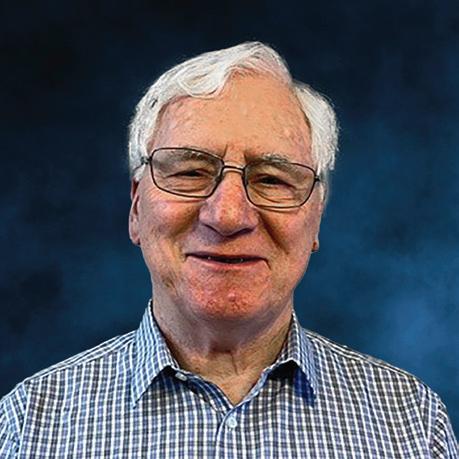
He studied philosophy at Immaculate Heart of Mary Seminary in Winona and obtained his theology degree at St. Paul Seminary in St. Paul. On May 21, 1976, he was ordained to the priesthood at the Cathedral of the Sacred Heart in Winona by the Most Rev. Loras Watters. Father Pete’s assignments as parochial vicar were at St. Mary in Caledonia, St. Pius X in Rochester, and St. Mary in Worthington. As pastor, he served at Immaculate Heart of Mary in Currie, St. Anthony in Westbrook, St. Joseph the Worker in Mankato, Holy Family in Lake Crystal, St. Joseph in Rushford, St. Mary in Houston, St. Peter in Hokah, St. Mary in Lake City, and St. Patrick in West Albany. Other assignments include member of Diocesan Presbyteral Council, Pastoral Council, Deposit and Loan Board, and Liturgy Committee; associate director for Vocations for the Mankato Deanery; and chaplain for Courage. On July 1, 2018, Father Pete joined the ranks of senior priests in the diocese. On January 1, 2022, Father Pete was elected to the Presbyteral Council as the senior priest representative, and on January 1, 2025, he was appointed co-vicar for senior priests of the Diocese of Winona-Rochester.
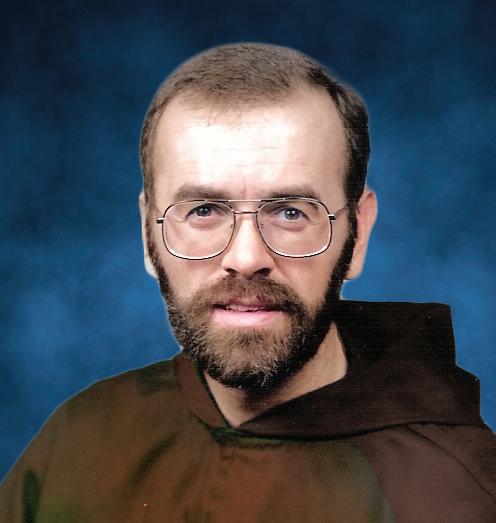
Rev. Jon Moore, O. Carm. (45 years a priest) was born in Blue Earth to Donald and Mildred (Paul) Moore. He attended St. John’s University in Collegeville, completed his philosophy studies at Immaculate Heart of Mary Seminary in Winona, and received his theology degree at St. Paul Seminary in St. Paul. On June 1, 1981, Father Moore was ordained to the priesthood at the Cathedral of the Sacred Heart in Winona by the Most Rev. Loras J. Watters. Father Moore later completed graduate studies in spiritual direction at Creighton University in Omaha, NE. Upon ordination, Father Moore’s assignments included parochial vicar for the Cathedral of the Sacred Heart, St. Stanislaus Kostka, and St. John Nepomucene, all in Winona; director of liturgical music, faculty, and vice rector for the Immaculate Heart of Mary Seminary in Winona; chaplain for the Cabrini House in Winona; coordinator of the vocations apostolate, diocesan director of the youth apostolate, assistant chancellor, director for the Society of the Propagation of Faith, coordinator for special collections, and director for Catholic Cemeteries, for the Diocese of Winona; and parochial administrator for All St.s in Madison Lake. After several years of living a contemplative life in the Carmelite tradition, Fr. Moore entered formation with the Order of Carmelites, North American Province of St. Elias, and made his solemn profession of vows on August 29, 2020, and was thereby incardinated into the Order of Carmelites. Fr. Moore served as spiritual director at Immaculate Heart of Mary Seminary in Winona for many years and currently is in residence at Annunciation Hermitage in Austin.
Deacon John DeStazio (40 years a deacon) was ordained April 19, 1986, for the Diocese of Toledo, OH, after which he served in several dioceses prior to his coming to the Diocese of Winona in 2003. He was incardinated in the Diocese of Winona on December 1, 2014, by Bishop Quinn.
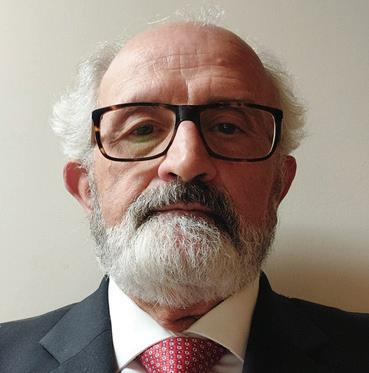
Deacon DeStazio served in many capacities during his 40 years of ministry. For the Diocese of Winona-Rochester, he was an original member of the Deacon Senate and returned to that position when asked to do so. His most recent parish assignment was at St Joachim in Plainview, after having served at St. John the Evangelist and Pax Christi in Rochester. He was a parish administrator, and is a certified spiritual director. He was noted for his preaching, and his ministry extended to the Boy Scouts. While in the diocese of Arlington, VA, he and his wife, Maggie, served on the Diaconate Committee for the USCCB. He directed a deacon formation program in Michigan. He embraced a diaconal spirituality marked by his Franciscan sensitivities. Following the death of his wife, Maggie, he embraced a life of celibacy and ministered to others who had lost their spouses.
Deacon DeStazio is currently a senior deacon for the Diocese of Winona-Rochester, residing in Buchanan, MI, near his extended family.
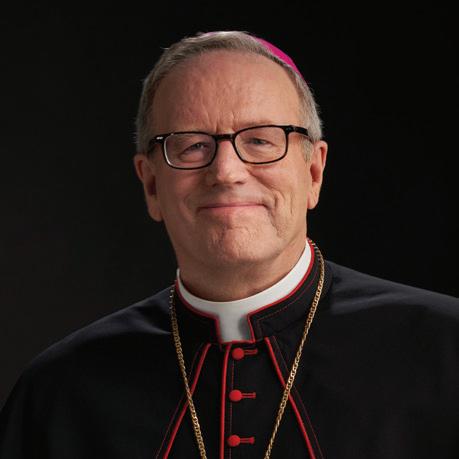
Bishop Robert Barron (40 years a priest) was born in Chicago, IL, to John and Bette (Madine) Barron. He graduated from Fenwick High School in Chicago, where he first encountered St. Thomas Aquinas, who would soon become his spiritual hero. After attending the University of Notre Dame for one year, Bishop Barron entered the seminary for the Archdiocese of Chicago. He received both a bachelor and master's degree in philosophy from the Catholic University of America, and subsequently earned a Licentiate in Sacred Theology while in formation at Mundelein Seminary outside of Chicago. Bishop Barron was ordained to the priesthood for the Archdiocese of Chicago by Cardinal Joseph Bernadin on May 24, 1986. His first years as a priest were spent as associate pastor at St. Paul of the Cross in Park Ridge, IL, before he was sent to study at the Institut Catholique de Paris in France, where he graduated with a Doctorate of Sacred Theology. Upon his return to the United States, Bishop Barron taught as professor of systematic theology at Mundelein Seminary, where in 2012 he also assumed the role of President-Rector. During his tenure as professor, Bishop Barron served as visiting professor and scholar in residence at several institutions, including the University of Notre Dame, the Pontifical University of St. Thomas Aquinas (Angelicum) in Rome, and the Pontifical North American College in Rome. Bishop Barron is a prolific writer and is the founder of Word on Fire Ministries, through which he continues to actively evangelize through many forms of media, especially in the digital world. In 2015 Bishop Barron was appointed Auxiliary Bishop of the Archdiocese of Los Angeles and titular Bishop of Macriana in Mauritania, and on June 2, 2022, Pope Francis appointed him Bishop of Winona-Rochester, where he was installed on July 29, 2022.
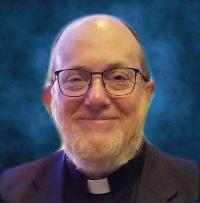
Rev. David Medow (25 years a priest) was born in Chicago, IL, to Robert and Gloria (Schaefer) Medow. He obtained a Bachelor of Arts in philosophy from Georgetown University in Washington, D. C., studied philosophy and theology at the University of Sussex in Brighton, Sussex, UK, and obtained a master’s in theology at Mansfield College, Oxford University, UK. After earning an MDiv at the Lutheran School of Theology at Chicago, he was ordained a Lutheran minister in 1985 and served churches in DeKalb and Crest Hill in Illinois. He was received into the Catholic Church on November 1, 1996. After serving as a Catholic chaplain at St. Joseph’s Medical Center in Joliet, IL, he received permission from the Holy See to begin studies for the priesthood and studied for three years at the University of St. Mary of the Lake, Mundelein, IL. On June 2, 2001, he was ordained to the priesthood for the Diocese of Joliet at the Cathedral of St. Raymond in Joliet, IL, by the Most Rev. Joseph Imesch. Father Medow was assigned parochial vicar at St. Mary Immaculate Parish in Plainfield, IL. As pastor, he served at St. Mary Immaculate Parish in Plainfield, IL, and Notre Dame Parish in Clarendon Hills, IL. Father Medow was also assigned as director of pastoral care at Marian Village in Homer Glen, IL. On September 19, 2024, Father Medow was granted faculties in the Diocese of Winona-Rochester by the Most Reverend Robert Barron, Bishop of Winona-Rochester. Father Medow currently serves as pastor at Holy Spirit in Rochester.
Rev. Msgr. Thomas Melvin (25 years a priest) was born in Rochester to Duane and Corinne (Wenzel) Melvin. He has one brother, Richard G. Melvin, PhD, who works in the fields of genetics and computer software. Monsignor Melvin received a BA in philosophy
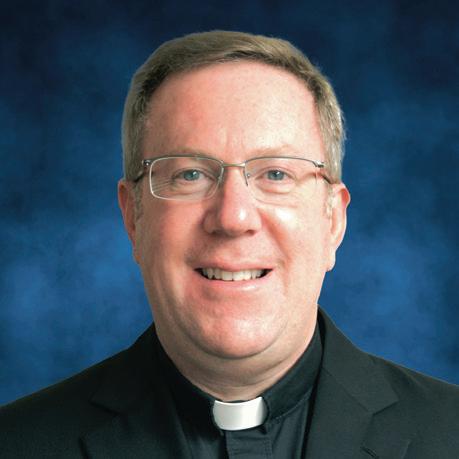
at Immaculate Heart of Mary Seminary in Winona, a Master of Divinity degree from the University of St. Mary of the Lake/Mundelein Seminary and certification in spiritual direction and retreat ministry, the Spiritual Exercises of St. Ignatius of Loyola, from the Institute for Priestly Formation. On May 26, 2001, Monsignor Melvin was ordained to the priesthood at the Cathedral of the Sacred Heart in Winona by the Most Rev. Bernard J. Harrington. Monsignor Melvin was assigned parochial vicar at St. Pius X in Rochester. As pastor, he served at St. Joseph in Rushford, St. Peter in Hokah, St. Mary in Houston, Immaculate Conception in Wilson, St. Joachim in Plainview, and Immaculate Conception in Kellogg. Other assignments include chaplain for Lourdes High School in Rochester; director of recruitment with the Diocese of Winona Vocation Team; vocation director for the Diocese of Winona; director for Emmaus House of Formation in Winona; chaplain for Winona State University Newman Center; member of Incardination Board for the Diocese of Winona; spiritual director for Immaculate Heart of Mary Seminary in Winona; chaplain for Boy Scouts; member of Presbyteral Council; chaplain for Winona Serra Club; member of Diaconate Assessment Committee for the Diocese of Winona; vicar for clergy for the Diocese of Winona; parochial administrator for Holy Trinity in Rollingstone, St. Mary in Minneiska and St. Paul in Minnesota City; member of the teaching faculty for the Institute for Priestly Formation in both their seminarian programs and diocesan priest spirituality programs; member of the Leadership Team for Steubenville North Conference in Rochester; rector for Immaculate Heart of Mary Seminary in Winona; vicar general for the Diocese of Winona; moderator of the curia for the Diocese of Winona-Rochester; director of the permanent diaconate for the Diocese of Winona-Rochester; and vice chancellor. On September 9, 2012, Father Melvin was named a Monsignor by Pope Benedict XVI upon the recommendation of Bishop Quinn. Monsignor Melvin currently serves as pastor for St. Joseph the Worker in Mankato and Holy Family in Lake Crystal and is the priest delegate of Loyola Catholic School in Mankato. An anniversary reception for Msgr. Melvin will be held Saturday, June 13, following 5 p.m. Mass at St. Joseph the Worker, Mankato.
Rev. Luis Vargas Noriega (25 years a priest) was born in Maito, Municipality of Tarqui, Huila, Colombia, to Misael Vargas and Maria Fanny Noriega.
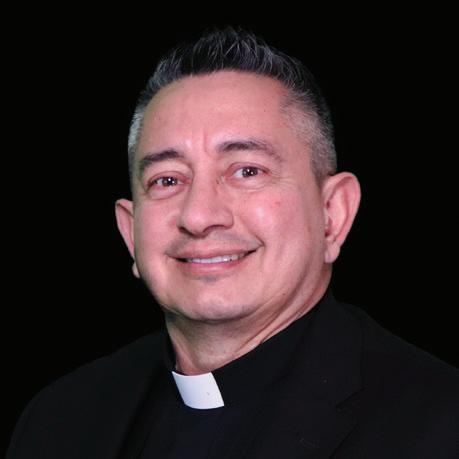
He completed his theology degree at the Conciliar Maria Imaculada Seminary. On December 22, 2001, Father Vargas was ordained to the priesthood at the Cathedral of Garzon (Diocese of Garzon, Colombia) by Bishop Libardo Ramirez Gomez. Father Vargas’ first assignments were as director of vocations for the Diocese of Garzon, pastor for Nuestra Senora del Carmen, Belen Huila (Our Lady of Mt. Carmel) and pastor of San Rafael Arcangel, La Plata Huila (St. Raphael Archangel). In 2009, Father Vargas entered the Diocese of Winona. Father Vargas’ parochial vicar assignments were at St. Mary in Worthington and St. Francis of Assisi in Rochester. Other assignments include chaplain for St. Mary in Madelia and St. James, working in Hispanic ministry; Hispanic chaplain for the Worthington Deanery; and parochial administrator for St. Francis of Assisi in Rochester. On May 1, 2024, Father Vargas was incardinated into the Diocese of Winona Rochester. Father Vargas currently serves as pastor for St. Francis of Assisi in Rochester. June 2026 w The Courier w dowr.org
Graduates, cont'd from pg. 1
ter and jelly sandwich without the peanut butter. Something essential would be missing. Those moments bring our school community together, give us time to reflect, and remind us there is more to life than homework, sports, and tests.

Catholic education has also given me a strong sense of community. Teachers genuinely care about their students, and classmates became more like family over time. There is a shared sense of support and encouragement that makes the school experience different.
I am grateful for the friendships, lessons, and faith-filled experiences I have had at Pacelli Catholic Schools. Catholic education has given me a strong foundation that I know I will carry with me long after graduation.
Kendall Fite Loyola High School
I had the pleasure of attend�ng Loyola for the past three years, and, in my short time here, I got to witness the importance of faith-based education and community.
Two of my favorite things about Loyola are the prayer before our classes and the faith retreats we go on in 11th and 12th grade. Prayer not only brought our grade closer to God, but it also brought me individually closer to the Lord. Going into a Catholic school knowing little to nothing about the faith has taught me a lot of important lessons and ultimately has encouraged me to take a leap and join the Catholic faith when I go to college through the help of my university's Newman center. Even though we may not all be Catholic, the education we are given nurtures us into well-rounded spiritually, morally, and intellectually strong adults and leads us to pursue a future full of hope and love. These are all reasons why the teachings at Loyola were so beneficial to me and my character growth, and also to the other members in my grade who pursue Christ.
The most memorable moments at Loyola for me were whole-grade activities like senior sunrise or the retreat. The retreat benefited us in so many ways that we were thankful for. The main ones include class bonding, spiritual growth, and independence. It helped prepare us to go out into the world and pursue our passions, whether they be big or small, all while teaching us that we can lean on each other and no battle has to be fought alone. Other events like senior sunrise and homecoming helped me realize the importance of community and that we are a family no matter how many times we disagree. On a more spiritual note, the retreat helped us reflect in quiet thought and allowed us to recognize and be thankful for those who have helped us on our journey so far, especially the Lord.
Daniela Gonzalez Pacelli Catholic Schools
toward a mature faith. At Pacelli Catholic Schools, I have been given three pillars upon which to stand; Faith, Scholarship, and Service, together with our motto, “Be More.” These pillars have provided a strong foundation, deepening both my understanding of the faith and my desire for Christ.
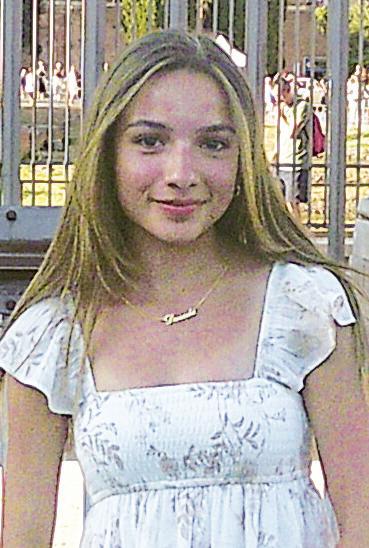
Faith, the heart of all formation, has always been central in my life. From an early age, I saw lived-faith in my parents and grandparents. I began religion classes in the first grade. Entering Pacelli further strengthened this foundation. A Catholic education nurtured in me a desire to seek Christ more fully. Through this, I encountered the gift of the Neocatechumenal Way, where I have come to know the Lord’s love and mercy more deeply. I have been blessed to participate in pilgrimages to the Holy Land and World Youth Day in Portugal, and to be a part of the only group in the diocese to go to Rome for the Jubilee Year. I now look forward to World Youth Day 2027 in South Korea.
The pillar of scholarship is essential. Beginning and ending each class with prayer, participating in Mass, and praying the Rosary allow faith to permeate learning. Religion classes have deepened my understanding of Church teaching and encouraged me to place Christ at the center of my studies. Service, flowing from faith and knowledge, completes this formation. Catholic education has taught me that to serve others is to serve Christ, calling me to humility and generosity in daily life.
For these gifts, I am deeply grateful. Striving to “Be More,” I now serve as a teacher’s assistant, helping prepare youth for Confirmation and seeking to pass on what I have received. Peace be with you all.
Dane Guzzo Cotter High School
My Cathol�c Educat�on at Cotter has taught me that faith must be lived out through action. As a freshman, I struggled to realize this because I did not fully understand its importance. Now, my education has allowed me to see how this lesson can help further grow my Catholic faith. There are many examples where my Catholic education has given me opportunities to see people who go above and beyond to serve others. Whether it is my teachers who stay up all night to give feedback on my writing or coaches who spend most of their weekends game planning for the upcoming opponent, they demonstrate that we are called to serve others, not just ourselves. Jesus was the greatest example of this, dying on the cross so that we could have eternal life. Being at a Catholic school, I can have conversations about this freely with students and teachers, and participate in weekly Mass in addition to Sunday Mass with my family, which has helped deepen my faith. Having these amazing examples around me has helped me learn that if I want to really follow my Catholic faith, I need to go out and show it. Through playing both football and baseball at Cotter, I have been able to build great relationships with a lot of my teammates,
which has given me opportunities to easily connect with others about becoming better humans and better followers of the Catholic faith. I believe my Catholic education has led me to a calling of setting an example of faith to the people around me, and to show that Christ is the most important thing above all. The lessons I’ve learned at my Cotter High School have shown me that attending a Catholic school can lead to great experiences, which is why I will be continuing my education at Saint John's University, another Catholic school.
Lex Lombard Loyola High School
I bel�eve that my Catholic education is important, because it gives me increased perspective on global issues that are affecting the world right now. I can see that there are a lot of uncaring, and uncompassionate people in the world, who will tell people different from them that they are better than them. And I feel that so many of these people are Catholics, putting other groups of people down, and twisting the words of God and Jesus, to treat other people like garbage. I see this all the time on the internet. These people are the main reason I was put off from wanting to engage with the Catholic Church. I assumed that the majority of Catholics just spewed hatred and vitriol towards people; whether because they had different skin colors, or were born in a certain part of the world, or chose to express themselves differently; and because Christianity is the "objectively" best way to live, it felt like these people would only see themselves in the right, and continue to hate people they believed didn’t follow the “correct path.” But when I arrived at Loyola, to escape the large, obnoxious class sizes of public schools, going to a Catholic school meant having to take a theology class. My high school teachers were all very kind and understanding, and getting to understand why they follow God, I could tell that their love for him was genuine. I have to give my biggest thanks to my most recent theology teacher, Father Ben Peters, since he, more than anyone else I know, has more knowledge and authority when it comes to God and his plan for all of us. When he delves into more controversial subjects, he engages them with kindness and respect, telling us how the Catholic Church truly views these issues, and how we should approach them. I also believe that my education has helped me to better articulate my thoughts on the people who rub me the wrong way in life - the people on the internet who constantly assert that other people are inferior because they’re different than them. I now know that my problem isn’t simply that these people are racist, sexist, ableist, but that they aren’t treating these other people with the dignity that all human beings deserve - that they aren’t respecting the life of another person. I believe, thanks to my theological education, I can now better perceive the correct responses, and courses of action, when, or if, I ever run into these individuals, so that all parties can make amends, and live stronger, healthier, happier lives.
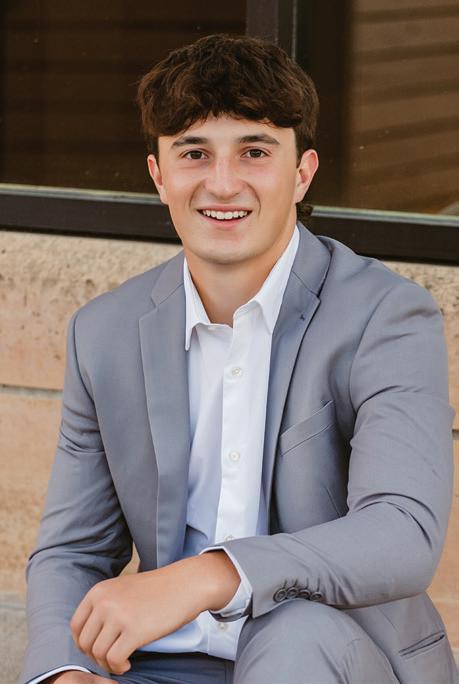
The most memorable moment of my time here at Loyola was definitely the senior retreat, particularly the letters I received from my parents and teachers from Loyola. The letters were filled with genuine heartfelt messages of these adults who have watched me grow and mature over these few years at Loyola, complimenting me and writing how I was always a highlight of being in their class. It was incredibly humbling. I knew that I was well liked, but I never really thought about the impact I’ve made on these people’s lives. Reading those letters just flooded me with such raw emotional energy, I couldn’t take it, and I just burst out into tears. The ones that got me the hardest were from my parents, because I already know they love me - I’m their son - but, when reading
Cathol�c educat�on has played a decisive role in forming me in the Christian life and leading me
these letters, I can tell that my parents don’t just love me because I’m their son, but they also truly love me as a person, for who I am, and that really just opened the floodgates. I’m both happy and sad that I’ll be missed when I leave Loyola this year. But I am so grateful to know that I have really touched, and connected with, the teachers at school. It gives me hope that I can do the same to others later in life.
John Robinson Pacelli Catholic Schools
I’ve been at Pacell� nearly two years (though I did Catholic school in Rochester before then), and recently I’ve been going to Austin High School for a couple classes Pacelli doesn’t offer. Both schools are stellar at what they do, but what they do is different. While a public school graduates productive members of society, a Catholic school graduates future saints.
My friends at Pacelli are friends of virtue. We talk about the faith freely, pray as a class more than ten times daily, go to church, have each other’s backs, and help each other grow. My conversations with non-Catholic friends have helped me strengthen my faith as I understand theirs, and seeing my peers act virtuously has encouraged me to do the same.
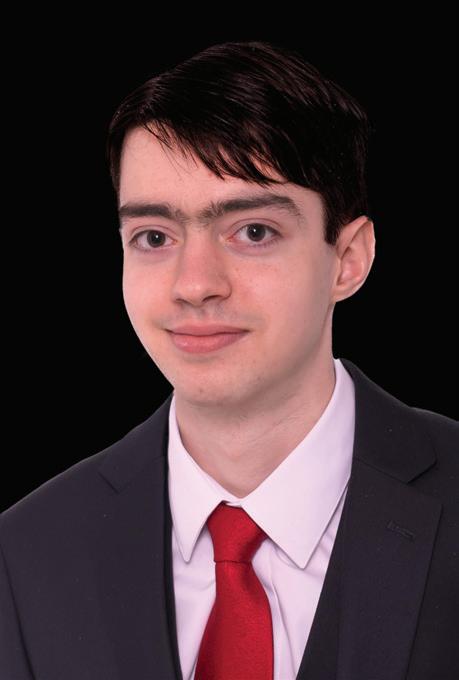
Academically, Catholic schools hold high standards, but they’re grounded in something deeper. My favorite example is Mr. McGrath’s Earth Day program last year. Instead of sticking to the science, he showed excerpts from Laudato Si’, teaching us about Christian stewardship. I found it so compelling that I later read the full text, and the way I see the world is forever changed now.
Finally, I am in and around service, and lots of it. There are some things that we do as a school, like an annual town clean-up program, but other things, like blood drives and (my personal favorite) Sunday Mass music ministry, are initiated and organized by students. It’s not weird or unique to do these things, and participating has really taught me how essential service is for a good life.
Overall, my experiences at Pacelli have helped me become a better person. In a month, I’ll graduate, not a saint yet, but well on my way. Now that I’m old enough to choose for myself, I’ll be continuing my education at a Catholic university.
Isabel Saunders Lourdes High School
A Cathol�c educat�on means I was able to express my faith and learn about my faith at school. Catholic education means a lot to me because it is the reason I was able to grow closer to God and the reason I met the people who are now my best friends. In the eight years I have been going to a Catholic school, I have had countless opportunities, such as attending and leading retreats, which has helped me grow in my faith and as a person. Since I started Catholic school, the whole environment has shaped me. Religion class has always been my favorite class because it has taught me
the most important things I could be taught in life. Having those classes means I could share my faith with my peers and be who God meant me to be. Catholic education also means a lot to me because it brought prayer into my life. It brought me friends and teachers who support me and my faith, and much more. Catholic education showed me my value as a daughter of God, which isn't something I could be taught in many places. My Catholic education has shaped me as a person. It taught me that I was created to live for God. It taught me to be a better person and to not be ashamed to express my beliefs or express who I am as a daughter of God. Having a Catholic education means I got to learn about my faith and God, through God.
Gianna Teska Cotter High School
My fa�th �s the most �mportant value in my life. In addition to being raised in a Catholic home and being connected to my parish, my Catholic education has helped influence and shape me into the person I am today. In elementary school, my Catholic education helped lay a foundation for my faith. I have attended a Catholic school since kindergarten. One memory I have from those years is the all-school Masses we had during Catholic Schools Week. I remember being a young first-grader in awe of the church packed with students, many of whom were a lot older than me. In fifth grade, we dressed up as saints for an All Saints Day Mass; I dressed up as my namesake, St. Gianna Beretta Molla. Those are memories I know I would not have if I had not attended a Catholic school.
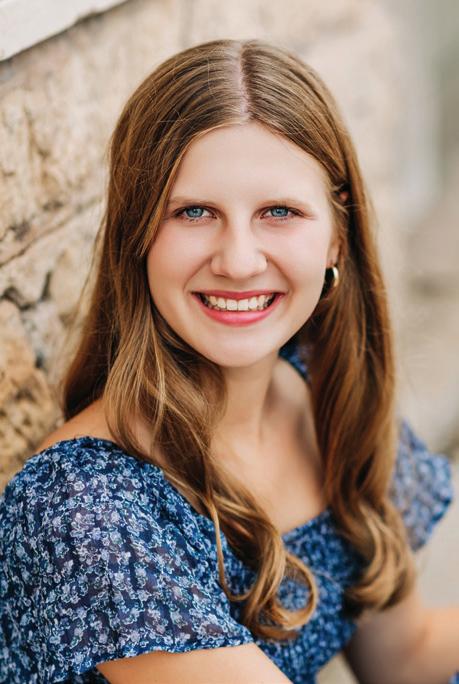
As I grew older, my Catholic education also helped deepen and strengthen my faith. In both my junior and senior years, my religion classes were more challenging and really helped me to grow spiritually. In my junior year, I had to take a social justice class. This class helped me grow spiritually because I learned more about what the Catholic Church teaches socially and how the Church tries to care for everyone. I had not previously learned much about this aspect of Church teaching, but through this class, I gained valuable insights into the call we all have to be missionaries for Christ and the Church. In the first semester of my senior year, I took a philosophy class. This class was a challenge for me, but I learned so much. This class helped me to think more deeply and also helped me decide that I want to continue learning about the Catholic faith in college.
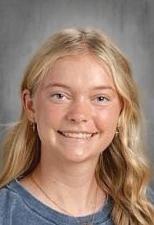
Overall, my Catholic education has invited me to think about what kind of person I want to become and has helped me stand up for what I believe. I plan to continue my Catholic education in college and pursue a minor in Catholic studies. Learning about Jesus and the Church and deepening my faith is a lifelong pursuit, and I know I have just begun.
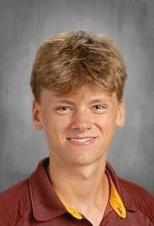
Teddy Torborg Lourdes High School
In short, Catholic education meant developing my Catholic way of life from a young age.
First, Catholic schools encourage students to view all subjects through a Christian lens. A clear example was the discussion of bioethics in AP biology last year. Authentic Catholic education orients the mind toward God in the process of learning. It affirms
the value of creation and offers an opportunity to find deeper meaning in the pursuit of knowledge. It also includes theological classes, where students discover God’s true nature and learn how to live according to God’s will. Through these classes, I’ve come to recognize God in my life and to take what I’m learning into deeper prayer.
Second, Catholic education allows the soul to be filled by Jesus. Catholic schooling is a place where the sacraments, prayer, and opportunities for faith are part of the school day. School has become a place where I can openly discuss my faith, take time for prayer, and be strengthened through talks and retreats. One retreat last year was transformative, helping me take on more leadership roles and become bolder in my faith around friends. Because of Catholic education, receiving the sacraments is convenient and helps me center myself on Christ during the school day.
Lastly, Catholic education surrounded me with valuable Catholic friendships. I’ve grown personally in the virtues of integrity and kindness. Being around passionate Catholic adults and students has pushed me to build healthy friendships and share my faith with others. Catholic education has helped me mature emotionally and focus on becoming my authentic self, one who worships Christ. It has also helped me pursue the right values and be a bringer of joy to others.
Aynsley Young Lourdes High School
I have gone to Cathol�c schools my whole life. Everytime I would look up in elementary school I would see the fruits of the Spirit, and now in high school I see the corporal and spiritual works of mercy. There are crosses in every room, above every door, or simply on someone's desk. Before every class we pray. The Catholic traditions are constantly around us, extremely present in our everyday lives. I think that it has been very beneficial to grow my relationship with Christ. I am able to bring my relationship with God into everything I do in all my interactions with others. My teachers preach the importance of trusting God and the idea that all of our worries should be handed to Him. I enjoy that if I ever have any problems or struggles, my teachers are willing to help and I think they all spread Jesus when they do that. It is part of who they are and how they teach, and it is noticeable. Catholic education also means being in the presence of the Lord at Mass every week. We have the opportunity to come together as a school community and worship God at the center of our lives. We are privileged to be able to go to the Chapel everyday, whenever we want. We can sit with the Lord and simply talk to him about anything. Catholic education means that we have access to God through what we learn. For example, in anatomy or biology class, it is hard to not believe that there is a God behind all the beauty and precision of life. Catholic education has engrained in us to see Christ in others, and be Christ for others.
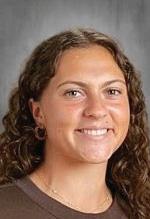
a
Minnesota Catholic Conference Inside the Capitol
Protecting Kids from Gun Violence Has Multiple Elements
fter the tragic shooting at Annunciation Catholic Church and School last year, it is understandable to have passion and righteous anger in the political sphere. At the same time, we must remain prudent and non-ideological, ensuring this passion does not morph into partisan politics or one-size-fits-all policy solutions. Senseless gun violence is a complex issue with multiple factors at play.
New research from the Violence Prevention Project Research Center at Hamline University presented to legislators this year made something clear: multiple elements are needed to protect kids from mass shootings in schools, and focusing only on one’s preferred approach, whether it be gun safety measures, building security, or mental health, is insufficient on its own to prevent more of these tragedies.
It is for this reason, as well as a keen understanding of the limits of politics this year, that the Church proposed a three-part Protect Kids Package at the beginning of the session. Designed to transcend the partisan divide, this package includes banning highcapacity ammunition magazines, expanding school safety funding for all students, and limiting Big Tech’s ability to target kids with addictive social media algorithms.
At the time of this writing, the legislative session nears an end on May 18, and all three pieces of legislation are in the middle of negotiations and have a chance to reach the finish line:
Ban High-Capacity Ammunition Magazines
Bills H.F. 3402 / S.F. 3714 would ban high-capacity ammunition magazines, devices capable of holding more than 10 rounds of ammunition and designed for rapid firing without reloading. Statistics from Everytown Research show that mass shootings with high-capacity magazines led to more than twice as many fatalities between 2015 and 2022. Additionally, ten times as many people were wounded per incident, and five times more people were shot per incident on average. Removing high-capacity ammunition magazines won’t solve the problem alone, but it’s a reasonable gun safety measure backed by evidence to ensure fewer fatalities in mass shootings.
[H.F. failed to advance in the 2026 legislative session.]
Expand Safe Schools Funding to Include all Students
Bills H.F. 3493/S.F. 5111 would expand school safety funding to include private, charter, and tribal schools.
Public schools already receive this funding, and it should be extended to all kids, regardless of which school they attend. The funding can be used for school safety improvements, school resource officers, and mental health support for kids. This would undoubtedly help harden schools and provide resources to address security blind spots. When one school is vulnerable, all schools are vulnerable. Parents, students, educators, and volunteers deserve a clear commitment from the State of Minnesota as a matter of public safety to invest in protecting every child.
[Bill H.F. 3493 did not pass as an independent bill, and was laid over in the Education Finance Committee for possible inclusion in larger omnibus spending packages before the legislative session ended.]
Prioritizing Kids Over Big Tech Algorithms
Kids are spending excessive time on social media and it’s affecting their developing brains. The Stop Harms of Addictive Social Media bill H.F. 4138/S.F. 4696 would put parents back in the driver's seat in two simple but important ways. First, it would require children under 16 to obtain parental consent before creating social media accounts. Second, if the parent chooses to let their child sign up, it would prohibit the most addictive features Big Tech uses to glue kids to their platforms, such as targeted advertising, autoplay videos, and infinite scroll. This could result in less time on screens and more time playing with friends, studying, and getting adequate sleep. It could also mean happier kids who are less anxious, less worried, and more focused on the present moment.
[Bill 4138 passed both chambers of state legislature with near-unanimous bipartisan support.]
The Time to Act is Now
What’s needed now is for leaders to come together in this moment and protect kids in a way that speaks to both the urgency of the issue and the evidence. Statesmanship is approaching the work of public policy with wisdom, and it is needed following the Annunciation tragedy.
We remain hopeful that enough legislators are statesmen and women who will transcend the false binaries of our politics and push back on both gun absolutism and those school leaders who put systems ahead of students. All kids deserve nothing less.
The Minnesota Catholic Conference has been the public policy voice of the Catholic Church in Minnesota since 1967. The voting members of the MCC's board of directors are Minnesota's Catholic bishops.
Catholics Made a Difference at the Capitol This Year
Ach�ev�ng leg�slat�ve success at the Capitol is no simple feat. All gears need to work together. A needle-moving meeting with a legislator is built on many prior efforts. Catholic constituents emailing their legislators, thousands of prayers during Adoration at the Capitol, and years of relationship-building by Minnesota Catholic Conference (MCC) staff lobbyists all play a role.
With this in mind, we are pleased to report that the 2026 legislative session was both substantive and productive. Notably, MCC spearheaded groundbreaking social media legislation that passed both the House and Senate and was signed into law by Governor Walz. We also successfully stopped legislation that promotes a throwaway culture, including: physicianassisted suicide; mandated insurance coverage for unethical forms of assisted reproduction such as in vitro fertilization; the Equal Rights Amendment; and the legalization of sports gambling through commercial sports books.
None of this could have been accomplished without the faithful citizenship of Catholics like you. Below are some numbers that illustrate our collective impact.
● Contacting Legislators in Large Numbers - More than 11,000 messages were sent to legislators at crucial moments by our Catholic Advocacy Network members. In addition, our social media updates reached more than 430,000 people online. Make no mistake: constituent voices like yours were instrumental in passing and stopping bills to protect life and the common good.
● Thousands Prayed with Jesus at the Capitol - This year, more than 1,000 Catholics participated in at least one of our Eucharistic prayer opportunities - a 566% increase from last year. As Bishop Andrew Cozzens said, “Adoration at the Capitol will have an impact on everything that happens in this building.” There’s no diminishing the power of your prayer for legislators and our state, nor the significant impact it has on our advocacy efforts.
● Boots on the Ground Advocacy - Finally, there is the day-to-day hustle and grind of advocacy work. The MCC lobbying team, as well as the bishops of Minnesota, met with legislators, testified before committees, and worked behind the scenes to influence legislation. This session year alone, they provided 35 verbal and written testimonies and conducted upwards of 325 individual meetings and phone calls with legislators. Collectively, they met with 118 of the 201 legislators.
Join the Movement
At the Minnesota Catholic Conference, we are a small team. But the voice and action of Catholics like you across the state help us to make a big impact at the Capitol. As we prepare for the upcoming elections in November, we encourage you to join the Catholic Advocacy Network at mncatholic.org to be formed in the faith, informed on the issues, and take action to transform our state.

The Role of Parish Endowments in Faithful Stewardship
By ELIZABETH WILLIAMS
for many, the parish is our spiritual home—a place where faith is nurtured, families gather, individuals find comfort in times of need, and communities come together in service. Parishes form disciples, celebrate the sacraments, and foster belonging across generations. Thoughtful planning helps ensure that these opportunities for faith, formation, and community remain available for years to come.
Parishes across the country are experiencing shifts in participation and giving. While parish life remains strong, these trends invite a proactive approach to long-term stewardship. As stewards of these communities, we are called not only to sustain parish life today, but also to ensure that our parishes remain strong for the future. One meaningful way to do this is through parish endowments, or long-term funds that provide lasting support for the mission of the Church.
What Is a Parish Endowment?
A parish endowment is a permanent fund where gifts are invested, and a portion of the earnings is distributed each year to support parish needs. The original gifts are preserved, allowing the endowment to grow and provide ongoing support over time. Endowments can help parishes:
• Sustain ministries and parish life
• Care for church buildings and facilities
• Serve those in need within the community
• Support faith formation and outreach
• Strengthen long-term financial stability
While weekly offertory remains vital, it can fluctuate. A parish endowment provides something different: a steady, long-term source of support rooted in faithful stewardship.
Magnifica Humanitas,
cont'd from pg. 2
posthumanism and how they are the ideological vision underlying technology.
He proposes a Christian humanism, where human beings “are not confined by the boundaries of their own nature; rather, they are called to selftranscendence, not through an escape from reality or a contempt for their limitations but through their fulfillment in love.”
In Magnifica Humanitas, the Holy Father also expresses concern about the “new monopolies of AI.”
“To speak of the common good means exposing this new form of epistemic, economic, and political asymmetry,” he writes.
The key question, he says, is that posed by St. John Paul II: Does AI “make human life on earth ‘more human’ in every aspect of that life? Does it make it more worthy of man?’”
Leo writes that “a decisive test for the ethical discernment of AI and digital transformation” is in the fight against new forms of slavery, such as human trafficking. The pontiff goes on to “sincerely ask for pardon,” in the name of the Church, for the “immense suffering and humiliation endured by so many” before slavery was unequivocally condemned
Why Planning for the Future Matters
Looking ahead requires both faith and prudent planning. These trends do not diminish the faith of our communities, but they do highlight the importance of thoughtful planning.
Recent studies show:
• Weekly church attendance in the United States has declined from 42% in 2000 to about 30% today (Gallup, 2024).
• Weekly giving dropped from 49% of churchgoers in 2015 to 39% in 2023, as giving patterns become less consistent (Vanco, 2023)
• Fewer households are donating overall. Less than half of American households now give to charity, compared to more than two-thirds two decades ago (Giving USA).
We see similar patterns locally. While Mass attendance in our diocese has grown in recent years, it remains below pre-pandemic levels. Average attendance in 2025 was 26,106 - a 4.87% increase from 2024 - yet overall diocesan Mass attendance is still down 11.22% compared to 2019.
These realities invite us to think proactively about sustaining parish life. Endowments provide one way to build long-term stability while continuing to rely on the generosity of parishioners today.
Stewardship Rooted in Faith
Catholic stewardship calls us to share the gifts God has entrusted to us; namely, our time, talent, and treasure. As Scripture reminds us:
“As each one has received a gift, use it to serve one another as good stewards of God’s varied grace.” (1 Peter 4:10)
Supporting a parish endowment is one way to live out this call. It allows individuals and families to contribute to the future of their parish in a lasting way. These gifts become seeds that continue to bear fruit for years to come.
in the 19th century.
“This development offers a clear example of the Church’s growth in understanding the perennial truths of revelation that she safeguards. Although there was not always consistency in practice,” he writes, “there has been a continuous affirmation throughout history of the dignity of every human being, created in the image of God, even if it took 18 centuries for its full incompatibility with slavery to be explicitly recognized.”
The memory of past blindness and complicity regarding the injustice of slavery is “a call to vigilance,” the pope says. “What we have learned must be translated into discernment and responsibility in the present.”
‘A Violent Culture of Power’
A large section of the pope’s letter is devoted to what he writes is “a troubling revival of war as an instrument of international politics,” AI use in warfare, a crisis in multilateralism, and the erosion of ethical principles that used to limit war.
“Humanity is slipping into a violent culture of power,” he warns. “Today, more than ever, without prejudice to the right to self-defense in the strictest sense, it is important to reaffirm that the ‘just war’ theory which has all too often been used to justify
Every Gift Builds the Future
You do not need to make a large gift to participate in a parish endowment. When many parishioners contribute, their collective generosity creates a strong foundation for the future.
Endowment gifts can include:
• Cash donations
• Gifts of stock or other assets
• Qualified Charitable Distributions (QCDs)
• Estate gifts or bequests
• Memorial or tribute gifts
Each of these options provides an opportunity to support the Church in a meaningful and lasting way.
A Legacy of Faith
Every generation receives the gift of the Church and is entrusted with passing it on. Parish endowments help ensure that future generations will continue to experience vibrant Catholic communities, strong ministries, and places to encounter Christ.
“One generation shall praise your works to another.” (Psalm 145:4) By planning today, we help strengthen the Church for tomorrow.
Take the Next Step
Ready to start your local parish endowment? We’ve created a free endowment toolkit to get your community started. Contact us today to receive simple directions, marketing material templates and even a how-to video: 507-218-4098 | info@catholicfsmn.org Together, we can steward the gifts entrusted to us and strengthen our parishes for generations to come.
Elizabeth Williams is the executive director of the Catholic Foundation of Southern Minnesota.
any kind of war, is now outdated. Humanity possesses far more effective and capable tools for promoting human life and resolving conflicts, such as dialogue, diplomacy, and forgiveness.”
“The modern Babel can be seen not only in the globalized technocratic paradigm but also in the remote clash between opposing imperialisms, between powers that wish to preserve their supremacy and those that aspire to seize that supremacy, resulting in a multiplicity of local conflicts. Moreover, there seems to be no limit to the race - driven by a dehumanizing ambition - to develop evermore powerful technologies or to secure control over them,” Pope Leo writes.
But the pontiff does not conclude on a negative note. He adds that, “despite this downward spiral, we can also glimpse a great part of humanity that is striving to remain human and working to build the holy city of coexistence and peace.”
Concluding the document, he expresses the hope that, “[i]n the humble fidelity of daily life, even the era of AI can become a time in which the Holy Spirit brings about the civilization of love in our lives.”
“Indeed, the Lord continues to make all things new and offers every era the possibility of becoming part of salvation history in the light of the Incarnation.”
Diocese Ranks Fifth of 177 in Safe Environment Excellence
By MICHAEL GERARD
v
oice of the Faithful, a Catholic lay apostolate committed to promoting transparency in the Church's protection of children, has published its 2025 diocesan report. This report, titled Measuring Abuse Prevention and Safe Environment Programs as Reported Online in the Diocesan Policies and Practices, assessed each diocese and its programs, procedures, and online presence. 177 dioceses in the USCCB are given a score that includes factors such as reporting abuse, background checks, prevention, education and training, among others. In 2025, the average score was 66 out of a possible 100 points. The Diocese of Winona-Rochester ranked fifth among 177 dioceses, with a score of 88 out of 100. We are working hard to ensure the safety of our youth and vulnerable adults.

Obituaries
Sister Alice Zachmann, SSND, 100, died April 9, 2026, in Shakopee. She served as an educator, pastoral associate and social justice advocate. Her green burial was held April 13 and her Memorial Mass was celebrated May 18 at the Windermere chapel in Shakopee with Father Dale Korogi, a former first-grade student of Sister Alice at St. Philip, Minneapolis, as presider.
Sister Alice was born in St. Michael. She graduated from Good Counsel Academy in 1946 and entered the School Sisters of Notre Dame that same year. She professed first vows in 1949. From 1949-74, she taught primary and intermediate grades at Catholic elementary schools in Minnesota and Iowa. Following two years at the West Seventh Family Center in St. Paul and seven years in pastoral ministry at St. Stanislaus Parish, St. Paul, and after a visit to an SSND mission in Guatemala, she began a lengthy social justice ministry in which she founded the Guatemala Human Rights Commission/USA (GHRC) with headquarters in Washington D.C., in 1982. Based in Washington, the organization was able to educate people in the U.S. about the horrific human rights violations in Guatemala and work to end U.S. military aid to Guatemala. Beginning in 2002, for eight years, she served as office administrator at
Michael Gerard is the assistant superintendent of Catholic schools and the safe environment coordinator for the Diocese of WinonaRochester.
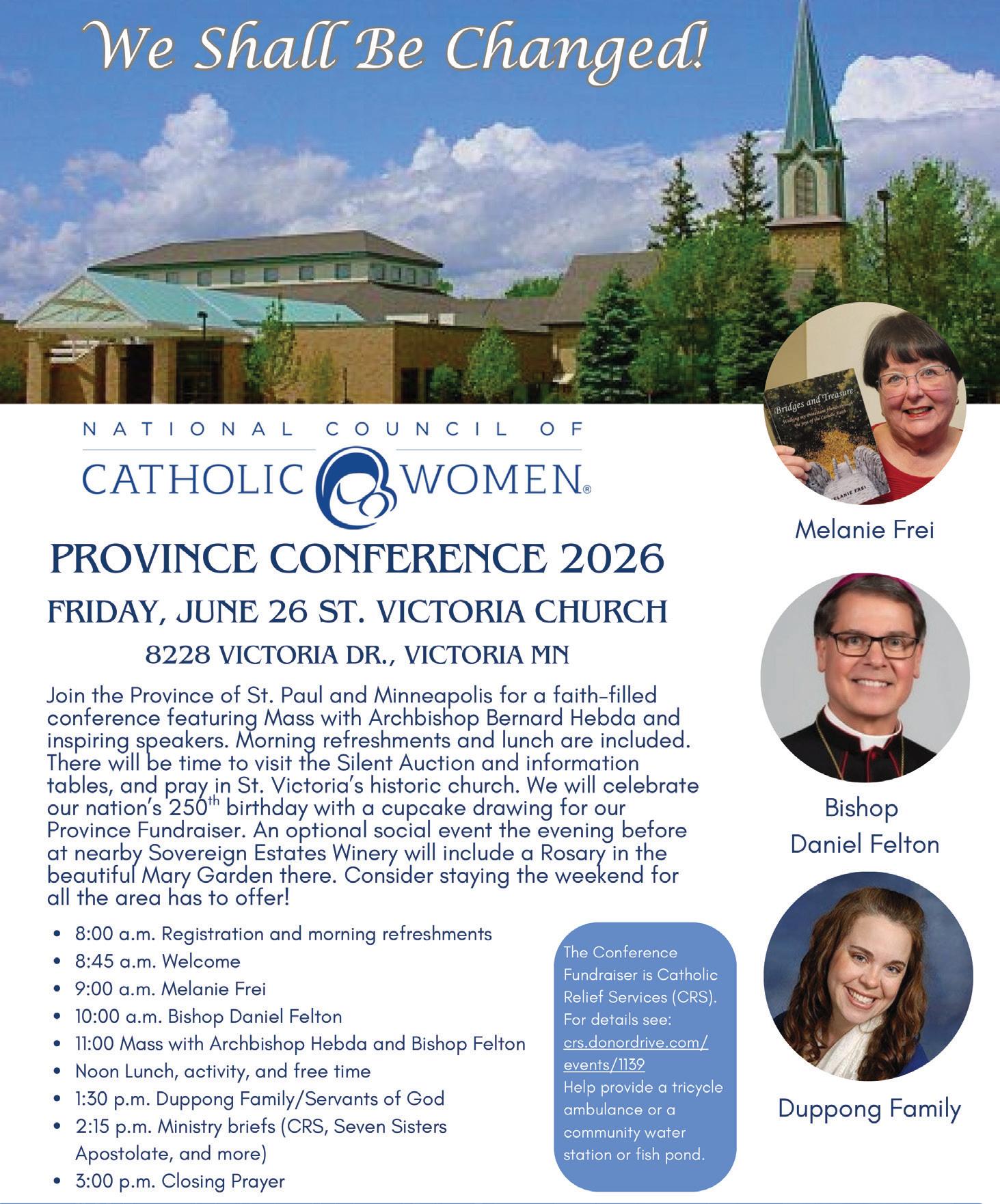
Torture Abolition and Survivors Support Coalition International (TASSC). She returned to Mankato in 2010 and continued her social justice ministry in a variety of ways, including joining Sister Gladys Schmitz and others in weekly silent protests in downtown Mankato. In 2015, Tim Walz, then a US Representative from Minnesota, invited her to be his guest of honor when Pope Francis addressed a Joint Session of Congress. She moved with other School Sisters of Notre Dame to Shakopee in 2022 and, 11 days before her death, celebrated her 100th birthday.
Sister Alice is survived by her sisters in community, the School Sisters of Notre Dame and SSND Associates; and nieces and nephews and their families. She was preceded in death by her parents, Benno and Bernadine (Wey) Zachmann; her sister, Lauretta Hartmann; and her brothers, Tony, Carl, Frank, Harry and Paul.
A longer obituary and a recording of her funeral are available at www.ssndcp.org/obituaries Memorials may be directed to the School Sisters of Notre Dame; 11 Civic Center Plaza, Suite 310; Mankato, MN 56001.
Sister Karen Thein, SSND, 84, died April 29, 2026, in Shakopee. She served as an educator, missionary and parish minister. Her funeral Mass was celebrated May 7 at the Windermere chapel in Shakopee with Fr. John Kunz as presider. Burial followed in the Good Counsel Cemetery, Mankato.
Sister Karen was born in Clara City in 1942 and was baptized at St. Clara Church there. She attended St. Clara School for grades 1-8, where she was taught by School Sisters of Notre Dame, and Sacred Heart High School in Waseca, graduating in 1960. She entered the SSND postulate in Mankato that same year. She professed first vows in 1962. After completion of her BA with a Latin major and Spanish minor, she began her ministry as a high school language and religion teacher in 1964. She
taught at Loyola High School in Mankato (1969-72) and Good Counsel Academy, also in Mankato (197374). From 1974-89 she ministered in Guatemala at SSND missions, first at Nahualá and then at Patzún.
After returning to the US in 1989 she became a parish minister with special emphasis on Hispanic people. Her years in parish ministry included one year at St. Theodore, Albert Lea (1992-93) and 11 years at St. Mary, Worthington (1999-2010). She is remembered by the people of Worthington for the many ways that she served the Hispanic people, including providing religious education activities for youth, acting as a medical interpreter, and for standing with and supporting them when immigration agents raided the local meatpacking plant in 2006. Following her years of service in Worthington, Sister Karen continued her ministry with the Hispanic people in rural Missouri, first in Kennett and then in Cuba.
Sister Karen is survived by her sisters in community, the School Sisters of Notre Dame, SSND Associates; and nieces and nephews. She was preceded in death by her parents, Eugene and Emma (Tomes) Thein; her sisters, Patricia Thein and LaVonne Welter; and her brothers, Eugene and Rodney.
A longer obituary and a recording of her funeral are available at www.ssndcp.org/obituaries Memorials may be directed to the School Sisters of Notre Dame; 11 Civic Center Plaza, Suite 310; Mankato, MN 56001.
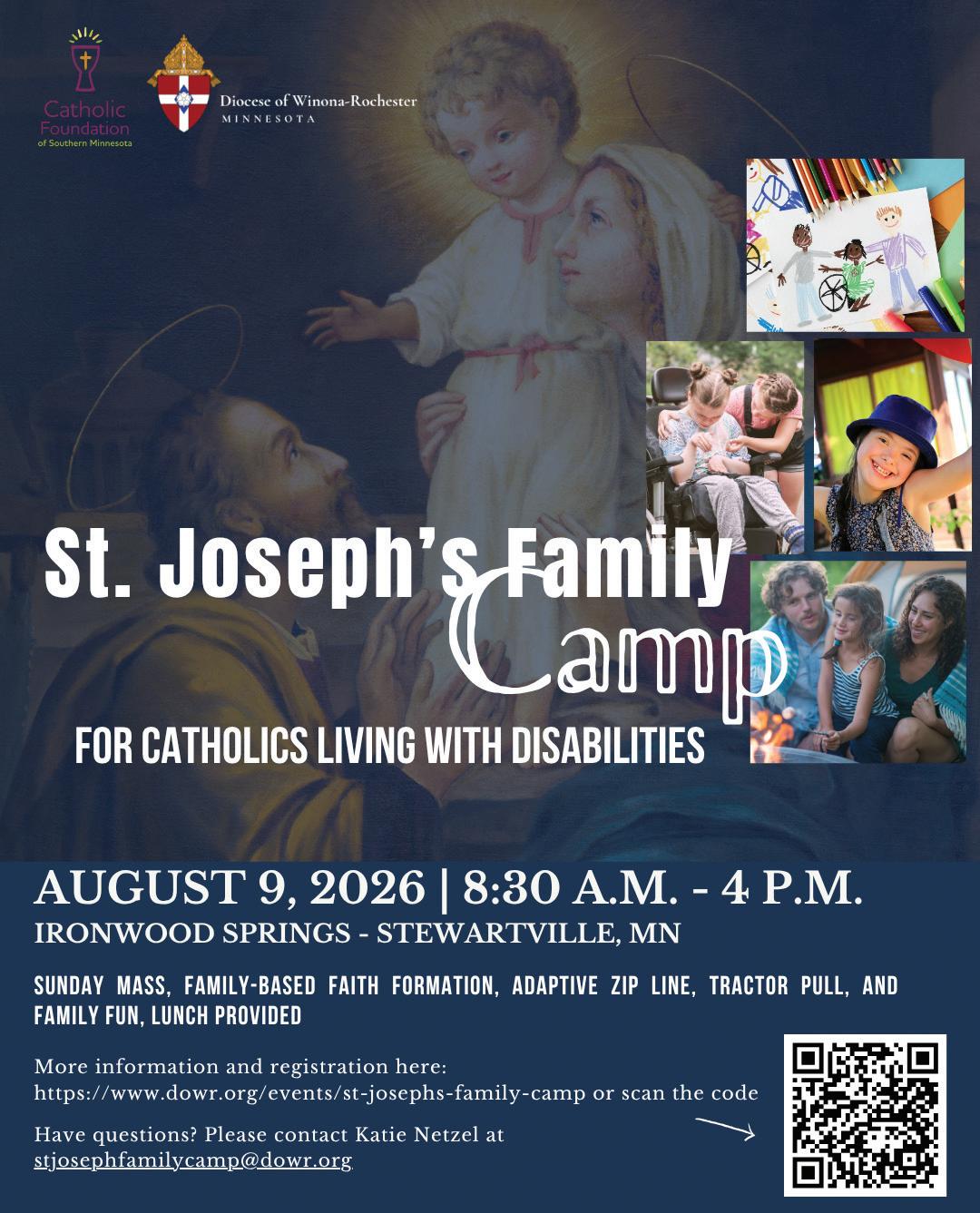
Parish Events
June 20-21, Saturday-Sunday
St. Augustine & St. Edward Parishes, Austin, will celebrate the 30th anniversary of Fr. Andrew Beerman's ordination with receptions after all Masses: 4:30 Saturday & 10:30 Sunday at St. Augustine, and 8:30 Sunday at St. Edward. All are welcome.
July 11, Saturday
St. Luke Parish, Sherburn, will host the quarterly gathering of the Winona-Rochester Diocesan Council of Catholic Women at the church (303 S Lake St. in Sherburn), beginning with 8:30 a.m. Mass, breakfast, lunch, Catholic Charities diaper/wipes drive, and highlights from diocesan and national projects. Speakers are Maria Stumpf on Catholic Charities women's and children's initiatives, and Shelly Holt on Growing Good Mental Health. All Catholic women are invited.
July 19, Sunday
St. Ann Parish, Janesville, will celebrate its 150th anniversary, beginning with Mass at 8:30 a.m. in the church (313 W 2nd St. in Janesville), with Bishop Robert Barron and Fr. Robert Schneider concelebrating, followed by breakfast in the parish center.
September 12, Saturday
St. Theodore Parish, Albert Lea, will host Seven Sisters Apostolate of the Diocese of Winona-Rochester for a gathering and time of reflection at the church (315 E Clark St. in Albert Lea) from 8:30 a.m. - 1:30 p.m. Mass, light breakfast, program, Q+A, lunch, and various speakers including Seven Sisters Foundress Janette Howe. RSVP and register by August 30 to Seven Sisters Diocesan Coordinator Lola Baxter at 507-525-4053 (text friendly) or rcmauris@bevcomm.net. Free-will offerings are welcome on the day of the event.
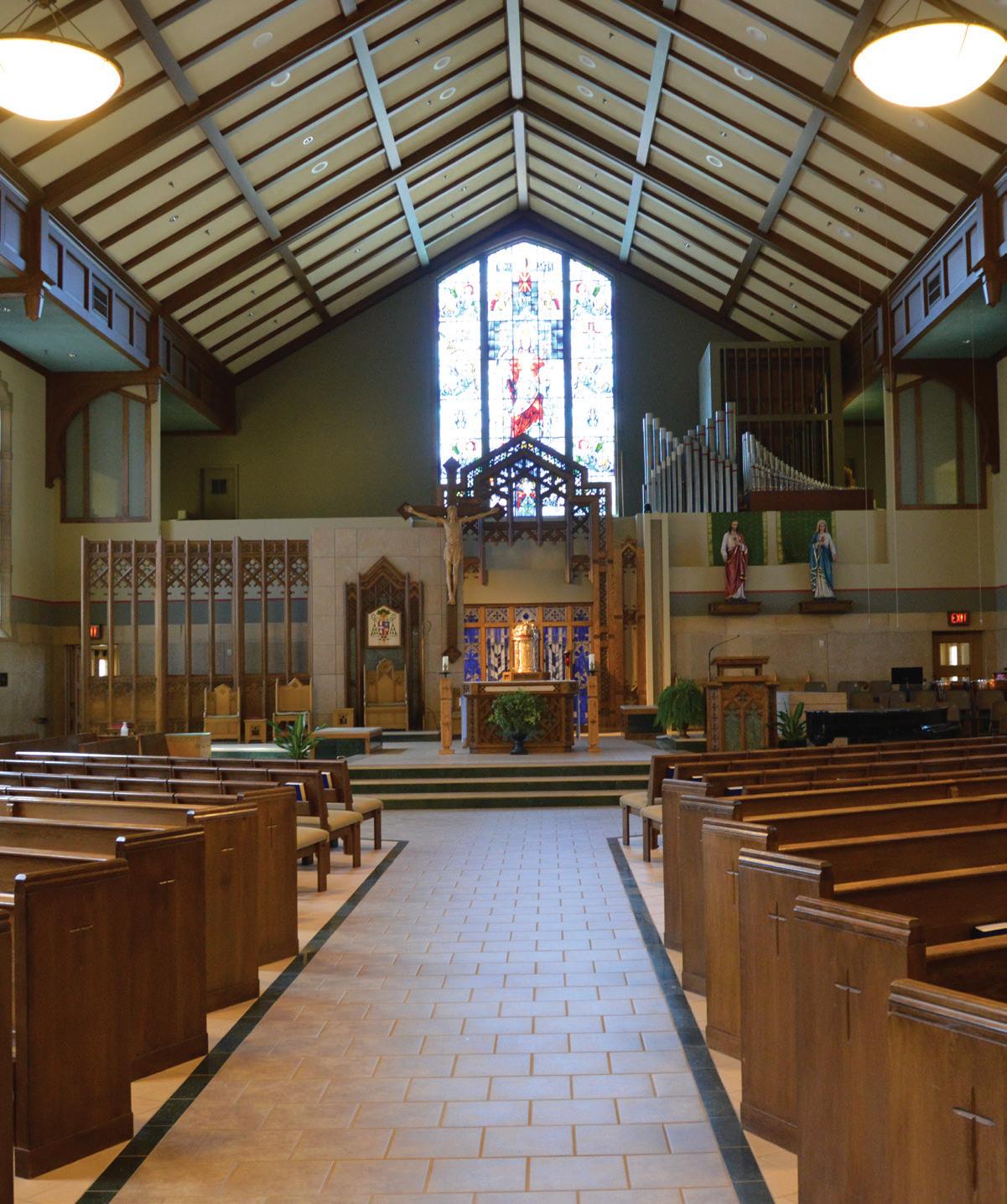
The Televised Mass Is Offered Every Sunday
Sioux Falls - ODLT Channel 7 at 7 a.m.
Mankato - KEYC Channel 12 at 7:30 a.m.
Digital Channel 12.2 or Charter Channel 19 NEYC at 9:30 a.m.
Digital Channel 7 (DirecTV) or Channel 11 (DISH) KMNF at 9 a.m.
Rochester/Austin/Mason City
KIMT Channel 3 at 7:30 a.m.
MyTV 3.2 at 9 a.m.
Twin Cities - WFTC Digital Channel 29 or Channel 9.2 at 11:30 a.m.
Southeastern MN - HBC Channel 20 at 3 p.m. (repeated Wed. at 3:30 p.m.)
Winona/La Crosse/Eau Claire - WLAX/WEUX
Channel 25/48 at 7:30 a.m.
and on our website, dowr.org (click "Weekly Mass")