hy Eco-Friendly New Homes Are a W Smart Choice for Homebuyers
nvironmental awareness is influencing the way people choose and design their E homes. Today's homebuyers increasingly recognize the importance of energy efficiency, responsible material selection, water conservation, and healthier indoor environments. Eco-friendly new homes bring these features together through modern construction methods and sustainable design solutions. hese properties offer an opportunity to enjoy contemporary comfort while making T more responsible choices about energy and resource consumption. For buyers planning a long-term investment, environmentally conscious construction can provide several practical advantages.
1. Improved Energy Efficiency ne of the biggest advantages ofeco-friendly new homesis their focus on O reducing unnecessary energy consumption. odern construction techniques can incorporate high-performance insulation, M energy-efficient windows, properly sealed building envelopes, and efficient heating and cooling systems. hese features help regulate indoor temperatures and reduce the amount of energy T required to maintain comfortable living conditions.
ED lighting and energy-efficient appliances can further support household L efficiency. lthough actual savings depend on climate, household usage, and building A performance, these features can help homeowners manage utility expenses more effectively.
2. Lower Environmental Impact raditional construction and residential energy consumption can contribute to T environmental challenges. co-friendly homes aim to reduce some of these impacts through better resource E management, durable materials, and energy-conscious building practices. or example, builders may incorporate recycled materials, responsibly sourced F timber, low-waste construction methods, and products designed for longer service life. hoosing durable materials can also reduce the need for frequent replacements, C helping limit unnecessary waste over time. hese decisions contribute to a more responsible approach to residential T development.
3. Healthier Indoor Living Environments Indoor air quality is an important part of creating a comfortable home. co-friendly construction may incorporate low-VOC paints, adhesives, flooring E materials, and finishes that help reduce certain indoor pollutants. ppropriate ventilation systems can also support air circulation and help manage A indoor humidity. atural daylight is another valuable design consideration. Strategically positioned N windows and open layouts can increase access to natural light, creating brighter and more pleasant living spaces. omeowners should discuss ventilation specifications and material certifications H with their builder to understand the actual indoor environmental benefits.
4. Water Conservation Features ater-efficient design is another important characteristic of environmentally W conscious homes. odern fixtures and plumbing solutions can help reduce unnecessary water M consumption without sacrificing everyday convenience. Common features include: ● ● ● ● ● ●
ow-flow showerheads. L Water-efficient faucets. Dual-flush toilets. Efficient dishwashers and washing machines. Smart irrigation systems. Rainwater collection systems where permitted.
utdoor landscaping can also contribute to water conservation. Native and drought- O tolerant plants generally require less irrigation once established, making them useful choices in areas with limited water availability.
5. Renewable Energy Opportunities enewable energy systems can help homeowners reduce dependence on R conventional electricity sources. olar panels are one of the most popular options for residential properties. They S convert sunlight into electricity that can be used to support household energy requirements. epending on the property's location, roof orientation, energy usage, and D installation costs, solar energy may provide long-term financial advantages. Battery storage can also allow homeowners to store excess electricity for later use. omebuyers should evaluate system specifications, installation expenses, H warranties, and available incentives before making a decision.
. Better Temperature Regulation and Indoor 6 Comfort Comfortable indoor temperatures are essential for everyday living.
co-friendly homes often incorporate insulation, energy-efficient windows, E appropriate ventilation, and carefully planned building orientations to improve temperature regulation. hese features can help reduce unwanted heat transfer and maintain more T consistent indoor conditions throughout the year. I n regions with significant seasonal temperature changes, climate-conscious construction can make a noticeable difference in indoor comfort. well-designed building envelope also helps heating and cooling systems operate A more efficiently.
7. Smart Home Technology odern eco-friendly properties may include smart systems that allow residents to M monitor and manage household energy consumption. mart thermostats can adjust heating and cooling schedules according to S occupancy and personal preferences. utomated lighting systems can switch off lights when they are not needed, while A energy monitoring devices provide insights into electricity usage. ome smart home platforms also allow homeowners to manage appliances, S security, and temperature settings remotely. hese technologies combine convenience with more informed resource T management.
8. Potential Long-Term Financial Benefits co-friendly homes can offer financial advantages through efficient energy and E water usage. ower utility consumption may help reduce recurring household expenses, while L durable construction materials can potentially reduce certain maintenance and replacement costs. ome energy-efficient upgrades may also be attractive to future buyers who S prioritize sustainability and modern home features.
owever, the overall financial value depends on initial construction costs, system H performance, maintenance requirements, and local real estate conditions. uyers should compare the total cost of ownership rather than focusing only on the B purchase price.
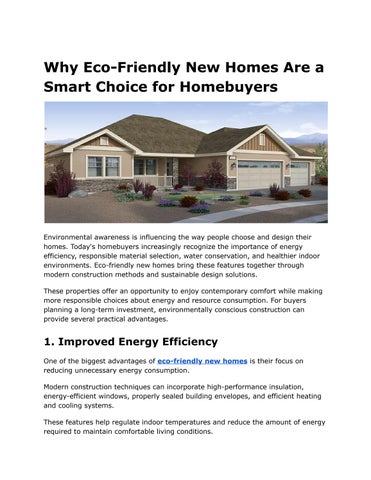
9. Modern Designs Without Compromising Style Sustainable construction does not mean compromising on architectural beauty. co-friendly new homes can feature contemporary layouts, attractive exterior E finishes, spacious interiors, modern kitchens, and thoughtfully designed outdoor areas. atural materials, large windows, functional storage, and indoor-outdoor living N spaces can create an elegant residential environment. uilders can also incorporate sustainable features into different architectural styles, B allowing homeowners to select designs that match their preferences. he result can be a property that combines visual appeal with responsible T construction choices.
0. What to Check Before Buying an Eco- 1 Friendly Home omebuyers should carefully evaluate the sustainability features included in a new H property. sk the builder about insulation ratings, window performance, heating and cooling A systems, appliance efficiency, ventilation, water-saving fixtures, and renewable energy options. equest documentation where available, including energy performance assessments R and relevant product certifications. I t is also important to understand whether advertised features are included in the standard home package or offered as additional upgrades. Comparing these details can help buyers make an informed decision.
Conclusion
co-friendly new homes offer a practical combination of modern comfort, energy E efficiency, responsible construction, and resource conservation. From improved insulation and renewable energy opportunities to water-saving fixtures and healthier indoor materials, these properties support a more environmentally conscious lifestyle. or homebuyers planning to invest in a new property, exploring sustainable F construction features can be a valuable step toward long-term comfort and efficiency. Selecting an experienced builder who understands environmentally responsible design can help create a home that meets modern expectations while reducing its environmental footprint.