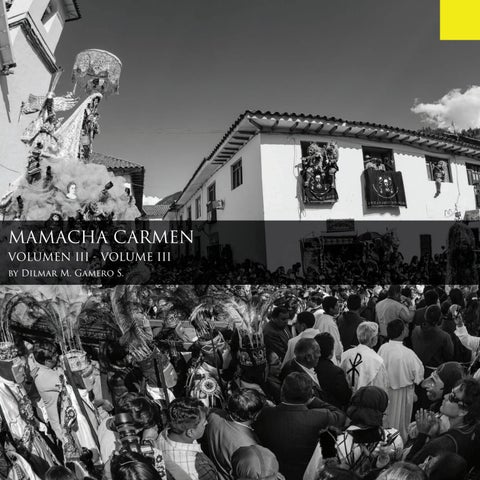
MAMACHA CARMEN VOLUMEN III - VOLUME III by Dilmar M. Gamero S.
Mamacha Carmen
6
DEDICATORIA
DEDICATION
A todos mis amigos paucartambinos que me han abierto las puertas de
To all my Paucartambo friends who have opened the doors of their
sus casas y las de su corazón, en especial a mis ahijados y compadres.
homes and those of their hearts, especially to my godchildren and
A mis amigos peruanos que me han acompañado en este itinerario por
“compadres.”
varios años.
To my Peruvian friends who have accompanied me on this journey for
A mis amigos que han cruzado fronteras para conocer a la Mamacha
several years.
de quien tanto he hablado y a los que aún no han llegado por allá pero
To my friends who have crossed borders to meet the Mamacha Carmen
comparten el sentimiento y la emoción que me embarga cuando hablo
of whom I have spoken so much and those who have not yet arrived
de Paucartambo y la Mamacha Carmen.
there but share the feelings and emotions that overwhelm me when I
A todos los que han apoyado este proyecto que aún no termina.
talk about Paucartambo and Mamacha Carmen. To all those who have supported this project that has not yet ended.
7
8
Prologo
Prologue
En Julio, el pueblo de Paucartambo en los Andes peruanos, celebra a
In July, the village of Paucartambo in the Peruvian Andes, celebrates its
la Virgen del Carmen: “La Mamacha Carmen”. Por más de 300 años,
miracle mother: “Mamacha Carmen.” For over 300 years, groups of
grupos de danzantes enmascarados se reúnen para celebrar su devoción
masked dancers gather to celebrate their devotion to the “Mamacha” by
a la Mamacha, cantando, bailando y rezando juntos.
singing, dancing and praying together.
Después de más de trece años participando de este ritual, he des-
After more than thirteen years of participating in this ritual, I dis-
cubierto que el verdadero milagro de la ¨Mamacha Carmen¨ es que
covered that the real miracle of “Mamacha Carmen” is that it reveals the
ella revela el sincretismo religioso de la región, y también asombra y
religious syncretism of this region, as it amazes and engages everyone
compromete a todos (participantes y visitantes) con el color, movimiento
(participants and observers alike) with color, movement and devotion
y devoción de los danzantes y sus familias. Por esa razón, mi compromiso
by the dancers and their families. For that reason, my commitment to this
con esta celebración ha inspirado la edición de este libro.
celebration inspired me to work on a richly illustrated book.
Durante las procesiones los devotos llevan unas ¨demandas” (“cajas
During the processions the devotees carry “demandas” (spiritual
con contenido espiritual”) que contienen pequeñas figuras de la
religious boxes) that contain the sacred figure of the “Mamacha.” This
¨Mamacha Carmen¨. Este libro es una metáfora de esas “demandas” que
photobook is a metaphor of those “demandas” that celebrate the mys-
celebran el viaje místico de los danzantes y el mío también, equilibran-
tical journey of myself alongside the dancers; it balances my experience
do mi experiencia como contador de historias outsider e insider en el
as a storyteller who is both an outsider and an insider to the community
pueblo y en la celebración. En esta historia trato de ser el puente que
and celebration. In this story I am a bridge that connects these different
conecta esos mundos diferentes y complementarios.
and complementary worlds.
Trabajar con herramientas digitales y procesos alternativos en la
Working with digital tools and alternative traditional printing pro-
edición de estos cinco volúmenes que conforman el libro de mi historia
cesses in a book edition to tell my story, this photobook becomes a
en Paucartambo, ha sido una experiecia mística que también evoca
mystic experience that evokes symbols from the current rituality as well.
ritos actuales. Además de cada volumen del libro, este proyecto también consiste
Besides the book, this project consists of five altarpieces (boxes), each representing one of the major groups of dancers and the “Cargo Mayor”
en cinco altares portátiles (cajas), que son mi interpretación de esas
(people who are responsible of the celebration). Each altarpiece contains
“demandas” (cuatro representan a los diecinueve grupos de danzantes y
one volume of the book and five unique Platinum/Palladium prints. The
la otra representa al “Cargo Mayor”, gente responsable de la festividad).
warm color of the Platinum/Palladium prints create the unique feeling of
Cada caja contiene un volumen del libro y cinco impresiones en platino/
an old and sacred process of transformation; images and texts connecting
paladio. El color cálido de las impresiones en platino/paladio ha creado un
earth with heaven.
sentimiento único hacia un viejo y sagrado proceso de transformación; imágenes y textos conectando el cielo con la tierra. Dilmar Mauricio Gamero Santos
9
10
Indice / Contents Prólogo / Prologue
9
Volumen III / Volume III
13
Capítulo 6: 16 de julio / Chapter 6: July 16th
17
Bibliografía y Referencias / Bibliography and Notes
93
11
12
VOLUMEN III VOLUME III
13
14
16 de julio: Día Central
July 16th: The Main Day
Este es el día principal de la fiesta.
This is the main day of the celebration.
Todos estamos pendientes de este día porque la Mamacha Carmen bendice a su pueblo desde la Misa por la mañana hasta la procesión por la noche. Es un día cargado de muchas emociones donde además los danzantes ponen a prueba su resistencia física porque bailan y cantan todo el día.
Everybody is looking forward to this day because Mamacha Carmen blesses her people from the morning Mass till the procession at night. It is a day full of emotions where the dancers also test their physical resilience because they must dance and sing the whole day.
4.00 am Misa de Aurora a cargo de los devotos.
4.00 am Early morning mass for the devotees.
9.00 am Misa de fiesta en honor a la Santísima Virgen del Carmen (Mamacha
9.00 am Main Mass in honor of the Virgin of Mount Carmel (Mamacha Car-
Carmen) con la asistencia de todas las danzas y feligresía en general.
men) with the participation of all the dancers, devotees and visitors.
10.30 am Tradicional Bosque realizado en la Plaza de Armas.
10.30 am Traditional “Bosque” held in the Plaza de Armas.
11.00 am Reparto del Once en el “cargo wasi” o casa del cargo mayor
11.00 am Distribution of the “Eleven” in the “cargo wasi” or house responsi-
(albergue municipal). 3.00 pm Solemne procesión de la Mamacha Carmen por el recorrido
ble for the celebration (municipal shelter). 3.00 pm Solemn procession of Mamacha Carmen through the traditional
tradicional de Paucartambo, presidido por el cargo mayor, autoridades, danzas y
route of Paucartambo, directed by the city mayor, authorities, dance groups and
feligresía en general.
parishioners.
15
16 de julio - july 16th CAPÃTULO 6 - CHAPTER 6
18
9.00 am Misa Central
9.00 am Main Mass
Hay que levantarse temprano para conseguir un lugar en el tem-
You must get up early to get a place in the church.
plo. Hasta hace unos años la misa se realizaba en las afueras del templo por la gran cantidad de gente que participaba. Desde hace un par de años la misa volvió a realizarse dentro de la Iglesia porque esa es una condición indispensable para que la fiesta de la Mamacha Carmen mantenga su status de Patrimonio Cultural reconocido por la UNESCO. Cada año la parroquia con los guiadores o caporales de las danzas planifican la que podría ser la mejor estrategia para que la mayor cantidad de gente entre en la Iglesia y se cuente con equipos de sonido eficientes para todos los que participan de la Misa en las afueras del templo.
Until a few years ago the mass was held outside the church because of the large number of people who participated in it. The last couple of years, the Mass was again held within the Church because that is an essential condition for the Mamacha Carmen celebration to maintain its status as a Cultural Heritage recognized by UNESCO. Each year the parish with the dance leaders or “caporales” plan what would be the best strategy for the greatest number of people to get into the church. They also plan to have an efficient sound system for all those who participate in the Mass outside of the church.
19
Misa Central 2017 The Main Mass 2017
20
21
22
Misa Central 2012 The Main Mass 2012
23
24
25
26
10.30 am El Bosque
10.30 am The “Bosque”
Cuando la misa central ha terminado empieza el Bosque.
When the central mass has finished, the “Bosque” begins.
Los Qhapac Qollas arman un gran tabladillo al centro de la plaza mayor como estrategia de guerra para observar a los Qhapac Chunch’us, sus contrincantes y custodios de la Mamacha Carmen. También reparten obsequios para ganar la afinidad del pueblo y distraerlo. Tradicionalmente, los objetos arrojados mostraban las habilidades productivas de los pobladores, como la ebanistería, el trabajo en metal, la cestería y otros distintivos de la zona. Actualmente además de esos productos los Qollas arrojan colchones, baldes, juguetes, naranjas, a veces cerveza.
The Qhapac Qollas build a large plank in the center of the main plaza as a war strategy to observe the Qhapac Chunch’us, their opponents and custodians of Mamacha Carmen. They also give out gifts to win the support of the people and distract them. Traditionally, they throw objects that show the productive abilities of the settlers, such as cabinetmaking, metal work, basketry and other distinctive features of the area. Currently besides those products, the Qollas throw mattresses, buckets, toys, oranges, and sometimes beer.
27
28
29
30
31
32
33
34
35
36
11.00 am El Once
11.00 am The “Once” (Eleven)
Terminado el “bosque” todas las comparsas se dirigen al “cargo
Once the “Bosque” is finished, all the groups of dancers go to the
mayor” al compás de sus músicos.
“cargo wasi” (the main place of the celebration) to the rhythm of
El “prioste” o “cargo mayor”, en señal de agradecimiento ofrece gaseosas, cervezas y bolsitas de pan a todos los integrantes de las
their musicians. The “Prioste” or “cargo mayor,” in gratitude, offers soft drinks,
danzas. La tradición cuenta que se entregan once panecillos que
beers and pieces of bread to all the members of the dance
pesan una onza.
groups. Tradition says that the dancers receive eleven muffins each weighing one ounce.
37
38
39
40
41
42
43
44
45
46
47
Cuando las danzas terminan de compartir y celebrar en el Once, todos regresan a sus casas de cargo para almorzar y prepararse para la procesión central. En el camino de retorno despliegan sus coreografías y bailes. When the dance groups finish sharing and celebrating in the Once, all the groups return to their “cargo” houses (place where the whole group meets) to have lunch and they prepare themselves for the main procession. On the way to their “cargo” houses they show their choreographies and dances.
48
49
50
51
52
53
54
55
56
57
58
59
60
3.00 pm La Procesión
3.00 pm The Procession
Llega uno de los momentos más emocionantes de la festividad.
This is one of the most exciting moments of the festival.
Suenan las campanas de la iglesia, la procesión inicia cuan-
The bells of the church ring, the procession starts when the
do las bandas de músicos del “prioste”, “Waca Waca” y
music bands of the “prioste,” “Waca Waca” and “Majeño” dancing
“Majeño”, se reúnen e interpretan la melodía de la Marcha del
groups get together and play the melody of the March of the
¨Monte Carmelo¨.
“Mount Carmel.”
Los “Qhapac Chunch’us” dando saltos acompañan a la
The “Qhapac Chunch’us” dancers jump next to the Mamacha
imagen de la Mamacha Carmen porque ellos son sus guardianes,
Carmen because they are her guardians, the “Qhapac Qollas” and
los “Qhapac Qollas” y los “Qhapac Negros” entonan cantos de
the “Qhapac Negros” sing praise songs, and the “Saqras” hang from
alabanza, y los “Saqras” cuelgan de los balcones cubriéndose los
the balconies covering their faces when the Mamacha passes in
rostros cuando la Mamacha pasa frente a ellos.
front of them.
Durante el recorrido las otras danzas esperan su turno en los
During the procession, the other dance groups await their turn
lugares asignados para cargar la imagen de la Mamacha Carmen y
in the places assigned for them to carry the image of Mamacha
bailarle con fe y devoción.
Carmen, and they dance with faith and devotion.
Cada vez que veo salir del templo a la Mamacha Carmen la
Every time I see Mamacha Carmen leaving the church, the
emoción que siento es única porque ella representa el cariño de
emotion I feel is unique because she represents the affection of all
todos los paucartambinos.
the Paucartambo people.
61
62
63
64
65
66
67
68
69
Bailar, rezar y cantar por horas, soportar los empujones de los feligreses que quieren acercarse a la Mamacha Carmen, demanda mucho esfuerzo fĂsico. Los danzantes durante la procesiĂłn cuentan con lugares de descanso para recuperar fuerzas y continuar con fe y devociĂłn. Dancing, praying and singing for hours, withstanding the pushes of the crowd who wants to get close to Mamacha Carmen demands a lot of physical effort. The dancers during the procession have places to rest, recover their strength and continue with faith and devotion.
70
71
Las danzas acompaĂąan la procesiĂłn y esperan en sus lugares asignados para recibir a la Mamacha Carmen y bailarle como muestra de cariĂąo y afecto.
72
The dance groups walk along the procession and wait in their assigned places to receive Mamacha Carmen and dance for her as a sign of love and affection.
73
74
75
76
77
78
79
80
81
82
83
84
7.00 pm Cena y Cocina
7.00 pm Dinner and Kitchen
La cena de esta noche por lo general es un estofado, tallarines,
This night’s dinner is usually a plate of stew, noodles, barbecue or
churrasco o asado, dependiendo de los “carguyoc”.
roast, depending on the “carguyoc” (person responsible of the
Pero, ¿quiénes hacen posible que todo esté listo para que los danzantes e invitados recuperen fuerzas? Los “karguyoc” cuentan con el apoyo de un grupo de perso-
celebration). But who makes sure that everything is ready for the dancers and guests to recover their strength?
nas que hacen posible que todo esté preparado a tiempo y se
The “karguyoc” have the support of a group of people who
cumpla con la tradición. Muchos son gente humilde, varios son
make sure that everything will be ready on time, following the
campesinos del lugar que dejan de participar en la fiesta para
traditions of the celebration. Many of these people are humble
atender a los feligreses.
farmers, several are local peasants who do not participate in the
Todas las comparsas siempre agradecen a estas personas por el servicio prestado durante la fiesta.
rituals of the festival in order to take care of the parishioners. Every dance group always thanks them for the service they do during the festival.
85
86
87
88
89
90
91
92
Bibliografia y Referencias
bibliography and notes
En este volumen los textos están inspirados en el libro: “Plan de
In this volume the texts are inspired by the book: “Safeguarding
Salvaguarda de la Mamacha del Carmen” publicado por el Crespial
Plan of the Mamacha del Carmen” published by Crespial and the
y el Ministerio de Cultura (2012) y varios testimonios recogidos de
Ministry of Culture (2012) and testimonies collected from dancers
algunos danzantes y gente del lugar.
and Paucartambo people.
Otros textos han sido tomados de las leyendas del Museo de la
Another group of texts have been taken from the captions of
Dirección Desconcertada de Cultura del Cusco en Paucartambo
the Museum of the Direction of Culture of Cusco in Paucartambo,
que a su vez ha recopilado la información de los responsables de
that compiled the information from the people responsible for
cada danza.
each dance group.
Los textos en inglés han sido revisados por Peter Wool a quien estoy eternamente agradecido por su ayuda en este proyecto.
The English translation have been reviewed by Peter Wool to whom I am eternally grateful for his help in this project.
93
94