May is named after Maia, the Roman goddess of growth and fertility, symbolising the fruitfulness of spring and the welcome onset of summer.
The month is unique in having two Bank Holidays: the earlier May Day Bank Holiday, introduced as recently as 1978, focuses on rural traditions and is linked to the Pagan festival Beltane. This marked spring and the start of summer and was commonly celebrated with maypole dancing and the floral crowning of a May Queen.
The later Spring Bank Holiday derives from the Christian celebration of Pentecost – "the seventh Sunday after Easter, which commemorates the descent of the Holy Spirit upon Christ's disciples". Until 1971 this was called Whitsun (from White Sunday – for the derivation of that see Page 4) and the weekend was traditionally a time for fairs, Morris dancing and parades. The actual Bank Holiday used therefore to be known as Whit Monday.
May’s full moon, which this year occurs on 1st at 6.23pm, is known as the Flower Moon thanks to the abundant blooming of nature that occurs around this time, as spring properly gets going. National events taking place include: Doughnut Week (16th to 24th), a fundraiser for The Children's Trust, the UK's leading charity for brain-injured children; Numeracy Day (20th), counting all the reasons why numbers are important in everyday life; and Biscuit Day (29th), rounding off the month by celebrating this tasty treat.
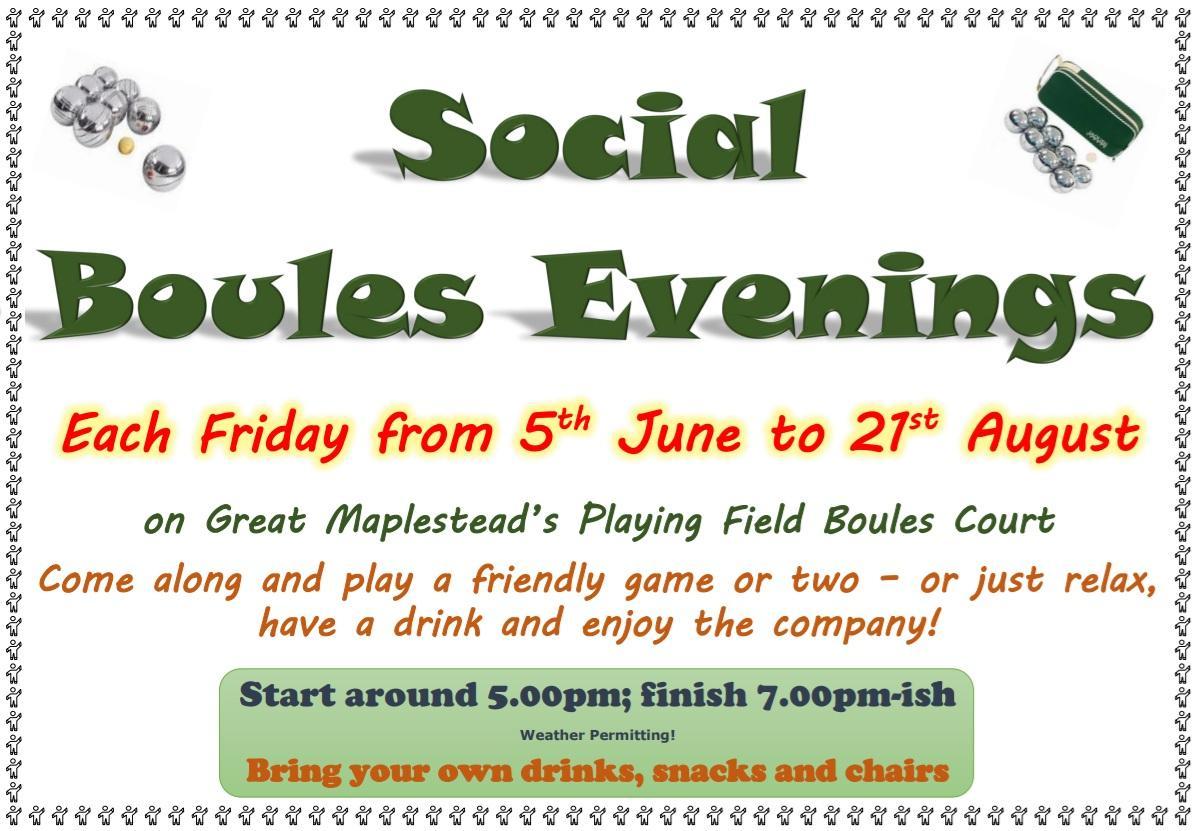
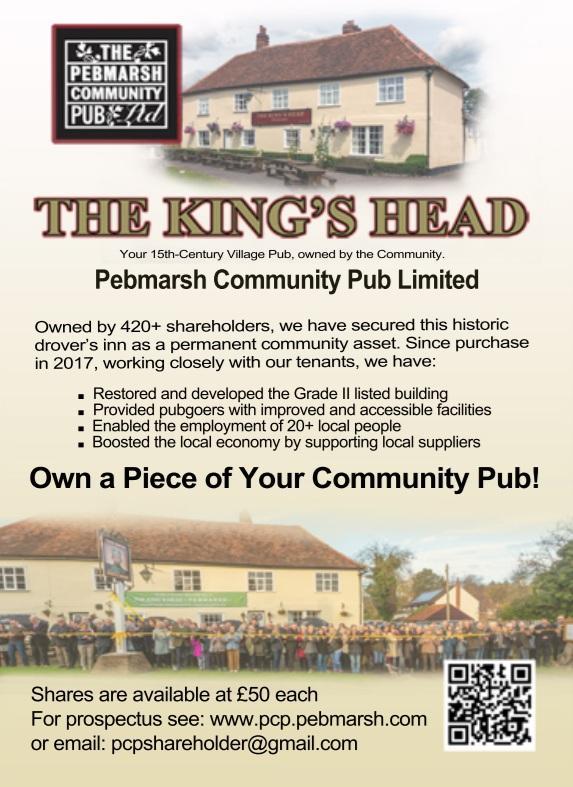
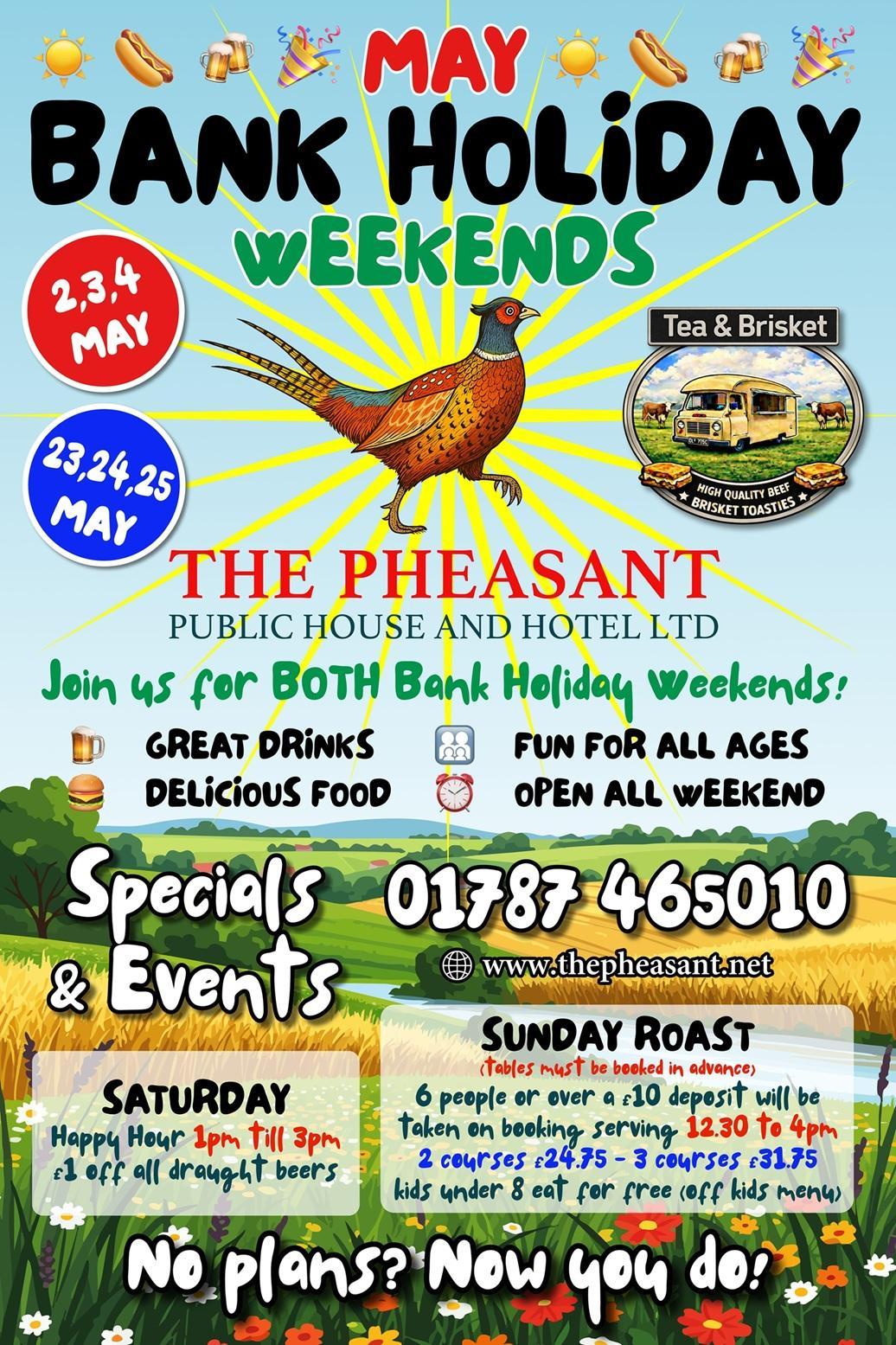
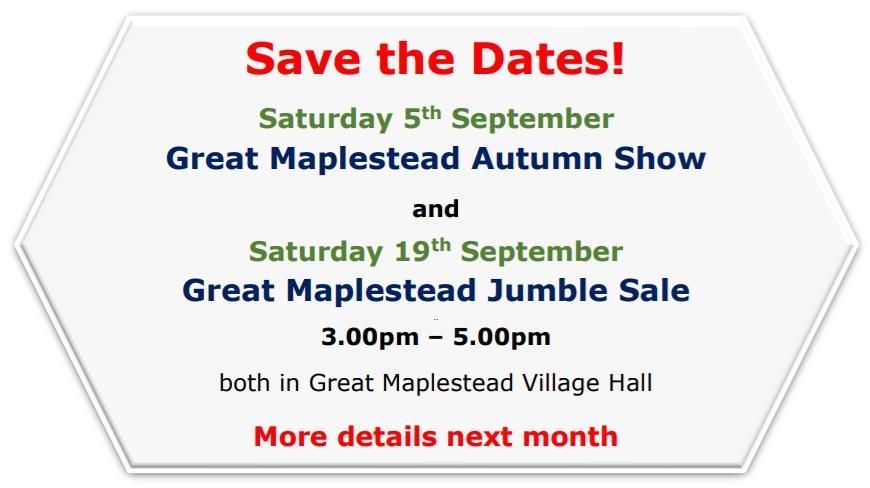
May also sees the start of the many summer events and activities across our parishes: there is Great Maplestead’s early Bank Holiday Beer Festival (2nd/3rd , Page 6); fun events on both Bank Holiday weekends at The Pheasant, Gestingthorpe (Page 19); and The Kings Head Pebmarsh’s Live Sporting Weekend (9th/10th) and Fun Dog Show (26th , Page 14).
We are very pleased to announce that Patricia Fletcher has responded to our earlier calls and will be now be contributing articles on the local natural world; Nature Notes from a Cottage Garden (Page 23) is a welcome addition to our regular gardening, book reviews and other feature articles.
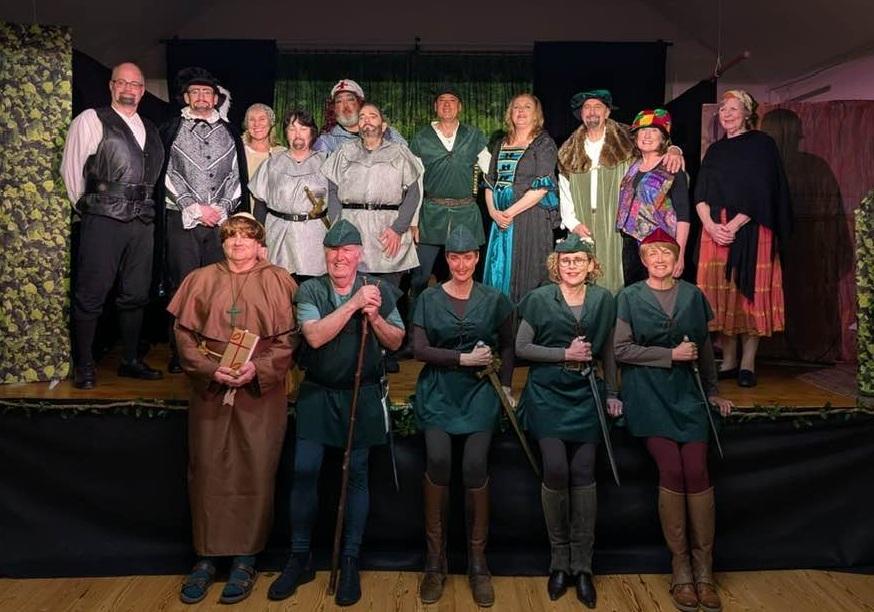
Specific to this issue are: details of the recent Essex Unitary Council Decision (Page 5); an Arts Critic’s review of Great Maplestead’s Robin Hood pantomime (Page 7); information on Project Grants to benefit young people (Page 8); an initiative to improve Metal Packaging Recycling (Page 11); and a reveal: what and where is Essex’s Favourite Church (Page 29)?
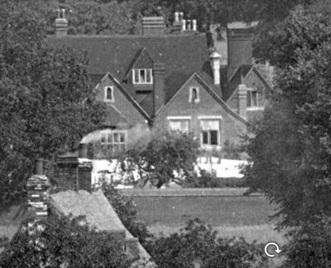
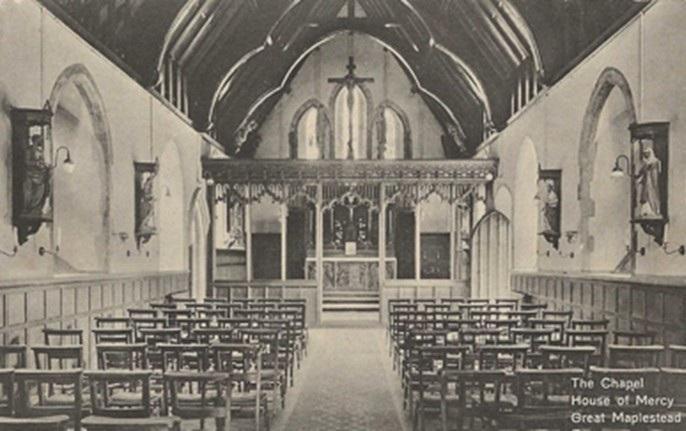
Our feature series – Lost to Time – about local places, people of interest, and other aspects of parish life that have now disappeared, continues with Part Two of the story of St Mary’s (Page 9), charting its evolution from a House of Mercy into a Home for Girls and its eventual abandonment and demolition in the 1960s. We would love to hear about other buildings, people or crafts that have been similarly Lost to Time: please send your information, articles or pictures to the Editorial address (Page 31).
We look forward to hearing from you!
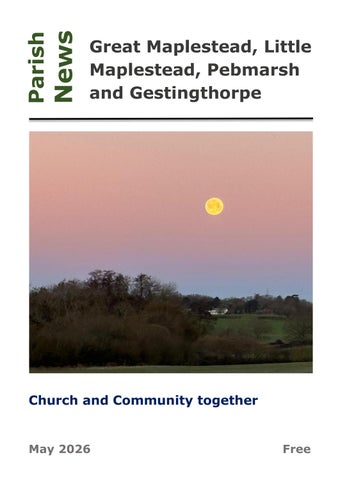
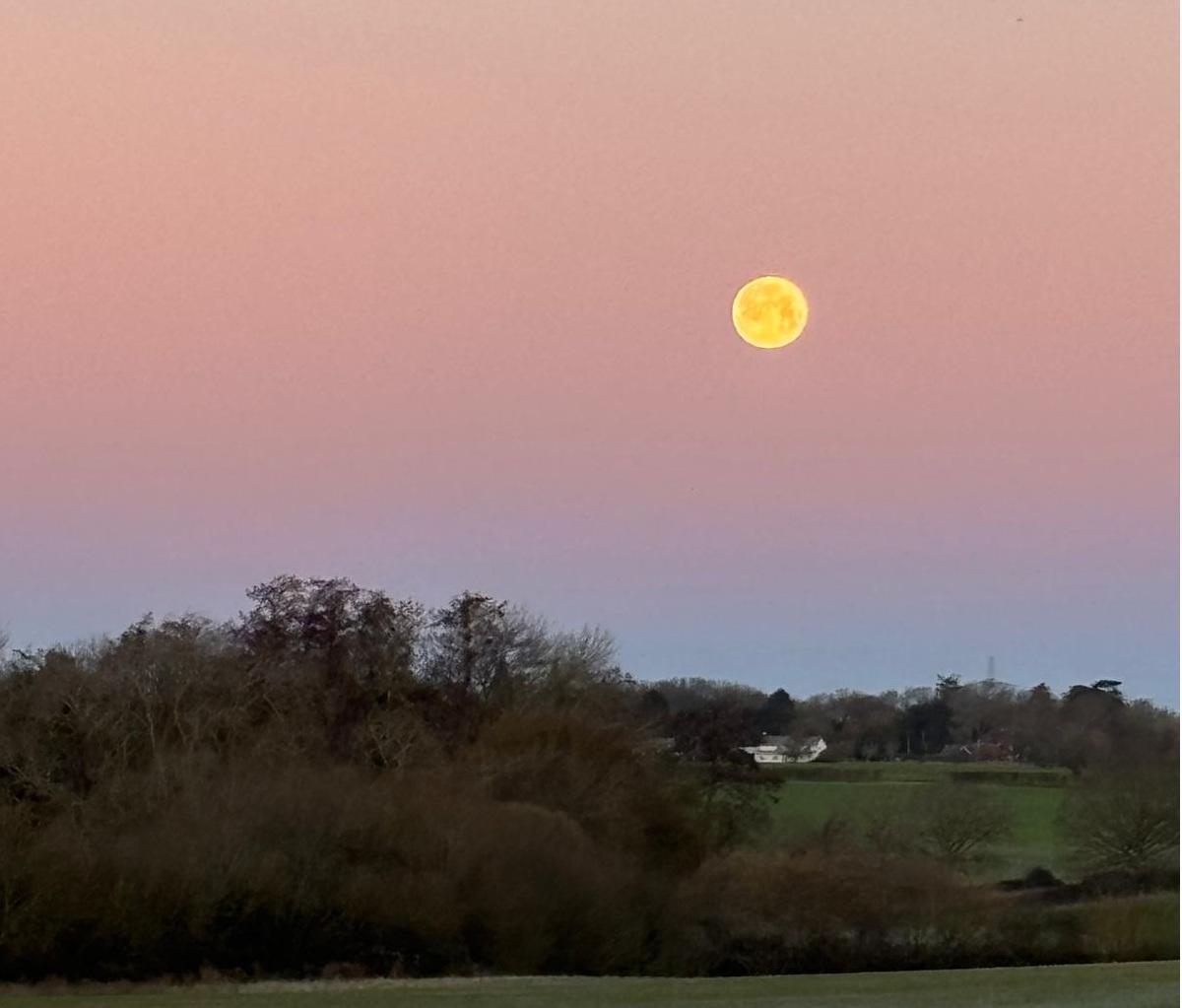
Cover Picture: Supermoon over the Maplesteads by Ann Crisp
Letter from the Reverend Beverley Vincent
April proved to be a particularly busy period for the church. Throughout the month, parishioners participated in a Lent course, which offered opportunities for reflection and learning. Alongside the course, a series of services were held, allowing the congregation to gather for worship and prayer during this significant season in the Christian calendar.
The culmination of Holy Week was marked by a wonderful Easter Sunday service at the Round Church. It was especially heartening to see the church filled with people of all ages, coming together to celebrate. The sense of community and shared joy was evident, making Easter Sunday a memorable occasion for everyone present.
As we move into May, the days grow longer and the gardens begin to bloom, heralding the arrival of a season filled with promise. This month, the Church shifts her focus to Pentecost, a significant time of renewal and transformation. Pentecost, celebrated later in May, commemorates the coming of the Holy Spirit upon the first disciples. This event is often referred to as the “birthday of the Church”, marking the moment when those who were once fearful found courage to speak out and share the good news with everyone.
In this country, Pentecost has long been associated with Whitsun (or Whitsunday), a name thought to come from “White Sunday,” when those newly baptised would wear white garments as a sign of their new life in Christ. Historically, Whitsun became a time of celebration and community life – marked by fairs, processions, and parish gatherings. I recall dancing around the Maypole at primary school.
Though many of those customs have faded, the heart of the festival remains: a celebration of new life, shared faith and the presence of God among us. We are invited not only to reflect on traditions from the past but also to consider how moments of renewal are possible within our community today. It inspires us to ask where we might be called to speak with conviction, to act with kindness, or to welcome others with warmth and generosity.
As we enjoy the beauty of the season, let us be attentive to the subtle ways in which change and growth can shape our lives. May we be open to inspiration, finding encouragement to support one another in our daily lives and within our wider parish community.
Changes Coming to Greater Essex
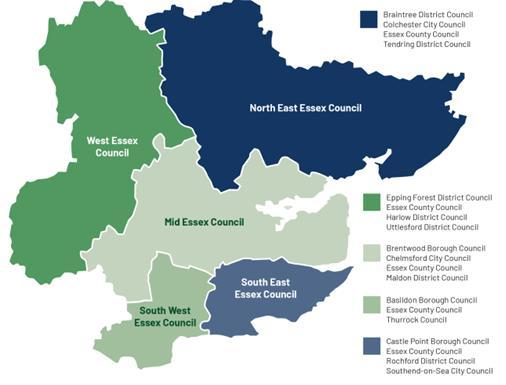
Following the Government’s formal consultation, which finished in January, it has been decided that, from 1st April 2028, the fifteen existing County, Unitary, City, District and Borough Councils in Greater Essex will be replaced by five new Unitary Councils rather than the three Councils alternative favoured by Braintree District Council.
The Unitary Council that will cover those parishes currently under Braintree and Tendring District Councils and Colchester City Council will be known as North East Essex Council.
The Unitary Councils will deliver all the services residents currently rely on:
• waste collections
• roads
• housing
• planning
• play areas, parks and green spaces
• leisure centres
• education
• children’s services
• adult social care
How and when the changes will happen
Elections for the Unitary Councils will take place in May 2027, following which a Shadow Council – a temporary body made up of the newly elected Councillors – will be set up. Its role will be to:
• prepare for the official launch of the new Councils
• agree budgets, policies, and governance arrangements
• ensure all is ready for the transfer of services from 1st April 2028
Until 1st April 2028, all day-to-day services will continue to be run by ECC and the current fifteen Unitary, District, City and Borough councils.
After 1st April 2028, the Unitary Councils will begin to align services, systems and ways of working, with the changes introduced gradually over time to make sure they are well planned, practical and easy for residents to adapt to. Behind the scenes, some services may be brought together sooner to improve efficiency and create a smoother experience overall.
Impact on Services
The focus is to make sure that residents, businesses and communities continue to receive the services and support they rely on, without disruption. Access local offices, community hubs, libraries and online services will remain as they are now. Any future changes that may affect how these services are accessed will be consulted on in the usual way.
Other changes happening in Essex
ECC is also working with the Government on plans for devolution, which will give more power and money to local areas instead of the Government making all the decisions. It will mean Local Councils being able to make choices about things like transport, housing and jobs.
There is more about devolution on the Essex County Council website.
Things to do in May (and June…)
Oh Yes They Did!
The Maplestead Merry Men “… and Women!” made their Robin Hood a joyful end to the local pantomime season – and in a very respectable two hours running time.
Director Konrad Purdy and co-director Nadine Scurr marshalled their copious adult cast with choreographic aplomb into family entertainment in a Village Hall that provided excellent sight-lines – no mean feat!
My abiding highlight of this show was the delight Rotarian dignitary Keith Brownlie exuded throughout, whether in his complex role as Little John or being a bear. He met his match, finally, with Martin Watson’s seriously buxom Nurse Nellie.
Carol Brownlie’s Bow, meanwhile, really kept the action going, aided by Kevin Surgett’s Arrow. I loved Jo Watson’s ballad transposition from Bobby’s to Robin’s Girl for Paula Sillett’s Marion and the musicality Martin Crisp brought to Robin.
From Charles Tindall’s beautifully attired Sheriff to Joe Newton’s splendid bishop’s robes and Angela Purdy and her long-legged outlaws, Gaynor Surgett’s costumes triumphed.
Julie Last’s make-up skills, Jacqui Mee’s and Patsy Maile’s stage management and props, plus techie Bob Chaplin succeeded too in the huge backstage crew.
Bravo!
Pat Rudkins
Lost to Time – St Mary’s House of Mercy (Part 2)
As societal attitudes changed the role of St Mary’s in Great Maplestead evolved. By 1944 responsibility lay with the Diocese of Chelmsford and, with the Nuns no longer involved, a partnership with a charity, the Waifs and Strays Society, enabled a change of focus. After refurbishment the House reopened as St Mary’s Home for Girls, primarily to care for babies and young children who could not remain with their families due to poverty, illness, illegitimacy or wartime separation. Part of the Home was used for training older girls in housecraft and as a nursery and training centre for childcare workers.
Life at St Mary’s was shaped by the routines of a small residential nursery of the period. Staff provided structured feeding, medical supervision and developmental care, while maintaining a religious ethos through services in the Chapel.
With residents mostly under school age, focus was on physical wellbeing and preparation for adoption, fostering or return to family members. Older children were sometimes integrated into village life, attending St Giles’ School and participating in community activities, which helped soften the isolation often associated with institutional upbringing. Older residents of the Maplesteads can remember regular visits to the Home each year for fêtes, which were run to raise money for the charity.
By the late 1950s the Victorian buildings were considered outdated, expensive to maintain and unsuitable for modern childcare standards. As a consequence, between 1957 and 1959, St Mary’s Home closed and the main structures were all demolished by the early 1960s
The legacy of St Mary’s is an important part of Great Maplestead’s social history, charting an evolution from strict Victorian moral reform to 20th Century modern childcare.
More information is available from the Essex Record Office
Essex County Council has launched a new countywide campaign to encourage residents to recycle their metal packaging. The campaign is in partnership with Alupro, an industry funded, not-for-profit organisation representing the UK’s aluminium packaging industry.
In Essex, thousands of tonnes of recyclable metal packaging is wasted each year. For some districts, it makes up to 3.3% of what goes into general rubbish bins.
This is not only costly for the council to dispose of, it is also more harmful to the environment than recycling and a waste of metal that can be recycled infinitely.
The MetalMatters campaign, launched in March, is using social media to engage with residents, who can support the campaign by:
• engaging on the Love Essex social media channels
• recycling all accepted metal packaging at home
• ensuring metal items are empty and clean
• checking local guidance for district-specific recycling instructions
• reusing or taking larger metal items to an ECC recycling centre
Councillor Peter Schwier, Climate Czar and Cabinet Member for Environment, Waste Reduction and Recycling at Essex County Council, said: “From food tins and drinks cans to empty aerosols, households across Essex generate a large amount of metal packaging every week.
“Understanding how best to separate items for recycling, as well as the benefits of doing so, are key to increasing the amount of metal packaging recycled at the kerbside. By partnering with Alupro and rolling out its MetalMatters initiative, we aim to improve recycling rates across the county and ensure that valuable materials can be used again and again.”
Tom Giddings, Executive Director of Alupro, added: “Since its launch in 2012, MetalMatters has helped to drive a widespread national uplift in metal packaging collection volumes. We’ve collaborated with hundreds of local authorities and reached millions of households nationwide.
“We’re looking forward to working with Essex County Council to deliver an entirely digital programme, which will work to increase recycling rates by encouraging local residents to take positive action.”
Residents can learn more about the recycling metal packaging on the Love Essex website.
For more information about Alupro and its latest initiatives, visit the Alupro website.
Book Reviews
Two non-fiction books this month, both ostensibly about birds of prey although neither are primarily about the birds themselves but more about the effects each of these impressive avian raptors has on the authors.
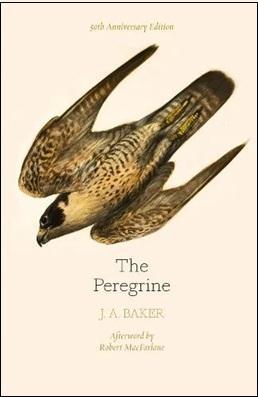
THE PEREGRINE : JA Baker
A quite extraordinary book, written by someone who was not an experienced bird watcher but who became obsessed by this charismatic falcon. Very little is known about the author – born in 1926, he was a librarian and lived in Chelmsford. On the other hand, much is known about the peregrine, a falcon that is the fastest bird of prey in the UK – and one of the deadliest.
The book’s setting is the Essex marshlands – not these birds’ usual terrain; they normally nest on rock cliffs and on church or cathedral spires. And the book is as much about this countryside as it is about the falcons, full of beautiful poetic and descriptive passages about these magnificent birds in an Essex landscape.
Many reviewers cite the book, published in April 2017, as a classic. It takes the form of a journal – Baker challenged himself to follow peregrines from autumn to spring in one remote area of the coast, both to study these birds and have time away from people and the hurly burly of life. He spent days on the marshes, in changing light, just observing and following.
Critics consider Baker’s writing style to be “extraordinary and laconic, but it is also rich, sensuous and occasionally extravagant” and, as his quest develops, he seems to identify much more intensely with his subject.
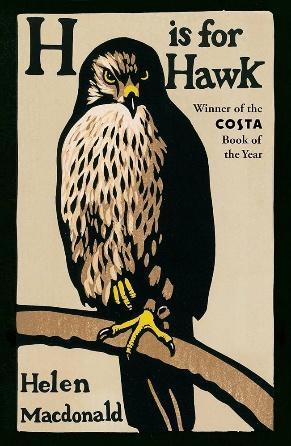
H IS FOR HAWK : Helen Macdonald
One reviewer describes this book as an inspired, beautiful and absorbing account of a woman battling grief – with a goshawk. Whether you consider this to be a personal story or nature writing, it’s poignant, thoughtful and moving. Following the sudden death of her father, Macdonald tried staving off depression with a unique form of personal therapy: the purchase and training of an English goshawk, which she named Mabel.
Although a trained falconer, Macdonald chose a raptor which is, she writes, both: “unfamiliar, unpredictable, solitary, self-possessed and numb to the hurts of human life”. As a devotee she knew the legends and literature, particularly that of author TH White, whose book The Goshawk details his battle to master the bird
The author describes her slow bonding process with Mabel and how the more Macdonald got to know her, the more Mabel seemed to rebel. Finally, the unanswered question: is the hawk a symbol of might and independence or is that just our attempt to remake the animal world in our own image?
Gardening Corner
This month, I thought I would start my article with some suggestions for gardens with poor soil such as stony ground, clay soil, and soil adjacent to north-facing hedges. Plants giving summer colour here are Nasturtiums, Love in the Mist [Nigella], Marigolds [Calendulas] and most wild flowers, bringing a burst of summer brightness to cheer up the gardener!
Now is the time to cut back early-flowering shrubs. Please do check for nesting birds before getting to work with the secateurs.
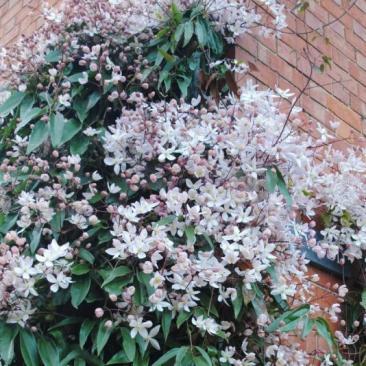
Plants of the month: firstly Apple Blossom [Clematis armandii], a vigorous growing plant ideal for covering a brick wall or an old fence. This is a type one clematis, meaning you only need to tidy up stray shoots and take out any dead stems.
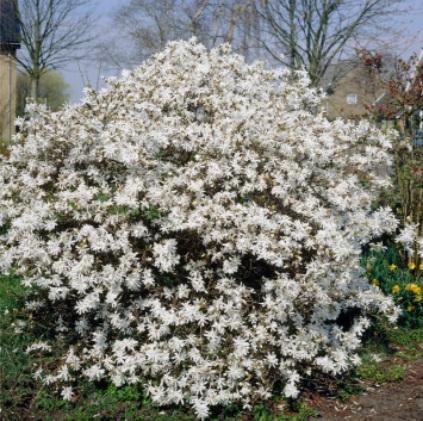
Secondly Magnolia [Stellata]: this is not a particularly fast-growing plant but produces a ragged mass of white to pale pink flowers in April through to the first week in May. Again, this needs minimal pruning; just take out any dead or crossing branches.
In the vegetable garden continue sowing chard, spinach, beetroot, carrots and radish but be mindful that we can still have a late frost in May! It is a good idea to check the weather forecast before planting out courgettes and marrow plants – and fleece over at night when necessary. The same applies to early potatoes; rake the soil over the young shoots, if they are not too large, or cover them over at night with horticultural fleece. Do remember to take this protection off during the day.
Keep greenhouses and cold frames well ventilated; a good idea is to throw some water on the floor to help bring down the temperature and create humidity if required. Also, lower the blades on the lawnmower a notch as we approach the peak of the growing season.
If we are experiencing a dry spell of dry weather, water any pots and summer bedding plant containers, hanging baskets and shrubs in pots first thing in the morning or later in the evening; this will avoid leaf scorch and help avoid evaporation.
Keep busy out there!
The Arborist
Fun For All at The Pheasant…
A Community Event to Participate In…
GESTINGTHORPE
SATURDAY 16th May
10.00am to Noon
Meet at the Village Hall
The Gestingthorpe Grill will be serving Sausage Sizzle, tea & coffee. Free to all Litter Pick
All equipment will be provided by Gestingthorpe Parish Council.
Please wear suitable clothing and footwear.
Please come along and help tidy up our beautiful village.
Gestingthorpe Goings-on
Gestingthorpe Village Hall Coffee Morning & Book Exchange
Fortnightly on Fridays from 10.00am to 12 noon
Join friends and neighbours in the Village Hall for tea, coffee, cake and a chat. All cakes are homemade and served by our fabulous team of volunteers. Tea or coffee and cake £3.00 – pay by card or cash.
Bring a book to swap or buy a book for £1. Our bookcase is located next to the big window in the small hall. There is a large range of books and genres to choose from.
The next Coffee Mornings and Book Exchange will be on 18th & 22nd May and 5th & 9th June
All funds raised go towards running & maintaining the Village Hall.
Gestingthorpe History Group
In 2009 the village undertook to produce a Village Design Statement to help planners follow guidelines set down by those residents already living here. As part of that process we looked at the history of the village – and this ignited a spark.
Together with a small group of locals we gathered together as much information on the people and their way of life that had gone before us, interviewing older generations who had memories and making copies of images they had in dusty old photograph albums. This, together with a number of living archaeology projects, has been the basis for the GHG website, which was established a few months before COVID.
Our website contains much of the information and images collated over the last 17 years. Our weekly blog goes around the globe to subscribers who found our site as a portal to their own genealogy research.
www.gestingthorpehg.co.uk
Nature Notes from a Cottage Garden
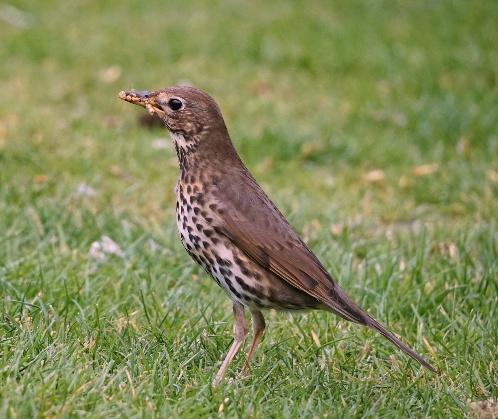
This spring to our great joy a song thrush [Turdus philomelos] has chosen our garden to perform in. Without fail, morning and evening, it sings its glorious concoction of phrases, sometimes for more than an hour without cease. When it’s feeling particularly flamboyant it sings from the very top of the tallest tree in the garden, the native small-leaved lime [Tilia cordata], which I planted about 40 years ago. I’m pleased by its choice. On other occasions it sings from the top of an ornamental cherry tree, already well-established when we arrived here 50 years ago this June. But not everyone appreciates our thrush. Two lots of guests have enquired about the ‘loud bird’ which has woken them early. But I love its triumphant noisiness.
The song of a song-thrush is easily identified by the repetition of phrases. Every phrase is repeated at least twice and the phrases are particular to each individual bird. When it first begins to sing the song thrush may only have a few different phrases but over time it builds up a vast range, some mimicking the sounds of other birds and some the sounds of the environment – I’m sure that one of our thrush’s phrases reflects the sound of a police car siren. Research shows that song thrushes can have up to 100 different phrases in their repertoire. That’s impressive.
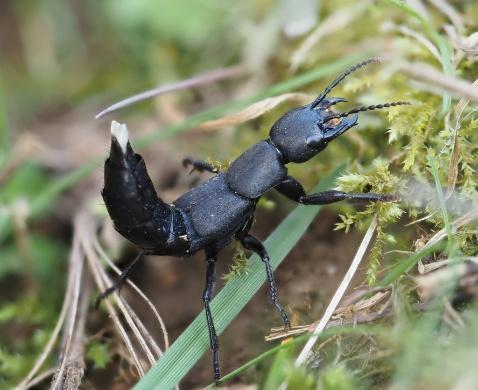
Last evening I had an encounter with a Devil’s Coach Horse [Ocypus olens], a fearsome looking large beetle with a tail that curls up like a scorpion. This is not my first encounter. From time to time I have seen them in the cottage, which they seem to like, and I have always let them be. But, having done a little research and finding they were regarded as unlucky by ‘country folk’, I carefully picked this one up and popped him outside, where he scuttled away.
The Devil’s Coach Horse, despite its appearance, is harmless. Its tail does not sting but it can emit a foul-smelling defensive liquid. They feed on aphids and other garden pests and so they are our friends.
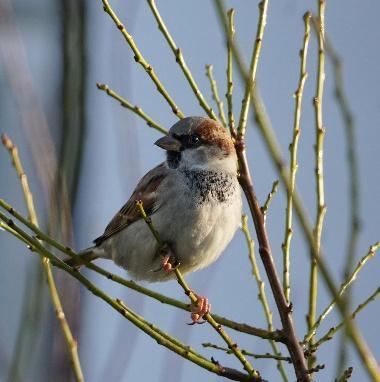
When we moved into our cottage in 1976 we inherited a little colony of house sparrows [Passer domesticus] – a small flock of about a dozen. They live in the hedges around the property and they nest in the eaves above our bedroom window, making a terrible racket with their comings and goings. I am very happy that they are still with us and I feel, like the ravens at the Tower of London, something dreadful would befall us if they ever left. I like sparrows. I like their rich brown plumage, the black bibs of the males, the cute faces of the females. I like their cheeky tuneless chirping. They make me smile.
Patricia Fletcher
Forthcoming Local Events
Hedingham Heritage Society
Our May session has been moved back a week due to the ECC elections but we’re back to normal in June. We do hope you can join us for both of these talks:
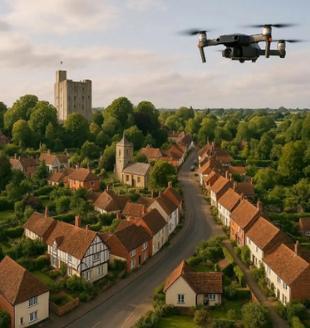
Thursday 14th May: ‘The Hedinghams by Drone’. Drones have revolutionised the way we see the world, giving photographers access to unique perspectives and compositions. Local drone photographer Simon Daw will showcase the power of this technology, with bird’s eye views of the Hedinghams’ distinctive landmarks and beautiful countryside.
7.30pm – Castle Hedingham Memorial Hall
Thursday 4th June: ‘The Agricultural Revolution in Essex’. From the 18thC, Britain underwent a significant transformation in the way it managed and farmed land. In this talk, Neil Wiffen from the Essex Records Office will draw on archive material to illustrate how Essex saw a steady shift to cereal farming and market gardening.
7.30pm – Castle Hedingham Memorial Hall
Do join our local and natural history society. Annual membership for 2026 remains at £15.
Members come free to all walks and talks : Non-Members - £5. Everybody is Welcome. Contacts: Trudi: 01787 462 889 : Mark: 07906 472 636
E-mail: hedinghamheritage@gmail.com or visit www.hedinghamheritage.org.uk
Earls Colne Heritage Museum’s Lottery Win
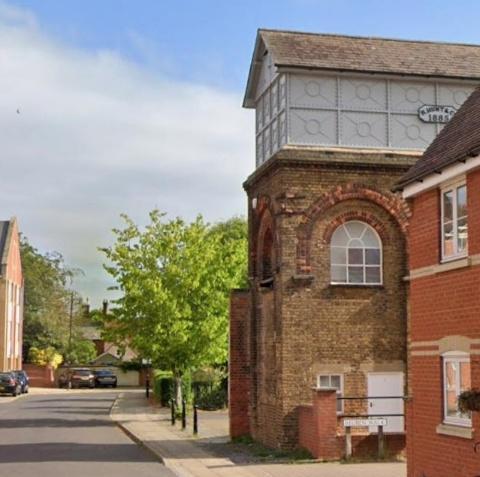
Earls Colne Heritage Museum, located in Reuben Walk in the old Water Tower of the former Atlas Works – a 19thC machinery foundry – is set to receive £241,000 from the National Lottery Heritage Fund.
The Museum, which has been established in the Grade II listed Victorian water tower since 2005, is home to artefacts from the Neolithic age to the 21stC and is also a centre for village historical and family research.
It is actively engaged with the village and beyond, runs a programme of walks, talks and school visits, liaises with other museums and welcomes both visitors and online enquiries.
Chairman of the Museum Gordon Brown and his team submitted their original Lottery application in April 2025, with a more detailed application, focussing on sustainability and the heritage of not just the Museum but also the Water Tower, being filed this January. The funding was approved at the beginning of April and the money will be used to purchase the building and modernise the Museum.
The current owner of the iconic building, which dates back to 1885, wishes to sell and, if the Museum had not been in a position to make the purchase, it could perhaps have become unavailable to the community.
The Lottery funding should arrive in May; fifty percent will be used to buy the Water Tower, with the rest being used to renovate the inside and reimagine the Museum by embracing 21stC technology and using audiovisual displays.
Mr. Brown is delighted at the outcome, saying: “We are absolutely grateful to the National Lottery Heritage Fund; the money will enable us to continue for the next 20 plus years, making the Museum much more engaging and allowing us to develop our community involvement, walks, talks and research. The application was a team effort; my fellow trustees and volunteers were all focused and prepared to make it happen and they worked hard to get the Lottery bid right”.
Information about the Museum’s events can be found on its website: www.echm.org.uk
All the current news can also be found on its Facebook page: https://www.facebook.com/earlscolneheritagemuseum
Church Matters
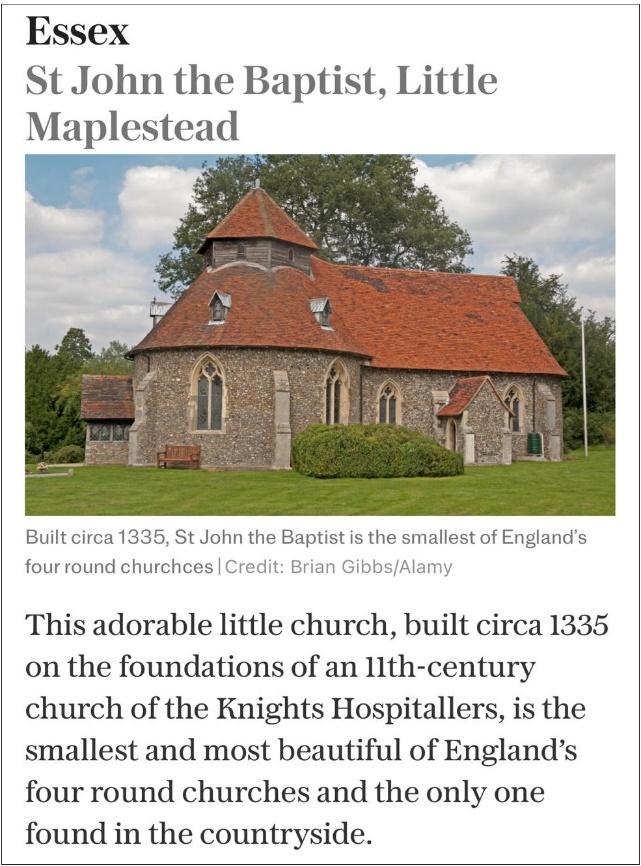
St John the Baptist – Little Maplestead
Rev’d Beverley was delighted to see this article appear recently in a Daily Telegraph feature ‘My Favourite Church in Every English County’ .
Our Round Church, built by the Knights Hospitallers (c.1335), is one of only four prominent medieval round churches that are still in use in England today. Their design was intended to emulate Jerusalem’s Church of the Holy Sepulchre.
The other three, in order of age, are:
The Holy Sepulchre, Northampton (c.1100): One of the oldest, most likely built by Simon de Senlis.
The Holy Sepulchre, Cambridge (c.1115): Also known as the Round Church, it is managed by Christian Heritage.
Temple Church, London (c.1185): Built by the Knights Templar.
St Giles’ Café Church Easter Service – Great Maplestead
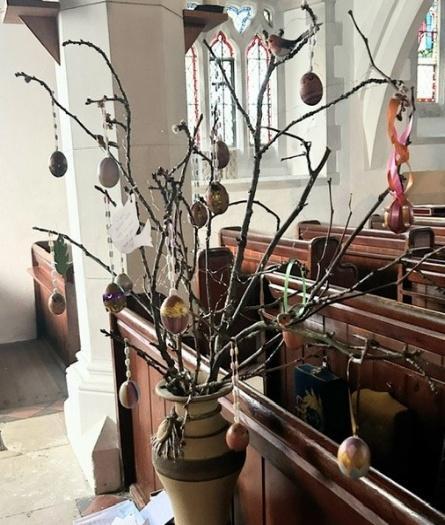
Our Café Church Easter Service was a joyful occasion, with an Easter egg hunt across the churchyard and church. Participants searched for ten letter clues to form a password – earning their way back inside for chocolate treats!
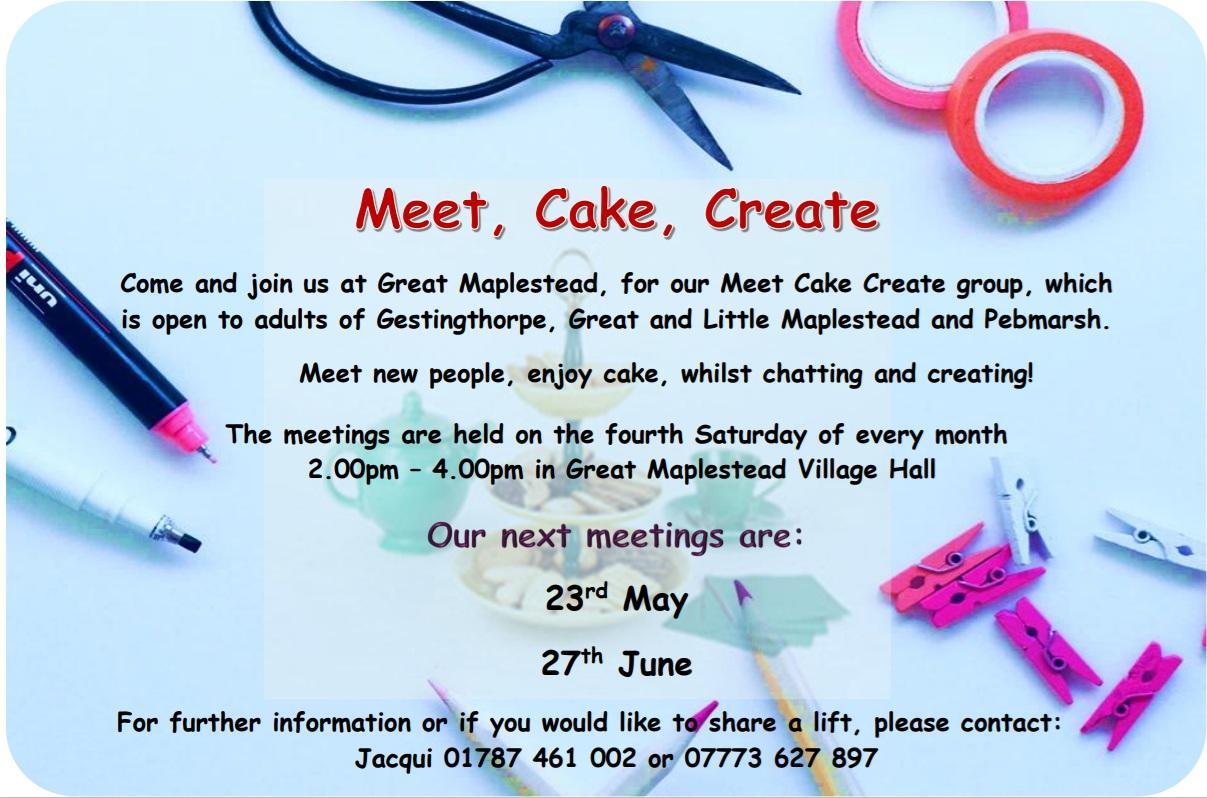
Thanks to the Make Cake Create ladies for their beautifully decorated eggs on the Prayer Tree, and to St Giles’ School for their lovely Easter Gardens around the font.
It was a wonderful celebration of fun, creativity and Easter!
Denise & Paula – St Giles’ Churchwardens
Parish News Information
Advertising/Announcements/Articles
The 2026 Parish News Business Advertising Rates for the year (10 issues, pro-rated as applicable) and for monthly single issue advertisements and event announcements are shown below, along with the Copy/Artwork Deadline dates for the next six issues of Parish News:
Contacts:
Advertising
Articles
Please submit these by e-mail, as a Word document attachment with separate jpeg/png images:
½ page: 150-160 words + images
Full page: 400-420 words + images
Ann Harris ann66harris@gmail.com
Editorial Parish News Team parishnewsmaplestead@gmail.com
The Parish Representatives, to whom articles and event announcement submissions should be sent, are listed on the Inside Front Cover