tasks quickly so you can get back to the people who matter most. With MidSouth Fiber, upload files, send emails, pay bills and complete work with no lag or delays so you can spend more time making memories.
Thank you for your service! $35 off per month for all US Veterans and Active Military.
Publisher’s Post
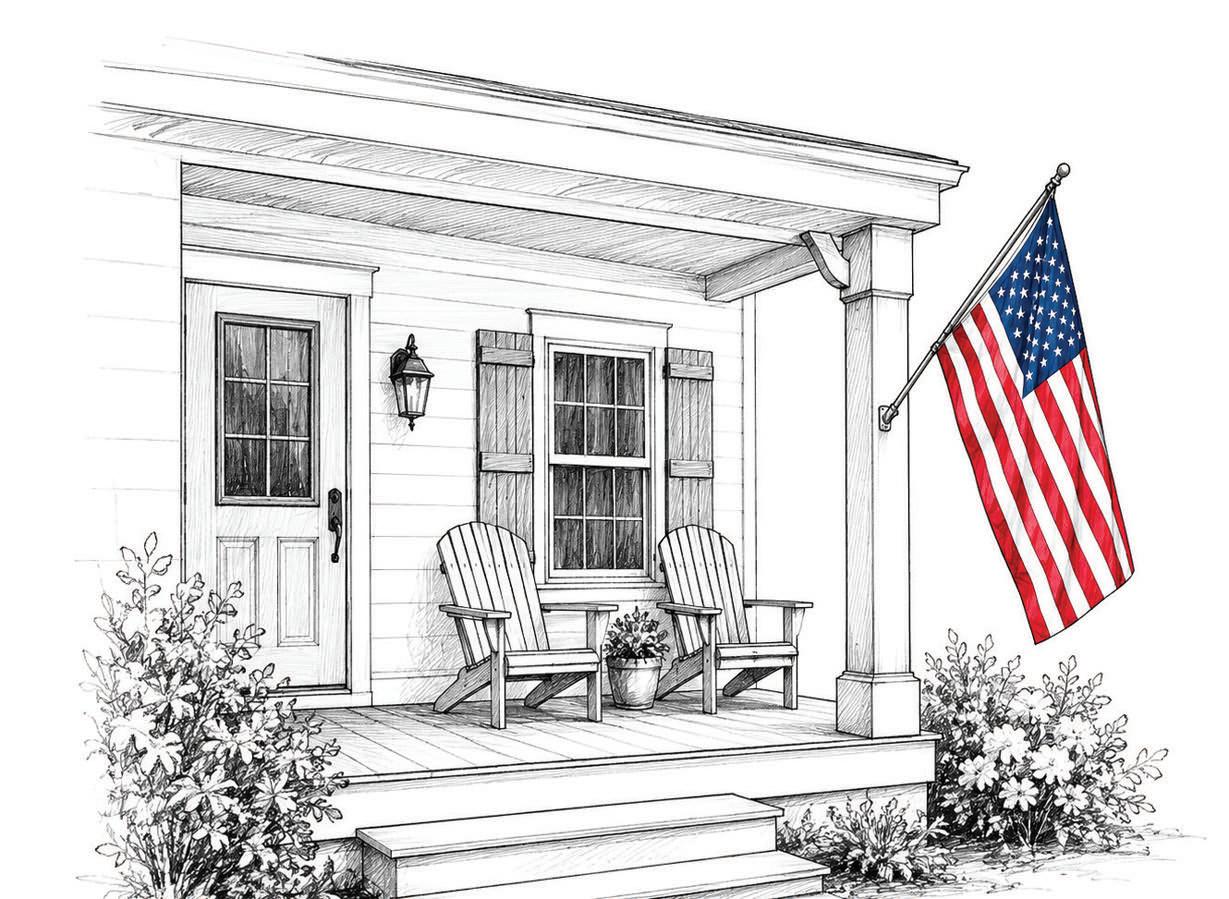
Lessons from the Front Porch
Some of the most important lessons about America were never taught in a classroom. They were taught from a front porch.
As we celebrate Independence Day and America’s 250th birthday, I find myself thinking less about monuments and history books and more about the generations who came before us. Maybe that comes naturally because I’m now a grandparent myself. I find myself reflecting more often on the people who shaped my life and the values they passed down long before I understood just how important they were.
The grandparents and great-grandparents who helped build this nation rarely considered themselves remarkable. Most never held public office or made headlines. They simply lived their lives with a quiet sense of responsibility, faith, and purpose.
Many of life’s greatest lessons were shared from front porches and kitchen tables. They taught us a handshake should mean something…hard work matters…neighbors help neighbors…freedom comes with responsibility…and character is built one decision at a time.
Those front porches were more than a place to sit at the end of the day. They were classrooms.
Stories were shared there, wisdom was passed down, and children learned what it meant to be part of a family, a community, and a country. Through wars, economic hardships, droughts, and uncertain times, those generations persevered. They didn’t have all the conveniences we enjoy today, but they possessed something just as valuable—a deep appreciation for
opportunity and a belief that tomorrow could be better than today.
The freedoms we enjoy did not simply appear. They were preserved and strengthened by ordinary Americans who understood building a strong nation begins by building strong families, strong communities, and strong character.
That may be America’s greatest achievement.
Not what was built in Washington, but what was built in towns and communities across this country by people who showed up, worked hard, kept their word, raised their families, and invested in the future.
At Postcards, we have the privilege of sharing those stories every month. They may never appear in a history book, but they are part of the American story, just the same.
As we celebrate this Independence Day, I am grateful for the freedoms we’ve inherited, the opportunities we’ve been given, and the generations whose wisdom still echoes from those front porches today.
The front porches may be quieter these days, and their chairs may now sit empty, but their wisdom remains.
And the next chapter of America’s story is still being written.
Awesome!
Thank you for sharing my story. The children were so excited with the Postcards pictures you took, Tom. Claudia, everyone loves the way you put the story together. It is awesome.
Barbara Lewis
Answer in the garden
I want to share that I found a vine in my backyard and was fascinated, but had no idea what it was. Today, I opened my new copy of Postcards and found the answer in the garden column! Love it!
Libby Rogers
Thank you:
Thank you so much for the BEAUTIFUL page you gave to the Creative Corner piece ‘This Year’!!!
The picture you added and the colors you gave it went far beyond what we had even hoped for.
Mary Kehoe has written so much and continues to write almost daily. She does have a unique God-given gift.
Many thanks,
Pam Turner
Foote
Godkin
CHARLES MARTIN
PERCIVAL
ALLEN LEVI
Huntsville Woman, 64, Feels Her Feet Again
After 5 Years of Burning, Numbness, and Nerve Pills That Never Worked
Her Specialist Said “There’s Nothing More We Can Do.” She Found Another Way.
How a Little-Known 3-Step Nerve Repair Protocol Is Helping People Sleep, Walk, and Feel Normal Again — Even After Gabapentin, Lyrica, B12 Shots, and Years of “Just Manage It” Failed
Carol M. had not felt her feet in four years.
Not the good kind of numb. The kind where you step off a curb and nearly fall. The kind where the sheets feel like hot wire on your skin at night. The kind where your husband moves to the other room, just so you can keep the fan running all night to get through to morning.
She had tried everything her doctors gave her. Gabapentin left her dizzy. Lyrica made her gain 18 pounds. B12 shots helped for a week, then nothing. Her nerve specialist told her what she had heard many times before:
“Neuropathy is a condition we manage. Not one we cure.”
Carol stopped walking her neighborhood. She stopped going to her Wednesday night church group. She missed her granddaughter’s spring dance recital, afraid to trust her feet on the bleachers.
Then a neighbor told her about us. She almost did not call. What happened over the next ten weeks changed everything.
What Your Doctor Probably Never Told You
Here is the truth most doctors will not say out loud: Damaged nerves can heal.
Not always. And not without the right help. But far more than most patients are ever told.
Studies show that the most common nerve drugs, Gabapentin, Lyrica, Cymbalta, do not heal nerves. They work on your brain. They turn down the pain signal coming in. They do not fix the nerve itself. That is why the burning comes back. That is why most people keep getting worse , even while taking their pills every single day.
Here is what has to happen for nerves to heal:
First: the nerve needs blood flow and oxygen. Most people with neuropathy have poor blood flow to the small nerves in their feet and hands. Starved nerves cannot fix themselves.
Second: the swelling around the nerve has to calm down. Swelling acts like a tight grip. It keeps the nerve pinched no matter what pill you take.
Third: the nerve needs gentle, specific signals to wake back up and start working again. Without the right signals, healing stalls.
“I Cried When I Felt the Carpet Under My Feet Again”
After Carol’s second visit, the burning was less sharp. By week three, she slept six hours without waking up, for the first time in years. By week seven, the feeling started coming back. First in her left foot. Then her right.
She walked to her mailbox and back without holding the fence.
“I just stood in my living room and felt the carpet,” she said. “And I started crying. I had not felt that in four years. Nobody ever told me that was still possible.”
By week ten, she walked into her granddaughter’s recital on her own. She sat in the third row. She clapped.
“I thought that part of my life was gone,” she told us. “I almost did not make that call. I am so glad I did.”
A Special Invitation for Huntsville and Surrounding Residents
If you have burning, tingling, or numbness in your feet or hands, and nothing has worked, come in for a complete Neuropathy Relief Evaluation. The same evaluation Carol received.
Full nerve and circulation exam. Sensory and reflex testing. One-on-one consultation to find out exactly what is causing your symptoms, and whether our protocol can help you
This month: $47 (regularly $249).
Limited to 8 patients in July.
Call 936-241-7673
Right Now
Huntsville Physical Medicine Institute
Dr. Brian McGee, DC
Most drug treatments skip all three. Our protocol addresses all three, at the same time. No surgery. No new prescriptions. No guessing.
When all three happen together, patients see results they had stopped believing were possible.
P.S. Nerves heal better early. Every month you wait, the window gets a little smaller. We have eight spots open this July. After that, you go on a waiting list. Call 936-291-2111 today. Do not let another month go by.
*This article is for educational purposes only and not a substitute for personalized advice or treatment. This is a paid advertisement. Excludes beneficiaries of federally funded programs
Sons of the American Revolution Daughters of the American Revolution
Sons of the American Revolution Daughters of the American Revolution
Appreciating our past and paying it forward… patriot-style.
In1889, the centennial of President George Washington’s inauguration was celebrated, and Americans looked for additional ways to recognize their past. William O. McDowell, a New Jersey financier and businessman, organized the Sons of the American Revolution (SAR) at Fraunces Tavern in New York City, on April 30, 1889. The SAR is a male lineage society that recognizes men who can trace their ancestry to patriots of the American Revolution.
After the Sons of the American Revolution refused to allow women to join their group, McDowell and others helped them form the Daughters of the American Revolution (DAR), a national organization for women who descend from American Revolution era figures. The first meeting of the society was held October 11, 1890, at the Strathmore Arms boarding house in Washington, D.C. U.S. First Lady Caroline Lavina Scott Harrison (wife of President Benjamin Harrison) served as the DAR first President General. She helped establish the goals of DAR, which was incorporated by congressional charter in 1896.
On June 9, 1906, SAR was formally granted a congressional charter. The act was signed by U.S. President Theodore Roosevelt, who was a member. Today, SAR, headquartered in Louisville, Kentucky, has over 30,000 members in more than 500 chapters across the United States and other countries. The society is involved in historical research, raising funds for local scholarships and educational awards, and preservation of sites and documents related to the American Revolution. Historically, SAR petitioned Congress to store Revolutionary era documents in a fireproof area and make them available to the public, leading to the creation of the National Archives, and was also instrumental in the establishment of Constitution Day. The society is active in promoting patriotism, cataloging and marking Revolutionary War patriot graves, and conducting an annual Eagle Scout scholarship program.
DAR, headquartered in Washington, DC, has over 190,000 current members
in more than 3,000 chapters in the United States and other countries. The organization’s original motto, “Home and Country,” was changed in the twentieth century to “God, Home, and Country.” The organization promotes historical preservation, education, and patriotism. In addition to their historic and educational work (which supports schools, literacy programs and scholarships), DAR members provide over 200,000 hours of volunteer time annually to veteran programs. Members also offer support to America’s service personnel in current conflicts abroad through care packages and other needed items.
Joining SAR or DAR is a way to honor one’s ancestry while actively participating in efforts to preserve the legacy of those who fought for American independence.
Joining
The SAR and DAR organizations have grown to become significant custodians of American heritage, offering educational programs, scholarships, and
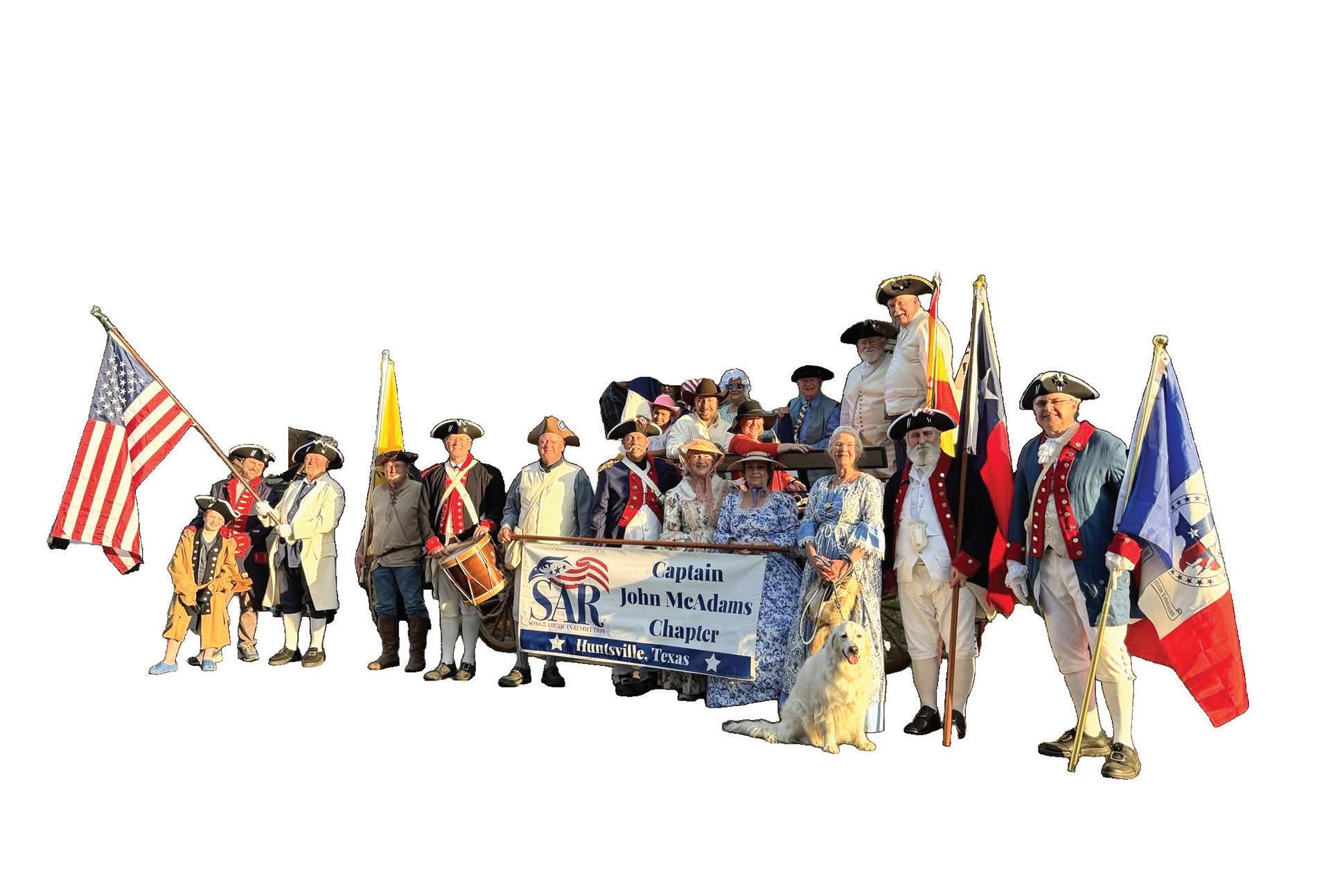
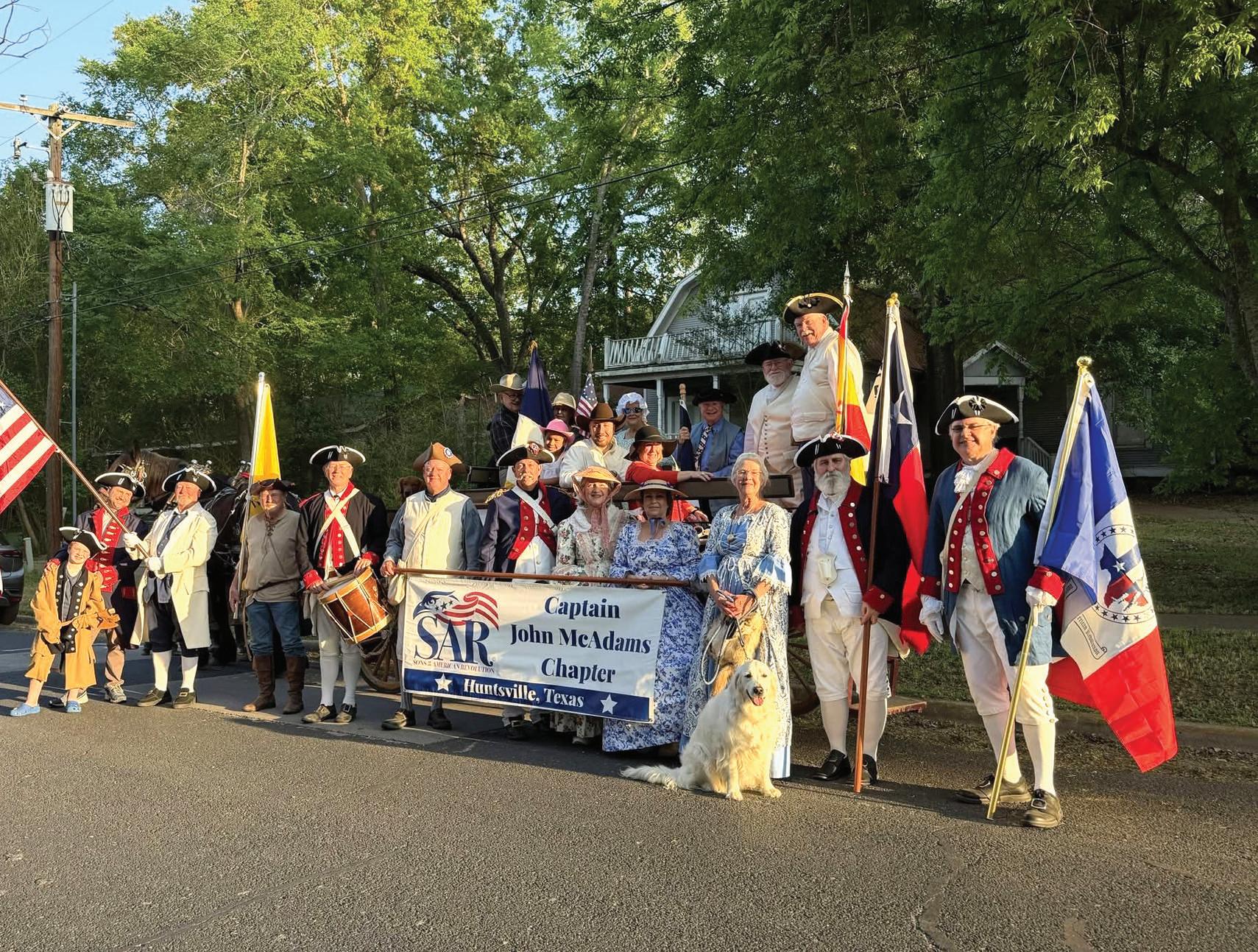
Huntsville chapter SAR members at the recent Walker County Fair Parade
Don Kluth and Charles Lano from the Freedom Chapter SAR speak at The Coushatti Trace Chapter, NSDAR’s first meeting in its new Willis, Texas location.
Linda Freund, Anita Stevens, Debbie Aiello, Sally Hook and Julie Luettgen (Coushatti Trace Chapter) making Valentines for active duty military.
Cecily Kelly of the Mary Vaughn Corner Chapter, NSDAR giving a presentation at a SAR meeting in Huntsville, Texas in May.
Members of the Freedom Chapter SAR provided Color Guard for the Margaret Montgomery Chapter, NSDAR at the America 250 Marker ceremony in Montgomery, Texas.
DAR member Nancy Page of Madisonville stands next to an obelisk placed by the DAR at the Texas State Cemetery in memory of the Men who served the American Revolution. One of the names listed is Antonio Gil Y'Barbo who founded the town of Bucareli in Madison County before rebuilding Nacogdoches in the late 1700’s.
community service projects, all aimed at preserving the legacy of those who fought and supported the fight for freedom.
To join either organization, applicants must demonstrate direct lineal descent from a patriot who supported the American cause during the Revolutionary War (1775-1783). This can include military service, civil service, or other forms of support, such as providing supplies or signing oaths of allegiance. Applicants must gather extensive genealogical documentation to prove their lineage and the patriot’s contributions. This often involves tracing ancestry back several generations. The application process typically involves contacting a local chapter of SAR or DAR for guidance, completing a specific application form, and submitting supporting documentation. Local chapters can provide valuable assistance throughout the process.
One of the most significant hurdles applicants face is the scarcity or absence of direct documentation,
especially for connections that span several generations. Early American records can be incomplete, lost, or destroyed, making it challenging to establish a direct lineage. Applicants often need to rely on secondary sources or circumstantial evidence that requires careful interpretation and verification against genealogical standards.
Tips for Overcoming Documentation and Eligibility Hurdles:
• Start with what you know
• Utilize multiple sources
• Explore local histories and genealogical societies
• Leverage SAR and DAR libraries and databases
• Consider DNA testing
Even with careful preparation, you might encounter questions or need assistance with your SAR/DAR application. Local SAR/DAR chapters are valuable resources for applicants. Many offer workshops, one-on-one assistance, and review services to help you with your application. Online genealogy forums and social media groups can be excellent places to seek advice, share research tips, and connect with others going through the application process. If you hit a significant roadblock or have a complex case, visit your local library’s genealogy center and/or a local genealogy society.
The journey to discover our roots and understand our heritage is fascinating and deeply rewarding. For descendants of those who fought or contributed to the American Revolution, this journey holds the promise of connecting with a pivotal moment in history. Membership in SAR or DAR is not only a tribute to one’s lineage, but also an opportunity to engage with a community dedicated to preserving historical sites, educating the public about the Revolution, and promoting patriotism.
In researching this article, Postcards spoke with both a local SAR and DAR member. Here are some thoughts and perspective shared by each.
Kristal Wood - DAR Member
“The three main pillars of DAR are historic preservation, education, and patriotism. It is one of the largest women’s service organizations in the world, with more than one million
women admitted throughout its history.
To join DAR, a woman must be able to prove direct descent from someone who aided or fought in the Revolutionary War. I grew up hearing stories about our family history from my great-grandmother—my father’s grandmother. Her family immigrated from France to Germany and eventually settled in Deep East Texas, in Deadwood near Carthage. She passed away in 2008. Several years later, around the time of COVID, we discovered a DAR membership card in her wallet while sorting through old photographs and family keepsakes.
That discovery sparked my interest in learning more about the organization. With help from a state committee chair, I provided my great-grandmother’s national membership number, which allowed them to locate her original application. Because the earlier generations had already been documented and approved, I only
needed to gather records proving the more recent generations in my family line.
When someone joins DAR, the organization considers factors such as location, meeting schedules, travel preferences, and service interests to help match them with a chapter. At the time, I was living in Huntsville, but I knew I would soon be moving to Montgomery. I joined the Margaret Montgomery Chapter in Conroe and moved to Montgomery shortly after my application was approved.
I immediately felt welcomed and quickly became involved in chapter leadership. A few years later, a couple of friends and I undertook the process of researching and applying to charter a new DAR chapter in Montgomery, a community rich in Texas history. In June 2025, the Mary Vaughan Corner Chapter was officially approved. Cindy Amburgey serves as Regent, and I currently serve as Vice Regent.
This year, the Texas State Historic
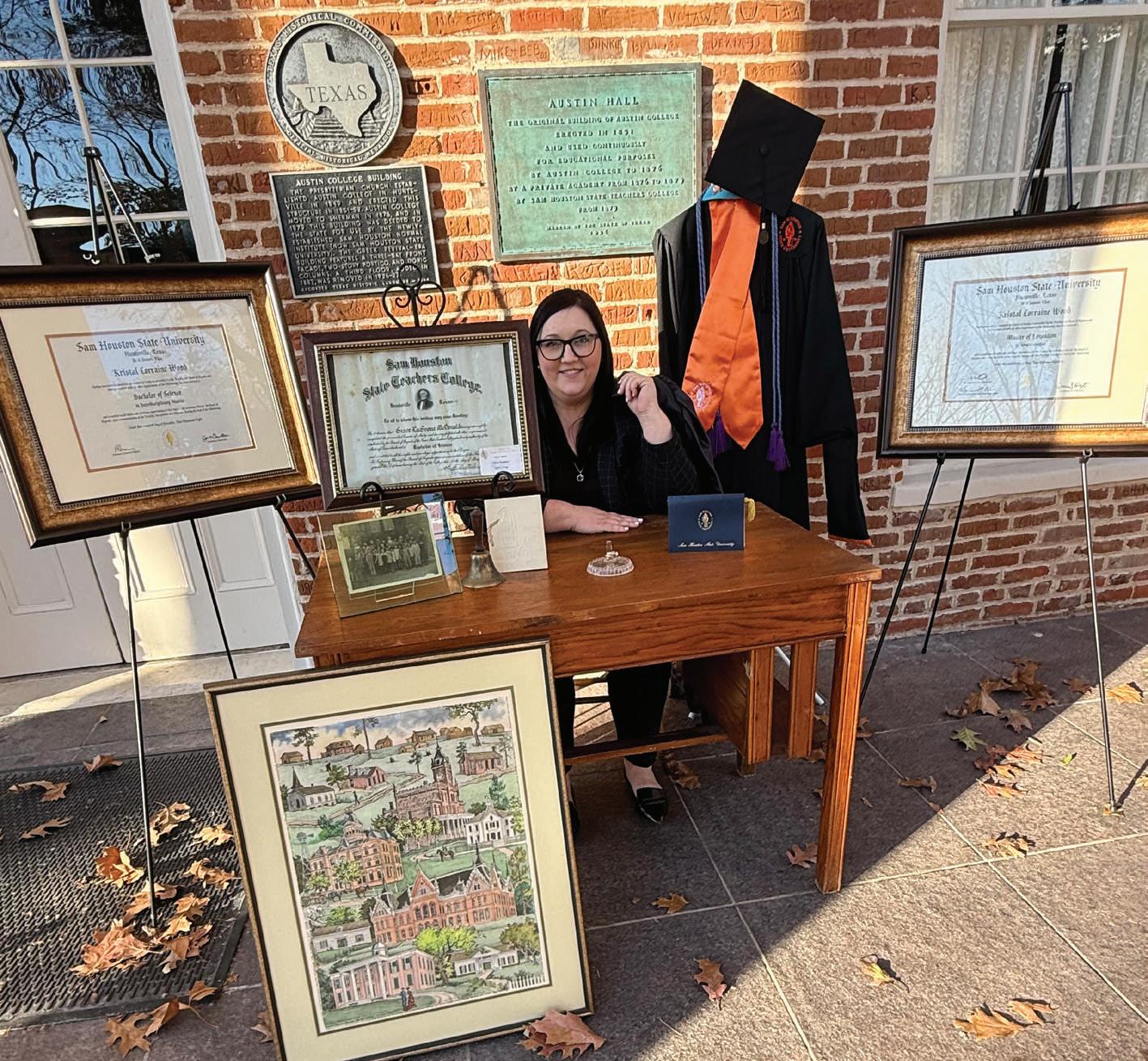
Kristal Wood and her mom recently took memorabilia photos at Austin Hall on the Sam Houston State University campus showcasing: her great-grandmother’s diploma and lifetime teaching certificate, college ring, and the bell she used in her one room schoolhouse; both of Kristal’s own diplomas from Sam Houston; and an antique desk that once belonged to Sam Houston State Teachers College.
Preservation Committee sponsored a statewide contest that encouraged members to visit and photograph Texas historical markers. Even though ours was a newly organized chapter, we won the statewide competition by visiting more markers than any other chapter in Texas. It was especially exciting because it was our first year as an official chapter.
My original reason for joining DAR was simple: I wanted a connection to my great-grandmother. She was a teacher who graduated from Sam Houston State Teachers College in the 1920s. I also became a teacher through Sam Houston, and I have always felt a special connection to her because of the many similarities in our lives.
For me, DAR has strengthened the connection to my great-grandmother. I wish I had joined when I was younger, but I am grateful to be involved now. It has also deepened my appreciation for the freedoms and responsibilities that come with living in a democracy. While DAR is a nonpolitical organization, it is deeply committed to community service, historic preservation, education, and strengthening local communities. That is why I joined, and why I continue to be involved today.”
Loren Johnston - SAR Member
“I joined SAR after I retired in 2021, and I became President of the Capt. John McAdams Chapter in Huntsville, Texas in March 2026.
I joined to engage in a beneficial hobby with my community that promotes education of the ideals of our patriot ancestors found in the constitution, declaration of independence, and the history at the time.
Some of my favorite activities have been:
• Presenting life in Revolutionary America to elementary students using a chest of replica items of everyday life during colonial times and dressing
in period attire to represent my militia patriot ancestor.
• Participating in living history events in period attire to help educate the public on the history of our country’s founding.
• Honoring veterans and members of the military through activities with the HEARTS Museum. Also presenting JROTC awards for school students and service awards for veterans.
• Color Guard activities at veteran’s organizations; federal holidays; schools; other lineage society events; Patriot grave markings; and U.S. Naturalization ceremonies.”
For more information, visit sar.org or dar.org.
Area DAR Chapters:
Conroe -Margaret Montgomery
Huntsville - Mary Martin Elmore Scott
Madisonville - Captain John McAdams
Magnolia - Joanna Troutman
Montgomery - Mary Vaughan Corner
Shenandoah - Twin Creeks
The Woodlands - Spring Creek
Willis - Coushatti Trace
Area SAR Chapters:
Huntsville - Capt. John McAdams
Active across the state, homebase Montgomery County - Freedom
Capt. John McAdams Chapter President Loren Johnston presents Compatriots Jim Williamson and George Clogston with the Vietnam War service pin.
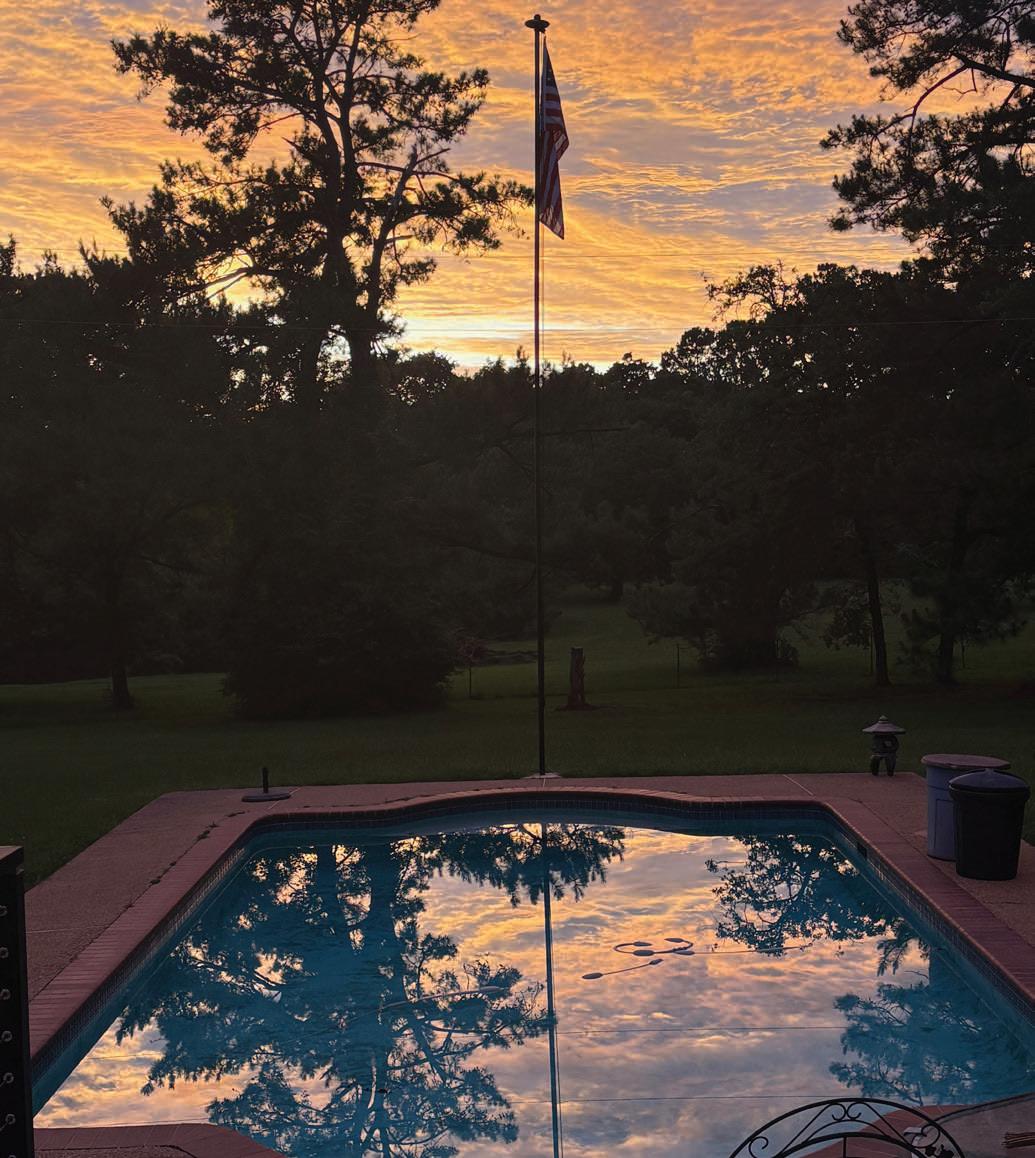
Beautiful sunset and reflection from our patio
Submitted by Vicky Sessions
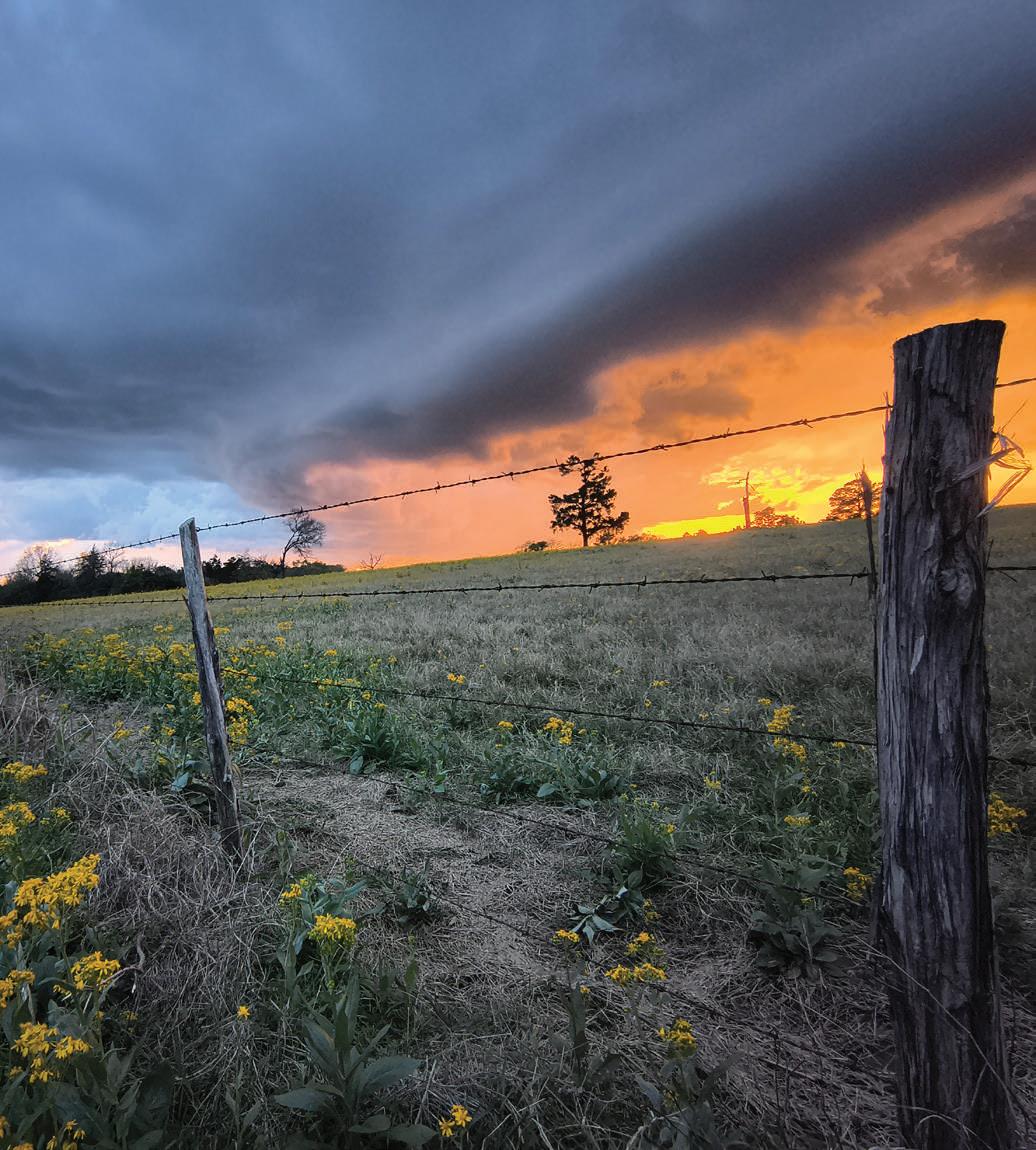
Sunset from Centerville
Submitted by Annie Robertson
Teachers Touching Tomorrow
Honoring teachers who work with our kids day in and day out. They go above and beyond, and really do “Touch Tomorrow.”
Nominate a special teacher today by going online: www.PostcardsLive.com. Those chosen for publication are awarded a gift card to 1836 Steakhouse.
Sponsored by:
Jennifer Noxon Dance/Drill Team
Huntsville High School
NOMINATED BY
Avery Wasson
Mrs. Noxon encouraged me to push myself to become better in dance, and also outside of practice. She taught me to become more disciplined in my everyday life.
Star Students
Avery Wasson
Huntsville High School
FAVORITE MOVIE: Center Stage
FAVORITE MUSIC/ARTIST: Tyler Childers
FAVORITE FOOD: Beef Tips & Mashed Potatoes
FAVORITE QUOTE:
“For we walk by faith, not by sight.” -2 Corinthians 5:7
Avery is a 2026 graduate of Huntsville High School and is the daughter of Angela Wasson and Joseph Wasson. Her activities included Grenadier Guard, Spanish Honor Society, and, and Mu Alpha Theta. Avery plans to go to trade school and become an HVAC technician. She believes, “We should always give thanks to God, in both times of joy and darkness.”
Carlos Villatoro
Flores
Huntsville High School
FAVORITE MOVIE: (TV Show) Survivor
FAVORITE MUSIC/ARTIST: Indie-Pop
FAVORITE FOOD: Pozole
FAVORITE QUOTE:
“Live as if you were to die tomorrow. Learn as if you were to live forever.” -Gandhi
Carlos is a 2026 graduate of Huntsville High School and is the son of Roberto Villatoro and Myrna Flores. His activities included Huntsville Military Marching Band, cross country, student council, National English Honor Society, National Technical Honor Society, and Mu Alpha Theta. Carlos plans to study the natural sciences and become a pre-med student. He believes, “Don’t take the simple things in life for granted.”
Courage is knowing what not to fear.
Alexis Hernandez
Huntsville High School
FAVORITE MOVIE: Taken 3
FAVORITE MUSIC/ARTIST: Bruno Mars
FAVORITE FOOD: Shrimp Alfredo
FAVORITE QUOTE:
“Always be true to yourself.” – Mom and Dad
Alexis is a 2026 graduate of Huntsville High School and is the daughter of Art and Adrianna Hernandez. Her activities included Grenadier Guard, band, and Business Professionals of America. Alexis plans to attend Sam Houston State University to study business. She believes, “Courage is knowing what not to fear.”
Honesty
If your dog suddenly starts barking at you, there's a good chance someone else is feeding it. (Betrayal often comes from the closest places.)
Be true to your teeth, and they won’t be false to you.
As I grow older, more and more often I find myself saying, “Like my Granddaddy used to say…” In an effort to keep some of these old sayings alive, we are sharing them here. Please feel free to share yours with us!
Publisher Karen Altom and her Granddaddy J.C. Farris
Seen by: PC Staff
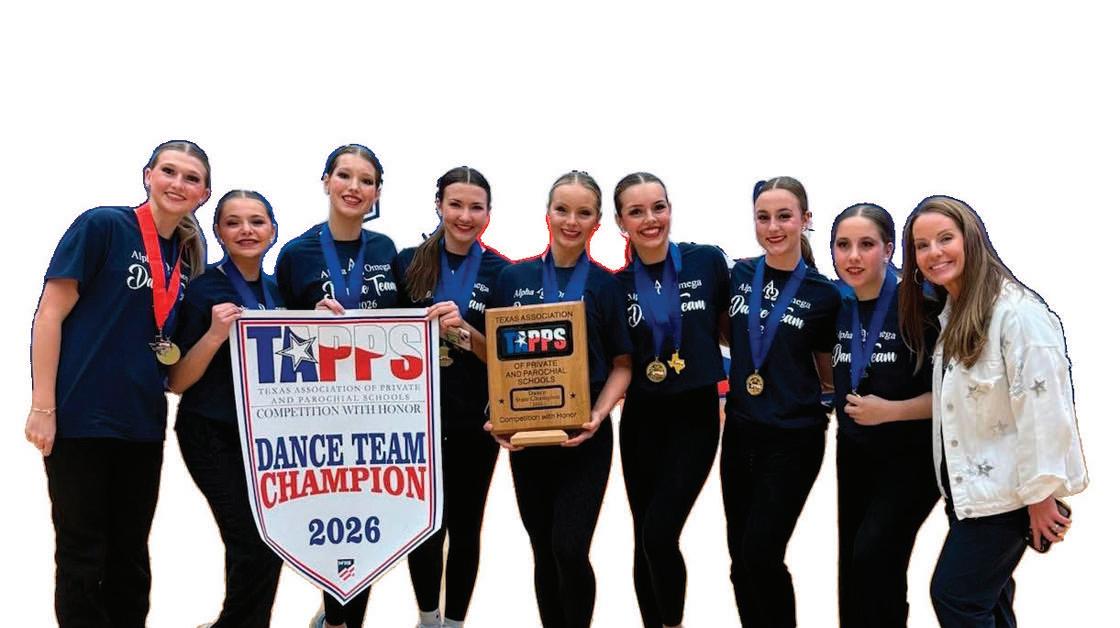
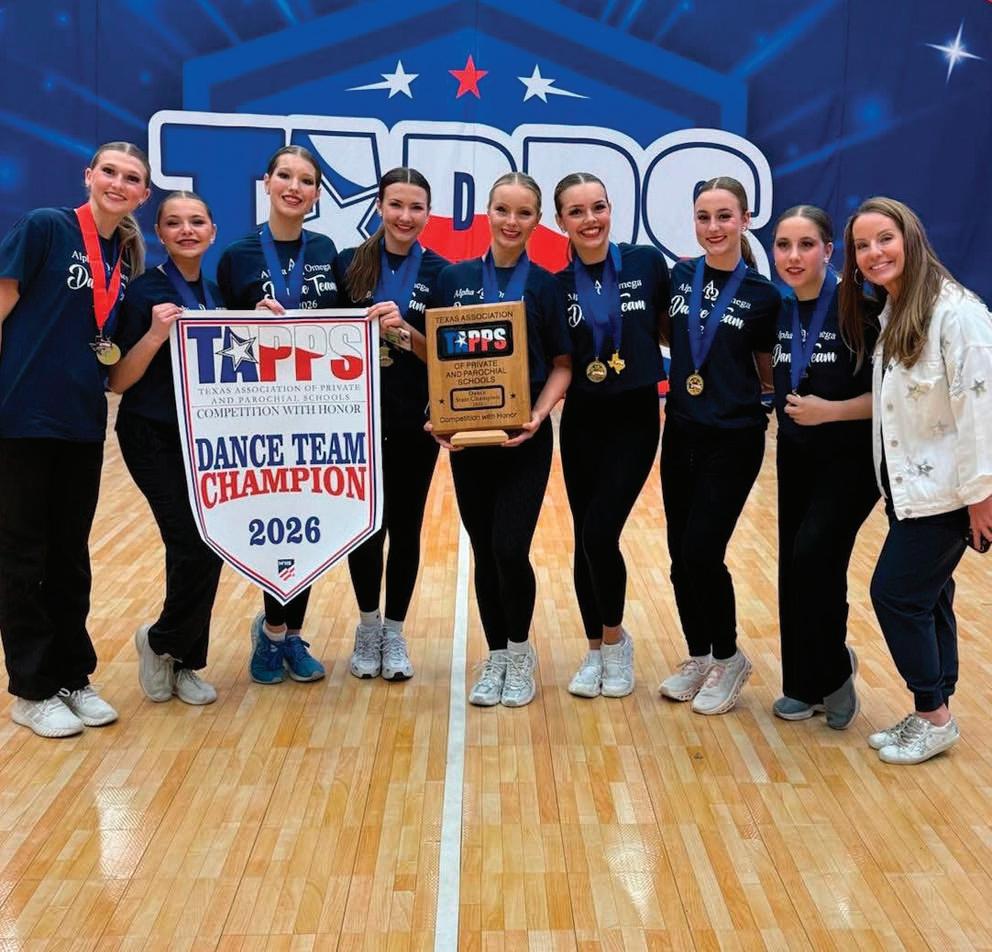
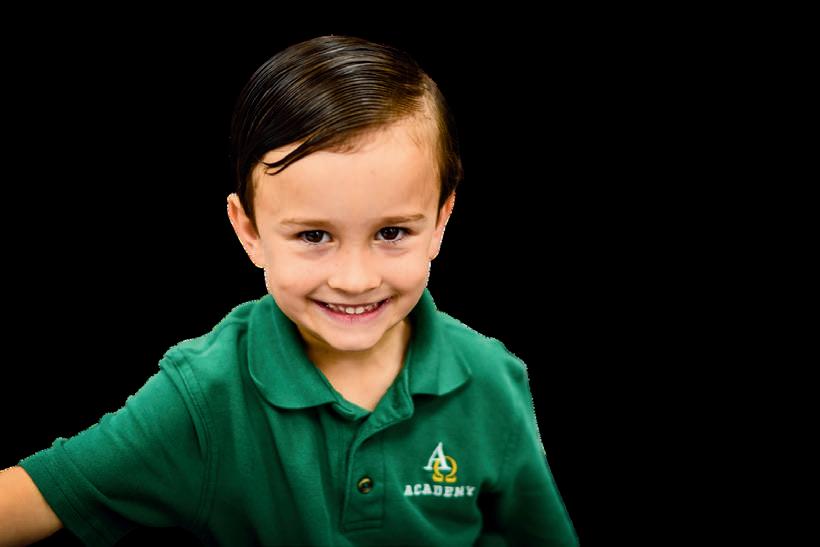
Alpha Omega Academy Dance Team wins the 2026 TAPPS State Championship
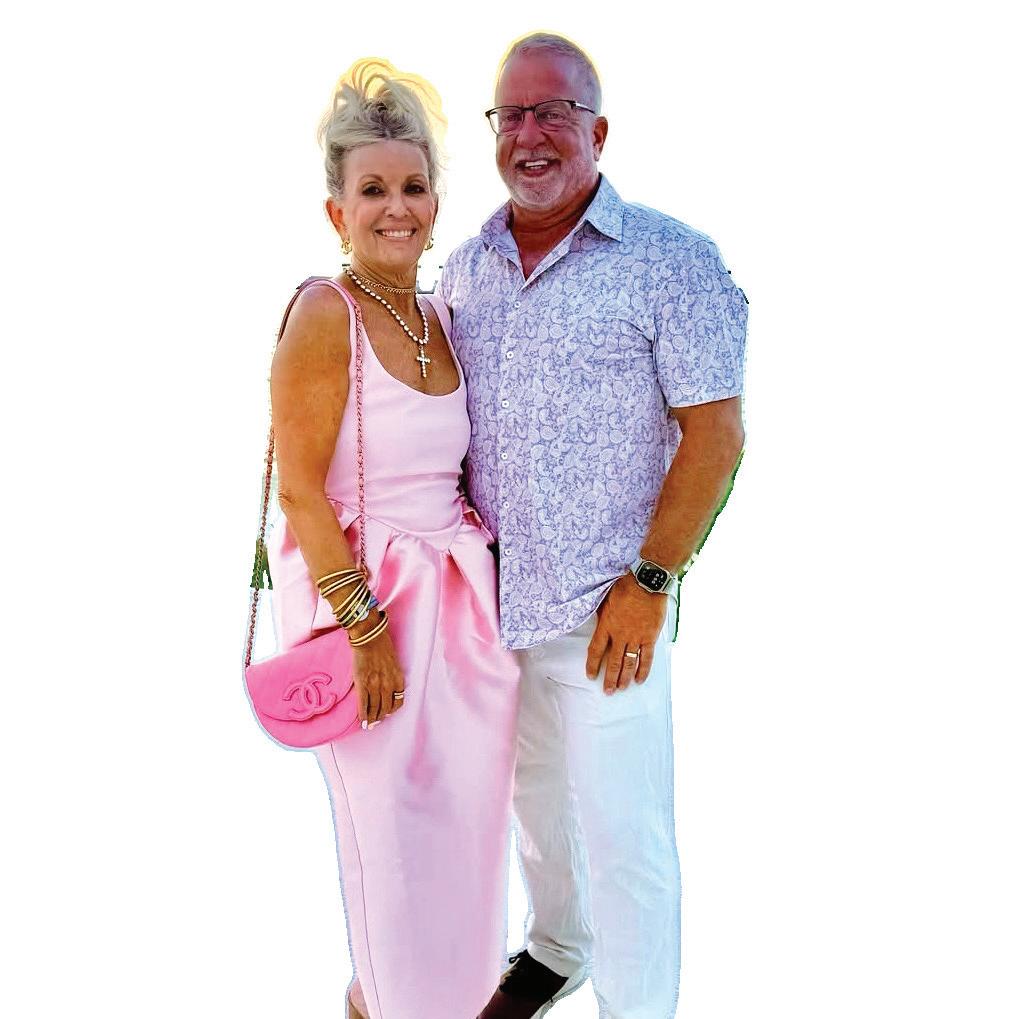
Brian & Karen Koerselman celebrated their 35th Anniversary
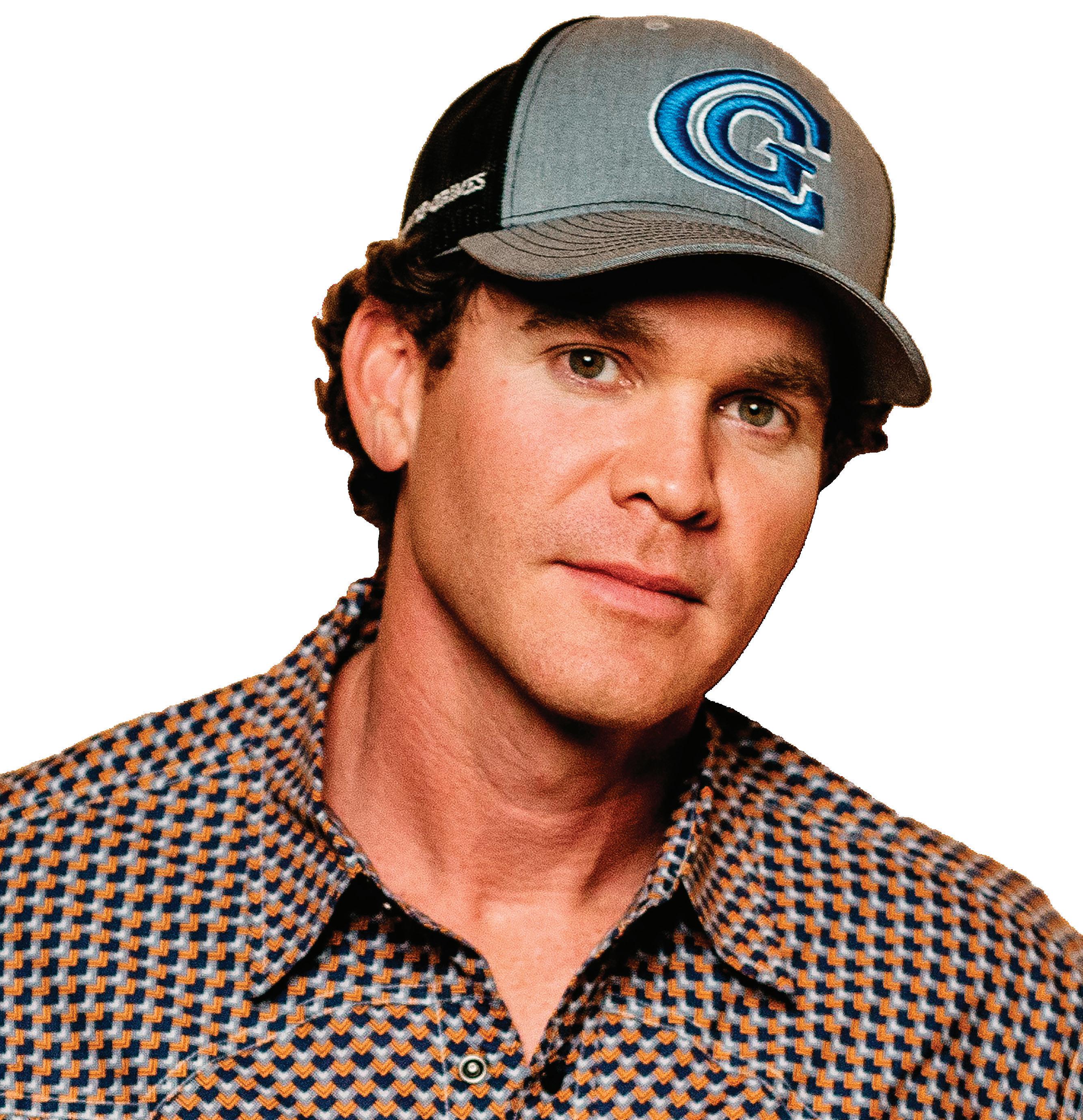
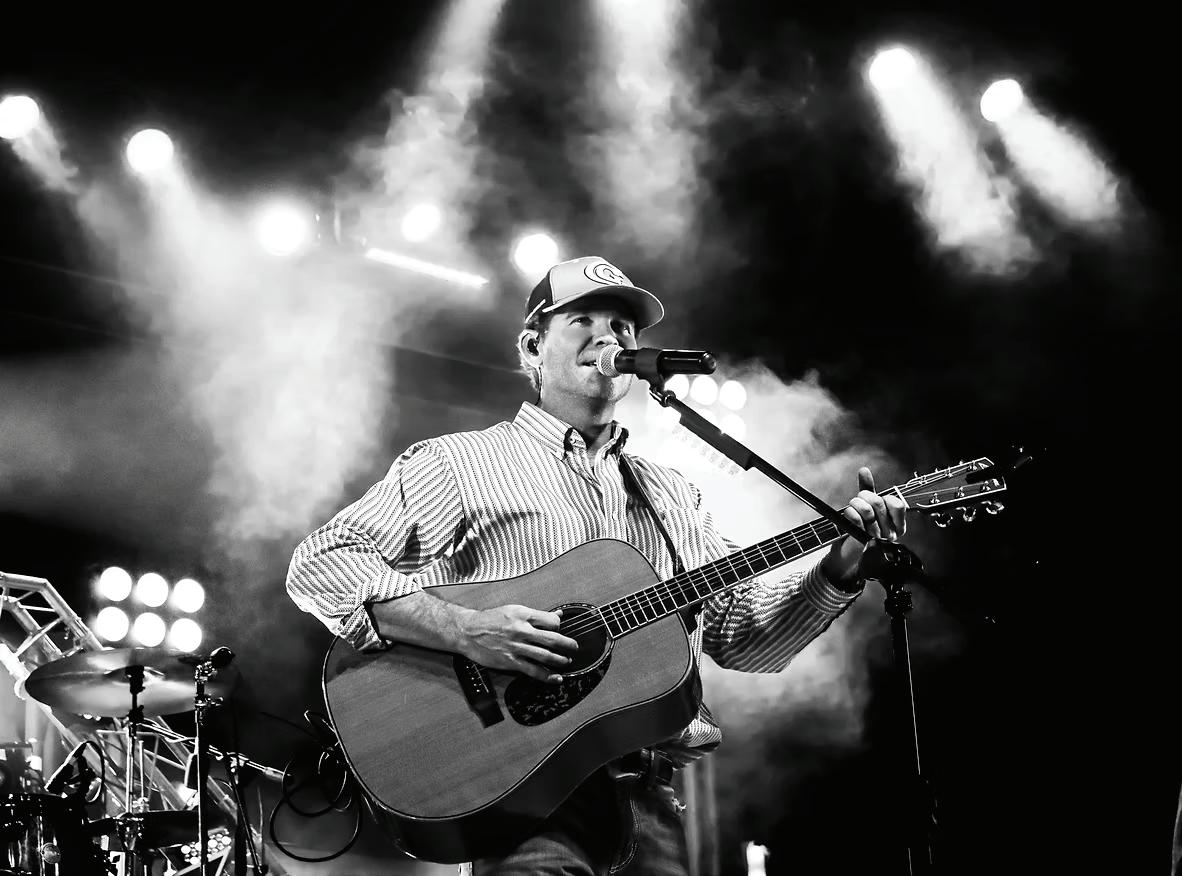
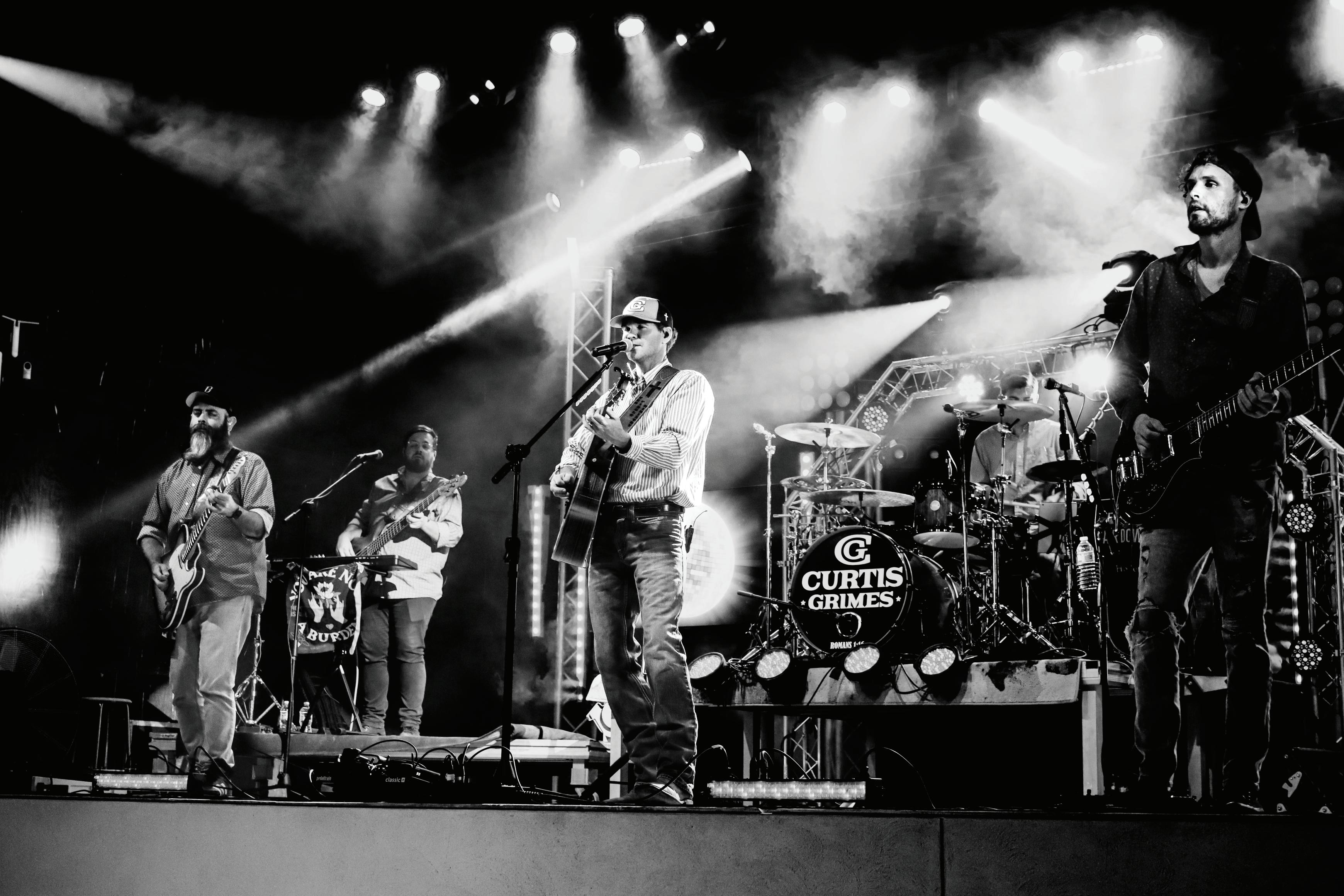
Curtis Grimes
Sometimes, finding your way comes through “finding your gift.”
urtis Grimes never dreamed of becoming a country music star. Growing up in East Texas, baseball was the plan. Music was little more than something playing on the truck radio between practices. But life has a way of changing course. A broken engagement, a borrowed guitar, a local radio contest and a little television show called The led Grimes to a career that has produced more than 20 No. 1 singles, millions of streams, and more Texas Country Music Association awards than any artist in the organization's history. Yet for all the success, Grimes remains remarkably grounded. The husband, father of three, and founder of the Ten Finger Ministry talks more about purpose than popularity and more about
Ahead of his August appearance at Old Town Theatre in Huntsville, Postcards sat down with Grimes to talk about baseball, music, faith and the unexpected path that changed everything.
You’re originally from East Texas, right?
I currently live in the San Antonio area, because my wife is from down here. But I grew up in East Texas and graduated from Harmony, about halfway between Gilmer and Quitman.
You were on a baseball career path before music entered the picture. Do you think music was always waiting for you, or did life genuinely take an unexpected turn?
Baseball was my thing when I was young. I didn’t have a desire to play music, but it was easy for me. I remember being able to go on the piano and pound out songs, just had the ear for it, I guess. In the truck riding to and from
baseball practice…Alan Jackson, George Strait and ‘90s country. I really liked that. I never had a desire to sing in front of people or play instruments.
When I got to college, my roommate had a guitar he would leave in the dorm room. That’s when I started messing around with the guitar.
What did music give you that baseball couldn’t?
Long story short, I messed up my scholarship baseball career myself. I quit halfway through my freshman year, got engaged to the girl I was dating, high school sweetheart type of deal. Then we ended up breaking up. So music was, I guess you could say, therapeutic in a way, just kind of what I did to fill that space. And that’s what really started the songwriting deal… just kind of getting that stuff out.
I was into the Texas country thing that was going on underground at the time. That’s the kind of music I was listening to when I started trying to play guitar and write songs, so that’s the direction I went.
My sophomore year, I moved down to San Marcos to go to Texas State, and I didn’t do very good at school. I got on probation and suspension. I had friends in Austin at UT, so I was always back and forth between San Marcos and Austin. I was working in a trophy shop at the time to pay bills.
Then one opportunity changed everything.
There was a radio contest about opening for Kenny Chesney, and all you had to do was submit a video. They picked four finalists and then you had to battle. We did all that, and we won. So, here I was on stage with Kenny Chesney not long after I’d started playing guitar, singing in front of
people. At that point, I was like, “Well, all right. I guess we’ll see what happens with this music stuff.”
We used that new splash to get more shows booked. We started playing other places outside of Austin. Then, in 2011, I got to be on season one of The Voice. There were eight people left when I got kicked off.
That’s where I met a guy who worked for ASCAP who said, “When the show’s over, come to Nashville. I’ll set you up with some publishing meetings and some co-writes.” So, that’s how I got plugged in there. Yet something was still missing.
How did faith enter your music?
About three years in, I had a booking agent, a publishing deal, and all the pieces in place. I just didn’t have a lot of conviction about where I was, with music or life in general. Around 2015, I thought, “If this is what pursuing music looks like, I’d rather do something else.”
In that moment, God said, “No, I’ve given you this gift, this platform and this unique opportunity.” I thought, “Okay, I’ll go sing in a church or whatever.” But He said, “No, I’ve got you where I need you, so you just do that here.”
I started doing that through my songwriting. I always tell people my goal is to point people to Jesus, because He’s the one who is going to make any life changes. That’s what we try to do through our songs and our shows. My favorite part of the night is getting to engage with people after the show.
What happened after that?
About three months after that, my team let me go. That’s when I started doing it how I wanted to do it. And that’s been going 10 years now. So
In that moment, God said, “No, I’ve given you this gift, this platform and this unique opportunity. ”
far, that door has remained open. Radio kept playing our songs. Some venues quit booking us. We probably hurt alcohol sales a little bit by being wholesome, but we still have fun, put on a good concert and engage with people and have a fun night. But we try to do it the right way. Other venues started booking us for that reason. So now we get to play pretty much all ages, any space from bars to honkytonks to festivals, fairs, rodeos, or even church on Sunday morning. The goal is to play
anywhere and everywhere we can with the intention of trying to be a positive influence and point people to Jesus. Just trying to make money, get national radio play, trying to play the game, trying to do whatever you think is going to sell… It just gets very empty. And I’ve seen that. I’ve seen guys who pursued that and got to a level of success that most people would love to have, and these people are just not in a good place.
What makes Texas country different from Nashville country in your eyes?
I’d say the biggest difference is the entry point, right? In Nashville, it’s a few years of bumming around trying to meet people, trying to write with people, before you even get to record music and dig in as an artist.
But the Texas deal is kind of fair game where anybody can do it. There are lots of studios in Texas where you can go record your own music and get
that out without having to wait. There’s also a huge support cast: a foundation of fans, industry people, radio, and folks that appreciate young artists who are developing and trying to find their footing as artists. There aren’t many other areas in the country that have that scene or support established like it is here.
The interesting thing, too, is it doesn’t all translate. You could have a big resume in Texas, and in Nashville they’re not impressed. So, there’s a divide, even though a lot of the business and publishing still funnels through there.
If you could go back and give that season one Curtis Grimes from The Voice one piece of advice, what would it be?
I’d probably say, “Lobby a little harder on songs,” because that was the only negative about that whole scenario. It was an awesome experience, obviously,
and I got priceless exposure, but they assign you songs, so it’s not really putting you in the best spot to try to impress the world.
And probably, “Sober up.” I didn’t really maximize opportunity, because I was just doing dumb stuff, instead of taking it as seriously as I would now if I got that same opportunity.
You’ve had more than 20 number one singles. What still excites you about making music?
It never gets old when you hear your song being played when you’re out somewhere. I don’t think I’ll ever get numb to that, because it’s just cool. It’s all just icing on the cake. I don’t put that stress on myself maybe like some others do…whereas, I might have in baseball. It’s funny to think that I probably have a better platform now doing this than I would have if I was just some random minor league baseball player.
Tell about the Ten Finger Ministry you founded in honor of your grandfather. My grandfather loved gospel music, and we would sing it together. About a year or two after deciding what I wanted to do with music, I started posting worship songs or old hymns on social media. That’s when people started asking about a gospel album. I didn’t really have extra funds lying around to record another project, so I started a GoFundMe and raised more than enough money to record a gospel album. I didn’t want to do it as a profit endeavor, so I thought I’d funnel anything that comes from this into a ministry. My grandfather passed away around that time. He had nine fingers. He was missing a finger from roping a horse when he was little. My dad commented that now he’s got ten fingers to worship the Lord. That’s where we got the idea for Ten Finger Ministry in his honor.
God was putting it on my heart to give people Bibles. I bought some and
put them on our merch table for free, and they slowly disappeared. So, I just kept buying more and replacing them. Then people started asking me about it. I set up a website, and we’ve been able to distribute free Bibles. People are always surprised by that.
We try to get good quality ones to have on the merch table or send some overseas for different mission trips and things. It’s been a few years, so I need to record a new gospel album, volume two at some point.
East Texas has a way of shaping people as they grow up. What values from your hometown do you still carry today?
Humility. Not forgetting where you came from. Helps put everything in perspective. My mom still lives in Gilmer. My sister still lives in Gilmer. I’m hoping to play the Yamboree next year.
Also the work ethic aspect, doing things just because it’s the right thing to do. I don’t see that much outside of that bubble. You learn really quickly
everybody wasn’t raised like you were. And the faith element. Growing up, we took belief in God and Jesus for granted. It was rare that people didn’t believe. It was all we knew. When you go off, it’s not like that. You lose a lot of accountability. There is a community aspect of faith you lose when you leave that bubble.
What does a perfect day off look like for you?
I usually go to the gym every morning. That’s still how I get my fix and feel like an athlete, I guess. Then we have 20 acres out here. I enjoy working, tinkering. That’s my happy place. That and hanging out with my wife and three kids (ages 2-8).
What is something people might be surprised to learn about you?
I’m more introverted than extroverted. I don’t know how I’ve learned to be the guy to sing and speak in front of people. I would probably rather not be the one in the center of the deal.
When your music career is eventually written into the Texas music history book, what do you hope the final sentence will say?
I hope it has something to do with using this gift to put some positive influence into the world.
See Curtis Grimes
Old Town Theatre, Huntsville August 15, 2026 oldtowntheatre-huntsville.org
Five new songs are scheduled for release soon. Learn more at CurtisGrimes.com.
Kidspeak
My 8-yo is confused but not wrong.
Sam: Dad, don't you have today off?
Me: Yup.
Sam: Then why are you working?
Me: Stuff needs to get done.
Sam: So, even when you have days off, you don't really have days off?
Me: Yup.
Sam: Being an adult sounds stupid.
••••••••••••••••••••••••••••••••
I told my 3-yo she couldn't play with makeup, so she ran away sobbing and yelling, "Alexa, play crying music!"
Now Alexa is playing funeral dirges and 3-yo is sadly playing along on a recorder.
••••••••••••••••••••••••••••••••
I'm taking a walk with my 6-yo and he goes, "Did you know I retired from rock collecting?" Why no, son, I did not. lol
••••••••••••••••••••••••••••••••
I was in the bathroom when my 4-yo started furiously knocking on the door, shouting, "Mommy!" Without thinking, I shouted back, "I'm not in here!" She said, "Oh," and left.
••••••••••••••••••••••••••••••••
My son's 6th birthday is June 20. Today, he reminded me to invite Taylor Swift and Walter. Walter is a praying mantis who was on our deck two years ago. He asked me to email Walter because he doesn't know Walter's phone number. I feel like I have a better chance of getting ahold of Taylor.
••••••••••••••••••••••••••••••••
I think my son planned a birthday party without telling us. These neighborhood kids showed up with presents and came inside, and now they're playing.
Sean of the South
The A Word
It’s weird. Being back in America again.
For one thing, they don’t call it “America” over in Europe. It’s bad form. They call it “the U.S.”
When in Europe, to call your mother country “America” is considered egotistical and disrespectful to other North Americans, Central Americans, South Americans, as well as Puerto Ricans, people from the Virgin Islands, and people from Guam, who all sort of consider themselves “Americans,” too.
Although I’ve never heard any South American friend refer to himself or herself in this way. They always say, “I’m Colombiano,” or “Argentino,” or “I’m a Peruano.” If you were to call a Central American an “American,” they’d laugh and then spike your food with ceremonial death chiles.
Still, modern decorum dictates that you’re not supposed to say “America.” It’s considered rude, and sort of low rent.
Sorry, those are the rules.
After all, Mexicans are also from North America, along with Canadians. But again, I’ve never once heard a self-respecting Canadian refer to themselves as “North American.” Neither do Mexicanos refer to themselves as North Americans. In fact, “Norteamericano” is a Mexican term reserved for persons from the United States.
So anyway, this modern vocab issue was a problem for me the very first time I visited Europe. I kept responding to people’s questions of my origin by replying, “I’m from America.”
And they’d look at me like I had just mowed down the Sistine Chapel with a Sherman tank. By modern political correctness standards, I was an uneducated little puke.
“It’s called the U.S.,” I was quickly informed by Europeans.
Sean Dietrich
follow the same dialectal rules we Americanos are expected to follow. So I began referring to European Union citizens as being from the E.U. I did this exactly once, and a Frenchman quickly gave me a dressing down.
“I am not FROM the European Union, monsieur,” he said with a piteous laugh. “I am French because my country is named France.”
“And I am from Italy,” added another woman nearby. “Therefore I am Italian.”
“So what does that make me?” I asked.
They shrugged and went back to smoking cigarettes.
So, later that night I did some research in my hotel. According to the internet, I discovered the correct term was “One who is from the U.S.” Or in some cases: “UnitedStatesean.” This is considered politically correct language.
But then, one day in a small French town, I had a conversation with a Frenchwoman shopkeeper. She was elderly and gray, and old enough to remember World War II, when Allied soldiers liberated her country.
She was a little girl living in Paris at the time. Her father had been brutally murdered during the war, and her mother had been taken captive by German mercenaries. After France was liberated by U.S. troops, a large victory parade took place on the streets of Paris wherein soldiers walked alongside French citizens in celebration. She remembered that parade in detail. As though it were yesterday.
“There was so much cheering it hurt your ears,” she said. so happy to be free.”
French people showered U.S. soldiers with gifts and and falling food. Baguettes fell from the sky. So did And—seriously—women’s underwear.
women kissed U.S. soldiers marching by, seemingly Old Frenchwomen embraced passing sergeants wept into their uniforms with gratitude. Old Frenchmen shook the hands of teenage buck privates with tears in their ancient eyes and said “God bless you” in broken English.
My grandfathers and forebears were among those gallant and battered soldiers who fought such a terrible and costly war. Maybe yours were too.
The old Frenchwoman telling me this story was actually weeping as she spoke. She wiped her eyes, then took my hand.
“Let them call you whatever they wish,” she said. “But to me, ‘American’ will always be a beautiful word.”
Anyway, it’s good to be home.
Medical Matters
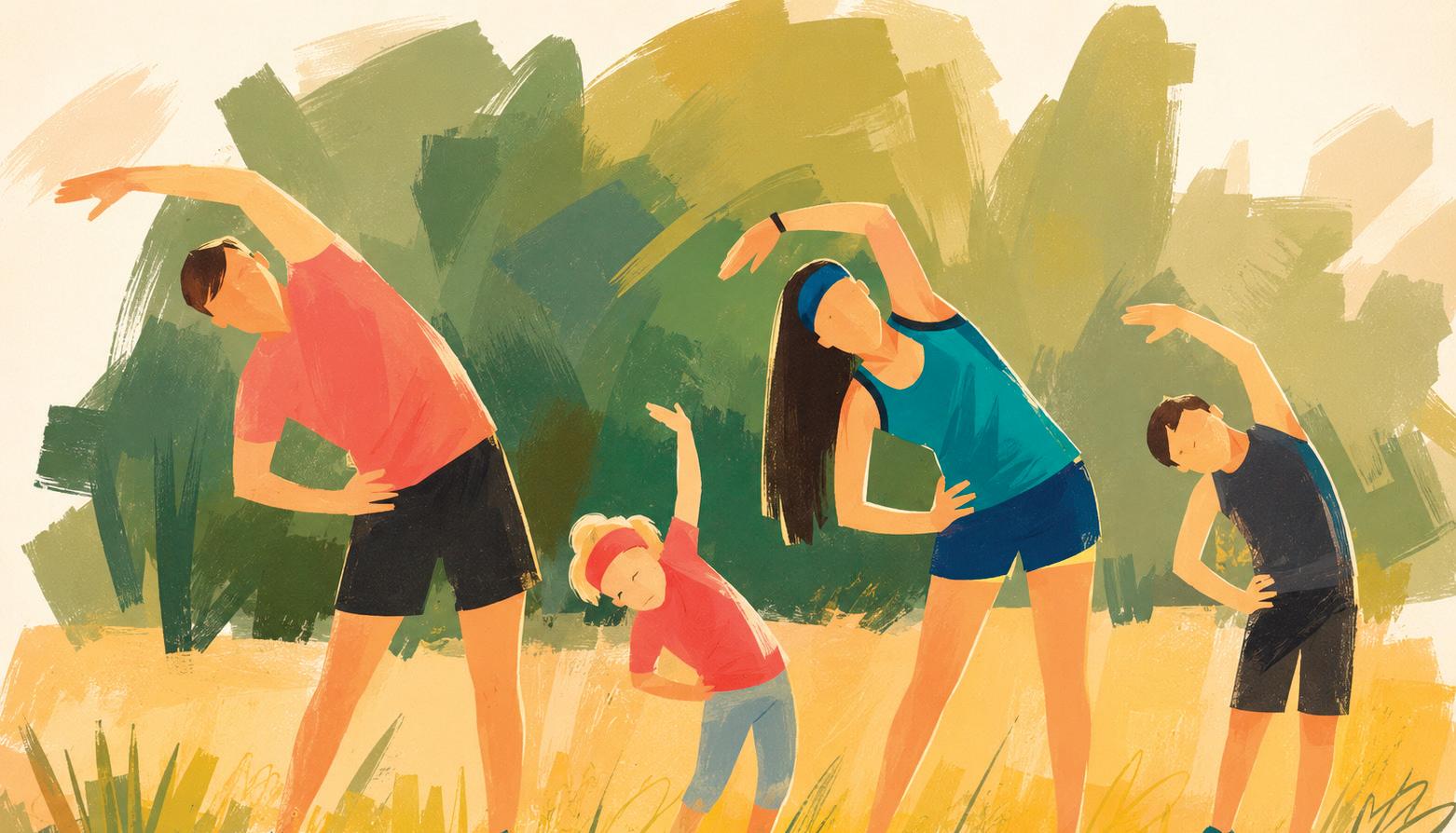
Staying Active as a Family During the Summer (Without Overheating)
Summer is a great time for families to reconnect, spend time outdoors, and enjoy a break from the school-year routine. But when the Texas heat cranks up, it can be tough to keep everyone moving without feeling wiped out. Staying active is important for all ages. Physical activity improves cardiovascular health, supports mental well-being, and helps children build healthy habits that last a lifetime. Plus, it’s a great way to bond and create lasting memories. So how do you stay active while staying cool?
Here are some family-friendly ideas to keep everyone moving safely this summer:
• Shift your schedule. Aim for outdoor playtime early in the morning or later in the evening, when temperatures are cooler and the sun is less intense. This helps reduce sun exposure and lowers the risk of heat-related illnesses.
• Get in the water. Swimming, splash pads, or backyard sprinklers are great ways to stay active and cool down. Water games like races or floating contests can make it even more fun.
• Try indoor activities. On extra-hot days, head to a local recreation center, roller rink, or bowling alley. Or get creative at home with dance parties, yoga sessions, or active video games that get everyone moving.
• Make it a game. Nature scavenger hunts, obstacle courses, or backyard games like frisbee, soccer, or freeze tag can be fun ways to sneak in exercise while keeping things exciting.
• Keep hydration a priority. Always bring water when you head outside and encourage kids to take frequent breaks. Freeze
Craig Boudreaux, DO Family Medicine Medical Director, SHSU Physicians
water bottles ahead of time for a refreshing treat.
• Dress for the weather. Lightweight, breathable clothing and hats can make a big difference in comfort and safety. Choose moisture-wicking fabrics to help stay cool.
Heat-Related illness
Summer is also a great time to teach kids about listening to their bodies. Encourage them to speak up if they feel tired, dizzy, or overheated. Symptoms like flushed skin, headache, or nausea may signal heat exhaustion and should be taken seriously.
Sunscreen
Don’t forget the sunscreen—even during early morning or late afternoon outings. Reapply every two hours, especially if you’re near water or sweating. Consistent sun protection with an SPF rating of 15-30 or higher helps prevent sunburn and long-term skin damage. Applying sunscreen is most important prior to age twenty to prevent skin cancer later in life, but all should apply early and often.
Make Fitness a Priority
Consider setting family fitness goals. Whether it’s walking a certain number of steps per day or trying out a new activity each week, having a shared goal can motivate everyone to participate. Celebrate progress together with a healthy reward like a homemade smoothie or picnic in the shade.
Summer doesn’t have to mean sitting still inside. With a little planning and creativity, you can keep your family active, healthy, and happy all summer long. Beat the heat with fun, movement, and mindfulness.
searching for.
Freedom from fear, from guilt, from the weight we carry. Real freedom is found in Him.
Glorious Grandchildren
Dear Gabby
Welcome back to the July 2026 edition of the Dear Gabby advice column. HAPPY 250TH BIRTHDAY, USA! July 4, 2026.“…and that government of the people, by the people, for the people, shall not perish from the earth.” - Abraham Lincoln from The Gettysburg Address, 1863. Independence Day is an American holiday loaded with baseball, hot dogs, and apple pie, but keep the ties that bind us together as a nation in mind. Things like patriotism, family, friendship, and faith in a higher power are the long-held American values that made America great. Hold to those values at all costs. Send me your questions by clicking on Dear Gabby at www.PostcardsLive.com/share.
DEAR GABBY
My senior-aged friends and I are being bombarded with phone calls of a dubious nature. These friendly young people give you their first name and immediately start asking questions to see if you qualify under the new Medicare laws. I hang up eventually, but it’s hard to turn down increased Medicare benefits.
TOO GOOD TO BE TRUE?
DEAR TGTBT
Yes! Definitely too good to be true! Medicare NEVER makes unsolicited calls to Medicare participants. And those nice young people are likely recordings that are programmed to respond when you ask questions about their intentions. The phone number on caller IDs can be manipulated with current technology. If a call initiates with a question like “Can you hear me? or “Is this (your name)?... hang up immediately. Artificial Intelligence can use your voice to authorize fraudulent charges. Real organizations that are entitled to have your social security number, banking details
or passwords already have that information. If you haven’t entered a sweepstake or lottery, you are probably not a winner. My husband/hero Dud has a code word to weed out the spam callers. Mention the word SCAM and see how quickly they hang up on you.
If you ever receive an unexpected call that feels suspicious, just hang up. You don’t owe scammers an explanation or a conversation. Personally, I don’t answer calls from anyone who is not in my phone directory. I figure that, if it’s important, they will leave me a message. So far, that’s working. Not one scammer has left me a message, and now I receive very few spam/scam calls.
Protect yourselves and be safe. Most unfamiliar calls are not your friends.
GABBY
CONFIDENTIAL TO “WHICH WAY DO I CHOOSE?”: Do the harder right instead of the easier wrong.
The Garden Post Texas Master Gardeners Program
aster Gardeners are volunteers who are members of a program designed to provide horticultural information and educational programs throughout the state. To become a Texas Master Gardener, a participant attends 50 hours of instruction, presented by the local County Extension Agent, then shares this knowledge by donating 50 hours of volunteer service back to the community.
Master Gardeners’ green thumbs can be found in school garden projects, educational programs and demonstration gardens. Our volunteers also provide speakers on various gardening programs and answer gardening questions. Anything anyone wants to know about gardening, a Master Gardener can help. That includes young wannabe gardeners too – Master Gardeners help set up 4-H gardening clubs and Junior Master Gardener groups.
In fact, when it comes to green and growing things, Master Gardeners dig into their service in all kinds of ways: teaching, giving presentations, writing newsletters and articles, providing clerical help, and designing and maintaining Web pages.
1 (3 lb) whole chicken, skin removed and cut into pieces
¼ cup packed brown sugar
¼ cup dry white wine
1 Tbs chopped fresh parsley, for garnish
DIRECTIONS
Step 1: Combine prunes, olives, capers, olive oil, vinegar, garlic, oregano, bay leaves, salt, and pepper in a medium bowl; mix well. Spread mixture in the bottom of a 10x15-inch baking dish. Add chicken pieces, stir and turn to coat. Cover and refrigerate overnight.
Step 2: Preheat the oven to 350 degrees. Sprinkle brown sugar on top of marinated chicken and pour white wine all around chicken.
Step 3: Bake in the preheated oven for 1 hour, spooning juices over chicken several times as it is baking. Serve on a platter, pouring juices over the top, and garnish with fresh parsley.
Tasty Bites
Pepperoncini Dip
INGREDIENTS
1 (8-oz) pkg cream cheese, softened
1/4 cup sour cream
2 Tbs brine from pepperoncini jar
1/2 cup pepperoncini peppers - stemmed, seeded, and chopped
1 cup mixed giardiniera (pickled mixed vegetables), chopped
1/4 cup finely chopped red onion
1 tsp Italian seasoning
1/4 tsp kosher salt
1/8 tsp crushed red pepper
baguette slices, ridged potato chips, and/or vegetables, for dipping
DIRECTIONS
Step 1: Beat cream cheese in a bowl with an electric mixer at medium speed for 30 seconds.
Step 2: Beat in sour cream and pepperoncini brine until mixture is smooth.
Step 3: Beat in pepperoncini, giardiniera, red onion, Italian seasoning, salt, and crushed red pepper until combined.
Step 4: Chill, covered, to allow flavors to meld, at least 1 hour (or up to 1 week). Serve with baguette slices, potato chips, and/or vegetables for dipping.
Tasty Bites
Lemon Texas Sheet Cake
INGREDIENTS
Cake:
1 cup butter
1 cup water
2 cups all-purpose flour
2 cups white sugar
2 large eggs
1/2 cup sour cream
1 tsp lemon extract
1 tsp lemon zest
1 tsp baking soda
1/2 tsp salt
Glaze:
2 cups confectioners sugar, plus more as needed
2 Tbs 1% milk
6 Tbs salted butter
1/4 tsp kosher salt
1/2 tsp lemon extract
2 Tbs lemon zest
DIRECTIONS
Step 1: Preheat the oven to 375 degrees. Grease a 10x15inch baking pan.
Step 2: Bring 1 cup butter and water to a boil in a large saucepan. Remove from heat, and stir in flour, sugar, eggs, sour cream, lemon extract, baking soda, and salt until smooth. Pour batter into the prepared pan and spread into an even layer.
Step 3: Bake in the preheated oven until cake is golden and a toothpick inserted near the center comes out clean, 20 to 22 minutes. Cool for 15 minutes.
Step 4: Meanwhile, for glaze, place confectioner’s sugar in a bowl.
Step 5: Add milk, butter, and salt to a small saucepan over medium heat, and bring just to a boil, stirring occasionally; pour over confectioner’s sugar and whisk to combine. If glaze is too thin, whisk in more confectioner’s sugar. Whisk in lemon extract and lemon zest.
Step 6: Pour glaze over cake while still warm. Spread evenly over cake with a spatula. Cool completely before serving, about 50 minutes.
edwardjones.com
edwardjones.com/financial-advisor/kenholland
Email: ken.holland@edwardjones.com
Tasty Bites
Watermelon Lemonade
INGREDIENTS
4 cups cubed watermelon
½ cup white sugar
½ cup water
3 cups cold water
½ cup fresh lemon juice
6 cups ice cubes
DIRECTIONS
Step 1: Place watermelon into a blender; cover and puree until smooth. Strain through a fine mesh sieve.
Step 2: Bring sugar and 1/2 cup water to a boil in a saucepan over medium-high heat until sugar dissolves, about 5 minutes. Remove from heat; stir in 3 cups of cold water and lemon juice.
Step 3: Divide ice into 12 glasses; scoop 2 to 3 tablespoons of watermelon puree over ice, then top with lemonade.
Step 4: Gently stir before serving.
COOK’S NOTE
This drink can be made into an adult cocktail by adding a little vodka.
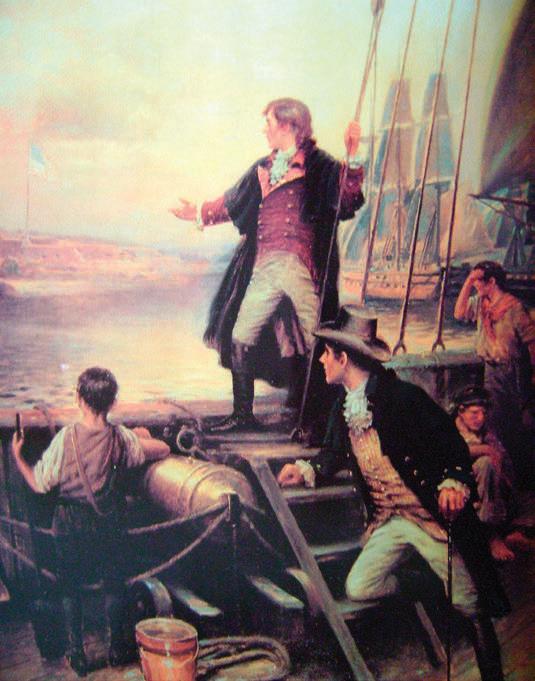
The Star Spangled Banner
The “rest of the story” behind the national anthem.
BY MIKE YAWN
Even as Americans remain divided over politics and current issues, the country is preparing to commemorate the 250th anniversary of the Declaration of Independence, bringing national symbols to the spotlight. Among the most important of these is “The Star-Spangled Banner,” and despite its status as the national anthem, its origins and evolution are not widely known among the American public.
Background
The United States was still a young country when it muddled its way into war with Great Britain in 1812. James Madison was President; there were only 18 states; and the largely volunteer military was, at times, ill-prepared and undisciplined.
And while the U.S. would eventually fight to a draw, preserving the status quo ante bellum, the late summer of 1814 was a harsh one. The British overwhelmed American forces at The Battle of Bladensburg, marched to the nation’s capital, then proceeded to burn the White House and the Capitol building—all in the same day. The control of Washington, D.C. was largely symbolic, but it also served as a prelude to a potential capture of Baltimore, then the nation’s third largest city.
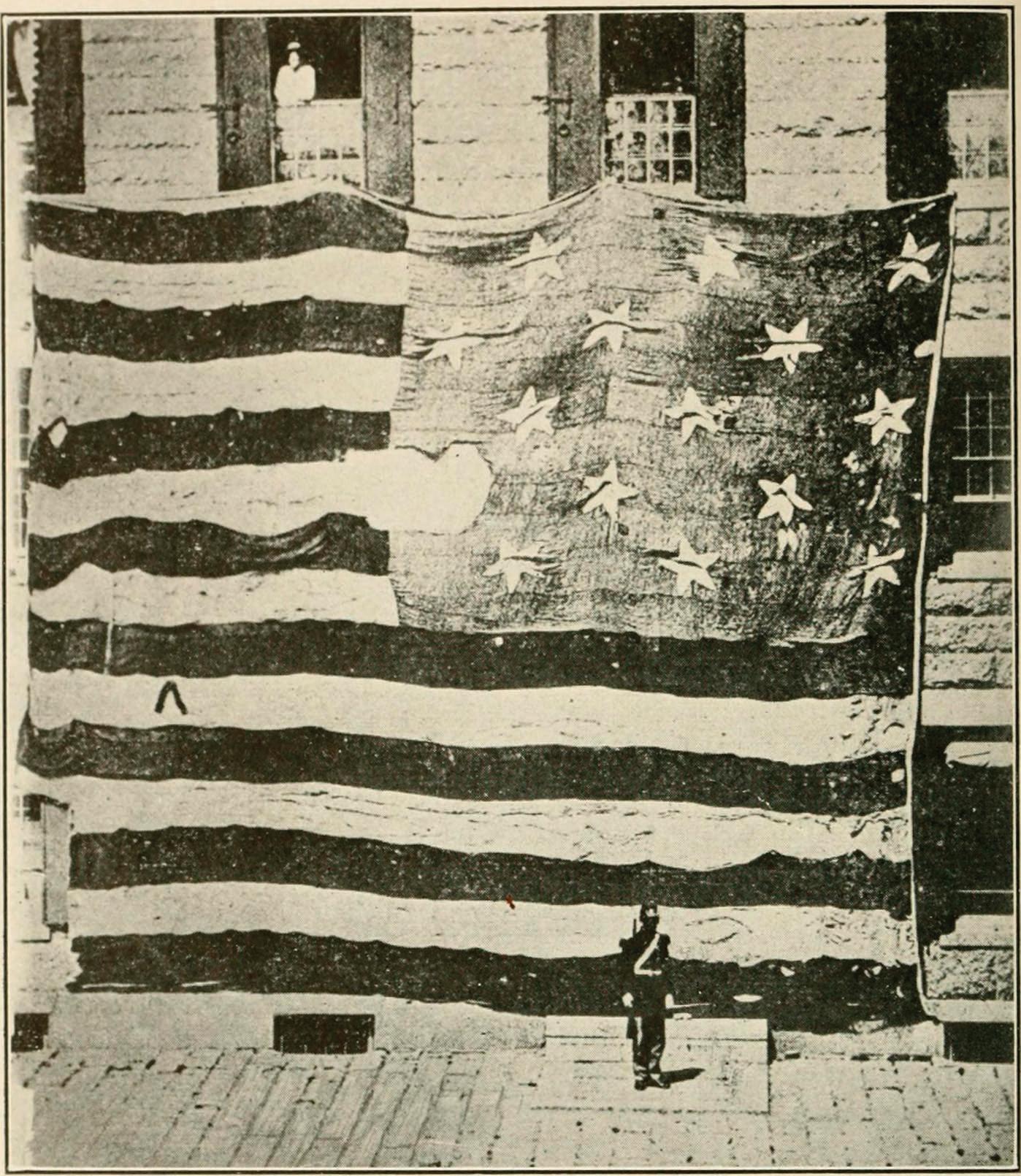
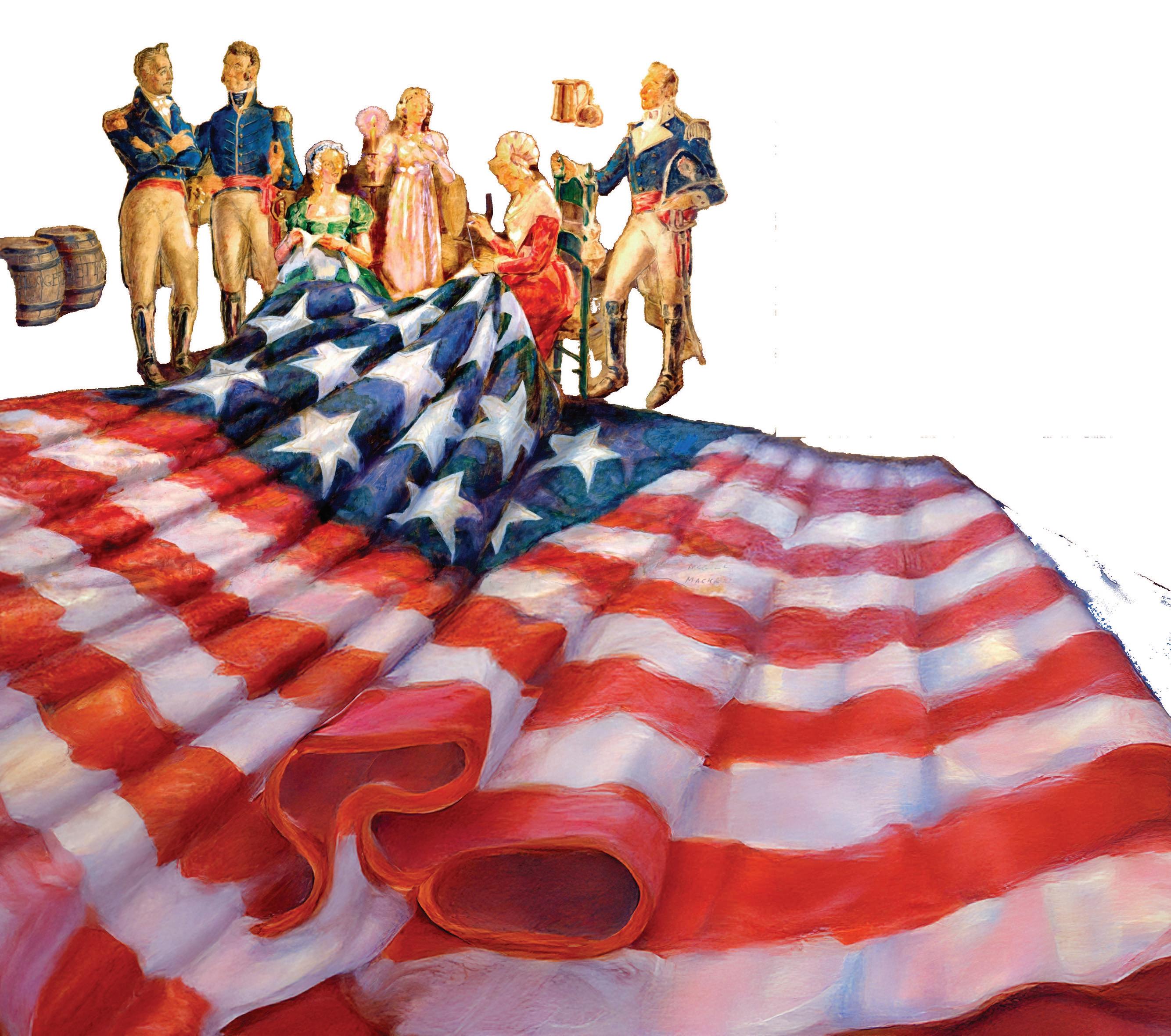
Central to control Baltimore was Fort McHenry, which was commanded by Major George Armistead. Upon taking command in 1813, Armistead requested a flag “so large that the British will have no difficulty in seeing it from a distance.” His request was filled by Mary Pickersgill, who created, according to the receipt, “1 American ensign, 30 x 42 feet, first quality Bunting.”
It was this garrison flag that flew above Fort McHenry in September 1814 when, improbably, the career of a young attorney and amateur poet intersected with history. That attorney was Francis Scott Key.
Key was representing Dr. William Beanes, who was taken captive by the British on charges of espionage. Writing to his mother, Key explained that he would leave by ship with John Skinner, the U.S. Prisoner of War
Agent, seek to intercept the British fleet, negotiate the release of “Old Dr. Beanes,” and return within “eight to ten days,” although he closed with a note of uncertainty: “I do not know where to find the fleet.”
Key and Skinner found the British fleet just fine. The ships had amassed near Chesapeake Bay as the British command finalized their plans for an amphibious invasion of Baltimore— which British Vice Admiral Alexander Cochrane referred to, with obvious glee, as “the richest in the Country.”
Against this background, Key and Skinner began negotiations with a distracted British command for the release of Dr. Beanes. It became clear Baltimore was an imminent target, and while negotiations were successful, Vice Admiral Cochrane embargoed the departure of Key, Skinner, and Beanes,
noting: “After discussing so freely… in your presence our purposes and plans, you can hardly expect us to let you go ashore now in advance of us.”
Literally and figuratively, the American delegation was asea, passive witnesses to the fate of their country.
Defending Fort McHenry
Fresh off easy victories at Bladensburg and Washington, D.C., British General Robert Ross landed 12 miles southeast of Baltimore on September 12, with plans to fight his way to the city by nightfall: “I’ll dine in Baltimore tonight,” Ross boasted, “or in hell.”
Ross did not eat in Baltimore. He was felled by a sniper’s bullet early in the Battle of Baltimore, and the British were left without their North American commander for what historian Tom
McMillan referred to as the “most important land-based attack of the War of 1812.”
British progress was slow, eventually stalling against stiff American resistance and bad weather. Faced with a slog by land, the British turned their attention to their Navy and Fort McHenry.
“Control of the Fort,” noted McMillan, “meant control of the city and harbor, regardless of what happened in the ground war.” The naval battle began at 6:30am on September 13, as Vice Admiral Cochrane unleashed the full force of his arsenal. Americans, he said,
“like Spaniels…must be treated with great severity before you ever make them tractable.”
British ships fired more than 2,000 shells, cannonballs, and rockets. “We were exposed,” said Armistead, “to a constant and tremendous shower of shells…[but] not a man shrunk from the conflict.” As the day dragged on, the weather worsened, leading to choppy waters and, consequently, less-accurate cannon fire from British ships. When the British attempted to advance and find better range, they were met with a volley of return fire, flying “like hailstones,” and they retreated.
With the onset of night, the British continued their bombardment, including the employment of the newly-invented Congreve Rocket, which produced a shrill whistle and, depending on the length of the fuse, often exploded while in air, producing conflagrations below. This could be terrifying to soldiers, but for Francis Scott Key and other long-distance observers, they provided glimpses—by the rockets’ red glare—into the battle’s progress. These glimpses, however, were not definitive, and it was not until the sun broke the horizon that Key was able to espy “the stars of that banner,” which he described as a “manifest
following a few refinements, it was printed the next day as “Defence of Fort McHenry,” and within a few months, the title was changed to “The Star-Spangled Banner.”
The poem is four verses, although today’s audiences are likely only familiar with the first verse, and because the song is part of a ritual— often at sports games—its lyrical qualities likely go unnoticed by the American public.
The poem follows a rhyme scheme of A-B-A-B-C-C-D-D, such that the first verse ends with “light,” “gleaming,” “fight,” “streaming,” “air,” “there,” “wave,” brave.” Moreover, the first six words lay out the five long vowel sounds of the alphabet: “O,” “Say,” “You,” “See,” and “By,” which, it’s worth noting, are the most euphonious sounds in the language. The meter relies heavily on anapests (two unstressed syllables, followed by a stressed syllable), giving it a waltz-like rhythm while still being adaptable to other renderings.
Key set these lyrics to the music of “To Anacreon in Heaven”—an English song dating back to 1775, which according to author Marc Ferris was a “bawdy, boozy, ballad,” one with a melody appropriate for various lyrics and speeds. Indeed, Ferris notes that by 1820, the music undergirded “at least eighty-four other compositions.” With Key’s help, it would go from boozy ballad to national anthem.
The road to anthem-hood, however, was long, bumpy, and crowded. At the time Key composed “The StarSpangled Banner,” two other songs laid some claim to the title of “national tune:” “Hail, Columbia,” and “Yankee Doodle.” Within a few decades, “My Country, ‘Tis of Thee” and “Columbia, Gem of the Ocean” were written and became contenders for a national song.
Some complained that “The StarSpangled Banner” borrowed its melody from an English song; others complained—especially during Prohibition—that the tune began its life as a “boozy ballad”; still others complained that it was too difficult
But publications began making references to it as
“the national air,” the “national ode,” or the “National American Song.” By the late 19th century, standing and removing headgear was customary when “The Star-Spangled Banner” was performed; the Navy recognized it as its official anthem in 1889; and by the mid-1890s, the song was regularly performed at opening-day baseball games. It was, in all but official name, the national anthem.
Its status as the official national anthem came in 1931, when Congress passed, and President Hoover signed, a joint resolution that is brilliant in its simplicity: “The composition consisting of the words and music known as the Star-Spangled Banner is the national anthem.”
Notable Performances
In recent decades, Americans’ primary exposure to the national anthem is through sporting events— which, in the case of national championships, have transmogrified into spectacles, with celebrities performing, military flyovers, and even celebrity sign language interpreters (e.g., Marlee Matlin has interpreted in two Super Bowls).
Many of these performers have proved equivalent to the occasion. Whitney Houston—performing while the U.S. was at war with Iraq in early 1991—demonstrated her impressive (pre-recorded) vocals at Super Bowl
XXV. Beyonce offered an admirably restrained (also lip-synced) version at President Obama’s 2013 Presidential Inauguration. And Chris Stapleton gave a muscular, stripped-down (live) version of the anthem at Super Bowl LVII. Other performances proved memorable for the wrong reasons. Many performers have forgotten lyrics (e.g., Christina Aguilera at Super Bowl XLV), offered strange interpretations (e.g., Fergie at the 2018 NBA All-Star Game), simply been themselves (Roseanne Barr at a San Diego Padres game), been intoxicated (Ingrid Andress, MLB Home Run Derby), or just weren’t up to the vocal challenge, as in the case of track-star Carl Lewis (at a Chicago Bulls game). In the latter case, the sportscaster Charlie Steiner concluded, “The national anthem, written by Francis Scott Off-Key.”
Coda
“The Star-Spangled Banner,” like the Declaration of Independence, has endured through the country’s wars, political divisions, and cultural changes, continuing to connect Americans to founding concepts such as courage, sacrifice, and freedom. And whether sung pitch-perfect or off-key, the anthem—when approached with understanding and appreciation by performers and audiences—can help make this special July 4th a banner day for the United States.
Which broad stripes and bright stars?
Francis Scott Key expressed relief at seeing the American flag atop Fort McHenry on the morning of September 14, but which flag was it that he saw? It was not the famous Betsy Ross flag, which featured 13 stars and stripes, which by that time had been rendered obsolete. Rather, it was the flag designated in the Flag Act of 1794, which featured 15 alternating stripes and 15 stars. This flag was still in use in 1814, despite the fact that there were 18 states in the union. Moreover, the flag he saw “by the dawn’s early light” was almost certainly the Fort’s “storm flag,” a smaller version of the garrison flag, which as its name suggests, was flown during storms to prevent a heavy, water-soaked flag from breaking the flagpole. This flag was 17 x 25 feet. It is likely, however, that Key caught glimpse of the garrison flag the day before, and it is also possible he caught sight of the flag-hoisting ceremony at the Fort on September 14, which occurred in better weather. The garrison flag is currently on display at the Smithsonian’s National Museum of American History.
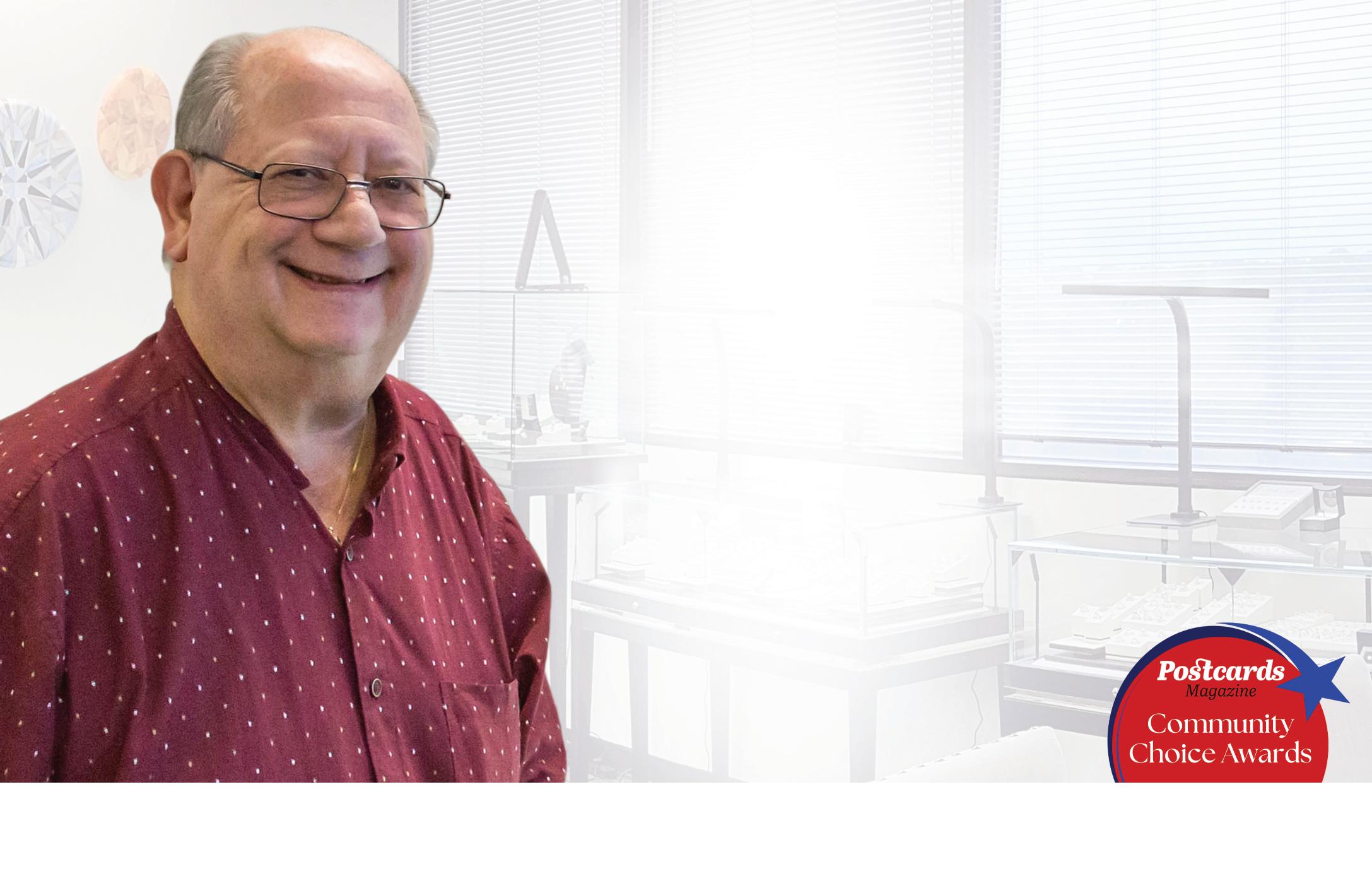
The Business Focus is chosen each month by random drawing from among Postcards contract advertisers.
Big D Marine & Powersports
A Legacy of Service, A Future on the Water
STORY AND PHOTOS BY MARSHALL ALTOM
ForSteve Dawson, owning a successful boat dealership wasn’t just a business move, it was the next chapter in a lifelong legacy of serving customers with honesty, hard work, and hometown pride. Before there were boats, motors, or fishing rods in the picture, there were mobile homes. Steve’s parents launched their family’s business in 1967, establishing deep roots in Huntsville. That property on Highway 19 in Huntsville remained in the family for over 50 years. Steve grew up in the mobile home business, helping build what became one of the area’s most recognized names. After selling that company in 1998, he spent time in other ventures before finding his way back into business ownership with a new goal in mind: boats.
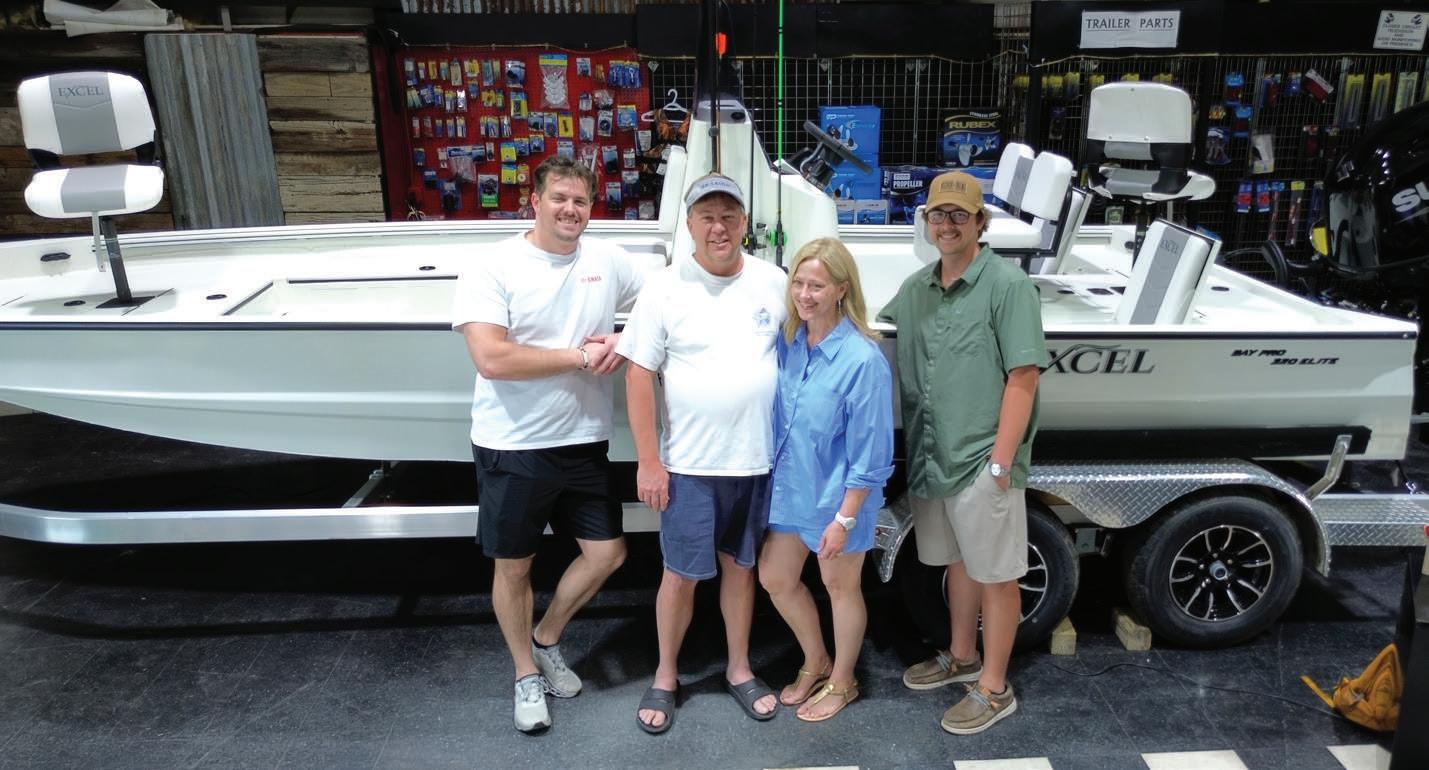
Family members Coleman Wyatt; Steve and Tricia Dawson; Trey Dawson
From dry land to open water
In 2017, Steve acquired the former Gullo dealership property off Highway 19 and secured a Yamaha franchise. That opportunity was the spark that launched Big D Marine.
“The Yamaha franchise was what really attracted me,” he shares. “It was a solid brand and a good entry point into the marine industry. Once I got in, I realized how strong the boat market really is.”
What started as a single location in Huntsville has grown into a threelocation operation which includes
full dealerships in Huntsville and Hitchcock, as well as a consignment outlet on the I-45 frontage road in Huntsville. Each location plays a unique role in the business, but together they represent a complete, customer-focused marine experience.
A name with meaning
The “Big D” in Big D Marine is more than just a catchy name...it’s a tribute.
“My dad called our first business Big D Mobile Homes. The ‘D’ was for Dawson,” Steve says. “When I opened this business, it felt right to bring that name back. He had passed by then, but it was a way to honor where we came from.”
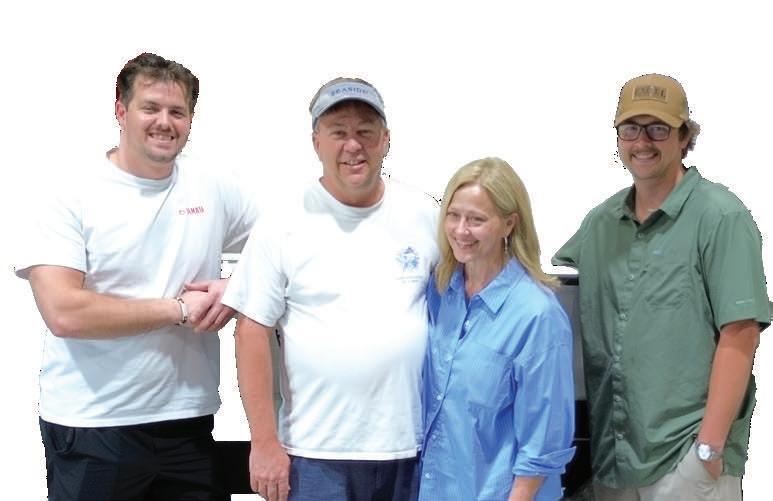
That sense of legacy runs deep. From the layout of the showroom to the tone of every customer interaction, Big D Marine isn’t just family-owned, it is family-driven. Steve’s wife Tricia handles the company’s accounting and oversees their corporate office in Huntsville, where all title work and internal operations are managed. Their son Trey is involved in financing, especially at the Hitchcock and Conroe locations. And Coleman Wyatt, Steve’s stepson, takes the lead on service operations, ensuring customers not only leave with the right product, but also receive the support they need long after the sale.
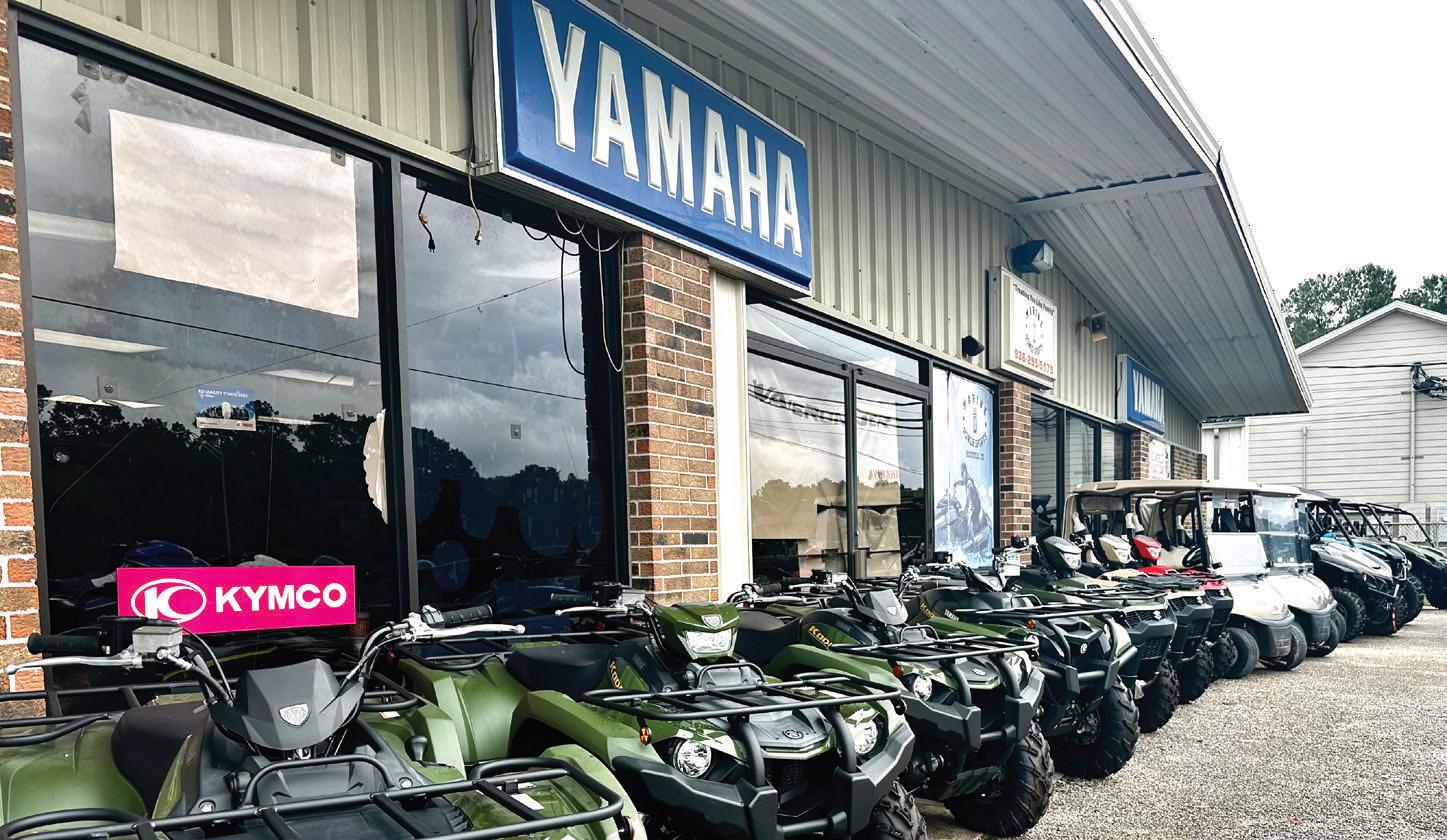
Just a few of the vehicle offerings for land and sea available at Big D Marine.
Boats for every lifestyle
Big D Marine carries a lineup of boats that is as diverse as Texas waters. Whether you’re fishing on a secluded creek, duck hunting in the marsh, or cruising on Lake Conroe, they offer something for every type of boater.
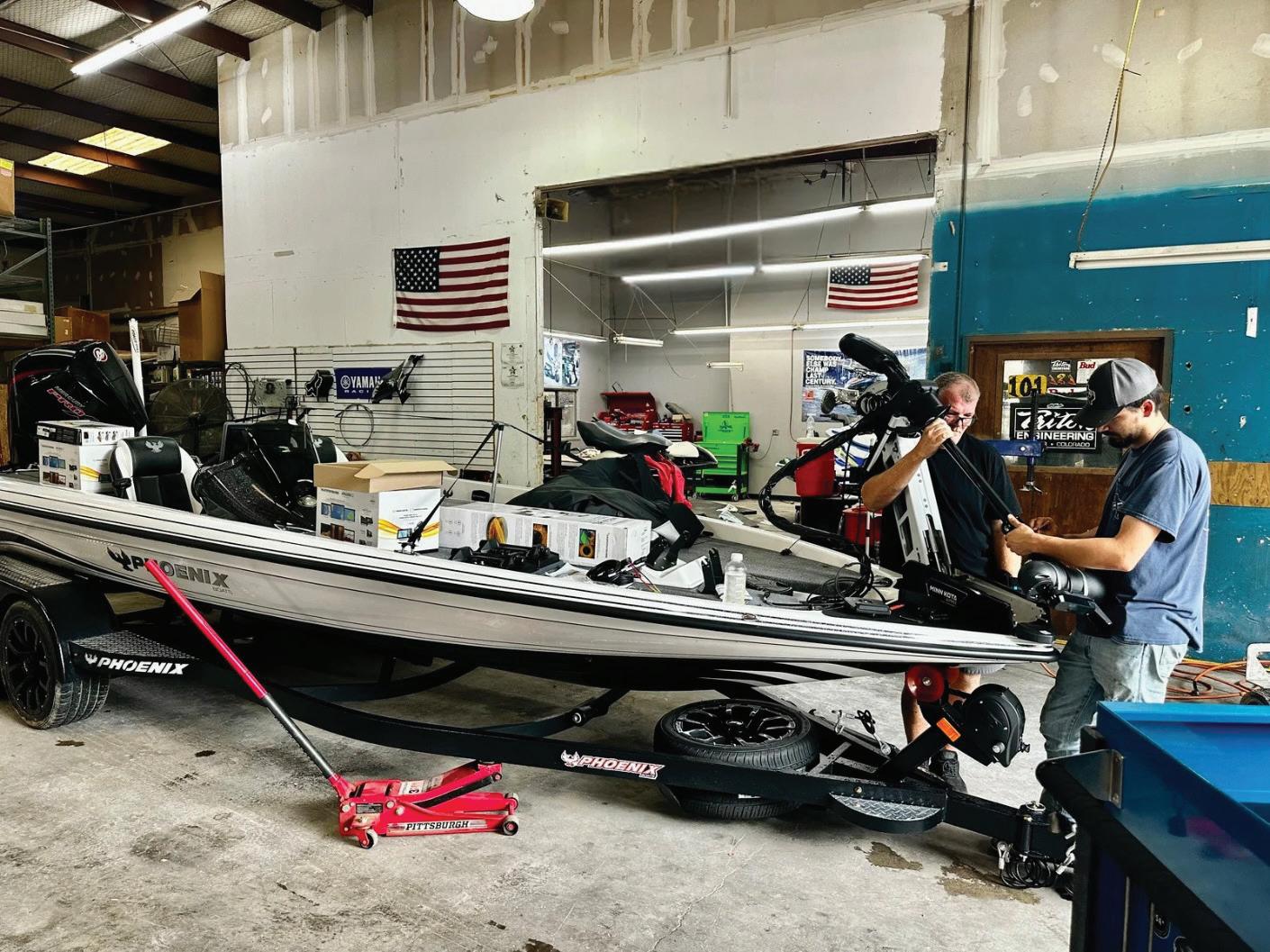
• Phoenix Bass Boats: Considered one of the most elite brands in the bass fishing world, Phoenix represents performance, craftsmanship, and status. “It’s the Porsche of bass boats,” says Steve. “When someone sees a Phoenix, they know you’re serious about the sport.”
• Excel Boats: A leader in aluminum
and bay boats that can handle rough water and rugged terrain. Their versatility makes them ideal for both sportsmen and casual boaters.
• Blazer Bay Boats: Built in Florida and growing in popularity across the Gulf Coast, Blazer Bay offers high-quality bay and hybrid models. The company recently acquired molds from Blue Wave and is set to release new Pure Bay models under the Blazer Bay name, something Dawson is particularly excited about.
• G3 Boats by Yamaha: These dependable, family-friendly boats are owned by Yamaha and built
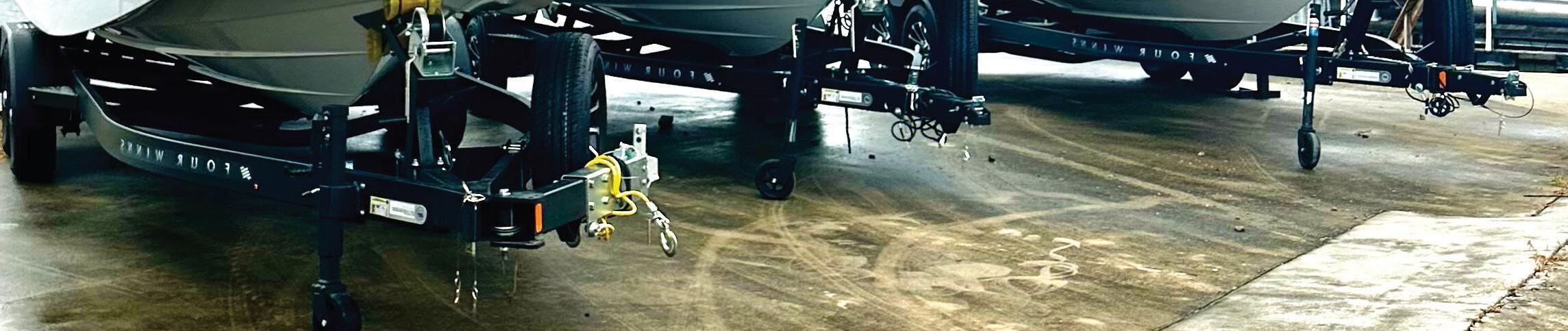
• Four Winns: Ideal for tubing, skiing, and weekend cruising, Four Winns boats are crafted in Cadillac, Michigan, and built with luxury and comfort in mind.
• Key West Boats: Known for their durability and fishing-ready features, Key West offers center console options with a reputation for value.
• Crestliner Boats: Available at their I-45 Huntsville consignment location, these aluminum boats are built for long-term use and serious anglers.
“We’ve been very intentional about the brands we carry,” Steve explains.
More than a dealership
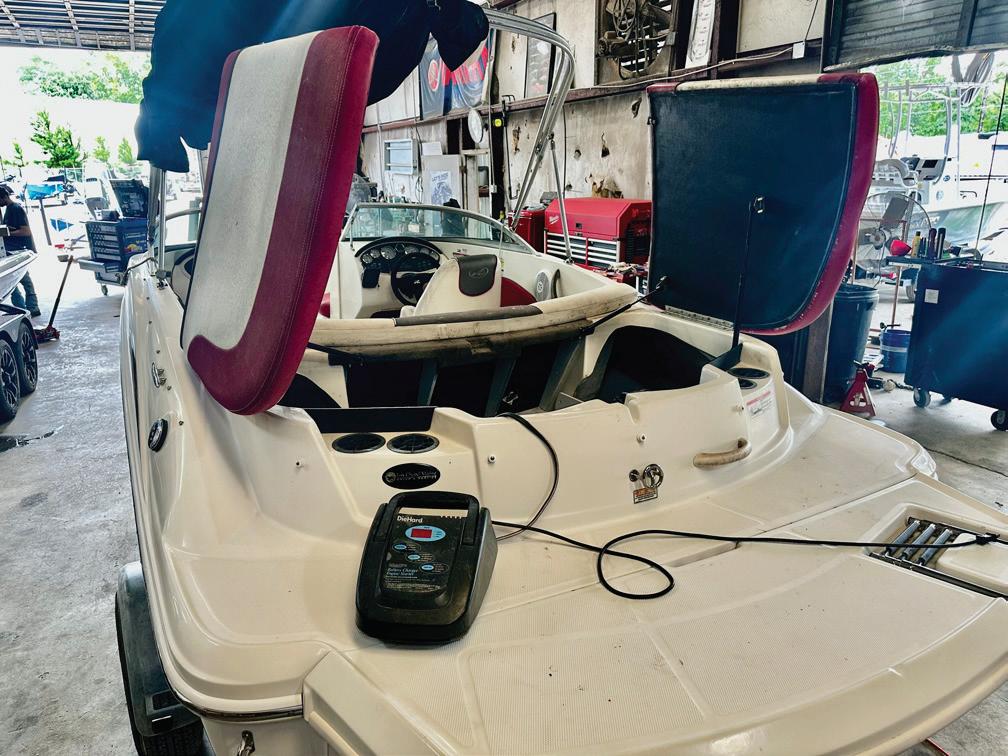
While Big D Marine is known for boat sales, many customers come to rely on them even more for their service department. Their facilities in Huntsville and Hitchcock offer fullservice maintenance, installations, and repairs on a wide range of marine engines and equipment.
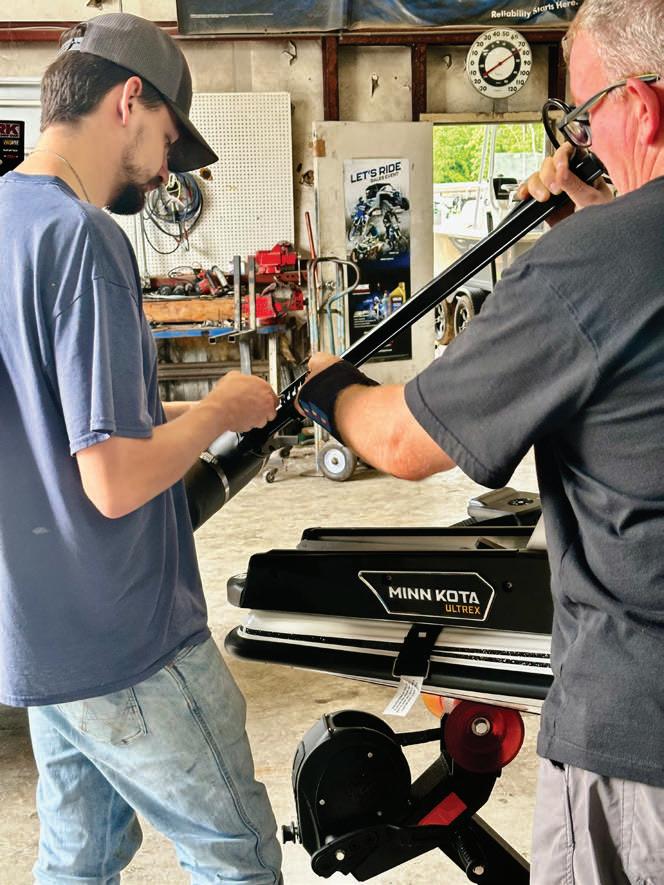
“We service what we sell, and a lot of what we don’t,” Steve says. “If someone buys electronics or a trolling motor online or from another dealer, we’ll install it for them. Our job is to help people stay on the water.”
They handle everything from routine oil changes to complete motor rebuilds and electrical system upgrades. The service team is also trained on the latest trolling motor technology, and Dawson is constantly working to expand what they can offer in-house. “The goal is to do as much as we can for our customers, right here, without sending them somewhere else.”
Powersports & WaveRunners
Boating isn’t the only thing Big D Marine offers. Their locations also carry a wide selection of motorcycles, ATVs, and side-by-sides from brands like Yamaha and Suzuki, as well as WaveRunners, Yamaha’s personal watercraft line.
“This store has been a WaveRunner and motorcycle shop for a long time, even before we took it over,” Steve explains. “We’ve just continued to grow that side of things.” These options provide customers with even more ways to enjoy the outdoors, whether it’s on water, trails, or open road.
A one-stop, family-first experience
From financing and registration to service and upgrades, Big D Marine takes pride in offering a full-circle experience. Whether it’s someone buying their first boat or a longtime customer upgrading their setup, the goal is always the same: treat people right.
“We’ve always worked hard, and that’s what we will continue to do,” notes Steve. “We listen to our customers, take care of them, and treat them how we’d want to be treated.”
That mindset, combined with years of industry knowledge and a deep commitment to family values, is what
Our job is to help people stay on the water.
”sets Big D Marine apart. Whether you’re ready to hit the lake, chase the next trophy bass, or just need a place that knows boats inside and out, Big D Marine is ready to help. After all, they’ve been serving Texas families for generations... and they’re just getting started.
HUNTSVILLE 256 State Hwy 19 Huntsville, TX 77340 936-295-5175
Service departments available in Huntsville & Hitchcock
Wildlife Wonders
Stars, Stripes, and Sky Kings
As America prepares to celebrate its 250th birthday this month, it feels only fitting to turn our attention to the bird that has represented this country since 1782—the bald eagle. Fierce, resilient, and independent, it’s hard to imagine a more appropriate symbol for the United States.
While it has appeared on the Great Seal and served as a powerful symbol of the United States since 1782, it wasn’t formally designated in law until President Biden signed a bill on Christmas Eve in 2024 giving the bald eagle its special status. Somehow, this iconic bird managed to represent a nation for nearly 250 years before anyone thought to make it official.
Let’s go back to the beginning. After the Declaration of Independence was signed in 1776, Benjamin Franklin, Thomas Jefferson, and John Adams were tasked with designing an official seal for our new nation. Unable to come up with a design that met with Congress’ approval, two additional committees were formed in 1780. Again, no luck. In 1782 a third committee brought in artist William Barton. He sketched a small white eagle on the reverse side of a draft seal. Charles Thomson, the longtime Secretary of Congress, took Barton’s small eagle and replaced it with the much larger American bald eagle, gave it the olive branch and the bundle of arrows, and sent the design to Congress. They approved it the same day, June 20, 1782. The bald eagle won out as the perfect choice for our national symbol. It is found only in North America, and it represents strength, courage, freedom, and immortality. Perfect symbol for a new country.
By Cheryl Conley Lake Creek Nature Preserve Board of Directors
their beaks against rocks or tree branches to clean and sharpen them.
Bald eagles are famous for building the largest nests of any bird in North America. These enormous nests can measure up to six feet across and weigh hundreds of pounds. Construction can take anywhere from two weeks to three months, with both the male and female gathering sticks and nesting materials. Eagles prefer to build near water sources where fish are plentiful and often choose tall trees for safety. They return to the same nest annually, adding repairs and new materials. Over time, some nests can grow several feet larger through repeated use and reconstruction.
Female bald eagles typically lay one to three eggs, each about the size of a tennis ball. Both parents share incubation duties, carefully turning the eggs every couple of hours to ensure even warmth and healthy development. The parents also take turns keeping the eggs warm and protected from the elements.
The bald eagle (Haliaeetus leucocephalus) belongs to the family Accipitridae, a group of birds of prey that includes hawks, kites, harriers, and other eagles. Bald eagles are classified as raptors, meaning they are predatory birds equipped with sharp talons, powerful beaks, and exceptional hunting skills. They are also considered hypercarnivores, animals whose diet consists primarily of meat. For bald eagles, fish make up much of their menu, although they will also eat waterfowl, small mammals, and carrion when the opportunity arises.
One of the bald eagle’s most impressive features is its extraordinary eyesight. Eagles can spot prey from as high as 10,000 feet in the air and from distances of up to three miles away. Their powerful talons are razor sharp and incredibly strong, designed for gripping prey and defending themselves when necessary. Their hooked beaks, made of keratin like human fingernails, are used to tear food into smaller pieces. To keep their beaks in top condition, bald eagles engage in a behavior called “feaking,” rubbing
After an incubation period of about 10 to 13 weeks, the eaglets hatch. Both parents work tirelessly to feed their young, tearing prey into small bites for them. By around seven weeks of age, the eaglets begin feeding themselves, and at approximately 12 weeks they are ready to leave the nest. Even after fledging, the young eagles continue to rely on their parents for food and guidance for another four to six weeks before becoming fully independent.
Clearly not featherless on their heads, why are they called bald? Going back in time, the word “bald” was derived from the word “balde” which meant white or shining. It was used to describe the distinctive white plumage on the bird. As a side note, eaglets don’t gain their white feathers until approximately 4 or 5 years of age.
The Bald and Golden Eagle Act is the primary law that protects these national treasures. It prohibits anyone from killing, capturing, possessing, selling, purchasing, or transporting any bald or golden eagle without a federal permit. That prohibition extends to parts, feathers, nests, and eggs. It also states it is unlawful to disturb them (agitating or bothering an eagle enough to cause injury, disturb its breeding productivity, or cause the eagles to abandon their nest). Criminal and civil penalties can result in hefty fines and jail time.
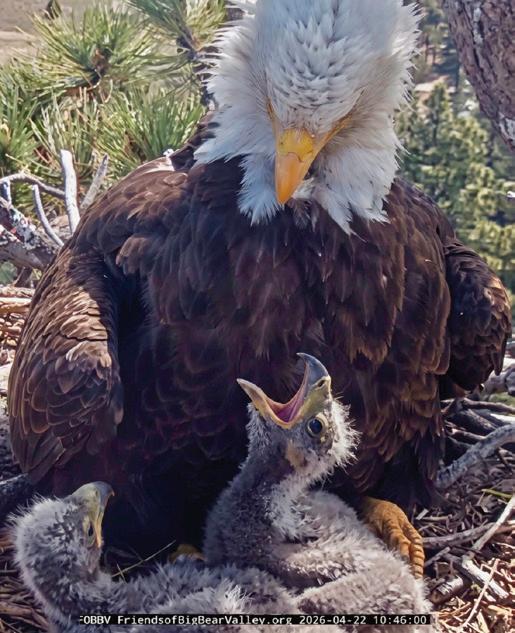
If you’d like a front-row seat to the fascinating lives of bald eagles, there are several live webcams available online. One of my absolute favorites is the Jackie and Shadow eagle cam from Big Bear Valley. You can check them out here: https://friendsofbigbearvalley.org/livestream/
Eaglets – Sandy & Luna with Mom Big Bear Valley
Your Best Agrilife
Pasture Mealybug
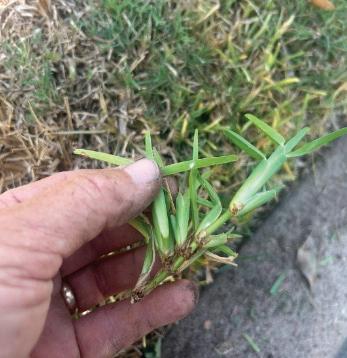
Felicococcus summervillei, or pasture mealybug, has emerged as a troublesome pest recently for many crop and forage producers in Texas. Cases of this pest began to surface around April of last year with producers reporting symptoms of what is now called Pasture Dieback Syndrome. These symptoms include reddish to brown coloration to grasses and even necrotic grass patches. Heavily infested areas may take out entire pastures. This pest has been identified and confirmed in 64 counties so far in Texas, primarily in the south to southeast regions of the state. So, what is this new pest? What is it affecting, and how do we stop it? These are the questions many producers are asking as we begin to take on this pest in our fields.
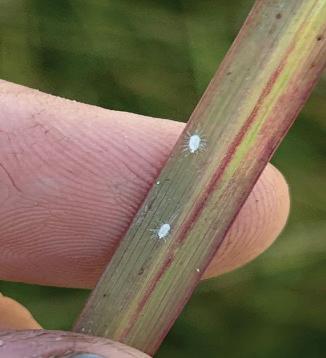
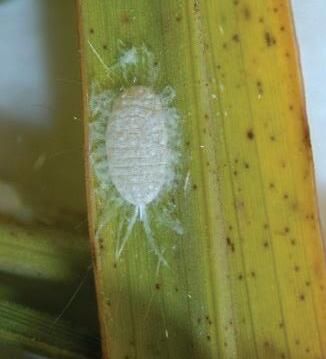
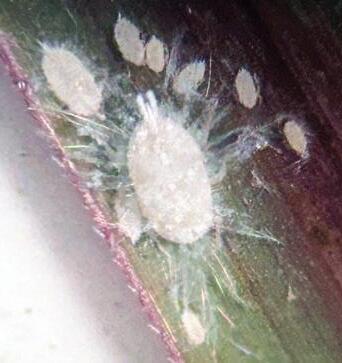
The Pasture Mealybug is a forage feeding pest that was first recorded in Australia in 1928. It is believed to have been introduced to the U.S. before 2022 and is now being found across much of south and southeast Texas. The female pasture mealybug is the one most identified in the field by its white body and waxy coat. It is oval and around 2 to 5 millimeters long. The older females have hairs that will project from all sides. The adult stages are the most identifiable, but the nymph stage is the most damaging to the plant, since the adults don’t feed. The lifespan of the female is around a month and a half, but has been
Ryan McCormick
Walker County Extension Agent
recorded up to 100 days. The males are closer to a month in lifespan. The females may even overwinter in the soil preventing winter dieback. While they may survive through the winter in the soil, they prefer warm and humid climates where reproduction will be at its highest. Higher populations during favorable forage growing months also directly correlate to high damaging potential with the increase of offspring.
The damage to the plant happens when the nymph stages feed off the plant sap. After the sap is ingested, the immature mealybug then secretes a substance referred to as honeydew. This opens the plant up to fungal growth that will inhibit photosynthesis. Damage is also caused by the saliva of the nymph (which is toxic) being pushed through the plant. The weakened plant then becomes more susceptible to plant pathogens. The combination of these factors creates “pasture dieback.” This pasture dieback can show symptoms less than a week after infestation. The first signs will mimic drought conditions with coloration changes and stunted appearance. Eventually, root systems will not develop properly and weaken the plant even further, causing eventual death.
This pest has been found mostly on our grass type plants and (so far) does not seem to affect many of the broadleaf plants such as legumes
and brassicas. Grasses such as Bermuda, Bahia, St. Augustine, and more are primary targets for these pests, though it is believed most grasses are susceptible. This pest can cause serious concern for our hay producers and cattle producers that graze cattle on the landscape.
Unfortunately, there is currently no tested and approved method of control on this new pest, though many research trials and methods are currently being tested to combat the pasture mealybug. Currently, the best recommendation for producers is to inspect and report cases of this pest. Avoid high nitrogen applications to known affected fields, and graze or cut fields that have known populations of the pest. This eliminates favorable conditions and increases nutrients for grass regrowth and tolerance to pest feeding. To help prevent spread of the pest, clean all equipment and clothing before moving from field to field. In terms of chemical control, there is no labeled insecticide to control this type of mealybug, and pyrethroids and broad-spectrum insecticides are not recommended due to research stating most are ineffective to the pasture mealybug and will potentially take out natural enemies of the pest.
If you have a suspected case of pasture mealybugs, please report and call your local AgriLife office.
by Stephen Biles
Photos
From spontaneous road trips to slow summer afternoons, life doesn’t pause...and your bank shouldn’t either. With easy account opening and seamless digital banking tools, First Financial Bank moves with you wherever the season takes you.
OUR TEAM
Meet the people behind the pages.
Getting to Know Us
Every issue of Postcards is made possible by a dedicated team working behind the scenes.
With Getting to Know Us, we’re pulling back the curtain to introduce you to the people who make it all happen—one little question at a time!
PAPER TOWELS AND TOILET PAPER:
OVER OR UNDER…AND WHY?
Over, because I was raised right and choose to be civilized.
Over, because…why are we even talking about this? And, we don’t change it in other people’s homes, NANCY!
Under. That’s “just how we’ve always done it.”
Over, because that’s the way it’s supposed to be.
Over, because under looks wrong and keeps rolling.
I’m an over girl! Easier to grab and tear, aligns with the original patent for the holder.
Over. Even if I have to change it in a hotel or as a guest in someone's home. My small gesture to help the restroom experience for all...even Nancy.
Mary Partida Designer
April Key Designer
Tammy Farkas Advertising
Nancy Jolly Advertising
Wes Altom Editor
Marshall Altom Operations Mgr.
Karen Altom Publisher
July 2026
Mustard Seed Moments
By WES ALTOM
No A-Paul-ogy Necessary
As a former career police officer/administrator and current church leader, I have been present on numerous occasions when a man has been brought to tears—due to joy, pain, sorrow, or stress. Men who shed tears often apologize. My standard response is, “Don’t ever be ashamed of being human.”
Men who cry are in good company. Following the death of his friend Lazarus, Jesus wept (John 11:35). Jeremiah was known as “the weeping prophet” over the sins of his people. Peter wept after denying Jesus. David wept for a lost son and in distress many times in his psalms. In Romans 9, Paul expressed “a huge sorrow” for his people. In fact, Paul is a great case study for being human.
Because of his blinding (and then sight-recovering) conversion experience, many tend to think Paul’s broader life experience
also changed like “flipping a light switch.” Yet a human does not go from a vicious persecutor and murderer to apostle and author of nearly half of the New Testament without a process of progress.
In Romans 7:15, Paul writes “In fact, I don’t understand why I act the way I do. I don’t do what I know is right. I do the things I hate.” Christians have been liberated from the penalty and power of sin, but we continue to live in the presence of sin. As a result, there is an internal battle between our sinful flesh and the Holy Spirit. The battle rages on…because we are human. Seems we are all in a process of progress.
Yet, in being human (and made in the image of God), we have great capacity in that process—for growth, service, love, compassion, and emotion (even tears). Jesus knows firsthand how great it is to be human—and he thinks we are terrific. He might even say we are “to die for.”