Postcards
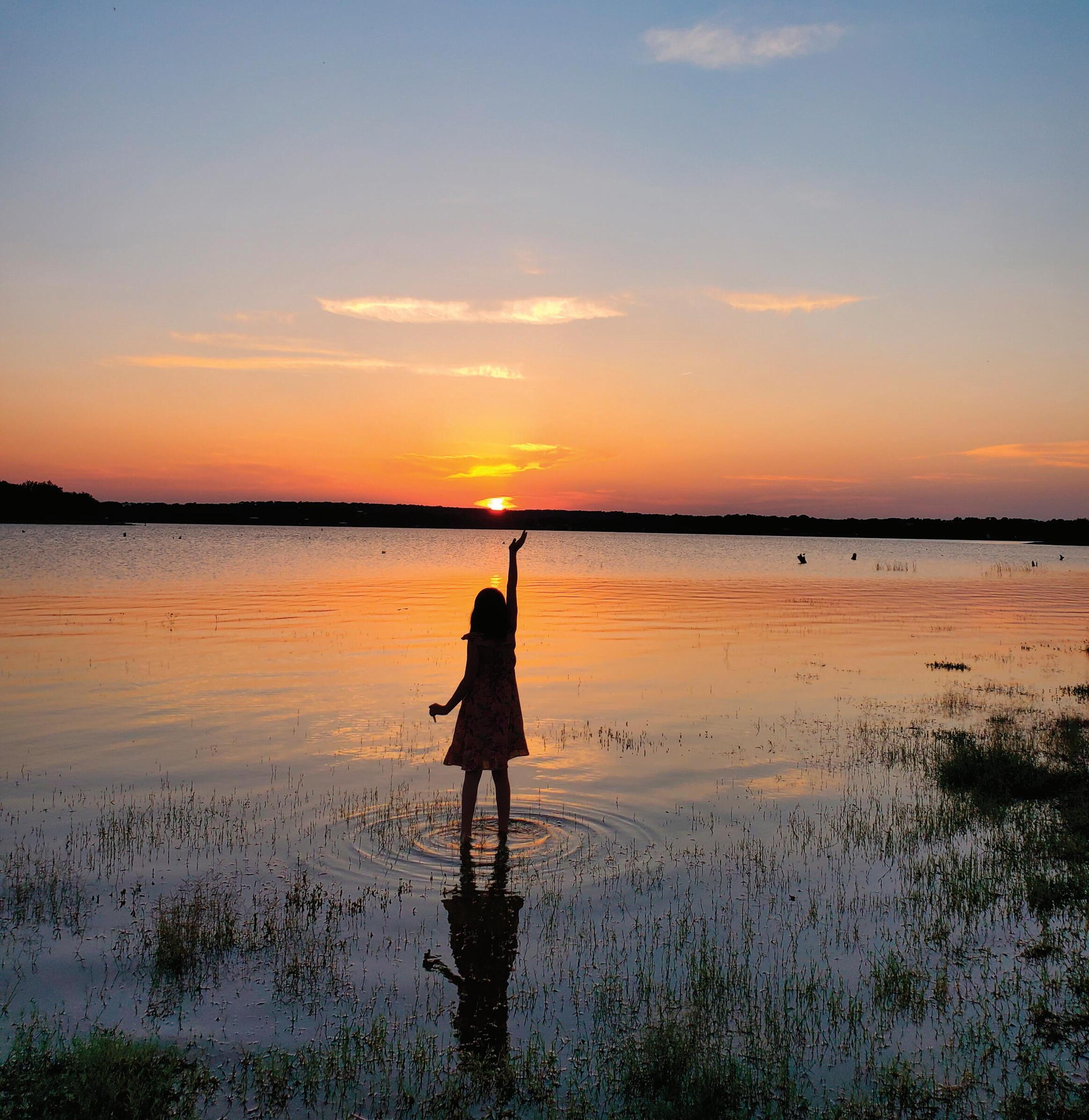
Lake Conroe







I’ve been thinking a lot lately about what we choose to notice…and what we choose to value.
My dad used to drive my mom just a little bit crazy (okay, maybe more than a little). Not because he was difficult or unkind, but because as he got older, he simply didn’t care much about what he wore. Mismatched, worn out, wrinkled, not quite “put together” by most standards. It never seemed to bother him.
And yet, not once did anyone question his character.
That’s what stands out to me now.
Somewhere along the way, it feels like we started paying more attention to appearances than to the things that actually matter. We notice the outfit, or what’s said on social media, before we notice the heart. We admire the polish before we look for integrity.
But when you really think about it, the people who have shaped our lives the most were never the best dressed in the room. They were the ones who showed up. The ones who told the truth. The ones who loved you without conditions.
That’s what builds trust. That’s what builds relationships. That’s what builds a community.
Because a strong community isn’t made up of perfect people in perfect outfits. It’s made up of real people who care about one another—people who offer a genuine smile, a kind word, or a heartfelt hug, even if their shirt doesn’t quite match their shoes.
And honestly, I’d take that every single time.
I’d rather be hugged by someone in mismatched clothing who truly means it than greeted by someone perfectly put together and left wondering if what they said was real.
Maybe the question isn’t whether we care too much about how we look.

Maybe it’s whether we care enough about who we are. Because at the end of the day, character is what people remember. It’s what lasts. When I think of my father, it’s not his clothes I remember. It’s the way he made me feel, the songs he sang, the laughter we shared, and the love I watched him give so freely to others.
That’s what makes a place feel like home.
Happy Father’s Day,

P.S. And no, my dear husband Wes…this still doesn’t mean camo matches everything.
At the end of the day, character is what people remember.







Welcome back to the June 2026 edition of the Dear Gabby advice column, with lots of dates to remember. Flag Day is June 14th, and what a lovely flag we have to celebrate! Our federal holiday this month is Juneteenth that commemorates the end of slavery in the United States. It falls on Friday, June 19th, and banks and federal offices will be closed. Father’s Day is June 21st, and it honors fathers, stepfathers and father figures. We’ll talk about Dad jokes at a later date. June also acknowledges many graduations and lots of weddings. Summer solstice, the longest day of the year and the official start of summer, is June 21. Send me your questions by clicking on Dear Gabby at www.PostcardsLive.com/share
My aunt resides in a retirement home, and I went to visit her the other day. The group was playing a game of “Guess what the tattoo used to be” in the lounge. I didn’t know whether to be amused or appalled, but I watched for a while. They were having fun with the activity, so I decided to play along. Can you believe that one man had a tattoo of a woman on his arm, and her red hair had turned gray? What do you think about tattoos?
To each his or her own. I try to aspire to “live and let live” and not be judgmental (did I say that out loud?). Apparently, tattoos are like potato chips; you can’t have just one. But 20 years later and, “I still love this tattoo my friend did with ballpoint pen ink and a sewing needle,” said no one ever. And be careful with tattoos in foreign languages. A friend got a

Chinese character that was supposed to mean ”Strength,” but it actually means “Discount.” On the plus side, I have seen pictures of genius tattoos for people who have lost the tip of their finger. The remaining finger, with a tattooed fingernail, looks realistic and natural! If a tattoo improves someone’s life (or they think it does,) so be it. It’s a permanent choice, and I doubt the tattooed individuals desire or appreciate our critique.
Try being the woman who fixes another woman’s crown without telling the world it was crooked.



Local group shares the challenges and rewards of wildlife rehabilitation.
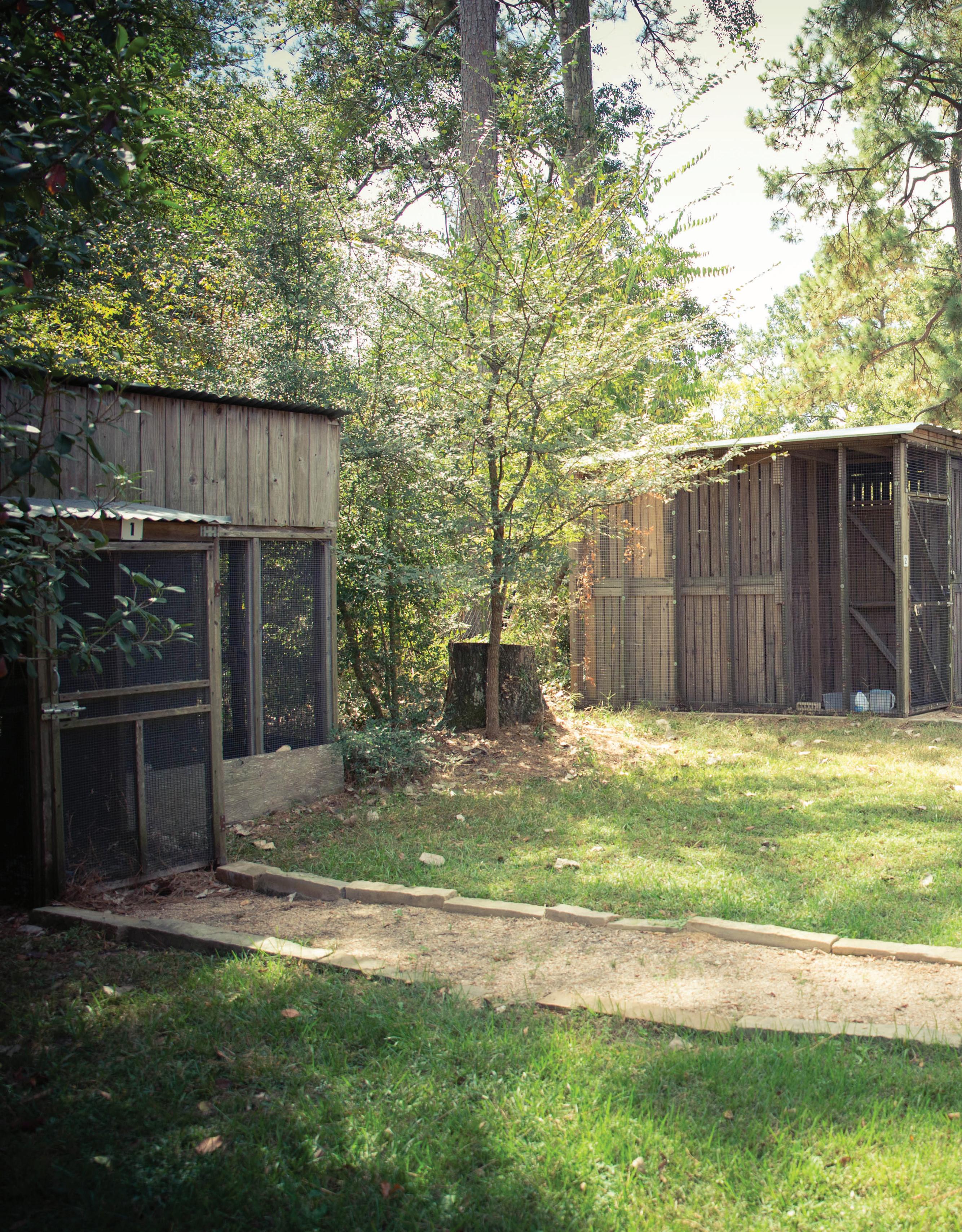
BY RUTH FIELDS | PHOTOS BY TOM MILLER
Themorning after a torrential spring rainfall, a young boy heard a squeaking noise underneath the slide in his backyard. Understandably curious, he went for a closer look. He was surprised and excited to find a baby squirrel.
After making several phone calls, the boy’s mother located Friends of Texas Wildlife, a non-profit, volunteerbased organization headquartered near Magnolia. A wildlife rehabilitator on duty determined that the infant squirrel was likely separated from its mother because of localized flooding and suggested ways to help mother and baby reunite. Animal mothers, the rehabilitator said, can only rescue one baby at a time, and it might take 24 hours for her to find all her offspring.
In this instance, the mother squirrel was reunited with her baby, which is an outcome that happens about half the time, says Lisa Wolling, executive director of Friends. “Our advice is always ‘please reach out to a rehabber,’” Lisa says. “We really want to talk with them.”
Scales, feathers, fur
Wildlife never seems to be on anyone’s radar, Lisa says, until they find an animal in trouble—whether it’s a fawn
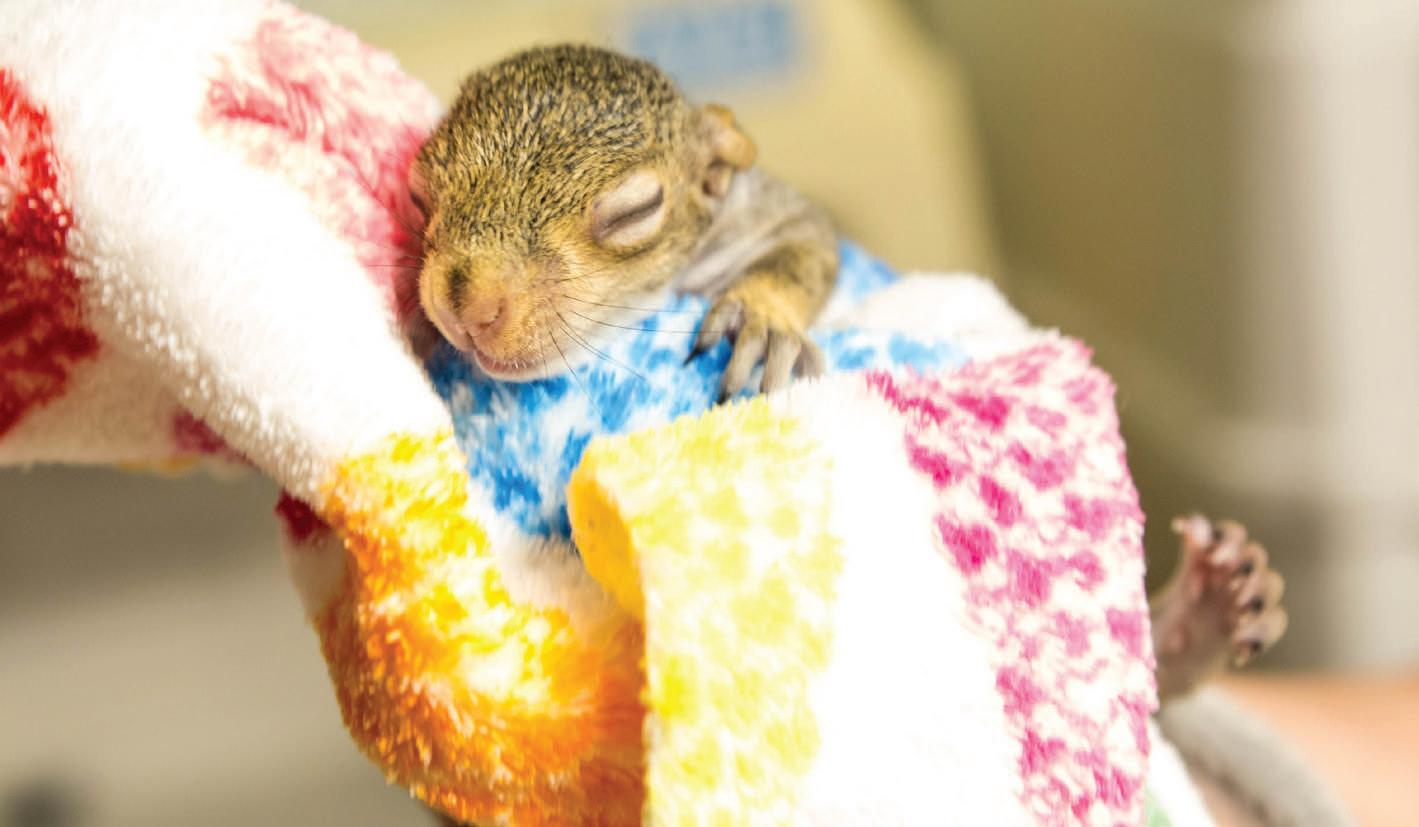
that appears to be orphaned. People are often surprised, she says, when they discover there is no government agency that can provide assistance. Furthermore, they also soon learn that it is illegal to keep wildlife as pets: native Texas wildlife that has scales, feathers, or fur are protected.
Fortunately, organizations like Friends have come to the rescue. The mission of Friends is to support the rehabilitation of native Texas wildlife and to promote the co-existence of wildlife and people through education. Friends has existed since 1993, Lisa says, when “a group of rehabbers
banded together.” The organization, originally located near Tomball, initially had some county funding and a veterinarian on staff; this set permitted a setting where wildlife rehabilitators trained and mentored aspiring rehabilitators. Everything was going well until 1998, when the group’s funding ended. “Friends of Texas Wildlife became a group of homeless people,” Lisa says.
From 1998 until 2011, Friends existed in this limbo, but a benefactor eventually gave the organization a budget and instructions to find a suitable home. In 2011, Friends moved into its new facility
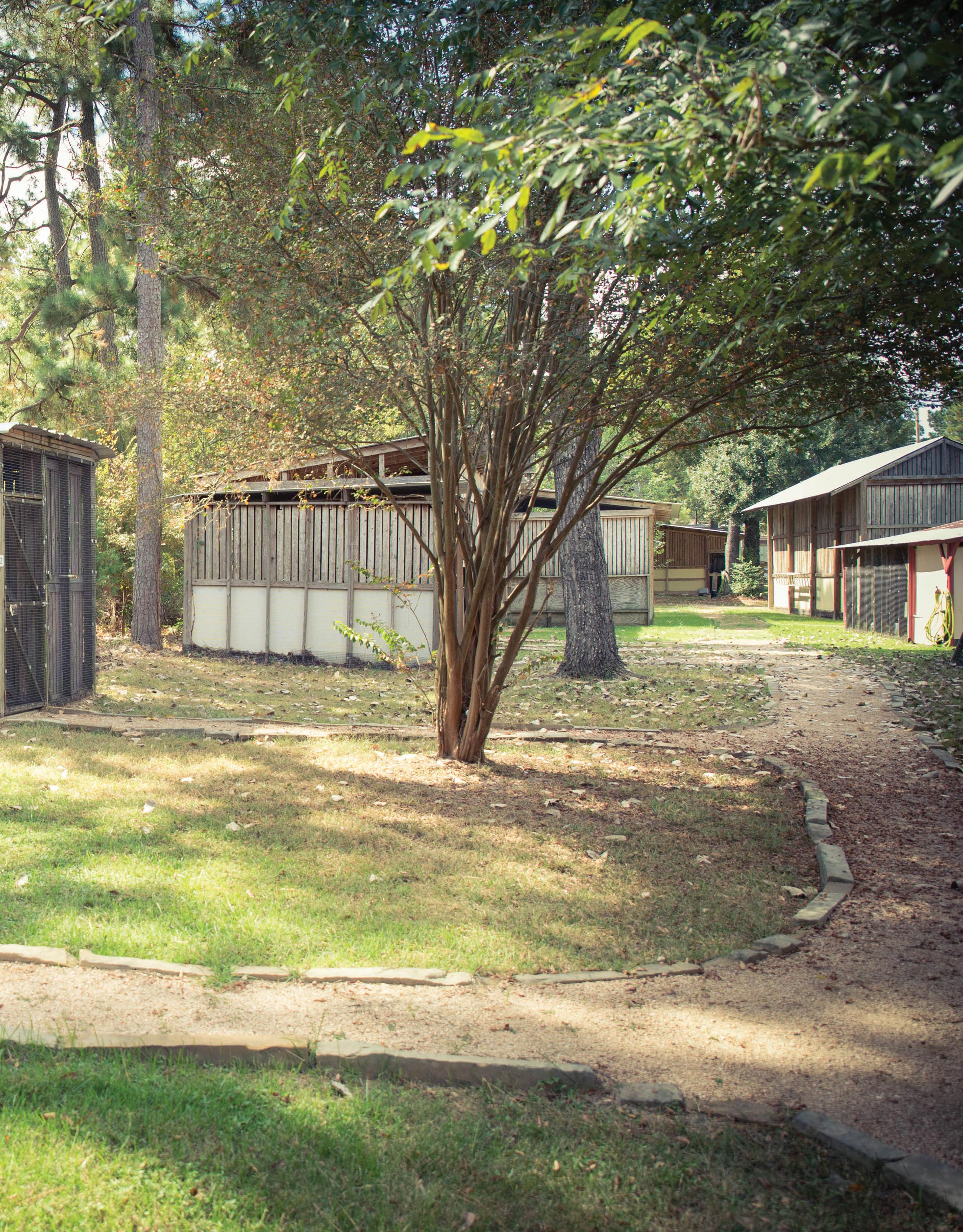
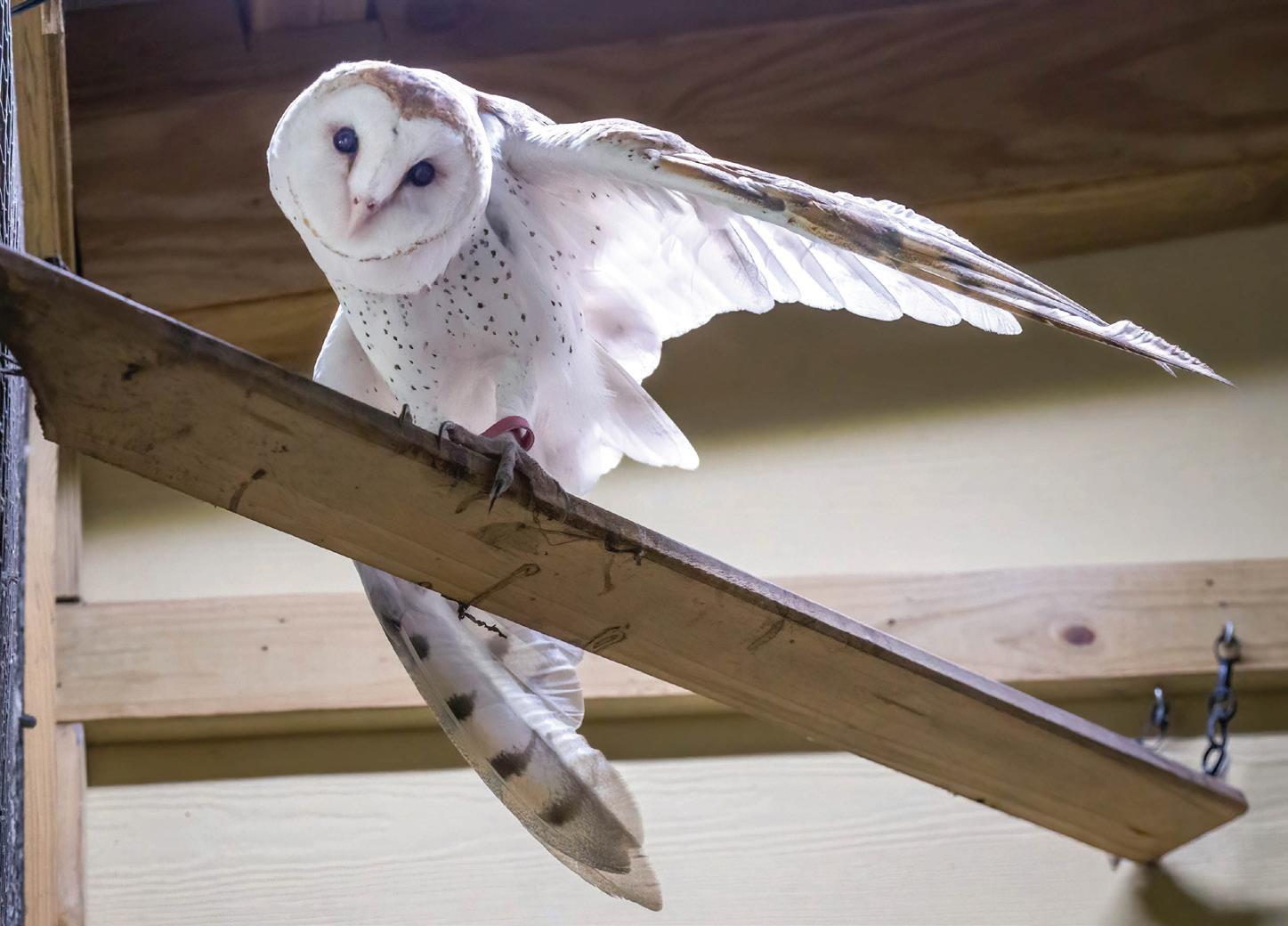

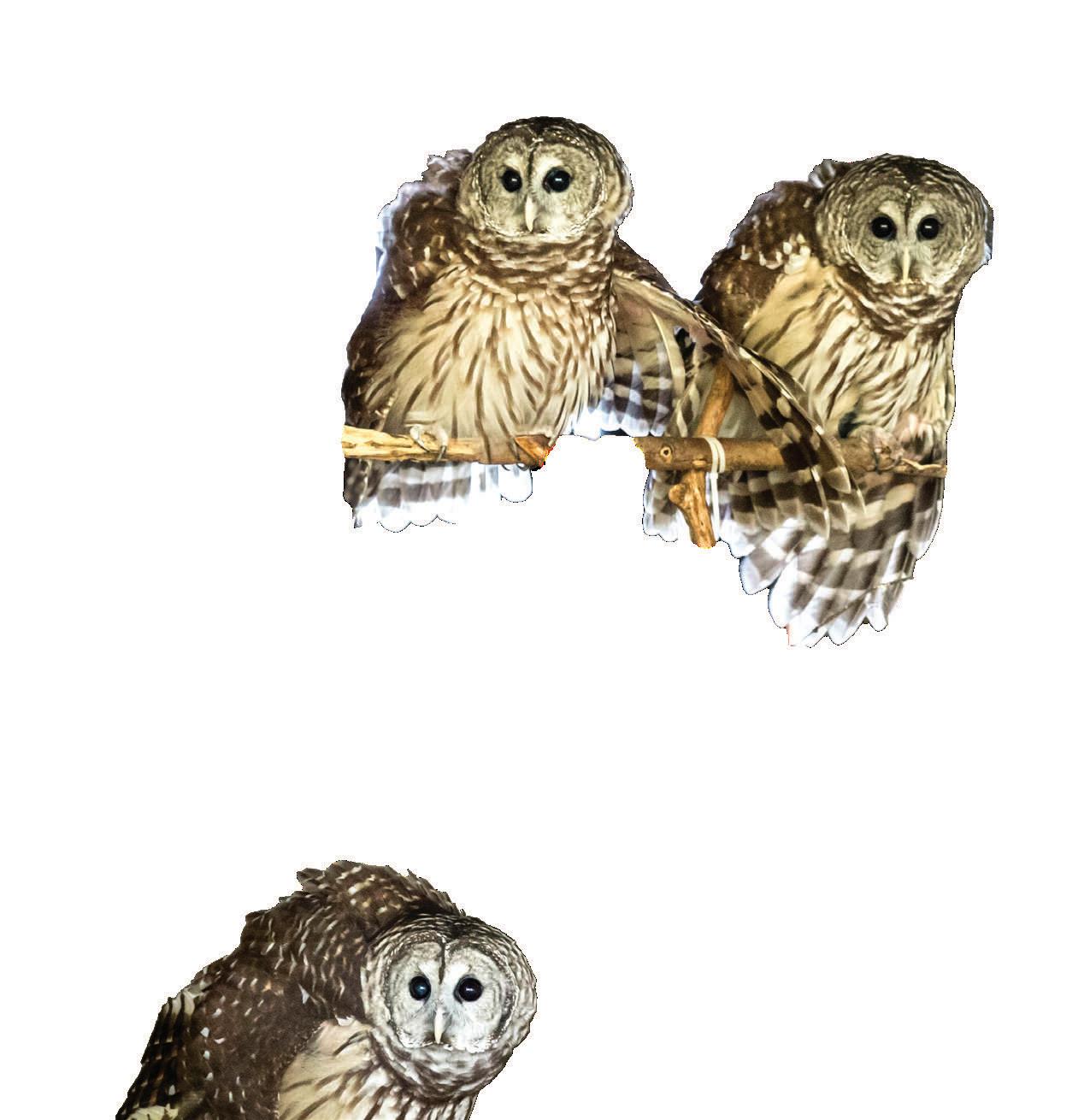
carport on nearly four acres.
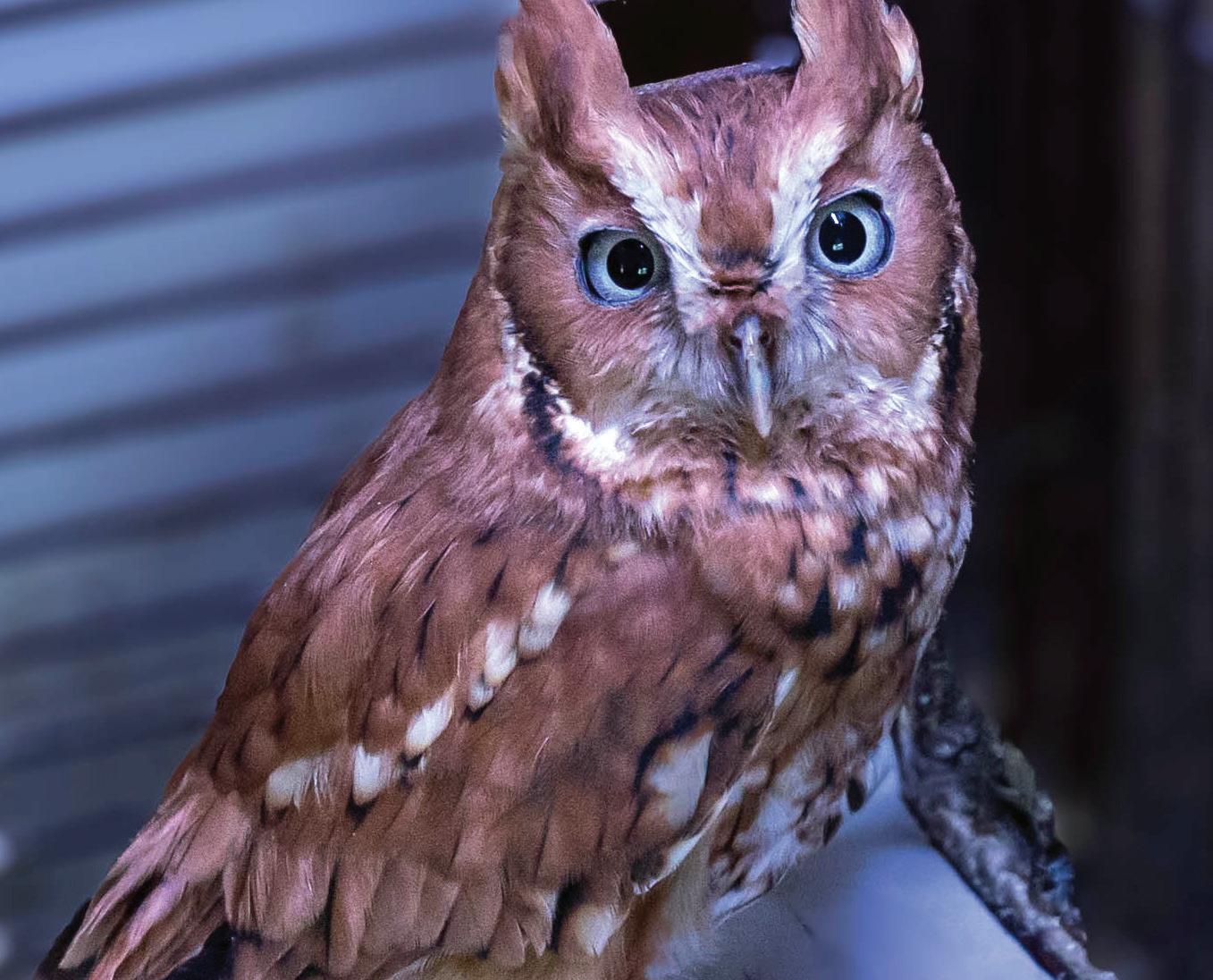
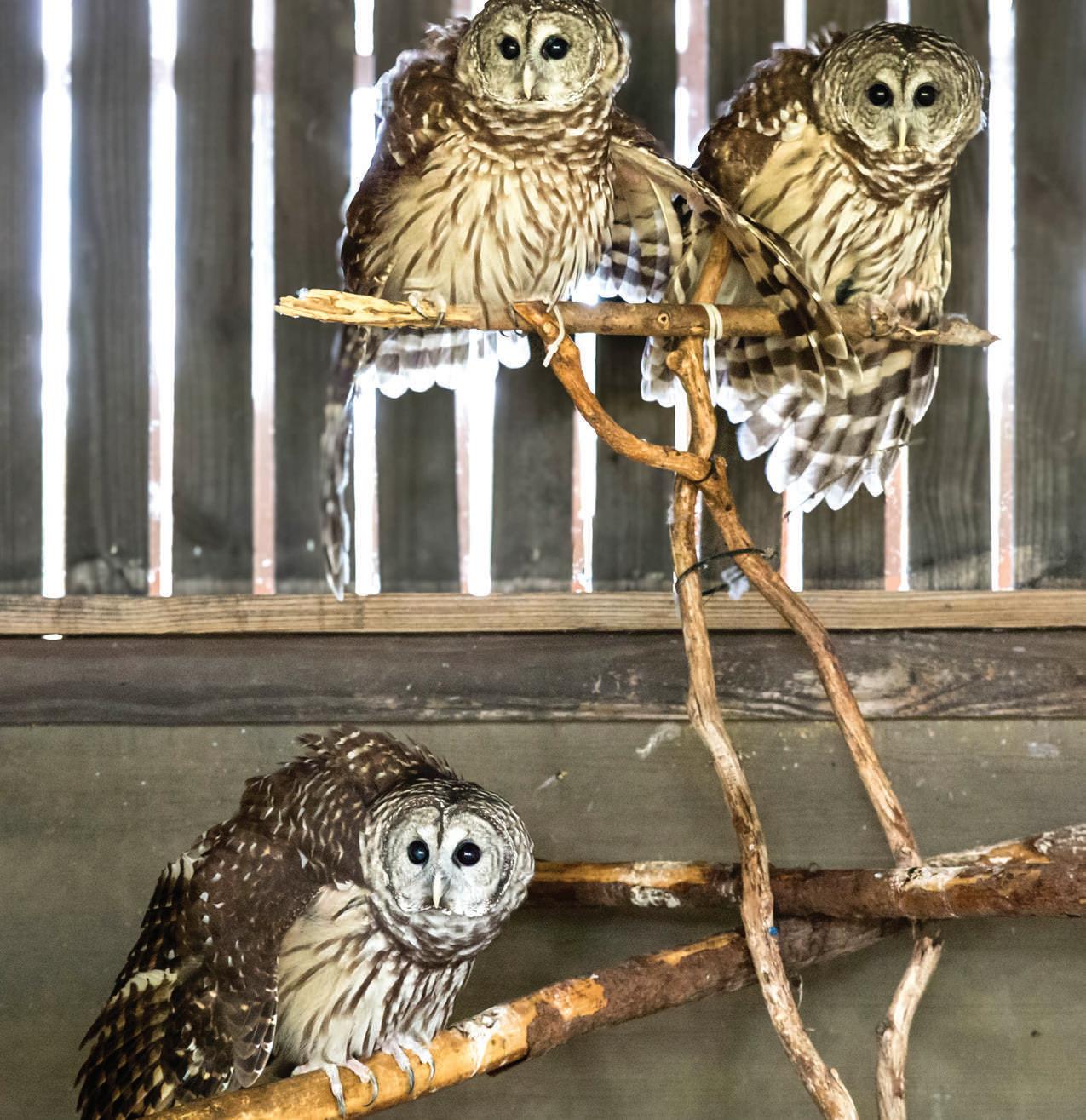
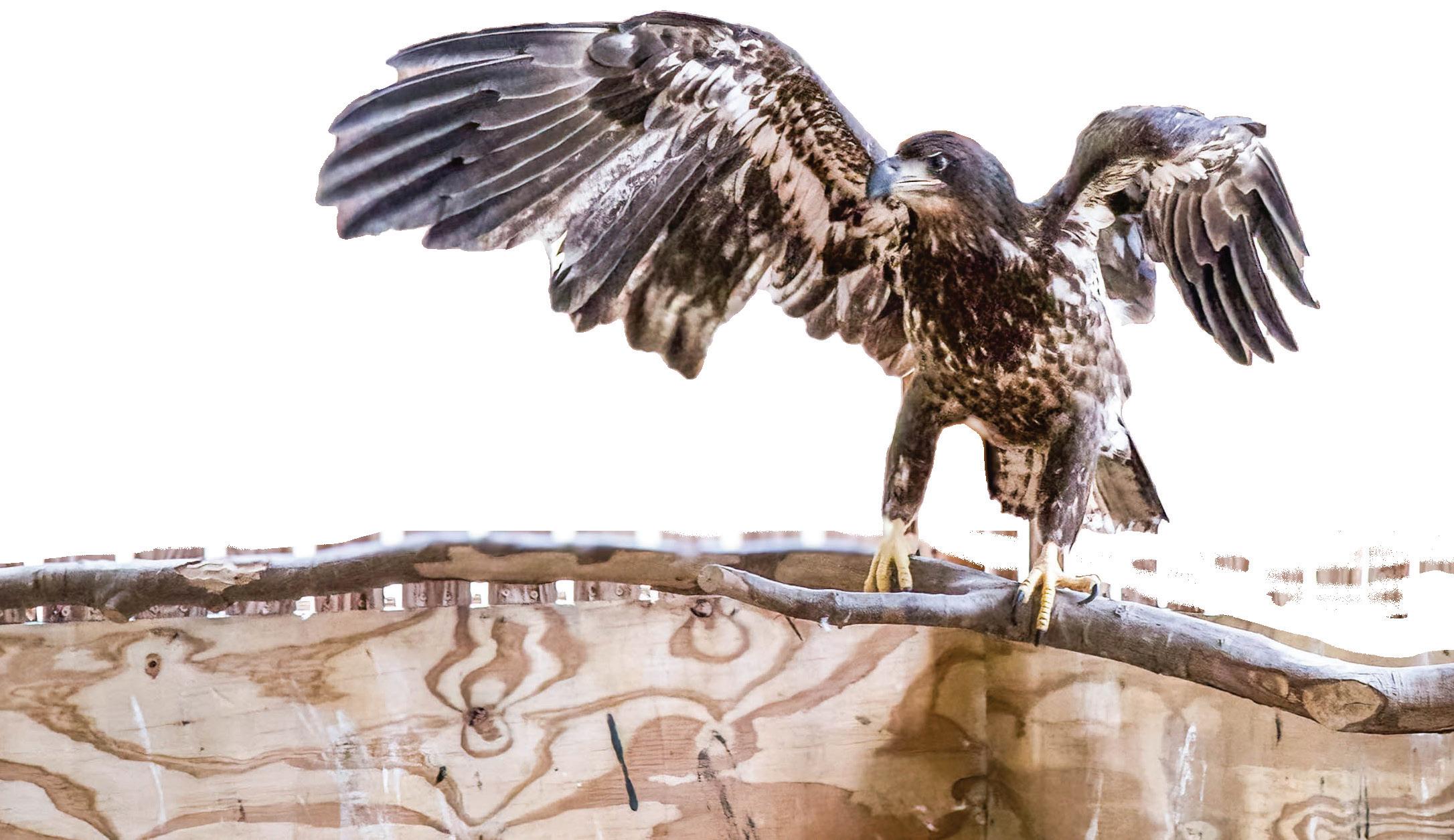
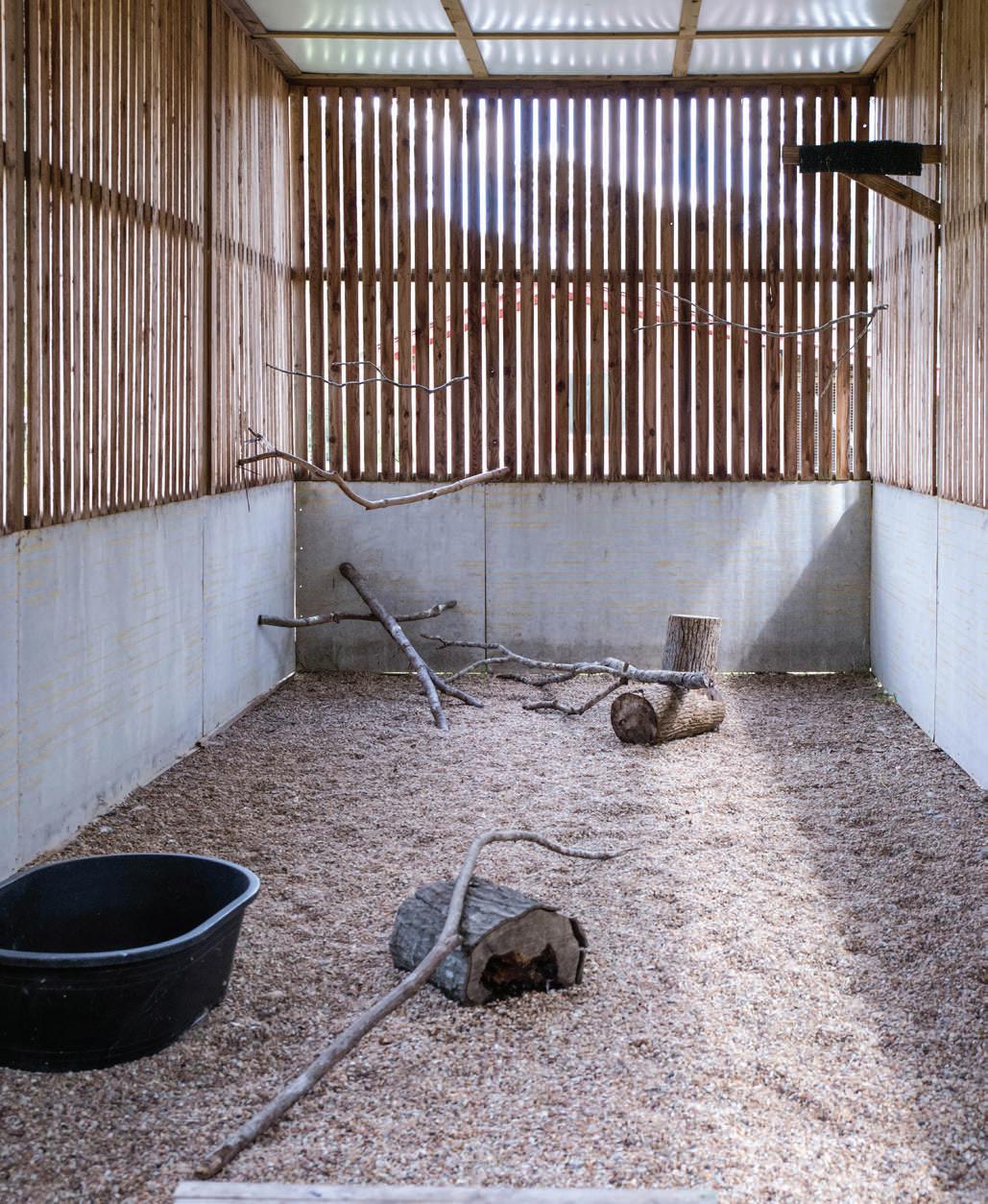
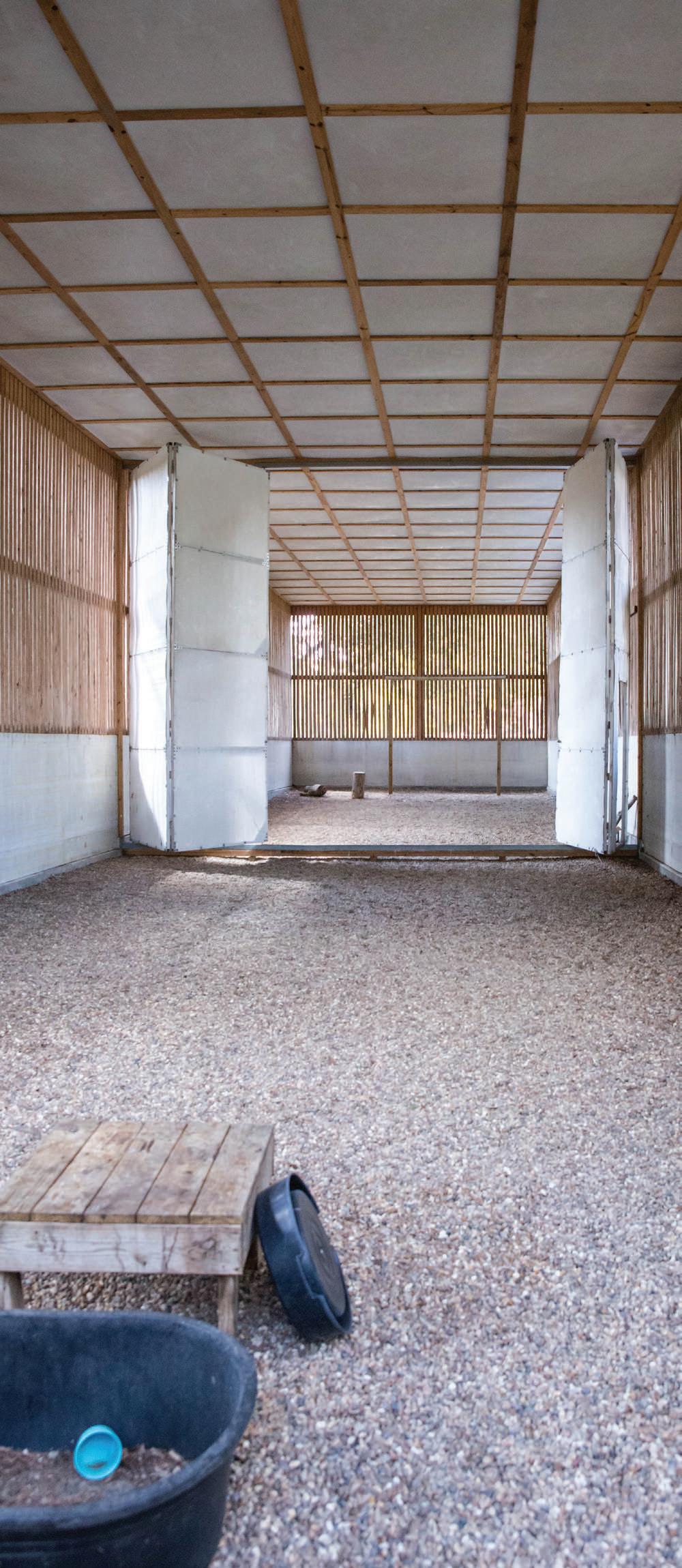
Friends is funded solely through donations, but generous patrons and periodic fundraisers have enabled the organization to improve its facility. In addition, many Scouts have done their Eagle Scout projects to benefit Friends. Today, Friends’ headquarters includes large aviaries and buildings where animals can be quarantined and rehabilitated before being released. It even has a 100-foot-long flight cage, which allows Friends to have a permit to rehabilitate bald eagles and other raptors. Large birds, Lisa explains, may take 40 to 50 feet to get enough lift to fly, and birds must be able to fly before being released. Friends’ headquarters also has a small gift shop.
Friends has an ongoing need for donations and for more wildlife rehabilitators because dwindling habitat has put more animals in need. “More people are finding things… because now it’s in their backyard,” Lisa says. “It used to be in the forest.”
Although about half the animals Friends assists simply need time and minimal intervention to survive, the other half are legitimately injured or orphaned. Fortunately, Friends can take care of many of those animals at its Magnolia facility; others receive home-based care from about 30 permitted rehabilitators who volunteer their time with Friends. There is no typical volunteer; they are male and female, young and old. What they have in common, Lisa says, is “is a passion for animals, and they don’t mind getting their hands dirty.” Volunteers, she says, usually specialize. “People come in wanting to do everything, but find what they are most passionate about and focus on one or two species.”
Friends supplies veterinary care if needed, and provides not only food and shelter to needy animals, but also the time they need to be reintroduced to their native habitats. While some animals might need just two weeks before being released, others—like baby raccoons—need as much as seven months. “Time is wildly variable,” Lisa says, “depending on species and time of year.” She estimates that Friends cares for about 2,000 animals each year.
“During songbird and baby season, every cage is filled to capacity,” Lisa says,
noting most species are raised in small groups to mimic natural behavior. “Once they are healthy and self-sufficient,” she says, “they are released back into the wild in suitable habitats.”
Friends provides care for many native species, some more commonly than others. (Pelicans, alligators and armadillos are some of the leastcommon species admitted.) However, Friends lacks the housing facilities to care for such species as bats, beavers, otters, foxes, coyotes, bobcats, ducks, and geese. These native species can be referred to other appropriate rehab facilities, but wildlife rehabilitation groups cannot accept invasive species, domestic animals, or exotic species. Surprisingly, skunks are on the list of animals that are accepted. Rehabbers have gotten “skunked,” Lisa says, but it’s not usual. When a person takes care of a baby animal, she explains, the rehabber becomes its foster mom. “They bond with their caregivers,” she says. Lisa also notes that while Friends can care for fawns, Texas Parks and Wildlife regulations prohibit Friends and other wildlife rehabilitation organizations from assisting adult deer. Wildlife rehabilitators sometimes develop a sixth sense about which animals will survive. “Some of these animals look so bad when they come in, but you see something in their eyes,” Lisa says. “You can tell they are going to fight for it.” While Friends’ goal is always to nurture animals until they can be returned to their natural habitats, some are too badly injured to survive; for example, an owl with a crushed wing will never be able to fly. In these unhappy instances, Friends must either euthanize the animals or to try to find homes for them as educational animals.
Friends maintains several animals that serve as “educational ambassadors,” including Willie, a one-eyed opossum. Most people, Lisa says, don’t realize how beneficial opossums are. (They are naturals at pest control, because they eat ticks, cockroaches, small rodents, and snakes—even venomous species.)
Willie is a great educational animal, Lisa says, because people quickly learn the value of opossums instead of wanting to harm them. “People are more likely to want to coexist with animals they understand and
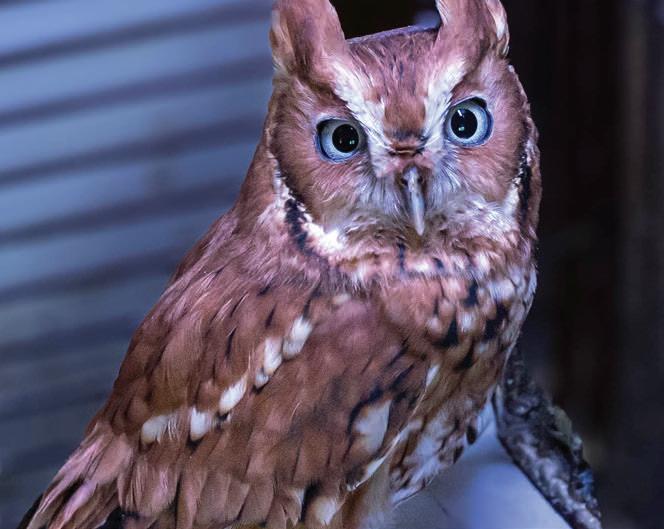
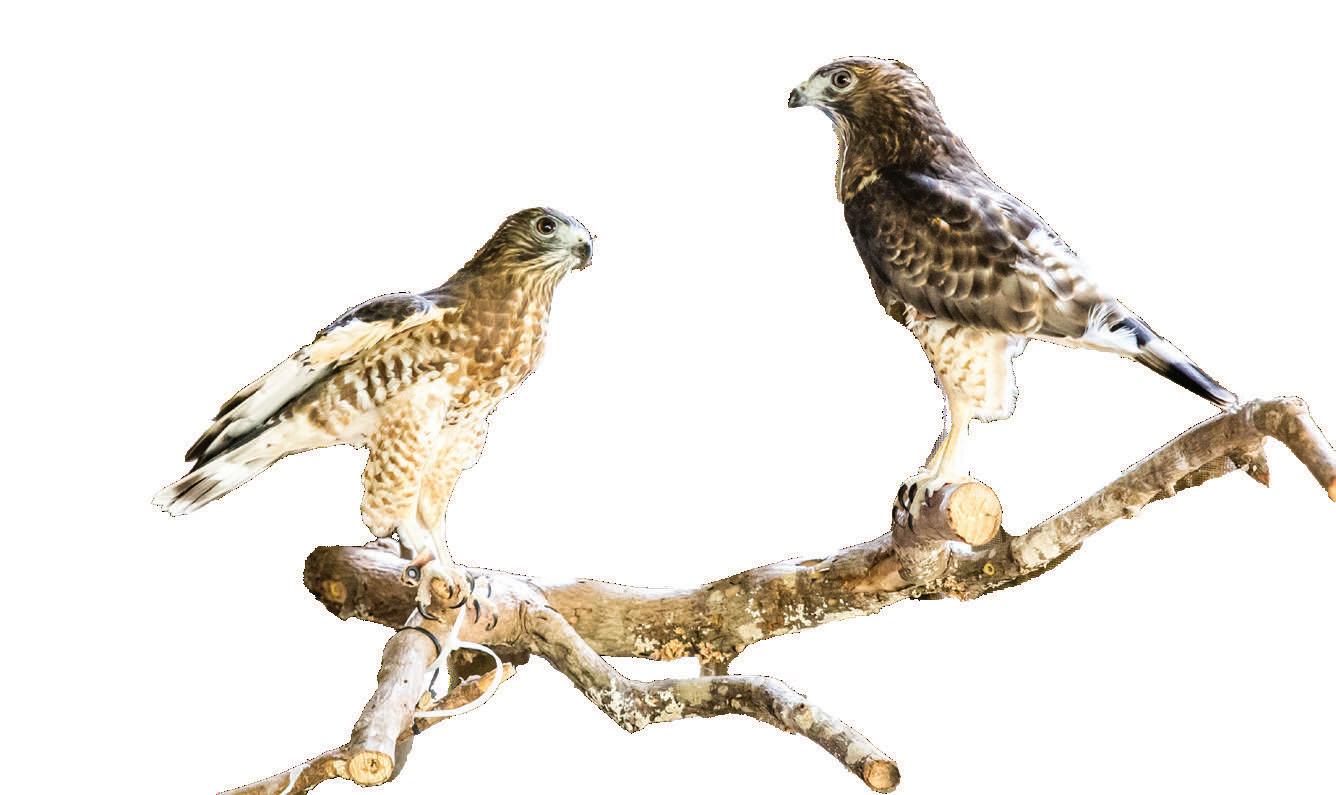
don’t fear,” she says. Friends’ other educational animals include a variety of hawks and owls.
Friends has permits to conduct educational programs, and sometimes take animals to schools for wildlife presentations. The organization also hosts two annual events at its headquarters. Around Halloween, Pumpkins and Possums is an evening presentation that features nocturnal animals; each April, attendees have a once-a-year opportunity to tour the facility. In addition, Friends hosts Critter Classroom once a month, usually on the second Saturday. (Check Facebook.com/savingtexaswildlife to see a schedule.)
People who bring injured or orphaned animals to Friends often want to know if the animals were successfully rehabilitated. Fortunately, if they make donations of any size, they are given receipts that include intake numbers. By calling Friends and referring to those numbers, they can get quick answers.
While the goal is always to return animals to the wild, “release days are always bittersweet,” Lisa says. “The ones that touch me the most are animals we thought were never going to be able to live in the wild again, but they are about to be released.”
For more information, visit ftwl.org.










My toddler just woke up from his nap and burst into tears. When I asked what was wrong, he sobbed, "I JUST LOVE TO SLEEP SO MUCH," and I've never related to anything more.
••••••••••••••••••••••••••••••••
(My kid looking over my shoulder as I sign an email.)
Kid: You're not a Dr.!
Me: YES I AM! What do you think I was studying for all the time when you were little?
Kid: Oh, I thought you just liked reading books and crying.
6-yo: What's for dinner?
Me: Pork medallions.
6-yo: NO! I HATE PORK MEDALLIONS!
Me: I'll give you $1000 right now if you can tell me what either pork or medallions are.
6-yo: ...
Me: Exactly. Now, go wash your hands, it's almost ready.
My teen used to ask, "What's for dinner?" Now, it's "How many grams of protein is it, though?"
My 8-yo has somehow acquired a day planner. This isn't going to end well.
8-yo: Mom, can we go to McDonald's on August 24th?
Me: Ummmm...I don't know, maybe?
8-yo: *clicks pen*
Life with a teenager is wild. I have 40 years of experience, two degrees, and Google in my hand...but tell me again how I'm wrong because you watched a 12-second TikTok.


INGREDIENTS
1 Tbs avocado oil, or more as needed
½ medium onion, finely chopped
2 large cloves garlic, minced
1 cup long-grain rice
1 ½ cups low-sodium chicken stock
½ cup tomato sauce
1 tsp salt
¼ tsp ground cumin
1 pinch cayenne pepper
DIRECTIONS
Step 1: Turn on a multi-functional pressure cooker; select sauté function and adjust to medium.
Step 2: Cover the bottom of the pot with avocado oil. Cook and stir onion until soft, 4 to 5 minutes. Add garlic and cook until fragrant, about 30 seconds.
Step 3: Add rice to the pot; mix until coated with oil and lightly browned.
Step 4: Pour in chicken stock; stir any browned bits off the bottom of the pot.
Step 5: Mix in tomato sauce, salt, cumin, and cayenne pepper.
Step 6: Close and lock the lid. Seal the vent and select high-pressure function. Set a timer for 7 minutes; allow 10 to 15 minutes for pressure to build.
Step 7: Release pressure carefully using the quickrelease method according to the manufacturer’s instructions, about 5 minutes. Unlock and remove the lid. Stir rice before serving.



INGREDIENTS
2 Tbs olive oil
8 oz ground beef
1 med. yellow onion, diced
1 1/2 cups diced bell pepper
1/2 cup diced celery
4 oz andouille sausage, diced small
1/2 tsp onion powder
1/2 tsp garlic powder
1 tsp paprika
1 tsp ground cumin
1/4 tsp dried oregano
1/4 tsp dried thyme
1 1/2 tsp kosher salt
1/4 tsp cayenne pepper
1/2 tsp freshly ground black pepper
2 cups beef broth
8 oz spaghetti
1 tsp Worcestershire sauce
1/2 cup sliced green onions, for garnish

DIRECTIONS
Step 1: Add oil to a deep skillet with a tight-fitting lid and set over medium-high heat. Add ground beef, and cook, stirring, for 3 or 4 minutes, breaking the meat up into small crumbles while doing so.
Step 2: Once ground beef is browned, add onion, bell peppers, celery, and andouille sausage, and cook, stirring, for 2 more minutes. Season with onion powder, garlic powder, paprika, cumin, oregano, thyme, cayenne, black pepper, and salt, and cook, stirring, for 1 to 2 minutes more. Pour in broth and bring to a simmer.
Step 3: Break spaghetti in half and add to the pan. Distribute spaghetti as evenly as possible and cover the pan tightly. Cook on medium-high for 2 minutes. Uncover and give everything a stir. Repeat this process of uncovering, stirring, and covering every 2 minutes or so, until pasta is cooked to your desired doneness.
Step 4: Turn off the heat and drizzle in Worcestershire sauce, plus another pinch of salt if needed. Stir to combine and serve in bowls topped with green onions.

her 6th Birthday
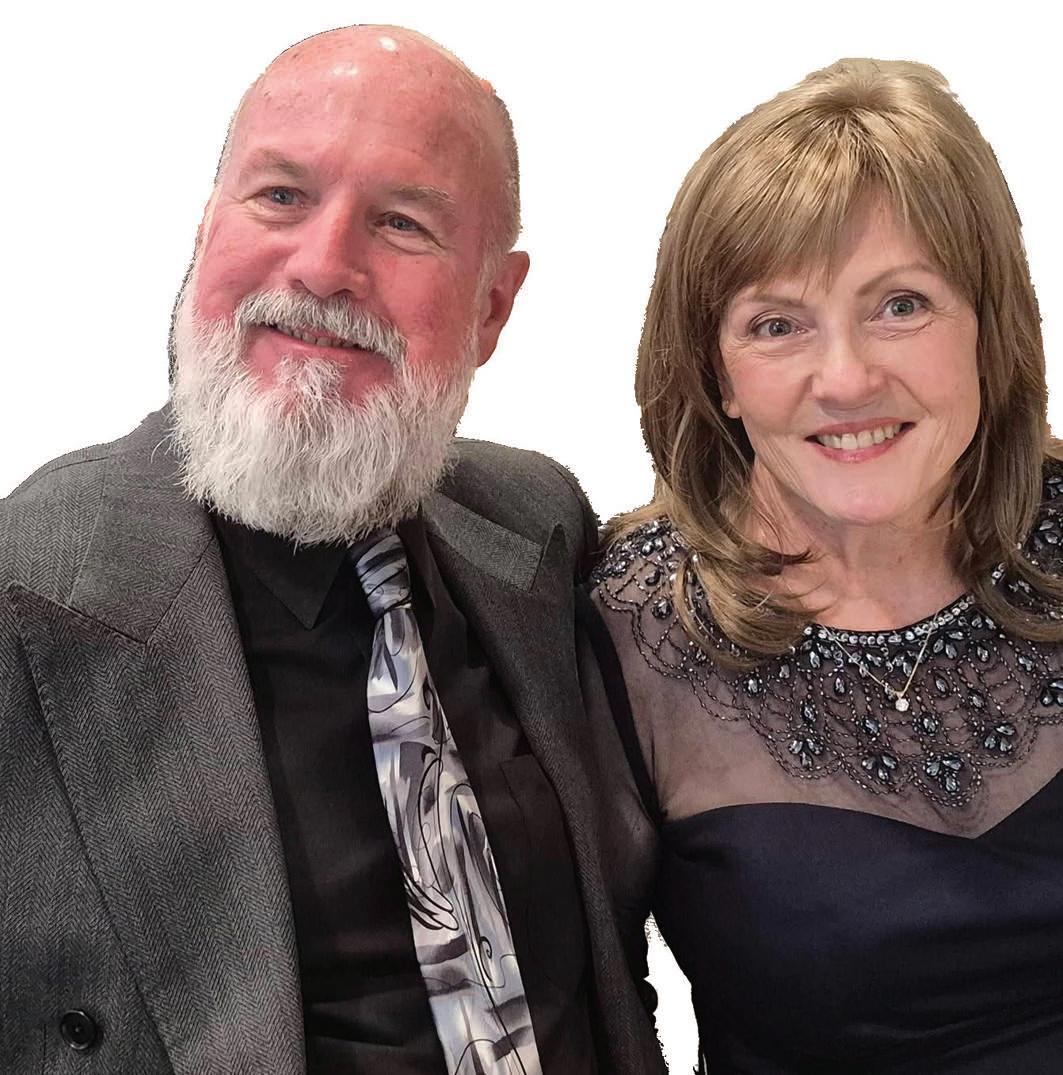
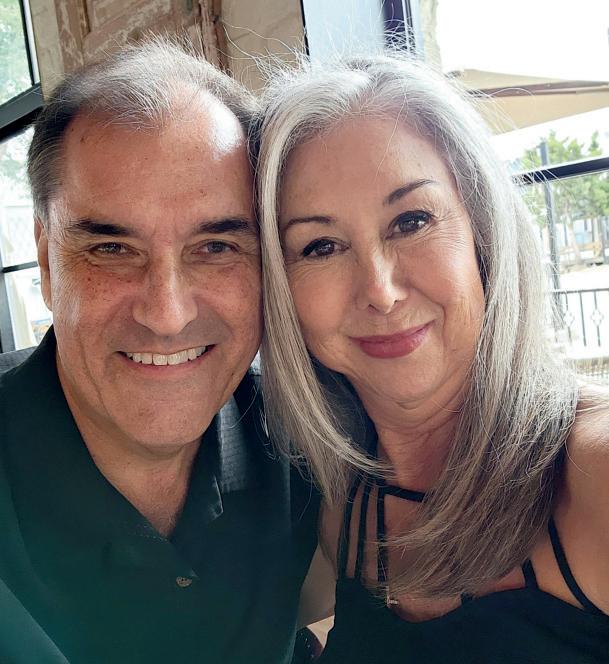
celebrated their 50th Anniversary


Kim Bius President, Kim's Home & Garden Center
WWhat makes a summer garden unique? Blooming vines! Blooming vines are available in a wide range of categories: evergreen, perennial, annual, and tropical evergreen (will freeze at temps below 28 for several hours). Blooming vines are also available in a wide range of textures, bloom colors, fragrances, and sun and soil requirements. Here are a few of the most requested vines and their requirements.

Confederate Jasmine is a Texas favorite. This prolific, evergreen vine is highly fragrant and blooms from midspring until fall with clusters of star-like white blooms. The vine displays fall colors of bright red/burgundy/ bronze and coppers, withstands heavy freezes (once established).
Confederate Jasmine brings an intoxicating fragrance to the garden that few other plants have. Considered deer proof, prefers 6-8 hours of sun for heavy blooming, but will grow in shady areas with few blooms.
Purple Passion Vine is a Texas native (as well as a few other passiflora varities). Many are tropicals, but a few, like the red and native purple, will withstand temp into the lower 20s and return. These beautiful vines are also the preferred plant of several butterfly varieties, and exclusive to the gulf fritillary. If planted in an area that does not have hard winter dieback, Pasiflora Incarnata will produce an eggshaped fruit that is delicious and makes fabulous daiquiris. Passion vines are lightly fragrant, have few disease or insect problems, and considered deer proof.

Bleeding Heart Vine is another true southern heirloom vine (that can be considered invasive, if planted in the wrong area and not given room to roam). Bleeding heart is a very hardy,
sun-loving perennial that blooms early summer through fall and displays clusters of white/red or purple hanging bloom clusters. A prolific climber, and fast growing—can grow up to 6” a day in season. Deer proof, easy, no known insects, and once you have one, all your friends can have one, too. Excellent on pergolas, fences, and open areas.


Coral Vine, a native of Mexico, is another lightly fragrant, southern favorite. The lacy blooms hang in pink clusters during the summer and are often “show-stoppers.” The coral vine does not do well in colder temperatures, but can be grown as an annual--due to its fast growth, it can reach 6’ in one season. Coral vine is not immensely heavy and makes a great choice for a lighter fence or structure. Coral Vine prefer sunny locations, prolific growers, and will return each year from the bountiful seed produced--perfect bird habitat. Rarely has disease or insects.
Do not forget to add a few annual vine varieties. Moonflower, morning glory, and cardinal vine are just a few of the hardy heirloom, fragrant, blooming vines that can be grown from seed and replanted annually (or collect the seed and replant each year). Moonflower is a perennial favorite, and kids love watching the large blue/white blooms open at dusk. Super easy to grow, hardy, and only require a half day of sunlight. Other favorites are black-eyed susan vine, clematis, and of course, climbing roses—which are an entire different category, but definitely worth mentioning.
The above listed blooming vines are sun lovers, require good drainage, and will return to grace your garden for years.
Happy summer gardening!


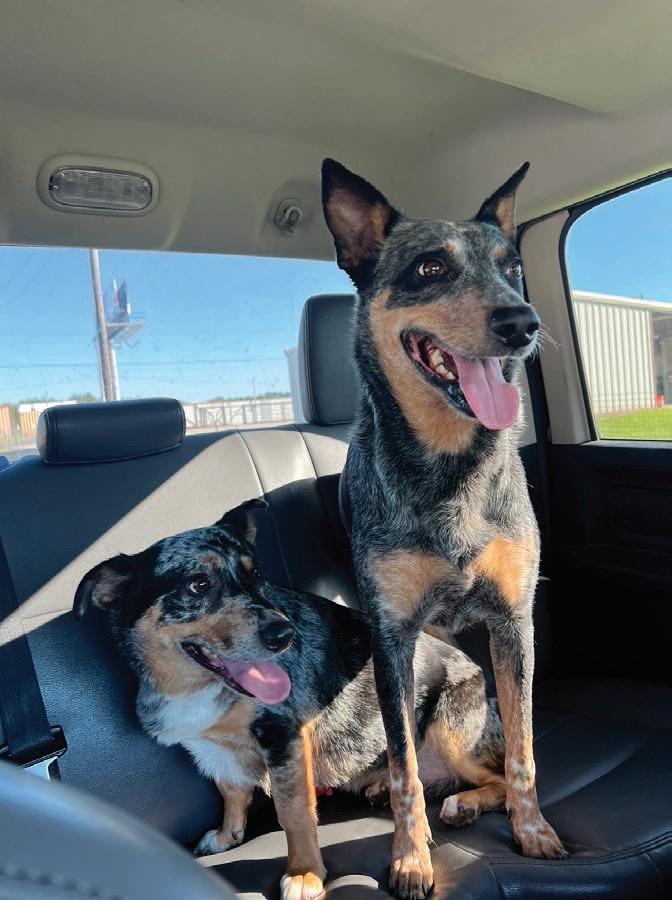
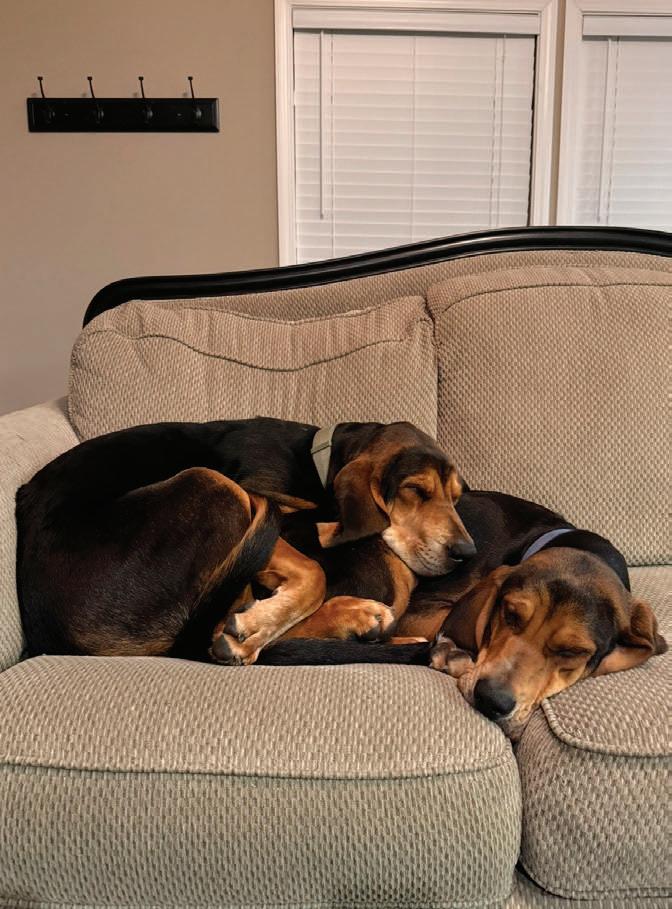



The Business Focus is chosen each month by random drawing from among Postcards contract advertisers.
Andrew Jackson said, “The world will take care of Houston’s fame.” And it is doing just that through the Museum that bears his name.
STORY AND PHOTOS BY TOM MILLER
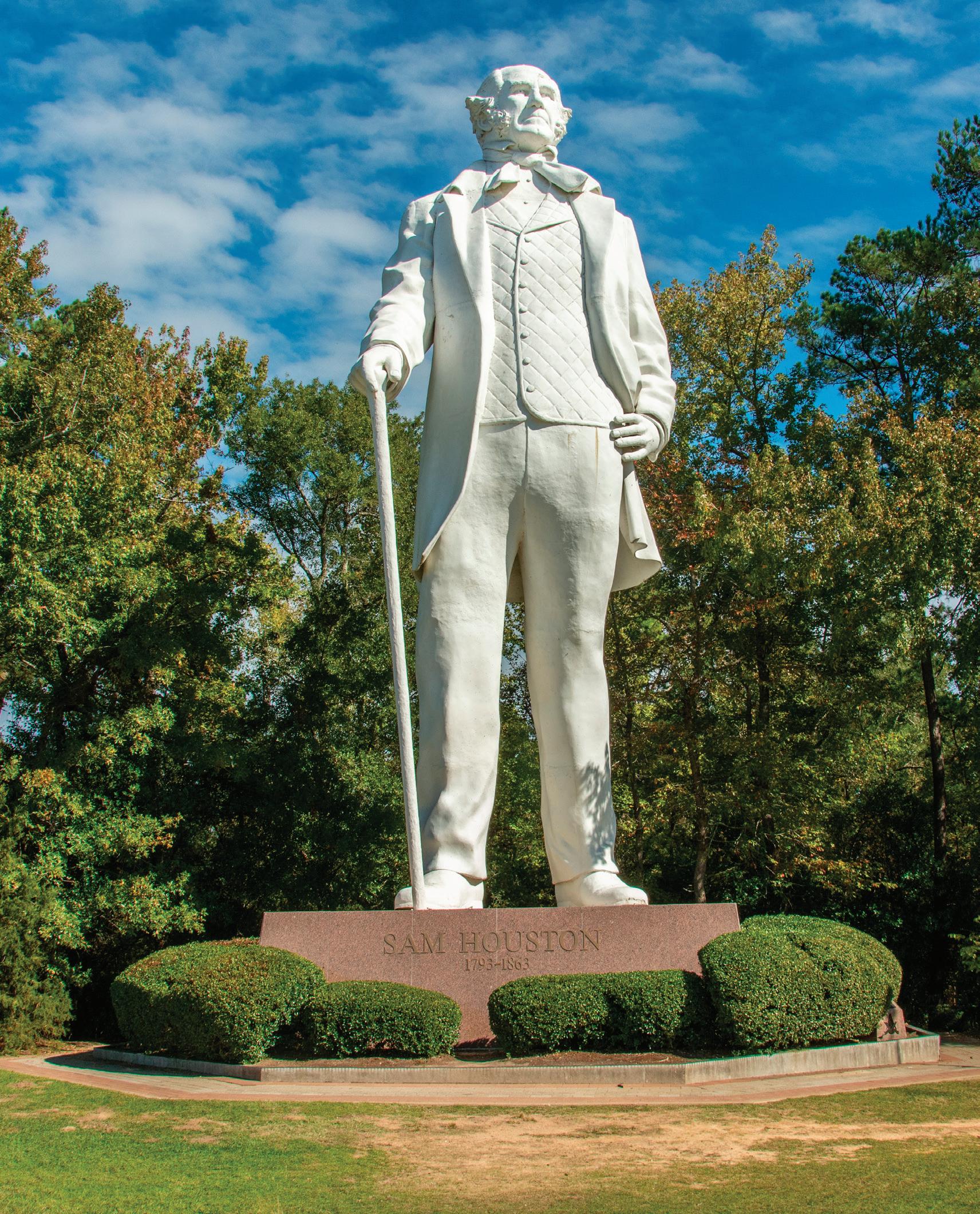
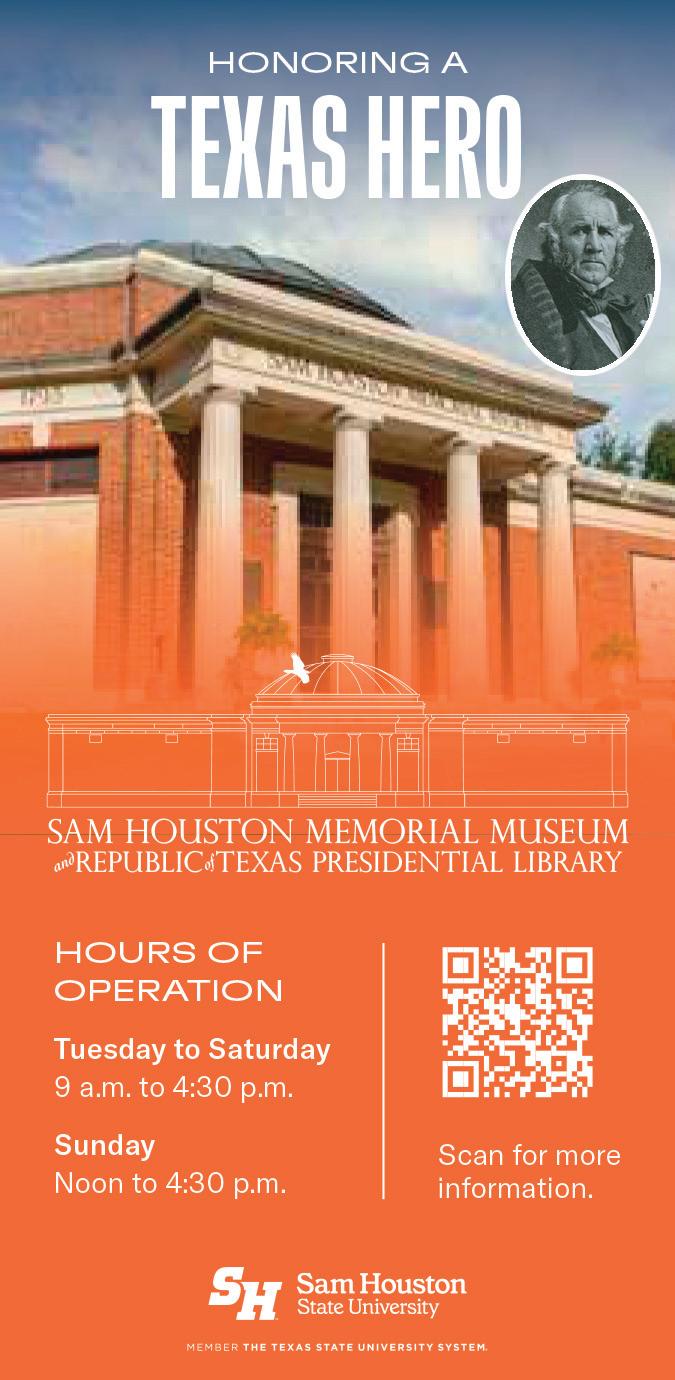
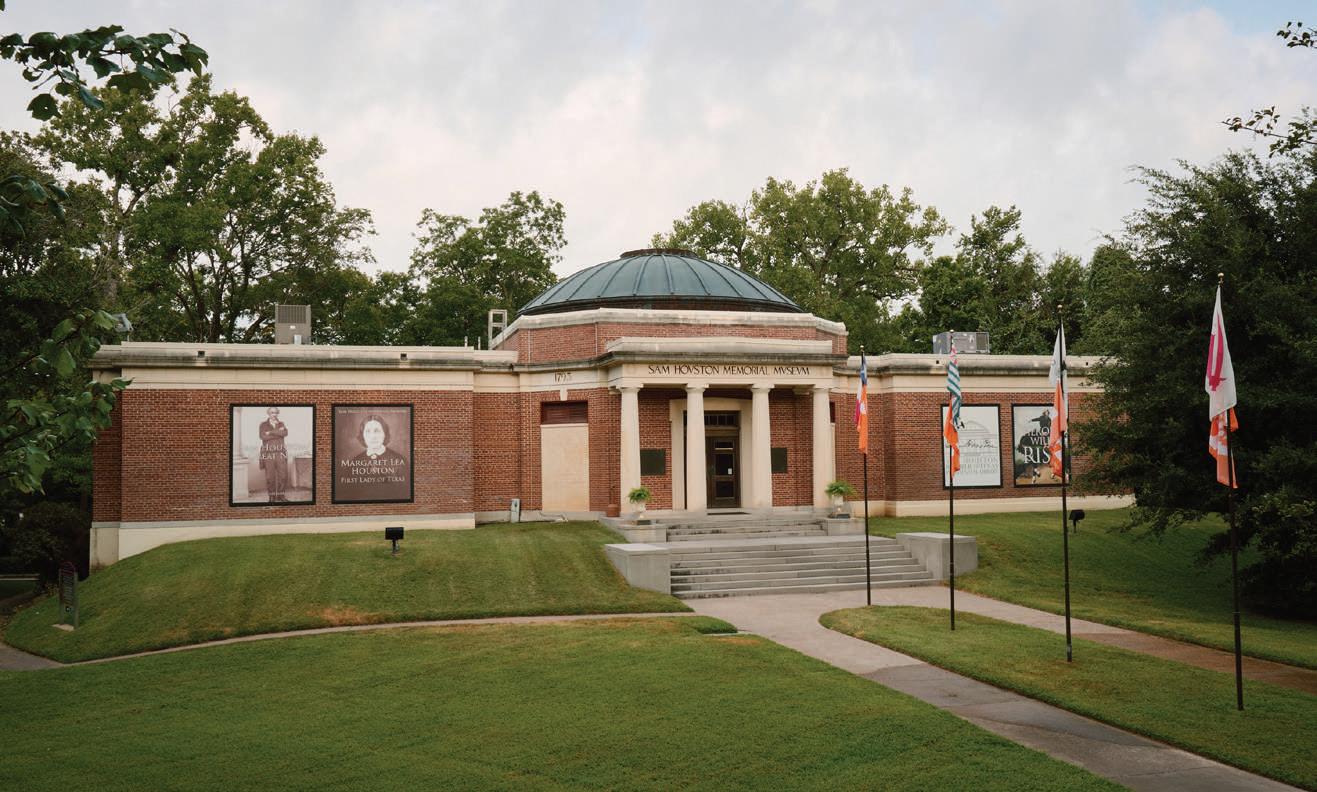
Between 55,000-75,000 vehicles a day pass by the Sam Houston Statue located on I-45 in Huntsville, Texas. Many stop and marvel at the gigantic size of the statue, and it probably raises questions in their minds...questions that might be answered if they visited the Sam Houston Memorial Museum, a fifteenacre complex in downtown Huntsville dedicated to the life and times of the man who impacted this area in so many ways.
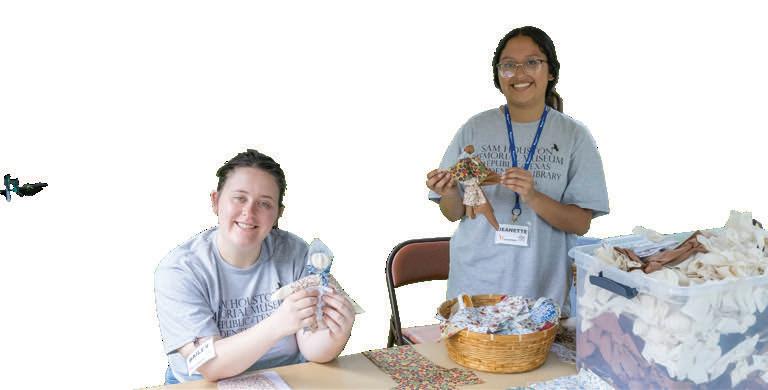
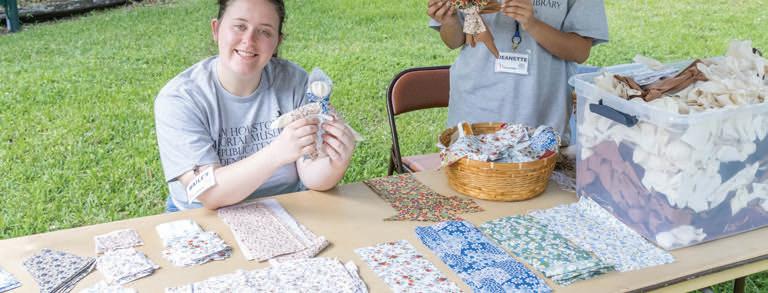
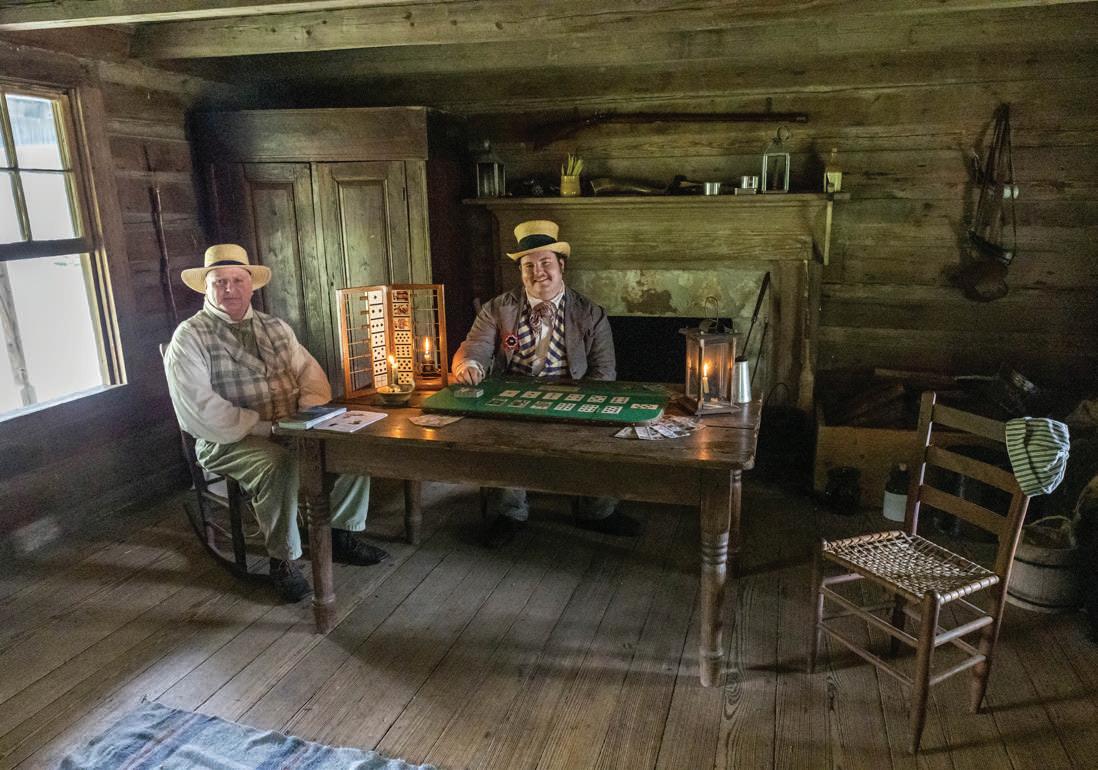
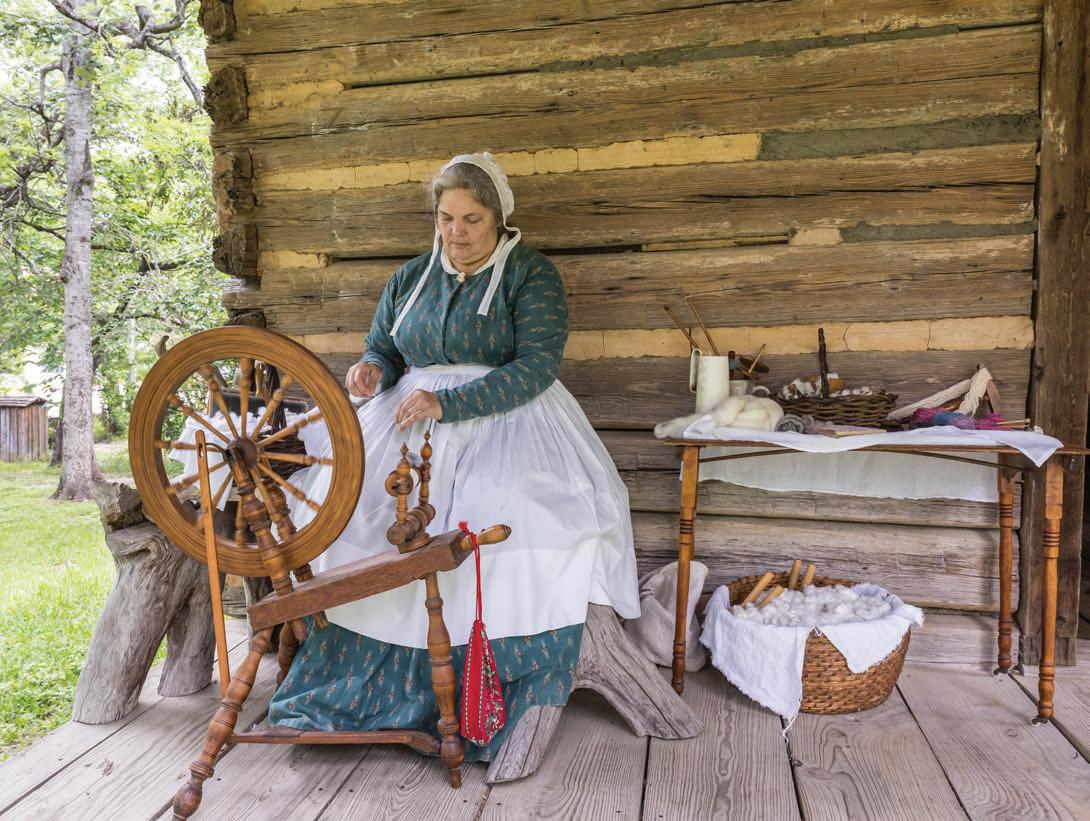
It’s an amazing place to visit. I went there recently to experience the fourth annual General Sam Houston Day. Many volunteers attended the festivities dressed in period clothing, which took visitors back in time. No one can better convey the feelings of being at the museum than the people who work there.
In their words
Megan Buro, Marketing Manager:
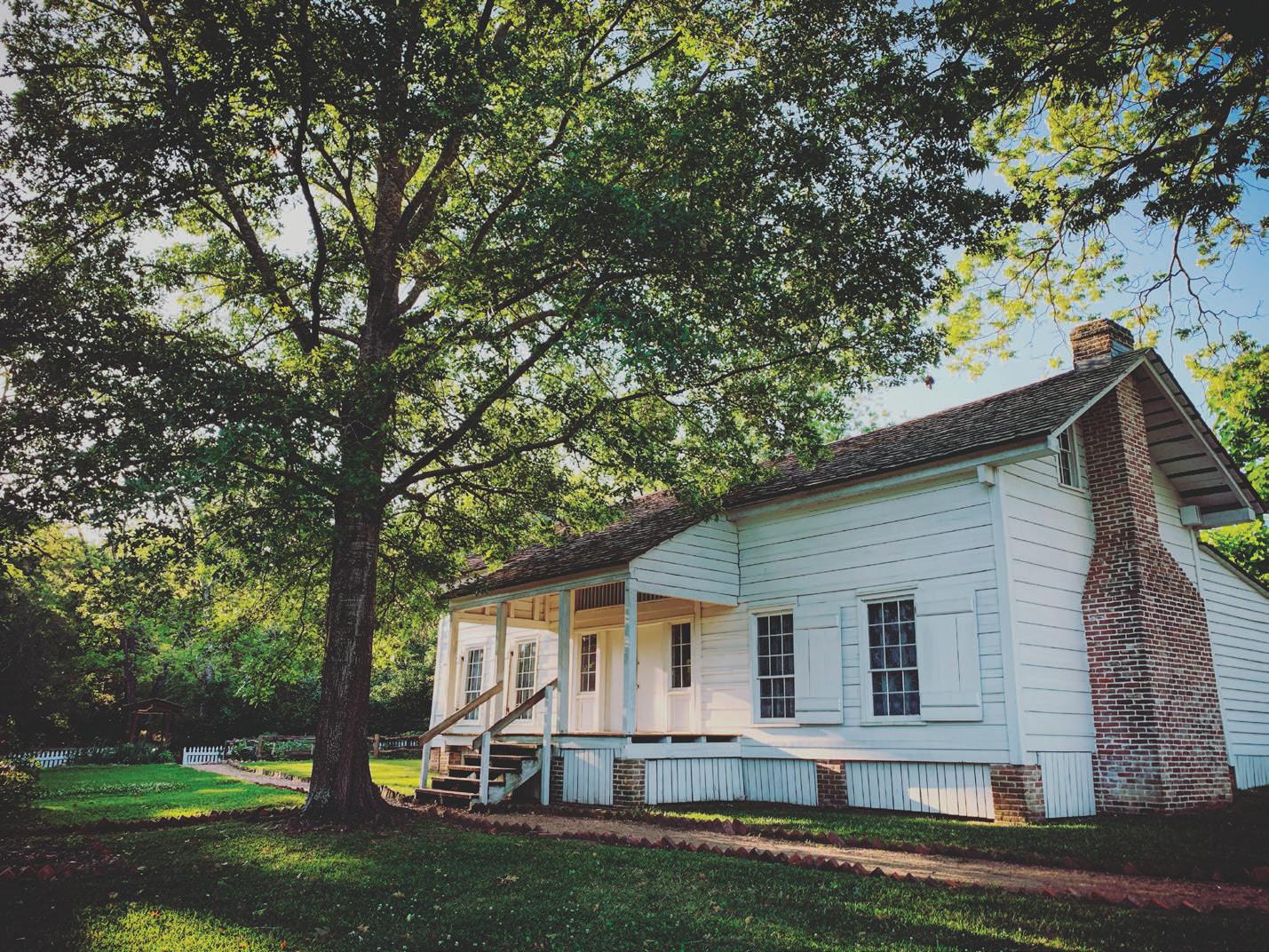
I always think it is crazy I am walking and working where Sam Houston walked. Visitors are also getting to see homes he lived in—where four of his kids were born (Woodland Home) or the home where he took his last breath (Steamboat). When I lock up the law office, I always wonder what topics (or gossip) were talked about in here, because Sam was a United States Senator during this time. Then you have
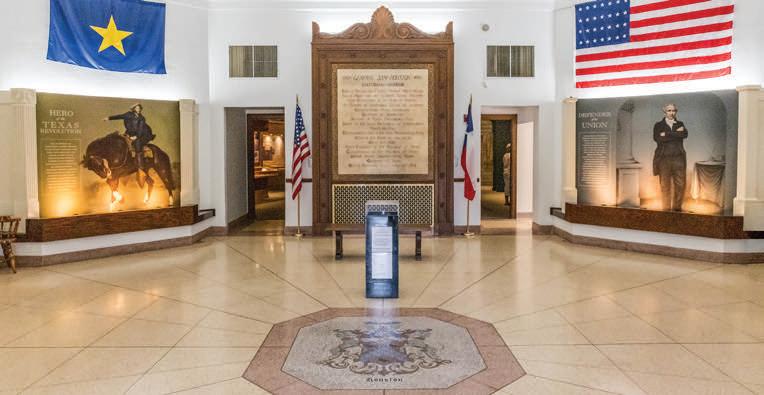
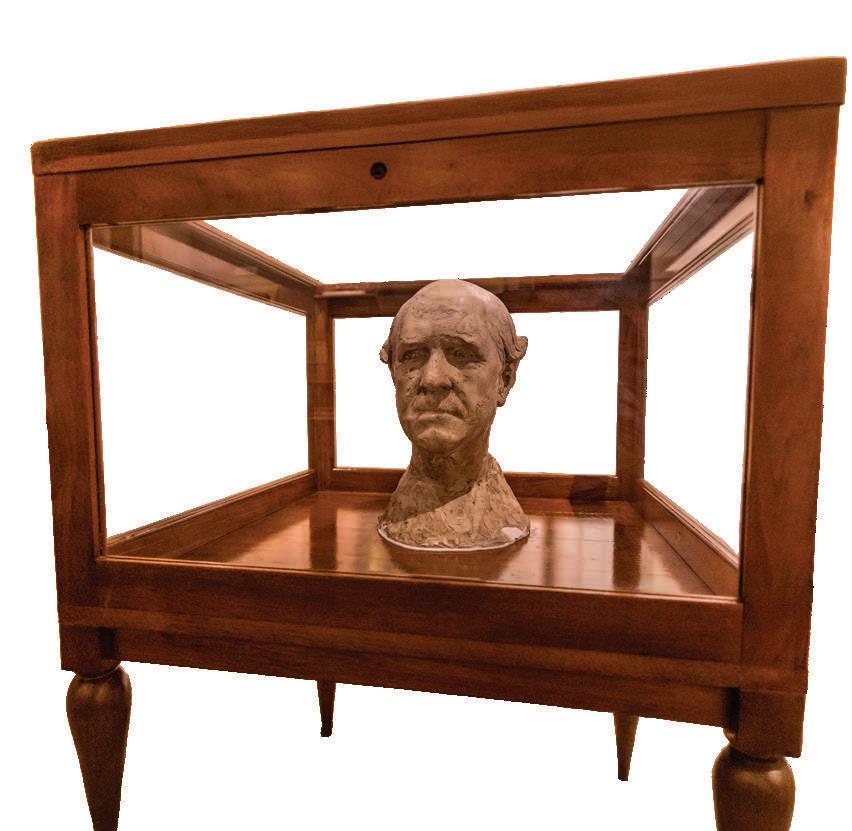
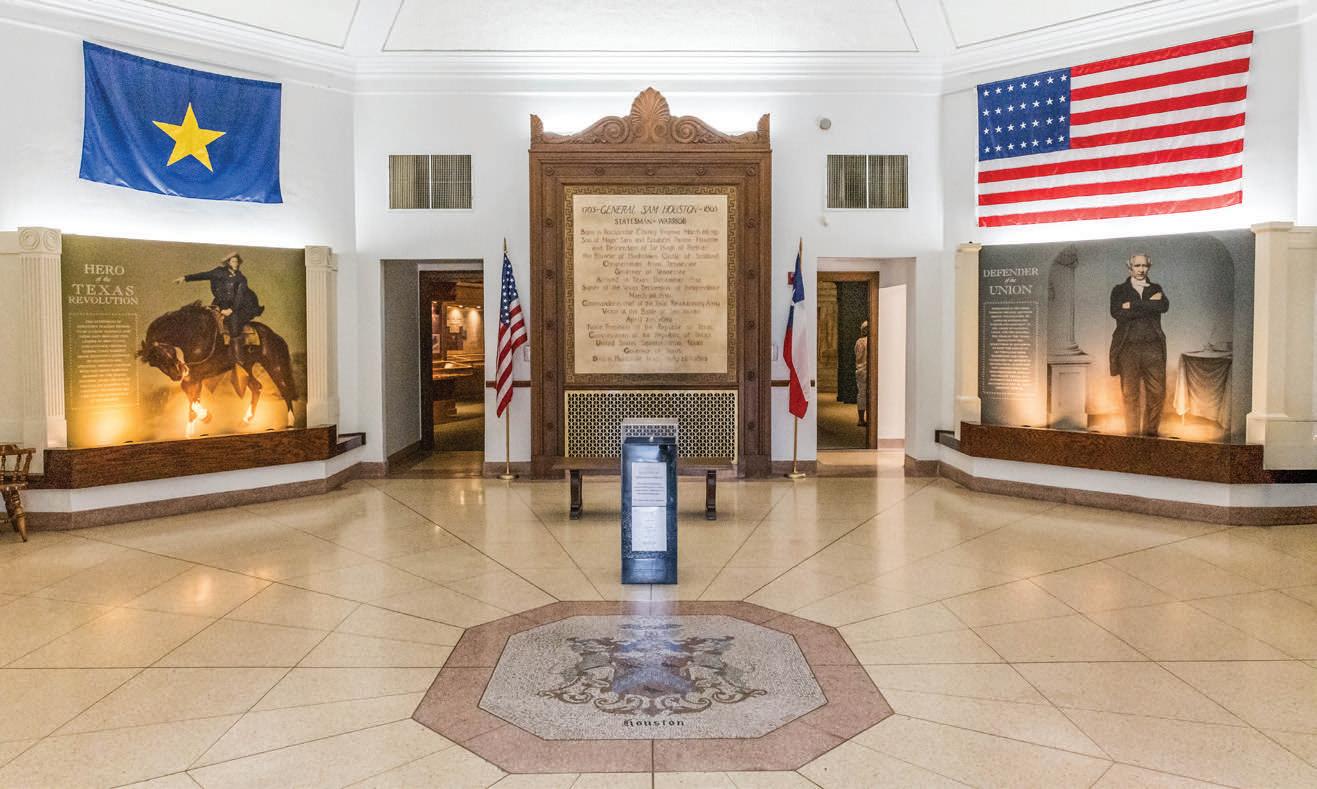
the museum with amazing artifacts and documents that bring Sam’s story to life. You see his resume when you walk in. You are getting to see his resignation letter as Governor of Tennessee or his famed leopard skin vest. Heck, we even have items belonging to Santa Anna, including his chamber pot. We continue to learn about Sam Houston so we can better tell his story. The public does have access to our collection through the Presidential Library. Our collections department has worked tirelessly to accomplish this.
Derrick Birdsall, Director:
Working as the Director for the museum is a dream come true. Houston’s pragmatism has clearly rubbed off on me over the years; I definitely like to see the world as it is, not how we wish it would be. I’m always awed when going through our collection and seeing the huge swath of American history that Houston encountered...American presidents, the Texas Revolution, secession crises, famous people like Francis Scott Key, de Tocqueville, John J Audubon, etc. I frequently feel the need to pinch myself that I actually have a job touching Texas and American history the way that I do.
The museum has planned some updates which will improve interactive experience in the galleries to better bring the exhibits to life. While doing my job is different just about every day, there is an expectation that the information
we share is accurate, objective, and non-biased. We try to do history without adjectives. We periodically update our galleries and recently completed construction of Sam Houston’s Presidential Oval Office. I’m a big advocate of living history and costume interpretations.
Colton Sheffield, Historical Interpreter I:
Working at the museum as a historical interpreter means I can share the life and times of General Sam Houston in a way that feels meaningful and alive. Additionally, as we interact with the thousands of school kids who come through the grounds each year, we can impart our love of history and hopefully spark interest in potential future historians. After all, a Living History field trip was how I found out this is what I wanted to do as a 1st grader back in 2006.
Rebecca Lewis, Collections Registrar:
Prior to coming here, I worked at a museum that told an entire state’s history. I thought I might be a little bored working at a museum that focused on the life of one man. Thank goodness that one man was Sam Houston. I’m always learning something new and interesting about Sam Houston…or Huntsville…or antebellum America that adds another piece to the puzzle. I’ve been working on and off here since 2007, and as recently as yesterday, I learned something new about Houston’s family while answering a question from a patron. I love the fact that Sam continues to surprise me in 2026.
Tod Lawlis, Curator of Exhibits:
While there are numerous special moments at the museum for me, my favorite ones are on our slower days, when I’m able to go into an in-depth conversation with a visitor or group. Here, I get to see the excitement and interest their museum experience has unlocked, and I’m proud to be a part of that experience.
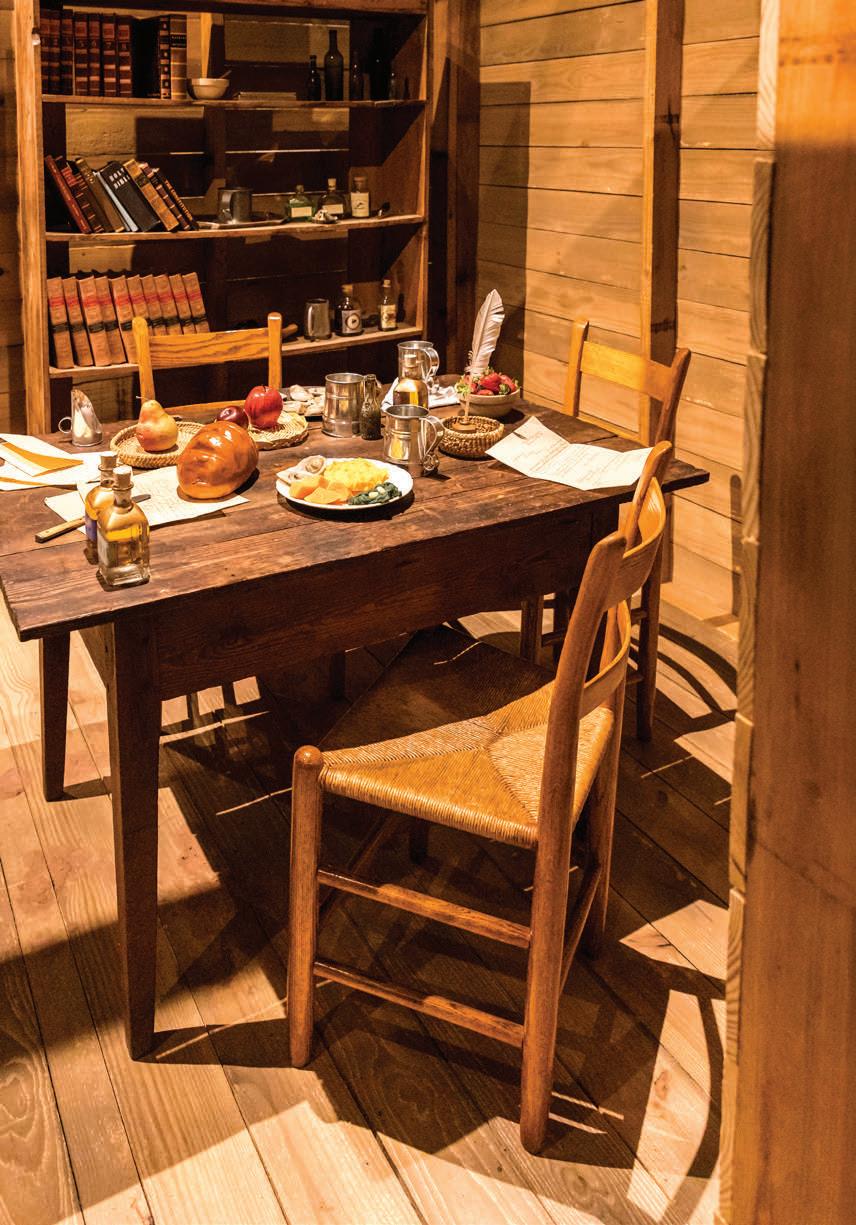
The Sam Houston Museum is a fascinating place. The land, the buildings, and the artifacts combine to create an atmosphere which draws me into the history that happened here. Whether it’s stepping into Sam Houston’s law office, standing in the Steamboat House, holding documents that were penned by his own hand, or simply walking the grounds that he and his family walked… there are so many ways to feel yourself a part of that extraordinary time in the history of Texas and the United States. It’s an honor to work with this team that is so dedicated to bringing that history to life.
A wealth of history awaits
Sam Houston was one of the most fascinating and controversial figures in American history. He was a great man who served in many capacities during his lifetime. There are many interpretive stances on Houston’s motives and character, but there is no doubt he was a legitimate hero who was always up for a challenge. If you would like to learn more about Sam Houston and the life he led, contact The Sam Houston Memorial Museum at 936-294-1832 or visit samhoustonmemorialmuseum.com.
I would give no thought of what the world might say of me, if I could only transmit to posterity the reputation of an honest man.
-Sam Houston
activities at the museum:
6/6 - Blacksmithing Demo, 10 a.m. to 2 p.m.
6/13 – Saturday Spotlight: Dye Day and Spinning Demo, 10 a.m. to 2 p.m.
6/20 – Saturday Spotlight: Black Powder/Drill Day and Kick Wheel Pottery Demo, 10 a.m. to 2 p.m.
6/27 – Saturday Spotlight: Grinding Corn and Woodworking Demo, 10 a.m. to 2 p.m.
7/2 - Celebrate America 250, 10 a.m. to 2 p.m.
6/16-8/30: Exhibit – Return of the Backroom Curiosities, exhibit gallery, Katy & E. Don Walker, Sr. Education Center


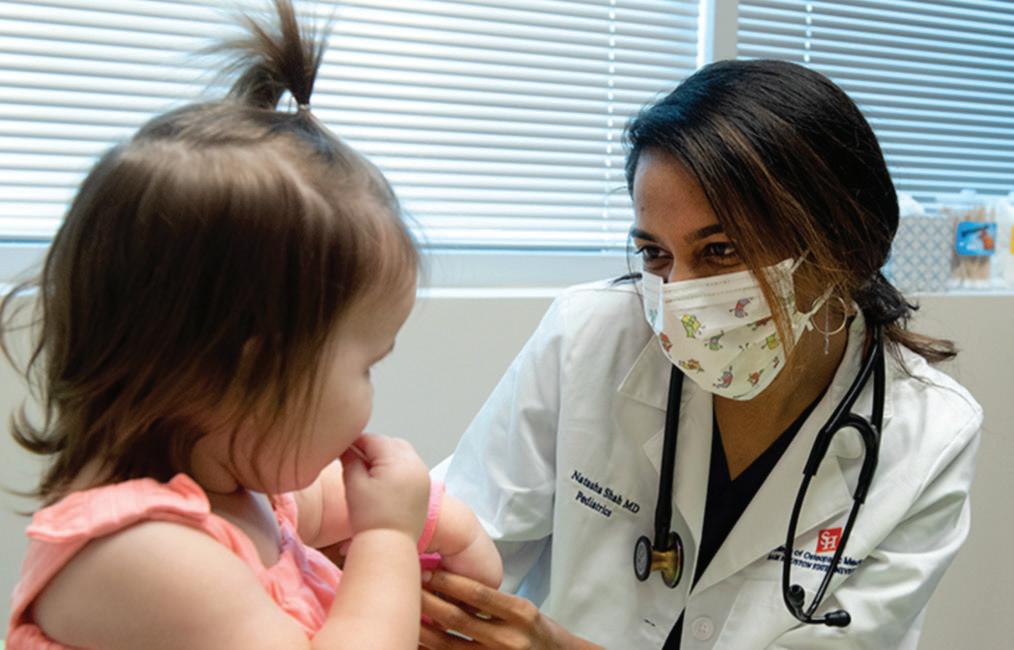
Texas summers are no joke. With triple-digit temperatures and blazing sunshine, it doesn’t take long for the heat to take a toll on your body. Whether you’re working outside, enjoying time with family, or cheering on your kids at summer sports, understanding how to recognize and prevent heat-related illnesses is essential.
Heat exhaustion is one of the most common summertime health issues. It often starts with symptoms like heavy sweating, dizziness, fatigue, nausea, and headache. Heatstroke is a medical emergency that requires immediate attention. The symptoms of heatstroke are high body temperature of 104°F, confusion, lack of sweating, nausea and vomiting, flushed (red) skin, and rapid breathing. Patients with heatstroke should seek immediate medical attention to prevent serious complications including organ damage.
To protect yourself and your loved ones, here are a few important tips:
• Stay hydrated. Drink water throughout the day, not just when you feel thirsty. Dehydration can sneak up on you, especially when you’re active. Consider drinks with electrolytes if you’re sweating heavily or exercising outdoors.
• Dress appropriately. Choose light-colored, loose-fitting clothing that breathes. A wide-brimmed hat can protect your face and neck, while sunglasses and sunscreen help guard against UV damage.
• Avoid peak sun hours. The sun is strongest between 11 a.m. and 4 p.m. If possible, schedule outdoor activities in the early morning or evening.
• Take breaks. Find shade or air conditioning regularly to let your body cool down. If you’re working outside, try to rest in shaded or air-conditioned areas at least once every hour.
• Watch for warning signs. Pay attention to how you feel and look for signs of overheating in others—especially children, the elderly, and those with chronic health conditions. Symptoms like confusion, vomiting, or flushed skin warrant immediate action.
If someone appears to be suffering from heat exhaustion, move them to a cooler place immediately. Offer sips of water, loosen tight clothing, and apply cool, damp cloths to the skin. If symptoms don’t improve quickly or worsen, call 911 or seek emergency care. Dehydration is another serious concern during the summer months. Our bodies lose water faster in

Craig Boudreaux, DO Family Medicine Medical Director, SHSU Physicians
the heat, especially when we’re sweating. Along with drinking plenty of water, include foods with high water content in your diet, like cucumbers, watermelon, oranges, and lettuce. Limit caffeine and alcohol, which can increase dehydration and impair your body’s ability to regulate temperature.
Children and are particularly vulnerable to dehydration, as they may not recognize early signs or remember to drink fluids regularly. Encourage kids to take water breaks and provide hydration-rich snacks. Older adults and individuals with certain medical conditions may also be at higher risk and should consult their healthcare provider for personalized advice.
If you or your family members have medical conditions that increase your risk of heatrelated illness, talk to your primary care provider about how to stay safe in high temperatures.
Summer in Texas is meant to be enjoyed. With a few simple precautions and a proactive approach, you can beat the heat and make the most of the season. Stay cool, stay hydrated, and stay safe out there.





- 20 CONROE
The Woodlands Area Quilt Guild Quilt Show 2026 facebook.com/groups/thewoodlandsareaquiltguild
- 28
- 21
“Riverdance” performingartshouston.org
Forever Simon & Garfunkel oldtowntheatre-huntsville.org
- Jul 5 CONROE “1776” owentheatre.com
- 27
Calvary Road Baptist VBS Email: crbcwillistx@gmail.com






By WES ALTOM
When I was a small child, I had a strong tendency to take things literally. This led to some confusing (and my parents would say entertaining) moments. I remember distinctly being in a restaurant when my dad said he “had to go see a man about a dog.” I became very excited (and talkative) asking all kinds of questions about this new pet we might be getting. Another time, I was riding in the car with my mom and grandmother. We had a long wait at a stop sign waiting for an opening in traffic, and my grandmother said, “Looks like somebody opened the gate.” Of course, I wanted to know all about the gate and even to go see the gate.
When I was a little older (and only slightly less gullible), one Sunday morning my mom said we were going to have to miss church. This was unheard of for our family. Fearing someone was seriously ill or had died, I asked why. Mom said that some family members had broken down and were stranded, and we were going to help. I asked if God would understand, and my mom said that he would, because “our ox was in the ditch.” I
was pretty sure that, if we did in fact own an ox, I would have been asked to feed it or clean up after it at least once. At least this time, I just asked what she meant. She shared that it came from the Bible, and she said sometimes emergencies happen, and doing the right thing in that moment is doing the right thing overall.
And Jesus asked them, “Which of you whose son or ox falls into a pit on the Sabbath day will not immediately pull him out?”Luke 14:5
That was a great lesson, one worth remembering and sharing today. Sometimes, we need to focus on SEEing Jesus—to improve ourselves by listening to a sermon or through fellowshipping with others whose lives reflect his… and sometimes we need to BE Jesus to others—by actively carrying out his command to love and serve in His name. May the Holy Spirit guide us to the proper balance.