CULTURE
CLASH a venue for Galveston’s free thinkers
Shrimp N Stuff DowNtowN 2506 Ball Street, Galveston TX 409.974.4609
New Location, New Vibe! www.shrimpnstuffdowntown.com
Weekend’s Breakfast Full Bar
Shrimp N Stuff 3 9 0 1 A v e O, Galveston TX 409.763.2805
Catering Available!
Winner 2019
Best Seafood Restaurant Galveston County www.shrimpnstuff.com
Celebrating 18 years of Galveston’s Freshest Catch Red Snapper Grouper Golden Tile Fish Oysters, Flounder Shrimp, Blue Crabs and More OPEN MON - SUN 8:30am - 6pm 1902 Wharf Rd, Galveston (409) 763-8160
HISTORIC PIER 19
SeafoodHouse NOW OPEN Galveston’s Newest Seafood House STRAIGHT OFF THE BOAT Sun-Thur 11am-9pm Fri & Sat 11am-10pm 2000 Wharf Rd, Galveston (409) 765-5688 4
race & ethnic diversity A LETTER FROM THE PUBLISHER: This topic has been a long time coming for the Culture Clash Crew. In fact, one of the primary reasons this magazine was started was to give a voice to the more diverse areas of our island. From the beginning we have tried to represent those who would not otherwise have a platform. As a young woman in my early 20s, I saw something unique and beautiful in Galveston. Coming from a dysfunctional home and growing up in housing projects in Houston, I became comfortable with all races and cultural backgrounds. Moving to Galveston gave me all of the flavors of my youth with an island twist. Now in my late 30s, I have come to see Galveston as pocketed and somewhat segregated. Opportunities are different and representation in local print media is almost nonexistent. Now is our chance to change that. Although we have barely scratched the surface, we hope this publication will offer our readers some insight into the race and diversity issues facing our tropical paradise. Learn more about investing in your community (pg. 10), embracing diversity (pg. 12) and equity in education (pg. 9). Get firsthand accounts of the challenges faced by Galveston’s people of color (pg. 14 & 16) and get the information that will allow you to enact change (pg. 24). Most of all, we encourage you to read, enjoy, and share this issue with those who need it most. Write us an email or shoot us a comment any time online: CultureClashGalveston.com facebook.com/CultureClashMag Janese Maricelli-Thomasson CultureClashGalveston@gmail.com Publisher
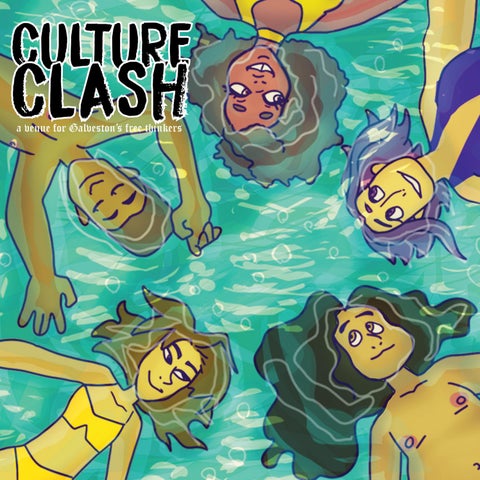
ON THE COVER: Gulf Chillin’ by Fallon Smith. Digital. “This piece features some characters who live in my brain, all taking a break to swim together on the beach of Galveston. You can follow me @ asterdrip on instagram or shop my Etsy store of the same name.” *This magazine is NOT printed on recycled paper or with soy-based inks YET! But we are working on it. Help us get there, advertise or sponsor us! Email for more details CultureClashGalveston@gmail.com. C U LTU R EC L A S H G A LV E STO N . C O M • M A R C H /A P R I L 2 0 2 0
table of contents Vol. 3 Issue 3 (March/April 2020)
CULTURE
CL AS H magazine
DEPARTMENTS Be A Better Human
8
PUBLISHER Janese Maricelli-Thomasson LAYOUT & DESIGN JanMar Agency
7 Why Can’t We Be Friends 8 Racial Equity in Education
EDITORS
10 Invest in Community
Amy Caton • Pat McGrew Leslie Whaylen
Express Yourself CONTRIBUTORS
12 Embracing Diversity
12
14 Oreo
11
16 Inside Look
#TBMG 21 Civil Rights
CHECK US OUT
24 Rock the Vote
CultureClashGalveston.com facebook.com/CultureClashMag cultureclashgalveston@gmail.com
25 Pulse Calendar of Events 28 People of Galveston
MAKE A CONNECTION
For ad rates or personalized marketing strategies, call us at 409.502.8221
Coolture
26 See it Now
Torinna Harris • Julian Jimenez Earnest Mann • Fallon Smith Brandon Williams • Leslie Whaylen
24
28
PIC TO
XT ISSUE nE
TH E
GET READY FOR THE NEXT ISSUE!
ANNUAL SUBSCRIPTIONS Please mail check payable to Culture Clash 1625 23rd St., • Galveston TX 77550 In the amount of $24 Note “Culture Clash” in memo line
T
AT TO O I S S U E
C U LTU R EC L A S H G A LV E STO N . C O M • M A R C H /A P R I L 2 0 2 0
5
be a better Photo courtesy of Shutterstock.com
human
One island, under the sun, together, bound by physical borders and island ideas. Reach out to those around you, share knowledge, share love, be better.
6
C U LTU R EC L A S H G A LV E STO N . C O M • M A R C H /A P R I L 2 0 2 0
CULTURE CLASH (Be a Better Human)
Why can’t we be friends? by Anonymous
RACE, a four letter word that has so much power and depth. In this new decade, 2020, who would have thought that the color of one’s skin, one’s name, one’s religion, or one’s race would still affect how one is treated! Unfortunately, that is still the case. Despite living in a country where equality, justice, and freedom are the foundation of our constitution and government, people are being disrespected each day. It seems as though the ethos of humanity has been forgotten.
As a community in Galveston, let’s try to model acceptance of all people and embrace differences. Let’s let differences allow us the opportunity to learn more about each other, rather than putting up a wall and letting our prejudice get in the way. Let’s teach our children that everyone deserves respect and an opportunity to share with the world who they are, regardless of what color they are, as color is not something a person chooses to be, rather it is something they are born with and cannot change. Let’s model for and teach our children what true equality, justice, and freedom mean and what our country stands for. Let’s all be a community, friends, and a family!
Photo courtesy of Shutterstock.com
In schools, children who should make friends based on common interests, are choosing to make friends based on race, religion, skin color, etc. This is concerning and makes me question our teachings to
our children. As adults, are we modeling and teaching children about acceptance, diversity, inclusion or are we the ones shaping their vision with our unconscious bias to protect them from what we believe may cause them harm?
C U LTU R EC L A S H G A LV E STO N . C O M • M A R C H /A P R I L 2 0 2 0
7
CULTURE CLASH (Be a Better Human)
Racial Equity in Education By Torrina Harris
WITH MARCH BEING WOMEN’S HISTORY MONTH, IT SEEMS ONLY FITTING TO PREFACE OUR WORK TOWARD RACIAL EQUITY IN EDUCATION BY LOOKING BACK ON BLACK WOMEN IN GALVESTON’S HISTORY WHO LAID THE FOUNDATION FOR THE FUTURE WE KNOW IS POSSIBLE. IT IS THESE WOMEN WHO IN MANY WAYS GIVE US PERMISSION TO BELIEVE IN SOMETHING, AND MEAN IT. Izola Ethel Fedford Collins writes of many of these women in her book Island of Color: Where Juneteenth Started. Izola writes of Clara E. Scull, one of the first Galvestonborn African American teachers in Galveston’s public schools and at Central High School, the first Black highschool in Texas. She also writes of Jessie McGuire Dent, who worked with other leaders in Galveston to fight for Black teachers in Galveston ISD to have equal pay. Although there has been extensive work to achieve equity in Galveston’s history, there still exists vast opportunities for us to narrow the gaps of inequity in education. Last year in Galveston ISD, data from the Texas Education Agency (TEA) showed that Black youth in Galveston were suspended three to six times more often than their non-Black peers. In 2014 the U.S. Department of Education published that elementary students who experience even one suspension are ten times more likely to drop out of school. School discipline practices that remove students from the education setting play a major role in the school-toprison pipeline and disproportionately impact youth of color and youth from lower socioeconomic demographics. Of course, these issues are not new and are by no means unique to Galveston or even Texas. We have seen these trends for decades all over the country. Thankfully, in recent years we have seen a trend in decreasing suspensions in Galveston ISD, though our suspension rates are still much higher than the state-wide rates of Texas. We have a lot of hope that our community can work together to continue to push for change in our schools. The ACEs to Assets Collaborative, co-founded in 2015 by Family Service Center of Galveston County and 8
C U LTU R EC L A S H G A LV E STO N . C O M • M A R C H /A P R I L 2 0 2 0
CULTURE CLASH (Be a Better Human)
the leadership of youth and parents most directly affected by discrimination or barriers to influence including youth and families of color, members of the LGBTQIA+ community, and individuals with physical, mental, and emotional disabilities.
Photos provided by Torrina Harris
UTMB Center for Violence Prevention, addresses adverse childhood and community experiences through evidence-based and traumainformed research, awareness, policy, prevention, and intervention. The Future is US project “fight[s] for Galveston youth through community voice so future generations can meet their full potential” and was one of ten collaboratives to receive funding from the Hogg Foundation for Mental Health’s Communities of Care Initiative. The $800,000 funding for this five-year project will serve to address the disproportionate rate of suspension, expulsion, and District Alternative Education Placement (DAEP) referrals for youth of color in Galveston. Because data from previous years in Galveston ISD reflects Black youth as having the highest rates of these disciplinary referrals, these youth and families are the population of focus for this project. The first year of this project is focused on community assessment and engagement. Two major goals of the first year are to engage historically excluded groups and identify social determinants of health within our community that we can address to prevent the removal of youth from the education setting. Often times major decisions from a student, family, school, city, or even state have the greatest impact on groups who were afforded the least opportunity to provide input. The Future is US project depends on
During the community assessment of social determinants of health, they are working to identify community strengths, and protective factors as well as community needs and risk factors. They do this through a framework provided by the Prevention Institute called T.H.R.I.V.E. or Tool for Health Resilience in Vulnerable Environments. This framework looks at twelve community factors organized into three categories. The community assessment includes reports and quantitative data from Galveston ISD, the TEA, other local reports from Vision Galveston and UTMB, and current policies as well as qualitative data from community stories and experiences.
PEOPLE • Social Networks and Trust • Participation and Willingness to Act for the Common Good • Norms and Culture
EQUAL OPPORTUNITY • Education • Living Wages • Local Wealth
PLACE • What’s Sold and How it’s Promoted • Look, Feel and Safety • Housing, Parks, and Open Space • Air, Water, and Soil • Getting Around • Arts and Cultural Expression
Throughout this project, community assessment and community engagement go hand in hand. Ultimately they hope to spread knowledge of the impact exclusionary discipline practices have on our youth and our community. We are committed to working together with youth, parents, teachers, district administrators, and all community members to brainstorm solutions that promote equity and resilience in Galveston. Some community members have already plugged into this project through our Community Engagement Team, Assessment Team, Evaluation Team, Youth Advisory Council, Parent Advisory Council, and Policy Task Force Team. There are a number of opportunities for others to get involved by joining monthly Leadership Team Meetings or attending ACEs to Assets Collaborative meetings. More than anything they want our youth to know they belong to a community that believes in them because they matter to us. Our youth are valuable not only because they hold our future in their hands, but right now, today, and every day, they matter. And they deserve to know that when we say we believe in them, we mean it. To find out more about this project visit www.ACEstoAssets.org/the-future-is-us . All of the upcoming meetings and events as well as project updates can be found on Facebook at The Future is US Galveston, and Instagram @TheFutureIsUSGalveston. Questions about this project can be submitted via email at Info@ACEstoAssets.org .
C U LTU R EC L A S H G A LV E STO N . C O M • M A R C H /A P R I L 2 0 2 0
9
CULTURE CLASH (Be a Better Human)
invest in community “When you’re in a position to help people, just help them.” By Leslie Whaylen
Ella Lewis, retired principal for Galveston Independent School District (GISD) and adjunct professor for University of Houston Clear Lake, grew up in one of our island’s public housing units. While she was a board member for the Nia Cultural Center, Ella developed an idea to “give a view of public housing that is sadly missing in current discussions.” In 2013, she printed a souvenir booklet titled, “Products of the Projects”. The booklet is a compilation of letters from past residents of their memories and experiences of living in those three, Ikedemolished, public housing projects: Cedar Terrace, Palm Terrace, and Oleander Homes. In the booklet, David O’Neal, a past president of the school board for Galveston Independent School District, shared a childhood memory in his letter of when men pooled their monies to help each other pay the poll tax so each could vote. Other letters were submitted by a teacher, two school principals, a counselor, two engineers, a nurse, an executive director, and a meteorologist. Who would these Galvestonians have become without public housing when it was needed? Would they have been able to reach their levels of success without the temporary assistance lent to their families in their childhoods? Angela Wilson, of the Galveston Daily News, is a BOI who describes herself as a “product of the projects”. She lived in one of those three public housing units for four years when she was 21 and had two, young children to raise on her own. Angela said, “I utilized it for what it was for. For people to say nothing good comes out of the projects is a lie.” While working for Texas’ oldest newspaper, Angela serves as the first African American on Galveston Daily News’ editorial board. She is also the newspaper’s first African American to be its Community News Editor. Angela has weathered narrow-minded, racial comments (e.g., “black token”), but her internal fortitude and determination prevail. 10
Galveston is a lucky city to call her one of its own. Eight years ago in February 2011, Angela married another BOI, Greg Wilson, who at the time was incarcerated and served 15 years in prison. Released two years after marriage, his story through Redemption Ministries is relayed in another article in this issue of Culture Clash. Together this husband and wife team actively give back to their community. She says, “When you’re in a position to help people, just help them.” Sounds reasonable, doesn’t it, G-town? Recently I was at a small outdoor concert off Broadway. Knowing I would be writing for this issue of Culture Clash, I was hyperaware of the crowd participants. All night long when I looked around me, I saw diverse faces, ages, and skin tones. The experience humbled me. Our island offers daily opportunities to humble and awe us, in so many different ways. Each of us can work on discovering and cultivating these senses by confronting our prejudices, starting conversations, and really listening. “Humility recognizes both our own faults and encourages us to accept others.” Try practicing humility. Try starting off relationships with believing in the other person. I will. It can only enhance our communications with community members, regardless of each other’s race and ethnic diversity. Pay attention to the public housing needs on our island. Read the stories in our local newspaper. Listen for the lost stories from this island’s people. And as Angela says, “When you’re in a position to help people, just help them.” C U LTU R EC L A S H G A LV E STO N . C O M • M A R C H /A P R I L 2 0 2 0
Photos provided by Old Central Cultural Center and Angela Wilson
GALVESTON WAS TOUTED AS THE ELLIS ISLAND OF THE SOUTH, BUT CAN IT BE CHARACTERIZED AS SUCH TODAY? SOME BOIs SAY HURRICANE IKE WAS THE DIVIDING POINT, OR WHEN OUR ISLAND’S COMMUNITY CHANGED. After Ike devastated Galveston in September 2008, three public housing units on the north side of Broadway and west of 25th Street, where mostly black residents lived, were flooded and subsequently demolished. The rebuilding of the public housing projects was met with fierce opposition at first, resulting in a painfully slow process and is still nowhere near pre-Ike numbers of public housing units. Twelve years later in 2020, many people who once called Galveston their home have not moved back. The demographics of our island shifted.
Galveston is rich with culture and ethnic diversity. Express yourself and your heritage. Culture Clash loves YOU and the variety you bring. Big thanks to Harry Nguyen and family for showing us LOVE -
express
Yourself C U LTU R EC L A S H G A LV E STO N . C O M • M A R C H /A P R I L 2 0 2 0
11
CULTURE CLASH (Express Yourself)
Embracing Diversity in Galveston By Earnest Mann
Photo from Shutterstock.com
A FEW WEEKS AGO, HANGING OUT AT HEY MIKEY’S ICE CREAM PARLOR DOWN ON POSTOFFICE, CROWD-WATCHING WHILE OCCASIONALLY MAKING SURE TO DAM THE BUTTER-PECAN STREAM MAKING ITS WAY DOWN MY SUGAR CONE, I WAS STRUCK BY SOMETHING I HAD ALWAYS SEEN BUT NEVER NOTICED. You know the routine, the one where you stand in line with bated breath waiting your turn to find out what’s down there in the freezer – the 20 or so colorful flavors with names running the gamut from the basic Vanilla to the exotic Irish Car Bomb. The diversity of Hey Mikey’s doublescoops; the metaphor knocks me over. It’s never “I’ll have two scoops of Cookie Dough.” No, humans are an exceptional animal when it comes to the appreciation of, if not desire for, diversity in life. We like variety in our foods, our clothing, our music, and in our work. Indeed, very keen observers of human behavior swear to the notion that when choosing our mates, we gravitate toward our opposites. If variety is the spice of life, then Hey Mikey’s is a transcendent place in which diversity stands as its raison d’etre. Galveston itself is no different. The communal fondue pot we find ourselves in on these mere 80 square miles of barrier island, vectored through history to be a place of cultural diversity a very, very long time ago. From the seasonally nomadic, indigenous Karankawa and Akokisa tribes in the 15th century, to the later occupation by slave smuggling Europeans, Caribbean islanders, and more recently the Jewish immigrants passing through the Pelican Island station during the Galveston Movement of the early 20th century, Galveston’s history is one in which the thread of hopes and dreams weaves its way through a rich tapestry of race, religion, sexuality, wealth, poverty, intellectualism, criminality, BOI and IBC, personal and professional mobility, political power, and political subjugation. Still, while we are undoubtedly a diverse population, Galveston has significant diversity problems. For example, though the Black and Hispanic residents of our community comprise over 25% of the population they make up less than 5% of the membership in the governing and oversight bodies of City Council, the Park Board of Trustees, and the Wharves Board of Trustees. And, chances are, that percentage will not change following the upcoming municipal elections this May. Why? Galveston City Council meetings used to be in the evening but changed to daytime meetings. Evening meetings meant more access to governance by a more diverse part of the population. The result of this change restricts the voice of the Everyman. Perhaps we can revisit making membership more diversified and inclusive by considering switching for a while to evening hours. 12
C U LTU R EC L A S H G A LV E STO N . C O M • M A R C H /A P R I L 2 0 2 0
Photo from Sh
utterstock.co
m
CULTURE CLASH (Express Yourself)
Also, few people in this city actually vote. Of the 50,000 or so citizens in the city, only about 10% actually vote in City Council races. But while voter turnout is woefully inadequate, voter registration is not. Many people whose lives could be more positively affected through the act of voting for representation that reflects their station, beliefs, values, are registered but simply do not vote. Indeed, to paraphrase Dr. King from his Dream speech, many Galvestonians believe they have nothing for which to vote. Marry this attitude with a voting intimidation from civic education status, and you foster the inactive voting rolls in certain parts of our city that ensure the perpetuation of a status quo designed to keep them in their place. For Galveston to realize the true meaning of its destiny as a community of diversity capable of bringing opportunity to all who live in it, we must do more do ensure our citizens are inspired to preserve and protect it from forces that would do harm to our culture and our unique Island life. We welcome and savor the variety two or three different scoops brings us at Hey Mikey’s. Why shouldn’t we equally and wholeheartedly embrace and encourage the richness of Galveston’s diversity and perspectives that diversity brings to the governing discourse?
ALL VANILLA ALL THE TIME? WHO WANTS THAT? C U LTU R EC L A S H G A LV E STO N . C O M • M A R C H /A P R I L 2 0 2 0
GALVESTON POPULATION BREAKDOWN POPULATION ESTIMATES, JULY 1, 2019, (V2019) SOURCES: U.S. CENSUS BUREAU, POPULATION ESTIMATES PROGRAM (PEP), UPDATED ANNUALLY.
Black or African American alone, percent*
18.3%
American Indian and Alaska Native alone, percent*
0.5%
Asian alone, percent*
3.2%
Native Hawaiian and Other Pacific Islander alone, percent*
0.0%
Two or More Races, percent
2.5%
Hispanic or Latino, percent**
30.2%
White alone, not Hispanic or Latino, percent
46.8%
* includes person reporting one race ** Hispanics may be of any race, so also are included in applicable race categories
13
CULTURE CLASH (Express Yourself)
OREO
By Brandon Williams Director of Student Ministries for Galveston Urban Ministries I moved to Texas in 8th grade as an African American kid in a mostly white neighborhood. Early on I learned how to carry myself in a way that was ‘culturally appropriate’ which meant not being “too black”. I would slick back my hair with way too much gel and do my best to speak as politely as I could. Everyone seemed to accept me and would comment on how well I carried myself, usually with a hint of surprise. But no matter how much I tried to change it, my reality was that I was still a young man of color. While most of my white friends were having the “birds and the bees” talk I was having the “how to interact with cops so you don’t get shot” talk (though I had the “birds and bees talk” too). I even remember being head over heels for this Caucasian girl who was into me as well. Wanting to be respectful I went to her father to ask for permission to date her only to see him break into tears because he believed our “imaginary future kids” would have too hard of a time as mixed children. While I’ve never been physically abused or turned down for a job based on the color of my skin (that I know of), the marred identity that came from these experiences caused an extraordinary amount of pain in my life. Now, years later, I am a husband, a brand-new father, and I work as a mentor to mostly low income students of color in Galveston. While I’ve come to love and celebrate my black heritage I still see many of my students and friends fighting against the same stereotypes I battled. I’ve had middle school students put in jail for what would normally just be a call to parents, and coworkers pulled over and interrogated while riding their bike home. I’ve even heard my students characterized as “the scary kids” from people who don’t even know their first names just because of their skin color and the neighborhood they live in. Racial Diversity is about seeing the divine worth in every person. It’s about celebrating what makes us unique instead of trying to sterilize our differences. It’s the colors that make the painting beautiful, not the canvas. I know there are amazing people in this city fighting for real change but we still have work to do! As long as it’s “those people” instead of “our people” our city will never fully thrive. When we fail one part of the community, intentionally or unintentionally, we fail the community as a whole. I’ll leave you with this: “Do not be dismayed by the brokenness of the world. All things break. And all things can be mended. Not with time, as they say, but with intention. So go. Love intentionally, extravagantly, unconditionally. The broken world waits in darkness for the light that is you.” ― L.R. Knost
14
C U LTU R EC L A S H G A LV E STO N . C O M • M A R C H /A P R I L 2 0 2 0
CULTURE CLASH (Express Yourself)
Galveston Urban Ministries is a 501 (C)(3) non-profit focused on building holistic relationships to transform the City of Galveston through programs like the Getting Ahead which offers education and mentorship to adults so they can succeed in life, and the Youth Art Collective which teaches low income youth the joy of photography and helps them put on an end-of-the year Art Show (May 16th). For more information on how you can help change lives please visit galvestonurbanministries.org.
C U LTU R EC L A S H G A LV E STO N . C O M • M A R C H /A P R I L 2 0 2 0
15
CULTURE CLASH (EXPRESS YOURSELF)
INSIDE LOOK: What it means to be African American in Galveston Interview by Julian Jimenez
Gregory Wilson is a long time Galvestonian who’s working at the heart of what he sees as one of the biggest issues facing his community: MENTORSHIP.
G urtesy of Photo co
regory W
ilson
A founding member of Ironman, a community-focused group offering father-figure guidance for children in Black communities through Turning Point Church, Wilson was able to draw upon his own struggles growing up in Galveston to become a focal point of the kind of change he wants to see in the city. Wilson took time to speak to Culture Clash about his personal experiences growing up in Galveston, and to talk a little more about what African American citizens in our community face today.
Many urban centers seem to be struggling nationally, certainly, but what challenges do you see as unique to Galveston? I don’t see a bunch of opportunities if you don’t have a certain skill set, or if you don’t know certain people. There’s not a lot of advancement. I think there is a lack of equality for African Amercians in certain areas. I think when the people from Galveston grow up inside Galveston and they become successful, they leave. People feel like they have to get out of Galveston to be successful. So I believe that the future can be as bright as we make it, if we actually get involved and get things going. But it’s very limited here, in what kind of jobs we have, how far we can go if we don’t create it. And growing up here, how long have you seen that as a trend? I mean, it even to this day looks like the neighborhoods are split up. What was it like growing up in that? Well, my father taught school for 35 years, and my mother, was a nurse at UTMB, and she had her own daycare center. For the most part, everybody has a sense of family. In the black communities, we all grew up knowing each other. We go to school together, we all play sports. . . we grow up with a sense of, like, I know this person. But I think that you grow up as a child with a limited sense of how far you can go. Right up the street there was an area called Sandpiper Cove, and there’re people I grew up with who still live there. And it’s a low income area. And how it affects you . . . some people in Galveston, they’ve lived in Galveston their entire life, they haven’t been on certain streets in Galveston.
16
C U LTU R EC L A S H G A LV E STO N . C O M • M A R C H /A P R I L 2 0 2 0
CULTURE CLASH (EXPRESS YOURSELF)
Really? And what is the reason for that? I think that growing up with a lack of direction or purpose, not having that community support that’s embedded deeply. Not growing up knowing that you could become more. Has it gotten better or worse over the years? I think that in some areas it’s worse. You have an apartment complex right down the street, they allow tow trucks to ride through all night and take cars. You won’t see that in any other community but the Black community. Just the other day, it was an elderly African American lady, and a guy was helping take the groceries up. A tow truck came and took the car. And not only one tow truck, you’ll see like eight tow trucks just riding around, all day. And you have little kids out, and this is all they see. And I don’t want this to be misconstrued, but the law enforcement is heavier in the Black communities. They’re not anywhere else like that. Can you talk a little bit about how the community changed before and after Hurricane Ike? It is a really important marker for a lot of people in Galveston? When I grew up, I don’t like to call it projects, I just called it housing. They had one on 53rd called OIeander Homes, they had another on 43rd called Palm Terrace, and two more, Cedar Terrace and Magnolia Homes. When the storm came, those got flooded out. Our own Galvestonians voted not to get the houses rebuilt. And so for me, it’s hard for me to understand how as a people we voted against building them back. There’s a lot of people who have been displaced, who didn’t have anything to go back to. Now the federal government has rebuilt the city but [they] priced it so that not just anyone can live there. Today, a lot of the people who lived in public housing can’t afford to live in the new public housing. I think we have a lot of people who say stuff but don’t follow up with their actions. I don’t believe we really want to help each other like we put on. Like, we have a building here called Wright Cuney building. It’s a place where I grew up. The building is just the same as when I was seven or eight. The park C U LTU R EC L A S H G A LV E STO N . C O M • M A R C H /A P R I L 2 0 2 0
is just the same. Don’t you think that by this time they should have computers where they can teach the kids how to go on to the next level? What do you see as the biggest issues facing your community right now? Lack of jobs. Everybody knows that Galveston is more set for a tourist town. I work for the City of Galveston, and we go clean up where it’s high income levels and the things we do out there we don’t do in the low income levels. And that alone should tell you. When you go down to Jamaica Beach? We put roads up and new things every day. But right around the corner here, there are streets almost like a racetrack, where it’s bumpy. Again, I really don’t like to say that I think no one cares, but I think we put on a show for the things we can be seen for, instead of equitable action across the entire island. You don’t see political leaders coming out into the community until they need a vote.... I had a meeting the other day with a state representative. I was sharing with him different things about our community. He seemed to be a great guy, but he’s never been anywhere around here. This is the state representative for Galveston! I just believe the people in charge have to come take a look. The elected powers that be, they come in with an agenda. So it’s almost like voting for this or that person, it’s already scripted out. As a community, we have to educate our kids to want better and do better. But the people in control have to give better too. A lot of people don’t vote because they don’t think it matters anymore. What motivates you to keep trying in the face of all these setbacks? When you feel like you’ll always get screwed over by powers that never pay attention to what you say? When you grow up with that warrior spirit, and you know you have to create what you want built…. There’s an overwhelming burden against African Americans, from the justice system and throughout. You have to be willing to be fearless, and you’ve got to have courage. Given the opportunities that I’ve been given, I have to give back to these kids.
17
18
C U LTU R EC L A S H G A LV E STO N . C O M • M A R C H /A P R I L 2 0 2 0
C U LTU R EC L A S H G A LV E STO N . C O M • M A R C H /A P R I L 2 0 2 0
19
#TBMG
President Lincoln enacted the Emancipation Proclamation on January 1, 1863, but word was slow to reach all areas of the South. On June 19, 1865, Union soldiers landed in Galveston with the news that the war had ended and the enslaved were free. “Juneteenth” was established and first celebrated here in Galveston on this historic day and soon spread across the South 20
and now is celebrated in 40 or more states. In this photo, Juneteenth celebrants dressed in their finest clothes, however poor, trumpeting the universal concerns of citizenship and liberty, with hero-speakers from the Reconstruction era and symbols like the Goddess of Liberty on floats and in living tableaux.
C U LTU R EC L A S H G A LV E STO N . C O M • M A R C H /A P R I L 2 0 2 0
Photo courtesy of PBS - https://www.pbs.org/wnet/african-americans-many-rivers-to-cross/history/what-is-juneteenth/
Galveston’s racial heritage is strong. As the Ellis Island of the South, at one time our coastal community glittered with dozens of races all living and working side-byside
CULTURE CLASH (#TBMG (Throw Back My Galveston)
An interview with David O’Neal; past president of the GISD school board “Growing up in Galveston, what was your first experience with discrimination?”
Courtesy of the Civil Rights in Black and Brown Oral History Project at Texas Christian University (crbb.tcu.edu)
Not one, but two civil rights movements flourished in mid-twentieth century Texas, and they did so in intimate conversation with one another. Both African Texans and Mexican Americans fought for their civil and political rights throughout the nineteenth and twentieth centuries right into the twenty-first happening now. While most research on American race relations has utilized a binary analytical lens—examining either “black” vs. “white” or “Anglo” vs. “Mexican”—the Civil Rights in Black and Brown Oral History Project produced by Texas Christian University (TCU) collects, interprets, and disseminates new oral history interviews with members of all three groups. This project is a publicly accessible, free, and user-friendly multimedia digital humanities database that provides video clips from interviews to research including the voices of teachers, students, journalists, activists, and the general public. The project can be found at https://crbb.tcu.edu/. About | Civil Rights in Black and Brown. (2020). Retrieved February 11, 2020, from https://crbb.tcu. edu/pages/about
C U LTU R EC L A S H G A LV E STO N . C O M • M A R C H /A P R I L 2 0 2 0
David, “Galveston was unique in the sense that I didn’t experience true discrimination until I left the island. At least it wasn’t true hardcore discrimination. Galveston was the first city in the state of Texas to have African American policeman and that was in 1867. You have to understand the whole concept of why we celebrate the 19th of June . . . we celebrate the 19th of June because it was supposed to be January of 1863 that everybody was supposed to be declared free. We didn’t get the message until 1865, the 19th of June. Which is why we celebrate Juneteenth and why that date is so important. Texas was the last state to not agree to ending slavery, and so when the Union Army came down to Texas, they declared the last vestiges of the Confederacy null-and-void and that day was really the end of the Civil War. So, what took place when the soldiers came in was they left the police force intact thinking that hopefully only a simple transition in the law was taking place. But when the army came back in 1867 there was so much corruption with the police force that the officers then got rid of all of the entire Galveston police department and appointed his own people including five African Americans. Hence Galveston was the first city in Texas to have a black policeman. We were the first in the state to have electric lights, the first to have indoor plumbing, the first to have trolley cars. Remember everything else was still rural, and the first newspaper was here in Galveston. We had the first African American lifeguard, the first high school for African Americans was Central High school in 1885. This is so important because Galveston was a port city with a lot of people coming from Europe and people like Mr. Rosenberg wanted to build up the city and saw then how important education was and specifically the importance of educating all people. Keep in mind at that time the furthest a person of color could go in school was maybe the eighth grade. In fact, it was almost equivalent to going to college today, which is why so many people of color migrated to Galveston then, to get an education because it was like going to a college!” 2121
HALLS LIQUOR
2121 45th Street • 409.763.0162 Open 10 am - 8:55 pm • Mon.- Sat. www.HALLSLIQUOR.com
OPEN Mon-
Thurs
New Exhibitions Opening January 18 during ArtWalk
FriSun
2pm-2am 12pm-2am
with the
BEST HAPPY
Amanda Miller But then (again)
Spring Semester Art Club for Kids begins January 7
Brit Thomas Indian Spirit
presented in conjunction with
HOUR
Downtown
Mon-Fri
22
FREE ADMISSION | 2127 Strand | Galveston, TX | galvestonartscenter.org C U LTU R EC L A S H G A LV E STO N . C O M • M A R C H /A P R I L 2 0 2 0
C00LTURE
FEATURED ARTIST McFreshCreates UNTITLED carnivourcreates.com
C U LTU R EC L A S H G A LV E STO N . C O M • M A R C H /A P R I L 2 0 2 0
23
CULTURE CLASH (Coolture)
CANDIDATE FILINGS
MAYOR Bill Keese; Craig Brown; Raymond Guzman, Jr; Roger “Bo” Quiroga; James Casey DISTRICT 1 Tarris L. Woods DISTRICT 2 William Schuster; J. David Robertson DISTRICT 3 David Collins; Frank Thomas Maceo; Wayne D. Holt DISTRICT 4 Jason Hardcastle DISTRICT 5 John Paul Listowski DISTRICT 6 Jackie Cole; Marie Robb
ELECTION DAY LOCATIONS FOR THE MAY 2, 2020 ELECTION:
THE NEXT GENERAL ELECTION WILL BE HELD ON SATURDAY, MAY 2, 2020. Why should YOU care about VOTING and Civic Participation? Civic participation is about trying to make sure that everyone has a voice. Here in Galveston, we can work together to build a strategy so low-income people and people of color are actively engaged in their communities, and so more of them vote. These communities are a large percentage of the local population, and yet we don’t see their voices represented. The result is that government fails to respond to their needs and interests—and we as a society aren’t doing everything we can to really make a difference in lifting these communities out of poverty and helping everyone succeed. LEARN MORE ABOUT GALVESTON ELECTIONS AT https://www.galvestontx.gov/266/Election 24
EARLY VOTING LOCATIONS FOR THE MAY 2, 2020 ELECTION:
Galveston County Justice Center, 600 59th Street Galveston County Courthouse, 722 Moody Seaside Baptist Chuirch, 16534 Termini-San Luis Pass Rd. Moody Methodist Church, 2803 53rd Street
C U LTU R EC L A S H G A LV E STO N . C O M • M A R C H /A P R I L 2 0 2 0
Photos from Shutterstock.com
THINK GLOBAL ACT LOCAL
Rebecca Sealy Hospital, 404 8th St. (Classroom 1st Floor) GISD Administration Building, 3904 Avenue T Moody Methodist Church, 2803 53rd Street Galveston County Court House, 722 Moody Seaside Baptist Church, 16534 Termini-San Luis Pass Rd. Texas A&M University-Galveston, 200 Seawolf Pkwy, Bldg. 3035, Suite 102
pulse
CULTURE CLASH (Coolture)
SEE ART MCFRESH CREATES
March- April 2020 Calendar of Events
SEE MORE NOW
carnivourcreates.com
MARCH 2020 Houston Black Heritage Festival Saturday, March 07, 2020 12 p.m. - 9 p.m. A celebration of African American culture expressed through art, music, education, poetry, and more Midtown Park 2811 Travis St. Houston, TX 77006 Admission: $5 -$75 see website for more info. Dickinson Little Italy Festival Saturday, March 14, 2020 9:30 a.m. - 6 p.m. Honoring and exhibiting Sicilian-Italian customs, traditions, food, and culture! 4403 TX-3, Dickinson, TX 77539 Admission: Free see Facebook for more info.
SAVE THE DATE
LA IZQUIERDA FESTIVAL Saturday, May 09, 2020 A surf and music festival dedicated to uniting Galveston, through music, surf, and FUN! MENARD PARK - 27th & Seawall Admission: $5 General Admission www.laizquierdafest.com C U LTU R EC L A S H G A LV E STO N . C O M • M A R C H /A P R I L 2 0 2 0
APRIL Jewish CultureFest Houston Sunday, April 05, 2020 Evelyn’s Park 1 p.m. - 5 p.m. 4400 Bellaire Boulevard Admission: Free see website for more info Houston Creole Heritage Festival Saturday, April 11, 2020 9 a.m. Midtown Park 2811 Travis St, Houston, TX 77006 Food trucks, dancing, special Mardi Gras punch, Creole Bar, and more Admission: $10 see website for more info.
Drink up KATIE’S BLUE OCEAN WATER 1oz Vodka, 1oz Silver Rum 1/2 oz Blue Curacao 1/2 oz Peach Schnapps 4oz Lemonade 1oz Pineapple Juice
Get it NOW at Katie’s Seafood House 2000 Wharf Rd.
Houston Latin Festival Sunday, April 19, 2020 The Grand 1894 Opera House 2020 Postoffice St. The Houston Latin Fest is a festival promoting unity and diversity in the Latin culture. Admission: $10 see website for more info. 25
CULTURE CLASH (Coolture)
SEE IT NOW AT Galveston Art Center Artist Britt Thomas - Indian Spirit Indian Spirit documents the Port Neches-Groves (PN-G) Indians high school football traditions and the community who keeps those traditions alive. The photographs take an observational approach to PN-G’s unique fusion of Texas football customs and Native American cultural appropriation that has existed in this community since 1925. The title, Indian Spirit, emerges from the name of PN-G’s mascot and reflects the community’s intense commitment to their motto of “Honor, Pride, Tradition.” Britt Thomas is a multidisciplinary lens-based artist residing in Houston, TX. She engages in a concept-driven studio practice that frequently utilizes photography and video due to their uncanny ability to simultaneously reflect and manipulate reality. At the center of her art exploration is the shared experience, seeking simple yet complex ways to analyze her relationship to others and to culture at large. Born and raised in Southeast Texas, Thomas earned her B.F.A. in Studio Art with minors in dance and art history from Lamar University and a M.F.A. in Photography and Digital Media from the University of Houston. She is a 2018 recipient of Houston Arts Alliance’s SACI artist grant and has art permanently on view at the George R. Brown Convention Center through Houston’s public art collection. Her art has been exhibited in group shows nationally and internationally, recently at Aggregate Space Gallery in Oakland, CA, Amos Eno Gallery in Brooklyn, NY, and the CICA Museum in Gimpo, South Korea.
IMAGES: This page; (top) Applying Make-up, (bottom) Indian Spirit Faceing page; (top) Indian Spirit 1979, (bottom, left to right) Run Through Cheer, Twirler Awaits Photos courtesy of the artist. See more at, http://britt-thomas.com/artwork/photography/indian-spirit/ 26
C U LTU R EC L A S H G A LV E STO N . C O M • M A R C H /A P R I L 2 0 2 0
CULTURE CLASH (Coolture)
C U LTU R EC L A S H G A LV E STO N . C O M • M A R C H /A P R I L 2 0 2 0
27
e l p o e p eston
CULTURE CLASH (FEATURE)
v l a g of
Has your race or ethnicity helped or hurt you in any way during your time in Galveston? Cultrue Clash Staff
Charles Jackson (left) “I don’t think it has. I don’t let nothing bother me.”
Anacristina Chapa (right) “... I first think of the beach and the days I’ve spent with a mix of friends and strangers, all of us enjoying the feel of the hot sun on our skin. I think about the Proletariat, where I had my first poetry feature where my poems were spoken aloud, and I felt the words resonate with a crowd full of different faces. I try to not think about the time the cops arrested my friend for accidentally walking outside of a bar with beer, the marks the handcuffs left around his wrists, or the racist comments they said to him in the police car. Has being Mexican American helped or hurt me in my time in Galveston? I think the answer is the same for any place in the United States. I am proud of my ethnicity; I wear it like a badge of honor that cannot be removed. I rejoice with people who celebrate diversity the way I do. But there is always something lying below. A fear. This uneasy feeling of knowing the same thing we celebrate could be used against us at any minute. I cannot say the sun does not discriminate. Some of us get burnt easier than others. My ethnicity has helped me connect with people through poetry, music, and food. My ethnicity has never hurt me, it is people who have the power hurt people like me.” 28
C U LTU R EC L A S H G A LV E STO N . C O M • M A R C H /A P R I L 2 0 2 0
CULTURE CLASH (FEATURE) Jõmar Bryant and son (lright) “Life has been good and I can credit that to growing up in Galveston. My experiences in the outdoors here have brought me to this humbleness that makes me a peaceful person. You could put me anywhere in this world and because I’m from Galveston, I could survive. I want to make an everlasting impression on every single person I meet. Peacefulness. Humbleness. Galveston, Texas taught me that. Our island is where I learned how to appreciate life, beaches, and palm trees. We live in a spiritual world as spiritual beings where there are no boundaries. Don’t fall for worldly conceptions. Get to know somebody for who they are on the inside.”
OUT OF THIS WORLD SWAG Janese Maricelli (left) “Absolutely. I am Italian and that seems to be popular here in Galveston. As a kid in Houston, peers would ask me if my family was in the mob or if my dad was “cool”. People still assume “I know a guy” but I don’t.... ”
C U LTU R EC L A S H G A LV E STO N . C O M • M A R C H /A P R I L 2 0 2 0
CultureClashGalveston.com/shop
a venue for Galveston’s free thinkers 29
SENIOR PHOTOS Maricelli Photography • 409-502-8221 Direct link to your images. You own the rights! $85 - 2 OUTFITS / 2 LOCATIONS
Weddings Events Head Shots & MORE
30
C U LTU R EC L A S H G A LV E STO N . C O M • M A R C H /A P R I L 2 0 2 0
CULTURE CLASH (Coolture)
We We Are Are AA Marketing, Marketing, Design Design and and Talent Talent Agency Agency That Thinks That Thinks Differently Differently
MARKETING DESIGN WEBSITES BRANDING BANNERS PRESS RELEASES SOCIAL MEDIA
COLLABORATION
By Culture Clash Staff
NEWSLETTERS BROCHURES BILLBOARDS PROGRAMS MAGAZINES COMICS, LOGOS ADS, DISPLAYS COMMERCIALS
BIG CONVERSATIONS
BIG SOLUTIONS 32
409.502.8221
www.JanMarAgency.com
S H GNA. CLVOEMSTO . C ODMEC• M2 0 A R1 7C H /A P R I L 2 0 2 C U LTU R ECCLUALTU S H GRAEC LVLEASTO • N OV/