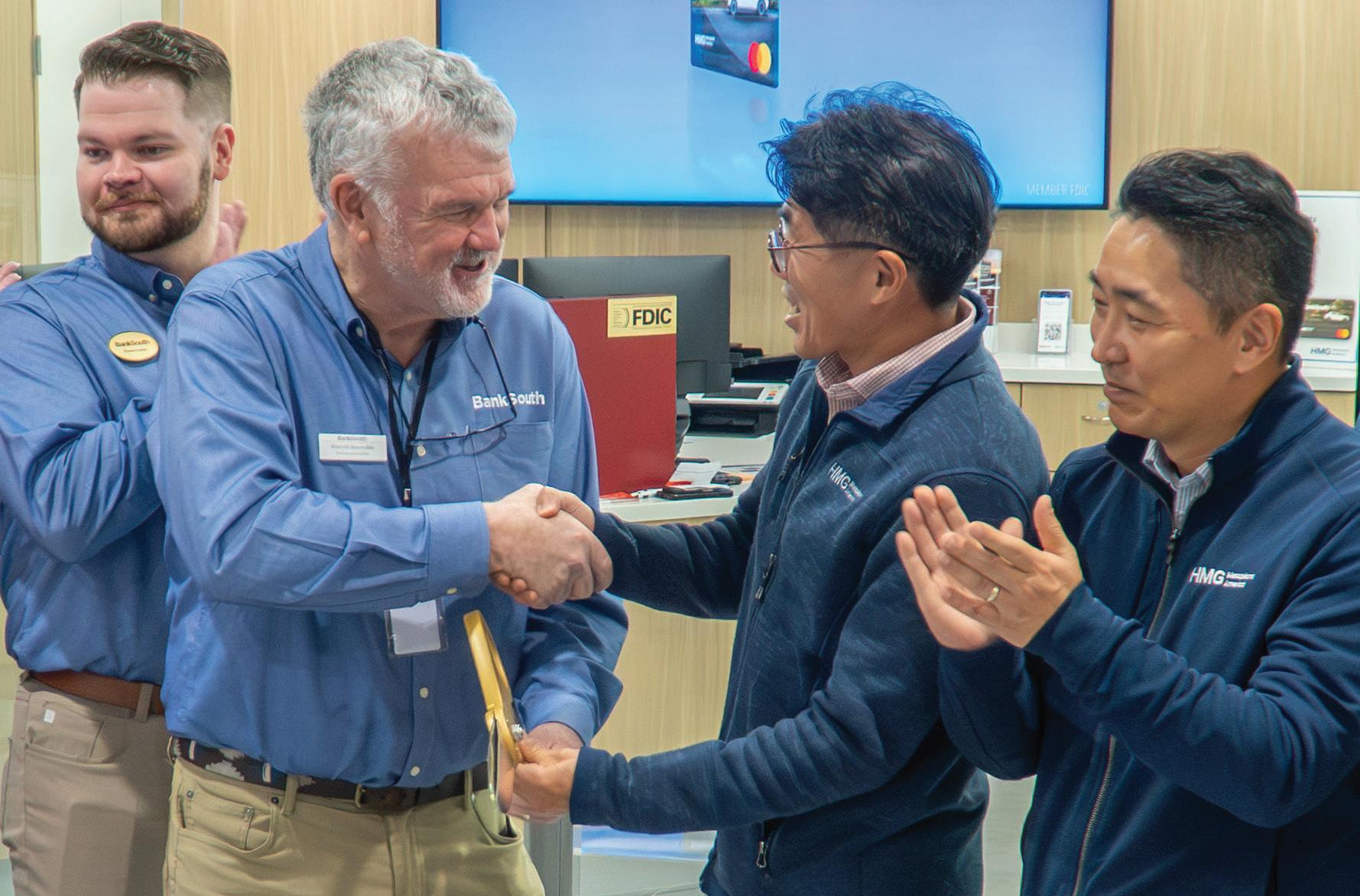
BankSouth proudly opened a new on-site branch at Hyundai Motor Group Metaplant America in Ellabell, Georgia. As the exclusive banking partner for HMGMA’s workforce, known as Meta Pros, we provide convenient, relationship-based banking services designed to meet employees where they work. It’s another way BankSouth supports innovation, people, and progress across Georgia.


The conversation around competitiveness is changing.
For years, economic development and business growth were largely measured by familiar benchmarks- tax structures, incentive programs, access to markets and cost advantages. While those factors remain important, the stories in this month’s issue of Industry Today make it clear that a new set of drivers is emerging.
Across the United States, manufacturers, economic development leaders, technology providers and workforce organizations are confronting the same reality: growth today depends on preparedness.
Preparedness means having the energy infrastructure to support expanding industries. It means creating development-ready sites that can move at the speed of modern investment decisions. It means building workforce pipelines capable of supplying advanced manufacturing, aerospace, logistics and technology sectors with highly skilled talent. And increasingly, it means developing the digital foundations necessary to support AI, automation and autonomous operations.
This issue highlights how regions and organizations are responding to these challenges. From Buffalo Niagara’s reshoring momentum to Oklahoma’s efforts to redefine what it means to be business-friendly, economic development leaders are demonstrating that long-term competitiveness requires strategic investment in infrastructure, workforce development and operational readiness.
In South Carolina and Alabama, we see how manufacturing growth is being fueled not only by industrial expansion, but by a commitment to preparing the next generation of workers. Workforce development is no longer simply an education issue - it has become a defining business imperative.
The same theme appears throughout our technology-focused features. Harry Moser of the Reshoring Initiative explores how advanced manufacturing technologies and workforce training are working together to strengthen domestic production. Schneider Electric examines the growing role of autonomous operations in improving efficiency, sustainability and resilience. World Wide Technology looks at why so many AI initiatives struggle to move beyond pilot programs, highlighting the importance of strong operational foundations. And WhereWeGo offers a thoughtful perspective on the future of workforce marketplaces and the digital infrastructure required to connect people with opportunity.
Taken together, these stories point toward a common conclusion: technology alone is not enough. Neither is talent. Neither is infrastructure. Success increasingly belongs to organizations and communities capable of bringing all three together.
As industries continue to evolve, the most successful regions, companies and institutions will be those that invest not only in innovation, but also in the systems, people and partnerships necessary to transform innovation into sustainable growth.
We hope this issue provides valuable insight into how leaders across manufacturing, economic development and technology are navigating that challenge and creating new opportunities in the process.
Thank you for reading Industry Today.
— Susan Poeton, Publisher

www.industrytoday.com spoeton@industrytoday.com
Publisher: Susan G. Poeton
Senior Editor: David Soyka
Contributing Editor: Lorie Greenspan
Associate Publishers:
Renata Ginter, Jonathan Listig, Brian McMillan
Digital Marketing & Operations Coordinator: Melissa Burge
Art Director: Seema Mazhar
Contributing Designers: Jorge Leandro Rodrigues
472 Meeting Street, Ste C-156, Charleston, SC 29403, USA Ph. 973.218.0310
Industry
16 FEATURE ARTICLES
MOSER ON MANUFACTURING TECHNOLOGY & TALENT: A GROWTH ENGINE FOR RESHORING
Technology and talent are at the core of today’s reshoring successes with companies implementing advanced manufacturing technologies.
SCHNEIDER ELECTRIC GLOBAL AUTONOMOUS ADOPTION
04
A study commissioned by Schneider Electric shows strong global growth of autonomous technologies in the energy and chemical sectors.
WHEREWEGO WHY MOST TALENT MARKETPLACES FAIL AFTER LAUNCH
58
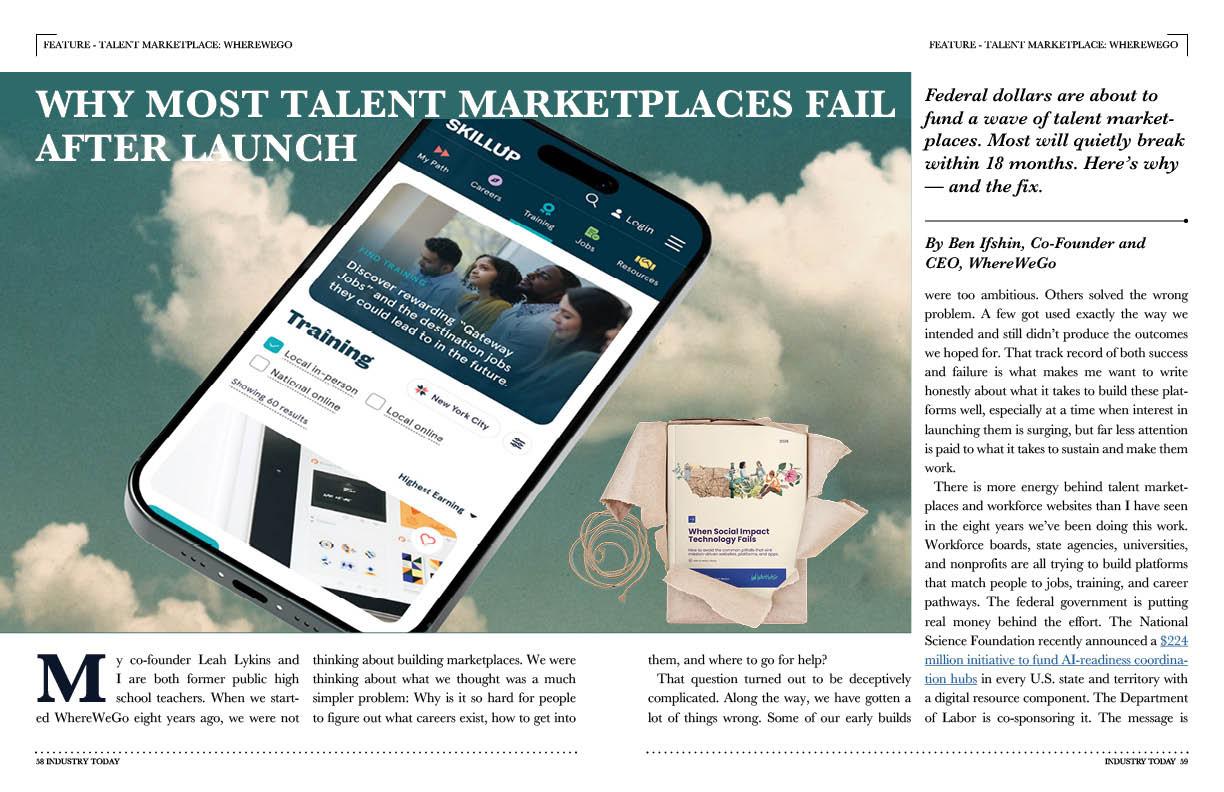
Federal dollars are about to fund a wave of talent market¬places. Most will quietly break within 18 months. Here’s why - and the fix.
WORLD WIDE TECHNOLOGY WHY AI PILOTS STALL IN MANUFACTURING
32
Manufacturing AI succeeds when companies fix fragmented data, modernize infrastructure and align IT with OT.

BUFFALO NIAGARA
BUFFALO BUILT: POWERING AMERICA’S RESHORING REVIVAL
66
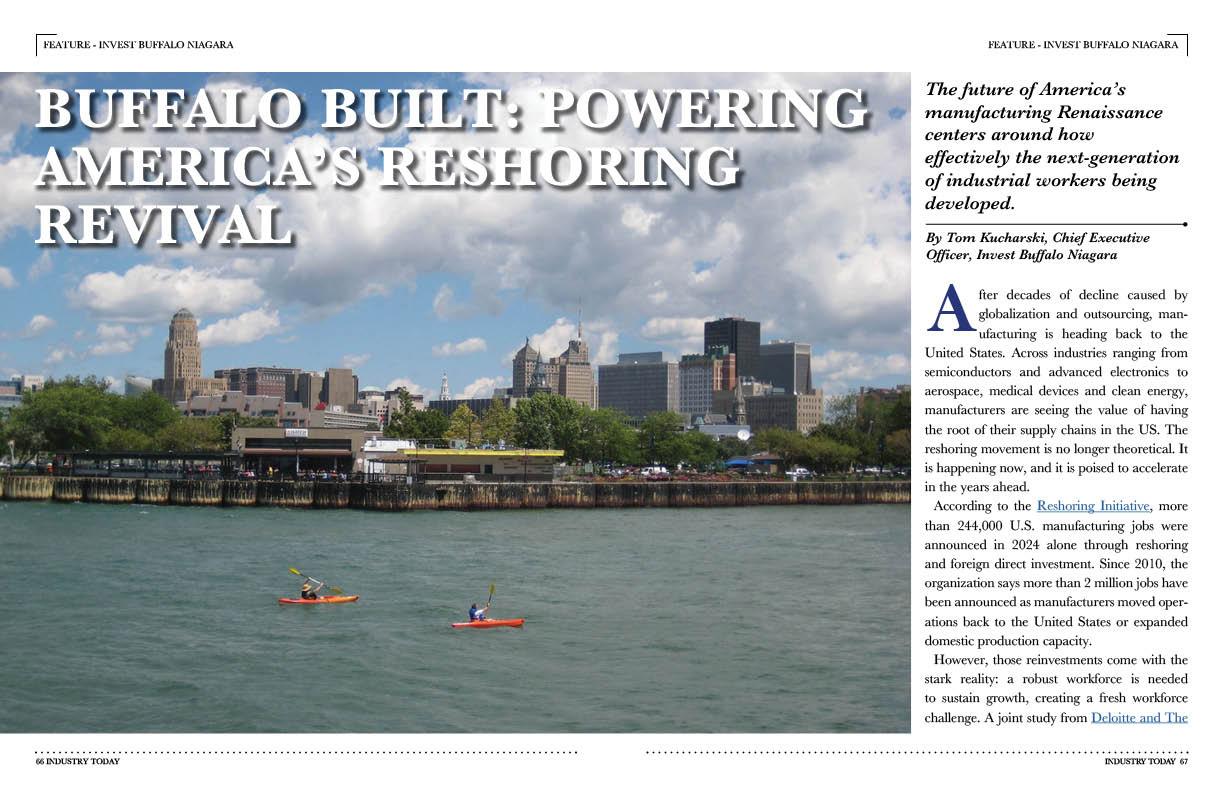
The future of America’s manufacturing Renaissance centers around how effectively the next-generation of industrial workers being developed.
CENTRAL SOUTH CAROLINA ALLIANCE WHY EV SUPPLIERS ARE MOVING EARLIER THAN EVER
MANUFACTURE ALABAMA
ALABAMA MANUFACTURING: INSPIRING THE NEXT GENERATION
24
OKLAHOMA DEPARTMENT OF COMMERCE HOW STATES MUST REDEFINE “BUSINESS FRIENDLY”
How states can stay business friendly by investing in energy, infrastructure, workforce and ready-to-build sites. ECONOMIC DEVELOPMENT
Alabama is using visibility strategies, such as Manufacturing Madness, to strengthen its manufacturing workforce and showcase industry leadership.
40
What is driving automotive suppliers to move earlier in the EV production cycle?
50

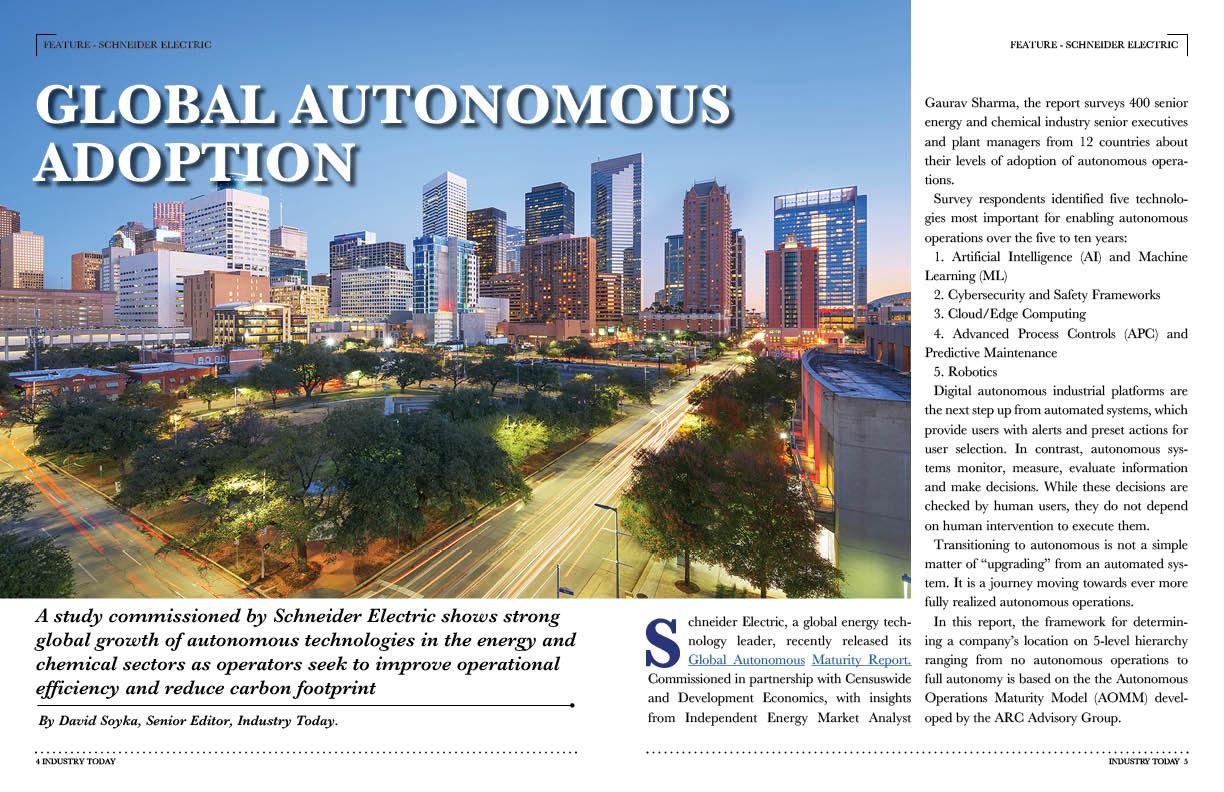
A study commissioned by Schneider Electric shows strong global growth of autonomous technologies in the energy and chemical sectors as operators seek to improve operational efficiency and reduce carbon footprint
By David Soyka, Senior Editor, Industry Today.

Schneider Electric, a global energy technology leader, recently released its Global Autonomous Maturity Report. Commissioned in partnership with Censuswide and Development Economics, with insights from Independent Energy Market Analyst
Gaurav Sharma, the report surveys 400 senior energy and chemical industry senior executives and plant managers from 12 countries about their levels of adoption of autonomous operations.
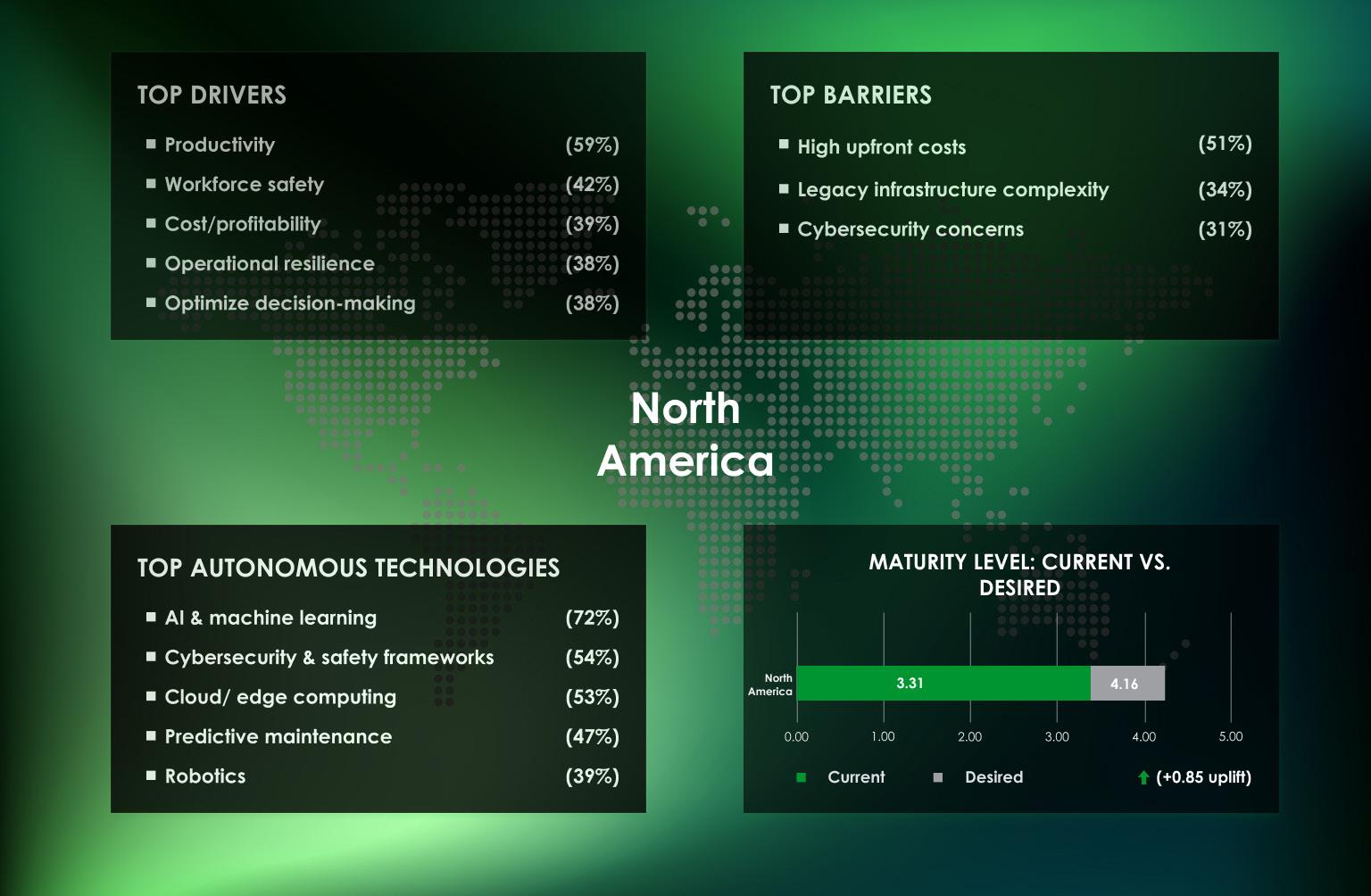
Survey respondents identified five technologies most important for enabling autonomous operations over the five to ten years:
1.Artificial Intelligence (AI) and Machine Learning (ML)
2.Cybersecurity and Safety Frameworks
3.Cloud/Edge Computing
4.Advanced Process Controls (APC) and Predictive Maintenance
5.Robotics
Digital autonomous industrial platforms are the next step up from automated systems, which provide users with alerts and preset actions for user selection. In contrast, autonomous systems monitor, measure, evaluate information and make decisions. While these decisions are checked by human users, they do not depend on human intervention to execute them.
Transitioning to autonomous is not a simple matter of “upgrading” from an automated system. It is a journey moving towards ever more fully realized autonomous operations.
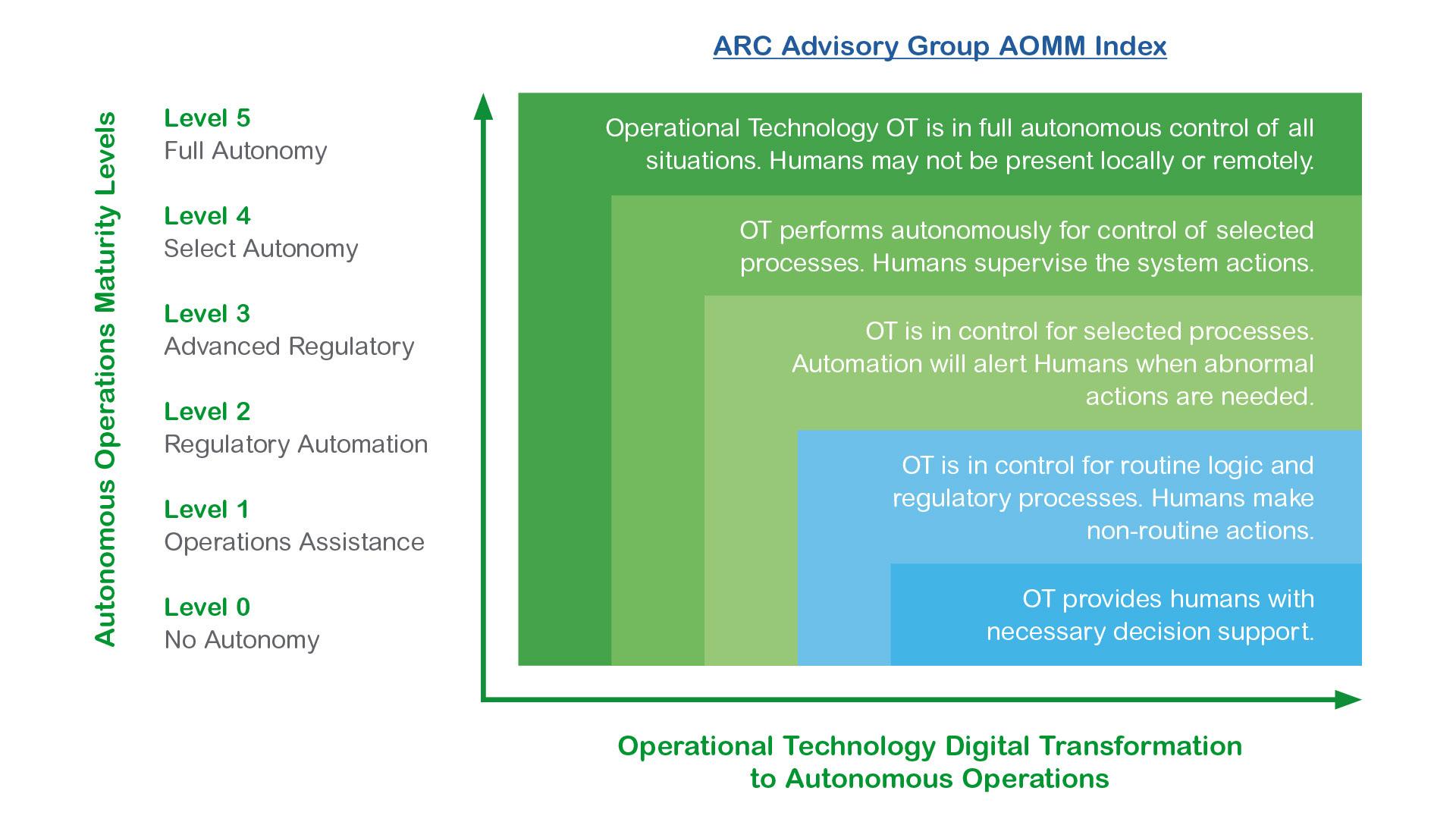
In this report, the framework for determining a company’s location on 5-level hierarchy ranging from no autonomous operations to full autonomy is based on the the Autonomous Operations Maturity Model (AOMM) developed by the ARC Advisory Group.

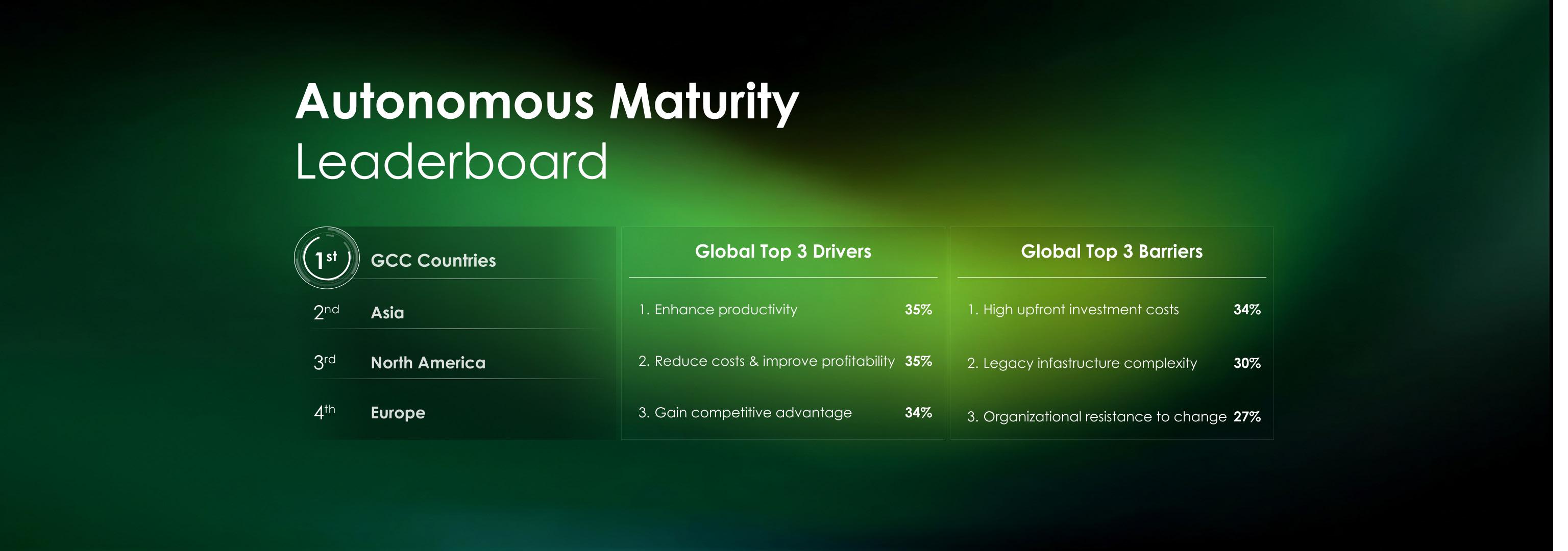
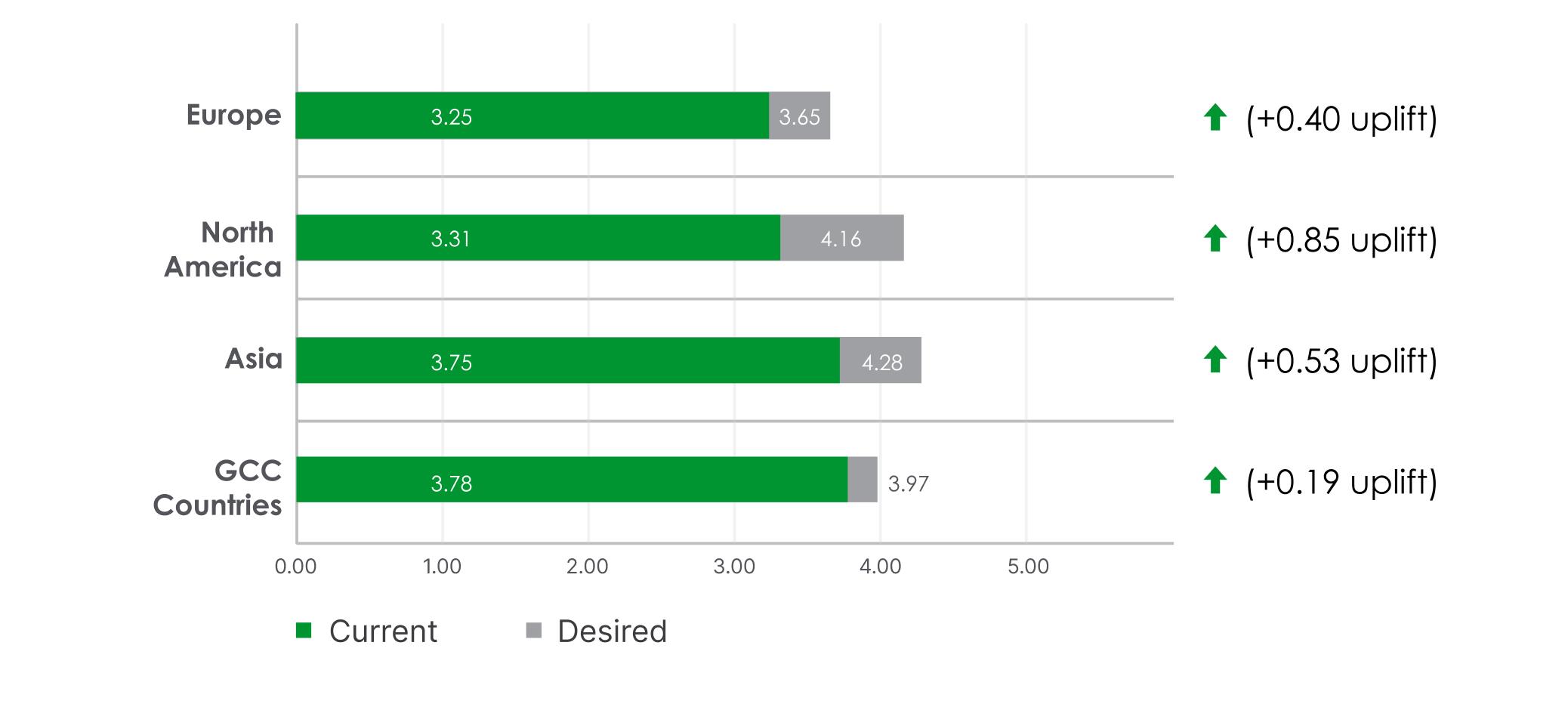
Surveyed organizations report operating at an average level of 3.52 out of 5, with ambitions to reach level 4.02 by 2030, a more positive trend of adoption than expected according to Devan Pillay, President, Heavy Industries, Schneider Electric, Industrial Automation. “The most notable insight here is not a gap in technology, but a gap in speed and momentum. The GCC (Gulf Cooperation Council) is currently leading in maturity, closely followed by Asia. However,
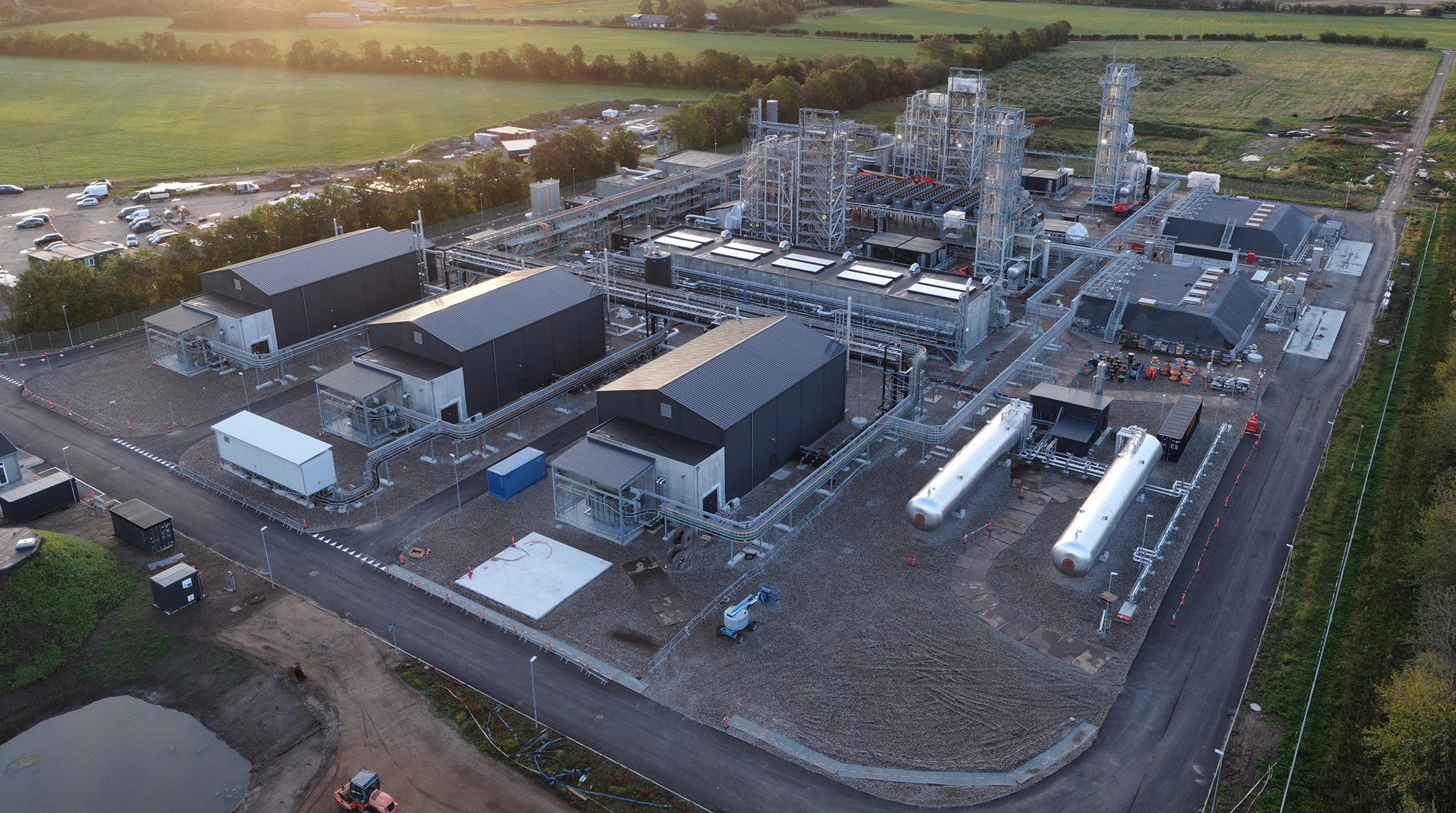
Pictured right: European Energy’s Kassø Power to X facility, the world’s first commercially viable e methanol plant, where Schneider Electric and AVEVA are enabling AI supported, self optimizing clean fuel operations with resilient remote monitoring”
Asia is the most ambitious and expects to lead within five years. While North America is behind in maturity, it is targeting the fastest acceleration, driven largely by AI demand and data center expansion. Europe’s slower overall pace of adoption was also surprising, though it is progressing steadily, with countries such as France leading within the region.
The risks of delaying adoption were cited as higher operating costs (59%), worsening talent shortages (52%), and declining competitiveness (48%). The report also notes:
“Despite regional variations, autonomy is broadly viewed as inseparable from decarbonization. Nearly six in ten energy executives say
“The energy demand from AI and datacenters is expected to double to almost 1,000 terawatt hours (TWh) by 2030, nearly equivalent to the power consumption of Japan, according to the International Energy Agency. The idea of producing ‘more (energy) with less (burn)’ — enabled by autonomous technology — has therefore gained substantial traction.”
Gaurav Sharma, Independent Energy Market Analyst
autonomous operations are critical to achieving net zero — with 23% believing it’s not possible without it and a further 35% believing it’s possible, but with major difficulty. These views are strongest in Europe, where 69% consider autonomy to be essential to net zero progress, or at the very least, an uphill struggle without it.”
Pillay notes that while the survey focuses on
the energy and chemical sectors, the findings are also applicable to other heavy industries such as mining and minerals that also operate under hazardous conditions. “They, too, are under considerable pressure to reduce greenhouse emissions, provide safer workforce environments, improve productivity and profitability and operational resilience, and optimize decision making, all key benefits of autonomous
Schneider Electric is a global energy technology leader, driving efficiency and sustainability by electrifying, automating, and digitalizing industries, businesses, and homes. Its technologies enable buildings, data centers, factories, infrastructure, and grids to operate as open, interconnected ecosystems, enhancing performance, resilience, and sustainability. The portfolio includes intelligent devices, software-defined architectures, AI-powered systems, digital services, and expert advisory. With 160,000 employees and 1 million partners in over 100 countries, Schneider Electric is consistently ranked among the world’s most sustainable companies. www.se.com

technologies.”
He adds, “Globally, AI and machine learning is clearly seen as the single biggest enabler of autonomous acceleration. This is unsurprising given their ability to improve plant wide efficiency, reduce downtime and cut emissions, typically faster than hardware only investment cycles. For oil and gas in particular, autonomy
is emerging as a critical pathway to meet both short and long term decarbonization goals while strengthening resilience and safety.”
Still, Pillay points out there are still considerable obstacles to autonomous adoption. “The top barriers to progress cited by those surveyed across all regions include high upfront costs (34%), legacy systems (30%), resistance to AI (27%), cybersecurity concerns (26%), and regulatory uncertainties (25%). The barriers are consistent: cost, complexity, and legacy infrastructure.”
He emphasizes, however, that regardless of these obstacles, “There is growing awareness that delay carries real consequences, such as higher costs, lost productivity, and increased competitive pressure. Ultimately, every region recognizes the opportunities presented by autonomous technologies to improve processes and reduce energy consumption, as well as the risks of falling behind. The difference lies in how quickly they’re moving to build on these opportunities to modernize infrastructure and ensure interoperability.”
Here’s where Schneider Electric comes in to help with a “hardware-agnostic” approach to evaluate facility operations and develop a three-layered architecture solution. Schneider Electric’s Vivek Kapoor, Mining, Minerals & Metals Segment Leader explains, “First off is to identify the customer’s needs. Then we look
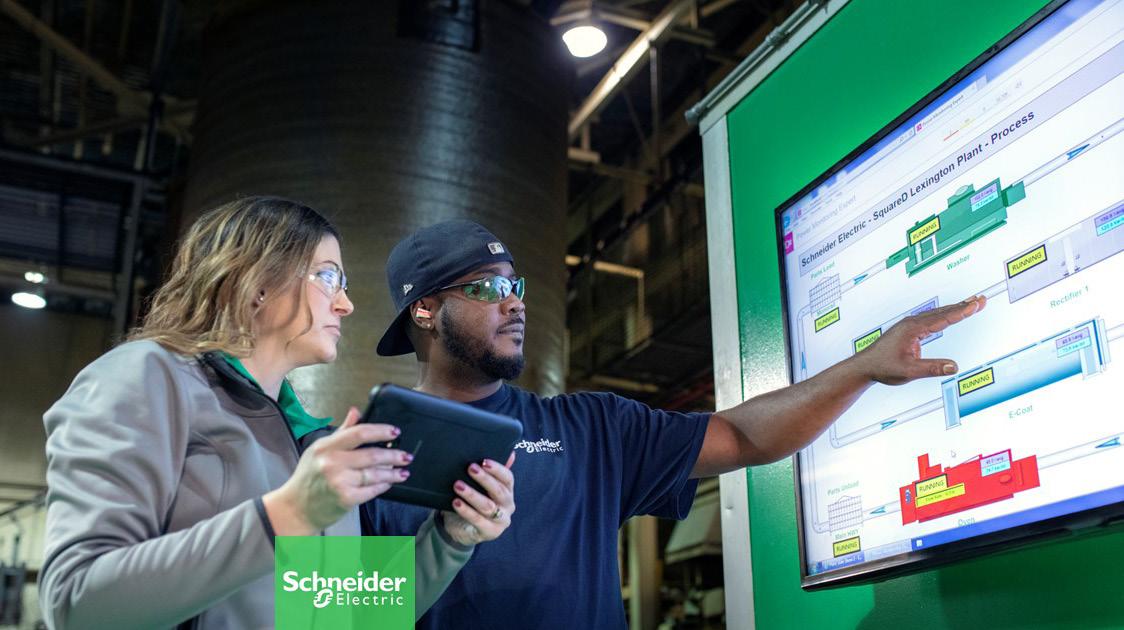
at the existing equipment. To add a control layer of sensors to collect operational data and measure critical parameters. Proper analytics of the data provides the foundation to develop a solution that meets the customer requirements.
“The challenge is how to interpret the data as a baseline for a business use case for possible scenarios. To test that, a proof of concept evaluates not only how to maximize operational output, but also to eliminate human operator bias. For example, a human operator might tend to ignore certain alerts so as not to risk missing productivity goals. But the autonomous system might not see the alerts as optional, but still manage them in a way that still meets or exceeds those goals.”
Kapoor emphasizes that this is a continu-
ous process. “Regardless of the maturity level, autonomous systems generate data that provide further insights into operational improvements, better control of supply chains, energy utilization, and elimination of silos.” AI, electrification, and automation come together to create self-optimizing systems that can predict, adapt, and continuously improve performance.
To implement an autonomous operation, Schneider Electric is “hardware-agnostic,” focusing on software-based solutions. To that end, in 2023, Schneider Electric acquired AVEVA, a global industrial software designer specializing in digital automation and energy management.

Global Segment President, Heavy Industries Industrial Automation, Schneider Electric
Devan Pillay is the Segment President of Heavy Industries within Schneider Electric’s Industrial Automation business, a sector he describes as “undergoing unprecedented transformation as the world accelerates toward a digital and decarbonized future.”
He holds a Master of Business Administration from the Gordon Institute of Business Science (GIBS) and a Bachelor of Electrical Engineering from the Durban University of Technology, South Africa.
“Schneider Electric and AVEVA are at the forefront of supporting customers such as Shell, European Energy, ADNOC and Baosteel on their autonomous journeys,” Pillay says. “By integrating Schneider Electric’s process control and power management solutions with AVEVA’s digital technologies and industrial intelligence, we deliver integrated software-defined architectures that provide real-time visibility and enable AI-driven digital twins that can predict, adapt, and self-optimize with minimal intervention.”

Recent deployments showcase how energy and chemical companies are redefining how they operate their facilities. Pillay cites Shell’s Scotford Refinery in Canada, where Schneider Electric is helping modernize operations through open, software defined automation, supporting more flexible, autonomous operations.
At European Energy’s Kassø Power to X facility, the world’s first commercially viable e methanol plant, Schneider Electric and AVEVA are together enabling AI supported, self optimizing clean fuel operations with resilient remote
Vivek Kapoor is Mining, Minerals & Metals Segment Leader at Schneider Electric. Based in Canada, he has over 30 years of industry experience, including 21 years at Schneider Electric in leadership roles spanning Europe, Asia-Pacific, and the Americas.
In his current role, Vivek leads business development and technology team, working with end users, EPCs, and OEMs to deliver solutions across electrification, automation, and digitalization. He has led multi-million-dollar projects and growth initiatives and has been central to Schneider Electric’s strategy on heavy industry decarbonization and autonomous operations.

Vivek plays a key role in helping industry stakeholders navigate the energy transition, improve operational efficiency, and unlock long-term value through electrification, automation, and data-driven solutions. He is a passionate advocate for sustainable mining and digital innovation and widely recognized as a trusted voice on the future of industrial transformation across some of the world’s most energy-intensive sectors.
monitoring, resulting in 2,079 GWh of renewable power in 2024, enough for over half a million homes.
Baosteel, one of China’s largest modern steel producers, launched a pilot to modernize its labor-intensive, safety-critical crane operations. Partnering with Schneider Electric, the company deployed an EcoStruxure™ Plant solution with unmanned crane control, optimized logistics algorithms, and real-time monitoring. The initiative delivered a 98% autonomous operation, a 15–30% output increase, stronger safety, and a more data-driven supply chain.
Schneider Electric and ADNOC (Abu Dhabi National Oil Company) Refining completed a proof-of-concept that showcased AI-driven autonomous operations at its Unit 14 Hydrotreater to optimize hydrogen use, energy efficiency, and condition monitoring. The project delivered reduced energy consumption, lower CO₂ emissions, and significant cost savings, validating a secure, semi-autonomous to fully autonomous operations model over seven months.
While autonomous technology is often feared as labor-replacement, Kapoor points to how such remote monitoring improves workforce conditions. “Chemical and energy production facilities typically produce hazardous environments. Taking people off platforms where these conditions need to occur and moving them to
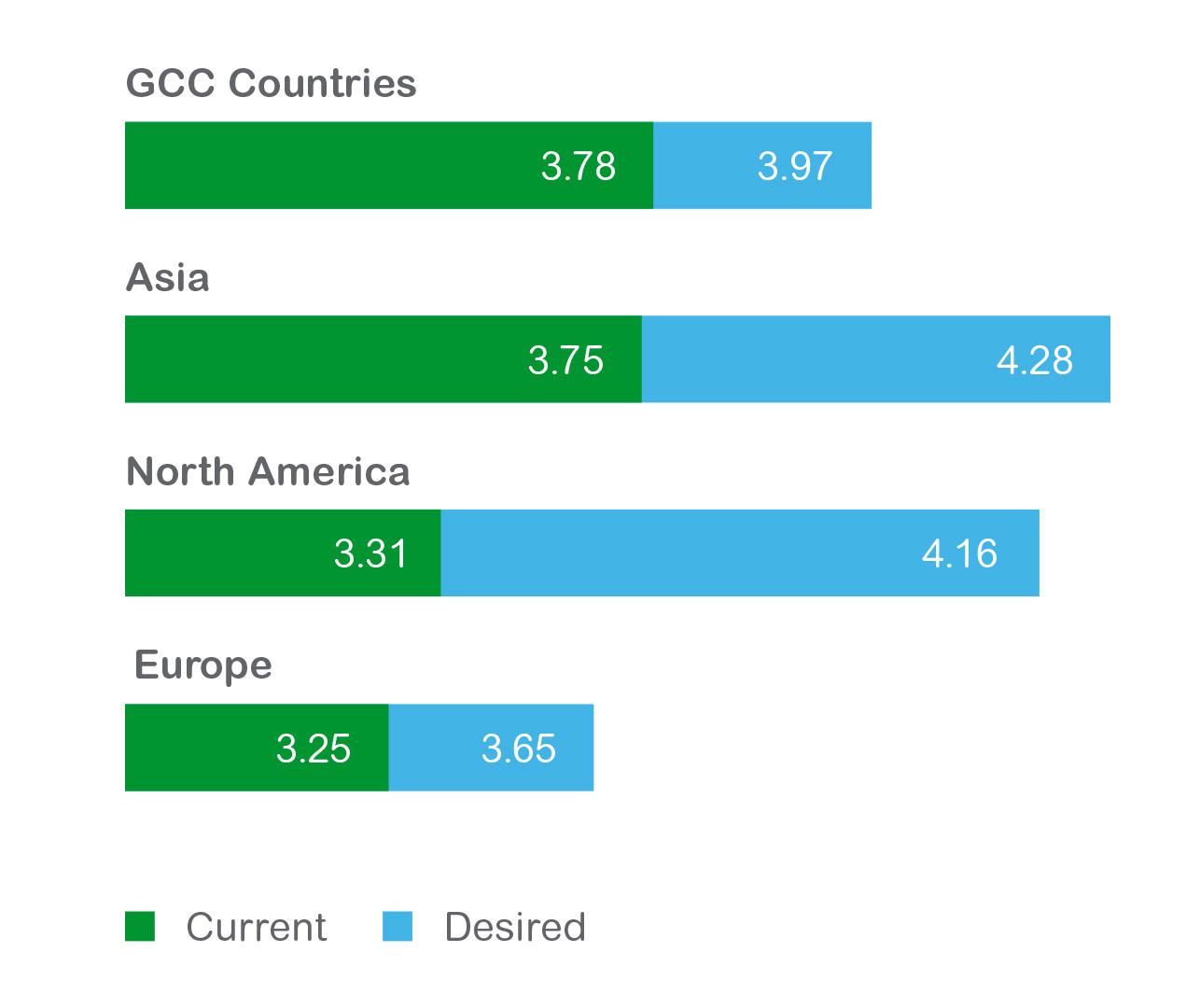
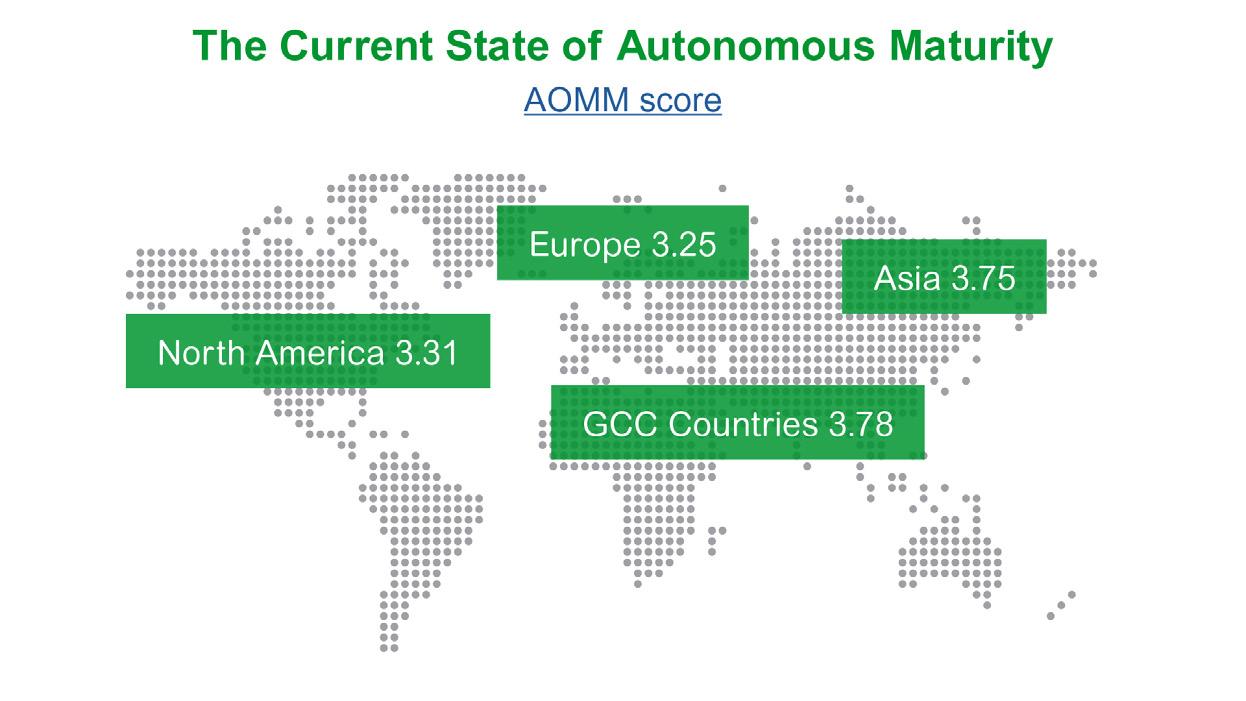
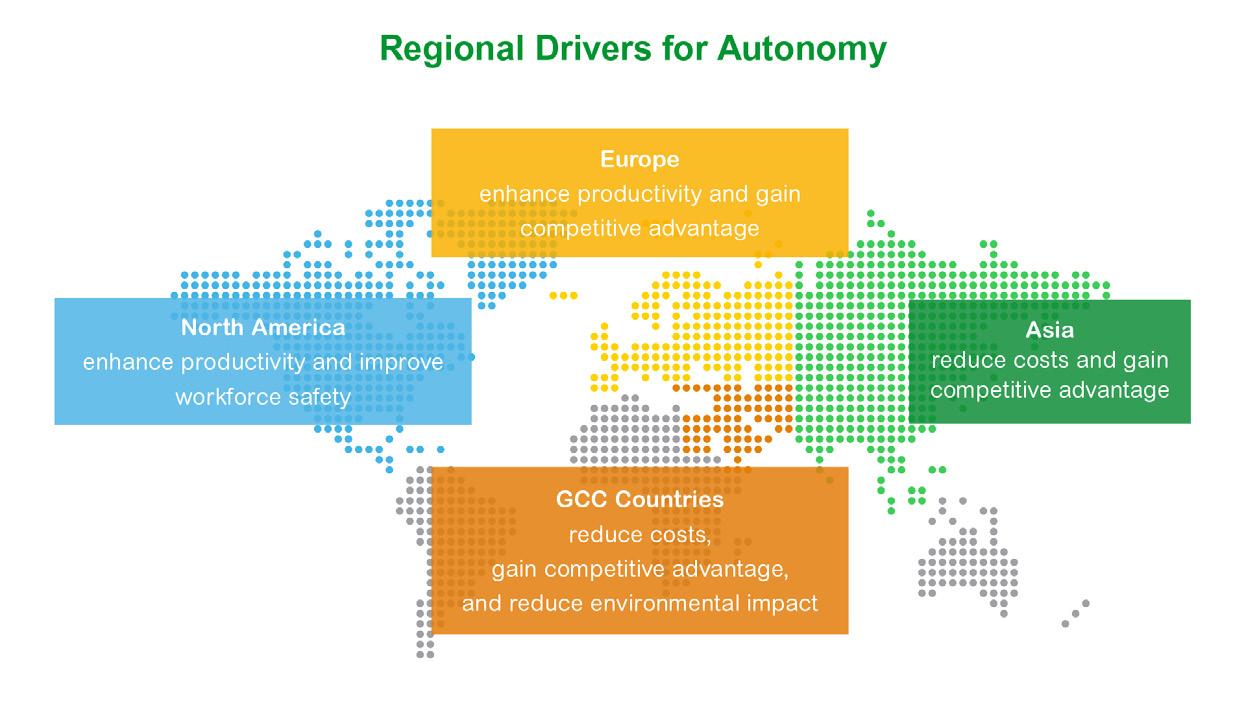
Pictured: Visuals from Schneider Electric’s Global Autonomous Maturity Report.
off-shore remote locations result in safer working environments.”
This is an example of how autonomous technologies benefit workers rather than threaten them. “There’s a clear gap between public perception and operational reality. Autonomy is not about replacing labor,” Pillay emphasizes.
“It’s empowering workers to focus on higher value work in the position of pilots and co-pilots, shifting from manual execution to oversight.”
He adds, however, that “Successful adoption depends heavily on people and culture.
Workforce readiness, change management, and trust in data-driven decision-making are all critical. Organizations need to invest early in reskilling and building AI-ready workforces. The risk of delay is clear: 52% of leaders say postponing adoption will worsen talent shortages, while resistance to AI already ranks among the top barriers to progress.”
Progress depends on the alignment of three critical factors: technology, people, and policy, according to Pillay. “Autonomy is no longer optional. It is essential for industrial
decarbonization. Nearly six in ten executives say it is critical, or extremely difficult, to achieve net zero without it. In that sense, autonomy is becoming the backbone of industrial competitiveness, the mechanism through which companies simultaneously improve performance, resilience, and sustainability.”
The Global Autonomous Maturity Report cites an overall optimistic trajectory. Executives across regions recognize the strategic value of autonomy, and many markets are preparing for significant expansion. As companies translate ambition into action, industry is well positioned
to accelerate performance, strengthen resilience, and make meaningful progress toward long-term sustainability goals.
Pillay adds that, “The stars are aligned for autonomous transformation. The technology exists today for companies to achieve full autonomy by 2030. The broader global trend is clear: convergence. AI, electrification, and automation are coming together to create self-optimizing systems that can predict, adapt, and continuously improve performance and reduce carbon footprint.”
Download the complete Global Autonomous Maturity Report here.

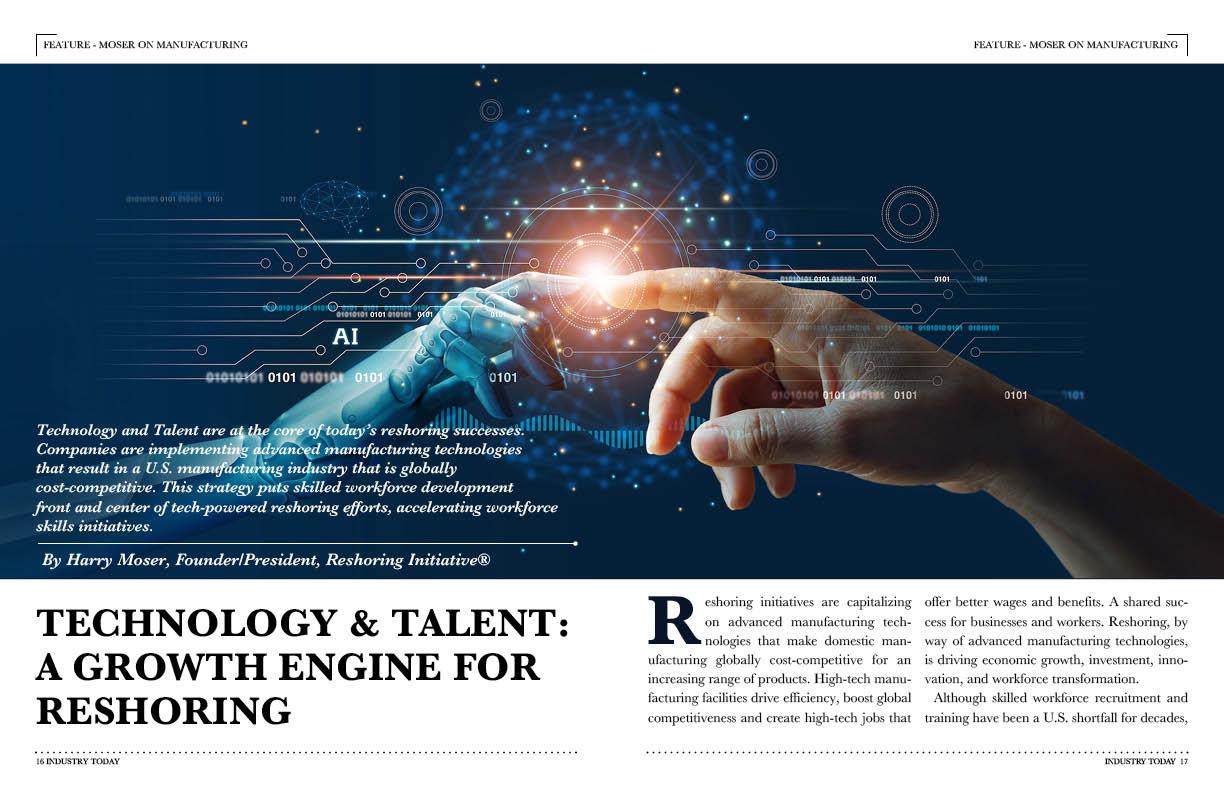
Technology and Talent are at the core of today’s reshoring successes. Companies are implementing advanced manufacturing technologies that result in a U.S. manufacturing industry that is globally cost-competitive. This strategy puts skilled workforce development front and center of tech-powered reshoring efforts, accelerating workforce skills initiatives.
By Harry Moser, Founder/President, Reshoring Initiative®

Reshoring initiatives are capitalizing on advanced manufacturing technologies that make domestic manufacturing globally cost-competitive for an increasing range of products. High-tech manufacturing facilities drive efficiency, boost global competitiveness and create high-tech jobs that
offer better wages and benefits. A shared success for businesses and workers. Reshoring, by way of advanced manufacturing technologies, is driving economic growth, investment, innovation, and workforce transformation.
Although skilled workforce recruitment and training have been a U.S. shortfall for decades,
we find evidence that tech-charged reshoring initiatives are fueling a skilled workforce power cycle, overcoming the common image that manufacturing is declining and low-tech. As companies capitalize on tech-powered reshoring, investment in skilled workforce training is rapidly becoming part of the investment mix.
expand U.S. manufacturing via reshoring and foreign direct investment (FDI).

An estimated 3.8 million manufacturing jobs will need to be filled over the next ten years due to retirements, demographic shifts, and industry growth. But a skills gap will leave more than 2 million of those jobs unfilled. Additional worker quantity and quality is essential for the United States to provide the needed capacity to
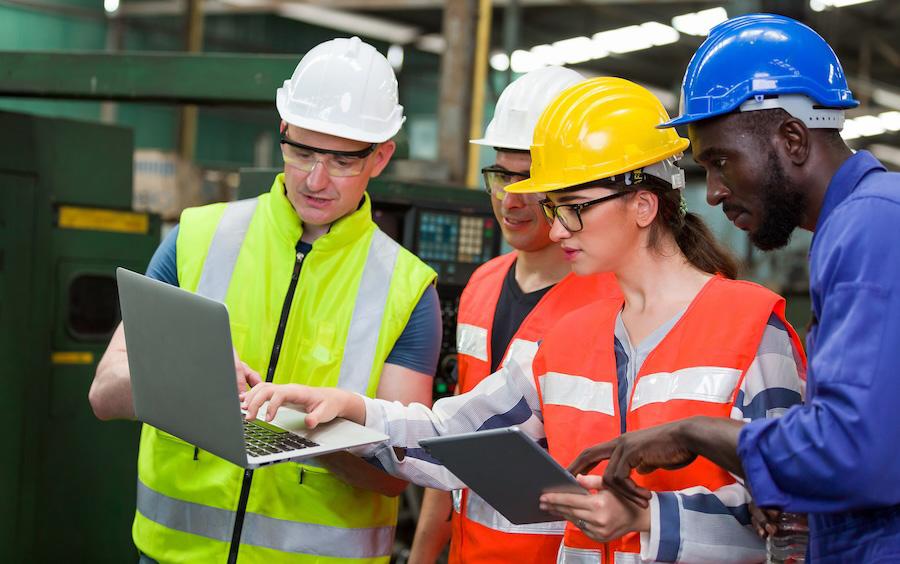
Pictured: Workforce availability remains the primary limiting factor for U.S. production growth; right: Consider competitive benefit offerings like apprenticeships, tuition reimbursement, and clear career development paths; Mikala Esposito, official U.S. competitor in Welding for the 48th WorldSkills Competition.
Workforce availability remains the leading limiting factor for U.S. production growth. According to the 2025 Reshoring Survey of 500 U.S. manufacturers, the key catalyst for increased reshoring is having an abundant, highly skilled U.S. workforce. The shortfall is further intensified by recruitment challenges rooted in negative perceptions of the industry and of trades versus degrees, as well as a tight labor market.
The World Manufacturing Foundation found that 74% of companies report a shortage of skilled workers, 94% expect to hire or repurpose workers through increased smart manufacturing technology adoption, and by 2030 more than half of the advanced manufacturing workforce will need upskilling.
A cohesive strategy emphasizing workforce

recruitment and retention will be paramount to the success of reshoring a robust U.S. manufacturing sector. Manufacturers can attract young people by optimizing job descriptions for search engines i.e. using keywords that candidates would use when job searching online. Consider diversity, equity, and inclusion (DEI) since it continues to be a key influencer for Gen Z (70%) and Millennials (63%). Take into account competitive benefit offerings like apprenticeships, tuition reimbursement, predictable hours and clear career development paths. Manufacturers can attract candidates by sharing authentic manufacturing experiences through social media platforms like Tic Tok and Instagram, highlighting short video con-

tent of actual skilled technician experiences.
The current “college for all” default pathway is waning as parents and students determine it’s no longer a guarantee for success or security. Nearly 9 in 10 parents think students should consider a career in skilled trades. Students are increasingly choosing skilled trades and vocational pathways over traditional 4-year degrees. Enrollment in four-year institutions grew just 2.8% in 2025 YOY, while students enrolled in vocational-focused community college rose 11.7%
Citing success stories can inspire manufacturing careers. For example, The American Welding Society and Skills USA recently selected 21-year-old Mikala Esposito, a student from Washtenaw Community College in Ann Arbor, MI, as the official United States competitor in Welding for the 48th WorldSkills Competition to be held this year in Shanghai, China. Congratulations Mikala! For those looking for financial assistance, check out “Industry Week’s Big List of Manufacturing Scholarships.”
Companies are facing a critical need for new collar workers like robotics technicians, industrial automation workers and engineers qualified to implement, operate and maintain new
technologies and advanced equipment. That being the case, increasingly, organizations are integrating investment in advanced manufacturing technologies with workforce training initiatives.
For example, the two 2025 National Metalworking Reshoring Award winners, GE Appliances and Marlin Steel, each leveraged automation technology and workforce initiatives in their reshoring strategies. Marlin Steel earned the award by repeatedly demonstrating that automation, engineering, quality, and delivery can enable reshoring, even of high-volume commoditized products. Marlin Steel instituted worker training and upskilling with a
partnership mix of national workforce organizations, government programs, and equipment vendors to provide hands-on training.
GE Appliances is reshoring by employing automation and AI technologies to fuel a more resilient supply chain. In August, 2025, GE Appliance, a Haier company, announced a plan to invest more than $3 billion over the next five years in its U.S. operations, workforce, and communities. The plan centers on reshoring production from China and Mexico to the U.S., creating more than 1,000 new U.S. jobs. GE Appliances is using AI to solve business challenges including, rapid shift summaries, intuitive data interaction, and real-time
optimization.
GE Appliances’ people-first approach includes partnering with technical schools and universities to support apprenticeships and trade certification pathways, expanded employee benefits including on-site primary care clinics for staff and family, and flexible work arrangements including four-day work weeks and part-time shifts. GE Appliances contributes more than $30 billion annually to the U.S. economy and supports over 113,000 U.S. jobs across its operations, suppliers, and logistics network.
Manufacturers must incorporate lifelong learning into their business plans to develop the future workforce needed for “smart factories.” Emerging technologies are transforming work at an unparalleled pace, driven by cutting-edge innovations such as artificial intelligence, advanced robotics, cognitive automation, and advanced analytics.
New-collar “smart” workers must advance their technical and soft skills through nontraditional educational paths including community colleges, vocational schools, boot camps,

technical certification programs, high-school technical education, and on-the-job apprenticeships and internships. Emphasizing vocational education, alongside traditional degree programs, can help close the skills gap and promote job growth in the United States.
A 2025 Deloitte study found that manufacturers think smart manufacturing will fuel competitiveness over the next 3 years, improving production and capacity, and requiring a highly-skilled workforce. The Reshoring Initiative’s Data concurs, finding that reshoring and FDI continue to add more High-Tech jobs than Low-Tech jobs. In 2024, 88% of job announcements were in High or Medium-High tech products, rising to an all-time record of 90% in 2025.
Advanced manufacturing technologies enable more reshoring and FDI, higher wages, better safety, and increased career stability — better for business, better for the economy, and better for technicians — a win/win/win.
The Manufacturing Institute’s 2026 survey
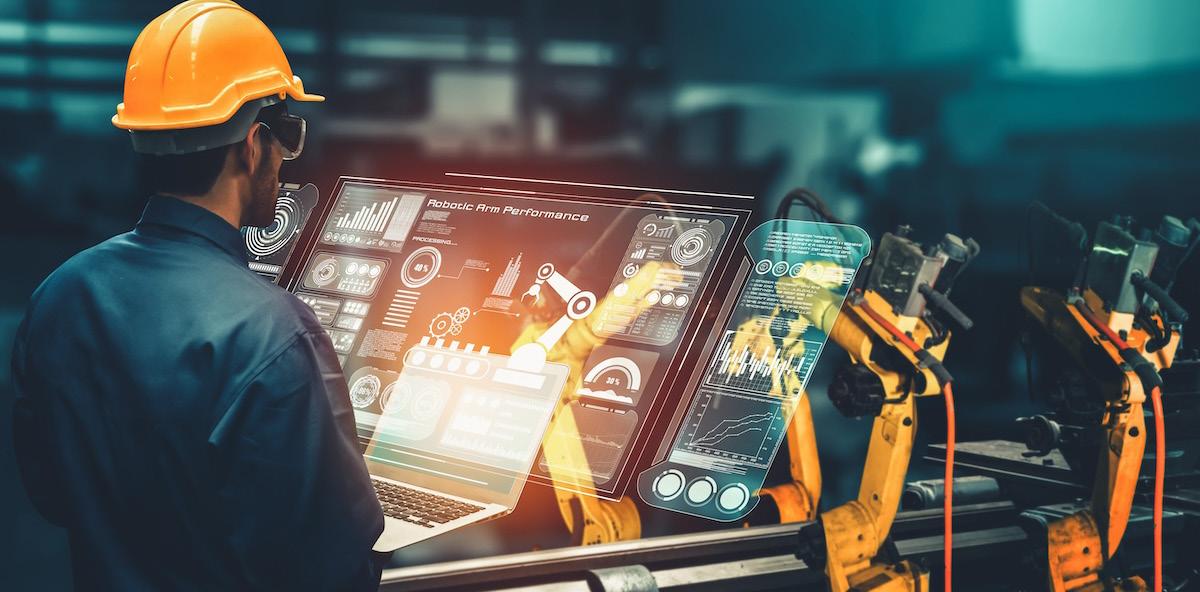
Pictured left: Organizations are integrating investment in advanced manufacturing technologies with workforce training initiatives; Workers must advance their skills through nontraditional educational paths.
estimates that manufacturers are spending $31.9 billion annually on training programs for new and existing employees. Companies must clearly define roles to ensure workforce alignment with learning pathways for workforce readiness. Tech-powered reshoring demands technical training for roles like maintenance technician, robotics programmer, data specialist and process engineer.
Companies are meeting the challenge. In 2025, global construction and mining equipment behemoth Caterpillar announced a five-year, $100 million workforce pledge as part of the company’s 2025 centennial celebration. The aim is to grow interest in advanced manufactur-
Pictured: New technology investment is accelerating workforce skills initiatives — a win/win/win for business, the economy and workers.
ing careers and prepare U.S. workers for future quality jobs and industry-wide innovation.
The GE Aerospace Foundation’s newly launched workforce program aims to bolster the number of high-skilled manufacturing workers by 10,000. The $30 million commitment over five years is designed to assist local programs purchase new equipment, hire new instructors, expand curricula and reduce financial obstacles for students.
Sharpie’s parent company Newell Brands invested nearly $2 billion in automation and training at its Tennessee facilities to reshore manufacturing from China back to the U.S. Investment in automation and workforce-training, combined, led to a very successful reshoring effort. Automation boosted production speed and improved quality while lowering costs — without reducing employee count, and even increased wages.
We recommend beginning by doing the math correctly using our free online Total Cost of Ownership Estimator® (TCO). By using TCO, companies can better evaluate sourcing, identify alternatives and even make a case when selling against offshore competitors.
• Compare the TCO offshore vs. domestic. Call on me for help if needed.
• Pick those products where Ex-Works price is within 30% and TCO is within 5%.
• Calculate the productivity improvements needed to get domestic TCO favorable.
• Ensure supervisors are trained and confident with any new automation and understand the equipment performance metrics.
• Upskill technicians in preventative maintenance and diagnostics to prevent expensive surprises.
• Train leaders in real-time data-driven metrics i.e. build a culture where decisions are supported by actual data.
• Promote collaboration and continuous learning.
Click here to access the full list of Reshoring Resources offered by the Reshoring Initiative. For help, contact me at 847-867-1144 or email me at harry.moser@reshorenow.org
Have you reshored a metal component or product? Apply for the National Metalworking Reshoring Award. The 2026 winner will be honored at IMTS 2026.
Participate in the 2026 Reshoring Survey. Your response will help influence national policy.
Click here to access the full list of Reshoring resources offered by the Reshoring Initiative. To report your reshoring successes or to get help with reshoring, contact Harry Moser, Founder and President, Reshoring Initiative, harry.moser@reshorenow.org, 847-867-1144.



By Jon Barganier, President & CEO of Manufacture Alabama.
How is Alabama leveraging visibility to strengthen its manufacturing workforce for the future?
From rocket engines and naval ships to automotive innovation and critical infrastructure products, Alabama manufacturers produce some of the most impressive products in the country. Yet many people still do not realize these products are made right here in our state. Manufacturing Madness was created to help change that by connecting the public to the companies, careers, and innovation driving Alabama manufacturing forward. For many students and young professionals, exposure is the fi rst step toward considering manufacturing as a career path. If people never see the innovation happening inside modern manufacturing facilities, they are unlikely to picture themselves working in the industry.

The opportunity now is not simply to grow the industry. It is to help more people understand the innovation, technology, and career opportunities already happening within it. That is where industry storytelling and public engagement become strategic priorities. Alabama is leveraging initiatives like Manufacturing Madness to showcase the full scope of what is made in the state. At the same time, these efforts are helping connect students, families, and communities to modern manufacturing careers. By connecting people to real products and real companies, Alabama is not only highlighting its manufacturing leadership but also building a future-ready workforce aligned with industry demand. This combination of product diversity and workforce strength is what sets Alabama apart. It has created an environment where manufacturers across sectors can thrive, collaborate, and innovate at a high level.
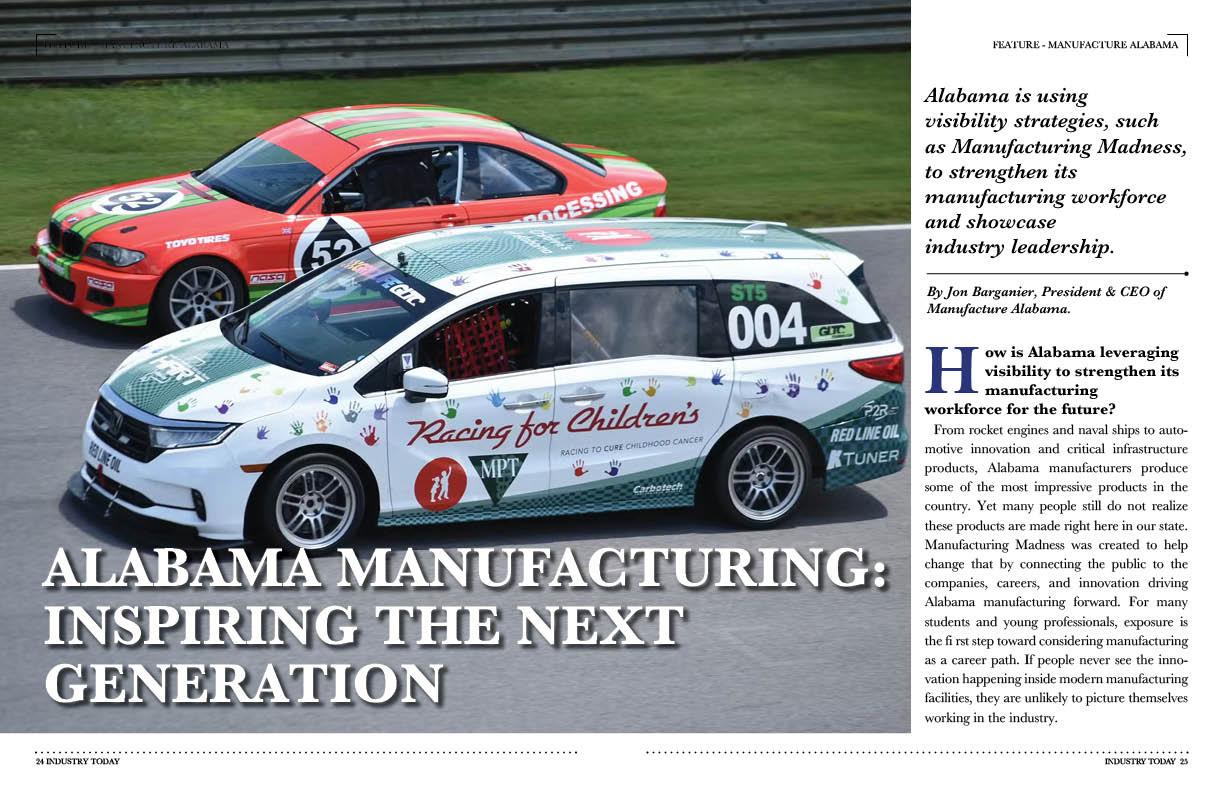
Pictured on the cover: The Honda Odyssey race car takes to the track. The vehicle was later named the winner of Manufacture Alabama’s 2026 “Coolest Thing Made in Alabama” competition; above: Austal USA’s Expeditionary Fast Transport (EPF), a high-speed naval vessel designed and built in Mobile, Alabama.
right Representatives from Honda accept the award for the 2026 “Coolest Thing Made in Alabama” competition during Manufacture Alabama’s annual meeting.
● Alabama’s manufacturing leadership is driven by industry diversity and workforce adaptability
● Visibility is a primary barrier to workforce growth, not a lack of opportunity
● Awareness campaigns like Manufacturing Madness connect the public to real-world manufacturing innovation
● Awareness efforts directly impact workforce pipeline development
● Product visibility strengthens long-term industry sustainability
What sets Alabama apart is not reliance on a single industry, but the strength of a diversifi ed manufacturing base. The state supports operations across aerospace, automotive, shipbuilding, infrastructure, and advanced manufacturing. This diversity allows Alabama to remain competitive even as market conditions shift and helps protect the state from volatility that can impact more narrowly focused regions. Workers can transition across sectors, adopt new technologies, and meet evolving production demands.
Alabama is not only highlighting its manufacturing leadership, it is building a future-ready workforce aligned with industry demand. This
combination of product diversity and workforce strength is what sets Alabama apart. It has created an environment where manufacturers across sectors can thrive, collaborate, and innovate at a high level.
Workforce development efforts in Alabama often focus on training programs, certifi cations, career tech education, and educational pipelines designed to prepare students for long-term careers in manufacturing. However, these strategies depend on a critical fi rst step, exposure. Before students and job seekers can pursue opportunities in manufacturing, they must understand what CopyWriting the industry looks like today and where they fi t within it. Across Alabama, manufacturers, educators, and industry leaders are working to
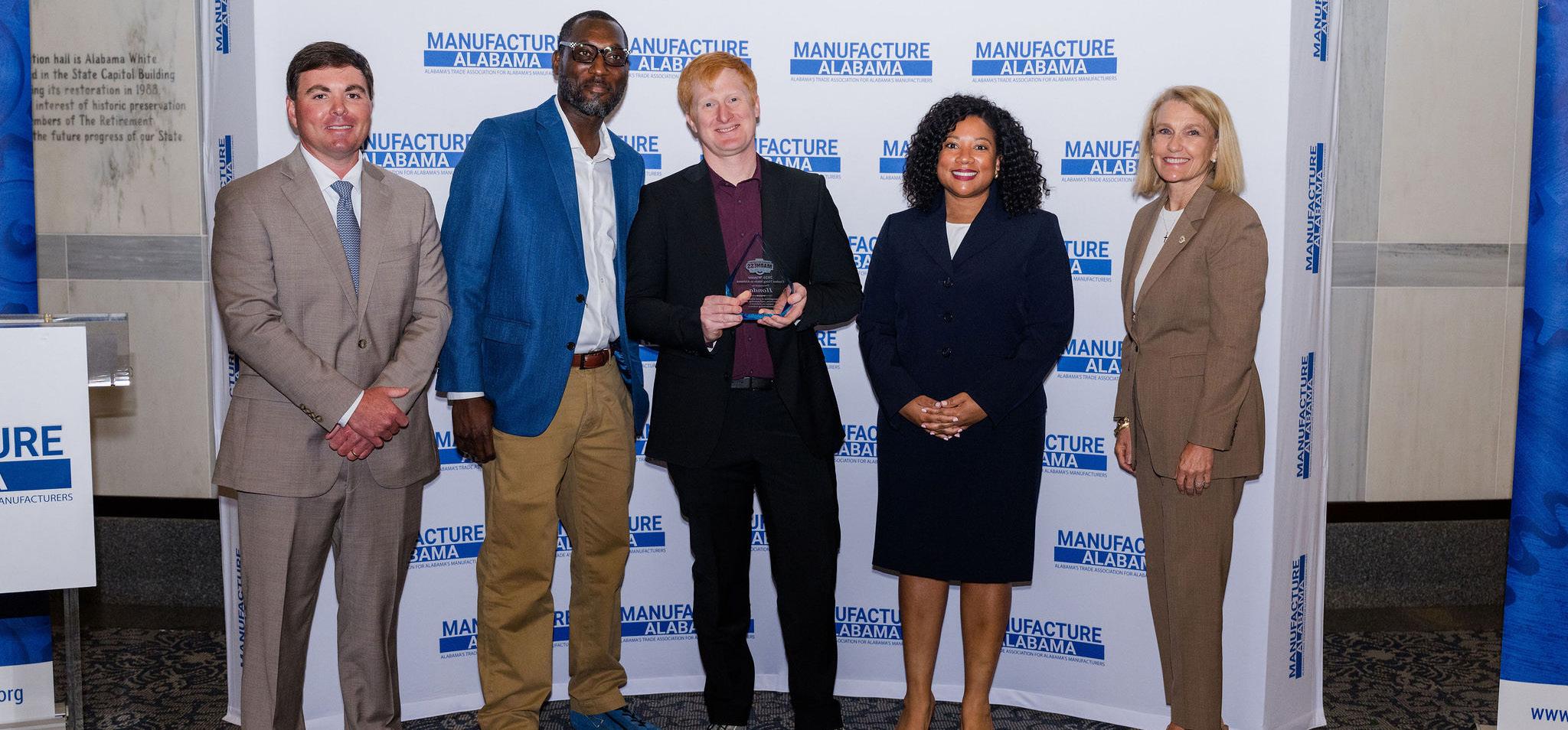

introduce more people to modern manufacturing through career pathways in high schools, workforce development initiatives, facility tours, and programs like Manufacturing Madness that showcase the products being made across the state. When people are exposed to modern
Author Bio
Jon Barganier is the President & CEO of Manufacture Alabama, the state’s only trade association dedicated exclusively to manufacturers and their partner industries. He leads the organization’s advocacy and strategic initiatives supporting Alabama’s manufacturing sector and previously served in multiple leadership roles within Alabama state government, including Chief of Staff in the Governor’s Office. Contact: jon@manufacturealabama.org


facilities, advanced technologies, and the innovation driving Alabama manufacturing, the industry becomes more tangible and accessible.
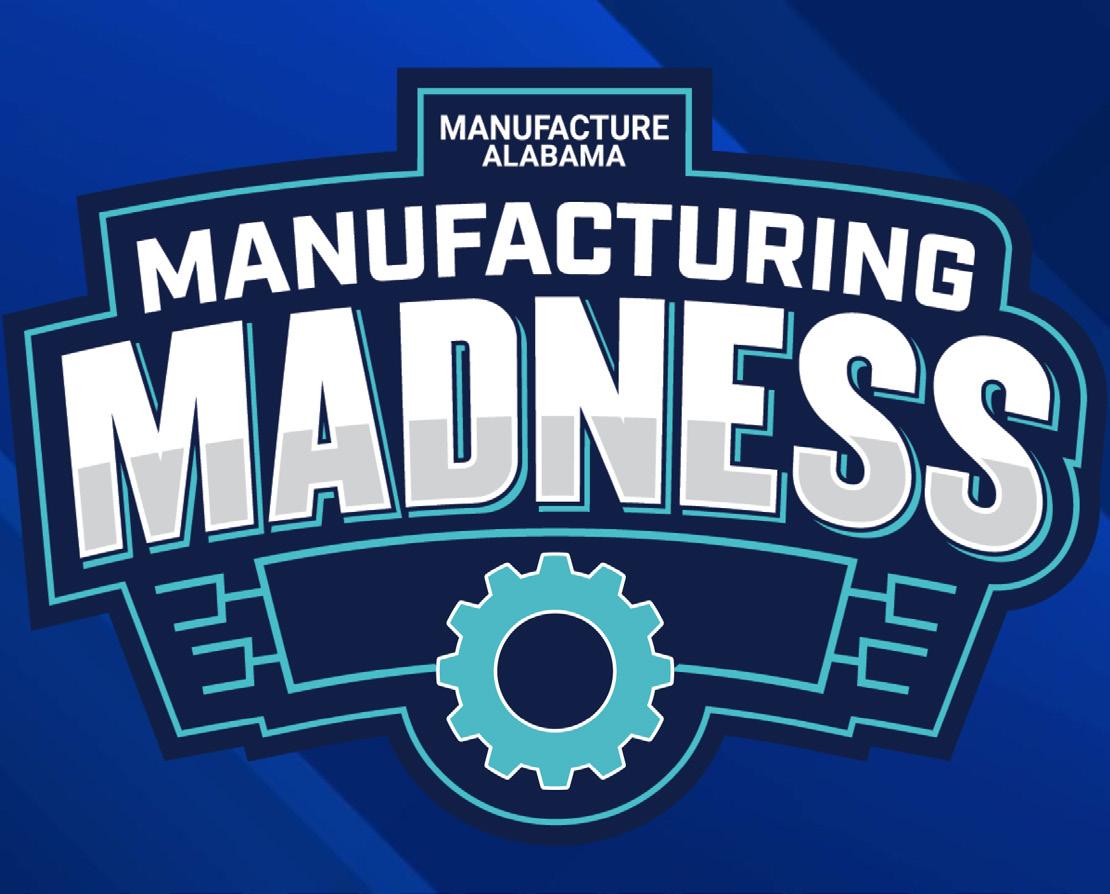
One of the most effective ways Alabama is increasing visibility around manufacturing is through Manufacturing Madness, a statewide
competition led by Manufacture Alabama that highlights the wide range of products made across the state. The annual campaign invites manufacturers from across Alabama to submit products for a bracket-style competition, with the public voting to determine “The Coolest Thing Made in Alabama.” By inviting public participation and focusing on real-world products, Manufacturing Madness turns industry achievements into something people can see, understand, and engage with. The program works because it makes manufacturing tangible. People may not immediately connect with industry statistics, but they connect with products they recognize, use, or find exciting. It bridges the gap between manufacturers and the communities they serve while reinforcing the idea that manufacturing is not only essential to the economy but also deeply connected to everyday life.
The long-term success of Alabama’s manufacturing sector depends on its ability to attract, develop, and retain talent. Workforce programs and education initiatives are essential, but they must be supported by sustained visibility and engagement efforts from manufacturers, industry leaders, educators, and organizations across
Pictured: Members of the Honda team react as the Honda Odyssey is announced as the winner of the 2026 “Coolest Thing Made in Alabama” competition.
Alabama’s manufacturing sector. Initiatives like Manufacturing Madness are successful because manufacturers from a wide range of industries participate to showcase the innovative products being made across the state.
Manufacturing Madness serves as a powerful example of how public engagement can strengthen an entire industry. Led by Manufacture Alabama, the statewide competition invites manufacturers across Alabama to showcase the products made within their facilities while encouraging public participation through online voting. By bringing manufacturing into public conversation, the program helps people better understand the scale, diversity, and innovation driving Alabama’s economy.
More importantly, the competition demonstrates that Alabama’s manufacturing industry is not defi ned by a single product or sector. The state’s industrial footprint spans automotive engineering, critical infrastructure, aerospace, shipbuilding, and advanced manufacturing, reinforcing why national and global companies continue investing in Alabama.
The 2026 winner, the Racing Honda Odyssey, captured attention not just for its performance but for what it represents. A familiar family vehicle transformed into a high-performance race car showcased the creativity, engineering, and technical expertise driving Alabama’s auto-
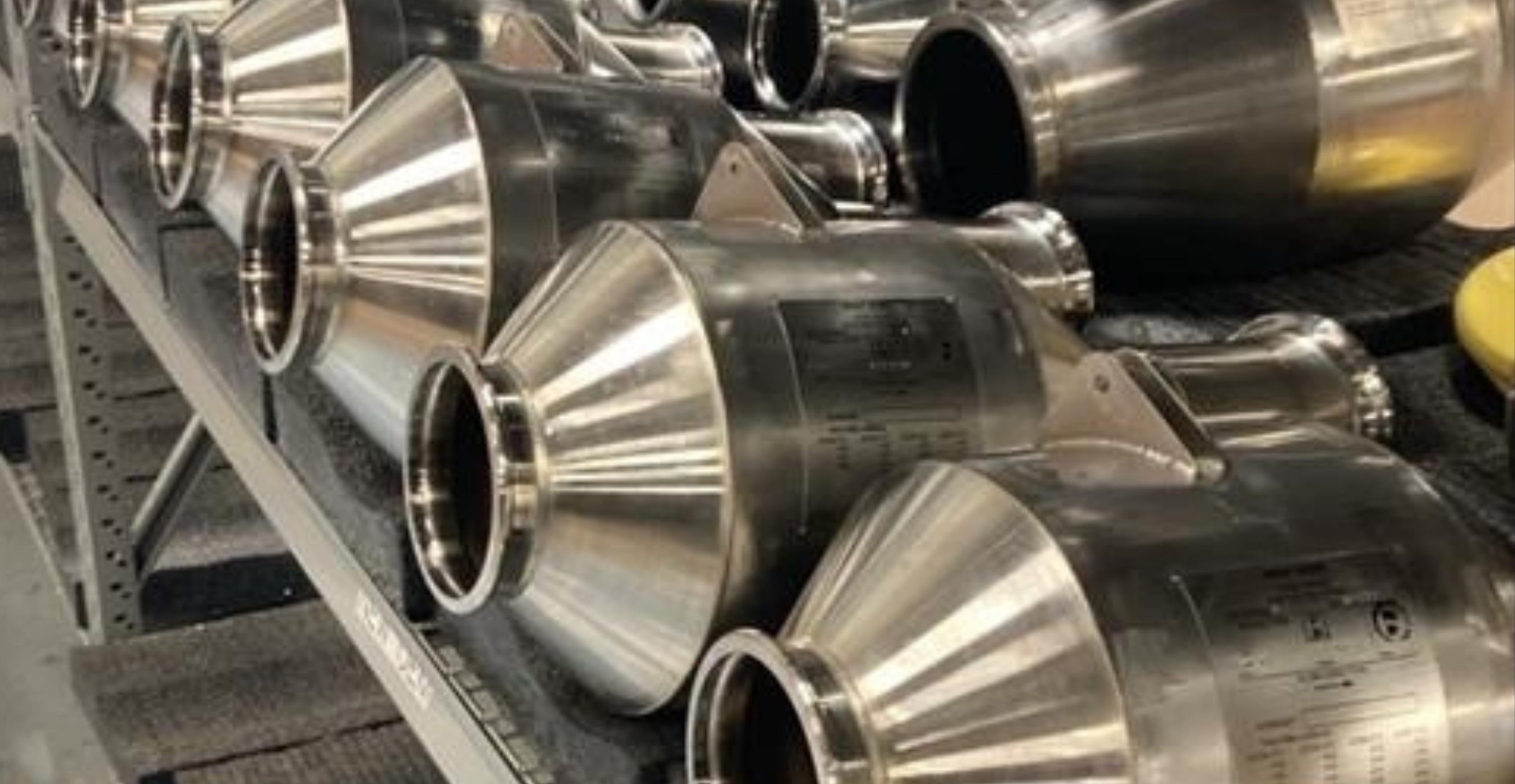
Pictured: The Blue Origin BE-4 rocket engine, manufactured in Huntsville, Alabama, powers the company’s next-generation launch vehicles and was a finalist in the 2026 “Coolest Thing Made in Alabama” competition.
“The future workforce pipeline starts with exposure. People are more likely to pursue careers in manufacturing when they can see the products, technology, and innovation being created in their own communities.” —
Jon Barganier, President & CEO, Manufacture Alabama
motive manufacturing sector.
The program’s finalists further reinforced the breadth of products being made across the state. AMERICAN highlighted Alabama’s role in supporting critical infrastructure by using ductile iron pipe in water systems nationwide. Austal USA showcased the state’s contributions to national defense through the Expeditionary Fast Transport, while Blue Origin demonstrated Alabama’s growing impact on the future of space exploration through the BE-4 rocket engine.
Together, these products illustrate the remarkable diversity of Alabama manufacturing. They also highlight the wide range of careers in the industry, from engineering and robotics to the skilled trades, logistics, and advanced production. More than 30,000 votes were cast during the competition, providing a clear measure of public engagement and reinforcing the fact that when people have visibility into manufacturing innovation, they respond.
Why is public exposure important to manufacturing workforce growth?
Because awareness drives interest, and interest drives workforce participation. Without visibility, even strong industries struggle to attract talent. What makes Alabama competitive in manufacturing nationally? It has a diverse industrial base, a strong workforce, a business-friendly environment, and the ability to support multiple high-growth sectors.
What makes Alabama competitive in manufacturing nationally?
It has a diverse industrial base, a strong workforce, a business-friendly environment, and the ability to support multiple high-growth sectors.
How can other states replicate this model?
By investing in workforce development and visibility initiatives that showcase real-world manufacturing applications.
What role do programs like Manufacturing Madness play?
They create a direct connection between the public and the manufacturing industry, increasing awareness and engagement. Alabama has established itself as a manufacturing leader among national and global industries seeking innovation, a strong workforce, and long-term growth. The next step is to ensure that more people across the state recognize these opportunities and see themselves in them. By continuing to connect people to the products, innovation, and careers behind Alabama manufacturing, initiatives like Manufacturing Madness are helping strengthen the workforce pipeline that will support the industry for generations to come.

Manufacturing AI succeeds when companies fix fragmented data, modernize infrastructure and align IT with OT.
By Shane Kehoe, Global Head of Practice, Manufacturing & Distribution, World Wide Technology

perational Infrastructure, Not AI Capability, Is the Real Constraint
Manufacturers are investing heavily in AI, but most remain stuck in pilot mode. The challenge is not a lack of ambition, funding, or AI capa-
bility — it is operational readiness.
While manufacturers are deploying AI across predictive maintenance, computer vision and supply chain forecasting, most organizations have not yet scaled these initiatives enterprise-wide. McKinsey research shows that nearly two-thirds of organizations have not begun scaling AI across the enterprise, with only about one-third report reaching a scaling stage. This scaling gap is also evident in manufacturing specifically. Deloitte’s 2025 Smart Manufacturing and Operations Survey finds that only 29% of manufacturers have deployed AI and machine learning at scale across facilities, despite widespread investment in smart manufacturing initiatives. At the same time, McKinsey highlights that the gap between digital and AI leaders and laggards has widened by approximately 60% over the past three years, reflecting a compounding advantage among more mature organizations.
Based on World Wide Technology’s work with more than 100 global manufacturers, the organizations seeing the greatest success are not necessarily those with the most advanced AI models, but those investing first in the data, integration and operational foundations required to scale AI reliably across the enterprise.
Across WWT’s manufacturing engagements, a
• Most manufacturers are investing heavily in AI yet remain stuck in pilot programs and one-off technology experiments rather than achieving enterprise-wide scale.
• The primary barrier to success is not ambition or funding, but operational readiness across IT and OT environments.
• Fragmented data silos and legacy systems remain the critical blockers to scalable AI deployment.
• Successful organizations take a phased approach: connect operations (modernize & secure infrastructure), structure data (normalize / contextualize), then scale use cases tied to business outcomes.
• IT/OT convergence and modernized infrastructure are now foundational requirements for industrial AI adoption.
• Without strong data governance and integration, AI initiatives tend to remain isolated experiments rather than repeatable capabilities.
• Organizational resistance is underestimated; successful organizations align impacted business units around expected outcomes. Change Management is not an afterthought.
consistent pattern is emerging. Manufacturers are not struggling to identify AI use cases or secure funding. They are struggling to create the operational conditions and data architecture required to scale use cases beyond pilots. The challenges are clear: data and integration foundations are weak, ROI and ownership are unclear and plants are not ready to adopt pilots into real workflows.
Most manufacturers run 3-5 AI pilots simultaneously but fewer than 30% ever scale to production. This gap between proof of concept and production value is where ROI is not realized. The lack of production scale and adoption is comparable to IIoT pilots within Manufacturing environments previously.
The root causes are:
• Disjointed data environments where information is trapped in silos with inconsistent context
• Legacy operational technology (OT) systems
with complex point to point integrations
• Misalignment between IT and operations teams with different priorities and governance models
• Inconsistent data standards across plants, vendors, systems and processes
According to WWT’s sector analysis, these challenges must be addressed before AI can scale effectively. Technology alone cannot overcome foundational integration gaps.
Across many manufacturers, AI adoption is increasing rapidly. However, most deployments remain confined to individual sites or functions. Manufacturers are successfully launching
isolated pilots such as predictive maintenance in one plant or quality inspection in another. The challenge comes when attempting to replicate those results across multiple environments.
The limitation is not the AI itself. It is the supporting infrastructure, including:
• Lack of standardized processes across facilities
• Poor business case and ROI baselines
• Limited integration between operational sites
• Weak governance models for enterprise deployment
• Insufficient change management across teams
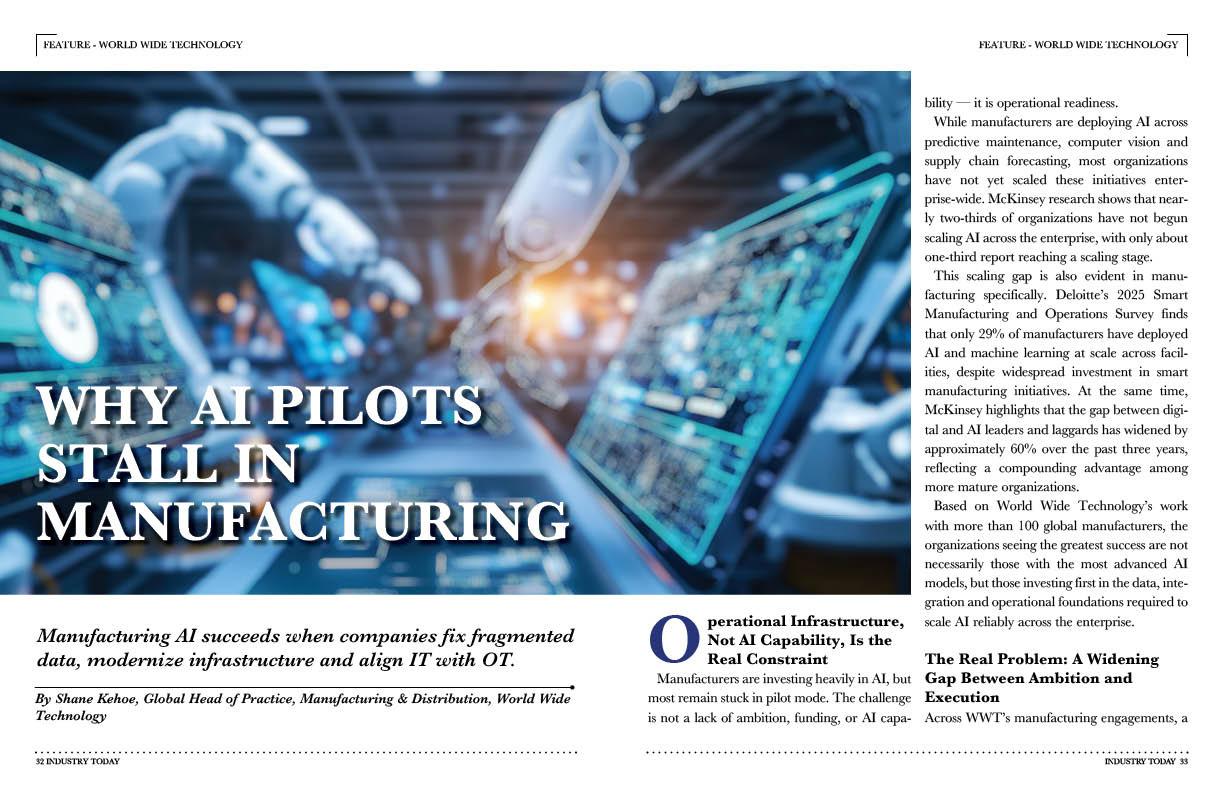
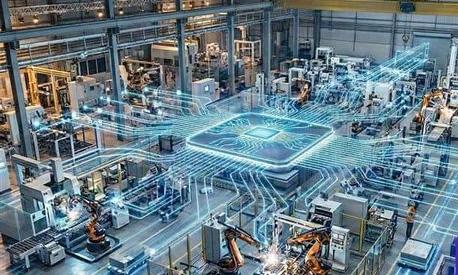
Pictured: AI at scale requires IT/OT convergence to unify plant-floor systems and enterprise data for real-time decision-making. Learn more.
Successful scaling requires treating infrastructure and organizational alignment as core components of AI strategy, not secondary considerations.
WWT consistently identifies data fragmentation as the primary barrier to scalable AI in Manufacturing.
Many organizations operate with:
• Siloed production systems that could be decades old
• Legacy OT infrastructure with limited interoperability and security
• Inconsistent data definitions across sites

• Weak integration between ERP, MES and shop floor systems
While manufacturers often invest in data infrastructure before launching a pilot, they typically address only one data stream for a single use case. True scaling, however, demands data architecture that considers integrating dozens of systems, many of them decades old, that were never designed to work together. This fundamental challenge becomes apparent
when attempting to deploy solutions across complex environments. A predictive maintenance model trained on three months of carefully curated sensor data from a single machine, for instance, cannot reliably generalize to a plant housing 400 machines of varying ages, with inconsistent tagging conventions and data gaps resulting from unplanned downtime.
The result is that while pilots may appear successful, the underlying data problem isn’t truly solved. It’s simply deferred to the scaling phase. Without unified and reliable data pipelines, Pictured: Manufacturing AI is constrained by fragmented IT/OT systems, limiting visibility, scalable insights and repeatable outcomes. Learn more.
Shane Kehoe is Global Head of Practice for Manufacturing & Distribution at World Wide Technology, where he leads strategic initiatives focused on helping industrial and manufacturing organizations accelerate digital transformation, operational efficiency and business growth. With more than 25 years of experience across manufacturing, distribution and hightech industries, Shane brings deep expertise in industrial automation, IT/OT convergence, Industry 4.0, AI, hybrid cloud and supply chain optimization. A recognized thought leader in the future of manufacturing and automation, Shane is passionate about how advanced edge, cloud and AI technologies are reshaping industrial operations and supply chains.

AI systems cannot deliver consistent outcomes across the enterprise.
One of the most consistent findings from WWT’s manufacturing work is that IT/OT convergence is essential for AI scalability.
IT wants to move AI workloads to cloud infrastructure, while OT prioritizes uptime and is deeply resistant to anything that introduces latency or connectivity dependencies on the production line. Security policies conflict. Change-management processes conflict. Even when a pilot succeeds technically, the path to production deployment often stalls at the governance level. Critical questions emerge: who owns the system? Who bears responsibility when the AI makes a wrong call on a production line? These questions are rarely answered before a pilot begins, yet they routinely block scaling efforts indefinitely.
Manufacturers cannot effectively scale AI without connecting operational systems with enterprise IT platforms; modernized infra-
structure, security and data contextualization provides the foundation for industrial AI at scale.
This is no longer just an IT initiative. It is a business transformation requirement spanning operations, supply chain, quality and leadership.
WWT’s experience shows that successful organizations do not attempt to scale AI immediately. Instead, they follow structured progression. Manufacturers that scale AI successfully treat the pilot not as the goal but as a diagnostic tool. They invest in data understanding and architecture first, defining commercial success metrics and planning for change management as a core workstream, not an afterthought. The ones still cycling through pilots are optimizing the wrong thing:
• Phase 1: Operational Connectivity and Data Architecture
Establish visibility across systems, assets and production lines in a secure fashion.
“The real AI leaders in manufacturing aren’t running the most pilots –they’re building the strongest operational backbone with cross business unit buy-in. Without true IT/OT convergence, unified data layer and shared commitment across functions, even the most sophisticated AI models stay stuck as isolated experiments instead of scalable, production systems.”
– Shane Kehoe, Global Head of Practice, Manufacturing & Distribution, World Wide Technology
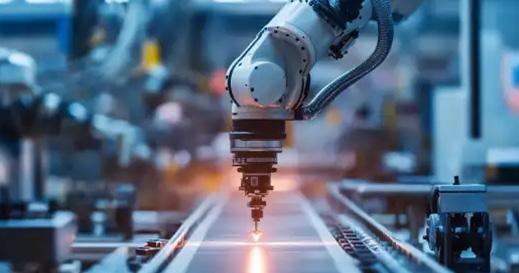
Pictured: Scalable industrial AI needs edge and hybrid infrastructure connecting OT and enterprise platforms for reliable deployment. Learn more.
FAQ
• Why are AI pilots failing to scale in manufacturing?
AI pilots often succeed in controlled environments but fail at scale due to inconsistent infrastructure and lack of standardization. WWT findings show that scaling requires integrated systems, unified data models and cross-functional alignment.
Learn more: WWT’s AI Transformation Research
• What should manufacturers do first to scale AI?
Define business layer success metrics prior to assessing IT/OT integration readiness. Getting cross-business unit buy-in and ownership is critical. Conduct a data audit to understand what’s actually accessible and in what condition. Align IT and OT on governance before deployment. Pilot in realistic (not ideal) conditions. If the pilot can’t survive the real floor, don’t build a production system on its results.
Learn more: IT Modernization for Manufacturing
• Which industries are leading in manufacturing AI adoption?
Automotive, Semiconductor and Lifesciences would be leading in manufacturing AI adoption, but every company is different. There is definitely “Leaders vs Laggards” emerging in AI adoption and the leading companies have a very different attitude, business focus, investment strategy and mindset. According to McKinsey, the “digital and AI maturity gap between leaders and laggards has grown 60% in 3 years and is compounding.”
• How should manufacturers prioritize AI investments?
WWT recommends prioritizing investments based on operational readiness and business value. Organizations should focus first on data integration and infrastructure modernization before expanding into advanced AI use cases.
Standardize and clean operational data to ensure it is consistent, normalized, contextualized and AI-ready.
Expand use cases tied directly to measurable business outcomes such as uptime, yield and efficiency.
This phased approach reduces risk and ensures that AI initiatives are grounded in operational reality. The question for Leadership is no longer “can AI work here?”; it is “are we building the conditions for it to scale?”
Across manufacturing environments, the barriers to scaling AI – disjointed data, legacy OT systems, IT/OT misalignment and inconsistent governance – are often treated as separate challenges. They are symptoms of a single underlying issue: the lack of a unified operational and data architecture.
AI does not fail at the model level in manufacturing; it fails at the integration layer between systems, processes and accountability structures. Until that layer is addressed, scaling will continue to stall regardless of model sophistication or investment levels.
Manufacturing AI adoption continues to accel-

erate, but scaling remains the central challenge. While experimentation is widespread, enterprise transformation depends on operational readiness.
The organizations that will lead in AI-enabled manufacturing are not those running the most pilots, but those building the strongest operational foundations.
AI success depends on connectivity, data usability and alignment across IT and operations. Without these, even the most advanced models will remain isolated experiments rather than enterprise capabilities.
World Wide Technology has worked with manufacturing leaders across the globe on AI transformation. WWT has seen what works and what doesn’t. If you’re wondering whether your organization is ready to scale AI beyond pilots, WWT can help. Learn more about WWT’s AI for Manufacturing solutions.
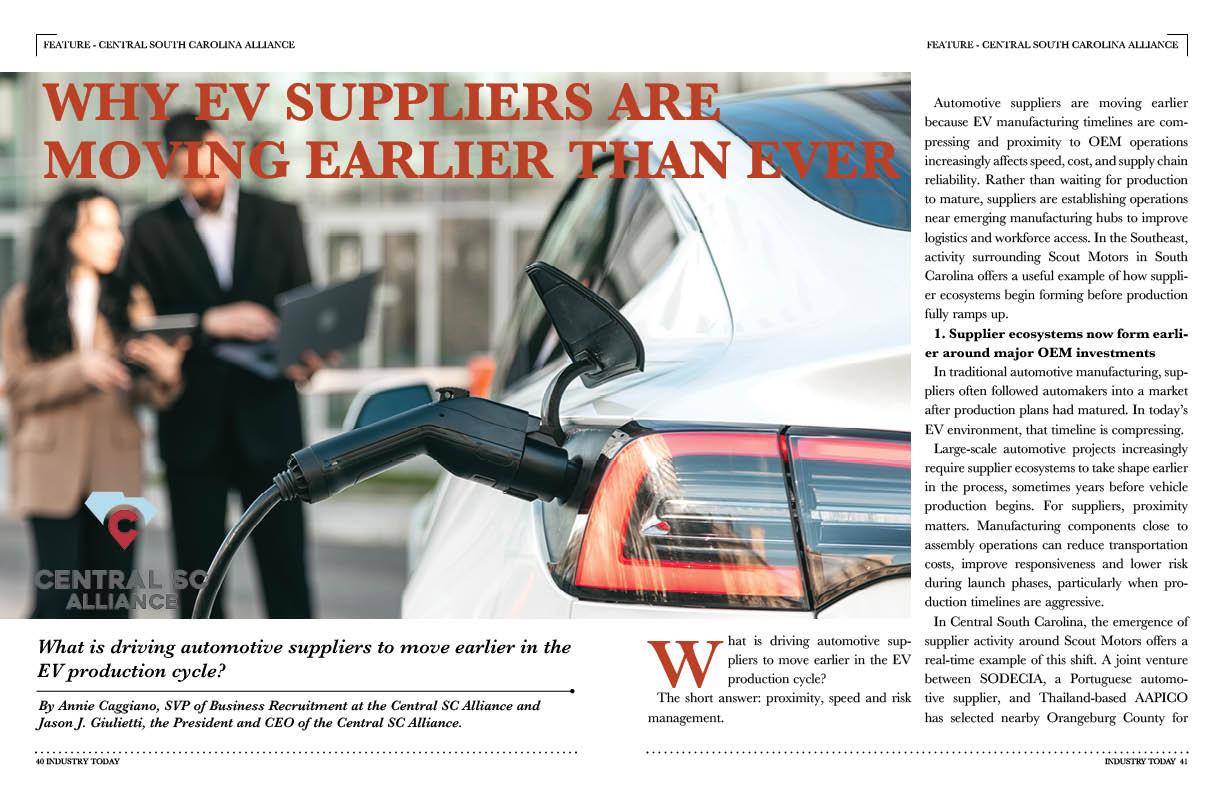
What is driving automotive suppliers to move earlier in the EV production cycle?
By Annie Caggiano, SVP of Business Recruitment at the Central SC Alliance and Jason J. Giulietti, the President and CEO of the Central SC Alliance.

What is driving automotive suppliers to move earlier in the EV production cycle?
The short answer: proximity, speed and risk management.
Automotive suppliers are moving earlier because EV manufacturing timelines are compressing and proximity to OEM operations increasingly affects speed, cost, and supply chain reliability. Rather than waiting for production to mature, suppliers are establishing operations near emerging manufacturing hubs to improve logistics and workforce access. In the Southeast, activity surrounding Scout Motors in South Carolina offers a useful example of how supplier ecosystems begin forming before production fully ramps up.
1. Supplier ecosystems now form earlier around major OEM investments
In traditional automotive manufacturing, suppliers often followed automakers into a market after production plans had matured. In today’s EV environment, that timeline is compressing.
Large-scale automotive projects increasingly require supplier ecosystems to take shape earlier in the process, sometimes years before vehicle production begins. For suppliers, proximity matters. Manufacturing components close to assembly operations can reduce transportation costs, improve responsiveness and lower risk during launch phases, particularly when production timelines are aggressive.
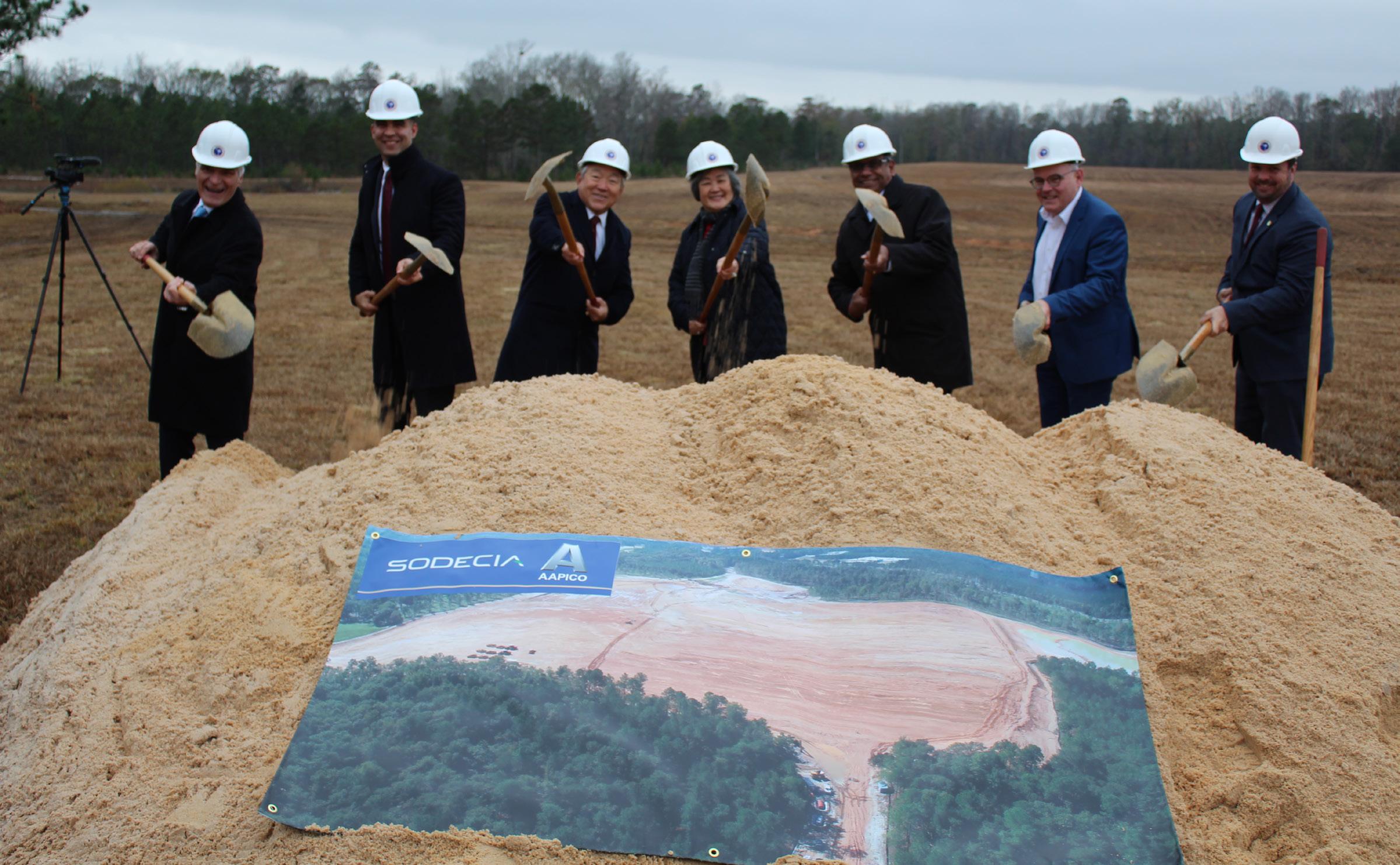
In Central South Carolina, the emergence of supplier activity around Scout Motors offers a real-time example of this shift. A joint venture between SODECIA, a Portuguese automotive supplier, and Thailand-based AAPICO has selected nearby Orangeburg County for
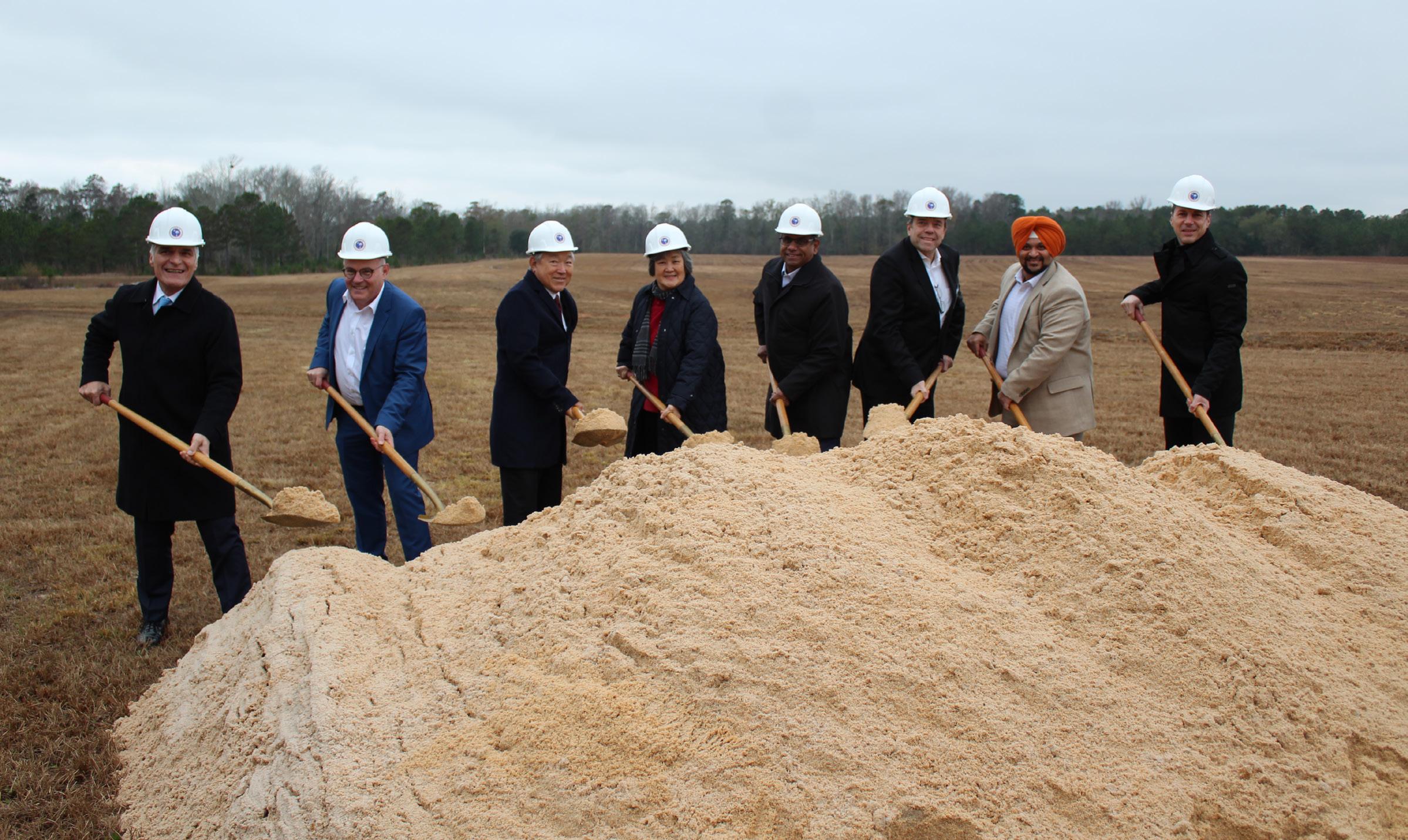
operations supporting the broader automotive supply chain.
Many of these relationships also begin long before the public ever hears about a project. During confidential recruitment efforts, often referred to internally as the “codename phase,” economic developers, OEMs and suppliers gain early visibility into infrastructure, land availability, workforce access and long-term operational fit.
“The timeline has changed,” says Annie Caggiano, SVP of Business Recruitment at the
Pictured: Representatives of the SODECIA/ AAPICO joint venture joined Scout Motors executives to break ground in Orangeburg County, S.C. on December 8, 2025.
Central SC Alliance. “Suppliers are evaluating opportunities much earlier because proximity and readiness matter more than ever in EV manufacturing.”
While every project develops differently, investments of Scout’s scale typically create demand for regional supplier support well beyond the assembly facility itself.
Increasingly, automotive suppliers are evaluating regions rather than individual sites.
For decades, automotive investment concentrated around established manufacturing hubs with mature supplier networks and major metro access. Increasingly, however, secondary U.S.
markets are gaining ground, particularly in the Southeast.
The shift is being driven by a practical reality: manufacturers need room to move quickly.
As automotive suppliers evaluate where to establish operations, available industrial land, transportation access, labor availability and permitting timelines often matter as much as incentives. In larger or more saturated markets, those conditions can be harder to find at scale.
In the Central South Carolina region, the SODECIA/AAPICO joint venture illustrates how regional assets often shape location decisions rather than county lines alone.
Although the operation is located in Orangeburg County, its advantages extend well beyond a single jurisdiction. Companies evaluating the region gain access to interstate connectivity, proximity to the broader Scout Motors manufacturing ecosystem, and a labor shed that spans multiple counties.
For suppliers, that regional flexibility matters.
“Companies are evaluating regions, not just sites,” Caggiano said. “They want to understand how quickly they can access workforce, infrastructure, suppliers and logistics partners, and increasingly, those assets cross county boundaries.”
● Why are automotive suppliers moving earlier than before?
○ EV production timelines are accelerating, and suppliers increasingly need proximity to OEM operations to reduce logistics risk and improve responsiveness.
● Why are secondary markets becoming more competitive?
○ Many offer available industrial land, workforce access, transportation infrastructure and fewer operational constraints than larger metro areas.
● What role does foreign direct investment play in automotive manufacturing?
○ International suppliers remain essential to automotive ecosystems, particularly as OEM investments create demand for nearby production and logistics capabilities.
● What makes a region competitive for automotive investment?
○ Regions increasingly compete on workforce readiness, infrastructure, supplier networks, industrial land availability and operational speed.
In many cases, neighboring counties offer complementary advantages. One community may provide available industrial land, while another contributes workforce density, logistics infrastructure, or existing manufacturing expertise. This regional approach allows projects to move faster and gives companies more flexibility as they scale operations.
Regions with available industrial land and multimodal access increasingly hold an advantage as automotive investment accelerates. Rather than competing internally, economic development organizations increasingly view growth through a regional lens, matching projects with the locations best suited to operational needs.
3. Foreign investment continues to shape the Southeast’s automotive future
The Southeast’s rise as an automotive manufacturing hub has also become a story of international investment.
Foreign direct investment (FDI) continues to play a major role in how automotive ecosystems form in the United States, particularly as global suppliers look to establish operations closer to OEM production. According to multiple site selection and economic development analyses, the U.S. remains a leading destination for automotive-related FDI, with Southeastern states continuing to attract a significant share of those investments.
The SODECIA/AAPICO joint venture in Orangeburg County illustrates that trend in real time. The project brings together companies headquartered in Portugal and Thailand, both established players in the automotive supply chain, to support manufacturing growth tied to the broader Scout Motors ecosystem in
Operational ease also increasingly factors into decision-making. Compared to larger manufacturing hubs, many secondary markets offer less congestion, lower costs and faster movement of goods and people, all advantages that can improve both workforce attraction and day-today efficiency.

South Carolina.
While international suppliers have long invested in the U.S., competition for those projects is intensifying. Increasingly, companies are prioritizing regions that offer speed-to-market, available industrial capacity, workforce access and the ability to scale alongside major OEM investments.
South Carolina has emerged as one of the states benefiting most from those dynamics, ranking No. 2 nationally for both foreign direct investment competitiveness and GDP growth in a 2025 industry analysis by Business Facilities.
“Global companies are increasingly looking for locations where predictability meets execution, not just where incentives exist,” says

Jason Giulietti, FDIP, CEO of the Central SC Alliance. “For automotive suppliers, speed, workforce access, a strong partner network, infrastructure readiness and regional coordination are all equal as critical differentiators.”
In Central South Carolina, those strengths increasingly work together. The region’s access to industrial land, interstate infrastructure, and
proximity to both existing and emerging manufacturing assets creates an environment where global companies can establish operations without some of the constraints found in more saturated markets.
As new EV-related investments continue across the Southeast, international suppliers are expected to remain a key part of the growth
KEY
● EV suppliers are committing to locations earlier in project lifecycles than in traditional automotive manufacturing.
● Major OEM investments increasingly drive supplier clustering in secondary U.S. markets.
● Regional assets, including workforce, industrial land, logistics and infrastructure, are becoming key differentiators.
● Foreign direct investment continues to shape automotive growth in the Southeast.
● Long-term competitiveness depends on building supplier ecosystems, not isolated projects.
story, going beyond following automakers to shaping the supplier ecosystems forming around them.
4. The strongest regions are building ecosystems, not isolated projects
Automotive investments increasingly succeed in regions built for long-term manufacturing growth rather than single-project wins.
Large-scale OEM projects require interconnected systems: workforce training, supplier access, transportation infrastructure, utilities, industrial land and institutional partnerships capable of scaling alongside growth. Increasingly, the regions winning automotive investments are those building ecosystems rather than pursuing isolated announcements.
The Southeast offers several examples of this model in action.
In Tennessee, the supplier ecosystem surrounding BlueOval City has accelerated alongside workforce and infrastructure planning tied to Ford’s EV investments. In Georgia, the region surrounding Hyundai Motor Group Metaplant America has emphasized technical workforce pipelines, supplier recruitment and industrial development to support long-term manufacturing growth.
The pattern is increasingly clear: major automotive projects rarely succeed in isolation.
Instead, they rely on regional ecosystems capable of supporting long-term operational growth.
In Central South Carolina, those efforts are

Jason J. Giulietti is the President and CEO of the Central South Carolina Alliance, leveraging 20+ years of expertise in economic development. His strategic leadership has significantly shaped South Carolina’s economic landscape, fostering collaborative efforts among all eight regional development alliances in the state. Under his guidance, these partnerships facilitated $958.6 million in investments and 4,208 new jobs in the last two years. Previously, as President and CEO of the Greater San Marcos Partnership, Jason led a successful five-year strategic plan that attracted more than $4 billion in capital investments and created more than 7,500 jobs. Jason is recognized for his relationship-driven approach to economic development, marked by accountability, transparency, and authenticity. His achievements include being named one of Industry Era’s Top 10 Influential Leaders and earning the Foreign Direct Investment Professional (FDIP) designation.
Annie Caggiano is a senior economic development and global business recruitment executive with 20+ years of experience driving large-scale manufacturing investment, site selection and product development in South Carolina from across the U.S. and international markets. Having previously led the Global Business Development team at the South Carolina Department of Commerce, Annie is a proven leader in closing complex, high-value projects, building and managing high-performing teams, and advising C-suite executives and public-sector leadership on incentive strategy, infrastructure readiness and long-term economic impact. Throughout her career, she has been recognized for disciplined execution, relationship-driven dealmaking and delivering measurable results.

“Companies evaluating automotive projects want confidence that the pieces are already in place: workforce, infrastructure, logistics, and room to grow.” -
taking shape through workforce and infrastructure partnerships designed to support future manufacturing needs. Workforce initiatives tied to Scout Motors include training partnerships with readySC and Midlands Technical College, helping prepare talent pipelines aligned with advanced manufacturing needs.
At the same time, industrial parks, transportation access and regional coordination efforts continue to shape how communities position themselves for future supplier investment.
“Regional competitiveness is increasingly about readiness,” said Giulietti. “Companies want confidence and predictability that workforce, infrastructure, utilities and supply chain support will be in place at launch and over the life of the investment.”
That regional lens matters because suppliers and manufacturers rarely operate within coun-
ty boundaries. Workforce may come from one community, infrastructure from another, and industrial capacity from a third. Increasingly, economic development organizations across the Southeast are coordinating regionally to ensure projects can scale beyond a single site.
For regions competing in the next generation of automotive manufacturing, the question is becoming less about attracting one project, and more about whether the ecosystem exists to support what follows.
Major automotive investments do not succeed in isolation. As EV manufacturing expands across the Southeast, regions that can connect workforce, infrastructure, industrial capacity and supplier support will be better positioned to compete for what comes next.

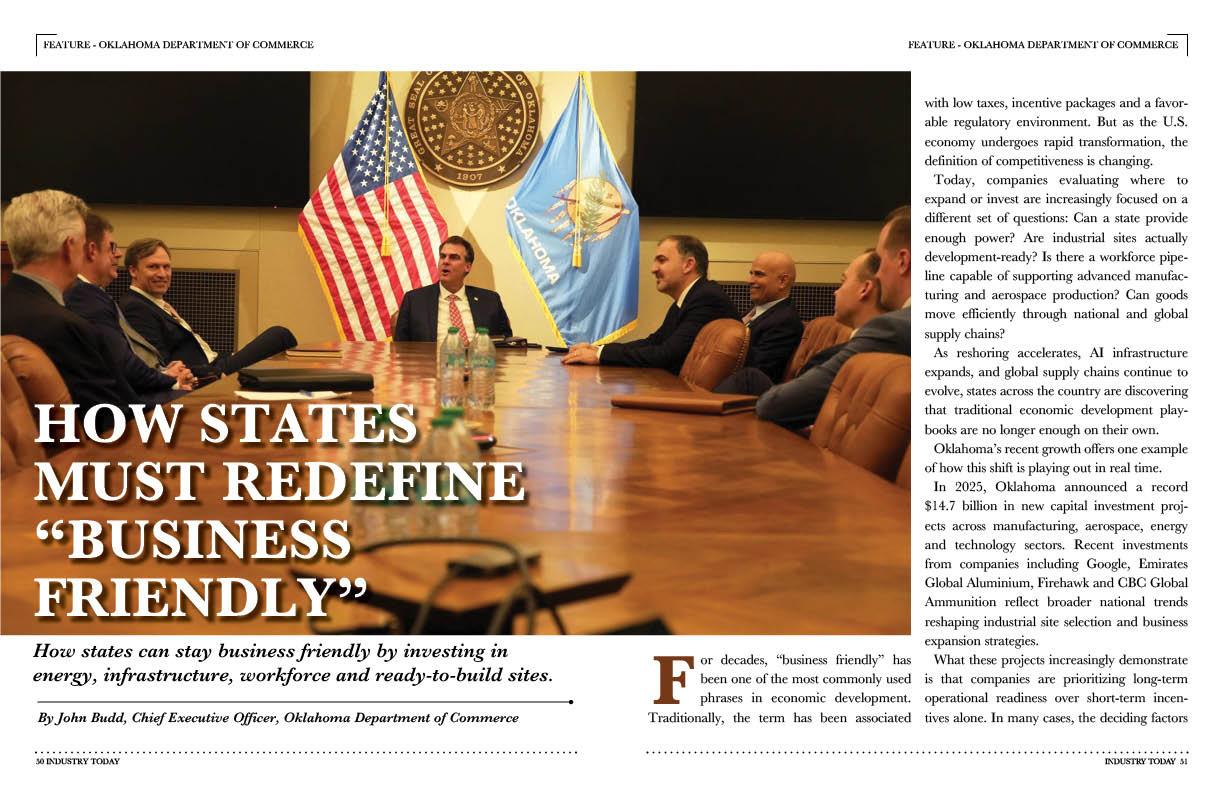
How states can stay business friendly by investing in energy, infrastructure, workforce and ready-to-build sites.
By John Budd, Chief Executive Officer, Oklahoma Department of Commerce

For decades, “business friendly” has been one of the most commonly used phrases in economic development. Traditionally, the term has been associated
with low taxes, incentive packages and a favorable regulatory environment. But as the U.S. economy undergoes rapid transformation, the definition of competitiveness is changing.
Today, companies evaluating where to expand or invest are increasingly focused on a different set of questions: Can a state provide enough power? Are industrial sites actually development-ready? Is there a workforce pipeline capable of supporting advanced manufacturing and aerospace production? Can goods move efficiently through national and global supply chains?
As reshoring accelerates, AI infrastructure expands, and global supply chains continue to evolve, states across the country are discovering that traditional economic development playbooks are no longer enough on their own.
Oklahoma’s recent growth offers one example of how this shift is playing out in real time.
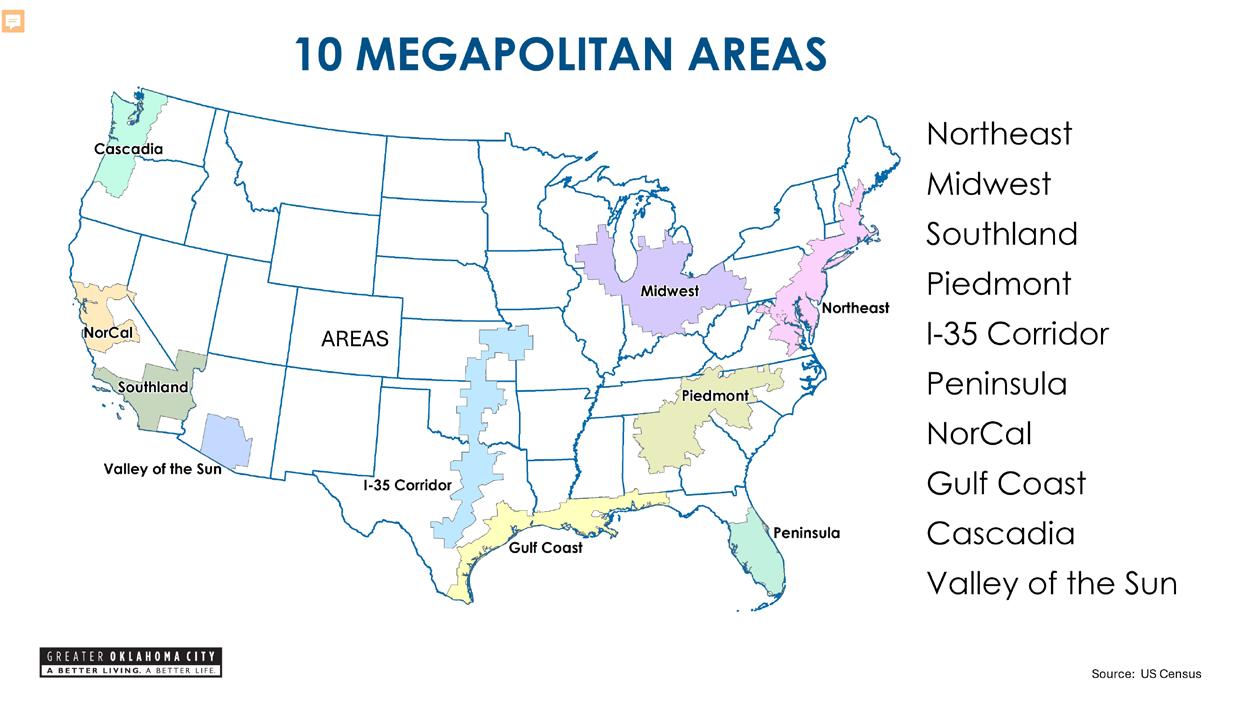
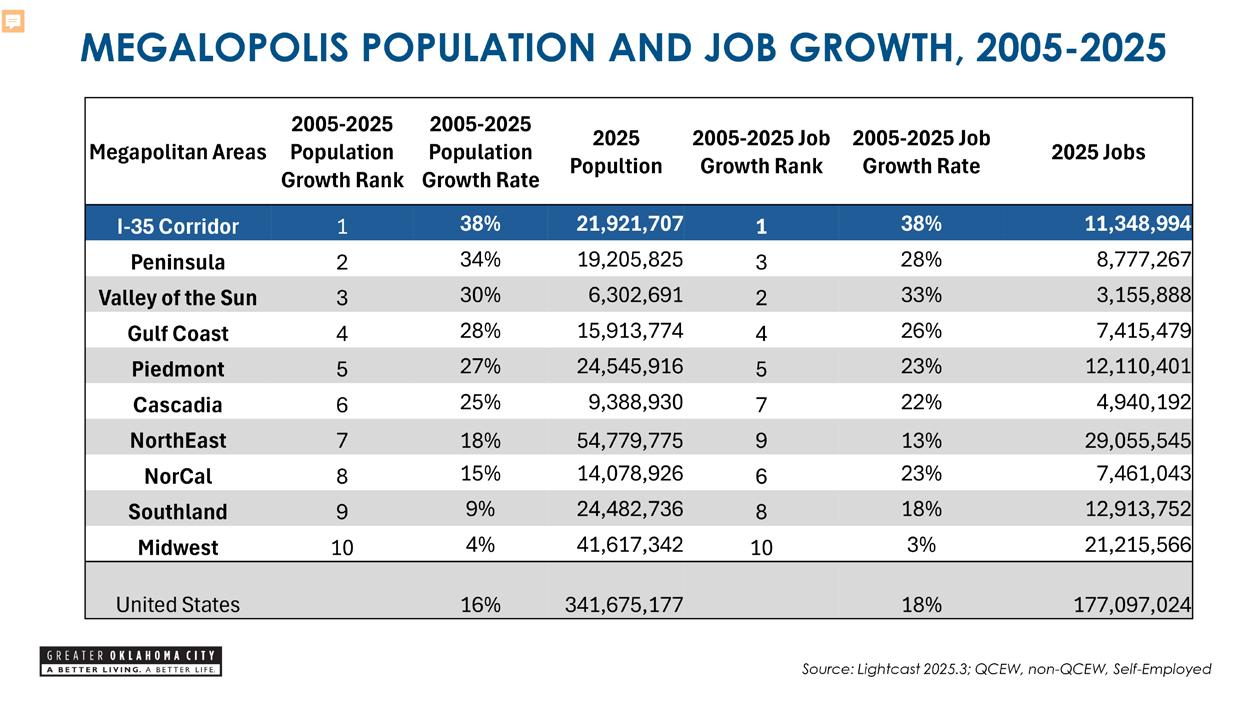
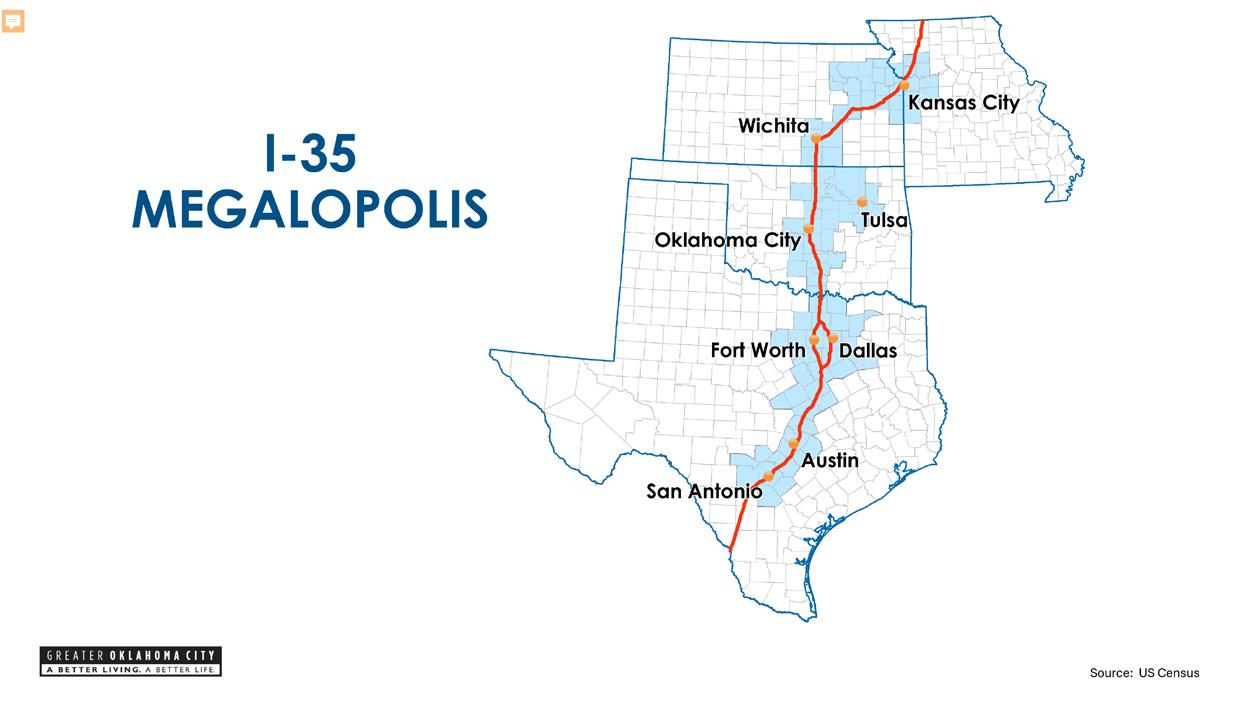
In 2025, Oklahoma announced a record $14.7 billion in new capital investment projects across manufacturing, aerospace, energy and technology sectors. Recent investments from companies including Google, Emirates Global Aluminium, Firehawk and CBC Global Ammunition reflect broader national trends reshaping industrial site selection and business expansion strategies.
What these projects increasingly demonstrate is that companies are prioritizing long-term operational readiness over short-term incentives alone. In many cases, the deciding factors
are infrastructure capacity, energy reliability, logistics access and workforce availability.
Across the U.S., one of the largest bottlenecks in economic development is the shortage of largescale, development-ready industrial sites.
As manufacturers race to expand domestic production capacity, many states are finding that available land alone is no longer sufficient. Companies want sites with infrastructure, utilities, transportation access and permitting pathways already in place.
Since 2018, Oklahoma has seen a nearly 90% increase in economic development projects entering the pipeline. In response, the state launched the Supporting Industrial Transformation and Economic Success (SITES) Ready Program to help communities proactively prepare industrial locations for future investment. The initiative recently secured $178 million for infrastructure improvements and site preparation projects across the state.
Location and logistics infrastructure are also
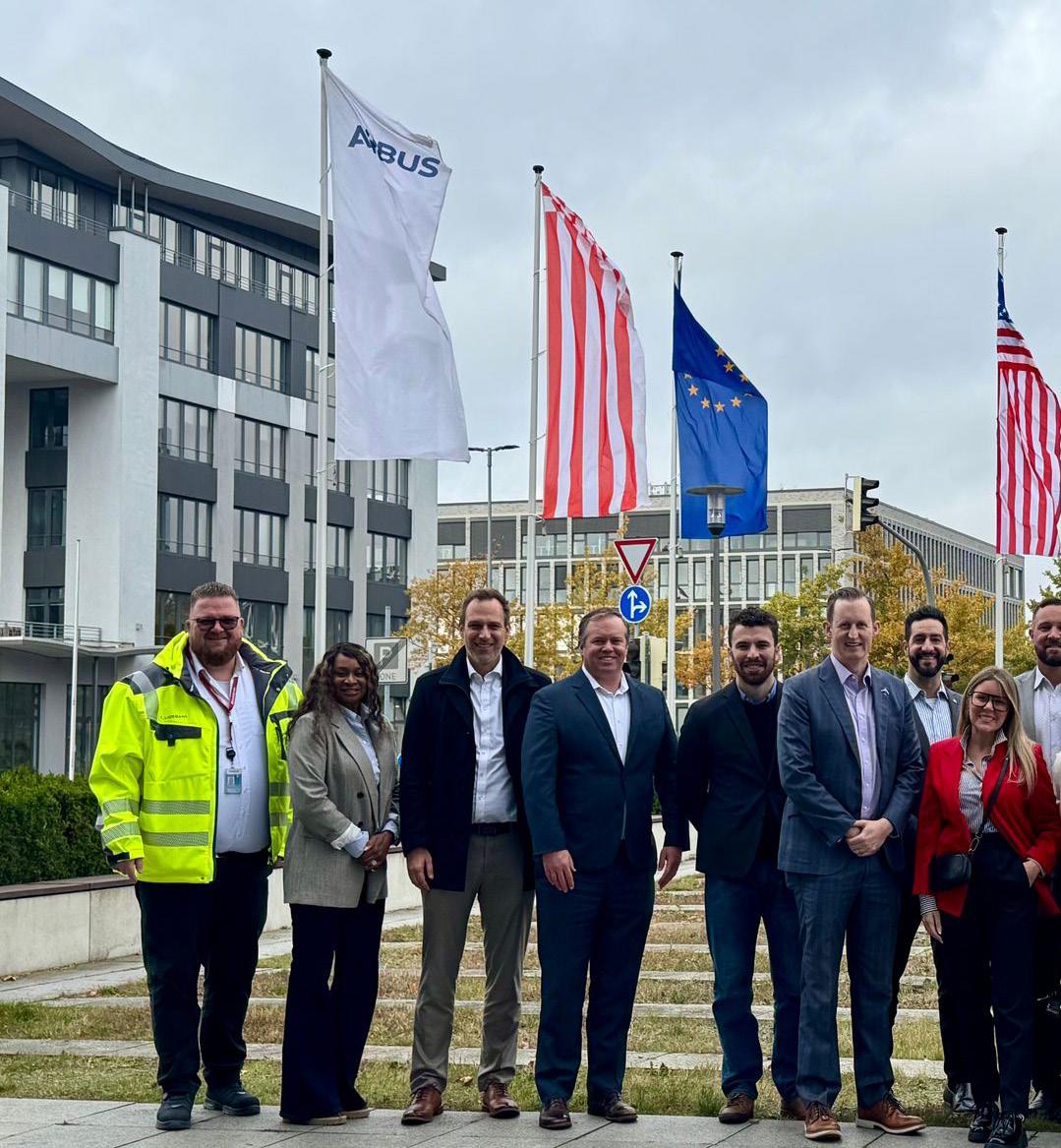
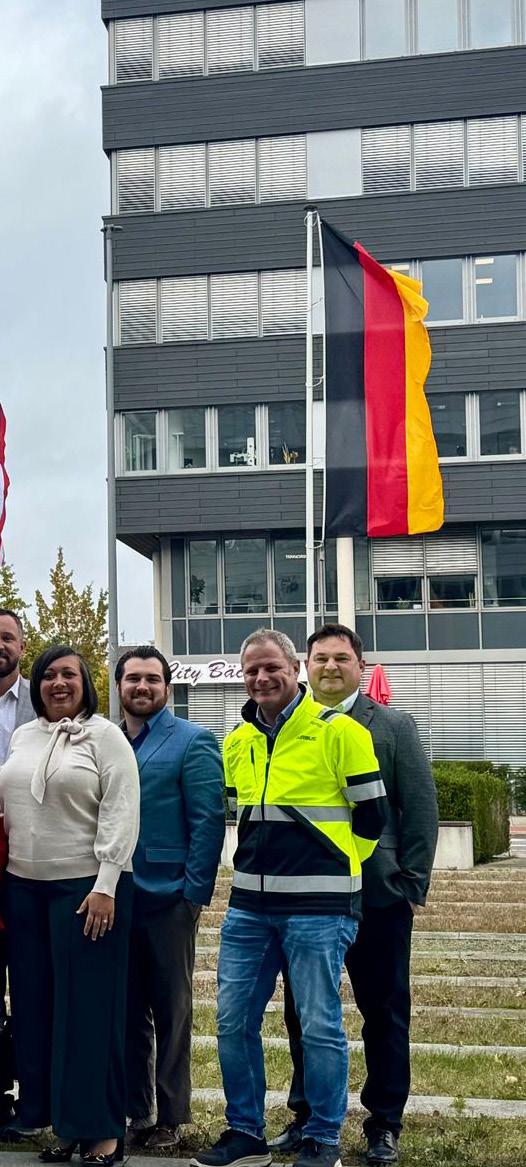
Pictured: In late 2025, Oklahoma state leaders visited Germany to study its renowned apprenticeship model, which helps sustain a 96% youth employment rate. Led by key state agencies, the delegation met with companies including Emirates Global Aluminium, Volkswagen, Airbus, and Lufthansa Technik to explore how Germany aligns vocational training with industry needs.
Credit: Oklahoma Department of Commerce.
becoming more critical as supply chains grow more complex. Oklahoma is served by two international airports, 133 public-use airports, four inland ports and 20 rail operators, while its highway system places the state within a one-day drive of major U.S. markets.
For many manufacturers and industrial oper-
ators, the ability to efficiently move products, materials and components is becoming just as important as incentive packages.
Energy availability and affordability are rapidly
John Budd is the Chief Executive Officer of the Oklahoma Department of Commerce, a role he has held since June of 2025. He brings a wealth of leadership experience to his position, having previously served as COO of the George Kaiser Family Foundation. He was also the State of Oklahoma’s inaugural Chief Operating Officer from 2019 to 2021, where he significantly improved government efficiency through strategic reforms and oversight of day-to-day operations. Before his recent state government roles, John was Chief Strategy Officer at Sonic Drive-In and a Partner and Managing Director at Boston Consulting Group.

becoming central economic development concerns nationwide, particularly as AI infrastructure, data centers and advanced manufacturing facilities increase electricity demand.
States with reliable and diversified energy portfolios may hold a growing advantage in attracting energy-intensive industries.
Oklahoma’s industrial electricity and fuel costs are estimated to run roughly 20% below the national average, helping position the state competitively for manufacturers, aerospace firms and digital infrastructure projects.
At the same time, the state’s economy reflects a broader national transition underway across the energy sector.
While oil and natural gas remain major contributors to Oklahoma’s economy, the state is also seeing rapid growth in critical mineral manufacturing and battery supply chain investments tied to national energy security priorities.
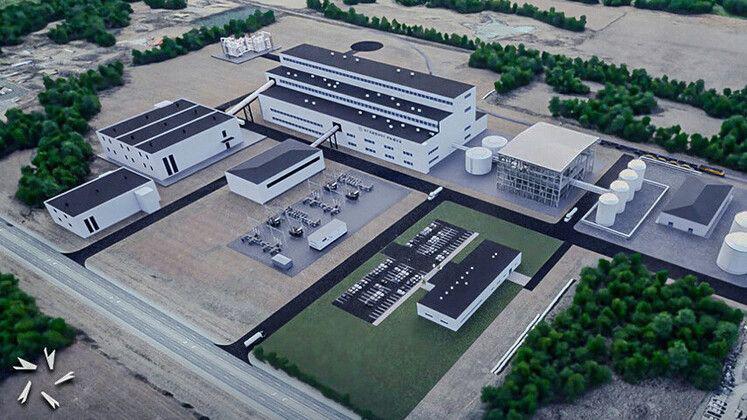
Westwin Elements operates the only nickel refinery currently active in the United States and plans to significantly expand production capacity over the coming years. USA Rare Earth is developing what is expected to become the nation’s first vertically integrated rare earth magnet manufacturing facility, while Stardust Power is constructing a large-scale lithium refinery designed to support growing domestic
Pictured: Rendering of Stardust Power Inc.’s battery-grade lithium refinery in Muskogee, Oklahoma.
Credit: Stardust Power Inc.
battery demand.
These projects reflect a broader national effort to localize critical mineral supply chains and reduce dependence on foreign processing capacity, particularly as demand for batteries, semiconductors and advanced manufacturing materials continues to rise.
Workforce availability remains one of the most pressing concerns facing employers nationwide, particularly in skilled trades and technical manufacturing fields.
As aerospace, defense and advanced manufacturing sectors expand, states are increasingly being forced to rethink how they train and retain talent.
Oklahoma’s workforce development strategy has focused heavily on technical education and industry alignment. Through CareerTech, the state trains thousands of workers annually in fields such as CNC machining, welding, electronics and avionics.
At the same time, Oklahoma’s research universities and industry partnerships are helping expand applied research and technical workforce development in aerospace, cybersecurity and advanced manufacturing.
One area receiving increased attention nationally is apprenticeship modernization.
Like many states, Oklahoma is exploring ways to adapt elements of Germany’s vocational and apprenticeship system to better align technical education with long-term industry needs. Recent collaboration with global employers –including Emirates Global Aluminium, Airbus, Volkswagen and Lufthansa Technik – has focused on strengthening workforce pipelines and improving long-term employee retention in manufacturing and aerospace industries.

As competition for skilled labor intensifies nationwide, workforce development is increasingly becoming an economic competitiveness issue rather than simply an education issue.
Traditional economic development tools still play an important role. Incentives, tax credits and job creation programs continue to influence business expansion decisions.
But increasingly, they are only one part of a much larger equation.
States that can combine competitive incentives with site readiness, infrastructure investment, workforce alignment and energy reliability are likely to be better positioned to compete for the next generation of industrial growth.
The larger lesson for economic development leaders may be that “business friendly” can no longer be defined solely by cost advantages or tax policy. In today’s economy, competitiveness is increasingly measured by preparedness — the ability to deliver infrastructure, talent and operational certainty at the speed modern industries require.
As states compete for advanced manufacturing, aerospace, energy and technology investment, the next era of economic development may belong to the regions that can move fastest to meet those demands.

My co-founder Leah Lykins and I are both former public high school teachers. When we started WhereWeGo eight years ago, we were not

thinking about building marketplaces. We were thinking about what we thought was a much simpler problem: Why is it so hard for people to figure out what careers exist, how to get into

Federal dollars are about to fund a wave of talent marketplaces. Most will quietly break within 18 months. Here’s why — and the fix.

them, and where to go for help?
That question turned out to be deceptively complicated. Along the way, we have gotten a lot of things wrong. Some of our early builds
By Ben Ifshin, Co-Founder and CEO, WhereWeGo
were too ambitious. Others solved the wrong problem. A few got used exactly the way we intended and still didn’t produce the outcomes we hoped for. That track record of both success and failure is what makes me want to write honestly about what it takes to build these platforms well, especially at a time when interest in launching them is surging, but far less attention is paid to what it takes to sustain and make them work.
There is more energy behind talent marketplaces and workforce websites than I have seen in the eight years we’ve been doing this work. Workforce boards, state agencies, universities, and nonprofits are all trying to build platforms that match people to jobs, training, and career pathways. The federal government is putting real money behind the effort. The National Science Foundation recently announced a $224 million initiative to fund AI-readiness coordination hubs in every U.S. state and territory with a digital resource component. The Department of Labor is co-sponsoring it. The message is

clear: Every state is going to need digital infrastructure for workforce development, and it needs to be built soon.
That’s exciting. It’s also a setup for a lot of expensive failure if the people building and funding these platforms don’t learn from what’s come before.
Talent marketplaces are taking off because employers are tired of hiring through blunt filters like degrees, titles, and keyword-heavy résumés when what they really need is a clearer way to find people with the skills to do the work. At the same time, nonprofits, workforce groups,
and public agencies see them as a way to open doors for capable people who get screened out by degree requirements even though they learned those skills somewhere else.
Here’s something that most people building talent marketplaces underestimate: you are not building a website. You are building a multi-sided market. And multi-sided markets are notoriously difficult to get right.
Think about what a talent marketplace has to do. It needs to attract workers and give them a reason to come back. It needs employers or training providers on the other side who trust
Pictured: WhereWeGo Labs - Mississippi’s Career Training - A WhereWeGo Labs tool built in 30 days: a worker-facing layer on Mississippi’s official training list. Most government training data is built for compliance, not for someone browsing on their phone at 9 p.m.
right: Green Workforce Connect (IREC) - Green Workforce Connect, built for IREC: 35,000 clean-energy workers and 400+ organizations across 20+ states and territories. IREC improves its career-mapping tools, a reminder that good workforce technology is dynamically changing.
the platform enough to keep their listings current. It needs data that’s accurate and fresh, which means someone has to maintain it. It needs to serve people with wildly different levels of digital literacy, motivation, and trust. And it needs to deliver on promises: if someone follows a pathway the platform recommends and it doesn’t lead anywhere, they won’t come back. Neither will anyone they tell.
Traditional marketplaces like Airbnb or Uber spent billions solving these dynamics. Talent marketplaces are expected to do it on grant budgets with small teams. That doesn’t mean it’s impossible. It means you have to be much smarter about where you invest your time and money, and much more honest about what you don’t know yet.
We recently published a report that digs into why social impact technology fails after studying years of platform data, user behavior, and our own mistakes. A few patterns stood out that are especially relevant to talent marketplaces.
Most platforms are funded like construction projects: there’s a budget for the build, a deadline for launch, and success is measured by whether both were hit. But software is not a building. Without ongoing investment, it actively degrades. We’ve seen organizations spend $1,000,000 on a launch, then starve the product for two years until it breaks, then spend another $2,000,000 rebuilding from scratch. When you compare that to a team that spends less upfront
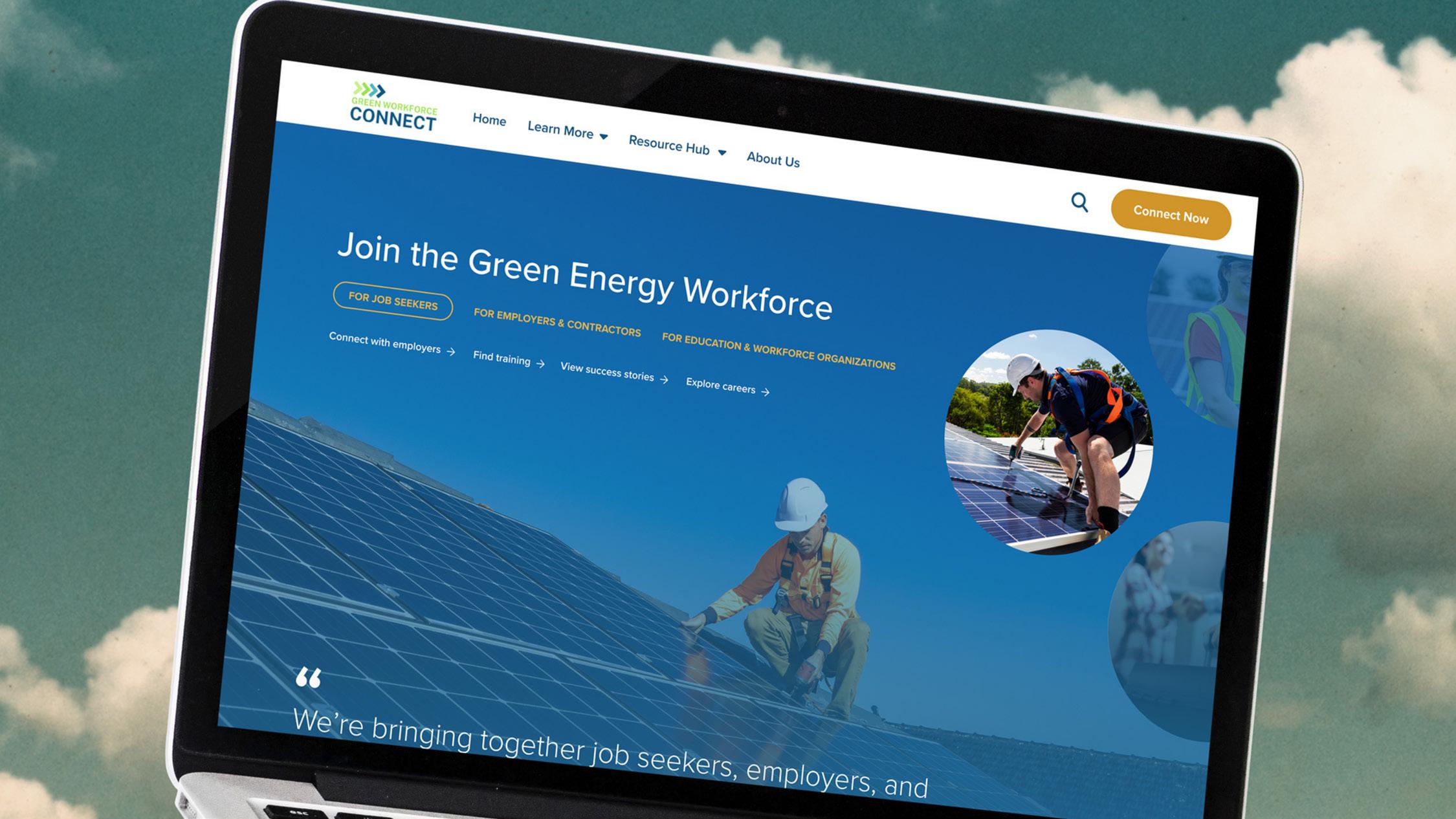
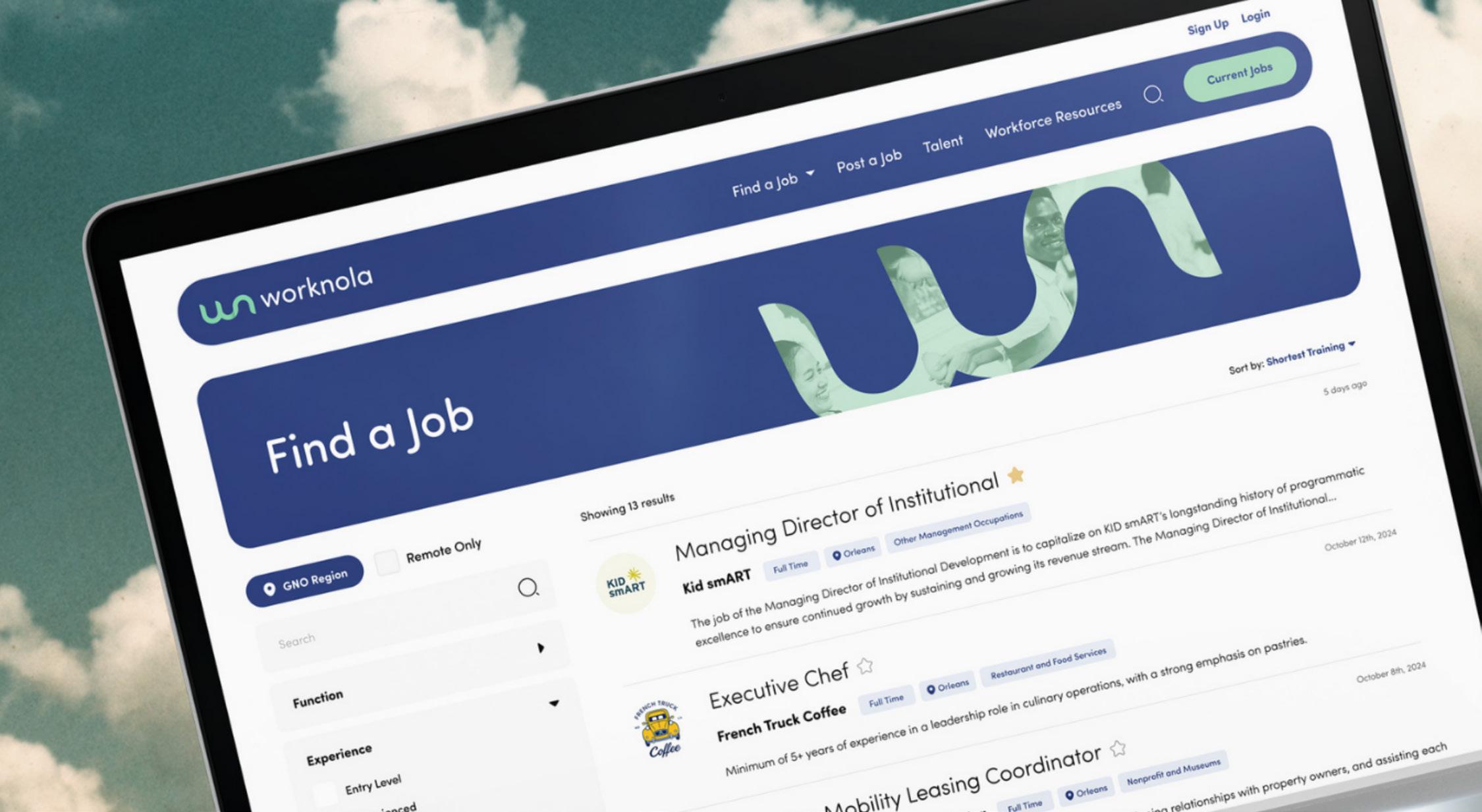
but invests steadily in iteration, the cost per meaningful outcome can be ten times lower. The culprit is almost always the same: funding is earmarked for the vision, not for the learning that comes after launch day.
Most talent marketplaces assume that if you give people better information about jobs and training, they will take action. Build a cleaner directory, add better search, list more resources. But accessing workforce services is not like shopping online. When you ask someone to create a profile on a career platform, you’re asking them
to confront questions about their identity and their future. Am I the kind of person who needs help? Can I actually do this? Those moments of hesitation are where most users drop off, and more information doesn’t resolve them. Typical social impact platforms see bounce rates above sixty percent and profile creation rates between two and four percent. Those aren’t signs of a discovery problem. They’re signs of a behavioral one.
Beneath every marketplace is a growing pile of obligations that most organizations don’t
Pictured: Regional Job Hub (GNO, Inc.) - A regional job hub built for Greater New Orleans, covering 10 parishes. With pervasive job scams attacking all parts of the hiring process elsewhere, this tool continuously prevents bad data from day one;
right: Behavioral Health Career Map (Tacoma) - A behavioral health career map for Tacoma, WA, built with Workforce Central and adopted by 90+ consortium stakeholders. Mobile-first, embedded across partner sites — a pathway is useless if it can’t travel to where workers already are.
budget for: security patches, compliance updates, data that goes stale, APIs that are unpredictable or disappear, program officers and staff whose heroic labor was holding a project together. Self-managed infrastructure can quietly consume tens of thousands of dollars a year in labor and tooling costs that don’t create new value. They just prevent collapse. For talent marketplaces specifically, data hygiene is brutal. When forty percent of companies are posting ghost jobs and public datasets are years out of date, users learn fast that they can’t trust the information. And once that trust breaks, getting people to come back is nearly impossible.
Talent marketplace plans tend to put a high
premium on day 1 features: the taxonomies, the directory, the matching algorithm, the profile flow, and far less on what the product needs to do on day 1,000. Day 1,000 is when growth either compounds through the product or gets carried by staff. Network effects have to be built into the architecture. The artifacts users create have to pull new users in. Partners need ways to deepen involvement without a custom onboarding call. When these aren’t continuously fine-tuned, impact ends up tied to headcount, and the only way to grow is to hire.
So what do you do with all of this? Give up?
Of course not. The need is real and the opportunity is enormous. But the approach has to change.


The traditional model is to spend a year and a lot of money building a big platform, launch it with a press event, and hope people show up. We call this the launch-and-leave model, and it’s responsible for a staggering amount of waste. We think the better approach is closer to what we’re now calling Stewardship: treat the technology like a garden you tend.
In practice, that means a few things. Start smaller than you think you should. Test with real users before you’ve built the whole system. Budget for years two and three at the same time you budget for year one. Measure cost per outcome, not cost per deliverable. And involve the internal staff who will maintain the platform from the very beginning, not after the developers leave.
We’re trying this ourselves with WhereWeGo Labs, an initiative we just launched. The idea
is simple: build fast, free workforce tools every thirty days, each one designed around a real problem that workers or workforce organizations face. Some are scrappy. Some will fail. That’s the point. AI makes it possible to build and test useful tools far faster and cheaper than it was even two years ago. A training program navigator for Mississippi. An industry clarity score that tells workers how easy or hard it is to break into a given field. A credential tracker for training programs that matches grads with jobs every day.
None of these are massive platforms. They’re small bets designed to learn quickly and solve specific problems. The ones that work can grow. The ones that don’t cost almost nothing to try. That’s a fundamentally different risk profile than the traditional model, where you don’t find out if something works until you’ve spent most of the budget.
Pictured: Regional workforce map collage - Every state will soon need improved digital workforce infrastructure. The federal money is coming. The hard part is what happens later.
right: Louisiana Dual Enrollment Portal
The Louisiana Dual Enrollment Portal, built with the Louisiana Board of Regents: ~14,000 courses standardized and discoverable statewide. Information gaps hit the students who can least afford them — a well-tended portal closes that gap.

The federal investment that’s coming will create a wave of new talent marketplace projects across the country. The teams that succeed will not be the ones with the biggest budgets or the flashiest launches. They will be the ones that build light, test in the open, and commit to the long work of keeping their platforms alive and useful after launch is forgotten. We’ve been doing this for eight years. We’re
still learning. But we’ve seen enough to know that the biggest risk in this work is not building the wrong thing. Failure doesn’t usually come from a bad initial build. It comes six to eighteen months later, when the data starts to drift, the experience stops improving, and no one is accountable for what happens next. It’s often building the right thing and then walking away from it.
Ben Ifshin is the co-founder and CEO of WhereWeGo, focused on building practical workforce technology that strengthens opportunity across entire regional ecosystems. WhereWeGo platforms learn from the workers they serve. With academic roots in biology and early work in education, Ben leads with a belief that systems work when people feel seen, supported, and connected.
At WhereWeGo, he brings together employers, community organizations, and civic institutions to make career pathways visible and accessible. Ben also serves as a Parks Commissioner in Water Valley, Mississippi and sits on the board of the Yalobusha Greenways Alliance, reflecting his commitment to building strong, interconnected communities online and in the real world.


centers around how effectively the next-generation of industrial workers being developed.
By Tom Kucharski, Chief Executive Officer, Invest Buffalo Niagara
After decades of decline caused by globalization and outsourcing, manufacturing is heading back to the United States. Across industries ranging from semiconductors and advanced electronics to aerospace, medical devices and clean energy, manufacturers are seeing the value of having the root of their supply chains in the US. The reshoring movement is no longer theoretical. It is happening now, and it is poised to accelerate in the years ahead.
According to the Reshoring Initiative, more than 244,000 U.S. manufacturing jobs were announced in 2024 alone through reshoring and foreign direct investment. Since 2010, the organization says more than 2 million jobs have been announced as manufacturers moved operations back to the United States or expanded domestic production capacity.
However, those reinvestments come with the stark reality: a robust workforce is needed to sustain growth, creating a fresh workforce challenge. A joint study from Deloitte and The

Manufacturing Institute estimates the manufacturing sector could need as many as 3.8 million additional workers between 2024 and 2033, with nearly half those jobs potentially going unfilled if the current status of the workforce is not addressed or changed.
That reality should start to reshape how communities think about attracting future manufacturing investment. Development of these regions can’t be exclusively built around available land, energy or attractive tax incentives, as important as those elements are. They will also need to make sure they have a skilled workforce with a sustainable pipeline for future growth. Thankfully, there are those that are already
leading the way to show how communities can anticipate this increased strain on their workforce.
The Buffalo-Niagara region, in Western New York, is one example. The region is building on its industrial DNA while modernizing the systems the ways manufacturing talent are sourced, trained and supported. Through investments in workforce development, education partnerships, affordability and advanced manufacturing infrastructure, Buffalo is demonstrating how
Pictured: Buffalo Central Terminal in the heart of the city;
right: The Northland Workforce Training Center in Buffalo.
legacy manufacturing communities can prepare for a new era of American production.
One of the Buffalo-Niagara region’s greatest advantages in the era of reshoring is something many communities spent years trying to distance themselves from, its rich history as an industrial center.
For decades, manufacturing was one of the key economic engines of Western New York. The region’s location along major waterways and rail corridors made it a critical logistics and production hub, leading the region to become synonymous with steelmaking, automotive manufacturing, machining and industri-
al production. Even as many facilities closed or downsized during the period of offshoring, the institutional knowledge and cultural familiarity with manufacturing remained.
Regions that are deeply rooted in manufacturing have often built an ecosystem that persists even as industry starts to fade away, such as with a talent pipeline, supplier networks, engineering expertise, institutional knowledge, and production-oriented educational programs. Those then become key assets when companies begin looking for places where manufacturing operations can scale quickly, as a foundation is already set.
Buffalo’s resurgence in advanced manufacturing reflects this dynamic. The region’s history of supporting companies operating in precision
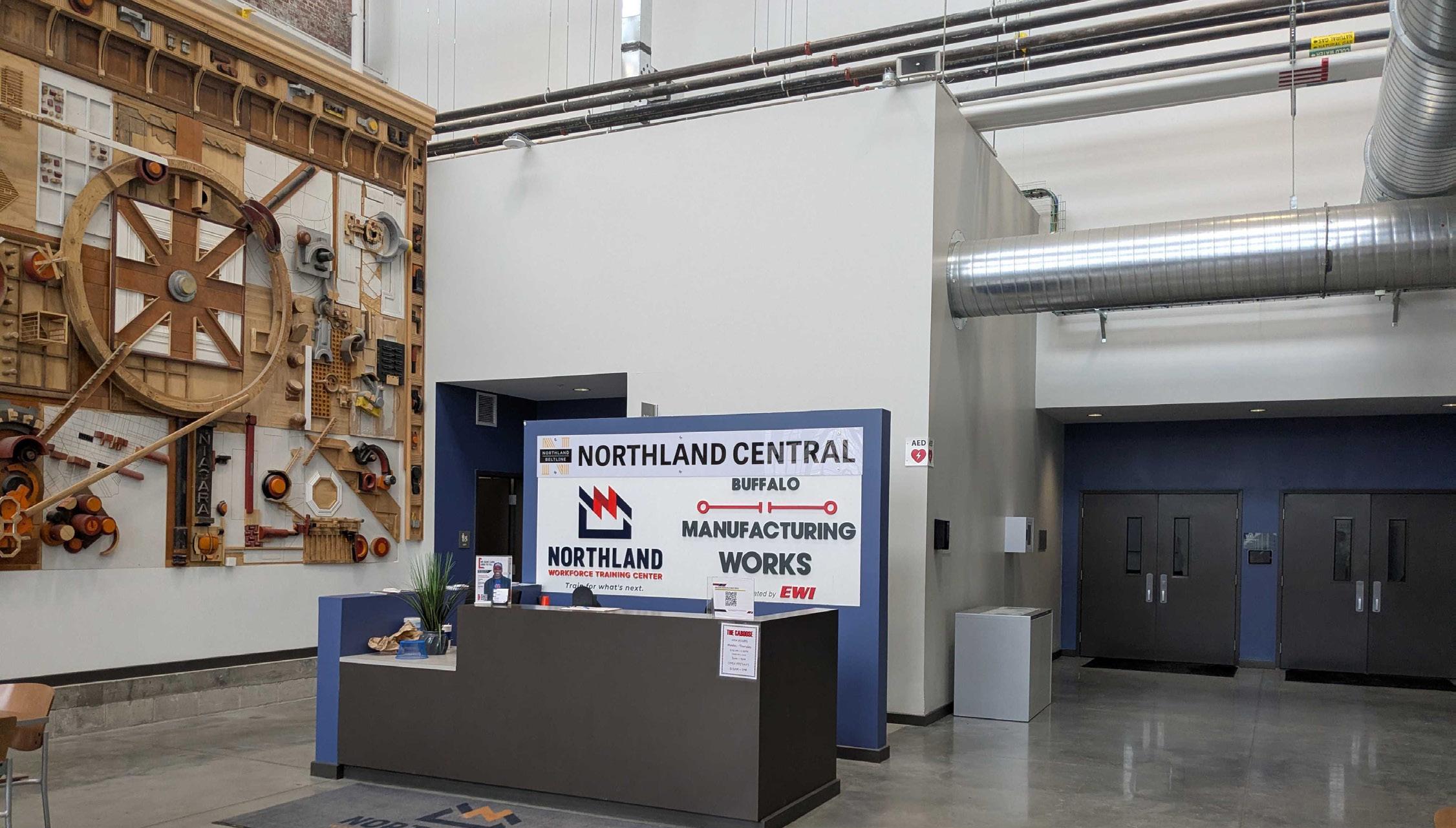
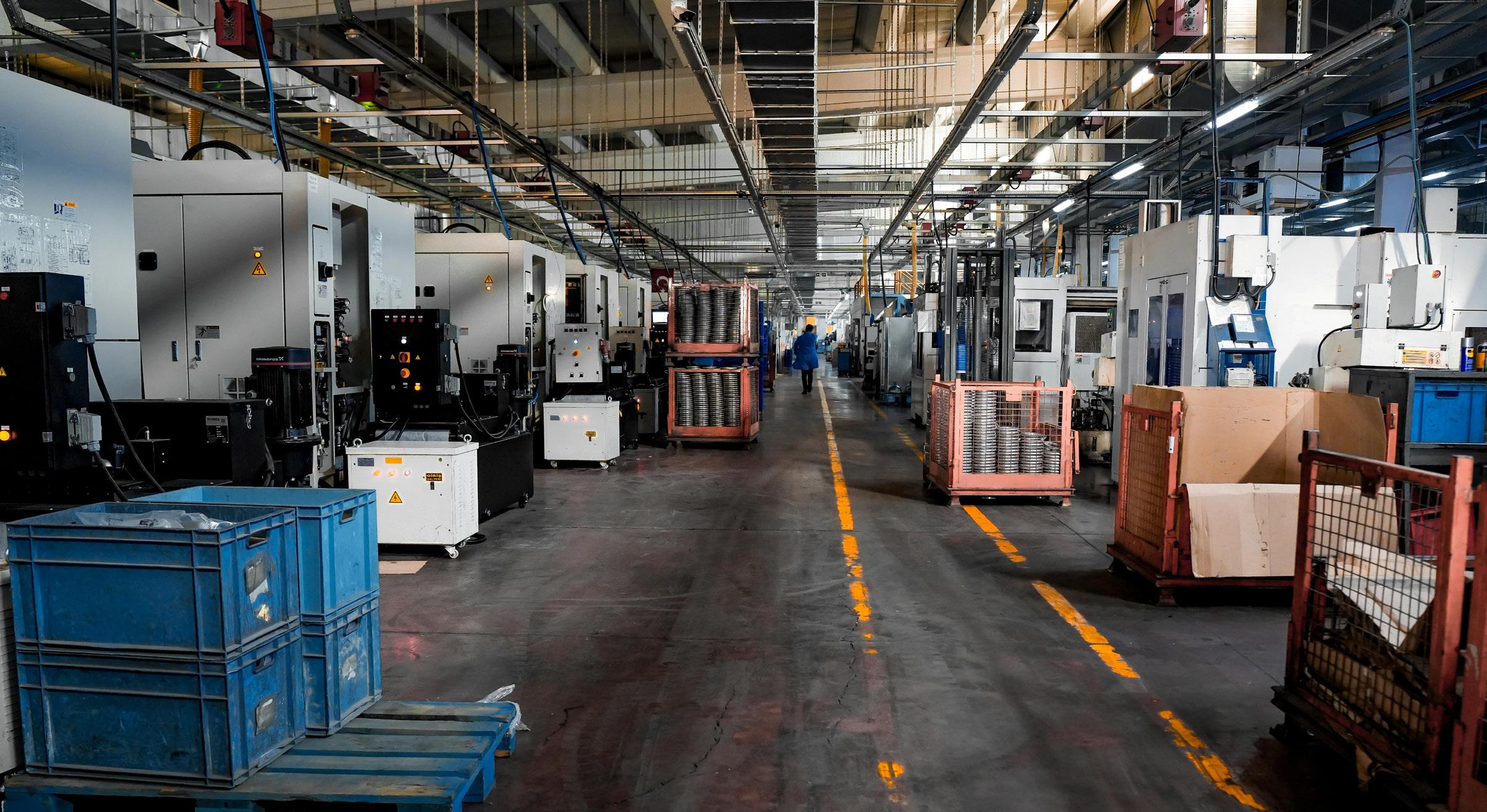
manufacturing and advanced materials – like Moog, General Motors and Cummins - has helped reinforce its industrial standing while creating opportunities for younger workers to see manufacturing as a viable long-term career path rather than a relic of the past.
This also then bleeds into how a community supports its manufacturing workers outside of their facilities.
One of the principal examples is affordability. The Buffalo-Niagara region for instance, when compared to many large metropolitan areas, especially elsewhere on the East Coast, maintains a relatively low cost of living, particularly in housing. When recruiting workers to join a manufacturing workforce is getting more pressing, having affordability on your side can make
all the difference.
Workers are more likely to remain in regions where they can build stable lives, purchase homes and support families without facing overwhelming financial pressure. Manufacturing jobs have historically served as pathways into the middle class. For that promise to remain viable, regions must still provide opportunities for workers to achieve economic mobility through those routes.
With potential manufacturers consistently identifying labor shortages as one of their most pressing challenges, the shift becomes getting the right skills in the hands of the population.
Advanced manufacturing facilities require expertise in robotics, mechatronics, CNC machining, automation systems, quality assurance and industrial maintenance. Each of these fields, as well as countless others critical to the next evolution in manufacturing, are highly technical roles that demand specialized training.
One of the clearest examples of addressing this challenge head-on is the Northland Workforce Training Center, a Buffalo-based institution that has made it its mission to get more workers into the trades, chief among them manufacturing. They do this by providing hands-on training for students, with the sole purpose of
Pictured: Manufacturing is thriving in the Buffalo-Niagara region; below: One of the manufacturers that recently have called Buffalo home.
preparing workers who can step directly into the production line and perform at a high level. The center works hand-in-hand with manufacturers to learn what skills need to be taught, and ultimately help connect those who have been trained and graduate the program directly with employers seeking talent.
Programs like Northland are especially important because they help to provide a realistic pathway that has been largely taken out of the workforce development pipeline in America.
For years now, the suggested approach around education focused heavily on pushing students towards four-year degrees and white-collar positions, while underinvesting in technical and vocational training. As a result, many manufacturers struggled to find workers equipped for highly specialized production roles.
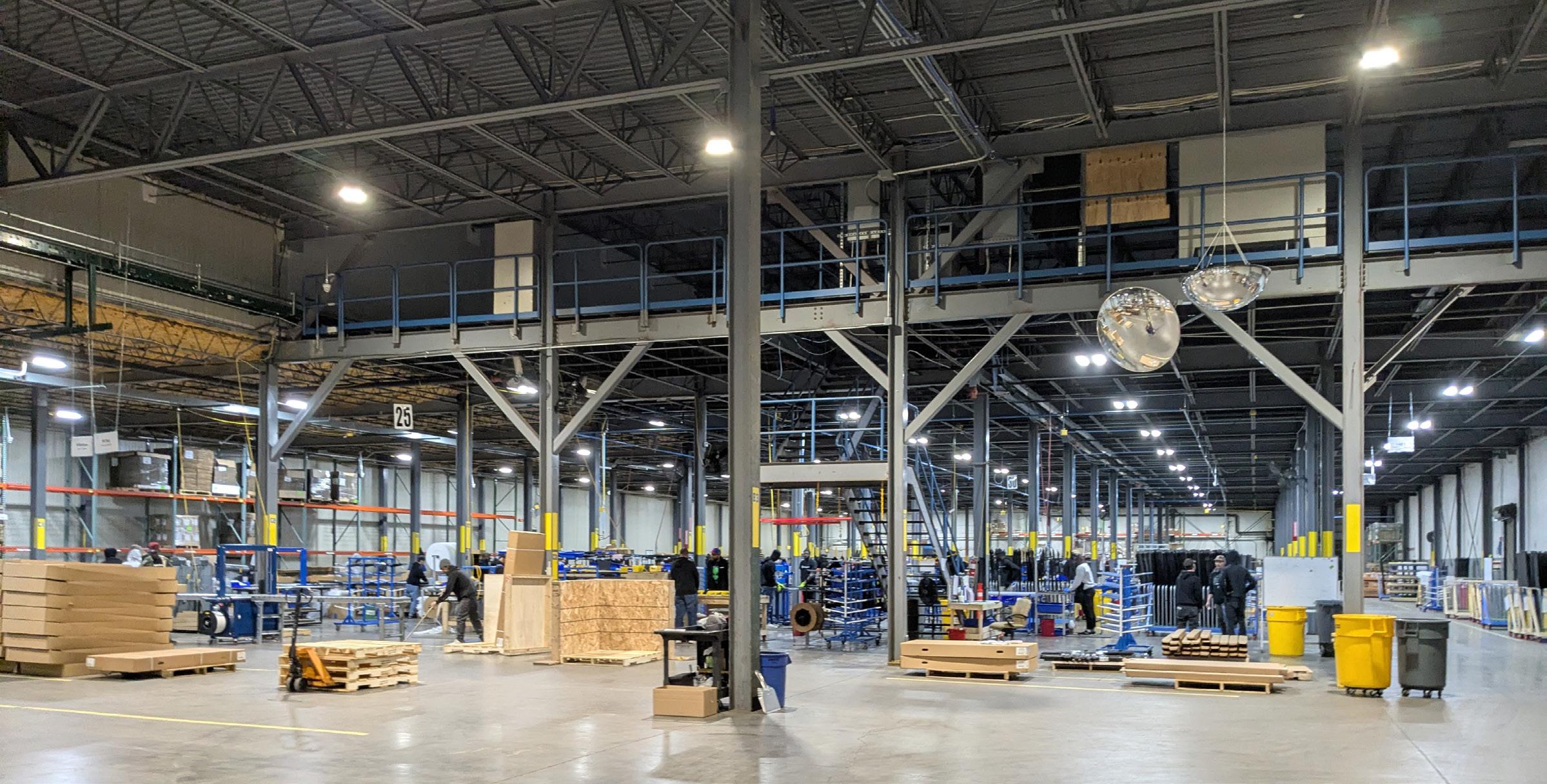
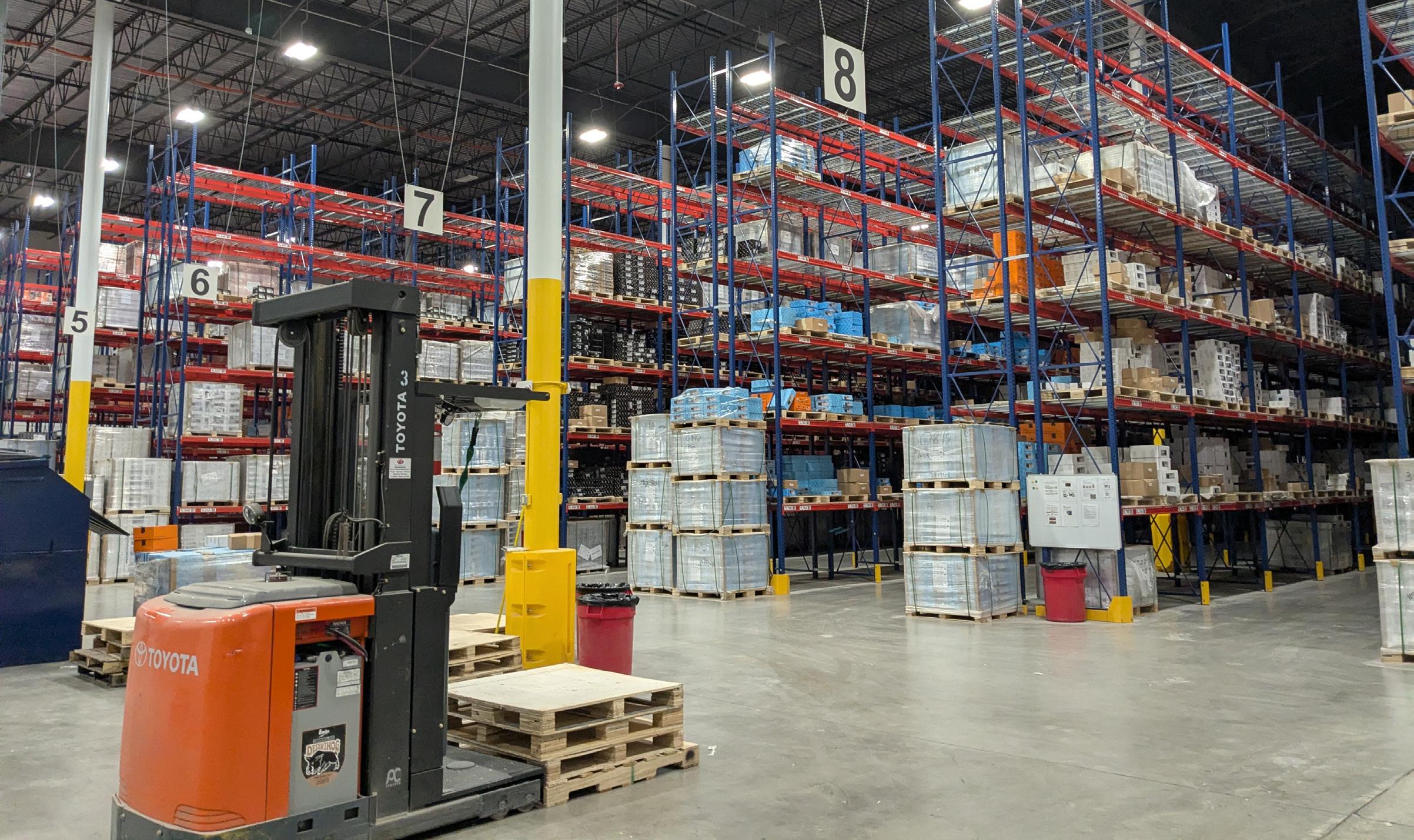
This sort of program also accounts for how manufacturing itself has evolved. Automation and digital systems are transforming factories into highly sophisticated and technically driven machines, where workers operate advanced equipment and manage complex processes. The future manufacturing workforce will require adaptability and continuous learning.
Northland’s approach also underscores the importance of accessibility. Workforce development programs are most effective when they are connected to real employment opportunities and designed to serve diverse populations. The US cannot successfully reshore large segments of industrial production without dramatically expanding its manufacturing talent
pipeline, and that will require reaching out to workers who have never been able to reach training pathways. Expanding that net requires initiatives undertaken by programs such as Northland, which includes childcare services or transportation to and from classes and training sessions.
This accessibility and flexibility has led Northland to a 62.4% graduation rate, substantially higher than the national average of 22% for similar programs.
Communities that move aggressively now will likely hold major advantages in the years ahead
Pictured: Workforce development is a critical part of the reshoring process.
when it comes to being able to attract manufacturing investments. Those that fail to build training programs that are ready to meet the demand for workforce capacity may struggle to take advantage of the opportunities soon to come from reshoring, regardless of a region’s other benefits.
The cusp of the reshoring movement is here, and the investments flowing into the United States have shown how policy makers, manufacturers and supply chain leaders are prioritizing national competitiveness and resilience, with US industrial capacity being a critical part of achieving those goals.
But bringing that industry back requires more than new legislation or massive investments into construction projects. Paired with those approaches, reshoring will demand the creation of communities capable of supporting the manufacturing renaissance with skilled workers, reliable infrastructure and sustainable economic ecosystems.
The Buffalo region offers an example of what
that preparation can look like. By embracing its manufacturing heritage, investing in workforce training, supporting affordability and aligning education with industry demand, the region is positioning itself for the next chapter of American production.
It will take a network of partners across the country to meet the wider workforce challenge, no single city or region will be able to do enough alone. Yet the early successes in the region demonstrate that legacy manufacturing regions still possess many of the ingredients necessary for long-term industrial success and can provide a playbook to others on how to take advantage of the influx of manufacturing investments.
As reshoring accelerates, the communities that thrive will likely be those that recognize that manufacturing growth ultimately depends on investing in people and building up from there. Building up infrastructure alone won’t be enough. Buffalo-Niagara in Western New York is proving that when regions commit to that principle and put people first, they can play a critical role in building the workforce capable of powering America’s industrial future.
Thomas A. Kucharski has served as President and CEO of Invest Buffalo Niagara since 2000. Under his leadership, Invest Buffalo Niagara has grown from a start-up initiative to an innovative regional economic development organization that has secured more than 400 successful project wins representing $6 billion in investment in the region and over 65,000 jobs created and/or retained. From the onset, Tom helped Invest Buffalo Niagara form strong, enduring partnerships with business, development and academic leaders throughout the Buffalo Niagara region. Learn more at Invest Buffalo Niagara.