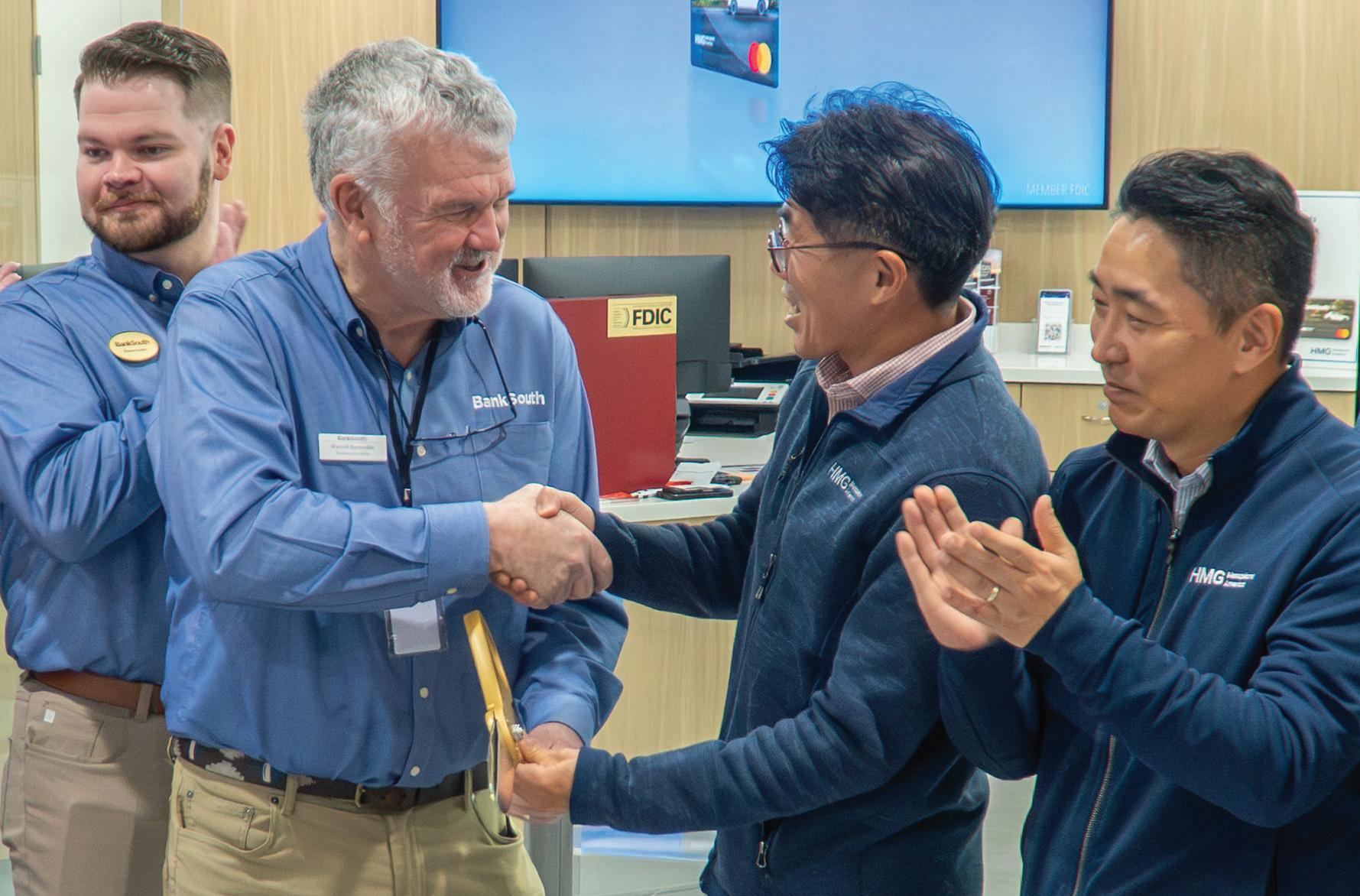
BankSouth proudly opened a new on-site branch at Hyundai Motor Group Metaplant America in Ellabell, Georgia. As the exclusive banking partner for HMGMA’s workforce, known as Meta Pros, we provide convenient, relationship-based banking services designed to meet employees where they work. It’s another way BankSouth supports innovation, people, and progress across Georgia.


As we look across the evolving landscape of global manufacturing, one thing is abundantly clear: transformation is no longer on the horizon, it is happening now, at speed, and across every sector.
In this issue of Industry Today, we explore the forces reshaping industry, from electrification and workforce development to reshoring strategies and next-generation technologies. What emerges is a picture of an industry not simply adapting, but actively redefining itself.
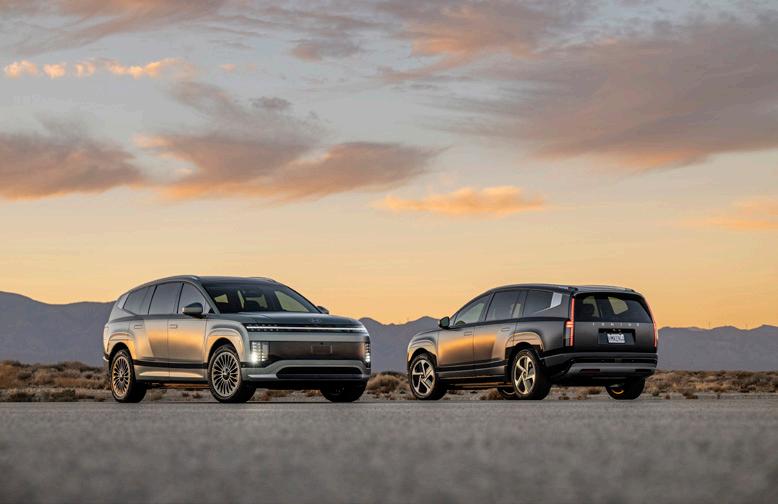
Our lead story on Hyundai Motor Company highlights how innovation continues to drive competitive advantage. From award-winning design to breakthroughs in EV and hydrogen fuel cell technology, Hyundai exemplifies how forward-thinking investment and engineering excellence are accelerating the future of mobility.
That same spirit of reinvention carries into our features. The Steel Tube Institute reminds us that policy is not abstract - it is lived daily on the factory floor, shaping investment, workforce decisions, and the strength of domestic supply chains. Meanwhile, the Reshoring Initiative challenges conventional thinking, offering new perspectives on trade, tariffs, and the role of currency in restoring U.S. manufacturing competitiveness.


Energy and infrastructure take center stage in our National Electrical Manufacturers Association (NEMA) feature, where the urgency of modernizing America’s power grid reflects both unprecedented demand and unprecedented opportunity. At the same time, CSEM provides a compelling look at the semiconductor industry’s next chapter, one driven less by scale and more by precision, efficiency, and process innovation.
We also turn our attention to the regional and human dimensions of growth. The Cedar Rapids Metro Economic Alliance demonstrates how communities are leveraging global connectivity and local strengths to compete on an international stage. And IACMI –The Composites Institute underscores one of the industry’s most pressing challenges, and greatest opportunities, the need to build a skilled workforce through modern, accessible education and training.
Taken together, these stories tell a larger narrative: manufacturing’s future will be shaped not by any single innovation or policy, but by the intersection of technology, talent, and strategic vision.
The companies and organizations featured in this issue are not waiting for change - they are leading it. They are investing, innovating, and collaborating to build a more resilient, sustainable, and competitive industrial ecosystem.
As always, we are proud to bring you the voices and insights driving this transformation. Enjoy the issue.
— Susan Poeton, Publisher

www.industrytoday.com
spoeton@industrytoday.com
Publisher: Susan G. Poeton
Senior Editor: David Soyka
Contributing Editor: Lorie Greenspan
Associate Publishers:
Renata Ginter, Jonathan Listig, Brian McMillan
Digital Marketing & Operations
Coordinator: Melissa Burge
Art Director: Seema Mazhar
Contributing Designers: Jorge Leandro Rodrigues
472 Meeting Street, Ste C-156, Charleston, SC 29403, USA Ph. 973.218.0310



HYUNDAI MOTOR COMPANY INNOVATION OVERDRIVE
Hyundai Motor Company leads rivals in EV and fuel cell tech, pushing cars and operations into the future while giving drivers a smooth ride.
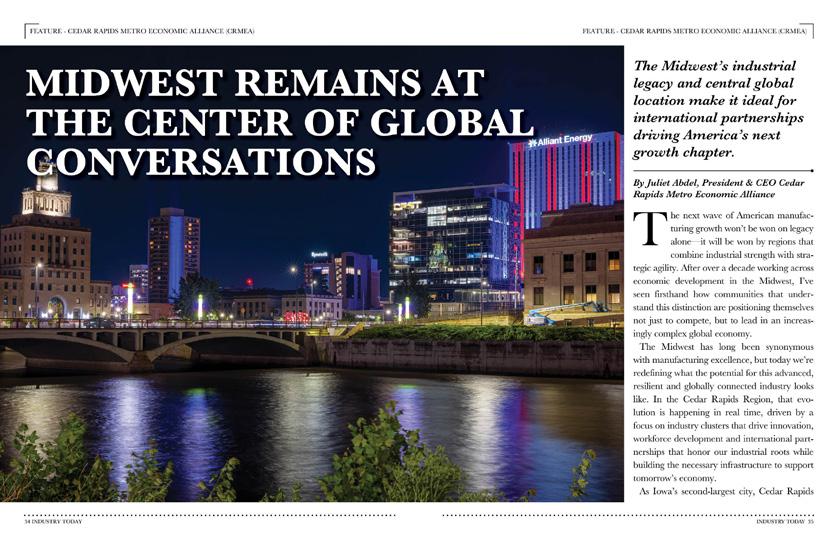
RAPIDS METRO ECONOMIC ALLIANCE (CRMEA) MIDWEST REMAINS AT THE CENTER OF GLOBAL CONVERSATIONS
The Midwest’s industrial legacy and central global location make it ideal for international partnerships driving America’s growth.
CSEM
FUTURE OF CHIPS DEPENDS ON PROCESS INNOVATION
52
Rather than ever-larger fabs, advances in process technology and refinement will drive efficiency, yield, and competitiveness worldwide.
IACMI – THE COMPOSITES INSTITUTE SOLVING THE WORKFORCE PUZZLE THROUGH EDUCATION
IACMI’s ‘Make it in America’ campaign is tackling manufacturing’s labor and skills gaps with streamlined education and training.
NATIONAL ELECTRICAL MANUFACTURERS
ASSOCIATION (NEMA)
AMERICA’S ELECTRIC IMPERATIVE
From Capitol Hill to the assembly line: Why U.S. Electrical manufacturers are mobilizing to expand America’s power grid.
STEEL TUBE INSTITUTE
WHAT INDUSTRIAL POLICY REALLY MEANS ON THE FACTORY FLOOR
The real test of industrial policy is whether it gives manufacturers confidence to invest, hire workers an strengthen domestic supply chains. FEATURE ARTICLES
MOSER ON MANUFACTURING
THE ART OF RESHORING: A BETTER PROPOSAL TO BALANCE TRADE
The 2025 Reshoring Survey recommends a lower U.S. dollar value as a more effective policy than tariffs for reshoring/ reindustrialization.

Hyundai Motor Company has outpaced its competitors in delivering EV and fuel cell technology that has moved its operations and its vehicles light years into the future – while allowing us all a smooth ride to our destination. Join Lorie Greenspan as she powers up Hyundai’s excellence in next-generation automotive manufacturing.

The year 2025 is all about Hyundai, which means leadership in innovative design. It’s not just how the vehicle looks, which is always world class; it’s also about the hands, brains, and talent that deliver such invention. Proof of Hyundai’s aptitude is the recognition it received in earning eight 2025 International Design Excellence
If you want to achieve excellence in vehicles such as IONIQ and the KONA Electric then you’d better surpass any other design in the industry. Hyundai’s awards at the IDEA conference showed that the company did just that, in categories spanning automotive and transportation, environments, commercial and industrial, and
As Hyundai Motor Group Metaplant America (HMGMA) launches a new era in advanced manufacturing, BankSouth is celebrating a milestone of its own — the opening of its in-plant branch at Georgia’s largest economic development project and Hyundai’s first dedicated electrified vehicle plant in the United States.
Selected as the exclusive on-site banking services partner for HMGMA, BankSouth brings innovative financial solutions to support the plant’s workforce and this historic venture.
“Supporting one of Georgia’s most significant economic projects aligns with our mission to drive progress and innovation while serving the financial needs of businesses and individuals.”
— Harold Reynolds, CEO, BankSouth
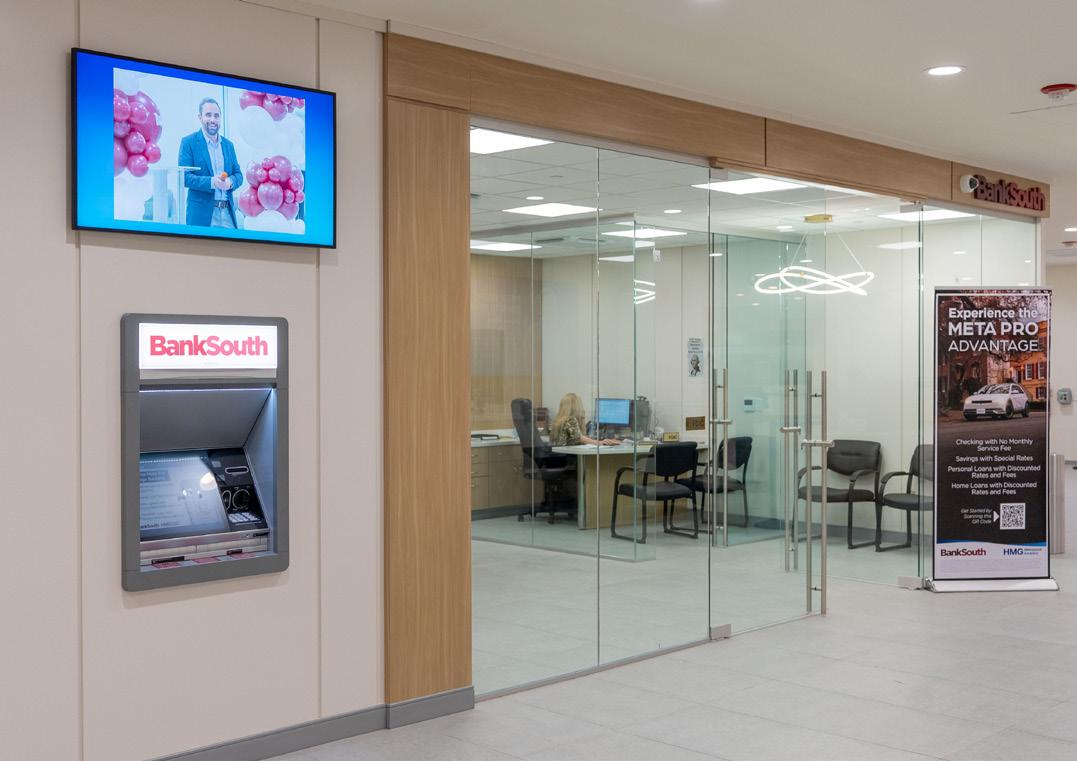
To best serve HMGMA’s workforce — known as Meta Pros — BankSouth has established a full-service, in-plant branch designed to deliver convenient, accessible banking solutions directly on campus. Multiple ATMs have also been installed across the Metaplant to ensure seamless access to essential financial services throughout the workday.
By meeting employees where they work, BankSouth is streamlining everyday financial needs while building long-term relationships grounded in trust, accessibility, and service.
Beyond traditional banking services, BankSouth is investing in the financial well-being of Meta Pros through comprehensive financial literacy programming designed to build lasting financial confidence.
To date, more than 300 Meta Pros have attended Financial Wellness classes centered on practical budgeting strategies. In the program’s first four months, BankSouth hosted a total of 25 classes, with additional sessions planned to address high-interest topics such as home buying andlong-term financial planning.
Over 300 Meta Pros have already participated in BankSouth’s Financial Wellness classes — with 25 sessions completed in the program’s first phase.
This proactive approach reflects BankSouth’s belief that financial literacy is a cornerstone of long-term stability and opportunity. By providing education alongside accessible banking services, the bank is empowering employees to thrive both professionally and personally.
BankSouth has a long history of supporting Georgia communities through comprehensive banking services and meaningful community engagement. From financial literacy initiatives to partnerships with local schools, nonprofits, and small businesses, the organization remains focused on enhancing quality of life in the regions it serves.
Its partnership with HMGMA represents a natural extension of that mission — combining innovation, economic growth, and community investment. As Georgia continues to emerge as a hub for electrified vehicle production and advanced manufacturing, BankSouth stands alongside HMGMA as a trusted financial partner committed to progress.
For further information on BankSouth visit https://banksouth.com/
service design. Honors included recognition for IONIQ 9, the all-new PALISADE, INITIUM, CX Smart Farm, Na Oh, X-ble Shoulder, and Automatic Charging Robot (ACR) Service, which highlights Hyundai Motor’s innovative design and diverse brand values.
IDEA, one of the world’s most esteemed design competitions, each year celebrates outstanding achievements across various categories, based on criteria such as design innovation,
user benefits and social impact.
“We are truly honored to receive this recognition from IDEA. It affirms our commitment to delivering innovative designs that not only enhance mobility but also enrich lifestyles and reflect our responsibility to society,” said SangYup Lee, Executive Vice President and Head of Hyundai & Genesis Global Design.
“We will continue to push boundaries in design excellence across vehicles, spaces and services to further strengthen Hyundai Motor’s global brand value.”
In the Automotive & Transportation category, Hyundai Motor earned a Bronze for its Pictured: Hyundai Motor has been named the top mass-market brand for technology innovation in the J.D. Power 2025 U.S. Tech Experience Index (TXI) Studysm for the sixth consecutive year.
electrified large SUV, the IONIQ 9, while both the premium SUV, the all-new PALISADE, and the hydrogen- electric concept car, INITIUM, were recognized as Finalists.
Beyond IDEA, Hyundai Motor has underscored its global design excellence by securing victories across all four of the world’s major design awards: the iF Design Award, the Red Dot Design Award, the Good Design Award, and IDEA.
Where Hyundai has exhibited the strength of its brain talent is in the advance of motors entirely powered by batteries. The company’s EVs rep-
resent the future of driving, providing instant torque from the motor with a battery that gives the driver an impressive range of up to an EPAestimated 342 miles with 2025 IONIQ 6.
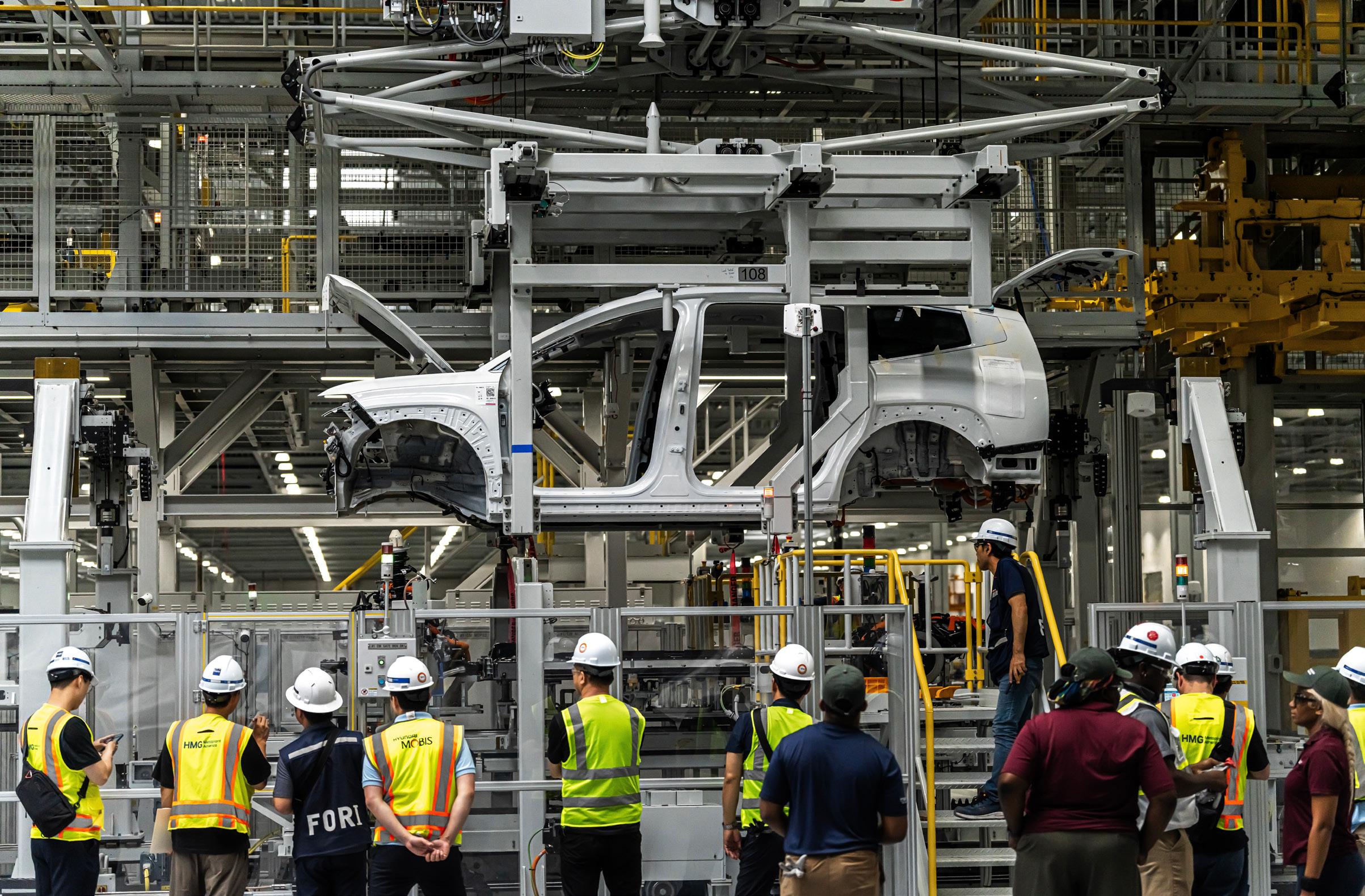
The company’s AI-powered Metaplant outside Savannah, Georgia, also the site of the HL-GA battery company, a $4 billion plant and a joint operation with LG Energy Solutions, are the catalysts for the production of Hyundai’s IONIQ 5 XRT, another winner for the company, earning two awards at the Northwest Automotive Press Association’s 2025 Mudfest Outdoor Vehicle of the Year Competition.
The IONIQ 5 XRT was named Best Electrified Activity Vehicle and Best Two-
Row Family SUV. Built for adventure and pushing the boundaries of EV convention, the IONIQ 5 XRT offers increased ground clearance, enhanced suspension, and bold styling. Assembled at the Metaplant, this model expands Hyundai’s award-winning electric vehicle lineup with dual-purpose versatility, delivering formidable performance both on the highway and off the beaten path.
“IONIQ 5 XRT has been designed to be a rugged, versatile and fun-to-drive electric SUV for customers seeking adventure off the beaten path,” said Ricky Lao, director, product plan-
ning, Hyundai Motor North America. “It’s an honor to be recognized by the automotive media professionals of NWAPA, as they clearly understand the importance of a vehicle that can perform in demanding and varied real-world conditions.”
The 2025 IONIQ 5 XRT includes XRTexclusive design elements including aggressively styled front and rear bumpers, robust side
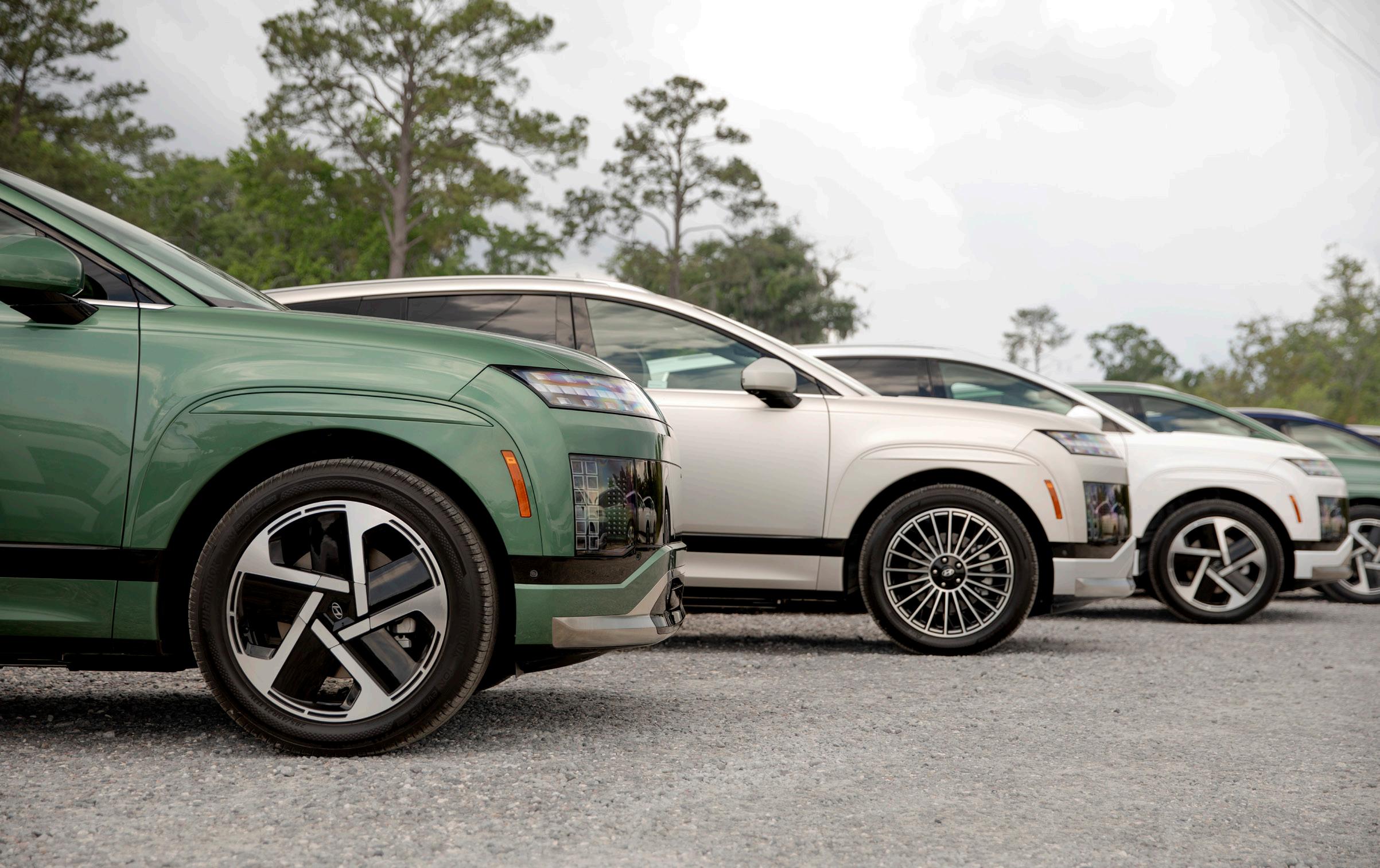
Pictured: Now, in an era of electrification, Hyundai is turning heads with a lineup of high-performance EVs that combine outstanding driving capabilities with genuine driving pleasure.
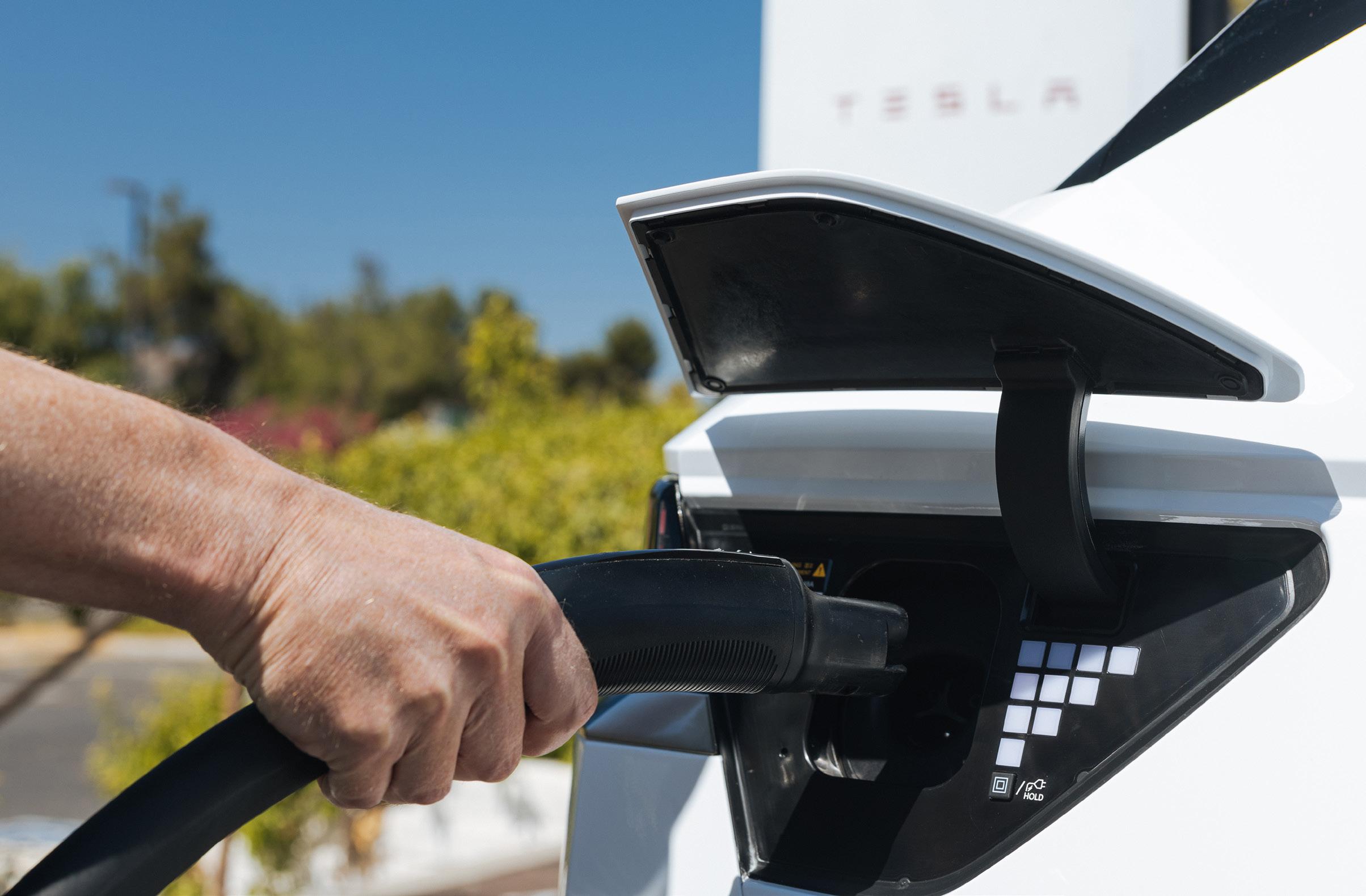


cladding, and all-terrain tires mounted on XRT-specific 18-inch alloy wheels. The model also incorporates revised suspension tuning and elevated ride height, underscoring Hyundai’s commitment to expanding the role EVs can play in active lifestyles.
Its other EV innovations include:
2026 IONIQ 9: Hyundai’s first-ever, threerow electric SUV. It offers first-class comforts and convenience and seating for up to six or seven. The vehicle’s ultra-fast charging will power up from 10 to 80 percent in as little as 24 minutes with a 350kW DC charger. IONIQ 9 also gets an impressive EPA-estimated range of up to 335 miles on a full charge.
2025 IONIQ 5 N: A high-performance electric SUV with up to 641 hp when N Grin Boost is engaged, the Ioniq 5N offers a host of trackready features.
2025 IONIQ 6: Called a “breakthrough electric sedan” IONIQ 6 offers a flowing aerodynamic shape, ultra-fast charging capability and impressive range, with an EPA-estimated 342 miles on a single charge of pure electricity.
2025 IONIQ 5: The company calls this its breakthrough electric SUV, featuring a higher range of up to an EPA-estimated 318 miles, plus a new NACS port that lets the driver access the Tesla Supercharger network—no adapter needed.
2025 KONA Electric: The all-electric small SUV. The KONA Electric N Line, with 19-inch wheels, “brings head-turning, track-inspired
Hyundai Motor celebrated its fourth straight year of success at the World Car Awards, with INSTER named 2025 World Electric Vehicle.
The sub-compact EV was selected by a jury of 96 automotive journalists from 30 countries and announced at the 2025 New York International Auto Show.
Previously, IONIQ 5 N won the 2024 World Performance Car title, and IONIQ 5 and IONIQ 6 achieved triple victories in 2022 and 2023, respectively.
The prestigious accolade was announced at the globally renowned 2025 World Car Awards ceremony, held during the New York International Auto Show (NYIAS). The company’s momentous achievement marks the fourth consecutive year that a model from Hyundai Motor Company has led one or more categories in the World Car Awards.
Among the INSTER’s features:
• Fast DC charging and impressive range enhance customer convenience
• Standard 42 kWh battery provides projected range of 327 km, while the long-range 49 kWh battery extends this to 370 km
• Enhancements improve ride quality and handling, reduce vibrations and suppress road noise for a smoother, quieter driving experience
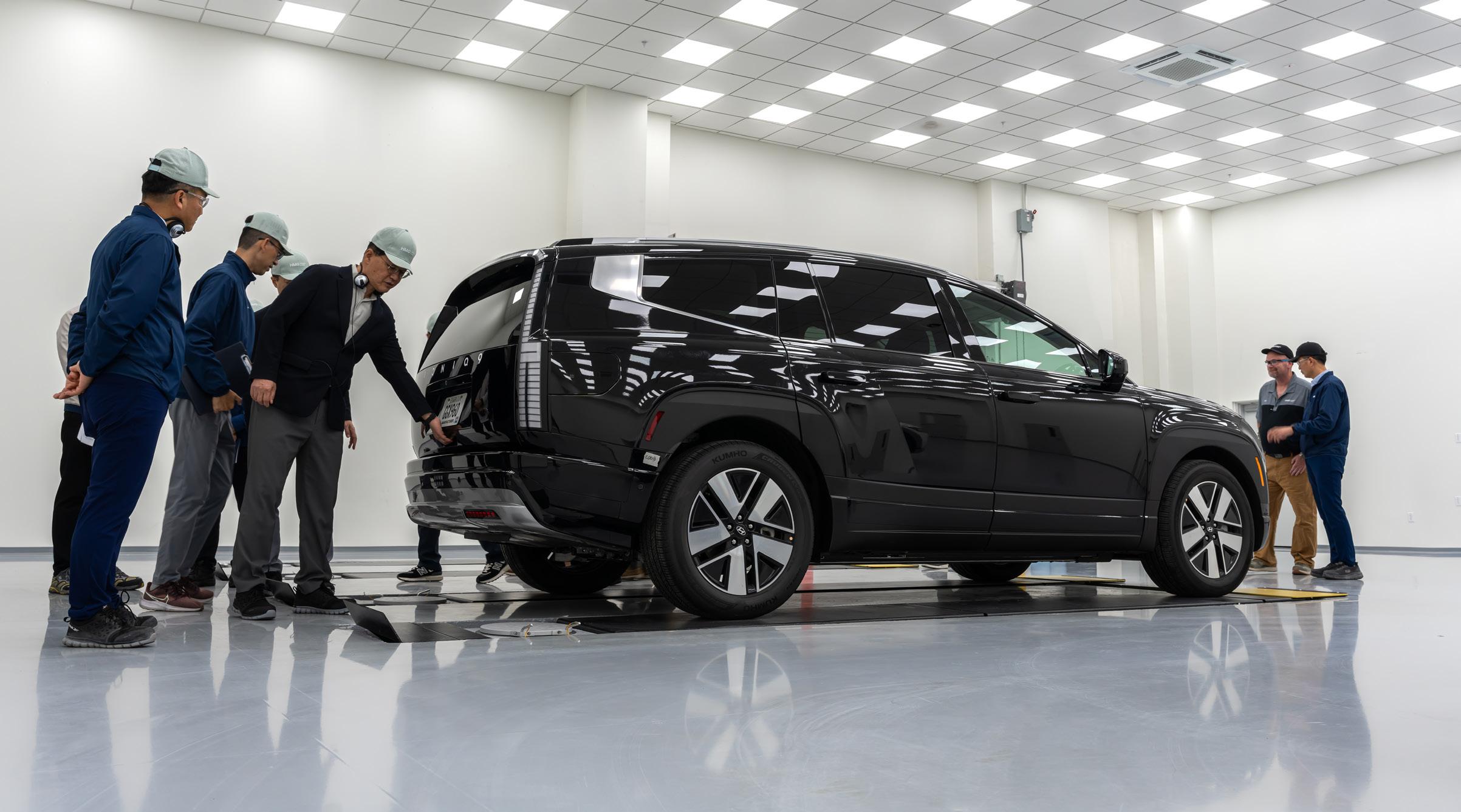
styling to the fold,” the company boasts.
Hyundai Motor, in addition to its other technical and design advances, has upped the game in hydrogen fuel cell technology for more than twenty years. In 2013 the company launched ix35, the world’s first mass-produced, followed by NEXO, the first dedicated hydrogen-powered SUV, in 2018. Last year, Hyundai Motor delivered XCIENT Fuel Cell, the world’s first mass-produced, fuel cell Class 8 electric heavy-duty truck, to customers in Switzerland. The truck utilizes PlusAI’s autonomous driving system designed from the ground up to deliver innovation with safety and scalability at its core
The award-winning truck, recognized as a TIME Best Inventions of 2025, integrates Hyundai Motor’s proven XCIENT Fuel Cell truck platform with PlusAI’s Level 4 autono-
mous SuperDrive™ virtual driver. The combination delivers a cutting-edge solution for longhaul freight, enabling zero-tailpipe-emission operations and enhanced logistics efficiency.
“It’s a true honor to be recognized by TIME’s Best Inventions, which celebrates innovations that shape a better future. At Hyundai, we aim to contribute to building a sustainable and safe freight ecosystem through hydrogen-powered commercial vehicles,” said Chul Youn Park, Senior Vice President and Head of Global Commercial Vehicle and Light Commercial Vehicle Business Division at Hyundai Motor Company. “We deeply value our partnership with PlusAI, which has been instrumental in realizing this shared vision.”
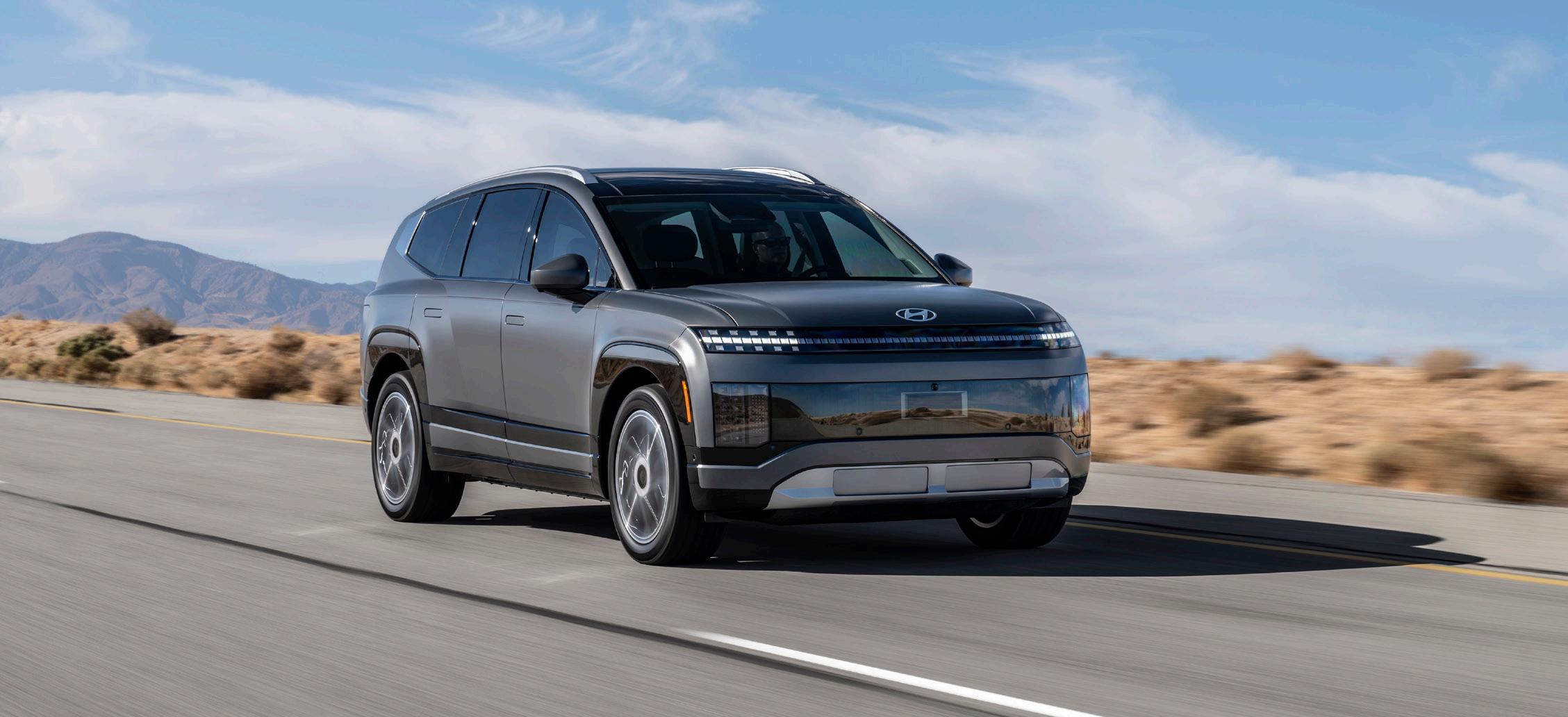
Pictured: Technologies such as Digital Key 2 Premium and Blind-Spot View Monitor underscore Hyundai Motor’s commitment to intuitive, impactful and accessible innovations.

The driving force of offshoring has been and is that United States manufacturing costs are 10–50% higher than in almost all competitor countries. Competing industrial economies like China undervalue their currencies making their exports less expensive globally, while our overvalued dollar makes U.S. products more expensive and less competitive. As a result we import many more goods than we export, leading to the large trade deficits of the last several decades ($1.26 trillion goods deficit for 2025). To address this, a targeted revaluation of the U.S. dollar (e.g., by 20%), would improve cost competitiveness and drive

The 2025 Reshoring Survey recommends a lower U.S. dollar value as a more effective policy than tariffs for reshoring/ reindustrialization. A weaker currency reduces imports and boosts exports of both goods and services while tariffs can reduce exports through retaliation and does not help with services.
By Harry Moser, Founder/President, Reshoring Initiative®
both reshoring and more exports. Let’s dig in.
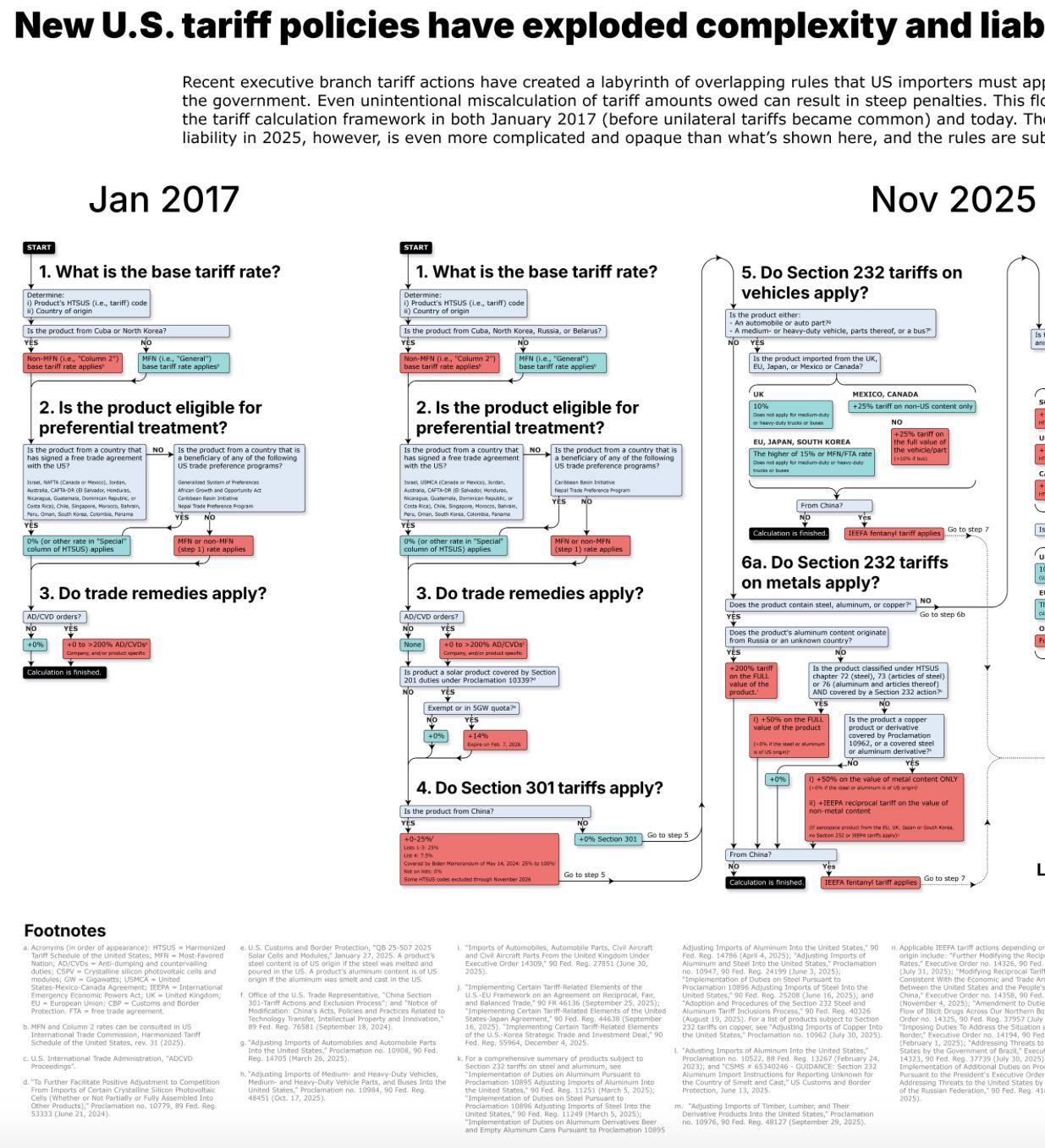
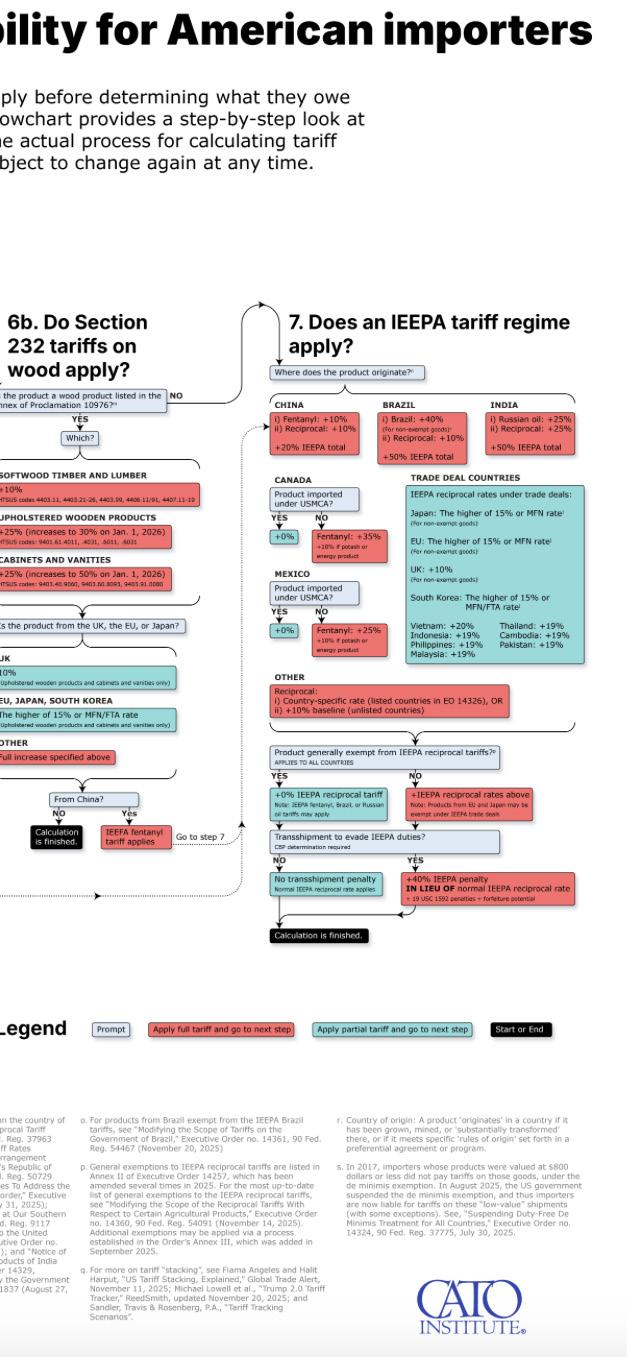
Weak demand and tariff impacts are weighing heavily on companies, with recent U.S. military actions increasing uncertainty and complexity. Tariffs provoke retaliation from trading part-
ners, further reducing exports, and introduce policy uncertainty that discourages long-term U.S. investment. Consequently, investors move capital into assets perceived as ‘safe havens,’ like the U.S. dollar. This “flight to safety” strengthens the U.S. dollar, making U.S. goods and services even less competitive.

U.S. 2025 reshoring job announcements are holding steady but could climb substantially if tariff policies become more measured, stable and long-term. As global supply chains grapple with tariff uncertainty, there are many announcements of projects that are “in the works,” and other “solid” announcements from recent years that may be cancelled. Ongoing tariff uncertainty and mixed messaging have slowed many reshoring and foreign direct investment (FDI) announcements and delayed action.
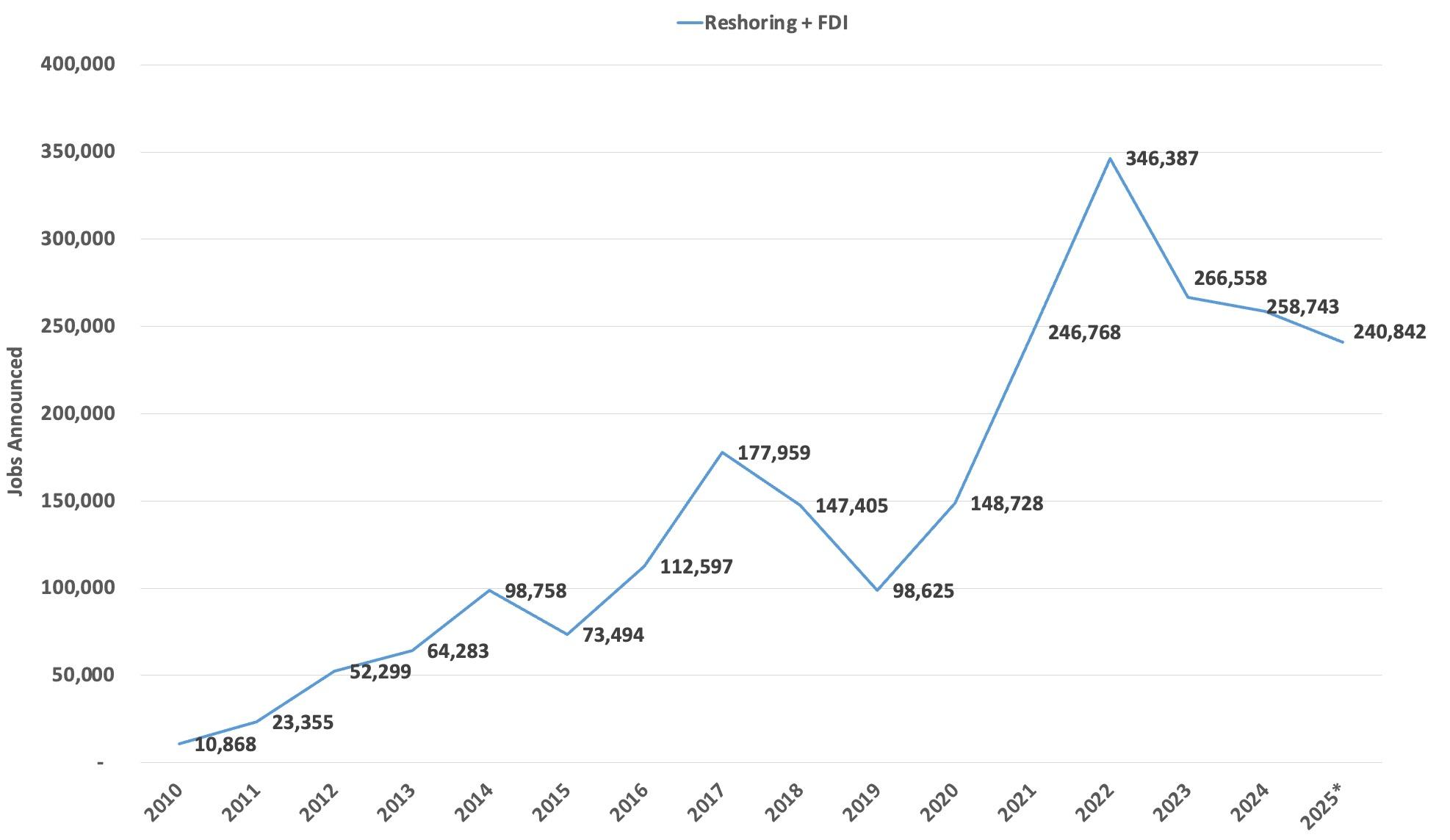
A 2025 Reshoring Initiative Report Preview projected that approximately 240,000 reshoring jobs were announced in 2025, down by about 7% from 2024. This is still a solid outcome
given the policy uncertainty, the inevitable lag between policy changes, and project announcements. Figure 1.
Many more reshoring and FDI announcements are on deck as companies await clarity on tariff policy. Current Reshoring Initiative data does not include many of the reshoring and FDI projects cited by the President as $21 trillion and restated by Bloomberg as $7 tril-
Pictured: Competing industrial economies like China undervalue their currencies, making their exports less expensive globally, while our overvalued dollar makes U.S. products more expensive and less competitive.
(Includes full commitment cases only)
Figure 1: Reshoring Initiative Data
lion. These projects largely reflect companies in a “pending” posture— developing plans for U.S. reshoring or FDI that they intend to activate if/when tariff structures become firm and predictable.
U.S. manufacturing activity slipped to a 14-month low in December with falling new
orders and high input costs continuing a trend of uncertainty and weakness. Yale Budget Lab estimated the administration’s trade policy has raised the average tariff on imports to 17% up from 3% YOY.
Manufactures are reducing orders for inputs and raw materials due to the uncertainty. Many manufacturers have indicated that the constantly shifting tariffs are making it impossible
Click here to access the full list of Reshoring resources offered by the Reshoring Initiative. To report your reshoring successes or to get help with reshoring, contact Harry Moser, Founder and President, Reshoring Initiative, harry.moser@ reshorenow.org, 847-867-1144.

to strategize and proceed with large investment decisions. Figure 2. Companies need stability for multi-year planning for building new facilities and establishing supply chains.
The strong U.S. dollar poses significant challenges to domestic manufacturing and reshoring efforts. The USD is overvalued 20% vs. developed countries and 100% vs. China and other EM countries. Reshoring decisions respond better to cost competitiveness and predictability than to trade barriers and uncertainty. An approach that avoids an excessively strong USD will support domestic reshoring and supply chain resilience better than a tariff-based approach.
A firm, long-term tariff is much better than no action at all to address our cost competitiveness problem. However, a 20% lower USD, reversing some or all of the USD’s overvaluation against developed countries plus a 25% tariff on China, is preferred, since it reduces imports and increases exports. Tariff uncertainty does the opposite.

I offer a better proposition. A lower USD as opposed to tariffs to improve U.S. manufacturing competitiveness and incentivize reshoring. A policy that encourages a lower U.S. dollar offers, vs. tariffs, a more effective, efficient and sustainable strategy to reshoring.
Dr. John Hansen, a former Economic Adviser at the World Bank, developed the MAC financial mechanism to restore a competitive dollar. A more competitively-valued dollar will restore global competitiveness to American factories, reduce our growing dependence on imported goods, generate billions of dollars and accelerate economic growth by eliminating the negative effects of the current trade deficit that reduces our GDP growth rate.
The Market Access Charge or MAC is a small variable tax on all foreign capital inflows into U.S. financial markets. It is a financial mechanism designed to address the U.S. trade deficit and currency valuation issues.
This tax, perhaps 1% 1X on each transaction, is designed to correct trade imbalances and accomplish four key goals: increase
Pictured: Many more reshoring and FDI announcements are on deck as companies await clarity on tariff policy.

exports; reduce imports; encourage FDI in U.S. factories instead of in U.S. financial assets; and generate revenue for infrastructure and workforce training. The Reshoring Initiative supports MAC as a solution.
The United States will celebrate its 250th anniversary in 2026. As we contemplate the Declaration of Independence, we are reminded of the nation’s foundational ideals rooted
in freedom, self-reliance, equality, and human potential. Those ideals are essential to a healthy domestic manufacturing industry and manufacturing is essential to our American identity and economic and national security.
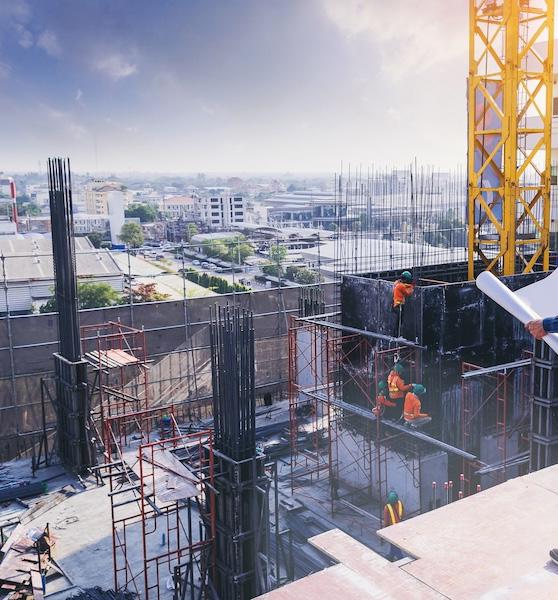
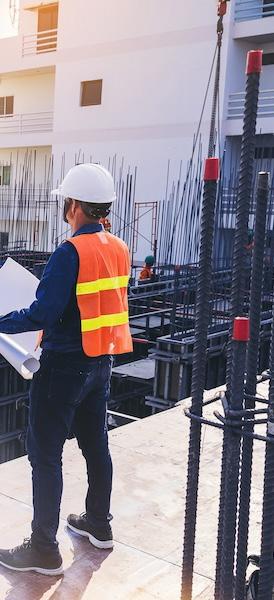
Pictured: A policy that encourages a lower U.S. dollar offers a more effective, efficient and sustainable strategy to reshoring than tariffs; right: A more competitively-valued dollar will restore global competitiveness to American factories and reduce our growing dependence on imported goods.

We believe a more competitive dollar, targeted industrial policies and skilled workforce development is a comprehensive solution to support and expand America’s domestic manufacturing industry.
We encourage companies to implement the top priorities for reindustrialization revealed by the Reshoring Survey — build a strong talent pipeline, use total cost of ownership in
sourcing and siting decisions, and prepare for geopolitical risk.
Click here to access the full list of Reshoring resources offered by the Reshoring Initiative. To report your reshoring successes or to get help with reshoring, contact Harry Moser, Founder and President, Reshoring Initiative, harry.moser@reshorenow.org, 847-867-1144.
Have you reshored a metal component or product? Apply here for the National Metalworking Reshoring Award today.
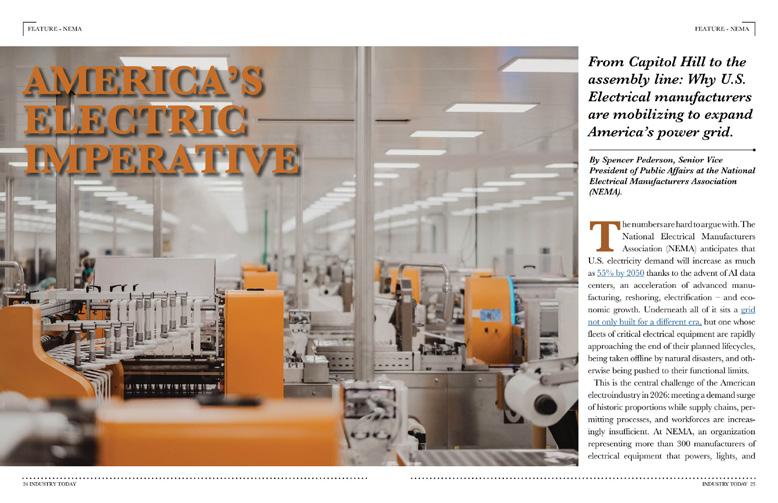
From Capitol Hill to the assembly line: Why U.S. Electrical manufacturers are mobilizing to expand America’s power grid.
By Spencer Pederson, Senior Vice President of Public Affairs at the National Electrical Manufacturers Association (NEMA).
The numbers are hard to argue with. The National Electrical Manufacturers Association (NEMA) anticipates that U.S. electricity demand will increase as much as 55% by 2050 thanks to the advent of AI data centers, an acceleration of advanced manufacturing, reshoring, electrification – and economic growth. Underneath all of it sits a grid not only built for a different era, but one whose fleets of critical electrical equipment are rapidly approaching the end of their planned lifecycles, being taken offline by natural disasters, and otherwise being pushed to their functional limits.
This is the central challenge of the American electroindustry in 2026: meeting a demand surge of historic proportions while supply chains, permitting processes, and workforces are increasingly insufficient. At NEMA, an organization representing more than 300 manufacturers of electrical equipment that powers, lights, and
connects our modern world, we are engaged in every dimension of this challenge. We are advocating for federal legislation to strengthen U.S. manufacturing, accelerate infrastructure deployment, and power the next era of American energy dominance and economic growth. And through our industry-leading, federally-recognized Make It AmericanTM certification program, we are proving that American
industry is ready to rise to the occasion and build the infrastructure for the future.
At the root of this power demand surge is the rapidly developing data center and AI-driven economy, whose energy consumption NEMA anticipates will increase by as much as 300%
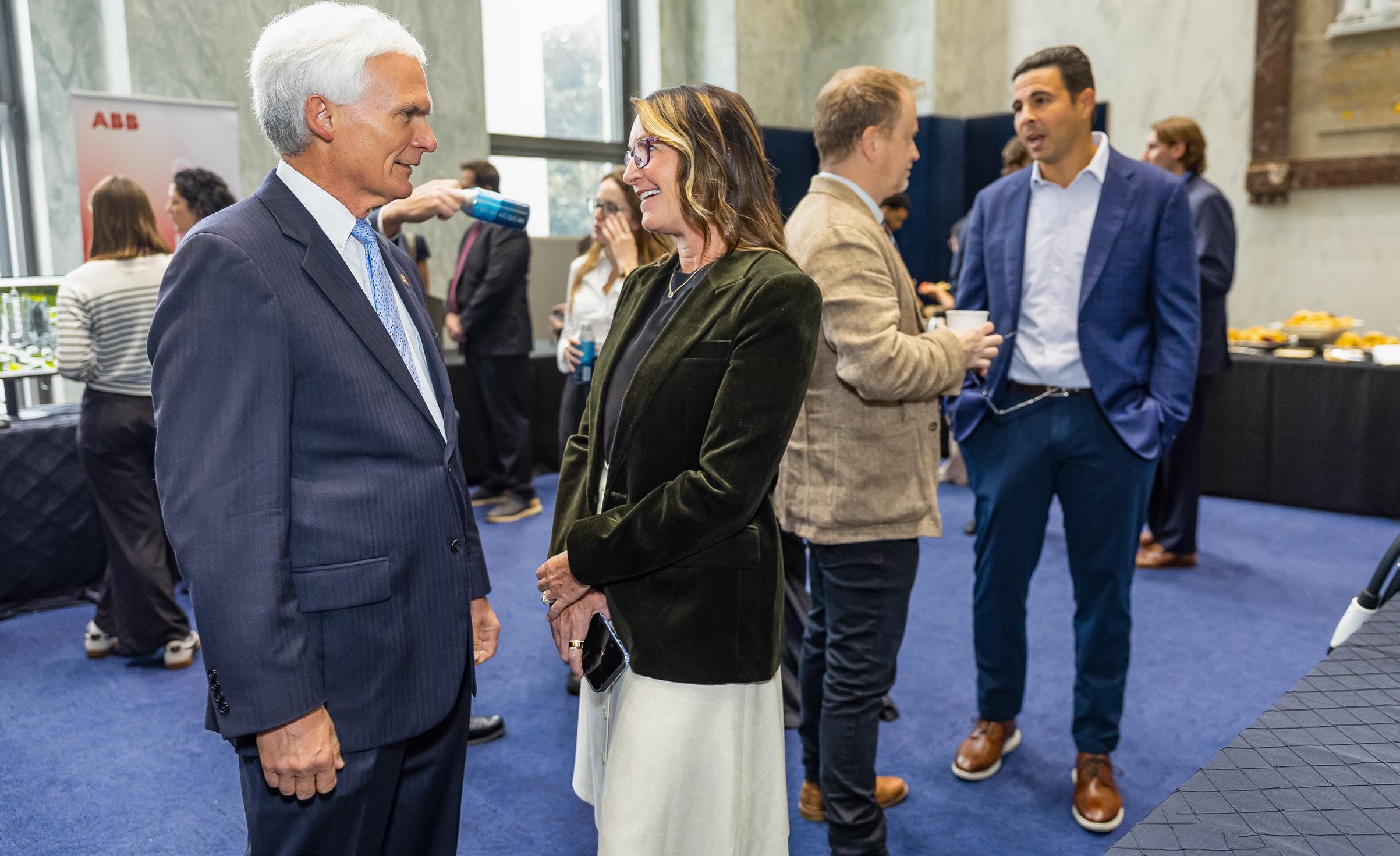
Pictured: NEMA President and CEO Debra Phillips with U.S. Representative Bob Latta (R-OH), Chairman of the House Energy & Commerce Committee’s Subcommittee on Energy and Co-Chair of the Congressional Grid Innovation Caucus (GIC) on the sidelines of the 2025 Congressional Grid Innovation Expo;
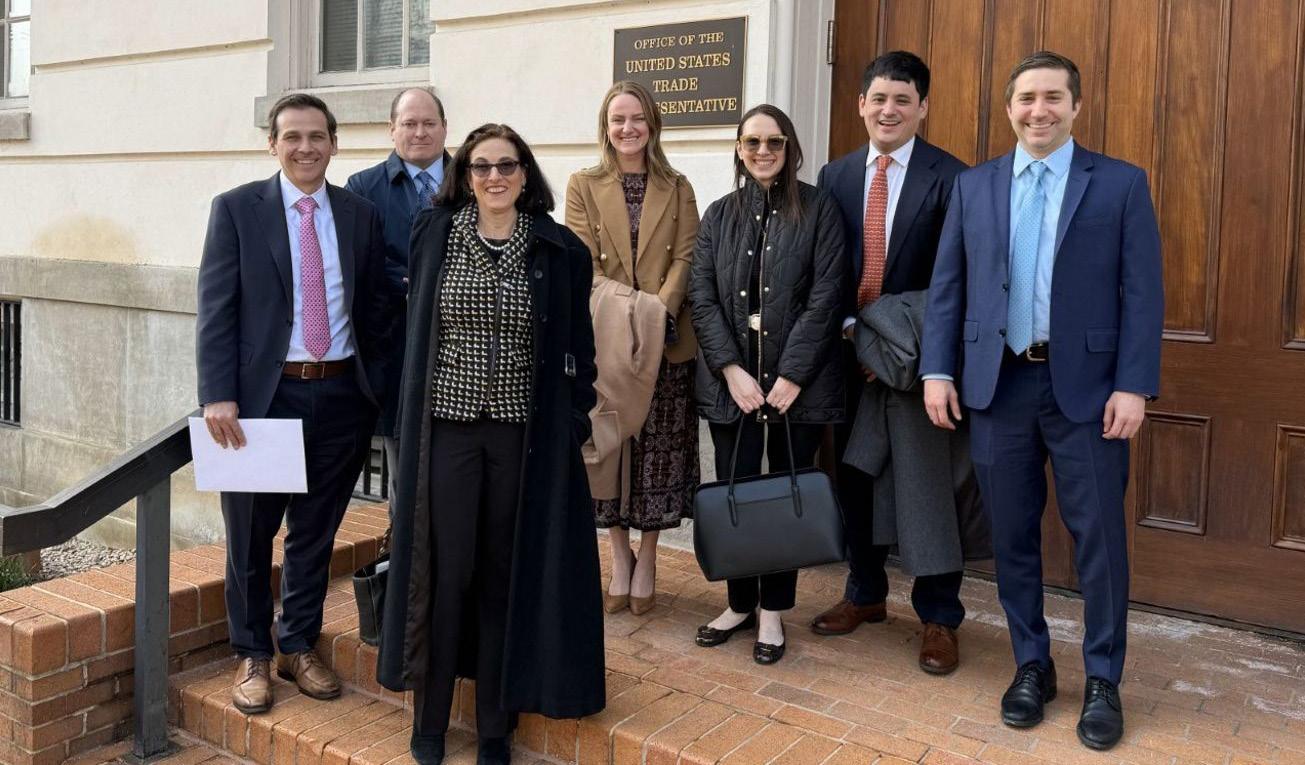
right: NEMA staff and member company representatives after meeting with the Assistant U.S. Trade Representative in February 2026 for a focused discussion on the upcoming USMCA renewal and North American supply chains.
over the next 10 years. To meet this challenge, industry leaders expect electric generation, transmission, and distribution providers will need to invest eye-watering sums in the coming years.
But investment commitments alone don’t generate or move electrons. The physical hardware needed to expand and upgrade the grid is in increasingly high demand. In fact, lead times for distribution and large power transformers and switchgear have extended to as long as two years in some cases.
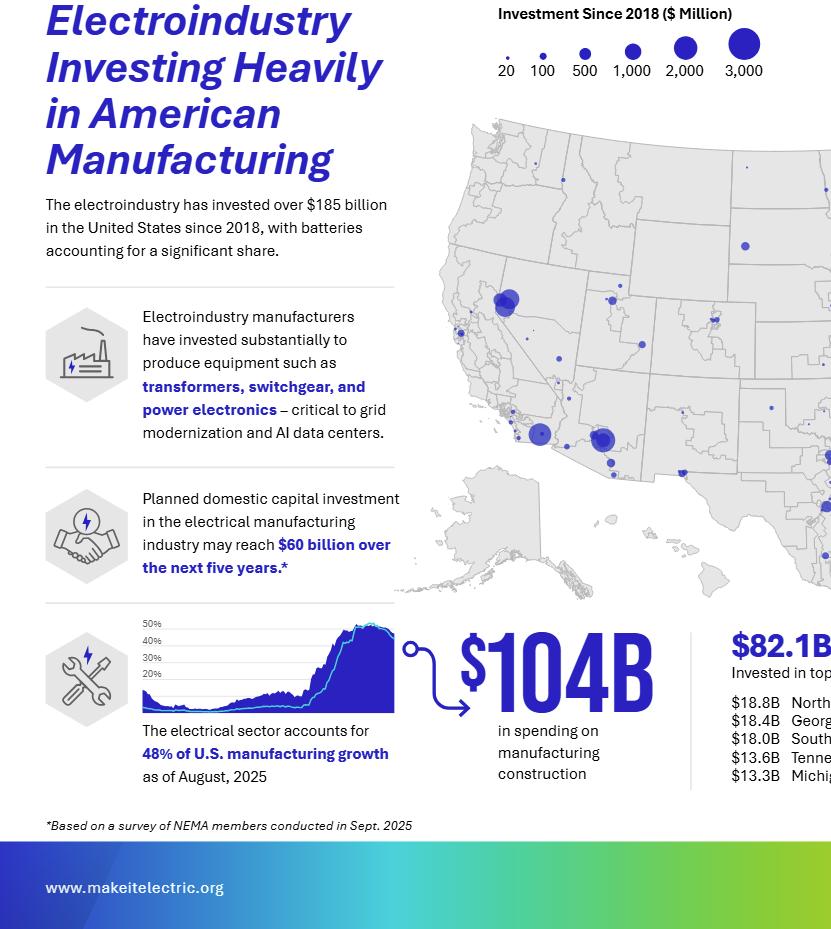
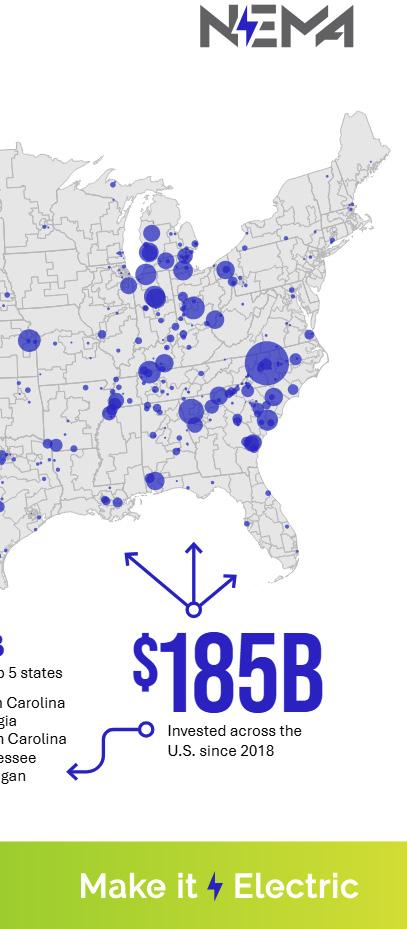
To address this, electrical manufacturers have invested nearly $200 billion in domestic production capacity since 2018, and reduced
dependence on Chinese-sourced materials by more than 32% over that same period. That represents approximately half of recent manufacturing sector growth, as well as a genuine commitment to building the domestic supply chain this moment demands.
But investment takes time to come online. And the nation cannot afford to wait. That is why NEMA is making its case in Washington.
A major obstacle to grid expansion is not a lack of investment interest or intent. It is the time it takes to site, permit, and build new power generation and delivery infrastructure. Wait
times for interconnection to the high-voltage transmission system are measured not in weeks or months – but years. Meanwhile, as much as 2,300 gigawatts of power generation and storage capacity are sitting in interconnection queues, which has the added effect of disrupting project development and energization timelines for AI data centers and other economy-driving infrastructure.
NEMA is actively supporting a bipartisan solution. In March 2026, U.S. Senators Dave McCormick (R-PA) and Peter Welch (D-VT) introduced the Reconductoring Existing Wires for Infrastructure Reliability and Expansion (REWIRE) Act – which NEMA endorsed immediately.
The legislation takes a practical approach. In addition to streamlining the infrastructure permitting process, it focuses on maximizing the capacity of infrastructure already deployed with grid-enhancing technologies (GETs). This is a targeted, commonsense policy change that can add meaningful capacity in the near term while longer-term infrastructure comes online, aligning with the slate of recommendations that NEMA and allied organizations have recently proposed to Congress and the Trump Administration.
Pictured: The U.S. electroindustry has invested more than $185 billion in domestic manufacturing capacity since 2018, with an additional $60 billion planned over the next five years.
The current tariff landscape presents a dilemma. America’s electrical manufacturers support the Trump Administration’s goal of strengthening American manufacturing through reshoring supply chains. But some of the electrical equipment and materials the grid needs most urgently simply cannot be manufactured domestically at the volumes the market demands today. Imposing tariffs on critical equipment for the grid, for data centers, and for advanced manufacturing facilities without an earned relief mechanism doesn’t protect American manufacturing so much as it slows the construction of economy-driving infrastructure.
As a result, NEMA has developed a Tariff Incentive Proposal, backed by a coalition of
manufacturing, energy, and infrastructure associations, that provides a practical framework for leveraging tariffs toward accelerated domestic manufacturing. The proposal calls for targeted, time-limited tariff offset incentives on critical electrical equipment and materials not yet available in sufficient domestic supply. Critically, these incentives would be earned – tied to verified domestic investment commitments and production practices. Manufacturers who invest in building domestic capacity would be eligible for relief on the inputs needed to bridge the supply gap in the interim.
The stakes are substantial. Every month of delay in substation construction, transformer delivery, or transmission line deployment translates directly into slower data center builds, deferred manufacturing reshoring, and greater grid reliability and resilience risks.
Even the best-designed legislation and most generous incentives will fail if the industry cannot find the workers it needs to activate
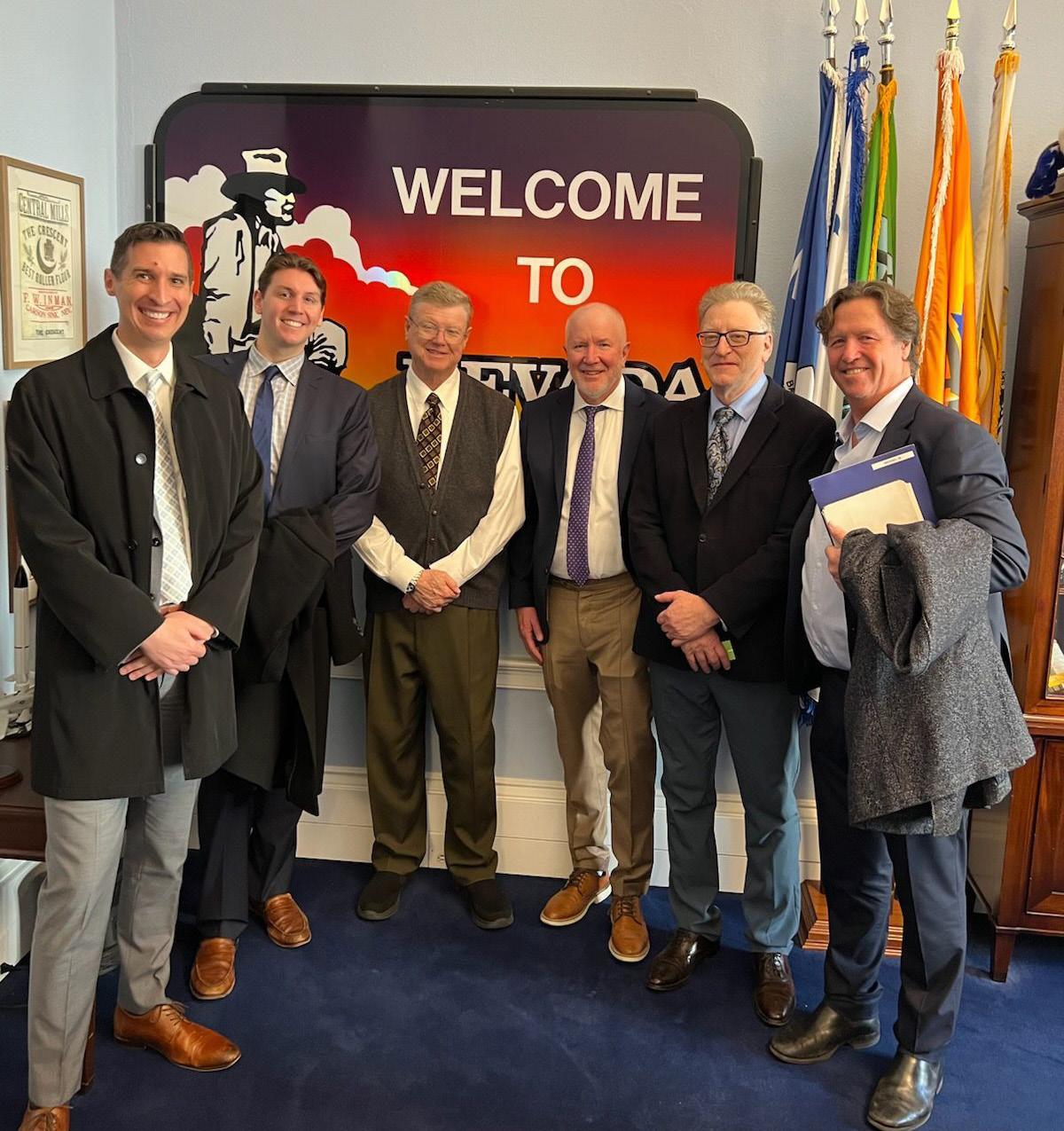
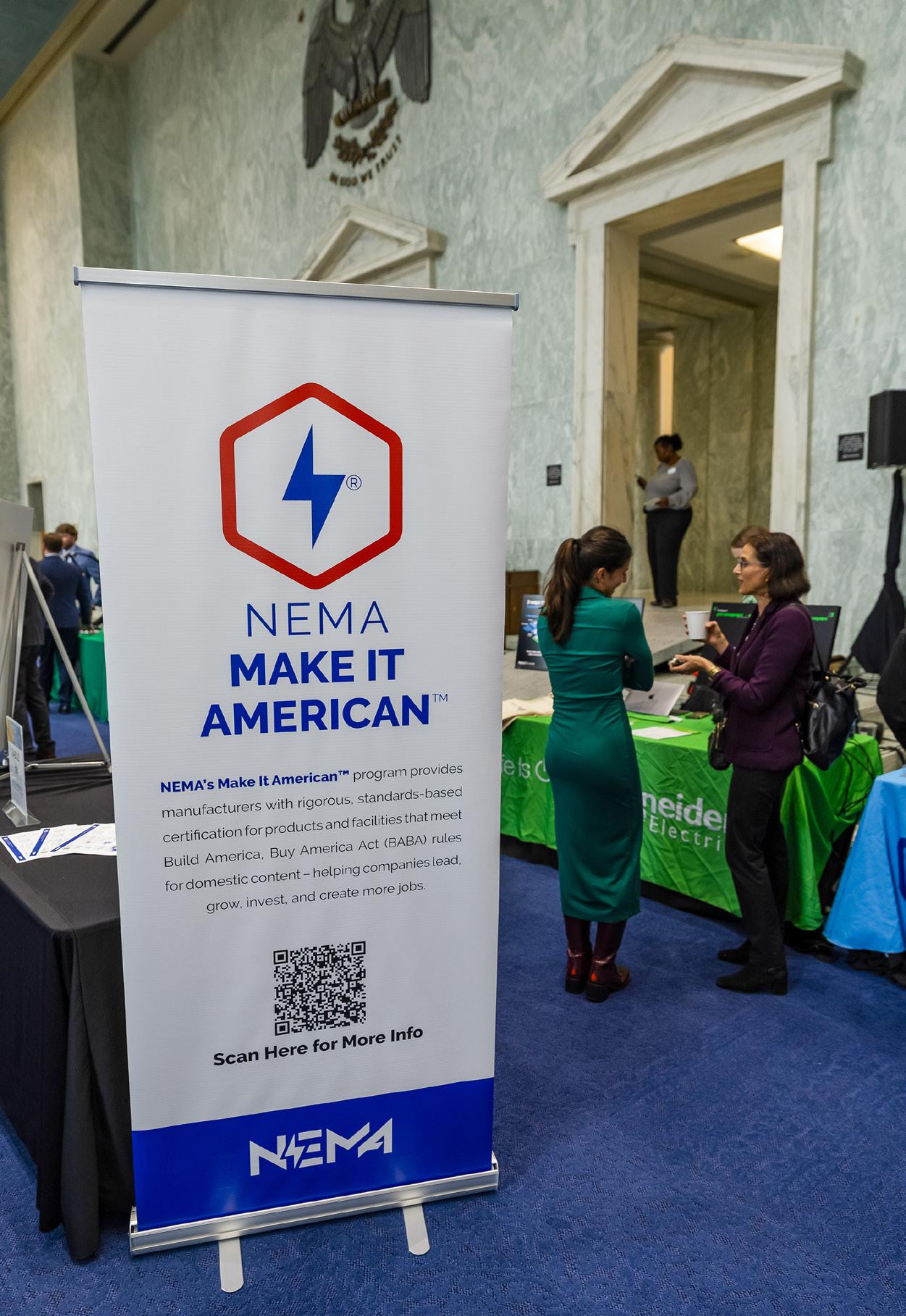
Pictured: NEMA staff with U.S. Rep. Mark Amodei (R-NV) and American Critical Minerals Association (AMCA) members to discuss practical permitting reform and workforce development legislation, as well as the bipartisan Critical Minerals Consistency Act; right: NEMA’s Make It AmericanTM certification program was of particular interest among attendees of NEMA’s 2025 Congressional Grid Innovation Expo attendees, hosted alongside The GridWise Alliance.
potential. For perspective, NEMA estimates that the total transformer workforce is approximately 30,700, with a present-day shortage of approximately 13,400 workers, assuming no binding constraints from materials, equipment, or capital investment. To translate, that comes out to a labor shortfall of roughly 30%.
That isn’t sustainable. It demands new pathways into the industry.
One of the most promising pathways runs through America’s veteran community. More than 200,000 service members transition out of military service each year, bringing with them technical training, operational discipline, and a mission orientation that, in many cases, maps directly onto the needs of grid modernization and electrical manufacturing.
NEMA has been advocating alongside a host of other industry associations and veteran community organizations to bring the bipartisan Veterans Energy Transition (VET) Act to fruition. Introduced by Representatives Jen Kiggans (R-VA) and Chrissy Houlahan (D-PA), the bill makes it easier for electroindustry employers to hire and train transitioning U.S. service members, existing veterans, and military spouses in civilian energy and advanced manufacturing sector roles.
Today, the electroindustry directly employs more than 580,000 people, generating nearly $200 billion in labor income across the country. Ensuring those numbers grow is central to our mission.
Spencer Pederson is the Senior Vice President of Public Affairs at the National Electrical Manufacturers Association (NEMA).

Leading Industry
Federal action matters enormously, and NEMA will continue fighting for it. But the electroindustry is not standing by while the policy process unfolds. NEMA’s Make It AmericanTM certification program is the most visible demonstration that American manufacturers are building the future domestic supply chain.
The program was created to help manufacturers of electrical equipment and other products not only navigate the Build America, Buy America (BABA) Act domestic content
requirements embedded in the 2021 Bipartisan Infrastructure Law, but help consumers of products subject to these requirements more easily identify BABA-aligned goods in the marketplace.
The program’s credibility received significant validation in October 2025 when the U.S. Federal Highway Administration (FHWA) officially listed Make It American as a recognized industry resource for manufacturers, contractors, and state departments of transportation seeking to meet domestic preference requirements. That recognition reflects the rigor of the program’s methodology and its real-world utility for the procurement ecosystem.
It equips manufacturers with a deeper, structured understanding of BABA’s requirements and a documented framework for evaluating their own supply chains — replacing uncertainty with an auditable, repeatable process.
For contractors and government purchasers, that certainly has real value.
The National Electrical Manufacturers Association (NEMA) represents over 300 electrical equipment manufacturers that make safe, reliable, and efficient products and technologies that power, connect, and light our world. Together, our members contribute a full 1% of U.S. GDP and directly provide over 580,000 American jobs, adding more than $330 billion to the U.S. economy. Learn more at makeitelectric.org.
NEMA celebrates 100 years of industry leadership in 2026. Over that century, our members have helped electrify the nation, rebuild the grid after disasters, and power the technologies that have defined each era of economic growth. What faces the industry today is definitive.
The convergence of AI infrastructure demand, manufacturing reshoring, and electrification is already showing up in load forecasts, interconnection queues, and equipment order books. The question is not whether the grid will need to grow dramatically – it is whether America’s electrical manufacturers, policymakers, and workers will capture that opportunity or cede it.
What we’re asking of policymakers is simpler: remove the barriers, align the incentives, and trust that American manufacturers will do what they have always done.
We will build what the country needs.
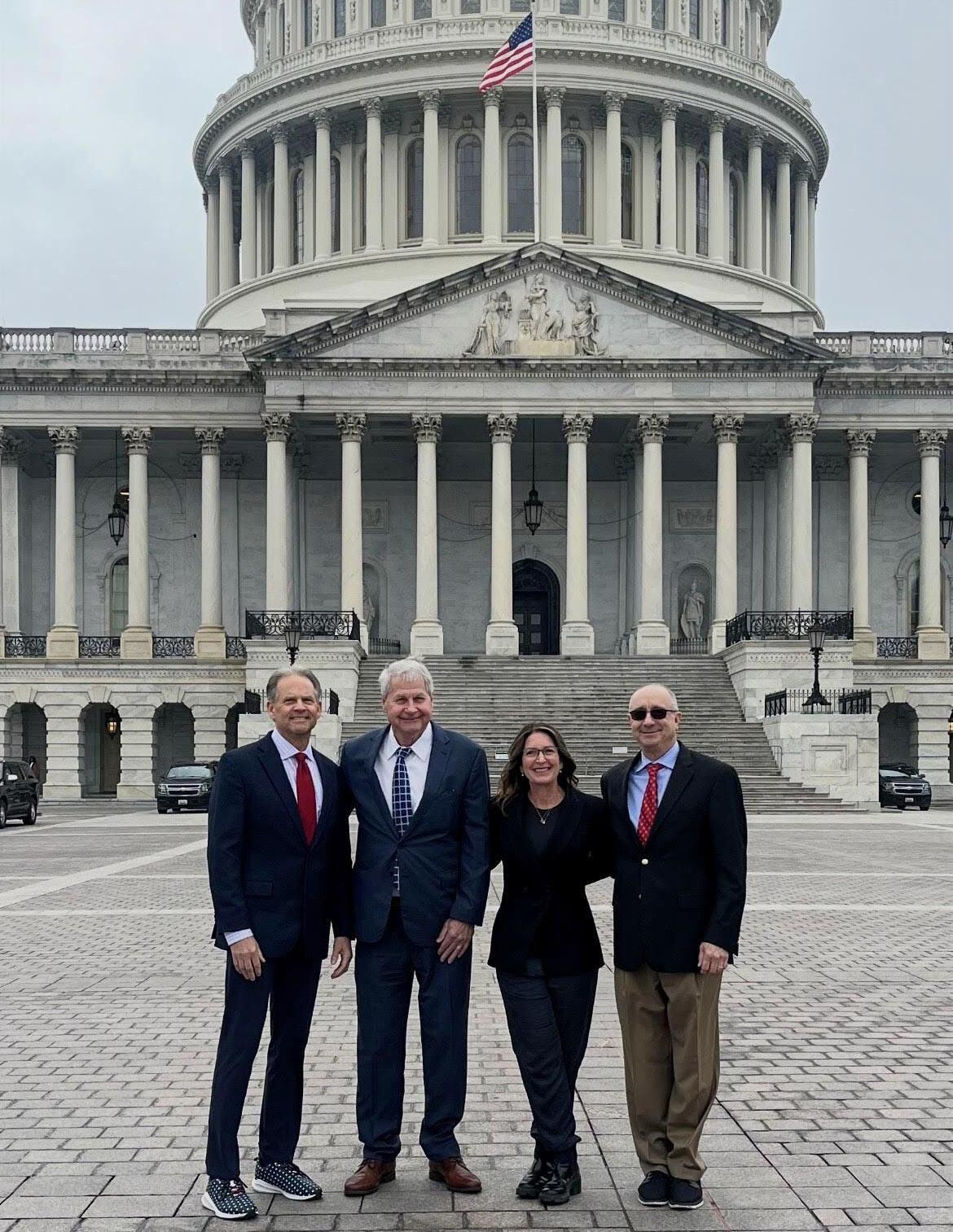
Pictured: NEMA President and CEO Debra Phillips with her counterparts from the National Electrical Contractors Association (NECA), National Association of Electrical Distributors (NAED), and National Electrical Manufacturers Representatives Association (NEMRA) on Capitol Hill;
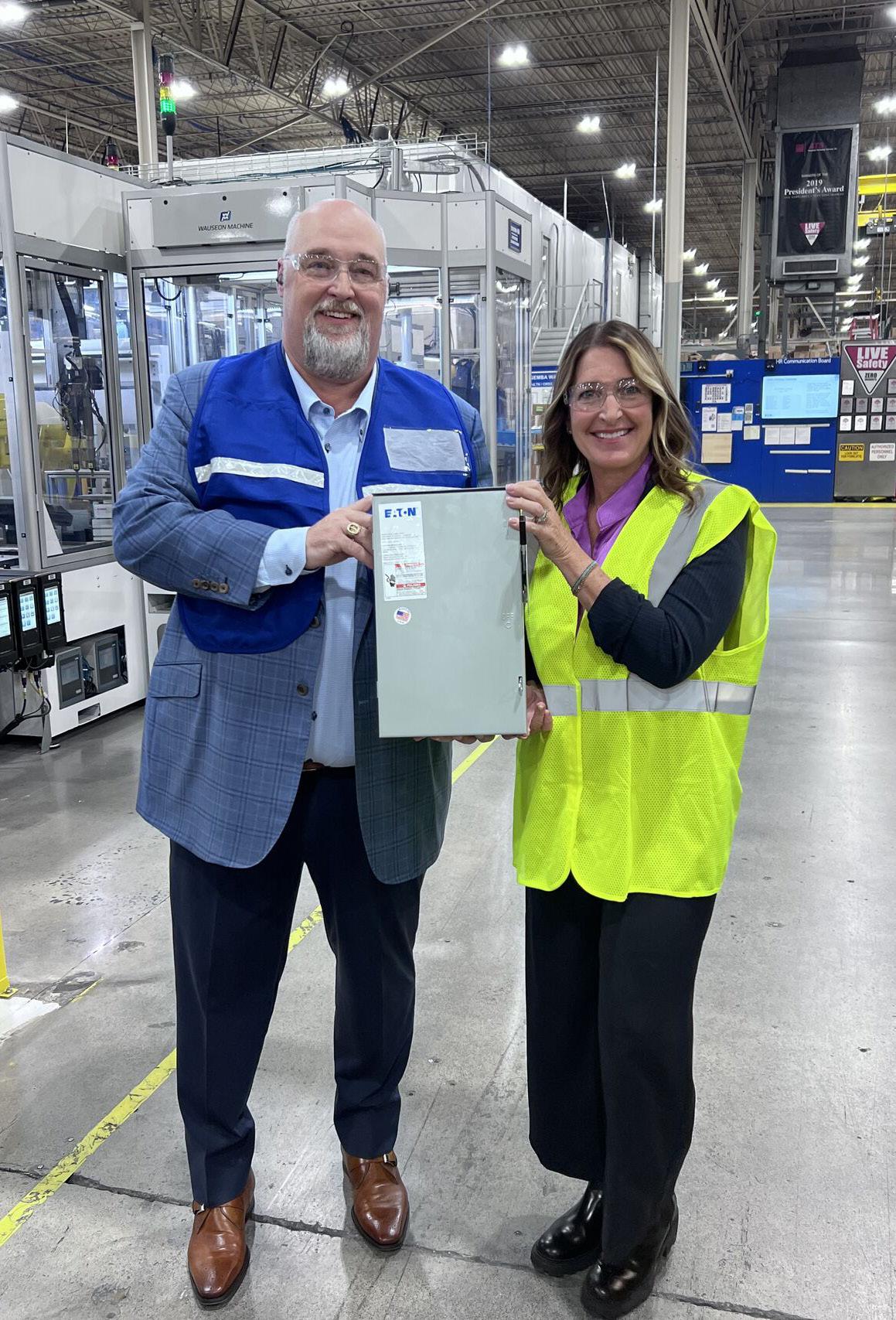
right top: NEMA President and CEO Debra Phillips with Eaton President, Americas Region, Electrical Sector Mike Yelton during a tour of Eaton’s Make It AmericanTM-certified Cleveland, Tennessee facility;
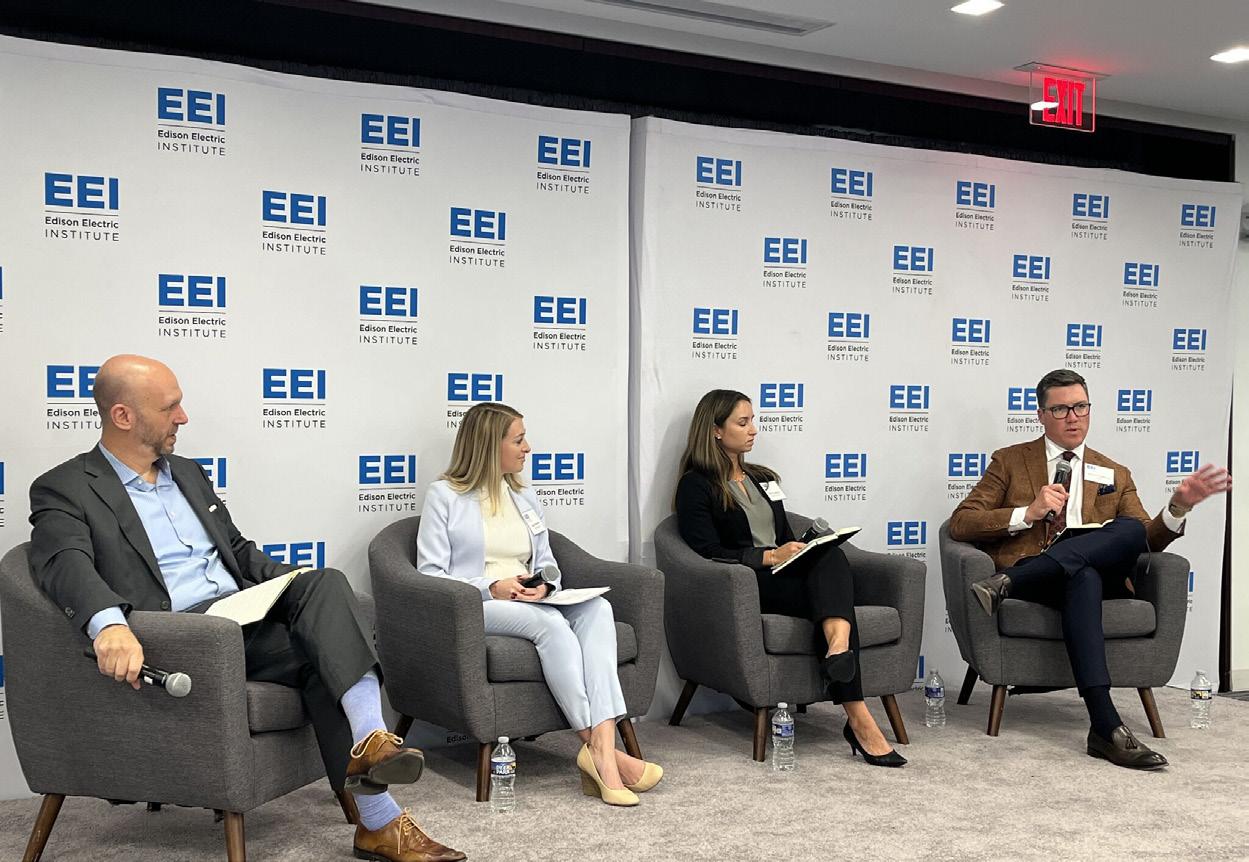
right below: NEMA SVP of Public Affairs Spencer Pederson (right) discussing NEMA’s position on U.S. trade and tariff policy with industry leaders gathered for the 2025 Edison Electric Institute (EEI) Powering Engagement Conference.


The Midwest’s industrial legacy and central global location make it ideal for international partnerships driving America’s next growth chapter.
By Juliet Abdel, President & CEO Cedar Rapids Metro Economic Alliance
The next wave of American manufacturing growth won’t be won on legacy alone—it will be won by regions that combine industrial strength with strategic agility. After over a decade working across economic development in the Midwest, I’ve seen firsthand how communities that understand this distinction are positioning themselves not just to compete, but to lead in an increasingly complex global economy.
The Midwest has long been synonymous with manufacturing excellence, but today we’re redefining what the potential for this advanced, resilient and globally connected industry looks like. In the Cedar Rapids Region, that evolution is happening in real time, driven by a focus on industry clusters that drive innovation, workforce development and international partnerships that honor our industrial roots while building the necessary infrastructure to support tomorrow’s economy.
As Iowa’s second-largest city, Cedar Rapids

anchors an eight-county region with a clear mandate: drive economic growth for the region through support of existing businesses, attracting high-value investment and ensuring our community remains competitive as manufacturing and technology continue to converge. That focus has positioned us for sustained growth across sectors that are at the heart of America’s global competitiveness—advanced manufacturing, aerospace, agriculture technology and transportation logistics.
Our traditional industrial strengths are evolving into next-generation advantages. Aerospace and avionics have emerged as a natural growth cluster, with available, certified industrial land and a skilled workforce anchored by global
industry leaders including Collins Aerospace and BAE Systems. These aren’t just manufacturing operations, they are facilities at the center of avionics innovation, developing and defining modern aerospace.
Similarly, Iowa’s agricultural legacy -- leading the nation in pork, egg and corn production -has created a pathway for innovation in biofuels, bio-agriculture, biotechnology and bioprocessing, leveraging the region’s deep expertise to
Pictured: Illuminated CEDAR RAPIDS displayed in front of Veterans Memorial Building; right: Stone lion statue at the entrance of Czech Village; on the cover: Downtown Cedar Rapids skyline featuring the Alliant Energy Tower on the Cedar River.
pioneer the sustainable, data-driven agricultural systems necessary today. Combining generations of farming knowledge with cutting-edge technology has created competitive advantages that aren’t easily replicated.
A testament to the advancements happening in the Midwest, Cedar Rapids has attracted the largest private investment in Iowa’s history, advancing a broader ecosystem of data-driven industries, including insurtech, agtech and medtech. This investment in technology enables manufacturers to adopt advanced tools that fundamentally transform how products are designed, produced and brought to the global market.
Infrastructure and industry clusters alone can’t drive sustainable growth, and at this moment especially, it’s clear how vital global connectivity is in economic success. International relationships aren’t a secondary component of our economic development strategy—it is core to it.
The Midwest’s geographic position offers a strategic advantage that becomes more valuable as global supply chains adapt to new realities.
Cedar Rapids sits within a half-day’s drive of major markets across five states, with access to key interstates and highways, providing seamless connectivity to both east and west coasts. Our


transportation infrastructure includes five Class I railways with transload capabilities, more than a dozen major trucking operations—including industry leaders like CRST International and Heartland Express—and The Eastern Iowa
Airport, which provides direct access to major U.S. hubs and international connections. This isn’t just about moving products efficiently; it’s about giving global companies the logistics foundation they need to serve North American

markets while maintaining the required agility to respond to shifting demands.
But physical infrastructure is only one part of the region’s story. The real differentiator lies in how the Midwest approaches international
business relationships—with authenticity, longterm commitment and a cultural understanding that goes beyond transactional deal-making.
Iowa has a tradition of welcoming global communities, from our historic Czech and German immigrant populations to growing commercial relationships across the Middle East, Asia and Europe. Building on that legacy, Cedar Rapids has prioritized foreign direct investment and relationship-building efforts that naturally highlight one of our community’s core strengths truly embodying our tagline “welcome is our language”. We’re creating the conditions for long-term partnerships built on mutual understanding and shared opportunity.
This cultural foundation matters when building trust with international partners. Companies expanding globally need more than incentives and infrastructure, they need communities that understand the complexity of operating across borders, value cultural exchange and afford the opportunity for them to be a part of the future. The Midwest’s collaborative business culture, where access to decision-makers is direct and relationships are built on integrity rather than complexity, resonates with international companies accustomed to navigating bureaucratic obstacles in larger markets.
As Iowa’s top trading partner, Canadian companies operate more than 200 major facilities statewide, including North America’s largest oats processing plant, deeply integrated
Pictured: Twilight view of downtown Cedar Rapids.



into North American supply chains. Our delegation’s recent mission to Toronto wasn’t just about attraction, but reinforcing existing partnerships, understanding evolving business needs and equipping our companies with the global perspective required to expand into international markets.
These relationships extend far beyond Canada. Cedar Rapids maintains active trade relationships throughout Europe, Asia and Latin America, with our agriculture technology and advanced manufacturing sectors drawing interest from partners seeking innovation in sustainable production. Our region’s expertise in bioprocessing and renewable energy has positioned us as a leader in conversations about the future of global food systems and clean energy transition -- topics that transcend borders and boundaries and require international collaboration.
Pictured: Autumn landscape in Eastern Iowa; above: Rolling green farmland in Eastern Iowa.

The value proposition we offer international companies is straightforward but powerful: predictable operating costs that allow for accurate long-term planning, a stable regulatory environment that doesn’t shift with political winds, a highly skilled workforce with a strong technical
education and work ethic, and quality of life that helps companies attract and retain top talent. This, in addition to our strategic position at the center of North American markets, and the case for the Midwest becomes compelling for any company serious about sustainable growth
Juliet Abdel is the President & CEO of the Cedar Rapids Metro Economic Alliance (CRMEA), representing over 1,200 businesses in the region. She’s responsible for leading the organization and team which serves the Cedar Rapids Region through economic development, public policy, business support programs, and community development. www.cedarrapids.org/ jabdel@cedarrapids.org

in the United States.
This outward-looking approach matters more now than ever. As supply chains reconfigure and companies reassess their geographic footprints, regions like Cedar Rapids that offer both domestic stability and international connectivity hold a distinct advantage.
Perhaps most importantly, Cedar Rapids and the Midwest are defined by something less quantifiable but equally essential: resilience and intentionality. This region has weathered economic transitions and industry disruptions and emerged stronger each time. Our region doesn’t
react to change; we anticipate it, prepare for it and position ourselves to capitalize on it.
As advanced manufacturing technologies and shifting trade dynamics continue to reshape global supply chains, regions like ours are proving that the next chapter of American industrial leadership doesn’t belong to any single geography. It belongs to the communities that understand their competitive advantages, invest strategically in their future and build meaningful international partnerships.
The question isn’t whether the Midwest will remain relevant in the new industrial economy. It’s whether other regions can match the combination of assets, agility and ambition we’ve led with for centuries.

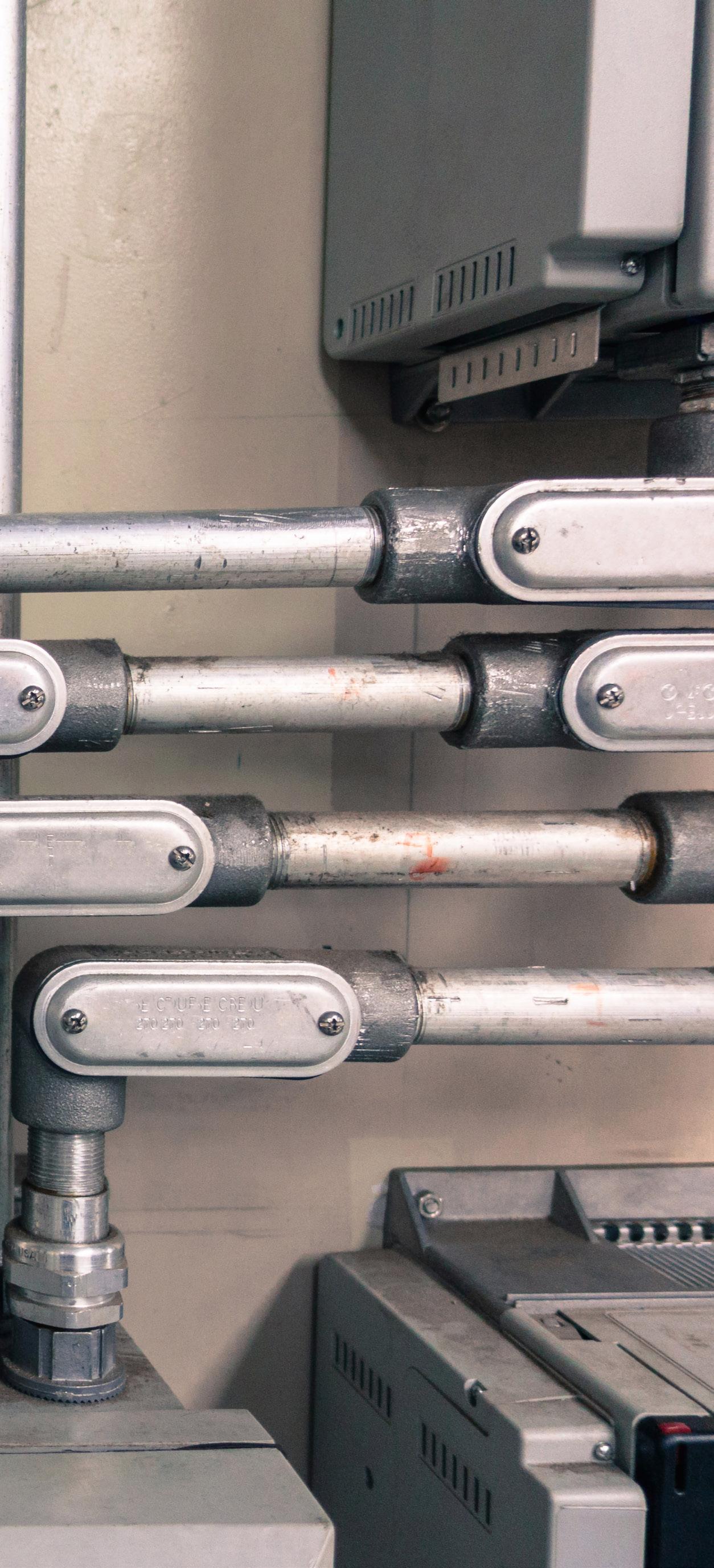
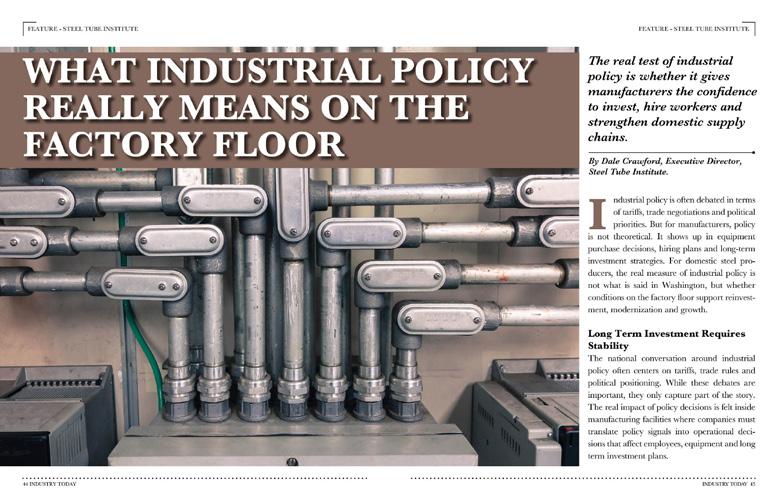
The real test of industrial policy is whether it gives manufacturers the confidence to invest, hire workers and strengthen domestic supply chains.
By Dale Crawford, Executive Director, Steel Tube Institute.
Industrial policy is often debated in terms of tariffs, trade negotiations and political priorities. But for manufacturers, policy is not theoretical. It shows up in equipment purchase decisions, hiring plans and long-term investment strategies. For domestic steel producers, the real measure of industrial policy is not what is said in Washington, but whether conditions on the factory floor support reinvestment, modernization and growth.
The national conversation around industrial policy often centers on tariffs, trade rules and political positioning. While these debates are important, they only capture part of the story. The real impact of policy decisions is felt inside manufacturing facilities where companies must translate policy signals into operational decisions that affect employees, equipment and long term investment plans.
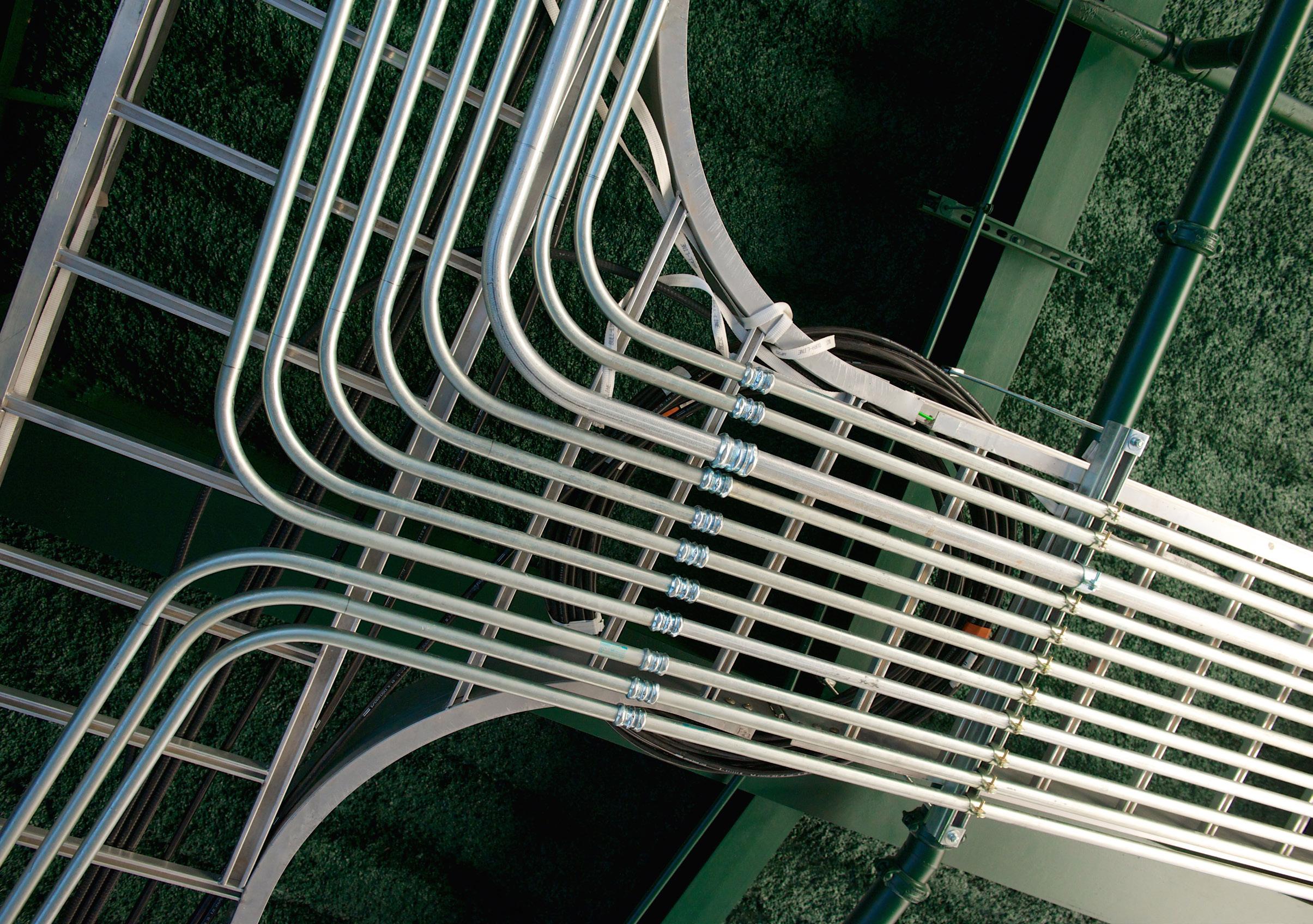
Domestic steel producers are navigating reshoring efforts, trade adjustments and supply chain pressures while also making critical decisions about the future of their operations. These companies must consider how to modernize equipment, expand production capacity and recruit the skilled workforce needed to support increasingly advanced manufacturing processes.
Manufacturing investments are rarely short term commitments. Upgrading production technology, expanding facilities and develop-
ing workforce training programs often require planning cycles that extend ten to twenty years into the future. Because these decisions play out over decades, manufacturers must evaluate whether the market environment will support sustained domestic production before committing significant capital.
Another critical part of that environment is consistent enforcement of trade laws. Manufacturers depend on fair competition when making long term investment decisions. When unfair trade practices distort mar -
kets or enforcement becomes inconsistent, it creates uncertainty that can slow investment in new equipment, facility upgrades or workforce expansion. Ensuring that trade rules are enforced consistently helps provide the level playing field manufacturers need to continue investing in domestic production.
Protecting American jobs requires more than policy announcements. U.S. manufacturers must have access to the technology, raw materials and market certainty needed to continue investing and expanding operations here at home. A stable operating environment allows companies to plan for the future and make investments that support continued growth.
Steel plays a foundational role in America’s manufacturing base, infrastructure and energy systems. From transportation networks and industrial facilities to power generation and construction projects, steel is a critical material that supports economic activity across nearly
every sector. Because of this central role, policies affecting the steel market influence much more than a single industry. They affect supply chains that connect manufacturers, construction firms, infrastructure developers and energy providers across the country.
Industrial policy will only succeed if it strengthens supply chains, encourages reinvestment in domestic production and builds confidence among manufacturers who are making long term commitments to their facilities and workforce. Moving forward, the conversation must focus less on political rhetoric and more on measurable outcomes inside U.S manufacturing facilities.
In practical terms, those outcomes often come down to the kinds of capital decisions manufacturers are making every day. Across the steel industry, companies are upgrading processing equipment, modernizing production lines and investing in automation technologies that improve efficiency and product quality. Some facilities are expanding domestic capacity to meet growing demand from infrastructure,
Dale Crawford is the Executive Director of the Steel Tube Institute (STI), where he leads the organization’s efforts to advance the use and competitiveness of steel tubular products across North America. In this role, he works with manufacturers, engineers, contractors, and policymakers to support domestic manufacturing and infrastructure through industry advocacy, engagement in building codes and technical standards, and government relations on issues including sustainability, fair trade, and resilient construction. He also serves as STI’s Director of Steel Conduit, overseeing the strategic initiatives and technical programs of the Institute’s Conduit Section, which represents North America’s leading manufacturers of steel electrical conduit.

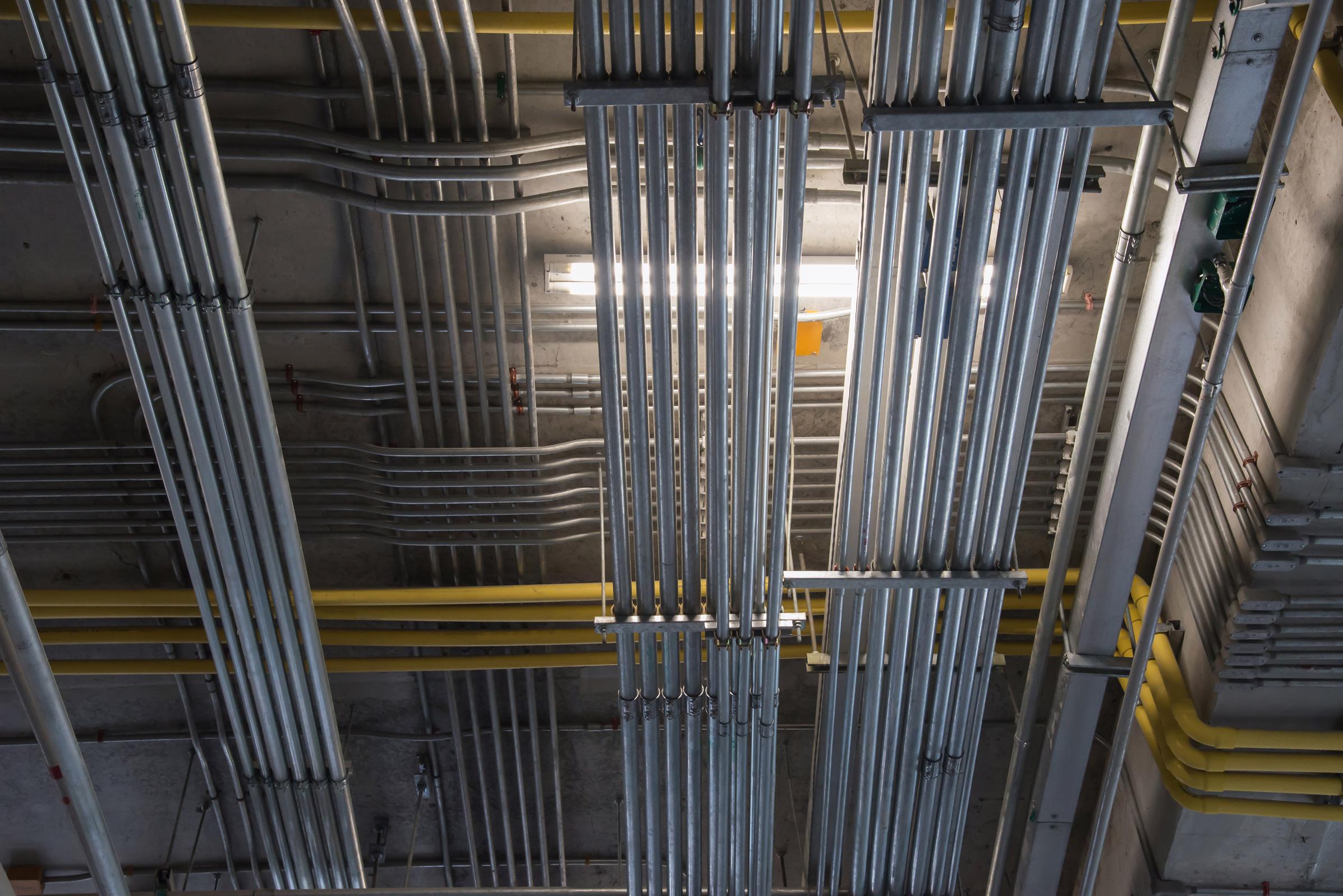
energy and construction projects. Others are investing in digital monitoring systems that help track performance and reduce downtime. These types of investments are what ultimately determine whether domestic manufacturing continues to grow.
Manufacturing operations depend on reliability. When supply chains become unpredictable or policies change rapidly, it can disrupt production schedules and make long term planning more difficult. For manufacturers, the question is simple: does the operating environment allow companies to continue investing in equipment,
workforce development and domestic capacity. When the answer is yes, investment follows. When uncertainty grows, those investments are often delayed.
Capacity expansion is another area where policy clarity plays an important role. When manufacturers believe the operating environment will remain supportive of domestic production, they are more likely to invest in expanding facilities and increasing production capacity. These
investments help ensure critical industries such as infrastructure, energy, and construction can rely on consistent access to domestically produced materials.
Workforce recruitment and training are also central to the strength of domestic manufacturing. Modern steel production requires skilled workers who can operate automated equipment, analyze digital production data and maintain complex manufacturing systems. Developing this workforce takes time and commitment. Training programs, apprenticeships and partnerships with technical schools all play
an important role in preparing the next generation of manufacturing professionals. Reshoring initiatives have created new opportunities to strengthen this workforce pipeline. As more manufacturing activity returns to the U.S, more Americans may begin to view manufacturing as a long term career path. These careers offer competitive wages, opportunities for advancement and the chance to work with advanced industrial technologies.
Encouraging this shift will require collaboration among industry leaders, educators and policymakers. Manufacturers must

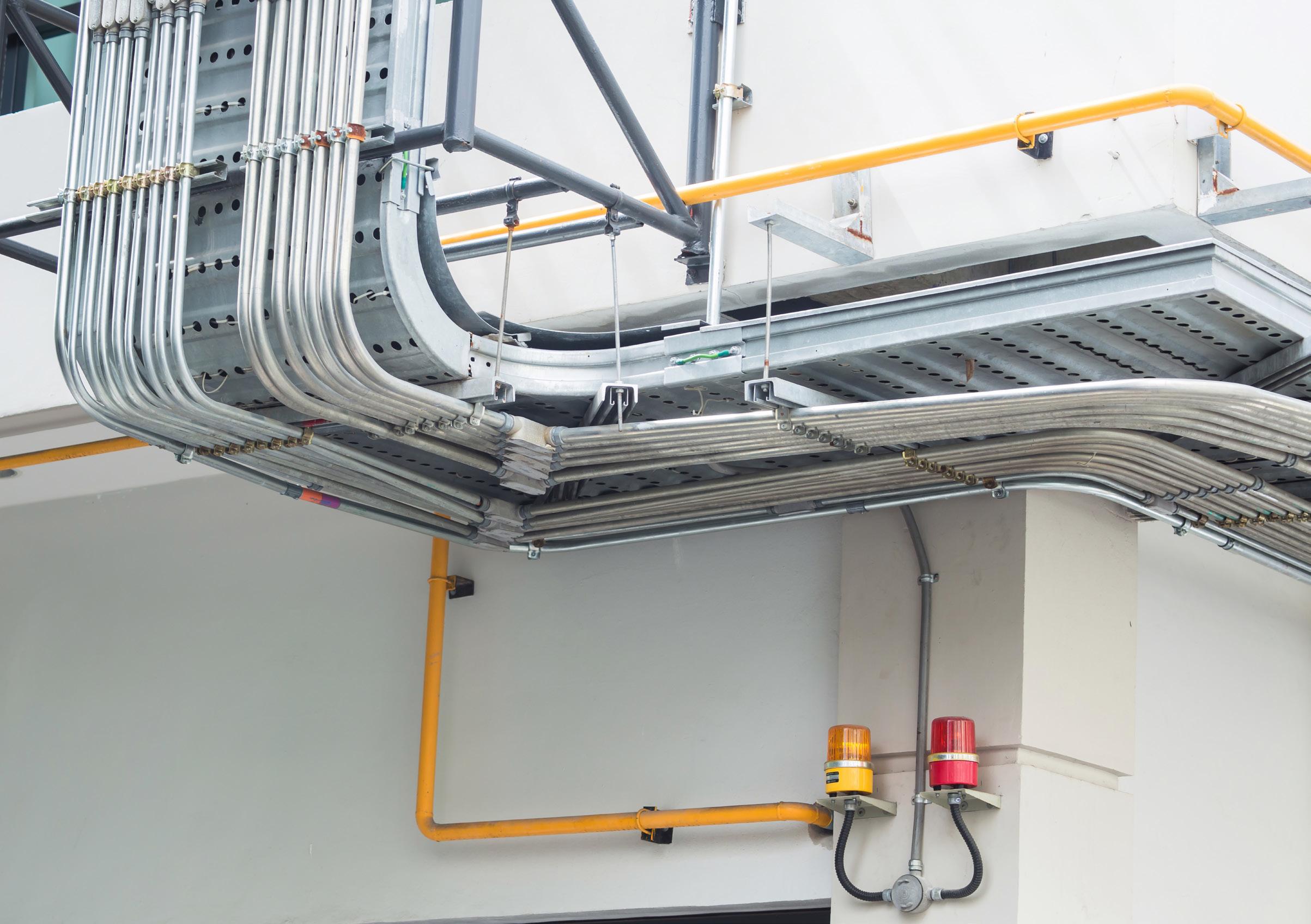
continue working with training institutions and local communities to ensure workers have the skills needed to support modern production environments.
Trade policy, infrastructure investment and energy development all influence the operating environment for steel producers. When these priorities are aligned, they can reinforce each other and support stronger domestic manufac-
turing. For example, infrastructure and energy projects rely on consistent access to domestically produced materials. A strong domestic steel industry helps ensure these projects can move forward without unnecessary supply disruptions.
Steel is essential to infrastructure modernization, electrification initiatives, energy systems and industrial construction. A resilient domestic steel industry helps support these efforts by providing the materials necessary for large scale projects that strengthen the nation’s economy.
It’s important to recognize the role the U.S steel industry plays in responsible production. Steel often receives criticism related to carbon emissions, but not all steel production is the same. U.S steel producers operate under some of the strongest environmental, safety and labor standards in the world. These facilities must meet rigorous regulatory requirements while continuing to invest in improved energy efficiency, environmental performance and worker protections, reflecting decades of progress in manufacturing practices and environmental performance.
Much of the world’s steel is produced under far less stringent environmental oversight. While American consumers and businesses cannot control how steel is produced overseas, they can make informed sourcing decisions by prioritizing steel that is melted and poured in the U.S.
Supporting domestic steel production helps ensure critical materials are manufactured under strong environmental and labor standards. It reinforces a system where worker safety, environmental stewardship and responsible manufacturing practices remain central to the industry. A competitive domestic steel sector also strengthens supply chains by reducing dependence on foreign production. When critical materials are produced domestically, manufacturers are better positioned to manage
disruptions, maintain consistent production schedules and respond quickly to changing market demands. Continued investment in advanced manufacturing technology allows domestic producers to improve efficiency, enhance product quality and maintain global competitiveness. These improvements are the result of long term investments made directly inside U.S manufacturing facilities.
Industrial policy should ultimately be measured not by headlines, but by tangible results such as modernized facilities, new jobs, expanded capacity and stronger supply chains.
If industrial policy is meant to strengthen American manufacturing, its success should be judged by what happens inside our facilities. We should be asking:
• Are producers investing in advanced equipment?
• Are they hiring and training the next generation of skilled workers?
• Are supply chains becoming more resilient and more responsible?
When domestic steel producers have the certainty and support needed to grow, the benefits extend far beyond one industry. They reinforce infrastructure, energy systems and economic opportunity across the country. That is what industrial policy should ultimately deliver.


Rather than ever-larger fabs, advances in process technology and refinement will drive efficiency, yield, and competitiveness worldwide.
By Alain-Serge Porret, Vice President, Integrated & Wireless Systems, CSEM
For much of the past two decades, the global semiconductor production conversation has been dominated by scale. Success has been measured in billions of dollars invested, square meters of cleanroom space erected, transistor counts, and megawatts consumed. Governments and corporations alike have competed to build ever-larger fabrication facilities, supported by massive subsidies and increasingly concentrated supply chains. This model has delivered extraordinary technological progress, such as developments in large language models (LLMs) that have changed how we work, but it has also created an industry in which participation at the leading edge is limited to a shrinking number of players. As the cost of advanced manufacturing nodes rises into the tens of billions, many regions and companies are discovering that chasing scale is no
longer a viable or even desirable strategy. In fact, corporate AI investment is projected to have reached $252.3 billion in 2025 alone, according to Stanford University; a 50% increase from the previous year.
But now a different reality is emerging, one shaped by those who can extract more value from fewer resources, refine processes instead of expanding footprints, and design chips that deliver high performance under tight energy and material constraints.
Few countries are doing this better than Switzerland. Over the past several years, the nation has shown how focusing on production of precise, efficient and specialized chips with limited and refined functions can save on costs and provide new opportunities.
As global investment dynamics shift and energy considerations become central to industrial strategy, this approach is proving to be an increasingly pivotal linchpin to the future of chip production worldwide.
The economics of advanced semiconductor manufacturing are becoming increasingly challenging. As computing, energy and infrastructure needs push the limits of what is possible
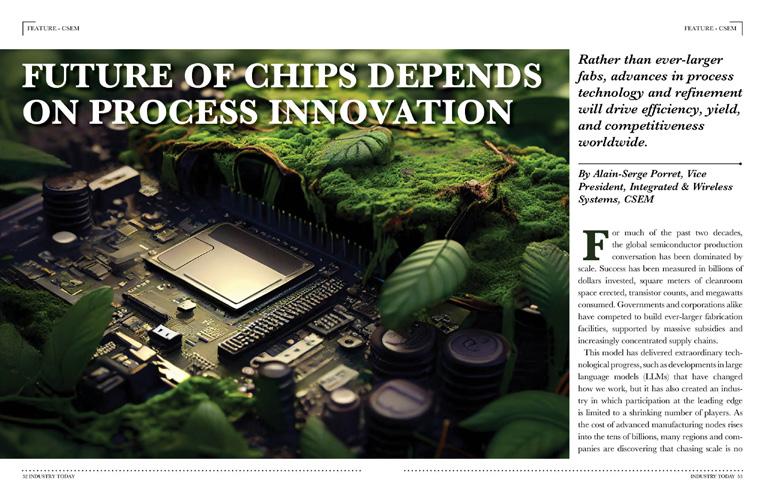
Pictured: Harkening back to approaches like Switzerland’s renowned mechanical and electrical engineering industries can help smaller regions like them play a big role in the AI race. OPENER: Precision chips can help to improve sustainability efforts in technology production as well.
today, every step forward demands exponentially higher capital investment. At the same time, geopolitical tensions, export controls, security concerns, data sovereignty and supply-chain fragmentation are adding layers of complexity and risk.
For many countries and companies, the promise of “catching up” through massive investment
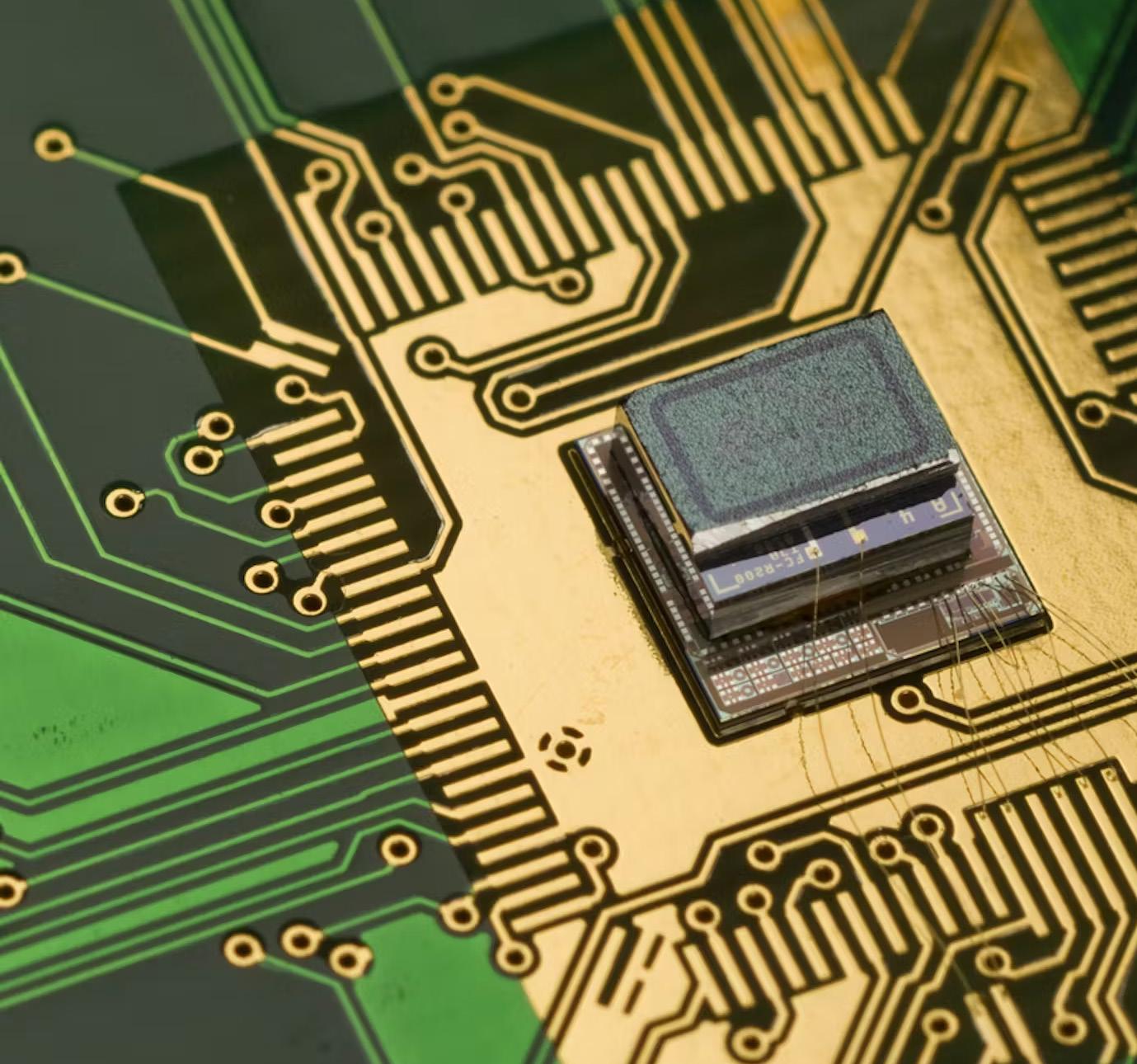
is giving way to a more sober assessment. Even if there was a possibility to earn the massive private or public investment, not all regions are equipped with the resources needed to generate that level of chip production. At the same time, energy consumption has become a critical constraint. Large fabs and data centers demand enormous and continuous power supply,

placing pressure on national grids and raising sustainability concerns.
These pressures are forcing the industry to ask a fundamental question: Is bigger always
better? Or is the next phase of semiconductor innovation about learning how to do more with less?
Switzerland’s answer has long been clear. Rather than pursuing maximum scale, Swiss research institutions and industrial partners, such as CSEM, have focused on process refinement across the entire semiconductor value chain.
This approach revolves around the idea that performance is not defined solely by production scale. Architectural efficiency can ensure that more precisely designed chips have just as much of an impact as those with more generalized approaches.
In practice, this means designing application-specific integrated circuits (ASICs) that are precisely matched to their intended workload. Low-power edge AI accelerators, for example, can deliver exceptional performance per watt by eliminating unnecessary general-purpose logic and focusing computation exactly where needed the most and nowhere else.
Refining processes also means rethinking how chips are manufactured and deployed. This philosophy stands in contrast to a scale-driven model that prioritizes throughput and density above all else. It suggests that innovation in
Pictured: Chips produced with precise functions can serve a large number of different purposes.
process design can be just as transformative as innovation in fabrication scale, and often more accessible.
One of the clearest signals of this shift is the growing importance of low-power chip design. As AI and sensing capabilities are under greater demand, chips must operate in environments where energy is limited, intermittent, or expensive.
Swiss work in ultra-low-power electronics and
embedded AI illustrates how deeply energy considerations can help to beneficially shape design decisions. By treating power budgets as primary constraints rather than secondary optimizations, engineers can create systems that are more precise and focused, and subsequently more effective in their limited structures.
Examples include:
• AI models designed to run continuously on milliwatts or microwatts, enabling always-on intelligence in wearables, vehicles, and infrastructure.
• Architectures that are able to actively monitor and sense for specific faces more effectively,

and protecting personal privacy and saving energy by not storing the data
These designs are not merely incremental improvements. They represent a different way of thinking about what a chip is for and how it should behave in the world. They also don’t serve as a replacement for the more generalized chips that power LLMs but rather provide functions that augment those same functions.
As energy costs rise and sustainability becomes a strategic priority, low-power capability is moving from a niche route to a central design objective. Regions and companies that master
Pictured: Advanced chips can help in instances of developing machine-learning techniques that even help automate manufacturing and inspection tasks; above: High octane investments have driven chip production around the globe, but more focused investments in precise fields may be more effective.
this discipline will be better positioned to deliver effective and important solutions without unsustainably scaling their infrastructure.
For regions that cannot invest tens of billions into large manufacturing facilities, this shift presents a meaningful opportunity. The semiconductor industry does not require uniform participation at every layer. Instead, it increasingly depends on specialized excellence at key points in the value chain.
These sorts of organizations in Switzerland demonstrate how a country can remain globally competitive in chip production without having to overcome massive hurdles like energy limitations or resource demands. By focusing
on design innovation, specialized process knowhow, and close collaboration with manufacturing partners, it is possible to influence outcomes far beyond traditional scopes.
This model is particularly relevant for:
• Countries seeking to build semiconductor capabilities without massive public expenditure
• Companies operating in regulated or safety-critical markets where efficiency and reliability matter more than peak performance
• Industrial sectors where chips must operate for long periods with minimal energy input
Rather than competing head-to-head with the largest players, these actors can contribute by developing technologies that complement high-volume manufacturing, simultaneously improving efficiency, reducing energy demand, and enabling new classes of applications.
The next phase of global chip production is set to be much more diversified than the last. While large-scale fabs and advanced nodes will remain

Pictured: Precise, low-powered chips can operate systems such as those in vehicles that monitor heart rate, breathing, and alertness in real time — with all data processed locally inside the car to ensure full privacy. Images shown are courtesy of CSEM.
Alain-Serge Porret holds the position of Vice President for Integrated and Wireless Systems at CSEM. His team provides optimized, application-specific solutions to minimize energy and footprint of autonomous connected devices and smart vision systems including technologies for wireless communication, sensing and remote powering and secure embedded software. As needed, the proposed solution can be optimized by building a dedicated application-specific integrated circuits (ASIC).

Before his current role, he co-founded several start-ups in the consumer electronics domain during a 13-year stint in Silicon Valley. His academic accolades include a Ph.D. from EPFL (Switzerland), where his work made a significant contribution to the then-emerging field of ultra-low-power CMOS radio chips.
Email: alain-serge.porret@csem.ch
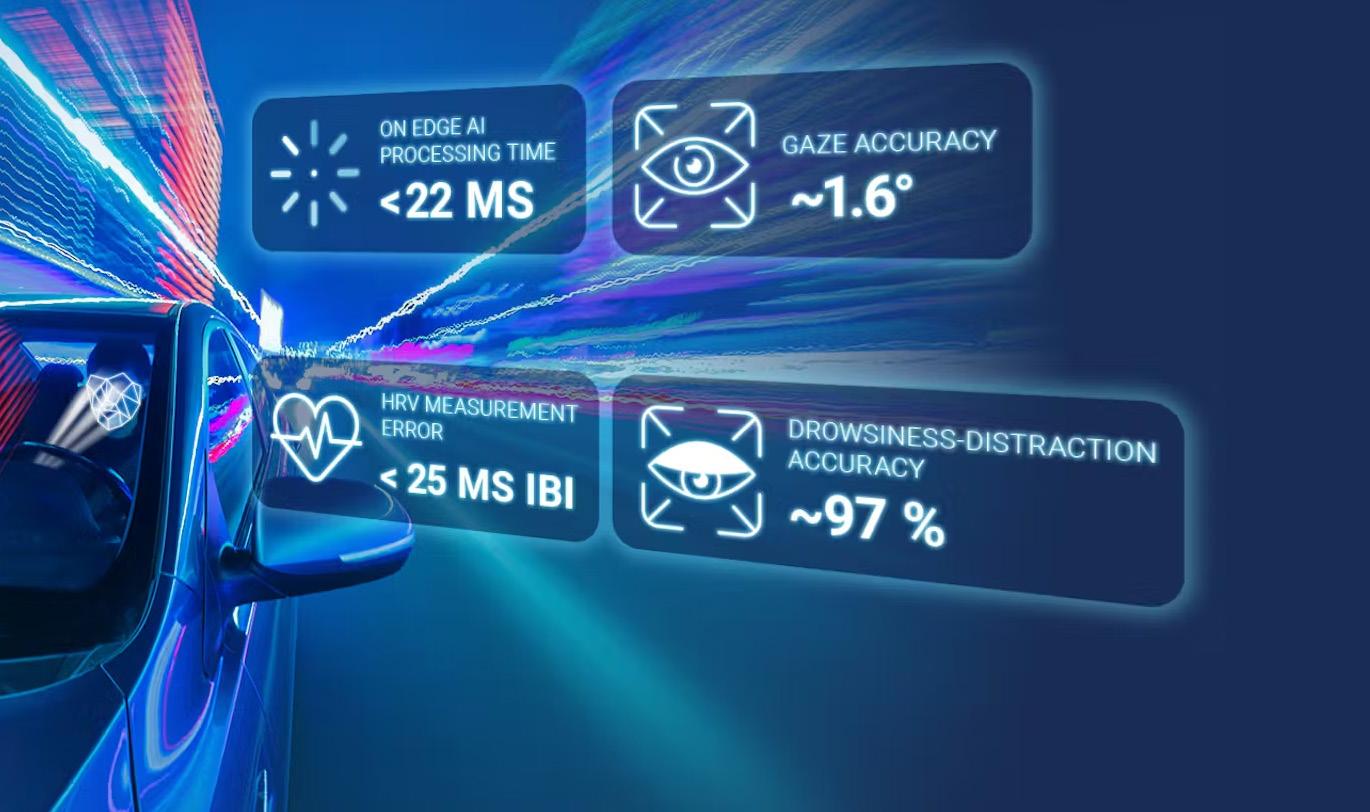
essential for certain applications, they will no longer define the entire industry’s trajectory. Process innovation, architectural efficiency, and low-power design will play an increasingly decisive role. This will not only make sure that design needs are met but also provide opportunities for a wider range of developers and fabricators to take part in production.
Switzerland’s success in carving out the more precise path offers a valuable lesson, showing how the industry does not need the biggest facilities in order to have the greatest impact on the future of semiconductors. By refining processes, embracing specialization, and designing
for efficiency from the outset, it is possible to deliver chips that meet real-world needs while remaining economically and environmentally sustainable.
For the global electronics and manufacturing community, the takeaway is clear. The race ahead is not simply about who can invest the most, but about who can design the smartest systems within realistic constraints. As energy demands and the need for resilience bump against rising costs, the industry may find that its most important breakthroughs are likely not coming from building bigger, but from building better.

Workforce development and training remain one of the biggest constraints for the manufacturing industry, often leaving businesses with more questions than answers. Recently, this uncertainty has increased due to factors such as emerging technologies and reshoring initiatives, which have opened up new opportunities
but also introduced new challenges. The primary question now is simple: how do we move forward quickly and at scale?
To find the answer, we must first understand the problems. The labor pool can be divided,

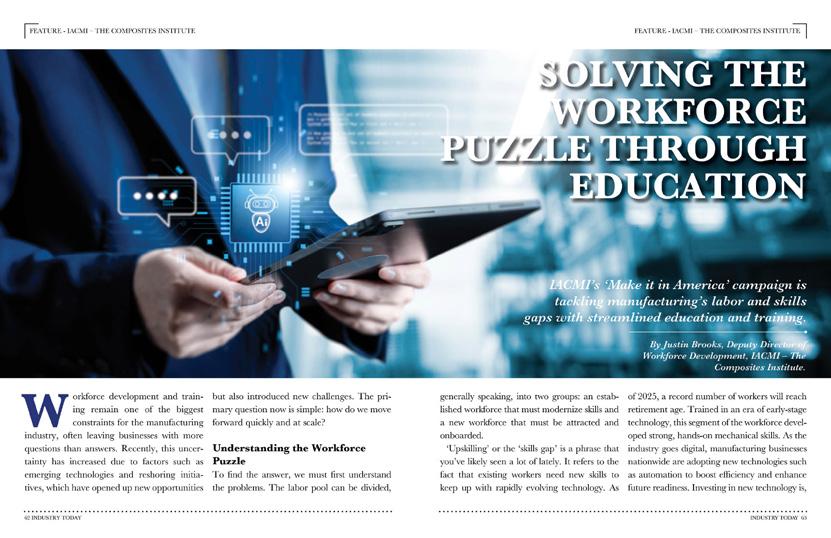
IACMI’s ‘Make it in America’ campaign is tackling manufacturing’s labor and skills gaps with streamlined education and training.
By Justin Brooks, Deputy Director of Workforce Development, IACMI – The Composites Institute.
generally speaking, into two groups: an established workforce that must modernize skills and a new workforce that must be attracted and onboarded.
‘Upskilling’ or the ‘skills gap’ is a phrase that you’ve likely seen a lot of lately. It refers to the fact that existing workers need new skills to keep up with rapidly evolving technology. As
of 2025, a record number of workers will reach retirement age. Trained in an era of early-stage technology, this segment of the workforce developed strong, hands-on mechanical skills. As the industry goes digital, manufacturing businesses nationwide are adopting new technologies such as automation to boost efficiency and enhance future readiness. Investing in new technology is,
in some ways, the easy part. Finding and training workers to use it effectively takes time. In a 2025 Deloitte survey, ‘equipping workers with the skills and knowledge they need to maximize the potential of smart manufacturing and operations’ was a top concern for more than a third of manufacturing businesses surveyed.
On the opposite end of the workforce spectrum, the industry urgently needs to close the ‘labor gap’ by attracting a new generation of workers. Despite reports indicating a near-term decline in manufacturing jobs, economists predict manufacturing will need 3.8 million more workers by 2033. As it stands today, the indus-
try is at risk of being 1.9 million workers short of meeting this need, which could compromise our nation’s competitiveness by undermining our ability to manufacture everyday items and infrastructure.
Both types of workers present unique challenges for the industry. Fortunately, practical solutions are already being executed across industry and education, and the momentum is real.
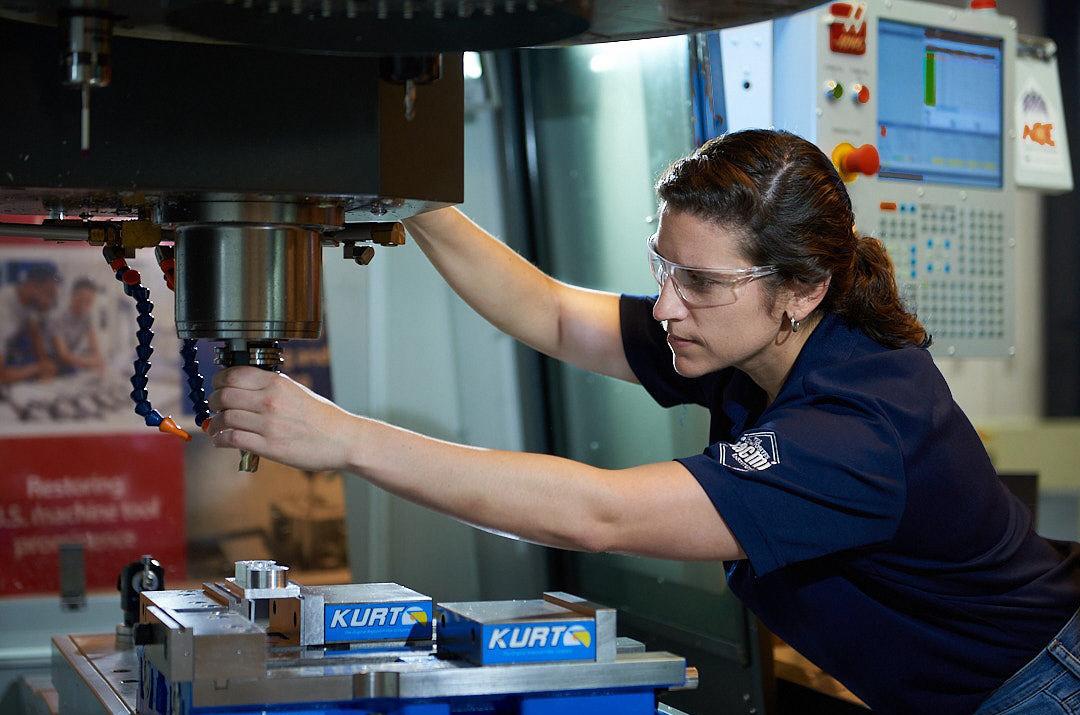
Pictured: America’s Cutting Edge (ACE) student gaining free hands-on experience with machine tools;
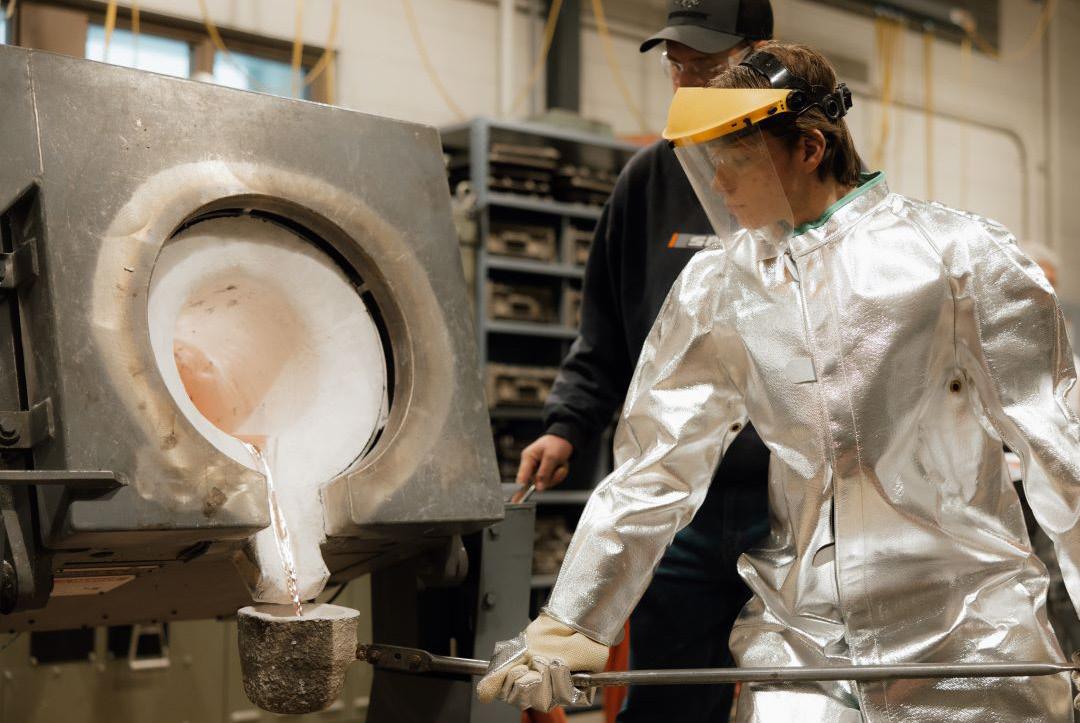
right: METAL instructor teaching a student the metal pouring process;
The solution to supporting the full spectrum of workers hinges on education and training, which have made great strides over the last five years. Whether it pertains to a new digital tool, an innovation in material science or new equipment, new education and training modules are being developed.
What’s even better news is that it’s being implemented by both industry and academia. A recent survey of 600 manufacturing businesses found that 53% of respondents have created in-house training modules, while 43% use train-
ing courses from external vendors. This should encourage anyone interested in joining the manufacturing sector, as it demonstrates a commitment to employee development and a desire to enhance workforce skills. It’s also a quiet signal that businesses are ready to move toward smart manufacturing and fully transition away from legacy approaches that no longer match today’s equipment and expectations.
Business-led training, however, is not a complete solution. Not all manufacturing businesses have the resources to develop and maintain in-house training programs or the surplus of labor that would allow them to send workers to

industry partners, and government agencies.
school for further education. Additionally, as manufacturing continues to evolve and adopt new methods and technologies, new training will always be required. Therefore, external vendors that offer training and teach courses on modern manufacturing need to step up and take a bigger role and deliver training that is fast, accessible, and job-relevant.
The transition away from ‘the old ways’ isn’t only a requirement on shop floors. It’s equally important for the ways we talk about career paths in manufacturing in the classroom. It’s increasingly important to address outdated stereotypes that don’t accurately depict mod-
ern manufacturing facilities, which are hurting recruitment and deterring new talent. This notion of industrial labor as “dirty, dark and dangerous” has led to generations of people avoiding manufacturing as a career path, creating the labor gap we know today.
Academic institutions and third-party educators are increasingly acknowledging their role in shaping manufacturing education. They have developed immersive courses focused on
cleanliness, advanced technology, and safety, complemented by modern online and in-person training to improve accessibility and retention. Educators are emphasizing content accessibility to appeal to new generations, with this approach yielding positive results. Unlike previous generations, Generation Z has been exposed to extensive manufacturing information from a young age, making learning more engaging and obtainable. This shift is often seen as a key factor behind the current ‘blue collar boom’ among Gen Z.
These modern educational platforms also utilize enhanced speed. In line with the principles of convenience and accessibility, educators have embraced microlearning. This engaging approach imparts high-impact skills in a shorter period and at the learner’s preferred pace, unlike traditional courses that may last months. Microlearning offers coursework that can be completed in just weeks. These programs aim to provide a fast entry into the industry or new roles, enabling students to join the workforce sooner and start earning, or to help current workers upgrade to different positions without stepping away from work for long periods of time.
In December 2025, IACMI – The Composites Institute – launched ‘Make it in America’, a national outreach campaign to raise awareness of manufacturing job opportunities and tackle

the labor and skills gaps head-on. The campaign is anchored by IACMI’s two workforce development programs – America’s Cutting Edge (ACE) and Metallurgical Engineering Trades Apprenticeships & Learning (METAL). These programs utilize microlearning courses to educate students about various aspects of manufacturing, including new technologies and techniques widely employed. For example, ACE’s latest course, Smart Manufacturing, teaches students about digital twins, machine learning, and the industrial Internet of Things (IoT). Through these courses, students learn fundamentals and modern manufacturing skills through online coursework and then gain hands-on experience in a shop environment.
A key element of this campaign is that once
students understand the career opportunities in manufacturing, they can enroll directly in ACE or METAL courses at no cost. With these platforms, IACMI aims to eliminate barriers between potential workers and employment opportunities, so everyone has a chance to succeed and grow. For current employees, these programs provide free training to quickly learn new technologies and equipment. For young adults exploring career options, it’s an opportunity to acquire industry skills without accumulating loan debt.
This outreach campaign is supported by over 50 industry partners and academic institutions, encompassing both large universities and local community colleges, offering options across regional markets nationwide. In collab-

oration with this network, IACMI continues to develop new curriculum that aligns with today’s realities and leverages the same equipment used on shop floors. Upon completion of a course, students have the opportunity to engage with local businesses, having acquired skills that are immediately applicable.
The campaign’s message, ‘Make it in America,’ carries two meanings. First, it represents the physical act of making something. Manufacturing is for doers - people who enjoy using their hands and minds to create. Work nowadays looks more high-tech than it did a generation ago, but the heart of it remains the same: making things, solving real problems, and building what comes next. Second, ‘Make it in America’ refers to the career you
can make for yourself. There has never been a better time to enter the industry. The digital transformation in manufacturing is opening unprecedented pathways. Opportunities are there, waiting to be taken.
The future of manufacturing depends significantly on education and the way in which we talk about careers in manufacturing. Through ‘Make it in America,’ we’re working to change old ideas, challenge conventional thinking, and build a skilled workforce that will carry American manufacturing into a brighter, cleaner, safer and more productive future. The opportunity is here—let’s make it happen.
For more information about ‘Make it in America,’ please visit makeit.org.
Conference: April 13-16

Boston, MA
Exhibits: April 14-16 2026
Thomas M. Menino Convention & Exhibition Center
AeroDef Manufacturing, a showcase deployed at RAPID + TCT, connects government agencies with proven, compliant manufacturers across the advanced and additive manufacturing supply chain—ready to meet evolving defense and aerospace demands.
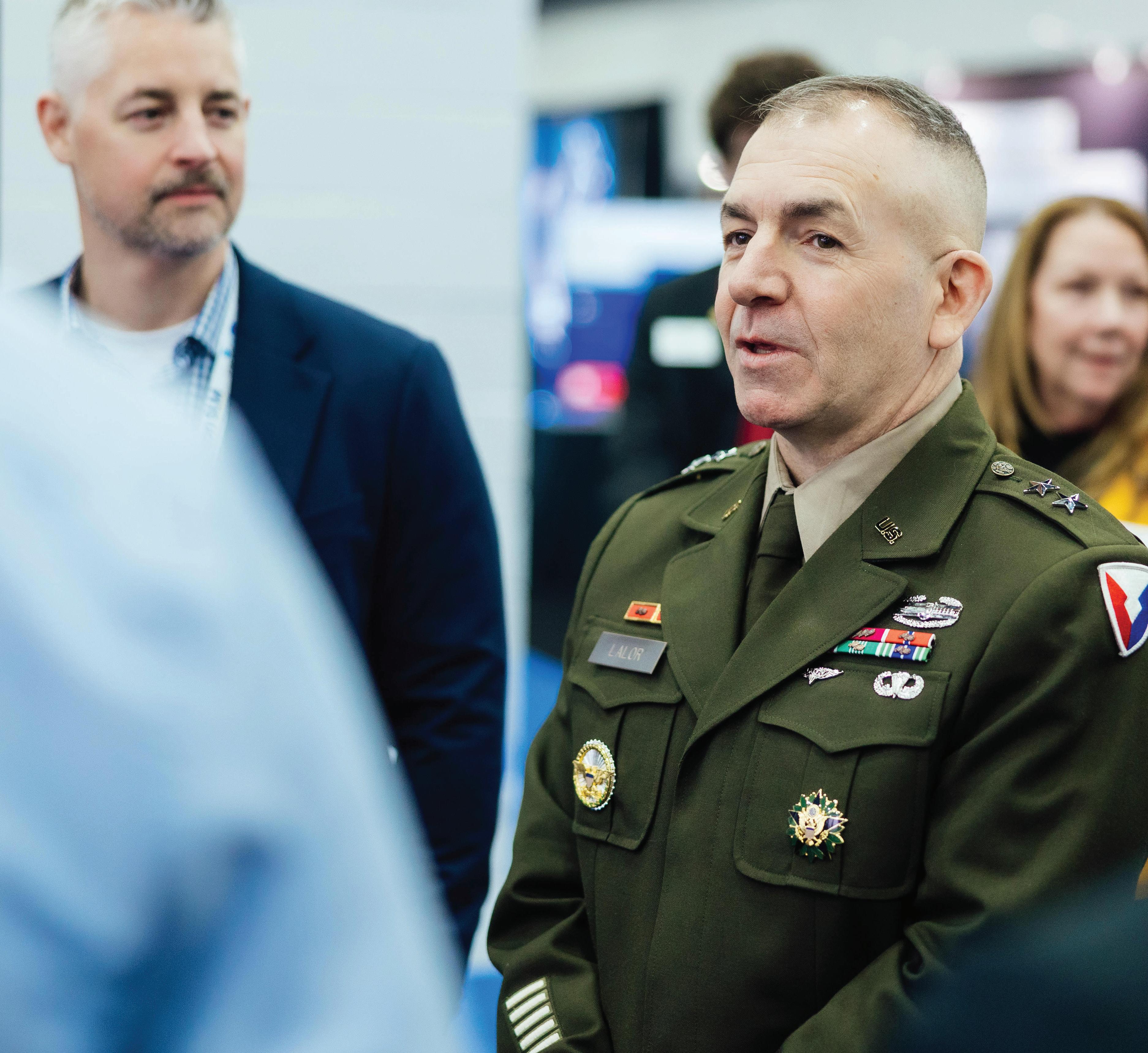
NORTH AMERICA’S LARGEST ADDITIVE MANUFACTURING AND INDUSTRIAL 3D PRINTING EVENT CLAIM YOUR FREE EXPO PASS

Use promo code RPMS when registering