














































MEETING 2026 5-7 August | Gold Coast
WINTER SCHOOL
3-4 August | QUT Kelvin Grove


DAY ONE
Wednesday, August 5

8:45 - 9:00 ARRIVAL
River Room, Twin Towns

9:15 - 9:45

9:00 - 9:15
Session Chair: Daniel Johnson
WELCOME TO COUNTRY
OPENING REMARKS - Distinguished Professor Susan Danby
Program chairs: Professor Daniel Johnson and Professor Simon Smith


9:45 - 10.30 CENTRE AWARDS
Keynote
Distinguished Professor Susan Danby
11:00 - 12:00, includes speaker Q&A

10:30 - 11:00
MORNING TEA Milling Room

Session Chair: Daniel Johnson
Teknalgia: On caring for and about children in a digital world
Professor Amanda Third, Western Sydney University
In late 2024, the Australian government legislated restrictions prohibiting children under 16 from having a social media account. In an astounding example of viral policy making, since then, 40+ countries have passed or are considering similar legislation (Tech Policy Press, 2026). Internationally, proponents construct bans as the only plausible way to protect children from the reportedly negative mental health effects associated with social media. That is, a logic of care for children ostensibly motivates restrictive approaches to the regulation of their social media use.
Beginning from the premise that children represent the object par excellence of caring practices, and analysing Australian media and political discourses, this lecture reflects on what the logic of care driving age-based restrictions reveals about the stakes of contemporary childhood and attendant practices of care. I will argue that this modality of caring about children finds its origins in a tripartite form of grief that attaches to an abstract conception of childhood. Such grief – what I call teknalgia (from the Greek teknon (τέκνον) for ‘child’ and álgos (ἄλγος) meaning pain, grief or distress) – ultimately undermines ambitions to genuinely care for and about the needs, rights and aspirations of living, breathing children in a world mediated by digital technologies. The lecture concludes by offering an alternative vision of how decision makers might better care for the next generation in relation to the digital environment.
DAY ONE · Continued
12:00 - 12:30
Panel Discussion
• Professor Amanda Third
• Dr Janelle Mackenzie
• Dr Kristy Corser
Chair: Professor Daniel Johnson

12:30 - 1:45 LUNCH Milling Room

1:45 - 2:15


Session Chair: Julian Sefton-Green
BOOK LAUNCH: Screen Time and the Impossibility of Modern Parenting
Dr Kate Mannell and Professor Julian Sefton-Green
Drawing on diverse forms of data, including social media analysis, news discourse, and interviews with parents, this book maps the key narratives about screen time that saturate parents’ everyday lives. It unpacks the powerful cultural norms around parenting that have enabled these narratives to become ‘common sense’, and explores how parents navigate these narratives.
2:15 - 2:45
Session Chair Julian Sefton-Green
DATABASE LAUNCH: Know Your Edtech
Dr Andy Zhao, Dr Chris Zomer, Melissa De La Cruz, Professor Julian Sefton-Green
Know Your EdTech is a searchable repository of EdTech apps and solutions used primarily by families with young children and Early Childhood Centres in Australia. Curated by researchers from the Digital Child, it is meant to inform parents, educators and the general public about the EdTech industry.
2:45 - 5:00
POSTER SESSION WITH AFTERNOON TEA
Bay Room 5:00 PINBALL EVENT AND LIGHT REFRESHMENTS
Bay Room -
*Drinks not included
• Alicia Allan - Light exposure from digital devices - implications for evening use and sleep in children.
• Amanda Cipriani - Discourse And Design: How Social Media Platforms Shape Children’s Wellbeing – A Cross-Platform Comparison
• Anna Hepworth - Interactions between children and (gen)AI: Imaginaries in children’s fiction
• Caron Molster - A Focused Ethnography on Affording Young Children's Digital Agency in Early Learning Settings
• Dawa Tshering - Connected Lives: A Narrative Inquiry into Digital Social Connectedness of Children Living with Chronic Disease .
• Ethan Luxford - Deception and Manipulation in Children’s Mobile Device Games
• Jacquelyn Harverson - Exploring Digital Technology in the Early Primary Years: Child and Teacher Perspectives
• Jaka Warman - Developing a Critical GenAI Literacy Framework for Early Childhood Educators in Australia
• Jane Flack - Prioritising children’s voices in digital citizenship education
• Khan Zada - Co-designing Artificial Intelligence (AI) with Teachers in an Educational Setting
• Katrin Langton - Tracking the trackers of children’s personal data: Introducing the Data Flows method to materialise data-sharing in mobile applications
• Kristin Zed - Growing up with screens: Device-specific screen use from ages 1–3 years
• Lingyue Ding - Another Side of the Screen: Reimagining Preschool Children’s Digital Play and Creativity within Families
• Maggie Zgambo - Understanding Children's Use of Digital Technologies in Australian Migrant Families
• Melissa De la Cruz - Embedding Values: The Compromise and Contests of Assembling an EdTech Platform
• Parisa Arablou - Heritage Language Learning Through Game Co-Design
• Prawinda Anzari - Bridging the Digital Gap: Exploring Digital Skills and Everyday Digital Engagement among Young Mothers in Indonesia
• Pip Amery - Beyond digital distraction: What video reveals about infant agency in mother–infant interaction around smartphones
• Qiqi Zhang - Longitudinal Associations between Early Childhood Digital Screen Use and Physical Activity, Sedentary Behaviour and Sleep
• Simranjeet Kaur - We are still learning”: Educator Voices and Early Insights into Digital Self-Efficacy in ECEC centres in Western Australia
• Tamara Gulic Phoenix - Understanding Children's Digital Creativity - Listening and Learning from Young Children’s Voices
• Wendy Field - Towards understanding low-income parents’ perspectives on AI and EdTech in the home learning environment
• William Tregea - Healthy Bytes: Formative Research to Support Healthy Screen Use in Young Children Living in South Western Sydney
• Yanxia Li - Child-Food Interaction: Designing Digital Technologies to Connect Children to Their Local Food Systems
• Yixi Zhao - A Critical Investigation of Australian Children’s Everyday Use of Video Platforms and Emerging Algorithmic Literacies
DAY TWO
Thursday, August 6


8:45 - 9:00 ARRIVAL River Room, Twin Towns
Keynote
9:00 - 10:00 , includes speaker Q&A
Sleep and the Digital Child
Professor Lauren Hale, Stony Brook University
Session Chair: Simon Smith
Dr. Hale investigates the social patterning of sleep across sociodemographic, behavioral, and contextual factors. Consistently, research indicates a vicious cycle in which more social disadvantage increases risk of a sleep disadvantage. In this talk, she will explore the ways in which early digital media exposure and use patterns may contribute to both short-term and lasting consequences for both healthy sleep and overall wellbeing from childhood through young adulthood.
10:00 - 10:30
Panel Discussion
• Professor Lauren Hale
• Dr Kar Hau Chong
• Dr Cassandra Pattinson
Chair: Professor Simon Smith

10:30 - 10:40 DCAM GROUP PHOTO

10:40- 11:00 MORNING TEA Milling Room
11:00 - 11:30


Session Chair: Sonia White
AUSTRALIAN CHILDREN OF THE DIGITAL AGE
Nested studies
DAY TWO · Continued
11:30 - 12:30
WORKING FOR IMPACT
Panel Discussion
• Jackie Coates, Telstra Foundation
• Professor Grace Sarra
• Dr Sandra Cheeseman, C&K
Chair: Dr Kate Mannell

12:30 - 1:45 LUNCH

1:45 - 3:15
Session Chair: Sonia White
• Distinguished Professor Susan Danby
• Wendy Field
Milling Room
WORKSHOP: FROM PRIORITIES TO ACTIONS AT THE DIGITAL CHILDHOODS SUMMIT
Professor Simon Smith, Dr Cassandra Pattinson, Dr Kristy Corser

3:15 - 3:45
AFTERNOON TEA

7:00
DCAM DINNER
Tweed Heads & Coolangatta
Surf Life Saving Club


3:45 - 5:00 COLLABORATION TIME
4:00 - 5:00
ADVISORY COMMITTEE
MEETING (committee members only)


DAY THREE
Friday, August 7


8:45 - 9:00 ARRIVAL River Room, Twin Towns
Keynote
9:00 - 10:00 , includes speaker Q&A


Session Chair: Sonia White
Digital Addiction: The “other” 21st century epidemic
Professor Dimitri Christakis MD, Seattle Children's Research Institute
This talk will review the state of the science related to the theory, neurobiology, psychology, and epidemiology of digital addiction and argue that infants and toddlers may be at the greatest and unappreciated risk.
10:00 - 10:30
Panel Discussion
• Professor Dimitri Christakis MD
• Dr Juliana Zabatiero
• Dr Danica Hendry
• Dr George Thomas
Chair: Associate Professor Sonia White

10:30 - 11:00 MORNING TEA

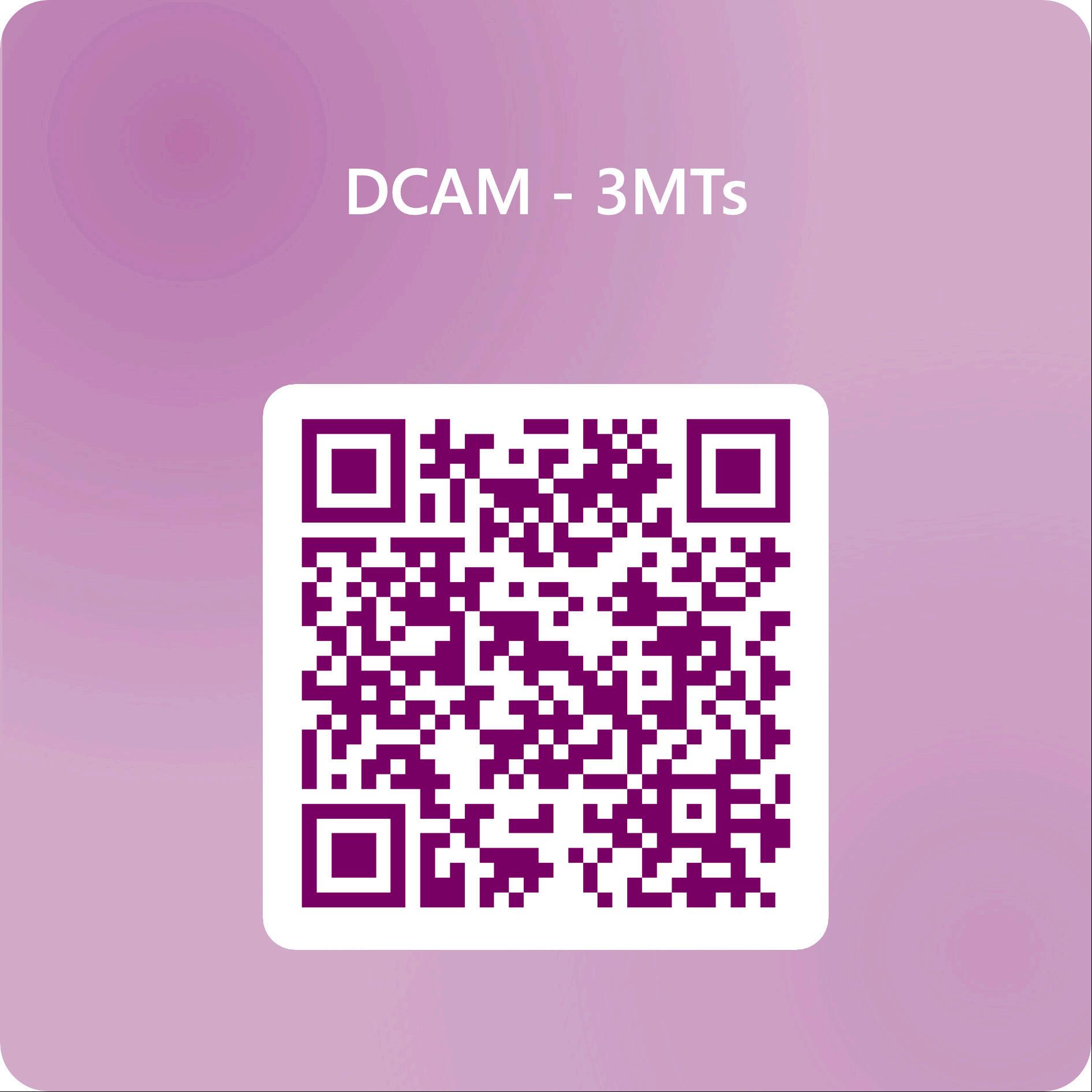
11:00 - 12:00 3MTs AND VOTING
Group One (3MTs + Q&A)
• Tamara Gulic Phoenix, UOW
• Jacqui Harverson, Deakin
• Yixi Zhao, QUT


Session Chair: Simon Smith
Group Two (3MTs + Q&A)
• Winda Anzari, QUT
• Kristin Zed, Curtin
• William Tregea, UOW Milling Room
DAY THREE · Continued
12:00 - 12:10
INTERACTIVE SESSION
Distinguished Professor Susan Danby
12:10- 12:30
CLOSING REMARKS
Professor Louise Paatsch
Milling Room
Session Chair: Simon Smith


We look forward to seeing you at 2027

10 August | QUT Gardens Point