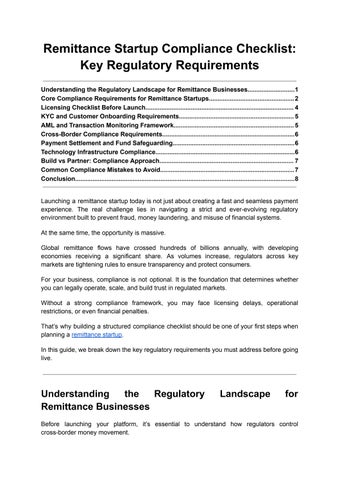
Remittance Startup Compliance Checklist:
Key Regulatory Requirements
Launching a remittance startup today is not just about creating a fast and seamless payment experience The real challenge lies in navigating a strict and ever-evolving regulatory environment built to prevent fraud, money laundering, and misuse of financial systems.
At the same time, the opportunity is massive
Global remittance flows have crossed hundreds of billions annually, with developing economies receiving a significant share As volumes increase, regulators across key markets are tightening rules to ensure transparency and protect consumers
For your business, compliance is not optional It is the foundation that determines whether you can legally operate, scale, and build trust in regulated markets
Without a strong compliance framework, you may face licensing delays, operational restrictions, or even financial penalties
That’s why building a structured compliance checklist should be one of your first steps when planning a remittance startup.
In this guide, we break down the key regulatory requirements you must address before going live.
Understanding
the Regulatory Landscape for Remittance Businesses
Before launching your platform, it’s essential to understand how regulators control cross-border money movement.
Remittance businesses operate in a tightly governed ecosystem where transactions pass through multiple compliance checkpoints. These checkpoints ensure transparency, reduce financial crime risks, and enforce international regulations.
Key regulatory control points include:
● Licensing approvals from authorities
● AML monitoring and reporting systems
● Banking and settlement partnerships
● Cross-border corridor regulations
● Customer identity verification (KYC)
If your platform fails to meet these requirements, accessing banking infrastructure or operating across global corridors becomes difficult.
Your compliance obligations also depend on your business model Whether you offer domestic transfers, international remittance, wallet-based services, or agent networks, each model falls under different regulatory frameworks
Common Licensing Structures
Core Compliance Requirements for Remittance Startups
Once your licensing category is defined, the next step is setting up operational compliance systems
These systems help detect fraud, monitor transactions, and ensure transparency with regulators.
Key Compliance Areas
Compliance Area Purpose
KYC Verification Confirm customer identity
AML Monitoring Detect suspicious activity
Sanctions Screening Block restricted entities
Reporting Maintain regulatory transparency
Fund Safeguarding Protect customer balances
KYC Verification
Know Your Customer (KYC) processes are essential for validating user identity before transactions are allowed
Typical KYC steps include:
● ID document verification
● Address validation
● Biometric or facial checks
● Risk profiling
Regulators also expect continuous monitoring and proper record-keeping for audits
AML Monitoring
Anti-money laundering systems track unusual transaction behavior such as abnormal patterns or high-risk corridor activity
Modern AML tools analyze transactions in real time and flag suspicious cases for review.
Sanctions Screening
Your platform must check users against global watchlists to ensure compliance with international sanctions laws.
Regulatory Reporting
You are required to report suspicious transactions through formal mechanisms like Suspicious Activity Reports (SARs)
Safeguarding Customer Funds
Customer funds must be separated from operational funds This ensures protection in case of financial issues within your business
��
Expert Tip
Manual compliance processes don’t scale Automating AML and monitoring systems helps reduce risk and improves audit readiness
Licensing Checklist Before Launch
Securing the right licenses is one of the most critical steps before launching your remittance platform.
Pre-Launch Licensing Checklist
Before applying, ensure you have:
● Identified the relevant regulatory authority
● Selected the correct license type (MTO or payment institution)
● Established banking partnerships
● Obtained FX authorization for cross-border transfers
● Secured approvals for agent networks (if applicable)
Key Licensing Requirements
FX Approval Currency exchange High
Agent Approval
Cash-based operations Medium
Bank Partnerships Settlement handling High
�� Expert Tip
Licensing timelines vary by country and can take months Start early to avoid delays in market entry
KYC and Customer Onboarding Requirements
Customer onboarding is one of the most regulated parts of a remittance platform.
Your onboarding flow should include:
● Document and identity verification
● Biometric authentication
● Address checks
● PEP (Politically Exposed Person) screening
You must also maintain detailed logs for audits and compliance reviews
A well-designed onboarding process not only ensures compliance but also builds user trust
AML and Transaction Monitoring Framework
A strong AML framework is essential for detecting suspicious activity.
Key Components
● Real-time transaction monitoring
● Risk scoring models
● Sanctions and PEP screening
● Automated alerts for suspicious activity
● Secure data storage for audit trails
Modern systems rely on automation to reduce manual workload and improve detection accuracy
�� Expert Tip
Analyze transaction patterns over time. Many risks become visible only when looking at multiple transactions together.
Cross-Border Compliance Requirements
International remittance adds another layer of complexity
You must:
● Comply with cross-border reporting rules
● Enforce transaction limits set by regulators
● Maintain detailed transaction records
These records should include sender details, recipient data, amounts, exchange rates, and settlement information
Payment Settlement and Fund Safeguarding
Regulators require strict control over how funds are handled
Key Safeguards
● Separate customer and operational accounts
● Use regulated banking partners
● Automate reconciliation processes
● Maintain full transaction visibility
Strong safeguarding practices improve trust and ensure compliance with financial regulations.
Technology Infrastructure Compliance
Your technology stack plays a crucial role in compliance
A compliance-ready infrastructure should include:
● Secure payment processing systems
● Encrypted data storage
● Automated compliance checks
● High system uptime
Modern platforms integrate compliance directly into the system to simplify monitoring and reporting.
Build vs Partner: Compliance Approach
When launching, you must decide whether to build compliance systems internally or use an infrastructure provider
Factor In-House Build Platform Provider
Time to launch Slow Faster
Compliance complexity High Lower
AML setup Custom Pre-built
Reporting Manual Automated
Risk level Higher Reduced
Partnering with a provider often simplifies compliance and speeds up deployment
Common Compliance Mistakes to Avoid
Many startups face regulatory issues due to poor compliance planning.
Frequent Mistakes
● Weak AML controls
● Incomplete KYC processes
● No real-time monitoring
● Manual reconciliation systems
Impact of These Mistakes
Mistake Outcome
Weak AML License rejection
Poor KYC Regulatory penalties
No monitoring Fraud risks
Poor reconciliation Financial errors
Avoiding these issues is critical for long-term success.
Conclusion
Launching a remittance startup requires more than a fast payment system. It demands a strong compliance foundation across licensing, KYC, AML monitoring, reporting, and fund protection
Regulators expect you to demonstrate robust controls before allowing operations in domestic or international markets
By following a structured compliance checklist, you can prepare early, reduce regulatory risks, and build a platform that earns trust from both users and authorities
Platforms like DigiPayGuru help simplify this journey by offering compliance-ready infrastructure with built-in AML monitoring, transaction tracking, and scalable payment capabilities
If you're planning to enter the remittance space, starting with the right compliance framework can be the difference between delayed approvals and a successful launch.
This content is originally posted on - Remittance Startup Compliance Checklist: Licensing, AML, KYC
Email - hello@digipay.guru
Social
Contact Number - +91 9662923845, +1 (302) 305-4336