How Ethiopian Banks Are Using Mobile Money
Mobile money is no longer a side channel in Ethiopia’s financial sector It is now one of the main engines of banking growth With a large portion of the population still outside traditional banking, digital wallets and mobile payments have become the easiest way for banks to reach new customers and increase everyday transactions.
Instead of depending only on physical branches, Ethiopian banks are using mobile money to serve customers wherever they are in cities, small towns, and rural areas This shift is helping banks grow faster, operate more efficiently, and stay relevant in a digital-first economy
The Rise of Mobile Money in Ethiopia
Mobile money in Ethiopia started with telecom-led wallets that focused on basic transfers and airtime Over time, banks began connecting to these platforms, allowing customers to move funds between wallets and bank accounts
Today, the market is moving into a new phase. Banks are building or controlling their own mobile money platforms instead of relying only on telcos This gives them ownership of customer data, better control over services, and more flexibility to add new financial products.
How Banks Are Using Mobile Money Today
Ethiopian banks now use mobile money across multiple areas of their business
Retail customers use wallets to send money, pay bills, and make everyday purchases. This increases transaction volume and keeps customers engaged with the bank more frequently than branch visits ever could
Small businesses use mobile money to accept digital payments This improves cash flow, reduces the risks of handling cash, and allows banks to build stronger relationships with merchants.
In rural areas, mobile money agents act as mini branches They allow people to deposit, withdraw, and transfer money without traveling long distances. This is one of the biggest drivers of financial inclusion
Banks also use mobile wallets for bulk payments such as salaries, government benefits, and supplier payouts. These digital flows are faster, more transparent, and easier to track than traditional bank transfers
How Mobile Money Drives Bank Growth
Mobile money changes how banks grow.
Customer acquisition becomes easier because people can join through their phone or a local agent instead of visiting a branch Transaction activity increases because customers use wallets for daily spending, not just occasional banking.
Operating costs drop because digital and agent-based transactions are much cheaper than running physical branches At the same time, banks gain access to detailed transaction data that helps them understand customer needs and manage risk better.
Most importantly, higher engagement creates more chances to offer savings accounts, credit, insurance, and other financial products. Mobile money becomes the entry point for a full banking relationship.
Business Models Banks Are Using
Banks in Ethiopia follow different approaches depending on their strategy
Some operate their own mobile wallets, which gives them full control but requires strong technical investment Others partner with telecom providers to get fast access to large user bases, though this limits control over customer experience.
Many banks now choose fintech-powered platforms that let them run mobile money services while keeping regulatory control and customer ownership This model balances speed, scalability, and compliance.
Key Challenges Banks Face
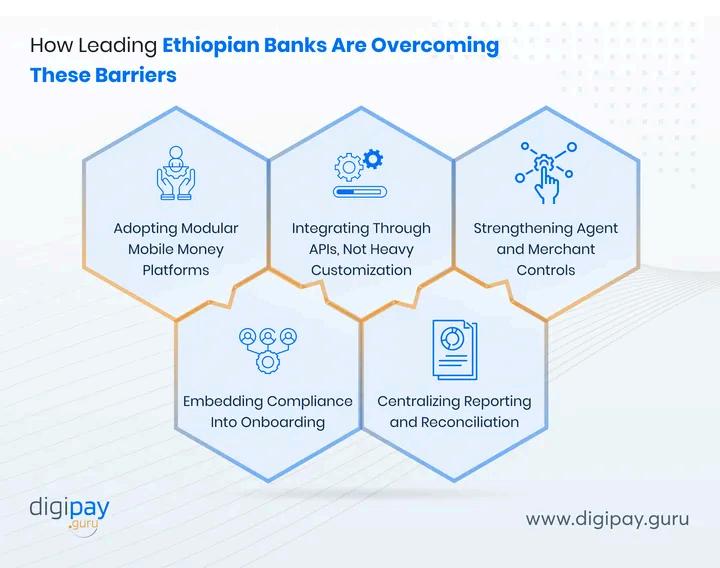
Expanding mobile money is not without challenges Banks must meet strict regulatory rules, manage growing fraud risks, and ensure smooth connections between wallets, banks, and merchants.
Older banking systems can also slow innovation, while unreliable connectivity in rural areas can affect transaction success. If these issues are not handled well, customer trust and adoption suffer.