Open in app
Sign up
Sign in
Search
Rving
Rv Life
Campervan
Slide Out
Michigan
How to Clean RV Slide Out Undercarriage Debris 7 min read · 2 hours ago Nagel Trailer Repair
Listen
Share
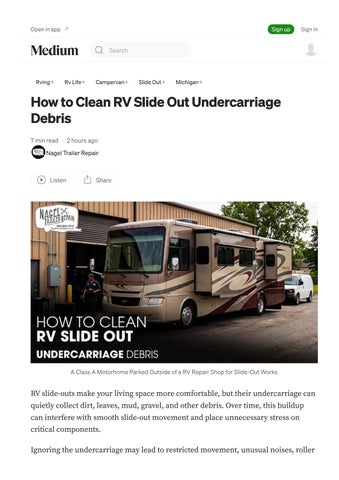
A Class A Motorhome Parked Outside of a RV Repair Shop for Slide-Out Works
RV slide-outs make your living space more comfortable, but their undercarriage can quietly collect dirt, leaves, mud, gravel, and other debris. Over time, this buildup can interfere with smooth slide-out movement and place unnecessary stress on critical components. Ignoring the undercarriage may lead to restricted movement, unusual noises, roller
damage, or premature wear. Even small debris can become a problem when it gets trapped around tracks, rollers, seals, and other moving parts during repeated slideout operation. The good news is that cleaning your RV slide-out undercarriage is safe with the right tools and approach. This guide covers inspection, debris removal, component protection, and maintenance tips from an RV expert in Michigan for reliable slideout performance.
Why Slide-Out Undercarriage Cleaning Matters? Your RV slide-out does more than simply move a room in and out. Its mechanism has to support the room, maintain alignment, and transfer mechanical force through rollers, rails, gears, sha s, brackets, or actuators. The exact arrangement varies by RV manufacturer and slide-out system, but every design depends on relatively clean and properly aligned moving components. The undercarriage sits close to the road, so it naturally receives more contamination than many other RV components. Gravel, road dust, mud, leaves, grass, and moisture can accumulate around the mechanism. When the RV travels through wet or muddy conditions, dirt can stick to existing grease and form a thick abrasive layer. That contamination can create several mechanical problems: Increase friction at contact surfaces Restrict roller rotation Interfere with gear or rack engagement Increase actuator or motor workload Accelerate wear on bushings and bearings Trap moisture against metal components Damage or abrade slide-out seals A dirty mechanism may not fail immediately, but contamination can gradually increase resistance, forcing motors and actuators to work harder. Regular cleaning
provides preventive maintenance and supports reliable RV services in Michigan.
Tools Needed for Safe Cleaning: Use the least aggressive tool that can remove the contamination e ectively. A so nylon brush works well for loose dirt and dried mud because it provides mechanical cleaning without aggressively scratching painted or coated surfaces. A plastic scraper can loosen thick deposits without the cutting action of a metal tool. You should also have: So nylon detailing brush Plastic scraper Micro ber towels Flashlight or inspection lamp Mild RV-safe cleaning solution Low-pressure water source Safety glasses and gloves Compressed air can help remove loose dust, but use it with restraint. High-pressure air can drive dirt deeper into seals, bearings, electrical connectors, and other protected areas. Never assume that more pressure produces better cleaning. Before working around the mechanism, follow the RV manufacturer’s service procedure for securing or isolating the slide-out. Never crawl underneath a slide room that does not have the manufacturer’s required support. A slide-out carries signi cant weight, so sudden or uncontrolled movement can create a serious crush hazard. For safe inspection and maintenance, rely on a quali ed RV repair shop in Michigan to assess the slide-out system and address potential mechanical issues before they worsen.
How to Inspect the Slide-Out Undercarriage: Inspect the mechanism before you start cleaning. This step helps you distinguish ordinary contamination from a mechanical defect.
Use a ashlight to examine the underside, particularly around rails, rollers, gear assemblies, actuator mounting points, brackets, and seals. Look for material packed into areas where components move relative to one another. Pay close attention to the condition and position of rollers. A roller that appears tilted, cracked, excessively worn, or incorrectly positioned may indicate a mechanical problem. Cleaning will not correct a damaged roller or an alignment issue. During inspection, look for: Packed mud around rollers and rails Gravel lodged near moving components Loose or missing fasteners Bent brackets or rails Damaged protective coatings Corrosion around hardware Cracked, displaced, or hardened seals If the slide-out produces grinding, popping, clicking, or scraping sounds, do not automatically blame dirt. Those sounds can indicate gear damage, misalignment, roller problems, or structural movement. If the manufacturer permits slide operation during inspection, monitor its movement closely. Look for hesitation, uneven travel, unusual vibration, or motorsound changes. These signs can help assess the mechanism and guide an RV specialist in Michigan toward potential issues..
Steps to Remove Undercarriage Debris: Begin with dry cleaning. Remove leaves, grass, stones, and loose road debris with the so brush. Work methodically instead of aggressively pushing debris farther into the mechanism. When you encounter hardened mud, use the plastic scraper to break it apart
gradually. Keep the scraper away from seals and delicate surfaces. Metal screwdrivers, knives, and similar tools can gouge coatings, cut rubber seals, or damage precision surfaces. Once you remove the heavy contamination, wipe accessible areas with a micro ber cloth. For stubborn residue, use a mild cleaning solution approved for the materials involved. Avoid soaking the entire mechanism. Follow these basic cleaning practices: Remove loose debris before adding moisture Brush contamination away from moving interfaces Use controlled amounts of cleaning solution Keep electrical components protected from water Dry components thoroughly a er cleaning
RV Slide-Out Cleaning and Inspection Guide: Low-pressure water can help with stubborn dirt, but avoid pressure washing the undercarriage. High-pressure water can force moisture and contaminants past seals and into electrical connectors, bearings, or enclosed mechanical assemblies. A er cleaning, inspect the entire area again. Look for exposed metal, damaged seals, loose hardware, or unusual wear that the debris previously concealed. Do not apply lubricant automatically. Di erent slide-out mechanisms use di erent lubrication requirements. Some systems specify grease, while others use dry lubricants or particular products on designated components. Check the manufacturer’s instructions before lubricating anything. If lubrication is required, use only the speci ed product at recommended points. Proper lubrication supports reliable RV repairs in Michigan, while excess grease can trap road grit and turn ordinary dust into an abrasive compound that accelerates component wear.
How to Prevent Future Debris Buildup? Cleaning becomes much easier when you prevent heavy contamination from
Cleaning becomes much easier when you prevent heavy contamination from developing. Inspect the slide-out mechanism periodically, especially a er driving through mud, gravel, construction areas, or heavily vegetated campsites. The exterior seals deserve particular attention. Wiper and compression seals help limit the amount of water and debris entering the slide-out system. When a seal becomes cracked, hardened, detached, or deformed, contamination can reach areas that normally remain protected. Good maintenance habits include: Inspect the undercarriage regularly Clean contamination a er severe road exposure Keep slide-out seals clean Remove stones before operating the room Follow the speci ed lubrication interval Check fasteners for obvious looseness Avoid unnecessary pressure washing Also pay attention to RV leveling. A slide-out mechanism relies on proper geometry and alignment. Excessive chassis twist or improper leveling can increase resistance and create symptoms that resemble a dirty mechanism. If cleaning only provides temporary relief and the slide-out continues to bind, inspect its mechanical condition. Repeated lubrication or forced operation cannot correct alignment, structural, or drive-system issues. For persistent problems, consider professional mobile RV repairs in Michigan to prevent further damage and restore reliable operation.
When to Seek Expert RV Service? Not every undercarriage problem belongs in a DIY maintenance routine. If you discover structural damage or persistent mechanical symptoms, stop cleaning and arrange a professional inspection. Seek quali ed RV service when you notice:
Bent slide rails or support brackets Cracked or severely worn rollers Damaged gears or drive components Stripped rack teeth Loose or sheared mounting hardware Damaged wiring or electrical connectors Signi cant water intrusion Repeated binding or motor overload A quali ed technician can evaluate the complete slide-out system rather than treating the visible symptom. Depending on the design, the inspection may include roller condition, rail alignment, actuator operation, gear engagement, mounting hardware, electrical connections, and motor or actuator load. Do not repeatedly cycle a slide-out that stalls or binds. Continued operation transfers excessive load to the drive motor, gearbox, actuator, mounting brackets, and structural components. A minor mechanical issue can escalate into an expensive x if you force it. If you notice resistance, stop and search for “RV repair near me” before the damage worsens.
The Role of Professional Maintenance: Professional maintenance plays an important role in keeping an RV slide-out reliable and preventing small issues from becoming expensive repairs. Technicians can identify compacted debris, worn rollers, damaged seals, loose hardware, alignment problems, and abnormal mechanical resistance that routine cleaning may overlook. Regular undercarriage cleaning also helps protect moving components from abrasive dirt, moisture, and road grime while keeping the slide mechanism operating smoothly. A proactive maintenance approach can reduce unexpected RV repair expenses during Michigan’s demanding summer travel season.
Professional inspections help uncover developing problems before they cause major component failure, while timely cleaning, lubrication, seal inspection, and mechanical adjustments can extend component life. Combining routine owner maintenance with professional service helps improve reliability, minimize downtime, and keep summer RV repair costs under better control.
Conclusion Cleaning the RV slide-out undercarriage removes abrasive contaminants that can increase friction and accelerate component wear. Regular inspection also helps identify damaged rollers, seals, rails, fasteners, and drive components before they develop into major failures. Use controlled mechanical cleaning, low-pressure moisture, appropriate tools, and manufacturer-approved lubricants. Avoid aggressive scraping, excessive water pressure, and indiscriminate lubrication because these practices can damage sensitive components or attract more debris. If the slide-out still binds, grinds, moves unevenly, or strains the drive system a er cleaning, stop using it and contact Nagel Trailer Repair, an RV expert in Michigan, for a professional inspection. Proper maintenance helps protect the mechanism and ensure reliable operation. Rving
Rv Life
Campervan
Slide Out
Michigan
Written by Nagel Trailer Repair 0 followers · 1 following Here at Nagel Trailer Repair, we pride ourselves on providing the best camper repair services throughout Michigan and Detroit, and mobile RV repair services.