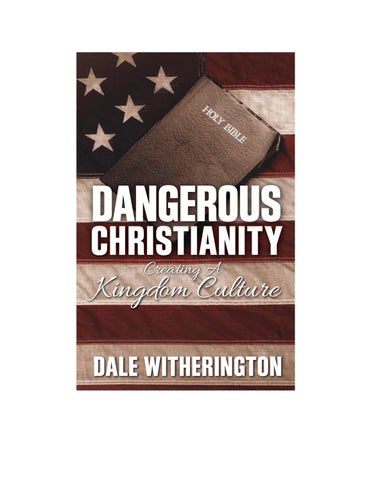
Introduction “You can’t legislate morality.” Have you ever heard that? Probably. “I’m so tired of dirty politics all I’m going to do is preach the gospel!” You’ve probably heard that one, too. How would you respond to these two faulty statements? You might ask, “Faulty? How?” I’m glad you asked. As a pastor having worked with our state legislators since 2012, I have come to learn that every bit of legislation is legislating somebody’s morality. And, since Proverbs 29:2 tells us that the people rejoice when righteous people rule, and they groan when the wicked rule, doesn’t it make sense that we actively work to elect morally righteous men and women to legislative office? How can the unrighteous create righteous laws? We always legislate morality. And for those who only want to preach the gospel and stay away from politics, perhaps you have forgotten that God ordained 3 institutions. First, God ordained the family as the basic unit of society. He then ordained His church, through the Bible, to provide moral order to the family unit. Finally, God ordained government to provide moral order to society at large. That begs the question, “From where does government get its morality?” The answer is that government is supposed to get its morality from the Bible as well. So, if the church is not providing Biblical training that raises up Godly men and women to serve in the “ministry of elected office,” the church is abdicating its responsibility to impact the third institution created by God and turning it over to the unrighteous. In other words, you cannot preach the “whole gospel” and neglect government. Just because politics gets dirty doesn’t excuse the church from its responsibility to participate. And, please, don’t tell me the church isn’t supposed to be “political”. I’ve served on and witnessed many a church board meeting!
So, let's talk about why this is titled “Dangerous Christianity”. Let me give you four quick snapshots. The first snapshot comes from a discussion with one of my former partners in ministry. He and I were talking about the issue of immigration. Immigration, legal and illegal, has
been a hot button issue in my state of Minnesota. As I travel our state, more pastors, more churches and more community leaders are asking more questions about immigration issues. It’s real and some of the scenarios are very challenging. From a Great Commission point of view, we have roughly 1 million immigrants in the state of Minnesota who have not been reached with the Gospel of Jesus Christ. A variety of ministries are asking, “How do you bring the Gospel of Jesus Christ to a million people who don't know who He is? How do you bring the Gospel of Jesus Christ into some immigrant communities who are actually hostile to Americans and the Christian faith?” It’s a very real challenge for Christians who take the instruction of the Lord seriously to “make disciples of all nations”. As we were talking about this issue my friend said he had an idea. In a somewhat tongue-in-cheek manner he said we needed to make Christianity dangerous for people, especially those who were anti-America in custom and religion. He clarified saying, “We need people who aren't believers to call their non-believing friends and tell them not to come to Minnesota because it’s dangerous here. It’s dangerous because if you come to Minnesota, you're going to meet Jesus. Stay where you are!” That was his way of envisioning a church in action bringing the gospel into everyday life and truly making a positive difference in its community. Dangerous Christianity in this case is all about how to bring Jesus into any given situation. The second snapshot occurred for me in October 2019. I was reading an article about a Christian counselor who decided that he no longer was going to practice his Christian faith because he decided he was really part of the LGBT community. The counselor was talking about a very delicate, hot button political issue called conversion therapy. He had come to the conclusion that any attempts to counsel someone out of the LGBT lifestyle into a straight lifestyle was fruitless. In fact, it was “dangerous Christianity”. The third snapshot came from a personal experience of interrupted sleep. Normally, I sleep like a rock and lacking in sleep has never been an issue for me. However, on this occasion, the Lord woke me up twice. He woke me up to tell me the third perspective was something I needed to share with the church I was preaching at the following morning as their guest speaker. For them, Dangerous Christianity was meant to address their complacency. They had gotten was too comfortable in their nice rural community and there was little life in their Christian experience. God wanted to shake them up a bit and stir up some action. The fourth snapshot comes from reading a study by one of my college mentors, Dr. John Piper. Dr. Piper was, and perhaps remains, the most influential person in my life regarding several key components of my Christian faith that have guided me for nearly 45 years. In January 2020, Dr. Piper addressed a question from another pastor who expressed concerned about the role of the church in addressing cultural, even political, issues. The concern he stated was that Biblical Christianity from a culture run amok is accused of being immoral, hateful and, yes, even dangerous. Dr. Piper responded by referring to a meeting among the chief priests and scribes of the Jewish people
following the reports of Jesus raising Lazarus from the dead who were concerned that Jesus and His teachings had become “dangerous” (see John 11:38-54). So, Dangerous Christianity, is about following the leadership of Jesus in carrying out His mandate to intentionally challenge and purposefully change a culture determined to destroy itself. This is to be done by restoring righteousness through spiritual and civic transformation based on the life and teachings of Jesus Christ. It is about not only standing up to the cultural bullies instead of cowering in the corner with fear and calling it love and compassion, but it is also charging the gates of hell with a water cannon called Truth. Jesus said, “I will build my church and the gates of hell shall not prevail against it” (Matthew 16:18). Against what will the gates of hell not prevail? The church. The church, properly equipped, is meant to be deployed on a spiritual offensive against the forces of hell as revealed in culture in such a way so as to make the massive and heroic Allied invasion of Normandy on June 6, 1944 pale in comparison. Instead, the church is called “the sleeping giant”. I first remember hearing the term “the sleeping giant” applied to the church from a guest speaker at our college chapel service during my freshman year in 1972. I also remember hearing that “the sleeping giant” was waking up during our national elections in 2016. Friend, if the church was a “sleeping giant” from 1972 and didn’t begin to awaken until 2016, we’re talking a span of being asleep for 44 years! That is not being asleep. That is being in a coma! The church is called to engage the culture for righteousness. But, there has been a disconnect. The enemies of Christianity have written, well thought-out implementable strategies, playbooks if you will, on how to attack. It is time we Christians had an implementable strategy, a playbook, of our own. “Dangerous Christianity: Creating a Kingdom Culture” is meant to be a Biblically-based guide, a playbook, for accomplishing the work Jesus directed us to do. Let’s get started. The Lordship of Jesus Christ When I was a young pastor just getting started after my seminary graduation, I was blessed to be hired by one of the leading pastors in the Midwest region of the country, Dr. Robert Ricker, and to serve on his staff. Bob and his wife, Dee, took my wife and me under their wings and loved us, directed us, corrected us (me), and encouraged us in ways we can never repay.
Bob was an amazing blend of pastor/shepherd and administrative, visionary leader. One of his visionary projects was a community-wide Thanksgiving service held in the local high school auditorium with four other churches from different denominations. This was unheard of at the time, especially when we consider that this community was the influential community in the state. It was a community of powerful leaders, particularly in business and government. It was also unheard of because our base was conservative, independent and Baptist. Bob’s vision included sharing the Thanksgiving stage with pastors from the Presbyterian, Lutheran, Congregational and Catholic churches. In some Baptist circles, that just wouldn’t fly. There is an old joke about a man who died and was met by St. Peter at the gates of heaven. St. Peter welcomed the man and was the man’s personal tour guide to get him acclimated to his new heavenly location. The first place St. Peter took the man was to a most impressive palace. After climbing what seemed to be hundreds of steps, they entered the foyer. The man had never seen such an exquisite multi-storied foyer and was nearly overcome with awe, except for the noise he heard coming from behind a large set of double doors. It sounded like one, loud and happy party. So, the man asked St. Peter about it. St. Peter mentioned a certain denominational group and indicated they were having a massive, heavenly celebration. Instead of going in, St. Peter led the man down a long, wide, extremely well-lit marble hallway. Every now and again they would arrive at another door and it was clear to the man that another party was happening. St. Peter would identify each denominational group behind each door and smile contentedly at the thoughts of the celebrations taking place. After quite a while of walking down the hallway, the man noticed that the hallway was beginning to narrow and the lights were much dimmer to the point where he had to put his hand against the wall to guide him. They came to the end of the hallway, turned a corner and the man practically bloodied his nose as he walked face-first into a door he could barely see. It was pretty quiet behind that door. The man turned and in a rather loud voice asked, “St. Peter, what’s happening behind this door?” St. Peter quickly put his hand over the man’s mouth and said, “Shh!!!! Whisper. Behind this door are the Baptists and they think they’re the only one’s up here!” Unfortunately, at the time there were some in our large Baptist church with that kind of mindset and they publicly made that mindset known. Baptists were not to mingle with the others. I admired the way Bob handled it. He simply stood before the congregation of over 2000 people and said, “Some of you are concerned about having a community Thanksgiving service with the pastors and members of certain churches in our community. You’ve made your concerns known throughout the church and the community in both appropriate and inappropriate ways. I’m here to tell you that the theme of this Thanksgiving event is from Philippians 2:10 & 11. The theme is ‘Jesus Christ is Lord’. If we cannot meet and give thanks to God with other brothers and sisters in Christ under
the banner ‘Jesus Christ is Lord,’ we have much bigger, much more serious issues as a church to address.” It turned out to be a very successful, well attended event in which God was honored by our community. So, let this be our starting point and agree together, regardless of denominational stripe or lack thereof. Dangerous Christianity begins with the declaration “Jesus Christ is Lord” and He has given us, His church, a job to do. Let’s explore what that job is. Teach Us to Pray The disciples asked Jesus, “Lord teach us to pray.” Jesus said, “When you pray, pray like this: ‘Our Father who art in heaven, hallowed be your name. Your kingdom come, Your will be done, on Earth as it is in Heaven.” Let's stop there for a moment. Jesus taught us to ask the Father for His kingdom to come and His will to be done. Where was this supposed to happen? On Earth. How is it to be displayed? As it is in Heaven. I think we miss those significant points quite often in our evangelical churches. When I was raised in the Greek Orthodox Church, whenever we prayed that prayer, we crossed ourselves. Our thumb pressed against the forefinger and middle finger touching first the forehead, then the heart, then one shoulder and finally the other shoulder forming the shape of a cross. We prayed that prayer and we prayed it so much that I’m pretty sure we often didn’t stop to think about the meaning of it. I can’t speak for others, but I was so focused on crossing myself as many times as possible that I usually missed the depth and meaning of that prayer. I think we miss the central focus of that prayer in evangelical circles for a different reason. I believe we miss the deeper understanding of this prayer in the evangelical church because we think Jesus came to save us from sin so we can die and go to heaven. I believe “getting saved” so when we die we can go to heaven was not the primary purpose why Jesus came to die on the cross for us. Now, it is true that when we die, if we are in Christ we go to Heaven, but the reason He came was so we could establish a body of people called Christians who would bring the culture of Heaven onto Earth. If the goal was really to get people “saved” so we could insure they’d go to heaven, we should do a better job of not only getting them saved but also finding ways to “assist” them to go immediately to heaven. How stupid would that be!?!
No. The goal is to help people establish a relationship with Jesus Christ not only to get them into heaven but also, and more importantly, to get heaven into them. It is to create in and through people the culture of heaven here on earth. Think for a moment about what the current culture and living conditions in heaven are like. When I think about what it must be like to live in heaven, I think of at least two things: I think of the Great Commandment and I think of the fruit of the Spirit. In Luke 10:25-28, we are told of a lawyer who approached Jesus to test Him about the law of inheriting eternal life. Jesus asked the lawyer his understanding of the law with regards to the question. The lawyer knew the legal answer. He responded to Jesus’ question by telling Jesus we are all commanded to love the Lord our God with all our heart, strength, soul and mind. We are also to love our neighbor as we love ourselves. Allow me a brief sidebar for a moment with this idea about loving ourselves. For years, even decades, pop psychology has infiltrated Biblical thinking utilizing this verse to justify the idea that until we love ourselves enough we cannot truly love others the way Jesus intended in this teaching. While that might be true in some other Biblical passage, specific or implied, that is clearly not an accurate argument using this passage as its proof. In fact, it is a pure misuse of this discussion. Consider again from whom the question came regarding the issue of inheriting eternal life. It came from a lawyer who was testing Jesus and Jesus’ ability to rightfully interpret the law. The lawyer then followed up his original question with a question meant to justify himself as one who should inherit eternal life based on his standing as one who knew and, theoretically, upheld the righteous requirements of the law. In other words, this lawyer didn’t need a course in loving himself more so he could love others. He needed a course in humility so he would learn to love others as highly as he already loved himself. He needed to look up to others in love, not look down on them in selfrighteous contempt. In simpler terms, I’ll use one of my wife’s favorite quips. She often says, “We need to call others up, not call others out.” So, the first piece of getting the culture of the kingdom of heaven into a person so that person can get the culture of the kingdom of heaven into the earth, is loving others as evidence of loving God. The second piece is found in Galatians 5:22-23. It reads, “But the fruit of the Spirit is love, joy, peace, patience, kindness, goodness, faithfulness, gentleness, self-control; against such there is no law.” I’d like to make another important point here. In my career, I’ve worked at some level with roughly 30 denominational groups. While we all share much in common, the denominationalism reflects those things that are unique or distinctive to our “tribe”. One
of those distinctives is often reflected in our doctrine or teaching of the “kingdom of God”. Some denominations teach the kingdom is here in all its fulness. Some teach it is “already here, but not yet fully consummated”. Others teach that Jesus offered the kingdom, that is, he brought it near, but it was rejected when He was rejected so the kingdom is not here at all. Some of these use their kingdom of God beliefs to distinguish between “the kingdom of God” and “the kingdom of man” so as not to engage in “the kingdom of man”. Please note here that my discussion is not critiquing how our denominations address the theological concept of the kingdom of God. What the church is missing is remembering that while we are called “citizens of heaven” (Philippians 3:20), it doesn’t stop there. We are not simply “aliens and sojourners” on this earth (see 1 Peter 2:11 for example) awaiting to go to our heavenly home as some very brilliant Biblical scholars seem to passionately declare. We are also called “ambassadors” (2 Corinthians 5:20). We seem to have forgotten that. To put it all together, we are “citizens of heaven” called to be “ambassadors to earth”. What does it mean to be an “ambassador”? If you ask Siri, an ambassador is “an accredited diplomat sent by a country as its official representative to a foreign country”. That’s not bad but it really doesn’t capture the full, deeper biblical picture. Allow me to explain. If you are an ambassador, you are not only your home country’s official representative, you are the embodiment of the king or nation or sovereign entity who has sent you. You speak on behalf of the one who sent you. You act on behalf of the one who sent you. Those who meet you develop their understanding of the one who sent you based upon you, your actions, your speech, etc. In other words, when they see and interact with you, from their perspective they are interacting with the one who sent you to them. Not only that, but when they visit you at your embassy, even if your embassy is located in the heart of their country, once they enter your embassy grounds they are no longer in their country. They are now in the sovereign territory of your nation. So, let’s move this into the spiritual plane. If you are a person who has committed your life to Christ as your Savior and Lord (if, in fact you have done that), you are God’s ambassador to wherever He has stationed you on earth. You not only represent Him, you also carry His authority. And, by His authority, as you go into the world bringing the gospel and making disciples, you are setting up other ambassadors, establishing new spiritual embassies, taking back territory from satan and handing it over to God. You are in partnership with God creating the culture of heaven on earth, and to be most effective, you need a strategy. God gave us one.
The Strategy Jesus himself provided for us a strategy to establish the culture of the kingdom of heaven on earth. We call it “The Great Commission”. I still remember the very first time I heard the term “The Great Commission” particularly as a focus for ministry. I was a young college student and still young in the faith. A college friend of mine was excited about helping to fulfill “The Great Commission”. I had no idea what he was talking about. When I learned its meaning, it changed my life. It became the filter by which I sift what I do and what I don’t do with my life. The Great Commission is found in the Gospel of Matthew, chapter 28, verses 18-20. I like The Passion Translation of these verses. They say, “Then Jesus came close to them and said, ‘All the authority of the universe has been given to me. Now wherever you go, make disciples of all nations, baptizing them in the name of the Father, the Son and the Holy Spirit. And teach them to faithfully follow all that I have commanded you. And never forget that I am with you every day, even to the completion of the age.’” Let’s dissect these verses. Notice first Jesus’ claim that “all the authority of the universe” was given to Him. He is the “Lord of the universe”. There is none higher than He. That is why we started “Dangerous Christianity” with the quote from Philippians 2, “Jesus Christ is Lord”. The Lordship and authority of Jesus is vital to grasp. Jesus is exclusive. He is the Way, the Truth and the Life. No one enters heaven, no one approaches God the Father except through Jesus, God the Son. This is one of the unique features of Christianity when compared to all other religions and philosophies in the world. Jesus’ exclusive claim of Lordship and authority means only one of two things: Either He is Lord or He isn’t. Either He has all authority or He doesn’t. There is no middle ground. Think this through carefully for it has deep and impactful ramifications. If Jesus is this exclusive, he nullifies every other religion and religious philosophy on the face of the earth. If Jesus is this exclusive, there is no truth to the claim that different religions, no matter what they are, all serve the same God only in different ways. Why? Because the claim of Jesus eliminates every possibility of any other “true” god existing. He, Jesus, is the only true God, only true Lord, only true authority and he shares it with no one and nothing else. In light of our world today, here is a relevant application of Jesus’ claim. You must ponder this carefully for yourself and determine what you choose to believe. Here it is: If Jesus has all authority and is the exclusive, only way to heaven, then Islam, for example, is a false religion, Allah is a false God, and Muhammed is a false prophet. Why? Because, if Jesus is Lord and has all authority, then the Bible is right in its teachings about Jesus and the Quran is wrong in its teachings about Jesus since the
Quran teaches that Jesus does not have all authority, is not the Lord of the universe, is not the deity the Bible claims He is. In the Bible, Jesus is the Savior of the world. In the Quran, Jesus is not the Savior of the world. There is no gray area here. There is a clear line of demarcation. I chose Islam because of its relevance in our culture at the time of this writing. I could have chosen any other religion or life philosophy to make the same point. The point is: Jesus is either the only Lord of the universe and has all authority over it or He is not the Lord of the universe and He does not have all authority over it. For me, the evidence is clear. Jesus is Lord, and the authority He is claiming here in Matthew 28, He actually has. Now, given that authority, Jesus gave His strategy, His “commission,” His marching orders. Remember, this was Jesus’ final set of instructions to those closest to Him before he ascended into heaven to go to the Father’s right hand. And His instructions were to “make disciples of all nations”. Some of you are shouting, “Wait a minute! That can’t be right. There are other commands here in addition to making disciples of all nations.” I understand why you might believe that. In most translations of the New Testament, the Great Commission starts with the word, “Go”. Consequently, many denominational groups have thought that the main command of the Great Commission is “go”. In fact, if we look at other good English translations of the New Testament, it appears there are four commands, not one. It appears that the commands are 1. Go 2. Make Disciples 3. Baptize, and 4. Teach. What we sometimes forget is that the New Testament was not originally written in English. It was originally written in koine Greek, the common Greek language of the day. And, while it appears in the English to give us four commands, in the original Greek the Great Commission has only one. That one command is to make disciples of the nations. So, what is the significance of the other three apparent commands? The significance is found in the grammar, in their “ing” endings. Each of the words for “go,” “baptize,” and “teach” have the equivalent of “ing” endings making them adverbs which help to describe the main verb, or main action, of this passage. They are technically called “adverbs of manner”. In other words, the command “make disciples of the nations” is clarified by the “adverbs of manner” because they tell us how or in what manner we are to go about making disciples. That is one reason why I like The Passion Translation’s rendering here of “everywhere you go” because it catches the true meaning of what Jesus taught. To put it in the “ing” form, it would be rendered, “As you are going through life, make disciples” or maybe even more technically correct “having gone, make disciples”.
I’m making a great effort to make this clear to you, the reader, because I believe if you catch where we’re about to go, you will be set free from some of your mental hang-ups regarding your purpose, direction, and calling. This also has some significant ramifications for local churches. Here’s what I mean: I believe there is a direct correlation between going, baptizing and teaching with whether or not you are using your spiritual gifts, talents and skills most effectively for advancing the cause of Christ in your life. Allow me to elaborate: Many, if not most, of you reading this may have identified your dominant spiritual gifts and are still struggling with how to use them effectively. I believe you can use them most effectively when you attach them to the “tendency” you most identify with in The Great Commission. Think of each of the “adverbs of manner” (going, baptizing, teaching) as tendencies. The “going” is the tendency to make friends, build bridges to those who do not yet know Jesus as their Lord and Savior. You are the type of person who simply loves people and loves to connect with new friends. You are a natural at building bridges to unbelievers. To you, a stranger is just a friend you haven’t met yet. The “baptizing” tendency refers to those who love to proclaim the gospel. Maybe you preach. Maybe you evangelize. Maybe you use music, drama, movies or any other sort of media to present the gospel to people. The bottom line for you is simply to find a way to tell people about Jesus. The “teaching” refers to those who care for, nurture and help develop those who come to faith in Christ as a result of hearing the proclamation of the gospel. So, the “team” approach to making disciples involves the “bridge builders” bringing non-believers into environments where they can hear the “proclaimers”. Those who respond favorably to the gospel message can then be helped by the “developers” so they can grow and find their place in The Great Commission as well. Now, let’s connect those “tendencies” to your spiritual gifts. I’ll use my wife as an example. Among other gifts, my wife has the gift of hospitality. That means she loves to use our home as a place to invite people over for dinner, coffee, or just to hang out. If she uses our home to have the neighbors or other friends in to socialize with one another, she is using the spiritual gift of hospitality with the “tendency” of bridge building, which is the “going” or “wherever you go” part of The Great Commission. On the other hand, if she uses our home to have a Bible study or a book study, she is using the spiritual gift of hospitality with the “tendency” to “develop, teach or nurture” others. I believe you have a deep sense inside as to your primary “tendency”. You may have two. Few, if any, have all three. Can you see how you will be more effective in using your spiritual gift(s) within your tendency for advancing the cause of Christ? You can even take this a step further.
What if you evaluated every ministry in your church according to the Great Commission? Let’s start with “going” or “bridge building”. What ministries do you have in your church that focus on building a bridge to reach out to those who don't yet know Jesus? It’s worth categorizing and evaluating those. Which are effective? Which are not effective? What could you creatively add that you’re not doing? What needs to end? There are many ways bridge-building can take place. Let your imaginations fly. Simply ask, “What can we bring to our community that will connect us to people and draw us to them?” This is extremely effective. I am reminded of how this was used to plant a new church in a newly developing community. Here’s the story: The small group of people desiring to start the church canvassed the community on their felt needs. They made a list of those needs and identified the one that came up most. That need was from young parents seeking help in potty-training their young children. The group got to work. They found a Christian child-psychologist and booked him for a Tuesday night in the community room of the local bank. They created an event and advertised the free seminar on how to potty-train children. The event itself wasn’t free. It was paid for by the small group of organizers. The event was advertised with traditional advertising. This was in the late 1980’s before the advent of social media. When the date rolled around, people came from all over the new community. It was standing room only. The presentation was well received. It ended with the presenter telling the group that the free seminar (he emphasized “free”) was put on by a group of people who were starting a new church in the community. The church was having its first service in the same community room as the seminar and the first service would be the following Sunday. He invited all those who had no church home to come by and check out the new church. When Sunday rolled around and the church launched, it launched to a standing-room-only crowd. They came because they had a bridge built to them that let them know this was a church that cared about them and their new community. That church is still thriving today. I have shared that story many times at different places around the country. I shared it once at a large church in the Midwest. After telling the story, a lady raised her hand and asked me, “Were you there?” I responded, “No, I wasn’t” with a bit of fear and trepidation. I wasn’t sure where this was going to go. The lady followed up by saying she was there. (In my sharing, I mentioned the name of the church and the community.) Now I was really getting nervous. I didn’t want to be telling a story that was inaccurate. I was desperately hoping my memory hadn’t failed me. So, I asked her if I had gotten the story and the details correct. She said, “Yes, but you didn’t share the motto that was part of the advertising.” I told her I was relieved to have told the story accurately, but I didn’t know there was a motto.
Are you ready for this? For the “how to potty-train your child” event, this group used Proverbs 22:6 as their motto, “Train up a child in the way he should go”! Who says Christians don’t have a sense of humor!! The second area of ministries in your church to evaluate is the baptizing category which, for me, implies a proclamation of the gospel. Without getting into a theological discussion/debate on when and how to baptize, the point I’m making here is that when it comes to making disciples, every person at some point makes a personal decision as to whether or not she or he wants to take that deeper committed step of going from “believer” to “committed follower”. This arena is the one that helps people hear the gospel and take the initial step of giving his or her life to Christ. So, whether this is a point of “conversion” or a “confirmation of one’s baptism,” it is the step of faith we all must take at some point telling the Lord we want Him to take over the leadership of our lives. What ministries, in addition to preaching, does your church offer that help lead people to making that decision? What creative ministries might you add? What “dead” ministries do you need to eliminate? Some might wonder what an example of a “dead” ministry might be. Here’s a quick example: Many years ago, a ministry consulting team I was part of visited a church that was a prospective client. One of my team members met with the person responsible for the evangelism ministry. It was the most unique approach to evangelism we had ever heard. Now, to be clear, I am defining evangelism as a ministry with the intention of telling people about Jesus and their need to trust Him as their Savior and Lord. The fellow in charge of evangelism at this church had a slightly different idea. His idea of evangelism was to bring doughnuts each week to the adult Sunday school class! And that is an example of a “dead” ministry that needed to be eliminated – at least from the “baptism/proclamation” arena. Perhaps it could be moved into bridge building! The third area of ministry in The Great Commission is the area of teaching, caring and nurturing. This is the area of ministries that develop followers of Christ to maturity and usefulness in the Lord’s work. This is where Ephesians 4:11-16 might come into play for your church. This passage will remind your congregation that you did not hire your pastor(s) to do “the ministry”. Instead, you hired your pastor(s) to equip you to do the ministry! The biggest challenge is not the fact that you are called into ministry. The biggest challenge is discovering what your ministry is and how and where to do it. OK. I just made friends with many pastors. Now I might step on the “pastor toes” a bit. One of your biggest challenges as a pastor is to remember that most of the ministry your people are called to do will occur outside the four walls of your church and they
won’t primarily be done on Sunday. If you really are concerned about reaching your community for Christ, it will more likely be done by sending your people into the community and not by trying to get your community to come to your church. That thought is counter-intuitive for many pastors. But, if you do this, you will have better success attracting more people to your church in the long run. Here are two hypothetical but very real perspectives. First, imagine a new family coming to your church. Perhaps they have been greeted warmly enough that they come back another time or two. After three or four visits, someone in leadership approaches them and begins the “dreaded” conversation. It goes something like this: “HI, my name is __________. I am (the pastor, an elder/ deacon/board member/Sunday school superintendent). I’ve noticed you have come to our church for the past few weeks. We’re sure glad you’re here! What brings you to our church?” Now, in this scenario, their answer doesn’t matter. No matter what they say, your response is, “Great! That’s wonderful. And, by the way, we need to fill a slot to teach our 2nd grade boys Sunday school class. Can we count on you? Also, we have an important project going on and we need to raise $$$ to complete it. Can you write a check to help?” Is that a far-fetched scenario? Maybe. But, over the decades, I’ve run into enough people who have visited churches and decided not to stay for this or very similar reasons. What if you tried scenario two? Scenario two is very similar to scenario one except the “dreaded” conversation is eliminated. It starts very similarly but ends on a profoundly different note. It goes something like this: “HI, my name is __________. I am (the pastor, an elder/ deacon/board member/Sunday school superintendent). I’ve noticed you have come to our church for the past few weeks. We’re sure glad you’re here! What is God’s call on your life and how can we help you fulfill it?” If your church isn’t currently doing this or something like this, that last question can completely change the life, health and atmosphere of your church for the better. Try it! Where Do I Go From Here? So, what if you took every Ministry in your church and you evaluated them according to where they fit in The Great Commission? And then, what if you did the same thing with your own life? Where do you begin? Begin where you are. Where are you? Allow me to try and help.
There is a “movement” in the church that can be useful if it is not abused. It is not doctrinal. It is a way of creating “hooks” to help people identify where God has placed them and help them be more effective. Some groups call these hooks “The 7 Mountains of Culture”. Others refer to them as “The 7 Mountains” or “The 7 Spheres of Influence”. The name doesn’t matter. The idea does. The concept of “The 7 Mountains of Culture” goes back to 1975 and a discussion between two giants of the faith concerning how their ministries would help fulfill The Great Commission. These men were Bill Bright, Founder of Campus Crusade for Christ International (now known as CRU), and Loren Cunningham, Founder of Youth With A Mission. The discussion these men had gave birth to the 7 mountains concept. The concept is based on the idea that every civilized society has seven “mountains” or seven “spheres of influence”. These areas are: Arts & Entertainment, the Media, Business/Commerce, Government, Education, Family and Religion. Bill Bright and Loren Cunningham believed God had instructed them to evangelize the most influential men and women in each “mountain”. By doing so, God would raise up those influencers to use their influence to advance the gospel in the sphere(s) in which God placed them. It became a very effective evangelistic strategy. This book, Dangerous Christianity, incorporates the 7 mountains concept as part of a more complete, more comprehensive strategy for fulfilling The Great Commission. Chances are you are already a follower of Jesus. You just want to be more effective. I have walked you through the idea of starting with the declaration “Jesus Christ is Lord”. We then moved to His instruction to pray for God’s kingdom to come, God’s will to be done, on earth as it is in heaven. In other words, to create the culture of heaven on earth. Then, we’ve walked through the big-picture strategy for getting that done, which is The Great Commission. Then we identified where you and your church might fit into The Great Commission. Now we’ll get more specific. I’d like you to identify the mountains In which God has placed you. Everyone reading this book is already in two or more mountains. Start there. Ask yourself how you can be more effective where you are. My booklet, “The Most Important Day of Your Life” can be a useful tool in assisting you. Now imagine partnering with others throughout your community, county and state with the intention of creating a kingdom culture right where you are. What changes could that bring to your home? Your business? Your community, county, state? How might it affect our nation? Imagine a land where righteousness and justice are restored. Imagine a community, yours, where God is honored and righteous people lead. Proverbs 29:2 tells us that when the righteous rule the people rejoice. Isn’t it time for the righteous to lead? That is you. That is Dangerous Christianity. Do your part and become “dangerous” for Christ. Let’s engage as partners with the Father, Son and Holy Spirit in creating a “kingdom culture”.
Now, go love on some people.