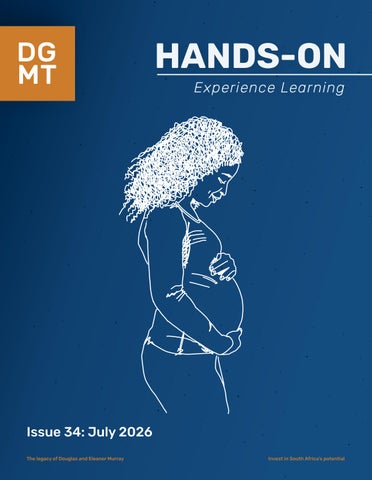
The legacy of Douglas and Eleanor Murray Invest in South Africa’s potential
DGMT is a South African public innovator through strategic investment. Our goal for South Africa is a flourishing people, economy and society. Towards this end, DGMT currently distributes about R200 million per year and leverages and manages a similar amount of funding through joint ventures with other investors.
Through our Hands-on Learning publication, we hope to play a helpful role in synthesising information from innovators and implementers in civil society, supporting them to share what they have learnt so that others are able to draw from and build on their experiences.
IN THIS ISSUE WE FEATURE
LEARNING BRIEF 1
The long and short of stunting in South Africa
Why understanding the problem is important for policy change
Over a quarter of under-fives in South Africa are too short for their age — and the figure has been hovering around the same level for about three decades. But stunting is more than a growth problem; it’s also a developmental challenge. In February 2026, President Cyril Ramaphosa opened a critical window to kickstart real action in improving how children grow, calling stunting “a massive crisis that demands attention and resources”. This type of clear political commitment is needed for policy change, as evidenced by countries like Peru and Indonesia, which have both brought down stunting rates significantly in less than a decade.
This learning brief is the first in an issue dedicated to unpacking the challenges of — and opportunities for — fixing early childhood nutrition, and looks at what multidisciplinary research tells us about the underlying complexities around stunting in South Africa.
LEARNING BRIEF 2
Preventing stunting starts in the womb
Why investing in the first 1 000 days of a child’s life is the best time to nip stunting in the bud
Given the urgency with which South Africa has to deal with the massive crisis of stunting, it’s important to focus strategically on interventions that can quickly lower stunting rates, such as those specifically targeting children’s nutrition status in early life. Starting in the first 1 000 days of a child’s life — the period from conception to two years of age — is a powerful lever, as it can break the compounding effects of poor growth in the womb, suboptimal breastfeeding and not having enough nutritious food from six months old, when babies typically start eating solids.
This learning brief looks at four practical interventions to fast-track action on stunting in the first 1 000 days and how they can work together to move the needle, based on evidence about the drivers of stunting and where efforts to curb chronic malnutrition are falling short. But every one of these interventions rests on the same foundation: families being able to reach nutritious food in the first place — the focus of the next brief.
LEARNING BRIEF 3
Making the most of a good start
How to help families get all the nutrients they need
Even the best-targeted interventions in the first 1 000 days rest on something more basic — families being able to get nutritious food onto the plate, day after day. And this is where many households hit a wall. The nutrient-dense diets young children need, with enough protein and all the vitamins and minerals for healthy growth, depend on foods that are often out of financial reach. Protein-rich foods, fresh vegetables and fruit tend to cost more than staples like maize and cereals, or the nutrient-poor ultra-processed foods that fill the gap. The Child Support Grant is a vital poverty alleviation tool, and more children draw on it every year, yet South Africa's stunting rate has barely shifted. That tells us the early-life window can only do so much on its own: we also need to widen the lens from the individual child to the household around them, and tackle what makes nutritious food unaffordable in the first place.
This third brief in the series looks at broad interventions that lift a whole household's nutritional status — making nutritious food cheaper through retail subsidies, fortifying staple foods at scale and helping families grow their own.
4
THE LONG AND SHORT OF STUNTING IN SOUTH AFRICA WHY UNDERSTANDING THE PROBLEM IS IMPORTANT FOR POLICY CHANGE
Over a quarter of under-fives in South Africa are too short for their age — and the figure has been hovering around the same level for about three decades. But stunting is more than a growth problem; it’s also a developmental challenge. In February 2026, President Cyril Ramaphosa opened a critical window to kickstart real action in improving how children grow, calling stunting “a massive crisis that demands attention and resources”. This type of clear political commitment is needed for policy change, as evidenced by countries like Peru and Indonesia, which have both brought down stunting rates significantly in less than a decade.
Given the urgency with which stunting must be tackled in South Africa, strong strategic planning is necessary. For this to happen, the problem must first be well understood.
This learning brief is the first in an issue dedicated to unpacking the challenges of — and opportunities for — fixing early childhood nutrition, and looks at what multidisciplinary research tells us about the underlying complexities around stunting in South Africa.
Stop nutritional stunting of young children
GROWTH EQUALS POTENTIAL
Stunting is a sign that something is wrong in a society. Although it shows up as children being physically too short for their age, the problem extends beyond growth and into a child’s development.
Why? Because when children grow up in an environment in which they chronically go without adequate nourishment, their bodies — including their brains — don’t grow as they should. By the age of five, a child’s brain has reached 90% of its adult size and formed most of the neural connections that underlie thinking tasks.1 It follows that missing this early window of brain development can have long-term consequences for a child’s ability to learn, solve problems, make decisions and build relationships with others.
Indeed, studies show that children who grow so poorly that they become stunted by age two do worse at school than their friends whose growth was not stunted,2 and that those early cognitive deficits are hard to erase.3 In addition, these children often develop chronic diseases such as high blood pressure, heart problems, diabetes or obesity later in life,4 which could limit the type of work they can do as adults or make them miss work days because they’re ill. These setbacks compound — people who were stunted as children often have lower-paying jobs and may struggle to escape poverty.5
HOW SHORT IS TOO SHORT?
Children are too short for their age if they’re shorter than 97.5% of children of their age. This is usually expressed as having a height-for-age Z-score of –2. The Z-score is derived from the standard deviation and is a way to see where a measurement falls proportionally in relation to the population mean. In a population, about 67% of children’s height measurements at a certain age are expected to fall within one standard deviation of the mean (i.e. Z = ±1), while 95% of children’s measurements are expected to fall within two standard deviations (i.e. Z = ±2). Of that proportion, half (approximately 2.5%) fall within the lower statistical tail and the other half are tall for their age.
Based on measurements of a large sample of children across six countries, the World Health Organization (WHO) calculated the mean typical height of children at different ages and plotted them on a graph.7 The heights that would represent one, two and three Z-scores above and below the mean were also calculated and plotted on the graph to create a standardised growth chart from birth to five years of age.
Even if stunting in South Africa were only to be halved by 2030, it could save the country about $5.5 billion in economic losses. That’s almost R94 billion at the current exchange rate.6
1 Society for Neuroscience. n.d. Brain Facts: A Primer on the Brain and Nervous System. Washington DC: Society for Neuroscience. https://www.brainfacts.org/thebrain-facts-book
2 Alam, M.A. et al. 2020. Impact of early-onset persistent stunting on cognitive development at 5 years of age: Results from a multi-country cohort study. PLoS ONE 15(2), e0229663.
3 Dewey, K.G. and Adu-Afarwuah, S. 2008. Systematic review of the efficacy and effectiveness of complementary feeding interventions in developing countries. Maternal & Child Nutrition 4(Suppl 1), pp. 24–85
Casale D. and Desmond, C. 2016. Recovery from stunting and cognitive outcomes in young children: Evidence from the South African Birth to Twenty Cohort Study. Journal of Developmental Origins of Health and Disease 7(2), pp. 163–171.
4 Grey, K. et al. 2021. Severe malnutrition or famine exposure in childhood and cardiometabolic non-communicable disease later in life: A systematic review. BMJ Global Health 6(3), e003161.
5 McGovern, M.E. et al. 2017. A review of the evidence linking child stunting to economic outcomes. International Journal of Epidemiology 46(4), pp. 1171–1191
Galasso, E. and Wagstaff, A. 2019. The aggregate income losses from childhood stunting and the returns to a nutrition intervention aimed at reducing stunting. Economics & Human Biology 34, pp. 225–238.
6 Nutrition International. 2024. The cost of inaction: South Africa https://nutritionintl. org/wp-content/uploads/2024/07/Cost-of-Inaction-South-Africa-EN-FINAL-1.pdf
In South Africa, such growth charts are included in a child’s Road to Health booklet. When the child is measured, a health worker marks the measurement on the chart and can then easily determine, based on where the value lies, whether growth is on track. If the measurement is close to the mean, the child is growing well, but for measurements on or below the Z = –1 line, the child might be at risk of becoming stunted. A measurement falling on or below the Z = –2 line means the child is already stunted.
7 The set of reference values for boys and girls are different, and so separate growth charts are used for measuring boys and girls.
World Health Organization. 2006. WHO child growth standards: length/height-forage, weight-for-age, weight-for-length, weight-for-height and body mass indexfor-age – methods and development. Geneva: WHO. https://iris.who.int/bitstream/ handle/10665/43601/9789241595070_BoysGrowth_eng.pdf; https://iris.who.int/ bitstream/handle/10665/43601/9789241595070_GirlsGrowth_eng.pdf
MAKING SENSE OF STUNTING IN SOUTH AFRICA
The social determinants of health are poverty and inequality. Too many families are unable to access and afford nutritious food, and live in informal housing with inadequate sanitation. Poor nutrition and environmental factors that prevent children’s bodies from making optimal use of nutrients affect their immune systems, creating a cycle of chronic malnutrition and repeated infections that stunts growth.
Over a quarter of under-fives in South Africa are not growing as they should — a figure that has barely changed in about three decades.8 This translates into close to 1.6 million children who may never reach their full potential.9 But more than that: it’s about 1.6 million people who won’t be able to build a better life for themselves and their children — which is why allowing stunting to persist is a “moral injustice”, says Ronelle Burger, a development economist at Stellenbosch University. Burger has been instrumental in bringing together
Data from the National Food and Nutrition Security Survey (2024) shows that the prevalence of stunting in South Africa sits at just under 29%. In 1994, stunting prevalence was estimated at about 23%, and around 27% in both 2003 and 2016.
Said-Mohamed, R. et al. 2015. Has the prevalence of stunting in South African children changed in 40 years? A systematic review. BMC Public Health 15, 534. https://doi. org/10.1186/s12889-015-1844-9
Department of Health. 2019. South Africa Demographic and Health Survey 2016 NDoH, Stats SA, SAMRC and ICF: Pretoria, South Africa and Rockville, Maryland, USA
Simelane, T. et al. 2023. National Food and Nutrition Security Survey: National Report. Pretoria: HSRC.
9 Calculated as 29% of approximately 5.5 million under-fives.
Statistics South Africa. 2025. Mid-year population estimates 2025. Pretoria: StatsSA. https://www.statssa.gov.za/publications/P0302/P03022025.pdf
We tend to think that because our bodies need food to grow, simply getting children to eat well will solve stunting. But the reality is more complicated. The human body is a system. And people’s lives are part of systems. The world around us is itself a system. Put all of this together and it becomes easier to understand that focusing on only one thing — like nutrition — won’t fix the problem. While nutrition is one of the closest determinants, other social factors also have interconnected roles.
Therein lies the rub. What do we know about the drivers and predictors of stunting and the factors that sustain them?
Here are four aspects revealed in multidisciplinary research by local experts into the complexities of stunting in South Africa:
1TRACKING STUNTING RATES OVER TIME HAS BEEN TRICKY
An analysis by Kate Rich and Liezel Engelbrecht showed that although there have been several surveys measuring the prevalence of stunting in South Africa over the past 25 years, it’s difficult to compare results because they didn’t all use the same sampling design or measurement methods.10 In fact, with some surveys showing stunting rates to be as high as 30% and others showing figures of around 20%, it’s clear we don’t really have a clear picture of the issue in South Africa. This is a problem if we want to track whether interventions to address stunting are working.
Two important considerations in tracking young children’s growth emerged from the analysis. The first relates to a set cut-off point being used to determine whether a child is stunted (also see “How short is too short?”). Arriving at that point is the result of a child not growing well for many months, and so the number of children at that boundary masks how many are on their way to becoming stunted. This means that the problem of chronic malnutrition among children — and by implication the risk of developmental deficits — is likely deeper than the numbers suggest. Tracking the full distribution (mean height-for-age) across surveys would therefore offer a more sensitive picture of population health. In other words, stunting should be viewed more as a population-wide problem, not just one in a high-risk group.
10 Rich, K. and Engelbrecht, L. 2025. Measuring stunting and tracking trends in prevalence in South Africa: Conceptual and methodological considerations. Development Southern Africa 42(6), pp. 750–770. https://doi.org/10.1080/037683 5X.2025.2568862
The second thing to keep in mind is the age of children being included in surveys that measure stunting rates. The way growth charts work, and the formula used to calculate how far a child’s height is from the ideal for a specific age, can distort the picture. The prevalence of stunting varies by age and tends to be higher in younger children. This means that if younger or older children are overrepresented in the sample, the average will be skewed — either too high or too low.
Rich and Engelbrecht conclude that irrespective of the exact prevalence of stunting, South Africa’s rate is much higher than a healthy population’s would be — and that’s where the real concern lies. Prioritising consistency, comparability and quality in data systems will help South Africa to track trends more reliably over time.
The National Food and Nutrition Security Survey (published in 2024) showed that close to 29% of under-fives in South Africa are stunted.11 This figure is close to what the WHO classifies as indicative of a considerable public health concern.12
STUNTING AROUND THE WORLD
DIGITAL MONITORING TOOLS CAN GIVE US A BETTER SHOT AT SOLVING STUNTING
Digital tools can help us get a better grip on how children are growing, write Anna-Marie Müller, Helen Donkin, Emma Chademana and Phiwe Dauwa 13
The authors reviewed three apps currently being used by community health workers in mostly rural areas in South Africa14 and found that the use of mobile devices makes recording growth measurements more accurate and less time consuming. The data can also be uploaded regularly. This means the process of tracking how children are growing becomes more efficient. If linked with location data, digital records can also be used to map what children’s growth looks like across the country and so help to identify hotspots where fast action is needed.
11 Simelane, T. et al. 2023. National Food and Nutrition Security Survey: national report. Pretoria: Human Sciences Research Council.
Global Nutrition Report. n.d. The global burden of malnutrition at a glance https://globalnutritionreport.org/resources/nutrition-profiles/
12 World Health Organization. n.d. Malnutrition in children https://www.who.int/data/ nutrition/nlis/info/malnutrition-in-children
Being able to act quickly once a problem is identified, and track whether the intervention is working, is important because the window for correcting the conditions that result in stunting is brief. A baby who is not getting enough nutritious food falls behind the ideal growth path fastest between the ages of six months and 24 months, with stunting prevalence usually at its highest in children of about two years old, research shows.15 Moreover, it’s hard to undo the developmental damage of those first two years.16 The problem is that conducting a nationally representative study, analysing the data and reporting the results can take far longer than 18 months17 — not because people are dragging their feet, but because of the enormity of the task.
Despite the positives of using digital monitoring tools, it’s not without challenges. Patchy mobile networks and high data costs in South Africa, a lack of training among health workers, and the need for real-time support or troubleshooting can hamper the effectiveness of these digital solutions. In addition, the tools would need to sync with existing public health systems, and would require committed buy-in from policymakers to make the best of what the technology can offer.
13 Müller, A. et al. 2025. mHealth for community-based growth monitoring and promotion: Three case studies from South African settings. Development Southern Africa 42(6), pp. 837–854. https://doi.org/10.1080/0376835X.2025.2588713
14 Tools used by the Zero2Five Trust (https://zero2five.org.za/), Grow Great Campaign (https://growgreat.co.za/) and One to One Africa (https://www.onetooneafrica.org/)
15 Victora, C.G. et al. 2010. Worldwide timing of growth faltering: Revisiting implications for interventions. Pediatrics 125(3), e473–e480.
16 Dewey, K.G. and Adu-Afarwuah, S. 2008. Systematic review of the efficacy and effectiveness of complementary feeding interventions in developing countries. Maternal & Child Nutrition 4(Suppl. 1), pp. 24–85.
Casale, D. and Desmond, C. 2016. Recovery from stunting and cognitive outcomes in young children: evidence from the South African Birth to Twenty Cohort Study. Journal of Developmental Origins of Health and Disease 7(2), pp. 163–171. https://doi. org/10.1017/S2040174415007175
17 For example, data collection for the most recent National Food and Nutrition Security Survey, of which results were released in 2024, started in 2021. See: Simelane et al., National Food and Nutrition Security Survey: National Report.
FOCUS ON THINGS THAT CAN HELP TO BUY TIME FOR LONGER-TERM SOLUTIONS
From the age of six months, a baby’s diet should include more than just breastmilk. But this is also the time when many children start showing signs of poor growth, because they often don’t get the right mix of nutrients from complementary food to support healthy development.
An analysis of international evidence by Ronelle Burger, Lisanne du Plessis, Trust Gangaidzo, Mastoera Sadan, Wiedaad Slemming and Gabrielle Wills18 showed that a daily nutrient supplement can be a good option in South Africa to help lift children at high risk of stunting out of the danger zone. The supplement — a paste of ground peanuts, vegetable oil, milk powder, a little sugar and 22 vitamins and minerals — is almost like a power shot of the macro- and micronutrients important for good growth, and is designed to be mixed into a child’s food every day for a period of 12 months.19 International evidence shows that the risk of stunting drops markedly in vulnerable children getting such a nutrient boost.
The paste doesn’t replace normal meals or breastmilk but improves the nutrient content of what a child eats in a day. Rolling out supplementation as a preventative intervention in areas where the risk of stunting is particularly high can make a difference, especially when combined with nutrition education, and analyses show that the benefits far outweigh the costs of implementing such programmes.20 This links back to the importance of accurate data on how children are growing and being able to identify hotspots where targeted action is needed fast.
In South Africa, we need to combine different strategies to address stunting because stand-alone interventions won’t be enough. Policies that improve the affordability of protein-rich and nutritious food are pitched as one of the most powerful levers (on page 28), showing that balancing the nutritional benefits of interventions with people’s everyday realities can drive real change.
CHILDREN WHOSE FATHERS ARE PART OF THEIR LIVES HAVE A BETTER CHANCE OF GROWING WELL
Household circumstances are often overlooked when we think about strategies to improve a child’s nutritional status. But a paper by Grace Leach and Dieter von Fintel reminds us that there’s more to children growing well than just food.21 Their analysis shows that the chance of stunting increases when children grow up without one or both their parents, whether because of death or economic circumstances preventing them from living together. The absence of fathers can be a particularly big disadvantage.
It’s a sobering finding, given that the analysis showed that one in two South African children under four grows up without their father, either because of death or absence. The authors write that households in which children live without a father have a risk of hunger, and that paternal orphans are more likely to be stunted than children who live with both their parents, extended family, or just their mother but with support from a living father. The death of a father can substantially lower household incomes and so limit the amount or type of food caregivers can buy.
However, the loss of a father’s income isn’t the only thing that leads to paternal orphans often going hungry. When a mother loses her children’s father, she often has to carry the responsibility of parenting alone. In the contextual reality of South Africa, this can increase the burden of care and add extra stress, the authors write, especially when a woman works a job that doesn’t pay much. Their findings underscore the complex interaction between socio-economic factors that affect children’s development, and the importance of a policy environment that invests in protecting children against stunting.
18 Burger, R. et al. 2025. Priority interventions for reducing stunting in the complementary feeding age group in South Africa. Development Southern Africa 42(6), 885–903. https://doi.org/10.1080/0376835X.2025.2596786
19 This intervention is commonly referred to as a small-quantity lipid-based nutrient supplement.
20 Desmond, C. et al. 2021. Realising the potential human-development returns to investing in early and maternal nutrition: the importance of identifying and addressing constraints over the life-course. PLoS Global Public Health 1(10), e0000021. Adams, K.P. et al. 2023. Costs and cost-effectiveness of small-quantity lipid-based nutrient supplements (SQ-LNS): report of the working group on cost and costeffectiveness. Institute for Global Nutrition, University of California, Davis.
21 Leach, G. and Von Fintel, D. 2025. Parental death, parental absence and stunting. Development Southern Africa 42(6), pp. 791–810. https://doi.org/10.1080/037683 5X.2025.2574658
ADDRESSING STUNTING IN SOUTH AFRICA
In February 2026, President Cyril Ramaphosa opened a critical window to kickstart real action in improving how children grow, calling stunting “a massive crisis that demands attention and resources”, in line with the promise of the National Strategy to Accelerate Action for Children (NSAAC).22
According to the theory of political scientist and public policy expert John Kingdon,23 this type of political commitment is what’s needed for policy change — provided that the underlying problem is well understood.
Getting experts together to publish their research in a dedicated forum like the special issue of Development Southern Africa is therefore a good departure point, says Burger, because it created a platform for “honest and vulnerable conversations” between experts from different disciplines. “People working in the child development space often have the same vision, but conversations are fragmented. To see where the big gains can be, we have to understand the complexities of stunting — and that needs a collaborative approach and a ‘lessons learnt’ kind of mentality,” she says.
According to Liezel Engelbrecht, the nutrition lead for the Hold My Hand Accelerator, a unit linked to a national campaign of action for children and teens in support of the NSAAC, President Ramaphosa’s commitment is a “valuable lever” in the fight against malnutrition. “It has brought high-level awareness and attention to stunting and opened the door for active conversation.”
But it’s more than just talk, she adds. “Because stunting is now formally high on the political agenda, different departments across all three spheres of government — national, provincial and local — will have to include stunting in their strategic plans. In turn, this means that funding and human resources can be allocated to the issue, without which plans can’t be rolled out.”
Given the urgent timeframe of the president’s call — to end stunting by 2030 — the National Food Security Council should be set up as a priority, notes Engelbrecht. Such a body, which
would bring together experts looking at food security from different angles and across different sectors, has officially been on the cards for more than a decade but has never gotten off the ground.24 “Every country that managed to make headway against stunting had a multi-sectoral body at a high political level like the president’s office to lead their strategy,” she says, adding that the example of the South African National Aids Council has shown how effective such a group can be when it has a presidential stamp of approval. (Read more about this in the next section on “How other countries beat stunting”.)
“Along with other organisations in the early child development and nutrition space, DGMT has long been advocating that children need to be at the centre of national development decisions,” says Engelbrecht. The memorandum of understanding between the Presidency and the Hold My Hand Accelerator, incubated by DGMT, puts the Accelerator in a good place to support work specifically related to the NSAAC, such as helping to end stunting.
22 Ramaphosa, C. 2026. State of the Nation Address. The Presidency, 12 Feb. https:// www.thepresidency.gov.za/state-nation-address-president-cyril-ramaphosa-1 23 Kingdon, J. 2010. Agendas, Alternatives and Public Policy, 2nd ed. New York: Pearson.
24 Department of Social Development & Department of Agriculture, Forestry and Fisheries. 2013. National Policy on Food and Nutrition Security https://www.gov.za/ sites/default/files/gcis_document/201409/37915gon637.pdf
HOW OTHER COUNTRIES BEAT STUNTING
The stories of how Peru and Indonesia beat stunting are remarkable. Like South Africa, both are upper middle-income countries, and both had national stunting rates of around 30% when they decided to do something about child malnutrition. Both countries managed to lower the rate by 10–15 percentage points in six to eight years.25 They did so by making the fight against stunting a political priority, which called for everyone to get on board: politicians, government departments, civil society, the private sector and communities.
In Peru, stunting became an election issue for four successive governments, and government budgets allocated money to evidence-based interventions, which paid out if specific results were achieved. Their plans focused on the poorest communities and targeted children up to the age of two, and involved different government departments. Mothers also received conditional cash payments, which were linked to taking their children for regular check-ups at clinics. Nationally, growth monitoring doubled in 10 years, and tripled in rural areas.26
Indonesia used a similar multi-department strategy backed by strong political leadership and presidential commitment.27 Their programme expanded rapidly from 100 priority districts in 2018 to 514 districts nationwide by 2022. It involved evidence-based interventions that would improve children’s nutrition status, either by focusing directly on dietary aspects or providing social support and services to help families to be healthier, like cash transfers and improving sanitation in villages. The country also invested in getting good data so that they could track the progress of implementation. Indonesia recognised stunting as a multi-sectoral problem that needed a multi-sectoral solution rolled out at a provincial, district and village level.
LESSONS LEARNT
Funding the publication of the special research issue is an example of how DGMT contributes to building the evidence base for solutions in order to support the government in its work. This collaborative relationship is important, says Engelbrecht. “DGMT’s role has been to help connect what communities are experiencing with what researchers and academics identify through evidence, and then to assess how these align with government priorities and policies. From there the focus moves to understanding, where support may be needed to help strengthen implementation and action.”
Here are five things that were learnt from the process of getting experts together to report on their work:
1
DEEP CONVERSATIONS BETWEEN PEOPLE FROM DIFFERENT DISCIPLINES CAN BUILD SOLUTIONS
Putting together a research publication focused on stunting has helped to surface the realities of the problem in South Africa. Despite considerable international evidence, there hasn’t been enough substantive local data to date on what stunting really looks like in the country and where the implementation gaps are. Interdisciplinary research conversations among academics, policymakers and NGOs can help not only to define the solutions but also to understand the social and political context that directs implementation capacity.
2
LOCAL RESEARCH ABOUT STUNTING CAN DRIVE PRACTICAL SOLUTIONS
“In a way, bringing together people from different knowledge bases was a proof of concept,” says Burger. Academics and policymakers may approach the same problem in different ways, which could mean that good research doesn’t always lead to good policy. But researchers, policymakers and practitioners working together on papers in this issue showed how valuable policy-focused research can be, says Burger. “This type of research is not academic; it’s solutions-oriented and practical. Putting together this special journal issue created a platform for the best ideas to surface through critical engagement and conversation.”
25 Peru had a national stunting prevalence of close to 28% in 2008, which dropped to 13% by 2016. Indonesia’s stunting rate was close to 31% in 2018, but dropped to just under 20% by 2024.
Marini, A. & Rokx, C. with Gallagher, P. 2017. Standing tall: Peru's success in overcoming its stunting crisis. Washington, DC: World Bank. https://documents1.worldbank.org/ curated/en/815411500045862444/pdf/FINAL-Peru-Nutrition-Book-in-English-withCover-October-12.pdf; https://nutritionintl.org/news/all-blog-posts/why-indonesiamust-guard-its-hard-won-progress-against-stunting/
26 Marini, Rokx & Gallagher, Standing tall, 2017.
27 Debebe, Z.Y. 2026. Prioritizing the fight against stunting: lessons learnt. Launch of special stunting-focused issue, Development Southern Africa, 21 Apr. PowerPoint presentation.
INCREASED AWARENESS ABOUT STUNTING IS A BIG STEP FORWARD
High-level political commitment to tackle stunting signals a significant shift in South Africa’s view on stunting. Continued advocacy by organisations like Grow Great28 over the last several years has helped to raise awareness about stunting and its costs to the country’s development path. Publishing a collection of in-depth studies and making the content freely available helps to sustain the momentum by showing how research connects to practical realities, says Burger.
SOLVING STUNTING NEEDS PARTNERSHIPS
Stunting isn’t a one-sided problem, nor will it be solved by a single actor. “We need buy-in from the private sector, civil society and the government to fix malnutrition,” says Engelbrecht, and high-level political commitment is a valuable lever. The government’s reach and structures are indispensable in facilitating the roll-out of interventions, and business and civil society must provide support where implementation and resources are needed. A proposal for food retailers to forego mark-up profits on 10 selected protein-rich foods, and the government then matching the price cut to give consumers more purchasing power, is an example of how such partnerships can work in practice. NGOs that train and manage community health workers to do growth monitoring, and so extend the work of primary healthcare facilities, is another example of practical collaboration.
CONVERSATIONS BUILD TRUST
The research included in the special journal issue has brought people together, and helped them to understand one another better, notes Burger. “I’ve been amazed at how open this community is to learn from others and critically examine their own work. People have been collaborative, not competitive; they’ve been kind and generous in sharing ideas and mentoring others.” An environment that fosters listening and learning to achieve alignment in approach is crucial for iterative problemsolving, given the complexity of weaving different strands together to craft real-world solutions for stunting.
WHAT’S NEXT?
With the new version of the National Food and Nutrition Security plan being finalised and prepared for review, and in the context of the clear political will to address malnutrition, the council to oversee food and nutrition security must finally be set up. Evidence from countries that have beaten stunting clearly shows that strong leadership is needed to drive a national nutrition programme.
At a more immediate level, conversations should continue, says Burger, to ensure that there’s a “collaborative vision of where we go next” — especially in light of prioritising interventions that can yield good results fast and so keep the momentum going in the fight against stunting.
This is the learning experience of:
This brief was written by Linda Pretorius and edited by Rahima Essop, with inputs from Liezel Engelbrecht and Ronelle Burger.
28 Grow Great seeks to mobilise South Africa towards a national commitment to zero stunting by 2030.
PREVENTING
STUNTING STARTS IN THE WOMB WHY INVESTING IN THE
FIRST 1 000 DAYS OF A CHILD’S LIFE IS THE BEST TIME TO NIP STUNTING IN THE BUD
Given the urgency with which South Africa has to deal with what President Cyril Ramaphosa called “a massive crisis” in his State of the Nation Address in February 2026, it’s important to focus strategically on interventions that can quickly lower stunting rates, such as those specifically targeting children’s nutrition status in early life. Starting in the first 1 000 days of a child’s life — the period from conception to two years of age — is a powerful lever, as it can break the compounding effects of poor growth in the womb, suboptimal breastfeeding and not having enough nutritious food from six months old, when babies typically start eating solids.
This learning brief, the second in a series focused on childhood nutrition, looks at four practical interventions to fast-track action on stunting in the first 1 000 days and how they can work together to move the needle, based on evidence about the drivers of stunting and where efforts to curb chronic malnutrition are falling short.
START WITH THE END IN MIND
To build a better future for everyone, we have to invest in children. And investing early — in the first 1 — is akin to providing fertile soil for seeds to grow. “It’s the investment that determines the returns on all other development spends,” says Ronelle Burger, a development economist at Stellenbosch University who’s been closely involved in research efforts to help unpack the complexities of stunting in South Africa (see the previous learning brief).
But progress in lifting people out of poverty and creating a more equal society has been slow, despite these issues being central to the 2030 National Development Plan. poverty rates have been creeping down since 2006, about 56% of South Africans — only a third less than 20 years ago — still struggle to buy basic groceries and enough nutritious food in a month.
THE LINK BETWEEN FOOD SECURITY AND
DIETARY DIVERSITY
In the most recent National Food and Nutrition Security Survey (published in 2024), African households were found to be food insecure. Of these, one in six were severely food insecure, meaning that they often ran out of food, went to bed hungry or weren’t able to eat for 24 hours. In addition, food consumption scores showed that about four in 10 households had poor or borderline diversity in their diet, meaning that the food they had available didn’t give them the right mix of nutrients for good health every day.
1 National Planning Commission. 2012. National Development Plan 2030. Our future –make it work. Pretoria: Department of The Presidency.
2 Figures given here are for the lower-bound poverty line and the food poverty line. Statistics South Africa. 2025. Poverty trends in South Africa: An examination of absolute poverty between 2006 and 2023. Pretoria: Statistics South Africa.
3 Simelane, T. et al., 2023. National Food and Nutrition Security Survey: National Report. Pretoria: HSRC.
4 Galasso, E. and Wagstaff, A. 2019. The aggregate income losses from childhood stunting and the returns to a nutrition intervention aimed at reducing stunting. Economics & Human Biology 34, pp. 225–238.
Shekar, M. et al. 2017. An investment framework for nutrition: Reaching the global targets for stunting, anemia, breastfeeding, and wasting. Directions in development. Washington, DC: World Bank. https://doi.org/10.1596/978-1-4648-1010-7
Shekar, M. et al. (eds.) 2024. Investment framework for nutrition 2024. Human development perspectives series. Washington, DC: World Bank. https://doi.org/ doi:10.1596/978-1-2162-2
Akseer, N. et al. 2022. Economic costs of childhood stunting to the private sector in low- and middle-income countries. eClinicalMedicine 45, 101320. https://doi. org/10.1016/j.eclinm.2022.101320
5 Akseer, N. et al. 2022. Economic costs of childhood stunting to the private sector in low- and middle-income countries. eClinicalMedicine 45, 101320. https://doi. org/10.1016/j.eclinm.2022.101320
FROM SCIENCE TO SOLUTIONS
Improving early childhood nutrition involves not only considering what children eat but also understanding the underlying systemic complexities that lead to high stunting rates.6 These include not picking up on growth faltering before the age of two, socio-economic circumstances that hinder good maternal or infant nutrition, and the absence of responsive caregiving (on page 18).
It’s not realistic to try and pull all the levers at once, though, says Liezel Engelbrecht, nutrition lead of the Hold My Hand Accelerator,7 a national campaign to fast-track building better lives for South Africa’s children. “But we can start with what is likely to yield the fastest results, as every month and year we wait, we are failing children who could have benefitted. Some challenges will take longer to resolve, but if we can address at least a few now, we can start making a big difference.”
HECKMAN CURVE
Interventions focused on the first 1 000 days of a child’s life can yield returns reasonably fast. Stunting is the result of compounding deficits in a child’s earliest years, from not growing well in the womb, suboptimal breastfeeding and repeated infections, to not getting enough nutritious food when complementary feeding starts, typically at six months. Acting in this critical window of development to support children’s growth, or correcting situations that cause low birth weight (under 2.5 kg) and faltering growth, can help children reach their full potential.
The “Heckman Curve”, based on evidence from economics and neuroscience, demonstrates that the greatest returns on human capital investment occur in the earliest years of life, making early action on maternal and child nutrition both economically and socially urgent.
Source: James Heckman, 2008 8
6 Black, E.R. et al. 2013. Maternal and child undernutrition and overweight in low-income and middle-income countries. Lancet 382, pp. 427–451.
7 Hold My Hand. n.d. https://www.holdmyhand.org.za/
8 Heckman, J.J. 2008. Schools, skills and synapses. Economic Inquiry 46(3), p. 289. https://pmc.ncbi.nlm.nih.gov/articles/PMC2812935/
Supporting mothers’ nutrition is at the centre of the approach to prioritising the first 1 000 days (also see diagram below). If a pregnant woman (A) gets the right antenatal supplementation (B) and can afford (C) nutritious food (D) and transport to get to a health facility for check-ups (E), and is supported (for example, through community health workers or community peer counselling groups (F), her baby is less likely to be born with a low birth weight — under 2.5 kg (G) and, in turn, less likely to be stunted.9 Continued support after birth can help to support breastfeeding (H) and to offer nutritious complementary foods after six months. All these factors work together to help a baby’s body and brain develop well (I), setting a child up to thrive, perform well at school (J) and improve their chances of getting a good job (K). Of course, there are also structural, social and environmental factors that come into play, like proper water and sanitation infrastructure,
sustainable food systems, which may include local food production, and good housing (L), although those are bigger issues that will take longer to address. “However, for gains to last and human development to be sustained, we should keep advocating for faster progress on this, too,” says Engelbrecht.
Engelbrecht notes that deciding which interventions to focus on also depends on what the practical realities are. “It’s often not only about what the evidence says works but also about what can feasibly be budgeted for given many other needs, what timeframes seem reasonable for implementation and how things can build on or be integrated into an existing system. In other words, policymakers have to think about how to roll out an intervention, who has to do it and how it can be funded.”
9 Vats, H. et al. 2024. Association of low birth weight with the risk of childhood stunting in low- and middle-income countries. A systematic review and meta-analysis. Neonatology 121(2), pp. 244–257.
Here are four things that can help to move the needle on improving children’s nutrition outcomes in the first 1 000 days:
INTRODUCING THE MATERNAL SUPPORT GRANT
“You only have as much dietary choice as your budget allows,” says Engelbrecht. And for many South Africans, money is so tight that their grocery basket contains mostly ultra-processed or starchy foods that are typically high in salt, sugar, fat and energy, and few vegetables, fruit and protein-rich items like eggs, beans, fish or dairy.10 Not being able to buy enough nutritious foods can compromise a pregnant woman’s diet at a time when her body urgently needs proper nutrients, and put her baby at risk of being born underweight or too early. Inadequate intake of nutrients during pregnancy can also increase the risk of stillbirth or of the pregnant woman developing anaemia, which would carry long-term consequences for her child’s brain development.11
It follows that offering a Maternal Support Grant (MSG) to mothers-to-be can be good for children, especially as pregnant women are the only vulnerable group falling outside the South African social protection net. The figures are sobering: about four in 10 households are female-headed12 and close to four in 10 women are not employed.13 Moreover, of those who do have a job, about one in six work in the informal sector.14 So, not only do many pregnant women struggle to make ends meet, but many new mothers are also excluded from maternity benefits after their babies are born because they work in informal jobs.15
The proposed MSG can be seen as a backward extension of the Child Support Grant (CSG), explains Engelbrecht. The idea is to provide the same monetary support as the CSG for six months during pregnancy16 and three months after birth. When the child’s birth is registered, the MSG will automatically switch to the CSG, without a new grant
application having to be processed. However, if there’s a problem with paperwork, like getting the baby’s birth certificate, the three months of post-birth cover can buy caregivers a little time to get everything in order without losing financial support.
Currently, approximately half of children eligible for the CSG only get onto the system around the age of one.17 Many are therefore missing out on better nutrition at a critical time in their development — especially where there isn't enough food at home, which makes it harder for mothers to breastfeed and to introduce the right complementary foods from six months. Because the MSG can piggy-back on the existing CSG system, it offers a simpler way to bring more children under the social protection safety net from birth.
In countries such as Mexico, Brazil, Uruguay and Kenya, conditional cash transfers during pregnancy were linked to more mothers going for antenatal check-ups, fewer babies being born underweight and families having more nutritious food available.18 In Togo, unconditional cash transfers, combined with nutrition education, improved households’ food security and reduced the incidence of babies being born underweight.19 In South Africa, the Grow Great CoCare Maternal Support Study run in the Western Cape during 2020/21, was a promising proof of concept:20 it showed that among pregnant women who received a R300 cash voucher every fortnight for six months, around 50% fewer reported going hungry at the end of the study than at the start, and a quarter fewer reported feelings of maternal depression. Maternal wellbeing is one of a basket of factors that contribute to child nutrition outcomes.21
10 Pietermaritzburg Economic Justice & Dignity Group. March 2025. Household Affordability Index https://za.boell.org/en/household-affordability-index
11 Keats, E.C. et al. 2019. Multiple-micronutrient supplementation for women during pregnancy. Cochrane Database of Systematic Reviews 3, CD004905. https://doi. org/10.1002/14651858.CD004905.pub6
12 Statistics South Africa. 2023 Marginalised groups indicator report, 2024. Pretoria: Statistics South Africa.
13 This is based on results from Quarter 2 in 2025. See: https://www.statssa.gov. za/?p=18668
14 Ibid.
15 South African Law Reform Commission. 2021. Maternity and parental benefits for self-employed workers in the informal economy. Project 143. Discussion Paper 153. https://www.justice.gov.za/salrc/dpapers/dp153-prj143-MaternityParentalBenefitsJuly2021.pdf
16 From the first antenatal booking, which should ideally not be later than 14 weeks.
17 UNICEF South Africa. 2023. An update study on the exclusion error rate for children who are eligible to receive the Child Support Grant. Johannesburg: UNICEF. https:// www.unicef.org/southafrica/media/7971/file/%20ZAFupdate-study-exclusion-errorchildren-eligible-receive-child-support-grant-June-2023.pdf
18 Hold My Hand. 2025. Closing the protection gap: the case for a Maternal Support Grant. Policy Brief 04. Cape Town: Hold My Hand. https://holdmyhand.org.za
19 Ibid.
20 Grow Great. 2024. CoCare Maternal Support Study https://growgreat.co.za/ow/wpcontent/uploads/2024/03/GG-MSG-HANDOUT2-final-revised-PRINT.pdf
21 Berejena, T., Malongane, F. and Metsing, T.I. 2025. Social protection programs and their support for promoting access to nutrient-dense foods for vulnerable communities in South Africa. Current Developments in Nutrition 9(6), 107452. https://doi. org/10.1016/j.cdnut.2025.107452
GIVING PREGNANT WOMEN A MULTI-
MICRONUTRIENT SUPPLEMENT
Not getting enough vitamins and minerals during pregnancy can harm both a mother and her developing baby. The World Health Organization (WHO) recommends that pregnant women take a supplement of 15 micronutrients and vitamins.22 However, currently, South African public health guidelines refer only to extra iron, folic acid and calcium.23
The WHO's recommended multi-micronutrient supplement (MMS) has been shown to improve intrauterine growth and reduce the risk of undernutrition in babies compared with iron and folic acid (IFA) alone — and it would also cost the country less. Modelling shows that switching from IFA to MMS in South Africa is highly cost-effective even in conservative scenarios, with substantial reductions in child deaths and strong long-term economic returns to be expected. The greatest benefits come with higher programme coverage and lower MMS procurement costs, although even shorterduration or higher-cost scenarios remain economically favourable. If MMS procurement costs can be negotiated close to the price at which IFA is currently supplied, the transition could become cheaper or close to cost-neutral from a procurement perspective, while still generating substantial health and economic gains.24 In addition, says Engelbrecht, considering that women are already taking an antenatal supplement and clinics are geared for handing it out, the intervention won’t require behaviour change, making it easier to adopt within the existing care system.
While there is growing support for MMS, introducing a new supplement into the public health system requires multiple regulatory, policy, procurement and implementation steps. These include product registration, guideline development, cost and feasibility assessments, and securing sustainable supply. Under current processes and procurement timelines, large-scale rollout would likely only be feasible from around 2029, although this could possibly be accelerated with sufficient political commitment and prioritisation.
Did you know?
A multi-micronutrient supplement was previously available in parts of the South African public health system for selected patient groups between 2010 and 2016 but was later discontinued. This was reportedly due to a lack of clear international guidelines at the time, and not enough being known about the evidence for MMSs.25
22 World Health Organization. 2020. WHO antenatal care recommendations for a positive pregnancy experience. Nutritional interventions update: Multiple micronutrient supplements during pregnancy. Geneva: WHO. https://www.who.int/ publications/i/item/9789240007789
23 National Department of Health. 2024. National Integrated Maternal and Perinatal Care Guidelines for South Africa. Pretoria: Department of Health. https:// knowledgehub.health.gov.za/system/files/elibdownloads/2024-10/
24 Wits RHI. 2026. Evaluating the health and economic impact of MMS vs IFA in South Africa: cost–benefit analysis and scenario. Report prepared for DGMT.
25 Bajoria, M., Beesabathuni, K. and Kraemer, K. 2020. The case for reintroducing multiple micronutrient supplements in South Africa’s Essential Medicines List: Creating an enabling environment for nutrition-specific interventions in antenatal care. Sight and Life Special Report. Basel, Switzerland.
CURBING EASY ACCESS TO ALCOHOL
Changes to alcohol regulations can also help to give mothers a better chance of delivering a healthy baby. Drinking during pregnancy can hinder the development of a foetus and is linked to pre-term delivery and low birth weight which is a key driver of stunting.
South Africa is a nation of heavy drinkers. Figures show close to half of people who use alcohol are considered to be heavy drinkers — meaning they have at least five standard drinks a day26 — and four out of 10 drinkers report bingeing on alcohol.27 With more than 80 out of 1 000 children in South Africa being born with foetal alcohol spectrum disorder — about 10 times higher than the global average — it’s clear that pregnant women, especially in poorer communities,28 need more protection.29
Kashifa Ancer who leads DGMT’s project for reducing alcohol harms, Rethink Your Drink, says the idea behind alcohol reforms as part of the strategy to curb stunting is to create an everyday environment that can help people drink less. Making cheap, strong drinks more expensive by introducing a minimum unit price (i.e. a base price per unit of alcohol) has been shown to work well in countries including Scotland and Australia. A local modelling study shows that setting the base cost for the amount of alcohol in a standard drink at R10 per unit of pure alcohol can raise prices for something like a can of beer or a shot of liquor by almost 20%, and that the greatest reductions in use can be expected in heavy and binge drinkers, especially in poorer communities.30 “Eliminating high spends and cheap alcohol, especially in low-income communities, is probably one of the biggest levers we have to help protect mothers and their babies against alcohol harms,” says Ancer.
But, she adds, alcohol reforms have to work as part of a bigger picture: “We can’t just remove alcohol and then not deal with
26 A standard drink is a beverage that contains 15 ml of pure alcohol and works out to roughly 125 ml of wine, one 330 ml can of beer, or about 40 ml of hard liquor.
Vellios, N.G. and Van Walbeek, C.P. 2018. Self-reported alcohol use and binge drinking in South Africa: Evidence from the National Income Dynamics Study, 2014–2015. South African Medical Journal 108(1). https://doi.org/10.7196/samj.2018.v108i1.12615
27 Binge drinking means having five or more drinks in one sitting.
World Health Organization. 2024. Global status report on alcohol and health and treatment of substance use disorders. Geneva: WHO.
28 Research shows alcohol harms disproportionally affect poorer communities.
Probst, C. et al. 2018. The socioeconomic profile of alcohol-attributable mortality in South Africa: A modelling study. BMC Medicine 16, 97.
29 Louw, J.G. et al. 2024. A multi-year, multi-site study of the prevalence of fetal alcohol syndrome in South Africa. Alcohol Clinical & Experimental Research, 48:867–879.
30 Gibbs, N. et al. 2021. Effects of minimum unit pricing for alcohol in South Africa across different drinker groups and wealth quintiles: A modelling study. BMJ Open 11:e052879. https://doi.org/10.1136/bmjopen-2021-052879
Gibbs, N. et al. 2022. Equity impact of minimum unit pricing of alcohol on household health and finances among rich and poor drinkers in South Africa. BMJ Global Health 7:e007824. https://doi.org/10.1136/bmjgh-2021-007824
the fact that mothers don’t have money to buy food. Similarly, we can’t focus exclusively on awareness programmes and think that it will be enough. We have to understand what else is happening in a community to help people make the best choices for themselves and their families.”
“Preventing
stunting altogether should be the first prize. Aiming for catch-up doesn’t even come in second;
third or fourth option
—
it’s the
when you look at return on investment.”
Ronelle Burger, development economist at Stellenbosch University
SUPPORTING MOTHERS TO BE RESPONSIVE CAREGIVERS
Plans to end stunting are part of a bigger drive towards optimal child health and development, says Chantell Witten, director of Health Systems Strengthening at Ilifa Labantwana.31 “We have to ask what systems can support mothers to feed their children well, and central to that is financial protection,”32 she says. If mothers’ incomes or budgets aren’t protected, especially in the first 1 000 days, they are less likely to breastfeed exclusively for six months and buy nutritious complementary foods. Income insecurity and poor mental health associated with financial strain are barriers to breastfeeding.33
31 https://ilifalabantwana.co.za/
32 Pereira-Kotze, C. et al. 2023. Access to maternity protection and potential implications for breastfeeding practices of domestic workers in the Western Cape of South Africa. International Journal of Environmental Research and Public Health 20(4), 2796. https://doi.org/10.3390/ijerph20042796
33 Witten, C. et al. 2020. Psychosocial barriers and enablers of exclusive breastfeeding: Lived experiences of mothers in low-income townships, North West Province, South Africa. International Breastfeeding Journal 15, 76. https://doi.org/10.1186/s13006020-00320-w
It’s a question of strengthening systems to support responsive caregiving — what Witten describes as “connecting and communicating with your child in a positive disposition”.34 Nutrition is central to building that connection. From the day a child is born, feeding is a constant act of what early childhood development experts call "serve and return" — a caregiver responding to her child's cues.
However, less than a quarter of infants are exclusively breastfed in their first six months in South Africa,36 less than halfway to the United Nations’ target of 60%.37 Witten says it’s important to get the messaging right about breastfeeding as responsive caregiving in action, to help improve breastfeeding rates in South Africa: “Breastfeeding is fundamental to ending stunting.”
Engelbrecht adds: “Maternal food insecurity and undernutrition are major barriers to healthy pregnancy outcomes and breastfeeding in South Africa. Breastfeeding alone increases maternal energy requirements by 500 kJ per day, while local evidence shows that hunger is strongly associated with reduced breastfeeding rates and poorer maternal wellbeing.”
org/10.1007/978-1-4020-9173-5_2
Luque, V. et al. 2015. Early programming by protein intake: The effect of protein on adiposity development and the growth and functionality of vital organs. Nutrition and Metabolic Insights 8(S1), 49–56. https://doi.org/10.4137/NMI.S29525
Helping mothers breastfeed effectively requires community-based support — which is where Grow Great's Flourish hosts fit in. The Grow Great Flourish programme is a national network of pregnancy and parenting support groups, led by a mother from the community who has been trained by Grow Great to share evidence-based information and encouragement with new moms. To date, Grow Great has trained 400 Flourish hosts.38
National Food and Nutrition Security Survey
World Health Organization and UNICEF. 2025. Global nutrition targets 2030: . Geneva: WHO/UNICEF. https://doi.org/10.2471/B09382
KHULISA CARE: A PILOT PROJECT TO SUPPORT MOTHERS
“Khulisa Care: Healthy Moms, Thriving Babies” is a collaborative effort between the Western Cape Department of Health, the Department of the Premier, DGMT, Grow Great and Shoprite. This proof-of-concept project is aimed specifically at reducing a mother’s risk of having an underweight baby and, in cases where babies are born with a low birth weight, at helping them to catch up. (It is different from the proposal for the Maternal Support Grant, which is pitched as social protection for all eligible pregnant women.)
The project is based on a “cash-plus-care” model.39 Once entered into the programme, mothers of babies born under 2.5 kg and those at risk of having a baby of low birth weight, based on clinical entry criteria, get a food voucher to the value of R525 loaded onto their Shoprite loyalty card once a month until the baby is six months old. The voucher can be used to buy any of the items included in a list of “10 best buys”, such as eggs, long-life full-cream milk, amasi, pilchards, tuna, peanut butter, dried or canned beans, lentils, soya mince and fortified maize flour.40 This is the “cash” component.
The “care” component is equally important. As part of the programme, community health workers also visit women’s homes at least once every two weeks to check on their health and their baby’s growth, counsel them on breastfeeding and share information on how the vouchers can best be spent for healthy eating. Community health workers also educate mothers on health-seeking and risk-reducing behaviours, such as knowing the danger signs during pregnancy or infancy, not missing antenatal appointments, and avoiding harmful substances. Importantly, their visits provide a layer of support many women don’t have during this critical time.
The programme, launched in July 2025, was rolled out in phases across Worcester, Khayelitsha and Mitchells Plain, areas identified as having high rates of underweight births and stunting. In February 2026, Western Cape Premier, Alan Winde, reaffirmed the province’s commitment to the pilot this year, as part of the sustained effort to tackle malnutrition and reduce
child stunting,41 and by the end of April, nearly 1 400 participants had already been enrolled. Findings from an internal midline evaluation of the programme suggest positive early signals that the combined cash-plus-care model is feasible, valued by beneficiaries and frontline workers, and has potential to improve maternal food security, programme engagement, and breastfeeding support when delivery systems function well.
39 Khulisa means “to grow” in isiXhosa.
40 Shoprite. 2025. Khulisa Care Best-Buy Foods, Western Cape, 23 Dec. 2025–28 Feb. 2026. https://specials.shoprite.co.za/deals/ wckhulisacarebestbuyfoods23dec28feb2026/2/index.html
41 DGMT. 2026. The Khulisa Care pilot continues in 2026. https://dgmt.co.za/the-khulisacare-pilot-continues-in-2026/
“I’m forever grateful for your lifechanging support. Thanks to your programme, I received the care and guidance I needed during my pregnancy. I'm thrilled to share that my baby girl is healthy, and I credit the team that supports me at the clinic for their dedication. Your work is truly making a difference in our community, and I'm honoured to be one of the beneficiaries.”
— Khulisa Care beneficiary
LESSONS LEARNT
Tackling stunting is an urgent priority for South Africa. Here are five things to know about interventions that can help get us there:
1
SUSTAINED, EVIDENCE-BASED ADVOCACY YIELDS RESULTS
The idea of income support for pregnant women was first introduced by the Department of Social Development almost 15 years ago. Since then, many role-players, including other government departments, public watchdog bodies like the South African Law Reform Commission, research groups like the Children’s Institute and PRICELESS SA, and civil society organisations like DGMT, Grow Great and Ilifa Labantwana, have continued to build the evidence base for what introducing an MSG in South Africa would involve and how it could work. Now, for the first time since the idea was initially raised, it looks like there could be real policy progress, says Engelbrecht. “President Ramaphosa’s framing of stunting reduction alongside existing social protection infrastructure such as the Child Support Grant, combined with an explicit commitment to resource allocation through the Medium-Term Budget Policy Statement, signals growing recognition within government that maternal and child nutrition requires sustained political attention, financing and system-level support.” To shift towards preparing to implement, social partners would need to contribute evidence, share expertise and support the government in interventions that would yield results.
2
COMBINED INTERVENTIONS CAN MULTIPLY EFFECTS
Improving children’s nutrition status fits into a bigger system, which has many levers. For example, reducing access to alcohol alone won’t move the needle if mothers don’t have financial support to help them make better choices. Similarly, closing food gaps through measures like the MSG, making nutritious food more affordable, or preventing low birth weights must be accompanied by a parallel push to improve breastfeeding rates. But by seeing solutions as part of a system, different interventions can multiply effects. “The whole is greater than the sum of its parts,” says Witten.
3
IMPLEMENTATION TAKES TIME
Policy change is a long process, even with a lot of preparation or a system geared for roll-out. The process of changing from an iron–folic acid supplement to a combined multimicronutrient formulation is an example of this. Knowing how long different steps may take, and forecasting where bottlenecks might occur, can help to make the process more efficient. Integrating a new intervention in an existing system can also help by leveraging prior efficiencies and know-how.
4
PUBLIC HEALTH INTERVENTIONS NEED TO ENGAGE THE AUDIENCE WHERE THEY ARE
Good child nutrition start with an emphasis on exclusive breastfeeding. “Every mother understands what breastfeeding means, and that’s a message we all have to make central to engaging with pregnant women,” says Witten. The messaging should be consistent and supported by systems that enable mothers to optimally breastfeed their infants, she adds, so that interventions work together rather than separately.
5
ENDING STUNTING SHOULD BE EVERYONE’S BUSINESS
Improving children’s nutrition status is a big undertaking, and the government can’t do it alone. The private sector, civil society, academics and policymakers should all contribute to making interventions work. But partners should also hold one another accountable, says Engelbrecht. The Khulisa Care pilot project is a good example of how different stakeholders can combine their strengths and work together to drive change.
WHAT’S NEXT?
As an immediate next step, civil society and social partners should work with government to secure approval and implementation of the MSG. Advancing the process for multi-micronutrient registration and roll-out, tracking results from the Khulisa Care pilot, and continuing to build community support systems for responsive caregiving will also help to further the fight against stunting. Continued advocacy and action to improve the affordability and accessibility of nutritious foods for vulnerable households will be equally critical.
This is the learning experience of:
MAKING THE MOST OF A GOOD START HOW TO HELP FAMILIES GET ALL THE NUTRIENTS THEY NEED
To capitalise on the power of nutrition in early life, families need sustained and reliable access to nutrient-dense food through diverse diets that include enough protein, and all the vitamins and minerals needed for healthy growth. But protein-rich foods and fresh vegetables and fruit are often out of financial reach for many households; they tend to be more expensive than staples such as cereals or maize, or nutrientpoor ultra-processed foods. Although the Child Support Grant is a much-needed poverty alleviation tool, and an increasing number of children have benefited from it over the years, South Africa’s stunting rate remains stubbornly high. This tells us that we also need additional strategies to increase lowincome households’ access to nutritious food.
This third learning brief in a series focused on childhood nutrition looks at broad interventions that can help improve people’s nutritional status, such as making nutritious food cheaper through retail subsidies, large-scale food fortification and helping people grow their own food.
Stop nutritional stunting of young children
CLOSING THE FOOD GAP
South Africa’s mission to end stunting by 2030 is an ambitious goal — but a necessary one, if we want the country to thrive. More than a quarter of the country’s under-fives are stunted — the result of growing up in an environment where they do not have enough of the right mix of nutrients to support their bodies and brains. That early deficit follows them: it undermines their ability to learn at school and to find good work later. In fact, according to the World Bank, a child born in South Africa today is likely to achieve only 43% of their human capital potential.1 This places the country near the bottom of the global labour productivity curve in terms of per-capita GDP — and largely explains persistent patterns of inequality
undermine national brainpower, and poor-quality teaching and learning outcomes across much of the schooling system, keep the country’s development potential low.
Lowering stunting rates significantly requires two things: helping children consistently get the right mix of nutrients, and ensuring the conditions — health, hygiene, caregiving — that allow their bodies to absorb them. The second component will require systemic change to improve water, hygiene and sanitation infrastructure to reduce repeated exposure to environmental infections. Studies show these infections damage the gut, impair nutrient absorption and are associated with chronic malnutrition and, in turn, a high risk of stunting.2 Fixing the problem also includes strengthening infection prevention and control through improved deworming and schistosomiasis treatment in high-burden areas, routine child health services and prompt
indicator/WB_HCP_HCI?geos=ZAF World Bank. n.d. Human Capital Index Plus: insights. https://humancapital.worldbank. org/hciplus/insights/
and chronic disease. Nature Reviews Gastroenterology and Hepatology 10(4), pp. 220–229. World Health Organization. n.d. Diarrhoeal disease. https://www.who.int/news-room/ fact-sheets/detail/diarrhoeal-disease
THE MISSION TO END CHILD STUNTING BY 2030
INTENSIFY PUBLIC COMMUNICATION ON NURTURING CARE, BREASTFEEDING, DIETARY DIVERSITY AND BEST-BUY FOODS
ENSURE CHILDREN GET ENOUGH NUTRITIOUS FOOD
MAKE PROTEIN-RICH STAPLES MORE AFFORDABLE AND AVAILABLE.
Restore the Child Support Grant to the food poverty line.
Double-discount 10 best-buy foods.
Reduce food waste and distribute surplus foods.
Extend nutrition support in early learning programmes.
Together with enforcement of food fortification of maize meal and wheat flour.
PREVENT MORE BABIES FROM BEING BORN SMALL AND REMEDIATE THOSE WHO ARE.
Maternal Support Grant.
Restrict liquor trading hours, introduce floor price per unit of alcohol and limit container sizes.
Multiple micronutrient supplementation.
Individual and group-based support to all pregnant women and new mothers.
Cash + care model for malnourished pregnant women and low birth weight babies.
Growth monitoring of 0–2-yearolds by all community health workers.
Referral and treatment with nutrient supplements to children who fail to thrive.
SUPPORT FOR THE FIRST 1 000 DAYS
Eliminate vertical transmission of HIV.
Ensure 100% rotavirus vaccination coverage.
Prioritise solid waste management.
Effective water and sewage management.
HELP COMMUNITIES GROW THEIR OWN FOOD.
Build strong links between agricultural extension services and NGOs to sustain local support.
Build links between subsistence farmers and early learning programmes.
TREAT INFECTIONS
Mass treat schistosomiasis and intestinal worms in highinfection zones.
Prompt management of acute infections in pregnant women and young children.
Interventions focused on maternal and childhood nutrition are within easier reach, and can help a country get a good grip on stunting within a reasonable timeframe. Indeed, countries such as Chile, Peru, Brazil and Indonesia managed to get rates down by around 10 percentage points in under a decade by strategically implementing solutions to improve the nutritional status of mothers and their babies in the first 1 000 days of life (on page 10).
To capitalise on the gains of nutrition interventions in early life, families need sustained and reliable access to nutrientdense food. This means they need diverse diets that include enough protein, and all the vitamins and minerals needed for healthy growth. But access to nutritious food is closely linked to affordability, and with roughly half of South Africa’s children under 18 living below the lower-bound poverty line,3 and about 60% of them being in urban areas,4 it’s likely that many miss out on having consistent access to nutritious food.
Protein-rich foods and fresh vegetables and fruit tend to be more expensive than staples such as cereals or maize, or nutrient-poor ultra-processed foods. For example, a basic basket of nutritious food for a household of four costs around R3 787.5 However, a general worker who earns the
3 Statistics South Africa. 2025. Poverty trends in South Africa: An examination of absolute poverty between 2006 and 2023. Pretoria: Statistics South Africa.
4 Hall, K. n.d. Children Count: Housing and services. Urban–rural distribution Cape Town: Children’s Institute. https://childrencount.uct.ac.za/indicator. php?domain=3&indicator=13
5 Pietermaritzburg Economic Justice and Dignity. 2026. Key data from March 2026 Household Affordability Index. 21 May. https://pmbejd.org.za/wp-content/ uploads/2026/05/April-2026-Household-Affordability-Index-PMBEJD_29042026.pdf
people.6 Transport and electricity are usually budgeted for before food and can take up about 55% of someone’s salary, leaving only the balance for groceries and other necessities. It’s far less than what’s needed to buy even a basic basket of healthy food, let alone non-food grocery items like soap and household cleaning products.7 As a result, more expensive items such as meat, eggs, fresh vegetables and milk are often left off people’s shopping lists.8
The Child Support Grant (CSG) is accessed by around 60% of under-18s,9 and modelling shows that the rate of stunting among under-fives receiving the grant is a third lower than among those who are eligible to get it but don’t.10 But the CSG has not kept up with inflation, is not accessed early enough and is well below the food poverty line of R855. Although grants increase purchasing power and economic participation, they need to be complemented by other strategies that reduce food costs on a large scale, improve the diversity and quality of pantry staples consumed by the majority of South Africans, and enable communities to grow their own fruits and vegetables.
6 About 36% of South African households consist of two or three people, and 25% consist of four or five people. See: Statistics South Africa. 2025. General Household Survey 2024. Pretoria: Statistics South Africa. https://www.statssa.gov.za/ publications/P0318/P03182024.pdf
7 The food poverty line is the amount of money someone needs in a month to buy enough food to satisfy their daily energy intake. It is currently set at R855. The lowerand upper-bound poverty lines define the range within which someone’s income must be to afford enough food as well as basic non-food items. The values are currently at R1 415 and R2 846, respectively.
8 Pietermaritzburg Economic Justice and Dignity. 2025. Household Affordability Index – March 2025 https://pmbejd.org.za
Cornelsen, L. et al. 2014. What happens to patterns of food consumption when food prices change? Evidence from a systematic review and meta-analysis of food price elasticities globally. Health Economics 24(12), pp. 1548–1559. https://doi.org/10.1002/ hec.3107
9 Children's Institute. n.d. Children Count. https://childrencount.uct.ac.za/indicator. php?domain=2&indicator=10
Statistics South Africa. 2025. Mid-year population estimates 2025 https://www. statssa.gov.za/publications/P0302/P03022025.pdf
10 Oyenubi, A. and Rossouw, L. 2024. Is the impact of the South African child support grant on childhood stunting robust? An instrumental variable evaluation. Children and Youth Services Review 164, 107829. https://doi.org/10.1016/j.childyouth.2024.107829
Here are four solutions that can help families get the right nutrients to stay healthy and support their children's growth:
MAKING PROTEINRICH FOODS MORE AFFORDABLE
Protein affordability is key to ending stunting, says David Harrison, CEO of the DG Murray Trust, which is why advocating for a double discount on 10 well-liked nutrientdense foods (see box) makes sense, given the roughly 30% gap between what many households’ budgets allow for and what they need for a healthy diet. The gap between the food poverty line — currently defined at R855 — and the value of the CSG — at R580 a month as of April 2026 — hits children of poor families especially hard.
According to the United Nations Food and Agriculture Organization, fiscal subsidies of food that put more buying power in the hands of consumers — instead of producers — are an effective way to make nutritious food more accessible. France and Malaysia have both used price caps as a way of controlling food costs and in Egypt, India and the Philippines, retail subsidies all increased household access to food and reduced the prevalence of underweight children.11
The idea of the double discount on the “10 best buys” is that manufacturers and food retailers agree to forego the markup on 10 items (see box) of one product label, which could mean a saving of 10–15% for the consumer. The government then agrees to pay the food industry a matching amount, upon proof of the discounted sales. Combined, this shared responsibility can give consumers 20–25% more purchasing power in their pocket and help their money go further.
Subsidies for healthy food products and increased taxes on unhealthy choices have been shown worldwide to be effective fiscal strategies to improve the quality of people’s diets.12
HERE’S WHAT THE “10 BEST BUYS” LOOK LIKE:
12 World Health Organization. 2022. Fiscal policies to promote healthy diets: policy brief Geneva: WHO.
The fundamental premise of something like the “10 best buys” campaign is that every child must be nourished, and when this is understood by decision makers in both the public and the private sector, the logic of helping people buy nutritious food becomes simple, says Harrison. “From an economic development perspective, it would be in the food industry’s interest to think about foregoing some profits in the short term to drive sustained profitability for the next 50 years.”
Studies have shown that pricing and consumer behaviour reinforce each other.13 However the authors of a large review of the effectiveness of subsidies when it comes to prompting people to buy healthier food write that “despite the accumulated evidence on the effectiveness of economic incentives in modifying dietary behaviour, policy adoptions remain scarce”.14
It’s no different in South Africa, says Harrison, which is why sustained advocacy is necessary for both the government and the food industry to work together. “We can keep on telling people to have balanced diets and eat enough protein-rich foods, but if they can’t afford it, it won’t happen. We must create a cog for people to help change their behaviour.”
An initiative like the Khulisa Care project (on page 20), a collaboration between the Western Cape Department of Health, the Department of the Premier, DGMT, Grow Great and Shoprite, is an example of how a plan for subsidising selected food products can work in practice, and how it could shape consumer behaviour. “We’re not there yet, but once the data has been analysed, we’ll likely be able to track changes in purchasing patterns, not only for the ‘10 best-buy’ products, but for others as well, which will be interesting in telling us whether the signalling around buying nutritious food is starting to change consumer behaviour,” notes Harrison.
So far, the message from food businesses has been that they’d be willing to buy into a solution such as a double discounting of selected food items, but that they’d like to see the government’s clear commitment before taking action, says Harrison. And there are positive signals that things are moving. President Ramaphosa made a high-level commitment in February 2026 to the urgency of fighting stunting. An interdepartmental committee on poverty alleviation, convened through the Presidency, has recommended
subsidising food products. And Treasury has given early indications that it is looking at how to fund such subsidies. “It can change the calculus, but we have to get leadership in the Presidency,” urges Harrison.
Government has accepted that improving childhood nutrition goes beyond one department’s mandate, which is why the mission to end stunting will be based in the Project Management Office (PMO), alongside teams focused on sorting out energy and logistics in South Africa, he explains. “But the question that we need to answer now is how the same sort of collaborative structures can be created in the PMO as for energy and logistics, and then to start the process of really building consensus around what needs to be done if we’re serious about ending stunting by 2030.”
IMPROVING FOOD QUALITY THROUGH LARGE-SCALE
FOOD FORTIFICATION
Large-scale fortification of staple foods such as maize meal, wheat flour and rice is widely endorsed by international health and nutrition authorities such as the World Health Organization, UNICEF, the Global Alliance for Improved Nutrition, Sight and Life, and the Food Fortification Initiative.15 It involves adding a premix of selected vitamins and minerals to widely consumed foods at the milling or processing stage — that is, before the food source is made into consumerready products. Although this can’t provide people with the full daily amount of micronutrients they need, it can be a reliable mechanism to get people to a better nutritional status, independent of household income.16 Evidence across multiple settings shows that well-implemented programmes can significantly reduce micronutrient deficiencies and related health risks.17 This matters most for women of reproductive age: iron and folate deficiencies raise their risk of anaemia, and increase the risk of neural tube defects, low birth weight and poor early-life outcomes in their babies.18
13 An, R. 2012. Effectiveness of subsidies in promoting healthy food purchases and consumption: A review of field experiments. Public Health Nutrition 16(7), 1215–1228.
14 Ibid.
15 World Health Organization. n.d. Food fortification. https://www.who.int/health-topics/ food-fortification#tab=tab_1
UNICEF. 2023. Large-scale food fortification for the prevention of micronutrient deficiencies in children, women and communities: guidance note. New York: UNICEF.
16 World Health Organization. n.d. Food fortification. https://www.who.int/health-topics/ food-fortification#tab=tab_1
17 Global Alliance for Improved Nutrition (GAIN). 2024. Food fortification: Policy recommendations to strengthen programmes and enhance impact. Large-scale food fortification policy brief. https://www.gainhealth.org/sites/default/files/ publications/documents/lsff-policy-brief-3rd-08dec24.pdf
18 World Health Organization. 2016. WHO recommendations on antenatal care for a positive pregnancy experience. Geneva: WHO. https://iris.who.int/server/api/core/ bitstreams/9dccde13-3593-4a22-9237-61abe5a3c6b7/content
When diets rely heavily on staples and contain limited protein, fruits and vegetables — as is the case in many cash-strapped households — it’s difficult to achieve adequate micronutrient intake through diet alone. Indeed, it is estimated that 44% of South African children under five are deficient in vitamin A and 61% are anaemic, as are around a third of women of reproductive age.19 Large-scale food fortification is an obvious lever here, especially given a large systematic review showing that adding iron and folic acid to staple foods in low- and middle-income countries was linked to a 34% drop in anaemia among women and children and a 41% reduction in neural tube defects in babies. deficiencies are estimated to cost poorer countries between 2% and 5% of GDP every year through lost productivity and increased disease burden.
Large-scale food fortification is both cost-effective theory, an easy way to improve nutrient levels because it doesn’t require any behaviour change on the consumer’s part, explains Liezel Engelbrecht, nutrition lead of the Hold My Hand Accelerator, National Strategy to Accelerate Action for Children.
But the system must also work well in practice. A DGMTcommissioned review of South Africa’s fortification system showed that fortification does not currently consistently hit the target24 — despite a well-established policy structure being in place. Fortification was first introduced in 2003, with amendments following in 2008 and 2016. Despite fortification being nationally mandated, accountability are decentralised and uneven. And because getting the micronutrient mix slightly wrong doesn't pose immediate health risks, fortification monitoring often falls through the cracks — crowded out by more urgent food safety
19 Sambu, W. 2019. childrencount.uct.ac.za/indicator.php?domain=4&indicator=97
Global Nutrition resources/nutrition-profiles/africa/southern-africa/south-africa/
20 Keats, E.C. et al. 2019. Improved micronutrient status and health outcomes in lowand middle-income systematic review and meta-analysis. 1696-1708.
21 Darnton-Hill, I. et al. 2017. and challenges in low- and middle-income countries in 2017 https://micronutrientforum.org/wp-content/uploads/2017/10/2017-09MNForumLargeScaleFortification-FinalReport.pdf
22 Friesen, V., et al. micronutrient inadequacies and their implementation costs: A modelling analysis. SSRN 5264480.
23 Hold My Hand. n.d.
24 Van der Merwe, M. 2025. A landscape and systems review Town: Hold My Hand and DGMT.
25 Department of certain foodstuffs; of 1972). Government Gazette document/201409/247150.pdf
Department of Health. 2008. R. 1206: Amendment of regulations relating to the fortification of certain sites/default/files/gcis_document/201409/315841206.pdf
checks around hygiene standards or disease outbreaks, the study found. Furthermore, the amendments to the original regulation reframed nutrient levels as minimum standards rather than prescribing exact levels, shifting the emphasis from precise dosing to minimum compliance thresholds. In practice, compliance rests on manufacturers' own monitoring — and when inspection capacity gets diverted to more urgent needs, consistent fortification is likely to slip.
Department of foodstuffs. Government Gazette,
SUPPORTING COMMUNITIES TO GROW THEIR OWN FOOD, EVEN IN URBAN AREAS
“Growing up in a small village in the rural Eastern Cape, having a vegetable garden was a way of life,” says Yandiswa Mazwana, founder of the Masi Creative Hub in Masiphumelele, a large informal settlement near Fish Hoek in Cape Town.26 Today, her childhood memories of working in her family’s plot and selling fresh produce — beetroot, spinach, lettuce — to neighbours in her village inspire her to help people grow their own food in Masiphumelele.
"Children are at the centre of everything we do," Mazwana says. The garden's vision is that every child should have access to nutritious food, acquire skills to better their future, and contribute to developing their community. Through the Hub’s Nourished Child Project, 22 garden champions teach people about growing their own vegetables such as green peppers, spinach, cabbage, carrots, leeks, lettuce, kale and spring onions in plots at schools, crèches, their local clinic and other public spaces in the community, as well as in so-called “garden strips” in the streets between people’s houses. This model creates wide reach; Mazwana estimates around 5 000 people in Masiphumelele benefit from the food gardens, and people are empowered with skills and knowledge rather than simply buying produce. “Knowing what goes into growing food not only makes people excited about what they put on their plate, but also creates an appreciation for where food comes from,” she says.
Mazwana adds that through their food garden project, “children start to become the advocates for healthy eating”, teaching their parents about packing a nutritious “robot” lunch box that contains yellow, green and red vegetables like lettuce leaves, carrots and tomatoes. “The children’s excitement helps to build adults’ commitment, which helps everyone to eat more nutritious meals.” And, she adds, because people are growing vegetables in the community, they can use the money they would have spent on fresh produce before to buy protein such as chicken, meat, fish or eggs. “It stretches their budget,” she says. But more than that: “People realise that their investment in their gardens today is going to pay them back later.”
TEACHING PEOPLE ABOUT NUTRITIOUS FOOD
When families grow their own food, their money can go further. Angela Larkan, co-founder of Thanda,27 an NGO working in the Umzumbe Local Municipality in the Ugu District of rural KwaZulu-Natal, says members of her team see it first-hand in communities they work with. But she adds that to many people, growing their own food is about not going hungry, rather than feeling nourished. “People talk about the relief of having enough food, but aren’t equating vegetables with having more dietary diversity.”
Observations like these link to research included in a special nutrition-focused issue of the journal Development Southern Africa showing that interventions aimed at ending stunting cannot work in isolation (see the first Learning Brief in this issue). For example, teaching people about nutritious food works better if they have adequate access to food or the budget to make better choices, studies showed.28
That's why Thanda is adding nutrition education to its offering. It complements efforts to help people grow more proteinrich crops like peas and izindlubu (bambara nuts), and a pilot project for rearing an indigenous chicken breed that feeds on scraps rather than expensive feed — and is as good for eggs as for meat.
“Often, food is just food to people. It’s about getting full and not feeling hungry, and it ends there. So we’re starting with a programme in our neighbourhood learning circles to help people connect what they eat with what their bodies need,” explains Larkan. But it’s about more than just teaching people what to eat, she says. It’s also about helping people understand why it’s important to eat many different types of food. Through its nutrition education drive, Thanda is aiming to both create demand for having a varied diet, and empower people to supply diversity by growing their own vegetables.
The bambara nut is an indigenous legume that’s hardy and grows well even in poor soil. It contains a mix of important nutrients: complex carbohydrates, from which energy is
26
https://masicreativehub.org/
27 Thanda. n.d. https://thanda.org/
28 Burger, R. et al. 2025. Priority interventions for reducing stunting in the complementary feeding age group in South Africa. Development Southern Africa 42(6), pp. 885–903.
Masi Creative Hub. n.d.
released in a sustained way during digestion; a fairly high amount of plant-based protein; unsaturated fatty acids; and magnesium, iron, zinc and potassium.29 Earlier research commissioned by DGMT about the enablers of agroecological smallholder farming initiatives (see Issue 32) showed that growing indigenous crops, which are well suited to low-input and marginal environments, can help to improve dietary diversity. 30 Many traditional crops are rich in micronutrients, and may help address “hidden hunger” caused by poor dietary diversity and low fruit and vegetable intake. Hidden hunger refers to a situation in which people get enough calories, but lack the vitamins and minerals their bodies need to function properly — making them more susceptible to disease and poor health.
GROWING VEGETABLES, BUILDING LOVE
Bhekuyise and Nkosazana Mbandlwa, a husband-andwife team of home-garden farmers in the Rosettenville community in the Ugu District of rural KwaZulu-Natal, beam when they talk about their garden, which with Thanda’s support is now “looking the best it has in years”.
“Uthando kuphela [it is only because of love],” says Bhekuyise. “This garden has so much love surrounding it, and the love that Thanda has brought to it too makes it all better. My wife and I use this space to talk and pick each other’s brains about different things. Recently, uMama has been telling me about the different things that they learn in the meetings [learning circles] that she attends. Some of the things she brings, hayi! I have never seen it, but that is good, because it challenges us and introduces us to different types of food. Right now, we have planted beetroot, cabbages, green peppers and izindlubu.”
“I know these nuts to be very nutritious,” adds Nkosazana. “They remind me of the days when I was still a young bride, and even my childhood. We used to prepare the nuts and mix them with beans and corn — we would call it izinkobe [similar to samp]. I was very surprised that Thanda was able to give us izindlubu to grow. To me, it shows that Thanda understands us as people.”
The key to changing people’s behaviour is to create awareness about the problem of stunting, says Larkan. “But many people in our communities don’t see a child being short for their age as a problem; it’s just something that happens.” This is why they’re working to help people better understand the effects of not having enough nutrient-rich foods — so that they’re open to the solution. “And we’re focusing on the first 1 000 days, because it’s a prevention issue,” she says. “But we also realise that teaching people about nutritious diets has to involve everyone in the family looking after a young child — the mother, grandmother or older sibling — so we’re adding nutrition education across our programmes, from the antenatal programme to early learning and youth development programmes, and our neighbourhood learning circles.”
29 Tan, X.L. et al. 2020. Bambara groundnut: An underutilized leguminous crop for global food security and nutrition. Frontiers in Nutrition 7, 601496.
Veldsman, Z, Pretorius, B. and Schönfeldt, H.C. 2023. Examining the contribution of an underutilized food source, Bambara Groundnut, in improving protein intake in Sub-Saharan Africa. Frontiers in Sustainable Food Systems, 7, 1183890. https://doi. org/10.3389/fsufs.2023.1183890
30 Mbhenyane, X.G. 2017. Indigenous foods and their contribution to nutrient requirements. South African Journal of Clinical Nutrition 30(4), pp. 5-7.
LESSONS LEARNT
Families need sustained and reliable access to nutrient-dense food and diverse diets to build on the gains of nutrition interventions in early life.
Here are five lessons to take from efforts to help people have nutritious food every day:
For example, the review of large-scale food fortification in South Africa showed that a strong policy architecture is in place, but that implementation is uneven because of a lack of oversight and accountability, says Engelbrecht. Fortification is an effective and fairly easy way to improve people’s nutritional status, and does not require behaviour change. If the system is improved, real gains are possible.
CHILDREN MUST BE AT THE CENTRE OF DEVELOPMENT
Treasury's R10 billion funding boost for early learning in 2025 (see Issue 33) has created leverage to strengthen advocacy for early childhood nutrition, says Harrison — because the additional budget flows to the ECD subsidy, which has a meals component and so directly links nutrition to the quality of early learning. “The outcome of early learning is brain power development, and brain power development needs food. Early learning and nutrition have to go together. So, we’ve been able to evolve the discussion about nutrition and — in a way — piggyback it onto the other wins for early childhood development. It’s almost like a second wave of the commitment to children.”
WINS TAKE TIME AND ARE A SHARED RESPONSIBILITY
The fight against stunting hasn't had the same success as the push for early learning, Harrison says. “We don’t have R10 billion behind interventions to end stunting. But getting that funding boost for early learning took 10 years of advocacy. With the President’s commitment to end stunting, the window of opportunity is now open, and we have to seize this moment.” That means government, business and civil society must work together to help build South Africa’s future. “It’s critical that everyone understands that ending stunting is not just about economic growth; it’s about human capital development,” says Harrison.
1 2 3
WE’RE NOT STARTING FROM ZERO
South Africa already has many of the tools and programmes needed to reduce stunting, but they currently operate separately and at insufficient scale. The next phase will require stronger coordination across government, business and civil society to improve food affordability, strengthen maternal and child nutrition services, support community food systems, and ensure that existing nutrition interventions work as intended.
Similar challenges exist more broadly across maternal and child nutrition programmes. “We know these interventions work, and how they fit into the bigger picture of improving nutrition. What we need now is stronger implementation, accountability and sustained commitment, to ensure they reach the families and children who need them most. We’re hoping that with the political commitment to end stunting we will see this happening,” says Engelbrecht.
4
A COORDINATED APPROACH IS NEEDED WHEN SYSTEMS ARE FRAGMENTED
When the various components of a system like food fortification aren't working together, the intervention loses effectiveness. Plugging the gaps requires coordination across monitoring, laboratory testing, compliance and inspection — as well as investment in a central data tracking system and regulatory reform. The immediate priority is to restore regulatory integrity and improve monitoring performance. Strengthening monitoring, modernising standards where necessary and clarifying institutional accountability would significantly increase the public-health impact of an already established national programme.
5
PEOPLE HAVE TO UNDERSTAND WHAT HEALTHY EATING MEANS BEFORE THEY ARE READY TO LEARN ABOUT NUTRITION
The experiences of both Thanda and the Masi Creative Hub show that nutrition education works when people understand that food is more than something that fills a stomach. But that understanding has to reach everyone in a community — mothers, children and other family members. In addition, for shared knowledge to hit home, people need to be able to see a difference in their lives, and be supported in practical implementation. Putting children and the potential for a better future at the centre of these efforts helps to drive the message.
WHAT’S NEXT?
Improving food affordability and access will need to become a far more central part of South Africa’s response to malnutrition and stunting. Social grants remain critical for reducing poverty, but many families still cannot consistently afford enough protein-rich, nutrient-dense food to support healthy child growth — and lack the means to grow their own.
For example, engagement with the food industry on reducing the price of the “10 best buys” has to continue, and preliminary data from the Khulisa Care project on consumer behaviour and purchasing patterns could help bring retailers
and manufacturers on board. In addition, work is needed to improve the implementation of large-scale food fortification, and to support community food production, nutrition education and mothers and young children in the first 1 000 days. “The growing national focus on ending stunting by 2030 presents a rare opportunity that can significantly improve the health, development and future potential of millions of children,” says Engelbrecht.
This is the learning experience of:
This brief was written by Linda Pretorius and edited by Rahima Essop, with inputs from David Harrison, Liezel Engelbrecht, Angela Larkan and Yandiswa Mazwana.
THE LEGACY OF DOUGLAS AND ELEANOR MURRAY
DGMT is a South African foundation built on endowments from Douglas and Eleanor Murray to promote charitable, educational, philanthropic and artistic purposes within South Africa. Douglas Murray was the son of, and successor to, John Murray, the founder of the Cape-based construction company, Murray and Stewart, which was established in 1902. This company merged in 1967 with Roberts Construction to become Murray & Roberts, with the parent Trusts as the main shareholders. In 1979, the Trusts combined to form the DG Murray Trust as the main shareholder before the company was publicly listed. Subsequently, the Trust relinquished its ownership to a major finance house. Eleanor Murray remained actively engaged in the work of the Trust until her death in 1993.
The Foundation is now the holder of a portfolio of widely diversified assets, which reduces the risks in funding the achievement of its strategic objectives. DGMT currently distributes about R200 million per year and leverages and manages a similar amount of funding through joint ventures with other investors. DGMT’s ultimate goal is to create an ethical and enabling environment where human needs and aspirations are met; where every person is given the opportunity to fulfil their potential, for both personal benefit and for that of the wider community.
By investing in South Africa’s potential we aim to:
› Create opportunity for personal growth and development that will encourage people to achieve their potential.
› Help reduce the gradients that people face in trying to seize those opportunities.
› Affirm the value and dignity of those who feel most marginalised and devalued by society.
The DGMT Board
TRUSTEES Mvuyo Tom (Chairperson) - Ameen Amod - Murphy Morobe Hugo Nelson - Diane Radley - Edgar Pieterse