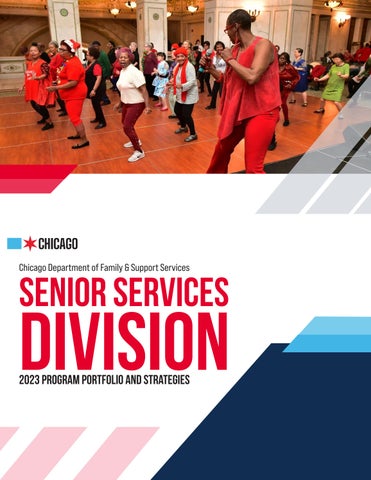
CHICAGO Chicago Department of Family & Support Services
Senior Services
Division 2023 Program Portfolio and Strategies
TABLE OF CONTENTS 1
BACKGROUND
2
Profile of Older Chicagoans: The Senior Population Boom
7
THE AGING NETWORK
9
FIVE STAGES OF AGING
11
DFSS SENIOR SERVICES DIVISION – FUNDING DISTRIBUTION
12
Initiatives Funded by the American Rescue Plan Act
14
PROGRAMS AND SERVICES SUPPORTED BY DFSS
16
Community Programs
20
Nutrition Programs and Services
21
Senior Centers
22
MEASURABLE GOALS
23
PANDEMIC IMPACT ON SENIOR SERVICES
26
2023 AND BEYOND – OPPORTUNITIES
27
2023 AND BEYOND – CHALLENGES
29
DFSS SENIOR CENTERS AND SATELLITES
BACKGROUND The Chicago Department of Family and Support Services (DFSS) Senior Services Division is the City of Chicago’s lead agency for older adults and serves as the local Area Agency on Aging as designated by the Illinois Department on Aging. DFSS/Chicago Area Agency on Aging (AAA) is part of a national network of services and programs that protect the rights and support the needs of the nation’s seniors. This network includes the Administration for Community Living (ACL) at the Federal level, the Illinois Department on Aging (IDOA) at the State level, Area Agencies on Aging at the regional level, and local community service providers. Working in collaboration with the network, DFSS Chicago AAA’s efforts are focused on: • Supporting older persons to live independently in their own communities and homes for as long as possible; • Ensuring that those who reside in institutions are treated with dignity and care; and • Guaranteeing that older persons have access to full and accurate information to participate in public policy. Before Chicago was designated as a AAA, the Mayor’s Commission for Senior Citizens was established in 1956 as the first municipal office on aging in the nation. The Commission evolved into the Chicago Department on Aging and Disability in 1974, when it became the planning and coordinating agency for individuals with disabilities of all ages. By the early 1990s, the aging and disability functions separated and the Chicago Department on Aging was formed and later named the Chicago Department of Senior Services. In January 2009, the Department was merged with other social service departments to create the Chicago Department of Family and Support Services (DFSS). Chicago is proud of the legacy of being the first AAA in the United States. In July of 2012, Chicago applied for and received the World Health Organization’s designation as an age-friendly city, demonstrating Chicago’s commitment to ensuring that the city remains welcoming as the population ages. The work of an AAA encompasses a wide spectrum of programs and services responsive to both the immediate and future needs of seniors. Working within an Age-Friendly framework, DFSS provides services that are evidence-based, person centered, and that align with the needs of older adults and their family caregivers. DFSS Senior Services Division is committed to engaging in ongoing program review and assessment in preparation for the increasing and evolving demand upon the Aging and Disability Network. The partnerships we form and the support that we provide to those partners, service providers, and other non-profits, will become even more critical to our success as we work to ensure greater access to and a higher quality of service. Relatedly, the growing population of older adults underscores the significance for program planning and design through an equity lens providing age-friendly services to all, while also targeting resources and supports to better engage with traditionally marginalized populations and communities inclusive of individuals with the greatest economic or social needs, communities of color, immigrants, people with disabilities and LGBTQ+ communities.
1
PROFILE OF OLDER CHICAGOANS:
THE SENIOR POPULATION BOOM TRENDS IN SENIOR POPULATION Aging is a success story for some. People are living longer and healthier lives because of medical advancements and other positive developments that have previously constrained human life expectancy. But sustained growth in the older adult population also presents challenges. The current aging population impacts formal and informal social support systems, and the ability of private and public entities to provide resources for older adults. It is imperative that we take into consideration the scope of the new demographic reality and adjust current policies and service delivery systems accordingly. At the same time, according to CDPH data, the aging population of some communities of color (African American and Latinx) experience health-related challenges that impact longevity and aging. African Americans in Chicago post-pandemic experienced a life expectancy drop A group of seniors at the Chatham that fell below 70 years, with Latinx Chicagoans also experiencSatellite Senior Center. ing a steep decline--losing a total of 7 years of life expectancy since 2012. One of the main drivers of the racial life expectancy gap has been listed as chronic disease (e.g. heart disease, cancer, diabetes). Our current and future planning has to take into consideration services, resources, and strategies that address health inequities and correct longstanding community disinvestment and inadequate access to resources. DFSS’s goal is to aid and assist seniors – particularly those residing within traditionally underserved communities – through operating programs that support a healthy life expectancy (e.g. chronic disease control, fall prevention, fitness, nutrition, health, and wellness) and other life-affirming measures. This purposeful response is rooted in equity to help address structural inequities that contribute to higher mortality rates and greater burden of disease in later life. According to national census projections, by 2030 one in every five adults in the United States will be aged 65 years or older. The entire Baby Boomer generation will turn at least 65 years of age by the end of the decade. By 2034, and for the first time in U.S. history, older adults (77 million) will outnumber children (76.5 million). It is projected that the population of seniors (65 years or older) in the United States, which stood at 16% of the population in 2019, will reach 21.6% of the population by 2040. The overall senior population in the State of Illinois has also grown from 2.1 million in 2010 to 2.8 million in 2021, representing 22% of the population. As the state’s population of older adults grows, the group will become increasingly diverse as well. Currently, the number of older adults in Illinois is expected to grow to nearly 3.6 million by 2030. Mirroring national and state trends, it is projected that the older population in Chicago will also continue to increase – based on current census numbers and projections, the number of seniors in Chicago will grow from approximately 484,333 in 2020 to nearly 558,340 in 2025. Insufficient data is available on the number of seniors in Chicago in 2022.
2
TOTAL SENIORS IN CHICAGO 60+ YEARS: ACTUAL AND PROJECTIONS 2005-2030 700,000 600,000 500,000 400,000
380,971
391,795
404,514
418,210
437,818
2005
2010
2012
2014
2016
465,426
484,333
498,445
2018
2020
2021
558,340
599,003
2025
2030
300,000 200,000 100,000 0
Additionally, the characteristics of Chicago’s elderly population have continued to change during the past decade. The demographic landscape of seniors in Chicago is defined by a population which is growing older, increasingly poor, and increasingly diverse. As Chicago’s population grows older and more diverse, there is a diversity in experiences and needs that bears attention for culturally relevant programming and service response. Research illustrates the complexities involved with meeting a wide range of caregiver needs and experiences. Data shared by AARP called attention to the following cultural occurrences: • African American and Latino caregivers tend to provide a higher need of care (complex medical and nursing related tasks for significant hours per week, e.g. medication management and wound care). • African American caregivers primarily serve as caregivers without assistance. • Hispanic/Latino caregivers tend to be younger with children under 18 within the home. • Asian American caregivers tend to have more help from other unpaid caregivers and report feeling greater stress expressing that they felt they had no choice in providing care. • LGBTQ+ caregivers care for chosen family facing legality issues with respect to making critical decisions about care and greater financial strain when caring for others not legally/biologically related to. As we seek to meet the diverse needs of clients reflecting multiple ethnicities representative of Chicago’s diverse 77 neighborhoods and communities, special attention, focus and research will be needed to ensure our services are culturally responsive and relevant. Challenges faced by seniors as they seek to successfully age well within their homes and communities include but are not limited to issues concerning economic instability and poverty, affordable housing and homelessness, access to nutritional food and food insecurity, and the overall rising costs associated with aging in place. Seniors participate in a fitness class at the Discover Yours Aging Well Festival in 2023.
3
DFSS commemorates the 50th anniversary of Senior Nutrition Programs in 2022.
SENIORS IN POVERTY Seniors aged 60 years and older in Chicago are increasingly faced with limited financial resources. Currently, the annual median income for Chicago households headed by a senior is only $38,118. By comparison, the overall median household income in Chicago is $65,781. Thus, seniors are confronted with difficult lifestyle choices as they grapple with limited financial resources. For many seniors, their primary means of support is Social Security with an average income of $18,335, leaving them particularly vulnerable to rising prices on everyday necessities such as food and housing. Approximately 14,969 seniors aged 60 years and older, who are also below 138% of the federal poverty level, are not utilizing some form of public health insurance coverage (MDAT, 2021 ACS 5 Year Estimates). In addition, 63,985 seniors in Chicago over 60 years of age and below 138% poverty did not receive any public assistance benefits (including any public assistance income, SSI, or SNAP benefits) in 2021 (MDAT, 2021 ACS 5 Year Estimates). In 2021, 80,613 (16.5%) of the total senior population in Chicago had incomes below the poverty level, an increase of 34% from 2010. Ensuring that seniors are aware of and take advantage of benefit programs like Social Security Retirement Insurance, Social Security Disability Insurance, Supplemental Security Income (SSI), Medicare, Medicare Savings Programs, Low-Cost Prescription Drug Programs and the Supplemental Nutrition Assistance Program is a way to help seniors navigate rising costs and expenses on fixed and/or limited incomes.
4
HOMELESSNESS AND SENIORS As part of a federal initiative required for HUD funding, DFSS conducts an annual “Point In Time Count (PIT)” of homeless persons in shelter and on the street. In January 2022, the Count found that seniors represented 13.4% of the overall population residing in shelters (an increase from 11.3% in 2021), and 7.8% of individuals living on the streets (a decrease from 20.1% in 2021). Increased homelessness among elderly persons is largely the result of poverty and the declining availability of affordable housing among certain segments of the aging. HUD’s age categories for the 2023 PIT Count were modified. For 2023 and future years, seniors are grouped into 65 years and older, and the next group is 55-64 years. In January 2023, 4.2% of those experiencing homelessness were 65 and older, and 11% were between the ages of 55-64. Notably, the 2023 PIT Count included asylum seekers who have come to Chicago from Venezuela, Nicaragua, and numerous other countries. Excluding asylum seekers from that total, of Chicago’s non-asylum seeking residents experiencing homelessness, 6.3% were 65 and older, and 17% were between the ages of 55-64. Seniors experiencing homelessness has remained relatively stable since 2014 (2014-2023 PIT Counts). Some demographics have experienced an increase in homeless, especially between 2020-2022. DFSS programs that provide supplemental support and that address homelessness through the Rapid Rehousing program can benefit and support seniors as well. The Rapid Rehousing program is primarily funded through short-term federal funding from the American Rescue Plan Act. Funding from the American Rescue Plan Act and supplemental City funding will house 1,200 new households and will be fully allocated by mid-2024.
FOOD INSECURITY AMONGST SENIORS A McKinsey analysis (https://www.mckinsey.com/featured-insights/sustainable-inclusive-growth/chart-of-the-day/too-many-black-americans-live-in-food-deserts) concluded that U.S counties with above-average African American populations tended to have had fewer grocery stores, restaurants, farmers markets, and a higher number of small convenience stores. Riverdale on the Far Southeast Side has a population that is 95% African American, and 99.85% of residents report having low access to food (defined as living more than a half-mile from the nearest supermarket). To address this, DFSS partnered with the Chicago Department of Public Health (CDPH) and the Chicago Food Action Council for the Healthy Chicago 2.0 plan, which is designed to encourage the production and consumption of food that is healthy, affordable, fair, and sustainable. The adoption of the food procurement policies has the power to transform our food system by creating a transparent and equitable food system built on principles rooted in the five core values as noted previously. While seniors with higher rates of food insecurity lack dietary quality and variety, they don’t necessarily eat less. An older adult with low food security may purchase the same inexpensive food items, eating these foods repeatedly. Accordingly, their diet may be heavy in less healthy processed foods rather than nutrient-dense foods that tend to be more expensive, such as fruits and vegetables. A senior is experiencing very low food security when they eat less food than they need, regularly skip meals, or eat very small portions to stretch their budget further. DFSS Senior Services nutritional programs seek to meet the nutritional needs of seniors as well as provide socialization and opportunities for social service referrals as identified through the Congregate Dining Program and Home Delivered Meals programs. DFSS data analysis reveals that over 50% of clients served reside within high poverty communities. Additional-
5
ly, partnerships with the Greater Chicago Food Depository and Meals on Wheels allow for expanded food pantry opportunities to bring free, nutritious food – including fresh produce – accessible through the Senior Centers into communities across the city. We will continue to explore how DFSS senior services programming and resources can be fully utilized to support greater access to healthy food in response to the growing needs of seniors as they age within community.
DFSS celebrates Lillian Drummond’s 102nd birthday.
6
THE AGING NETWORK FEDERAL PRIORITIES For more than fifty years, the Older Americans Act (OAA), through the U.S. Department of Health and Human Services (HHS), has been the backbone of the home and community supports system, providing older adults with needed services that include home care, congregate and home-delivered meals, case management, caregiver support, transportation, health promotion and disease prevention, legal services, elder abuse prevention, community service employment opportunities for low-income older adults, and ombudsman programs that help protect residents in nursing homes and assisted living facilities.
STATE PRIORITIES The Illinois Department on Aging (IDOA) was created to serve as the State Unit on Aging for the purpose of improving the quality of life for Illinois’ seniors by coordinating programs and services enabling older persons to preserve their independence as long as possible. IDOA is the agency authorized to receive and dispense Federal OAA funds and other specific State funds through AAAs and community-based service providers. Illinois is divided into 13 Planning and Services Areas (PSAs) led by AAAs responsible for planning and coordinating services and programs for older people in their respective geographies. Funding is based on a formula that takes into consideration the number of older adults and minorities in that area, as well as the number living in poverty, in rural areas, and alone.
AREA AGENCY ON AGING As the designated Area Agency on Aging (AAA), DFSS Senior Services Division is responsible for planning, coordination, administrative and assessment functions that foster the development of a comprehensive and coordinated service delivery system for older adults and caregivers living in the City of Chicago. In addition, DFSS/Chicago AAA advocates for older adults and is the primary disseminator of information and technical assistance relating to aging issues within our area. As required by the OAA, an advisory council comprised of older adults works with DFSS Senior Services Division to develop and implement the Area Plan and to serve as advocates for older adults.
SERVICE PROVIDERS Community-based service providers represent a key segment of the Aging Network, as well as key partners for DFSS in the implementation of the AAA responsibilities as they help to provide programs and services to older persons. The success of the Aging Network in connecting older persons with needed services is one tangible result of cooperation and coordination between IDOA, DFSS Senior Services Division, and local service providers.
FY2022-FY2024 STATEWIDE INITIATIVE: SOCIAL ISOLATION DFSS/Chicago AAA is working in collaboration with IDOA and community-based partners to address social isolation among older adults. Social isolation refers to the objective absence of
7
contacts and interactions between a person and a social network (Gardner et al, 1999). Thus, socially isolated older adults have poor or limited contact with others and they view this level of contact as inadequate, and/or that the limited contact has had adverse personal consequences for them. Loneliness and social isolation are major issues for older adults and are linked with negative physical and mental health consequences. A recent review identified a wide range of health outcomes associated with loneliness and social isolation including depression, cardiovascular disease, quality of life, general health, cognitive function and mortality (Courtin & Knapp, 2015). Social isolation as a health risk for seniors has gained even more recognition during the COVID-19 pandemic. Older adults were especially at-risk for COVID-19 complications because they have higher rates of disease and co-morbidities than younger adults. In order to ensure the safety and well-being of seniors, DFSS/Chicago AAA has modified existing services and interventions, as well as introducing new approaches to mitigate social isolation.
otion.
Seniors in m
8
FIVE STAGES OF AGING To be successful in caring for Chicago’s aging population, the Senior Services Division uses the five stages of aging developed by Dr. Mark Frankel as a guide for planning and delivery models. The guide helps to identify priorities and needs throughout the trajectory of aging to better support planning, preparation, and dignity in full support of a quality of life.
STAGE 1: INDEPENDENCE In this first stage, older adults are independent, healthy, and active, utilizing the services offered to help maintain their health and well-being, and challenging us to continue providing new, innovative programs that attract and benefit younger, healthier seniors. The older adults in this stage may participate as volunteers, helping to teach and facilitate health-promoting programs and services at the centers. Every opportunity should be taken to help older adults function as productive and independent members of their community for as long as they can. Investing in our senior centers to become “healthy aging centers” where older adults can participate in a variety of physical fitness, health and wellness, educational, and recreational activities results in a strong social return on the resources allocated.
STAGE 2: INTERDEPENDENCE The second stage is the interdependence phase, when the risk of becoming frail or socially isolated increases. Older adults in this phase can still live alone safely but may require limited assistance to help them remain independent.
STAGE 3: SUPPORTIVE LIVING The third stage is the supportive living phase, when an older adult can no longer continue to live in the community without some assistance in the home. If our efforts to support healthy aging are successful and informal caregivers can help meet the needs of older adults, the number of individuals in this group could be smaller than expected. However, regardless of the number, the ability to provide new and existing community based, in-home services to seniors in this phase is critical to delay, or even avoid, long-term care placement. The potential savings from keeping seniors in the community longer are considerable.
STAGE 4: COMPLEX CARE / CRISIS MANAGEMENT The fourth stage is the crisis management phase, when the older adult needs immediate medical support. They may still be mentally aware but have worsening chronic illnesses or advanced age is taking its toll. Conversely, other older adults in this phase may be suffering the effects of moderate to late stages of dementia or Alzheimer’s disease and may require memory care support. Regardless of the underlying reason, at this stage, the older adult has significant care needs and formal support services are warranted.
STAGE 5: DEPENDENCE / END OF LIFE The fifth stage is the dependence phase, when the older adult requires 24-hour medical support and care. It represents the last stage of the aging process. In this phase, the older adult
9
experiences the same or worsening symptoms and may express a desire to stop receiving treatment and enter hospice care or may wish to continue receiving care for their disease or health condition. Overall, the goal at this stage is for the older adult to feel as comfortable as possible. This is where discussions regarding palliative and/or hospice care may come into play, as well as completing advance directives so that decision making is clear and well-supported regarding quality of life and end of life. DFSS AAA Chicago Programs & Services Health Promotion Physical Fitness Foster Grandparents Program Senior Companion Program Senior Centers Congregate Meals Program Older Relatives Raising Children Respite Services Information and Assistance (I&A) Benefits Assistance Programs Housing Assistance Home Delivered Meal Chore Services Adult Protective Services Program Ombudsmen Intensive Case Advocacy and Support Caregiver Support Program* Legal Assistance
10
Stage 1
Independence
Stage 2
Interdependence
Stage 3
Supportive Living
Stage 4 Complex Care/ Crisis Management
Stage 5
Dependence/ End of Life
DFSS SENIOR SERVICES DIVISION
FUNDING DISTRIBUTION The DFSS Senior Services Division FY23 annual budget is $37.8M. The FY23 budget does not include additional funding from the American Rescue Plan Act and the Area Plan on Aging. The largest portion of DFSS Senior Services Division funding comes from the Illinois Department on Aging (IDOA) as part of the Area Plan Federal and State Funding. DFSS Senior Services Division also relies on other grants to help provide services to older adults in Chicago. The funding type and distribution is shown in the chart below. The Senior Services Division receives 41% of its funding from the Illinois Department on Aging (IDOA). The Older Americans Act provides the Division 39% of its funding, and other grants make up the remainder of the Division’s budget.
2023 Funding by Source
0.07% 3% 2%
10% 4% 39% 41%
0.89%
11
INITIATIVES FUNDED BY
THE AMERICAN RESCUE PLAN ACT The following programs are supported through federal funding granted to the City during the pandemic as part of the American Rescue Plan Act (ARPA) through the Illinois Department on Aging. This funding is required to be obligated by 2024 and must be spent by 2026. DFSS operates the following programs:
American Rescue Plan Supplemental Category
Description
Funding Amount
Funding to enhance Chicago Police Department’s knowledge of APS and to support additional out$169,125 reach to underserved communities. Aging Well Navigators Building upon the success of ADPI to provide and Older Adult Gap- Fill- onsite outreach and assistance to seniors in $945,000 ing Funds for Chicagoans independent living buildings and connect them to Ages 60 and Above services and programs. Evidence-based assessment and caregiver supCaregiver Case port tool focused on preventing burnout, stress, $212,000 Management TCARE depression, and other measures to support stability of caregivers. Supports training, professional development, and Caregiver Information accreditation in support of improved customer $243,500 and Assistance services and performance. Chore expansion to include lawn care, snow Chore Expansion (ASI) $370,750 removal, and extermination services. Collaboration between DFSS and Chicago Community Aging in Place Department of Housing complimenting the – Advancing Better LivSmall Accessible Repairs For Seniors (SARFS) ing for Elders (CAPABLE) program to support safe and independent living $524,000 Residential Repair and by adding the expertise of occupational therapists Renovation and nurses, focusing on fall prevention and social isolation. Supports expansion of culturally responsive meals. The goal of this initiative is to celebrate the cultural Congregate Dining vibrancy of the City of Chicago, provide opportuni$2,462,450 Expansion ties for seniors to engage with different cuisines, and reflect the diversity of the older adults DFSS Senior Services serves. Adult Protective Services (APS)
12
American Rescue Plan Supplemental Category Health Fitness (Delegate Agency) Health Promotion (Delegate Agency) Home Delivered Meals Expansion (Delegate Agency) Legal (Delegate Agency) Multipurpose Senior Centers Ombudsman Program Options CounselingEducation Senior and Caregivers Food Box Program
VAC 5 Vaccination Program
Description
Funding Amount
Support of community programming.
$206,285
Support of community programming.
$206,285
Provides for more diverse meal options (Chinese, Korean, Vietnamese, and Indian/Pa$4,240,883 kastani diets). Expands existing legal services to protect those living in long-term care settings from involuntary $250,000 discharge. Senior Centers equipment upgrades and replacement (i.e., yoga mats, kitchen equipment, $285,000 weights, or recreational items). Funding to support Ombudsman positions. $54,236 DFSS direct service providing education and peer counseling, addressing underlying be$518,052 havioral issues that may influence and prolong hoarding. Delivery of fresh produce food box including frozen meat options for seniors 60 and older and $955,497 caregivers or grandparents to prepare food and alleviate food insecurity. Vaccine Navigators call seniors to assist with Senior Center vaccine clinics and other vaccine opportunities for COVID, boosters, or the flu, $412,470 and other health concerns including addressing vaccine hesitancy and transportation support. Total ARPA Supplemental Funding Received $12,055,533
Seniors participate in an art class at the Renaissance Court Senior Center.
13
PROGRAMS AND SERVICES SUPPORTED BY DFSS
The Jolly Holiday Party at the Levy Senior Center. DFSS coordinates and funds services for older adults, prioritizing those in greatest economic and social need, those who live alone, and those at risk for institutional placement. Together with our service providers, we provide vital information and assistance, congregate and home-delivered meal services, senior centers, fitness classes, caregiver support services, inhome services, employment training and volunteer opportunities, elder rights programs, health promotion and access to benefits. We continually innovate and advocate for our residents so they may continue to thrive as they age in place. We value integrity and respect as well as promoting social engagement among the elderly as an antidote to dependence, social isolation, and withdrawal. The National Family Caregiver Support Program provides support services to caregivers of elderly adults and grandparents raising grandchildren. DFSS is required by the Older Americans Act to develop and implement family caregiver programs that can provide a broad range of services including access to information, training, support groups, counseling, resource libraries, respite care, and supplemental services to family caregivers and grandparents raising grandchildren.
14
Home and Community-Based Caregiver Services (HCBS) help older adults and their caregivers live safely, healthily, and independently in their homes and communities. While a wide range of solutions are available under this category, the DFSS Senior Services Division determines the menu of services that best meet the needs of the senior population in their PSA. Older people are at risk of not being able to maintain an independent, healthy lifestyle if they eat less or poorly because of food insecurity and/ or financial restrictions. Nutrition services provide a vital link in maintaining the health of older adults by preventing premature institutionalization and improving overall quality of life. Nutrition services funded by the federal Older Americans Act and State General Revenue Funds seek to reduce hunger, food insecurity, and malnutrition while enhancing socialization and senior well-being. In addition to the OAA-funded nutrition services, DFSS partners with the Greater Chicago Food Depository to distribute free, nutritious food, including fresh produce, through community markets at designated senior center sites. Food is delivered and distributed bi-monthly at a place where seniors can get connected to other community resources for nutrition, health, and well-being. Senior Centers are community facilities for the organization and provision of a broad spectrum of services, which include health promotion, social and recreational activities, and educational opportunities for older individuals. DFSS Senior Services Division operates 21 Senior Centers across Chicago in partnership with local community-based organizations that assist with some of the on-site management at these facilities. The Older Americans Act provides funding for programs that support healthy lifestyles and senior well-being. Evidence-based programs are now required for Title IIID-funded activities; this follows a decade of progress by the aging services network to move their efforts toward implementing disease prevention and health promotion programs that meet the highest-level criteria of scientific evidence and are demonstrated to improve the health of older adults.
15
COMMUNITY PROGRAMS Alzheimer’s Disease Program Initiative (ADPI) provides training to apartment managers on recognizing signs and systems of Alzheimer’s Disease and related disorders and then informs building personnel about DFSS programs and services to assist apartment residents to stay in their homes longer. Intensive training DFSS Commissioner Brandie Knazze and Northeast Side seniors on caring for a unveil a new mural at the Levy Senior Center in 2023 person with Alzheimer’s Disease is offered in this program and includes information on the biological progression of the disease, taking care of the caregiver, managing difficult behavior, communicating with the person with dementia, and community resources. Additional training and education programs include providing training to social service providers, librarians, first responders, and other public servants. Brain Health Initiative provides a free virtual and call-in training program for all Chicagoans, and is tailored to residents living in apartment buildings. The program focuses on behaviors to maintain healthy brains throughout life. The Foster Grandparents Program (FPG) provides an opportunity for seniors who meet the income requirements to earn a small stipend while volunteering part-time as role models, mentors/ tutors, and friends to children with special needs. By enhancing a child’s problem-solving skills through mentoring activities that improve their conflict resolution skills, and by providing a structured environment for youth who are struggling with academic performance, Chicago’s FGP helps keep adolescents engaged in school and positive activities. The Senior Companion Program (SCP) provided companionship to homebound elderly persons through senior volunteers who meet the income requirements. The SCP volunteers earn a small stipend while making a difference in the lives of lonely, frail, and homebound seniors by engaging in conversation, preparing light meals, and other meaningful activities. The SCP continues to provide support to family caregivers by allowing seniors to stay in their homes and communities longer, thus delaying or preventing early admittance into nursing homes.
16
ELDER RIGHTS, LEGAL SERVICES, PROTECTION AND ADVOCACY DFSS Senior Services Division is designated by IDOA as the Regional Administrative Agency (RAA) for the Adult Protective Services Program for the city of Chicago. Trained and certified adult protective services caseworkers respond to reports of alleged physical, emotional and sexual abuse, neglect, confinement, or financial exploitation of individuals age 60 and older and individuals with disabilities age 18-59. The program provides investigation, casework, intervention, and implementation of alternative remedies and follow-up services to victims.
The Discover Yours Aging Well Festival in 2023 at the South Shore Cultural Center.
Many of the requests received by DFSS Senior Services Division and its partnering service providers require immediate Case Advocacy Support, or Intensive Case Advocacy and Support when longer term support is required; these are related to issues of hoarding, poor health and uninhabitable living conditions, undiagnosed and untreated mental health concerns, limited cognitive abilities, and other safety concerns. DFSS Senior Services Division provides CDBG grants to community-based organizations to provide one-on-one assistance to the identified seniors. Teams of professionals respond to referrals for well-being checks for these atrisk and isolated seniors and assess the senior for referral to appropriate agencies, programs, or services. Legal Assistance services protect the legal rights and interests of seniors in legal matters including public entitlement, housing, health care, guardianship, consumer fraud, employment, family law, and property interests. The goal of the Legal Services program is to aid low-income seniors to achieve and maintain their autonomy and independence. Ombudsmen protect, defend, and advocate for residents in long-term care facilities such as nursing homes, assisted living facilities, and supportive living facilities. Utilizing staff and volunteers, they inform residents and families of their rights; investigate, mediate, and report complaints; provide information on residents’ needs and concerns to families, facility staff and the department; and advocate for quality individualized care for the residents. The Senior Medicare Patrol (SMP) Program educates consumers about Medicare and Medicaid fraud, waste, and abuse. Program staff and volunteers help Chicagoans prevent, detect, and report Medicare and Medicaid abuse.
17
Benefits Access and Assistance Programs provide assistance with program enrollment offering benefits for seniors and persons with disabilities ,which include a license plate fee discount program and the free rides on fixed-route transit systems program. The Community Aging in Place Advancing Better Living for Elders (CAPABLE) program is an evidence-based interdisciplinary intervention and fall prevention program that results in successful outcomes by collaborating with older adults, nurses, occupational therapists, and handypersons to customize environmental home modifications that optimize independence and safety for older adults to remain living in their homes. The program was developed and implemented by the Johns Hopkins University school of nursing as a person-centered program where the older adult works in collaboration with medical partners and the home modification providers. DFSS will collaborate with the Department of Housing (DOH) Small Accessible Repairs for Seniors (SARFS) program to incorporate the CAPABLE program. Caregiver Respite allows family caregivers time for themselves. Respite provides professionally-trained staff on a temporary basis to care for a frail senior who has a familial caregiver. This care can be provided in the home or in a nursing facility. The Caregiver Support Program provides a variety of assistance and supports to aid informal/familial caregivers in caring for their older loved ones. Services such as one-on-one counseling, family mediation, gap filling, information and referrals, and education opportunities are available. Chore Services is one of the in-home services available to seniors offering a one-time intensive cleaning (Heavy duty chore) for seniors whose living conditions pose a threat to their health and safety. Chore services benefit many seniors who were on the verge of eviction because of the condition of their homes and have avoided the eviction court process and the hardship of having to move and find alternative housing. The program also offers short-term chore to assist seniors who need temporary assistance due to illness, recent hospitalization, or injury to assist them as they recuperate. Chore services were expanded with funding from the American Rescue Plan Act to include lawncare, snow and ice removal, and extermination services. Clients seeking Chore Services must meet the traditional Chore eligibility requirements. Dementia Caregiver Training and Education through the Savvy Caregiver™ Program is a 12-hour education program for family caregivers taking care of those with Alzheimer’s Disease and related disorders. Each free weekly session is 2-hours over six weeks. A caregiver manual is provided. The Caregiver Stress-Busting Program is also dedicated to family caregivers of people experiencing diverse types of dementia (Alzheimer’s, Parkinson’s, Lewy Body, Vascular) and provides a nine week, 90-minute program dedicated to stress management, peer support, relaxation and coping skills. Training opportunities are available throughout the year. Grandparents and Older Relatives Raising Children provides support to seniors who have primary caregiving responsibility of children from birth to age 18. Services include counseling, gap filling, respite and case management, as well as emergency financial assistance for a onetime emergency rent payment, school uniform and equipment, medication, and other basic needs. Information and Assistance (I&A) is a one-stop access portal for referral, advocacy and problem solving for all services and programs offered through Senior Services for older Chi-
18
cagoans. Information, advocacy, and assessment are available by phone, email, or at City Hall, Room 100 and at any of our Senior Centers. As part of the Aging and Disability Network (ADRN), DFSS also provides Options Counseling activities which involve a person-centered, interactive, decision-support process in making informed long-term support choices within the context of the clients’ own preferences, strengths, and values. Senior Health Insurance Program (SHIP) helps Medicare beneficiaries access Medicare, drug plans, and more. SHIP Counselors host educational programs and one-on-one counseling to help older adults and people with disabilities by providing objective information about health insurance to those who have questions about Medicare.
19
Volunteers distribute food at the Central West Regional Senior Center’s Holiday Food Pantry.
NUTRITION PROGRAMS AND SERVICES Congregate Dining provides hot, nutritious lunches to seniors in communal settings at 49 community locations across the city each weekday. In addition to the meals, seniors can participate in a variety of activities, from health education and exercise classes to field trips. The Congregate Program assists older adults to live independently by promoting better health through improved nutrition and reduced isolation. DFSS’s innovative employment training partnership with the Chicago Housing Authority (CHA) also provides opportunities for unsubsidized employment to some of Chicago’s low-income public housing residents through the Congregate Dining Program. Additionally, through funding provided by the American Rescue Plan Act congregate dining menus will be expanded to become more culturally responsive reflecting the cultural diversity of the city. Home Delivered Meal Services provide nutritious meals to older persons (60 years and older) who are frail and/or homebound because of illness or incapacitating disability or are otherwise isolated. Microwaveable, oven-ready frozen, or hot meals are delivered to home-bound seniors. The program provides two meals a day covering two to seven days a week, depending on the seniors’ needs. Meal options were expanded with funding from the American Rescue Plan Act to meet the needs of Chicago seniors seeking culturally specific meals, and now include South Asian and Eastern Asian diets. The Senior & Grandparent Food Box Program is designed to alleviate food insecurity by providing monthly delivery of fresh produce and frozen meats to older adults age 60+, their caregivers, and grandparents or older relatives 55+ raising children or persons with disabilities. Fresh produce, meat, vegetarian, and child-friendly options are available.
20
SENIOR CENTERS The Health and Wellness Program offers health education, counseling, and assessment services to seniors. The program plays a crucial role in enabling seniors to remain healthy and prevent chronic conditions using evidence-based curriculums: A Matter of Balance (Fall Prevention Program), Healthy Eating for Successful Living Among Older Adults, Tai Chi for Arthritis, and Stanford University’s Chronic Disease Self-Management program. Health Promotion programs were expanded with funding from the American Rescue Plan Act to support health education, counseling, and senior well-being. Life Enrichment Programs including classes, special events, trips, and tours are offered at all Senior Centers to address seniors’ recreational needs. The goal is to enrich and enhance their quality of life through a variety of social, educational, cultural, and recreational activities. The Physical Fitness program boosts endurance, strength, balance, and flexibility. DFSS Senior Services Division’s senior centers are equipped with senior-friendly exercise equipment and staffed by experienced, certified senior-fitness professionals who lead group exercise classes and one-on-one training. Exercise classes are offered at more than 40 locations throughout the City using evidence-based curriculums proven to be effective in providing older adults with more confidence in their ability to continue activities, increased social activity, and fewer doctor and emergency room visits.
Illinois Department on Aging Director Paula Basta and DFSS Commissioner Brandie Knazze pose with seniors at the Levy Senior Center mural dedication event.
21
MEASURABLE GOALS COMMITMENT TO OUTCOMES Over the last several years, DFSS has transitioned to a results-oriented and data-driven approach to delivering services. DFSS seeks to clearly describe, measure, and report on outcomes; use these outcomes to support decision-making; and drive greater collaboration within DFSS as well as between DFSS and the delegate agencies we fund. This outcome-oriented model prioritizes equity so older and minority populations are served adequately in each of our programs. As Chicago’s senior population grows larger, older, and more diverse, DFSS plans to maintain and grow existing services while prioritizing equitable program design in future planning. This process guides how we will use our mission, priorities, and goals to: 1. Measure, report on, and refresh outcomes in the years to come 2. Make decisions and drive greater collaboration The Senior Services Division’s primary responsibility is to protect the rights and support the needs of seniors in Chicago. Working with our aging network partners and guided by best practices, we seek to strengthen the commitment to helping older adults maintain their independence and live successfully at home and in their communities, while ensuring a sustainable and accountable service delivery system. Each year DFSS Senior Services Division is committed to focusing on achieving the goals outlined below. • Register 15% new program participants in Senior Centers and Congregate programs • 70% of the new participants will return to the Senior Center or Congregate site a second time • 100% of the calls received for well-being assessments will result in the delegate agency engaging with the client within a timeframe commensurate to the case category (emergency, urgent, and standard) • Maintain an Information and Assistance call acceptance rate of at least 90%
Seniors participate in a New Year’s Eve Party at the Southwest Regional Senior Center.
22
PANDEMIC IMPACT ON SENIOR SERVICES COVID-19 AND OLDER ADULTS The COVID-19 pandemic has disproportionally impacted older adults and in particular, older communities of color. While cases of COVID-19 spread throughout the entire population, hospitalizations and deaths have hit the older population hardest. As of February 2023, around 93 percent of total COVID-19 deaths in the U.S. (https://www.statista.com/ statistics/1254488/us-share-of-total-covid-deaths-by-age-group/) have been among adults aged 50 and older. The COVID-19 public health emergency profoundly affected older adults and their informal or unpaid caregivers. Throughout the pandemic older adults were challenged with getting basic household supplies, food, health care, and they reported feeling socially isolated and lonely and needing help with accessing technology. Their caregivers also carried the stress of supporting their older loved one’s health and well-being in addition to managing their own needs.
DFSS Commissioner Brandie Knazze greets Southwest Side seniors at the Older Americans Month Pizza Party.
RESPONSE TO COVID-19 The onset of COVID-19 in March 2020 and the imminent threat to the health and safety of older Chicagoans required the immediate reconfiguration of the Senior Services program division to recalibrate the service delivery model to address the presenting need of this at-risk population. Swift and decisive action was taken including the following: • DFSS Senior Centers immediately suspended group activity in March 2020. During the following two (2) weeks a “To Go” box lunch program was implemented while staff assessed and enrolled “at risk” participants in the Home Delivered Meals program (HDM) in preparation for the adherence to the forthcoming “Stay at Home” order. Over 100,000 “To-Go” Meals were provided during the pandemic prior to the restart of hot meals at the DFSS congregate dining sites. • In anticipation of the imminent need to connect older Chicagoans to resources to mitigate the spread of COVID-19, DFSS made a critical decision to mobilize staff to ensure effective access to needed aging network services as well as to provide direct linkage to the Home Delivered Meals program, including performing expedited meal assessments to determine eligibility for the program. A designated email box was created to help centralize, streamline, and track food related requests submitted electronically from seniors or other individuals on their behalf. • DFSS Senior Center staff were redeployed to the Information and Assistance call center to assist with calls from seniors, caregivers and Aging network professionals
23
requesting food resources and to screen seniors for the temporary COVID19 HDM program eligibility. A second call center location was shortly ramped up to expand call acceptance capacity and to provide adequate social distancing for staff. • The success of the strategy implemented by DFSS to perform HDM assessments in-house resulted in over 4,000 new clients being added to the HDM program in less than a six-week time span and represented an increase of more than 60% from the period before the outbreak. Approximately 15,500 unique persons were served during the height of the pandemic, and there were 4.7 million meals served in 2020. Chicago was fortunate not to experience the same pain points felt by other major cities in responding to the Covid-19 food insecurity concerns for older adults that were exacerbated by the pandemic. • DFSS Health Promotion and Fitness delegate agencies were immediately activated to begin to make wellness phone calls and devised a work group to modify the existing program offerings to a telephonic and virtual format, becoming the foundational building blocks for the creation of the Chicago Seniors Connected virtual senior center. The Chicago Senior Connected virtual senior center has provided over 124 unique program offerings since its inception. • DFSS piloted a Food Box program with the Greater Chicago Food Depository for Caregivers, serving over 300 unique older adults and caregivers. The pilot program served as the impetus for the current Good Food Good Life Food Box program currently serving older adults and Older Adults raising a grandchild or caring a person with a disability age 19-59. • DFSS Caregiver Counseling programs were modified during the pandemic to provide online counseling session using platforms such as Zoom, FaceTime, Duo and conference call capability. • In partnership with the Chicago Office of Emergency Management and Communications (OEMC), periodic check-in robocalls were made to Senior Center, Congregate and Home Delivered Meals participants including a partnership with the Lyric Opera performers to provide voice performance recordings in English and Spanish. Over 37,000 participants were included in the robocall registry. • Over 85,000 live well-being phone calls were made by DFSS Senior Center staff to program participants to monitor their health, safety, and well-being. In addition, DFSS partnered with community-based organizations and faith-based institutions in the development and usage of approved scripts created for their outreach to older adults in their own communities. • DFSS Ombudsman program followed up on a wide range of Long-Term Care residents’ complaints and concerns and made window visits to check-on the residents. • Personal Protective Equipment (PPE) was offered and distributed to Adult Protective Service, Intensive Case Advocacy and Support (ICAS) and Case Advocacy Support (CAS) Delegate Agencies. These supplies were distributed to the providers and offered to their clients as well. Each organization received bundles of 100 reusable cloth masks, hand sanitizer gel, and gloves. These organizations have continued to assess, assist, and provide support to Chicago’s most vulnerable older adults throughout the COVID-19 pandemic.
24
2023 AND BEYOND – OPPORTUNITIES
Crafting at an outdoor jewelry class in Norwood Park. Based on the assumption that funding from OAA and other government sources for seniors will lag behind the growing senior population, the goal is to connect as many seniors as possible to services that help them remain healthier and living independently in their homes. DFSS Senior Services Division has identified several strategies to support the vision and guide our progress in achieving that end.
Addressing Food Insecurity In partnership with the Chicago Food Policy Action Council (CFPAC) and the Chicago Department of Public Health (CDPH), the Healthy Chicago 2.0 plan (https://www.chicago.gov/city/en/ depts/cdph/provdrs/healthychicago.html) encourages the production and consumption of food that is healthy, affordable, fair, and sustainable. As grocery stores have left communities on the city’s South and West Sides (which are typically areas with the highest rates of food insecurity), DFSS has worked with seniors to help meet their nutritional needs. Funding received through the American Rescue Plan Act supported the Good Food Good Life Senior Services Food Box Program. The program delivers frozen meat, fresh produce, fruits and vegetables, and shelf-stable items directly to the homes of seniors. Demand for the program has exceeded the anticipated goal of serving 300 seniors, resulting in approximately 1,000 seniors receiving monthly food boxes for one year through September 2024.
25
DFSS is dedicated to meeting the food needs of seniors through a variety of programs. As Chicago’s senior population continues to grow and programs exceed capacity, DFSS plans to leverage existing partnerships with organizations such as Meals on Wheels and the Greater Chicago Food Depository. DFSS also will seek additional state and federal funding to support home-delivered meals, congregate dining, the food box program, and food pantries.
Build a New Regional Senior Center While DFSS operates six Regional Senior Centers, there are none located on the Lower South Side. Many of the Senior Centers located throughout the city serve as community hubs, connecting seniors to social, economic and educational resources to enhance the quality of their lives. As the City continues to prioritize equity in all we do, establishing a new Regional Senior Center on the Lower South Side will create new opportunities for seniors to experience fitness and recreational programs, computer and internet access, health and wellness programming, and socialization within their neighborhood community. The Illinois Department of Commerce and Economic Opportunity allocated $14M in funding to DFSS to build this new location. DFSS plans to build the new Regional Senior Center in the next three years. Preliminary planning for the new Regional Senior Center will Delfin Melchor poses with a portrait of himself in the mural include a trauma-informed design that includes a technology center, at the Levy Senior Center. fitness areas equipped with senior friendly equipment, and a state-ofthe-art kitchen that meets the needs of our new generation of older adults. During the process, DFSS will conduct community engagement with seniors to identify additional program offerings at the new location.
Chicago Virtual Senior Center (VSC) Virtual and online programming was critical to DFSS in reducing social isolation among older adults during the pandemic. It helped our participants stay connected with their friends, social networks, health care specialists and our team. As DFSS looks beyond the pandemic, we seek to promote a hybrid approach to engagement that includes in-person and virtual services. The continued evolution of the VSC will be an active online community with the ability to access programs and services at the convenience of the client. VSC offers access to fitness, health and wellness, and life enrichment programming. Senior Centers, whether virtual or in-person, can help to bridge service gaps within underserved communities. For example, as pharmacies are reducing their physical locations in some communities, DFSS provides on-site and virtual health and wellness programs offering opportunities for seniors to receive presentations from pharmacists, nurses, and dietitians focused on topics like high blood pressure, fall prevention and chronic disease control. DFSS will continue to offer a variety of ways to engage older adults through classes, fun community events, and meaningful presentations. Expanding VSC into the homes of older Chicagoans improves connectivity, combats social isolation, improves health and wellness while promoting learning that enriches the aging experience. We will continue to support VSC as an opportunity that enables homebound seniors and those with mobility issues to participate virtually in a senior center forum beyond the traditional bricks and mortar.
26
2023 AND BEYOND – CHALLENGES With the uncertainty of government funding and the growing senior population, a closer look at the services we provide and how they are provided is necessary for our success and sustainability. In working with our strategic framework initiative, we continuously use data to identify areas of vulnerability and prioritize the action steps needed to address these concerns.
Expanding Home Modification for Seniors DFSS is committed to ensuring seniors can age in place in their own homes and communities. Home modifications are often necessary for seniors to continue safely residing in their homes and reduce the risk of falls and related injuries. Many of the property owners in Chicago that own unsubsidized affordable two- to four-unit housing do not presently receive incentives to provide home modifications to older adults, resulting in inaccessible and inadequate homes for seniors. The Department of Housing (DOH) currently operates the home modifications program for the City and is over-subscribed. This program remains in high demand and with Chicago’s population growing increasingly older, more funding is needed to support the demand so that seniors can age in place in their homes.
Folkloric dancers perform at the Northwest Regional Senior Center.
27
Identifying New Revenue Streams to Support Programs To reach new clients and improve sustainability, DFSS is implementing strategies such as marketing our programs to funders, seeking new grant opportunities to help expand our funding base, and exploring corporate sponsorship opportunities. Research on the aging population suggests that our existing portfolio of resources as well as future demands with respect to caregiver, nutrition, and evolving needs of this expanding population will change as we approach 2030 with a growing and more diverse population. Additionally, DFSS will need to create more culturally responsive programming to meet to the diversity of experiences reflective of our aging population.
Increasing Affordable Housing Across the City Research suggests increased homelessness among seniors may be attributable to poverty, fixed incomes, the declining availability of affordable housing, and the growing number of older adult renters—particularly African American and Latinx renters. With incomes that remain relatively stagnant in retirement, many seniors are at risk of losing their homes if expenses increase. Between 2012 and 2019, older adult renters increased by 44%. The increase in older adult renters is anticipated to exacerbate challenges with the future availability of rental housing. For older adult homeowners, rising property taxes and costs of property maintenance can also contribute to housing loss and insecurity. More affordable housing units are needed for older adults who earn below 30% of the Area Median Income (AMI) to keep them from being priced out of the rental market and becoming homeless.
28
2023 AND BEYOND – CHALLENGES Regional Senior Centers Northeast (Levy) Regional Senior Center 2019 W. Lawrence Ave. 60625 312-744-0784
Southwest Regional Senior Center 6117 S. Kedzie Ave. 60629 312-747-0440
Northwest (Copernicus) Regional Senior Center 3160 N. Milwaukee Ave. 60618 312-744-6681
Central West Regional Senior Center 2102 W. Ogden Ave. 60612 312-746-5300
Southeast (Atlas) Regional Senior Center 1767 E. 79th St. 60649 312-747-0189
Renaissance Court Regional Senior Center 78 E. Washington St. 60602 312-744-4550
DFSS Senior Centers and Satellites Abbott Park Senior Satellite Center 49 E. 95th St. 60619 312-745-3493
North Center Senior Satellite Center 4040 N. Oakley Ave. 60618 312-744-4015
Austin Senior Satellite Center 5071 W. Congress Pkwy. 60644 312-743-7538
Norwood Park Senior Satellite Center 5801 N. Natoma Ave. 60631 773-775-6071
Auburn Gresham Senior Satellite Center 1040 W. 79th St. 60620 312-745-3493
Pilsen Senior Satellite Center 2021 S. Morgan St. 60608 312-743-0493
Chatham Senior Satellite Center 8300 S. Cottage Grove Ave. 60619 312-745-0401
Portage Park Senior Satellite Center 4100 N. Long Ave. 60641 312-744-9022
Edgewater Senior Satellite Center 5917 N. Broadway St. 60660 312-742-5323
Roseland Senior Satellite Center 10456 S. Michigan Ave. 60628 312-745-1500
Englewood Senior Satellite Center 653-657 W. 63rd St. 60621 312-745-3328
South Chicago Senior Satellite Center 9233 S. Burley Ave. 60617 312-745-1282
Garfield Ridge Senior Satellite Center 5674-B S. Archer Ave. 60638 312-745-4255
West Town Senior Satellite Center 1613 W. Chicago Ave. 60622 312-743-1016
Kelvyn Park Senior Satellite Center 2715 N. Cicero Ave. 60639 312-744-3350
29
30
CHICAGO
Brandie V. Knazze Commissioner Margaret Laraviere Deputy Commissioner Yolanda Curry Deputy Commissioner