DevISSues is published twice a year by the International Institute of Social Studies, PO Box 29776, 2502 LT The Hague, the Netherlands
Tel +31 (0)70 4260 443 or +31 (0)70 4260 419 www.iss.nl
devISSues@iss.nl
Editor Jane Pocock
Editorial Board Marijn Faling, Sandra Nijhof, Sarah Njoroge, Sunil Tankha
Design Canon, The Creative Hub
Cover concept Luca Lorodi
Cover design Canon, The Creative Hub
Production OBT, Leiden
Circulation 2,300 and online
The text material from DevISSues may be reproduced or adapted without permission, provided it is not distributed for profit and is attributed to the original author or authors, DevISSues and the International Institute of Social Studies.
ISSN 1566-4821. DevISSues is printed on FSC® certified paper.
From the Editorial Board Populist rhetoric and global anti-migration politics
Global democracy is facing a ‘reverse wave’ of autocratization. This decline is transcending the North-South divide, affecting established democracies like the USA and several European nations.
The authors of the three themed articles in this DevISSues take a closer look at this reverse wave and consider how it can be resisted. They all participated in the recent IDS-ISS seminar ‘Reclaiming Democracy: Lessons from around the globe’ and their contributions to this issue are based on their observations from the seminar.
ISS professors Wil Hout and Dirk-Jan Koch argue that reversing the trend towards autocratization requires moving beyond technocratic aid to embed democracy at the heart of foreign policy and flexible funding for grassroots movements.
The second article, by IDS researcher Niranjan Nampoothiri focuses on the link between democracy and human development. Noting that democracy outperforms autocracies on most development goals, he argues that developmental thinking can offer critical lessons to build democratic resilience.
Researchers Thijmen Rooseboom and Yuhniwo Ngenge emphasize that, like autocratization itself, resistance to it is also growing. While autocrats use ‘insidious’ legal loopholes and digital disinformation, resistance movements are increasingly leveraging technology to share tactics across borders.
The other contributions to this issue, though not directly on the theme of global democracy, do touch upon related ideas. The Focus article, for example, describes the ‘Environmental monitoRIng through Civic engAgement’ research project which harnesses the power of citizen science for environmental monitoring of the fossil fuel industry. The project highlights the need to democratize environmental knowledge by empowering citizens, improving public understanding of climate change and nurturing climate actions and environmental protection engagement.
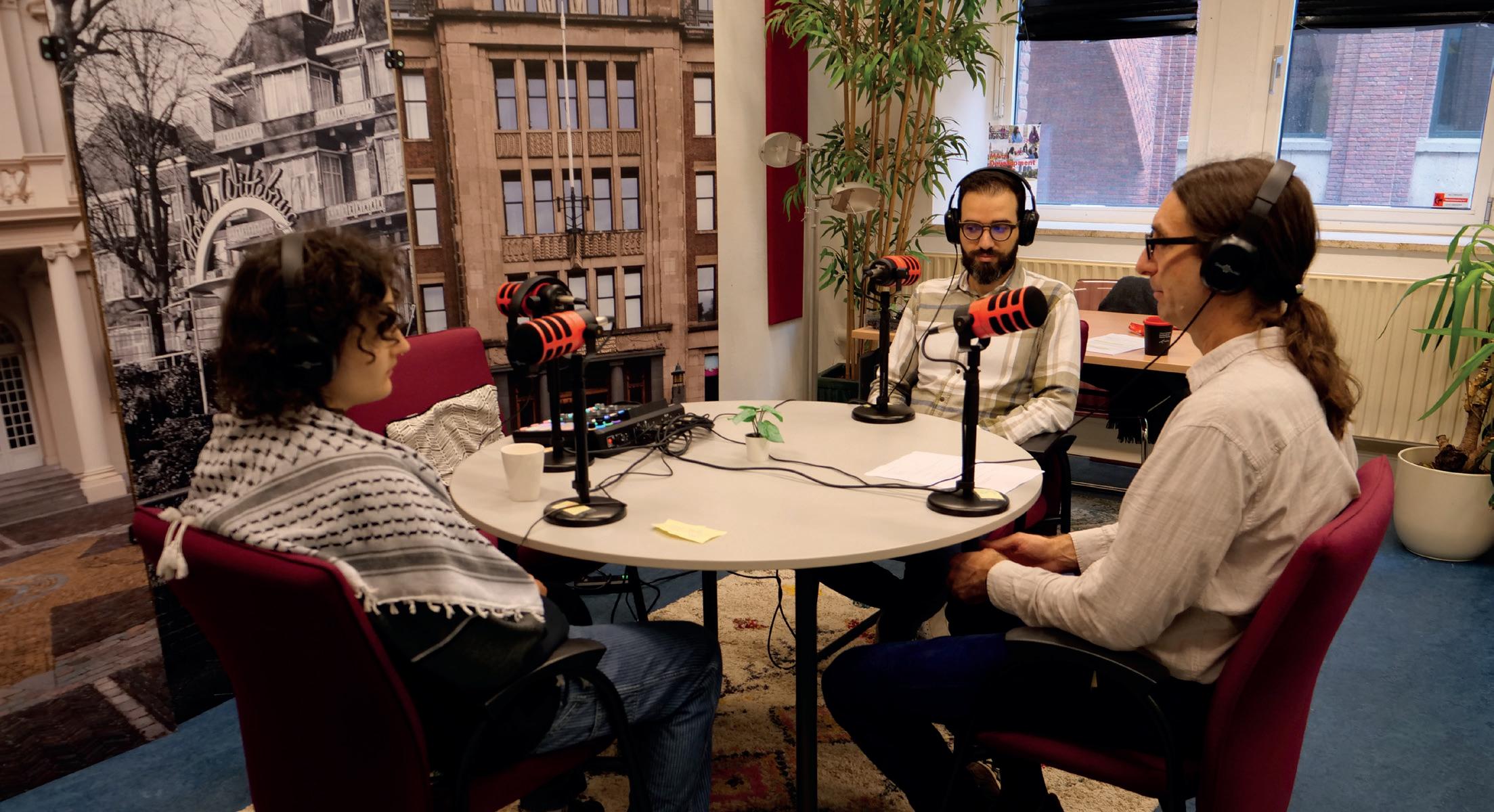
Likewise, the staff-student discussion highlights the power of solidarity and positivity to tackle crises. Talking specifically about the ongoing conflict between Palestine and Israel, Jeff Handmaker, Osama Al Shamleh and Emmylou Savage emphasize the need for unity and the importance of solidarity to achieve results.
So from various angles, this DevISSues describes the steps and actions that individuals and organizations can take to design a more just and equitable world. As ISS rector Ruard Ganzevoort writes, despite the current geopolitically unstable and uncertain time, ‘..it is all about small, feasible, realistic steps that design a better world.’
Jane Pocock – Editor, DevISSues
‘Prediction is very difficult, especially if it’s about the future.’ In different versions, these famous words have been credited most often to Niels Bohr, but also to Yogi Berra, Mark Twain, Nostradamus and Danish politician K.C. Steincke, probably the earliest published source. Not only does that provide a kind reminder to students writing their papers that we always need to check our sources, it also shows that uncertainty about the future pervades our entire existence.
I find that comforting, especially as we live in times of fundamental geopolitical uncertainty. Will the USA post-Trump recover as a liberal democracy and supporter of international development cooperation? Will China continue to take the lead in technological innovation? Will Europe overcome its internal paralysis? Will we find ways to mitigate climate change? To improve access to healthcare and education globally? To reinvent the digital sphere and remedy its problematic sides? To entertain just and equitable trade and value chains? To end the rule of the bullies and rebuild the rule of law? I honestly don’t know, because prediction is very difficult…
I find it comforting, because it means that the future is open. We can approach it as gloom and doom, but also with hope and aspiration. We must embrace this hope because despair cannot be our alternative. In my view, the most powerful words are: it could be otherwise. The world as we see it is not necessarily the only possible world. We can envision a world of peace, equity, justice and care. It could be otherwise.
Is that going to happen? Again, I don’t know. However, as hard as it is to predict the future, it is possible to envision, even create, the future that we want to live in. Maybe not in a utopian sense, although such dreams provide the much needed compass for where we are heading. The future we can envision and create follows that compass, and it invites us to design the small steps in that direction.
It seems to me that many of the projects ISS and its alumni engage in are about such small steps. Born from a radical vision of a world that is otherwise, it is all about small, feasible, realistic steps that design a better world. Supporting the livelihood of people in precarious situations. Frugal innovations. Nurturing hope.
Our task is not to predict, but to create the future.
From democratic optimism to a new wave of autocratization
The IDS report Where’s the Demos in Democracy? brings home the message that democracy is under threat worldwide. The earlier optimism about democratic rule, caused by what some labelled a ‘fourth wave’ of democratization, has been undermined by the trend toward autocracy in the Global South and more recently also the Global North. A series of coups in Western Africa, the military takeover in Myanmar and the new caudillismo in El Salvador have been followed by populist-
Wil
Hout is Professor of Governance and International Political Economy at ISS.
Dirk-Jan Koch is Professor of International Development Practices at ISS.
authoritarian power grabs in European countries such as Hungary and in the United States.
Until recently, many OECD countries, as well as the European Union, sponsored programmes aimed at democracy promotion. The purpose of these programmes was to support the ‘forces of democracy’ in countries of the Global South as part of their development assistance efforts. Such programmes were embedded in broader notions of ‘good governance’ which emphasized principles such as accountability, transparency, inclusiveness and the rule of law as the ‘next level’ of political rule.
As part of democracy promotion activities, USAID (the US Agency for International Development) sponsored a variety of programmes across the Global South aimed at electoral assistance, judicial reform and support for the strengthening of civil society. The European Union provided support, among others through the European Development Fund and
some more specific programmes, e.g., the European Instrument for Democracy and Human Rights, the European Endowment for Democracy and a variety of anti-corruption initiatives. Individual countries, such
‘strengthening … democracy … needs to be embedded in broader foreign-policy priorities’
as the United Kingdom, Denmark, Sweden and the Netherlands likewise funded programmes that aimed to strengthen democracy and the rule of law in their partner countries in the Global South. Organizations such as the Netherlands Institute for Multiparty Democracy (NIMD), the Westminster Foundation for Democracy in the UK, the Friedrich Ebert and Konrad Adenauer Foundations (both in Germany) and the US-based National Endowment for Democracy received substantial amounts of government funding to
work on democratic governance, political participation and civil society abroad, from Eastern Europe to Africa, Asia and Latin America.
Shifting priorities and the retreat of democracy support
While the spending of official development assistance (ODA) by the OECD countries reached a peak in 2022, changes in foreign policy and aid reflect different priorities. Aid to Ukraine has been one factor in the crowding out of development assistance to countries in the Global South. An increased share of the aid budgets of OECD countries has been used to cover the costs of migration policies. In several countries, including the Netherlands and the UK, aid policies have become increasingly geared towards supporting privatesector and other economic activities abroad. The frontal attack of the Trump administration on international cooperation as a foreign-policy tool has resulted in the abolition of USAID. As a consequence of these trends in
‘Democracy support was found to be more likely to be effective if it was part of a broader foreign policy by donor governments’
foreign and development assistance, the support for democracy-enhancing activities has waned in many countries that previously were the champions in this domain.
The IDS report Where’s the Demos in Democracy? is not just an analysis of the contemporary threats to democracy – it is also a call to action, particularly as it relates to providing more space for people (the ‘demos’ in the title of the report) to become involved in democratic practices, among other things through active citizenship, civil society and strengthened accountability mechanisms. The report also specifies a role for donors to support democratization efforts. Aid is a step in the right direction, but it is not a panacea. The strengthening of democracy worldwide cannot be left to the agencies for development cooperation; this process needs to be embedded in broader foreign-policy priorities of countries that are concerned about democracy.
Where is the Demos? Lessons from the Global South
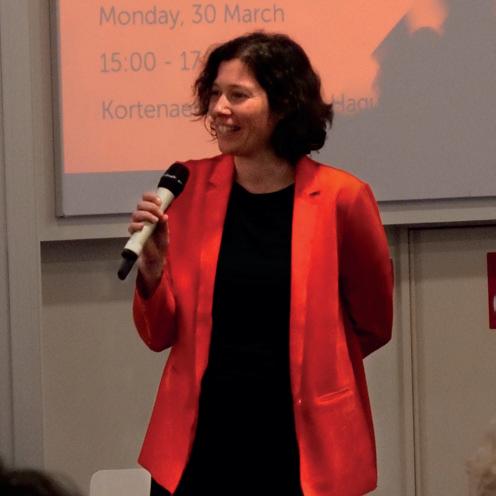
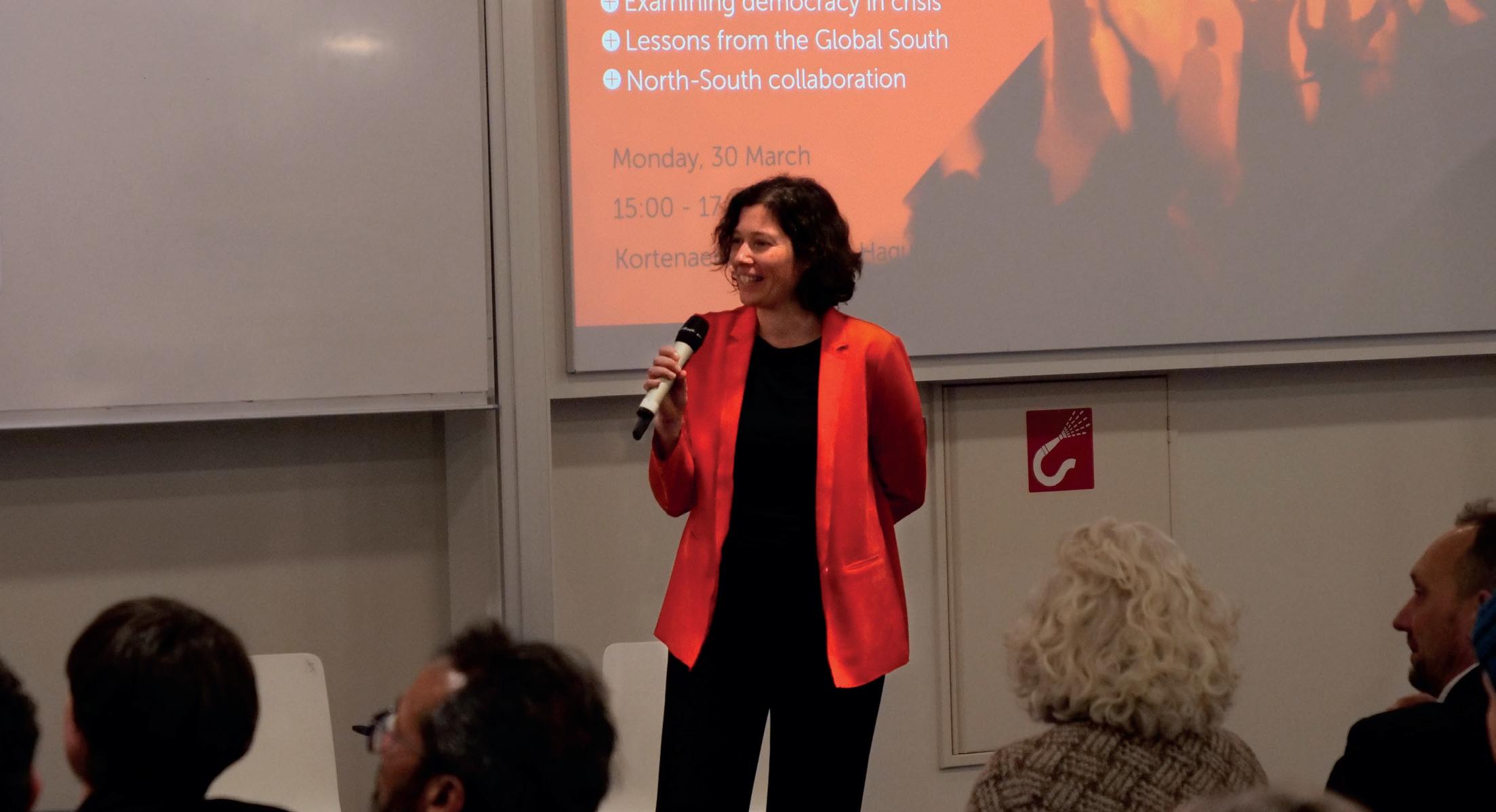
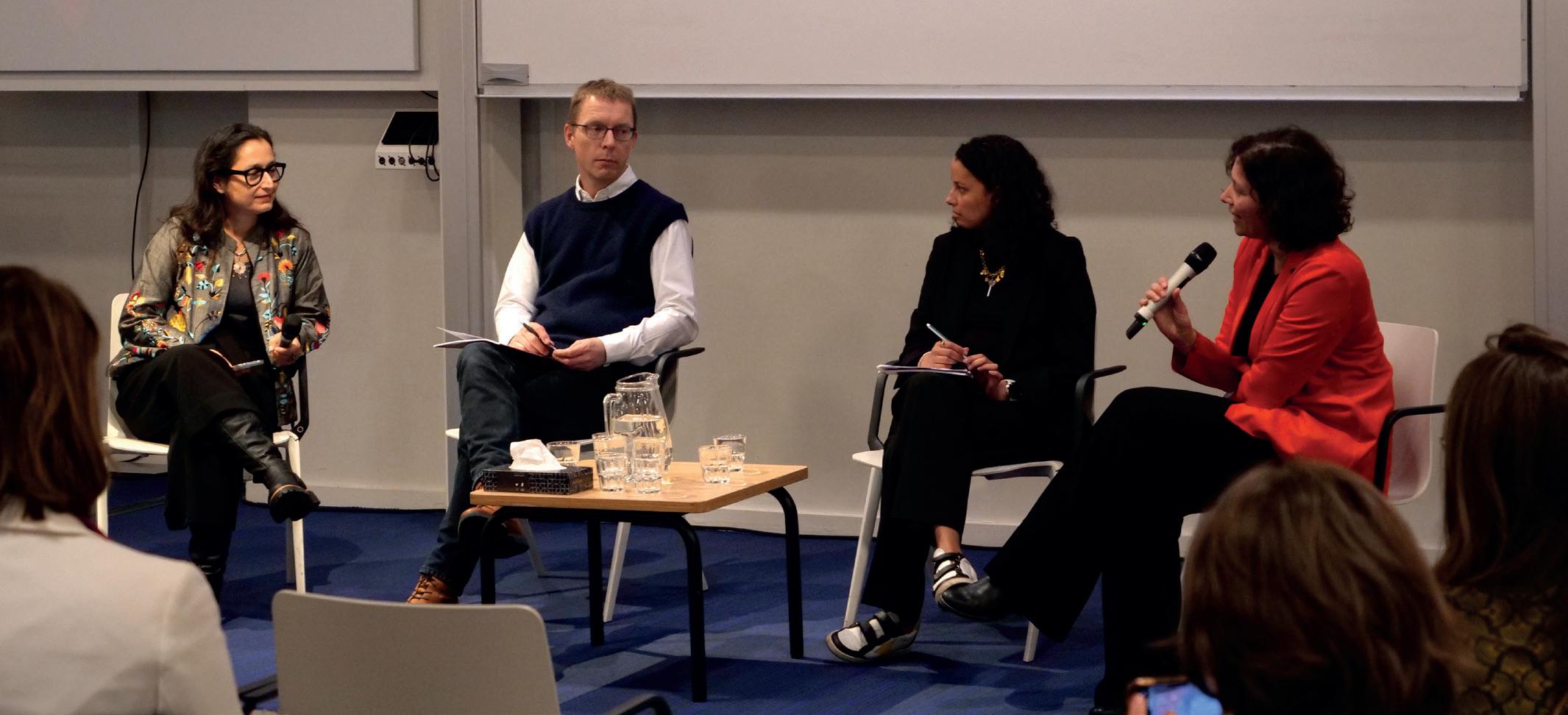
The launch of the IDS report took place during a joint IDS–ISS event on 30 March 2026, with speakers from the political, academic and civil society arena. One of the foci of the panel was on what lessons could be learned from the Global South, as also in the Global North democracy is increasingly under pressure. Marianna Belalba, a lawyer from Venezuela and senior advisor at the European Centre for Not-for-Profit Law, focused on the importance of the politics of hope. She explained that, even 20 years after democracy in Venezuela was crushed, the young generation – even without knowing what it exactly entails – is still aspiring to it. As long as this hope is not erased, and even nurtured, the flame of democracy is kept alive and might set in motion a large pro-democracy movement once there is a little opening. The lesson is that perseverance is needed, even though dangers are associated with it.
‘democracy is sustained through hope, coalitions that allow for principled disagreement and … support that strengthens … institutions and social movements’
Belalba shared another important takeaway from her analysis of why certain pro-democracy coalitions succeed and others fail. The most important success factor in whether movements see their appeal improve is if they understand that they do not need to agree about everything. What they do need to agree on is that they need a safe space in which to disagree.
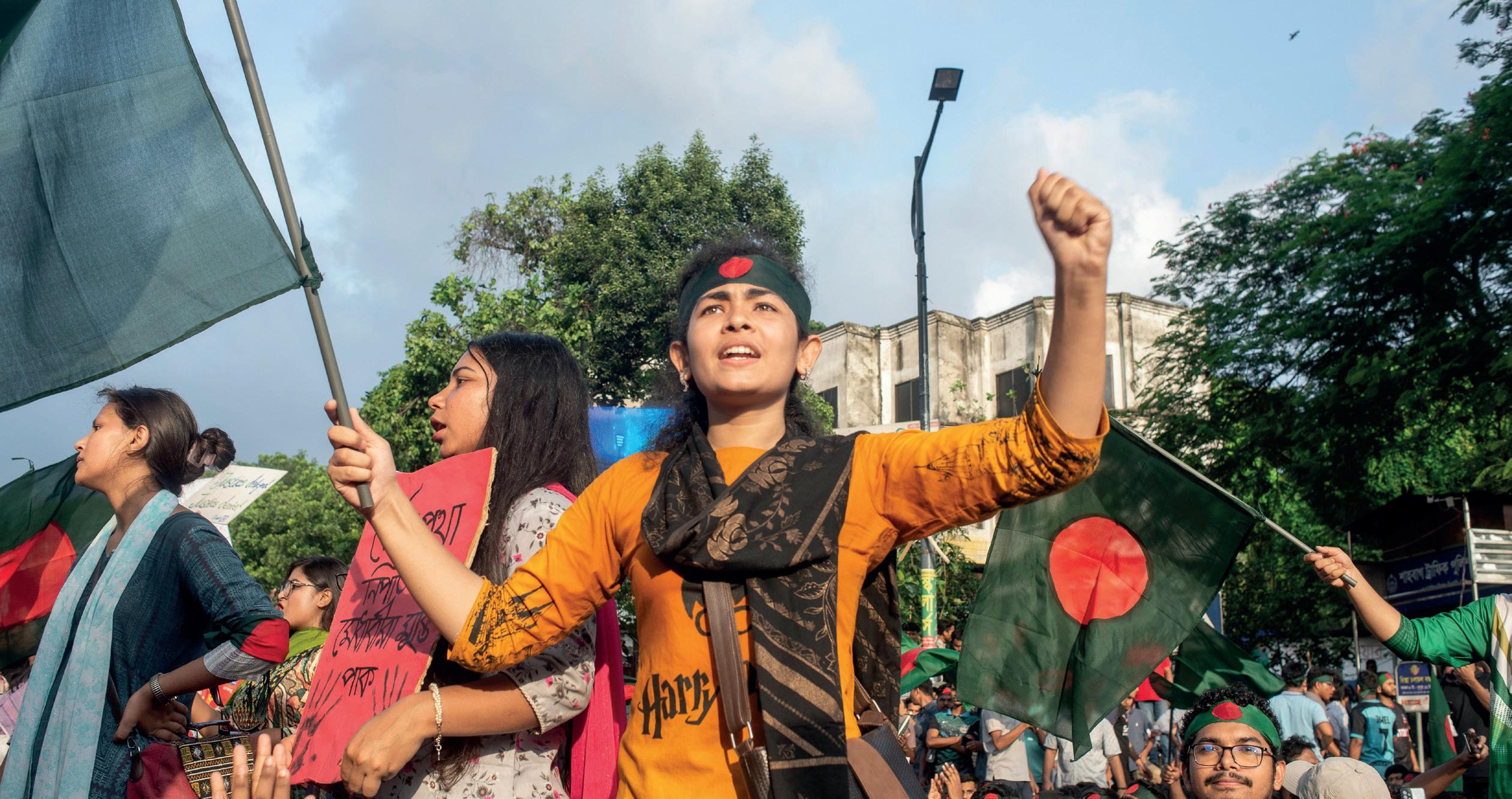
The panellists also discussed one of the key findings of the IDS report, namely that ‘democracy support matters... sometimes’. Democracy support was found to be more likely to be effective if it was part of a broader foreign policy by donor governments: financial support, coupled with a diplomatic push was quintessential, as examples from the 1990s showed. In those examples, the political dialogue that accompanied debt relief was found to be important to push through the political opening of the day. But also the way in which democracy support was provided proved important; e.g., the funding needs to be flexible, as rapid financing is needed to seize the moment of democratic openings (such as in Bangladesh). Also, the need to support grassroots and social movements alongside formal institutions was found to be important (for example, Gen Z–led movements in Kenya).
Supporting democratization in the ‘strong man’ era
Reversing the current wave of autocratization will therefore require more than rhetorical commitment or technocratic democracy aid. It demands a renewed political choice by governments in the Global North to place democracy at the heart of their foreign and development policies, and to recognize the central role of the demos itself. At a moment when democratic decline is accelerating worldwide, it is particularly unwise for donors to scale back financial support for democracy programmes or to relegate democratic principles to the margins of their foreign policy objectives. The
‘optimism about democratic rule … has been undermined by the trend toward autocracy in the Global South and more recently also the Global North’
lessons emerging from the IDS report and the ISS–IDS panel point in the same direction: democracy is sustained through hope, coalitions that allow for principled disagreement and timely, flexible support that strengthens both institutions and social movements. If donors and policymakers are serious about halting – and ultimately reversing –the erosion of democratic rule, they will need to move beyond fragmented projects and short-term priorities and instead invest patiently to keep the hope alive when there is no opening and seize the opportunity when the occasion arises.
Globally, democratic life is in decline. Civic actors are facing increasing hostility, digital authoritarianism is on the rise and several popular mobilizations are demanding the curtailing of rights and freedoms of others. Simultaneously, societies are increasingly polarized, increasingly unequal and losing trust in democratic institutions. As development practitioners face this shifting landscape, a critical question emerges: what can development thinking and practice offer to those defending and creating democratic futures?
mechanisms. Development thinking and practice can help improve democratic resilience, and the article illustrates this by learning lessons from development on strengthening two of the above listed factors: citizen engagement and accountability mechanisms.
Recent studies have shown that democracy outperforms autocracies on most development goals including health, education, government spending on development and economic development (Colagrossi et al. 2020; Tudor 2025). While Sen (1999) argues
‘the current decline in democracies and rise in autocratization has development implications that development actors need to care about.’
This article argues that autocratization should be a concern for development actors and that development thinking offers critical lessons to build democratic resilience. Key factors that build democratic resilience include participatory political processes, citizen engagement and accountability
that development can be viewed as the removal of unfreedoms and the gaining of freedoms, studies have found that media freedoms can also have instrumental value in producing greater health outcomes (Wigley & AkkoyunluWigley 2011). One area where democracies do not outperform
researches authoritarianism and people power at the Institute of Development Studies, University of Sussex
autocracies is inequality, but on the whole, the current decline in democracies and rise in autocratization has development implications that development actors need to care about.
To protect democratic futures, it is important to understand factors that improve democratic resilience. These include creating inclusive and participatory political processes, mobilizing democratic citizens for elections, peaceful protests, civic engagement and strengthening accountability mechanisms (Lührmann, A. 2021). Development thinking and practice can offer critical lessons in strengthening those factors that improve democratic resilience, as argued in IDS’s recently published report, Where’s the Demos in Democracy?: Building Democratic Futures and Resisting Autocracy. This article will focus on lessons from development in strengthening factors that help improve democratic resilience, citizen engagement and accountability mechanisms.
Citizen engagement has been an important part of international development for decades. By the early 2000s, development scholars had noted that excessive focus on democratic institutions resulted in democratic practice and culture being ignored (Luckham et al. 2000). Stronger citizen engagement is the result of both supply-side and demand-side improvements, with local governance opening spaces for citizen participation and citizens engaging in society to expand their rights and freedoms and thus strengthen active citizenship. Citizen engagement can be improved in various ways including by developing greater civic and political knowledge, improving an understanding of institutions and an increased awareness of rights. Some forms of citizen engagement are better linked to particular types of positive outcomes such as increased accountability. Similarly, local associations and social movements can be more important sources of change than formal participatory governance
‘while citizen voice is important, government responsiveness to that voice is likewise very important.’
spaces, including in less democratic countries. Furthermore, multiple approaches to citizen engagement more frequently lead to increased accountability from states. It is also important to note that citizen engagement in some cases can result in negative outcomes so it is essential to consider the context, quality and approach to citizen engagement (Gaventa, J. & Barrett, G. 2012). To increase citizen engagement, it is also necessary to consider how citizens perceive officials and the policies they are engaging with (Sjöstedt, et al. 2022).
A recent systematic review of citizen
engagement found that citizen engagement interventions that engaged citizens through participatory fora and accountability mechanisms were more effective in increasing citizen engagement and improving service delivery (Sonnenfeld, et al. 2024).
International development also has significant experience in transparency and accountability, particularly in social and diagonal accountability. Traditional forms of democratic accountability are both horizontal and vertical. Horizontal accountability includes checks and balances between the judiciary,
‘multiple approaches to citizen engagement more frequently lead to increased accountability from states.’
legislature and the executive, while vertical accountability includes voting. Diagonal accountability includes civil society and media holding the state and other powerful actors accountable. Fox (2015), in his meta-analysis of social accountability, found that while citizen voice is important, government responsiveness to that voice is likewise very important. He noted that approaches that used a sandwich strategy – which includes improving both citizen voice and creating an enabling environment for collective action and bolstering government responsiveness – were more successful. He also argued that it is important to take scale into account to enable support for more horizontal expansion which allows for more voices to be represented and vertical expansion which allows for more state responsiveness (Fox, J. A. 2015). A review of a global programme that relied on technology to improve transparency and accountability revealed the limits of digital tools and questioned assumptions
References
Carothers, T. (2025). International Democracy Aid 30 Years Later. IDS Bulletin, 56(1). https://doi. org/10.19088/1968-2025.121
Colagrossi, M., Rossignoli, D., & Maggioni, M. A. (2020). Does democracy cause growth? A meta-analysis (of 2000 regressions). European Journal of Political Economy, 61, 101824. https://doi.org/10.1016/j. ejpoleco.2019.101824
Fox, J. A. (2015). Social Accountability: What Does the Evidence Really Say? World Development, 72, 346–361. https://doi.org/10.1016/j. worlddev.2015.03.011
Gaventa, J., & Barrett, G. (2012). Mapping the Outcomes of Citizen Engagement. World Development, 40(12), 2399–2410. https://doi.org/10.1016/j. worlddev.2012.05.014
Lipset, S.M. (1959). Some social requisites of democracy: Economic development and political legitimacy. American Political Science Review, 53(1), 69–105.
that transparency through digital technology could significantly strengthen accountability (McGee et al. 2018).
Studies have also found that combining legal strategies with social accountability can be a useful avenue for strengthening accountability.
In conclusion, the crisis in democracy has negative implications for human development, not just in terms of reduced rights and freedoms for certain sections of society, but also in terms of development outcomes such as education, health and governance. While there are multiple factors that help strengthen democratic resilience, international development has critical lessons to offer this area of work. Future work on democracy can build citizen engagement by focusing on local associations, social movements and formal participatory governance fora while being mindful of contexts, the quality of engagement and positive outcomes. Future work on accountability
mechanisms should recognise the limitations of digital technology. Additionally, it should work on both strengthening citizen voice and creating an enabling environment for collective action to bolster government responsiveness to that citizen voice. This work should also take scale into account, seeking to expand both horizontally to include a diverse array of citizen voices and vertically to strengthen government responsiveness and thus hopefully create a feedback loop of government responsiveness leading to increased trust and encouraging more citizens to raise their voice. Lastly, it should combine social accountability with legal strategies to strengthen accountability mechanisms. Global trends in democratic backsliding and autocratization are likely to come with development losses beyond the loss of freedoms. Development actors can significantly contribute to informing approaches to building democratic resilience and stopping backsliding and autocratization, a trend that affects not just those interested in democratic values and processes but also those interested in human development.
Luckham, R., Kaldor, M., & Goetz, A. M. (2000). Democratic institutions and politics in contexts of inequality, poverty, and conflict: A conceptual framework [Report]. The Institute of Development Studies and Partner Organisations. https:// opendocs.ids.ac.uk/articles/report/Democratic_ institutions_and_politics_in_contexts_of_ inequality_poverty_and_conflict_a_conceptual_ framework/26477158/1
Lührmann, A. (2021). Disrupting the autocratization sequence: Towards democratic resilience. Democratization, 28(5), 1017–1039. https://doi.org/ 10.1080/13510347.2021.1928080
McGee, R., Edwards, D., Hudson, H., Anderson, C., & Feruglio, F. (2018). Appropriating technology for accountability: Messages from Making All Voices Count (Making All Voices Count Research Report). IDS. https://opendocs.ids.ac.uk/opendocs/ handle/123456789/13452
Rau, E. G., & Stokes, S. (2025). Income inequality and the erosion of democracy in the twenty-first century. Proceedings of the National Academy of Sciences, 122(1), e2422543121. https://doi.org/10.1073/ pnas.2422543121
Sonnenfeld, A., Stevenson, J., & Waddington, H. S. (2024). Does citizen engagement improve development outcomes? A realist-informed systematic review of participation and accountability mechanisms. Journal of Development Effectiveness, 16(1), 27–60. https://doi.org/10.1080/19439342.2022.2153380
Sen, A. (1999). Development as Freedom. Oxford University Press.
Sjöstedt, M., Sundström, A., Jagers, S. C., & Ntuli, H. (2022). Governance through community policing: What makes citizens report poaching of wildlife to state officials? World Development, 160, 106065. https://doi.org/10.1016/j.worlddev.2022.106065
Tudor, M. (2025). What Democracy Does. . . And Does Not Do. Journal of Democracy, (4), 5–19.
Wigley, S., & Akkoyunlu-Wigley, A. (2011). The Impact of Regime Type on Health: Does Redistribution Explain Everything? World Politics, 63 (4), 647–677. https:// doi.org/10.1017/S0043887111000177
Where are they now?
Ireen Dubel
Study programme MA in Development StudiesWomen & Development
Year of graduation 1981
Country of origin
The Netherlands
Current occupation PhD candidate University of Amsterdam
What made your time at ISS special? Meeting students from all over the world and discussing up-to-date issues in their respective countries. Having remarkable inspiring lecturers such as Maria Mies, Kumari Jayawarde, Mia Berden who groomed me in feminist theory and politics.
What is your best memory of ISS? Working at ISS as the coordinator of the SWAPO Women and Development Training Programme in 1985-1987 and celebrating the graduation of Namibian students who fought in exile for national liberation in Namibia. The numerous international solidarity protests and commemorations, such as anti-apartheid protests in front of the South African embassy.
What does ISS mean to you now? A community of committed scholars to social justice, sustainable development and equality.
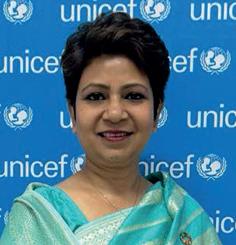
Nafisa Binte Shafique
Study programme MSS (Population and Development)
Year of graduation 2001
Country of origin
Bangladesh
Current occupation UNICEF
Country Representative, the Gambia
What made your time at ISS special? Friendship – fellow students, teachers, admin staff and the exposure to such a multicultural environment.
What is your best memory of ISS? ISS memories are very special and it is hard to pick one memorable moment so I will mention a few:
• Visit to Zaanse Schans
• First Gender session by Jos Moi
• Deep discussion with my amazing supervisor Loes Keysers about maternal mortality among adolescents
• Cultural nights with different national stalls
What does ISS mean to you now? More than a school, ISS was my launchpad – global in outlook, rigorous in training and endlessly inspiring. ISS expanded my horizons and raised my standards.
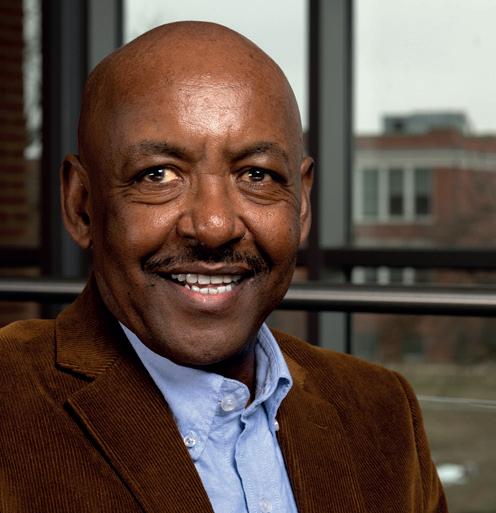
Paulos Chanie Tsegaw
Study programme Public Policy and Administration & PhD
Year of graduation 1995 and 2007
Country of origin Ethiopia
Current occupation
Associate Professor at Virginia State University, USA
What made your time at ISS special? My time at ISS was truly special because of the opportunity to interact with participants from around the world. The diversity of perspectives, cultures and experiences created a rich intellectual environment that broadened my understanding and shaped my global outlook. What is your best memory of ISS? One of my most memorable experiences is the scholarly paper presentations, which were both intellectually stimulating and deeply engaging. I also fondly remember more informal moments; especially the light and joyful atmosphere in ‘The Butterfly’. What does ISS mean to you now? ISS holds a profound place in my life. It transformed me into who I am today. It is where I developed a deep appreciation for academic rigor and the value of research, shaping both my professional path and personal growth.
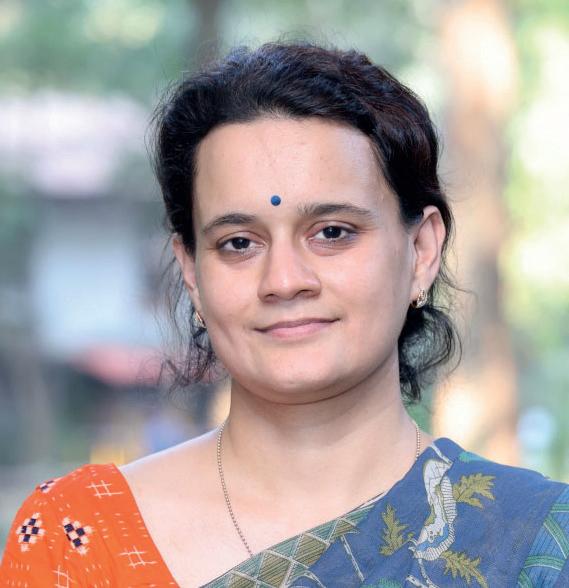
Saumya Tewari
Study programme
Postgraduate diploma in Governance, Democratization and Public Policy
Year of graduation 2012
Country of origin India
Current occupation
Freelance researcher, working on governance or policy projects.
What made your time at ISS special? Studying at ISS was a turning point for me. I received peer to peer learning and was mentored by some of the best academics in their respective fields. It helped me develop multi-dimensional skills. Had it not been for ISS, I would not have ‘experimented’ with different roles!
What is your best memory of ISS? What made the whole experience memorable was the warmth in the campus- It was my first time leaving India, but I never missed my home while at ISS!
What does ISS mean to you now? At ISS I learned to embrace diversity: its uniqueness is that it is a truly global Institute. Applause to the alumni outreach programme that holds the community together.
Tackling Autocratization In the Post-Huntington Era
‘Authoritarianism is contagious – but so is resistance’ (Milk Tea Alliance, n.d).
In the 2000s, Huntington’s famous ‘third wave of democratization’ 1 peaked, with approximately 50% of the global population living under some form of democracy (V-Dem Institute 2026:5). Thereafter, a reverse wave emerged with autocrats slowly regaining power globally. The result as of 2025 is that 74% of people worldwide now live under autocracies (id.).
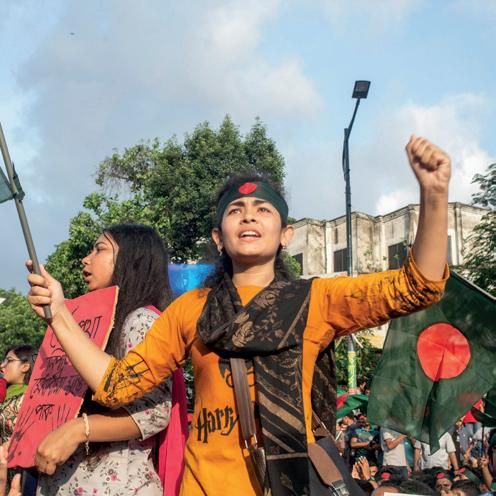
Resistance has been both swift and –to paraphrase the Milk Tea Alliance, an Asian pro-democracy movement linking activists across several countries – as contagious as authoritarianism itself. From Burkina Faso, Mali, Madagascar, Niger, Kenya, Senegal, Sudan through Bangladesh, Myanmar, Nepal, Indonesia, Sri Lanka to Brazil, Colombia, Guatemala, Peru and Venezuela, especially youth and women are rising as democracy’s strongest defenders. Allied with civil society organizations, they are championing resistance while leveraging technology to share tactics across borders.
Despite this pushback, autocratization persists as even previously foolproof democracies – and models – are sliding sharply. The US is now seen as pivoting dangerously towards a dictatorship 2 or witnessing serious democratic decline (Freedom House
2026:3; Bright Line Watch 2026). In Europe, Croatia, Italy, Slovakia, Slovenia and the UK have gained autocratizer status (V-Dem Institute 2026:4). 3 This reality increases the urgency of two interrelated questions: how can we best respond? What adaptations are needed to ensure effectiveness? But first, what does contemporary autocratization look like?
Beyond bullets
Assaults on democracy have classically been through violent coups d‘état. Recent trends especially in Africa show this is still partly true – just with less bloodshed. 4 However, autocratization is also taking more insidious forms. Most common is the constitutional coup where power grabs are done by exploiting legal loopholes. Though grounded in law, most are unpopular and illegitimate. A key example in the post-Huntington era is the removal or relaxation of constitutional term limits – a major acquis of third wave democratization. Africa accounts for the highest number. Between 2001 and 2020, presidential term limits were modified at least 24 times across 18 countries – from Algeria and Egypt in the north, through Cameroon and Gabon in the centre, to Cote d’Ivoire and Togo in the west (Africa Centre for Strategic Studies 2024; Good Governance Africa 2023).
By our count within the same period, term limit changes occurred only 10 times across eight Latin American countries 5 and four times in Eurasia. 6
Subtle autocratization also includes sham elections, suppression of independent media, disinformation, AI misuse, politicized civil service, co-opting and weakening opposition parties, curbing civil liberties, expanding executive power and packing courts. Unchecked, these erode democracy overtime. As indicated, current developments, notably in the US, show that autocratization transcends the north-south divide. What therefore must be done differently to tackle this?
1 Popularized by political scientist Samuel Huntington in the 1990s, it describes global shifts from authoritarianism to democracy between the 1970s and 2000s.
2 Staffan Lindberg, V- Dem Institute Director and Robert Kagan of The Atlantic both describe the US as ‘moving towards a dictatorship’ or ‘on the edge of... dictatorship.’ See https://www.npr.org/2026/03/20/nx-s1-5754021/trump-democracy-autocracy-dictatorship-reports and https://www.npr.org/2026/02/04/nx-s1-5699388/is-the-u-s-headinginto-a-dictatorship
3 The 2026 report of Civil Liberties Union for Europe also classifies Belgium, Denmark, France, Germany and Sweden as ‘sliders’ in all areas of the rule of law – a key metric for measuring democracy https://www.liberties.eu/f/wtaqoq
4 Between 2020-2025, Africa saw at least 24 coups and attempted coups, from the Sahel through central to northeast Africa.
6 Azerbaijan (2016), China (2018), Kyrgyzstan (2010), Uzbekistan (2023).
Yuhniwo Ngenge is Democracy Advisor at the Netherlands Institute for Multiparty Democracy.
Tijmen Rooseboom is the Executive Director of the Netherlands Institute for Multiparty Democracy (NIMD).
Recalibrating resistance
In a multipolar order where China and Russia are offering alternative cooperation models framed on respect for state sovereignty, non interference and equal partnership –but which in reality only sustains autocratization – a fundamental shift in thinking and action is critical.
From Bangladesh, Brazil, Colombia, Kenya, Madagascar, Nepal, Sudan, etc, the lesson is that youth engagement, combined with strategic mobilization, planning and coalition-building with civil society and grassroots movements is most effective in resisting autocracy and triggering change. NIMD’s own experience confirms this. In military-ruled Mali, NIMD helped establish and support the Comité de Plaidoyer et de Suivi des Réformes Électorales (CPSRE), a predominantly civic-based platform. The CPSRE successfully advocated for the adoption of 19 out of 25 priority recommendations into the Constitution of 2023, strengthening the civic space against all odds (NIMD 2026a: 3, 62). In Colombia, 23 young people were elected to the Chamber of Representatives in 2022, linked to the ‘Ocupar La Política’ mentoring programme (id.). These examples demonstrate the value of doubling investment in informal institutions and actors, notably CSOs and youth
‘autocratization is also taking more insidious forms. Most common is the constitutional coup where power grabs are done by exploiting legal loopholes.’
movements over just supporting formal institutions (which are often already compromised).
Second, tackling contemporary autocratization requires more proactiveness . This means identifying and addressing early threats before they crystallize into systemic democratic breakdown. Thus, rather than responding after constitutional manipulation, advocates should support local activists capable of acting at critical inflection points. For donors and bilateral partners, this means creative leverage of soft power while being mindful not to legitimize autocratization in the process. For technical assistance providers, equipping activists with key capabilities is crucial. NIMD’s democracy schools not only train young democratic leaders, the skills and knowledge they gain from this can be crucial in spotting early signs of decay.
Third, there must be a deliberate effort to protect and expand civic space , on- and offline. As autocrats scale disinformation, supporting independent media and fact-checking initiatives and regulating AI become critical to safeguard democracy.
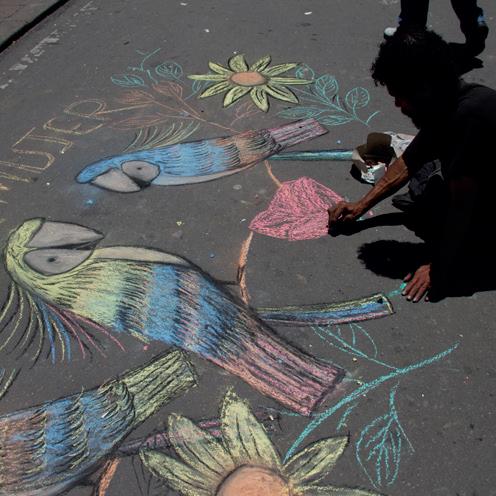
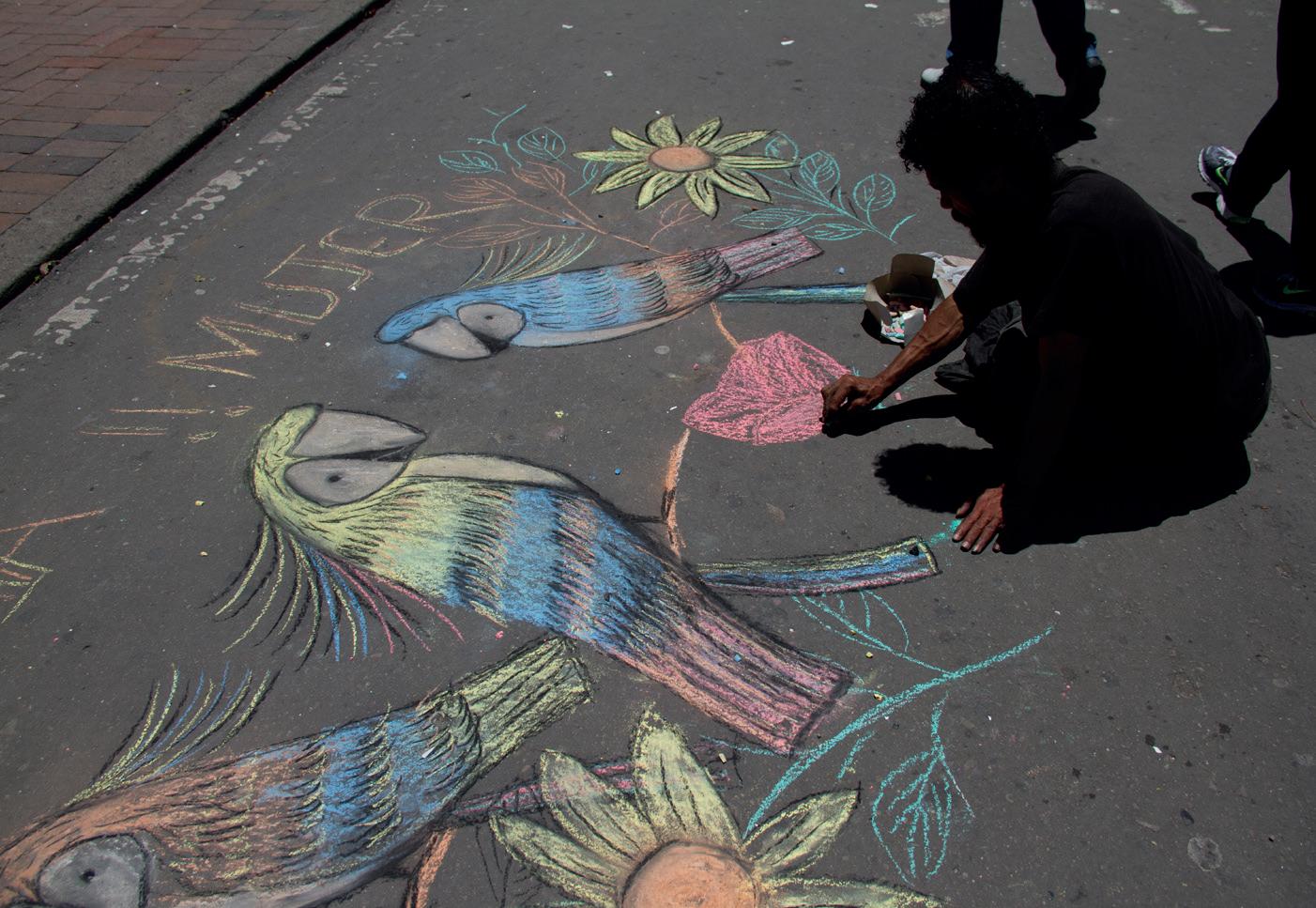
Street artist during the March of Peace in Colombia
‘strategic mobilization, planning and coalitionbuilding … is most effective in resisting autocracy and triggering change’
Additionally, it is crucial that the EU and its member states boldly uphold democratic values and the rule of law . Soft power has the greatest chance of success when anchored in moral high ground. As shown, that is in short supply at the moment, particularly with increased autocratization in the US and some EU countries.
Adapting for optimization
Beyond recalibrating resistance, ensuring effectiveness is imperative. In the current landscape, this demands adaptation. For NIMD, it generally means fluid – and contextdriven rather than linear –programming that align with our values. It also implies avoiding the one-size-fits all trap and grounding actions in local realties and leadership , to enhance ownership, legitimacy and acceptance. Prior political economy analysis unpacking dynamics that shape behaviour should therefore inform programme design.
and Myanmar success was not seen as linear advancement into formal political roles for women. Instead, change was reflected in the programme’s ability to maintain engagement in difficult conditions: sustaining presence amid ongoing risks in Colombia, preventing total withdrawal in Burundi’s severely contracted political space and encouraging participation through adaptation post-coup in Myanmar (NIMD 2026b: 7).
Lastly, evidence shows autocrats are coordinating actions. The Action for Democracy’s Authoritarian Collaboration Index has mapped over
as autocratization becomes increasingly networked, so should democracy support through transnational exchanges of strategies, tools and experiences’
Adapting for optimization also requires flexible understanding of progress . This means adopting criteria that define change based on what is feasible within a given context. Insights from independent evaluations of two NIMD initiatives –the Power of Dialogue (PoD) and Leap4Peace programmes –implemented from 2021 to 2025 (NIMD 2026a: 3, 47; NIMD 2026b: 3-6, 16) confirm this. Thus, in Burundi,
72,000 initiatives since 2024 of autocrats networking, learning and institutionalizing their cooperation (Action for Democracy n.d.: 2). Effectively countering this requires more cross-border learning and solidarity . Thus, as autocratization becomes increasingly networked, so should democracy support through transnational exchanges of strategies, tools and experiences. NIMD’s multi-country engagements have
shown that peer learning –particularly among youth and women – can accelerate the diffusion of democratic practices and strengthen collective resilience.
Conclusion
In sum, tackling autocratization in the post-Huntington era demands not only recalibration of resistance but also reinvention. As autocracy evolves with more sophisticated tactics, so too must resistance strategies –grounded in local agency, proactive engagement and global solidarity. By empowering youth and protecting civic space and an independent media, we can still reclaim momentum and safeguard democracy’s future in an increasingly autocratizing world.
Disclaimer: The views expressed represent the authors positions on the subject, not necessarily that of NIMD.
A full list of references is included on DevISSues online.
ISS news alumni awards EUR events PhD projects research staff
students
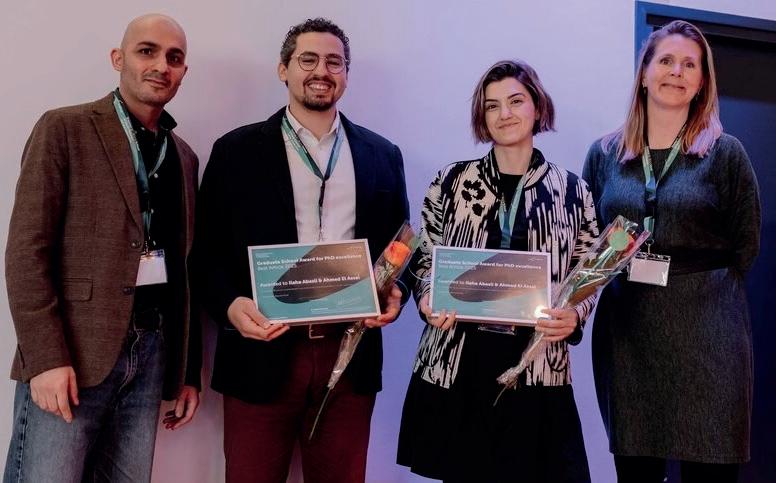
Best article award for ISS PhD researchers awards
Ilaha Abasli and Ahmed El Assal won the best article award during the Erasmus Graduate School of Social Sciences and Humanities PhD Excellence Awards. Their winning article - ‘Why are you not doing research in your home country? Dissecting expectations of southern researchers’ – reflects on their fieldwork experience as Global South researchers doing research outside their home countries.
IDS-ISS seminar on reclaiming democracy event
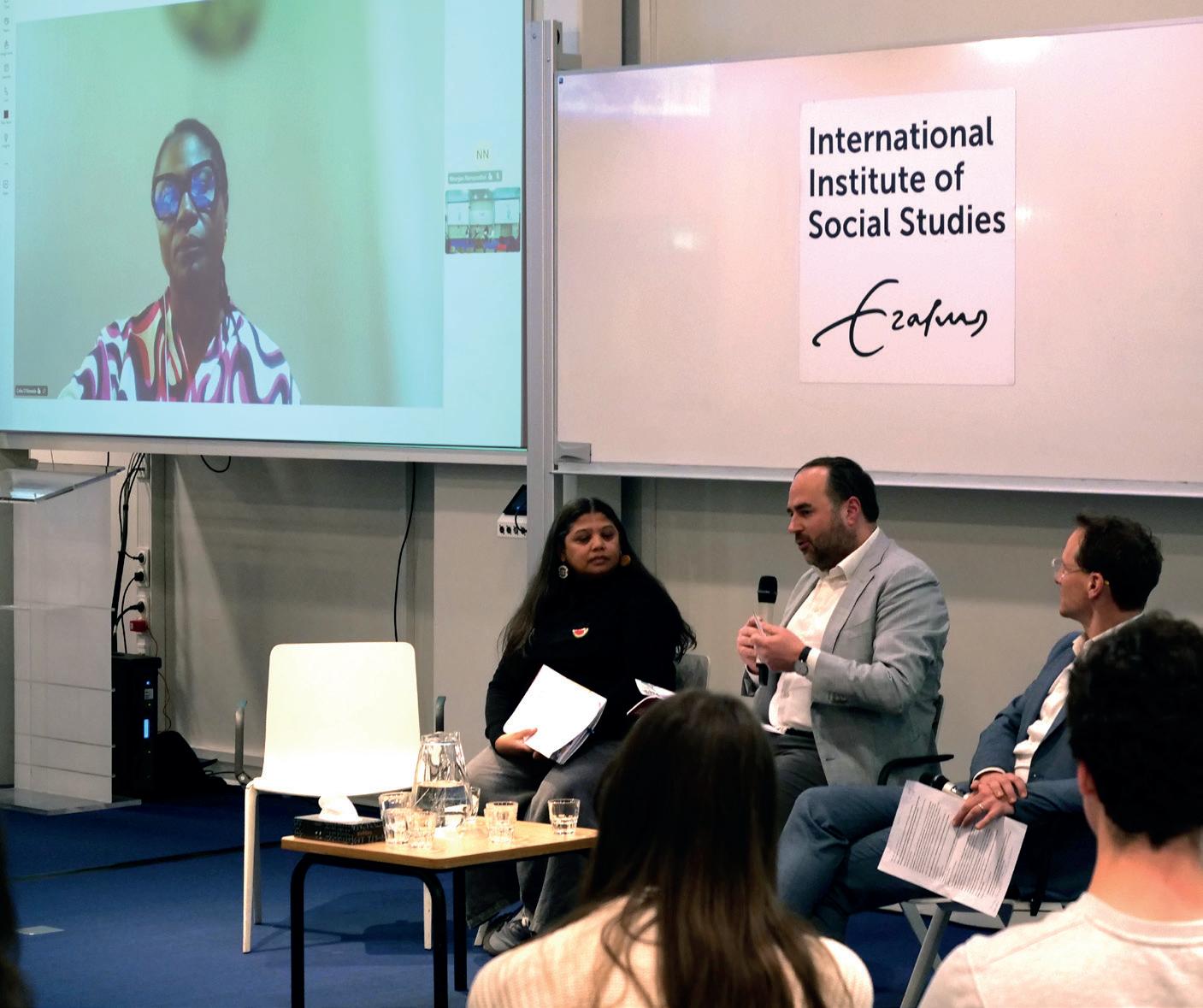
On 30 March, ISS hosted a joint IDS-ISS seminar examining how the lived experiences and lessons from the Global South can help strengthen democracy in the Global North. The three themed articles in this DevISSues are written by participants at the event.
The politics of care in the classroom staff
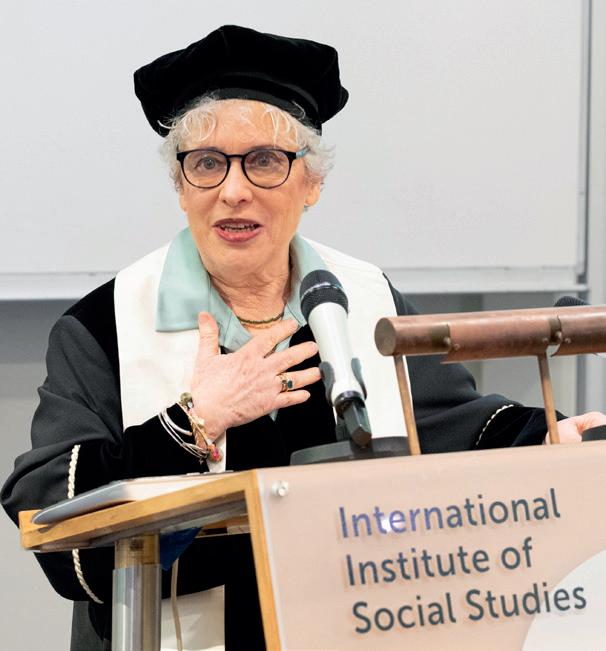
On 16 March, Professor Wendy Harcourt gave her valedictory lecture reflecting on her experiences as an intersectional feminist in a university environment. In her lecture Harcourt looked back on her academic career based on intersectionality, radical vulnerability, differential belonging and the ethics of care.
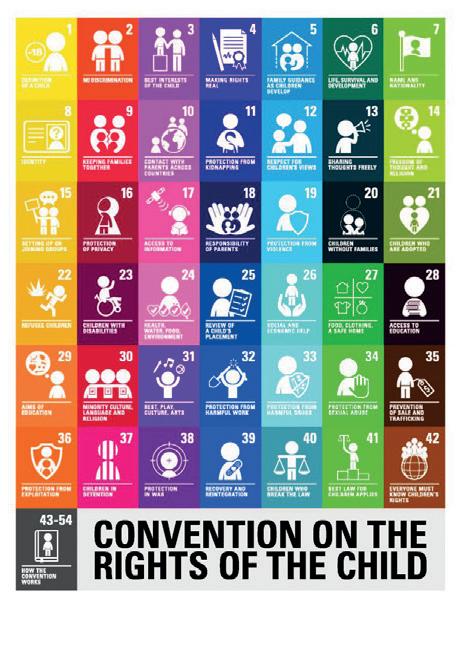
Dutch government withdraws reservation to children’s right to social security impact
Research by Utrecht University and the International Institute of Social Studies recently helped inform the Dutch government’s decision to withdraw its reservation to the children’s right to social security under the UN Child Rights Convention. The government’s decision is based on research by ISS Professor Karin Arts and UU Associate Professor Merel Jonker.
ISS wins research grants from Dutch Research Council
research
Dr Bilge Sahin and Dr Zemzem Shigute will investigate Kenya’s institutional response to sexual and gender-based violence in the country.
Dr Nanneke Winters’ research focuses on international truck drivers who become unintentional participants in irregular migration through their vehicles and routes.
People’s Tribunal on Women of Afghanistan issues landmark judgement at ISS engagement
On 11 December 2025, ISS hosted the Judgement Issuing Session of the People’s Tribunal on Women of Afghanistan. The Tribunal found overwhelming evidence that the Taliban have implemented a deliberate, widespread and institutionalized regime of repression against women and girls.
In Memoriam
As an ISS community we send our heartfelt condolences to the family and friends of those former students and staff who have passed away in recent months.
Hrishikesh Inguva ISS was shocked to receive the news of the sudden passing of Hrishi at the age of only 36. Hrishi was at ISS in the Social Justice Perspectives programme in 2018/2019.
Besa Muwele Besa sadly passed away in April. He studied twice at ISS, doing an MA 2000 and returning in 2002 for a Diploma programme.
Anita Heymann Abibio Alumna Anita passed away at the end of February at the age of 66. She was part of the Diploma programme in International Law and Organization at ISS in 1991.
Juwono Sudarsono Alumnus Juwono recently passed away at the age of 84. He studied International Relations and Development at ISS in 1969 and was a key figure in Indonesia’s transition to democratic governance.
Global summit on land governance research
PhD
defences PhD
Haris Zargar 20 April 2026
Land Reform, Class Relations and Political Islam: Understanding the rise of Jamaat-EIslami in Kashmir
Salena Tramel 19 November 2025
The Politics of Social Movements around Land, Water and Territory in the Era of Climate Change
In March 2026, Professor Jun Borras and other ISS and EUR researchers participated in a major global summit on land governance held in Cartagena, Colombia. The International Conference on Agrarian Reform and Rural Development (ICARRD+20) focused on democratizing access to and control over land.
Hao Zhang 24 March 2026
Policy Advocacy and Global Climate Governance: The role of Chinese NGOs
Amod Shah 10 December 2025
Coal, Livelihoods and Climate Politics: The contested terrain of anti-coal struggles in India
Deo-Gracias Houndolo 18 November 2025
Investigating the Dynamics of Poverty in Rural Areas in Ghana and Benin Emma Lynn
Dadap-Cantal 6 November 2025
Backstopping Poverty
Targeting in the Periphery: Embedded external influence and transnationalized actors in social protection expansion in the Philippines and Cambodia
The importance of equal partnerships between the Global South and Global North engagement
In this interview, ISS Professor Dirk-Jan Koch and Annelies Zoomers reflect on the Dutch government report ‘The Netherlands, Europe and the Global South in a Changing World Order’.
Corinne Lamain 9 December 2025
Whose Security? Evolving frames and manifestations of climate security in an era of ecological militarisation and the implications for climate justice
Thanh Tung Nguyen 14 October 2025
Merchandise Trade Openness, Export Competitiveness, Bilateral Trade Agreements and Public-Private Partnerships for Infrastructure Development.
Daniele Rossi Doria 1 December 2025 ‘We Gave them the Glass, Now it’s up to Them to Pour the Tea’: Exploring farmers’ appropriation of water user associations in rural Morocco
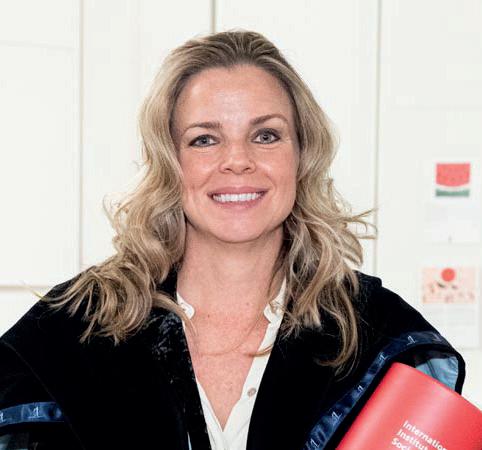
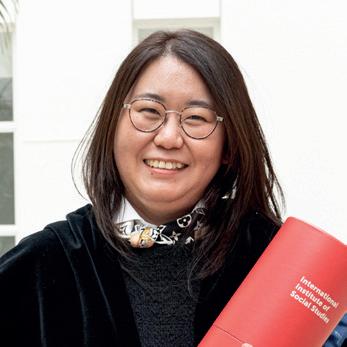
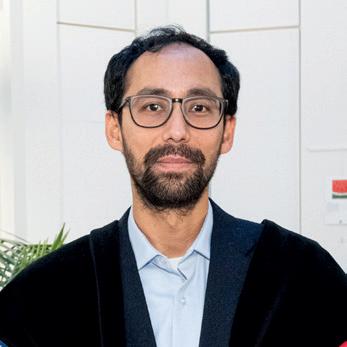
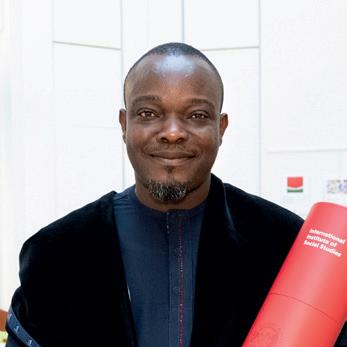
Dr Jeff Handmaker, Associate Professor of Sociology at ISS, ISS MA student
Osama Al Shamleh and Emmylou Savage, a bachelors student at Maastricht University College, discuss
how they experienced the recent escalations of violence in Israel, Palestine and broader region.
Making sense of the genocide in Gaza
Osama Al Shamleh (OAS): The reaction was shock on the morning of 7 October, but then a very quick feeling of grief for all the scenarios that I and those close to me were imagining the response would be. Unfortunately, the actual response was much worse than we imagined.
Emmylou Savage (ES): I also remember waking up that morning and learning about the attacks and hearing about it from family in Israel. Their fear. I remember feeling a level of despair and grief that I have never truly felt before for something that feels so far away from me. I don’t think I really imagined the response would be as violent and as aggressive as it has been.
Jeff Handmaker (JH): I also experienced grief for what I knew was to come. It was, so far as I was concerned, as a longtime
‘a defining issue for how we make progress is that people have to be willing to listen’
expert on this region, predictable how Israel was going to respond. I knew that Israel would respond aggressively, but I couldn’t have imagined this.
ES: I think for the first month or so, it was so hard for me to understand everything that was going on. It was overwhelming. I felt that I had to do all I could from my position of privilege. I regularly attended protests and got involved with the Erev Rav community – a Jewish organization that mobilizes for Palestine.
OAS: The first text I got on 7 October was from a colleague I worked with several years before, a Jewish colleague who had a sister living in a settlement in Palestine. She sent me a text asking, is your family okay?
JH: Finding humanity in the midst of such dehumanization is powerful. With colleagues at Erasmus University Rotterdam, I organized Teach-Ins in mid-October 2023. They were very well attended and very emotional. People were on edge, tearful about the experience.
ES: I feel that discussions around this haven’t happened enough. For me, a defining issue for how we make progress is that people must be willing to listen.
JH: Have you ever felt unsafe as a Jewish student? It’s a question that’s often asked.
‘…[it’s] important … to find hope in the midst of a lot of grief and despair’
ES: I’ve never felt unsafe and I’ve never felt that there was an anti-Semitic tone. The Netherlands has been a very safe and welcoming space.
JH: Osama? This is a question that is rarely asked of Palestinians. Have there been times when you’ve felt unsafe in the last couple of years?
OAS: In Palestine. I’ll never forget this one experience: I was driving very early in the morning from Ramallah to Bethlehem. There was an Israeli checkpoint; we’re talking about fully armed Israeli military personnel. The moment I passed by them, they shouted. I didn’t know what to do. I stayed put. I was really shocked. They shouted at me again; took a photo of me and my ID. You can imagine how that happens for people daily in the West Bank.
JH: Were there moments during this violence that you felt inspired?
ES: Yes – with the ICJ. I’m South African and that for me was an extreme moment of pride. Our country is in shambles at times, but at least they have this.
JH: Yeah, South Africa brought a case against Israel on charges of genocide.
OAS: I’ve seen the strength of many people, risking careers, their reputation just because they felt they needed to say the right thing. It was very inspiring. But the most inspiring to me are the Palestinians in Gaza. There are many examples, including the kids who put videos online, those who took it on themselves to help their community, or the whole Gaza community that did not give up. Their resilience is an inspiring story.
ES: I find it harder to remain hopeful; it feels very overwhelming.
‘We don’t agree on the details maybe, but we agree that we need to go back to a rule-based order’
OAS: Yeah. It’s unfortunate, especially in Europe, hearing debates addressing things as if they happen in a vacuum. These things have their historical moments. Jeff, earlier we were discussing that this is a new age of crusades and subjugation. It’s very concerning.
JH: We’re continuing to learn. I remember, during the South African anti-apartheid movement, how important it was to find hope in the midst of a lot of grief and despair.
ES: I think people are awakening, at least in the discussions.
OAS: We need more unity. We don’t agree on the details maybe, but we agree that we need to go back to a rule-based order. That this is all connected. We just all need to come together and say no to it.
Emmylou Savage
Osama Al Shamleh
Jeff Handmaker
New publications
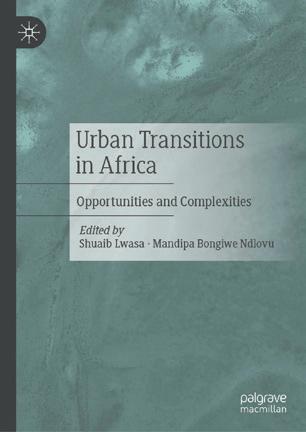
Urban Transitions in Africa: Opportunities and complexities
Co-edited by Professor Shuaib Lwasa, this book provides an overview of urban transitions in Africa with a focus on innovations that offer alternative development approaches.
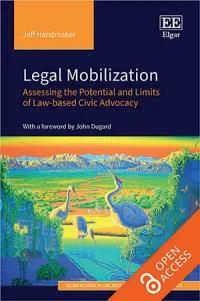
Legal Mobilization:
Addressing the potential and limits of law-based civic advocacy
In his new book, Dr Jeff Handmaker discusses the strategic potential of law-based, civic-led advocacy and surveys how legal mobilization can serve as a form of counterpower to state and corporate-led lawfare.
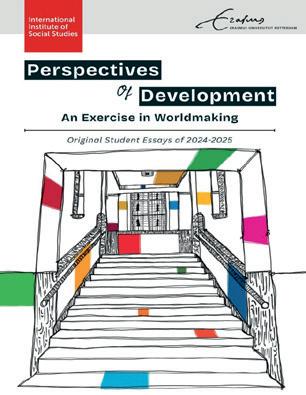
Perspectives of Development: An Exercise in Worldmaking 2024-2025
This collection of best MA student essays illustrates how a diverse student body with a host of professional and educational backgrounds, can contest, construct and redefine the notion of development.
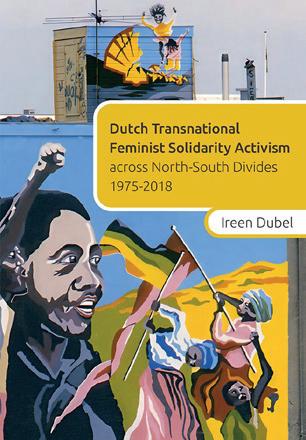
Dutch Transnational Feminist Solidarity Activism
Former staff member and student Ireen Dubel analyses the history of nearly five decades of Dutch transnational feminist solidarity with women’s rights in the Global South in particular.
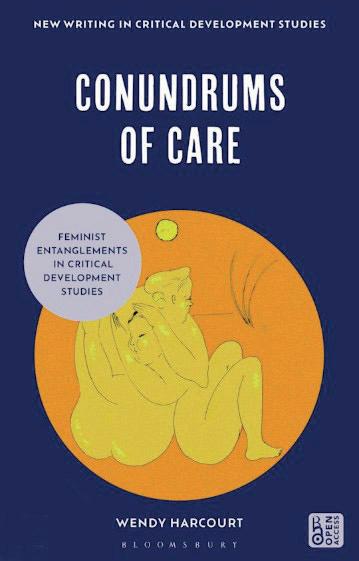
Conundrums
of Care
Professor Wendy Harcourt offers an overview of how the lively feminist debates on care, in both minority and majority worlds, are crucial for critical development studies.
Citizen Science and the Politics of Knowledge: Monitoring fossil fuel impacts with the ERICA project
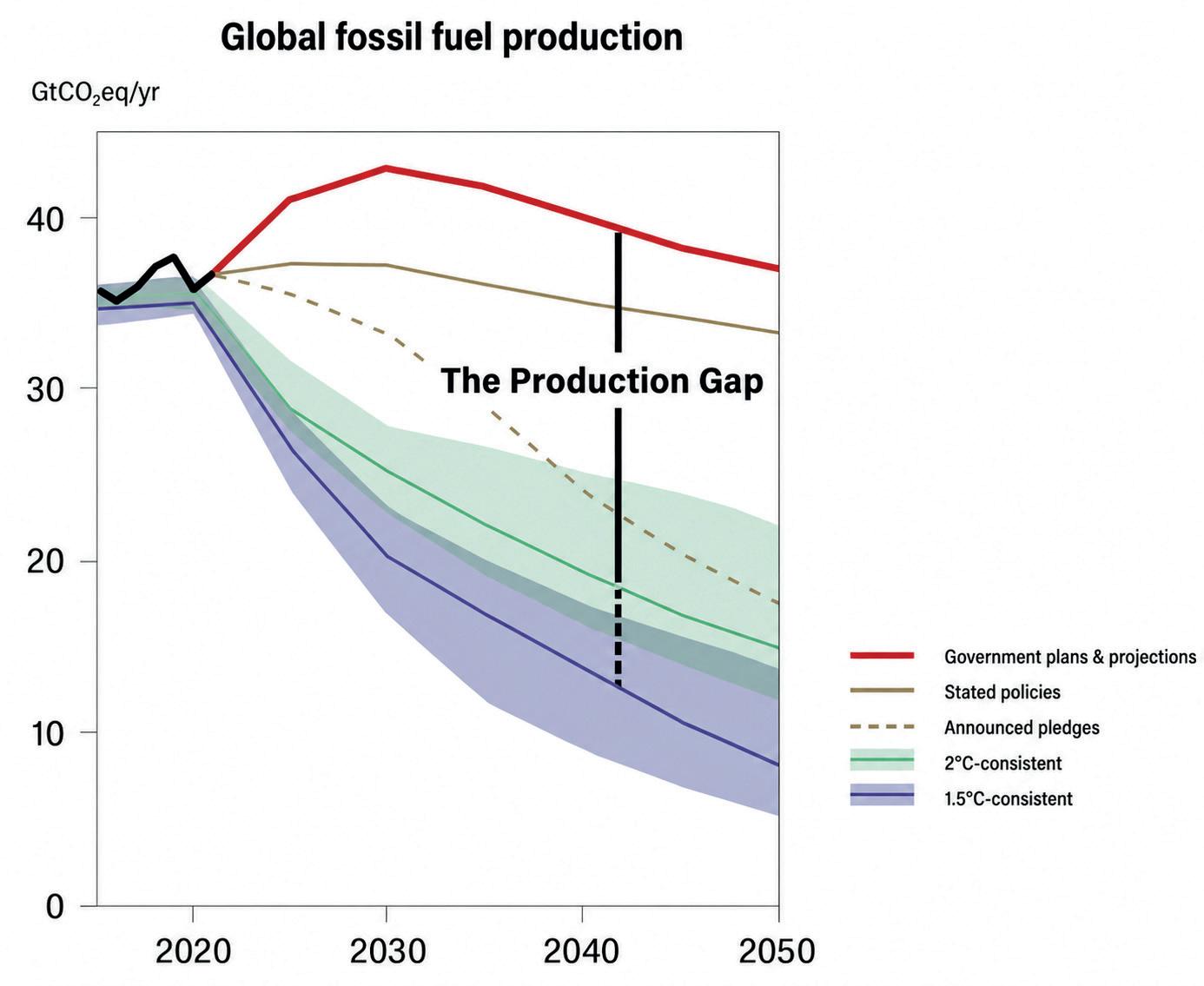
Ten years after the Paris Agreement, the contradictions of global climate governance are glaring (Pellegrini & Arsel 2022). Though governments and international institutions have reaffirmed their commitments to decarbonization, fossil fuel production is expanding. The 2023 Production Gap Report (see Fig. 1) warned that by 2030 global production of coal, oil and gas is projected to be more than double the amount compatible with the 1.5°C pathway. Governments still plan to produce more than double the amount of fossil fuels in 2030 than would be consistent with the Agreement (SEI, Climate Analytics, E3G, IISD and UNEP 2023). While diplomats negotiate scenarios of low fossil fuel use development, extraction continues to grow, and communities living near wells, refineries and pipelines are left to cope with increasing negative impacts on their air, water and land (Pellegrini et al. 2024).
This tension between promised scenarios and extractive realities is not new. It reflects the structural power of the fossil fuel industry, which not only drives emissions but also controls much of the knowledge about its own impacts. Environmental data are often provided by the industry itself, raising questions about reliability, accuracy and transparency. Independent research is chronically
Francesca Savoldi is a human geographer and political ecologist
Lorenzo Pellegrini is Professor of Economics of Environment and Development at ISS
Fig. 1 Global fossil fuel production 2020–2050.
Source: SEI, Climate Analytics, E3G, IISD and UNEP (2023)
underfunded, and regulatory authorities frequently rely on figures that are partial at best and misleading at worst. For affected communities, this means that even the most basic evidence, such as pollution levels in rivers or particulate concentrations in the air, can be disputed or dismissed, undermining their capacity to demand accountability (Ottinger 2021; Mena et al. 2019).
Against this backdrop, citizen science is increasingly showing it is both a practical tool and a political strategy. Citizen science monitoring initiatives can generate independent sources of evidence – producing pressure for a structural change (Leona et al. 2021). This participatory approach has already been exploited by thousands of communities facing environmental degradation to support grassroots campaigns, engage with politicians and institutions, contribute to academic
research and raise awareness locally (Ossola et al. 2024). Beyond collecting the data itself, citizen science builds forms of collective knowledge that connect lived experience with evidence based on data, generating opportunities for shifting the terms of debate. It moves environmental issues from expertdominated spaces into public arenas where communities can contest official narratives.
Over the last 15 years the European Union has increased its investment in citizen science. The ERICA project – Environmental monitoRIng through Civic engAgement, is one such EUfunded project. Awarded with funds from the Erasmus+ 2023 programme, this transdisciplinary initiative was developed via an international consortium formed by three European universities and four civic associations, led by the International Institute of Social Studies (part of
Erasmus University Rotterdam). The project focuses on fossil fuel industry impacts, aiming to empower citizens through citizen science, improve public understanding of climate change and nurture climate actions and environmental protection engagement.
What distinguishes ERICA from many existing initiatives is its emphasis on actionable knowledge: trained citizens collect and manage data that can directly inform public debate, policymaking, education and awareness campaigns. This data aims at empowering civil
tailored to stakeholder needs. It also goes beyond typical climate change projects by linking local environmental quality with climate change, enabling citizens to engage with both simultaneously. By making these connections visible, ERICA undermines the convenient separation between ‘local pollution’ and ‘global climate’ that often allows policymakers to sidestep responsibility. The project thus addresses both the everyday realities of fossil fuel extraction and the planetary crisis it sustains.
‘Environmental data are often provided by the industry itself, raising questions about reliability, accuracy and transparency’
society through accessible visualizations, supporting local authorities with reliable evidence and providing independent inputs for litigation, mediation and corporate accountability. Unlike most ad-hoc citizen science initiatives that address single variables, ERICA tries to generate multi-variable observations
The innovation here lies less in the technology used and more in the politics of knowledge behind it. By insisting on actionable information, ERICA directly challenges the dominant expertise long held by industry and, in many cases, by state institutions complicit with extractive expansion. Citizen-generated data can
be used to pressure companies, strengthen environmental litigation, expose regulatory failures and push municipalities or even EU bodies toward more ambitious climate action. By creating spaces where science, advocacy and civic participation intersect, the boundaries that usually keep these domains apart are productively destabilized. Adopting a post-normal science approach (Funtowicz and Ravetz 1993), ERICA foregrounds the sociopolitical dimensions of knowledge production, asking: who has the authority to define valid knowledge? What makes data good data? How should uncertainty be addressed? These questions are built on framings by several scholars: Shiv Visvanathan (2005) (who coined the term ‘cognitive justice’), philosopher Miranda Fricker (‘testimonial injustice’, 2007), STS scholar Barbara Allen (‘knowledge justice’, 2018). In its first year, the project has identified best practices for producing actionable knowledge, emphasizing synergies between sociotechnical and sociopolitical strategies. The former include visibility, clear communication, policy relevance and accuracy; the latter focus on inclusive participation, justice-
oriented approaches and socially robust data (Ossola et al. 2024).
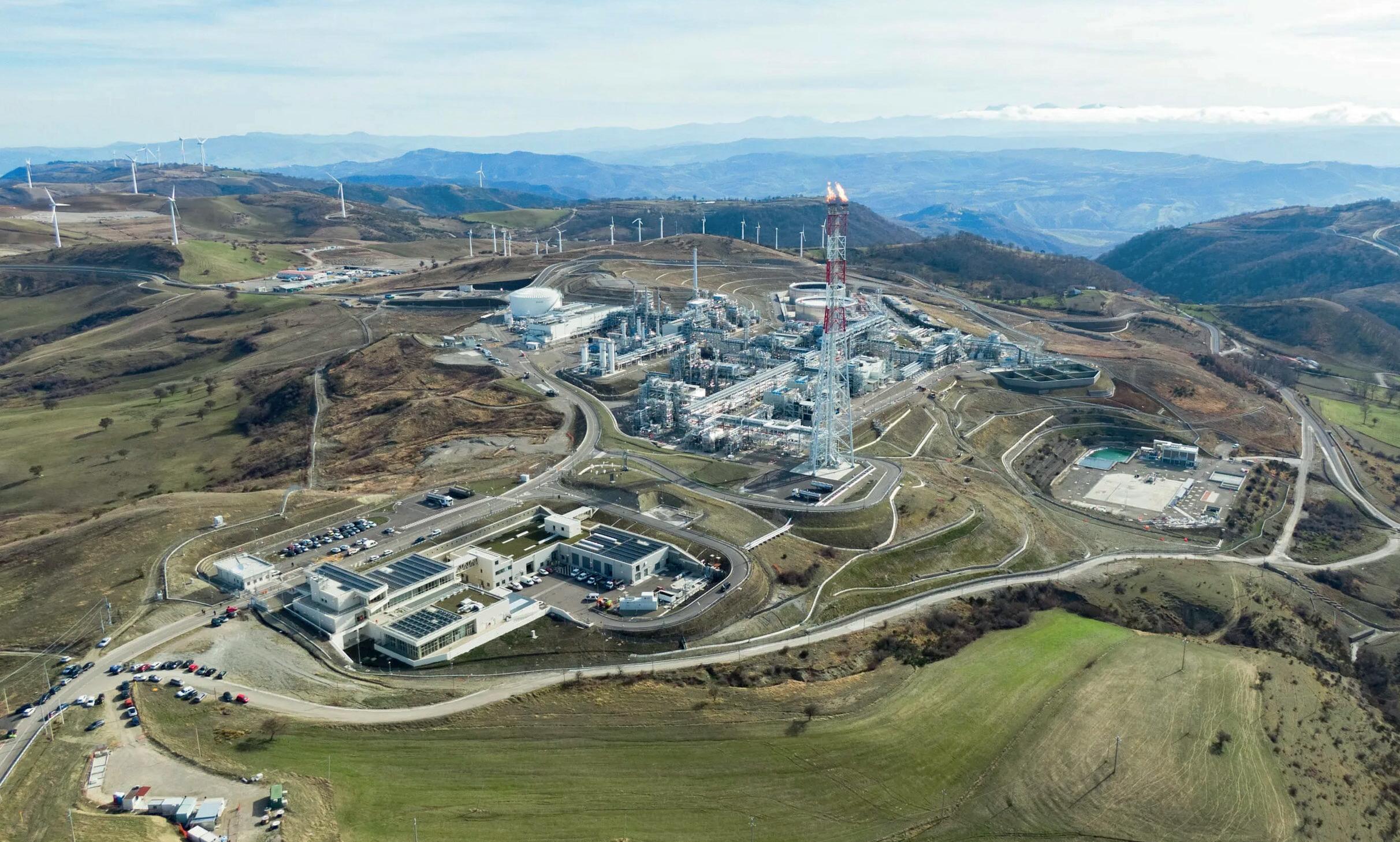
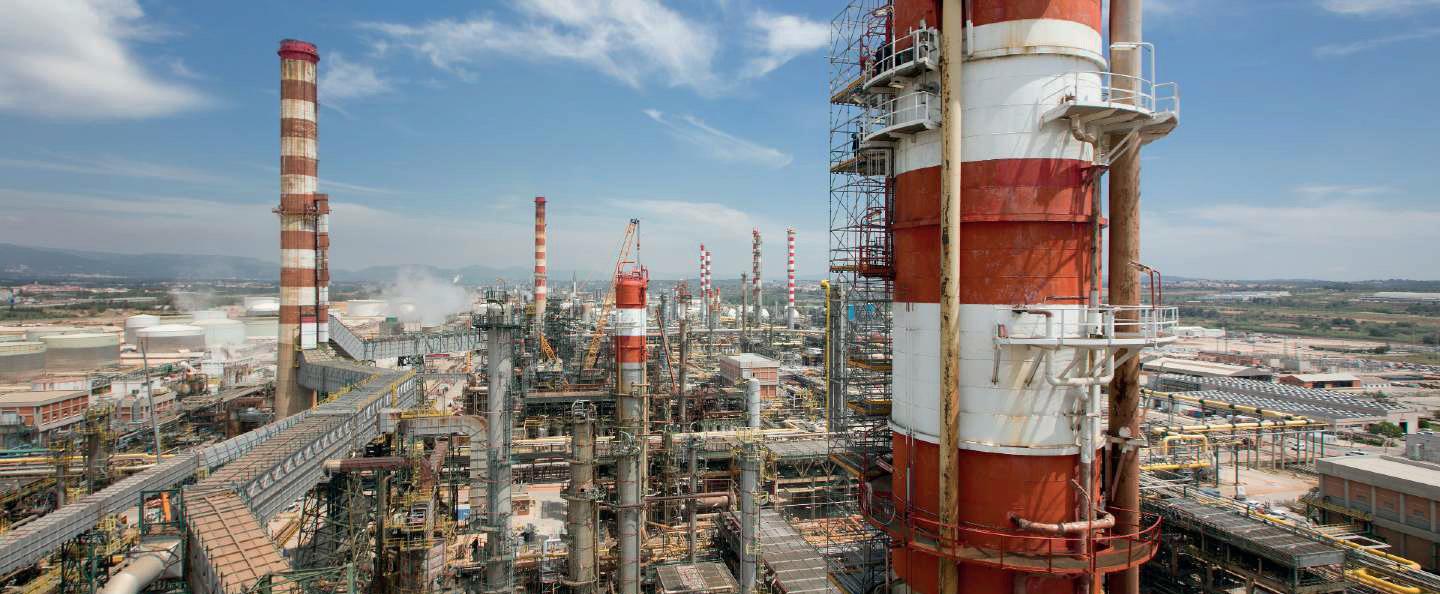
The project highlights the value of transnational collaboration by monitoring fossil fuel impacts across three European locations, fostering collective learning and knowledge exchange among diverse monitoring communities. ERICA engages academic and non-academic actors in Basilicata (Italy), home to Europe’s largest onshore oil fields; Tarragona (Spain), where a vast petrochemical complex borders a community of 600,000 residents; and Konin (Poland), a lignite region with open-pit mines and coal-fired power plants. In each,
The danger is that grassroots monitoring becomes absorbed into institutional routines without changing the underlying dynamics of extraction. ERICA seeks to resist this by emphasizing civic engagement, peer-to-peer learning and the creation of community monitoring practices that can be sustained beyond the project itself.
Ten years after the Paris Agreement, it is clear that international agreements alone cannot deliver climate justice. The distance between high-level commitments and local realities is simply too wide. Projects like ERICA highlight the need to democratize environmental knowledge, not as a technical add-on but as
‘What distinguishes ERICA from many existing initiatives is its emphasis on actionable knowledge’
grassroots mobilizations have emerged to challenge industry impacts through community monitoring and legal action. By producing an e-booklet with a literature review and best practices, and an e-learning platform with training modules specific for fossil fuel impacts, ERICA equips stakeholders with the skills and tools needed to generate actionable knowledge and strengthen local monitoring efforts. A counter-model of collective knowledge production – building transnational solidarity – is fundamental at a time when nationalism and corporate lobbying fragment climate policy.
The fossil fuel industry continues to position itself as indispensable, even as its operations produce environmental damage at every stage of the supply chain. Meanwhile, governments often treat citizen science as complementary to official data, rather than as a challenge to it, risking co-optation.
a political necessity. By enabling citizens to document, contest and publicize the impacts of fossil fuel extraction, citizen science becomes a form of resistance to both industrial pollution and the inertia and fragmentation of climate governance. It shifts the question from how much data we have to who controls it, who interprets it and who benefits from it.
Since the drafting of this article, ISS has started a new citizen science project: Monitoring and Acting for Human Rights, Environment and Social impact (MARMOT) with five non-academic partners (Source International, Smart Revolution, Swedwatch, Social IT, Centre d’Arbitrage Regional OHADAC) and Yaroslav Mudryi National Law University (Ukraine).
A new professional programme offering knowledge, skills and personal development to increase the impact of development organizations.
This hybrid executive programme is for managers, leaders, strategists, M&E specialists and business developers of aid agencies, donors, NGOs, consultancies, philanthropies and think tanks.
Starting 1 September 2026. 10% discount for ISS alumni!