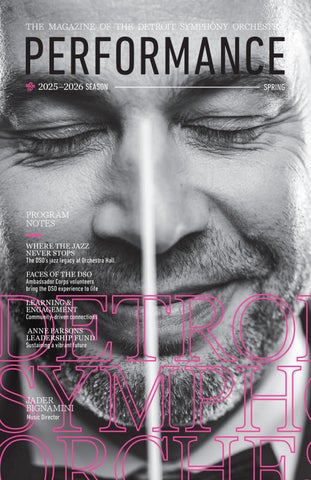
Performance Magazine - Spring Issue 2 - 2025–26 Season
PROGRAM NOTES
WHERE THE JAZZ NEVER STOPS
The DSO’s jazz legacy at Orchestra Hall
FACES OF THE DSO Ambassador Corps volunteers bring the DSO experience to life
LEARNING & ENGAGEMENT
Community-driven connections
ANNE PARSONS LEADERSHIP FUND
Sustaining a vibrant future
JADER BIGNAMINI
Music Director
DETROIT SYMPHONY ORCHESTRA
Hannah Engwall Elbialy, editor hengwall@dso.org
ECHO PUBLICATIONS, INC.
Tom Putters, publisher echopublications.com
Cover design by Jay Holladay
To advertise in Performance: visit echodetroit.com, call 248.582.9690 or email tom@echodetroit.com
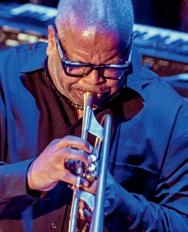
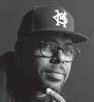
Terence Blanchard
dso.org
WELCOME
Dear Friends,
Welcome to Orchestra Hall! We hope this message finds you well, and that you are ready to be moved by the extraordinary performance ahead.
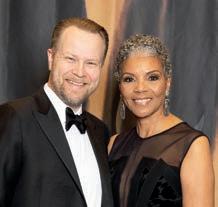
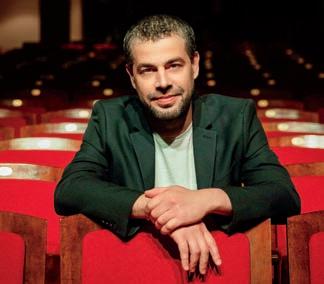
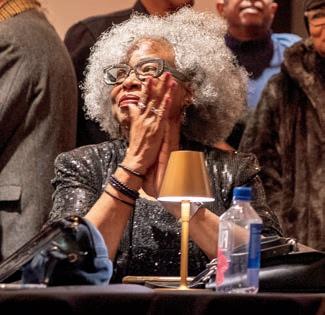
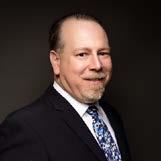
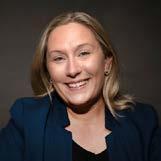
Erik and Faye at Classical Roots 2025
We are fresh off a meaningful milestone: the celebration of another successful Classical Roots season, marking the 25th anniversary of the Dr. Arthur L. Johnson – Honorable Damon Jerome Keith Classical Roots Celebration and launching a multi-year journey toward the 50th anniversary of the Classical Roots Concerts in 2028. We were proud to unveil a new interactive exhibition honoring the history, impact, and legacy of Classical Roots—featuring immersive storytelling, historic images, artifacts, and oral histories. On display now on the third floor of the William Davidson Atrium through 2028, it is a journey well worth taking. We invite you to explore it before or after today’s concert.
We are also pleased to celebrate the launch of the Legato Memory Café—a new monthly gathering welcoming people experiencing dementia or other cognitive changes, along with their care partners and loved ones. Each gathering fosters connection and support through social engagement, light refreshments, and a rotating activity or craft. We hope you’ll join us for an upcoming session, happening monthly through August right here at The Max.
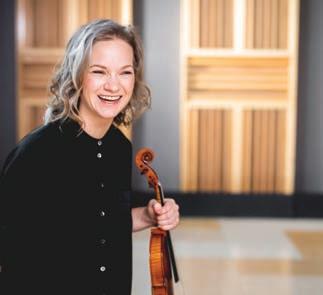
As the season heats up, there is much to look forward to. In May, legendary conductor Herbert Blomstedt returns to lead Mahler’s Ninth Symphony—a performance that promises to be transcendent. In June, the incomparable Hilary Hahn graces our stage to perform Mozart’s “Turkish” Violin Concerto. And throughout the warmer months, we have a diverse lineup of programs including Songs of America — a celebration of the nation’s 250th anniversary featuring vocalists Melinda Doolittle and Jimmie Herrod—as well as Pink Martini, Disney Pride in Concert, and unforgettable film concert experiences with Jurassic Park and Back to the Future.
We are also excited to continue partnerships this summer with The Henry Ford for our annual Salute to America program (this year conducted by Music Director Jader Bignamini!); with Interlochen for our residency up north; and with Detroit residents and local organizations for free concerts and events across our great city.
The season is in full bloom—and it is all the more vibrant because you are part of it. Thank you for being here. Now sit back, relax, and enjoy the concert.
With gratitude,
Erik Rönmark
Faye Alexander Nelson President & CEO Chair, Board of Directors
DETROIT SYMPHONY ORCHESTRA
JADER BIGNAMINI , Music Director
Music Directorship endowed by the Kresge Foundation
Assistant Conductor, Phillip & Lauren Fisher Community Ambassador
TIMPANI
Jeremy Epp
PRINCIPAL
Richard and Mona Alonzo Chair
Jay Ritchie
ASSISTANT PRINCIPAL
PERCUSSION
Joseph Becker
PRINCIPAL
Ruth Roby and Alfred R. Glancy III Chair
Andrés Pichardo-Rosenthal
ASSISTANT PRINCIPAL
William Cody Knicely Chair
Jay Ritchie
LIBRARIANS
Robert Stiles
PRINCIPAL
Ethan Allen
LEGACY CHAIRS
Principal Flute
Women’s Association for the DSO
Principal Cello
James C. Gordon
Oboe
Maggie Miller
PERSONNEL MANAGERS
Andrew Williams
DIRECTOR OF ORCHESTRA PERSONNEL
Benjamin Tisherman
MANAGER OF ORCHESTRA PERSONNEL
STAGE PERSONNEL
Dennis Rottell
STAGE MANAGER
Joe Corless
DEPARTMENT HEAD
William Dailing
DEPARTMENT HEAD
Zach Deater
DEPARTMENT HEAD
Isaac Eide
DEPARTMENT HEAD
Kurt Henry
DEPARTMENT HEAD
Matthew Pons
SENIOR AUDIO DEPARTMENT HEAD
Jason Tschantre
DEPARTMENT HEAD
-
PAST MUSIC DIRECTORS
Leonard Slatkin
MUSIC DIRECTOR LAUREATE
Neeme Järvi
MUSIC DIRECTOR EMERITUS
LEGEND
* These members may voluntarily revolve seating within the section on a regular basis
^ Leave of Absence
§ African American Orchestra Fellow
BEHIND THE BATON
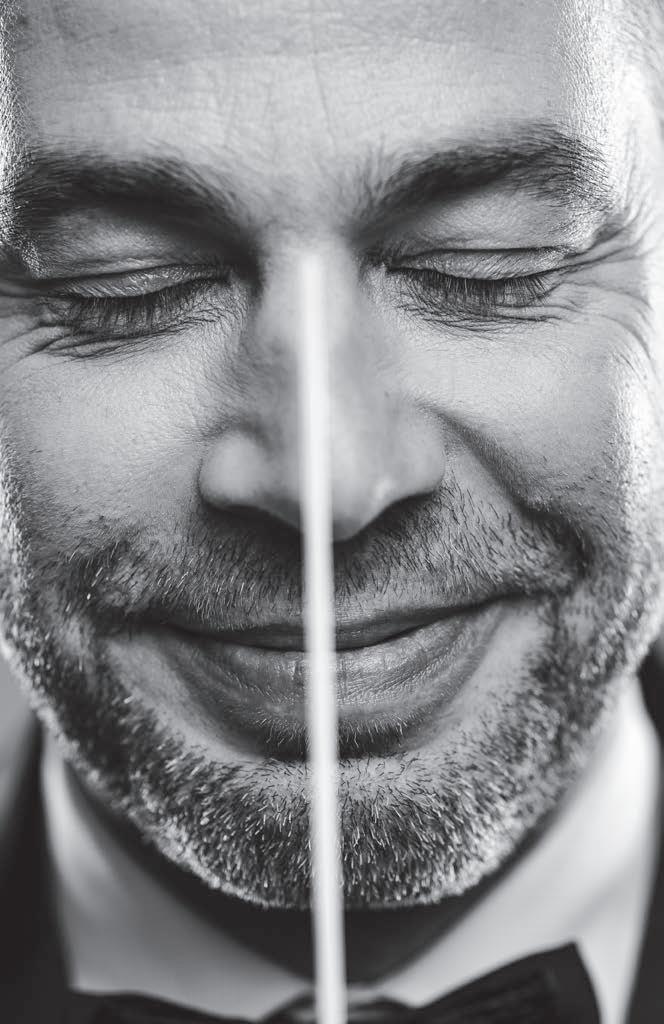
Jader Bignamini
MUSIC DIRECTORSHIP ENDOWED BY THE KRESGE FOUNDATION
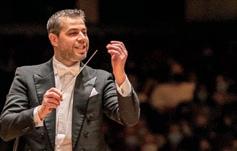
Jader Bignamini was introduced as the 18th music director of the Detroit Symphony Orchestra in January 2020, commencing with the 2020–2021 season. His infectious passion and artistic excellence set the tone for the seasons ahead, creating extraordinary music and establishing a close relationship with the orchestra. A jazz aficionado, he has immersed himself in Detroit’s rich jazz culture and the influences of American music.
A native of Crema, Italy, Bignamini studied at the Piacenza Music Conservatory and began his career as a musician (clarinet) with Orchestra Sinfonica La Verdi in Milan, later serving as the group’s resident conductor. Captivated by the music of legends like Mahler and Tchaikovsky, Bignamini explored their complexity and power, puzzling out the role that each instrument played in creating a larger-than-life sound. When he conducted his first professional concert at the age of 28, it didn’t feel like a departure, but an arrival.
In the years since, Bignamini has conducted some of the world’s most acclaimed orchestras and opera companies in venues across the globe including working with Riccardo Chailly on concerts of Mahler’s Eighth Symphony in 2013 and his concert debut at La Scala in 2015 for the opening season of La Sinfonica di Milano. Recent highlights include debuts with Opera de Paris, Deutsche Opera Berlin, Accademia di Santa Cecilia Orchestra, Washington’s National Symphony Orchestra, and the Houston, Dallas, Atlanta, Milwaukee, and Minnesota symphonies; The Cleveland Orchestra at the Blossom Festival; and at the Grand Teton Festival. He has also appeared with the BBC Symphony Orchestra and London Philharmonic; with the Metropolitan Opera, Canadian Opera Company, Vienna State Opera, Dutch National Opera, and Bayerische Staatsoper; in Montpellier for the Festival de Radio France; and had return engagements with Oper Frankfurt and Santa Fe Opera. In Italy, Bignamini has conducted numerous operas at Arena of Verona, Rome’s Teatro dell’Opera, Teatro Massimo in Palermo, the Verdi Festival in Parma, Rossini Opera Festival in Pesaro, and La Fenice in Venice. In Asia, he has conducted the Osaka Philharmonic, Yomiuri Nippon Symphony Orchestra, and others. Bignamini enjoys working with the next generation of musicians and is a regular guest of Interlochen Center for the Arts with the DSO and of the Asian Youth Orchestra.
When Bignamini leads an orchestra in symphonic repertoire, he conducts without a score, preferring to make direct eye contact with the musicians. He conducts from the heart, forging a profound connection with musicians that shines through both onstage and off. He both embodies and exudes the excellence and enthusiasm that has long distinguished the DSO’s artistry.
Enrico Lopez-Yañez
PRINCIPAL POPS CONDUCTOR AND DEVEREAUX FAMILY CHAIR
Celebrated for his charismatic stage presence, genre-defining collaborations, and passion for making orchestral music accessible to all, Enrico LopezYañez is one of the most innovative and in-demand conductors in North America. He currently serves as Principal Pops Conductor of the Detroit Symphony Orchestra and Pacific Symphony, Principal Conductor of Dallas Symphony Presents, and Principal Guest Conductor of Pops at the Indianapolis Symphony Orchestra. He previously spent eight seasons conducting the Nashville Symphony, where he also served as their Principal Pops Conductor.
As a trailblazer in the symphonic world, Lopez-Yañez has premiered dozens of groundbreaking symphonic collaborations with artists including Dolly Parton, Kelsea Ballerini, and Tituss Burgess. His wide-ranging collaborations span genres and generations, featuring artists such as Nas, Itzhak Perlman, Gladys Knight, Ben Folds, The Beach Boys, and Kenny G.
As a composer and arranger, he has written for artists like Big Sean and Mariachi Los Camperos, and he has been commissioned by major orchestras across the U.S. A passionate advocate for Latin music, he has arranged and produced concerts featuring Latin Fire, Mariachi Los Camperos, and The Three Mexican Tenors, and collaborated with Aida Cuevas, Arturo Sandoval, Lila Downs, and Lupita Infante.
Lopez-Yañez is also Artistic Director and Co-Founder of Symphonica Productions, LLC, a creative production company developing innovative pops, family, and educational concerts for orchestras.
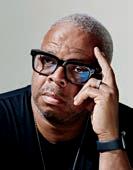
Terence Blanchard
FRED A. ERB JAZZ CREATIVE DIRECTOR CHAIR
Trumpeter, bandleader, composer, and educator
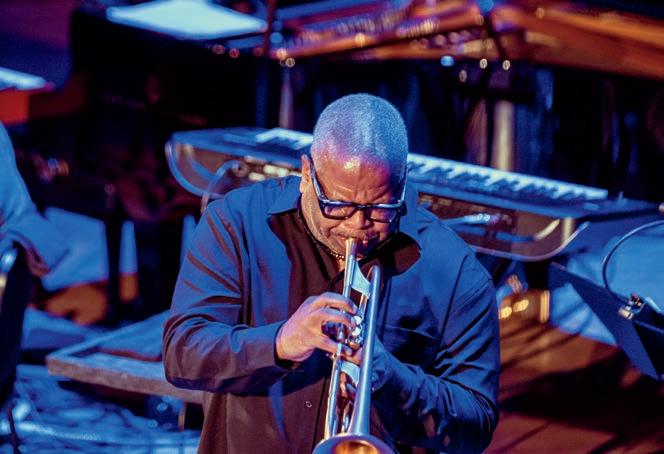
Terence Blanchard has served as the DSO’s Fred A. Erb Jazz Creative Director Chair since 2012. He is recognized globally as one of jazz’s most esteemed trumpeters and a prolific composer for film, television, opera, Broadway, orchestras, and his own ensembles, including the E-Collective and Turtle Island Quartet. Blanchard’s second opera, Fire Shut Up in My Bones, opened The Metropolitan Opera’s 2021–22 season, making it the first opera by an African American composer to premiere at the Met, and earning a GRAMMY® for Best Opera Recording. With a libretto by Kasi Lemmons, the opera was commissioned by Opera Theatre of Saint Louis, where it premiered in 2019. Fire returned to the Met for a second run in April 2024. Blanchard’s first opera, Champion, premiered in 2013 and starred Denyce Graves with a libretto from Michael Cristofer. Its April 2023 premiere at the Met received a GRAMMY® for Best Opera Recording. Blanchard has released 20 solo albums, garnered 15 GRAMMY® nominations and eight wins, composed for more than 60 films including more than 20 projects with frequent collaborator Spike Lee, and received 10 major commissions. He is a 2024 NEA Jazz Master and member of the 2024 class of awardees for the American Academy of Arts and Letters, and currently serves as the Executive Artistic Director for SFJAZZ.
Visit terenceblanchard.com for more.
DETROIT SYMPHONY ORCHESTRA, INC.
LIFETIME DIRECTORS
Samuel Frankel◊
Stanley Frankel
David Handleman, Sr.◊
Dr. Arthur L. Johnson ◊
Chacona W. Baugh
Penny B. Blumenstein
Richard A. Brodie
Marianne Endicott
Sidney Forbes
Faye Alexander Nelson Chair
Erik Rönmark President & CEO
Shirley Stancato Vice Chair
James B. Nicholson
Barbara Van Dusen
Clyde Wu, M.D.◊
CHAIRS
Peter D. Cummings
Mark A. Davidoff
Phillip Wm. Fisher
Stanley Frankel
DIRECTORS EMERITI
Herman H. Frankel
Dr. Gloria Heppner
Ronald Horwitz
Harold Kulish
Bonnie Larson
Arthur C. Liebler
David McCammon
Marilyn Pincus
OFFICERS OF THE BOARD OF DIRECTORS
Laura Trudeau Treasurer
Renato Jamett Secretary
Ric Huttenlocher Officer at Large
Daniel J. Kaufman Officer at Large
BOARD OF DIRECTORS
EMERITI
Robert S. Miller
James B. Nicholson
David T. Provost
Glenda Price
Bernard I. Robertson
Marjorie S. Saulson
Jane Sherman
Arthur A. Weiss
David Nicholson Officer at Large
Dr. David M. Wu, M.D. Officer at Large
Directors are responsible for maintaining a culture of accountability, resource development, and strategic thinking. As fiduciaries, Directors oversee the artistic and cultural health and strategic direction of the DSO.
Michael Bickers
Elena Centeio
Rodney Cole
Dr. Marcus Collins
Jeremy Epp, Orchestra Representative
Aaron Frankel
Ralph J. Gerson
Laura Grannemann
Dr. Herman B. Gray, M.D.
Laura Hernandez-Romine
Governing Members Chair
Rev. Nicholas Hood III
Richard Huttenlocher
Renato Jamett, Trustee Chair
Daniel J. Kaufman
Xavier Mosquet
Faye Alexander Nelson, Board Chair
David Nicholson
Arthur T. O’Reilly
Shirley Stancato
Marian Tănău, Orchestra
BOARD OF TRUSTEES
Representative Yoni Torgow
Laura J. Trudeau
James G. Vella
Dr. David M. Wu, M.D. Ellen Hill Zeringue
Trustees are a diverse group of community leaders who infuse creative thinking and innovation into how the DSO strives to achieve both artistic vitality and organizational sustainability.
Renato Jamett, Trustee Chair
Richard Alonzo
Hadas Bernard
Janice Bernick
Elizabeth Boone
Gwen Bowlby
Dr. Betty Chu, M.D.
Joanne Danto
Stephen D’Arcy
Maureen T. D’Avanzo
Cara Dietz
Afa Sadykhly Dworkin
Emily Elmer
James C. Farber
Amanda Fisher
Linda D. Forte
Carolynn Frankel
Christa Funk
Robert Gillette
Jody Glancy
Mary Ann Gorlin
Darby Hadley
Michele Hodges
Julie Hollinshead
Cheryl P. Johnson
Laurel Kalkanis
Jay Kapadia
Joel D. Kellman
John Kim
Jennette Smith Kotila
Leonard LaRocca
Linda Dresner Levy
Gene LoVasco
Anthony McCree
Kristen McLennan
Tito Melega
Lydia Michael
Sandy Morrison
Frederick J. Morsches
Jennifer Muse
Geoffrey S. Nathan
Sean M. Neall
Eric Nemeth
Maury Okun
Jackie Paige
Priscilla Perkins
Vivian Pickard
Denise Fair Razo
Gerrit Reepmeyer
Rochelle Riley
Jim Rose, Jr.
Laurie DeMond-Rosen
Carlo Serraiocco
Lois L. Shaevsky
Elliot Shafer
Shiv Shivaraman
Dean P. Simmer
Richard Sonenklar
Dhivya Srinivasan
Lilly Stotland
Rob Tanner
Nate Wallace
Gwen Weiner
Donnell White
Jeffrey Williams
R. Jamison Williams
Maddie Wu
WHERE THE NEVER STOPS
THE DSO’S JAZZ LEGACY AT ORCHESTRA HALL
BY HANNAH ENGWALL ELBIALY
Detroit has always had something to say through music. Long before the city became synonymous with the rhythms of Motown, Detroit was a jazz mecca. From the intimate corners of Baker’s Keyboard Lounge on Livernois to the vibrant stages throughout Paradise Valley (the heart of African American cultural life for
decades), Detroit cultivated a distinctive jazz tradition. The city was a generator of talent, a place where the music was made and remade. Names that became legends—Tommy Flanagan, Kenny Burrell, Yusef Lateef, Betty Carter—were shaped on these streets. And at the corner of Woodward and Parsons, Orchestra Hall witnessed it all.
The DSO is the only major American orchestra to present a full jazz series on its main stage.
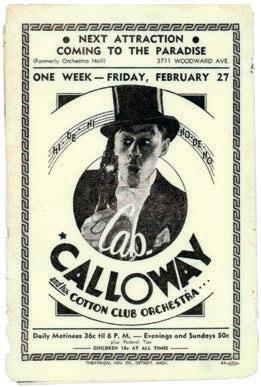
During the DSO’s hiatus from the venue, Orchestra Hall reopened on December 26, 1941 as the Paradise Theatre with a thunderous performance by Louis Armstrong. Over the next decade, the Paradise became one of America’s elite venues for Black entertainment, alongside New York’s Apollo, Chicago’s Regal, and Los Angeles’s Lincoln theaters. As Mark Stryker documents in Destiny: 100 Years of Music, Magic, and Community at Orchestra Hall in Detroit the roster of performers who headlined the Paradise reads like an encyclopedia of jazz’s golden age: Duke Ellington, Count Basie, Billie Holiday, Ella Fitzgerald, Charlie Parker, Dizzy Gillespie, Sarah Vaughan, Cab Calloway, Dinah Washington, and dozens more.
Many of the Detroit musicians who would go on to define jazz in the 1950s and ‘60s drew their earliest inspiration from what they heard on this stage— young listeners absorbing the energy of the touring giants, then channeling it into a thriving local scene that exported talent to the national stage. When the Paradise closed its doors in 1951, following the decline of the big band era and shifting popular tastes, the curtain came down on one chapter of Orchestra Hall’s story, but the spirit of jazz never left.
That legacy continues today, with intention. The Detroit Symphony Orchestra is the only major American orchestra to present a full jazz series on its main stage, and that series carries a name chosen to honor exactly what happened here from 1941 to 1951: the Paradise Jazz Series. Established in 1999, the series has evolved into one of the most distinctive jazz programming traditions in the country. From iconic mainstays to boundarypushing artists, each performance carries the soul and improvisational spirit that made Detroit a musical force. Over the years, the DSO has welcomed luminaries including Herbie Hancock, Ravi Coltrane, Ron Carter, Chucho Valdés, Cecile McLorin Salvant, and Endea Owens, alongside emerging artists who represent the genre’s future. At the heart of the series is Terence Blanchard, the acclaimed trumpeter, bandleader, and Oscar and GRAMMY® Awardwinning composer who has served as the DSO’s Fred A. Erb Jazz Creative Director Chair since 2012. Co-curating the Paradise Jazz Series with a deep understanding of both jazz’s history and its future, Blanchard brings a programming vision that spans avant-garde to traditional.
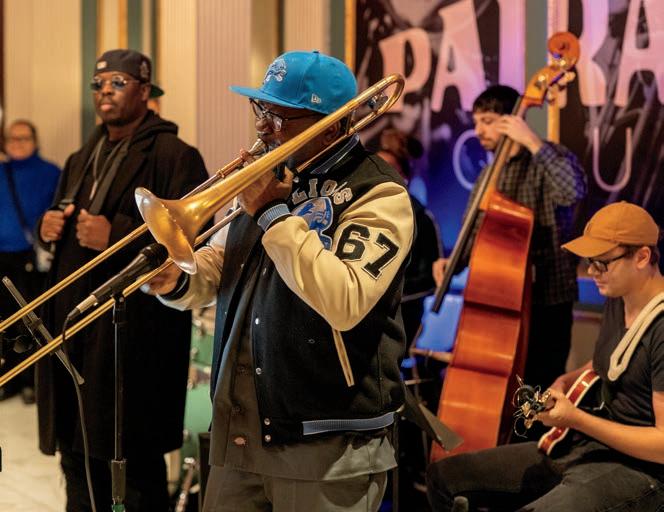
The DSO’s commitment to this legacy extends beyond the Paradise Jazz Series. In 2022, to celebrate the 80th anniversary of the Paradise Theatre’s opening, the DSO formed the Paradise Theatre Big Band—an ensemble honoring both the theatre and the broader cultural world that surrounded it: the Paradise Valley
and Black Bottom neighborhoods that served as a beacon of Black culture, commerce, and creativity in Detroit from 1920 through 1950. Led by GRAMMY® Award-nominated trumpeter, composer, and educator Kris Johnson— himself an alumnus of the DSO’s Civic Youth Ensembles—the band is a multi-generational group of Detroit musicians that prides itself on innovative arrangements and hard-hitting, genre-bending performances.
In February 2026, the Paradise Theatre Big Band returned to the Orchestra Hall stage, performing on a mashup Paradise Jazz Series and PVS Classical Series weekend spotlighting generations of Detroit musicians. The program
culminated in an electric side-by-side performance of Wynton Marsalis’s Swing Symphony with the musicians of the DSO, which was recorded for future release.
The DSO also looks to the future by celebrating and supporting young musicians. Before each Paradise Jazz Series concert, audiences are treated to Civic Jazz Live! in the Peter D. and Julie F. Cummings Cube—a showcase featuring student musicians from the Civic Youth Ensembles’ Civic Jazz Orchestra. The ensemble consists of advanced, high school age jazz students from across metro Detroit, many of whom have performed on stages such as the Detroit Jazz Festival, and who regularly gig throughout southeast Michigan. Starting off Friday jazz evenings with
The Vincent Chandler Experience performs in the Paradise Lounge, December 2025
these students sets a tone of possibility and represents the living continuation of the local jazz tradition.
The jazz experience at the DSO is something that has to be felt to be fully understood. It begins before a single note is played as guests gather in the William Davidson Atrium and enter to admire the ornate detail of Orchestra Hall. People strike impromptu poses on the grand staircase, soak in more than a century of history, and connect with fellow concert goers who share the same reverence for this music and this place. Then, when the music starts, the hall comes alive in a way that is uniquely Detroit: audiences swaying, standing, grooving freely, the boundary between performer and listener dissolving in the way only great live jazz can. It is, in every sense, a community gathering, reminiscent of the same spirit that packed the Paradise Theatre night after night.
settle into the spirit of the evening. And when the concert ends, the night doesn’t have to. The Late Set is a new post-concert event following each Paradise Jazz Series performance— a 90-minute, one-set showcase of the best in local Detroit jazz, with a full bar and small bites in an intimate club-like atmosphere. Debuting in December 2025 after the Terence Blanchard: Malcolm X Jazz Suite concert, The Late Set’s inaugural performance by The Vincent Chandler Experience turned the Paradise Lounge bandstand into an all-out celebration. The response was so enthusiastic that subsequent Late Sets had to move to larger venues to accommodate the crowd, and artists have been booked through the end of the 2025–26 season to keep the fun going.
For those who want to extend the evening, the newly revamped Paradise Lounge on the second level of Orchestra Hall offers an exquisite setting. With large windows overlooking Woodward Avenue and the corner of Parsons Street— adjacent to the original office of the DSO’s first Music Director, Ossip Gabrilowitsch— the lounge is steeped in history. Named as a direct nod to both the Paradise Valley neighborhood and the Paradise Theatre era, it features fully-coursed, sit-down dining from catering partner Abode Fine Dining, along with specially crafted cocktails. An offering worth considering for those who want to arrive early and
More than eight decades since Louis Armstrong christened the Paradise Theatre, that same stage is home to the Detroit Symphony Orchestra, and the music has never stopped. The DSO has proudly built a jazz culture that honors the past while embracing the full spirit of what jazz is and can become. It is programming with purpose, rooted in connection, and alive with the energy of Detroit.
This is jazz at the DSO—more than music, it is an experience of immaculate vibes and genuine community. It is the feeling of a great city remembering where it came from, and celebrating, with abundant joy and soul, where it is going.
Faces of the DSO Ambassador Corps volunteers bring the DSO experience to life
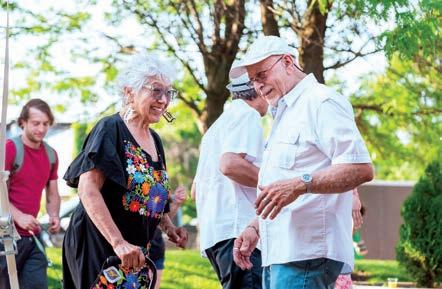
Before guests enter Orchestra Hall, before the lights dim and the conductor raises the baton, there is someone at the door to welcome you. A person who might know your name, can help you to your seat, and genuinely wants you to have an unforgettable experience. That person is, in all likelihood, a member of the DSO Ambassador Corps—one of the dedicated volunteers who serve as the heart of the DSO, and who have, in many cases, been showing up for this organization for decades.
The Ambassador Corps is the DSO’s volunteer program, built around a simple idea: that a love of music is one of the most connective forces there is, and that the people who share it most enthusiastically should be at the center of the experience. Described as a magnet for volunteerism—with representation from across Detroit’s diverse communities, united by a love of music—the Ambassador Corps brings together people of all walks of life around a common purpose: to serve the DSO, its audiences, and its mission.
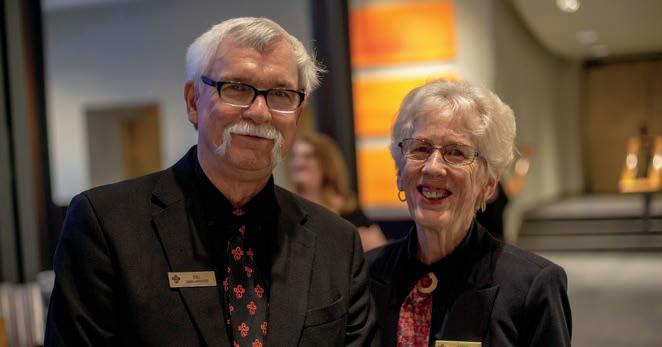
Usher Supervisor Bill Arendall, pictured above with his wife and fellow volunteer Karen, says this about his experience with the DSO: “I work with DSO staff and patrons because I enjoy the professionalism of staff at so many levels, and I enjoy our patrons and volunteers. I am proud to be a current face of the program and encourage people to join. As I approach 25 years as a Supervisor, I look forward to more.”
During any given concert at the Max M. & Marjorie S. Fisher Music Center or venues across the community, Ambassador Corps volunteers can be found throughout the building—greeting patrons at the door, directing guests to their seats, staffing the retail store and merchandise pop-ups, assisting at Will Call, and creating moments of warmth and connection that set the tone for the entire event. Their guiding motto says it all: happy, hospitable, and helpful.
For those more interested in day-to-day operations, the role of an Ambassador extends beyond the logistics of a concert night. The corps includes a Patron Loyalty
program through which volunteers build genuine, ongoing relationships with DSO audiences. Subscriber ambassadors help fellow subscribers connect around events, “surprise and delight” volunteers create unexpected moments of appreciation, and others reach out directly to donors by phone with a personal expression of gratitude that no email can replicate.
Volunteers also extend the DSO’s presence beyond Orchestra Hall itself. Many assist with special events, staff the Herman and Sharon Frankel Donor Lounge, or support DSO staff with operational needs. The breadth of the program means there is a role for virtually every interest and schedule.
For volunteers who feel called to community and education work, the Ambassador Corps offers opportunities that bring the DSO’s mission to life in the broader Detroit community. On Saturday mornings, volunteers support creative, hands-on activities for children during Tiny Tots and Young People’s Family Concerts, helping introduce the youngest audiences to the joy of live music. Others attend Educational Concert Series webcasts inside Detroit Public School classrooms— witnessing firsthand the impact the DSO’s educational programming has on students across the city.
not simply an institution they admire from the outside; it is a place they have made their own, a community they have helped to build, a musical home they return to.
Volunteerism at the DSO offers an experience of the orchestra that few other relationships with the organization can match. Ambassadors are present for the full arc of an event—the anticipation, the arrival of the audience, the performance itself, and the warmth of the conversation afterward. They witness the moments when a first-time concertgoer’s face lights up, when a subscriber of thirty years finds their favorite seat, when the music moves a crowd in a way that stops everyone in their tracks.
These roles reflect the DSO’s core values in action: collaboration, inclusion, innovation, and a deep commitment to the communities the orchestra serves. For volunteers, these experiences offer something equally valuable—the opportunity to engage with like-minded individuals and see the DSO’s mission ripple outward.
What keeps Ambassador Corps volunteers coming back season after season is something that is difficult to quantify but impossible to miss when you encounter it. It is the genuine sense of belonging that comes from being close to something you love. For many, the DSO is
The Ambassador Corps formally celebrates this devotion each year with Ambassador Appreciation Night, a dedicated evening of recognition that honors every member of the Corps for the extraordinary contributions they make. And each fall, an annual orientation brings together new and returning volunteers alike, setting the tone for a season of service and connection.
The Detroit Symphony Orchestra is grateful—deeply, genuinely grateful—to every Ambassador who has ever held open a door, answered a question, dialed a donor’s number, or made a patron feel that Orchestra Hall is their home too.
The Ambassador Corps is often a first impression, and a lasting one.
If you love the DSO and have ever wanted a closer connection to the music and the mission, the Ambassador Corps is waiting. Volunteering is an opportunity to give back to an organization that gives so much—and to find, in a group of fellow music lovers, something that feels a lot like home.
Learn more and sign up by scanning the code:
LEARNING & ENGAGEMENT
COMMUNITYDRIVEN CONNECTIONS
BY MARISA JACQUES
The Detroit Symphony Orchestra’s Detroit Neighborhood Initiative (DNI) is a process of dialogue and planning driven by community connection, resulting in productive partnerships that reflect a shared commitment to the growth and well-being of our city. Building and understanding the diverse experiences and perspectives of people across our city helps the DSO align with the priorities of Detroit residents in meaningful, impactful ways, leading to the co-creation of musical experiences that celebrate Detroit artists and musicians and offer connections to resources and future cultural experiences. Starting with just two focus neighborhoods in 2020, the DSO’s Detroit Strategy programming now engages people in every district of the city.
now informs experiences in early childhood, student development, economic growth, and health and social services. Thus, the Detroit Neighborhood Initiative was a branch that grew from this foundation of listening.
Now a tradition in neighborhoods like Southwest Detroit, Chandler Park, and Northwest Goldberg, DNI musical experiences will continue in summer 2026. Free and accessible to all, join the DSO and our partners to experience performances by DSO musicians, interact with the music, discover the work of local artists, and learn about a wide range of resources available for people of all ages. Performances will include Anthems of the World Cup at Mexicantown CDC Mercado Plaza on May 16, 2026, Chandler Park Sounds of Summer
The work that led to the creation of DNI has been a priority for over a decade, reaching a milestone in 2017 with the launch of the DSO’s Social Progress Initiative. With this initiative, the DSO committed to opening the dialogue around the transformative power of positive musical experiences. As this ongoing dialogue evolved, the Social Progress Initiative grew into Detroit Strategy in 2020—an organization-wide approach to respectful engagement with Detroiters and our city. Listening and responsiveness is at the core of Detroit Strategy, which
Concert on June 6, Legacy in Sound: A Tribute to Detroit at Second Ebenezer Church on June 17, Clark Park Culture and Arts Festival on June 27, and Chandler Park Community Arts and Music Festival on July 25. Through Detroit Strategy, the DSO has engaged more than 200,000 people over the past five years and partnered with 300 community-serving organizations, reaching over 50,000 people each year. Visit dso.org/dni to learn more about DNI performances.
ENRICO LOPEZ-YAÑEZ
Principal Pops Conductor
Devereaux Family Chair
DETROIT SYMPHONY ORCHESTRA
JADER BIGNAMINI , Music Director Music Directorship endowed by the Kresge Foundation
TERENCE BLANCHARD
Fred A. Erb Jazz Creative Director Chair
TABITA BERGLUND Principal Guest Conductor
PVS CLASSICAL SERIES
Title Sponsor:
INGRID MARTIN
Assistant Conductor, Phillip & Lauren Fisher Community Ambassador
TCHAIKOVSKY’S SWAN LAKE AND OTHER TALES
Friday, May 22, 2026 at 8 p.m.
Saturday, May 23, 2026 at 8 p.m.
Sunday, May 24, 2026 at 3 p.m. in Orchestra Hall
HANNU LINTU, conductor
John Adams Slonimsky’s Earbox (b. 1947)
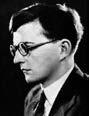
Dmitri Shostakovich Cello Concerto No. 1 in E-flat major, Op. 107 (1906–1975) I. Allegretto
II. Moderato
III. Cadenza
IV. Allegro con moto Wei Yu, cello
Intermission
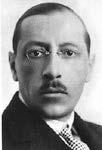
Igor Stravinsky Le Chant du rossignol (1882–1971) (The Song of the Nightingale)
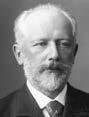
Piotr Ilyich Tchaikovsky Suite from Swan Lake, Op. 20 (1840–1893) I. Scène
II. Valse
III. Dance of the Swans
IV. Scène
V. Hungarian Dance, Czardas
VIII. Finale
Saturday’s performance will be webcast via our exclusive Live from Orchestra Hall series, presented by Ford Philanthropy. Technology support comes from the John S. and James L. Knight Foundation.
Flash photography, extended video recording, tripods, and cameras with detachable lenses are strictly prohibited.
OfSlonimsky’s Earbox, John Adams writes the following:
“Slonimsky’s Earbox was composed in 1995 on a commission from two orchestras: the Hallé Orchestra in Manchester, England and the Oregon Symphony in Portland, Oregon. The work is dedicated to Kent Nagano, conductor, longtime friend, and a constant supporter of my music. Kent conducted the world premiere in September of 1996 in the new Bridgewater Hall in Manchester, England. The American premiere was conducted by James de Preist, another friend and proponent, who also presented the work the following year with the Boston Symphony Orchestra.
Slonimsky’s Earbox marked an important turning point in my orchestral music, coming as it did after a period of harmonic and contrapuntal experimentation that began with The Death of Klinghoffer and progressed through the Chamber Symphony and Violin Concerto. The new piece seems in retrospect to have pointed toward a successful integration of the older minimalist techniques (repetitive motifs, steady background pulse, and stable harmonic areas) the more complex, more actively contrapuntal language of the post-Klinghoffer pieces. The model
for this piece was the exploding first few moments of Stravinsky’s symphonic poem, Le Chant du Rossignol (The Song of the Nightingale). The way Stravinsky’s orchestra bursts out in a brilliant eruption of colors, shapes, and sounds. What also attracted me was Stravinsky’s use of modal scales, a practice doubtless influenced by his Russian roots but which he abandoned soon after. I have long thought that the Russians—not only Stravinsky but composers like Scriabin and Tcherepnin—had begun something very important in their use of modal scales and harmonies, a direction that unfortunately was overwhelmed by more prestigious practices such as Neoclassicism and Serialism.
Another Russian, Nicolas Slonimsky, who was best known in this country as being the witty author of several books on music, had in 1947 compiled an exhaustive compendium of scales and melodic patterns (i.e. modes) called The Thesaurus of Scales and Melodic Patterns Slonimsky was a character of mindboggling abilities. He had a completely eidetic memory and could recall with absolute precision the smallest detail of something he’d read forty years before. He lived to be over a hundred, and his century spanned Czarist St. Petersburg, where he was educated as a child, to Santa Monica, California, where he lived into the 1990s, and where I’d come to know him. His autobiography, Perfect Pitch, stands alongside Berlioz’s memoirs as one of the few genuinely original literary works about music.
The ‘Slonimsky’ in my title not only memorializes his wit and hyper-energetic activity, but also acknowledged my great debt to his thesaurus, whose scales and resulting harmonies have had a singular impact on my music since the Chamber Symphony of 1992. “Earbox” might be a word worthy of Slonimsky himself, a
coiner who never tired of minting his own.”
The DSO first and most recently performed John Adams’s Slonimsky’s Earbox in October 1997, conducted by James DePreist.
Cello Concerto No. 1 in E-flat major, Op. 107
Composed 1959 | Premiered 1959
DMITRI SHOSTAKOVICH
B. September 25, 1906, Saint Petersburg, Russia
D. August 9, 1975, Moscow, Russia
Scored for solo cello, 2 flutes (one doubling on piccolo), 2 oboes, 2 clarinets, 2 bassoons (one doubling on contrabassoon), horn, timpani, celeste, and strings. (Approx. 28 minutes)
DmitriShostakovich’s first cello concerto is the fruit of a silent collaboration between the composer and Russia’s foremost cellist at the time, Mstislav Rostropovich. The pair frequently concertized together, and Rostropovich asked Shostakovich’s wife if it would be appropriate to ask the composer to commission a cello piece. Knowing about her husband’s artistic testiness, wife Margarita suggested that Rostropovich not bother Shostakovich, so he held his tongue; but a few years later the composer presented the cellist with a piece written just for him, as though the question had already been asked.
As in many of Shostakovich’s works, tragedy and black humor stand side by side in this concerto. It eschews the long introduction and lyrical tone often found in the opening movement of a concerto and instead begins with an ironic march, borrowed from Shostakovich’s film music and suggesting a walk to the gallows.
The movement is in pithy sonata form, with two themes introduced by the cello. The latter is picked up by the French horn, the only brass instrument used for the piece.
The extended second movement forms the concerto’s emotional core. It begins with a plaintive chorale played by the strings followed by a slow horn call. The cello enters with a vocalise, the simple tone of which is gradually undermined by chromatic inflections and an abnormal harmonic structure: it touches briefly on a major key, a tritone (six half steps), away before returning to the original key. The center of the movement then shows Shostakovich’s vivid, theatrical imagination: the innocence of the melody is lost as it builds in intensity, eventually distorted into a chromatically altered form played by upper strings in octaves against wild passages in the solo cello. The movement concludes with a restatement of the vocalise by celeste and the solo cello playing harmonics (that is, touching the string lightly to sound a ghostly upper partial).
An extended solo cadenza follows without pause, which ruminates over several themes of the slow movement, interrupted occasionally by plucked chords. The final section changes to triple meter and leads back to the rondo theme, but before it can reach a conclusion, a four-note motto from the opening death march appears again. It gains control of the movement before being cut short by repeated blows of the timpani.
The DSO most recently performed Shostakovich’s Cello Concerto No. 1 in March 2018, conducted by Alexander Prior and featuring cellist Andreas Brantelid. The DSO first performed this concerto in January 1972, conducted by Sixten Ehrling and featuring cellist Maurice Gendron.
Le Chant du rossignol (The
Song of the Nightingale)
Composed 1917 | Premiered 1919
IGOR STRAVINSKY
B. June 17, 1882, Lomonosov, Russia
D. April 6, 1971, New York, NY
Scored for 2 flutes (one doubling on piccolo), 2 oboes (one doubling English horn), clarinet, E-flat clarinet, 2 bassoons, 4 horns, 3 trumpets, 3 trombones, tuba, timpani, percussion, 2 harps, celeste, piano, and strings. (Approx. 20 minutes)
Thissymphonic poem was written by Stravinsky in 1917, based on his earlier three-act opera The Nightingale (itself inspired by Hans Christian Andersen’s tale of the same name). This purely orchestral version uses music mostly from acts two and three of the original opera. The first act of the opera was completed in 1908, but the second and third acts were not finished until 1914. The reason for this interruption was the association Stravinsky made in Paris with the celebrated impresario Sergei Diaghilev and his Ballets Russes, which resulted in the creation of Stravinsky’s landmark ballets The Firebird, Petrushka, and The Rite of Spring. When he returned to work on The Nightingale, he was stylistically a very different composer than when he had begun, and the differences between the first act and the latter two are easy to spot.
The present piece, then, fits in nicely with the Stravinsky celebrated for The Firebird and other Diaghilev collaborations. The plot of The Nightingale involves an emperor who is incredibly moved by the song of a nightingale but enjoys even more the sound of a mechanical bird that is brought to him as a gift. Later, when the emperor falls ill and is about to greet Death, the real nightingale returns and makes a deal with Death to save the life of the emperor—whose love for the real bird is restored.
Stravinsky’s work often contrasts
the natural with the artificial, and the composer once wrote that he preferred the sounds of a player piano to those produced by a human on a real piano. The Nightingale is a perfect piece for such an obsession, and the composer cleverly contrasts the free and swooping tones of the real nightingale with the brief, calculated song of the mechanical one.
The DSO most recently performed Stravinsky’s Le Chant du rossingol in October 2018, conducted by Fabien Gabel. The DSO first performed this work in February 1952, conducted by Victor de Sabata.
Thefirst performance of what is still considered to be the quintessential ballet was a disaster of such epic proportions that it took Tchaikovsky’s death and the subsequent renewal of interest in his life and works to bring about a second production. That premiere took place in Moscow at the celebrated Bolshoi Theater in March of 1877, and it was a failure for a number of reasons: the production overall was very shoddy; the choreography was uninspired and uninteresting; the prima ballerina was next to incompetent; the orchestra, inadequately rehearsed, simply could not handle the technical and musical demands of what was a very strong and inventive score; and that wonderful score was tampered with so as to include a number of dances by hack composers of the day.
The genesis of what is now the most popular of classical ballets is
more mundane. In 1875, the director of one of the other theaters in Moscow asked Tchaikovsky to write music for a full-length ballet inspired in the main by a well-known German fairy tale. Mainly because of the financial reward, Tchaikovsky agreed, but he also had been wanting for some time to try his hand in this genre. He wrote at an uncommonly slow pace, and by the time the score was finished almost a year had gone by and he had become bored with writing the work. Then came the premiere, which, in spite of everything, actually pleased a segment of the audience. The various folk legends on which the story was based were quite old and usually had something to do with hunters finding swans, who beg the hunters not to shoot them, then at some point the swans are transformed into beautiful maidens who eventually marry the hunters.
Following the premiere, various revisions were made to the choreography—and even the music—by leading ballerinas of the day, demands to which Tchaikovsky surprisingly agreed. As a result, the ballet became more and more disjointed and difficult to follow,
PROFILES
HANNU LINTU
“Dynamic and sharp on the podium” (Bachtrack) and with an “extreme clarity of purpose, every detail worth noting” (Los Angeles Times), Hannu Lintu maintains his reputation as one of the world’s finest conductors. This season Lintu continues his tenures as Music Director of Orquestra Gulbenkian and Chief Conductor of Finnish National Opera and Ballet, proving himself a master of both symphonic and operatic repertoire, as well as beginning his tenures as Artistic Partner of the Lahti Symphony Orchestra and Artistic Director of the International Sibelius Festival.
and performances virtually stopped. In 1880, a new choreographic version was created for the Bolshoi Theatre, but even though it remained in the company’s repertoire for three years, it was not successful and eventually was dropped from active performance. Then, with the great successes of The Sleeping Beauty (1890) and The Nutcracker (1892) on the boards, plans were made to mount an entirely new production in St. Petersburg. This eventually took place one year after Tchaikovsky’s premature death in 1893 and was the work of the famed choreographer Marius Petipa and his assistant Lev Ivanov, who sought to create a memorial program of the composer’s music at the famous Maryinsky Theater.
This gala production took place in the winter of 1895, was an absolute triumph, and Swan Lake was finally revealed as an unquestioned masterpiece, and has taken its place as a work of great historical importance in the development of modern ballet.
The DSO most recently performed Tchaikovsky’s Suite from Swan Lake in July 2024, conducted by Thomas Wilkins as part of a Tchaikovsky Spectacular event.
Last season also saw Lintu’s appointment as Music Director of Singapore Symphony Orchestra from 2026–27, where he will appear this season for several performances, including for Haydn’s Nelson Mass and Shostakovich’s 7th “Leningrad” Symphony. Other highlights include returns to the BBC, St. Louis, Toronto, Baltimore, and Detroit symphony orchestras, as well as productions of Strauss’s Elektra and a world premiere of Sebastian Fagerlund’s The Morning Star at Finnish National Opera. As an expert in both operatic as well as symphonic repertoire, Lintu’s recent opera highlights have included Enescu’s Œdipe with the Vienna Symphony at Bregenz Festspiele, Wagner’s Der fliegende
Holländer at Opera de Paris and Debussy’s Pelléas et Mélisande at Bayerische Staatsoper as a guest conductor, as well as multiple productions at Finnish National Opera and Ballet, including a recent multi-season Ring Cycle, Poulenc’s Dialogues des Carmélites, Mozart’s Don Giovanni, a choreographed reimagining of Verdi’s Messa da Requiem, Puccini’s Turandot, Richard Strauss’s Salome, and Britten’s Billy Budd.
Lintu has made several recordings for Ondine, BIS Records, Naxos, Avie Records, and Hyperion Records. His diverse discography comprises recordings of Magnus Lindberg’s orchestral works, the complete Beethoven Piano Concertos with Stephen Hough, and Lutoslawski’s Symphonies Nos. 1–4, all with Finnish Radio Symphony Orchestra. His oftengilded work boasts two International Classical Music Awards and several nominations for Gramophone and GRAMMY Awards® in recognition of recording projects such as Bartók’s Violin Concertos with Christian Tetzlaff, works by Sibelius featuring Anne Sofie von Otter, Rautavaara’s Kaivos, and the Violin Concertos of Sibelius and Thomas Adès with Augustin Hadelich and Royal Liverpool Philharmonic Orchestra.
Lintu studied cello and piano at the Sibelius Academy, where he also later studied conducting with Jorma Panula. He participated in masterclasses with Myung-Whun Chung at L’Accademia Musicale Chigiana in Siena, Italy, and took first prize at the Nordic Conducting Competition in Bergen in 1994.
WEI YU
Wei
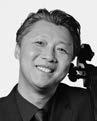
Yu was appointed Principal Cello of the Detroit Symphony Orchestra by Music Director Laureate Leonard Slatkin in 2014. He made his solo debut performing Dvořák’s Cello Concerto and has appeared as soloist with the
DSO frequently since. Before joining the DSO, Yu was a member of the New York Philharmonic for seven seasons.
Yu was a prizewinner at the Hudson Valley Philharmonic String Competition, the Holland American Music Society Cello Competition, the Music Teachers National Association Competition (MTNA National Collegiate Strings), Canada’s National Music Festival, Calgary’s Kiwanis Festival, and China’s National Cello competitions.
An avid chamber musician, Yu has been invited to the Marlboro, Ravinia, Great Lakes Chamber Music, and Mainly Mozart music festivals. Yu has collaborated with musicians including cellist Carter Brey and David Soyer; pianists Richard Goode and Menahem Pressler; violinists Augustin Hadelich, Midori, and Pinchas Zukerman; and members of the Guarneri, Emerson, and Juilliard quartets. As a member of the New York Philharmonic ensembles, he made regular appearances at Merkin Concert Hall.
A successful instructor, Yu serves as a faculty member at the Northwestern University Bienen School of Music. He has given cello masterclasses at universities and festivals in the United States, Canada, Poland, and China. During the summer, Yu teaches at the Morningside Music Bridge International Music Festival in Calgary, Canada; Carnegie Hall’s National Youth Orchestra; and the Center Stage Strings Summer Institute at the University of Michigan.
Born in Shanghai, China, Yu began studying the cello at age four and made his concerto debut at age 11, performing Elgar’s Cello Concerto with the Shanghai Symphony Orchestra. He received a Bachelor of Music from North Park University in Chicago and a Master of Music from The Juilliard School. His principal teachers include Mei-Juan Liu, John Kadz, Hans Jørgen Jensen, and David Soyer.
ENRICO LOPEZ-YAÑEZ
Principal Pops Conductor
Devereaux Family Chair
DETROIT SYMPHONY ORCHESTRA
JADER BIGNAMINI , Music Director Music Directorship endowed by the Kresge Foundation
TERENCE BLANCHARD
Fred A. Erb Jazz Creative Director Chair
TABITA BERGLUND
Principal Guest Conductor
SONGS OF AMERICA
INGRID MARTIN
Assistant Conductor, Phillip & Lauren Fisher Community Ambassador
Flash photography, extended video recording, tripods, and cameras with detachable lenses are strictly prohibited.
dso.org
ENRICO LOPEZ-YAÑEZ
Principal Pops Conductor
Devereaux Family Chair
DETROIT SYMPHONY ORCHESTRA
JADER BIGNAMINI , Music Director Music Directorship endowed by the Kresge Foundation
TERENCE BLANCHARD
Fred A. Erb Jazz Creative Director Chair
TABITA BERGLUND
Principal Guest Conductor
PVS CLASSICAL SERIES
Title Sponsor:
WAGNER, TCHAIKOVSKY, AND STRAUSS
Friday, June 5, 2026 at 10:45 a.m.
Saturday, June 6, 2026 at 8 p.m.
Sunday, June 7, 2026 at 3 p.m. in Orchestra Hall
JADER BIGNAMINI, conductor
INGRID MARTIN
Assistant Conductor, Phillip & Lauren Fisher Community Ambassador
Richard Wagner Prelude and “Liebestod” (1813–1883) from Tristan und Isolde, WWV. 90
Piotr Ilyich Tchaikovsky Francesca da Rimini, Fantasie Overture, Op. 32 (1840–1893)
Intermission
Richard Wagner Siegfried Idyll, WWV. 103 (1813–1883)
Richard Strauss Suite from Der Rosenkavalier, Op. 59 (1864–1949) I. Attire of the Rose Cavalier and Duet
II. Ochs-Walzes
III. Tenor Aria
IV. [Breakfast Scene]
V. Terzett
VI. [Closing Duet]
Saturday’s performance will be webcast via our exclusive Live from Orchestra Hall series, presented by Ford Philanthropy. Technology support comes from the John S. and James L. Knight Foundation.
Flash photography, extended video recording, tripods, and cameras with detachable lenses are strictly prohibited.
PROGRAM NOTES
Prelude and “Liebestod” from Tristan und Isolde, WWV. 90
Illicit passion has been a compelling subject to poets for centuries, its archetypal myth being the legend of Tristan und Isolde. The story of that unhappy couple caught between magic-induced desire for each other and circumstance that bars their love—Isolde is betrothed to King Mark, whom Tristan is sworn to serve—received a number of poetic accounts during the Middle Ages. It also inspired one of the landmark operas of the 19th century, Wagner’s Tristan und Isolde. Wagner completed this work in 1859, but he had to wait half a dozen years for its first production. Meanwhile, he took to presenting orchestral excerpts from the work at every opportunity. We hear the most famous of these, the Prelude and “Liebestod.”
Wagner’s Prelude sets a tone that will pervade the entire opera. Here the use of melodic sequences—brief phrases repeating at successively higher pitches— establishes a palpable feeling of erotic longing, while the composer’s consistent avoidance of conventional harmonic resolutions propels the music restlessly forward.
Central to Tristan und Isolde is the notion of insatiable love intimately linked with death, for the couple’s desire is so intense,
so all-consuming, that it can be fulfilled only by casting off the restraints of the material world. In the opera’s final scene, Isolde cradles the body of the slain Tristan. Gazing at him, she launches into an aria that has long been known as the Liebestod, or “Love-Death.” From its quiet beginning, Isolde’s meditation grows ever more ecstatic until at last, as Wagner explained, she is “transformed” from mere flesh and blood to a more ethereal creature who can join her lover in a realm beyond this one. As the opera ends, the lifeless bodies of Tristan and Isolde lie together on stage, while the music suggests their spirits soaring serenely as one. So fully textured is the scoring that the Liebestod is easily presented as an orchestral piece without singing, as Wagner himself did. —Paul Schiavo
The DSO most recently performed Wagner’s Prelude and “Liebestod” from Tristan und Isolde in October 2009, conducted by Peter Oundjian. The DSO first performed this work in March 1917, conducted by Weston Gales.
Of the many episodes that comprise Dante Alighieri’s epic poem The Divine Comedy, the encounter with Francesca of Rimini is surely the most famous and most poignant. Dante comes upon her early in the Inferno, the first book of the
trilogy comprising the full Divine Comedy, in which he recounts his mythical journey through the underworld. Specifically, the poet meets Francesca in the second circle of hell, where the souls of adulterers are buffeted by merciless winds. Here he listens as she describes how she was deceived into marrying a cruel hunchback, how she fell in love with her sympathetic brother-in-law, Paolo, and how they were discovered and murdered by her jealous husband.
Nearly seven centuries after Dante set down this tale, Tchaikovsky transformed it into music. In July 1876, the composer read Canto V of Dante’s Inferno, which relates the sorrow of Francesca and Paolo. As a result, he declared in a letter to his brother Modest, “I was seized with a burning desire to write a symphonic poem on Francesca.” In his search for music to convey the essence of the Francesca story, the composer found inspiration not only in the verses of the Inferno but in an evocative engraving depicting the fate of Francesca and Paolo by the 19th-century artist Gustave Doré.
While no doubt inspired by the artistry of Doré and Dante, Tchaikovsky must also have responded to the story of Francesca in a very personal way. For like the tale’s protagonist, he knew the burden of a secret, illicit love, having struggled throughout his adult life with his homosexuality. Tchaikovsky’s diaries and letters give ample testimony to his suffering under what was, in 19th-century Russia, a deeply shameful inclination. Guilty and apprehensive, he nevertheless felt compelled by passions he never entirely conquered. This is not to suggest that the tone poem Tchaikovsky created on the tale of Francesca of Rimini is in some way a homosexual allegory. But it does not seem too much to suppose that his personal circumstances rendered him particularly sympathetic to the character of Francesca and susceptible to the pathos of her story.
The tone poem’s single movement follows a broad three-part structure that mirrors the Divine Comedy narrative with unusual clarity. Its ominous introduction can easily be heard as a musical evocation of Dante’s passage across the river Styx and through the gates of the underworld. This leads to a furious passage whose frantic passagework clearly is meant to portray the winds of hell tormenting the unhappy lovers. In contrast to this violent music, the tender central section suggests the bond of affection between Francesca and Paolo. But this idyllic interlude is cut short by a series of stabbing chords, a return to the music of the infernal whirlwind and the work’s harrowing conclusion. —Paul Schiavo
The DSO most recently performed Tchaikovsky’s Francesca da Rimini in May 2011, conducted by Leonard Slatkin. The DSO first performed this work in January 1919, conducted by Ossip Gabrilowitsch.
Siegfried Idyll
Composed 1869 | Premiered 1870
RICHARD WAGNER
B. May 22, 1813, Leipzig, Germany
D. February 13, 1883, Venice, Italy
Scored for flute, oboe, 2 clarinets, bassoon, 2 horns, trumpet, and strings. (Approx. 18 minutes)
Inaddition to great musical talents, Richard Wagner had an unhealthy eagerness to express himself publicly, loudly, and stubbornly. It is therefore noteworthy that the Siegfried Idyll, Wagner’s only completed mature orchestral work, is an intensely personal one, composed and performed for his wife, Cosima, as a birthday gift to celebrate the birth of their son, Siegfried, as well as the completion of the third opera of the Ring Cycle, Siegfried. The stereotype about Wagner’s “bigger is better” approach to instrumentation doesn’t shake out, either—just 13 or so musicians gave the piece’s premiere on
the staircase outside of Cosima’s bedroom.
The Idyll has a loose sonata structure to it, with discernable primary and secondary theme groups, developed and recapitulated. Cameo appearances of notable themes from Wagner’s opera work are also quite interesting; listeners familiar with the Ring will hear snippets of the “Sleeping Brünnhilde” theme played by the flute, “Dawn on Brünnhilde’s Rock” shortly before the transition, “Siegfried’s Journey” in the horns, and the “Forest Bird” melody later in the movement.
The DSO most recently performed Wagner’s Siegfried Idyll in December 2020, conducted by Enrique Mazzola. The DSO first performed this work in November 1914, conducted by Weston Gales.
Suite from Der Rosenkavalier, Op. 59
Composed 1910 | Premiered 1911
RICHARD STRAUSS
B. June 11, 1864, Munich, Germany
D. September 8, 1949, GarmischPartenkirchen, Germany
Strauss was besieged with requests for concert excerpts from the opera
Der Rosenkavalier almost immediately after the show’s Dresden premiere on January 26, 1911. He never took up the task himself, but in 1945 he permitted others to assemble and submit suites anonymously. The suite that was selected and published that year was
likely arranged by the Polish conductor Artur Rodziński, then music director of the New York Philharmonic.
The suite highlights the action of the opera in six large, continuous sections, mostly set in chronological order to parallel their occurrence in the full production. It begins with the Prelude and opening love scene between the young nobleman, Octavian, and the lonely, aging Marschallin, the Princess von Werdenberg. This is followed by the glorious second-act music in which Octavian presents the silver rose to the debutante Sophie von Faninal, on behalf of her arranged marriage to the Marschallin’s boorish country cousin, Baron Ochs von Lechernau. This music, replete with bittersweet harmonies for the celesta and harp, flows into the loveat-first-sight duet between Sophie and Octavian.
The suite’s third and fourth sections are taken from music where the opportunistic conspirators, Annina and Valzacchi, trap and publicly embarrass the trysting lovers, and Ochs sings his famed waltz tune, “Ohne mich, jeder Tag” (“Without me, every day would be long for you”). The final two sections are presented in reverse order from the stage version: the gorgeous lyrical trio and duet involving the Marschallin, Octavian, and Sophie precedes the riotous waltz humiliating the corrupt, lecherous Ochs. The suite not only encapsulates the story line of the opera, but the opulent score celebrating the sentimental post-Romantic tradition in such lustrous musical style.
The DSO most recently performed Strauss’s Suite from Der Rosenkavalier in December 2018, conducted by Nikolaj Szeps-Znaider. The DSO first performed this work in January 1917, conducted by Weston Gales.
For Jader Bignamini’s biography, see page 6.
ENRICO LOPEZ-YAÑEZ
Principal Pops Conductor
Devereaux Family Chair
DETROIT SYMPHONY ORCHESTRA
N I T Y -SU P P ORT E D ORCHESTRA
JADER BIGNAMINI , Music Director
JA DER B I G NA M I N I MUSIC DIRECTOR
Music Directorship endowed by the Kresge Foundation
TERENCE BLANCHARD
Fred A. Erb Jazz Creative Director Chair
TABITA BERGLUND
Principal Guest Conductor
PARADISE JAZZ SERIES
Made possible with support from:
CHRISTIAN MCBRIDE & URSA MAJOR
Friday, June 5, 2026 at 8 p.m. in Orchestra Hall
CHRISTIAN McBRIDE, bandleader and bass
INGRID MARTIN
Assistant Conductor, Phillip & Lauren Fisher Community Ambassador
NICOLE GLOVER, saxophone • ELY PERLMAN, guitar
MIKE KING, piano • SAVANNAH HARRIS, drums
Program to be announced from the stage, artists subject to change
PROFILE
CHRISTIAN MCBRIDE
Christian McBride is an eleven-time GRAMMY®-winning bassist, composer, and bandleader. He is the Artistic Director of the historic Newport Jazz Festival, the New Jersey Performing Arts Center (NJPAC), the TD James Moody Jazz Festival, and the National Jazz Museum in Harlem. McBride is also a respected educator and advocate for youth, and serves as Artistic Director of Jazz House KiDS and the Jazz Aspen Snowmass Summer Sessions. In addition to artistic directing and
consistent touring with his ensembles, he hosts NPR’s “Jazz Night in America” and “The Lowdown: Conversations With Christian” on SiriusXM. Whether behind the bass or away from it, McBride is always part of the music. From jazz to R&B, and pop/rock and hip-hop/neo-soul to classical, he is a luminary with one hand ever reaching for new heights, and the other extended in fellowship—and perhaps the hint of a challenge—inviting us to join him.
In Ursa Major, he is joined by four rising young master instrumentalists including saxophonist Nicole Glover, guitarist Ely Perlman, pianist Mike King, and drummer Savannah Harris.
ENRICO LOPEZ-YAÑEZ
Principal Pops Conductor
Devereaux Family Chair
DETROIT SYMPHONY ORCHESTRA
JADER BIGNAMINI , Music Director Music Directorship endowed by the Kresge Foundation
TERENCE BLANCHARD
Fred A. Erb Jazz Creative Director Chair
TABITA BERGLUND Principal Guest Conductor
PVS CLASSICAL SERIES
Title Sponsor:
HILARY HAHN PERFORMS MOZART
Thursday, June 11, 2026 at 7:30 p.m.
Friday, June 12, 2026 at 8 p.m.
Saturday, June 13, 2026 at 8 p.m. in Orchestra Hall
JADER BIGNAMINI, conductor HILARY HAHN, violin
INGRID MARTIN
Assistant Conductor, Phillip & Lauren Fisher Community Ambassador
Wolfgang Amadeus Mozart Violin Concerto No. 5 in A major, K. 219 (1756–1791) I. Allegro aperto
II. Adagio
III. Rondo: Tempo di menuetto Hilary Hahn, violin
Intermission
Sergei Rachmaninoff
Symphony No. 2 in E minor, Op. 27 (1873–1943) I. Largo - Allegro moderato
II. Allegro molto
III. Adagio
IV. Allegro vivace
Saturday’s performance will be webcast via our exclusive Live from Orchestra Hall series, presented by Ford Philanthropy. Technology support comes from the John S. and James L. Knight Foundation.
Flash photography, extended video recording, tripods, and cameras with detachable lenses are strictly prohibited.
PROGRAM NOTES
Violin Concerto No. 5 in A major, K. 219, “Turkish”
Composed 1775 | Premiered 1775
WOLFGANG AMADEUS MOZART
B. January 27, 1756, Salzburg, Austria
D. December 5, 1791, Vienna, Austria
Scored for solo violin, 2 oboes, 2 horns, and strings. (Approx. 31 minutes)
BetweenApril and December of 1775, Mozart wrote five concertos for solo violin and orchestra. The A major concerto, the fifth and last piece in this series, may have been fashioned for Gaetano Brunetti, a violinist who shared concertmaster duties with Mozart in the orchestra maintained by the Prince Archbishop of Salzburg. Ironically, the evidence that Mozart intended this concerto for Brunetti stems from the fact that the latter deemed its second movement “too studied,” and requested that it be rewritten. Mozart, apparently without complaint, fashioned a new Adagio to replace the one his colleague found deficient. The original slow movement has since been restored to the concerto. (The substitute leads an independent life as the Adagio in E major for Violin and Orchestra, K. 261.)
The first movement of the concerto begins with the usual orchestral exposition, one whose several brief themes convey great enthusiasm. But the entrance of the solo violin changes the music’s character completely. Indeed, the featured instrument seems to have stumbled into the wrong composition, rhapsodizing in slow tempo over a murmuring accompaniment. Mozart once again shifts gears and returns to the original tempo, allowing the movement to develop straightforwardly.
The ensuing Adagio is more conventional, being concerned chiefly
with the subject given out by the orchestra in the opening measures. But the finale, a rondo-form movement using a minuet melody as its recurring principal theme, has as its third episode a humorous interlude in “Turkish” style. This stylistic fad constituted a popular strain of composition among Austrian musicians of the late 18th century, and Mozart toyed with it in his Piano Sonata in A major and the opera Die Entführung aus dem Serail in addition to the present work. The conclusion of this surprising passage returns us once more to the minuet theme, as though the “Turkish” excursion had been only a dream.
The DSO most recently performed Mozart’s Violin Concerto No. 5 in April 2025, conducted by François LópezFerrer and featuring Maria Ioudenitch on violin. The DSO first performed this concerto in May 1939, conducted by Eugene Ormandy and featuring Robert Virovai on violin.
Sergei Rachmaninoff’s Second Symphony was first performed in St. Petersburg, Russia on January 26, 1908. In November 1906, Rachmaninoff moved his family to Dresden, which had a rich musical life and where he quickly began to put notes
on paper. Still nursing scars from the fiasco that greeted the premiere of his First Symphony, Rachmaninoff almost lost heart when word leaked out that he was at work on a second. But now there was no turning back.
Rachmaninoff lays out his first movement along the lines set down in Tchaikovsky’s Pathétique Symphony: a long, pregnant introduction, followed by a quicker section based on motifs drawn from it. He is in no hurry here, and his habit of building up slowly to a climax, often with much repetition, has tempted many conductors to make cuts in the score. But for the listener willing to put aside inherited ideas about symphonic pace and architecture, the movement offers rich pleasures.
Even in the Scherzo, Rachmaninoff cannot resist a second, yearning theme, one too delicious to abandon before he has wrung out every drop of emotion. Such indulgences have brought down the wrath of some traditionalists, but here, the composer returns quickly to his more severe main subject, which is based on the melody that haunted him all his life: the sequence Dies Irae from the Mass for the Dead.
What can words add to the Adagio? One is either swept along on the flood tide of melody, or sits with arms folded, coldly disapproving. A generation ago, it was fashionable to dismiss Rachmaninoff’s slow movements altogether. With Romanticism now in fashion again, even the professors of music are allowed to hum along (quietly) with the rest of the
audience. Only one pleasure is still denied all of us: breaking into applause after the movement, as Rachmaninoff’s audiences surely did.
The finale has a Scherzo-ish feel to it, and it is altogether the most successful movement in the symphony. Surely it will not spoil anyone’s enjoyment to point out that the main theme here is derived from the second movement, and no one needs a nudge in the ribs to recognize the sublime reference to the third. A less confident Rachmaninoff might not have been able to handle such a cornucopia, but here he finds just the right device to pull it all together.
In the midst of a whirl of triplets, he introduces, quietly at first, a bell-like figure that becomes more and more insistent. Finally, writes Patrick Piggott, in his BBC Music Guide on Rachmaninoff’s orchestral music, “it is as if a thousand bell-towers were ringing out a clamorous celebration of some great religious or national occasion. The sound of bells had a perennial fascination for Rachmaninoff and was often echoed in his music, but in no other work, with the exception of his choral symphony The Bells, written a few years later, did he equal in originality and excitement this strange passage.”
Michael Fleming
The DSO most recently performed Rachmaninoff’s Symphony No. 2 in May 2022, conducted by Kahchun Wong. The DSO first performed this symphony in February 1922, conducted by Ossip Gabrilowitsch.
PROFILES
HILARY HAHN
For Jader Bignamini’s biography, see page 6.
Three-time GRAMMY® Award-winning violinist Hilary Hahn melds expressive musicality and technical expertise with a diverse repertoire guided by artistic curiosity. Her barrier-breaking attitude towards classical music and commitment to sharing her experiences with a global community have made her a fan favorite. Hahn is a prolific recording artist and commissioner of new works, and her 23 feature recordings have received every critical prize in the international press. Her new role with The Juilliard School follows her earlier tenure as Visiting Artist in Juilliard’s Music Division in the 2023–24 season; recent seasons have also seen her serve as the Chicago Symphony Orchestra’s first-ever Artist-in-Residence, Artist-in-Residence at the New York Philharmonic, and Curating Artist of the Dortmund Festival.
Hahn has personally commissioned and championed works by a diverse array of more than 40 living composers, including Steven Banks, Jennifer Higdon, Jessie Montgomery, and Carlos Simon. Other recent commissions include Michael Abels’s Isolation Variation, Hahn’s recording of which was nominated for a GRAMMY®; Barbara Assiginaak’s Sphynx Moth; Lera Auerbach’s Sonata No. 4: Fractured Dreams; and 6 Partitas by Antón García Abril. García Abril, Auerbach, and Rautavaara were among the 27 composers who contributed to In 27 Pieces: the Hilary Hahn Encores, Hahn’s GRAMMY® Award-winning multiyear commissioning project.
Hahn has related to her fans naturally from the very beginning of her career. She has committed to signings after nearly every concert and maintains and shares a collection of the fan-art she has received over the course of 20 years. Her “Bring Your Own Baby” concerts create opportunities for parents of infants to share their
enjoyment of live classical music with their children in a nurturing, welcoming environment. Hahn’s commitment to her fans extends to a long history of educational outreach. Her social media-based initiative, #100daysofpractice, has transformed practice into a community-building celebration of artistic development; since Hahn created the hashtag in 2017, fellow performers and students have contributed more than one million posts.
Hahn is a celebrated recording artist whose feature albums on Decca, Deutsche Grammophon, and Sony have all opened in the top ten of the Billboard charts. Recent releases include Night After Night, a collection of James Newton Howard’s scores for the films of M. Night Shyamalan, for which Hahn reprised her contributions to his score for The Village; and a Gramophone Recording of the Year Award-winning recording of Ysaÿe’s six sonatas for solo violin, which saw Hahn celebrate her artistic lineage as a student of Ysaÿe’s former pupil. Jennifer Higdon’s Violin Concerto, which was composed for Hahn and which she recorded in 2008, was awarded the Pulitzer Prize.
In recent seasons, she received the Avery Fisher Prize, was named Musical America’s Artist of the Year for 2023, delivered the keynote speech of the Second Annual Women in Classical Music Symposium, received the 2021 Herbert von Karajan Prize, and was awarded the eleventh Annual Glasshütte Original Music Festival Award, which she donated to the Philadelphia-based music education nonprofit Project 440. Hahn was the 2022 Chubb Fellow at Yale University’s Timothy Dwight College; she also holds honorary doctorates from Middlebury College— where she spent four summers in the total-immersion German, French, and Japanese language programs—and Ball State University, where there are three scholarships in her name.
ENRICO LOPEZ-YAÑEZ
Principal Pops Conductor
DETROIT SYMPHONY ORCHESTRA
JADER BIGNAMINI , Music Director Music Directorship endowed by the Kresge Foundation
TERENCE BLANCHARD
Fred A. Erb Jazz Creative Director Chair
TABITA BERGLUND Principal Guest Conductor
INGRID MARTIN
Assistant Conductor, Phillip & Lauren Fisher Community Ambassador
Devereaux Family Chair Flash photography, extended video recording, tripods, and cameras with detachable lenses are strictly prohibited. TITLE SPONSOR:
PINK MARTINI
Friday, June 19, 2026 at 10:45 a.m.
Saturday, June 20, 2026 at 8 p.m. Sunday, June 21, 2026 at 3 p.m. in Orchestra Hall
ENRICO LOPEZ-YAÑEZ , conductor
THOMAS LAUDERDALE , piano
CHINA FORBES, vocals
STORM LARGE , vocals
ARI SHAPIRO, vocals
EDNA VAZQUEZ , vocals
JIMMIE HERROD, vocals
PHIL BAKER, bass
DAN FAEHNLE , guitar
NICHOLAS CROSA , violin
ROBERT TAYLOR, trombone
THOMAS BARBER, trumpet
TIMOTHY NISHIMOTO, vocals/percussion
BRIAN LAVERN DAVIS, percussion
ANTHONY JONES, percussion
MIGUEL BERNAL NODAL , percussion
MIHAIL IOSSIFOV, trumpet
ANTONIS ANDREOU, trombone
PETE PLYMPTON, sound engineer
WILLIAM REISCHMAN, stage manager
Program to be announced from the stage, artists subject to change
PROFILE
For Enrico Lopez-Yañez’s biography, see page 7.
PINK MARTINI
In 1994 in his hometown of Portland, Oregon, Thomas Lauderdale was working in politics, with the intention of eventually running for office. Like other eager politicians-in-training, he went to every political fundraiser under the sun… but was dismayed to find the music at these events underwhelming, lackluster, loud, and un-neighborly. Drawing inspiration from music from all over the world—crossing genres of classical, jazz, and old-fashioned pop—and hoping to appeal to people across the political spectrum, he founded the “little orchestra” Pink Martini in 1994 to provide more beautiful and inclusive musical soundtracks for political fundraisers. Since then, Pink Martini has grown to feature a dozen musicians, and with songs in 25 languages, the band performs its multilingual repertoire on concert stages and with symphony orchestras throughout Europe, Asia, Greece, Turkey, the Middle East, Northern Africa,
Australia, New Zealand, South America, and North America.
Pink Martini has sold over 3 million albums worldwide on their own independent label Heinz Records (named after Lauderdale’s dog), and has collaborated with esteemed artists from around the world including Phyllis Diller, Jimmy Scott, Carol Channing, Rita Moreno, Jane Powell, and Rufus Wainwright.
ENRICO LOPEZ-YAÑEZ
Principal Pops Conductor
Devereaux Family Chair
DETROIT SYMPHONY ORCHESTRA
JADER BIGNAMINI , Music Director
Music Directorship endowed by the Kresge Foundation
TERENCE BLANCHARD
Fred A. Erb Jazz Creative Director Chair
TABITA BERGLUND Principal Guest Conductor
INGRID MARTIN Assistant Conductor, Phillip & Lauren Fisher Community Ambassador
WILLIAM DAVIDSON NEIGHBORHOOD CONCERT SERIES HAYDN’S “CLOCK” SYMPHONY
Thursday, July 23, 2026 at 7:30 p.m. at Seligman Performing Arts Center
Friday, July 24, 2026 at 8 p.m. at Plymouth First United Methodist Church
Saturday, July 25, 2026 at 8 p.m. at Our Lady Star of the Sea Catholic Church
Sunday, July 26, 2026 at 3 p.m. at Congregation Shaarey Zedek
INGRID MARTIN, conductor JIJI, guitar
Britta Byström A Walk to Beethoven (b. 1977)
Arvo Pärt Frätres (b. 1935) JIJI, guitar arr. Manuel Barrueco
Antonio Vivaldi Concerto for Lute and Orchestra in D major, (1678–1741) R.93 JIJI, guitar
I. Allegro giusto
II. Largo
III. Allegro
Intermission
Franz Joseph Haydn Symphony No. 101 in D major, “The Clock” (1732–1809) I. Adagio – Presto
II. Andante
III. Menuet: Allegretto
IV. Vivace
Flash photography, extended video recording, tripods, and cameras with detachable lenses are strictly prohibited.
PROGRAM NOTES
A Walk to Beethoven
Composed 2020 | Premiered 2020
BRITTA BYSTRÖM
B. March 14, 1977, Sundsvall, Sweden
Scored for flute, piccolo, 2 oboes, 2 clarinets, 2 bassoons, 2 horns, 2 trumpets, timpani, and strings (Approx. 11 minutes)
Of A Walk to Beethoven, Britta Byström writes the following:
“My musical ‘Walks’ form a series of—up to now—15 works, all of them composed in three years. The first ‘Walks’ for string orchestra were written in order to connect the pieces in a concert program, where my violin concerto was combined with Britten’s Frank Bridge Variations and Biber’s Battaglia. On that occasion, I wrote A Walk to Britten and A Walk to Biber— one-minute pieces which, on a background of wandering pizzicato playing, included small quotes from the piece which was to follow.
Since then, many other ‘Walks’ have followed, from one to ten minutes in length, written for everything from viola and double bass duet to symphonic wind orchestra. The concept, though, has remained the same: it is always rhythmical music which serves as an introduction to another composer’s work. The idea is to take a musical stroll, during which you can catch a glimpse of the next work on the program, similar to when from far away, one can discern the silhouette of an approaching town.
A Walk to Beethoven is a walk to Beethoven’s Symphony No. 7. It is the main theme of the second movement that you can discern in my piece. I chose that theme partly because I just love it, partly because it has a wandering pace within itself.
A Walk to Beethoven consists of 14 small parts (played without breaks). I do
not regard it as 14 variations; it is rather 14 different versions, like 14 flowers grown from the same musical seed. Or maybe: like 14 different paths, all leading to Beethoven.”
This performance marks the DSO premiere of Britta Byström’s A Walk to Beethoven
Frätres
Composed 1977 | Premiered 1977 ARVO PÄRT
B. September 11, 1935, Järva County, Estonia
Scored for solo guitar, percussion, and strings (Approx. 11 minutes)
Duringthe past two decades, the Estonianborn Arvo Pärt has emerged as one of the most intriguing voices in European music. Since the 1970s, he has cultivated a style marked by spare textures, serene modal harmonies, slow tempo, and an austere but luminous sound quality. Combining these traits with repeating melodic figures, generally static harmonies and regular rhythmic pulses, Pärt has affected a kind of musical minimalism related to, yet distinct from, that of such American composers as Steve Reich and Philip Glass. Pärt’s recent work also seems imbued with an air of meditative spirituality redolent of the Middle Ages, and this, as much as any purely compositional virtues, has won something of cult following in Europe and, increasingly, in the US. The composer’s affinity for medieval music can also extends to his use of certain compositional techniques: an elaborate use of canonic counterpoint (in which different parts echo each other in strict imitation) and a resort to arithmetically determined rhythms.
Frätres (original setting for violin and
piano) was commissioned by the Salzburg Festival and premiered on August 17, 1980, at that very place. Composed in Pärt’s very own Tintinnabuli style, this piece allows many different settings because it is not bound to a specific tone color. “The highest virtue of music, for me, lies outside of its mere sound,” says the composer. “The particular timbre of an instrument is part of the music, but it is not the most important element. If it were, I would be surrendering to the essence of the music. Music must exist of itself … two, three notes … the essence must be there, independent of the instruments.”
This performance marks the DSO premiere of Frätres by Arvo Pärt.
Concerto for Lute and Orchestra in D major
Composed 1730–1731
ANTONIO VIVALDI
B. March 4, 1678, Venice, Italy
D. July 28, 1741, Vienna, Austria
Scored for solo lute (played on guitar), continuo, and strings (Approx. 10 minutes)
Thelute enjoyed a long and distinguished history as a popular solo instrument, eventually falling out of favor in the early to mid 1700s. Along with J.S. Bach, Antonio Vivaldi wrote some of the finest music for lute just as the instrument’s reign was coming to an end—a fitting finale, perhaps, and in modern times we are fortunate to hear these works performed most frequently on the guitar.
Vivaldi wrote this and two other pieces for lute while living in Bohemia in the 1730s. It is a brief but charming work in three movements, the first of which is well-loved for its use of the ritornello, or “returning” form, in which musical themes are passed back and forth between the soloist and the ensemble. The slow second movement is reflective, featuring the soloist over sustained
accompaniment. And the lively, highspirited Allegro hints at the Italian tarantella, a tambourine-infused folk dance, with its 6/8 time signature and brisk lyricism.
Symphony No. 101
in D major, “The Clock”
Composed 1793–1794 | Premiered 1794
FRANZ JOSEPH HAYDN
B. March 31 1732, Rohrau, Austria
D. May 31 1809, Vienna, Austria
Scored for 2 flutes, 2 oboes, 2 clarinets, 2 bassoons, 2 horns, 2 trumpets, timpani, and strings (Approx. 27 minutes)
Franz
Joseph Haydn was the son of workingclass amateur musicians, and while singing with his mother as a young child he exhibited talent that was recognized by the Imperial Kapellmeister Georg von Reutter. Haydn was invited to join the choir at St. Stephen’s Cathedral in Vienna, which marked the beginning of his career as a professional musician. Once he departed from the chorus at age 16, he faced nearly a decade of turbulence as he led the allto-familiar life of a freelance musician—teaching lessons, busking around town, finding gigs wherever possible, and barely getting by.
An opportunity to study composition with Nicola Porpora turned his fate around, and Haydn began composing symphonies under this tutelage. He was then appointed as the court musician for the wealthy Esterházy family. With this newfound job security, he was able to focus his energy on developing his compositional voice. He struck gold with his string quartets and symphonies, yielding an impressive catalogue of 68 string quartets and 104 symphonies throughout his career.
Haydn’s popularity had been steadily growing, but he was relieved of his duties as court musician after nearly 30 years of
service. Knowing Haydn was no longer contractually obligated to the Esterházy court, English violinist and impresario Peter Salomon persuaded Haydn to travel from Vienna to London. Haydn agreed, and composed six symphonies for his first London tour, and six more on a later tour to London. These “London” symphonies were the final works of this form that he wrote before his death in 1809.
His Symphony No. 101 in D major opens unexpectedly in D minor, with a short-lived slow, solemn opening. After this introduction, the clouds clear and the sun begins to shine. The sudden burst of brightness and energy carries the rest of
PROFILES
INGRID MARTIN
Ingrid Martin puts people at the heart of every musical experience. Her work as a conductor and teacher is shaped by a career spanning music, medicine, and education. In 2025, Martin joined the Detroit Symphony Orchestra as Assistant Conductor and Phillip and Lauren Fisher Community Ambassador, and as Music Director of the Detroit Symphony Youth Orchestra.
Martin loves championing new repertoire and bringing audiences closer to music through thoughtfully curated experiences. She has commissioned 15 works for youth orchestras, conducted 20 world premieres, and recorded over 50 student compositions. Through her original orchestral shows, Martin invites audiences of all ages to explore unexpected connections between music and other disciplines, from physics to painting.
Before pursuing conducting professionally, Martin worked for a decade in emergency medicine then
this movement. The second movement is what gives this symphony its nickname “The Clock.” The underlying ticktocking texture keeps perfect time while the violins bounce through the main melodic material. The third movement is a minuet and trio, standard for the penultimate movement of a symphony. Haydn rounds out this work with a Vivace movement full of energy, momentum, and drama. This movement features a double fugue in which two subjects, or main melodic themes, are imitated throughout the voices of the orchestra. The dense, interwoven texture brings this symphony to a triumphant conclusion.
retrained as a teacher. Her approach to music and leadership is deeply informed by the skills she developed in these careers: listening closely, thinking clearly under pressure, and communicating complex ideas.
Martin has built a global following for Conducting Artistry, her platform for practical resources, podcasts, books and online tools that empower teachers and students to deepen their artistry. She is a sought-after speaker and clinician at international music education conferences, and her book Planning Effective Rehearsals is required reading for university music education programs worldwide.
At home, she’s rarely far from a craft project and a strong black coffee.
JIJI
Praised by The Washington Post for her “mesmerizing” and “stirring” performances, JIJI is an adventurous guitarist known for her virtuosity and command of diverse repertoire. Equally at home
with both acoustic and electric guitar, her concert programs range from traditional and contemporary classical to free improvisation.
Through her impeccable musicianship, compelling stage presence, and commitment to commissioning and performing new musical works, JIJI has solidified her reputation as a top 21st-century guitarist. In 2021, The Washington Post selected JIJI as “one of the 21 composers/performers who sound like tomorrow,” and The Kansas City Star recently described her as “a graceful and nuanced player.” In recent seasons, JIJI has presented solo recitals at Carnegie Hall’s Weill Recital Hall; Lincoln Center; 92nd Street Y; Caramoor; Celebrity Series of Boston; Caffe Lena; Tippet Rise Art Center; San Francisco’s Herbst Theatre; and the National Gallery of Art, among other distinguished venues. Her performances have been featured on PBS’s On Stage at Curtis, NPR’s From the Top, The Vice Channel’s Munchies, and Hong Kong broadcast station RTHK’s The Works. In 2016, she became the first guitarist in 30 years to secure first prize in the Concert Artists Guild Competition.
JIJI’s 2025–2026 season began with debut performances of Joaquín Rodrigo’s Concierto de Aranjuez at the Grand Teton Music Festival with Stéphane Denève and with the Auckland
Philharmonia. Other highlights include Rodrigo with the Amarillo Symphony, Colorado Springs Philharmonic, and Auburn Symphony. Major recitals include BroadStage in Santa Monica, the Ellnora Guitar Festival at the Krannert Center, St. Louis Classical Guitar Society, San Francisco Performances in a duo recital with Jason Vieaux, as well as her recital debut in Seoul, Korea. JIJI makes her London debut at the Barbican in a Julius Eastman project with the American Modern Opera Company.
A committed educator, JIJI is Associate Professor of Music in Guitar at Indiana University Jacobs School of Music and former Assistant Professor of Guitar at Arizona State University’s School of Music, Dance and Theatre. She has presented master classes and workshops extensively, including at the Peabody Institute, Eastman School of Music, Yale University, and Dublin’s National Concert Hall, among many others.
In addition to advocating for the music of her contemporaries, JIJI also performs and records many of her own works, and she continues to develop her distinctive compositional voice.
During her spare time, JIJI enjoys cooking and creating weird sounds on Ableton. She is sponsored by Augustine Strings and GuitarLift by Felix Justen.
The Fine Instrument Collection of the Detroit Symphony Orchestra
The Larson Piano, a Steinway Model D Concert Grand Piano, handmade in the New York Steinway Factory. Currently played by guest pianists. Contributed to the DSO in 2023 by Bonnie Larson.
David Tecchler cello, made in 1711 referred to as “The Bedetti” after a previous owner (Dominicus Montagna 1711). Currently played by Wei Yu, DSO Principal Cello. Contributed to the DSO in 2018 by Floy and Lee Barthel.
J.B. Guadagnini viola, made in 1757 (Joannes Baptifta Guadagnini Pia centinus fecit Mediolani 1757). Currently played by Eric Nowlin, DSO Principal Viola. Contributed to the DSO in 2019 by donors who wish to remain anonymous.
THE ANNUAL FUND
Gifts received between September 1, 2024, and February 15, 2026.
The DSO is a proud, community-supported orchestra. Whether enjoying world-class performances in Orchestra Hall, picking up an instrument for the first time, or experiencing unforgettable music experiences in their own neighborhoods, your gift can transform lives and ignite imaginations across Detroit, Southeast Michigan, and beyond. From our leadership donors of the Gabrilowitsch Society, to our vital Governing Members, to the thousands of Friends who support the DSO each year, all donations are essential in ensuring that unforgettable musical experiences thrive in our community for years to come. We extend special recognition to the following donors who contributed $1,500 or more to the Detroit Symphony Orchestra’s Annual Fund between September 1, 2024, and February 15, 2026. If you have questions about this roster, or would like to make a donation, please contact 313.576.5114 or visit dso.org/donate.
GIVING OF $250,000 & MORE
Penny & Harold Blumenstein
Julie & Peter Cummings
Ms. Leslie C. Devereaux◊
Mr. & Mrs. Stanley Frankel
Mary Lee Gwizdala
GIVING OF $100,000 & MORE
Mr. & Mrs.◊ Richard L. Alonzo
James & Patricia Anderson
Mr.◊ & Mrs. Raymond M. Cracchiolo
Joanne Danto & Arnold Weingarden
Mr. & Mrs. Phillip Wm. Fisher
Mary Ann & Robert Gorlin
GIVING OF $50,000 & MORE
Mr. & Mrs. Aaron Frankel
Mr. & Mrs. Ralph J. Gerson
Ric & Carola Huttenlocher
GIVING OF $25,000 & MORE
Ms. Sharon Backstrom
Mrs. Cecilia Benner
Mr. & Mrs. Richard A. Brodie
Mr. & Mrs. Stephen Brownell
Mr. & Mrs.◊ Brian C. Campbell
Marjory Winkelman Epstein
Mr. Michael J. Fisher
Madeline & Sidney Forbes
Mrs. Martha Ford
Dale & Bruce Frankel
Ronald M. & Carol◊ Horwitz
Renato & Elizabeth Jamett
William & Story John
Mr.◊ & Mrs. Norman D. Katz
Mr. Alan J. & Mrs. Sue Kaufman
Morgan & Danny Kaufman
Linda Dresner & Ed Levy, Jr.
Mr. & Mrs. James B. Nicholson
Mr. & Mrs. David Provost
Barbara C. Van Dusen
The Polk Family
Mr. & Mrs. Robert S. Miller
Bernard & Eleanor Robertson
Richard Sonenklar & Gregory Haynes Philanthropic Fund
Drs. David & Bernadine Wu
Paul & Terese Zlotoff
Mrs. Bonnie Larson
Nicole & Matt Lester
David & Valerie McCammon
LeFevre Family
Bud & Nancy Liebler
Mr. & Mrs. Eugene A. Miller
Xavier & Maeva Mosquet
Sammy & David Nicholson
Ms. Ruth Rattner ◊
Mr. Jerome Salesin
Laura & Jimmy Sherman
Mr. & Mrs. Larry Sherman
Mr. & Mrs. Gary Torgow
Barbara & Steve Tronstein
Peter & Carol Walters
Mr.◊ & Mrs. Jonathan T. Walton
S. Evan & Gwen Weiner
Wolverine Packing Company
And one who wishes to remain anonymous
GABRILOWITSCH
Dr. Lourdes V. Andaya
Janet & Norman Ankers
Pamela Applebaum
Drs. Brian & Elizabeth Bachynski
Ms. Therese Bellaimey
Drs. John ◊ & Janice Bernick
Bill & Caitlin Beuche
Dr. George & Joyce Blum
Elena Bogliani & Pietro Gorlier
Ms. Kristin Bolitho
Gwen & Richard Bowlby
Sara Braverman
Robert N.◊ & Claire P. Brown
Michael & Geraldine Buckles
Sandra & Paul Butler
Ms. Elena Centeio & Tony R. Smith
Thomas W. Cook & Marie L. Masters
Ms. Elizabeth Correa
Mr. Kevin S. Dennis & Mr. Jeremy J. Zeltzer
Mr. & Mrs. Richard L. DeVore
Adel & Walter Dissett
Mr. Charles L. Dunlap & Mr. Lee V. Hart
Margie Dunn & Mark Davidoff
Dr. & Mrs. A. Bradley Eisenbrey
Randall & Jill* Elder
Margo & Jim Farber
Sally & Michael Feder
Amanda Fisher & Ben Hubert
Dr. Saul & Mrs. Helen Forman
Barbara Frankel◊ & Ronald Michalak
Lynn & Bharat Gandhi
Keith & Eileen Gifford
Girolami Family Charitable Trust
Mrs. Denise Abrash
Richard & Jiehan Alonzo
Dr. & Mrs. Joel Appel
Drs. Kwabena & Jacqueline Appiah
Pauline Averbach & Charles Peacock
Mrs. Jean Azar
Ms. Elizabeth Baergen
Ms. Ruth Baidas
Dr. David S. Balle
James A. Bannan
Mr. Mark G. Bartnik & Ms. Sandra J. Collins
Joseph Addison Bartush
W. Harold & Chacona W. Baugh
Mr. & Mrs. Martin S. Baum
Mr. & Mrs. Richard Beaubien
Mr. William Beluzo
Hadas & Dennis Bernard
Mr. & Mrs. Jeffrey A. Berner
Mr. Michael G. Bickers
Nancy & Lawrence Bluth
Mr.◊ & Mrs. James A. Green
Mr. & Mrs. Darby Hadley
Mr. & Mrs. Robert Hage
Judy ◊ & Kenneth Hale
Mr. Sanford Hansell◊ & Dr. Raina Ernstoff
Ms. Lori Harbour
Michael E. Hinsky & Tyrus N. Curtis
Mr.◊ & Mrs. Norman H. Hofley
Mr. & Mrs. Peter Hollinshead
Mr. Matthew Howell & Mrs. Julie Wagner
Ms. Carole Ilitch
Mr. and Mrs. Sharad P. Jain
Mr. & Mrs. Richard J. Jessup
Lenard & Connie Johnston
Paul & Marietta Joliat
Betsy & Joel Kellman
Dr. David & Mrs. Elizabeth Kessel
Mr. & Mrs. Kosch
Robert & Laurie Kunz
Drs. Lisa & Scott Langenburg
Mr. & Mrs. Joseph Lile ◊
Dana Locniskar & Christine Beck
Mrs. Sandra MacLeod
Dr. Stephen & Paulette Mancuso
Ms. Deborah Miesel
Dr. Robert & Dr. Mary Mobley
Cyril Moscow ◊
Geoffrey S. Nathan & Margaret E. Winters ◊
Mr. & Mrs. Albert T. Nelson, Jr.
Eric & Paula Nemeth
Jim & Mary Beth Nicholson
Patricia & Henry Nickol◊
Gloria & Stanley Nycek
Timothy J. Bogan
Ms. Debra Bonde
Ms. Nadia Boreiko
The Honorable Susan D. Borman & Mr. Stuart Michaelson
Mr. Anthony F. Brinkman
Dr. Robert Burgoyne & Tova Shaban
Ms. Kathy Burkhart
Dr. & Mrs. Roger C. Byrd
Richard Caldarazzo & Eileen Weiser
Philip & Carol Campbell◊
Steve & Geri Carlson
Mrs. Carolyn Carr
Mr.◊ & Mrs. François Castaing
Mrs. Patricia Cencek
Dr. Carol S. Chadwick & Mr. H. Taylor
Burleson
Ronald ◊ & Lynda Charfoos
The Cheresko Family Foundation
Dr. Betty Chu & Mr. Navot Shoresh
George & Jo Elyn Nyman
Debra & Richard Partrich
Mrs. Anna M. Ptasznik
Kathryn & Roger Penske
Dr. Glenda D. Price
Dr. & Mrs. John Roberts
Dr. Erik Rönmark* & Mrs. Adrienne Rönmark*
Mr. Ronald Ross & Ms. Alice Brody
Martie & Bob Sachs
Peggy & Dr. Mark B. Saffer
Sandy Schreier
Elaine & Michael Serling
Carlo & Nicole Serraiocco
Lois & Mark Shaevsky
Mr. Norman Silk & Mr. Dale Morgan
Dean P. & D. Giles Simmer
Mr. Steven Smith
Dr. Doris Tong & Dr. Teck M. Soo
Mrs. Kathleen Straus & Mr. Walter Shapero
Mr. & Mrs. John Stroh III
Emily & Paul Tobias
Mr. James G. Vella
Mr. & Mrs. R. Jamison Williams
Ms. Mary Wilson
Lucia Zamorano, M.D.
And three who wish to remain anonymous
Mr. Fred J. Chynchuk
Dr. & Mrs. Charles G. Colombo
Mr. & Mrs. Brian G. Connors
Dr. & Mrs. Bryan & Phyllis Cornwall
Patricia & William ◊ Cosgrove, Sr.
Mr.◊ & Mrs. Gary L. Cowger
Mr. & Mrs. Matthew P. Cullen
Phyllis & Kevin Cullen
Dr. Edward & Mrs. Jamie Dabrowski
Deborah & Stephen D’Arcy Fund
Maureen T. D’Avanzo
Lillian & Walter Dean
Ms. Jane Deng
Nina Dodge Abrams
Dr. Anibal & Vilma Drelichman
Elaine C. Driker
Ms. Ruby Duffield
Mrs. Connie Dugger
Edwin & Rosemarie ◊ Dyer
Mr. Lawrence Ellenbogen
Ms. Laurie Ellias & Mr. James Murphy
Ms. Emily Elmer & Mr. Andrew Lerma
Mr. & Mrs. John M. Erb
Fieldman Family Foundation
Hon. Sharon Tevis Finch
John & Karen Fischer
Ms. Joanne Fisher
Dorothy A. & Larry L. Fobes
Amy & Robert Folberg
Mr. & Mrs. Calvin Ford
Ms. Linda Forte & Mr. Tyrone Davenport
Dr. & Mrs. Franchi
Mr. & Mrs. Andrew Frick
Kit & Dan Frohardt-Lane
Mr.◊ & Mrs. Richard M. Gabrys
Myndi & Alan Gallatin
Mrs. Janet M. Garrett
Mr. Max Gates
Ambassador Yousif B. Ghafari & Mrs. Mara Kalnins-Ghafari
Mr. & Mrs. James Gietzen
Dr. & Mrs. Theodore Golden
Ms. Jacqueline Graham
Dr. Herman & Mrs. Shirley Mann Gray
Ms. Chris Gropp
Leslie Groves & Joseph Kochanek
Sharon Lopo Hadden
Ms. Gail Haines
Robert & Elizabeth Hamel
Thomas & Kathleen Harmon
Cheryl A. Harvey
Ms. Barbara Heller
Eric Hespenheide & Judith Hicks
Mr. Donald & Marcia Hiruo
James Hoogstra & Clark Heath
Dr. Karen Hrapkiewicz
William Hulsker & Aris Urbanes
Larry & Connie Hutchinson
Jane Iacobelli
Mr. & Mrs. A. E. Igleheart
Dr. Raymond E. Jackson & Dr. Kathleen Murphy
Mr. John S. Johns
Mr. George G. Johnson
Paul & Karen Johnson
Carol & Rick Johnston
Connie & Bill Jordan
Mr. & Mrs. Steven Kalkanis
Diane ◊ & John Kaplan
Judy & David Karp
Mike & Katy Keegan
Mrs. Frances King
GIVING OF $2,500 & MORE
Mr. & Mrs. Joel Adelman
William Aerni & Janet Frazis
Mr. Juan Alvarez
Mr. & Mrs. Robert L. Anthony
Drs. Richard & Helena Balon
Mr. Thomas Basile
Richard K. Baumgarten & Cheryl A. Wesen
Robyn Bollinger* & Dane Lighthart*
Rud ◊ & Mary Ellen Boucher
Don & Marilyn Bowerman
Sharon & Lance Boylan
Mrs. Janice King ◊
Dr. & Mrs. Edward L. Klarman
Mr. & Mrs. Ludvik F. Koci
Dr. Sandy Koltonow & Dr. Mary Schlaff
Ms. Susan Deutch Konop
Douglas Korney & Marieta Bautista
James Kors & Victoria King
Barbara & Michael◊ Kratchman
Mrs. Maria E. Kuznia
Robert & Elizabeth LaBelle
Dr. & Mrs. Gerald Laker
Mr. David Lalain & Ms. Deniella OrtizLalain
Dr. Raymond Landes & Dr. Melissa McBrien-Landes
Bill & Kathleen Langhorst
Ms. Sandra Lapadot
Dr. Lawrence O. Larson
Mr. & Mrs. Scott Leemaster
Max Lepler & Rex L. Dotson
Mr. & Mrs. Robert K. Leverenz
Drs. Donald & Diane Levine
Mr. & Mrs. Richard Lewnau
Mr. & Mrs. Eugene LoVasco
Mr. John Lovegren & Mr. Daniel Isenschmid
Bob & Terri Lutz
Daniel & Linda Lutz
Mr. & Mrs. Winom J. Mahoney
Cis Maisel
Mr. Sean Maloney & Mrs. Laura PepplerMaloney
Maurice Marshall
Mr. Anthony Roy McCree
Patricia A.◊ & Patrick G. McKeever
Dr. & Mrs. David Mendelson
Lynn & Randall Miller
Dr. Susan & Mr. Stephen* Molina
Dr. Van C. Momon, Jr. & Dr. Pamela Berry
Mr. & Mrs. Daniel E. Moore
Ms. Jennifer Muse
Mr. Tony Osentoski & Mr. David Ogloza
Ms. Jacqueline Paige & Mr. David Fischer
Randy & Betty Paquette
Valerie & Boris Pasche
Mark Pasik & Julie Sosnowski
Peter & Carrie Perlman
Mr. David Phipps & Ms. Mary Buzard
William H. & Wendy W. Powers
Charlene & Michael Prysak
Drs. Stuart & Hilary Ratner
Drs. Yaddanapudi Ravindranath & Kanta Bhambhani
Mr. & Mrs. Dave Redfield
Mr. & Mrs. Gerrit Reepmeyer
Drs. Heather & Erich Richter
Mr. & Mrs. Jon Rigoni
Ms. Patricia Rodzik
Michael & Susan Rontal
Mr. Wm. Christopher Sachs
Mr. David Salisbury & Mrs. Terese Ireland Salisbury
Marjorie Shuman Saulson
Ms. Martha A. Scharchburg & Mr. Bruce Beyer
Mr. & Mrs. Donald & Janet Schenk
Shirley Anne & Alan Schlang
Joe & Ashley Schotthoefer
Mrs. Rosalind B. Sell
Shapero Foundation
Robert & Patricia Shaw
Mr. Martin Sher*
Shiv Shivaraman
Mr. & Mrs. Matthew Simoncini
William & Cherie Sirois
Michael E. Smerza & Nancy Keppelman
Mr. Michael J. Smith & Mrs. Mary C. Williams
Ms. Susan Smith
John Solecki
Peter & Patricia Steffes
Dr. Gregory Stephens
Mr. JT Stout
Mr. & Mrs.◊ John Streit
Mr. and Mrs. David T. Strong
David Szymborski & Marilyn Sicklesteel
Joel & Shelley Tauber
Dr. & Mrs. Howard Terebelo
Dr. Barry Tigay
Alice ◊ & Paul Tomboulian
Yoni & Rachel Torgow
Tom & Laura Trudeau
Charles ◊ & Sally Van Dusen
Mrs. Eva von Voss
Mr. William Waak
Mr. Michael Walch & Ms. Joyce Keller
Richard P. Walter & Carol A. Walter
Mrs. Judith Weiner
Beverly & Barry Williams
Dr. & Mrs. Ned Winkelman
Ms. Andrea L. Wulf
Dr. Sandra & Mr. D. Johnny Yee
Mr. & Mrs. Wesley Yee
Ms. Ellen Hill Zeringue
And two who wish to remain anonymous
Mr. Mark R. Buchanan
Jason Bucholz & Lee Kirtley
Mr. Andrew Christians
Mrs. Andrea Clark
Dr. & Mrs. Robert Clark
Mr. William Cole & Mrs. Carol Litka Cole
Catherine Compton
Mr. & Mrs. David Conrad
Ms. Joy Crawford* & Mr. Richard Aude
Mrs. Barbara Cunningham
Ms. Joyce Delamarter
Michelle Devine & Brian Mahany
Cathy & James Deutchman
Donald Dietz & Cara Dietz
Dr. & Mrs. Thomas Ditkoff
Ms. Marla Donovan
Mr. & Mrs. Walter E. Douglas
Paul◊ & Peggy Dufault
Mr. Jay Fishman
Ms. Laurie Frankel
Frances Franklin
Mr. George Georges
Stephanie Germack
Thomas M. Gervasi
Mr. Joseph & Mrs. Lois Gilmore
Dr. Kenneth ◊ & Roslyne Gitlin
Ms. Jody Glancy
Judie Goodman & Kurt Vilders
Dr. William & Mrs. Antoinette Govier
Dr. Darla Granger & Mr. Luke Ponder
Diane & Saul Green
Dr. Robert Greenberger
Anne & Eugene Greenstein
Dr. & Mrs. Razmig Haladjian
Dr. Susan Harold
Mr. & Mrs. Robert Holcomb
Jean Hudson
Sally Ingold
Carolyn & Howard Iwrey
Mr. & Ms. Charles Jacobowitz
Erica E. Peresman & David B. Jaffe
Lucy & Alexander* Kapordelis
Ron Fischer ◊ & Kyoko Kashiwagi
Carole Keller
Bernard & Nina Kent Philanthropic Fund
John Kim & Sabrina Hiedemann
Mr. & Mrs. Norman R. King
Aileen & Harvey Kleiman
Tom ◊ & Beverly Klimko
Mr. & Mrs. Robert Koffron
Mr. Michael Kuhne
Deborah Lamm
Ms. Anne T. Larin
Marguerite & David Lentz
Arlene & John Lewis
GIVING OF $1,500 & MORE
Jacqueline D. Adams
Mrs. Lynn E. Adams
Ms. Aimee Anderson
Dr. & Mrs. Gary S. Assarian
Mr. & Mrs. William C. Babbage
Dr. Jeffrey D. Band & Mrs. Meredith Weston-Band
Ms. Mary Anne Barczac
Mr. & Mrs. David W. Berry
Mr. & Mrs. John Bishop
Ms. Terry Book
Mr. Larry Brown & Mrs. Marilynn Silberman
Mr. & Mrs. Richard Burstein
Ms. Paula Cole
Mr. & Mrs. David Colman
Carol & Kevin Conrad
Douglas & Minka Cornelsen
Gordon & Elaine Didier
Diana & Mark Domin
Mr. Howard O. Emorey
Burke & Carol Fossee
Mr. Allan D. Gilmour & Mr. Eric C. Jirgens
Mr. Paul Glantz
Mr. Steven Goldberg
Mr. & Mrs. Matthew Goodman
Mr. Henry Grix & Mr. Howard Israel
Dale & Jeannette Lewis
Mr. Steven L. Lipton
David & Clare Loebl
Dr. Stephen Lu
Mr. & Mrs. Charles W. Manke, Jr.
Barbara J. Martin
Cheryl & Chris Mazzoli
Dr. & Mrs. Peter M. McCann, M.D.
Ms. Mary McGough
Ms. Kristen McLennan
Steve & Brenda Mihalik
H. Keith Mobley ◊
Eugene & Sheila Mondry Foundation
Ms. Sandra Morrison
Mr. Frederick Morsches & Mr. Kareem
George
Megan Norris & Howard Matthew
Mr. & Mrs. Arthur T. O’Reilly
Ken & Geralyn Papa
Priscilla & Huel Perkins
Ms. Alice Pfahlert
Mr. Steven Read
Mr. & Mrs. William A. Reed
James E. & Kimberly A. Reinert
Dr. Claude & Mrs. Sandra Reitelman
Denise Reske
Mr. & Mrs. John Rieckhoff
Ms. Marilyn Rodzik
Mr. James Rose
Mr. & Mrs. Robert B. Rosowski
Brian & Toni Sanchez-Murphy
Ms. Joyce E. Scafe
Sandy ◊ & Alan Schwartz
Mrs. Andrea Harral
Mr. & Mrs. Mark R. High
James Jacob
Khalil Jackson
Mrs. & Mr. Clara Jenkins
Mr. & Mrs. Gerd H. Keuffel
Elissa & Daniel Kline
Mr. & Mrs.◊ Gregory Knas
Mr. Robert Kosinski
Mr. & Mrs. Charles Laurencelle
Mr. Daniel Lewis & Ms. Valerie Dillon
Mr. & Mrs. Arthur Liss
Clara & Federico Mariona
Ms. Mary Ann McCloskey
Ms. Nancy McGunn
Camille & Ian McLeod
Ms. Evelyn Micheletti
Steve & Judy Miller
Carolyn & J. Michael Moore
Mr.◊ & Mrs. George Nicholson
Mrs. Ruth Nix
Ms. Ruthanne Okun
Mr. & Mrs. Mark H. Peterson
Mr. Frank Polasek
Mr. & Mrs. Rodney Rask
Ms. Libby Robinson
Mr. Jeffrey S. Serman
Bill* & Chris Shell
Kim & Richard Shenkan
Dr. Les Siegel & Ellen Lesser Siegel
Ralph & Peggy Skiano
Mr. & Mrs. Stephan J. Speth
Ms. Dhivya Srinivasan
Shirley R. Stancato
Daniel & Tracey Stavale
Nancy C. Stocking ◊
Dr. & Mrs. Gerald Stollman
Dr. and Mrs. Choichi Sugawa
Danielle Susser
Dr. Neil Talon
Mr. Rob Tanner
Mr. & Mrs. Harry Thomalla
Barbara & Stuart Trager
John & Lois VanStipdonk
Ms. Amanda Van Dusen & Mr. Curtis
Blessing
Mr. Gary Van Elslander
Gerald & Teresa Varani
Ms. Caren Vondell
Mr. Patrick Webster
Mr. Michael J. Smith & Mrs. Mary C.
Williams
Rissa & Sheldon Winkelman
Mr. William Wonfor & Ms. Kathy White
Ms. Gail Zabowski
And two who wish to remain anonymous
Mr. & Mrs. John Rohrbeck
Dr. & Mrs. Lewis Rosenbaum
Ms. Rosemarie Sandel
Ms. Joyce E. Scafe
Dr. & Mr. Joyce R. Schomer
Ms. Sandra Shetler
Kathleen & Michael Schwartz
Ms. Polly Tan
Ruth & Mark Theobald
Ms. Cynthia Turchetti
Mr. & Mrs. Krister Ulmanis
Mr. & Mrs. Paul Vantol
Dennis & Jennifer Varian
Dr. & Mrs. Thomas E. Verhelle
Dr. Elliot & Mrs. Wendy Wagenheim
Mr. Barry Webster
Ms. Janet Weir
Ms. Joan Whittingham
Joe Wichowski & Michelle Aimone
Mr. & Mrs.◊ Richard Wigginton
Mr. Robert S. Williams & Ms. Treva Womble
Cathy Cromer Wood
And two who wish to remain anonymous
TRIBUTE GIFTS
Gifts received November 1, 2025, through February 15, 2026
Tribute gifts to the Detroit Symphony Orchestra are made to honor accomplishments, celebrate occasions, and pay respect in memory or reflection. These gifts support current season projects, partnerships and performances such as DSO concerts, education programs, free community concerts, and family programming. For information about making a tribute gift, please call 313.576.5114 or visit dso.org/donate.
In Honor
Peter and Julie Cummings
The Clinton Family Fund
Joanne Danto & Arnold
Weingarden
Mr. & Mrs. John Levy
Dr. & Mrs. Lewis Rosenbaum
James Garrett
Jeanne Paton
Doris Adler
Mr. & Mrs. Charles Alberts
Donald and Shirley Allison
Ms. Beth Flannery
Gustaf “Fred” Bolling
Valerie Withington
Anna Bonde
Debra Bonde
Phil and Carol Campbell
Mr. Daniel Carmody
Janice Cohen
Joel & Sheila Pitcoff
Armando Delicato
Mr. Thomas Ronzi
Maurine K. Fisher (1907–1995)
Michael J. Fisher
Ruth Glancy
Dr s. David & Bernadine Wu
Janice Goldman
Lyle Goldman
Margaret Graham
Donald Kohn
Nancy Hunt
Marshall J. Hunt, Jr.
Catherine Jewell
Paul and Meg Borland
Missy Kinyon
Ms. Pamela Binson
Renato & Elizabeth Jamett
Sally & Michael Feder
Sarah Lewis*
Dale & Jeannette Lewis
Patty & Jack MacCracken Adel & Walter Dissett
Steve & Jill Miller
Mr. & Mrs. Greg Barber
In Memory
Jonathan Michael Landers
Ms. Jane Steinger
H. Keith Mobley
Auto Club Group
W. Harold & Chacona W. Baugh
Ms. Taryn Bisaillon
Mr. Jon Bitner
Rachel & Carl Dakin
Ms . Emily Elmer & Mr. Andrew Lerma
Mr. Greg Freeman & Mrs. Nicole Sherard-Freeman
Mr. Ronald Ross & Ms. Alice Brody
Ms. Bettina Lindstam
Mr. Sean Maloney & Mrs. Laura Peppler-Maloney
Ms. Pamela McClain
Ms. Siewhiang McCreight
Ms . Cherisse Montgomery
Mr. Matthew Nasworthy
Priscilla & Huel Perkins
Dr. Glenda D. Price
Dr. Erik Rönmark* & Mrs. Adrienne Rönmark*
Mr. Gabrial Saddler
Mr. Zach Suchanek*
Ms. Adrienne Woodland
Anne Parsons*
The Clinton Family Fund
Donald Dietz & Cara Dietz
Richard Place
Joel & Sheila Pitcoff
Mary Egan Price
John A. Egan
Mr. and Mrs. William Ramroth
Ms. Erica Seidel
Carol Sarvello
Emily & Dominic Jamett
Ralph Skiano*
St anley E. & Diane D. Henderson
George Krappman* & the DSO
Security Staff
Mr. Joseph Aoun
Ruth Rattner
Ms. Cassie Brenske
Mr. & Mrs. Mark Lewis
Dr s. David & Bernadine Wu
Dominic Sarvello
Emily & Dominic Jamett
Shelley Schwaderer Roland Brianne Kemm
Maurine Sillman
Mrs. Julie August
Ms. Phyllis Brickner
Susan Dishell
David Gans
Mr. & Mrs. Robert Gordon
Emily Minns
Howard Luckoff
Mr. & Mrs. Robert J. Powers
Ms. Marisa Ruby
Dr. & Mrs. Howard Shapiro
Mr. Robert Sher
Ms. Claudia Sills
Mr. Steve Sucher
S. Evan & Gwen Weiner
Mrs. Lisa Weisman
An d one who wishes to remain anonymous
Otis O’Solomon
Ms. Norma Ceaser
Carrie Stewart-Gulan
Paul Bruer
Joan & Charlie Velis
Mr. Jeff Velis
Giving of $500,000 & more
SAMUEL & JEAN FRANKEL FOUNDATION
THE STATE OF MICHIGAN
Giving of $200,000 & more
EMORY M. FORD JR. ENDOWMENT FUND
Giving of $100,000 & more
PAUL M. ANGELL FAMILY FOUNDATION
MARVIN & BETTY DANTO FAMILY FOUNDATION
Giving of $50,000 & more
William Randolph Hearst Foundation
Jack, Evelyn, & Richard Cole Family Foundation
CultureSource
Masco Corporation
Milner Hotels Foundation
Donald R. Simon & Esther Simon Foundation
Myron P. Leven Foundation
Giving of $20,000 & more
Detroit Pistons
MGM Grand Detroit
Eleanor & Edsel Ford Fund
Strum Allesee Family Foundation
Comerica Incorporated
Ernesi 1978
Geoinge Foundation
Honigman LLP
Applebaum Family Philanthropy
The Cassie Family Foundation
Coffee Express Roasting Company
Benson & Edith Ford Fund
Sieg Dunlap Foundation
Enterprise Holdings Foundation EY
Sigma Gamma Foundation
Japan Business Society of Detroit
Stone Foundation of Michigan
Wolverine Packing
Mandell & Madeleine Berman Foundation
Giving of $10,000 & more
Richard & Jane Manoogian Foundation
Oliver Dewey Marcks Foundation
Penske Foundation, Inc.
Karen & Drew Peslar Foundation
Michigan Arts & Culture Council
Giving of $5,000 & more
James & Lynelle Holden Fund Hylant Group
Marjorie & Maxwell Jospey Foundation
Beatrice & Reymont Paul Foundation
Giving of $1,000 & more
Dolores & Paul Lavins Foundation
Ludwig Foundation Fund
Michigan First Credit Union
Michigan First Foundation Plante Moran
Taft Law
Young Woman’s Home Association
Burton A. Zipser & Sandra D. Zipser Foundation
Varnum LLP
Mary Thompson Foundation
Renaissance (MI) Chapter of the Links
Sun Communities Inc.
HUB International
Sigmund and Sophie Rohlik Foundation
Samuel L. Westerman Foundation
Louis & Nellie Sieg Foundation
And one who wishes to remain anonymous
The DSO’s Planned Giving Council recognizes the region’s leading financial and estate professionals whose current and future clients may involve them in their decision to make a planned gift to the Detroit Symphony Orchestra. Members play a critical role in shaping the future of the DSO through ongoing feedback, working with their clients, supporting philanthropy and attending briefings twice per year.
Mrs. Katana H. Abbott*
Mr. Joseph Aviv
Mr. Christopher Ballard*
Ms. Jessica B. Blake, Esq.
Ms. Rebecca J. Braun
Mr. Timothy Compton
Ms. Wendy Zimmer Cox*
Mr. Robin D. Ferriby*
Mrs. Jill Governale*
Mr. Henry Grix*
Mrs. Julie Hollinshead, CFA
Mr. Mark W. Jannott, CTFA
Ms. Jennifer Jennings*
Ms. Dawn Jinsky*
Mrs. Shirley Kaigler*
Mr. Robert E. Kass*
Mr. Christopher L. Kelly
Mr. Bernard S. Kent
Ms. Yuh Suhn Kim
Mrs. Marguerite Munson Lentz*
Mr. J. Thomas MacFarlane
Mr. Christopher M. Mann*
Mr. Curtis J. Mann
Mrs. Mary K. Mansfield
Mr. Mark E. Neithercut*
Mr. Steve Pierce
Ms. Deborah J. Renshaw, CFP
Mr. James P. Spica
Mr. David M. Thoms*
Mr. John N. Thomson, Esq.
Mr. Jason Tinsley*
Mr. William Vanover
Mr. William Winkler
*Executive Committee Member
Share the music of the DSO with future generations Include the DSO as a beneficiary in your will. To learn more please call Dane Lighthart at 313.576.5115 or email dlighthart@dso.org.
DETROIT
CELEBRATING YOUR LEGACY SUPPORT
BARBARA VAN DUSEN, Honorary Chair
The 1887 Society honors individuals who have made a special legacy commitment to support the Detroit Symphony Orchestra. Members of the 1887 Society ensure that future music lovers will continue to enjoy unsurpassed musical experiences by including the DSO in their estate plans.
Ms. Doris L. Adler ◊
Dr. & Mrs. William C. Albert
Mr. & Mrs. Robert A. Allesee ◊
Dr. Lourdes V. Andaya
Mr. & Mrs. Eugene Applebaum ◊
Dr. Augustin & Nancy ◊ Arbulu
Mr. David Assemany & Mr. Jeffery Zook
Ms. Sharon Backstrom
Sally & Donald Baker
Mr. Mark G. Bartnik & Ms. Sandra J. Collins
Stanley A. Beattie
Mr. Melvyn Berent & Ms. Barbara Spreitzer-Berent
Mr. & Mrs. Mandell L. Berman ◊
Mrs. Betty Blair ◊
Ms. Rosalee Bleecker
Mr. Joseph Boner
Gwen & Richard Bowlby
Mr. Harry G. Bowles ◊
Mr. Charles Broh ◊
Mr. Lawrence Brown
Mrs. Ellen Brownfain
William & Julia Bugera
CM Carnes
Dr. & Mrs.◊ Thomas E. Carson
Cynthia Cassell, Ph. D.
Eleanor A. Christie
Ms. Mary F. Christner
Mr. Gary Ciampa
Robert & Lucinda Clement
Drs. William ◊ & Janet Cohn
Lois & Avern Cohn ◊
Mrs. RoseAnn Comstock◊
Mr. Scott Cook, Jr.
Mr. & Ms. Thomas Cook
Dorothy M. Craig ◊
Mr. & Mrs. John Cruikshank
Phyllis & Kevin Cullen
Julie & Peter Cummings
Joanne Danto & Arnold
Weingarden
Mr. Kevin S. Dennis & Mr. Jeremy J. Zeltzer
Ms. Leslie C. Devereaux ◊
Mr. John Diebel◊
Mr. Stuart Dow ◊
Mr. Roger Dye ◊ & Ms. Jeanne A. Bakale
Mr. & Mrs. Robert G. Eidson ◊
Marianne T. Endicott
Barbara Frankel ◊ & Ron Michalak
Mrs. Rema Frankel ◊
Virginia B. Bertram ◊
Patricia Finnegan Sharf ◊
Ms. Dorothy Fisher ◊
Mrs. Marjorie S. Fisher ◊
Mr. & Mrs. Phillip Wm. Fisher
Dorothy A. & Larry L. Fobes
Samuel & Laura Fogleman
Mr. Emory Ford, Jr.◊ Endowment
Dr. Saul & Mrs. Helen Forman
Herman & Sharon Frankel
Jane French ◊
Stephanie Baer Fricker
Mark & Donna Frentrup
Alan M. Gallatin
Janet M. Garrett
Dr. Byron P.◊ & Marilyn Georgeson
Jim & Nancy Gietzen
Mr. Joseph & Mrs. Lois Gilmore
Victor & Gale Girolami ◊
Ruth & Al Glancy ◊
David & Paulette Groen
Mr. Gerald Grum ◊
Rosemary Gugino
Mr. & Mrs. William Harriss
Donna & Eugene ◊ Hartwig
Gerhardt A. Hein ◊ & Rebecca P. Hein
Ms. Nancy B. Henk◊
Joseph L. Hickey ◊
Mr.◊ & Mrs. Thomas N. Hitchman
Ronald M. & Carol◊ Horwitz
Andy Howell
Carol Howell ◊ Paul M. Huxley & Cynthia Pasky
David & Sheri Jaffa Renato & Elizabeth Jamett
Mr. & Mrs. Thomas H. Jeffs II
Mr. & Mrs. Richard J. Jessup
Mr. George G. Johnson
Lenard & Connie Johnston
Mr. & Mrs. Richard Johnston
Carol M. Jonson
Drs. Anthony & Joyce Kales
Faye & Austin ◊ Kanter
Norb ◊ & Carole Keller
Dr. Mark & Mrs. Gail Kelley
June K. Kendall◊
Dimitri ◊ & Suzanne Kosacheff
Douglas Koschik
Mr. & Mrs. Arthur J. Krolikowski ◊
Mary Clippert LaMont ◊
Ms. Sandra Lapadot
Mrs. Bonnie Larson
Ann C. Lawson ◊
Leslie Jean Lazzerin
Allan S. Leonard
Max Lepler & Rex L. Dotson
Dr. Melvin A. Lester ◊
Mr. & Mrs. Joseph Lile ◊
Harold Lundquist ◊ & Elizabeth
Brockhaus Lundquist
Eric & Ginny Lundquist
Roberta Maki
Eileen ◊ & Ralph Mandarino
Judy Howe Masserang
Mr. Glenn Maxwell
Ms. Elizabeth Maysa ◊
Mary Joy McMachen, Ph.D.
Judith Mich ◊
Rhoda A. Milgrim ◊
Mr. & Mrs. Eugene A. Miller
John & Marcia Miller
Jerald A. & Marilyn H. Mitchell
Mr.◊ & Mrs. L. William Moll
Ms. I. Surayyah R. Muwwakkil◊
Joy & Allan Nachman
Geoffrey S. Nathan & Margaret E. Winters ◊
Eric & Paula Nemeth
Beverley Anne Pack
David & Andrea Page ◊
Edna J. Shin
Mr. Dale J. Pangonis
Ms. Mary Webber Parker ◊
Mr. David Patria & Ms. Barbara
Underwood ◊
Mrs. Sophie Pearlstein ◊
Alice A. Peitzsch ◊
Helen & Wesley Pelling ◊
Dr. William F. Pickard ◊
Mrs. Bernard E. Pincus
Ms. Christina Pitts
Mrs. Robert Plummer ◊
Mr. & Mrs. P. T. Ponta
Mrs. Mary Carol Prokop ◊
Ms. Linda Rankin & Mr. Daniel Graschuck
Mr. & Mrs. Douglas J. Rasmussen
Ms. Elizabeth Reiha ◊
Deborah J. Remer
Mr. & Mrs. Lloyd E. Reuss ◊
Barbara Gage Rex ◊
Ms. Marianne Reye ◊
Lori-Ann Rickard
Katherine D. Rines
Bernard & Eleanor Robertson
Ms. Barbara Robins ◊
Jack & Aviva Robinson ◊
Mr. & Mrs. John Rohrbeck
Mr. & Mrs. Gerald F. Ross ◊
Mr. & Mrs. George Roumell◊
Marjorie Shuman Saulson
Ruth Saur Trust
Mr. & Mrs. Donald & Janet Schenk
Ms. Yvonne Schilla
David W. Schmidt ◊
Mr. & Mrs. Fred Secrest ◊
Ms. Marla K. Shelton
Ms. June Siebert
Mr. & Mrs. Donald R. Simon ◊
Dr. Melissa J. Smiley & Dr. Patricia A. Wren
Sustaining a vibrant future
BY LATOYA CROSS
Your support through the Anne Parsons Leadership Fund (APLF) is helping bring music, education, and opportunity to communities across Detroit. Established in 2022, the endowed fund advances the vision of former DSO President and CEO Anne Parsons, whose leadership redefined the orchestra’s role as a vital, community-connected institution. Across her 17-year tenure, Anne spearheaded an increase in accessibility and connectivity to experience music from the Orchestra Hall stage to neighborhoods and communities throughout southeast Michigan, local churches, and classrooms; and globally through Live from Orchestra Hall—the DSO’s state-of-the art digital stage.
over 12,000 students visited Orchestra Hall for lively educational experiences, and 64,000 educators and students tuned in via livestream.
These programs are just a glimpse of your support in action through APLF.
“This is opening doors for possibility, and carrying forward Detroit’s rich arts legacy,” says Damien Crutcher, Director of Detroit Harmony. “It’s enjoyable seeing [students] shape their musical journey. We must continue opening as many avenues as possible to success for our young people across the city.”
Guided by Anne’s undeterred belief in the power of arts and music as an agent for connection and changemaking, the APLF secures institutional sustainability and honors the DSO’s key values: Excellence, Collaboration, Inclusion, Innovation, and Care.
Integral to Detroit’s cultural DNA is music and its significance in shaping opportunities and bringing people together. Anne’s vision mirrored this, and through programs such as the DSO’s Detroit Harmony—a citywide collaboration with other arts nonprofits, community organizations, and schools— access to not only musical experiences, but also quality instruments and music education has soared. In February 2026, Detroit Harmony reached a milestone of 2,500 instruments distributed to students across the city since launching in 2019.
The Educational Concert Series encourages youth engagement with a creative approach to lessons on science, history, and art through exploratory classical music activities. In the 2024–25 season,
The Anne Parsons Leadership Fund honors several leaders who have stepped forward to help achieve Anne’s ultimate goal of raising endowment sufficient to ensure stability that transcends economic or political crises while advancing artistic excellence for future generations. Additional support for this shared vision remains invaluable and contributes to securing Anne’s vision of a vibrant future—one where people can experience and expand their world through music.
The Anne Parsons Leadership Fund serves as a promise to honor and build upon Anne’s legacy. Through this support, the DSO will always remain deeply rooted in the cultural fabric of Detroit—committed to delivering the inspiration of music and human connection to all.”
Erik Rönmark, DSO President and CEO
Join us in this arts-forward movement to secure a legacy of artistic excellence, creative innovation, and connection. Your support sustains the DSO as a prominent cultural entity in Detroit and beyond.
Visit dso.org for more information.
YOUR EXPERIENCE AT THE MAX
Our Home on Woodward Avenue
The Max M. and Marjorie S. Fisher Music Center is one of Detroit’s most notable cultural campuses. The Max includes three main performance spaces: historic Orchestra Hall, the Peter D. and Julie F. Cummings Cube (The Cube), and Robert A. and Maggie Allesee Hall, plus our outdoor green space, Sosnick Courtyard. All are accessible from the centrally located William Davidson Atrium. The Jacob Bernard Pincus Music Education Center is home to the DSO’s Wu Family Academy and other music education offerings. The DSO is also proud to offer The Max as a performance and administrative space for several local partners.
Parking
The DSO Parking Deck is located at 81 Parsons Street. Self-parking in the garage costs $12 for most concerts (credit card payment only). Accessible parking is available on the first and second floors of the garage. Note that accessible parking spaces go quickly, so please arrive early!
Valet parking is also available for all patrons (credit card payment only), and a golf cart-style DSO Courtesy Shuttle is available for all patrons who need assistance entering The Max.
What Should I Wear?
You do you! We don’t have a dress code, and you’ll see a variety of outfit styles. Business casual attire is common, but sneakers and jeans are just as welcome as suits and ties. Please reference page 51 for our bag policy.
Food and Drink
Concessions are available for purchase on the first floor of the William Davidson Atrium at most concerts, and plated dinner options are available in the Paradise Lounge on the second floor. Bars are located on the first and third floors of the William Davidson Atrium and offer canned sodas (pop, if you prefer), beer, wine, and specialty cocktail mixes.
Patrons are welcome to take drinks to their seats at all performances except Friday morning Coffee Concerts; food is not allowed in Orchestra Hall. Please note that outside food and beverages are prohibited.
Accessibility
THE MAX M. & MARJORIE S. FISHER MUSIC CENTER
3711 Woodward Avenue Detroit, MI 48201
Box Office: 313.576.5111
Group Sales: 313.576.5111
Administrative Offices: 313.576.5100
Facilities Rental Info: 313.576.5131
Visit the DSO online at dso.org For general inquiries, please email info@dso.org
Accessibility matters. Whether you need ramp access for your wheelchair or are looking for sensory-friendly concert options, we are thinking of you.
• The Max has elevators, barrier-free restrooms, and accessible seating on each level. Security staff are available at all entrances to help patrons requiring extra assistance in and out of vehicles.
• Available at the Box Office during all events at The Max, William Davidson Neighborhood Concert Series venues, and chamber recitals, the DSO offers sensory toolkits to use free of charge, courtesy of the Mid-Michigan Autism Association. The kits contain items that can help calm or stimulate a person with a sensory processing difference, including noise-reducing headphones and fidget toys. The DSO also has a quiet room, available for patrons to use at every performance at The Max.
• Check out the Accessibility tab on dso.org/ yourexperience to learn more
WiFi
Complimentary WiFi is available throughout The Max. Look for the DSOGuest network on your device. And be sure to tag your posts with #IAMDSO!
Shop DSO Merchandise
Visit shopdso.org to purchase DSO and Civic Youth Ensembles merchandise anywhere, anytime!
The Herman and Sharon Frankel Donor Lounge
Governing Members can enjoy complimentary beverages, appetizers, and desserts in the Donor Lounge, open 90 minutes prior to each concert through the end of intermission. For more information on becoming a Governing Member, contact friends@dso.org.
Gift Certificates
Gift certificates are available in any denomination and may be used towards tickets to any DSO performance. Please contact the Box Office for more information.
Rent The Max
Elegant and versatile, The Max is an ideal setting for a variety of events and performances: weddings, corporate gatherings, meetings, concerts, and more. Visit dso.org/rentals or call 313.576.5131 for more information.
POLICIES
BAG POLICY
For the safety of our patrons, musicians, staff, volunteers and vendors, we have implemented the following policies:
• All bags entering DSO facilities are subject to inspection.
• No backpacks, large/duffel bags, large purses, and suitcases are permitted. Purses, medical bags, diaper bags, and medical devices smaller than 14” x 14” x 6” are allowed.
• There is no storage available for bags that do not adhere to the above standards.
• No weapons or disruptive materials are allowed on DSO property.
SEATING
Please note that all patrons (of any age) must have a ticket to attend concerts.
If the music has already started, an usher will ask you to wait until a break before seating you. The same applies if you leave Orchestra Hall and re-enter. Most performances are broadcast (with sound) on a TV in the William Davidson Atrium.
TICKETS, EXCHANGES, AND CONCERT CANCELLATIONS
n All sales are final and non-refundable.
n Even though we’ll miss you, we understand that plans can change unexpectedly, so the DSO offers flexible exchange and ticket donation options.
n Please contact the Box Office to exchange tickets and for all ticketing questions or concerns.
n The DSO is a show-must-go-on orchestra. In the rare event a concert is cancelled, our website and social media feeds will announce the cancellation, and patrons will be notified of exchange options.
PHONES
Your neighbors and the musicians appreciate your cooperation in turning your phone to silent and your brightness down while you’re keeping an eye on texts from the babysitter or looking up where a composer was born!
PHOTOGRAPHY & RECORDING
We love a good selfie for social media (please share your experiences using @DetroitSymphony and #IAMDSO) but remember that having your device out can be distracting to musicians and audience members. Please be cautious and respectful if you wish to take photos or videos. Flash photography, extended video recording, tripods, and cameras with detachable lenses are strictly prohibited.
NOTE: By entering event premises, you consent to having your likeness featured in photography, audio, and video captured by the DSO, and release the DSO from any liability connected with these materials. Visit dso.org for more.
SMOKING
Smoking and vaping are not allowed anywhere in The Max.
To report an emergency during a concert, immediately notify an usher or DSO staff member. If an usher or DSO staff member is not available, please contact DSO Security at 313.576.5199
Expert Philanthropic Support in Southeast Michigan
Community
Foundation for Southeast Michigan
Deep Community Roots
With decades of experience and a profound understanding of southeast Michigan’s unique challenges and opportunities, we help you direct your giving where it will make the most significant difference.
Tailored Giving Solutions
From donor-advised funds to legacy planning, we offer a variety of giving options designed to align with your personal and professional goals.
Sustained Legacy
Your generosity can create lasting change. We work with you to establish a philanthropic legacy that reflects your values and supports the causes you care about, well beyond your lifetime.
Randy Ross
Vice President, Donor Services
Lindsey Rossow-Rood
Associate Vice President, Donor Services
Stay in touch: Learn more and subscribe to philanthropic news and view resources from our team of experts. cfsem.org/Experts
ADMINISTRATIVE STAFF
EXECUTIVE OFFICE
Erik Rönmark
President and CEO
James B. and Ann V. Nicholson Chair
Tanzalea Daniels Chief Financial Officer
Jill Elder Chief Revenue Officer
Martin Sher Chief Artistic & Operating Officer
Joy Crawford Administrative Assistant
Carol Davis Executive Assistant
Anne Parsons ◊ President Emeritus
ARTISTIC OPERATIONS
ARTISTIC PLANNING
Ian Kivler
Senior Director of Artistic Planning
Jessica Slais
Creative Consultant for Popular & Special Programming
Stephen Grady Jr. Program Manager, Popular & Special Programming
Jacquelynn Wealer Artistic Coordinator
LIVE FROM ORCHESTRA HALL
Marc Geelhoed
Executive Producer of Live from Orchestra Hall
ORCHESTRA OPERATIONS
Kathryn Ginsburg Vice President and General Manager
Patrick Peterson Orchestra Manager
Dennis Rottell Stage Manager
Andrew Williams Director of Orchestra Personnel
Laura Scales Production Manager
Benjamin Tisherman Manager of Orchestra Personnel
ADVANCEMENT
Alexander Kapordelis Vice President, Strategic Philanthropy
Ali Huber Director of Donor Engagement
Dane Lighthart Director of Individual Giving
Cat Lockman Director of Institutional Partnerships and Strategic Giving
Michelle Marshall Director of Patron Sales & Service
Chantel Woodard Manager of Patron Sales & Service
SAFETY & SECURITY
George Krappmann Director of Safety & Security
Johnnie Scott
Safety & Security Manager
Willie Coleman Security Officer
Joyce Dorsey Security Officer
Tony Morris
Security Officer
Eric Thomas
Security Officer & Maintenance Technician
UPCOMING CONCERTS & EVENTS
HILARY HAHN PERFORMS MOZART
JUNE 11–13
MAY
PVS CLASSICAL SERIES BAROQUE FIREWORKS
MAY 14—16
PARADISE JAZZ ARTURO SANDOVAL
MAY 15
PVS CLASSICAL SERIES TCHAIKOVSKY’S SWAN LAKE & OTHER TALES
MAY 22—24
PNC POPS SERIES SONGS OF AMERICA
MAY 29— 31
WAGNER, TCHAIKOVSKY, & STRAUSS
JUNE 5—7
PINK MARTINI JUNE 19–21
JUNE
PVS CLASSICAL SERIES WAGNER, TCHAIKOVSKY, & STRAUSS
JUNE 5—7
PARADISE JAZZ SERIES CHRISTIAN MCBRIDE & URSA MAJOR JUNE 5
PVS CLASSICAL SERIES HILARY HAHN PERFORMS MOZART
JUNE 11—13
PNC POPS SERIES PINK MARTINI JUNE 19—21
SPECIAL EVENT DISNEY PRIDE IN CONCERT JUNE 27
DSO PRESENTS JURASSIC PARK IN CONCERT JULY 11
DSO PRESENTS BACK TO THE FUTURE IN CONCERT JULY 12
WILLIAM DAVIDSON NEIGHBORHOOD SE RIES HAYDN’S “CLOCK” SYMPHONY
JULY 23–26
A SHORT DRIVE ACROSS THE BORDER LEADS
WHERE THE ODDS ARE ALWAYS IN FAVOUR OF A GOOD TIME! A SHORT DRIVE ACROSS THE BORDER LEADS TO AN EXTRAORDINARY ESCAPE
APRIL – NOVEMBER THE TEMPEST | GUYS AND DOLLS | SOMETHING ROTTEN! | WAITING FOR GODOT DEATH OF A SALESMAN | THE HOBBIT | THE IMPORTANCE OF BEING EARNEST SATURDAY, SUNDAY, MONDAY | A MIDSUMMER NIGHT’S DREAM | OTHELLO THE TAO OF THE WORLD | THE KING JAMES BIBLE PLAY STRATFORD,
2026 Season Sponsor: Ophelia Lazaridis | Mark Uhre and Jennifer Rider-Shaw, Guys and Dolls. Photo: Dariane Sanche.
2026 Season Sponsor: Ophelia Lazaridis | Mark Uhre and Jennifer Rider-Shaw, Guys and Dolls. Photo: Dariane Sanche.