Amplifying Restorative Justice & Resident-Led Visions of Safety
Divesting Budgets from Policing & Incarceration
Winning Systemic Change
Building the Power of Social Movements
Media Hits
Solidarity, Not Charity
Ways to Give
5 10 20 14 23 24 6 18 22 16 26
DETROIT JUSTICE CENTER
IS A NON-PROFIT LAW FIRM
WORKING ALONGSIDE
COMMUNITIES TO CREATE ECONOMIC OPPORTUNITIES,
TRANSFORM THE JUSTICE SYSTEM, AND PROMOTE EQUITABLE AND JUST CITIES.
A MESSAGE FROM OUR EXECUTIVE DIRECTOR
Dear Friends,
As I look back on this year’s work, I continue to embrace the concrete truth that the greatest strength of our movement is the dedicated community that sustains our momentum.
In many ways, 2025 was the continuation of a turbulent period of political turmoil and the rapid expansion of the police state across the country. From the deployment of military forces into majorityBlack neighborhoods to illegal ICE kidnappings of American citizens, we once again witnessed the erosion of our legal system and violations of our right to safety. At the same time, the Detroit Justice Center’s work reaffirmed something we have always known: Meaningful legal advocacy must be grounded in community connection.
I’m deeply grateful for the many influences that have guided my path to the Detroit Justice Center (DJC). As I approach my third year as Executive Director, I want to uplift the people and spaces that have shaped my understanding of the leadership our movement needs to meet today’s challenges; a leadership that is adaptive and courageous enough to turn to others in community and co-design freedom-making tactics.
I hold immense gratitude for fellow Black leaders such as Asandi Conner and Dr. Yusef Bunchy Shakur for instilling the principles of care and place-based solidarity in the work I put forth. Strategy-building spaces offered by groups such as the Sugar Law Center for Economic & Social Justice, Interrupting Criminalization, and the Michigan Justice Fund were vital for me when the onslaught of federal attacks on social justice non-profits began at the top of the year. It was in those convenings that I remembered that even in the worst of conditions, we have each other to imagine our way through the impossible.
This year, DJC intently focused on cultivating deeper relationships across each facet of our work. Our Legal Services and Advocacy Practice hosted numerous gatherings with community partners to improve client access to our services and strengthen collaboration across the organizations serving them. A standout convening towards this effort was our expanded partnership with Detroit Life Is Valuable Everyday (DLIVE), where a cohort of 13 young people received legal advocacy, health education, and conflict resolution training to support them in mitigating community violence.
DJC’s Innovation Lab also developed our Mental Health Partner Roundtable, an ongoing learning space for stakeholders in metro-Detroit to co-create reinvestment strategies that prioritize community care, and challenge the criminalization of unmet mental health needs. As housing affordability continued to threaten the livelihoods of Detroiters, our Economic Equity Practice doubled down on its advocacy work to ensure collaborative investment in Detroit’s Community Land Trust (CLT) ecosystem across city and nonprofit sectors. We’ve made tangible progress toward developing permanently affordable housing on CLTs, and unifying the local movement through city and statewide coalition spaces.
When I highlight these community-building efforts, it is not only to celebrate our commitment to growing collective power, but also to affirm our stance against the capitalist notions of individualism and competition. Both my journey and DJC’s work this past year demonstrate that the struggle for justice cannot happen in isolation—true impact emerges when we organize together and build networks of mutual support across our communities.
As you read through our impact updates, I hope you sense the spirit of our core values—liberation, innovation, collaboration, and empowerment—woven throughout every story. More importantly, I hope you see yourself in the collective future we’re shaping, and recognize the shared responsibility we have to bring such a vision to life. I deeply believe truly Just Cities can be built and sustained, as long as we’re willing to do this work, together.
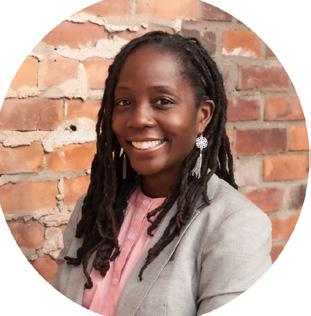
In solidarity, Nancy A. Parker Executive Director, Detroit Justice Center
OUR NATIONAL PLATFORM FOR BUILDING
DJC’s model for building Just Cities combines a solution for two problems that are often considered separately: how to transform the criminal legal system & how to build equitable cities where everyone thrives.
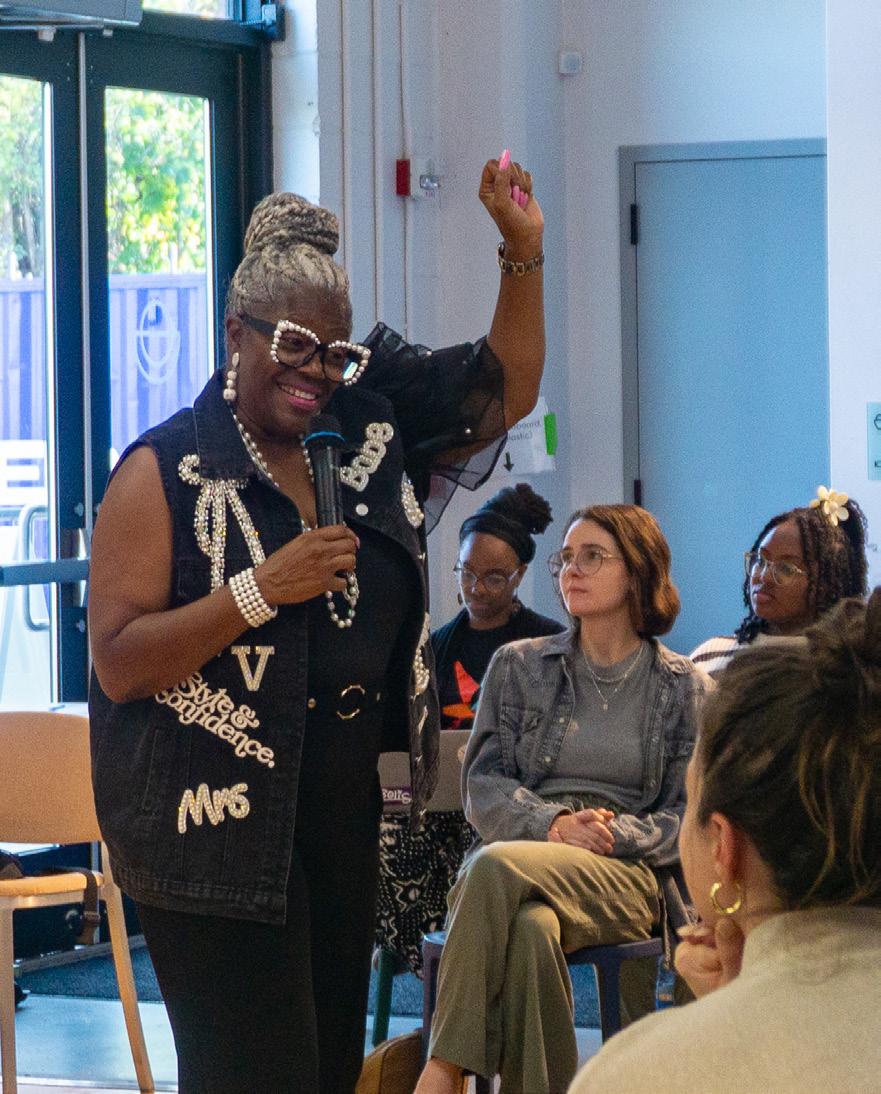
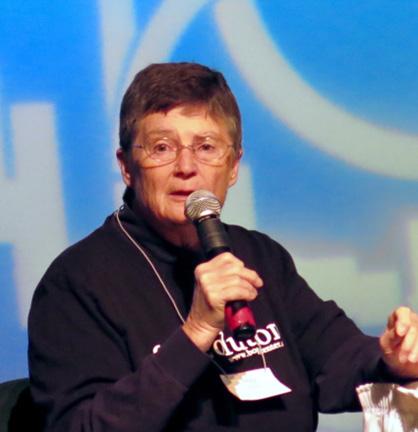
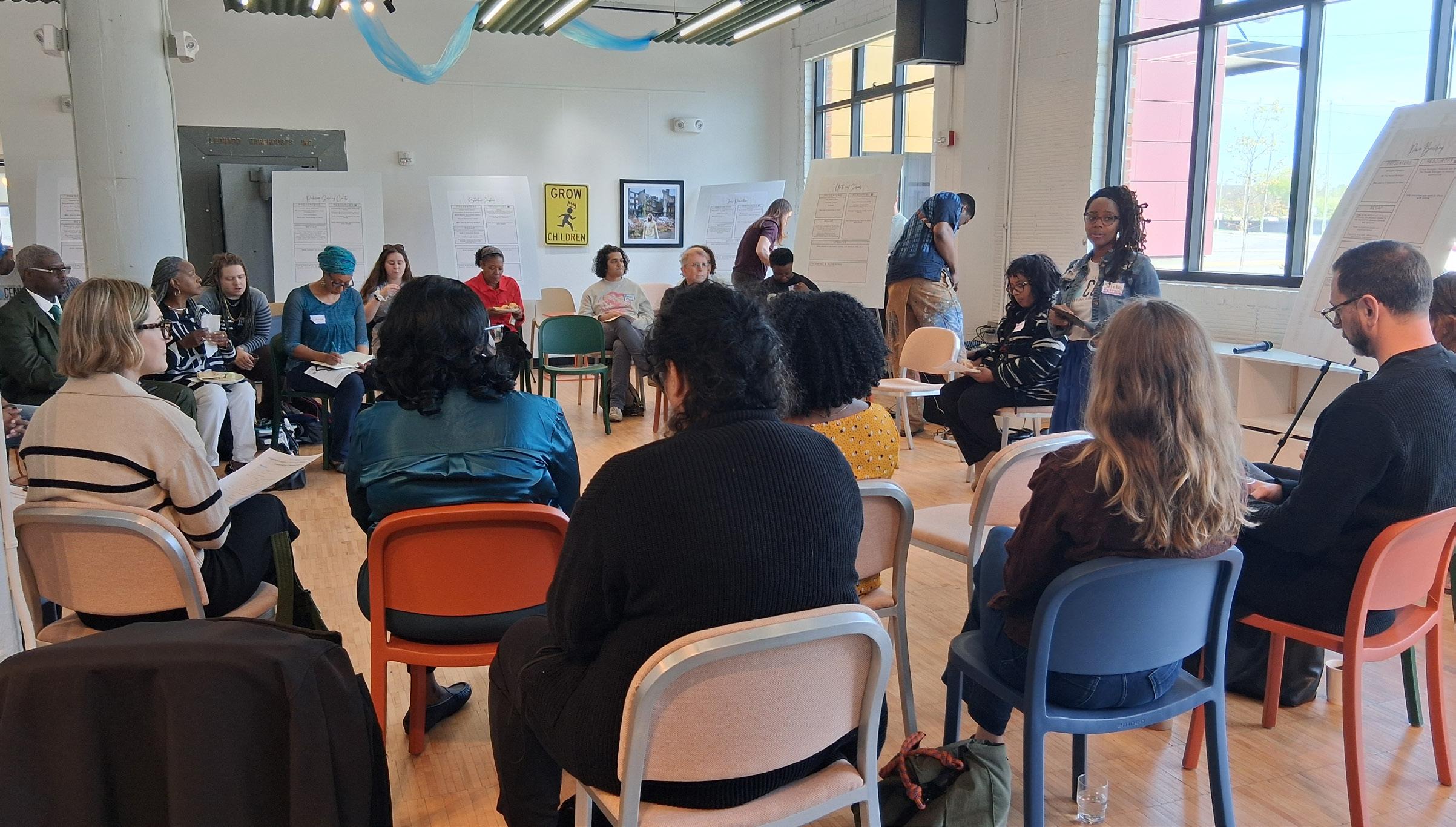
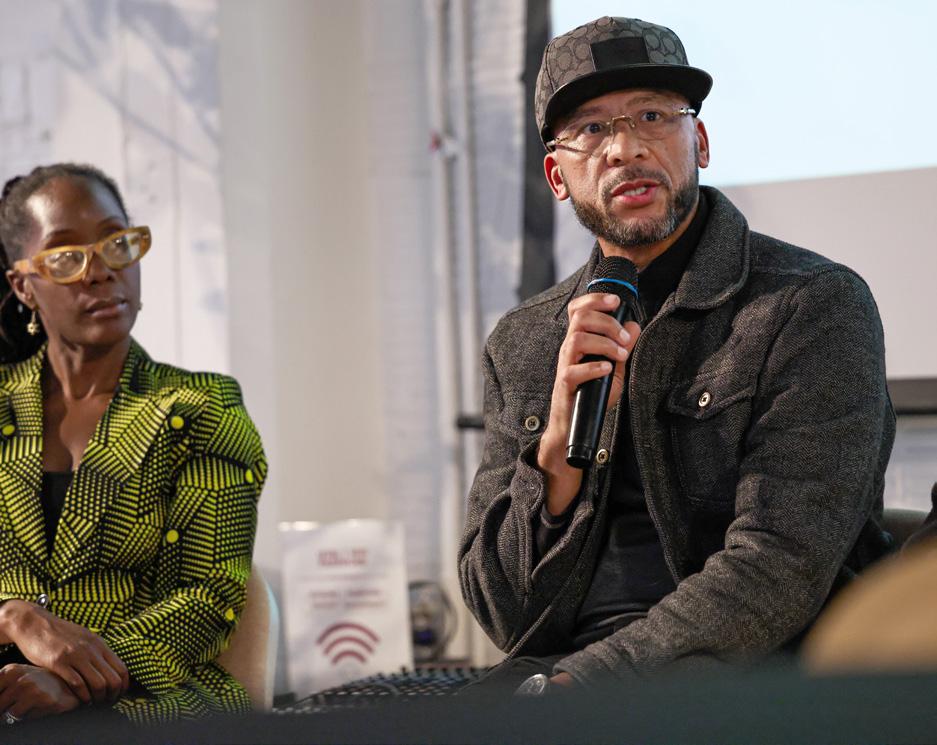
Valerie Kelley-Bonner of SOOAR speaking at DJC’s Mental Health Roundtable
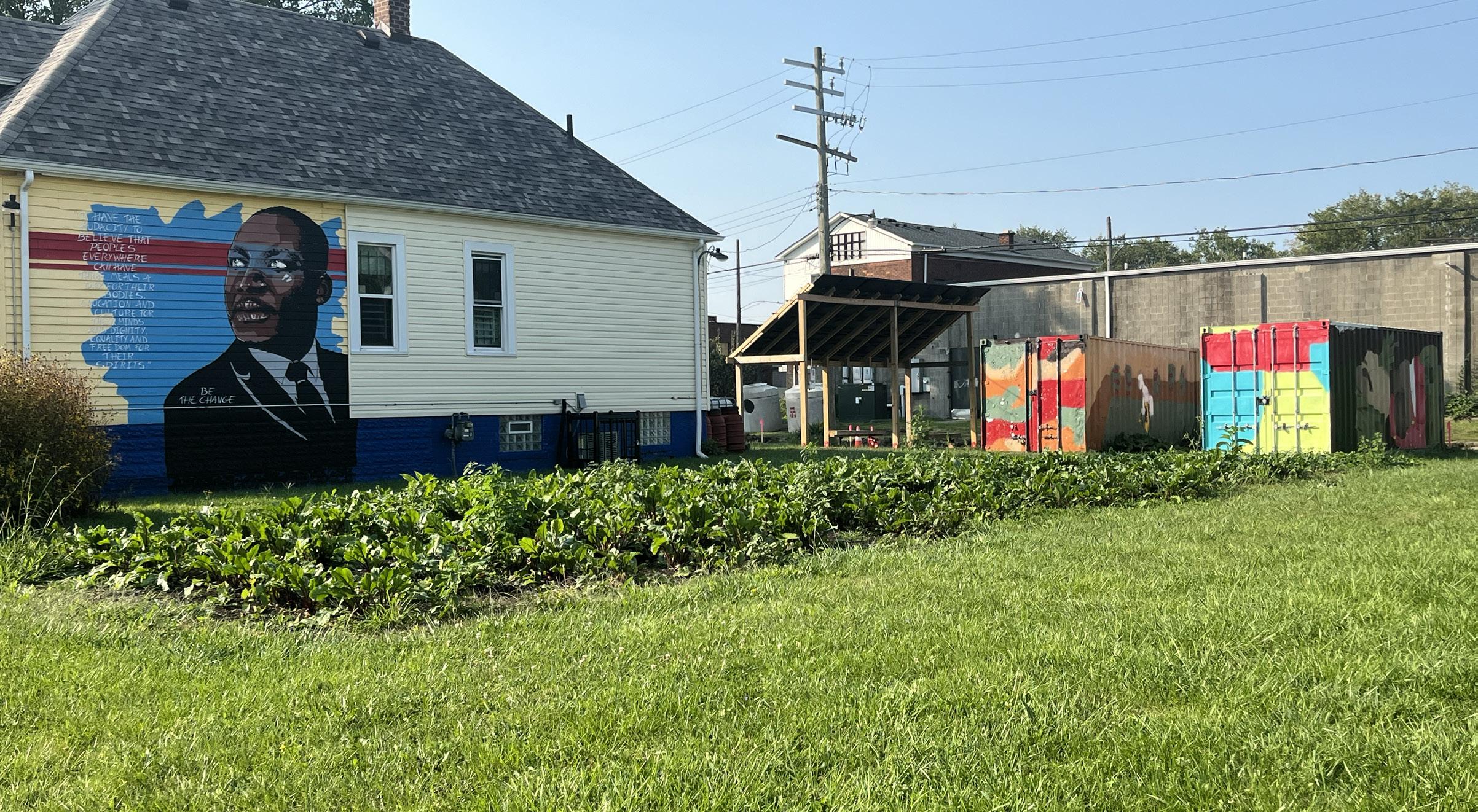
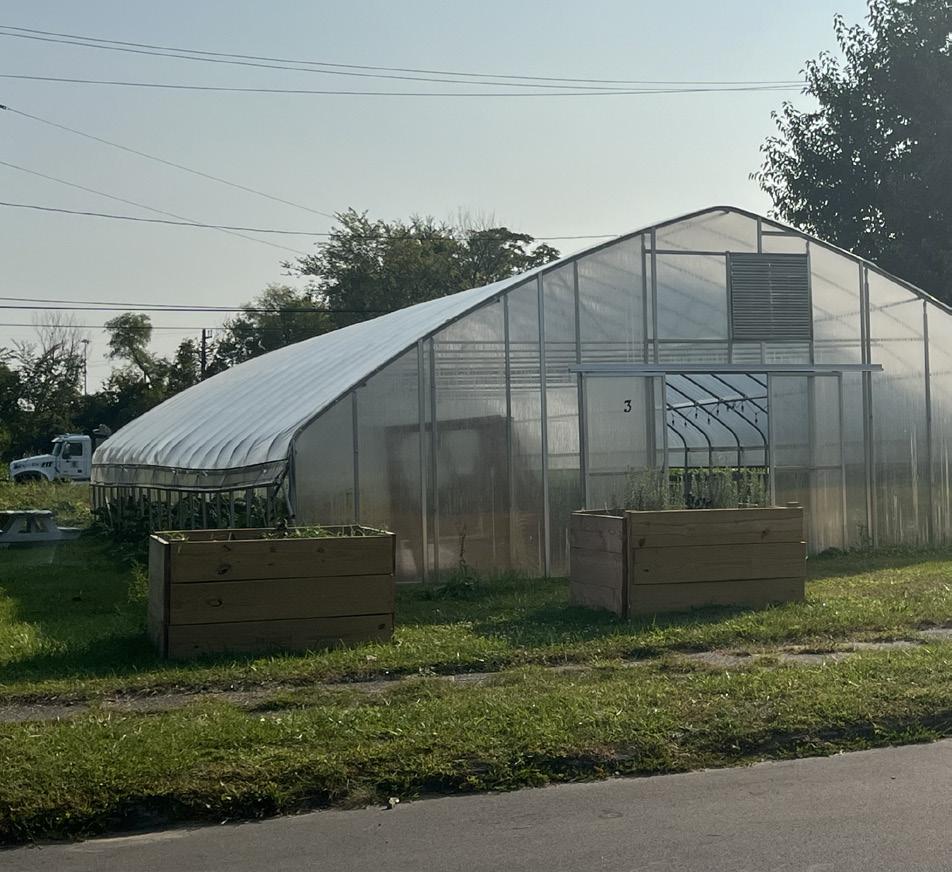
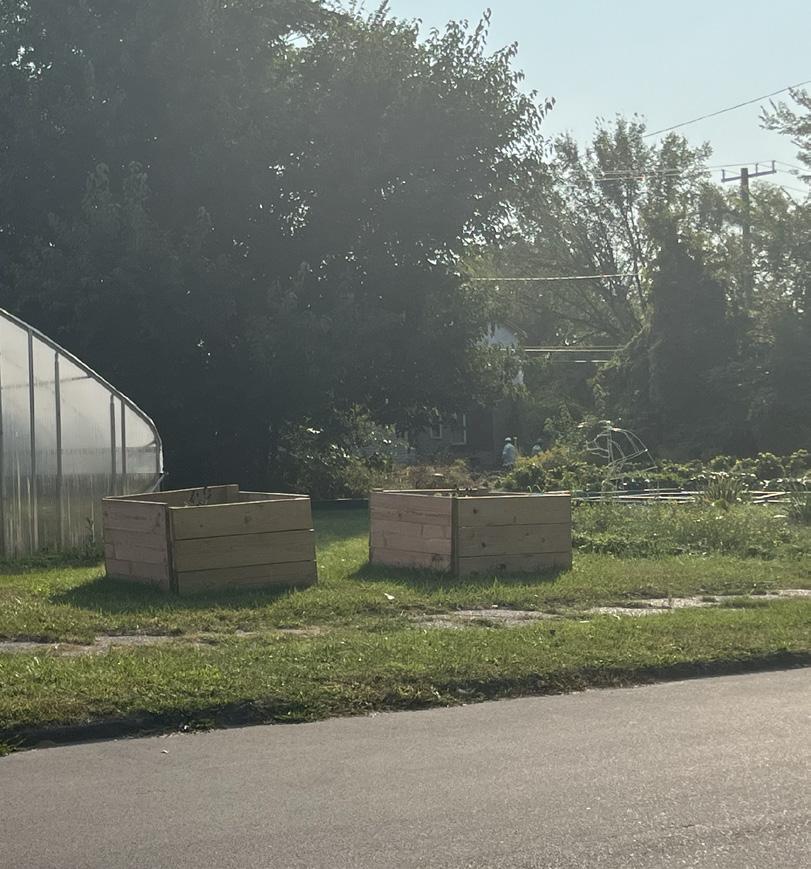
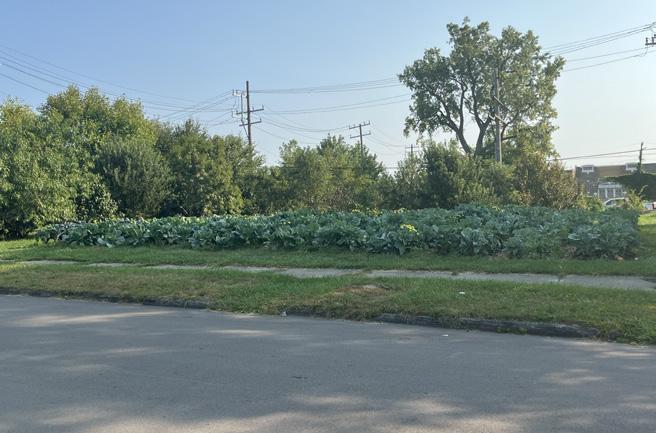
The Detroit Cultivator CLT in Detroit’s North End
DJC’s first expungement fair
We recognize that these two issues—mass incarceration and economic development—are inextricably linked: A criminal record, suspended driver’s license, warrant for a low-level offense, or excessive court debt can prevent individuals from participating in the economy and impoverish entire families.
Across the country, overcriminalization and aggressive policing cement Black, brown, and working class neighborhoods into concentrated poverty, while economic decline has limited their access to affordable housing and employment.
Trickle down development models have promised to revitalize American cities, but by favoring downtowns over neighborhoods, inflated police budgets over public services, and tax breaks for the wealthy over community-led local development, these inequitable approaches have failed to deliver. Instead, they have only pushed out or imprisoned our most vulnerable residents. Perhaps nowhere is the problem—and the promise—as great as in Detroit, a city emblematic of the harms of racial capitalism and the resilience of community-led solutions.
DJC’s Just City platform promotes a new vision for society, where we have shifted our abundance away from prisons and into true community safety; where affordable housing is the norm; and where there is a thriving, solidarity economy and community-driven development.
DEFENSE, OFFENSE, AND DREAMING
We use a three-pronged approach, what we call “defense, offense, and dreaming,” to serve individual clients, build power, and catalyze systemic solutions. We go on the defense by using the power of attorneys to alleviate immediate suffering and remove legal barriers like warrants that are keeping residents from accessing employment opportunities. Next, we go on the offense by providing legal support to Detroiters who are pursuing housing and worker-owned cooperatives, community land trusts, and other economic models that put people over profit. Finally, we invite our partners to dream of a more safe and just world with us, and we turn those dreams into pilot programs, including a restorative justice network, artist residency, and a campaign to divest public funds from policing and into behavioral health and other community needs.
DJC’s Triniti Watson at the Autumn film screening
As a national organization deeply rooted in Detroit, DJC is connecting the on-the-ground innovation we support locally with growing national efforts to rethink the criminal legal system, safety, land use, and public infrastructure.
PROLIFERATING THE
COMMUNITY
LEGAL ADVOCATE MODEL ACROSS THE U.S.
In 2025, DJC brought our Community Legal Advocate (CLA) model to three organizations across Cleveland, Ohio; Atlanta, Georgia; and Durham, North Carolina.
Even though many legal issues don’t require a lawyer to navigate, government systems are out of reach for most lay people. CLAs are nonlawyers who democratize access to the law by making the law and legal processes accessible to everyone, especially those vulnerable to punishment from the system. Formally trained in basic law, organizing, and advocacy, and supervised by DJC’s attorneys, CLAs enable everyday Detroiters to navigate existing government processes and transform disempowering systems.
This year, we brought the CLA model to Cleveland VOTES, SnapCo (Solutions Not
Punishment Collaborative), and the Justice Institute at North Carolina Central University. The Justice Institute’s new CLA has been educating local residents on their rights as tenants— addressing an unmet legal need in Durham.
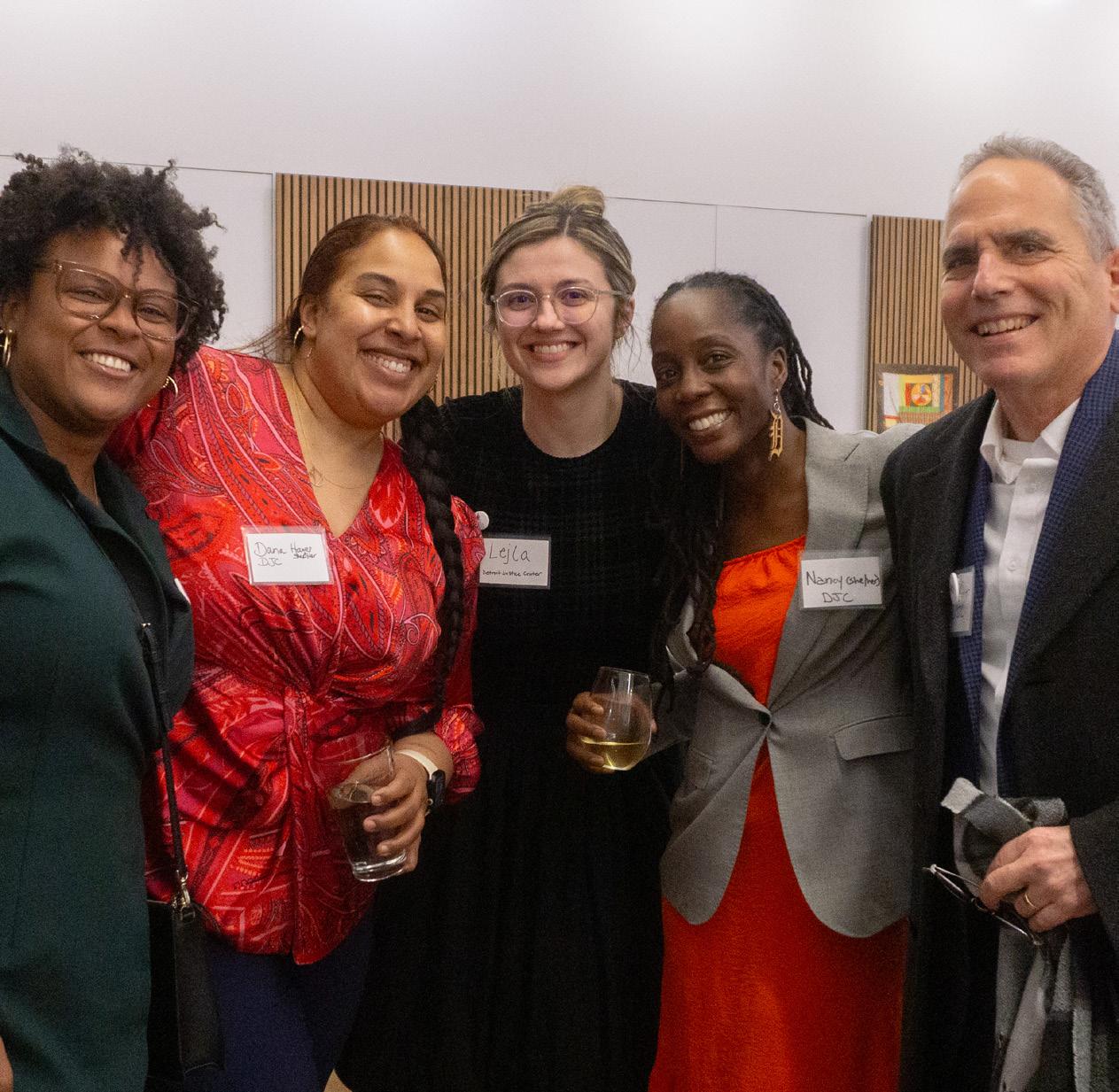
DJC staff at a fundraiser hosted by Linh and Dug Song
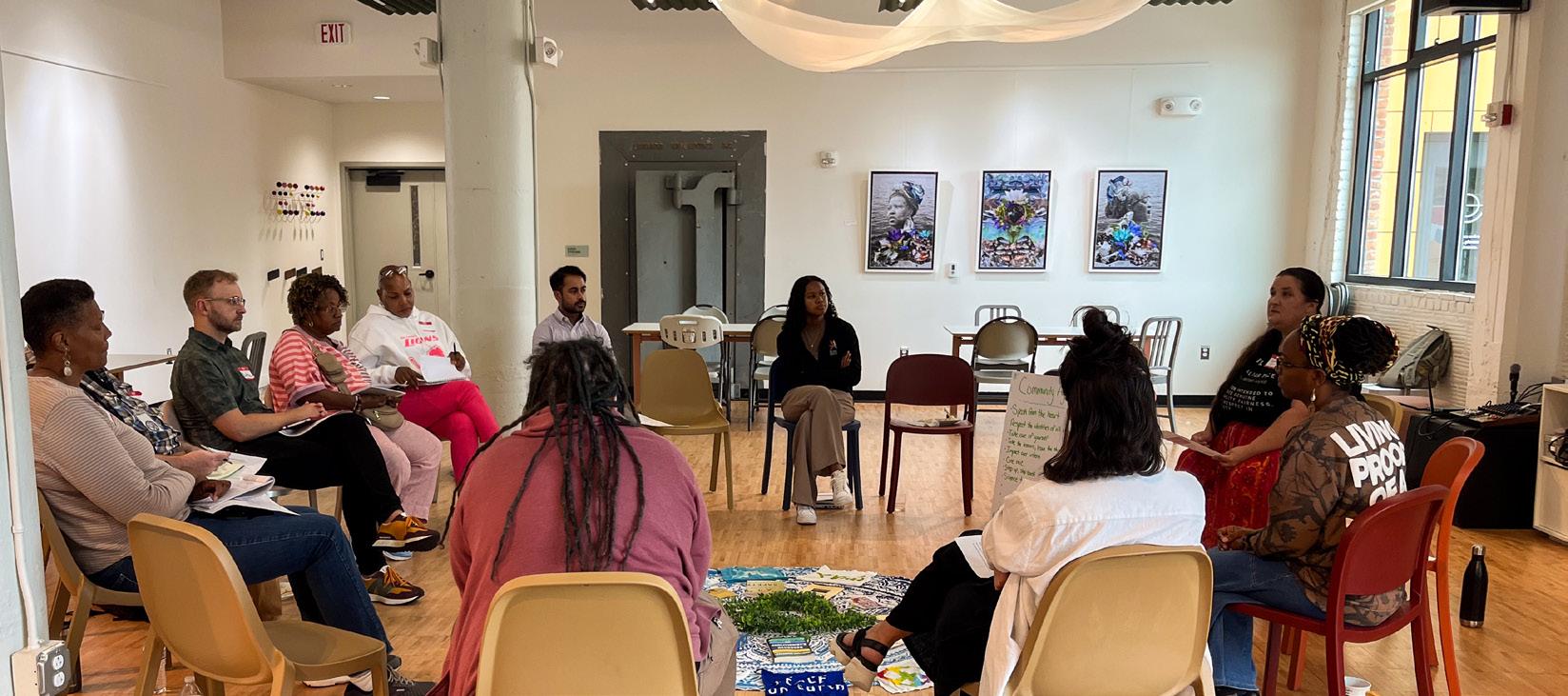
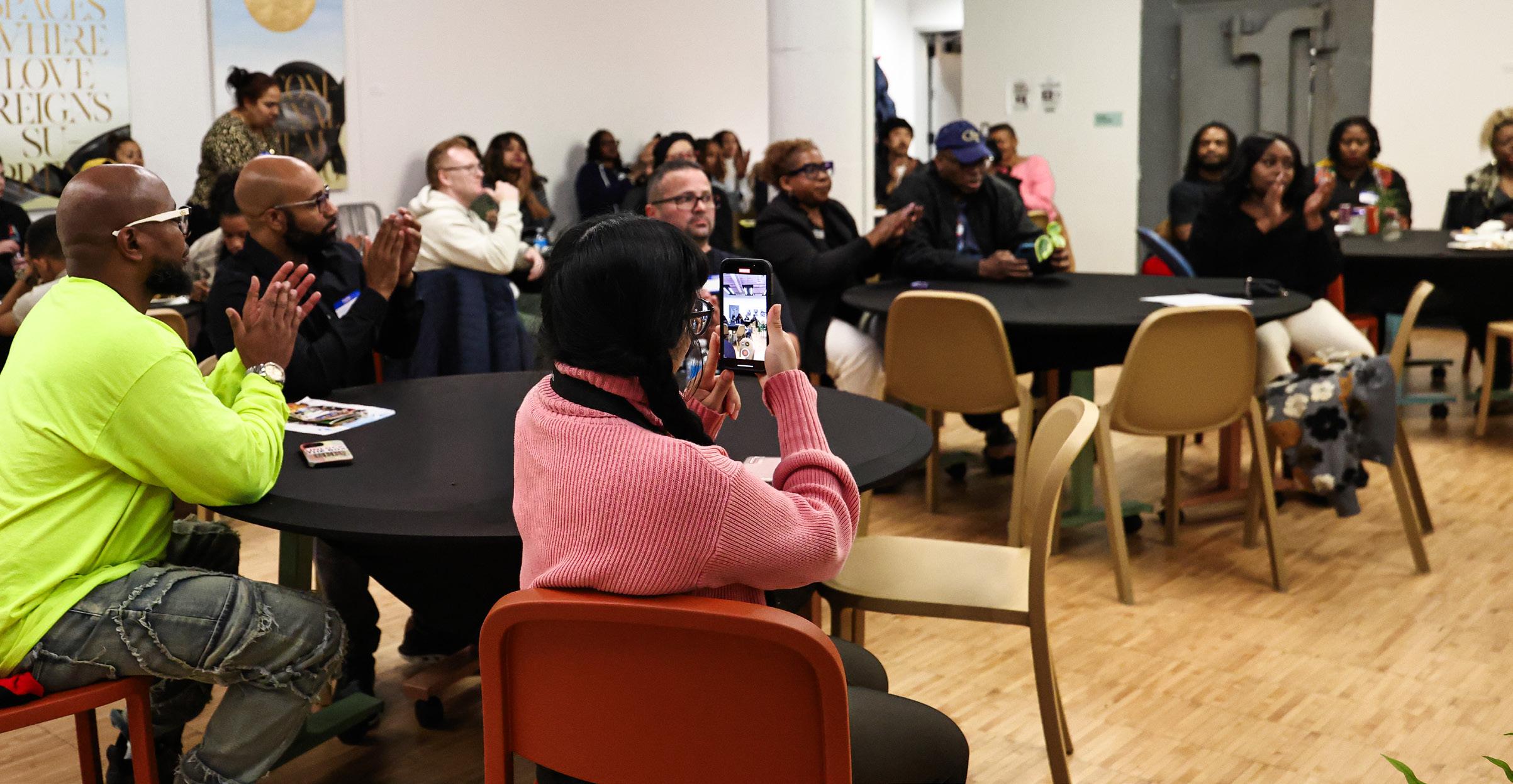
DJC’s Mental Health Partner Roundtable participating in a restorative justice circle, led by Lauren Fardig-Diop
CLIENT SPOTLIGHT
RETAINING & SUPPORTING JUSTICEINVOLVED DETROITERS
DJC provides free legal services to Detroiters at both ends of the legal system—from pre-trial to re-entry— to prevent people from entering or returning to jail or prison.
This includes removing warrants and criminal records, restoring driver’s licenses, reducing court debt and child support debt that accrued while someone was incarcerated and unable to work, addressing custody and landlord-tenant matters, and more.
Any one of these issues that result from interacting with the criminal legal system can shut someone out of the economy and mainstream society. DJC’s services help our clients remain out of jail, hold onto jobs and stable housing, and keep their families intact.
Two DJC clients, Mercedes Parrish and Ebony Williams, shared what license restoration meant for their lives after working with DJC Senior Staff Attorney Rubina Mustafa to legally regain their driving privileges, which ended years of instability and uncertainty.
For Mercedes, a mother of three disabled children, license restoration meant being able to take her children to medical appointments without fear of being pulled over or arrested. She described the constant stress of driving while suspended simply to care for her family.
For Ebony, who lived without a license for ten years, the impact extended beyond transportation. Outstanding fines and fees prevented her from updating her name with the Secretary of State, blocking her ability to move forward in her personal and professional life. With DJC’s support, she resolved those barriers and regained both mobility and autonomy.
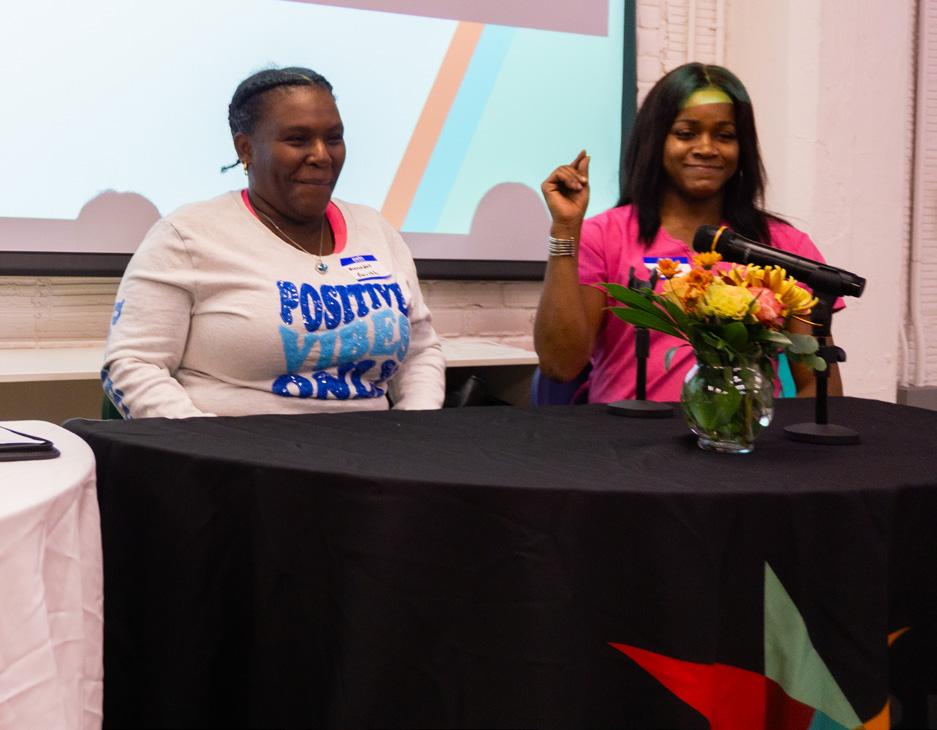
Mercedes Parrish (left) and Ebony Williams (right) at a panel discussion
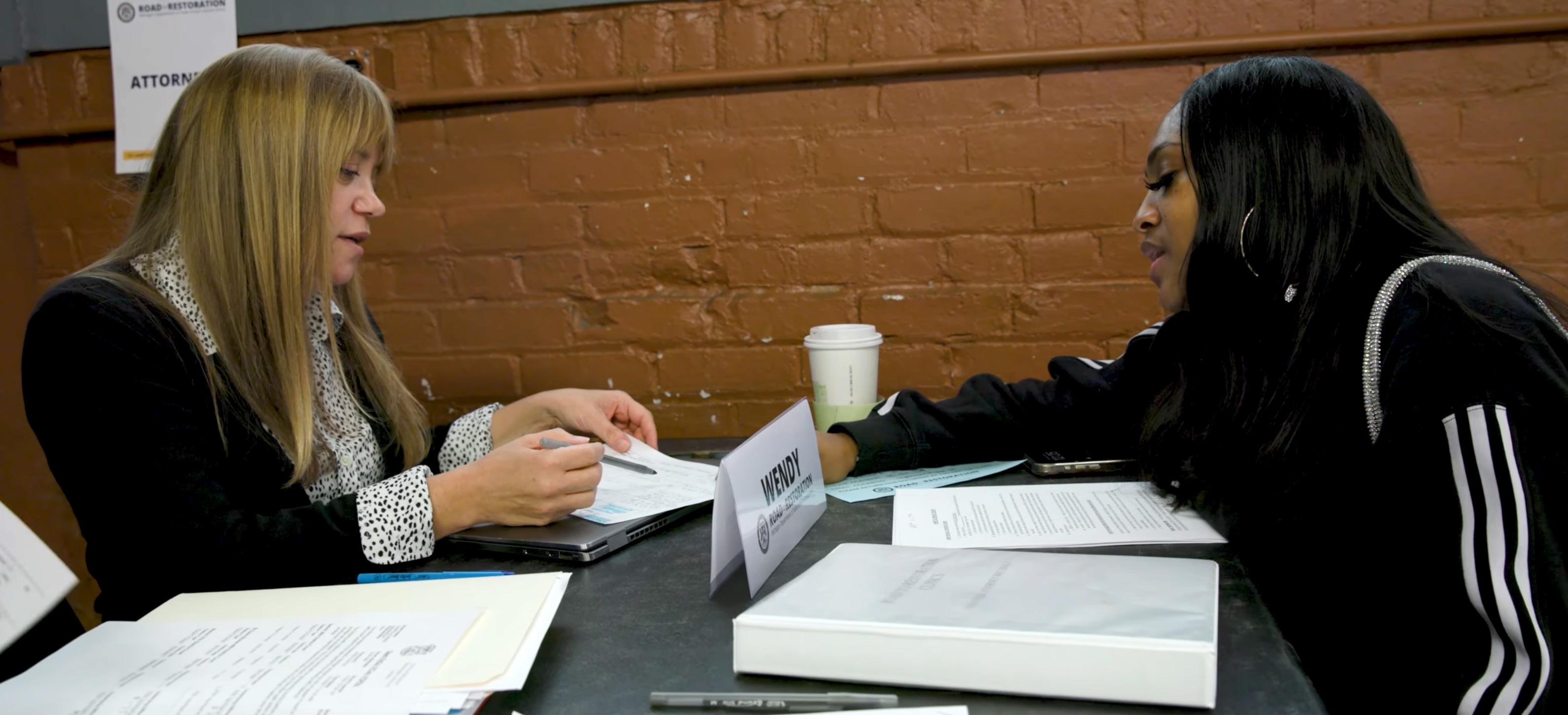
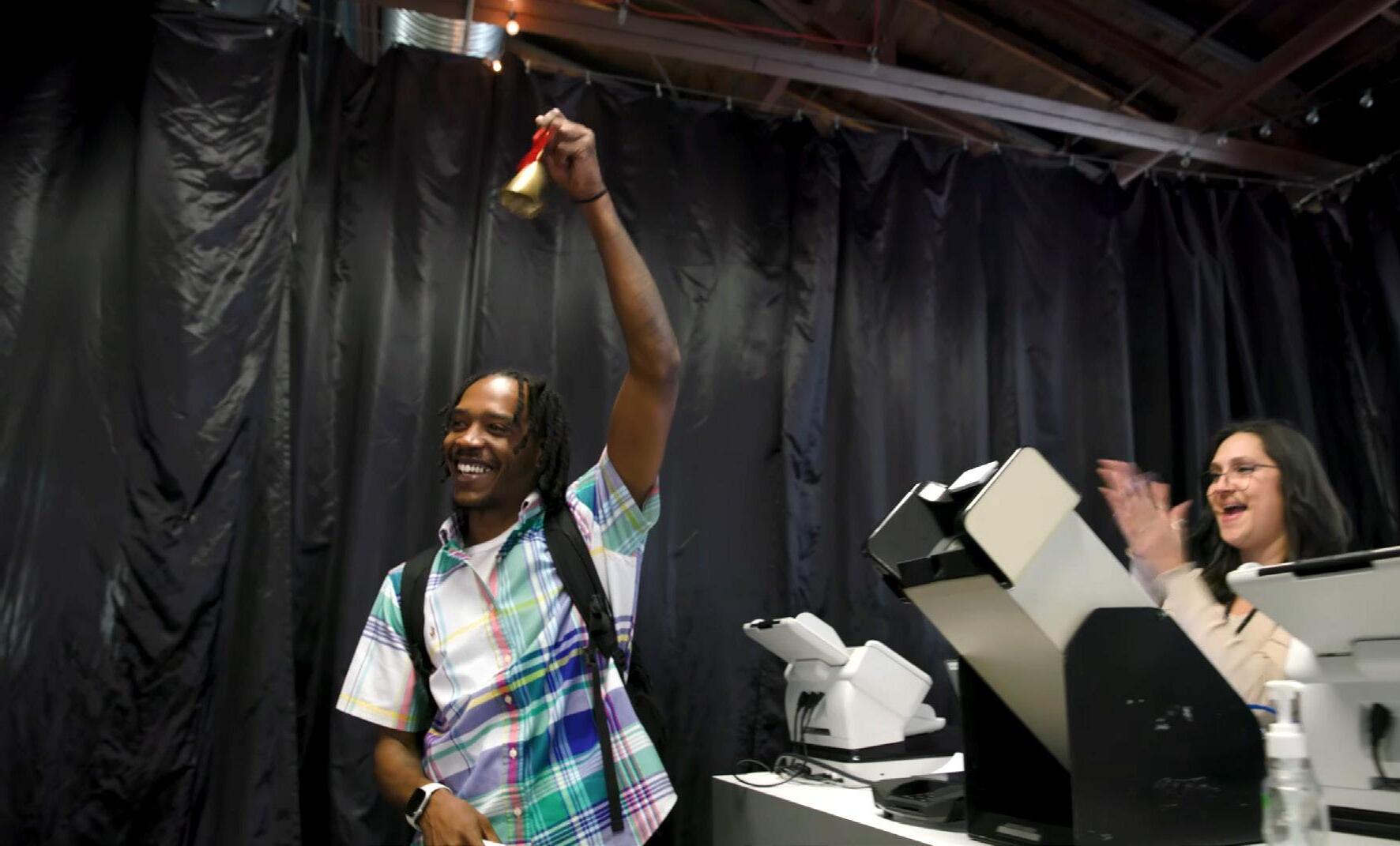
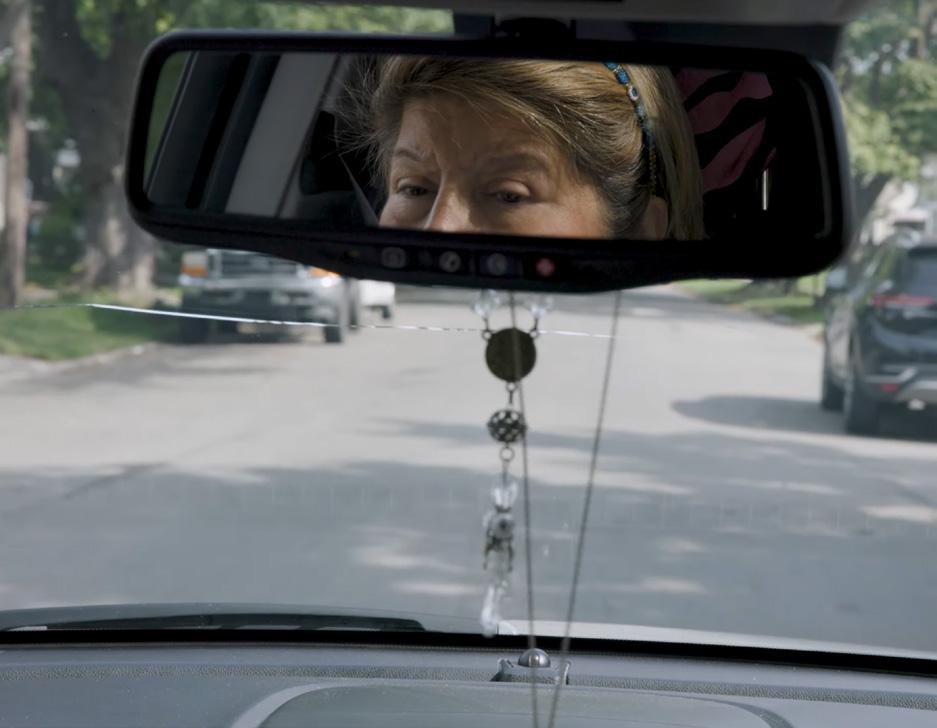
Still from the film Road to Restoration—Michigan
RECLAIMING DETROITERS’ STOLEN WEALTH
Since 2009, the City of Detroit has illegally over assessed the values of Detroit homes, resulting in inflated property taxes. With homeowners unable to pay their tax bills, the county then foreclosed on 1 in 3 properties and displaced 100,000 residents in the 2010s.
Wayne County also profited off of this loss by selling 2,400 foreclosed upon homes for more than the tax debt that was owed. Through a retroactive application of Rafaeli v. Oakland County, the Michigan Supreme Court determined that counties have to return any profits from home sales to their former owners.
DJC’s Community Legal Advocates (CLAs) spent dozens of hours successfully finding contact information for 80% of affected homeowners and
partnering with Outlier Media to inform Detroiters of their ability to claim the excess proceeds. We realized that nearly a third of the individuals had passed away since their homes were auctioned off, raising the novel question of whether their heirs had the right to this money and how community lawyers could assist them in obtaining it.
DJC’s legal team, led by contract attorney Deb Choly, supported 48 heirs in filing motions and opening probate cases which are still pending, but could result in up to $1.8 million returned to impacted families.
FINED OUT: ROAD TO RESTORATION—MICHIGAN
DJC partnered with JoLu Productions, the Fines and Fees Justice Center, and the Robert Wood Johnson Foundation to produce Road to Restoration–Michigan
The documentary exposes how cycles of traffic fines and fees trap Michiganders in poverty by suspending driver’s licenses, limiting employment opportunities, and in some cases leading to incarceration. The film highlights DJC and our partners’ Road to Restoration clinics, which help residents clear barriers and legally reinstate their licenses. Stream it for free online at finedout.com
Still from the film Road to Restoration—Michigan
Still from the film Road to Restoration—Michigan
2025 IMPACT METRICS
In 2025, we served 159 traffic, family, housing, probate, and criminal record expungement clients.
WARRANTS CLEARED
92
40
7 CHARGES DISMISSED
EXPUNGEMENT PETITIONS GRANTED
$15,884 $25,000 OF CLIENT COURT DEBT PAID OFF THROUGH DJC’S MUTUAL AID BARRIER RELIEF FUND IN WRONGFUL EVICTION CLAIMS RECOVERED
EXPUNGEMENT FAIRS THAT REACHED
2 7
EXPUNGEMENT FAIRS LED BY OUR PARTNERS HOSTED SUPPORTED PEOPLE
577
ROAD TO RESTORATION CLINICS
Statewide license restoration clinics were co-hosted by the Secretary of State, DJC, and other partners.
In-reach clinics take place inside prisons to help soon-to-be returning citizens restore their licenses.
ALL ROAD TO RESTORATION CLINIC ATTENDEES RECEIVED GUIDANCE ON HOW TO RESTORE THEIR LICENSES.
OUR THEORY OF CHANGE
How we approach our work
DJC identifies and addresses the most pressing issues facing our clients and community.
WALKED OUT OF A CLINIC WITH A REINSTATED LICENSE IN-HAND
We then fight for systemic change to remove those barriers.
Road to Restoration Clinics were hosted across the state.
We ensure these changes are implemented equitably so communities actually benefit in practice.
Illustrations by Gunner x Hobbes
EMBRACING NEW MODELS FOR EQUITABLE DEVELOPMENT
Detroiters have vibrant visions for how to build sustainable futures for their neighborhoods, but they often need legal support to succeed.
DJC provides a variety of legal and real estate services to help residents establish alternative economic institutions that will keep the city affordable and equitable for generations to come.
We focus on providing support for community land trusts and other affordable housing models, worker-owned cooperatives, and enterprises led by formerly incarcerated people. These replicable approaches ensure long-time residents are the ones who get to decide what their neighborhoods–including homes and job opportunities–look like.
COMMUNITY CONTROLLED LAND & HOUSING
Community Land Trusts (CLTs) play a critical role in bringing us closer to truly Just Cities, where
community-led development is the norm. A CLT is a community-owned nonprofit that holds land and leases it for a small fee to residents, who are only responsible for purchasing the building on the land. By removing land costs from the purchase price, CLTs make homeownership more affordable and accessible. Meanwhile, democratic governance structures ensure future development decisions are guided by the members of the CLT instead of outside forces.
DJC’s services cover the full range of developing housing on a CLT. We help primarily Blackled community groups establish CLTs, acquire land, unlock financing, and identify qualified real estate development professionals to support their projects. This approach builds the capacity and power of community organizations to plan and develop neighborhoods themselves.
IN 2025, DJC:
568
7 CLT CLIENTS SUPPORTED 1
HELPED OUR PARTNERS RAISE
HOURS OF TECHNICAL ASSISTANCE PROVIDED $3.2M FOR THEIR AFFORDABLE HOUSING PROJECTS (RUNNING TOTAL $3.6M)
PUBLISHED
JOINED MAYOR SHEFFIELD’S HOUSING DEVELOPMENT & PLANNING TRANSITION COMMITTEE—ENSURING THE NEW ADMIN’S POLICY AGENDA IS SUPPORTIVE OF COMMUNITY-OWNED HOUSING MODELS
THE FUTURE OF WORK
Capital flight has devastated the economy of post-industrial Detroit. This crisis has also created an opening for residents to define new parameters for the future of work. This includes the worker-owned cooperative model that emphasizes shared ownership, profits, and decision-making instead of private control. In 2025, DJC renewed our partnership with the Detroit Community Wealth Fund, allowing us to provide ongoing legal services to our base of co-op clients so they can fortify their enterprises and expand their reach. These co-ops include childcare, graphic design, healing, and interpretation service providers who are meeting real needs in their communities.
NEW RESEARCH REPORT ON HOW PRE-APPROVED HOUSING PLANS CAN CUT COSTS, SAVE TIME & SUPPORT AFFORDABLE HOUSING DEVELOPERS
Our attorneys also support returning citizens (people who have been incarcerated) with pursuing dreams of entrepreneurship. Because of social stigmas, gaps in work history, and other barriers, returning citizens are five times more likely than the general population to become entrepreneurs. We assist our clients in forming their enterprises, drafting bylaws, and more. In 2025, DJC provided legal support to entrepreneurs working in retail, and visual and culinary arts.
INTERN SPOTLIGHT
Summer 2025 intern Lauryn Thomas helped us build a database to support the conversion of private businesses into worker-owned co-ops. She shared her main takeaway from her time with DJC:
“During my internship, I learned that so much is possible: Workplaces can center rest as a form of resistance. Healing and accountability can flourish without punishment. And most importantly, there’s space in this world for everyone’s freedom dreams to coexist.”
—LAURYN THOMAS, DJC INTERN
AMPLIFYING RESTORATIVE JUSTICE & RESIDENT-LED VISIONS OF SAFETY
DJC’s restorative justice work centers Detroiters’ visions of safety outside of the carceral system and strengthens communityled approaches that prioritize healing, accountability, and collective care over punishment.
Through the Metro Detroit Restorative Justice Network, DJC is building the infrastructure necessary for residents to respond to harm without relying on police or prisons.
THIS YEAR MARKED SIGNIFICANT GROWTH IN BOTH REACH AND IMPACT:
Published Unraveling Harm, Cultivating Safety, a community-rooted report documenting restorative justice (RJ) practices and resident perspectives. More than 250 copies were distributed across Detroit, expanding access to practical tools and shared language around non-carceral safety.
Facilitated 20 community-building circles across Detroit, Wayne County, and Washtenaw County, creating structured spaces for dialogue, accountability, and healing.
Trained 13 Detroiters in restorative facilitation (70 to date since launching our Circlekeeper trainings). This is building sustained neighborhood-level capacity to address conflict, repair harm, and strengthen community safety without reliance on punitive systems.
Co-hosted the Michigan Restorative Justice Summit at Eastern Michigan University, in partnership with the Dispute Resolution Center. The gathering convened more than 200 practitioners, educators, advocates, and community members committed to advancing restorative practices statewide.
Challenged the silencing of student protesters. When the University of Michigan’s Office of Student Conflict Resolution–which purports to practice RJ–targeted students participating in Palestine solidarity protests with disciplinary charges, DJC helped organize RJ practitioners across the state to call for charges to be dropped. We organized a communitybuilding circle on campus to show the university what true restorative justice principles look like.
In summer 2025, the Detroit Justice Center deepened its Health-Justice partnership with Detroit Life Is Valuable Everyday (DLIVE), a hospitalbased violence interruption
HEALTH-JUSTICE PARTNERSHIP
In summer 2025, the Detroit Justice Center deepened its health-justice partnership with Detroit Life Is Valuable Everyday (DLIVE), a hospitalbased violence interruption program based out of Detroit Medical Center’s Sinai-Grace Hospital.
We launched a new 12-week program that integrated restorative justice training, legal education, and trauma-informed health programming for 13 DLIVE participants, many of whom were navigating the aftermath of serious community violence and legal barriers. Participants engaged in five restorative justice training sessions, learning how to prepare for and facilitate community-based restorative processes. The program also included legal and health clinics focused on key social determinants of health, including housing stability, traffic and license restoration, family law, and economic mobility.
Participants reported increased understanding of eviction defense, driver’s license restoration, custody rights, and constitutional protections during police encounters. Many shared that they learned they “have more rights than we thought” and felt empowered to “speak up” and advocate for themselves.
By pairing restorative practice with direct legal education and support, the cohort strengthened participants’ capacity to address harm while also reducing structural barriers in their own lives.
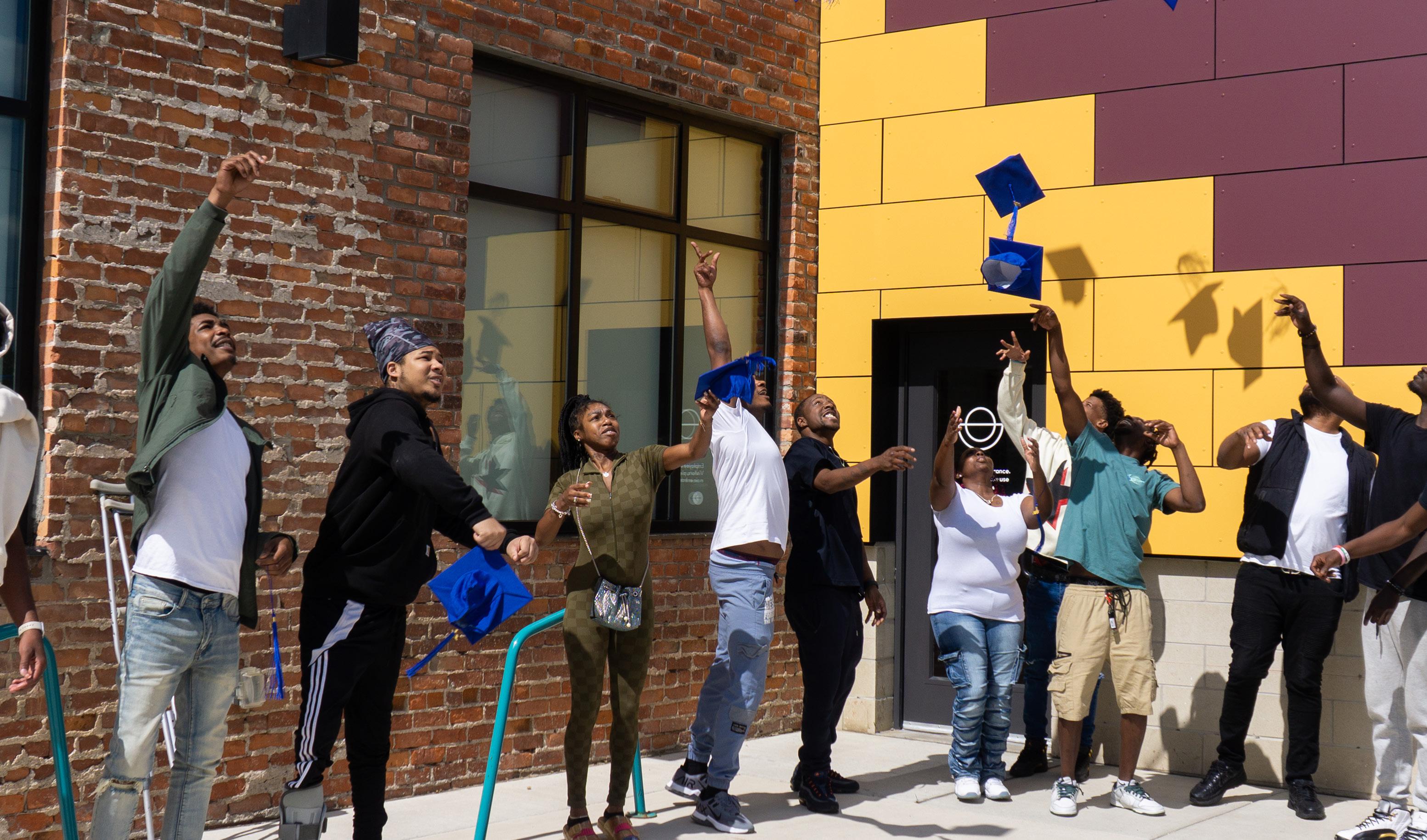
The cohort concluded with a community graduation celebration at the LOVE Building, recognizing participants for completing the program, and stepping into leadership as mediators and advocates within their neighborhoods.
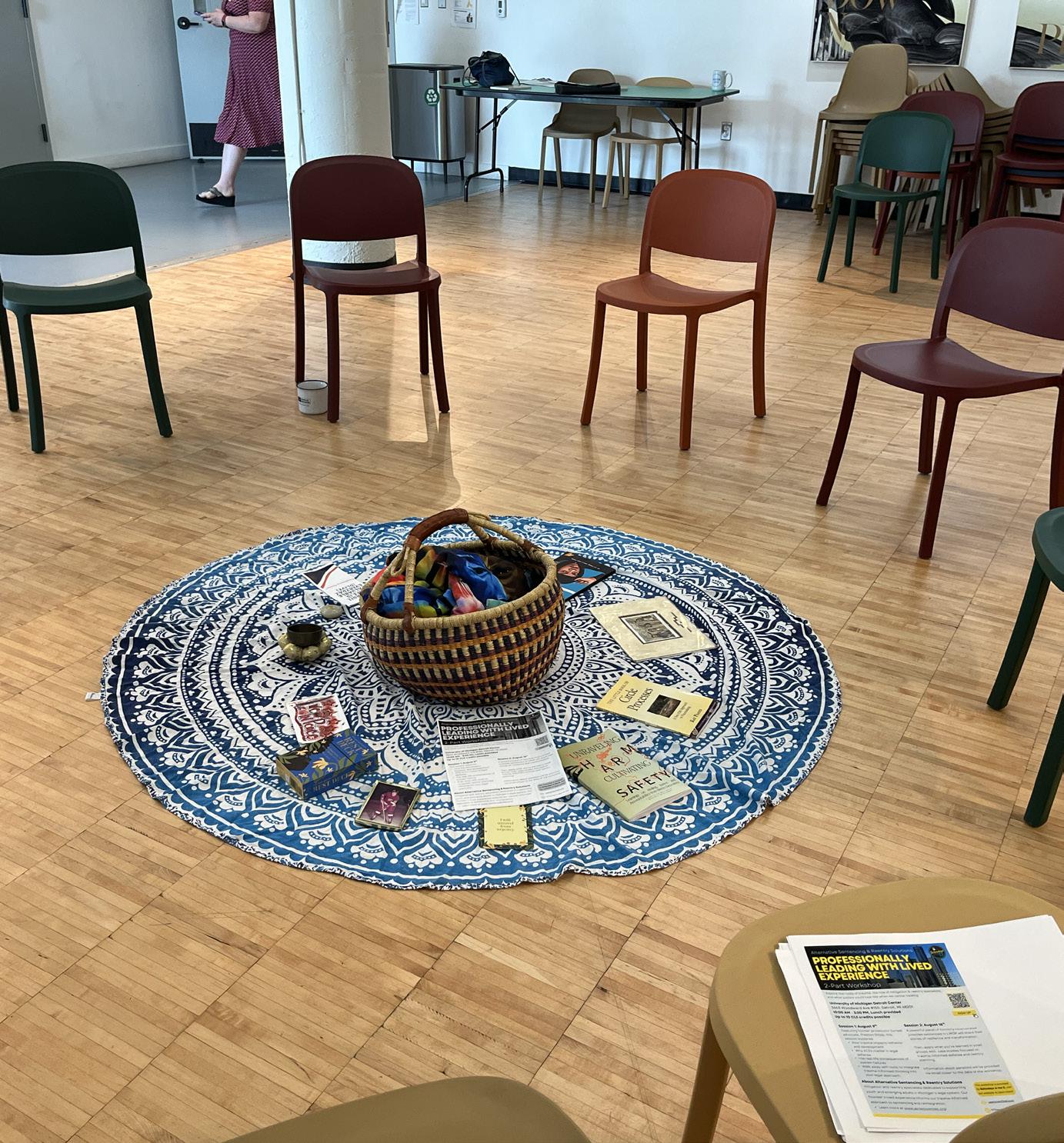
Centerpiece at a Restorative Justice Circlekeeper training
Unraveling Harm, Cultivating Safety author Lauren Williams hugs guest
DIVESTING BUDGETS FROM POLICING & INCARCERATION
Detroit’s response to mental health and substance use crises relies heavily on policing, surveillance, and incarceration—systems that too often deepen harm rather than promote healing. The Detroit Justice Center works to dismantle these harmful systems and build up community-based supports that actually keep us safe.
Through our Community Reinvestment Initiative, we convene partners, produce research, and shape public narratives that move resources away from carceral responses and toward community-led strategies rooted in healing, prevention, and collective wellbeing.
COALITION BUILDING
In 2025, DJC launched a Mental Health Roundtable, convening 75 participants, representing 20 organizations across a wide
range of sectors, including healthcare providers, advocacy groups, harm reduction and peer support organizations, academic institutions, and directly impacted community members.
The roundtables model the systems of care we seek to build: collaborative, relationshipcentered, and grounded in lived and living experience as we work to build a coordinated movement for community reinvestment.
STATEWIDE & NATIONAL LEADERSHIP
DJC served as a co-host of the 2025 Reform Conference with the Drug Policy Alliance (DPA), convening local and national leaders working to decriminalize mental health and substance use. The Mental Health Roundtable also partnered with the DPA on a community forum that explored the disproportionate impact of the War on Drugs on Detroiters along with harm reduction tools and non-carceral interventions that can keep people who use drugs safe.
Sheba Rogers, Senior Program Manager, also collaborated with DPA Executive Director, Kassandra Frederique, on an op-ed in The Detroit News titled “Community care is the answer to Detroit’s overdose crisis.” The piece called for shifting investments from punitive systems toward prevention, harm reduction, and community-led crisis response.
RESEARCH
In March, DJC completed a research report analyzing mental health outcomes in Detroit and across Michigan, including patterns of criminal legal system involvement. The report builds on two years of analysis, including an ecosystem scan of local service providers, to ensure policy conversations are grounded in evidence.
NARRATIVE CHANGE
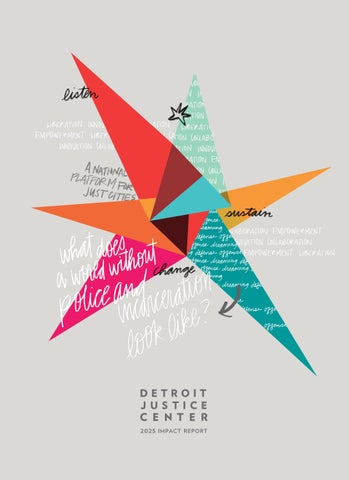
DJC is helping to transform narratives about community safety in Detroit and beyond by shifting the focus from punishment to connection, restoration, and collective care. Every year since 2020, DJC has invited Wayne County artists to grapple with a bold question: What does a world without police and incarceration look like?
Grounded in Detroit’s long history of arts and activism, the Artist Residency supports creatives who make abolitionist futures tangible.
Our 2024–25 Artist in Residence, Cherise Morris, presented her culminating work at 27th Letter Books. She opened the evening by reading the names of people killed by police and dedicating her work to their memory. Through a series of essays, Cherise invited the audience to reconsider dominant narratives about safety and punishment by drawing
Click to watch recording
on African cosmologies, histories of communal care, and traditions of collective grieving. Her work challenged attendees to confront grief, anger, and responsibility while imagining models of accountability that do not rely on cages or surveillance.
Beginning in 2026, DJC will expand the program to offer two residencies open to artists across Michigan, including one specifically for formerly incarcerated artists. This expansion reflects DJC’s commitment to ensuring that people directly impacted by the carceral system are leading the cultural shift in how we imagine safety and accountability.
2025 International Drug Policy Reform Conference
DJC’s 2024-2025 Artist in Residence Cherise Morris
WINNING SYSTEMIC CHANGE
By working directly with residents and community-based organizations, DJC understands on-the-ground challenges and then partners with communities to develop structural solutions that target root causes of inequality.
TRANSFORMING FAMILY LAW SYSTEMS
Child support systems can trap families in cycles of debt and court involvement. Senior Staff Attorney Rubina Mustafa serves on the Michigan Office of Child Support Anti-Racism Transformation Team, which works to identify and dismantle racial inequities in the system. The Team won key reforms in 2025. For decades, when custodial parents received public assistance, including childcare, food assistance, or Medicaid coverage for birthing expenses, Michigan used to require non-custodial parents to repay the state for this support. These practices, which created burdens on those receiving aid, were ended in 2025 and retroactive relief was granted, decreasing state-owed child support debt by around $10k per impacted parent.
ENDING WEALTH-BASED DETENTION
Cash bail systems incarcerate people simply because they cannot afford to pay for their freedom, disproportionately impacting Black and brown communities. DJC continues to advocate for abolishing cash bail statewide through coalitions including Bold Against Bail in partnership with Michigan Liberation. The coalition focuses on public education and narrative change to build momentum for ending wealth-based detention.
ADVANCING HOUSING JUSTICE
DJC worked alongside tenants and community partners to advance policies that strengthen housing security. This includes helping strengthen Detroit’s Right to Counsel ordinance so renters facing eviction can access free legal representation. DJC also endorsed the Unhoused Person’s Bill of Rights, which recognizes mass incarceration as a root cause of the unhoused crisis.
STRENGTHENING COMMUNITY LAND TRUSTS
As part of the City Council’s Affordable, Attainable and Accessible Housing Working Group, DJC advanced progressive policies and funding to support Detroit’s CLT ecosystem. This includes helping secure $3.7 million for the City of Detroit’s first dedicated Community Land Trust Fund, a major milestone for expanding community-controlled housing. We also continued collaborating with city leaders, housing advocates, the Michigan Community Land Trust Coalition, and many other partners to advance equitable property tax policies and strengthen the infrastructure needed for CLTs to grow.
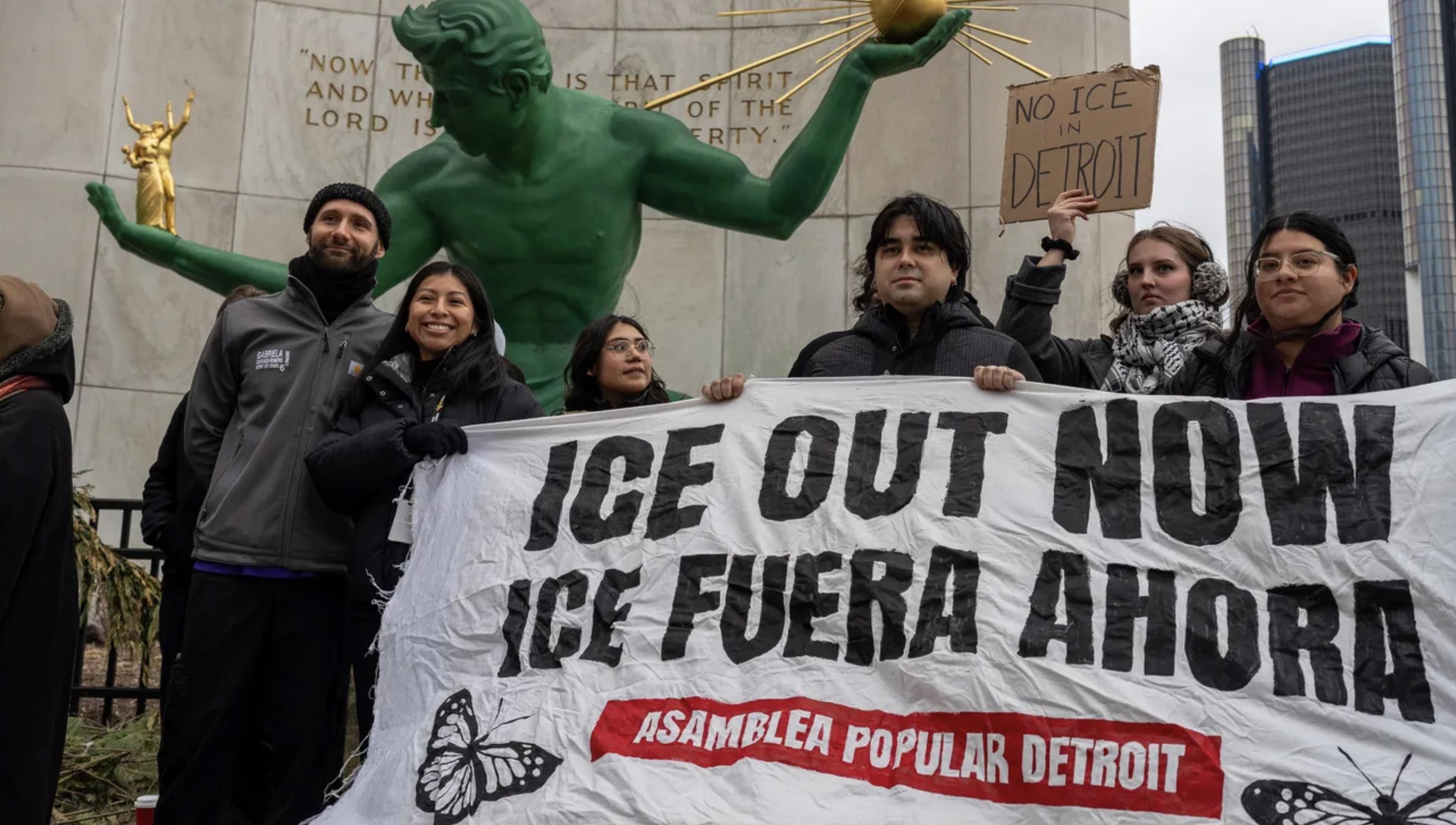
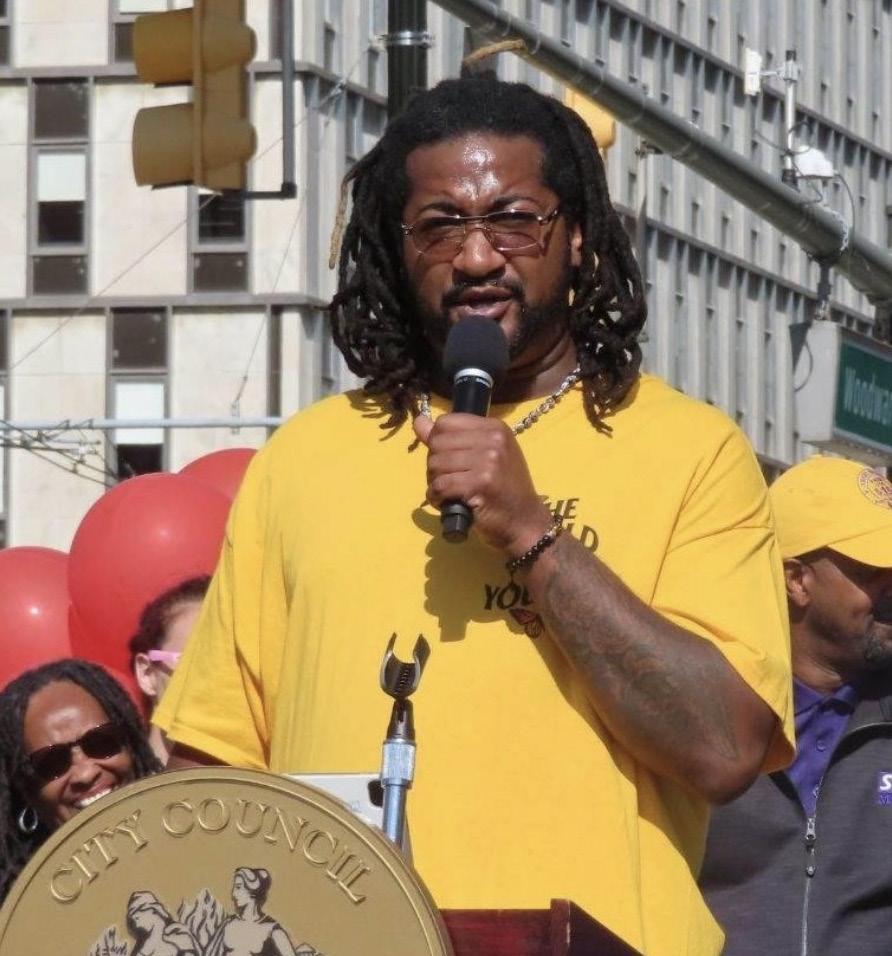
Anti-ICE rally outside Detroit City Council, photography by David Rodriguez-Muñoz and
SHRINKING THE REACH OF CARCERAL SYSTEMS
Carceral systems disproportionately extract wealth from and cause harm to Black, brown, and low-income communities. This includes a growing practice of charging the public hundreds of dollars to access police body camera footage. In 2025, DJC endorsed the Stop Body Camera Paywalls Act introduced by Congresswoman Rashida Tlaib which addresses this injustice by ensuring that footage can be accessed without financial barriers, enabling impacted communities to pursue accountability. DJC also delivered public comment in support of the Michigan Supreme Court proposed rule to prevent civil arrests in courthouses, emphasizing protections from ICE kidnappings.
DJC SPEARHEADS AND PARTICIPATES IN LOCAL, STATEWIDE, AND
COALITION SPACES:
FIGHTING POLICE
SURVEILLANCE TECHNOLOGY
DJC helped win a key court victory holding the City of Detroit accountable for violating its own police surveillance law. After Detroiters passed the Community Input Over Government Surveillance Ordinance in 2021 to require transparency and public input, the City expanded its use of the faulty gunshot detection system, ShotSpotter, without complying with those requirements. Working alongside our partners at Sugar Law Center for Economic and Social Justice and Schulz Law PLC, DJC challenged the City’s actions, arguing that it failed to follow the ordinance and did not adequately outline the technology’s purpose or its potential impact on civil liberties in time for residents to be properly informed and provide input.
The Michigan Court of Appeals agreed that residents were denied meaningful oversight and input. More than an isolated lawsuit, DJC’s litigation strategy was part of a broader community organizing effort to end City investments in racially biased and ineffective surveillance technology, while advancing community-led, non-carceral approaches to safety.
“This victory means so much to community organizers like us, who know that surveillance does not keep us safe…Thanks to the fierce advocacy of DJC attorney Eric Williams, we held the city accountable and let them know that they cannot decide which laws they will and won’t follow. The Boggs Center got involved in this issue because we recognize that surveillance is part of a larger effort to control residents and erode democracy. DJC’s team has proven their ability to stand alongside organizations fighting for freedom, use the law as a tool to elevate our struggles, and win!”
—
SHEA HOWELL, BOARD MEMBER, JAMES AND GRACE LEE BOGGS CENTER TO NURTURE COMMUNITY LEADERSHIP
BUILDING THE POWER OF SOCIAL MOVEMENTS
As a movement lawyering organization, DJC believes we will only win lasting systemic change when directly impacted people get organized, lead their own struggles, and build enough power to change the conditions of their oppression.
In 2025, we used the law as a tool to bolster various grassroots groups fighting for racial justice and economic equity, including the fights against police surveillance, fascism, and federal encroachment, and movements advancing immigrant and housing justice.
TENANT ORGANIZING
The Detroit Tenants Union (DTU) is helping the tens of thousands of low-income Detroiters struggling with rising rent, poor living conditions, and unlawful evictions with creating tenants unions, so they can build collective power and secure dignified housing. DJC provided legal analysis to support DTU’s Right to Renew with Good Cause campaign, which would create new protections that make it harder for landlords to retaliate and evict residents who engage in tenant organizing.
FIGHTING FASCISM
Working in conjunction with movement lawyering partners like the Sugar Law Center and ACLU, DJC helped create an Anti-Fascism Legal Group, a local body composed of lawyers and policy advocates from like-minded organizations to prepare for and coordinate responses to attacks from the federal administration.
“When I was targeted by my landlord with a defamation lawsuit for organizing tenants in my apartment building against rent hikes and maintenance neglect, DJC attorney Joe McGuire represented me and made it possible for me to keep organizing in a hostile situation. Grassroots organizations like DTU are the front line of resistance in the fight for housing justice, but without legal partners like DJC who stand with us, our resistance is easier to suppress.”
— STEVEN RIMMER, LEAD ORGANIZER, DETROIT TENANTS UNION
MEDIA HITS
DJC reaches more than 21,081 followers through our social media channels in support of our national narrative shifting work. In 2025, we garnered over 240 press hits. The following are a few of our local and national highlights:
Housing advocates say community land trusts could help address affordable housing shortage
THE DETROIT NEWS 05.04.25
“Community Land Trusts do provide one tool in the affordable housing toolbox that solves a lot of problems by simply removing free market pressure from property valuations and rents and the like,” said Eric Williams, managing director of the Detroit Justice Center’s economic equity practice.
Beyond punitive justice: Repairing harm in Detroit
MODEL D 07.02.25
“Restorative justice isn’t letting wrongdoers off the hook. Rather, it’s a mindset that says we can do better than locking up offenders and hoping they change. It’s really a huge shift in how you see human beings,” Fardig-Diop says. “It’s really about seeing every single person in the community as valuable and not relying on carceral systems to solve our conflicts.”
Fardig-Diop: Curfews Won’t Keep Our Kids Safe
How Outlier is helping Detroiters get millions of dollars back from Wayne County
“Detroit Justice Center is taking the lead on helping heirs and beneficiaries with next steps in claiming funds.”
Vu Le: How to reimagine non-profits and philanthropy in an era of rising autocracy
“Donors’ main motivation should be justice; they should be seen as partners, not heroes or saviors, and fundraisers should be “agents of justice.” For example, when the Detroit Justice Center accepted a Yield Giving grant, they described it as an act of wealth reclamation and wealth redistribution.”
Appeals court rules Detroit
ShotSpotter contracts violated oversight law
“A panel of judges overturned a lower court ruling last week in favor of residents and legal groups that sued the city in 2022... ‘With surveillance and similar technology ever encroaching into every recess of modern life, procedural safeguards cannot be ignored or downplayed by government actors as mere technicalities.’” BRIDGE DETROIT 10.15.25
Opinion: Community care is the answer to Detroit’s overdose crisis
“Sheba Rogers, a lifelong Detroiter and leader of the Divest/Invest Initiative at the Detroit Justice Center, has spent decades building coalitions to strengthen outcomes for Black communities.” THE DETROIT NEWS 11.24.25
Republicans want corporate oligarchy. We need economic democracy.
GUARDIAN 03.06.25
“The Detroit Justice Center, for instance, is working to develop community land trusts, which are non-profits that establish community control of land and permanent affordability of housing.”
Inside the prison program that helps put people back on the right road
“The layers of clarity were courtesy of an invaluable program called the Road to Restoration that has served more than 10,000 people statewide across the past four years, slicing through confusion and red tape.”
SOLIDARITY, NOT CHARITY.
DJC believes that the way we fund our work should reflect the same values that guide it.
Community-centric fundraising (CCF), both a movement and approach, has transformed our base of supporters into an informed resource network that sees itself as vital in movements for racial and economic justice.
This year, we deepened our commitment to building a culture of philanthropy guided by CCF principles with our inaugural donor organizing pilot. Launched in Black August, this pilot equipped DJC board members with political education, fundraising training and leadership development to mobilize resources for our organization. The pilot was made possible through the Morgridge Family Foundation’s MAP fellowship where we were able to ideate on how to construct a program that aligned with our Development team’s capacity and could evolve over time.
Hosting free community-centered events designed to engage justice-impacted residents and their families also proved to be a resourceful approach for growing our community of individual donors.
We screened Autumn, a short film produced by Represent Justice, which explores the oftenunseen impacts of incarceration on children and the importance of keeping families together. An accompanying community resource fair featuring 6 local organizations connected residents to critical legal, social, and economic services that deepened their engagement with networks committed to our shared values of collaboration and empowerment.
Growing our team’s relationship to our board through donor organizing and deepening community partnership with justice-impacted individuals and groups has reinforced that fundraising is connected to base building—actively and strategically bringing everyday people into our movement, who can advocate for our mission.
We’re proud that our work was featured in Reimagining Nonprofits and Philanthropy: Unlocking the Full Potential of a Vital and Complex Sector, a new book by thought leader Vu Le. DJC was featured in a section on how fundraisers can be agents of justice.
DJC’s Nancy A. Parker and Hakim Crampton of Citizens for Prison Reform at the Autumn film screening Audience members at the Autumn film screening
In 2025, 682 individuals and 53 organizations and foundations supported the Detroit Justice Center. Grassroots contributions accounted for 41% of all individual giving. It is this steady support of hundreds of community members that sustains DJC’s work and keeps our mission grounded in the people and movements we serve.
4,353 $285,253.61
4,271
WAYS TO GIVE
1
BECOME A FREEDOM DREAM SUSTAINER
Join nearly 400 community members who power DJC’s work through recurring gifts at any amount or frequency. With an average gift of $25/month, our sustainers contributed nearly $100,000 in 2025 and provided the steady support that keeps our movement strong year-round, not just in moments of crisis.
Visit bit.ly/SustainDJC to learn more.
2
BECOME A DONOR ORGANIZER
Give your friends, family, and community a way to participate in our movement to end mass incarceration. Host a friendraiser to help DJC reach audiences that we can’t reach alone.
Visit bit.ly/organize4DJC to learn more.
3
VOLUNTEER
From helping at community events to contributing legal expertise, research, or program support, volunteers play an important role in sustaining our work. Movements are built with many kinds of resources, and we welcome supporters who want to contribute their time and skills.
Visit bit.ly/DJCvolunteer to sign up.
To learn more and explore other ways you can get involved, visit detroitjustice.org/ways-to-give or contact Triniti Watson at twatson@detroitjustice.org.
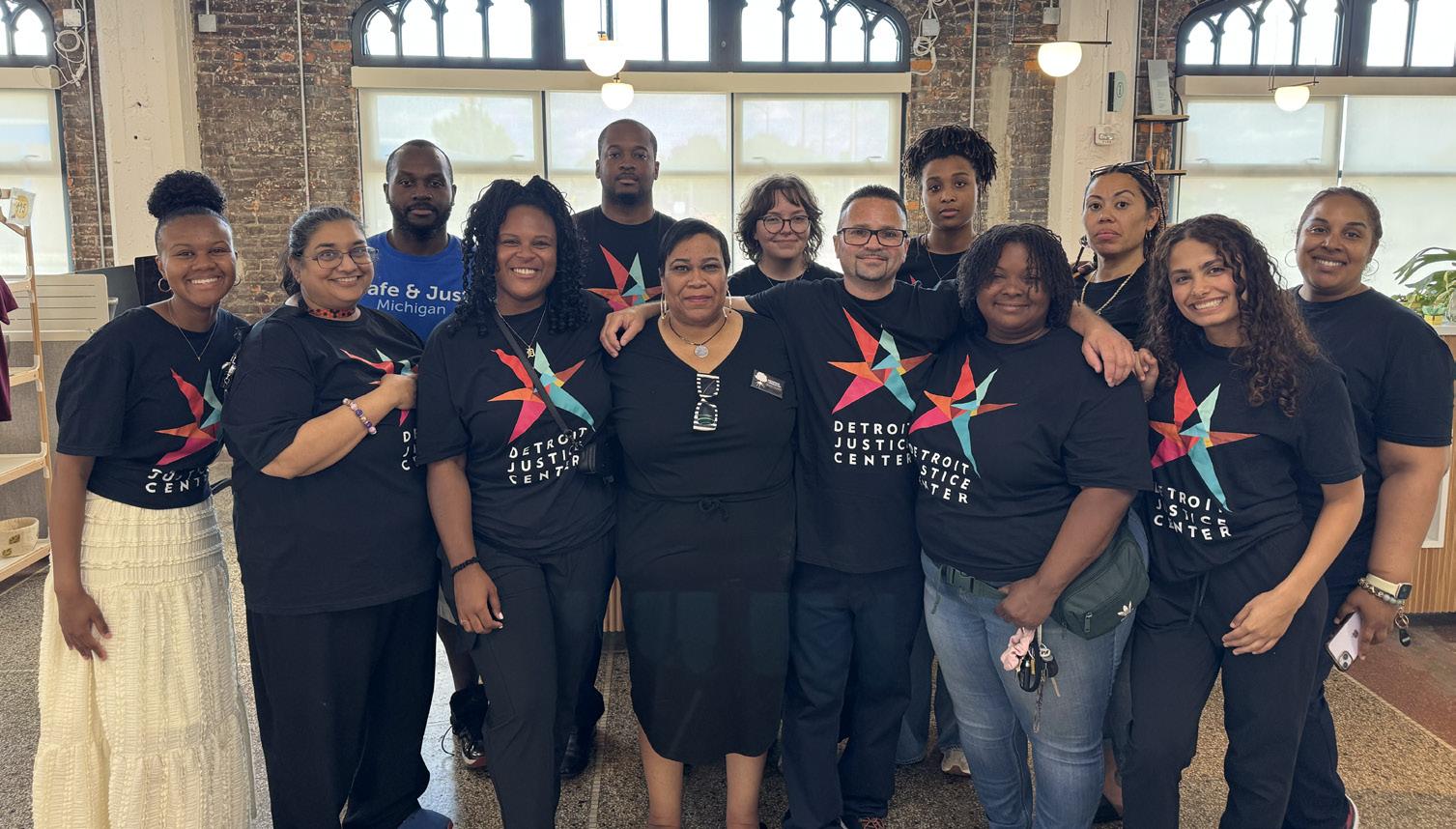
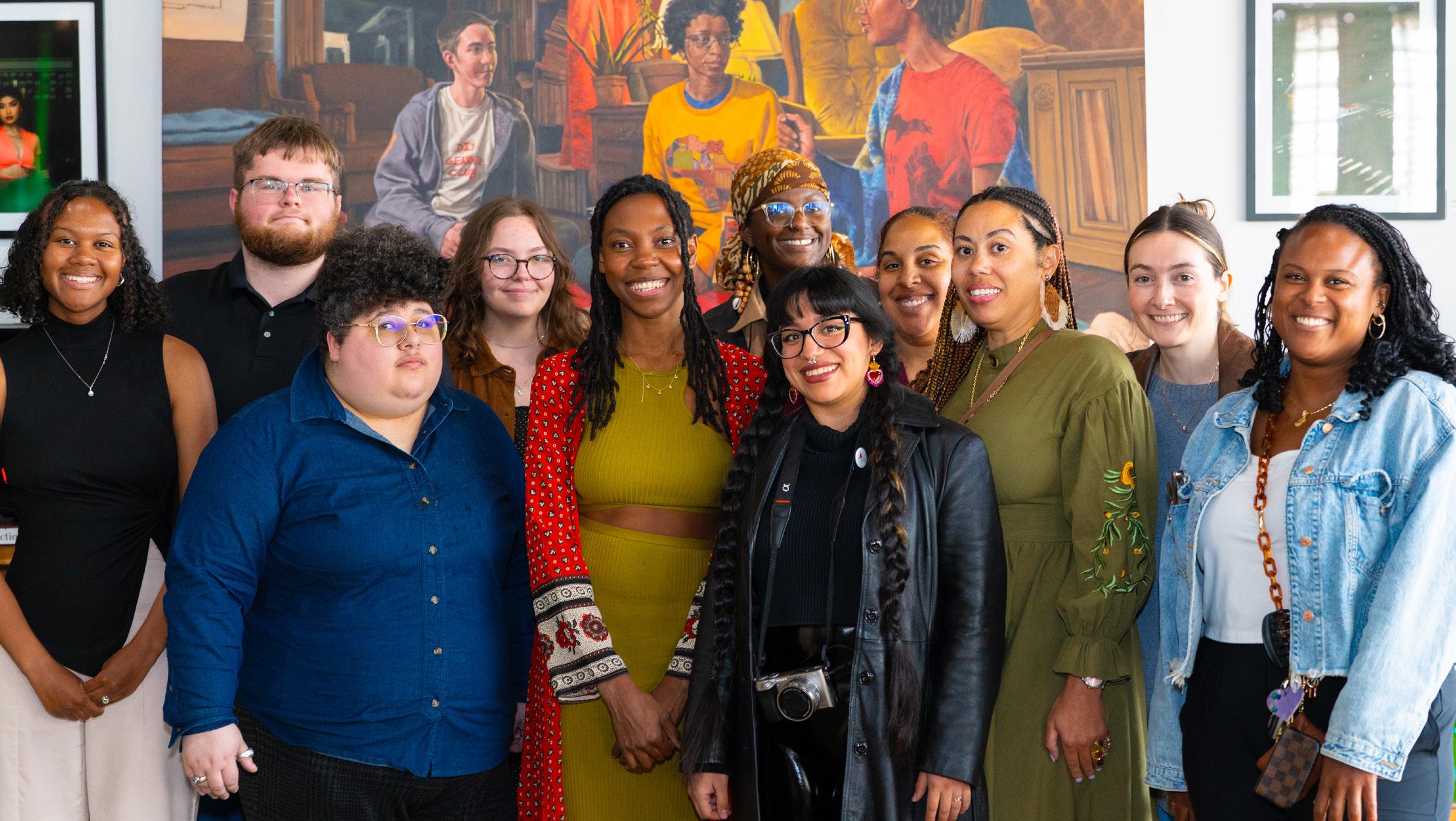
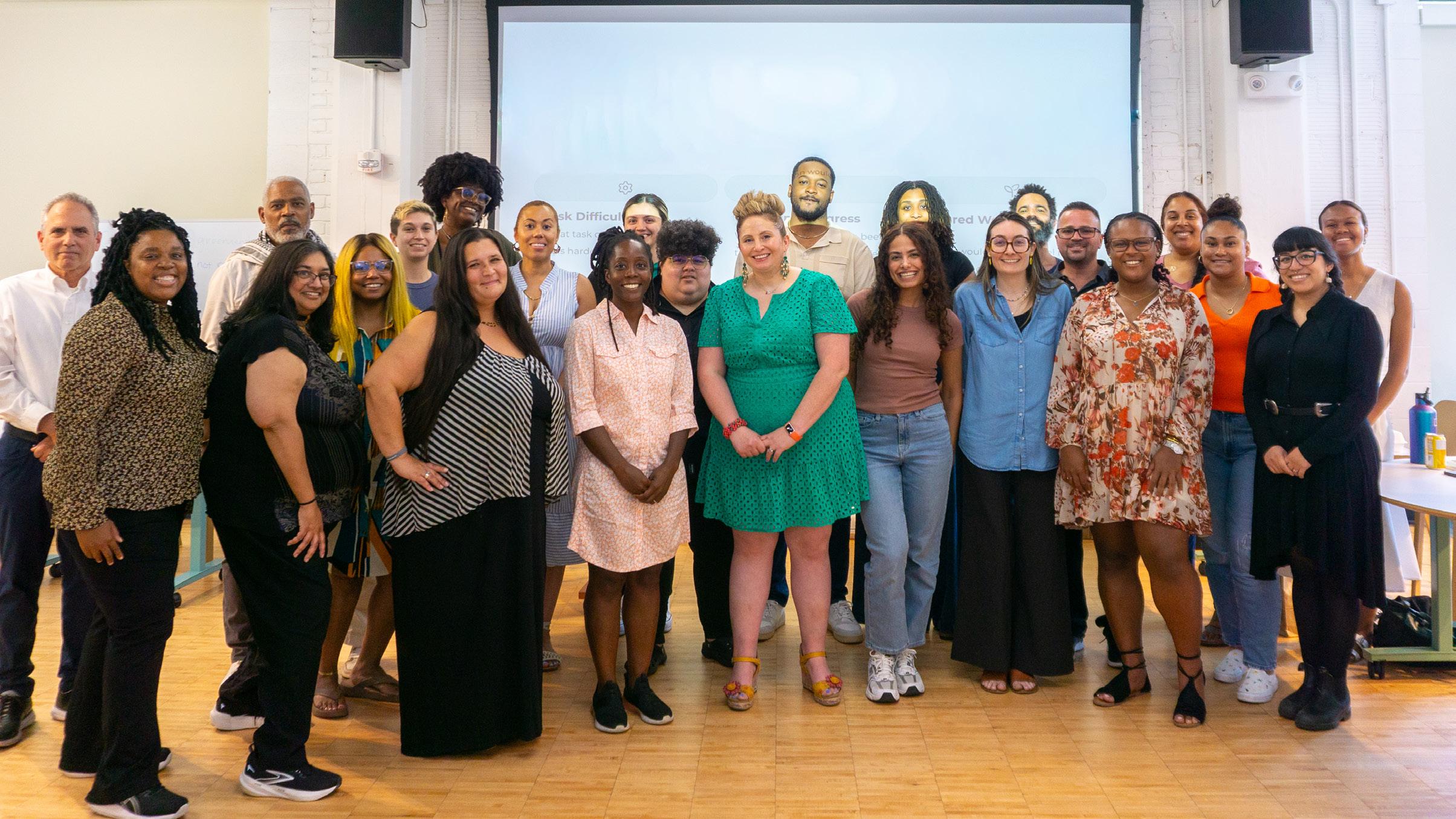
DJC staff and interns
“I am forever in awe of the Detroit Justice Center’s commitment to both short- and long-term impact. They work towards a future of true liberation for all AND in the meantime have a huge, tangible impact on the lives of Detroiters in our current legal system. They do this by bringing together experts across disciplines like law, data science, and community organization to find implementable solutions to social justice issues. We all have something to offer, and DJC enables the entire community to contribute to a better future.”
— LUKE DEROOS, DATA MIGRATION VOLUNTEER
LEGAL SELF-HELP CENTER
Thanks to generous support from Michigan’s State Court Administrative Office, DJC opened a Legal SelfHelp Center inside our office on the second floor of the LOVE Building.
Marginalized residents across Detroit often face challenges when trying to access resources to resolve their civil legal issues. The Self-Help Center offers a range of free legal information, forms, and referrals to improve Detroiters’ ability to navigate the legal system and advocate for themselves. It is staffed by our Community Legal Advocates, interns, and volunteers, and is one of few centers in the state not located in a courthouse.
SEEKING GUIDANCE ON A LEGAL MATTER?
The Center is open Mondays, Wednesdays, and Thursdays from 10am-4pm by appointment only. Make an appointment by visiting bit.ly/selfhelpDJC